
 Matzav
Trump Breaks Silence on British Sanctions Against Israeli Communities: ‘I Understand Exactly What’s Going On’
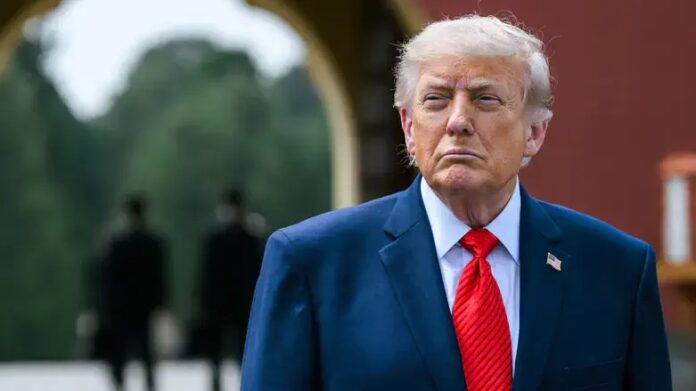
President Donald Trump has spoken publicly for the first time about Britain’s sweeping new measures targeting Israeli communities in Yehudah and Shomron, saying he intends to speak directly with Israel and with the countries behind the initiative before taking a position on the sanctions.
Trump made the comments Wednesday after being asked by reporters about measures announced by Britain, France, Canada and other Western countries restricting trade connected to Israeli communities in Yehudah and Shomron. Rather than endorse or condemn the initiative, Trump said he wanted to learn more about the reasoning behind the sudden move.
“Well, I’ve just seen it and I’ll be speaking to Israel, I’ll be speaking to them and I’ll find out what they — what’s their thinking. I understand. You know, I understand exactly what’s going on, but I want to find out why all of a sudden has that happened.”
Trump’s comments came amid a rapidly escalating diplomatic confrontation between Israel and Britain following the announcement by the government of British Prime Minister Andy Burnham of significant new restrictions aimed at Jewish communities in Yehudah and Shomron.
British Foreign Secretary Ed Miliband announced Tuesday that Britain intends to prohibit imports of goods produced in what the British government calls “illegal settlements.” London also plans to prohibit the advertising or promotion in Britain of property in those communities and create new powers to sanction individuals and businesses that finance, facilitate or profit from settlement activity.
The British government said the restrictions are intended to pressure Israel over construction in Yehudah and Shomron and preserve the possibility of establishing a Palestinian state. Britain also said the measures target settlement-related economic activity rather than Israelis or Jews because of their nationality or religion.
Miliband used particularly harsh language in announcing the policy, accusing some Israeli settlers of engaging in “ethnic cleansing” of Palestinians and charging that members of Israel’s government have supported their displacement.
Israel responded forcefully.
The Israeli government announced that it would close the British consulate in eastern Yerushalayim and bar a group of British political figures from entering the country. Israeli officials also announced other diplomatic measures in retaliation for the sanctions. Reuters reported that Israel viewed the British action as interference in its domestic affairs and upcoming elections.
Foreign Minister Gideon Sa’ar denounced the British accusations, saying, “The accusations today by the Labour government’s foreign secretary in the British parliament were outrageous and false.”
Britain, however, has stood by the measures. Burnham said Wednesday that his government believes Britain must “stand against injustice” and insisted that its policy is intended to preserve prospects for a two-state solution.
The dispute has spread well beyond London and Yerushalayim. Britain announced its initiative in coordination with France and Canada, while Denmark, Finland, Iceland, Ireland, Norway, Poland, Portugal, Spain and Sweden joined a statement backing national or European restrictions on trade with Israeli communities in Yehudah and Shomron or saying they were actively considering such measures.
The United States has notably declined to join the sanctions initiative.
Before Trump’s remarks Wednesday, Secretary of State Marco Rubio had also stopped short of directly endorsing or condemning Britain’s decision. Rubio said the British government had informed Washington in advance about what it intended to do and explained its reasoning.
“The president has not commented on it, nor have I. The British told us they were going to make this decision. We heard their arguments about why they were doing it. We share the goal of stability in the West Bank,” Rubio said.
Rubio has nevertheless indicated that Washington does not want measures that could further destabilize Yehudah and Shomron. The United States has so far declined to impose comparable trade restrictions.
Trump’s response is therefore significant in what he did not say as well as what he did. Asked specifically whether the United States opposed the sanctions, the President did not announce American opposition to them. Instead, he said he had only recently learned the details and wanted to consult Israel and the governments involved before commenting further.
According to reports, Burnham had discussed the planned measures with Trump before their announcement, and Washington did not attempt to prevent Britain from proceeding. The administration has nevertheless stopped short of publicly embracing the sanctions.
The measures represent one of the most serious recent strains in relations between Israel and Britain. The British government says it is responding to accelerated Israeli construction, violence by extremist settlers and concerns that continued expansion will make a future Palestinian state impossible. Israel rejects Britain’s characterization of its policies and has accused London of unfairly singling out the Jewish state.
Particular international attention has centered on Israeli construction plans in the E1 area east of Yerushalayim. Britain and other governments argue that development there would further complicate the territorial viability of a future Palestinian state.
Miliband has also defended his policy against fierce criticism from Britain’s Jewish community. Britain’s Chief Rabbi Sir Ephraim Mirvis described the announcement as a “truly dark day for British Jews,” while Miliband rejected suggestions that targeting the Israeli communities endangered British Jews and reiterated his commitment to fighting antisemitism.
Despite the political rupture, Miliband said intelligence and security cooperation between Britain and Israel is expected to continue. He maintained that the dispute over Yehudah and Shomron would not end cooperation between the two countries’ intelligence services, which London views as serving important mutual security interests.
Israeli Finance Minister Bezalel Smotrich responded even more sharply, calling for Britain’s ambassador to be expelled.
“We will not be the doormat of an antisemitic government, in a country that has been conquered by radical Islam, and which is trying to save itself from economic and social decline by attacking Israel,” Smotrich said.
For now, Trump appears to be reserving judgment. His comments leave open the possibility of further American involvement in the dispute as he speaks with Israel and the governments imposing the restrictions.
“I understand exactly what’s going on,” Trump said, while emphasizing that he first wants to determine “why all of a sudden has that happened.”
The next question is whether those consultations lead Washington to publicly oppose Britain’s measures, support some aspect of them, or continue keeping its distance from the growing diplomatic confrontation.