
 Matzav
MEASLES EMERGENCY: Hochul Declares State Disaster Emergency as New York Cases Surge Past 100
New York Gov. Kathy Hochul declared a statewide disaster emergency Monday in response to a rapidly growing measles outbreak, giving health professionals expanded authority to vaccinate and test residents as cases spread through rural communities across the state.
The executive order comes after New York recorded 108 confirmed measles cases so far in 2026 as of Oct. 3, including 101 cases outside New York City and seven within the five boroughs. That is more than double the 48 cases reported statewide during all of 2025.
The sharpest increase has occurred in recent weeks. Since July 15, 92 cases have been reported in under-immunized rural communities spanning 18 counties, prompting local health departments to administer more than 1,000 doses of the measles, mumps and rubella, or MMR, vaccine.
“After reviewing the latest data on measles cases in New York State, I am declaring a State Disaster Emergency to strengthen our ongoing efforts to confront this disease,” Hochul said. “No one should get seriously ill or die from a vaccine-preventable disease. That is why I have taken steps to increase the number of health professionals who can vaccinate and test. These emergency measures will protect New Yorkers and support our community partners as they work tirelessly to address the spread of this disease.”
The emergency declaration does not impose lockdowns or restrictions on the general public. Instead, it temporarily expands the number of medical professionals authorized to administer measles vaccines and conduct or order testing, allowing the state to respond more quickly in communities where infections are appearing.
Under Hochul’s order, paramedics, advanced EMS providers, pharmacists and midwives are among those newly authorized to administer measles vaccinations. Nurses are also being given expanded authority to order measles testing, rather than requiring every test to be ordered by a physician.
The largest concentrations of cases outside New York City have been reported in several upstate counties. Otsego County has recorded 20 cases, Seneca County 17 and Steuben County 14. Cases have also been reported across Western, Central and other parts of upstate New York.
The outbreak has been particularly concerning to health officials because many of the affected areas have relatively low childhood vaccination rates. State data show that, as of the beginning of 2026, 80.9% of children statewide had received at least one MMR dose by age 2. Rates vary significantly by county, including 71.2% in Seneca County, 77.5% in Otsego County and 79.1% in Steuben County.
New York’s outbreak is occurring as measles cases have surged nationally. As of Oct. 1, the Centers for Disease Control and Prevention had recorded 3,887 confirmed cases across the United States in 2026, compared with 2,289 during all of 2025. Ninety-five percent of this year’s cases have been associated with outbreaks.
New York health officials have also been closely watching neighboring Pennsylvania, where a major outbreak has sickened hundreds of people. The spread across state lines has heightened concerns in rural counties in New York’s Southern Tier and western regions.
State Health Commissioner Dr. James McDonald said health officials are working with local departments and regional partners to identify infections, trace contacts and contain further transmission.
“I appreciate Governor Hochul’s swift action to help address ongoing measles cases. Department staff are working closely with local health departments and regional partners to track and contain the current measles outbreak. The measles, mumps, and rubella vaccine is the best protection — protecting nearly all people against disease who receive the recommended doses. I urge New Yorkers to check their vaccination status and make sure that they and their families are protected. I also ask health providers to be prepared to diagnose and treat any measles cases they encounter.”
Measles is an extremely contagious viral illness spread through coughing and sneezing. An infected person can transmit the virus beginning four days before the appearance of the characteristic rash and continuing until four days after the rash develops, meaning people can spread the illness before realizing they have it.
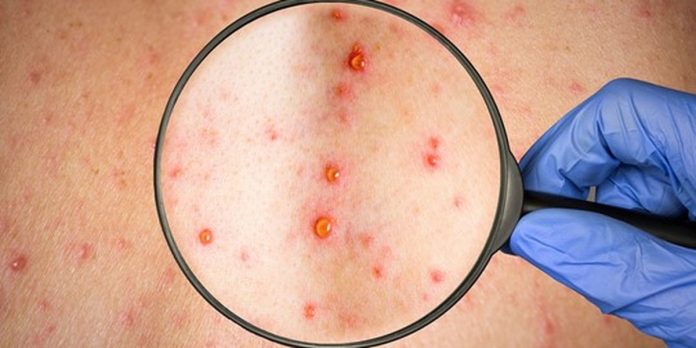
Symptoms generally begin seven to 14 days after infection, although they can take as long as 21 days to appear. Early symptoms commonly include a high fever, cough, runny nose and red or watery eyes. Several days later, a rash typically begins near the hairline and spreads downward across the face, neck, trunk, arms and legs. Fever can rise above 104 degrees when the rash appears.
Health officials say people exposed to measles may be required to quarantine for 21 days after exposure, while those who become infected should remain isolated through four days after their rash appears.
The state says one dose of the MMR vaccine is approximately 93% effective at preventing measles, while two doses are approximately 97% effective. Most people born before 1957 are generally presumed to have immunity because measles circulated widely before widespread vaccination.
People uncertain about their vaccination status are being advised to contact their doctor or local health department. Health officials are also urging anyone who develops symptoms after a possible exposure to call a healthcare facility before arriving so that precautions can be taken to prevent exposing other patients and staff.
The Hochul administration has also directed the state Health Department to continue publishing information about confirmed cases through its measles dashboard as officials monitor whether the outbreak continues to spread.
{Matzav.com}