
 Jewish Breaking News
I Was There 36 Hours Before October 7. Three Years Later, I Still Carry It With Me.
Three years ago, my family stood just a few miles from Gaza with absolutely no idea how much our lives, Israel, and the Jewish world were about to change. On Thursday of Chol Hamoed Sukkot 2023, about 36 hours before the October 7 massacre, I toured southern Israel with my extended family. There were around 35 of us. We visited Kibbutz Nahal Oz, ate lunch in Netivot, met soldiers stationed near the Gaza border, and ended the day riding bikes through Kibbutz Be’eri as the sun was setting.
I remember taking a picture of that sunset in Be’eri. It was beautiful and peaceful. At the time, it was just another photo from a family trip. Looking at it now is completely different. Our guide that day was Ilan Fiorentino, a member of Kibbutz Nahal Oz who served as the community’s security chief and spent years helping protect the people around him. He showed us the area, spoke to us about life near the Gaza border, and shared his community with us. I remember how warm he was and how proud he seemed to be of the place he called home.
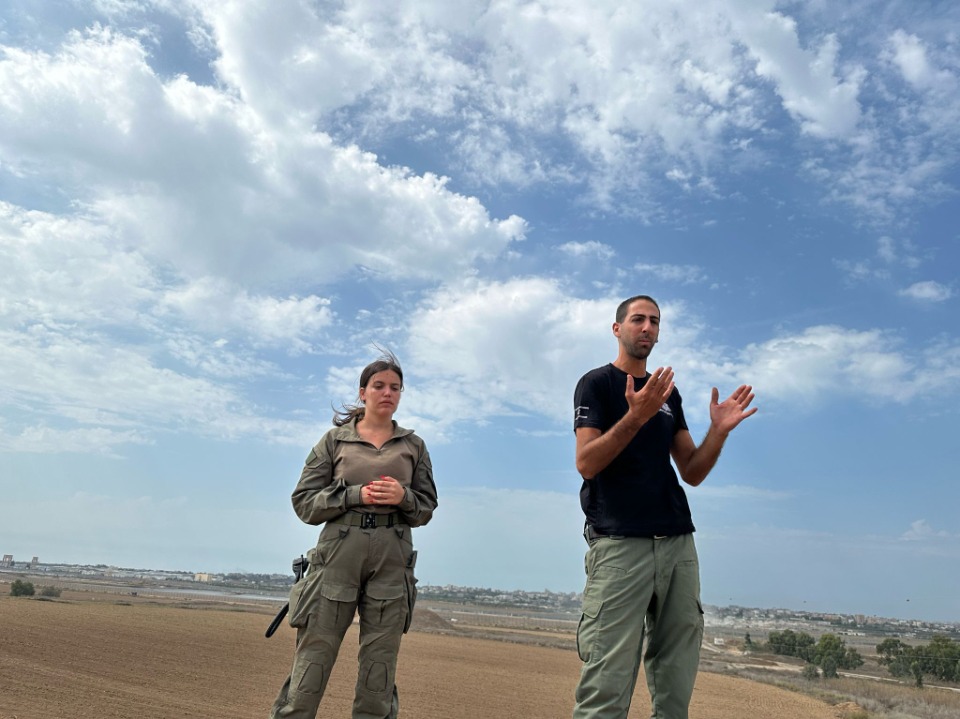
That would be the last tour Ilan ever gave. Thirty-six hours later, on October 7, he was killed defending his kibbutz from Hamas terrorists. The places we had just visited became scenes of unimaginable destruction. Communities we had walked through were invaded. People we had met were suddenly missing, murdered, fighting for their lives, or taken hostage. For me, October 7 was never something happening in a faraway place on a television screen. I had stood there 36 hours earlier, and three years later, that feeling has never really left me.

So much has happened since that morning. We have mourned families and communities shattered by the massacre, watched Israeli soldiers leave their homes and families to defend the country, prayed for hostages held in Gaza, attended funerals, said Tehillim, celebrated rescues and homecomings, and watched an entire generation of Jews become more connected to one another. There were moments of overwhelming darkness, but there were also moments that showed me what the Jewish people are capable of. I saw that for myself when I returned to Israel just a few months later, in January 2024.

It was a completely different Israel from the country I had left after Sukkot. The war was everywhere. Hostage posters lined Ben Gurion Airport. Israeli flags seemed to hang from every car and building. Families from the South were still displaced from their homes. Soldiers filled the streets, and entire communities had reorganized themselves around helping one another. But what I remember most from that trip is not the fear. It is the strength.
I spent time packing toys and supplies for displaced children and for the children of soldiers, tied tzitzit for chayalim, visited Sderot and saw the physical damage left behind from October 7, stood at the site of the Nova Festival and met families mourning their children, helped prepare food for soldiers near the Gaza border, and picked oranges on a kibbutz whose workforce had been devastated by the attack. I also visited injured soldiers at Tel HaShomer Hospital, danced with soldiers heading to new fronts, spent time with displaced families and children from Sderot, and visited Hostage Square, where I walked through a model tunnel meant to give people even the smallest sense of what the hostages were experiencing.

Everywhere I went, I met people who had every reason to stop, shut down, or give up. Instead, they were thinking about someone else. That trip taught me the real meaning of מי כעמך ישראל. There truly is no nation like the Jewish people.
One image from that trip has stayed with me especially strongly. The South of Israel is famous for its red kalanit flowers. Many of those flowers had been crushed and destroyed on October 7, but only a few months later, they were blooming again. To me, those flowers looked like Israel itself: hurt, changed, and carrying the scars of what had happened, but still growing.

I remember hearing a line during that trip that captured exactly what I was seeing: “Hamas tried to bury us, but they did not realize that we were seeds”. That was Israel in January 2024. In Sderot, at army bases, inside volunteer warehouses, in hospitals, at Hostage Square, at the Kotel, and inside people’s homes, I saw a country in pain that had decided it would keep going. I saw people spending their entire days packing supplies for strangers, Israelis feeding and housing soldiers, families baking challah for the front lines, and Jews from completely different backgrounds coming together to sing, pray, and give one another strength.
At one event for displaced families, a young child was asked what she was thankful to Hashem for. Her answer was simple: “Thank you Hashem for my life.” That answer has stayed with me for nearly three years. After everything she had experienced, that child still chose gratitude. That is the Israel I saw after October 7.
Over the past three years, I have also experienced October 7 from another perspective I never could have imagined on that first morning: through my work with JBN. Working behind one of the largest Jewish social media platforms has shown me a side of the story that most people never see. Behind every breaking-news post is a real family waiting for information. Behind every photo of a fallen soldier is a mother, father, sibling, friend, school, and community whose world has changed forever. Behind every hostage poster is a family refusing to let the world forget the person they love.
There were days when our feeds seemed filled with terrible news: soldiers killed, hostage updates, funerals, attacks in Israel, and antisemitic incidents around the world. Sometimes one heartbreaking story would be followed almost immediately by another. Working with JBN has made me understand the responsibility that comes with Jewish media. A person may see a post for a few seconds before scrolling on, but for the family in that post, it is not content. It is their entire life.
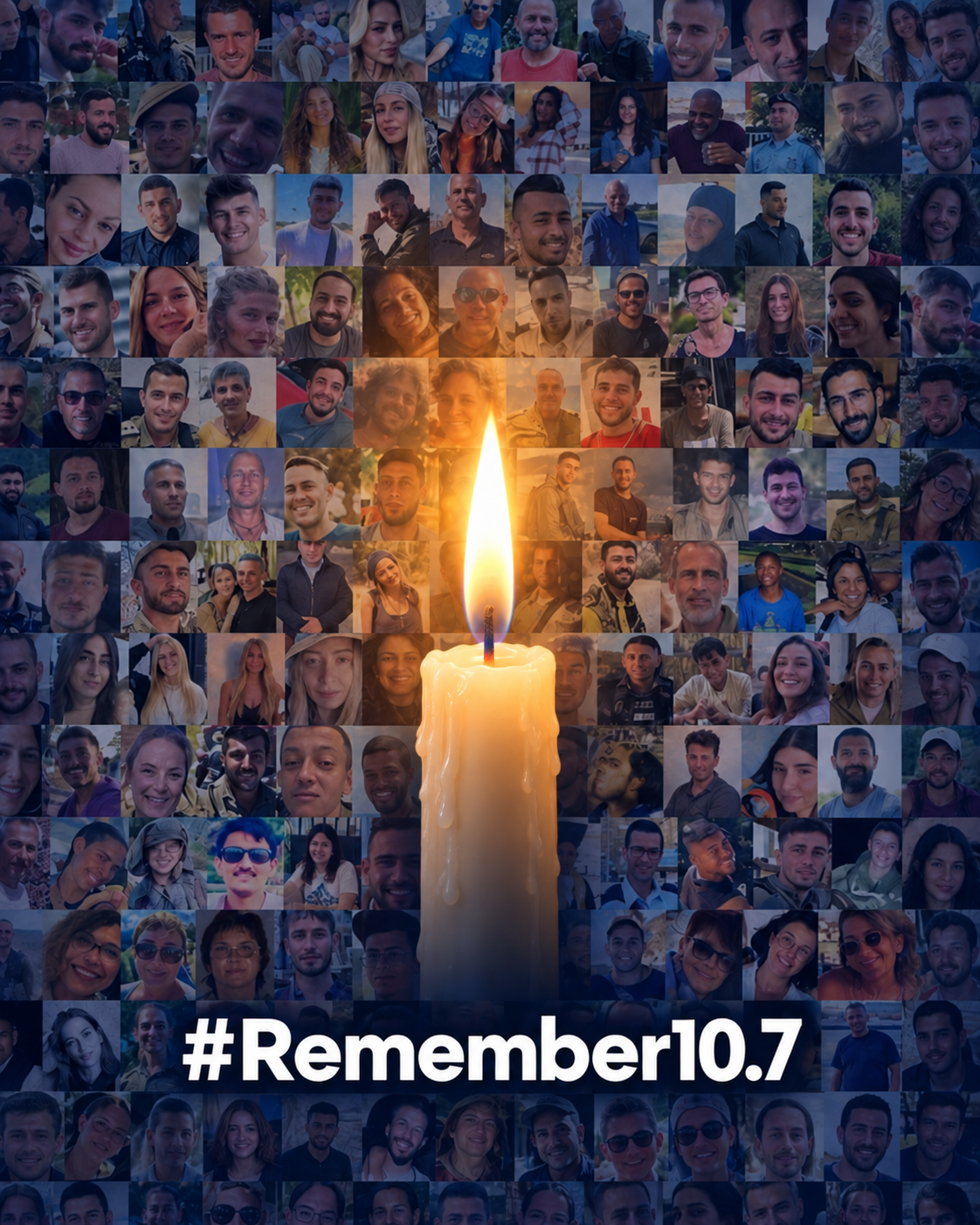
That has changed the way I look at news. It has taught me that we cannot allow people to become numbers. October 7 was not simply a death toll. Every person had a name, a family, a life, and a story. The same is true of every soldier who gave his or her life protecting Israel, and every hostage whose face we shared again and again so the world would not forget. Social media moves incredibly quickly. One story replaces another within minutes, and yesterday’s headline disappears under today’s news. But some stories demand that we stop scrolling. October 7 is one of them.
Three years later, I often think back to something I spoke about just one month after the attacks: the privilege we have to stand tall, stand proud, and stand strong as Jews. At the time, those words were about finding strength during one of the darkest moments our people had experienced in generations. Today, they mean even more.
Standing proud does not mean ignoring the pain of the past three years. It means carrying it with us. It means remembering Ilan Fiorentino and the communities of the Gaza border, remembering the people dancing at the Nova Festival who never came home, remembering the soldiers who ran toward danger to protect others, and remembering the hostages and their families who made sure the world learned their names and saw their faces. It also means remembering what I saw when I returned to Israel just a few months later: a people who refused to let tragedy be the end of their story.
October 7 changed Israel. It changed the Jewish people, and it changed me. When I look back at the sunset photo I took in Be’eri on October 5, 2023, I think about how little I knew in that moment. I had no idea that 36 hours later, everything around me would change. I had no idea that people I had just met would be murdered, or that places I had just visited would become names known around the world for the worst possible reasons.
But three years later, my story with Israel does not end with that sunset.
I just returned from Israel this week after spending Sukkot there, and the country I saw was alive. The streets were full, tourists were everywhere, families were traveling, restaurants were busy, and people were celebrating Sukkot. After everything Israel has gone through over the past three years, there was something incredibly powerful about simply seeing the country full of life again.
One morning, I stood on the Western Wall Heritage Foundation rooftop overlooking the Kotel during Birkat Kohanim. From above, I watched tens of thousands of Jews packed into the plaza below, listening to the Kohanim bless the crowd and then singing Hallel together. Standing there, I could not stop thinking about how far we had come. Three years earlier, we were waking up to sirens, terror, and unimaginable loss. Now I was looking down at tens of thousands of Jews standing together in Jerusalem, singing to Hashem.
That week, I also attended two concerts that captured that same feeling in a different way. At United Hatzalah’s 2026 concert, former hostage Bar Kuperstein walked onto the stage and sang. I immediately thought about the same concert one year earlier. In 2025, Bar was still being held hostage in Gaza. He would come home just one day later. This year, he was standing on a stage in Jerusalem, alive and free.
It is hard to describe what a moment like that feels like after following these stories for years, especially while working at JBN. For so long, these were faces on hostage posters and names in headlines. Then suddenly, you are watching one of them standing on a stage in front of you.
The next night, I went to the Yeshiva University concert. At one point, the entire crowd began singing “Abba Todah,” thanking G-d for everything He has done for us. This year, those words felt different. We were thanking Hashem for the miracles of the past three years, for people who came home, for soldiers who returned to their families, for a country that continued to stand, and for a Jewish people that continued to sing. We were also thanking Him for the miracles of just this past week, including the Flydubai plane incident that could have ended very differently.

Standing there and listening to thousands of people sing “Abba Todah,” I thought back to the sunset in Be’eri. Three years ago, I took a picture of a peaceful sunset 36 hours before everything changed. Three years later, I stood in Jerusalem surrounded by thousands of Jews singing Hallel, singing “Abba Todah,” and thanking Hashem for allowing us to still be here.
There has been so much pain between those two moments. There are names and faces we can never forget, and families whose lives will never be the same. October 7 will always be part of who we are. But it is not the end of the story.
Israel is alive. The Jewish people are alive. And three years later, after everything we have been through, we are still standing together, still singing, and still saying thank you.
Am Yisrael Chai.
