
 Vos Iz Neias
A New Way to Fix an Old Heart Problem: What Is Pulsed Field Ablation?
New York (VINNEWS/Rabbi Yair Hoffman) This article introduces a very very important development in cardiology that not too many people know about – even doctors.
“A,” a good friend of this author is a chef. For years, his work was hard and physical. He lifted heavy pots, carried crates of chicken from Bingo, and schlepped supplies back and forth all day long. It never bothered him.
Then something changed. He could no longer lift and schlep. He got tired quickly. He felt weak and out of breath doing things that had always been easy for him.
I told him that needed to see a cardiologist immediately. This was not something to wait on.
He listened.
The doctors found that he had atrial fibrillation, or AFib. He was treated at NYU Langone with a newer procedure called pulsed field ablation. The change has been amazing.
His story is a good reason to understand what AFib is, and how this new treatment works.
What Is AFib?
Atrial fibrillation, or “AFib,” is the most common kind of irregular heartbeat. Millions of Americans have it, and more people get it as they grow older.
The heart has four chambers. The top two are called the atria. Normally, they beat in a steady rhythm. In AFib, they stop beating properly and just quiver, or shake, in a messy way.
Some people with AFib feel their heart pounding or fluttering. Others feel tired, weak, dizzy, or short of breath, just like the chef. Some people feel nothing at all.
AFib is more than uncomfortable. It can be dangerous. When the atria quiver instead of pumping, blood can collect there and form a clot. If a clot travels to the brain, it can cause a stroke. This is why many people with AFib take blood thinners.
Fixing the Rhythm
Doctors often try to put the heart back into a normal rhythm. Medicine sometimes works, but not always, and it can have side effects. Many patients choose a procedure called catheter ablation.
Most AFib starts in one area of the heart: the spot where four veins, called the pulmonary veins, enter the top left chamber. The bad electrical signals start there and spread. In ablation, the doctor makes a ring of tiny scars around these veins. The scars act like a fence. The bad signals cannot get through.
The Older Methods: Heat and Cold
For many years, doctors made these scars in two main ways. (There was also a laser method, but it did not work better than the others.)
1. Heat (radiofrequency ablation). The doctor uses a thin tube with a tip that gets hot. The heat burns tiny spots in the heart.
- The good: It can reach almost any part of the heart. A skilled doctor can treat many areas, not just the veins.
- The bad: It takes great skill. The doctor must hold the tip perfectly still on a beating heart for 30 seconds or more. Heat can also hurt nearby body parts. The esophagus, the tube that carries food to the stomach, sits right behind the heart. Burning it can cause very serious problems.
- The ugly: In rare cases, heat can also make a hole in the heart wall (with apologies to CE)
2. Cold (cryoablation). The doctor uses a small balloon that freezes the tissue.
- The good: It is safer than heat, and it is easier to use. Many more doctors can do it well.
- The bad: It mostly reaches only the openings of the four veins. If AFib has spread to other parts of the heart, the balloon cannot treat them well. The patient may need to come back for more procedures.
- The ugly: It can cause Phrenic nerve injury. It can weaken the diaphragm on one side and causes shortness of breath. It usually recovers within weeks to months, but sometimes longer.
I personally explored the possibility of these two methods but decided not to go forward following the advice of a good friend’s brother (a cardiologist).
The New Method: Pulsed Field Ablation
Pulsed field ablation, or PFA, is the newest method. The FDA, approved it in 2024. Since then, many hospitals have started using it. Dr. Donny Zwickler informed me about it at a Glatt Kosher trip to the Canadian Rockies in Banff, Canada this past summer, and told me to see a student of his who is doing wonders with it. Since then, I have been looking into it. [Please note that the author is not a doctor, but has served on the medical ethics board of a hospital for several years. One should always speak to one’s own specialist and not rely on medical information from the internet.]
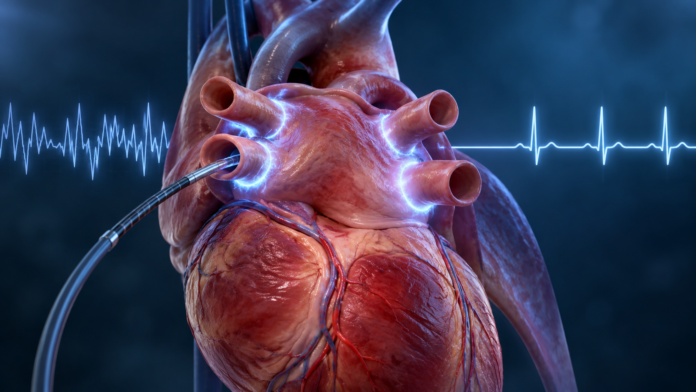
PFA does not use heat or cold. It uses very short, very strong bursts of electricity. These bursts poke tiny holes in the heart cells being treated, and those cells stop working. One heart doctor described it as almost like waving a magic wand over the cells.
The biggest advantage is that PFA is a bit of a fineschmecker (somewhat choosy). Heart cells are very sensitive to this electricity. The esophagus, nerves, and blood vessels are much less sensitive. So PFA can treat the heart while mostly leaving nearby body parts unharmed. And hence those that were hesitant about the other types of ablation – have less to worry about.
Benefits of PFA include:
- A shorter procedure, so the patient is asleep for less time.
- Less swelling and less pain.
- Faster healing.
- Less risk to the esophagus and nearby nerves.
Not a Magic Bullet
Some heart doctors warn that PFA is not a cure-all. One doctor explains it this way: what matters most is not the tool. What matters is what the doctor does with it.
AFib can be compared to a forest fire.
- In early AFib, the fire is small. It is only around the four veins. Making a scar fence around those veins often solves the problem, no matter which tool is used.
- In later AFib, the fire has spread to other walls of the heart. Treating only the veins is like putting out one small part of a big fire. It helps, but the rest keeps on burning r”l.
This explains why some patients need two, three, or even four procedures. If the doctor treats only the veins each time, the patient may get a little better but still need medicine. A doctor with more experience may be able to treat the other areas too, sometimes in just one procedure.
The first PFA tools were built mostly to treat the four veins. Early studies showed they worked about as well as the older methods for early AFib.
They did not work dramatically better. Some reports showed success in roughly 60 to 70 percent of early cases. For patients with more advanced AFib, treating only the veins with PFA was often not enough.
New medical tools usually help in one of two ways:
- They let top experts do things that were impossible before, or
- They make standard procedures easier, so more doctors can do them well.
The freezing balloon did the second thing. Early PFA did too. It made the standard procedure faster and safer. Since then, newer PFA tools have been made to reach more areas of the heart. Doctors keep working to use PFA for harder cases.
Patients should, without being too chutzpadik, consider asking two questions, not one:
- “Which tool will you be using?”
- “What exactly will you do, and how much experience do you have with cases like mine?”
What Happens During the Procedure
The procedure is done in a hospital.
- The doctor makes one or more very tiny openings in a vein in the groin.
- Thin wires go through the vein all the way up to the heart. Thin, bendable tubes, called catheters, slide over the wires.
- The tubes are guided into the top left chamber of the heart.
- The doctor records the heart’s electrical signals. A computer turns these signals into a 3-D map of the patient’s heart.
- Using the map, the doctor sends the electrical bursts around the four veins and any other trouble spots.
- The tubes are taken out. The patient must lie flat for a few hours so the openings in the groin can close.
Most patients go home the same day or the next morning.
Risks
Every procedure has some risk. Problems can include bleeding or bruising in the entry area. Rarely, a stroke or heart injury can happen. Doctors are still studying how PFA may affect blood cells and the kidneys when a lot of energy is used.
AFib can come back, especially in more advanced cases. Some patients need a second procedure. Also, having ablation does not always mean a patient can stop taking blood thinners. That is a decision to make with the heart doctor.
The Lesson: Do Not Wait
“A”‘s story teaches an important lesson. When someone suddenly cannot do what he always did, such as lifting, walking, or climbing stairs, it may be a sign of a heart problem. Feeling unusually tired, weak, or out of breath should never be ignored. Getting checked quickly can make all the difference.
A Halachic Perspective
The Torah commands, “V’nishmartem me’od l’nafshoseichem,” to guard our health very carefully (Devarim 4:15). Chazal and the poskim teach that this includes getting proper medical care. The Gemara (Bava Kamma 85a) learns from the words “v’rapo yerapei” that a doctor has permission to heal.
There are three parts to this Mitzvah: 1. When doctors find a safer and gentler way to fix the heart’s rhythm, using it is part of keeping this mitzvah. 2. Choosing a skilled and experienced doctor is part of it too. 3. And not putting off a visit to the doctor when something feels wrong is part of it as well.
The author can be reached at [email protected].