
 Vos Iz Neias
Shin Bet Reportedly Received Direct Warning From Sinwar Weeks Before October 7, Raising Questions About Ronen Bar’s Role
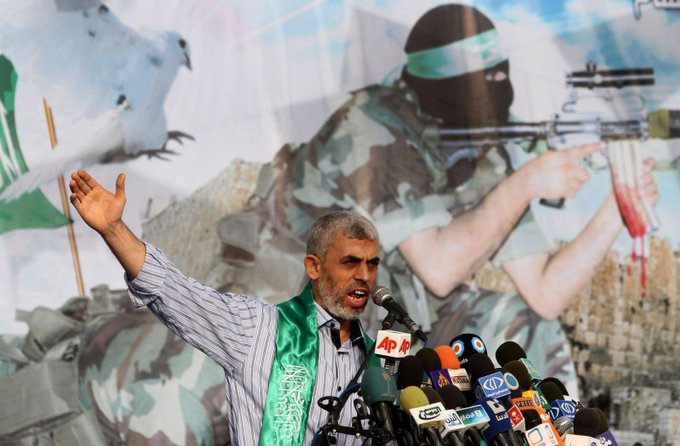
JERUSALEM (VINnews) — Israel’s Shin Bet security service received a direct warning from Hamas leader Yahya Sinwar weeks before the October 7, 2023, massacre, according to testimony by Palestinian political figure Sufian Abu Zaida, raising fresh questions about what Israeli intelligence officials knew ahead of the attack and how they interpreted the information.
The account emerged in an interview conducted by Israeli-French journalist Emmanuelle Elbaz-Phelps for the French magazine Le Point. Elbaz-Phelps subsequently shared details of the interview on X.
According to Abu Zaida, Sinwar asked him during a meeting on September 14, 2023, to convey an unusual message to Israeli authorities, warning that Hamas was preparing a development that would fundamentally change negotiations over Palestinian prisoners.
“Before the end of September, we will put things on the table that will cause an earthquake in everything related to the negotiations, and they should prepare themselves for the emptying of the prisons,” Sinwar allegedly told him.
Abu Zaida explained that the reference to emptying the prisons meant securing the release of all Palestinian prisoners held by Israel.
Unlike Sinwar’s public threats, this warning was allegedly delivered through a personal intermediary who maintained direct contact with Israeli security officials.
Abu Zaida said he wrote down Sinwar’s words in a notebook during their meeting. After leaving Sinwar’s office and retrieving his mobile phone and smartwatch, which he had been required to leave outside, he contacted former Palestinian security chief Mohammed Dahlan and then the Shin Bet.
According to Abu Zaida, both contacts asked whether Sinwar had specifically instructed him to convey the message to Israel. “He insisted,” Abu Zaida recalled. “He told me, ‘You must pass it on and also report back to me that the message was delivered.'”
Abu Zaida said he subsequently met Shin Bet officials and stressed that the warning should not be dismissed as routine rhetoric.
“Sinwar wasn’t just making threats. He set a date: by the end of the month,” he said.
A Warning That Was Apparently Misinterpreted
Despite recognizing the unusual nature of the message, Abu Zaida acknowledged that he himself failed to anticipate the scale of the October 7 attack.
He believes Israeli security officials took Sinwar’s warning seriously but interpreted it as a possible limited kidnapping operation rather than preparations for a massive cross-border assault.
“I think they believed that, at most, 30 or 40 people would enter from Gaza, kidnap a soldier and return. That’s what I thought, too,” he said.
Abu Zaida even considered the possibility that Hamas was planning to abduct an Israeli in Judea and Samaria rather than launch an operation from Gaza.
“I thought he was referring more to the West Bank, that they had a cell ready, with a target, and that it would carry out a kidnapping,” he explained. “But who am I? I’m not the national intelligence assessor.”
He attributed his assessment to Sinwar’s repeated emphasis on obtaining the release of Palestinian prisoners.
“Sinwar was talking about releasing prisoners. He wanted to strengthen the cards he held. Two bodies were not enough for him,” Abu Zaida said, referring to the remains of Israeli soldiers held in Gaza at the time.
Abu Zaida also said his contacts with Sinwar were known to Israeli intelligence. The two had first become acquainted during their imprisonment in Israel, and their relationship later developed into a channel for conveying messages between Hamas and Israel.
He said he regularly informed both Dahlan and the Shin Bet about his meetings with Sinwar, partly because he feared being caught in an Israeli airstrike while visiting the Hamas leader’s office.
The testimony suggests that at least some Israeli security officials may have received a specific, time-bound warning directly attributed to Sinwar, rather than merely observing signs of heightened Hamas activity.
However, the account does not establish which Shin Bet officials received the message, whether it reached the agency’s director, Ronen Bar, or how it was assessed and circulated within the Israeli intelligence community.
The revelations come as former Shin Bet director Ronen Bar has filed a NIS 3 million ($970,000) defamation lawsuit against Prime Minister Benjamin Netanyahu, accusing him of making false allegations about Bar’s conduct before the October 7 massacre.
The lawsuit, filed Wednesday in the Central District Court in Lod, challenges Netanyahu’s September 28 accusation that Bar recognized warning signs on the night before the Hamas attack but failed to alert the prime minister. Bar contends that Netanyahu has sought to shift responsibility for the intelligence and security failures onto him.
According to the lawsuit, Shin Bet personnel began alerting military counterparts to unusual indications of Hamas activity at approximately 11 p.m. on October 6. An intelligence alert was distributed at 3:03 a.m., followed by additional communications, including a call to the military secretariat at 3:55 a.m.
Bar says his chief of staff contacted Netanyahu’s military secretary, Avi Gil, at approximately 6:15 a.m., shortly before the Hamas attack began. The lawsuit acknowledges that the initial alert was assigned a lower urgency than it warranted.
The dispute raises two distinct questions: whether Bar fulfilled his responsibility by informing the designated officials in the Prime Minister’s Office, and whether the gravity of the intelligence required him to bypass routine procedures and contact Netanyahu personally.
The new testimony concerning Sinwar’s September 14 warning introduces a further dimension. Abu Zaida’s account was previously corroborated in a September 2026 television interview in which he displayed what he described as the handwritten message dictated by Sinwar. He said the intermediary channel had operated since March 2022, making the communication part of an established relationship rather than an isolated contact.