

New York (VINNEWS/Rabbi Yair Hoffman) Our great Roshei Yeshiva have always taught us to see the world through “Torah eyes.” What does halacha, what does the Gemorah say about this topic. A story now in the headlines which involves a sitting member of the United States Congress, and a marriage certificate from 2009 – brings this concept head on: Did a congresswoman marry her own brother and what do the Rishonim say about it?
The Story in the Headlines
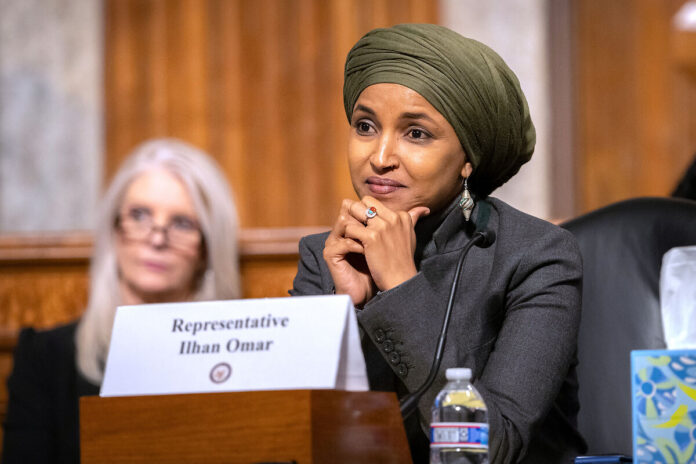
Rep. Ilhan Omar of Minnesota came to the United States as a refugee from Somalia in 1995. In 2009 she legally married a man named Ahmed Nur Said Elmi, whom she described as a British citizen. They divorced in 2017. For years, critics have claimed that Elmi is really her brother, and that the marriage was a way to help him get immigration status in America. If true – it was a gross violation of American law.
Rep. Omar has always denied it. In 2020 she released a statement calling the allegations “absolutely false and ridiculous,” and said that insinuations that Elmi is her brother are “absurd and offensive.”
The story has not gone away. The Secretary of Homeland Security, Markwayne Mullin, publicly stated at a Republican convention that Omar married her brother and that consequences are coming. This week it was reported that federal investigators have DNA evidence that could settle the question.
When Rep. Omar was asked directly whether she and Elmi are related, her answer was a careful “not to my knowledge.”
Other details add to the questions. In 2018 a conservative outlet found archived Instagram posts from 2012 that appear to show Elmi calling Omar’s daughter his “niece.” A Minnesota campaign finance investigation also found that Omar filed joint tax returns with Ahmed Hirsi for 2014 and 2015, while she was still legally married to Elmi. Omar’s family history is hard to trace. Somali records were lost or destroyed in that country’s civil war. Her mother reportedly died when she was young. Elmi’s parents are not publicly known, though he lived in London with a woman named Leila Nur Said, who is thought to be Omar’s sister and who may have raised him.
None of this has been proven in any court, and Rep. Omar has not yet been charged with a crime. What follows is a Torah analysis of what the halacha would say if the allegations turned out to be true.
Which Relatives Are Forbidden to a Non-Jew?
Ilhan Omar is not Jewish, so the relevant question is what the Torah forbids to Bnei Noach, the non-Jewish nations of the world. Every person on earth is bound by the Seven Noahide Laws, and one of them is the prohibition of forbidden relationships, called gilui arayos.
The Gemara in Sanhedrin (57b–58b) discusses exactly which relatives are forbidden to a non-Jew. The source is a pasuk in Bereishis (2:24): “Therefore a man shall leave his father and his mother, and cling to his wife, and they shall become one flesh.”
Two great Tanna’im read this pasuk differently. Rabbi Eliezer says that “his father” refers to his father’s sister, and “his mother” refers to his mother’s sister. In his view, the pasuk forbids blood relatives. Rabbi Akiva says that “his father” refers to his father’s wife, and “his mother” means his actual mother. Both agree that “cling to his wife” excludes another man’s wife and a male, and that “one flesh” excludes animals.
Rabbi Meir adds a general rule. Any relationship for which a Jewish beis din would impose the death penalty is also forbidden to a non-Jew. The Chachamim disagree and hold that even some relationships that are not capital crimes for Jews are forbidden to non-Jews.
The Sister Question: Mother’s Side or Father’s Side?
The Rambam (Hilchos Melachim 9:5) gives the final ruling. He lists six forbidden relationships for Bnei Noach: one’s mother, one’s father’s wife, another man’s wife, one’s sister from the same mother, a male, and an animal.
The Rambam forbids a sister from the same mother, but not a sister from the same father. His proof comes from Avraham Avinu. When Avimelech asked why Avraham had called Sarah his sister, Avraham answered (Bereishis 20:12), “She is indeed my sister, the daughter of my father, but not the daughter of my mother, and she became my wife.” Before Matan Torah, Avraham Avinu lived under the rules of Bnei Noach. A sister from his father’s side would have been permitted to him. A sister from his mother’s side would not have been.
This means that, according to the Rambam, the answer to the Omar question depends on a detail not yet known. If Elmi were her brother through the same mother, the marriage would be a forbidden relationship under the Noahide laws. If he were only her brother through the father, the Rambam’s view would not count the marriage as a forbidden relationship for a non-Jew, however strange or wrong it might seem by Jewish standards.
Rashi’s reading of the sugya is far stricter. According to Rashi’s explanation of Rabbi Eliezer, a non-Jew is forbidden in all relationships of blood kinship, on both the father’s and the mother’s side. By that view, any brother would be forbidden.
What If He Is a Nephew?
The reports raise one more possibility. If Elmi was raised by Leila Nur Said, who may be Omar’s sister, some have wondered whether he might be her sister’s son rather than her brother. That would make Omar his aunt, his mother’s sister.
Here Rabbi Eliezer’s words fit remarkably well. He reads the pasuk itself, “his mother,” as referring to the mother’s sister. In his view, a man’s maternal aunt is one of the very first relatives the Torah forbids to all of mankind. The Rambam, however, follows Rabbi Akiva and does not include the aunt among the six forbidden relationships for Bnei Noach.
This is only a theory, and no evidence has established it. It shows, though, how a single fact in a family tree can change the halachic answer completely.
Was It Even a Marriage?
There is a deeper question, and it is one that few commentators have considered. For a non-Jew, the Torah does not define marriage by a government certificate. The Rambam (Hilchos Melachim 9:8) explains that a non-Jewish woman becomes a man’s wife when they live together as husband and wife. The marriage ends when they separate and she leaves his home. Bnei Noach have no kiddushin and no get.
The Ramban’s View
The Ramban goes even further. He holds that relationships created through marriage, such as a mother-in-law or a daughter-in-law, were never forbidden to Bnei Noach at all, because they have no legal marriage bond in the Torah’s sense. The single exception is the father’s wife, which the Torah singles out specifically. A brother or a nephew, though, is a blood relative, not a relative through marriage. So even according to the Ramban, the question in the Omar case remains a question of blood relationships, which is where the disagreement among the Rishonim is sharpest.
Truth Matters Too
Her response that she may not have been aware that it was her brother, would seem to show that she is saying that it was not a sham marriage – but if it was – then this is a further lie. Whatever the DNA shows, one more value stands at the center of this story: truth. A marriage arranged to deceive the government would be a lie built into the most basic institution of human society. The Noahide laws also include dinim, the obligation to establish justice and to live by just laws. A society cannot function if its records, oaths, and marriages are fiction.
On the other hand, Rep. Omar may be telling the full truth, and the investigation may clear her completely. The author has recently updated his sefer analyzing 139 different questions about lying and is about to go to print. His sefer on the parsha and Emes is available here.
The author can be reached at [email protected]