
 Matzav
GLOBAL INTERNET UNDER THREAT: Iran Reportedly Plans to Sever Undersea Cables if U.S. and Israel Resume Military Strikes
Iran has reportedly prepared plans to destroy critical underwater internet cables in the Persian Gulf if the United States and Israel carry out another round of military attacks, raising concerns that a renewed confrontation could disrupt communications, banking systems, and major technology operations across the Middle East.
Two senior Iranian security officials disclosed the plans to Reuters, saying Tehran is considering attacks on submarine communications infrastructure as part of a broader response to any renewed American or Israeli military campaign. The officials indicated that Iran would also attempt to prevent damaged cables from being repaired, potentially extending the disruption long after the initial strikes.
The warnings come amid growing uncertainty surrounding diplomatic efforts between Washington and Tehran, with Iranian officials signaling that the collapse of negotiations and a return to military confrontation could lead to attacks against targets that were previously considered off-limits.
One of the Iranian officials warned that Tehran would no longer recognize restrictions on the types of facilities it could attack if its territory were struck again.
“If Iran is attacked, there will be no more red lines, from undersea cables to military bases, including covert ones,” the official said, warning Washington not to “play with fire.”
The official further asserted that Iran possesses the means to reach and destroy the underwater cables, although neither official provided specific information about the proposed operations or the locations that might be targeted.
The threats were reinforced Wednesday by Yadollah Javani, the deputy political affairs chief of Iran’s Islamic Revolutionary Guard Corps, who warned that seven major submarine internet cables running beneath the Strait of Hormuz could be attacked if Iranian infrastructure were targeted.
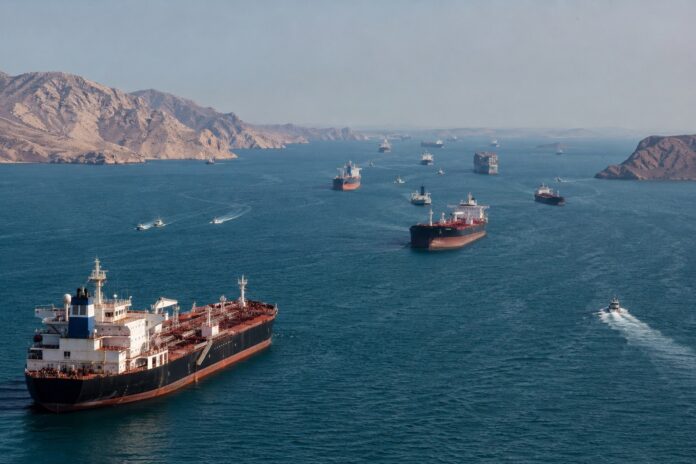
The Strait of Hormuz, which connects the Persian Gulf with the Gulf of Oman, is among the world’s most strategically important waterways. In addition to serving as a major passage for international energy shipments, the surrounding region contains communications infrastructure linking Gulf countries to global internet networks.
Undersea fiber-optic cables form the backbone of modern international telecommunications, carrying approximately 99 percent of the world’s internet traffic, according to the International Telecommunication Union.
Despite the importance of submarine cable networks overall, experts say that an attack on the cables passing through the Strait of Hormuz would likely have a more concentrated regional impact rather than causing a worldwide internet shutdown.
The cables in that particular area account for less than one percent of global international bandwidth, meaning that the consequences would depend largely on which connections were damaged and whether telecommunications companies could redirect traffic through other routes.
Alan Mauldin, research director at telecommunications analysis firm TeleGeography, explained that the severity of an outage would depend on the capacity of alternative connections and the ability of network operators to reroute communications.
Even a geographically limited attack could have serious consequences for Gulf countries that rely heavily on digital connectivity to support their economies.
Simultaneous damage to several cables could interfere with internet access, electronic banking, financial transfers, online commerce, and cloud-based business operations. Companies operating major data centers in the region could also face interruptions if critical international connections were lost.
Restoring damaged infrastructure during an active military confrontation would present additional difficulties. Repair vessels could encounter security threats, insurance premiums could increase sharply, and operators might struggle to obtain the government approvals necessary to conduct work in territorial waters.
Iranian officials have suggested that prolonging those difficulties would be part of their strategy, turning an initial attack on communications infrastructure into a more sustained economic and technological disruption.
The U.S. State Department and Iran’s Foreign Ministry did not immediately respond to requests for comment from Reuters, while governments in the Gulf region had not publicly addressed the reported plans when the information emerged.
The submarine cable warnings are part of a broader series of Iranian threats directed at American-linked technological infrastructure throughout the Middle East.
Earlier in October, senior Iranian security official Mohsen Rezaei warned that facilities associated with American technology companies, including data centers and artificial intelligence installations, could become targets if fighting resumes.
A second Iranian security official told Reuters that Gulf countries investing heavily in American technology should blame Washington for any resulting damage to their communications networks.
The message appears designed to increase pressure on governments in the region that maintain close economic and security relationships with the United States while simultaneously investing billions of dollars in technology projects involving American companies.
Alex Vatanka, who directs the Iran program at the Middle East Institute in Washington, said Tehran is seeking to turn the economic interests of Gulf governments and major corporations into a source of pressure on President Donald Trump.
“Tehran wants Gulf states and corporate executives to press Trump over the risks his policies pose to their investment plans,” Vatanka said.
Iran’s potential ability to threaten international communications infrastructure is not necessarily limited to the Persian Gulf.
Security analysts have also identified the Red Sea as a particularly sensitive location because of the concentration of submarine cables connecting Europe, Africa, and Asia.
The possibility of attacks in that region has attracted attention because of Iran’s relationship with the Houthis in Yemen, who operate near strategically important maritime routes. Tehran, however, has not publicly declared an intention to attack Red Sea communications cables.
According to Mauldin, submarine routes through the Red Sea carry approximately three percent of worldwide international bandwidth demand and roughly ten percent of communications traffic traveling between major geographic regions.
Damage to several cables in that area could therefore have broader consequences for international connectivity than similar attacks confined to the Strait of Hormuz.
The reported Iranian plans come at a particularly sensitive time for Gulf countries, which have been spending heavily to develop advanced technology industries and reduce their economic dependence on oil and gas.
Saudi Arabia, the United Arab Emirates, and other regional governments have pursued major investments in artificial intelligence, cloud computing, and digital infrastructure, frequently partnering with leading American technology companies.
Those investments have made the region increasingly important to the global technology industry while also creating infrastructure that could become vulnerable during a military confrontation.
The danger is not entirely hypothetical. During the fighting in March, Iranian strikes directly hit two Amazon Web Services facilities in the United Arab Emirates and damaged infrastructure near another AWS facility in Bahrain.
Those attacks demonstrated the vulnerability of major commercial technology installations during a regional conflict and raised concerns about the consequences of further strikes against facilities supporting international business operations.
At the height of the March confrontation, the Islamic Revolutionary Guard Corps also publicly identified several prominent American technology companies, including Microsoft, Google, Apple, and Nvidia, as potential targets.
Iran’s latest threats suggest that Tehran may now be considering a wider range of targets, extending beyond buildings and data centers to the physical networks responsible for carrying international communications.
Governments and telecommunications providers have consequently been exploring ways to strengthen the resilience of regional internet systems, including the development of additional land-based connections that could provide alternatives if submarine cables were damaged.
Such routes could allow operators to redirect at least some traffic around damaged underwater infrastructure, although their effectiveness would depend on available capacity and the extent of any coordinated attack.
Microsoft has announced plans to invest more than $400 million in submarine and terrestrial communications connectivity throughout the Middle East by 2030, reflecting the growing importance of the region to international digital networks.
The effectiveness of any Iranian campaign against undersea cables would ultimately depend on how many connections were severed, which countries and facilities relied on those routes, and how quickly telecommunications companies could restore or redirect service.
The reported cable-attack plans have emerged alongside additional warnings about Iranian retaliation. A U.S. intelligence memorandum dated October 23 reportedly warned that Tehran has intensified efforts to target American personnel, including plots that have advanced beyond preliminary planning. The warning has contributed to heightened security precautions at American diplomatic facilities across the Middle East.
President Trump has also indicated that further military action against Iran remains under consideration, while reports suggest that American military officials have presented additional strike options. No decision to launch another major operation has been publicly confirmed.
For now, the threatened attacks on undersea cables remain contingency plans described by Iranian officials rather than operations that have been carried out. Nevertheless, the warnings underscore the possibility that another round of fighting could extend beyond conventional military targets, placing the communications networks relied upon by millions of people and businesses directly in the path of the conflict.