
 Matzav
STRIKE PLANS READY: Pentagon Prepares New Iran Attack Options as Trump Weighs Military Action After Midterm Elections
The United States military has reportedly completed preparations for several possible new attacks against Iran, with military planners developing options that President Donald Trump could authorize following the November 3 congressional midterm elections.
According to a report published by The Hill, U.S. Central Command (CENTCOM), which directs American military operations throughout the Middle East, has prepared a range of potential operations against the Islamic Republic as the Trump administration considers whether to launch another round of military action.
Sources familiar with the planning told the publication that the proposals are ready for consideration by senior administration officials, although no final decision has been announced.
One individual familiar with the preparations said CENTCOM has developed plans for additional strikes that could be carried out upon receiving authorization from President Trump.
A second source confirmed that military commanders have assembled several operational options for Secretary of War Pete Hegseth to review.
That source stressed that Trump has deliberately avoided committing himself to a particular course of action, preferring to retain the ability to respond to developments without eliminating any potential military option.
The Pentagon declined to discuss the specific plans but acknowledged its responsibility to provide the president with military alternatives.
A Defense Department official told The Hill that the department’s “job is to develop and present military options to the President.”
“We don’t speculate on hypothetical situations or future operations,” the official added.
CENTCOM did not provide a response when contacted by the publication for comment.
The latest disclosures come amid mounting speculation that Washington could resume military operations against Iran, potentially targeting the country’s nuclear program and other strategic infrastructure.
The possibility of renewed American strikes has gained particular attention following Hegseth’s previously undisclosed visit to Israel earlier in the week.
During the trip, the secretary met with Israeli Prime Minister Binyamin Netanyahu on Monday and visited American military personnel stationed in the Middle East.
The meeting with Netanyahu had not been publicly announced beforehand, and Hegseth later acknowledged that the two had met without revealing the substance of their discussions.
Speaking with reporters Tuesday in Wisconsin, Hegseth emphasized the extensive military relationship between the United States and Israel, particularly their shared efforts to prevent Tehran from developing nuclear weapons.
“We’ve worked with the Israeli military quite a bit. That’s nothing new. We have for a long time. They have great capabilities, and we appreciate their contributions to assuring Iran never gets a nuclear weapon,” Hegseth said.
He also described Israel as “good partners.”
The secretary’s remarks came as American officials were reportedly reviewing options for another confrontation with Iran, raising questions about whether the United States and Israel could again coordinate military operations.
A separate report published Thursday by The Atlantic indicated that Trump was considering a new military offensive against Iran shortly after the November elections.
According to officials familiar with those discussions, the proposed campaign could last several days and involve attacks against Iranian nuclear installations, missile production and deployment capabilities, drone infrastructure, and energy facilities.
Such an operation would represent another significant escalation in the administration’s confrontation with Tehran.
The timing of any potential military action remains uncertain, however, with senior American officials offering differing indications about when an operation might occur.
On Friday, Tom Barrack, the U.S. ambassador to Turkey and Trump’s special envoy for Syria and Iraq, raised the possibility that American forces could launch strikes even before the weekend was over.
During an interview with Lebanese-Australian entrepreneur and podcaster Mario Nawfal, Barrack said the possibility of imminent military action could not be dismissed, while emphasizing that Trump remained prepared to pursue a diplomatic agreement with Iran.
“Could there be a strike this weekend? Absolutely. The president has been clear, I’m giving you American policy, the president is very clear: he’s open, and available and accessible to a deal. And we’ve been at the table for months and months and months,” Barrack said.
His comments drew attention because they suggested that the administration might be contemplating military action on a considerably shorter timetable than the post-election scenario described in other reports.
Asked about Barrack’s remarks during a conversation with reporters later Friday, Trump appeared to distance himself from the suggestion that an immediate strike had already been decided upon.
“[Barrack] is a pretty powerful man, I guess. If that’s the case, I don’t know anything about it,” the president responded.
Nevertheless, Trump continued to raise the possibility of another military campaign against Iran during a rally in Florida later that day.
Addressing supporters, the president referred to the possibility of repeating Operation Epic Fury, the name associated with the previous American military campaign against Iranian targets.
“We may do another little Operation Epic Fury, or they will agree. If they’re smart, they will just say, ‘Let’s get down to business.’ But I doubt they will do that because perhaps they’re not smart.
The president’s remarks underscored his administration’s continuing effort to pressure Tehran into an agreement while keeping the threat of military force on the table.
Although Trump has repeatedly emphasized his willingness to negotiate, he has also made clear that the United States is prepared to employ military power if he determines that diplomacy will not achieve Washington’s objectives.
The latest reports suggest that military commanders are preparing for that possibility by developing multiple operational scenarios rather than relying on a single proposed course of action.
When The Hill contacted the White House seeking a response to the reported strike preparations, administration officials referred the publication to Trump’s statements to reporters Friday.
The White House did not publicly confirm whether the president had reviewed or approved any of the specific military plans described by the sources.
The distinction between military contingency planning and a final presidential decision remains significant. CENTCOM routinely develops operational options for potential conflicts, and the existence of such plans does not necessarily mean that an attack has been ordered.
Additional reports indicate that American and Israeli military officials have also developed proposals for coordinated strikes, with exercises reportedly involving aircraft flying over Iraq to rehearse possible operations. The planning is said to include the possibility of a relatively brief but intensive campaign.
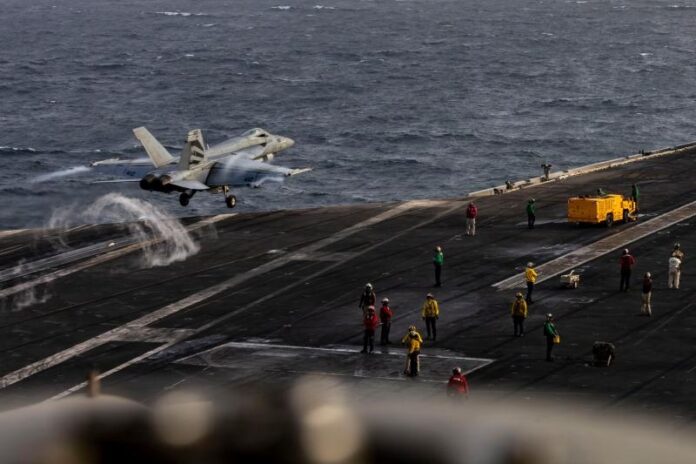
The Pentagon has also reportedly been strengthening its military presence in the Middle East, with three American aircraft carrier groups expected to be positioned in the region by the end of October, providing additional military options should Trump decide to resume large-scale operations.
Trump previously stated on October 8 that the United States would not launch new attacks before the November 3 elections, even as he maintained that Iran would not be permitted to obtain nuclear weapons.