
 Vos Iz Neias
Midterm Elections Could Shape Iran Strategy as US Military Buildup Continues in Middle East
NEW YORK (VINnews) — With US midterm elections approaching on Tuesday, November 3, the Trump administration faces a major political test that could have significant implications for its approach to Iran.
As Washington continues to strengthen its military presence across the Middle East, Israel is preparing for the possibility that Tehran could respond to an American or Israeli strike by activating its regional proxies and expanding the conflict across several fronts.
The main political battle is expected to focus on control of the Senate, amid projections that Democrats are well positioned to take control of the House of Representatives. Polling stations will open Tuesday afternoon Israeli time, with the first results expected early Wednesday morning.
The election could influence President Donald Trump’s freedom of action and willingness to pursue military action against Iran. For now, Tehran has shown little indication that it is prepared to soften its position in negotiations or change its behavior toward the United States, Western countries and the Gulf states.
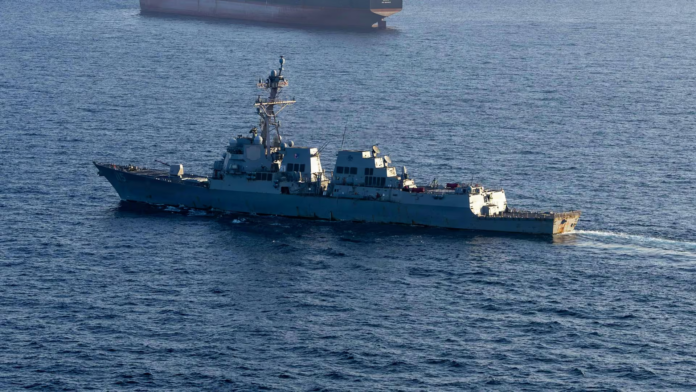
Despite the political uncertainty, American forces continue to strengthen their presence in the region. Two aircraft carriers are reportedly operating in the Gulf region, while transport aircraft have been delivering equipment to military bases throughout the Gulf and Israel.
According to regional assessments, much of the incoming equipment is defensive, including Patriot interception systems, radar equipment, spare parts and other supplies intended to strengthen American air defenses and support fighter squadrons deployed in the region.
Israel remains in close coordination with Washington, while preparing for the possibility that an attack on Iran could trigger a wider regional confrontation.
The November 3 elections will determine control of both chambers of Congress, not just the Senate. Although Democrats are favored to regain the House, the Senate contest remains highly competitive. A Reuters analysis published October 19 noted that Democratic control of Congress would significantly complicate Trump’s ability to advance his domestic agenda, although it would not automatically prevent military action against Iran. The outcome could nevertheless affect the political calculations surrounding a prolonged military campaign, congressional funding and the administration’s ability to maintain domestic support.
Israeli assessments suggest that Iran could attempt to unite several fronts in response to an American or Israeli attack, using its regional allies to increase the cost of military action. One potential front is Yemen, where the Houthis could intensify attacks against Saudi Arabia and potentially launch additional strikes toward Israel. Tehran could also seek to activate Hezbollah in Lebanon.
Lebanese media reported on Saturday that Hezbollah was considering joining the conflict if Israel attacked Iran and damaged its energy infrastructure and other strategic facilities. Israel is taking the possibility of Hezbollah’s intervention seriously. Although the organization has suffered significant damage during the prolonged fighting, Israeli officials remain concerned that it could still open a substantial northern front.
Defence Minister Israel Katz warned in October that Hezbollah would face a major Israeli response and could lose additional territory in southern Lebanon if it joined an Iranian attack on Israel.
According to the Israeli assessment, the IDF is preparing to respond with particularly heavy firepower if Hezbollah enters the fighting.
Armored Brigade 7, which has been operating in Lebanon for approximately a year, recently began a period of rest and rehabilitation. Soldiers are receiving time to recover, while tanks and other armored vehicles undergo maintenance. The brigade is expected to resume training in the Golan Heights in the coming days to restore operational readiness. The intention is to ensure that the formation can return to action quickly if developments on the northern front require it. The Israeli Navy is also expected to play a significant role in any expanded confrontation with Hezbollah.
According to the assessment, lessons learned from the previous campaigns, including Operation Rising Lion and the subsequent fighting, have led the IDF to consider a greater naval contribution. With the Air Force likely to be heavily committed to operations against Iran, the Navy could provide additional firepower against Hezbollah infrastructure in Lebanon.
Potential targets would include Hezbollah positions and military infrastructure along the Lebanese coast, as well as its strongholds in Beirut’s southern suburbs, known as Dahiyeh. Israeli military planning also reportedly considers the possibility of imposing a naval blockade on Lebanese ports if Hezbollah launches a major attack. Such measures would represent a significant escalation and would depend on the circumstances of any future conflict.
Iran could also attempt to intensify the situation in the Gaza Strip. The IDF currently maintains two divisional formations there, Division 162 and the Gaza Division, with five brigades operating under their command.
Israeli forces continue conducting operations against Hamas and Palestinian Islamic Jihad, while the Shin Bet and Military Intelligence provide information on the organizations’ leadership, recruitment efforts and attempts to rebuild their military capabilities.
The current Israeli approach has been described as a strategy of continuously preventing Hamas from rebuilding its strength. According to the assessment, security forces are eliminating approximately three to four terrorists per day, particularly mid-level commanders involved in recruitment and rebuilding the organizations’ military infrastructure.
The IDF is also targeting weapons depots, weapons-production laboratories and logistical facilities. During the past weekend, several weapons storage facilities were reportedly destroyed in operations directed by the Shin Bet.
Israeli officials believe the period surrounding the American midterm elections could be particularly sensitive, as Iran attempts to establish deterrence and create additional pressure on Washington.
Rather than confronting the United States and Israel on a single front, Tehran could seek to activate several regional partners simultaneously, forcing its adversaries to divide their military resources and consider the wider consequences of an attack. The coming days could prove decisive in determining whether the confrontation remains contained or develops into a much broader regional war.