
 Matzav
DEAL OR STRIKES: Vance Says Iran Nuclear Agreement Within Reach as Trump Keeps Military Option on Table
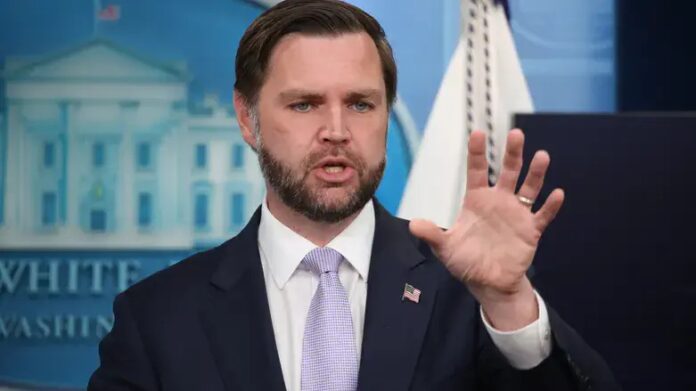
Vice President JD Vance said Monday that the Trump administration is increasingly hopeful of reaching a negotiated agreement with Iran, although Tehran must provide concrete, verifiable assurances that it will not restore its nuclear program. Vance said Washington has established no deadline for a deal, even as President Donald Trump continues to warn that military action remains an option if diplomacy fails.
Speaking with reporters at Joint Base Andrews, Vance described recent discussions with Iranian representatives as encouraging and revealed that he had spoken with Trump about the negotiations just an hour earlier.
JD Vance on Iran:
Trump and I both feel pretty good about the prospects for potentially coming to a negotiated settlement.
We've certainly made some progress. We'll see if we can make some more. pic.twitter.com/Gl4uMGRjbG
— Clash Report (@clashreport) November 2, 2026
“We’ve had a number of good conversations with the Iranians,” Vance said. “I actually spoke with the President of the United States about this an hour ago.”
“The President and I both feel pretty good about the prospects for potentially coming to a negotiated settlement. We’re going to keep on working at it. You never know, of course. The Iranians are always a little unpredictable, and as the President always says, he retains kinetic options, he retains non-kinetic options,” the Vice President added.
“We’ve certainly made some progress. We’ll see if we can make some more,” he said.
Vance dismissed suggestions that the administration had imposed a specific timetable on Iran, explaining that Washington’s overriding objective is to prevent the country from reconstituting nuclear capabilities that American military operations previously targeted.
“No, we haven’t set deadlines. I mean, look, we’ve said, ‘Here’s what we want.’ And what we want is, having destroyed their nuclear program, we want to make sure they don’t rebuild it or try to rebuild it. That’s what matters most to the United States.”
The vice president acknowledged that Iranian leaders are seeking to preserve their sovereignty and revive their battered economy. He indicated that those priorities could provide an opening for an agreement, provided Tehran accepts meaningful restrictions on its nuclear activities.
“The thing I’ve picked up is they care a lot, obviously, about their sovereignty. They care a lot about economically rebuilding. We do think that there is a pathway there, but it really does require a firm commitment and a verifiable commitment that they don’t rebuild that nuclear program.”
Trump offered a similarly upbeat assessment Monday, pointing to a sharp decline in oil prices as evidence that markets increasingly expect an agreement rather than another round of fighting.
“Oil Prices are DROPPING LIKE A ROCK, down almost $10 a Barrel, A RECORD, because people feel that there will not be a War with Iran. Iran wants a settlement, as soon as possible. It could happen!” Trump wrote on Truth Social.
During a separate appearance at the Lincoln Memorial in Washington, the president again suggested that Tehran was prepared to negotiate an end to the confrontation.
“They want to make a deal. And it could happen.”
Trump also portrayed the American military campaign against Iran as a decisive success, arguing that U.S. forces had already inflicted devastating damage on the country’s military capabilities.
“We had a war with Iran. We won, and I don’t even know if you can call it a war because we haven’t been fighting for months,” Trump said, adding, “It’s not a war. We’ve done very little fighting. We’ve wiped out their military and air force and we did everything we had to do.”
The president credited American military achievements with helping drive oil prices down by approximately $10 per barrel and predicted additional declines. He also asserted that Iran was experiencing severe economic distress, including inflation exceeding 300%.
Nevertheless, Trump made clear that his preference for negotiations should not be interpreted as an unwillingness to authorize further strikes. Speaking Sunday at a campaign rally in Iowa ahead of Tuesday’s midterm elections, he warned that Iran’s opportunity to reach an agreement would not remain open indefinitely.
“The only reason we are not finished with Iran is because I want to be nice. I want to try and save all those lives if I can. But at some point, we’re going to have to give them the hammer.”
Trump predicted that the confrontation would be resolved soon but offered no specific timetable.
Meanwhile, Washington and Tehran have continued indirect negotiations through Qatari intermediaries. Reports over the weekend indicated that the two sides had reached preliminary understandings involving Iran’s nuclear activities, freedom of navigation through the Strait of Hormuz, and possible economic incentives for Tehran. No final agreement has been announced.
According to a Reuters report Monday, Iranian negotiators departed Doha following discussions with Qatari mediators, although an official familiar with the negotiations said their departure did not signal a breakdown. A draft proposal is reportedly being circulated, and another round of talks remains possible.
Iranian Foreign Ministry spokesman Esmaeil Baghaei said Tehran’s proposal centers on reopening the Strait of Hormuz and ending the American naval blockade of Iranian ports. Iran has offered to accelerate implementation of its plan, potentially reopening the strategic waterway within two days if its conditions are accepted.
Significant differences remain, however, particularly over Iran’s nuclear program, sanctions relief, and the terms of a broader security arrangement.
{Matzav.com}