
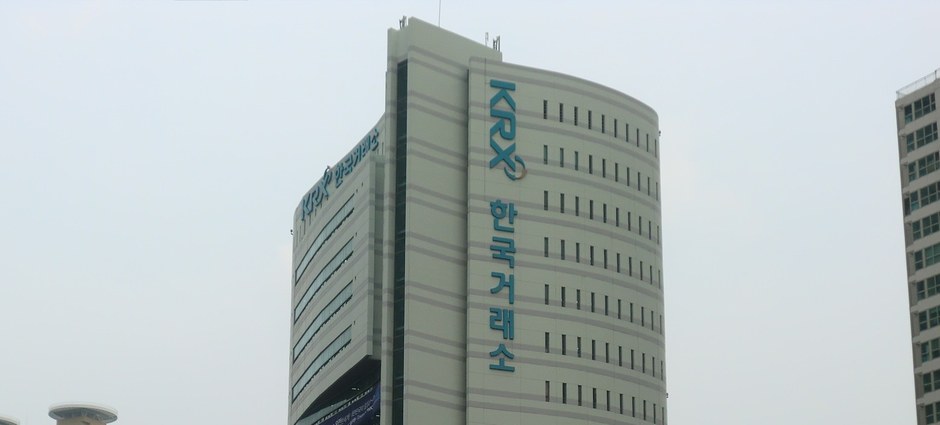

Photo: hyolee2/Commons, CC BY-SA 3.0 (file; cropped)

South Korea’s benchmark Kospi fell more than 8% and broke below 5,000 early Friday, November 6, prompting the Korea Exchange to halt trading in Kospi-listed shares for 20 minutes. The circuit breaker added to a wave of technology-stock selling that had battered Wall Street during Thursday’s U.S. session.
The exchange activated the halt at 9:03 a.m. Seoul time. That was 7:03 p.m. Thursday in New York.
Trading resumes after a 20-minute pause
The stage-one circuit breaker temporarily suspended Kospi trading after the steep fall. Trading resumed at 9:23 a.m., following the 20-minute pause.
A first-stage halt is triggered when the index stays at least 8% below the previous close for a minute. A separate sell-side sidecar took effect in the Kosdaq market at 9:06 a.m. That measure suspends the effect of program-trading orders for five minutes and is different from the broader Kospi circuit breaker.
The Kospi fell more than 8% and passed below 5,000.
AI concerns spread beyond Wall Street
The selling reflected concerns that the Democrats’ U.S. midterm-election gains could slow artificial-intelligence data-center expansion, along with investor worries about AI regulation.
Japan’s Nikkei was down more than 6% in the early Friday session as of 7:44 p.m. Eastern Thursday. The decline remained above 6% at 9:39 a.m. Tokyo time.
The Nikkei entered bear-market territory, more than 20% below its June peak. Technology-related shares led the regional selling.
Korea Exchange data showed the Kospi’s fall of more than 8% and the 20-minute circuit breaker as of 9:40 a.m. Seoul time.
Asian chip shares extend the selling
As of Thursday at 7:59 p.m. Eastern, early-Friday intraday declines included SK Hynix more than 8%, Samsung Electronics 7%, Advantest 12.2%, Tokyo Electron 7.3%, SoftBank Group 11.6% and TSMC 9.6%.
The breadth of the selling matters to readers with chip-stock or AI-supplier exposure: sentiment surrounding AI spending can reach Asian equipment, memory and contract-chip companies as well as U.S. names such as Nvidia.
For readers whose retirement or international index funds hold Korean equities, including Samsung or SK Hynix, the selloff can affect those holdings even without direct stock ownership. Exposure depends on the fund’s actual portfolio.
South Korea’s latest move follows a separate selloff during Thursday’s Asian session. The immediate development is the sharp early-session decline and the exchange’s temporary market-stabilization response.
How the day ended
The Kospi climbed back above 5,000 after trading resumed but still closed down 6.02% at 5,059.69, a loss of 324.11 points. The Kosdaq closed down 5.03% at 644.27.
For the rest of the region’s close – Tokyo’s Nikkei and Topix, Taipei’s Taiex and TSMC, and Sydney’s S&P/ASX 200 – see our Asia markets wrap.
JBizNews Desk | Global & Markets
© JBizNews.com. All rights reserved. Unauthorized reproduction or redistribution is strictly prohibited.