
 Matzav
$500 MILLION DOWN THE DRAIN: Elon Musk’s Massive Midterm Spending Spree Ends in Crushing Republican Defeats
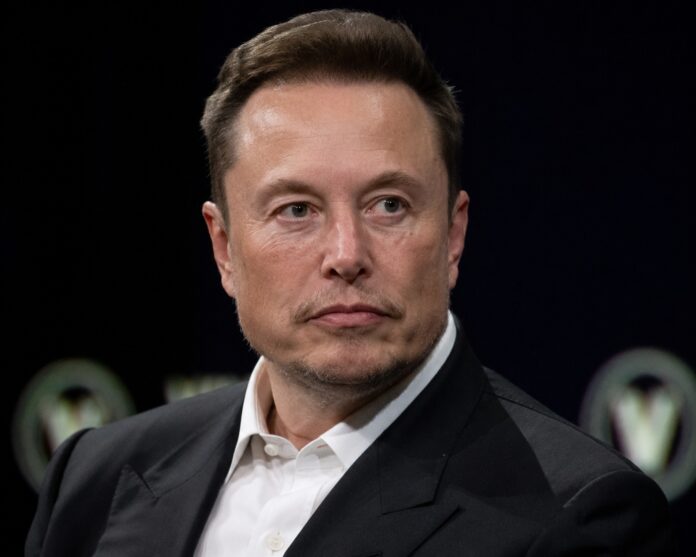
Elon Musk poured nearly half a billion dollars into the 2026 midterm elections in an extraordinary effort to preserve Republican control of Congress and help elect GOP candidates across the country. Instead, the billionaire emerged from Election Day with a string of costly defeats, as Democrats captured both the House and Senate and several of the Republican candidates he supported lost high-profile races.
According to campaign finance disclosures and an analysis of political contributions, Musk committed at least $474 million to Republican candidates and political organizations during the election cycle, making him the largest individual political donor of the midterms. The figure could ultimately prove higher because some contributions made late in the campaign have not yet been fully disclosed.
The spending represented a dramatic escalation from the approximately $250 million Musk devoted to helping President Donald Trump win the 2024 presidential election. This time, however, the financial investment produced remarkably few victories in the races that mattered most.
The most expensive disappointment came in Texas, where Musk directed an enormous amount of money toward electing Republican Ken Paxton to the U.S. Senate. Musk-backed efforts poured more than $200 million into the contest, including approximately $153.5 million in advertising targeting Democratic candidate James Talarico.
Despite the unprecedented financial support, Talarico defeated Paxton by a substantial margin, delivering Democrats a historic victory in a state that had long been considered a Republican stronghold.
The Texas Senate contest became the most expensive nonpresidential race in American history, with total spending reaching approximately $573 million.
Speaking to supporters after his victory, Talarico portrayed the election as a rejection of the influence of wealthy political donors.
“We’ve just sent a message to every millionaire mega donor, to every trillionaire mega donor, every corrupt defender of this broken political system. In this state, in this country, power belongs to the people,” Talarico declared.
“Tonight we beat Goliath,” he added.
Musk suffered another major setback in the Texas gubernatorial race, where he spent at least $5 million supporting Republican Governor Greg Abbott. Abbott was defeated by Democrat Gina Hinojosa, ending more than three decades of Republican control of the governor’s office.
The losses were particularly significant for Musk because Texas serves as a major base of operations for his business empire, including Tesla and SpaceX. Hinojosa has previously challenged the state’s relationship with Musk’s companies, raising questions about government incentives, public resources and the billionaire’s influence over state policy.
The disappointing results extended well beyond Texas.
According to a Reuters analysis published Thursday, only three of the 37 Republican House candidates supported by Musk had won their races, while 33 had lost and one contest remained undecided at that point. Of the seven Republican Senate candidates he backed, six had been defeated, with the remaining race still unresolved.
Among the other notable losses were Republican candidates in Ohio and Michigan, where Democrats Sherrod Brown and Abdul El-Sayed won their respective Senate contests.
Musk distributed his political contributions through several organizations, including his own America PAC, which received approximately $216 million, the Senate Leadership Fund, which received roughly $168 million, and the Congressional Leadership Fund, which received $30 million.
His political operation also invested heavily in advertising, voter outreach and efforts to influence competitive congressional races.
Yet the extraordinary financial commitment proved insufficient to overcome voter dissatisfaction with Republicans, particularly over economic concerns and the direction of the country.
Some Republican officials acknowledged that the sheer volume of political advertising may have reached a point of diminishing returns.
“You’re reaching the upper bound of the benefit of any of these dollars,” outgoing Republican Congressman Chip Roy of Texas said. “People are so turned off by all of the ads, and all you’re doing is running the same ad every single time.”
Musk himself appeared to acknowledge the disappointing results with a sarcastic message posted on X, the social media platform he owns.
“Guess my election-interfering space lasers didn’t work this time,” he wrote.
The consequences of the election could extend considerably beyond Musk’s political reputation.
With Democrats preparing to take control of Congress, lawmakers have indicated that they intend to intensify scrutiny of Musk’s business dealings with the federal government, including SpaceX contracts, the Starlink satellite network and his previous involvement in the Trump administration’s Department of Government Efficiency.
California Democratic Congressman Robert Garcia, who is expected to lead the House Oversight Committee, has also discussed legislation targeting campaign finance provisions that allow wealthy individuals to contribute unlimited personal funds to political efforts.
Investors reacted negatively to the prospect of increased congressional investigations and regulatory scrutiny. Shares of Tesla and SpaceX declined sharply following the election, contributing to a multibillion-dollar reduction in Musk’s estimated personal fortune.
Despite the enormous losses at the ballot box, political analysts caution that Musk’s spending may still provide him with considerable influence inside the Republican Party. His financial resources remain vast, and Republican candidates seeking support in future elections may continue to view him as an indispensable benefactor.
For Musk, whose fortune has been estimated at hundreds of billions of dollars, the nearly $500 million spent on the midterms represents only a small fraction of his wealth.
But the political return was another matter entirely. After investing an unprecedented sum in Republican victories, Musk watched Democrats capture Congress, Republicans lose major statewide contests, and candidates backed by his political operation suffer defeats across the country.
The billionaire who spent nearly half a billion dollars trying to shape the outcome of the midterms now faces a Democratic-controlled Congress that may be far less accommodating toward both his political activities and his business interests.