
 Matzav
HISTORIC POWER SHIFT: Democrats Nominate Hakeem Jeffries for House Speaker in 251-11 Vote
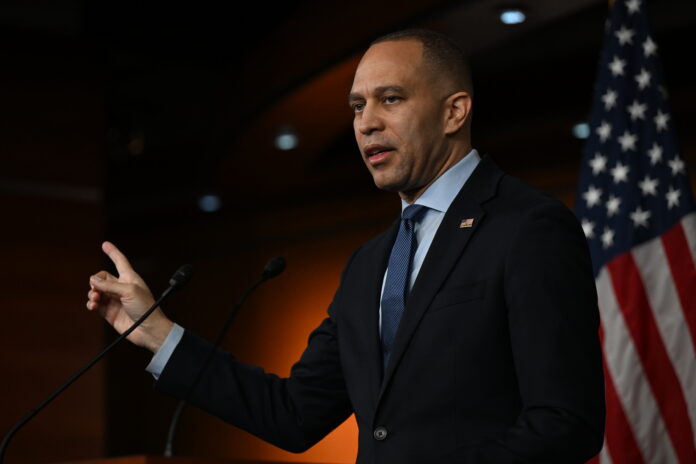
House Democrats on Wednesday formally nominated New York Congressman Hakeem Jeffries to become the next speaker of the House of Representatives, placing him on course to become the first Black speaker in American history following the Democratic Party’s sweeping victories in this month’s midterm elections.
Jeffries, 56, secured the nomination by a vote of 251-11 during a closed-door meeting of current and incoming Democratic lawmakers on Capitol Hill. The vote represented an overwhelming endorsement of the Brooklyn Democrat, who has led the party in the House since January 2023, despite objections from a small group of progressive members.
The nomination follows the November 3 midterm elections, in which Democrats regained control of both the House and Senate, delivering a major political setback to President Donald Trump and the Republican Party.
Jeffries will still need to win a formal vote of the full House when the new Congress convenes on January 3, 2027. Democrats are expected to hold at least 257 seats, providing the party with a substantial majority and giving Jeffries a clear path to securing the 218 votes required to claim the speaker’s gavel.
If elected, Jeffries will replace Republican Speaker Mike Johnson of Louisiana and become the first Democrat to lead the chamber since Nancy Pelosi relinquished the speakership in January 2023.
Although Jeffries faced no announced challenger for the Democratic nomination, several newly elected progressives had expressed reservations about his leadership and demanded stronger commitments on healthcare, immigration, campaign finance reform and American military assistance to Israel.
Seven incoming progressive lawmakers confirmed that they voted against Jeffries, saying discussions over the party’s direction and legislative priorities remained unresolved.
The group included Darializa Avila Chevalier, Adam Hamawy, Frederick Haynes, Melat Kiros, Donavan McKinney, Chris Rabb and Claire Valdez. The identities of the other four Democrats who opposed Jeffries in the secret ballot were not immediately disclosed.
The progressive opposition reflects disagreements within the Democratic Party over how aggressively its new congressional majority should pursue its agenda, particularly on healthcare policy and relations with Israel.
Some progressive lawmakers have pressed Jeffries to support Medicare for All and restrictions on American weapons transfers to Israel. Others have called for a more confrontational approach toward the Trump administration.
Jeffries has recently sought to address some of those concerns, announcing support for expanding Medicare benefits and lowering eligibility requirements while outlining plans for congressional investigations and legislation addressing the cost of living.
Following Wednesday’s vote, Jeffries thanked his colleagues for their support.
“Together, we will deliver bold change. And make a big difference in the lives of the American people!” he wrote on social media.
The Democratic leadership elections also produced several other historic selections.
Massachusetts Congresswoman Katherine Clark was chosen to serve as House majority leader, becoming the first woman to hold that position. California Congressman Pete Aguilar was selected as majority whip, positioning him to become the first Latino to serve in that role.
California Congressman Ted Lieu was elected Democratic caucus chairman, becoming the highest-ranking Asian American member in the House.
Jeffries, who has represented portions of Brooklyn and Queens since 2013, succeeded Pelosi as the House Democratic leader following the party’s loss of its majority in the 2022 elections.
His expected elevation will give Democrats control of the House’s legislative agenda, committee leadership and investigative powers during the final two years of President Trump’s term.
The incoming Democratic majority has pledged to prioritize legislation addressing inflation, healthcare costs and other economic concerns while conducting oversight of the Trump administration.
Republicans, meanwhile, have selected Ohio Congressman Jim Jordan to lead their conference in the next Congress after Johnson announced that he would not seek the position of minority leader.
The leadership changes will take effect in January, when the newly elected Congress convenes and lawmakers formally choose the next speaker.