
 JBizNews
Supreme Court Asked to Block Venezuelan TPS Reinstatement Before Friday Deadline
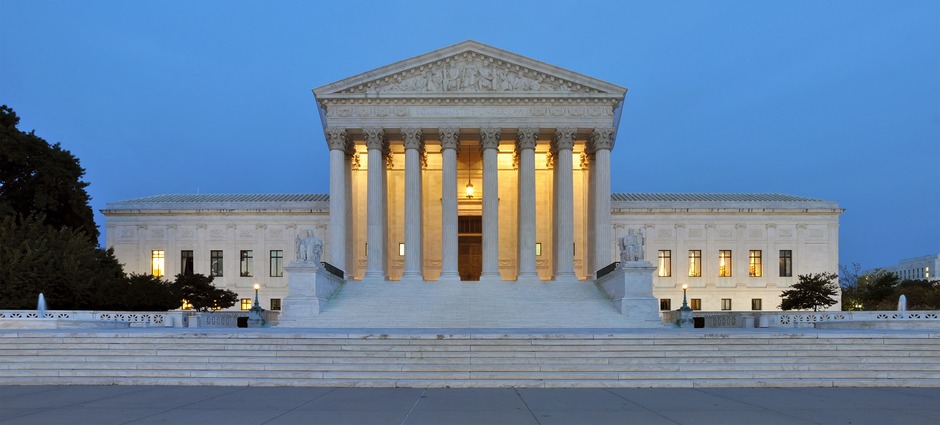
Archive photo, October 2011: U.S. Supreme Court building. Joe Ravi / Wikimedia Commons, CC BY-SA 3.0. Cropped.

Update, November 19: The Ninth Circuit has extended the temporary hold on reinstating protections under Venezuela’s 2023 Temporary Protected Status designation. A November 18 order, reproduced in CourtListener’s appeals-court docket as entry 109, grants an administrative stay lasting until seven days after publication of the appeals court’s forthcoming judgment. That replaces the earlier November 20 expiration described below.
The interim order keeps the district court’s reinstatement judgment from taking effect while the appeals court considers the case. It does not restore TPS or associated work authorization for people covered by the 2023 designation, and it does not decide whether the administration lawfully ended that designation. This development does not determine the status of every Venezuelan TPS holder or other TPS group. UCLA Law’s litigation team, which represents the challengers, separately confirmed the stay and its duration.
The administration’s Supreme Court request is a separate proceeding. As of this November 19 update, the Supreme Court’s public docket lists the application submitted to Justice Elena Kagan on November 18, with no ruling on that request posted. The appeals court’s interim stay is not a Supreme Court decision.
The Trump administration asked the Supreme Court on Wednesday to prevent the return of deportation protections for Venezuelans covered by the country’s 2023 Temporary Protected Status designation. At the time of the application, an earlier appeals-court hold was scheduled to expire Friday, November 20. The Ninth Circuit subsequently extended that hold, as described in the November 19 update above.
The emergency application, filed by the Solicitor General on behalf of Homeland Security Secretary Markwayne Mullin, asks the justices to stay a federal judge’s September 2025 judgment setting aside the termination of that designation. It is a request, not a Supreme Court ruling.
Under the earlier schedule, the Ninth Circuit’s administrative stay would have expired November 20. The government argued that, without further court action, the district court judgment would then take effect and restore the 2023 designation while litigation continued. The appeals court’s November 18 order replaced that deadline with a stay lasting until seven days after publication of its forthcoming judgment.
Government cites detention and work-permit consequences
Federal attorneys wrote that reinstatement could require the release of about 1,800 Venezuelans from detention, prevent the government from carrying out up to 332 final removal orders and require it to provide work authorization. Those are the government’s claims in its emergency application.
About 600,000 Venezuelans have received TPS protections, according to Associated Press reporting. That broader figure is not a count of people covered by the 2023 designation at issue in this application. Venezuela also had a separate 2021 designation, which the administration terminated in a different action.
AP reported that work authorizations ceased to be valid after the administration ended Venezuelan TPS last year. Thousands faced removal proceedings, detention or deportation, and many left voluntarily. How many former beneficiaries remain in the United States is unclear.
Another emergency request in a long-running case
The Supreme Court previously allowed the administration to strip the protections at an earlier stage of the litigation. On October 5, 2026, it granted review, vacated the Ninth Circuit’s judgment and sent the case back for reconsideration in light of its Mullin v. Doe decision.
The Ninth Circuit denied the government’s stay request on October 30, then withdrew that order on November 3 and issued a 14-day administrative stay beginning November 6, when the Supreme Court’s mandate was due to issue. That sequence, described in the application and its attached court orders, produced the earlier November 20 deadline, which the November 18 order superseded.
TPS, established by Congress in 1990, protects eligible people from deportation to countries facing conditions such as armed conflict or natural disasters and allows them to work legally. It does not itself confer permanent immigration status.
The government sought Supreme Court relief during further appellate proceedings. The Ninth Circuit has since granted its own interim stay; that order does not resolve the merits of the appeal or constitute a Supreme Court ruling.
JBizNews Desk | Washington
© JBizNews.com. All rights reserved. Unauthorized reproduction or redistribution is strictly prohibited.