 The Lakewood Scoop
New York’s Noise Cameras Target Loud Mufflers; Should Lakewood Add Them?
For Lakewood residents kept awake by roaring motorcycles and backfiring cars, New York City has an enforcement tool worth a closer look: cameras that use sound to help identify noisy vehicles.
The question is whether a similar system could help here, and what would have to happen before Lakewood could use it.
The complaints are familiar. In an earlier Ask the Chief question about a motorcycle keeping residents awake, Police Chief Greg Meyer said officers had identified the operator and issued charges. Another resident complained about cars repeatedly circling the block and backfiring. Mayor Ray Coles asked for the location so police could investigate.
How the Cameras Work
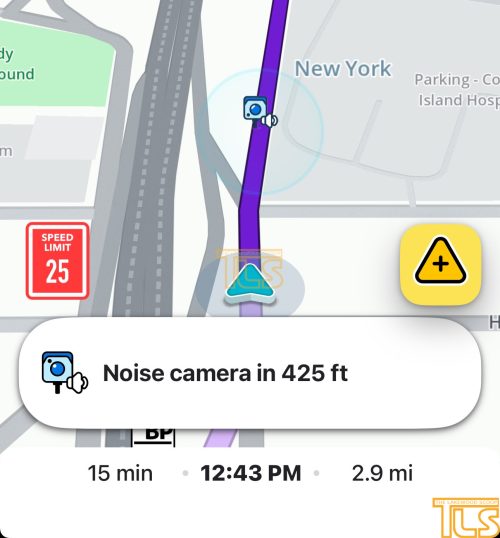
New York City’s system combines microphones, video cameras and license-plate readers. When noise exceeds a preset threshold, the system captures an event. Its microphone array helps locate the sound, with a red dot marking the source in the footage.
A recording does not automatically become a ticket. Department of Environmental Protection staff review the evidence before issuing a summons to the vehicle owner. Cases are heard at the city’s Office of Administrative Trials and Hearings.
The cameras can capture more than exhaust noise, including illegal horn use and loud vehicle music. DEP says their placement is designed to record license plates without showing vehicle interiors or occupants.
There is no single decibel limit for every vehicle. New York’s legal limits vary by vehicle type, weight and the road’s speed limit, with measurements taken at, or adjusted to, a specified distance.
Fines Start at $800 for Muffler Noise
According to DEP, muffler-noise penalties range from $800 to $2,625, including the default penalty. Separate penalties apply to horns and music.
The city’s 2025 annual report lists 12 cameras, 15,994 captured events and 1,691 summonses. It reports nearly $1.5 million in penalties imposed, but $308,229 paid. Those are different figures, and ticket totals alone do not establish that streets became quieter.
The program also has costs. The report lists $492,565 in personnel expenses and $109,092 for camera calibration and service during 2025.
Could Lakewood Do It?
New Jersey already requires combustion-engine vehicles to have working mufflers that prevent excessive or unusual noise, and prohibits muffler cutouts and bypasses on highways.
Two pending bills, S4638 and A1092, would tighten restrictions on exhaust modifications and increase penalties. Both remain in legislative committees. Neither proposal creates a New York City-style noise-camera program.
New York City has a specific law establishing its camera program and vehicle-owner liability. A comparable authorization for Lakewood to mail noise-camera tickets to registered owners was not identified in the New Jersey laws and bills reviewed for this story. That leaves a legal question, not proof that every use of sound cameras is prohibited.
Before pursuing such a system, Lakewood would need legal guidance on its authority, evidence standards and any required state approvals, along with a clear price tag, privacy rules and a way to measure whether it actually reduces noise.
For residents losing sleep, the appeal is clear: capture a violation even when an officer is not standing nearby.
Whether cameras are the right answer for Lakewood, let us know your thoughts.