
 Vos Iz Neias
Report: Belzer And Karlin Rebbes Were Involved In Formulating Charedi IDF Orders
JERUSALEM (VINnews) — Channel 13’s reporter on charedi affairs, Yoeli Brim, revealed that the new IDF orders regarding charedim serving in the military were formalized in consultation with the Belzer and Karliner rebbes. Brim wrote that despite denials of his report by the Belz chasidic group, a senior member of the group will be coordinating with the rabbinic advisors in order to supervise the implementation of the new orders within the IDF.
I24’s Ari Kalman also reported that an external committee of prominent rabbis and Hasidic rebbes, operating under the authority of the Defense Establishment Comptroller, will oversee the implementation of accommodations for charedi service members in the IDF. Kalman added that the committee will provide responses to questions from Haredi leadership regarding religious lifestyle matters during military service.
Despite these developments, the mainstream Lithuanian roshei yeshiva continue to express their opposition to any cooperation with the IDF. Brim brought recordings from Rabbi Chaim Peretz Berman (Ponovezh) and Rabbi Avigdor Pilz (Tifrach) in which they dismissed the new regulations as “stuff and nonsense” and claimed that “They will change the rules so that boys and girls will be together, you don’t let the cat guard the cheese.”
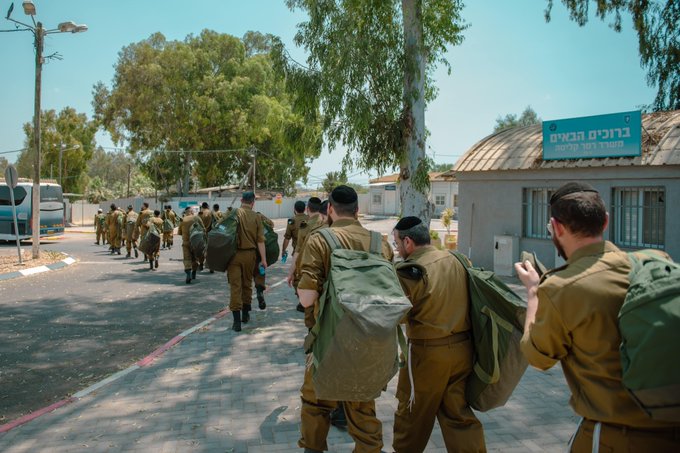
The new IDF orders divided charedi units into three categories: The David track is the most stringent, with closed units that are fully gender-separated at every stage, from basic training through command and officer roles. All soldiers in this framework must come from the charedi community and commit to a strict religious lifestyle (only kosher phones), and commanders are required to live at least a fully religious life, with preference for charedi officers. The Cherev track also maintains full gender separation in a designated compound and is reserved for charedi soldiers, particularly in combat settings where commanders are expected to live a charedi or religious lifestyle. The Magen track is aimed at non-combat roles, organizing soldiers into gender-separate teams that function as a distinct “capsule” within broader units.
Eligibility will be based on a recruit’s actual charedi way of life, assessed through interviews and formal approval by authorized officials. Soldiers who no longer meet the criteria will be moved into standard service frameworks. The directive also reiterates existing accommodations, including structured prayer times, higher kosher standards, and the option to make a declaration of allegiance instead of a traditional oath, signaling an effort to expand participation while maintaining religious integrity for observant recruits.