 Vos Iz Neias15 hours ago
JERUSALEM (VINnews)-The Israel Defense Forces eliminated two senior Hamas terrorists in separate airstrikes in the northern Gaza Strip this week, the military announced Friday.
On Wednesday, the IDF struck and killed Khalil Jamal Khalil Manna, a commander in Hamas’ Weapons Production Headquarters within the group’s military wing. Manna oversaw rocket launcher production workshops and directed the final stages of their manufacturing throughout the war. He also played a key role in efforts to restore the headquarters’ capabilities during the ceasefire, according to the IDF.
On Thursday, the IDF conducted a second strike, eliminating Osama Walid Deeb Muhareb, a company commander in Hamas’ Nuseirat Battalion. In recent months, Muhareb had stored explosive devices intended for use against IDF troops.
Both terrorists posed an immediate threat to Israeli forces and were targeted from the air. The IDF said it took extensive measures prior to the strikes to minimize harm to civilians, including the use of precise munitions and aerial surveillance.
IDF troops under the Southern Command remain deployed in the area in accordance with the ceasefire agreement and will continue operations to neutralize any immediate threats.
The strikes come amid ongoing efforts by the IDF to degrade Hamas’ military capabilities in Gaza.

 Vos Iz Neias17 hours ago
THESSALONIKI, Greece (AP) — A passenger on board a Ryanair flight from Greece to Germany was being treated in a hospital Friday after being partially sucked out of a window that broke shortly after takeoff.
A Greek hospital official said the 61-year-old passenger was treated for neck and shoulder injuries and friction burns. The official spoke on condition of anonymity because they were not authorized to speak publicly to the media.
The aircraft that partially sucked a 61-year-old Serbian man out of the window is a Boeing 737-800 (Next Generation), not a B737 MAX. It's an 18-year-old airframe, MSN 36569, built in Renton and delivered to Ryanair in March 2008, registered as EI-DYF. It later entered service… pic.twitter.com/lIO2ByXp3a
— Turbine Traveller (@Turbinetraveler) July 10, 2026
The Friday morning flight from the northern Greek city of Thessaloniki to Memmingen near Munich was operated by Ryanair subsidiary Malta Air. Ryanair said the flight “returned to Thessaloniki shortly after takeoff when a passenger window dislodged in-flight.”
The airline said in a statement the plane landed normally and passengers returned to the terminal, and one passenger requested and received medical assistance on the ground in Thessaloniki. A replacement aircraft was later provided to fly the passengers to Germany.
Passengers told Greek media that they heard a loud bang, oxygen masks dropped and the plane began to lose altitude.
One passenger, identified only as Christina, told Thessaloniki radio that passengers panicked and screamed and that one passenger was partially sucked out of the window.
“His whole head, neck, shoulders” were pulled out of the window, she said, adding that those seated near him pulled him back in.
“Most people had fallen asleep, we had closed our eyes. We heard a sound, I’d describe it like a tire bursting, … but very loud,” she said. “We knew straight away we lost pressure because we lost altitude. … Screams, shrieks, shouting.”
The aircraft was a Boeing 737-800, which can seat up to 189 passengers. The narrow-body plane was delivered new to Ryanair in 2008, according to flight-tracking site Flightradar24.
About six minutes after departure, flight records show, the aircraft climbed past 15,000 feet (4,570 meters), then immediately descended to about 6,000 feet (1,830 meters) “to burn fuel for 30 minutes” before returning to Thessaloniki about an hour after takeoff, Flightradar24 said.
 Vos Iz Neias17 hours ago
NEWARK, N.J. (VINnews) — NJ Transit is launching a $12 million initiative to deploy a new GPS-based real-time train tracking platform, aiming to deliver more accurate arrival information to commuters across its rail network.
The system, called NJT LiveView, represents a key component of the agency’s newly announced Rapid Action Plan, backed by Gov. Mikie Sherrill. It will capture high-accuracy GPS data from trains in operation and consolidate it into a single authoritative feed, addressing longstanding gaps in the current scheduling and tracking system.
Once implemented, NJT LiveView will provide live arrival countdowns, automated service alerts and instant notifications to riders via a redesigned NJ Transit mobile app, station information displays and third-party navigation applications.
The digital upgrade is part of a broader effort to improve the commuter experience. The Rapid Action Plan also includes state funding for rotating teams of station cleaners, targeted repairs to enhance elevator and escalator reliability, and the creation of a dedicated Real Time Crime Center to bolster security camera monitoring at major transit hubs.
NJ Transit officials say the investments are designed to deliver immediate improvements in reliability, cleanliness and safety for the hundreds of thousands of daily riders who depend on the system. Further details on the timeline for the NJT LiveView rollout were not immediately available.
 Vos Iz Neias18 hours ago
RISHON LEZION, Israel (AP) — Marking the coordinates on a handheld GPS, an Israeli diver threw an anchor into the water as another quickly chucked an orange buoy beside it. Cramped on the boat’s bow, the first team assembled their gear, put on wet suits and tested oxygen tanks before jumping in.
But after hours of combing the Mediterranean seabed in search of yellow-painted mock mortar shells, the divers surfaced empty-handed.
It was the team’s fifth diving trip in the yearslong experiment to help prepare Israel to clear part of the sea from unexploded grenades and other munitions in order to return beach area to residents. But on this day in June, the divers couldn’t find the dummy mortar and artillery shells they’d planted months prior, foreshadowing the challenges that lie ahead.
“It’s really hard to find things in the sea,” said Roy Jaijel, a researcher in the marine geology and geophysics department at Israel’s National Institute of Oceanography, as he emerged from a dive.
Jaijel co-leads a project aimed at returning some 2 kilometers (1.2 miles) of shoreline to people living in Israel’s central city of Rishon LeZion, an area that’s been used as a firing range for decades. The initiative, the first of its kind in Israel, coincides with a global push to better protect the world’s waters as demand increases for the use of seas and oceans for shipping, energy and recreation.
Experts say the clearance of underwater munitions has received more attention in recent years in part because of the boom in artificial intelligence, which requires millions of kilometers of underwater fiber-optic cables to allow for global connectivity.
Munitions can end up dumped into waters after wars, fall into seas during conflict or, in the case of Rishon LeZion, accumulate from firing practice. Erosion from seawater can lead toxic and explosive chemicals, along with heavy metals, to seep from the munitions, causing environmental contamination. There’s also the risk of objects exploding if people step on them or children play with them, thinking they’re toys.
Two years ago, Europe launched a project to better detect and clear non-military unexploded ordnance, such as from industrial or commercial sites. In a separate initiative in 2024, Germany piloted a program to recover and dispose of military waste from the North and Baltic seas, where some 1.6 million tonnes of unexploded munitions from two world wars lie, according to the German government.
Divers descend to place mock munitions on the floor of the Mediterranean Sea off the coast of Rishon LeZion, Israel, Sunday, June 21, 2026. (AP Photo/Ariel Schalit)
Still, there’s been less focus on clearing waters in the Middle East, such as the Mediterranean, which historically hasn’t been the site of large dumps compared with Europe.
Leaders of the Israeli project say it’s one of the first to focus on clearing smaller munitions in complicated underwater terrain, which is why many countries have avoided it.
“It’s like looking for a needle in a haystack,” said Israel Faintuch, head of the Maritime Division at Israel’s Ministry of Defense National Mine Action Authority as he checked his oxygen tank and suited up to go underwater.
Limited beach space in Israel is the driving force behind the clearing effort
The government says nearly half the country’s 194-kilometer (120-mile) coastline is off limits to civilians, used for commercial ports, power plants, desalination facilities, military bases and firing zones.
Since the country’s founding nearly 80 years ago, 7 kilometers (4.3 miles), nearly the entire length of Rishon LeZion’s shoreline, has been used as a firing range, launching grenades as well as small and large mortars, leaving hundreds of thousands of people crammed into a narrow strip of beach.
Launched last year, the joint research project funded by Rishon LeZion’s municipality is being led by Israel’s National Mine Action Authority and researchers from the National Institute of Oceanography. It aims to localize the most impacted areas, mapping the pattern of munitions to determine how far offshore and how deep to go before the clearance team steps in.
In order to gather data, divers place various sizes of fake munitions — some equipped with motion sensors — at depths of 5, 10 and 15 meters (16, 33 and 59 feet) and up to 1.2 kilometers (0.75 miles) offshore. After several months, they retrieve the munitions, analyze the data and plant new ones.
In June, Associated Press journalists accompanied the team underwater as they placed new munitions for the next round of tests and attempted to find ones they’d left in January. Divers descended using a string, or measuring tape, to navigate the seabed. Tapping each other under the water, they’d point in different directions to search, rubbing their hands over the seafloor.
“You have limited air supply when you go with the divers and you have limited time in the water,” said Dafna Eliahu, a graduate student at the University of Haifa working on the project. “So with actual live munition I expect it to be very difficult, very hard to locate and to actually be able to find them,” she said.
Divers load gear and mock munitions to be placed on the floor of the Mediterranean Sea off the coast of Rishon LeZion, Israel, Sunday, June 21, 2026. (AP Photo/Ariel Schalit)
While the information, including from the sensors, is still being processed, preliminary findings show that the munitions moved less than expected, which means there might be less area that needs clearing, she said.
Israel’s Defense Ministry wants to have enough data to start clearing by the end of next year and expand the shoreline by an initial 150 meters (492 feet) within a few months. Completing the project will take years and cost tens of millions of dollars. It’s already been delayed due to Israel’s multiple wars with Hamas in Gaza, Hezbollah in Lebanon and Iran as divers can’t work when missiles are falling and could land in the sea.
During the current war that the U.S. and Israel launched against Iran as well as the 12-day war last June between Israel and Iran, the army said missiles aimed at larger cities like Rishon LeZion fell into the sea but wouldn’t specify how many.
Israel says no one has been injured or killed by unexploded sea ordnance, but there have been about a dozen sightings of devices in the last 20 years where the police and army were called. Most have been found on or near shore.
What’s learned during the project could be useful beyond Israel
While the goal of the project is to expand parts of the shoreline, Israel also hopes its findings will yield new insights on clearing munitions from this part of the world, where there are threats but overall less is known.
According to the Geneva International Centre for Humanitarian Demining, more than half of global incidents related to unexploded ordnance, such as sightings or drifting mines, were recorded in the Middle East between 2014 and 2023, with most occurring in the Red Sea off the coast of Yemen and the Bab-el-Mandeb Strait, largely a result of Yemen’s civil war.
Pedro Basto, research and innovation program manager with the group, said it is important to keep interest high in removing underwater explosives given the increasing dependence on the seas.
“Both renewable energies based on the sea (wind turbines and harnessing water currents) and the global connectivity that most of the world relies on every minute of every day, depend massively on underwater cable laying,” he said.
As Israel’s project advances, residents in Rishon LeZion say they’re looking forward to being able to use more land.
Moria Malka, head spokesperson for the city’s municipality, said the clearance will triple the area’s coastline and much of it will become a nature reserve as well as a residential area near the sea. For beachgoers like Mark Kostman, that is great news.
“Holidays and Saturdays, all of this place is completely crowded and too dense to even have fun,” said Kostman as he played volleyball with his children next to the firing zone. “Having it as public space for leisure and sport … it’s wonderful.”
Divers place mock munitions on the floor of the Mediterranean Sea off the coast of Rishon LeZion, Israel, Sunday, June 21, 2026. (AP Photo/Ariel Schalit)
 Vos Iz Neias18 hours ago
NEW YORK (VINnews)-The STAR-K Kosher Certification agency has issued a fraud alert warning consumers about a Dunkin’ store in the Catskills displaying an unauthorized STAR-D certification letter.
The alert, dated July 10, 2026, states that a Dunkin’ location at 30 Catskill Commons in Catskills, New York — situated inside a Walmart — is showing a STAR-D letter. The store is not certified by STAR-K, the agency said. Corrective action is being taken.
STAR-K, one of the leading kosher certification organizations, urged the public to verify certifications through official channels. The agency maintains an alerts page at star-k.org/alerts and encourages users to download its app via the Google Play Store or Apple App Store for the latest updates on kosher supervision.
The notice comes amid growing concerns in the Jewish community about fraudulent kosher claims, which can mislead consumers seeking to maintain kashrut standards.
A separate STAR-D supervision sign was recently documented at a certified Dunkin’ location in Baltimore, Maryland, under the National Council of Young Israel, illustrating the type of proper documentation used by authorized outlets. That location at 7002-A Reisterstown Road in the Colonial Village Shopping Center lists specific approved items and equipment protocols.
Consumers with questions about the Catskills store or other certifications are advised to contact STAR-K Certification, Inc. directly at its Baltimore headquarters.
 Vos Iz Neias19 hours ago
WASHINGTON (AP) — Last December, after Make America Healthy Again activists drew up a petition to get him fired, Environmental Protection Agency administrator Lee Zeldin pledged to release a formal agenda of MAHA priorities that his agency would pursue, including protections against harmful chemicals and other health concerns.
But eight months after its first mention and after repeated promises it was being drafted, the so-called MAHA agenda is nowhere to be found. When asked for a status update this week, an EPA spokesperson said MAHA is an ongoing effort, not a single report.
The apparent reversal on release of a formal environmental health agenda is the latest in a cascade of disappointments for Health Secretary Robert F. Kennedy Jr.’s MAHA movement, who say they’ve lost faith that the Trump administration will take any significant action on pesticides, chemicals or other issues they view as key to address America’s chronic disease epidemic. It also reflects the EPA’s relentless rollback of environmental regulations even in the face of pressure from an important voting bloc that has supported President Donald Trump.
“I had really hoped that there would be specific steps that were taken through a MAHA agenda,” said activist Kelly Ryerson, whose social media account “Glyphosate Girl” focuses on nontoxic food systems. “We haven’t had any of the wins that we were requesting.”
Many in the diverse coalition of MAHA activists that Trump credits for helping him win back the White House say they plan to vote on issues over party in November’s congressional elections, raising the political stakes of their increasingly public tensions with the Republican administration.
“People are done with the profits of corporations being prioritized over public health,” said Alexandra Muñoz, a molecular toxicologist who collaborates with activists on certain issues. “And I think that will have an important role in the midterms.”
MAHA is frustrated with EPA’s actions
“Trump’s EPA,” as Zeldin frequently calls the agency, has vigorously pursued a deregulatory agenda. Earlier this year, Zeldin proposed overturning the landmark finding that climate change is a threat to human health. He moved to roll back dozens of environmental regulations in what he called “the greatest day of deregulation our nation has seen,” froze billions of dollars for clean energy and upended agency research.
Trump’s second-term EPA also has been working to loosen limits on pollution from smokestacks, tailpipes and producers of oil and gas.
At the same time, Zeldin has touted multiple “MAHA wins,” some of which activists say are anything but. For example, he said the agency intends to regulate some chemicals called phthalates for environmental and workplace risks, but didn’t address the thousands of consumer products that contain the ingredients.
This week, the EPA diverted from past assurances that the MAHA report was in its “final stages,” telling The Associated Press in an email that the EPA’s actions should speak for themselves.
“The notion that MAHA is a single document waiting to be unveiled fundamentally misrepresents how we operate,” an agency spokesperson said, adding that work on MAHA priorities is “active and expanding every day.”
Ryerson and other MAHA activists said they’ve engaged with agency officials about changes they’d like to see, and occasionally succeeded. For example, her network of farmers worked with the administration on a recent executive order to advance regenerative agriculture. But she said EPA then used the order to justify new proposed uses for various herbicides, a move she called a “slap in the face.”
The same week, the Supreme Court dealt another blow to the MAHA cause in siding with pesticide maker Bayer in a ruling related to its legal liability for alleged harm caused by its Roundup weedkiller. The Trump administration had backed the company in the case.
Environmental activists say the rise of Kennedy and his MAHA mission has rippled across the administration, raising the public’s awareness of pesticides — and expectations that Trump’s administration would act.
“If RFK and the MAHA movement hadn’t put that issue in the center of the public spotlight, no one would be scrutinizing this nearly as closely,” said Sarah Starman, a senior food and agriculture campaigner at the nonprofit Friends of the Earth.
EPA says getting microplastics out of drinking water is complicated
In a well-publicized gesture aimed in part at the MAHA movement, Zeldin in April included microplastics and pharmaceuticals on a list of contaminants that could be regulated under the Safe Drinking Water Act. Activists had pressured Zeldin for months to crack down on microplastics and other environmental contaminants.
But in a reversal in late June, the EPA did not include microplastics or pharmaceuticals on a list of chemicals it plans to test for under a mandatory program used to collect information about concerning chemicals in drinking water that could be harming human health.
The move rendered the EPA’s earlier public health promises “functionally toothless,” said Betsy Southerland, a former senior official in EPA’s water office.
Zeldin said on social media that “the technology to test and treat for microplastics in drinking water is still in development.” The EPA said in a Federal Register notice that it was “not feasible to develop a drinking water analytical method within the statutory timeframe.”
Southerland called the situation a “classic Zeldin bait-and-switch.”
After making “a big splash in the press” on microplastics, “EPA has quietly stalled that momentum,” she said.
A White House Make America Healthy Again Report, released a few months into Trump’s second term, identified long-term exposure to environmental chemicals — including those widely found in plastics — as a leading cause of chronic disease in children.
Former industry lobbyists now have leading roles at EPA
Jeremy Symons, a senior adviser at the Environmental Protection Network, a group of former EPA employees and political appointees who are critical of the Trump administration, said Zeldin “pays lip service to MAHA, but sadly he is actually making Americans less safe from toxic chemicals.”
Alongside MAHA’s influence on the Trump administration, industry lobbyists have made inroads at the EPA.
Kyle Kunkler, a former lobbyist for the soybean industry, leads pesticide policy at the EPA. The agency recently allowed continued use of dicamba, a weedkiller that has been linked to increased risk for some cancers.
Zen Honeycutt, a MAHA activist and founding executive director of Moms Across America, said the move is “what happens when the EPA allows itself to be pressured by corporations and by business.”
EPA also employs other former industry insiders. Nancy Beck, a former executive at the chemical lobbying group the American Chemistry Council, is a top official in EPA’s Office of Chemical Safety and Pollution Prevention. Lynn Dekleva, another former chemistry council executive, serves as a Beck deputy.
The EPA said Kunkler and other political appointees have consulted with agency ethics officials to resolve any potential conflicts of interest. The MAHA movement has “driven this agency’s work since President Trump’s first day in office,” a spokesperson said in an email, citing various initiatives including $945 million in grants to help states and communities cut “forever chemicals” known as PFAS in drinking water and identifying 30 drinking water contaminants proposed for nationwide monitoring.
But for Ryerson and others, the lack of a promised MAHA agenda reads as a tactic to escape accountability.
“It absolves them of any failures, especially when it comes to midterms,” Ryerson said. “They won’t have to point to some list that they haven’t been able to achieve really anything on.”
 Vos Iz Neias19 hours ago
DUBAI, United Arab Emirates (AP) — A series of unclaimed airstrikes that hit Iran after the U.S. said it finished its attacks have again raised questions of who else may be targeting the Islamic Republic.
The strikes Thursday, just as Iran prepared to bury the late Supreme Leader Ayatollah Ali Khamenei, hit areas across southern Iran. The country’s theocracy hasn’t directly blamed anyone for the strikes, though one lawmaker issued a warning to the United Arab Emirates over allegedly providing support to the United States in its campaign against Iran.
Gulf Arab states, which repeatedly have been targeted by Iran since the war began Feb. 28, did not immediately respond to requests for comment Friday over the strikes. The attacks come as they and the U.S. insist the Strait of Hormuz, a vital waterway for world energy markets, must be open and free to ships.
Iran says the strait must now be under its sole control and that vessels should begin to pay fees to Tehran — even though the world for decades has considered it an international waterway. About a fifth of all oil and natural gas transited the strait before the war began.
Iran’s grip on the strait during the conflict led to an global energy crisis, though oil prices have sharply dropped since wartime highs of $120 a barrel.
Israel, which took part in the Iran war, also has not claimed any recent attacks on Iran.
Unclaimed strikes came after US ended its attacks
The U.S. military’s Central Command said Thursday around 6:30 a.m. local Iran time that it had concluded a round of strikes that saw some 90 targets hit. Shortly after that, Iranian news outlets and state media reported a series of airstrikes and explosions targeting the country’s Bushehr and Sistan and Baluchestan provinces, the cities of Ahvaz and Chabahar and other areas.
A U.S. defense official, speaking on condition of anonymity to discuss operational details of the American military campaign, said there had been no new U.S. strikes since the last round ended Thursday morning.
Iran responded to the strikes Thursday by launching a wider volley of attacks across the Mideast, targeting Bahrain, Jordan, Kuwait and Qatar. Missile alert sirens sounded in the four countries, sending people to seek shelter. One person was reportedly hurt in Kuwait as air defense systems targeted the incoming fire across the region.
The leader of the UAE, Sheikh Mohammed bin Zayed Al Nahyan, traveled to Kuwait immediately after the Iranian attack for a meeting with the small, oil-rich nation’s ruling emir. Gulf Arab countries also held calls with Qatar’s foreign minister, who has been deeply involved along with Pakistan in mediating talks between Iran and the U.S. over the interim deal now in place to halt the return of open warfare.
During the Iran war, there also were a series of unclaimed airstrikes. Officials later said both Saudi Arabia and the UAE launched airstrikes on Iran, after Tehran struck energy sites in their countries. Having a Gulf country again strike Iran likely could be an effort to deter Tehran from targeting the Gulf states again.
Israel, which under Prime Minister Benjamin Netanyahu has engaged in an intense campaign against Iran, has not attacked the Islamic Republic since June. In most cases, Israel immediately claims its attacks on Iran.
Israel’s government said Netanyahu spoke with U.S. President Donald Trump on Thursday night, with Trump updating Netanyahu “on American moves in the Gulf.”
Israel Katz, Israel’s defense minister, also renewed threats that his nation stood ready to confront Iran if needed.
The Israeli military “is on alert and ready to renew the campaign, to reestablish aerial superiority, and to carry out a blue-white (Israeli) strike in Iran to remove threats, even for a third time,” Katz told a military ceremony. “If we will have to return, we will return with even greater force.”
Iran keeps up its threats
On Friday, Iranian state media quoted Esmail Kousari, a member of the Iranian parliament’s national security committee and a former commander in the paramilitary Revolutionary Guard, as warning the UAE would “pay the price for its cooperation with the United States.” He accused the Emirates of having a “behind-the-scenes” role in the recent U.S. attacks.
Iran repeatedly accused Gulf Arab states of actively supporting the U.S. war effort, something they denied during the war. The U.S. since the 1991 Gulf War has maintained a broad footprint of military bases across the Gulf Arab states, including in Bahrain, which is home to the U.S. Navy’s 5th Fleet headquarters.
Meanwhile, Iran insists it must be the sole controller of the Strait of Hormuz. But the U.S. is continuing to urge mariners to travel on a southern route through Oman’s territorial waters to avoid Iran.
The Joint Maritime Information Center, a multinational body overseen by the U.S. Navy, issued a new advisory Friday urging ships to travel that route. A similar message for ships to use that route sparked an Iranian attack on Tuesday that saw three vessels hit.
“Notwithstanding recent unprovoked attacks on merchant vessels, mariners are reminded that the southern route of the (strait) has been expanded and remains available for all traffic,” the maritime center said.
 Vos Iz Neias20 hours ago
NEW YORK (AP) — Kia America has issued a new recall for nearly 463,000 of its Telluride SUVs, urging owners to again park their vehicles outside and away from buildings after several customers reported fires following previous repairs.
The recall, announced this week by the National Highway Traffic Safety Administration, replaces a prior one Kia initiated in 2024. Certain Tellurides from the 2020-2024 model years are affected, with the NHTSA warning that the front power seat motor of these vehicles may overheat due to a stuck slide knob.
That could result in a fire while the car is parked or being driven. And even after Kia rolled out a remedy in 2024, recall documents note several customers filed complaints of alleged fires underneath the passenger seat. The automaker investigated other vehicles that had received the prior repair and identified “sporadic dealer workmanship issues” — later deciding to initiate a new recall.
Between October 2024 and April 2026, Kia North America’s safety office identified 18 incidents involving either localized seat fires or melting of the seat motor, per recall documents. No associated injuries or crashes have been reported.
To address the hazard, Kia’s new fix will be for dealers to install an electronic fuse assembly, free of charge — aimed at preventing ongoing operation of the seat motor if its switch becomes dislodged or otherwise damaged. That remedy will be available in early August, according to an advanced dealer notice published by the NHTSA. And owner notification letters are set to be mailed starting Aug. 13.
In the meantime, the NHTSA is warning owners to “park outside and away from structures until the recall repair is complete.”
Press contacts for Irvine, California-based Kia America — a subsidiary of the larger South Korean automaker — did not immediately respond to The Associated Press’ requests for further comments on Friday.
Drivers can also confirm if their specific vehicle is included in this recall and find more information using the NHTSA site and/or Kia’s recall lookup platform.
The recall covers 462,869 model year 2020-2024 Tellurides that were manufactured between Jan. 9, 2019 and May 29, 2024. Kia America estimates that 1% have the defect.
 Vos Iz Neias20 hours ago
(AP) – A Mexican man living in the U.S. who was fatally shot by an Immigration and Customs Enforcement agent was not the person federal authorities had been targeting in a Houston operation, U.S. Rep. Sylvia Garcia said Thursday.
The Democratic congresswoman, whose district includes the Houston neighborhood where the shooting occurred, said acting ICE Director David Venturella told her the agency has confirmed Lorenzo Salgado Araujo “was not a target.”
Salgado Araujo was a homebuilder who had lived in the U.S. for more than 35 years, had no criminal record and was close to finishing the long process of obtaining legal status when he was killed early Tuesday morning, according to his family.
“We’ve got to do something. This is just one more death too many,” Garcia said in an interview with MS Now. “And if we’ve got to bring outside, independent folks to come in and look at it, we should do that.”
A spokesperson for the Department of Homeland Security did not immediately return an email seeking comment late Thursday.
DHS, which oversees ICE, previously said that federal officers were conducting a targeted operation to arrest a person in the country without legal status when they attempted to stop a vehicle driven by Salgado Araujo. The agency has said Salgado Araujo rammed an ICE vehicle and that a federal officer fired a weapon in self-defense.
Asked whether ICE agents had been specifically targeting Salgado Araujo, DHS said earlier Thursday that officers had been surveilling a property where they had previously observed two white vans.
Ronaldo Salgado and Lorenzo Jr., sons of Lorenzo Salgado Araujo, hold a photograph of their father during a news conference Wednesday, July 8, 2026, in Houston. (AP Photo/David J. Phillip)
“On July 7, officers were almost at the target’s address when they observed a white van with an individual who resembled the target. Officers then initiated the vehicle stop,” the department said.
The federal agents weren’t wearing body-worn cameras, DHS said, and few photos or videos surrounding the shooting have emerged publicly in the days since the encounter, unlike other deaths involving federal immigration officers.
In a statement, DHS said the agents at the scene in Houston had not yet been issued body cameras, which it blamed on Democrats and a record government shutdown that was fueled by President Donald Trump’s immigration crackdown.
U.S. Rep. Christian Menefee, a Democrat who also represents Houston, said if the agents didn’t have the devices, it was because Trump and Republican lawmakers did not want them to be carrying them.
“Houston is done accepting excuses from an agency that has more money than it knows what to do with and still can’t manage basic accountability,” he said in a statement.
The Harris County District Attorney’s office said it would conduct an investigation into the shooting. The office is consulting with local prosecutors in Minneapolis, where federal agents fatally shot two U.S. citizens, to learn how they have navigated investigations into federal immigration agents, spokesperson Rafael Lemaitre said.
“Although access to key evidence remains under federal control, we are pursuing investigative avenues available to us and will conduct a review of any information we collect within our reach,” Lemaitre said in an emailed statement.
Three men, including Salgado Araujo’s brother, were detained by ICE during the fatal traffic stop, according to Juan Proaño, CEO of the League of United Latin American Citizens, who has been communicating with their families.
A woman holds up a sign during a vigil for Lorenzo Salgado Araujo, a Mexican national fatally shot by a federal immigration agent a day prior, Wednesday, July 8, 2026, in Houston. (AP Photo/Mark Felix)
LULAC has yet to obtain video footage that clearly shows what happened during the moments of the shooting and has offered a reward of $5,000 for information from witnesses, Proaño told The Associated Press. The position of Salgado Araujo’s van and ICE vehicles has obstructed security camera footage LULAC has reviewed, he added.
“It’s going to make it even more difficult to find the truth in all this,” he said.
DHS said the ICE agents involved in the incident were expected to receive body-worn cameras in the next 60 days.
In the aftermath of the fatal Minneapolis shootings of Renee Good and Alex Pretti, Democrats had refused to fund ICE and the Border Patrol without changes to those operations designed to increase accountability and transparency. Republicans in Congress eventually passed legislation funding just ICE and CBP for three years.
 Vos Iz Neias20 hours ago
JERUSALEM (VINnews) — President Donald Trump on Friday denied reports that Israel had uncovered a new Iranian plot to assassinate him, saying Tehran has targeted him for years but there is no new intelligence.
Speaking to the New York Post, Trump dismissed reports that Israel had recently warned Washington of a fresh threat, saying, “Israel came up with nothing.”
Trump said Iran has considered him its “No. 1” target since the 2020 U.S. strike that killed Iranian Gen. Qassem Soleimani and warned that he has “left instructions” for a severe military response if an assassination attempt were ever successful.
Iran has repeatedly threatened retaliation against Trump over Soleimani’s killing, and U.S. officials have previously acknowledged ongoing Iranian threats against the president.
 Vos Iz Neias20 hours ago
NEW YORK (AP) — When two steel columns buckled this week inside the former Pfizer headquarters in midtown Manhattan, the scare prompted evacuations and halted work on one of the nation’s largest office-to-apartment conversions.
It also highlighted the complex engineering behind adaptive reuse projects, which have become increasingly popular as officials try to tackle a nationwide housing shortage by transforming offices that have sat underused since the COVID-19 pandemic.
The plans call for turning two office buildings — one built in 1909, the other in the 1960s — into about 1,600 apartments by adding more than a dozen stories atop the older structure and redesigning and expanding the other. The buckling occurred on the 21st floor of the newer structure, and crews have installed temporary supports as officials investigate.
Engineering experts said the conversion project is complex and poses many challenges, which include making sure older buildings can safely support new loads and carving up office floors to accommodate residential living.
But none said the high-profile setback should make people doubt the ability of engineers to complete such projects.
“I don’t think it really brings into question our understanding of how to do something like this,” said Ben Schafer, a structural engineering professor at Johns Hopkins University.
How do you build a new tower on top of an old one?
On its website highlighting the midtown project, adaptive reuse firm Collaborative Construction Management says the nine-story building from 1909 will be “threaded through” with a new addition of about 30 stories of poured concrete.
Schafer, who is not involved with the undertaking, said the likely approach is to have the century-old building continue to carry its own weight while building a new structural system to support additions.
“My interpretation would be that they’re going to leave that building carrying its own load, and they’re just going to poke holes in it so that they can take the load from the building that they’ve put above it and bring it all the way down to the foundation,” Schafer said.
Schafer said construction on the other tower presents a different challenge: punching holes in the existing floor plate to bring light into apartments, while also ensuring that the steel frame can support the newly added loads.
City officials have not determined what caused the columns to buckle. But both Schafer and Emily Guglielmo, a San Francisco-based structural engineer, believe the failure likely resulted from the added load.
Spokespersons for MetroLoft, the project developer, didn’t respond to requests for comment Thursday. But Nathan Berman, the firm’s founder, acknowledged in an interview with The Wall Street Journal that the added weight from widening the top 15 or so floors of the building likely caused the damage.
Guglielmo thinks that either the original design assumptions were misunderstood, something went wrong during the design or construction process, or construction crews overloaded or weakened the structure.
Adding stories to existing buildings is common in dense urban areas where land is scarce, she said, but it requires reviewing original construction documents and inspecting the building before determining how additional floors will affect the structure.
“In cities and towns that don’t have that available geography, you’re going to see a lot more of this type of a design where there’s an adaptive reuse to an existing building,” Guglielmo said.
Why not just create a new building from scratch?
To many structural engineers, demolition should occur only as a last resort.
“Tearing buildings down is a terrible waste,” Schafer said, pointing out that buildings and the construction sector are responsible for about 40% of the world’s energy-related carbon emissions. “From a sustainability standpoint, that’s a disaster.”
Beyond the environmental costs, demolishing and hauling away the remnants of huge buildings is especially expensive in dense cities such as New York.
If an existing structure can safely be reused, engineers generally prefer that.
James LaFave, a structural engineering professor at the University of Illinois, said a steel-framed building from the 1960s, like the former Pfizer structure, would typically be a “very good” starting point for a conversion.
Does the scare in New York call into question other adaptive reuse projects?
In recent years, officials across the country have embraced office-to-housing conversions as a potential lifeline for downtown business districts that have struggled since the pandemic.
New York, especially, has embraced this push, as officials have made zoning changes and enacted tax incentives to spur housing production. A report from the New York City comptroller’s office last year noted there are 44 adaptive reuse projects in the city that, as of early 2025, had either been completed, were underway or could move forward.
Pfizer moved out of the building in 2023 after opening a new office near Penn Station, leaving the property vacant. Construction on the property began in 2024.
Joshua Harris, director of Fordham University’s Real Estate Institute, said office-to-residential conversions are a key part of solving the housing shortages in New York and other cities, even if they come with risk.
“In a certain sense, it’s not terribly surprising that this happened, and we should have a little bit of grace,” he said. “These are very, very complicated surgical procedures being done to very old buildings.”
“This is part of the reality of fixing the housing crisis,” Harris continued. “Things like this can happen. It doesn’t look as complex as putting a rocket into space, but, in a real estate sense, construction in an environment like Manhattan on 42nd Street and Second Avenue is very complex.”
Guglielmo, the California engineer, said a combination of building codes, inspections and experienced construction crews makes failures like this rare.
“We’re very fortunate here in the United States that we are not seeing these types of failures on a day-to-day basis,” she said. “We’re privileged to have really robust building codes that explain to us as engineers how to do our designs in a way that’s safe.”
Still, Harris said it is likely a gut check for the industry, as office conversions transform once sleepy business districts across the city into 24/7 neighborhoods, like parts of Wall Street in recent years.
“If this building has a problem, all the other projects that have been sort of greenlit, they’re going to want to review to make sure that it’s not something similar,” Harris said.
 Vos Iz Neias21 hours ago
WASHINGTON (AP) — President Donald Trump has chosen not to sign a sweeping housing affordability bill on Friday, in protest of Congress not approving a strict voter ID bill that does not have enough support to pass.
“I will not sign the Housing Bill, which has been fully approved by Congress and sent to the White House, in PROTEST over the fact that the United States Senate is not capable of passing THE SAVE AMERICA ACT,” Trump posted on social media.
Still, the housing measure could become law on Friday without Trump’s signature, as he had 10 days to issue a veto and stop the measure. Trump’s post simply says that he will not sign it.
Trump’s rejection of the bipartisan housing legislation exacerbates tensions with his own party in a midterm election year and cuts short their efforts to address a key voter concern about rising costs. His post comes more than a week after he canceled plans to sign the bipartisan legislation, announcing he was using it as leverage in his push for a strict voter ID bill.
The 21st Century ROAD to Housing Act aims to lower the cost of housing and spur more home construction. It’s the most sweeping effort in decades to address America’s housing affordability problems.
 Vos Iz Neias21 hours ago
WASHINGTON (AP) — Many Jewish adults feel unsafe in the United States, a new AP-NORC poll finds, with a majority saying they feel less safe than they did before Hamas’ Oct. 7, 2023 attack on Israel.
The survey from The Associated Press-NORC Center for Public Affairs Research points to how Jewish adults’ attitudes toward their own personal safety have changed over a relatively short period as more Americans became critical of the United States’ close alliance with Israel. The war in Gaza sparked U.S. protests over Israel’s military actions against the Palestinians in Gaza, and coincided with an increase in violent attacks against U.S. Jewish communities.
The findings highlight the vulnerability that many Jewish adults in the U.S. feel as bipartisan support for Israel erodes and significant divides emerge within the Jewish community about what constitutes antisemitism — particularly when it comes to protesting Israel.
A significant share of Jewish adults, about 3 in 10, say they or someone in their household has experienced physical assault, verbal abuse, online harassment or damaged property because of their Jewish background over the last year, according to the survey.
Hal Guberman, a 30-year-old in New Jersey, wears a kippah with some trepidation ever since a stranger in a passing car yelled a slur at him when he was walking down the street last year.
“That person, they don’t know anything about me. They don’t know my politics. They don’t know my beliefs. They don’t know my viewpoints,” Guberman said. “But they saw me being visibly Jewish, and they made an opinion about me.”
Jewish adults see prejudice against Jews as a serious problem, and many feel unsafe
About 6 in 10 Jewish adults say that prejudice against Jewish people is an “extremely” or “very” serious problem in the United States today, a view that is heightened among Jewish adults who say they are “extremely” or “very” emotionally attached to Israel.
About one-third of Jewish adults say they feel “very” or “somewhat” safe as a Jewish person in the U.S. today, while about one-third feel “very” or “somewhat” unsafe. The remaining roughly 3 in 10 say they feel neither safe nor unsafe. Those with a close connection to Israel or who identify as Jewish by religion — instead of saying they are religiously unaffiliated with a cultural, ethnic or family connection to Judaism — are more likely to feel threatened in the current environment.
About 6 in 10 Jewish adults say they feel “less safe” as a Jewish person in the U.S. than they did before Hamas’ 2023 attack, including about 7 in 10 of those who are religiously Jewish. About one-third of Jewish adults say they feel “about as safe” and very few feel safer.
Erin Baskin, a 36-year-old in Pennsylvania, said the Oct. 7 attacks didn’t change how safe she feels because she had her own experiences with prejudice before then.
“I’ve always grown up with antisemitism,” she said. “Among the rural community I’m in, they conflate Judaism with Zionism all the time. Unfortunately, that’s kind of been my experience. It’s nothing new.”
Some Jewish adults have grown wary of outwardly identifying themselves as Jewish following the Oct. 7 attacks, the survey found.
About 4 in 10 Jewish adults say they are “less likely” to wear, carry or display things that might identify them as a Jewish person than they were before Hamas’ Oct. 7 attack. About half say they are “about as likely” and about 1 in 10 say they are “more likely.”
Caitlin Rosendorn, a 24-year-old in Illinois, said she used to wear a Star of David necklace, but she worries now that wearing it could give people the incorrect impression that she supports Israel’s attacks against the Palestinian people.
“I don’t want to wear a Star of David to work if that’s going to alienate somebody who sees the Star of David as a symbol of Israel as opposed to a symbol of Judaism,” she said. “I don’t want people to get the wrong idea about my views.”
Many Jews report physical assault, property damage or harassment
About 1 in 10 Jewish adults say that in the past year, they or someone in their household has been physically assaulted. A similar share had property damaged or destroyed specifically because of their Jewish background.
About 2 in 10 Jewish adults say they or someone in their household has been called a slur, threatened, verbally harassed or verbally abused. Similarly, about 2 in 10 say they experienced online harassment or cyberbullying. Overall, about 3 in 10 of Jewish adults say that they or someone in their household has experienced at least one of these incidents because of their Jewish background.
Jewish adults who attend religious services at least once a month are much likelier than Jewish adults overall to say they or someone in their household has experienced attacks or harassment over their Jewish background — a finding that comes as there have been several targeted attacks on Jewish religious spaces in recent years.
Slightly less than half of Jewish adults who frequently attend religious services say they or someone in their household has faced verbal harassment. A similar share experienced online harassment, and about one-quarter have dealt with physical attacks or property damage.
Jon Kessler, 38, of California, who grew up in the Conservative tradition of Judaism, believes non-Jews might be surprised at the extent to which Jewish adults have to consider security at community events.
“Most people when they go to church don’t have armed security, but every synagogue has an armed security guard,” Kessler said. “My son’s Jewish daycare has an armed security guard.”
Jews are divided over whether protesting Israel is a form of antisemitism
Protests surrounding speakers tied to Israel — whether Israeli Prime Minister Benjamin Netanahyu’s address to Congress or college speakers seen as either too supportive or too critical of the country — became more common following the backlash over Israel’s war in Gaza.
Jewish adults, in particular, are divided over whether protesting an event related to Israel is an act of prejudice against Jewish people generally. About half of Jewish adults say anti-Israel protests are not a form of antisemitism, but roughly 4 in 10 say they are.
Many anti-Israel protests have been tied to criticism of Israel’s military action in Gaza. More than 73,000 Palestinians have died in Gaza since Israel retaliated against Hamas’ attack in 2023, according to the Hamas-run Gaza Health Ministry, which doesn’t distinguish between civilian and militant deaths.
About two-thirds of Jewish adults say criticizing Israel for its military actions is not a form of antisemitism, but Jewish adults with a close emotional connection to Israel are more likely to say that criticism of Israel’s military actions is antisemitic. That said, relatively few Jewish adults say it’s antisemitic just to criticize Israel for “any reason.”
Americans overall are less likely to say it’s antisemitic to protest an event that is supportive of Israel, or to criticize Israel’s military actions — but they are also much less likely to have an opinion.
Jewish adults are more unified in deeming some actions as definitively antisemitic. The overwhelming majority say vandalizing synagogues or Jewish-owned businesses because of Israel’s actions is antisemitism. The same goes for denying the reality or scope of the Holocaust, putting responsibility for Israel’s actions on Jewish people in the United States, saying Israel shouldn’t exist as a Jewish state or claiming American Jews are more loyal to Israel than to the U.S.
There is less consensus among non-Jewish U.S. adults on whether some of these actions constitute antisemitism, with many saying they’re not sure.
Amanda Goldsmith, 53, who lives in Chicago, believes people have become too comfortable expressing antisemitic views online — something that she previously thought only existed in extremist spaces.
“Now, it seems like there was an undercurrent, and it’s a free-for-all, and everyone is free to say what they want,” she said. “The freedom with which people say horrible things about Jewish people is appalling.”
___
The AP-NORC poll of 3,040 adults was conducted June 11-17 using a sample drawn from NORC’s probability-based AmeriSpeak Panel, which is designed to be representative of the U.S. population. The poll included interviews with 1,022 Jewish adults. The margin of sampling error for adults overall is plus or minus 2.8 percentage points and the margin of sampling error for Jewish adults is plus or minus 5.0 percentage points.
 Vos Iz Neias21 hours ago
ANKARA, Turkey (AP) — Western leaders came to Turkey to discuss security in an increasingly perilous world. They each left with a revolver and six rounds.
The unconventional gift from the host of this week’s NATO summit, Turkish President Recep Tayyip Erdogan, was meant to showcase his country’s growing defense industry.
But it left officials across the alliance scratching their heads. Some were forced to leave their gifts behind due to gun laws in their countries, while others donated theirs to museums.
“It struck me that my gift of maple syrup kind of undermatched,” Canadian Prime Minister Mark Carney told reporters, adding that the firearm was now in police possession. “I would like to reassure Canadians, they keep guns away from me.”
The revolvers were engraved with leaders’ names
“An unusual gift from President @RTErdogan at the NATO Summit: a Magnum revolver with ammunition, engraved with my name,” Hungary’s new Prime Minister Péter Magyar said on X, posting a photograph of a display box containing the revolver and six cartridges.
It was not immediately clear what he did with the gift.
Ursula von der Leyen, the European Union commission president, thanked Erdogan for the gift, which will be decommissioned and donated to a military museum, her spokesperson said.
British Prime Minister Keir Starmer told reporters that the gift bag included a note waiving export controls. Still, he left his behind to be decommissioned, because it would be illegal to import it into Britain.
Belgian Prime Minister Bart De Wever handed his revolver to airport police upon arrival. The revolvers gifted to German Chancellor Friedrich Merz and Dutch Prime Minister Rob Jetten were left at their countries’ embassies in Ankara and would also be taken out of service, officials said.
In Italy, the gun was logged as a gift at Palazzo Chigi — the official seat of Prime Minister Giorgia Meloni, an official said. In Greece, officials said the firearm would be donated to the War Museum.
Croatian President Zoran Milanović said he only found out after his return from the summit that Erdogan had given him a gun. His office said it would probably be handed over to a police museum.
“I didn’t take it. I shoot from different weapons,” Milanovic said, referring to his political style.
The White House did not immediately respond to questions about Erdogan’s gift to the leaders.
On a visit to New Zealand last year, FBI Director Kash Patel gave the country’s police and spy bosses gifts of inoperable pistols that were illegal to possess under local gun laws and had to be destroyed.
The gift was aimed at highlighting Turkey’s growing defense prowess
Erdogan’s office has not commented on the gift. Turkish media reports identified the revolvers as the Gumusay .357 Magnum, a vintage six‑shot revolver produced by the Turkish state arms manufacturer, MKE.
Reports said the gun aimed to highlight Turkey’s defense industry, which in recent decades has transformed from a major importer into an increasingly self‑reliant producer of advanced military systems, including drones and warships. It is in the process of developing its own next‑generation fighter jet.
Gun culture is deeply rooted in Turkey, and the gift hardly triggered any reaction in the country. Umut Vakfi, a foundation campaigning for gun control, says incidents of armed violence have reached alarming levels, reporting more than 2,700 last year in the country of 86 million people.
Turkey’s state-run Anadolu Agency said participants at the summit were also given a more conventional gift: a copy of Erdogan’s biography, titled: “The politics of courage: Erdogan and the rise of Türkiye.”
 Vos Iz Neias21 hours ago
(AP) – SK Hynix, one of the world’s largest makers of memory chips, is hitting the U.S. stock market at a time when demand for its chips is outpacing its ability to make them thanks to the frenzy over artificial intelligence.
The company is already one of the largest in South Korea, along with Samsung Electronics, and is traded publicly on Seoul’s Kospi index. Even with a recent pullback, the Kospi is up 77% so far this year and SK Hynix shares have more than tripled.
SK Hynix priced its American depositary receipts, or ADRs, at $149 each Thursday. At that price, the offering of 177.9 million ADRs raised proceeds of $26.5 billion, making it the biggest-ever initial share sale in the U.S. by a foreign company. The ADRs are expected to begin trading on the Nasdaq later Friday.
The company has a dominant position globally for high bandwidth memory, which is essential for the development of advanced AI technology. SK Hynix recently entered a partnership with Wall Street’s most valuable company, Nvidia, for advanced memory chips as AI infrastructure expands globally.
Increasing demand for AI has been driving a surge in profits for chipmakers. Memory chips have become more expensive as demand outpaces supply along with the advancement of artificial intelligence technology. Technology giant Apple recently announced an increase in prices for Macs and iPads because of the jump in price for memory chips.
The U.S. is the SK Hynix’s largest market, accounting for 68.8% of its revenue last year. It is planning an expansion that includes building its first U.S. production facility, located in Indiana. Overall, the company had revenue of just under $65 billion in 2025. That helped profits double to about $28 billion.
The company recently joined with Samsung and the government in announcing plans to invest a combined 800 trillion won ($518 billion) in building a new computer chipmaking hub in South Korea’s southwest region, part of national efforts to expand investment beyond the greater Seoul metropolitan area, the country’s economic center and heart of its semiconductor sector.
The promise of growing profits has catapulted stock prices within the tech sector, particularly for chipmakers. Micron Technology’s stock value more than tripled in 2025 and is on pace to more than triple again in 2026. Nvidia’s stock had similar growth several years ago and notched more relatively modest gains in 2025.
Big chipmakers have become the most valuable and influential companies on Wall Street. Their high stock values give them outsized influence over Wall Street and major indexes have been setting records mostly because of the tech sector.
Shares in SK Hynix traded in Seoul slipped 0.3% on Friday.
 Vos Iz Neias21 hours ago
(AP) – President Donald Trump has ousted members of a bipartisan federal election commission that resisted his efforts to require would-be voters to document their U.S. citizenship before registering.
The White House on Friday confirmed the executive action against members of the Election Assistance Commission, which distributes federal grants to states, oversees the testing of voting systems and maintains the national voter registration forms.
It’s the latest move in the Republican president’s effort to expand White House influence over how U.S. elections are conducted and comes after a recent U.S. Supreme Court ruling that gave the president new personnel authority to fire members of independent agency boards.
“The President, and head of the Executive Branch, reserves the right to remove individuals that may not be totally aligned with the important task of securing America’s elections and ensuring every legal vote is counted. The Slaughter decision gives the President precedence to do so,” said a White House statement to AP.
The president removed the commission’s two Democratic members, Thomas Hicks and Benjamin Hovland. The panel’s Republican member, Christy McCormick resigned. Former Republican commissioner Donald Palmer already had left his post voluntarily earlier this year.
The changes were first reported by VoteBeat, a news outlet that covers elections and voting across the U.S.
While the White House statement did not offer a specific reason for Trump’s action, the commission has previously declined to change the national voter registration form to require documentation of an applicant’s U.S. citizenship, as Trump’s urged in a sweeping March 2025 executive order on U.S. elections. A federal judge blocked the order, ruling it exceeds the president’s authority since the U.S. Constitution grants authority over elections management and oversight to Congress and the states. The administration has indicated it will appeal.
It was not clear whether Trump planned to nominate new members immediately or leave the positions vacant — a move that, months ahead of midterm elections, could prevent the agency from distributing new grants to state or local elections offices and, at the least, complicate its role in overseeing testing and certification of voting systems around the country.
“The Administration from the start has been working across all agencies and local partners to safeguard elections from fraud and abuse, and investing in a strong infrastructure to sustain that mission especially in the midterm elections,” the White House said.
Congress created the four-member commission as part of the Help America Vote Act, a bipartisan law signed by Republican President George W. Bush in 2002. The act requires the commission to include two Democrats and two Republicans, nominated by the president and confirmed by the Senate. Hicks and McCormick were appointed by President Barack Obama. Trump appointed Hovland during his first presidency.
According to VoteBeat, Hicks and Hovland were notified of their removal by an email signed by Morgan DeWitt Snow, the deputy director of presidential personnel in the Executive Office of the President.
 Vos Iz Neias21 hours ago
Most of America’s Lower 48 states are about to swelter under an unusually large, strong and long-lasting heat dome that will spike temperatures in a way that the National Weather Service calls “significant and dangerous.”
The heat wave will start this weekend and last at least a week, with some areas feeling its effects until the end of the month, meteorologists said. Temperatures will be 15 to 25 degrees Fahrenheit (8 to 14 degrees Celsius) warmer than normal in many areas, including at night, they said. Hotter nighttime temperatures are especially bad for both human health and efforts to tamp down an already active wildfire season.
“This upcoming heat wave does look pretty remarkable,” said Daniel Swain, a climate scientist with University of California Agriculture and Natural Resources. “This is going to be a long duration, widespread and high-intensity heat event that’s going to affect millions of people for over a week.”
Trapping hot air, threatening records
A dome of high pressure — which traps hot air like a pot lid while blocking cooling winds and rain — will initially park over the Northern Plains, but it will be so big that it will trap sweltering temperatures across as much as two-thirds of the continental United States, three meteorologists told The Associated Press. While it will initially miss the East Coast, the heat dome will shift and wobble, maybe even spreading from coast-to-coast over the next 10 days or more, they said.
Forecasters are expecting record triple-digit highs this weekend in Nevada, Utah, Colorado, Wyoming, Idaho, Montana, North Dakota and South Dakota.
The weather service is predicting more than 90 U.S. local temperature records will be tied or broken through Wednesday, with two-thirds being overnight heat records that can hinder how the human body recovers from broiling days.
“Nights can be just as dangerous as days. If you don’t get heat relief at night, that’s going to spill out into your daytime experience and become extremely dangerous,” said meteorologist Bob Henson with Yale Climate Connections. “Heat is not to be played with. It’s just as dangerous as a tornado or hurricane that can kill you just as easily, just in a quiet and different way.”
Heat wave will be bigger, longer-lasting and stronger than most
Swain said what makes this heat wave so different is how big a warm shadow it will cast and how long it will persist.
In the past couple of weeks, major heat waves have caused extensive suffering in Europe, the U.S. East Coast and most recently the U.S. Southeast. Now any place in the United States that escaped the earlier July heat waves will get this one, Swain said.
Rain is likely to sneak below the southern edge of the heat dome and douse the U.S. Southeast during the daytime, setting up something strange, Climate Central meteorologist Shel Winkley said. Because of the added moisture and humidity, the Southeast could get record-shattering nighttime heat but below-normal daytime warmth, he said.
The weather service is predicting record nighttime heat in a number of locations from Texas to Florida to North Carolina on Saturday. Temperatures won’t drop below 80 degrees (27 degrees Celsius) at night in Fort Lauderdale, Florida; Miami; Tampa, Florida; Galveston, Texas; and Charleston, South Carolina, according to the forecast.
While heat domes are not unusual in the summer, Winkley said this one stands out because of how strong it is, likely to set records for the amount of high pressure that it will contain. It’s especially unusual for being so far north, he said.
It’s likely to persist so long because drought-stricken areas have less soil and air moisture that would normally slow the warming of the air, Swain said. The drier, hotter air then worsens the drought conditions and stokes more heat in a vicious cycle, he said.
This will add to wildfire risk, already bad because of the drought, he said.
Climate change is worsening the heat
The El Nino that recently formed is too young to have a pronounced impact on this heat wave, but climate change from the burning of coal, oil and natural gas clearly does, the three meteorologists said.
“We know that heat waves are becoming more intense, they’re lasting longer, they’re covering larger areas than they used to because of human-caused climate change,” Swain said. “And so when we see an event like this, we know there is at least a partial contribution by the long-term warming trend.”
Climate Central uses 20 different computer models to compare what’s forecast to what would be expected in a world without greenhouse gas-caused warming as part of its Climate Shift Index. A 20,000-square-mile (52,000-square-kilometer) swath of the country from Southern California to northern Minnesota where 24 million people live this weekend will have warmth reaching the highest level on that index, meaning the heat is at least five times more likely because of climate change. Their analysis produced similar readings for the East Coast heat wave over the July 4 weekend and the recent Southeast heat wave.
“Using attribution science we know that those temperatures would be virtually impossible without the influence of climate change,” Winkley said.
 Vos Iz Neias21 hours ago
MADRID (AP) — One of Spain’s deadliest wildfires on record killed 12 people overnight into Friday, authorities said, as soaring temperatures grip much of the country.
Several victims of the fire in the southern province of Almeria, a popular holiday destination, were found inside burnt-out vehicles and were thought to have died while trying to flee the flames.
Eight people have been injured and a further 23 are unaccounted for, Andalusia’s regional leader Juan Manuel Moreno said. Some 150 firefighters and 220 soldiers from Spain’s military emergency unit were battling the blaze, which has consumed more than 3,200 hectares (7,900 acres) of forest and farmland.
Regional emergency authorities said four British nationals and other unspecified foreign nationals appeared to be among the dead.
Victims attempted to flee on foot and by car
The fire broke out in a hamlet in a semi-arid area near the Sierra de Los Filabres mountains. Authorities have not confirmed the cause, but said people who called to report the fire said that a fallen power line had sparked a blaze that spread rapidly into a nearby forest.
Most of the victims died while attempting to flee and ignored shelter-in-place instructions, said Antonio Sanz, president of Andalusia’s emergency services. One group did so via a dry riverbed, which “turned into a death trap,” he said.
Seven people died while on foot after abandoning their cars, Sanz said, likely looking for a way out.
“The consequences have been terrible. Everything seems to indicate that, in the case of the deceased … we are dealing for the most part, if not entirely, with foreign nationals,” Sanz said.
Spanish Prime Minister Pedro Sánchez expressed his condolences. “Immense sadness and desolation in the face of the terrible consequences of the fire affecting the province of Almeria,” he wrote on X.
Europe battles intense heat again
Spain has battled frequent and severe heat waves in recent years, with temperatures often exceeding 40 C (104 F). Wind, high temperatures and little rainfall help small wildfires grow into unchecked blazes.
In June, Spain experienced several days of record-setting heat, with over 1,000 excess deaths attributed to heat.
Europe is the world’s fastest-warming continent, with temperatures increasing twice as fast as the global average since the 1980s, according to the European Union’s Copernicus Climate Change Service. Parts of Western Europe are facing their third heat wave in six weeks. Globally, 2025 was the third-hottest year on record, bringing several intense heat waves across Europe.
France is experiencing the peak of its third heat wave of the summer, with temperatures reaching 40 C (104 F) across western and central areas and around 37 C (98 F) in Paris.
French authorities have also warned of a very high wildfire risk, as large fires in the south have already scorched thousands of hectares this week, disrupting the Tour de France cycling race and stretching firefighting resources.
The largest wildfire, which broke out in the eastern Pyrenees, near the Spanish border, has decreased in intensity, authorities said Friday.
It burned about 5,000 hectares (12,000 acres) and forced the evacuation of more than 10,000 people from nearly villages, who have since been allowed to return home.
Last month was France’s hottest June on record, with deaths surging by nearly a third during the hottest week.
Scientists warn that climate change caused in part by the burning of fuels like gasoline, oil and coal is exacerbating the frequency and intensity of heat and dryness, making certain regions more vulnerable to wildfires.
Spain and Portugal have faced deadly fires before
Spain is no stranger to wildfires, with last year’s fire season burning more than 393,000 hectares (almost 1,520 square miles), according to the European Forest Fire Information System, an area twice as large as London. Four people died.
In 2017, a wildfire in neighboring Portugal left 66 people dead in Pedrogao Grande, located 200 kilometers (120 miles) northeast of Lisbon.
In that blaze, 47 people died on one road while similarly attempting to flee in their cars.
 Vos Iz Neias22 hours ago
JERUSALEM (VINnews) — Qatar’s sovereign wealth fund, the third-largest shareholder in German automaker Volkswagen, is reportedly putting hundreds of additional jobs at the company’s German plants at risk. According to a report in the German newspaper Bild, Qatari representatives have vetoed an agreement for an alternative use of Volkswagen’s struggling plant in Osnabrück. The potential partner in the deal was Israeli defense company Rafael.
Initially, it appeared that a solution had been found to save the factory. At the end of April, Volkswagen signed a letter of intent with Rafael, which planned to manufacture components for the Iron Dome missile defense system at the plant. However, Volkswagen’s Qatari shareholders have now reportedly objected to the agreement due to the strained relations between Qatar and Israel.
The Qatar Investment Authority (QIA), the state-owned sovereign wealth fund, holds 17% of Volkswagen’s voting rights and 10.4% of the company’s total share capital, giving it significant influence over decisions made at Volkswagen’s headquarters in Wolfsburg.
Mohammed Saif Al-Sowaidi, CEO of the Qatar Investment Authority, along with two former Qatari government ministers, serves on Volkswagen’s supervisory board.
Qatar, which for years has been regarded as a major financial supporter of Hamas in Gaza, reportedly opposes an agreement to manufacture weapons components intended solely for Israel’s defense against rocket attacks.
Security expert Peter R. Neumann of King’s College London warned in an interview with Bild that while investment from Gulf states is welcome, “the same principle applies here as elsewhere: we must not become dependent on any one country.”
Neumann added that Germany should adopt “a more pragmatic approach” toward the region. Since Germany’s economy began slowing, Gulf states have sought to expand their strategic influence in the country.
 Vos Iz NeiasVos Iz Neias1 day ago
JERUSALEM (VINnews)- Israel’s Foreign Ministry, in cooperation with the Center for Jewish Impact and philanthropist SASA Setton, is launching a new initiative to establish educational centers in children’s hospitals in two Ukrainian cities, aiming to support hospitalized children’s learning and emotional well-being amid the ongoing war.
The centers will be set up in Chernivtsi in southwest Ukraine and Bila Tserkva in central Ukraine. The program seeks to enable young patients to continue their education while receiving vital emotional support during hospitalization.
“Israel sees great importance in assisting Ukraine, not only in responding to the immediate challenges of the war, but also in strengthening the resilience of the younger generation,” Israeli Ambassador to Ukraine said in a statement.
The initiative reflects Israel’s broader commitment to Ukraine, extending beyond immediate wartime needs to long-term support for civilians, particularly children affected by the conflict. Details on the timeline for opening the centers and specific programming were not immediately available.
 Vos Iz Neias1 day ago
NEW YORK (VINNEWS/Rabbi Yair Hoffman) Below, we find 14 things about Shabbos that every teen-age girl should know. Of course, everyone should ask her own Rav about particulars. If something is unclear, please go over it with a Rav or Talmid chochom for more clarification.
Just a quick reminder, however. Shabbos is a badge of honor that we are very proud of – it shows the world that we believe in Hashem and that we believe those that do good and follow Hashem’s laws will be rewarded and that those who do not emulate Hashem and go against His Will will get punished. Rav Chaim Kanievsky zt”l will be rewarded. Lehavdil, ISIS terrorists will be severely punished. We believe in this and observing Shabbos is the badge of honor which declares this. After there the terror incident of nine eleven there was one item that was entirely unavailable to purchase in the US for three entire months. What was that item? It was the American flag. Everyone took enormous pride in that flag. Shabbos is our flag. So even though these 13 things are strictly halacha – please take enormous pride in it.
TASTING
CANDLE LIGHTING
FRIDAY NIGHT KIDDUSH
GENERAL SHABBOS OBSERVANCE
The ideal way to make instant coffee is to first fill the cup with hot water from the hot water urn or samovar (SAT word). Then put the instant coffee into the cup. What this does is that it makes putting the coffee into a kli sheini (a “second vessel”) situation. A Kli sheini cannot re-cook liquids that have already cooled off. Some Poskim suggest doing this whole thing in a Kli Shlishi in other words the hot water goes in cup #1 and then cup #2. This method also applies to sugar and artificial sweeteners.
It is assur (forbidden) to eat or drink before hearing or reciting Friday night kiddush. The prohibition begins as soon as one takes on Shabbos and certainly by sunset (shkiyah). Shabbos morning is a bit more complicated, as it depends upon what a young unmarried girl does during the week. What most people hold is that before davening one may drink coffee, tea or soda etc., without having first making kiddush. But to find out more, read on.
NOT EATING BEFORE DAVENING
The source of the general halacha that forbids eating before davening even during the weekday is based upon a Gemorah in Brachos (10b). It is considered haughty to take care of one’s own needs before tending to our obligations toward Hashem. The halacha is further codified in Shulchan Aruch (Orech Chaim 89:3).
DRINKING
A drink, of course, is permitted. Nowadays, it is even permitted to add sugar and milk to one’s coffee, but breakfast before davening, is forbidden unless one is weak or sick. This halacha, according to Poskim, applies to women as well (See Minchas Yitzchok Vol. IV #28).
DVEIKUS IS THE GOAL
The goal of life is to develop a relationship – a strong relationship with Hashem and to emulate Him in all that we do. Dveikus is the highest level of this relationship where we cleave to Him. One method or path to this relationship is through Tefilah.
DEBATE AMONG RISHONIM
There is a fascinating debate among the Rishonim, however, as to the exact nature of this path. There is also, according to this author’s understanding, a difference in understanding between Rav Yaakov Kamenetsky zt”l and Rav Avrohom Pam zt”l as to how to understand the Chofetz Chaim’s view in his Mishna Brurah on the final ruling of the matter.
THE RAMBAM’S VIEW – BIBLICAL
The Rambam (Hilchos Tefillah 1:1) writes that the obligation to pray is from the Torah. The Pasuk in Shma (Dvarim 11:13) states: ul’avdo bechol levavchem – and to serve Him with all your heart.” The Gemorah in Taanis (2a) asks: “What kind of avodah involves the heart? It must be that this is Tefilah.”
The Rambam learns, therefore, that the obligation for prayer is biblical – it is just the wording and the exact times for it that are of Rabbinic origin. At a minimum, the obligation is to include shevach, bakasha, and hoda’ah – praise of Hashem, requests of Hashem, and thanks to Hashem (See Rambam Hilchos Tefilah 1:2).
A KEY MOGAIN AVROHOM
The Mogain Avrohom (OC 106:2) writes that it is possible that the Chachomim did not obligate women further than the Torah obligation. The obligation is thus limited to an expression of praise, thanks, and a request. These three minimum requirements can be accomplished with the morning brachos – a minimum of Tefillah.
THE RAMBAN AND RASHI
According to the Ramban, however, in Sefer HaMitzvos #5 and Rashi (“v’chayavin b’tefilah” Brachos 20b), the obligation of prayer is only Rabbinic in nature. If one is experiencing tzaar – stress or other pain or difficulties, then the obligation is a biblical one. Otherwise, it is strictly a Rabbinic obligation.
However, according to the view of the Ramban and Rashi, even when not in tzaar – the Anshei Knesses HaGedolah who established both this obligation of prayer and the wording of the Shmoneh Esreh – obligated women as well. Even though it is a time-bound Mitzvah, since it is a request for mercy, Chazal obligated women as well in Shacharis and Mincha.
TWO DIFFERENT VIEWS
We thus have two very different views in the Rishonim:
HOW DO WE RULE?
The Mishna Brurah (106:4), as well as other Poskim, rule in accordance with the Ramban. In fact, there are other indications that women are fully obligated in the two Shmoneh Esrehs of Shacharis and Mincha.
CHANA
The Yalkut Shimoni (Shmuel, Remez 80) writes explicitly that women are obligated in Shmoneh Esreh and that is why Chana was praying 18 brachos. The problem with this is that Chana actually preceded the Anshei Knesses HaGedolah. Thus, the Mogain Avrohom and the Rambam would understand this Yalkut Shimoni as being a type of asmachta – an allusion to a future rabbinic enactment.
THE CHOFETZ CHAIM’S WIFE
Notwithstanding the ruling of the Mishna Brurah, the Chofetz Chaim’s son, Reb Aryeh Leib Kagan Poupko (1861-1938) writes in his “Sichos HaChofetz Chaim” (Vol. I #27) that his mother, while she was raising the children, almost never davened Shmoneh Esreh and told her son that their father had said that she was exempt.
DEBATE BETWEEN RAV YAAKOV zt”l AND RAV PAM zt”l
It seems to this author that there are two different ways to understand the apparent contradiction between what the Chofetz Chaim writes in his Mishna Brurah, and how his wife conducted herself – according to his son.
RAV YAAKOV’S EXPLANATION
Rav Yaakov Kamenetsky zt”l (1891 – 1986) explained that since the mother is engaged in another Mitzvah of raising the children, she is exempt for another reason. She falls under the concept of “Osaik b’Mitzvah patur min haMitzvah – One who is involved in a Mitzvah is exempt from another Mitzvah” (as cited in Ko somar l’Bais Yaakov page 30). This concept is stated by Rabbi Yossi HaGalili in Sukkah (26a) in regard to travelers of a Mitzvah being exempt from the Mitzvah of Sukkah. So, according to Rav Yaakov, she is still relying on the view of the Ramban, in accordance with the ruling of the Mishna Brurah, but she is exempt from davening because she is involved in another Mitzvah.
RAV PAM’S EXPLANATION
Rav Avrohom Pam zt”l, on the other hand, had another understanding. He understood that there are times in a woman’s life when she can rely on the ruling of the Rambam rather than rule like the Ramban. During the period of a woman’s life when she is raising children, she can rely on the view and reading of the Rambam that allows her to just recite a very minimum davening – in other words, no Shmoneh Esreh.
This is how this author heard Rav Pam explain the words of the Chofetz Chaim’s son. It can be analogous perhaps to keeping two different Sefirah periods from year to year.
BACK TO THE QUESTION
So, how is it that high school girls eat at home first and then wait to daven in school? True, before they eat at home they often say brachos – fulfilling the minimum requirements of the Rambam, but the Mishna Brurah rules like the Ramban – and not like the Rambam!
Also, how does it even fit according to the Rambam? Do brachos fulfill the three requirements? Many Poskim hold that the word Boruch – also contains a request for bracha in that it is stating, Hashem, You are the source of all blessing [and thus grant me blessing too]. But does everyone who relies on the Rambam know this? If not, perhaps they should.
We could, of course, make an exception for someone who is not feeling well or is weak, to rule like the Rambam – but how can we be doing this across the board to all high school girls?
RAV PAM
According to Rav Pam zt”l, perhaps this is one of those times that we can rely on the Rambam instead of the Ramban, because this way, at least they will be learning how to daven properly in front of their mechanchos and teachers.
RAV YAAKOV
According to Rav Yaakov zt”l, it would be more problematic because there is no “osaik bamitzvah patur min haMitzvah” here. But even according to the view of Rav Pam zt”l – aren’t many high school girls really independent enough here that the don’t really need to daven in front of teachers? If so, then how is it allowed?
POSSIBLE ALTERNATIVE EXPLANATION
I would like to possibly suggest an alternative explanation. There is much to be gained in spirituality for girls to be performing Mitzvos – including davening, altogether. This may reason enough, perhaps, to be bdi’avad, relying on the Rambam. Since it is impractical for girls’ schools to have a breakfast session, the benefit outweighs the loss. So, we could be relying on the secondary view because of other factors – but the halacha is still like the Ramban.
The situation might be analogous to the halacha of leining from a posul Sefer Torah. Regarding someone that was called up to the Torah before any invalidity in the Torah was discovered, we rely on the Rambam’s view that, when there is only an invalid Sefer Torah, we may read from it. We do not call up someone else from a second Sefer Torah for that aliyah. However, for the next Aliyah, we cannot call someone to read from the invalid Sefer Torah.
SHABBOS MORNING
All this brings up another very pertinent issue. There is another critical difference between Rav Pam’s approach and Rav Yaakov’s approach in regard to Shabbos morning, and in regard to the Rambam versus the Ramban.
THE PROHIBITION OF EATING BEFORE KIDDUSH
If one is following the view of the Rambam during the week, then merely saying brachos in the morning creates a prohibition of eating before Kiddush. The prohibition begins immediately after one has davened. The prohibition means that one cannot even taste water until one has made or heard Kiddush. According to the Ramban – then it is not a problem. A woman or girl may drink until she has davened her Shmoneh Esreh. According to our third explanation, if it is correct, we are not temporarily setting aside the view of the Ramban to accommodate these high school girls. We still maintain it, but we are allowing it so that the girls will gain the benefit of davening together in a group.
WHO TO FOLLOW ON SHABBOS MORNING?
So which view should a woman or young lady follow? Should she follow Rav Yaakov’s explanation or Rav Pam’s? Or perhaps is this third view the one she should be following. The answer, of course, is to ask her own Rav or Posaik as to how she is reconciling her weekday conduct and her Shabbos conduct.
Oh, and a 15th for Chabad girls: Light Shabbos candles.
The author can be reached at [email protected]
 Vos Iz Neias1 day ago
New York (VINNEWS) Robert Gilman, the United States Marine Corps veteran serving a long prison sentence in Russia, has been taken from his cell to a hospital, according to a report this week in the Russian business daily Kommersant. His lawyer, quoted by the newspaper, said Gilman was receiving treatment but that it was too early to speak of a diagnosis. Because of the unspecified illness, a court in the southern city of Voronezh postponed a hearing on a prosecutor’s appeal against his latest sentence.
The United States State Department confirmed that it is aware of the situation. A spokesperson said the Department knows that an American, Robert Gilman, is detained in Voronezh, that it is providing appropriate consular assistance, and that it continues to track his case closely. For a family that has watched from an ocean away as his fate has spiraled further from their grasp with each passing year, the report of an unnamed illness in a Russian hospital carries its own particular dread. What is he suffering from? Is he being properly cared for? These are the questions that keep a mother and father awake, and to which distance and diplomacy provide no quick answers.
There is a cruel symmetry in this latest news. As will be seen, Robert’s entire ordeal began when illness was met not with a doctor but with a jail cell. Now, years later, he lies ill again, still in custody, his condition undisclosed. To understand why that symmetry is so bitter, one must go back to the beginning.
A Life of Learning and Service
Robert Gilman, who turned thirty-two in March, grew up in Lowell, Massachusetts. He was not a drifter or an adventurer courting trouble. He was born into a family that prized service. After serving in the United States Marine Corps, he went to Europe and built a life around teaching, founding an English-instruction business in Poland to help students adapt to new environments and pursuing a Bachelor of Science in cybersecurity. His students adored him so much that they nicknamed him ‘Captain America.’ His older sister, herself an English instructor, speaks fondly of how her younger brother always cast himself as her protector. The James W. Foley Legacy Foundation, the nation’s foremost advocate for Americans held abroad, classifies Robert Gilman as a wrongful detainee.
How It Began
In November of 2021, Robert was on his way to a new teaching position in Moldova, building on the business he had already established in Poland. While transiting through Moscow, he became ill and had to pause his journey to recover. It was during that unplanned stay that he discovered his luggage and passport had been tampered with, and he found himself needing to replace missing passport pages before he could continue on his way.
Rather than let the setback defeat him, Robert made the best of it, using the delay as a chance to visit extended family outside Moscow. Then, on January 17, 2022, as he traveled back toward the city to have his passport repaired at the United States Embassy, he became violently ill once again and was accosted by a policeman at a rail station. What a sick man needs at such a moment is help. What Robert received instead was a police baton.
According to the account maintained by his supporters, the police struck him and hauled him to a station rather than to a doctor. He was vomiting and falling, most likely, they say, from a concussion. As officers tried to restrain the disoriented and gravely ill man, his leg accidentally struck one officer’s shin. That single involuntary contact, from a man who could barely stand, became the seed of everything that followed. Prosecutors took him into custody and began to build against him a series of vague and escalating charges.
He was ultimately sentenced to four and a half years, and this despite the fact that the unharmed officer himself has stated Robert should not be charged for the kick. It is worth pausing on the sheer injustice of that fact: the very person supposedly assaulted has said there should be no case, and yet the case not only proceeded but became the foundation for years of imprisonment.
A Sentence That Would Not Stop Growing
Had the matter ended with that first questionable conviction, it would already have been a hard fate. It did not end there. Since his detention began in 2022, Robert’s sentence has been extended again and again through fresh convictions for alleged assaults on prison officials, bringing his total to ten years.
His advocates describe the mechanism plainly: in prison, Robert was goaded into new confrontations through provocations, forced drugging, and outright torture, including forced exercise for sixteen hours and six months in an extreme punishment cell. Each engineered incident became the pretext for a new charge, and each new charge became the justification for keeping him locked away longer. The cell becomes a trap that manufactures its own extensions. This is a recognized tactic: draw an American into the system, then pile on unfounded charges to keep him there.
An Eerie Familiarity
Those who have followed the fate of Americans in Russian custody will feel an unsettling sense of recognition. The profile of Robert’s case bears a striking resemblance to that of Trevor Reed, another former Marine who unexpectedly blacked out and was then charged with striking a police officer, a case that many came to believe had been staged from the beginning. Reed was eventually brought home in a prisoner exchange.
The pattern, once seen, is difficult to unsee. A foreign government acquires custody of an American, escalates the charges through provocations inside the prison walls, and thereby converts an ordinary person into a valuable chip, to be cashed in at a moment of Moscow’s choosing. His advocates fear he is being sentenced toward a point where his only path out will be inclusion in some future swap between Washington and the Kremlin.
The Real Story of Americans in Russia
To understand Robert’s case, one has to understand the larger pattern into which it fits. For years, Russia has practiced what analysts openly call hostage diplomacy. The mechanism is grimly simple: Russian authorities find an American and make an arrest, and the basis for that arrest hardly matters. The names of others caught in the same machinery are by now familiar to many Americans, among them Brittney Griner, Evan Gershkovich, Paul Whelan, Ksenia Karelina, and Trevor Reed. Once a person is inside the Russian system, Moscow can add charges at will, lengthen the sentence at will, and hold the prisoner as leverage for an eventual trade with Washington.
That is precisely what has happened to Robert. The torture and the endless provocations he has endured are not random cruelties; they are the instruments by which his sentence is extended, engineered so that the only way he goes home is through a trade.
The Shadow of the Ukraine War
Two further facts about Robert’s case deserve to be understood together. The first is a matter of timing. He was arrested in January 2022, in the very weeks leading up to Russia’s February 2022 invasion of Ukraine. The James W. Foley Legacy Foundation, which tracks wrongful detentions around the world, has reported an uptick in exactly this kind of arrest in Russia beginning in late 2021 and early 2022, on the eve of the invasion. Robert appears to have been swept up in that surge.
The second fact is a matter of grim comparison. Robert is the third former Marine to be arrested in Russia. Trevor Reed was held for 985 days before his release in April 2022. Paul Whelan was held for 2,043 days before his release in August 2024. Robert has now been held for more than 1,600 days, with no end in sight.
His family’s engagements with the State Department and the National Security Council have left them with the understanding that officials on both the Russian and American sides are prepared to make an exchange, but are waiting on progress toward peace in Ukraine. In the meantime, Robert waits too. His Massachusetts congressional delegation, Senators Edward Markey and Elizabeth Warren and Representatives Seth Moulton and Lori Trahan, wrote on his behalf first to Secretary of State Antony Blinken and more recently to Secretary Marco Rubio. And still the family waits.
On this fourth anniversary of Robert’s arrest, the Gilman family’s plea is that President Trump and special envoy Steve Witkoff not make Robert’s freedom hostage to the pace of the Ukraine negotiations. As the President himself has declared, the freedom of Americans held in Russia must be a national priority. For Robert Gilman, sick and far from home, that priority cannot come a day too soon.
A Call for Compassion
Whatever one concludes about the tangled proceedings against him, the human being at the center of this story deserves to be seen as more than the sum of his charge sheet. He was a Marine, a teacher, a protector to his sister, ‘Captain America’ to the students who adored him. He has now spent years in conditions that would test the composure of any human being, watching his sentence grow rather than shrink, becoming both a prisoner and a pawn.
As the diplomatic machinery grinds on and the appeals wind through Russian courtrooms, one hopes that those with the power to bring him home will not lose sight of the person waiting at the end of all these proceedings: a sick man in a hospital bed, far from home, far from everyone who loves him, whose plight deserves not our judgment but our compassion. The Gilman family remains hopeful that Robert will not be left behind again. That hope deserves to be shared, and to be answered.

 Vos Iz Neias1 day ago
NEW YORK (VINnews)-Israel recently provided the United States with new intelligence indicating that Iran was considering a fresh plan to assassinate President Donald Trump, The Wall Street Journal reported.
The intelligence sharing underscores ongoing concerns about Iranian threats against the U.S. president amid heightened tensions in the Middle East. Trump himself has publicly acknowledged the risks, stating during a flight aboard an older Air Force One returning from a NATO summit in Turkey that he is “number one on their list.”
“Israel recently shared new intelligence with the U.S. that they said showed Iran was considering a new plan to assassinate the president,” the Journal reported.
Trump made the comments Wednesday while addressing reporters, brushing off speculation that security concerns related to Iran prompted the use of the older aircraft instead of the newer one. “I’m No. 1 on the kill list for Iran,” he said, according to multiple reports. He added lightheartedly that he preferred being “No. 1 on TikTok.”
The development comes against the backdrop of persistent Iranian hostility toward the U.S. and Israel, including past alleged plots. Israeli intelligence has long played a key role in alerting American counterparts to potential threats from Tehran.
U.S. officials have previously stepped up security measures for Trump in response to Iranian-linked assassination threats. The latest intelligence highlights Iran’s continued focus on high-profile targets, even as the regime faces internal challenges and external pressures following military confrontations.
Neither the White House nor Israeli officials immediately commented on the WSJ report. Iranian representatives have not responded to requests for comment on the allegations.
VINnews will continue to monitor developments in this story.
 Vos Iz Neias1 day ago
New York (VINNEWS)
That is the unmistakable message emanating from City Hall, where Mayor Zohran Mamdani has unveiled a new map of New York City’s immigrant enclaves that manages the remarkable feat of erasing one of the oldest and most consequential immigrant communities the five boroughs have ever known. Little Italy is gone. The Italian-American neighborhoods that stitched themselves into the fabric of Brooklyn, the Bronx, Staten Island, Queens, and Manhattan have simply vanished from the official cartography of memory.
The City Council’s Italian Caucus is, understandably, furious. And it is right to be.
There is something both absurd and insulting about a map of immigrant New York that cannot find room for the very people who poured the concrete, laid the brick, and opened the storefronts of the modern city. To draw such a map and leave the Italians off it is not an oversight of ink. It is a statement of values — a quiet declaration about whose history counts and whose does not.
The Caucus put it plainly: Italian-Americans are not a footnote in the history of New York. They are one of its foundational immigrant communities. Their neighborhoods, their churches, their small businesses, their feast traditions, their civic institutions, and their sprawling family networks helped build the New York that Mamdani now presumes to govern and to catalog. To pretend otherwise is not merely careless. It is a rewriting of the past to suit the sensibilities of the present.
One wonders how such an omission survives even a cursory review. The San Gennaro feast still floods Mulberry Street every September. Italian parishes still ring their bells across the outer boroughs. Family names that arrived through Ellis Island still hang above butcher shops and bakeries and funeral homes in a dozen neighborhoods. None of this is hidden. None of it is obscure. It is hidden only from a mapmaker who did not wish to see it.
The Caucus has asked, with more grace than the moment demands, that the Mamdani administration consult historians and community groups before issuing the next version of the map so that Italian-Americans receive a fair accounting. That is a reasonable request. It should never have been necessary.
The deeper problem is what the map reveals about the administration that produced it. A government that sorts its immigrants into the remembered and the forgotten has already told the city something about how it thinks. Equality of immigrant heritage is a fine slogan. But a map is not a slogan. A map is a claim about reality — and this one claims that some New Yorkers, whose ancestors bled into the building of this city, were never really here at all.
They were here. They are here still. And no cartographer at City Hall, however ideologically tidy his vision of the city may be, has the authority to draw them out of existence.
 Vos Iz Neias1 day ago
JERUSALEM (VINnews) — Israel’s Knesset gave preliminary approval Wednesday to legislation establishing a national center to preserve and promote the legacy of Rabbi Nachman of Breslov, the influential 18th-century Hasidic leader.
The bill, sponsored by Likud lawmaker Eliyahu Revivo, passed its first reading by a vote of 19-0 and was referred to the Knesset Education, Culture and Sports Committee for further consideration.
Under the proposal, the center would be established as a statutory public corporation responsible for preserving Rabbi Nachman’s teachings and historical legacy. It would include a research institute, archive, scientific and educational committee, and a museum dedicated to his life and work.
The legislation also outlines the creation of a public governing council and provides for state funding of the center. Oversight would fall under Israel’s minister of culture and sports.
Supporters of the bill said Rabbi Nachman’s contributions to Jewish thought and spirituality warrant national recognition similar to memorial institutions established for Israeli prominent rabbis, including Rabbi Ovadia Yosef and Rabbi Haim Druckman.
Rabbi Nachman of Breslov (1772–1810), the founder of the Breslov Hasidic movement and great-grandson of the Baal Shem Tov, is widely regarded as one of the most influential figures in Hasidic Judaism. His teachings continue to attract followers around the world, and tens of thousands of pilgrims travel annually to his burial site in Uman, Ukraine.
 Vos Iz Neias1 day ago
WASHINGTON (AP) — President Donald Trump’s plans to build a skyline-altering arch in the nation’s capital won initial approval Thursday from a key federal commission.
The National Capital Planning Commission voted to approve preliminary site and building plans for the 250-foot (76-meter) arch the Republican president wants to build on a traffic circle at the Virginia end of Memorial Bridge from Washington.
Agency staff had recommended preliminary approval along with a series of revisions to the project to comply with a federal law that limits building heights in Washington, but the commission voted to continue deliberating the height issue.
“This is a complex project,” Chairman Will Scharf said before the vote. A final vote could come at the commission’s next meeting, in September.
Commissioners heard a summary of the staff report and its recommendations and heard from several dozen people who had signed up to testify about the project, one of a handful being pursued by Trump to reshape the nation’s capital to his liking.
Some of those who testified against the project said they opposed building a celebratory arch so close to the solemn burial ground of Arlington National Cemetery.
The U.S. Commission of Fine Arts, a separate federal agency, approved the design for the arch in May. The National Capital Planning Commission oversees construction on federal land in the city and began reviewing the arch plan in June.
Opponents of the project argue that the arch is too big for the skyline and would disrupt carefully designed views between the Lincoln Memorial and Arlington National Cemetery that were meant to symbolize the reunification of the North and the South after the Civil War.
But the opposition has done little to influence the members of either commission, both of which include some of Trump’s closest allies. Trump appointed Scharf, a top White House aide, to lead the planning commission.
A group of veterans and a historian have sued the Trump administration in federal court to block the arch construction over concerns about disruptions to the sightline.
The arch would be more than twice as tall as the Lincoln Memorial, which is 99 feet (30 meters) tall, and close to half the height of the Washington Monument, at about 555 feet (169 meters) tall.
Trump had said last year that the arch could be paid for with unused funds from the hundreds of millions of dollars he said he has raised from corporations, donors and other wealthy people to pay to build a new $400 million ballroom at the White House.
But, as it turns out, some public money will be used for the ballroom project, as well as the arch. The White House has not released a cost estimate for the arch.
 Vos Iz Neias1 day ago
COLUMBUS, Ohio (AP) — Eight men were indicted on murder and terrorism conspiracy charges Thursday for their alleged roles in a thwarted drone and sniper attack on the UFC cage-fighting show staged at the White House in June.
The indictment, returned in Ohio, charges all eight in two separate conspiracies, one to provide material support to terrorists and a second to commit murder on federal government territory and to murder a federal government official.
According to the indictment, the plot began in May, when the group began amassing money, firearms, ammunition, body armor, explosives, drones, medical equipment, communications equipment and other items.
On June 10, law enforcement officials learned about a possible threat to President Donald Trump’s UFC cage-fighting show, four days before the mixed martial arts extravaganza.
The Justice Department announced federal charges against seven people last month from across the country, including from Ohio, Missouri, Washington, Nebraska and California. Officials said the group members harbored fringe conspiracy theories and hoped the attack would destabilize the government.
One of the defendants told investigators that they planned to fly explosive-laden drones into the event and then shoot panicked crowd members as they fled, according to a federal affidavit.
Tycen C. Proper 19, of Danville, Ohio, and four others were arrested and charged in Missouri, Nebraska and California the weekend of the UFC event, called Freedom 250. Two more defendants were charged and arrested by the FBI about a week later in Washington and Missouri. The Justice Department said the eighth man was charged this week.
The eighth defendant is Chandler D. Scaggs, 21, of Chapmanville, West Virginia, who was taken into custody in that state. Scaggs was allegedly assigned to be one of the snipers in the plotted attack, according to an affidavit.
The affidavit said Scaggs was apparently to be picked up by Proper and taken to Washington but lost contact with Proper after he was arrested, the same as the others. Scaggs allegedly signaled to the group that he was still willing to participate in the attack and arranged to travel to the event with another co-conspirator.
 Vos Iz Neias1 day ago
NEW YORK (VINnews) – A prominent New York Muslim imam is challenging Mayor Zohran Mamdani’s criticism of Israel, saying many Muslims have been misinformed about the Jewish state and calling for closer Muslim-Jewish cooperation through investment, dialogue and interfaith engagement.
Imam Sheikh Musa Drammeh, a Gambian-born Muslim cleric based in the Bronx who is known for promoting interfaith relations and speaking out against antisemitism, made the remarks during an appearance on the Rabbi for America program with Rabbi Daniel Schonbuch.
During the interview, Drammeh announced the formation of the Unbreakable Bond Coalition, an initiative aimed at encouraging Muslims and others to invest in Israel and strengthen ties between the Muslim and Jewish communities. He said the effort was launched in response to what he described as Mayor Mamdani’s anti-Israel positions and support for the Boycott, Divestment and Sanctions (BDS) movement.
“We’re not asking for charity,” Drammeh said. “We’re encouraging people to invest in Israel because Israel is a strong and vibrant economy.”
Drammeh said his organization has brought more than 60 Muslim leaders to Israel, many of whom had never visited the country before. He said those trips exposed participants to Israeli Jews, Arab Israelis and Palestinians, leading many to reconsider long-held views shaped by political rhetoric rather than firsthand experience.
He argued that support for Israel is compatible with Islamic teachings and rejected the notion that Zionism and Islam are fundamentally at odds. Instead, he said Muslims and Jews share common values and should work together to combat hatred, extremism and antisemitism.
Rabbi Schonbuch praised Drammeh for publicly advocating dialogue with Israel despite criticism from some within the Muslim community, describing him as part of a growing movement of Muslim leaders committed to peace and coexistence.
Drammeh has emerged in recent years as one of New York’s most visible Muslim advocates for Muslim-Jewish dialogue. In addition to leading interfaith initiatives, he has publicly condemned antisemitism and has organized educational visits to Israel for Muslim community leaders in an effort to foster greater understanding between the two faiths.
The interview concluded with both men expressing hope that stronger cooperation between Muslims and Jews in New York could serve as a model for broader regional peace and interfaith understanding.
 Vos Iz Neias1 day ago
NEW YORK (VINnews) — A senior official in New York City Mayor Zohran Mamdani’s administration planned to meet with Iran’s ambassador to the United Nations before the meeting was canceled following intervention by the U.S. State Department, according to a report by City Journal.
The publication reported that Ana María Archila, New York City’s commissioner for international affairs, had scheduled a July 7 meeting with Amir-Saeid Iravani, Iran’s permanent representative to the United Nations. City Journal, citing multiple sources familiar with the matter, said the State Department was not notified in advance of the planned meeting and later met with city officials to discuss appropriate diplomatic conduct.
EXCLUSIVE: top officials in the Mamdani administration made plans to meet with the Islamic Republic of Iran’s ambassador to the UN.
Commissioner Ana María Archila intended to meet in an official capacity, until the U.S. State Dept. intervened.
Full story in @CityJournal below… pic.twitter.com/qaqbcTVerc
— Adam Lehodey (@adamlehodey) July 9, 2026
According to the report, the meeting was subsequently called off. City Journal also reported that Archila allegedly did not inform Mamdani of the planned meeting and was reprimanded after the mayor learned of it. A spokesperson for the Mayor’s Office for International Affairs told the publication that “this meeting did not and will not take place.” The Iranian mission to the United Nations did not respond to City Journal’s requests for comment.
The report said the incident has raised questions about the scope of the Mayor’s Office for International Affairs, whose mission includes supporting New York City’s relationships with the diplomatic community and promoting international cooperation rather than conducting U.S. foreign policy.
According to City Journal, Archila, a former co-director of the progressive Working Families Party, has sought to expand the city’s engagement with foreign leaders aligned with the administration’s priorities. The publication also reported that the Mamdani administration has taken an active public role on international issues, including criticism of U.S. and Israeli military actions involving Iran and the Middle East.
The mayor’s office has not publicly commented beyond confirming that the meeting did not occur. Neither the State Department nor City Hall immediately issued additional public statements regarding the report.
 Vos Iz Neias1 day ago
JERUSALEM (VINnews)-Israel delivered food, water and medical supplies to Gaza far exceeding international benchmarks during the ceasefire from October 2025 through June 2026, according to a report released Thursday by the Coordinator of Government Activities in the Territories.
The COGAT report, which examined food security, water, sanitation, hygiene and medical response, found that humanitarian aid entering Gaza outpaced needs identified by the United Nations and other international organizations. Officials said the territory’s overall humanitarian situation remained stable throughout the period.
“Anyone who ignores these facts is amplifying Hamas propaganda,” the report stated, pushing back against repeated claims of widespread shortages in Gaza.
COGAT, the Israeli defense body responsible for civilian affairs in the Palestinian territories, highlighted that food deliveries alone reached triple the amount required based on international standards. The report detailed consistent inflows of essential supplies, countering narratives of famine or critical deficits promoted by Hamas and some international voices.
The findings come amid ongoing scrutiny of the ceasefire period, during which Israel facilitated aid transfers while Hamas maintained control over distribution inside Gaza. Israeli officials have long argued that Hamas diverts humanitarian assistance for military purposes and to sustain its governance.
The COGAT assessment aligns with Israel’s position that it fulfilled and surpassed its obligations regarding civilian needs in Gaza, even as security operations continued against terrorist infrastructure.
 Vos Iz Neias1 day ago
NEW YORK (AP) — The New York Times, the Daily News and other media outlets are asking a federal judge to impose sanctions on OpenAI, escalating a fight over artificial intelligence and copyright that could shape the future of a struggling news industry.
The newspapers allege the ChatGPT maker is hiding evidence important to what could be a landmark copyright infringement trial over how OpenAI and its business partner, Microsoft, built their AI technologies using millions of news articles. At issue is whether AI chatbots are unfairly competing as an information source, siphoning off web traffic without doing the journalistic work involved in gathering the news.
A filing Thursday in a Manhattan federal courthouse alleges OpenAI “chose obstruction” over releasing datasets and ChatGPT logs that could show how the AI system used copyrighted news content. The plaintiffs are asking the judge to penalize the company for “discovery misconduct” that could distort evidence, saying the recent deposition of an OpenAI employee contradicts the company’s earlier claims.
New York Daily News attorney Steven Lieberman said OpenAI has been “making misrepresentations” for two years about its ability to search for copyrighted content in its AI training datasets and logs.
“This motion asks the court to punish OpenAI for hiding and destroying evidence showing how ChatGPT was trained on stolen journalism,” said Lieberman, who represents the Daily News and seven of its sister papers.
OpenAI has described its limitations in sharing ChatGPT logs as a measure to protect user privacy.
“As the Times’ case weakens and they’ve been forced to drop claims against us, they’re persisting with their efforts to invade the privacy of people who have nothing to do with this case, including by making these blatantly false allegations,” said a statement Thursday from OpenAI spokesperson Drew Pusateri. “We’ll continue defending our users’ privacy and the long-established principles of fair use.”
The New York Times sued OpenAI and Microsoft in late 2023, about a year after ChatGPT’s debut sparked a commercial AI boom and began changing the way people search for information online. The threat to news publications became even more apparent when Google in 2024 introduced AI-generated summaries at the top of online search results, cutting off the advertising dollars that come when people click a link to the information’s original source.
The Times has since been joined by other news organizations, including MediaNews Group-owned newspapers the Daily News and the Chicago Tribune, digital media publisher Ziff Davis and the nonprofit Center for Investigative Reporting.
OpenAI and other tech companies have argued the process of training their AI systems on digitized books, online articles and other writings found on the internet is protected by the “fair use” doctrine of U.S. copyright law. It’s a theory being tested in dozens of lawsuits as visual artists, novelists, music record labels and other creative industries take AI companies to court, with mixed results.
In the case involving the biggest copyright settlement so far, OpenAI rival Anthropic agreed to pay book authors $1.5 billion for training its chatbot Claude on their pirated works — an amount that represents a small fraction of Anthropic’s $965 billion market valuation as it prepares to become publicly traded.
The New York Times’ arguments are different from those brought by book authors. In its original lawsuit and an amended complaint filed last month, it focused on the unfair competition of companies that “seek to free-ride on The Times’s massive investment in its journalism by using it to build substitutive products without permission or payment.”
The Times has already spent more than $28 million on fighting AI companies in court, according to filings with financial regulators that disclose its litigation costs. The costs include another lawsuit the newspaper filed last year against AI company Perplexity. Among the sanctions sought by the newspapers Thursday are attorney fees that would pay for the efforts to secure “improperly withheld” evidence.
The mounting costs come as a growing number of media organizations have signed licensing deals with OpenAI and other AI companies such as Google and Facebook parent Meta that typically pay the outlet a fee to be able to train AI systems on their news feeds or archives. The Associated Press was the first to announce such a deal with OpenAI in 2023.
 Vos Iz Neias1 day ago
BROOKHAVEN, Pa. (VINnews) — A Pennsylvania man has been charged after authorities said he made antisemitic remarks and threatened violence against Gov. Josh Shapiro while seeking assistance at a state lawmaker’s district office.
Richard John Franklin, 65, of Delaware County, was arrested Wednesday following an investigation by the Pennsylvania State Police.
According to investigators, Franklin visited the district office of State Rep. Leanne Krueger on Tuesday seeking help with tax-related issues. During the visit, authorities allege he directed antisemitic slurs at Shapiro and made statements threatening to set fire to the governor’s official residence.
State police said members of the agency’s Political Violence Threat Unit interviewed Franklin at his home the following day. Investigators said he admitted using an antisemitic slur but offered conflicting accounts of the incident. He also told investigators his comments about the governor’s residence were influenced by his family’s experience surviving a previous arson fire.
Franklin was charged with terroristic threats, ethnic intimidation, harassment, disorderly conduct, and threatening unlawful harm to influence government action.
He was ordered held on $100,000 bail and remains in the Delaware County Jail. A preliminary hearing is scheduled for July 16.
The arrest comes less than three months after an arson attack targeted the Pennsylvania Governor’s Residence while Shapiro and his family were inside during the Passover holiday. No injuries were reported in that incident, which authorities described as a targeted attack.
 Vos Iz Neias1 day ago
LONDON (VINnews) — Andy Burnham, widely viewed as a leading contender to succeed Prime Minister Keir Starmer as leader of Britain’s Labour Party, said Thursday that a government under his leadership would take a tougher stance toward Israel, including considering additional sanctions and restrictions on trade with Israeli settlements.
In an interview with The Guardian, Burnham apologized for Labour’s initial response to Israel’s military campaign in Gaza following Hamas’ Oct. 7, 2023, attack, saying the party “didn’t get it right” and should have acted more forcefully.
Burnham said Britain should increase pressure on Israel by considering additional sanctions against individuals and entities and examining a ban on imports from Israeli settlements in the West Bank.
He also said the U.K. was too slow to call for a ceasefire and argued that more should be done to address the humanitarian situation in Gaza.
While expressing concern over reports of possible war crimes, Burnham declined to characterize Israel’s actions as genocide, saying such determinations should be made by international courts rather than politicians.
Burnham also sought to reassure Britain’s Jewish community, reiterating his condemnation of Hamas’ Oct. 7 attack and pledging to maintain a zero-tolerance policy toward antisemitism.
“There is no contradiction between a zero-tolerance approach to antisemitism and holding the Netanyahu government to account,” Burnham said.
 Vos Iz Neias1 day ago
PROVO, Utah (AP) — The defendant in Charlie Kirk’s killing told his roommate “he wishes he hadn’t done it” the day after Kirk was shot in the neck while speaking to a crowd at Utah Valley University, according to a recording played in a Utah court Thursday.
Lance Twiggs, who was also defendant Tyler Robinson’s romantic partner, described the interaction with Robinson during a recorded interview with a prosecutor on April 20.
Defense attorneys had fought against the public release of the statements from Twiggs, saying prosecutors would characterize the statements as a confession, undermining Robinson’s right to a fair trial if the statements are broadcast by the media.
Robinson is charged with aggravated murder and has not entered a plea. He turned himself in a day after the fatal shooting of Kirk, a close ally of President Donald Trump credited with helping galvanize young voters for the Republican in the 2024 election.
Prosecutors allege Robinson confessed in a note left for Twiggs that read: “I had the opportunity to take out Charlie Kirk and I’m going to take it.” Robinson also allegedly sent a text to Twiggs saying he targeted Kirk because he “had enough of his hatred.”
Twiggs spoke to authorities on Sept. 12 — two days after Kirk was assassinated while speaking to a crowd of thousands at Utah Valley University — and again on April 20. He was given immunity for the statements, meaning what Twiggs said cannot be used against him in a potential criminal case.
State District Judge Tony Graf will decide at the conclusion of this week’s preliminary hearing if prosecutors have enough evidence to bring Robinson to trial.
Robinson’s attorneys have not commented on his guilt or innocence but have sought to get the death penalty taken off the table, so far unsuccessfully.
Attorneys for the media and for Kirk’s widow, Erika, who has attended this week’s hearing, had urged the judge to make Twiggs’ statements and other evidence public.
“To not be transparent, to not be open and let the world see what happened will create doubt and distrust in the judicial system,” Kirk family lawyer Jeffrey Neiman told Graf Wednesday.
Neiman filed a request late Wednesday for all evidence against Robinson to be displayed openly and in real time during this week’s hearing. Neiman wrote that Erika Kirk and Kirk’s parents had waited 10 months for the hearing but at times have been denied the chance “to meaningfully observe” it.
The judge said in response that not all evidence would be openly displayed and he needs to protect the rights of both victims and the defendant.
Investigators say Robinson went to a rooftop near where Kirk was speaking and shot him once through the neck as the activist was taking questions from a crowd of several thousand people. Kirk was declared dead after being taken to a hospital.
Investigators found the suspected murder weapon — a bolt-action rifle with one spent round — wrapped in a towel in a wooded area near where Kirk was shot.
Robinson has sat quietly through the hearing. On Thursday, he was dressed in a jacket and tie with one arm shackled to his waist. He appeared to be taking notes with his free hand.
Robinson’s parents and two of his brothers sat behind him, in the front row of the courtroom gallery. Charlie’s Kirk parents and Erika Kirk sat a few rows back. Sen. Mike Lee, a Utah Republican, also was in attendance.
Robinson’s lawyers earlier this week questioned the reliability of DNA testing used to link the defendant to the towel and gun.
A member of Tyler Robinson’s defense team interrogated a DNA analyst from the FBI about the techniques she used to connect Robinson to the evidence. Defense lawyer Michael Burt cast doubt on the analyst’s conclusions.
“She can’t match Mr. Robinson to the questioned samples,” Burt argued.
But forensics expert Lawrence Quarino said law enforcement agencies use “extremely reliable” tests to determine the probability that a person matches with DNA found at a crime scene.
DNA testing “is the gold standard in forensic science,” said Quarino, a professor and director of the forensic science program at Cedar Crest College in Pennsylvania.
 Vos Iz Neias1 day ago
JERUSALEM (VINnews) — A proposed sale of Arkia Israel Airlines to Brooklyn-based Haredi real estate developer Ezra Unger could collapse as employee-shareholders vow to fight any attempt to end the carrier’s Shabbat and holiday flight operations.
Employees, who own a 22.1% stake in Israel’s second-largest airline, warned they are prepared to take labor action if a new owner seeks to halt flights on Shabbat, arguing the move would amount to religious coercion and inflict significant financial damage on the airline.
According to The Times of Israel, union chairman Avi Edri said workers made it “unequivocally clear” during a meeting with Unger that they would not support shutting down Shabbat operations. He said Arkia operates about 2,500 flights annually on Shabbat and Jewish holidays, representing roughly 70 working days each year.
Unger, a 36-year-old Hasidic real estate developer from Brooklyn, is in talks to purchase the controlling stake held by the Nakash family, which owns more than 70% of the airline. However, the owners are reportedly considering two other offers, and no agreement has been reached.
Edri said the workers’ corporation also holds a right of first refusal, allowing it to seek another buyer if negotiations advance. Arkia declined to comment on the reported sale talks.
Arkia serves more than 1.5 million passengers annually, operating domestic flights within Israel as well as routes to Europe, New York, Thailand and Vietnam. Unlike El Al, which has long avoided Shabbat flights, Arkia continues to operate on the Jewish day of rest, making the issue a central point in the negotiations.
 Vos Iz Neias1 day ago
WEST PALM BEACH, Fla. (AP) — A South Florida airport officially changed its name on Thursday to the President Donald J. Trump International Airport.
Signs for the Palm Beach International Airport have been removed, while new signage goes up.
“Because an entire airport transformation doesn’t happen overnight, you’ll notice a combination of both our classic look and our new brand elements coexisting while traveling through the terminal over the next several weeks,” airport officials said in a Facebook post.
“Trump Force One,” a Boeing 757 owned by The Trump Organization, was the first plane to arrive at the airport under its new name, shortly after 5 a.m. The president’s son, Eric Trump, was one of the passengers. The Trump family regularly uses the West Palm Beach airport when they visit President Donald Trump’s Mar-a-Lago home in nearby Palm Beach. A stretch of road from the airport to Trump’s estate was renamed Donald J. Trump Boulevard earlier this year.
“There is no person who has done more for Florida and our country, and no one more deserving of this incredible honor,” Eric Trump posted on X. “As a son, and someone who flies out of this airport nearly every day, I will forever be proud to see the initials ‘DJT’ on my boarding pass.”
While the name change took effect Thursday, the three-letter airport code will change from PBI to DJT on Aug. 18.
Florida Gov. Ron DeSantis signed legislation earlier this year that made the name change possible. Changing the airport’s name is expected to cost as much as $5.5 million for new signs, branding and other updates.
Keegan Collett, who was departing the airport Thursday morning on his way to Cincinnati, said he was surprised to see the new name. He said he doesn’t think Trump deserves to have an airport named after him but isn’t necessarily bothered by it.
“At the end of the day, it’s just the name of an airport,” Collett said. “There’s bigger things. I feel like it’s just more of a distraction. Why even worry about it?”
In Dandridge, Tennessee, on Thursday morning, Treasury Secretary Scott Bessent, U.S. Senators Marsha Blackburn and Bill Hagerty and Representative Tim Burchett attended a ceremony to rename the I-40 Bridge in East Tennessee to the Donald J. Trump Bridge.
Bessent said ahead of the ceremony that “no one is more deserving” of the honor of a bridge renaming than Trump.
Trump received 82% of the vote in Jefferson County, where Dandridge is located, in the 2024 general election.
 Vos Iz Neias1 day ago
NEW YORK (VINnews) — NYPD Commissioner Jessica Tisch on Thursday released dramatic video showing officers rescuing a woman who on Wednesday, was threatening to jump from the Brooklyn Bridge.
The footage shows members of the NYPD’s Emergency Service Unit climbing onto the bridge high above the East River and spending nearly an hour speaking with the woman before safely pulling her back from the edge.
“This video of a rescue last night on the Brooklyn Bridge will take your breath away,” Tisch wrote on X. “For nearly an hour, they stayed with her, spoke with her, and waited for the moment they could safely pull her back from the edge.”
“The care, courage, and compassion these officers showed was just extraordinary,” she added. “May God bless them.”
The NYPD did not immediately release additional details about the woman or the circumstances leading up to the incident.
This video of a rescue last night on the Brooklyn Bridge will take your breath away.
High above the East River, NYPD ESU officers climbed onto the Brooklyn Bridge to reach a woman in crisis who was threatening to jump.
For nearly an hour, they stayed with her, spoke with her,… pic.twitter.com/wP9JWBD1rd
— Jessica S. Tisch (@NYPDPC) July 9, 2026
 Vos Iz Neias1 day ago
TEL AVIV (VINnews)-IDF Chief of Staff Lt. Gen. Eyal Zamir told graduating pilots that Israel’s campaign against Iran is far from complete, with new plans in development and major operations still expected.
“On the drawing board are new plans. Major operations are still expected to lie ahead of us. Be prepared,” Zamir said in brief remarks at the Israel Air Force pilots’ graduation ceremony.
Zamir said he would not deliver his full planned speech after lengthy addresses by the president, prime minister and defense minister.
“You’ve been through captivity training, that also prepared you for this ceremony,” he quipped to the new pilots.
In the undelivered portion of his speech, Zamir was set to highlight the high state of readiness maintained by Israeli forces in recent weeks amid tensions across the Middle East.
“Hundreds of Israeli Air Force planes were on standby for immediate takeoff,” the prepared text stated. “Even at this moment, we are closely monitoring developments in Iran and Lebanon and remain on high alert for immediate action.”
 Vos Iz Neias1 day ago
ROTTERDAM, Netherlands (AP) — More than 800 pounds of peanut butter — enough for around 15,000 sandwiches — has been spread across the floor of a museum in the Netherlands in tribute to Dutch artist Wim T. Schippers, who died last month.
The conceptual artist, who died at the age of 83, first created the Pindakaasvloer, or peanut butter floor, in 1969. The work was unveiled on Thursday at the Depot offshoot of Museum Boijmans Van Beuningen in the Dutch port city of Rotterdam for a two-month show.
Schippers was a beloved non-conformist character in the Netherlands, where he also voiced Ernie and Kermit the Frog in the Dutch version of “Sesame Street,” and created absurdist and silly works that challenged conventional ideas about the meaning of art.
“Isn’t it fantastic that we are all standing here looking at peanut butter?” Schippers told journalists gathered at the Central Museum in Utrecht in 1997 where Pindakaasvloer was on display for the second time.
Schippers created the work as part of a Floor Covering Series, which also included floors covered with glass shards and salt.
The aroma, redolent of breakfasts and lunch boxes, is what lingers with many who experience the work first hand. Museum staff directed visitors for the opening to “follow the smell” which was wafting by the ticket counter, three floors below where the artwork is laid out.
“The thing I remember is the smell,” Mieke Weismann told The Associated Press. The food photographer and writer saw the 1997 exhibition as a teenager.
Workers spread peanut butter on a floor to recreate the “Peanut Butter Floor” artwork in tribute to Dutch artist Wim T. Schippers at the Museum Boijmans Van Beuningen in Rotterdam, Netherlands, Friday, July 3, 2026. (AP Photo/Mouneb Taim)
The art installation may not be for everybody. A sign at the museum’s entrance warns visitors with peanut allergies that they might not want to enter the space.
It took two employees of the Museum Boijmans Van Beuningen several days to spread 40 buckets of peanut butter across a 25-square-meter (270-square-foot) hexagon last week.
“It was a lot of work,” Leon Duenk, one of the two men who installed the artwork, told AP.
The pair used drywall trowels to smear the peanut butter to a thickness of 2 centimeters (0.8 inch).
Prior to his death the museum and Schippers discussed how to recreate the work in the future, producing a 20-point plan that included the requirement to apply the peanut butter “as smoothly and boringly as possible” and that “no one is supposed to stand in, or lie down on the peanut butter.”
Workers spread peanut butter on a floor to recreate the “Peanut Butter Floor” artwork in tribute to Dutch artist Wim T. Schippers at the Museum Boijmans Van Beuningen in Rotterdam, Netherlands, Friday, July 3, 2026. (AP Photo/Mouneb Taim)
Schippers did not specify the size or shape of the work, but he did say it needed to be smooth peanut butter and that he preferred the Dutch peanut butter brand Calvé. The company donated 40 tubs of peanut butter for the work.
Multiple visitors stepped into the sticky artwork when it was on display in 2011. In 1997, the work was “vandalized” when a group of people placed 12 slices of bread and several bags of hagelslag — chocolate sprinkles commonly eaten on bread at breakfast in the Netherlands — on the floor.
“It doesn’t look bad,” Schippers told Dutch newspaper Volkskrant at the time. “The sprinkles have been applied with a sense of proportion and a skillful hand.”
Workers spread peanut butter on a floor to recreate the “Peanut Butter Floor” artwork in tribute to Dutch artist Wim T. Schippers at the Museum Boijmans Van Beuningen in Rotterdam, Netherlands, Friday, July 3, 2026. (AP Photo/Mouneb Taim)
 Vos Iz Neias1 day ago
BEIJING (AP) — A fire broke out at a shoe factory in the eastern Chinese province of Fujian on Thursday, killing 28 people, the official Xinhua News Agency said.
Chinese President Xi Jinping demanded “an all-out search and rescue effort,” urging a swift investigation of the incident and “strictly hold those responsible accountable.”
The blaze started at a factory in Huiteng shoe company in the city of Jinjiang, the city’s fire department said in a statement. The cause of the fire was not immediately known.
There were 237 factory workers and two visitors in the building when the fire broke out. Authorities evacuated or rescued 213 people. Of the 28 people who died, two were pronounced dead after being taken to a hospital, according to state broadcaster CCTV.
Xinhua said the factory’s owner and others in charge have been arrested and the company’s accounts have been frozen.
Video by CCTV shows the facade of a building of several floors charred black and covered in white smoke. Earlier footage shows fires were burning on multiple floors and the building shrouded in thick, black smoke.
Jinjiang, the city where the fire happened is known as China’s shoe capital.
 Vos Iz Neias1 day ago
JERUSALEM (VINnews)-Defense Minister Israel Katz declared Wednesday that the Israel Defense Forces remain on high alert and fully prepared to resume operations against Iran, including independent Israeli strikes to neutralize threats.
Speaking at a pilots’ graduation ceremony, Katz emphasized Israel’s readiness to regain air superiority and conduct “blue-and-white” — meaning independent Israeli — operations in Iran if necessary.
“If we need to return, we will return with even greater force,” Katz said.
The comments come amid heightened tensions following prior rounds of conflict between Israel and Iran. Katz stressed that the military is equipped to carry out such strikes “even for a third time” to remove ongoing threats to Israel.
Katz’s remarks accentuate Israel’s determination to act unilaterally if required to safeguard its security, without reliance on external forces.
 Vos Iz Neias1 day ago
JERUSALEM (JNS/Jonathan S. Tobin) Say this for Rahm Emanuel. He may have about as much chance of being nominated for the presidency in 2028 by the Democratic Party as he does of being elected pope. But he knows how to retain the attention of the national media by manipulating contacts inside the Beltway.
That’s the only way to explain why someone who is not even being included in way-too-early polls about presidential preferences could get the kind of massive coverage he got for a speech given this week in Israel, when those far ahead of him in the contest struggle to be noticed.
On July 7, The Washington Post devoted three full articles to previewing Emanuel’s July 8 talk at Tel Aviv University. The Post, The New York Times, CNN and the rest of the corporate press then followed up with even more coverage of the speech after the fact. Those articles not only depicted it as deeply relevant to the current debate about the U.S.-Israel relationship going on in his party, but also to the reality on the ground in the Middle East.
A rerun of failed ideas
But what made this public relations coup even more remarkable is the fact that the much-ballyhooed address consisted of little more than a recycling of the conventional wisdom of his long-past political heyday. Emanuel’s speech was more or less a rerun of what passed for foreign-policy establishment canon in 1995 and 2015, put forward as a formula for peace in the second quarter of the 21st century.
Once you strip away Emanuel’s attempts to claim both the credibility and credentials to demand that Israelis discard everything their lying eyes and ears have been telling them about their nation’s struggle to survive a multifront war launched by Iran and its terrorist auxiliaries, all you’ve got is what we might term a piece of political nostalgia.
Emanuel calls his big idea the “23-state solution” because it is based on the notion that the Arab and Muslim world can cajole the Palestinian Arabs to make peace. But that’s just window dressing for what is the same two-state solution that his former bosses, Presidents Bill Clinton and Barack Obama, foolishly expended so much political capital trying to force into being. Contrary to liberal myth, that formula was thwarted not by Israeli intransigence but by the stubborn refusal of the Palestinians—enabled by much of the Muslim and Arab worlds, in addition to Western leftists—to countenance any future but one in which Israel is erased.
The context here is the fact that the former U.S. ambassador to Japan (2022-2025), mayor of Chicago (2011-2019), White House chief of staff to President Barack Obama (2009-2010), U.S. congressman from Illinois (2003-2009), investment banker (1999-2002) and senior adviser to Clinton (1993-1998) believes that his already impressive résumé ought to be rounded out by a stint as commander-in-chief. The man renowned as a serious policy wonk, albeit one with a predilection for profanity and a notorious temper, may have much to say about a lot of different topics. Yet when it comes to Israel—a subject he claims intimate knowledge of—Rahm is nothing but a blast from the discredited past.
That’s why the truly significant aspect of the speech and the massive coverage it generated isn’t what it says about the 2028 race, efforts to prevent the Democratic Party from becoming the anti-Israel party or even the one that is comfortable with antisemitism. Rather, it points toward the fact that while Israelis have absorbed the lessons of the last 33 years of history, including the Oslo Accords disaster, the Second Intifada, the fruits of the withdrawal from Gaza and the horrors of Oct. 7, 2023, supposedly smart people, including those like Emanuel who know a thing or two about Israel, have learned nothing.
Emanuel claims to represent a rational compromise between two factions.
On the one hand, he disdains the rabid antisemites chanting for Jewish genocide (“From the river to the sea”), terrorism against Jews everywhere (“Globalize the intifada”) and their political frontmen, like New York City Mayor Zohran Mamdani, who speaks for his party’s base, if not the overwhelming majority of its rank-and-file. But he has equal contempt for those politicians who, he says, give “blind” support to Israel and its democratically elected government. Few Democrats these days, other than an outlier like Sen. John Fetterman (D-Pa.), come even close to basic support of the Jewish state, and not even the most hard-core backers like the senator and the many Republicans who share his views do so blindly.
His supposed compromise involves smearing Israeli Prime Minister Benjamin Netanyahu and his government, and placing the lion’s share of the blame for the current state of the Middle East on them. He points a finger at the supposed unconditional support that Israel has gotten from the United States. And while he also says that Palestinian Arabs bear some responsibility for their problems, this is secondary to his belief that the United States can help impose a solution on the region.
The architect of ‘daylight’
If that sounds familiar, it ought to. The same condescending tone with which Emanuel blasted Netanyahu and Israeli voters this week was the one he helped orchestrate a campaign of pressure on the Jewish state during the opening months of the Obama administration in 2009. At that time, Emanuel’s big idea wasn’t some nonsense about 23 states, but rather a belief in the value of creating more “daylight” between Washington and Jerusalem.
It’s been more than 17 years since Emanuel stage-managed the launch of that initiative. Obama snubbed Israel on his first trip to the Middle East and then gave a speech in Cairo in which he not only apologized for America’s alleged past sins committed against Muslims, but compared Israel’s treatment of the Palestinians to the Holocaust.
In the years that have followed, the world has seen that such “daylight” didn’t encourage Israel’s enemies to give up their quest for its destruction. To the contrary, it only encouraged the Palestinians and their supporters to double down on their belief that if they are only patient and brutal enough in their assaults on the Jewish state, the West will someday abandon it and acquiesce in its eradication.
Obama’s appeasement of Iran, which, instead of preventing them from achieving their nuclear ambitions, actually guaranteed that it would someday get a bomb with Western permission, illustrated the same principle.
And yet, Emanuel thinks this record of failure that dates back to his support for the folly of Oslo entitles him not merely to pose as an expert on the situation. He believes that it gives him the right to scold and dictate to Israelis.
The veteran politician has closer ties with Israel than most American Jews. His father fought with the Irgun Zvai Leumi during Israel’s War of Independence, and his mother is buried in Israel. But unlike the Israeli people whom he now lectures, he not only doesn’t share their dangers but played a not-insignificant role in increasing their peril. So, his “tough love” approach is not only unhelpful but deeply offensive.
In his Tel Aviv speech, Emanuel gave a potted recent history of the Middle East that acknowledged Palestinian intransigence, but then demanded that Israelis ignore it. With his quotes of the late Israeli Prime Minister Yitzhak Rabin and lauding Obama’s “achievements,” he showed just how rooted he is in the patent nostrums of the past.
The truth is, Israel has repeatedly attempted to trade land for peace, and as a result, received only more terror. Withdrawing from the Gaza Strip in the summer of 2005 brought into being what is now, for all intents and purposes, an independent Palestinian state in all but name.
Israel tried to live with that state. Netanyahu is ceaselessly chided by his critics, including Emanuel, for having allowed funds from Qatar to flow into Gaza in the hope that doing so, along with allowing Palestinians to work inside Israel, would cause the Strip’s Islamist rulers to think it was in their interest to keep the peace. The prime minister deserves the criticisms he gets for that, but the truth is that few of his political opponents inside Israel or his American critics thought it was wrong while that was happening. None of them would have supported an effort to push Hamas out of Gaza if Israel had sought to do so before the events of Oct. 7, 2023.
If this bribery failed to achieve its purpose, it’s not because of Netanyahu’s bad judgment. It’s because the Palestinian people and the terror groups they support, like Hamas, had no interest in peace, including merely the maintenance of the status quo. The Hamas-led massacre of 1,200 people in southern Israel on Oct. 7 bears witness to the folly of those who preached for “two states.” They also exposed the cluelessness of those who failed to understand that, unfortunately, the conflict with the Palestinians has been and remains a zero-sum game.
If Israel were to withdraw from the larger and more strategically important Judea and Samaria, as it did from Gaza, that would not only be an unconscionable abrogation of Jewish rights and the ethnic cleansing of Jews from the heart of their ancient homeland. It would also set Israel up for more Oct. 7 horrors on an even greater and more dangerous scale.
Still smearing Israel
For 100 years, the Palestinian Arabs have refused any such compromise that would involve them living in peace with a Jewish state, no matter where its borders might be drawn. The war they launched on Oct. 7 with the largest mass slaughter since the Holocaust wasn’t a response to Israel’s policies. It was, like the decades of terrorist attacks that preceded it, an expression of anger at the existence of a Jewish state in their midst, coupled with a desire to see it destroyed and its people annihilated. Emanuel claims that harping on such history is to ignore opportunities for change; however, this insight applies as much to the present situation as it does to the past.
But, as was the case back in the 1990s when Clinton was pushing the same ideas, and in the 2010s when it was Obama falsely claiming that Israelis were not brave enough to take “risks for peace,” none of that matters to Emanuel.
For him, the problem is that Netanyahu has transformed Israel into a militarized “Sparta” and international “pariah” state. But whatever you might think about Netanyahu, an observer who was less determined to double down on past failures would understand that the prime minister’s political success and the policies he has pursued were merely a response to the reality of Palestinian intransigence that a generation of Democratic policymakers like Emanuel has either downplayed or tried to wish away.
His peace formula involves America punishing Israel by cutting off aid and political pressure, matched by the Arab world doing the same to the Palestinians. This is nonsense. The Palestinians have made it clear that they cannot be bribed or persuaded to accept peace with Israel. And as long as that is true, no amount of pressure on Jerusalem will end the conflict. That is why, though Israelis disagree on much, including whether Netanyahu should remain in office, there is a broad consensus within Israel that there is no Palestinian peace partner and that withdrawal from territory, let alone the uprooting of Jews, is a non-starter.
A futile candidacy
Does Emanuel think that Israelis will listen to his stale prescriptions for policies that have already been tried and proven failures? Probably not. But his insatiable ambition and his ego have placed him under the misapprehension that his position on Israel is critical enough to satisfy Democratic primary voters. The vast majority seem to have accepted blood libels about Israel committing “genocide” and swallow toxic leftist ideas like critical race theory, intersectionality and settler-colonialism that led them to think it has no right to exist.
Emanuel epitomized the sort of establishment Democrat who ran the party under Clinton and Obama, but who is now reviled by the progressives who dominate it today. There is also the problem that during his time as mayor of Chicago, Emanuel alienated the African-American community because of various controversies over police brutality. It is a long shot for someone like Pennsylvania Gov. Josh Shapiro, who is nominally pro-Israel but critical of Netanyahu, to win the nomination of a party where hatred for the Jewish state has become normative. But the chances of someone at odds with both African-Americans and the Israel-haters in the party are about as close to zero as one can get.
Still, we should not dismiss the damage that speeches such as his do to the U.S.-Israel alliance and the dwindling chances of reviving support for Israel inside the Democratic Party.
Israelis know that it is in their long-term interests to phase out the military aid they get from Washington. That’s despite the fact that almost all of it is spent in the United States, and is part of a mutually beneficial relationship that enhances American security. Still, the idea that America can bludgeon Israelis into endangering their security to conform to outdated notions about the formula for peace that were discredited long ago is a dangerous myth. The effort to revive interest in a two-state solution that Palestinians don’t want will, as it did in the past, only encourage them to continue their century-old war on Zionism.
Bashing Israel or claiming that “bad” Israelis like Netanyahu have been the obstacles to peace isn’t just wrong. It will make it that much harder to fend off the antisemitic push to anathematic Israel that has been the hallmark of discussion about the Middle East on the left since Oct. 7. Democrats like Emanuel, who engage in such discourse, may claim that they love Israel. However, all they’re doing is making it easier for their fellow party members to demonize the Jewish state and ignore the ongoing Palestinian quest for Jewish genocide.
Jonathan S. Tobin is editor-in-chief of JNS. Follow him: @jonathans_tobin.
 Vos Iz Neias1 day ago
BALTIMORE (VINnews) — A Maryland man was sentenced Wednesday to 15 years in federal prison after admitting he attempted to provide material support to the Islamic State group (ISIS) and planned attacks targeting Jews and supporters of Israel.
Michael Sam Teekaye Jr., 22, of Maryland, also received a lifetime of supervised release after pleading guilty in January to attempting to support the foreign terrorist organization.
According to prosecutors, Teekaye told an undercover FBI officer he wanted to travel to Somalia to join ISIS as a fighter. He also described a “plan B” to carry out an attack in the United States, saying he had researched Jewish and pro-Israel buildings and considered shooting people connected to them.
Authorities said Teekaye bought ammunition and practiced at a Maryland shooting range before unsuccessfully attempting to purchase a Kalashnikov-style firearm while on probation. Investigators also said he communicated with an ISIS fighter about traveling through Turkey and Ethiopia to Somalia and received airline tickets before his arrest at Baltimore/Washington International Airport in October 2024.
After his arrest, prosecutors said Teekaye vowed to continue jihad after serving his sentence and threatened law enforcement officers.
A search of his cellphone found searches for Jewish and Israeli individuals and organizations in Howard County, along with searches related to breaking into homes and evading murder investigations. A local rabbi who was among those targeted submitted a victim impact statement and addressed the court during sentencing.
Federal prosecutors said the investigation prevented a potential terrorist attack before anyone was harmed.
 Vos Iz Neias1 day ago
BERLIN (AP) — Germany has struck a deal with the United States to buy American-made Tomahawk cruise missiles and station them in Germany, Chancellor Friedrich Merz announced Thursday.
The German leader said the agreement on the long-range missiles, which are used to strike targets deep inside enemy territory, was reached this week on the sidelines of the NATO summit in Turkey’s capital, Ankara.
“This will close an important strategic gap in our defense, and at the same time, we will work to develop our own European systems and station them in Europe,” Merz told parliament after returning from the two-day summit.
The deal struck with the Trump administration amounts to broader export of American know-how to some of its major allies in Europe, whose security posture has been upended by Russia’s full-scale invasion of Ukraine in early 2022.
On Wednesday, President Donald Trump said the U.S. will give Ukraine a license to make Patriot air defense systems to counter missile attacks from Russia — a huge coup for Kyiv which has long requested the technology.
The Tomahawk cruise missile has been in the U.S. military’s inventory since the 1980s. While slow by missile standards, the cruise missile flies around 100 feet (about 30 meters) off the ground, making it harder to detect by defense systems.
The missile boasts an impressive range of around 1,600 kilometers (1,000 miles) and precision guidance systems that make it the go-to weapon for striking targets that are deep inland or in hostile territory.
 Vos Iz Neias1 day ago
(AP) – Sales of previously occupied U.S. homes slowed in June, but a key measure of home prices climbed to an all-time high, adding to prospective homebuyers’ affordability challenges.
Existing home sales fell 2.4% last month from May to a seasonally adjusted annual rate of 4.09 million units, the National Association of Realtors said Thursday. Sales rose 2.8% compared with June last year.
The latest sales tally fell short of the roughly 4.21 million pace economists were expecting, according to FactSet.
Home sales have been mostly hovering close to a 4-million annual pace going back to 2023, far short of the historic norm that is closer to 5.2-million.
Sales have remained sluggish this year as mortgage rates have mostly trended higher in the months since the spring as the war between the U.S. and Iran began raising expectations of higher inflation. Still, mortgage rates remain below where they were a year ago.
Home prices continued to rise nationally last month. The U.S. median sales price increased 1.8% in June from a year earlier to $440,600, an all-time high, NAR said. Home prices have risen on an annual basis for 36 months in a row.
 Vos Iz Neias1 day ago
JERUSALEM (VINnews) — A prominent Religious Zionist rabbi is urging members of his community to lower the tone of the public debate over Haredi military service, saying disagreements over enlistment should be expressed with respect and a commitment to Jewish unity rather than anger and division.
Rabbi Moshe Ganz, a senior disciple of Rabbi Zvi Yehuda Kook and former rabbi of Sha’alvim Yeshiva and Kibbutz Lavi, issued the appeal in a public letter that has drawn widespread attention within Israel’s Religious Zionist community. He later expanded on his remarks in an interview with Kol Hai Radio, saying he decided to speak out after hearing increasingly harsh attacks directed at the Haredi community over the draft issue.
Opening his message, Ganz wrote, “My brothers, the Religious Zionists — repent your ways!”
Ganz said he understands the frustration of many Religious Zionists who have spent hundreds of days in reserve duty during the war and have faced financial hardship and family strain. He said he shares their belief that more Haredim should serve in the Israel Defense Forces, but argued that criticism should be measured and constructive.
“We need to do what can be done, and do it wisely. There is certainly no place for verbal attacks,” he said in the interview. “A Jew, even if he did not enlist, is still a Jew.”
In his letter, Ganz said he was “filled with shame and embarrassment” by the way some Religious Zionists have spoken about observant Haredim, noting that the community has often shown compassion toward Jews with different levels of religious observance.
“I fully understand your justified frustration that they are not enlisting,” he wrote. “I share it as well. But what about the love of Israel that we know how to show even toward those who desecrate Shabbat? You have become completely confused.”
Referring to the establishment of the Hashmonaim Brigade, an IDF framework created for Haredi recruits, Ganz said it is legitimate to debate the issue of enlistment but warned that hostile rhetoric and punitive measures could discourage Haredim who are already choosing to serve.
“There is a Haredi public, not a large one, that is enlisting, and we must not damage its motivation,” he said, pointing to the Hashmonaim Brigade as an encouraging development. He added that commanders in the unit have expressed satisfaction with the soldiers serving there and said he hopes those recruits will inspire more members of the Haredi community to enlist over time.
Ganz also urged listeners to judge those expressing anger with understanding, saying many have endured extended reserve service and are speaking from genuine pain rather than ideology alone.
“I ask everyone, wherever they are, to look for ways to increase peace,” he said. “We have enough disagreements.”
He also cautioned that some people appear more interested in widening the divide between the Religious Zionist and Haredi communities than in increasing military enlistment.
“There are many people who are not interested in Haredim enlisting but are very interested in creating conflict between our communities,” Ganz wrote. “We must not assist them.”
Concluding his remarks, Ganz called for patience, calm and unity, saying he believes progress will come over time. “To increase peace,” he said, “is a message that belongs to every community, every side and every direction.”
 Vos Iz Neias1 day ago
JERUSALEM (VINnews) — Israel’s Ministry of Construction and Housing announced on Wednesday that charedi applicants who registered for the government’s “Apartment with Discount” (Dira B’Hanacha) housing lottery have been disqualified from participating because they are classified as draft evaders.
The move follows an order by the Supreme Court of Israel directing the government to tighten enforcement against individuals obligated to serve in the military and to deny certain economic benefits to those who fail to report for IDF service.
In an email sent to thousands of Torah students, the ministry wrote: “In accordance with the Supreme Court’s decision and the resolution of the Israel Land Council, effective May 25, 2026, eligibility to participate in the ‘Apartment with Discount’ lottery is contingent upon IDF records showing that neither the applicant nor either member of a couple registering for the lottery is classified by the IDF as a person liable for military service who has not regularized his or her status.
“According to information received from the IDF, you are classified as someone who has not regularized your status. Therefore, you are not eligible to participate in the lottery.”
As part of implementing the new policy in accordance with the Supreme Court’s directives, the government has decided to revoke five major state benefits from individuals classified as draft evaders:
MK Meir Porush criticized the Housing Ministry’s decision, saying:
“The land of the Land of Israel was given by the Holy One, Blessed be He, to the Jewish people. Every Jew has a share in this land, and the Housing Ministry’s announcement conveys a message of taking away what rightfully belongs to each of us.
“Every Jew has the right to live in the Land of Israel, and therefore every Jew is also entitled to all the rights the state grants regarding land.”
 Vos Iz Neias1 day ago
ANTWERP, Belgium (VINnews) — A rare chalitzah ceremony was held this week in Antwerp, marking the first time in nearly 40 years that the city’s Orthodox Jewish community has conducted the ritual, according to Israel’s Kol Chai Radio.
The ceremony was organized by the rabbinical court of the Machzikei Hadas community and drew hundreds of attendees, including rabbis, rabbinical judges, Torah scholars and local residents. Organizers selected a large hall to accommodate the unusually large turnout for what is considered one of Judaism’s least frequently performed legal ceremonies.
The proceeding was led by Rabbi Aharon Schiff, the city’s senior rabbinic authority, together with members of the local beit din, including Rabbis Amram Hennig, Yechezkel Pollak and Eliezer Shimon Eckstein. Serving as witnesses were Rabbis Asher Sternbuch and Shalom Grinfeld.
At Rabbi Schiff’s request, Rabbi Aharon David Dunner, head of a London rabbinical court who has previously presided over several chalitzah ceremonies, traveled to Antwerp to oversee the proceedings. He also brought with him the specially prepared leather shoe required for the ritual.
Ahead of the ceremony, the rabbinical judges inspected the venue to ensure it complied with halachic requirements. Printed copies of the traditional Seder Chalitzah text, based on the ruling of the Maharam, a disciple of the Rema, were distributed to those in attendance so they could follow the proceedings.
During the ceremony, the widow removed the special leather shoe from her late husband’s brother, recited the prescribed declaration and spat on the ground before him, in accordance with Jewish law. The assembled crowd then proclaimed three times, “Chalutz Hana’al” (“The one whose shoe has been removed”), formally completing the ritual.
Under Jewish law, when a married man dies without children, his widow and his brother may either enter into yibbum, or levirate marriage, or perform a chalitzah ceremony. Today, virtually all Orthodox rabbinical courts require chalitzah rather than yibbum, with the ceremony formally releasing both parties from the biblical obligation and permitting the widow to remarry.
The ceremony concluded with a traditional prayer asking that Jewish women no longer be required to undergo either chalitzah or yibbum, reflecting the community’s hope that such circumstances will become increasingly rare.
 Vos Iz Neias1 day ago
JERUSALEM (VINnews) — The Knesset’s Education, Culture and Sports Committee has approved for its second and third readings a bill that would allow Israeli institutions of higher education to offer gender-separate graduate degree programs. Under the proposal, separation would be permitted only inside classrooms at mixed-campus institutions, and only for students who choose to study in such programs.
The bill’s sponsor, MK Limor Son Har-Melech, said the legislation would “assist women from sectors that have not received appropriate opportunities for advancement.”
Opposition lawmakers and academic representatives strongly objected, arguing that the proposal would undermine gender equality in higher education, harm women’s status in academia, and negatively affect teaching and research. During the committee debate, opposition female MKs protested by holding signs reading “Men” and “Women” and sarcastically declaring, “If there is going to be separation, let it be everywhere, even in Knesset committees.”
Committee legal adviser Adv. Tami Sela said the bill serves a legitimate purpose that could justify a limited infringement on equality, provided appropriate safeguards remain in place. She emphasized that the legislation does not require universities to establish separate programs but leaves each case subject to approval by the Council for Higher Education (CHE), which would examine necessity, proportionality, and supporting evidence. She also stressed that the bill does not alter existing legal protections against discrimination involving female faculty members.
Sela questioned the bill’s original reference to doctoral studies, arguing that the broader term “advanced degrees” was less closely connected to the legislation’s stated objective of improving workforce integration.
Throughout the lengthy legislative process, organizations both supporting and opposing the bill presented their views. Yael Yechieli, CEO of the 50:50 Initiative, said that if the goal is integrating the charedi community into higher education, she supports it, but argued that the proposal instead grants additional autonomy to the charedi community without necessarily improving integration.
Naama Zarbib, CEO of the “Breaking Equality” movement, defended the proposal, saying, “We constantly hear imaginary fears about a slippery slope. These are paternalistic voices that refuse to see women who genuinely want these degree programs.”
Academic representatives maintained that gender-separated programs could damage academic quality, research standards, faculty status, employment practices, and academic freedom. Prof. Michal Frenkel, representing the Organization of Women Professors in Academia, argued that “gender-separate studies are academically inferior.” CHE representative Ronen Kutin rejected that claim, insisting that academic standards would remain unchanged.
The debate also referenced a 2021 Supreme Court of Israel ruling that upheld the CHE’s framework permitting gender-separated undergraduate programs as a means of increasing Haredi participation in higher education. An amendment proposed by MK Yosef Taieb, which explicitly anchors undergraduate gender-separate programs in law, was accepted and incorporated into the bill.
Taieb also sought to broaden the legislation by allowing gender separation throughout entire campuses designated as separate institutions, not just in classrooms. He argued that lawmakers should establish a new legal norm for such institutions. Representatives from the Justice Ministry opposed the broader interpretation, warning that it exceeded the careful balance between religious accommodation and equality established by the CHE and Supreme Court precedent.
The version approved by the committee permits separation only inside classrooms at mixed institutions. However, the wording leaves open the possibility of broader separation in institutions classified as separate campuses. Sela argued that broader segregation in public spaces had not been shown to be necessary to achieve the law’s objectives and could face significant legal challenges.
CHE representative Ronen Kutin noted that Israel currently has no fully separate higher education institutions, only separate campuses within mixed institutions, and pointedly asked whether lawmakers expected the CHE to begin regulating separation in libraries and cafeterias instead of focusing on academic excellence.
Charedi participant Oshra Danoch welcomed the legislation, calling it “real good news for the State of Israel,” and said efforts to force Haredi women to abandon their values would not succeed.
Roy Asaf, head of the Prime Minister’s Office Authority for the Economic and Social Development of the Haredi Community, supported the bill, saying it would increase Haredi women’s earning potential and expand their professional opportunities.
According to CHE data presented during the discussions, approximately 19,000 graduates of the charedi education system were enrolled in Israeli higher education during the 2024–25 academic year, with women comprising about two-thirds of that population. Kutin added that only 13% of charedi adults hold academic degrees, compared with 46% of the general population, citing economic, social, and cultural barriers and not only the issue of gender-separated education.
Following the committee’s approval, committee chairman MK Zvi Sukkot said the legislation is intended to expand access to higher education for religious communities that have traditionally avoided graduate studies because of their religious lifestyle. He rejected criticism that the bill imposes segregation, saying, “Contrary to the misleading campaign against it, this law forces separation on no one. It expands freedom of choice. Those who speak in the name of pluralism should also respect the religious and charedi public and allow them an equal opportunity to advance in academia without compromising their beliefs.”
 Vos Iz Neias1 day ago
THE HAGUE, Netherlands (AP) — The global chemical weapons watchdog on Thursday reinstated Syria’s voting rights at the body, rewarding Damascus for “constructive engagement” with the organization and a willingness to destroy previously hidden stockpiles of toxic munitions.
The decision by the executive council of the Organization for the Prohibition of Chemical Weapons underscores a new era of cooperation since the ouster of former President Bashar Assad in 2024, and comes five years after Syria’s voting rights were suspended as a punishment for the repeated use of toxic gas by Damascus. It was the first time a member state had been hit with such a sanction.
The new openness has already produced results, In May, the OPCW announced that dozens of chemical bombs and rockets left over from Assad’s rule had been found in the country as previously undeclared weapons sites were opened to inspectors.
The OPCW’s executive council also approved plans for destroying some of that recently declared stockpile at a site in Al Qutayfah, 37 kilometers (23 miles) north of the capital, including materials used to make a nerve agent.
The decisions “reflect the tangible progress achieved through continued cooperation and constructive engagement between the Technical Secretariat and the Syrian Arab Republic,” supported by other member states, OPCW Director-General Fernando Arias said in a statement.
The move comes a day after U.S. authorities announced that Washington will remove Syria from the list of state sponsors of terrorism.
Syrian President Ahmad al-Sharaa, a former insurgent who led the offensive that unseated Assad, seeks to rebuild Syria and restore its long-shattered ties with the West. He also has pledged to destroy any remaining chemical weapons from the Assad era.
When Syria joined the OPCW in 2013, under pressure from the West over alleged poison gas attacks, Assad’s administration claimed chemical weapons were present at 26 locations in the country, but the watchdog has said it has reason to believe Syria had an additional 100 sites.
 Vos Iz Neias1 day ago
NEW YORK (VINnews) — Even before the United States launched a new wave of strikes against Iran on Wednesday and President Donald Trump cast doubt on the ceasefire between the two countries, divisions had already begun to emerge within Iran’s leadership over the agreement.
The developments of the past day have only deepened those rifts, pitting one faction of Iranian officials that supports negotiations with Washington against hardline figures who strongly oppose any agreement with the United States.
The faction favoring talks has simultaneously accused the United States of violating the terms of the ceasefire. Among its senior members is Iranian President Masoud Pezeshkian, who said on Wednesday that Washington “abuses its adversaries, creates obstacles, and deceives.”
The opposing camp, made up of a minority of hardline officials advocating a more confrontational approach, has directed its anger at the Iranian president and the country’s negotiating team.
The growing tensions, both inside and outside Iran, have unfolded during the week-long funeral ceremonies for Supreme Leader Ayatollah Ali Khamenei, held in five cities across Iran as well as in Iraq. Khamenei’s body arrived in Najaf, Iraq, as the U.S. airstrikes began, and was scheduled to return to Iran for burial in Mashhad today.
Throughout the week, as the funeral procession continued, Iran’s hardline faction increasingly targeted government officials.
According to The New York Times, President Pezeshkian was confronted on Monday by a crowd of hardline supporters who attempted to push into him while shouting, “Death to the appeaser!” As he participated in the funeral procession, Pezeshkian reportedly stumbled and appeared shaken while his security detail shielded him and pushed the crowd back.
Another senior official aligned with Pezeshkian, Foreign Minister Abbas Araghchi, was reportedly struck by a stone on Monday while being chased through an alley during the funeral. According to the report, his attackers waved flags, cursed at him, and called for his death.
Government officials and supporters have since called for the arrest of those who attacked the president and the foreign minister, urging Iran’s judiciary to prosecute the hardliners responsible.
Yousef Pezeshkian, the president’s son and adviser, published a lengthy social media post defending his father’s policy of engagement with the United States. He condemned the attacks against his father and other officials by hardline elements.
“If this anger is directed at our own officials instead of toward internal unity and broader Islamic solidarity, then it has become a tool in the hands of the enemy,” he wrote.
 Vos Iz Neias1 day ago
JERUSALEM (VINnews) — Thousands of Haredi yeshiva students and young families have lost their eligibility to participate in Israel’s government-subsidized housing lottery after authorities determined they had not resolved their military draft status.
The cancellations were issued over the past day as the Construction and Housing Ministry began enforcing a policy approved several weeks ago linking participation in the housing program to compliance with conscription requirements.
Families who had already been approved for the program, including some who had entered housing lotteries in communities across Israel, were notified that their eligibility had been revoked.
The decision drew strong criticism from Haredi political leaders, who argued the policy unfairly targets Torah students and their families. They said the measure adds to a series of financial restrictions affecting the Haredi community, including reductions in support for yeshivas and childcare assistance.
United Torah Judaism lawmaker Meir Porush condemned the move, saying every Jew has a right to live in the Land of Israel and should not be denied government housing benefits because of the policy.
 Vos Iz Neias1 day ago
NEW YORK (VINnews) — Turkish President Recep Tayyip Erdoğan presented NATO leaders with an unusual gift at the conclusion of the alliance’s summit in Ankara: a personalized handgun engraved with each leader’s name, along with a box of ammunition, British Prime Minister Keir Starmer revealed on Wednesday while speaking to reporters aboard his flight back to the United Kingdom.
According to Starmer, each pistol was engraved with the recipient’s name and came with a box of ammunition. He added that Erdoğan also included a personal note intended to facilitate the export process for the firearm from Turkey.
In Britain’s case, however, domestic law prevented Starmer from taking the handgun home. According to the prime minister, the firearm will remain at the British Embassy in Ankara until it is decommissioned, as U.K. regulations do not permit its import into the country.
Erdoğan described the NATO summit as “historic” and “successful.” He said the conference had laid the foundation for a stronger alliance and a more balanced sharing of responsibilities among member states. He also offered special thanks to U.S. President Donald Trump, whom he referred to as “a dear friend.”
The Turkish president also commented on the welcoming ceremony for the visiting leaders, which featured soldiers dressed in the uniforms of the Janissaries, the elite military corps of the Ottoman Empire. According to Erdoğan, several leaders praised the gesture, saying they were impressed by it and were familiar with the history of the Janissaries.
Trump also praised Ankara’s hospitality. At a press conference, he said the dinner hosted by Erdoğan was “10 out of 10, maybe even a 12,” and complimented Turkey’s infrastructure.
“You get off the plane, the roads are beautiful. It’s an amazing thing,” Trump said, adding that Erdoğan “has made the country much better, much stronger.”
 Vos Iz Neias1 day ago
BEIJING (AP) — Authorities in southern China said Thursday that 39 people died in flooding after a tropical storm dumped heavy rainfall, as the country’s east coast and Taiwan prepared for a typhoon expected to make landfall in the coming days.
Most of the deaths were in Hengzhou, where the partial collapse of a reservoir dam sent torrents of water into the city and claimed 26 lives, said Ding Wei, the vice mayor of Nanning city, which has jurisdiction over the area. Nine people remained missing in the broader Guangxi region.
Tropical Storm Maysak brought record rainfall to Guangxi starting Saturday, breaching reservoirs and stranding people for days in homes and other buildings. The previously announced death toll on Tuesday was six people.
A second storm, Typhoon Bavi, was at sea on a northwest track that would take it over some remote Japanese islands and then just north of Taiwan before making landfall in China’s Fujian or Zhejiang province on Saturday. Fishing boats could be seen tightly packed at ports in northern Taiwan on Thursday in anticipation of heavy rain hitting the island of 23 million people.
Bavi, which brought violent winds to Saipan and other U.S. territories earlier this week, was downgraded Thursday from super-typhoon strength but still had maximum sustained winds of 184 kilometers (114 miles) per hour, according to Taiwan’s Central Weather Administration. Classes were suspended in several cities and towns in the Philippines and ships prohibited from leaving northern ports as the typhoon passed east of the northern island of Luzon.
In southern China, military rescue teams finished bringing out more than 10,000 trapped students and teachers from a cluster of schools in Guigang city, about 60 kilometers (40 miles) northeast of Hengzhou. Video on state broadcaster CCTV showed the students, wearing bright orange life vests, clambering onto boats that took them away from the surreal scene of school buildings rising out of a lake of muddy water.
Animals were also stranded or swept out by the floodwaters.
A zoo in Guigang said more than 100 animals were missing, including two zebras, four porcupines and dozens of tropical birds. In Hengzhou, encounters with snakes that reportedly escaped from a farm prompted authorities to stock up on antivenom and advise residents what to do if they were bitten.
An animal shelter operator in Binyang country, about 75 kilometers (50 miles) northwest of Hengzhou, struggled in recent days to rescue about 200 cats and dozens of dogs, bringing the dogs two at a time through deep water. The cats climbed up to the rafters as the water level rose.
Drones and some 5,700 boats have been used in a massive relief and rescue operation to deliver drinking water and other supplies and bring out trapped residents. About 130,000 people have been evacuated.
Ding said the floodwaters are receding but more rain is expected in some areas in the next two days. Crews have been deployed to clear mud and debris and disinfect several towns in Hengzhou.
Road repairs are ongoing and electricity has been restored to more than 60,000 homes, Ding said at a news briefing.
Heavier-than-expected rain battered southern Guangxi for days, with cumulative rainfall of 10 to 40 centimeters (4 to 16 inches) in some areas and more than 90 centimeters (35 inches) in hard-hit areas, the national meteorological center said.
Severe weather also hit central China this week, leaving 11 dead and many others homeless in Hubei province after thunderstorms and tornadoes on Monday night.
Elsewhere in Asia, landslides caused by monsoon rains have killed at least 13 Rohingya refugees in camps in Bangladesh this week. Authorities were moving refugees to safer areas on Thursday.
 Vos Iz Neias2 days ago
JERUSALEM (VINnews) — The ongoing arrests and incarcerations of yeshiva students are continuing to generate public discussion. In an interview on the “Arrest Warrant” program on Kol Hai Radio, Rabbi Asher Abramovitz, one of the senior rabbis of Jerusalem’s yeshiva community, shared a personal account after accompanying a yeshiva student who was arrested, visiting him in military prison, and attending his military court hearings.
The rabbi said that although he generally avoids media interviews, he chose to speak publicly because, in his words, “the public simply does not realize what is happening around them.”
He explained that the detainee is an older yeshiva student whose peers have largely married and started families, while he has continued devoting himself to Torah study every day. The moment that affected him most, he said, was seeing his student seated behind a glass partition in the courtroom.
“Instead of sitting in the study hall learning Torah, he was sitting there like a criminal,” the rabbi said.
According to Rabbi Abramovitz, the greatest hardship is not the physical conditions of detention but the ongoing sense of humiliation, including restrictions on speaking with family members, degrading treatment by prison staff, and what he described as a loss of dignity for yeshiva students.
He also described the inmates’ daily routine, which he said includes early wake-up calls, lengthy roll calls, prolonged periods standing before commanding officers, extended confinement in rooms, and various other restrictions.
The rabbi recounted that his student was disciplined after remaining in the synagogue for several extra minutes to continue studying following prayers. As punishment, he said, the student lost his telephone privileges for three days.
He added that the detainees also encountered religious challenges, including issues related to kosher food and the ability to study Torah quietly.
Concluding the interview, Rabbi Abramovitz said the image that will stay with him is seeing his student devastated on the first day of his detention.
“He told me, ‘Rabbi, it’s impossible to survive here,'” he recalled.
The rabbi said that the only way to cope is to remember the spiritual value of a Torah scholar, while also urging the public to empathize with the detainees and recognize that, as he put it, “here is a young man who, instead of sitting in the study hall, was taken away in handcuffs and humiliated.”
 Vos Iz Neias2 days ago
By Rabbi Yair Hoffman
Every so often you run into unique individuals who you take an instant liking to because they are so genuine. Reb Kalman Mendlowitz was just such a man. He was a person with an extraordinary sense of ahavah and achrayus to Klal Yisroel – something we can all learn from.
Kohanim serve Klal Yisroel, once with the avodah in the Beis HaMikdash and now with Birkas Kohanim. Reb Kalman served Klal Yisroel by ensuring that they would be able to have simchas without breaking the bank. Whether it was in his takana simcha hall, or the restaurant he ran that one could hold a sheva brachos or a Shabbos Aufruf or a pidyon haBen – he made it possible to be done affordably and without having to stress over it.
He was a partner of mine, so to speak, where he had supplied much of the food for many a yesomah, a giores, the daughter of a single mom or a single dad, and so much more. We would plan together and things would work or just fall into place. Together we did close to 200 weddings and simchas. His food was wholesome and delicious too.
Reb Kalman was a remarkable anav as well. His family did not fully realize the breadth and scope of the chessed that he had accomplished throughout his life career of Chessed, ahavas Yisroel, and achrayus. He was a ba’al achrayus and they are always the quietest; they redeem, they rescue and then they step back and let the simcha shine.
He had a special ko’ach and energy and a sense of yashrus wherein he always did what was right. He also had a special “can-do” attitude where if things didn’t work one way, they would work another way – and it always did. He was both an out-of-towner in his b’saiver panim yafos and an in-towner – where he knew how to get things done.
I last spoke to Reb Kalman some three weeks ago. We had planned a simcha together for a struggling couple that faced extraordinary difficulties. He embraced the opportunity to help and suggested innovative ways in doing so.
Reb Kalman also demonstrated remarkable mentschlechkeit. He treated everyone with kavod and respect – the wealthy and the not-so wealthy and the very-not-so-wealthy all alike. It is hard to train kitchen staff and waiters, and yet he did it. He also did it with a mentchlichkeit.
He had the Ateres Shlomo Hall on New Utrecht Avenue and 77th Street, pioneering the ffordably priced simcha hall. Together with his family, he also operated Sasson V’Simcha, halls that hosted everything. Everyone remembers that remarkable story some 17 years ago, where authorities had shut down a wedding on the day it was scheduled to happen. Un-flustered he made the arrangements to have it held elsewhere. Waiters, food and all.
The levayah was held on Friday morning at Shomrei Hadas Chapels in Boro Park, just a few hours before Shabbos.
Previously he was in a different career – dealing in diamonds. But when you think about it – it was not a career shift at all. He dealth in diamonds in what he did with his food. The thousands of acts of chessed he did were diamonds as well.
His late brother, Reb Shea Mendlowitz was renowned around the world for his beautiful musical compositions. But Reb Kalman also made his own different type of music – a music that gave nachas to the families of Klal Yisroel and Avinu sh’bashamayim in his unique sense of achrayus for Hashem’s children.
The family gets up from shiva tomorrow morning. R’ Kalman is survived by his wife, Mrs. Mollie Mendlowitz; his siblings, Mrs. Frimi Frankel, Mr. Chaim Kopel, Mrs. Chaim Mendlowitz, and Mr. Shmuel Mendlowitz; his children, Ms. Shifra Mendlowitz, Mrs. Beila Steiner, Mrs. Miriam Reich, Mrs. Bracha Ickovitz, Mrs. Shaindy Hassan, and Mr. Yitzy Mendlowitz; and grandchildren.
Yehei zichro Boruch.
The author can be reached at [email protected]
 Vos Iz NeiasVos Iz Neias2 days ago
NEW YORK (VINnews) — A man climbed onto the suspension cables of the Brooklyn Bridge on Wednesday evening, prompting a large emergency response and the closure of traffic lanes during rush hour.
Video shows the individual walking along the steel cables near one of the bridge’s towers shortly before 7:40 p.m.
Authorities said members of the New York Police Department Emergency Service Unit responded and were attempting to communicate with the climber.
Police closed all eastbound lanes heading into Brooklyn as the situation unfolded. The incident remained ongoing late Wednesday.
There’s a climber on the cables of the Brooklyn Bridge pic.twitter.com/aw688diTSA
— Myles Miller (@mylesmill) July 9, 2026
Happening now:
suicidal situation on Brooklyn Bridge pic.twitter.com/NJ4lfVWBAZ
— Tancredi Palmeri (@tancredipalmeri) July 9, 2026
 Vos Iz Neias2 days ago
WASHINGTON D.C (VINnews) – Sen. John Fetterman, D-Pa., called on Sen. Bernie Sanders, I-Vt., to apologize to Maine voters and donors for championing Graham Platner, the Democratic nominee for U.S. Senate in Maine, following explosive sexual assault allegations that have rocked the candidate’s campaign.
Fetterman made the remarks Monday on Fox News’ “The Ingraham Angle,” sharply criticizing Sanders for promoting Platner, whom he described as a “predator” and “communist.”
“Bernie Sanders needs to apologize to the voters of Maine and everyone that donated to that train wreck,” Fetterman said. “More than anyone, he pushed P Hustle into the election. And now, he keeps pushing these communists and awful anti-American people.”
Platner, a progressive candidate endorsed early by Sanders, faces allegations from Jenny Racicot, a Maine woman who dated him, that he raped her in 2021 after entering her home uninvited while intoxicated. Racicot detailed the claims in interviews with Politico and CNN. Platner has denied the allegations.
Fetterman referenced prior controversies surrounding Platner, including reports of a tattoo resembling a Nazi symbol, offensive social media posts, and accusations of abusive behavior toward women.
“Bro, you are an accused rapist,” Fetterman said, addressing Platner. “What did Democrats see in this guy? The Nazi tattoo, the way he roughs up women?” He added that Platner “will be remembered as an accused rapist” and called him a “trash bag.”
The Pennsylvania senator suggested Sanders and other progressives who backed Platner should “humble themselves” and reconsider endorsing such candidates.
Sanders, who had strongly supported Platner as a “working-class” candidate, later recommended that he step aside amid the allegations. Top Senate Democrats, including Senate Majority Leader Chuck Schumer and Sen. Kirsten Gillibrand, chair of the Democratic Senatorial Campaign Committee, have also called for Platner to withdraw from the race against incumbent Sen. Susan Collins, R-Maine.
The scandal has jeopardized Democrats’ chances in a key Senate race. Platner won the Democratic primary earlier this year despite earlier controversies.
 Vos Iz NeiasVos Iz Neias2 days ago
BOCA RATON (VINnews)-Conservative commentator Ben Shapiro has intensified his criticism of conspiracy theories surrounding the 2025 assassination of Charlie Kirk, reiterating that engaging with such claims is an “actual sin” and recently blasting podcaster Candace Owens for what he called ongoing efforts to “poison brains at scale.”
Shapiro, in remarks at Turning Point USA’s AmericaFest and on his show, has denounced influencers promoting unsubstantiated narratives about Kirk’s murder at Utah Valley University. A suspect faces charges, including evidence such as confessions and DNA on the weapon.
“If you give her your brain cells to kill, you’re harming yourself and the world. Don’t pretend you’re subscribing to ideological pornography because it’s entertaining,” Shapiro said of consuming such content.
The feud with Owens has escalated in recent days. On July 7, 2026, amid preliminary hearings in the case against suspect Tyler Robinson, Shapiro condemned Owens’ commentary questioning evidence and procedures as dangerous conspiracy-mongering.
“Candace Owens isn’t interested in ‘uncovering the truth’ about Charlie’s murder. She’s generating smoke so that people will believe there’s a fire — about Erika, TPUSA, etc. This is evil. And it’s working. She’s poisoning brains at scale. Resist the conspiratorial arsenic,” Shapiro posted on X.
He dedicated an episode of The Ben Shapiro Show to “Debunking Candace Owens’ Evil Bulls***,” disputing her claims.
Owens has continued to question aspects of the investigation, including text message evidence, and has produced content like the series “Bride of Charlie,” which targets Kirk’s widow Erika Kirk and alleges broader involvement by TPUSA figures and others. Shapiro has urged Erika Kirk to sue Owens, labeling her a “vampire” and “evil, twisted human being” for profiting off the tragedy through innuendo involving foreign intelligence and other baseless elements.
Shapiro has long argued that the conservative movement must reject “charlatans” who traffic in conspiracism, vagueness and grievance instead of evidence and clarity. He has specifically highlighted claims implicating TPUSA staff, Erika Kirk, Mossad and other parties in a cover-up.
“We have an obligation to clarity and to honesty,” Shapiro said. “We should not traffic in generality” or vague references to unspecified actors in Kirk’s death.
The ongoing controversy highlights divisions in conservative media, with some theories carrying antisemitic undertones by targeting Israel or Jewish influencers. VINnews has tracked such narratives amid broader concerns over antisemitism.
Shapiro has emphasized a moral duty for public figures to prioritize truth over audience-pleasing content, warning that conspiracy thinking undermines conservatism and American principles.
 Vos Iz Neias2 days ago
AUGUSTA, MAINE (VINnews) – Graham Platner, the Democratic nominee for U.S. Senate in Maine, ended his campaign Wednesday following a series of scandals that eroded support from party leaders, including a recent rape allegation.
Platner, a Marine Corps veteran and oyster farmer, launched his bid last year as a progressive challenger to longtime Republican Sen. Susan Collins. He secured the Democratic nomination in June after Gov. Janet Mills effectively withdrew from the primary.
The campaign unraveled after a former girlfriend, Jenny Racicot, publicly accused Platner of raping her in 2021 while he was intoxicated. Platner has denied the allegation, describing it as false.
The accusation proved to be the breaking point after months of prior controversies. These included resurfaced Reddit posts from 2009-2021 in which Platner referred to himself as a “communist,” called police “bastards,” and made inflammatory remarks about rural white residents, sexual assault, and other topics.
Additional scrutiny focused on a tattoo on Platner’s chest resembling the Nazi-linked “Totenkopf” symbol, which he said he got during military service without understanding its significance and later covered up. Reports questioned his claims of ignorance.
In May and June 2026, further allegations emerged, including reports that Platner sent sexually explicit texts to multiple women while married, and accounts from ex-girlfriends describing volatile and sometimes physically intimidating behavior in past relationships. Platner has denied wrongdoing, attributing some issues to past struggles with PTSD.
Prominent Democrats, including Senate Minority Leader Chuck Schumer, Sen. Elizabeth Warren, and others, withdrew their endorsements. The Maine Democratic Party and the Democratic Senatorial Campaign Committee called for him to suspend his campaign and indicated they would not fund the race with Platner on the ballot.
Platner had faced criticism within the Jewish community over his strong opposition to Israel, including accusations of genocide in Gaza, calls to block U.S. aid, and criticism of AIPAC. He hosted a Passover seder earlier this year as part of outreach efforts amid the controversies.
With a July 13 withdrawal deadline approaching, Platner’s exit leaves Democrats scrambling for a replacement candidate against Collins in the November election.
VINnews will continue to monitor developments in the Maine Senate race.
 Vos Iz Neias2 days ago
New York (VINNEWS/Rabbi Yair Hoffman) This a response to the Times of Israel post that defends Kasztner. That post was written by the nephew of Ottó Komoly (pictured above), the chairman of the Budapest Jewish Rescue Committee in the 1940’s.
A point to make at the outset: Ottó Komoly was a genuine hero through and through. His actions saved 18,000 to 20,000 people. His associate, however, was another matter.
This response addresses Mr. Komoly’s nephew’s specific claims about Paul Bogdanor’s book, its text, its documents, and its notes. On several points the nephew is correct, and those points will be marked plainly below. On the central charge — that Bogdanor invented a fantasy of Hungarian resistance and convicted Kasztner for failing to lead it — the book says something quite different from what Mr. Komoly’s essay reports.
This is a response to the hero’s nephew – who it seems has, unfortunately conflated the heroic efforts of his uncle, with that of Kasztner.
“In June 1944, the so-called Kasztner Train, with 1,684 Jews on board, departed Budapest for the safety of neutral Switzerland. Most historians have concluded that Kasztner’s negotiations saved another 20,000 Hungarian Jews.”
Reply. The train did not depart “for the safety of neutral Switzerland.” That is a gross error and one orchestrated by the master of evil Adolf Eichmann himself,
It went to Bergen-Belsen, a concentration camp in the Reich, where the passengers were held as hostages.
One group of 318 reached Switzerland in August 1944; the remainder not until December, after further payments and negotiations.[1] This is not a quibble: the hostage status of the passengers is precisely what gave the SS its hold over Kasztner for the rest of the war, and the survivor’s own essay elsewhere acknowledges the danger he was under. The “safety of Switzerland” was the destination promised, not the destination reached.
The “another 20,000 saved” figure is addressed under Strasshof below, where the survivor makes his strongest empirical point — and where a concession is owed.
“I find it quite remarkable that the vast array of sources that Bogdanor quotes … are in reality mostly appreciative of Kasztner’s efforts … Egon Mayer … wrote that ‘the ransom negotiations successfully saved 1,648 deportees from Bergen-Belsen. They also saved about 18,000 deportees who were placed on ice at the Strasshoff camp.’”
Reply. That a source is broadly sympathetic to Kasztner does not make its factual admissions inadmissible; historians routinely draw damaging facts from friendly witnesses. Bogdanor’s method is to build the case largely from Kasztner’s own postwar report (the Bericht), his own trial testimony, and his own letters — not from hostile secondary writers. The question is never whether a cited author admired Kasztner, but whether the document quoted says what Bogdanor says it says.
On the Egon Mayer quotation specifically, the phrase “placed on ice” is doing concealed work. It is Kasztner’s own euphemism, drawn from Eichmann, who told him on June 14 that the Jews would be kept “on ice” (auf Eis) in Austria.[2] To repeat the murderers’ vocabulary as though it settles the question of who did the saving is exactly the danger Bogdanor’s book is written to expose.
“They also saved about 18,000 deportees who were placed ‘on ice’ at the Strasshoff camp in Austria.”
Reply — and a concession.
The nephew is right that the Strasshof group very largely survived, and Bogdanor himself records that some fifteen thousand to eighteen thousand provincial Jews — including children, pregnant women, and the elderly, all of whom would have been gassed on arrival at Auschwitz — were sent instead to Austria for labor, and that most of them lived. That is a real outcome, and roughly twenty thousand human beings came home who would otherwise have died. No honest account of this period can pass over it, and the survivor is correct to insist on it.[3]
Where Bogdanor parts company with the survivor is on causation and credit, not on survival.
His argument, documented from the Nazi side, is that the diversion to Strasshof did not originate with Kasztner’s bargaining at all! Ernst Kaltenbrunner yimach shmo had already ordered Hungarian Jews sent to Vienna-Strasshof for slave labor, at the request of Austrian industrialists, before Kasztner’s supposed “deal.”[4]
Kasztner asked Eichmann to send Jews to Austria for labor on the very day Eichmann had independently been ordered to do exactly that; Bogdanor’s point is that Kasztner then claimed the credit for a transfer the SS had already decided upon for its own reasons. And Kasztner conceded under oath that he had “no confidence that the 15,000 wouldn’t be sent to extermination.”[5]
So the fair statement is this: the Strasshof Jews survived, which is a genuine good; whether Kasztner caused their survival, as opposed to attaching his name to a Nazi labor decision after the fact, is the matter in dispute. The survivor treats the survival as proof of the causation. It is not the same thing, and the documents Bogdanor cites make the causal claim doubtful.
“Bogdanor’s repeated rhetorical question as to how many Jews the Rescue Committee saved conveniently overlooks the 5–6,000 children and the 30,000 adults placed in protected houses by the Committee (a fact he then mentions on page 215 of his book).”
Reply. This is the essay’s most important misreading, and it is worth stating carefully, because it concerns the survivor’s own uncle. Bogdanor does not “overlook” the protected houses and the children’s homes; he devotes pages to them, and he credits them — emphatically — to Moshe Krausz and to Ottó Komoly, acting independently of Kasztner. The protected houses were organized by Krausz with the Swiss diplomat Carl Lutz; the twenty-four thousand who sheltered under Swiss extraterritorial status did so through Krausz’s operation.[6] It was not Kasztner! It was Krausz and the autho’s uncle – tzaddikim!
The five to six thousand children were sheltered in the Red Cross “Department A” homes run by Ottó Komoly — the survivor’s uncle, whom Bogdanor names, praises, and mourns:
Under Komoly’s leadership, Department A set up dozens of children’s homes with Red Cross extraterritorial status. In these homes a total of five thousand to six thousand children were sheltered … Komoly persisted … after repeated arrests. He was murdered by the Arrow Cross before the end of the war.
Bogdanor’s whole point is that these achievements — the safety passes, the protected houses, the children’s homes — show “what it was possible for even a few hundred dedicated and resourceful Zionists to achieve … without the patronage of the SS and without the dubious aid of Kasztner’s dealings with Eichmann.”[7] The survivor has read a tribute to his uncle as though it were an omission. Far from crediting Kasztner with the 30,000 and the children, Bogdanor uses them to argue that real rescue happened where Kasztner was not. The disagreement between the survivor and the author on this page is, in fact, no disagreement at all about the facts — only about who deserves the honor. And on that, they may be closer than the essay realizes: both hold Komoly a hero.
“A cornerstone of his argument is the assumption that, had it not been for Kasztner’s interference … there could have been a mass exodus or armed resistance to the oppressors, on the model of the Warsaw ghetto uprising … At which point does Mr Bogdanor suggest we should have started resisting?”
Reply.
Here the essay refutes a position Bogdanor does not hold. Half of the survivor’s blog is a moving and persuasive demonstration that armed Jewish revolt in Hungary in 1944 was impossible — the population atomized, the men conscripted, the weapons cache pitiful (150 pistols, a few grenades), no partisans, a hostile 90% population. On all of this he is correct, and the striking thing is that Bogdanor agrees with him. The survivor even notices this, conceding that “Bogdanor says as much himself, on pages 31 and 172.”
The survivor is right that a Warsaw-style armed uprising was not a realistic option for Hungarian Jewry in 1944, and he is right that Bogdanor concedes it. The weapons figures the essay cites — 150 pistols, 40 grenades, three carbines, two machine guns (one unserviceable) — come straight from Bogdanor’s own account of the Hungarian Haganah’s failure to arm. Anyone who reads the book as demanding a doomed military revolt has grounds for anger; that reading should be corrected wherever it appears.ut the alternative Bogdanor actually charges Kasztner with sabotaging was never armed resistance. It was two much humbler things: warning the victims, and flight. His central geographic fact is that the Kolozsvár ghetto — Kasztner’s own city, holding 18,000 Jews — sat four kilometers from the Romanian border, a crossing the Zionists “used constantly.”[8] Romania was, by mid-1944, a place from which Jews were no longer being deported to death. The charge is not that 18,000 middle-class families should have taken up arms; it is that Kasztner, sent into the ghetto by the SS on May 3, discouraged the border escape that some were already attempting — and that Wisliceny explicitly asked him to suppress.[9]
The distinction is everything. “Could half a million weaklings have stormed the Nazis?” — no, and Bogdanor never says they could. “Could some thousands near an open border have slipped across if warned instead of reassured?” — that is the real question, and the survivor’s essay does not engage it, because it is busy answering the other one.
“It has been alleged that Kasztner suppressed the report … This again is patently false. I know … that Lily [Ungar] turned white after reading the Vrba-Wetzler report, and then … spent the following night typing out several copies for distribution to Jewish mail boxes.”
Reply.
Two things are true at once here, and they do not contradict each other. It may well be that inside the rescue committee’s own Budapest circle the report was read, copied, and passed hand to hand; the survivor’s family knowledge on this is not something a researcher can wave away, and it should be recorded with respect.
**The survivor’s account that the report was typed and circulated within Budapest Jewish channels deserves to stand alongside the documentary record; personal knowledge from those close to the Rescue Committee is genuine evidence, and Bogdanor’s book, resting on trial transcripts, does not capture every such act.**
But this does not meet Bogdanor’s actual charge, which is not that the report vanished in Budapest but that it never reached the provincial ghettos — the hundreds of thousands actually boarding the trains — in time to matter. Bogdanor’s evidence is that the Zionist messengers sent into the provinces (some 55 emissaries to 97 cities, by one count) went without the Auschwitz information: their postwar accounts “do not even mention the Auschwitz Protocols.”[10] A warning that says “somewhere bad, perhaps Poland” has no power against a ghetto leadership announcing a comfortable resettlement at “Kenyérmező.” Circulation among informed activists in the capital and delivery to the doomed in the provinces are different acts, and it is the second that the trains required.
“The Jews of Hungary were fully aware that ‘deportation’ was synonymous with a death sentence … even with that knowledge, when it came to the crunch, they would comply … additional information about gas chambers was rather immaterial.”
Reply.
This is the essay’s subtlest argument, and it partly concedes Bogdanor’s premise in order to defang it: yes, information was suppressed — but it would not have changed the outcome, because a paralyzed population would have boarded the trains anyway. The survivor invokes Wiesel (“people not only refused to believe, they refused to listen”) and Cesarani to this effect.
The trouble is that Bogdanor’s own witnesses — survivors of Kasztner’s Kolozsvár — say the reassurance was decisive. David Rosner gave up a chance to slip back to his labor unit because he believed the “Kenyérmező” story; the physician Dr. Elkes, dressing in prison stripes at Auschwitz, said simply, “We were deceived.”[11] Bogdanor also quotes a witness on the opposite side of the survivor’s claim: Moshe Sanbar, who watched the fake “Waldsee” postcards arrive in Kecskemét and wrote that they “acted as a sleeping drug … to remove any thought of revolt or escape. … As far as I know nobody fled.”[12] If accurate information were truly “immaterial,” the Nazis would not have invested so heavily in false information. The deception was not decoration; it was the machinery. That the SS worked so hard to supply reassurance is itself evidence that reassurance mattered.
“Other arguments he makes, such as the Jewish Rescue Committee having functioned as a client institution under SS protection, are plain nonsense. Do I take it that my uncle Otto … was either a traitor or a fool?”
Reply.
This objection conflates Kasztner with the whole committee, and the book is careful not to. Bogdanor’s indictment falls on Kasztner personally; his portrait of Ottó Komoly is one of independent heroism, and his portrait of Moshe Krausz — who “viewed Kasztner as a collaborator and refused to have anything to do with him” — is one of a rival rescuer working around Kasztner, not under the SS.[13] So the dilemma the survivor poses — traitor or fool? — is a false one, because it is not asked of his uncle. Komoly is neither, in Bogdanor’s telling; he is a hero who worked apart from Kasztner. The “client institution” charge is leveled at the specific relationship Kasztner built with Eichmann’s staff, under whose protection he alone was exempted from the anti-Jewish measures. One can dispute that charge, but it is not answered by pointing to the honor of a different man on the same committee.
“The absence of a mention of Strasshof or Kenyermezo in Otto Komoly’s appointments book is repeatedly used as evidence against Kasztner. Clearly, Otto Komoly used discretion … he also did not mention … the Vrba-Wetzler report.”
Reply.
**This is a fair caution. An appointments diary kept under occupation is a hazardous source to argue from silence, and the survivor — who has actually read his uncle’s diary — is entitled to warn against over-reading its omissions. Arguments from what a wartime diarist did not write down should indeed be made lightly, if at all.**
That concession granted, the diary is a minor thread in Bogdanor’s case, not a load-bearing beam. The weight of the argument rests on Kasztner’s own Bericht, his own sworn testimony, his own letters to Saly Mayer, and the sworn testimony of Auschwitz survivors from Kolozsvár. If every inference from Komoly’s diary were struck out tomorrow, the documentary spine of the book — the “Waldsee” letter, the reversed-signature cable, the “rescue secret had to be kept” passage — would stand untouched. The survivor is right to flag the diary; he is wrong to imply the case depends on it.
“The names of Mária Schmidt, László Veszprémy, László Karsai, and others (some 40–50 works) are strangely absent … This glaring omission … can only be ascribed to abysmal ignorance and to cynical disregard.”
Reply.
There is a legitimate methodological point buried here, and it deserves acknowledgment: a fuller engagement with the Hungarian-language historiography would strengthen any book on this subject, and a critic is within his rights to ask for it.
**It is a reasonable scholarly criticism that a book on the Holocaust in Hungary should engage the major Hungarian-language historians directly, and the survivor is entitled to press it.**
But the charge overreaches when it claims Bogdanor ignored Hungarian scholarship wholesale. His notes lean heavily on Hungarian and Hungarian-derived research — Randolph Braham’s monumental The Politics of Genocide is cited on nearly every contested point; so are Gábor Kádár and Zoltán Vági’s Self-Financing Genocide and the DEGOB survivor protocols collected in Budapest.[14] Notably, several of the Hungarian scholars the survivor invokes as pro-Kasztner authorities are contested figures in their own right, whose readings other historians dispute; “confirmatory bias” is a charge that cuts in more than one direction. Preferring one national historiography’s conclusions is not the same as proving the opposing book “ignored” the field.
“In using as half his evidence records of the first (1954) court case … Bogdanor is following in the footsteps of Ben Hecht (‘Perfidy’, 1961), a right-wing Zionist … was there an agenda in writing ‘Kasztner’s Crime’ 70 years after the events?”
Reply.
This is an argument about the author’s politics, not the book’s evidence, and it proves less than it seems to. The 1954 trial transcript is not a “right-wing” document; it is sworn testimony, much of it from Auschwitz survivors describing what they were told in the ghettos, tested under cross-examination before an Israeli court. Its political provenance does not alter what Yechiel Shmueli, David Rosner, or Paul Gross said under oath about “Kenyérmező.”[15]
The survivor’s essay is candid that his own standpoint is shaped by loyalty — his uncle was Komoly, and he defends the committee’s honor with a family member’s love. That is honorable, and it is also, by the essay’s own logic, an “agenda.” If motive disqualified testimony, it would disqualify the defense of Kasztner as readily as the prosecution. Better to set motive aside on both sides and read the documents, which is what the book asks its critics to do — a request the survivor quotes against Bogdanor, and which applies equally to the reply.
“Anyone who has not lived through those days must tread very, very carefully … nobody who has not participated and suffered through those months … has any right to pontificate … ‘do not judge your fellow until you stand in his place’ (Pirkei Avot 2:5).”
Reply.
This is the heart of the essay, and it deserves a serious answer rather than a debater’s one. The survivor is owed a great deal here, and part of what he says is simply true:
**He is right that a person who did not live through occupied Hungary cannot fully imagine the terror, the entrapment, and the impossible choices, and he is right that this should breed humility in anyone who writes about it. The condemnation of ordinary Jews who boarded the trains — the frightened, the elderly, the mothers — is a condemnation no historian should make, and Bogdanor, to his credit, does not make it: he reserves his indictment for the leader, not the led.**
But the maxim from Avot cuts precisely the other way when it is applied to Kasztner. “Do not judge your fellow until you stand in his place” is a plea for the victims — for the trapped, the deceived, the ones with no power. It is not a shield for the one man in Budapest who did hold a measure of power: who alone was exempted from the yellow star, who met Eichmann as a negotiator, who chose what to write to Switzerland and what to tell Kolozsvár. Standing in Kasztner’s place is not standing in the place of the 18,000; it is standing in the place of the man who was in contact with them ten times by telephone while they boarded the trains believing in “Kenyérmező.” The survivors of that ghetto — who did stand in their own place — returned from Auschwitz demanding Kasztner’s prosecution.[16]
The right to raise the question, then, does not belong only to the modern researcher. It was claimed first, and with unanswerable authority, by the survivors themselves — people who were there, who lost everyone, and who did not regard judgment as a luxury of the safe. Bogdanor’s book is, in large part, the transcript of their accusation. To honor the principle of Avot is to let their voices be heard alongside the voice of the nephew who defends the committee — both are survivors’ voices, and they do not agree.
The survivor closes with “chazak, chazak,” and with the charge that Kasztner’s Crime has done the Jewish cause a disservice. The reply offered here is that the book has done something harder and less comfortable: it has preserved the accusation of one group of survivors — the Jews of the provincial ghettos — against a verdict of history that had come to favor the man they blamed. On the points where the survivor corrects the record, he has been credited above without reservation: the Strasshof group’s survival, the impossibility of armed revolt, the caution owed to a wartime diary, the respect owed to those who were there. On the central matter he has misread the book — mistaking a tribute to his uncle for an omission, and mistaking a charge about warning and flight for a fantasy of uprising.
Two truths can be held together, and holding them is the only honest course. Ottó Komoly was a hero, and Bogdanor says so. And Rezső Kasztner — a different man, with different power and different choices — stands accused by the people he was closest to and did least to warn. The survivor is right that none of us should judge the frightened Jew who boarded the train. He is asked, in return, to let the survivors of Kolozsvár judge the man who told them it was safe.
[1]Bogdanor, Kasztner’s Crime (Routledge, 2016), ch. 14. The passengers “had been delivered, not to freedom, but to a concentration camp in the Third Reich”; the final group left German-controlled territory only on the night of December 6–7, 1944.
[2]Bogdanor, ch. 9, “The Strasshof Deal,” quoting Veesenmayer to Foreign Office, June 30, 1944, and Kasztner’s account; Eichmann’s phrase was that the group would be held “on ice.”
[3]Bogdanor, ch. 9: “Some fifteen thousand to eighteen thousand provincial Jews were actually delivered to Strasshof … The Strasshof group included children, pregnant women, and old people, all of whom would have been gassed immediately had they been sent to Auschwitz.”
[4]Bogdanor, ch. 9, citing Kaltenbrunner’s instructions to divert transports to Vienna-Strasshof for labor — a demand that pre-dated Kasztner’s June 13–14 approach to Eichmann.
[5]Kasztner Trial testimony, quoted in Bogdanor, ch. 9. Kaltenbrunner’s order also contained a proviso for a “special action” (Sonderaktion) against those unfit for labor.
[6]Bogdanor, ch. 14, “Zionist Rescue without Kasztner”: “Krausz organized dozens of ‘protected houses’ … Some twenty-four thousand Jews found a measure of safety in homes with Swiss extraterritorial status.”
[7]Bogdanor, ch. 14, closing the “Zionist Rescue without Kasztner” section. Funding for Komoly’s Department A came from the reconstituted Judenrat, “not from Kasztner’s committee.”
[8]Bogdanor, ch. 4, “Two Days in May,” quoting Kasztner’s own testimony that the Romanian border was “just 4 km away (a place of escape we used constantly).”
[9]Bogdanor, ch. 4: Wisliceny told Kasztner the border guard had been increased and asked him to warn Jews attempting the crossing “to be more careful” — which Bogdanor reads as an instruction to help stop the escape.
[10]Bogdanor, ch. 8, “Sabotaging Rescue in the Ghettos,” citing David Gur on the scale of the missions and the messengers’ lack of the Protocols. A messenger at Kassa could only warn that Jews were being taken “probably to Germany or possibly to occupied Poland” — he “did not know that it was in fact Auschwitz.”
[11]Bogdanor, ch. 7, “The Kenyérmező Deception,” Kasztner Trial testimony of David Rosner, June 18, 1954.
[12]Bogdanor, ch. 11, quoting Moshe Sandberg (Sanbar), My Longest Year (Yad Vashem, 1968), 18.
[13]Bogdanor, ch. 14: Krausz “refused to have anything to do with” Kasztner; Komoly “acted independently to save Budapest Jews, especially children.”
[14]These sources recur throughout Bogdanor’s notes — e.g. Braham on the deportation figures and the Judenrat (chs. 3, 9, 11), Kádár and Vági on Becher and the Weiss-Manfréd affair (ch. 3), and the DEGOB protocols on the ghetto testimonies (ch. 11).
[15]Bogdanor, ch. 7, draws the Kenyérmező testimony from the sworn trial record of multiple Kolozsvár survivors, cross-examined in 1954.
[16]Bogdanor, ch. 7: on returning from the camps, the Kolozsvár survivors “demanded the prosecution of Kasztner and the former ghetto leaders as war criminals.”
 Vos Iz Neias2 days ago
WASHINGTON D.C (VINnews) – U.S. Sen. Mitch McConnell, R-Ky., has been hospitalized for more than three weeks with an undisclosed medical condition, prompting concerns about his health and raising questions about what would happen if he were unable to complete his term.
The 84-year-old former Senate majority leader was admitted to a hospital in Washington, D.C., on June 14. His office has released limited information, stating that he “continues to improve” and is “working closely with his staff on Kentucky and Senate matters while the Senate is out of session.”
Aides have declined to provide specifics about the reason for his hospitalization or his current condition, despite repeated inquiries. Reports indicate that emergency responders were called to McConnell’s Washington residence that day for a cardiac arrest, though his office has not confirmed details.
Top Republican senators, including Senate Majority Leader John Thune and Sen. John Barrasso, R-Wyo., have spoken with McConnell by phone in recent days and described the conversations as substantive. Conservative commentator Scott Jennings also reported a lengthy discussion on topics including politics, foreign policy and Senate history.
McConnell, who announced last year that he would not seek re-election, is serving the final year of his term, which ends in January 2027.
What happens if McConnell leaves office early?
Kentucky law, changed in recent years, calls for a special election to fill a Senate vacancy rather than a gubernatorial appointment. Under current statutes, the governor’s role is limited to issuing a proclamation for the election, which would be held to fill the remainder of the term.
The process would involve the state’s Republican Party executive committee selecting a nominee, followed by a special election. McConnell has long been a key figure in Senate Republican leadership, and his potential departure could influence the chamber’s dynamics as the GOP holds a majority.
McConnell’s office has emphasized that he appreciates the outpouring of support and remains engaged in his duties from the hospital. No timeline has been provided for his return as the Senate prepares to reconvene after its recess.
VINnews will continue to monitor developments regarding Sen. McConnell’s health.
 Vos Iz Neias2 days ago
EDMONTON, Alberta (AP) — Facebook and Instagram parent Meta said Wednesday it will invest more than US$9.1 billion to build its first artificial intelligence data center in Canada and its largest outside the United States.
The facility will be built in Sturgeon County, Alberta, and powered by a natural gas-fired plant being developed by a consortium that includes Calgary-based Pembina Pipeline Ltd.
Technology and Innovation Minister Nate Glubish called the project “a big deal for Alberta,” saying the province had created a regulatory framework to attract data center investment.
Alberta has been courting hyperscale data centers as demand for artificial intelligence infrastructure surges. But the rapid growth of AI has fueled concerns about the vast amounts of electricity and water such facilities require, as well as their strain on power grids and nearby communities.
Because Alberta’s electricity grid cannot support multiple large AI data centers, the province is prioritizing projects that build or secure their own power generation, as Meta plans to do.
Meta said the data center will use a closed-loop cooling system that won’t draw water from surrounding sources. The company also plans to invest US$42 million in local infrastructure, including roads and water systems.
Last week, Pembina Pipeline, Morgan Stanley Infrastructure Partners and Kineticor Asset Management announced they would proceed with the Greenlight Electricity Center in Sturgeon County. Meta was identified Wednesday as the customer. The 932-megawatt power plant is expected to begin operating in the second half of 2030.
 Vos Iz Neias2 days ago
NEW YORK (AP) — Nearly 1,000 people in Michigan have been diagnosed with a parasitic infection that can cause weeks of watery diarrhea, making it the largest such outbreak in state history and one of the nation’s largest in years.
No deaths have been reported and the source of the cyclospora infections hasn’t been identified. Meanwhile, investigations into similar illnesses have been going on in 28 other states, including in Ohio, where people just across the Michigan border are also becoming sick.
Michigan officials first announced the outbreak last week, when they were aware of more than 170 cases — all in the southeastern corner of the state — since June 22. Michigan usually identifies only about 50 cases each year.
On Wednesday, the state reported the number had grown to 992, including about 40 hospitalizations. Just across the state line, Lucas County, Ohio, reported 306 cases as of Wednesday. Northwest Ohio has seen more than 500 cases.
Cyclospora surges can be tricky to investigate, and food poisoning sources can be hard to establish. But “there is clearly a linked outbreak happening right now,” Dr. Natasha Bagdasarian, Michigan’s chief medical executive, told The Associated Press on Wednesday.
Here’s what to know about the current situation:
What is cyclospora?
Cyclospora is a microscopic, spherical parasite that commonly causes watery diarrhea “with frequent and sometimes explosive bowel movements,” according to the U.S. Centers for Disease Control and Prevention. The illness, called cyclosporiasis, is not usually life threatening and is typically treated with antibiotics. Outbreaks tend to occur most often in the late spring and summer.
The heat-loving parasite infects the bowels and spreads through feces. In the past, people have been infected by consuming fruits or vegetables that were exposed to feces-contaminated irrigation water.
It’s less common than a number of other kinds of foodborne illnesses, including salmonella and E. coli. For years, few U.S. cyclospora outbreaks were reported each year. But the number started rising about a decade ago, with a particularly notable spike in 2018 and 2019. Experts attribute the increases to climate change and better detection.
How does this outbreak compare to previous ones in the US?
Comprehensive data on cyclospora outbreaks is lacking. But available information shows only a small number of documented outbreaks in the last 20 years have surpassed 1,000 cases. That short list includes a 1997 outbreak tied to Guatemalan raspberries that sickened more than 1,000 in the U.S. and Canada, and a 2019 outbreak linked to Mexican basil that sickened more than 2,400.
There are several reasons it’s challenging to know the exact toll, said Melanie Firestone, a University of Minnesota foodborne illness researcher. Some tests used to check for types of food poisoning are not geared to detect cyclospora, “so there is a lot of underreporting when it comes to this,” she said.
Other challenges: Technicians aren’t able to grow the parasite in labs, making it hard to draw evidence from contaminated produce. And it can be hard to figure out what food sick people had in common, because sometimes it’s a single ingredient that might be common in multiple recipes — like basil or cilantro.
Also, it’s possible that food distributors may channel contaminated foods to both grocery stores and restaurants, making it hard to discern where tainted food came from. Investigations can take months and sometimes never find a clear source.
What’s the current situation?
Cases seem to be surging in and around southeastern Michigan. But it’s not considered a national health emergency.
There’s no evidence that the parasite has evolved to become more infectious, said Dianna Blau, the CDC’s acting parasitic diseases branch chief.
Thousands of cyclospora illnesses are reported in the U.S. each year and it’s not yet clear how unusual this year will be, she added. That said, the case total so far is four times higher than at the same point last year, according to current CDC national data, which lags dramatically from what’s being reported by the states.
Michigan appears to be suffering the worst of it, but the state’s aggressiveness in investigating and reporting cases may be “part of the reason why this looks like a Michigan problem,” Bagdasarian said.
How can you protect yourself from cyclospora?
People who have diarrhea that hasn’t gone away on its own within a few days should see a health provider and discuss the possibility of cyclospora, officials say.
The best way to prevent infection with a parasite is to avoid food or water that may have been contaminated.
Fresh produce should be thoroughly washed before being eaten. But be aware that cyclospora can really stick to some foods, so washing may not eliminate the risk of infection.
As Michigan officials investigate the potential source, they recommend consumers purchase whole heads of lettuce rather than prewashed, bagged lettuce or salad mixes, and to remove the outer two to three leaves before washing the remaining leaves under running water.
They also say to cook vegetables when possible.
 Vos Iz Neias2 days ago
AUGUSTA, MAINE (VINnews) – The Maine Democratic Party is scrambling to replace its embattled U.S. Senate nominee Graham Platner following fresh sexual assault allegations, but Platner is digging in, setting up a bitter internal showdown with just days until a critical deadline.
Platner, who cruised to victory in the June 9 Democratic primary with about 72% of the vote against weakened opposition, faces mounting pressure to step aside after a Politico report detailed accusations from a former girlfriend, Jenny Racicot, who alleged he assaulted her in 2021. Platner has categorically denied the claims, calling any accusation of non-consensual behavior “false.”
The state party leadership swiftly called for Platner to withdraw, issuing a statement standing with survivors and emphasizing the need to focus on defeating incumbent Republican Sen. Susan Collins in November. Party officials have stressed that Platner has until 5 p.m. Monday to formally notify the Maine Secretary of State of his withdrawal, allowing the party until July 27 to name a replacement.
Platner, a Marine veteran and oyster farmer known for his progressive, anti-establishment populist campaign endorsed by figures like Sen. Bernie Sanders, has signaled he is evaluating his options but is not ready to exit quietly. According to reports, he is demanding a role in selecting any potential successor and wants assurances that a replacement aligns with his “values and vision.”
The Maine Democratic Party has pushed back firmly. Executive Director Devon Murphy-Anderson stated that Platner’s team has “no role” in determining the next nominee or the selection process, which the party aims to make “open, inclusive, transparent and fair.”
The high-stakes race is seen as pivotal for Democratic hopes of regaining control of the Senate. Collins, a longtime moderate Republican, has proven resilient in past elections despite Democratic targeting. Political observers say Platner’s continued presence on the ballot would significantly boost Collins’ reelection odds, as national and state Democrats have already begun withholding support and resources.
Potential replacements floated in discussions include former Gov. Janet Mills, who suspended her primary bid earlier this year, along with other state Democrats. However, the compressed timeline and lack of a clear process have fueled further internal friction.
Platner’s campaign has built a strong grassroots network but has been dogged by prior controversies, including past online comments and other personal allegations. His refusal to step aside immediately has deepened divisions within the party as it races against the clock.
As the Monday deadline looms, Maine Democrats are caught in what one observer described as an internal war, with the future of their Senate challenge hanging in the balance.
 Vos Iz Neias2 days ago
WASHINGTON D.C (VINnews) – U.S. Central Command forces have launched additional strikes against Iran at the direction of the Commander in Chief, aiming to further degrade Tehran’s ability to threaten freedom of navigation in the strategically vital Strait of Hormuz, officials said Tuesday.
In a statement released on X, CENTCOM said the United States is holding Iran accountable for recent “unjustified aggression” against commercial shipping and civilian crews navigating the key international waterway.
“At the direction of the Commander in Chief, U.S. Central Command forces have started conducting additional strikes against Iran to further degrade their ability to threaten freedom of navigation in the Strait of Hormuz,” the statement read. “The United States is holding Iran accountable for recent unjustified aggression against commercial shipping and civilian crews freely navigating a vital international waterway.”
The announcement comes amid heightened tensions in the Persian Gulf region, where Iran has long been accused of harassing and attacking merchant vessels. The Strait of Hormuz serves as a critical chokepoint for global oil shipments, with roughly one-fifth of the world’s petroleum passing through it.
No further details on the specific targets or outcomes of the strikes were immediately released by CENTCOM.
VINnews will continue to monitor developments and provide updates on this rapidly evolving situation.
 Vos Iz Neias2 days ago
MONSEY (VINNews) – It’s hard to believe that it’s been 36 days since my eight year old granddaughter Charlotte Herzberg passed away in a tragic accident.
It’s even harder to believe just how much has happened since that awful day, with a movement to spread shalom all across the globe gaining momentum daily, with rabbis, camps, journalists, and members of the Jewish community all doing their part to carry Charlotte’s legacy forward.
As previously reported on VIN News Shalom for Charlotte was unofficially launched at the levaya, with my son in law Yudi publicly announcing that instead of being angry at the driver of the car that hit her, Charlotte’s passing would become a platform to spread forgiveness and peace. That initiative further coalesced during the shiva, when my children comforted those who came to console them by asking their visitors to let go of grievances and grudges they might be harboring as a zechus for Charlotte.
Word of their extraordinary response to our heartbreaking loss spread quickly, and we’ve been blown away by the stories pouring in from all over the world of people who are taking significant and often extraordinary steps to make shalom. As of this writing, the Shalom for Charlotte website has recorded 2,453 stories of people who have chosen to share their stories of forgiveness with my children, a figure that my son in law believes to be just a tiny fraction of the number of times shalom been made in Charlotte’s memory.
“The volume of the stories doesn’t surprise me, but the substance of the stories does,” explains Yudi. “We’ve heard about people who have forgiven those who wronged them, people they haven’t spoken to in years, and about family members who reconnected with each other after a decade of silence.”
One story on the Shalom for Charlotte website reads, “A family member owes me over $60,000 and I chose to forgive them and did not let it ruin our relationship.”
Another comes from someone who shared that 30 years ago, their high school acceptance had been rescinded after someone had shared a negative opinion of them with the yeshiva’s principal.
“I was left scrambling and had to go to an awful high school,” recounts the anonymous man. “My next four years were a disaster and it was all because of this selfish parent. I swore I’d never forgive and forget. I saw this initiative a few weeks ago and I dug in with my stance. This popped up on my phone again tonight, and I saw this little girl’s face, and I said, ok, I’m ready to bury the hatchet of hatred. I’m now fully moichel.”
My children aren’t the only ones spreading shalom in Charlotte’s honor. Singer Shaindy Plotzker recently announced a post-summer concert for women and girls titled Zochreinu L’Chaim, a Shalom for Charlotte initiative whose proceeds she’ll be donating to Hatzolah EMS of Rockland County.
“This one’s personal,” writes Shaindy in one of the many social media clips she has posted mentioning my granddaughter. “Sweet, sweet 8 year old Charlotte Herzberg, a girl in my choir and a family friend, a girl who I loved with all my heart…she was riding her bike when she was hit by a car and did not survive. The driver? Charlotte’s father’s best friend. And it was Charlotte’s parents’ reaction to this that shook the entire world. Forgiveness. Peace. Greatness. A choice that made waves around the world.”
We’ve also been thrilled to see six summer camps picking up on the Shalom for Charlotte theme completely on their own on Shiva Asar B’Tamuz. Those camps spanned the Jewish community’s religious spectrum, each one running their own Charlotte-themed programming on shalom to kick off the three weeks. With the nine days rapidly approaching, Shalom for Charlotte has a free booklet available to camps and the general public featuring excerpts from the Chofetz Chaim Heritage Foundation’s Live the Blessing, an ArtScroll publication that offers guidance on living in peace.
An awareness event taking place in Monsey on July 9th in Charlotte’s memory is expected to attract hundreds of people who will hear messages from Rabbi Binyomin Eisenberger, Rabbi Heshy Kahn, and my son in law Yudi on the importance of taking shalom viral. Shalom for Charlotte’s universal appeal to every segment of the Jewish community, as well as the world at large, is something that Yudi believes stems from the knowledge that the world is a better place when shalom prevails and when people respect each other, despite their differences.
“I think the reason that this is spreading so widely because it is unadulterated goodness,” said Yudi. “We’re not asking anyone for anything, and there are no ulterior motives, just the basic understanding that Hashem wants shalom. Obviously, it’s a Jewish concept that Moshiach will only come when there’s ahavas chinam, but on a very broad level, I think everyone, Jewish or not, recognizes that shalom is something we all strive for.”
It goes without saying that the last 36 days have been the stuff nightmares are made of. But seeing the incredible amount of goodness spreading through the world because of Charlotte has been amazingly comforting.
Charlotte, we’re so proud of all that you’ve been accomplishing up there.
Don’t stop now – we need more shalom.
To download the Shalom for Charlotte 9 days booklet, click here
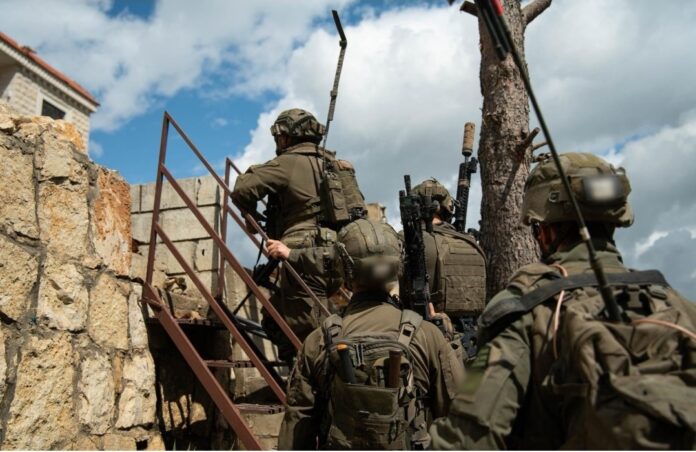 Vos Iz Neias2 days ago
BINT JBEIL (VINnews)-Israeli troops captured a member of Hezbollah’s elite Radwan Force in southern Lebanon’s Bint Jbeil on Tuesday and killed another operative in the same area, the military announced Wednesday.
The Israel Defense Forces said soldiers from the 679th “Yiftah” Armored Brigade captured the Radwan operative during scans of the area, where a Hezbollah gunman last week seriously wounded a reservist from the unit. A second operative was shot dead in the operation.
Separately, troops killed a Hezbollah operative in Bint Jbeil who had opened fire from a building and killed a dog from the Oketz canine unit, the IDF said. No soldiers were injured in either incident.
During Tuesday’s scans, the Hezbollah operative fired on the forces from a building, killing the military working dog, according to the military. The dog’s handler, a female combat soldier operating with the reservists, returned fire. Additional troops from the reserve brigade then surrounded the gunman and called on him to surrender. When he reached for his weapon, soldiers shot him dead, the IDF said.
The military initially reported that the Oketz handler had killed the gunman but later revised the account after members of the reserve unit said they fired the fatal shots.
The captured Radwan operative was taken to Israel for questioning by the Intelligence Directorate’s Unit 504, which specializes in human intelligence, the IDF added.
The operations come amid ongoing Israeli efforts to dismantle Hezbollah infrastructure and neutralize threats in southern Lebanon following months of cross-border fighting.
 Vos Iz Neias2 days ago
(AP) – President Donald Trump flew aboard the older Air Force One on Wednesday for his trip from Turkey to the United Kingdom, opting not to use the Boeing 747 donated by Qatar that recently entered presidential service.
Trump said he chose the older aircraft “for old time’s sake” and explained that the Qatari jet would travel separately to RAF Mildenhall, where U.S. military personnel would have an opportunity to view it.
The decision came as questions continue over the Qatari aircraft, which was refurbished to serve as a temporary presidential plane while Boeing completes two long-delayed replacements for Air Force One.
The aircraft has sparked criticism from some lawmakers and aviation experts, who have raised concerns about the expense of modifying the jet, the accelerated timeline for completing the work and its security. Air Force officials have maintained that the aircraft meets the requirements for presidential travel.
When asked whether concerns about potential threats influenced his decision to switch planes, Trump did not directly answer. He instead told reporters he believes Iran considers him a top target, adding that he was not concerned.
The Qatari jet is expected to remain in service until Boeing delivers two new presidential aircraft, a program that has been delayed several years and is currently projected for completion no earlier than 2028.
 Vos Iz Neias2 days ago
ANKARA, Turkey (AP) — U.S. President Donald Trump said at a NATO summit Wednesday in Turkey that the U.S. will give Ukraine a license to make Patriot air defense systems to counter missile attacks from Russia in their more than four-year war, a huge coup for Kyiv which has long requested the technology.
Allowing foreign manufacture of Patriots, which the U.S. had resisted, was a turnaround for Trump that mirrored his day at the NATO meeting: Upon arriving, he lashed out at European partners for resisting his efforts to take control of Greenland and for not supporting his war in Iran. But by day’s end, he described a gathering of unity and “tremendous love,” and praised member nations on their progress in increasing their defense spending.
NATO’s European members plus Canada have scrambled to meet the alliance’s increased defense spending targets, which Trump has demanded as the U.S. draws down troops in Europe and insists the continent take more responsibility for its own security.
Trump had reopened old wounds among the 32 NATO leaders by insisting again ahead of the summit that the U.S. should control Greenland, a semiautonomous Danish territory. That led Denmark’s Prime Minister Mette Frederiksen to say her country is “ready to defend every inch of NATO including our own territory.”
Trump also blasted some European countries for refusing to participate in the Iran campaign, singling out Spain as “a terrible partner in NATO” and renewing his threats to cut off trade.
Trump strikes a positive tone on Zelenskyy
But the tone of Trump’s meeting with the Ukrainian President Volodymyr Zelenskyy was a break from earlier encounters which ended in acrimony, and Trump praised the Ukrainian leader’s willingness to reach a deal on ending the fighting in Ukraine.
“We’ve actually developed a good relationship. It’s hard to believe,” Trump said during a news conference with Zelenskyy, adding that he believed a deal on ending the war was on the horizon and that the U.S. would “work on some kind of security package” to provide to Ukraine.
Trump said the Ukrainian president has “done an amazing job” and “been very effective” in the war as he pledged to grant Ukraine a license to manufacture the Patriot defense systems.
“We’ll give them the right to make Patriots. We’ll show them how to do it,” Trump said. “I think they can produce them pretty quickly.”
Patriots are expensive, in high demand and take a long time to produce. Zelenskyy has for years been asking for more of them, and more recently for a license so that Ukraine can manufacture its own.
 Vos Iz Neias2 days ago
(AP) – According to Edmunds data, the average transaction price of a 3-year-old used vehicle is more than $30,000. This is a big discount compared with buying new, but it’s still potentially out of reach financially for a lot of people. Fortunately, spending about half that can still get you a car with a compelling combination of comfort, reliability, fuel economy and modern technology.
Edmunds experts have identified four small sedans and one midsize sedan that they would recommend you focus on. Each car has competitive Edmunds scoring, widespread availability on the used market, and a reliability score of at least 4 out of 5 from RepairPal, an independent source for data-driven reliability ratings. We’ve also noted the latest model years you can expect to find at nationwide retailers such as Carvana and CarMax that meet our $15,000 price cap.
Honda Civic
The Civic’s status as a perennial favorite among small sedans is well earned. It delivers excellent fuel economy and peppy acceleration, while its suspension tuning strikes a near-perfect balance between ride quality and athleticism. Although the Civic’s center touch screen can be slow and annoying to use at times, the Civic otherwise impresses with its roomy back seat and tight construction.
Look for: Older Civics easily fall within our price cap, but aim to get a 2016 Civic if you can. It received a full redesign this year that features new styling, a roomier interior and a new optional turbocharged engine that provides plenty of power plus high mpg.
Kia Forte
Kia’s Forte is the brand’s small sedan, which was sold until a few years ago, when Kia replaced it with the K4. The Forte’s sharp styling, quiet interior, and an extensive list of available features make it feel like a small sedan that’s more refined than its price would suggest. It also gets good fuel economy and has a large and easy-to-load trunk. The Forte’s ride quality can be a bit too firm and uncomfortable over bumps, but overall it is a smart pick for a used sedan.
Look for: The last generation of the Forte debuted for the 2019 model year. Any Forte from this year up to 2021 or so should be pretty easy to find for under $15,000. Among the Forte’s available trim levels, the EX is worth focusing on because it comes with premium features such as synthetic leather upholstery and heated and ventilated front seats.
Mazda 3
While most of the sedans in this group either aren’t sporty at all or merely dress the part, the Mazda 3 is genuinely fun to drive. Even if performance isn’t a priority for you, this responsiveness can be a valuable asset during emergency maneuvers. The Mazda 3’s sharp exterior design also offers a dose of style while its interior quality exceeds expectations, and its crash test scores put it among the top of its class.
Look for: The third-generation Mazda 3 debuted in 2014 and was produced through 2018. Buyers shouldn’t have any difficulty finding solid choices from the later years of that production run. The 2018 Touring model offers a long list of standard features for the price and is equipped with a more powerful engine than lower trims.
Toyota Corolla
A long-running staple in the compact sedan class, the Toyota Corolla has built its reputation on providing no-nonsense transportation with low running costs. The Corolla gets high marks for its comfort and appealing list of advanced driver assist features. It’s not as spacious as some of its rivals, and pokey acceleration keeps the fun factor relatively low, but otherwise the Corolla is a sensible choice.
Look for: Toyota introduced the 11th-generation Corolla for 2013. You should be able to get a 2015 to 2017 Corolla for under $15,000. Notably, the 2017 Corolla features included revised front-end styling, new LED headlights, and upgraded interior upholstery.
Chevrolet Malibu
Finding a used midsize sedan that’s less than 10 years old and under $15,000 can be difficult if it’s a popular model such as the Honda Accord or Toyota Camry. But this is where the Chevrolet Malibu earns its appeal. As the only midsize in this group, the Malibu offers more space for passengers and their cargo than the other sedans on this list, yet it still delivers proven reliability and strong overall value.
Look for: The current-generation Malibu arrived in 2016. Any Malibu from this year or newer is a good pick. If you can find one, the 2019 Malibu is worth seeking out for its revised styling and updated infotainment tech.
Edmunds says
These models prove you don’t need to spend big to get a reliable and well-equipped sedan. From style and technology to ride quality and efficiency, the real decision comes down to what matters most to you. Each one has certain strengths, but they all deliver solid value for the money.
 Vos Iz Neias2 days ago
WASHINGTON (AP) — Trump notifies Congress of intention to revoke Syria’s label as state sponsor of terrorism in key move to lift sanctions.
 Vos Iz Neias2 days ago
(AP) – A three-judge panel on Wednesday denied a request from the Kennedy Center’s board to restore President Donald Trump’s name to the institution while the board appeals an earlier ruling that dubbed the name change illegal and had it rescinded.
It’s another setback for the board of trustees, of which Trump is chairman, in a saga that began earlier this year when the Kennedy Center became: “The Donald J. Trump and The John F. Kennedy Center for the Performing Arts.”
The conspicuous addition, and ensuing legal battle, became symbolic of Trump’s broader push to imprint his legacy — and, in this case, his actual name — on the nation’s capitol in his final term.
The panel of judges wrote Wednesday that the request “failed to show how they will be irreparably injured” if Trump’s name remains off the building through the appeal process.
The board had argued that the the removal “threatens to impede” fundraising efforts, but the judges found that claim came without the support of “specific facts or evidence.”
The Kennedy Center did not immediately respond to an emailed request for comment.
A federal judge earlier this year ruled that the name change was illegal, and Trump’s name was removed from the building’s white marble facade in June. A large tarp still obscures the place on the building where Trump’s name had been.
 Vos Iz Neias2 days ago
CARACAS (VINnews) – Israel’s delegation to Venezuela presented a comprehensive National Rehabilitation Plan to the President of Venezuela and senior government officials on Tuesday, which was immediately approved as efforts continue to assist areas affected by recent structural damage.
The presentation was made by Brig. Gen. Elad Edri, commander of the Israeli delegation, together with Israel’s designated Ambassador to Mexico, Yoav Magen, and additional officers from the delegation.
Earlier Tuesday, engineering teams from the Israel Defense Forces’ Home Front Command conducted structural assessments alongside local Venezuelan authorities. The teams prioritized high-rise residential buildings in order to enable as many residents as possible to safely return to their homes.
“The delegation continues to implement the plan in cooperation with the local authorities and relevant local agencies,” the joint announcement from the IDF and Israel’s Foreign Ministry stated.
The Israeli mission is providing humanitarian and technical assistance following damage in the affected areas, focusing on rapid evaluations and rehabilitation efforts.
 Vos Iz Neias2 days ago
NEW YORK (AP) — Crews worked through the night to shore up a massive, under-construction apartment building in Manhattan after some of its columns buckled and floors sagged, triggering widespread evacuations and street closures over concerns about a collapse.
Mayor Zohran Mamdani confirmed Wednesday that there has been no additional movement in the building, the former headquarters of pharmaceutical giant Pfizer, since Tuesday morning. The structure was deemed stable late Tuesday.
Four nearby buildings remained under evacuation orders Wednesday and normally busy midtown streets around the construction site were closed. After the structural issues were reported Tuesday, a nearby school, the Israeli consulate and a number of hotels were among the buildings evacuated.
“The building is stable and yet we are going to continue to prioritize the safety of all in that immediate area,” Mamdani said.
Temporary shoring and beams were installed on floors 18 through 23 of the building, and additional supports will be added throughout the day as crews make their way to the roof and down to ninth floor, according to Mamdani.
Once the emergency repairs are complete, the city’s Department of Buildings will conduct a “rigorous assessment” to ensure the plans and the site are fully compliant with all codes before any non-emergency work proceeds, the mayor said.
On the streets surrounding the massive construction site, everyday life seemed to be slowly returning, with people walking dogs, pushing strollers and riding bikes. Residents and some hotel guests were let into a cordoned-off street near the building.
Authorities responded to emergency calls at the building early Tuesday to discover two mangled support beams and sagging floors on its 21st floor. The building itself, along with a wide stretch of a bustling area not far from the Grand Central transit hub and the Chrysler Building had to be evacuated and closed to pedestrians.
On-site contractors were eventually allowed to reenter the building to do the emergency repairs after city officials did a floor-by-floor inspection. The building was empty other than the workers.
The renovation project is billed as the largest office-to-residential conversion in the city’s history, creating some 1,600 units of housing. The plans call for transforming a pair of office buildings by adding more than a dozen stories atop one tower and redesigning another tower.
MetroLoft, the project developer, has said the building itself is not at risk of collapse and that no debris fell from the building, though Nathan Berman, the firm’s founder has acknowledged the added weight from widening the top 15 or so floors of the building likely caused the damage.
 Vos Iz Neias2 days ago
NEW YORK (AP) — After four years in exile, the prediction market platform Polymarket has begun a well-funded campaign to sell a new version of itself to the American public.
To do so, the company is trying to convince policymakers, regulators, the public and prospective customers that the business it is building onshore is a more disciplined operation than the freewheeling offshore exchange that has at times been the subject of unfavorable headlines.
Polymarket has hired social media influencers to produce viral marketing on TikTok and other platforms. Its account on X, formerly known as Twitter, is now followed by millions and posts about current events throughout the day. It has signed partnership deals with major sports teams and Major League Baseball, as well as news organizations ranging from CNBC to CNN. It’s all part of a pitch that its real-time markets are a more accurate read on the future than traditional polling or punditry.
The campaign is, effectively, an effort to sell Polymarket as something different from the Polymarket people know today.
What the American public knows as Polymarket has, at least by the letter of the law, been unavailable to Americans. In 2022, it was pushed offshore after settling federal charges that it operated an unregistered derivatives market. But Americans have regularly found ways around the prohibition, and the offshore business faced criticism over allegations of insider trading and allowing wagers tied to war and other violence.
Polymarket began operating again in the U.S. at the end of 2025 after buying the derivatives exchange QCEX to get the regulatory license to operate in the country. Executives say the U.S. exchange is walled off from the international platform, and they have hired a slate of compliance, surveillance and regulatory specialists in recent weeks to keep it that way.
“Trust is the product we are building here,” said Dan Lee, head of U.S. operations at Polymarket, in an interview. Lee started with Polymarket in February from Coinbase.
Among the hires, the company added Megan McGrath from Robinhood as its new chief compliance officer. Lee and another executive, Natalie Oblazny, were hired from Coinbase. It’s also hired former Department of Justice and FBI officials as the platform’s head of enforcement and new surveillance head. Lee said Polymarket’s successful reentry into the U.S. depends almost entirely on whether it can convince people that Polymarket U.S. can be a trusted prediction market platform, and the new hires are key to that effort.
Both Polymarket International and Polymarket U.S. provide the same service: trading on the likelihood of events, such as weather, sports, politics or news. But the underlying structures differ. Polymarket’s international platform is built on blockchain technology and requires users to trade with cryptocurrency, while Polymarket U.S. operates through a more centralized structure regulated by the Commodity Futures Trading Commission and funded with traditional U.S. dollars.
Customers using Polymarket U.S. versus Polymarket International won’t notice the difference, with the exception of how they fund their accounts. Also Polymarket U.S. is going to have a much narrower number of contracts, and more regulations, than its international counterpart.
“Polymarket U.S. is supposed to comply with U.S. law and regulations. Polymarket International is where anything goes,” said Todd Phillips, who has written extensively on prediction markets at the Roosevelt Institute.
The stakes are high for Polymarket. Between its departure in 2022 and return six months ago, the prediction market industry has changed and grown in popularity. The trading volume across the platforms for Polymarket and rival Kalshi is now $26.6 billion, according to blockchain analytics firm Dune. That’s up from $9.75 billion in volume across the platforms in October last year. About two-thirds of that activity is on Kalshi, which dominates the U.S. market on the strength of sports wagering. Kalshi was valued at $22 billion in its most recent funding round.
Both platforms are also benefiting from a more favorable treatment of the industry in Washington. The Trump Administration has been generally supportive of prediction markets. The CFTC has sued states to argue that federal law should preempt any regulations that state politicians have wanted to place on the prediction market industry. The president’s son, Donald Trump Jr., is also an investor in Polymarket through his venture capital firm 1789 Capital.
Even so, it’s been a rough start for Polymarket’s reintroduction to American audiences. The Wall Street Journal found evidence that Polymarket’s advertising and marketing campaigns used allegedly deceptive strategies that showed hired influencers making money trading on Polymarket when the trades were fake.
Politico reported in June that a Polymarket executive paid at least 20 political content creators, many of which did not disclose those partnerships to the public. Both projects have been part of the campaign Polymarket was using to reintroduce to American audiences.
In response to the WSJ and Politico reports, the company says it is investigating its marketing and promotional campaigns.
It’s too soon to tell whether Polymarket U.S. will be able to differentiate itself from its international counterpart. Polymarket’s international platform has made headlines, often to public and political outrage.
When a U.S. Army sergeant was indicted earlier this year over bets on the capture of Venezuelan President Nicolás Maduro, he was trading on Polymarket’s international platform. The Associated Press reported in April that 50 brand new accounts on Polymarket’s international platform placed substantial bets on a U.S.-Iran ceasefire in the hours, even minutes, before President Donald Trump announced a ceasefire on social media, raising concerns of insider trading.
Lee said he believes the steps the U.S. business is taking will help further legitimize it, despite the issues the international platform has faced.
“I think having the international business being the bulk of the volume, it often sort of masks the progress we are making here in the U.S. to broaden Polymarket’s acceptance,” Lee said.
 Vos Iz Neias2 days ago
TEL AVIV (VINnews) – Former U.S. Ambassador to Japan Rahm Emanuel sharply criticized Israeli Prime Minister Benjamin Netanyahu during a speech Wednesday at Tel Aviv University, accusing him of relying almost exclusively on military force and pushing Israel toward greater international isolation.
Speaking at the university, Emanuel praised Israel’s accomplishments since its founding in 1948 but warned that the country risks becoming “a prisoner of its own tools.”
Wishing you and @RahmEmanuel a long and happy life together far away from Israel and the corridors of power. https://t.co/Q6HG231aFb
— David M Friedman (@DavidM_Friedman) July 8, 2026
“Your military is a hammer, such that, to the prime minister, Netanyahu, every security challenge is a nail,” Emanuel said.
He argued that successive U.S. administrations made “a mistake” by offering Israel support “without conditions, without demands, without consequences.”
Rahm Emanuel Remarks at Tel Aviv University https://t.co/NvucBmkt2I
— Rahm Emanuel (@RahmEmanuel) July 8, 2026
“Unconditional support has allowed you to deny food and medical relief to innocent Palestinians in Gaza, leaving the world to conclude that Israelis not only want to kill Palestinians, but they are completely indifferent to their death, to their destruction and completely indifferent to their suffering,” Emanuel said.
Emanuel also recalled clashes with Netanyahu during the administrations of Bill Clinton and Barack Obama over Israeli settlement construction in the West Bank, saying Netanyahu once publicly labeled him “a self-loathing Jew.”
The former ambassador called for closer cooperation with Arab nations and support for Palestinian self-determination. He also said that, if given the opportunity, he would support sanctions targeting new Israeli settlements, violent settlers, and Israeli officials who promote settlement expansion.
Addressing both sides of the conflict, Emanuel declared:
“Those chanting ‘from the river to the sea’ need to hear this. You will never have your way. But those calling for a ‘Greater Israel,’ you need to hear this. You will never have your way, either.”
The speech comes as Democratic support for Israel continues to decline. An Associated Press-NORC Center for Public Affairs Research poll released Tuesday found that 58% of Democrats believe the United States supports Israel too much, while 20% said the current level of support is appropriate.
 Vos Iz Neias2 days ago
ISLAMABAD (AP) — Civilian and navy searchers off Pakistan’s coast Wednesday located and recovered wreckage of a cargo plane that disappeared while approaching the southern port of Karachi while the search continues for five missing crew members, officials said.
The aircraft operated by the private carrier K2 Airways had departed from Sharjah in the United Arab Emirates and reported a navigational system problem before losing contact with air traffic control late Tuesday.
The Pakistani navy and civilian teams in planes and ships found the plane debris after about 12 hours of searching in the Arabian Sea, Pakistan’s Airports Authority said in a post on X.
Retired Rear Adm. Faisal Shah said searchers were dealing with rough seas and that they were still looking for the main wreckage of the plane, which could prove much more difficult to find because the area is believed to be about 3,000 meters (9,800 feet) deep, requiring specialized equipment.
He said recovering debris does not necessarily reveal the aircraft’s exact crash site because ocean currents, waves and wind can carry the floating wreckage far from where the aircraft went down.
In a statement, K2 Airways identified the missing crew as Capt. Muhammad Rizwan Idris, First Officer Faisal Jatoi, flight engineers Muhammad Hamid and Muhammad Arif Siddiqui, and aircraft loader Muhammad Taufiq Khan.
“We continue to pray earnestly for the safety of our colleagues,” it said.
Ghulam Nabi Bahrani, the father-in-law of co-pilot Faisal Jatoi, said the family was in regular contact with him while he was in Sharjah, and that he had called his wife shortly before departure Tuesday. Bahrani said government officials have been in contact with the family since the aircraft disappeared.
“All we can do is wait and pray for a miracle,” he said.
Pakistani Prime Minister Shehbaz Sharif released a statement expressing sympathy with the families of the five crew members, and directed the government to deploy all available resources for the search effort.
Pakistan’s Airports Authority said earlier on X that radar data showed the aircraft making a sharp change in heading and rapidly descending before radar and radio contact were lost at about 9:21 p.m., approximately 155 nautical miles (287 kilometers, 178 miles) west of Karachi.
Aviation expert Imran Aslam told local broadcaster ARY News late Tuesday that it remained unclear what caused the aircraft to disappear from radar. He said that even if an aircraft suffered an engine failure, it would normally continue gliding rather than plunge suddenly. He said the exact cause would become clear only after investigators gathered more evidence.
In May 2020, a Pakistan International Airlines flight carrying 98 people crashed into a densely populated neighborhood near Karachi airport while attempting to land. All but one of the 99 people on board were killed. A government investigation later concluded that human error by the pilots and air traffic controllers caused the crash.
 Vos Iz Neias2 days ago
LONDON (VINnews) – The U.K. government has approved plans for what would be China’s largest embassy in Europe, brushing aside fierce opposition from local residents and activists who are now taking their fight to court.
A legal challenge to the project is scheduled to be heard July 14.
Hong Kong dissidents who fled Beijing’s crackdown on the former British territory expressed deep concern that the proposed “super embassy” could heighten surveillance and intimidation against Chinese exiles already living under threat in the U.K.
A U.K. government spokesperson told CBS News that national security remained the top priority in the decision-making process, with intelligence agencies involved throughout.
“Any attempts by a foreign state to coerce, intimidate, harass, or harm individuals on U.K. soil will never be tolerated,” the spokesperson said.
The Chinese embassy in the U.K. did not respond to a request for comment.
The approval comes amid broader worries about Chinese influence operations in Britain and Europe. Activists have warned that the expanded diplomatic footprint could provide greater cover for intelligence activities targeting dissidents, including pro-democracy advocates from Hong Kong.
The story was first reported by CBS News.
 Vos Iz Neias2 days ago
MONSEY, N.Y. (VINnews) — An 8-year-old girl was killed Wednesday morning after she was struck by a Yeshiva school bus on Blauvelt Road in Monsey, authorities and local emergency responders said.
The victim was identified in the Orthodox Jewish community as Blima Weber, bas R’ Yisroel Efroyim Weber
Emergency responders, including Rockland Hatzalah paramedics and EMTs, Ramapo police officers, and members of Chaverim of Rockland, rushed to the scene. Despite extensive lifesaving efforts, the child was pronounced dead.
Following the incident, volunteers from Chesed Shel Emes, Misaskim, and Chaverim of Rockland assisted at the scene and provided support to the family.
Authorities work the scene where a young girl believed to be less than 10-years-old was pronounced dead on scene in the area of Blauvelt Road and Manor Drive after being struck by a vehicle in Monsey, New York, United States on July 8, 2026. Two vehicles, a car and a school bus… pic.twitter.com/kMvEWhhxrK
— Kyle Mazza (@KyleMazzaWUNF) July 8, 2026
The tragedy comes just weeks after another fatal crash involving a young child in the region. Last month, 8-year-old Charlotte Herzberg was killed in a separate traffic incident, renewing concerns about pedestrian safety in the community.
Authorities have not released details on the circumstances of Wednesday’s crash, and the incident remains under investigation. Funeral arrangements were not immediately announced.
Just last week, the Ramapo Police Department conducted a pedestrian safety campaign, with officers distributing 98 safety flyers and encouraging residents to use designated crosswalks when crossing streets. In a social media post, the department emphasized that “a few extra steps to a crosswalk can make all the difference” and thanked residents for helping improve community safety.
Authorities have not released details on the circumstances of Wednesday’s crash, and the incident remains under investigation. Funeral arrangements were not immediately announced.
Yesterday, Ramapo Police officers were out in the community educating pedestrians on the importance of using designated crosswalks when crossing roadways. A total of 98 pedestrian safety flyers were distributed as part of this initiative. pic.twitter.com/hlUQAtTM40
— Ramapo Police Dept. (@Ramapo_PD) July 1, 2026
 Vos Iz Neias2 days ago
NEW YORK (VINnews) — Children attending Camp Gan Israel – Young Shluchim in Russia uncovered what organizers described as a rare antique pocket watch and centuries-old Russian ruble coins while participating in an archaeological excavation at the historic courtyard of the Chabad Rebbes in Lubavitch, according to the Chabad news sites.
The discovery came during a visit to the birthplace of the Chabad-Lubavitch movement, where campers joined restoration and excavation work at the site of the original Tomchei Temimim Yeshiva and the former residences of several Lubavitch Rebbes. According to Chabad, the children broke into Chassidic dancing after the artifacts were unearthed.
The items were turned over to Rabbi Gabriel Gordon, who oversees the restoration and maintenance of the historic complex. After a preliminary examination, Gordon said the craftsmanship and quality of the pocket watch suggest it may have belonged to a member of the family of the Chabad Rebbes, although additional study will be needed to determine its origin.
The discovery was one of the highlights of Camp Gan Israel – Young Shluchim, held at the Raminskaya complex outside Moscow and directed by Rabbi Avraham Sachs. The camp brings together children of Chabad emissaries serving Jewish communities across Russia, many of whom spend the school year in remote cities where they are among the only observant Jewish children in their communities.
The camp also hosted a visit by Rabbi Berel Lazar, who founded the camp network. During the visit, he was presented with an original red necktie once worn by Soviet communist youth camps alongside a modern green Camp Gan Israel necktie. the presentation symbolized the revival of Jewish life in Russia after decades of Soviet efforts to suppress religious practice.
Addressing the campers, Rabbi Lazar told the children that alongside the responsibility of serving as children of Chabad emissaries, they should remember the privilege of representing Judaism throughout Russia. He also praised the camp’s educational staff, saying, “The greatest success in shlichus is when people see how we care for our children,”.
Camp Gan Israel – Young Shluchim is one of dozens of Jewish summer camps operating across Russia this summer, bringing together thousands of children for programs focused on Jewish learning, Chassidic values and strengthening their connection to Jewish heritage.
 Vos Iz Neias2 days ago
ATLANTA (AP) — Delta Air Lines is introducing a lower-cost “Basic Business” fare that removes several premium benefits from its long-haul Delta One cabin as airlines continue expanding fare options for travelers.
The new fares, which go on sale Wednesday for select flights beginning in September, will not include airport lounge access, advance seat selection, or same-day confirmed or standby flight changes. Passengers will receive seat assignments at check-in, earn fewer frequent flyer miles, and pay fees for most ticket changes or cancellations.
Delta is also introducing similar “basic” fare options for first class and premium economy on certain routes.
The move follows a similar strategy adopted earlier this year by United Airlines, which introduced stripped-down premium fares in its Polaris business-class cabin. Airlines have increasingly segmented premium cabins, offering lower entry prices while charging extra for benefits that were once included.
 Vos Iz Neias2 days ago
DUBAI, United Arab Emirates (AP) — President Donald Trump said Wednesday that the U.S. was preparing for another night of strikes against Iran, just hours after he said the ceasefire was over following Iranian attacks on American military sites in the Gulf.
“We hit them very hard last night,” Trump said when asked about a possible return to hostilities. “We’ll probably hit them hard again tonight.”
Trump made the remark in Ankara, Turkey, on the sidelines of a NATO summit. He said the strikes are continued retaliation for Iranian attacks on commercial ships in the Strait of Hormuz.
“They are behaving very badly,” he said of Iran, accusing the country of launching drones and a missile at ships.
The latest exchange of fire raised fears that the war in Iran could reignite, and Trump fueled those concerns by saying the interim agreement to pause fighting was “over,” although he added that he would allow negotiations to continue.
Attacks have repeatedly threatened the shaky ceasefire, but Trump’s comments added new uncertainty, and oil prices shot up after he spoke. A renewed conflict could engulf the wider Middle East and would likely again halt energy shipments through the strait that are crucial to the global economy.
“For me, I think it’s over,” Trump said when asked about the status of the ceasefire. He added that U.S. representatives can continue negotiations, but he cast doubt on the outcome. “They can talk, but I think they’re wasting their time,” he said.
Negotiations to reach a final deal had been due to start after the dayslong funeral for Iran’s Supreme Leader Ayatollah Ali Khamenei, who was killed Feb. 28 in the war’s first moments. The funeral, which ends Thursday, was supposed to be a period of lower tensions.
The talks are meant to focus on the toughest matters, including fully reopening the strait and rolling back Tehran’s disputed nuclear program.
“The era of bullying and extortion is over,” Iranian Parliament Speaker Mohammad Bagher Qalibaf wrote on X. “It leads nowhere. We don’t fold.”
 Vos Iz Neias2 days ago
NAJAF, Iraq (AP) — Funeral processions for Iran’s late Supreme Leader Ayatollah Ali Khamenei began Wednesday in the Iraqi city of Najaf with thousands of mourners present.
The Islamic Republic’s dayslong funeral for Khamenei began Saturday, with authorities shutting down streets, airspace and daily life in Tehran as mourners commemorate the life of the man who led Iran for decades with an iron fist while confronting the West. His body will later be taken from Najaf to the city of Karbala before returning to Iran.
Khamenei was killed in late February in wide-scale U.S. and Israeli strikes on Iran. He was among several senior Iranian leaders killed in strikes during the war. He was 86.
Talks between the United States and Iran appear to be on hold until after the burial. However, strikes from both sides in the Persian Gulf Tuesday and into Wednesday raised risks that the interim agreement to end the monthslong war that engulfed the Mideast could break down. The U.S. military attacked Iran early Wednesday after it said Tehran struck three ships in the Strait of Hormuz, before Iran launched retaliatory strikes on Kuwait and Bahrain.
Khamenei’s body arrived Tuesday in Najaf, considered one of the holiest of cities for millions of Shiite Muslims worldwide. Mourners holding portraits of the late supreme leader welcomed the body and senior officials escorting it, including Iranian President Masoud Pezeshkian and Foreign Minister Abbas Araghchi.
An Iraqi Shiite soldier chants on the eve of funeral ceremonies for the late Iranian Supreme Leader Ayatollah Ali Khamenei outside the Imam Ali Shrine in Najaf, Iraq, Tuesday, July 7, 2026. (AP Photo/Hadi Mizban)
The body was placed in a casket draped in the Islamic Republic’s flag and encased in glass.
Some supporters performed self-flagellation on the streets, while others waved Iranian as well as red and black flags symbolizing mourning and revenge.
Muhammad Taqi al-Hakim, a senior scholar at the Najaf seminary, led the funeral prayers at the Shrine of Imam Ali, the Prophet Muhammad’s cousin and son-in-law.
As the coffin was carried into the shrine, large crowds of mourners pushed and shoved their way to get close to it. Some threw themselves onto the casket, as the al-Hakim struggled to control the crowd, urging the pallbearers to carry it closer to the ground for fear it might fall.
Mourners reach toward a truck carrying the coffin of Iranian Supreme Leader Ayatollah Ali Khamenei during a funeral procession in Najaf, Iraq, Wednesday, July 8, 2026. (AP Photo/Hadi Mizban)
“We, the people of Iraq, will remain a thorn in the eyes of the enemies,” said Jaafar Jawad, a funeral attendee. “(His body arriving here) is the greatest possible honor, and God willing, we will be loyal and repay a little of his debt in the holy city of Najaf.”
The body is expected to arrive later Wednesday in Karbala, a holy city for Shiite Muslims where the Imam Hussein, the grandson of the prophet, was killed in 680 AD. Abdul Mahdi al-Karbalaei, a representative of Iraq’s top Shiite religious authority, will lead the prayers at the Imam Hussein Shrine.
Iran’s new supreme leader, Ayatollah Mojtaba Khamenei, has yet to make an appearance in the funeral ceremonies, which are unfolding over several days. He is believed to be in hiding after reportedly being wounded in the airstrike that killed his father.
 Vos Iz Neias2 days ago
NEW YORK (VINnews) — U.S. President Donald Trump addressed the issue of the Iranian agreement at the NATO summit in Turkey, referring to the U.S. strike against Iran overnight.
Trump’ was asked by a reporter at the summit in Ankara: “Is the ceasefire over? Is the ceasefire done? Is the MoU dead?” (the memorandum of understanding, which led to the ceasefire, was agreed last month).
Trump replied: “It’s a very interesting question. To me, I think it’s over.
“I don’t want to deal with them anymore, they’re scum. You know what scum is? They’re scum. They’re sick people. They’re led by sick people. And they’re vicious, violent people.
“And if they had a nuclear weapon, they’d use it. As far as I’m concerned it’s over.
“I’ll speak to our negotiators, they want to negotiate, they’re good people. Steve Witkoff, Jared Kushner, but they have to come back to me. As far as I’m concerned, it’s just a waste of time dealing with them. They’re liars.
“We make a deal. If I make a deal with him [pointing at Nato Secretary-General Mark Rutte], we have a deal. He goes out, he talks. We [US and Iran] make a deal, everyone’s agreed, no nuclear weapon.
“We make a deal. They [Iran] go outside, talk to the press, they say ‘we never even talked about it’. There’s something wrong with them. They’re cuckoo. As far as I’m concerned, it’s over.”
Trump is then asked if talks will resume.
“I don’t care, they can talk. But I think they’re wasting their time. They’re a bunch of lying guys.”
In reference to the US strikes on Iran, Trump said that “We struck Iran’s very dangerous people with tremendous force last night. They are sick. Something is wrong with them. They stopped dealing with funerals and instead began firing missiles at ships yesterday. So we hit them very hard last night — very, very hard. I would say 20 times harder.”
Trump also said: “They want to kill me, the President of the United States. I have been number one on their list for years.”
He added:
“Of course, they are dirty players, so they go after everyone, probably including me.”
Earlier today, The Wall Street Journal reported, citing a senior U.S. official, that the American strikes against Iranian targets overnight were four to five times larger in scope than previous strikes carried out after the memorandum of understanding between the two countries was signed. At the same time, U.S. officials clarified that Washington still considers the ceasefire to remain in effect.
Following the overnight exchange of strikes, Iran’s Foreign Ministry issued a statement saying:
“The violations of arrangements in the Strait of Hormuz and the ongoing Israeli attacks in Lebanon have made the interim arrangement ineffective.”
The Iranian Foreign Ministry also repeated its warning to regional countries not to allow the United States to use their territory for attacks against Iran.
 Vos Iz Neias2 days ago
JERUSALEM (VINnews) — U.S. Defense Secretary Pete Hegseth canceled a planned visit to Israel on Wednesday following U.S. military strikes against Iran, according to an Israeli source cited by The Jerusalem Post and Reuters.
Hegseth, who is accompanying President Donald Trump in Ankara for the NATO summit, had been expected to make a brief stop in Israel for meetings with Prime Minister Benjamin Netanyahu and Defense Minister Israel Katz.
The meetings were expected to focus on Iran and Israeli concerns over a possible U.S. sale of Lockheed Martin F-35 Lightning II stealth fighter jets to Turkey, a move Israel has publicly opposed.
According to The Jerusalem Post, the visit had been scheduled against the backdrop of overnight U.S. strikes on Iran. United States Central Command said the strikes were launched in response to Iranian attacks on commercial tankers in the waters near the Strait of Hormuz, describing the operation as intended to impose “heavy costs” for targeting civilian shipping.
Iranian state media reported multiple injuries from the strikes, while Iran’s Islamic Revolutionary Guard Corps said it later targeted 85 U.S. military sites in Bahrain and Kuwait in retaliation, claiming the attacks were a response to what it described as U.S. ceasefire violations.
The strikes came hours after Washington announced it was ending sanctions relief on Iranian oil sales, a measure previously included in a memorandum of understanding between the two countries, saying the move was intended to increase economic pressure on Tehran following the attacks.
The issue of a possible F-35 sale to Turkey has become increasingly contentious. According to Israel’s Channel 13 News, Netanyahu recently told senior officials that Turkish President Recep Tayyip Erdoğan “is not a ‘frenemy’ — he is an enemy.”
In an interview with CNN, Netanyahu urged the United States not to sell F-35s to Turkey, arguing that “a regime that is infected with the ideology of the Muslim Brotherhood… should not receive aircraft.” He also warned that Turkey has “aggressive aspirations” and said providing it with the advanced fighters would bring “aggression in its wake.”
Reuters, citing an Israeli source, separately reported that Hegseth canceled the meetings that had been scheduled to discuss the possible F-35 sale and regional security. No official reason for the cancellation has been announced.
 Vos Iz Neias2 days ago
New York (VINNEWS/Rabbi Yair Hoffman) On the twenty-third of Tammuz, the Torah world remembers one of the most towering figures of the world of Kaballah. Rabbi Moshe Cordovero, known by the acronym the Ramak, passed from this world in 5330 (1570) at the age of forty-eight, and yet in his short life he accomplished what generations of scholars had not dared attempt: he built a system.
Although name may be unfamiliar to some, but one of his works sits on the shelf of nearly every serious student of mussar: the slender, luminous Tomer Devorah, the Palm Tree of Deborah. So enduring is this little classic that more than three centuries after it was written, Rav Yisroel Salanter — the father of the entire Mussar movement — chose it as the vehicle for further launching his own life’s mission. In 1858, in Koenigsberg, Rav Salanter published a fresh edition of the Tomer Devorah, and appended to it, printed for the very first time, was his own now-famous Iggeres HaMussar — the Epistle of Mussar — the foundational document of a movement that would reshape the yeshiva world.
The story of the Ramak cannot be separated from the geopolitical earthquake that shaped it. In 1492, the Catholic monarchs Ferdinand and Isabella signed the Alhambra Decree and expelled the Jews of Spain. Among the refugees fleeing the Iberian Peninsula were families from the city of Córdoba – including that of the Ramak.
Where does a shattered people go? For tens of thousands of Iberian Jews, the answer lay eastward, in the rising Ottoman Empire. In 1516–1517, Sultan Selim I defeated the Mamluks and folded Eretz Yisroel into his expanding dominion. The Ottomans, who left commerce largely to their minority subjects and distrusted their newly conquered Christian populations, welcomed the Jewish refugees. All that was asked was a poll-tax and acknowledgment of Muslim authority; in exchange, the empire became the largest haven for Jews in the world. By the end of the sixteenth century, the Ottoman realm held the largest Jewish population on earth.
Tzfas sat at the crossroads of this new order. Perched in the Upper Galilee along the vital Damascus–Acre and Damascus–Cairo trade roads, and blessed with the springs and rushing waters of Nahal Amud, the town possessed exactly the geological conditions needed for one industry above all: the manufacture of cloth.
The Sephardic exiles had carried with them the guarded secrets of high-quality Spanish wool production, and they transformed Tzfas into a booming textile capital. An Italian Jewish merchant named David de-Rossi, visiting in 1535, was astonished — he reported that more than fifteen thousand suits of clothing had been produced in the city in a single year.
This was Tzfas in its Golden Age: prosperous, self-confident, and swelling with newcomers.
Under Sultan Suleiman the Magnificent, a protective wall was raised around the city in 1549 and a garrison stationed to guard it. The Jewish population climbed from a few hundred families at the century’s opening to some seven thousand souls by mid-century, making it the largest Jewish community in Ottoman Syria. Wealth built yeshivos; wool financed Torah.
Into this crucible of commerce, refuge, and spiritual ambition, Rabbi Moshe Cordovero was born in 1522.
From his earliest years, the young Moshe was recognized as an extraordinary genius — and his brilliance shone all the brighter against the hardship that surrounded it. Despite the poverty and financial strain that pressed upon him in his youth, he pored over the Babylonian Talmud, the codes of halachah, and philosophy with relentless diligence. He mastered the revealed Torah under the guidance of Rabbi Yosef Karo, the author of the Shulchan Aruch, whose court and yeshiva of two hundred students anchored the religious life of the city. So formidable was the boy’s command of Jewish law that already at the age of eighteen he was ordained to render halachic rulings by his teacher Rabbi Yaakov Beirav, the leader of Tzfas’s bid to restore the ancient semichah.
He married the daughter of Rabbi Moshe HaLevi Alkabetz — which made him the brother-in-law of Rabbi Shlomo HaLevi Alkabetz, the composer of the Lecha Dodi, the inspiring song that Jews the world over still sing to greet the Shabbos bride every Friday night.
His awakening to Kabbalah came in 1542. At the age of twenty, he heard what he described as a heavenly voice urging him to enter the hidden wisdom, the Kabbalah, and he began to study the secrets of the Torah at the side of his brother-in-law, Rabbi Shlomo Alkabetz. Again and again the two would walk out together to the graves of the Tannaim in the hills around Tzfas, reviewing and plumbing the mysteries they had learned as they went.
His devotion took on an almost ferocious intensity. He would seclude himself after midnight and labor over the pages of the Zohar in the still hours of the night. When distractions and disturbances rose up to break his concentration — and when they grew too fierce — he would invoke the holy Names and pray that whatever was interfering be driven away, so that nothing might stand between him and the wisdom he sought.
That awakening changed the course of Jewish thought.
The young man did not merely master the mysteries of the Zohar; he resolved to do something no one had accomplished before him — to take the Zohar and organize it into a single coherent structure. By the age of twenty-six he had completed his first great work.
The result was Pardes Rimonim — the Orchard of Pomegranates — the most celebrated of the Ramak’s writings and one of the foundational works of systematic Kabbalah. In it he gathered the divergent schools of the earlier mystics, laid their views side by side, debated them, and rendered rulings among them.
But Pardes Rimonim was only the beginning. The Ramak wrote with uncanny productivity. He composed Or Yakar, a monumental commentary on the entire Zohar and the Tikunei Zohar — a work of sixteen volumes to which he devoted the greater part of his life. He wrote Eilima Rabbati, a soaring and abstract treatment of the Ein Sof and the sefiros. He wrote Shiur Komah on the structure of the spiritual worlds, and Or Ne’erav, a passionate defense of the very enterprise of studying Kabbalah — though with a stern warning that one must first master Tanach, Mishnah, and Gemara before entering the orchard.
In all, the Ramak composed more than thirty works, and the Kabbalists of his generation regarded his rulings in matters of the hidden wisdom as the most authoritative of all. He merited a revelation of Eliyahu HaNavi and was crowned with the title HaEshel HaGadol, — and yet, for all his towering stature, those who knew him remarked above all on his humility.
Of all the Ramak’s writings, none has entered more deeply into the bloodstream of the Torah world than a slender volume of mussar called Tomer Devorah — the Palm Tree of Deborah. Here the Ramak performed a quiet revolution. He took the loftiest and most abstract of Kabbalistic concepts — the thirteen attributes of Divine mercy, the sefiros themselves — and turned them into a practical guide for how a human being should live.
The central teaching is breathtaking in its simplicity: man is created in the image of G-d, and therefore man must strive to imitate the Divine attributes. Just as the Almighty is patient with the sinner, so too must a person be patient. Just as G-d bears no lasting grudge, so too must a person learn to forgive. Just as the Creator sustains even those who rebel against Him, so too must one extend kindness even to the undeserving.
Around 1550, the Ramak founded an academy of Kabbalah in Tzfas, which he led for some twenty years until his passing. But his circle was not confined to the Beis HaMedrash. The tzaddikim of Tzfas lived their Kabbalah. Since the Shechinah, the Divine Presence, had gone into exile with the destruction of the Temple, they would leave their homes and walk out into the fields of the Galilee, meditating and davening among the hills, visiting the ancient graves of the Tannaim and Amoraim scattered across the countryside. The record of these mystical wanderings and the teachings that flowed from them was collected in a work called Sefer Gerushin, the Book of Banishments — a document in which the very landscape of the Land of Israel becomes the meeting place between Heaven and earth.
It was said that Eliyahu HaNavi himself revealed himself to the Ramak. And the students who gathered around him comprised the greatest of Kabbalistic authors: Rabbi Chaim Vital, who would later become the recorder of the teachings of the Arizal; Rabbi Eliyahu di Vidas, author of the classic Reishis Chochmah; Rabbi Eliezer Azkari, author of Sefer Chareidim; Rabbi Avraham Galanti; and Rabbi Menachem Azariah of Fano, who would carry the Ramak’s Torah across the sea to Italy and teach from Pardes Rimonim to the Kabbalists of Europe. Even Rabbi Yeshayahu Horowitz, the great Shelah HaKadosh, considered himself a disciple of the Ramak and quoted him constantly.
In the final year of the Ramak’s life, a newcomer arrived in Tzfas — the Arizal. He too studied under the Ramak, whom he reverently called “our teacher.” Only the Ramak, with his penetrating vision, seems to have perceived who this humble student truly was.
Before his passing, the Ramak spoke words that would echo through the centuries. He told his followers that after his death, someone would rise to replace him, and that although this successor’s teachings might appear to contradict his own, they should not oppose him — for both drew from the same holy source, and the newcomer’s soul was a spark of Rabbi Shimon bar Yochai himself.
Then, on the twenty-third of Tammuz, 5330, Rabbi Moshe Cordovero passed away. The entire community of Tzfas — every Jew in the city — poured out to accompany him on his final journey, weeping bitterly as the eulogies were recited. Among the eulogizers stood the Arizal, who declared that the Ramak had no sin in him at all — that he had departed this world not through any fault of his own, but, in the language of the sages, “by the bite of the snake,” the primordial decree of mortality itself. To this day, the Ramak lies in the old cemetery of Tzfas, close to the resting place of the Arizal himself.
After his passing, Rabbi Chaim Vital revealed that the soul of Zechariah the Prophet had been reincarnated within him. And such was the hunger for his Torah that the great Italian Kabbalist Rabbi Menachem Azariah of Fano — the Rema of Fano — sent one thousand gold coins to the Ramak’s widow, that she might lend him the manuscript of Or Yakar so that it could be copied and brought to the printing press for the world to learn from.
The Arizal would live only two more years, until 1572, but in that brief span he revolutionized the entire conceptual system of Kabbalah with his doctrines of tzimtzum, the breaking of the vessels, and the cosmic repair. Lurianic Kabbalah swept the Jewish world, and in time the systematic Kabbalah of the Ramak was pushed into the background. Yet — precisely as the Ramak had foretold — it was never rejected. The Ramchal offered a beautiful reconciliation: the Kabbalah of the Ramak, he taught, describes the “World of Tohu,” while the Kabbalah of the Arizal describes the “World of Tikkun” — two stages of the same unfolding reality. Others, like Rabbi Shabsai Horowitz in his Shefa Tal, worked to weave the two systems together. The study of the Ramak’s works never ceased; to this day many consider his Torah the essential gateway through which one must pass before entering the deeper mysteries of the Ari.
In honor of his yahrtzeit, the author is appending a translation of the Tomer Devorah written for his students to introduce them to the world of Mussar.
The Palm Tree of Devorah – Tomer Devorah
Rabbi Moshe Cordovero (the Ramak, 1522–1570)
Translated simply by Rabbi Yair Hoffman
This sefer has two main parts. The first three chapters explain how to imitate Hashem through the Thirteen Attributes of Mercy and the qualities of the highest spiritual level. The remaining chapters (four through ten) are more mystical and are organized around the sefiros — the ten spiritual channels through which Hashem relates to the world.
Keser is the “crown,” the highest and most hidden level. Chochmah is wisdom. Binah is understanding, linked to repentance. Chesed is kindness and love. Gevurah is strength, power, and sometimes strictness. Tiferes is beauty or harmony, linked to Torah, truth, and balance. Netzach and hod are two lower channels, associated with those who support Torah. Yesod is the channel that connects and delivers blessing into the world, linked to guarding personal Kedusha. Malchus is kingship — also called the Shechinah, Hashem’s presence dwelling in the world.
Chapter One — Becoming Like Hashem Through the Thirteen Attributes of Mercy
Chapter Two — The Eight Qualities of Keser and the Path of Humility
Chapter Three — The Attribute of Chochmah (Wisdom)
Chapter Four — The Attribute of Binah (Understanding): The Power of Repentance
Chapter Five — The Attribute of Chesed (Kindness): Love of Hashem and Acts of Kindness
Chapter Six — The Attribute of Gevurah (Strength): Mastering the Evil Inclination
Chapter Seven — The Attribute of Tiferes (Truth): Torah Study Without Pride
Chapter Eight — The Attributes of Netzach, Hod, and Yesod: Supporting Torah and Guarding Kedusha
Chapter Nine — The Attribute of Malchus: Humility, Fear of Hashem, and the Shechinah
Chapter Ten — Binding Oneself to Kedusha Throughout the Day
A person should try to act the way Hashem acts. When someone does this, he taps into the deep secret of being made “in the image and likeness” of Hashem. The Torah says that people were created in Hashem’s image and likeness. But there is a catch. If a person’s body looks like the higher, spiritual “form,” yet his actions do not match it, then he is living a lie. People will look at him and say, “What a handsome shape — but what ugly deeds!”
The real meaning of being made in Hashem’s “image and likeness” is not about physical shape. It is about behaving the way Hashem behaves. So what good is it for a person to look the part if his actions do not copy his Creator? Because of this, a person should make his actions match the Thirteen Attributes of Mercy — the qualities that flow from the highest spiritual level, called Keser (“crown”). These thirteen qualities are hinted at in a passage from the prophet Michah.
The prophet Michah writes: “Who is a Hashem like You, who pardons sin and overlooks the wrongdoing of the remnant of His people? He does not hold on to His anger forever, because He loves kindness. He will again show us mercy; He will conquer our sins, and You will throw all their sins into the depths of the sea. Show faithfulness to Yaakov and kindness to Avraham, as You promised our ancestors long ago.” (Michah 7:18–20)
Since Hashem has these thirteen qualities, a person should try to have them too. The rest of this chapter explains each one and shows how a person can live by it.
This attribute describes Hashem as a patient King who puts up with insults in a way no human could. Nothing is hidden from Hashem, and there is not a single moment when a person is not being kept alive by Hashem’s power.
Think about what this means. No one can sin against Hashem without Hashem, at that very moment, giving that person the energy and strength to move his own arms and legs. Even while a person is using that strength to do something wrong, Hashem does not shut off the power. Instead, Hashem accepts the insult and keeps the person’s body working — even during the very act of sin.
We cannot say that Hashem is unable to stop this. Hashem could freeze a person’s limbs in an instant, the way He once did to King Yaravam. Hashem could even say, “Since you are sinning against Me, at least sin using your own strength, not Mine.” Yet Hashem does not do this. He keeps giving the person life and strength anyway. This kind of patience is beyond description. This is why the angels call Hashem “the long-suffering King.”
The lesson for us: a person should copy this patience. Even when he is deeply insulted, he should not cut off his kindness from the people he normally helps.
This quality is even greater than the first. Our sages taught that when a person sins, that sin actually creates a kind of harmful spiritual “accuser.” This accuser stands before Hashem and says, “So-and-so made me.”
Now, nothing in the world can exist unless Hashem keeps giving it life — including this harmful creation. By strict justice, Hashem could say, “I do not feed destructive things. Go get your life from the person who made you.” If Hashem said that, the harmful creation would immediately take the sinner’s life or punish him. But Hashem does not do this. Instead, Hashem patiently keeps even that harmful thing alive until one of three things happens:
First, the sinner changes his ways and, through his return to Hashem, cancels out the harmful thing. Second, Hashem cancels it through suffering or death that the sinner experiences. Third, the sinner pays his debt in the afterlife.
This is how the sages explained Kayin’s words, “Is my sin too great to bear?” Kayin was really saying, “You carry and feed the whole world — is my sin so heavy that You cannot carry it too, until I fix it?” Hashem shows enormous patience by “feeding” the harmful result of a sin until the sinner repairs it.
The lesson for us: a person should learn to be patient and to “carry” the burden of someone who has wronged him, tolerating that person until he changes or the harm fades away.
This attribute is greater still. When Hashem forgives, He does not send a messenger to do it. Hashem Himself does the forgiving, as the pasuk says, “With You is forgiveness.” And how does this forgiveness work? Hashem washes the sin away, as the psukim describe: Hashem “washes away the filth” and “sprinkles pure water” on a person to cleanse him.
The lesson for us: a person should act the same way. He should never say, “Why should I be the one to clean up someone else’s mess?” After all, when people sin, Hashem Himself — not a messenger — cleans up the mess. There is also a deeper point here: a person should feel too ashamed to keep sinning, knowing that the King Himself personally washes the dirt off his clothes.
Hashem treats the Jewish people like close relatives. He says, in effect, “What can I do for Israel? They are My own flesh and blood.” Hashem calls them by loving family names. The sages taught that Hashem has a real, close relationship with His people, like a parent with children.
Because of this closeness, Hashem says, “If I have to punish them, it hurts Me too.” The pasuk teaches that Hashem shares in Israel’s pain and cannot bear to see them suffer or be shamed, because they are His own.
The lesson for us: a person should treat others this way, because all Jews are truly connected. All souls are linked together, and each person contains a piece of everyone else. This is why a group doing a mitzvah is greater than one person doing it alone — everyone completes everyone else.
The sages illustrated this with the reward for being one of the first ten people to arrive at the synagogue. Even if a hundred people come later, that early person receives a reward equal to all of them, because the souls of the first ten are included in one another. Since every Jew shares a portion of every other Jew, “all of Israel is responsible for one another.” When one person sins, he damages not only his own soul but also the piece of himself found in every other person.
So a person should want good things for others, be happy about their success, and care about their honor as if it were his own — because, in a real sense, it is. This is why we are commanded to “love your fellow as yourself.” A person should never speak badly about others or wish harm on them. Just as Hashem does not want to see us shamed or hurt, we should not want to see others shamed or hurt. Instead, we should feel their pain as if it were our own — and feel joy at their good fortune.
This attribute is different from the ones before. Even when a person keeps on sinning, Hashem does not stay angry forever. And even when Hashem does become angry, He does not hold on to it. He lets go of the anger even if the person has not yet repented.
We see this in the days of King Yaravam ben Yoash, when Hashem restored the borders of the Land of Israel even though the people were still worshipping idols and had not changed. Why did Hashem show them compassion? Because of this very attribute of not staying angry. Hashem actually eases His anger on purpose, even while the sin still exists, and hopefully waits for people to return.
The lesson for us: even if a person has every right to correct his friend or child sharply, and even if the other person would accept it, that is no reason to stay angry or hold a grudge. He should let the anger go and not cling to it, even where he would be allowed to be upset.
The sages taught something similar from the pasuk about helping unload the donkey of “someone you hate.” They explained that this “hatred” comes from seeing the person do something wrong — but because you were the only witness, you cannot bring it to court, so you are technically allowed to dislike him for that sin. Even so, the Torah says to help him and to “let go” of the resentment in your heart. In fact, it is a mitzvah to pull that person closer with love, since kindness may fix what anger cannot.
Certain angels are assigned to collect the acts of kindness that people do in this world. When strict judgment tries to accuse Israel, these angels bring out those good deeds, and Hashem shows mercy because He loves kindness. Even if the people are guilty, Hashem has mercy on them when they are kind to one another.
This is like the moment when the Temple was about to be destroyed. Hashem commanded an angel to bring judgment, and that judgment grew so severe it wanted to wipe everyone out. Yet the account also mentions “the form of a human hand” appearing to hold back the destruction. This teaches that Hashem said, in effect, “Since they still do kindness for one another, even though they are guilty, they will be spared, and some of them will survive.” Hashem remembers the kindness that people show each other and counts it in their favor.
The lesson for us: a person should do the same. Even if someone is treating him badly and making him angry, if that person has some good quality — he is kind to others, or he has some other virtue — that should be enough to melt the anger away. He should tell himself, “It is enough for me that he has this one good quality.” This is even more true about one’s spouse, and it applies to everyone: focus on the good, and take pleasure in the kindness a person does.
Hashem does not act the way people usually do. When a person is offended, he often cannot bring himself to love the offender as much as before, even after they make up. But Hashem is different. When a person sins and then sincerely returns to Hashem, his standing before Hashem becomes even higher than it was before he sinned.
This is the meaning of the sages’ statement that “even the completely righteous cannot stand in the place” reached by those who return from sin. The sages explained this using the shape of the Hebrew letter hei. The letter is open at the bottom, like a porch with no wall — meaning the world Hashem made has plenty of openings for a person to go astray. Wherever a person turns, temptation is available, and someone who wants to leave the right path can find an exit anywhere.
But the letter hei also has a small opening at its top. That opening stands for the path of return, which Hashem accepts. Why not simply come back through the same door you left by? Because, the sages answer, that would not work. Someone who has already sinned needs stronger protection than someone who never did. A person who has never broken through the “fence” needs only a small guard rail. But a person who already smashed through that fence once needs many strong safeguards, because if he goes back the same way, his weakness might trap him again.
So a person who returns does not sneak back through the hole he broke. Instead, he climbs up to the narrow top opening — which stands for the extra self-discipline and hard work he takes on to rebuild what he damaged. Because of this extra effort, those who return actually rise higher than the righteous who never fell, reaching a more elevated spiritual level.
There is also a wordplay here: the word for repentance, teshuvah, can be read as “return the hei” to its place. When a person returns the letter to where it belongs, Hashem returns His presence to that person — and He restores His love in an even greater measure than before.
The lesson for us: a person should behave the same way toward others. He should not keep old anger burning. When he sees that someone wants to make peace, he should show that person even more love and closeness than before, treating him like one who has returned and now stands on higher ground. In this way, he draws that person closer than even those who never wronged him.
Good deeds are compared to a climbing grapevine that shoots upward without limit and enters Hashem’s presence. Sins, however, are not allowed in. Hashem holds them back and blocks their entry, as the pasuk teaches that “no harm will dwell” in Hashem’s presence.
Because mitzvot rise up into Hashem’s presence, their true reward is spiritual and cannot be fully paid out in this physical world — the whole world is not worth even a single mitzvah’s true value. This also means Hashem does not “trade” mitzvot to cancel sins. Hashem does not say, “You did forty mitzvot and ten sins, so I’ll subtract ten and leave you with thirty.” Instead, a person is held accountable for his sins, and separately he receives full reward for every mitzvah he did. Hashem does not subtract from a person’s mitzvot, because they are precious and rise straight up to Him. Sins, whose consequence is something low and shameful, cannot cancel mitzvot, whose reward is the glow of Hashem’s presence. So Hashem collects what is owed for the sins, and still gives full reward for all the good.
This is what “conquering sin” means: sins are not allowed to win out or rise up the way mitzvot do. Hashem watches all of a person’s ways, both good and bad, but He does not suppress the good — the good rises up and combines into a beautiful spiritual “garment.” Sins do not get that treatment; instead, they are held down and blocked.
The lesson for us: a person should do the same. He should not “bury” the good qualities of others while remembering only their faults. He should do the opposite — push down the memory of the wrong, let it go, and keep the person’s good qualities in front of him. He should always remember the good and let it outweigh any harm the other person did. He should not shrink that good in his heart by saying, “Yes, he helped me, but he also hurt me,” and then forget the good. Instead, he should let himself be calmed about the wrongs and never lose sight of the good. As much as possible, he should look past faults, just as Hashem “conquers” our sins.
This attribute shows Hashem’s goodness. When Israel sinned, Hashem sometimes let enemies punish them. But once the people returned to Hashem, why should those enemies — like Pharaoh, Sancheriv, or Haman — go free? It is not enough for Hashem to simply tell Israel, “Return to Me, and no more harm will come.” Instead, the harm that those enemies planned comes back onto their own heads.
There is a deeper idea connected to the goat used in the Yom Kippur service, which “carried away” the sins of Israel. This is hard to understand: if the people sinned, why should the goat bear it? The explanation is this. When a person confesses and truly wants his sin cleaned away, he hopes his correction will be gentle — not the kind of harsh suffering that would stop him from serving Hashem and learning Torah. King David expressed both ideas: he asked to be cleansed of wrongdoing, and he also showed willingness to accept even harder consequences for sins that can only be cleaned that way.
Hashem has set a rule in His world that those who harm Israel will eventually be brought down. This is why, in certain Torah laws, even an animal or an object used to carry out a sin or a punishment is afterward removed, so that its role ends once the judgment is done. In the same way, the nations that punished Israel are eventually judged themselves.
A famous example is the giant statue that King Nevuchadnetzar saw in his dream. Its head of gold, chest and arms of silver, and legs of iron and clay stood for one empire after another that ruled over Israel. In the end, Hashem will bring judgment in Israel’s favor and shatter the whole statue — meaning He will judge the wrongdoers and their agents. Hashem’s “arrows” will be spent, but not against Israel.
This is the meaning of “throwing their sins into the depths of the sea.” The “depths of the sea” refers to the wicked, who are compared to a restless, churning sea that tosses up mud. Hashem sends judgment against those who harmed Israel and returns their deeds onto their own heads. After Israel has received its own correction, Hashem feels compassion and regrets, so to speak, having let them be shamed — all the more so because the nations went too far in causing harm.
The lesson for us: a person should act the same way toward others. Even if someone is guilty and already crushed by his own suffering, one should not look down on him — for once he has “taken his punishment,” he is like a brother again. On the contrary, a person should draw close those who are down and punished, have compassion on them, and even help save them from harm. He should not say, “His own sin brought this on him.” Instead, he should have mercy.
The name “Yaakov” stands for average, ordinary people — those who do what the law requires but do not go beyond it. Hashem deals with such people through the quality of “faithfulness,” meaning honest, straight fairness. To people who live correctly, Hashem also acts with steady fairness, showing them compassion by treating them justly.
The lesson for us: a person should treat others fairly and honestly. He should not twist what is right or cheat anyone of the justice owed to him. He should be reliable and fair, just as Hashem treats ordinary, decent people with faithful fairness in order to help them grow.
The name “Avraham” stands for people who go beyond what the law strictly requires — people of extra generosity and devotion, like Avraham himself. For such people, Hashem also goes beyond the strict letter of the law. He does not insist on exact, measured justice with them; instead, He treats them with extra kindness, matching the way they treat others.
The lesson for us: even though a person should deal fairly and correctly with everyone, when it comes to people who are especially good and devoted, he should go beyond the minimum. Wherever he is patient with ordinary people, he should be even more patient with the truly righteous — showing them extra compassion, treating them as especially important and beloved, and keeping them among his close friends.
Some people simply do not deserve good treatment — and yet Hashem has compassion for everyone. The sages explained a pasuk where Hashem says He will show kindness “to whomever I choose.” They taught that Hashem has, so to speak, one storehouse of goodness for people who do not deserve it, given as a free gift. Hashem says, “They have the merit of their ancestors. I made a promise to Avraham, Yitzchak, and Yaakov. So even if these people are not deserving on their own, they will still receive good, because they are descendants of the ancestors I promised. I will guide them until they are made whole.”
The lesson for us: a person should act the same way. Even when he meets people who are behaving badly, he should not be cruel to them or insult them. Instead, he should have compassion, telling himself, “After all, they are the children of Avraham, Yitzchak, and Yaakov. Even if they themselves are not acting properly, their ancestors were good and worthy. Whoever disgraces the children disgraces the ancestors too — and I do not want to be the cause of that.” So he should cover up their shame and help improve them as much as he can.
This is the attribute Hashem uses when every other reason for mercy has run out — when a person truly seems undeserving. What does Hashem do then? He remembers the early days, as the pasuk says: “I recall the kindness of your youth, your love when you were like a new bride.” Hashem remembers the love from long ago, and His compassion is stirred. He recalls all the good a person did from the very beginning, and from all of that He forms a kind of special treasure of merit and shows compassion. This attribute includes all the others.
The lesson for us: a person should do the same. Even if he cannot find a single present-day reason to love and have mercy on someone, he should say, “Surely there was a time, back in earlier days, before he went wrong, when he was worthy.” He should remember the person’s early goodness, like the innocence of a young child. In this way, he will never find anyone who is completely undeserving of kindness, prayer, and compassion.
These are the Thirteen Attributes of Mercy, and a person should try to copy each one in how he treats others. There is a powerful principle here: the way a person acts down here in this world opens up that same quality of mercy from Above. In other words, when a person is merciful, he causes mercy to flow into the world. For this reason, a person should keep these thirteen attributes in mind and not let them slip away. Whenever a situation calls for one of them, he should recognize it and tell himself, “This moment needs this particular attribute — I will not walk away from it, so that this quality does not fade from the world.”
To act like Hashem according to the deep secret of Keser (the “crown,” the highest spiritual level), a person needs to develop several inner qualities. These qualities describe the very way Hashem runs His world. There are eight of them, and they all connect to different “limbs” or parts of a person — the head, the mind, the forehead, the ears, the eyes, the nose, the face, and the mouth.
The first and most important quality is humility, which includes all the others because it flows from Keser. Even though Keser is the highest of all spiritual levels, it does not act proud or lift itself above the others. Instead, it always “looks downward.”
There are two reasons for this. First, Keser is, so to speak, humble before its own Source: rather than staring “upward” at what is above it, it looks down to help what is below it. In the same way, a person should not stare upward and puff himself up. He should lower his gaze and see himself as small. This quality is connected mainly to the head, because a proud person lifts his head high, while a humble person lowers it.
Second, no one is as patient and humble as Hashem. Hashem is complete compassion. No fault, sin, or harsh judgment stops Him from watching over people and constantly giving them good. A person should be the same way: nothing should stop him from doing good to others at all times, and the faults of undeserving people should not stop him from helping those in need. And just as Hashem sustains every creature — from the greatest to the smallest — and looks down on none of them, a person should do good to everyone and look down on no one. Even the lowliest beings should matter to him, and he should care about them and help all who need his help.
A person’s thoughts should copy the way Keser “thinks.” The wisdom of Keser never stops thinking good thoughts, and because it is pure compassion, it lets no evil in. In the same way, a person’s mind should be free of anything low or ugly. And just as the wisdom of Keser holds all the secrets of Torah, a person’s mind should be filled with Torah thoughts — thinking about the greatness of Hashem, His kindness, and how to do good. As a rule, strange or unworthy thoughts should not be allowed in. This was the high level of Rabbi Shimon bar Yochai and his students; the Zohar records how sharply Rabbi Shimon corrected Rabbi Yose when his thoughts drifted even a little from Torah.
A person’s forehead should show no hardness or harshness. Instead, it should show acceptance and good will toward everyone. Even when certain people make him angry, he should calm them and win them over with kindness. This is what Hashem does: He calms the forces of harshness that come with anger, gently softening them with great wisdom so the anger does not “break out” and cause damage. A person should copy this by always being pleasant to others, because if he is harsh with people, he will not find favor Above. As the sages taught: “Anyone whom people are pleased with, Hashem is pleased with too.”
A person’s ears should always turn toward hearing good, and refuse to take in lies or ugly talk. Just as the higher spiritual “listening” does not accept accusations or harmful gossip, a person should not listen to anything but good and helpful things. He should not listen at all to talk that stirs up anger. The Torah’s command “do not accept a false report” teaches this. And if false or harmful reports should be refused, then all the more so should other ugly speech be kept out of one’s ears — a person should listen only to good things.
A person’s eyes should not gaze at anything shameful. Instead, his eyes should be open to notice people who are suffering and to have as much compassion for them as he can. He should not shut his eyes to the pain of the poor. Rather, he should think hard about their situation and stir up compassion — both his own and that of others — on their behalf. He should keep his eyes away from noticing evil, just as the higher spiritual “eye” is always open and always looking at the good.
In Hebrew, anger is linked to the nose (as in “flaring nostrils”). So a person should keep any breath of anger out of his “nose.” Instead, his breath should carry life, good will, and patience — even toward those who do not deserve it. He should always try to fulfill others’ wishes, grant their requests, and lift up the brokenhearted. He should always be ready to forgive and to overlook wrongdoing. He should not stay angry at those who offend him; instead, he should always be willing to make peace and eager to do kindness, pleasing everyone.
A person’s face should always be bright and welcoming, and he should greet everyone with a cheerful expression. The pasuk says, “In the light of the King’s face there is life.” Just as no flash of anger enters the higher source, a person’s face should stay steady and pleasant, so that everyone who looks at him finds only joy and warmth. Nothing should be allowed to spoil this.
A person’s mouth should express only good. What comes out of it should be Torah and constant good will. No ugly words, curses, angry outbursts, or empty chatter should escape his lips. His mouth should be like the higher spiritual “mouth,” which is never shut and never stops speaking good. So a person should speak well of everything, always expressing kindness and blessing.
These are eight good qualities, and all of them fall under the umbrella of humility. They match the spiritual “limbs” of Keser. So whenever a person wants to come close to the higher worlds and copy Hashem in order to bring blessing down to the world, he needs to be skilled in the ideas of these two chapters.
Now, we know a person cannot always live purely by these gentle qualities, because sometimes other qualities — including a measure of strictness — are needed too. But there are special times when strictness is not called for and Keser’s gentle influence rules. At those times, a person should use all the qualities described above and set aside the harsher ones, because the light of Keser overrides them.
Shabbat is one such time, when the world is “sweetened” by the special peace of the day (which is also why courts do not judge cases on Shabbat). On Shabbat, festivals, Yom Kippur, and during prayer and Torah study, a person should focus his mind on all these gentle qualities. If a person prays with his mind on the lights of Keser but then acts in the opposite way — harshly and angrily — he blocks the very blessing he is trying to draw down. In fact, acting out anger at such a time is a kind of arrogance, as if the person were claiming a spiritual level he has not earned. At other times of the year, a person may make use of other qualities in his service of Hashem, but never the negative ones, since letting those rule is always to his own harm.
Every person should slowly train himself in these qualities. The master key to all of them is humility, since it is the highest quality of Keser and contains all the rest.
True humility means a person does not see any special value in himself — he considers himself as nothing. This was the level of Moshe, the humblest of all, who said, “What are we?” A person can even reach the point of seeing himself as the lowest of creatures. When a person works to gain this humility, all the other good qualities follow after it. Just as Keser sees itself as nothing before its Source, a person should see himself as nothing. As a result, when people insult him, he will treat them as if they were right and he were at fault — and this becomes a path to acquiring good qualities.
Rabbi Cordovero offers a remedy to help a person slowly cure himself of arrogance and enter the gates of humility. It has three parts.
First, a person should train himself to run away from honor as much as possible. If he lets people honor him, he will get used to feeling proud, and by nature he will always crave honor — and then he will be very hard to heal.
Second, a person should train himself to notice his own weaknesses and lowly side. He should tell himself, “Even if others don’t know my shortcomings, so what? I myself know the ways in which I fall short.” Thinking honestly about his own limits will keep him humble.
Third, a person should regularly recall his mistakes and actually want a gentle form of correction. He should ask himself, “What kind of hardship is best — one that will not pull me away from serving Hashem?” The answer is being scorned or insulted, because that kind of hardship does not drain his health, take away his food and clothing, or endanger his life or his children. So he should even welcome the sting of insults, telling himself, “Why should I fast and weaken my body, when being insulted corrects me without harming my strength?” When people insult him, he should actually feel glad — the opposite of how people usually react.
From these three “ingredients” a person can make a healing medicine for his heart, and he should practice this approach throughout his life.
Rabbi Cordovero adds another excellent remedy, though not as strong as the first. It has two parts.
First, a person should respect every creature, recognizing that the greatness of the Creator shines through them. Hashem formed everything with wisdom, so all creatures deserve real honor. If a person looks down on any creature, it is as if he is insulting the Creator who made it. This is like a master craftsman who builds something with great skill; if someone mocks his work, he is really mocking the craftsman’s skill — and that hurts the craftsman. In the same way, Hashem is pained when His creatures are looked down upon. The pasuk “How many are Your works, O Hashem — You made them all with wisdom” teaches that since Hashem’s wisdom is in everything, a person should look for the wisdom inside creatures rather than despise them. This is also why the sages warned against treating food disrespectfully.
Second, a person should train his heart to love others — even the wicked. He should keep working on this until love for all people is settled in his heart. About the wicked he should say, “I only wish they were righteous and would return to Hashem, so they could all become great people, dear to Him,” just as Moshe, who loved all Israel, said, “If only all of Hashem’s people were prophets.”
How does a person come to love others? By focusing on their good qualities and covering over their flaws, refusing to dwell on their faults. He might tell himself, “If this poor, looked-down-upon person were rich, I would enjoy his company — just as I enjoy the company of someone respected. And if he were dressed in fine clothes like that respected person, there would be no difference between them. So why should he have less honor in my eyes? In truth he may be greater in Hashem’s eyes, because his poverty and suffering cleanse him of wrongdoing. Why, then, should I dislike someone whom Hashem loves?” In this way, a person turns his heart toward the good and trains himself to focus on people’s good qualities.
How should a person train himself in the quality of chochmah (wisdom)? Even though this wisdom is hidden and extremely lofty, it spreads out over all of creation, as the pasuk says, “How many are Your works, O Hashem — You made them all with wisdom.” In the same way, a person’s own wisdom should reach into everything he does. He should be ready to share and use his wisdom to benefit others — each one according to what they can handle — and let nothing stop him.
The quality of wisdom Above has two sides. Its higher side “faces upward” toward Keser and simply receives from above. Its lower side “faces downward” to opasuke and give to the levels below it.
A person should have these two sides as well. The first is to spend quiet, private time connecting with his Creator, in order to grow and perfect his own wisdom. The second is to teach others the wisdom that Hashem has given him. And just as the higher wisdom gives to each level exactly according to what it can hold, a person should share his wisdom with each individual according to how much that person’s mind can grasp — no more than the listener can absorb, so that it helps rather than harms.
Wisdom is the “Supernal Thought” that watches over everything that exists. Fittingly, the psukim describe Hashem’s thoughts as loftier than ours, as planning ways to bring back those who are pushed away, and as “thoughts of peace and not harm, to give you a future and hope.”
In the same way, a person should keep a caring, watchful eye on the wellbeing of others in order to help them. His thoughts should be about bringing back those who have strayed and thinking well of them. Just as Hashem’s wisdom plans the good of all creation, a person should plan the good of those around him. He should give wise, caring advice on both personal and community matters. And when someone has wandered off the right path, he should gently guide him back, acting as his advisor and leading him toward good, honest behavior — just as the higher wisdom guides the worlds.
The pasuk says, “Wisdom gives life to those who have it.” In the same way, a person should teach the whole world the ways of life — helping others gain life in this world and the next, and giving them the means to live. In general, a person should be a source of life to others.
Wisdom is also the source of all existence: “You made them all with wisdom.” Since everything comes from that source, a person should act like a loving father toward all of Hashem’s creatures — and especially toward Israel, whose holy souls come from that source. He should constantly pray for mercy and blessing on the world, just as our Father Above has compassion on His creatures. When people are suffering, he should pray for them as if they were his own children.
Moshe, the faithful shepherd, once said, “Did I give birth to this nation, that You tell me to carry them in my arms?” The lesson is that a person should indeed carry all of Hashem’s people the way a nurse gently carries an infant. As the pasuk describes, he should “gather the lambs in his arms and lead them softly.” He should care for those who are lost, seek out the young, heal the broken, feed the needy, and bring back the ones who have wandered. He should have compassion for people, carry their burdens cheerfully — just as the merciful Father carries all — and never grow tired, hide away, or give up. This is the quality of wisdom: a father who is merciful to his children.
A person’s compassion should reach all creatures, and he should not look down on them or destroy them, because the higher wisdom flows into all of creation — rocks, plants, animals, and people alike. This is why the sages warned against wasting or disrespecting food. Since the higher wisdom looks down on nothing (because everything was made with wisdom), a person should be compassionate toward all of Hashem’s works.
The Talmud tells a striking story. Rabbi Yehudah the Prince once showed no pity to a calf that tried to hide behind him to avoid being slaughtered; he said, “Go — this is what you were created for.” Because he lacked compassion in that moment, he suffered for many years, since compassion is what shields a person from strict judgment. Later, when he showed mercy to some small creatures and quoted the pasuk “His mercy is on all His works,” his suffering ended, because the light of wisdom — which brings compassion — spread over him again.
So a person should not look down on any creature, since all were made with wisdom. He should not pull up plants unless he needs them, or kill animals unless there is a need. And when there is a genuine need, he should choose a humane death for the animal, using a carefully checked knife, in order to be as merciful as possible.
Here is the rule: having compassion on all beings and not hurting them flows from wisdom. However, there is an important exception. If the purpose is to lift a creature to a higher level — raising a plant into an animal by becoming its food, or raising an animal into a human being by nourishing a person — then it is allowed to pull up the plant or slaughter the animal. In that case, what looks like taking from them is actually elevating them and doing them good.
How should a person train himself in the quality of binah (understanding)? The way to do it is through complete repentance — sincerely returning to Hashem. Nothing is as important as repentance, because it repairs every kind of flaw. Just as binah “sweetens” harsh judgments and takes away their bitterness, a person’s repentance repairs all his flaws.
Someone who keeps the idea of repentance in mind every single day fills all his days with the light of binah. In effect, his whole life becomes a life of repentance, and he joins himself to binah — which is repentance itself — so that all his days are “crowned” with this high spiritual level.
All of existence is rooted in repentance. Even the source of the harsh, “outer” forces — which the Kabbalah calls the “River of Fire” and describes as the outpouring of Divine anger — is rooted there and can be traced back to that same place. And through the deeper meaning of the pasuk “Hashem smelled the pleasing scent of the offerings,” that outpouring of anger “returns to its source,” the harsh judgments are sweetened, the anger stops, and, as the Torah says, “Hashem held back from the harm.”
A person reaches this same effect through repentance. So one should not think that repentance only helps the good parts of a person. It repairs the bad parts too — just as binah sweetens even the harshest judgments.
Kayin himself came from a bad, low place. And yet Hashem told him, “If you do good, will you not be lifted up?” In other words, Hashem was saying: “Do not think that because you come from a bad root you have no hope. That is not true. If you do good and anchor yourself firmly in repentance, you can rise up — reaching the good that is hidden even in your own root and doing yourself real good.”
This is because every bitter thing has a sweet root high above. So a person’s bad actions can be turned into good, and even his deliberate sins can be turned into merits. When someone returns to Hashem completely, those very same wrong deeds — which used to stand as accusers against him — rise up, take root in Kedusha, and are transformed into good rather than simply erased. This is exactly what Kayin was told about how he could better himself. Had Kayin repented, even the circumstances of his flawed beginning could have been turned to his credit. But Kayin chose not to repent.
When a person purifies his evil urge and turns it into good, that good takes root in Kedusha. This is the high level of repentance that a person who wants to live this way should think about every day. He should also do some act of repentance each day, so that all his days are spent in a state of return to Hashem.
How should a person train himself in the quality of chesed (kindness)? The main gateway to chesed is to love Hashem so completely that nothing will ever pull him away from serving Him. Compared to the love of Hashem, no other love has any real value. So a person should take care of his religious duties first, and only then use whatever time is left for his other needs.
This love should be firmly fixed in the heart whether Hashem sends good things or hardship. Both should be seen as expressions of Hashem’s love, as the pasuk says, “The wounds of a loving friend are faithful.” The Torah’s command to love Hashem “with all your might” is explained by the sages to mean “with whatever measure Hashem gives you” — accepting good and hard alike with love. This is why even strictness, which comes from the channel of Malchus (kingship), is ultimately tied back to kindness.
This was the practice of the sage Nachum Ish Gamzu, who would always say, “This, too, is for the good.” He trained himself to connect everything to the side of kindness — even things that looked harsh — seeing the good hidden inside them. This is a powerful way to keep oneself constantly bound to chesed.
The Kabbalistic work Tikkunim asks, “Who is a truly kind, devoted person?” and answers, “One who does kindness to his Creator.” The idea is that when a person does an act of kindness here in this world, he should have in mind that he is also strengthening the matching spiritual channel of kindness above. To do this, a person needs to know the different kinds of kind acts people do for one another, because he must also “do” each of them, in a spiritual sense, toward his Creator. The following eight acts of kindness are the classic examples.
When a child is born, a person should provide everything the baby needs. Spiritually, this points to the “birth” of Tiferes (harmony) out of binah (understanding). If that birth is “difficult” — pulled toward harsh judgment — it is a problem. So a person should aim, through his good deeds, to “ease the birth,” keeping Tiferes on the side of kindness and light rather than harshness. Almost all the Torah’s prohibitions connect to this idea: keeping harshness from overpowering the flow of goodness. The practical point is to help every “new beginning” come into the world cleanly and on the side of kindness.
Circumcision stands for doing the mitzvot perfectly and “cutting away” anything harmful that clings to yesod (the channel that delivers blessing into the world). A person should work to bring back those who cause spiritual “blockage,” helping them repent so that the blockage is removed. This is why Pinchas earned the priesthood: through an act connected to circumcision, he “did kindness to his Creator” by removing what was blocking the flow of goodness. From this example, a person can learn all the other forms of chesed.
The Shechinah (Hashem’s presence in the world, linked to Malchus) is described poetically as “lovesick,” longing to be reunited with the higher channels, as in the pasuk “I am sick with love.” Her “healing” is placed in human hands, through Torah and good deeds. When a person visits and helps the sick down here, he is also, in a spiritual sense, “sustaining” and “healing” above — helping to reconnect and comfort the Shechinah, who is “ill” because of the sins of the people. In the same way, Tiferes is described as restless and separated in this world, like “a bird wandering far from its nest.” The healing of both is in our hands, and we bring it about through Torah study and the mitzvot. So visiting the sick and tending to their needs is far more than a simple kindness — it repairs something on high.
Giving charity to the poor connects to yesod and Malchus above. The Tikkunim describes the “charity” that fits here through daily spiritual acts: answering “amen” many times in prayer, saying the Kedushah, reciting one hundred blessings a day, and learning from the five books of the Torah each day. Beyond that, a person should “draw down” spiritual sustenance for those in need, each according to his ability. The Torah’s laws of leaving gifts for the poor — the gleanings, the forgotten sheaf, and the corner of the field — all carry deeper meanings about supporting and repairing these higher channels. The tithe given to the poor also “raises up” these channels. Many spiritual repairs are bound up in the simple act of giving charity.
Offering hospitality to travelers and guests connects to giving the higher channels (Tiferes and yesod) a “resting place” in Malchus. In the deeper meaning, these channels are like wayfarers in exile, searching for what they have lost, and welcoming them “home” helps restore them. This is also linked to those who leave home to travel and study Torah. Anyone who works to reunite these channels — for example, by setting fixed times for Torah study — is, spiritually, “hosting” them.
Just as a good host prepares food and drink for guests and then walks them out on their way, a person should, in his intentions, “feed” and “escort” these higher channels. The psukim from Shir HaShirim about eating honey and drinking wine and milk are read as pointing to this spiritual “nourishing” and reconnecting. The general rule is this: a person should do whatever the ordinary, physical act requires — preparing the food, hosting the guest — while at the same time keeping in mind the deeper meaning it points to. Better still, once he has learned these ideas, he can even speak the intention out loud, fulfilling the pasuk “the matter is very near you, in your mouth and in your heart, to do it.”
Explaining how caring for the dead connects to the higher worlds is very deep and difficult. It touches the secret of the sefiros as they “withdraw” and are hidden away above. Just as we must cleanse a body and dress it in white, there is a parallel idea of “cleansing” and “clothing” these channels through good deeds, lifting them up and binding them together in unity. Carrying the deceased on one’s shoulders points to lifting the sefiros, one after another, to higher and higher levels until they reach a place beyond human understanding. Even the word for “valley,” in the pasuk describing where Moshe was buried, is read by the Tikkunim as a hint to the Thirteen Attributes of Mercy, which are rooted in Keser. From there, the one being buried rises to the highest level of Eden. Understanding this fully takes long, careful study.
Helping bring a bride to the wedding canopy stands for all the “unifications” in the spiritual world — which is really the deeper meaning of prayer. Prayer rises in stages, each higher than the last: the passages about the offerings, then the psukim of praise, then the seated prayers including the Shema with its blessings, and then the Amidah and the rest of the service. Each stage is, in a sense, an act of kindness to the “groom” and “bride” above — helping tend to their needs and bring about their union.
Making peace between two people who are at odds connects to Tiferes and yesod, which sometimes become “separated” from each other. A person must, through good deeds, restore harmony between them so they are bound together again in love. When these channels fall out of alignment — or when sin creates a blemish in the world — there is, so to speak, “conflict” and disconnection above. The same idea applies to making peace between any two channels, one on the “right” and one on the “left,” and to making peace between a husband and wife, which parallels Tiferes and Malchus. Every act of peacemaking down here is also an act of kindness that repairs something above.
How should a person train himself in the quality of gevurah (strength, and sometimes strictness)? The key idea is this: whenever a person stirs up his yetzer hara (evil inclination), he is actually stirring up powerful forces of gevurah above. So a person should be careful not to awaken the evil urge, because doing so awakens harsh strictness in the higher worlds.
A person is created with two inclinations: the yetzer hatov (good inclination), which is connected to chesed (kindness), and the yetzer hara (evil inclination), which is connected to gevurah (strength). The Zohar explains something striking: the good inclination was created for a person’s own sake, while the evil inclination was created for the sake of his wife and family life. In spiritual terms, Tiferes leans to the “right” (the side of kindness and the good inclination), while Malchus leans to the “left” (the side of strength). So the right approach is not to arouse the evil inclination, because doing so awakens harsh strictness above and can damage this world.
Every time a person stirs up the aspect of gevurah and the evil inclination inside himself, he creates a matching flaw in the higher worlds. Seen this way, it becomes clear how ugly and harmful anger and similar feelings are: they cause harsh forces of strictness to take over.
Ideally, the evil inclination should be tied down so tightly that it cannot be activated at all — not for craving physical pleasure, not for chasing money, not for anger, and not for honor. There is one important exception: for the sake of his wife and household, a man may gently arouse his drive in a “sweetened,” proper way — for example, to provide her with clothing and a home.
When he does this, he should tell himself, “By providing for my wife, I am helping to restore the Shechinah.” The Shechinah is “adorned” by binah, which also includes an aspect of strength — but binah’s great compassion sweetens that strength. So taking care of the household needs helps “restore” the Shechinah, and the evil inclination, in this narrow case, is used only to carry out the will of the Creator.
For this reason, a man should not aim to squeeze selfish pleasure out of the evil inclination. Instead, when his wife dresses up and they enjoy their home together, he should focus his mind on the restoration of the Shechinah — a repair brought about through the beneficial powers of the “left” side, which is also the source of wealth and honor. For the sake of that repair, he may arouse the drive, but he should direct it toward “loving” the Shechinah rather than toward selfish desire.
The pasuk “His left arm is under my head, and his right arm embraces me” is read as a two-step process: first the Shechinah is drawn near through the “left” (the aroused drive), and then everything is “sweetened” and completed through the “right” (the good inclination). In this way, a person literally helps reconnect and gladden the Shechinah through a mitzvah done for the sake of a higher unity, and all the harsh forces are sweetened and repaired through the side of kindness.
This is the rule for every kind of desire that comes from the evil inclination: it should be used mainly for the good of the wife whom Hashem gave a person as his fitting partner. And afterward, a person should redirect all of these drives toward the service of Hashem, binding them firmly to the “right” — the side of kindness and Kedusha.
How should a person train himself in the quality of Tiferes (harmony and truth)? Tiferes is found mainly in the study of Torah. But there is a serious danger to avoid: becoming proud and aloof because of one’s learning. When a scholar holds himself above others because he is learned, he causes Tiferes — which is the Torah — to “withdraw” and rise away, out of reach. By contrast, someone who stays humble in his Torah study causes Tiferes to come down and flow into the world (to Malchus). Below Tiferes are four channels and three matching lessons, which follow.
A teacher who exalts himself above his students causes Tiferes to rise up and away from netzach and hod, which are called “the students of the L-rd” — the “students” of Tiferes. But a teacher who humbles himself and teaches his students with love causes Tiferes to come down and flow to them. So a teacher should be pleasant to his students and teach them at the level they can absorb. Through this, the flow of Torah reaches “the students of the L-rd” in the right measure.
A scholar might, because of his learning, feel superior to a poor person and look down on him. The Talmud tells that the prophet Eliyahu once appeared to Rabbi Shimon ben Elazar disguised as an ugly, lowly pauper, precisely to teach him this lesson: caught up in pride over his learning, Rabbi Shimon insulted the “pauper,” who then rebuked him sharply for this flaw. A scholar who exalts himself over the poor causes Tiferes to stay aloof from yesod instead of flowing into it. But when a scholar pays attention to the poor and draws them close, Tiferes flows into yesod. So scholars should hold the poor in high regard and bring them near.
A scholar who, because of his knowledge, holds himself aloof from ordinary, unlearned people causes Tiferes to soar above Malchus rather than flow into it. Instead, a person should be warm and pleasant toward all of Hashem’s creatures, seeing every decent human being as worthy. He should never call people “donkeys” or the like, Hashem forbid, because that pushes them down toward the “outer forces.” The Talmud even teaches that someone who does this will not merit a son enlightened by the light of Torah.
Rather, a person should treat others kindly, according to their level, just as Tiferes flows down to Malchus and works with it gently. Included in this is never being arrogant toward anyone simple-minded, since even such a person has real value. This is why the earlier generations never grew proud over their Torah learning, as the Zohar and Tikkunim illustrate with stories of great sages who fled from honor — one even running away when Rabbi Shimon bar Yochai wished to kiss him, so that he would not become proud of his learning.
When a person debates matters of Torah, he should have in mind the goal of “beautifying” the truth and reaching the correct ruling. This is the real meaning of “a dispute for the sake of Heaven”: two opposing forces (kindness and strength) argue in order to arrive at the truth. But a person should keep far away from any argument that is not for this pure purpose. Tiferes does not want to be dragged into pointless quarrels, even quarrels about Torah, if they are really about winning; such disputes end badly. The only argument that does not damage this quality is one about Torah for the sake of Heaven, “whose ways are all peace” and “whose end is love.”
A person who uses Torah for personal gain damages this holy quality by mixing something sacred with selfish ends. Happy is the person who works hard in Torah purely to bring delight to Hashem. Most important of all is to purify one’s motives — to examine his own thoughts honestly during a debate. If he notices even a trace of an impure motive, he should take back his words and always admit the truth, so that Tiferes, the quality of truth, can be found in him.
How should a person train himself in the qualities of netzach and hod? These two channels are closely related. The main way to connect with them is to help and support those who study Torah — with money or with effort — giving them what they need, preparing their food, and taking care of their wishes so they can keep learning without interruption. A person should be careful never to belittle their learning, which would discourage them; instead, he should praise their good deeds so they are strengthened in their service. He should provide them with the books they need, a place to study, and so on.
Anything that strengthens and supports those who toil in Torah — whether through words, actions, or money, and whether by inspiring people’s hearts toward Torah or by helping them hold fast to it — is rooted in these two channels, which are called “those who support the Torah.” Every person should contribute whatever he can, whether a little or a lot.
A person who studies Torah must be willing to learn from everyone, as the pasuk says, “From all my teachers I have gained wisdom.” Complete Torah knowledge cannot come from a single teacher alone. By learning from everyone, a person becomes fit to be a “vehicle” for netzach and hod, the “students of the L-rd,” while the one who teaches Torah stands at the level of Tiferes. So when a person sits and learns, Tiferes flows into netzach and hod, and he reaches their level.
There is a further pattern: learning Scripture (which comes from the “right”) connects especially to netzach, and learning Mishnah (which comes from the “left”) connects especially to hod. Talmud includes everything, since it brings proofs from Scripture for the laws of the Mishnah, completing both.
How should a person train himself in the quality of yesod? Yesod is linked to guarding personal Kedusha and purity. A person must be extremely careful about the kind of speech that leads to impure thoughts. It goes without saying that he should not use foul or crude language; but he must also guard against otherwise “clean” speech that still stirs up impure thoughts.
This is learned from the pasuk “Do not let your mouth bring sin to your flesh.” The pasuk continues, “Why should Hashem be angry at your voice?” Now, if the “voice” meant outright obscenities, then those are already sinful on their own — so why does the pasuk speak of words that “bring sin”? The answer is that even words that are technically permitted, if they lead to impure thoughts, must be guarded against. Because such words “bring sin” — even though the words themselves were allowed — Hashem is, so to speak, “angry at the voice” that spoke them, since the resulting harm traces back to the speech that caused it. This is how careful a person must be to guard his Kedusha, keeping impure thoughts far away so as not to cause spiritual damage.
Yesod is also linked to “the covenant of the rainbow.” A rainbow is shaped like a drawn bow. In the spiritual meaning, the “bow” is only ever drawn when it is aimed at its proper “target” — which here refers to guarding the Kedusha of marital life within its proper bounds. Just as the higher “bow” is never drawn except toward its proper target, a man should keep his own drives directed only where they belong: toward his wife, in purity, at the proper time. He should never cross that boundary, so that the quality of yesod is not damaged. This takes great care, above all in guarding oneself from impure thoughts.
How should a person train himself in the quality of Malchus (kingship)? First of all, wealth should never make a person arrogant. He should always carry himself like a poor person, standing before his Maker like a beggar, humbly asking and pleading. Even a wealthy person should train himself in this attitude, remembering that nothing he owns truly belongs to him, that he depends entirely on Hashem’s ongoing mercy, and that he has nothing except the bread he eats. He should humble his heart, especially during prayer, because this is a very powerful help.
The Torah warns of the opposite: “your heart may grow proud, and you may forget” — because forgetfulness of Hashem often comes with pride. King David trained himself in this humble attitude, saying, “I am alone and humbled.” After all, when a person stands in judgment before Hashem, and when his soul finally leaves this world, what help will his wealth — or even his wife and children — be to him then? So a person should humble and perfect himself according to this quality.
A second, very important practice is taught in the Zohar: a person should, for the sake of Heaven, sometimes uproot himself and wander from place to place, becoming a “vehicle” for the exiled Shechinah. He should think to himself: “Here I am in exile, but I still have all my belongings with me. What about the honor of Heaven — for the Shechinah is in exile with nothing?” So he should get by with as little as possible, letting the discomfort of travel humble his heart while he binds himself to Torah. Then the Shechinah is with him.
He should also “banish” himself from the comforts of home, just as Rabbi Shimon bar Yochai and his companions withdrew from comfort in order to toil in Torah. Better still, he should tire out his legs going from place to place on foot, without a horse or wagon. About such a person the pasuk says his “hope is in the L-rd his Hashem” — the word for “hope” also hinting at “breaking,” because he “breaks” his body for the honor of Heaven.
Another aspect of Malchus — and one of the most important, since it is the gateway to serving Hashem — is fear of Hashem, the glorious and awesome One. But fear itself can be dangerous if aimed at the wrong thing. If a person is afraid of suffering, death, or punishment, he is really fearing those harmful forces themselves. Proper fear is fear of Hashem, and it is reached by reflecting on the following things.
First, the greatness of the Creator fills all of existence. A person is afraid of a lion, a bear, a robber, fire, or a falling wall — yet these are only minor “messengers.” How much more, then, should he stand in awe of the great King Himself? He should say: “How can a lowly person dare to sin against such a great Master? If he angered a bear, it would devour him. Yet just because Hashem patiently overlooks the insult, is that any reason not to be in awe of His greatness?”
Second, Hashem’s watchful care is constant. A servant is always careful in his master’s presence — and a person is always in the presence of Hashem, who examines all his ways. So he should be careful and in awe never to disregard Hashem’s commandments.
Third, Hashem is the root of all souls, which are rooted in the higher channels. When a person sins, he damages, so to speak, Hashem’s own “sanctuary.” Should he not fear soiling the King’s sanctuary with his wrongdoing? And fourth, flawed deeds push away the Shechinah. A person should fear causing this great harm — driving the King’s love away from the Queen. Reflecting on these kinds of fear sets a person on the right path to perfecting this quality.
A person should take great care to live in a way that keeps the Shechinah close and does not drive her away. Until a man marries, the Shechinah does not rest with him in the same way, because a person stands, spiritually, between two “female” aspects: his wife below, whom he provides with sustenance, clothing, and marital rights; and the Shechinah above, who blesses him with all these things so that he can continue to give to his wife. This parallels Tiferes, which stands between binah (which provides for all its needs) and Malchus (which receives). But the Shechinah rests with a person only when he mirrors this higher pattern in his own life.
Sometimes a man is separated from his wife for one of three reasons: during her period of ritual separation (niddah), while he is immersed in Torah study on weekdays, or while he is traveling and guarding himself from sin. At these times, if he conducts himself properly, the Shechinah draws close and stays with him, so that he is never abandoned but always “complete.” Because of this, a man should be especially careful while traveling not to drive the Shechinah away — reciting the traveler’s prayer and holding fast to Torah, so that the Shechinah guards his way. Likewise, when he keeps the laws of separation properly, the Shechinah stays with him.
The proper times for marital union — the night his wife returns from her separation, Shabbat night, or his return from a journey — are times when the higher worlds are open to receive holy souls. So a man should be with his wife at these times, according to the secret taught in the Zohar. He should approach marital life only when the Shechinah is “in place,” and not, for example, at a time when the community is in distress, when such union is not fitting.
To bind oneself to the Shechinah (“the King’s daughter”) so that she never departs, a person must first “dress himself” in fine spiritual garments — which means perfecting all the qualities described in this book. After perfecting himself this way, he should always aim to “receive” the Shechinah through Torah study and the mitzvot. In practical terms, this means three things. First, through all his good deeds he should draw down the blessing of kindness (the “right”), which “sustains” the Shechinah. Second, he should “protect” the Shechinah through the discipline of gevurah — doing every mitzvah purely for the sake of Heaven, with no trace of the evil inclination, not for physical pleasure or imagined honor, since such motives drive the Shechinah away. Tefillin and tzitzit are described as especially powerful protections here, and a person should wear them constantly. Third, he should “unite” with Tiferes through reciting the Shema and setting fixed times for Torah study, keeping in mind that these set times are dedicated to the Shechinah, the King’s daughter.
In the Zohar, Rabbi Shimon bar Yochai gives wonderful advice for how a person can stay bound to Kedusha at all times and never become separated from the higher channels. The key is to act at the right time — that is, to recognize which spiritual quality is “dominant” at a given part of the day, and then to bind oneself to it and do the work that matches that quality. This chapter walks through a full day, from night to night.
The cycle begins at night, as a person prepares for sleep. At night the dominant quality is Malchus, and sleep itself is compared to death — a time when the “Tree of Death” holds sway. What should a person do? Before sleeping, he should prepare to bind himself to Kedusha by focusing his heart on fully accepting the “yoke of Heaven” — completely committing himself to Hashem.
If a person rises at midnight, he should wash his hands, remove the impurity that has settled on them, recite the blessing, and then “restore the Shechinah” through Torah study. Of this the pasuk says, “When you lie down, it will guard you” from harmful forces, “and when you wake, it will speak with you.” In this way a person travels, together with the Shechinah, from the state of sleep-and-death into the secret of higher life, becoming bound up in Kedusha so that the light of Tiferes, which shines on the righteous, begins to shine on him.
At dawn, a person prepares to enter the synagogue, binding himself to the three Patriarchs. At the entrance he should recite the pasuk, “And I, through Your abundant kindness, will enter Your house; I will bow toward Your holy sanctuary in awe of You.” This pasuk merges a person with the three fatherly qualities: “Your abundant kindness” corresponds to Avraham; “I will bow toward Your holy sanctuary” corresponds to Yitzchak (bowing represents lowering oneself before strict judgment); and “in awe of You” corresponds to Yaakov, who said, “How awesome is this place.”
In this way a person joins himself to these qualities in thought, speech, and action all at once: the thought is his inner focus, the speech is reciting the pasuk, and the action is entering the synagogue and bowing. Then, standing in prayer, his mouth becomes like a flowing wellspring, and he “repairs” the Shechinah with all the concentration of his prayer.
When a person leaves the synagogue, he rises to the “secret of Torah” and binds himself to it, according to the quality of “day.” He continues this way through the day until the afternoon prayer. The three daily prayers follow a pattern: in the morning he binds himself to chesed (kindness), during the day to Tiferes, and toward evening, at the afternoon prayer, to gevurah (strength) — coming to the synagogue to “unify” gevurah just as he did with chesed in the morning.
Between the prayers, a person also binds the Shechinah to himself through his meal, showing kindness to his own “animal soul.” As Hillel the Elder taught, “A righteous person knows the soul of his animal.” The point is that even eating can be done with holy intention — to care properly for the body’s needs for the sake of serving Hashem.
After the afternoon prayer, when a person has bound himself to gevurah, he waits for night, when Tiferes descends to Malchus. So from the start of the night he is again with Malchus. He binds himself to it and enters the evening prayer with this in mind. When he leaves, he unites himself with Malchus alone, according to the secret of accepting the “yoke of the Kingdom of Heaven.”
This is a person’s daily schedule, matched to the cycle of the spiritual channels, so that he always clings to the light of whichever quality is dominant at that moment. This advice is drawn mainly from the Zohar, gathered together into one complete system. By living this way, a person can bind himself to Kedusha at all times, with the “Crown of the Shechinah” never departing from his head.
In the closing lines of the original work, the one who brought the book to press offers praise and thanks to Hashem for the privilege of beginning and completing this awesome book. Though the work is small in size, it is described as “the head of the tribes of Israel” — small, yet a leader — because through it a person comes to understand that all of his actions, whether good or, Hashem forbid, the opposite, leave a real mark in the higher worlds. He also records that he heard this teaching from the author’s own son, Rabbi Gedaliah, one of the “seventy palm trees” whom his father the author had planted. He closes with a prayer that, like Moshe, he should merit to bring merit to the many and to produce many worthy books — amen, so may it be His will.
— End of Tomer Devorah —
The author can be reached at [email protected]
 Vos Iz Neias2 days ago
JERUSALEM (VINnews) — An emotional full-circle moment took place on Tuesday at Hadassah Ein Kerem Medical Center, as Sarah Yahav, the daughter of MK Limor Son Har-Melech (Jewish Force), gave birth to her first child in the same hospital where she herself was born nearly 23 years ago, just hours after her father, Shuli Har-Melech, was murdered in a terrorist attack and her mother seriously injured.
On August 29, 2003, Shuli Har-Melech was killed in a shooting attack. His wife, Limor, who was six months pregnant at the time, was seriously wounded and rushed to Hadassah Ein Kerem, where she underwent emergency surgery to save both her life and her unborn child.
The operation was performed by a team that included Prof. Asher Shoshan, Prof. Avi Rivkind, and Prof. David Shweiki. The surgery saved Limor’s life, and her daughter Sarah was delivered prematurely.
Sarah spent an extended period in the neonatal intensive care unit, where medical staff cared for her during her fight for survival. At the same time, the family was coping with the devastating loss of her father, who had been murdered in the terrorist attack.
Today, Sarah returned to the same hospital, this time to become a mother. Together with her husband, Natan, she welcomed their first son into the world in the very place where she had once fought for her own life as a newborn.
MK Limor Son Har-Melech said the occasion was a moment that filled her heart with gratitude.According to her, nearly 23 years after she arrived at the hospital gravely wounded and gave birth to Sarah prematurely, she had the privilege of seeing her daughter hold her own firstborn son in that very same place.
“This is a moment that illustrates the victory of the Jewish people over their enemies and the triumph of the life force of the people of Israel over the death wish of those who seek our destruction. Out of pain grows hope, out of loss a family is built, and life continues to prevail,” she said.
After her first husband’s murder, Har-Melech married Yehuda Son and rebuilt her family, subsequently giving birth to eight more children besides the two from her first marriage.
 Vos Iz Neias2 days ago
JERUSALEM (VINnews) — A former spokesperson for Ichilov Medical Center claimed Tuesday that Israel secretly dispatched a physician to Turkey about six or seven years ago to save the life of Turkish President Recep Tayyip Erdoğan during a serious illness.
Speaking during a Channel 14 program, Avi Shoshan said the mission was carried out at the request of Israel’s Mossad and approved by then-Prime Minister Benjamin Netanyahu. He alleged that a well-known physician from Ichilov Medical Center in Tel Aviv traveled to treat Erdoğan, but declined to identify the doctor.
המוקד: אבי שושן ב'ערוץ 14': ישראל הצילה את ארדואן. רופא מאיכלוב נשלח ע"י המוסד להציל אותו לפני 6-7 שנים pic.twitter.com/1wQSjHyFNs
— חדשות המוקד (@hamoked_il) July 7, 2026
“Israel saved Erdoğan,” Shoshan said. “The Mossad sent a doctor from Israel.”
Shoshan said journalists had sought confirmation of the story at the time, but he refused to comment publicly.
“Erdoğan, the man who is now threatening the Jewish people, was saved by Israel,” he said, adding that the physician traveled “on behalf of the State of Israel,” not in a personal capacity.
The remarks prompted surprise from the program’s hosts, Yehuda Schlesinger and Yaakov Bardugo, who pressed Shoshan for additional details. Bardugo later remarked that Erdoğan was “alive thanks to a Jew, thanks to an Israeli, thanks to Benjamin Netanyahu and thanks to Dedi Barnea,” referring to the current Mossad director.
Shoshan offered no evidence to support his claims, and there has been no official confirmation from the Israeli government, the Mossad, the Turkish government or the physician allegedly involved.
Shoshan did not specify when the alleged mission took place, beyond saying it occurred about six or seven years ago. His account follows years of public speculation about Erdoğan’s health after he underwent intestinal surgery in 2011, though Erdoğan and his physicians denied reports that he had cancer.
Separate reports published in 2022 said Prof. Itzhak Shapira, then deputy director-general of Ichilov Medical Center, had provided medical advice to Erdoğan. Those reports, however, did not mention a covert Mossad mission or claim that Israel saved the Turkish leader’s life.
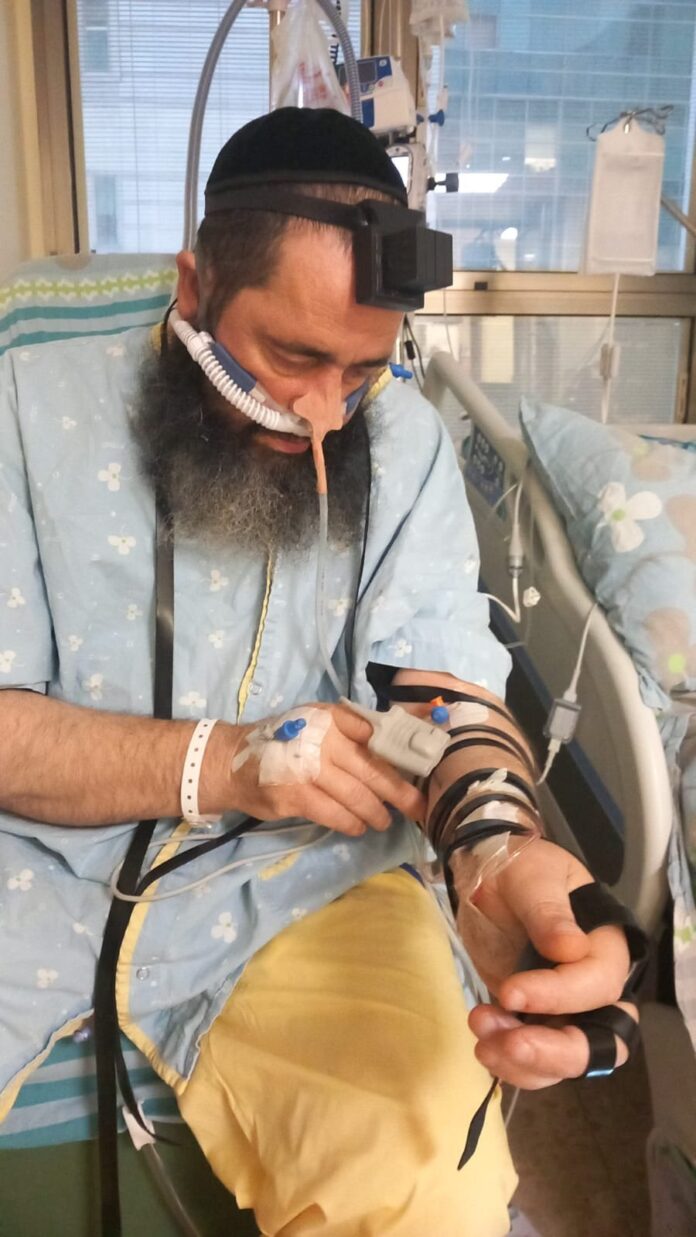 Vos Iz Neias3 days ago
JERUSALEM (VINnews) – A deeply personal essay by a young haredi Israeli explaining why he decided to enlist in the military has drawn widespread attention on social media, adding a human dimension to Israel’s ongoing debate over military service among the ultra-Orthodox community.
The essay, published on X by Yehuda Ben Saadon, traces his decision from the Hamas-led attack on Israel on Oct. 7, 2023, through the war that followed and a personal family experience that he says transformed his sense of responsibility.
Ben Saadon wrote that he grew up in a life centered on Torah study, prayer and family and acknowledged that military service would present significant religious challenges, including maintaining regular prayer, Torah study and strict standards of kashrut.
הריאות שחייבו אותי להתגייס
אני בחור חרדי.
כל החיים שלי היו תורה, תפילה ומשפחה.
בצבא אין לי מניין קבוע, אין לי סדרי לימוד, קשה לשמור על רמת הכשרות ועל אורח החיים התורני שאני חי לפיו.
אך כשהסתכלתי סביבי בשנים האחרונות, וראיתי את המחירים העצומים שאנשים שילמו עבור עם ישראל, הקושי… pic.twitter.com/AHJVN7SOXV
— יהודה בן סעדון (@YudaleBen) July 5, 2026
He said the first seeds of his decision were planted on the morning of Oct. 7, when he fled home to protect his wife and daughters after hearing gunfire near his community. Witnessing the attack and the months of war that followed, he wrote, left him feeling he could no longer remain on the sidelines while others bore the burden of defending the country.
According to the essay, he decided in May 2025 to close his business and begin the enlistment process.
His resolve strengthened after a personal tragedy became intertwined with the war. Ben Saadon said his father-in-law, who had suffered from severe lung disease for years, received a lifesaving lung transplant from Asael Babad, an Israeli reservist who died from wounds sustained during combat in southern Gaza. Babad’s family donated his organs after his death, allowing Ben Saadoon’s father-in-law to receive the transplant.
Ben Saadon wrote that the experience changed his motivation from one of solidarity with fellow Israelis to what he described as a personal moral obligation.
“Not every family needs a lung transplant recipient to understand this truth,” he wrote. “We are all breathing today because of those who went out to defend us.”
He said he is scheduled to begin mandatory military service in August despite the religious sacrifices he expects military life will require.
The essay has been widely shared online as Israel continues to grapple with the contentious issue of military service for haredi men. The debate has intensified during the nearly three-year war, with supporters of broader enlistment arguing that the burden of military service should be shared more equally across Israeli society, while many haredi leaders continue to oppose compulsory service for full-time yeshiva students.
Below is full English translation what Ben Saadon wrote:
I am a charedi man. All my life has revolved around Torah, prayer, and family.
In the army, I won’t have a regular minyan. I won’t have fixed Torah study sessions. It will be difficult to maintain the level of kashrut and the Torah lifestyle by which I live. But when I looked around over the past few years and saw the enormous price that people have paid for the Jewish people, those difficulties almost disappeared.
The decision to enlist began to take shape in my mind on the morning of October 7. When I left for synagogue that morning, I knew nothing about the massacre taking place just five kilometers from the city where I live. The faint, almost unbelievable rumors that reached us were met with complete disbelief.
During the prayers, when a rocket struck the street opposite the synagogue and no emergency responders arrived, we began to realize that something major was happening. A few minutes later, a burst of gunfire rang out. I ran home in a panic to my wife and my daughters.
That run, and the horrific day that followed, never left me.The feeling of helplessness,the realization that while my brothers were being murdered and massacred, I was running to hide in my home with no way of helping them, struck me mercilessly. That was when the first thought entered my mind: Things cannot continue this way.
During the year and a half that followed, I saw again and again the price that the people of Israel were paying so that my wife, my daughters, and I could continue living here. I saw hundreds of soldiers leave their homes and never return. I saw parents bury their children. Young women become widows overnight. Small children who would grow up knowing their fathers mainly through photographs and stories. I saw young men who had already set a wedding date but never lived to stand beneath the chuppah. Some left behind pregnant wives. And that is without even speaking about the countless wounded, both physically and emotionally.
As the months passed, the question that had first flickered inside me that Simchat Torah morning became harder and harder to silence. Then, in May 2025, I made my decision. I closed the business that I had built with blood, sweat, and tears, and went to the military recruitment office.
For personal reasons, the enlistment process took much longer than expected. Then something happened that changed everything. A few months ago, the war entered my own family.
My father-in-law, Amram Hazan, the father of nine children, had been battling severe lung disease for more than a decade. In recent years his condition had steadily deteriorated until only a lung transplant could save his life. Day by day, we watched him fade before our eyes. No donor was found.
We had already begun the complicated process of arranging a transplant in the United States, but G-d had other plans. On 21 January 2026 (3 Shevat 5786), Master Sgt. (Res.) Asael Babad, of blessed memory, passed away. Asael, a father of five, had been critically wounded several months earlier during fighting in the southern Gaza Strip and later died from his wounds.
Asael Babad HYD
After his death, his family made the extraordinarily noble decision to donate his organs and save lives. Asael’s lungs were transplanted into my father-in-law. They saved his life.
Suddenly, the price paid by the people of Israel was breathing inside my own home. Every breath my father-in-law takes today is a life that was given to him because a soldier went out to defend the people of Israel and never came home. Because a family lost a husband and a father and, in the darkest moment of their lives, chose to give life to my family.
It is difficult to describe what that realization did to me. Until then, I wanted to enlist out of a sense of mutual responsibility and solidarity. I felt I could not stand aside while my brothers were paying such a heavy price. But suddenly it became something else.From serving out of solidarity……to serving out of a profound, personal, moral obligation.
Then another realization struck me, one that was immediate, tangible, and impossible to ignore. This story does not begin and end with my father-in-law. Not every family needs to have a lung transplant recipient who received the gift of life from a fallen soldier in order to understand this simple truth:All of us are breathing today because of them.
My father-in-law breathes with Asael’s lungs.We breathe with our own lungs.But the air inside them…The homes we return to…The children we tuck into bed each night…All of these exist because people went out to fight on our behalf. And some of them never came home.
Asael gave his life for the people of Israel. And after his death, he gave my father-in-law the ability to breathe. Many others gave their lives so that you and I could breathe.
This coming August, I will begin my compulsory military service.Yes, it will be difficult. It will be difficult with finding a minyan. It will be difficult with kashrut. It will be difficult to maintain my Torah way of life.
So what. I am breathing.
 Vos Iz Neias3 days ago
JERUSALEM (VINnews) — Rabbi Tuvia Bloy, a senior Chabad rabbi, longtime educator and influential author who spent decades leading the Chabad community in Jerusalem’s Neve Yaakov neighborhood, has died at the age of 90.
His death comes just weeks after the passing of his wife, Rebbetzin Chana Frummet Bloy, who died following a prolonged illness while the couple was hospitalized.
Born in Jerusalem in 1936, Bloy came from a prominent religious family. His father, Rabbi Baruch Yehuda Bloy, was a leader in the Poalei Agudat Yisrael movement, while his grandfather, Rabbi Moshe Bloy, was one of the most prominent Agudat Yisrael figures in pre-state Israel.
He studied at Jerusalem’s Etz Chaim Talmud Torah and Yeshiva, where he became known as an outstanding student. During his youth, he developed a close connection to the Chabad-Lubavitch movement and later became a devoted follower of Menachem Mendel Schneerson.
In 1966, Bloy was appointed director-general of Tzeirei Agudat Chabad, the movement’s youth and outreach organization in Israel. Over the next two decades, he helped oversee educational initiatives, public events and outreach programs throughout the country. In 1972, he was selected to serve on a special committee established by the Lubavitcher Rebbe to promote the expansion of Torah and educational institutions in Israel and abroad.
Bloy is perhaps best known for his more than four decades as principal of the Beit Chana Seminary in Jerusalem, one of Chabad’s leading educational institutions for women. Appointed in 1975, he guided the school for more than 40 years, overseeing the education of thousands of students from Israel and around the world.
Alongside his educational work, Bloy served for decades as rabbi of the Chabad community in Neve Yaakov, where he led synagogue life, delivered Torah lectures, provided halachic guidance and became a trusted adviser to generations of families.
He was also widely recognized as one of Chabad’s leading writers and public intellectuals. A member of the founding editorial board of the weekly Kfar Chabad newspaper, established in 1980, Bloy authored hundreds of articles and essays on Chassidic philosophy, Jewish law and contemporary religious issues.
His writings and lectures made him a prominent voice within the Chabad movement, particularly on questions of Jewish education, outreach and religious thought.
In recent months, Bloy’s health deteriorated, prompting widespread prayers for his recovery across the Chabad community in Israel and abroad.
He is survived by a large family of children, grandchildren and great-grandchildren. Among them are Rabbi Peretz Uriel Bloy, a member of the administration of Beit Chana Seminary; Rabbi Mordechai Menashe Laufer, a Chabad emissary and Torah author in Ashdod; and educator Rabbi Aharon Halperin of Kfar Chabad.
His funeral is scheduled for Wednesday afternoon in Jerusalem. The procession will depart from Shamgar Funeral Home before continuing to the Chabad section of the Mount of Olives Jewish Cemetery, where he will be buried beside his wife.
Vos Iz Neias3 days agoBy Rabbi Yair Hoffman
Every so often you run into unique individuals who you take an instant liking to because they are so genuine. Reb Kalman Mendlowitz was just such a man. He was a person with an extraordinary sense of ahavah and achrayus to Klal Yisroel – something we can all learn from.
Kohanim serve Klal Yisroel, once with the avodah in the Beis HaMikdash and now with Birkas Kohanim. Reb Kalman served Klal Yisroel by ensuring that they would be able to have simchas without breaking the bank. Whether it was in his takana simcha hall, or the restaurant he ran that one could hold a sheva brachos or a Shabbos Aufruf or a pidyon haBen – he made it possible to be done affordably and without having to stress over it.
He was a partner of mine, so to speak, where he had supplied much of the food for many a yesomah, a giores, the daughter of a single mom or a single dad, and so much more. We would plan together and things would work or just fall into place. Together we did close to 200 weddings and simchas. His food was wholesome and delicious too.
Reb Kalman was a remarkable anav as well. His family did not fully realize the breadth and scope of the chessed that he had accomplished throughout his life career of Chessed, ahavas Yisroel, and achrayus. He was a ba’al achrayus and they are always the quietest; they redeem, they rescue and then they step back and let the simcha shine.
He had a special ko’ach and energy and a sense of yashrus wherein he always did what was right. He also had a special “can-do” attitude where if things didn’t work one way, they would work another way – and it always did. He was both an out-of-towner in his b’saiver panim yafos and an in-towner – where he knew how to get things done.
I last spoke to Reb Kalman some three weeks ago. We had planned a simcha together for a struggling couple that faced extraordinary difficulties. He embraced the opportunity to help and suggested innovative ways in doing so.
Reb Kalman also demonstrated remarkable mentschlechkeit. He treated everyone with kavod and respect – the wealthy and the not-so wealthy and the very-not-so-wealthy all alike. It is hard to train kitchen staff and waiters, and yet he did it. He also did it with a mentchlichkeit.
He had the Ateres Shlomo Hall on New Utrecht Avenue and 77th Street, pioneering the ffordably priced simcha hall. Together with his family, he also operated Sasson V’Simcha, halls that hosted everything. Everyone remembers that remarkable story some 17 years ago, where authorities had shut down a wedding on the day it was scheduled to happen. Un-flustered he made the arrangements to have it held elsewhere. Waiters, food and all.
The levayah was held on Friday morning at Shomrei Hadas Chapels in Boro Park, just a few hours before Shabbos.
Previously he was in a different career – dealing in diamonds. But when you think about it – it was not a career shift at all. He dealth in diamonds in what he did with his food. The thousands of acts of chessed he did were diamonds as well.
His late brother, Reb Shea Mendlowitz was renowned around the world for his beautiful musical compositions. But Reb Kalman also made his own different type of music – a music that gave nachas to the families of Klal Yisroel and Avinu sh’bashamayim in his unique sense of achrayus for Hashem’s children.
The family gets up from shiva tomorrow morning. R’ Kalman is survived by his wife, Mrs. Mollie Mendlowitz; his siblings, Mrs. Frimi Frankel, Mr. Chaim Kopel, Mrs. Chaim Mendlowitz, and Mr. Shmuel Mendlowitz; his children, Ms. Shifra Mendlowitz, Mrs. Beila Steiner, Mrs. Miriam Reich, Mrs. Bracha Ickovitz, Mrs. Shaindy Hassan, and Mr. Yitzy Mendlowitz; and grandchildren.
Yehei zichro Boruch.
The author can be reached at [email protected]
 Vos Iz Neias3 days ago
New York (VINNEWS/Rabbi Yair Hoffman) And with that line — spoken through a shut door to a German soldier, with the Shabbos candles burning behind her — Frieda Neuwirth saved herself and her children from being discovered by the Nazis. But the account is best told from the beginning – particularly, because this is the first time this information is being published. [CLICK HERE FOR PREVIOUS ARTICLE]
Frieda Neuwirth and her husband Yehudah owned a jewelry shop in a fashionable district of Budapest, Hungary. They lived with their two children in District VI, at Nagymező utca 21.
Following the German occupation of Hungary on March 19, 1944, they were forced to leave their apartment at Nagymező utca 21 under the restrictive decrees and regulations of the Nazis. The Nazis worked in three stages: first isolation, then ghetto concentration, and finally deportation and murder.
After the Neuwirths were isolated and no longer permitted to own and operate their jewelry store, they were forced to move to District VII, at Király utca 27, into a building designated a “Yellow Star House.” They moved in with their parents.
The “Yellow Star Houses” were modeled on the Judenhaus system instituted in Germany in 1939, and were, in essence, a network of mini-ghettos. Nearly two thousand buildings across Budapest were marked with the Yellow Star, and the city’s Jews were ordered to crowd into them, so that the population could be held and watched in readiness for deportation. While the majority of Hungarian Jews outside Budapest were deported and mostly murdered by early summer, the deportations of Jews from the Yellow Star Houses were planned to begin in early July.
Following international protests, Admiral Horthy, the Hungarian head of state, moved to suspend the deportations from Hungary. He announced the decision to his ministers on June 26, 1944, formally vetoed further expulsions on July 7, and the mass deportations actually ended on July 9 — the very day the Kasztner Train reached Bergen-Belsen. The reprieve came too late for the provincial Jews, but in time to postpone the destruction of the Jews of Budapest.[1]
The situation of the Jews in the Yellow Star Houses grew more and more precarious under the intensified, almost daily raids, searches, seizures, and acts of terror. By this time Frieda’s husband had been permanently called up for labor service and sent on a death march toward Austria. Frieda was left alone with two young children and expecting her third.
From the earliest meetings with the Eichmann-Kommando, Kasztner and his committee had been granted official SS protection: they were the only Jews in Hungary exempt from wearing the Yellow Star, and were permitted to keep their automobiles and telephones. Within a month of the occupation, Kasztner had become the only Jew in Hungary with official permission to travel freely from the capital to the provinces.[3] A man so privileged could walk into a marked Jewish house that others could not leave.
***CLICK HERE TO SEE EVIDENCE THAT KASZTNER KNEW OF EICHMANN’S MASS DECEPTION ALMOST IMMEDIATELY AFTER THE FIRST MEETING***
Aware of Frieda’s former ownership of the jewelry store, Kasztner entered her apartment and told her that a train of people who would be permitted to leave Hungary was in the planning. She begged him to place her two older children on the train. He answered that the train was filled to absolute capacity and that it was impossible — but that he and the others involved in the negotiations had to supply the Nazis with gold immediately. She was to bring him two kilograms of gold at once.
This demand fits exactly what is known of how the transport was financed. The ransom for the train had been fixed at $1,000 per head, a figure personally stipulated by Himmler.[4] To raise that sum, 150 places on the train were sold to the wealthy, and by the end the rescue committee handed over $1,684,000 in money and valuables to the SS for its 1,684 passengers.[5] Kasztner’s appearance at the home of a former jeweler, in the last days before a June 30 departure, demanding gold “immediately,” was one small transaction within that larger scramble to meet the SS price before the train could leave.
Frieda answered that her husband had not been around, that the jewelry store had suffered during the war, and that she could not assemble any gold at all, much less the impossible two kilograms he demanded.
Kasztner responded angrily: if she did not bring the two kilograms of gold, he would report her at once to the Black Hand, and she would be deported immediately.
Frieda Neuwirth had to disappear, and to do so immediately. She moved her family to a different residence.
Hitler was not pleased. He orchestrated a coup on October 15, 1944, through the German-backed Arrow Cross movement, led by Ferenc Szálasi.[6]
Then, in late November — just days before the decision was made to consolidate a single, entirely enclosed central ghetto — she was able to obtain false documentation stating that the family were Transylvanian refugees fleeing the rapidly advancing Red Army.[7] With these papers they were able to move to Rákosszentmihály, one of the outlying eastern suburbs of Pest, from which by this time all the Jews had already been deported.
Frieda approached the mayor of Rákosszentmihály — in that place and time the office was held by the chief notary, Dibusz Sándor, who had led the village’s administration for more than a decade[8] — and explained that there were empty homes formerly occupied by Jews, and that as a refugee she wished to occupy one of them. The mayor agreed.
Toward the end of December, shortly after they had settled, they were forced to move once more. One Friday afternoon they noticed a Wehrmacht lorry with soldiers and artillery in tow pass by, then return and stop in front of their lodging. The soldiers had chosen the open space before the house as a suitable emplacement for their field gun, and the house itself as a place to warm up. From time to time through the night they sent a salvo of artillery toward the advancing Russians. Everyone was frightened by the loud blasts — and the mother and the other women were more frightened still that their Jewish identity might be discovered by the German soldiers.
Soon a Wehrmacht contingent took over the house altogether, relegating Frieda and her children to the maidservant’s quarters. Frieda was made to serve tea to the German soldiers. On a Friday near sundown, behind the shut door of that small room, she lit her Shabbos candles. A German soldier knocked — most likely wishing her to bring more tea. Afraid that he would discover the Shabbos licht, the quick-witted Frieda called out through the door, “Gentlemen soldiers of the Wehrmacht do not wake up sleeping children.” The soldier withdrew at once. With that single response, Frieda saved her entire family.
The next morning, using the excuse that they had been terrified by the bursts of artillery, Frieda and the aunt who was staying with her went to search for another place, and fortunately found one with an acquaintance of the aunt — the local pharmacist. Despite his fear of the consequences of sheltering Jews, he agreed to let all four of them stay in one of the rooms of his house; the family there kept themselves prepared each night to take their own lives should they be raided by an Arrow Cross gang. There the family remained until the arrival of the Russians in early January 1945. They stayed in Rákosszentmihály until the spring, when it became possible to return to Budapest.
The Neuwirths immigrated to North America shortly after the Hungarian Revolition in the 1950’s. Mr. Neuwirth was a first cousin of the famed author of the Shmiras Shabbos K’hilchasa, and BJJ halacha instructor Rabbi Yehoshua Neuwirth zt”l. For the rest of their lives, the Neuwirths considered Rudolf Kasztner as the embodiment of evil, who threatened her and her family with death. Boruch Hashem, Frieda’s family survived and they are blessed with children, eineklech, and urr-eineklich who are remarkable Bnei Torah.
The author and interviewer can be reached at [email protected]
[1]Bogdanor, Kasztner’s Crime. Horthy officially vetoed further expulsions from Hungary on July 7, 1944; the mass deportations actually ended on July 9. He had announced the decision to his ministers on June 26, but it was not enforced until July 7-9 – too late to save the provincial Jews, but in time to postpone the destruction of the Jews of Budapest.
[2]Paul Bogdanor, Kasztner’s Crime (London: Routledge, 2016). The Kasztner Train departed Budapest on June 30, 1944, and reached Bergen-Belsen on July 9, 1944.
[3]Bogdanor, Kasztner’s Crime. From the second meeting with the Eichmann-Kommando, Kasztner and his committee were granted official SS protection. They became the only Jews in Hungary exempt from the Yellow Star and permitted to retain their cars and telephones; within a month of the occupation, Kasztner was the only Jew in Hungary with official permission to travel from the capital to the provinces.
[4]Bogdanor, Kasztner’s Crime. The ransom for the transport was fixed at $1,000 per head, a figure personally stipulated by Himmler, resolving a dispute between Eichmann (who had demanded first $200, then $500 per head) and Becher (who would accept no less than $2,000 per passenger).
[5]Bogdanor, Kasztner’s Crime. To meet the $1,000-per-person departure fee, 150 places on the train were sold to the wealthy. The final passenger count was 1,684, and the rescue committee ultimately handed over $1,684,000 in money and valuables to the SS.
[6]Bogdanor, Kasztner’s Crime. The Arrow Cross, the Hungarian fascist party led by Ferenc Szalasi, seized power on October 15, 1944, initiating a new reign of terror against the Jews.
[7]Bogdanor, Kasztner’s Crime. Among the first decrees of the Arrow Cross was the establishment of a ghetto around the Dohany Street synagogue; by December 2, 1944, some seventy thousand Jews had been packed into it, more than a dozen to a room. The Red Army began its siege of the city on December 26, 1944, overran Pest on January 18, 1945, and took Buda on February 13, 1945.
[8]Rakosszentmihaly was not a city with a mayor but an independent large village (nagykozseg), incorporated into Budapest only on January 1, 1950; its senior official was the chief notary (fojegyzo). Magyarorszag tiszti cim- es nevtara (Budapest: Central Statistical Office), the official state directory, lists Dibusz Sandor as the chief notary of Rakosszentmihaly continuously through the volumes of the 1930s and into the 1940s, up to the final edition of 1944. He is in all likelihood the official the family remembers as “the mayor.”