
 Vos Iz Neias
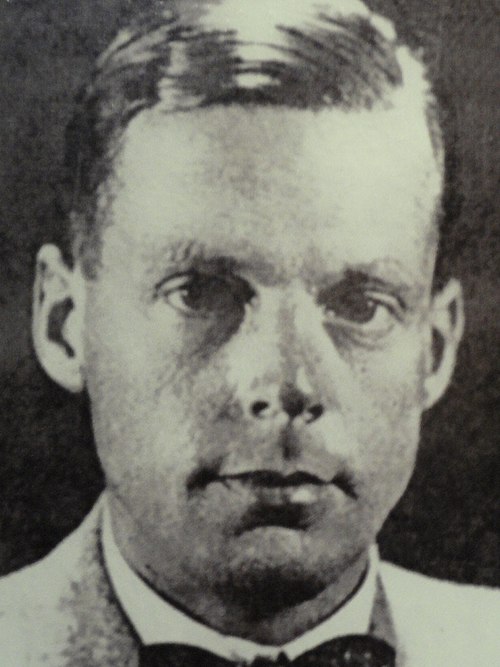
The Full Story of Jan Zwartendijk – The Forgotten Hero Who Saved Thousands of Jews
NEW YORK (VINnews/Rabbi Yair Hoffman) – Steven Spielberg, upon learning of Jan Zwartendijk’s story, reportedly said that had he known about this Dutch hero, he would have filmed his story instead of “Schindler’s List.” It is a remarkable statement, but the facts do bear the sentiment.
Jan Zwartendijk saved more Jewish lives than Oskar Schindler – yet for decades, the world knew almost nothing about him. The refugees he rescued knew him only by his nickname: “Mr. Philips Radio.”
He was the driving force behind getting the visas that saved the entire Mir Yeshiva, as well as so many others, from the Nazi beasts that roamed Europe and veritably destroyed European Jewry. Rav Aharon Kotler zt”l was also a recipient of one of these visas, though he was able to avoid Shanghai and travelled directly to America from Japan.
In the summer of 1940, during a frantic period of roughly two weeks, a Dutch businessman with no diplomatic training and no official authorization issued over 2,345 life-saving “visas” to Jewish refugees trapped in Lithuania – refugees who included the entire Mir Yeshiva, 79 rabbanim, 341 yeshiva students, and thousands of other Jews desperate to flee both Soviet and Nazi terror.
None of these visas were genuine.
None of their holders ever reached Curaçao, the Caribbean island listed as their supposed destination. And yet, approximately 95 percent of those who received a Zwartendijk visa survived the war.
This is one of the greatest rescue operations of the Holocaust – accomplished by a man who considered himself thoroughly ordinary, who never spoke of what he had done, and who went to his grave not knowing whether a single one of his refugees had survived.
Early Life and Background
Jan Zwartendijk was born on July 29, 1896, in Rotterdam, the Netherlands. He grew up in a middle-class Dutch Protestant family and received a solid education. He was not a man of grand ambitions nor ideological fervor.
His biographer, the celebrated Dutch author Jan Brokken, described him as a man who lacked personal ambition and was perplexed by abstract definitions of virtue – and yet, when the moment demanded it, he acted with a moral clarity that puts many of history’s great figures to shame.
Zwartendijk joined Philips, the Dutch electronics giant known worldwide for its radios and light bulbs, and rose through its ranks as a dependable company man. His career with Philips took him to various postings, including Hamburg, Germany, where during the 1930s he witnessed firsthand the deteriorating conditions for Jews under rising Nazi antisemitism.
This exposure to the cruelty of the Nazi regime left a deep impression on him and would later play a role in shaping his response when Jewish refugees came knocking at his door.
In 1939, Zwartendijk was appointed director of the Lithuanian branch of Philips, overseeing the company’s radio and lightbulb operations in Kaunas (Kovno), then the capital of Lithuania. His wife Erna and their two older children, Edith and Jan Jr., joined him in Kaunas in May of 1939. A third child, Robert, was born in Kaunas in September 1939, just as the Second World War was erupting. The family settled into their new life, with Zwartendijk becoming known locally as “Ponas Radija” – “Mr. Radio” – for the Philips products he sold from his shop on Laisvės Alėja, Kaunas’s grand tree-lined boulevard.
The Storm Gathers: Historical Context
To appreciate the magnitude of Zwartendijk’s deed, one must understand the desperate conditions that prevailed in Lithuania in the summer of 1940.
In September 1939, the Nazis overran western Poland, while the Soviets occupied the eastern half. More than 10,000 Polish Jewish refugees fled eastward into Lithuania, which at the time was still a neutral country.
Among these refugees were thousands of rabbanim and yeshiva bochurim – the crème de la crème of Eastern European Torah scholarship. They included the talmidim and rebbeim of the Mir Yeshiva, the Telshe Yeshiva, and numerous other storied institutions of Torah learning. As the historian David Kranzler wrote, these refugees from Poland’s cultural centers “truly comprised an elite of East European Jewry, in all its partisan divisions.”
For roughly ten months, Kaunas functioned as a kind of “Casablanca of the North” – a nest of spies, diplomats, and refugees, a last free city in a region being swallowed by totalitarian powers. But this fragile freedom was shattered on June 15, 1940, when over 200,000 Soviet soldiers crossed into Lithuania and began incorporating it into the Soviet Union.
For the Jewish refugees, Soviet occupation was terrifying on multiple levels. The Communists would not permit the observance of religion and would actively persecute those who tried to maintain it.
The refugees sensed, correctly, that far worse was coming.
Lithuania was caught between two murderous regimes: the Soviets now, and the Nazis almost certainly in the near future. Indeed, in mid-1941, the Nazis would overrun Lithuania and begin the mass killing of its Jews. More than 90 percent of Lithuania’s 200,000 Jews would perish – the worst proportional loss in any European country during the Holocaust.
The refugees were trapped. Sweden, the only accessible neutral country in the region, refused to accept them. Most consulates in Kaunas were closing. Country after country had adopted strict immigration quotas designed specifically to limit Jewish immigration. Every possible avenue of escape seemed sealed. Rav Eliezer Yehuda Finkel, the Rosh Yeshiva of Mir, expressed the anguish of the moment: “This is so horrible. The entire world is closed to us, and the storms raging over Europe are arriving here.”
On August 23, 1939, Russia and Germany had signed a secret protocol to their ten-year non-aggression pact, in which Russia would immediately invade the eastern part of Poland after the German invasion. Poland was to be split between the two countries. The aftershocks of this diabolical agreement rippled through every Jewish community caught between the two powers.
In 1939, after Sukkos, Rav Chaim Ozer Grodzensky zt”l requested that all yeshivaleit come to the Vilna vicinity to take advantage of Vilna’s new independent status. Unbeknownst to all, this new status was part of a secret Russian plan, but the Mirrer Yeshiva took advantage of this and relocated to a small town in Vilna Province called Kehdan.
An Accidental Consul
On May 10, 1940, Germany invaded the Netherlands. The Dutch government fled to London, establishing a government-in-exile. In the Baltic States, the Dutch Ambassador, L.P.J. de Decker, who was based in Riga, Latvia, promptly fired the official Dutch consul in Lithuania because of the pro-Nazi sympathies of the consul’s German wife.
De Decker needed a replacement – someone trustworthy, someone who was not a Nazi sympathizer. He turned to the reliable Philips director in Kaunas: Jan Zwartendijk.
Jan, known to be highly intelligent and responsible, was installed as acting consul to Lithuania, a part-time position he filled concurrently to his work running the Philips plant. He was officially appointed on June 14, 1940 – just one day before the Soviet invasion of Lithuania.
Zwartendijk had no diplomatic training whatsoever. He had no experience with consular affairs. He accepted the position expecting that his duties would be negligible – perhaps helping a handful of Dutch citizens with paperwork. He could not have imagined what his brief diplomatic career would bring.
There was a critical detail: the Netherlands and the Soviet Union did not have formal diplomatic relations. This meant that Zwartendijk, as Dutch consul, had no diplomatic immunity. If the Soviets disapproved of his activities, he could be arrested without any legal protection. He knew that if the authorities found out what he was doing, he could be killed without even a trial. The danger did not deter him. The risks became chillingly real when Zwartendijk’s own landlord – a Lithuanian professor of history – came to say farewell, together with his tearful wife and five-year-old daughter. They were being deported to Siberia on short notice, with nothing but a single small valise.
The Curaçao Visa Scheme: How It Began
The genesis of the Curaçao visa scheme involved several individuals whose quick thinking and persistence set the rescue in motion.
Pessla “Peppy” Lewin – Nat Lewin’s Mother Saves the Day
Pessla (Peppy) Sternheim was born in Amsterdam in 1911. An intelligent and cultured woman, she studied at the University of Berlin and spoke fluent Dutch and German. In the 1930s, she married Rabbi Dr. Isaac Lewin, a Polish citizen, and thereby lost her Dutch citizenship under the laws of the time. The couple settled in Lodz, Poland, where Dr. Lewin was elected to the city council. Their son Nathan was born in 1936. Nathan Lewin would grow up to become one of the most prominent constitutional lawyers in Washington, D.C., and his daughter Alyssa Lewin also became a prominent and respected lawyer.
When war broke out in September 1939, the Lewin family fled to Lithuania. But Peppy Lewin sensed that Lithuania was only a temporary haven. As a former Dutch citizen, she sought out the Dutch consul in Kovno, asking whether her family could travel to Java in the Dutch East Indies. Zwartendijk told her this was not possible. She then wrote directly to Ambassador de Decker in Riga, who confirmed that visas to the Dutch East Indies were no longer being issued.
But Peppy Lewin was not a woman who gave up easily.
She wrote to de Decker again, asking if he could simply note in her passport that visas to Curaçao and Surinam were “not necessary” – since technically, no visa was required for those Dutch Caribbean territories. She had no intention of actually going to Curaçao; she simply needed a document showing a destination. De Decker, in what would prove to be one of the most consequential decisions of the war, agreed. He wrote in her passport, in French: “The Consulate of the Netherlands, Riga, hereby declares that for the admission into Surinam, Curaçao, and other possessions of the Netherlands in the Americas, no entry visa is required.”
Critically, de Decker omitted the second half of the standard diplomatic text, which stated that “permission of the Governor of Curaçao is required” – permission that was almost never granted.
The notation was technically accurate but deliberately incomplete: it made it appear that the holder had a valid destination, when in reality Curaçao’s governor would almost certainly refuse entry. Zwartendijk promptly issued the same permit to Dr. Isaac Lewin. The Lewins did not have any way to reach Curaçao, and Jan connected them with another diplomat, Chiune Sugihara, the Japanese consul in Lithuania. Sugihara stamped the Lewins’ permits with the words “TRANSIT VISA,” which enabled them to travel through Japan.
Nathan Gutwirth and the Expansion
Around the same time, a 23-year-old Dutch citizen named Nathan Gutwirth, who was studying at the Telshe Yeshiva in Lithuania, was also searching for an escape route. Gutwirth actually knew Zwartendijk personally; the two shared a common interest in Dutch football and would occasionally exchange newspapers and soccer reports. In Kovno, Reb Leizer Portnoy met this bochur from Telzhe who was a Dutch citizen. When Nosson wanted to escape to Holland, he was told by the Dutch consulate that he would be unable to go there, since the Nazis controlled most of Western Europe by now. Instead, he was told to go to the Caribbean island of Curaçao, which was a Dutch colony. One did not require a visa to enter, but permission from the governor was still required. Nosson, remarkably, had gotten the Dutch consulate to inscribe into his passport the words “no visa to Curaçao necessary.”
But Gutwirth did not think only of himself. He asked Zwartendijk if his non-Dutch friends – fellow yeshiva bochurim, Polish and Lithuanian Jews with no Dutch connection – could receive the same notation. Gutwirth then sought the advice of Zerach Warhaftig, the son of a talmid of Rav Chaim Volozhin, who had been a leader of the Mizrachi movement in Warsaw and would later become Israel’s longtime Minister of Religious Affairs. Warhaftig immediately grasped the magnitude of what was possible. He told Gutwirth to go back to Zwartendijk and ask if he would be willing to issue the notation to anyone who applied for it – and to add a consular stamp to make it look more official.
Gutwirth returned to Zwartendijk with this bold request. Zwartendijk took only a few minutes to consider. De Decker, he noted, had not set a limit on the number of visas to be issued. He would not set one either. Whoever wanted a Curaçao visa could have one.
Warhaftig, in touch with Mrs. Lewin, then approached Rav Laizer Yudel Finkel, who was in Keidan teaching his talmidim, and told him in demanding words that he and his entire yeshiva should escape. He told Rav Leizer Yudel that the Dutch diplomat in Kovno could help Jews leave the country. Warhaftig then spread the word throughout the refugee communities and traveled all over Lithuania to persuade skeptical refugees to obtain the visas and attempt the escape. The result was an explosion. Within hours, dozens of panic-stricken Jews were lined up outside Zwartendijk’s office. Within days, hundreds more were coming from Vilna and other cities. Soon hundreds of Jews were descending on Jan’s office. As Nathan Gutwirth recalled decades later with deep satisfaction in his old voice: “It was all a scam.”
Two Weeks That Saved Thousands
What followed was one of the most extraordinary episodes of the entire Holocaust.
Beginning around July 22, 1940, and continuing until August 3, when the Soviets closed all foreign consulates and embassies in Kaunas, Jan Zwartendijk worked at a furious pace issuing his Curaçao “visas.” At first, he wrote and signed each one by hand, inscribing the French text into each passport or travel document individually. In the first four days alone (July 24–27), he wrote approximately 1,300 visas entirely by hand.
Realizing he could not keep up with the overwhelming demand, Zwartendijk had a rubber stamp made bearing the text “No Visa to Curaçao Necessary.” With this stamp, the process accelerated dramatically. Over the next five working days (July 29–August 2), he issued at least another 1,050 visas. The highest-numbered surviving visa known is No. 2,345, issued on August 2 to Eliasz Kupinski and his family.
Long lines of desperate refugees stood outside his office on Laisvės Alėja. Zwartendijk’s “real” work for Philips had already ground to a halt – the Soviets had nationalized banks and commercial activities were at a standstill. He devoted himself entirely to the visa operation. He knew perfectly well that the visas were a fiction. He knew that the Governor of Curaçao would almost certainly refuse entry to anyone who actually showed up. But the visas were not meant to get anyone to the Caribbean. They were meant to provide a piece of paper – a “destination visa” – that could serve as the key to obtaining the next piece of paper in an improvised chain of documents that might just lead to freedom.
According to accounts from the Philips Museum in Eindhoven, Zwartendijk even continued issuing visas secretly after the Soviets officially closed his consulate on August 3 – putting his own life at additional risk.
The Sugihara Connection: An Unplanned Partnership
The Curaçao visas alone were not sufficient for escape. The only feasible route out of Soviet-occupied Lithuania led eastward: across the vast expanse of the Soviet Union via the Trans-Siberian Railway to Vladivostok, and from there by ship to Japan. For this route to work, the refugees needed two additional documents: a transit visa from the Japanese consul, and an exit visa from the Soviet authorities.
This is where Chiune Sugihara enters the story. Sugihara was the Japanese consul in Kaunas, a career intelligence officer who spoke fluent Russian and had been stationed there to monitor German and Soviet military activity. When refugees began appearing at his door bearing Zwartendijk’s Curaçao visas and requesting Japanese transit visas, Sugihara cabled Tokyo for authorization. Tokyo denied the request. Sugihara decided to disobey.
In a remarkable coincidence, two men who had never met and had no prior coordination found themselves working as an unplanned, unofficial team. Zwartendijk issued the “destination visas”; Sugihara issued the transit visas. They worked at top speed, each in his own office. According to some sources, they spoke on the telephone only once – when Sugihara called Zwartendijk to ask him to slow down, because Sugihara, who had to write each transit visa by hand, could not keep up with Zwartendijk’s pace.
Reb Moshe Zupnik zt”l: The Bochur Who Stamped the Visas
One of the most heroic people who took part in this amazing story of Hashgacha Pratis was Reb Moshe Zupnik (1918–2010) zt”l. His role in the rescue operation has never received the attention it deserves.
From Germany to Baranovitch to Mir
Rav Avrohom Menachem Zupnik, Reb Moshe’s father, was a Boyaner chassid and a businessman in Germany. He had three sons who all went from Germany to Lithuania and Poland to study Torah. They were what can be called “Auslanders,” and the yeshivos accommodated them greatly.
In 1933, Reb Moshe left home at the age of 15 to study with Rav Elchonon Wasserman hy”d in Yeshiva Ohel Torah in Baranovitch. It was located in the second republic of Poland – newly independent from Russia. Originally, the yeshiva was established in 1906 by the Alter of Novardok, Rav Yosef Yoizel Horowitz zt”l, but after the disarray of World War One it was left without a Rosh Yeshiva. The Chofetz Chaim instructed his talmid, Rav Elchonon Wasserman zt”l, to become its Rosh Yeshiva.
Reb Moshe carried with him a letter of recommendation from a talmid chochom in Frankfurt, Rav Ben Tzion Greenfus zt”l. The letter stated: “I am sending you a bochur from Germany to learn in your yeshiva. Place him in proper lodging, amongst good bochurim, and please look after him.” Rav Elchonon personally went outside, crossed the street, and made sure to personally find him suitable lodging. Reb Moshe’s einekel related that Reb Moshe even remembered how Rav Elchonon climbed up a plank of wood for him. Reb Moshe always considered Rav Elchonon to be his rebbi. A picture of Rav Elchonon was always prominently displayed in the Zupnik dining room.
Reb Moshe zt”l recalled that at the chanukas habayis of the yeshiva’s new dining room, Rav Elchonon, beaming, gave a piece of cake and a drink to each bochur, and said with warmth: “Ersht ah mezonos, un noch dem a shehakol” (“First a mezonos and then a shehakol”).
In early 1936, Reb Moshe went on to learn in the Mirrer Yeshiva. He heard Mussar from Rav Yeruchem Levovitz, and after Rav Yeruchem’s passing on the 18th of Sivan 5696 (June 8, 1936), became very close to Rav Chatzkel Levenstein zt”l, the new Mashgiach. He also heard shiurim from Rav Laizer Yudel, the Mir Rosh Yeshiva and son of the Alter of Slabodka. These shiurim were written up later by his grandson-in-law, Rav Nachum Partzovitz zt”l, in a two-volume sefer entitled Divrei Eliezer. Reb Moshe had a very close relationship with the Mashgiach, Rav Chatzkel, first in Mir and then in Shanghai.
Rav Chatzkel had a daughter, Yocheved, who required medical attention, and Reb Moshe’s fluency in German helped significantly with the doctors. Through this involvement, he became a ben bayis by Rav Chatzkel and even had the privilege of being his guest for the Pesach sedorim in Shanghai.
Return to Germany and the Gathering Storm
In 1938, five years after the rise of Hitler yimach shmo, a 20-year-old Reb Moshe returned from the Mir to help his parents and sister in Germany. Then on October 27, 1938, all Jewish Polish citizens were thrown out of Germany with few possessions and were now in Poland in dire need of sustenance. The German Foreign Ministry had handed over the whole affair to the Gestapo, who started forcibly deporting Polish Jews over the Polish border. In all, approximately 17,000 people were expelled in this way. The Polish authorities refused to accept them, and so most of them had to live for many long weeks in no man’s land or the Polish border area. This was the event that precipitated Hershel Grynspan’s shooting of a German diplomat – which “inspired” the events of Kristallnacht on November 9, 1938.
Finally, the Polish authorities permitted the arrival of the family members of Jews expelled at the end of October 1938. Fortunately, a mechutan of the Zupnik family agreed to support the family if Reb Moshe would go around selling his goods. Reb Moshe then found himself in Eastern Poland, separated from his family, when Germany invaded at the start of World War II on September 1, 1939.
Shortly after this, Reb Moshe “chanced” upon Rav Leizer Yudel Finkel, who told him that since he was stuck on the Russian side of Poland and was unable to help his parents, he should return to Mir to learn in the meantime. It was all, of course, part of Hashem’s plan.
Reb Moshe at the Japanese Consulate
Upon hearing about the Curaçao visa scheme, Rav Leib Malin, the future Rosh Yeshiva of Beis HaTalmud, sent five bochurim, among them Reb Moshe, to obtain the Curaçao stamps for everyone in the yeshiva. Reb Moshe related that he heard the consulate staff laughing and saying, “We can’t even get out of here ourselves and they think that they will get out,” but they gave it to them nonetheless.
Rav Leib then decided to send Reb Moshe, whom he believed was well suited, to apply for Japanese transit visas. Due to the war conditions, only one bochur, Rav Binyomin Zeilberger zt”l (1921–2005) – a fellow “Auslander” from Germany and also a future Rosh Yeshiva of Beis HaTalmud – had a presentable suit. Reb Moshe borrowed it.
After failing to gain entry on the first day, he went back with Yaakov Ederman, who spoke Polish, and got in by bribing the Polish doorman. As per standard procedure, he approached the secretary, a German national by the name of Wolfgang Gudze. Reb Moshe requested 300 transit visas to get to Curaçao. Gudze replied, bemusedly, “The consul has issued visas to some individuals, but will never consent to issue for an entire community, especially here in Russia. You can’t make it out. It’s impossible.”
Not taking no for an answer, Reb Moshe asked to see the consul himself, Chiune Sugihara. After his unusual request was granted, he repeated his request, stating that he was a representative of the Mirrer Yeshiva. Sugihara was astonished. He wanted to know why he should grant them these visas without knowing if they would really leave Japan for Curaçao and how. “It’s wartime,” he said. “How will you get money and ships?”
Reb Moshe would later recount that he dared to say the things he said only because he was youthful and spontaneous. He replied, “We have an office in the United States run by Rabbi Kalmanowitz, and he assured us money and ships when we get to Japan. So, don’t worry about it. We just want to go through Japan.” Sugihara looked at Reb Moshe and said, “Show me proof.”
At a loss, Reb Moshe said to him, “We are rabbinical students, enemies of the Russian government. We don’t believe in communism. Because of this, everything we do is done in secrecy and all communication with Rabbi Kalmanowitz is in codes and therefore useless proof. Rest assured, we will leave Japan within two weeks.”
With tremendous siyata diShmaya, the consul agreed to the request. However, he only agreed for the visa to explicitly state that it was for the purpose of traveling to Curaçao. He therefore needed a second stamp stating this.
Lucky Strikes and a Nazi Secretary
It took a few days to make the new rubber stamp. In the meantime, people started lining up in front of the consulate. Upon Reb Moshe’s return to the consulate, he heard the consul’s secretary, Lithuanian-born German and Hitler admirer Wolfgang Gudze, complaining about the enormous workload from the three hundred passports, and by now, the many more at the door. At that point, Reb Moshe approached Gudze and said, “You know what? I will help you.” Gudze, taken aback, conferred with Sugihara and said, “He wants to help me!” Sugihara looked at Reb Moshe, then told Gudze, “Let him help you.”
That is how Reb Moshe came to sit in the consulate every day for the next two weeks, processing these visas together with a German secretary. Here we had a young Mir Yeshiva student who was allowed to join the consular staff, together with a German, without them having any prior knowledge about him, basically for the task of saving Jewish lives. Over two thousand Yidden came to bring their passports to Reb Moshe to stamp and process, and they actually passed them to him through the window. Among these were many chashuvim, including the Amshinover Rebbe and many yeshiva bochurim from numerous yeshivos besides the Mir.
Reb Moshe related that the German told him he was a Nazi who was loyal to “the Fuehrer” and agreed with his philosophy of world domination. The one thing that he disagreed with him about, he said, was the Jews. He once had a Jewish acquaintance and the Jews in her neighborhood in Kovno had made a good impression on him, especially the Orthodox Jews. Every day during those two weeks, for good will, Reb Moshe brought a pack of cigarettes to Wolfgang Gudze.
With pressure from the Russians, this last remaining consulate closed its doors after those fateful two weeks during which they were still stamping visas. Parting from this secretary, Reb Moshe asked, “How can I thank you?” The secretary replied, “You don’t have to thank me, but I do want to say this: The world is a rad – a wheel. Today Hitler’s on top, tomorrow he might be down. Don’t forget what I did for you.” After that, Gudze said that he was going to Germany to fight for the Fatherland. Reb Moshe looked for him after the war, but could not find him.
Opposition, and Rav Chatzkel’s Response
During those two weeks, the Russians threw the Mirrer Yeshiva out of Kehdan and split it up into four different towns. When Reb Moshe returned with the visas, not everyone was happy about it. There was much opposition to these provocations. It was preferred to mollify the Russians and stay alive. The sentiment of the olam was, categorically, that this was a radical plan. Prominent people even let Reb Moshe know that they felt that the trouble they were facing from the Russians was a direct result of his visas.
Faced with such strong opposition, Reb Moshe, totally flustered, ran to the Mashgiach, Rav Chatzkel. “What should I do? Should I stop what I’m doing?” he asked. Rav Chatzkel said that since his daughter was sick and it would be very hard for him to travel, he therefore has negios and cannot pasken.
He then came upon two of his friends, Rav Simcha Scheps (1908–1998) and Rav Henach Fishman. After explaining his predicament, Rav Simcha grabbed him by the arm and said, “Ven mefanket un a zach endeked men” (“One should finish what he began”). Reb Moshe continued his precious work.
The Forty Extra Passports
There were forty bochurim who didn’t take the visas, so Reb Moshe held onto them at great personal risk. Years later, a grandson of Reb Moshe, who was close to Rav Shmuel Berenbaum, was told by Rav Shmuel that he had special hakoras hatov to his grandfather. It turned out that Rav Shmuel, along with Rav Shmuel Brudny and Rav Nochum Partzovitz, was among those 40 bochurim. In fact, one night, Reb Moshe got a tip that the NKVD might be raiding. A friend said to him, “Are you crazy? Do you know what can happen to you if you get caught with forty passports?” Reb Moshe refused to listen and convinced his friend, Rav Feivel Hollander, to take the passports for a week.
Blank Visas in Sugihara’s Drawer
One amazing episode was first revealed only after Reb Moshe’s passing. Rav Shaya Shimanowitz, a former talmid of the Mir who was learning in the Kovno Kollel, was faced with a serious problem. He had visas for himself and his wife, but not for his baby daughter. They were already resigned to the fact that they would have to stay in Kovno, because the Japanese consulate was already closed. When Reb Moshe heard about this, he said to Rav Shaya, “Let’s go to the consulate together and see what we can do.”
Arriving at the consulate to find the place empty and all packed up, Rav Shaya didn’t think there was anything that could be done. Reb Moshe was not ready to give up and said that he would go inside and see what he could do. Rav Shaya said to him, “Mach zich nisht nurish. There’s nothing left to do.” Reb Moshe insisted, “I know the place. I am going in to see.”
Rummaging through the drawers of Sugihara’s office, he found ten blank visas containing the Dutch Curaçao stamp on them. He filled them out and stamped them all with the proper stamps which he also found in that drawer. One of those visas was used for Rav Shaya’s baby, and eight more were subsequently used to save other desperate Yidden. This story was related to the Zupnik family by the Shimanowitzes at the shivah. This was yet another example of how Reb Moshe never publicized his gallant actions.
The Escape Route: From Kovno to Kobe
Despite all this, these Japanese transit visas and the Curaçao stamp were as of yet totally worthless, because the Russians would not let anyone leave. It would be three more months before something happened. The Soviets, for some unfathomable reason, announced that any foreign citizen who had a visa – something that was illegal until then – could leave.
The audacity of the Russians was such that the fee for the journey on the Trans-Siberian Railroad, which would take them across the entire USSR to the east coast near Japan, had to be paid for in American dollars – which were also illegal to possess. One had to purchase tickets from the corresponding government agency, since the railroad was constructed by the Soviets, ostensibly for tourists. So by going to the agency to buy tickets, they would, in effect, be registering their emigration with the government. The fact that they had to do so with illegal money made them highly suspicious.
With the help of Rav Avrohom Kalmanowitz zt”l, Rav Moshe Feinstein zt”l, Reb Shraga Feivel Mendelevitch a”h, and Mr. Irving Bunim a”h, money was sent from America. The tickets were purchased! The bochurim were in constant fear that the entire trip was some diabolical trick or trap by the Russians.
Once in Vladivostok, they managed, with difficulty, to secure ships to Japan. In Kobe, Japan, they found adequate lodgings and even a bais medrash, with the help of a tiny Sefardic community some twenty-five years old, and they stayed there for the next eight months. Early on, they found out that they weren’t going to Curaçao after all. The governor had no intention of letting in Jews.
More than half of the refugees managed to travel onward from Japan to the United States, Palestine, and other safe destinations before December 7, 1941, when Japan entered the war. The Japanese, not knowing what to do with the remaining refugees, then sent them to the international section of the city of Shanghai, China. There, in difficult but livable conditions, they survived the war.
A Frightening Proof of the Visa’s Power
A frightening episode in March 1941 demonstrated just how critical Zwartendijk’s visa was. That month, 74 refugees arrived at the Japanese port of Tsuruga holding Sugihara transit visas but no Zwartendijk destination visas. They were refused entry into Japan and sent back to the Soviet Union, where they faced almost certain deportation to a Gulag labor camp.
Nathan Gutwirth, who had been in Japan since December 1940, heard about the disaster. He immediately contacted Niek de Voogd, the Dutch consul in Kobe, and persuaded him to issue Curaçao visas for all 74 stranded refugees. It worked. They were allowed to return from Vladivostok and enter Japan. Without the Curaçao visa – without the fiction that Jan Zwartendijk had created – these 74 souls would have vanished into the Soviet labor camp system.
Return to Holland and a Lifetime of Silence
When the Soviets closed the Dutch consulate and nationalized the Philips office in early August 1940, Zwartendijk knew it was time to leave. Before departing, he destroyed the consulate archives – a prudent act, since any record of his visa-issuing activities could have endangered both him and the refugees.
Zwartendijk returned with his family to the German-occupied Netherlands in September 1940. The reasons for secrecy were obvious: any revelation of his activities could have led to his arrest by the Nazis. He resumed work at Philips’ headquarters in Eindhoven and, for four years, lived in constant fear that the Nazis would discover what he had done in Lithuania.
But even after the war ended, Zwartendijk never spoke about his rescue work. He lived quietly in Eindhoven, working at Philips until his retirement. His children knew almost nothing about what he had done. He did not consider himself a hero. He truly believed that any person in his position would have done the same thing. “Do what you think is right and then keep quiet,” was the principle he lived by. His biographer Jan Brokken, who searched extensively for political or religious motivations, found none. Zwartendijk was simply a decent man with a strong sense of right and wrong who believed that when strangers knock at your door and are in danger, you must help them.
What tormented Zwartendijk was not what he had done, but what he did not know. For decades, he was haunted by uncertainty about the fate of the thousands of people to whom he had issued his visas. His son Jan Jr. believed his father feared that most of the refugees had perished – that he had unknowingly sent them to their deaths in Siberia. “He must have thought that most of these people perished,” Jan Jr. later said. “He must have been worried that he sent them to their deaths.”
Many of the Jews saved by Jan Zwartendijk never learned their rescuer’s name; they knew him only as “Mr. Philips Radio.” After decades of searching, they finally identified Jan as their savior.
A Hero Reprimanded
In 1964, a newspaper report surfaced about the mysterious “Angel of Curaçao” who had saved Jews during the war. Rather than receiving praise, Zwartendijk was called in by Joseph Luns, then the Dutch Foreign Minister (who would later become the head of NATO), and given a dressing-down for having “broken consular rules” by issuing unauthorized visas. After the war, he was reprimanded by Minister Luns for falsifying visas – to enter Curaçao one needed permission from the governor, and Zwartendijk had cleverly omitted that phrase. The ministry also intervened to prevent Zwartendijk from being knighted for his distinguished career at Philips, apparently in retaliation for his wartime actions.
Zwartendijk was deeply offended by this treatment. His biographer Jan Brokken suggests that Zwartendijk’s heroism may have shamed his contemporaries in the Dutch government, many of whom had done nothing to help Jews during the war. Brokken wrote that Zwartendijk had been “optimistic with an open mind, but after that moment, he was a troubled figure. He had trauma.”
As Dutch lawmaker Sjoerd Sjoerdsma would later put it: “Jan Zwartendijk deserved a statue, not a reprimand.”
A Heartbreaking Irony
On September 14, 1976, Jan Zwartendijk passed away in Eindhoven. He was 80 years old. He went to his death without ever learning the answer to the question that had haunted him for 36 years.
A few days later, as his coffin was being carried out of the house, a letter arrived. It was from the Simon Wiesenthal Centre and the Holocaust Research Centre. According to their research, 95 percent of the Jewish refugees who had received visas from Zwartendijk in Kovno had survived the war.
He never got to read it.
The letter confirmed that among those rescued were 79 rabbanim and 341 yeshiva students, including the entire Mir Yeshiva. The names of at least 3,080 survivors were known. The Wiesenthal Centre calculated that at least 6,000 Jews had been saved thanks to Zwartendijk’s visas. Jan Brokken estimates the total may have been as high as 10,000 when family members and those who used copied or forged visas are included.
Posthumous Recognition – A Long Road to Honor
Recognition came slowly for Zwartendijk, but eventually it came in abundance.
In 1996, Boys Town Jerusalem honored Zwartendijk at a tribute dinner in New York City and established the Jan Zwartendijk Award for Humanitarian Ethics and Values. In 1997, Yad Vashem posthumously recognized him as Righteous Among the Nations. That same year, the city of Albany, New York, erected a plaque honoring him in Raoul Wallenberg Park.
In September 2012, Lithuania awarded Zwartendijk the Life Saving Cross of the Republic of Lithuania. In June 2018, in a deeply moving ceremony, a striking memorial was unveiled on Laisvės Alėja in Kaunas – the very boulevard where Zwartendijk had issued his visas. The memorial, consisting of approximately 2,000 LED rods connected into a seven-meter-diameter spiral, symbolizes the lives he saved. The unveiling was attended by King Willem-Alexander of the Netherlands and Lithuanian President Dalia Grybauskaitė. “I am very proud to light the installation for the silent hero who had never boasted that he saved people,” Grybauskaitė said.
Zwartendijk’s son Rob, who attended the ceremony, said his father never spoke about his role in saving Jews, insisting that his actions were “not special.” At the ceremony, Rob and his wife Edith sat together with Marcel Weijland, a Holocaust survivor who had been just twelve years old when his family received their life-saving visa from Zwartendijk. They held hands, and the deep gratitude between them was palpable.
Also in 2018, Jan Brokken published his landmark biography, “De Rechtvaardigen” (“The Just”), which was later translated into English and multiple other languages. The book prompted the Dutch government to issue a formal apology to the Zwartendijk family, with Foreign Minister Stef Blok calling the 1964 reprimand “completely inappropriate” and praising Zwartendijk’s “brave behavior.”
In 2022, another monument – “Loom Light,” created by artist Titia Ex – was unveiled in Eindhoven. And on September 14, 2023, exactly 47 years after Zwartendijk’s death, Dutch Prime Minister Mark Rutte posthumously awarded him the Medal for Acts of Humanity in Gold (Erepenning voor Menslievend Hulpbetoon), the highest non-military honor the Netherlands can bestow. The medal was presented to Zwartendijk’s two surviving children: Edith, then 96 years old, and Rob, then 85. Their eldest brother, Jan Jr., had already passed away.
Rav Chatzkel’s Tribute
It wasn’t until after the war that people were fully able to appreciate what had transpired. At that point, all began to acknowledge the great neis of the Sugihara–Curaçao visas, and Reb Moshe’s role in it.
This is evident from the following encounter that Rav Menachem Zupnik had with Rav Chatzkel Levenstein in Eretz Yisroel in 1969. After asking him his name, Rav Chatzkel looked at him and said: “Du vaist, mir zenen em alleh shuldig” – “You should know, all of us are indebted to Reb Moshe.”
Shortly after arriving in America in San Francisco aboard the General M.C. Meigs on July 18, 1946, Reb Moshe married his aishes chayil, Chana Meyer. He studied in Beis HaTalmud and afterward went into business. She was his life partner and made it possible for him to lead the Torahdike life that he chose. He became a naturalized U.S. citizen on March 10, 1953. The levaya in America was held in his yeshiva, Bais HaTalmud, and in Eretz Yisroel at the Mir in Yerushalayim.
Lessons and Legacy
The Zwartendijk story offers lessons that resonate deeply within Torah Judaism.
The Talmud teaches (Sanhedrin 37a) that whoever saves a single life, it is as if he has saved an entire world. Jan Zwartendijk saved not one life but thousands – and among them, the bearers of Torah learning whose descendants fill the batei midrash of Brooklyn, Jerusalem, Lakewood, and communities across the globe. The Mir Yeshiva that survived because of Zwartendijk’s visas has produced generations of talmidei chachamim, roshei yeshiva, and poskim. The ripple effect of his actions is incalculable.
There is also a profound lesson in the nature of Zwartendijk’s heroism. He was not a soldier or a spy. He was not a man of wealth or political power. He was a radio salesman from Rotterdam who happened to be in the right place at the right time – and who, when the moment came, chose to act. He had no master plan, no prior experience with rescue operations. He made a snap decision based on simple human decency: that when desperate people come to your door, you help them.
Jan Brokken, who spent years researching Zwartendijk’s life, found no grand ideology behind the decision. “He truly believed that every human being who had the possibility to do what he did would do the same thing,” Brokken wrote. “You and I know that isn’t true, but he believed it.”
And then there is Reb Moshe Zupnik zt”l – the young bochur in a borrowed suit who talked his way into a consulate, sat side by side with a Nazi secretary, and stamped the visas that saved an entire yeshiva. His story is a reminder that Hashgacha Pratis works through human beings – through their courage, their chutzpah, and their refusal to accept that nothing can be done.
Hakaras ha’tov – gratitude – demands that we remember the righteous gentiles who risked their own safety to help Klal Yisrael in its darkest hour, and the heroes within our own ranks who seized opportunities that others dismissed as impossible.
Jan Zwartendijk, the Angel of Curaçao, “Mr. Philips Radio,” deserves to be counted among the greatest of the righteous. And Reb Moshe Zupnik, the bochur who would not take no for an answer, deserves to be remembered as one of the unsung heroes of the Mir’s survival. Their stories should be told and retold, not only as a historical record but as a testament to what one person of conscience can accomplish in a world gone mad.
Jan Zwartendijk passed away without ever knowing what became of the people he saved. But his children know. His grandchildren know. And now, thanks to growing awareness of his story, the world is beginning to know as well. The letter that arrived the day his coffin was carried out of the house contained the most powerful eulogy ever written for the humble businessman from Rotterdam: 95 percent of them survived.
Yehi zichram baruch.
The author can be reached at [email protected]