
 Vos Iz Neias
Iranian FM: Talks Were ‘A Good Start’, But ‘Atmosphere Of Mistrust’ Must Be Overcome
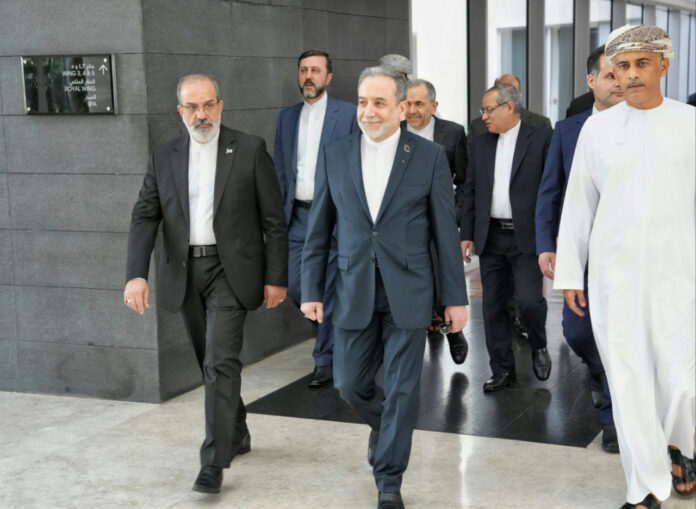
NEW YORK (VINnews) — Senior US and Iranian officials are set to continue discussions after Friday’s talks in Oman, the Iranian foreign minister says, amid a crisis that had raised fears of a possible confrontation between the countries.
Abbas Araghchi said the mediated discussions were a “good beginning” and “exclusively nuclear”, and the negotiators would now return to their capitals for consultations.
Ahead of the talks, US officials said they also wanted to discuss Iran’s ballistic missiles and its support for regional armed groups, which underscored the gaps between the countries’ positions. Araghchi stressed that these issues were “not negotiable’.
The talks came as the US military build up in the Middle East continues to gain traction in response to Iran’s violent repression of nationwide anti-government protests last month, which human rights groups say killed many thousands of people.
In recent weeks, President Donald Trump has threatened to bomb Iran if it does not reach a deal. The US has sent thousands of troops and what Trump has described as an “armada” to the region, including an aircraft carrier along with other warships as well as fighter jets. Iran, meanwhile, has vowed to respond to an attack with force, threatening to strike American military assets in the Middle East and Israel.
Speaking to Iranian state television, Araghchi said there was an “atmosphere of mistrust” between the two sides that “must be overcome”, and details about the possible next round of talks would be decided later.
Friday’s discussions were mediated by Oman’s Foreign Minister Badr Albusaidi, who said in a post on social media they had been “useful to clarify both Iranian and American thinking and identify areas for possible progress”.
Araghchi led the Iranian delegation, while the US was represented by special envoy Steve Witkoff and Trump’s son-in-law, Jared Kushner.
These were the first talks involving US and Iranian officials since before the war between Israel and Iran last June, when the US bombed Iran’s three main nuclear facilities. Despite the prospect of further meetings, it remains unclear whether a deal is possible as major differences remain.
For Iran’s embattled leaders, this could mean a chance to avert US military action that could further destabilise and potentially topple the regime, which analysts say is in its weakest position since it came to power following the 1979 Islamic Revolution.
The current stand-off has brought the issue of Iran’s nuclear program back to discussions, having been at the centre of a long-running dispute with the West. For decades, Iran has said its program is meant for peaceful purposes, while the US and Israel have accused it of being part of an effort to develop a weapon.
Iranian officials have indicated being open to concessions, which could include the creation of a regional consortium for uranium enrichment, as proposed during talks with the US that collapsed when Israel launched its surprise attack on Iran, as well as discussions about transferring its stockpile of highly enriched uranium to a third country.
At the same time, Iran says demands to limit the country’s ballistic missile programme and to end the support for proxies in the region, an alliance Tehran calls the “Axis of Resistance” that includes Hamas in Gaza, militias in Iraq, Hezbollah in Lebanon and the Houthis in Yemen, are unacceptable and a breach of its sovereignty.
In any case, Iran is expected to demand the lifting of sanctions that have crippled its economy. Opponents of the regime say any relief would give the clerical rulers a lifeline.
Despite the round of negotiations and possible further talks, Trump reiterated his belligerent statements regarding the current crisis with Iran. Asked if Iran’s Supreme Leader Ayatollah Ali Khamenei should be worried, Trump told NBC News on Wednesday: “I would say he should be very worried. Yeah, he should be.”
On the same day, US Secretary of State Marco Rubio said the discussions would have to go beyond the nuclear issue for “something meaningful” to be achieved.
“I’m not sure you can reach a deal with these guys, but we’re going to try to find out,” he said. “We don’t see there’s any harm in trying to figure out if there’s something that can be done.”