
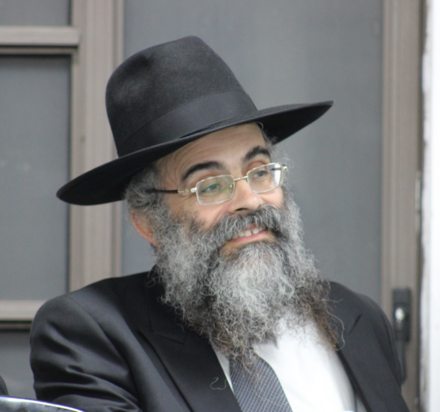

Rav Reuven Hechster – From Talmid Muvhak to Mashgiach of Two of the World’s Premier Yeshivos
By Rabbi Yair Hoffman
There are moments in the history of the Torah world that carry echoes of the past while charting the course of the future. The recent appointment of Rav Reuven Hechster as mashgiach ruchani of Bais Medrash Govoha in Lakewood, New Jersey – the largest yeshiva in the United States – is one such moment. It is a story of a quiet, self-effacing talmid chacham whose devotion to his rebbi, dedication to mussar, and love for bnei Torah have brought him to the forefront of Jewish spiritual leadership on two continents.
Rav Hechster’s formal inaugural shmuess took place recently at the Beren Dining Hall of Bais Medrash Govoha at the close of second seder, marking the culmination of a process that began two weeks earlier with the announcement of his appointment. The event was a powerful testament to the esteem in which Rav Hechster is held by talmidim, colleagues, and Torah leaders across the globe.
Now fifty-seven years old, this son of a Holocaust survivor has spent decades quietly building, teaching, and inspiring. His trajectory – from the batei medrash of Yerushalayim to the halls of Lakewood, from devoted talmid to the mashgiach of two of the world’s most prestigious yeshivos – is a testament to the power of a life lived in the pursuit of emes.
Roots of Greatness: Early Years in Eretz Yisroel
Rav Reuven Hechster was born on the 30th of Av, 5728 (1968), in Eretz Yisroel, to his father Rav Shmuel Hechster, a Holocaust survivor whose own journey through the fires of the Churban instilled in his family an unwavering commitment to Torah and avodas Hashem. That a man who had witnessed the destruction of European Jewry would raise a son destined to carry the torch of the great European mashgichim is itself a remarkable chapter in the story of Torah’s resilience.
Growing up in Yerushalayim, young Reuven was immersed from his earliest years in the atmosphere of kedushah that pervades the holy city. As a young man, he learned in Yeshivas Beis HaTalmud and later in Yeshivas Yerucham, absorbing the rich traditions of Torah scholarship and the foundations of mussar that would later define his life’s work. It was during these formative years that the seeds of his future role were planted – a deep thirst for truth, a sensitivity to the inner life of a ben Torah, and an appreciation for the transformative power of mussar.
The Pivotal Move to Lakewood: Finding a Rebbi
The next chapter in Rav Hechster’s life proved to be the defining one. He made the momentous decision to cross the ocean and join Bais Medrash Govoha in Lakewood, New Jersey. There, he was drawn into the orbit of the legendary mashgiach, Rav Nosson Meir Wachtfogel, zt”l – the man who would become his rebbi muvhak and whose teachings would shape every dimension of his avodas Hashem.
Rav Nosson Meir Wachtfogel zt”l – known simply as “the Mashgiach” – was one of the towering figures of American Torah Jewry. Born in 1910 in the small Lithuanian town of Kuhl, where his father served as rav, the young Nosson Meir studied in the famed Kelm Talmud Torah as a child and later at Yeshivas Rabbi Yitzchak Elchanan in New York, where his peers included such future gedolim as Rav Moshe Bick and Rav Avigdor Miller. He went on to learn in the great yeshivos of Europe – Mir, Kaminetz under Rav Boruch Ber Leibowitz, and then returned to Kelm – before a harrowing wartime escape through Russia, Vladivostok, and Australia brought him back to North America.
Handpicked by Rav Aharon Kotler, zt”l, in 1943, Rav Wachtfogel served as mashgiach ruchani of Bais Medrash Govoha for over fifty years. With a deep understanding of human nature and an ability to convey the mesoras ha’Torah and mussar from European giants like Rav Boruch Ber, Rav Yerucham Levovitz, and Rav Daniel Movshovitz, he connected with American talmidim in a profound and lasting way. His humility was legendary. “He strove with all his might his entire lifetime to conceal his true abilities and deeds,” one of his close talmidim wrote.
It was to this giant of a man that the young Reuven Hechster attached himself with the fierce devotion of a talmid who recognizes that he has found the source of truth. Rav Wachtfogel zt”l became his rebbi muvhak – his primary and most influential teacher – and the relationship that developed between them would shape the course of Rav Hechster’s entire life. The talmid drank deeply from the wellsprings of his rebbi’s Torah, mussar, and avodas Hashem, absorbing not merely the content of Rav Wachtfogel’s teachings but the very essence of how a mashgiach builds, inspires, and guides bnei Torah.
Building a Bayis Ne’eman
Rav Hechster married the daughter of Rav Tzvi Hirsh Josephs of Detroit, and the young couple settled in Lakewood, where he continued his growth in Torah as a member of the yeshiva’s prestigious Kollel Avreichim. These years of intensive, undistracted learning – spent in close proximity to his rebbi – further solidified the foundation upon which his future avodah would be built. Living in Lakewood during this period, Rav Hechster was able to absorb Rav Wachtfogel’s approach not only through formal shmuessen but through the daily example of a life lived entirely for Torah and mussar.
Leket Reshimos: Preserving the Mashgiach’s Legacy
One of the most significant contributions Rav Hechster has made to the Torah world is his monumental series of seforim titled “Leket Reshimos” – literally, “Collected Notes.” These volumes are a lovingly curated collection of the teachings, shmuessen, and insights of Rav Nosson Meir Wachtfogel, assembled from notes taken by talmidim who heard them directly from the Mashgiach himself.
Examples of what appears in his Leket Reshumos are as follows:
When beginning to serve the public, one must realize that the fundamental principle is to stay away from self-interest. This is both in financial matters as well as matters involving honor. A person should rather befriend those who are concerned for the public welfare – with no self-interest. There is a certain idol-worship within us and that is looking out for oneself. This is truly a form of idol-worship. The more we minimize it – the more we can reach love of G-d.
A person who uses the public to advance his own interests heaven forbid – distances himself entirely from connecting with the public – since he is only working toward his own self-interest. [Leket Reshimos, Purim p. 12]
The Yetzer HaRah’s main power to knock us out is to have us forget our lofty status – man is truly a prince. When the Yetzer HaRah makes us forget this, we trip up and do things that are unbefitting for a prince. Yoseph HaTzaddik during the period of the greatest test of his life responded to the wife of Potiphar, “I have a connection to the Patriarchs themselves! How can I have anything to do with what you are suggesting?” In this manner – he stood up to his challenge.
This is the way we can approach Elul. Elul can be understood and appreciated as an abbreviation for Ani Ledodi v’dodi Li. With this thought in mind, we can lift ourselves up and come ever closer to Hashem with this truth of I am to my Beloved – Hashem, and my Beloved is to me. When you remember and you feel that you are a ben Melech, a prince – you will act in an entirely different manner.
Regarding the general method of Avodah during Elul, Rav Hechster repeats the Mashgiach’s words:
“I do not know. I just have a kaballah in my hands from all of my Rebbeim that whoever works hard, and exerts effort, and sweats, and does not stop, at the end he will achieve. There are no yachsanim – people with yichus. The nature of a person is established based upon his effort and sweat in serving our Creator. If someone does not work and does not exert effort – he is left with nothing. “a trapen shveis vart nit farlahren – a drop of sweat never goes to waste.”
The main Avodah in Elul has to be from the perspective of Assei Tov as opposed to focusing on sur merah. Rabbi Yisroel Salanter made a special seder for his students during Elul where they studied for 18 hours straight. That is, they placed an emphasis on the “Assai Tov.”
Now, HaGaon HaRav Yisroel Salanter and his students were Gedolei Olam – they learned throughout the entire year to the best of their abilities. If so, why davka during Elul did they learn 18 hours straight? The reason is that during the year, they did not have the strength to learn so much. Only during these days. Which are days of Rachamim and ratzon, the mind opens up and the heart widens, and we become ever closer to Hashem, who is the teacher of Torah to His nation, Israel – then they felt that they had the ability to learn 18 hours straight.
When discussing the pressure – the anxiety that we are standing in Elul, Rav Wachtfogel answered: This is the wrong approach. We are now at the very beginning of Elul – it is not the last moment. There is a whole Elul Zman before us. The Avodah of Elul must be normal: to daven well, to learn well, to guard the sedarim and learning times well, and to study Mussar. If you conduct yourself in this manner, you will succeed – b’ezras Hashem!
The series spans a remarkable breadth of topics central to the inner life of a ben Torah. The first volume, published in Lakewood in 5759 (1999), addresses the study of mussar and avodas Hashem. Subsequent volumes have covered tefillah (5765), Elul and the Yamim Nora’im (5766), Chanukah (5767), the Bais HaMikdash (5768), and the defining qualities and essence of a ben Torah (5780). An additional volume, published in 5777, presents the Mashgiach’s teachings in light of the approach of the rosh yeshiva, Rav Aharon Kotler, zt”l.
These seforim are not mere academic compilations. They are windows into the soul of a gadol b’Yisroel, presented by a talmid who understood his rebbi’s message with rare depth and clarity. The Mashgiach once taught: “When a person learns mussar, it should bring him to great simchah. If someone learns mussar and then becomes sad and depressed, it means that he learned it wrong!” This joyous, life-affirming approach to mussar permeates every page of the Leket Reshimos, and it is an approach that Rav Hechster himself has come to embody in his own teaching and hashpa’ah.
A Call from Mir Brachfeld: Returning to Eretz Yisroel
In 1999, a new chapter opened with the founding of Yeshivas Mir in Modiin Illit (also known as Mir Brachfeld). The rosh yeshiva of the Mir, Rav Nosson Tzvi Finkel, zt”l – the legendary builder who expanded the Mir Yeshiva into one of the largest yeshivos in the world – personally sought out Rav Hechster to serve as mashgiach alongside Rosh Yeshiva Rav Aryeh Finkel, zt”l.
That Rav Nosson Tzvi Finkel chose Rav Hechster for this role speaks volumes. Rav Nosson Tzvi was known for his extraordinary ability to discern greatness and to place the right person in the right position to maximize their impact on Klal Yisroel. In Rav Hechster, he recognized a man who carried within him the authentic mesorah of mussar from Kelm through Rav Wachtfogel – a golden chain of spiritual mentorship stretching back to the very foundations of the mussar movement.
Heeding the call, Rav Hechster returned to Eretz Yisroel with his family and settled in Modiin Illit, beginning the work that would define him for over a quarter of a century. His period of active leadership, stretching from 1999 to the present day, has been marked by an ever-expanding circle of influence and an ever-deepening impact on the lives of thousands.
Encounters with Gedolei Yisroel: Glimpses of a Mashgiach’s Soul
Two remarkable episodes – both of which Rav Hechster shared openly with his talmidim – offer a rare window into the kind of person he is and the kind of questions that occupy his mind. They reveal a man who seeks truth with relentless honesty, who consults the gedolei hador with reverence and yet is unafraid to say when an answer has not yet satisfied him, and who brings his talmidim along on every step of the journey.
Three Prophets, One Answer
Rav Hechster once related a remarkable incident that had occurred that very week. He had gone up to the home of Maran the Sar HaTorah, Rav Chaim Kanievsky, zt”l, and posed to him a question that clearly weighed on his heart: “How can one know whether a person truly has yiras Shamayim?”
Rav Chaim, in his characteristically brief and penetrating manner, replied: “Look at his face carefully, and you will see.”
“The answer did not satisfy me,” Rav Hechster responded candidly. And so, with the relentless pursuit of clarity that defines a true ben Torah, he proceeded to the home of Maran the Rosh Yeshiva, Rav Aharon Yehuda Leib Shteinman, zt”l, and posed the identical question. Rav Shteinman’s response was strikingly similar: “You look at him and you see.”
When Rav Hechster arrived at the yeshiva, he shared the entire episode with his talmidim, adding with characteristic honesty that the matter was still not entirely clear to him. One of the bachurim then went in to the Rosh Yeshiva, Rav Aryeh Finkel, zt”l, and presented the question: How can one tell if a bachur is a yarei Shamayim?
And here was the wonder of it all – sheloshah nevi’im nisnab’u b’signon echad – three prophets prophesied in the same style. Rav Aryeh immediately cited the pasuk: “U’va’avur tih’yeh yiraso al p’neichem l’vilti secheta’u” – “And in order that His fear shall be upon your faces, so that you shall not sin” (Shemos 20:17). Rav Aryeh declared: “Yiras Shamayim is seen on the face.”
Three of the generation’s greatest Torah leaders – Rav Chaim Kanievsky, Rav Aharon Leib Shteinman, and Rav Aryeh Finkel – each independently arrived at the identical answer, rooted in the same fundamental truth of Torah. And it was Rav Hechster’s relentless pursuit of clarity, his refusal to accept what he did not fully understand, and his transparency in sharing the journey with his talmidim that brought this extraordinary convergence to light.
The Mofes of the Tzitzis
A second episode, which took place before Rosh Hashanah of 5777 (2016) and which Rav Hechster himself shared with his talmidim at Mir Brachfeld, sent waves of astonishment through the yeshiva.
As the Yamim Nora’im approached, Rav Hechster traveled to Rav Aharon Yehuda Leib Shteinman, zt”l, to consult with him about what topic he should address in the yeshiva before Rosh Hashanah – how best to strengthen the bachurim as they prepared for the days of judgment. Rav Shteinman’s answer was direct: “Speak about strengthening themselves in shemiras halashon – guarding one’s tongue from lashon hara.”
Rav Hechster responded: “That is a matter of shev v’al ta’aseh – refraining from a negative act. What about kum va’aseh – a positive action they can take upon themselves?”
A silence filled the room. And then Rav Shteinman offered a surprising reply: “Strengthen them in the mitzvah of tzitzis.”
“I did not understand the reasoning behind the Rav’s answer,” Rav Hechster later told his talmidim. “It seemed very puzzling to me that the Rav chose specifically the mitzvah of tzitzis.”
But then, while riding the bus back home, a thought struck him: perhaps he should check the tzitzis he himself was wearing. He examined them – and to his astonishment, discovered that his own tzitzis were pasul.
Only then did the full meaning of Rav Shteinman’s words become clear. The gadol hador had not merely been offering general advice for the bachurim – he had, with a kind of ruach hakodesh, directed the Mashgiach to a personal tikkun that he himself needed. The story spread through the yeshiva like wildfire, leaving the talmidim awestruck at the hidden depths of the gedolei Yisroel and at their mashgiach’s willingness to share so personal a moment with them.
These two episodes, taken together, paint a portrait of a mashgiach who is far more than a lecturer or an authority figure. Rav Hechster is a mevakeish – a seeker – who models for his talmidim what it means to pursue truth with humility and courage. He asks the hardest questions, he consults the greatest minds, he is honest about what he does not yet understand, and he shares the entire process with those he is charged with guiding. It is this quality – this radical transparency in avodas Hashem – that has made him so beloved and so effective as a mashgiach.
A Pillar of Modiin Illit: Building a Community of Ruchniyus
Over the past twenty-five-plus years, Rav Hechster has become far more than the mashgiach of a yeshiva. He has become the spiritual backbone of an entire community. In Modiin Illit – one of the fastest-growing chareidi cities in Eretz Yisroel – he is universally regarded as a trusted source of direction, inspiration, and personal guidance.
The scope of his weekly schedule alone is staggering and reflects a man who has given himself entirely to the klal. Beyond his formal responsibilities as mashgiach of Mir Brachfeld, Rav Hechster delivers a mussar shmuess every Motzoei Shabbos. Each Tuesday evening, he gives a vaad at Kollel Ateres Shlomo that draws hundreds of yungeleit. On Thursday nights, he leads a vaad for dozens of talmidim at Mir Brachfeld. On Fridays, he opens his home for a vaad with alumni. And every other Sunday, he travels to the Mir Yeshiva in Yerushalayim for a vaad with graduates there. He also delivers regular shiurim at Yeshivas Kinyan Da’as in Beit Shemesh and conducts monthly vaadim for yeshiva alumni in Yerushalayim, Bnei Brak, and Modiin Illit.
Thousands of yungeleit seek his counsel – not merely for momentary chizuk, but for sustained, ongoing guidance in their avodas Hashem, their family life, their chinuch, and their personal growth. He has become, in the fullest sense, what his rebbi Rav Wachtfogel was in Lakewood for over half a century: a living repository of the mussar tradition and a compassionate, accessible guide for those striving to grow in their Yiddishkeit.
A Historic Appointment: Mashgiach of Bais Medrash Govoha
With the petirah of Rav Mattisyahu Salomon, zt”l, in early 2024, Bais Medrash Govoha found itself without a mashgiach for the first time in decades. The position – stretching back through Rav Salomon to Rav Wachtfogel to the very founding of the yeshiva by Rav Aharon Kotler – carries enormous weight and significance. It is a role that requires not merely scholarly brilliance, but the ability to touch hearts, to understand the struggles of the modern ben Torah, and to transmit the timeless values of mussar to a new generation.
Nearly two years after Rav Salomon’s petirah, the yeshiva approached Rav Hechster with the proposal to assume the position. The choice was laden with deep symbolism: here was a talmid muvhak of Rav Wachtfogel – the man who had held the position for fifty years – being asked to return to the very yeshiva where he had grown, to carry forward the legacy of his rebbi in the place where that legacy had been forged.
With characteristic humility and deliberation, Rav Hechster did not make the decision on his own. He sought daas Torah from Rav Moshe Hillel Hirsch, shlit”a, one of the senior roshei yeshiva of the Slabodka Yeshiva in Bnei Brak and a leading posek of the generation. The decision was not simple. Delegations from Modiin Illit appealed passionately for him to remain, pointing to the irreplaceable role he plays in the city’s spiritual life – the many shmuessen, vaadim, and the personal guidance he provides to avreichim throughout the community. At the same time, representatives from Lakewood urged him to accept the position and serve Bais Medrash Govoha.
Following consultations, a remarkable arrangement was reached: Rav Hechster would divide his time between the two mosdos, spending approximately twenty days each month in Modiin Illit at Mir Brachfeld and about ten days in Lakewood. He would travel to the United States on Sundays following his free Shabbos in Eretz Yisroel. It is an arrangement that speaks to the extraordinary regard in which Rav Hechster is held by both institutions – each unwilling to relinquish his presence, and each recognizing the unique gifts he brings.
Carrying the Torch: The Chain of Mussar
There is a profound historical symmetry in Rav Hechster’s appointment. Rav Aharon Kotler handpicked Rav Nosson Meir Wachtfogel to be the mashgiach of his fledgling yeshiva in 1943. When Rav Wachtfogel protested that he did not know the art of public speaking, Rav Aharon waved away his concerns: “You’ll pick it up.” Rav Wachtfogel went on to serve with unparalleled distinction for over fifty years. Now, Rav Wachtfogel’s own talmid muvhak returns to that same yeshiva to assume the mantle his rebbi held for half a century.
Rav Wachtfogel was a product of the Kelm Talmud Torah, where the mussar movement was refined into a systematic approach to character development and spiritual growth. Through Rav Hechster, that tradition – from Rav Yisroel Salanter to Kelm, from Kelm to Rav Wachtfogel, and from Rav Wachtfogel to his devoted talmid – continues to live and breathe in the yeshivos of Modiin Illit and Lakewood.
Those who know Rav Hechster describe a man of remarkable warmth, genuine humility, and a burning desire to help every Yid grow closer to the Ribbono Shel Olam. He is not a distant, unapproachable figure perched on a pedestal. Like his rebbi before him – Rav Wachtfogel, who lived among his talmidim and was always accessible – Rav Hechster opens his home, his time, and his heart to the thousands who seek his guidance.
His shiurim and shmuessen, many of which are available through Kol HaLashon, reflect the same quality that characterized his rebbi’s approach: mussar as a source of simchah and growth, not gloom and self-flagellation. Rav Wachtfogel taught that if mussar makes a person sad, he is learning it wrong. Rav Hechster has internalized this message and transmits it to a new generation with clarity, warmth, and deep conviction.
He is, in sum, the son of a survivor who has dedicated his life to ensuring that the spiritual legacy of pre-war Europe not only survives but flourishes – in Yerushalayim, in Modiin Illit, and now, once again, in Lakewood.
A New Chapter for a Storied Institution
As Rav Hechster assumes his dual role, the Torah world watches with admiration and anticipation. Bais Medrash Govoha, the yeshiva that Rav Aharon Kotler built from a handful of talmidim into the largest makom Torah in the Western hemisphere, now has as its mashgiach a man who embodies the very ideals upon which it was founded. And Mir Brachfeld, the yeshiva that Rav Nosson Tzvi Finkel entrusted to his care, will continue to benefit from his tireless devotion.
May Hakadosh Baruch Hu grant Rav Hechster the strength, the wisdom, and the siyata d’Shmaya to continue his extraordinary avodah for many years to come, and may the thousands who will benefit from his guidance find in him the same wellspring of chizuk, inspiration, and emes that he found in his beloved rebbi.
The author can be reached at [email protected]