
 Vos Iz Neias
The Man Who Created Menschen The Alter of Slabodka and the Reshaping of the Torah World
By Rabbi Yair Hoffman
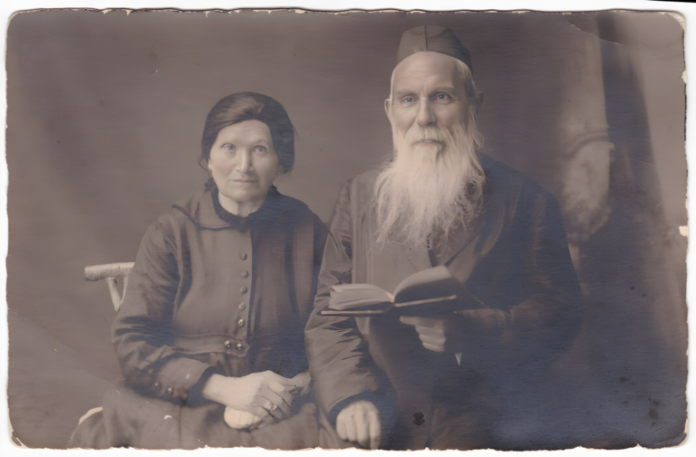
Today, the 29th of Shvat, marks the 99th Yahrtzeit of the famed Alter of Slabodka.
he topography of today’s Torah world would have been vastly different were it not for the vision and tireless work of one remarkable individual—Rav Nosson Tzvi Finkel zt“l (1849–February 1, 1927), known to the world as the Alter of Slabodka. He wrote no books. He published no sefarim. He signed his letters with the pen name “HaTzafun”—“The Hidden One,” a cryptic abbreviation of his Hebrew name (Hirsh-Tzvi-Finkel-Nota). And yet, more than any other single figure of his era, he determined the shape, the language, and the spiritual DNA of the yeshiva world as we know it.
If you are reading this article, and you or your father studied in a yeshiva, it is overwhelmingly likely that you were shaped by the Alter of Slabodka. His students went on to establish yeshivos on four continents and were responsible for bringing Torah to tens of thousands of talmidim across generations—from Lakewood to Ponevezh, from Chaim Berlin to the Mir, from Ner Yisroel to Chevron.
Indeed, the Chofetz Chaim once said about the Alter, eleven years his junior: “I write books—he creates menschen.”
The distinction is shattering in its implications. Books can be purchased, studied, and placed on a shelf. But a mensch—a refined human being who embodies Torah values—is a living testament, a walking sefer, capable of inspiring others simply by existing in the world. And the Alter produced them by the hundreds.
Here is the remarkable part: this architect of the modern Torah world was himself an orphan—a child who lost both parents and was taken in by relatives. What happened to that boy, and what he did with his life, should give pause to every family that has ever opened its home to a child in need. Because the story of the Alter is, ultimately, the story of what taking in one orphan can do for the world.
✦ ✦ ✦
I. From the Depths: An Orphan’s Rise
Harav Nosson Tzvi was born in the year 1849 (5609) in the town of Raseiniai, Russia—known in Yiddish as Raseyn. The town had a complex and turbulent history. Before 1795, it was part of the Polish-Lithuanian Commonwealth, but it was annexed by Russian Tsarina Catherine into the Russian Empire and its city rights were annulled. The town became the center of Rossieny County, and from 1843 onward was part of the Kovno Governorate.
Eighteen years before the Alter’s birth, an insurrection against Tsar Nicholas I and his oppressive regime had begun in Raseiniai. On March 26, 1831, rebels seized the town and formed a provisional district government. Within days, the insurrection spread throughout the entire country—later known as the 1831 Rebellion. It was a place where the spirit of resistance ran deep in the soil.
The town had long maintained a large Jewish presence. It was among the first Jewish communities established in Lithuania, and the city became known as the “Jerusalem of Zamut.” During most of the 19th century, the greater proportion of the town’s population was Jewish—in 1866, out of 10,579 inhabitants, fully 8,290 were Jews. Ironically, Raseiniai was also a center of the Jewish Haskalah movement—the very movement the Alter would spend his life’s work fighting to counter.
Into this world, Nosson Tzvi was born to Reb Moshe and Miriam Finkel, a prominent community figure. But tragedy struck early and struck hard. At a young age, he was orphaned of both his parents. The official records of his birth during the years surrounding it have been completely lost. A relative from Vilna—an uncle—took him in and raised him.
One can only imagine the formative impact of such early loss. To lose both parents as a child, to be uprooted from one’s home and brought to a strange city—these experiences forge a certain depth of character, a sensitivity to the pain of others, and perhaps a burning, lifelong resolve to ensure that no child under one’s care would ever feel abandoned or alone. As we shall see, this impulse—to revive the broken, to elevate the overlooked—would become the defining philosophy of his life.
✦ ✦ ✦
II. A Young Marriage and the Spark of Promise
At the remarkably young age of fifteen, Reb Nosson Tzvi married into an illustrious family. Reb Meir Bashis, the son-in-law of the Rav of Kelm—Harav Eliezer Guterman—recognized in this young orphan something extraordinary. He chose Reb Nosson Tzvi to marry his daughter, Gittel (whose siblings would later adopt the surname Wolpert), and supported him for a number of years, enabling him to sit and learn without disturbance.
Even as a young bachur, Reb Nosson Tzvi had gained fame as a lamdan, an iluy, and a master of deep thought. He was known for exceptional oratorical skills—his early drashos were fiery, charismatic, capable of moving crowds to tears and to action. The Torah world was beginning to take notice of this unusual young man.
During the first years of his marriage, Reb Nosson Tzvi was known for his original thinking and profound Torah knowledge. From time to time, he visited nearby towns to deliver classes to the public. It was on one such visit to his native town of Rasein, in 1868 when he was approximately nineteen years old, that his life would change forever.
✦ ✦ ✦
III. A Letter That Changed Everything
The Rav of Rasein, Harav Alexander Moshe Lapidos zt“l (1819–1906), was a close disciple of Harav Yisrael Salanter zt“l, the founder of the Mussar Movement. When the young Rav Nosson Tzvi delivered a drashah in his hometown, Rav Lapidos sat in the audience and listened. What he witnessed that day convinced him that this young man possessed extraordinary potential—potential that, properly guided, could change the Jewish world.
Rav Lapidos wrote a letter to Rav Simcha Zissel Ziv, the Alter of Kelm, urging him to take this young man under his wing and help form him. He handed the sealed letter to Rav Nosson Tzvi and asked him to deliver it personally.
Rav Nosson Tzvi, unaware of the contents of this letter, made his way to Kelm and handed it to Rav Simcha Zissel. From that moment forward, the Alter of Kelm began to keep a watchful eye on the young prodigy, guiding him in the ways of Mussar. It was one of the most fateful introductions in the history of the Torah world.
Under Rav Simcha Zissel’s tutelage, Reb Nosson Tzvi became his talmid muvhak, absorbing the depths of Mussar philosophy while simultaneously developing his own distinctive approach. In 1871, Rav Simcha Zissel employed him to teach Tanach in his Talmud Torah in Kelm, and shortly afterward, Reb Nosson Tzvi began delivering Mussar shmuessen to students. Very quickly, it became clear that the young teacher possessed rare pedagogical gifts and had developed a uniquely positive rapport with his young charges.
✦ ✦ ✦
IV. A Meeting with the Founder
Sometime before Rav Yisroel Salanter moved to Germany in 1857, the young Alter had the extraordinary privilege of meeting with him personally. He asked Reb Yisrael a question that would define his life’s mission: What should his avodah and tafkid in this world be?
Reb Yisrael answered with a pasuk from Yeshayahu (57:15): “L’hachayos ruach shefalim u’lhachayos lev nidkaim—to revive the spirit of the meek and revive the hearts of the depressed.”
These words became the Alter’s mandate. For the rest of his life, he devoted himself to uplifting souls, to seeing the hidden potential in every student, and to reviving hearts that had been crushed by life’s hardships. The orphan from Raseiniai would spend a lifetime ensuring that others never felt as lost as he once had.
✦ ✦ ✦
V. The Parting of Ways
Yet as much as the Alter revered his teacher, he came to differ from Rav Simcha Zissel in two significant areas.
First, Rav Nosson Tzvi felt that Mussar would thrive best in an environment viewed as an elite Torah institution. To this end, he sought out the most brilliant students in the Torah world. He believed that the highest caliber of minds, drawn to a place of excellence, would become the most effective ambassadors of Mussar to the broader Jewish world.
Second, Rav Simcha Zissel had introduced some secular subjects into the curriculum of his yeshiva—a change that Rav Nosson Tzvi felt would not be accepted in the mainstream Torah world. Although he continued to send students to study with Rav Simcha Zissel, he determined not to incorporate such an innovation in his own future yeshiva.
After the closure of Kelm’s “Beis HaTalmud” in 1876, Rav Nosson Tzvi first settled in the village of Grobin with his master, Rav Simcha Zissel. Together they ran the “Beis HaMussar.” But the two Rabbanim did not share the same outlook on educational methodology. Eventually, Rav Nosson Tzvi left Grobin to forge his own path. It was a momentous decision—one that would change the course of Jewish history.
✦ ✦ ✦
VI. The Birth of Slabodka
He settled in the village of Slabodka, on the outskirts of Kovno. During the years 1876–1877, he founded what would become the Slabodka Yeshiva, initially called “Knesses Yisrael”—named in honor of his Rebbi, Harav Yisrael Salanter. It was initially conceived as a Kollel.
Funding came from an unlikely source. Sometime in the 1860s or 1870s, Reb Nosson Tzvi had developed a relationship with a wealthy Berlin inventor named Reb Ovadiah (Emil) Lachman. Reb Ovadiah was a supporter of Rav Yisroel Salanter, a close friend of his student Rav Yitzchok Blazer, and one of the founders of the Telz Yeshiva in 1875. He had invented a number of ingenious devices, including wings for ships to prevent capsizing, a new type of alarm, and several other innovations. Reb Ovadiah had become quite wealthy and devoted his resources to supporting the Mussar Movement. When the newspaper HaMeilitz attempted to sow dissent in the Torah community by falsely claiming that Lachman and Rav Blazer had had a falling out, Reb Ovadiah wrote a scathing letter to the paper, setting the record straight. He soon became the financial backbone of the Alter’s projects.
Rav Nosson Tzvi embarked on a whirlwind of activities: the founding of the Kovno Kollel with Lachman’s funding, publication of Eitz Pri, taking a teaching position in Rav Hirshel Levitan’s yeshivah for young students, and founding a kibbutz for older talmidim in the old Slabodka shul in 1882. It was also during that time that he helped procure funding for the new yeshivah in Telz. In 1883, Rav Eliezer Gordon moved from Kelm to Telz and became its Rosh Yeshiva—the first of many great yeshivos Rav Nosson Tzvi founded or helped bolster.
But of all the myriad institutions he was involved with, one emerged as his primary focus: the famed Slabodka Yeshiva. The year 1882 marked the inauguration of the great Yeshiva of Slabodka in its full form. Rav Nosson Tzvi would direct this yeshiva for forty-five years, applying himself body and soul on behalf of this institution, thus forging his reputation as the preeminent educator and thinker of his generation.
It was a revolutionary concept. The Alter envisioned something no one had attempted before—a Volozhin-style yeshivah for older talmidim in their late teens and twenties, a top-tier institution catering to elite students, where the atmosphere would be permeated with the values of the Mussar movement through an addition to the standard yeshivah curriculum: a half-hour Mussar seder. During this session, students would study classic Mussar works—Mesilas Yesharim, Shaarei Teshuvah, Chovos HaLevavos—with great emotion, termed hispaalus. They would choose a phrase relating to their personal character traits and repeat it with great passion until it entered their subconscious psyche.
✦ ✦ ✦
VII. Assembling the Giants
At first, Slabodka did not employ any Roshei Yeshiva or Rebbeim. The students spent their days studying Torah and Mussar themselves, directing their questions to members of the Kovno Kollel, who occasionally delivered shiurim. Rav Itzele Blazer and Rav Shlomo Nosson Kotler were among those who would speak to the students in learning, while the former, along with his colleague Rav Naftali Amsterdam, delivered Mussar discourses to the student body.
But the Alter soon began assembling luminaries. The yeshiva’s first appointed Roshei Yeshiva included Rav Yitzchok Blazer (Rav Itzele Peterburger), Rav Avraham Aharon Borstein of Teberig, and Rav Yitzchok Rabinowitz of Ponevezh.
After Rav Yitzchok of Ponevezh left Slabodka, Rav Nosson Tzvi made two appointments that would prove transformative. He brought in Rav Moshe Mordechai Epstein and Rav Isser Zalman Meltzer—two towering figures who had studied together in Volozhin before its closure—to serve as Roshei Yeshiva. The two were brothers-in-law, and their combined presence elevated the yeshiva to a new level of scholarly prestige. Rav Isser Zalman, author of the Even Ha’Azel, would later become the father-in-law of Rav Aharon Kotler.
In 1897, the Alter opened a new Yeshiva in Slutsk, sending some of his finest Slabodka students to study there under the direction of Rav Isser Zalman Meltzer. And when the Radbaz of Slutsk asked the Alter to help launch a yeshiva in that city, he sent him ten top talmidim. The Alter did the same for the Mirrer Yeshiva and for Telz. He was not merely building one institution; he was seeding an entire network.
Following the advice of the Chofetz Chaim (with whom the Alter spent several days over Succos pondering the move), in 1886 the Alter made the fateful decision to sever the yeshiva’s connection with the Kovno Kollel and turn it into a fully independent institution.
✦ ✦ ✦
VIII. Gadlus HaAdam: The Greatness of Man
What set Slabodka apart from every other approach to Mussar?
At the time, the Mussar movement included two distinct coexisting currents: the Slabodka approach and the Novardok approach. Novardok’s policy was to educate students to defy public opinion entirely, to act only in adherence to Halachic precepts and Mussar principles, regardless of how others might perceive them. This often involved exercises designed to cultivate humility through public embarrassment.
In Slabodka, the focus was fundamentally different. The emphasis was on middos refinement based on personal awareness and love of one’s fellow man. Rather than crushing the ego, the Alter sought to elevate it—to show each student his own inherent greatness as a being created in the image of Hashem.
The concept became widely known as Gadlus HaAdam—“The Greatness of Man.”
The Alter taught that man is greater than the angels, for he alone possesses bechirah—freedom of choice—and in this, man reflects the Creator Himself. Everything a person accomplishes, the Alter said, depends on how much he values himself. Therefore, a person must contemplate how cherished he is by Hashem. The more we feel how much Hashem cherishes us, the more we will cherish our own souls—and this empowers a person to bring out his full potential.
Unlike other approaches that focused on fear of punishment, Gadlus HaAdam induced change by emphasizing what a person could be and how much he could accomplish. As the Alter himself stated: Rather than emphasizing the minuteness of man vis-à-vis his Creator—which could lead to paralysis and despair—we ought to emphasize the importance and greatness of a person who, amid all creatures and living things, was chosen to serve Hashem and fulfill Divine Will.
This philosophy manifested itself in unexpected ways. Great emphasis was placed on neatness and dignified appearance. Slabodka’s students were known to be clean-shaven, dressed in light suits and fashionable ties. They wore straw hats and carried canes, in compliance with the way respectable young men dressed at that time. The Alter believed that external dignity both reflected and reinforced internal dignity.
He also insisted that his talmidim eat with local families on Shabbos. He wanted them to experience family dynamics and observe the interactions between husband, wife, and children. He was shaping not just scholars, but leaders who would understand human nature in all its complexity.
✦ ✦ ✦
IX. A Revolutionary Change in Style
One of the most remarkable transformations in the Alter’s life was in his mode of communication. In his youth, he was known for fiery, charismatic oratory capable of sweeping audiences. But later in life, he entirely changed his method of speech.
After his mastery of Mussar, he delivered his thoughts in a quiet, understated manner. He felt that Mussar and Torah thought had to be transmitted without charismatic appeal, for two crucial reasons: first, to ensure that the Mussar was entirely intellectual, without any danger of influencing others through mere emotional manipulation; and second, to enable students to develop themselves and their own personalities, rather than becoming mere followers of a charismatic leader.
The stress on individuality inherent in the Alter’s vision of Gadlus HaAdam was inviolable. Once, when his student Rav Yeruchem Levovitz came to Slabodka to visit, the Alter reproved him so vehemently that the whole yeshiva could hear the shouts from behind closed doors. Day after day for nearly a week, the reproofs continued. What had upset the Alter? He felt that Rav Yeruchem was so charismatic that he was turning the Mirrer bochurim into his “Cossacks”—each one in Reb Yerucham’s image, rather than allowing each student to develop his own unique expression.
One talmid who witnessed this exchange—Rav Yitzchok Ruderman—later commented: “Had I spoken to my students in such a harsh tone, they would surely have left me. Only the Alter could have done this.”
In a fascinating incident, the Alter once found his young student Rav Yitzchok Hutner—later known as the “Warsaw Illuy”—studying alone while all the other students were paired off in chavrusa. He asked Rav Hutner where his chavrusa was. Rav Hutner responded: “I’m learning with my yetzer hara.” The Alter replied: “Why don’t you learn with your yetzer tov instead?” To which Rav Hutner answered: “I can always count on my yetzer hara to show up to morning seder on time. The yetzer tov is not as reliable.”
✦ ✦ ✦
X. Mussar Comes to the Mir: A Story of Fire and Rescue
It is well known that the Alter arranged shidduchim between his best students, all ba’alei Mussar, and the daughters of various Roshei Yeshivos who initially were not keen on the study of Mussar. The Mirrer Yeshivah was one place where he did not, at first, succeed in planting the Mussar approach. Though his own son, Rav Lazer Yudel, married the daughter of Reb Elya Baruch Kamai—cementing a Slabodka-Mir connection for posterity—Rav Kamai himself was firmly against the idea of incorporating Mussar into his yeshiva.
But life has a way of humbling even the most resolute opposition.
The winds of Haskallah began to penetrate even the holy walls of the Mir Yeshiva. The Enlightenment movement, with its seductive promises of modernity and secular wisdom, was claiming souls. As Rabbi Chaim Shapiro zt“l of Baltimore tells it, Rav Elya Baruch Kamai, the very man who had resisted Mussar, sent an urgent, desperate message to the Alter, his own mechutan:
“Please! Save our yeshivah!”
The Alter responded immediately. He sent ten of his finest talmidim—giants in both Torah and Mussar, young men whose very presence could shift the spiritual atmosphere of a room. Their arrival at the Mir led to an incident that, in hindsight, borders on the comical, though at the time it must have caused no small measure of alarm.
To deal with the scourge of Haskallah, Rav Kamai had earlier instructed the Mir shammas to burn any “treif” books that he might come across while cleaning. The shammas, a simple and earnest man, asked how he could possibly distinguish a treif sefer from a kosher one. He could not read German or Polish, and the forbidden books looked much like any other.
The solution seemed elegant: the pages of a kosher volume were marked with the letters of the alef-beis, while treif books were numbered with Arabic numerals.
The Alter’s talmidim arrived, armed with the first Mussar works to enter the Mir: copies of the newly published Mesilas Yesharim. And yes—the new sefarim were marked with Arabic numerals instead of the usual Hebrew letters.
One day, to their horror, the new arrivals discovered that every single copy of the Mesilas Yesharim had vanished without a trace.
Someone remembered that it was likely the shammas who had removed them. They raced to find him. And there, just in the nick of time—with flames already consuming the edges of some pages—the precious volumes were rescued from the fire.
The story highlights both the struggles and the ultimate triumphs that the Alter experienced in implanting Mussar in the world of Torah. It was never easy. But the Alter possessed something rare: an unshakeable conviction that the human soul, properly cultivated, could reach extraordinary heights.
It is also interesting to note that the original Mussar Seder in Mir under the leadership of the Alter’s son Rav Lazer Yudel was double that of Slabodka. It was both from 1;00 PM to 1;30 PM and also in the evening between 7:00 PM and 7:40 PM.
✦ ✦ ✦
XI. The Raging Debate and the Closure of Volozhin
In 5657 (1897), a raging debate about the methodology of Mussar divided the Slabodka yeshiva. The controversy was fierce, and it caused most of the talmidim to leave. Not one to engage in polemics, the Alter simply picked himself up, left the yeshiva he had founded, and began his life’s work yet again—this time in the Butchers’ Shul in Slabodka.
Out of 300 Slabodka talmidim, perhaps only seventy accompanied him. He named his reconstituted institution Yeshivas Knesses Yisrael, in honor of his Rebbi, Harav Yisrael Salanter. The other camp named theirs Yeshivas Knesses Beis Yitzchok. Rav Moshe Mordechai Epstein and the mashgiach Rav Dov Tzvi Heller departed along with the Alter, even though the new heads of the opposing yeshivah had offered Rav Moshe Mordechai a higher salary to remain.
But the Alter was not deterred. Within a remarkably short time, Knesses Yisrael began growing rapidly once more, and Harav Nosson Tzvi again led hundreds of talmidim.
Meanwhile, on February 2nd, 1892, the famed Volozhin Yeshiva—founded by Rav Chaim of Volozhin, the foremost student of the Vilna Gaon—had closed its doors by order of the Russian government. This seismic event had profound repercussions throughout the Yeshiva world. Other Yeshivos surged in enrollment, including the Mirrer Yeshiva, Telz, the Kovno Kollel, and the Alter’s own institution in Slabodka. There were 170 members in that early Kovno Kollel, and the majority of its support came from Reb Ovadiah Lachman. It was as if Hashem had cleared the stage for a new era, and the Alter was ready to lead it.
✦ ✦ ✦
XII. The Son Who Was to Be a Gadol HaDor
In the summer just before the First World War, Rav Moshe Mordechai Epstein and Rav Nosson Tzvi decided to appoint the Alter’s son, Rav Moshe Finkel—who was also Rav Moshe Mordechai’s son-in-law—as Rosh Yeshiva. Rav Moshe was surely fit for the position. A leading student of Torah giants like Rav Elya Baruch Kamai, Rav Eliezer Gordon, and Rav Chaim Soloveitchik, Rav Moshe was described by Rav Yitzchak Hutner as being very advanced in Kabbalah, which he studied in secret sessions with Rav Shlomo Elyashiv (the Leshem).
His greatness in Torah can be illustrated by a remarkable episode. Once Rav Meir Simcha of Dvinsk, the Ohr Somayach, spent his vacation in a village close to Slabodka. Rav Moshe Finkel, Rav Aharon Kotler, and Rav Yisrael Zissel Dvoretz went to visit him. When they entered his house, they found Rav Meir Simcha lying on the couch, resting. They introduced themselves and began discussing Torah. After they left, Rav Meir Simcha told his confidants that Rav Aharon Kotler was going to become the “Rav Akiva Eiger of the generation,” whereas Rav Moshe Finkel would be the “Ketzos HaChoshen of the generation.”
The Alter had great plans for this son. Together, father and son would build Torah and Mussar in Eretz Yisroel. But as we shall see, it was not to be.
✦ ✦ ✦
XIII. World War One: Exile and Survival
In the summer of 1914, war erupted across Europe. The Russian military authorities decided that the Jews were untrustworthy and could not reside near the Kovno fortress. They were forced into exile. Worse, many of the Yeshiva’s students and Rebbeim were drafted into the Tsarist Russian army.
When the war broke out, the Alter was seeking medical treatment in Germany. He was captured and jailed as an enemy alien—a citizen of Russia trapped in hostile territory. Meanwhile, back home, his Yeshiva and its students scattered. A young fifteen-year-old Rav Shach was the last one out of the Yeshiva building, not knowing where to go.
Rav Moshe Mordechai Epstein, the Rosh Yeshiva, managed to relocate to the city of Rezekne in Eastern Latvia, some 194 miles northeast of Kovno. He sent letters and telegrams desperately trying to raise funds to get the students and Rebbeim released—especially the Alter.
The Yeshiva eventually relocated to Minsk, about 170 miles from Kovno. But Minsk soon became the frontline of battle between Russia and Germany. Germany was using poison gas. The administration decided to split the Yeshiva in two. One part, including the Alter, Rav Moshe Mordechai, and Rav Avrohom Grodinsky, went to Kremenchug in the Poltava Province, about 418 miles south from Minsk. The other part, numbering over 150 students under Rav Yitzchok Isaac Sher and Rav Dov Tzvi Heller, remained in Minsk before eventually joining the others in Kremenchug.
When the Yeshiva arrived in Kremenchug, the local Chabad Chassidim came out to greet them—and were shocked. Chabad people generally do not shave their beards. With few exceptions, Slabodka talmidim did. But the townspeople acclimated quickly after meeting and conversing with the Rosh Yeshiva, Rav Moshe Mordechai Epstein, and witnessing the depth of Torah and yiras Shamayim that these unusual-looking young men possessed.
In Kremenchug, Rav Yaakov Ruderman zt“l—the future Rosh Yeshiva of Ner Yisroel in Baltimore—was kidnapped at gunpoint by a band of ruffians who demanded 10,000 rubles or they would take his life. He was brought to the home of the Rosh Yeshiva, Rav Moshe Mordechai Epstein, who had no money to give them. As they were taking the young man out to kill him, Rav Epstein ran out and began yelling and screaming to draw a crowd. The ruffians turned to shoot but saw that their situation was hopeless as a significant crowd had gathered. Rav Ruderman was released unharmed. He later, of course, founded Yeshivas Ner Yisroel and taught thousands of talmidim.
In a remarkable twist, the German soldier who had looked after the imprisoned Alter later revealed his Jewish identity—and eventually enrolled in the Slabodka Yeshiva himself.
✦ ✦ ✦
XIV. The Move to Hebron
The Alter did not return to Slabodka until 1920. By that time, enormous changes had occurred. Kovno had transformed from old-style Lita to German Orthodoxy—Torah im Derech Eretz. Slabodka and Kovno were no longer under Russia but under the new Republic of Lithuania.
Originally, the Slabodka Yeshiva was considered a school of higher learning and its students were exempt from the draft, thanks to an arrangement made by Rav Avrohom Grozinsky. But this arrangement did not last. In 1924, a crisis emerged. As soon as Poland began pressing upon its borders, Lithuania needed to institute a draft. The government gave the Yeshiva an ultimatum: Either allow the older students to be drafted into the Lithuanian Armed Forces, or introduce secular studies into the program.
While some yeshivos agreed to submit to the new law, the Alter opposed it categorically. The hanhallah decided to split the Yeshiva in two. The younger students—below draft age—would remain in Slabodka under Rav Yitzchok Isaac Sher and Rav Avrohom Grodzinsky. The older ones would relocate to Eretz Yisroel.
The Alter sent Rav Avrohom Grodzinsky and Rav Yechezkel Sarna to scout the situation. Initially, before the crisis, the plan had been to send just ten students to Yerushalayim, where they would adopt Yerushalmi garb and blend in. Now, after the Lithuanian Draft Crisis, they needed a different location and had to move en masse. They chose Hebron.
Money was raised through herculean efforts. The Rosh Yeshiva, Rav Moshe Mordechai Epstein, traveled to America and engaged in enormous fundraising work. Exit visas were obtained and entrance visas to Eretz Yisroel were secured.
In the summer of 5685 (1925), Harav Nosson Tzvi ascended to Eretz Yisrael with many talmidim, and the yeshivah was reestablished in Hebron. He was seventy-six years old, in frail health, but his spirit remained indomitable.
The Alter noted that the population of Tel Aviv then stood at approximately 40,000—equal to the number of those who came from Bavel to Eretz Yisrael in the days of Ezra HaSofer. He could not forsake such a large Jewish community by not giving them a taste of Torah. Even as he established the yeshiva in Hebron, he began laying plans for Torah outreach in the growing coastal city.
✦ ✦ ✦
XV. The Final Trials
Shortly after immigrating to Eretz Yisroel, tragedy struck the aging Alter once again. His son, Reb Moshe Finkel—the towering genius about whom Rav Meir Simcha of Dvinsk had predicted such greatness—suddenly passed away on the second day of Chol HaMoed Sukkos, October 5, 1925, at the tragically young age of forty-two.
The Alter was inconsolable. He blamed himself, wondering if the decision to move and live so close to Meoras HaMachpeilah—near the Avos—was too holy a place. The self-doubt was agonizing. Rav Yeruchem Levovitz, who had looked upon Rav Moshe Finkel as a brother, wrote a deeply moving letter of consolation to his Rebbe. It remains a model of how to comfort the bereaved.
By the end of 1926, Rav Nosson Tzvi was compelled to leave Hebron due to the cold climate, which his failing body could no longer endure. He moved first to Tel Aviv, where even in his weakened state, he gathered talmidim, alumni, and other yeshivah students in the city for Mussar shmuessen, and attempted to establish a beis Mussar.
He fell ill during the last week of September 1926, during Chol HaMoed. He moved from his home next to the Yeshiva in Hebron to the Warshawsky Hotel in Yerushalayim on Shivtei Yisroel Street. The hotel, owned by Rabbi Yaakov Yosef Herling, had previously been known as the British Hotel or Beit Olivat.
His son, Reb Laizer Yudel—the Rosh Yeshiva of the Mir in Poland—arrived in Eretz Yisroel two weeks before his father’s passing to be at his bedside.
The Alter had round-the-clock care from his talmidim, who watched over him in shifts. There was no question that this would be provided. It was the Alter’s own philosophy: any bochur in the Yeshiva who was sick had shifts of other bochurim watching over him. Now his students returned that devotion to their beloved Rebbi.
On the Friday before his passing, the Alter told Ephraim Sokolover to go back to his wife, Fannie, in Hebron for Shabbos. Even while in dire medical condition, he inquired about the welfare of a young American talmid—whether he was growing in ruchniyus. The Alter remained a master pedagogue until the very end.
✦ ✦ ✦
XVI. The Final Departure
Rav Nosson Tzvi Finkel zt“l, the Alter of Slabodka, passed away on Monday evening, January 31st, 1927—the 29th of Shvat.
The levaya began in front of the Warshawsky Hotel at 11:00 AM and proceeded on foot to Har HaZeisim. The area between Meah Shearim and the walls of the Old City was filled with mourners. At the hotel itself, people stood on the roof, on the ledges, and in front of the entranceway, straining for a last glimpse of the man who had shaped a generation.
The maspidim represented the full breadth of Torah Jewry: Rav Yosef Chaim Sonnenfeld (head of the Eidah HaChareidis), Rav Avraham Yitzchok Kook, Rav Eliyahu Klatzkin (author of the Dvar Eliyahu), Rav Shlomo Aronson (Chief Rabbi of Tel Aviv), Rav Isser Zalman Meltzer (Rosh Yeshiva of Etz Chaim), Rav Leib Chasman (author of Ohr Yahel), and others.
When the Alter passed away, the Rosh Yeshiva, Rav Moshe Mordechai Epstein, was in the United States raising funds for the Yeshiva. He sent the following telegram:
“To Rav Sarna and the Yeshiva: We are shocked by the tragedy that has befallen us and Klal Yisroel, when our teacher, our father, the Chariot of Israel, has been taken from us. Slackening in Torah study, however, will destroy the yeshiva. Be strong. With hope, the Father of orphans will comfort us. One who is beaten, yet hopeful—Moshe Mordechai.”
Hashem, in His mercy, took the Alter away before the horrific Hebron massacre of August 24, 1929, when Arab rioters murdered sixty-seven Jews—including twenty-four students and staff of the Hebron Yeshiva. The Alter was spared that unbearable grief.
✦ ✦ ✦
XVII. Some of His Sayings
The Alter’s teachings were not abstract philosophy. They were intensely practical, designed to reshape how a person sees himself and others:
On Kiddush Levanah: Why do we say “Shalom Aleichem” to others during Kiddush Levanah? Because right beforehand we recited the words, “Tipol aleihem aimasa u’pachad—let terror and fear fall upon them.” The impact of these words could affect our neshamos, potentially turning us into revenge seekers. Thus, we immediately say “Shalom Aleichem” to entrench within us ahavas Yisrael and brotherly love.
On Derech Eretz: Rashi says about Yaakov Avinu (Bereishis 28:16), ‘Had he known about the kedusha of the place, he would not have slept there.’ Even though Yaakov achieved such spiritual heights that night—receiving prophecy!—it is a chisaron of derech eretz to sleep in a holy place. Why? Because derech eretz kadma laTorah.
On Fasting for Students: Someone once noticed that the Alter used to fast frequently, and discovered that he would fast whenever he saw a student not succeeding in his learning and growth. When asked why he did so, the Alter responded: “If one truly understood that each student is a ben melech—a prince, a son of the King—there is no other choice.”
On Sin: The Alter famously said: “I cannot guarantee that my students will never sin. But I can guarantee that if they do sin, they will not enjoy it.”
On the Seder: Why do we pour drops of wine at the Seder at the mention of each of the Makos? Perhaps it is to develop our sensitivity toward suffering—even though the Egyptians caused so much pain to Klal Yisroel, we diminish our joy at their downfall.
On Littering in the Beis Medrash: A talmid saw a piece of paper on the floor and, thinking it was shaimos, bent down to pick it up. Seeing it was just garbage, he threw it back. The Alter reprimanded him: “Why did you do that? Don’t you realize that you are a mazik in a reshus horabim?” The bochur protested that no one could slip on a piece of paper. The Alter explained that a bor b’reshus horabim is not only a physical hazard—leaving garbage makes the beis medrash unsightly and diminishes the dignity of the place and the people who learn there.
XVIII. The Schedule of a Torah Empire
The daily schedule in the Slabodka Yeshiva was rigorous. In the summer, Shacharis took place at 7:00 AM; in winter, at 8:00 AM. Morning Seder began at 9:00 AM (9:30 in winter) and lasted until 2:30 PM. Second Seder ran from 4:00 PM to 8:00 PM (4:15 to 9:00 PM in winter). Mussar Seder was always between 9:00 PM and 9:30 PM. Night Seder extended from after Maariv until 11:00 PM.
On Shabbos, during Bein HaShmashos, there was a dedicated period for Cheshbon HaNefesh—a spiritual accounting of the entire week that had passed.
XIX. His Eternal Legacy
The Alter’s students went on to establish yeshivos throughout the world, becoming responsible for bringing Torah to tens of thousands of talmidim. A partial list reads like a Who’s Who of twentieth-century Torah leadership:
Rav Eliezer Yehuda Finkel (Rav Lazer Yudel), his son, headed the Mirrer Yeshiva in Poland and later in Eretz Yisroel, where it grew into the largest post-high-school yeshiva in the world.
Rav Naftali Trop became Rosh Yeshiva at the Chofetz Chaim’s yeshiva in Radin.
Rav Yeruchem Levovitz became the legendary Mashgiach of the Mirrer Yeshiva, the dominant figure of the Mussar movement’s fourth generation.
Rav Reuvain Grozofsky led Beis Medrash Elyon in Monsey.
Rav Yitzchok Hutner, the “Warsaw Illuy,” founded and led Yeshiva Chaim Berlin in Brooklyn, developing a unique synthesis of Talmudic scholarship, Mussar, and mystical thought.
Rav Yaakov Kamenetsky became Rosh Yeshiva of Torah Vodaas.
Rav Aharon Kotler headed the Yeshiva in Kletzk and later established Beth Medrash Govoha in Lakewood, New Jersey—now the largest yeshiva in the world. The Alter once said about him that the entire Yeshiva of Slabodka would have been worth it just to have influenced Rav Aharon.
Rav Dovid Leibowitz founded Yeshiva Chofetz Chaim (Rabbinical Seminary of America), first in Williamsburg and now in Queens, with branches across the United States.
Rav Yaakov Yitzchok Ruderman established Yeshivas Ner Yisroel in Baltimore.
Rav Yechezkel Sarna headed the Hebron Yeshiva in Jerusalem.
Rav Yitzchok Isaac Sher, his son-in-law, headed the Slabodka Yeshiva of Bnei Brak.
Rav Eliezer Menachem Shach of Ponevezh was a talmid of both Slabodka and Kletzk.
Rav Yechiel Yaakov Weinberg headed the Rav Azriel Hildesheimer Rabbinical Seminary in Berlin.
Rav Avrohom Eliyahu Kaplan served at the Hildesheimer Seminary in Berlin before his untimely passing.
Rav Avigdor Miller studied under the Alter’s son-in-law and became one of the most influential Torah lecturers in America.
Rav Meir Chodosh became Mashgiach of the Hebron Yeshiva.
Professor Harry Austryn Wolfson (1887–1974), who studied at Slabodka under Rav Moshe Mordechai Epstein, emigrated to America and became the first professor in any American university to occupy a chair devoted solely to Jewish Studies—Harvard’s Nathan Littauer Professor of Hebrew Literature and Philosophy. His student Isadore Twersky described him as “reminiscent of an old-fashioned gaon, transposed into a modern university setting.” Even at Harvard, the analytical methods of the yeshiva endured.
And many, many more.
For four decades after the Alter’s passing, Slabodka alumni held an annual convention on or near 29 Shvat—gathering in New York at the Broadway Central Hotel, the Broadway Mansion, or the Adas Yisrael shul—to study Mussar, hear shiurim, and reminisce about their time basking in the Alter’s light.
XX. A Living Monument
The Alter of Slabodka built no physical monuments. He wrote no books. His ethical discourses were only published posthumously by his son-in-law Rav Isaac Sher and his devoted student Rav Avraham Grodzinski, under the title Ohr HaTzafun—“The Hidden Light”—a title that also served as an allusion to his lifelong passion to remain unseen.
His legacy is entirely human—the thousands upon thousands of talmidim, across generations, who carry within them the spark he ignited.
As the Chofetz Chaim said: “I write books. He creates menschen.”
Today, almost ninety-nine years after his passing, the topography of the Torah world still bears the unmistakable imprint of one orphan from Raseiniai who believed, with every fiber of his being, in the greatness of man.
When Rav Ruderman’s talmidim asked him about the greatness of the Alter of Slabodka and his ability to create so many gedolei Yisroel, Rav Ruderman would not answer. All he would do was allude to the Alter’s incredible greatness. Anything more than that was sacred territory upon which the Rosh Yeshiva would not tread.
Perhaps there are some things that words—even in a comprehensive article—can never fully capture. But this much is clear: it is remarkable what taking in an orphaned child can do.
Zechuso yagein aleinu.
The author can be reached at [email protected]