
 Vos Iz Neias
Iran Performs Military Drill In Strait Of Hormuz Prior To Geneva Talks With US
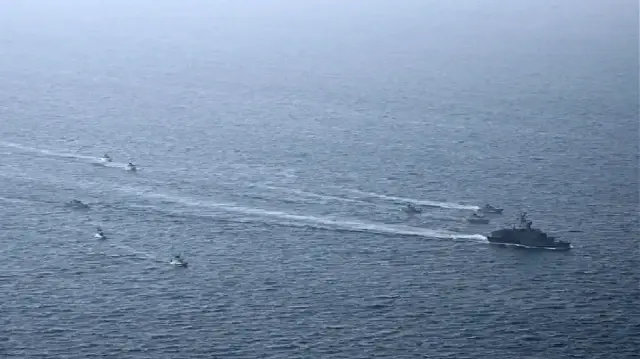
JERUSALEM (VINnews) — Talks between the United States and Iran are set to resume on Tuesday in Geneva. A day ahead of the negotiations, Iran conducted a military exercise dubbed “Smart Control” in the Strait of Hormuz, simulating the closure of key shipping lanes, according to a report by Maariv’s military correspondent Avi Ashkenazi. The drill appeared aimed at sending a warning to Washington and the broader international community. Roughly a quarter of the world’s oil tanker traffic passes through the strait, along with a similar volume of commercial cargo vessels.
Iran’s message was clear: if attacked, it would respond in ways that could disrupt the global economy, striking where it would have the greatest impact on U.S. President Donald Trump. Iranian officials believe that threatening to shut the strait could pressure the United States to refrain from military action.
But closing the waterway is viewed as only one element of Iran’s broader deterrence strategy, which also includes the potential targeting of U.S. military bases in the Gulf, attacks on regional oil and gas infrastructure, and strikes against Israel.
In Israel, officials increasingly assess that the renewed diplomatic efforts are unlikely to yield significant progress. As a result, the IDF has accelerated preparations for possible escalation. The Israeli Air Force continues to enhance defensive readiness, refining operational capabilities on a daily basis. U.S. media reports indicated that Washington has granted Israel greater operational freedom regarding Iran’s ballistic missile threat. Israeli officials say this development is not surprising, citing Israel’s demonstrated effectiveness in previous confrontations.
Meanwhile, Iran marked 40 days since the recent massacre, a milestone that could reignite domestic protests. However, observers note that protest groups appear to be waiting for a potential American move that has yet to materialize.
Uncertainty continues to surround the outcome of the Geneva talks. At the same time, a second U.S. aircraft carrier is expected to arrive in the region in the coming days, alongside additional defensive and offensive assets. Analysts say the deployments are intended not only for an initial strike scenario, but also for the possibility of a prolonged conflict.
Israeli military activity has extended beyond the direct Iranian front. Since the start of the month, Israeli forces have reportedly killed over a dozen terrorists linked to Hezbollah and Palestinian Islamic Jihad in Lebanon. The IDF is also closely monitoring developments in Syria, while conducting defensive exercises in the Golan Heights.
Tensions along the border with Jordan remain a concern, as does the situation in Judea and Samaria, where security officials warn of heightened volatility ahead of Ramadan irrespective of the Iran developments. Israeli defense sources say they detect Iranian efforts to inflame unrest there, potentially stretching Israel’s military focus across multiple arenas.