
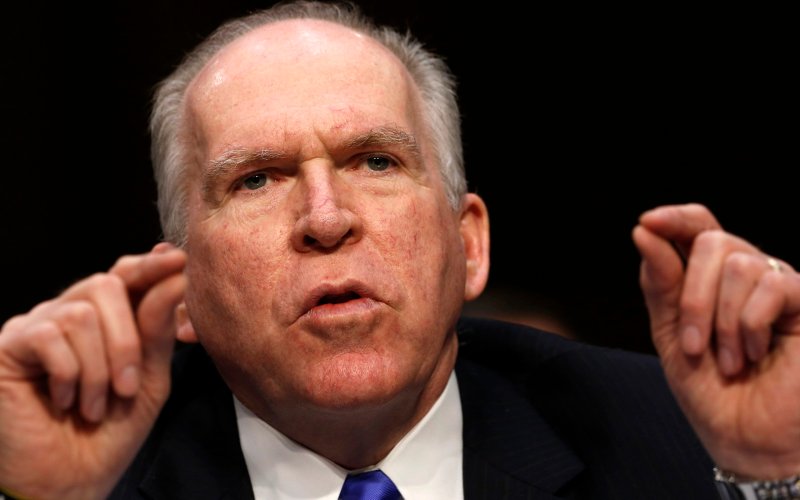

The Justice Department has issued a fresh round of subpoenas as part of a Florida-based criminal investigation examining individuals who took investigative or legal steps against President Donald Trump, while also revisiting the federal government’s handling of Russian interference in the 2016 presidential election, according to several people familiar with the matter.
In November, prosecutors sent out an initial set of subpoenas seeking records tied to the creation of a U.S. intelligence community assessment that outlined what officials described as an extensive and coordinated effort by Moscow to aid Trump in defeating Democratic nominee Hillary Clinton in 2016.
Whereas the earlier subpoenas focused on documents connected to the period surrounding the January 2017 release of the intelligence assessment during the final days of the Obama administration, the newer demands cast a much wider net. According to people who spoke on condition of anonymity to The Associated Press because the subpoenas are not public, investigators are now requesting materials covering the years that followed.
The Justice Department declined to comment Tuesday on the ongoing investigation.
The latest subpoenas signal that prosecutors continue to pursue one of several criminal investigations launched by the department involving Trump’s political adversaries.
Among those receiving subpoenas are former intelligence and law enforcement officials. Attorneys representing former CIA Director John Brennan — who played a central role in overseeing the drafting of the 2017 intelligence assessment — have said they were informed that he is a target of the investigation, though they have not been told of any “legally justifiable basis for undertaking this investigation.”
The intelligence assessment, released shortly before Trump took office, concluded that Russia had shown a “clear preference” for Trump in the 2016 race. It also determined that Russian President Vladimir Putin had directed an influence campaign designed to undermine confidence in the American electoral system and damage Clinton’s prospects.
That finding — along with the broader inquiry into whether the 2016 Trump campaign coordinated with Russia — has remained a focal point of the president’s complaints for years. Trump has repeatedly criticized the officials involved and pledged to hold them accountable.
Last year, the Trump administration’s Justice Department brought false statement and obstruction charges against former FBI Director James Comey, but the prosecution was later dropped.
Numerous official reviews, including bipartisan congressional investigations and a criminal probe led by former special counsel Robert Mueller, concluded that Russia interfered in the 2016 election in ways that benefited Trump. Those efforts included hacking and releasing Democratic emails as well as orchestrating a covert social media campaign aimed at inflaming divisions and influencing public opinion.
Mueller determined that while the Trump campaign welcomed assistance from Russia, his investigation did not find sufficient evidence to prove that Trump or his associates conspired with Russian operatives to alter the election outcome.
The Trump administration has recently renewed scrutiny of the original intelligence assessment in part because its classified annex referenced a summary of the so-called “Steele dossier.” That document, funded by Democrats and compiled by former British intelligence officer Christopher Steele, was turned over to the FBI and included allegations about Trump’s possible ties to Russia.
The dossier contained claims that were not independently verified and included salacious material. Trump has long cited those weaknesses to challenge the credibility of the broader Russia investigation.
The Florida probe appears to be one element of a wider effort by the administration to revisit decisions and conclusions that emerged from the Russia investigation years ago.
A CIA tradecraft review that was declassified last July by current Director John Ratcliffe did not dispute the conclusion that Russia interfered in the 2016 election. However, it identified “multiple procedural anomalies” in how the intelligence community assessment was prepared and criticized Brennan for allowing the classified version to reference the Steele dossier.
Brennan has told Congress and written in his memoir that he opposed incorporating dossier material into the assessment because neither its content nor its sources had been validated. He has said the dossier did not shape the assessment’s core judgments and has maintained that the FBI advocated for its inclusion.
The newly released CIA review offered a different interpretation of Brennan’s role, stating that he “showed a preference for narrative consistency over analytical soundness” and dismissed concerns about the dossier because he believed it aligned “with existing theories.” The review cites him, without additional context, as writing that “my bottomline is that I believe that the information warrants inclusion in the report.”
It remains uncertain whether the Florida-based investigation will ultimately lead to criminal charges.
In a letter sent last December to the chief judge of the Southern District of Florida, Brennan’s attorneys questioned the legal foundation of the inquiry. They asked what justification prosecutors had for opening the case in that jurisdiction and said they had not been informed of the specific crimes under investigation.
“While it is mystifying how the prosecutors could possibly believe there is any legally justifiable basis for undertaking this investigation, they have done nothing to explain that mystery,” the lawyers wrote, characterizing the probe as “manufactured.”