
 Matzav13 hours ago
Apple has launched a sweeping lawsuit against OpenAI, accusing the artificial intelligence company and two of its senior employees of stealing confidential Apple technology to accelerate OpenAI’s push into the AI hardware market.
The lawsuit, filed Friday in the U.S. District Court for the Northern District of California, alleges that OpenAI Chief Hardware Officer Tang Tan and technical staff member Chang Liu improperly took Apple’s proprietary information after leaving the company. According to the complaint, both men previously held positions at Apple and used confidential knowledge to advance OpenAI’s hardware ambitions.
Beyond the actions of the two employees, Apple claims the conduct was not isolated, accusing OpenAI itself of participating in what it describes as a “coordinated pattern of misconduct at an institutional level.”
“This case is about Apple’s former employees stealing Apple’s trade secrets for the benefit of OpenAI,” the complaint states. “Apple brings this suit to put a stop to it.”
According to the filing, Tan spent more than 20 years at Apple, where he played a key role in developing products including the iPhone, Apple Watch, and iPod. The lawsuit further alleges that Liu, who worked as an Apple electrical engineer for eight years, had access to some of the company’s most closely guarded product development secrets.
Responding to the lawsuit, an Apple spokesperson said Friday that the company will “always defend our teams’ hard work and innovations, and we are taking all appropriate steps to do so.”
Although OpenAI has yet to disclose the specific hardware products it intends to release, the company has publicly stated that it is exploring new methods for people to interact with artificial intelligence beyond “traditional products and interfaces” as it expands into physical devices.
The legal battle comes as OpenAI moves toward what many expect will be a blockbuster initial public offering. In its complaint, Apple contends that OpenAI has strayed from its original nonprofit mission in favor of maximizing revenue while launching “an aggressive campaign to bring hardware devices to the market.”
Apple further alleges that intense pressure to introduce its first hardware product led OpenAI to cut corners. According to the lawsuit, the company “resorted to taking unlawful shortcuts.”
The complaint argues that OpenAI’s developing hardware division “now rests on the shakiest of foundations, rotten to its core by its illegal reliance on misappropriated trade secrets.”
Apple also claims it attempted to address its concerns privately before turning to the courts, saying it contacted OpenAI regarding allegations that the company had obtained Apple’s confidential information. According to the lawsuit, OpenAI never responded.
“This lawsuit and the discovery process are needed to expose and begin to remedy the pervasive theft of Apple’s trade secrets,” the suit states.
{Matzav.com}
 Matzav14 hours ago
It is with great sadness that Matzav.com reports the petirah of Rav Yechiel Drillman zt”l, a veteran mechanech and longtime maggid shiur at Yeshiva Rabbeinu Yaakov Yosef of Edison, New Jersey, who inspired generations of talmidim over decades. He was in his 70s.
Rav Drillman was a son of Rav Shlomo Elimelech and Mrs. Chaya Sarah Drillman. Rav Shlomo Elimelech was a rosh yeshiva at Yeshivas Rabbeinu Yitzchok Elchonon for over 40 years and rov of the Glenwood Jewish Center. Born in Germany, Rav Shlomo Elimelech began learning with Rav Elchanan Wasserman in Baronovitch at the age of twelve and then learned with Rav Boruch Ber Leibowitz in Kamenitz before fleeing to Siberia with his family during World War II. Rav Shlomo Elimelech came to America in 1946. He entered RIETS and became a talmid of Rav Yosef Dov Soloveitchik. Rav Shlomo Elimelech was a rebbi at Yeshiva University’s High School for Boys in Brooklyn and became a rosh yeshiva at RIETS in 1982 when the high school closed.
Rav Yechiel was raised in a home of extraordinary yiras Shomayim and chashivus haTorah, laying the foundation for his own career in harbotzas haTorah.
For many years, Rav Yechiel was a familiar and beloved figure in the Edison community, where he served as a 10th-grade rebbi at the Edison Yeshiva. With dedication and warmth, he devoted his life to shaping the lives of young bochurim who passed through his classroom.
As a maggid shiur, Rav Drillman was known not only for his clear and thoughtful shiurim, but also for the personal interest he took in each of his talmidim. His influence extended well beyond the walls of the shiur room, as former talmidim continued to cherish the guidance, chizuk, and hadrocha that he imparted long after they left the yeshiva.
Rav Drillman was a devoted eved Hashem with palpable yiras Shomayim and great humility. His years of harbotzas haTorah left an enduring imprint on generations of talmidim, many of whom credit him with helping lay the foundation for their continued aliyah in Torah and yiras Shomayim.
In later years, Rav Drillman relocated to Lakewood, where he resided in the A Country Place community. For a time, he served as a R”M at Bais Medrash L’Torah in Lakewood.
He is survived by his devoted rebbetzin, as well as children and grandchildren carrying on his legacy. He is also survived by his brothers, Rav Yaakov Drillman, rosh yeshiva of Yeshivas Novardok of Flatbush, and Rabbi Yehoshua Drillman.
Levayah details will be published as they become available.
Yehi zichro boruch.
1
{Matzav.com}
 Matzav14 hours ago
President Donald Trump announced Friday that Iran has requested additional negotiations with the United States, but declared that the ceasefire between the two countries has officially come to an end.
In a post on Truth Social, Trump said Washington has agreed to continue discussions with Tehran while making clear that the previous ceasefire arrangement is no longer in effect.
“The Islamic Republic of Iran has asked us to continue ‘talks.’ We have agreed to do so, but the United States has stated to them, in no uncertain terms, that the Cease Fire is OVER!” the President wrote.
Axios, citing a source familiar with the matter, reported that U.S. and Iranian officials are expected to hold another round of negotiations next week, with Switzerland emerging as the likely venue.
According to the report, regional mediators have been working behind the scenes to reduce tensions and pave the way for renewed diplomatic engagement following the recent military escalation between Washington and Tehran.
Iran, however, quickly rejected those reports. Fars News Agency, which is affiliated with the Islamic Revolutionary Guard Corps, denied that another round of negotiations has been scheduled.
A source quoted by Fars dismissed reports that preparations had been completed for talks in Islamabad or that technical discussions would continue next week, calling the claims entirely unfounded.
The source added that any future developments regarding negotiations would be announced only through the Islamic Republic’s official channels.
Mohammad Marandi, a member of Iran’s negotiating team, also rejected the reports, declaring, “No negotiations will be held until the Trump administration fulfills its commitments.”
Earlier this week, Trump authorized a series of military strikes against Iranian targets following Tehran’s attacks on commercial vessels transiting the Strait of Hormuz.
As those operations were underway, Trump told reporters that Iranian officials had reached out to him seeking to negotiate an agreement with the United States.
“Iran called a while ago. They want to make a deal so badly,” the President said. “I just don’t know if they are worthy. I don’t know if they are going to honor the deal. That’s the problem.”
{Matzav.com}
 Matzav14 hours ago
Camp Aliyah has announced a new policy requiring any camper who brings a 24Six music device to camp to have it connected to the platform’s “Upstate Mode” filter, saying the move is intended to ensure that the camp environment reflects the values of its families.
In a letter to parents, the camp explained the thinking behind the new policy, writing that, “In today’s busy world, our children are bombarded with distractions and pressures from all sides. Baruch Hashem every summer thousands of Bnei Torah go to camp where they are in a ‘cocoon’ away from the hustle and bustle of daily life.”
The administration emphasized the powerful role music plays in shaping young people, noting, “As we all know, one of the great influences on the heart and mind of a Yid is the music that he listens to. Throughout the Torah we find references to the ‘Koach Haniguna’ (sic). At a simcha, at a kumzitz or even when traveling, music is used to set a certain tone.”
The letter continues by recognizing music as an important part of the camp experience, stating, “Certainly, camps in general, and Camp Aliyah in particular, have come to recognize how valuable music can be in helping a bochur unwind and relax, surely an important benefit of the camp environment.”
At the same time, camp officials stressed that music must remain consistent with Torah values. “But as with all things that border on ruchniyos, care must be taken to ensure that the music’s effect is only positive and wholesome,” the letter states. “Every Yiddishe parent takes seriously the job of gatekeeping their children’s music selections. We in camp understand that even when a child is in camp, parents want reassurance that the bunk airwaves are dominated by songs and artists with which they are comfortable.”
The letter explains that the growing popularity of the 24Six music device has created new concerns.
“Over the past few years, the 24Six solo device has gained popularity. However, the variety of music styles and singers featured even on that device has given some parents and mechanchim pause, as they are uncomfortable with some messages and styles accessible there.”
Camp Aliyah then announced its new policy in bold lettering. “WHILE CAMP ALIYAH IS NOT ENCOURAGING THE USE OF A 24SIX DEVICE, WE HAVE ESTABLISHED THE FOLLOWING POLICY. ANY CAMPER BRINGING A 24SIX DEVICE TO CAMP MUST BE LINKED TO THE ‘UPSTATE MODE’ FILTER.”
Parents are instructed to activate the filter before camp begins.
“Before coming to camp, a parent must log onto their profile at 24Six.app, and register their son’s 24Six with the ‘UPSTATE MODE’ permissions.”
The camp explained that the filter “whitelists hundreds of singers and groups, including thousands of songs, covers the gamut of music acceptable to the vast majority of our parent body.”
The letter further notes that the filter cannot be removed by campers themselves. “Once installed, the filter can only be removed by Camp Aliyah. (This will happen automatically on the day camp ends.)”
According to the policy, songs by artists who are not on the approved whitelist will simply become inaccessible while the filter is active.
“The filter will prevent songs by artists who are not on the whitelist from being played, even if those songs have already been downloaded to the device. It will not delete those songs; they will simply remain unavailable for as long as the filter is active.”
Camp Aliyah also warned that any devices arriving without the filter will not remain with campers.
“Unfiltered devices will be placed in the camp office and will be returned the last day of camp.”
The camp said additional instructions would be sent shortly, adding, “Details about how to install the filter will IYH be sent out next week. B’EH your son will have enough time to go through the device to select proper music for the summer.”
The letter concludes by thanking parents for their cooperation and expressing hope “for an amazing summer full of ALIYAH in all areas.”
{Matzav.com}
 Matzav15 hours ago
President Donald Trump said he has already authorized an overwhelming military response against Iran if Tehran ever succeeds in carrying out an assassination against him, declaring that U.S. forces should strike the Islamic Republic with unprecedented force in such a scenario.
In an interview with The New York Post, Trump said Iran has viewed him as a top target for years and suggested the threat against his life is nothing new.
“I’ve been on their list for a long time. That’s what we’re dealing with,” Trump said. “… The only thing is, I’ve left instructions – if anything happens, to just literally bomb them at levels that they’ve never seen before.”
Trump’s comments came one day after The Wall Street Journal reported that Israeli intelligence had uncovered what it described as a new Iranian plot targeting the president. Trump, however, dismissed suggestions that the threat represented a newly discovered conspiracy, saying Iran’s efforts to target him have been ongoing for years.
“No, no. Israel came up with nothing. No, no,” Trump noted. “I’ve been No. 1 [on Iran’s kill list] for a long time, and it’s the way life is, you know.”
Asked about the continuing danger, Trump ended the exchange with a lighthearted but pointed remark.
“I hope you’ll miss me.”
Earlier this week, while speaking to reporters on the sidelines of the NATO summit in Turkey, Trump again addressed the threats he says Iran has made against him.
“They want to take out the US leader – me,” he said. “I’m on every list. I saw this morning, I’m on every single one of their lists. And so far, I guess I’ve been a little bit lucky, but that maybe doesn’t last very long.”
Iranian leaders have repeatedly vowed revenge against Trump over the U.S. drone strike during his first term that killed Qassem Soleimani, the commander of the Islamic Revolutionary Guard Corps’ Quds Force.
Anti-Trump rhetoric has remained prominent in Iran. During the funeral for Iran’s slain Supreme Leader, Ali Khamenei, crowds chanted for Trump’s death while holding a banner proclaiming, “We Will Kill Trump.”
 Matzav15 hours ago
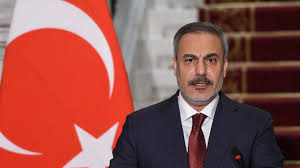
Turkish Foreign Minister Hakan Fidan intensified his criticism of Israel on Friday, accusing Prime Minister Binyomin Netanyahu and his governing coalition of deliberately creating foreign crises to serve domestic political interests. He also claimed Israel’s policies pose a growing danger to regional and international security.
Speaking during an appearance on The National’s “On the Record with Hadley Gamble,” Fidan declared, “The policies of Netanyahu’s government are not only a problem for us. His policies and his government are a burden for Israel, a burden for the region, and a burden and threat for international security.”
Asked whether the increasingly hostile rhetoric between Turkey and Israel could ultimately lead to direct military conflict, Fidan downplayed that possibility.
“There is no reason to have an open conflict,” Fidan clarified.
The Turkish foreign minister also argued that although European governments are becoming more aware of what he described as the strategic challenges posed by Israel, they have yet to take meaningful action. He warned that continued interference with Syria’s political development could further destabilize the region.
“We are not sure if Israel wants to see a stable, good, powerful, evolving, developed Syria,” he remarked.
When pressed on whether he believes Israel is actively working to weaken Syria’s new leadership in Damascus, Fidan answered affirmatively.
“When you look at the past and current patterns of the Israeli government towards the regional countries, yes.”
The remarks were Fidan’s second major verbal attack on Israel in recent weeks. In an interview with CNN Türk last week, he asserted that Israel’s current political approach and governing philosophy had “become a burden that humanity can no longer bear.”
He also described Israel as one of “humanity’s common problems” and urged the international community to unite in applying pressure against the Jewish state.
Fidan further suggested that Turkey would not shy away from military confrontation if necessary, stating, “We have no problem with confrontation. If it comes to that, it is not an issue for us.”
Israeli Foreign Minister Gideon Sa’ar sharply condemned those remarks, saying, “Turkish FM Hakan Fidan’s sickening words are textbook incitement to genocide.”
“Dehumanizing the Jewish people as an ‘unbearable burden’ is the classic, horrific language of history’s worst eliminationist regimes,” the foreign minister added.
Germany also criticized Fidan’s rhetoric. German Foreign Minister Johann Wadephul responded by affirming Israel’s security concerns, stating, “Israel faces an ongoing threat from the region and has the right and duty to protect its population.”
Fidan’s latest statements are part of an ongoing series of increasingly hostile comments by senior Turkish officials. Last month, Turkish President Recep Tayyip Erdogan warned of possible action against Israel, claiming Israeli military operations in Syria and Lebanon had reached the point where they also threatened Turkey.
Just days before those remarks, Turkish Interior Minister Mustafa Çiftçi declared that Turkey would one day regain control of Yerushalayim.
Relations between Turkey and Israel had been moving toward normalization shortly before Hamas launched its October 7, 2023, attack on Israel. Since then, however, Turkish leaders—led by Erdogan—have repeatedly denounced Israel and its military campaign.
In March of last year, Erdogan condemned Israel following its strikes on terrorist targets in Gaza, calling the country a “terror state.”
Several months later, Erdogan claimed Netanyahu’s government represented the greatest threat to stability in the Middle East.
In April, prosecutors in Istanbul filed a sweeping indictment against 35 senior Israeli officials, including Prime Minister Netanyahu, over the Israeli navy’s interception of the “Sumud” flotilla that attempted to reach Gaza in October of last year.
{Matzav.com}
 Matzav16 hours ago
New satellite imagery obtained by CNN has revealed what analysts say could be renewed Iranian efforts to rebuild portions of its nuclear infrastructure, prompting fresh questions about whether Tehran is complying with the terms of its recent agreement with the United States.
CNN’s visual investigation identified new activity during late June and early July at several Iranian missile and nuclear sites. The movements and construction work, particularly around key nuclear facilities, have fueled concerns that Iran may be violating the bilateral memorandum of understanding it signed with the United States on June 17.
The images became available during a brief period when the U.S. government temporarily relaxed restrictions that had prevented commercial satellite companies from distributing imagery of the region. Those limitations have since largely been restored as American military operations resumed.
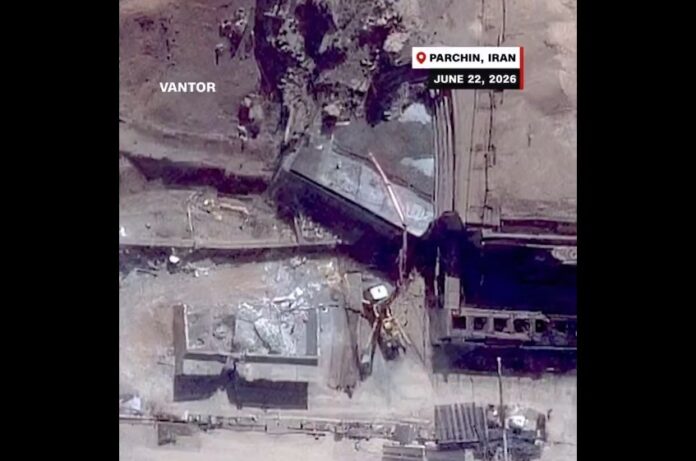
Among the locations highlighted in the analysis was the Parchin military complex, specifically a facility known as Taleghan 2, which intelligence analysts believe is associated with the storage of specialized explosives used in nuclear weapons development.
Working with the Institute for Science and International Security, CNN compared satellite images taken on June 22 and July 7 and concluded that repair and reconstruction work was underway at the site. According to the report, crews appeared to be repairing damage caused by earlier joint U.S. and Israeli airstrikes.
Satellite imagery also showed activity at the heavily fortified underground complex known as Pickaxe Mountain. Images captured on June 21 revealed a steady stream of vehicles entering and leaving the underground tunnel system while the newly signed agreement between Washington and Tehran remained in effect.
CNN said both Iranian officials and the U.S. government were asked to comment on the satellite findings. A Pentagon spokesman declined to discuss the report, saying the Defense Department does not comment on battlefield conditions or intelligence matters because of operational security concerns.
Meanwhile, President Donald Trump said Friday that Iran has requested additional negotiations but insisted that the previous ceasefire arrangement has ended.
“The Islamic Republic of Iran has asked us to continue ‘talks.’ We have agreed to do so, but the United States has stated to them, in no uncertain terms, that the Cease Fire is OVER!” Trump wrote on Truth Social.
Axios reported, citing a source familiar with the discussions, that U.S. and Iranian officials are expected to hold another round of talks next week, with Switzerland emerging as a possible venue.
According to the report, regional mediators have been working to lower tensions and lay the groundwork for renewed diplomacy following the recent military escalation between Washington and Tehran.
Iran’s Fars News Agency, which is affiliated with the Islamic Revolutionary Guard Corps, quickly denied reports that another round of negotiations has been scheduled.
Earlier this week, Trump authorized a series of military strikes against targets inside Iran following Iranian attacks on commercial vessels in the Strait of Hormuz.
While those operations were underway, Trump told reporters that Iranian officials had contacted him seeking to reach an agreement with the United States.
“Iran called a while ago. They want to make a deal so badly,” the President said. “I just don’t know if they are worthy. I don’t know if they are going to honor the deal. That’s the problem.”
 Matzav16 hours ago
Israel’s political leadership has ordered the IDF to suspend all military operations classified as “sensitive” in southern Lebanon following a request from the United States, according to a Friday evening report by Kan 11 News.
The report said the directive will remain in place until further notice while officials monitor both the escalating confrontation between the United States and Iran and ongoing diplomatic contacts between Israel and Lebanon.
According to Kan 11, U.S. officials have become increasingly concerned in recent days that Israel could be drawn into the growing conflict with Iran while Washington remains focused on its own confrontation with Tehran.
A security official quoted in the report said Israel stands ready to respond forcefully if Iran launches an attack against Israeli territory, including carrying out major strikes inside Iran. Nevertheless, at the White House’s request, the IDF has been instructed to hold off for now in an effort to prevent the conflict from widening to include Israel.
The report also stated that the IDF could begin withdrawing from designated pilot zones in southern Lebanon as early as next week. The expected redeployment coincides with another round of negotiations between Israeli and Lebanese officials scheduled to take place in Rome.
Israel’s delegation will be headed by Ambassador to the United States Yechiel Leiter, who will be joined by members of the Israeli negotiating team that participated in previous rounds of talks with Lebanon.
On Thursday, a U.S. official said the first pilot zone—under which territory currently controlled by Israeli forces would be transferred back to Lebanese authority—will begin operating “in a matter of days.”
The same official added that the United States “will soon begin outreach to international partners to help the Lebanese Government effectively restore sovereignty in these zones and across their country more broadly.”
The pilot-zone initiative is based on a 14-point framework negotiated during U.S.-mediated discussions between Israeli and Lebanese representatives in Washington in late June.
Despite the diplomatic progress, substantial disagreements remain between Jerusalem and Beirut over both the scope and timing of an Israeli military withdrawal, leaving the future of the framework uncertain.
According to a diplomatic source familiar with the negotiations, Lebanese President Joseph Aoun has conditioned Lebanon’s continued participation in the talks on Israel first beginning its withdrawal from southern Lebanon.
The proposed arrangement has also drawn opposition from the Hezbollah terrorist organization, which has refused to disarm as required under the framework agreement and declared that “without Hezbollah, nothing will pass.”
 Matzav17 hours ago
As the wedding season will resume following the Three Weeks, the rabbanim of Bnei Brak have issued a public call urging residents to maintain strict standards of modesty and gender separation not only inside wedding halls, but beginning at the entrances and surrounding streets.
The proclamation was signed by the city’s rabbanim, Rav Chaim Yitzchak Isaac Landau, Rav Shevach Tzvi Rosenblatt, and Rav Masoud Ben Shimon, under the heading, “And They Established a Great Ordinance,” a reference to the Mishnah in Sukkah. The letter calls on the public and community leaders to strengthen adherence to standards of modesty around the city’s simchah halls.
The rabbanim praised the establishment of the Shmirah Kahalachah organization, which was created under their guidance to promote standards of modesty and holiness throughout the city.
“With the help of Heaven, we have merited the establishment, under the guidance of the rabbanim, of the organization Shmirah Kahalachah, which has undertaken to assist in strengthening matters of modesty and holiness in our city,” the letter states.
The rabbanim also commended the municipality, led by Deputy Mayor Rabbi Menachem Zeibert, for improvements made around the wedding hall district, including widening sidewalks and implementing measures to better facilitate proper separation.
According to the letter, new directional signs have now been installed, particularly near Heichlei Malchus Hall, clearly directing men and women to separate entrances beginning from the street itself.
The rabbanim urged the public, educators, and parents to ensure that the new guidelines are observed.
“We ask the entire public to carefully follow these instructions, to ensure that adults guide the younger generation, and that educators and community leaders impress upon their students and followers the importance of observing these standards with special care.”
The letter concludes with words of inspiration based on the teachings of the Vilna Gaon, explaining that preserving proper standards of modesty at simchos helps bring the Divine Presence into Jewish homes and hastens the rebuilding of the Bais Hamikdash.
Quoting the Vilna Gaon, the rabbanim wrote that the prayer “Vesamcheinu B’Tikkuno” refers to the “great ordinance” enacted during the Simchas Bais Hashoeivah, when separate areas were established for men and women. They added that by observing these standards at today’s celebrations—so that it can truly be said that “the Divine Presence dwells where there is joy“—families will merit homes filled with holiness and purity and ultimately the fulfillment of the prayer to rejoice in the rebuilding of the Bais Hamikdash, speedily in our days.
 Matzav17 hours ago
Rav Avraham Yosef delivered a scathing criticism of Israel’s judicial system and government on Friday following the disqualification of thousands of bnei Torah from the government’s subsidized housing lottery, declaring that the decisions reflect a system devoid of compassion and justice.
Speaking on Kol Chai’s Shamor V’Zachor program, Rav Yosef responded to a caller who introduced herself as the daughter of a family that has performed military reserve duty. She explained that although her family participated in the government’s discounted housing lottery and needs the financial assistance to purchase a home, they are deeply pained by the exclusion of approximately 2,600 bnei Torah from the program and feel compelled to protest the decision.
Rav Yosef prefaced his remarks by saying the issue was one of worldview rather than halachah, before sharply criticizing the state’s treatment of the Torah community.
“The fact that there has been wickedness in our country is something that has been going on for 78 years. This didn’t begin yesterday. Seventy-eight years is the numerical value of the word ‘salt.’ They are rubbing salt into our wounds.”
He went on to condemn Israel’s judicial system, saying the country is being governed irrationally, a description he attributed to remarks previously made by Israel’s first Ashkenazi Chief Rabbi, Rav Yitzchak Isaac Halevi Herzog, regarding a legal system that is disconnected from Torah principles.
“Unfortunately, only now are people beginning to realize that all of the judges, without exception, are cruel. They are inhumane. They are far removed from administering fair justice,” he said.
Rav Yosef further charged that there is “the clearest and most malicious selective enforcement,” but added that the chareidi community has no practical political solution to the situation.
“If we still haven’t understood that we are in exile, they are making it very clear to us,” he said.
Turning to politics, Rav Yosef urged listeners not to place their trust in elected officials.
“I don’t place my hopes in politicians, because the hearts of kings and ministers are in Hashem’s hands. Deri has no wisdom, Gafni has no wisdom—there is only the guidance of the Holy One, Blessed is He. Even Bibi is led like a puppet by Hakadosh Boruch Hu.”
He concluded by emphasizing that a Jew’s confidence must rest solely in Hashem.
“Only in Hashem do we place our trust. We rely only on the Creator, and if the Creator has decreed that we must suffer in this way, then we have no choice—we will endure it. What else can we do? Hashem will help us.”
When the caller asked whether a meaningful response would be to adopt and financially assist an avreich‘s family that had been affected by the ruling, Rav Yosef endorsed the idea.
“May you be blessed, yes. Through positive action, do whatever you can.”
At the same time, he rejected proposals to protest by voluntarily giving up eligibility for the housing program or making public declarations.
“Complaining, grumbling, and talking will not help. The protest that the caller suggested is not the correct approach. That is not Judaism. There is no obligation to protest.”
{Matzav.com}
 Matzav18 hours ago
Amid growing financial pressures on the Torah world and continued cuts to funding for yeshivos and kollelim, Rav Don Segal offered a thought-provoking perspective this week, suggesting that the economic hardships may ultimately serve a higher purpose.
Speaking to dozens of roshei kollelim who visited his home to thank him for his dedication and efforts on behalf of Keren Olam HaTorah’s recent fundraising campaign in the United States, Rav Segal urged them to view the current challenges through the lens of emunah.
“They are squeezing us from every direction—through money and all these other things,” he said. “Their intentions are clear, but aliba d’emes, from Heaven it is so that our means of support should remain pure, that they should be clean.”
To illustrate his point, Rav Segal shared a rare personal story from the early years of his leadership of a kollel.
“Many years ago, the kollel was in very difficult financial condition,” he recalled. “A man approached me and offered to finance the entire kollel on condition that it be named after him. I thought to myself, what difference does the name make? The main thing is that the avreichim should have what they need. But the man was a member of the Knesset, and I was concerned that perhaps the money was not truly his own but had come from other sources. I did not want to decide such a matter on my own, especially when the livelihood of avreichim was involved.”
Rav Segal said he brought the question to Rav Aharon Leib Shteinman zt”l for guidance.
“He told me in the name of the Vilna Gaon regarding the statement of Chazal: If Torah were to be forgotten from Israel, one would plant flax, make nets, trap deer, process the hides, and write Torah scrolls. The Vilna Gaon asked: Why go through such a long process? One could simply buy prepared parchment and write. Rather, if the beginning is not pure, the Torah itself is not complete. Everything must be clean from the very beginning.”
Rav Segal concluded with a powerful observation that left a deep impression on those present.
“Who knows whether the reason yeshivos are not succeeding as they should is because they are accepting money from sources that are not worthy.”
{Matzav.com}
 Matzav18 hours ago
Violent riots broke out overnight Thursday into Friday in several European cities after Morocco’s 2-0 World Cup quarterfinal defeat to France, with celebrations by Moroccan soccer fans descending into clashes with police and shocking displays of anti-Semitic hatred.
The most disturbing incidents were reported in The Hague, where, according to local media reports and eyewitness accounts, rioters chanted slogans glorifying Hamas and calling for the extermination of Jews. Among the chants heard during the unrest was, “Hamas! Hamas! All Jews to the gas chambers!” Witnesses also reported hearing rioters shout, “The Jews are cancer!”
In London, disorder erupted in the Edgware Road area, home to a large Moroccan community. Even before the match ended, fans blocked traffic, waved Moroccan flags in the middle of the roadway, and set off fireworks. Following Morocco’s defeat, the situation escalated into violent confrontations with police.
Videos circulated on social media showed a police officer lying injured on the ground after reportedly being struck in the head by a glass bottle thrown during the disturbances. London’s Metropolitan Police said four people were arrested during what British media described as scenes of “chaos.”
“We will show absolutely no tolerance for this kind of disorder on our streets or for assaults on our police officers,” the Metropolitan Police said in a statement. “A police presence will remain in the area throughout the night, and we will review CCTV footage and videos circulating on social media to ensure that everyone responsible is brought to justice.”
Police dispersed the rioters at approximately 1 a.m. local time after additional officers were deployed to restore order. Footage from the scene showed extensive street violence and repeated confrontations between rioters and law enforcement.
Moroccan fans also took to the streets in New York following the loss, although no violent clashes comparable to those seen in Europe were reported.
 Matzav19 hours ago
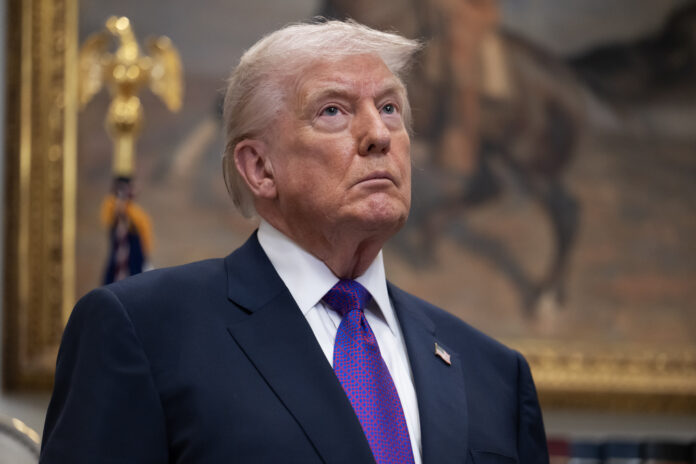
After days of speculation over his whereabouts during the election campaign, it has emerged that former Prime Minister Naftali Bennett spent the week in Sun Valley, Idaho, attending the invitation-only Allen & Co. conference, one of the world’s most exclusive gatherings of business and technology leaders.
According to published reports, Bennett received a personal invitation from the conference organizers and was the only Israeli invited to participate this year. His attendance comes at a politically challenging time for the Together Party, which he founded with Opposition Leader Yair Lapid, as recent polls have shown the party steadily losing projected Knesset seats.
Held each July, the annual Sun Valley conference transforms the small Idaho resort town into a hub for many of the world’s most influential figures in media, technology, finance, and politics. Often jokingly referred to as “every kidnapper’s wish list,” the gathering attracts top executives, billionaires, investors, and current and former political leaders from around the world.
Among the high-profile attendees this year were Microsoft founder Bill Gates, Amazon founder Jeff Bezos, Snap CEO Evan Spiegel, Netflix co-founder Reed Hastings, Spotify CEO Alex Norström, and Fox Corporation and News Corp chairman Lachlan Murdoch. Also attending were CNN anchor Anderson Cooper and political figures including Ivanka Trump and Jared Kushner.
The conference is known for its strict privacy and extensive security. With no formal media schedule, the event has earned a reputation as a venue where major business deals are quietly negotiated and influential discussions take place on the future of technology, artificial intelligence, and the global economy. Even the world’s wealthiest attendees are required to wear simple name badges throughout the conference.
Bennett’s participation comes as questions continue to swirl over his political future. Strategic adviser Nevo Cohen recently suggested that, in light of his party’s declining poll numbers, Bennett could ultimately decide to leave politics altogether. At the same time, his former adviser, Dr. Amtzia Samkai, has sharply criticized Bennett’s proposed strategy for weakening Iran, calling the plans “detached from reality” and accusing the former prime minister of presenting a misleading picture.
 Matzav19 hours ago
President Donald Trump announced Friday that he will not sign a bipartisan housing bill approved by Congress, declaring that he is withholding his signature in protest until the Senate passes the SAVE America Act, which he says is essential to protecting election integrity.
Because Trump neither signed nor vetoed the legislation during the Constitution’s 10-day review period, excluding Sundays, the bill is expected to become law automatically on Friday.
In a post on Truth Social, Trump reiterated his opposition to the 21st Century ROAD to Housing Act, arguing that Congress should focus first on election reform rather than housing legislation, despite the measure’s overwhelming bipartisan approval.
“I will not sign the Housing Bill, which has been fully approved by Congress and sent to the White House,” Trump wrote. He added that the SAVE America Act has broad Republican backing and would require photo identification and proof of U.S. citizenship to vote while sharply restricting mail-in voting to military personnel, disabled voters, those who are ill, and travelers.
Trump also called on Senate Republicans to abolish the legislative filibuster if that is what it takes to enact the election bill, warning that Democrats would not hesitate to do the same if they regained control of Congress.
“The Dumocrats will TERMINATE THE FILIBUSTER, if and when they ever get the chance,” Trump wrote. “The title of DUMB will revert to the Republicans who allowed this horrible calamity to happen.”
The president’s remarks follow his decision on June 24 to cancel a planned White House signing ceremony for the housing legislation after insisting that lawmakers first approve the SAVE America Act, which would strengthen federal voter identification requirements and tighten election regulations.
The housing bill cleared the Senate by an 85-5 vote and passed the House by a margin of 358-32 after months of bipartisan negotiations led by House Financial Services Committee Chairman French Hill (R-Ark.), Senate Banking Committee Chairman Tim Scott (R-S.C.), and Democratic lawmakers.
Supporters have hailed the package as the most significant federal housing legislation enacted since the 2008 financial crisis.
Among its provisions are incentives for new home construction, expanded support for manufactured housing, easier access to mortgage financing through community financial institutions, and restrictions preventing large institutional investors from purchasing more than 350 single-family homes.
Trump dismissed the housing legislation as “a yawn” compared to the SAVE America Act, which he has repeatedly argued is vital to safeguarding elections ahead of the 2026 midterm contests.
The affordability of housing remains a pressing issue across the country, with elevated mortgage rates and soaring home prices continuing to put significant financial pressure on American families.
Although housing advocates have welcomed the legislation as a meaningful first step, many economists believe additional action will be necessary because zoning and land-use policies remain largely under the authority of state and local governments.
Trump has made clear that, for now, his chief legislative focus is election security, maintaining that Congress should enact the SAVE America Act before turning its attention to other bipartisan initiatives.
{Matzav.com}
 Matzav20 hours ago
The Trump administration has urged Israel not to join ongoing U.S. military strikes against Iran at this stage, fearing that Israeli involvement could cause the conflict to spiral out of control and reignite a full-scale war, according to a report by CNN citing two Israeli sources.
The report comes amid a sharp escalation in tensions between the United States and Iran, with Tehran threatening to collapse the ceasefire agreement. One of the Israeli sources told CNN that Prime Minister Binyamin Netanyahu is eager for Israel to take part in the American military campaign but acknowledged that “the U.S. does not want Israel to participate at this time.”
CNN reported that it sought comment from the White House, but no response had been issued as of publication.
Defense Minister Yisroel Katz said on Thursday that the IDF remains on high alert and is prepared to resume military operations against Iran, even if Israel must act independently. He said the military is ready to reestablish air superiority over Iran and carry out unilateral strikes if necessary to eliminate emerging threats.
Despite those preparations, one of the Israeli sources said the prevailing assessment in Israel is that President Donald Trump is not interested in returning to a broader regional war. According to that assessment, the most significant step Trump would likely authorize, if additional pressure on Iran becomes necessary, would be the reimposition of a naval blockade on Iranian ports.
{Matzav.com}
 Matzav20 hours ago
The IDF announced Friday that it has eliminated two Hamas commanders in separate precision airstrikes carried out in northern Gaza this week, targeting terrorists who played key roles in weapons production and planned attacks against Israeli forces.
In a strike conducted earlier this week on Wednesday, Israeli forces killed Khalil Jamal Khalil Manna, a commander in the Weapons Production Headquarters of Hamas’ military wing. According to the IDF, Manna oversaw rocket launcher manufacturing workshops throughout the war and directed the final stages of their production. He also held a senior leadership role within the weapons production headquarters, managing its operations and manufacturing efforts, and was involved in rebuilding the unit’s capabilities during the ceasefire.
In a second operation carried out Thursday in northern Gaza, the IDF eliminated Osama Walid Deeb Muhareb, a company commander in Hamas’ Nuseirat Battalion. The military said Muhareb had recently been responsible for storing explosive devices that were intended for use in attacks against IDF soldiers.
The IDF said both terrorists posed an immediate threat to troops operating in the area and were targeted in airstrikes to eliminate that danger.
Before carrying out the operations, the military said it implemented a series of measures designed to reduce the risk of civilian casualties, including the use of precision-guided munitions and continuous aerial surveillance.
The IDF added that troops serving under the Southern Command remain deployed in the area in accordance with the ceasefire agreement and will continue operating to eliminate any immediate threats.
{Matzav.com}
 Matzav21 hours ago
Questions are mounting over the defensive capabilities of President Donald Trump’s newly commissioned Air Force One after reports revealed the aircraft lacks some of the advanced protection systems found on the older presidential jet it is temporarily replacing.
The aircraft, a Boeing 747-8 donated by Qatar and placed into service earlier this year, reportedly does not carry all of the sophisticated defensive technology installed on the long-serving Air Force One fleet. The reported differences have fueled scrutiny as the United States remains on heightened alert over threats from Iran, according to The New York Times.
The New York Times and CBS News both reported that, after the NATO summit in Turkey on Wednesday, the Secret Service recommended that Trump return to the United States aboard the older Air Force One rather than the newly modified aircraft.
According to the reports, officials made the recommendation out of an abundance of caution, citing the older aircraft’s superior communications equipment and more extensive defensive capabilities while tensions with Iran remain elevated.
Trump had initially traveled to Turkey aboard the newer presidential aircraft before transferring to the older Air Force One for the flight home.
After landing in the United Kingdom, Trump later resumed traveling aboard the newer jet.
The White House dismissed any suggestion that the president had been exposed to unnecessary danger.
“The new Air Force One is a state-of-the-art aircraft that has been fitted with high-level security protocols that ensure the safety of the president and his staff,” White House communications director Steven Cheung said in a statement.
The Air Force also defended the decision, saying “no risk was taken in security, safety, or mission communications,” while acknowledging that the interim aircraft does not yet possess every capability intended for the future permanent presidential fleet.
According to The New York Times, officials involved with the aircraft’s modifications said the donated plane is missing some of the highly advanced countermeasure systems installed on the current Air Force One, including sophisticated missile-defense technology.
CBS News reported that the older presidential aircraft is equipped with laser-based defenses and additional systems capable of countering incoming missile threats. However, officials declined to confirm whether those same technologies had been added to the Qatari aircraft.
Frank Kendall, who previously served as Air Force secretary, told The New York Times that he was surprised the aircraft entered international service so quickly, saying there likely was not enough time to complete all of the extensive upgrades typically required for an Air Force One aircraft.
“With the Iran situation, this could be of concern,” Kendall said.
The renewed focus on presidential security comes as U.S. officials continue to warn that Iran has long viewed Trump as a target following the 2020 operation that killed Iranian Gen. Qassem Soleimani. However, current intelligence reportedly has not uncovered any specific assassination plot connected to Trump’s overseas travel.
Trump himself addressed those concerns during the NATO summit, telling reporters Iran considers him “their number one target.”
Democratic lawmakers have pointed to the reports as evidence that the administration may have placed the aircraft into service before all of its planned upgrades were completed.
The White House has firmly rejected that criticism, insisting the aircraft is fully equipped to transport the president safely while Boeing continues work on the long-delayed next generation of permanent Air Force One aircraft.
{Matzav.com}
 Matzav21 hours ago
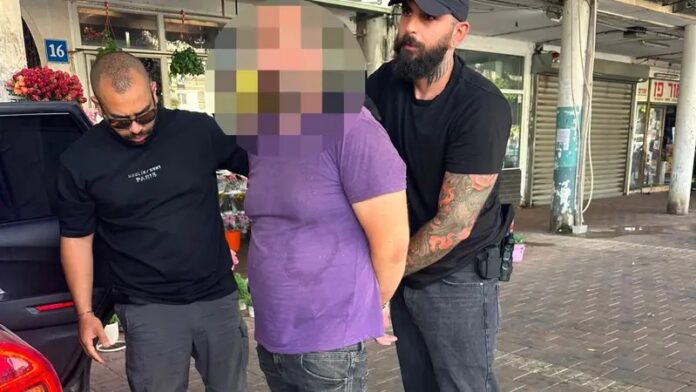
The investigation into the murder of Rav Amos Guetta zt”l in Netanya continues to unfold, with police actively pursuing multiple lines of inquiry as they work to determine both the circumstances surrounding the killing and the motive behind it. Investigators are also examining aspects of the suspect’s background and his activities in the period leading up to the attack.
According to veteran chareidi journalist Yair Levy, the suspect was raised in a chareidi family in London and later studied in yeshivos in France before eventually becoming affiliated with the Chabad movement.
One of the theories being examined is whether the suspect harbored resentment over the fact that some people referred to Rav Guetta as “Moshiach,” and whether that may have played a role in the crime. Police are reviewing that possibility as part of the broader investigation, although authorities have not concluded that it was the motive for the murder.
Detectives are also exploring another theory—that a third party may have taken advantage of the suspect’s condition and possibly influenced or directed him to carry out the killing. Investigators are continuing to examine that possibility, but no evidence has yet been released confirming or disproving the hypothesis.
Another aspect of the investigation that has drawn attention involves several security-door keys found in the suspect’s pocket at the time of his arrest. According to the report, the suspect did not have a permanent residence, raising questions about why he was carrying the keys. Police are attempting to determine which apartment or property the keys belong to and whether they have any connection to the murder.
Police were asked to comment on the reported details of the investigation. As of publication, no official response had been issued.
{Matzav.com}
 Matzav22 hours ago
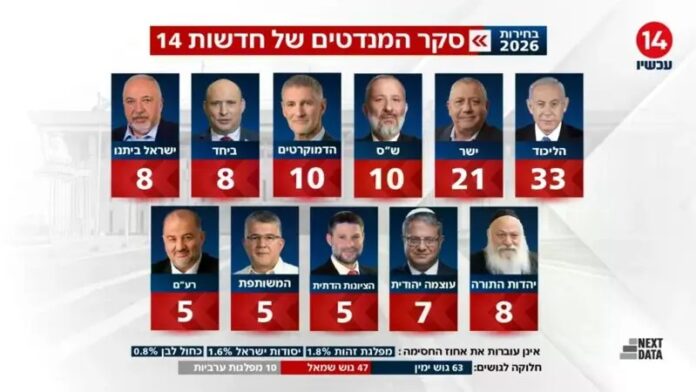
A new public opinion poll released Thursday indicates that Israel’s right-wing bloc would secure a parliamentary majority if elections were held today, while Prime Minister Binyamin Netanyahu has widened his lead as the public’s preferred choice for prime minister.
According to the survey, the right-wing bloc would win 63 seats in the 120-member Knesset, enough to form a governing coalition. The left-wing bloc would receive 47 seats, while the Arab parties would capture the remaining 10 seats.
The Likud Party remains the largest faction, polling at 33 seats. It is followed by Gadi Eisenkot’s Yashar Party with 21 seats, an increase of one seat compared to the previous poll. Shas is projected to win 10 seats, tying the Democrats with the same total.
Further down the standings, the Beyachad Party, led jointly by Naftali Bennett and Yair Lapid, is projected to receive 8 seats. Yisrael Beiteinu is also forecast to win 8 mandates, as is United Torah Judaism. Otzma Yehudit would secure 7 seats, while the Religious Zionism Party is projected to win 5. Among the Arab parties, both the Joint List and Ra’am are expected to receive 5 seats each.
Several parties would fail to cross the electoral threshold under the current polling. Those projected to remain outside the Knesset include Blue and White, Moshe Feiglin’s Zehut Party, and Yesodot Yisrael, led by Yoaz Hendel and Zvi Hauser.
The poll also found Netanyahu maintaining a commanding advantage in the race for prime minister. According to the results, 55% of respondents said Netanyahu is the most suitable candidate for the position, marking an improvement from the previous week’s survey. Eisenkot ranked second with 31%, followed by Naftali Bennett at 9%, Avigdor Lieberman at 4%, and Benny Gantz with just 1%.
The survey was conducted by NEXT DATA on July 9, 2026, among a representative sample of 752 adult Israelis. The data was analyzed by Shlomo Filber. As with all public opinion polls, the findings reflect respondents’ views at the time the survey was conducted and are not necessarily predictive of the outcome of a future election.
{Matzav.com}
 Matzav22 hours ago
It is with great sadness that Matzav.com reports the petirah of Rav Shmuel Yehuda Kohan z”l, one of the senior and most respected members of the Belzer community, who passed away at the age of 94.
Renowned for his lifelong devotion to Torah, chesed, and taharah, he played a pivotal role in helping establish the Belzer World Center in Yerushalayim and was instrumental in building dozens of mikvaos throughout Eretz Yisroel.
Rav Shmuel Yehuda was born in Sivan 5692 (1932) in Budapest, Hungary, to Rav Yaakov Chaim z”l and Mrs. Leah a”h. Before his parents married, his father sought the guidance of Rav Yeshaya of Kerestir zt”l regarding a proposed match. Although two suitable suggestions had already been presented, the tzaddik, through his ruach hakodesh, instructed him to wait for another proposal. The following day, the Kerestirer Rebbe was nistalek, and shortly thereafter the match that ultimately led to the birth of Rav Shmuel Yehuda was arranged.
During the Holocaust, while the Belzer Rebbe, Rav Aharon of Belz zt”l, was in Budapest, Rav Shmuel Yehuda’s father obtained hadasim for the Rebbe to fulfill the mitzvos of Sukkos. In appreciation, the Rebbe honored him with a dance during the sixth hakafah on Simchas Torah. Before departing the city, the Rebbe distributed protective coins to every member of the Kohan family. Rav Shmuel Yehuda, then a 14-year-old boy, survived the horrors of the Holocaust together with his family in what they regarded as miraculous circumstances.
As the war raged, the Kohan family was relocated to so-called “protected houses” in Budapest, but safety remained elusive. Rav Yaakov Chaim was deported to the Bergen-Belsen concentration camp, while his wife and children found refuge at the Swiss Consulate, where nearly 2,000 Jews were crammed together under unbearable conditions. At one point, the Nazis marched them to the banks of the Danube River with the intention of executing them, but in a stunning turn of events they were spared at the last moment and returned to the consulate. Nine months after the war ended, Rav Yaakov Chaim returned to Budapest broken in body but alive, thanks in part to the efforts of Rav Yitzchok Shlomo Ungar zt”l, the rav of the Chug Chasam Sofer community.
Following the war, Rav Shmuel Yehuda studied in the yeshiva of the Rav of Chust before continuing his learning under Rav Shimon Yisrael Pozen zt”l of Shopron. He remained deeply devoted to his rebbe throughout his life and hosted a monthly Mishnayos shiur in his home on every Rosh Chodesh in his memory.
As Communist rule tightened its grip on Hungary in 1948, the family received permission to immigrate to Australia. On their way, they stopped in the United States, where relatives urged them to remain. They sought the guidance of the Frierdiker Lubavitcher Rebbe, Rav Yosef Yitzchak Schneersohn zt”l, who instructed them that their mission was to continue on to Australia and spread Yiddishkeit there.
Their arrival in Australia became a source of widespread admiration. Landing in Sydney just minutes before Shabbos, the family left all of their belongings at the airport and walked seven miles with six young children to reach their hotel rather than violate the sanctity of Shabbos. The remarkable display of commitment generated significant publicity in the local press and created a tremendous Kiddush Hashem. The family later settled in Melbourne, where they were among the pioneers who established the city’s first minyan and laid the groundwork for its Jewish community.
In 1960, Rav Shmuel Yehuda married the daughter of Rav Moshe Friedman z”l of Melbourne, who maintained close ties with the courts of Belz, Sanz, and Stropkov. Rav Shmuel Yehuda himself enjoyed close relationships with many of Melbourne’s leading rabbonim, including Rav Yaakov Yitzchok Neiman, Rav Betzalel Stern, and Rav Elimelech Ashkenazi.
Eleven years later, in 1971, he fulfilled his dream of settling in Eretz Yisroel, making his home in Bnei Brak. His residence became known as a welcoming destination for anyone in need. He was recognized for his heartfelt tefillos, rose before dawn each day to immerse in the mikvah, and spent hours learning in the Chug Chasam Sofer bais medrash before Shacharis.
He maintained a close relationship with Rav Elazar Menachem Man Shach zt”l, visiting the Rosh Yeshiva together with his brother, Rav Meir, before every Rosh Hashanah and Purim to receive a brocha.
Rav Shmuel Yehuda was deeply attached to the great tzaddikim of his generation, particularly the Bohusher Rebbe zt”l, whom he served with complete devotion, and, yibadel l’chaim, the Belzer Rebbe. He dedicated enormous energy to strengthening the cause of taharah, overseeing the construction of numerous mikvaos throughout Eretz Yisroel. His crowning achievement was the magnificent mikvah built as part of the Belzer World Center in Kiryat Belz, Yerushalayim. He invested extraordinary financial resources and personal sacrifice into the project and stood at the Belzer Rebbe’s side throughout its development. The first office established to oversee construction of the Belzer bais medrash operated out of the building where his brother and partner in the undertaking, Rav Meir, lived. Together, the two brothers traveled extensively overseas to raise the funds necessary to bring the vision to fruition.
At the dedication of the mikvah during Chol Hamoed Sukkos in 1991, the Belzer Rebbe delivered special remarks praising the Kohan brothers, describing them as renowned for their relentless pursuit of tzedakah and chesed. The Rebbe noted that they had built dozens of mikvaos across Eretz Yisroel and blessed them with long life and many good years.
In his later years, Rav Shmuel Yehuda retired from business and devoted himself entirely to Torah. Together with his brother, he established an evening kollel for working men at the Chug Chasam Sofer bais medrash, where participants eventually completed Shas. Six years ago he suffered the loss of his beloved brother, with whom he shared an exceptionally close bond, and four years later his wife passed away. Even during his final years, as his health declined, those around him marveled at his extraordinary nobility, graciousness, and constant expressions of gratitude toward everyone who assisted him.
The levayah departed from his home on Baal Shem Tov Street in Bnei Brak before stopping at the Chug Chasam Sofer shul, where the community’s rav, Rav Moshe Benedikt, delivered brief words of farewell. The procession then continued to the Bohusher bais medrash. In accordance with the niftar’s request, the levayah paused at the gravesite of the Bohusher Rebbe zt”l in Nachalas Yitzchok Cemetery in Givatayim before continuing to Segulah Cemetery in Petach Tikvah, where he was laid to rest.
Yehi zichro boruch.
{Matzav.com}
 Matzav23 hours ago
Former Sen. Mitt Romney (R-Utah) said the United States needs a new generation of political leadership, arguing in a newly released interview that elected officials over the age of 80 should no longer be serving in the nation’s highest offices.
Speaking with the Deseret News, Romney said he believes advanced age should disqualify candidates from leading the country.
“I basically think people who are 80 and above really should not be running the world or running the country,” he said.
Romney pointed to scientific research on aging, citing journalist Bill Bryson’s book The Body as support for his position.
“He points out that the human brain shrinks by 20 percent by the time you’re 80 years of age,” Romney said, referring to Bryson’s book.
The remarks came during a lighthearted exchange with McKay Coppins of The Atlantic, who hosts the “Deseret Views” podcast. After being asked jokingly whether he would consider another presidential campaign, Romney responded with humor.
“The reality is, sure, I’d love to do it again, and this time I might get it right, you know? Third time’s the charm,” he said, laughing.
Romney sought the Republican presidential nomination in 2008 before winning it in 2012, when he ultimately lost the general election.
Age became a central issue during the 2024 presidential campaign, with both President Donald Trump and President Joe Biden facing persistent questions about whether they were physically and mentally capable of handling the demands of the presidency.
On the Democratic side, concerns over Biden’s age intensified after a widely criticized debate performance, ultimately leading him to withdraw from the race and endorse then-Vice President Kamala Harris, who was 60 years old, as his replacement.
President Trump became the oldest sitting president during his second term in office and marked his 80th birthday last month by attending a UFC event at the White House. He has also faced continued scrutiny over his health following visible swelling and multiple visits to Walter Reed Medical Center.
Following his annual medical examination in May, however, Trump declared that “everything checked out PERFECTLY!”
In addition to that examination, Trump traveled to Walter Reed in October for a physical and cognitive assessment and underwent his routine annual medical evaluations last April.
{Matzav.com}
 Matzav23 hours ago
New York City Mayor Zohran Mamdani is facing mounting criticism after his administration unveiled a map highlighting the city’s “immigrant enclaves” that excludes historic Jewish, Italian, and Irish neighborhoods—communities that played a central role in shaping the city’s identity over the past two centuries.
The map, released in May as part of a city initiative celebrating New York’s ethnic neighborhoods, is titled “New York City Immigrant Enclaves.” It identifies 30 communities representing a wide range of immigrant populations, including Yemeni, Pakistani, Egyptian, African, Palestinian, Chinese, Korean, Albanian, Colombian, Dominican, Ecuadoran, Indian, Haitian, Polish, and several others.
Critics, however, say the project overlooks some of New York’s most iconic immigrant communities. They point to the absence of neighborhoods such as Little Italy, as well as longstanding Irish and Jewish enclaves that helped build the city during the late 19th and early 20th centuries.
Queens Republican Councilwoman Joann Ariola sharply criticized the omission, telling the New York Post that the map suggests the mayor’s office does not view Jews, Italians, and Irish immigrants as worthy of recognition.
“They were able to get a Little Bhod-Tibet in there, but what about the original ‘Little neighborhood,’ Little Italy?” Ariola asked. “And what about areas like Woodlawn, in the Bronx, which are home to plenty of Irish immigrants? Do the Irish and Italians not count for the Mayor’s office?”
State Assemblyman Kalman Yeger also condemned the map, accusing Mamdani of deliberately excluding the Jewish community.
“Mr. Mamdani’s erasing Jews is an essential part of his brand. No surprise.”
Joseph Scelsa, founder of the Italian-American Museum on Mulberry Street, called the omission of Little Italy a serious error.
“Italian-Americans are still a major population in New York City. To not recognize where Italian-Americans came from and settled is a terrible mistake. I don’t understand why Little Italy isn’t included. I hope it’s an oversight,” Scelsa said.
Jewish author Avital Chizhik-Goldschmidt also criticized the map in a post on X, writing, “The Mayor’s Office made a map of NYC’s immigrant enclaves: Little Africa, Little Poland, Little Palestine. But they just couldn’t figure out how to represent 11% of the city. Couldn’t decipher where the Jews are from.”
Manhattan Institute senior fellow Christopher Rufo argued that the controversy fits a broader pattern, noting that Mamdani has previously advocated removing public recognition of Italian heritage.
Former Los Angeles mayoral candidate Spencer Pratt likewise accused the mayor of engaging in “deliberate subversion” by excluding Jewish, Italian, and Irish neighborhoods from the map.
In response to the backlash, the mayor’s office defended the project, arguing that it focuses on immigrant communities rather than religious groups. A City Hall spokesperson said the map “does not highlight religious groups,” adding that the campaign “highlights neighborhoods in New York City that have substantial foreign-born populations from regions and countries around the world.”
The administration also emphasized that the map was designed as a tourism resource and noted that the “immigrant enclave series began during the [Eric] Adams administration.” Officials added that additional neighborhoods are expected to be incorporated into the project “in the upcoming months.”
 Matzav1 day ago
The House of Representatives is expected to vote next week on legislation that would make daylight saving time permanent across the United States, marking the latest effort to eliminate the twice-a-year clock changes that have long frustrated many Americans.
According to a notice released Thursday, lawmakers will consider the Sunshine Protection Act after the House Energy and Commerce Committee overwhelmingly approved the measure in May by a 48-1 vote. Although the Senate unanimously passed similar legislation in March 2022, the bill stalled in the House amid growing opposition.
The version of the legislation scheduled for a House vote would give individual states the option of opting out of permanent daylight saving time.
Most of the United States has observed daylight saving time since the 1960s, advancing clocks by one hour each spring before returning to standard time in the fall.
Backers of the legislation argue that eliminating the biannual time changes would improve public health and safety. They contend that switching clocks contributes to sleep disruption, increases workplace accidents, and leads to more traffic crashes. They also believe longer daylight hours in the evening during the winter months would encourage greater economic activity.
President Donald Trump has repeatedly voiced support for ending the twice-yearly clock changes. In May, he declared that it was “time that people can stop worrying about the ‘Clock,’ not to mention all of the work and money that is spent on this ridiculous, twice yearly production.”
Even if the bill clears the House, it would still require Senate approval before reaching Trump’s desk. The proposal faces opposition from Sen. Tom Cotton, R-Ark., and several other lawmakers.
Cotton has argued that permanent daylight saving time would produce unusually late winter sunrises, forcing many children to travel to school before daylight for much of the year.
Rep. Vern Buchanan, R-Fla., who has introduced versions of the legislation nearly every year since 2018, once again sponsored the measure this session. The proposal has drawn strong support in his home state of Florida, where advocates say additional evening daylight would benefit golf courses, parks, and other recreational facilities.
Rep. Frank Pallone, D-N.J., also endorsed the legislation, saying permanent daylight saving time is “better for safety and will boost New Jersey’s tourism industry. Let’s stop changing the clocks twice a year.”
The United States previously adopted year-round daylight saving time during World War II and briefly reinstated it in 1974 as an energy-saving measure. However, the experiment proved unpopular with the public, prompting Congress to repeal the policy later that same year.
{Matzav.com}
 Matzav1 day ago
Donald Trump Jr. said Thursday that newly unsealed evidence presented during the preliminary hearing for the man accused of murdering Charlie Kirk leaves little room for doubt about who carried out the killing, arguing that the disclosures should put lingering conspiracy theories to rest.
Trump Jr., who was a close friend of Kirk and has long appeared alongside him at Turning Point USA events, attended this week’s court proceedings in Provo, Utah, where prosecutors unveiled evidence against 23-year-old Tyler Robinson.
After observing the testimony firsthand, Trump Jr. told Fox News’ “Jesse Watters Primetime,” “Based on everything that I saw in that courtroom, it’s very clear to me that Tyler Robinson did this.”
Robinson is charged with fatally shooting Kirk, 31, during a Turning Point USA event at Utah Valley University on Sept. 10, 2025. If convicted, he could face the death penalty.
The preliminary hearing, which began Monday, is intended to determine whether prosecutors have established sufficient probable cause for the case to proceed to trial on multiple criminal charges.
During Thursday’s proceedings, prosecutors introduced evidence alleging that Robinson admitted to the killing in text messages sent to his roommate shortly after the shooting, writing that he “had enough of his hatred.”
Reacting to the evidence, Trump Jr. said, “This stuff is very cut-and-dry at this point.”
He added, “The DNA evidence, the fact that… he turned himself in… to me, it puts so much of this at rest.”
While expressing confidence in the prosecution’s case, Trump Jr. raised concerns about the level of security provided at the Utah Valley University event where Kirk was killed.
“The biggest question in my mind at this point is not whether Tyler Robinson did this, or if it was some people from a foreign land, or another planet — it was, why were there only six police officers active at a major event on a university campus?” he asked.
Trump Jr. noted that Turning Point USA events on college campuses routinely attract large crowds and typically receive a much stronger law enforcement presence.
“These are big events,” he said. “I’ve done 100 of them with Charlie Kirk on college campuses all over the place… That there wasn’t an all-hands-on-deck kind of operation to prevent this very thing from happening is truly scary.”
He also said public opinion has shifted dramatically as more evidence has emerged. According to Trump Jr., what was once viewed as a “50–50” question regarding Robinson’s guilt has now become a “90–10” issue, with the overwhelming majority believing Robinson was responsible.
Although Trump Jr. dismissed the conspiracy theories that circulated following Kirk’s death, he said he understands why some people initially questioned the circumstances surrounding the assassination.
Prosecutors are expected to continue presenting evidence during Friday’s hearing. No trial date has yet been scheduled.
{Matzav.com}
 Matzav1 day ago
President Donald Trump’s ambitious proposal to construct a towering 250-foot arch in the nation’s capital moved one step closer to becoming reality Thursday after winning preliminary approval from a key federal planning commission, although officials postponed a decision on whether longstanding federal height restrictions apply to the project.
The National Capital Planning Commission voted to approve the initial site and design plans for the massive structure, which Trump wants built at the traffic circle on the Virginia side of Memorial Bridge entering Washington, D.C.
The vote marks another milestone for one of several high-profile projects Trump is pursuing as part of his effort to reshape the appearance of the nation’s capital.
Commission staff had recommended granting preliminary approval while requiring a number of design modifications to ensure compliance with the federal Height of Buildings Act. Among the proposed revisions were adjustments to the height distribution of the arch itself, the observation deck planned within the structure, and the statues that would sit atop the monument.
Instead, commissioners—led by Chairman Will Scharf—opted to delay deciding whether the Height of Buildings Act even governs the proposed project.
According to the commission’s staff report, the agency has historically applied the law when reviewing projects of this nature. Scharf, however, said the Interior Department, which submitted the application and oversees the federal land where the arch would be built, had provided a legal opinion making what he called a “compelling argument” that the law “is not binding on the federal government.”
“My view is that, today, we are just considering this project for preliminary approval and that, as a result, it’s not necessary for us to take up this broader issue of the applicability of the Height of Buildings Act to federal construction until our next meeting at the earliest,” Scharf said.
The preliminary approval passed with the support of eight of the commission’s 12 members, including Scharf and two other Trump appointees. One commissioner voted against the proposal, while the remaining three voted present.
“This is a complex project,” Scharf said before the vote. He added that commissioners could consider final approval as soon as their next scheduled meeting in September.
Before casting their votes, all 12 commissioners reviewed a summary of the staff’s recommendations and listened to testimony from dozens of members of the public who signed up to comment on the proposal.
The commission’s deliberations took place as work continued on another major Trump construction project at the White House, where crews are building a new $400 million ballroom while additional workers covered stone columns at the mansion’s north entrance as part of an ongoing restoration project involving the removal of old paint.
Several speakers urged the commission to reject the proposed arch, arguing that a celebratory monument should not be constructed so close to Arlington National Cemetery. Others suggested a location nearer the Capitol or Washington’s sports and entertainment district would be more appropriate.
Among those opposing the project was Michael Lemmon, one of three Vietnam veterans and an architectural historian who have filed a federal lawsuit seeking to block construction at Memorial Circle. Lemmon argued that the monument would diminish the dignity of Arlington National Cemetery, while Trump has said the arch is intended to commemorate America’s 250th anniversary.
“As a combat veteran, I feel a duty to protect the memory and honor the sacrifice of my comrades and all those buried there,” Lemmon said. “This vainglorious monumental arch does neither.”
Other opponents pointed out that memorials honoring Vietnam veterans, World War II veterans, and the Rev. Martin Luther King Jr. underwent years of public discussion before being approved, and they urged the commission to move more cautiously before advancing Trump’s proposal.
Critics also argued that the sheer size of the monument would disrupt the carefully planned visual corridor connecting the Lincoln Memorial and Arlington National Cemetery—a view long intended to symbolize national reconciliation following the Civil War.
If completed, the arch would stand more than twice as tall as the 99-foot Lincoln Memorial and rise to nearly half the height of the 555-foot Washington Monument.
During Thursday’s hearing, opponents also raised concerns about traffic congestion and pedestrian safety surrounding the proposed site, while others maintained that congressional approval should be required before construction can proceed—a position that Trump disputes.
The proposal has already received approval from the U.S. Commission of Fine Arts, which signed off on the design in May. The National Capital Planning Commission, which oversees construction projects on federal property in Washington, first began reviewing the proposal in June.
{Matzav.com}
 Matzav1 day ago
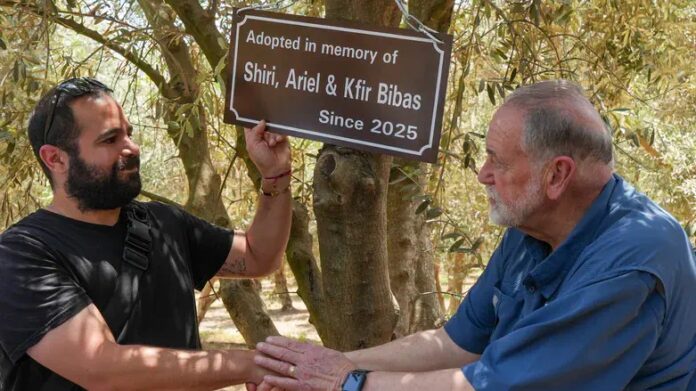
U.S. Ambassador to Israel Mike Huckabee joined a memorial ceremony Thursday at Moshav HaYogev in northern Israel, where a tree was dedicated in memory of Shiri Bibas and her two young sons, Ariel and Kfir, as part of the “My Tree in Israel” initiative. The event served as a tribute to the family, whose fate became one of the defining tragedies of the October 7 Hamas massacre.
Yarden Bibas and his sister, Ofri, attended the ceremony alongside Huckabee. The ambassador offered his heartfelt condolences to Yarden, telling him that people around the world had prayed for the safe return of his family. Huckabee also stressed that the horrors of October 7 and the immense suffering endured by Israel must never be allowed to fade from memory.
The abduction of Shiri Bibas and her sons—4-year-old Ariel and 9-month-old Kfir—from their home in Kibbutz Nir Oz became one of the most unforgettable images of the Hamas-led assault on October 7. Video of a terrified Shiri desperately holding her two red-haired children as Hamas terrorists forced them into Gaza stunned millions across the globe. As the youngest hostage taken during the attack, baby Kfir, together with his older brother Ariel, came to symbolize the innocence of the civilians targeted in the massacre and the anguish of the hostage crisis.
The ceremony also included an emotional meeting with Avi Harush, whose son, Reef Harush, was killed while serving as a commando in combat in the Gaza Strip in April 2024. Harush showed Huckabee and his wife the tree planted in his son’s memory, shared photographs, and spoke about his regular visits to the site, saying that he believes his son is “at peace.”
During his visit to the moshav, Huckabee toured a local olive oil press, where he observed the production process firsthand. He remarked that every year he purchases numerous bottles of Israeli olive oil to present to friends as holiday gifts.
Huckabee also revisited the olive tree he had previously adopted and updated its commemorative plaque, replacing the inscription “Governor Huckabee” with “Ambassador Huckabee.” He additionally adopted another olive tree in honor of his daughter, Arkansas Governor Sarah Huckabee Sanders.
The “My Tree in Israel” initiative enables supporters of Israel around the world to back the country’s farmers by adopting olive trees, grapevines, or shares in whiskey casks. The program is designed to bolster Israel’s agricultural communities while providing direct support to the nation’s local economy.
{Matzav.com}
 Matzav1 day ago
In this episode, Rabbi Reinman discusses the establishment of the Hasmonean Dynasty and its descent into corruption, strife, betrayal and fratricide.
Chapter Forty-Five: The Hasmonean Dynasty
Shimon proved to be an astute leader. After winning independence for Judea with his diplomatic maneuvering, he sent an enormous gold medal to Rome as a gift to ensure Judea’s status as a protected Roman ally. He besieged the Akra fortress in Jerusalem until its Greek garrison was forced to leave, then he leveled it to the ground. He also captured the pagan stronghold of Gazara and destroyed all its idols. Internally, he broke the power of the Hellenized Jews and consolidated the hold of the Hasidim at all levels of the government.
At long last, the chaotic horrors of war receded into memory. Peace and harmony descended on the land of Judea. Old men once again sat together in the street and chatted about pleasant matters. All the people sat under their own vines and fig trees, and there was none to make them afraid. Fathers once again circumcised their sons, studied Torah with them as they grew older and saw them reach adulthood without being sent off to fight on the battlefields.
Shimon’s thoughts turned to improving the economy. He captured the port of Joppa, giving the land-locked Judea access to the sea, and he developed it into a harbor for international trade. This allowed Judean agricultural products to reach the Mediterranean markets and brought in foreign currency and consumer goods. He also increased internal security by clearing the bandits and highwaymen who had taken over the roads during the years of strife and chaos. Farmers could now tend to their crops instead of standing guard over their fields. The hallowed earth yielded its abundance, and the Jewish people became prosperous.
Furthermore, Shimon used the increased revenue to fortify the major population centers of Judea. He also undertook a major renovation of the Bais Hamikdash, which had been stripped of its valuables and battered by decades of war. Hundreds of craftsmen labored to repair the breaches and to replicate the golden Menorah, Shulchan and Mizbeiach Hazahav of the Heichal; the Aron had been secreted long before during the time of the First Bais Hamikdash. These massive projects also drove the economy and contributed greatly to the growing prosperity.
At this point, Shimon stood at a crossroads. According to Jewish law and tradition, dating back to Yaakov’s deathbed testament to his sons which blessed them and defined their roles, only descendants of the tribe of Yehudah could be anointed to serve as Jewish kings. “The royal scepter shall not depart from Yehudah.” Hashem had entrusted this scepter to Dovid Hamelech and his descendants forever. The Hasmoneans were Kohanim descended from the Shevet Levi and therefore disqualified …
Read full chapter and earlier chapters at www.rabbireinman.com.
 Matzav1 day ago
An unexpected vort with deep Chassidic roots highlighted a visit this week by talmidim of Yeshivas Kedushas Mordechai of Nadvorna to the home of Slabodka Rosh Yeshiva Rav Dov Landau.
The bochurim visited Rav Landau to seek clarification on several complex halachic issues involving the laws of borer on Shabbos, topics they had found particularly challenging during their studies in yeshiva.
For more than an hour, the talmidim engaged in an in-depth discussion with the Rosh Yeshiva, carefully analyzing the practical applications and underlying principles of the relevant halachos.
The most memorable moment, however, came at the conclusion of the visit. After the halachic discussion had ended, Rav Landau turned to one of the roshei mesivta who had accompanied the talmidim and inquired about his family lineage.
When the rebbi explained that he was a descendant of the founder of the Baal Shem Tov, Rav Landau immediately sought more details, asking, “Through which descendant of the Baal Shem Tov are you related? Through a son or a daughter?”
The rebbe replied that his lineage traces back through the Baal Shem Tov’s renowned daughter, Rebbetzin Adel a”h, and from her son, Rav Baruch of Mezhibuzh zt”l.
Upon hearing the response, Rav Landau surprised everyone present by sharing a well-known, centuries-old Chassidic vort. Smiling, he remarked, “The Chassidic world used to say that ‘Bava Kamma‘ is an acronym for ‘Baruch Ben Adel Kadosh Mi’rechem Imo‘—’Baruch, son of Adel, holy from his mother’s womb.'”
{Matzav.com}
 Matzav1 day ago
Amid growing concern over the arrest of yeshiva bochurim and the possibility that they could be transferred to the military police, Rav Shalom Ber Sorotzkin, rosh yeshiva of Yeshivas Ateres Shlomo, has taken the unusual step of giving his personal cellphone number to his talmidim, instructing them to contact him immediately if they are detained by police.
Rav Sorotzkin told talmidim in the yeshiva gedolah that if they are ever stopped or arrested by police under circumstances that could lead to their being handed over to the military authorities, they should call him directly so he can become personally involved.
The new policy was recently put to the test when one of the bochurim was detained in a chareidi city following a traffic violation. During the incident, the student contacted Rav Sorotzkin to inform him that he was being held by police.
Upon receiving the call, Rav Sorotzkin personally contacted the Tzeva Shachor emergency response network, identified himself, and requested that bochurim immediately come to the scene out of concern that the talmid could be transferred to the military police.
Within minutes, the situation was resolved. The talmid was issued a traffic citation and released by police without being handed over to the military authorities.
 Matzav1 day ago
Israel’s Chief Rabbi, Rav Kalman Ber, has issued a strongly worded halachic letter rejecting the idea of a sweeping heter permitting chillul Shabbos to improve soldiers’ morale during wartime, stressing that such weighty questions must be decided only by the leading gedolei Torah and foremost poskim.
The letter was addressed to the rosh yeshiva of Yeshiva Shvus Yisroel, Rav Yehoshua Ben Meir, and focuses on whether Shabbos may be violated for the purpose of strengthening morale among troops during combat.
At the outset of the letter, Rav Ber explains that he generally refrains from issuing psakim on military-related halachic matters because, in his view, “the Military Rabbinate, which is on the ground and is closely familiar with the operational reality, is the appropriate body to show the way in such cases.”
Nevertheless, Rav Ber writes that this situation is different because it involves “a general halachic provision that comprehensively permits Shabbos desecration to boost morale, and it could be used as a precedent for other cases,” making it necessary for him to publicly clarify the halachah.
Expressing his support for Rav Ben Meir’s position, the Chief Rabbi writes that “The aforementioned exemption poses a significant halachic and factual challenge and is not based on halachic sources and on an accurate examination of reality. Therefore, there is no place to allow Shabbos desecration to boost morale.”
He further cautioned that expanding such heteirim could “open the door to broadening the scope of permissible Shabbos desecration beyond the limits established by the sages and the leading halachic authorities throughout the generations.”
Drawing upon his own experience in military service, Rav Ber acknowledged that time away from duty undoubtedly helps soldiers recover physically and emotionally. However, he maintained that improved morale alone does not rise to the level of pikuach nefesh necessary to justify chillul Shabbos. He also warned that seeing observant soldiers traveling home on Shabbos could undermine the public’s appreciation for the kedusha of the day.
The Chief Rabbi also stressed that before issuing a broad and unprecedented psak with significant public ramifications, “it would have been appropriate to first submit it for the consideration and ruling of the foremost Torah scholars and leading halachic authorities, and only afterward publish it as a general directive.” He added that any future rulings of this magnitude should first be presented to senior gedolei Torah for their decision before being released publicly.
At the same time, Rav Kalman Ber emphasized that his comments should not be interpreted as criticism of the IDF’s unit rabbanim, battalion rabbanim, or the leadership of the Military Rabbinate’s Halacha Department. He explained that their responsibility is to apply existing halachic rulings within the realities of military operations, while establishing broad halachic policy “is entrusted solely to the foremost Torah scholars and leading halachic arbiters, whose rulings are authoritative.”
 Matzav1 day ago
Finance Minister Betzalel Smotrich revealed Thursday that President Donald Trump’s special envoy, Steve Witkoff, told him shortly after his appointment that he would not allow Hamas-controlled Gaza to remain a threat to Israeli communities, recounting an emotional conversation that took place immediately after Witkoff visited Gaza and viewed footage of the October 7 massacre.
Speaking at MK Ohad Tal’s “Conference of Decision,” Smotrich shared details of the conversation, which he said occurred after Witkoff was appointed as President Trump’s envoy to Israel and just one day after the envoy toured Gaza and watched the graphic footage documenting the atrocities committed during the October 7 Hamas attack.
According to Smotrich, Witkoff was deeply shaken by what he had witnessed.
“When Witkoff was appointed, I met with him together with Ron Dermer,” Smotrich said. “The day before, he had been in Gaza, where they showed him the October 7 atrocity footage. He was still under the terrible impression of that video, and he told me, ‘Betzalel, I will not let two million Nazis live next to your children along the border.’”
Smotrich also addressed Israel’s ongoing military campaign in both Gaza and Lebanon, arguing that territorial losses are the only language Israel’s enemies understand.
“There is only one thing that hurts the enemy—land,” he declared. “Anyone who attacks us will lose territory forever. We need to establish a security zone in Lebanon that will remain in place for years.”
{Matzav.com}
 Matzav1 day ago
Andy Burnham, widely viewed as the leading contender to succeed Keir Starmer as Britain’s next prime minister, signaled Thursday that he would adopt a significantly tougher stance toward Israel, apologizing for Labour’s initial response to the war in Gaza and pledging greater pressure on the Jewish state if he takes office.
Speaking in an interview with The Guardian, Burnham acknowledged that Labour’s early reaction to Israel’s military campaign in Gaza was inadequate and expressed regret over the party’s handling of the conflict.
“I know many people feel that at the start of Israel’s military action in Gaza, my party didn’t get it right, and I am sorry about that,” he said. “The response has too often not been good enough. We need to do better.”
Burnham said a government led by him would pursue additional measures aimed at increasing pressure on Israel, including weighing further sanctions against Israeli individuals and organizations and considering a ban on trade involving products from what he called illegal settlements.
“We’ve got to do more to put pressure on the Israeli government,” Burnham said. Although he acknowledged that Britain has already taken “some important steps,” he argued, “the UK was too slow to call for a ceasefire in the war launched following the Hamas-led October 7th Massacre. And we must now do more to strengthen our approach.”
While sharply criticizing Israel’s military campaign, Burnham stopped short of labeling it a genocide, saying that such a determination should be made through the legal process rather than by elected officials.
“I have been absolutely appalled by what I’ve seen and read about the destruction of Gaza,” he said. “There’s increasing evidence that war crimes appear to have been committed. There must be accountability for the depth of the suffering the people of Gaza have experienced. Ultimately, however, it must be for the international courts to determine, rather than politicians.”
The interview also touched on concerns raised by Britain’s Jewish community. Burnham reiterated his opposition to antisemitism while again condemning Hamas’ October 7 terrorist attack on Israel.
“There is no contradiction between a zero-tolerance approach to antisemitism and holding the Netanyahu government to account,” he said. “I will always take a fair and balanced approach and stand up for what is right.”
Burnham further criticized what he described as escalating violence by Jewish residents in Judea and Samaria and eastern Jerusalem, as well as continued residential construction in those areas. He said his government would examine additional steps, including “looking at further sanctions” and “looking at measures to ban trade in goods with illegal settlements.”
He also described conditions in Gaza as “a scar on our collective conscience,” pointing to ongoing civilian casualties, restrictions on humanitarian aid, and Israel’s continued military operations in the territory.
 Matzav1 day ago
New intelligence gathered by Israel and shared with the United States indicates that Iran may be intensifying its efforts to target President Donald Trump, according to an exclusive report published Thursday by The Wall Street Journal. If the information is confirmed, it would represent a significant escalation in the already volatile standoff between Washington and Tehran.
Sources familiar with the intelligence told the newspaper that Israeli officials recently provided US authorities with updated information outlining what they believe is an active Iranian assassination plot directed at Trump.
Iran has openly vowed revenge against Trump ever since the US military strike during his first term that killed Qassem Soleimani, the powerful commander of the Islamic Revolutionary Guard Corps’ Quds Force.
Asked about the report, the Israeli Embassy in Washington declined to provide additional details. Iran’s mission to the United Nations also did not immediately issue a response.
The White House referred The Wall Street Journal to comments Trump made earlier this week rather than offering any new statement on the reported intelligence.
Trump addressed the threats directly while speaking with reporters in Ankara, Turkey, warning that he believes he remains a top target of the Iranian regime.
“They want to take out the US leader – me,” he said. “I’m on every list. I saw this morning, I’m on every single one of their lists. And so far, I guess I’ve been a little bit lucky, but that maybe doesn’t last very long.”
Iranian hostility toward Trump has continued to be displayed publicly. During the funeral of Iranian Supreme Leader Ali Khamenei, crowds repeatedly chanted for Trump’s death while waving a large banner bearing the message, “We Will Kill Trump.”
{Matzav.com}
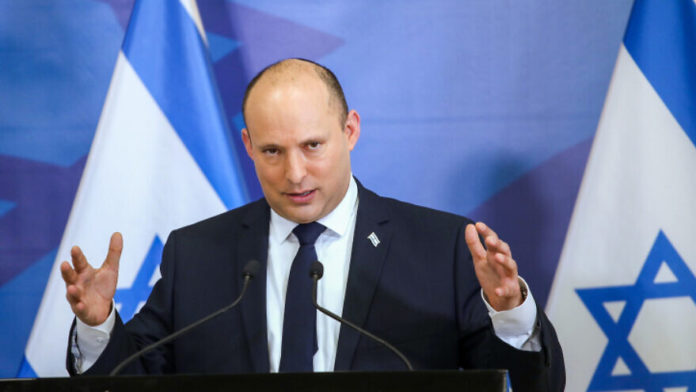 Matzav1 day ago
Naftali Bennett has been in the United States since the end of last week, departing in the midst of a difficult stretch for his political campaign while declining to reveal details about the purpose of his visit, according to a report by journalist Michael Shemesh.
Bennett, who heads the Beyachad party, reportedly traveled to the U.S. to attend a professional conference while also taking a family vacation. However, despite public interest surrounding the trip, he has refused to provide any information about the conference or his itinerary.
According to the report, Bennett traveled without members of his office or his campaign staff.
People close to Bennett offered only a brief statement, saying, “At these moments Bennett is working on the great repair of the State of Israel.”
The trip comes as Bennett’s political standing has weakened in recent polling. Recent surveys indicate that he has lost his position as the leading figure in the anti-government bloc to Yashar party chairman Gadi Eisenkot, who has now overtaken him in the race to lead the bloc.
{Matzav.com}
 Matzav1 day ago
The man accused of assassinating conservative activist Charlie Kirk confessed to the killing on three separate occasions—through a handwritten letter, text messages, and an in-person admission to his partner, according to testimony and evidence presented Thursday during a preliminary hearing.
The explosive evidence came through a prerecorded deposition from Lance Twiggs, Robinson’s roommate, who testified that Robinson returned to their Utah apartment the day after the Sept. 10 shooting, expressed remorse, and admitted responsibility for the murder.
The testimony, along with Robinson’s alleged written and electronic communications, offered prosecutors their clearest account yet of how the accused gunman described carrying out the fatal shooting at Utah Valley University. Court proceedings also revealed that Robinson allegedly made crude jokes related to the killing.
Charlie Kirk’s widow, Erika Kirk, urged the court to release Twiggs’ full interview with prosecutors, arguing that making the evidence public would help put to rest the conspiracy theories that have circulated about the Turning Point USA founder’s assassination.
The courtroom became emotional as prosecutors read aloud text messages Robinson allegedly sent to Twiggs. Erika Kirk broke down in tears while listening to the messages.
Among the communications presented in court was one in which Robinson, now 23, allegedly referenced his grandfather’s old .30-06 hunting rifle, writing that it “does just fine.”
Twiggs, who has not been charged with any crime, testified under a limited immunity agreement granted by both the US Attorney’s Office and the Utah County Attorney’s Office. Appearing in a coat and tie, Twiggs casually chewed gum throughout much of the recorded deposition until investigators instructed him to spit it out.
According to testimony, Twiggs and Robinson lived together in St. George, Utah, about three hours from Utah Valley University.
Twiggs said the first alleged confession came immediately after Kirk was shot and killed before a crowd of thousands attending a Turning Point USA event at Utah Valley University in Orem.
According to Twiggs, Robinson had apparently scheduled a text message in advance that arrived shortly after the shooting, instructing him, “Drop what you are doing, look under my keyboard.”
Confused, Twiggs replied, “what????????????” before adding, “you’re joking right????”
Robinson allegedly answered, “…..I TRIED TO DELETE THAT.”
Twiggs testified that beneath the keyboard he found a letter addressed to “Luna” in which Robinson allegedly wrote, “I had the opportunity to take out Charlie Kirk and I’m going to take it.”
Prosecutors said Robinson later continued discussing the shooting through text messages, including his efforts to recover the bolt-action Mauser rifle he allegedly abandoned while fleeing the scene.
One message allegedly read, “Shouldn’t be long until I can come home, but I gotta grab my rifle still. To be honest, I had hoped to keep this secret till I died of old age. I am sorry to involve you.”
Twiggs responded, “You werent the one who did it right????”
According to prosecutors, Robinson answered with a direct admission: “I am, I’m sorry.”
Twiggs testified that the third confession came when Robinson returned to the apartment on Sept. 11, one day after the shooting.
When asked by prosecutor McBride, “Did he talk about what he had done?”
Twiggs responded, “Didn’t go into detail… I just asked him in person if what he said was true the night before, and he said it was… started crying a little bit, and said he wishes he hadn’t done it.”
Twiggs added, “…Eventually he said he would talk to his parents or turn himself over.”
“I personally had never heard him talk about Charlie Kirk before specifically,” Twiggs testified.
Twiggs also recalled that approximately a month before Kirk’s death, Robinson asked whether they owned a Dremel engraving tool.
“I don’t remember exactly when, but he had said he was planning to go hunting with his family and he asked me… if we had like a Dremel, because he said he wanted to engrave messages on bullets,” Twiggs testified.
Brian Davis of the Utah State Bureau of Investigation told the court that Twiggs’ testimony was consistent with statements he gave investigators during an interview conducted on Sept. 12, 2025.
Davis said investigators reviewed text messages, Discord conversations, and a handwritten note that prosecutors allege were authored by Robinson.
Kirk was fatally shot in the neck during the Turning Point USA event at Utah Valley University.
Defense attorneys argued that the court should prevent the media from publishing the deposition video and text messages, contending that widespread dissemination could prejudice prospective jurors and infringe upon Robinson’s right to a fair trial.
Prosecutors, joined by Erika Kirk, urged the judge to release the evidence in full.
“The Kirk family has waited 10 months for this hearing… They have a right to see and feel what’s going on in this courtroom,” attorney Jeffrey Neiman told the court.
“To be here and not to see the evidence — what’s the point of being here?”
Members of the Kirk family have said they hope the public release of the evidence will finally dispel conspiracy theories promoted by commentator Candace Owens and others regarding the circumstances surrounding Charlie Kirk’s death.
Earlier in the week, prosecutors introduced surveillance footage that they say tracks Robinson’s movements across the Utah Valley University campus on the day of the shooting.
They also presented FBI forensic evidence that they claim connects Robinson through DNA recovered from a towel allegedly used to conceal the rifle.
Witnesses further testified that DNA believed to belong to both Robinson and Twiggs was discovered on a screwdriver allegedly left at the location where Robinson positioned himself before firing the fatal shot.
Robinson, who is now 23 years old, has not yet entered a plea. If convicted, he could face the death penalty.
{Matzav.com}
 Matzav1 day ago
The Knesset House Committee on Thursday approved the proposed Basic Law: Torah Study for its second and third readings after coalition lawmakers agreed to remove its most controversial provision, transforming the legislation into what legal officials described as a largely declarative measure.
The decision followed negotiations between Likud and the chareidi parties aimed at producing a compromise that would preserve coalition unity. The revised bill passed the committee by a vote of six in favor and four opposed.
The committee, chaired by MK Ofir Katz, accepted Katz’s own amendment eliminating Section 2 of the proposal. The deleted provision had declared that the purpose of the law was to recognize Torah study as a fundamental value “to create a balance against other fundamental values in the State of Israel.”
During the discussion, Katz said that after talks with the chareidi coalition partners and other members of the coalition, it was decided to retain only the opening section of the bill, which recognizes Torah study as a foundational value and part of the heritage of the Jewish people in the State of Israel. He added that some opposition lawmakers had indicated they might have supported the legislation had the second clause been removed. Katz also emphasized that “no soldier will be harmed” by the bill’s passage.
Katz further announced that on Sunday the committee will advance separate legislation intended, he said, to address the needs of soldiers and those serving in the military. He pledged that only after that bill moves forward will the Knesset hold its final votes on both the revision and the Basic Law: Torah Study.
Opposition lawmakers continued to criticize the proposal despite the changes. MK Naor Shiri argued that even without the deleted section, Torah study remains the only value explicitly enshrined in a Basic Law, while other national values, including military service, have not been granted similar constitutional standing.
Government legal officials, however, indicated that the revised bill carries little practical legal effect. Deputy Attorney General Avital Sompolinsky said that removing the disputed clause leaves existing judicial balances intact, making the legislation primarily declarative. Knesset Legal Adviser Sagit Afik expressed a similar view, stating that once the controversial language was removed, the law could no longer be interpreted as a basis for disadvantaging soldiers or altering the allocation of government funding or other resources, leaving it as a statement recognizing the importance of Torah study.
Despite agreeing to the compromise, some chareidi lawmakers voiced disappointment over the changes. MK Yinon Azoulay said that removing Section 2 was not consistent with his party’s position but that it agreed to the coalition’s request. United Torah Judaism chairman Yitzchok Goldknopf likewise opposed deleting the provision, maintaining that it should have remained part of the legislation.
The compromise reached between Likud and the chareidi parties is expected to ease resistance to the bill within the governing coalition while preserving formal recognition of Torah study as a foundational national value, but without the provision that critics argued could have carried practical implications for military service policy and government funding.
 Matzav1 day ago
Israel “did not ask anyone for permission to enter Lebanon, and we do not need permission to remain in Lebanon,” Israeli Defense Minister Yisroel Katz said on Thursday, hours after U.S. President Donald Trump said he believed Yerushalayim would withdraw from the country.
“It is our right and our duty to protect the residents of the Galilee and the citizens of Israel from the threats posed by the jihadist Hezbollah terrorist organization, which seeks to destroy the State of Israel,” Katz said in a Hebrew-language statement.
The defense minister noted that the Iranian proxy had launched two unprovoked terrorist campaigns against the Jewish state—the first a day after the Hamas-led Oct. 7, 2023, massacre, and again following the start of “Operation Roaring Lion” against the Islamic Republic of Iran on Feb. 28.
After Hezbollah’s renewed attacks on March 2, Yerushalayim launched a broad aerial campaign against terror targets in Lebanon and expanded military operations aimed at preventing cross-border attacks on Israeli communities.
The Israel Defense Forces “responded with force and, over the past two and a half years, has destroyed most of Hezbollah’s capabilities and leadership, foremost among them the arch-terrorist Hassan Nasrallah, one of the architects of the plan to destroy Israel,” Katz said on Thursday.
The IDF “established a strong security zone in Lebanon, stretching from the Mediterranean coast in the west to the Beaufort Ridge and the foothills of Mount Hermon in the east,” he continued. “The area has been cleared of residents and terror infrastructure, both above and below ground, in order to protect the residents of the Galilee from the threat of cross-border raids, anti-tank missile fire and other direct threats.
As he and Israeli Prime Minister Binyomin Netanyahu “have made clear, we will continue to remain in the security zone in Lebanon and operate from it as long as necessary until Hezbollah is disarmed throughout Lebanon and the threat to the residents of northern Israel is removed,” Katz vowed.
Trump, speaking to reporters alongside Syrian President Ahmed al-Sharaa at a press conference in Ankara on Wednesday, said he had discussed an Israeli withdrawal from Lebanon with Netanyahu.
“I talked to Bibi [Netanyahu] about that. I think they’re going to. I think they want to. I don’t think it’s a question,” the U.S. president said. “We have a deal with Israel and Lebanon, and yeah, they’ll leave.”
The June 26 framework of understandings between Yerushalayim and Beirut conditions an Israeli redeployment on Hezbollah being removed from Southern Lebanon. JNS
{Matzav.com}
 Matzav1 day ago
After a week of elaborate funeral ceremonies across Iran and Iraq, former Iranian Supreme Leader Ali Khamenei was buried Thursday in the holy city of Mashhad, bringing to a close days of state-organized mourning as the Islamic Republic continues to grapple with internal turmoil and ongoing U.S. military strikes.
Thousands of mourners packed the streets of Mashhad on Thursday morning, waving Iranian flags, carrying portraits of Khamenei, and displaying banners bearing revolutionary slogans as the funeral procession made its way through the northeastern city, home to Iran’s holiest Shiite shrine.
Khamenei’s burial marked the conclusion of a weeklong series of funeral processions that carried his body through multiple cities in Iran and Iraq. Throughout the ceremonies, senior clerics and leaders of the Islamic Republic urged supporters to participate in large numbers in an effort to project the regime’s strength, reinforce its revolutionary ideology, and demonstrate continued popular support.
Despite surviving months of war involving both the United States and Israel, Iran continues to face serious domestic challenges, and Khamenei’s 37-year rule remains deeply divisive within the country.
Meanwhile, the whereabouts of Mojtaba Khamenei—who was named Iran’s new Supreme Leader by the Assembly of Experts one week after his father’s death—remain unknown to the Iranian public.
Mojtaba Khamenei has not appeared publicly since the war began on February 28. Although written statements have been issued in his name, no photographs, videos, or audio recordings have been released.
He was reportedly seriously wounded in the same strike that killed his father and several other family members, suffering severe facial injuries as well as major wounds to his limbs.
Senior sources in Tehran told Reuters that Mojtaba is continuing to recover from those injuries but has not yet regained sufficient strength to appear in public. According to the report, Iranian security officials are also limiting his public exposure out of concern over possible American assassination attempts.
As mourners gathered in Mashhad awaiting the arrival of Khamenei’s funeral procession, some in the crowd chanted slogans calling for revenge against President Donald Trump.
Prior to Thursday’s burial, memorial ceremonies for Khamenei and four members of his family who were killed alongside him had already been held in Tehran, Qom—the center of Shiite religious authority in Iran—and the Iraqi cities of Najaf and Karbala.
At each stop along the funeral route, massive crowds filled the streets, chanting Shiite religious slogans alongside revolutionary and anti-American chants in honor of the longtime Iranian leader.
{Matzav.com}
 Matzav1 day ago
The Skverer community is abuzz today after New York State Police allegedly stopped the Skverer Rebbe’s motorcade on Route 17 as he was returning home from the airport following a trip to Malibu, California.
According to sources withing the community, troopers pulled over the Rebbe’s entourage while it was traveling along Route 17 and issued a total of 14 traffic tickets to members of the motorcade.
The incident delayed the procession before it was allowed to continue toward New Square.
{Matzav.com}
 Matzav1 day ago
President Donald Trump reportedly flew home from Turkey aboard the older Air Force One after the Secret Service recommended the change as tensions with Iran escalated, despite officials insisting there was no specific threat targeting the president.
The recommendation was made while Trump was attending the NATO summit in Turkey after fighting between the United States and Iran flared up again, according to an initial report by The New York Times.
Although authorities stressed there was no credible intelligence indicating an imminent danger to Trump, the Secret Service advised that he return on the long-serving presidential aircraft as an added precaution.
The decision underscored the extraordinary security precautions taken whenever the president travels during periods of heightened geopolitical instability.
Rather than remaining on the recently acquired Boeing 747-8 donated by Qatar, Trump left Turkey aboard one of the veteran Boeing VC-25A aircraft that has transported American presidents for decades. He later reunited with the upgraded 747-8 at RAF Mildenhall in England before continuing the journey back to Washington, according to The New York Times and ABC News.
Additional security measures accompanied the flight. Those on board the older aircraft were instructed to keep the window shades closed during takeoff, and publicly available flight-tracking information showed the plane’s transponder remained off until after it had passed over the Black Sea—a tactic frequently used to reduce visibility during presidential travel through potentially dangerous regions.
Trump rejected the suggestion that the switch was driven by security concerns. Instead, he said the newer aircraft flew separately so American military personnel stationed in England could tour what he called the “magnificent” plane.
Even so, the president openly discussed the risks posed by Iran.
“I’m No. 1 on the kill list for Iran,” Trump told reporters, later adding that passengers were “probably on a dangerous flight” because of the threats posed by Tehran.
White House Communications Director Steven Cheung defended the Qatari-donated aircraft, saying it is “a state-of-the-art aircraft that has been fitted with high-level security protocols that ensure the safety of the president and his staff.”
Cheung also noted that because “many enemies of America have their sights” on Trump, the administration uses “every tool at our disposal — including distraction and misdirection — to address those threats.”
Nevertheless, Trump’s use of the older Air Force One has intensified questions about whether the retrofitted Qatari aircraft possesses all of the defensive capabilities found on the longstanding presidential fleet. The Air Force spent roughly a year upgrading the jet at a cost estimated to be nearly $400 million.
According to The New York Times, both current and former defense officials have expressed concern that the accelerated retrofit schedule may not have allowed enough time to install every classified protection system carried by the VC-25A fleet, including sophisticated missile defense technology and shielding against electromagnetic pulse attacks.
The Air Force has countered that the aircraft satisfies all required standards for security, communications, and safety. Officials also acknowledged that certain highly advanced modifications intended for the next-generation Air Force One fleet were deliberately omitted because the aircraft is serving only as an interim “bridge” platform.
Administration officials emphasized that the Secret Service’s recommendation was simply a precaution reflecting the elevated international security environment and was not prompted by any known or specific threat directed at the president.
{Matzav.com}
 Matzav1 day ago
Jewish Wikipedia editors said they felt “traumatized” and emotionally exhausted after editing topics related to Jews and Israel, according to a recent study in the journal Convergence by University of Haifa researcher Shlomit Lir.
Lir conducted video interviews with 19 veteran Jewish editors between February and August 2025. Most remain active on the platform, though several have stopped editing.
There was a “great sense of fear” among the editors to even talk about the subject, Lir told JNS. Some participants kept their cameras off during Zoom interviews, and one used a pseudonym.
“Editing on Wikipedia is a great part of their identity, and the fear of being banned is great,” she said. “Some of the conversations were very alarming.”
Wikipedia editors are unpaid volunteers, and anyone can contribute to the online encyclopedia.
The editors interviewed live in the United States, Europe and Israel and have between two and 24 years of editing experience. All have contributed to articles about Israel, and some identify politically with the Left, according to Lir.
Several said their experience on Wikipedia was largely positive until they began editing articles related to Israel after the Hamas-led terrorist attacks in southern Israel on Oct. 7, 2023.
One editor cited the lead section of Wikipedia’s article on the Gaza war, saying it emphasizes devastation in Gaza, with only a brief mention that “there was an axis of resistance led by Iran and its proxies.”
Another said that after Oct. 7, “all kinds of entries related to Palestinian terror and such things were deleted.”
Other participants said efforts to correct anti-Jewish, inaccurate or “libelous” content, even in articles unrelated to Israel, were often quickly reversed by editors they described as “condescending” and “exclusionary.”
One editor said anti-Israel contributors “have more time and they are more numerous,” adding that they “know all the relevant books, so arguing with them is very difficult.”
Several participants also accused anti-Israel editors of engaging in “data attacks,” using Wikipedia’s dispute-resolution process to seek sanctions against them.
“They will contest your edit, and then they will make false reports against you,” one said. “They will go through, like, months, if not years, of your past edits, and it’s almost like being knocked—like someone’s threatening your front door, and then all of a sudden they send somebody around to the back door.”
One participant said they felt “traumatized” but believed reporting harassment would accomplish little, Lir told JNS.
“As long as you didn’t touch the sensitive topics, then things were OK,” she said. “Once you started editing Israel-related or conflict-related articles, then the problem began.”
‘Physical feeling of not being safe’
According to the study, one editor has received threatening messages warning, in effect, that others would ensure the person could no longer edit Wikipedia. “We’ll get to you,” one of the messages stated, according to the study. “You won’t be editing here much longer. We’ll make sure of it.”
The editor realized that “if someone is really interested in me, they can find me very easily.” While he has continued editing, the realization made him “stop and think,” the study stated.
“There’s an actual physical feeling of not being safe,” Lir told JNS.
Another editor quit editing after feeling “shocked and deeply hurt” as well as a “sense of personal risk and betrayal” over anti-Israel content. Lir also noted a doctoral researcher interviewed for the study who suffered a heart attack after stressful editing experiences on Wikipedia.
The latter can’t go back on the site because “she was so upset by it,” she told JNS.
Lir said some “extremely biased editors have been banned” by Wikipedia, but argued that more needs to be done to safeguard neutrality.
“Wikipedia is a place of knowledge,” Lir told JNS. “It cannot be a place of manipulation, and if the manipulation occurs, then there’s a need to examine how it happens, why it’s not diversified, what can be done.” JNS
{Matzav.com}
 Matzav1 day ago
IDF Chief of Staff Lt. Gen. Eyal Zamir declared Thursday that Israel remains on constant alert for threats from Iran and Lebanon, warning that any attack on the Jewish state will be met with “overwhelming force.” Speaking at the graduation ceremony for the 192nd Israeli Air Force Pilots Course, Zamir praised the Air Force’s wartime achievements, reflected on the lessons of October 7, and outlined an ambitious expansion of Israel’s aerial capabilities.
Opening his address, Zamir said that Israel’s most celebrated military operations are united by a common spirit of boldness, innovation, and courage.
“a clear line of initiative, creativity, professionalism, and heroic courage connects the chapters of exemplary operations of the IDF and the Air Force over the years.”
He pointed to landmark missions including the Entebbe hostage rescue, the Second Lebanon War, and Operations Rising Lion and Roaring Lion, describing them as proof of Israel’s technological superiority and the Air Force’s ability to adapt to evolving threats.
“are a demonstration of Israel’s unique offensive and defensive technological might, a testament to the Israel Air Force’s unique ability to reinvent itself against every threat, to turn the impossible into a sophisticated operational plan, and to execute it with remarkable precision at the moment of truth.”
Zamir emphasized that the military’s successes were made possible through close coordination among every branch of the armed forces.
“Everyone works together for a joint goal.”
Reflecting on the scope of recent combat operations, he said Israel’s Air Force has carried out an extraordinary range of missions across multiple fronts.
“It is difficult to describe in words the multi-arena missions conducted by IAF pilots in the skies of the Middle East in the past two and a half years. We struck every arena.”
Detailing those accomplishments, Zamir said Israel achieved overwhelming control of the skies, allowing the Air Force to operate wherever necessary while carrying out devastating strikes against Iran’s military leadership and strategic assets.
“We achieved air superiority that allowed us to fly over any area to our choosing. In a surprise attack, we eliminated the leaders of the ayatollah regime, the nuclear officials, the weapons industry, the surface-to-air missile batteries, and the surface-to-surface launchers. We turned the third perimeter into a first perimeter and caused the enemy in Gaza, Beirut, Sanaa, and Tehran to feel the same sense of persecution.”
He also credited the Air Force’s defensive operations with helping Israel continue fighting while preventing major threats from fully materializing.
“At the same time, the IAF also led the aerial defense effort with unprecedented success rates that allowed us to continue to fight. We distanced the existential threats a short time before they became tangible.”
Zamir highlighted the close military partnership between Israel and the United States, describing the cooperation as historic.
“in a unique collaboration between the IDF and the US Military, our ally, the biggest superpower in the world, we flew wing-to-wing… a historic joint combat procedure which led to unprecedented capabilities that proved the IAF’s purpose: to be Israel’s strategic and multi-arena wing.”
Addressing the newly commissioned pilots, Zamir urged them to carry forward the legacy established by those who came before them.
“Dear graduates, today you inherit this proud legacy-to dare, to innovate, to surprise, and to achieve victory.”
At the same time, he stressed that the military has not forgotten the devastating failures surrounding Hamas’ October 7 massacre and has undertaken an exhaustive effort to learn from those mistakes.
“We never forget our point of departure. The failure of October 7 will forever be remembered as a national disaster and a systemic failure. We looked directly at the root causes of the shortcomings throughout the IDF, and we did the same within the Air Force. Without compromise, and with the required humility, we worked to uncover the truth, internalize the lessons, and implement them. As a result, we remain constantly prepared and alert in accordance with the evolving security assessment.”
Warning that the threat environment remains volatile, Zamir revealed that the Air Force continues to maintain a high level of readiness.
“in recent weeks, hundreds of Air Force aircraft have been on immediate takeoff alert,” adding, “Even at this moment, we are closely monitoring developments in Iran and Lebanon and are prepared for immediate action. Against anyone who attempts to harm us, we will respond with overwhelming force.”
He also noted a major transformation in cooperation between the Air Force and Israel’s ground forces during the current conflict.
“A major change that has taken place within the Air Force over the past two and a half years is the deep partnership with the ground forces. Fighter jets and attack helicopters carried out thousands of strikes during the ground campaigns in Gaza and Lebanon, providing closer support than ever before to maneuvering forces. ‘Sa’ar’ helicopters transported troops to the front lines and evacuated wounded soldiers directly from the battlefield.”
Zamir paused to honor those who lost their lives or were wounded during the war, paying tribute to their sacrifice and the resilience of their families.
“‘Even a fist was once an open hand and fingers,’ wrote the poet Yehuda Amichai, and we remember that well. We remember the fallen, our finest sons and daughters, who gave their lives in fierce battles. We embrace the bereaved families and stand alongside those wounded in body and spirit, who bear the scars of war. Their memory and heroism are the compass that obligates us to continue, to fight, and to prevail.”
Looking ahead, Zamir said the Israeli Air Force is undergoing one of the most significant expansions in its history, with new aircraft, additional squadrons, and enhanced capabilities already being added to strengthen Israel’s long-term military advantage.
“Graduates of Pilots Course 192, our Air Force is in the midst of a dramatic force-building process, a broad expansion that is being accelerated even under fire. New squadrons are being established, we are acquiring new transport and attack helicopters, and our aerial refueling and intelligence capabilities are being enhanced to ensure Israel’s absolute air superiority for generations to come. These aircraft and these capabilities are now waiting for you. I have complete confidence in the skills you have acquired to join the ranks of our aircrews and take to the skies at any hour in defense of the homeland.”
As he concluded, Zamir reminded military leaders and the graduating pilots that leadership begins with honoring one’s word, quoting this week’s Torah portion.
“‘He shall not break his word; he shall do according to all that proceeds from his mouth.’ There is a connection between a military leader and the words that come from his mouth. Words create obligation, and the command to us is clear: Speak with genuine and pure intent, say little, do much. Let our actions speak for themselves.”
He closed by encouraging the new pilots to carry out their mission with courage, humility, and an unwavering commitment to protecting the people of Israel.
“New air warriors, fly with determination, fight with courage, and always remember the justice of our cause, the depth of your responsibility, and the people on the ground for whom you serve as a shield of protection. Soar high, ‘knights of the skies, brave and noble,’ and always return home safely. Today we salute you with pride and great expectations for what lies ahead.”
{Matzav.com}
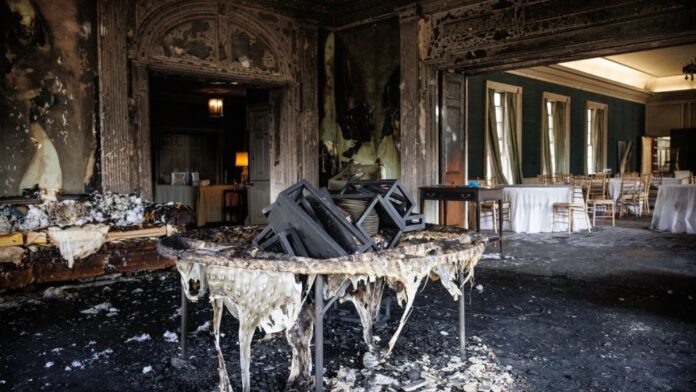 Matzav1 day ago
More than a year after an anti-Israel arsonist attacked the governor’s mansion in Harrisburg, Pa., while Gov. Josh Shapiro and his family were there on April 13, 2025, a resident of suburban Philadelphia was arrested for threatening the state’s Jewish chief executive and using antisemitic slurs in doing so.
Richard John Franklin, 65, of Delaware County in the Philadelphia area, was arrested Wednesday and charged with making threats in a state representative’s district office.
According to Pennsylvania State Police, Franklin had gone to Leanne Krueger’s office on a tax issue on July 7 and while talking to one of her aides, used an “antisemitic ethnic slur” against Shapiro while threatening to set the governor’s mansion on fire.
“It is our duty to uphold the sanctity of the law and to protect the commonwealth,” Sgt. Logan Brouse, communications director of the state police, told JNS, responding on behalf of the governor’s office.
The state police “takes threats against the lives of public officials seriously. That’s why the department has formed a dedicated unit to address the growing amount of ideologically motivated violence against elected officials,” Brouse told JNS. “PSP will continue to ensure the safety of public officials in Pennsylvania.”
When members of the state police’s political violence threat unit went to Franklin’s house on Wednesday, the accused “provided multiple, inconsistent accounts of what occurred at the district office,” including admitting “to using the ethnic slur,” per an incident report from the police.
Franklin claimed that his statements “about the governor’s mansion were sympathetic and positive in nature, because the governor and his family survived the previous arson,” per the incident report.
He was taken into custody without incident, police said.
Franklin was charged with making terror threats, ethnic intimidation, political threats, harassment and disorderly conduct.
Marcia Bronstein, regional director for the American Jewish Committee, praised the state police for its actions.
“Words matter, especially when antisemitism has reached record levels in this nation,” she stated. “The Jewish community doesn’t have the luxury of assessing whether someone is making idle threats, especially when Gov. Shapiro and his family were forced from their residence last year when someone tried to burn it down.”
“We thank the state police for their swift and thorough investigation of this incident,” she said.
The person in the earlier arson case, Cody A. Ballmer, 38, said he was upset about Shapiro’s position in the Israel-Hamas war. The governor and his family had held a Passover seder hours before the attack.
Ballmer pleaded guilty and was sentenced, in October, to between 25 and 50 years in prison.
The attack against Shapiro was one of three violent antisemitic incidents in 2025, and was cited by the Anti-Defamation League in its annual audit.
The others were the murder of two Israeli embassy staff members in Washington, D.C., and firebombs thrown at peaceful demonstrators in Boulder, Colo., who were supporting hostages held in Gaza. The firebomber killed one of the demonstrators. JNS
{Matzav.com}
 Matzav1 day ago
Yerushalayim was ranked as the world’s seventh-best city in the World’s Best Awards 2026 list in a survey published this week by the highly esteemed U.S. travel magazine Travel + Leisure.
Israel’s capital also topped the rankings as the best city in the Middle East and North Africa.
Running for 31 consecutive years, this year’s survey registered more than 661,000 votes by roughly 207,000 readers, across more than 10,088 total properties that include cities, hotels, cruise lines and more, according to the magazine.
San Miguel de Allende in Mexico topped the list at number one, followed by Kyoto (Japan), Chiang Mai (Thailand), Hoi An (Vietnam), Oaxaca (Mexico) and Bangkok (Thailand).
With a possible end to hostilities in the Mideast region, Israel’s tourism industry is looking to rehabilitate from the effects of almost three years of war. JNS
{Matzav.com}
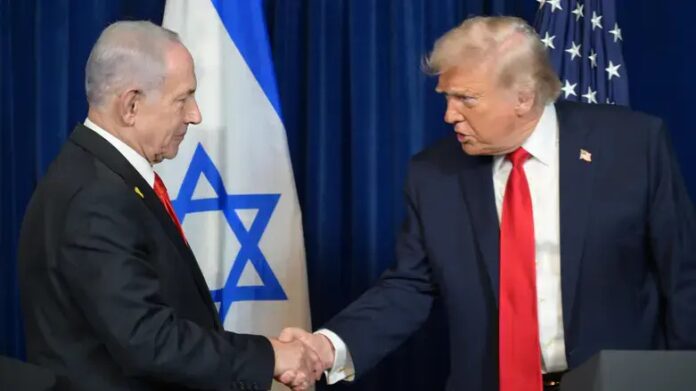 Matzav1 day ago
President Donald Trump and Israeli Prime Minister Binyomin Netanyahu spoke on the phone on Thursday, amid renewed U.S.-Iran tensions and the potential collapse of talks on a nuclear deal.
Netanyahu’s office said that the call was part of “continuous contact” between the two and that “continued coordination between the countries in various sectors was established.”
Trump updated Netanyahu “on American moves in the Gulf,” according to the Israeli prime minister’s office.
Netanyahu’s office stated that he talked with Trump about anti-Israel comments that Recep Tayyip Erdoğan, president of Turkey, made recently and about the “need for security zones along Israel’s borders.”
Trump met recently with Erdoğan in Ankara, and the White House released photos of the two shaking hands and smiling. In one photo, Erdoğan takes Trump’s arm.
Hakan Fidan, foreign minister of Turkey, told the Turkish CNN affiliate on July 2 that the Jewish state has “become a burden that humanity can no longer bear” and that Israel is representative of “humanity’s common problems.”
Erdoğan previously expressed similar sentiments but has remained a strong ally of Trump’s. The U.S. president said this week that he is considering asking Congress to approve selling F-35 fighter jets to Ankara.
That announcement has drawn concern from Netanyahu and members of Congress on both sides of the aisle. JNS has reported that experts are divided on whether Turkey is a “NATO member in name only” or a closer ally than ever.
Trump and Netanyahu could meet in Washington next week reportedly, although Washington and Tehran trading strikes might change those plans. JNS
{Matzav.com}
 Matzav1 day ago
Michael Sam Teekaye Jr., 22, who admitted to trying to join the Islamic State and planning to attack Jews and Zionists in the United States, was sentenced to 15 years in federal prison, followed by supervised release for life.
The resident of Hanover, Md., had faced 20 years.
He admitted that he had “multiple” conversations with an undercover officer in March and April 2023, during which he said he wanted to go to Africa and become a mujahid, a “fighter,” for ISIS, according to the U.S. Department of Justice.
Teekaye told the officer that his “plan B” was to attack Jews and Israel supporters in the United States and “said that he researched buildings close to him that support Israel and thought about how to ‘gun down key members or anyone involved,’” the Justice Department said.
“Mr. Teekaye sought to support a foreign terrorist organization that has committed unspeakable acts of violence and took real-world steps to carry out a terrorist attack in Maryland,” stated Kelly O. Hayes, U.S. attorney for the District of Maryland.
“Today’s sentence underscores that those who seek to aid terrorist organizations will be identified, prosecuted and held fully accountable,” Hayes said. JNS
{Matzav.com}
 Matzav1 day ago
Israeli authorities uncovered a large-scale smuggling attempt on Wednesday when thousands of cigarettes were found concealed inside a shipment of pineapples intended for entry into the Gaza Strip.
The discovery was made at the Lachish Crossing in southern Israel during a routine inspection conducted by the Land Crossings Authority, a unit of the Ministry of Defense. Inspectors identified irregularities in a truck carrying hundreds of pineapples and uncovered cigarettes hidden inside the fruit.
The shipment had been purchased by an Israeli company authorized to transfer goods into Gaza under the private-sector humanitarian aid mechanism. It was scheduled to continue to the Kerem Shalom Crossing for delivery as part of the approved aid supply process.
Following the discovery, Israeli authorities confiscated the truck and its cargo and transferred the materials for examination. The Coordinator of Government Activities in the Territories suspended the company’s authorization to bring goods into Gaza.
Israel and Egypt have maintained restrictions on Gaza to prevent weapons smuggling since Hamas seized control of the territory in 2007.
JNS
 Matzav1 day ago
A coalition of state financial officials is calling on President Donald Trump to take executive action that could unlock an estimated $39 billion in forgotten savings and war bonds, arguing that the money belongs to American families—not the federal government—as the nation prepares to mark its 250th anniversary, the NY Post reports.
Thirty state financial officers sent a letter to Trump on Thursday urging him to direct the Treasury Department to release billions of dollars tied to unclaimed bonds. They contend that many of the original bondholders have since died, misplaced their records, or simply forgot about the investments, leaving their heirs unaware that the assets exist.
“Americans purchased war bonds not merely as investments, but as acts of patriotism and confidence in the nation’s future,” officials from Alabama, Idaho, Missouri, North Carolina and 26 other states wrote, nodding to savings stamps purchased by children, neighborhood bond drives and payroll savings plans.
The officials pointed out that Trump sought to speed up the process of returning matured savings bonds during his first administration through a 2020 executive order. However, they said changes enacted under the Biden administration through the Secure 2.0 Act in 2022 created “a frustrating catch-22” for state treasurers.
According to the letter, the law requires states to prove ownership of abandoned bonds before the Treasury Department will provide information about the bondholders. But the officials argue that meeting that requirement is virtually impossible because they need access to the Treasury’s records in order to establish ownership in the first place.
“America’s 250th anniversary presents a unique opportunity to honor one of the most enduring expressions of civic faith in our nation’s history: the decision by millions of Americans to invest in their country through the purchase of savings bonds and, during World War II, war bonds,” the treasurers added.
Treasury Department data show that since the U.S. Savings Bond program was established in 1935 under President Franklin D. Roosevelt, more than 6.8 million paper savings bonds valued at over $731 billion have been issued.
Although the overwhelming majority of those bonds have already been redeemed, the letter notes that millions remain unclaimed because owners lost the paperwork, relocated over the years, or simply forgot about investments they made decades ago. As a result, billions of dollars remain dormant.
“When Americans were asked to step up and contribute to the fight for freedom, the individuals and families who purchased US savings bonds did not hesitate,” OJ Oleka, chief executive of the State Financial Officers Foundation, told The Post.
Returning the bonds “is the proper way to honor their legacy and the important role these citizens played in allowing our nation to celebrate 250 years of freedom. After all, this is not the government’s money. These were loans, made in patriotic good faith, and it’s time this debt is repaid,” he said.
The state officials maintain that Trump could address the issue through a new executive order that would eliminate regulatory obstacles put in place during the Biden administration. They argue the matter is fundamentally a “property-rights issue” and can be resolved without Congress passing additional legislation.
While the letter does not spell out the exact process by which eligible families would receive the money, the treasurers said such an executive order would cap years of work to modernize Treasury records, improve bondholder search capabilities, expand outreach efforts, and digitize historical debt records with funding approved by Congress.
 Matzav1 day ago
New York City Mayor Zohran Mamdani and Gov. Kathy Hochul have unveiled an $800 million initiative aimed at speeding up bus service across the city, but critics argue the proposal is less about improving transportation and more about expanding traffic camera enforcement and increasing penalties for drivers.
The Democratic leaders announced the plan Wednesday during a press conference in Flatbush, saying the project will create additional rapid bus corridors while installing 200 new automated traffic enforcement cameras along 50 more routes by next year. They claim the upgrades will reduce travel times by approximately six minutes per bus trip.
“In New York City, time is money. And we are going to give New Yorkers some of that time back,” Mamdani said. “Six minutes precisely.”
To emphasize the promised time savings, Mamdani started a stopwatch before speaking and pledged to finish his remarks within six minutes. Instead, his speech ran longer than planned, prompting comparisons to the city’s frequently delayed buses.
Not everyone is convinced the projected time savings are realistic. Allan Rosen, vice chairman of the rider advocacy group Passengers United, argued the numbers are misleading because they assume riders travel an entire bus route.
“They are saying that bus lanes will save you up to six minutes,” said, who spent three decades at the MTA, including a stint running bus planning.
“That means if you travel the entire bus route, say 8 miles, you save six minutes,” he added. “The average local bus trip is 2.3 miles. So the average passenger would save only an insignificant two or three minutes from their 45 or 60 minute trip.”
The proposal, developed jointly by the city Department of Transportation and the Metropolitan Transportation Authority, also calls for new traffic signals that give buses dedicated green turn arrows, along with expanded tap-and-go fare payment to reduce boarding delays. Even so, Rosen believes the overall impact on commute times will be modest.
Under the proposal, City Hall plans to invest $254 million, while another $628 million in capital funding will be spent over the next five years. Officials also intend to increase the distance between bus stops to better match national and international transit guidelines as part of the MTA’s continuing redesign of the city’s bus network.
That change would eliminate some existing bus stops. According to the MTA, most urban transit systems place local bus stops roughly every quarter mile, while many New York City routes currently have stops about every 800 feet apart.
Rosen warned that removing stops could actually leave many riders with longer commutes despite slightly faster buses.
“If you miss a bus because your bus stop was removed, you can easily add another 10 minutes to your trip. So your trip can take 20 minutes longer under the MTA’s planning,” Rosen said.
He argued that the real weakness in the city’s bus system is unreliable scheduling rather than slow travel speeds.
According to Rosen, only about 20 supervisors oversee scheduling for approximately 6,000 buses operating throughout the city, and he said the new initiative does nothing to address that staffing shortage. The MTA did not respond to requests for updated figures regarding the number of bus schedule supervisors it currently employs.
Rosen also sharply criticized the plan’s significant expansion of automated traffic enforcement.
“The real reason bus lanes are implemented is to raise fines from violators and to discourage automobiles by clogging up traffic by removal of lanes. It’s not to help bus passengers,” Rosen said.
The proposal has also drawn scrutiny because it closely mirrors recommendations made by Transportation Alternatives, an advocacy organization that supports reducing automobile traffic. In its November 2025 policy agenda for the incoming Mamdani administration, the group called for broader camera enforcement and additional rapid bus routes—both central features of the mayor’s newly announced plan.
Mamdani’s proposal identifies Transportation Alternatives as one of the stakeholders involved in the initiative, and his administration also appointed a former executive from the organization to oversee city bus operations.
Financial disclosures previously released by Transportation Alternatives show that Verra Mobility—the company operating New York City’s automated traffic enforcement camera network—contributed more than $100,000 annually to the organization from 2020 through 2023, the most recent year donor information was publicly available.
Earlier this year, the New York City Department of Transportation awarded Verra a new five-year contract worth $998 million, representing roughly a 34% increase over the company’s previous agreement with the city.
In announcing the expanded contract, Verra stated that the anticipated growth in bus lane camera enforcement was one of the primary reasons for the larger agreement.
According to the city’s annual Local Law 6 report, bus lane enforcement cameras generated $152.9 million in fines during fiscal year 2025, with the city collecting approximately $126 million from drivers. Revenue from cameras mounted on buses surged by 551% compared to the previous year.
That dramatic increase followed the state’s decision to expand the MTA’s authority to issue camera-generated tickets not only for driving in bus lanes, but also for blocking bus stops and double-parking along designated bus routes.
{Matzav.com}
 Matzav1 day ago
Dear [email protected],
Every summer I ask myself the same question: Is this really what we have become?
We spend ten months a year speaking about ruchniyus, shalom bayis, family values, chinuch, and living simply. Then July arrives, and suddenly an entire segment of our community embraces a lifestyle that seems to contradict everything we claim to believe in. We call it “going to the bungalow colony,” but for many people it has become something far uglier. It has become two months of prustkeit, materialism, social climbing, and endless comparison.
Let’s stop pretending otherwise. Walk around many bungalow colonies. You’ll find groups of women sitting on porches or around tables for hours upon hours every single day. The conversations are rarely about anything meaningful. It’s who bought what, who renovated, whose husband is making more money, whose daughter is dating, whose son got into a better yeshivah, who is wearing designer clothing, whose bungalow looks nicer, who hired which decorator, who is serving what for Shabbos, who has the bigger deck, the nicer swing set, the newer outdoor furniture. It’s an endless, exhausting culture of comparison. People don’t even realize they’re doing it anymore because it has become the air they breathe.
And what is perhaps even more tragic is that nobody seems embarrassed by it. We have somehow transformed idle sitting and endless fatzing into an accepted way of life. Hours disappear every day. Entire mornings. Entire afternoons. Somehow there is unlimited time to sit and talk. And let’s not kid ourselves that it’s all innocent conversation. Anyone who has spent time in these settings knows that gossip, judging, and comparing are woven into the fabric of the culture.
Meanwhile, the husbands are nowhere to be found because they’re back in the city all week. This is perhaps the craziest part of the entire arrangement. We have normalized husbands and wives living separate lives for two months every summer. The husband works, eats supper alone, sleeps alone, wakes up alone, repeats that routine all week, and then drives for hours on Friday just to spend barely a day with his family before getting back in the car on Sunday morning. (We’re not even talking about those men who may engage in unbecoming behavior. I won’t elaborate here, as Matzav is a family forum.)
We speak endlessly about strengthening marriages, about communication, about shalom bayis. Then we voluntarily choose a lifestyle that keeps husbands and wives apart for the majority of the week and somehow convince ourselves this is ideal. Since when?
And don’t tell me it’s all for the children. Children need fathers during the week, not only for forty-eight rushed hours. They need to see their parents together. They need to watch a father come home from work, eat supper with the family, help with homework, learn with them, and simply be present. Instead, for weeks on end, many children grow accustomed to a father who exists mainly on weekends. We have accepted this as normal only because many people do it. If someone proposed such an arrangement from scratch today, most people would call it unhealthy – or insanity.
Then comes Shabbos, and instead of finally reconnecting as a family after five days apart, the social circus goes into overdrive. Every meal becomes another opportunity to entertain, to visit, to be visited, to see and be seen. There are “toamehas,” Kiddushim, porch hopping, backyard gatherings, and endless social “obligations.” The comparisons continue. Who has the nicest table? Who invited the “right” guests? Who has the fanciest food? Who bought new dishes? Who has the best location? Who’s the prettiest? Even Shabbos, the one time when families should simply enjoy being together, gets swallowed up by the social scene, not to mention men talking to women, women talking to men, and more details that I’d rather not get into on a forum that is read by all ages.
What frightens me most is what our children are learning. We think they don’t notice. They notice everything. They notice what excites us. They notice how much time we spend talking about people instead of ideas, possessions instead of values, appearances instead of character. They learn that success means impressing others. They learn that happiness comes from having what someone else has. Then we wonder why so many young people struggle with contentment, why they feel pressure to spend money they don’t have, why they measure themselves against everyone around them. We spent the summer teaching them exactly that.
Before anyone writes in accusing me of painting with too broad a brush, let me say it myself. There are beautiful bungalow colonies. But let’s stop pretending the culture I’m describing doesn’t exist. It does. Everyone knows it does. People complain about it behind closed doors every summer, yet nobody seems willing to challenge it publicly because they’re afraid of offending people.
Maybe it’s time someone said it. People have built a summer culture that encourages precisely the values we spend the rest of the year fighting against. They’ve accepted a lifestyle that breeds jealousy, gossip, overspending, neglected marriages, absent fathers, and endless pressure, all while convincing ourselves it’s somehow wholesome because it happens in the Catskills instead of the city.
I don’t know exactly how to fix it. But I know one thing. If this is what you proudly call our summer, then you shouldn’t be surprised when it follows you home in September.
H. L.
A Disturbed Reader
 Matzav1 day ago
A growing majority of Americans now believe the nation’s economic system is failing, according to a newly released Wall Street Journal-NORC survey, underscoring rising dissatisfaction with capitalism, declining faith in democracy, and deep concern over the country’s future.
The poll, released Wednesday, found that fewer than half of Americans — 49% — believe capitalism is working either very well or somewhat well. That marks a significant drop from roughly a decade ago, when 60% expressed confidence in the system. Meanwhile, 51% now say capitalism is functioning poorly or not at all, compared to 37% who held that view in 2015.
The results point to growing unease over economic mobility and waning trust in America’s core institutions.
Just 35% of those surveyed said they are fairly or very confident that the United States still provides people with a meaningful opportunity to secure good jobs and achieve the American dream.
Many respondents also expressed frustration over the role of money in politics. Approximately three-quarters said billionaires and major corporations have excessive influence in Washington, while ordinary working Americans have too little say in government.
A slim majority, 52%, said they believe large corporations exercise too much power at the expense of workers and consumers, and they support government efforts to curb that influence and share control of certain businesses.
The findings come as democratic socialist candidates continue making gains in Democratic primary elections and as President Donald Trump has repeatedly argued that the country’s economic system has left working-class Americans behind.
Public confidence in the political system proved even weaker than confidence in capitalism.
Only 12% of respondents said democracy in the United States is working very well or extremely well, while just 16% believe average citizens have significant influence over political decisions.
More than half of those surveyed — 56% — said democracy is either not working well or not working at all, the highest level measured in comparable Wall Street Journal polling since 2020.
The survey also revealed widespread pessimism about where the country is headed.
More than two-thirds of Americans said they believe the United States is in decline, and about six in ten said the nation’s best years are already in the past rather than still ahead.
Expressions of national pride have also weakened. Fewer than 40% said they are very proud of American history, while only 35% described patriotism as very important in their own lives, a notable decline from more than 60% who said the same in a 2019 Wall Street Journal-NBC News survey.
Attitudes toward America’s history and identity varied dramatically depending on political affiliation.
Roughly two-thirds of Republicans said they are very proud of American history, compared with only about one in five Democrats. Nearly half of Republicans believe the United States stands above every other nation, while only 8% of Democrats and 13% of independents agreed.
Age also played a role in shaping opinions. Younger Americans tended to be more pessimistic about the country’s future than older respondents and were less likely to view patriotism, religion, and other traditional values as especially important.
Despite the sharp ideological divides, respondents shared concern over the nation’s political climate.
Nearly three-quarters agreed that political polarization has become so severe that the federal government can no longer effectively address major national problems, and they believe those divisions are likely to deepen.
The survey also found broad support for several issues. Fifty-eight percent favor birthright citizenship, about 60% believe immigration benefits the United States more than it harms it, and roughly two-thirds said maintaining the separation of church and state remains very or extremely important to America’s identity.
The Wall Street Journal-NORC poll surveyed 1,862 adults nationwide between June 11 and June 18. The sample included additional Black, Latino, and Asian American respondents, and the survey carries a margin of error of plus or minus 3.4 percentage points.
{Matzav.com}
 Matzav1 day ago
An extraordinary incident unfolded during the shivah period near the kever of the mekubal Rav Amos Guetta zt”l in Netanya, where a remarkable chain of events ended without injuries despite the sudden collapse of a wall at an active construction site.
The incident occurred as workers were preparing a new entrance to the tzaddik’s grave. According to eyewitnesses, a vehicle belonging to a Chevra Kadisha employee arrived at the site to oversee the cutting of a wall that would provide direct access to the grave. The vehicle had reportedly been experiencing a mechanical problem for about a week that caused it to emit thick black smoke. As part of the wall-cutting operation, workers were using a continuous flow of water, as is standard for this type of work.
At one point, one of Rav Amos’s talmidim noticed smoke pouring from the vehicle. He immediately grabbed the water hose being used by the construction crew and rushed toward the vehicle in an attempt to cool it down and prevent the problem from worsening. However, the combination of the vehicle’s mechanical malfunction, the intense heat, and the water apparently caused the vehicle to catch fire.
According to those at the scene, the four workers cutting the wall did not understand why their water hose had suddenly been taken away. Initially believing someone was interfering with their work, they left their positions and walked toward the vehicle to see what had happened.
Just moments later, the very wall they had been cutting suddenly collapsed.
The collapse occurred precisely where the workers had been standing only seconds earlier. Because they had stepped away immediately before the wall gave way, none of them was injured.
Those present described the sequence of events as nothing short of miraculous, saying they believed the zechus of the tzaddik, who was buried only days earlier, protected those at the site. They remarked that even after his passing, he continues to intercede on behalf of his followers.
{Matzav.com}
 Matzav1 day ago
Veteran political analyst Yaakov Rivlin believes that Israeli Prime Minister Binyamin Netanyahu’s push to advance legislation benefiting the chareidi community is aimed not only at the upcoming election, but also at ensuring the chareidi parties remain firmly aligned with the right-wing bloc in the political battles that follow.
Speaking Wednesday on Kol Chai Radio’s “Central Edition” with Avi Blum, Rivlin discussed the coalition’s efforts to pass the proposed Basic Law protecting Torah study and legislation preventing the arrest of yeshiva bochurim. Despite ongoing security tensions, he said he sees little chance that the legislative process will be halted.
“On Wednesday the Knesset session ends, and whatever isn’t achieved now will never be achieved,” Rivlin said. He noted that the bills are already moving through committee discussions and added that “it would take something very extraordinary for the legislative process not to continue.”
Addressing claims that the proposed Basic Law is merely symbolic, Rivlin argued that the fierce opposition from legal and economic officials suggests otherwise.
“I also thought it was merely declarative and worth nothing, but every day I open TheMarker I discover that it will grant the chareidim new benefits,” he said. He added that officials in the Budget Department also contend the legislation would cost the state significant sums of money, concluding, “so apparently it has meaning.”
Turning to the proposed legislation freezing the arrests of yeshiva bochurim, Rivlin said he is not convinced Israel’s Supreme Court would rush to issue an injunction because the measure is designed as a temporary five-month order.
According to Rivlin, even within the military there is growing recognition that the arrests have failed to achieve their intended purpose.
“The army itself unofficially admits that arrests are a headache,” he said.
Rivlin argued that Netanyahu’s strategy extends well beyond the next election campaign.
“Netanyahu is investing in the chareidim not for this election, but for what comes after the election,” he said. “He believes he won’t reach 61 seats, but the center-left also won’t reach 61 without the Arab parties. He wants the chareidim to remain with him even if he doesn’t have a majority.”
According to Rivlin, Netanyahu’s broader objective is to cement the loyalty of the chareidi parties within the right-wing bloc.
“He wants to lock Gafni and Deri into the right-wing bloc,” Rivlin said, explaining that Netanyahu wants to prevent them from later telling their voters they will join whichever coalition offers them the best deal. “He says to them: I gave you what you wanted—the Basic Law: Torah Study.”
Rivlin also addressed the growing economic sanctions affecting the chareidi community, including restrictions on eligibility for discounted housing programs, but cautioned that even more severe measures could be forthcoming.
“There are harsher decrees on the way,” he said. “Anyone who thinks that economic measures will bring down the Torah world does not know the Torah world.”
{Matzav.com}
 Matzav1 day ago
Political strategist Moshe Glesner is warning that the greatest challenge facing the chareidi parties ahead of Israel’s next election may not come from political opponents, but from their own voters, as a growing number of yungeleit reportedly say they are considering staying home rather than casting ballots.
Speaking Wednesday on Kol Chai Radio’s “Central Edition” with Avi Blum, Glesner discussed the escalating confrontation between the coalition and Israel’s judicial system surrounding compliance with a High Court ruling involving the State Comptroller. He argued that what was once viewed on the political right as a warning about a constitutional crisis has now evolved into open discussion about defying the court.
“If once the right warned about a constitutional crisis, then warned through a constitutional crisis, now the pressure within the right is already talking about non-compliance, about the reality of a constitutional crisis,” Glesner said.
He maintained that comments by Justice Minister Yariv Levin, Knesset Speaker Amir Ohana, and other senior officials reflect more than political positioning ahead of party primaries.
“The number one issue today among the right is the judicial system. What once was the war, victory in Gaza, Lebanon and Iran, has moved aside. Today, the judicial system is the issue that unites the right,” he said.
According to Glesner, fears that a clash with Israel’s High Court would alienate centrist voters have proven unfounded. Instead, he argued that support for judicial reform has broadened significantly.
“Today, even groups that once said the judicial system must be protected agree that there is a serious problem with the judicial system. Even Benny Gantz says reform is needed,” he said.
He added, “The radical extremism of the High Court and Gali Baharav-Miara has caused the story of judicial reform to no longer be whether, but how.”
Turning to the political outlook for the chareidi parties, Glesner said their primary concern should be motivating their own supporters to vote, particularly amid ongoing disputes over the proposed Basic Law protecting Torah study and legislation aimed at preventing the arrest of yeshiva bochurim.
“The first challenge facing the chareidi parties is how they bring their own voters back to the polls,” he said. “I’m seeing surveys in which chareidi voters say they are not planning to vote this time. This isn’t something that appears in only one poll.”
Asked how widespread the phenomenon is, Glesner said it extends well beyond a small protest vote.
“It isn’t 2%; it’s a double-digit number,” he said, warning, “Anyone who says that in the end the chareidim will vote because it’s embedded in their DNA—that’s not a work plan. That’s a belief that may come true, and it may not.”
 Matzav1 day ago
A political uproar has erupted after Inbar Harush-Gitty, a former Defense Ministry official who helped establish several chareidi military enlistment initiatives and is now running as a candidate in Gadi Eisenkot’s Yashar party, argued that increasing chareidi enlistment requires far more than military recruitment—it requires, in her words, dismantling the chareidi community’s autonomy.
The remarks were broadcast Wednesday on the radio program Hitorerut, where Harush-Gitty participated in a panel discussion. Asked about the challenge of recruiting chareidim into the IDF, she pointed to her years of experience working on integration programs, including the Kodkod initiative, chareidi hesder yeshivos, and the Ma’alot Tzur program. She asserted that many of the chareidim currently serving in the military joined through projects she personally helped establish.
Before addressing the enlistment issue, Harush-Gitty warned against political developments that, in her view, could keep Prime Minister Binyamin Netanyahu in office, calling such an outcome “very, very dangerous for the State of Israel.” She then shifted to what she described as another major challenge—the chareidi community itself.
Explaining her approach, Harush-Gitty said, “Listen, in order to recruit chareidim, and I’m saying this as someone who served as CEO of Acharai!, who built Kodkod, who established the chareidi hesder yeshivos, who created Ma’alot Tzur—believe me, the chareidim who are serving in the IDF today are there because of projects that I established. In order to do this, there is no choice. We have to dismantle the chareidi autonomy. It’s not just about enlistment. It’s about dismantling the chareidi autonomy. Anyone who carefully reads everything we wrote about education, the economy, and military service will see exactly that.”
She continued, “We are going after every area of chareidi life, and we are not allowing chareidi autonomy to continue, because it weakens the State of Israel and makes it less secure and less economically strong.”
Later in the discussion, Harush-Gitty was asked which rabbonim she consults with. She replied that she has worked with prominent chareidi rabbis over the years but argued that “the last thing that should be done is to speak with the rabbis who are at the top of the pyramid of chareidi autonomy—we need to cut out the middlemen.”
Her comments immediately drew sharp criticism from parents of students attending chareidi high-school yeshivos, many of whom said the remarks confirmed long-standing concerns about chareidi military service tracks and chareidi hesder yeshivos. According to those parents, the issue extends well beyond providing options for young men who are not learning full time and instead reflects a broader effort to reshape chareidi society.
Individuals involved in chareidi education said the comments have generated deep concern among parents and educators.
“It turns out this isn’t just an educational solution for those who aren’t learning all day, but an openly declared effort to change the chareidi identity, dismantle its leadership, and create a new model of chareidi life,” one source said. “When a public figure associated with Eisenkot’s party openly says she wants to bypass the rabbonim and reshape every aspect of chareidi life, it becomes clear that this is about far more than military enlistment.”
Journalist Yedidya Meir, who highlighted the remarks on his radio program, said he has great respect for many of the people working within these frameworks—including talmidei chachamim, dedicated staff members, and parents who genuinely seek what is best for their children. Nevertheless, he argued that it is equally important to examine the broader forces and agendas operating behind the scenes.
The controversy is expected to reignite debate within the chareidi community over chareidi hesder yeshivos and military service programs, particularly over whether such initiatives are intended simply to provide solutions for a limited group of young men or are part of a broader effort to fundamentally transform the social, educational, and spiritual fabric of chareidi society.
 Matzav1 day ago
It is with great sadness that Matzav.com reports the sudden passing of Rav Yehuda Aryeh “Yidel” Taub zt”l, the longtime baal koreh of the Gerrer beis medrash in Yerushalayim.
Rav Taub collapsed inside the main beis medrash on Rechov Yirmiyahu and, despite prolonged resuscitation efforts, was pronounced dead. He was 76.
Rav Taub was widely known as one of the senior figures of the Rav Meir Baal Haness–Kollel Poland charity organization and as the author of the Otzar HaHalachos series of Torah works.
Magen David Adom and Tzevet Hatzalah emergency personnel were dispatched to the Great Gerrer beis medrash after reports of a man who had suddenly collapsed.
Tzevet Hatzalah paramedic Naftali Sofer and EMTs Pinny Weiss and Nachman Philip described the scene: “When we arrived, we were directed into the bais medrash, where we found a 77-year-old man unconscious, without a pulse and not breathing, after worshippers told us he had suddenly collapsed. Together with additional MDA paramedics and medics, we performed advanced resuscitation efforts, including chest compressions, artificial respiration and electric shocks. Sadly, despite prolonged attempts to save his life, MDA paramedics were forced to pronounce him dead at the scene.”
Rav Taub was renowned as a distinguished talmid chochom and beloved maggid shiur. For nearly 25 years, he delivered the daily Daf Yomi shiur in the Gerrer beis medrash. More than three decades ago, at the request of the Gerrer Rebbe, the Pnei Menachem zt”l, he assumed a leadership role in Kollel Poland, helping oversee its operations and activities.
He was the son-in-law of Rav Chaim Moshe Knopf z”l, longtime manager of the Hamodia newspaper. Following his father-in-law’s passing, Rav Taub succeeded him as the baal koreh of the Gerrer beis medrash, a position he faithfully filled on Shabbos and Yom Tov for approximately two decades.
Rav Taub also became connected through marriage to the family of the Pnei Menachem zt”l. Several of his sons serve as marbitzei Torah and community leaders within the Gerrer chassidic court.
His passing leaves a tremendous void in the Gerrer community and among the many thousands who benefited from his Torah scholarship, public Torah reading, and decades of dedicated communal service.
Yehi zichro boruch.
{Matzav.com}
 Matzav1 day ago
President Donald Trump said he has not spoken with Sen. Mitch McConnell since the Kentucky Republican was hospitalized nearly a month ago, adding that he does not know how the longtime senator is recovering as questions continue to mount over his health.
While speaking with reporters aboard Air Force One, Trump was asked whether he had been in contact with McConnell following the senator’s June 14 hospitalization. He responded, “No,” and when asked about McConnell’s condition, added, “I have no idea how he’s doing,” according to The Washington Examiner.
McConnell, 84, has remained in the hospital since the middle of June for reasons that have not been publicly disclosed. His office has released few details, stating only last week that the senator “continues to improve.”
The unusually lengthy hospitalization has intensified scrutiny over McConnell’s health and whether he will be able to serve out the remainder of his Senate term.
Earlier this year, McConnell spent approximately eight days in the hospital after suffering flu-like symptoms. In recent years, he has also experienced a series of well-publicized medical episodes that have repeatedly sparked concerns about his condition.
Despite the uncertainty, Senate Majority Leader John Thune of South Dakota and Senate Majority Whip John Barrasso of Wyoming have both expressed confidence in McConnell’s recovery, saying they have remained in contact with him by telephone during his hospitalization.
The limited public information provided by McConnell’s office has led to growing calls for greater openness, including from Kentucky Gov. Andy Beshear.
In a letter sent Wednesday, the Democratic governor urged McConnell to publicly address his medical condition and clarify his ability to continue serving the people of Kentucky.
“As public officeholders, we have made a commitment to our constituents to do our best to represent them and to always be transparent. I believe this requires clear communication about one’s ability to serve,” Beshear wrote.
He continued, “Allowing speculation to continue in the media is not fair to the Senator or to Kentuckians, and my hope is that this provides him the opportunity to share the information in a transparent manner, direct from the source.”
McConnell, who served longer as Senate leader than anyone else in American history, relinquished his position as Republican leader in January 2025, when Thune assumed the role of majority leader.
A month later, the veteran Kentucky lawmaker announced that he would not seek another term in office. His current Senate term is scheduled to conclude in January 2027.
Concerns about McConnell’s health have lingered for years. He suffered a fractured shoulder in a 2019 fall and has experienced several additional falls since then.
During 2023 and 2024, McConnell twice appeared to freeze while speaking with reporters, incidents that drew widespread attention and renewed questions about his health. In October 2025, he fell again while walking through the Capitol before a Senate vote.
Although McConnell has continued carrying out his Senate duties through each of those health setbacks, his current hospitalization is the longest he has faced in recent years.
His office has not announced when he is expected to leave the hospital or resume his work in the Senate.
{Matzav.com}
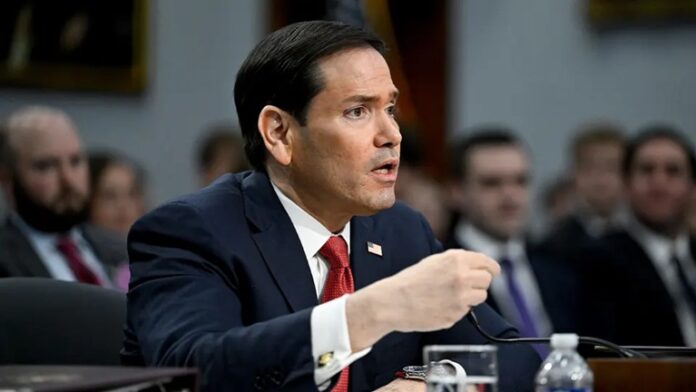 Matzav1 day ago
Secretary of State Marco Rubio is bringing senior officials from more than 60 nations to Washington next week for a high-level conference aimed at strengthening international cooperation against what the Trump administration says is an escalating wave of transnational far-left terrorism.
The gathering, scheduled for July 16 at the State Department, will include ministers and senior representatives from Europe, Latin America, and Asia. According to a planning document obtained by The Washington Post, participants will focus on improving intelligence-sharing and law enforcement coordination to combat what U.S. officials describe as a renewed surge in politically driven violence carried out by far-left extremist organizations.
The planning paper states that the meeting will address “far-left terrorists” who are “increasingly turning to organized, deadly violence to advance their political objectives.”
The initiative has drawn skepticism from a number of current and former American officials, foreign diplomats, and terrorism specialists, many of whom argue that left-wing extremist organizations do not currently present the same level of international danger as other terrorist threats.
Some officials within the administration have also voiced concern that broadening counterterrorism powers in this area could establish legal precedents that might later be used against other political groups.
“The idea is you’re setting a precedent for a future Gavin Newsom administration to turn these authorities on conservatives,” one current administration official told the Post.
The White House rejected that criticism, saying such concerns did “not represent the prevailing feeling” and pointing instead to the administration’s national counterterrorism strategy released in May, which states: “We will not permit the weaponization of America’s unparalleled CT capabilities for partisan purposes.”
The strategy further emphasizes, “Our counterterrorism powers will not be used to target our fellow Americans who simply disagree with us.”
White House counterterrorism adviser Sebastian Gorka has explored whether organizations linked to antifa could qualify for designation as foreign terrorist groups, a move that officials say could broaden investigative tools available to law enforcement under certain circumstances.
President Donald Trump has repeatedly condemned antifa and signed an executive order last year identifying it as a “domestic terrorist organization,” although legal scholars have noted that such a designation does not carry formal legal standing under existing federal law.
Administration officials have also highlighted recent criminal cases involving anti-fascist activists as evidence supporting their concerns.
Last month, multiple defendants were handed lengthy prison terms for their involvement in a violent demonstration outside an Immigration and Customs Enforcement facility in Texas, where a police officer was shot during the unrest.
Federal prosecutors characterized those charged as members of an “antifa cell,” while defense lawyers maintained that the prosecution was politically motivated.
The State Department extended invitations to nearly every European country, along with several nations in Latin America and key Asian partners, including India, Indonesia, and Singapore.
According to The Washington Post, some foreign governments have indicated they are unlikely to dispatch cabinet-level officials, citing scheduling issues or disagreement with the administration’s assessment of the threat posed by far-left extremist movements.
Several terrorism experts also questioned whether the administration’s priorities accurately reflect today’s global security landscape.
“We have to be objective about identifying threats, not politically selective,” said Bruce Hoffman, a senior fellow for counterterrorism at the Council on Foreign Relations.
Colin P. Clarke, executive director of the Soufan Center, offered a similar assessment, saying, “If I were to rack and stack priorities, left-wing terrorists wouldn’t be in my top three.”
 Matzav1 day ago
Less than 24 hours after declaring they would not accept any changes to the proposed Basic Law: Torah Study, the chareidi parties in the Knesset have agreed to a compromise with the Likud that would significantly narrow the legislation by removing one of its central provisions.
Under the emerging agreement, the bill will no longer include a clause stating that recognition of Torah study as a foundational value is intended to create “balances of justice” in relation to other fundamental values of the State of Israel. Instead, the legislation will retain only its opening provision, which establishes Torah study as a foundational value of the Jewish people’s heritage and the State of Israel.
The compromise represents a notable shift from the position taken just a day earlier by Degel HaTorah chairman MK Moshe Gafni. Following a meeting with Prime Minister Benjamin Netanyahu, Gafni had insisted that “what was agreed upon in the meeting is what will pass in the second and third readings. I will not agree to any change in the wording.”
Gafni also rejected a Likud proposal to reduce the legislation to a largely declarative measure, insisting that the bill be passed “exactly as written.”
At the time, officials from the chareidi parties stressed that the purpose of the legislation was to grant Torah study tangible legal and budgetary significance, rather than merely symbolic recognition.
However, mounting pressure from within the Likud, coupled with opposition voiced during Knesset committee discussions, ultimately led the chareidi parties to soften their position.
Knesset Legal Adviser Attorney Sagit Afik warned that the original wording could eventually serve as a legal basis for demands that full-time Torah scholars receive benefits currently reserved for military personnel and combat soldiers, including scholarships and additional financial assistance.
Coalition Chairman MK Ofir Katz made clear that the bill would not have enough support to pass unless it was amended. He also warned that Likud lawmakers were prepared to submit reservations against the legislation if no changes were made.
Faced with the possibility that the entire bill could fail, the chareidi parties agreed to remove the controversial “balances of justice” provision.
At the same time, coalition lawmakers are working on separate legislation addressing disabled veterans, aimed at recognizing the value of military service and the sacrifices made by combat soldiers. The move is intended to separate that issue from the Torah Study Basic Law and clear the way for the revised version of the bill.
The final draft has not yet received the approval of the leading gedolei Torah. Nevertheless, the agreement to delete the disputed clause underscores that despite the firm public statements and ultimatum issued to Netanyahu only a day earlier, the chareidi parties ultimately agreed to the Likud’s primary demand and accepted a substantially more limited version of the legislation.
{Matzav.com}
 Matzav1 day ago
In one of the largest recent philanthropic gifts to Satmar educational institutions, philanthropist Mr. Avraham Yehuda (Yudi) Goldberger has pledged $10 million to secure the naming rights for a major expansion project benefiting the Satmar girls’ schools in Kiryas Yoel.
The donation will fund the naming rights for the construction of new Bais Rochel towers that are planned as part of a significant expansion of the mosdos. The new buildings are intended to accommodate the continued rapid growth of the Satmar community and provide additional space for its expanding network of girls’ educational institutions.
In honor of the landmark contribution, a special l’chaim celebration was held at Mr. Goldberger’s home, attended by the Satmar Rebbe along with prominent rabbonim, community leaders, and supporters of the project.
The expansion is expected to play a key role in meeting the increasing demand for classroom and educational facilities in Kiryas Yoel, where the Satmar community has experienced substantial growth in recent years.
The $10 million gift marks one of the largest individual contributions toward the project and reflects the continued commitment of community philanthropists to strengthening and expanding the Satmar educational system.
{Matzav.com}
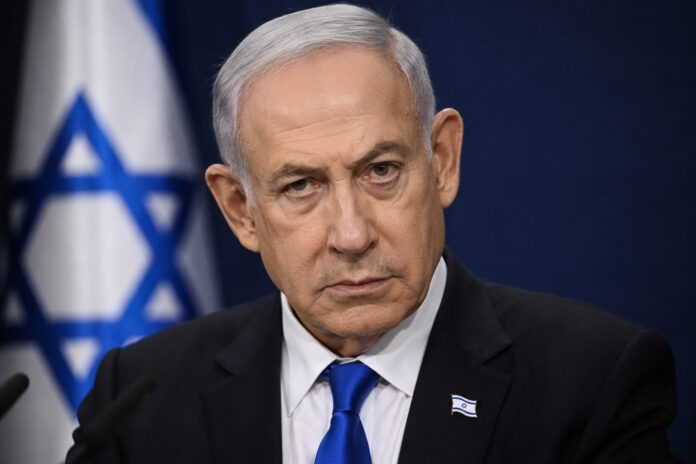 Matzav1 day ago
Israeli Prime Minister Binyamin Netanyahu reaffirmed the strength of the U.S.-Israel alliance in an interview with journalist Sharon Gal, praising President Trump as an unwavering supporter of the Jewish state while addressing regional security threats, relations with Turkey, and the growing confrontation with Iran.
Rejecting suggestions that President Trump has acted inconsistently or contradicted his previous positions, Netanyahu said both leaders are guided by the interests of their respective countries while maintaining an open and honest relationship.
“He looks after America’s interests, and I look after Israel’s interests – and I am not ashamed to speak my mind,” the prime minister said.
Netanyahu explained that during his meetings with Trump, he openly presents Israel’s concerns, including his views on Turkey and the policies of President Recep Tayyip Erdogan. He said the same candid discussions extend to the security situation along Israel’s northern frontier and the continued need to maintain a security buffer in southern Lebanon.
“We must protect the region.”
The prime minister emphasized that his conversations with Trump are marked by complete transparency and mutual respect. While acknowledging that the two leaders do not agree on every issue, Netanyahu said he deeply values the president’s backing of Israel.
“Even if there are disagreements on certain matters, I greatly appreciate his support. I do not think there has ever been a president so supportive of Israel in our history.”
Turning to the escalating tensions involving Iran and the Persian Gulf, Netanyahu cautioned that it remains too early to predict how the situation will ultimately unfold.
At the same time, he said the Trump administration recognizes that Iran is deliberately delaying negotiations rather than pursuing a genuine resolution.
“It shows he has immense frustration over the fact that the Iranians are playing for time – that is what they are doing – and he understands that.”
Concluding the interview, Netanyahu stressed that Israel remains fully prepared for whatever developments may lie ahead.
“We are prepared for any scenario.”
{Matzav.com}
 Matzav1 day ago
President Trump announced a major shift in U.S. support for Ukraine on Wednesday, revealing that Washington will allow Ukraine to manufacture Patriot interceptor missiles under license—a move he said will enable Kyiv to produce one of the world’s most advanced air-defense weapons domestically instead of relying solely on American deliveries.
The announcement came during the NATO summit in Ankara, Turkey, where Trump said the United States would provide Ukraine with the rights and technical know-how needed to build Patriot missiles, which serve as the interceptor component of the Patriot air-defense system. The missiles are among the few weapons capable of shooting down incoming ballistic missiles, which travel into space before descending toward their targets at tremendous speeds.
Trump unveiled the plan while meeting with Ukrainian President Volodymyr Zelensky, describing it as a major step toward dramatically increasing production of the sophisticated weapon by allowing Ukrainian factories to manufacture the interceptors themselves.
For months, Zelensky has repeatedly urged the United States and its allies to provide additional Patriot missiles. It was unclear whether he had been informed of the licensing plan beforehand, but Trump presented the announcement publicly as though it were new information.
Although the Patriot system is among the most technologically advanced defensive weapons in the world, Trump expressed confidence that Ukraine possesses the industrial expertise needed to manufacture the missiles and suggested production could begin relatively quickly.
Explaining why he was comfortable sharing the technology, Trump stressed that the Patriot is a defensive system designed to protect civilians and infrastructure rather than conduct offensive operations.
“We’ll give them the right to make Patriots. We’ll show them how to do it, it’s very complex… That’s pretty cool, right? That’s why he can’t complain we’re not giving him enough, make ’em yourself!”
Trump said Ukraine is one of the few countries capable of building such sophisticated weapons and predicted the production process could move rapidly.
“most countries couldn’t do that… but this is a very ingenious group… [it could be done in] not that much time, actually… I think they can produce them pretty quickly… we’ll work with the company. They have the capability to produce weapons, pretty complex weapons”.
Zelensky welcomed the announcement and praised the Patriot system as the world’s premier defense against ballistic missile attacks.
Calling the Patriot “the best in the world today, the best anti-ballistic system”, Zelensky expressed appreciation for the expanded cooperation.
Later in the day, Trump broadened the discussion during remarks at the NATO conference, outlining plans to significantly expand U.S. defense manufacturing as well. He said new production facilities would dramatically reduce the time required to build Patriot missiles and other advanced weapons.
“I provided other leaders with an update on the steps we are taking to rapidly scale up production in the United States, and they wanted to hear that because they don’t want to get it in four years, five years, they want to get it in a week. And we’ll actually be at a point like that in the not too distant future with the defence plants that are being grown.
“Lockheed, I think, is building five [new plants]… its going to quadruple the output we have with the munitions, whether it’s a Patriot or a Tomahawk missile… Lockheed-Martin will establish a world-class Patriot missile sustainment facility in Europe. They’ve been given a tremendous incentive by Europe to do that.”
Trump also announced that German defense manufacturer Rheinmetall will begin producing the U.S.-designed Army Tactical Missile System (ATACMS) in Europe under license.
It remains unclear whether Ukraine’s proposed manufacturing license would cover only Patriot interceptor missiles or extend to the entire Patriot weapons system, including its sophisticated radar and command-and-control components.
A complete Patriot battery—which includes advanced radar, launchers, control equipment, and interceptor missiles—costs more than $1 billion. Individual replacement interceptor missiles are estimated to cost roughly $5 million each.
Trump’s meeting with Zelensky reflected a noticeably warmer relationship between the two leaders than earlier in the year. The president said their personal rapport has improved considerably.
“We had a great talk the other day, I think, very positive. We have some very good stories to tell. He wants to see a settlement… we’ve actually developed a good relationship. It’s hard to believe, right? From the Oval Office to now, we’ve developed a very good relationship.”
Zelensky suggested their improving relationship was only beginning, prompting Trump to respond optimistically.
“and this is the beginning, maybe. Just the beginning. And you know the country has a lot of future, such great land, such great assets, such great people… we’ve made a lot of progress in the past couple of weeks”.
Discussing prospects for ending the war, Trump repeatedly emphasized the importance of face-to-face negotiations among the leaders of the United States, Ukraine, and Russia. Asked whether he would be willing to travel to Moscow for such talks, Zelensky drew laughter from those in attendance by joking, “It’s difficult, there are a lot of Ukrainian drones there.”
{Matzav.com}
 Matzav1 day ago
[COMMUNICATED]
by Rabbi Eliezer Sandler
The concept of the Yissachar-Zevulun Torah Learning Pact goes back well over 3,500 years, to the time of Yaakov Avinu and his sons. It is named for the Torah pact between two of his sons – Yissachar the scholar and Zevulun the merchant. Not only was it an equal pact but, Chazal explained, the deed of Zevulun/the Sponsor is considered even greater than that of Yissachar, because without the support of Zevulun, Yissachar would not have had the wherewithal to study Torah undisturbed.”
It is well-known that when it comes to learning Torah, people who sponsor the learning, often do so, not just as a donation. By financially supporting specific Torah scholars, they enter into a binding, written, signed and sealed learning partnership pact whereby the Sponsor (the Zevulun) is deemed by Halacha as if he personally studied the Torah completed by the Scholar (the Yissachar). (See below.)
Thus, those who support the Talmidei Chachomim at Shas Yiden via a Yissachar-Zevulun Pact merit a portion in every daf of the entire Talmud Bavli and associated texts that they study, and complete the entire cycle in the space of ONE year. Some of the Sponsors opt to continue sponsoring repeat cycles of Shas which accrue to them.
Sar Hatorah, Maran Hagaon Harav Chaim Kanievsky, zt”l, Nasi Shas Yiden, emphasized: The most mehudar Yissachar-Zevulun pact to support in our times is that offered by Shas Yiden – it comprises the entire Shas, Rashi and Tosfos – all in just one year!
Rav Chaim explained why this pact with Shas Yiden is the most mehudar. Chazal say that the highest level of learning is when one understands what he is learning b’iyun u’ve’amkus. However, even higher than that is when one remembers b’al peh all what he has learned. I have farhered the Shas Yiden avreichim geonim many times and can attest ZEI KENNEN SHAS (they know Shas)!
**
your OWN SIYUM on the ENTIRE
Shas, Rashi & Tosfos
IN JUST ONE YEAR!
**
The Yissachar-Zevulun Pact in Halacha
The Shulchan Aruch in Yoreh De’ah Chapter 246 regarding the efficacy of the Yissachar-Zevulun Sponsorship Pact for the Zevulun (the Sponsor) states clearly: It is deemed as if he (the one sponsoring the learning) himself learned all the Torah studied under the pact.
All the learning under the Shas Yiden Yissachar-Zevulun Pact is yours בעוה”ז ובעוה”ב (in both This World and the World to Come)! Concerning this, the Netziv of Volozhin comments that in Olam Habah, the Zevulun sponsor will sit together with the Gedolei Torah of the past and merit to participate in their discussions and pilpulim on all the Torah learned.
Achieve Almost 7 million Mitzvos in One Year
The Vilna Gaon in Shnos Eliyahu Pe’ah 41 states that one should hold precious every word of Torah that he learns because each word is considered a mitzvah of its own.
Thus, since in Talmud Bavli, Rashi and Tosfos there are 6,608,891 words, that translates into almost 7 million mitzvos accruing through Yissachar-Zevulun at Shas Yiden.
Official Shtar from Shas Yiden
Each Yissachar-Zevulun pact is confirmed by an official contract (shtar) from Shas Yiden specifying the learning of the entire Shas, and is witnessed by talmidei chachomim.
All who wish to enter into a Yissachar-Zevulun Pact for the entire Shas during ONE year should contact Shas Yiden to make arrangements: 718-702-1528.
The opportunity to complete the entire Shas has been a cherished way to honor family members and others as a prized achievement. It has also proven to be a source of comfort for mourners to obtain such a zechus for their dear ones during the year of mourning – a siyum of the entire Shas can be completed on the yahrzeit!
**
Beyond the Grave
**
The legendary visionary and “Father of Yeshivos”, Reb Chaim of Volozhin, was the founder of the famous yeshiva in the town of Volozhin and the beloved talmid of the Vilna Gaon.
Reb Chaim had an ongoing Yissachar-Zevulun pact with a local shoemaker – a man who was not learned but who dearly valued Torah learning. They had a ‘deal’ whereby the shoemaker would pay the monthly financial support needed for Reb Chaim and his family. For this financial support, the shoemaker would have an equal share in all Reb Chaim’s daily Torah study – both in the mitzvah of Torah study בעוה”ז and that the knowledge of the Torah learned would continue to be his בעוה”ב (in the World to Come).
One day the shoemaker passed away suddenly. During the shiva period, Reb Chaim was facing a perplexing halachic question and researched high and low for a solution. That night the shoemaker appeared to him in a dream and gave him the full solution that he sought. Reb Chaim was amazed and commented, “Azoi gich, Azoi Gich – So quickly, so quickly has he acquired the zchus and knowledge of the Torah that I have studied!”
In the words of Gedolei Torah:
Maran Hagaon Harav Chaim Kanievsky, zt”l, Nasi Shas Yiden:
“In just ONE year, through Yissachar-Zevulun at Shas Yiden, you can be zoche to the entire Shas forever – בעוה”ז ובעוה”ב (in olam hazeh and olam habah).
“Moreover, whoever supports Shas Yiden is zocheh to fulfill both Yissachar-Zevulun and support of aniyei (the poor of) Eretz Yisroel in the fullest sense of the word.
“Those who support Shas Yiden will be saved from chevlei (the travails of) Moshiach – spiritually and materially, and will be zoche to have ehrlicher bonim u’vanos yir’eishomayim ”
Maran Hagaon Harav Dov Lando, shlit”a, Rosh Yeshiva, Slabodka:
“Who compares to the Shas Yiden? Incredible talmidei chachomim geonim who raised the bar in limud Hashas b’iyun u’v’amkus. Blessed are those who enter a Yissachar-Zevulun pact with them.”
Hamashpia Hagadol Reb Meilech Biederman, shlit”a:
“Yissachar-Zevulun at Shas Yiden – best possible deal, and in just 1 year! 100% partnership! 100% Shas x 5 times! 100% Shisha Sidrei Mishna – בעוה”ז ובעוה”ב”
Sanzer Rebbe, shlit”a:
“A first in 2000 years of Jewish history! Until Shas Yiden, never a Torah institution where ALL the avreichim metzuyonim v’geonim know the entire Shas by heart”
Harav Yaakov Hillel, shlit”a:
“Therefore, the great mitzvah to support the efforts [of the Talmidei Chachomim] with generous donations in order that they should continue diligently with their studies to enhance the greatness of the Torah and its glory.
 Matzav1 day ago
Montreal police have opened a hate crimes investigation after a series of coordinated attacks targeting Chassidic Jews unfolded Friday night in the Outremont and Mile-End neighborhoods, where Yidden walking home from Shabbos davening were reportedly harassed, assaulted, and subjected to antisemitic abuse.
According to CityNews Montreal, the Service de police de la Ville de Montréal’s (SPVM) specialized hate crimes unit is investigating the incidents after multiple victims were targeted by individuals riding through the area in a vehicle.
The Council of Hasidic Jews of Quebec (CJHQ) said several people returning from shul encountered aggressive harassment from the vehicle’s occupants.
“Victims were yelled at, subjected to antisemitic slurs, spat at, and had objects thrown at them,” the organization said in a statement posted on Facebook.
The CJHQ said several victims had their shtreimels ripped off or knocked from their heads during the attacks. Among those assaulted was an individual who uses a wheelchair.
Security camera footage released by the organization appears to show the suspects pulling their vehicle to the curb before one individual jumps out, sneaks up behind a pedestrian, attempts to yank the man’s shtreimel off while mocking him, and then runs back to the waiting vehicle, which quickly sped away.
The CJHQ condemned the attacks in the strongest terms, stressing, “This was not a prank or a random act of mischief.”
The incidents sparked widespread condemnation from elected officials and Jewish advocacy organizations.
Outremont Mayor Caroline Braun said she has witnessed an alarming rise in antisemitic incidents in recent months.
“For several months now, I have observed a disturbing rise in antisemitism in Montreal and Outremont,” Braun wrote on Facebook. “We have seen the emergence of hateful graffiti, acts of intimidation, violence, and hate speech that have no place in our city. This must stop.”
United Against Hate Canada called on authorities to strengthen the SPVM’s hate crimes unit and urged greater involvement from the city’s Public Security Commission.
“There needs to be rapid arrests for this latest manifestation of hate and the heaviest instruments in the Criminal Code need to be used against those arrested,” said Marvin Rotrand, director general of United Against Hate Canada, as quoted by CityNews.
Rotrand’s organization also urged Montreal Mayor Soraya Martinez Ferrada to establish a dedicated municipal task force to combat the growing wave of antisemitism.
The Centre for Israel and Jewish Affairs (CIJA) likewise denounced the attacks, warning that they reflect a broader national crisis.
The organization described the assaults as “a horrific act of Jew hatred in Montreal… A month after the prime minister’s address, Canada’s antisemitism crisis continues as attacks targeting visibly Jewish Canadians spread across the country. Here’s what happens when antisemitism is normalized: A gratuitous, cowardly, and hateful attack against Hasidic Jews was carried out on Friday evening.”
The latest assaults come amid an ongoing surge in antisemitic incidents across Canada, particularly in Montreal.
Congregation Beth Tikvah, a synagogue in Montreal, has been targeted twice within the past year by firebomb attacks.
In November 2024, a man described as Arab entered a Jewish-owned business in Montreal and threatened to kill its owners while unleashing an expletive-filled tirade against Jews and Israel.
That threat came only days after violent riots erupted during a pro-Palestinian Arab demonstration in Montreal, where participants burned an effigy of Prime Minister Binyamin Netanyahu, hurled firecrackers at police officers, smashed storefront windows, and set several vehicles ablaze.
In July 2024, vandals desecrated a Jewish cemetery in Montreal by arranging stones atop graves in the shape of a swastika.
Last November, the phrases “Kill all Jews” and “Allahu Akbar” were discovered scrawled on a bathroom wall at Concordia University.
More recently, in March, a kosher restaurant and a neighboring business in Montreal were vandalized in another apparent antisemitic incident.
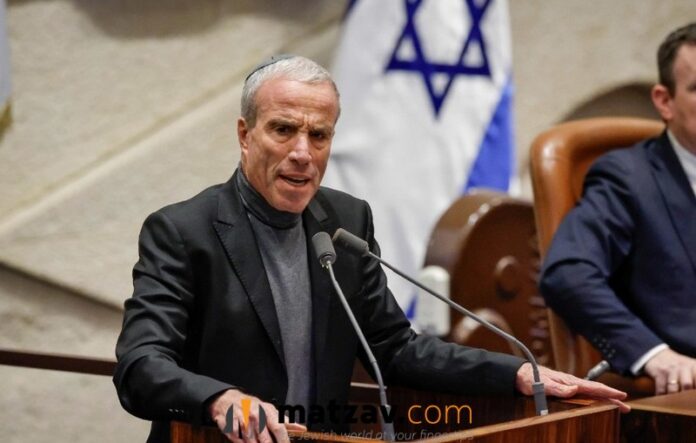 Matzav1 day ago
A heated confrontation erupted during a meeting of the Knesset Foreign Affairs and Defense Committee as lawmakers debated legislation that would freeze the arrests of yeshiva bochurim. The exchange was triggered by remarks from Yesh Atid MK Elazar Stern, who questioned how anyone could avoid resenting the chareidi community while reservists continue serving in the military.
During the discussion, Stern addressed one of those present and said, “How can you not hate the chareidim when you see them celebrating during Bein Hazemanim in the Galilee while everyone else is in reserve duty?”
His comments immediately sparked outrage among the chareidi members of the committee.
Shas MK Yinon Azoulay fired back sharply, declaring, “I don’t know any Jew who hates another Jew. If you hate Jews, then your Jewishness should be examined.”
MK Moshe Solomon also entered the exchange, telling Stern, “It is forbidden to hate a Jew. Elazar, my friend, I believe it is forbidden to hate a Jew, no matter what.”
Later in the discussion, Stern sought to clarify his remarks, saying, “I don’t hate people at all—not just Jews.”
The tense exchange took place against the backdrop of the ongoing national debate over the military draft of yeshiva bochurim and proposed legislation to suspend the arrests of those who have declined to report to military induction centers in accordance with the directives of Gedolei Yisroel.
{Matzav.com}
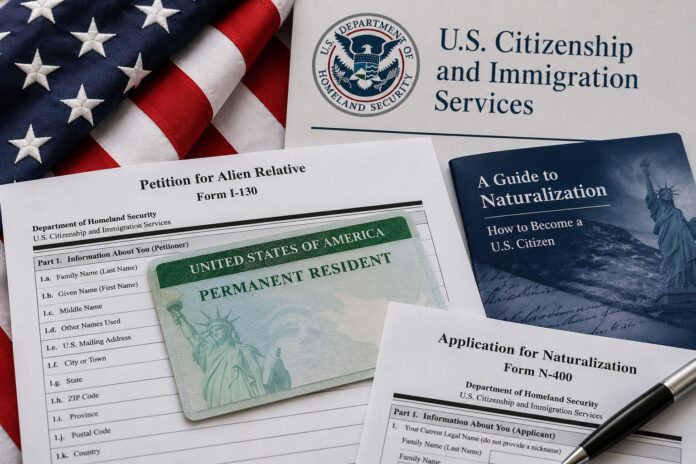 Matzav2 days ago
President Trump announced Wednesday that he intends to ask the U.S. Supreme Court to reconsider its recent ruling rejecting his effort to end birthright citizenship, calling the decision a catastrophic mistake that threatens the nation’s future.
Last month, the Supreme Court ruled 5-4 that children born in the United States to parents who are either in the country illegally or temporarily remain entitled to American citizenship under the 14th Amendment. The decision blocked Trump’s executive order that sought to eliminate automatic citizenship for those children.
Responding to the ruling, Trump declared on Truth Social that he would immediately seek another review by the nation’s highest court.
“I will be asking for a Rehearing by the United States Supreme Court, IMMEDIATELY,” Trump wrote on Truth Social. “This miscarriage of justice will destroy America if they don’t change their absolutely insane decision.”
Requests for Supreme Court rehearings are rarely granted. Under Rule 44 of the Court’s rules, such petitions generally must be submitted within 25 days of the decision and are reserved for extraordinary situations involving major legal or factual matters that may have been overlooked.
Even when a petition is filed, rehearings are almost never approved. In addition, at least one justice who sided with the majority in the original ruling must vote in favor of reopening the case before the Court can rehear it.
The White House has made clear that the administration has no intention of abandoning its effort to end birthright citizenship. Speaking to Newsmax on July 1, Deputy Press Secretary Abigail Jackson said the legal battle is far from over.
According to Jackson, the administration remains determined to challenge what it believes is a longstanding misuse of the nation’s birthright citizenship policy despite the Supreme Court’s decision.
“American citizenship is worth so much more than a cheap plane ticket or a last-minute border crossing,” Jackson said. “The American people can rest assured that President Trump isn’t giving up on this any time soon.”
Jackson also argued that the administration believes the Supreme Court “fundamentally misinterpreted” the original purpose of the 14th Amendment, maintaining that it was never intended to automatically grant citizenship to children born to foreign nationals who entered the United States illegally or on a temporary basis.
In his Truth Social post, Trump also claimed that advertisements promoting birthright citizenship services are appearing along the U.S.-Mexico border and throughout Mexico.
“Signs and Billboards are being put up all over our Southern Border, and Mexico, advertising BIRTHRIGHT CITIZENSHIP, with ‘Deliveries starting at $4000,'” Trump wrote. “Likewise, similar signs going up all over our Country.
“Billions of Dollars will be illegally made by this SCAM, with Citizenship going to anyone willing to pay.
“It will be, by far, the number one way of becoming a citizen, and then the entire family will be allowed to follow. Not sustainable.
“NOBODY SAW THIS COMING!!! AMERICAN CITIZENSHIP IS NOT FOR SALE! In fact, that is a crime, and therefore, the Supreme Court’s ruling is wrong.”
{Matzav.com}
 Matzav2 days ago
Mayor Zohran Mamdani and Governor Kathy Hochul announced a sweeping new initiative on Wednesday aimed at dramatically overhauling New York City’s bus system, pledging major investments to speed up service, modernize infrastructure, and improve the daily commute for millions of riders. The ambitious proposal, dubbed “Next Stop: Fast Buses, Better Service,” represents an unprecedented partnership between City Hall, the Metropolitan Transportation Authority, and the New York City Department of Transportation.
Under the plan, New York City will invest $254 million in operating funds and an additional $628 million in capital funding over the next five fiscal years. Officials say the initiative will target 50 major bus corridors throughout the five boroughs, with the goal of increasing bus speeds by 20%, cutting travel times by as much as six minutes each way, improving reliability, and making buses more accessible and comfortable.
“For working New Yorkers, every minute matters. But for too long, our buses have been stuck in traffic instead of keeping pace with the city that never sleeps,” said Mayor Mamdani. “When a commute stretches longer than it should, that’s less time with your kids, less time with your loved ones and less time enjoying the greatest city on earth. Together with Governor Hochul, we’re investing in faster, more reliable buses because New Yorkers deserve a transit system that respects their time. This plan will make it easier to get to work, school and home — and build a city that works better for the people who keep it running.”
“Every day, millions of New Yorkers rely on buses to get around this city, but for far too long, making their journeys faster and their lives easier has seemed out of reach. That all changes today,” said Governor Hochul. “New York is in the midst of a transit renaissance, with historic investments being made to improve the lifeblood of our city. Now, working with Mayor Mamdani, we are advancing a bold and ambitious plan to move buses faster, dramatically expand bus priority, reduce delays and make our bus system the envy of the world.”
The MTA praised the new partnership, saying years of stalled efforts to improve bus service are finally gaining momentum.
“For years, we at MTA have wanted more bus lanes, more enforcement of cars and trucks blocking bus lanes. Faster buses. Congestion pricing. But it’s no secret we didn’t have support at the local level,” said Janno Lieber, Chair and CEO of the MTA. “That is not the case anymore. Our partners today — this Governor, this Mayor and this NYC DOT — all want to make sure that riding the bus is always faster than walking. They want to follow through on long overdue commitments to build bus lanes and busways. They will ramp up traffic enforcement to keep streets moving. Buses can only move as fast as traffic allows, so if you are a bus or a bus rider this is terrific news.”
Deputy Mayor for Operations Julia Kerson described the initiative as a milestone for transit in New York City.
“Next Stop represents a historic partnership to build the fastest, best bus system in our city’s history,” said Deputy Mayor for Operations Julia Kerson. “The plan is designed to deliver for riders, to give time back to our neighbors and to make our bus system easier, more reliable and more comfortable for everyone. It represents a unique spirit of collaboration in which Albany and City Hall do not hesitate to work together to improve working people’s lives. The City has the streets, the State has the buses, and together, we are committed to delivering fast buses and better service for New Yorkers.”
Transportation Commissioner Mike Flynn said the city is making bus riders a priority after years of neglect.
“Too often, New York City’s bus riders have felt like an afterthought. The Mamdani administration is putting the city’s one million daily bus riders front and center through this historic partnership and investment,” said NYC DOT Commissioner Mike Flynn. “Bus service shouldn’t be treated as a second-rate option at the mercy of traffic congestion. It should be a world-class system for a world-class city: fast, comfortable, reliable and convenient enough that every New Yorkers sees the bus as a great way to get around. Next Stop: Fast Buses, Better Service provides the blueprint for transforming our bus system, and we are deeply appreciative of Governor Hochul and the MTA for their strong partnership.”
Elizabeth Adams, Mayor Mamdani’s Senior Advisor for Fast and Free Buses, said the proposal fulfills a central campaign promise to improve bus service.
“The Mayor came in with a mandate for fast and free buses, and today he’s proudly delivering on fast, with a bold plan that will speed up buses for millions of daily riders,” said Elizabeth Adams, Senior Advisor for Fast and Free Buses for Mayor Mamdani. “Thanks to a historic partnership between the MTA and DOT, we are marking a new chapter for bus riders. These improvements will give people real time back in their day for what’s truly needed. The bus is a lifeline for countless New Yorkers and when someone is made late to work, school or to pick up their kids, it can have devastating impacts. Thank you to the advocates and partners who made this plan possible and helped bring this vision forward.”
New York City’s bus network carries approximately 2.75 million passenger trips each day, making it the busiest bus system in the United States—handling more riders than the combined bus systems of Los Angeles, Chicago, San Francisco, and Philadelphia. Despite that enormous ridership, buses in New York average only about eight miles per hour, making them the slowest among major American cities.
City officials emphasized that improving bus service is a key component of their effort to make New York more affordable and livable for working-class residents. They noted that bus riders are disproportionately women, working-class commuters, and people of color, and are more likely than subway riders or drivers to come from households earning less than $100,000 annually.
The initiative identifies 50 major corridors where improvements will be concentrated, with construction and upgrades beginning this year.
The first five routes selected for the city’s next generation of rapid bus service are Tremont/Cross Bronx in the Bronx, Northern Boulevard in Queens, Flatbush Avenue in Brooklyn, Utica Avenue in Brooklyn, and the Kensington-JFK corridor spanning Brooklyn and Queens. Officials said those routes were chosen because they connect residents to employment centers, schools, subway lines, and neighborhoods experiencing continued housing and economic growth.
Beginning in 2026, the city and the MTA plan to introduce protected bus lanes, more frequent all-day service, upgraded stations with covered waiting areas, and redesigned streets modeled after successful bus rapid transit systems around the world.
To improve reliability, the MTA will strengthen maintenance operations, modernize bus depots, and focus on ensuring scheduled trips are completed. Through its fully funded $68 billion capital program covering 2025 through 2029, the authority plans to purchase roughly 2,500 new buses, replacing about 40% of the existing fleet.
Officials also announced that all-door boarding will begin rolling out in 2027 as the transit system fully transitions to tap-and-go fare payment, allowing passengers to board more quickly and reducing delays at bus stops.
The plan also focuses on improving the overall passenger experience by expanding accessibility upgrades to 65 bus stops annually by 2030, installing 300 new shelters by 2028, adding seating to 875 bus stops each year until every feasible stop has seating by 2035, planting trees at bus stops to provide shade, testing new shelter designs to reduce extreme heat, and installing thousands of real-time arrival displays across the city.
Keeping bus lanes free of illegally parked and moving vehicles is another major component of the proposal. Officials pointed to automated camera enforcement, which they said has already increased bus speeds by as much as 30% while reducing crashes by 20%.
To build on that success, bus-mounted enforcement cameras will expand to 25 additional routes annually during 2026 and 2027. Another 200 fixed bus lane cameras will also be installed by 2027, while the NYPD will expand targeted enforcement from 14 corridors to 20 beginning next year.
Officials also pledged to make riders a central part of the planning process. Community meetings, surveys, partnerships with advocacy organizations, and public education campaigns will accompany each project before construction begins. After projects are completed, the city and MTA will publish performance data measuring travel times, reliability, and rider satisfaction to ensure transparency and accountability.
A broad coalition of elected officials, transit advocates, disability organizations, environmental groups, and rider organizations praised the proposal, calling it one of the most ambitious bus improvement initiatives in New York City’s history. Supporters said the investments have the potential to shorten commutes, improve accessibility, reduce traffic congestion and emissions, strengthen economic opportunity, and finally deliver the faster, more reliable bus service that millions of New Yorkers have sought for years.
 Matzav2 days ago
By Rabbi Pinchos Lipschtuz
There are moments when life feels settled, when the world seems to be moving along familiar tracks and even its difficulties feel manageable because they fit into patterns we recognize. And then there are moments when that sense of order begins to loosen, when events seem to arrive faster than they can be processed, and the future feels less predictable than what came before it.
For the Jewish people, that feeling is not new.
It is the story of our history.
As we proceed through the Three Weeks, reflecting on the destruction of the Bais Hamikdosh and the long journey of golus that followed, we learn Parshiyos Mattos-Masei, which, at first glance, appears to be little more than a detailed record of travel stations in the wilderness. The Torah lists, one after another, the places where Klal Yisroel encamped during their forty-year journey from Mitzrayim toward Eretz Yisroel, seemingly offering a geographical itinerary that records where the nation stopped along the way.
Sifrei Kabbolah and drush explain that the forty-two encampments listed in the parsha correspond to the Sheim Mem-Bais, the Divine Name of forty-two letters, indicating that each stop was part of a deeply structured spiritual process, carefully guided and precisely arranged by Hakadosh Boruch Hu to prepare the Jewish people for their ultimate entry into Eretz Yisroel.
What appears to be a travel log is, in truth, a map of destiny. This explains the teaching of Chazal (Brachos 8b) that we are obligated to read and study the parsha each week shnayim mikra v’echod targum. Chazal add that this obligation extends to “afilu Ataros v’Divon,” the names of the places where the Jews camped in the midbar. Though the names of these places have no apparent significance and no targum, we are nevertheless obligated to recite them, because every stop and every name carries profound meaning.
Our ancestors were not wandering aimlessly in the desert for forty years. They were engaging in a Divinely orchestrated sequence of stages through which Klal Yisroel had to pass in order to become the nation capable of entering the Land promised to Avrohom Avinu. Some of those stages were elevated and uplifting, while others were marked by complaint, failure, or punishment. Yet, all of them together formed the continuous process of national formation.
One of the most profound messages of this week’s parshiyos is that life is not defined by isolated moments, but by movement through stages, each of which contributes – even when not immediately understood – to the unfolding of a larger story that becomes visible only when viewed in its entirety.
A person often imagines his life as a series of disconnected events – some meaningful and some confusing, some successful and others disappointing – as though each stands alone without necessarily being part of a unified structure. The Torah, however, teaches otherwise. Every stage is part of a journey, every experience is part of a direction, and every passage through life is part of an overarching design that is guided by the Ribbono Shel Olam with purpose and intention.
We are not static beings. We are travelers, and travelers, by definition, are always in motion, even when that motion is not immediately visible.
This is why Chazal emphasize that adam l’umal yulad, man was created for work, for effort, for striving, for movement toward something beyond his present state. The goal is not to stagnate, not to become too comfortable in one place for too long, but rather to pursue continual growth, continual refinement, and continual advancement through the various stages of life.
There are times when progress is visible and satisfying, and there are moments when it feels as though nothing is moving at all. There are times when a person feels elevated and inspired, and times when he feels weighed down by uncertainty or failure. Parshas Masei reminds us that the journey does not cease during those moments, even if it is no longer perceptible in the same way, because we are always in transit. Always moving.
This idea takes on deeper meaning when we consider one of the most frequently misunderstood descriptions of Klal Yisroel in the Torah: the phrase am k’shei oref, a stiff-necked people, used by Hakadosh Boruch Hu after the chet ha’Eigel. At first glance, it appears to be a rebuke, a criticism of stubbornness that led the nation to sin. Yet, Moshe Rabbeinu, in his plea for forgiveness, transforms this description into a defense, arguing that the same trait that can lead to rebellion can also be the source of extraordinary resilience and unwavering loyalty when directed toward the service of Hashem.
What appears to be a negative – obstinacy – becomes, in the context of Jewish survival, an essential strength.
It is this stubborn continuity that has carried Klal Yisroel through every stage of golus. History is filled with civilizations that rose and fell, empires that dominated the world only to vanish, and cultures that once seemed unshakable but ultimately disappeared into obscurity. Yet, Klal Yisroel, despite having been exiled repeatedly, persecuted relentlessly, and dispersed across continents, has continued forward without interruption.
The Romans thought that they had ended Jewish history with the destruction of the Bais Hamikdosh.
The Crusaders thought that they had broken the spirit of Klal Yisroel.
The Cossacks thought that they had extinguished Jewish life in Eastern Europe.
The Nazis declared with chilling confidence that they were implementing the “Final Solution.”
Each generation of our enemies believed that it had brought about the end of our story, and each time, boruch Hashem, they were mistaken.
What they perceived as endings were really transitions. They were simply another station in a journey that continued regardless of how final things appeared at the time.
This becomes particularly evident when we study the accounts of the Holocaust through the lens of those who lived through it with a world of emunah. While secular historians often emphasize helplessness and victimhood, the testimonies of frum survivors reveal something far more complex and far more profound. They describe Jews who clung to mitzvos under the most impossible circumstances, who risked their lives for tefillin, and who never gave up their emunah and bitachon, even under the most trying conditions.
They were not passive. They were defiant in their faith.
And when the war ended, their response was not to remain defined by destruction, but to begin again. Survivors rebuilt families, reestablished yeshivos, revived communities, and laid the foundations for the Torah world that exists today. They did so not because they had recovered from trauma in any conventional sense, but because they understood that Klal Yisroel does not remain in any one place indefinitely.
We move forward.
This pattern can be traced throughout Jewish history.
Take Telz, for example. To describe Telz merely as a town is to miss its significance. It was one of the great centers of Torah in Lithuania, home to a yeshiva that shaped generations of Torah leadership. Sunday was the 20th of Tammuz. On that date, in 5701 (1941), the Jews of Telz were murdered in the Rainiai Forest, and it appeared, at that moment, that an entire world of Torah had been extinguished.
The Nazis were driven not only to destroy lives, but to eradicate an entire spiritual civilization.
But they did not understand the nature of Klal Yisroel. Telz was not extinguished. It was relocated.
Its Torah was carried forward and rebuilt in new places by its leaders, who understood that destruction is never the final word.
Today, the sound of Torah in Yeshivas Telz is loud and strong. On Sunday, Selichos were recited and special shiurim were delivered l’illui nishmos the kedoshei Telz. Their memory lives on. Their sanctified lives are not forgotten.
Similarly, on Tisha B’Av, we mourn the loss of the residents of the ancient city of Beitar. The Rambam describes a city filled with tens of thousands of Jews, led by Bar Kochva, who was believed to be the potential Moshiach, a moment in history when Klal Yisroel stood at the threshold of geulah. And yet, that moment collapsed into catastrophe.
As the Rambam (Hilchos Taanis 5) writes: “A great city by the name of Beitar was captured. Inside it were many tens of thousands of Jewish people. They had a great king whom all of Yisroel and the rabbis believed was the king Moshiach. He fell into the hands of the gentiles and they were all killed. It was a great tragedy, as great as the destruction of the Bais Hamikdosh.”
Rav Moshe Shapiro explains that the depth of Tisha B’Av lies not only in what was lost, but in what could have been – in the recognition that Klal Yisroel has stood at the edge of redemption more than once, only to find that the moment slipped away.
And that realization becomes part of the mourning, for we mourn not only the destruction, but also the missed opportunities.
And so, the question naturally arises: How many times in history have we been closer than we realized? How many moments could have unfolded differently? And how often do we fail to recognize the significance of the place we are currently in while we are still standing within it?
These days, we are experiencing many moments that feel historically charged. It is easy to become overwhelmed by the pace of change, to gasp in awe as we perceive Hashem arranging the world for the period of the ultimate geulah.
The Satmar Rebbe would say that after the devastation of the Holocaust, Klal Yisroel stood at the precipice of the geulah. Hashem granted us a glimpse of what redemption would look like – a partial restoration of Jewish life in Eretz Yisroel that was not yet complete, not yet governed by Torah, and not yet accompanied by the rebuilding of the Bais Hamikdosh. It was, in that sense, a station along the way, but not the destination itself.
The Bais Hamikdosh was not returned. Halacha did not rule. It was merely a taste of what was to come.
However, the rebbe would say that because the Jewish people were satisfied with that small taste, Hashem determined that we were not yet deserving of the redemption, and therefore we were left with only a semblance of what could be.
And once again, we were left with yet another stop along the road, another station on the way to geulah.
And that is where we still are today. Moving. Waiting. Building. Continuing along the journey with clarity and faith.
This is the message of Ataros v’Divon, the reason we study every one of the stops in the midbar on the way to Eretz Yisroel. That is the message of Parshas Masei. Until the geulah, no place is the final stop. It is merely a station, and we are not meant to mistake the station for the destination.
We are not meant to settle where we are. We are meant to move. To climb. To grow. To improve. Not to become stationary, apathetic, or content.
People can cycle for miles on a stationary bike, sweating, raising their heart rate, feeling the strain in their legs as though they are accomplishing something significant, and yet they remain in exactly the same place where they began. There is motion, there is effort, there is even exhaustion, but there is no forward movement.
It is possible for a person to be very busy, very active, even very tired from all he is doing, and still remain essentially unchanged. He may feel that he is progressing because he is exerting effort, but if all that effort doesn’t translate into forward movement, then he is still standing in the same place where he started.
This is one of the subtle dangers of spiritual life as well. A person can become accustomed to his routines, his habits, and the way he goes about life, and, without realizing it, begin to mistake activity for advancement. If he becomes too comfortable with where he is, then his entire life can resemble a stationary bike: a great deal of motion without actually going anywhere.
The Torah carefully records each masa, each journey, each departure, and each arrival, emphasizing that the defining feature of those forty years was movement. Not permanence. Not settling. Not remaining in one place for too long, but constant transition from one stage to the next, in a precisely structured process of growth under the direct guidance of Hakadosh Boruch Hu, moving forward until Klal Yisroel reached Eretz Yisroel.
That is the fundamental difference between a journey and a routine.
A routine repeats itself. A journey goes somewhere.
And that is why the Torah does not refer to them merely as encampments, but as masa’os – journeys, departures, movement.
The Torah is telling us that life must always be measured not only by intensity, but by direction. Are we moving forward or are we circling in the same place? A person is not meant to define success by being busy or engaged, but by moving toward a higher destination. It is what yeshivos refer to as shteiging. We must always strive to shteig – not just to learn, not just to go through the motions, but to become better and to grow.
When a person understands that every stage of life is meant to move him forward, then even effort, struggle, and challenge become part of a forward-moving journey rather than an illusion of progress.
Even when we slow down in the summer and take a break for bein hazmanim, we don’t stop. We don’t lose sight of our goals and don’t take a vacation from Torah.
The parshiyos of Mattos-Masei teach us that we are not meant to become spiritually stationary, even if we are spiritually active. We are meant to be in motion, progressing from one masa to the next, never confusing where we are with where we are meant to go.
Because the difference between pedaling and a journey, between merely learning and shteiging, is not how much energy is expended, but whether you are actually going somewhere.
Klal Yisroel, from the midbar until today, has never been a people standing still. We have always been a people moving forward toward the fulfillment of the Divine promise that one day all of these journeys will be seen not as wandering, but as a single path leading home.
May we merit coming home with the geulah sheleimah bekarov.
{Matzav.com}
 Matzav2 days ago
A New York City Housing Authority plumbing supervisor who earned one of the largest paychecks in city government is now under investigation after claiming nearly 2,600 hours of overtime while simultaneously being connected to two private plumbing companies, the NY Post reports.
Jakub Markowski, 41, has come under official scrutiny more than a year after he was identified as the city’s biggest overtime earner. During the 2025 fiscal year, he collected an eye-popping $332,000 in overtime alone, helping boost his total city compensation to approximately $465,000.
City officials confirmed that the Department of Buildings launched an investigation into Markowski after receiving a complaint regarding his “business practices.”
Markowski, who resides in a luxury apartment building near the Rockaway Beach boardwalk, did not respond to requests for comment. His wife, Elizabeth Markwowska, 63, said there was a simple reason for his absence.
“He works seven days a week,” she told The NY Post from their home Wednesday.
State records indicate that while employed by NYCHA, Markowski was also associated with two private companies, Super Plumbers Corp. NYC and Dynamic Blue Water Mechanical.
As part of the Department of Buildings’ inquiry, inspectors reviewed plumbing jobs for which Markowski was listed as the permit holder to ensure the work met safety requirements.
According to city officials, the inspection found no violations.
Payroll records compiled by the Empire Center show Markowski ranked as the fifth-highest-paid employee in all of New York City government.
His regular salary for fiscal year 2025 totaled about $118,000 before overtime. The remaining hundreds of thousands of dollars came from an extraordinary 2,558 hours of additional work.
According to The New York Times, reaching that total would have required Markowski to average roughly seven hours of overtime every single day of the year.
When questions first arose about the enormous payout, NYCHA defended the overtime, saying it resulted from “extensive plumbing and heating demands that are mandated and monitored by law.”
The unusually large overtime payments, coupled with Markowski’s ties to two private plumbing businesses, eventually prompted the Plumbing Foundation of New York, a nonprofit trade organization, to file a formal complaint, according to The New York Times.
“Enabling one individual to run a private plumbing business while serving as a city plumbing supervisor and accruing more overtime than any other city employee is beyond wasteful, and it raises serious concerns about the integrity, safety and oversight of NYCHA’s building operations,” April McIver, the group’s executive director, told the Times.
The city’s Department of Investigation has also opened a probe involving Markowski but has not disclosed whether it is examining his overtime claims, his private business activities, or both.
“This is an ongoing matter at DOI and we decline further comment,” a spokesperson said.
A resident of the Maspeth building where both plumbing companies are registered said she knew little about the businesses. A sign displayed in the window for Super Plumbers Corp. identifies Markowski by name.
Markowski’s wife said her husband had placed someone else in charge of operating the two companies.
She also said she had no idea he was New York City’s highest-paid plumber and did not know what he did with his earnings.
“He comes home late. He works overtime. He works very hard,” she said.
“He treats me like a woman. Very nice guy.”


 MatzavMatzav2 days ago
Demonstrators protesting construction of the Yerushalayim light rail once again disrupted service Wednesday night, blocking the tracks along Bar-Lev Boulevard before continuing their protest near Rechov Bar-Ilan. The demonstration temporarily halted rail operations and added to mounting delays and financial losses tied to the ongoing campaign against the project.
Protesters gathered along the route of the light rail on Bar-Lev Boulevard, preventing trains from passing and disrupting service for commuters.
Officers from the Yerushalayim District Police, along with Border Police personnel, responded to the scene. A police commander declared the gathering an unlawful disturbance and instructed demonstrators to clear the tracks. When they refused, security forces moved in to disperse the crowd, eventually reopening the route.
At the same time, a separate protest continued near Bar-Ilan, where demonstrators gathered along another section of the light rail construction zone. Police remained at the scene as the protest continued.
As a result of the demonstration, the Yerushalayim Light Rail announced that train service between the Yekutiel Adam Station and the Central Bus Station had been suspended. Approximately 30 minutes later, limited service resumed, operating only between Hadassah Ein Kerem and Givat HaMivtar Station in both directions.
Wednesday night’s protest was the latest in a series of recurring demonstrations targeting the light rail construction near Bar-Ilan Street. The area has repeatedly seen road blockages, confrontations with police, and damage to infrastructure and construction equipment.
The economic impact of the sustained protests has become increasingly significant. According to published estimates, vandalism, construction delays, and repeated disruptions have caused approximately 400 million shekels in losses to the Green Line project.
Those delays have also forced officials to revise the project’s timetable. Sections of the line where construction proceeded without disruption are expected to open later this year, while the Bar-Ilan Street segment has reportedly been pushed back by at least a year, with completion now projected for the end of 2027.
Despite the mounting financial losses and repeated delays, the nightly demonstrations have continued, and Wednesday’s protest once again succeeded in disrupting light rail service in Yerushalayim.
{Matzav.com}
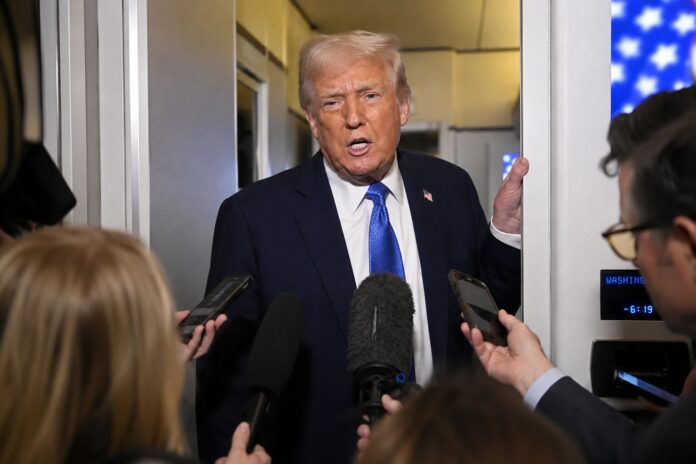 Matzav2 days ago
President Trump said Wednesday night that Iran has reached out to the United States seeking a deal, but questioned whether Tehran could be trusted to honor any agreement as American forces continued a second straight night of military strikes against Iranian targets.
Speaking to reporters aboard Air Force One while returning to Washington from Turkey, Trump said Iranian officials had recently contacted him in hopes of restarting negotiations.
“Iran called a while ago. They want to make a deal so badly,” said the President, who added, “I just don’t know if they are worthy. I don’t know if they are going to honor the deal. That’s the problem.”
Trump on Iran:
Iran called a while ago. They want to make a deal so badly.
I just don't know if they are worthy. I don't know if they are going to honor the deal. That's the problem. pic.twitter.com/yE63e3lfVP
— Clash Report (@clashreport) July 8, 2026
Trump’s remarks came after the U.S. military carried out another wave of attacks inside Iran, marking the second consecutive night of American strikes.
Discussing the latest operation, Trump vowed that the United States would continue responding forcefully to any Iranian aggression.
“We just hit them very hard. We hit them 20 to 1. Every time they hit us, we are going to hit them 20.”
When asked whether he had received intelligence about specific threats from Iran, Trump acknowledged that he remains a primary target.
“I hear threats all the time. I am number one on their list.”
Earlier Wednesday, U.S. Central Command (CENTCOM) confirmed that American forces had begun launching additional military operations against Iranian targets.
The announcement followed reports of explosions in several locations across Iran, including Bandar Abbas, Chabahar, and Kharg Island.
“At the direction of the Commander in Chief, US Central Command forces have started conducting additional strikes against Iran to further degrade their ability to threaten freedom of navigation in the Strait of Hormuz,” said CENTCOM.
“The United States is holding Iran accountable for recent unjustified aggression against commercial shipping and civilian crews freely navigating a vital international waterway,” it added.
Trump also addressed the military action in a post on Truth Social, framing the strikes as retaliation for Iran’s attacks on commercial shipping.
“This is in retribution for yesterday’s bombing of ships by Iran. If it happens again, it will get much worse!” he wrote.
At the same time, a U.S. official told CNN that the ceasefire between the United States and Iran “has at least temporarily ceased”.
The official said the situation remains highly fluid and warned that additional military action could follow beyond the strikes already announced. According to the official, U.S. forces are closely monitoring developments, while the latest attacks were directed at Iranian missiles and drones that could threaten American military assets, including aircraft carriers.
The newest round of strikes followed a large-scale operation the previous night, when CENTCOM said it attacked more than 80 targets across Iran using precision-guided munitions in what it described as “as an immediate response to Iran’s latest attacks on commercial vessels transiting the Strait of Hormuz.”
{Matzav.com}
 Matzav2 days ago
President Trump received a blunt threat from Iran on Wednesday after declaring that the U.S.-Iran ceasefire appeared to have collapsed and signaling that additional American military action—including possible strikes involving Iran’s vital Kharg Island oil terminal—could be on the table.
The warning came from Ebrahim Rezaei, spokesman for the Iranian Parliament’s National Security and Foreign Policy Committee, after Trump discussed the possibility of further military operations against the strategically important island during remarks at the NATO summit in Turkey.
Speaking to reporters, Trump revealed that American forces had already carried out an attack involving part of Kharg Island and suggested that additional action could follow.
“We attacked Kharg Island last night, knocked out a piece,” Trump said.
“I said, ‘Don’t touch the oil, because maybe we’ll take over Kharg Island.'”
“I said, ‘Don’t hit the pipes, just hit everything else.'”
“And they hit it.”
“They may hit it again tonight.”
Trump also indicated that the ceasefire between Washington and Tehran was effectively finished following the latest exchange of military strikes.
Rezaei responded with a direct warning in a post on X.
“Come — we are waiting for you — and we promise that not a single American soldier will return alive,” Rezaei wrote, according to an English translation provided by X.
Situated in the Persian Gulf off Iran’s southern coastline, Kharg Island serves as the country’s primary oil export terminal and is widely viewed as one of Tehran’s most strategically valuable assets.
Roughly 90% of Iran’s crude oil exports typically pass through the island, making it a crucial source of government revenue and a prime target for any effort aimed at disrupting Iran’s ability to finance its activities.
Its proximity to the Strait of Hormuz further elevates its importance, as the narrow waterway is one of the world’s most critical maritime chokepoints for global energy shipments.
Earlier in the conflict, reports indicated that the Trump administration evaluated several military options involving Kharg Island, including possible operations to seize the island or strike facilities connected to Iran’s oil export infrastructure.
According to those reports, U.S. officials also examined potential military operations targeting other islands near the Strait of Hormuz as part of broader efforts to reduce Iran’s ability to threaten international shipping.
Kharg Island was also hit during fighting in April.
At that time, the Trump administration emphasized that the strikes were not directed at Iran’s oil production or export facilities.
{Matzav.com}
 Matzav2 days ago
President Trump unexpectedly abandoned plans to depart Turkey aboard the new $400 million Air Force One on Wednesday, opting instead for the older presidential aircraft as tensions with Iran intensified. The sudden decision immediately fueled widespread speculation that security concerns — including the possibility of an Iranian attack — played a role, particularly after Trump repeatedly discussed Tehran’s alleged desire to assassinate him.
Rather than returning from the NATO summit aboard the lavish new aircraft that he had enthusiastically debuted last week, Trump boarded the previous version of Air Force One. The switch came just days after he had begun showcasing the new jet, which he has repeatedly praised as a major upgrade to the presidential fleet.
Although Trump publicly insisted the new aircraft was heading to England so American service members could tour it, many questioned that explanation after he spent much of the day highlighting threats from Iran against his life.
Asked directly during a press conference whether security concerns influenced the decision, Trump stopped short of dismissing the suggestion.
“I’m number one on the kill list for Iran. They’re lovely people,” Trump told a NY Post reporter who asked if security concerns motivated the switch.
Earlier Wednesday, Trump also warned of the danger posed by Tehran, saying, “They want to take out the US leader, me … And so far, I guess I’ve been a little bit lucky. But that maybe doesn’t last very long.”
When questioned by a New York Times reporter about why he wasn’t using the new aircraft, Trump responded: “It’s flying to Europe, to one of the big bases, two or three of the big bases, where we can show it to the people, and we’ll be going home by normal methods.”
The president had eagerly displayed the aircraft during its first official outings, including two domestic trips last week, and upon arriving in Ankara on Tuesday, he again praised the jet’s luxurious features.
The older Air Force One is widely believed to be equipped with advanced missile-defense systems, one reason officials have long restricted close-up photographs of the aircraft’s rear section. Whether the newly acquired presidential jet has been fitted with comparable defensive capabilities has not been publicly confirmed.
The aircraft change came as Trump dramatically escalated military pressure on Iran. Overnight, he ordered a new wave of American airstrikes, declared the recently brokered peace arrangement effectively finished, and warned that additional strikes could follow later Wednesday. He also floated the possibility of targeting Iran’s Kharg Island oil terminal and restoring a naval blockade.
In his initial social media announcement, Trump framed the decision as a tribute to American troops.
“We are sending the brand new, and truly spectacular, Air Force One to Mildenhall Air Force Base, in the United Kingdom, to give them a chance to tour the Aircraft — Everybody is so excited, and we thought that they should be the first,” Trump wrote.
He added, “For old time’s sake, we’ll be taking the former Air Force One, from Turkey to Mildenhall, a short trip that is totally worth doing in order to give our Great Military Heroes a chance to appreciate our beautiful new addition to the Air Force Fleet!”
Military analysts suggested the official explanation may not tell the whole story. Retired Army Gen. Robert Abrams told ABC News that security at Ankara’s airport “was probably a concern” and that “it had to be significant enough, I think, in this case for President Trump to agree not to fly out on it.”
Marc Polymeropoulos, a retired CIA official, also questioned whether the aircraft was fully prepared for overseas presidential missions, writing on X that he believed the plane was “not equipped with [an] appropriate comms/force pro[tection]/security package” for international duty and that “Secret Service and US [Air Force] pleas must have won out.”
 Matzav2 days ago
A construction worker was killed Wednesday after falling through an opening in the roof of a Sanzer yeshiva building in Netanya that is undergoing extensive renovations.
The victim, believed to be about 40 years old, was performing maintenance work on the roof of the mesivta building on Rechov Harav Saadia Gaon when, for reasons that remain under investigation, he apparently lost his footing and plunged through an opening intended for the building’s air-conditioning system.
The worker fell from a significant height into the floor below, suffering catastrophic injuries and immediately losing consciousness. Witnesses at the yeshiva campus quickly called emergency responders.
United Hatzalah medics Avrumi Yaakov, Elimelech Philip, and Ephraim Friedman, who were among the first to arrive, found the man unconscious and without a pulse or breathing. They immediately began advanced resuscitation efforts, including chest compressions and assisted ventilation.
Magen David Adom paramedic Omer Faker and EMT Yonatan Yankelevitz described the scene.
“We found the worker lying on the ground inside the construction site, unconscious, without a pulse and not breathing after falling from a significant height,” they said. “We provided advanced medical treatment, including prolonged resuscitation efforts, and transported him to the hospital in critical condition, where he was pronounced dead.”
The victim was evacuated by intensive care ambulance to Laniado Hospital while CPR continued throughout the transport. Despite prolonged efforts by medical teams both at the scene and at the hospital, doctors were unable to save his life.
Authorities are investigating the circumstances surrounding the fatal accident.
The Sanzer yeshiva building has been undergoing renovations for an extended period, with students temporarily relocated to an alternate facility while construction is completed.
Earlier this week, noted mekubal Rav Yaakov Ades visited the yeshiva to offer words of encouragement after traveling to Netanya to pay a shivah call to the family of the late mekubal Rav Amos Guetta.
{Matzav.com}
 Matzav2 days ago
Maine Democratic Senate candidate Graham Platner abruptly suspended his campaign Wednesday after a woman accused him of attacking her several years ago, bringing a dramatic end to a closely watched Senate bid that had already been overshadowed by a series of personal controversies.
Platner announced his withdrawal in an 11-minute video posted to social media. While emphatically rejecting the allegation and insisting it was fabricated, he said mounting pressure from Democratic leaders at both the state and national levels had left his campaign with no realistic path forward. He accused the political establishment of orchestrating his downfall.
“This is incredibly difficult, because I know that some will think it’s an admission of guilt, and it most certainly is not,” he said. “We’re not doing it because of the allegations, we’re doing it because of the structures that are being taken away from us by those in power.”
Platner said he intends to formally remove himself from the race by filing the required paperwork before the state’s Monday afternoon deadline.
His exit throws the high-profile Senate contest into turmoil as Democrats attempt to defeat Republican Sen. Susan Collins in a race viewed as critical to the battle for Senate control. Under Maine law, Democrats now have until July 27 to choose a replacement nominee.
Earlier Wednesday, the Maine Democratic Party announced plans to hold a nominating convention to select a new candidate, saying additional details would be released shortly. Party officials also made clear that Platner would play no role in the selection process, as several prominent Democrats have already expressed interest in the nomination.
In his video, Platner urged party leaders to conduct what he described as an “open, transparent and democratic” selection process rather than allowing “party apparatchiks” to handpick his successor.
“My name might be on the ballot right now, but that ballot line belongs to the people of Maine,” he said in his video Wednesday.
Announcing his decision to suspend his campaign, Platner argued that he was denied a fair opportunity to respond before political leaders and the media rushed to judgment.
In his video announcing the end of his campaign, Platner said he learned about the allegations through press inquiries “with no time to truly respond, no time for investigations before a corporate media system and the political establishment got to act as judge, jury and executioner.”
“Accusations are supposed to be the beginning of things, not the end,” he said.
“This was the last week to try to get me off of the ballot, and that’s why this is occurring,” he added.
The allegations quickly prompted top Democratic officials to call for Platner’s withdrawal, including Senate Minority Leader Chuck Schumer, Sen. Kirsten Gillibrand, and the Maine Democratic Party. The Democratic Senatorial Campaign Committee also announced it would withhold campaign support if Platner remained the nominee, while Senate Majority PAC redirected its resources elsewhere, severely damaging his chances of continuing the race.
Several of Platner’s most prominent supporters also distanced themselves, with Rep. Ro Khanna and Sen. Ruben Gallego withdrawing their endorsements shortly after the allegations became public.
Independent Sen. Bernie Sanders, who had been one of Platner’s most influential backers, revealed Tuesday that he personally advised the candidate to leave the race.
Late Tuesday, as the deadline to remove Platner’s name from the ballot approached, the Maine Democratic Party accused his campaign of attempting to “put their thumb on the scale” by influencing the process for selecting a replacement nominee. Platner’s campaign denied trying to control the outcome, saying only that he wanted the decision left to “voters and volunteers.” Some former allies argued the party should replace him with another progressive Democrat.
Republicans quickly seized on the controversy, suggesting the allegations would have lasting political consequences even after Platner’s withdrawal.
In a statement shortly after Platner’s withdrawal, Republican National Committee Chair Joe Gruters said: “Democrats rolled in the mud with Platner, and now they are completely stained by their association with this sick monster.”
Platner, a 41-year-old military veteran and oyster farmer from coastal Maine, emerged as an unexpected Democratic contender last year, earning endorsements from progressive leaders including Bernie Sanders. After Gov. Janet Mills opted not to run, Platner easily captured the Democratic nomination without facing significant opposition.
His campaign, however, was repeatedly hampered by revelations about his personal history. Reports last year uncovered controversial Reddit posts he had written years earlier, and Platner acknowledged receiving a tattoo during his Marine service that is widely recognized as a Nazi symbol. He later apologized for the online posts and said the tattoo had since been covered.
Additional controversies followed after Mills exited the race.
Responding to those earlier reports, Platner acknowledged struggling through a difficult chapter in his life.
Platner has said some of the allegations against him stemmed from a “very dark period of my life where I struggled with undiagnosed PTSD, too often self medicated with alcohol…”
Following those earlier revelations, several supporters—including his former political director—publicly suggested he should end his campaign, fearing the mounting controversies would jeopardize Democrats’ effort to defeat Collins, who has represented Maine in the Senate since 1997 despite the state’s increasingly Democratic electorate.
Just last month, however, Platner insisted he had no intention of leaving the race.
Platner told MS NOW last month that “not once” had he considered dropping out of the race.
“Amy and I knew early on that we were going to take lumps, and we just, we’re dedicated to this,” Platner said. “It has never crossed our mind to drop out of this thing. I am fully committed to this until the end.”
{Matzav.com}
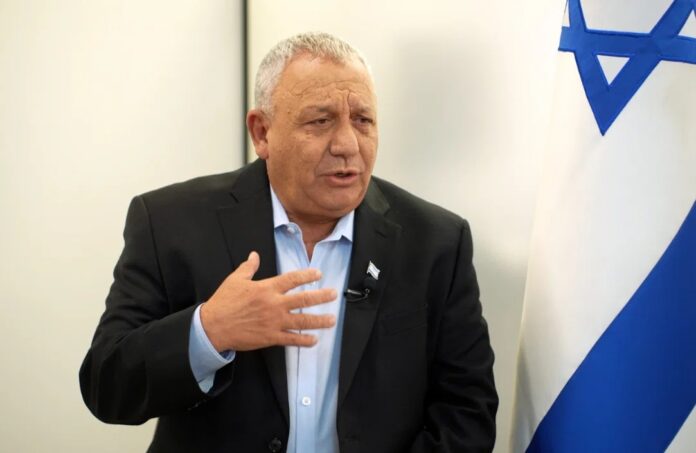 Matzav2 days ago
Former IDF Chief of Staff and Yashar Party chairman Gadi Eisenkot says he supports exempting a small percentage of outstanding Torah scholars from military service, opposes proposals to revoke voting rights from chareidim, and would consider bringing Shas into a future coalition if it accepts his core governing principles.
In an extensive interview with Kikar HaShabbat’s Yishai Cohen, Eisenkot discussed the draft law, relations with the chareidi community, Israel’s security challenges, coalition politics, and his campaign to become Israel’s next prime minister.
Addressing the increasingly contentious debate over military service for yeshiva students, Eisenkot rejected calls for eliminating all exemptions.
“I am a Ben-Gurionist,” he said. “Unlike some of my colleagues, I will not say ‘zero exemptions.’ During the War of Independence, Ben-Gurion insisted that 400 yeshiva students continue learning despite the existential war.”
He said he supports granting exemptions to approximately 3% of each draft-age class made up of outstanding Torah scholars.
“I have great respect for the Torah world,” Eisenkot said. “Saying there should be ‘zero learners’ is a populist and unserious statement.”
He also criticized proposals to deny voting rights to chareidim who do not serve.
“Anyone who says chareidim should lose their right to vote is undermining the basic values of democracy.”
At the same time, Eisenkot argued that Israel can no longer tolerate widespread exemptions for those who are not engaged in full-time Torah study.
“There are tens of thousands of chareidim who are not learning in yeshivos. They should have enlisted immediately. The IDF desperately needs soldiers.”
Eisenkot pledged that, if elected, his government would ensure that chareidi soldiers can serve without sacrificing their religious lifestyle.
“The responsibility belongs to the IDF,” he said. “A chareidi should enlist as a chareidi and be discharged as a chareidi.”
He pointed to the establishment of dedicated military facilities during his tenure as IDF chief of staff and voiced support for expanding frameworks such as the Hashmonaim Brigade.
“I fully support separate bases, separate units, and missions designed specifically for chareidim. Those who prefer integrated service can choose that, but it should be a personal decision.”
Asked whether he still supports the principle that those genuinely learning Torah should continue studying while those who are not should serve, Eisenkot replied, “Absolutely. We need to define who qualifies as a full-time learner and how many there should be. Those who are not learning should enlist.”
When reminded that he previously told Kikar HaShabbat that chareidim could not be drafted through force alone, Eisenkot reiterated that dialogue remains important but emphasized that Israel already has a mandatory service law.
“The basic rule is that there is a compulsory military service law for Israel’s young people,” he said. “Given the existential threats facing the country, everyone must contribute.”
He again stressed that the military must provide all necessary accommodations for religious observance.
Although often viewed as part of the political opposition to the chareidi parties, Eisenkot declined to rule out Shas as a coalition partner.
“Shas has broad Zionist components,” he said. “Many of its voters serve in the army. I see Shas as a potential partner—provided it accepts my three core principles.”
He noted that his own mother voted for Shas for 30 years.
“I’m the son of a mother who voted Shas for three decades,” he said with a smile. “I’ve finally convinced her to vote for Yashar.”
Asked about his relationship with Shas chairman Aryeh Deri, Eisenkot described him as someone who has often made meaningful contributions on security matters.
“I saw Aryeh Deri contribute significantly in many security cabinets,” he said.
However, he criticized Deri’s opposition to a stronger military response following Iran’s first direct missile attack on Israel.
“I believed we should have responded much more forcefully. Unfortunately, his position prevailed, and the response was far too weak.”
Eisenkot also said Deri should have taken a stronger stand in favor of hostage deals instead of allowing Ministers Bezalel Smotrich and Itamar Ben Gvir to dominate the debate.
Despite those disagreements, he said Deri could serve in a future war cabinet under his leadership.
“Absolutely—provided he accepts the three basic principles.”
Eisenkot sharply criticized the justice minister after recent comments urging noncompliance with a High Court ruling.
“This is unprecedented,” he said. “It’s like a defense minister telling soldiers not to obey the chief of staff.”
He argued that Prime Minister Binyomin Netanyahu should have dismissed the minister immediately.
“A serious prime minister would have fired him this afternoon.”
Although critical of the current judicial controversy, Eisenkot said he supports meaningful reforms to Israel’s legal system.
“The fact that only 42% of Israelis trust the judiciary requires deep examination and reform.”
Turning to regional security, Eisenkot argued that despite significant military successes against Iran, Israel has not yet achieved its strategic objectives.
“The enriched uranium is still in Iran. The missile program has been rebuilt. Hezbollah has recovered. Those are facts.”
He warned that Israel and the United States must continue working together to ensure Iran never acquires nuclear weapons and to sever Tehran’s ties with Hezbollah.
Asked whether Israel has won the war that began with Hamas’ October 7 attack three years ago, Eisenkot answered bluntly.
“No. Victory is measured by achieving the objectives of the war and improving Israel’s strategic position. We achieved important accomplishments, but we did not complete the political dimension in Gaza, Lebanon, or Iran.”
Responding to Likud campaign videos portraying him as weak on national security, Eisenkot dismissed the attacks as misleading.
Regarding claims that he opposed eliminating Iran’s supreme leader, he said critics had deliberately omitted the rest of his remarks.
“I said clearly that eliminating Khamenei would have been entirely justified, and I would have approved eliminating him and the entire Iranian military leadership.”
He also rejected claims that he sought to reduce the size of the IDF or opposed the Rafah operation, calling both allegations false.
Eisenkot expressed confidence that his party can emerge as the largest faction in the next election and assemble a governing majority.
If his bloc falls short of 61 seats, he said he would first seek partners from Zionist parties rather than relying on Arab parties.
When asked whether he would choose Arab parties or chareidi parties if forced to decide, Eisenkot said any party willing to accept his three foundational principles would be welcome.
Those principles, he said, are recognition of Israel as a Jewish state with a solid Jewish majority, acceptance of the Declaration of Independence, and support for national or military service.
Eisenkot concluded the interview by expressing concern over the integrity of Israel’s upcoming elections, saying recent attacks on the judiciary undermine public confidence.
“I am very concerned,” he said. “When the justice minister calls for ignoring a High Court ruling signed by the chairman of the Central Elections Committee, that raises a red flag.”
He urged Israelis to remain vigilant against intimidation or attempts to undermine the electoral process.
“Anyone who harms the integrity of the elections will find the people of Israel standing against them like a fortified wall.”
Asked whether he expects to return for another interview in six months as prime minister, Eisenkot replied, “I’m doing everything I can to make that happen. I work hard, not because I’m chasing power, but because I believe I can lead the country, and I’ll do everything possible to achieve that.”
{Matzav.com
 Matzav2 days ago
Israeli Finance Minister Bezalel Smotrich on Wednesday strongly condemned the attack on Israel Tax Authority inspectors during an enforcement operation in Bnei Brak, pledging his full support for the officials and calling for those responsible to be prosecuted to the fullest extent of the law.
The confrontation erupted after a team of Israel Tax Authority inspectors arrived in the Vizhnitzer neighborhood of Bnei Brak to conduct a planned surprise audit of local businesses. During the inspections, the officials reportedly demonstrated an unusual command of Yiddish as they carefully examined business records, including bank accounts, appointment books, and transactions made through the Bit payment app.
As the inspections continued, hundreds of bochurim and children gathered around the inspectors, surrounding them, shouting insults, and throwing eggs at the government officials.
In a statement posted on X, Smotrich denounced the incident, writing: “I strongly condemn the violence carried out today against Israel Tax Authority personnel by lawless thugs in Bnei Brak.”
He expressed full support for the inspectors, adding, “Such violence against law enforcement officials who carry out their duties faithfully and professionally is completely unacceptable.”
Smotrich concluded by urging law enforcement authorities to act swiftly against those involved.
“I stand behind the employees and all members of the Israel Tax Authority, and I call on the Israel Police and the relevant enforcement agencies to act decisively and without delay to bring the rioters to justice with the full force of the law,” he said.
According to reports, the inspectors had been conducting a routine audit as they moved from one business to another throughout the Vizhnitzer neighborhood. Witnesses said the officials appeared highly familiar with the local community and even seemed to understand conversations conducted in Yiddish.
“It looked like they understood the Yiddish spoken in the neighborhood,” one resident said. “They knew exactly where to look.”
Local business owners were reportedly surprised by the thoroughness of the inspections. One shopkeeper said the auditors went far beyond reviewing cash registers, requesting access to bank accounts, examining transfers made through the Bit payment platform, reviewing computerized bookkeeping systems, and even cross-checking information with appointment calendars and mobile phone schedules in an effort to identify projects and income that had not been reported.
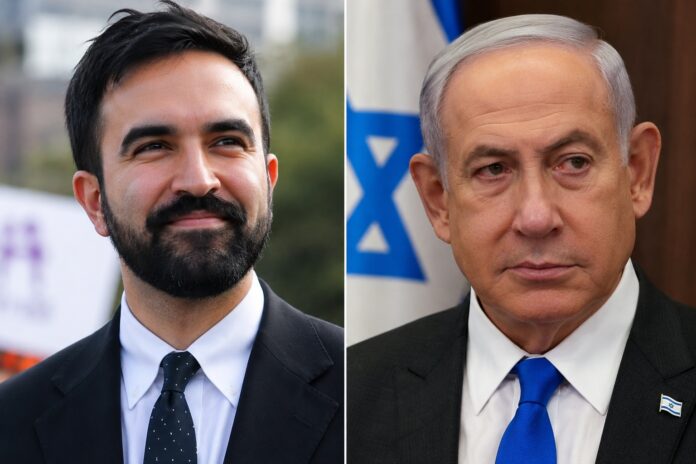 Matzav2 days ago
A new poll conducted by the Associated Press in partnership with the NORC Center for Public Affairs Research found that New York City Mayor Zohran Mamdani enjoys a higher favorability rating among American Jews than Israeli Prime Minister Binyamin Netanyahu, despite Mamdani’s outspoken criticism of Israel.
According to the survey, 44% of Jewish respondents expressed a favorable opinion of Mamdani, while just 32% viewed Netanyahu favorably. At the same time, 59% of respondents said they held an unfavorable view of Netanyahu, compared with 39% who viewed Mamdani negatively. The poll did not ask respondents to choose between the two figures directly; rather, each was rated independently as part of a broader list of public personalities.
The survey also found significant divisions among American Jews over Israel’s war in Gaza. Thirty percent of Jewish respondents said they believe Israel committed “genocide” against Palestinians in Gaza, a figure nearly identical to the 31% recorded among the broader American public. By contrast, 49% of Jewish respondents rejected that characterization.
While support for Israel’s initial response to Hamas’ October 7 attack remained strong, opinions were sharply divided over the continuation of the military campaign. Nearly three-quarters of Jewish respondents—73%—said they supported Israel’s immediate military response following the Hamas attack. However, views on the ongoing war were almost evenly split, with 42% saying the continued military operation is justified and 43% saying it is not.
The poll also highlighted the political makeup of the American Jewish community, which may help explain many of the findings. Fifty-nine percent of respondents identified as Democrats or leaned Democratic, while only 27% identified as Republicans or leaned Republican. Ideologically, 42% described themselves as liberal and 41% as moderate. Additionally, 83% of Jewish respondents said they do not support the MAGA movement associated with President Donald Trump.
{Matzav.com}
 Matzav2 days ago
For the first time in years, the Stoliner Rebbe will not conduct the traditional yahrtzeit tish marking the yahrtzeit of Rav Shlomo of Karlin zt”l, a longstanding annual gathering that has become a central event for Karlin-Stolin chassidim.
The yahrtzeit, observed on the eve of 22 Tammuz, commemorates Rav Shlomo of Karlin, one of the towering figures of early Chassidus, who was murdered by a Russian Cossack in 1792. In Chassidic tradition, Rav Shlomo is often associated with Moshiach ben Yosef, based on a longstanding tradition that he was killed by a non-Jew named Armilus, paralleling descriptions connected to Moshiach ben Yosef.
Each year, the Stoliner Rebbe leads a large yahrtzeit tish in Givat Ze’ev attended by hundreds of chassidim. According to the custom observed in Karlin-Stolin, the Rebbe recites a Shehecheyanu over a new fruit during the tish, even though the yahrtzeit falls during the Three Weeks, when it is customary to refrain from reciting Shehecheyanu on weekdays. In recent years, the fruit traditionally used for the brocha has been a lychee.
This year, however, Karlin-Stoliner chassidim were surprised to learn that the annual gathering would not take place. Notices posted in the chassidus’ batei medrash throughout Eretz Yisroel informed chassidim that they should hold their yahrtzeit seudos locally, rather than travel to the customary central tish.
According to sources, the Stoliner Rebbe departed for Europe on Tuesday morning. While there has been no official confirmation, it is believed that the Rebbe intends to visit the kever of Rav Shlomo in Ludmir, Ukraine, on the day of the yahrtzeit—a visit that, if it takes place, would reportedly mark the first time he has done so.
No official announcement has been made regarding the trip. The Stoliner Rebbe is known for traveling with exceptional modesty, often flying without attendants, aides, or public notice.
{Matzav.com}
 Matzav2 days ago
An unusual scene unfolded Wednesday in Israel’s Supreme Court when Michael Fuah, chairman of the “Choosing Family” organization, appeared before the justices wearing tefillin during a hearing on his organization’s petition concerning posthumous sperm extraction.
Justice Noam Solberg took note of Fuah’s appearance, observing that it is “not a routine occurrence” for petitioners to appear before the court wearing tefillin. Fuah explained that two months earlier he had accepted upon himself the practice of wearing tefillin throughout the day.
Justice Solberg responded that the practice was noteworthy, pointing out that wearing tefillin all day requires a person to maintain an atmosphere of holiness. Fuah replied that only engaging in frivolous or inappropriate activities would interfere with the mitzvah.
Chief Justice Yitzchok Amit also commented on the uncommon sight, calling the practice “very unusual” and adding that he was pleased Fuah regarded the Supreme Court as a holy place.
{Matzav.com}
 Matzav2 days ago
Israel’s aviation industry is making a remarkable comeback, with Ben Gurion Airport on track to record one of the busiest months in its history. According to the Israel Airports Authority, passenger traffic is expected to approach 100,000 travelers in a single day by the end of July, reflecting a rapid recovery following Operation Rising Lion.
Figures released on Wednesday show that approximately 85,500 passengers are expected to pass through Ben Gurion Airport on Thursday, July 9, aboard roughly 520 arriving and departing flights. Airport officials say those numbers are only a preview of even heavier travel expected later this month.
Beginning Sunday, July 12, daily passenger traffic is projected to exceed 80,000 travelers on every weekday throughout the remainder of the month. An interim high is expected on Thursday, July 16, when about 91,000 passengers are scheduled to travel through the airport.
The busiest day of the month is forecast for Thursday, July 30, when approximately 94,000 passengers are expected to pass through Ben Gurion Airport on around 560 flight movements. The figure comes close to the 100,000-passenger mark and represents the airport’s busiest day since Operation Rising Lion.
Another particularly busy travel day is expected on Sunday, July 26, when roughly 90,000 passengers are forecast to use the airport.
Overall, approximately 2.3 million passengers are expected to travel through Ben Gurion Airport during July, representing a 25 percent increase compared to the same period last year. The Airports Authority said the figures reflect renewed confidence among both Israeli travelers and international airlines operating in Israel.
The sharp recovery has been fueled by the return of numerous foreign airlines and the reopening of Terminal 1 for international flights. In recent months, the terminal had been operating on a limited basis, with many flights redirected to Terminal 3.
In anticipation of the heavy summer travel season, the Israel Airports Authority issued several recommendations for passengers:
The Airports Authority also recently opened a designated waiting lot that offers one hour of free parking for drivers picking up arriving passengers. The initiative is intended to reduce congestion around the terminal and discourage illegal roadside stopping.
Airport officials say the strong passenger numbers point to a full return to normal operations for Israel’s aviation sector. During the height of the recent security situation, the airport operated on a limited schedule, with flights provided primarily by Israel’s domestic carriers—El Al, Israir, Arkia, and Air Haifa.
With international airlines now returning in force, the record-breaking passenger forecasts for July signal renewed confidence in air travel to and from Israel, as Israelis once again head abroad in large numbers during the peak summer vacation season.
 Matzav2 days ago
A matzeivah has been erected at the kever of the mekubal, Rav Amos Guetta zt”l, following the conclusion of the shivah after his tragic murder. Hundreds of talmidim, admirers, and community members gathered at the cemetery in Netanya for the dedication ceremony, while preparations are already underway for an ambitious project that will transform the site into a major center of tefillah and Torah.
As Netanya continues to mourn the loss of Rav Amos Guetta zt”l—a figure renowned for his extraordinary avodas Hashem and known for not sleeping in a bed for nearly 40 years—hundreds visited his kever at the Veterans Cemetery immediately after the shivah concluded. The gathering included the formal unveiling of the matzeivah, accompanied by heartfelt tefillos, Selichos, and the sounding of shofaros.
The inscription on the matzeivah reads: “Here rests Rabban Shel Kol Bnei HaGolah, the father and savior of Yisroel, who endured great suffering, Rosh Yeshiva of ‘Rav Chai Taieb Lo Mes,’ the holy mekubal Rabbeinu Amos Kamos Guetta ztz”l, son of Rabbi Avraham and Fortuna a”h. A lover of Hashem, a lover of Torah, a lover of Yisroel, who drew hearts close to our Father in Heaven with self-sacrifice. He was taken from this world on the 16th of Tammuz 5786. May his soul be bound in the bond of eternal life. His soul shall dwell in goodness, and his descendants shall inherit the land.”
Images from the site show that the kever has already become a major destination, with crowds arriving throughout the day and night to daven. To accommodate the growing number of visitors, organizers have installed lighting, tents, and refreshment stations, providing food and drinks around the clock.
Throughout the shivah, Rav Guetta’s yeshivah in Netanya hosted continuous hespeidim and inspirational gatherings attended by many rabbanim. Those who participated included the Sephardic Chief Rabbi, Rav Dovid Yosef; the Yenuka; Rav Benyahu Shmueli; the mekubal Rav Yaakov Ades; Rav Chaim Yosef Abergel; as well as Rav Yaakov Cohen, Rav Yosef Delouya, Rav Avraham Amrami, and many other rabbanim and marbitzei Torah.
A source at the yeshivah said the gatherings of chizuk and spiritual inspiration will continue long after the shivah. In the coming weeks, the institution plans to host a full schedule of shiurim delivered by prominent rabbanim from morning until night, modeled after the renowned Musayoff bais medrash in Yerushalayim.
Matzav.com has also learned that plans are in their final stages for a major expansion of the site. According to the proposal, a large bais tefillah will be constructed above the kever, alongside a spacious bais medrash, a public mikveh, and a kollel for avreichim, creating a permanent center for Torah, tefillah, and spiritual growth.
{Matzav.com}
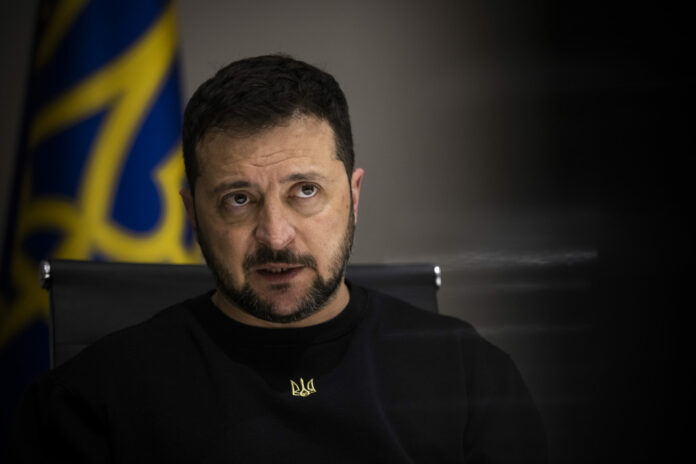 Matzav2 days ago
Ukrainian President Volodymyr Zelensky made a striking assertion this week, claiming that Ukraine has video documentation for every Russian soldier it kills, wounds, or captures on the battlefield. Speaking at a NATO defense forum in Turkey, Zelensky said Ukrainian forces are inflicting roughly 30,000 Russian casualties each month, with drones accounting for the overwhelming majority of those losses.
Addressing the North Atlantic Treaty Organisation Defence Industry Forum in Ankara on Tuesday, Zelensky said Ukraine is currently “eliminating” approximately 30,000 Russian troops every month and has visual evidence confirming every casualty. His comments highlight how dramatically modern warfare has evolved, with tiny digital cameras now integrated into nearly every aspect of combat—from helmet-mounted and rifle-mounted cameras carried by infantry to the countless first-person-view drones dominating the battlefield. As a result, today’s conflicts generate an unprecedented volume of recorded footage, with traditional artillery among the few weapons not routinely producing visual documentation.
Zelensky’s estimate of Russian losses aligns with a recent assessment released by the Washington-based Center for Strategic and International Studies (CSIS). Earlier this month, the think tank concluded that “Russia’s monthly casualty rates of over 30,000 per month in 2026Russia’s monthly casualty rates of over 30,000 per month in 2026.” According to the report, the staggering pace of soldiers killed, wounded, or missing has driven the overall toll of Russia’s invasion to roughly two million casualties, including an estimated 1.4 million Russians and about 600,000 Ukrainians.
Seeking to emphasize that his remarks were not intended as a celebration of battlefield success, Zelensky said the figures instead reflect the grim reality of a war Russia chose to launch. He told the forum: “… in Ukraine as we defend our positions on the frontline, and do so in a fully justified war of self-defense, we are now eliminating around 30,000 Russian soldiers every month… and we have video confirmation for every single one of them. The overwhelming majority were struck by drones. And frankly we take no pride in this. We are saying it to show what modern war looks like, not a war we started, but one we are forced to fight.”
If the casualty estimates are accurate, Russia could face increasing pressure to sustain its military campaign, as battlefield losses may now be exceeding the country’s ability to replenish its forces. The CSIS report estimates that Russia is recruiting roughly 27,000 new soldiers each month—slightly fewer than the number reportedly becoming casualties. Supporting Ukraine’s broader claims about the changing nature of combat, the report added: “According to some estimates, over 90 percent of Russian casualties are from drone attacks rather than a result of human-to-human engagements. Casualty rates are extremely high for soldiers that enter the kill zone.”
 Matzav2 days ago
A newly released study from the Federal Reserve Bank of Dallas lends support to Vice President JD Vance’s longstanding argument that the surge of illegal immigration under the Biden administration contributed to rising home prices and rents across the United States.
Vance has repeatedly argued that the arrival of millions of illegal immigrants increased competition for a limited housing supply, placing additional financial pressure on American families seeking to buy or rent homes. During his debate with Minnesota Gov. Tim Walz, Vance said that 25 million illegal aliens were “competing with Americans for scarce homes is one of the most significant drivers of home prices in the country.”
He made a similar point during an interview with Fox News host Sean Hannity, saying that many young Americans believe “housing is way too expensive,” while arguing that the nation had been “flooded with 30 million illegal immigrants who are taking houses that ought by right go to American citizens” at a time when home construction has failed to keep pace with demand.
According to Fox Business, a recent report from the Federal Reserve Bank of Dallas examined how the influx of illegal immigrants “between 2021 and 2024 affected local labor and hosing markets.”
The researchers concluded that illegal immigration played a significant role in both employment growth and rising housing costs. They estimated that “unauthorized immigrant worker flows accounted for about 30 percent of employment growth, roughly 30 percent of home-price growth, and about 20 percent of rent growth”:
“A 1 percent increase in unauthorized workers relative to a local labor force corresponded with roughly a 1 percent increase in overall employment, with no evidence the immigration surge reduced average wages. The same 1 percent increase, however, was associated with a roughly 2.2 percent rise in home prices and a 1.4 percent increase in rents. Researchers found little evidence that homebuilding expanded enough to meet the added demand, concluding the influx acted as a housing demand shock in markets where supply was already constrained.
“The economists estimate unauthorized immigrant worker flows accounted for about 30 percent of employment growth, roughly 30 percent of home-price growth, and about 20 percent of rent growth in the average metropolitan area between March 2021 and March 2024.”
Vance’s assertions have previously been challenged by several major news organizations, which argued that his claims overstated the role of illegal immigration in driving housing costs.
In October 2024, CBS News reported that although Vance “posted some studies and speeches on social media to back up his claim” that millions of illegal immigrants were competing with Americans for housing, the Federal Reserve material he cited amounted to a “short prepared speech by a Fed official who had pointed out that the ‘inflow of new immigrants to some geographic areas could result in upward pressure on rents.’”
CBS also maintained that “the causes behind skyrocketing housing costs stem” primarily from broader market conditions, including “a longstanding lack of new construction in the decade that followed the U.S. housing crash in 2007”:
“The causes behind skyrocketing housing costs stem chiefly from larger issues in the real estate market. The biggest factor: a longstanding lack of new construction in the decade that followed the U.S. housing crash in 2007, along with the ensuing global financial crisis.”
The New York Times likewise questioned Vance’s argument, writing that although “millions of illegal immigrants” have contributed to increased housing demand through population growth, economists believe the primary cause of the affordability crisis remains an inadequate housing supply.
Responding to the new Federal Reserve findings, a spokesperson for Vance sharply criticized previous media coverage.
“Once again, the useless attempts to fact-check the Vice President have proven that the mainstream media is nothing more than a propaganda arm for the Left,” the spokesperson said in a statement to Breitbart News. “While the media tries to gaslight the public into ignoring the real impact left-wing policies have had on their lives, the Trump administration is working to ensure that Americans can afford to own homes on American soil.”
{Matzav.com}
 Matzav2 days ago
A rare and historic chalitzah ceremony was held this week under the auspices of the Bais Din of the Machzikei Hadas community in Antwerp, Belgium, drawing rabbanim, talmidei chachamim, and hundreds of local residents who gathered to witness the uncommon event.
The ceremony marked the first chalitzah conducted in Antwerp in nearly four decades. The previous ceremony took place approximately 40 years ago at the Moriah bais medrash, where it was presided over by Rav Dovid Moshe Lieberman, zt”l, Av Bais Din of Shomrei Hadas.
The current ceremony was held in a large hall to accommodate the hundreds of Torah scholars and members of the community in attendance. Among those present were Antwerp’s chief rabbi, Rav Aharon Schiff; the dayanim Rav Amram Hennig, Rav Zeikel Pollak, and Rav Eliezer Shimon Eckstein; and the witnesses, Rav Asher Sternbuch and Rav Shalom Grinfeld.
At the request of Rav Aharon Schiff, the city’s Av Bais Din, Rav Aharon Dovid Donner, Raavad of London, traveled especially to Antwerp to preside over and conduct the chalitzah ceremony. According to halachah, one who has never personally conducted a chalitzah should not oversee the procedure lechatchilah.
The day before the ceremony, members of the Bais Din, following longstanding halachic tradition, visited the site to determine the precise location where the ceremony would take place. Rav Donner arrived accompanied by his close associate, Rabbi Strah, from England, along with Rav Elimelech Schwartz of Tshaba.
At the appointed hour, the assembled crowd gathered for the solemn occasion. A palpable sense of awe filled the room as the Bais Din distributed special booklets containing the Seder Hachalitzah of the Maharam, a disciple of the Rema, to all those in attendance.
Preparations for the ceremony required extensive planning and careful attention to detail. Rav Donner, who has previously presided over several chalitzah ceremonies, brought with him from England, together with Rav Elimelech Schwartz, the specially crafted leather chalitzah shoe prepared in accordance with all the requirements of halachah.
In keeping with Jewish law, the dayanim fitted the special shoe onto the foot of the yavam, an avreich who had traveled from France. The widow then removed the shoe, recited the prescribed Yehi Ratzon prayer, and spat onto the ground before him, as required by the Torah. The entire congregation then proclaimed three times in a loud voice: “Chalutz hana’al! Chalutz hana’al! Chalutz hana’al!” (“The one whose shoe has been removed!”)
At the conclusion of the moving ceremony, those in attendance quietly offered a heartfelt prayer: “Yehi ratzon that no daughters of Israel should ever again require either chalitzah or yibum. Amein.”
 Matzav2 days ago
By Jonathan Pollard
President Donald Trump’s decision to lift U.S. defense sanctions on Turkey is not just another diplomatic misstep.
It is a direct betrayal of Israel, the Jewish people, and America’s long-standing policy to preserve Israel’s Qualitative Military Edge.
Trump announced that Washington would lift sanctions imposed on Turkey over Ankara’s purchase of Russia’s S-400 missile system, a move that could reopen the door to Turkey acquiring F-35 stealth fighters.
That is the same Turkey led by Recep Tayyip Erdogan — a man who has repeatedly attacked Israel politically, aligned himself with Islamist causes, and positioned Ankara as a rival power in the Middle East.
This is not how a faithful ally behaves.
This is not how a president who claims to support Israel behaves.
This is how a president rewards a NATO member like Turkey that refused to stand with the United States when it mattered most.
Trump has spent years castigating European NATO countries for failing to support America, failing to spend enough on defense, and failing to stand shoulder to shoulder with Washington.
Yet Turkey is also a NATO member.
During the recent U.S.-Iran conflict, Turkey did not help the United States.
It did not allow its air, land, or sea assets to be used for operations.
Erdogan thumbed his nose at Trump and stated that Ankara would not permit its territory or airspace to be used in a war to which Turkey was not a party.
Even worse, Trump himself publicly claimed that Erdogan was “a prime candidate” to enter the war with Iran — “maybe on the Iran side” — because, as Trump put it, Erdogan is “not a big fan of Israel.”
Trump said he personally asked Erdogan to stay out of the conflict.
Think about that.
The president of the United States is now rewarding a NATO ally that, by Trump’s own telling, might have entered the war on the side of Iran.
Now, the “reward” for such disloyalty may be access to the most advanced fighter aircraft in the world—after Erdogan flouted NATO by buying Russia’s advanced weaponry.
That is madness.
Turkey declined to support U.S. military operations against Iran, prioritized preventing Kurdish gains over confronting Tehran, and, according to Trump’s own public statements, was a potential participant on Iran’s side before deciding to stay out.
Iran has a significant Kurdish population in its north.
Had the Kurds risen up in the days after February 28, the regime’s grip on the country may well have collapsed.
But Turkey’s actions scuttled U.S. and Israeli plans for such a revolt.
Ankara’s overriding concern was clear: Turkey feared any policy that might strengthen Kurdish forces more than it feared Iran.
For Israel, the danger is obvious. The F-35 is not just another aircraft. It is a strategic platform.
Israel’s possession of the F-35 helps preserve its military superiority against hostile states and non-state enemies.
Allowing Erdogan’s Turkey to move toward that same capability erodes Israel’s edge and signals that Washington’s promises are negotiable.
This is only the latest in a series of Trump decisions that have damaged Israel’s strategic position.
He imposed premature ceasefires that preserved Hamas, Hezbollah, and Iran’s military infrastructure.
He walked away from Yemen, leaving Israel exposed to the Houthis.
He negotiated understandings with Tehran that, in my view, failed to destroy Iran’s missile production, failed to dismantle its regional proxies, and failed to end the threat to Israel.
Today he is embracing Erdogan, a man who has called Israel a “terrorist state,” claimed its leaders are Nazis engaging in genocide, and threatened to militarily attack it.
Prime Minister Benjamin Netanyahu should not endorse Trump’s embrace of Erdogan with a smiling White House visit.
If he goes to Washington after this decision, he risks looking weak.
Israel needs an Israel First doctrine. That means recognizing that no foreign leader — not even an American president — can be trusted to place Jewish survival above political convenience.
It means Israel must reserve full freedom of action against Iran, Hezbollah, Hamas and every enemy that seeks Jewish destruction.
Some of the measures I have advocated are serious because the threats Israel faces are severe.
Iran’s regime, Hamas, Hezbollah, the Houthis, and other enemies do not seek compromise. They seek annihilation.
These very same groups also seek to destroy the U.S.
A self-respecting Jewish government must respond not with pleading, but with deterrence, sovereignty and force.
Trump’s defenders will say this is diplomacy.
They will say Turkey is too important to alienate. They will say Erdogan can be managed.
We have heard all of this before. The Jewish people have paid the price too many times for trusting foreign assurances.
The truth is simpler: Trump is rewarding Erdogan despite Turkey’s refusal to help America against Iran and despite Trump’s own admission that Turkey may have leaned toward Iran.
He is doing so while pressuring Israel to accept ceasefires, restraint and humiliation.
That is not friendship. That is betrayal.
Israel must now judge Trump by his actions, not his speeches.
And his actions in Ankara tell us everything we need to know.
Jonathan Pollard is an Israeli citizen, co-president of the Israeli First Movement, and adviser to several technology start-up businesses.
This article first appeared at Newsmax.
 Matzav2 days ago
Nearly eight decades after he was killed during Israel’s War of Independence, the final resting place of Pvt. Yaakov Zrihan has been identified following a painstaking 15-year investigation, bringing long-awaited closure to his family.
Investigators concluded that Zrihan was laid to rest in a mass grave at the Harel Brigade military cemetery in Kibbutz Kiryat Anavim, alongside other IDF soldiers who were killed during Operation Harel.
The IDF announced that “Private Yaakov Zrihan fell in a supply convoy to the besieged Jerusalem during Operation Harel in 1948, and his place of burial was unknown. After an intense investigation led by the IDF Casualties Department’s Missing Persons Branch, which took 15 years, his place of burial was located.”
Zrihan immigrated to Israel from Casablanca, Morocco, in December 1947 aboard the Haportzim illegal immigration ship as part of the Habonim movement. After arriving, he underwent training at Kibbutz Ramat Hakovesh as part of the “Hasna” program, whose participants were expected to settle in Kibbutz Bror Chayil. On April 12, 1948, he enlisted in the Transportation Service and became an operational driver in the Etzioni Brigade. Just days later, during Operation Harel, he joined a convoy of approximately 300 vehicles transporting supplies to the besieged city of Jerusalem. On April 20, 1948, fierce fighting erupted in the Shaar Haguy area, where Zrihan and 13 fellow convoy members were killed. He was buried two days later in the cemetery at Kiryat Anavim.
The breakthrough came after years of investigative work aimed at uncovering Zrihan’s fate. In 2024, the IDF assembled a dedicated investigative team that examined historical archives, interviewed witnesses, carried out sophisticated soil testing, and conducted archaeological surveys at the site. By piecing together evidence from multiple sources, investigators were ultimately able to determine the precise location of his burial in the Harel Brigade military cemetery.
On Tuesday evening, members of Zrihan’s family, including his sisters, were officially informed that the investigation had reached its conclusion and that the decades-old mystery had finally been resolved. Brig. Gen. Edna Eliya, head of the IDF Personnel Directorate’s Casualties Division, personally delivered the news.
In the coming weeks, 78 years after Zrihan fell in battle, the IDF will hold a state military ceremony at the Kiryat Anavim military cemetery, where a memorial marker bearing his name will be placed at his grave.
Reflecting on the completion of the investigation, Brig. Gen. Eliya said, “Following a comprehensive investigation, today we were able to bring an emotional sense of closure. We informed the family of Yaakov Zrihan, of blessed memory, of the investigation’s findings and the location of their loved one, who fell in battle 78 years ago. It is a privilege for us to continue acting out of a deep moral commitment to bring comfort and to accompany bereaved families.”
Yvonne Cohen, Zrihan’s sister, expressed the family’s emotions upon learning the news. “For me, finding my brother’s burial place means everything. I will call my sons so that, for the first time, they will be able to recite Kaddish at his grave.”
{Matzav.com}
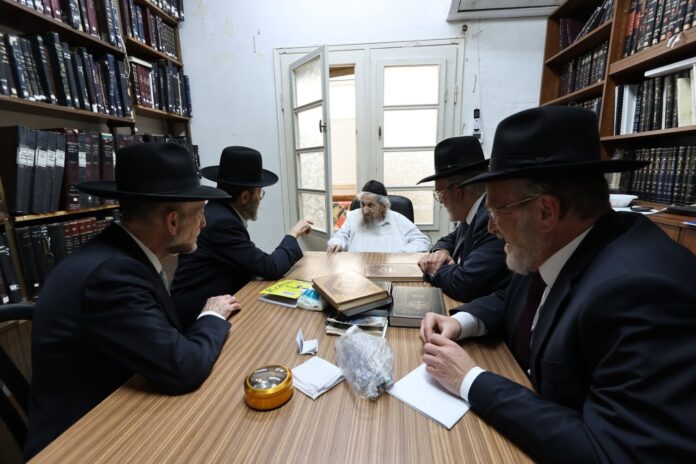 Matzav2 days ago
Tensions between the chareidi parties and the Likud intensified on Wednesday after Degel HaTorah informed Prime Minister Binyamin Netanyahu that it would oppose any changes to the agreed-upon wording of the proposed Basic Law: Torah Study.
Party officials said their position follows explicit instructions from senior gedolim, who insist that the commitments made by the government be honored in full and that the agreement reached in recent weeks not be reopened for negotiation.
The dispute stems from a meeting held approximately two weeks ago between Netanyahu, Shas chairman Aryeh Deri, and Degel HaTorah chairman Moshe Gafni, during which the prime minister reportedly committed to advancing the Basic Law. However, Coalition Chairman Ofir Katz has since sought to introduce changes to the bill’s language.
Slabodka Rosh Yeshiva Rav Dov Landau sharply criticized the reported attempt to alter the agreement.
“They won’t even honor this agreement?” he asked.
Meanwhile, Coalition Chairman Ofir Katz reportedly expressed frustration with the chareidi parties, saying they did not notify him in advance of their opposition to the proposed revisions or their intention to reject any changes to the legislation. Katz also announced that the Likud plans to submit formal reservations to the bill.
 Matzav2 days ago
President Donald Trump ordered Treasury Secretary Scott Bessent on Wednesday to immediately suspend all U.S. trade with Spain, sharply criticizing the country for what he described as its failure to meet NATO obligations and accusing Madrid of being an unreliable ally.
Trump announced the move during a meeting with NATO Secretary General Mark Rutte on the sidelines of the alliance’s summit in Ankara, Turkey. For years, Trump has made strengthening NATO’s military readiness a central objective, repeatedly pressing member nations to increase defense spending and restore the alliance’s ability to deter aggression.
In addition to declaring that the ceasefire arrangement with Iran had effectively collapsed because of Tehran’s conduct under the Memorandum of Understanding and criticizing Denmark over Iceland, Trump turned his attention to Spain, portraying it as one of NATO’s weakest contributors. He argued that the country’s socialist-led government had failed to adapt to the alliance’s new security priorities and remained unwilling to make meaningful defense investments.
Trump pointed to Spain’s continued refusal to embrace NATO’s new defense spending target of 5 percent of gross domestic product, instead insisting on adhering to the alliance’s former 2 percent benchmark. He also faulted Spain for declining to assist the United States during its confrontation with Iran. Turning from NATO Secretary General Mark Rutte to Treasury Secretary Scott Bessent, who was seated beside him, Trump instructed, “we don’t have to trade with them, I don’t want to do any more trade with them… take it immediately, don’t even talk to them. They’re hopeless, bad people.”
Bessent responded simply, “yes sir,” prompting Trump to predict that Spain would eventually reverse course, saying he believed the country would “come running back.”
Explaining his decision, Trump argued that Spain has consistently failed to fulfill its responsibilities within the alliance. “Spain is a terrible partner in NATO. They don’t participate, they don’t pay… they’re open about it, they’re hostile”. He also claimed that Spanish officials had treated NATO Secretary General Mark Rutte “terribly.”
It remains unclear exactly how an American suspension of trade with Spain would be implemented. Trump has previously threatened economic measures against Madrid over defense spending, while European officials quickly dismissed the proposal, arguing that Washington lacks the authority to impose such restrictions and warning that any attempt to do so would also harm the United States.
A spokesman for the European Union urged Washington to “honour its commitments,” while Spanish officials maintained that, as a member of the European Union’s Single Market, Spain could not be singled out for an embargo. They also emphasized that they have “no intention” of changing anything about their relationship with the United States.
Spanish officials further argued that trade between the two countries benefits both sides, stating: “…the US has a trade surplus with Spain (meaning it benefits more from this relationship than we do)… the bilateral relationship between the US and Spain is beneficial for both countries”.
Although the United States exports more goods to Spain than it imports, that trade balance is influenced heavily by Spain’s growing purchases of American liquefied natural gas. Over the past year alone, Spain significantly increased its imports of U.S. LNG, with the United States now supplying roughly one-third of the country’s natural gas.
The article noted that Spain’s dependence on imported American energy has become more significant in light of recent concerns over the country’s energy infrastructure, including a widespread power outage that began in Spain and disrupted electricity service across a large section of Europe.
{Matzav.com}
 Matzav2 days ago
Health and Human Services Secretary Robert F. Kennedy Jr. announced a nationwide initiative Tuesday urging hospitals to eliminate ultra-processed foods from their menus, expanding President Donald Trump’s “Make America Healthy Again” agenda by promoting better nutrition as a key component of patient care.
The new Make Hospital Food Healthier Pledge asks hospitals to voluntarily replace heavily processed meals with more nutritious options that follow the Dietary Guidelines for Americans. Administration officials say the effort is intended to improve patient recovery and reduce the risk of chronic illnesses through healthier eating.
“Patients recovering from serious medical conditions deserve better than ultra-processed and deep-fried junk foods,” Kennedy said in a statement. “President Trump has directed HHS to put real food at the center of American health.
“Today, we’re challenging hospitals across the country to lead by example by serving nutritious, minimally processed meals that help patients heal, reduce chronic disease, and help Make America Healthy Again.”
Under the voluntary pledge, hospitals are encouraged to reduce offerings of ultra-processed foods, sugary beverages, and processed meats while increasing the availability of whole grains, minimally processed proteins, and meals prepared using healthier methods such as baking, broiling, roasting, grilling, and stir-frying instead of deep frying.
The announcement represents the latest phase of Kennedy’s broader effort to reshape federal nutrition policy since assuming leadership of HHS. The department said improving the quality of hospital food can aid recovery while reinforcing the importance of nutrition in preventing disease.
As part of the campaign, HHS introduced a new nutrition-focused webpage that will serve as the central resource for Kennedy’s food and nutrition initiatives. The site includes the Dietary Guidelines for Americans, educational materials aimed at expanding nutrition training in medical schools, information about the Make Hospital Food Healthier Pledge, and details on the department’s upcoming program, “The Real Food Show.”
The initiative is being carried out in partnership with the Centers for Medicare & Medicaid Services. CMS Administrator Dr. Mehmet Oz said hospitals should recognize nutrition as a fundamental element of quality medical care.
“When it comes to managing chronic disease, reducing co-morbidities like obesity, and shortening recovery times, a healthy diet can make all the difference,” Oz said in a statement. “I’m grateful to President Trump for his leadership in putting nutrition and prevention at the center of America’s health agenda.”
Oz added that hospitals should “nourish patients with the same commitment they bring to every other aspect of care.”
“That’s why we’re challenging hospitals to limit ultra-processed foods, feature nutritious meals that promote healing, and lead the way in delivering prevention-first, whole-person care,” he said.
The new campaign also builds on guidance issued by Oz in March reminding hospitals that Medicare regulations require facilities to meet the individual nutritional needs of every patient. CMS said hospital meals should be consistent with the Dietary Guidelines for Americans.
{Matzav.com}
 Matzav2 days ago
Yair Netanyahu, the son of Prime Minister Binyamin Netanyahu, has officially changed his name and is now registered with Israeli authorities as “Yonatan Han,” according to a report published Wednesday by Haaretz.
The newspaper reported that the change came to light through records maintained by the Israel Tax Authority, where the new name appears alongside Netanyahu’s identification number.
According to the report, tax withholding documents issued in December 2024 still identified him as Yair Netanyahu. However, documents issued this year list the same identification details under his new legal name instead.
Yair is not the first member of the Netanyahu family to adopt a different name. His younger brother, Avner Netanyahu, previously used a pseudonym when purchasing an apartment near London in 2022, registering the property with the British Land Registry under the name “Avi Avner Segal.”
The report noted that Yair’s new name carries significant family meaning. “Han” was the original surname of his maternal grandfather, Shmuel Ben Artzi, while “Yonatan” honors his paternal uncle, Yonatan Netanyahu, who was killed while leading the 1976 Entebbe hostage rescue mission.
{Matzav.com}
 Matzav2 days ago
TEL AVIV – Senior Democratic Party figure Rahm Emanuel delivered a sharp rebuke of Israeli Prime Minister Binyamin Netanyahu during a speech at Tel Aviv University on Wednesday, warning that Israel’s relationship with the United States has reached what he described as a critical turning point. Emanuel argued that Israel’s current leadership has led the country into a diplomatic dead end and called for sweeping changes in both Israeli and American policy.
Emanuel, who served as White House chief of staff under President Barack Obama, represented Illinois in Congress, was mayor of Chicago, and later served as U.S. ambassador to Japan, is widely viewed as a potential Democratic presidential contender in 2028. Speaking as a guest of Tel Aviv University’s Center for the Study of the United States, he emphasized his longstanding personal connection to Israel while urging a major shift in Washington’s approach. Among his proposals were sanctions against individuals who harm Palestinians or support settlement expansion, changes to the structure of U.S. military aid, and opposition to any Israeli annexation of the West Bank.
Opening his remarks, Emanuel spoke about his family’s ties to Israel, noting that his father was born in Yerushalayim and fought in Israel’s War of Independence. He said he understands why many Israelis are skeptical of outside criticism, particularly after failed peace efforts and subsequent waves of terrorism.
Still, Emanuel insisted that Israel cannot shape its future solely through the lens of its past.
“I came from Chicago to say that things have to change if we are to continue this relationship. We are at a crossroads, and things cannot continue on the same path,” Emanuel said.
He added: “Netanyahu and his government have led Israel into a dead end.”
Emanuel argued that Israel’s global image has changed dramatically over the past five years.
“We cannot remain attached only to the past,” he said, contending that Israel has gone from being viewed as the “Start-Up Nation” to what he called “a modern Sparta.”
He further claimed that Israel has transformed “from a country offering technological solutions into a pariah state,” and urged Israelis to consider what that means for the nation’s future.
Emanuel also criticized Israel’s international standing, saying the world increasingly sees not only Palestinian casualties but also what he described as Israeli indifference to those images.
“The world sees that not only are Palestinians dying, but that Israelis are at peace with these images,” he said.
According to Emanuel, continued settlement construction, the prolonged war, and Israeli policy toward the Palestinians have weakened international support for Israel.
“You’ve lost Europe, your largest trade and research partner. Support for you in the United States is declining.”
While acknowledging Israel’s military accomplishments in recent conflicts, Emanuel argued that those victories have not translated into lasting diplomatic achievements.
“You are less secure today than you were before. Israel has failed to convert its military achievements into strategic achievements,” he said.
He added: “You have no plan for the day after in Gaza and Lebanon. Nasrallah, Sinwar, and Khamenei are dead, but Israel is more isolated than ever.”
Emanuel urged the United States to impose sanctions on Israelis who attack Palestinians, as well as on senior Israeli officials who support such violence. He also said companies involved in settlement construction should face sanctions.
“Netanyahu won’t like it, but it’s not the first time,” he remarked.
Emanuel also outlined what he called a “23-state solution,” envisioning a regional framework that would include Israel, the Palestinians, and 21 Arab nations.
He argued that a lasting peace cannot emerge solely from direct negotiations between Israel and the Palestinians.
“The Arabs must hold the Palestinians accountable and put them in their place. The two-state solution must become a 23-state solution, in which they roll up their sleeves, swallow their egos, recognize the historic connection of the Jewish people to this land, and stop encouraging violence and hatred against Israel,” he said.
Emanuel also criticized past Israeli policy toward Hamas.
“Israel must stop the cynical game of funding Hamas instead of funding partners for peace,” he said.
He argued that broader peace with the Arab world would dramatically strengthen Israel’s strategic position.
“If Israel makes peace with 21 Arab countries, it will be your sweetest dream and the Iranians’ worst nightmare,” he said.
Concluding his address, Emanuel said his criticism stemmed from concern for Israel’s future rather than hostility toward the country.
“I have spent 30 years defending Israel and have watched the window for peace grow smaller,” he said.
According to Emanuel, the obstacle is not the absence of a possible agreement but the fact that leaders on both sides “found that war is a more convenient solution than peace.”
He also took direct aim at Netanyahu, saying: “Hamas did what it did to prevent peace. Netanyahu, unfortunately, helped Hamas achieve that—not because of weakness, but because of his unwillingness to pursue an agreement for the day after.”
Looking ahead to Israel’s centennial in 2048, Emanuel urged Israelis to decide what kind of country they want to become.
“The Israel I believed in is an Israel that can make the desert bloom, but it is chaining itself,” he said.
He concluded: “In 22 years this country will be 100 years old. Will it be an Israel with more Nobel Prize winners, seen as the Start-Up Nation and contributing more to humanity than other countries? That is your choice.”
 Matzav2 days ago
President Donald Trump declared that NATO has emerged stronger and more unified than ever following this week’s alliance summit in Turkey, crediting his leadership with driving a massive increase in allied defense spending, strengthening America’s global standing, and delivering a devastating blow to Iran through recent U.S. military operations.
Speaking after the summit, Trump thanked Turkish President Recep Tayyip Erdoğan for hosting what he described as an outstanding gathering of world leaders. Calling Erdoğan both “a great leader” and “a friend of mine for a long time,” Trump praised his leadership of Turkey.
“I want to thank President Erdoğan, who’s really a great man. He’s a great leader. He’s a friend of mine for a long time,” Trump said. “He’s done a fantastic job in Turkey.”
Trump also commended NATO Secretary General Mark Rutte, describing him as “an extraordinary person” who has helped forge greater unity throughout the alliance.
Reflecting on the private meeting among NATO leaders, Trump said the atmosphere inside the room was remarkably positive.
“There was tremendous love in that room,” Trump said of the closed-door meeting with NATO leaders. “The press couldn’t see the speaking… every one of them spoke… They have a lot of good in their heart, not evil. They’re doing a great job for their country.”
Trump argued that NATO has been fundamentally transformed under his leadership by persuading member nations to dramatically increase their military budgets.
He noted that alliance members agreed last year to raise defense spending targets from 2 percent to 5 percent of gross domestic product, adding that nearly every country is now moving toward meeting that benchmark.
“Everybody said it was impossible, and now they’re all thanking me,” Trump said.
According to Trump, NATO nations boosted defense expenditures by nearly $150 billion during 2025, with much of that money being spent purchasing military equipment manufactured in the United States.
“We make the best equipment in the world,” he said. “The Patriots and the Tomahawks and everything we have is considered to be the best.”
Trump emphasized that the United States remains “by far the largest contributor to NATO” while investing a record $1 trillion in its own military this year. He added that he plans to seek $1.5 trillion in future defense funding.
The president also pointed to newly announced defense agreements reached during the summit, involving billions of dollars in investments tied to Lockheed Martin, Northrop Grumman, and Anduril Industries.
“We’re pushing very hard to have the defense companies build more plants,” Trump said, predicting waiting times for key weapons systems could eventually shrink from years to just weeks.
Trump said his meetings with NATO leaders, Ukrainian President Volodymyr Zelensky, Syrian President Ahmed al-Sharaa, and President Erdoğan reflected what he believes is renewed respect for the United States around the world.
“It was clear that America is back, and we’re stronger and bigger and better than ever before,” he said.
“We’re respected again like maybe never before.”
Returning repeatedly to the atmosphere inside the summit, Trump said unity was the defining theme of the gathering.
“If there’s one word that comes out of today, it’s unification,” he said. “I’ve never seen anything like it.”
A significant portion of Trump’s remarks focused on Iran, where he defended recent American military strikes and insisted they had permanently eliminated Tehran’s ability to develop nuclear weapons.
“I was there for one reason-that Iran cannot have a nuclear weapon,” Trump said. “We denuclearized Iran.”
“They will never have a nuclear weapon.”
Trump went on to claim that Iran’s armed forces had been virtually destroyed.
“They have no military left. Their air force is gone. Their ships are gone. One hundred fifty-nine ships are at the bottom of the sea. Their radar is gone. Everything’s gone.”
He also asserted that Iran’s deeply buried nuclear facilities had been rendered unusable.
“That stuff is so far down under a granite mountain that collapsed on top of it. It’ll take months to get it out.”
Trump warned that any effort by Iran to restore those facilities would prompt another military response.
“We’re watching that. If anybody goes there, they get blown up.”
Asked whether additional fighting could erupt, Trump said he believes any future conflict would be brief.
“I don’t think it’s going to start again,” he said. “Anything that happens is going to happen very fast.”
He added that the United States had responded decisively after Iran targeted commercial shipping.
“They hit a couple of ships and so we hit them much harder. When they hit, we hit ten times harder.”
Trump also argued that Iran’s economy has reached a dire state.
“They have 350% inflation,” he claimed. “They want to make a deal, but they don’t know how to make a deal.”
At another point, Trump described Iran’s leaders as “scum” and claimed they continue to target him personally.
“I’m number one on the kill list for Iran,” he said. “But I’m doing what’s right for the country.”
Turning to energy markets, Trump predicted oil prices would continue to decline despite instability in the Middle East.
“We have an oil glut right now,” he said. “Oil is coming down.”
He added that maintaining security in the Strait of Hormuz would further stabilize global energy supplies.
“Anything that happens is going to happen very fast and will only make it safer, including for oil.”
Trump also highlighted what he described as major domestic economic successes, arguing that tariffs have fueled an unprecedented surge in American manufacturing.
He said companies have committed more than $19 trillion in new investments in the United States and claimed the nation has reached its highest employment levels ever.
“There has never been anything like what’s happened with this country,” Trump said.
Citing investments by companies including Toyota, Eli Lilly, Merck, and several semiconductor manufacturers, Trump said tariffs have encouraged businesses to build factories inside the United States.
“If you build your product here, you pay no tariff.”
Discussing his meeting with Erdoğan, Trump described the conversation as “excellent” and indicated he is receptive to allowing Turkey to rejoin the F-35 fighter jet program.
“My inclination is to say, look, he’s done everything. He’s helped us in so many different ways.”
Trump praised Turkey as “the second most powerful country in NATO” and said relations between Washington and Ankara have improved significantly since he returned to office.
“It’s one of our best relationships.”
He also credited Erdoğan with honoring his request to stay out of the recent regional conflict.
“He stayed out of that war at my request,” Trump said. “He’s been a very good ally.”
Trump also spoke favorably about Syrian President Ahmed al-Sharaa, saying the country has undergone a dramatic transformation under his leadership.
“He’s doing an unbelievable job in unifying Syria,” Trump said.
“Syria was a mess… and now it’s just come together. He’s done a fantastic job.”
Although Ukraine was not the central focus of his remarks, Trump confirmed that he met with President Volodymyr Zelensky during the summit.
Closing his remarks, Trump reiterated that NATO is now more unified than at any point he can remember and said alliance leaders expressed overwhelming appreciation for continued cooperation with the United States.
“There was tremendous unity in that room,” he concluded. “The love for our country-it was incredible.”
{Matzav.com}
 Matzav2 days ago
A Wisconsin judge who was convicted of helping an illegal immigrant avoid federal immigration agents was ordered to pay a $5,000 fine but will not serve any prison time.
Judge Hannah Dugan had faced a potential sentence of up to five years in prison after being convicted in December on a felony obstruction of justice charge. Prosecutors said she helped Eduardo Flores-Ruiz, a Mexican national living in the United States illegally, leave through a rear exit of the courthouse in an effort to avoid waiting agents from U.S. Immigration and Customs Enforcement (ICE).
The events giving rise to the case occurred during the early months of President Trump’s nationwide campaign to intensify immigration enforcement and crack down on illegal immigration.
{Matzav.com}




