
 Yeshiva World News
WSJ: US Deploys Most Air Power in Middle East Since 2003 Iraq Invasion
The US is assembling its most significant concentration of air power in the Middle East since the 2003 Iraq invasion, the Wall Street Journal reported.
The 2003 campaign opened with the massive “shock and awe” aerial assault that marked the start of a war lasting more than eight years.
The current buildup comes as President Donald Trump considers military action against Iran. Although Washington and Tehran remain engaged in negotiations over Iran’s nuclear program, US officials say the talks have produced little progress.
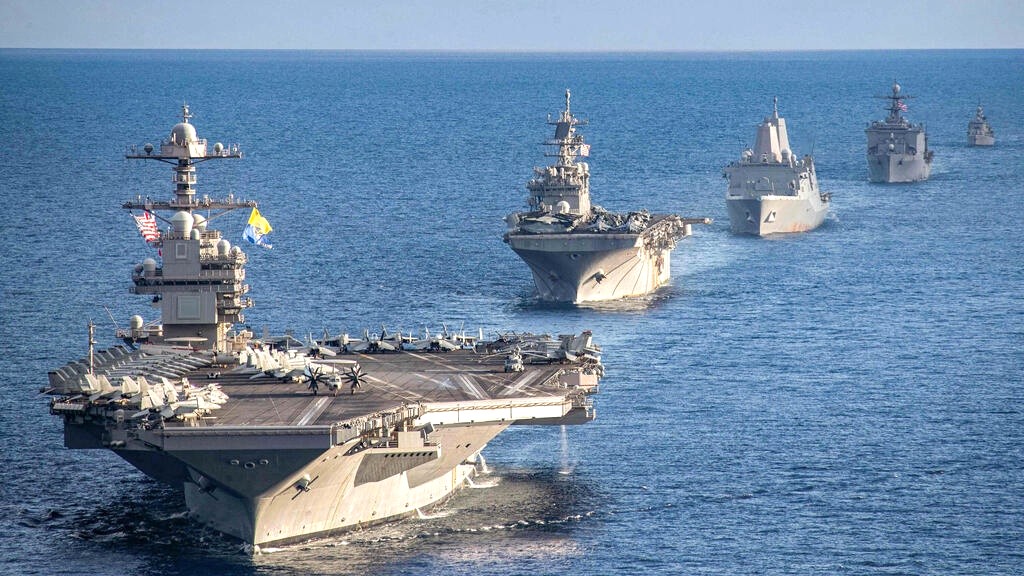
Dozens of US aircraft—including F‑16s, F‑22s, and F‑35s—have been deployed to the region, alongside multiple aircraft carriers, signaling preparations for a far more sustained operation than the US strike on Iranian nuclear sites during Operation Rising Lion in June 2025, which relied primarily on B‑2 bombers.
According to a Ynet report, the US is essentially preparing for the possibility that the negotiations will collapse and a war will be launched. Should that scenario unfold, any offensive is expected to be carried out jointly by American and Israeli forces.
Brig. Gen. (res.) Yuval Eylon, a senior researcher at the Institute for National Security Studies and former head of the Israeli Navy’s Planning Directorate, told Ynet that “the Americans have decided to lay all the cards on the table so they can act as they see fit. But in the end, it’s not about how many assets are in the region but about the objectives and capabilities of the task force.”
“The question now is what the Americans want,” Eylon added. “Time is on their side. If they are coming only to carry out a signaling strike or hit a few key targets in a limited way, that’s one type of event. But if they want a more complex campaign, that’s something else. You need to build a target bank and bring significant force.”
He emphasized that U.S. Central Command is deployed across the region. “There are many more capabilities here beyond the ships,” he said. “They are building a framework that gives them all the tools to make decisions and are bringing substantial task forces. That provides staying power and diverse capabilities. The issue is not the number of ships, but what they can do and what their mission is.”
(YWN Israel Desk—Jerusalem)