
 JBizNews
Bisignano Says Social Security Administration’s Phone Helpline Wait Times Have Reached a Record Low
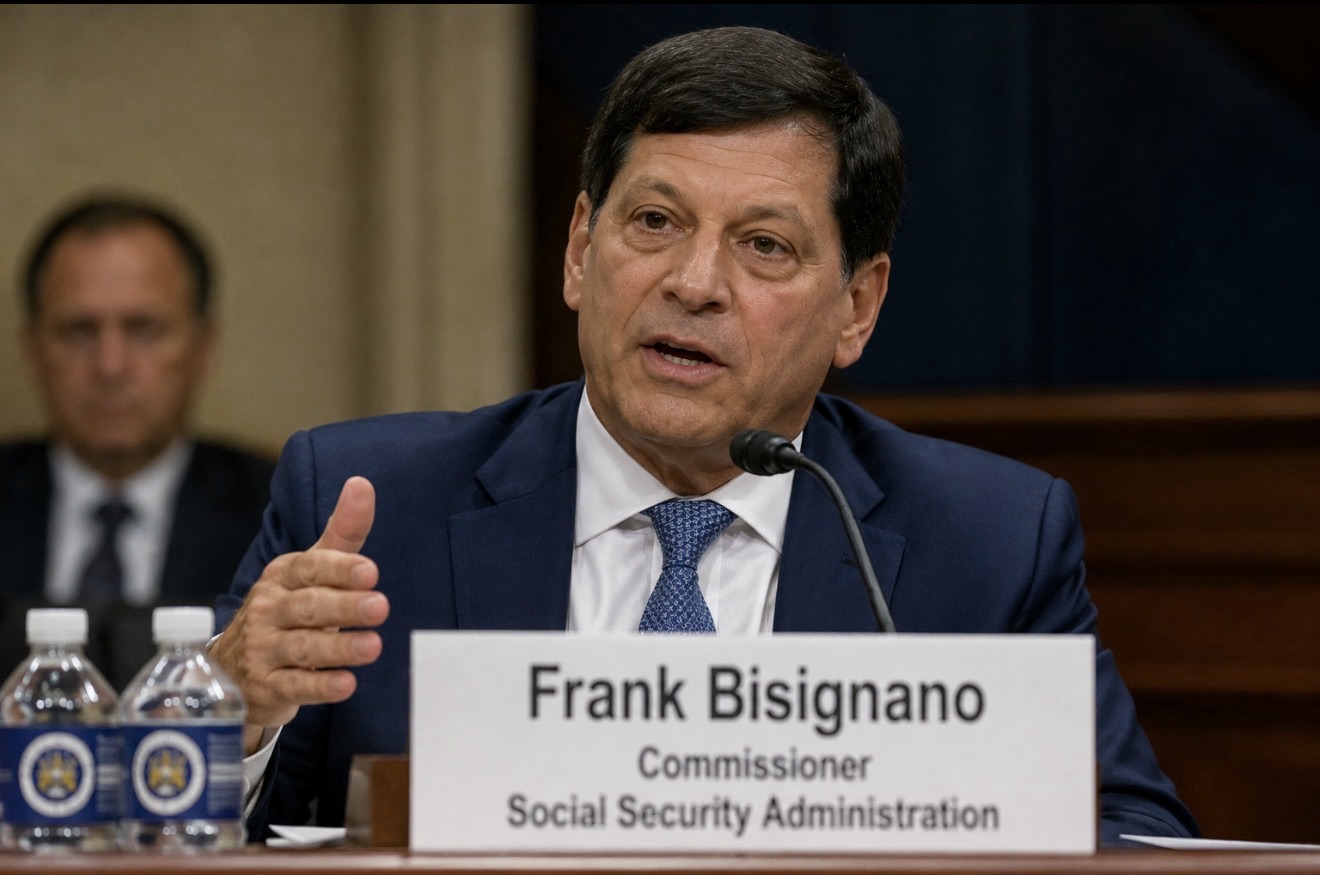
The head of the Social Security Administration told Congress on Wednesday, June 10, 2026, that the agency has reduced wait times on its national helpline to the lowest level in more than a decade, a turnaround he credited to shifting employees from headquarters positions to customer-service roles.
In written testimony before the House Ways and Means Subcommittee on Social Security and Work & Welfare, Commissioner Frank Bisignano said the agency’s average “speed of answer” — the amount of time it takes for an agent to answer an incoming call — fell to under five minutes in May. According to Bisignano, that is down from a peak of approximately 42 minutes in fiscal year 2024, representing an 89% improvement.
He also told lawmakers that the agency now answers approximately 90% of calls placed to its national toll-free 800-number.
The figures matter because the phone system remains one of the primary ways Americans interact with the agency. Tens of millions of retirees, disabled workers, survivors, and family members rely on the Social Security Administration for monthly benefits and frequently contact the agency regarding payment issues, eligibility questions, benefit adjustments, name changes, and other administrative matters.
For years, long hold times have been among the agency’s most common complaints. Extended delays often pushed people into crowded field offices or left them waiting weeks to resolve issues affecting household finances.
Bisignano told lawmakers the improvements extend beyond telephone service.
According to his testimony, average wait times at Social Security field offices have declined by roughly 30%, while the backlog of initial disability claims has fallen 32% from a peak of 1.27 million cases. He also noted that the agency completed implementation of the Social Security Fairness Act, restoring benefits to certain public-sector retirees months ahead of schedule.
Bisignano attributed the gains to what he described as placing “the right amount of staff in the right places,” with more employees assigned directly to public-facing service functions.
Subcommittee Chairman Ron Estes praised the effort, describing it as a “dramatic turnaround” after years of customer-service challenges, outdated technology systems, and staffing shortages. Estes called the previous 42-minute average wait time unacceptable for an agency serving millions of Americans.
Not all lawmakers accepted the numbers without question.
Several members of Congress challenged how the Social Security Administration calculates wait times and whether the improvement is as dramatic as the agency claims. Bisignano defended the methodology, stating that the agency measures performance using standards commonly employed by private-sector customer-service organizations.
Much of the debate centers on a change made last year to the agency’s reporting methodology.
In 2025, the Social Security Administration began recording wait times differently for callers who selected the callback option instead of remaining on hold. Under the revised method, callers choosing a callback are not counted as waiting on hold, even though they may wait substantially longer before speaking with a representative.
A report issued by the agency’s Office of the Inspector General noted that callers who used the callback system waited an average of nearly two hours before receiving assistance. While the inspector general concluded that the agency’s published figures were accurate under its stated methodology, the report also highlighted that those numbers do not fully capture the total time many callers spend waiting for service.
When callback delays are included, the inspector general estimated average wait times during fiscal year 2025 at roughly 15 minutes, considerably longer than the headline figure reported by the agency.
Questions have also been raised about the starting point used to measure improvement.
Independent reviews indicate that the 42-minute average wait cited by officials reflects conditions in late 2023, and that wait times had already improved significantly before Bisignano assumed leadership. By the end of 2024, some agency reports showed average waits closer to 12 minutes, suggesting that part of the improvement predates the current administration.
Criticism has also come from Senator Elizabeth Warren, whose office conducted an independent review of Social Security customer service. Warren’s staff reported that many test calls either went unanswered or were disconnected after lengthy holds. Among calls that eventually reached a representative, the office reported average wait times substantially longer than the agency’s official figures.
For the millions of Americans who rely on Social Security benefits, the dispute is more than a statistical argument.
Retirees correcting payment errors, families applying for survivor benefits, and workers seeking disability assistance all depend on timely access to agency representatives. Faster service can mean quicker resolution of payment problems, reduced financial stress, and fewer trips to local offices.
Bisignano told lawmakers that the agency intends to continue improving service across all channels, including telephone support, online services, and in-person field offices.
Whether the reported gains fully reflect the experience of callers remains a matter of debate, but lawmakers on both sides of the issue agree on one point: improving customer service at one of the federal government’s largest agencies remains a priority for millions of Americans who depend on it.
JBizNews Desk — Washington
© JBizNews.com All Rights Reserved. Reproduction or distribution without written permission is prohibited.