The stories gaining the most momentum right now.

 Yeshiva World News
Related stories
Yeshiva World News1 hour agoThe U.S. military launched a third consecutive night of strikes against Iran on Monday under orders from President Donald Trump, with American forces targeting military assets linked to Tehran’s ability to threaten shipping in the Strait of Hormuz.
In a statement posted on X, U.S. Central Command (CENTCOM) said the strikes began at 4:45 p.m. ET.
“At 4:45 p.m. ET today, U.S. Central Command began launching the third consecutive night of strikes against Iran, at the Commander in Chief’s direction,” CENTCOM said. “These strikes will continue imposing a heavy cost on Iranian forces and degrade their ability to attack innocent civilians and commercial shipping in the Strait of Hormuz.”
Your browser does not support the video tag.
The targets include Iranian coastal surveillance systems, as well as drone and missile capabilities.
Speaking to reporters in the Oval Office, Trump said the United States is working to eliminate Iran’s ability to threaten the strategic waterway.
“We’re attacking them tonight, and we’re taking out all of their capability for anything having to do with the strait, with the Hormuz Strait, and I think in the end we will end up just controlling the whole thing,” Trump said.
Asked how long he expects the war to continue, Trump replied, “I think it’s going very fast. We’ve demolished their military.”
Your browser does not support the video tag.
Trump described the latest operation as a “military skirmish” rather than a prolonged war, while acknowledging that Iranian forces “are going to fight for a while.”
“We have to do what we’re doing,” Trump said. “We’ve cut down their capability very substantially, but they’re going to fight for a while.”
The president also downplayed the length of the conflict, noting, “We were in Vietnam for 19 years. We’re here for four months, so I think we’ve done a lot.”
Your browser does not support the video tag.
Trump said he still believes a negotiated settlement is possible but suggested an agreement is not imminent.
“You have to get people that want to make something,” he said. “We had a deal with them two days ago, and then they said, ‘Oh, we can’t make that deal. We have to negotiate it further.'”
(YWN World Headquarters – NYC)
 Yeshiva World News
Related stories
Yeshiva World News1 hour agoTwo residents of Bnei Brak were detained Monday after illegally entering the Palestinian city of Shechem (Nablus), which is designated as Area A and off-limits to Israeli citizens.
According to Israel Police, the two men were located by IDF forces as they were leaving the city. They were detained and transferred to the Ariel Police Station for questioning.
Police said the investigation revealed that this was not the first time the pair had entered Shechem in violation of the law.
Following the investigation, the two were brought before a court, which ordered their release under restrictive conditions. Their vehicle was also impounded for 60 days in accordance with Israeli law.
(YWN World Headquarters – NYC)

 Matzav1 hour ago
President Donald Trump declared Monday that the United States will continue carrying out military strikes against Iran, warning that additional attacks could come within hours and suggesting that one of Tehran’s most heavily fortified nuclear facilities may soon be in Washington’s crosshairs.
During an interview on the Hugh Hewitt Show, Trump issued a blunt warning to Iran, saying, “We’re going to hit them very hard tonight and we’re going to hit them hard tomorrow, and there’s not a damn thing they can do about it. They have nothing. They have nothing going on other than they have big mouths…they’re stone-cold crazy people.”
Trump on Iran: "We're going to hit them very hard tonight and we're going to hit them very hard tomorrow." pic.twitter.com/Pyh2lZ5eS1
— The Bulwark (@BulwarkOnline) July 13, 2026
Trump went on to question the behavior of Iran’s leadership, saying, “Well, I think they’re a little cuckoo…they’re wired a little bit differently. We had a deal yesterday. It was, like, going to be 100 percent. And then, all of a sudden, they got a phone call, and they all ran out of the room.”
He accused Tehran of repeatedly abandoning agreements and warned that its leaders could never be trusted, adding, “These people are – these people are crazy. We had a deal where we won everything. And they basically break the deals. You know, they make deals, and to them, deals are made to be broken. They are extremely unreliable people. And, frankly, if they ever had a nuclear weapon, they’d use it within one day.”
Trump also identified Pickaxe Mountain—the deeply buried and heavily protected tunnel complex near the Natanz nuclear enrichment site, where Iran is believed to operate an undeclared uranium enrichment facility—as a potential military objective.
Referring to the site, he said, “Pickax is a possible target for a nice big fat shot right in the front door. And I think that maybe you’ll see that.”
Trump argued that Iran’s conventional military capabilities have been severely weakened, declaring, “The fact is they have no Air Force, they have no Navy, they have no nothing. All they do is talk and they have fake press.”
He added that the underground nuclear complex remains under close surveillance and suggested that military action there could come soon. “we’re watching [Pickaxe] closely. We see no activity there. They’re not doing well with their nuclear situation. Every time we hear about it, we blow it up, so they don’t like talking about it. But we’ll probably give Pickax a shot relatively soon.”
Asked about his relationship with Israeli Prime Minister Benjamin Netanyahu, Trump dismissed reports of any rift and described their ties as strong, calling the relationship “very good”.
He acknowledged that they do not always see eye to eye but emphasized their partnership, saying, “I get along with Netanyahu; sometimes I disagree with him, and I tell him that.”
Rejecting suggestions that he had abandoned the Israeli leader, Trump said, “I didn’t throw Bibi under the bus. He’s doing a great job. Without the two of us, there wouldn’t be an Israel.”
Earlier Monday, Trump also announced that the United States would restore its naval blockade against Iran after it had been lifted following a recently signed memorandum of understanding between the two countries.
In a social media post, Trump wrote, “The Hormuz Strait is OPEN, and will remain OPEN, with or without Iran. We are reinstating the THE IRANIAN BLOCKADE, so named because it is only stopping Iran’s ships or customers from entering or leaving.”
He added, “All other countries will have fair and open use of the Strait. The U.S.A. will be, from this point forward, known as ‘THE GUARDIAN OF THE HORMUZ STRAIT,’ but as such, and as a matter of FAIRNESS, will be reimbursed, at the rate of 20% on all cargo shipped, for any and all costs necessary to do the job of providing safety and security to this very volatile section of the World. The process and formation will begin immediately.”
Iranian Foreign Minister Abbas Araghchi responded online by acknowledging part of Trump’s statement while rejecting the broader implication, writing, “POTUS is absolutely right. Whoever provides secure and safe passage of commercial vessels through the Strait of Hormuz should be compensated for this service.”
He concluded by asserting Iran’s longstanding role in the strategic waterway, adding, “Iran has always been the GUARDIAN of the Strait and will remain so FOREVER. 20% is of course too much. We will be fair.”
{Matzav.com}
 Matzav6 hours ago
President Donald Trump said Monday that the late Sen. Lindsey Graham’s only real misstep during their long friendship came in the immediate aftermath of the January 6, 2021, Capitol riot, recalling that the South Carolina Republican quickly regretted publicly breaking with him.
Speaking during a phone interview on “Fox & Friends,” Trump said Graham’s criticism following the Capitol attack was an isolated incident in an otherwise strong relationship.
“He had one bad moment, and that was on the Jan. 6 thing when he stood up [and said], ‘All right, now I’ve had it. That’s it. I can’t do it anymore,’” Trump said.
According to the president, Graham reached out shortly afterward to express regret over what he had said.
“Then he called me like about 40 minutes later, and he said, ‘Did I really say that? I can’t believe it.’ And he took it back.”
Graham, 71, died suddenly from an apparent aortic dissection related to cardiovascular disease. In the hours following the January 6 riot, he appeared to distance himself from Trump after the violence temporarily halted Congress’ certification of Joe Biden’s Electoral College victory.
Addressing the Senate after order had been restored, Graham said, “Trump and I, we’ve had a hell of a journey. I hate it to end this way. Oh my God, I hate it. From my point of view, he’s been a consequential president,” before adding, “All I can say is count me out. Enough is enough.”
That split proved to be short-lived. By May 2021, Graham had once again become one of Trump’s strongest Republican allies, telling reporters, “Can [Republicans] move forward without President Trump? The answer is no. I’ve determined we can’t grow without him.”
Trump also reflected on the evolution of their relationship, noting that Graham had once been one of his fiercest critics during the 2016 Republican presidential primary.
While campaigning for the GOP nomination, Graham warned that if Republicans chose Trump as their nominee, “we will get destroyed … and we will deserve it.”
Despite those early attacks, Trump said their relationship changed dramatically after Graham ended his presidential campaign.
“Once that ended, he’d left the race, and once that ended, I became really good friends with him,” Trump recalled, adding with a touch of humor that Graham’s post-January 6 comments meant “I give him a 99 instead of a 100.”
{Matzav.com}

 Vos Iz Neias54 minutes ago
WASHINGTON D.C (VINnews) – U.S. Sen. Elissa Slotkin, D-Mich., said the SAVE America Act would make it difficult for Democrats to prevail in elections across the country, a comment that Republicans seized on as validation of long-standing concerns about election integrity.
In recent remarks, Slotkin opposed the legislation, which would require documentary proof of U.S. citizenship for federal voter registration and photo identification to cast a ballot. She argued the measure goes beyond standard voter ID requirements and would exclude legitimate voters.
President Trump and his allies have pushed aggressively for the bill’s passage, contending it is essential to prevent noncitizen voting and other forms of fraud ahead of the 2026 midterms. With only weeks remaining before key deadlines that could affect its implementation this cycle, Republicans are urging swift action in the Senate.
The House passed the Safeguard American Voter Eligibility (SAVE) Act earlier this year. The measure mandates proof of citizenship — such as a passport, birth certificate paired with photo ID, or other specified documents — when registering to vote in federal elections. It also strengthens photo ID requirements at the polls and directs states to work with federal agencies to remove noncitizens from voter rolls.
Slotkin’s statement has drawn sharp reactions from conservatives who interpret it as an admission that stricter eligibility rules would hinder Democratic performance. Trump has repeatedly highlighted the need for such safeguards, claiming they would protect the integrity of American elections.
Democrats counter that the bill is designed to suppress turnout among eligible voters who may lack easy access to required documents, particularly affecting certain demographic groups. They maintain that noncitizen voting is rare and that existing laws already prohibit it.
The legislation remains stalled in the Senate amid procedural hurdles, including the filibuster. Proponents argue time is critical for it to take effect before the midterms, while opponents warn it could disenfranchise millions.
Supporters, including Trump, have called for Republicans to use available procedural tools to advance the bill and “stop the cheat,” framing it as a defense of fair elections.
 Yeshiva World News3 hours ago
Saudi Arabia has conveyed messages to senior U.S. officials in recent weeks indicating it is prepared to resume discussions about joining the Abraham Accords, but only under conditions that are unlikely to be accepted by Israel’s current government, according to a report by *Israel Hayom*.
Citing three sources familiar with the matter, the report says Saudi officials have been holding diplomatic contacts with the White House, State Department, and members of Congress.
According to one of the sources, representatives of Saudi Crown Prince Mohammed bin Salman outlined two key conditions: that Prime Minister Binyamin Netanyahu no longer serve as Israel’s prime minister following the next elections, and that policies advanced by Finance Minister Betzalel Smotrich in Yehuda and Shomron in recent years be reversed.
The sources said Saudi Arabia believes the two issues are linked, arguing that as long as Netanyahu remains in office, he is expected to continue supporting Smotrich’s policies, making a normalization agreement unlikely.
During the war, Saudi Arabia reportedly explored the possibility of recognizing Israel in exchange for major Israeli concessions on the Palestinian issue, including a declaration by Netanyahu supporting the eventual establishment of a Palestinian state. Netanyahu rejected those demands, and the talks did not advance.
The report also states that the late U.S. Senator Lindsey Graham had been involved in efforts over recent years to promote closer ties between Israel and Saudi Arabia.
Sources familiar with the discussions said many of Saudi Arabia’s demands are intended to advance a broader diplomatic process and may not necessarily represent immediate preconditions for an agreement.
The report further claims Saudi Arabia frustrated President Trump during the conflict with Iran by opposing military plans related to reopening the Strait of Hormuz and by refusing to allow the United States to use American bases on Saudi soil for operations against Iran.
According to the report, Saudi Arabia’s recent diplomatic outreach is intended to reinforce its importance as a strategic U.S. partner while promoting a regional diplomatic process aimed at preventing renewed conflict between the United States and Iran.
The Saudi Embassy did not respond to requests for comment.
(YWN World Headquarters – NYC)
 JBizNews1 hour ago
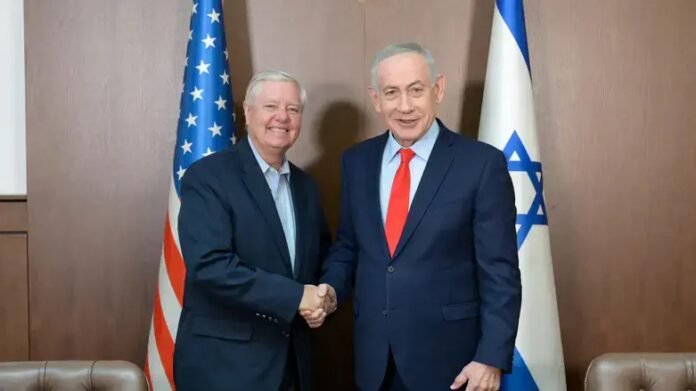
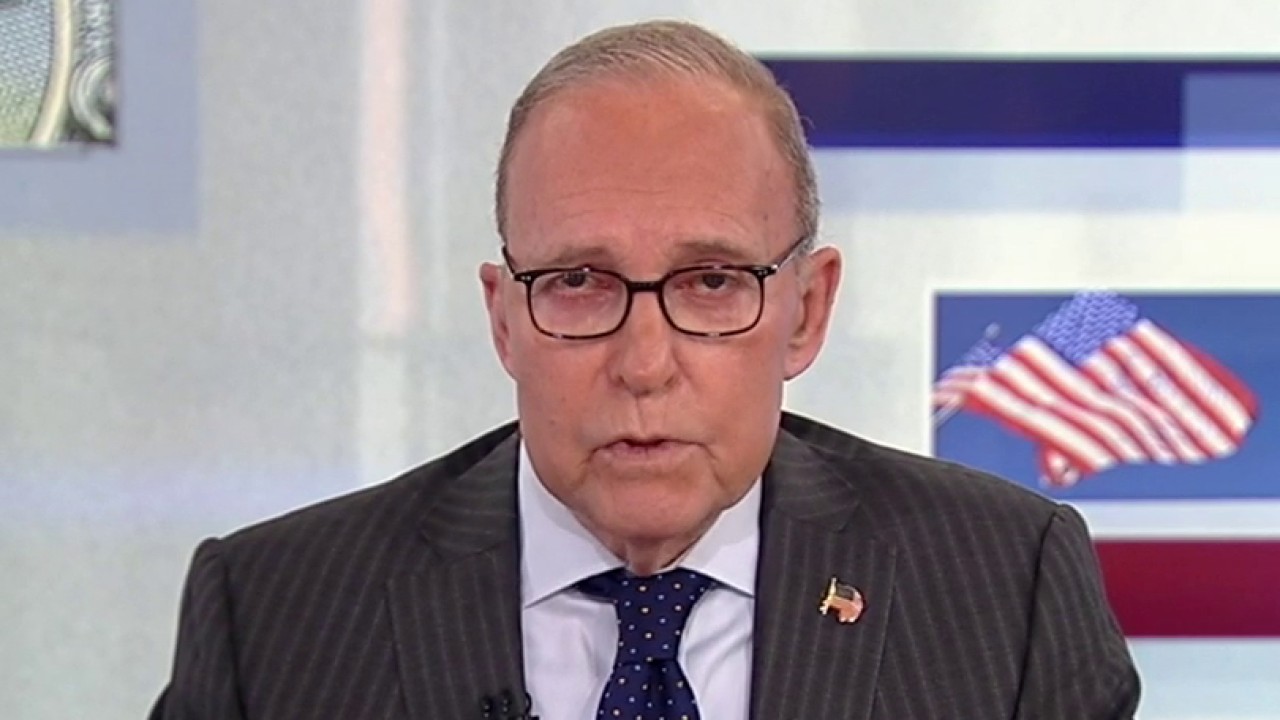
Senator Lindsey Graham was a great American patriot. He was a freedom fighter. He was a throwback to an older Republican party that shunned isolationism and understood that America must never retreat from its friends, its allies, or the cause of freedom.
He was a great friend of Israel at a time when far too many in American politics are turning away from Israel. And even retreating to a hateful bigoted antisemitism, that is plaguing the socialist leaning Democratic party today, and even I say with regret, infiltrating some extreme elements in the GOP.
On this and most things regarding foreign policy, Graham knew the difference between right and wrong, good and evil. He passed away Saturday. But he would not have been happy with the events that transpired Sunday in the Middle East.
Here’s how President Trump, a dear friend of Lindsey Graham’s, reported to Fox & Friends this morning: “So something that nobody knows. Yesterday they had an 11-hour meeting. Everything’s 11 hours with these guys. You know, you can’t settle one sentence in one hour and one minute. It should be one minute. And everything was agreed to yesterday.”
Mr. Trump added: “And they leave the room and they call back and they say we had to make a couple of changes. They got to make changes. We’re not going to make changes. Always changes. They just, you know, they’re professional negotiators. That’s all they are. I don’t even call them good at it. They haven’t gotten anything from me.”
If I understand the chronology here, yesterday meaning Sunday, according to Mr. Trump, there was an 11-hour meeting with Iran of course, and everything was agreed to. Presumably that means opening up the Hormuz Strait, and denuclearizing Iran, and moving the enriched Uranium out of that country. Then, the Iranians walk out of the room shortly after, call back and say we have to make some changes.
The next thing you know — we’re still on yesterday, Sunday — the Iranians hit an oil tanker in the Strait, and then proceeded to bomb Oman, Bahrain, Jordan, Kuwait, Qatar, and the United Arab Emirates. Six of our Gulf allies.
Presumably these decisions were made within an hour or two, after this 11-hour meeting agreement that turned out to be a complete lie. Which of course that’s what the Iranians do, they lie. It’s the nature of their immoral, gruesome, barbaric, Nazi-like regime.
Now, in response to that, as I understand the chronology here, reported by Mr. Trump, the commander-in-chief has decided the United States will become the guardian of the Strait of Hormuz, and restore the naval blockade on Iranian ports for Iranian ships. And later today, Mr. Trump posted on Truth Social that he will be making a Speech to the Nation on Thursday at 9 p.m. Eastern. Somehow it seems that the American response to Iran’s warfare escalation should be greater. Now we may hear about that Thursday evening, but not tonight.
And by the way, in addition to Iran’s repeated violation of the ceasefire, and the memorandum of understanding, by bombing oil tankers and our Gulf state allies and American military bases, our satellite pictures have discovered that Iran appears to be using the roughly $5 billion worth of oil sales given to them prematurely, to rebuild their nuclear installations at Pickaxe and Parchin Mountains.
To be sure, we bombed them heavily in recent days. And that’s important. And to be sure when you cross a red line with Mr. Trump, you will pay for it. Yet I would think the late Senator Graham would want even bigger strikes at Iran right now, this evening.
And perhaps those bigger strikes are in fact coming. I hope so. I knew Lindsey down through the years. I loved his wickedly hilarious sense of humor. And the good work he did as the budget chairman on one, big, beautiful bill last year.
By the way Senator Ron Johnson, a free market supply-sider, may well become the next Senate budget chairman. Wouldn’t that be something. Graham also defended Justice Brett Kavanaugh during his September 2018 Supreme Court confirmation hearings. He was not really an economic guy, and I never agreed with him and his gang of eight bipartisan attempts to solve immigration, or climate change, or other domestic matters. Yet when it came to defending America, and our allies, and the freedom that has made this the greatest country in the history of history, my hat’s off to the late senator, Lindsey Graham.

 The Lakewood Scoop5 hours ago
Make sure it’s never forgotten.
Book your Memory Session today.
https://www.ptsfilms.com/memory-sessions/
Wa.me/18482999228
 Yeshiva World News2 hours ago
Dozens of Russian intelligence officers expelled from Western countries following Russia’s invasion of Ukraine have resurfaced in Japan under diplomatic and commercial cover, turning the country into a key hub for acquiring sensitive technology for Moscow’s war machine, according to a New York Times investigation.
At the center of the network is a covert unit of Russia’s military intelligence agency, the GRU, known as the 20th Directorate. Current and former officials from five Western intelligence agencies told the newspaper that officers from the unit pose as diplomats and businessmen, purchasing or stealing sensitive technology for battlefield use and transferring it to Russia through shipping companies and third countries.
According to the officials, the unit existed before the war in Ukraine but became a central part of the Kremlin’s procurement effort after the invasion, seeking microchips, transmitters, weapons-manufacturing machinery, and advanced components whose export to Russia has been banned.
The operation in Tokyo is reportedly led by Maksim Vladimirovich Pilchenkov, a 49-year-old GRU officer officially employed by Russia’s state-owned airline Aeroflot. His office is located on the 22nd floor of a tower in central Tokyo, about a 10-minute walk from Japan’s National Police Agency headquarters. Pilchenkov arrived in Japan in February 2024, after previously serving there, and allegedly used his experience to establish relationships with shipping companies transporting goods from Japan to Russia.
The investigation states that GRU officers have used Aeroflot positions as intelligence cover for decades. Although Aeroflot has largely ceased operating flights to Japan because of difficulties obtaining spare parts and services, its local partners continue shipping cargo through countries where Aeroflot still operates, including Sri Lanka and Uzbekistan, before the goods are forwarded to Russia.
One of those partners is Japanese logistics company Proco Air, which describes itself as a “bridge between Japan and Russia.” According to Western intelligence officials, such shipping arrangements are essential to the 20th Directorate because the equipment only needs to reach a third country willing to resell or transfer it to Russia.
The report says Japan is the world’s largest exporter of some of the sensitive dual-use technologies Russia is seeking. It adds that Vietnam has become the largest destination for sensitive Japanese technology while simultaneously becoming the largest exporter of those same types of products to Russia.
Takehiko Miki, owner of Proco Air, said he met Pilchenkov in 2018 but only began working closely with him after his return to Tokyo in 2024. Miki denied knowingly assisting Russian intelligence and said his company ships only permitted goods, primarily medical equipment and cosmetics. However, a shipping document he provided to the newspaper showed medical equipment sent to Russia via Sri Lanka in March, and an unsuccessful attempt to conceal the recipient’s name revealed it was Russian pharmaceutical company R-Pharm.
While R-Pharm itself is not under sanctions, its founder, Alexey Repik, has been sanctioned by the United Kingdom, Canada, and Australia because of his close ties to Russian President Vladimir Putin and his support for Russia’s war effort. Proco Air has not been accused of any wrongdoing, and Miki said Japanese authorities have never contacted him regarding the shipments.
According to estimates by the Ukrainian government cited in the investigation, about 90% of the Russian missiles and drones examined contained Japanese-made components. After a Russian Kh-101 cruise missile struck a residential building in Kyiv in May, killing at least 24 people, investigators found that its guidance system contained a Japanese computer module despite export restrictions.
Ukraine has repeatedly provided Japan with evidence that Japanese components are being used in Russian weapons. In April 2025 alone, at least eight diplomatic letters were sent to Japan’s Foreign Ministry containing photographs and lists of electronic circuits, transmitters, and microchips recovered from Russian missiles and military equipment. At least eight additional letters were sent later that year.
The documents identified components made by Panasonic, Toshiba, and NEC. However, investigators found no evidence that the companies knowingly supplied products to Russia. The companies denied violating export restrictions, while NEC said the components identified were older models that had not been sold by the company for years.
Japan’s Ministry of Economy, Trade and Industry said it has warned companies about attempts to circumvent sanctions and has blacklisted dozens of foreign firms. Western governments have also shared intelligence with Tokyo regarding Russian procurement networks and companies suspected of helping transfer prohibited technology.
Despite those efforts, Japanese authorities have taken no action against Pilchenkov. According to the investigation, Japan has long been regarded as a “paradise for spies” because of weak espionage laws and restrictions placed on its intelligence services after World War II. The report also notes that Japan does not have an independent foreign intelligence agency.
Prime Minister Sanae Takaichi has begun expanding Japan’s intelligence capabilities and export controls. In January, Tokyo police exposed a Russian intelligence officer posing as a Ukrainian who allegedly attempted to steal trade secrets from a Japanese employee. Because Japan lacks a comprehensive espionage law, the Japanese employee was prosecuted under competition laws while the Russian operative had already left the country.
Pilchenkov declined repeated requests for comment from The New York Times. Reporters visited Aeroflot’s Tokyo office on three occasions, but each time were told he was either unavailable or unwilling to speak.
The investigation concludes that although Western countries expelled hundreds of Russian intelligence officers from Europe, Moscow did not abandon their operations. Instead, it relocated many of them to countries with weaker oversight and industries capable of supplying the technology needed to sustain Russia’s war effort.
(YWN World Headquarters – NYC)
 Matzav5 hours ago
Former Navy SEAL Matt Bissonnette is offering a fresh account of the 2011 raid that killed al-Qaeda mastermind Osama bin Laden, disputing several long-standing claims about the operation and describing how the elite assault team methodically carried out one of the most famous military missions in American history, Fox News reports.
Bin Laden was killed in May 2011 during a high-risk nighttime raid in Abbottabad, Pakistan, carried out by members of the U.S. Navy’s SEAL Team 6, who were flown into the country aboard helicopters operated by the Army’s 160th Special Operations Aviation Regiment.
The operation brought justice to the victims of the September 11 terrorist attacks and to the countless American servicemen and women who fought in the years of war that followed.
Although numerous books, documentaries, and media reports have attempted to reconstruct the mission, many aspects of the raid have remained classified or disputed, leaving room for competing accounts of what actually happened inside bin Laden’s compound.
Bissonnette, who participated in the operation, discussed the mission during a newly released interview with podcaster and former DEVGRU operator Andy Stumpf, sharing his perspective on several of the raid’s most controversial moments.
Among the issues he addressed was the widespread claim that bin Laden’s face was destroyed by gunfire. Bissonnette rejected that characterization, arguing that the available evidence would quickly settle the debate if the government ever released the photographs.
“The photos, if they ever got released, I don’t know, I think that would help clear some stuff up. I think you’d also see very quickly it’s high forehead shots. His face is not all [messed] up. You can very clearly see his bridge of his nose, whole face, mouth, mouth structure. Easily identifiable. The idea that there were extra shots or any of this that his face was distorted. Release the photos. High forehead shots,” Bissonnette said.
The former member of Red Squadron also revisited another hotly debated question surrounding the raid: exactly what happened when the lead operator reached the third floor of the compound and confronted bin Laden.
According to Bissonnette’s recollection, the point man—whose identity has never been publicly disclosed and is commonly referred to as “Red”—fired at bin Laden after seeing him appear in a doorway. Bissonnette said the operator then did what every SEAL is trained to do: advance toward the threat he had just engaged rather than abandon it.
Explaining why he rejects alternate versions of the story, Bissonnette told Stumpf:
“The shot that the pointman took, what SEAL out there is not going to follow his shots? Tactically, that is what we’re taught. Your threat matrix, what is your biggest threat out there? Unknown male…Everybody knew bin Laden most likely lived on the third floor. [The pointman] had just eliminated Khalid [bin Laden] on the second in the landing with a gun. You have to assume, right, the guy in the third floor is armed, right? So, he takes a shot. Enough within the rules of engagement to shoot that head, and he decides to stay in the hallway? He decides to come off the known threat that he just shot at and chase women and kids? What team guy is doing that? Why? Where? And then where are the women and kids? I’ve heard 38 different version from other people of where the women were. The women were in the room, right? That’s where the chick [Amal bin Laden] was wounded in the leg. Women were in the room. Not out of the room…You can pull up the sketches and layout of the third floor. Right up the set of stairs, open door on the right. Shots go, right? Point man follows his shots to the doorway. He doesn’t say in the hallway. He doesn’t come off of where he just shot at an adult male head in bin Laden’s compound in the third floor. Who is all of a sudden going to be like, ‘Okay, shoot. Okay, I’m going to go check this way.’ There’s nobody that does that. There’s not a team guy out there that does that. You follow your shots, and that’s exactly what he did. He entered the room.”
Bissonnette also spoke about the tactics employed throughout the operation, describing an approach that differed sharply from the fast-paced action sequences often portrayed in movies.
Rather than racing recklessly through the compound, he said the SEALs advanced deliberately while remaining alert for the possibility of suicide bombers, explosives, or other hidden dangers.
“The only sense of urgency was, okay, do they have [suicide vests]? Is the house rigged to blow? And are they prepping something? That’s still not dictating our tactics to just sprint upstairs. So, it was slow and methodical,” the former SEAL explained.
The interview comes as Bissonnette prepares to release his new book, No Easy Way, in which he further recounts his experiences in special operations and offers additional insight into the mission that ended the decade-long manhunt for the world’s most wanted terrorist.
{Matzav.com}
 Matzav
Related stories
 Matzav1 hour ago
 Vos Iz Neias3 hours ago
 Yeshiva World News3 hours ago
 Vos Iz Neias7 hours agoMatzav5 hours ago
President Donald Trump has thrown his support behind an unexpected candidate to temporarily fill the U.S. Senate seat left vacant by the death of Sen. Lindsey Graham, urging South Carolina Gov. Henry McMaster to appoint the late senator’s sister, Darline Graham Nordone, to serve until a special election is held.
In a post Monday on Truth Social, Trump said he had personally recommended Graham’s sister for the appointment, calling it a fitting way to honor the longtime senator.
“I recommended, to Governor Henry McMaster, Lindsey Graham’s wonderful sister, Darline, to serve as interim Senator from the Great State of South Carolina,” Trump wrote. “This would be a fabulous tribute to Lindsey, who loved her dearly!”
The recommendation carries added emotional weight because of the close relationship the siblings shared. After the deaths of their parents, Lindsey Graham legally adopted his younger sister and helped raise her.
Trump’s endorsement comes as South Carolina Republicans work behind the scenes to select an interim senator while also preparing for a special election to determine who will serve out the remainder of Graham’s term.
Gov. McMaster is expected to announce his appointment at 4 p.m. Monday but has so far declined to reveal his choice. His office has not publicly commented on the candidates under consideration.
Sen. Tim Scott, South Carolina’s senior senator, also voiced support for appointing Graham’s sister to the vacant seat.
“Lindsey Graham’s sister, Darline Graham Nordone, would be a fantastic pick to serve out the remainder of the Senate term,” Scott wrote on X. “After speaking with Darline, there is no one better who understands Lindsey’s love for family, our state, and our country.”
Earlier in the day, Scott had mentioned former Rep. Trey Gowdy and former Sen. Jim DeMint as possible interim appointees, emphasizing that he favored selecting someone who would simply hold the seat until voters could make the final decision in the upcoming election.
“I think in the next several hours or next day or so we’ll figure out who that person is,” Scott said. “I love Trey Gowdy and Jim DeMint has been in the conversation.”
He added, “[Graham’s] sister would be a wonderful placeholder as well. So we’ve got lots of candidates who could hold the place so that the voters decide. And remember the election starts August the 11th in South Carolina, three weeks from now, we’ll have a primary process.”
Both Gowdy and DeMint have previously served in Congress—Gowdy as a member of the House of Representatives and DeMint as a U.S. senator before Scott succeeded him. Darline Graham Nordone, by contrast, has never held elected office.
According to multiple sources familiar with the discussions, Scott, who serves as chairman of the National Republican Senatorial Committee, has been encouraging Gov. McMaster to appoint someone who would act solely as a caretaker and would not seek a full six-year Senate term.
While the contest to become the temporary senator appears to be nearing its conclusion, the Republican race for the seat itself remains unsettled. Reps. Nancy Mace and Ralph Norman have both signaled interest in entering the special election, which is scheduled to begin with a primary on August 11. Rep. Joe Wilson has already announced that he intends to remain in the House, while the rest of South Carolina’s Republican congressional delegation has yet to disclose its plans.
{Matzav.com}
Related stories
Matzav1 hour agoVos Iz Neias3 hours agoYeshiva World News3 hours agoVos Iz Neias7 hours ago
 Boropark246 hours ago
Yisroel R.
Tehillim is being requested for noted askan Reb Naftali Hersh Zahler, who suffered a serious heart attack this morning and was rushed to the hospital.
Reb Naftali Hersh is widely known for his extensive chesed work, particularly on behalf of the descendants of Reb Shayele Kerestirer, zt”l. Each year, he raises hundreds of thousands of dollars to assist families among the tzaddik’s descendants with wedding expenses and other needs.
He is also involved in numerous other important and notable causes, and has helped hundreds of individuals and families over the years.
Reb Naftali Hersh is undergoing a complicated heart procedure this afternoon, as Klal Yisroel continues to hope for a full and speedy recovery.
The public is asked to daven for Reb Naftali Tzvi ben Rachel Leah for a refuah sheleimah b’soch sha’ar cholei Yisroel.
 Vos Iz Neias4 hours ago
WASHINGTON D.C (VINnews) – President Trump will deliver a speech to the nation Thursday evening at 9 p.m. Eastern, the White House announced, hours after U.S. Central Command said it plans to resume a naval blockade on Iran.
The timing of the address, with its topic still unknown, has drawn widespread attention amid escalating tensions in the Persian Gulf. Officials announced the speech shortly after CENTCOM signaled renewed enforcement actions against Iran, set to begin Wednesday at 4 p.m. Eastern.
Trump posted on Truth Social earlier Monday about reinstating the blockade on the Strait of Hormuz, emphasizing U.S. commitment to keeping the vital waterway open while targeting Iranian shipping. He described the U.S. as the “Guardian of the Hormuz Strait” and indicated that a 20% toll on cargo could help offset security costs.
The developments come against the backdrop of fragile cease-fire efforts following months of conflict. Earlier this year, the U.S. had imposed and later lifted a blockade as part of interim agreements, but recent exchanges of strikes and Iranian actions in the strait prompted the reversal.
The nation will be watching closely as the president speaks from an undisclosed location. White House officials have not provided further details on the expected content of the address.
This story is developing. VINnews will provide updates as more information becomes available.
 Matzav4 hours ago
Knesset Foreign Affairs and Defense Committee Chairman Boaz Bismuth sharply criticized IDF Chief of Staff Lt. Gen. Eyal Zamir on Monday, questioning the timing of the chief’s letter opposing the temporary order that would freeze criminal proceedings against bnei Torah engaged in Torah study.
Bismuth argued that the chief of staff’s letter was sent to Defense Minister Yisrael Katz and Prime Minister Binyamin Netanyahu only Sunday night—after the committee had already completed its deliberations and approved the proposed legislation. He noted that the IDF had possessed the draft of the temporary order for approximately three weeks and that military representatives had participated throughout the committee’s discussions on the measure.
Bismuth stressed that the final version of the legislation was formulated in full coordination with officials from the Defense Ministry and even incorporated revisions made at their request. He said the committee took the unusual step of allowing the Defense Ministry to submit two objections after the official deadline had passed, and both were accepted and incorporated into the final draft.
According to Bismuth, the timing of the chief of staff’s letter raises serious questions.
“It is fair to ask why the letter was sent only after the committee had completed its discussions and vote, and why it was published specifically on the very day the bill is expected to come before the Knesset plenum,” he said. “If the goal was to improve the wording of the legislation, the IDF had ample opportunity to do so over the past several weeks.”
Bismuth also maintained that throughout the committee’s hearings, IDF representatives were unable to present a single case in which the arrest of a Torah student ultimately resulted in that individual being drafted into military service. He argued that this reality only strengthens the case for the temporary order approved by the committee.
 The Lakewood Scoop5 hours ago
Editor’s note: See last week’s response from Verizon.
 JBizNews4 hours ago
WASHINGTON — July 13, 2026 — The U.S. Department of Health and Human Services (HHS) has launched a sweeping national initiative to accelerate artificial intelligence innovation for Lyme disease, Alpha-gal syndrome (AGS), Long COVID, and other invisible illnesses, committing up to $2.5 million across multiple innovation challenges and a nationwide call to action designed to speed diagnosis, improve care, and transform federal open data into real-world healthcare solutions for millions of Americans.
At the center of the initiative is the TOPx HHS Tech Sprint for AI and Invisible Illness, a national innovation challenge offering up to $2 million in cash prizes, including a $1 million grand prize, in collaboration with the National Institutes of Health (NIH), the LymeX Innovation Accelerator, and the Federal CDO Council. Team Mobilization (Phase 1) submissions are due July 15, 2026.
As part of the initiative, HHS has appointed Duvi Honig, Founder and Chief Executive Officer of the Orthodox Jewish Chamber of Commerce, to serve on the competition’s evaluation panel, joining leaders from government, healthcare, technology, academia, research, and innovation to help evaluate submissions and advance the next generation of AI-powered healthcare solutions.
“It is an extraordinary honor to be appointed by Secretary Robert F. Kennedy Jr. to serve on the evaluation panel for this groundbreaking national initiative,” Honig said. “I look forward to working closely with Secretary Kennedy, HHS, NIH and leaders across government, academia, healthcare and technology to help usher in a new era of AI-driven innovation for American healthcare. Together, we have an opportunity to help shape the future of health technology in the United States, modernize our healthcare system, and advance innovations that improve patient outcomes across the Department of Health and Human Services. This includes accelerating earlier diagnoses, improving care for Lyme disease and other invisible illnesses, and developing solutions that will improve—and save—lives for generations to come.”
The U.S. Department of Health and Human Services (HHS) unveiled a sweeping plan to combat Lyme disease and advance treatment for millions of Americans living with Lyme disease, Alpha-gal syndrome (AGS, the “meat allergy”), Long COVID, and other complex chronic conditions that are often invisible illnesses.
As part of this effort, HHS launched up to $2.5 million across three TOPx and LymeX innovation challenges and a national call to action. Together, these digital innovation efforts will accelerate diagnosis, improve care, and transform federal open data into real-world solutions that improve health outcomes.
The TOPx HHS Tech Sprint for AI and Invisible Illness is a national innovation challenge and prize competition offering up to $2,000,000 in cash prizes, conducted in collaboration with the National Institutes of Health (NIH), the LymeX Innovation Accelerator, and the Federal CDO Council.
How might we use U.S. Open Data and AI to turn fragmented signals into trusted insights, so people living with Lyme disease, Long COVID, and other complex chronic conditions are believed earlier, diagnosed faster, and supported with care that works?
Inspired by the U.S. Census Bureau’s Opportunity Project (TOP) model, TOPx is a fast-paced technology sprint that brings together government, industry, academia, nonprofits, and the public to build digital-first solutions using open data and artificial intelligence.
The effort advances the President’s Management Agenda priority to deliver secure, digital-first services built for real people while eliminating data silos across government and advancing HHS priorities.
Participants will compete for up to $2,000,000 in prizes by using U.S. Open Data and AI to develop tools and insights that address the following focus areas.
No one should suffer years of uncertainty from a preventable tick-borne infection. How might we use U.S. Open Data and AI to detect Lyme disease earlier, diagnose faster, coordinate care, and improve patient outcomes?
What we don’t measure, we don’t treat—and women are disproportionately affected. How might we use U.S. Open Data and AI to make invisible illness visible, accelerate diagnosis, improve care, and create meaningful real-world impact?
Patients and families carry the burden in silence. How might we use U.S. Open Data and AI to quantify the full healthcare, economic, workplace, and family impact of chronic illness, making those costs visible, measurable, and impossible to ignore?
The competition is open to eligible U.S.-based:
Team Mobilization (Phase 1) submissions are due July 15, 2026.
HHS expects the sprint to catalyze dozens of practical tools, prototypes, and AI-enabled solutions within months—not years.
Participants may develop solutions that:
Enter the Challenge:
https://invisibleillness.crowdicity.com/hubbub/communitypage/23464
HHS Evaluation Panel Appointees:
https://invisibleillness.crowdicity.com/hubbub/communitypage/23498
Official HHS Announcement:
https://www.hhs.gov/press-room/hhs-unveils-plan-to-combat-lyme-disease.html
The TOPx HHS Tech Sprint is led by the U.S. Department of Health and Human Services, in collaboration with the NIH Office of Research on Women’s Health, the LymeX Innovation Accelerator, and the Federal CDO Council’s Data-Driven Government Working Group.
For additional information about the challenge, contact:
 The Lakewood Scoop3 hours ago
Many TLS readers have been wondering what JCP&L is doing at the substation on New Hampshire Avenue in Lakewood.
Officials tell TLS the tree clearing is to clean up some storm damage and make some upgrades to the mobile substation that is there.
The full upgrade – which is expected to boost reliability around Lakewood – is still in the planning stages, official said.
 Yeshiva World News6 hours ago
President Donald Trump announced Monday that the United States will immediately begin charging a 20% fee on cargo transiting the Strait of Hormuz, saying the revenue will compensate the U.S. for securing one of the world’s most vital shipping lanes.
In a post on Truth Social, Trump declared that the United States is now the “Guardian of the Hormuz Strait” and said the waterway “will remain OPEN, with or without Iran.”
Trump also announced the reinstatement of a U.S. blockade targeting Iranian shipping.
“The Hormuz Strait is OPEN, and will remain OPEN, with or without Iran. We are reinstating the THE IRANIAN BLOCKADE, so named because it is only stopping Iran’s ships or customers from entering or leaving. All other countries will have fair and open use of the Strait,” Trump wrote.
He added: “The U.S.A. will be, from this point forward, known as ‘THE GUARDIAN OF THE HORMUZ STRAIT,’ but as such, and as a matter of FAIRNESS, will be reimbursed, at the rate of 20% on all cargo shipped, for any and all costs necessary to do the job of providing safety and security to this very volatile section of the World. The process and formation will begin immediately.”
The announcement came as the ceasefire between the United States and Iran continued to unravel, with tensions escalating once again in the strategic waterway.
Shortly after Trump’s announcement, the International Maritime Organization (IMO) issued a statement saying passage through the Strait of Hormuz “should remain free of any tolls and charges, in accordance with international law.”
The IMO reaffirmed that the right of transit through international straits “should not be threatened, impeded, denied, hampered, impaired or suspended,” while condemning attacks on civilian commercial vessels and calling for de-escalation in the region.
The organization also said that any measures regulating traffic through vital shipping lanes should comply with IMO regulations under the International Convention on the Safety of Life at Sea (SOLAS).
(YWN World Headquarters – NYC)
 Yeshiva World News34 minutes ago
Iran is struggling to meet electricity demand during an intense summer heat wave after attacks during the war severely damaged the country’s power infrastructure, according to Iranian officials.
Mostafa Rajabi Mashhadi, CEO of Iran’s Power Generation, Transmission and Distribution Company (Tavanir), said attacks since the start of the conflict knocked approximately 4,200 megawatts offline and damaged more than 2,000 sites across the national electricity network.
According to Iranian state media, Mashhadi estimated the damage to the country’s power grid and electrical equipment at more than 60 trillion tomans, or approximately $332 million.
He said the destruction comes as soaring summer temperatures are placing additional strain on the electrical system and urged the public to conserve electricity in the coming days.
Iranian authorities have also announced scheduled rolling blackouts across the country, with outage schedules being published two days in advance. Residents of Tehran have complained of repeated power outages and insufficient notice from the state utility.
While electricity shortages have plagued Iran for years, officials now acknowledge that the situation has worsened significantly following the damage sustained during the war with the United States.
(YWN World Headquarters – NYC)
 Yeshiva World News3 hours ago
An undercover operation by Israel Police led to the dismantling of an illegal paid transportation network operating in eastern Jerusalem, with five suspects taken in for questioning.
The investigation, conducted by detectives from the Jerusalem District Traffic Division, focused on the Shuafat Crossing area, where authorities said private drivers had been illegally transporting passengers for payment without the licenses or permits required by law.
As part of the operation, an undercover police officer posed as a passenger seeking a ride and secretly documented drivers accepting cash fares. Investigators said the evidence confirmed the suspects were operating unauthorized transportation services, leaving passengers without the insurance coverage required for licensed commercial transportation.
Once the covert phase concluded, police moved in and detained five drivers, all residents of eastern Jerusalem, for questioning.
Police said they will continue targeting illegal transportation operations, warning that beyond violating the law, unlicensed paid transportation can place passengers at significant risk due to the lack of proper insurance coverage.
(YWN World Headquarters – NYC)
 Matzav39 minutes ago
Acting on instructions from the city’s leading rabbanim, the Bnei Brak Municipality is preparing to implement gender-separated sidewalks along Shlomo HaMelech and Ezra Streets, home to several popular wedding and event halls. The stated goal of the initiative is to “prevent encounters between men and women.” City officials said, “The rabbis’ letter speaks for itself.”
According to the report, the municipality is moving forward with plans to carry out a directive issued by prominent rabbanim calling for complete gender separation along the sidewalks of the two streets. The proposal includes physical changes to the public space, including signs and designated sidewalks for men and women, with the aim of ensuring that the two do not walk along the same side.
The official directive, which was released to the public, instructs that all residents—adults and children alike—be informed of the policy and educated to observe it carefully. The need for the separation, according to the directive, stems from the heavy pedestrian traffic created by guests attending events at the nearby wedding halls.
Municipal officials said the plan has been under discussion for several years. They added that the proposal is not necessarily limited to these two streets and could eventually be expanded to other crowded thoroughfares in the city, similar to arrangements found in other chareidi population centers.
The initiative appears to conflict with previous rulings by Israel’s Supreme Court, which has barred the installation of gender-separation signs in public neighborhoods. One such ruling followed a widely publicized dispute in Beit Shemesh that sparked fierce controversy. In this case, however, the initiative is being advanced by the mainstream chareidi leadership in Bnei Brak.
Responding to the report, city officials said, “The rabbis’ letter is very clear and speaks for itself. The city’s residents, who faithfully follow the guidance of the gedolei Yisroel and heed their instructions, will comply with their request.”
Yael Yechieli, director of the 5050 Initiative, sharply criticized the proposal. “Throughout all the years of our struggle against gender segregation, we warned that there would be no end to the demands for separation, and that it would eventually reach the streets. It will never stop. It started with buses, continued with events, then academia, and now sidewalks. The community’s rabbis want to exclude women from every place, and if we don’t stop them, it will only continue. The monster of segregation is never satisfied. It is important to emphasize that only men were sitting around the Bnei Brak Municipality’s decision-making table. Is it possible that if 50% of those present had been women, a different decision would have been made? The disaster of segregation must end, and the public must fight against it.”
 Yeshiva World News19 minutes ago
A dramatic shift in the Shin Bet’s position has prompted the state to seek the cancellation of a Supreme Court hearing scheduled for Tuesday after Shin Bet Director David Zini and his deputy concluded that they no longer see a legal obstacle to registering the Kahanist party “Complete and Strong Jewish Israel,” according to a report by Channel 13 News.
The case centers on a petition filed by Yechezkel Yaakov Hasson against the Registrar of Political Parties. The state submitted an urgent request on Monday to cancel the scheduled hearing after Zini and his deputy sent a notice Sunday night expressing reservations about the factual basis that had previously been used to oppose the party’s registration.
Their position marks a significant departure from the stance taken by the Shin Bet under former director Ronen Bar, when the agency supported rejecting the party’s registration over concerns it could promote unlawful activity.
Last month, the Registrar of Political Parties rejected the party’s registration based on intelligence and legal assessments prepared by the Shin Bet during Bar’s tenure. With Zini now distancing himself from those assessments, the report says the Registrar’s position has been fundamentally undermined.
In the urgent filing to the Supreme Court, the Registrar argued that the legal proceedings cannot continue until the original decision is reexamined. According to officials familiar with the matter, the factual foundation on which the decision was based—the Shin Bet’s legal opinion—has now changed dramatically following the intervention of the agency’s current leadership.
As a result, the state is asking the Supreme Court to cancel Tuesday’s hearing while the Registrar conducts a fresh review of the decision to deny the party’s registration.
(YWN World Headquarters – NYC)
 JBizNews2 hours ago
Homebuyers searching for a bargain have made a Pennsylvania port city one of the hottest housing markets in the country.
Erie, Pennsylvania, is situated on Lake Erie and is the home of Pennsylvania’s only Great Lakes port and the community’s affordability and quality of life have helped vault it up the rankings of Realtor.com’s hottest housing markets.
The June edition of the hottest housing markets report ranked Erie second in the country, trailing only Hartford, Connecticut, which topped the list for the second consecutive month. The report gauges demand based on unique views per property on the Realtor.com platform, along with the pace of the market based on the number of days a listing remains active online.
In June, Erie attracted 3.3 times the national average number of viewers per property, while the average listing was sold in just 29 days – the same as Hartford and six days faster than a year ago. By contrast, the median U.S. home was on the market for 53 days before being sold in June.
“The hotness in Erie is largely fueled by significant inventory scarcity,” said Realtor.com senior economist Hannah Jones.
“While other markets have seen some progress in inventory availability, Erie continues to see falling levels of for-sale listings. As a result, the market continues to heat up relative to the rest of the country,” she said.
Erie, which has a population of about 91,000, has a median listing price of $239,000 – a level that’s about $200,000 lower than the national median and is roughly half of Hartford’s.
That made Erie the second most affordable city in the country among the 20 hottest housing markets, behind only Binghamton, New York, which had a median home price of $227,000 last month.
“For buyers looking to be in the Great Lakes region, Erie may be top of the list with appealing quality-of-life amenities and widespread affordability.”
Realtor’s report noted that the Northeast and Midwest continue to dominate the top 20 hottest housing market rankings, with 16 of the high-demand communities being located in the Northeast.
Nationally, median list prices declined 2.5% year over year in June, and pending home sales moved higher for the seventh straight month.
“That combination of falling prices and rising contract signings signals that sellers are meeting buyers where they are,” Jones said. “Sellers who are pricing realistically are being rewarded with engagement.”
 Yeshiva World News4 hours ago
Israel’s Education Ministry is examining whether to halt millions of shekels in funding to the Secondary School Teachers Association over suspicions that the organization falsely registered approximately 2,000 teachers who were not actually members in order to receive funding for them, Kan News reported.
The review comes amid a public dispute between Education Minister Yoav Kisch and the association’s chairman, Ran Erez. Kisch’s office maintains that the examination began several months ago, while the teachers association claims it is retaliation for its campaign against the minister.
“Ran Erez is once again choosing the path of threats, intimidation and political campaigns on the backs of teachers, while wasting millions of shekels of their money,” the Education Ministry said in response.
“The education minister is committed first and foremost to the teachers, the students and the education system, and will not allow them to be harmed. The school year will open as scheduled,” the ministry added.
The Secondary School Teachers Association said it was unaware of any investigation of any kind and argued that, had such an examination existed, the organization would have been informed before the media.
“It is not surprising that instead of confronting a major campaign over his failed performance and improving his work, the education minister is attempting to misuse his governmental power and seek refuge in false accusations and smears, in the form of an ‘investigation’ that suddenly appears with perfect timing following the campaign, in an attempt to silence the teachers,” the association said.
“The Secondary School Teachers Association operates lawfully, under the constant supervision and oversight of the Education Ministry, the Finance Ministry and the Registrar of Associations. There has never been any problem with its reports, which have always received confirmation of proper reporting and sound management,” it added.
Last week, Erez threatened to shut down the high-school education system during the coming school year unless teachers are paid for the June 8 workday during what has been dubbed the “17-hour war” with Iran. The phrase refers to the brief round of fighting with Iran that lasted roughly one day; schools were ordered closed that day, including for remote learning, and the Finance Ministry later instructed that teachers not be paid for it.
At a press conference, Erez sharply criticized Kisch, saying: “It would have been better had he done nothing, because then he would not have caused damage. We are heading to a bad place. There are no teachers, and there is no teacher training. The education minister is engaged in politics and headlines alone. He is the first minister who did not consult with us or speak with us.”
Kisch’s office responded at the time: “After more than 30 years of Ran Erez heading the Secondary School Teachers Association, it is difficult to point to a single significant achievement he secured for teachers. His main legacy is threats, recycled headlines and strikes.”
“Instead of strengthening the status of teachers, he repeatedly chooses low-level discourse, personal smears and unrestrained attacks against every education minister who has served, while turning Israel’s students into hostages in his personal battles and severely harming the continuity of their studies and the education system as a whole,” the minister’s office said.
(YWN World Headquarters – NYC)
 Matzav4 hours ago
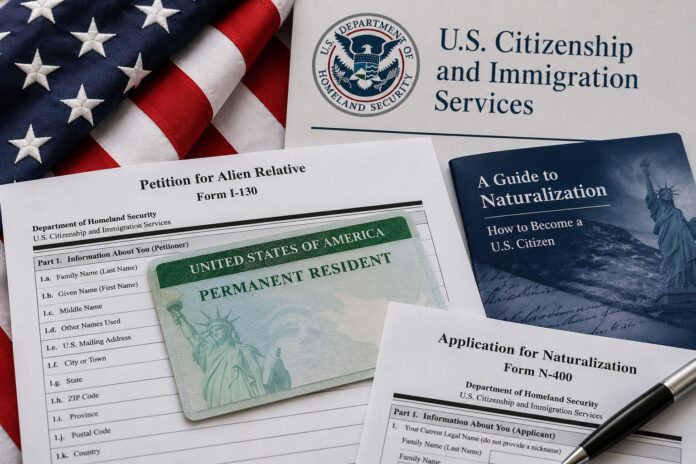
Sen. Jim Banks, R-Ind., is set to introduce legislation Monday that would eliminate birthright citizenship for children born to illegal immigrants and foreign nationals who enter the United States for so-called birth tourism, arguing that such individuals qualify as “invaders” under federal law.
The proposal comes after last month’s Supreme Court decision dealing a setback to President Donald Trump’s executive order seeking to restrict birthright citizenship. Trump has since urged Senate Republicans to move more aggressively on his legislative priorities, including changes to birthright citizenship, saying they were “not fighting hard enough,” Banks recalled in an interview with Human Events on June 30.
Banks told Fox News Digital that he plans to introduce the Citizenship Act shortly after the Senate convenes Monday afternoon. He said the legislation was crafted in light of Justice Brett Kavanaugh’s concurring opinion in last month’s Trump v. Barbara decision.
Although Kavanaugh agreed with the Court’s judgment in part, he wrote that while Trump’s executive order conflicted with existing federal birthright citizenship law, Congress has the authority to amend that statute and establish additional exceptions.
The Citizenship Act would classify children of individuals deemed statutory “invaders” as ineligible for automatic U.S. citizenship at birth. It would also codify portions of President Trump’s 2025 executive order that characterized illegal immigration as an invasion.
According to the bill’s summary, “any person who enters the United States without authorization or for the purpose of engaging in birth tourism is considered an invader…” It would amend the Immigration and Nationality Act to deny birthright citizenship to the children of such “invaders.”
Banks bases that terminology on Trump’s executive order describing illegal immigration across the southern border as an “invasion.” He argues that the Supreme Court’s Barbara ruling left open the possibility for Congress to address the issue legislatively.
Rather than pursuing a constitutional amendment or attempting to overturn Supreme Court precedent, the legislation seeks to revise federal law by incorporating Trump’s declaration of an invasion while relying on exceptions recognized in existing birthright citizenship jurisprudence to deny citizenship to children of illegal immigrants and birth tourists.
In his opinion, Kavanaugh concluded that Trump’s executive order did not violate the 14th Amendment itself but conflicted with a federal statute governing birthright citizenship. He suggested that Congress could revise that statute, noting that the law was originally enacted in the spirit of the 14th Amendment, which many conservatives argue was intended primarily to protect formerly enslaved people and their descendants.
Chief Justice John Roberts, writing for the majority, relied heavily on the Supreme Court’s 1898 decision in United States v. Wong Kim Ark, which he said “guarantee citizenship to all children born in the United States and subject to its power.” Banks’ legislation, however, seeks to rely on exceptions discussed in that same decision to argue against extending birthright citizenship to the children of illegal immigrants and birth tourists.
In the Wong Kim Ark ruling, Justice Horace Gray wrote that exceptions included the children of diplomats, “enemies within” and those engaged in hostile occupation of U.S. territory who are not “bound to render obedience to the sovereign [U.S. government] whose domains are being invaded.”
Banks contends that because the Court reaffirmed the Wong Kim Ark precedent while acknowledging those exceptions, Congress can use the same framework to redefine who qualifies for automatic citizenship.
“The Supreme Court’s birthright citizenship decision was an unprecedented assault on American sovereignty, and we must do whatever it takes to save our country,” Banks told Fox News Digital.
“I’m leading the Citizenship Act to reverse the effects of this consequential ruling and ensure the millions of illegal aliens that invaded our country can’t continue to exploit our immigration system.”
Banks also points to the Court’s decision in U.S. v. CASA, another 2025 case involving the Trump administration. In a separate opinion, Justice Sonia Sotomayor wrote that “children born of alien enemies in hostile occupation” are not entitled to birthright citizenship, although she did not classify illegal immigrants as the type of “invaders” referenced in the earlier precedent.
The legislation further argues that the Constitution supports congressional authority in this area. Banks notes that Article IV obligates the federal government to “protect each [state] against invasion,” while Article I grants Congress the authority to “establish a uniform rule of naturalization.”
The bill also cites James Madison’s writings from 1788, in which he argued that the Constitution vested the power over naturalization in Congress through a single national standard rather than leaving the issue to individual states.
Banks additionally argues that some Mexican nationals have viewed migration into the United States as a means of reclaiming territory ceded to the U.S. under the 1848 Treaty of Guadalupe Hidalgo following the Mexican-American War.
The legislation also cites Chinese birth tourism, alleging that the practice has been encouraged by the Chinese Communist Party. Banks argues these examples demonstrate that birthright citizenship has become intertwined with broader issues of national sovereignty, illegal immigration, and foreign influence.
{Matzav.com}
 The Lakewood Scoop1 hour ago
Bethel Church Road – Scheduled Roadwork & Detours
Location: Bethel Church Road (from South New Prospect Road to the Howell Township border)
Effective Date: July 20, 2026
Construction is scheduled to begin on July 20, 2026 (weather permitting) as Jackson Township moves forward with important roadway and pedestrian safety improvements on Bethel Church Road.
Sidewalk construction and related improvements are expected to take approximately 6–8 weeks, weather permitting.
The contractor will begin at the east end of the project near the Howell Township border and progress west toward South New Prospect Road.
During this phase, motorists should expect the following traffic patterns:
Alternating Traffic
Eastbound Traffic Detour
Please Note: To minimize congestion and prevent backups at the South New Prospect Road intersection, these traffic patterns and detours are subject to change at the discretion of the Jackson Township Police Department Traffic Safety Unit.
Motorists are encouraged to use alternate routes while work is underway. An enclosed map shows the detour route available for drivers wishing to avoid the construction area.
Roadway milling and repaving will follow in the fall. During that phase of the project, both directions of traffic will be detoured overnight to allow crews to work safely and efficiently while minimizing impacts to the traveling public. The Township will provide additional updates as that work approaches.
Please follow the Jackson Township Police Department for the latest traffic advisories, road closure notices, detour information, and construction updates.
 The Lakewood Scoop38 minutes ago
The funeral procession for Lakewood Fire Chief Richard “Dick” Wallace passed by Engine Company #1 one final time today as firefighters gathered to pay their respects before he was laid to rest at Woodlawn Cemetery in Lakewood.
A fireman’s service was held Sunday afternoon at the funeral home in Jackson. The funeral service was held this morning, followed by the procession through Lakewood before finally arriving at the cemetery, where Chief Wallace was honored with military honors for his service in the United States Air Force.
Chief Wallace, who dedicated decades of service to the Lakewood Fire Department, was remembered by fellow firefighters, family, and friends for his commitment, leadership, and dedication throughout his many years of service.
Drone Video by Chaim Bhatia Studios for TheLakewoodScoop.com
 JBizNews1 hour ago
Electric-aircraft maker Beta Technologies said Friday, July 10, that it completed the first operational flights in the federal government’s electric air-taxi pilot program, using its all-electric plane to carry manufactured transplant organs between airports in Maryland and Virginia. The announcement came in a company release quoting founder and chief executive Kyle Clark, who framed the trips as proof that everyday medical deliveries can move by electric flight at far lower cost.
The flights, which totaled about 275 nautical miles, moved organs produced by United Therapeutics, a longtime Beta customer that has for years looked for faster ways to transport organs intended for human transplant. “Today’s successful missions set the stage for routine medical applications through electric flight at a much lower cost nationwide,” Clark said. The trips were flown with Beta’s ALIA aircraft, the conventional-takeoff model that lands like a regular plane rather than lifting off vertically.
The mission marks the real-world start of a program the industry has been waiting on since the spring. President Donald Trump created the effort through an executive order last year, and the Department of Transportation and Federal Aviation Administration announced the first project selections in March. The three-year initiative spans eight projects across 26 states and lets companies fly aircraft that have not yet earned full FAA certification, gathering the operational data regulators need to write permanent rules. Officials had said flights would begin this summer; Beta’s Friday missions are the first to actually get off the ground.
Beta is the most active participant by a wide margin, selected for seven of the eight projects — more than any competitor. That reach is central to the business case Clark has pitched to investors. When the selections were announced, he said the program would let Beta begin aircraft operations a full year earlier than planned, and the stock jumped nearly 12% that day. The company’s projects range from medical equipment runs across Vermont’s Lake Champlain to cargo and offshore energy flights along the Gulf Coast to a dozen operational concepts with the Port Authority of New York and New Jersey, including one based at a Manhattan heliport.
For the broader industry, the practical appeal is the chance to fly commercially useful missions before certification, which has proven slow and expensive to obtain. Beta’s own eVTOL aircraft — the vertical-takeoff model most people picture when they hear “flying taxi” — is not expected to be certified until 2028. Its conventional-takeoff plane is on track for 2027. The pilot program effectively lets the company build a track record and a customer base in the gap, moving cargo, medical supplies and eventually passengers while the paperwork catches up.
The financial backdrop is far less cheerful than the flight footage. Beta shares have lost roughly half their value since the company’s initial public offering in November, which raised about $1.1 billion. The pain is industry-wide: rivals Joby Aviation and Archer Aviation are each down more than a third this year, and the United Kingdom’s Vertical Aerospace has shed 68% of its value. Appetite for the sector has cooled as investors wait for revenue to catch up with the promises, and some companies are tangled in court battles that have pushed timelines further out.
Revenue remains thin for now. Beta earned $35.6 million last year, with government contracts and United Therapeutics historically accounting for nearly all of it. The company has been working to broaden that base — selling its electric motors to other aircraft makers, including a roughly $1 billion motor deal with Eve Air Mobility, and installing charging stations at airports around the country. Customers such as UPS and Air New Zealand have placed firm orders for nearly 300 aircraft worth more than $1 billion, with options for hundreds more, but those deliveries depend on the same certification milestones still years away.
The organ-transport flights point to where the near-term money most likely sits: not glamorous downtown air taxis, but quiet, high-value cargo runs where speed and cost genuinely matter. Hospitals and organ networks operate on tight clocks, and a cheaper, cleaner way to move a transplant across a metro area is a concrete business, not a concept video. Whether that early revenue arrives fast enough to steady Beta’s share price — and the sector’s — is the open question. Friday’s flights answered a different one: after years of promises, the aircraft are finally carrying real cargo for real customers under a federal program built to get them there.
JBizNews Desk | Burlington, Vt. © JBizNews.com All Rights Reserved. Reproduction or distribution without written permission is prohibited.
 The Lakewood Scoop6 hours ago
To the Editor,
As bein hazmanim approaches once again, I want to raise an issue that deserves more attention from our community: the need for greater awareness and preparation around safety during this break.
For so many bochurim and yungeleit, bein hazmanim is a welcome change of pace after months of intensive sedorim. But that same shift — less structure, more travel, later nights, unfamiliar activities — is exactly what makes this period higher-risk. Every year we hear of tragedies during bein hazmanim: car accidents on long trips and drowning incidents at pools and lakes.
Sadly, this is not theoretical. Past years have brought real tragedies during bein hazmanim — losses that shook entire communities and that many of us still think about. We owe it to those neshamos, and to our own families, to do everything we can to avoid a repeat this year.
I’d like to see more organizations, rabbanim, and parents treat bein hazmanim safety as seriously as we treat safety during the zman itself. A few concrete ideas:
Parents and Roshei Yeshiva should know where their bochurim are going — which trips, which chevra, which destinations — rather than leaving it vague. A simple conversation before bein hazmanim starts can make all the difference if something goes wrong and someone needs to be reached quickly.
Ask what activities are actually planned. Are they doing anything higher-risk, like ATVing, off-roading, or other extreme sports? These activities have caused serious injuries and worse in past years, and too often parents only find out afterward. A little bit of upfront knowledge lets parents raise concerns or set ground rules before, not after.
None of this is meant to cast a shadow over what should be a refreshing and meaningful break. But a few honest conversations and some basic precautions before the zman ends could prevent heartbreak. We’ve seen what happens when we don’t take these steps seriously.
Let’s make this bein hazmanim great again — full of simcha, achdus, and, above all, safety.
a concerned yid
 Matzav
Related stories
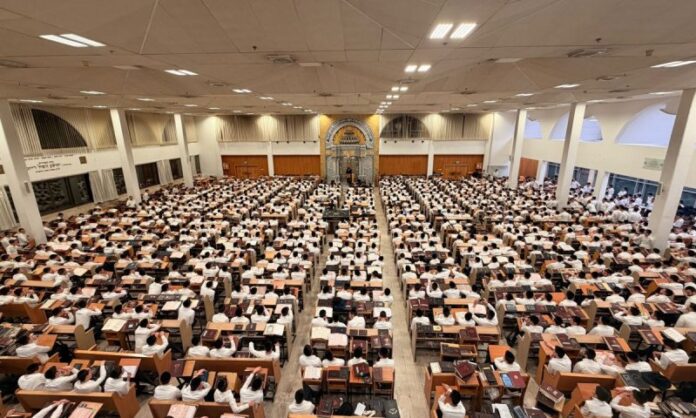
Matzav3 hours agoIn a landmark decision, the Knesset on Monday night gave final approval to the Basic Law: Torah Study, formally establishing that “Torah study is a foundational value in the heritage of the Jewish people and in the State of Israel.” The legislation, introduced by Degel HaTorah chairman MK Moshe Gafni, passed its second and third readings, making it one of Israel’s Basic Laws.
Prime Minister Binyomin Netanyahu did not participate in the final vote.
Celebrating the bill’s passage, Gafni described it as “a historic step in the State of Israel.”
“For thousands of years, Torah study has been the force that preserved the Jewish people throughout the Diaspora and across every generation,” Gafni said. “From this day forward, the State of Israel has also established, through a Basic Law, that Torah study is a foundational value in the heritage of the Jewish people and in the State of Israel.”
He continued: “The matter has now come to pass. The Jewish state is reconnecting with the eternal values upon which the Jewish people were built throughout the generations. This Basic Law will serve as the nation’s moral compass, expressing the recognition that Torah study is not merely a legacy of the past, but the very foundation upon which the present and future of the Jewish people in their land rests.”
Shas chairman Aryeh Deri also welcomed the legislation, declaring: “Moshe is truth and his Torah is truth! Today we have written a historic chapter in the State of Israel. For the first time, the Jewish state recognizes the supreme value of the holy Torah and the status of those who dedicate themselves to its study.”
Deri added that “the Torah is the foundation of the Jewish people’s identity. It sustained us throughout thousands of years of exile, inspired our longing to return to the Land of Israel and establish an independent Jewish state, and continues to give meaning to our existence here today.”
He went on to say: “This is a victory for the Torah world and a clear answer to the ousted attorney general and to everyone who sought to persecute and humiliate the bnei yeshivos. You will not break the Jewish spirit. The holy Torah will prevail.”
MK Yaakov Asher likewise praised the law’s passage, quoting Rav Saadia Gaon: “As Rav Saadia Gaon said, ‘Our nation is a nation only through its Torah.’ This is the path on which we were raised and which has accompanied the Jewish people for thousands of years—the Torah is the source of our existence, our identity, and our strength.”
Asher emphasized that for the chareidi community, Torah study is “a way of life,” adding that “the world of the yeshivos and batei medrash is the pure flask of oil of the Jewish people and the place where the chain of generations that sustained our nation through even its most difficult periods has been preserved.”
He concluded by citing the verse: “Not by might, nor by power, but by My spirit, says the Lord of Hosts.”
{Matzav.com}
 Vos Iz Neias3 hours ago
PARIS (VINnews) – Marine Le Pen, the leader of France’s National Rally, has become the favorite to win the country’s next presidential election after a Paris appeals court reduced her ban on holding public office, clearing her path to run in 2027, betting markets and polls indicate.
The ruling, issued July 7, upheld Le Pen’s conviction for misusing European Parliament funds but shortened penalties in a way that made her eligible for the April 2027 vote. Le Pen promptly announced her candidacy and said she would appeal the decision to France’s highest court.
The appeals court reduced Le Pen’s ban on holding public office from five years to 45 months, with much of it suspended and backdated, meaning the effective period had already been served. She was sentenced to three years in prison — two suspended — with the remaining year to be served under house arrest with an electronic ankle tag, along with a 100,000-euro fine. Le Pen has said the appeal suspends the tag requirement, allowing her to campaign freely.
Le Pen, 57, who has run for president three times without success, is now leading or surging in opinion polls. A recent Ifop survey showed her at 36% in the first round, ahead of potential rivals, with projections of victory in a runoff. Polymarket betting odds also shifted sharply in her favor following the court decision.
The development marks a significant boost for the right-wing National Rally, which has gained traction on issues including immigration and national identity. A Le Pen victory would represent a major political shift in France and Europe.
President Trump previously drew parallels between Le Pen’s legal troubles and cases against him, describing actions taken against her as similar to efforts targeting him in America.
Le Pen has denied wrongdoing in the embezzlement case, which involved allegations of diverting EU funds intended for parliamentary assistants to pay party staff. She has vowed to continue fighting the conviction while pressing forward with her campaign.
The first round of the presidential election is scheduled for April 18, 2027, with a potential runoff on May 2. Much could change in the coming months, but Le Pen’s position has strengthened considerably in the wake of the court’s decision.
 Vos Iz Neias2 hours ago
BIDDEFORD, Maine (AP) — The motorist killed by ICE officers in a Maine shooting Monday was not the target of the warrant the officers were executing, Sen. Angus King said Homeland Security Secretary Mullin told him.
It’s the second time in a week that U.S. Immigration and Customs Enforcement agents have used deadly force and at least the ninth since President Donald Trump began his immigration crackdown.
Immigrant rights groups identified the man who was killed as a 26-year-old native of Colombia.
King said Mullin told him the officer opened fire after the man tried to use his vehicle as a weapon against officers who were pursuing him in Biddeford, a coastal city roughly 15 miles (24 kilometers) southwest of Portland.
“He was in a vehicle — pulled out in the vehicle, and the term the secretary used was ‘weaponized’ the vehicle and was shot by an ICE agent,” King said.
The Maine attorney general’s office, which is investigating along with the FBI and other agencies, said initial statements suggest the motorist was trying to flee in the direction of the agent. The office had said the man was the target of a deportation operation, and the agent who killed him has been placed on leave.
The U.S. Department of Homeland Security Office of Inspector General did not immediately respond to a request for comment.
Messages seeking comment were left for ICE and the Maine Department of Public Safety.
Daniel Boucher said he looked out his third-floor window after hearing a “pop, pop, pop” sound and saw a small car “turned 90 degrees to the curb” with an SUV behind it. The driver was wounded and the car started moving down the street until the SUV hit it again, Boucher said.
“His face was bloody. His head was bloody,” Boucher said, getting choked up. “I clearly heard the victim say, ‘I tried to stop’ — clearly heard him say that.”
Boucher said he saw an ICE officer bring a medical bag to where the man was lying before an ambulance and fire truck arrived. At one point, Boucher said, the agent who shot the man walked close to him.
“I was emotional and I just let him have it, and he looked at me and said, ‘He tried to run me over,’ or something to that effect,” Boucher said. “I don’t remember his exact words.”
The man was authorized to work in the US, advocates say
Two advocacy groups, the Maine Immigrants’ Rights Coalition and Presente!, said the man who was killed was authorized to work in the U.S. and had a Social Security number.
After the shooting, his family contacted the Immigrants’ Rights Coalition, but they aren’t ready to speak publicly about the shooting, said the group’s executive director, Mufalo Chitam.
Mary Hayes, who lives close to where the shooting happened, said the man lived nearby with his wife and daughter.
“I watched a wife fall to her knees looking at her husband’s dead body on the ground,” Hayes told the AP as she held a piece of cardboard with “No ICE Stop ICE” written on it. “I watched a little girl crying with a little pink backpack on because she’s never going to see her father again.”
The Colombian Embassy said it is in contact with U.S. authorities and “working to formally confirm the individual’s identity and nationality.”
Security video but no body-worn camera footage
Cory Poulin, whose family runs a laundromat near the scene, told the AP that security cameras at the business captured footage of the man’s car rolling into the intersection after shots were fired. Other images from the scene showed the car going in circles and bullet holes in its windshield.
He said Maine State Police asked that he not release the footage publicly.
The agents involved in the shooting didn’t have body-worn cameras, King said.
“The question is, what did he do with his vehicle,” King said. “Were officers threatened? Were the threats rising to the level that justified deadly force?
“That’s what this investigation is all about and I certainly intend to stay after it to do everything I can to be sure the investigation is as transparent and thorough as possible.”
Anti-ICE protesters gather near the scene
Dozens of demonstrators critical of ICE and President Donald Trump’s ongoing immigration crackdown gathered in Biddeford within hours of the shooting.
Amy Goodman, who is from nearby Wells, arrived with a sign that said “Stop Killing Us” and directed it toward police working at the scene.
“Sadly, it’s something we’re seeing a whole lot more often lately, and I’m mad about it,” said Goodman, who was wearing a shirt that said “ICE is best when crushed.”
Police blocked access to the shooting scene, which is in a neighborhood of mostly multifamily homes, churches and businesses. Several protesters stood nearby, with some holding signs condemning ICE’s presence in the community and state.
“We are grieving, we are furious, and we will not allow his death to be treated as routine or inevitable,” Chitam said. “How much more harm must our communities endure before those with the power to act acknowledge that this has gone too far?”
A recent uptick in Trump’s immigration crackdown
On July 7, an ICE officer fatally shot 52-year-old Salgado Araujo, of Houston, after federal agents driving unmarked vehicles pursued him while he was taking his construction crew to a job site.
The shootings come amid a Trump administration push to carry out its mass deportations agenda. During the five-day period at the end of June, ICE arrested more than 10,000 people.
The figures indicate that while the administration is no longer cracking down on individual cities, the arrests are surging. The administration’s enforcement efforts were widely condemned last winter after the killings of Alex Pretti and Renee Good in Minnesota.
“More than anything else, I want to know, ‘Why are you in Maine?’” Rep. Chellie Pingree, D-Maine, said in a video on social media.
Hundreds of Maine ICE arrests since Trump’s return
ICE had a significant presence in Maine earlier this year, which prompted several protests.
The Homeland Security Department named the operation “Catch of the Day,” an apparent play on Maine’s seafood industry, like it did for “Metro Surge” in Minnesota and “Midway Blitz” in Chicago.
Immigration officials said in late January that they had ceased “enhanced operations” in Maine after hundreds of arrests.
A Homeland Security spokesperson said at the time that some Maine arrests were of people “convicted of horrific crimes” including aggravated assault and endangering the welfare of a child.”
Court records show that while some had felony convictions, others had unresolved immigration proceedings or had been arrested but never convicted of a crime.
ICE arrested 546 people in Maine between the start of Trump’s second term and March 11, 2026, the most recent data available, according to ICE arrest data provided to the University of California, Berkeley Deportation Data Project and analyzed by the AP.
About 45% of those arrested had criminal backgrounds. During the equivalent 416-day period before Trump took office, roughly 69% of those arrested had criminal backgrounds, the data show.
 Yeshiva World News6 hours ago
The Likud Constitution Committee on Monday approved, by a majority vote, a proposal by Minister Haim Katz granting Prime Minister Binyamin Netanyahu eight reserved spots on the party’s Knesset list through the 31st slot.
Under the proposal, Netanyahu would receive reserved placements at Nos. 3, 5, 9, 11, 15, 18, 26, and 31. The committee also approved an option authorizing the prime minister, if necessary, to adjust electoral districts and the reserved slots accordingly between positions 29 and 33.
It also appears that Likud will hold party primaries, although they are expected to be postponed until August 17. A vote on postponing the primary date is scheduled for Thursday, July 16.
The developments follow internal debate within Likud over the scope of Netanyahu’s reserved slots. According to party officials, committee members were presented with two alternatives: establishing a selection committee to determine the party’s list, or holding primaries while granting Netanyahu reserved slots. The second option was considered both the preferred and more realistic approach.
The central dispute focused on the number of reserved slots. According to those officials, the minimum under discussion was eight, while the maximum was eleven. Even the lower figure was described by senior Likud officials as unprecedented during Netanyahu’s tenure. One Likud source said, “Eight reserved slots through the 40th place is a lot — there has never been anything like it, but you can more or less live with it; that’s roughly two reserved slots in every group of four. But if it’s eight reserved slots through the 30th place, that dramatically changes the list.”
The same sources argued that Netanyahu negotiated strategically. “His smart move was opening the discussion by demanding 11 reserved slots. Now that they’re talking about eight, it sounds like a reasonable compromise — even though eight is still an enormous number,” one source said. Other party officials also criticized changing the list itself, saying, “In effect, we’ve surrendered to our rivals’ narrative that the Likud list isn’t good. Instead of standing behind the list and presenting its achievements, we’ve adopted the assumption that it needs to be fixed. That’s an unnecessary surrender.”
MK Tally Gotliv welcomed the decision, writing on X: “There will be primaries, with G-d’s help! I’m happy to tell you that although I fought this battle completely alone, it was clear to me that the prime minister would not cancel the primaries or show contempt for Likud’s loyal voters. Despite all the briefings about a selection committee, there will be primaries because Likud is a democratic party that counts its voters. The prime minister will have reserved slots, and the rest of the candidates will, as usual, compete in the primaries.”
(YWN World Headquarters – NYC)
 Matzav6 hours ago
A report published by The New York Times alleges that former Mossad director David Barnea secretly cultivated ties with former Iranian President Mahmoud Ahmadinejad, viewing him as a possible successor to Iran’s ruling clerical regime.
According to the report, Barnea and Ahmadinejad held covert meetings in Hungary during 2024, using a climate conference at Ludovika University of Public Service as cover for the undisclosed discussions.
The report states that Ahmadinejad’s own security personnel became suspicious after he reportedly disappeared on at least two occasions during the conference for extended periods. When questioned about his whereabouts, he reportedly told them he had been meeting with university professors.
The New York Times, citing former U.S. officials, reported that Barnea personally traveled to Budapest for the meetings. According to the report, Mossad later informed the CIA that contact with Ahmadinejad had been established. The report further claims that Israeli intelligence helped finance portions of Ahmadinejad’s travel and housing expenses and continued meeting with him outside Iran in the years that followed.
The report also alleges that when the war with Iran began, Israel carried out an operation to extract Ahmadinejad and move him to a secure location inside Iran. According to the report, Ahmadinejad was deeply unsettled by the rescue mission and became disillusioned after learning of what was described as an Israeli plan to return him to power. It says he eventually departed the safe house under circumstances that remain unknown.
The report concludes by claiming that Ahmadinejad is now under house arrest by the intelligence arm of Iran’s Islamic Revolutionary Guard Corps after Iranian authorities allegedly uncovered much of his reported contact with Israel.
{Matzav.com}
 Vos Iz Neias5 hours ago
SAN FRANCISCO (AP) — Hundreds of economists say in an open letter that institutions “must act now” to address how artificial intelligence could transform the economy and could put many people out of work.
The statement released Monday was signed by top economists, along with computer scientists and some executives at tech companies including Anthropic, Google and OpenAI.
“AI may become radically more powerful over the next 10 years,” says the letter organized by Stanford University’s digital economy lab. “This could drive an unprecedented transformation of our economy, larger than the Industrial Revolution, but unfolding over a vastly shorter time frame. It could bring risks, including large-scale job displacement, as well as opportunities such as major gains in living standards.”
The letter, which has only four sentences, says leaders must “build the incentives, guardrails, and institutions needed to steer AI in a direction that complements humans and benefits society.”
The Stanford lab says the letter has so far been signed by more than 200 economists and AI researchers, including 16 winners of a Nobel Prize.
Computer scientist and AI pioneer Yoshua Bengio was among the signatories and said in a separate statement that based on the trajectory of AI development, “it is highly plausible that AI will drastically transform our economies.”
“We must be intentional and make collective, democratic choices, rather than letting market forces play out and risking leaving most citizens behind,” wrote Bengio, a professor at the University of Montreal.
 Yeshiva World News5 hours ago
Diaspora Affairs Minister Amichai Chikli (Likud) on Monday morning responded to Gadi Eisenkot’s rise in the polls, saying: “He is a worthy political rival, but he is a leftist l’Mehadrin—clearly and completely.”
Speaking in an interview with Kan News, Chikli added that Eisenkot “just said at the INSS conference that he sees al-Julani, the al-Qaeda man who seized control of Syria through extreme brutality, as an opportunity. How exactly do you see al-Julani as an opportunity? How is he already talking about withdrawing from the Yellow Line in Gaza and Lebanon? Just imagine him speaking at the U.N. General Assembly. Imagine him in diplomatic meetings. What experience does he have? Zero diplomatic experience. And what law has he ever passed?”
Prime Minister Binyamin Netanyahu made similar comments about Eisenkot in an interview last week, saying: “Eisenkot supported Brothers in Arms, which supported refusal to serve in the IDF. He said we don’t need to attack Iran, we don’t need to eliminate Khamenei, we don’t need to enter Lebanon. It’s all documented and recorded. It’s his right to be a leftist, but it’s not honest to hide it.”
Netanyahu was far more blunt in his criticism of Eisenkot last month, when he slammed the former IDF chief of staff’s security positions as being dangerous for Israel. Asked during a press conference about Eisenkot’s criticism of his government’s handling of Lebanon. Netanyahu responded that Eisenkot is weak on security, saying during the war with Gaza and Hezbollah, Eisenkot opposed the IDF’s entry into Rafah and the seizure of the Philadelphi Corridor as well as the expansion of the war in Lebanon.
“I remember what Gadi Eisenkot and others said when we were still in Gaza,” Netanyahu said. “They said we should stop while we were still in Khan Younis —not enter Rafah, not take control of the Philadelphi Corridor. They said we should simply make a deal, bring out the hostages, and leave Gaza – leave all of Gaza. And then, two or three years later, we could come back to it.”
Netanyahu asserted that if the IDF had acted according to Eisenkot’s views, the Hamas terror group, including its leaders eliminated by Israel during the war, would still be alive and in control of Gaza, and Hezbollah would remain in full power.
“It also means that we wouldn’t have entered Lebanon at all,” Netanyahu continued. “We wouldn’t have carried out the beeper operation in 2024. We wouldn’t have eliminated Nasrallah. We wouldn’t have destroyed 90 percent of Hezbollah’s missile stockpile. We would have left all of Radwan Force’s terror tunnels right here on the border, and we wouldn’t have expanded the security zone in southern Lebanon.”
“So in the view of Gadi Eisenkot and his colleagues, they essentially wanted us to end up with nothing,” he asserted. “Today, we control nearly 70 percent of the Gaza Strip. We are placing constant pressure on Hamas. And we are holding this strong security zone in Lebanon.”
Maj. Gen. (res.) Yitzchak Brik spoke even more harshly about Eisenkot, saying on Galey Yisrael that “if you read officers’ testimonies about Eisenkot, you would be horrified.”
Journalist Doron Cohen asked Brik: “I look today at the relationship between Eisenkot and the media, and I ask you: Who is controlling whom? Is he controlling them, or are they controlling him?”
Brik responded: “Neither is controlling the other. They are together, alongside one another. I think the [left-wing] media today is serving Gadi Eisenkot’s needs, willing to throw sand in the public’s eyes and hide the truth. It is essentially conveying what it is told to convey because they believe it will serve Gadi Eisenkot.”
“I currently have all the testimonies in the IDF archives. I published a booklet based on the testimonies of hundreds of officers—brigadier generals, colonels, and lieutenant colonels—with whom I spoke during Gadi Eisenkot’s tenure about how they felt in the army. If you were to read those testimonies, you would simply be horrified by what they say about what happened in the army during Gadi Eisenkot’s tenure.”
Brik continued his criticism: “Gadi Eisenkot is now saying, in his own words, while he is already running for prime minister, that everyone who was involved in the terrible events of October 7 must leave the public stage.”
“And I say to Eisenkot: How can you demand that they leave the public stage while ignoring everything that you yourself did?”
“You bear direct responsibility for what happened in the Gaza border region. Had you acted on the report I submitted to you in 2018, five years before the attack, and ensured that it was passed on to your successors, it wouldn’t have happened. The army would have prepared, expanded its forces, stopped making cuts, and developed defensive and offensive plans.”
“But you didn’t do that. You ignored the report, walked away from it, and tried to conceal it. So you are among those who bear the greatest responsibility. They should leave the public stage—but you want to be prime minister?”
(YWN Israel Desk—Jerusalem)
 JBizNews1 hour ago
Wheat futures climbed again Friday as traders prepared for two closely watched U.S. Department of Agriculture (USDA) reports while continuing to monitor Ukraine’s expanding drone campaign targeting Russian energy and logistics infrastructure around the Black Sea.
In early Chicago trading, September soft red winter wheat rose about 13 cents to nearly $6.33 per bushel, while Kansas City hard red winter wheat gained roughly 16 cents, approaching $6.70 per bushel. The widening premium for hard wheat—a key ingredient in bread flour—highlighted growing concern over tightening supplies of higher-quality milling wheat.
The rally has been driven by both domestic and international developments.
The USDA’s June 30 Acreage Report estimated U.S. wheat plantings at 42.74 million acres, the smallest area recorded since the department began tracking the crop in 1919.
Markets are now awaiting Friday’s Crop Production Report and World Agricultural Supply and Demand Estimates (WASDE). According to a Wall Street Journal survey of analysts, U.S. wheat production is expected to total approximately 1.52 billion bushels, down from 1.56 billion bushels projected in June and potentially the smallest harvest since 1970.
Persistent drought across the Southern Plains has significantly reduced this year’s hard red winter wheat crop, tightening supplies of premium milling wheat.
At the same time, geopolitical concerns continue supporting wheat prices.
Ukraine’s military reported additional long-range drone strikes overnight targeting Russian refineries and infrastructure connected to the Sea of Azov, extending attacks that have increasingly affected Russia’s energy sector.
Officials in Kyiv have estimated substantial disruptions to portions of Russia’s refining capacity, while Western officials have also noted growing impacts on fuel production and logistics.
Although the attacks have primarily targeted energy infrastructure, they have also increased concerns surrounding Russian Black Sea export operations.
One of the market’s biggest concerns centers on Novorossiysk, Russia’s largest grain export terminal.
The Black Sea port handles roughly 20% of Russia’s grain exports, including large volumes of wheat shipped to buyers across North Africa, the Middle East and Asia.
Previous drone attacks near the port have prompted sharp market reactions even without confirmed disruptions to grain shipments.
Commodity traders note that perceived risks to Russian exports can quickly ripple through global wheat markets and, over time, influence the cost of flour, bread and other grain-based foods worldwide.
Despite rising geopolitical tensions, several factors continue limiting wheat’s upside.
Russian agricultural analysts continue projecting a large domestic harvest this season, with consultancy SovEcon recently increasing its Russian export forecast to 46.5 million metric tons.
Russia has already begun harvesting across multiple regions, with production running ahead of last year in several growing areas.
Australia is also expected to produce another strong wheat crop, helping offset tighter U.S. supplies.
Those large global harvests have repeatedly slowed wheat rallies as buyers remain confident adequate world supplies will remain available.
Analysts say wheat prices are currently balancing two competing forces: historically tight U.S. production and abundant export supplies from other major producers.
Much of this week’s advance also reflected short covering, as traders who had previously bet on lower prices bought back positions amid deteriorating U.S. crop prospects and rising geopolitical tensions.
For food manufacturers, grain processors, bakers and grocery retailers, the outlook points to continued volatility rather than a sustained one-directional trend.
Friday’s USDA reports are expected to provide the next major catalyst for grain markets, but developments surrounding the Black Sea conflict are likely to remain an important driver of global wheat prices throughout the summer shipping season.
JBizNews Desk | New York
© JBizNews.com All Rights Reserved. Reproduction or distribution without written permission is prohibited.
 Yeshiva World News5 hours ago
The Trump administration is launching a new diplomatic campaign aimed at isolating the International Criminal Court (ICC), arguing that the court poses a threat to U.S. sovereignty and has no authority to prosecute American citizens or service members.
According to a senior State Department official, the administration is considering a wide range of measures against the court, including travel bans, visa revocations, expanded sanctions targeting ICC officials and affiliated organizations, and a coordinated effort to persuade other countries to withdraw from or reject the court’s authority.
Secretary of State Marco Rubio and other senior U.S. officials are leading the effort, urging countries that partner with the United States, host American military personnel, or rely on U.S. security assistance to diplomatically isolate the ICC. The official warned that nations benefiting from U.S. assistance while refusing to reject the court’s claimed authority over Americans could face increased scrutiny.
The ICC, established in 2002 to prosecute war crimes, genocide, and crimes against humanity, claims jurisdiction only when national authorities are unable or unwilling to prosecute such crimes. The United States has never been a member of the court.
President Trump’s opposition to the ICC dates back to his first term and intensified after the court indicted Israeli Prime Minister Benjamin Netanyahu in November 2024. Last month, three ICC judges sued the Trump administration, arguing that sanctions imposed on them last year were unlawful.
The administration maintains that the ICC should not have jurisdiction over U.S. officials or service members and says it will continue pressing allies to reject the court’s authority.
(YWN World Headquarters – NYC)
 Yeshiva World News2 hours ago
Two Israeli right-wing activists affiliated with the “Halutzei HaBashan” movement crossed into Syrian territory overnight and remained for hours near the outskirts of the Druze town of Khader, according to Hebrew media reports.
The activists are part of a movement advocating for renewed Jewish settlement in areas of southern Syria currently under Israeli military control. The group says it is attempting to establish “facts on the ground” in what it views as a future area for civilian Jewish communities.
The incident comes just one week after another group of activists from the movement spent the night in the Mount Hermon area beyond the international border, also declaring their intention to promote renewed Jewish settlement in the Bashan region.
Founded in April 2025, the movement has repeatedly challenged Israeli authorities by crossing into Syrian territory and calling for permanent Israeli civilian communities in areas captured by the IDF. Similar incidents have included activists occupying a building near Khader on Israel’s Independence Day and other unauthorized crossings into Syrian villages.
A separate movement, known as “Uri Tzafon,” has promoted similar efforts in southern Lebanon, arguing that civilian settlements—not just military buffer zones—are necessary to ensure long-term security for northern Israel.
Israeli security officials have repeatedly condemned the border crossings, stressing that entering the security zone inside Syria is illegal and poses a serious danger. Military officials warn that such actions endanger both the civilians involved and the IDF forces that may be required to rescue them, diverting resources from operational security missions.
(YWN World Headquarters – NYC)

 Belaaz6 hours ago
Fourteen years ago today, the Torah world lost Hagaon Harav Yosef Shalom Elyashiv zt”l, widely regarded as the Posek Hador for the Litvishe Torah world.
Born in Lithuania in 1910, Rav Elyashiv immigrated to Eretz Yisrael together with his parents and grandparents in 1922, settling in Yerushalayim’s Meah Shearim neighborhood. He received his early Torah education from his father and his grandfather, the Ba’al HaLeshem, and later learned under Harav Zalman Reuven Bengis zt”l of the Edah Charedis and Harav Shimshon Aharon Polonsky zt”l, the Tepliker Rav. He went on to marry Rebbetzin Sheina Chaya, daughter of Harav Aryeh Levin zt”l, the famed “father of the prisoners.” The Rebbetzin was niftar in 1994.
Rav Elyashiv began his rabbinic career around 1948 as rav of Ramleh. Two years later, he was appointed a dayan on Yerushalayim’s District Court, and later served on the Chief Rabbinical Court, stepping down from that post in 1972. In 1989, at the request of Hagaon Harav Elazar Shach zt”l, he joined the leadership of Degel HaTorah. Following the petirah of Hagaon Harav Shlomo Zalman Auerbach zt”l in 1995, Rav Elyashiv became the address for psak throughout the Litvishe world, and in 2001, after Rav Shach’s own petirah, he took on the leadership of the litvishe community at large.
Among his 12 children was a daughter, Batsheva a”h, who married Hagaon Harav Chaim Kanievsky zt”l.
Rav Elyashiv was niftar in 2012 at the age of 102. More than 250,000 Yidden from around the world attended his levaya in Yerushalayim.
 The Lakewood Scoop4 hours ago
The New Jersey Office of Homeland Security and Preparedness has opened applications today for the New Jersey Nonprofit Security Grant Program, which offers state security grants aimed at helping nonprofit organizations strengthen protections against potential terrorist threats.
Eligible nonprofit organizations may apply for funding from from one of two programs starting today, now through 11:59 p.m. on September 11.
The competitive program offers two types of grants. The Security Personnel program provides up to $20,000 to help organizations hire additional active law enforcement officers or registered security officers, while the Target Hardening Equipment program offers up to $100,000 for approved security improvements such as cameras, access controls, fencing and other physical security enhancements.
Shlomo Schorr, director of legislative affairs for Agudath Israel of America’s New Jersey Office, welcomed the opening of the application period, saying the grants have become an important resource for faith-based and other nonprofit organizations facing heightened security concerns.
“We are grateful that the NSGP application process is now open and that this vital program was prioritized by Governor Mikie Sherrill in her Fiscal Year 2027 budget,” Shlomo Schorr, Legislative Director of Agudath Israel of America’s New Jersey office, stated to TLS.
“At a time when nonprofit institutions are confronting heightened threats, these grants play an essential role in safeguarding our shuls, schools, and other community organizations. Security at our institutions is not optional — it is a necessity.”
The state program is separate from the federal Nonprofit Security Grant Program administered by the U.S. Department of Homeland Security. Organizations may be eligible to apply for both programs, although each has its own funding priorities, eligibility requirements and application process.
To qualify, organizations must submit a completed application, a current vulnerability risk assessment identifying security weaknesses at their facilities, and documentation of their tax-exempt status, where applicable. The vulnerability assessment must include current photographs of the property and the locations where security improvements are proposed.
Since the program began, the state has awarded more than $38 million to more than 700 nonprofit organizations statewide. More than 500 organizations have applied during each of the past several grant cycles, reflecting growing demand for security funding.
Eligible organizations may apply for both grant categories each year, but may receive funding from only one state program per fiscal year. Preference will be given to applicants that have not received a federal or state target hardening grant during the previous two grant cycles.
Applications will be reviewed by a panel of security experts, which will evaluate each proposal based on the applicant’s demonstrated threat level, identified vulnerabilities and the potential consequences of a terrorist attack.
 JBizNews2 hours ago
The Trump administration on Monday released guidance from several financial regulators reminding banks and credit unions about the credit risks posed by lending to borrowers who aren’t authorized to work in the U.S.
The guidance said that borrowers who aren’t legally eligible to work in the U.S. pose an elevated credit risk because there’s greater uncertainty about their ability to generate income, maintain employment and remain financially stable.
It was issued by the Office of the Comptroller of the Currency, the Federal Deposit Insurance Corporation and the National Credit Union Administration, with the agencies urging financial institutions to identify, measure, monitor and control these risks through safe underwriting practices that take it into account.
“President Trump has made restoring integrity to America’s financial system a priority, and Secretary Bessent has provided strong leadership in ensuring that federal financial policy reflects that objective,” Comptroller of the Currency Jonathan Gould told FOX Business in an exclusive statement. “Americans expect their banking system to support lawful business, not facilitate money laundering, or risks associated with criminal illegal immigration.”
The comptroller added that the guidance is based on existing requirements that financial institutions must abide by in their dealings with customers and that a prospective borrower’s work authorization should be part of those considerations.
“Banks already have a responsibility to know their customers and appropriately manage risk. Our interagency guidance reinforces that obligation by making clear that institutions should account for the safety and soundness, compliance, and credit risks associated with serving individuals who are not authorized to work in the United States,” Gould explained.
The agencies’ announcement notes that the Consumer Financial Protection Bureau (CFPB) issued a guidance in June that informed financial institutions that they may consider a consumer’s ability to legally work and earn income in the U.S. when making lending decisions around things like mortgage and credit card applications.
CFPB’s guidance explained that the lack of legal authorization to work in the U.S. could lead to changes in a borrower’s income, citing an example in which a credit applicant may be subject to deportation.
It added that information can be derived from a direct inquiry or the consumer’s use of “atypical identification methods, such as an Individual Taxpayer Identification Number (ITIN), typically issued to taxpayers… who lack proof of legal residency.”
The guidance also follows the release of a working paper by the Federal Reserve Bank of Dallas, which the authors noted was a preliminary draft circulated for professional comment, which found that the influx of illegal immigrants between 2021 and 2024 significantly increased housing demand while boosting employment and having little measurable effect on wages.
The Fed economists estimated that unauthorized immigrant worker flows accounted for about 30% of employment growth, roughly 30% of home-price growth and about 20% of rent growth in the average metro area between March 2021 and March 2024.
However, they emphasized that the estimates apply to the average metro area studied and don’t suggest immigration was the sole driver of rising housing costs nationwide.
FOX Business’ Amanda Macias contributed to this report.
 JBizNews5 hours ago
As of July 1, California police finally have a way to hold driverless cars accountable when they break traffic laws, closing a loophole that had left officers staring into empty driver’s seats with no one to ticket. Under Assembly Bill 1777, authored by Assemblymember Phil Ting and backed by a sweeping set of California Department of Motor Vehicles regulations, officers can now issue “notices of noncompliance” to the companies that operate autonomous vehicles, rather than to a human driver who isn’t there. The manufacturer must then report each notice to the DMV. It is the most concrete answer yet to a problem that has embarrassed and frustrated law enforcement across the country: how do you enforce the rules of the road on a car with no one behind the wheel?
The absurdity of the old system was on full display last year in San Bruno, California, where officers pulled over a Waymo for an illegal U-turn only to find no driver to cite. The department joked on social media that its citation books “don’t have a box for ‘robot.’” But other incidents have been far from funny. A Waymo ran a red light in front of an officer in Phoenix. Another failed to stop for a school bus in Atlanta. In January, a Waymo struck a child near a Santa Monica elementary school during morning drop-off, prompting a federal investigation by the National Highway Traffic Safety Administration. And during a blackout in San Francisco before Christmas, stalled Waymo vehicles clogged city streets and blocked first responders.
For police and fire departments, the operational headache went beyond tickets. Officers had no clear way to move a driverless car parked in the middle of an active emergency, and no person to give an order to. The new DMV rules try to fix that. Companies must now respond to first-responder calls within 30 seconds. Local officials can draw a digital “geofence” around a disaster or crime scene, and once that order is sent, the operator is legally required to make the vehicle detour or leave within two minutes. Remote operators, the people who monitor and sometimes steer these cars from afar, must now be licensed and permitted. Companies also have to report far more data on immobilizations, hard-braking events, and collisions.
The business stakes for the autonomous-vehicle industry are real. Waymo, owned by Google parent Alphabet, runs roughly 1,000 driverless vehicles in the San Francisco Bay Area alone and is among the companies most exposed to the new framework. The cars have already piled up about $65,000 in parking tickets, a bill that will grow now that moving violations are on the table. More significant than the fines is the enforcement leverage: the DMV can restrict a company’s fleet size, speed, and operating territory, or suspend and revoke permits outright, if a manufacturer racks up violations or ignores emergency directives. For a business racing to expand city by city, that regulatory power is a direct threat to the growth story investors are counting on.
The companies are pushing back on parts of the plan. In comments on an earlier draft, Waymo objected to publicly disclosing the noncompliance notices it receives, saying it wanted to protect confidential business information. That tension, between public accountability and corporate secrecy, is likely to define the next phase of the fight as regulators in other states watch California for a model. The law also leaves a notable gap: while it spells out how citations are issued, it does not set specific fines or criminal penalties for companies that pile up repeated notices, leaving the ultimate financial consequences unclear.
Public wariness gives the crackdown its political fuel. A recent Pew Research Center survey found that only 5% of Americans have ever ridden in a driverless car, while 71% said they would feel uncomfortable doing so and just 7% called themselves very comfortable with the idea. Fresh controversies keep the technology in the spotlight. This week, police in San Mateo, California, detained two teenagers after a Waymo disabled itself and alerted authorities to suspected trouble inside, reigniting a separate debate over how much these camera-covered vehicles surveil the people around them.
For now, California has handed police a tool they lacked, and handed the robotaxi industry a new set of costs and constraints to manage. Whether a notice mailed to a corporate office carries the same weight as a ticket handed to a driver is the question the next year of enforcement will answer. As more cities welcome driverless fleets, the pressure to make the machines follow the same rules as everyone else is only going to build.
JBizNews Desk | New York © JBizNews.com All Rights Reserved. Reproduction or distribution without written permission is prohibited.
 Yeshiva World News1 day ago
Sol Werdiger, CEO of Outerstuff and Chairman of the Board of Trustees of Agudath Israel of America, made a powerful Kiddush Hashem during an interview with Lara Trump on Fox News honoring the United States’ 250th anniversary.
The son of Holocaust survivors, Werdiger spoke about the values of emunah, resilience, and responsibility that shaped both his personal life and professional success.
Under his leadership, Outerstuff has grown into a global sports apparel powerhouse with more than $500 million in annual business, securing major licensing partnerships with the NBA, NFL, and MLB.
Beyond the business world, Werdiger has devoted himself to strengthening Torah and Klal Yisroel through his leadership at Agudath Israel of America, where he advocates for Jewish education, religious liberty, and the future of Torah communities across the United States.
Widely respected for his humility and dedication to communal service, Werdiger continues to demonstrate that success in business and unwavering commitment to Torah values can go hand in hand.
Your browser does not support the video tag.
(YWN World Headquarters – NYC)
 Yeshiva World News7 hours ago
Vice President JD Vance is facing growing criticism from some pro-Israel Republican donors and activists over his defense of the Iran ceasefire and his increasingly sharp criticism of Prime Minister Binyamin Netanyahu’s government, according to a POLITICO report.
Several prominent Republican supporters told POLITICO that Vance’s recent comments have fueled unease within pro-Israel circles ahead of a potential 2028 presidential campaign. One major Jewish GOP donor described “overwhelming unease” among pro-Israel Republicans, while others questioned whether Vance is moving the party away from its traditionally strong support for Israel.
The criticism has been amplified by conservative figures including Mark Levin, former Auburn University basketball coach Bruce Pearl, and Orthodox Jewish Chamber of Commerce founder and CEO Duvi Honig, who have all publicly challenged Vance’s recent positions on Israel and Iran.
Despite the backlash, Vance continues to enjoy the support of several influential Republican donors. Hudson Bay Capital CEO Sander Gerber said his confidence in Vance “has not changed,” while Republican megadonor Y. David Scharf praised the vice president as a “masterful” Republican fundraiser who has repeatedly demonstrated a commitment to Israel’s security. Another major GOP donor told POLITICO, “The guy is pro-Israel. He’s on our side on all these issues.”
In a recent interview, Vance defended his approach, saying criticism of the Israeli government should not automatically be labeled antisemitic. “They’re a good partner in the same way the United Kingdom or France are good partners. That doesn’t mean that we’re always going to have aligned interests,” Vance said. He added that “there’s a danger in conflating criticism of a particular government with Jew hatred.”
The White House rejected suggestions of a rift, with spokeswoman Olivia Wales stating that President Donald Trump and Vice President Vance “are on the same page,” adding that “there has been no greater friend to Israel and a fighter for peace than President Trump.”
The debate comes as Vance is widely viewed as the leading contender to succeed Trump as the Republican presidential nominee in 2028, making his standing among pro-Israel Republicans an issue that could shape the party’s next presidential primary.
(YWN World Headquarters – NYC)
 JBizNews3 hours ago
Federal student loan borrowers who sign up for the government’s new Repayment Assistance Plan (RAP) stand to lose two of its most valuable protections the moment they miss a due date, even by a single day, according to loan specialists and U.S. Department of Education rules that took effect this month. Higher-education expert Mark Kantrowitz warned this weekend that a payment even one day late under the plan “will cost you” in benefits that otherwise save borrowers money.
RAP, which became available on July 1, is the newest income-driven repayment option created under the FY2025 reconciliation law signed a year ago. Monthly payments range from 1% to 10% of a borrower’s adjusted gross income, rising with earnings, and any remaining balance is forgiven after 30 years. Nearly 46,000 borrowers have already applied, according to Nicholas Kent, a senior U.S. Department of Education official, who announced the figure on X earlier this month.
The appeal of the plan rests on two features designed to stop loan balances from growing, and both depend on making payments on time. The first is an interest waiver that erases any monthly interest not covered by a borrower’s payment, preventing balances from increasing. The second is a matching principal benefit. If an on-time payment reduces principal by less than $50, the government contributes enough to bring that reduction up to $50. Rich Williams, a former deputy assistant secretary at the department and now an executive at loan-guidance firm Summer, said both benefits disappear for any month a payment arrives late.
What makes RAP particularly strict is how quickly the penalty applies. Kantrowitz noted that older income-driven repayment plans generally include a grace period before a payment is officially considered late, but RAP offers no such cushion. A late payment also does not count toward loan forgiveness under either RAP’s 30-year forgiveness schedule or the Public Service Loan Forgiveness program, which cancels eligible debt after 120 qualifying payments. Borrowers still receive the plan’s $50 monthly credit per dependent, even if a payment is late, but they lose both the interest waiver and the principal-matching benefit.
There is another potential pitfall. Williams cautioned that borrowers who pay more than the required monthly amount could unintentionally place their loans into “pay ahead” status. That designation may also prevent them from receiving the interest waiver and matching principal benefit. His recommendation is simple: pay exactly the amount due and make sure it arrives on time.
To help borrowers avoid missing payments, the department is encouraging automatic payments by offering an incentive. Enrolling in autopay reduces a borrower’s interest rate by 1 percentage point through June 30, 2028. Borrowers whose income declines are also encouraged to contact their loan servicer promptly so monthly payments can be recalculated before financial hardship leads to missed payments.
The issue reaches beyond individual borrowers. The Federal Reserve Bank of New York reported that nearly 10% of federal student loan balances were 90 days or more delinquent at the end of 2025. Rising delinquencies can damage credit scores and increase borrowing costs for mortgages, auto loans and credit cards.
RAP also replaces a far more generous repayment structure for many borrowers. Unlike the previous SAVE plan, RAP requires a minimum monthly payment of $10, with no option for a $0 payment. Consumer advocates, including the Institute for College Access and Success, argue the new system requires borrowers to pay more over a longer period while eliminating several hardship protections. The administration has defended the approach, arguing that even modest monthly payments help borrowers stay engaged with their loan servicers and reduce the likelihood of long-term default.
For the roughly 40 million Americans with federal student loans, the lesson from financial experts is straightforward: under RAP, paying on time is no longer just important—it is essential. Missing a due date by even a single day can eliminate benefits designed to reduce balances and accelerate repayment.
Borrowers considering the switch are encouraged to compare available repayment options through the federal student aid website before enrolling, as repayment history earned under RAP cannot later be transferred to another plan to shorten the path toward loan forgiveness.
JBizNews Desk | New York
© JBizNews.com All Rights Reserved. Reproduction or distribution without written permission is prohibited.
 JBizNews6 hours ago
Billionaire businessman and former New York City Mayor Michael Bloomberg is warning that governments around the world are running out of time to address soaring public debt, arguing that today’s fiscal challenges are becoming one of the greatest long-term risks facing the global economy.
In an opinion article published Thursday, July 9, Bloomberg said advanced economies have allowed government borrowing to climb to levels not seen since the aftermath of World War II, leaving fewer options to respond to future financial crises.
His central argument is that governments rescued the private sector during the 2008 financial crisis and again during the COVID-19 pandemic, but may no longer have the financial capacity to provide similar support if another major economic shock occurs.
“The next crisis could be different,” Bloomberg argued, warning that governments themselves have become increasingly overleveraged.
According to Bloomberg, government debt across advanced economies has risen from roughly 70% of gross domestic product in 2007 to approximately 110% of GDP in 2025, driven by years of deficit spending that accelerated during the pandemic.
Higher interest rates have made the situation even more challenging by increasing the cost of servicing that debt.
The concerns extend well beyond a single country.
Many developed economies continue running substantial annual deficits despite relatively strong labor markets and economic growth, reducing their financial flexibility before the next recession arrives.
Bloomberg argues that delaying difficult fiscal decisions only makes future adjustments more painful.
He called for governments to gradually reduce spending growth, improve tax collections where appropriate and strengthen financial safeguards while economic conditions remain relatively stable rather than waiting until markets force more dramatic action.
His warning echoes concerns raised by several independent fiscal organizations.
The Congressional Budget Office projects that U.S. federal debt will continue climbing over the coming decades if current spending and revenue policies remain unchanged.
Some bipartisan lawmakers have proposed limiting annual budget deficits to approximately 3% of GDP, arguing that such a target could stabilize the nation’s long-term debt burden.
Economists generally agree that sustained increases in government borrowing eventually place upward pressure on interest rates as governments compete with businesses and consumers for available capital.
Higher borrowing costs can affect nearly every part of the economy, including mortgage rates, corporate financing, consumer loans and business investment.
For companies, persistent government borrowing may also reduce access to private capital as investors allocate more money toward government debt securities.
Bloomberg acknowledged that addressing large budget deficits is politically difficult because it often requires either reducing government spending, increasing taxes or some combination of both.
Those choices have historically proven unpopular regardless of which political party controls government.
Nevertheless, he argued that acting sooner allows policymakers to make gradual adjustments rather than being forced into severe spending cuts or tax increases during an economic emergency.
Financial markets have increasingly focused on long-term fiscal sustainability as government borrowing continues expanding across many developed nations.
Investors closely monitor debt levels because they influence inflation expectations, interest rates, currency values and sovereign credit ratings.
Bloomberg’s warning also comes as governments worldwide continue making significant investments in artificial intelligence, infrastructure, defense, energy security and industrial policy, increasing pressure on already strained public finances.
Although he stopped short of predicting an imminent debt crisis, Bloomberg argued that governments should use today’s relatively stable economic conditions to strengthen their fiscal positions before another major downturn arrives.
For businesses, the message is straightforward: government debt is no longer simply a public policy issue. Rising deficits increasingly influence borrowing costs, investment decisions, financial markets and long-term economic growth.
Bloomberg concluded that the opportunity for gradual reform remains available—but that window is steadily narrowing.
JBizNews Desk | New York
© JBizNews.com All Rights Reserved. Reproduction or Distribution without Written Permission is Prohibited.
 JBizNews3 hours ago
At 12:01 p.m. Beijing time on July 6, 2026, a Chinese strategic nuclear-powered submarine launched a long-range ballistic missile carrying a dummy warhead toward designated international waters in the South Pacific.
According to China’s official account, the missile landed accurately within the designated maritime area. Beijing described the launch as a routine element of its annual military training, conducted safely and in accordance with international law. Yet the precise launch location, flight path, impact coordinates, range, missile type, and submarine class were not publicly disclosed.
Those omissions are important. They are also part of the story.
The United States said it received only a few hours’ notice and insufficient technical information before the launch. Washington argued that the notification fell considerably short of the standards observed by the other recognized nuclear-weapon states. Australia, New Zealand, Japan, and Taiwan also expressed concern about the launch, its limited transparency and its potential effect on regional stability.
The missile carried a dummy rather than a nuclear warhead. Nevertheless, the platform and the capability being demonstrated were inherently strategic. Analysts believe the launch may have involved a Type 094 ballistic-missile submarine and either a JL-2 or the more advanced JL-3 submarine-launched ballistic missile.
The exact configuration has not been officially confirmed. If it was a JL-3, its estimated range of up to approximately 10,000 kilometers would represent a major increase in China’s ability to hold distant targets at risk while operating closer to protected Chinese waters.
The political timing was equally striking. On the same day, Australian Prime Minister Anthony Albanese and Fijian Prime Minister Sitiveni Rabuka signed the Ocean of Peace Alliance in Suva. The agreement established Fiji’s first formal mutual-defense alliance and committed Australia and Fiji to assist one another if either were attacked.
There is no publicly established evidence that China timed the missile test as a direct response to the agreement. Still, the concurrence of the two events captured the changing strategic character of the Pacific: China demonstrating a survivable, sea-based strategic capability while American partners were strengthening their regional network of formal security commitments.
The launch was therefore far more than another weapons test. It was a visible marker of the transition from an international system in which American military predominance was largely assumed to an era of sustained strategic competition between the United States and China.
That competition is not limited to ships, missiles, or territorial disputes. It extends across the foundations of 21st-century power: artificial intelligence, advanced semiconductors, computing infrastructure, space systems, energy, autonomous platforms, industrial capacity, and secure supply chains.
For decades after the Cold War, the United States possessed a combination of advantages unmatched by any competitor: the world’s most capable military, a global network of bases, leading technology companies, deep capital markets, a powerful research ecosystem, and an extraordinary ability to project force across continents and oceans.
China has spent more than two decades constructing a long-term strategy to narrow those gaps and, in several fields, to change the terms of competition altogether.
The People’s Liberation Army Navy is now the world’s largest navy by number of battle-force ships. The Pentagon projected that it would reach approximately 395 ships by 2025 and 435 by 2030, not including dozens of smaller missile-armed patrol craft.
The significance lies not only in fleet size but also in the industrial system behind it: China possesses enormous commercial and military shipbuilding capacity and can construct naval platforms at a scale that the United States and many of its allies currently struggle to match.
China has also developed a dense network of land-based ballistic and cruise missiles, anti-ship systems, hypersonic weapons, space-based sensors, cyber capabilities, electronic warfare systems, and increasingly sophisticated unmanned platforms.
The objective is not simply to replicate the American force structure.
It is to constrain it.
Rather than competing only platform against platform, Beijing has developed an integrated military architecture designed to threaten forward bases, complicate carrier operations, disrupt command networks, and limit an adversary’s freedom of action across the Western Pacific.
This approach is commonly associated with anti-access and area-denial. But its contemporary form is broader: it combines long-range precision strike, surveillance, space, cyber, electronic warfare, and artificial intelligence into a single operational problem for the United States and its allies.
The Indo-Pacific has become the principal testing ground for this emerging balance.
China has intensified military activity around Taiwan, including large-scale air and naval exercises, simulated blockade operations and increasingly frequent crossings of previously observed informal boundaries. It has expanded coast guard and maritime militia operations in the South China Sea, pressured the Philippines and other regional claimants, operated carrier groups beyond the First Island Chain and increased naval cooperation and joint patrols with Russia.
The July 6 submarine launch added a nuclear dimension to this pattern.
For decades, the strategic deterrence of the major nuclear powers has rested on the Nuclear Triad: land-based missiles, strategic bombers, and ballistic-missile submarines. Each component serves a different function, but the sea-based element is especially important because of its survivability.
A ballistic-missile submarine hidden beneath the ocean is difficult to locate and destroy. It can preserve a country’s ability to retaliate even if its land-based forces and command infrastructure are attacked. That credible second-strike capability is one of the foundations of stable nuclear deterrence.
China has historically maintained a smaller nuclear force than either the United States or Russia and formally retains a no-first-use policy. However, the scale and sophistication of its nuclear modernization are changing rapidly. The Pentagon assessed that China had more than 600 operational nuclear warheads by mid-2024 and remained on track to exceed 1,000 by 2030.
China is simultaneously expanding its land-based missile silos, mobile launchers, bomber capabilities, and sea-based forces. The July 6 launch should therefore be understood as part of the maturation of a more credible and survivable Chinese Nuclear Triad, not merely as the test of an isolated missile.
Yet the larger strategic lesson extends beyond nuclear weapons and beyond China.
National power in the emerging era will not be measured only by the number or sophistication of military platforms available on the first day of a conflict. It will also be measured by a country’s capacity to absorb shocks, protect critical infrastructure, replenish inventories, secure supply chains, update software, learn from operational experience, and produce improved capabilities throughout a prolonged confrontation.
The war in Ukraine exposed this reality with unusual clarity. Precision-guided weapons, artillery ammunition, air-defense interceptors, drones, sensors, and electronic-warfare systems have been consumed at rates that challenged assumptions built during decades of limited wars. Systems that took years to develop and stockpile could be depleted in weeks or months.
The relevant question is therefore no longer only which side possesses the superior weapon at the beginning of a conflict.
The more consequential question is which side can learn, adapt, and manufacture faster by day 100, day 500, and beyond.
This is the essence of strategic resilience.
It also leads to a concept that should become increasingly central to Western security policy: Joint Resilience.
Traditional alliances have often been measured through treaties, troop deployments, military bases, and weapons sales. These remain essential, but they are no longer sufficient. Future alliances must also be capable of creating shared strategic depth before a crisis begins.
Joint resilience means trusted and diversified supply chains, interoperable digital architectures, shared research and development, co-production of critical systems, distributed manufacturing, common data standards, resilient communications, cyber cooperation, and the rapid integration of artificial intelligence and autonomous systems.
It means moving from a relationship based primarily on transferring completed products to one based on jointly creating, producing, maintaining, and continually improving capabilities.
This is where alliances become a distinctive strategic advantage for the United States.
China possesses immense scale, industrial discipline, and a rapidly modernizing military. But the United States possesses something that cannot be measured solely in ships, missiles, or factories: an extensive network of allies and partners across Europe, the Indo-Pacific, and the Middle East.
The strategic value of that network is not automatic. It must be activated, modernized, and connected. Allies must become more than diplomatic supporters or customers. They should contribute to a resilient, distributed ecosystem of technology, production, intelligence, and operational learning.
This brings us to Israel.
During the 23 years in which I had the privilege of participating in the development of defense capabilities for the State of Israel, I repeatedly learned that lasting military advantage is never created by technology alone.
It is created by people, trust, shared responsibility, and the ability to build enduring partnerships.
Many of Israel’s most important capabilities were strengthened through deep cooperation with the United States. That relationship has never been based solely on transactions or immediate operational requirements. At its strongest, it has rested on shared values, mutual confidence, and a genuine understanding that each country contributes to the security and resilience of the other.
Israel is geographically small, but its security environment has produced a distinctive innovation model. Operational users, engineers, researchers, defense organizations, and private companies operate within unusually short feedback loops. Battlefield needs can be translated into technological requirements, prototypes, and operational systems with exceptional speed.
Israeli innovation was not born from comfort. It was born from necessity.
In an era in which adaptation speed is becoming a defining measure of national power, that experience is a strategic asset not only for Israel, but for the broader alliance system of the free world.
The United States brings unmatched global reach, industrial depth, resources, research capacity, and scale. Israel brings operational urgency, agility, technological creativity, and the ability to transform emerging problems into deployable solutions.
The next stage of the US-Israel relationship should therefore extend beyond traditional security assistance, procurement, and bilateral development programs. It should become a model of joint resilience: shared development, reciprocal production capacity, protected supply chains, common technological infrastructure, and the ability to accelerate solutions across both defense ecosystems.
China’s submarine-launched missile test in the Pacific was a reminder that the future strategic order is already taking shape.
It will not be determined solely by which country builds the largest fleet, the longest-range missile, or the most advanced individual platform.
It will be determined by which nations can combine technological superiority with industrial endurance, which can learn and adapt under pressure, and which can transform networks of trusted partners into real strategic power.
In this new era, alliances are not merely relationships between nations.
They are a fundamental pillar of deterrence.
 JBizNews2 hours ago
Netflix is considering one of its biggest strategic shifts since pioneering video streaming, exploring the addition of always-on live channels and subscription bundles with competing streaming services as it looks to increase viewer engagement and strengthen its advertising business.
According to reports from people familiar with internal discussions, Netflix executives are evaluating several initiatives designed to keep subscribers watching longer as competition across the streaming industry intensifies.
Although Netflix continues to maintain one of the industry’s lowest cancellation rates, executives are increasingly focused on viewer engagement—how much time subscribers spend watching content.
Higher engagement not only reduces customer churn but also increases advertising opportunities on Netflix’s rapidly growing ad-supported subscription tier.
According to Nielsen, Netflix accounted for approximately 7.8% of all U.S. television viewing in April, but executives are reportedly concerned about declining engagement between seasons of original programming and growing competition for consumers’ attention.
One proposal under consideration would introduce live streaming channels organized by categories such as comedy, drama, documentaries and family programming.
Unlike Netflix’s traditional on-demand model, these channels would continuously broadcast scheduled programming, resembling traditional cable television while giving viewers something to watch immediately without searching through menus.
The format would also create additional opportunities for live advertising and sponsored programming.
Netflix is also reportedly evaluating whether to offer subscriptions to competing streaming platforms directly through its own application.
Companies including NBCUniversal’s Peacock have reportedly been discussed as potential partners.
Such a move would represent a major philosophical shift for Netflix, which historically positioned itself as an alternative to traditional television rather than a distributor for competitors.
The approach would resemble strategies already used by Amazon Prime Video and Apple TV, both of which sell subscriptions to third-party streaming services through their own platforms.
Netflix has already expanded well beyond movies and television series.
Over the past several years, the company has introduced live sports programming, gaming, short-form video, live comedy events, and partnerships with digital content creators.
The latest discussions suggest Netflix increasingly views itself as a comprehensive entertainment platform rather than simply a streaming service.
Industry analysts say the initiatives are closely tied to Netflix’s expanding advertising business.
The longer viewers remain inside the Netflix ecosystem, the more advertising inventory the company can sell and the more valuable its ad-supported subscription tier becomes.
As streaming competition continues to intensify, executives appear increasingly willing to rethink long-standing business models in order to maintain growth.
Whether live channels and bundled subscriptions ultimately become permanent features remains uncertain, but the discussions underscore how even the world’s largest streaming platform continues adapting to changing consumer viewing habits.
JBizNews Desk | New York
© JBizNews.com All Rights Reserved. Reproduction or distribution without written permission is prohibited.
 Matzav3 hours ago
Meta announced Monday that it is massively expanding its artificial intelligence data center campus in rural Louisiana, a project the company says will become one of the largest AI facilities ever constructed anywhere in the world.
The expanded campus, located in Richland Parish in northeastern Louisiana’s Delta region, represents a major step in Meta’s effort to build the computing infrastructure needed to power the next generation of artificial intelligence technologies.
Once completed, the site will deliver 5 gigawatts of computing capacity and bring Meta’s total investment in Louisiana to more than $50 billion.
The expansion was unveiled Monday in Baton Rouge alongside Louisiana Gov. Jeff Landry. Company officials said the project is expected to generate more than 1,000 permanent jobs while dramatically reshaping the economy of Richland Parish, a rural area with about 20,000 residents.
The announcement highlights Meta’s aggressive push to build out AI infrastructure as competition intensifies across the technology industry.
Led by Meta President Dina Powell, who has directed the company’s AI expansion efforts, Meta has pledged tens of billions of dollars to rapidly increase the computing power required for advanced AI models, generative AI applications, and future artificial intelligence services across its platforms.
The Richland Parish campus has emerged as one of the company’s flagship AI developments, reflecting a broader trend of major technology investments moving beyond traditional innovation centers and into rural communities across America.
Meta said the project has already produced substantial economic gains since construction began in December 2024.
Businesses throughout Louisiana have already secured more than $1.6 billion in contracts related to the development. In addition, Meta plans to spend another $1 billion on roads, water infrastructure, wastewater systems, and other improvements that will benefit the surrounding community.
The project’s financial impact has been especially evident in the local school system. Increased tax revenue generated by the development allowed teachers in Richland Parish to receive annual bonuses of more than $50,000 this year—roughly four times the amount distributed the previous year.
“Last year, our teachers received a $10,000 bonus; this year, that check was over $50,000,” said Richland Parish Superintendent Sheldon Jones.
“It’s life-altering for our teachers and their families, and it’s transforming our schools,” he added.
Beyond tax revenue, Meta has contributed funding to every public school in the parish through direct donations as well as its Data Center Community Action Grants program.
To help build a skilled local workforce, the company is donating $5 million to Louisiana Delta Community College to create scholarships supporting data center workforce training programs.
Starting with the Class of 2026, every Richland Parish high school graduate will qualify for a full scholarship covering any technical course or trade certificate related to data center careers.
The project’s influence is also being felt among local business owners. Tim and Lindsey Allen said they opened their restaurant, Holy Tacos, after Meta revealed plans for the development. Meanwhile, coffee shop owners TJ and Kaycie Weed said their business has grown from a single location serving about 40 customers each day into a three-location operation, with a fourth store scheduled to open this fall.
Meta also announced a new energy agreement tied to the expansion that it says will save Entergy Louisiana customers more than $2 billion over the next 20 years. Those savings come in addition to approximately $650 million already expected under a previous agreement.
The company emphasized that it covers all costs associated with the facility’s electricity, water usage, and related infrastructure, ensuring those expenses are not passed on to utility customers.
As demand for AI computing power continues to soar, Meta’s enormous Louisiana investment illustrates the escalating race among major technology companies to build massive AI infrastructure while showing how projects of this scale can dramatically reshape local economies far from Silicon Valley.
{Matzav.com}
 Matzav
Related stories
Matzav1 day agoFederal authorities have joined the investigation into the unexpected death of Sen. Lindsey Graham, with FBI Director Kash Patel confirming that the bureau is providing full support to local law enforcement as officials continue to examine the circumstances surrounding the longtime South Carolina senator’s passing.
Patel announced the FBI’s involvement in a statement posted Sunday on X, paying tribute to Graham’s years of public service. “Senator Lindsey Graham was a devoted public servant, a fierce defender of our nation, and a true patriot who dedicated his life to the people of South Carolina and the United States,” Patel wrote.
He also extended condolences to the senator’s family and associates while confirming the bureau’s role in the investigation. “Our prayers are with his family, loved ones, colleagues, and all those who knew him during this devastating time,” he added. “The FBI is assisting local authorities and has made every necessary resource available.”
Graham, 71, died Saturday evening after what his office described as a “brief and sudden illness.” News of his passing was released early Sunday.
In its statement, Graham’s office requested privacy for the family as they mourn. “Senator Graham’s family appreciates prayers at this time and asks for privacy during this incredibly difficult period,” the four-term senator’s office added.
Investigators from the FBI, the U.S. Capitol Police, and the Metropolitan Police Department are all participating in the inquiry as authorities work to determine whether there is any indication of foul play in the senator’s death.
According to police scanner recordings obtained by NBC News, emergency responders were dispatched to Graham’s Capitol Hill residence Saturday night following a report of a person suffering cardiac arrest.
Images obtained by NBC News showed paramedics transporting an individual from Graham’s home on a stretcher to a waiting ambulance, while numerous police vehicles and fire apparatus remained at the scene.
Only a day before his death, Graham had returned to Washington after traveling to Ukraine during the Senate’s recess. While overseas, he met Friday with Ukrainian President Volodymyr Zelensky.
A longtime advocate of strong American support for Ukraine, Graham had consistently backed the country’s war effort against Russia. During his visit, he also worked with a bipartisan group of senators and the White House to finalize language for new legislation aimed at imposing additional sanctions on Russia.
President Trump said Sunday that he had spoken with Graham shortly after the senator arrived back in Washington from Ukraine on Saturday evening.
Recalling their final conversation, Trump said Graham appeared somewhat fatigued after the overseas trip but gave no indication that anything was seriously wrong. “He sounded a little tired, but perfect. But a little bit tired, he had a right to be,” Trump told host Kristen Welker on NBC News’s “Meet the Press.”
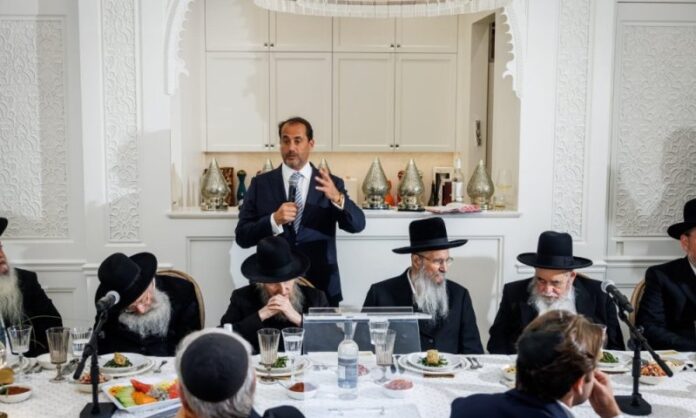 Vos Iz Neias10 hours ago
NEW YORK (VINnews) — A letter written 91 years ago by the renowned Mashgiach Rabbi Yerucham Levovitz led to a $1 million donation for yeshiva students in the Land of Israel.
In a special interview on the “Tzav Ma’atzar” (“Arrest Warrant”) program on Kol Hai Radio, hosted by Bnei Brak Deputy Mayor Gudi Silman, Miami businessman Rabbi Tzvi Bogomilsky revealed the remarkable chain of events that, contrary to his original intentions, led him to donate $1 million to the Keren Olam HaTorah (World of Torah Fund).
“I never planned to donate. I said from the outset that I would provide my home for the event, but I wasn’t going to donate even one dollar,” Bogomilsky, a Chabad businessman from Miami, began.
Bogomilsky explained that when representatives of Keren Olam HaTorah approached him to host a fundraising dinner for yeshivot and kollels in Israel, he happily agreed to host the event but made it clear that he did not intend to contribute financially.
Then, he said, an extraordinary series of events unfolded.On the 18th of Sivan, the yahrzeit (anniversary of passing) of Rabbi Yerucham Levovitz, marking 90 years since his passing, he received the request to host the dinner.
A few days later, on Shabbat, which coincided with the yahrzeit of his grandfather, Rabbi Shmuel Pesach Bogomilsky, he sat with his son discussing the family’s history. During their conversation, he opened a family history book published by his uncle and, for the first time, discovered a rare letter written by Rabbi Yerucham to his great-grandfather, Rabbi Tzvi Kaplan.
The letter had been written 91 years earlier, after Rabbi Yerucham had arranged the marriage between Rabbi Tzvi Kaplan’s daughter and his student, Rabbi Shmuel Pesach Bogomilsky.
Following the wedding, Rabbi Tzvi Kaplan sent Rabbi Yerucham $30 as a traditional matchmaking fee. Rabbi Yerucham replied that he could not accept the money for himself. Instead, he asked that it be used for a sacred purpose – helping rescue yeshiva students from conscription into the Polish army. He also requested assistance in raising funds for a special fund he had established for that purpose.
“When I read the letter, I began to cry,” Bogomilsky recalled. “I realized that 91 years ago Rabbi Yerucham asked our family to help save yeshiva students from the draft decree, and now I was about to host an event whose entire purpose was to help yeshiva students in the Land of Israel.”
During the fundraising dinner, Bogomilsky shared the story of the letter with those in attendance. He said that he did not know whether his grandfather had ultimately fulfilled Rabbi Yerucham’s request, but he felt that the mission had now come to him.
Although he had stated in advance that he would not make a donation, he announced at the event that he would contribute $1 million to Keren Olam HaTorah.
According to the article, the interview left a deep impression on listeners and illustrated how a letter written more than nine decades ago continues to resonate today in efforts to support the Torah world and yeshiva students in Israel.
 Matzav
Related stories
Matzav21 hours agoNew details have emerged regarding an alleged Iranian plot to assassinate President Donald Trump during his visit to Turkey, following earlier reports that Israel had warned the United States about the threat. According to the latest report, it was actually foreign intelligence—not Israeli intelligence—that first detected Iran’s preparations for the alleged assassination attempt, prompting U.S. officials to switch the presidential aircraft before the trip.
According to a report by Yaron Avraham on Israel’s Channel 12 News, foreign intelligence services uncovered indications that Iran was preparing to target Trump while he was in Turkey. The report states that senior Iranian officials viewed the president’s planned visit as a “once-in-a-lifetime opportunity,” but the intelligence was passed to American officials in time for security measures to be implemented, including replacing the aircraft designated for the president’s travel.
Last week, The Wall Street Journal, citing Western intelligence officials, reported that Israel had provided the United States with new intelligence pointing to a renewed Iranian plot to assassinate President Trump. According to the report, the intelligence indicated a significant escalation in Tehran’s efforts to target the American leader.
The alleged assassination plot is rooted in Iran’s longstanding vow to avenge the killing of Gen. Qassem Soleimani, the commander of the Islamic Revolutionary Guard Corps’ Quds Force. Soleimani was killed in a U.S. airstrike ordered by President Trump during his first term in office, and Iranian leaders have repeatedly pledged retaliation.
Speaking at a press conference in Ankara, Turkey, last week, Trump acknowledged the reported threats against him.
“They want to assassinate the leader of the United States—me,” Trump said. “I saw this morning—I’m on every one of their lists. Every single list. So far, I guess I’ve been a little lucky, but maybe that won’t last much longer.”
The Israeli Embassy in Washington declined to comment on the report. Iran’s mission to the United Nations did not respond to requests for comment, while the White House referred reporters to the president’s remarks made during the NATO summit.
{Matzav.com}
 Matzav11 hours ago
The wife of a yungerman who was arrested after reporting to an IDF induction office to resolve his draft status is speaking publicly for the first time, describing what she says was an unexpected arrest, humiliating treatment in military prison, and the emotional toll the ordeal has taken on their family.
Yael Ben David, whose husband Nehorai Ben David is a yungerman from Bat Yam and the father of three young children, said in an interview that the family never imagined he would be arrested when he reported to the draft office. According to her, he went there solely to regularize his status, only to be taken into custody upon arrival.
“They set a trap for him,” she said. “They told him to come and resolve his status… and without any prior warning, they simply arrested him.”
According to Yael, her husband was handcuffed immediately after his arrest and informed that he would serve a 20-day sentence in military prison.
“They put handcuffs on him and told him, ‘You now have 20 days in prison to think about which unit you’re going to enlist in,'” she recounted.
She explained that her husband had received repeated notices and letters instructing him to resolve his status and ultimately decided to report out of concern that he might otherwise be arrested unexpectedly during his daily routine.
Yael also described what she said were the difficult first days following his incarceration, claiming he was not permitted to contact her after arriving at the military prison.
“When he first entered the prison, they didn’t even allow him to speak with me,” she said.
Only after approximately 24 hours was he able to make a brief telephone call, during which he described the conditions of his confinement. According to Yael, he was initially placed in a separate housing unit before later being transferred to the regular prison wing after a formal complaint was filed.
She also leveled serious allegations regarding the treatment her husband has received while in custody.
“He told me they treat chareidim there with real contempt,” she said.
According to Yael, her husband told her he was forced to stand for extended periods without explanation, was prevented from participating in tefillah b’tzibbur, and even had the bookmarks removed from the seforim he brought with him.
“He told me, ‘I’ve never been treated with such disrespect in my life,'” she said, adding that he believes his appearance as a ben Torah contributed to the way he was treated.
She said the family’s hardship extends well beyond the prison conditions themselves. Her husband, she explained, is permitted only a three-minute phone call each day.
“We don’t even have enough time to say hello and goodbye before they disconnect the call,” she said.
According to Yael, the family has retained legal counsel and is working to ensure that his rights are protected, including seeking greater opportunities for communication between the couple.
Nehorai Ben David remains in military prison as his family awaits further developments. During the interview, it was noted that any official response from the relevant authorities regarding the allegations would be published in full if and when it is received. In the meantime, the family says it hopes that by sharing its story publicly, greater attention will be drawn to what it describes as the conditions of confinement and treatment of chareidi detainees.
{Matzav.com}
 JBizNews6 hours ago
China pulled off its first recovery of an orbital-class rocket booster on Friday, a milestone that places it in a two-nation club with the United States and takes direct aim at the commercial launch business SpaceX has dominated for a decade. The China Aerospace Science and Technology Corporation, the state-owned contractor behind the flight, called it a historic breakthrough after its Long March 10B rocket lifted off from the Wenchang Commercial Space Launch Site on Hainan island and its first stage returned vertically to a net-rigged platform at sea, state broadcaster CCTV reported.
The catch itself was the point. About six minutes after separating from the upper stage, the booster descended under engine power and was snagged by hooks and a net on an offshore platform, a lighter approach than the four landing legs SpaceX uses to set its Falcon 9 boosters down on land and on drone ships. The rocket, built by the China Academy of Launch Vehicle Technology, a unit of CASC, uses a five-meter first stage and also delivered a satellite to orbit on the same flight.
Reusability is not a stunt. It is the single biggest reason launch has gotten cheaper. When a company can fly a booster, recover it, and fly it again, it spreads the cost of the most expensive part of the rocket across many missions. That lowers the price of reaching orbit, shortens the wait between launches, and makes it affordable to loft the thousands of satellites needed for space-based internet. CASC said it plans to fly this same booster again by the end of the year.
That is where the commercial stakes come in. CALT has said it wants the Long March 10B to launch broadband-internet satellites, China’s answer to SpaceX’s Starlink, along with larger commercial payloads. Beijing is racing to build its own megaconstellations, and without cheap, repeatable launches, the math does not work. The booster recovered on Friday is a step toward the low-cost cadence that made Starlink possible in the first place.
For now, the gap remains wide. SpaceX landed its first Falcon 9 in December 2015 and flew roughly 165 orbital missions in 2025, close to one every other day and nearly twice the output of China’s entire space program. The Long March 10B can carry about 16 tons to low-Earth orbit, short of the Falcon 9‘s 22 tons, and China has yet to prove it can turn a recovered booster around quickly or cheaply. Friday’s success also followed a string of failures, including a December flight by private Chinese firm LandSpace, whose Zhuque-3 rocket reached orbit but exploded trying to land.
The United States is not standing still, and it is no longer a one-company field. Blue Origin, founded by Jeff Bezos, landed the first stage of its New Glenn rocket for the first time last November, giving American industry a second reusable heavy-lift option. That competition has kept US launch prices under pressure and US launch capacity ahead of the rest of the world.
China’s answer has been to open the field at home. Alongside the state-run effort, Beijing has encouraged a commercial space sector and eased rules so startups developing reusable rockets can raise money through public listings. The result is a scramble among state-backed and private firms to crack the same technology, with CASC and CALT now the first among them to land it.
The race carries weight beyond commerce. Space has become tightly linked to defense, communications, and surveillance, and the ability to launch often and cheaply feeds all three. NASA Administrator Jared Isaacman said recently that the United States is “very much in a space race” with China, telling CBS that Chinese astronauts will reach the moon. CASC is developing the broader Long March 10 family for crewed lunar missions before 2030.
For American companies, Friday’s landing is a signal rather than an upset. SpaceX still owns the global launch market, and Blue Origin is climbing. But China has now shown it can do the one thing that made that dominance possible, and it is assembling the financing, the launch sites, and the satellite ambitions to turn a single successful catch into a lasting competitor. The contest that has been largely American for a decade just gained a serious second front.
JBizNews Desk | New York © JBizNews.com All Rights Reserved. Reproduction or distribution without written permission is prohibited.
 JBizNews
Related stories
JBizNews5 hours ago.
According to an internal memo sent to employees, Volkswagen’s management warns that the auto industry’s leaders may need to reduce an additional 50 000 work to compete with rivals.
CEO Oliver Blume stated in a letter released by Reuters that further cuts are necessary because Volkswagen is operating at a 20 % cost risk in comparison to its rivals and the carmaker recently announced plans to cut 50, 000 work across the business, including at its subsidiaries Porsche and Audi.
That circumstance, according to the memo, would result in a” conceptual deduction” of another 50, 000 work across Volkswagen’s global footprint, properly refuting earlier claims that Ford was weighing up to 100, 000 work cuts.
According to Reuters, Blume stated in the memo that” we are presently evaluating across all brands, companies, and locations how many changes are actually necessary and feasible.”
Ford RECALLS AN ABOVE 50 000 Automobiles FOR SERIOUS ENGINE FIRE RISK FROM FAULTY WIRING.
Ford, the largest manufacturer in Europe, has experienced lower profits as a result of higher price prices, fierce competition in China, and increased costs for European factories that are under pressure to improve.
Blume recently suggested that neglected factories could be used for the security industry or to create Chinese Ford models in Europe. In the memo, he stated that he favors “intelligent solutions” over the closure of facilities.
UBER PARTNERS WITH Foreign TECH GIANT TO DRIVE OUT DRIVERLESS VEHICLES OVER MANY GLOBAL Areas
He stated in the letter that Emden, Hanover, Zwickau, and Neckarsulm’s aggressive use cases are still unable to be confirmed for the company’s tenets in the 2030s.
Employees have enraged the company’s management to clarify its reform plans, which Blume presented to the agency’s leaders on Thursday.
Definitely DISCLOSED OF US MARKET AS A PERSONAL RESOURCE OF CHINA-LINKED Attached VEHICLES
According to sources with knowledge of the situation, work representatives on the committee reportedly blocked proposals that included work cuts and the potential shutdown of four factories.
Volkswagen’s statement following the meeting with stakeholders did not address work cuts or plant closures, but rather that it had plans to gradually decrease production and reduce its lineup.
Clicking HERE WILL GET FOX BUSINESS ON THE GO.
In his message to employees, Blume stated that it is natural that some problems still need to be discussed and evaluated because not everything has been planned out down to the last detail. There will undoubtedly be more discussions where we will work hard to find the best alternatives.
This report was written by Reuters.
 Belaaz1 day ago
A frum family in Adelaide, South Australia was targeted in an antisemitic attack over Shabbos, with offenders slashing the tires of vehicles at the property and spray-painting swastikas and antisemitic slurs across the home, according to News Corp Australia. The homeowner’s name is Rosti Sverdlov.
Details of the attack remain limited, though it fits into a broader and deeply troubling pattern of antisemitic incidents that have plagued Australia’s Jewish community since the Hamas massacre of October 7, 2023. A report by the Executive Council of Australian Jewry documented 1,654 anti-Jewish incidents across Australia between October 2024 and September 2025 alone, on top of over 2,000 incidents the year before.
South Australia has not been spared from the wave of hatred. In one recent incident, Nazi swastikas were found carved into trees in Adelaide’s Veale Park, while in another, a passerby shouted abuse and taunted a congregant heading into shul in the city.
The attack on the Sverdlov family adds to a string of incidents nationally that have included arson attacks on synagogues, vandalism of Jewish-owned businesses, and assaults on visibly Jewish men and boys, prompting Australian Jewish leaders to repeatedly call on federal and state governments to step up protections for the community.
 The Lakewood Scoop1 day ago
A mother of six is courageously battling cancer. While she fights for her life, her husband is doing everything he can to care for her and their young children. Your donation helps provide meals, childcare, transportation, and the everyday support this family urgently needs. Please help them through this impossible time. CLICK HERE TO DONATE.
 The Lakewood Scoop1 day ago
I recently discovered something that I thought was worth sharing with the community.
For quite some time, I’ve been renting a storage unit. One day, while mentioning it in conversation, someone casually asked me, “Did you put up a mezuzah?”
To be honest, it had never even crossed my mind.
I immediately called my sofer, who provided me with a mezuzah, and I put it up right away.
Storage units can be an excellent solution for families who need extra space but don’t have room at home. They are often affordable, convenient, and located close by. I highly recommend them for anyone who needs additional storage.
The purpose of this letter, however, is simply to raise awareness. If you currently rent a storage unit—or are planning to rent one—please reach out to your rov or sofer to inquire whether your particular unit requires a mezuzah and what the proper halachah is for your situation.
This is not necessarily a question unique to storage units, but may also apply to anything that could be categorized as a beis ha’otzar. It’s always worthwhile to ask.
Hopefully, this reminder will help someone else, just as it helped me.
Wishing everyone much hatzlachah and brachah.
Amen.
(Editor’s Note: The above was published for informational purposes. Speak to your Rav to inquire about your particular situation.)
A reader’s response:
TLS welcomes your letters by submitting them to us via Whatsapp or via email [email protected]
 Matzav1 day ago
Rabbi Moshe Wiener, executive director of the Jewish Community Council of Greater Coney Island, was planning a community gathering in response to a July 4 mass shooting in Coney Island, in which eight members of the same non-Jewish family were wounded, when he heard from City Hall.
Zohran Mamdani, mayor of New York City and a frequent critic of Israel whom many Jewish leaders have decried as an antisemite, wanted to attend.
“He’s still the mayor of the city of New York, and we have to show respect,” Wiener told JNS. “He wants to do the right thing for the city of New York, and whether we agree or disagree with his policies, the best that we can do as a social service agency is try to impress upon and educate him to the greatest extent possible of what works, what’s needed, what unmet needs there are.”
One of the Jewish Community Council of Greater Coney Island’s programs that aims to curb violence is Operation H.O.O.D. (Helping Our Own Develop).
“I hope that he’ll agree and support initiatives that will make a positive change in the lives of the residents of the city,” Wiener said of the mayor.
“It was really extraordinary that he stayed there for the full hour-and-a-half,” said the rabbi, who is part of the Chabad movement but doesn’t hold an official or leadership role. “He was very, very compassionate. It was very impressive the way that he interacted with them.”
Mamdani even “stayed the extra time” at the end of the event to “talk to them and comfort them and encourage them,” Wiener said, of the shooting victims’ family members.
Wiener used the community gathering to urge the mayor and lawmakers to invest in violence prevention, trauma recovery and vocational training.
“Law enforcement is indispensable,” he said in his public remarks at the gathering. “Violence interruption is indispensable. Families are indispensable. Schools are indispensable. Faith communities are indispensable. Each has a unique responsibility that no one else can fulfill.”
Wiener asked the city to revive plans for a long-delayed vocational training center in Coney Island. Stable employment is one of the strongest long-term prevention tools, he said.
“City-owned property at Surf Avenue and West 28th Street was designated” for the site more than 25 years ago, he said at the gathering. “Then circumstances changed.”
The rabbi cited frozen land-use approvals and canceled funding and called for funding to be renewed. “That dream should not remain unfinished,” he said at the event.
He also called for permanent funding for H.O.O.D’s trauma recovery center, which relies on annual New York City Council appropriations.
“May the tragic shootings that have brought us together today become more than moments of grief,” he told attendees.
Wiener told JNS that he entered social services work 45 years ago, after seeking a rabbinic position in education.
What began with one contract in an office that “was a large closet in the local Jewish Y” has grown into a citywide organization with nearly 400 employees providing services across New York City’s five boroughs, he said. JNS
{Matzav.com}
 Vos Iz Neias3 hours ago
GUNNISON, Colo. (AP) — A helicopter helping fight a Colorado wildfire has crashed into a reservoir, killing the pilot, authorities said.
The aircraft was reported down Sunday in the Silver Jack Reservoir and the pilot’s body was recovered by divers. The Gunnison County Sheriff’s Office identified the pilot as 56-year-old Nicholas Dale of Sooke, British Columbia.
A procession of law enforcement vehicles carried Dale’s body from Gunnison to Grand Junction on Monday. The convoy was greeted by residents who wanted to show their support for the pilot and the thousands of firefighters assigned to blazes burning across the West.
Colorado Gov. Jared Polis said state flags will fly at half-staff when a memorial service is scheduled for Dale, a contract pilot.
“We are committed to supporting our brave firefighters and their families, and the state stands ready to support any investigation into this tragic incident,” Polis said.
The Federal Aviation Administration said the aircraft was a Kaman Aerospace K-1200 helicopter that “crashed under unknown circumstances, becoming inverted,” according to its preliminary report. Federal registration data shows the helicopter was owned by Georgia-based Helicopter Express.
The pilot, the only person on board, was assisting firefighters with the 2-week-old Gold Mountain Fire, which has grown to about 57 square miles (148 square kilometers) in southwestern Colorado. It was 11% contained as of early Monday.
The National Transportation Safety Board will lead the investigation, the FAA said in a statement.
Last week, wildland firefighters in Colorado gathered to pay tribute to three of their own who died after they were trapped by flames on the Colorado-Utah border.
Many large fires are still going strong across the West. They are scattered around Colorado, Utah and New Mexico while there are wildfires in eight other states — from Alaska to Arizona.
Prolonged hot and dry conditions this week will bring fire weather concerns, the National Weather Service said.
 Matzav1 day ago
A New Jersey township has agreed to pay $80,000 to settle a lawsuit filed by a retired police lieutenant who alleged he was denied a promotion after reporting antisemitic comments made by a fellow officer, according to court records. The settlement resolves the case without any admission of wrongdoing by the township.
The lawsuit was brought by retired Montgomery Township Police Lt. Richard F. Szemcsak, who claimed he suffered retaliation after reporting remarks allegedly made by Sgt. Robert Bijl. Among the comments cited in the lawsuit was the sergeant’s reference to kosher food as “Jew food,” along with other alleged derogatory statements about Jews.
According to the complaint, Szemcsak reported the alleged comments through the department’s chain of command, believing they reflected religious bias that should be addressed within the police force. He later alleged that, instead of being commended for raising the issue, he was passed over for promotion to captain despite his qualifications and years of service.
The lawsuit contended that the failure to promote Szemcsak constituted unlawful retaliation for reporting discriminatory conduct in the workplace. Township officials disputed those allegations but chose to settle the case before it proceeded further through the courts.
Under the settlement agreement, Montgomery Township will pay Szemcsak $80,000. As is customary in many civil settlements, the agreement specifically states that the payment does not constitute an admission of liability or wrongdoing by the township or any of its employees.
 Matzav1 day ago
Sen. Lindsey Graham, R-S.C., repeatedly called for the assassination of Russian President Vladimir Putin. Now, after Graham’s sudden death, some are wondering if Putin got his wish first, Newsmax reports.
In March of 2022 Graham posted on X: “Is there a Brutus in Russia? Is there a more successful Colonel Stauffenberg in the Russian military? The only way this ends is for somebody in Russia to take this guy out. You would be doing your country – and the world – a great service.”
Asked about the matter later at a press conference, Graham urged the people of Russia to “rise up and end this reign of terror.”
“I hope he will be taken out, one way or the other. I don’t care how they take him out. I don’t care if we send him to The Hague and try him. I just want him to go,” said Graham during a press conference shortly after Russia invaded Ukraine.
Among those raising the possibility of Putin’s involvement in Graham’s death is Russian opposition sociologist Igor Eidman, who argued that the Kremlin may have had both a motive and an opportunity to target the South Carolina Republican.
His comments, however, remain speculative.
Eidman pointed to Graham’s prominent role as one of Congress’ strongest advocates for Ukraine and one of Russia’s harshest critics.
According to Eidman, the senator’s continued push for increased military assistance to Kyiv and tougher sanctions against Moscow may have made him a target in the eyes of the Kremlin.
The opposition commentator also noted Graham’s recent visit to Ukraine, suggesting—without presenting evidence — that a hypothetical poisoning using a slow-acting substance could have occurred during the trip.
Eidman speculated that Russian intelligence services might have been capable of conducting such an operation through clandestine networks operating inside Ukraine.
He acknowledged that his theory was based on circumstantial considerations rather than direct proof.
No law enforcement agency, intelligence service, or government has publicly concluded that Russia played any role in Graham’s reported death. No forensic evidence, intercepted communications, witness testimony, or official intelligence assessments have been released supporting Eidman’s claims.
The allegations nevertheless draw attention to Graham’s yearslong confrontation with the Kremlin.
Throughout Russia’s war against Ukraine, Graham emerged as one of the most vocal proponents of expanded U.S. military assistance to Kyiv.
He repeatedly called for stronger sanctions on Russia and advocated providing increasingly sophisticated weapons systems to Ukraine.
According to Eidman, Graham had recently stated that President Donald Trump supported legislation imposing what Graham described as “hellish sanctions” against Russia.
Eidman argued that Russian officials may have viewed Graham as one of the key figures influencing Trump’s evolving approach toward Moscow.
Those assertions also remain speculative.
For years, Graham has been a frequent target of criticism from senior Russian officials and state media.
Russian Foreign Ministry spokeswoman Maria Zakharova has repeatedly denounced Graham’s remarks as provocative and irresponsible.
Former Russian President Dmitry Medvedev, now deputy chairman of Russia’s Security Council, has also regularly attacked Graham on social media, accusing him of promoting escalation of the conflict.
Russian state television commentators have often portrayed Graham as one of Moscow’s principal political adversaries in Washington, criticizing his support for Ukraine and his calls for additional military assistance.
Following some of Graham’s previous remarks regarding Putin, Russian officials discussed possible legal action against the senator under Russian law and publicly condemned statements they characterized as encouraging violence or regime change.
Those exchanges contributed to Graham’s reputation inside Russia as one of the Kremlin’s most outspoken American critics.
Still, political hostility does not establish responsibility for his death.
Security analysts have long noted that Russia has been accused by Western governments of involvement in several poisonings and assassination attempts targeting Kremlin critics and defectors over the past two decades.
Moscow has consistently denied those allegations.
© 2026 Newsmax. All rights reserved.
 JBizNews4 hours ago
Small businesses can now access up to $10 million in government-backed financing after the U.S. Small Business Administration changed its lending rules to allow qualified borrowers to combine its two flagship loan programs for the first time at their full limits.
The change, announced by SBA Administrator Kelly Loeffler and effective July 4, allows eligible businesses to obtain up to $5 million through the SBA’s 7(a) Loan Program and another $5 million through the 504 Loan Program, doubling the previous combined financing limit.
The policy change represents the largest financing expansion in the agency’s history and is designed to help growing businesses invest in facilities, equipment, working capital and expansion projects.
Under previous SBA rules, businesses were generally limited to $5 million in total borrowing across both programs.
For example, a company with an existing $3 million 7(a) loan could borrow only an additional $2 million through the 504 program.
The new policy removes that combined cap.
Qualified borrowers may now use the full financing available under each program simultaneously, creating access to as much as $10 million in total SBA-backed capital.
Although both loans remain separate and subject to individual underwriting requirements, the expanded flexibility allows businesses to finance larger growth projects while maintaining favorable government-backed lending terms.
Each program serves a different purpose.
The 7(a) Loan Program provides flexible financing that businesses can use for working capital, inventory, equipment purchases, real estate acquisitions, refinancing and general business expansion.
The 504 Loan Program, by contrast, focuses specifically on long-term investments such as owner-occupied commercial real estate, manufacturing facilities and major equipment purchases through Certified Development Companies.
Using both programs together allows businesses to finance real estate and fixed assets while preserving working capital for payroll, inventory and day-to-day operations.
Administrator Kelly Loeffler said SBA loan limits had remained unchanged for more than a decade despite significant increases in construction costs, equipment prices and business expansion needs.
She said the higher financing limits will help entrepreneurs create jobs, expand production and strengthen American manufacturing.
Manufacturers receive additional advantages under the revised policy.
Businesses in the manufacturing sector remain eligible for multiple 504 loans tied to separate expansion projects while also qualifying for the new $5 million 7(a) financing limit.
The SBA also announced temporary fee reductions through September 30 for certain manufacturing loans, including waived guaranty fees on qualifying 7(a) loans and reduced fees on eligible 504 financing.
The policy is expected to benefit capital-intensive industries including manufacturing, construction, logistics, food production and energy, where expansion projects often require significant investments in both facilities and operating capital.
Banks and Certified Development Companies are also expected to benefit from increased lending opportunities as more businesses qualify for larger government-backed financing packages.
Because SBA guarantees reduce lender risk, borrowers often receive more favorable interest rates and repayment terms than comparable conventional commercial loans.
Business owners should note that qualifying for the maximum financing remains subject to SBA eligibility requirements, lender underwriting standards, project qualifications and repayment capacity.
The new limits do not guarantee approval but significantly expand the financing available to eligible businesses.
For companies planning major expansion projects, the policy creates substantially greater access to affordable capital while allowing owners to keep more cash available for daily operations.
As interest rates remain elevated and commercial borrowing costs continue challenging many businesses, the expanded SBA lending authority provides entrepreneurs with one of the largest increases in federally backed financing opportunities in the agency’s history.
JBizNews Desk | Washington
© JBizNews.com All Rights Reserved. Reproduction or Distribution without Written Permission is Prohibited.
 Yeshiva World News1 day ago
A quick and coordinated response by Chaverim Of Rockland saved an elderly Monsey couple from losing $51,000 Friday after they fell victim to a sophisticated Microsoft tech support scam that lasted for hours.
The ordeal began early Friday when a pop-up message appeared on the couple’s computer claiming it had been compromised. Moments later, scammers posing as Microsoft representatives contacted the couple and convinced them that criminals had used their computer to commit serious crimes. The callers falsely claimed federal authorities would arrest them unless they immediately followed their instructions.
For hours, the scammers manipulated and intimidated the couple, keeping them on the phone the entire time and ordering them not to hang up or speak with anyone else. Under immense pressure, the elderly couple drove to their bank and insisted on wiring $51,000 to an account controlled by the scammers.
Even after they returned home, the scammers continued trying to gain access to additional bank accounts and personal information through the compromised computer in an attempt to steal even more money.
Shortly before 5:00 p.m., the wife began to realize something didn’t seem right and contacted Chaverim Of Rockland.
Recognizing the urgency, Chaverim immediately dispatched one volunteer to the couple’s home while another rushed directly to the bank. In a race against the clock, the volunteer worked with bank employees to stop the wire transfer while it was still being processed, successfully saving the couple’s entire $51,000. At the same time, the volunteer at the home helped disconnect the scammers, secure the computer, and begin protecting the couple’s financial accounts from further compromise.
The Ramapo Police Department responded to the residence and took a report.
This incident is a stark reminder that Microsoft, Apple, the FTC, banks, and law enforcement agencies will never demand that you wire money, purchase gift cards, or threaten you with arrest over the phone or through a computer pop-up. If you receive a suspicious call or message, hang up immediately and contact a trusted family member, your bank, local police, or Chaverim/Shormim before taking any action.
(YWN World Headquarters – NYC)
 Matzav5 hours ago
A federal judge on Monday sharply criticized President Donald Trump’s lawsuit against the Internal Revenue Service over the disclosure of his tax returns, ruling that the case was brought for an improper reason, referring one of Trump’s attorneys for possible disciplinary action, and portraying the $10 billion lawsuit as an effort that improperly advanced the president’s own interests.
In a strongly worded opinion, U.S. District Judge Kathleen Williams concluded that Trump improperly used the judicial system by suing a federal agency that ultimately answered to his own administration. According to the ruling, the lawsuit sidestepped the basic legal requirement that opposing parties have genuinely adverse interests, ultimately leading to a proposed settlement last spring that would have shielded Trump from future tax audits while establishing a compensation fund for allies who claimed they had been unfairly targeted.
Although the practical consequences of the ruling may be limited because the administration has already announced that the proposed $1.776 billion Anti-Weaponization Fund is no longer being pursued, the decision nonetheless delivers a forceful rebuke of the Trump administration. It also revives scrutiny surrounding Acting Attorney General Todd Blanche just days before his scheduled Senate Judiciary Committee confirmation hearing on Wednesday.
Explaining her decision, Williams wrote, “The nature of the suit itself and the conduct of the Parties and counsel from its filing make plain that this was an attempt to use the Court to provide some legitimacy to an agreement to confer immunity to people and entities affiliated with the President and to earmark billions of dollars from American taxpayers to redress grievances not defined in the law.”
She further stated, “The President may be the functional “dominus litus” of the Executive Branch, but as a party to a civil suit, he, as well as all the parties and lawyers before a court, are bound by the rules. Ensuring that our courts are used only for the express purpose created by the Constitution is the obligation of every judge and an obligation that this Court must discharge in light of the matter before it.”
Williams also pointed to testimony Blanche gave before Congress in early June, during which he disclosed that the proposed anti-weaponization fund was no longer moving forward following significant bipartisan criticism. Although no formal filing reflecting that change had been submitted to the court, the judge noted that Blanche nevertheless testified as though he possessed the authority to speak on behalf of both sides in the litigation.
Addressing that issue directly, Williams wrote, “Acting Attorney General Blanche’s apparent capacity to speak for both Plaintiffs and Defendants, sign a ‘settlement’ document on behalf of all Parties to this action, and then repudiate part of that agreement, demonstrates that there was only one party whose interests were being represented throughout this case.”
{Matzav.com}
 Yeshiva World News10 hours ago
An offhand remark made by a Likud Minister’s husband on Monday morning raised speculations about the possibility of another war with Iran.
Attorney Chovev Damari, the husband of Science and Technology Minister Gila Gamliel, appeared on a Channel 14 panel on Monday morning and accidentally revealed classified information—that security around their home was increased on Sunday amid tensions with Iran.
During the discussion, the panel addressed whether it was safe to book a vacation or whether another round of fighting with Iran is imminent. The host jokingly asked Damari whether his wife, Minister Gamliel, had told him anything about the situation.
Damari initially replied that she had not, but then added, “But, as it happens, they increased the security at our house yesterday. I don’t know why.”
When the other panelists wondered when security around the minister had last been increased, one of them remarked, “That also happened during the previous operation against Iran.”
Journalist Chaim Levinson wrote on his X account that the remark constituted a breach of Israel’s military censorship.
“Other media outlets submitted this story for publication this morning, and it was barred from publication. I’m waiting for the Shin Bet to investigate the matter,” he wrote.
Following the report, neither Minister Gamliel’s office nor Israeli security officials has offered an official explanation for the increased security around her home.
(YWN Israel Desk—Jerusalem)
 The Lakewood Scoop1 day ago
U.S. Senator Lindsey Graham, a longtime Republican lawmaker from South Carolina and one of President Donald Trump’s closest allies in Congress, has died at the age of 71 following what his office described as a “brief and sudden illness.”
In a statement released early Sunday, Graham’s office said, “On the evening of Saturday, July 11, U.S. Senator Lindsey Graham passed away from a brief and sudden illness. Senator Graham’s family appreciates prayers at this time and asks for privacy during this incredibly difficult period.”
The veteran senator had been in Ukraine just one day before his passing.
First elected to the U.S. Senate in 2002, Graham became one of the most influential Republican voices on foreign policy. Although he was initially critical of Donald Trump during the 2016 presidential campaign, he later became one of Trump’s staunchest supporters and closest allies in Congress. He was also a steadfast supporter of Israel, consistently advocating for strong U.S.-Israel relations and backing military aid and security cooperation.
 Matzav10 hours ago
A sprawling homeless encampment stretching across 12 blocks on Manhattan’s West Side continues to grow, with residents and workers warning that theft, drug activity, and prostitution have become commonplace in the area as city officials appear unable—or unwilling—to stop its expansion, the New York Post reports.
The makeshift settlement now runs along 11th Avenue from West 34th Street to West 46th Street. Dozens of tents and improvised shelters line the sidewalks, creating an increasingly troubling scene for neighborhood residents, employees, and the many tourists visiting the nearby Intrepid Museum. Despite the encampment’s growth, critics say City Hall has failed to intervene, while police vehicles routinely pass through the area without taking action.
“We cant get rid of them,” one city parks enforcement officer said Sunday. “These ones here are stealing everything. They stole our key for the hose. They stole our ladder. They take what they can. And there are escorts in there too. Prostitutes. I see them, they’re right there.
“Definitely getting worse,” she said. “People stopped parking here. People are scared to park here.”
According to local workers, some of those living in the encampment have furnished their makeshift homes with stolen couches and expensive electronics. They also claim stolen property—including Broadway theater lighting equipment and high-end telescopes—is openly displayed, while narcotics are reportedly sold to sex workers operating within the camp or inside nearby public restrooms.
Neighbors said one particular tent has become a regular gathering place where prostitutes frequently stop throughout the day, either to meet customers, purchase drugs, or both.
“This is crazy,” said one supervisor at the nearby Jacob Javits Center. “The cops and the sanitation guys and the outreach guys, they clean up one spot and after that day, the next day they’re over here. Then they’re over there. They’re kind of just spreading around.
“The scariest parts are on 36th and 37th right now,” he said. “It’s just heroin addicts.”
“It stinks,” a Javits maintenance worker added. “They were setting up in the park at 3 this morning and it’s just too much. It’s getting bad again, very bad.
“We kicked them out, now they’re over here,” he said. “One thing is for sure though, there are more today than there were last month, that’s for sure.”
The New York Post first highlighted the growing encampment in a report published Friday, drawing renewed attention to conditions that residents say have steadily deteriorated.
One man living in the encampment even praised Mayor Zohran Mamdani, calling him “awesome” for allowing the settlement to remain and for ending the police sweeps that had previously dismantled similar homeless camps.
On Sunday, NYPD patrol cars continued to drive through the neighborhood without stopping. City Hall did not immediately respond to requests seeking comment about the situation.
Public complaints, however, have continued to mount. City records show that calls to the city’s 311 hotline regarding homeless-related issues in the area have risen to 48 so far this year, compared to 40 during all of 2025.
Of the 48 complaints logged this year, 28 involved homeless individuals in need of assistance, while the remaining 20 specifically focused on the expanding encampment. Thirty of those calls were placed during the past month alone, with another eight already recorded this month.
By comparison, last year saw 40 total 311 calls from the neighborhood, including 36 requests for assistance involving homeless individuals and only four complaints directly related to the encampment itself.
Business and civic leaders also expressed concern that the growing settlement is damaging both the city’s image and public safety.
“Most people would agree that leaving people on the street indefinitely isn’t compassion, it’s neglect,” said Steve Fulp, CEO for the nonprofit Partnership for the City of New York. “We’ve seen in cities like Los Angeles and San Francisco that letting encampments grow unchecked fails the homeless and erodes quality of life for everyone else.
“The right approach for the city pairs real services with the timely actual removal of encampments that pose safety risks,” Fulp said. “We aren’t seeing that here and these encampments can grow quickly if a balanced policy isn’t pursued which is the concern here.”
Cristyne Nicholas, chair of the New York State Tourism Advisory Council and a gubernatorial appointee of Gov. Kathy Hochul, said the deteriorating conditions near one of the city’s premier attractions are harming New York’s reputation with visitors.
“The Intrepid Museum is one of New York’s greatest tourist attractions, drawing millions of visitors each year,” she said. “Tourists are forced to walk around squalor and stench. I hope the mayor focuses on this, as he’s promoted tourism during the World Cup. He understands tourism.
“Maybe there’s a disconnect here” added Nicholas, the former head of the city’s tourism agency. “We want visitors to feel safe and welcome.”
Photo by Luiz C. Ribeiro for the NY Post.
{Matzav.com}
 Vos Iz Neias11 hours ago
NEW YORK (VINnews) — Residents of Ladera Ranch, an affluent community in Orange County, California, are demanding a comprehensive investigation after at least six children from the area were diagnosed with Ewing sarcoma, a rare cancer of the bones and soft tissues that is diagnosed in only about 200 to 240 children annually across the United States, according to a report published Sunday in the New York Post.
The concern escalated after 17-year-old Brody Mattson died in March following a battle with the disease. After his death, his mother, Megan Mattson, posted in the community’s Facebook group asking residents to share whether members of their families had been diagnosed with cancer.
According to residents, 62 responses were received within a short period from people reporting cancer cases in their families. Some claimed that several cancer patients lived on the same street, while others reported what they viewed as an unusual number of pets that had also developed cancer. The reports do not constitute proof of a cancer cluster and have not been independently verified, but they prompted residents to begin their own investigation.
The effort is being led by local resident and attorney Jackie Frentz, who reviewed public records and pesticide application documents. Frentz said that during June alone, 17 different types of pesticides and herbicides were used throughout the community, with spraying occurring almost daily.
“We still don’t know what is causing this, or even whether it officially qualifies as a cancer cluster,” Frentz said. “But it is difficult to ignore such an unusual number of cancer cases, especially rare types.”
She noted that the pesticide use complied with California law, but argued that notices about spraying are posted on a website that most residents do not regularly access.
Frentz also questioned why the homeowners’ association continues to use synthetic pesticides despite repeated requests from residents to switch to organic maintenance methods.
Following the complaints, the California Cancer Registry has begun reviewing the reports. In addition, the Orange County Health Care Agency said it is reexamining the cases in response to residents’ calls for a formal investigation.
At this stage, authorities emphasized that it has not been determined that a cancer cluster exists, and no causal link has been established between pesticide use and the cancer cases.
 Vos Iz Neias1 day ago
New York (VINNEWS/Rabbi Yair Hoffman) The kesuvah, of course, is a legal contract, written in Aramaic, that a groom gives to his bride. For thousands of years, this document protected a woman if her husband ever divorced her or if he passed away. The money was meant to be large enough that a husband would think twice before ending the marriage carelessly. Yet today, in America and other countries outside of Israel, the value of the kesuvah is so miniscule that it no longer effectively serves that purpose.
Two Hundred Zuz, or Twenty-Five?
The kesuvah of a first-time bride states the main obligation with the words “kesef zuzei ma’asan,” meaning two hundred zuz. The Rambam (Mishneh Torah, Hilchos Ishus 10:8) explains that the “zuz” is the same as a dinar, but that these coins were not pure silver: they were only one-eighth silver (7 parts copper to 1 part silver). Because of this, the 200 “dinar” of a besulah were actually equal to only 25 zuz of pure silver, and the 100 of a widow to just 12.5. The Shulchan Aruch (Even HaEzer 66:3) rules this way, which is why the Sephardic kesuvah is valued at only 25 dinar.
The Rama (ibid), on the other hand, holds that the zuz of the kesuvah is the normal, full dinar. To make clear which type is meant, Ashkenazim add the phrase that the sum is “due to you by Torah law” (d’oraisa), and so the Ashkenazic kesuvah is valued at the full 200 dinar. The Sephardim do not add that phrase, relying on the contract rule of “al hatachtonah”: any undefined term is read at its lowest value. This one difference is the root of the gap between the two traditions.
The research presented here draws heavily on the remarkable scholarship of Rabbi Ahron Notis in his recent volume, The Great Shiurim Debate, published by Mosaica Press.
Putting Real Numbers on It
Twenty-five dinar equals about 106 grams of silver (under 3.5 Troy ounces); 200 dinar equals about 850 grams (about 27.4 Troy ounces). The dollar value swings with the price of silver, which has been volatile, ranging in recent years between about $18 and $30 a Troy ounce but climbing to roughly $60 a Troy ounce as of July 2026. At that price:
The number on the parchment never changed; only the price of silver did. Because the kesuvah is tied to silver rather than to paper money, its value floats with the metal, but it is never a large or reliable sum.
Why So Low? The Rivash’s Answer
The Rivash (vol. 2, siman 153) was asked exactly this: the sum seems far too small to make a husband hesitate before divorce. His answer was that the kesuvah was never built for the wealthy; it was built for the poor of the time of Chazal, people who lacked even enough bread, slept on the ground, and mostly went barefoot. For such a person, 200 zuz was a genuinely meaningful sum. He proves it from the Mishnah: someone with 50 zuz who does business with it is no longer “poor” (and may not take the gifts left for the needy), and 50 zuz is only half a widow’s kesuvah.
The key point is that silver has largely kept its purchasing power when measured in bread. In an era when bread was most of a poor family’s budget, 200 zuz truly hurt to pay out. The 200 was always the floor, designed around the poor; a wealthier bride could always demand more.
The Three Money Promises in a Kesuvah
A kesuvah contains three obligations. The first is the ikar kesuvah, the ancient core amount (200 dinar in the Ashkenazic text). The second is the dowry (nadunya), the value the bride’s father sent along, which the husband had to return upon divorce or death; today it is written as a fixed 100 zekukim of fine silver. The third is the tosefes kesuvah, an added amount the groom voluntarily promises, another 100 zekukim. Together the dowry and the addition make the familiar 200 zekukim of Ashkenazic kesuvos.
These sums were once negotiated case by case, but communities eventually adopted one standard figure for everyone. As the Raaviyah (Sefer Raaviyah, vol. 3, Biur Mishpetei HaKesuvah, siman 916) explained, since most people were poor, a uniform amount spared anyone the embarrassment of a small, revealing number.
The Mystery Unit: What Is a Zakuk?
The word written in the kesuvah is zekukim (singular: zakuk), and one point deserves to be clear: there was never a coin stamped “zakuk.” The word means “refined,” and it first referred to a weight of refined silver, much as the English “pound” began as a unit of weight. Over time it likely attached to the European “mark” currency, so that, like the British pound, it came to mean a coin rather than an actual weight of silver. Before World War II, the zekukim in a European kesuvah pointed to the real money of the day, such as zlotys or marks.
Today no unit anywhere is called a zakuk. Rav Moshe Sternbuch (Hilchos HaGra U’Minhagav, Dinei Nisuin, siman 126) writes that it is not clear what “zekukim of fine silver” even means; the Maharam Mintz, cited there, identified it with the mark currency worth 48 groshen. We are left writing in a measure that no longer exists, and no one is sure which historical mark was meant.
Why Not Just Write It in Dollars?
If the old units are gone, why not use dollars or shekels? The answer lies in a problem with modern money: it is not backed by silver or gold, and it steadily loses value to inflation. A fixed dollar figure would erode over a long marriage and could be nearly worthless by the time it was collected. Silver, by contrast, holds its value in bread. The rabbis kept silver, but by now no one agrees which silver coins the zekukim were meant to be.
Rav Moshe Feinstein’s Attempt to Fix It
Rav Moshe Feinstein (Igros Moshe, EH, vol. 4, simanim 91–92) proposed a fix. Noting that in Czarist Russia the custom was to collect 75 rubles (then worth a bit over $40, a meaningful sum for ordinary people), he suggested that in America we understand the word zakuk as the weight of a mark, about half a pound. A groom would then obligate the value of 100 pounds of silver (about 45 kilograms which as of July 2026 is $87,000), more than fifty times the ikar kesuvah, a sum large enough to truly make divorce not “light in his eyes.” But no such custom was ever adopted, and so the financial obligation of the kesuvah today remains insignificant.
Why Doesn’t Anyone Update It?
Gedolei Yisrael once kept the tosefes kesuvah meaningful by raising it as economies changed, but since World War One the amount has been frozen. Two reasons explain the lack of urgency. First, the fear of easy divorce has faded: Ashkenazim no longer permit a get against the wife’s will, and secular law now imposes a heavy financial burden on a man seeking divorce. Second, the kesuvah money is rarely collected at all; divorcing couples reach a broader settlement in which the husband gives far more than the kesuvah requires. So communities keep copying the same wording of 200 zekukim, even though neither the groom, the bride, nor the officiating rav know what it means.
Can a Woman Still Collect Her 200 Zekukim?
It depends on where the kesuvah was written. In a place with a definite local custom fixing how much silver the 200 zekukim represent, she can collect that amount. But in most of the world today there is no such custom, and the rule of “al hatachtonah” takes over: an unclear sum is enforced only at its lowest interpretation. Since the smallest reasonable value of a zakuk is very little, there is sadly not much she can actually collect.
The kesuvah remains a holy and essential part of every Jewish wedding, and its role in protecting the dignity and rights of a Jewish woman is as important as ever. What has died is the meaning of its money. The document still names ancient units, zekukim, that no living person can find or spend, and that were never even the name on a real coin.
In the end, the kesuvah is a living testament to Chazal’s concern for the almanah and the divorcee. It is this author’s view that the matter should be taken up with our Torah leaders and that we should endeavor to have various communities adopt the view of Rav Moshe Feinstein zt”l and make the Kesuvah a viable legal document collectable in court.
Below is the traditional Ashkenazic kesuvah in English translation alongside the Aramaic original. The footnotes connect specific phrases to the discussion above, so a reader can see exactly where each ancient measurement and obligation lives inside the document itself.
On the fifth day of the week,
בחמישי בשבת
the fourth day of the month of Adar,
ארבעה ימים לחדש אדר
in the year five thousand seven hundred seventy-seven from the creation of the world,
שנת חמשת אלפים ושבע מאות ושבעים ושבע לבריאת עולם
according to the reckoning that we count here in the city of Bnei Brak —[1]
למנין שאנו מנין כאן בעיר בני ברק
how so-and-so, son of so-and-so,
איך מוה”ר פלוני בן מוה”ר פלוני
said to this maiden, so-and-so, daughter of so-and-so:[2]
אמר לה להדא בתולתא פלונית בת מוה”ר פלוני
“Be my wife according to the law of Moshe and Yisrael.”
הוי לי לאנתו כדת משה וישראל
“And I will work for you, honor you, provide food for you, and support you,
ואנא אפלח ואוקיר ואיזון ואפרנס יתיכי ליכי
in accordance with the practice of Jewish men who work for, honor, feed, and support their wives faithfully.
כהלכות גוברין יהודאין דפלחין ומוקרין וזנין ומפרנסין לנשיהון בקושטא
And I give to you the mohar of your virginity, two hundred silver zuz that are due to you by Torah law,[3]
ויהיבנא ליכי מהר בתוליכי כסף זוזי מאתן דחזו ליכי מדאורייתא
and your food, your clothing, and your needs, and to come to you in the way of all the earth.”
ומזוניכי וכסותיכי וסיפוקיכי ומיעל לותיכי כאורח כל ארעא
And Mrs. so-and-so, this maiden, consented, and she became his wife.
וצביאת מרת פלונית בתולתא דא והות ליה לאנתו
And this dowry that she brought in to him from the house of her father,[4]
ודן נדוניא דהנעלת ליה מבי אבוה
whether in silver or in gold, in ornaments, in garments one wears, in furnishings of the dwelling, and in bedding —
בין בכסף בין בזהב בין בתכשיטין במאני דלבושא בשימושא דדירה ובשימושא דערסא
all of it the chosson accepted upon himself in the sum of one hundred zekukim of kesef tzuri.[5]
הכל קיבל עליו מוה”ר פלוני חתן דנן במאה זקוקים כסף צרוף
And the chosson agreed and added to her from his own another one hundred zekukim of kesef tzuri corresponding to them,[6]
וצבי מוה”ר פלוני חתן דנן והוסיף לה מן דיליה עוד מאה זקוקים כסף צרוף אחריהם כנגדן
so that the total is two hundred zekukim of kesef tzuri.[7]
סך הכל מאתים זקוקים כסף צרוף
And thus said the chosson:
וכך אמר מוה”ר פלוני חתן דנן
“The responsibility of this document of the kesuvah, this dowry, and this addition I have accepted upon myself and upon my heirs after me,[8]
אחריות שטר כתובתא דא נדוניא דן ותוספתא דא קבלית עלי ועל ירתי בתראי
to be paid from the finest and best of my property and possessions and acquisitions that I have under all the heavens,
להתפרע מכל שפר ארג נכסין וקנינין דאית לי תחות כל שמיא
that which I have acquired and that which I am destined to acquire —
דקנאי ודעתיד אנא למיקני
property that carries responsibility and property that does not carry responsibility.
נכסין דאית להון אחריות ודלית להון אחריות
All of it shall be liable and a guarantee to pay from it this document of the kesuvah, this dowry, and this addition,
כלהון יהון אחראין וערבאין לפרוע מנהון שטר כתובתא דא נדוניא דן ותוספתא דא
from me and even from the cloak upon my shoulders,[9]
מנאי ואפילו מן גלימא דעל כתפאי
in life and in death, from this day and forever.”
בחיים ובמות מן יומא דנן ולעלם
And the responsibility of this document of the kesuvah, this dowry, and this addition the chosson accepted upon himself,
ואחריות שטר כתובתא דא נדוניא דן ותוספתא דא קבל עליו מוה”ר פלוני חתן דנן
with the stringency of all documents of kesuvos and additions that are customary among the daughters of Yisrael,[10]
כחומר כל שטרי כתובות ותוספתות דנהגין בבנת ישראל
made in accordance with the ordinance of our Sages of blessed memory —
העשויין כתיקון חז”ל
not as a mere asmachta and not as a standard form of documents.
דלא כאסמכתא ודלא כטופסי דשטרי
And we made a kinyan from the chosson to Mrs. so-and-so, this maiden,[11]
וקנינא מן מוה”ר פלוני בן מוה”ר פלוני חתן דנן למרת פלונית בת מוה”ר פלוני בתולתא דא
upon everything that is written and explained above, with an article that is fit to make a kinyan with.
על כל מה דכתיב ומפורש לעיל במנא דכשר למקניא ביה
And all is firm and established.[12]
הכל שריר וקים
The author can be reached at [email protected]
[1]The kesuvah is dated and localized because it is, above all, a binding legal contract, not a ritual formula. This is why the questions raised in this article, about how much its sums are worth and whether they can be collected, are real questions of contract law, decided (as noted below) by rules such as “al hatachtonah,” that an unclear amount is read at its lowest value.
[2]“Besulah” (maiden / first-time bride) is the key status word. As explained above, a besulah’s ikar kesuvah is 200 zuz, while a woman who was married before (a beulah, including a widow or divorcee) receives half that amount, 100 zuz.
[3]This is the ikar kesuvah, the core biblical-rabbinic obligation. Two points from the article live in this single line. First, “two hundred silver zuz” (כסף זוזי מאתן): a zuz is a silver dinar, about 4.25 grams of silver, so 200 of them are about 850 grams. Second, “that are due to you by Torah law” (דחזו ליכי מדאורייתא): Ashkenazim add these words, following the Rama, to specify that full Torah-weight zuz are meant, not the lighter debased coins that the Rambam and Shulchan Aruch describe, coins only one-eighth silver, which reduce the Sephardic value to 25 zuz.
[4]“Nadunya” is the dowry, the second of the three money layers discussed above. It was not a gift to the groom; its value had to be returned to the wife upon divorce or the husband’s death.
[5]Here is the first appearance of the mysterious unit at the heart of this article: “one hundred zekukim of kesef tzuri” (מאה זקוקים כסף צרוף). As explained above, there was never a coin named “zakuk”; the word means “refined” and referred to a weight of refined silver that later attached to the European “mark” currency. This clause fixes the dowry at a standard 100 zekukim, the community-wide sum that replaced individually negotiated amounts.
[6]This is the tosefes kesuvah, the third money layer: the amount the groom voluntarily “adds” (והוסיף) from his own. Historically this was the layer that Gedolei Yisrael periodically raised to keep the kesuvah meaningful, and it is the layer Rav Moshe Feinstein proposed reinterpreting as 100 pounds of silver.
[7]The dowry (100) plus the addition (100) yields the familiar “two hundred zekukim” total. This is the figure that, as the article notes, has not been adjusted since before World War One, and whose real value “neither the chosson, the kallah, nor the mesader kiddushin” can state today.
[8]“Achrayus” (responsibility / lien). The groom binds all his property, present and future, as security for these three obligations. This is what makes the kesuvah collectible in principle. Whether a woman can truly collect the 200 zekukim, however, depends on whether a local custom fixes their silver value.
[9]“Even from the cloak upon my shoulders” is a vivid legal flourish stressing how total the lien is. It underscores the original purpose of the kesuvah: to make divorce a serious financial matter, “not light in his eyes,” the very purpose that has eroded as the money’s value faded.
[10]“As is customary among the daughters of Yisrael” signals that the kesuvah follows a standardized communal text. This standardization is exactly why the sums became uniform (per the Raaviyah, so as not to shame the poor) and also why an outdated figure persists unchanged: the text is copied by custom.
[11]“Kinyan” is the formal act of acquisition that makes the groom’s commitments legally binding. It confirms that the obligations above, however antique their units now sound, were undertaken as real, enforceable law.
[12]“Hakol sharir v’kayam”, “all is firm and established”, is the traditional closing that validates the document. It is a fitting final line for this discussion: the kesuvah remains firmly established as a holy and living contract, even as the precise worth of the money it names has been quietly forgotten.
 The Lakewood Scoop1 day ago
It was a year ago when I went to a medical facility for a standard colonoscopy.
I was taken aback when the doctor grimly told me and my husband that something suspicious had been found on my rectal wall.
“I’ll be honest with you,” he said. “It doesn’t look good.”
Immediately, he sent us for a bunch of tests and x-rays. It goes without saying that my entire world turned upside down that day. I was a young mother with children waiting for me at home. I had a life to get back to. But, in the blink of an eye, this new reality had now become my life.
A slew of appointments were scheduled for the next few days. We had our hands full with the practical aspects of what we were dealing with, while we simultaneously had to find a way to get into the right emotional state for the battle we were facing.
The next day, my husband got a call from RCCS with an offer of much-needed assistance. Our case manager took charge on the spot. She got everything organized and began working on plans for us, coming up with ideas we could never even have thought of.
Her professionalism, care, concern, and expertise were all on clear display from the moment she contacted us. We got the feeling right away that Hashem had sent us an amazing shliach to fight on our behalf.
She brought up the idea of NGS (genomic) testing, and sent a phlebotomist to our home to take the necessary bloodwork to determine what course of action might be beneficial. A year later, I can say that I am still benefiting from that information which RCCS got so quickly.
I started chemotherapy within two weeks. RCCS stayed on top of the treatment and consulted with expert oncologists to make sure it was the proper standard of care. I actually had a very uncommon form of cancer and RCCS wanted to ensure that the treatment I was getting was the top standard for this exact form of the disease.
Throughout my six months of chemotherapy, I spoke to the case manager almost daily. Her help went far beyond the medical aspects. For example, she got me into a support group made up of people going through similar treatments. Additionally, RCCS was always looking to encourage and support my entire family, sending Chanuka gifts for the children, candy platters for holidays, offering Shabbos getaways, etc.
After six months of chemotherapy, I got great results. It looked like everything was going well until a month later, when my bloodwork started climbing up. This is an early indicator that something was coming back.
Of course, this got us very frightened. RCCS advised us that now was the time to move on to a specialist at NYU. We quickly found out that he is an amazing doctor who takes a personal interest in his patients’ welfare. We are convinced that he gave us even more special attention because of his relationship with RCCS. He really went above and beyond, even looking outside his own hospital for the best options.
The doctor suggested a new drug that seemed promising; however, it was not approved by the FDA specifically for the rare type of cancer that I had. RCCS told us that they would push as hard as they could to get us approved and to get our insurance to cover it, and to help us cover the massive costs if all else failed.
Ultimately, something even more promising came up. RCCS had been looking into various clinical trials that might work for me, and she found one in a hospital in Virginia that looked good. Within a day, RCCS got me an appointment.
I have now been part of this clinical trial for four months and I’m seeing amazing results. I am thankful to Hashem for sending us RCCS and the right doctor to guide me on this path.
I have never seen anything like RCCS. Just getting an appointment with many doctors often seems impossible. But RCCS is somehow able to push through anything. They have taken a huge burden of worry off the backs of me and my husband. If a doctor tells us that it will be two weeks before we can get an appointment for imaging, we don’t worry. We just call RCCS, and they somehow manage to get us an appointment for tomorrow.
Boruch Hashem, I am on the road to recovery, and I will always be grateful for the role that RCCS played in all that I’ve been through.
The RCCS annual Lakewood campaign is currently underway. Please grab a share in this incredible mitzvah by donating generously at 929-822-6729 or click HERE
For more information or assistance from RCCS, please call 718-722-2002 or visit www.rccscancer.org.
 Vos Iz Neias12 hours ago
NEW YORK (VINnews) — A major investigation published by The Australian paints a troubling picture of rising antisemitism in Australia’s healthcare system since the October 7, 2023 Hamas attack on Israel. In various instances, women reported that medical staff endangered their lives, a new mother was allegedly left lying in her own blood after a C-section, and an elderly Jewish patient was mistreated in the hours before his death.
The investigation is based on interviews with more than 30 doctors, nurses, midwives, and other healthcare professionals, who described what they called a hostile environment toward Jews that undermines patient safety and, in some cases, could put lives at risk.
One of the report’s central examples is the cancellation of a trauma medicine conference in Perth, where Brig. Gen. (Res.) Dr. Elon Glassberg, the former Chief Medical Officer of the IDF, was scheduled to present battlefield techniques for treating gunshot and blast injuries developed by the IDF. Organizers canceled the conference after pro-Palestinian doctors, nurses, and healthcare workers threatened large-scale protests over his participation.
Trauma specialists interviewed for the investigation said the cancellation deprived Australian medical teams of the opportunity to learn life-saving techniques from a physician with extensive experience treating mass-casualty incidents. One expert argued the knowledge could have helped prepare responders for attacks such as the deadly Bondi Junction stabbing in Sydney.
According to the report, anti-Israel political activism has spread throughout Australia’s healthcare system since October 7, evolving beyond political expression into antisemitism directed at Jews. Interviewees said this undermines one of medicine’s most fundamental principles: that patient welfare must always come first.
At the same time, a campaign has emerged against Australia’s health regulator over its decision to adopt the International Holocaust Remembrance Alliance (IHRA) definition of antisemitism. More than 1,400 healthcare workers signed an open letter seeking to influence how antisemitism is defined, objecting in part to provisions concerning denial of Israel’s right to exist and applying double standards to Israel.
Doctors interviewed for the investigation said some healthcare professionals have used their positions to spread antisemitic content, Hamas narratives, and even messages supporting the terrorist organization. They claimed some hospitals and clinics have become arenas for ideological conflict rather than safe spaces for patients.
The report cites multiple incidents across Australian hospitals. Healthcare workers allegedly came to work wearing protest symbols, while anti-Israel stickers appeared inside hospitals. At Melbourne’s Alfred Hospital, such stickers were reportedly placed near the bed of an elderly Jewish patient shortly before his death.
The investigation also points to social media posts by doctors and nurses containing hate speech, antisemitic rhetoric, Holocaust comparisons, and support for terrorist organizations. One Jewish doctor said colleagues shared Nazi imagery and antisemitic cartoons while replacing the word “Jews” with “Zionists.”
Many interviewees said Jewish healthcare workers were isolated or targeted because of their identity or views. Some said they resigned after hospital administrators allegedly failed to address complaints of incitement and antisemitism.
The report also revisits the case of two nurses at Bankstown Hospital in Sydney who were allegedly recorded threatening Israeli patients. Following that incident, Jewish patients reportedly began concealing their Jewish identity when admitted to hospitals out of fear they would receive different treatment.
Some of the investigation’s most serious allegations concern direct patient care. Several Jewish women said they were subjected to repeated and painful attempts to insert intravenous lines that they believe exceeded accepted medical practice. In the cases described, the same staff member allegedly attempted the procedure four times, despite hospital nurses saying protocol allows a maximum of two attempts by the same clinician. The report notes that malicious intent is nearly impossible to prove but says similar complaints surfaced repeatedly.
A midwife described a Jewish woman who, she claimed, was left for hours without pain medication after a Caesarean section, lying in a pool of her own blood beside her crying newborn. When a nurse eventually arrived, the witness said she showed little compassion.
Another patient said that while hospitalized in intensive care, a nurse delivered what she described as a lecture denying both the Holocaust and the October 7 attacks. Jewish medical students and residents also reported being ostracized, verbally abused, and afraid to file complaints for fear of harming their careers.
The investigation also criticizes Australia’s healthcare regulators. Many interviewees claimed authorities failed to consistently investigate complaints of antisemitism and, in some cases, closed cases involving doctors accused of posting antisemitic or pro-Hamas content on social media after determining the posts had been made on private accounts.
By contrast, several Jewish and pro-Israel doctors and nurses said coordinated complaints were filed against them after they expressed support for Israel or shared information challenging claims that Israel was committing genocide. Some said they received formal warnings from the regulator.
According to official figures, Australia’s health regulator received 124 complaints related to antisemitism and 97 related to Islamophobia between July 2023 and the end of February this year.
The investigation concludes with the testimony of a Jewish pediatrician who relocated to Israel, saying the atmosphere in Australia had become unbearable for Jews. She said the hospital where she now works employs Jewish, Arab, Muslim, Christian, and Druze doctors and nurses who treat all patients equally, regardless of identity, arguing that the patient’s well-being must remain the guiding principle of every healthcare system.
 Vos Iz Neias10 hours ago
WASHINGTON (VINnews) — Sen. Lindsey Graham, the longtime South Carolina Republican who died Saturday at 71, amassed relatively modest wealth during his more than three decades in Congress despite becoming one of the GOP’s most influential lawmakers.
Financial estimates cited by the New York Post placed Graham’s net worth at about $1.5 million, ranking him in the lower half of Congress by personal wealth. Much of his assets consisted of investment funds and two homes, including a townhouse near the U.S. Capitol.
Graham, who served in the House beginning in 1995 before winning election to the Senate in 2002, earned the same $174,000 annual Senate salary as his colleagues. He never married and had no children.
Raised in a working-class family in Central, South Carolina, Graham often credited his upbringing with shaping his public service. After both of his parents died while he was in college, he became the legal guardian of his younger sister before earning a law degree, serving in the Air Force and launching his political career.
 Matzav1 day ago
Political commentator Tucker Carlson called today for U.S. Ambassador to Israel Mike Huckabee to be removed from his post, accusing him of failing to publicly defend Rep. Ro Khanna (D-Calif.) after the congressman said he was detained during a visit to Israel.
Carlson launched the attack in a sharply worded post on X, criticizing Huckabee for promoting a Fox News appearance instead of speaking out on behalf of an American lawmaker. In the post, Carlson misspelled “American” as “Amercian.”
According to Carlson, Huckabee’s silence amounted to an unacceptable failure to represent U.S. interests, and he argued the ambassador should be dismissed immediately.
“An Amercian member of congress is threatened by foreign terrorists carrying American rifles, backed by a foreign military paid for by American taxpayers, and the US ambassador to that country says not a word in defense of his own countryman, and instead uses his social media accounts to promote his own vapid cable news appearances, which amount to propaganda for that same foreign country. It’s too much, too insulting and humiliating to America. This is how revolutions start. For the sake our nation, Mike Huckabee should be removed from his post immediately.”
Carlson’s comments came after Khanna said he had been detained while traveling in Israel.
Mediaite’s Zach Leeman summarized Khanna’s account of the incident: “The congressman, a vocal critic of Israel’s government, said he was detained by Israeli settlers, and later Israeli military, during a three-day trip this week while he touring the demolished-Palestinian Bedouin village of Khirbet Zanuta. Khanna told The New York Times Israeli settlers with guns blocked his vehicle and others from leaving via the road to the village. The men were reportedly “swearing at them in Hebrew and Arabic and kicking the tires of their minibus.” A Times photographer was in another vehicle and witnessed the incident. Two Israeli military vehicles later arrived and Khanna assumed they were there to help him leave, but they “smoked cigarettes, chatted with the men and after the settlers left, moved a car to block the road. I felt powerless in that situation, which is not an easy thing, as I have a lot of privilege in life,” he said. “Imagine how people feel every day, Palestinians under the occupation, if they could make an American congressperson feel powerless for 90 minutes.””
The latest criticism marks another chapter in the ongoing public feud between Carlson and Huckabee over Israel.
During an interview between the two in February, Huckabee forcefully rejected Carlson’s assertion that Christians were being driven out of Israel.
“But I would also say that when you said the Christians were kicked out, Tucker, Christianity is growing in Israel. And there is a big lie that goes out there, but let me finish this because I keep hearing that Christians are really not treated well in Israel — that’s simply a lie. It is a lie! There are lots of different… There were 34,000 Christians in Israel in 1948. There are 184,000 Christians here today,” Huckabee said.
{Matzav.com}
 Yeshiva World News23 hours ago
The Knesset Constitution, Law and Justice Committee on Sunday approved for its second and third readings a bill that would split the role of Israel’s Attorney General, advancing a key judicial reform measure toward a final vote in the Knesset.
The bill would redefine the Attorney General’s role as providing legal assistance to help the government implement its policies and present legal alternatives. Under the proposal, written legal opinions issued by the Attorney General would reflect the existing law but would no longer be binding on the government. Ministers would be permitted to reject those opinions and determine they do not reflect the law, provided they report the decision to either the Constitution Committee or the Foreign Affairs and Defense Committee. The exception would be criminal matters, where the Attorney General’s independence would remain intact.
The legislation also changes the state’s legal representation in court. The government would determine the state’s legal position in court proceedings. If the Attorney General determines he or she cannot represent the government’s position, the government would be permitted to hire outside legal counsel. In such cases, the Attorney General would be barred from appearing in the same proceeding without government approval. The bill also makes the Attorney General accountable to the government and subject to the oversight of the Justice Minister.
According to the proposal, the law would take effect on January 1, 2027. The committee approved the bill after rejecting approximately 14,000 objections submitted by opposition lawmakers.
Committee Chairman MK Simcha Rothman defended the legislation, saying, “Contrary to the hasty declarations, this law will not be repealed by any government. It is an important and good law.” He also thanked coalition and opposition members, as well as the committee’s legal advisers, apologizing if tensions during the debates had escalated.
Opposition lawmakers strongly condemned the move. MK Gilad Kariv vowed to petition Israel’s High Court of Justice against the legislation and said, “We will do everything to repeal the law in the next term.” Following the vote, he shouted toward coalition members, “A group of corrupt people, a coalition of destruction—you have brought blood upon us.”
(YWN World Headquarters – NYC)
 JBizNews1 day ago
Washington — The sudden death of Senator Lindsey Graham, announced by his office early Sunday, July 12, removes the single most important congressional force behind a sanctions package that energy traders, defense contractors, and Kyiv had tracked for months. President Trump, speaking Sunday on NBC’s “Meet the Press,” said he spoke with the South Carolina Republican by phone Saturday evening — possibly Graham’s final call — and that the senator was still pushing legislation hours before he died at 71 of what his office called a brief and sudden illness.
The immediate economic casualty is Graham’s Sanctioning Russia Act, the bill he co-authored with Senator Richard Blumenthal that would slap a 500% tariff on any country buying Russian oil, gas, uranium, and other goods. Just two days earlier, on July 10, Graham stood in Kyiv after his tenth wartime visit and told reporters he had reached a deal with the White House on a version the administration would support, declaring it would become law. The measure carried 85 cosponsors — past the two-thirds threshold needed to override a veto — and had been designed to pressure buyers like China, India, and Brazil to abandon discounted Russian crude. Graham was the engine keeping it alive after Senate Majority Leader John Thune repeatedly slowed it to give Trump room to negotiate with Vladimir Putin.
With Graham gone, the bill loses its most relentless salesman at the exact moment it was closest to a floor vote. Blumenthal and Senator Jeanne Shaheen remain attached, but neither commands the same standing with Trump, and the timing question now reopens. For markets, the stakes are concrete. A 500% secondary tariff on Russian-energy buyers would ripple straight into global oil pricing, refiner margins, and the shipping and insurance costs already inflamed by the closure of the Strait of Hormuz. The same trip produced Trump’s political green light for Ukraine to co-produce Patriot missile interceptors and advance a bilateral drone agreement — deals that funnel real dollars to U.S. and allied defense manufacturers and that Graham had personally championed.
The Middle East loses a comparable weight. Graham was the Senate’s loudest advocate for military pressure on Iran, arguing for months that Tehran’s leadership was an unreliable negotiating partner and backing the U.S. and Israeli campaign now in its fifth month. His death lands as Iran has shut the Strait of Hormuz, fired on a commercial tanker, and drawn a third round of American strikes — a crisis pushing Brent crude back near $76 a barrel and war-risk insurance toward 3% of a vessel’s value. Graham had been among the most forceful voices tying that confrontation to a regime-change outcome, and his absence shifts the balance of hawks shaping how far Washington presses.
For Israel, the loss is personal and strategic. Prime Minister Benjamin Netanyahu, who long called Graham the country’s best friend in Washington, paid tribute Sunday and was said to be weighing a trip to the funeral. Graham cosponsored anti-boycott legislation and consistently defended U.S. security assistance — the kind of aid that underwrites contracts across the American defense-industrial base.
Trump, who described Graham as “like a member of the family to me,” framed the death partly through the lens of his stalled legislative wish list, calling it “a big blow” to the SAVE America Act, the voter-identification bill Graham was pressing in that last call. “We’re going to get it done, Lindsey,” Trump recalled telling him. Whether the president can move either the sanctions package or the election bill without Graham’s floor management is now an open question in a chamber where he supplied both the votes and the urgency.
There is also a South Carolina seat to fill. Graham was running for a fifth term this fall, and Trump said Sunday he already has a successor in mind but considers it too soon to name. The appointment will shape the balance on the Senate Budget Committee, which Graham chaired, and the fate of the spending and sanctions priorities he steered through it.
For now, the desks watching Russia sanctions, Ukraine reconstruction, defense procurement, and Iran policy face the same recalculation: a bill that looked destined to pass, and a hawkish posture that looked locked in, both suddenly depend on who inherits the fight. Graham spent three decades turning foreign-policy conviction into legislation and contracts. Replacing the conviction is one problem. Replacing the man who could count the votes is another.
JBizNews Desk | Washington © JBizNews.com All Rights Reserved. Reproduction or distribution without written permission is prohibited.
 Matzav
Related stories
Matzav3 days agoIt is with great sadness that Matzav.com reports the petirah of Rav Yechiel Drillman zt”l, a veteran mechanech and longtime maggid shiur at Yeshiva Rabbeinu Yaakov Yosef of Edison, New Jersey, who inspired generations of talmidim over decades. He was in his 70s.
Rav Drillman was a son of Rav Shlomo Elimelech and Mrs. Chaya Sarah Drillman. Rav Shlomo Elimelech was a rosh yeshiva at Yeshivas Rabbeinu Yitzchok Elchonon for over 40 years and rov of the Glenwood Jewish Center. Born in Germany, Rav Shlomo Elimelech began learning with Rav Elchanan Wasserman in Baronovitch at the age of twelve and then learned with Rav Boruch Ber Leibowitz in Kamenitz before fleeing to Siberia with his family during World War II. Rav Shlomo Elimelech came to America in 1946. He entered RIETS and became a talmid of Rav Yosef Dov Soloveitchik. Rav Shlomo Elimelech was a rebbi at Yeshiva University’s High School for Boys in Brooklyn and became a rosh yeshiva at RIETS in 1982 when the high school closed.
Rav Yechiel was raised in a home of extraordinary yiras Shomayim and chashivus haTorah, laying the foundation for his own career in harbotzas haTorah.
For many years, Rav Yechiel was a familiar and beloved figure in the Edison community, where he served as a 10th-grade rebbi at the Edison Yeshiva. With dedication and warmth, he devoted his life to shaping the lives of young bochurim who passed through his classroom.
As a maggid shiur, Rav Drillman was known not only for his clear and thoughtful shiurim, but also for the personal interest he took in each of his talmidim. His influence extended well beyond the walls of the shiur room, as former talmidim continued to cherish the guidance, chizuk, and hadrocha that he imparted long after they left the yeshiva.
Rav Drillman was a devoted eved Hashem with palpable yiras Shomayim and great humility. His years of harbotzas haTorah left an enduring imprint on generations of talmidim, many of whom credit him with helping lay the foundation for their continued aliyah in Torah and yiras Shomayim.
In later years, Rav Drillman relocated to Lakewood, where he resided in the A Country Place community. For a time, he served as a R”M at Bais Medrash L’Torah in Lakewood.
He is survived by his devoted rebbetzin, as well as children and grandchildren carrying on his legacy. He is also survived by his brothers, Rav Yaakov Drillman, rosh yeshiva of Yeshivas Novardok of Flatbush, and Rabbi Yehoshua Drillman.
Levayah details will be published as they become available.
Yehi zichro boruch.
1
{Matzav.com}
 Matzav1 day ago
Health officials are investigating a growing outbreak of a rare foodborne parasite that has already sickened hundreds of people across the United States, with experts still unable to identify a single source. As the number of infections continues to climb, many Americans are wondering whether the fresh fruits and vegetables in their kitchens are safe to eat.
Since May, the Centers for Disease Control and Prevention has confirmed at least 145 cases of cyclosporiasis nationwide. The true number, however, appears to be significantly higher. Michigan alone had reported more than 1,000 infections as of July 9.
The illness is caused by Cyclospora cayetanensis, a parasite that is relatively uncommon in the United States. It spreads through food or water contaminated with human waste. According to Wisconsin health officials, some infected individuals may have contracted the parasite while traveling to countries where it is more widespread. CDC figures show that at least 45 patients became sick after eating food or drinking water outside the United States.
Within the U.S., however, infections are more commonly linked to contaminated fresh produce. Previous outbreaks have been associated with foods such as romaine lettuce, basil, cilantro, snow peas, and raspberries. Although investigators are still searching for the cause of the recent cases, the CDC says “there is currently no evidence of a single, multistate … outbreak.”
With the source still unknown, many people are understandably concerned about becoming infected, particularly because the illness can produce unpleasant and prolonged symptoms.
Not everyone exposed to the parasite becomes sick. For those who do develop symptoms, the CDC and Cleveland Clinic say the hallmark sign is frequent watery diarrhea that can be severe and “sometimes explosive.”
Patients may also experience loss of appetite, nausea, vomiting, stomach pain, “bloating, including burping and farting,” a mild fever, and significant fatigue. Symptoms generally begin anywhere from two days to two weeks after exposure.
Anyone experiencing these symptoms is urged to seek medical attention. Doctors can confirm the infection through specialized stool testing.
Dr. Katie Theoktisto of Baylor Scott & White told Nexstar’s KXAN that in some patients the illness will “self-resolve after a few days.”
She cautioned, however, that persistent diarrhea should not be ignored. “If you’re having a diarrheal illness that’s lasting over a week or two, it’s probably something unusual,” she warned, saying that “those with prolonged symptoms should seek care from their health care providers.”
According to Theoktisto, young children, pregnant women, older adults, and individuals with weakened immune systems face a greater risk of serious illness. These patients may also experience symptoms that return after initially improving.
She noted that several treatments are available. The Cleveland Clinic says therapy may include antibiotics, anti-diarrheal medications, and maintaining proper hydration. Patients who cannot take sulfa-based medications because of allergies can be treated with alternative drugs.
The CDC says that while healthy individuals may recover without medical treatment, others can remain “sick for anywhere from a few days to a month or longer.” Symptoms may disappear and then return, placing some patients at risk for “severe or long illness.” Without treatment, the infection can persist for a month or even longer.
One encouraging fact is that Cyclospora is not believed to spread directly from one person to another.
To reduce the risk of infection, health officials advise thoroughly washing all fruits and vegetables before eating, preparing, or cooking them.
Experts also recommend refrigerating peeled, cut, or cooked produce promptly and trimming away any bruised or damaged portions of fruits and vegetables before consuming them.
{Matzav.com}
 Matzav
Related stories
Matzav1 day agoTensions between Washington and Tehran escalated sharply on Sunday after Iran’s parliamentary speaker warned the United States to honor the terms of a temporary peace agreement or face serious consequences, as fresh American airstrikes targeted Iranian positions following the closure of the Strait of Hormuz.
Iranian Parliament Speaker Mohammad Bagher Qalibaf issued the warning in a social media post, declaring that the United States could no longer expect Tehran to accept unequal arrangements. “The era of one-sided deals is OVER,” Qalibaf wrote on social media. “We told you: keep your word or pay the price. Reality is knocking.”
Along with his statement, Qalibaf published one of the 14 provisions contained in the memorandum of understanding between the two countries. The clause stated: “Upon the signing of this MOU, the Islamic Republic of Iran will make arrangements using its best efforts for the safe passage of commercial vessels with no charge for 60 days only, from the Persian Gulf to the Sea of Oman and vice versa.”
The latest American military action marked the third wave of U.S. airstrikes against Iranian targets after the Islamic regime announced it was shutting down the Strait of Hormuz indefinitely. The strategic waterway carries roughly one-fifth of the world’s oil and natural gas shipments. Iran closed the passage after its Islamic Revolutionary Guard Corps (IRGC) attacked the Cyprus-flagged cargo vessel GFS Galaxy, accusing the ship of traveling along an “unauthorized route.”
The IRGC later declared through Iranian state media that the critical shipping lane would remain closed “until the U.S. ends its intervention in the region.”
According to U.S. Central Command (CENTCOM), the strike on the commercial vessel caused extensive damage to its engine room, and one crew member remains unaccounted for. Defense Secretary Pete Hegseth reacted to CENTCOM’s announcement with a blunt warning on social media, writing: “Iran made a poor choice. Now they pay.”
The renewed military confrontation has further dimmed hopes of reviving negotiations between Washington and Tehran. President Trump said the memorandum intended to serve as a framework for a broader peace agreement is effectively finished after both countries accused each other this week of violating its terms while exchanging military fire.
Expressing his frustration before authorizing the second round of strikes earlier in the week, Trump told reporters, “I don’t want to deal with them anymore. They’re scum.”
The president intensified his warnings on Friday, stating that the United States has contingency plans ready to “decimate and destroy” Iran if Tehran carries out what officials say is an assassination plot targeting him.
Those remarks followed a report by The Wall Street Journal stating that Israeli intelligence had recently provided U.S. officials with new information indicating that Iran was actively considering a plan to assassinate President Trump.
Meanwhile, Iran’s Supreme Leader, Mojtaba Khamenei, issued his own threatening message, vowing revenge for the death of his father, who was laid to rest on Thursday after being killed during the initial U.S. and Israeli strikes against Iran in February.
In a Telegram message reviewed by Reuters, Khamenei declared: “We pledge to avenge the blood of the martyred leader and all the martyrs of these two wars from the criminal and disgraced killers.”
{Matzav.com}
 Matzav1 day ago
Republican gubernatorial candidate Bruce Blakeman says he plans to invoke a little-known provision of the New York State Constitution in an effort to block New York City Mayor Zohran Mamdani’s proposed $70 million taxpayer-funded network of city-owned grocery stores.
Blakeman argues that the proposal runs afoul of the Constitution’s “Gift and Loan Clause,” which bars municipalities from providing public funds or property to private entities.
“This unconstitutional subsidy poses a direct threat to long-standing, tax-paying businesses, risking widespread closures and job losses within the community,” Blakeman told The New York Post.
The constitutional provision, enacted roughly 150 years ago, was originally designed to prevent local governments from funneling taxpayer money to private railroad companies and other favored businesses or individuals. It also requires that public money be spent only for a legitimate public purpose or benefit.
According to Blakeman, Mamdani’s proposal to establish one city-owned supermarket in each of New York City’s five boroughs — with the stores operated by selected private companies — violates that constitutional restriction because taxpayer dollars would be used to subsidize prices, giving the government-backed stores an unfair advantage over private competitors.
“Local independent supermarkets and bodegas, which operate on razor-thin margins, cannot compete with a government-backed entity that faces zero overhead costs,” said Blakeman, who trails Gov. Kathy Hochul by six percentage points in the latest gubernatorial polling.
Although Hochul has endorsed Mamdani’s mayoral bid, she has previously expressed skepticism about the concept. Speaking to business leaders during an August 2025 breakfast in the Hamptons, she remarked, “I favor free enterprise.” She has not publicly addressed the proposal since then.
Any attempt to stop the plan is likely to end up in court, where judges would have to determine whether the proposal satisfies the Constitution’s public-benefit requirement.
Supporters of the plan are expected to argue that lowering grocery prices for city residents constitutes a valid public purpose. Blakeman, however, contends that government-operated supermarkets would ultimately eliminate competition, cost private-sector jobs, and reduce consumer choice.
James M. McGuire, a former New York appellate judge and chief counsel to former Gov. George Pataki, said Blakeman “may have a difficult time” prevailing because of existing “precedents” established by the New York Court of Appeals.
Gristedes CEO John Catsimatidis said he was unfamiliar with the Gift and Loan Clause but expressed hope that “common sense prevails” and that Mamdani’s grocery store proposal is ultimately abandoned, regardless of the outcome of the gubernatorial race.
The billionaire businessman and WABC radio owner suggested that if Mamdani genuinely wants to reduce grocery prices, the city should instead subsidize retailers purchasing staple goods such as milk, eggs, and bread in bulk, provided those savings are passed directly on to consumers.
Blakeman sharply criticized the proposal, calling it “an incredibly expensive socialist pipe dream that forces local mom-and-pop shops — who already pay astronomical state taxes — to compete against a government monopoly subsidized by those very same tax dollars.”
“We are literally forcing neighborhood grocers to fund their own demise,” he continued. “New York runs on fiscal responsibility, free enterprise, and the grit of local entrepreneurs — not bottomless government spending on Soviet-style supermarkets.”
{Matzav.com}
 The Lakewood Scoop10 hours ago
With the summer in full swing, we are excited to remind you about a beautiful initiative, in its 3rd season: The Gitty Nosh, Le’iluy Nishmas Gitty Greenberg a”h.
This year with an extra healthy twist!
To recap for the first timers here, there is a minhag Lakewood that when kids go on trips, they absolutely must load up with a boatload of nosh. (Once upon a time the minhag was to bring a small nosh and a drink, but sometimes minhagim change with the times…)
But as life happens, there is often a kid that either left their nosh behind, parents were dealing with a situation and unable to get a nosh, or only brought one sweet while everyone else brought ten.
This is where the Gitty Nosh comes in. When shopping for your child’s trip nosh, grab an extra treat (not too expensive) to send along as a Gitty Nosh and explain to your kids to look out for someone that doesn’t have, or that has less. You can tell them to look around and try to notice if someone looks sad or like something is bothering them and to offer them the nosh. You can teach them to offer it in a way that they feel good about taking it too. (Always make sure to check hechsher and allergy before offering). You can also tell them that its ok if everyone had and they didnt need to use it. They can bring it yome and keep it in a special place for the next trip and be proud that they looked out for others kids feelings.
We have received incredible feedback from this initiative BH.
We have also received many requests to start a healthy nosh initiative as well.
This year, we decided to make Healthy Snacks Great Again. (HSGA?) 😀
Many kids will start with an 🙄 but it’s already starting to take off. You can pack those cool snack boxes with cut up carrots, celery, pickles, and a mini dip. Grapes, crackers, pretzels… or make them a salad in a cup.
The ideas are endless, and it can be pretty cool with many kids copying the idea and wanting to share too!
So send those healthy snacks and send a healthy Gitty Nosh too while you’re at it.
May it be a zechus for Gittel a”h bas R’ Shraga Meir Hakohen
(If you would like to be an ambassador to push these initiatives out and share/reminders others, please text or WhatsApp only Mrs Devorah Wahl 646-229-9753).
 Vos Iz Neias1 day ago
WASHINGTON (AP) — President Donald Trump is suggesting he has left standing orders for the U.S. military to destroy Iran “ at levels they’ve never seen before ” if Tehran follows through on its long-standing threats to kill him.
But the U.S. government has no way to create an automatic, preauthorized “dead man’s switch” that would prompt immediate retaliation.
Instead, if Trump were killed, the transfer of power to his successor is governed by the 25th Amendment and the Presidential Succession Act of 1947. Vice President JD Vance instantaneously would become commander in chief and have authority for any retaliation.
Under such a scenario, Vance could do exactly what Trump called for, though there also is a chance he could decide not to follow his predecessor’s orders — or offer a direct response in a different way.
“The U.S. has, for a whole variety of reasons, never utilized a technical ‘dead man’s switch,’” said Garrett M. Graff, author of “Raven Rock: The Story of the U.S. Government’s Secret Plan to Save Itself — While the Rest of Us Die.”
The United States does have extensive contingency plans for continuity of government in the event of a nuclear attack or other major catastrophe that wipes out most or all of Washington. But those plans also do not allow for immediately launching retaliatory strikes upon the death of a president, even if that president had demanded that the military be ready to do so.
Trump nonetheless posted on his social media website Saturday that Iran had made threats “to assassinate, or attempt to assassinate” him and he said 1,000 “missiles are Locked and Loaded and aimed at the Islamic Republic of Iran, with thousands more to immediately follow, should the Iranian Government act on its threat.”
Iran’s supreme leader, Mojtaba Khamenei, said hours later that Iranians would continue to avenge the killing of his father, Ayatollah Ali Khamenei. The elder Khamenei died in the initial U.S. and Israeli strikes that started the war in late February, and he was mourned in funeral events throughout Iran this week. His son said retaliation “is the will of our nation and must certainly be carried out.”
“We pledge to take revenge for the pure blood of you and all the martyrs of these two wars from the criminal and disgraceful killers,” he said on remarks aired on state television. “This revenge is the will of our nation and must certainly be carried out.”
The White House on Saturday did not immediately answer questions about what would become of Trump’s military orders should he be killed.
During those recent funeral events, mourners repeatedly held posters or banners calling for Trump to be killed along with Israeli Prime Minister Benjamin Netanyahu.
The Wall Street Journal reported this week that Israel alerted U.S. officials to fresh Iranian plots to kill Trump. The White House has refused to comment, but Trump appeared to reference to such threats in comments during this week’s NATO summit in Turkey, saying, “They want to take out the U.S. leader — me.”
Sabrina Singh, former Biden administration deputy Pentagon press secretary, said “Iran wanting to target senior American leaders is something that we know is happening.”
“You have to take these as credible threats,” Singh said.
US retaliations would almost certainly come, just not automatically
Trump was targeted in two domestic assassination attempts during the 2024 presidential campaign and saw a gunman storm the White House Correspondents’ Association dinner he was attending in April.
The president flew part of the way back to Washington from Turkey this week aboard an older Air Force One jet rather a new Qatari-gifted aircraft, raising fresh security questions about the newer plane. Images of the jet, which was retrofitted at an estimated cost of $400 million, show it is not equipped with some of the same missile detection and countermeasure systems as earlier versions.
The swap occurred as the U.S. and Iran once again began trading strikes, jeopardizing last month’s initial deal to end the war. Asked about Iranian threats, Trump told reporters aboard Air Force One, “I’m No. 1 on their list.”
Graff said the U.S. prepared years of plans for how nuclear launch authority would devolve in the event of a surprise attack. That included, during 30 years of the Cold War, the country keeping fleets of airborne command posts flying 24 hours a day with a general aboard one of them who could take over nuclear launch orders in the event Washington was lost.
“What I believe Trump is saying is that he’s left standing orders to attack if he’s killed, e.g., that the Pentagon should proceed with standard launch protocols,” Graff said. “There’s a lot of reason to doubt the legality of such standing orders, since in the event of a president’s death, the nuclear launch authority would immediately pass to the vice president or designated successor — and ultimately it would be up to him or her to determine whether to proceed.”
Trump’s post only refers to firing missiles at Iran, which the U.S. has done scores of time since its war with Iran began. He did not expressly threaten involving nuclear weapons.
Graff said that, in addition to leaving standing orders in case of his death, Trump also might say “something to Vance like, ‘If I’m killed, nuke Iran,'” and that would make ”more sense and would be absolutely legal”
Biden administration once warned Iran about Trump, too
Washington receiving credible threats against the president and top U.S. leaders from Iran and other foreign adversaries is not uncommon and is often disclosed via national security briefings or other classified means. But far less common is Trump declaring publicly that he personally has been targeted by Iran.
Still, this is not the first time Washington has threatened Iran over threats against Trump.
In 2022, the Biden administration warned Iran against attacking U.S. citizens after the Justice Department’s disclosure that a member of Iran’s Islamic Revolutionary Guard Corps had planned to assassinate John Bolton, Trump’s first-term national security adviser. Now a Trump critic, Bolton last month pleaded guilty to illegally retaining classified documents in a case led by Trump’s Justice Department.
President Joe Biden’s national security adviser Jake Sullivan said in 2022 that “should Iran attack any of our citizens, to include those who continue to serve the United States or those who formerly served, Iran will face severe consequences.”
Two years later, in the heat of Trump’s campaign against Democrat Kamala Harris, Biden’s vice president, the Biden administration again quietly warned Iran. This time, officials made clear that an attack on Trump would be considered an act of war.
 Yeshiva World News
Related stories
Yeshiva World News15 hours agoSince the news of the death of Sen. Lindsey Graham early Sunday morning, Israel has been mourning the loss of one of its greatest non-Jewish friends.
Channel 14 News journalist Yinon Magal said that he asked HaGaon HaRav Yitzchak Zilberstein about reciting Kaddish for Graham.
Magal said on air during the popular The Patriots show: “I consulted with HaRav Zilberstein whether I can say Kaddish for a non-Jew. He told me to learn a Mishnah dealing with monetary laws l’illui Graham’s neshama, and then to say Kaddish D’Rabbanan over the Mishnah.”
Magal then proceeded to read a Mishnah from Pirkei Avot: “Rebbi Yosi says: Let your friend’s money be as precious to you as your own, prepare yourself to learn Torah, for it is not your inheritance, and let all your deeds be l’sheim Shamayim.”
Afterward, the panel members joined Magal in reciting Kaddish.
Your browser does not support the video tag.
(YWN Israel Desk—Jerusalem)
 Matzav10 hours ago
One of Yerushalayim’s most iconic shuls is preparing for a major transformation. The historic Zichron Moshe shtieblach will soon undergo an extensive renovation and expansion project that will include the construction of a new network of shtieblach on the ground floor, modeled after the renowned Itzkowitz shul in Bnei Brak.
The shul recently completed an initial phase of renovations, including the installation of new cabinets and long-overdue repairs throughout the building. Following the petirah of the mara d’asra, Rav Aharon Fischer zt”l, a new committee was appointed under the leadership of the current mara d’asra, Rav Yisroel Fischer, to oversee the affairs of the shul and improve conditions for its many mispallelim and neighborhood residents.
The gabbaim have now unveiled the centerpiece of their vision to modernize and expand the bais medrash. Under the heading “U’leshachlel Heichaleha — Kol Omrim Hodu LaHashem,” the hanhalah issued a special announcement informing the public that, after months of intensive planning and tremendous effort carried out with extraordinary siyata d’Shmaya, the shul is entering a new era of renovation, restoration, and expansion.
The announcement states that substantial portions of both the main bais medrash and the adjoining shtieblach will be upgraded “for the honor of this mikdash me’at and to provide greater comfort for the thousands who frequent this holy place.”
Construction will begin in the lower level of the building, centered around the Pri Chadash shtiebel and the surrounding area. This first phase will include enlarging and modernizing the existing shtieblach, renovating and expanding the restroom facilities, and refurbishing the entrance area.
A key feature of the project will be the installation of an internal staircase connecting the lower level directly to the main bais medrash and the upper shtieblach, allowing mispallelim to move easily between the floors and utilize both areas more conveniently.
Once work on the lower level is completed, renovations will shift to significant portions of the main sanctuary and the upper shtieblach. During that phase, some minyanim and tefillos will temporarily relocate to the newly completed shtieblach downstairs.
As construction is set to begin in the coming days, the gabbaim have issued an urgent request to anyone storing personal belongings in the affected areas.
“With construction beginning b’ezras Hashem in the coming days, a complete evacuation will take place of all contents located in the Pri Chadash shtiebel, the Kahanovitch shtiebel, throughout the lower floor, the corridors near the restroom area, and all private storage cabinets. The entire area must remain completely empty throughout the construction period.”
Invoking the principle that “HaTorah chasah al mamonam shel Yisroel,” the gabbaim urged mispallelim to remove their belongings immediately.
“Accordingly, we respectfully request and strongly urge anyone with belongings in the above-mentioned areas to remove them immediately and take them home, and not relocate items to other areas of the shul.”
The hanhalah also announced that a special suggestion box will soon be installed, allowing mispallelim to submit ideas, recommendations, and comments regarding the renovation project for the gabbaim overseeing the work.
{Matzav.com}
 Matzav1 day ago
Police arrested several suspects, including minors, during a major anti-crime operation in Beitar Illit targeting juvenile delinquency over the summer vacation. The suspects are under investigation for a range of alleged offenses, including illegal possession of a knife, making threats against a public official, property damage, diesel fuel theft, and drug trafficking.
The operation, dubbed “Breaking the Waves,” was carried out by detectives from the Etzion Police Station in the Judea and Samaria District. As part of the initiative, officers increased patrols and inspections throughout the city in an effort to identify and apprehend young suspects allegedly involved in criminal activity.
During the operation, detectives stopped a 16-year-old Beitar Illit resident who was allegedly carrying a knife in violation of the law. After being taken to the police station for questioning, the teenager allegedly damaged chairs in the station’s waiting area by scratching anti-police graffiti into them with his fingernails while a police officer was present. He was subsequently arrested on additional suspicion of causing damage to public property.
In a separate case, police arrested two suspects, including a minor, following an investigation launched earlier this week into alleged threatening harassment directed at a public official. The investigation also involved suspected property damage after a garbage dumpster near the official’s home was set on fire. Police said the suspects were located with the assistance of station intelligence personnel.
Authorities also reported progress in an ongoing investigation into the theft of diesel fuel from buses and suspected drug trafficking. During an earlier phase of the investigation, detectives seized jerry cans, hoses allegedly used to siphon diesel fuel, and discovered a concealed location containing a large quantity of illegal drugs.
Based on evidence gathered during the investigation, police identified one of the suspects and arrested the minor during Thursday night’s operation. A search of his home allegedly uncovered a quantity of hard drugs that police said was inconsistent with personal use.
Police said all of the investigations remain ongoing at the Etzion Police Station and indicated that additional arrests are expected as the investigations progress.
{Matzav.com}
 Matzav1 day ago
A dispute over a café that recently began operating on Shabbos escalated into violent confrontations in Yerushalayim on Shabbos, as protesters blocked roads, police intervened to restore order, and a minor was arrested on suspicion of assaulting a police officer.
The latest unrest highlights the growing tensions between the city’s chareidi and secular communities over the public character of Shabbos.
The controversy centers on Café “Basimta,” located in a neighborhood with both chareidi and secular residents. After the café began opening on Shabbos several weeks ago, local chareidi residents launched protests, arguing that the move constitutes a public desecration of Shabbos. The dispute has since evolved into a broader political and ideological battle over the city’s identity.
The demonstrations first began about a month ago, when area residents discovered that the café was operating on Shabbos. Videos of the protests quickly spread on social media, along with the café’s exact location, drawing increasing attention and prompting repeated police deployments to prevent physical confrontations.
On Shabbos, Yerushalayim City Council member Tzachi Brim joined the protest together with a number of young demonstrators.
According to Yerushalayim District Police, protesters placed objects in the roadway, blocked traffic, and endangered public safety by refusing to clear the streets.
Police officers on the scene ordered the demonstrators to disperse and reopen the roads. When they refused, Border Police officers and members of the Lev Habirah police station moved in to clear the area and restore traffic.
The confrontation intensified during the evacuation of the protesters when, according to police, one of the demonstrators—a minor—allegedly assaulted a police officer. He was arrested at the scene and taken in for questioning.
Police emphasized that while they are committed to protecting the right to lawful protest and freedom of expression, they will continue taking firm action against anyone who disrupts public order or assaults officers carrying out their duties.
The dispute has also moved beyond the streets into City Hall, where chareidi and secular council members have taken opposing positions. Chareidi representatives are exploring legal and regulatory avenues to shut down the café and preserve the city’s Shabbos character, while secular officials argue that the business is exercising its legal right to operate and that residents are entitled to freedom of choice.
The controversy comes amid broader tensions in Yerushalayim over Shabbos observance. Last week, sharply worded posters appeared throughout the city criticizing the chareidi parties for supporting Communications Minister Shlomo Karhi’s media reform plan, linking the issue to the broader struggle over the city’s public character.
Tensions reached another peak this past Shabbos, when long lines of customers formed outside the café. Many patrons said they were intentionally visiting the establishment as a statement in support of personal freedom, while chareidi demonstrators gathered nearby to protest the public desecration of Shabbos.
Police deployed large forces to separate the two groups, preventing protesters from reaching the entrance to the café. Although shouting matches broke out and emotions ran high, authorities succeeded in preventing major physical clashes.
The unrest follows other recent Shabbos-related demonstrations in Yerushalayim, including protests near Bar-Ilan Street over light rail construction work that led to confrontations between demonstrators and police.
Meanwhile, chareidi city council members continue examining legal options to close the café, while secular activists are organizing efforts to defend its right to remain open. Police say they will maintain an increased presence in the coming weeks in an effort to prevent further violence.
{Matzav.com}
 Matzav
Related stories
Matzav7 hours agoA newly disclosed handwritten document by slain Hamas leader Yahya Sinwar reveals that he believed Israel might respond to a massive Hamas assault with a nuclear strike on Gaza—yet he nevertheless pressed ahead with planning the October 7, 2023, massacre.
The document, dated August 2022, was obtained by the Meir Amit Intelligence and Terrorism Information Center, with portions published Sunday by Israel’s Channel 12. While another Sinwar document surfaced last year, the newly released material contains significant details that had not previously been made public.
According to the report, Sinwar meticulously outlined an ambitious battle plan that envisioned an invasion on a far greater scale than what ultimately took place. His blueprint called for 25 simultaneous breaches of the Israel-Gaza security fence, with each breach carried out by a “well-trained” force of 100 terrorists tasked with seizing 25 key junctions along the border.
The plan also assigned 2,210 terrorists to attack 221 smaller communities throughout southern Israel, while another 1,600 were designated to assault eight larger population centers. Sinwar further allocated 1,200 terrorists to strike Israeli cities and another 2,000 to attack military installations. Altogether, his envisioned invasion force totaled roughly 10,000 terrorists, though he wrote that no individual participant would know the operation’s full scope.
In reality, the October 7 invasion involved far fewer attackers. According to Israel Defense Forces estimates, approximately 5,600 terrorists crossed into Israel that day, including roughly 3,500 Hamas operatives, about 580 members of Palestinian Islamic Jihad, and another 1,400 armed Gazans.
Among Sinwar’s written instructions was a chilling directive targeting Israeli civilians. “The goal is to expel the settlers with their vehicles,” he wrote, referring to residents of southern Israel. He instructed that “priority” should be given to children and women, while ordering that “the men aged 17-50 are to be taken hostage” and that “all phones must be taken, along with any additional documents they are carrying on their person.”
Channel 12 reported that the documents demonstrate Sinwar fully understood the enormous risks associated with launching such an attack. According to the report, he acknowledged that there was no guarantee Iran—or its regional terror proxies, including Hezbollah—would join Hamas in the war, despite Hamas’s apparent expectation that they would.
The memo also shows that Sinwar anticipated an overwhelming Israeli response. He wrote that Israel would “not hesitate to use all means and weapons at its disposal” following the massacre, adding, “They may even use an atomic bomb, no less.”
Even so, Sinwar believed Hamas could exploit the initial shock of the assault. “But first, it will be surprised by the attack and enter into chaos,” he wrote, describing the invasion as “a campaign of life or death,” while calling for “a popular operation of returning to the villages and recapturing them symbolically.”
Although Israel is widely believed to possess nuclear weapons, it has never officially acknowledged having such an arsenal and remains outside the Nuclear Non-Proliferation Treaty.
The newly released excerpts follow another Hamas document made public by the Meir Amit Intelligence and Terrorism Information Center in October 2025. That earlier document, also written by Sinwar, detailed plans to deliberately create “horrifying images” during the October 7 massacre and broadcast the atrocities live to maximize psychological impact.
 The Lakewood Scoop1 day ago
I would like to share a personal experience in the hope that it may help someone else.
A few months ago, after being married for a couple of years, I went to speak with a Rav regarding a Shalom Bayis matter. Baruch Hashem, everything is okay today, but at the time I was looking for guidance on an issue that I felt was important.
Instead of leaving with clarity and reassurance, I left feeling deeply uncomfortable and honestly disgusted. During the conversation, I was asked questions that I felt had nothing to do with the issue I had come to discuss and that I found deeply personal and completely inappropriate. I walked out feeling shaken and regretting that I had gone.
I’m not writing this to attack anyone or to create controversy. My purpose is simply to encourage others to do their homework before seeking guidance from someone. Ask trusted friends, family members, or Rabbanim for recommendations. A little research beforehand can make a tremendous difference.
I also learned another important lesson. If someone – whether it’s a Rav, therapist, counselor, or any other professional – asks questions that make you genuinely uncomfortable or that don’t seem appropriate, don’t ignore that feeling. Don’t let anyone talk you out of your instincts. You always have the right to say you’re not comfortable, end the conversation, and seek guidance elsewhere.
There are many outstanding Rabbanim and professionals who help people with sensitivity, wisdom, and respect. Unfortunately, not every experience is a positive one. I wish I had been more careful before opening up about something so personal.
If this letter encourages even one person to do a little more research before seeking advice – or gives someone the confidence to trust their instincts when something doesn’t feel right – then sharing my experience will have been worthwhile.
TLS welcomes your letters by submitting them to us via Whatsapp or via email [email protected]
 Vos Iz Neias15 hours ago
NEW YORK (VINNEWS/Rabbi Yair Hoffman) It happened in the winter. A fifth-grade girl, who, it seems had a bit of a temper,well, actually, more than a bit – got into some kind of altercation with a classmate. Whatever the exact circumstances were, in the course of it she damaged the classmate’s coat.
The coat was an expensive one — a Mackage ‘JESSE’ lustrous light down jacket for kids — which currently sells for roughly $550 new (Mackage lists the kids’ 8–14 size at $550). The damaged girl’s family wanted to know: who, if anyone, is obligated to pay for the ruined jacket? Is it the child herself? Would it be her parents? The school perhaps? Or maybe the teacher? And is the answer any different ‘before Heaven’ than it is in a beis din?
As a matter of strict halacha, the girl herself is exempt, because a minor who caused damage (‘katan she’hizik’) is not obligated to pay — this is true even though she has a temper and even though the damage was real and expensive.
Her parents are also not obligated by strict law to pay for what she did, and neither is the teacher or the school, because the halacha does not treat them as legal ‘guarantors’ who must pay for a child’s damage. So a beis din would not force anyone to write a $550 check.
However, that is far from the end of the matter. There is a strong and widely-cited obligation ‘beyond the letter of the law’ (lifnim mishuras hadin) for the parents to make good the loss. This is so that their daughter — and they themselves — ‘go out with clean hands before Heaven’ (latzeis yedei Shamayim). Many families in this situation do pay, in full or in part, and the poskim view that as the proper and pious thing to do.
In addition, the parents should use this as a chinuch moment: teach the child that what she did was wrong, and — if she has money of her own — have her contribute a meaningful sum toward the loss so that she feels the seriousness of what happened. And it is proper for the child, once she grows up, to do teshuvah for the damage.
In short: no one is legally forced to pay, but the right thing — and what the poskim encourage — is for the family to make the victim whole, and to turn the episode into a lesson.
So why is it that the young girl in question does not have to pay – even eventually?
There is an explicit Mishnah in Bava Kama (83b): ‘A deaf-mute (cheresh), an imbecile (shoteh), and a minor (katan) — it is a bad thing to have dealings with them: one who injures them is liable, but if they injure others, they are exempt.’ In other words, if an adult damages a child’s property, the adult pays; but if a child damages someone else’s property, the child is exempt from paying. This is codified as halacha in the Shulchan Aruch (Choshen Mishpat 424:8).
The reason is that at the moment of the damage, a minor is not a ‘bar da’as’ — not legally a responsible, understanding adult. The Torah simply does not impose a monetary obligation on someone who is not yet of age, even if the damage was deliberate and even if the child clearly knew that she was doing something wrong. Having a temper, or acting out of anger, does not change this: the exemption flows from her legal status as a minor, not from any claim that she ‘didn’t mean it.’
The Rishonim (early authorities) argued about a follow-up question: is the exemption only temporary — lasting until she becomes an adult — or is she permanently free of the debt even after she grows up?
The lenient view (she never has to pay): The Rosh, and following him the Pilpula Charifta, held that a minor who damaged is exempt forever, even after reaching adulthood. The Rosh derived this from a case near Rav Nachman (Kesubos 85a), reasoning that a minor is simply not ‘a child of punishments’ — not subject to legal accountability — for acts done in childhood.
The stricter view (she must pay when grown): The Ohr Zarua, based on Rashi’s commentary in Bava Kama (98b), held that a minor who damaged is obligated to make good the loss once he or she grows up.
The Ohr Zarua’s view rests on four classic proofs, which the later achronim examine and largely push off: (1) the case where Rafram compelled Rav Ashi to pay for a promissory note he had burned as a child (explained away by the Shita Mekubetzes, the Pilpula Charifta, and the Maharam Padua, siman 90, as either a ‘dina d’garmi’ ruling or a case where Rav Ashi was already thirteen); (2) the case of the goring ox whose minor owner must pay (limited to that specific case by ‘tikkun ha’olam’); (3) a proof from Yoshiyahu HaMelech (see Nachal Yitzchak, siman 7); and (4) a proof from the ‘keren’ and ‘chomesh’ obligations of a minor girl who ate terumah (Nachal Yitzchak in the name of the Mareh HaPanim on the Yerushalmi).
In each case the later poskim show the proof is not decisive.
The bottom line: the plain sense of the Shulchan Aruch (CM 424:8) follows the lenient view of the Rosh — the minor is exempt from strict-law payment even after she grows up. Rav Ovadya Yoseph (Yabia Omer Choshen Mishpat vol. 8) discusses these proofs at length and reaches the same practical conclusion. So a beis din will not extract the money from her, neither then nor later.
By strict law, no. The poskim state clearly (see the discussion in ‘HaYashar VeHaTov’ and the Shevus Yaakov cited there) that there is no established obligation on a father to ‘guard’ his child so that the child does not cause damage, in the way that one is obligated to guard one’s ox or one’s fire. A child is not the father’s ‘property’ in the sense that would make the father automatically liable. So the parents cannot be forced in beis din to pay for damage their daughter caused.
But there are real moral obligations on the parents, which the poskim take seriously and which, in practice, are where this case actually ends up:
The teacher and the school are exempt by strict law. The Sefer Choshen LaMa’aseh rules directly on this point: the Torah does not consider the teacher (melamed) a ‘shomer’ — a legal guardian — over the children with respect to this kind of damage. A teacher’s job is to teach, not to serve as a bailee responsible for every item of clothing and property the students bring to school. So no monetary claim lies against the teacher or the school for the ruined jacket.
(If a school has its own written policy or a signed agreement making it responsible for damage between students — which is a matter of contract, not of this halacha — that would be handled separately. Absent such an agreement, there is no claim.)
There is a separate question, distinct from who can be forced to pay in beis din: is there a duty ‘in the laws of Heaven’ to make the victim whole? Here too the poskim are divided.
The view that there is such an obligation: The Shevus Yaakov (vol. 1, siman 177) holds that even though a minor who damaged is exempt in beis din, he is nonetheless obligated ‘before Heaven’ to make it good. He proves this from the Rema, in the name of the Terumos HaDeshen (siman 62): a person who transgressed in childhood needs to do teshuvah after growing up, and the core of that teshuvah is to appease the person he wronged and make good the damage. The Chiddushei HaRash”sh (Sanhedrin 55b) reaches the same conclusion.
The view that even the ‘before Heaven’ duty is waived: The Chai Adam and others read the Shulchan Aruch as exempting the minor even from the ‘before Heaven’ obligation from the essential law, leaving only the ‘beyond the letter of the law’ recommendation. The Shu”t Yabia Omer (CM vol. 8) leans this way as well: strictly speaking the minor is exempt, but because a ‘mark of wrongdoing’ came about through her, it is proper for her to take some atonement (kapparah) upon herself.
Practically, the streams converge: whichever way one rules on the technical ‘before Heaven’ question, everyone agrees it is proper and praiseworthy for the loss to be made good and for the child to do teshuvah when she is older. The Nachal Yitzchak adds a striking reason: since even a minor is included in mitzvos and is being educated toward the whole body of halacha — including ‘do not steal’ and ‘do not damage’ — there is real spiritual weight to making things right, even though the strict monetary claim does not bind her.
Step 1 — The claim in beis din: If the victim’s family were to bring the case to a beis din demanding $550, the din is that the fifth-grade girl is exempt (she is a minor), her parents are exempt (no obligation to guard against a child’s damage), and the teacher and school are exempt (a teacher is not a shomer for this). No party can be compelled to pay the full price of the jacket.
Step 2 — What should actually happen: The strongly encouraged path — supported by both source-works — is that the girl’s parents make good the loss beyond the letter of the law, so that their daughter goes out with clean hands before Heaven and the wronged family is not left absorbing an expensive loss. Because the item was genuinely valuable (around $550) and the damage was real, this is exactly the kind of case where menschlichkeit and the guidance of the poskim point toward paying rather than standing on the technical exemption.
Step 3 — The chinuch piece (especially given her temper): Whatever the parents decide about the full payment, they should (a) make clear to their daughter that what she did was wrong; and (b) if she has any money of her own, have her contribute a meaningful portion toward the jacket — not because a beis din forces it, but so she feels the weight of what she did and is less likely to repeat it. For a child with a known temper, letting the episode pass with no consequence would itself be a failure of chinuch.
Step 4 — Assessing the amount fairly: If the parents do choose to make good the loss, the fair figure is the actual loss in value — which is not automatically the full $550 retail price. If the coat can be repaired (a torn seam, a replaced zipper, a cleaned stain), the cost of repair is the right measure. If it is genuinely ruined, then the replacement value of a comparable coat — accounting for the fact that it was already used, not brand-new — is the fair number. In money matters like this it is worth having a neutral, respected person or a rav help the two families settle on a reasonable figure rather than fighting over the sticker price.
The author can be reached at [email protected]
 Matzav1 day ago
Conservative commentator Ben Shapiro and his wife are celebrating the birth of their fifth child, a baby boy, whom they welcomed this morning.
Shapiro shared the happy news with his millions of followers in a post on X, expressing gratitude for the newest addition to the family.
“With immeasurable thanks to God, we’re proud to announce the addition of baby number 5 to the Shapiro family this morning!” Shapiro wrote.
The newborn is the fifth child for Shapiro and his wife, Dr. Mor Shapiro, an Israeli-born physician. The couple married in 2008.
The Shapiros previously welcomed their fourth child, also a son, in 2023. At the time, Shapiro announced the birth by thanking God, the medical team, and his wife, calling the newborn “a big handsome boy.”
Shapiro, 42, is the co-founder of The Daily Wire and host of The Ben Shapiro Show, one of the country’s most widely followed conservative podcasts and radio programs. In addition to his work in media, he is the author of numerous bestselling books and a frequent commentator on politics, culture, and public policy.
{Matzav.com}
 Matzav20 hours ago
Sen. Mitch McConnell disclosed Sunday that the medical emergency that landed him in the hospital last month began with a fall that briefly left him unconscious, ending weeks of speculation surrounding the Kentucky Republican’s health and explaining why he has remained away from the Senate.
In a statement, the 84-year-old senator said he lost consciousness for a short time around the incident that led to his hospitalization and has since undergone extensive medical testing to determine what caused the fall. He also revealed that doctors treated him for a mild case of pneumonia and that he has since been transferred to a rehabilitation facility.
“My doctors have confirmed that I didn’t break any bones or suffer a concussion. I didn’t have a heart attack or a stroke. I don’t have any tumors or hemorrhages,” McConnell said, adding that he is now “regaining my strength.”
McConnell’s update came just hours after the sudden death of fellow Republican Sen. Lindsey Graham of South Carolina. While expressing optimism about his recovery, McConnell acknowledged that he is not yet ready to resume his Senate duties.
“I cannot return to the Senate quite yet,” he said.
With McConnell temporarily sidelined and Graham’s seat now vacant, Republicans’ majority in the Senate has been reduced to 51-47 at a critical time, as the party works to advance President Donald Trump’s legislative agenda, increase military spending, and confirm the president’s nominees.
Addressing why he had remained silent about his condition for nearly four weeks, McConnell said his generation often finds it difficult to discuss the realities of aging.
“Folks of my generation often hesitate to share the vulnerability that comes with growing older.”
“Even in the public eye, I feel that same instinct — I can’t help it,” he said.
McConnell added that he continues to stay involved in Senate matters by working closely with his staff while recovering. His statement also included a smiling photograph of himself with his wife, Elaine Chao, appearing to push back against online rumors suggesting he had died or was no longer capable of serving.
The senator’s announcement follows growing public pressure for greater transparency. Since his hospitalization on June 14, his office had released few details beyond saying that he was “receiving excellent care” and recovering. As questions about his condition mounted, Kentucky Gov. Andy Beshear publicly urged McConnell last week to provide the public with an update in a “transparent manner.”
McConnell is scheduled to retire at the end of January, bringing to a close one of the most influential careers in modern American politics. Republicans have nominated U.S. Rep. Andy Barr to succeed him, while Democrats selected former Kentucky state lawmaker Charles Booker as their nominee. Despite his health challenges, McConnell emphasized that he intends to complete the remainder of his term.
“I still have unfinished business to complete on your behalf,” McConnell wrote in the statement addressed to Kentuckians, “and I have every intention of finishing the job you elected me to do.”
McConnell has dealt with significant health issues for much of his life. After contracting polio as a young child, he has long acknowledged that the illness left him with lingering difficulty walking and climbing stairs.
The Office of the Attending Physician to Congress said Sunday that McConnell has “experienced several falls through the year” because of his “post-polio condition.” According to the statement, his rehabilitation program is focused on reducing the likelihood of additional falls.
“A comprehensive evaluation by a multidisciplinary team determined that he had no fractures, cardiac abnormalities, stroke, tumor, or hemorrhage,” the physician’s office said.
First elected to the Senate in 1984, McConnell served as the Republican leader from 2007 until last year, holding the roles of both majority leader and minority leader during that span. Although no longer in leadership, he has remained an active member of the Senate, frequently relying on a wheelchair while traveling through the Capitol.
In recent years, however, his physical condition has become increasingly noticeable. In March 2023, he suffered a concussion after falling at a Washington hotel, forcing him to miss several weeks of Senate business. After returning, he experienced two widely publicized episodes during press conferences in which he suddenly froze and stared silently ahead until aides intervened. The following year, he suffered another fall while leaving a Republican luncheon, spraining his wrist.
{Matzav.com}
 Matzav23 hours ago
A new series of arrests targeting bnei Torah has raised concerns that another wave of mass chareidi protests could be imminent. On Sunday, two Gerer chassidim and one Erlauer chassid were arrested and sentenced to military prison after attempting to resolve their draft status with Israeli authorities.
One of those arrested was a young Gerer chassid and talmid of Yeshivas Chiddushei Harim, who was detained after reporting to the military induction office in an effort to “regularize his status.” He was sentenced to 20 days in military prison.
Also arrested on Sunday was a Gerer avreich from Ashdod. He, too, was sentenced to 20 days in Prison 10 and, according to reports, was being transported there shortly after his sentencing.
In a separate incident, a young Erlauer chassid, a talmid of Yeshivas Chayei Torah, was arrested after reporting to the induction office in Be’er Sheva in an attempt to regularize his status. He was likewise transferred to Prison 10.
The arrests come roughly one month after Gur held its largest protest yet against the arrest of bnei yeshivah. Tens of thousands of chassidim participated in the demonstration following the detention of a yeshivah bochur from Ashdod who had been declared a draft evader. In an exceptionally rare move, the Gerrer Rebbe personally attended the mass rally.
In addition, approximately two weeks ago, thousands of vehicles took part in a nationwide protest convoy that departed from multiple locations across Eretz Yisroel, including Yerushalayim. The demonstration, titled “Enough Is Enough!,” featured a slow-moving procession toward military detention facilities but stopped short of physically blocking access to Prison 10.
{Matzav.com}
 Yeshiva World News20 hours ago
YWN regrets to inform you of the petira of Rabbi Shmiel Deutsch, Z”L, founder of Lev Bais Yaakov and a beloved figure whose lifelong dedication to Torah education and the Jewish community left an immeasurable impact.
Rabbi Deutsch maintained a close and enduring relationship with HaRav Yosef Chaim Frankel, shlita, and played a key role in the establishment of Yeshivas Vyelipol, which was founded under Rabbi Frankel’s leadership and guidance.
Through his vision and unwavering commitment to chinuch, Rabbi Deutsch founded Lev Bais Yaakov, providing generations of students with a Torah-centered education in an environment of warmth, care, and dedication. Beyond the school, he devoted himself tirelessly to strengthening the community and assisting those in need, touching countless lives through his kindness and selfless service.
The levaya will take place Monday morning at 10:00 a.m. in front of Rabbi Frankel’s shul, located at 1093 East 21st Street.
Baruch Dayan HaEmes….
(YWN World Headquarters – NYC)
 JBizNews1 day ago
Vivani Medical is wagering that a matchstick-sized device tucked under the skin can fix the costliest weakness of the blockbuster weight-loss drugs: keeping patients on them long enough to hold onto the pounds they shed. On Tuesday, July 7, the Alameda, California biopharmaceutical company said it had signed an agreement letting Novo Nordisk run an internal evaluation of NPM-139, its experimental implant that releases semaglutide — the same molecule inside Novo’s Wegovy obesity injection and Ozempic diabetes shot — in a slow, steady dose over six months to a year. Adam Mendelsohn, Vivani’s president and chief executive, said the deal reflects Novo’s interest in the platform and reinforces the company’s confidence in a “market opportunity” for a treatment patients could receive once or twice a year.
The pitch is aimed squarely at a real and expensive problem. Real-world studies show that up to 65% of GLP-1 users stop treatment within a year of starting, driven off by cost, gastrointestinal side effects and the burden of weekly injections. One large analysis of more than 125,000 patients found 64.8% of those without type 2 diabetes discontinued within a year, versus 46.5% of those with diabetes. The consequences show up on the scale: withdrawal trials such as STEP 4 and SURMOUNT-4 found that roughly two-thirds of lost weight is regained within a year of stopping, often erasing the metabolic gains that made the drugs so sought after in the first place. An implant that delivers the medicine automatically for months removes the daily and weekly decision-making that trips patients up.
Vivani’s device is essentially a tiny titanium reservoir preloaded with a fixed dose of semaglutide, built on the company’s proprietary NanoPortal platform, which is designed to leak the drug out at a controlled rate. Mendelsohn has argued the approach could also blunt the nausea and other side effects tied to the peaks and troughs of injections, and the company says the implant can be removed or swapped for a higher or lower dose if needed — a feature it frames as giving patients the “peace of mind” of stopping whenever necessary. Skeptics note the flip side: those insertion and removal procedures add friction for patients and clinicians that a self-administered pen does not.
The Novo agreement carries no exclusivity, licensing terms or upfront payment, and amounts to the world’s dominant obesity player kicking the tires rather than committing. Novo confirmed the arrangement and said it aims to complement its own research with outside innovation. Still, for a company Vivani’s size, the validation matters. The stock closed near $1.60 on July 8, giving the clinical-stage firm a market value of roughly $116 million — a rounding error against a GLP-1 market that some analysts project could top $100 billion by the early 2030s. Lake Street rates the shares a buy with a $4 price target, though the company still carries no revenue and steady losses.
The science remains early. In June, an Australian human research ethics committee cleared Vivani to begin SLIM-1, the first human study of the semaglutide implant. The Phase 1 trial, expected to start in mid-2026, will enroll about 20 overweight or obese adults who have never taken a GLP-1, testing the implant’s safety, tolerability and drug levels against a low starting dose of Wegovy over four weeks. Vivani chose Australia partly to tap government research tax incentives. Preclinical work has been encouraging — a single implant produced more than 20% sham-adjusted weight loss sustained for a full year in animals — but human efficacy is unproven, and the road from a four-week safety readout to a marketable product runs through a Phase 2 dose-ranging study and years of larger trials.
For the broader industry, Vivani’s bet underscores where the obesity gold rush is heading next. The first wave of competition was about who could produce the most weight loss; Wegovy has averaged about 15% over 68 weeks, reaching nearly 28% at a higher dose. The next battle is durability and adherence — turning a drug people quit into a therapy people stay on. Whether the answer is an implant, a cheaper oral pill, or better insurance coverage is unsettled, and questions about the implant’s eventual price and reimbursement remain wide open. But the maintenance problem is now the field’s central commercial question, and a small California biotech has put a physical device on the table as one possible fix. With Novo Nordisk watching, the coming Phase 1 data will determine whether the idea graduates from intriguing to investable.
JBizNews Desk | New York © JBizNews.com All Rights Reserved. Reproduction or distribution without written permission is prohibited.
 Vos Iz Neias1 day ago
(JNS) – Melbourne court ruled against pianist Jayson Gillham on Friday, who had claimed he was unlawfully fired after making pro-Palestinian statements from the Melbourne Symphony Orchestra (MSO) stage during a concert in August 2024.
Gillham sued the MSO when it canceled one of his scheduled performances after comments he made before a piece he performed, titled Witness.
Gillham had not informed the MSO that he would play the piece because he worried the orchestra “would not allow the performance,” according to testimony he gave to the court, the Australian Broadcasting Corporation (ABC) reported.
Witness, by Australian composer Connor D’Netto, was written in dedication to Palestinian journalists.
“Over the last 10 months, Israel has killed more than 100 Palestinian journalists,” Gillham said while introducing D’Netto’s composition.
“A number of these have been targeted assassinations of prominent journalists as they were traveling in marked press vehicles or wearing their press jackets. The killing of journalists is a war crime in international law, and it is done in an effort to prevent the documentation and broadcasting of war crimes to the world,” he said.
Although Justice Graeme Hill of the Federal Court of Australia in Melbourne did not address the validity of Gillham’s claim, saying it was immaterial to the case, the accusation that Israel has deliberately targeted journalists has been debunked, with many of the purported journalists later identified as terrorists.
Following Gillham’s remarks, the MSO canceled his next performance and apologized for any offense and distress they may have caused. The MSO said it didn’t permit “expressing personal views” on its stages.
After a backlash favoring Gillham, the MSO said the cancellation had been an “error” and attempted to reschedule it, but negotiations broke down and Gillham decided to sue. He told ABC Arts in May that “everyone has the right to freedom of expression.”
Gillham also claimed he had a right under Victoria’s Equal Opportunity Act not to be ill-treated because of his political beliefs.
However, Justice Hill found that the MSO didn’t cancel Gillham’s concert due to his political views.
“The political content of Mr. Gillham’s remarks was not a substantial and operative reason for any of the MSO’s actions,” he said.
The MSO took action to “address the anticipated adverse impacts” of Gillham’s remarks on the orchestra’s business and reputation, according to Hill.
“I find that the MSO did have a policy for not expressing support for either side of the Israel-Gaza conflict,” he said.
“I find that there is a custom or practice that classical musicians do not make statements on sensitive political or social issues from the stage without approval of the host,” he added.
Hill also rejected Gillham’s claims that he was discriminated against under the Equal Opportunity Act, as workplace protections don’t extend to an independent contractor.
The MSO praised Hill’s ruling.
“The fundamental issue in dispute in the proceeding was who controls MSO’s stage,” the orchestra said. “The MSO maintained that Mr. Gillham should have sought the authorization of the MSO before making the statements he made from the MSO’s stage.”
“We hope that we can now put this matter behind us and focus on our music,” said MSO chairman Edgar Myer, praising the orchestra’s musicians and staff for their professionalism “despite the disruption and distraction that came with defending these legal proceedings.”
At the case’s start in May, Justin Bourke, attorney for the MSO, said the orchestra felt it had been misled by Gillham. “He knew he was overstepping the line. He knew he was going to make political statements about Gaza,” he said.
“We are entitled to have control over our own stage, especially when statements are going to be made that are highly controversial,” said Bourke.
Michael Bradley, who represented Gillham in court, told ABC his client is “very disappointed with the outcome.”
Justice Hill had unsuccessfully urged a settlement between the sides when the case adjourned on June 5.
“I’m going to have to get into some very difficult areas for both parties, and once I make my findings… they’re in public and there forever,” Hill said. “There would be benefit to both sides if it was at all possible for this matter to be resolved, without me having to say the things that I need to say in a judgment.”
Gillham will return to Australia from the United Kingdom in July for a national tour with Jordanian-Palestinian pianist Iyad Sughayer, ABC reported.
 Vos Iz Neias10 hours ago
JERUSALEM (VINnews) Yosef “Howie” Danow sits down, takes a deep breath, and smiles. He has just returned from a visit to London, but as far as he is concerned, “There’s nothing like being in Israel.”
The familiar phrase, spoken by so many Israelis after landing back at Ben Gurion Airport, carries a much deeper meaning when it comes from Yosef Danow. Born as Howie, Yosef has one of the most complex, painful, and inspiring life stories imaginable. His journey, from a child without a clear identity to embracing Judaism, is not only deeply personal but also reflects important questions about Israeli and Jewish society.
Yosef’s story, as told to Kikar Hashabat, begins with the courageous decision of his biological mother. She left the Philippines to work in Israel as a housekeeper, hoping for a new beginning. Soon after arriving, she discovered she was pregnant.
Rather than sending her back home, her employers, a secular Jewish family in North Tel Aviv, made an unusual decision: they invited both mother and child to live with them and helped raise him.
“They became my mother and father in every sense,” Yosef recalls. “To this day, I call them Mom and Dad. My adoptive father passed away when I was sixteen, and I recite Kaddish for him. I grew up with a biological mother, an Israeli mom and dad, and brothers and sisters who looked nothing like me. That was my normal.”
Although the family was not religious, Yosef describes them as exceptionally kind and generous. But while home was filled with love, life outside was very different.
“The moment you leave the house in North Tel Aviv, and you’re the only Filipino child around, everyone notices.” Already in first grade, he experienced racism and bullying. At home, his appearance was irrelevant; outside, it defined him. He endured social exclusion and even a complete class boycott.
“You always feel like people are whispering behind your back. There’s never any peace. It’s a thought that never stops tormenting you.”
He felt that he belonged nowhere. Israelis didn’t fully accept him. When he visited the Philippines, he felt like an outsider there as well. Nor did he connect to his mother’s Christianity. When his mother took him to church, the young boy would quietly pray in his own words: “I don’t know who You are, but I know You’re there, and You’re One, not three, One.”
Growing up in a secular environment, Yosef says that most of what he learned about Judaism came through negative media portrayals – protests, scandals, and religious coercion.
“If I hadn’t converted, I could easily have become a pro-Palestinian activist,” he admits candidly. “I was full of anger. I kept asking, ‘Why am I here?’ Against all odds, I ended up in this tiny country, surrounded by a language and culture I wasn’t sure I belonged to.”
Music became the one place where Yosef truly felt at home. There were no labels there, only talent and emotion. He performed on the streets and in bars before an Instagram video led him, at age 17, to the Israeli television competition The Next Star, where he advanced to the semifinals despite performing with laryngitis.
But fame left him empty. Looking back at his performance of “Take Me to Church,” he says something essential was missing. To explain what he means, he tells a story about one of his vocal students:
He brought two one-liter bottles of chocolate milk to a lesson and told the student to drink both before singing the song. The student eventually became nauseated and refused even a sip of water.
Yosef then explained: “That’s exactly what this song represents. When we fill ourselves with flashy, attractive content that’s ultimately empty, there’s no room left for something healthy and meaningful.”
He realized he didn’t want to become a hollow celebrity. But to create meaningful music, he first needed to know who he was. His greatest personal crisis came during his military service. He enlisted partly to avoid disappointing his mother and partly to prove that he deserved to exist.
Instead, he sank into depression. When fellow soldiers spoke about serving because “this is my country” and “these are my people,” Yosef couldn’t honestly say the same.
“Living wasn’t enjoyable,” he recalls. “I struggled with depression and suicidal thoughts.”
He explains his thinking at the time: “I didn’t choose to be born into this reality. I didn’t choose to be the Filipino kid in Tel Aviv. So if I couldn’t choose how to live, I could at least choose whether to exist or not. That became the one decision I felt completely in control of.”
Toward the end of his service, he enrolled in Nativ, an educational program that teaches Jewish and Israeli identity to soldiers who are not officially recognized as Jewish. He initially joined simply to escape routine military life. “I told them immediately: I’m not here to keep Shabbat or convert.”
But something changed. Studying alongside soldiers of Russian, Ethiopian, Iranian, and Japanese backgrounds, people who also struggled with questions of belonging, he began learning Jewish history.
He also explored the history of his adoptive mother, a Holocaust survivor. Gradually, the pieces fit together.
“Suddenly I realized: I didn’t choose to be here, I was chosen to be here. What are the chances that a Filipino boy would be born in North Tel Aviv, be raised by a Holocaust survivor’s family, and end up in the Israeli army? Every detail of my life had purpose.”
He came to believe that without the Jewish people’s history and survival, his own life would not have unfolded as it did.
Even before formally converting, Yosef says he already felt Jewish. Like the biblical Ruth, who first declared “Your people shall be my people” before saying “Your God shall be my God,” Yosef says his connection began with belonging to the Jewish people.
“I wasn’t a Christian who became Jewish. I was a Filipino who chose the Jewish people.” He says he came to understand Judaism not merely as a religion but as a peoplehood and a way of life.
“We don’t keep Shabbat because we’re religious. We keep Shabbat because that’s how we express our Jewish identity.” He chose the Hebrew name Yosef, after the biblical Joseph, who was also separated from his family, lived in a foreign land, and ultimately reconciled with his brothers.
Yosef describes his conversion as the happiest moment of his life. “It wasn’t only happiness. It was validation. Every part of my life suddenly made sense in retrospect. I reached the greatest place in the world, I became a Jew.”
Today, he is married and building a Jewish home in Israel. He continues to create music that, in his words, carries spiritual depth. He performs for Jewish communities in Israel and abroad and teaches vocal coaching.
Yet he says he still encounters racism. Ironically, he explains, many of the remarks he hears today, such as “Filipino, go home”, come from within some religious Jewish communities.
Rather than responding with bitterness, however, he says he sees it as his mission to challenge superficial judgments and encourage people to look beyond appearance and ethnicity to recognize the human soul within.
 JBizNews1 day ago
After former US senator Lindsey Graham (R-SC) died overnight on Saturday and Senator Mitch McConnell (R-KY) remains in the hospital in an unknown condition, what does this mean for the Republican Party as midterms approach?
Republicans currently have a majority of 53 seats to Democrats’ 47 seats in the Senate.
But now with Graham dead, McConnell still in the hospital, and midterms approaching, it looks like that could change.
If both seats are filled by Democrats, that would put the Senate at an even more narrow split of 51-49, making legislation even harder to pass in a mostly deadlocked Congress.
This comes as the GOP gears up for midterms and tries to pass a series of bills to prove to voters that the party still cares about affordability.
This could prove difficult, as the party and Trump struggle with low approval ratings.
As of Sunday, Trump’s approval rating among Americans is approximately 39%, with 58% disapproving of his performance as president, according to polling from the New York Times.
His last average approval rating of 50% was in February 2025, according to the NYT.
In terms of general midterm races, the NYT poll shows Democrats currently have a modest lead overall, which isn’t completely surprising, as the party out of power tends to generally gain some seats back in the midterm elections.
These numbers suggest that the president and the GOP are out of touch with his base on matters such as affordability and foreign policy.
Republicans are rapidly trying to push legislation such as the Safeguard American Voter Eligibility (SAVE America) Act, the National Defense Authorization Act (NDAA), and several government funding bills before their August recess. Congress also needs to pass 10 more appropriations bills before government funding expires in September.
During the recess, several of them will begin campaigning for the midterms to try to convince voters that the GOP is taking issues like immigration, national security, and affordability seriously.
“It makes no sense to paralyze the House to pressure the Senate to pass the SAVE Act,” House Rep. Don Bacon (R-NE), told The Hill.
“We need to pass both, and now both [are] delayed. It’s just a dumb strategy that weakens the House GOP, and no one is more thrilled than [House Minority Leader Hakeem] Jeffries,” he said.
While Trump has given mixed comments on midterms, at one point going so far as to say that he didn’t care about them, other Republicans have emphasized the importance of midterm elections for the party.
Vice President JD Vance, who is believed to be a frontrunner for the Republican candidate for the 2028 presidential election, said that he believed Trump would get impeached should the GOP lose more seats in Congress.
“I’m sure he’ll get impeached. Look, they have nothing to actually run on or govern on. Their entire obsessive focus is that they hate Donald Trump,” Vance said in June.
“If we were to lose the midterms, heaven forbid, these Democrats, y’all impeachment’s not even the big concern,” Speaker of the House Mike Johnson (R-LA) said in June at the Faith and Freedom Coalition.
“They will turn every committee of Congress into an investigative body, and they’ll go after the president’s family, the cabinet, his donors and friends; half of you in this room will be targeted. I run the protection program. I’ll take care of you. We’re going to win the midterms.”
Notably, a Democratic-controlled House could impeach Trump by a simple majority, but removal would still require a two-thirds vote in the Senate. It is more likely that an influx of Democrats into Congress would lead to more investigations into Trump’s conduct as president and to overall paralysis in both chambers.
McConnell has been hospitalized since last month, after paramedics were called to his DC-area home for someone suffering a cardiac arrest. While it has not been confirmed that the person was McConnell, eyewitnesses told CNN that they saw the senator on a stretcher.
The senior senator and Trump ally has not been seen in public since the incident.
His team told the press that he was “receiving excellent care,” but has not provided any other updates on his health for about three weeks.
The two senior senators’ untimely health issues could mean the Republicans lose their slight majority in the Senate.
If McConnell resigns before the end of his term, Kentucky will go to special elections to find his replacement. The elected official will serve in McConnell’s stead until January 2027.
Under Kentucky law, a proclamation for a special election must be filed with county sheriffs 63 days before any election, and candidates must file 56 days before.
Kentucky Governor Andy Beshear, a Democrat, called for McConnell to release a statement on his health last week.
“As a governor and fellow public official who understands the commitment we’ve made to the people we serve, I am requesting the senator provide an update on his current health status.”
On Sunday, he doubled down, telling McConnell to “end the crazy speculation. Just tell us what’s going on.”
Graham passed away from a “brief and sudden illness” on Saturday night. NBC News reported that DC-area medical emergency services responded to a call for cardiac arrest at his Capitol Hill home on Saturday.
South Carolina Governor Henry McMaster, a Republican, will appoint a replacement to fill Graham’s Senate seat until January 2027. Under state law, he is not required to pick a nominee of the same political party.
The South Carolina Republican Party will hold a special primary on August 11 to select a candidate, who will then face off in November against Dr. Annie Andrews.
 Belaaz1 day ago
Democratic Rep. Ro Khanna of California said this weekend that IDF soldiers joined local Jewish residents in blockading his vehicle for over an hour during a visit to Yehuda and Shomron earlier this week, and called on the Israeli government to prosecute those involved.
Speaking with CNN on Saturday, Khanna said the incident occurred after he visited an elementary school that he said had been destroyed by extremists from the area. He described young men brandishing M4 rifles, circling his vans, cursing at his group in Hebrew and Arabic, and blockading the vehicles while filming and laughing.
Khanna said he and his team contacted the U.S. Embassy and waited for IDF soldiers to arrive. When four soldiers reached the scene, Khanna claimed they sided with the local residents rather than intervening on his behalf, telling his security detail they didn’t care that an American congressman was involved.
The IDF disputed the characterization of its soldiers’ conduct, saying in a statement that troops were dispatched to the scene upon receiving the report, quickly dispersed the Israeli civilians, and reopened the blocked road. The IDF said its soldiers did not take part in blocking the road.
Khanna said he and his team were ultimately freed after communication between the U.S. Embassy and a senior Israeli official, and that both the embassy and the Israeli government had been notified of his trip in advance.
The visit comes amid a rise in tensions in Yehuda and Shomron, including an incident Saturday in which Israeli Police arrested four local residents following an altercation with CNN and other journalists in the area.
Khanna, a progressive lawmaker considered a potential 2028 presidential contender, has been sharply critical of Israel’s conduct of the war in Gaza. He said he sought to visit the region to see the situation firsthand, and that he intends to press the White House and State Department for information on how the Israeli government plans to handle the IDF soldiers involved.
 Matzav9 hours ago
Israel’s Securities Authority has launched a criminal investigation into businessman Mr. K. over allegations that he raised more than NIS 200 million from hundreds of investors—many of them from the chareidi community—for a gold mining venture in Ethiopia. Investigators suspect a range of serious financial offenses, though Mr. K. has not been charged and is presumed innocent.
The Israel Securities Authority announced that it has opened a public investigation into Mr. K. on suspicion of committing multiple economic crimes in connection with fundraising efforts for an Ethiopian gold mining project. According to investigators, Mr. K. raised more than NIS 200 million from 219 investors over an eight-year period.
Authorities say the investigation focuses on suspected violations that include offering and selling securities without a legally required prospectus, in violation of Israel’s Securities Law, as well as obtaining money by fraud under aggravated circumstances, theft by an authorized agent, and offenses under anti-money laundering legislation. The alleged conduct is said to have occurred between 2018 and 2026.
For several years, Mr. K. reportedly solicited investments in Ethiopia-based YMG Gold Mining, using companies under his control, including Lakach Investments Ltd. and Dakaria Investments Ltd. As owner and senior executive of those firms, he allegedly played a central role in raising capital and providing investors with updates regarding the progress of the mining operation.
According to investigators, Mr. K. primarily targeted members of the chareidi community, offering them investment opportunities while allegedly promising that their money would double within four years. Authorities further suspect that some funds received from newer investors were used to repay earlier investors.
Investigators also allege that investors were misled through false representations and that Mr. K. exceeded the authority granted to him regarding how invested funds were to be used.
The Securities Authority stated that on February 1, 2026, Mr. K. was instructed to cease raising additional investments after regulators suspected he was offering securities to the public without an approved prospectus. Despite that directive, authorities believe he continued soliciting additional funds.
The investigation remains in its early stages. The allegations against Mr. K. have not been proven in court, and he is entitled to the presumption of innocence.
 Vos Iz Neias1 day ago
JERUSALEM (VINnews) — The Swedish newspaper Expressen has reported on a troubling incident in which a Jewish physician says he was dismissed after a verbal confrontation with a colleague whom he describes as expressing antisemitic, pro-Palestinian views.
The incident occurred during a workday between Dr. Gregory Zvi Varshavsky, 69, and a fellow physician against the backdrop of the war in Israel. The confrontation took place at the private healthcare company Meliva, near Stockholm, and has sparked public debate because of what critics describe as a contrast between the doctor’s treatment and the tolerance shown toward pro-Palestinian demonstrations by medical staff in Sweden. Although the incident took place last year, it was disclosed publicly by Dr. Varshavsky only in recent days.
During a break, Dr. Varshavsky was sitting in the hospital café when a colleague of Middle Eastern origin approached him and asked whether he was Jewish. After he replied that he was, she asked him, “Why are you killing Palestinian children?”
Dr. Varshavsky tried to defuse the situation, responding, “I’m Jewish, but I don’t live in Israel and I have no connection to the military.” According to his account, the physician then shouted at him in front of other staff members, “You can go to hell, you damned Jew.”
Dr. Varshavsky reported the incident to the medical center’s director and filed a formal complaint alleging discrimination and antisemitism. The director reportedly assured him that the matter would be addressed.
Shortly after filing the complaint, the medical center informed Dr. Varshavsky that his employment contract would not be renewed, a decision he interpreted as retaliation for submitting the complaint.
The case has generated criticism in Sweden over what some have described as a double standard within the healthcare system. At the same time that the Jewish doctor was allegedly dismissed, physicians and other medical staff in Sweden held political demonstrations inside hospitals while wearing official work uniforms.
Those demonstrations were held in support of the director of a hospital in Gaza who had been arrested by Israel on suspicion of membership in Hamas, and hospital administrations reportedly allowed the protests to take place.
Meliva stated that it conducted a thorough investigation and found no evidence that Dr. Varshavsky’s Jewish background influenced its decision. The company characterized the incident as “a personal conflict” rather than discrimination.
The company added that neither of the two individuals involved in the confrontation, Dr. Varshavsky nor the physician who allegedly made the antisemitic remark,is currently employed by Meliva.
“We emphasize that discrimination and antisemitism are incompatible with Meliva’s values, and such matters are addressed if an employee acts contrary to our principles,” the company said in a statement. “Beyond that, we cannot comment on individual personnel matters or information relating to private individuals.”
 The Lakewood Scoop10 hours ago
Lakewood Township is pleased to announce that the U.S. Customs and Border Protection (CBP) will be hosting in-person interviews in Lakewood for its popular Global Entry Program on Tuesday, August 18th. The interviews will take place in the Lakewood Municipal Building during the morning hours. This is the first time that such interviews will be held in Ocean County; and among the only times it has ever been held in New Jersey outside Newark Liberty International Airport.
A limited number of interview slots available at this event will be selected via lottery, to CBP pre-approved Lakewood residents only. In order to qualify for a potential slot, applicants must receive initial CBP conditional approval for Global Entry – and apply for a slot – by July 31st.
To apply for the “Global Entry Lottery,” please email [email protected] and provide the following information, in full, for each applicant:
“I would like to thank the CBP – and other government officials and community leaders – for working together to make this unique opportunity a reality in Lakewood,” says Committeeman Meir Lichtenstein. “We look forward to enabling local residents to join Global Entry in a convenient manner; with the potential for additional local events in the future as well.”
How to apply for Conditional Approval:
Applications for Global Entry Program conditional approval can be submitted online at https://globalentry.gov/, which is the only official government site for applications. (CBP strongly discourages the use of third-party sites). It is important that all questions are answered accurately. Submitting any inaccurate information – even minor or inadvertently – can disqualify an applicant from consideration for the program.
As slots at the Lakewood event are very limited, conditional approval does not guarantee an interview slot. However, it can always be used to secure an interview at the CBP’s year-round interview location at Newark Liberty International Airport as well.
Applying for the Global Entry Program costs $120 per adult; and several credit card companies provide customers with credits towards the application fee.
Global Entry is free for children under the age of 18. A parent or legal guardian must already be an active Global Entry member or have a pending application in order to apply for a child. Children are not automatically covered by a parent or legal guardian’s membership. Every traveler, regardless of age, must have their own separate account and approved background check.
Global Entry Program Benefits:
Travelers who are approved for the Global Entry Program typically enjoy substantially shorter wait times at passport control at dozens of airports in the United States, as well as at CBP Pre-Clearance stations at select airports outside the United States. Once fully approved in Global Entry, members are also automatically enrolled into TSA PreCheck for expedited domestic airport security at no additional cost.
 Vos Iz Neias1 day ago
NEW YORK (VINnews.com) – Nassau County Executive and Republican gubernatorial candidate Bruce Blakeman joined the Viktor Frankl Podcast with Rabbi Daniel Schonbuch, for an in-depth interview, warning that New York is at a crossroads as rising antisemitism, crime, and the growing influence of democratic socialism reshape the political landscape.
Blakeman said protecting New York’s Jewish community would be one of his highest priorities as governor. Pointing to the sharp rise in antisemitic incidents, he criticized both Mayor Zohran Mamdani and Governor Kathy Hochul, arguing that state leaders have failed to confront growing hostility toward Jewish New Yorkers. Drawing on his record in Nassau County, Blakeman pledged to aggressively enforce the law, support police, and ensure that violent protests and attacks on Jewish communities are met with swift action.
The interview also focused on crime and public safety. Blakeman called New York’s cashless bail law “a disaster,” saying it has created a revolving door for repeat offenders while driving businesses and families out of the state. He vowed to restore stronger support for law enforcement, fully staff police departments, and reverse policies that he believes have made New Yorkers feel less safe.
Turning to the economy, Blakeman argued that New York has become one of the nation’s least affordable states because of high taxes, soaring utility costs, and excessive regulation. He proposed lowering taxes, reducing energy costs, encouraging business investment, and ending spending on illegal migrants in order to keep families and employers from leaving New York.
Blakeman also warned against the growing influence of democratic socialism, arguing that socialist policies have consistently failed around the world and would further weaken New York’s economy if implemented.
Concluding the interview, Blakeman expressed optimism that New York can once again become the Empire State by restoring public safety, expanding economic opportunity, and providing strong leadership.
“Help is on the way,” Blakeman said. “I’m running for governor for you, for your children, and for your grandchildren.”
 Vos Iz Neias12 hours ago
New York (VINNEWS/Rabbi Yair Hoffman) Reuvain went on a business trip to Montenegro. Before he left, he left his car with Shimon and asked Shimon to pick him up at JFK Airport when he flew home. But the plane was landing at 4:45 in the morning, so Shimon asked his friend Levi whether he would go instead. Levi kindly agreed. Shimon handed him the car keys and texted him the flight information and the terminal number. Levi drove all the way to the airport at that early hour. When he arrived, he called Reuvain and asked, “Hi! Have you landed yet?” Reuvain answered, “No, I am in Zurich.” Levi was surprised. “Weren’t you supposed to arrive at 4:45 AM?” Reuvain replied, “No — I land at 4:45 PM.”
So Levi drove to the airport in the middle of the night for nothing and burned a few gallons of gas doing it. The question is simple: who has to pay for the wasted gas? Is it Shimon, who gave the wrong time? Is it Levi, who had the flight information sitting in his phone and never checked it? Or is it Reuvain, whose car it was and who was the one being helped in the first place?
To answer this, one must first understand two very important ideas in Choshen Mishpat (the part of halacha that deals with money): grama and garmi.
What Is “Damage” in Halacha?
Normally, when a person damages someone else’s property directly, he has to pay. If a person throws a rock through a window, he pays for the window. That is called a mazik — a direct damager. Everyone agrees that a mazik must pay.
But what happens when a person does not break anything with his own hands — he only causes damage to happen in a roundabout way? That is where the two ideas of grama and garmi come in. Understanding the difference between them is the key to the whole case.
Grama — An Indirect Cause (Not Liable)
Grama means an indirect cause of damage. It is when a person’s action starts a chain of events, but the actual damage only happens later, through something else that comes in between.
The rule is: grama is patur — a person is not required to pay in beis din (a Jewish court) for grama damage. He may have a moral duty lo’tzeis yedei Shamayim (to be clean before Heaven), but the court cannot force him to pay.
A simple example: a person leans a ladder where it does not belong, and hours later the wind knocks it over and it breaks something. Too many other things (the wind, the passage of time) came in between his action and the damage. That is grama — no payment in beis din.
Garmi — A Direct-Enough Cause (Liable)
Garmi is a stronger kind of causing. Here the damage flows immediately and directly from what the person did, even though he never touched the object himself.
The rule is: garmi is chayav — a person is required to pay in beis din for garmi damage. The classic example (Bava Kamma 100a) is the mareh dinar l’shulchani — a person shows a coin to a professional money-changer and asks, “Is this coin real?” The expert says, “Yes, it is good,” and the person relies on that — but the coin turns out to be fake. The expert pays, because his wrong answer caused the loss right away and directly.
The Key Difference Between Grama and Garmi
So what exactly separates grama (no payment) from garmi (payment)? This is the heart of the whole question. One clear way to draw the line is given by the Bach and the Nesivos HaMishpat (Choshen Mishpat, siman 386), and it is applied by Rav Yitzchak Leib Telsnick in his sefer Chukas Mishpat (Cheilek 3, Siman 5):
In the words the Chukas Mishpat citing the Bach: garmi is only when ha’hezek ba miyad — the damage comes immediately. But kol davar she’ba l’achar gemar dibburo o maasav — anything where the damage comes only after his speech is already finished, through a later separate act — lo havi ela grama, and he is exempt.
The sefer Mishpat HaMazik (Rav Dovid ben Yochanan Brizel, Siman 19) explains the same idea in a slightly sharper way, and this sharper version decides our case.
The test is whether the person who spoke is the last cause of the loss (ha’gorem ha’acharon). If the speaker’s word is the final thing that leads straight to the loss, with no independent choice of the other person in between, he is chayav. But if the loss only happened because the relying party then went and did something on his own, the speaker is only a distant gorem, and he is patur.
Is There Even Liability Here at All? A Machlokes Rishonim
The Rishonim actually argue about whether causing another to spend money on your word is ever garmi:
A Case Similar to Ours
The Chukas Mishpat discusses a case that is somewhat similar to our story. A man who represented a building committee (the netzig ha’va’ad) told a moving company to clear junk off a roof. On his word (al piv), the workers accidentally threw out an apartment-owner’s five bicycle wheels, which were then lost. The owner sued the committee representative.
Rav Telsnick rules that the representative is patur. Why? Because the wheels were only thrown out after the moving company independently went and acted. A separate action came in between the representative’s words and the loss — so this is grama, not garmi. He adds a second reason that matters greatly for us: the representative was only trying to help the owner, as an unpaid favor, which makes the exemption even stronger. His final ruling: the owner has no claim that beis din can enforce; at most the representative would owe something lo’tzeis yedei Shamayim.
Why the Exemption Holds Even According to the Stricter View
One might think that the Rambam-Rosh-Rashba side (which does obligate for garmi) would make Shimon pay. But Mishpat HaMazik shows why even they would exempt a case like ours.
The proof is the Rambam’s own case of zaruni gina — a seller told a buyer, in effect, “plant this,” and the planting failed. Even the Rambam holds the seller is patur there. Why? Because the buyer did the planting for his own purposes (la’asos kein l’toras atzmo). The seller did not command the outlay for the seller’s own benefit, so the seller is not “the last cause.” The buyer’s own independent action breaks the chain.
This is exactly our situation. Shimon did not command Levi to spend money for Shimon’s benefit. The whole drive was for Reuvain’s benefit, and Levi undertook it as his own volunteered chesed. So even according to the stricter view, Shimon is patur. That is a much stronger position than resting on the Ra’avad alone.
The Strongest Argument the Other Way — and Why It Fails
The sefer also brings the sources that would obligate a speaker. Two are worth naming.
First, the Radbaz (brought in Imrei Binah, Gvias Chov): a messenger came to Shimon and said, “In the name of Reuvain — destroy such-and-such,” and it was destroyed. There is a discussion whether the one who spoke is chayav in mareh-dinar fashion.
Second, the Ein Yitzchak (Rav Yitzchak Elchanan) and the discussion around the Maharsham and Maharik: where the speaker knew or should have known the information was likely wrong — that is, he was negligent (poshei’a) — the chiyuv can be real, because a careless misstatement that directly triggers reliance can rise to garmi.
Someone could therefore argue: Shimon was negligent — he had the correct flight information and told Levi AM instead of PM — so shouldn’t he pay? The answer is no, for two independent reasons that the very same sources supply:
Answering Our Case
Shimon
Shimon is the one who texted the wrong time. But did the wasted gas happen immediately from his text? No. The gas was burned only later, when Levi independently decided to get in the car and drive. A separate act — Levi’s driving — came in between Shimon’s words and the loss. By the rule of the Bach, the Nesivos, the Chukas Mishpat, and the “last cause” test of Mishpat HaMazik, this is grama, not garmi — and grama is patur. On top of that, Shimon was doing an unpaid favor, purely for Reuvain’s benefit, which only strengthens the exemption. Shimon does not have to pay.
Levi
Levi actually makes the case against Shimon even weaker. Levi had the flight information sitting in his own phone and never looked at it. He was the last link in the chain, and the direct cause of his own wasted trip was his own choice to drive without checking. A person who could easily have prevented his own loss and did not has a very weak claim. Levi cannot collect.
Reuvain
Reuvain gave no wrong information and did nothing wrong at all. He did not even arrange the ride. There is no basis in law to make him pay. (In the Chukas Mishpat, even the representative who actually gave the instruction owed at most lo’tzeis yedei Shamayim — so certainly Reuvain, who did nothing, owes nothing under the law.)
The Bottom Line
Following Mishpat Shlomo, Chukas Mishpat, and especially Mishpat HaMazik: no one can be forced by beis din to pay for the wasted gas. Shimon’s wrong instructions was only grama — an indirect cause — because the loss happened only after Levi’s separate act of driving. This is true even according to the stricter Rambam-Rosh-Rashba view, because (like the zaruni gina case) the outlay was made for someone else’s benefit and through the relying party’s own act. The negligence argument does not obligate Shimon either, since that chiyuv is aimed at paid or self-interested advisors, and in any event Levi’s own failure to check the text he was sent makes Levi the true last cause.
Under the strict letter of halacha, nobody pays. If Shimon wishes to be extra careful before Heaven, he may choose to reimburse the gas lo’tzeis yedei Shamayim, since his word set the whole thing in motion — but no Beis Din would require it. The fairest thing is simply for Reuvain, on whose behalf everyone was helping in the first place, to quietly cover the small cost of the gas — or for the three friends to split it with a smile.
The author can be reached at [email protected]
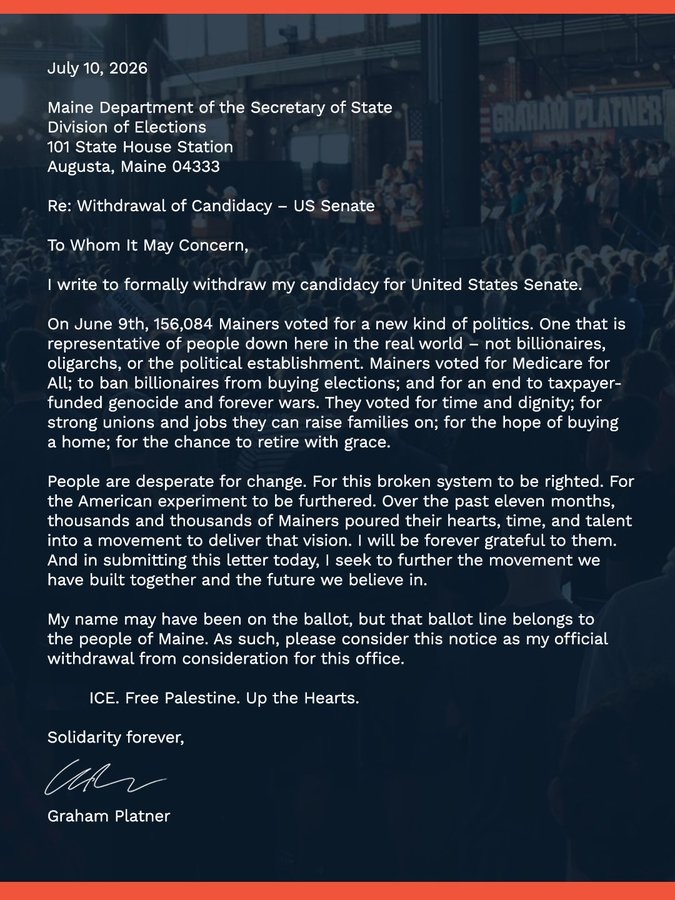 Matzav1 day ago
Maine Democratic Senate candidate Graham Platner officially ended his campaign Friday, submitting a withdrawal letter to state election officials that concluded with an expletive as he exited the race amid mounting political and personal turmoil.
Platner later posted an image of the letter on X. While announcing his withdrawal, he did not indicate whom he believes should replace him as the Democratic nominee to challenge Republican Sen. Susan Collins in November.
In the letter, Platner pointed to the 156,084 votes he received in last month’s Democratic primary, arguing that his victory by more than 70 percentage points demonstrated one thing: “People are desperate for change.”
“Mainers voted for a new kind of politics,” the letter read. “One that is representative of people down here in the real world — not billionaires, oligarchs or the political establishment.”
He went on to declare, “Mainers voted for Medicare for All; to ban billionaires from buying elections; and for an end to taxpayer-funded genocide and forever wars.”
The letter ended with the message: “[Curse] ICE. Free Palestine. Up the Hearts.”
Had Platner stayed in the race beyond the July 13 deadline, he would have automatically remained the Democratic nominee for the U.S. Senate. His withdrawal now gives Maine Democratic leaders until July 27 to convene a nominating convention to select a replacement candidate.
Maine’s Secretary of State’s Office confirmed that “a formal notice has been received” from Platner notifying officials that he has officially withdrawn from the contest.
Several Democrats are already being mentioned as possible replacements on the November ballot, including former Maine Senate President Troy Jackson, former public health official Nirav Shah, Maine Secretary of State Shenna Bellows, Maine Beer Co. co-founder Dan Kleban, former Capitol Hill staffer Jordan Wood, and social worker Paige Loud.
Before formally withdrawing, Platner released a video Wednesday in which he alleged that “large forces,” “corporate media” and the “political establishment” had worked together to derail his campaign.
“This was the last week to try to get me off of the ballot. And that’s why this is occurring,” Platner said, while urging Democrats to hold what he described as an “open, transparent and democratic” nominating process.
The upcoming nominating convention is expected to include approximately 600 delegates, including 100 members of the state Democratic committee and roughly 500 delegates selected proportionally by county committees.
Platner also argued that “people in DC need to stay in DC.”
 Matzav1 day ago
Vice President JD Vance said he is convinced that accused murderer Tyler Robinson killed conservative activist Charlie Kirk, but believes it remains possible that others played a role in encouraging or influencing the attack.
Speaking Saturday in an interview with The Daily Wire’s Mary Margaret Olohan, Vance said he continues to question whether Robinson acted entirely on his own.
“I’m always going to wonder,” Vance said. “I’m always going to wonder what was said and how many contacts [Robinson] had beforehand. By the way, it doesn’t mean that [Robinson’s] any less guilty. But do I wonder if there are other people who are more directly involved in Charlie’s murder? Absolutely, because I don’t think that it’s possible for a young man to get radicalized like that without somebody encouraging him, whether informally or formally.”
While emphasizing that Robinson bears primary responsibility for the killing, Vance suggested others may share moral responsibility.
“I think there are a lot of people with blood on their hands in the case of Charlie Kirk, but of course, the person most directly who has blood on their hands is Tyler Robinson.”
Vance’s comments followed his assertion that “the evidence is clear” Robinson murdered Kirk during a Turning Point USA event at Utah Valley University in September.
The interview came just days after Robinson appeared in a Utah courtroom for a preliminary hearing in the criminal case against him. The New York Times described the proceeding as “like a reduced trial, with testimony and exhibits presented to a judge.”
Vance is not alone in concluding that the evidence presented during the hearing strongly points to Robinson’s guilt.
Donald Trump Jr., who attended two days of the proceedings at the courthouse in Provo, Utah, told Fox News that the case against Robinson was “damning.”
Among the evidence presented was surveillance footage showing Robinson driving approximately 4½ hours from his home to Utah Valley University and interacting with Turning Point USA staff before the event where Kirk was fatally shot.
Trump Jr. also pointed to video showing Robinson appearing to develop what he described as a “magically” acquired limp before climbing onto a rooftop that he called a “perfect” vantage point from which to shoot Kirk. He said the unusual gait led both prosecutors and himself to believe Robinson was concealing a firearm in his pants.
“The shot happens and within seconds, and he’s seen jumping off the building and running into the nearby woods,” Trump Jr. continued.
He added sarcastically that the combination of Robinson later surrendering to authorities, together with the video footage and physical evidence, amounted to “minor details” that nevertheless made his guilt unmistakable.
Later in the week, prosecutors also introduced text messages they allege show Robinson confessing to the killing.
If convicted, Robinson could face the death penalty.
{Matzav.com}
 Yeshiva World News1 day ago
As more than 850 Iranian ballistic missiles were launched at Israel during Operation “Rising Lion,” a little-known team inside the Defense Ministry’s classified Homa Administration found itself at the center of one of the war’s most critical missions.
In an exclusive interview with Walla, officers from the Homa Administration described how engineers rushed to missile impact sites across Israel in search of critical Iranian missile components—what they referred to as the “smoking gun.” Those recovered parts were rapidly analyzed and incorporated into Israel’s missile defense systems, allowing engineers to improve detection, identification, interception, and interceptor production while the fighting was still underway.
According to the officers, the operation became the ultimate test of decades of investment in Israel’s multi-layered missile defense network, including Iron Dome, David’s Sling, Arrow, and additional classified programs. During the campaign, Iran launched more than 850 ballistic missiles at Israel. Officials said the operation achieved an interception rate of approximately 90%, although 44 Israelis were killed, including 23 in direct missile impacts, while thousands more were evacuated to hospitals with varying degrees of injuries.
One officer recounted traveling across the country—including on Shabbos and Yom Tov—to recover specific missile fragments alongside investigators from the Israeli Air Force, Israel Aerospace Industries (IAI), and Tomer, the company that manufactures Arrow interceptor motors. In one case, locating a single missile component described as the “smoking gun” enabled investigators to identify and solve a significant technical problem that later influenced both interceptor development and production.
The officers said interceptor manufacturing continued throughout the war as Defense Minister Yisrael Katz and Defense Ministry Director-General Amir Baram directed the defense establishment to accelerate and significantly expand production while increasing Israeli-made manufacturing capacity. At the same time, engineers continuously investigated operational performance and rapidly incorporated battlefield lessons into the systems.
Officials said every interception—and every missile that penetrated Israel’s defenses—was immediately analyzed, with findings shared among engineers, defense industries, and the Israeli Air Force to implement improvements as quickly as possible. They emphasized that intelligence and advanced technology were combined throughout the campaign in an ongoing effort to improve performance.
The officers also credited unprecedented cooperation with the U.S. military as one of the operation’s greatest achievements. American air defense systems deployed in Israel worked in close coordination with Israeli forces, enabling joint management of missile interceptions, shared operational planning, and real-time investigations that they described as reaching an exceptionally high level of cooperation.
According to the officers, American willingness to share technical information has expanded significantly in recent years, allowing both militaries to coordinate their air defense systems more effectively than ever before. They said this cooperation contributed to more efficient use of interceptors and higher overall interception performance compared with previous rounds of fighting.
Despite the success, the officers stressed that no missile defense system is hermetic and that every successful Iranian strike carried a painful human cost. Each incident immediately triggered investigations aimed at identifying lessons and implementing improvements before the next wave of attacks.
They said the Homa Administration serves as the central hub connecting battlefield data, intelligence, the Israeli Air Force, American partners, defense engineers, and Israel’s defense industries, allowing operational lessons to be translated into system improvements in real time—even during active combat.
(YWN World Headquarters – NYC)
 Yeshiva World News1 day ago
Finance Minister Bezalel Smotrich revealed Thursday night details of a conversation he held with U.S. Middle East envoy Steve Witkoff shortly after Witkoff’s appointment to the role.
Smotrich said the meeting took place together with then-Strategic Affairs Minister Ron Dermer, one day after Witkoff visited the Gaza border area and viewed footage documenting the atrocities of the October 7 Hamas attack. According to Smotrich, Witkoff was visibly shaken by what he saw and told him, “Bezalel, I will not let two million Nazis live next to your children along the border fence.”
Addressing Israel’s security policy in Gaza and Lebanon, Smotrich added, “There is only one thing that hurts the enemy — land,” and called for the establishment of a long-term security buffer zone along the Lebanese border.
(YWN World Headquarters – NYC)
 Matzav1 day ago
Rav Yitzchak Yosef, president of Shas’ Moetzet Chachmei HaTorah, delivered sharp remarks about Prime Minister Binyomin Netanyahu during his weekly shiur on Motzoei Shabbos, saying he does not believe the prime minister will ever do teshuvah.
Speaking about the spiritual state of the country, Rav Yosef said, “We are living, because of our many sins, in a secular state, not a chareidi state. We pray that everyone will do teshuvah. There are those who have done teshuvah, and there are those whom I do not believe will do teshuvah. Will Bibi Netanyahu do teshuvah? There is absolutely no chance. Eisenkot perhaps will do teshuvah.”
Rav Yosef has previously been highly critical of Netanyahu, particularly over comments the prime minister made about his father, Rav Ovadia Yosef zt”l.
Referring to those remarks, Rav Yosef said, “Netanyahu is insolent. He said that my father was a politician after my father said he was pained over the yeshiva bochurim. How can he speak so disrespectfully?”
On another occasion, Rav Yosef said that had Chacham Shalom Cohen zt”l still been alive, he would have strongly opposed relying on Netanyahu politically.
“He would have shouted at the shluchei d’Rabbanan: Why are you relying on Bibi? He is an atheist.”
{Matzav.com}
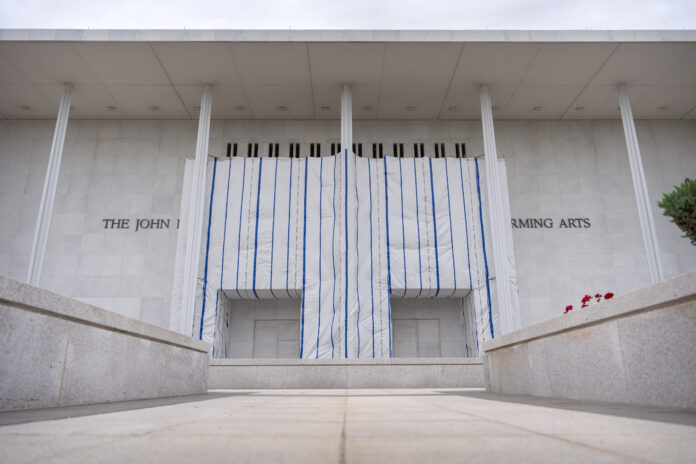 Vos Iz Neias1 day ago
A Democratic senator on Saturday alleged that whistleblowers have detailed several problems stemming from rushed or improper reconstruction of the Kennedy Center, adding a new layer to the travails of the arts complex as President Donald Trump tried to seize control of it and its name.
Sheldon Whitehouse of Rhode Island said in a release on Saturday that he had received a whistleblower disclosure from the Government Accountability Project, a nonprofit whistleblower protection group, alleging that “the Center rushed a series of renovations driven by the President’s aesthetic whims and his desire to star in a series of televised events in December.”
“The Center’s subservience to the President’s desires and its corner-cutting contracting practices have resulted in steel columns that are rusting through fresh paint, a reflecting pool that may have to be torn out and rebuilt, and a brand-new bathroom floor torn out over an offending tile color,” Whitehouse continued. “This is waste, and it treats a national memorial to President Kennedy as if it were a private renovation project.”
The Kennedy Center did not immediately respond to a request for comment.
Trump seized control of the arts and culture venue, named after former President John F. Kennedy, at the beginning of his second term. Trump ousted the center’s prior leadership and replaced it with a Board of Trustees that named him chairman and added his name to the building.
Democrats sued to remove it and a federal judge ruled Trump’s name must come off the venue, which had been wracked with boycotts by artists during the turmoil. He tried to close the center for two years, only to be ordered to keep it open by the court because only Congress could change its name.
Whitehouse released a letter he wrote to the center’s executive director, Matt Floca, demanding answers by July 23. He said the whistleblower report included “firsthand accounts of multiple former Center project managers, supported by contemporaneous documents and photographs.” He also included an 83-page appendix full of internal center documents, emails and photos of apparently shoddy construction.
The allegations include that the center rushed work before it was authorized by Congress because it wanted it to be complete for Trump to accept the new FIFA Peace Prize that the soccer federation awarded him. In doing so, the letter alleges the center didn’t follow required contracting guidelines and wasted money replacing a bathroom because the president didn’t like the color and inking no-bid contracts. One $8 million contract to replace the concert hall’s floor went to a firm with no experience in concert halls, Whitehouse contended.