
 JBizNews2 hours ago
US President Donald Trump claimed that he was the best president in the history of Israel during an interview with CNBC on Thursday.
“They admit it,” Trump added from the Oval Office, referring to perceived Israeli views towards him.
“How a Jewish person can vote for a Democrat is beyond me,” Trump added.
The US president defended in the interview his decision to go to war with Iran, claiming that “this is not a war per se. This is the de-nuking of Iran.”
“You can’t let them have a nuclear weapon,” he argued, adding that the four months that the war has lasted is a relatively short amount of time.
“We are respected again as a country, maybe like never before. A year and a half ago, we were laughed at. They’re not laughing anymore,” he said, adding that the US has “had some very bad presidents.”
“You know, other presidents are not considered a strong office; even if you’re president, you can’t do as much,” he said. According to CNBC, he appeared to be referring to other countries’ presidents.
When asked about the Strait of Hormuz, the US president claimed that “not one ship got through to Iran,” which CNBC said suggested the US blockade of the waterway was not breached.
“It was a wall of steel,” said Trump.
Information from the shipping industry indicates, however, that the blockade was breached multiple times by an Iranian shadow fleet, CNBC said, citing Lloyd’s List, an analysis service that covers global maritime patterns.
Additionally, Trump repeatedly claimed that Iran would buy agricultural products from the US as part of the ceasefire deal.
Tehran, however, has refuted this statement, according to CNBC.
“They’re making no money, so we’re going to take some of the money, and we’re going to buy them,” Trump said. “They need food. They need corn and wheat and soybeans, and we’re going to have exclusively our American farmers provide.”
Trump argued that the proceeds Tehran has gathered from the easing of US sanctions will go towards buying food from the US, not rebuilding Iran’s military.
However, the Governor of Iran’s central bank, Abdolnaser Hemmati, said the deal does not include an “obligation to buy agricultural inputs from the US,” CNBC said, citing the Iranian news agency Tasnim.
 JBizNews4 hours ago
Iraqi security forces arrested politicians and senior officials in overnight raids inside Baghdad’s
fortified Green Zone earlier this week, in one of the most visible anti-corruption operations Iraq has seen in years and an early test of Prime Minister Ali Al-Zaidi’s new government.
The Green Zone has long been a symbol of Iraq’s post-2003 political order: A protected enclave separated from ordinary Iraqis and home to the institutions, embassies, and political networks that have shaped the country’s fragile balance between Washington, Tehran, and its own entrenched elite.
Reuters reported that elite units from the Counter Terrorism Service (CTS) raided homes in the heavily fortified district, while Iraq’s state-run Iraqi News Agency (INA) said 47 suspects were detained, including members of parliament and government officials. The arrests followed judicial warrants linked to suspected corruption networks, with some cases reportedly stemming from testimony by Adnan al-Jumaili, the former deputy oil minister for refining affairs, after his earlier
detention.
The Associated Press, citing INA, reported that those arrested included 12 current lawmakers, one former legislator, a former adviser to former Prime Minister Mohammed Shia al-Sudani, and another high-ranking Oil Ministry official. Some were associated with al-Sudani’s Shiite political bloc, while others were linked to the Sunni Azm Alliance. The specific charges against them were not immediately made public, but an investigative judge said the probe concerned allegations that state resources were used for electioneering and that government contracts were exploited for
commissions and personal gain.
For Al-Zaidi, who took office in May, the operation provides a political opening. It allows the new government to present itself as active, forceful, and willing to challenge a corruption system that has drained Iraqi state institutions for years. But the raids also raise a central question: Do they mark the start of a genuine confrontation with Iraq’s deepest corruption networks, including those tied to armed factions and Iran-linked political interests, or are they a controlled spectacle aimed at satisfying public anger and external pressure while leaving the real centers of power untouched?
The timing gives the operation added political weight. Al-Zaidi is expected to visit Washington in mid-July to deepen economic, trade, and investment ties with the United States. Reuters reported that the visit is intended to strengthen the Iraqi-US partnership, but also noted that the prime minister faces the broader challenge of curbing Iran-backed fighters, tackling entrenched corruption, and balancing ties between Washington and Tehran.
That balance has grown more sensitive after recent US-Iran understandings and the broader regional effort to reduce hostilities. Earlier this month, US Special Presidential Envoy for Iraq and Syria Tom Barrack visited Baghdad in what The National described as the highest-level American engagement since Al-Zaidi’s government was formed. Washington’s deeper cooperation with Baghdad has been linked to efforts to disarm Iran-backed militias and bring weapons under state
authority.
A report by Asharq Al-Awsat on the Barrack-Al-Zaidi meeting, citing a US Embassy statement, said the two sides discussed Iraq’s plans to ensure the “complete disarmament and disbandment of all armed groups and formations operating outside the authority and control of the Iraqi state,” as well as preventing Iraqi territory from being used to threaten regional peace. The same report noted that mechanisms for imposing a state monopoly over arms remain unclear and that some factions have continued to oppose disarmament.
In that context, analysts read the Green Zone raids as more than a domestic anti-corruption operation. One publicly reported link to Iran-related allegations was the arrest of Ali Maarij, the deputy oil minister for distribution affairs.
Reuters reported that the United States sanctioned Maarij in May, accusing him of helping divert Iraqi oil to benefit Iran and Iran-backed militias and of facilitating the blending of Iranian crude with Iraqi oil for export using falsified documents.
Iraq’s Oil Ministry denied the allegations at the time, saying the activities described by Washington did not fall within Maarij’s responsibilities.
Still, the broader campaign has not yet visibly targeted the most powerful Iran-aligned militia figures or the political leaderships around them. For some Iraqi observers, that is the point. Middle East political analyst Dr. Tallha Abdulrazaq argues that the operation should be judged not by the scale of the raids, but by who remains untouched.
“For there to be a real shift, Al-Zaidi would have to start targeting the real big whales of corruption that have plagued Iraq for almost a quarter of a century since the US-led invasion in 2003,” Abdulrazaq told The Media Line. “This operation is designed to give the impression that Iraq is finally cleaning itself up, but the reality is that those arrested are small fry and expendable fall guys.”
His assessment is severe, but it captures widespread Iraqi skepticism toward state-led reform campaigns. Iraq has seen previous governments announce anti-corruption efforts, only for them to stall, be reversed, or become entangled in elite bargaining.
Under former prime ministers Haider al-Abadi and Mustafa al-Kadhimi, reform language often collided with the realities of Iraq’s power-sharing system, party patronage, and militia-linked economic influence. Political analyst Alfadhel Ahmad offered a more cautious reading. He said the arrests have generated momentum for Al-Zaidi but warned that their real meaning depends on what comes next.
“So far, the arrests have targeted third-tier Sunni politicians and associates of former PM Mohammed Shia al-Sudani, most linked to the network of Adnan al-Jumaili, the oil ministry undersecretary arrested earlier,” Ahmad told The Media Line. “Real intentions are hard to judge yet, but these arrests have clearly added political momentum and a cautious popular legitimacy to Al-Zaidi and Al-Zaidi’s new government.”
Ahmad also pointed to the choreography of the raids as part of the message. The use of elite security units gave the operation the appearance of a decisive state intervention, even if many of the targeted figures were not among Iraq’s most protected actors. “Their and Al – Zaidi’s also a deliberate effort to project spectacle, deploying tanks and counterterrorism units to arrest figures who mostly have no militia protecting them,” he said.
The deployment of the CTS is especially symbolic. The CTS is one of Iraq’s most respected security
forces, closely associated with the fight against the Islamic State group, also known as ISIS, and, at least formally, answerable to the prime minister. Its use in a corruption operation inside the Green Zone sends a political message that Al-Zaidi can command the state’s coercive institutions against senior political figures.
Abdulrazaq sees the use of the CTS as part of the performance rather than proof of institutional strength. “The use of the Counter Terrorism Service was, again, just for theatrical purposes,” he said. “… it was designed to show that Zaidi himself has authority and command.” The deeper issue is whether Iraq’s state institutions can act independently of the networks that dominate them.
For years, corruption in Iraq has not been limited to individual theft or administrative abuse. It is embedded in party financing, public-sector contracts, oil revenues, border crossings, ministries, and armed groups with political representation. That helps explain why anti-corruption campaigns are often interpreted through factional politics:
who is arrested, who is spared, and whose benefits are protected.
“This strikes at the heart of the matter,” Abdulrazaq said. “The Iraqi state literally is the militia-linked economic structure and the militia-controlled parliament and government. There is no separation between them.” For Ahmad, the test is still open. He does not rule out the possibility that Al-Zaidi could use this early momentum to expand the campaign, but says the threshold must be clear: The government would have to move beyond expendable figures and begin touching interests tied to powerful factions.
“Worth remembering: Iraqi politicians have always reversed reform and anti-corruption efforts,” Ahmad said. “Iraqis have a long record of distrusting government action, fearing the same outcomes they, and Al- Zaidi’s have seen before.” “Al-Zaidi has a clear chance to prevent backsliding by building on this momentum to expand toward key politicians and test the waters for confronting interests tied to pro-Iranian militias in Iraq,” he added.
That is also where the Tehran question enters the story. The raids unfolded while Iranian Foreign Minister Abbas Araghchi was in Iraq. Iranian state media reported that Araghchi held separate meetings with the governors of Karbala and Najaf to discuss arrangements for funeral ceremonies in Iraq for the late Iranian Supreme Leader Ayatollah Ali Khamenei.
Some observers have questioned whether the arrests, the US diplomatic track, and Araghchi’s visit are connected.
Both analysts interviewed rejected a direct link between Araghchi’s trip and the Green Zone operation, but they interpreted that absence differently. “I wouldn’t and Al-Zaidi bother reading too much into the timing apart from the fact that it shows Iran isnand Al-Zaidi bothered at all by Al-Zaidi and Al- Zaidi’s move,” Abdulrazaq said.
“Tehran is extremely pragmatic and would be more than happy to sacrifice a few nobodies and placeholder MPs just so that the current system that serves its interests continues.”
Ahmad was more restrained, saying there is no evidence so far that the two matters are connected. “Regarding Araghchi’s visit, those two things are not connected, at least for what is known till now. He came to arrange Khamenei’s ceremonies in Najaf and Karbala.”
The distinction is important. There is a difference between proving operational coordination with Tehran and arguing that the campaign avoids Iran-linked power centers. The first requires evidence that has not publicly emerged. The second is a political assessment based on who has been targeted so far and who has not.
Ahmad said the campaign may be useful to the Coordination Framework, the largest Shiite political bloc and the core parliamentary force behind Iraq’s current order, as it tries to navigate US pressure without rupturing its ties to Iran-aligned factions. “The Coordination Framework … may be trying to market this campaign to Washington,” he said. “But importantly, the campaign has not yet touched any Iran-linked interests or proxies.”
That gap between optics and substance could become decisive ahead of Al-Zaidi’s expected Washington visit.
The United States is not only looking at corruption as a governance issue; it is also looking at corruption as part of the infrastructure that allows armed groups, smuggling networks, and foreign influence to survive inside the Iraqi system.
Abdulrazaq argued that Washington’s focus is less about corruption itself than about regional compliance. “I don’t think Al-Zaidi thinks the US necessarily cares about corruption per se,” he said. “What the US cares about is compliance with its ambitions in the region.”
Ahmad’s conclusion was similar, though less categorical. He said the real measure will be whether the campaign moves against militia-linked interests, not only politicians without serious armed protection. “Against the broader US demands, al- Zaidi’s no sign anything has changed on the ground,” he said. “I think we should watch what follows these campaigns, specifically whether the government moves to undermine militia-linked interests.”
Ahmad said that if the campaign stops where it is, it will likely be read as a maneuver by Iraq’s political elite to manage American expectations. “Otherwise, the likeliest reading is that Iraq and al- Zaidi’s political class is trying to circumvent US demands and present Washington a false picture, especially ahead of the PMand al- Zaidi’s anticipated visit, at the expense of expendable, marginal politicians.”
Another layer is internal score-settling. Anti-corruption campaigns in Iraq often become tools in factional struggles, especially when the justice system is activated selectively. Abdulrazaq said this campaign appears to fit that pattern.
“This is absolutely also about score settling,” he said. “To be clear, those arrested are almost certainly also corrupt, but, effectively, Zaidi is eliminating certain political rivals on behalf of the Coordination Framework of Shia Islamists close to Iran.”
The arrests have created three parallel narratives: The government’s narrative is that Iraq is finally acting against corruption. The public’s cautious reaction is shaped by years of disappointment and distrust. The analysts’ warning is that the campaign may be real only if it expands toward the political and militia-linked structures that have long been treated as untouchable.
For now, Al-Zaidi has achieved visibility. The Green Zone was sealed, senior figures were detained, and the state projected force at a moment when Washington is demanding proof that Baghdad can control armed groups and reduce Iranian influence.
But visibility is not the same as transformation.
What comes next will determine whether this becomes a turning point or another episode in Iraq’s long history of controlled reform. If the arrests remain confined to lower- and mid-level actors, Sunni rivals, and associates of the previous government, the campaign will reinforce the suspicion that Baghdad is offering Washington a staged concession while preserving the system beneath it.
If it moves toward senior militia-linked economic interests and the political figures protecting them, then Al-Zaidi may begin to test the foundations of Iraq’s post-2003 order.
Until then, the Green Zone raids remain less a conclusion than a question: whether Iraq’s new government is confronting corruption or simply managing the appearance of confrontation at a moment when both Washington and Tehran are watching.
 JBizNews5 hours ago
A two-day hearing regarding Zillow’s preliminary injunction motion in its ongoing antitrust battle with Midwest Real Estate Data (MRED) and Compass International Holdings kicked off Wednesday morning in federal court in Chicago.
The hearing is focused on a motion Zillow filed in mid-May seeking to prevent the Chicagoland MLS from terminating its listing feed sent to Zillow. Just days after this motion was filed, MRED cut off Zillow’s access to its listing feed after the portal allegedly refused to cure what the MLS calls a “material breach” of its license agreements. The feed was restored a few days later after Judge John Tharp, Jr. granted Zillow a temporary restraining order (TRO).
In early June, Judge Tharp extended the TRO, which also prevents Zillow from banning any MRED listings from its site, until the court either rules on Zillow’s preliminary injunction motion or grants MRED’s motion to compel arbitration, which is also currently pending.
The hearing is proceeding as scheduled despite an attempt by MRED earlier this week to have the court deny Zillow’s motion prior to the start of the hearing, seeking a stay on all arbitratable matters and claiming that the injunction is unnecessary given the TRO currently in place.
Wednesday morning’s proceedings included opening statements by all three parties and the beginning of Errol Samuelson’s, Zillow’s chief industry development officer, testimony.
Other executives expected to testify at the hearing include MRED’s managing director and chief technology officer Chris Haran, Compass regional vice president Fran Broude, Zillow’s chief financial officer Jeremy Hoffman, the broker-owner of McColly Real Estate Ron McColly, Compass CEO Robert Reffkin and MRED CEO Rebecca Jensen. In addition, there will be two expert witnesses, Lawrence Wu, the president of NERA Economic Consulting, and attorney Debra Aron, who is the vice president of Charles River Associates’ Competition Practice.
The hearing is just one part of an antitrust lawsuit Zillow filed in mid-May, claiming that MRED and Compass conspired to withhold listing data and pressure Zillow to carry private “hidden” listings nationwide.
Zillow is arguing that MRED’s October 2025 clarification of its IDX and VOW rules to state that IDX participants may filter listings only using objective criteria, such as geography, price, property type and listing type were part of a concerted effort by the MLS and Compass to harm Zillow for its listing access standards policy, which bans listings that are publicly marketed for more than one business day prior to being available to display on IDX or VOW-powered websites.
According to sources in the courtroom Wednesday morning, in opening statements, Zillow’s counsel discussed an alleged coordinated effort by Compass and MRE to hide homes from consumers and that Compass pressured MRED to prevent Zillow from enforcing its listing access standards policy. The listing portal giant also argued that hiding listings from Zillow, the nation’s largest home search portal, harms buyers and sellers and could have an impact on housing affordability and availability.
Sources told HousingWire that counsel for Compass and MRED claimed that Zillow’s listing access standards policy is solely focused on maintaining Zillow’s user traffic and not about market transparency and that the MLS is neutral industry infrastructure.
Counsel for MRED noted that Zillow would be able to maintain its access to MRED’s IDX listing feed if it did not enforce its listing access standards policy. The MLS’s attorney also contended that Zillow is challenging the rule because it conflicts with Zillow’s business model, and said MRED’s role is to distribute listings fairly rather than favor any one company.
As for Errol Samuelson’s testimony, a Zillow spokesperson told HousingWire that much of the testimony focused on the impact of private listing networks on buyers, sellers, agents, most brokers and the market at large. According to the spokesperson, Samuelson argued that Compass’s private listings are “false private” because they’re available for anyone to see as long as they work with a Compass agent, making it not about privacy for the seller at all.
During his time on the stand, the spokesperson said Samuelson drew a key distinction between truly private listings — which Zillow does not object to — and Compass’s “black box” Phase 1 of its three-phased marketing strategy, which publicly advertises the existence of off-market homes to allegedly lure buyers into Compass offices.
“I cannot see those listings without in some way working with a Compass agent,” the spokesperson quotes Samuelson as saying, arguing that using private listings as a marketing hook to capture buyers is what makes Compass’s model harmful to competition and sellers alike.
Additionally, the spokesperson said Samuelson noted that Zillow has been able to enforce its listing access standards policy everywhere else without any other MLSs cutting off its IDX feed, which Samuelson argued was evidence of MRED taking these actions on behalf of Compass.
While no other MLS has actually shut off Zillow’s listing feed, Nashville-based MLS Realtracs had threatened to suspend Zillow’s feed if the listing portal failed to comply with the MLS’s updated IDX display rules. As of June 8, 2026, Realtracs had decided to continue distributing listings to Zillow while the two parties engaged in continued contract negotiations.
Like MRED, Realtracs announced plans to expand nationwide after securing national listing feed agreements with Compass, as well as with United Real Estate.
Prior to the start of the hearing, a Compass spokesperson told HousingWire that his firm is planning on arguing that Zillow, unlike licensed brokerages, does not compete for listings or owe fiduciary duties to consumers, yet is using its dominant home search platform to dictate how brokers market properties and restrict seller choice.
The company contends that Zillow’s Listing Access Standards harm consumers by penalizing sellers who choose lawful phased marketing strategies, hiding active MLS listings from buyers without clear disclosure, and undermining MRED’s long-standing Private Listing Network. Compass also plans to argue that Zillow profits from broker-created listing data while applying its policy inconsistently and using its market power to entrench its dominance rather than promote transparency.
“Zillow says that consumers deserve to see the full market. But it is both banning active, publicly available MLS listings from its platform and deceiving consumers by labeling those listings as not for sale,” the spokesperson said. “If Zillow were genuinely committed to transparency, every MLS listing would appear on Zillow without the deceptive features it adds.”
In a post on its Front Porch blog prior to the start of the hearing, Zillow said that in court it would “present evidence regarding MRED and Compass conspiring to cut off Zillow’s listing feed in violation of federal antitrust law, among other allegations of wrongdoing.”
“And we will present evidence that MRED and Compass did it not to protect consumers or set neutral MLS policy, but to advance Compass’ private listing business at the expense of consumers and other MRED member brokers,” the post states.
MRED did not immediately respond to HousingWire’s request for comments regarding the start of the hearing.
Although the court’s ruling from this hearing only pertains to Zillow’s preliminary injunction motion, a ruling could provide some insight as to which way Judge Tharp is leaning in the overall case, as part of the criteria to be awarded a preliminary injunction, Zillow must show that it is likely to prevail at trial. If the motion is denied, that would mean that Zillow was unable to meet this burden, indicating that there is a chance the defendants prevail in a trial, if Zillow does not provide stronger arguments and evidence.
All parties must file any post-hearing briefs by July 9 and any replies to the post-hearing briefs are due by July 13. After this Judge Tharp will rule on the motion. However the ruling may take at least a few weeks if not months.
 JBizNews6 hours ago
President Donald Trump on Thursday defended his family’s sprawling business interests and his children’s commercial activity, waving off conflict-of-interest concerns days after a federal ethics filing showed he earned more than $1.4 billion from cryptocurrency ventures last year. Speaking from the Oval Office, Trump said the presidency reaches so deeply into the economy that almost anything his children do could be cast as a conflict. “If they buy an energy efficient truck, they have inside information,” he said. Trump added that he tells his children to “stay away” from anything that could look improper, but said they were running businesses long before he entered politics.
The remarks followed the release Tuesday of Trump’s annual financial disclosure by the U.S. Office of Government Ethics. The 927-page report — nearly 700 pages longer than his prior filing — showed the president collected more than $1.4 billion connected to digital assets in 2025, his first year back in the White House. That figure made crypto, not real estate, his single largest source of income. The interview aired on CNBC and was conducted by anchor Joe Kernen.
The disclosure listed roughly $635 million in royalties from a licensing deal tied to his $TRUMP meme coin, launched days before his second inauguration. It also showed more than $500 million from World Liberty Financial, the crypto venture Trump co-founded in 2024 with his sons Eric Trump and Donald Trump Jr. His youngest son, Barron Trump, is listed with the firm as well.
Trump’s older, traditional businesses still produced heavy income. The filing reported about $122 million from Trump Doral, $77.5 million from Mar-a-Lago, and $39 million from another property. The president also disclosed more than $80 million in income from legal settlements with media companies including ABC, CBS, Meta, YouTube and X, plus millions in book and merchandise royalties.
For companies watching Washington, the more consequential thread was Trump’s growing willingness to take direct government stakes in private firms. Pressed on a report that the government could take a 5% stake in OpenAI, Trump sidestepped the question and instead pointed to Intel, the struggling chipmaker. The administration announced an $8.9 billion investment in Intel common stock last August, handing the government a 10% stake. Trump said he told the company he could solve its problems but wanted “10% of the company.”
That approach — an administration trading help for equity — is reshaping how executives think about federal involvement in their industries. It arrives alongside a heavy trade agenda. The administration said Wednesday it would not renew the United States-Mexico-Canada Agreement for another 16 years, a move that keeps the pact alive for a decade but triggers annual reviews that could reopen major terms. A senior official said Trump’s main concern is the trade deficits the United States runs with Canada and Mexico.
Trump also used the interview to stress that he does not want an economic downturn on his record. He invoked former president Herbert Hoover, who led the country into the Great Depression, and blamed him for raising interest rates and taxes. “I don’t want to be Herbert Hoover,” Trump said, casting himself as focused on growth and low borrowing costs.
The president returned repeatedly to the economy’s political stakes. His war with Iran, which began in February, remains in a fragile ceasefire, and Trump has argued that instability in the Middle East is itself a market risk. He repeated a claim that Iran will buy American farm goods as part of a potential peace deal, an assertion Tehran has denied.
Critics say the disclosure underscores how tightly the president’s personal wealth is now tied to industries his administration regulates, particularly crypto, where the White House is pushing Congress to pass new market rules. A representative for the Trump Organization said the filing showed a company with valuable assets, substantial liquidity and a conservative balance sheet, and called the nearly 1,000-page report a sign of transparency.
For businesses, investors and lobbyists, the combined message from the disclosure and the interview is that the lines between Trump’s policy agenda and his family’s commercial interests remain blurred — and that the administration is comfortable operating in that gray zone as it takes equity in companies, rewrites trade deals and leans on the Federal Reserve to keep rates in check.
JBizNews Desk | Washington
© JBizNews.com. All Rights Reserved. Reproduction or distribution without written permission is prohibited.
 JBizNews7 hours ago
Microsoft is expected to lay off up to 2.5% of its workforce as early as next week.
The cuts, which could affect 5,000 employees, may impact sales, consulting and the Xbox gaming unit, according to a report from Business Insider Tuesday.
The layoffs would mark the latest round of restructuring in the tech sector as companies continue to cut costs while directing more resources toward artificial intelligence (AI).
Last summer, Microsoft laid off roughly 4% of its workforce, or about 9,000 employees, in one of the company’s largest rounds of job cuts in recent years.
According to Microsoft’s latest annual filing with the Securities and Exchange Commission (SEC), the company employed roughly 228,000 full-time workers worldwide as of June 30, 2025.
A 2.5% reduction in that workforce would amount to approximately 5,700 job cuts.
Sources said some employees affected by the latest round of layoffs will be offered new roles within the company immediately, Business Insider reported.
In the past month, Microsoft’s stock slumped about 19%, marking one of its worst monthly performances since the dot-com crash.
Investor concerns have risen as Wall Street analysts warn that AI could eventually replace certain software services, which may include offerings from Microsoft.
Last month, Xbox CEO Asha Sharma sent a memo to employees calling for a “reset” of the business after months of uneven performance.
The Verge on Tuesday also reported that the gaming division is planning layoffs starting next week. The cuts are expected to be significant, with reductions to marketing and budgets, according to Bloomberg early last month.
The restructuring could lead to studio closures, mergers, spin-offs and canceled game projects, the Verge reported.
Xbox also recently raised prices on its gaming consoles by an additional $100 to $150 worldwide, citing increased demand for memory and storage driven by the AI boom.
Sources said the 2026 round of layoffs appears to be smaller after the company earlier this year introduced a voluntary retirement buyout program, which led to a significant number of employees exiting, according to BI.
Roughly one-third of eligible employees reportedly opted in.
Last year, Microsoft reportedly eliminated roughly 15,000 roles across multiple rounds of layoffs, including about 6,000 positions in May followed by 9,000 employees in July.
FOX Business reached out to Microsoft for more information.
 JBizNews7 hours ago
Costco’s iconic $4.99 rotisserie chicken has earned a cult-like following among shoppers for years, but Consumer Reports says Sam’s Club now has the best bird in the warehouse club business.
After evaluating rotisserie chickens from 10 grocery chains, warehouse clubs and big-box retailers, Consumer Reports named Sam’s Club’s Member’s Mark Seasoned Rotisserie Chicken its top overall pick, edging out Costco’s Kirkland Signature bird.
According to Consumer Reports, tasters gave Sam’s Club the edge for its flavor, seasoning and juicy texture. Costco’s chicken also landed among the publication’s top picks, though reviewers found the seasoning to be less consistent between samples.
The results may come as a surprise to Costco shoppers, whose devotion to the retailer’s rotisserie chicken has helped make the $4.99 bird one of the company’s signature products.
Costco has held the price steady for years despite inflation, using the popular item as one of its best-known value offerings and a draw for shoppers. The retailer’s loyal customers have even voiced frustration over seemingly minor changes to the product, including 2024’s switch from plastic clamshell containers to bags.
Consumer Reports did not publish a traditional first-through-10th ranking. Instead, it grouped the chickens into those it considered flavorful enough to serve on their own and those better suited for recipes such as soups, salads and sandwiches.
Along with Sam’s Club and Costco, the top group included Stop & Shop, Walmart, Wegmans and Whole Foods Market. BJ’s Wholesale Club, Hannaford, ShopRite and The Fresh Market fell into the second category.
FOX Business has reached out to Costco and Sam’s Club for comment.
The evaluation went beyond taste. Consumer Reports purchased between 10 and 13 chickens from each retailer across multiple store locations and shopping trips.
Researchers weighed each bird, compared sodium levels with nutrition labels, conducted blind taste tests and screened the meat and packaging for chemicals commonly associated with plastics.
Among its findings, Consumer Reports said it detected no PFAS in any of the meat or packaging it tested. It also found that many chickens weighed more than the net weight listed on their labels, with Whole Foods’ birds averaging about a pound heavier than advertised, effectively lowering their per-pound cost.
 JBizNewsJBizNews7 hours ago
A global shortage of memory chips has grown severe enough that Apple is pursuing suppliers it would normally avoid. According to reporting published Wednesday, July 1, by Bloomberg, the iPhone maker is seeking approval to purchase memory chips from two Chinese semiconductor companies that appear on a U.S. Pentagon blacklist, as the artificial intelligence boom continues to tighten global supplies and drive up costs.
The companies are ChangXin Memory Technologies (CXMT) and Yangtze Memory Technologies (YMTC), two of China’s largest memory-chip manufacturers. Apple is reportedly exploring the use of their memory products in devices sold within China while lobbying the Trump administration, including the Commerce Department and the White House, for permission to move forward.
The effort reflects just how strained the global memory market has become.
Demand for advanced memory chips has exploded as technology companies race to build artificial intelligence data centers. Massive orders from AI developers have absorbed much of the world’s available supply, leaving fewer chips for smartphones, tablets, laptops, and other consumer electronics.
Industry analysts estimate DRAM memory prices climbed roughly 60% during 2025 and could rise another 30% to 40% during 2026, with shortages expected to continue well into 2027.
Apple has already begun passing some of those higher costs to consumers.
Earlier this year, the company increased prices on several MacBook models by between $100 and $300 while raising prices on selected iPads, HomePods, and Apple TV products. Although iPhone prices have remained unchanged, analysts say the continuing memory shortage could place additional pricing pressure on future devices if supply conditions fail to improve.
For consumers, the story extends well beyond Apple.
Memory chips are essential components inside virtually every modern electronic device. When prices rise, manufacturers throughout the technology industry face higher production costs, increasing the likelihood of more expensive laptops, smartphones, gaming systems, servers, and other connected products.
The shortage also highlights the growing impact of artificial intelligence on everyday consumers.
While AI investment has fueled record profits for many technology companies, it has also redirected enormous quantities of advanced semiconductors away from traditional consumer products. The same chips powering AI servers are competing with manufacturers building devices used by millions of households every day.
Apple’s negotiations also underscore the increasingly complex relationship between business and geopolitics.
Both CXMT and YMTC have been identified by the Pentagon as companies with alleged ties to China’s military. Although purchasing products from those companies is not automatically prohibited under every circumstance, Apple is seeking clear guidance from U.S. officials before moving ahead, hoping to avoid future regulatory complications or political backlash.
Some industry analysts believe Apple’s objective is not necessarily to lower costs but simply to secure an additional source of supply.
Supply-chain analyst Ming-Chi Kuo has noted that China’s own demand for memory chips already exceeds domestic production, suggesting Apple may gain only limited cost savings even if approval is granted. Instead, adding another supplier could reduce the risk of production delays as the global shortage continues.
For investors, the situation demonstrates how artificial intelligence is reshaping the technology supply chain in unexpected ways. Companies that manufacture memory chips have become some of the biggest beneficiaries of the AI boom, while device makers face mounting pressure from rising component costs.
For consumers, the takeaway is straightforward. As long as demand for AI infrastructure continues to outpace memory production, the cost of many electronic devices is likely to remain under upward pressure. Apple’s willingness to seek approval to purchase chips from previously avoided suppliers illustrates just how tight the global market has become.
The AI revolution may be transforming business, but it is also making the everyday technology Americans rely on more expensive—and even the world’s most valuable company is searching for new ways to secure the components it needs.
JBizNews Desk | New York
© JBizNews.com All Rights Reserved. Reproduction or distribution without written permission is prohibited.
 JBizNews8 hours ago
Tesla reported strong second-quarter deliveries Thursday, blowing past Wall Street expectations as a rebound in Europe helped fuel hopes that the electric vehicle maker can return to annual growth.
The Austin, Texas-based company delivered 480,126 vehicles from April through June, a record for the second quarter, up about 25% from a year earlier and well above the 402,776 vehicles analysts expected, according to Visible Alpha data.
Tesla produced 451,758 vehicles during the quarter, meaning deliveries outpaced production by roughly 28,000 vehicles as the company worked through inventory built up earlier in the year.
Strong results from Tesla’s mainstay auto business offer a crucial cushion as CEO Elon Musk focuses on expensive ambitions in autonomous driving and artificial intelligence, the main drivers of the company’s roughly $1.6 trillion valuation.
Shares of the Austin, Texas-based company were down more than 7% at the close of Thursday. Analysts and investors said optimism had been priced in as the stock gained 12% earlier this week.
Tesla’s recovery in Europe was aided by a surge in fuel prices, government EV incentives, faster electrification of corporate fleets and easing of the consumer backlash over CEO Elon Musk’s politics.
“I think the huge growth in Europe is the key driver for Tesla right now. U.S. sales still appear to be down, albeit less than the broader U.S. EV decline, while China is seeing small growth,” Seth Goldstein, senior equity analyst at Morningstar, said.
Goldstein, who had expected a third straight annual decline, said after the report, “I think it would be very hard to see a decline for the full year at this point.”
Tesla last year introduced stripped-down, lower-cost variants of its Model 3 compact sedans and Model Y SUVs and deployed attractive incentives and financing options.
“Their pricing and their products are helping the buyers overcome any issues they might have with Elon Musk personally,” said Sam Fiorani, vice president at research firm AutoForecast Solutions.
Demand in the U.S., Tesla’s biggest market, however, remained strained after removal of the EV tax credits late last year.
“We’re cautiously optimistic for some growth this year,” Fiorani said.
Analysts said the elimination of incentives for new EV purchases in the U.S. last year continues to weigh on sales, while some refreshes to the aging model lineup have led to stronger performance in the Chinese market.
“We believe Tesla’s U.S. sales likely declined by at least 10% in the quarter,” said Freedom Broker senior analyst Dmitriy Pozdnyakov.
The company’s China-made EV sales have risen this year, helped by production of the refreshed Model Y, despite intense competition from BYD and other domestic automakers.
The company said it will report quarterly results on July 22 after markets close.
Musk briefly became the world’s first trillionaire last month after SpaceX began trading publicly on the Nasdaq at $150 a share, above its $135 IPO price.
Musk’s net worth stood at $982 billion as of Wednesday, according to the Bloomberg Billionaires Index.
Reuters contributed to this report.
 JBizNews8 hours ago
The Food and Drug Administration has upgraded a recall of certain Utz Quality Foods potato chips to its highest risk classification, warning consumers ahead of the Fourth of July holiday that the products carry a reasonable probability of causing serious health consequences or death if contaminated with salmonella.
The FDA designated the recall as a Class I recall after Utz voluntarily recalled certain Zapp’s and Dirty brand potato chips sold nationwide in May. The products were pulled after the company learned a seasoning ingredient used during production contained dry milk powder that could potentially be contaminated with salmonella.
The timing comes as many Americans stock up on chips and other snacks for Independence Day cookouts and gatherings.
According to the FDA, a Class I recall is issued when there is a reasonable probability that using or being exposed to a product will cause serious adverse health consequences or death. It is the agency’s most serious recall classification.
The recall covers select Zapp’s Bayou Blackened Ranch, Salt and Vinegar and Big Cheezy potato chips, along with Dirty brand Salt and Vinegar, Maui Onion, and Sour Cream and Onion potato chips. The products were sold at retailers nationwide with “Best By” dates ranging from Aug. 3, 2026, through Aug. 31, 2026. No other Utz products are included in the recall.
When Utz announced the voluntary recall in May, the company told FOX Business that the seasoning used on the affected chips had initially tested negative for salmonella before production. It later learned from an ingredient supplier that the seasoning contained dry milk powder sourced from California Dairies Inc. through a third-party supplier that was subject to a separate recall.
The company said it initiated the recall out of an abundance of caution and had not received any reports of illness linked to the affected products.
“We are working in coordination with the U.S. Food and Drug Administration on this recall,” Utz said in a statement at the time.
The potato chips are among dozens of products recalled after being linked to the contaminated dry milk ingredient, which has also prompted recalls involving other snack foods and seasonings.
Consumers who purchased the affected chips should not eat them and should discard the products.
According to the Centers for Disease Control and Prevention, salmonella can cause fever, diarrhea, nausea, vomiting and abdominal pain. While most healthy people recover without treatment, infections can become severe or even life-threatening for young children, older adults and people with weakened immune systems. In rare cases, the bacteria can spread to the bloodstream and cause more serious complications.
FOX Business’ Matthew Kazin also contributed to this report.
 JBizNews8 hours ago
South Korea’s benchmark Kospi index suffered one of its sharpest declines in years on Thursday, closing down 655.32 points, or 7.89%, at 7,648.09, after a broad selloff in global semiconductor stocks triggered panic selling across Asia. The steep decline pushed the index back below the 8,000 level and briefly activated an automatic trading halt on the Korea Exchange, underscoring how heavily the country’s stock market has become tied to the fortunes of its semiconductor industry.
Leading the losses were South Korea’s two largest chipmakers. SK Hynix plunged 14.57%, while Samsung Electronics fell 9.06%, wiping billions of dollars off their combined market value in a single trading session. Together, the two companies now account for roughly half of the Kospi’s total weighting, meaning sharp swings in either stock can significantly move the entire market.
The selling began overnight in the United States after another wave of weakness swept through technology and semiconductor shares on Wall Street. Investors were particularly unsettled after Meta Platforms announced plans to enter the cloud-computing leasing business by renting excess artificial-intelligence computing capacity to outside customers. The move raised fresh questions about whether the largest technology companies may begin slowing or reshaping the massive spending that has fueled the AI infrastructure boom.
The concerns quickly spread throughout the semiconductor sector. In U.S. trading, memory-chip makers including Micron Technology and SanDisk each lost about 10%, setting the tone for heavy selling when Asian markets opened Thursday.
South Korea felt the impact more than most markets because of the extraordinary concentration of its benchmark index. According to Zavier Wong, a market analyst at eToro, Samsung Electronics and SK Hynix together now represent approximately 50% of the Kospi’s total market capitalization, nearly double their combined weighting from the end of last year. That concentration has made South Korea’s stock market increasingly dependent on the performance of the global semiconductor industry and, more recently, on investor sentiment surrounding artificial intelligence.
Foreign investors led Thursday’s selling, unloading more than 5 trillion won—approximately $3.7 billion—worth of South Korean equities. Domestic retail investors stepped in aggressively to purchase shares, helping absorb some of the selling pressure, but were unable to prevent the broader market from posting one of its worst declines in recent memory. During the afternoon session, exchange officials activated a sidecar, an automatic mechanism that temporarily pauses certain program trades during periods of extreme volatility.
The losses spread quickly throughout Asia. In Japan, memory-chip producer Kioxia, now one of the country’s largest technology companies, fell more than 13%, helping drag the Nikkei 225 down 2.47%. South Korea’s technology-heavy Kosdaq index also suffered heavy losses, falling 6.74%.
Despite the sharp decline, several market analysts argued that Thursday’s rout appeared driven more by profit-taking after months of extraordinary gains than by any deterioration in the industry’s long-term fundamentals.
Fabien Yip, market analyst at IG, said many investors chose to lock in profits following the remarkable rally semiconductor shares have enjoyed during the global AI boom. While valuations have risen dramatically, demand for advanced memory chips used in artificial-intelligence servers continues to remain strong.
In fact, South Korea’s semiconductor industry continues to invest aggressively in future production. Samsung Electronics and SK Hynix together are planning to invest an estimated $520 billion in four new semiconductor manufacturing complexes across South Korea over the coming years. On Thursday, SK Hynix Chief Executive Kwak Noh-jung reaffirmed the company’s plans to invest approximately 100 trillion won, or about $64 billion, in domestic facilities, including construction of a major new fabrication plant expected to begin next year.
Research firms also remain optimistic about the industry’s longer-term outlook. Just one day before the selloff, Morningstar raised its fair-value estimates for both Samsung Electronics and SK Hynix. Analyst Jing Jie Yu said the current memory-chip cycle continues to outperform earlier expectations, citing tight supply conditions, resilient demand for AI hardware, and growing numbers of long-term supply agreements between chip manufacturers and major technology companies.
For South Korea, where semiconductors remain the country’s largest export industry, Thursday’s market decline served as another reminder of how closely the nation’s economy has become linked to the global race to build artificial intelligence infrastructure. While investor sentiment can change quickly, the country’s largest technology companies remain central players in one of the world’s fastest-growing industries.
JBizNews Desk | Seoul
© JBizNews.com All Rights Reserved. Reproduction or distribution without written permission is prohibited.
 JBizNews9 hours ago
The world’s biggest sporting event may also give America’s job market an unexpected boost.
According to a new forecast from Goldman Sachs, the FIFA World Cup could add approximately 40,000 jobs to the June U.S. employment report as millions of visitors travel across the country for matches, increasing demand for hotels, restaurants, transportation, entertainment, and retail workers.
The estimate comes just ahead of Thursday’s closely watched June employment report, one of the most important economic releases of the month and a key indicator for the Federal Reserve as it evaluates the strength of the U.S. economy.
Economists surveyed by Dow Jones expect employers to have added roughly 115,000 jobs during June, down from 172,000 in May. Goldman Sachs, however, believes the World Cup could temporarily lift payroll growth closer to 140,000, with roughly 40,000 of those jobs directly tied to tournament-related hiring.
The investment bank based its analysis on payroll information from Homebase, a workforce management platform serving thousands of small businesses nationwide.
The hiring surge has been concentrated in the tournament’s host cities, where restaurants, hotels, stadiums, retailers, and transportation companies have expanded staffing to accommodate millions of domestic and international visitors.
According to Goldman, hiring in the 11 U.S. World Cup host cities declined only 1.2% from a year earlier, compared with a 3.5% decline across non-host markets. Hospitality employment increased nearly 9.5% in those cities as businesses added workers to meet the surge in customer demand.
For local businesses, the tournament represents one of the largest short-term economic opportunities in years.
Hotels require additional housekeeping and front desk employees. Restaurants need more servers, cooks, bartenders, and managers. Airports, transit systems, rideshare companies, retailers, security firms, and entertainment venues have all expanded staffing as visitors continue arriving from around the world.
While the hiring boost is meaningful, economists caution that much of it will likely prove temporary.
Goldman expects the World Cup’s impact to diminish significantly in July before turning slightly negative in August as many seasonal positions disappear after the tournament concludes. That means some of June’s hiring strength may simply reflect jobs being pulled forward rather than long-term employment growth.
For Federal Reserve policymakers, that distinction matters.
A stronger-than-expected payroll report driven by temporary sporting-event hiring does not necessarily indicate a stronger underlying economy. Economists will closely examine wage growth, labor-force participation, and private-sector hiring to determine whether job creation remains healthy after removing the World Cup effect.
The tournament is also expected to generate billions of dollars in additional economic activity through tourism, hotel stays, restaurant spending, transportation, shopping, and entertainment. Those benefits extend well beyond employers, supporting thousands of small businesses across host cities while generating higher tax revenues for local governments.
The final match will be played in the New York–New Jersey region later this month, placing one of the nation’s largest economic markets at the center of the global event.
For businesses, the World Cup provides a welcome burst of consumer spending during the summer travel season. For economists, however, it also creates a temporary distortion that must be separated from broader labor-market trends.
When Thursday’s employment report is released, investors will be looking beyond the headline number to determine whether hiring remains fundamentally strong—or whether part of the gain simply reflects the economic impact of the world’s biggest soccer tournament.
JBizNews Desk | New York
© JBizNews.com All Rights Reserved. Reproduction or distribution without written permission is prohibited.
 JBizNews10 hours ago
The Treasury Department on Wednesday announced the lineup of investment funds that will be available in Trump Accounts for families to choose from in the months ahead as they use the accounts to invest in their children’s futures.
When the program officially launches on July 4, all contributions to Trump Accounts will be invested by default in the State Street SPDR Portfolio S&P 500 ETF (SPYM), which is a low-cost exchange-traded fund (ETF) that tracks the performance of the S&P 500 Index.
Treasury’s announcement said that the fund was chosen because it provides broad exposure to the U.S. stock market and maintains expenses at a level that’s well below the expense ratio limit of 0.1% established by the One Big Beautiful Bill Act, which created Trump Accounts.
While the SPYM ETF will be the default investment when the Trump Accounts launch, the Treasury Department said that it is planning to make several other funds available to investors in the months ahead once the functionality is available on the platform.
Four other low-cost ETFs that track broad indexes will be available in Trump Accounts in the future:
The iShares IVV ETF offers investors another option for tracking the S&P 500 Index, which is considered the benchmark for the U.S. stock market and tracks 500 companies listed on U.S. exchanges that meet criteria for market capitalization, liquidity, trading volume and other factors.
State Street’s SPTM ETF tracks a broader segment of the U.S. market through the S&P 1500 Composite Index, as it includes 1,500 companies that span large-cap firms like those in the S&P 500 as well as mid-cap and small-cap firms.
Vanguard’s VTI ETF tracks the CRSP U.S. Total Market Index, which covers large-, mid- and small-cap portions of the U.S. market.
The iShares ITOT ETF tracks the S&P Total Market Index and also encompasses the large-, mid- and small-cap components of the U.S. equity market.
With those investment funds on deck and expected to become available in Trump Accounts in the months ahead, the Treasury Department said that it will make an announcement once the investment election functionality becomes available.
The Treasury will also provide instructions for parents and guardians who are the responsible parties for their children’s accounts about how to change the allocation of their investment.
 JBizNews10 hours ago
David Troostwyk, Vice President of the London Diamond Bourse, this week called on the presidents of the world’s diamond bourses to elect Ahmed Bin Sulayem as the next President of the World Federation of Diamond Bourses (WFDB) when the trade gathers for the 41st World Diamond Congress in Singapore from July 12–15. Troostwyk, who is standing for Vice President on the same slate, said the decisions made at this Congress will shape the direction of the nearly 80-year-old organization for years to come.
Held once every three years, the Congress brings together the federation’s 24 member bourses, and this year’s gathering includes the election of a new leadership team. Current President Yoram Dvash and the Executive Council are stepping down after completing two terms spanning six years—a period marked by the COVID-19 pandemic, the rapid rise of lab-grown diamonds, conflict in the Middle East, new U.S. tariffs, and the sale of De Beers. Troostwyk credited the outgoing leadership with helping stabilize the industry, strengthening support for the Natural Diamond Council, and welcoming Botswana and Angola as affiliate members.
Troostwyk said the federation was originally established after the Second World War to create a trusted international framework for the diamond trade. Its mission was to establish common trading standards for rough and polished diamonds, promote ethical business practices, resolve disputes, and represent the industry with one unified voice.
The foundation of that system, he noted, has always been trust. Members of affiliated bourses could confidently trade with one another knowing they all operated under the same code of conduct. Violations carried significant consequences, including expulsion from a local bourse and exclusion from the federation’s worldwide trading network.
That framework also helped create the World Diamond Council in 2000, which played a leading role in developing the Kimberley Process to combat conflict diamonds. Working alongside the International Diamond Manufacturers Association, the federation also helped establish internationally recognized grading terminology while enforcing ethical standards and disclosure rules for synthetic diamonds.
Although manufacturing has shifted toward Asia and digital trading has reduced reliance on traditional trading floors, Troostwyk argued that the need for a trusted international network has only grown stronger as governments increase compliance, sanctions, sourcing, and traceability requirements.
His preferred candidate is Ahmed Bin Sulayem, Executive Chairman and Chief Executive Officer of the Dubai Multi Commodities Centre (DMCC) and Chairman of the Dubai Diamond Exchange.
Over the past two decades, Bin Sulayem has transformed Dubai into one of the world’s leading diamond trading hubs. According to the campaign statement, DMCC has expanded from just 28 member companies in 2003 to more than 26,000 businesses representing 180 countries, employing over 90,000 people, including approximately 1,400 companies involved in precious stones. Today, the Dubai Diamond Exchange ranks among the largest diamond exchanges globally.
Bin Sulayem is also widely recognized for his leadership in global diamond governance. He has chaired the Kimberley Process three times, most recently serving as its Custodian Chair in 2025, where he championed blockchain-based digital certification and supported the establishment of a permanent Kimberley Process Secretariat in Botswana.
Troostwyk said Bin Sulayem’s relationships with African producer nations, Indian manufacturing centers, retailers across Asia, the Gulf, Europe, and North America, together with his experience working alongside governments and civil society, uniquely position him to lead the federation through an increasingly complex regulatory environment.
The proposed leadership slate includes Bin Sulayem as President, Troostwyk as Vice President, and Molefi Letsiki as Treasurer.
Troostwyk built his career without a family diamond business, founding the advisory firm Salotro and digital trading platform CiviGem while helping modernize the London Diamond Bourse during his presidency through expanded education programs and diversified revenue initiatives.
Letsiki, the son of a diamond polisher, is Founder and Director of Molefi Letsiki Diamonds, described in the campaign statement as the world’s first majority Black-owned De Beers Sightholder. He also serves as President of the Diamond, Gem and Jewellery Association of Southern Africa, is a member of the WFDB Executive Council, and serves as a World Diamond Council Ambassador. His election would further strengthen representation for African producing nations following the federation’s expanded relationship with Botswana and Angola.
All three candidates have also been involved with the Young Diamantaires, a next-generation industry organization originally launched as a WFDB initiative by Executive Council member Rami Baron before becoming an independent non-profit. The organization has organized educational visits to diamond mines, industry tours in Surat, and helped build a science laboratory for a school in an African mining community. Troostwyk described the group’s development as an example of the federation investing in the industry’s future leadership.
The business challenges facing the industry remain significant. Growing competition from lab-grown diamonds, softer global demand, and increasingly strict regulations governing Russian-origin goods continue to pressure prices, margins, and employment throughout the mining, manufacturing, and retail sectors.
Troostwyk argued that a modernized federation committed to promoting the value of natural diamonds will be essential to protecting the industry and the businesses that depend on it. The final decision now rests with the presidents of each member bourse gathering in Singapore.
The 41st World Diamond Congress will be held alongside the Singapore International Jewelry Expo, featuring discussions on African supply, Asian demand, geopolitics, and the next generation of industry leadership.
JBizNews Desk | New York
© JBizNews.com All Rights Reserved. Reproduction or distribution without written permission is prohibited.
 JBizNews10 hours ago
A major change in health coverage took effect Wednesday, July 1, and two of the country’s largest retailers are stepping in to help seniors make sense of it. For the first time, Medicare has begun covering obesity drugs through a temporary government program, and Walmart and CVS Health are rolling out new services to help older Americans understand, access, and manage the benefit.
The coverage comes through a demonstration program known as Bridge, which allows eligible Medicare beneficiaries to receive GLP-1 obesity medications for a copay of about $50 per month. That represents a dramatic shift for millions of seniors. Popular weight-loss medications made by Novo Nordisk and Eli Lilly have largely been out of reach for older Americans living on fixed incomes, and the new program significantly expands access. The initiative, administered by the Centers for Medicare & Medicaid Services (CMS), is scheduled to run through the end of 2027.
The challenge is that many seniors do not yet know the benefit exists. A survey released by the Obesity Care Advocacy Network found that 82% of older Americans were unaware Medicare was beginning to cover obesity medications. Even among those who have heard about the program, determining eligibility and understanding the enrollment process can be confusing.
That is creating an opportunity for retailers with thousands of neighborhood pharmacies.
CVS Health is expanding support through its pharmacy network and MinuteClinic locations by helping patients understand coverage, navigate insurance requirements, and manage medication side effects. The company is also introducing a $49 MinuteClinic virtual visit, allowing eligible patients to speak with a licensed clinician who can evaluate them and prescribe a GLP-1 medication when appropriate.
Walmart and Sam’s Club are taking a similar approach, offering pharmacist consultations, educational materials, and assistance understanding the new Medicare benefit in stores across the country, including many rural communities where access to specialists is often limited.
For consumers, the strategy makes sense. Pharmacies are often the easiest point of entry into the healthcare system. While physician appointments may take weeks, pharmacists are available in neighborhoods every day. By helping seniors navigate a complicated new federal benefit, Walmart and CVS strengthen customer relationships while positioning themselves at the center of what could become one of the fastest-growing prescription categories in America.
The opportunity for drug manufacturers is equally significant. GLP-1 medications produced by Novo Nordisk and Eli Lilly have already transformed the pharmaceutical industry. Opening Medicare coverage to millions of beneficiaries could dramatically expand demand, especially as obesity affects more than 40% of American adults.
The program also highlights the growing debate over healthcare costs. These medications can cost hundreds of dollars each month without insurance, making widespread Medicare coverage an expensive commitment for taxpayers. Researchers also continue studying long-term outcomes, including evidence that some patients regain weight after stopping treatment, raising questions about how long coverage should continue and who should ultimately pay for it.
Another uncertainty is what happens after 2027. The Bridge demonstration was originally intended as a temporary transition before private Medicare Part D insurers assumed responsibility for broader coverage. However, several insurers declined to participate voluntarily, citing concerns about costs and program design, prompting federal officials to extend the demonstration instead.
For seniors, however, the immediate impact is straightforward. A medication that was financially out of reach for many older Americans is now available for about $50 per month for eligible beneficiaries. That could improve access to treatment for millions of people while reducing long-term health complications associated with obesity.
For Walmart and CVS, the program represents more than another prescription to fill. It is an opportunity to become trusted healthcare advisers for millions of Medicare beneficiaries at a time when pharmacies are increasingly expanding beyond dispensing medications into providing broader healthcare services.
Whether the program ultimately becomes permanent remains uncertain. Its future will depend on costs, patient outcomes, and future policy decisions. But for now, seniors have a new benefit available, and two of America’s largest pharmacy operators are racing to help them use it.
JBizNews Desk | New York
© JBizNews.com All Rights Reserved. Reproduction or distribution without written permission is prohibited.
 JBizNews10 hours ago
Lines are stretching for hours at gas stations across Russia, and frustration is mounting as months of Ukrainian drone attacks on oil refineries have disrupted fuel supplies across the country. Fuel rationing has now spread to multiple regions, while videos circulating on social media show motorists waiting at empty pumps and paying higher prices. President Vladimir Putin, in a rare public acknowledgment, admitted that “problems persist for both motorists and businesses,” while insisting the shortages are temporary and manageable.
The disruption is striking for one of the world’s largest oil producers.
According to multiple reports, Ukrainian forces have carried out dozens of drone attacks against Russian refineries, fuel depots, storage terminals, and other oil infrastructure since the spring. Energy analysts estimate that more than 20% of Russia’s refining capacity has been temporarily taken offline, sharply reducing domestic gasoline and diesel production.
Some of Russia’s largest refineries have suffered repeated attacks. Facilities serving the Moscow region were among those damaged, forcing repairs expected to take months. As refinery output declined, authorities introduced fuel-purchase limits in numerous regions to prevent panic buying and preserve supplies for essential industries.
Major fuel retailers have capped gasoline purchases per customer, while some local governments have implemented additional restrictions as long lines formed at filling stations. The shortages have become particularly challenging during the busy summer travel and agricultural season, when fuel demand typically reaches its highest levels.
The economic impact extends well beyond motorists.
Russia remains one of the world’s largest exporters of crude oil and petroleum products. Damage to refining infrastructure has reduced the country’s ability to process crude domestically while also complicating fuel exports, placing additional pressure on government revenues that help finance military operations.
Industry analysts say Russia may need to import certain refined fuels to stabilize domestic supplies—an unusual development for a country long considered an energy superpower. Officials are also reportedly evaluating additional restrictions on diesel exports to ensure enough fuel remains available for domestic consumers and businesses.
The disruptions have begun affecting Russia’s broader economy.
Higher wholesale fuel prices increase transportation costs for manufacturers, farmers, retailers, and freight companies, eventually filtering through to consumer prices. Economists also warn that continued fuel shortages could slow economic growth while complicating efforts by Russia’s central bank to reduce interest rates.
Agriculture faces particular challenges as harvest season accelerates. Farmers depend heavily on diesel fuel for planting, harvesting, and transporting crops, making reliable fuel supplies essential for food production.
For global energy markets, the situation remains significant.
Although Russia continues exporting large volumes of crude oil, prolonged refinery disruptions reduce flexibility within global fuel markets and increase uncertainty for buyers. Energy traders continue monitoring both refinery repairs and the possibility of additional Ukrainian strikes that could further limit production.
Ukraine has indicated it intends to continue targeting Russian energy infrastructure as part of its broader military strategy, arguing that refinery attacks reduce Russia’s ability to finance the war while disrupting military logistics.
As long as the attacks continue and damaged facilities remain under repair, analysts expect fuel shortages to persist through much of the summer.
For businesses worldwide, the developments serve as another reminder that geopolitical conflicts can quickly disrupt global energy markets and supply chains. Even one of the world’s largest oil-producing nations is discovering that damaged refining infrastructure can create shortages, higher prices, and economic uncertainty far beyond the battlefield.
JBizNews Desk
© JBizNews.com All Rights Reserved. Reproduction or distribution without written permission is prohibited.
 JBizNews11 hours ago
For months, rising prices have squeezed American households, driven largely by an energy shock tied to the war with Iran. Now, with oil and gas costs falling in the wake of a U.S.-Iran détente, traders on the prediction-market platform Kalshi are betting the worst is over. As reported Wednesday by CNBC, traders now see only about a 28% chance that headline inflation climbs above 4.2% this year—the annual rate recorded in May.
That 4.2% figure is increasingly viewed as the likely peak. On Kalshi, participants buy and sell contracts tied to real economic outcomes, effectively putting money behind their forecasts. These contracts settle based on the monthly Consumer Price Index released by the Bureau of Labor Statistics. The next CPI report, covering June, is scheduled for July 14.
The shift in sentiment is closely tied to energy prices. Gasoline, diesel, and shipping costs surged after the conflict with Iran disrupted traffic through the Strait of Hormuz, through which roughly one-fifth of the world’s oil normally passes. As shipping has resumed and crude oil prices have retreated from their wartime highs, inflation pressures have begun easing across the broader economy.
For American families, lower energy prices can quickly translate into lower transportation costs, reduced shipping expenses, and eventually slower price increases for groceries, consumer goods, and travel. If inflation has indeed peaked, households could begin seeing meaningful relief after months of elevated living costs.
Prediction markets are not guarantees, however. They reflect the collective expectations of traders and adjust rapidly as new information becomes available. While Kalshi has become an increasingly watched indicator of market sentiment, the official inflation data released by the government will ultimately determine whether those expectations prove accurate.
The recent inflation surge has been driven largely by what economists describe as a supply shock rather than broad-based consumer demand. Energy prices affected nearly every sector of the economy, from manufacturing to transportation. As that supply disruption fades, inflationary pressure should ease naturally—provided oil markets remain stable.
The outlook also carries implications for interest rates. Federal Reserve Chairman Kevin Warsh has indicated the central bank remains focused on returning inflation to its 2% target before considering lower interest rates. If inflation continues to cool, it could eventually give the Fed greater flexibility to reduce borrowing costs for mortgages, auto loans, and credit cards, though officials have emphasized they are not rushing to make that decision.
There are still significant risks. The ceasefire involving Iran remains fragile, and any renewed disruption in the Strait of Hormuz could quickly send energy prices—and inflation—higher again. Markets are currently betting that stability will continue, but geopolitical developments remain an important wildcard.
For consumers, the takeaway is one of cautious optimism. Markets increasingly believe the inflation spike that defined much of the spring has passed, with falling energy prices leading the improvement. The upcoming inflation reports will determine whether that optimism is justified. If current trends continue, American households may finally begin to experience sustained relief from the price pressures that have weighed on budgets throughout the year.
JBizNews Desk
© JBizNews.com All Rights Reserved. Reproduction or distribution without written permission is prohibited.
 JBizNewsJBizNews12 hours ago
New York City’s electric utility, Con Edison, spent Thursday working to keep its power grid stable as a dangerous heat wave sent temperatures to 100 degrees, the hottest conditions the city has experienced in years. The National Weather Service placed New York under an Extreme Heat Warning through the July 4 weekend, with temperatures reaching 100 degrees Thursday and remaining dangerously hot into Friday. Heat index values are expected to climb as high as 110 to 115 degrees across parts of the tri-state area.
To keep its equipment from failing under the strain, Con Edison reduced voltage by 8% in the northwest Bronx and the northern tip of Manhattan, a protective measure that affected roughly 39,600 customers in the Bronx. The company activated its Emergency Response Center earlier in the week, placed repair crews on standby, and asked customers to reduce electricity use between 2 p.m. and 10 p.m., when air-conditioning demand is at its highest.
For most New Yorkers, the power grid is invisible until it stops working. For the businesses that depend on it, a heat wave like this is a direct hit to the bottom line — and a preview of a more expensive future.
When millions of air conditioners switch on at once, the strain falls hardest on the aging network of underground cables and substations beneath the city. Con Edison says it invested a record $3.9 billion upgrading its systems across New York City and Westchester County ahead of this summer to handle the more frequent and more intense heat waves the region is now experiencing. That investment comes with a price.
The utility has proposed raising electric rates by about 11.3% and gas rates by 13.4% across New York City and Westchester, increases that would affect roughly 3.6 million residential customers and more than 368,000 commercial accounts if approved by the New York Public Service Commission. Con Edison says the increases are needed to fund reliability upgrades like those being put to the test this week. Critics argue New Yorkers already pay some of the nation’s highest energy bills. The average city household using 600 kilowatt-hours a month paid about $218.55 in 2025, up from roughly $142.51 in 2016.
Small businesses feel the impact most. Restaurants, retail stores and offices that must keep customers and employees comfortable cannot simply turn off the air conditioning. Summer electricity bills for a typical small business could increase by around 8% under the proposal, while larger commercial users could see increases closer to 10%. During triple-digit heat, keeping the lights on and the building cool is not optional — it is the cost of staying in business.
That reality has created a growing demand-response industry. Through Con Edison’s Smart Usage Rewards program, customers with smart meters can earn payments for voluntarily reducing electricity use during peak demand periods. Frank Bruckner, co-founder and CEO of Meltek, one of the utility’s demand-response partners, said nearly all customers with smart meters are eligible, yet most have never heard of the program. His company currently works with about 6,000 participants. The economic logic is simple: paying customers to reduce usage during peak hours is less expensive than operating older, less-efficient “peaker” power plants that run only on the hottest days.
The pressure extends well beyond New York. This week, Energy Secretary Chris Wright signed two emergency orders under the Federal Power Act authorizing PJM Interconnection — the grid operator serving New Jersey, Pennsylvania and 11 other states — to curtail electricity use by large power consumers, including some data centers, and allow certain power plants to operate beyond normal pollution limits through July 3. PJM forecast record electricity demand of about 166,304 megawatts for Thursday, potentially surpassing its all-time record set in 2006. Although New York operates on a separate grid managed by the New York Independent System Operator, the federal action highlights how severely the heat is straining power systems across the East Coast and how rapidly expanding energy-hungry data centers are reshaping electricity demand.
City Hall is urging conservation to reduce pressure on the grid. Mayor Zohran Mamdani asked residents and businesses to set thermostats to 78 degrees while coordinating with Con Edison and National Grid. The city also kept municipal buildings at 78 degrees, dimmed lights during peak demand, opened additional cooling centers, extended pool hours and temporarily suspended evictions for two days. While the request has drawn political criticism, reducing electricity demand during peak hours lowers the risk of outages that can cost businesses sales, disrupt operations and spoil inventory.
The forecast offers little relief before the holiday weekend. With temperatures expected to remain near 100 through Friday before gradually easing, the strain on New York’s electric grid — and on the budgets of the households and businesses that rely on it — is likely to continue through the Fourth of July.
JBizNews Desk | New York
© JBizNews.com All Rights Reserved. Reproduction or distribution without written permission is prohibited.
 JBizNews12 hours ago
The consequences of a landmark Supreme Court decision are now spreading across the federal government. In a 6-3 ruling issued Monday in the case known as Trump v. Slaughter, Chief Justice John Roberts and the court’s conservative majority handed President Donald Trump sweeping authority to fire the heads of independent agencies that police markets, protect consumers, and enforce workplace rules.
The decision overturns a 91-year-old precedent, Humphrey’s Executor, that since 1935 had shielded officials at agencies like the Federal Trade Commission from being removed without cause. The case arose from Trump’s firing of Rebecca Slaughter, a Democratic FTC commissioner dismissed without cause because her views did not align with the administration’s agenda. Roberts wrote that the president may remove his subordinates at will.
The ruling does not abolish these agencies, but it changes who controls them. Presidents can now pack independent commissions with members of a single party, giving the White House far more direct say over regulators that were designed to operate at arm’s length from politics. The logic extends to the National Labor Relations Board, the Merit Systems Protection Board, the Consumer Product Safety Commission, the Securities and Exchange Commission, the Equal Employment Opportunity Commission, and roughly two dozen others.
For businesses and workers, these are not obscure bodies. They set the rules that govern everyday commercial life. The NLRB referees disputes between employers and unions and decides what counts as fair labor practice. The Consumer Product Safety Commission polices unsafe toys and household goods. The SEC oversees the stock trades and disclosures that underpin retirement accounts. The EEOC enforces protections against workplace discrimination. When control of these agencies shifts, the regulatory ground shifts under every company and employee they touch.
The practical effects are already visible. The NLRB has spent much of the past year effectively paralyzed after Trump removed member Gwynne Wilcox, leaving the board without the quorum it needs to issue decisions or update rules. Cathy Harris, a member of the Merit Systems Protection Board, was similarly removed. With Monday’s ruling clearing the last legal obstacle, the administration is now positioned to reshape these boards with appointees aligned to its deregulatory agenda.
For companies, the shift cuts in more than one direction. Businesses that chafed under aggressive labor or consumer-protection enforcement may welcome a lighter regulatory touch and more chances to press their case directly with newly aligned agencies. But the same volatility that lets one president reshape the boards will let the next one reverse course, raising the prospect of sharp regulatory swings every time the White House changes hands. Predictability — something businesses prize as much as any single policy — becomes harder to count on.
There was one notable exception. The court rejected Trump’s attempt to immediately fire Federal Reserve Governor Lisa Cook, preserving the central bank’s independence, at least for now. In a separate ruling, the justices held that Cook is entitled to notice and a fair opportunity to respond before any removal, and Roberts wrote that any change to the Fed’s arrangement must come from Congress, not the courts. Carving out the Fed signals the justices’ awareness that markets treat the central bank’s insulation from politics as essential to financial stability.
The dissent was sharp. Justice Sonia Sotomayor, joined by Justices Elena Kagan and Ketanji Brown Jackson, warned that the majority endorsed a theory of “total executive control” that would leave the president with far greater power than ever before, and said the decision “promises only chaos.” The concern is that regulators built to apply consistent, expert rules across administrations could become instruments that change direction with each election.
Trump celebrated on social media, calling it one of the most important rulings ever issued on presidential power. For the White House, the decision caps a long campaign to bring the so-called administrative state under tighter executive command.
For the broader economy, the takeaway is that a large slice of the federal machinery that regulates business, labor, and consumer safety is now more directly answerable to whoever holds the presidency. Companies and workers alike will be watching to see how the newly empowered administration uses that authority — and how quickly the rules they operate under begin to change.
JBizNews Desk
© JBizNews.com All Rights Reserved. Reproduction or distribution without written permission is prohibited.
 JBizNews12 hours ago
President Donald Trump said Wednesday, July 1, that professional investment managers—not he—make decisions about his personal finances, responding to questions following the release of a financial disclosure that revealed one of the largest personal fortunes ever reported by a sitting U.S. president.
Speaking with reporters before boarding Air Force One at Joint Base Andrews, Trump said, “We have funds that run my money,” adding that he does not direct individual investments and benefits simply because financial markets have performed well.
His comments came one day after filing his annual financial disclosure with the U.S. Office of Government Ethics, a report that offers an extensive look into the president’s business interests, investments, licensing agreements, and cryptocurrency holdings.
According to an analysis by CNBC, the disclosure shows Trump reported at least $2.24 billion in revenue during 2025, compared with at least $622 million the previous year. At more than 900 pages, the filing is believed to be the longest presidential financial disclosure ever submitted.
A significant portion of that income came from cryptocurrency ventures.
The disclosure reports approximately $1.2 billion in crypto-related revenue, including roughly $580 million connected to World Liberty Financial, the digital asset company launched by members of the Trump family. Additional income came from licensing agreements, investment returns, golf resorts, hospitality businesses, merchandise, and digital assets associated with Trump’s expanding cryptocurrency portfolio.
The filing also lists hundreds of stock transactions involving major publicly traded companies, with individual purchases and sales valued anywhere from hundreds of thousands to tens of millions of dollars. Several trades have drawn attention because they occurred while federal agencies were simultaneously overseeing investigations or regulatory actions involving those companies.
Trump rejected suggestions that those investments present conflicts of interest.
“They invest my money. I don’t talk to them. I don’t even speak to them,” the president said, describing the arrangement as professionally managed and independent from his day-to-day responsibilities.
The disclosure nevertheless has renewed debate among ethics experts over how presidents should separate personal wealth from official duties.
Unlike traditional blind trusts used by many previous presidents, Trump’s disclosure publicly identifies many of his investments and business interests. Critics argue that because the holdings remain publicly known and several involve businesses connected to family members, questions about potential conflicts will likely continue throughout his presidency.
Supporters counter that the public disclosure itself provides transparency, allowing voters and watchdog groups to review the president’s financial interests.
The cryptocurrency holdings have attracted particular attention because the administration is simultaneously overseeing policies that could shape the future of digital assets. Federal agencies continue working on stablecoin regulation, cryptocurrency market oversight, and broader digital asset legislation, areas that could directly affect businesses connected to Trump’s reported investments.
For investors, the disclosure highlights how quickly cryptocurrency has become part of mainstream finance. Just a few years ago, digital assets represented only a small niche within global markets. Today they account for a significant share of the reported wealth of the President of the United States.
The filing also illustrates how modern presidential finances have evolved far beyond traditional salaries, investments, and real estate. Licensing agreements, digital businesses, branding partnerships, cryptocurrencies, and global business ventures now play a much larger role than they did for previous administrations.
Whether the president’s financial structure satisfies ethics concerns will likely remain the subject of continued political and legal debate. What is not disputed is the scale of the reported wealth. The disclosure provides one of the most detailed public snapshots ever released of a sitting president’s financial interests, underscoring both the complexity of modern business holdings and the growing influence of cryptocurrency in the American economy.
JBizNews Desk | New York
© JBizNews.com All Rights Reserved. Reproduction or distribution without written permission is prohibited.
 JBizNews13 hours ago
America’s largest electric grid has secured emergency federal authority that could allow some data centers and other large electricity users with backup generators to temporarily reduce their power consumption as officials prepare for what could become the system’s highest electricity demand in nearly two decades.
PJM Interconnection, which serves about 67 million people across 13 states and Washington, D.C., said Wednesday it expects electricity demand to reach about 166,147 megawatts on Thursday, surpassing the current summer record of 165,563 megawatts set in 2006.
The move underscores the growing challenge facing U.S. utilities as electricity demand accelerates after years of relatively flat growth, fueled by widespread air conditioning use during extreme heat, expanding artificial intelligence data centers and broader electrification trends.
The grid operator said it received approval from the Energy Department for an emergency order under Section 202(c) of the Federal Power Act that, if necessary, would allow transmission operators to curtail electricity use by data centers and other large customers with backup generation before resorting to broader emergency measures.
PJM also received temporary relief from certain environmental permit restrictions for power plants through July 3, giving generators more flexibility to meet soaring demand.
To prepare, PJM has recalled generating units from maintenance, issued Maximum Generation and Load Management Alerts, and placed a Low Voltage Alert into effect to help maintain grid reliability. The alerts do not require any action from residential customers.
Wholesale electricity prices have already surged in parts of PJM’s footprint. In northern Virginia, home to the world’s largest concentration of data centers, spot power prices climbed sharply Wednesday as temperatures approached 100 degrees.
If Thursday’s forecast holds, it would mark PJM’s highest electricity demand in nearly 20 years.
Other grid operators are also preparing for heavy electricity use. New York’s grid operator has asked customers to conserve power during peak hours, while the Midcontinent Independent System Operator is monitoring conditions that could also challenge demand records this week.
The emergency measures reflect increasing concerns about whether generation and transmission resources can keep pace with rapidly growing electricity demand, particularly as large AI data centers consume more power and prolonged heat waves drive air conditioning use higher across the country.
Reuters contributed to this report.
 JBizNews13 hours ago
One of America’s most recognizable corporate names is officially changing.
Exxon Mobil Corporation announced Wednesday that it will become ExxonMobil Holdings Corporation as part of its move to Texas, marking the company’s first formal name change since the historic Exxon-Mobil merger more than 25 years ago.
The change accompanies the company’s decision to redomicile from New Jersey to Texas, where Exxon has already based its operational headquarters for several years.
For shareholders, the transition is largely administrative.
Each existing share of Exxon Mobil stock will automatically convert into a share of the new holding company, which will continue trading on the New York Stock Exchange under the familiar ticker symbol XOM. Investors are not required to take any action.
Although the corporate name is changing, Exxon said its operations, dividend policy, management team, and business strategy remain unchanged.
The move completes a transition that has been years in the making.
While Exxon relocated its executive headquarters to Spring, Texas, near Houston, several years ago, the company’s legal incorporation had remained in New Jersey—a corporate lineage dating back to Standard Oil, which first incorporated there in the late nineteenth century.
The decision reflects a growing trend among major U.S. corporations.
Texas has aggressively positioned itself as a preferred destination for publicly traded companies by creating specialized business courts, strengthening legal protections for corporate directors, and promoting what state leaders describe as a more business-friendly regulatory environment.
Exxon joins a growing list of prominent companies—including Tesla, SpaceX, Coinbase, and several financial institutions—that have recently moved their legal headquarters to Texas.
The company said shareholders approved the reorganization during its annual meeting earlier this year, clearing the way for the legal restructuring to become effective this week.
For Exxon, the change is primarily about corporate governance rather than day-to-day operations.
A company’s state of incorporation determines which laws govern shareholder disputes, board responsibilities, mergers, and other corporate matters. Many large corporations have recently reassessed where they are legally incorporated as states compete to attract major businesses.
Industry experts say Texas has emerged as one of the strongest competitors to Delaware, which has traditionally dominated corporate incorporations for decades.
The move also carries symbolic significance.
Exxon traces its roots directly to John D. Rockefeller’s Standard Oil, making it one of the oldest and most recognizable names in American business history. Moving its legal home from New Jersey to Texas reflects the broader migration of corporate America toward states viewed as offering more favorable legal and regulatory environments.
For New Jersey, the departure represents another high-profile corporate loss, although Exxon’s operational headquarters and most executive functions had already relocated years earlier.
For investors, however, little changes.
The company’s oil and natural gas operations, refining business, dividend payments, stock ticker, and management structure all remain the same. Consumers will continue seeing the familiar Exxon and Mobil brands at service stations around the world.
The new corporate structure simply aligns the company’s legal headquarters with where it already conducts most of its executive operations.
The move highlights an increasingly competitive landscape among states seeking to attract major corporations—not through tax incentives alone, but through legal systems designed specifically for large public companies.
For Exxon, it closes one chapter stretching back well over a century while opening another firmly rooted in Texas, the center of the American energy industry.
JBizNews Desk
© JBizNews.com All Rights Reserved. Reproduction or distribution without written permission is prohibited.
 JBizNews13 hours ago
California’s standardized food date-labeling law took effect Tuesday, requiring food manufacturers that choose to display expiration-style dates on products sold in the state to use uniform language and prohibiting consumer-facing “sell by” labels.
Under Assembly Bill 660, food manufacturers, processors and retailers that display date labels on food manufactured on or after July 1, 2026, must use “BEST if Used by” or “BEST if Used or Frozen by” to indicate product quality, and “USE by” or “USE by or Freeze by” to indicate food safety.
The law also prohibits covered food products sold in California from displaying consumer-facing “sell by” labels, although retailers may continue using coded stock-rotation labels that are not easily readable by consumers.
“Using clear, consistent date labels will help reduce confusion about when food is safe to eat, cut down on unnecessary food waste, and make it easier for consumers to make informed decisions,” Assemblymember Jacqui Irwin, D-Thousand Oaks, who authored the legislation, wrote Monday on X. “A simple change with meaningful benefits for families, businesses, and the environment.”
State officials say the change is intended to reduce consumer confusion over the dozens of different date-label phrases currently used on food packaging.
According to the California Department of Food and Agriculture, more than 50 differently worded date labels have been used in the U.S., leading many consumers to mistakenly discard food that remains safe to eat.
The department, citing the California Department of Resources Recycling and Recovery, said Californians throw away the equivalent of 2.5 billion meals worth of unspoiled food each year. Organic waste accounts for about 48% of material sent to California landfills and generates roughly 41% of the state’s methane emissions as it decomposes there, according to the agency.
The legislation does not require manufacturers to place date labels on products that otherwise would not have them. Instead, it standardizes the wording used when companies choose — or are otherwise required by law — to include quality or safety dates.
The law also preserves several exceptions. It does not apply to infant formula, eggs, pasteurized in-shell eggs, or beer and other malt beverages. Grocery stores may continue using “packed on” labels for prepared foods as long as the products also display the required quality or safety date labels.
Gov. Gavin Newsom signed AB 660 into law in September 2024, making California the first state to adopt standardized consumer-facing food date labels.
 JBizNews13 hours ago
A senior aide to Treasury Secretary Scott Bessent is moving to the Federal Reserve, a personnel change that strengthens ties between two of the nation’s most influential economic institutions.
According to a Bloomberg report published Wednesday, Samantha Schwab, principal deputy chief of staff to Treasury Secretary Scott Bessent, will become an adviser to Federal Reserve Chairman Kevin Warsh. The move comes just weeks after Warsh took office as Fed chairman and begins assembling his senior leadership team.
While a single staffing change might normally attract little attention, this appointment carries added significance because of the close working relationship expected between Warsh and Bessent as they help shape U.S. economic policy.
Schwab joined the Treasury Department in January 2025 and has served as Bessent’s principal deputy chief of staff since April. She also previously worked in the White House during President Donald Trump’s first administration, giving her experience across both the executive branch and economic policymaking.
The appointment arrives as Warsh begins implementing his vision for the Federal Reserve.
After being confirmed by the Senate and taking office in May, Warsh has emphasized restoring price stability, maintaining the Fed’s independence, and gradually reducing the central bank’s enormous balance sheet that expanded during years of bond-buying programs.
The Federal Reserve’s balance sheet remains above $6 trillion, reflecting years of emergency economic support and quantitative easing following the pandemic. Warsh has long argued that the central bank became too heavily involved in financial markets and should gradually return to a narrower focus centered on monetary policy and inflation.
That philosophy closely aligns with views expressed by Treasury Secretary Bessent, making Schwab’s move particularly noteworthy.
For businesses and consumers, the relationship between the Treasury Department and the Federal Reserve matters because together they influence nearly every corner of the economy. The Treasury manages federal borrowing and fiscal policy, while the Fed controls interest rates and monetary policy. Close coordination between the two institutions can shape everything from mortgage rates and business lending to inflation and employment.
At the same time, the appointment is likely to renew discussion about the Federal Reserve’s independence.
The central bank has traditionally operated separately from the White House and Treasury to ensure monetary policy decisions remain insulated from political pressure. Critics often caution that excessive coordination between the Fed and elected officials could undermine investor confidence in the institution’s independence.
Supporters, however, argue that effective communication between the Treasury and Federal Reserve is essential during periods of economic uncertainty and can produce more consistent policymaking.
Warsh himself brings extensive Federal Reserve experience to the role.
He previously served as a Fed governor during the 2008 financial crisis before leaving the central bank in 2011. Since then, he has frequently criticized prolonged quantitative easing and argued that the Fed should maintain a smaller presence in financial markets while focusing more directly on controlling inflation.
Building an experienced advisory team is viewed as one of the first steps toward implementing that agenda.
Schwab’s background inside both the Treasury Department and the White House provides familiarity with the administration’s broader economic priorities while also giving Warsh an adviser experienced in navigating complex federal policymaking.
Although the appointment itself will not immediately affect interest rates or financial markets, it offers an early glimpse into how Warsh intends to lead the central bank and the type of advisers he wants surrounding him.
For investors, businesses, and households, the staffing decision signals that the Federal Reserve’s new leadership is moving quickly to establish its policy team as it confronts inflation, interest-rate decisions, and the long-term challenge of reducing the central bank’s balance sheet.
The appointment reinforces expectations that the Fed under Kevin Warsh will continue emphasizing price stability, disciplined monetary policy, and a gradual return to a more traditional role within the U.S. financial system.
JBizNews Desk
© JBizNews.com All Rights Reserved. Reproduction or distribution without written permission is prohibited.
 JBizNews14 hours ago
One of Brooklyn’s best-known retail landmarks is entering a new chapter as the former Macy’s department store on Fulton Street prepares for redevelopment following its closure as part of the retailer’s nationwide restructuring.
Located at 422 Fulton Street, the property served generations of Brooklyn shoppers and traces its roots to the iconic Abraham & Straus department store before becoming a Macy’s location. The building has long been one of the anchors of Downtown Brooklyn’s busy shopping district.
The property’s new owners plan to transform the approximately 440,000-square-foot building into a mixed entertainment destination designed to attract families and visitors, reflecting the growing shift away from traditional department store retailing toward experience-based attractions.
Real estate investors acquired the building after Macy’s sold the property as part of its broader strategy to reduce its store footprint and focus investment on its strongest-performing locations. Reports indicate the redevelopment could include major entertainment tenants, interactive attractions, dining, and other destination-oriented uses intended to increase foot traffic throughout Downtown Brooklyn.
The project reflects a nationwide transformation taking place across American retail.
As more consumers purchase everyday goods online, many former department store buildings are being repurposed into entertainment, dining, residential, office, and mixed-use developments that generate activity difficult to replicate through e-commerce.
For Downtown Brooklyn, the redevelopment offers an opportunity to reshape one of New York City’s busiest commercial corridors. While the closure of a longtime anchor retailer represents the end of an era, developers believe a destination focused on entertainment and experiences could attract new visitors and strengthen nearby businesses.
The redevelopment also aligns with Macy’s broader turnaround strategy. The company has been closing underperforming stores while investing more heavily in flagship locations, upgraded shopping experiences, and its luxury brands, including Bloomingdale’s and Bluemercury.
Company executives say concentrating resources on fewer, higher-performing stores will improve profitability while allowing Macy’s to compete more effectively in today’s rapidly changing retail environment.
For surrounding businesses, the transition presents both challenges and opportunities. Department stores traditionally generate steady customer traffic that benefits nearby restaurants, retailers, and service businesses. During redevelopment, merchants may experience reduced foot traffic, but a successful entertainment destination could ultimately attract even larger and more diverse crowds.
The project also underscores the growing importance of mixed-use development in urban retail districts. Cities across the country are increasingly converting aging retail properties into destinations that combine shopping, dining, entertainment, and community gathering spaces.
Downtown Brooklyn has experienced significant residential and commercial growth during the past decade, making the neighborhood an attractive location for large-scale redevelopment projects.
If completed as envisioned, the former Macy’s building could once again become one of Brooklyn’s busiest destinations—this time driven not by traditional department store shopping, but by entertainment, dining, and family-oriented attractions designed for a new generation of visitors.
JBizNews Desk
© JBizNews.com All Rights Reserved. Reproduction or distribution without written permission is prohibited.
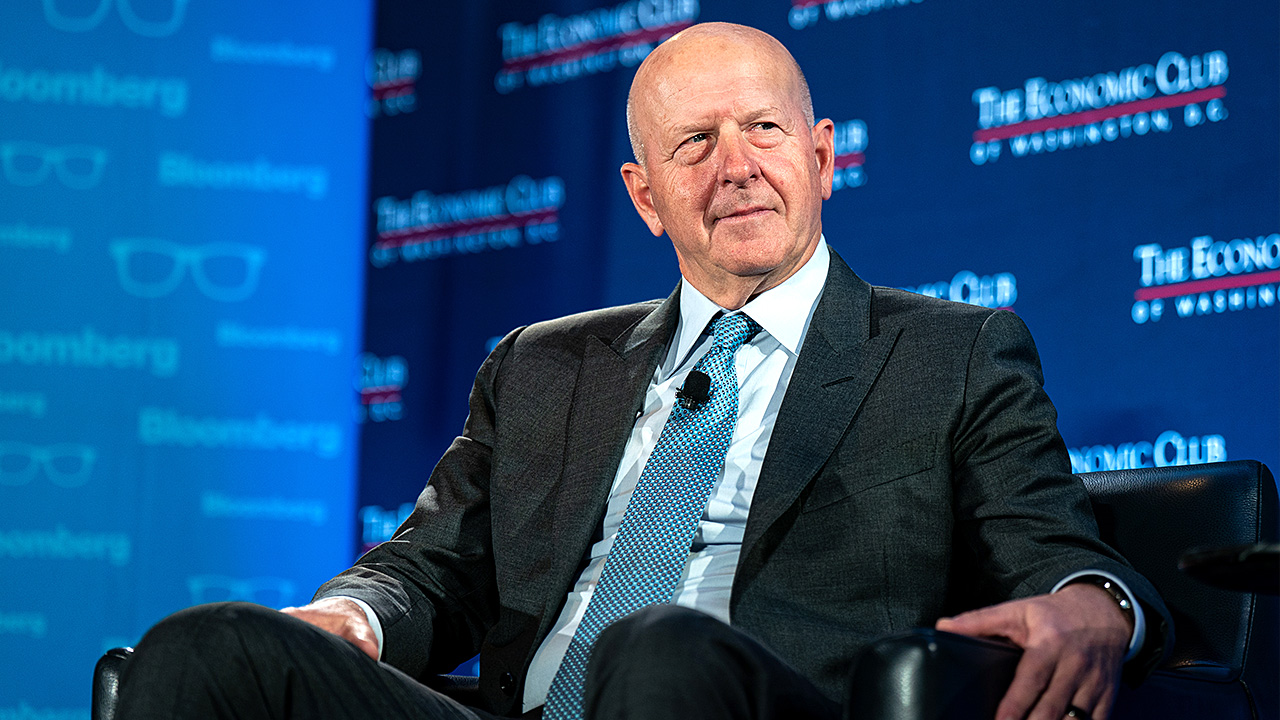 JBizNews14 hours ago
Goldman Sachs on Thursday announced that it will make a matching contribution to Trump Accounts for eligible children of the firm’s employees.
The company will make a one-time matching contribution of $1,000 to employees with children born between 2025 and 2028 upon the time of enrollment in Trump Accounts, matching the $1,000 federal seed contribution.
“Starting early and staying invested for the long term is one of the most reliable ways American families build lasting financial security,” said Goldman Sachs CEO David Solomon.
“We have long been committed to the importance of savings and investment as a pathway to a more resilient financial future, and we’re proud to continue our support of this partnership and invest in the future of America,” Solomon added.
The company said in a statement that it views the public-private initiative as a way to “instill the fundamental economic principles of savings and investing in America’s next generation.”
With the matching contribution, Goldman Sachs joins the ranks of U.S. companies that have opted to participate in the Trump Accounts program.
 JBizNews15 hours ago
Oil prices extended their steep decline this week as more Persian Gulf crude found its way back to market, easing the supply fears that had driven prices above $120 a barrel earlier this year. According to the U.S. Energy Information Administration, Middle East producers had cut output by more than 11 million barrels a day in May compared with pre-conflict levels — but that gap is now starting to close, and traders are selling on the expectation that the barrels are coming back.
The price action shows it. Brent crude, the international benchmark, settled at $71.57 a barrel Wednesday, down 1.9% on the day. West Texas Intermediate, the U.S. benchmark, fell to $68.58. Brent dropped roughly 21% over the past month, its worst monthly performance since March 2020, while WTI logged its steepest monthly decline since late 2021. WTI’s recent close below $70 was its first since February 27 — the day before the 2026 Iran war began.
The turning point was diplomatic. The United States and Iran struck a 14-point memorandum of understanding on June 17 to pause the fighting that had choked off the Strait of Hormuz, the narrow waterway between Oman and Iran that normally carries about a fifth of the world’s oil. As the shooting slowed, tankers that had been trapped or idling began moving again.
Saudi Arabia’s recovery is the one the market is watching most closely. Saudi Aramco is restarting crude loadings at Ras Tanura, its largest export terminal, which had sat largely idle since early March, according to vessel-tracking data showing very large crude carriers owned by Bahri moving toward the Ju’aymah loading area. That matters because reopening the strait and restarting the region’s biggest export machine are two different things.
The kingdom never fully stopped selling oil. Throughout the crisis, it rerouted around 4 million barrels a day through its East-West Pipeline to the Red Sea port of Yanbu, bypassing Hormuz entirely. Before the war, Saudi crude exports through the strait averaged about 6.3 million barrels a day in 2025 and climbed to roughly 7.1 million barrels a day in February 2026, according to figures from Argus and the Arab Center. Bringing Ras Tanura back toward those levels is the final piece of restoring full Saudi flows — and its return is a big reason prices keep softening.
Other producers are adding to the wave. Iran has said it has shipped more than 40 million barrels since the U.S. lifted its naval blockade, Iraq and Kuwait are moving to unwind wartime force-majeure declarations, and Russian exports have surged to record levels, leaving a growing pile of barrels floating at sea.
For businesses and households, cheaper crude is mostly welcome news. Lower oil feeds directly into lower gasoline and jet fuel prices, giving relief to drivers, airlines and shippers whose costs had spiked. The EIA had warned that U.S. wholesale gasoline prices could rise around 50% in 2026 if Hormuz stayed shut, so a faster supply recovery takes pressure off that forecast and off inflation more broadly.
The flip side is fiscal pain for the exporters. Every dollar off the oil price widens the budget gaps in Riyadh and across the Gulf, where governments spent the war years funding ambitious diversification plans. Analysts at Goldman Sachs have flagged war-swollen deficit estimates for Saudi Arabia well above what the kingdom had budgeted.
Not everyone agrees the slide runs much further. Haitham Al Ghais, secretary general of OPEC, told CNBC the group does not expect oil demand to peak in the foreseeable future and rejected forecasts pointing to a coming glut, saying OPEC focuses on actual numbers rather than projections. Strategists Warren Patterson and Ewa Manthey at ING said tanker traffic into the Gulf is picking up as shipowners grow more confident, a trend they called a clear headwind to any rebound in prices.
The wildcard remains the same one that has driven the market all year: whether the fragile U.S.-Iran truce holds. A durable deal keeps the barrels flowing and prices heading lower. Any fresh flare-up in the strait could reverse the slide in a matter of hours. For now, with real cargoes lining up at Saudi loading buoys, the market is betting the worst of the supply shock is over.
JBizNews Desk | New York
© JBizNews.com All Rights Reserved. Reproduction or distribution without written permission is prohibited.
 JBizNews15 hours ago
The cost of financing a new car in America keeps climbing to levels that would have stunned buyers just a few years ago. According to data released Wednesday by Edmunds, the average monthly payment on a new vehicle reached a record $777 during the second quarter, edging above the previous record of $773 set in the first quarter. It marks the third consecutive quarter that average monthly payments have reached a new all-time high.
The report paints a picture of buyers stretching further than ever to afford new vehicles. The average amount financed climbed to a record $44,156, while the average down payment fell 10% from a year earlier to $5,815, meaning more consumers are borrowing larger amounts while putting less money down.
Perhaps the most striking trend is the growing use of extremely long auto loans.
A record 36.5% of all financed new-vehicle purchases carried loan terms of 73 months or longer, while nearly 24% of buyers signed loans lasting 84 months or more—the equivalent of seven years. Once considered unusual, seven-year financing has become increasingly common as buyers seek to lower monthly payments enough to fit new vehicles into household budgets.
Lower monthly payments, however, come with significant long-term costs.
Longer loans increase the total amount of interest paid over the life of the loan while leaving borrowers “underwater” for years, owing more than the vehicle is worth. That can make trading in or selling a vehicle far more difficult and leaves owners financially vulnerable if the vehicle is totaled or unexpected financial hardships arise.
Several factors continue driving affordability challenges.
New vehicle prices remain near historic highs, interest rates are still elevated compared with recent years, and insurance premiums, repair costs, and maintenance expenses have all increased substantially. At the same time, many consumers continue purchasing larger SUVs, trucks, and premium trim packages that carry significantly higher price tags.
Analysts at Edmunds also warn that tariffs could place additional upward pressure on vehicle prices in the months ahead by increasing manufacturing costs for imported vehicles and automotive components.
For many households, a $777 monthly car payment now rivals a mortgage payment from just a few years ago and represents one of the family’s largest recurring monthly expenses. Combined with housing costs, groceries, childcare, and other necessities, transportation is consuming a growing share of household income.
The broader economic implications are also significant.
Auto loans represent one of the largest categories of household debt in the United States, second only to mortgages. As balances grow larger and repayment periods stretch longer, borrowers remain indebted for much greater portions of their financial lives, increasing the risk of future delinquencies if economic conditions weaken.
While used vehicles generally offer lower purchase prices, financing costs remain elevated there as well. Increased demand for affordable used vehicles has also helped support higher resale values, limiting the financial relief available to budget-conscious shoppers.
For automakers and dealerships, longer financing terms have helped maintain sales despite affordability pressures. However, industry analysts caution that extending loan maturities cannot permanently offset rising vehicle prices, and many consumers may eventually delay purchases altogether if affordability continues deteriorating.
For buyers considering a new vehicle, financial advisers recommend focusing on the total cost of ownership rather than simply the monthly payment. A lower monthly payment spread over seven years may ultimately cost thousands of dollars more in interest than a shorter loan with a slightly higher monthly payment.
The latest figures suggest America’s auto market is increasingly being driven not by what consumers want to spend, but by how far lenders are willing to stretch repayment schedules. As monthly payments and loan terms continue reaching record levels, affordability remains one of the industry’s biggest challenges heading into the second half of the year.
JBizNews Desk
© JBizNews.com All Rights Reserved. Reproduction or distribution without written permission is prohibited.
 JBizNews16 hours ago
U.S. stocks opened higher Thursday after the Bureau of Labor Statistics reported that the economy added just 57,000 jobs in June, well below the roughly 113,000 economists had expected. The unemployment rate slipped to 4.2% from 4.3%, even as hiring slowed—a combination investors viewed as reducing the likelihood that the Federal Reserve will need to raise interest rates in the near term.
Wall Street responded immediately. The Dow Jones Industrial Average climbed about 334 points, or 0.6%, to around 52,640, reaching a fresh intraday record. The S&P 500 gained 0.7% to approximately 7,538, while the Nasdaq Composite rose 0.9% to about 26,260. The Russell 2000 added 0.8%, and the yield on the 2-year Treasury note declined as traders priced in lower odds of another Fed rate increase.
The June report snapped a three-month stretch of stronger hiring. Federal Reserve Chair Kevin Warsh has repeatedly said the central bank will remain data dependent, and Thursday’s numbers reinforced expectations that policymakers may be able to leave rates unchanged while continuing to monitor inflation and economic growth.
“This takes some of the pressure off of the inflation-fighting institution to hike near term,” said Bradford Smith, portfolio manager at Janus Henderson Investors.
Tesla was among the early gainers after reporting 480,126 second-quarter vehicle deliveries, comfortably exceeding analysts’ expectations of about 406,600. Shares rose roughly 1% in early trading.
SpaceX (NASDAQ: SPCX) remained in focus ahead of its scheduled Nasdaq-100 inclusion on July 7. JPMorgan estimates the addition could generate roughly $4.3 billion in buying from passive index funds. Wedbush analyst Dan Ives initiated coverage with an Outperform rating and a $190 price target.
Defense contractor AeroVironment gained about 4% after securing a $500 million U.S. Army contract to develop counter-drone technology.
Semiconductor stocks attempted to stabilize following Wednesday’s sharp selloff. The previous session saw Micron Technology fall 10.6%, Intel lose 9%, Applied Materials decline 10%, and AMD drop 6.9% as investors questioned AI-related valuations. Early Thursday trading showed buyers cautiously returning to the sector.
Economists continue to debate the path ahead for interest rates.
Andrew Hollenhorst, chief U.S. economist at Citi, said continued moderation in employment would support additional Federal Reserve rate cuts later this year.
Meanwhile, Savita Subramanian, head of U.S. equity and quantitative strategy at Bank of America Securities, said the economy remains healthy but investors may increasingly look beyond the largest technology companies for future market leadership.
Gold rose about 1.8% to roughly $4,155 an ounce as investors balanced slowing economic growth against lower interest-rate expectations.
Crude oil eased toward $68 a barrel, reflecting reduced concerns over Middle East supply disruptions.
The CBOE Volatility Index (VIX) fell more than 4% to around 15.9, indicating continued investor confidence and relatively calm market conditions.
Overseas, markets were weaker. South Korea’s Kospi plunged 7.9% amid renewed selling across semiconductor companies, highlighting continued concerns over global chip-sector valuations.
For now, investors are interpreting a slower pace of hiring as positive news because it lowers the likelihood of additional Fed tightening. The key question for markets will be whether the labor market is simply cooling to a sustainable pace—or beginning to weaken more significantly. As trading gets underway before the July 4 holiday, Wall Street appears focused on the prospect of steady interest rates and continued economic expansion.
JBizNews Desk | New York
© JBizNews.com All Rights Reserved. Reproduction or distribution without written permission is prohibited.
 JBizNews16 hours ago
Some of the biggest changes to the federal student loan system in years officially took effect Wednesday, July 1, changing how millions of future college students will borrow money and repay their loans.
The changes stem from the One Big Beautiful Bill Act and apply primarily to borrowers who take out new federal student loans beginning on or after July 1. While most current borrowers can generally remain under existing repayment programs, new borrowers face an entirely different system.
The most significant change affects repayment options.
For newly issued federal loans, several long-standing income-driven repayment plans—including SAVE, PAYE, Income-Based Repayment (IBR), and Income-Contingent Repayment (ICR)—are no longer available. Instead, new borrowers will choose between two primary repayment options.
The first is the new Repayment Assistance Plan (RAP), an income-based program that adjusts monthly payments according to earnings. Payments generally range from about 1% to 10% of a borrower’s income, with any remaining balance eligible for forgiveness after 30 years of qualifying payments.
The second option is a revised Tiered Standard Repayment Plan, which establishes repayment periods ranging from 10 to 25 years, depending on the total amount borrowed. Smaller loan balances receive shorter repayment schedules, while borrowers with larger balances receive additional time to repay.
The changes also affect graduate and professional students.
The long-standing Grad PLUS loan program, which previously allowed graduate students to borrow up to the full cost of attendance, has been eliminated for new borrowers. Graduate students now face annual and lifetime borrowing limits, while professional students—including those attending medical, dental, veterinary, and law schools—also become subject to new federal borrowing caps.
Parents will see changes as well.
Parent PLUS loans are now limited to $20,000 per year per student, with a maximum lifetime borrowing limit of $65,000 for each child. Previously, many parents could borrow up to the full cost of attendance.
Financial aid experts say the new borrowing limits may require more families to rely on savings, scholarships, employer assistance, or private student loans to cover college expenses.
Borrowers currently enrolled in the SAVE repayment program face an important transition.
Millions of borrowers participating in SAVE will eventually be required to move into one of the newly authorized repayment plans after receiving instructions from their loan servicers. Education experts recommend carefully reviewing all available options before making repayment decisions.
Current students who already borrowed before July 1 generally receive transitional protections that allow them to continue borrowing under previous rules while remaining enrolled in the same academic program. However, changing schools, switching degree programs, or taking extended breaks from enrollment could affect those protections.
The legislation also changes certain deferment and repayment provisions available to future borrowers, making it more important than ever for students to understand repayment obligations before accepting federal loans.
For families planning for college, the new rules increase the importance of financial planning.
Longer repayment periods may reduce monthly payments but can significantly increase total interest costs over the life of a loan. Lower federal borrowing limits may also require students to explore additional funding sources before enrolling.
Financial advisers recommend that prospective borrowers estimate future monthly payments, compare available repayment options, and borrow only what is necessary to complete their education.
As tuition costs continue rising nationwide, today’s changes represent one of the most significant shifts in federal higher education financing in decades and will shape how future generations of Americans pay for college.
JBizNews Desk
© JBizNews.com All Rights Reserved. Reproduction or distribution without written permission is prohibited.
 JBizNews16 hours ago
In June, the US market added tasks at a slower rate than anticipated.
More details will be added to this story regarding the June 2026 jobs record.
Despite rising inflation and confusion over the impact of the Iran war on the market, the U.S. economy added jobs at a constant rate in June.
According to the Bureau of Labor Statistics, 57, 000 new jobs were created by employers in June, according to a report released on Thursday. That number was lower than the academics ‘ estimates from the LSEG poll, which stated that 110, 000 work had grown.
The unemployment rate dropped to 4.2 %, which is also below the 4.3 % estimate.
The payment figures for the previous two months were revised, with the previous two months ‘ reports seeing changes of 31, 000 from a gain of 179, 000 to 148, 000, and May’s report seeing a decrease from 43, 000 to 129, 000.
Up, April and May saw a decline in jobs of 74, 000 jobs compared to the previous figures.
In June, secret paychecks added 49, 000 jobs, which is significantly below what the LSEG poll had predicted. May’s private sector job profits decreased from 120 000 to 97 000, respectively.
Authorities payments increased by 8, 000 jobs last month, while the decrease from the previous month’s increase of 52, 000 work to 32, 000 was revised.
According to economics polled by LSEG, the manufacturing industry added 3, 000 careers in June. The numbers for May were changed from 7,500 to 2, 000 tasks, respectively.
In June, the industry added 22, 000 work, which is still higher than last month’s increase in employment. That’s a slower rate than the 38, 000-per-month common increase over the previous year. Clinics added 9, 000 work to the quarter, making up the majority of the increase.
In June, 61, 000 jobs were lost for leisure and hospitality, which was a result of lower-than-expected annual hiring. Employment in the market has not significantly changed over the course of 2026.
 JBizNews16 hours ago
The executive running one of BlackRock’s troubled lending funds is on his way out, a departure that lands amid mounting losses and a federal investigation. According to reporting published Wednesday by Bloomberg, Phil Tseng, chief executive of BlackRock TCP Capital Corp., is in the process of leaving the firm following months of losses on soured loans and revelations of a U.S. regulatory probe into the unit’s valuation practices.
Tseng remains an employee of the world’s largest asset manager for now, according to people familiar with the matter, though the timing of his departure and the selection of a successor have not been finalized. The fund he oversees, known by its ticker TCPC, is a business development company that provides loans to middle-market and small businesses—companies that often have limited access to traditional bank financing.
The problems have been building for months. The fund reported $35 million in markdowns during the first quarter, and in January disclosed an estimated 19% decline in net asset value, largely tied to restructurings involving e-commerce investments and the bankrupt Renovo Home Partners. Following that announcement, shares dropped more than 14%. In May, the situation escalated when executives were questioned by the Manhattan U.S. Attorney’s Office regarding how the fund valued certain private investments.
For everyday investors, the story highlights growing risks inside the rapidly expanding private credit industry. Over the past decade, major investment firms have poured hundreds of billions of dollars into direct lending, providing financing to businesses outside the traditional banking system. While those loans often produce attractive returns, they also carry higher risks when economic conditions weaken and borrowers struggle to repay.
Unlike publicly traded stocks, private loans do not trade on open markets, making their values more difficult to determine. Fund managers must estimate what those investments are worth, leaving room for judgment—and scrutiny. Regulators are now examining whether those estimates accurately reflected the true condition of the portfolio.
Because TCP Capital is publicly traded, many individual investors—including retirees seeking high dividend income—own shares. Business development companies have become popular income investments, but the recent losses serve as a reminder that higher yields typically come with higher risks. When borrowers default or require restructuring, both dividend payments and share prices can suffer.
The fund became part of BlackRock through the firm’s broader expansion into private markets. TCP Capital traces its roots to Tennenbaum Capital Partners, which BlackRock acquired in 2018. Last year, BlackRock accelerated its push into alternative investments by purchasing HPS Investment Partners in a deal valued at roughly $12 billion, making private credit an increasingly important part of the firm’s long-term strategy.
The broader private-credit industry is now facing closer examination. Some analysts have warned that years of easy lending may have masked weaker underwriting standards that only become apparent when economic conditions deteriorate. Recent losses at TCP Capital, combined with a federal investigation, are likely to intensify those concerns across Wall Street.
For small and medium-sized businesses, the health of private-credit funds matters. These lenders have become an important source of financing for companies that may not qualify for traditional bank loans. If investors become more cautious and capital becomes harder to raise, financing could become both scarcer and more expensive for businesses that rely on these funds to grow.
The developments do not suggest a broader financial crisis. BlackRock remains one of the world’s strongest asset managers, and a single troubled fund does not define the industry. Still, the combination of significant losses, a leadership change, and a federal valuation probe at a BlackRock-managed fund signals that the private-credit boom is entering a more challenging phase.
For investors, the lesson is straightforward: higher returns often come with higher risks, and as private credit continues to mature, greater scrutiny from regulators and markets alike is likely to follow.
JBizNews Desk
© JBizNews.com All Rights Reserved. Reproduction or distribution without written permission is prohibited.
 JBizNews17 hours ago
The Golden State Warriors have signed the richest jersey sponsorship agreement in North American professional sports history, reaching a multiyear partnership with AI cloud-computing company Iren worth more than $50 million annually.
The agreement replaces the Warriors’ previous jersey sponsor, Rakuten, whose deal was reportedly valued at about $20 million per year. Beginning with the 2026–27 NBA season, Iren’s logo will appear on Warriors uniforms.
According to Sportico, the agreement establishes a new benchmark for jersey sponsorships across professional sports.
The partnership extends well beyond the NBA team.
Iren also becomes the official AI cloud partner of the Golden State Valkyries of the WNBA and the Santa Cruz Warriors of the NBA G League. The company will receive prominent branding throughout Chase Center while also becoming the presenting sponsor of the Warriors’ City Edition platform.
Since the NBA first introduced jersey sponsorship patches in 2017, the small logos have quietly evolved into one of the league’s fastest-growing revenue sources.
Warriors Chief Commercial Officer Mike Kitts described the jersey patch as the organization’s “most visible global platform,” noting that the logo appears wherever the team plays and is seen by millions of viewers through broadcasts, highlights, and social media.
For Iren, the agreement delivers immediate brand recognition.
Originally founded in Australia, the company operates high-performance GPU computing infrastructure supporting artificial intelligence training and inference while also maintaining Bitcoin mining operations. Iren says it has secured access to more than five gigawatts of electrical capacity worldwide.
Co-founder and Co-Chief Executive Officer Daniel Roberts said the Warriors offered a rare combination of championship success, business leadership, and community engagement.
The sponsorship also reflects a much broader trend.
Artificial intelligence companies, data-center operators, and cloud-computing firms are rapidly becoming some of the biggest new advertisers in professional sports as they compete for talent, customers, investors, and public recognition.
San Francisco’s position as one of the world’s leading technology centers has made Bay Area sports franchises especially attractive to technology sponsors.
The Warriors have previously partnered with major technology companies including Rakuten and, before that, cryptocurrency exchange FTX, whose collapse highlighted the potential reputational risks associated with corporate sponsorships.
The Warriors themselves remain among the world’s most valuable sports franchises.
Owner Joe Lacob purchased the team in 2010 for approximately $450 million. After four NBA championships since 2015 and the global popularity of Stephen Curry, the franchise generated roughly $877 million in revenue during 2025 and now ranks among the most valuable teams in global sports.
The organization reportedly generates nearly twice as much sponsorship revenue as any other NBA franchise. Meanwhile, the Golden State Valkyries, only in their second WNBA season, have already established new commercial benchmarks for women’s professional basketball.
The agreement also includes community initiatives focused on artificial intelligence education and STEAM programs throughout the Bay Area.
Questions remain, however.
Iren’s business combines AI computing with Bitcoin mining, both of which require enormous amounts of electricity. The company says it relies heavily on renewable energy while acknowledging that renewable-energy certificates also play a role in meeting sustainability goals.
The Warriors also carry memories of the FTX sponsorship, reminding professional teams that lucrative partnerships can quickly become liabilities if corporate fortunes change.
For now, however, the agreement demonstrates just how much value artificial intelligence companies place on mainstream visibility.
As competition throughout the AI industry intensifies, sports sponsorships are becoming another battlefield—and the front of an NBA jersey has become some of the most valuable advertising space in the world.
JBizNews Desk
© JBizNews.com All Rights Reserved. Reproduction or distribution without written permission is prohibited.
 JBizNews17 hours ago
A member of Congress is calling on the federal government to investigate the fast-growing “rent now, pay later” industry, warning that many Americans may not fully understand the fees and financing costs attached to these products.
In a letter sent Wednesday, Representative Maxwell Frost, a Florida Democrat, urged the Consumer Financial Protection Bureau (CFPB) to examine companies offering rent-payment financing and determine whether consumers are being adequately protected under federal law.
“Rent now, pay later” services allow tenants to divide a monthly rent payment into several smaller installments rather than paying the entire amount on the first of the month. Companies such as Flex and Livble market the products as tools that help renters better manage cash flow between paychecks. Some financial technology companies have also begun experimenting with similar payment options for housing expenses.
Supporters say the products provide flexibility for households facing uneven income schedules or unexpected expenses. Critics, however, argue that financing an essential monthly obligation like rent can become expensive once service fees, finance charges, or late-payment penalties are added.
In his letter, Frost asked the CFPB to investigate whether renters are receiving clear disclosures regarding the true cost of these products and whether landlords or property managers are steering tenants toward specific financing services.
The congressman said his concerns are rooted partly in personal experience. Before taking office, Frost said he relied on buy-now-pay-later products while furnishing his apartment and managing living expenses, eventually accumulating debt that became difficult to repay. He said many younger Americans may face similar financial pressures without the income stability that later allowed him to eliminate those balances.
The request comes as financial technology companies continue expanding beyond retail purchases into everyday household expenses.
After transforming online shopping over the past decade, installment-payment providers are increasingly targeting recurring obligations such as rent, utilities, insurance premiums, medical bills, and other essential expenses. The growing market reflects continued pressure on household budgets as housing costs remain elevated across much of the country.
Consumer advocates caution that financing recurring bills differs significantly from financing discretionary purchases. Because rent must be paid every month, borrowers who repeatedly rely on installment plans may accumulate ongoing fees that make already expensive housing even more costly over time.
Whether the CFPB pursues a formal investigation remains uncertain.
The agency has significantly reduced enforcement activity in recent months, and officials have not publicly indicated whether they intend to review the industry’s practices. Frost acknowledged that outcome is unclear but said congressional oversight remains important as financial products continue evolving.
If regulators decline to act, Frost said he hopes the information gathered through oversight efforts could help shape future consumer-protection legislation.
For renters, financial advisers recommend carefully reviewing all fees, repayment schedules, and penalties before using any rent-financing service. While splitting rent payments may help manage short-term cash flow, consumers should compare the total cost against other available options and ensure they can comfortably meet each scheduled payment.
As financial technology companies continue expanding into housing finance, the debate over consumer protections, disclosure requirements, and regulatory oversight is likely to grow alongside the industry’s rapid expansion.
JBizNews Desk
© JBizNews.com All Rights Reserved. Reproduction or distribution without written permission is prohibited.
 JBizNews17 hours ago
Tesla is expected to report a modest increase in second-quarter vehicle deliveries, according to analyst estimates compiled by Bloomberg, suggesting the electric vehicle maker continues to grow—but at a much slower pace than during its years of explosive expansion.
Analysts expect Tesla to report approximately 396,466 vehicle deliveries worldwide for the three months ending in June, representing roughly 3% growth from the same quarter a year ago. The company is expected to release its official delivery figures on Thursday, July 2.
If those estimates prove accurate, Tesla would post its second consecutive quarter of year-over-year delivery growth after experiencing annual declines during previous reporting periods. However, the pace remains well below the company’s historic growth rates, when quarterly deliveries routinely approached half a million vehicles.
The vast majority of Tesla’s expected deliveries continue to come from its two highest-volume models—the Model 3 sedan and Model Y crossover. Premium vehicles, including the Model S, Model X, and Cybertruck, are expected to account for only a small portion of overall deliveries.
Regional demand remains uneven.
Analysts point to stronger European sales as one of the primary drivers behind the expected increase, supported by higher fuel prices and continued demand for electric vehicles across several European markets. China is expected to remain relatively stable.
The United States, however, has become a more challenging market.
The expiration of the federal $7,500 electric vehicle tax credit has significantly increased effective purchase prices for many American consumers, reducing one of Tesla’s biggest competitive advantages and making affordability a growing concern.
The delivery report arrives as investors increasingly focus on Tesla’s future beyond automobile manufacturing.
While vehicle deliveries remain one of Wall Street’s most closely watched metrics, much of the company’s valuation is now tied to Chief Executive Elon Musk’s long-term plans involving autonomous driving, robotaxis, artificial intelligence, and humanoid robotics rather than vehicle sales alone.
Even so, vehicle deliveries remain critical because they directly influence Tesla’s revenue, profit margins, manufacturing efficiency, and cash flow.
Competition across the electric vehicle industry continues intensifying.
Traditional automakers have expanded their electric offerings, while Chinese manufacturers continue introducing lower-priced EVs across international markets. Consumers now have substantially more choices than when Tesla largely dominated the segment several years ago.
Industry analysts note that Tesla’s current product lineup also faces increasing pressure from age. The Model 3 and Model Y remain among the world’s best-selling electric vehicles, but both have been on the market for years while competitors continue launching newer designs and technologies.
Investors will receive a more complete picture later this month when Tesla reports its full second-quarter financial results, including revenue, earnings, profit margins, and guidance for the remainder of the year.
For consumers, slower growth could ultimately prove beneficial.
Increasing competition, reduced demand growth, and expanding production capacity throughout the industry may place greater pressure on manufacturers to offer discounts, incentives, financing promotions, or price reductions in order to maintain market share.
Whether Tesla exceeds or falls short of current delivery estimates will likely influence investor sentiment, but the broader story remains clear: the global electric vehicle market is entering a more mature phase where sustained rapid growth can no longer be taken for granted.
JBizNews Desk
© JBizNews.com All Rights Reserved. Reproduction or distribution without written permission is prohibited.
 JBizNews18 hours ago
UPS said it relied on Boeing’s assessment that a known engine mount issue did not pose a flight safety risk when it chose not to adopt enhanced inspections before last year’s fatal cargo plane crash in Louisville, according to newly released National Transportation Safety Board filings.
In its post-hearing submission to the NTSB, UPS said it followed all required Boeing and Federal Aviation Administration-approved maintenance programs for its MD-11 fleet.
The company said Boeing’s 2008 and 2011 service letters described the issue as not a “safety of flight” condition and stated that existing inspection intervals were sufficient to identify problems involving the engine mount’s spherical bearings.
UPS Flight 2976, a McDonnell Douglas MD-11 cargo jet bound for Honolulu, crashed shortly after takeoff from Louisville Muhammad Ali International Airport on Nov. 4, 2025, after its left engine and pylon separated from the aircraft.
Three crew members and 12 people on the ground were killed, while 23 others were injured. The NTSB has not yet released its final report on the accident.
UPS said it reviewed Boeing’s service letters and incorporated revisions to the aircraft maintenance manual, but did not alter its maintenance program. They said this was because Boeing also concluded the issue was not safety-related and never updated its Maintenance Planning Document (MPD), which operators use to establish required maintenance schedules.
According to UPS, Boeing’s failure to revise the MPD indicated that no additional maintenance tasks were necessary beyond those already being performed.
Boeing, in its own filing with investigators, said it reviewed an operator report involving a failed spherical bearing in 2008 and determined, based on the information available at the time, that the issue was not a safety concern.
The company said it issued a service letter recommending enhanced inspections of the bearing and later revised the aircraft maintenance manual to include an inspection procedure designed to detect bearing movement.
Boeing also said aircraft operators are responsible for maintaining their fleets in coordination with regulators, noting that its maintenance planning documents and manuals provide recommendations that operators use to develop their own maintenance programs.
UPS also argued that Boeing’s Continued Operational Safety process failed to identify the damaged bearing and related structural damage as a flight safety issue. The carrier said maintenance records for the aircraft showed no evidence that the spherical bearing had migrated before the crash and argued testimony during the NTSB hearing established that bearings could fail without visible movement.
Both Boeing and UPS said in their NTSB submissions that they will continue cooperating with the investigation. Boeing said it has since worked with the FAA on updated inspection and maintenance procedures, developed a redesigned spherical bearing with a 4,000-flight-cycle life limit and implemented changes to its continued operational safety process.
The FAA’s submission to investigators reiterated that the agency is supporting the NTSB’s investigation. The NTSB has not announced when it expects to issue its final report determining the probable cause of the crash.
FOX Business has reached out to UPS and Boeing for additional comment on their NTSB submissions.
 JBizNews18 hours ago
Kroger, the nation’s largest traditional supermarket operator, announced Wednesday that it has agreed to acquire Giant Eagle for approximately $1.65 billion, marking the company’s first major acquisition since its proposed merger with Albertsons was blocked by regulators.
Under the agreement, Kroger will pay approximately $1.25 billion in cash while assuming about $400 million of Giant Eagle’s existing debt. The transaction has been unanimously approved by Kroger’s Board of Directors and remains subject to customary regulatory approvals.
Founded more than 90 years ago, Giant Eagle operates nearly 200 supermarkets and several standalone pharmacies across Pennsylvania, Ohio, West Virginia, Maryland, and Indiana, generating roughly $9 billion in annual revenue. The chain has long maintained a dominant position throughout the Pittsburgh metropolitan area and is one of Pennsylvania’s largest privately held employers.
For Kroger, the acquisition significantly strengthens its presence across the Midwest and Mid-Atlantic while expanding its pharmacy business and customer loyalty programs.
“This is an outstanding strategic fit,” Kroger CEO Ron Sargent said in announcing the transaction, describing Giant Eagle as a respected regional grocer with a strong reputation for fresh food, pharmacy services, and customer satisfaction.
The companies said Giant Eagle, Market District, and the retailer’s myPerks loyalty program will continue operating under their existing brands. Giant Eagle’s headquarters will remain in Cranberry Township, Pennsylvania, and Kroger said it does not currently anticipate widespread store closures.
However, the companies acknowledged that certain stores may need to be divested in markets where competitive overlap exists in order to satisfy federal antitrust regulators. The exact number of potential divestitures has not yet been disclosed.
The transaction represents Kroger’s renewed effort to expand after its proposed $25 billion merger with Albertsons collapsed following legal challenges from federal regulators and several state attorneys general concerned about competition within the grocery industry.
The acquisition also reflects broader consolidation across the retail grocery sector as traditional supermarket chains face increasing competition from Walmart, Amazon, Costco, Aldi, and other discount retailers. Larger operating scale allows grocery companies to negotiate better prices with suppliers, invest in technology, strengthen delivery capabilities, and improve operating efficiencies.
For consumers, Kroger says those efficiencies should eventually translate into lower prices and expanded product selection. Company executives said increased purchasing power and supply-chain improvements will help fund additional investments in pricing while maintaining service levels.
Pharmacy operations also played an important role in the acquisition. Prescription customers typically visit stores more frequently than grocery-only shoppers, making pharmacy services an important driver of customer loyalty and recurring sales.
Industry analysts say the deal demonstrates that grocery consolidation is likely to continue despite heightened regulatory scrutiny. Rather than pursuing massive national mergers, companies may increasingly focus on acquiring strong regional operators that complement existing geographic footprints.
If approved, the transaction is expected to close during 2027.
For shoppers across Pennsylvania, Ohio, West Virginia, Maryland, and Indiana, the immediate impact is expected to be limited. Stores will continue operating under the Giant Eagle name while customers retain familiar loyalty programs and pharmacy services. Over the longer term, consumers will be watching whether Kroger can deliver on its promise of lower prices while preserving the local identity that has made Giant Eagle one of the region’s most recognized supermarket brands.
JBizNews Desk
© JBizNews.com All Rights Reserved. Reproduction or distribution without written permission is prohibited.
 JBizNews18 hours ago
Oil is moving again through the world’s most important energy chokepoint, and American officials say that is quietly stripping Iran of its biggest bargaining chip. According to a U.S. official cited by Bloomberg on Wednesday, commercial shipping through the Strait of Hormuz has surged in recent weeks, with American military support helping push oil flows back above 10 million barrels per day.
The rebound follows the interim peace agreement President Donald Trump signed with Iran, which reopened a corridor that had been largely paralyzed during months of war. The official, who spoke on condition of anonymity, said the recovery in traffic has caught Tehran off guard, underscoring its now-limited ability to halt shipping through the strait while helping trigger a fresh round of attacks around the waterway as Iran tries to reassert control.
The stakes here reach directly into American wallets. Before the war, the Strait of Hormuz carried about a fifth of the world’s oil and liquefied natural gas, with roughly 20 million barrels flowing through on an average day. When Iran choked off that traffic during the conflict, crude prices spiked above $100 a barrel, gasoline jumped, and inflation reignited. Restoring the flow does the opposite: more oil reaching the market means lower prices at the pump and less pressure on the cost of everything that moves by truck, ship, or plane.
With at least 10 million barrels now getting through daily, combined with about 5 million via alternative routes, flows are approaching normal levels. That easing has already shown up in energy markets, where crude has retreated from its wartime highs. For households still absorbing the price shocks of the spring, the return of Gulf oil is the single most important factor pulling energy costs back down.
The fight now is over who controls the corridor going forward. Iran’s chief negotiator, Mohammed Bagher Ghalibaf, told state television this week that sovereignty over the strait belongs to Iran and Oman, and Tehran has signaled that some ships may eventually have to pay transit fees. The memorandum of understanding that ended the fighting provides for toll-free traffic during a 60-day negotiating period but leaves the long-term arrangement unresolved.
That question is at the center of talks this week in Qatar, where U.S. negotiators Steve Witkoff and Jared Kushner are pressing Iran to guarantee open commercial transit. Washington’s position is firm: Trump and Secretary of State Marco Rubio have said neither tolls nor maritime service fees would be acceptable in a final deal. Shippers and oil-industry officials warn that any such charges would violate international law and set a dangerous precedent, potentially inviting similar tolls on other global waterways — a cost that would ultimately filter through to consumers everywhere.
The tension remains combustible. Iran breached the truce last week with a drone attack on a Singapore-flagged container ship, setting off a wave of retaliatory strikes that left the ceasefire on shaky ground. Trump’s decision to call off further strikes and let negotiations continue reflected a clear calculation: he does not want to reignite the economic pain the war caused. The official reportedly noted that the president does not want to be remembered like Herbert Hoover, who presided over the onset of the Great Depression.
For American businesses, the practical picture is one of cautious relief. Freight and insurance costs that spiked during the blockade are easing as tanker traffic normalizes. Manufacturers and retailers that depend on stable fuel prices get some breathing room. And the broader inflation outlook improves as the energy shock that drove up prices this spring gradually fades.
Still, analysts caution that the current calm is a return to the prewar status quo, not a permanent breakthrough. As long as Iran insists on controlling the strait and Washington refuses to accept tolls, the risk of another disruption lingers. Every barrel now moving through Hormuz is a reminder of how much the American economy — from gas stations to grocery stores — depends on a narrow stretch of water half a world away staying open.
For now, the direction is favorable: more oil, lower prices, and an Iran with less leverage than it had a few weeks ago. Whether that holds will depend on talks in Qatar that remain far from settled.
JBizNews Desk
© JBizNews.com All Rights Reserved. Reproduction or distribution without written permission is prohibited.
 JBizNews19 hours ago
American manufacturing continued expanding in June, although at a slower pace than the previous month, while factory input costs declined sharply, offering encouraging signs that inflation pressures may continue easing.
The Institute for Supply Management (ISM) reported Wednesday that its Manufacturing Purchasing Managers Index (PMI) registered 53.3% in June, down 0.7 percentage point from May but remaining comfortably above the 50-point level that signals expansion. The report marked the sixth consecutive month of growth for the nation’s manufacturing sector.
The monthly survey, compiled from purchasing managers across hundreds of manufacturing companies, is closely watched because it provides one of the earliest snapshots of business activity in the U.S. economy. Readings above 50 indicate expansion, while readings below 50 signal contraction.
The most encouraging development came from the report’s inflation indicators.
The Prices Index, which measures what manufacturers pay for raw materials and supplies, fell sharply to 73.0 from 82.1 in May. Although prices continue to rise, the slower pace suggests inflationary pressures within the manufacturing sector are beginning to moderate after earlier spikes tied largely to higher energy and transportation costs.
Lower manufacturing costs eventually benefit consumers because factories purchase the steel, plastics, chemicals, packaging, fuel, and other materials used to produce thousands of everyday products. When those costs stabilize or decline, manufacturers face less pressure to pass higher prices on to wholesalers, retailers, and ultimately consumers.
Demand also remained healthy.
The New Orders Index stayed well above the expansion threshold, indicating manufacturers continue receiving new business despite higher interest rates and ongoing economic uncertainty. Production remained positive, while inventories increased modestly as companies rebuilt stock levels to meet expected demand.
Five of the six largest manufacturing industries reported growth during June, reflecting continued resilience across much of the industrial economy.
Employment remained the weakest component of the report.
The Employment Index improved from the previous month but remained just below the 50-point expansion mark, indicating many manufacturers continue hiring cautiously despite stronger production and new orders. Businesses appear focused on controlling labor costs while waiting for greater certainty regarding future demand.
For manufacturers, the report paints a picture of an economy that continues growing but without excessive overheating. Companies are producing more goods, receiving additional orders, and benefiting from easing cost pressures while remaining disciplined about workforce expansion.
The report also carries important implications for the Federal Reserve.
Policymakers closely monitor manufacturing costs because they provide an early indication of future inflation trends. Slower price increases, combined with a labor market that is cooling rather than accelerating, could strengthen the case for future interest-rate reductions if broader inflation continues moving toward the Fed’s long-term target.
Lower interest rates would eventually reduce borrowing costs for businesses while helping consumers through lower mortgage rates, auto loans, business financing, and other forms of credit.
For investors, the June ISM report reinforces the picture of an economy experiencing a gradual “soft landing” rather than a sharp slowdown. Manufacturing continues expanding, inflation pressures are easing, and businesses remain active even as hiring becomes more measured.
The next ISM Manufacturing Report will be released in early August and will provide investors with another important measure of whether lower factory costs continue translating into broader economic stability during the second half of the year.
JBizNews Desk
© JBizNews.com All Rights Reserved. Reproduction or distribution without written permission is prohibited.
 JBizNews19 hours ago
South Korea’s exports surged again in June, powered by the same force reshaping factories and stock prices across the tech world: the planet cannot get enough memory chips for artificial intelligence. The Korea Customs Service reported Wednesday that exports adjusted for working-day differences climbed 59.5% from a year earlier, one of the strongest monthly gains the trade-driven economy has logged in years.
On a raw, unadjusted basis, shipments jumped 70.9%, pushing the country’s total monthly export value above $100 billion for the first time, according to figures reported by Nikkei Asia. Imports rose 30.1%, leaving South Korea with a trade surplus of $36.1 billion for the month.
Behind those numbers are two companies that have become indispensable to the global AI boom: Samsung Electronics and SK Hynix. The two Korean manufacturers produce much of the world’s advanced memory chips, including DRAM and high-bandwidth memory used in smartphones, laptops, AI servers, and massive data centers.
As companies including Nvidia, OpenAI, and the world’s largest cloud providers race to build more artificial intelligence infrastructure, demand for those chips has surged. Semiconductor shipments from Samsung and SK Hynix reached record monthly values, helping drive Korea’s export boom.
The effects extend far beyond South Korea.
Memory chips are a critical component in nearly every modern electronic device. Strong demand has already contributed to higher costs for computers, smartphones, gaming systems, and other consumer electronics. As AI infrastructure expands worldwide, manufacturers continue competing for limited supplies of advanced memory, supporting higher prices throughout the technology supply chain.
The report also carries geopolitical significance.
South Korea remains one of America’s closest economic partners while simultaneously running a substantial trade surplus with the United States. As the Trump administration continues emphasizing trade balances, Korea finds itself balancing its strategic alliance with Washington against its growing importance as one of the world’s leading semiconductor suppliers.
For South Korea, semiconductors have become both a tremendous strength and a growing vulnerability. Chips now account for an increasingly large share of the country’s exports, making economic growth heavily dependent on continued AI investment around the world. As long as technology companies continue building new data centers, Korean exports are likely to remain strong. Any slowdown in AI spending, however, could quickly ripple through the country’s broader economy.
Industry analysts expect demand to remain elevated.
Major cloud providers continue investing billions of dollars in AI infrastructure, while shortages of advanced high-bandwidth memory are expected to persist well into next year. Both Samsung and SK Hynix continue expanding production capacity to keep pace with orders from customers developing next-generation AI systems.
The June export figures also highlight the uneven nature of today’s global economy. While many countries continue experiencing sluggish manufacturing activity, South Korea has become one of the world’s biggest beneficiaries of artificial intelligence spending. The country’s technology sector has effectively become a barometer for global AI investment.
For American businesses and consumers, the report provides another reminder that many of the essential components powering today’s AI revolution originate in South Korea. As demand continues climbing, the cost and availability of those chips will influence everything from smartphone prices to cloud-computing services and the next generation of artificial intelligence products.
The latest export data suggests that, for now, the AI investment boom remains firmly intact—and South Korea continues to be one of its biggest winners.
JBizNews Desk
© JBizNews.com All Rights Reserved. Reproduction or distribution without written permission is prohibited.
 JBizNews20 hours ago
French shipping and logistics giant CMA CGM Group said Wednesday, July 1, that it will acquire FedEx Supply Chain, the contract logistics division of FedEx, for $1.4 billion, significantly expanding its warehousing and distribution operations across North America.
For many readers, FedEx Supply Chain is different from the familiar FedEx package-delivery business. Instead of delivering parcels to homes and businesses, the division manages warehouses, inventory, fulfillment, and distribution for retailers, manufacturers, healthcare companies, and e-commerce businesses. Following the acquisition, the business will become part of CEVA Logistics, CMA CGM’s global logistics subsidiary.
The acquisition will nearly triple CEVA Logistics’ contract logistics footprint in North America. Once completed, the combined operation will manage approximately 150 warehouses, expanding CEVA’s regional network to more than 240 locations while bringing nearly 10,000 FedEx Supply Chain employees into the company.
The transaction represents another major step in CMA CGM’s strategy of becoming a fully integrated global logistics provider rather than simply an ocean shipping company.
Chairman and Chief Executive Rodolphe Saadé said the acquisition strengthens the company’s ability to provide customers with complete end-to-end supply chain solutions across North America, one of the world’s largest consumer markets.
For FedEx, the sale continues its effort to streamline operations and concentrate on its core transportation and parcel-delivery network.
Chief Executive Raj Subramaniam said the company remains focused on strengthening its global delivery business while simplifying its portfolio. FedEx originally acquired the logistics business—then known as GENCO—in 2015 as part of its expansion into e-commerce fulfillment.
The agreement also establishes a broader commercial partnership between the two companies.
Under the arrangement, CMA CGM will become a preferred—but not exclusive—ocean freight provider for FedEx. The companies also plan to cooperate on air cargo capacity, allowing customers greater flexibility when shipping goods internationally by sea or air.
The acquisition reflects CMA CGM’s growing investment in the United States. Earlier this year, the company announced plans to invest approximately $20 billion in U.S. logistics infrastructure, warehousing, aviation, and shipping over the next several years. Purchasing FedEx Supply Chain becomes one of the largest pieces of that expansion strategy.
For businesses, the transaction highlights the increasing importance of supply-chain infrastructure in today’s economy.
Warehousing and fulfillment centers have become critical components of modern commerce as retailers and manufacturers seek faster delivery times, improved inventory management, and greater resilience following years of global supply-chain disruptions.
Larger logistics companies also gain purchasing power, operational efficiencies, and technology advantages that can ultimately improve delivery reliability while lowering transportation costs for customers.
For consumers, those efficiencies often translate into quicker deliveries, better product availability, and potentially lower shipping costs as goods move more efficiently from factories to warehouses and ultimately to homes and businesses.
The acquisition also signals continued foreign investment in U.S. logistics infrastructure, underscoring confidence in long-term American consumer demand despite ongoing global economic uncertainty.
The transaction is expected to close later this year, subject to customary regulatory approvals.
If completed, the deal will create one of North America’s largest contract logistics platforms while further reshaping the competitive landscape for global shipping, warehousing, and supply-chain management.
JBizNews Desk
© JBizNews.com All Rights Reserved. Reproduction or distribution without written permission is prohibited.
 JBizNews22 hours ago
The European Union says it wants to shrink its record trade gap with China. A brutal, record-breaking heat wave is pushing the numbers in the opposite direction — one portable air conditioner at a time.
Maros Sefcovic, the EU’s trade chief, told reporters this week that disputes with Beijing over trade imbalances, export controls and intellectual property must deliver “tangible results” by October. He spoke after meeting China’s Commerce Minister Wang Wentao, days after the two sides issued a rare joint statement Monday aimed at rebalancing trade and improving market access. Chinese exports to the EU “keep rising, while our market share in China keeps shrinking,” Sefcovic said, calling the trend “not sustainable.”
The timing could hardly be more awkward. As Sefcovic pressed his case in Brussels, millions of sweltering Europeans were doing the exact thing his complaint is about: buying Chinese-made cooling machines as fast as stores can stock them.
Europe is living through what forecasters are calling its worst heat wave on record. Temperatures have pushed near 40 degrees Celsius across much of the continent, Germany, Belgium and the Netherlands hit new June highs, and Spain has reported more than 200 heat-related deaths. For households that have never owned air conditioning, comfort has suddenly become a necessity.
The problem is that Europe was never built for this. In cities like Paris, historic-preservation rules often bar residents from drilling into building facades to mount a traditional unit, and professional installation frequently costs more than the appliance itself. That has left most European homes without any cooling at all — and created a wide-open market.
Chinese manufacturers spotted the gap and filled it. Their answer is the portable “split” air conditioner, which needs little or no structural work and can be set up by the buyer. Exports of portable units from China to Western Europe surged more than 70% year over year in the first five months of 2026, according to market tracker ChinaIOL, and that was before the worst of the summer heat arrived.
The broader export figures tell the same story. Chinese customs data show that in the first five months of 2026, China’s air conditioner shipments to France, the Netherlands and Belgium more than doubled from a year earlier, while exports to Spain, Portugal and Germany posted strong double-digit growth. Midea, one of China’s largest appliance makers, said its shipments to Spain and France jumped 108% from the prior year.
On the ground, the shelves are bare. Midea’s PortaSplit — a portable model designed by a European team to fit local window shapes — has sold out across Germany, Austria and Italy, with shoppers using tracking websites and AI tools to hunt down remaining stock. In Italy, monthly sales of cooling appliances and sun-protection gear doubled, and one French politician ordered Chinese-made units for schools in his district.
This is the everyday reality behind the trade fight. For a family in Paris, Berlin or Madrid deciding how to survive a 40-degree afternoon, geopolitics rarely enters the calculation. What matters is whether a product is affordable, efficient and available now. Chinese brands check all three boxes, which is exactly why Brussels is finding the imbalance so hard to reverse.
Air conditioners are only one front. Chinese electric vehicles are gaining ground too: combined European sales for the five largest Chinese-owned auto groups — SAIC, BYD, Geely, Chery and Leapmotor — rose 61% in the first five months of 2026, giving them 10.6% of the wider market. The pattern is consistent. Where European consumers have a real need, Chinese firms are meeting it faster and cheaper.
That leaves EU leaders squeezed between two goals. They want cheaper household goods for voters feeling the pinch of higher living costs, but they also want to protect European factories and jobs from a flood of subsidized imports. The European Commission, which has long accused Beijing of dumping cheap goods and over-subsidizing its companies, said after Monday’s talks that “the status quo is not an option.”
Not everyone is convinced Beijing gave much. Alicia García Herrero, chief economist at French investment bank Natixis, said China has made no real commitment on import quotas or an enforcement mechanism, dismissing the progress as “smoke” meant to head off tougher European measures. The two sides did agree to set up a working group to monitor trade flows, and Beijing offered reassurance on its export controls covering rare earths.
The deeper question is whether this summer is a one-off or the new normal. Danish investment bank Saxo Bank warned in a June report that the supply chain for portable air conditioners could tighten if demand cools after the heat wave — but noted that if extreme heat keeps returning, the units could shift from luxury to essential. If that happens, Europe’s dependence on Chinese cooling won’t fade with the weather. It will harden into a permanent line on the trade balance Brussels is trying so hard to fix.
JBizNews Desk
© JBizNews.com All Rights Reserved. Reproduction or distribution without written permission is prohibited.
:::writing
I can also generate the matching AP-style image for this story.
 JBizNews23 hours ago
Indirect U.S.-Iran negotiations in Doha made “positive progress” on Wednesday, according to a statement from Qatar’s Foreign Ministry, while Vice President JD Vance said the talks were “going well” and that discussions on Iran’s nuclear program would begin soon. Qatari and Pakistani mediators held separate meetings with the U.S. and Iranian delegations, and both sides agreed to keep talking.
The upbeat words mask a harder reality. President Trump came into office promising to keep the country out of long, open-ended wars. On February 28, 2026, the U.S. and Israel began strikes against targets in Iran, and after months of fighting the two sides reached a truce. Now the risk is not a forever war but forever talks — a negotiation that could stretch on with no clean finish, keeping energy markets, shippers and American drivers guessing.
Here is where things stand. The U.S. and Iran signed an initial deal in mid-June to end the war, ease sanctions and reopen the Strait of Hormuz while nuclear talks continued. The framework was a 60-day memorandum of understanding that extended the ceasefire, lifted restrictions in the strait, and required Iran to clear all mines from the waterway within 30 days as the U.S. lifted its blockade. Negotiators later agreed to set up four working groups covering sanctions relief, nuclear affairs, reconstruction, and monitoring.
The business stakes run straight through the Strait of Hormuz, the narrow channel that carries a large share of the world’s oil. When it was in doubt, prices jumped and shipping seized up. As the deal took hold, the pressure eased. Brent crude fell to about $73.74 a barrel — its lowest since before the late-February strikes — and U.S. West Texas Intermediate settled near $70. More than 11,000 seafarers stuck in the Persian Gulf have begun to exit through the strait, according to the International Maritime Organization. That drop in oil filtered down to gas pumps and helped cool one of the biggest drivers of the past year’s inflation.
The problem for anyone trying to plan — an airline hedging fuel, a trucking firm setting rates, a family budgeting for the summer — is that none of it is settled. Key issues, including the final status of Iran’s nuclear program, remain unresolved, and a scheduled technical phase of the Switzerland talks was postponed in June. The sticking points are the hard ones. The U.S. wants Iran to accept “zero enrichment,” which Iran has rejected, and the two sides are far apart on timing — reports say Washington floated a 20-year commitment while Tehran countered with five. Iran’s lead negotiator, Mohammad Bagher Qalibaf, has insisted the Strait of Hormuz will be managed by Iran under international law, a claim that unsettles the Gulf states and shippers who depend on the route.
Iran also has a long record of stretching negotiations out. One account tied to Qalibaf described the approach bluntly, saying concessions are won through pressure rather than dialogue and that no move would come before the other side acted. That is the pattern that worries analysts: talks that never quite collapse and never quite conclude, leaving a cloud over oil and shipping for months.
There is a fresh complication. Iran’s former supreme leader has died, with funeral ceremonies planned from July 4 through July 9, and mediators said the next meeting would be scheduled after those processions. Any pause gives Tehran more room to slow-walk the process.
The cost is not only diplomatic. The Pentagon has told senators it needs roughly $80 billion, mostly to cover the U.S. campaign against Iran, on top of a broader defense spending increase Trump is seeking. That request is likely to run into resistance from lawmakers reluctant to add spending at a time of high living costs for Americans. For defense contractors, a longer standoff means steadier orders; for taxpayers, it means a bigger bill.
The most likely near-term outcome, judging by the tone out of Doha, is more of the same: cautious progress, missed deadlines and periodic flare-ups in oil prices whenever the talks wobble. That is better for businesses than open war, which is why crude has drifted lower. But it is a long way from certainty. Companies that move goods, burn fuel or set prices are learning to plan around a question that may not be answered for a long time — and a peace that, if the past is any guide, could take many more rounds to finish.
JBizNews Desk
© JBizNews.com All Rights Reserved. Reproduction or distribution without written permission is prohibited.
:::writing
 JBizNews1 day ago
Dubai’s tourism chiefs signaled this past week that the emirate intends to stick with its long-range growth plan, even as it digs out of the sharpest travel collapse in its modern history. Issam Kazim, CEO of the Dubai Corporation for Tourism and Commerce Marketing, said at DET’s first stakeholder meeting earlier this month that the emirate’s tourism and economic plans remained unchanged. “The path remains the same, which is ambitious,” he said, in comments reported Saturday, pointing to the city’s D33 economic targets.
That confidence lands at a delicate moment. Early, fragile peace talks between the United States and Iran are lifting hopes across the Gulf that the region is finally turning a corner. A preliminary peace agreement between the two countries, still a broad framework taking shape in early rounds of talks, could hand Iran’s leadership a major economic lifeline as Tehran looks to stabilize after months of war. For Dubai, a city built on outside money and constant motion, calmer waters can’t come fast enough.
The damage has been real, and much of it hit ordinary workers and businesses. The 2026 U.S.-Iran war, which began February 28 and included the temporary closure of the Strait of Hormuz, choked off the very thing Dubai depends on: people flowing through its airports, hotels and malls. Dubai International Airport recorded 18.6 million passengers in the first quarter of 2026, down from 23.4 million a year earlier, with March traffic falling by an estimated 66% from normal seasonal levels.
Hotels felt it immediately. Hotel occupancy across the Middle East fell to 48% in March from 75% in January, and Middle Eastern carriers saw international air traffic drop 61% that month, according to the International Air Transport Association. UAE hotel revenue per available room fell 53% year over year in March, according to a Barclays report, and many properties responded with steep discounts to fill rooms.
This matters far beyond five-star lobbies. Tourism contributed nearly $70 billion to the UAE economy in 2025, a record, accounting for close to 12% of national GDP, and Dubai alone welcomed more than 19 million international overnight visitors that year. When arrivals stall, the pain runs straight through housekeepers, taxi drivers, retail clerks, restaurant staff and the small businesses that feed off visitor spending. Some residents have reported salary reductions and a rising cost of living, adding pressure to the city’s consumer economy.
The government moved to cushion the blow. Dubai implemented targeted economic support measures worth 2.5 billion dirhams to stabilize tourism, hospitality, retail and small and medium-sized businesses during the crisis. Rather than lay off workers en masse, hotel operators are trying to hold their teams together. French hospitality giant Accor said it focused on retaining employees during the uncertainty, moving staff between hotels and markets, after learning during COVID that rehiring and retraining later proved far more costly.
Many owners are using the quiet stretch to renovate. Major refurbishments are underway at Burj Al Arab and Armani Hotel Dubai, with upgrades at Park Hyatt Dubai and The St. Regis Dubai, The Palm, and a well-planned refurbishment can reposition a hotel in 12 to 24 months, versus a four-to-six-year new build. The bet is simple: reopen sharper and cheaper to run just as travelers return.
The airlines are already leading the way back. Emirates has restored 96% of its global network, now serving 138 destinations across 73 countries with roughly 1,300 weekly flights, while flydubai has recovered nearly 80% of its network. More seats mean more arrivals, and bookings are starting to follow. Hotel occupancy in key tourist zones is forecast to reach 80% to 90% by summer 2026, and hotel bookings for June and July have seen a 30% spike in high-demand areas like Palm Jumeirah and Downtown Dubai.
Still, nobody in Dubai is calling this over. Accor’s regional leadership expects visitor numbers to recover before room rates climb back to pre-war highs, a reminder that filling rooms and restoring profits are two different jobs. The recovery is uneven, spending is cautious, and discounting is doing a lot of the heavy lifting.
The wildcard remains the peace process itself. The proposed framework would reopen Iran’s access to global oil markets, ease U.S. sanctions and unfreeze more than $100 billion in overseas assets—potentially the biggest shift in U.S.-Iran economic relations in decades—but banks remain wary without clear legal cover. A durable deal could reopen trade corridors and revive the traveler confidence Dubai runs on. A stumble could freeze the rebound just as it starts. For now, the city is open, discounting hard, and betting that the world comes back.
JBizNews Desk
© JBizNews.com All Rights Reserved. Reproduction or distribution without written permission is prohibited.
:::writing
If you’d like, I can also generate the matching AP-style image for this story.
 JBizNews1 day ago
President Donald Trump on Wednesday announced that fuel prices will be lowered at select gas stations in the Philadelphia area just ahead of the Fourth of July holiday, as he boasted that oil and gas prices are dropping.
On Friday, Freedom Fuel Network will be lowering gas prices at 25 stations across the Greater Philadelphia Area, according to Trump.
“As we approach America’s 250th Birthday, I am pleased to announce that a VERY smart Retailer, located throughout the Northeast, is stepping up, and wishing the People of Philadelphia a ‘Happy Birthday!'” Trump wrote on Truth Social.
Trump said Freedom Fuel Network is “taking the lead” and urged other retailers to follow.
“They are doing this because they love the U.S.A. We are proud to celebrate America’s 250th Birthday in the Great Commonwealth of Pennsylvania, the Birthplace of our very special, one-of-a-kind Declaration of Independence,” he wrote.
“America has never been stronger than it is now, and Gas Prices will soon be back to the Record Low Prices Americans enjoyed at the pump before our very successful ‘excursion’ in Iran. Happy Birthday America!” the president continued.
He said that fuel prices are dipping, but not at the rate he would like to see.
“Just as I promised, Oil Prices are plummeting FAST, and Gas Prices at the pump are dropping too, but not as fast as they should be,” Trump said.
This comes after the president demanded on Monday that gasoline retailers lower their prices “IMMEDIATELY!” Last week, he threatened a federal price-gouging investigation against them.
Trump argued in his Monday post that gas prices are still “too high” despite a dip in crude oil futures to near levels seen before the recent U.S.-Israeli conflict with Iran, and urged retailers to target an average gas price of around $2.50 per gallon, which would be less than the roughly $3-per-gallon national average seen before the conflict, depending on the date and source.
“Gasoline Retailers must get their Prices down, IMMEDIATELY! They’re too high considering that Oil is now at $68 a Barrel, and heading south. The Retailers must quickly react to this statement, and do what they know is right — DROP YOUR PRICE FOR OUR GREAT AMERICAN PEOPLE! There will be no gauging, which is totally illegal. If Retailers don’t do this, big problems lie ahead!” he said on Monday.
“Start targeting around the $2.50 a Gallon number, and California should stop charging such heavy Taxes on their Gasoline. Soon the Tax will be higher than the Product itself, and the United States will not stand for it, nor will the People of California, who are being abused by these ridiculous Taxes, and by their own Government,” he added.
California Gov. Gavin Newsom’s press office responded to Trump’s post on Monday by blaming the president for high fuel prices.
“REMINDER of what Trump said on March 12: ‘When oil prices go up, we make a lot of money,'” the governor’s press office wrote.
In another post, the press office wrote: “The GOP-enabled Iran war has now forced a growing $63 billion in extra fuel costs on Americans nationwide — that $243.14 per California household so far this year.”
The current national average for gas is $3.847 per gallon, with some states such as California exceeding $5 per gallon, according to AAA. AAA listed California’s average at $5.414 per gallon and Pennsylvania’s average at $3.986 per gallon on Wednesday.
 JBizNews1 day ago
A new Costco warehouse and gas station are one step closer to coming to Downey, California, after city leaders approved a development agreement for the project, though not everyone is convinced the area needs another location.
The Downey City Council recently voted to move forward with plans for the new warehouse on Firestone Boulevard. City officials say the development is expected to create hundreds of jobs and generate new revenue for public services.
Mayor Pro Tem Horacio Ortiz Jr. praised the project in an Instagram post, calling it an investment in the city’s future.
“The Costco project will create hundreds of jobs, generate new revenue for essential city services, and strengthen our city’s future,” Ortiz Jr. wrote.
The announcement drew mixed reactions from residents, with several questioning why another Costco is needed when warehouses already operate in nearby cities of Norwalk and Lakewood.
“Do y’all really need a Costco when the one at Norwalk is a 15 minute drive away?” one commenter wrote.
Another added, “We want a Trader Joe’s not another Costco.”
Others welcomed the project, arguing nearby Costco locations are often overcrowded and difficult to navigate.
“The Norwalk Costco has been a nightmare since they redid the parking lot,” another resident wrote. “Happy to welcome one to Downey.”
According to local reports, the project includes relocating the existing Downey Nissan dealership before construction begins on the new Costco. The warehouse and gas station would be built on roughly 13.6 acres that include the former All American Home Center site and the current dealership property.
The redevelopment package is expected to cost about $10.5 million and involves Costco Wholesale Corp., Downey Nissan and the owners of the surrounding properties.
The retailer still faces several steps before construction can begin. The project must complete a California Environmental Quality Act review and the city’s entitlement process, which officials expect to take up to a year. Construction of the relocated dealership and the new Costco warehouse would follow, putting the store’s opening several years away.
 JBizNews1 day ago
Japanese and South Korean chip stocks fell hard on Thursday, dragged down by another rough day for technology shares on Wall Street the session before. South Korea’s KOSPI index dropped 6.43%, slipping under the 8,000 mark to about 7,769 points, while Japan’s Nikkei 225 fell roughly 2% and lost the 70,000 level.
The steepest losses came from the two firms that supply much of the world’s memory chips. SK Hynix fell about 7.5%, and Samsung Electronics lost 6.84%. In Japan, memory maker Kioxia dropped 10%, dipping below 80,000 yen a share, and SoftBank slid as well. Because Samsung and SK Hynix together account for close to half the value of the entire Korean market, when they drop, the whole index goes with them.
The trigger came from New York. In Wednesday’s session on Wall Street, shares of Micron Technology dived more than 10%, even though the memory chipmaker is still up about 260% for the year, while Sandisk also shed more than 10%. When the biggest American chip names sell off, Asian suppliers usually feel it at the next open, and this time was no exception.
This matters well beyond stock tickers. Memory chips are the parts that store data in nearly every phone, laptop, car and data center. Samsung, SK Hynix and Micron make most of them, and the same AI building boom that has businesses racing to buy servers is what sent these stocks soaring in the first place. The KOSPI is up roughly 95% this year, one of the best runs of any market in the world. That kind of climb leaves little room for disappointment, which is why the pullbacks have been so violent.
What spooked buyers is a growing question about whether AI spending can keep justifying the prices. Traders have also been adjusting to a more hawkish stance under new Federal Reserve Chair Kevin Warsh, pricing in the chance of rate increases later this year. Higher borrowing costs make the debt-funded data-center buildout harder to pay for, and that weighs most on the chipmakers riding the AI wave.
Not everyone sees a crack in the story. Dan Ives of Wedbush Securities said his firm’s checks across Asia and enterprise AI demand showed “no cracks in the armor,” and argued the Korean selloff looked more like a pause after a near-100% rally than a sign of weakening demand. Peter Kim of KB Securities told CNBC that the real risk that ends chip upcycles — too much supply — is “at least a couple of years” away. Both point to the same thing: the companies are still cheap by past standards. Samsung trades at about six times forward earnings and SK Hynix at about 5.3 times, a fraction of Nvidia’s multiple.
The Korean companies, for their part, are spending like the boom is here to stay. SK Hynix CEO Kwak Noh-jung used a public briefing in Asan, south of Seoul, to lay out a plan to build AI data centers across the country in phases, starting at 5 gigawatts of capacity and scaling to 15. That came days after the South Korean government announced initiatives on Monday for Samsung and SK Hynix to invest a combined 800 trillion won in a national semiconductor project aimed at meeting demand for the high-bandwidth memory that AI servers depend on.
There is also a milestone coming for American investors. SK Hynix is set to begin trading American depositary receipts on the Nasdaq on July 10, giving U.S. buyers a direct way into a stock that has been at the center of this year’s whipsaw.
For everyday readers, the takeaway is simpler than the market swings suggest. These are the companies that make the memory inside the devices people use and the servers powering the AI tools showing up at work. When their shares lurch 7% to 10% in a session, it is a sign that the market is still arguing over how much the AI boom is really worth — not that the chips themselves have stopped selling. Foreign investors have been quick to pull money out on down days and pile back in on up days, which is why Seoul and Tokyo have swung so sharply from one morning to the next.
Whether Thursday’s drop is another quick dip or the start of something deeper will likely hinge on the next round of U.S. tech earnings and on how far the Fed leans toward raising rates. For now, the pattern of the past few months is holding: Wall Street sneezes on chips, and Asia catches the cold by morning.
JBizNews Desk
© JBizNews.com All Rights Reserved. Reproduction or distribution without written permission is prohibited.
 JBizNews1 day ago
US Vice President JD Vance stated that indirect US-Iran talks in Doha are “going well” and will soon progress to discussions on nuclear issues while speaking to American military personnel in Virginia on Wednesday, according to a CNN report.
“Right now, the technical negotiators are sitting down with the Iranians, with the Qataris, and with others in Doha, you know, talking, talking about some of the details here,” Vance told CNN.
“We’re worried about the nuclear issue; we’re going to start talking about that, so right now the talks are going well,” he added.
Iran’s Deputy Foreign Minister, Kazem Gharibabadi, told Iranian state media outlet Islamic Republic News Agency (IRNA) that talks between Qatari, Pakistani, and Iranian officials were held parallel to talks between American and Qatari officials.
The trilateral Iran-Qatar-Pakistan talks included an initial meeting of a monitoring group to ensure implementation of the recently signed US-Iran Memorandum of Understanding, IRNA cited Gharibabadi as saying.
“It was decided that the monitoring group’s immediate communication channel will be formed by tomorrow, and the shortcomings of the MoU will be officially documented,” Gharibabadi said, adding that any issues with the MoU will be reviewed and discussed.
Gharibabadi stated that they also discussed an alleged US violation of the MoU regarding the war between Israel and Lebanon. He cautioned that “the commitments of the MoU are an integrated set and cannot be seen in isolation.”
The US delegation to Doha, headed by US Envoys Steve Witkoff and Jared Kushner, met with Qatari Emir Sheikh Tamim bin Hamad Al Thani to discuss the “progress of negotiations” between the US and Iran, according to a statement released by the emir’s office.
Witkoff and Kushner also reportedly discussed the situation with Lebanon.
According to CNN, a senior US official stated that the envoys “have both had very good conversations with regional leaders” and that “good progress continues to be made.”
 JBizNews1 day ago
More than 13,000 air conditioning units were recalled for posing fire and burn hazards, as Americans attempt to stay cool during a heatwave for the Fourth of July weekend.
Texas-based Daikin Comfort Technologies Manufacturing, Inc. issued the recall last week for about 13,514 Amana Window-Room-Air-Conditioners and Through the Wall air conditioners or heat pumps sold nationwide, as well as about 53 that were sold in Canada.
“The heating element can remain energized during a ground fault, despite being turned off, posing a risk of fire or burn injury to consumers,” the U.S. Consumer Product Safety Commission said.
No injuries have been reported thus far in connection with the products, but the company received one report of plastic on the unit melting.
The products are white, with the brand name printed on most of the units’ control covers. The model number is located on a white sticker on the front edge of the units’ base plate.
Recalled units have a model number beginning with PB, AH or AE.
The units were sold through direct sales and heating and cooling dealers nationwide from April 2025 through December 2025 for between $850 and $1,500.
They are typically installed at hotels, apartment buildings and commercial spaces.
Consumers are urged to stop using the recalled products immediately and contact Daikin Comfort Technologies Manufacturing, Inc. for a full refund.
The recall was announced ahead of a dangerous heatwave that began to intensify through much of the central and eastern parts of the U.S.
About two-thirds of the country is expected to be exposed to the extreme heat during the Fourth of July weekend, according to The Weather Channel.
 JBizNews1 day ago
Scott Drake, President and CEO of CEC Entertainment, is putting kids’ birthday parties at the center of his strategy to grow Chuck E. Cheese, saying in an interview published June 18 by Pizza Marketplace that birthdays, memberships, and active play are the company’s biggest opportunities to drive future growth.
Drake took over as CEO in February, succeeding longtime chief David McKillips. He previously served as the company’s chief financial officer, where he helped restructure the company’s finances and position it for expansion. Now he wants to make Chuck E. Cheese the first place parents think of when planning a child’s birthday celebration.
That is already a massive business for the chain. Chuck E. Cheese hosts more than 500,000 birthday parties each year, more than any other indoor family entertainment venue in the United States. The company proudly brands itself as the “Birthday Capital of the Universe,” and Drake believes there is significant room to grow that business even further.
Technology is a major part of the plan. Drake said the company’s AI chatbot has already assisted roughly 440,000 guests, answering questions, helping families explore menu options, and guiding parents through the birthday booking process. The same technology will soon power a multilingual phone system capable of answering calls and booking parties around the clock without wait times.
The goal, Drake explained, is not simply to reduce labor costs but to capture bookings the moment families decide to celebrate. If a parent cannot reach someone on a busy weekend and books elsewhere, that opportunity is gone.
The company is also working to ensure Chuck E. Cheese appears prominently when parents ask AI chatbots for birthday party recommendations, reflecting a growing focus on AI-driven search and what marketers call answer-engine optimization.
Birthdays are only one part of Drake’s broader strategy.
The company’s Fun Pass membership program, introduced in May 2024, has changed how many families use Chuck E. Cheese. Drake said more than 400,000 subscriptions were sold within months of launch, eventually leading to the rollout of an annual membership. Today, more than 500,000 families have purchased some version of the program, with many now visiting regularly instead of only once a year. Memberships start at $7.99 per month, while the premium Gold tier offers discounts of up to 50% on food and beverages.
For the summer season, the company introduced its Summer Fun Pass, providing unlimited visits through Labor Day for as little as $54.99 in select markets.
Drake is also expanding the company’s investment in physical activity through a larger-format concept known as Adventure World. The first location opened in Arlington, Texas, featuring approximately 12,000 square feet of climbing attractions, sports activities, and interactive play designed to get children moving rather than sitting in front of screens. Drake said the concept has generated strong customer satisfaction while complementing the company’s traditional Fun Center locations.
Supporting these investments is a financial turnaround years in the making. The company has spent the past several years restructuring its balance sheet while investing more than $350 million to remodel and modernize nearly 500 locations. CEC Entertainment, which also owns Peter Piper Pizza, emerged from Chapter 11 bankruptcy after the pandemic and has steadily rebuilt its business.
Competition remains intense. Drake identified Dave & Buster’s along with a growing number of indoor adventure parks as key competitors but argued that Chuck E. Cheese maintains an advantage through its long-established brand, exclusive focus on younger children, and ability to operate multiple entertainment formats. He described the company’s philosophy as being “unapologetically kid-first.”
The company is also pursuing international growth, with plans to enter the United Kingdom while expanding into markets including Australia and Egypt. Drake said the company’s birthday-party model, family-friendly environment, and recognizable characters translate well internationally, while menus and attractions can be tailored to local tastes.
For families facing higher prices for dining and entertainment, Drake believes affordable memberships, value-focused birthday packages, and more activities under one roof will encourage repeat visits and strengthen customer loyalty as the company enters its next phase of growth.
JBizNews Desk | New York
© JBizNews.com All Rights Reserved. Reproduction or distribution without written permission is prohibited.
 JBizNews1 day ago
Chinese e-commerce giant Alibaba has agreed to pay $600 million and enter into a non-prosecution agreement with the Department of Justice (DOJ) after admitting it failed to prevent tens of thousands of illegal product sales into the U.S. through its online marketplaces.
The DOJ announced Wednesday that Alibaba Group Holding Ltd. and its U.S.-based payment processor, AUS Merchant Services, will pay a combined $600 million to resolve allegations they failed to stop merchants from selling and importing illegal pharmaceuticals, controlled substances, regulated chemicals and pill-making equipment through Alibaba.com and AliExpress.com.
As part of the agreement, Alibaba admitted that between January 2016 and December 2024, roughly 80,000 unlawful product sales involving imports into the U.S. violated the Federal Food, Drug and Cosmetic Act, and other federal laws.
The company acknowledged those transactions generated more than $200 million in gross merchandise value.
Court documents say the company failed to fully incorporate certain wire transfer data into its transaction monitoring system, causing it to miss some high-risk transactions. In at least one instance, a merchant continued selling prohibited products to U.S. buyers after AUS investigated and reported the seller.
Federal investigators conducted more than 40 undercover purchases of pharmaceuticals and pharmaceutical counterfeiting equipment that were illegal to import into the U.S., the DOJ noted.
AUS Merchant Services, formerly known as Alipay U.S., also admitted shortcomings in its anti-money laundering compliance program.
According to court documents, the company failed to fully incorporate certain wire transfer data into its transaction monitoring system, causing it to miss some high-risk transactions. In at least one instance, a merchant continued selling prohibited products to U.S. buyers after AUS investigated and reported the seller.
“Companies operating online marketplaces — whether based in the United States or abroad — must implement appropriate safeguards to prevent bad actors from exploiting their platforms,” Assistant Attorney General Brett A. Shumate said in a statement. “If they fail to do so, the Department will hold them accountable.”
FOX Business has reached out to Alibaba for comment on the matter.
In a statement issued by The Associated Press, Alibaba said it had reached a “mutually satisfactory resolution” with the U.S. government and would implement stricter compliance measures governing products sold by third-party merchants on its e-commerce platforms.
Under the agreement, Alibaba will pay a $125 million criminal penalty and forfeit $200 million, while AUS Merchant Services will pay an $85 million criminal penalty and forfeit $190 million.
Both companies also agreed to strengthen their compliance programs and continue cooperating with federal investigators.
The Associated Press contributed to this report.
 JBizNews1 day ago
US President Donald Trump dedicated a museum honoring Theodore Roosevelt on Wednesday, invoking the Republican president’s legacy and linking it to his own vision for America ahead of the country’s 250th anniversary.
The trip to remote western North Dakota also featured the debut of a refurbished Boeing 747 gifted by Qatar that will serve as Air Force One, as well as a ride in the Badlands aboard a “Freedom 250” train bedecked with red, white and blue bunting and emblazoned with 1776-2026.
Trump’s embrace of patriotic celebrations leading up to the Fourth of July holiday comes as Americans remain sharply divided over his leadership amid voter concerns about the cost of living and the Iran war ahead of the November midterm elections.
Speaking at the Theodore Roosevelt Presidential Library in Medora, Trump praised Roosevelt’s energy and adventurous life while drawing contrasts with political opponents.
Trump said Roosevelt’s chest swelled with pride at American optimism and confidence. “The biggest word I think for him was pride. He was a proud man. But I’m a proud man. I’m proud of our country,” Trump said.
Trump criticized Democrats, including democratic socialists who have won a string of recent primary elections in New York, Colorado and elsewhere.
“We’re not going to let communists get in our way,” he said. “It’s a very unattractive lot.”
Trump’s motorcade to the library was accompanied by horseback riders dressed like Roosevelt’s “Rough Riders,” the nickname given to the military unit Roosevelt led up Cuba’s San Juan Hill in 1898 during the Spanish-American War.
Roosevelt, a native New Yorker, was a rugged conservationist who served as president from 1901 to 1909. Trump has long spoken admiringly of Roosevelt, who expanded the nation’s reach, helping to push Spain out of the Americas and claiming the Panama Canal.
After the deaths of Roosevelt’s wife and mother on the same day in 1884, he spent time in the North Dakota Badlands to grieve and heal.
The library dedicated to him opens in North Dakota on Saturday. The 96,000-square-foot (8,919-square-meter) facility overlooks a national park named for Roosevelt because of the formative years he spent in the nearby Badlands, an arid region known for dramatic rock formations.
Before leaving Washington early on Wednesday, Trump told reporters he was excited for the inaugural flight of the new Air Force One, which features a red, white, dark blue and gold paint scheme he selected.
The plane has drawn scrutiny due to the cost and rapid pace of renovations, as well as the unusual acceptance of a luxury jumbo jet from a foreign country. Trump has dismissed criticism of the arrangement, and the US Air Force has said the plane is up to presidential standards.
Asked about the cost to taxpayers, Trump said the gifted plane cost “very little relative to what it would cost if we did it a different way.”
“We’re very proud of this, the country is very proud of it,” Trump said, adding the older Air Force One “didn’t look appropriate for our country.”
“They made it appropriate for a president, that means the security and all of the different bells and whistles they put on, very complex stuff,” Trump said.
 JBizNews1 day ago
Anthropic is getting into the business of inventing medicines. On Tuesday, at an event in San Francisco, the artificial-intelligence company announced it will launch its own internal drug discovery program while introducing a new research platform called Claude Science for drugmakers, scientists and universities.
Eric Kauderer-Abrams, Anthropic’s head of life sciences, said the company’s in-house effort will focus on “neglected” diseases—conditions that traditional pharmaceutical companies often overlook because they offer limited commercial returns. He said the internal program is designed to give Anthropic firsthand experience developing medicines while improving the AI tools it sells to the biopharmaceutical industry.
The company’s larger commercial push is Claude Science, a version of its Claude AI models designed specifically for scientific research rather than general conversation. The platform integrates scientific databases, computing resources and specialized tools for genomics, proteomics and drug discovery. Available in beta for Pro, Max, Team and Enterprise users on macOS and Linux, it can analyze large research datasets, review scientific literature, interpret biological data and visualize three-dimensional protein structures—an essential part of modern drug development.
The strategy is straightforward: provide advanced AI tools to researchers searching for new medicines. Bringing a drug from discovery to market typically takes more than a decade and costs billions of dollars, with much of that time spent identifying and testing potential drug candidates before they ever reach clinical trials. Anthropic believes software that accelerates those early stages could become valuable to an industry that already invests heavily in research and development.
To earn credibility, the company says it wants direct experience in the work itself. Jonah Cool, Anthropic’s head of life sciences partnerships, said the neglected-disease initiative will complement the company’s commercial AI business, arguing that building better scientific tools requires understanding researchers’ day-to-day challenges. Anthropic also announced a support program that will provide up to 50 research projects with as much as $30,000 each in computing credits.
The move builds on a broader healthcare strategy. Anthropic launched its AI for Science initiative in 2025, followed by Claude for Life Sciences later that year and Claude for Healthcare in early 2026. In April 2026, the company acquired biotech startup Coefficient Bio in a stock deal reportedly valued at roughly $400 million, bringing additional drug-discovery expertise in-house. Anthropic has also partnered with major pharmaceutical companies including Novo Nordisk, AstraZeneca and Eli Lilly, which use Claude for literature reviews, clinical documentation and regulatory work.
Anthropic is entering a competitive field. Technology companies including Alphabet, Apple and Amazon have all pursued healthcare initiatives with varying degrees of success. In scientific research, Alphabet’s DeepMind transformed biology with AlphaFold, which predicts the three-dimensional structures of proteins, while AI-focused biotechnology companies such as Recursion and Exscientia have formed partnerships with major pharmaceutical firms. OpenAI has also expanded its efforts in scientific research.
Even so, significant challenges remain. Healthcare has historically proven difficult for technology companies, and developing reliable scientific tools requires far greater precision than consumer AI applications. Kauderer-Abrams did not specify what Anthropic would do if its internal research identifies a promising drug candidate. Advancing such discoveries through clinical trials is an expensive, highly regulated process that the company has not previously undertaken.
Researchers also caution that AI-generated findings should always be independently validated before being used in scientific studies or drug development. Others have questioned whether advanced AI tools available through premium subscriptions could widen the gap between well-funded research institutions and smaller organizations, although Anthropic says it plans to offer expanded access programs for nonprofits and universities.
For Anthropic, the opportunity is substantial. Expanding into healthcare diversifies revenue beyond consumer AI products and positions the company within an industry that spends hundreds of billions of dollars annually on research and development. Industry analysts said Tuesday’s announcements reflect Anthropic’s broader strategy of building long-term enterprise revenue through specialized AI products.
Whether that strategy succeeds will take years to determine. Drug discovery rewards patience more than speed, and the ultimate measure of Claude Science will not be how quickly it analyzes research papers, but whether it helps scientists develop medicines that ultimately improve patients’ lives.
JBizNews Desk
© JBizNews.com All Rights Reserved. Reproduction or distribution without written permission is prohibited.
 JBizNews1 day ago
Coney Island’s small businesses are receiving a major boost with the launch of a new Business Improvement District (BID) designed to strengthen one of New York City’s most recognizable commercial destinations.
The Coney Island Business Improvement District officially begins operations this month following its incorporation earlier this year by the New York City Department of Small Business Services (SBS). The organization will oversee improvements along key commercial corridors with an initial operating budget of up to $1 million.
Business Improvement Districts are nonprofit organizations funded through assessments on local commercial property owners. The funds are used to provide supplemental neighborhood services beyond those supplied by the city, including enhanced sanitation, landscaping, public safety initiatives, marketing, beautification projects, and support for local merchants.
The new district covers much of the commercial area surrounding Mermaid Avenue and Surf Avenue, serving businesses that welcome millions of visitors each year to Coney Island’s beaches, amusement parks, restaurants, entertainment venues, and boardwalk attractions.
City officials say the district is intended to strengthen the neighborhood’s economy while helping businesses operate successfully throughout the year rather than relying almost exclusively on the summer tourism season.
Among the BID’s priorities are expanded sidewalk cleaning, graffiti removal, landscaping, seasonal decorations, business promotion, and technical assistance for merchants. Organizers also hope to attract additional investment while improving the area’s appearance for both residents and visitors.
The project represents the latest addition to New York City’s growing network of Business Improvement Districts. The Coney Island BID becomes Brooklyn’s 24th BID and one of nearly 80 districts citywide, organizations that collectively invest hundreds of millions of dollars annually into neighborhood commercial corridors.
Local business leaders have welcomed the initiative, saying additional sanitation and beautification services are especially important during the busy summer months, when visitor traffic reaches its highest levels.
Business owners also expect the district to provide a stronger collective voice when advocating for neighborhood improvements and economic development. Rather than individual merchants addressing issues independently, the BID allows businesses to pool resources and coordinate investments that benefit the entire commercial district.
The city has already invested significant funding into merchant support and revitalization efforts in Coney Island over recent years. Officials say the new BID builds upon those earlier investments by establishing a permanent organization focused on long-term economic growth.
Supporters believe improved streetscapes, stronger marketing, cleaner public spaces, and coordinated programming will encourage additional businesses to invest in the neighborhood while creating a more attractive experience for visitors.
For Brooklyn’s economy, the new BID represents another investment in supporting small businesses, preserving one of New York’s most iconic tourist destinations, and encouraging year-round commercial activity in a neighborhood historically dependent on seasonal tourism.
As summer crowds continue arriving at Coney Island, the district now begins its first major test—demonstrating whether targeted local investment can translate into stronger businesses, cleaner streets, increased foot traffic, and sustained economic growth.
JBizNews Desk
© JBizNews.com All Rights Reserved. Reproduction or distribution without written permission is prohibited.
 JBizNews1 day ago
The Maccabiah Games, often referred to as the “Jewish Olympics,” kicked off on Wednesday evening with around 5,000 athletes from roughly 35 countries participating in the opening ceremony at Jerusalem’s Teddy Stadium.
The Maccabiah is one of the largest sporting events in the world and the largest Jewish athletic competition.
The games that opened on Wednesday were the 22nd of their kind. They were postponed last year due to the conflict between Israel and Iran and its regional proxy groups. They are also the first such games to be held since the Hamas-led massacres on October 7, 2023.
The previous Maccabiah was held in 2022 after being postponed from 2021 due to the COVID-19 pandemic.
The 2026 Maccabiah Games are being held under the slogan “More Than Ever,” a tagline Maccabiah says it chose to promote the bond between Israel and the Jewish Diaspora at a time when the “connection is more significant than ever.”
Thousands of people showed up to witness the opening ceremony, with high-profile Israeli leaders including Prime Minister Benjamin Netanyahu, President Isaac Herzog, Culture and Sport Minister Miki Zohar, and Jerusalem Mayor Moshe Lion also in attendance.
The Maccabiah Games’ opening event was introduced by television host and screenwriter Assi Azar and dancer Anna Aronov, and featured a performance by Eurovision Song Contest 2025 second-place winner Yuval Raphael.
Other musical performances included a duet sung by Anna Zak and Netta Barzilai, winner of 2018’s Eurovision Song Contest. Israeli musical icon Idan Raichel also performed a set of songs alongside former Hamas hostage Daniella Gilboa.
American-Israeli IDF soldier and former Hamas hostage Edan Alexander also made an appearance at the ceremony.
Additionally, social media influencer, dancer, and singer Montana Tucker, who hosted the opening ceremony’s Delegations Parade along with singer Michael HarPaz, debuted her new song, “We’re Not Strangers,” while Itay Levy performed with a choir and hundreds of dancers.
Tucker and HarPaz also delivered the opening remarks at the ceremony ahead of the Delegations Parade.
“We in the Diaspora stand in support of our brothers and sisters here in Israel because we truly are one family in the deepest sense of the word,” Tucker said. “A family that knows how to grieve together and a family that knows how to celebrate together. And that is exactly what we will be doing here this evening.”
The parade saw thousands of athletes who will participate in the events over the coming days march through the stadium, brandishing their nations’ flags.
Some also carried Israeli and Maccabiah flags.
A number of the countries, such as the United States, Argentina, France, Israel, Ukraine, Uruguay, and Germany, sent large delegations. The US, with the second-largest delegation after Israel, had some 900 athletes present, who came out to uproarious applause from the audience.
Other countries, including Armenia, Gibraltar, Taiwan, and South Africa, had delegations that mustered only a few, or even just one, athlete.
After all the nations, except Israel, marched through the stadium, Harlan welcomed the Israeli leaders to the event. When Netanyahu was introduced, some boos were audible.
The Israeli delegation followed.
Next was the entrance of the Maccabiah banner, carried by family members of the 12 Druze children killed in a 2024 Hezbollah rocket attack on the northern town of Majdal Shams.
Both President Herzog and Prime Minister Netanyahu also addressed the crowd during the ceremony, bidding the Jews who had come from around the world a warm “welcome home.”
When Netanyahu began speaking, again some boos were audible from the crowd.
In his remarks, the prime minister asserted that Israel was the homeland of all Jews and encouraged them to stand firm in their identities as Jews amid “the rising tide of antisemitism” and as Israel battled the forces of “barbarism.”
One of the highlights of the event was the Maccabiah torch-lighting ceremony, in which Evyatar Zeituni, a disabled IDF veteran and former Paratroopers Brigade officer, was among those bearing the traditional flame.
Zeituni was one of those wounded during the October 7, 2023, attacks as he and others fought to defend Kibbutz Kissufim.
The torchbearers then passed the flame to Israeli Paralympic taekwondo champion Asaf Yasur and Israeli Olympic judo athlete Inbar Lanir, who lit the Maccabiah torch together.
Both athletes competed at the 2024 Paris Summer Olympics, with Yasur winning a gold medal and Lanir a silver. Lanir is set to compete at the 2028 Olympics in Los Angeles.
 JBizNews1 day ago
Vice President JD Vance earned as much as $7.4 million during the latest financial disclosure period, with the overwhelming majority of that income coming from royalties and publishing rights tied to his bestselling memoir, Hillbilly Elegy, according to financial disclosure documents released Tuesday by the U.S. Office of Government Ethics.
The filing provides the first comprehensive look at Vance’s finances since taking office and illustrates how a successful book can continue generating significant income years after its initial publication.
According to the disclosure, Hillbilly Elegy, published by HarperCollins in 2016, produced between $1 million and $5 million in royalties during the reporting period. Because federal ethics forms disclose income in broad ranges rather than exact figures, the total amount Vance earned cannot be determined precisely, but the filing indicates that publishing remains by far his largest private source of income.
The memoir, which chronicles Vance’s upbringing in Appalachia and his family’s struggles with poverty and addiction, became a national bestseller after its release. Interest surged again following his selection as the Republican vice presidential nominee in 2024, driving renewed book sales both in the United States and internationally.
The disclosure also lists numerous payments from foreign publishers that continue licensing the book around the world. Publishers in China, Germany, Japan, France, Brazil, Israel, Spain, Turkey, Vietnam, Poland, Portugal, and several other countries paid advances and royalty income through William Morris Endeavor, the literary agency representing Vance.
The filing demonstrates how intellectual property can become a long-term financial asset. Rather than receiving a single payment, bestselling authors often continue earning royalties for years through domestic sales, international licensing agreements, digital editions, audiobooks, and film rights.
Beyond publishing, Vance disclosed investments tied to Narya Capital, the venture capital firm he co-founded before entering politics. The filing also lists interests in several investment funds and venture partnerships, although many reported little or no income during the disclosure period.
The vice president also disclosed personal Bitcoin holdings valued between $250,000 and $500,000, reflecting his long-standing support for cryptocurrency and digital assets.
The ethics filing reported no significant outside compensation beyond the required disclosure thresholds, no reportable gifts, and no reimbursed travel requiring disclosure. Vance received a routine filing extension before submitting the report.
The release came the same day financial disclosures were issued for President Donald Trump, whose filing was substantially larger and reflected income from a wide variety of businesses, including real estate, licensing, hospitality, and cryptocurrency ventures. While Trump’s financial interests span hundreds of business entities, Vance’s wealth is concentrated primarily in publishing, investments, and venture capital.
For the publishing industry, the disclosure serves as a reminder of the enduring value of a bestselling book. Strong titles can continue generating revenue through international licensing, film adaptations, and renewed public interest for many years after publication.
Government ethics officials routinely review financial disclosures to identify potential conflicts of interest involving senior public officials. As vice president, Vance’s investments and outside financial interests will continue receiving public scrutiny while he remains in office.
For now, the filing offers a clear picture of how one bestselling memoir continues to shape the financial success of one of America’s highest-ranking elected officials.
JBizNews Desk
© JBizNews.com All Rights Reserved. Reproduction or distribution without written permission is prohibited.
 JBizNews1 day ago
Through the first half of 2026, which closed Tuesday, June 30, Canada’s main stock index has once again outperformed the U.S. market, extending one of the more surprising trends investors have watched over the past two years. The S&P/TSX Composite Index in Toronto has traded near record highs around the 35,000 mark, and unlike the technology-driven rally south of the border, Canada’s gains have been powered largely by its banking sector.
While the U.S. stock market has been dominated by artificial intelligence, semiconductor companies, and a handful of mega-cap technology firms, Canada’s market has followed a very different path. Technology represents only a small portion of the TSX, while financial institutions, mining companies, and energy producers account for most of the index’s value.
Financial stocks make up roughly one-third of the S&P/TSX Composite, compared with only about one-eighth of the S&P 500. That difference has become a major advantage as Canadian banks continued producing strong earnings while precious metals and commodity-related companies also benefited from favorable market conditions.
The trend began last year and has continued into 2026. During 2025, the S&P/TSX Composite Index generated a total return of approximately 31.7%, significantly outperforming the S&P 500’s return of about 17.9%. Canadian financial stocks rose more than 35% during that period, while mining companies benefited from strong gains in gold and silver prices.
Canada’s banking system remains one of the country’s greatest competitive advantages. Unlike the United States, where thousands of banks compete across the country, Canada’s financial sector is dominated by a small group of highly regulated national institutions, including Royal Bank of Canada, Toronto-Dominion Bank, Bank of Montreal, Bank of Nova Scotia, CIBC, and National Bank of Canada. Their stable business models, consistent profitability, and long histories of dividend growth continue attracting investors seeking dependable returns.
Recent earnings reinforced that reputation. CIBC reported stronger-than-expected first-quarter results, posting adjusted earnings above analysts’ forecasts while reporting double-digit revenue growth and a substantial increase in net income. The bank also announced another dividend increase, continuing a tradition that has made Canadian banks popular among income-focused investors.
Toronto-Dominion Bank has also delivered strong shareholder returns despite ongoing regulatory issues affecting parts of its U.S. operations. Investors have remained confident in the bank’s core Canadian franchise, helping support its share price throughout the past year.
Lower energy prices have also benefited Canada’s financial sector. As crude oil retreated following the easing of tensions in the Middle East, expectations for lower inflation improved. That has reduced concerns about loan losses while providing a more stable outlook for borrowers and lenders alike. Investors generally expect the Bank of Canada to maintain a relatively steady interest-rate policy during much of the remainder of 2026, providing additional support for financial stocks.
For investors, Canada’s performance offers an important reminder about diversification. While U.S. technology companies have dominated headlines, markets built around financial institutions, commodities, and dividend-paying companies can outperform during different phases of the economic cycle. Many portfolio managers continue using Canadian equities to balance exposure to high-growth technology stocks with sectors that historically provide more stable income.
Analysts caution that maintaining this level of outperformance may become more difficult during the second half of the year. Continued strength will likely depend on corporate earnings, interest-rate expectations, commodity prices, and whether sectors such as energy and industrials begin contributing more meaningfully to market gains.
Even so, Canada’s stock market has demonstrated that investors do not need a technology-heavy index to generate impressive returns. Strong banks, disciplined regulation, reliable dividends, and resilient commodity producers have combined to make the S&P/TSX Composite Index one of the strongest-performing major equity markets for a second consecutive year.
JBizNews Desk
© JBizNews.com All Rights Reserved. Reproduction or distribution without written permission is prohibited.
 JBizNews1 day ago
Walmart is making its first nuclear power play as the retail giant looks to support its growing footprint in Illinois.
The retailer signed a long-term power purchase agreement with Constellation to buy emissions-free electricity from the company’s Dresden Clean Energy Center in Illinois, the companies announced on June 23.
The agreement provides Walmart with about 176 megawatts of power, including 30 megawatts of expanded generating capacity, through two 15-year terms starting in 2029 and 2030.
The agreement will help power Walmart’s planned high-tech perishable distribution center in Belvidere, Illinois – first announced in 2023 – while supporting upgrades at Dresden that will boost output from the existing nuclear facility without building a new plant.
The deal marks Walmart’s first nuclear power purchase agreement and is among the first of its kind between a large U.S. retailer and a nuclear energy facility, according to the companies.
Walmart, which operates about 175 stores and clubs in Illinois and employs more than 55,000 associates in the state, said the agreement builds on its broader energy strategy.
“Working with Constellation allows us to support new operations in Illinois while advancing our strategy in a way that prioritizes affordable, reliable, and clean energy for our business and the communities we serve,” Shayne Wahlmeier, senior vice president of energy at Walmart US, said in a statement.
“We’re constantly evaluating new capabilities and energy solutions that help ensure the electricity we rely on is dependable, responsibly produced, and built to support long-term growth,” Wahlmeier added.
Corporate demand for nuclear power has accelerated in recent years, driven largely by Big Tech’s need to power data centers and artificial intelligence (AI) operations.
Meta announced earlier this year that it signed 20-year agreements to buy power from three Vistra-owned nuclear plants in Ohio and Pennsylvania, while also working with Oklo and TerraPower to help develop new nuclear projects.
The deals could supply up to 6.6 gigawatts of nuclear power by 2035, the company’s chief global affairs officer, Joel Kaplan, told FOX Business at the time.
 JBizNews1 day ago
The Trump administration’s announcement that it doesn’t plan to renew the U.S.-Mexico-Canada Agreement (USMCA) and instead intends to pursue individual trade agreements with its two neighbors.
Wednesday marked the sixth year of the USMCA being in effect, a milestone which gave the administration the option of extending the agreement as is or opting against renewing it to address trade issues with Canada and Mexico. The USMCA will remain in place for 10 years while those negotiations occur.
The trade relationships with Canada and Mexico carry a great deal of significance for American businesses and consumers, as those countries are the two largest export markets for U.S.-made goods and are two of the three largest sources of imported goods.
While the USMCA helped modernize the U.S. trade relationships with its two neighbors, the official said that the trade agreement didn’t adequately control trade deficits and added that it also fell short of expanding “market access opportunities in Canada and Mexico,” citing issues like Canada’s dairy restrictions and Mexico’s threats against U.S. corn and corn products.
Rather than looking to extend the USMCA, which the president negotiated during his first term, the official signaled the U.S. could end up with bilateral trade deals instead.
“I could see a world where we have a protocol with Mexico or a protocol with Canada, within President Trump’s term,” the official said. “I think that’s definitely possible if those protocols or if those agreements are really geared to and have the outcome of reducing our deficits with those countries.”
The official added that the president “remains skeptical” of concluding some sort of agreement that makes changes to the USMCA and keeps the trilateral trade pact intact, though they emphasized that it’s in all of the countries’ interests to keep negotiating.
U.S. trade negotiators are expected to meet with their counterparts from Mexico on July 20 and the official said they expect to discuss issues including labor obligations, environment and water quality, and intellectual property in an effort to make more progress on those topics.
“We have already spoken in some detail with Mexico about strengthening the rules of origin of the agreement, about enhancing economic security alignment and resolving bilateral issues,” a senior Trump administration official told reporters on a call announcing the move.
“You know, Mexico, although we have many challenges in our relationship, including on trade, they do understand the administration’s tariff policies,” the official explained. “In many ways, they’ve been constructive in this, they have made proposals about deficit reduction. And so we have been negotiating formally with them on a bilateral basis to address and resolve many bilateral issues.”
The official added that “Canada is in a different position” after it imposed retaliatory tariffs on the U.S. following the president’s move to levy Canadian goods.
“Along with the People’s Republic of China, Canada was one of the only countries in the world to retaliate against the United States following the president’s historic trade actions to eliminate the U.S. trade deficit and reshore manufacturing here,” the official said. “They also have not addressed many of the non-tariff barriers and trade challenges they have had over the past years.”
According to the official, the U.S. decision not to renew the agreement and move into a 10-year review phase doesn’t mean negotiations have to take that long – though they added that President Trump could withdraw from the agreement before that review timeline concludes.
“The reality is, if Canada or Mexico completely get on board with what’s needed, then that’s a different situation,” the official said. “At the same time, the president also reserves his right that’s in the agreement and that’s in law to withdraw from the agreement, even before 10 years.”
 JBizNews1 day ago
Meta Platforms has spent the past two years pouring staggering sums into artificial intelligence, and on Wednesday it signaled a new way to earn some of that money back. Shares of the company closed up nearly 9% after news that Meta is building a cloud business to sell its excess computing power to outside customers, a plan first reported by Bloomberg and later confirmed by CNBC.
The initiative, known internally as Meta Compute, would put the social-media giant into direct competition with the established cloud providers — Amazon Web Services, Microsoft Azure, and Google Cloud. According to the reporting, Meta is weighing two approaches: selling access to AI models hosted on its own infrastructure, similar to Amazon’s Bedrock service, or renting out raw computing capacity, the model neocloud providers like CoreWeave have built entire businesses on. The plans are still early and could change.
The market’s enthusiastic reaction says a great deal about what has been worrying investors. Meta is projected to spend as much as $145 billion on AI infrastructure this year, part of a broader industry outlay expected to exceed $700 billion. Shareholders have grown increasingly concerned about that level of spending, and the stock had underperformed the broader market before Wednesday’s surge. A credible plan to generate revenue from that infrastructure immediately eased many of those concerns.
The business logic is straightforward. Meta has built enormous data-center capacity to power its own AI ambitions, but not all of that computing power is being used every hour of every day. Selling excess capacity allows the company to generate billions in additional revenue while its own internal demand fluctuates. Chief Executive Mark Zuckerberg hinted at the strategy during Meta’s shareholder meeting in May, saying cloud computing was “definitely on the table” and noting that companies regularly approach Meta seeking access to its AI models and computing resources.
For businesses developing AI applications, additional competition among cloud providers is generally positive. The AI infrastructure market has been dominated by a handful of major providers, while shortages of advanced AI chips have kept computing costs elevated. A company with Meta’s scale entering the market could expand supply, reduce pricing pressure, and make advanced AI services more accessible to startups and enterprises alike.
The announcement also reflects a broader shift across the technology industry. For the past two years, companies justified enormous AI spending largely as a defensive necessity to remain competitive. Meta is now attempting to transform those investments into a profit center rather than simply treating them as expenses. That change in strategy was welcomed by Wall Street.
There is precedent. Elon Musk’s SpaceX, following the integration of xAI, has begun leasing capacity from its massive Memphis AI data center to outside customers, including Anthropic and Google. Analysts at Bloomberg Intelligence estimate those operations could eventually generate tens of billions of dollars in annual revenue. That opportunity helps explain why Meta is pursuing a similar business.
The move, however, creates new competitive pressures. Shares of AI infrastructure providers including CoreWeave and Nebius Group weakened following the announcement, reflecting investor concern that one of their largest customers could become a direct competitor. Should Meta aggressively market its available computing power instead of simply selling occasional excess capacity, the competitive landscape for AI infrastructure could change significantly.
Many details remain unknown. Meta has not announced pricing, launch dates, or customer commitments. The initiative is reportedly being led by infrastructure chief Santosh Janardhan and company President Dina Powell McCormick, signaling that the project has support from senior leadership.
For everyday consumers, the impact is indirect but meaningful. More available AI computing capacity generally leads to lower development costs, faster innovation, and eventually less expensive AI-powered products and services. As artificial intelligence becomes woven into everyday business operations, competition among cloud providers could accelerate the rollout of new tools while helping control prices.
The broader takeaway is that Meta is no longer investing solely to support its own AI ambitions. It is attempting to turn one of the world’s largest AI infrastructure investments into a new business line capable of generating substantial long-term revenue. Investors responded enthusiastically because the strategy offers a potential path to monetize billions of dollars already committed to AI expansion.
JBizNews Desk
© JBizNews.com All Rights Reserved. Reproduction or distribution without written permission is prohibited.
 JBizNews1 day ago
Just about a year after signing the One Big, Beautiful Bill with its major league tax cuts, the stock market is roaring.
In this year’s second quarter, the S&P 500 is up 15 percent and the NASDAQ up 21 percent — the best performance in 6 years. The small-cap Russell 2000 had the best first half in 35 years. The Dow Jones index is above 52,000.
Business is booming and profitable. Employment is rising. Oil and gas prices are coming down. The dollar is strong.
America is getting ready to celebrate the July 4th signing of the Declaration of Independence 250 years ago. Here’s what President Reagan said to the Republican National Convention in 1980, on the eve of his landslide victory over President Carter.
“Can we doubt that only a Divine Providence placed this land, this island of freedom, here as a refuge for all those people in the world who yearn to breathe free?”
Reagan loved to talk about freedom. It’s a wonderfully powerful word.
So is the most important sentence in history from the Declaration of Independence, that we “are endowed by our Creator with certain unalienable Rights, that among these are Life, Liberty and the pursuit of Happiness.”
I keep coming back to this because it’s so important. And I keep thinking about freedom and free-enterprise, I keep thinking about liberty and limited government, the rule of law and private property, free market competition, and individual incentives.
They all go together. They all underscore the greatness of American core values and our economy. We reward the entrepreneurial spirit and the risk takers who define it. It’s so important.
Yet we must defend freedom and free-enterprise. We must avoid the burdens of taxation and regulation and foolish socialist government giveaways.
Instead, we must reward work — for work itself is a core value. Like Reagan and President Trump and the founders, I believe America’s best days are ahead. Yet we must fight for these freedoms.
 JBizNews1 day ago
Home listing prices are declining at the fastest pace in at least nine years as sellers adjust to a slower market and look to attract buyers.
The national median asking price fell 2.5% in June compared with a year ago, declining to $430,000 based on the latest data from the Realtor.com monthly housing market trends report.
June marked the eighth consecutive month of price decreases, and the 2.5% asking price drop was the deepest annual decline in the history of the data set, which dates back to 2017.
“Sellers are reading market conditions and are pricing accordingly from the start rather than listing high and cutting later, and buyers are taking note and making bids,” said Realtor.com chief economist Danielle Hale.
The report found that for a buyer who bought a $430,000 home in June with a 20% down payment and an average mortgage rate of 6.49%, the typical monthly payment was $2,172.
That figure is about $132 less per month, and more than $1,500 less per year, than what the typical buyer owed in June 2025, which had a median price of $440,950 and an average mortgage rate of 6.82%.
Another notable metric suggesting the affordability pressures in the housing market are easing is that the typical home listed for sale is spending the same amount of time on the market as it did a year ago, holding steady at 53 days.
Pending home sales also rose 3.7% year over year through June, which marked the seventh consecutive month of growth despite the share of listings with a price cut shrinking by 1.9 percentage points to 18.8%.
Other economic indicators were little changed in June, as mortgage rates settled around 6.5% and Federal Reserve policymakers unanimously held the benchmark federal funds rate steady at its current range of 3.5% to 3.75% amid elevated inflation readings.
“It was a no-news-is-good-news June,” said Realtor.com senior economist Jake Krimmel. “While it may seem obvious now, this was far from a foregone conclusion just a few months ago.”
Sellers have also increasingly moved off the sidelines amid the price declines in a sign of confidence that they’ll find a willing buyer, as new listings increased 2.4% from a year ago.
“Unlike last year, sellers are willing to take a slight haircut to move, and buyers get a little relief on price to offset rates that settled higher than hoped,” Krimmel said.
 JBizNews1 day ago
U.S. stocks closed mixed Wednesday, July 1, on the first day of the third quarter, as gains in banks and other value stocks lifted the Dow Jones Industrial Average to another record while a selloff in semiconductor shares pulled the Nasdaq Composite lower. Investors also weighed comments from new Federal Reserve Chair Kevin Warsh, who signaled that the central bank remains focused on reducing inflation rather than cutting interest rates.
The Dow Jones Industrial Average gained about 0.5% to a fresh record high, extending Tuesday’s record close of 52,319.20. The S&P 500 finished little changed as strength in financial stocks offset weakness in technology, while the Nasdaq Composite declined as investors took profits in many of this year’s biggest AI winners. The small-cap Russell 2000 climbed roughly 0.6%, reflecting renewed buying in domestically focused companies. Roughly two-thirds of all U.S. stocks finished higher despite the weakness among major technology names.
Warsh dominated much of the day’s discussion after speaking at the European Central Bank’s annual forum in Sintra, Portugal. In his first major international appearance since replacing Jerome Powell as Fed chair, he emphasized that the central bank remains committed to restoring inflation to its 2% target, stating that anyone expecting the Fed to tolerate higher inflation “would be disappointed.”
The remarks reinforced the Federal Reserve’s independence from political pressure, despite repeated calls from President Donald Trump for lower interest rates. With inflation still running at 4.2% in May, traders have increasingly begun pricing in the possibility that the Fed’s next move could be another rate increase rather than a cut later this year.
Adding to investor caution, payroll processor ADP reported that private employers added just 98,000 jobs during June, a weaker-than-expected reading ahead of Thursday’s closely watched government employment report.
Market movers
Technology stocks led the decline as investors questioned whether the rapid pace of AI-related spending can continue indefinitely. Micron Technology and SanDisk each fell about 8%, while Nvidia lost roughly 3%. AI infrastructure companies experienced even steeper declines, with CoreWeave and Nebius Group posting double-digit losses.
Not every technology company struggled. Meta Platforms surged approximately 8% after unveiling plans to expand into cloud computing by offering businesses access to artificial intelligence models and computing infrastructure. Microsoft, Amazon, and Alphabet finished little changed.
Corporate news also influenced trading throughout the session.
Nike slipped about 2% despite reporting quarterly results that exceeded Wall Street expectations, as executives warned about ongoing weakness in China, where sales declined 12%. Constellation Brands edged higher after posting better-than-expected earnings.
Bloom Energy gained nearly 8% after expanding its partnership with Brookfield to finance power-generation projects serving AI data centers.
Meanwhile, Kroger declined about 2.8% following its announcement that it will acquire grocery chain Giant Eagle for approximately $1.65 billion.
Among Dow components, Microsoft, Chevron, and Apple were among the strongest performers, while Caterpillar, Walmart, and Nvidia weighed on the index.
Analysts continued highlighting opportunities in artificial intelligence despite Wednesday’s pullback. UBS raised its price target on Marvell Technology to $340, citing the company’s leadership in advanced memory technologies used inside AI data centers.
Investors are also preparing for SpaceX to join the Nasdaq-100 Index before trading begins on July 7, forcing index-tracking funds to purchase shares.
Commodities and volatility
Oil prices drifted lower as diplomatic efforts in the Middle East continued. Brent crude traded near $72 per barrel, while West Texas Intermediate fell below $69, extending one of the sharpest quarterly declines since 2020.
Lower energy prices have helped reduce inflation pressures by lowering gasoline and transportation costs for consumers and businesses alike.
Gold remained under pressure as the stronger U.S. dollar and expectations for higher interest rates reduced demand for the precious metal. Market volatility increased modestly as investors balanced concerns over interest rates against elevated technology valuations.
Looking ahead
Attention now turns to Thursday’s U.S. employment report, released one day early because financial markets will be closed Friday for the Independence Day holiday.
Economists expect approximately 110,000 jobs were added during June, with the unemployment rate holding near 4.3%. A stronger-than-expected report would likely reinforce the Federal Reserve’s inflation-focused stance and further reduce expectations for near-term rate cuts.
The first trading day of the third quarter suggested investors are becoming more selective after one of the strongest quarters in years. While technology paused after its extraordinary rally, financials and value-oriented stocks picked up the slack, allowing the Dow to reach another record. Whether that rotation continues may depend on the jobs report, inflation data, and whether the AI-driven rally resumes in the weeks ahead.
JBizNews Desk
© JBizNews.com All Rights Reserved. Reproduction or distribution without written permission is prohibited.
 JBizNews1 day ago
New Federal Reserve Chair Kevin Warsh said Wednesday, July 1, that the central bank will stay independent and focus on bringing inflation down, comments that likely rule out the interest-rate cuts President Trump has repeatedly demanded. Speaking at a central bank forum in Sintra, Portugal, Warsh said that anyone expecting the Fed to tolerate inflation above its 2% target would be disappointed, adding bluntly, “We’re going to deliver price stability.”
The remarks matter to every household because the Fed’s interest-rate decisions ripple straight into the cost of mortgages, car loans, credit-card balances, and the interest people earn on savings. When the Fed wants to cool inflation, it typically keeps borrowing costs high or raises them. So Warsh’s clear signal that fighting inflation comes first means relief on loan rates may not arrive as soon as many borrowers hoped.
The comments also mark a notable shift for Warsh, who took over from Jerome Powell on May 22. While campaigning for the job last year, he had called for lower rates. Since becoming chair, he has moved firmly toward an inflation-fighting stance. Asked directly about Trump’s oft-repeated push for cheaper money, Warsh stressed the Fed’s distance from politics: “We’ve been an independent central bank for a very long time. We’re going to be an independent central bank at this moment, and you’re going to see no changes to that.”
The backdrop is stubborn inflation. Prices rose 4.2% in the year through May, a three-year high, pushed up largely by the U.S.-Iran war’s effect on gasoline. But with a peace agreement now in place, gas prices have been falling, suggesting inflation may have peaked. Warsh himself pointed to encouraging signs, noting that inflation expectations, meaning where households and markets think prices are heading, have eased over the past month in both surveys and bond prices.
That leaves the Fed with a genuine dilemma, and it cuts against the president’s wishes in a striking way. Rather than cutting, Wall Street investors now think the Fed’s next move could be a rate hike, possibly as soon as September, lifting its key rate from about 3.6% to roughly 3.9%. At the Fed’s last meeting on June 16–17, nearly half of the 19 policymakers signaled support for higher rates this year, eight favored no change, and just one penciled in a cut. Warsh, who opposes telegraphing future moves, declined to say what the Fed will actually do. “I’m not going to make a judgment now,” he said. “The tactics, the strategy, and the rest, that’s still to come.”
For businesses, the message is to plan for borrowing costs staying elevated a while longer. Companies that were counting on cheaper financing to fund expansion, hiring, or equipment purchases may need to wait. Small businesses, which often rely on variable-rate loans and credit lines, are especially sensitive to the Fed’s stance. On the flip side, savers earning healthy yields on money-market accounts and certificates of deposit could keep benefiting.
Much depends on what happens next with prices and jobs. If gas prices keep sliding and inflation cools, Warsh may be able to avoid raising rates. Hiring has picked up in recent months, and economists expect the government’s June jobs report on Thursday to show unemployment holding at a low 4.3%. A solid jobs number would ease pressure on the Fed to lower rates, since a strong labor market gives the central bank room to keep fighting inflation without worrying as much about the economy stalling.
Warsh also flagged artificial intelligence as a wild card, one he thinks could eventually help. He has set up five internal task forces to study issues including AI’s impact on productivity, and reiterated his view that over time AI will expand the economy’s capacity to produce goods and services, which would ease inflation pressures. He declined, though, to say whether the current boom in AI spending is itself inflationary right now.
The bottom line for everyday Americans is that the Fed under new leadership is prioritizing lower inflation over cheaper credit, and is publicly resisting political pressure to cut. That means the high rates on mortgages, auto loans, and credit cards that households have been living with may stick around, and could even edge higher, until Warsh is convinced inflation is genuinely under control. For anyone waiting to refinance a home or buy a car on credit, patience may be required a while longer.
JBizNews Desk
© JBizNews.com All Rights Reserved. Reproduction or distribution without written permission is prohibited.
 JBizNews1 day ago
Sales of nicotine pouches in the United States have surged nearly 251% since early 2023, making them one of the fastest-growing consumer products in the country and reshaping the economics of convenience stores, according to research by the CDC Foundation using retail data from Circana.
Total retail sales climbed from $145.5 million to $510.5 million, a 250.8% increase in just over two years.
Nicotine pouches are small, tobacco-free packets placed under the upper lip that deliver nicotine without smoke, vapor, or chewing tobacco. They can be used where smoking is prohibited and are available in a variety of flavors and nicotine strengths. The best-known brand is Zyn.
Much of the demand is being driven by adult smokers looking for alternatives to traditional cigarettes. While many consumers view pouches as a potential step away from smoking, public health officials note there is still limited evidence showing they are effective smoking-cessation tools.
For convenience stores, however, the business impact has been dramatic.
Traditional cigarette sales continue to decline, falling about 2.4% over the past year, although cigarettes still account for nearly 70% of nicotine-category sales. At the same time, smokeless tobacco products generated approximately $13 billion in sales during the 52 weeks ending March 22, 2026, with nicotine pouches becoming one of the fastest-growing segments.
Retailers that rely heavily on impulse purchases at checkout counters increasingly view nicotine pouches as one of their strongest growth categories.
The boom has also become a lifeline for major tobacco companies.
Philip Morris International, which acquired Swedish Match, the maker of Zyn, reported U.S. Zyn sales rising more than 10% during the first quarter. Altria continues expanding its On! pouch business, while British American Tobacco markets its Velo and Lyft brands.
Rather than replacing tobacco-company profits, nicotine pouches are increasingly replacing older smokeless products such as chewing tobacco and snuff while helping sustain overall nicotine sales.
Competition inside convenience stores has intensified.
Manufacturers are aggressively competing for shelf space through promotions, temporary discounts, and buy-one-get-one offers. Although Zyn generally sells at a 60% to 65% premium over competing brands, growing competition is beginning to pressure retail profit margins.
Regulation remains one of the industry’s biggest uncertainties.
Only two brands have received Food and Drug Administration marketing authorization: 20 Zyn products approved in January 2025 and six On! Plus products approved later that year. Those approvals provide a significant competitive advantage while many other products continue competing without formal FDA authorization.
The rapid expansion has also drawn growing criticism from health advocates.
A tobacco-industry watchdog estimates global nicotine pouch sales have increased roughly 660% since 2020 and could reach $25 billion by 2028. Researchers continue studying their long-term health effects and warn that nicotine remains harmful to brain development through approximately age 25.
Some researchers also note that many users consume nicotine pouches alongside cigarettes or vaping products rather than replacing them entirely.
For now, however, the financial story is unmistakable.
A product that barely registered on store shelves only a few years ago has rapidly become a multibillion-dollar category supporting convenience-store sales while reshaping the strategies of some of the world’s largest tobacco companies.
The next chapter will depend largely on how aggressively regulators oversee the industry, whether competition drives prices lower, and how consumers respond as the category continues expanding at one of the fastest rates in retail.
JBizNews Desk
© JBizNews.com All Rights Reserved. Reproduction or distribution without written permission is prohibited.
 JBizNews1 day ago
American car buyers sent a clear message during the second quarter: they want better fuel economy without giving up the convenience of a gasoline engine. As automakers reported U.S. sales Wednesday, July 1, companies with strong hybrid lineups generally outperformed rivals that relied more heavily on fully electric vehicles.
Toyota Motor reported a 1.1% increase in second-quarter U.S. sales, driven by approximately 20% growth in hybrid and other electrified vehicles. The results reinforced Toyota’s long-held strategy of expanding hybrid offerings while many competitors focused primarily on battery-electric vehicles.
The contrast was especially noticeable at General Motors, which reported a 4.2% decline in quarterly U.S. sales, delivering 714,896 vehicles compared with 746,588 during the same period a year ago. While GM has invested billions of dollars in electric vehicles, Toyota has continued expanding its hybrid lineup, giving buyers more options at a time when many consumers remain hesitant to switch entirely to EVs.
Industry analysts say that strategy is beginning to reshape the competitive landscape. According to Cox Automotive, Toyota has narrowed the sales gap with GM to its smallest level since 2021, when Toyota briefly became America’s top-selling automaker during pandemic-related supply shortages. Aside from that unusual year, GM has led the U.S. market every year since 1931.
For consumers, hybrids have become an attractive middle ground. They deliver significantly better fuel economy than traditional gasoline vehicles without requiring charging stations or long charging times. With gasoline prices remaining elevated for much of the year and the federal $7,500 tax credit for many electric vehicles no longer available, many buyers are finding hybrids to be the most practical choice.
The broader industry produced mixed results. Stellantis, the parent company of Chrysler, reported a 5.9% increase in sales, while Nissan posted a 9.6% gain. Honda, Hyundai, and Volkswagen also reported solid performances, with Hyundai continuing to benefit from strong demand for its hybrid models. Ford, Tesla, and General Motors were among the manufacturers facing the greatest pressure.
Overall industry sales remained relatively stable, with the annual selling pace hovering near 16 million vehicles. But beneath those headline numbers, buyer preferences continue shifting toward vehicles that offer improved fuel economy without asking consumers to fully embrace electric transportation.
Tariffs are creating another challenge for manufacturers. General Motors has estimated that import duties on vehicles, steel, and aluminum could increase its costs by between $2.5 billion and $3.5 billion this year. Those higher costs could eventually be reflected in vehicle prices, adding further pressure to a market where affordability is already stretched.
That affordability challenge continues to grow. The average monthly payment for a new vehicle recently reached a record $777, while buyers are increasingly stretching loan terms to seven years or longer simply to keep monthly payments manageable.
For automakers, the second quarter offered an important lesson. Companies that maintained balanced product portfolios with gasoline, hybrid, and electric vehicles appear to be navigating today’s uncertain market more successfully than manufacturers that moved aggressively toward an all-electric future. Several automakers are now reassessing their long-term product strategies as consumer demand evolves.
For buyers, the current market offers more choices than ever before. Hybrid technology has matured significantly over the past decade, delivering better fuel economy, lower emissions, and fewer compromises than earlier generations. That combination is proving attractive to drivers looking to reduce fuel costs without changing long-established driving habits.
The second quarter ultimately belonged to hybrids. As automakers prepare new product launches and adjust future investment plans, the strongest demand continues to come from vehicles that combine electric efficiency with the familiarity of a gasoline engine. For now, that balance appears to be exactly what many American consumers are looking for.
JBizNews Desk | New York
© JBizNews.com All Rights Reserved. Reproduction or distribution without written permission is prohibited.
 JBizNews1 day ago
Almost 65% of all public services provided by Israel’s state agencies are digitized, while 116 that should have been digitized by law are still pending implementation, a new report by the National Digital Network revealed on Tuesday.
The report, submitted to the Knesset, mapped the 4,562 public services in Israel provided by government ministries, support units, corporations, and authorities.
The report notes that while more than half of the services are available in digital format, much work remains to be done on digital accessibility.
Some of the most common services currently digitized are renewing a driver’s license, applying for an identity card, obtaining a disability certificate, and registering for daycare.
Additionally, 138 of the services still pending full digitalization are accessible via email.
According to the report, 70 local authorities, representing 27% of all local authorities in Israel, asked the National Digital Network for help with digitizing their services.
More than half of them are from low socioeconomic clusters, and about 30% are authorities from the non-Jewish sector, the network revealed.
Additionally, the report noted that 1,940 services are for physical residents, 1,721 are intended for businesses or organizations only, and 889 are combined services intended for both citizens and businesses or organizations.
 JBizNews1 day ago
Florida Continues to Lead the Nation in Protecting Taxpayer Dollars from Politically Biased Media Monitors
Florida Gov. Ron DeSantis signed the state’s $117.6 billion budget for the 2026–2027 fiscal year on Monday, and buried inside the spending plan is a rule that decides which companies can and cannot get paid with Florida tax dollars. For the second year in a row, the budget blocks state agencies from hiring advertising or marketing firms that rate news outlets for bias or reliability.
The target is a small but growing industry. Companies like NewsGuard, Ad Fontes Media and the Global Disinformation Index score news sites on how trustworthy they judge those sites to be. Big advertisers and ad agencies often use those scores to decide where to place ads, steering money toward outlets that rate well and away from ones that rate poorly.
Florida’s new rule says state agencies can no longer do business with any advertising agency or contractor that acts as or uses the services of media reliability and bias monitors. In plain English, if an ad firm wants Florida’s advertising business, it cannot rely on those rating systems to determine where the state’s ads are placed.
The Independent Media Council, a coalition of conservative and independent news organizations, praised the move. Spokesperson Christine Czernejewski said taxpayer-funded advertising should reach as many people as possible rather than being filtered through what she called ideological gatekeepers. The council also credited House Speaker Daniel Perez and state Sen. Ed Hooper for championing the measure.
Supporters argue the rating firms are not the neutral referees they claim to be. They point to studies, including research from the Media Research Center, which reported that NewsGuard awarded higher average ratings to left-leaning publications than to right-leaning outlets. Critics contend that a poor rating can quietly reduce a news organization’s advertising revenue without any law ever being passed.
There is significant money behind the debate. NewsGuard developed its “Misinformation Fingerprints” tool with assistance from a $750,000 grant from the U.S. Department of Defense, then marketed the technology to social media platforms, artificial intelligence developers and technology companies. That federal relationship later drew scrutiny when the U.S. House Oversight Committee opened an investigation in 2024, citing concerns about potential impacts on protected First Amendment speech.
The companies affected by the measure see the issue differently. Vanessa Otero, founder and chief executive of Ad Fontes Media, has argued that laws like Florida’s may infringe upon the free-speech rights of private businesses by discouraging constitutionally protected business practices and chilling the speech of advertising agencies. She has said Ad Fontes will continue operating under its existing model.
At its core, the dispute centers on how billions of dollars in advertising are directed. Advertising agencies have long relied on “brand safety” tools to keep clients’ advertisements away from content they consider risky, and media-rating firms have increasingly become part of that process. Florida is now removing state advertising dollars from that system, and it is not the only state moving in that direction.
West Virginia enacted a similar measure this year through its First Amendment Preservation Act, and Congress has also considered similar restrictions in recent National Defense Authorization Act legislation, reflecting growing scrutiny in Washington over the government’s relationship with media-rating firms. The private sector has shifted as well. Advertising giant Omnicom Group agreed, as part of its merger with IPG, not to engage in unlawful collusion to direct advertising away from publishers based on political or ideological viewpoints.
The Florida provision did not emerge in a vacuum. According to reporting by Florida Politics and Jason Garcia of Seeking Rents, the original proposal followed lobbying efforts by Newsmax, which receives relatively low scores from rating organizations such as NewsGuard. A low rating can discourage advertisers from placing ads with a news outlet, and Newsmax last year paid more than $100 million to settle two separate defamation lawsuits. Supporters of the Florida measure argue those issues are separate from the state’s policy, maintaining that the law is about ensuring taxpayer dollars are not allocated using ideological media-rating systems.
The provision is narrowly written. It does not apply to audience measurement companies or organizations that compile readership and viewership data. Instead, it applies only to contractors whose primary function is evaluating the factual accuracy, political bias or alleged misinformation of news organizations. Like last year’s language, the provision is included in the annual budget and must be renewed in future budgets to remain in effect.
For now, Florida’s message is clear: companies that rate the news will not receive state advertising dollars, and businesses seeking Florida’s advertising contracts will have to decide whether to continue relying on those rating services. Whether other states adopt similar policies—or whether the restrictions are ultimately challenged in court—could shape how government advertising dollars are spent for years to come.
JBizNews Desk
© JBizNews.com All Rights Reserved. Reproduction or distribution without written permission is prohibited.
 JBizNews1 day ago
Months before New York City approved a historic two-year rent freeze, Google co-founder Sergey Brin quietly exited a struggling real estate fund at a steep loss.
In December, Brin sold his stake back to A&E Real Estate, the fund’s manager, for six cents on the dollar, according to documents obtained by Bloomberg.
The fund holds 5,900 rent-stabilized apartments, with Brin’s stake being valued at roughly $79 million, a drop in the bucket when viewed next to his $280 billion net worth.
“A&E bought out one of our long-term investors, who was willing to accept six cents on the dollar on their original equity investment to divest itself from the New York City multifamily sector,” a company representative told Bloomberg in a statement.
“The simple and deeply troubling fact for renters is that institutional capital – both equity investors and lenders – are fleeing New York City’s rent-stabilized apartment sector,” the A&E representative continued, according to Bloomberg. “They understand New York is in a doom loop.”
It is not clear how much Brin, 52, initially invested, what percentage of the fund he owned or how much A&E paid to recapture the billionaire’s stake.
Brin’s exodus from the New York City rental market came a month after Zohran Mamdani was elected mayor on a platform of freezing the rent for 1 million rent-stabilized units for the duration of his term.
Mamdani followed through on that promise last week, when the Rent Guidelines Board voted to cap rent increases at 0% for stabilized leases signed or renewed between October 1, 2026, and September 30, 2027. Mamdani appointed six of the nine current members to the board.
A&E Real Estate, one of the largest multifamily landlords in New York City, has been struggling financially long before the latest rent freeze.
State legislation passed in 2019 imposed new restrictions that made it harder to raise rents. The pandemic hit in 2020, bringing with it a strict eviction ban that prevented landlords from removing tenants for non-payment.
A&E told Bloomberg that these factors contributed to operating costs jumping 78% in the last decade, which surpasses rent growth over the same period. A&E said it is owed $84 million in unpaid rent.
City leadership has also had their eye on A&E. In January, the firm settled with the city for $2.1 million to address tenant harassment and hazardous conditions in 14 buildings across Brooklyn, Manhattan and Queens.
A&E said that it has invested more than $800 million to make capital improvements in its buildings, according to Bloomberg.
FOX Business reached out to A&E for further comment.
 JBizNews1 day ago
In commemoration of the team’s first NBA championship in over 50 years, New York City has temporarily co-named streets in Manhattan for every player on the 2026 New York Knicks. Mayor Zohran Mamdani and the city’s Department of Transportation (DOT) on Monday unveiled 18 new blue-and-orange signs installed at locations across Sixth and Seventh Avenues. The signs feature a player’s name and jersey number, which corresponds to the street where it’s installed, creating a “championship route through the heart of Manhattan,” according to the city.
“This championship belongs to every fan who packed our parks and plazas and every neighbor who high-fived a stranger after another impossible comeback,” Mamdani said.
“These street signs are a tribute to the players who delivered the championship generations of fans waited their whole lives to see and the city that stood behind them every step of the way. Long after the confetti is gone, New Yorkers will be able to walk these streets and remember the team that brought our city so much joy. Knicks in five.”
Last year, the city co-named several streets ahead of the team’s 2025 playoff run, which some fans felt jinxed the Knicks, who soon after lost to the Pacers in the Conference Finals. This time, the city waited until after the team’s first-ever ticker-tape parade ended.
“This New York Knicks team brought so much life to our streets during their magical playoff run, so it’s only right we return the favor,” DOT Commissioner Mike Flynn said.
“With each postseason win, more and more New Yorkers came together in the streets, on sidewalks and in plazas to watch the Knicks play and celebrate their improbable comebacks. New Yorkers will never forget this historic championship run or the players that brought them together for the most joyful 10 weeks we’ve ever experienced.”
Each street sign will remain up for four weeks. Find the Knicks-co-named streets at the locations below:
RELATED:
The post NYC co-names streets after New York Knicks players first appeared on 6sqft.
 JBizNews1 day ago
Sony is ending production of physical discs for all new PlayStation game releases beginning in January 2028, marking a significant step in the gaming industry’s ongoing transition to digital distribution.
Sony Interactive Entertainment announced the decision Wednesday in a post on its official PlayStation Blog, saying all new games released after January 2028 will be available through the PlayStation Store and retailers in digital formats only.
The company said the move reflects changing consumer behavior as more players purchase and download games digitally rather than buy physical copies.
“As consumer preferences and the broader entertainment industry continue to shift away from physical discs to digital, physical game disc production for all new games releasing on PlayStation consoles will be discontinued starting January 2028,” Sony said in the announcement.
The change will not affect games that have already been released or titles scheduled to launch on disc before January 2028.
The decision represents another milestone in the entertainment industry’s broader migration away from physical media. Music, movies and PC gaming have increasingly embraced digital distribution over the past decade, reducing manufacturing, packaging and shipping costs while giving consumers instant access to purchases.
Sony said games will continue to be available through both the PlayStation Store and retailers, though new releases after January 2028 will be sold in digital formats rather than on physical discs.
The company said the transition will allow it to better align with how most players access games today while continuing to give customers flexibility in where they purchase new titles.
“We’ll continue to prioritize our resources to drive innovation in how players can access games and provide choices as to where players prefer to purchase new games, whether that’s at retailers or PlayStation Store,” Sony said. “We remain committed to delivering a world-class gaming experience to our fans and we thank you for your continued support.”
 JBizNews1 day ago
The Supreme Court on Tuesday ruled that states may keep transgender girls off girls’ and women’s sports teams at public schools, a decision that gives athletic departments long-sought legal clarity while leaving workplace discrimination law unchanged. Writing for the majority in West Virginia v. B.P.J. and Little v. Hecox, Justice Brett Kavanaugh said that under Title IX and the Constitution’s Equal Protection Clause, states may maintain women’s and girls’ sports for biological females.
The ruling upholds laws in West Virginia and Idaho—West Virginia’s 2021 Save Women’s Sports Act and Idaho’s 2020 measure—that tie athletic eligibility to sex assigned at birth. Both cases were brought by transgender athletes: Becky Pepper-Jackson, a West Virginia student who competes in cross-country and track, and Lindsay Hecox, who sought to compete at Boise State University. Lower courts had reached conflicting conclusions, leaving schools across more than 20 states uncertain about which policies would ultimately survive.
Kavanaugh emphasized the limited scope of the decision. He wrote that the Court was not deciding broader questions about transgender participation in athletics beyond the issues before it. He also drew a clear distinction between school athletics and employment law, explaining that the Court’s 2020 decision in Bostock v. Clayton County, which held that firing an employee because they are transgender constitutes unlawful sex discrimination under Title VII, does not control cases arising under Title IX involving school sports.
For employers, that distinction is the key takeaway. The ruling does not alter federal workplace protections for transgender employees. Hiring, firing, benefits, and anti-discrimination obligations established under Bostock remain unchanged, meaning most businesses do not need to revise their employment policies as a result of Tuesday’s decision.
The largest operational impact falls on schools, colleges, and athletic organizations. Title IX compliance is tied to federal funding, and for the approximately 1,100 colleges competing in the National Collegiate Athletic Association, representing more than 530,000 student-athletes, the ruling reinforces policies the NCAA has already adopted. Following an executive order issued by President Donald Trump in February 2025, the NCAA limited women’s competition to athletes assigned female at birth. NCAA President Charlie Baker had previously urged a single nationwide standard rather than what he described as a patchwork of conflicting state laws and court rulings. Tuesday’s decision removes much of that uncertainty for schools operating in states with similar laws.
For athletic directors, compliance officers, insurers, and the law firms advising educational institutions, the decision settles an issue that had generated years of litigation and uncertainty. Schools in states with participation restrictions now have stronger legal footing for maintaining those policies, while colleges dependent on federal education funding gain additional clarity regarding compliance expectations.
The national landscape, however, remains divided. Since 2020, more than 20 states have enacted laws restricting transgender participation in school sports, while other states continue allowing participation under different standards. Tuesday’s ruling permits states with restrictions to enforce them but does not require states with different policies to change their laws, leaving varying rules across the country.
The decision follows a series of recent Supreme Court rulings involving transgender rights. Last year, in United States v. Skrmetti, the Court upheld a Tennessee law restricting certain medical treatments for transgender minors. Attorneys representing Pepper-Jackson argued that she was the only transgender athlete competing in West Virginia and maintained that puberty-blocking treatment eliminated any competitive advantage. The Court ultimately concluded that states may draw participation lines based on biological sex.
For the business community, the practical message is straightforward. Schools and athletic organizations in states with these laws now have clearer legal guidance for compliance. Employers, however, should expect no change in their obligations toward transgender employees under existing federal workplace discrimination laws.
JBizNews Desk | New York
© JBizNews.com All Rights Reserved. Reproduction or distribution without written permission is prohibited.
 JBizNewsJBizNews1 day ago
Barstool Sports founder Dave Portnoy is keeping the door open to a potential run for New York City mayor as he ramps up criticism of Mayor Zohran Mamdani, arguing the candidate’s economic message and political alliances are cause for concern.
He joined FOX Business’ Stuart Varney on “Varney & Co.” to discuss New York City politics, the state of the Democratic Party and why he believes voters should pay close attention to the views of candidates seeking public office.
After Varney asked if he would challenge Mamdani in a run for NYC Mayor, Portnoy responded, “It depends what day you wake me up.”
“You show me a clip like that, Stuart, my blood starts to boil.” Portnoy said responding to a clip of Mamdani defending his economic agenda, arguing that raising taxes on wealthy New Yorkers and embracing socialist principles would help address the city’s financial challenges.
Portnoy went on to criticize Mamdani’s comments about balancing the city’ finances.
“This guys’ unbelievable. You didn’t balance anything. You just took money, you robbed Peter to pay Paul. Like what are we doing here?” Portnoy said.
Portnoy also left the door open to a potential political run in a recent interview with Fox News Digital. When asked whether he would consider running against Mamdani, Portnoy said, “maybe I’m the guy to do it.”
In addition, he pointed to several progressive political figures and argued voters should take candidates at their word when evaluating past statements and policy positions before Election Day.
“These are anti-American, they hate America,” Portnoy said. “I trust what people say a lot before they’re elected. When they get elected, a lot of these people are deleting their tweets… It’s garbage, and it’s scary.”
Although Portnoy acknowledged he has floated the idea of entering politics himself, he said he understands the personal costs that come with seeking office.
“I’d hate to get into politics because it’s the worst people, it’s the worst life, you can’t enjoy your life,” he said. “I don’t know what’s going on in this country and if somebody isn’t gonna step up… It’s a very scary place where we’re going.”
 JBizNews1 day ago
Kroger announced Wednesday it will acquire regional supermarket chain Giant Eagle in a $1.65 billion deal, marking the grocery giant’s first major acquisition since regulators blocked its proposed $25 billion merger with Albertsons nearly two years ago.
The acquisition will strengthen Kroger’s presence across several Midwestern and Mid-Atlantic markets as traditional grocery chains compete with Walmart and Amazon while consumers continue searching for lower prices after years of elevated inflation.
“We evaluated the opportunity carefully, and the strategic fit is clear,” Kroger CEO Greg Foran said in a statement. “Giant Eagle expands our reach into attractive adjacent markets.”
Giant Eagle operates about 197 supermarkets and 11 standalone pharmacies across northern Ohio, western Pennsylvania, West Virginia, Maryland and Indiana. Kroger currently operates roughly 2,700 supermarkets and multi-department stores, along with about 2,200 pharmacies, across 35 states.
The transaction includes $1.25 billion in cash and the assumption of approximately $400 million in Giant Eagle’s outstanding liabilities.
The acquisition follows the collapse of Kroger’s proposed merger with Albertsons in late 2024, when courts blocked the deal over antitrust concerns, prompting the nation’s largest traditional supermarket operator to pursue other avenues for growth.
The grocery industry remains fiercely competitive as retailers battle for market share amid persistent pressure on household budgets. Kroger has sought to keep prices competitive as shoppers remain price-conscious, while Walmart has continued to gain grocery market share and Amazon has expanded its online grocery offerings.
Kroger said it expects the Giant Eagle acquisition to increase adjusted earnings beginning in the second full year after the transaction closes, which is expected in 2027.
The deal also reflects a broader wave of consolidation across the consumer sector, with companies pursuing acquisitions to gain scale and navigate inflationary pressures, changing consumer preferences and heightened competition.
Reuters contributed to this report.
 JBizNews1 day ago
Americans felt slightly better about the economy in June, mostly because gas prices came down. The University of Michigan said its final Index of Consumer Sentiment rose to 49.5, up from May’s all-time low of 44.8, with survey director Joanne Hsu crediting relief at the pump for the rebound.
It was the first increase since February, before the U.S.-Israeli war with Iran pushed global energy prices higher.
The improvement was real but modest, and the survey makes clear people are still unhappy. Sentiment remains about 13% below January and roughly 19% below a year ago. For the third straight month, more than half of consumers brought up high prices on their own as a drag on their finances, Hsu said.
The gas-price story is central. The national average retail gasoline price dropped to about $4.11 from $4.56 at its recent peak, according to AAA. Prices at the pump had reached near-historic highs after the conflict led to the near-closure of the Strait of Hormuz, the waterway that moves a large share of the world’s oil. That spike had driven two straight record-low sentiment readings.
Lower-income households drove the June bounce. Hsu said those consumers posted a particularly strong increase, which makes sense because gasoline takes up a bigger share of their budgets. When the price of a tank of gas falls, families living closest to the edge feel it first.
But the relief has limits, and inflation is still the top worry. Year-ahead inflation expectations edged down to 4.6% from 4.8%, while long-run expectations fell to 3.4% from 3.9%. Both are still well above the levels seen before the Iran conflict began. Hsu said consumers welcomed cheaper gas but remain worried that high prices overall will keep eroding their living standards.
A few other forces helped. The job market stayed solid, with three straight months of better-than-expected job growth and a stable unemployment rate, which likely added to the better mood. The expectations gauge climbed to its highest level in three months as fears about the long-term fallout from the war eased.
There is also a split running underneath the headline number, and it matters for businesses trying to read their customers. Hsu noted that the soaring stock market is lifting personal finances—but mainly for consumers who hold the largest stock portfolios. That leaves a familiar divide: wealthier households cushioned by market gains, and everyone else watching grocery and gas receipts.
For retailers, restaurants and service businesses, the signal is mixed. Sentiment is off the floor, lower-income shoppers have a bit more breathing room as fuel costs fall, and a steady job market keeps paychecks coming. But with the cost of living still front of mind for most households, spending is likely to stay cautious on anything that isn’t essential.
The bottom line is that one month of cheaper gas was enough to stop the slide, but not enough to make people feel good. Even with the gain, consumers remain far more downbeat than they were before the war. The next move in sentiment will likely follow the same thing that drove this one—what happens at the pump.
JBizNews Desk | New York
© JBizNews.com All Rights Reserved. Reproduction or distribution without written permission is prohibited.
 JBizNews1 day ago
OpenAI confirmed in a post earlier this week that it agreed to a White House request to release its next model, GPT-5.6, only to a small group of government-approved partners, citing the model’s advanced capabilities. The request came from the White House’s Office of the National Cyber Director and Office of Science and Technology Policy, according to a source familiar with the matter, and marks the first time the U.S. government has preemptively asked an American AI company to hold back a model before launch.
The move puts a major business decision in the hands of Washington at a moment when the rules for advanced AI are still being written.
The request followed talks between OpenAI chief executive Sam Altman and Commerce Secretary Howard Lutnick, who wanted to be sure the relevant parts of the government had tested and approved the model. A source told Axios the government stepped in because GPT-5.6 has “Mythos-like” capability — a reference to the advanced systems from rival Anthropic.
That comparison matters because of what happened to Anthropic just days earlier. The administration placed an export control order on the company, which led it to pull its most advanced models, Mythos and Fable. Those models had stirred fears in Washington and on Wall Street over their cybersecurity abilities and the safety risks that could follow.
OpenAI made clear it does not want this to become the norm. In its Friday post, the company said this kind of government access process should not become the long-term default, warning it keeps the best tools from users, developers, businesses, cyber defenders and global partners who need them. In an internal memo first reported by The Information, Altman said the government is approving access customer by customer, and that the company would push for a more sustainable approach for future releases. OpenAI said it hopes to make the model widely available in the coming weeks.
For the AI business, the bigger problem is confusion over who is actually in charge. The request to OpenAI came from the White House, while the export control order on Anthropic came from the Commerce Department. President Donald Trump signed an executive order earlier in June asking AI companies with advanced models to voluntarily submit them for government review 30 days before release, but the framework for that review has not been built. In the meantime, companies are unsure which agency is directing AI regulation.
That uncertainty carries a real cost for the industry. Companies pour billions into building and launching these models, and a launch that can be paused or narrowed at the government’s request changes the math for investors, enterprise customers and developers who plan their own products around release dates. A model that only a handful of approved users can touch generates far less revenue than one sold broadly.
The policy reversal is striking. The administration started out hands-off on AI, scrapping Biden-era rules that required safety reviews of frontier models. It has since shifted hard the other way — clashing with Anthropic, blocking foreign nationals from its most advanced systems, and imposing nominally voluntary reviews.
Safety advocates say government involvement is appropriate but the process needs to be transparent. Brad Carson, who leads the pro-AI-safety group Public First, said the Fable episode shows the need for clear rules and warned that the current approach is ad hoc and opaque. He said it is fair for the government to recall a dangerous product, including an AI model, but it has to be done with basic fairness.
For now, businesses building on these tools are left waiting. OpenAI says it will keep working with the administration to find a steadier path for future launches. Until there is a clear referee, every major model release becomes a negotiation with Washington — and that is a new kind of risk for one of the fastest-growing industries in the country.
JBizNews Desk | New York
© JBizNews.com All Rights Reserved. Reproduction or distribution without written permission is prohibited.
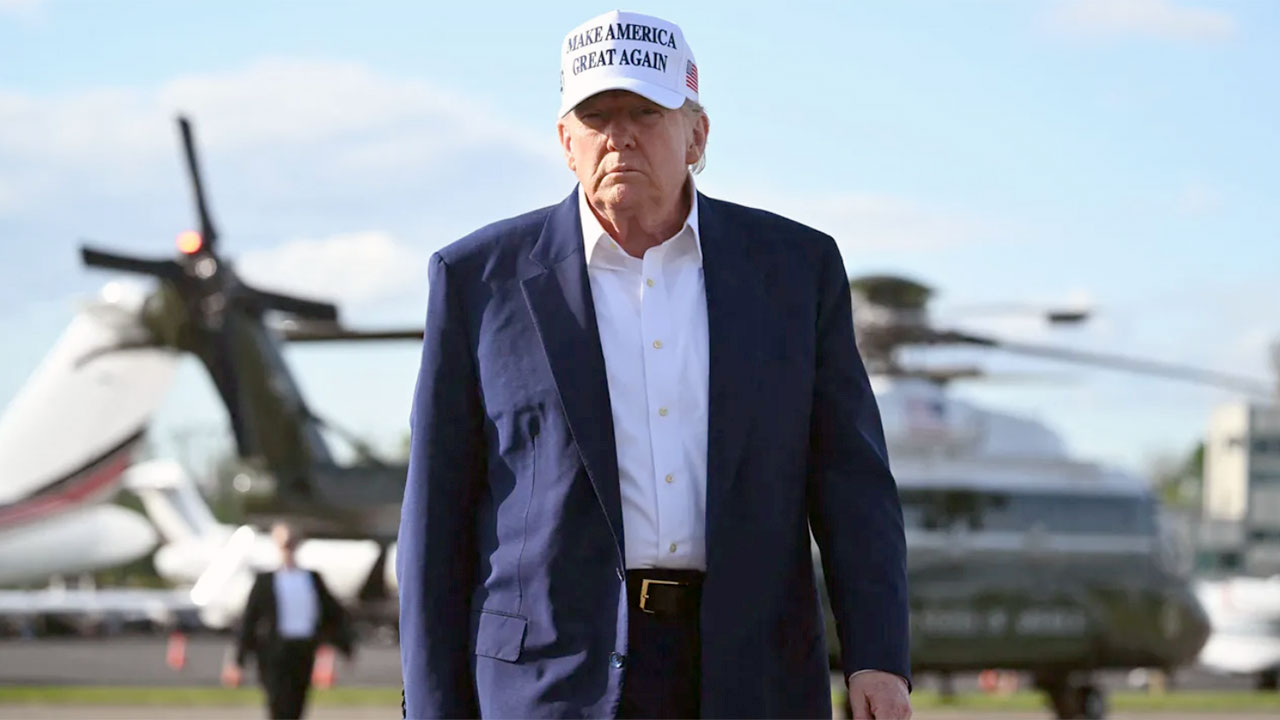 JBizNews1 day ago
President Donald Trump has decided not to extend the USMCA trade agreement and will instead pursue independent trade deals with Canada and Mexico, FOX Business has learned.
Wednesday marked the deadline for the six-year review, and a Trump administration official told FOX Business that the president opted against extending the U.S.-Mexico-Canada Agreement (USMCA).
The official indicated that Trump will instead pursue separate deals with Canada and Mexico that last for up to 10 years.
This is a developing story. Please check back for updates.
 JBizNews1 day ago
The 2026 FIFA World Cup is becoming a major business success for its U.S. television broadcasters, with Fox Sports and Telemundo reporting record audiences as the tournament heads into the knockout rounds.
According to Fox Sports and Nielsen, approximately 84 million Americans watched at least part of the tournament through June 25, making it the network’s strongest World Cup audience on record. Nielsen’s figure includes viewers who watched for at least one minute of tournament coverage.
Telemundo, which holds the Spanish-language U.S. broadcasting rights, said its audience is running at more than double the pace of the 2022 Qatar World Cup, setting new engagement records across its television and streaming platforms.
Individual matches have produced some of the largest audiences in U.S. soccer history.
The United States–Turkey match on June 25 averaged 15.8 million viewers on Fox despite the U.S. already having secured a place in the knockout stage.
The U.S. victory over Paraguay attracted more than 18 million viewers across Fox, FS1, and Tubi, making it the most-watched English-language men’s World Cup broadcast ever in the United States. Viewership peaked at approximately 21.5 million during the match.
Another U.S. victory over Australia, which clinched advancement to the knockout rounds, averaged roughly 14.8 million viewers.
For Fox, the ratings represent an enormous return on its investment.
The network paid approximately $485 million for the U.S. English-language World Cup broadcast rights. Given the record audiences, many media analysts now view that agreement as one of the strongest sports-rights investments in recent television history.
According to reports, the rights package may ultimately prove worth several times what Fox originally paid after the network secured favorable terms years earlier as part of broader negotiations with FIFA.
Hosting the tournament across North America has also contributed to the surge in interest.
Matches played in the United States have generated strong local attendance while the success of the U.S. Men’s National Team has created valuable prime-time television windows that continue attracting large national audiences.
The record ratings are particularly important for advertisers.
Television networks sell World Cup advertising months in advance based largely on projected audiences. As viewership continues exceeding expectations, premium advertising inventory during knockout matches becomes increasingly valuable, particularly with elimination games keeping viewers engaged until the final whistle.
For both Fox and Telemundo, the next several rounds could produce even larger audiences if the United States advances deeper into the tournament.
The broader business message extends beyond one sporting event.
For years, soccer was viewed as a niche television property in the United States. The record audiences now demonstrate that the sport has become a mainstream television attraction capable of delivering the large, national audiences advertisers traditionally associated with the NFL, college football, and other major sporting events.
For broadcasters, advertisers, and sponsors alike, the 2026 World Cup is proving that soccer has become one of the most valuable properties in American sports television.
JBizNews Sports Business Desk
© JBizNews.com All Rights Reserved. Reproduction or distribution without written permission is prohibited.
 JBizNews1 day ago
The Justice Department and attorneys general from 17 states announced proposed settlements Tuesday with three of the nation’s largest egg producers after alleging they coordinated to manipulate a key pricing benchmark that inflated egg prices for consumers nationwide.
Federal officials simultaneously filed a civil antitrust lawsuit against Cal-Maine Foods, Hickman’s Egg Ranch and Versova while lodging the proposed settlements, which – if approved by a federal court – would prohibit the companies from engaging in the alleged conduct going forward.
According to New York Attorney General Letitia James’ office, the companies agreed to pay a combined $3.3 million to participating states and donate approximately 53 million eggs to food banks and nonprofit organizations. The settlements also require the companies to adopt antitrust compliance measures and end the alleged coordination.
The Justice Department alleges the companies manipulated daily price quotations published by Urner Barry, an industry benchmark that influences wholesale egg prices nationwide.
According to the complaint, the companies coordinated bidding activity to create the appearance of stronger demand and artificially inflate prices for billions of eggs sold each year.
The complaint also alleges benchmark prices fell significantly after the companies learned of the federal investigation and were instructed to preserve documents in March 2025.
“No product more quintessentially represents affordability than the price Americans pay for eggs,” Associate Attorney General Stanley Woodward said in a statement. “These actions prove this Department’s continued commitment to protecting competition and providing real relief for everyday Americans’ pocketbooks.”
Cal-Maine, the nation’s largest egg producer, denied wrongdoing in a statement, saying it “was not assessed any fines or penalties” under the agreement. The company said it will pay $1.5 million to participating states and donate 30 million eggs to food banks and nonprofit organizations while implementing certain compliance and reporting measures.
Mantiqueira USA, the joint venture that acquired Hickman’s Egg Ranch in November 2025, said the conduct described in the complaint occurred before its acquisition of the company.
“This settlement fully resolves the allegations against Hickman’s Egg Ranch related to that period,” the company said.
The proposed settlements remain subject to court approval following a 60-day public comment period required under the Tunney Act.
FOX Business reached out to Cal-Maine Foods, Hickman’s Egg Ranch and Versova for additional comment.
Reuters contributed to this report.
 JBizNews1 day ago
The World Bank said Monday it will eliminate its formal climate lending targets, marking a major policy shift that follows months of pressure from the United States, the institution’s largest shareholder. While the bank extended its overall climate change policy framework indefinitely, it will no longer require a fixed percentage of its financing to be dedicated to climate-related projects.
“We will retire the 45-percent climate co-benefits target and the 35-percent target,” the World Bank Group said in a statement, adding that it will instead “complete our shift from inputs to outcomes to maximize development impact.”
In practical terms, the bank will no longer promise that a set share of its annual lending must support climate-related projects. Instead, future financing decisions will be guided by the priorities and development needs of individual member countries.
The targets had become a central part of the bank’s strategy over the past several years. Its previous five-year framework called for 35% of annual financing to generate climate benefits by 2025. World Bank President Ajay Banga later raised that goal to 45% during the 2023 United Nations climate conference.
Under that framework, the bank’s climate financing nearly doubled—from approximately $21 billion in 2021 to $39 billion in 2025—making it the world’s largest provider of international climate financing for developing nations.
The policy change represents a significant victory for the Trump administration.
Treasury Secretary Scott Bessent had urged the World Bank to abandon what he described as a “distortionary” climate finance target, arguing that it diverted resources from poverty reduction and economic growth. The Treasury Department welcomed the expiration of the climate targets and has encouraged the bank to place greater emphasis on expanding access to reliable energy, including natural gas projects. The United States has also withdrawn from the Paris climate agreement.
For the global economy, the decision carries significant implications because the World Bank helps finance infrastructure, energy, transportation, agriculture, manufacturing, and industrial development across emerging markets. Its lending priorities often influence what types of projects governments pursue and private investors support.
Supporters of the policy shift argue that removing rigid climate targets gives developing countries greater flexibility to finance the projects they believe are most urgently needed, including conventional energy infrastructure capable of supporting economic growth and expanding electricity access.
Critics argue the opposite.
Environmental groups warn that eliminating formal targets could gradually reduce funding for climate projects while making it more difficult to measure progress and hold the institution accountable.
“The current plan, while imperfect, provides a basis for accountability,” said Rajneesh Bhuee of the advocacy organization Recourse.
The decision also highlighted divisions among the bank’s shareholders. While the United States pressed for removing the lending targets, several European governments, joined by some Latin American countries and small island nations, favored maintaining a formal climate framework. Many of those countries continue supporting the broader international goal of mobilizing $300 billion annually in climate finance for developing economies by 2035.
Even before Monday’s announcement, the policy had faced criticism from multiple directions. Some analysts argued that much of the increase in climate financing had been directed toward projects containing only limited climate-related components, while others maintained that measurable targets remained essential regardless of imperfections.
Most economists do not expect climate lending to decline immediately. However, the absence of formal benchmarks could gradually reduce internal incentives to prioritize climate investments and make it harder for governments and investors to track how development funding is allocated.
For developing countries seeking financing, Monday’s decision signals a shift away from fixed climate commitments and toward greater flexibility based on national priorities. It also underscores the growing influence of the United States in reshaping how one of the world’s most important development institutions allocates tens of billions of dollars each year.
JBizNews Washington Desk
© JBizNews.com All Rights Reserved. Reproduction or distribution without written permission is prohibited.
 JBizNews1 day ago
The Palestinian sector is set to rely increasingly on electronic payments, moving away from physical bank notes as a means to deal with the banking crisis, Deputy Governor of the Palestinian Monetary Authority (PMA) Mohammad Manasra told the PA-run WAFA on Sunday.
The move is part of a multi-track path to deal with the financial crisis partially attributed to Israeli restrictions on the transfer of surplus cash, he said. Under the current restrictions, Palestinian banks can only return physical currency through Bank Hapoalim and Israel Discount Bank with a cap of NIS 18 billion annually.
Palestinian economist Mohammed Samhouri has repeatedly published that such a ceiling barely reaches half the necessary levels, creating an economic crisis.
The exchange depends heavily on the banks receiving a letter of indemnity and immunity, which protects them should there be accusations of money laundering. The letters, issued by Israel’s Finance Ministry, have been repeatedly obstructed in recent years.
According to the research organization Arab Center Washington DC, the accumulation of shekels in Palestinian banks has reached unsustainable levels, which threatens the banking system’s capacity to finance trade with Israel. In 2024, more than half of Palestinian Authority imports and more than 80% of its exports were with Israel.
Such a ceiling, however, does not reflect the current size of the Palestinian economy. Consequently, the Palestinian banks are replete with surplus shekels cash that they cannot transfer to replenish their correspondent accounts with Israeli banks – accounts which are essential for conducting cross-border trade with Israel. Currently, the accumulation of shekels in Palestinian banks has reached unsustainable levels, threatening the banking system’s capacity to finance trade with Israel.
The consequence, according to the WAFA interview, is that banks have begun refusing to accept shekel deposits, which has created economic hardship for both individuals and businesses.
Manasra asserted that a new law introduced to reduce cash transactions is in place to build a stronger economy, not to burden civilians, and that comprehensive implementation of the law would follow a fully integrated electronic payments infrastructure. The implementation of the law is expected to be introduced over a two-year period.
The PMA official added that talks were being held with the Bank of Israel and an international partner to see the NIS 18 billion cap raised, though responsibility for the issue was transferred to the Israeli government in October 2023.
 JBizNews1 day ago
Brooklyn’s most notorious unfinished megaproject may finally be getting a last chapter. On Monday, June 29, Empire State Development, the state’s economic-development agency, along with developers Cirrus Workforce Housing and LCOR, unveiled a $5 billion plan to complete the long-stalled Atlantic Yards project, now known as Pacific Park, more than two decades after it was first announced. Governor Kathy Hochul called it one of New York’s most significant unfinished affordable-housing developments and said the state is finally moving it toward completion.
The plan calls for six new high-rise towers holding about 5,600 apartments and condos, including roughly 1,242 units, or about 21%, set aside as affordable for low- and moderate-income households. It would add about five and a half acres of public open space and feature a nearly 800-foot skyscraper connected to a 570-foot tower at the corner of Flatbush Avenue and Pacific Street, in the Prospect Heights neighborhood next to the Barclays Center.
To understand why this matters, it helps to know why the project stalled for so long. Atlantic Yards was first announced in 2003 by developer Forest City Ratner, with star architect Frank Gehry and Brooklyn’s own Jay-Z attached, and the Barclays Center opened in 2012. But the housing kept getting delayed. The project later passed to Greenland USA, which defaulted on roughly $350 million in loans. Cirrus and LCOR acquired the development rights at a foreclosure auction last October, becoming the third development team to take on the project.
The hardest and most expensive part is literally building on air. Six of the planned towers must sit on platforms constructed above the MTA’s Vanderbilt Rail Yard, where Long Island Rail Road trains continue to operate. Building those decks is a complex engineering challenge that adds an estimated $700 million to the cost and has been one of the biggest reasons the project has dragged on for more than two decades. New York State has now pledged about $700 million toward the platforms, including $175 million already approved in the latest state budget.
Here is where the business story becomes especially important for Brooklyn’s economy. Much of the construction will be financed by union pension funds, which will provide financing to the developers rather than relying primarily on traditional bank loans. Cirrus has committed to using union labor, creating the potential for years of well-paying construction jobs throughout the borough. Cirrus Chief Executive Joseph McDonnell said construction could begin by 2028, with the first affordable apartments welcoming residents as early as 2031 and full completion expected by the late 2030s.
For Brooklyn renters, the affordable housing is the centerpiece of the proposal. Housing costs throughout the borough have surged, with Prospect Heights home prices topping $1 million years ago. Adding more than 1,200 income-restricted apartments could provide meaningful relief. Critics, however, argue that too many of those units are aimed at moderate-income households instead of the lowest-income families originally promised when the state used eminent domain to assemble the site. Assemblymember Jo Anne Simon and local housing advocates say the revised plan still falls short of earlier affordability commitments.
The economic benefits extend well beyond housing. The development also includes retail and office space, along with community facilities such as an intergenerational center in the first residential building. Thousands of new residents would bring additional customers to local restaurants, retailers, and neighborhood businesses along Atlantic and Flatbush avenues, helping support an area that has lived alongside construction for years. New public open space is also intended to better connect the development with the surrounding community.
The project still has significant hurdles before construction begins. It must complete an environmental review expected to take about two years before receiving final approval from the Empire State Development board, a vote that may not occur until 2028. A memorandum of understanding between the developers and the state is due by July 31, 2026. If an agreement is not reached, the state could pursue penalties tied to previously unbuilt affordable housing commitments.
Still, the announcement represents the most meaningful progress in years on a project that became synonymous with delays. If completed, Pacific Park would deliver thousands of new homes, years of union construction jobs, expanded retail and office space, and new public parks. After more than two decades of missed deadlines, Brooklyn will now be watching to see whether Cirrus and LCOR can finally deliver what previous developers could not.
JBizNews Desk
© JBizNews.com All Rights Reserved. Reproduction or distribution without written permission is prohibited.
 JBizNews1 day ago
The trade barriers President Donald Trump raised to protect American industry are pushing some of the country’s biggest trading partners closer together. After more than two decades of stalled negotiations, the European Union and Mercosur — the South American bloc made up of Brazil, Argentina, Uruguay, and Paraguay — put their trade agreement into provisional effect on May 1, according to the European Commission. Officials on both sides say U.S. tariffs helped push the long-delayed deal across the finish line.
The agreement creates a trading zone of roughly 700 million people. It lowers tariffs on products including automobiles, machinery, and pharmaceuticals, saving European companies an estimated €4 billion each year. In return, exports of European agricultural products such as wine, spirits, chocolate, and olive oil are expected to rise significantly across South America.
The driving force, by many accounts, was Washington. Trump’s tariffs, including an additional 40% duty on Brazilian goods on top of existing rates, gave both blocs a stronger incentive to diversify their trading relationships. Former Brazilian diplomat Roberto Jaguaribe said uncertain trade relations with the United States naturally encourage countries to seek new partners, while former trade official Larissa Wachholz called the agreement a major turning point in Brazil’s traditionally protectionist trade policy.
The impact is already reaching smaller businesses. In Brazil, producers of cachaça — the sugarcane spirit used to make the caipirinha cocktail — see a rare opportunity to expand into Europe as tariffs fall and access to new markets improves. Distillers say exports could grow dramatically once the agreement is fully implemented.
For American businesses, the agreement presents a competitive challenge. Every tariff barrier the United States builds gives foreign competitors another reason to trade with one another instead. European and South American companies will now enjoy preferential access to each other’s markets that U.S. exporters do not receive. American manufacturers of machinery, aircraft parts, industrial equipment, and other products selling into Brazil may increasingly find themselves undercut by European rivals whose tariffs have been reduced or eliminated.
Mercosur is not stopping with Europe. Since Trump returned to office, the bloc has accelerated negotiations with other major economies, completing an agreement with four non-EU European countries while opening new talks with Canada, Japan, and the United Arab Emirates. Brazil, whose largest trading partner is China, is positioning itself at the center of an increasingly multipolar global trading system rather than relying heavily on any single country.
The agreement also extends beyond trade. Member nations pledged to uphold democratic institutions and remain committed to the Paris climate agreement, commitments European officials say have taken on added importance as the United States has stepped back from several international climate initiatives. The deal also strengthens Europe’s access to strategic raw materials, including niobium, a metal used in MRI scanners, aerospace components, and advanced technologies. The EU currently imports about 82% of its niobium from Mercosur countries.
There are still hurdles ahead. France, backed by its influential farming sector, continues to oppose portions of the agreement, and the pact will require formal approval from the European Parliament before taking full legal effect. Safeguards also allow either side to limit imports that threaten sensitive industries such as beef, poultry, and sugar.
Even so, tariffs are already being reduced on thousands of products, and businesses on both continents are moving quickly to capitalize on the new opportunities.
For Brazil, which also faces a U.S. investigation over alleged unfair trade practices, officials say there is little appetite to return to the protectionist policies of the past. The broader lesson is that global trade is not necessarily shrinking because of tariffs—it is increasingly being rerouted. As the United States becomes a more difficult market to access, many of the world’s largest economies are choosing to deepen trade with one another instead, leaving American exporters at risk of being left outside some of the world’s fastest-growing trade partnerships.
JBizNews Desk
© JBizNews.com All Rights Reserved. Reproduction or distribution without written permission is prohibited.
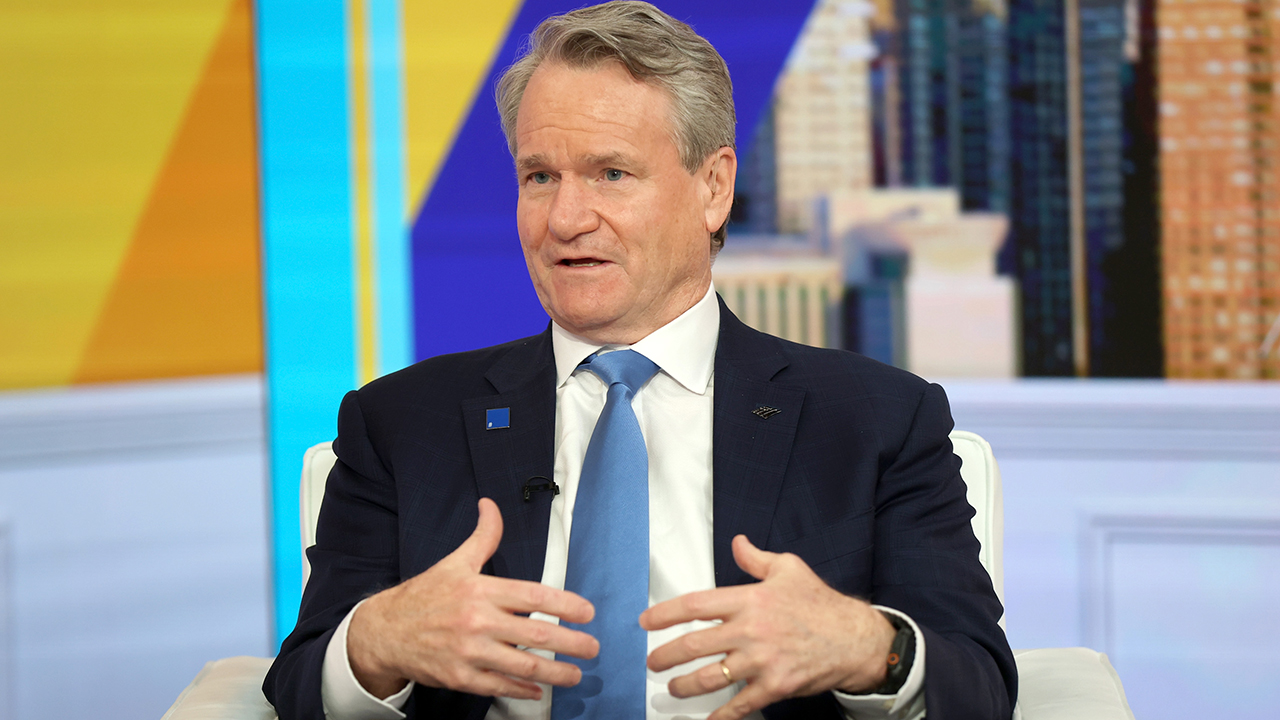 JBizNews1 day ago
While Wall Street prepares for the prospect of a more aggressive Federal Reserve, Bank of America CEO Brian Moynihan has a reassuring message for anxious investors.
Despite Bank of America’s issuing the most hawkish forecast on Wall Street — predicting three interest rate hikes under Federal Reserve Chair Kevin Warsh — Moynihan insists a recession is nowhere in sight.
“The [U.S.] president thought it was going to be rate cuts. Now we’re talking about rate hikes. Will that lead us into a recession?” FOX Business’ Maria Bartiromo asked Moynihan on the New York Stock Exchange floor Wednesday.
“No, because at the end of day, that’s the balance the Fed has to have, is they’re trying to keep the inflation from getting out of control, price stability,” Moynihan responded. “And Chairman Warsh made it clear that’s what he stands for.”
“He’s focused on that, that’s their job. But you also have to be mindful of the other side, which is, recession means unemployment goes up, and you have to stabilize unemployment. So they’ve gotta mind that,” he added. “The U.S. economy is growing better than most. The inflation is higher than people want it to be, but if you talk to people who are in the positions Kevin’s in… they could never get inflation back. They’re sort of saying, ‘Wait, we can never get the economies to recover fast enough.’ I think it’s easier to bring it down carefully than it is to get it going, and so you want to air a little bit to the upside.”
During their latest meeting, the Federal Reserve announced that it would hold interest rates steady due to concerns about elevated inflation amid the war in Iran, as Warsh’s tenure leading the central bank begins in earnest.
Fed policymakers voted 12-0 to leave the benchmark federal funds rate unchanged at its current range of 3.5% to 3.75%. The move follows the central bank’s decisions to hold rates steady in January, March and April after three consecutive 25-basis-point rate cuts in September, October and December of last year.
Moynihan argues that higher interest rates shouldn’t be feared but rather celebrated as a sign of a strong U.S. economy.
“We have a great research team… They’ve also put three Fed raises on the table, meaning that the inflation is going to be stickier, go[ing] all the way through ‘27 into ‘28, largely just to deal with the aftermath of the oil price shock,” the CEO said. “But at the end of day, the economy has grown a little faster now than they thought it was going to grow a few months ago.”
“Inflation will take a while, rates will be higher. But everybody argues for rates to be high or low. At the end of it, rates are an outgrowth of a very strong economy in the United States and a need to keep inflation in check.”
FOX Business’ Eric Revell contributed to this report.
 JBizNews1 day ago
Extreme heat and severe weather have become one of the biggest financial risks facing the data centers powering the artificial-intelligence boom, insurers and operators are warning, as a record heatwave bakes Europe and strains power grids worldwide. According to insurance company Zurich, severe weather has become the leading cause of losses within its U.S. data center builders’ risk portfolio over the past three years, now accounting for roughly one-third of its losses in the sector.
“Severe weather is no longer something that can be treated as a background exposure,” said Patrick McBride, Zurich’s head of international construction. “It is one of the first things we and the owners we work with look at.” His comment captures a shift in how the industry views the weather: not as an occasional disruption, but as a core threat to a buildout costing hundreds of billions of dollars.
The trouble with extreme heat is that it hits twice. Cooling accounts for roughly 40% of a data center’s energy use even under normal conditions, and that share rises during heatwaves—precisely when air conditioners are already putting enormous pressure on electric grids.
“Data centers need the most energy exactly when the grid has the least available to give,” said Mishal Thadani, chief executive and co-founder of AI software platform Rhizome, which helps utilities identify climate vulnerabilities. He pointed to Turin, Italy, where temperatures approaching 100 degrees Fahrenheit placed underground power cables under thermal stress and contributed to repeated blackouts before additional AI facilities that each consume as much electricity as roughly 100,000 homes are even connected.
Compounding the challenge is where the industry is building. This year, 64% of global data center capacity under construction is located outside traditional hubs such as Northern Virginia, moving instead into rapidly growing markets including West Texas, Tennessee, Wisconsin, and Ohio. Land and electricity are often less expensive in those areas, but many also face elevated risks from tornadoes, hail, high winds, flooding, or wildfires.
The scale of the exposure is enormous. Climate-risk analytics firm First Street found that 79% of global data center capacity faces elevated risks from acute climate hazards. A separate analysis by MS Amlin estimated that 56% of planned U.S. data centers—representing nearly $800 billion in investment—are located in states highly exposed to hurricanes, severe storms, earthquakes, or winter weather.
For businesses, the risk ultimately comes down to money. Weather-related disruptions increase insurance claims, construction costs, repair expenses, and operational downtime. If insurers become less willing to underwrite large concentrations of expensive infrastructure in climate-vulnerable regions, premiums could rise significantly or coverage could become harder to obtain.
“It’s not a matter of if climate risks will impact the digital infrastructure revolution,” said Joe Macejak, U.S. property digital infrastructure leader at Marsh Risk. He warned that unmanaged climate risks “pose a threat to the capital stacks that are fueling the AI-driven data center revolution.”
Technology companies are responding by redesigning their facilities. Microsoft says it engineers its data centers to operate reliably across a wide range of environmental conditions through careful site selection, redundant systems, and real-time monitoring. Nvidia said its latest AI servers can operate with cooling liquid temperatures of 45 degrees Celsius, and that increasing chiller temperatures by just one degree can reduce cooling-energy costs by about 4%. Engineers are also developing more efficient liquid-cooling systems that move heat away from advanced AI chips more effectively.
The implications extend far beyond the technology industry. Modern AI infrastructure increasingly supports hospitals, banks, manufacturers, communications networks, retailers, and government agencies. A major outage caused by extreme weather can quickly ripple across the broader economy.
The artificial-intelligence boom may be creating unprecedented demand for computing power, but at its foundation the industry remains dependent on physical infrastructure—buildings, transmission lines, water, cooling systems, and reliable electricity. As climate risks intensify, the weather is becoming one of the biggest tests of whether that infrastructure can keep pace with the AI revolution.
JBizNews Technology Desk
© JBizNews.com All Rights Reserved. Reproduction or distribution without written permission is prohibited.
 JBizNews1 day ago
U.S. stocks pulled back Wednesday, July 1, the morning after major indexes closed out their best quarter since 2020, as investors digested a softer-than-expected read on hiring, watched Federal Reserve Chair Kevin Warsh speak abroad, and eyed faltering peace talks in the Middle East. The retreat was modest, more of a breather than a reversal, after a run that pushed the Dow to back-to-back record highs.
In early trading, the S&P 500 slipped about 0.35%, the Dow Jones Industrial Average lost roughly 0.35%, and the tech-heavy Nasdaq Composite fell about 0.72%. The one bright spot was small companies: the Russell 2000 rose 0.46%, a sign that money was rotating out of the big technology names and into the smaller, more domestic stocks that tend to benefit when the economy looks steady. For context, the Dow closed Tuesday at a record 52,319.20 to cap a quarter in which the S&P 500 climbed more than 14% and the Nasdaq soared about 20%.
The morning’s big economic news was about jobs, and it pointed to a cooling market. Payroll processor ADP reported that private employers added just 98,000 jobs in June, fewer than economists expected and a clear slowdown. Separately, the outplacement firm Challenger, Gray & Christmas said U.S. employers announced just under 46,000 job cuts last month, roughly in line with a year earlier. Together the reports set the stage for the government’s June jobs report, which arrives Thursday, a day earlier than usual because of the July 4 holiday.
Market movers
The standout story for everyday shoppers came from the grocery aisle. Kroger shares fell about 2.8% after the supermarket giant said it would buy regional chain Giant Eagle in a $1.65 billion deal. The move comes after Kroger’s far larger $25 billion attempt to merge with Albertsons was blocked by regulators and courts in 2024. Kroger is fighting to hold down grocery prices while competing with Walmart and Amazon, and this smaller, more digestible acquisition is its way of growing without triggering another antitrust battle.
Technology was the day’s weak spot, extending a rough stretch for the market’s former darlings. The Magnificent Seven group of mega-cap tech stocks shed about $2.3 trillion in market value during June as investors questioned whether massive spending on artificial intelligence will actually turn into profits. CNBC’s Jim Cramer argued that Wall Street is now rewarding the companies that supply the AI boom, naming chipmakers like Micron, Intel, Marvell, AMD, and SanDisk, while punishing the giants footing the bill.
Analysts are still finding winners in the space. Wedbush technology analyst Dan Ives this week began coverage of newly public SpaceX with an outperform rating and a $190 price target, calling it more of an AI play than investors realize. SpaceX, which staged the largest IPO in history last month, is set to join the Nasdaq-100 index before trading opens on July 7, which will force index funds to buy the stock.
Commodities and volatility
Oil gave back its early gains and turned lower after diplomacy stumbled. Peace talks in Doha faltered Wednesday when Iran said its negotiators would not meet President Trump’s team, dimming hopes for a lasting deal and a full return to normal oil flows. Crude fell about 1%, with Brent sliding toward $72 a barrel and U.S. benchmark WTI dropping below $69. Even with the dip, oil remains far below its wartime highs, which has been the single biggest force pulling inflation lower and easing pressure on the Fed.
Much of the day’s caution centered on Warsh, who is appearing at the European Central Bank’s forum in Sintra, Portugal, alongside ECB President Christine Lagarde, Bank of England Governor Andrew Bailey, and Bank of Canada Governor Tiff Macklem. Investors are parsing his every word for hints about where interest rates head next, a question that touches everything from mortgage rates to credit-card bills.
Looking ahead
The rest of the holiday-shortened week is all about jobs. After Wednesday’s soft ADP figure, traders turn to Thursday’s June employment report for a fuller picture of whether the labor market is genuinely cooling or simply catching its breath. A reading on manufacturing activity is also due. With the SpaceX index addition looming July 7 and markets thin ahead of the long weekend, trading could stay choppy. After a quarter this strong, a pause is hardly a surprise, and many on Wall Street see the early-July softness as digestion rather than the start of a real downturn.
JBizNews Desk
© JBizNews.com All Rights Reserved. Reproduction or distribution without written permission is prohibited.
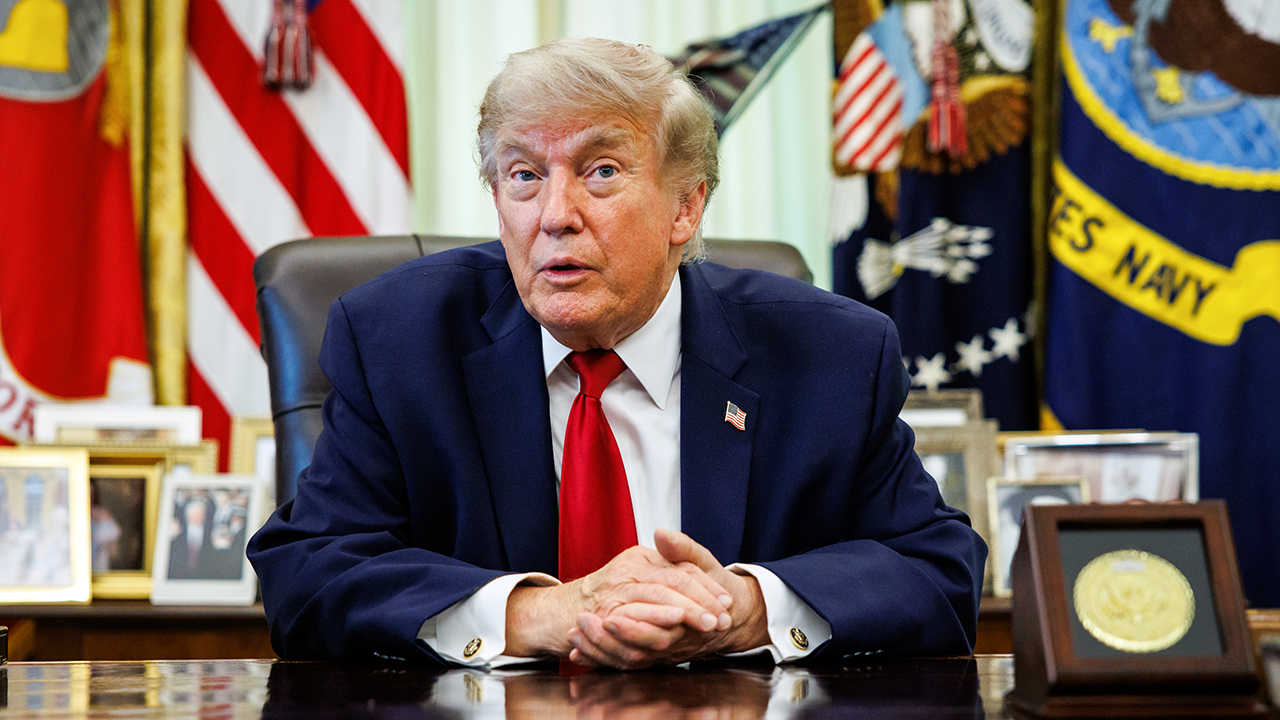 JBizNews1 day ago
President Donald Trump on Wednesday said that Taiwan is doubling the size of the chipmaking plants under construction in Arizona, adding that it could help the U.S. share of the chip market rise to 50% by the end of his term.
“We’re creating more jobs, we have more people working today than have ever worked in the history of our country. It’s great and that’s before these places opened,” Trump said before his departure from Joint Base Andrews.
The president said that new chip plants will be opening up over the next year and that chipmakers from Taiwan, such as the industry leader TSMC, are adding to their investments in the U.S.
“The biggest company in the world, actually, the chipmaker. But they’re coming in, they’re building in Arizona, and they just announced they’re going to double the size. We could have 50% of the chip market by the time I leave office. You know what we have now? Nothing,” Trump added.
FOX Business reached out to Taiwan Semiconductor Manufacturing Company for comment.
This is a developing story. Please check back for updates.
 JBizNews1 day ago
Walk into almost any coffee shop or grocery store today and you’ll see a growing trend: coffee packed with protein, soda promising better gut health, and bottled water infused with electrolytes, vitamins, and other wellness ingredients. Major beverage companies from Starbucks to Coca-Cola are betting consumers will pay more for drinks that offer benefits beyond simple refreshment, helping fuel a global functional beverage market now valued at roughly $166 billion.
Consumer surveys suggest that bet is paying off.
An EY survey of more than 2,500 adults found that roughly 75% of Millennials and 80% of Generation Z consumers regularly purchase functional beverages. More than half said they are willing to spend extra for products that support their health and wellness goals.
Research from Circana found that nearly 64% of consumers sometimes replace a snack with a beverage, rising to 70% among adults ages 25 to 34. The shift reflects growing demand for drinks that provide protein, energy, digestive support, hydration, or nutritional value.
One of the fastest-growing categories is protein coffee.
Often referred to on social media as “proffee,” the trend has rapidly expanded beyond fitness enthusiasts into mainstream retail. Starbucks recently introduced protein coffee beverages across the United States, Canada, and Europe after launching ready-to-drink versions in supermarkets.
Its newest bottled beverages contain 22 grams of complete protein, 5 grams of prebiotic fiber, multiple vitamins and minerals, and only 2 grams of sugar. Industry data show ready-to-drink coffees containing 20 to 25 grams of protein are among the fastest-growing products in the category, while some competing beverages now exceed 40 grams of protein per serving.
Social media has helped accelerate the trend.
According to industry research, 72% of Generation Z consumers turn to social media platforms for food and wellness recommendations. Circana analyst Sally Lyons Wyatt said younger consumers are expected to drive much of the category’s growth as they enter their highest earning years and increasingly seek products that combine convenience with perceived health benefits.
The opportunity has triggered a wave of acquisitions.
French food company Danone recently acquired protein meal-replacement maker Huel in a deal reportedly valued at $1.15 billion. PepsiCo purchased prebiotic soda company Poppi for approximately $2 billion, while Coca-Cola launched its own prebiotic beverage line, Simply Pop.
The boom is also intersecting with the rapid adoption of weight-loss medications such as Ozempic and similar GLP-1 drugs. As millions of consumers eat smaller meals, beverage companies are developing high-protein, lower-sugar drinks designed to deliver nutrition in fewer calories. Danone recently introduced Oikos Fusion, specifically formulated for consumers using GLP-1 medications.
Consumers should expect to pay more for many of these products.
Protein coffees, prebiotic sodas, and functional beverages typically sell at a premium compared with traditional soft drinks and coffee. Nutrition experts also caution that not every health claim is supported by strong scientific evidence, and consumers should evaluate ingredient lists rather than marketing slogans.
Still, industry momentum remains strong.
Analysts project the global functional beverage market could grow from approximately $166 billion today to nearly $372 billion by 2034. Major retailers including Walmart and Target continue expanding shelf space devoted to protein drinks, prebiotic beverages, electrolyte products, and wellness-focused brands.
For beverage companies facing slower growth in traditional soda sales, the message is increasingly clear: consumers—especially younger shoppers—want drinks that promise added value, and many are willing to pay a premium to get it.
JBizNews Consumer Desk
© JBizNews.com All Rights Reserved. Reproduction or distribution without written permission is prohibited.
 JBizNews1 day ago
Spot jet fuel prices have fallen about 40% from their April peak, according to data from Airlines for America, the airline industry’s trade association. But despite the sharp decline in one of their largest operating costs, major U.S. airlines say they have little intention of lowering ticket prices as demand for travel remains strong.
Speaking to investors this spring, Delta Air Lines Chief Executive Ed Bastian said fares are currently at the “right level,” signaling that lower fuel costs will not necessarily translate into cheaper airfare for consumers.
For travelers planning summer vacations, the numbers tell the story.
According to the Bureau of Labor Statistics, airfares were nearly 27% higher in May than a year earlier. Average ticket prices climbed to roughly $1,105 in early May before easing to about $980 in June, but they remain significantly above last year’s levels.
Fuel typically accounts for 20% to 25% of an airline’s operating expenses. The Argus U.S. Jet Fuel Index stood near $2.91 per gallon late last week—down sharply from April’s highs but still above prices seen earlier this year.
So why haven’t ticket prices followed fuel costs lower?
The answer is simple: supply and demand.
Airlines reduced flight schedules earlier this year when fuel prices surged, leaving fewer seats available during the busy summer travel season. At the same time, leisure travel has remained resilient, allowing carriers to maintain elevated pricing.
Independent energy analyst Tom Kloza said lower fuel prices resulted partly from airlines reducing flights, which lowered demand for jet fuel, while U.S. refineries simultaneously increased production to capitalize on earlier high prices.
Airline executives have been unusually direct about their pricing strategy.
United Airlines Chief Commercial Officer Andrew Nocella told investors that the longer travelers continue paying today’s fares, the more likely those higher prices become permanent.
Aviation analyst Michael Boyd offered an even simpler explanation: if customers continue buying tickets at current prices, airlines have little incentive to reduce them.
Additional fees appear even less likely to fall.
Industry analyst Zach Griff, publisher of the aviation newsletter From the Tray Table, said baggage fees and other ancillary charges are expected to remain elevated regardless of fuel costs because they have become an increasingly important source of airline revenue.
Some seasonal relief may arrive later this year.
Historically, airfare declines after the peak summer travel season ends, although analysts expect fall ticket prices to remain above last year’s levels despite lower fuel costs.
Airlines also argue they are still recovering from an extraordinarily difficult first half of the year.
A global jet-fuel supply crunch tied to tensions involving the United States and Iran drove operating costs sharply higher earlier this year, forcing carriers to cut flights and absorb higher expenses. According to the Bureau of Transportation Statistics, U.S. airlines collectively lost approximately $1 billion during the first quarter of 2026.
Although fuel prices have retreated, the supply chain has not fully normalized. Shipping through the Strait of Hormuz remains constrained, and aviation analysts say global fuel markets could require months to stabilize completely.
For travelers, the lesson is straightforward.
Falling oil or jet-fuel prices do not automatically lead to lower ticket prices. Airlines continue pricing flights based primarily on demand, available capacity, and overall profitability rather than daily fuel costs.
For now, travelers looking to save money are more likely to find lower fares by flying during off-peak periods later this year than by waiting for airlines to pass fuel savings along to consumers.
JBizNews Airlines Desk
© JBizNews.com All Rights Reserved. Reproduction or distribution without written permission is prohibited.
 JBizNews1 day ago
A new report released Monday by the Cybersafety Research Center — a joint initiative of New York University and Northeastern University — found that most of the child-safety tools promoted by major social media platforms failed to work as advertised, raising new questions about online protections for young users.
The research team, led by Laura Edelson, an assistant professor of computer science at Northeastern University, tested 86 youth safety features across TikTok, Instagram, Snapchat, and YouTube. Only 35 worked as promised. The remaining 51 either failed outright, were difficult to access, or could not be triggered despite following the companies’ published instructions. The report is titled “Broken, Buried, Missing.”
Researchers created both teen and adult test accounts on each platform, evaluating whether the safety features actually functioned as described and whether young users could realistically find and use them.
The findings were stark.
Nine safety features were classified as “missing” because researchers could not activate them at all. Thirty-four were labeled “broken,” meaning they failed to work properly or could easily be bypassed. Twelve of those were both broken and deeply buried within settings menus, while another eight technically worked but were hidden where most teenagers were unlikely to find them.
Among the most troubling findings involved TikTok. Researchers said the platform is designed to prevent minors from searching for content related to eating disorders and self-harm, yet its recommendation system instead suggested pro-anorexia search terms and self-harm phrases to a teen account.
Edelson emphasized those recommendations came directly from TikTok’s own algorithm rather than from search terms entered by the research team.
The study also found every platform struggled to moderate abusive behavior.
Safety tools designed to discourage bullying or harmful interactions failed across all four services. An Instagram feature intended to prompt users to reconsider before posting abusive comments never activated when researchers used a test account to harass another user. Many moderation systems relied heavily on blocked-word lists, allowing users to bypass protections simply by misspelling offensive words.
Features intended to limit excessive screen time also performed poorly, functioning successfully only about one-third of the time during testing.
The findings carry significant business implications beyond child safety.
For years, major social media companies have cited expanding safety features as evidence they can effectively regulate themselves without additional government intervention. The report arrives as lawmakers continue debating new online child-protection legislation, with technology executives expected to face renewed congressional scrutiny later this year.
If regulators conclude existing safeguards are ineffective, technology companies could face stricter compliance requirements and additional regulatory costs.
The platforms disputed many of the findings.
A YouTube spokesperson said the company has spent more than a decade developing parental controls and cited survey data showing most parents who use its supervised experiences report greater confidence in their children’s online activity.
A TikTok U.S. spokesperson said teen accounts include more than 50 safety settings enabled by default, maintained that the company’s internal testing confirms those features function properly, and offered to demonstrate them to the researchers.
The report also highlighted several positive examples.
Instagram automatically makes new teen accounts private, while TikTok’s experience for users under age 13 restricts commenting and direct messaging.
Edelson said those approaches point toward a simpler solution: make the safest settings the default rather than expecting parents and children to locate and activate them manually.
For parents, the report serves as a reminder that enabling a safety feature does not necessarily guarantee protection. For technology companies, it adds to growing pressure to demonstrate not only that safety tools exist, but that they consistently work in real-world conditions.
JBizNews Technology Desk
© JBizNews.com All Rights Reserved. Reproduction or distribution without written permission is prohibited.
 JBizNews1 day ago
This is a breaking news story about the June 2026 ADP National Employment Report. Please check back for updates.
Companies in the private sector added 98,000 jobs in June, payroll processing firm ADP said in its latest report on Wednesday.
The figure is below economists’ estimates of a gain of 118,000 jobs and down from the prior month’s unrevised 122,000 payrolls figure.
“The pace of hiring is telling a story of both supply and demand,” said ADP chief economist Nela Richardson. “We know it’s taking people longer to find work, but there also are signs of labor supply constraints in certain industries. For now, the overall effect is a slowdown in job creation.”
 JBizNews1 day ago
Billionaire venture capitalist Peter Thiel planted a record-setting flag in Miami’s financial core, signing a historic $250-per-square-foot office lease that experts say marks a transition of the West Coast tech exodus from what began as a residential trend into a broader corporate takeover.
As multibillion-dollar liquidity events loom for companies like SpaceX, OpenAI and Anthropic, tech creators and founders are no longer just buying beachfront homes — they are anchoring corporate operations in a booming South Florida commercial ecosystem that insiders describe as “on fire.”
“Peter Thiel in signing that lease, marking a milestone of $250 square foot, absolutely incredible,” DaGrosa Capital Partners founder and chair Joe DaGrosa told Fox News Digital. “With the signing of that lease, it’d probably take a year or two for a build out. Once that build-out occurs, not just Peter, but his entire team will be coming to Miami, and that entire team will be buyers of homes or renters of homes. So you can see how that has a virtuous-cycle effect of going from commercial to residential.”
“The entire region is just on fire,” Blanca Commercial Real Estate founder, chair and CEO Tere Blanca also told Fox Digital. “With billionaires like Larry Page and Peter Thiel and Sergey Brin and others that have taken residency here, what we expect is that they will continue to grow their footprints in the region, as has always been the case, when people migrate to Miami.”
CALIFORNIA EXODUS 2.0: HOW SPACEX, TECH IPOs COULD TRIGGER THE NEXT MASSIVE WEALTH FLIGHT TO FLORIDA
The migration of California companies to South Florida has followed a residential wealth exodus, according to DaGrosa and Blanca. Miami’s 55-story office tower 830 Brickell, which will welcome Thiel’s family office, houses companies including Citadel, Microsoft and Thoma Bravo.
Prior to the post-pandemic boom, Class A office space in Brickell typically leased for about $40 to $60 per square foot, DaGrosa noted. Thiel’s reported $250-per-square-foot lease set a local record, competing directly with top-tier rates in markets such as Manhattan and San Francisco.
“Office space is just like anything else. [It] will be priced based on how much supply and how much demand exists,” Blanca said. “And so with the flight to quality that we’ve experienced in office, even before the pandemic, there is a lot of competition to acquire the best-in-class office space, the best located buildings in areas that feel very familiar to these companies and their executives that are moving here from major cities around the country.”
With California officially putting a billionaire wealth tax on the ballot, tech founders and institutional leaders are looking at the quantitative numbers, as Florida provides a defensive shelter where capital can be deployed without aggressive state intervention.
“It’s both a quantitative and a qualitative discussion, and those two points go hand in hand. From a quantitative point of view, there’s a significant tax savings opportunity at the state-level by moving to Miami,” DaGrosa said.
“The concern, certainly on the part of a lot of Californians, it’s a wonderful lifestyle out there. Would they be sacrificing lifestyle, the qualitative side of things, for the benefits of the quantitative side? I think they’ve come to realize that they can have the best of both,” he continued, “tax savings and a great quality of life here that rivals, and I would argue surpasses, many parts of California.”
“Companies like Palantir that announced headquarters moved to Miami, Peter Thiel being here, is a… statement to other states about the business practices that make Florida so attractive that they’re not seeing in the places where they were residing,” Blanca added.
Critics have argued that Florida lacks the deep engineering talent of Silicon Valley. However, the experts believe local tech hubs are actively shifting. The Miami-Dade Beacon Council reports that tech employment across the county has grown about 25% over the last few years, making it one of the top metro areas for tech job growth in America.
There’s also notable case studies like Iru — the AI-powered IT and security management firm formerly known as Kandji — a San Francisco-born tech firm that tripled its Miami physical footprint post-pandemic.
“I think that the technology business in Miami should not be compared to, ‘Oh, this is the next Silicon Valley?’” Blanca said. Miami has its own dynamic and its own opportunity to become a place for founders and entrepreneurs to succeed… And, to protect companies trying to rebuild that in-person culture, Miami is the place to make it happen, right? We have the highest return to office in the country, I think only second to Manhattan. So it really feels like a vibrant and dynamic community for them to attract the right talent and to cultivate the right talents here.”
“I think the rank and file [employees] have to follow the executives, ultimately. If for no other reason, you need face time with your boss to prove your worth,” DaGrosa said. “So I think you’re going to see a lot of folks following these tech giants. And as evidenced by the increased costs in commercial space, it’s being driven up by the fact that these guys want to bring in their teams.”
Rapid growth brings local challenges, including rising housing costs, supply bottlenecks and heavier traffic. However, leaders in Florida’s public and private sectors say they’re working together to address those challenges as corporate investment continues.
“The city’s doing a good job of expediting permitting,” DaGrosa applauded. “That was a big problem for a long time, but that’s changed quite a bit under former Mayor Francis Suarez and the commissioners from Miami-Dade County… Miami has adapted to the needs of the folks who are coming in here.”
“Live Local [Act] that was passed by the legislature about three or four years ago is continuing to evolve to provide that relief that we need in terms of facilitating the development of projects that address workforce housing,” Blanca said. “But more importantly, I think that we have a community that is very aware of the challenges that we can have and is very proactive at coming up with solutions with government support to address these challenges.”
“When those projects deliver, we will see that we’ll be in a much better place to check the box as a place where, yes, we have billionaires, and we have great global companies moving here; and yes, you can also bring your employees and your executives here because there is a solution to accommodate all of them at various price points,” she continued.
As traditional zones like Brickell face massive premium constraints, corporate wealth is decentralizing to the north and south. With multi-million square foot Class A projects delivering across the tri-county Gold Coast corridor, the two insiders say Florida is on a path toward global market dominance.
“With that influx in capital, states can do more, the county and the city can do more to help their constituents. So I view it as a big positive. It’s just more money to go around to improve the quality of life for everyone who’s living here,” DaGrosa said.
“It’s a natural evolution of what we have seen, even before COVID, where the Sun Belt in general is just experiencing a migration that is phenomenal,” Blanca added. “And there’s opportunity for all cities in the Sun Belt, major cities across the Sun Belt, and for cities around the country to continue to thrive irrespective of what is happening here.”
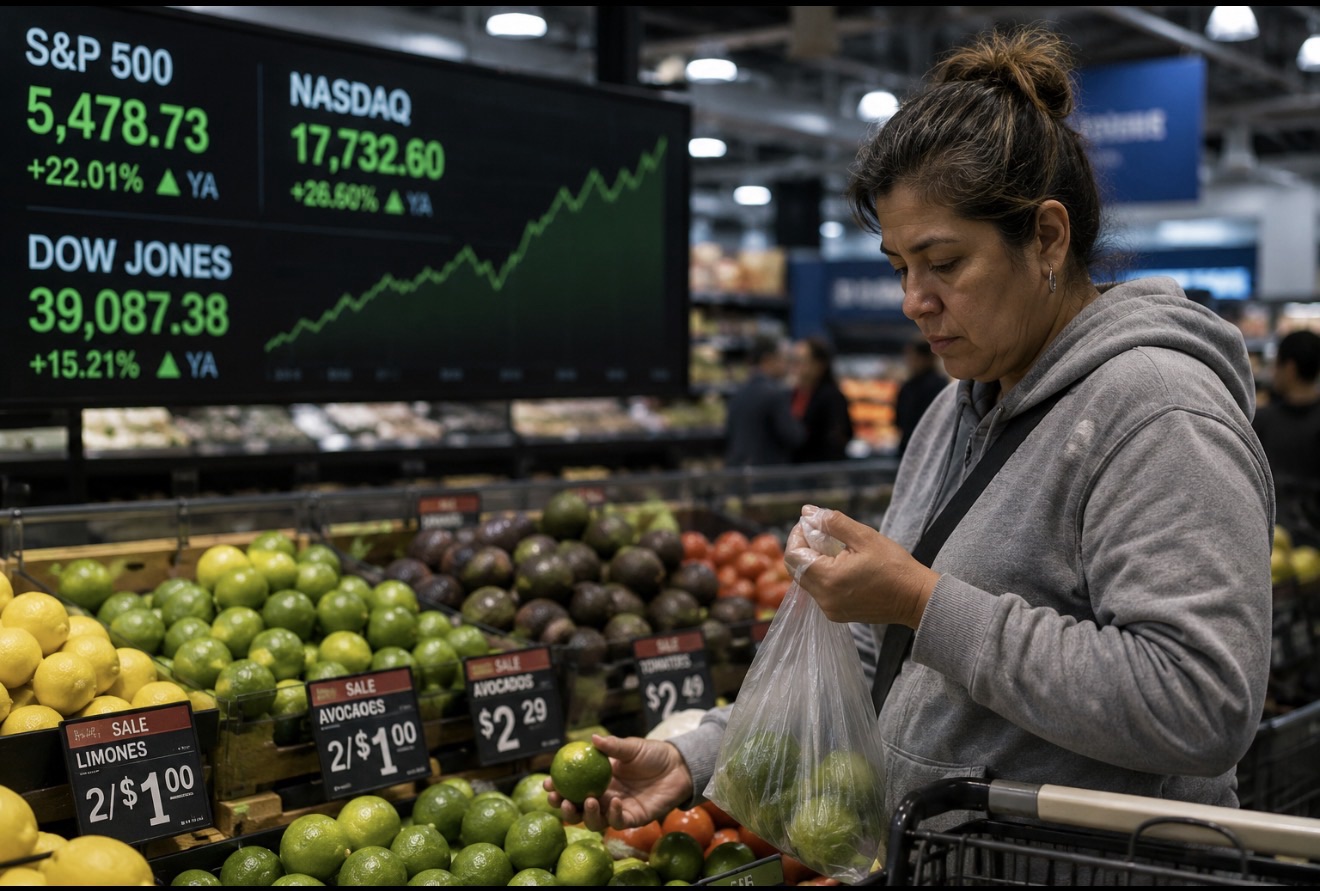 JBizNews1 day ago
The U.S. economy is increasingly moving along two different paths, with economists saying the stock market’s powerful rally is benefiting wealthy households far more than the average American. As of Monday, June 29, 2026, a small share of higher-income households is driving much of the nation’s discretionary spending while many middle- and lower-income families continue facing tighter budgets.
The numbers behind the divide are striking.
The S&P 500 has gained approximately 22% over the past year, 76% since 2023, and more than 327% over the past decade. Those gains have significantly increased household wealth for investors who own stocks, encouraging greater spending on travel, dining, luxury goods, and other discretionary purchases.
Michael Pearce, chief U.S. economist at Oxford Economics, said rising stock prices have become a major driver of spending among older and wealthier households, which account for more than half of discretionary consumer spending.
Because stock ownership is heavily concentrated among higher-income Americans, the spending generated by those gains is concentrated as well.
Joe Brusuelas, chief economist at RSM US, estimates that roughly 75% of the consumer spending fueled by the recent market rally comes from the nation’s top 20% of earners. He estimates the wealth effect created by higher stock prices generated approximately $53 billion in additional consumer spending over the past year.
According to the Federal Reserve Bank of Dallas, the highest-earning 20% of households now account for roughly 57% of all consumer spending in the United States.
Much of that financial strength extends beyond the stock market.
Higher-income households are also more likely to own homes and to have locked in mortgage rates below 3% during the pandemic, allowing them to benefit from rising home values while avoiding today’s higher borrowing costs.
Economists say the concentration of spending creates both opportunity and risk.
Consumer spending remains the largest driver of U.S. economic growth. If a relatively small group of wealthy households accounts for an outsized share of that spending, any significant decline in financial markets could have a broader economic impact.
Heather Long, chief economist at Navy Federal Credit Union, has described today’s economy as increasingly “K-shaped,” with wealthier Americans continuing to prosper while many others struggle with higher living costs.
Despite widespread pessimism, spending has remained surprisingly resilient.
The Bank of America Institute reports that consumer spending continues to outpace last year across many income levels even though surveys show consumer confidence remains historically weak. Economists say affluent households are spending because their investment portfolios continue reaching new highs, while many lower-income households are relying more heavily on tighter budgets and increased borrowing.
Another concern is the concentration within the stock market itself.
Technology companies now account for roughly one-third of the S&P 500’s total value, while semiconductor companies tied to artificial intelligence represent an increasingly large share of overall market gains. That means much of the recent wealth creation depends on the continued performance of a relatively small group of technology companies.
Most analysts do not believe the current rally resembles the dot-com bubble of the late 1990s, noting that today’s technology leaders are generating substantial earnings and cash flow. Still, economists caution that a meaningful market correction could reduce the wealth effect supporting consumer spending among higher-income households.
For businesses, understanding where consumer demand originates has become increasingly important. Retailers, restaurants, luxury brands, travel companies, and other discretionary businesses are benefiting disproportionately from spending by affluent consumers whose investment portfolios continue to grow.
The stock market is not the economy. But with household wealth more concentrated than ever, Wall Street’s performance is playing an increasingly important role in shaping spending patterns across Main Street.
JBizNews Markets Desk
© JBizNews.com All Rights Reserved. Reproduction or distribution without written permission is prohibited.
 JBizNews1 day ago
The institution often described as the central bank for the world’s central banks warned Sunday that a sharp reversal in artificial intelligence investment has become one of the biggest risks facing the global economy. In its Annual Economic Report, the Bank for International Settlements (BIS), headquartered in Basel, Switzerland, identified an AI investment bust alongside persistent inflation and rising government debt as key threats to global financial stability. The report carries significant influence because the BIS serves as a forum for cooperation among the world’s leading central banks, and its assessments often shape economic policy discussions worldwide.
The report stresses that the primary concern is not artificial intelligence itself, but how the unprecedented wave of AI infrastructure spending is being financed.
Technology companies are investing hundreds of billions of dollars in data centers, advanced computer chips, networking equipment, power infrastructure and cooling systems needed to support artificial intelligence. According to the BIS, the scale of those investments has grown so rapidly that even the world’s largest technology companies increasingly rely on borrowing to finance expansion rather than paying for projects solely through operating cash flow.
BIS General Manager Pablo Hernández de Cos said the pace of AI investment is raising fundamental questions about how the global economy may evolve, although he cautioned it would be premature for central banks to establish long-term policy responses before the technology matures further.
The report highlights another growing concern: much of the financing is flowing through areas of the financial system that receive less regulatory oversight than traditional commercial banks.
Private credit funds, hedge funds and other non-bank lenders have become increasingly important sources of financing for AI-related projects. According to the BIS, those funding arrangements often involve complex financial structures and off-balance-sheet obligations that may not be fully visible through conventional financial reporting.
As a result, investors could underestimate the amount of leverage supporting portions of the AI economy, leaving financial markets more vulnerable if investment conditions deteriorate.
The scale of borrowing has been substantial.
The largest technology companies driving the AI buildout—including Amazon, Alphabet, Microsoft, Meta and Oracle—issued more than $100 billion in corporate bonds during 2025, much of it with maturities extending beyond five years. While the financing provides companies with long-term capital for infrastructure construction, it also represents a significant bet that future AI revenues will justify today’s enormous spending.
The BIS compared current conditions to previous technology investment cycles, warning that supply constraints and intense competition could eventually result in overinvestment, where companies collectively build more capacity than long-term demand ultimately requires.
If that occurs, the consequences could extend well beyond the technology sector.
The report warns that a sudden retreat by private credit providers could amplify any slowdown, particularly if investors rapidly withdraw funding from AI projects. Financial guarantees embedded within complex financing arrangements could also trigger unexpected losses, potentially spreading stress into broader credit markets.
In that scenario, reduced lending could affect businesses and consumers far removed from artificial intelligence, increasing borrowing costs and slowing overall economic growth.
The report also links today’s financial risks with recent geopolitical developments.
According to the BIS, disruptions surrounding the Strait of Hormuz earlier this year contributed to higher global energy prices, creating renewed inflationary pressures at a time when many central banks were already struggling to bring inflation back toward long-term targets.
Although tensions have eased, the organization warned that higher energy costs continue flowing through global supply chains, raising manufacturing expenses, transportation costs and agricultural input prices. Those increases, the report noted, could place additional pressure on food prices, particularly in lower-income countries.
Taken together, the BIS describes an unusually complex global economic environment in which governments face elevated debt levels, inflation remains vulnerable to renewed shocks and artificial intelligence investment continues expanding at an extraordinary pace using increasingly sophisticated financing structures.
Hernández de Cos emphasized that fiscal, monetary and regulatory policies should complement one another rather than work at cross purposes as policymakers navigate these overlapping challenges.
For businesses and investors, the report serves as a reminder that the AI boom has become far more than a technology story. The financing supporting artificial intelligence now reaches deeply into global credit markets, meaning any significant slowdown could affect lending, investment, employment and economic growth across a wide range of industries.
The BIS stopped well short of predicting an AI crash. However, by placing a potential AI investment bust among its principal global financial risks, the organization signaled that central banks are paying close attention to how the next phase of the AI economy is being financed.
JBizNews Desk
© JBizNews.com All Rights Reserved. Reproduction or distribution without written permission is prohibited.
 JBizNews1 day ago
The first major peace framework between Israel and Lebanon in more than four decades is already facing significant challenges after Hezbollah publicly rejected key provisions of the agreement and vowed to oppose its implementation.
The U.S.-brokered framework, signed last week at the U.S. State Department with Secretary of State Marco Rubio, outlines a phased plan under which Israeli forces would gradually withdraw from southern Lebanon while the Lebanese Armed Forces assume control of the area. A central condition of the agreement is the verified disarmament of non-state armed groups operating in southern Lebanon, including Hezbollah.
That requirement has quickly become the agreement’s greatest obstacle.
Hezbollah leader Naim Qassem dismissed the framework, saying the organization would not surrender its weapons as a condition for an Israeli withdrawal. Lebanese Parliament Speaker Nabih Berri, a close political ally of Hezbollah, also criticized the agreement, warning that it could deepen political divisions inside Lebanon.
Supporters of Hezbollah staged demonstrations following the announcement, with some protesters attempting to block major roads in Beirut before security forces restored order.
The framework represents the most significant diplomatic effort between Israel and Lebanon since the failed 1983 agreement. Both countries have endured months of conflict that displaced hundreds of thousands of civilians, damaged infrastructure, and increased regional tensions.
Israeli officials have maintained that military forces will remain in designated security areas until independent verification confirms that armed groups have been removed from southern Lebanon. Israeli leaders argue that any lasting peace requires preventing Hezbollah from rebuilding military positions near Israel’s northern border.
Within Lebanon, however, political opinion remains sharply divided.
Some political leaders view the agreement as an opportunity to restore government authority over territory long influenced by armed militias. Others argue that disarming Hezbollah is unrealistic given the group’s military strength and political influence within the country.
The economic stakes are equally significant.
Lebanon continues to face one of the world’s worst financial crises, with its banking sector largely collapsed, its currency severely weakened, and reconstruction costs expected to reach billions of dollars. International donors, including several Gulf nations, have indicated they are prepared to assist Lebanon’s recovery if security conditions improve and the agreement remains in force.
A lasting peace could reopen opportunities for foreign investment, infrastructure rebuilding, tourism, and regional trade, offering much-needed support for Lebanon’s struggling economy. Renewed conflict, however, would likely delay reconstruction efforts, discourage investment, and further strain government finances.
The agreement also carries broader implications for regional stability. Continued calm along the Israel-Lebanon border would support wider diplomatic efforts involving Iran and other Middle Eastern nations while helping maintain stability in global energy markets.
Analysts caution that implementation remains the greatest challenge. The Lebanese government has historically struggled to exert full control over Hezbollah, and many observers question whether the country’s military possesses the political support or operational capability necessary to enforce the agreement.
For now, the framework provides a pathway toward reducing one of the Middle East’s longest-running security threats. Whether that opportunity develops into a lasting peace will depend largely on political will inside Lebanon, continued international mediation, and the willingness of all parties to avoid another round of conflict.
JBizNews Desk
© JBizNews.com All Rights Reserved. Reproduction or distribution without written permission is prohibited.
 JBizNews1 day ago
Renault reasserted its influence over struggling Japanese automaker Nissan this week, helping remove one of the company’s most powerful board members and signaling that the decades-old alliance between the two automakers remains as politically sensitive as ever.
At Nissan’s annual shareholder meeting, investors voted against reappointing longtime outside director Motoo Nagai, ending his tenure after Renault withheld its support for his nomination.
Although Renault owns roughly 36% of Nissan’s shares, a 2023 restructuring of the alliance reduced its voting rights to about 15%. Even with that smaller voting stake, Renault’s decision to abstain from supporting Nagai, combined with opposition from proxy advisory firms and other shareholders, proved enough to remove one of Nissan’s most influential directors.
The vote marks Renault’s most significant exercise of influence at Nissan since the companies renegotiated their alliance three years ago.
Nagai played an unusually powerful role within Nissan’s governance structure.
The 72-year-old director served on the company’s nomination, compensation, and audit committees, giving him substantial influence over executive appointments and board oversight. He also supported Nissan’s unsuccessful merger discussions with Honda in 2024 and was closely involved in selecting current Chief Executive Ivan Espinosa following leadership changes inside the company.
Renault argued that Nagai’s independence had become increasingly difficult to defend.
Both Nagai and another board nominee previously worked for Mizuho Financial Group, Nissan’s largest lender, raising concerns about board independence. Proxy advisory firms Institutional Shareholder Services (ISS) and Glass Lewis also recommended shareholders vote against his reappointment, with Glass Lewis concluding that “Nominee Motoo Nagai is not independent.”
The latest dispute adds another chapter to one of the automotive industry’s longest-running corporate relationships.
Following the arrest of former alliance leader Carlos Ghosn in 2018 and his dramatic escape from Japan the following year, Renault and Nissan spent years renegotiating their partnership. Their 2023 agreement reduced Renault’s ownership stake from 43% to 15% on a voting basis in an effort to create a more balanced relationship.
This week’s vote demonstrates that Renault remains willing to exercise its influence whenever it believes major governance issues are at stake.
The governance battle comes at a difficult time for Nissan.
The automaker continues working through years of declining profitability, weaker sales in both China and the United States, and approximately ¥4.4 trillion ($27.3 billion) in debt. Credit-rating agencies have lowered Nissan’s debt to junk status, increasing pressure on management to restore profitability.
Chief Executive Ivan Espinosa, who recently succeeded Makoto Uchida, has pledged to return the company to sustained profitability by the fiscal year ending March 2027.
For investors, the boardroom fight highlights the importance of corporate governance during periods of financial stress. Leadership decisions, board independence, and shareholder influence can significantly affect the direction of companies attempting major turnarounds.
The Renault-Nissan alliance, which also includes Mitsubishi Motors, continues collaborating on manufacturing projects across Europe, India, and Latin America, suggesting neither company wants to abandon the partnership entirely.
But this week’s vote makes one point unmistakably clear: despite years of restructuring, Renault remains prepared to use its influence when it believes Nissan’s future is at stake. As Nissan works to rebuild its finances and regain competitiveness, the alliance’s internal politics are likely to remain almost as closely watched as the automaker’s financial performance.
JBizNews Auto Desk
© JBizNews.com All Rights Reserved. Reproduction or distribution without written permission is prohibited.
 JBizNews1 day ago
The U.S. Department of Justice and attorneys general from 17 states announced Tuesday that they have reached settlements with three of the nation’s largest egg producers in a long-running antitrust case alleging coordinated actions that inflated egg prices for consumers and businesses across the country.
The settlements, which still require approval from a federal judge, involve Cal-Maine Foods, Versova Holdings, and Hickman’s Egg Ranch. While the companies deny wrongdoing, they agreed to provide monetary payments and donate approximately 53 million eggs to food banks and charitable organizations as part of the resolution.
According to the government, the case centers on allegations that from 2022 through early 2025, the companies coordinated bidding activity tied to industry price benchmarks used throughout the egg market. Prosecutors argue that the conduct distorted the benchmark prices relied upon by supermarkets, restaurants, bakeries, food manufacturers, and wholesalers, ultimately increasing costs for consumers.
Federal officials say the benchmark played a major role in determining wholesale egg prices nationwide. Even modest changes in that benchmark could ripple through the supply chain, affecting contracts and retail prices across the country.
The allegations come after consumers experienced one of the sharpest increases in egg prices in modern history. During 2023, egg prices surged as the nation simultaneously dealt with widespread outbreaks of highly pathogenic avian influenza, which reduced laying-hen populations and tightened supplies. While disease outbreaks were widely recognized as a major contributor to higher prices, regulators contend that anti-competitive conduct may also have added upward pressure during parts of the period.
As part of the settlements, the companies agreed to implement stronger compliance measures designed to prevent future antitrust violations. Those measures include enhanced employee training, internal oversight programs, regular compliance reviews, and restrictions on communications regarding pricing or bidding strategies with competitors.
The companies continue to dispute the government’s claims.
Cal-Maine Foods said it believes its business practices complied with the law but decided to settle in order to avoid years of costly litigation and allow management to focus on serving customers. Other defendants similarly stated that the agreements should not be viewed as admissions of wrongdoing.
For food banks, however, the settlements will provide an immediate benefit. Millions of eggs are expected to be distributed through charitable organizations to families facing food insecurity, helping offset demand at a time when many nonprofits continue to report elevated need.
The case also sends a broader message to industries that rely on benchmark pricing. Federal and state antitrust officials said they will continue scrutinizing markets where a small number of dominant suppliers influence prices used throughout an entire industry.
For businesses, the outcome extends beyond grocery stores. Restaurants, hotels, bakeries, caterers, food processors, and institutional kitchens all purchase eggs in large quantities and often base purchasing decisions on wholesale market benchmarks. Greater confidence that those benchmarks reflect genuine market conditions can help businesses better forecast costs and manage pricing.
Egg prices themselves have eased significantly during recent months as poultry flocks recovered and supplies improved. Wholesale prices have fallen sharply from their pandemic-era highs, providing some relief to consumers and businesses alike. Still, officials say maintaining fair competition remains essential to preventing unnecessary price increases in the future.
If approved by the court, the settlements will conclude one of the most closely watched food-industry antitrust cases in recent years while reinforcing the government’s commitment to protecting competition in essential consumer markets.
JBizNews Desk
© JBizNews.com All Rights Reserved. Reproduction or distribution without written permission is prohibited.
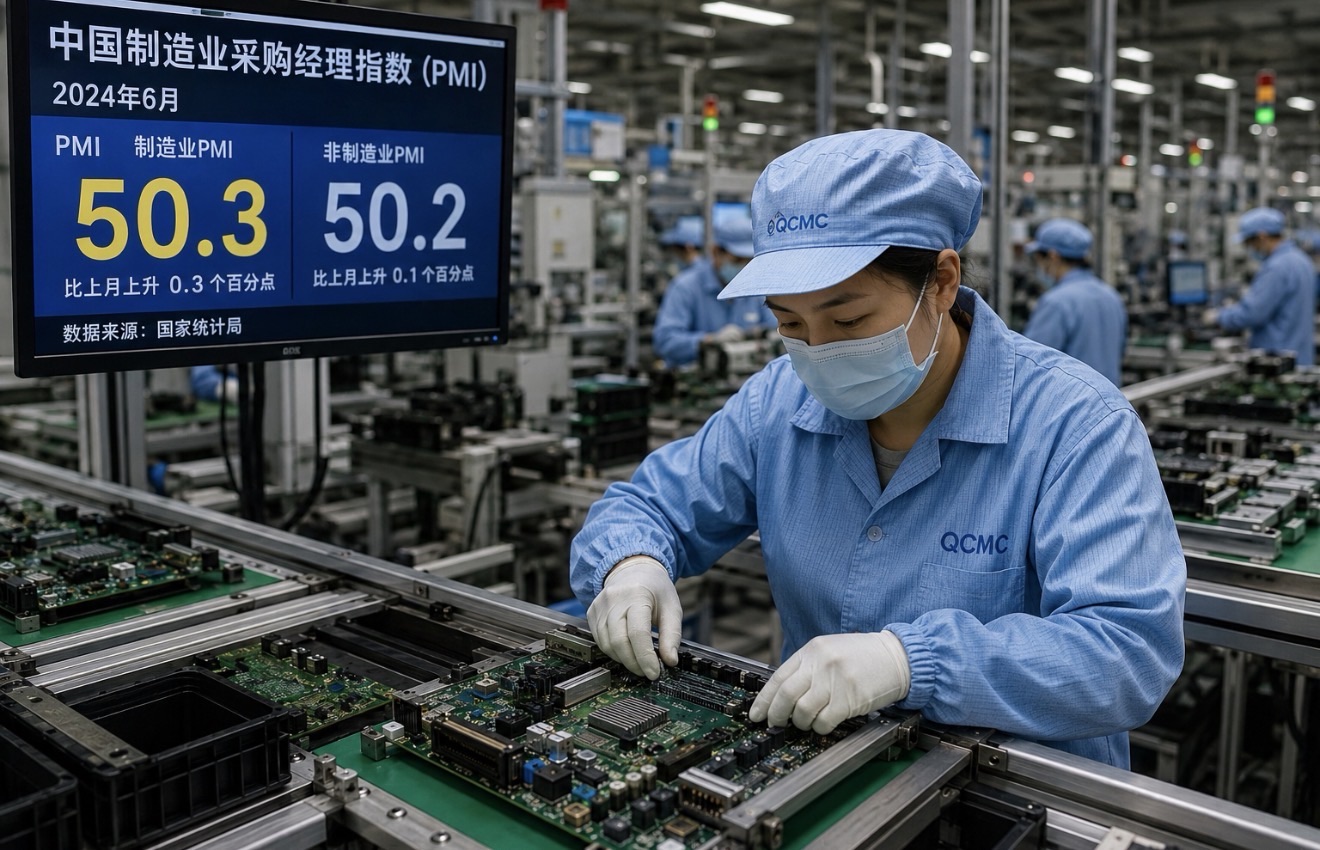 JBizNews1 day ago
China’s manufacturing sector returned to growth in June as booming demand for high-tech exports tied to the global artificial-intelligence boom offset stubbornly weak demand at home. The official Purchasing Managers’ Index (PMI) edged up to 50.3 in June, beating economists’ forecast of 50.1 and moving back above the key 50-point threshold that separates expansion from contraction, according to data released by China’s National Bureau of Statistics. The index stood at 50.0 in May.
The PMI is one of the world’s most closely watched measures of manufacturing activity, surveying factory managers on new orders, production, employment and supplier deliveries. June’s reading marked China’s first clear return to expansion after months of sluggish factory activity.
A separate non-manufacturing PMI, which measures activity across China’s services and construction sectors, also improved, rising to 50.2 from 50.1 in May.
Much of the improvement came from one powerful source: exports tied to artificial intelligence. Chinese factories continue to benefit from soaring global demand for semiconductors, servers, data-center equipment and other AI-related hardware as governments and companies race to expand computing capacity.
Exports of automated data-processing equipment surged more than 60% from a year earlier, while shipments of chips, semiconductors and other advanced technology products continued to support factory production. The strength of those exports has helped offset concerns that geopolitical tensions in the Middle East would slow global trade.
The export boom has prompted several economists to raise their outlook for China. Bank of America increased its forecast for China’s export growth this year to 15%, citing continued investment in artificial intelligence, renewable-energy equipment and electric vehicles. Strong exports also helped China’s roughly $20 trillion economy outperform expectations during the first quarter.
Despite the encouraging headline numbers, the broader economy remains uneven.
Factories producing technology exports continue to perform well, but domestic demand remains weak. Retail sales have struggled, the country’s prolonged property downturn continues to weigh on household confidence, and more traditional manufacturing industries remain under pressure. Furniture exports, often viewed as a gauge of broader consumer demand, rose only 1.9%.
“The hope of rebalancing is fading,” Helen Qiao, China economist at Bank of America Global Research, said, pointing to the growing divide between strong exports and weak domestic consumption.
That imbalance could create new challenges later this year. Economists expect inflation pressures to weaken once higher energy prices fade, raising the risk of renewed deflation. Persistent deflation can discourage consumer spending and reduce corporate profits, making economic recovery more difficult.
There is another reason economists remain cautious.
Part of June’s strength appears to reflect companies accelerating shipments ahead of possible U.S. trade actions.
“We spotted trade frontloading in June,” said Xu Tianchen, senior economist at the Economist Intelligence Unit. “Exporters accelerated shipments due to U.S. trade policy uncertainty. Late July will be a big moment because new U.S. Section 301 tariffs are expected to take effect.”
If those tariffs are implemented, some of the current export strength could fade during the second half of the year.
Meanwhile, Beijing has largely resisted launching major stimulus measures aimed at boosting domestic demand. Officials have set a 2026 economic growth target of 4.5% to 5%, below last year’s pace, while economists see little chance of aggressive near-term policy easing. Reports indicate China’s central bank has encouraged commercial banks to expand lending, highlighting continued weakness in credit demand across the economy.
For the global economy, China’s June manufacturing rebound sends mixed signals. The world’s largest manufacturing base continues to benefit from the artificial-intelligence investment boom, supporting global supply chains and technology exports. At the same time, much of that growth remains concentrated in one fast-growing sector while domestic demand continues to lag.
Whether China can broaden its recovery beyond AI-driven exports and revive consumer spending remains one of the most important economic questions facing the global economy in the second half of the year.
JBizNews China Desk
© JBizNews.com All Rights Reserved. Reproduction or distribution without written permission is prohibited.
 JBizNews2 days ago
U.S. negotiators Jared Kushner and Steve Witkoff met Tuesday with senior Qatari officials in Doha as Washington worked to preserve the fragile ceasefire with Iran and advance negotiations toward a longer-term nuclear agreement. While U.S. officials described the discussions as constructive, Qatari officials emphasized that negotiations remain focused on technical issues and that no direct, high-level meetings between American and Iranian officials are currently taking place.
Following the meetings, a senior U.S. administration official said technical discussions are moving in a positive direction and that negotiators are making meaningful progress. However, Majed Al Ansari, spokesperson for Qatar’s Foreign Ministry, cautioned against expecting an immediate breakthrough, stressing that the current round of discussions is centered on mediation and confidence-building rather than direct political negotiations.
Qatar continues to play a central role as an intermediary between Washington and Tehran. Officials said separate working groups remain focused on nuclear issues, economic matters, and broader regional security concerns. The mediation effort also involves neighboring Oman, which has long served as a diplomatic channel between the two countries.
Negotiations follow the interim agreement reached in June that paused months of military confrontation and established a framework for continued diplomacy. Although recent exchanges around the Strait of Hormuz briefly raised concerns that the ceasefire could unravel, both sides have since reduced military activity, allowing commercial shipping to continue through one of the world’s most important energy corridors.
Public messaging from both governments remains noticeably different. The White House has maintained that discussions continue at Iran’s request, while Iranian officials insist additional negotiations depend on implementation of previous commitments before moving forward. Those differing public positions underscore the complexity of the talks despite continued diplomatic engagement behind the scenes.
For businesses and consumers, the negotiations carry significance well beyond foreign policy.
The Strait of Hormuz handles roughly one-fifth of global seaborne oil shipments, making stability in the region critical for energy markets. As shipping traffic has resumed, oil prices have retreated from recent highs, easing pressure on gasoline prices, freight costs, airline fuel expenses, and inflation more broadly.
Lower energy prices also provide some relief for businesses that rely heavily on transportation and logistics while helping reduce costs for households already facing elevated living expenses. Continued stability could strengthen supply chains and support broader economic growth if negotiations remain on track.
Financial markets are also closely monitoring developments. A sustained diplomatic process reduces the likelihood of renewed disruptions to global oil supplies, one of the key factors influencing inflation expectations and future Federal Reserve interest-rate decisions.
Despite the encouraging tone, officials acknowledge the negotiations remain delicate. Major issues surrounding Iran’s nuclear program, sanctions, and regional security have yet to be resolved, and mediators continue working to narrow significant differences between the two sides.
For now, the message emerging from Doha is one of cautious optimism. Technical negotiations continue, communication channels remain open, and commercial shipping through the Strait of Hormuz is operating normally. While significant challenges remain before any comprehensive agreement is reached, continued dialogue has helped ease immediate concerns over renewed conflict and provided welcome stability for global energy markets.
JBizNews Desk
© JBizNews.com All Rights Reserved. Reproduction or distribution without written permission is prohibited.
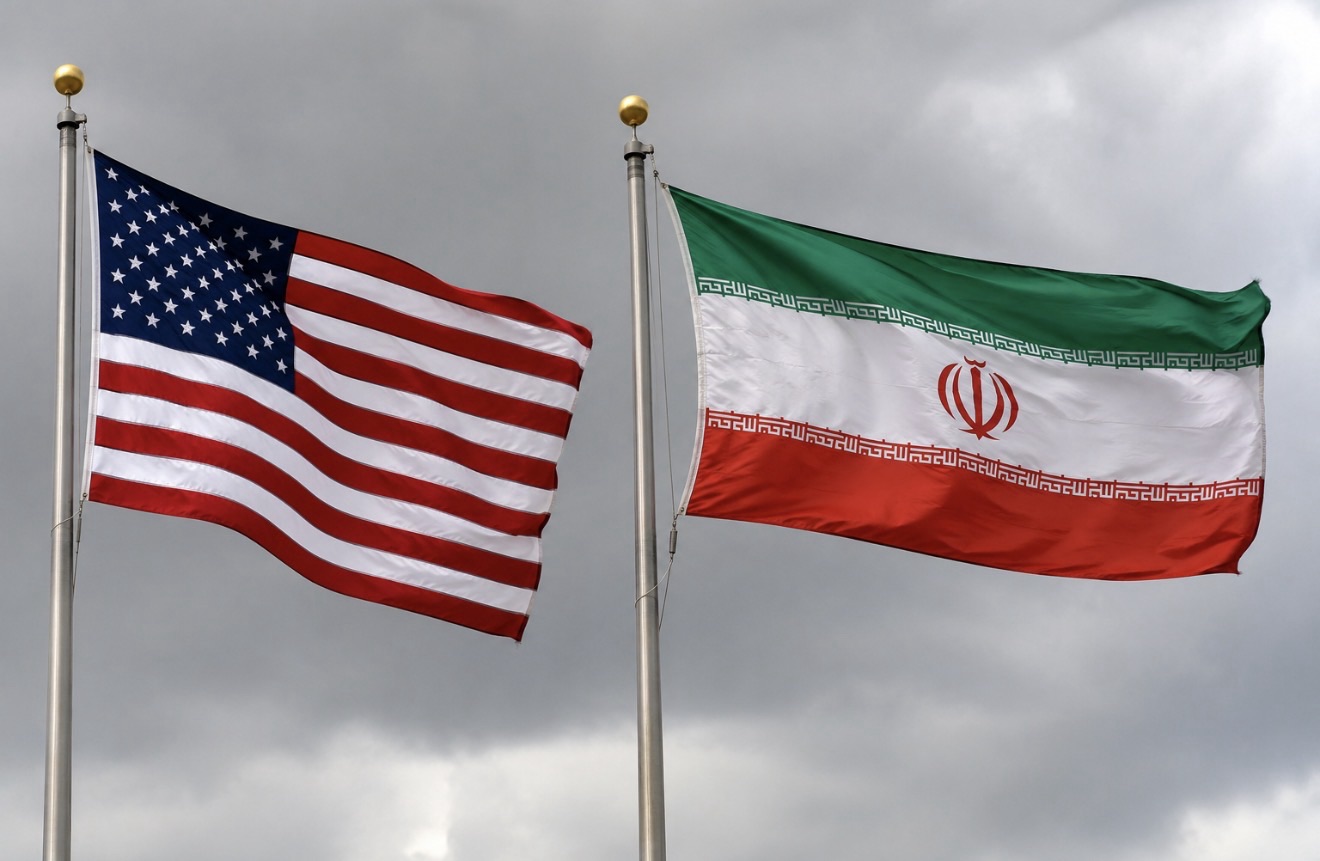 JBizNews2 days ago
Negotiations between the United States and Iran are continuing despite the absence of high-level talks, the Qatari Foreign Affairs Ministry said in an X/Twitter post on Tuesday.
The post cited Qatari Advisor to the Prime Minister and Official Spokesperson for the Foreign Affairs Ministry Dr. Majed Mohammed Al-Ansari as affirming that US envoys Steve Witkoff and Jared Kushner visited Doha as part of talks with Qatar regarding Iran and Lebanon.
While Al-Ansari emphasized that no high-level negotiations were taking place, technical meetings have continued, something he said Qatar is committed to.
He added that Qatar has worked to contain the situation in the Strait of Hormuz, noting that the vital waterway is one of several key topics of discussion, alongside the nuclear issue and other provisions in the Memorandum of Understanding (MoU).
Regarding Hormuz, Al-Ansari described it as an “international waterway” requiring unobstructed navigational freedom, a position based on Qatar’s respect for international maritime law.
Advisor to Prime Minister, Official Spokesperson for Foreign Ministry @majedalansari : Iran-US Technical Meetings Continue Without High-Level Talks
Doha | June 30, 2026
Advisor to the Prime Minister and Official Spokesperson for the Ministry of Foreign Affairs Dr. Majed bin… pic.twitter.com/rgbsvquYhv
— Ministry of Foreign Affairs – Qatar (@MofaQatar_EN) June 30, 2026
He noted that Qatar’s position on the strait is shared by other Gulf countries and the international community at large.
According to Al-Ansari, Iran’s frozen funds are not owned by Qatar; rather, Qatar serves as a financial intermediary for the account, with the transfer to be determined through future negotiations.
He emphasized that Qatar’s ultimate goal remains an end to hostilities in the region, with a priority on safe commercial transit through the Hormuz.
Al-Ansari called attention to the Iranian attacks Qatar sustained during the US-Iran war, attacks he said violated the country’s sovereignty.
He noted that Qatar had successfully deterred the attacks and that the door is open for dialogue.
Though a ceasefire and an MoU exist, Al-Ansari concluded that such guarantees are contingent on the realities on the ground, reiterating Qatar’s goal of ending the war.
US Vice President JD Vance said earlier on Tuesday that the US requires “durable commitments” from Iran regarding its nuclear program.
“We want to see what kind of an arrangement actually exists in the Middle East between not just Iran and the United States, but the GCC, Israel, Lebanon,” said Vance during an interview on The Michael Knowles Show. “We’re going to play that situation out.”
He added that the Strait of Hormuz is “open to oil traffic,” with shipment levels outperforming those from before the war.
“We’re seeing more oil come out of the Strait of Hormuz, and some days, it’s actually more oil coming out of the Strait than came out before [the conflict],” said Vance. “The world oil economy is kind of getting back into gear.”
“That’s going to take a little bit of time,” Vance noted, “but you’ve already seen the prices come way down.”
 JBizNews2 days ago
Sephora is bringing “quiet hours” to all of its U.S. stores, the latest sign that major retailers are investing in sensory-friendly shopping experiences aimed at making stores more accessible for neurodivergent customers.
The beauty retailer announced that during designated quiet hours, stores will lower music volume, adjust in-store digital screens and minimize strong scents to create a calmer shopping environment. Sephora has not announced a nationwide schedule for the quieter shopping periods.
The nationwide rollout follows a pilot program at 32 Sephora stores across eight markets. The company said it developed the initiative alongside disability advocacy organization Open Inclusion and consultancy Purposeful Futures after gathering feedback from neurodivergent and sensory-sensitive beauty shoppers.
“Quiet Hours at Sephora is one meaningful step in our ongoing commitment to building more welcoming environments for our employees, consumers, and communities,” Deborah Yeh, Sephora’s global chief marketing officer, said in a statement.
The move comes as retailers increasingly view accessibility initiatives as both a customer service effort and a way to reach a broader customer base.
Walmart became the first major U.S. retailer to permanently introduce daily sensory-friendly shopping hours nationwide in 2023 after testing the concept during the back-to-school season. The retailer now offers the quieter shopping experience from 8 a.m. to 10 a.m. local time each day, turning off overhead music, dimming lights where possible and displaying static images on television screens.
At the time, Walmart said the decision to make the program permanent followed overwhelmingly positive feedback from customers and employees, including associates with autism and ADHD.
“From face-to-face conversations, emails, listening sessions, social media and our personal experiences in the stores, we have seen what these changes mean for our customers and associates,” Walmart executives Denise Malloy Deaderick, Cedric Clark and Alvis Washington wrote when announcing the nationwide expansion.
Other retailers have also experimented with sensory-friendly shopping. Target has tested quieter shopping hours at select stores by dimming lights, limiting overhead announcements and reducing music, while Toys “R” Us has offered “Quiet Hour” events at some locations.
Outside traditional retail, Chuck E. Cheese has operated its monthly “Sensory Sensitive Sundays” program at participating locations since 2016, opening early with dimmed lights, reduced sound and a calmer environment for families.
The programs are designed to reduce sensory triggers such as loud music, bright lighting and other in-store distractions that can make shopping more challenging for some customers.

