
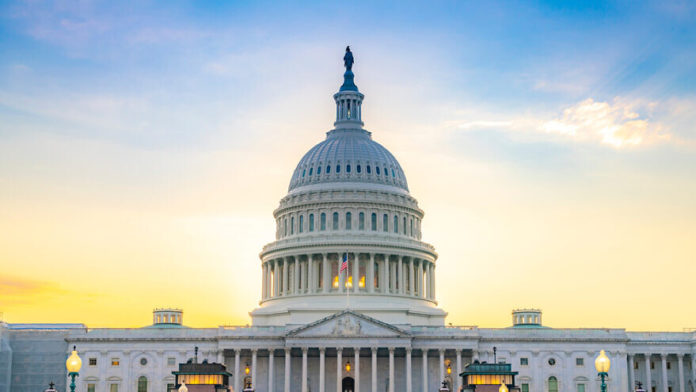

Legislation that would allow states to keep Daylight Saving Time in effect all year moved one step closer to becoming law Monday after clearing a major procedural hurdle in the House, setting up a vote before the full chamber.
The House Rules Committee voted 6-4 to advance the Sunshine Protection Act, paving the way for a floor vote. If enacted, the measure would permit states to adopt permanent Daylight Saving Time while also allowing them to opt out if they choose.
The proposal has attracted bipartisan backing, particularly from lawmakers representing coastal states, and has also received strong support from President Donald Trump, who has repeatedly called for an end to the twice-yearly clock changes observed throughout the country. Currently, every state except Hawaii and most of Arizona participates in Daylight Saving Time.
Supporters of the legislation argue that changing clocks twice a year disrupts people’s health and sleep patterns, while keeping Daylight Saving Time year-round would encourage outdoor recreation, stimulate tourism, and provide a boost to economic activity.
Under current law, Americans move their clocks ahead by one hour each spring to extend evening daylight before turning them back one hour in the fall.
“Americans are overwhelmingly supportive of this policy and want to end the practice of ‘springing forward’ and ‘falling back.’ Locking the clock all year long would have positive impacts on sleep schedules, energy conservation, motor vehicle safety, and our economy,” Chairman Brett Guthrie, R-Ky., said in an opening statement Monday.
“In practice, this change would mean more time for people to exercise outside, visit family, attend concerts and sporting events, attract customers to their retail businesses, and more.”
Rep. Vern Buchanan, R-Fla., who introduced the bill, has likewise argued that ending the seasonal clock changes would benefit millions of Americans.
“Floridians and Americans across the country are tired of the biannual time change, and the evidence is clear that permanent daylight saving time can improve public health, reduce traffic accidents, lower crime and encourage more outdoor activity,” Rep. Vern Buchanan, R-Fla., who authored the measure, previously said in a May news release.
“Ending the clock change is a commonsense reform that will improve everyday life for millions of Americans,” he added.
Momentum for the legislation has continued to build since the House Energy and Commerce Committee overwhelmingly approved it by a 48-1 vote in May.
Following that committee vote, Trump applauded the legislation and urged Congress to send it to his desk.
“It’s time that people can stop worrying about the ‘Clock,’ not to mention all of the work and money that is spent on this ridiculous, twice-yearly production,” Trump wrote following the Sunshine Protection Act’s advancement out of committee. “It will also be a very nice WIN for the Republican Party. Take it! We are going with the far more popular alternative, Saving Daylight, which gives you a longer, brighter Day — And who can be against that — This is an easy one!”
Approximately 20 states have already approved laws that would switch to permanent Daylight Saving Time if Congress grants authorization. Those states include Alabama, South Carolina, Oregon, Maine, and Florida.
Not everyone supports the proposal, however. Several medical organizations contend that making Standard Time permanent would better match the body’s natural circadian rhythms by providing more morning sunlight.
During committee consideration, Rep. Mary Gay Scanlon, D-Pa., offered an amendment incorporating language from her Sunshine for Our Kids Act, which would instead establish permanent Standard Time nationwide. The amendment was rejected.
Scanlon argued that permanent Daylight Saving Time would create unnecessary health and safety concerns by forcing more Americans—especially schoolchildren—to begin their days before sunrise. She also pointed to the nation’s short-lived experiment with year-round Daylight Saving Time in 1974, which Congress ultimately abandoned after widespread public opposition.
Rep. Nanette Barragán, D-Calif., cast the lone vote against the legislation during the Energy and Commerce Committee’s May markup, citing concerns that permanent Daylight Saving Time could disrupt children’s sleep schedules and negatively affect their health.
Some conservative Republicans have also questioned whether the bill should be a legislative priority, arguing that Congress should instead focus on measures such as codifying Trump’s border security executive orders and advancing the stalled SAVE America Act.
“Republicans are majoring in the minors — fiddling with the clocks while the country burns,” Rep. Keith Self, R-Texas, a member of the conservative House Freedom Caucus, wrote Monday.
Although the House has approved multiple versions of the SAVE America Act, the legislation has repeatedly stalled in the Senate because of the chamber’s filibuster rules.
The Senate unanimously approved its own version of the Sunshine Protection Act in 2022, but the bill never became law after it stalled in the House amid concerns from some lawmakers that permanent Daylight Saving Time would result in darker winter mornings across much of the country.
{Matzav.com}