
 JBizNews
Nasdaq Surges as Cooler Inflation Eases Wall Street Fears Despite IBM’s 25% Plunge
Stocks rallied Tuesday after fresh inflation data came in cooler than expected, boosting hopes that the Federal Reserve is nearing the end of its rate-hiking campaign. Technology and semiconductor shares led the advance, lifting the Nasdaq sharply higher despite IBM’s stunning 25% plunge following a disappointing profit warning. Easing oil prices later in the session also helped improve investor sentiment, although markets continued to weigh geopolitical risks and the opening of second-quarter earnings season.
The Bureau of Labor Statistics reported Tuesday that the Consumer Price Index fell a seasonally adjusted 0.4% in June, its largest monthly decline in more than six years, bringing the annual inflation rate down to 3.5%, below the 3.8% economists had expected. Core inflation, which excludes food and energy, was unchanged from May, putting the annual rate at 2.6%, also cooler than forecast. The report marked one of the clearest signs yet that inflationary pressures continue to ease, strengthening investor confidence that borrowing costs may soon stabilize. While traders still have one quarter-point Federal Reserve rate hike priced in later this year, Tuesday’s report eased concerns that policymakers may need to become more aggressive. Fed Chair Kevin Warsh testified before Congress during the session, while the 10-year Treasury yield rose to about 4.62%.
Where the indexes finished
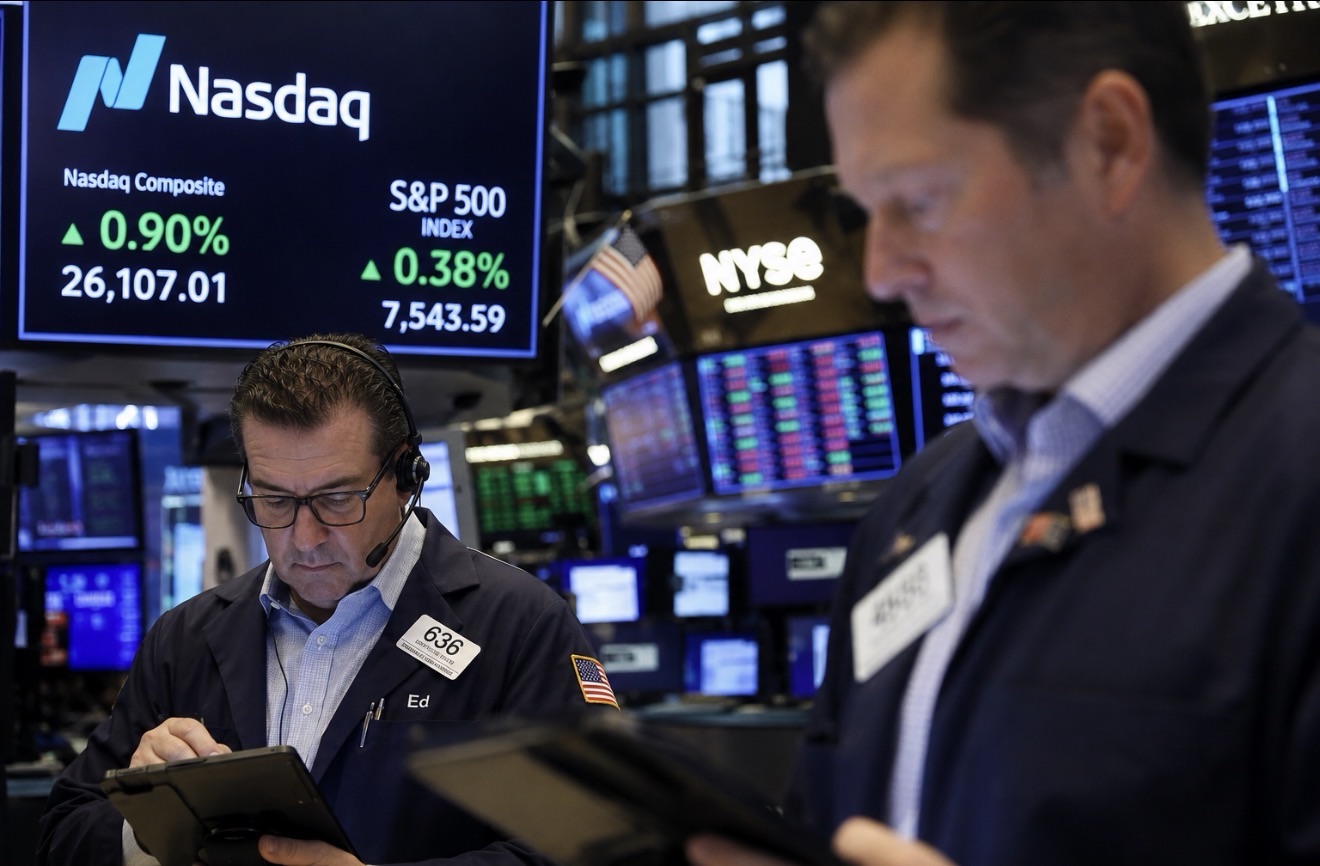
The Nasdaq Composite led the market higher, climbing 0.9% to close at 26,107.01, fueled by a broad rebound in semiconductor shares. The S&P 500 gained 0.38% to finish at 7,543.59, while the Dow Jones Industrial Average added just 9.63 points, or 0.02%, to close at 52,508.27. The blue-chip average spent most of the session under pressure as weakness in one major component largely offset gains elsewhere. Only 10 of the Dow’s 30 members finished in positive territory.
Market movers
The day’s biggest story was IBM, which plunged about 25% after warning that preliminary second-quarter profit would fall short because of soft demand across its software and infrastructure businesses. Chief Executive Arvind Krishna said that during the final weeks of June, customers shifted spending toward servers, storage and memory in an effort to secure supply before anticipated price increases, while several large deals slipped into future quarters. The selloff alone was enough to keep the Dow pinned near breakeven despite strength across much of the broader market.
Corporate earnings otherwise painted a mixed picture. Although the nation’s largest banks largely exceeded Wall Street expectations, investors used the strong results to lock in profits after an extended rally in financial stocks, underscoring how elevated expectations can outweigh solid quarterly performance. Goldman Sachs surged 7.95% and, as the largest component in the price-weighted Dow, provided most of the index’s positive contribution. JPMorgan Chase fell about 2.5% despite reporting its strongest quarterly profit on record, while Wells Fargo slipped roughly 2% and Bank of America eased 0.8% even after both topped analysts’ estimates.
Semiconductor stocks provided the market’s strongest tailwind. The VanEck Semiconductor ETF climbed 2.5% as the sector rebounded from Monday’s selloff, with memory-chip makers SK Hynix and Micron among the session’s leaders. Tower Semiconductor jumped about 11% after unveiling a $3 billion expansion of advanced chip manufacturing in Japan, while CleanSpark surged roughly 15% after signing a data-center lease valued at up to $11.6 billion. On the downside, HCA Healthcare fell 9.2% and Virtu Financial lost 6.2%.
Wall Street analysts also remained active throughout the day. Citi raised its price target on Apple to $365 from $315, with analyst Asiya Merchant citing continued pricing power and expectations surrounding the upcoming iPhone 18. Truist initiated coverage of Cameco with a Buy rating, Evercore ISI launched coverage of SpaceX at Outperform, and UBS upgraded FuelCell Energy to Buy with a $27 price target. Not every call was positive, however. Mizuho downgraded Circle to Underperform with a $50 target, while JPMorgan cut Progressive to Neutral.
Commodities and volatility
Oil retreated from its session highs after a notable policy reversal. President Donald Trump abandoned his proposal that ships pay a 20% fee to transit the Strait of Hormuz, saying on social media that the idea would instead be replaced by expanded trade and investment agreements with Gulf nations. West Texas Intermediate crude still gained 1.82% to settle at $79.56 a barrel, while Brent crude rose 1.98% to $84.95, though both contracts finished well below their intraday peaks. Gold climbed about 2.2% to roughly $4,095 an ounce as investors sought safety, while the CBOE Volatility Index, Wall Street’s closely watched fear gauge, edged lower.
The takeaway for readers
Tuesday’s trading underscored a market increasingly focused on improving inflation rather than isolated corporate disappointments. Cooler price data offered welcome relief for consumers and businesses alike while reinforcing hopes that the Federal Reserve may be approaching the end of its tightening cycle. At the same time, IBM’s warning highlighted how rapidly corporate technology spending continues to shift toward AI-ready infrastructure, creating clear winners in semiconductors and advanced hardware while pressuring companies slower to adapt.
Investors now turn their attention to the next wave of corporate earnings, additional inflation reports, and future Federal Reserve guidance. If corporate profits remain resilient and inflation continues to moderate, markets could have room to extend their rally. However, elevated energy prices, geopolitical uncertainty surrounding the Middle East, and the path of interest rates remain key risks that could keep volatility elevated through the remainder of the quarter.
JBizNews Desk | New York
© JBizNews.com All Rights Reserved. Reproduction or distribution without written permission is prohibited.