
 JBizNews
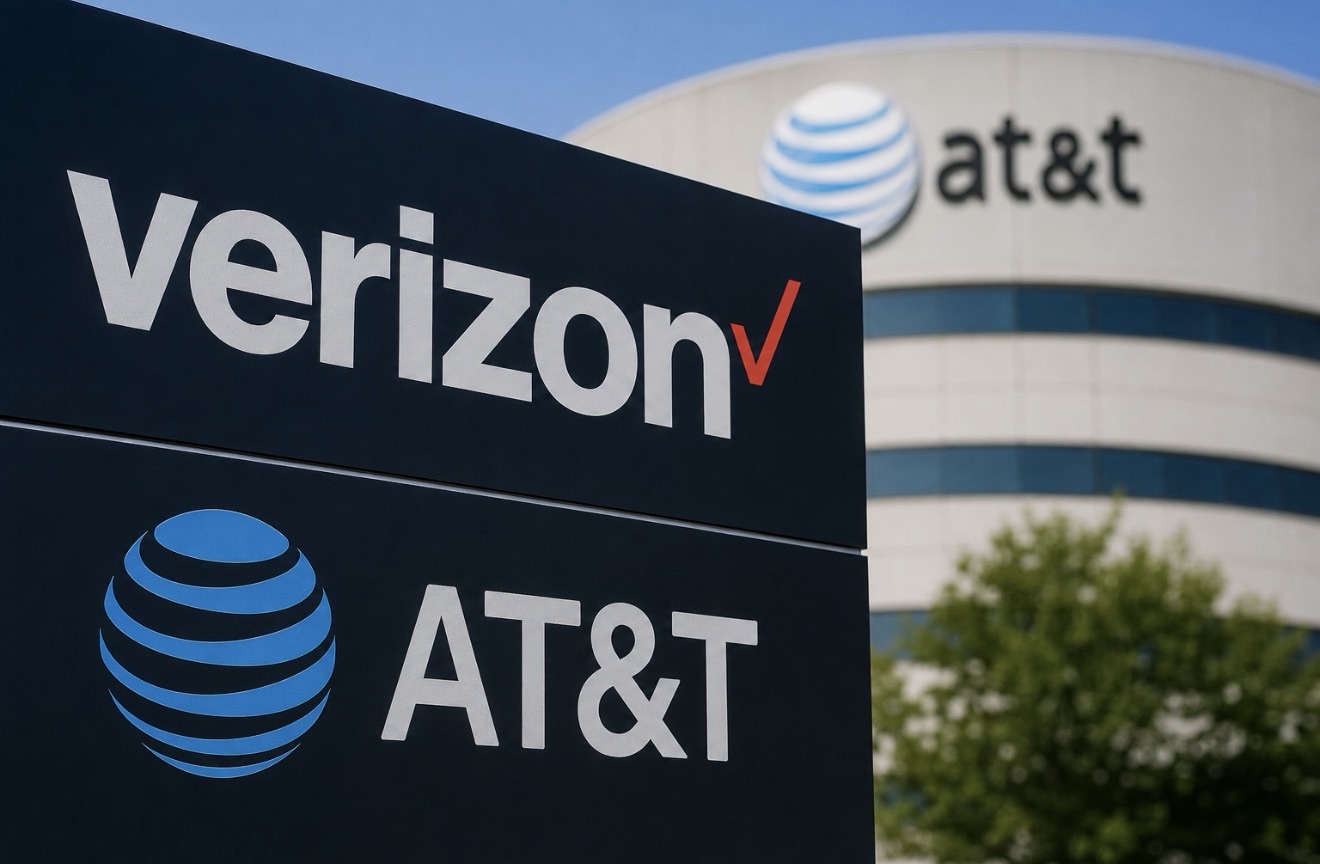
Verizon and AT&T Chase Cars and Business Deals as Phone Plan Growth Stalls
Earlier this week, Verizon Business and Japanese carrier KDDI announced a collaboration with BMW Group that places Verizon’s 5G and LTE networks inside new BMW, MINI, and other BMW Group vehicles built for the U.S. market. Kyle Malady, chief executive of Verizon Business, said the partnership is designed to deliver seamless connectivity for drivers nationwide. While the announcement may have appeared modest, it underscored a much larger shift taking place across the U.S. telecommunications industry: future growth is increasingly coming from connected vehicles, enterprise services, and infrastructure—not from adding another smartphone line to a family plan.
The deal is not a phone contract. It embeds Verizon at the infrastructure level of BMW ConnectedDrive, covering firmware and map updates, navigation, remote features, and the subscription services automakers now sell over the life of a car. Daniel Lawson, senior vice president for global solutions at Verizon Business, described the scope as covering telematics for the full BMW Group lineup in the United States. Verizon had offered a BMW connectivity add-on since 2023 for $20 a month through the My BMW app. This new arrangement replaces the optional add-on with integrated connectivity built directly into the vehicle platform.
Why the carriers are looking elsewhere
The numbers explain the pivot. Verizon told investors in its first-quarter earnings release on April 22 that mobility and broadband service revenue reached roughly $22.9 billion, up 1.6% from a year earlier. The company posted 55,000 postpaid phone net additions — its first positive first quarter since 2013, a swing of more than 340,000 year over year. While celebrated on Wall Street, the results also highlighted how little room remains for traditional wireless subscriber growth. Verizon’s own guidance projects wireless service revenue to remain approximately flat this year.
Dan Schulman, who took over as Verizon’s chief executive, has described the company’s strategy as a turnaround gaining momentum. A January network outage reduced wireless service revenue growth by roughly 80 basis points during the quarter. Verizon now serves approximately 16.8 million fixed wireless and fiber broadband connections following the completion of its Frontier acquisition on January 20.
AT&T is pursuing the same strategy from a different direction. In its first-quarter results, AT&T reported revenue of $31.51 billion and adjusted earnings of $0.57 per share, including 294,000 postpaid phone net additions and 584,000 internet net additions. Consumer wireline broadband revenue climbed 27.3% to $2.80 billion following the closing of its acquisition of Lumen Technologies’ mass-markets fiber business on February 2. John Stankey, chairman and chief executive, told investors it was the company’s strongest first quarter ever for advanced connectivity internet additions, with nearly 45% of new home internet customers also subscribing to AT&T wireless.
That strategy can be summed up in one word: convergence. Rather than simply selling smartphones, carriers increasingly want to sell complete connectivity ecosystems for homes, businesses, automobiles, and industrial customers. AT&T says it serves more than 100 million U.S. consumers and nearly 2.5 million businesses. Full-year revenue reached $125.6 billion, up 2.8%, and the company plans to return more than $45 billion to shareholders between 2026 and 2028.
The business customer becomes the prize
Verizon already provides telematics services for Volkswagen Group, primarily through Audi. The BMW agreement expands that footprint into another major premium European automaker. KDDI has partnered with BMW Group since 2022. Separately, on June 26, Verizon and BT Group agreed to combine portions of their international operations into a 50-50 joint venture focused on serving multinational corporations. AT&T continues expanding its own connected vehicle platform for automotive manufacturers.
The business case is straightforward. A connected vehicle remains on the road for years, often a decade or longer. Corporate fleets typically sign long-term service agreements instead of constantly shopping for cheaper wireless plans. According to Fortune Business Insights, the global connected car market is expected to grow from approximately $145 billion in 2026 to nearly $570 billion by 2034. For wireless carriers facing slowing growth in traditional consumer subscriptions, recurring industrial connectivity revenue represents one of the industry’s most attractive long-term opportunities.
Wall Street remains cautious
Despite these new growth initiatives, investors remain skeptical. Bernstein recently lowered price targets across the telecom sector — including T-Mobile, AT&T, Verizon, Comcast, and Charter Communications — citing increasing competition from SpaceX’s Starlink satellite broadband network. Veteran telecom analyst Craig Moffett has argued that Starlink is unlikely to move beyond its strength in rural markets into dense suburban communities. Meanwhile, Jim Cramer told viewers on CNBC earlier this week that he currently has little interest in owning either AT&T or Verizon shares. On July 8, Barclays reduced its Verizon price target to $45 from $47, while Wells Fargo initiated coverage with an Equal Weight rating.
The stock market reflects those concerns. AT&T shares have fallen roughly 20% over the past year, while Verizon currently offers a dividend yield of approximately 6.27%, reflecting both investor caution and its reputation as an income investment.
Investors will soon receive another update. AT&T reports second-quarter earnings before the opening bell on Wednesday, July 22, followed by Verizon on Friday, July 24. Beyond subscriber additions, Wall Street will focus on a more important question: how much future revenue will come from connected cars, enterprise infrastructure, and industrial networks instead of the smartphone in consumers’ pockets.
JBizNews Desk | New York
© JBizNews.com All Rights Reserved. Reproduction or distribution without written permission is prohibited.