
 JBizNews
Bin Sulayem Signs Botswana Deal Creating Africa’s First Commodity Trade Corridor With Dubai
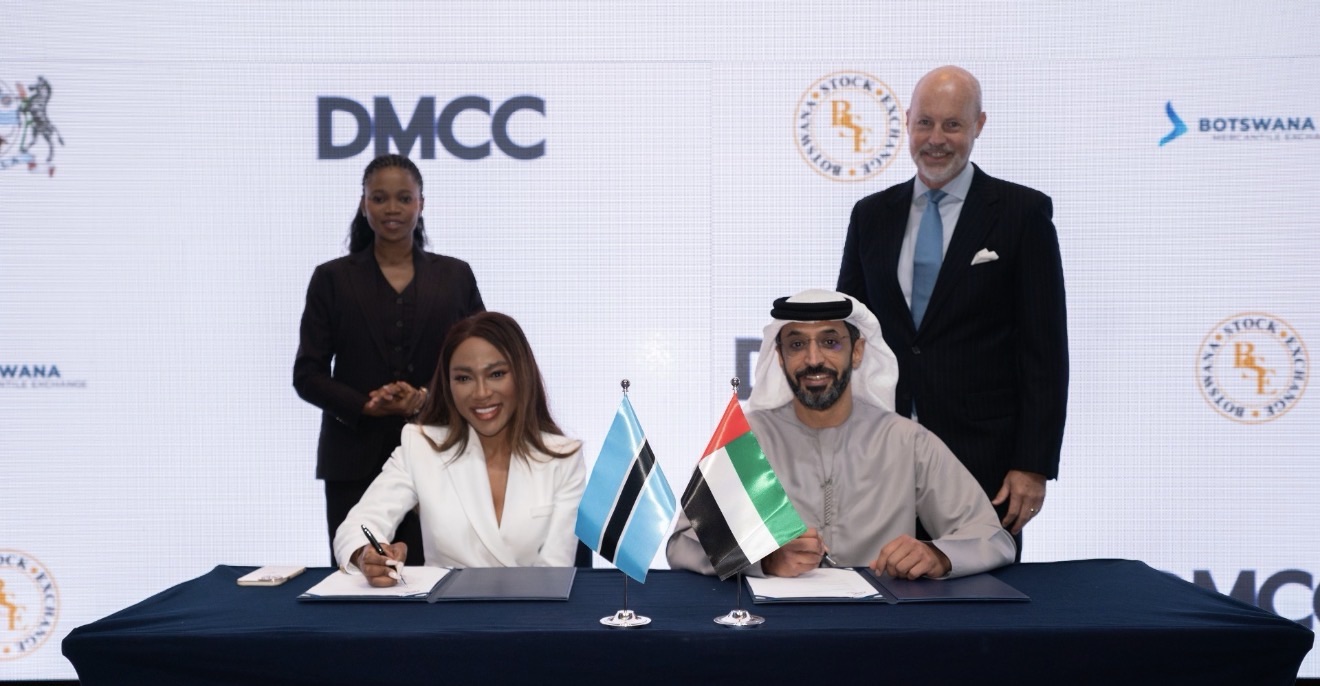
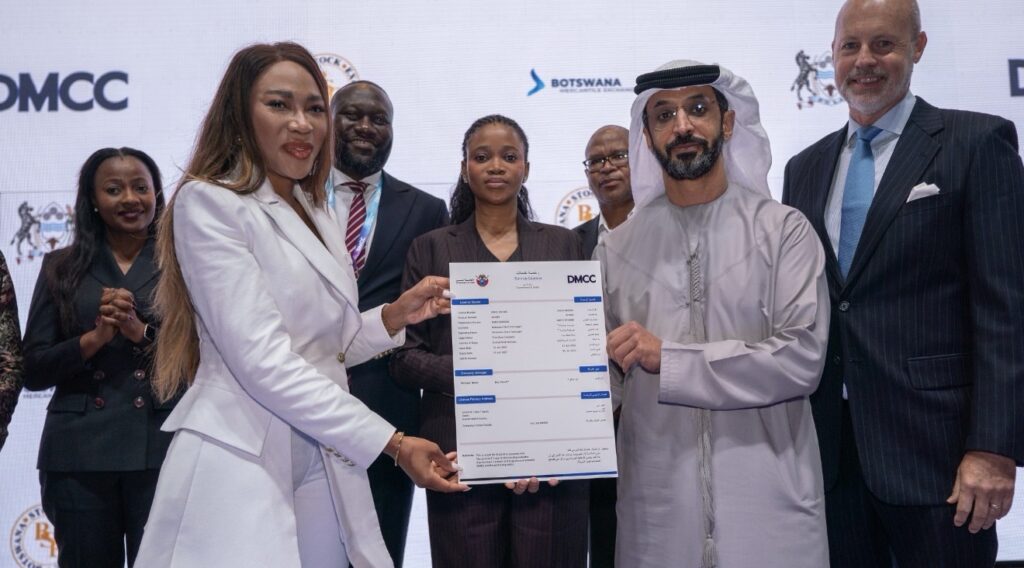
DMCC announced Wednesday that its Executive Chairman and Chief Executive Officer, Ahmed Bin Sulayem, signed a memorandum of understanding with Neo Mooki, chairperson of the Botswana Stock Exchange Group, to link Botswana’s commodities exchange directly to Dubai’s trading, finance, and logistics network. The agreement was signed in the presence of Bogolo Joy Kenewendo, Botswana’s Minister of Minerals and Energy, and concluded in Singapore following the 41st World Diamond Congress, where DMCC hosted the Asia launch of its Future of Trade 2026 report.
The agreement may appear to focus on commodities, but its significance extends much further. The two sides describe the arrangement as Africa’s first multi-commodity “sister-hub” trading corridor, directly connecting Gaborone with Dubai. At its center is the Botswana Mercantile Exchange (BMX), operated by the Botswana Stock Exchange Group, which now gains access to one of the world’s largest commodity trading ecosystems.
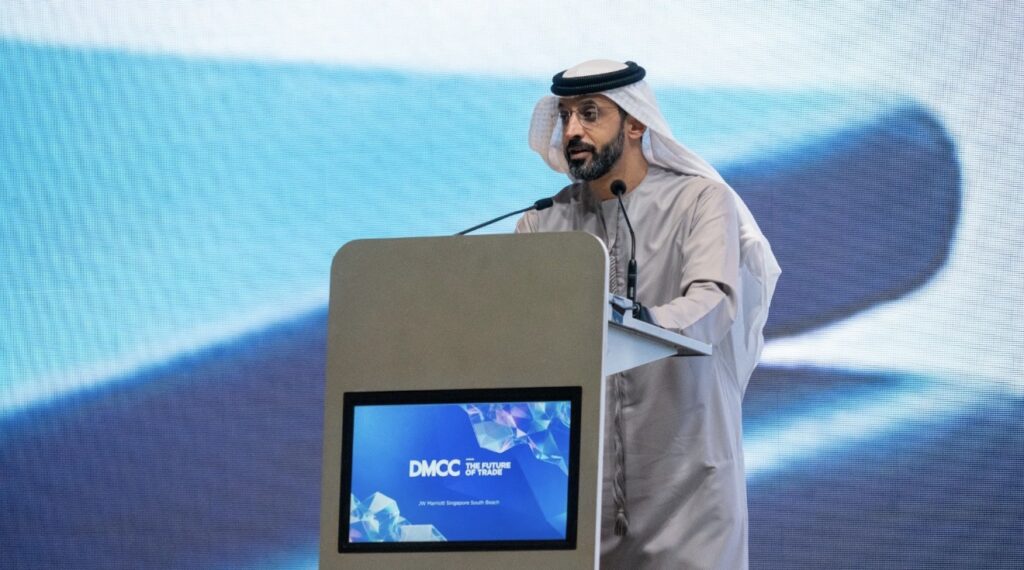
Ahmed Bin Sulayem
What the agreement covers
The partnership spans diamonds, copper, coal, soda ash, critical minerals, beef, and agricultural products while establishing a dedicated Botswana presence within DMCC’s commodity ecosystem in Dubai. The framework includes market access, trade finance, logistics, vaulting, digital infrastructure, capacity building, and knowledge exchange, with the goal of connecting Botswana’s producers directly to international buyers, institutional investors, and Islamic finance markets.
Among the first initiatives will be cooperation between the Okavango Diamond Company and the Dubai Diamond Exchange through coordinated rough diamond tenders, giving Botswana’s state-owned diamond marketer direct access to the world’s largest diamond trading hub. The first commercial tenders are expected in late 2026.
The agreement also calls for the construction of a Botswana Mercantile Exchange vault in Gaborone that is expected to become the first facility certified under the DMCC Global Good Delivery Standard, creating an internationally recognized storage and financing platform for commodities originating in Africa.
The organizations also plan to deploy DMCC FinX, DMCC’s digital financial infrastructure platform, to expand trade finance, tokenize physical commodity assets, and introduce Shariah-compliant financing solutions designed to attract institutional investment into African supply chains.
Bin Sulayem’s long-term strategy
The Botswana agreement fits a strategy Ahmed Bin Sulayem has pursued for more than two decades.
Since taking over DMCC in 2003, he has expanded the organization from just 28 member companies to more than 26,000 businesses representing over 180 countries and employing more than 80,000 people. Under his leadership, DMCC has repeatedly been recognized as Global Free Zone of the Year by the Financial Times’ fDi Magazine, including a ninth consecutive award.
Bin Sulayem also chairs both the Dubai Diamond Exchange and the Dubai Gold & Commodities Exchange. He served as the United Arab Emirates Chair of the Kimberley Process in 2016, was reappointed in 2024, and has served as Custodian Chair since 2025. That experience is particularly important for Botswana, whose diamond industry depends on trusted certification, transparent supply chains, and efficient access to international markets.
Commenting on the agreement, Bin Sulayem said Botswana is one of the world’s leading commodity-producing nations and that combining its production capabilities with Dubai’s global trading infrastructure can unlock new investment opportunities and expand direct access to international buyers.
Why Botswana needs this partnership
The agreement comes as Botswana works to recover from one of the most difficult economic periods since independence.
Finance Minister Ndaba Gaolathe has projected economic growth of 3.1% in 2026 following contractions of 0.4% in 2025 and 2.8% in 2024. Diamonds continue to generate roughly one-third of government revenue and approximately three-quarters of the country’s foreign-exchange earnings, making weakness in the sector especially painful.
Mining output fell 47% during the fourth quarter of 2025, while overall GDP declined 5.4%.
Government mining revenue for fiscal year 2025-26 was projected at 10.3 billion pula—approximately $768 million—compared with a historical average of 25.3 billion pula, representing a decline of nearly 60%.
At the same time, De Beers, through its joint venture Debswana, reduced production by 16% in 2025 and lowered its 2026 production target from 29 million carats to a maximum of 26 million carats as demand for natural diamonds weakened amid increasing competition from lab-grown stones and softer global luxury spending.
Against that backdrop, Botswana is seeking new buyers, additional financing channels, and stronger international trading partnerships beyond traditional marketing systems.
Minister Bogolo Joy Kenewendo described the agreement as an important part of Botswana’s economic transformation strategy, emphasizing expanded market access, greater investment, local beneficiation, and a stronger position within global value chains.
What Dubai gains
For Dubai, the agreement strengthens its position as one of the world’s leading commodity trading centers while deepening its growing economic presence across Africa.
The United Arab Emirates has committed more than $110 billion in African investments since 2019, making it one of the continent’s largest sources of foreign direct investment.
Earlier this year, ALBADDAD Holding announced a $1.9 billion New Botswana City development supported by President Duma Boko, while Malaffi committed $1.5 billion to digitize Botswana’s national healthcare system.
According to DMCC’s Future of Trade 2026 report, trade between developing economies now represents approximately 35% of global trade, exceeding trade between developed economies. The report also estimates the global trade finance gap at approximately $2.5 trillion, with developing nations bearing the largest share of financing shortages.
Botswana fits squarely into that picture as a major commodity exporter seeking broader access to capital and global markets, while Dubai continues positioning itself as the international gateway connecting producers with investors, financiers, and buyers.
The agreement also reinforces cooperation surrounding the natural diamond industry through the Luanda Accord and the Natural Diamond Council, reflecting a shared objective of strengthening demand for natural diamonds as competition from synthetic stones continues to reshape the global marketplace.
JBizNews Desk | Dubai
© JBizNews.com All Rights Reserved. Reproduction or distribution without written permission is prohibited.