
 JBizNews
Justice Department Trade Fraud Task Force Passes $1 Billion in Under a Year
The U.S. Department of Justice announced Tuesday, July 14, that its Trade Fraud Task Force has surpassed $1 billion in civil and criminal recoveries, penalties, forfeitures and publicly charged losses less than one year after its launch.
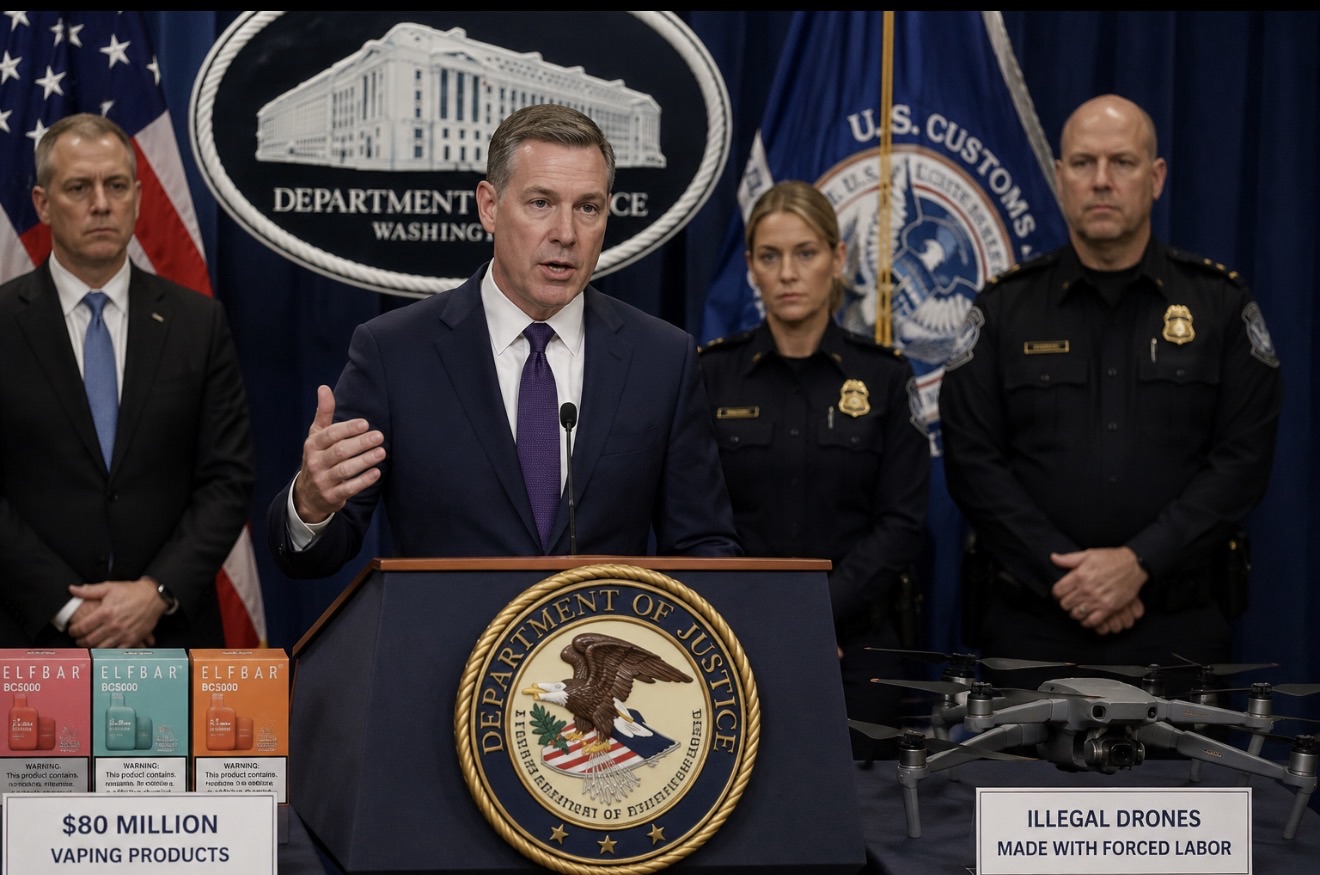
The announcement was made in Chicago by Colin McDonald, Assistant Attorney General for the Department’s National Fraud Enforcement Division, alongside officials from the Department of Homeland Security, U.S. Customs and Border Protection, and the U.S. Attorney’s Office for the Northern District of Illinois.
McDonald said companies have long viewed customs fraud as little more than a cost of doing business, but warned that federal authorities now intend to treat trade fraud as a major economic crime.
Created as Tariffs Expanded
The Trade Fraud Task Force was established jointly by the Department of Justice and Department of Homeland Security in August 2025, shortly after President Donald Trump’s delayed tariff program took effect, with duties reaching as high as 50% on imports from certain countries.
Its mission extends across the entire supply chain, targeting importers, customs brokers, distributors, manufacturers, commercial end-users and anyone who knowingly profits from illegally imported merchandise.
Breaking Down the $1 Billion
The headline figure includes several different categories.
It combines money recovered through criminal prosecutions and civil enforcement actions—including settlements, penalties, restitution and asset forfeitures—with financial losses alleged in pending criminal cases.
Approximately $150 million of the total remains tied to cases that have not yet been resolved, meaning the vast majority of the announced amount already reflects completed enforcement actions.
The largest single recovery remains the $549.5 million settlement reached in May with Perfectus Aluminum and affiliated companies.
Federal prosecutors alleged the companies falsely declared more than 2.2 million Chinese aluminum extrusions as finished aluminum pallets between 2011 and 2014 in order to evade antidumping and countervailing duties.
Other major enforcement actions include:
- A $54.4 million settlement involving imported tungsten carbide products from China.
- An $8 million criminal case involving defective imported air conditioners linked to more than 40 residential fires and one reported death.
New Chicago Cases Push Total Higher
Officials also announced two new criminal indictments Tuesday involving imported gold jewelry.
The U.S. Attorney’s Office for the Northern District of Illinois, now serving as the task force’s lead prosecutorial partner, charged Raj Kohli and Veena Kohli, operators of Surya International, with allegedly falsely declaring imported gold jewelry as originating from Singapore rather than India and the United Arab Emirates.
According to prosecutors, the scheme involved approximately 563 import entries between August 2020 and May 2024 covering jewelry valued at more than $693 million while allegedly avoiding more than $38 million in customs duties.
A second indictment charges Narain Gulabani, owner of Barkha Wholesale in Naperville, Illinois.
Federal prosecutors allege Gulabani falsely declared jewelry imported between 2016 and 2021 as manufactured in Oman or Singapore rather than its true country of origin.
Authorities say the case involves 242 shipments worth more than $240 million and approximately $13.6 million in unpaid duties.
A Permanent Enforcement Unit
Beyond the financial milestone, DOJ announced two major structural changes.
The department is creating a permanent Global Trade & Commerce Enforcement Section within its National Fraud Enforcement Division to focus exclusively on criminal import and customs fraud investigations.
DOJ and DHS also jointly released A Resource Guide to Trade Fraud Enforcement, described as the first comprehensive federal guide explaining customs enforcement priorities, civil and criminal liability, voluntary disclosure procedures and regulatory expectations for importers.
Aris Kourkoumelis, DHS Assistant Secretary for Trade and Economic Security, said the guide is intended to provide businesses with greater transparency regarding how trade fraud investigations are conducted.
Growing Enforcement Powers
Officials emphasized that a single customs violation can now trigger multiple forms of enforcement simultaneously.
Companies may face:
- Criminal prosecution
- Civil False Claims Act litigation
- Customs duty collection
- Asset seizures
- Whistleblower actions
The government also highlighted expanded reporting channels allowing domestic manufacturers, employees and competitors to report suspected customs fraud.
Current enforcement priorities include:
- Evasion of Section 301 tariffs
- Antidumping and countervailing duty violations
- Forced labor imports
- Products posing public health or public safety risks
Displayed during Tuesday’s press conference were illegal vaping products seized during an $80 million enforcement operation and drones prosecutors allege were manufactured using forced labor.
Separately, U.S. Customs and Border Protection reported assessing more than $2.1 billion in commercial trade penalties during the current fiscal year while debarring 35 companies from doing business with the federal government.
Why Businesses Should Pay Attention
Federal officials made clear that enforcement is no longer focused solely on import paperwork.
Companies that ignore supplier warning signs or knowingly rely on inaccurate country-of-origin declarations may now face criminal exposure alongside civil penalties.
For importers, manufacturers, wholesalers and distributors, customs compliance has become significantly more consequential as tariff rates rise and federal enforcement resources expand.
McDonald’s message to businesses was direct: companies that overlook suspicious sourcing practices to protect profit margins should expect greater accountability.
For businesses importing goods into the United States, the country-of-origin declaration is no longer simply a customs form—it has become a potential criminal liability.
JBizNews Desk | Chicago
© JBizNews.com All Rights Reserved. Reproduction or distribution without written permission is prohibited.