

Israel’s Supreme Court on Wednesday issued a temporary injunction suspending implementation of the newly enacted law that halted the arrest of bnei Torah who have not reported for military service, setting the stage for another high-profile legal battle over the status of lomdei Torah.
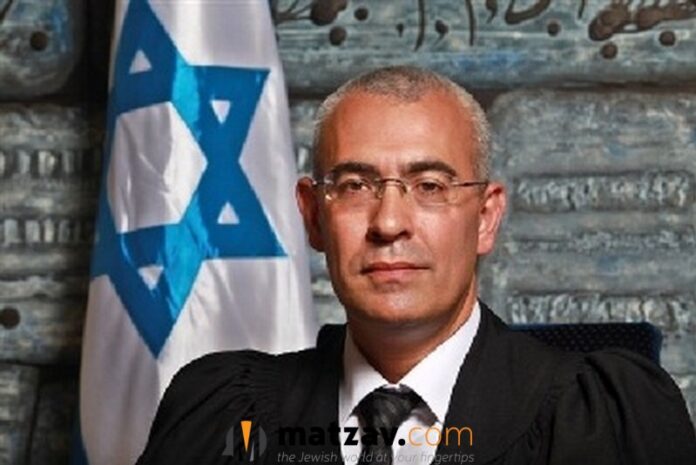
Supreme Court Justice Ofer Grosskopf ordered that the law be put on hold pending further proceedings. In his decision, he wrote: “In light of this Court’s longstanding rulings on the enlistment of yeshiva students, the implications of freezing arrest, investigation, and enforcement proceedings with respect to only certain segments of the population, and the substantial arguments raised by the petitioners in the various petitions challenging the law’s validity, a conditional order is hereby issued instructing the respondents to explain why the law should not be struck down.”
Grosskopf added that the petitions challenging the legislation will be heard as soon as possible before an expanded panel of justices to be appointed by the President of the Supreme Court.
Multiple petitions have already been filed seeking to invalidate the law, including those submitted by the Yisrael Beytenu and Yesh Atid parties.
MK Meir Porush of United Torah Judaism sharply criticized the court’s ruling, arguing that the injunction has no legal basis. He asserted that any soldier or police officer who takes part in arresting bnei Torah under the current circumstances would be acting in violation of the law passed by the Knesset.
The legislation, approved by the Knesset on Tuesday in its second and third readings by a vote of 58 to 54, temporarily halted the arrest of bnei Torah who are subject to military draft proceedings.
Four coalition lawmakers voted against the measure: Yuli Edelstein, Sharren Haskel, Dan Illouz, and Moshe Solomon. Minister Ofir Sofer and MK Michal Woldiger were absent during the vote.
The bill was presented to the Knesset by Minister Shlomo Karhi, who engaged in heated exchanges with opposition lawmakers during the debate from the Knesset podium.
During the debate, the Knesset Ethics Committee required Chareidi members of Knesset to disclose that members of their own families could potentially be affected by the outcome of the legislation.