
 Matzav
Coalition Showdown: Gafni Threatens to Sink Attorney General Reform as Smotrich Fires Back
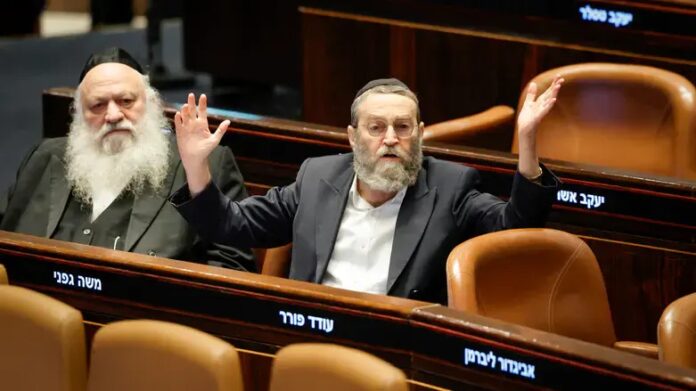
A major coalition crisis erupted in the Knesset on Wednesday, throwing into doubt the fate of legislation aimed at significantly reducing the powers of Israel’s attorney general after Degel HaTorah chairman MK Moshe Gafni threatened to withhold support for the bill amid an escalating dispute with Finance Minister Betzalel Smotrich.
The legislation, championed by Justice Minister Yariv Levin and Constitution Committee chairman MK Simcha Rothman, had reached the Knesset floor for its second and third readings after approximately 70 committee sessions. But moments before the decisive vote, the coalition was thrown into turmoil when the Chareidi parties signaled they might oppose the measure, triggering a direct confrontation between Gafni and Smotrich.
As negotiations intensified behind the scenes, Rothman prolonged his speech from the Knesset podium in an effort to delay the vote and buy time for coalition leaders to resolve the standoff.
At the heart of the dispute is mounting frustration within United Torah Judaism over what party leaders say is the government’s continued refusal to approve long-promised seniority-based salary increases for Chareidi preschool teachers.
According to UTJ officials, Smotrich has deliberately withheld the funding in an effort to pressure the Chareidi parties into allowing Religious Zionism representatives to join the municipal coalition in Beit Shemesh. In response, Gafni and his colleagues warned they would vote against one of the coalition’s flagship judicial reform bills—a move that could doom the legislation.
Religious Zionism responded with an unusually sharp public attack, accusing Gafni of effectively rescuing Attorney General Gali Baharav-Miara and preserving what it described as judicial overreach.
Sources close to Smotrich said Baharav-Miara “can send Gafni flowers,” arguing that his actions are granting her immunity, preserving her “judicial dictatorship,” and enabling her to continue undermining both the right-wing coalition and the Chareidi public for years to come.
The party also issued a direct warning to Gafni and his allies, declaring that if they are responsible for defeating legislation intended to curb the attorney general’s authority, “they will not be able to show their faces on the Chareidi street.” The statement concluded with the blunt message: “Let them not threaten.”
The confrontation comes despite earlier coalition understandings under which the Chareidi parties had agreed to fully support the attorney general legislation as part of a broader political agreement with Prime Minister Benjamin Netanyahu.
Under that arrangement, the coalition advanced several key priorities sought by the Chareidi parties, including the Basic Law: Torah Study, the law temporarily freezing the arrest of yeshiva bochurim who fail to report for military service—which has since been suspended by the High Court—and legislation repealing the kashrus reform.
Now, with tensions between coalition partners at their highest point in months, questions are mounting over whether that broader political agreement can survive.
The legislation at the center of the dispute would significantly reshape the relationship between Israel’s elected government and its legal advisers.
Its principal provision would eliminate the binding authority of the attorney general’s legal opinions, making them advisory rather than mandatory. Under the proposal, the attorney general would continue providing legal guidance, presenting policy alternatives, and helping ensure compliance with the law, but final decision-making authority would rest with the government and its ministers.
The bill also provides that while the attorney general’s written legal opinions would continue to reflect his or her interpretation of existing law, they would no longer be legally binding on the government. Ministers would have the authority to determine that an opinion does not accurately reflect the law, subject to notification of the Knesset Constitution Committee.
In addition, the proposal would give the government the final authority over its legal positions before the High Court and other courts. If the attorney general declines to represent the government’s position, the government would be permitted to retain private legal counsel to argue its case.
For now, however, the future of the judicial reform package remains uncertain, as coalition leaders struggle to bridge the widening divide between Smotrich and Gafni before the legislation comes to a vote.
{Matzav.com}