
Lifestyle publication for busy Jewish women featuring recipes, parenting tips, and home inspiration.
Lifestyle publication for busy Jewish women featuring recipes, parenting tips, and home inspiration.
 Between Carpools8 hours ago
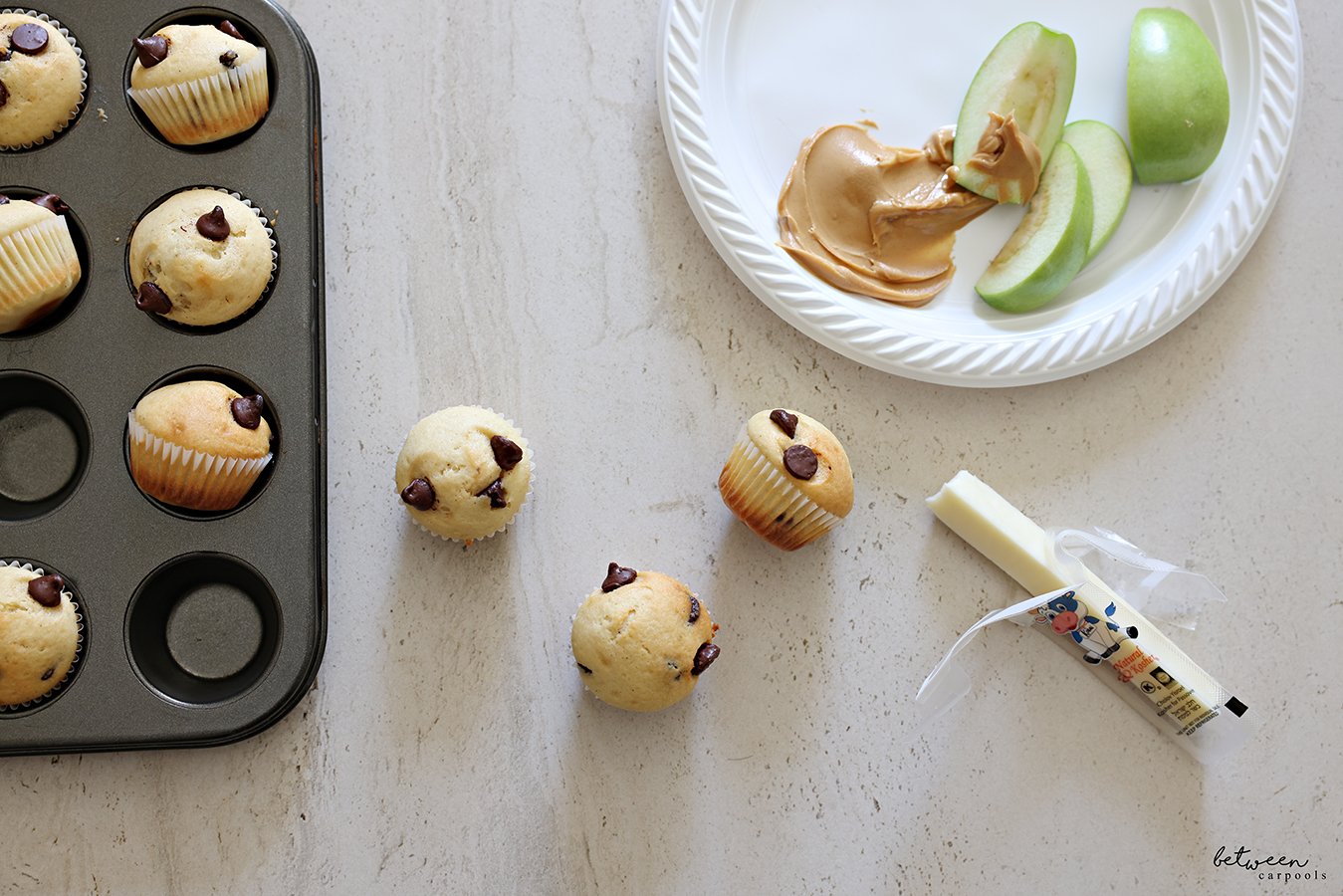
My family loves muffins as an easy grab and go healthy snack, but some of my family members feel like the BCP Favorite Whole Wheat Muffins are a drop too healthy-tasting for their liking. These Chocolate Chip Muffins are also a popular pick that works well with different substitutes, but I wanted something without refined sugar.
Perhaps something along the lines of these Sneaky Protein Pancakes (or the Protein Waffles from Dinner Done 2!) that my kids love. It’s just not always so feasible to stand near a stove on a busy day.
Like those pancakes, perhaps I could make a muffin that’s white instead of brown in color, and uses all clean ingredients?
Using white spelt flour is the trick. Start by combining the dry ingredients.
Then add the wet.
These use maple syrup instead of granulated sugar.
So, yes, the batter still has plenty of sweetness, it’s just a sweetness you feel a little better about.
So, while they’re refined sugar-free (minus the few chocolate chips), they are still super moist and delicious. The yogurt helps with the moistness too (and adds protein!).
You can make full-sized muffins, but mini muffins are very practical for little appetites (or for when mom just wants a bite or two).
A little trick I do to make it seem much less healthy is to add a few chocolate chips on top of the muffins once they are in the pan to make them look more chocolatey than they are (we’re only using ½ cup chocolate chips in the batter, so it’s not tons).
These don’t look healthy! These are also great with any add-in you like, from blueberries, shredded fruit. A cinnamon-sugar topping is also a good idea!
Servings: 24 mini muffins
Preheat oven to 350°F. Line a mini muffin pan with paper liners.
In a medium bowl, combine the dry ingredients. Add wet ingredients.
Add chocolate chips or other desired mix-ins (or toppings).
Bake mini muffins for 12-14 minutes or until the tops are firm (every oven may be different, so watch them the first time). Full-sized muffins need a longer baking time (20-22 minutes).
 Between Carpools1 day ago
Whether you have a party with lots of little kids–or a night in which just your own little one–this project will be fun for all. And because you’re using washable watercolors, it cleans up easily too.
You’ll need watercolor paints with a brush, watercolor paper, painters’ tape, cups, balloons and water. We recommend providing a set of watercolors for each child, rather than having them share. It also makes a nice little “door prize” to take home after the party.
Why cups and balloons? Avoid the spilled water that usually comes with watercolor painting and little kids. (If you want to skip this step, I recommend using disposable plates instead of cups. It’s enough water and has much less chance of tipping and spilling.)
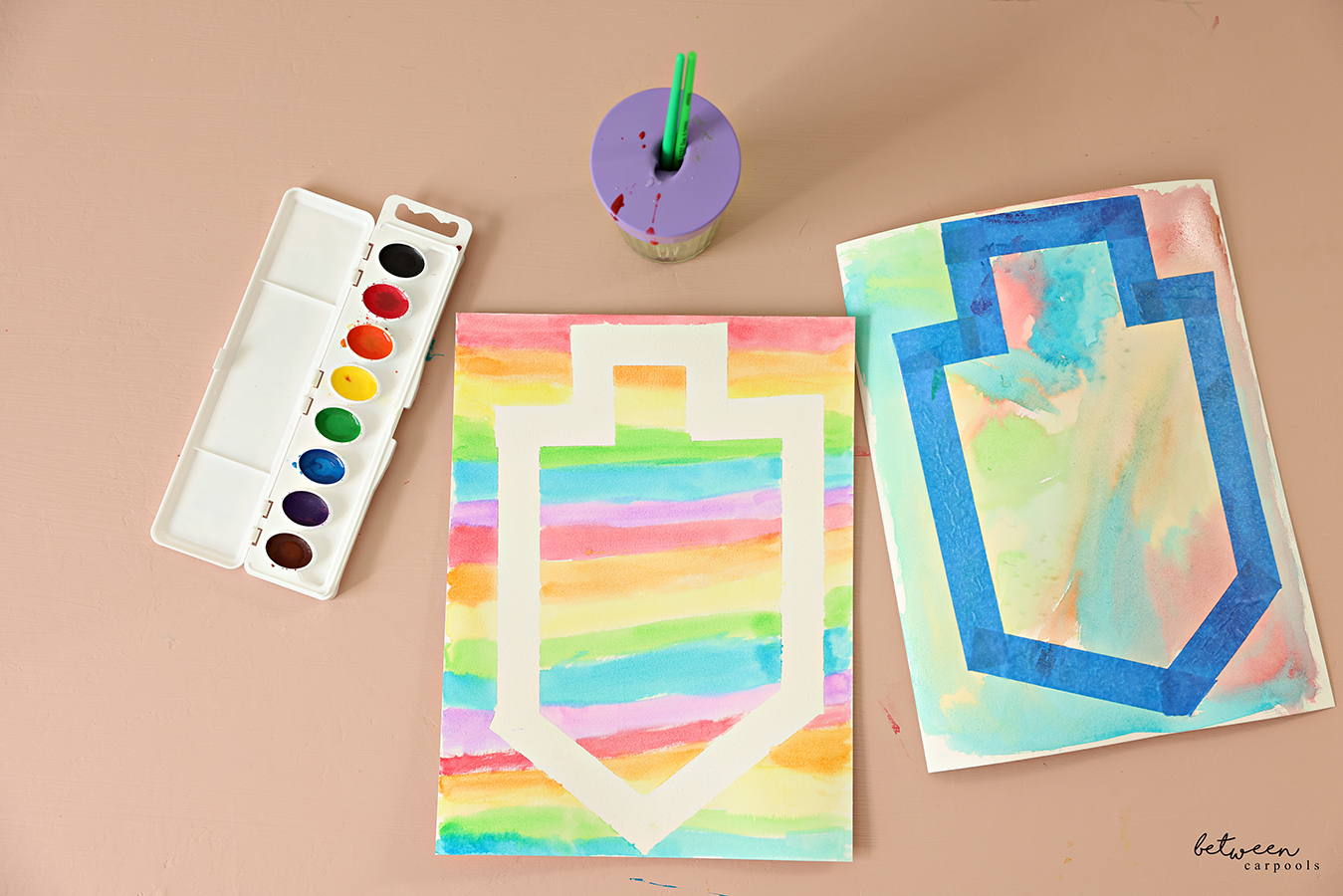
Before the party, use the painters tape to outline a dreidel on the watercolor paper. Or, have an older kid or two do this part at the party itself.
The kids can then paint the whole paper however they’d like.
Encourage them to cover the entire paper with color.
Let the papers dry – they don’t have to be completely dry, but definitely past the point of dripping. Then, help them peel off the tape to reveal their dreidel outline in their art masterpiece!
 Between Carpools2 days ago
Your day is full. Full, full, full. Full of mommying, working, cooking, errands, and a million other things. It’s also full of conversations, interactions, decisions, and relationships. And how you understand and relate to yourself and the people around you has an incredible impact in how you navigate your full life!
That’s what Sod Ha’adam is all about.
Sod Ha’adam’s Foundation Course with Rebbetzin Tukachinsky is one of those courses that you really need to learn at some point in your life. And now’s the perfect time! Victoria shared her take on Sod Ha’adam last year, here.
The course teaches you a deeper understanding of yourself and the people around you; and it doesn’t stop with just understanding. As you learn, you put it into practice in your everyday life. It carries over into your relationships and conversations, and the way you approach all the situations in your everyday life.
Classes take place weekly and seamlessly fit into your (super busy) schedule; either listen live or catch the recordings!
And since all our explaining can’t give you a real taste of Sod Ha’adam, start with a free demo!
Listen to an excerpt from the Foundations course 1 here. You’ll hear a sample of the course and can experience it for yourself before registering.
Did you mean to register last year but just didn’t take the leap? Don’t put it off another year! This is something worth learning, and the sooner you start, the sooner you can see the difference in your life.
Visit Sod Ha’adam to learn more and register today!
 Between Carpools2 days ago
Mazel: bow and arrow (keshes)
Letter: Samech ס
This month of dark, long nights that culminates in a weeklong celebration of our nation’s miracles—then and now— is the opportune time to channel our own personal darkness toward sincere, heartfelt tefillah.
According to the Ibn Ezra, the root of the word Kislev (כסל), means a pillar to lean on and trust. The round letter samach, which is the letter associated with Kislev, also alludes to full support—from all angles, a cocoon of security. Its root of somech reminds us that Hashem is the Someich noflim, the One who holds up the fallen. This is not only true for bayamim haheim, the days of the Yevanim, but very much too bazman hazeh, yes, in our days.
With this understanding of the spiritual propensity of Kislev, we can appreciate why the mazel of this month is a bow and arrow. As the Shem MiShemuel explains, the tighter you pull the bow, the higher the arrow reaches. The more desperate our tefillah, the more powerful an impact it has in the Heavens.
There’s a long month we have to get through in order to reach the light at the very end, and even on Chanukah itself we light the menorah one candle at a time, night after night, until we’re finally enveloped in its full glow. What keeps us going throughout is the hope we hold on to, the recognition that we are enveloped in Hashem’s support, and the tefillos we say from the depths of the darkness. We women, especially, are great at this waiting game. It’s what we call “patience for the process.” We know what it means to endure a seemingly endless pregnancy, buoyed by the anticipation of what’s to come, b’ezras Hashem. In fact, it’s because we women were able to wait out Moshe Rabeinu’s return from Shamayim with patience, and we thus did not participate in the cheit of the eigel, that Rosh Chodesh was rewarded to us as our special Yom Tov.
But as much as we have it in us to wait it out, there’s also a place in us that is itching for wholeness, for the salvation we’re aching for. This is our time, dear sisters, to access the desperation we feel for a particular yeshuah.
Want to tap in to the greatest spiritual propensity of this month? Recognize that Hashem is the ultimate Pillar of support to lean on—and turn to Him. When we do that, we don’t only become vessels for untold yeshuos and miracles, but just the feeling of being supported gives us so much comfort and enables us to feel more radiant and whole. We usher so much light into our life. Let’s make it happen!
Here’s how to maximize the potential of this month:
1. Once per day this month, reflect on your current life circumstances and choose ONE issue that is pressing on your heart, one place where you’re experiencing darkness.
2. Every morning of this month, take a few moments to zoom in on this issue.
Stretch the bow as taut as possible, concentrating on just how desperate you are for a change/improvement in this area. Allow yourself to feel the DESPERATION for the salvation by exploring the emotions that this challenge brings up for you_._ (It may be pain, hopelessness, frustration, failure, angst, fear, confusion, aloneness, and/or disappointment.) Remember: It is through allowing ourselves to feel the darkness that a world of light opens up for us.
3. Now’s the time to fling that arrow as high as it goes: Lean on Hashem by turning to Him for His support.
Picture yourself inside a cocoon, cushioned by Hashem’s loving, ceaseless support from all sides. Feeling held gives way to genuine tefillah; we only pour our heart out when we feel that we’re being heard and that our words are given full attention.
The more DESPERATE the tefillah the more sincere and thus effective it’ll be. (“Hashem, it bothers me so much that… I’m at such a loss when it comes to… I am desperate for… Please grant me the wisdom… Please guide me toward the right shaliach to help me out… I know that You and only You could bring about the miracle/change we need.” If you don’t yet feel this sense of trust: “Hashem, I so want to lean on You and put my full trust in You. Help me believe that You and only You can bring about my yeshuah in an instant.”)
This Kislev, like the Chashmonaim before us whose only ammunition was Bitachon in Hashem, let us harness the spiritual propensity of the month: leaning on Hashem from our desperate state, which culminates in heartfelt tefillah. May our “arrows” reach the highest of places and help usher in untold miracles and brachah into our lives. The word Kislev is a composite of kis, a pocket, in lev, our heart. May we merit finding the pockets of light in our heart and hold on tight to them until we are zocheh to experience our long-awaited miracle.
To receive this month’s free Radiance Renewed poster, write to [email protected] with RR Poster in the subject.
 Between Carpools3 days ago
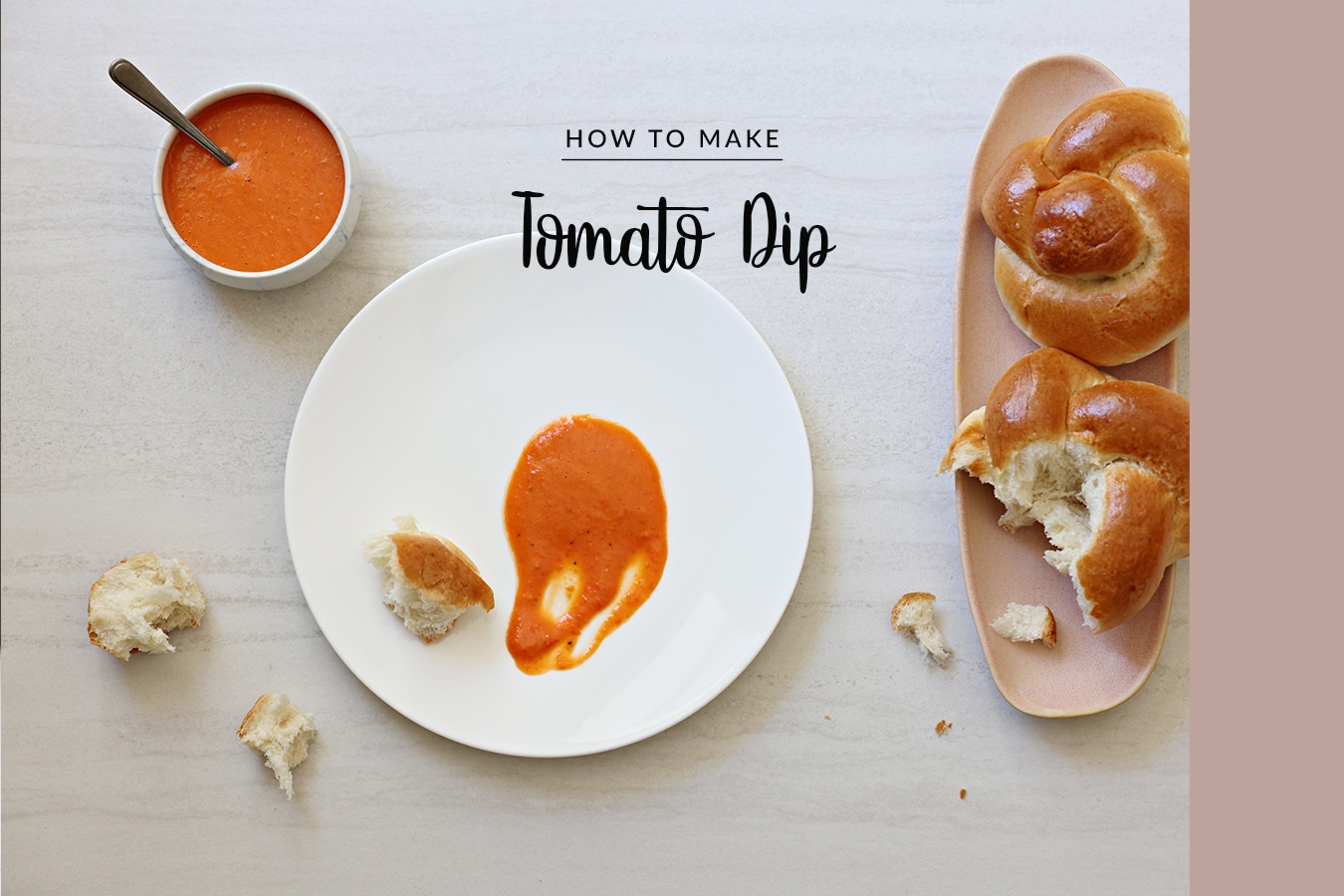
Tomato dip has been on Shabbos tables for as long as anyone can remember, and for good reason: it’s simple, fresh, and pairs perfectly with challah. There are so many recipes here on Between Carpools for roasted tomato dip, crushed tomato dip, tomato jam, and mock matbucha, but the classic tomato dip is still the one people are looking for.
I make mine with cherry tomatoes because I find they give a sweeter flavor, though a mix of regular and cherry tomatoes works just as well.
Add them to a food processor along with the garlic, vinegar, sugar, and spices.
Blend them until the tomatoes are broken down.
If you’ve ever wondered why the store-bought version is so bright orange, it’s all about the oil. The more oil they add, the more orange it gets. I start with just 1/4 cup, since any more feels so unhealthy, and the flavor is still rich and tomatoey. On a low setting, gradually add oil in a slow stream.
You can always add a splash more oil if you like it creamier. Once all the oil is in, blend on high speed for 3-4 minutes.
Keep the Tomato Dip in a container until ready to serve. It will last for 1 week in the fridge. (It’s best when made fresh or within a couple days of enjoying, but will often last from one Shabbos to the next if you’ve made it on Friday).
In a food processor blend cherry tomatoes with vinegar, sugar, and spices until tomatoes are broken down.
On a low setting, gradually add oil in a slow stream.
Blend on high speed for 3-4 minutes. Taste and adjust seasoning if needed.
 Between Carpools3 days ago
Who remembers their fourth trimester? Enveloped in a cocoon of newborn snuggles and kisses.. but also in crashing hormones, night sweats, and lots and lots of tears. Yes, mother’s and baby’s! What helped us feel a little more human? Showering, coffee, and a fresh pair of pajamas.
Ideally, a pair from Zoda!
Zoda makes elevated postpartum loungewear and pajamas that hit that perfect sweet spot: practical for postpartum, and pretty enough to make you feel human again! We tried them, and they’re made of the most delicious bamboo cotton, so soft and so cozy.
The nursing lounge sets and dresses have an attached nursing bra and discreet nursing slits along the sides or a crossover top that keeps you covered. No need for extra layers, or to maneuver a blanket around you and your baby. The nightgowns look like a cozy dress, perfect for around the house.
Not postpartum but still want to be cozy? Choose from non-nursing pajamas and nightgowns, in really elevated styles!
Forget another baby blanket, this is what the postpartum mom in your life needs! They come wrapped in a gorgeous light purple bag. Add Zoda’s Bliss slippers, and you’ve got the perfect gift. Or, shop their gift boxes here.
Shop their whole selection at www.zodacomfort.com to find your favorite pair, or browse our favorites, below.
 Between Carpools4 days ago
There comes a point in life when you realize you’re in the middle. Your children still need you for carpools, dinners, and shidduchim. And, at the same time, your parents need you too, for appointments, advocacy, patience, and presence.
You’re not solely a daughter anymore, not just a wife, and not only a mother and perhaps even a grandmother too. You’re all of it at once, and it can feel heavy. I want to remind us, myself included, that it’s also holy.
The mitzvah of honoring our parents is the fifth of the עשרת הדברות, placed on the בין אדם למקום side. It connects Hashem to the people who brought us into this world. We are commanded to honor parents, not our children. Love flows downward, and honor flows upward.
This isn’t random, it’s what anchors a Jewish home, and standing in the middle is a sacred assignment.
Be With Women Who Understand This
But it’s hard to stand in the middle alone. It’s helpful to surround yourself with women who understand this value, not women who are keeping score or whispering, “Why you again?” but instead see the bigger picture. You need friends who remind you that the way we treat our parents is what our children grow up seeing.
They are watching not what we preach, but what we practice. One day, whether we like it or not, the roles will reverse, and they will do as we did, not as we said.
Be the Right Support for Your Spouse
I grew up watching something that stayed with me. My maternal Zaidy lived downstairs, and there were times when my mother felt alone carrying so much of the responsibility for her parents. I remember her, every so often, asking, “Where are the others? Why am I carrying this whole thing?”
My father would say, “Don’t look at them. This is your mitzvah and your schar. If they pitch in, great.” He was encouraging her to care of his father-in-law.
Years later, when his own parents needed more, I watched her do the same for them. My paternal grandparents moved in; there was no scoreboard and no resentment, there was a strong partnership and shared values!
If your spouse is the one carrying this right now, emotionally, financially, or logistically, be his cheerleader. Support doesn’t have to be dramatic; it looks like taking on a little more at home and giving a little more grace. Don’t compete with the mitzvah, strengthen it.
This Won’t Last Forever
When you’re in it, the appointments, the driving, the rearranging, and being there for everyone emotionally can feel endless. But it’s not endless.
There will come a day when the phone won’t ring with their name, and there won’t be another chance to show honor. We don’t have our parents forever, it is not permanent. One day you’ll look back and know that you stood in the middle with dignity, and you gave honor upward and love downward.
P.S. I shared this article with a friend who is balancing this right now, and I asked for her thoughts. She added something I didn’t want to leave out: try being open with your children. Let them know you see that it’s not easy for them, explain why this matters to you, and thank them for their patience. They will appreciate the communication and rise to the occasion. Thank you, Beila.
 Between Carpools4 days ago
If you’re wondering where to find that perfect coat that’s exactly what he wants, you’ve found it. From casual to dressy, His Place has it. But it’s not only that. Whether he’s looking for a weekday coat, a Shabbos coat, or a coat that takes him through every day of the week, they have it.
Plus–with so many options with authentic down, he’ll be wrapped with warmth no matter where he’s going.
You’ll find the best option for him below!
The Orlando is that classy wool coat with that inner lining, so he gets the best of both worlds–that dressy look and the warmth of two layers. At a three quarter length, it works for both weekdays and Shabbos, and it’s also available complete with a 80% duck down, 20% waterfowl feathers lining for the ultimate warmth. Boys | Men
The Chester is a wool blend coat with a streamlined look, hood, and down fill. It’s lightweight yet supremely warm! It’s great for both weekdays and Shabbos. Boys | Men
Does he want something that’s more casual for weekday, but not as casual as a traditional puffer? The Jackson Puffer is perfect. It has the warmth and comfort of a true puffer, but with a sleeker look. Boys | Men
Get true warmth with Nixon. This black puffer is fully lined with plush black fur–it couldn’t be cozier, comfier, and more insulated. Boys
Looking for premium quality, 100% wool dress coat with down fill? Lincoln is top of the line. Boys | Men
If he’s wearing a puffer during the week and wants something strictly dressy for Shabbos, the full-length Charlotte, complete with a hood…
 Between Carpools5 days ago
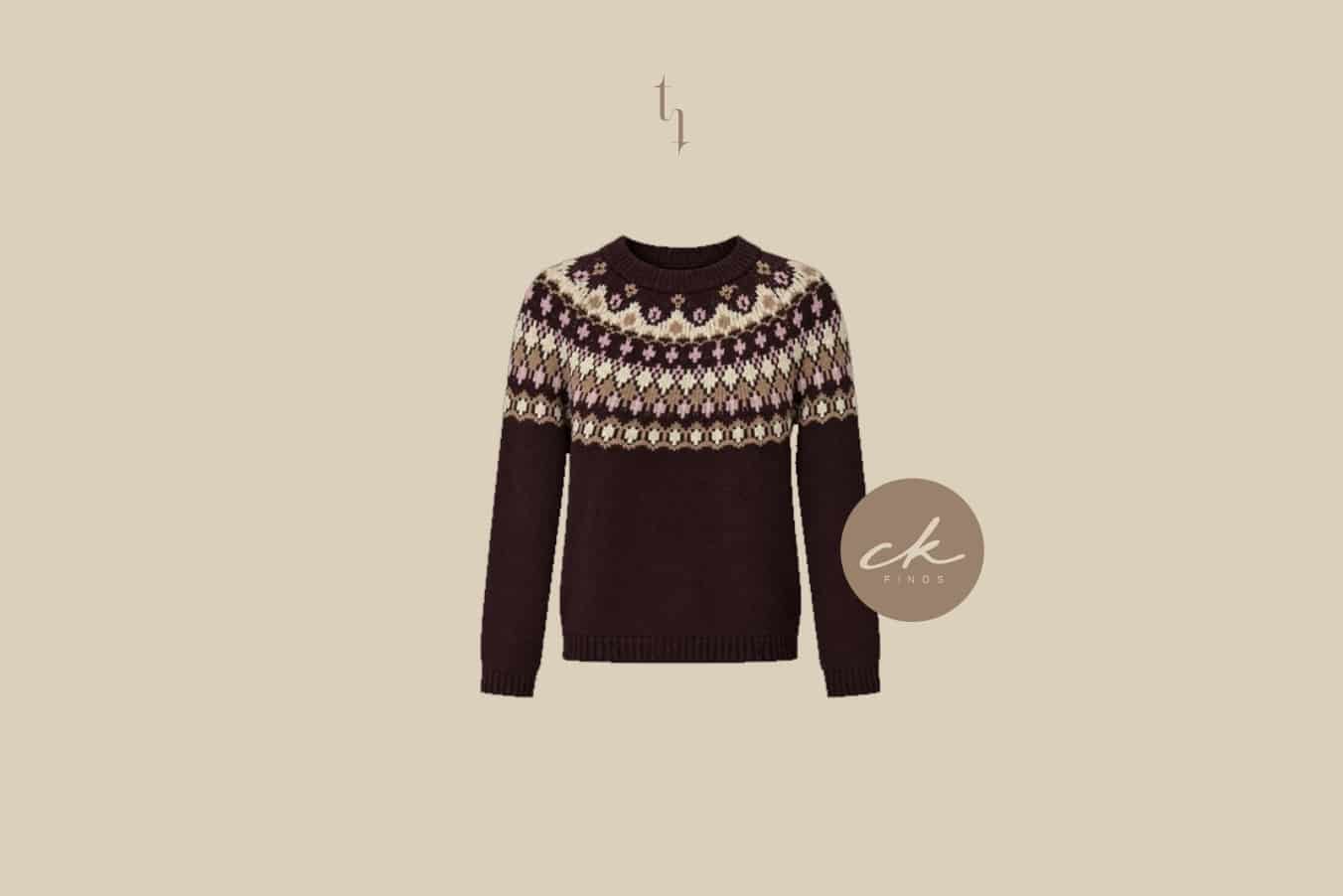
You know it’s coming! With chillier weather just about on its way, it’s the perfect time to refresh your sweater picks and find that perfect piece you’ll enjoy wearing all winter long. From great basics, cozy options, to sweaters for special occasions and nights out, here are a bunch of stylish options for your wardrobe at good values that you’ll enjoy all season long. All price points!
 Between Carpools7 days ago
One evening, a child complains, “I don’t want this. Why can’t I have what he has? It’s not fair.” And every parent knows the instinctive response: “You should be grateful! Do you know how lucky you are?”
Maybe there’s a better question. Not: How do I make my child grateful? But: How do I help my child notice the abundance of goodness in life?
Children Learn What We NoticeA child watches us constantly. They notice whether we complain about traffic or marvel at the sunset. They notice whether we rush through dinner or savor it. They notice whether we say thank you only when someone does something for us – or whether gratitude is simply part of how we speak about life.
We don’t teach gratitude only through lectures. We teach it through the atmosphere we create in our homes. If a child repeatedly hears: “Look how beautiful that is.” “We’re so lucky to have Grandma.” “Thank G-d everyone came home safely.” “That was difficult, but look what we learned.” Then the child begins to acquire a different lens.
Gratitude Isn’t DenialWe don’t want children to think, though, that being grateful means pretending everything feels great all the time. If a child is genuinely hurting, telling them, “You have so much to be grateful for,” can make them feel unseen. Jewish wisdom doesn’t require us to deny pain.
We can hold two truths at once: _“This hurts.”_And: _“There is still goodness in my life.” “I’m disappointed.”And:“I can learn from this.” “Things didn’t go the way I wanted.”_And: “I still have choices about how I respond.”
Building gratitude skills also helps build resilience in life.
Give Children the Gift of Same’ach B’ChelkoPirkei Avot teaches: “Who is rich? One who is happy with his portion.” Imagine giving a child that definition of wealth. Not: Who has the newest phone? Not: Who has the biggest house? But: Who can appreciate what they have? This means our happiness isn’t held hostage by the next acquisition.
A child who learns to appreciate a simple meal can enjoy a feast. A child who learns to appreciate a friendship doesn’t need a hundred friends. And a child who learns to notice beauty can find it almost anywhere.
Create a Family Language of GratitudeTry asking one question at bedtime: “What was one gift you received today?” Explain that it doesn’t have to be something material. It could be a friend who helped them, a funny moment, something they learned, a beautiful sky, or a difficult experience that taught them something.
And the parent’s answer is crucial too. Because this isn’t just a lesson for children – it’s a family practice in a living classroom.
The Legacy We LeaveWe can spend enormous amounts of energy thinking about what we want to give our children: education, opportunities, security, values. But one of the greatest gifts is also teaching them to appreciate the life they already have.
Because eventually our children will leave our homes. We won’t be there to tell them what to think about every disappointment. And we won’t be there to remind them to refocus their attention.
What will remain is the internal voice we’ve helped them develop. The voice that says: “Notice what’s good here.” That may be one of the most meaningful legacies we can leave them.
It’s not that we want children who have a lot. We want children who recognize the abundance of treasures already filling their lives.
Yes, You Can Live Your Life–with Gratitude, 8 Easy Ways to Teach Your Children Gratitude, and How to Increase the Feelings of Gratitude in Your Home.
 Between Carpools8 days ago
I’ve been making these chicken wraps for more than a decade (maybe almost two?). Throughout all the years and changes in my family’s taste buds, this has been a constant. They’re healthy, and yet so delicious and popular. They’ve simply been that feel-good meal that never gets old.
Chicken wraps are simply that light yet filling meal that has that Whether it’s these Grilled Chicken Caesar Wraps we enjoyed in the summer, this Truffle-Inspired Version, or the popular Creamy Chicken Tacos, wraps are that light yet filling meal that has family-friendly appeal.
I love that I can assemble them when the first wave of children are coming home, and they’re still delicious at room temperature hours later when the bochurim want to enjoy.
So why hasn’t it been on BetweenCarpools.com or in a Dinner Done book just yet? Because, we always thought, it’s an “old” recipe. “Everyone makes something like that already.” Or, the ultimate recipe nixxer: “It’s nothing new.”
But then, one day, Renee Muller spotted “Chicken Guacamole Wraps” on my personal dinner menu list and said, “What’s Chicken Guacamole Wraps? How do you make that?”
And so, here we finally are! Now, you be the judge whether you’re happy they finally made it here to BCP or if they should have simply stayed in my personal repertoire.
Whether you marinate the chicken ahead of time (even freeze it raw like this!) or simple season it when it’s already in the pan, it doesn’t matter. But if you are going to prep anything ahead, add the olive oil, salt, and shawarma spice blend to a Ziploc bag.
Add the chicken and mix well. Again, you don’t have to mix it in the Ziploc. You can add the spices in the pan. But it’s nice to do some advance prep when we can. Meals simply come together more quickly when we don’t have to start pulling out all the ingredients from scratch.
As far as the spices, sometimes I have shawarma spice mix on hand, but when I don’t, I just use cumin, smoked paprika, turmeric, and garlic powder (feel free to add coriander and/or dried parsley…any shawarma-inspired combination you have on hand).
Here’s our veg. Two onions and a couple of peppers.
Now let’s cook. Start by sauteing the onion and garlic. Once the onions start to soften, add the peppers. Now let it cook for a while, until the mixture is nice and caramelized and wilted.
While you’re waiting, take the opportunity to make the guacamole.
Yes, you can make guacamole any type you like. This version of guacamole is more authentic. But that’s not necessary here. We’re simply mashing that avocado with salt, pepper, and lemon.
Once the vegetables are completely cooked through, remove from pan.
Replenish the oil if needed. Add the chicken and cook for 3-4 minutes per side. You’ll need to do this in a couple of batches.
The chicken should be mostly cooked through at this point, but if you have some thicker pieces that are not, don’t worry, as it’s going back into the pan soon. Slice the chicken into thin strips.
Then, return everything to the pan. Mix in lemon juice and cook for a couple minutes to let the flavors blend.
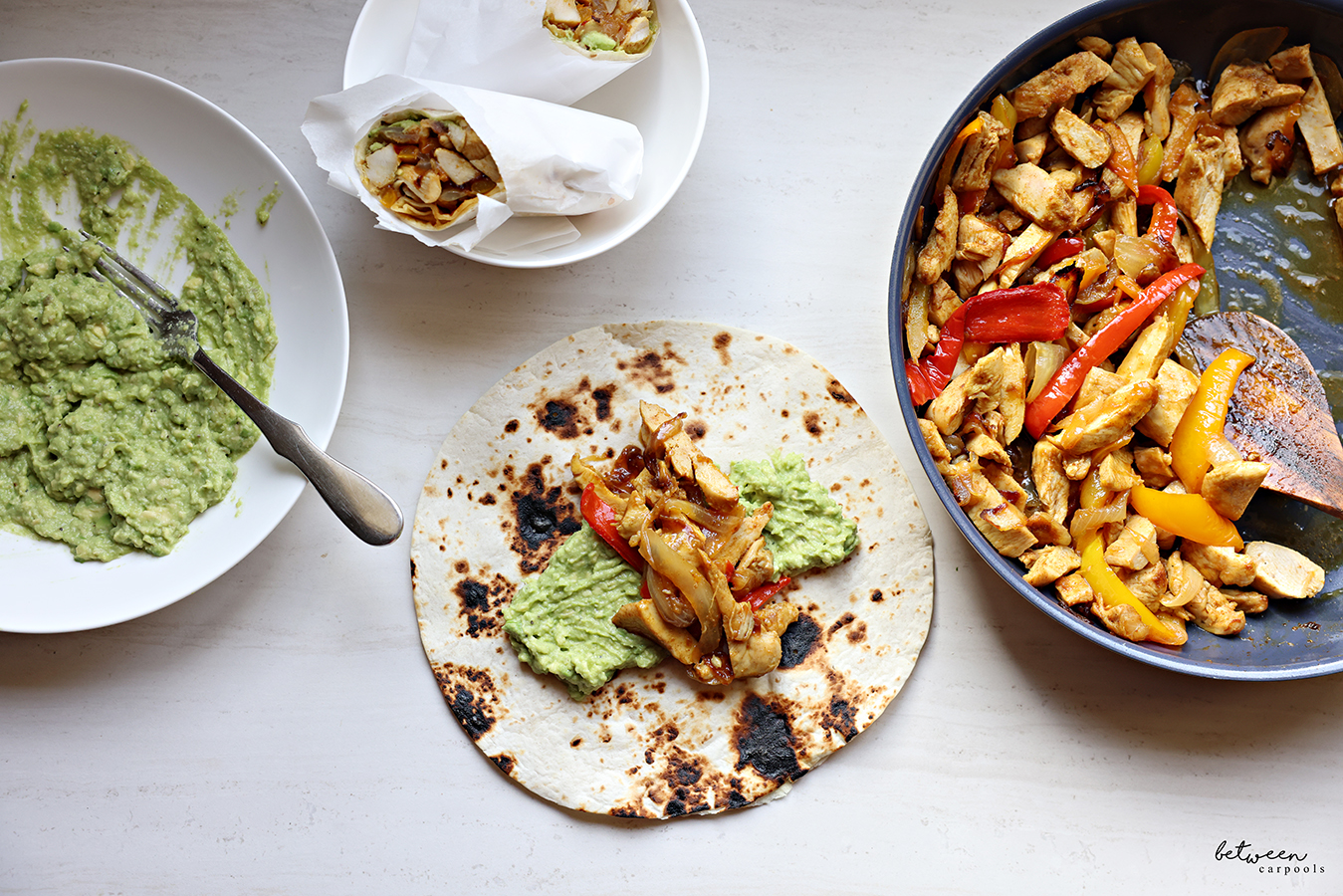
Now it’s time to assemble the wraps. My colleagues recommend charring the wraps first as you first saw here. Add a strip of avocado down the center.
Top with chicken/onion/pepper mixture.
Roll up tightly, first folding in the sides and then rolling up.
I like to wrap in parchment paper to secure (this keeps it closed and makes it easier to eat).
You can serve them sliced like this.
Now you’re ready to enjoy!
Some make ahead tips:
*Marinate the chicken with spices ahead and refrigerate up to 24 hours ahead, or freeze if you want to prep earlier in the week.
*Onion and pepper mixture can also be made ahead and kept in the fridge. Return to pan to warm in step 5.
*The leftover chicken/onion/pepper mixture can be kept in the fridge if you’d like to assemble more wraps the next day for lunch. I’ve also frozen the mixture if I wanted to use it at a later date. Wrap mixture in foil and warm in oven. It also reheats well in a Betty Crocker (if you have one for meat). Thaw slightly first.
4-5 wraps
In a Ziploc bag, combine chicken, 1 tbsp olive oil, 1 tsp salt, and Shawarma Seasoning. This can be done immediately before cooking or 24 hours ahead.
Heat remaining oil in a sautè pan over medium-high heat. Add onions and garlic and sautè until beginning to soften, 3-4 minutes.
Add peppers and cook until mixture is cooked down and caramelized, 15-20 minutes. Season with remaining 1 tsp salt. Remove onion/pepper mixture from pan.
Add additional tbsp oil if needed. Add chicken to pan and cook in batches for 3-4 minutes per side. It will be cooked through at this point, but if you have some thicker pieces that are not cooked through, don’t worry, as you’ll be slicing and returning it to the pan shortly.
Remove chicken from pan. Once cool enough to handle, slice into thin strips. Add chicken and onion/pepper mixture back to pan, stir in lemon juice, and cook for 1-2 more minutes to blend flavors.
In a small bowl, mash avocado with salt, pepper, and lemon juice. Add avocado along the center of each wrap, Top with onion/pepper/mixture. Roll up wraps, folding in the sides first, and then rolling up. Wrap in parchment paper to keep secured. Slice and enjoy.
 Between Carpools8 days ago
Anyone whose involved in shidduchim knows how much goes on behind the scenes. There’s the idea: then people to ask, calls to make, details to clarify, and research, research, research. And K’lal Yisroel has so many incredible shadchanim who go above and beyond, day after day, while balancing their own jobs, families, and responsibilities, just because they care.
But what if you had someone whose entire job was to do that work?
That’s the idea behind MatchQuest. MatchQuest is an incredible platform where Shadchanim are hired and paid to really focus on their single clients. They work with a small, select group of clients, giving them the opportunity to really get to know each person they’re working with. The dedicated shadchanim learn personalities, priorities, and what each person is really looking for.
And then they get to work!
Yes, MatchQuest has an amazing database of boys. But having names is only part of the picture. MatchQuest shadchanim go down to Yeshivas to meet the boys and speak with them. They learn what they’re looking for and make real, informed suggestions. Their goal isn’t to send a stack of resumes, it’s to find real, good options, and keep the process moving. They don’t just look at their database to find suggestions; they continually network and search to find an on-target idea for their clients.
There’s also something reassuring about knowing where things stand, instead of left wondering, nervous to reach out. Every two weeks, MatchQuest members receive an update with concrete information about what’s been done on their behalf. They hear which possibilities were explored, who was contacted, what research took place, and which leads are being pursued.
MatchQuest costs $199 per month, with no contract or long-term commitment. Because there’s no commitment, MatchQuest works to earn your business every month that you’re signed up. If you don’t feel you’re receiving value commensurate to what you’re paying, you can cancel! You’re paying for their continuous attention, communication and effort.
It’s true: there’s no formula that can guarantee finding you your zivug. That being said, having someone who knows you, and is actively searching and following up for you, can truly make a difference. Learn more about MatchQuest at www.joinmatchquest.com and see if their service is right for you! Read their interview and Frequently Asked Questions.
 Between Carpools9 days ago
Do you have a newborn and want to keep her cozy in her carseat or Doona? Or is your baby kicking off the Car Seat Cocoon and is ready to move onto a toddler option to use with a stroller? As the cooler weather begins to set in, it might be time for a 7AM.
Why a 7AM? A 7AM offers the ultimate in convenience, comfort, warmth, and safety for your baby. There’s no need for bundling up your baby in a bulky winter coat, and then trying to strap her into that infant seat or stroller.
Just slide baby in and out!
Plus, this is exactly what safety experts recommend, as there’s no bulky fabric between the baby’s back and the car seat, so the straps can fit around the baby properly (on models which do have a back, it’s removable).
Below is a breakdown of the most popular models to help you choose. Take note of the different sizes (they are not one size fits all, so be sure to choose the right size!).
Yes, there are less expensive options out there, but if you’re looking specifically for a 7AM and need help deciding between the versions, this will help. Take note of reader tips and recommendations as well in the comments below!
 Between Carpools9 days ago
Looking for personalized Judaica? Meet Jasmyn
 Between Carpools10 days ago
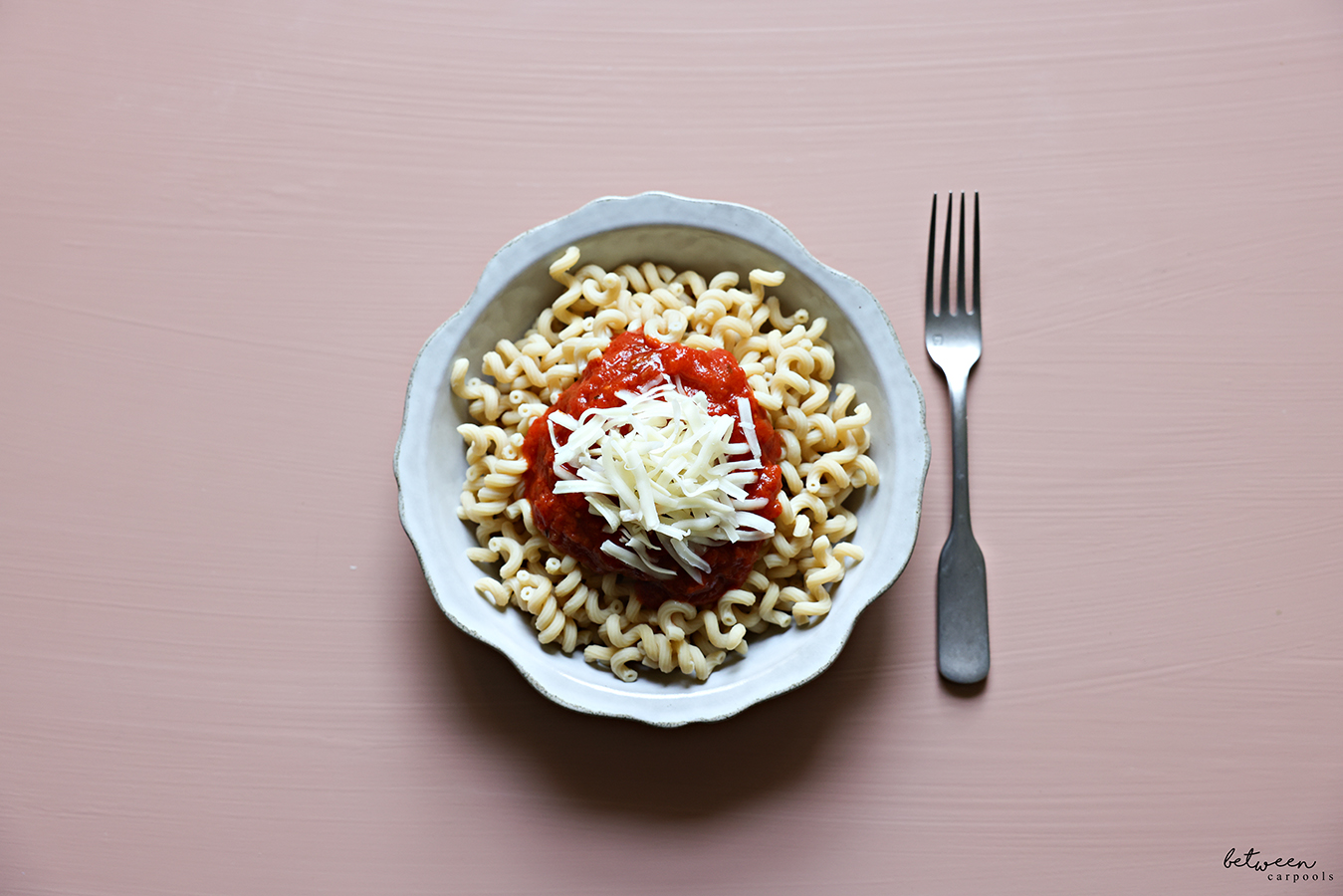
I was online at a local market when I spotted this product near the checkout.
“Pasta with protein? This looks cute. Let’s see if my kids like it,” I thought as I threw it into my basket.
It was summertime, all of my older children were away in camp or yeshiva, and honestly, my little kids didn’t want such formal food. Fresh pasta with melted cheese and a basic Romaine salad was more than perfect. And if they can get some protein in there, I’d be thrilled.
The product was Goodles, and I didn’t know at the time that it was already viral. Kids loved the fun shapes and taste, and moms just felt better about being able to serve them a pasta that’s more nutritious and filling than the standard.
My kids felt likewise. All summer long, “Goodles,” was a new dinner option. Whenever they’d ask, “What’s for dinner?” and it was a day that I hadn’t cooked a thing (i.e. most days in the summer), I could say “Goodles” and they’d say “Yay!”
Even though it’s only a couple months a year when I can get away with that (when adults are likewise happy with just grilled proteins and a salad), I want to reach out to all those younger moms who are currently feeling the picky eater angst, all year long. When my older kids were younger, I had so many years when I wanted to cook a variety of foods, and I’d be frustrated that the items that my kids would actually eat were so limited. Dinners like these Sneaky Protein Pancakes came about as a result. I felt like it took more time and brainspace to think of “Adult Dinners” and “Kids Dinners.”
My older kids eventually grew up and weren’t as picky anymore. My younger kids grew up with teenagers in the house, so their inherent pickiness was much less extreme. Even so, I’m happy that a product like Goodles now exists and that they can feel fuller and get more nutrients when all they want is that simple pot of pasta.
There were a few things I learned about my own children’s picky eater stages that I realize now, looking back.
A little change in perspective goes a long way. Nowadays, instead of using the word “picky” I use the word “easy” when a child only wants the basics. Yes, it’s typically much easier to prepare the types of foods picky eaters like.
It’s not about you. You want to be able to cook and prepare a variety of foods for your own creative fulfillment. Or, because you feel like you’re a better mother and you’re doing your job better if you offer protein, starch, and vegetables in each meal. Don’t worry about you, and don’t feel guilty. Right now, you’re saving time and money. Don’t be envious of the mother who needs to spend lots on chicken cutlets, salmon, or meat, to feed her family when all your kids want is macaroni and cheese. Save the creativity for Shabbos.
Don’t try to reinvent the wheel or be creative when it comes to side dishes. You are desperate for your kids to eat vegetables. Don’t spend time trying to figure out what vegetable recipes they like. Yes, I know you want to test out every side dish option in Dinner Done 2. It could be that they’ll love a bunch of them. But don’t stress. Just have a fresh veggie platter with dip available on most days. Kids naturally like raw, crunchy veggies over cooked veggies and each child probably has 1-2 favorite raw veggies that they do like. Even cut apples and oranges works. It’s good for them to see fresh veggies or fruit on the counter.
One dish meals saves a lot of brainspace. Yes, I recognize that you still need to cook for adults (even if it’s just your husband and maybe yourself). It could be hard to manage to prepare proteins, starches, and vegetables for the adults when you’re also trying to think about what the picky eaters would eat. All-in-one recipes are a great solution. Curate your own list of one recipe dinners that work (there’s plenty in Dinner Done and here on BCP).
Critics might be skeptical of products like Goodles and say that it’s just teaching kids to be comfortable with their picky habits and for moms to be complacent with their picky habits. I say, again, don’t stress. They’ll eventually grow up and want variety. For right now, if they’re happy and you’re happy, it’s good.
Think of dinner as a hug. Does that change what you prepare? Does that change your perspective towards your picky eaters? You want all children to feel the hug, to feel like you’re thinking of them when they’re away all day. Just keeping this in mind helps when you’re working so hard to please everyone.
If anyone has picky eater tips, or questions that we can answer for each other, please comment below.
 Between Carpools11 days ago
You’re planning an upsherin and need pekalach.
Or hosting a Sheva Brachos, and want to add a custom touch.
You need a tefillin bag for your Bar Mitzvah boy.
Your sister-in-law had a baby, and you need the perfect baby gift.
Maybe you need a chosson gift. A kallah gift. A teacher gift. A thank-you-for-having-us gift.
And you don’t have unlimited time to search for the perfect vendor, browse their selection, and find the gift you’re looking for.
Jasmyn is the brand-new Jewish artisan marketplace we didn’t know we were missing. Essentially, Jasmyn is a Jewish Etsy! Jasmyn curates a phenomenal selection of small businesses and talented Jewish vendors all together in one place, with thousands of products for gifting, home, simchos and all those shopping occasions that keep going on your (endless) to-do list. All those gifts you need? You can find them on Jasmyn!
There are already 100+ vendors and 6,000 products on Jasmyn, and the list keeps growing. Shopping is just so easy: the browsing, adding-to-cart, and ordering all takes place on Jasmyn’s platform. It’s organized, it’s curated, and it’s beautiful.
Our favorite part might be the Jasmyn Edits! Instead of searching and searching, you can shop a curated collection for exactly what you need. Simcha? Start here. Hosting essentials? Here. Chanukah gift guide? Yup, here. You name the occasion, they’ve got an edit!
Jasmyn was created by two friends who were looking for a custom product. They realized that while there are so many amazing Jewish small businesses out there, there was no central place to find them all. So they created one!
With Jasmyn, it’s as easy as finding something you love, and checking out. They also offer corporate gifting for the holiday season, where Ahuva and Sarah curate their top picks from all their vendors where each item can be customized and wrapped.
Visit shopjasmyn.com to find exactly what you’re looking for, or shop our favorite edits, below.
 Between Carpools11 days ago
When I was younger, I thought difficult people had nothing to do with me. They could be difficult, I could be me, and we could all get along and live happily ever after.
There are difficult people you can minimize your interactions with. But what about the ones who are part of your daily or weekly life? The ones you can’t avoid?
Those are the ones I’m talking about. Some of them I loved, and with my tendency to see the best in people, I saw them as people I love with flaws. Sometimes I pitied them. I thought they didn’t mean to be difficult, and that they were so much more than their difficult nature.
Intellectually, I knew I couldn’t change people. But I thought that if I were kind, loving, and patient enough, it would be impossible for them to stay difficult. I remembered the pasuk in Mishlei, “K’mayim hapanim lapanim, kein lev ha’adam la’adam.” Just as water reflects a face, one heart reflects another. I would work on loving these people in my heart, and I believed that alone would change the situation.
And so I stayed. I forgave quickly. I gave in. I tried to be the bigger person. I forgave again. I let people be themselves. And sometimes, people stepped all over me.
Somewhere along the way, I developed some not-so-great coping skills. I protected myself with a shell. I started saying, “I don’t care.” Because if I care, I get pulled in. If I care, I get upset. So I don’t care. And I said it so often I started to believe it.
Except that this doesn’t-care attitude isn’t really me. I do care. I care about relationships. I care about people. I have opinions about things. And no, I don’t always want to bend over backward and make my life, my children’s lives, or my husband’s life more difficult just to keep someone else happy.
I had lost the ability to ask myself a simple question: What do I want? Did it even matter what I wanted? I wanted peace. I didn’t care. So whatever the other person wanted was fine. And eventually, I had no idea what I actually wanted anymore.
I couldn’t make everyone happy. Trust me, I tried. And the more I tried, the more people seemed to be unhappy with me.
I can’t pinpoint the day it happened, but slowly, resentment started to build. I was becoming bitter, and that bitterness hardened.
And the hardest part? Some of these difficult people loved me. They cared about me. But that didn’t stop them from criticizing, demanding, guilting, manipulating, or making me question myself. Their love for me didn’t automatically make their behavior easier to live with.
I started overthinking everything. I didn’t label myself as anxious. But some days I would think and think. How did I become the bad guy in this story? Maybe I need to do something. Maybe I need to apologize. Maybe if I explain myself better, things will be okay.
Some days, I thought I needed to cut these people out of my life. Do something drastic. Teach them that I was done! Other days, I thought I needed to demand that they change.
And then I circled back. How can I fix this? What did I do that makes them behave this way?
But a life filled with bitterness and resentment is not a way to live. Realistically, I didn’t want to cut people out of my life. I didn’t want to break up families or relationships. And people don’t change just because you ask them to (shocker!).
So I realized the only person I can change is me. It wasn’t natural. Some of the changes felt like the opposite of who I was and the middos I wanted to embody.
For a long time, I thought being a good person meant being understanding, forgiving quickly, and giving people another chance. My friend Ruchy once told me that’s being nice in the moment, but it’s not kind long term.
I could be understanding of someone’s struggles without agreeing to be on the receiving end of their behavior. I can love someone and still not like how they treat me.
Resentment was my clue. I kept saying yes while wanting to say no, and I couldn’t keep blaming other people for taking what I kept giving them.
What I needed were standards, or as people call them, boundaries. I used to think setting boundaries meant being harsh, selfish, or unkind. But it’s still kind to say, “I’m going to put down the phone when you talk like this.” It’s also still kind to say, “I’m not comfortable with this.”
The changes didn’t happen in a day. Or a week. It took months. When I started saying these things, it came across as anger. I said it with the bitterness of someone who’s been holding this in for a long time. That did NOT go over well. I just came across as difficult as them. And so the next time, I tried again. And again. Until I was able to say it as a statement without the heavy feeling behind it.
Why was there so much heaviness behind it? Once I started caring again, the feelings came rushing back. When you don’t care, you shut feelings down. When you start caring again, they can feel suffocating. My friend Rivka reminded me that thoughts are just thoughts, and even strong feelings pass. You can feel upset now and feel completely different later.
Knowing what I needed to change didn’t mean I knew how to change it. For a while, it was hard to see how things would ever feel different.
Here’s what change can look like. These aren’t my stories, but I’ve heard them from so many women over the years. I’m sure you can add your own.
Again.
It’s the third time this year, and you’re not sure why. You can ask her once if something is wrong. If you did something, own it and move on. If she won’t say, you don’t have to spend the evening chasing her or trying to win her over. Enjoy the other family members. Be polite without making it your job to fix the relationship alone. And you don’t need to stay up all night replaying it. (Raise your hand if this is you )
You don’t have to yell back. You don’t have to make him understand your point right then and there. You can calmly say, “I’m going to step out of the room. I’m happy to listen and discuss this with you after we take a 20-minute break.” You can want to work things out and still decide that you aren’t going to have the conversation while someone is yelling. Taking a break isn’t the same as giving up on the relationship.
This is about people who are hard to live with. If you feel unsafe, a boundary isn’t enough. Please reach out for help.
You get pulled into a conversation about what your sister said, what she meant, and what you should do to make her happy. You can say, “If she’s upset with me, she can call me directly and we can discuss it. We don’t need to turn this into a three-way conversation.” You don’t have to get involved in every conflict, explain yourself to people who aren’t part of the situation, or take responsibility for feelings that someone else hasn’t even discussed with you.
My friend Chaya gave me a way to remember all of this: the 3 C’s, a rule of thumb from Al-Anon. You didn’t cause their behavior, you can’t control it, and you can’t cure it. Your part is how you respond.
You don’t have to do this alone, and you don’t have to lose yourself first. There are therapists who specialize in this, books, and friends who’ve been through it. Reach out and find the support you need.
I’m still learning. It’s still hard for me to tolerate people’s disappointment in me. I don’t think this is about becoming less kind, less forgiving, or less understanding. It’s about recognizing that I can be kind without making myself responsible for everyone’s happiness.
I can care about people without letting their moods determine mine. I can forgive someone without pretending that nothing happened. I can want a relationship to work without being the only person working on it. And I can be the kind of person I want to be without disappearing in the process.
The Hidden Point System in Our Relationships, on keeping score.
Should Your Husband Be Your Best Friend?
Thank you to C, who is the reason this article exists. For all the listening, the insight, and for always being there. I am so grateful for you.
 Between Carpools11 days ago
Have you been hearing about United Refuah for years, but have just been too overwhelmed by the details to make the switch? As we’ve shared here before, it’s a simple concept that makes so much sense. With United Refuah, members help share in one another’s eligible medical expenses through monthly contributions. How much you pay depends on your membership size.
Back when United Refuah HealthShare first launched eight years ago, we shared our positive experiences being part of it during the early stages. Now it’s time for another update!
Yes, It’s Different Than Insurance
Being part of a health share is very different than traditional health insurance! Even if you’re unsatisfied with your health insurance (and we know that so many of you are), a health share still feels like a big leap. There’s a lot to understand, and of course, you have questions.
First, Know That You Can Be Confident
We’ve been with United Refuah since its inception. At first, we weren’t sure it would work, but time and again, they’ve exceeded our expectations. The process is smooth and simple, their payment system works beautifully, and whenever something more complicated comes up, their team is there to guide us every step of the way.
With the trust of so many behind them- over the past eight years, United Refuah has exploded! Membership has doubled in the past 20 months alone, and they’ve continued to expand their sharing allowances.
And they’re not slowing down. Starting in 2027, United Refuah is increasing its per-incident sharing limit from $1 million to $1.5 million, expanding wellness sharing, adding a new annual skin-check allowance, and making dental sharing more flexible. Their Preferred Provider program is also growing, giving members another way to access eligible care with a low, flat check-in fee and without the usual PreShare or CoShare responsibility. Their clients asked, and they listened!
With all these changes and additions, monthly contributions will be adjusted starting January 1, 2027, which is their first price increase, ever!
By now, being part of United Refuah isn’t revolutionary anymore. It’s a go-to for people who are looking for a way to keep their healthcare costs down while maintaining a high standard of care.
Beyond the Medical Expenses–Behind UR Are Real People There to Help You
United Refuah does more than just sharing medical costs. Their goal is to help their members stay healthy! So members have access to health coaching, 24/7 telehealth, mental health services, and a case management team that can help them navigate the healthcare system. So whatever your need is, whether it’s a specialist or an MRI or just have health-related questions, their team helps you understand your options.
No Time is Better Than Now
Some of us have been part of United Refuah since the beginning, we’ve seen how it works, and we’re happy to continue to be part of it going forward. It just gets better with time.
Think this may be the perfect fit for your family? Learn more and schedule a call with United Refuah here. And when you’re ready to join, use promo code BCP-50 for a $50 Visa gift card* upon acceptance!
*New applicants only, expires December 31, 2026.
United Refuah is a non-profit healthsharing organization. It is not insurance and does not offer insurance. See Sharing Guidelines for full details. Application and annual renewal fees apply.
Between Carpools12 days agoWe’ve all been there more times than we can count. It’s 3 or 4 p,.m. and just about crunch time and we’re still asking ourselves, “What’s am I making for dinner?” Yes, even we ask ourselves that question often! It’s not only about choosing a recipe. What’s the complete meal that’s practical, not too time-consuming to prep, and will please the whole family (not an easy feat!)?
To solve this issue once and for all, we went through our favorite Between Carpools recipes and the cookbooks we can’t cook without, and paired all our favorite mains with the sides that make it a complete meal. The result is 99+ family-friendly dinner ideas in one printable guide, so you can stop staring into the fridge and start cooking. Grab your free copy below and start menu planning. We’ll send it straight to your inbox.
Planning is often the hardest part of dinner prep. Starting now, that part is easy!
 Between Carpools13 days ago
A couple of times a year, during the Sephora Savings Event, Sephora does a storewide discount of 10 to 20% off, depending on how much you shop there, as well as 30% off the entire Sephora Collection for everyone. Because premium makeup doesn’t go on sale often, it’s a good time to try new things or restock some favorites. We put together some of our team favorites— and also asked our daughters for some of theirs.
Excellent tips for Soft, Natural Makeup for Teens by Tzippy Mondrowitz
The fall Sephora Sale event is running October 30 to November 11, 2026.
Have you discovered a great new product?
Share it in the comments below!
 Between Carpools13 days ago
The Sephora savings event is live now! This sale happens twice a year and it’s free to join. Rouge members get 20% off, VIB members get 15% off, Beauty Insiders get 10% off and all Sephora collection products are 30% off for everyone.
Makeup and skincare shopping can be overwhelming, so consider this your friendly makeup artist guide of what to buy at the Sephora sale.
The 5 Minute Makeup For a No-Makeup Natural Look
PS. Some of these makeup products are expensive and rarely go on sale so grab them now!
 Between Carpools14 days ago
Every once in a while, the team needs a teen to give them some insight into high school life.
So, I’m the lucky daughter of Esti Waldman here to give you the ultimate guide to slick back ponytails. From brushes to gels, mousses to ponytail holders, here’s pretty much everything you need to know in order to make the perfect slick back. Enjoy!
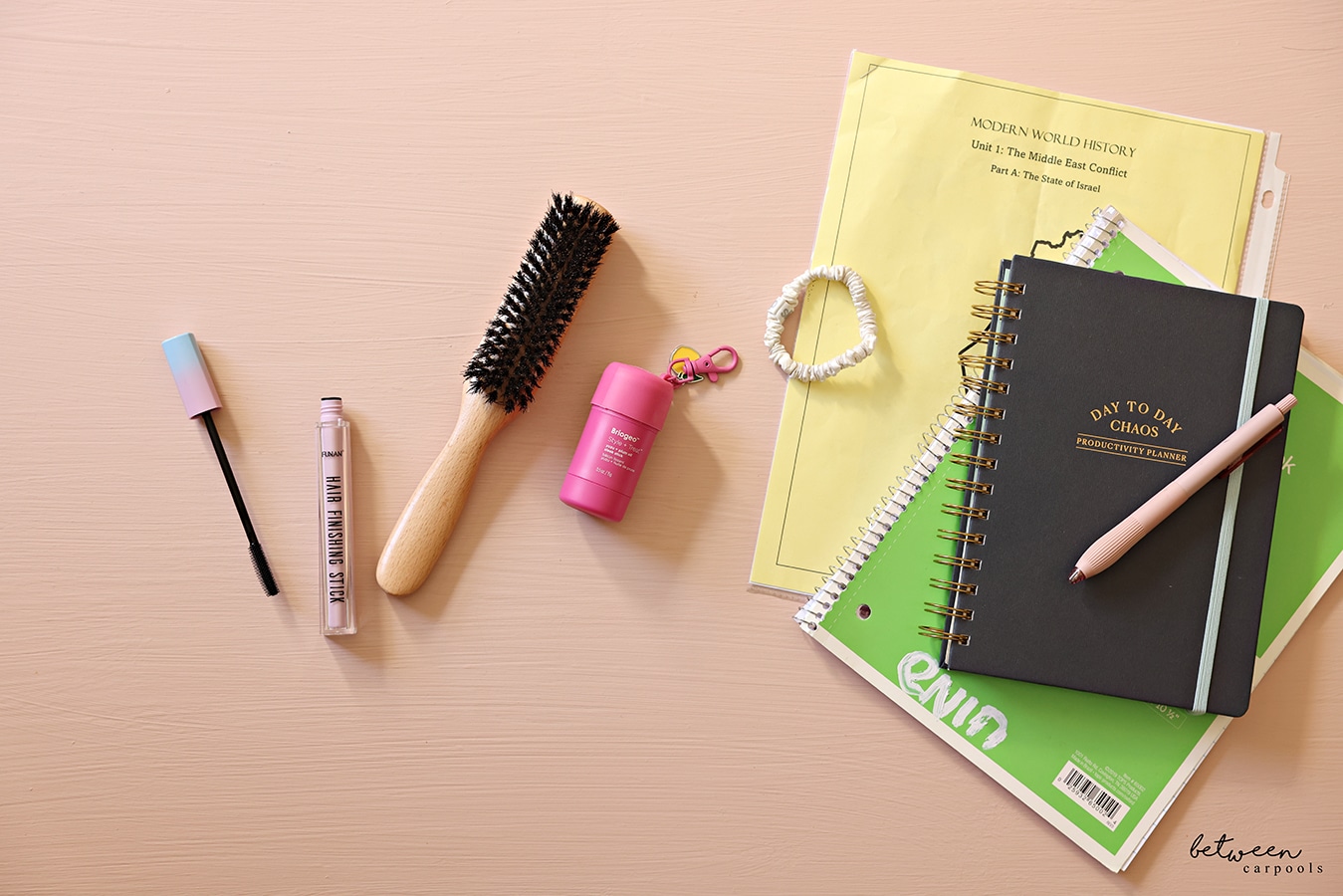
For starters, you’ll definitely need a “slick back” brush. GranNaturals Boar Bristle Slick Back Hair Brush is a good choice. This will smooth the top of your ponytail, and your hair will lie flat more easily.
There are some mini brush options, like the EcoTools Slick Back Small Hair Brush, that are great for on the go or for flyaways.
Or, you can get a set with a regular size brush and a mini brush to stick in your backpack or locker. The Slick Back Hair Brush Set comes with multiple different sizes and a comb too, which is great if you like to get your part perfectly straight!
To hold hair into place, most girls either use gel or wax sticks. They pretty much accomplish the same thing, with gel hardening more, and wax remaining more or less the same throughout the day. Gel also tends to leave some white pieces in your hair after it hardens, but is easier than wax to apply smoothly to hair.
These are some tried-and-true gels that many girls use: Eco Style Gel Olive Oil Styling or Garnier Fructis Hair Styling Gel. Some wax stick options include SNTE Wax Stick and Brush (this one includes 3 different sized brushes), TIGI Hair Wax Stick or Briogeo Styling Sleek Stick.
Hair mascara gels are very popular options for flyaway and frizz control especially throughout the day. They’re small and easy to keep in your purse, locker etc.
Some girls also use hair mascara gels instead of gel or wax sticks. This gives the option of a less slicked style. Some good options include Funan Hair Finishing Stick, Garnier Fructis Frizz Tamer.
Another favorite product which isn’t really mascara gel, but accomplishes the same thing is T is for Tame Hair Taming Cream Wand. This one leaves the least amount of dried residue at the end of the day.
Some girls like to use mousse for the actual ponytail, especially if they have curly hair.
TRESemmé Bouncy Curls Air Dry Foam is one of the most popular, but TRESemmé has many different mousse options that focus on achieving volume, curls, or definition. Garnier Fructis Curl Construct Creation Mousse is another great one.
You should also make sure you are using soft ponytail holders that don’t tear your hair.
Some important tips to remember when making slick backs:
 Between Carpools15 days ago
When the sun sets early, it’s cooler outside, and all the kids are indoors, suddenly 3 p.m. until bedtime feels like a long, long time.
When you have older kids, the evening moves along. Even if the little ones are home at 3, more come home at 4, another at 5, and you’re basically moving from dinner to homework without a chance to catch your breath.
And the little ones? They just go along with the flow of the house. There’s plenty of noise and they are very entertained. But what about when there’s just little kids in the house and you?
First, Moms of little kids, you should know that it gets easier!
But once you know that, now that you do have a house full of little kids, what do you do with them all afternoon?
One of my easy mom hacks is bathtime! Bathtime takes time, the mess is minimal, and you end up with clean kids!
In the past, we’ve shared bath toys you can buy, and a bathtime activity with foam shapes.
We’ve also shared how to make bubbles in the bath. It’s a great skill for little kids to learn, and it definitely keeps them busy for a while.
But what about the basics? What if you just want to give your kids a good old-fashioned bubble bath?
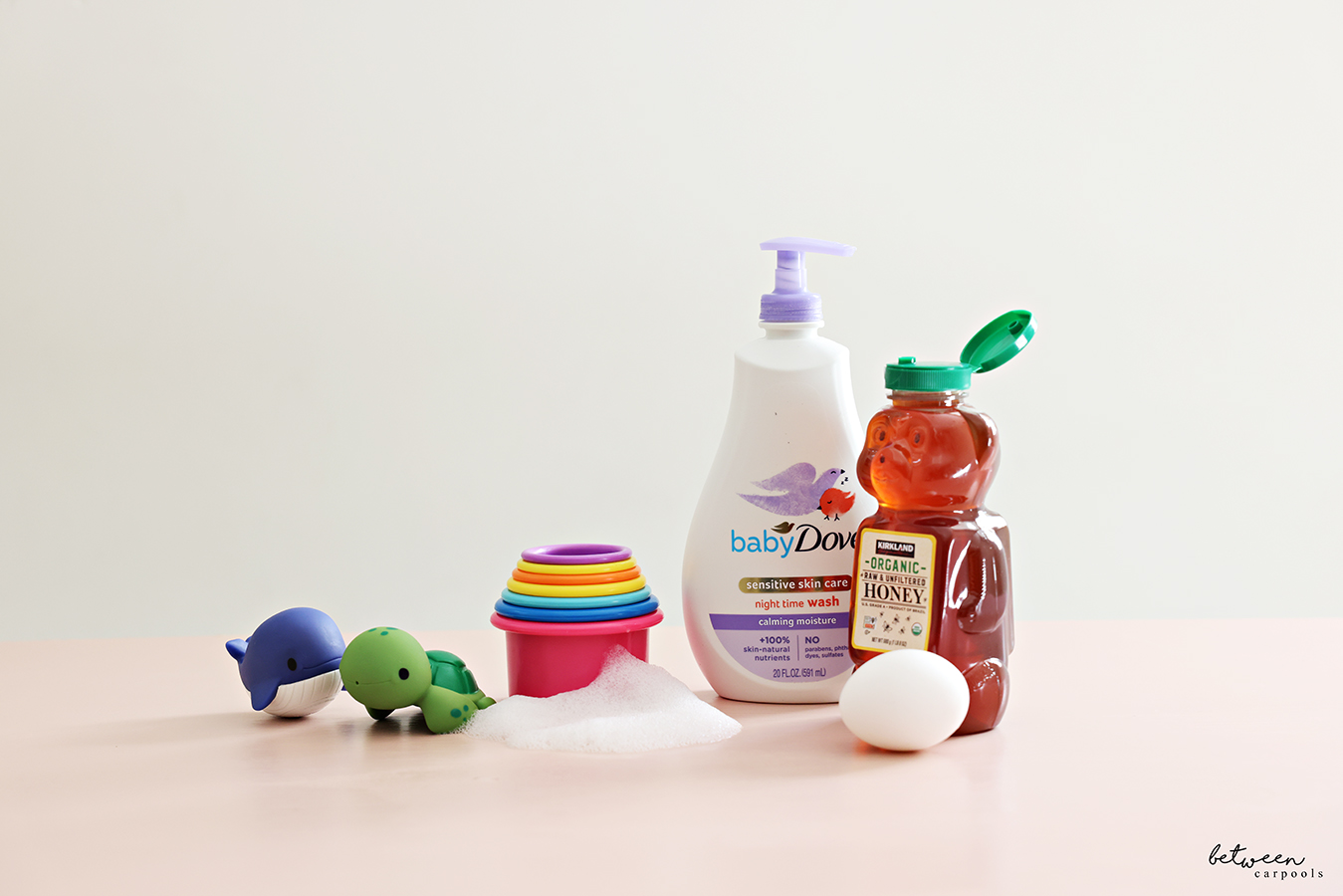
Yes, you can buy a good bubble bath soap. You can let them pour in lots of soap and hope for the best, or you can make your own bubble solution right in the tub.
Here’s what you need to make your homemade bubble bath:
Here’s what to do:
Gently mix the soap, sugar, and optional egg white. Don’t overmix. Pour the mixture under the running faucet as the tub fills.
The running water helps create the bubbles, while the sugar helps them last longer. The egg white helps create slightly stiffer bubbles, but the recipe works just fine without it.
Throw in a bath bomb with a surprise inside, and you’ve got yourself some entertainment for those cold winter afternoons when it gets dark early!
Want an outdoor bubble solution? We’ve got that too!
 Between Carpools15 days ago
When we asked our friends if they’ve ever been to Smash House Lakewood, we didn’t expect their eyes to light up with excitement.
“Great, fun food. My kids loved the boxes!”
“The burgers are amazing! My son loves the food there. I can have him write the entire review.”
“The food is so generous. You get more for your money there than any other takeout.”
“Fresh, delicious…we love the sandwiches, and the kids are always so happy too. They love the burgers!”
“We love to order, because the way the food is presented is so fun, it’s like the restaurant is transported home. But we love to visit even more when we can.”
Wow! We were sold. We started off with a delivered order and we saw: The Smash House gets it. They know how to feed a family, how to make a night out special, and even how to make ordering in feel like a treat. And, yes, the portions were super generous.
It wasn’t only the presentation–from the burgers (with “Smash Sauce”), to the crispy chicken (Or Chicken n’ Fries!) , to the sandwiches with great toppings (The Crispity Crunch!), the fries, appetizers (Blooming Onion or Popcorn Chicken!), and even the healthier options on the menu (like the Cobb Salad or the Grilled Chicken Wraps–yes, there’s plenty options!), each selection fresh and yum.
The Family Boxes are a specific favorite to share–with burgers, chicken, fries, and onion crisps, it’s an entire meal for the whole family.
This is our new go-to for that delicious, family meal with a fun kid-friendly atmosphere–but it’s also a great place if you’re going with friends or your spouse. The Smash House Lakewood is strictly a Lakewood Edition, with a menu designed for Lakewood standards and a great hechsher.
Head to The Smash House now and use our code between today 10/28 – 11/8 for the 10% off Family Special (10% off with code BCP10) or 5% off Couple Special (5% with code BCP5). Mention code at the counter. $100 minimum for family discount/$50 minimum for couple discount.
Between Carpools16 days agoWe found these crackers to be more chewy than the Classic Sourdough Crackers featured here, but in a satisfying way. For more uses for sourdough discard, see this post!
Unlike the Classic Sourdough Crackers, which can be prepared using either active or inactive starter, this one is perfect for after that starter is active and you have lots extra. Or, plan ahead and prepare extra starter so you can bake them special!
Add discard to a large bowl. You’ll need a lot of it, so save this recipe for when you have lots of extra and want to make good use of it!
Add olive oil and salt.
Whisk well to combine. The batter should be smooth without any visible oiliness. Use a whisk or a spatula.
Line a baking with parchment paper. Spread the batter out to the edges of the pan in a smooth even layer. An offset spatula will help you with this step.
Sprinkle the top of the batter with the sesame seeds. The more sesame seeds, the better!
Bake for 30 minutes. After 30 minutes, remove the pan and use a pizza cutter or a sharp knife to score the batter into cracker-sized squares. (Alternatively, you can skip this step and break the crackers when fully cooked.) Return baking sheet to the oven and continue baking for 30 additional minutes.
Remove the baked crackers from the oven and allow them to cool completely before breaking them along the scored lines.
Enjoy!
Preheat oven to 325°F.
In a large bowl, combine the discard, olive oil, and salt. Whisk well to combine. The batter should be smooth without any visible oiliness. Use a whisk or a spatula.
Line a baking with parchment paper. Spread the batter out to the edges of the pan in a smooth even layer. Use a spatula to help you with this step.
Sprinkle the top of the batter with the sesame seeds. The more sesame seeds, the better.
Place baking sheet in the middle of the preheated oven and bake for 30 minutes.
After 30 minutes, remove the pan and use a pizza cutter or a sharp knife to score the batter into cracker-sized squares. (Alternatively, you can skip this step and break the crackers when fully cooked.)
Return baking sheet to the oven and continue baking for 30 additional minutes.
Remove the baked crackers from the oven and allow them to cool completely before breaking them along the scored lines. Store in an airtight container.
Between Carpools16 days agoYes, you do need starter to make these crackers, but if it’s not active, that’s totally fine.
Have lots extra starter? You might also want to try these Sesame Sourdough Crackers!
Sourdough crackers are a delicious item that we recently started baking and haven’t stopped. Unlike most traditional crackers, these taste good and are also good for you.
They work well with any dip, chummus, tuna, cured fish, herrings, or an addition to your lunch/snack.
This recipe was shared with us by Leah Lisser, our sourdough guru!
Preparing these crackers is easy! The only tedious part is rolling out the dough as thinly as you can to achieve the best consistency possible.
We have prepared this with active starter as well as inactive starter. We found almost no difference in the results.
Add ingredients to a bowl. The order doesn’t matter. For easy measuring, press “tare” after each addition to get an accurate scale reading.
Mix until a dough forms. This dough doesn’t need to rise, but you can let it rise if you don’t want to roll and bake right away. At this point, you can continue or put the dough in the refrigerator for up to 2 days.
If you are baking immediately, divide dough into two. Roll each piece between two sheets of parchment, SUPER thinly. You will know it’s thin enough if it doesn’t clump up when you cut it. This is the only hard part! The thinner you go, the more crunch you’ll get!
Lift top sheet of parchment paper and sprinkle with whichever toppings you like! The combination we like is Everything Bagel Spice with some extra dried minced onions.
Return parchment paper to the top and roll over once to imbed the toppings in the cracker. Remove top parchment and cut into squares using a sharp knife. Transfer bottom parchment paper and crackers to a baking sheet.
Bake for about 15 minutes until light brown in color.
Crackers may look overbaked, but they’re the yummiest this way!
Don’t underestimate how useful these will be when you want to take lunch to go or need something crunchy to add to a meal!
5 from 1 vote
Preheat oven to 350°F if you will be baking the crackers immediately.
Add ingredients to a bowl. The order doesn’t matter. After each addition, press “tare” to get an accurate scale reading.
Mix until a dough forms. This dough doesn’t need to rise, but you can let it rise if you don’t want to roll and bake right away. Either roll out immediately or let rise in the refrigerator up to 2 days.
Divide dough into 2. Roll each piece between two sheets of parchment, SUPER thinly. (You will know it’s thin enough if it doesn’t clump up when you cut it).
Lift top sheet of parchment paper and sprinkle with desired toppings (we like Everything Bagel Spice and dried minced onions). Return parchment paper to the top and roll over once to imbed the toppings in the cracker. Remove top parchment and cut into squares using a sharp knife. Transfer bottom parchment paper and crackers to a baking sheet.
Repeat with other dough. This recipe will yield 2 baking sheets of crackers.
Bake for about 15 minutes until light brown in color. Crackers may look overbaked, but they will taste best at this point.
 Between Carpools17 days ago
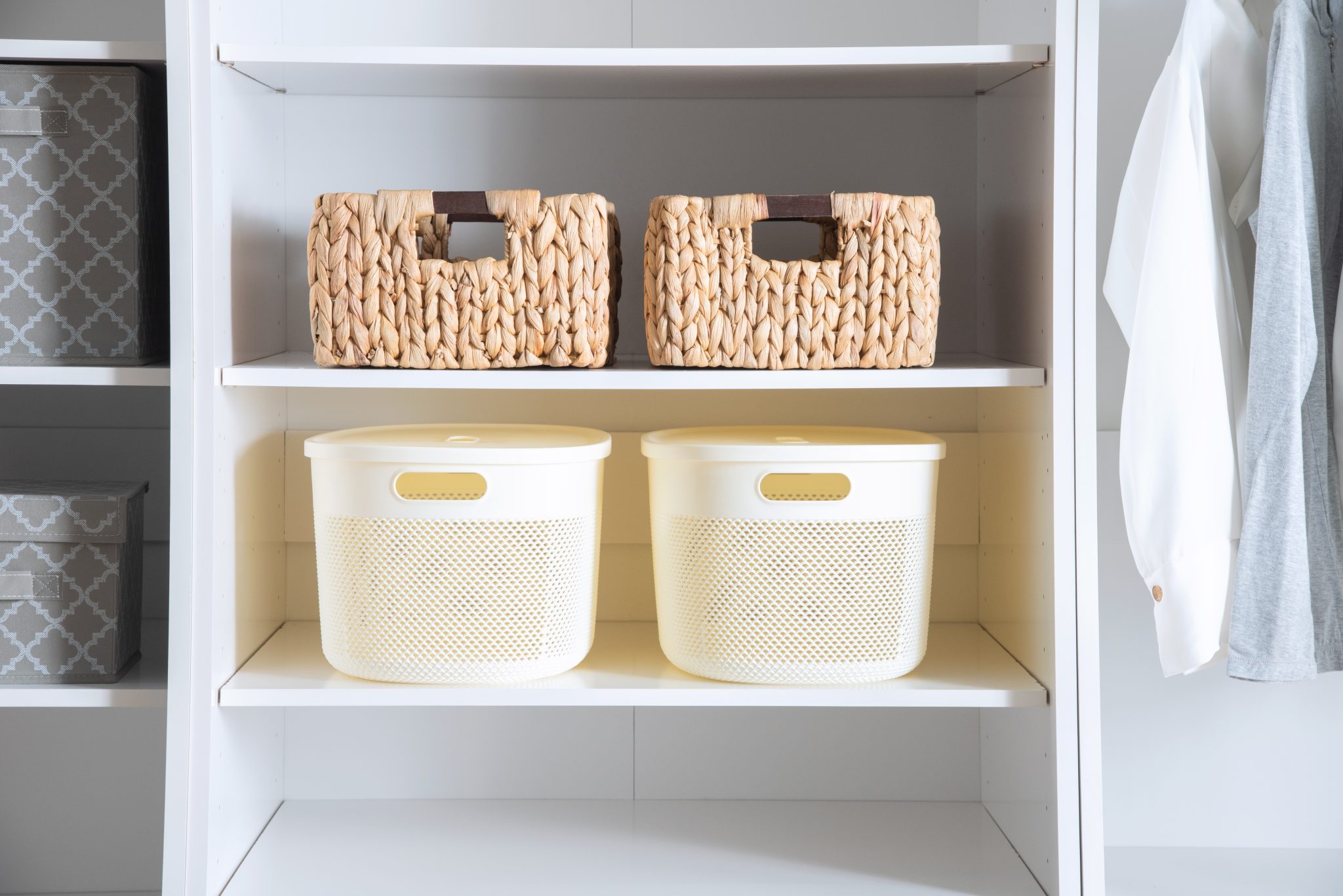
This is a guide to shopping for bins that will actually work in your space. Keep these 8 “bin factors” in mind as guidelines for choosing the right ones!
MEASURE FIRST
Measure ALL usable space including depth and height, and note if shelves are adjustable. Look out for moldings or hinges that may interfere.
For pantries or high-traffic spaces, handles make it easier to pull and grab.
Which one you need depends on the contents! Food/clothes vs. weather-proofing/longer-term storage.
Opaque offers a neater, more uniform look (and is effective in hiding clutter). Clear bins are best for easy visibility and when used by young children i.e. in the playroom.
Buy bins that are always available (reliable stores, not special editions or clearance items) and that come in multiple sizes to accommodate different items within the same space.
When stacking bins, consider bins with drawers for most accessibility i.e. under a sink.
Make sure bins have straight edges so you don’t lose space when bins narrow towards the bottom. Avoid round bins or corners if space is limited.
Lids are useful with small items to avoid spilling or if you want to stack bins. Open is convenient for dropping things in quickly i.e. in a mudroom or pantry.
 Between Carpools18 days ago
When I got married, my mother (optimistically) bought me an iron alongside all the other gadgets I needed. I was not sure what she expected me to do with it! The bulky iron was banished to the back of the closet for years. Now it comes out now and again…but only for Perler beads!
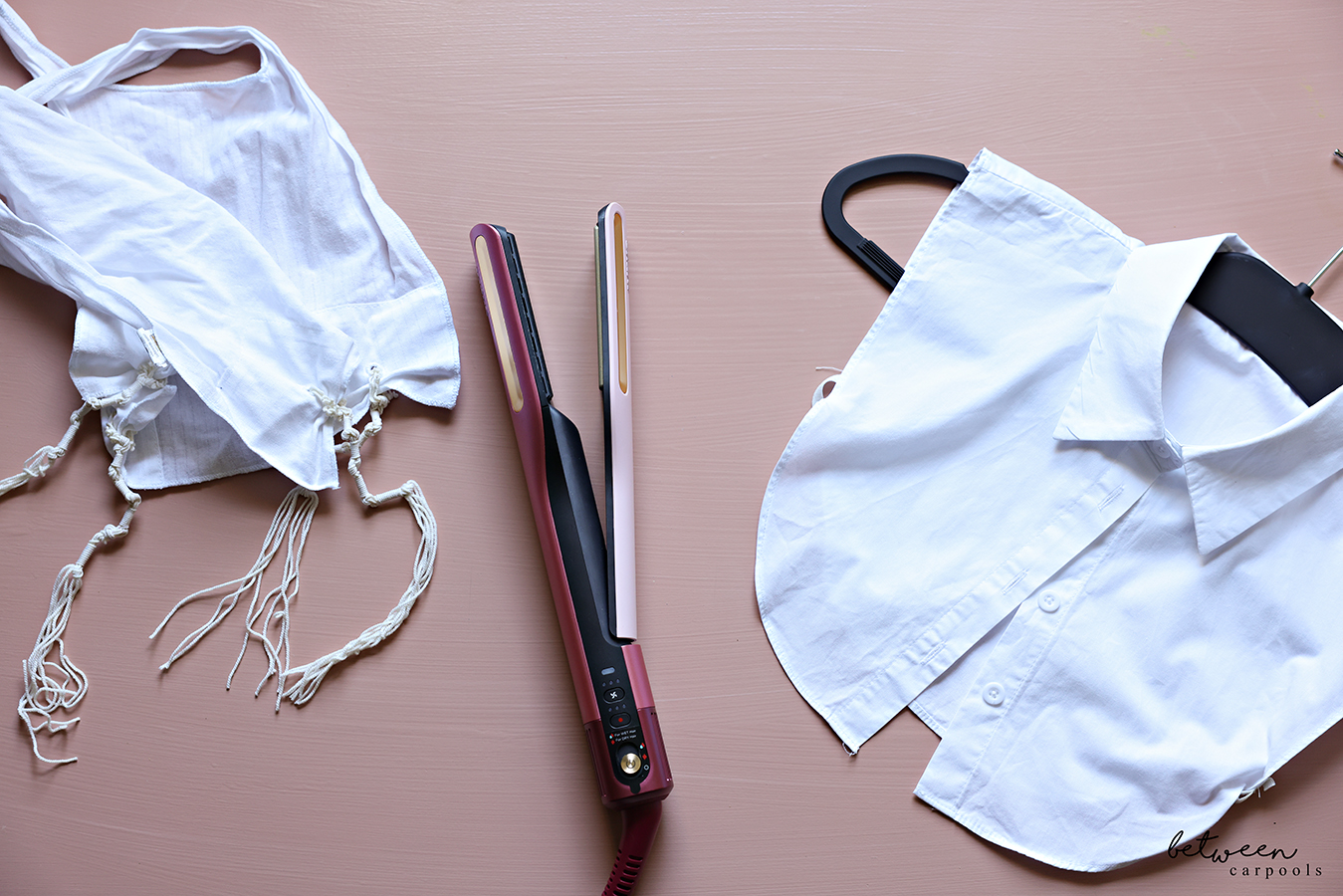
So what’s a busy mom to do when the collar of her children’s button downs need a quick refresh? Or when their tzitzis go from lightly rumpled to a curly mess? Definitely not take out the big old iron, the bus is coming in 5 minutes!
Use your hair iron.
That’s the whole hack. Your trusty hair iron heats up in seconds and effortlessly smooths out the shirt collars, plackets, and curly tzitzis. No ironing board, no problem!
Think this is blasphemous? Read our tips for ironing less and ironing in half the time.
 Between Carpools19 days ago
You know when you’re shopping and see what looks like just the thing you’re looking for? The vibe is on trend. But then, you remember you’re not shopping for a mannequin. You’re shopping for your daughter who must have thumbholes, your son who would never wear anything ‘babyish,’ your teen who has too many opinions to list, and maybe yourself too!
Yup, the little details matter.
Aurora Outerwear’s coats catch your eye right away, but it’s the practical touches that really make you add to cart! They have current styles paired with flattering silhouettes, quality materials, and thoughtful design that make them perfect for real life.
Think a hood when you need one, but a sleek collar when you don’t (yes, hidden!). Zipper pockets for when you forgot your bag, but need to not lose your keys. And, thumbhole cuffs that make your morning commute just a little less freezing. Their coats are down-filled, with genuine fur trims. And yes, they’re stocked with everyday jackets and dressier Shabbos coats too!
Aurora develops its collection in-house, which helps keep costs down without cutting corners on the quality, materials, or finishing details. That means you get the elevated, designer feel you’re looking for without the designer price tag.
So if you’re shopping for yourself, your teen, or your littles, Aurora’s got you covered. Because when you’re buying a winter coat, you want the look. But you also want to know that you, and your child, will enjoy wearing it!
Check out Aurora’s AW27 collection online now, or stop by one of Aurora’s locations to see their coats in person: to feel the quality and discover your favorite details for yourself.
Find Aurora in Lakewood, Monsey, Boro Park, Passaic, Baltimore and more!
Find information on all of our locations here.
Follow along for current shopping dates and hours and for behind the scenes content on Aurora’s Instagram and WhatsApp, and shop our top picks, below.
 Between Carpools19 days ago
Did you dream of spending the rest of your life with your Best Friend?
Maybe you are.
And maybe… hubby doesn’t quite match up in the Best Friend department.
His wide-eyed, empathetic listening to your latest carpool drama maxes out at about 3.5 minutes.
He’ll follow along on your favorite nature hikes for a while… but for some reason prefers to read every caption in a deadly boring historical museum.
He’s often absorbed in learning, or paperwork, or his own relaxation when you need help processing your childhood trauma over your overly strict principal and how that affects your attempts to get educational support for Duvi’s ADHD.
You may feel closer to your baby sister, your sem roommate, or even your sheitel lady (who is really a therapist in disguise). So has something gone terribly wrong with your BFF plans?
Friendship in Marriage
So here’s the thing:
Of course marriage should have a strong friendship component. After all, there’s more to a good relationship than coordinating dentist appointments, balancing budgets, and deciding whose turn it is to wash the cholent pot.
Ideally, a good marriage should include fun stuff like
Maybe that feels like a lot to focus on. Maybe it seems impossible when you’re drowning in tantrums and teacher conferences and late-night feedings.
But it’s the thread that holds your connection together. And besides, someday (believe it or not), the kids will grow up and move out and it will be just the 2 of you… enjoying the fruits of the friendship that you built, one emoji text at a time.
So yes, send that picture of your 2-year-old with the zany hairdo created with his mashed potatoes. Bring home his favorite treat “just because.” Send him that secret eye-roll across the room that only the 2 of you will understand, because it’s built on a hundred “this only happens to us” moments across a roller-coaster ride of the everyday insanity of raising a family.
Those tiny moments are the cement that solidifies and deepens your friendship, more than date nights and luxurious vacations.
Why You Still Need Female Friends
But here’s where it gets real.
Don’t expect your husband to be it all.
Of course, you’d love for him to be your therapist on call, shopping partner, parenting consultant, emotional processor, and hobby buddy.
That’s a full-time job for 5 people.
And it’s not fair to expect your husband to fill every one of them.
If you have any brothers, male cousins, neighbors, or single yeshiva guys down the block, you may have noticed something extremely enlightening:
Guys are different from girls.
They relate differently, act differently, spend their free time differently, and overall seem to operate on an entirely separate wavelength from the female race_. (Not sure? Surreptitiously observe a group of post-sem girls on Shabbos afternoon, then check out the post-maariv chill in a yeshiva dorm. Actually, don’t – but you get the idea.)_
Yet, somehow, we expect young men to magically flip a switch and become the best friend with, of all things, a girl… within 5 seconds of the last “Kol chassan v’kol kallah.”
Plus, can we grant that he is entitled to his own personal preferences, priorities, and inborn personality traits – which may or may not line up with your BFF needs?
So please – do yourself and hubby a favor. Yes, prioritize your marriage. Find opportunities to connect in ways that are meaningful for both of you.
But for the sake of your emotional well-being AND that of your dedicated husband, make sure you put in the time and energy to nurture your female relationships.
It’s OK that your ‘girlfriends’ give you something that your husband can’t or won’t do. In fact, it’s an intentional part of Hashem’s plan for the world.
A call, DMC or coffee date with a sister or friend can work wonders. She can offer perspective, understand your experiences, make you laugh, encourage your growth… with that unique feminine touch that you both share.
Chances are, you’ll come back lighter, happier, and with more emotional bandwidth for your husband.
Believe me, he’ll thank you for it.
How to Build Friendship With Your Husband
Friendship doesn’t require expensive date nights.
It grows through ordinary moments.
Try:
And most of all,
Friendship grows from hundreds of little deposits, not one big vacation.
The goal isn’t for your husband to meet every emotional need.
The goal is this:
Nurture a marriage where you genuinely enjoy each other…while also nurturing the women in your life who encourage, support, and enrich you.
 Between Carpools21 days ago
These picks look designer…but they’re really great finds we’ve sourced from Wayfair!
You know that feeling you get when you look at a cluttered surface? Compare that to the feeling you get when you look at a pretty space?
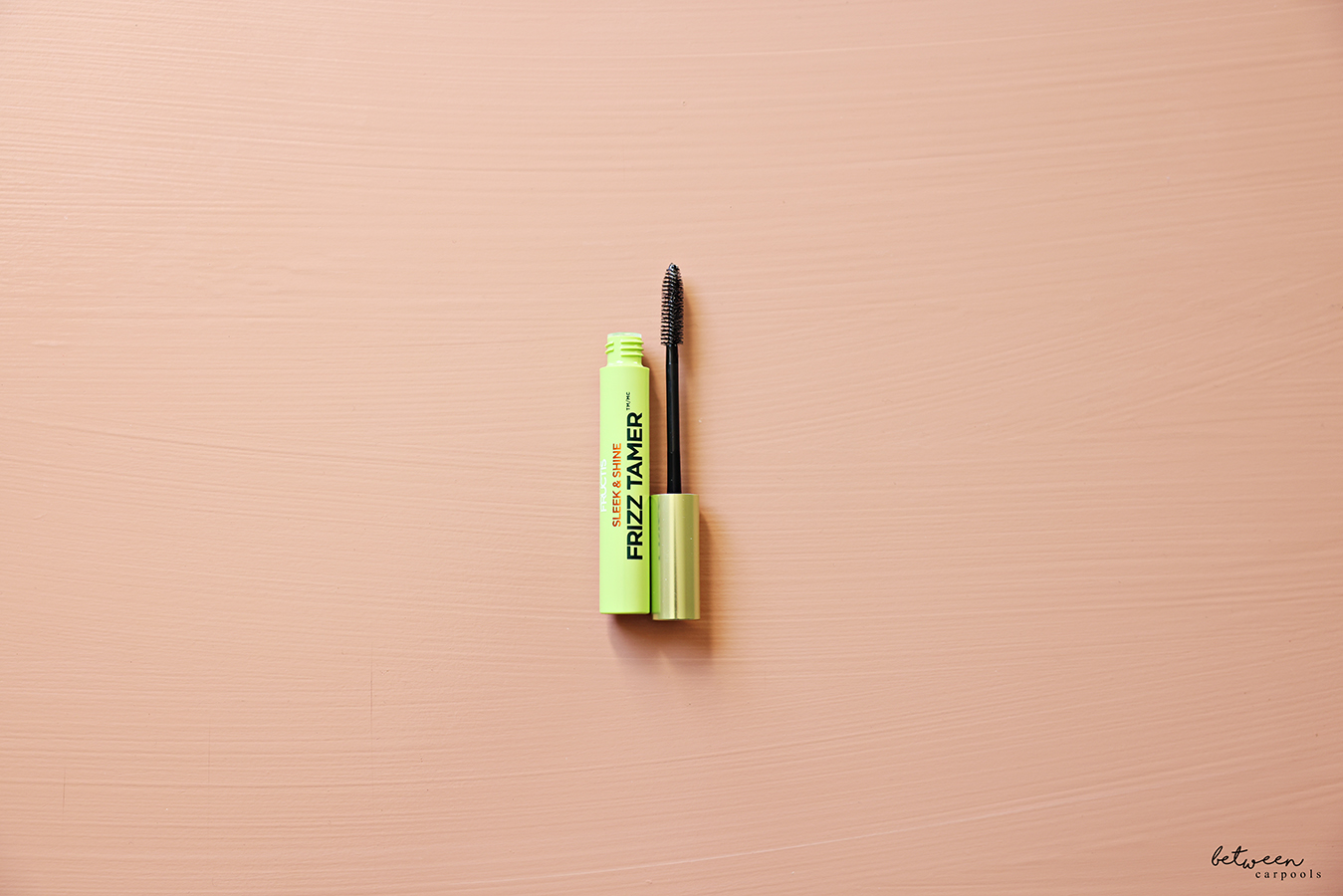
It’s a big difference, right? The right storage + the right little accents on top can mean the difference between you enjoying your space with contentment…or feeling overwhelmed.
For more mini styling tricks on the little items that add so much to a space, see this post on Small Changes for Better Aesthetics in Your Home.
No matter your style, there’s a Buffet Table look you’ll love below!
 Between Carpools22 days ago
Do you have a son who wears payos behind his ears? Often, those payos are always flying and he’s constantly hearing nudges from Mom, “Tuck those payos behind your ears!” Or, even better, she’s always reaching for them to try to make him look a little neater.
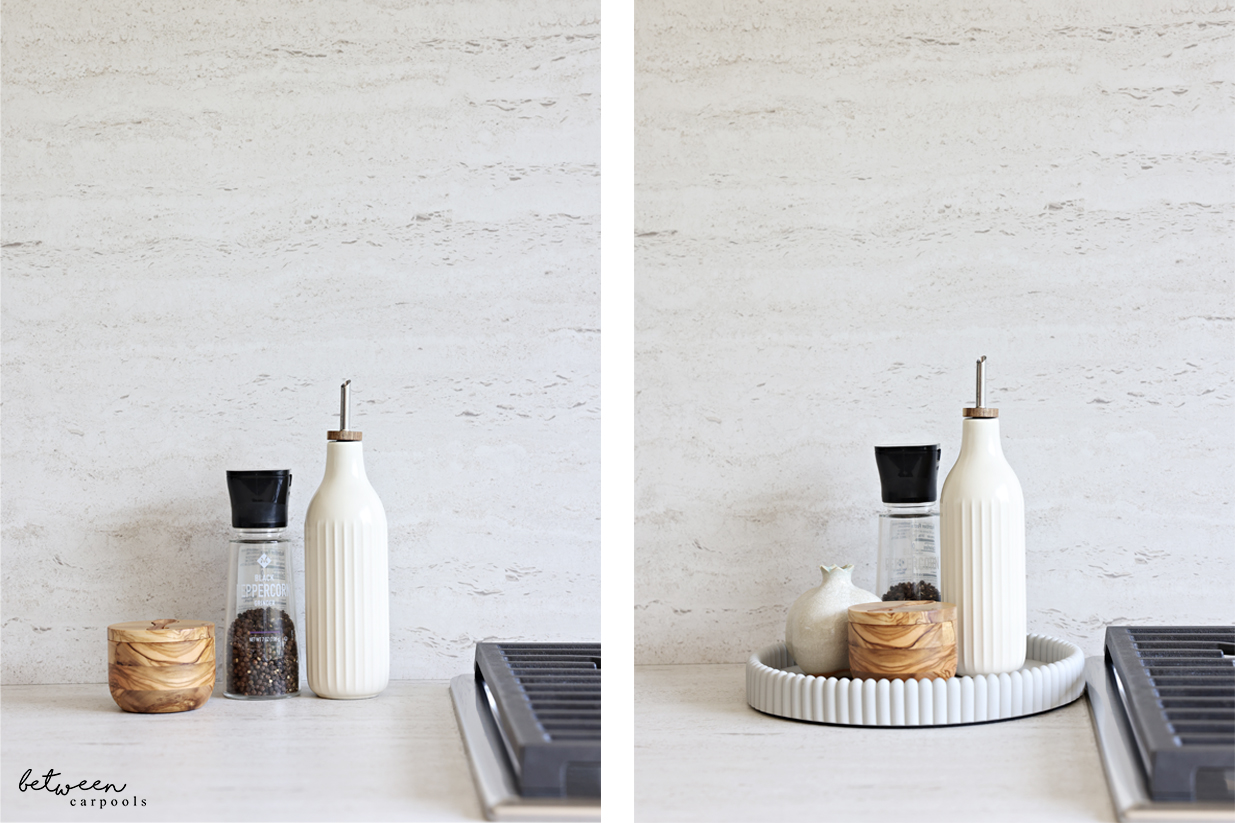
Until reader Shifra Kahn learned about the Garnier Fructis Frizz Tamer wand. It was after the upsherin of her young son when a friend clued her in.
“How is it, with all my boys, that I didn’t know about this before!” There must be BCP readers that don’t either know!
Now, she tucks the payos behind, then brushes them with the wand and… “Now, instantly, he’s neat!”
It’s quick and easy enough that it can also be used on the way to the bus stop!
 Between Carpools23 days ago
As soon as there’s the slightest chill in the air, some boys and men like to have a sweater to throw on over their shirt (that classroom, beis medrash, or office might also be chilly!). For many, all they want is something basic, neutral, neat and cozy. So what are the options?
While crewnecks and v-necks are the basic, those who don’t like a pullover like instead to make a full-zip or a cardigan their go-to sweater.
The half-zip neck is a cross between the two. It’s a nice style that looks neat over any type of shirt.
Lately, His Place has been the go-to for our boys, since they carry all of the types of styles they like in one place, in mens and boys sizes. Most popular has been the Full Zip Sweater and the Half Zip you see above.
We’ve rounded up some of their favorite picks below, along with other popular brands.
One pro of buying sweaters for the male population? Unlike women who like lots of top options, since for a boy this is mostly “outerwear,” he only needs a couple to get him through the fall and winter.
The options below cover all price ranges and sweater types, first for boys and then for men.
Between Carpools24 days agoI received a phone call from a family friend. She didn’t really want to “bother me” because she knows that all my recipes are either on the website, in Dinner Done, or in one of the cookbooks I have worked on in the past.
“Well, I checked everywhere. I can’t find your sweet potato recipe”
“Which one?”
“The good one”
She hit a nerve there.
“They are all good!” came my immediate reply. Our recipes are all amazing. Don’t discriminate between my children, please.
I had her describe it and then it hit me: the recipe she was looking for is simply the sweet potato version of these Newlywed Potatoes. It’s the way I will prepare sweet potatoes, weekly, without fail. This is my children’s favorite way to eat sweet potatoes. They eat the flesh, the skin, everything. And there’s not a photo of them anywhere.
But, isn’t it how EVERYONE prepares sweet potatoes on a Tuesday? I thought so. Also, I remembered Kim Kushner has a similar version that went viral.
Apparently, all my direction wasn’t good enough. She wanted an exact recipe. How exactly do I make the sweet potato version? So I sat down, took a few moments, and explained how these potatoes are prepared.
“Scrub them well, because they will be eating the skin too.”
“The hardest part is slicing them in half.”
“Mix it straight into the pan.”
My friend, listened patiently. Then she said what I was thinking, aloud.
“This needs to be a post on Between Carpools”
And so, now it is.
The size of the pan isn’t that important, but using a real pan is. You need that sear and crust that will develop only from using a real pan.
Start by washing the potatoes well. I like to first soak them for a few minutes in a bowl filled with water.
Use this brush to help you. It will make it so much easier! Once scrubbed, dry the potatoes well.
Now it’s time to slice the potatoes in half lengthwise. This might be the hardest part. Use a sharp knife and a cutting board. Be careful.
I like to use a smaller sheet pan, also called a Quarter Sheet Pan for this recipe. I usually bake 3 potatoes (6 halves) at a time, and that fits nicely on the half sheet pan. Obviously, you can use a regular-sized sheet pan too. Or prepare more potatoes at a time.
Combine the spices and oil directly in the pan. Mix well and place the potatoes cut size down over the oil and spices.
Bake uncovered for 30-40 minutes (time will depend on your oven).
You will know that the potatoes are ready when they are wrinkly and soft to the touch, or when a fork goes through the skin easily.
Preheat oven to 400°F. If you have a roast setting, use it.
Wash the potatoes well. Once scrubbed, dry the potatoes well.
Slice the potatoes in half lengthwise using a sharp knife (this is the hardest part). Be careful!
Combine spices and oil directly in the pan. Mix well and place the potatoes cut size down over the oil and spices.
Bake uncovered for 30-40 minutes (time will depend on your oven).
Potatoes are ready when they are wrinkly and soft to the touch, or when a fork goes through the skin easily.
 Between Carpools24 days ago
The annual Nachas B’Nachas course begins October 27! Gain step-by-step guidance to become the mother you want to be.
This course is designed to help you navigate the challenges of parenting with greater confidence and clarity.
Featuring:
Invest in yourself to bring out the best in your children!
Learn more at serylbermancourses.com
 Between Carpools25 days ago
We all have trouble zones in our homes. It might be the spot where papers simply accumulate out of thin air, or the counter that just doesn’t look right no matter how many pretty soaps you add. Perhaps it’s the night table, where you need those tissues handy.
Here are some ways to fix those trouble zones so they aren’t an eyesore. It can be simpler that you think.
The first tip is very straightforward. We might be repeating ourselves, but it’s worth it. Tissue boxes are a necessity that we need at arm’s reach. But we can do without the design of this season’s Kleenex. The quickest room upgrade is so incredibly simple. Just slide a cover over your tissue box and you have transformed your night table.
For a sportier look (think boys room, girls room or office space) you can go with this tried and true faux leather covers. For a more classic or elegant look, see these linen-like options.
You might own a pretty oil bottle, or a salt cellar that you use all the time. You want to keep it handy, near the stove, for daily use. Absolutely, that makes sense. But, what we recommend you do is add a tray to hold all the items together. A tray anchors it all to one spot, and makes it belong there. With intention. We loved this tray because of the size and the lip that contains it all so well.
Same idea here with this tray underneath the hand soap. See how it gives the finishing touch to the sink area.
Same goes in this washing area, where you need to anchor the items used daily like the netilas yadayim cup and the hand soap. A tray slightly larger than the one shown above works well here.
Perfumes are pretty on their own. Right? This super cool tray will make your bottles pop even more, while giving them a destination, a place to live.
Do you know those papers that just collect on your counter daily? Schedules, permission slips, manuals, random little toys that you are not sure if you can toss (but if you do toss, someone will inevitably end up crying). We have the solution to gather all that. Place these decorative boxes on the edge of your kitchen counter, entry table, or any space where things accumulate naturally. Treat these decorative boxes as a catch all. And let your husband and the children know that this is where they should be looking first if they are missing something.
Periodically, go through the box and sort it out.
We also liked these boxes for the same purpose. Yes! These are boxes that look like books. They’re the perfect place to hang on to receipts that you need or loose cash.
Another great aesthetic difference is bringing plants and greens into your home. Even fake ones. There are so many that look amazing now. The difference is how you do it.
Faux plants can be made to look so much better if you just give it a bit of movement and shape.
When packed for traveling, faux branches are stiff and angular. You need to bring some life to them.
Let the plant expand and breathe by bending the branches so that they take up more space and look like they are actually blooming.
There you go!
 Between Carpools26 days ago
We put so much thought into the people our children are becoming.
Are they learning responsibility, self-control, kindness, and respect? Are we giving over the right values? How can we help them manage their emotions, handle disappointment, and make better choices?
We spend years trying to shape our children. It is easy to miss that there is another person being shaped along the way.
You.
Each child brings something different out of us.
One child may require more patience than we ever thought we had. Another may bring us face to face with how badly we want to feel in control. A child who becomes overwhelmed easily may force us to learn how to stay calm in the presence of big emotions. A child who tests every limit may teach us how to remain firm without reacting in anger.
Rabbi Jonathan Rietti has a shiur titled “Your Tough Kid Is Your Tafkid.” I love that phrase. The children Hashem places in our lives can show us where our own work lies.
We do not choose our children or the temperaments, sensitivities, strengths, and challenges they come with. Hashem gives us each specific child as a gift. While we are busy training our children, their unique personalities and challenges become part of the toolbox Hashem uses to help us build ourselves.
We may begin parenting focused on teaching our children to regulate themselves. Then we find ourselves standing in the kitchen with a child screaming at us and realize how difficult it is to regulate ourselves.
Our children’s hardest moments can bring parts of us to the surface that might otherwise remain hidden.
Can I stay steady when my child is falling apart?
Can I lower my voice when every part of me wants to raise it?
Can I hold a boundary without turning it into a battle?
Can I see the child in front of me when the behavior is taking up all my attention?
I heard Rabbi Rietti explain this concept through the opening words of parshas Noach.
“אלה תולדות נח.” “These are the children of Noach.”
We would expect the Torah to list the names of Noach’s children here. Instead, the pasuk continues, “נח איש צדיק.” “Noach was a righteous man.”
Rashi explains that the primary offspring of tzaddikim are their mitzvos and good deeds.
Shem, Cham, and Yafes are named in the next pasuk. But first, Rabbi Rietti points out, the Torah tells us who Noach became.
Perhaps the Torah is drawing our attention to another part of raising children too. Who are we becoming as we raise them?
Of course, our children’s struggles are not necessarily a reflection of something we are doing wrong. Children come into the world with their own temperaments, sensitivities, strengths, and challenges. Some children need more support than others. They may need clear limits, consequences, or help building skills.
While we are figuring out what they need from us, we can also pay attention to what these moments are showing us about ourselves.
It can help to look at a difficult moment from both sides:
Not only, “What does my child need to learn right now?” but also “What do I need to work on right now?”
My child may need to learn that he cannot hit. I may need to work on setting that limit calmly.
My child may need to clean up the mess she made. I may need to give a clear direction without adding a long lecture.
My child may need to hear no. I may need to allow her to be unhappy with my answer without becoming upset by her reaction.
Both pieces matter. We guide our children, and we pay attention to the person we are becoming as we guide them.
Parenting gives us endless opportunities to build patience, self-control, humility, and the ability to see the good. We practice patience in the everyday delays, self-control when a sharp response is ready to come out, and humility when we apologize after getting it wrong.
We spend years focused on how we are shaping our children. All the while, Hashem is using the work of raising them to help shape us.
When we do not see parenting this way, these moments can easily pass us by as one more frustration to get through. But when we begin looking at our parenting through this new lens, we can notice what each child is bringing out in us.
Each of our children gives us opportunities to build parts of ourselves that we may never have had the chance to build otherwise. The children we are raising are helping us become the people we are meant to be.
 Between Carpools26 days ago
It makes you feel put together and classy. A good coat is a closet staple that you’ll enjoy wearing forever. And while a Shabbos coat is definitely an extra when it comes to children, for boys it becomes an appropriate item once they’re old enough to start going to shul.
It’s not, though, always easy to find just the right one. We’ve rounded up some beautiful options for every member of the family–from our favorite picks for women at every price point, to some great finds for men and boys, to better priced options for the girls.
Get out of your puffer this season and into something dressy and pretty.
The coats below are listed in order of price for women, followed by picks for boys/men, and then girls.
 Between Carpools28 days ago
These jackets feature trending styles and prints of the season, including funnel necks, plaids, gingham, denim, and corduroy. There’s something for everyone in this roundup!
Practical for In Between Seasons
An extra layer that’s just right.
The perfect layer for running errands.
Super chic.
Pretty, polished, and on sale!
Love the quilted look.
Warm Jackets
For when it’s a little colder but not the dead of winter just yet.
Plaid+Funnel Neck=Heart
Looks designer for less.
This is made by Ugg so it needs no further words.
Comes in so many colors.
A cheaper version of the above jacket.
Rainproof
You think it’s not going to rain again. But it will. Don’t get drenched.
With quality you can trust and a classic cut, this raincoat is perfect.
The long version of the one above (so you don’t need to take your husband’s when it’s raining buckets).
Not your typical boring raincoat. *Pricier option
Cute and distinctive. *Pricier option
Dressy Jackets
These additions aren’t just another layer.
They finish or elevate an outfit, whether for daytime or evenings.
 Between Carpools28 days ago
**UPDATED
**
Luckily, there’s some really good options out there, most at great prices too! Whether you need for weekday or Shabbos, boys or girls, here’s some picks that’ll warm ’em up. Most options are under $100 and there’s lots (both warm and lightweight) under $50 as well.
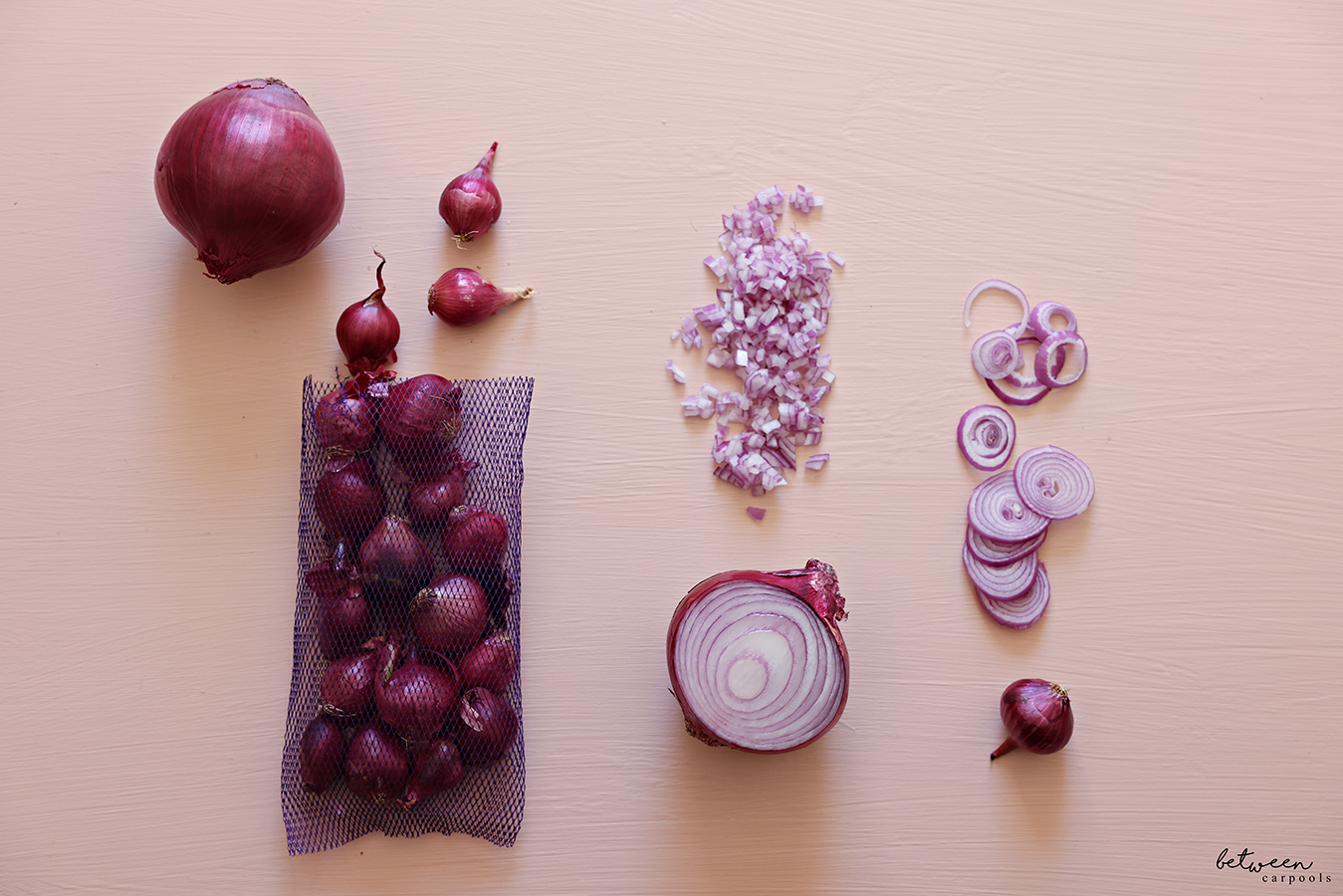 Between Carpools29 days ago
A little bit of red onion goes a long way in a lot of dishes. In the past, we showed you a cute hack for getting that really tiny dice you want for your guacamole here.
But it’s some finely diced red onion like you see in a longtime fav Corn Feta Salad in or some thinly sliced red onion like in our new favorite Cauliflower Chickpea Salad (slice it the way you like it) or when you simply want to add some to your own personal salad, most often, you only use a portion of the onion.
One reader shared this brilliant idea. She loves adding a little fresh red onion to dishes. For a salad. For on top of avocado toast. Or any other place where red onion just finishes that dish.
After one Yom Tov, after serving a side dish that included pearl red onions, she had some of those cute little onions leftover and put them in her onion basket.
She said, “I found myself reaching for one whenever I needed just that tiny tang of red onion. It was perfect! Not only do they last for weeks, but the 1-inch balls give me the perfect amount of onion, and they are just that much cuter when cut into little rings. I buy them all the time now.”
What have the rest of us been doing until now after preparing all those recipes that only call for ½ of a red onion?
The Gemara says that it is dangerous to eat raw peeled onion that was left overnight, even if it was left in sealed packaging. The exception is that if the peel or root is left on. It rarely comes up with regular onions because we’re always dicing and cooking the whole thing, but with red onions, it comes up all the time.
So, when we need just a portion of an onion, we slice off that portion, leaving the root intact as you see here.
When you store the onion in the fridge, make sure to remember or mark down on the packaging whether you used a dairy, meat, or pareve knife so you know the status of your leftover red onion.
There you have it–two ways to enjoy just a bit of red onion. Or you can just make a batch of Pickled Red Onions with the rest!
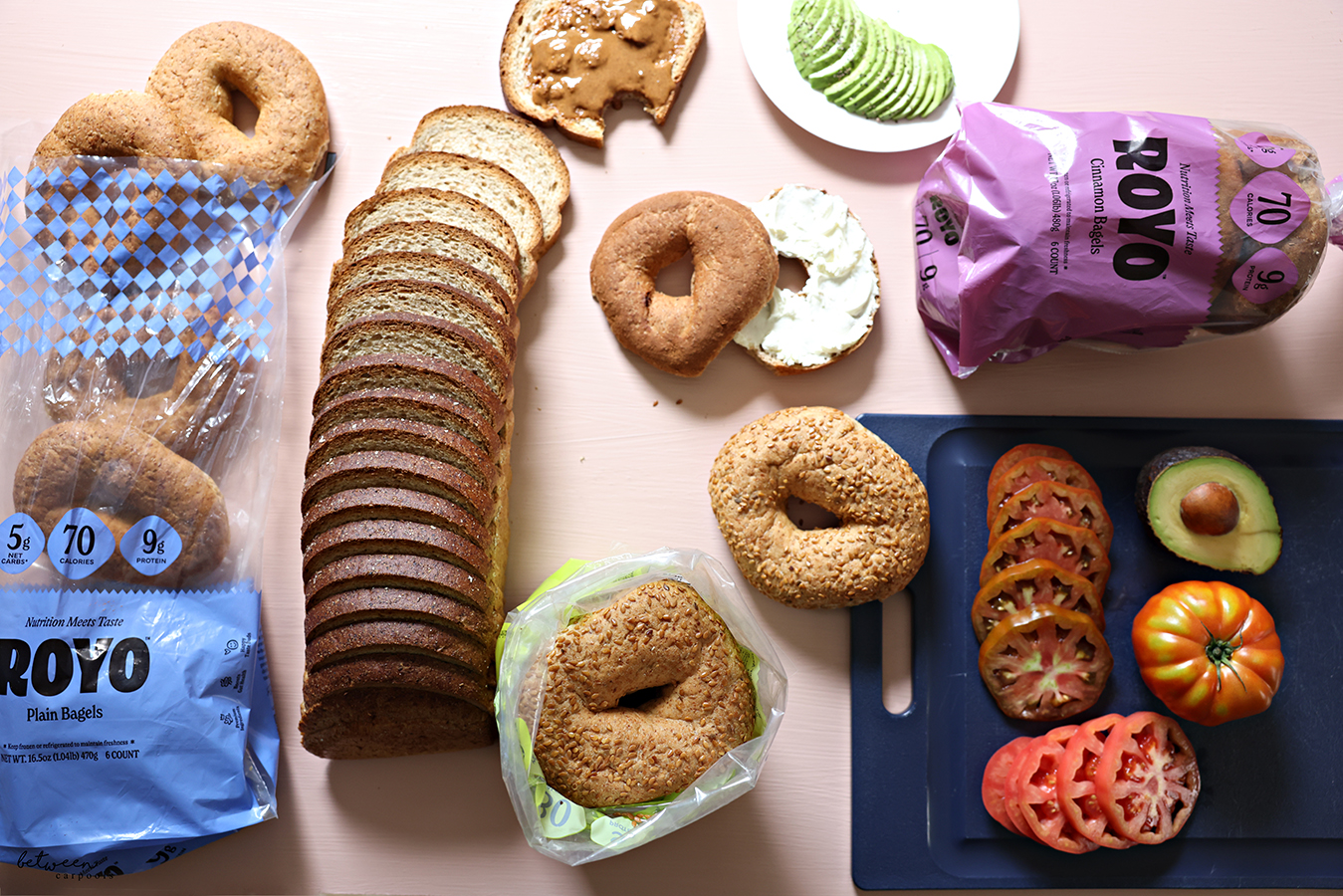 Between Carpools1 month ago
We love a good salad as much as the next girl, but there’s something irreplaceable about a good slice of bread, or a nice hot, toasty sandwich. But do we love how eating bread makes us feel? Not always. For many, lots of carbs don’t always agree with us.
Enter ROYO.
ROYO is a tried-and-true (hamotzi!) favorite. It’s a better-choice-bread that doesn’t leave you with that post-carb feeling. ROYO’s products are crafted from superfood ingredients, making it a great option for anyone looking to up their nutrition. Think high-protein, high-fiber, low-carb, low-cal and keto-friendly. And satisfying!
Go ahead, wash, and enjoy that bagel (they’re great in the panini maker)! ROYO’s sliced bread and bagels are staples (a personal favorite is their flaxseed bagels)! Enjoy the sliced bread for toast in the morning, a sandwich for lunch, a bagel when salad isn’t going to fill you up…ROYO makes it easy to keep bread in the picture.
If you only dreamed of a big, hot toasted bagel, filled with oozing melted cheese…now you can go ahead and enjoy.
ROYO is great for Shabbos too. Their challah rolls are soft, fluffy, and satisfying. They’re the perfect light option for shalosh seudos or any of the Shabbos seudos.
Now, new items include the cinnamon rolls and chocolate rolls.
So if you’re looking for bread that is low in calories, high in protein and fiber, enjoyable, and makes you feel great, ROYO might be just what you’re looking for!
Find ROYO’s products in your local supermarket, or check out their full selection at www.eatroyo.com!
Our tip: Make sure to drink lots of water when enjoying high fiber foods!
 Between Carpools1 month ago
This article shares personal experiences, not medical advice. Always follow your dermatologist’s instructions.
Accutane, Accutane, Accutane. It’s probably one of the most talked-about medications among teenage girls, and also one of the most misunderstood.
So what exactly is Accutane? It’s a prescription medication called isotretinoin that’s used to treat severe acne, especially when other treatments haven’t worked. It works by reducing oil production in your skin, which helps clear up acne.
Accutane is basically the last resort for bad acne. I tried everything before getting to that point: regular and prescription creams, cutting out dairy and chocolate (which worked for 12 glorious weeks, and then my acne came right back!), and regular medication like doxycycline, an antibiotic used to treat acne. I always say I have the most expensive face in my house.
Honestly, if I hadn’t been so scared to take Accutane, I probably would have saved myself a lot of time, stress, and money. And people are scared because they don’t know what to expect.
So here’s the 411 from the teens I polled.
**1. If you’re younger than 10th or 11th grade, it may not work to its fullest.**This might not be a medical fact, but in our experience, acne is more likely to come back if you take Accutane when you’re younger. Ask your dermatologist whether now is the right time.
**2. Don’t expect to get Accutane at your first appointment.**I had to go through creams and medication first, plus testing, before I actually started.
**3. Don’t let the side effects list scare you off.**They’ll give you a long list of possible side effects, and some of them sound really scary. In our experience, most people mainly deal with dryness, and the serious side effects are much less common. But they’re on the list for a reason, so take them seriously. Tell your doctor and your parents right away if you notice changes in your mood, bad headaches, blurry vision, or stomach pain. That’s what the monthly checkups are for, so be honest at every appointment.
**4. It’s best to do Accutane in the winter.**Your skin and scalp are very sensitive to the sun, so you need to be extra careful about sun exposure.
**5. The biggest effect of Accutane is dryness.**Your skin and lips can get really dry. It’s not just a possible side effect. For many people, it’s the main effect you notice.
**6. Get a pill case.**Trust me, it’s hard to remember if you took your pill or not. I filled up my case at the beginning of the week and knew exactly where I was up to.
**1. Moisturizer / Face Wash
**Keep it simple. Use a basic moisturizer like CeraVe or Neutrogena.
**2. Lip Care
**The biggest problem is dry lips on Accutane. While you can simply use Aquaphor or Vaseline, really, the best lip care on Accutane is nipple cream like this one (we first shared this dry lips hack in this post). Lansinoh’s lip balm will also work, but it’s a drop runnier so doesn’t stay put as well. It’s a good option if you don’t want to have to repackage your cream! Whatever you use, buy a lot and keep one wherever you go. Near your bed, in the car, in the kitchen, in your backpack… trust me, you’ll want it everywhere.
Ask your LOR what to do on Shabbos about your lips. Sometimes olive oil is an option, but ask what is permissible.
3. SunscreenYou MUST wear sunscreen. Your skin is more sensitive while you’re on Accutane, so you can get burned easily, even in the winter.
4. BodyEverybody gets different types of dryness, but if your skin starts feeling tight, try an Aquaphor spray.
5. HandsYour hands are very likely to get painfully dry, too. Use a moisturizer or hand cream regularly. Wearing white cotton gloves when you sleep can also help.
______
Accutane FAQs
**How long does Accutane dryness last?**Dryness usually starts within the first couple of weeks, often with your lips, and lasts for the whole course of treatment, which is usually around four to six months. The good news is that it goes away. Most people find their skin and lips are back to normal within a few weeks of finishing.
**Does acne get worse before it gets better on Accutane?**It can. Some people have a flare-up during the first month or so before their skin starts clearing, but not everyone does. If your breakouts get really bad or painful, let your dermatologist know.
**Can you wear makeup on Accutane?**Yes. Since your skin will be drier than usual, start with a good moisturizer and choose hydrating makeup, like a dewy foundation or tinted moisturizer, instead of anything too matte or powdery. Remove it gently at night and skip harsh scrubs.
**Can you wax or get facials on Accutane?**No. Your skin is much more fragile on Accutane, so waxing, laser hair removal, and strong facial treatments can damage it or cause scarring. Dermatologists usually say to avoid them during treatment and for about six months after. Ask your dermatologist when it’s safe to start again.
Have you tried Accutane? What was your experience? Please share additional information in the comments!
A Note About Accutane: This article shares personal experiences and tips from teens who have taken Accutane. Everyone’s experience is different, and what worked for one person may not work for you. Accutane is a prescription medication that can have side effects, so always follow your dermatologist’s instructions and speak to them about any concerns or questions. This article is for informational purposes only and is not a substitute for medical advice.
 Between Carpools1 month ago
Month: Cheshvan
Mazel: עקרב (Scorpion)
Human Faculty: smell
Letter: Nun
With the month of Tishrei behind us, we step into a chodesh that, from the outset, seems devoid of the spiritual opportunity that is characteristic of its preceding month. We move from a month that is saturated with Yamim Tovim to a whose full name is Marcheshvan (a bitter time), one reason being that it is lacking in any chagim. In the same vein, the letter corresponding to Cheshvan, nun, alludes to nefilah, falling, reminding us that at this time of year we’re in danger of regressing into our old patterns.
But, in Yiddishkeit, no time of year is devoid of opportunities for growth, for deepened connection to Hakadosh Baruch Hu. On any given day, if we are conscious of our thoughts and deeds, we will find that we experience elevation. How do we manage to do that even during this “ordinary” time of year?
Let’s take a look at the human faculty that Sefer Yetzirah associates with Cheshvan to understand what our avodah is during this time. The sense correlating with this month is smell. What’s unique about our sense of smell? Imagine you’ve just put up a pot of rice in the kitchen, and then you hurry off to the back of the house or up the stairs to get something done. Which organ will alert you that you’ve been away for too long? There’s only one answer to that question: your nose. While most other senses require you to be in the presence of the object—whether you’re seeing the pot, touching the pot, or tasting the rice (sound doesn’t help much in this case)—the uniqueness of the sense of smell is that you can be far away from the object and yet still be connected to it in some way. Just think about what the aroma of the bakery does to you even when you’re completely down the block…
Similarly, if you’ve been around in the kitchen long enough, you know that smell lingers. The smell of the onions you fried for supper are there to greet you even when the kitchen is already in breakfast mode the next morning.
That, dear sisters, is what we want to hold on to in Cheshvan. True, the Yamim Tovim have already passed. But Cheshvan has the koach that enables us to still be connected to that which we can no longer see, that which has already passed. It gives the koach for Tishrei to linger on in our neshamah…
Furthermore, the Chidushei Harim explains that when we read the month as Marcheshvan, the root becomes rachash. It’s a word you’d use to describe a ball that still keeps moving because it was propelled into motion earlier. We’re still under the influence of all that elevation. We’re still holding on tight…
Especially as mothers and builders of our home, there’s no better time than now to keep growing. When life is routine and we get to spend more time with our nuclear family during longer nights and less hectic days (hopefully!), the opportunities for self-development abound.
This is our litmus test for how much we really grew during Tishrei.
It is the mazel of this month, the scorpion, that reminds us of the incredible koach we hold in our hands. Understood simply, the reason for this month’s mazel is that since Cheshvan is the time when the rain starts to fall more heavily and we start davening for it in Bareich Aleinu (here in Eretz Yisrael) and the scorpion generally lives near the sea because it subsists on water.
The Bnei Yissachar offers a deeper explanation that gives us insight into our avodah at this time of year: The word akrav (scorpion in lashon hakodesh) can be read in two ways: A woman can either be ikar bayis, the center of her home; or, G-d forbid, oker bayis, the one who destroys her home.
So much lies in our hands, dear sisters. This is our chance to pay attention to the power that we hold and to wield it toward the building of our home, the strengthening our fortress.
How can we keep strengthening our home and making it a more positive place during these “ordinary” days of Cheshvan?
Here’s one idea: We women have been blessed with 9 quantities of speech. How we use it determines whether this overabundance is a gift—or the opposite. During Tishrei, we had many opportunities to use our power of speech in tefillah. How about making this our focus this month, as well—this time, by paying attention to how we use this powerful tool in our day-to-day lives, and when not to use it? From Rochel Imeinu, whose yahrzeit falls on the eleventh of Cheshvan, we don’t only learn the koach of sharing a secret when necessary, but also how to keep silent: she never told Leah that Yaakov was set on marrying her over Leah–greatness in using her power of speech, and greatness in using her power of silence.
As women, we’ve also been blessed with a fine-tuned sense of “smell.” Not just in the literal sense when certain hormones are elevated, but also in the figurative sense: “smelling” just what a child needs to hear, just what shouldn’t be said. We’re intuitive like that! This is the time to take advantage of our gifts.
Want to tap into the spiritual propensity of this month? Maximize these “ordinary” days, when the inspiration of Tishrei still lingers, by using your words to keep building. Looking toward Rochel Imeinu, as our guide, and using our feminine koach of “smell” to discern when our words should be said and when they should be kept inward, we know just what to do.
Here’s how to maximize the potential of this month:
1. Once per day this month, look out for someone in your own home who could benefit from your gift of abundant speech. Focus on “smelling” who really needs it and when. Especially when behaviors are not how you’d want them to be, tap in to this koach of “smell” to discern even that which isn’t noticeable from the outside. That’s our gift of binah yeseirah: to understand what lies beneath the surface.
2. Express that genuine, positive statement to your husband or child. Give it to them fully! You are the builder of your home. Your words are the blessed bricks.
3. Just as you focus on expressing what should be said, pay attention to what should remain _unsaid—_be it criticism, a breach of boundaries, words that hint toward a lack of respect… All we want to do is emulate Rochel Imeinu, and keep building.
Shlomo Hamelech completed the Beis Hamikdash in Cheshvan, but then he waited twelve months until Hashem commanded him to inaugurate it (in Tishrei). In other words, Cheshvah lost out on having this momentous celebration during her month. Tells us the Medrash that this lack will be filled with the rebuilding of the third Beis during this month. In the zechus of our personal avodah in our own mikdash me’at, may it happen very soon! Veshavu banim ligevulam.
 Between Carpools1 month ago
There’s never been a more confusing time to choose a career; we’re looking at an AI-driven, upside down job market. If you’re trying to figure out what you want to do next, there are suddenly a lot of new questions. Will this job still exist in a few years? Is this field worth getting into? And if you’re creative, can that even work for you anymore?
What if, instead of searching for a career that won’t change, you choose a career that’s changing along with the world?
Enter: digital marketing.
You may not realize, but you already interact with digital marketing all day long. Digital marketers are behind the ads that show up in your feed, the brands you find when you Google something, and the email that convinced you to click. The people behind all of that are figuring out how to get businesses seen, reach the right customers, and turn clicks into results.
And no, it’s not just social media!
Digital marketing combines creativity, strategy, analytics, technology, and problem-solving. Which means if you like writing but also like numbers, or you’re creative but want something more analytical, or you just really like figuring out why something works, there may be something for you here!
ODEO Academy was founded and is taught by digital marketing expert Danny Gavin. ODEO is a hands-on digital marketing program that teaches you the skills businesses actually need. You’ll work on practical assignments, get real feedback, and learn how to use the tools shaping the industry now, including AI. Plus, exclusive access to job postings for ODEO Alumni!
ODEO’s nearly 300 graduates have come from all kinds of backgrounds, not just marketing. One was a teacher who became a Google Ads specialist. Another was a copywriter who added digital marketing to her skill set. One came back to the workforce after 14 years at home and landed a marketing management role. And a recent seminary graduate found exactly what she’d been looking for: a career that was both challenging and creative.
On October 18, ODEO is hosting a free live webinar where you can meet Danny, see what digital marketers actually do, and ask your questions. Take advantage and see if digital marketing could be for you!
The next ODEO cohort begins October 25, so don’t wait! Visit odeoacademy.com to sign up for the free webinar, or here to learn more.
 Between Carpools1 month ago
Editor’s Note: While this isn’t the format of a usual Between Carpools post, we felt that the honesty contained here is something that is important to share. There are so many people who will find chizzuk in knowing that they are not alone in their emotions and experiences, whether it’s a child who is out of school or a different struggle.
***
Sometimes I think:
What did we do wrong as parents? Why is everyone else in his class doing okay? Where did my endlessly curious boy who loved learning go?
And sometimes I think:
School is a fictional construct, the system isn’t going to work for everyone, maybe my kid has good taste by opting out.
***
Sometimes I think:
What is going to be with him? Will he ever hold down a job? Be able to get married?
Have a family? Not feel totally burned by Yiddishkeit?
And sometimes I think:
The coolest adults dropped out of school and my kid is sweet and kind, he’ll be a great adult, we just have to hold on and believe in him.
***
Sometimes I think:
Is it too much to ask to just want to be home alone for a change? I thought by this stage with no toddlers I’d be able to have a regular, normal morning routine. I really want a morning routine that’s not interrupted.
And sometimes I think:
I’m so grateful he’s doing this now and not at 22 or 32 and that both my husband and I have job flexibility so we can be there for him.
***
Sometimes I think:
My heart is breaking from watching him struggle and watching the whole family impacted by him and his struggles.
And sometimes I think:
We all will be so much more compassionate towards others after going through this.
***
Sometimes I think:
How much money have we been spending on professional help???
And sometimes I think:
At least it’s not like last year when we were paying for Ubers back and forth and bribing him and paying for therapy and also tuition.
***
Sometimes I think:
We’re so alone in this struggle, why don’t people (family, friends, neighbors, classmates’ parents, his rebbe) reach out with a kind word?
And sometimes I think:
There are so many other families dealing with this now. When people innocently ask, “So what yeshiva is your son in?” and I say “Oh, he’s in between right now,” more often than not I hear some version of “My sister-in-law is dealing with that too! My niece has been out of school for months now, she’s losing her mind.”
***
Sometimes I think:
There HAS to be a silver bullet. We just haven’t found it yet— a therapist or medicine or alternative healing— that will turn this around. I need to fix this. I can’t see a path forward and I need one.
And sometimes I think:
There’s no silver bullet. Hashem has put us on this journey and we have to keep on looking for the next right thing to do to help him. It’s not the end of the story.
Anonymous is the tired and proud mother of a wonderful teenage boy who has been in and out of yeshiva for the last four years.
 Between Carpools1 month ago
The first cold morning always shocks me. Suddenly (and it really does feel like it came out of nowhere), it’s freezing! And they need another layer. It’s the season of hot cocoa on the way out, red ears on the way in, and yes, jackets.
Welcome to Fall!
Before the real winter coats come out, the kids need lighter outerwear to carry them almost until the first snowfall.
Let’s take a look at what Tottini has!
First, the classic fur-lined sweatshirts. Perfect for chilly mornings and recesses, and comfortable enough to wear all day. No-brainer!
Next, puffer jackets for when the temperature drops. Love the sherpa lining on this quilted collar jacket!
And, new for this season, a gorgeous peacoat for Shabbos!
Don’t let Fall catch you off guard! Our favorites, below.
 Between Carpools1 month ago
When we think of Boden, we think of British class combined with bold colors. Perhaps this is where colorblocking was born, and there’s never been a shortage of plaids and pleats at Boden either. In this season of warm greens, rich burgundys, and playful plaids, the Boden look is particularly appealing.
And while plaids might be having their moment right now, Boden items are meant to be timeless. The price points are higher (Make sure to use coupon codes! There’s usually 10-15% off at least) than we usually feature, so consider these picks to be those special, distinctive wardrobe items that are meant to enjoy this season and forever.
See the “Make an Outfit” section on each page for pairing suggestions with each piece. There are plenty of modest suggestions that work!
Whether you’re dressing up or dressing for weekdays, these are the not-so-typical, super pretty, and cozy tops that will pull that outfit together.
Embroidery makes this look more special than your regular pullover.
Extra pretty details and the richest shades of green and blue.
This sweater is such a nice, classy piece if you want color but not bold prints. There’s also a versatile cardigan version that we also love.
There’s so many great prints that elevate the comfy sweatshirt and make them outfit-worthy.
Another great option for those that want color but not print for timeless appeal. Great grommet details. There’s also a cardigan version.
If there ever was a sweater that makes an outfit.
You’ve had enough of stripes. These plaids and prints give the perfect wardrobe refresh.
Smart, understated plaid.
This print is one of the prettiest we’ve seen.
Plaid has a touch of class to it that just works, especially when it’s subtle like this. Pair with a skirt in any of these colors.
This top is super special and it’s in our shopping carts too.
Cozy corduroy and a rich burgundy color makes this a winning combo.
Basics are important too. Also comes in patterns.
Great pieces that actually work well and are special and distinctive enough for Shabbos and special occasions.
Plaid, dressed up. It works!
It’s rare times when plaid and taffeta actually works, and noIt’s rare times when plaid and taffeta actually works, and now is one of those times.w is one of those times.
Pull one thing out of your closet and be done.
The same silhouette with a totally different dressed up look.
Easy and comfortable.
Many believe the most important piece of fall and winter clothing is the outerwear. When you have a couple of great jackets, you’re always dressed well.
The super classy, feminine statement piece that you’ll enjoy for seasons to come.
Pink herringbone
A smart look for blazer gals.
Beautiful, special, pretty plaid and corduroy details and best of all–belted
Somewhere between a jacket and a cardigan.
 Between Carpools1 month ago
Dear Devorah
What is the proper way to organize food storage containers?
Every time I open the cabinet, lids fall out, containers disappear, and somehow nothing seems to match. I feel like I’m constantly searching for the right lid while leftovers sit on the counter waiting.
Is there actually a system for this, or is this just one of those kitchen problems everyone lives with?
– Buried in Plastic
Dear Buried
The container cabinet is one of the few places in the home where otherwise organized people seem to lose all logic.
You would never keep one sock. You would never save a random shoelace “just in case.” And yet somehow, people are emotionally attached to a cloudy plastic rectangle with no matching lid and a mysterious orange stain.
I’ve worked in tiny apartments, large homes, newly renovated kitchens, and everything in between. No matter the size of the kitchen, the food storage container cabinet always seems to cause trouble.
And honestly, it makes sense. Unlike serving pieces that sit quietly in a cabinet, containers are constantly moving. They’re coming out for leftovers, lunches, school snacks, guests, and Shabbos prep. They’re one of the hardest-working categories in the kitchen.
And because they’re used so frequently, even a small amount of clutter can quickly turn into frustration.
The good news? It’s usually much easier to fix than people think.
The Collection Grows Quietly
Nobody decides they’re going to have an overflowing container cabinet.
It just sort of happens.
Containers get purchased. Takeout containers get saved. Extras get added before Pesach. And little by little, the collection grows.
At some point, the cabinet stops feeling functional and starts feeling frustrating.
That’s usually a sign that it’s time to pull everything out, match the containers with their lids, and see what you’re actually working with.
The container with no lid.
The lid with no container.
The one that’s slightly warped but somehow keeps making its way back into the cabinet.
The collection of takeout containers that quietly became permanent residents.
Suddenly, it’s much easier to see what’s actually being used and what’s simply taking up space.
For many people, this is where a surprising amount of space opens up.
Often, the issue isn’t the cabinet at all. It’s simply that there are more containers than the space can comfortably hold.
The goal isn’t to fit as much as possible into the cabinet.
The goal is to make the cabinet easy to use.
A Home for the Lids
Once you’ve edited the collection down to what you actually use, the next challenge is usually the lids.
Most people’s instinct is to keep containers with their matching lids attached. On paper, it makes perfect sense.
In reality, it usually creates large, awkward stacks that are difficult to access and even harder to maintain. The moment someone needs the container at the bottom, the entire stack starts to fall apart.
Instead, I recommend stacking containers by size and storing the lids separately nearby.
There are plenty of ways to do this, and the right solution often depends on the space you’re working with.
Drawer dividers work particularly well in deeper drawers, creating natural sections and helping keep lids from shifting around.
If you’re working with cabinets, it’s a little more challenging but bins are a simple option. A bin can be used to separate different sizes of lids, create zones for lids and containers, or simply provide one designated place to toss the lids so they stay contained and easy to find.
An adjustable lid organizer is a viable option if you use reusable containers of different sizes. Similar to a pot-lid organizer, it allows lids to stand upright and remain easy to see.
Real-Life Organized
Not every organized container cabinet looks the same.
I’ve seen beautifully organized container cabinets with matching sets, labeled bins, and custom organizers. I’ve also seen perfectly functional cabinets filled with containers collected over many years.
Both can work.
The goal isn’t to have a picture-perfect container cabinet.
The goal is to have a cabinet that works for you.
If you can find what you need, find the matching lid without digging through the entire cabinet, and put everything away without a stack of containers toppling over, you’ve created a successful system.
That’s what real-life organized looks like.
Not perfect.
Not magazine-worthy.
Just practical, functional, and easy enough to maintain.
Final Thoughts
The container cabinet is one of those spaces that tends to get out of control little by little.
The good news is that it usually doesn’t take much to get it back on track.
A quick edit, a little structure, and a workable system can completely change the way the cabinet functions.
And unlike some organizing projects that feel overwhelming before you even begin, this is one that can often be tackled in an afternoon.
You got this! Happy Organizing
– Devorah
 Between Carpools1 month ago
In the past few months, your sister babysat your kids, baked a cake for your son’s birthday, and brought you a latte. You returned a pair of tights for her. You’ve been on the lookout for an opportunity to be there for her.
You hosted your niece seven times last year, she made one token offer — and you didn’t need a “phew!” emoji to register her relief when you declined. Even if part of you feels resentful, you may also be relieved that you’re the host, not the hosted.
Why do we keep score in relationships, and what does the invisible point system do for us?
It often feels very important to us to know exactly where we stand in a relationship. Who needs who more? Who invests more? Who sacrifices more?
Keeping track gives you a sense of security. Because if you owe someone, you never know when they’ll call it in. But if they owe you? You’re safe. You have money in the bank in case you need it later. You aren’t dependent on their willingness to help.
The score can also give you reassurance that you matter. If someone keeps showing up for you, investing in you, doing for you, you have tangible proof that you mean something to them.
Why do you need security in a relationship? Because if you’re reading this, you’re human. Humans are social beings who depend on each other. So it’s normal to worry that your needs won’t be met, that people won’t show up for you.
The point system is very elegant. You make deposits, storing up relational credit. You make as few withdrawals as possible, and you replenish the credits as soon as you can. If you know you have a big withdrawal on the horizon, you’ll try to earn as many credits as you can first, because the unspoken rule is: Never get into the minus.
It sounds cynical, but it’s actually a fascinating solution to insecurity.
If you feel unworthy of receiving just because, fairly normal fears can quickly escalate. Maybe you don’t really believe others will be there for you if you haven’t earned it first, so you’re at their mercy. They might not come through. So you’ll have to face challenges alone and unsupported. Which, in your imagination, ends up in your worst nightmare.
In other words, feeling undeserving can make you feel unsafe.
And if the solution is to be kind, helpful, and a carpool dream, why not? Go ahead, spread the sunshine and enjoy the acts of giving. Go make someone a tray of kugelettes.
But you may be paying a different kind of price. Because in order to stay ahead, you have to keep score. You always have to know the stats, so you don’t find yourself at a disadvantage. It can make the relationship more transactional, less connected. Instead of being in the relationship, you’re busy measuring it.
If you want to know your score on keeping score, ask yourself:
What happens when you’re in the minus? When you need someone to watch your baby while you wait for your child’s bus in the rain? When you need to ask for favors, knowing you may not be able to “pay it back”? Is it possible that others will help you and take care of you even if you haven’t “earned” it first?
If you can answer those honestly, two points.
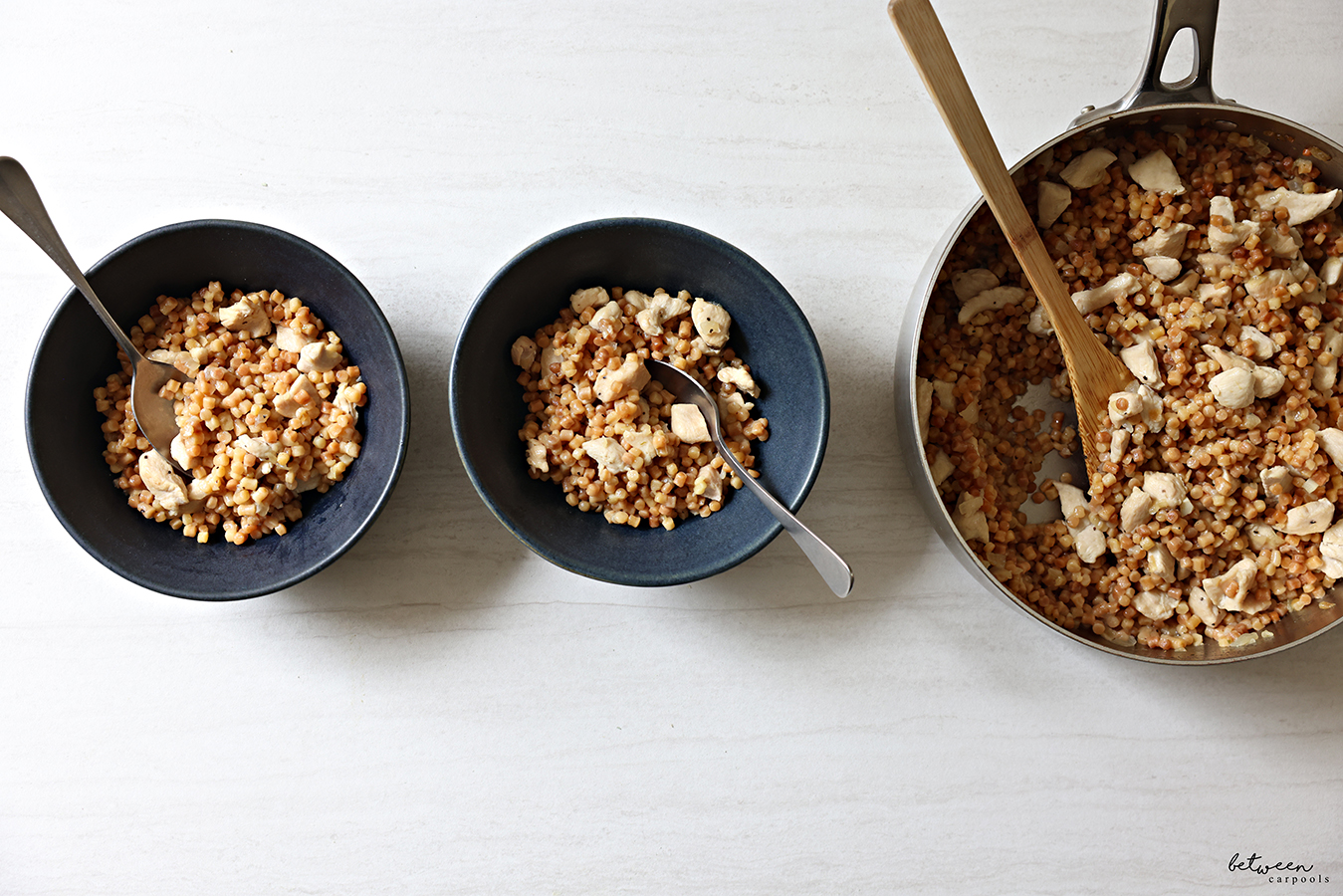 Between Carpools1 month ago
Our One-Pot Shawarma Chicken and Rice is one of our most popular recipes. It seems like everyone made it, loved it, and added it to their dinner rotation.
There are also some very heimish foods that are super comforting and deserve to make it to the menu, especially in the fall and winter–and farfel is one of them.
For those who aren’t familiar, farfel is a tiny egg noodle and is especially good at soaking up lots of delicious flavors. I thought to myself, “This should work instead of the rice in a new one-pot dish!” There’s two types you can choose from. The type on the right is neater and prettier; it’s the type you see in the photos. But we actually enjoy the more rustic-looking farfel on the left more–it’s yummier in a way!
Now, some of you might be wondering: BCP loves 9×13 dinners. So why are we making this using one pot on the stove?
I’ve made farfel plenty of times in a pan in the 9 x 13, like in this post. And it’s good. But honestly, whenever I make it on the stove, in a pot, with freshly sautéed onions, it is so. much. better.
There’s something about those onions cooking right in the pot and the farfel soaking up all that flavor that makes this version extra good.
And so, I decided to combine the comfort and flavors of the farfel with the technique of our One-Pot Shawarma Chicken and Rice and the result may be one of our simplest and tastiest recipes yet.
So basic. So easy. And so good.
Start by dicing the onion and chicken into small pieces.
It’s the simple step of starting with the sautéing of these diced onions that’s going to give this dish all its flavor.
Once the onions are golden at the edges, add the chicken and season with salt and pepper.
It’ll only take 2-3 minutes for the chicken to turn white and be mostly cooked.
Add farfel and remaining seasoning and mix well, then add water. Cover and cook for 15 minutes, stirring once during cooking.
When most of the water has been absorbed, the Chicken and Farfel is ready to serve!
5 from 1 vote
Heat oil in a medium pot. Add onion and sauté for 8–10 minutes over medium heat.
Season chicken with salt and pepper. Add chicken to the pot and stir for 2–3 minutes, until the chicken turns white.
Add farfel and remaining seasoning and mix well.
Add water. Cover and cook for 15 minutes, stirring once during cooking. Check that most of the water has been absorbed. Serve.
 Between Carpools1 month ago
Dr. Bass has been working with complex kids and families for over 20 years–and this class is an overview of the practical tips and important knowledge she wants all parents to know.
In the meantime, start here!
If you have a complex child: a highly sensitive child, a child with intense sensory needs, attentional issues, hyperactivity, social struggles, or learning differences (and more) here are Dr. Bass’s top 3 Things You Need to Know.
When your 6-year-old throws his shoe at your head or your teen slams the door so hard the hinges fall off, it seems like they’re “just being difficult.” Truth be told, when you demand they put on their shoes right this minute or continually knock on the door to remind them it’s time to get up, they think you are “just being difficult.” Just like you are a good person, managing stress as best you can, trying to get through the day, so are they, but with WAY less language and skills. When we really get it, understand the root of the behavior, it lets us set up better prevention plans and gives us more compassion for them.
Of course you have what to work on in your parenting; we all do. But truly complex kids, kids who are stressed out by the demands of everyday living, might have meltdowns or shutdowns even if you were the perfect parent. Persistent difficult behavior usually indicates underlying sensory, emotional or cognitive needs that are unmet. It’s not because you are a bad parent, it’s simply because the needs are big, persistent and can’t always be met.
You’ve lost it with your kid; you feel guilty; you wonder if you are doing enough. This is totally normal for parents of kids with challenging behavior. It is objectively stressful when your child is dysregulated. That stress will show up in your behavior, which creates more stress for them, which creates more stress for you…it’s a never-ending cycle. How do you interrupt it? Support. There is a loneliness to having a complex child AND you don’t have to do it alone. Having people who get it, get you and can help you brainstorm, problem solve and vent is essential to stopping the stress cycle.
If any or all of these resonate for you, join Dr. Bass:
Tuesday, October 13th
for a 90 minute masterclass:
Meltdowns and More: Navigating the Parenting Journey with Complex Kids and Teens.
This class provides a simple framework to understand your child’s behavior, your behavior and practical guidance on how to move forward.
 Between Carpools1 month ago
If you have men or boys in your life, chances are you have a fair amount of white shirts in your closets. Some of the most frequent questions we get are about caring for these shirts, so we decided to put it all in one place.
 Between Carpools1 month ago
Chalk is great for summer…what’s a little bit of extra chalk dust on top of everything else when they’re coming inside for showers after a long summer day outdoors? They sit on the pavement and color, or make a hopscotch board and jump…until a neighbor’s game or another fun activity captures their attention. No matter, they’re getting dirty!
Once the fall sets in, though, and kids tend to stay cleaner longer, we might not be so keen on the chalk. And besides, it’s getting cool out. That’s when painter’s tape comes in handy to keep kids creative and jumping.
Our eyes first opened to the creative uses of painter’s tape back in 2016 (10 years!!) when we posted this great activity using painter’s tape to make roads and a virtual city for toy cars.
We use it to create this Name/Initial Art (no matter age your child is, it comes out great!)
Painter’s Tape also comes in handy for lots of hacks on Between Carpools, like labeling tablecloths according to size (we also do this with crib/bassinet sheets), hanging up recipes during your pre-Yom Tov cook-a-thon, and hanging anything from chore charts, to school calendars, to Purim backdrops, to our Chanukah dance game board when we want to avoid damaging walls/floor. It’s super handy in a household, and our rolls do almost everything except help us paint in the lines.
And, today, our kids are using it to play hopscotch. Peeling it off at the end of the day can be the next fun activity.
 Between Carpools1 month ago
The Voice of Lakewood presents a complete list of fun and family-oriented things to do and places to go this Chol Hamoed! Note that all travel times listed by each location are from Lakewood, NJ, which is about 1 ¼ hours from New York. Travel times may be less or more depending on your location. Enjoy your trips!
 Between Carpools1 month ago
We’ve shared lots about creating a menu on Between Carpools over the years. A while back, Renee Muller wrote a guide to Writing Your Menu. And plenty of you are using our download, this Yom Tov Menu planner, to plan yours. We’ve also shared basic Yom Tov menus of dishes that work well together so you have a starting point (swap, add, delete dishes from these sample menus).
But the single most best source of menu ideas for your Yom Tov is not going to be found here on Between Carpools. Yes, we’re admitting that!
That’s because the best source of ideas for your menu is…your past menus! Those are your best starting points. Those are the menus that work specifically for your family. Or, even better, the best menus are your menus that also include notes about what went over well, what didn’t go, what you made too much of, or too little of.
Most of us begin our Yom Tov menus by adjusting menus from previous years.
If you make your menus with pen and paper, simply keep the printed pages of the Yom Tov Menu planner in a binder or folder organized by year or by Yom Tov. If you prefer more space, use our Shabbos Menu Planner. You can download and print the pages, or order a complete notepad.
You can also keep the menus organized on a spreadsheet like Victoria does here. Each Yom Tov, she simply adds another tab to the same Google Sheets file and has spreadsheets of menus from years back.
But, of course, your menu is done and you’re ready to serve. But when Yom Tov is over, make those notes. You already know those notes come in handy! Perhaps you already write your notes down after Pesach Notes and you read about making general post Yom Tov notes here too: The Note I Make After Every Chag.
So, even if you always toss your menus, this time, keep notes…and get a folder!
 Between Carpools1 month ago
Picture this: You’ve been invited by someone you love to come spend time together.
You arrive at a beautifully set table. The food is delicious, the wine is flowing, everything feels warm and inviting. And just as you’re about to really connect, your host gets up.
Just one more thing from the kitchen.
They come back. You start talking. They remember something else they need to bring out.
Again and again, you almost get to the part you came for, to share what’s been happening, to tell your stories, to hear and be heard, but your loved one is too busy hosting you to actually sit with you.
And eventually you want to say: I don’t need another salad. I need you.
Welcome to Sukkos.
We women put a lot into Yom Tov. The cooking, serving, decorating, clearing, feeding everyone again approximately 17 minutes after they finished eating.
We want the Sukkah to be beautiful. We want the meals to feel special. We want everyone to have what they need. But somewhere between the soup and the second load of dishes, we can forget what all of this is actually for.
The Sukkah is an invitation into Hashem’s space.
Did you know that out of 613 ways to connect with Hashem, only 3 require our entire being? Living in Eretz Yisrael surrounds us on the broadest level. Mikvah is deeply personal and intimate. And somewhere between the two is Sukkah.
We step inside that space with our whole selves.
We eat there. We talk there. We laugh there. We sit surrounded by Hashem’s presence, joined by the Ushpizin and simply spend time together. It may be one of the most intimate invitations of the entire year, and we can spend the whole time bringing out another salad.
So this Sukkos, at least once, just sit.
Find a few minutes when you’re not carrying a serving bowl. Bring your coffee into the sukkah. Sit down. Look around.
You don’t need to daven. You don’t need to have a profound thought. You don’t even need to do anything.
Because maybe after everything we do to make Sukkos beautiful, Hashem is waiting for the same thing we would be:
I don’t need another salad.
I want you.
 Between Carpools1 month ago
There’s a shift in a family that doesn’t happen at a bris or a baby naming: it happens at the wedding. B”H, someone new is sitting at your table, not as a guest and not just for Yom Tov, but as someone who now belongs here. It may be either your son’s wife or your daughter’s husband, and now comes the next stage in life, where everything you’ve been building for the last 20 plus years now becomes the foundation that everything else rests on.
What You Invest Early
The early years in your child’s marriage are about how you show up. You can give gifts, that’s beautiful, and at the same time you don’t have to spend money to make it meaningful, because what you give emotionally is what lasts.
What are some of the things you can give that don’t cost a thing? Compliments. Telling them you’re proud. Telling them (or even texting if it’s hard for you to say it the first time), “I loved having you here.” These little words mean a lot and build something significant. They make your child in law feel at ease, and they send a clear message: You matter here.
Be the Grown–Up
There may be times when things don’t feel “even.” They may not call, or they may not check in the way you hoped. That’s not in your control. The part that is in your control is to be the steady one.
You send the text, you remember the interview they mentioned, you check in before a stressful week, you ask how they’re really doing. You don’t do it because you’re chasing them or keeping score, but because the aura in a family is set by the grown-ups.
When you lead with calm and love, you give the relationship space to grow at its own pace.
Protect the Marriage
For years, you were their first call, and now, your child has someone new who’s that person. One of the most powerful things you can say is, “What does your spouse think you should do?”
Don’t tell your married child what their sibling said, and don’t compare. Not casually, not “just between us,” and not even with good intentions. Comparison chips away at a relationship.
When our children trust us, they’ll come closer. When they feel exposed, or betrayed, they’ll pull back.
When They Are in Your Home
When they come to your home, see it as a bracha. Notice what they like and stock up, i.e. their favorite drink, a candy they mentioned once. These small things say more than a whole speech ever could. You’re telling them: You’re part of this home.
When they leave, text your Mechutanim and share the nachas. It might be something you appreciated about their daughter’s kindness, or their son’s sense of humor that enhanced the weekend. You’re not just hosting; you’re building a connection that lasts longer than we realize.
Love Generously
With our children, we give love naturally, without overthinking it. With our children in law it’s important to create that same warmth.
People come back to places where they feel comfortable, safe, and loved. They’re drawn to a home where they feel valued, and they’ll bring their own children to these spaces.
Not because they have to, but because they want to. And isn’t that what we really all want?
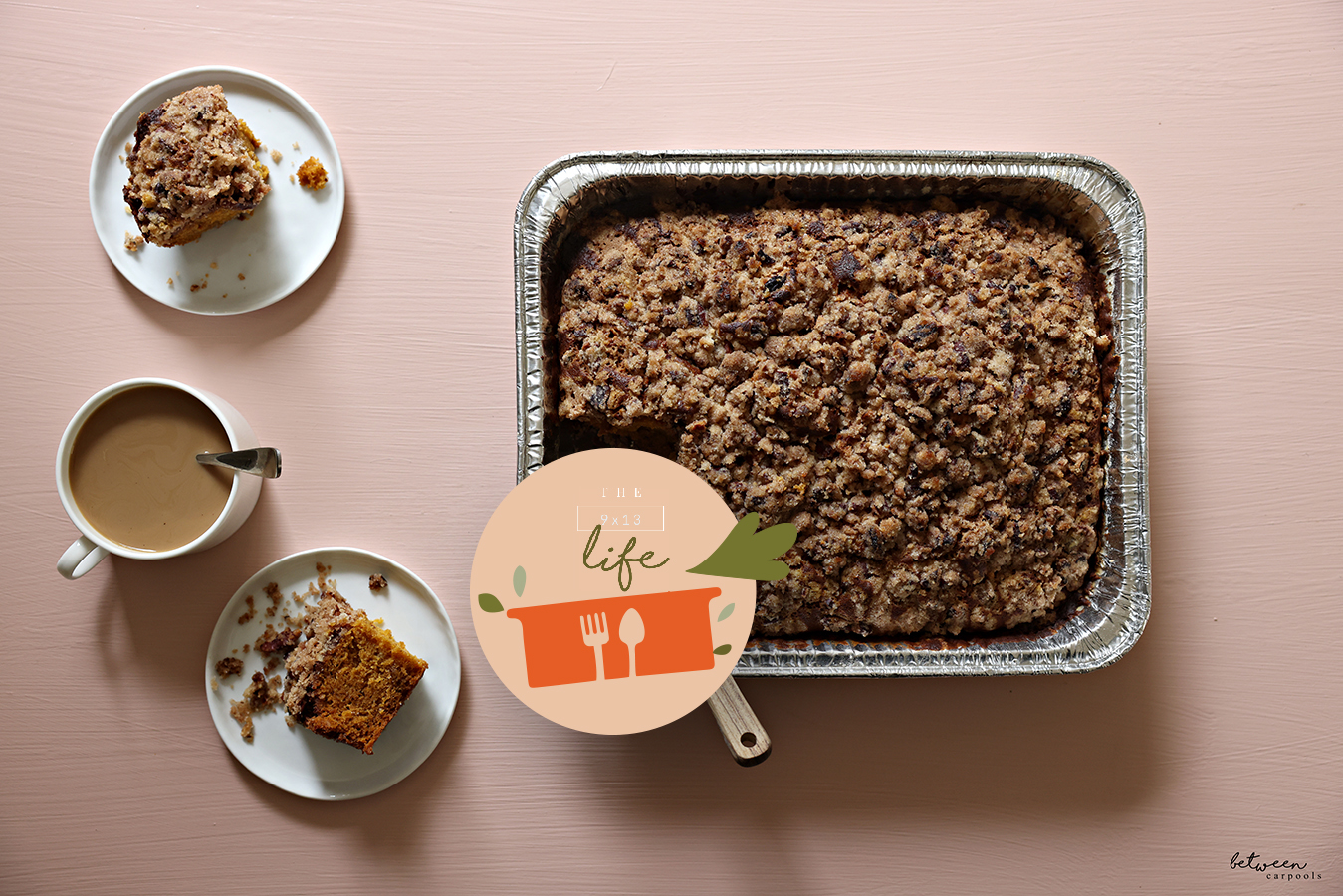 Between Carpools1 month ago
There’s something about September that feels like fall, even when the weather still seems summery. School is back, routines are starting up again, Sukkos is here, and suddenly I’m craving all the cozy flavors.
As much as I love honey cake, this pumpkin cake is such a delicious way to switch things up.
The flavor is somewhere between honey cake and carrot cake, with a slightly more elevated flavor profile from the pumpkin and warm spices.
The pecan streusel is really the star here. It adds the perfect amount of crunch and sweetness and gives the cake so much texture. I love that every bite has a little bit of that sweet, nutty topping.
This cake is perfect with a cup of coffee in the morning, and I also love making it into muffins for an easy grab-and-go treat or mini muffins for a sweet side dish. Just keep in mind that the baking time will need to be adjusted depending on the size you make.
In a 9×13 pan, whisk together eggs, oil, pumpkin purée, non-dairy milk, and vanilla until combined.
Add flour, sugar, cinnamon, nutmeg, baking soda, and salt.
Mix until a smooth batter forms.
Now let’s make the pecans streusel. If your pecans are whole, you can easily chop them in a Ziploc bag using a meat tenderize.
In a bowl, combine flour, sugar, cinnamon, oil, chopped pecans, and a pinch of salt. Mix with your hands until large crumbs form.
Sprinkle on top of batter.
Bake for about 55 min to 1 hour and 5 min, or until a toothpick inserted into the center comes out clean.
Preheat oven to 350°F.
In a 9×13 pan, whisk together eggs, oil, pumpkin purée, non-dairy milk, and vanilla until combined.
Add flour, sugar, cinnamon, nutmeg, baking soda, and salt. Mix until a smooth batter forms.
Prepare the Pecan Streusel. In a bowl, combine flour, sugar, cinnamon, oil, chopped pecans, and a pinch of salt. Mix with your hands until large crumbs form. Sprinkle on top of batter.
Bake for about 55 min to 1 hour and 5 min, or until a toothpick inserted into the center comes out clean.
If you prefer to make this recipe in a long loaf pan, split it in half and use two pans. The cake to crumb ratio will be better than if you use one pan for a taller loaf.
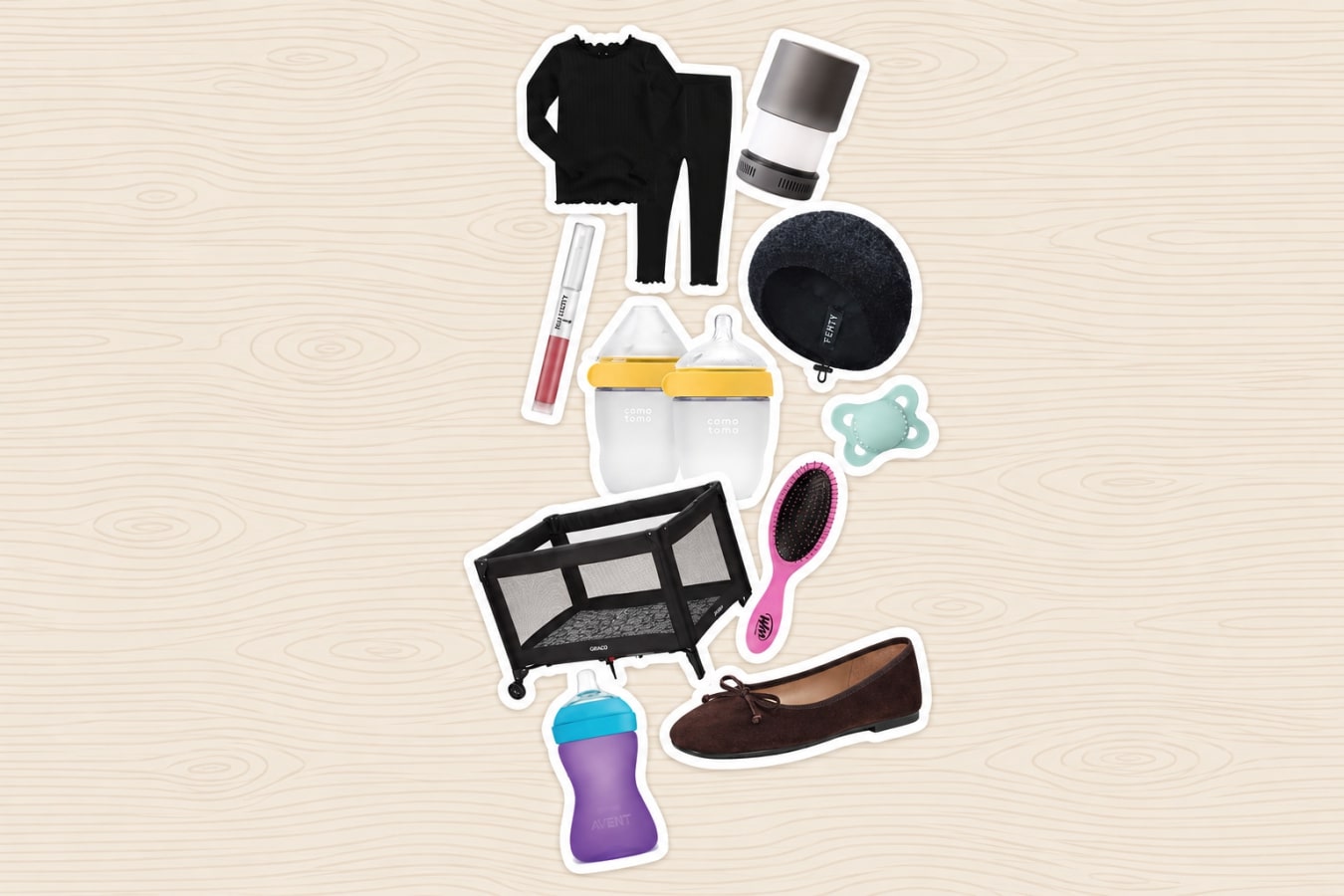 Between Carpools1 month ago
If you are looking for last minute clothing checkout the latest fashion finds on Amazon.
What else is still on your last minute Yom Tov list?
Are you missing any baby gear to get you through Yom Tov? Read this post!
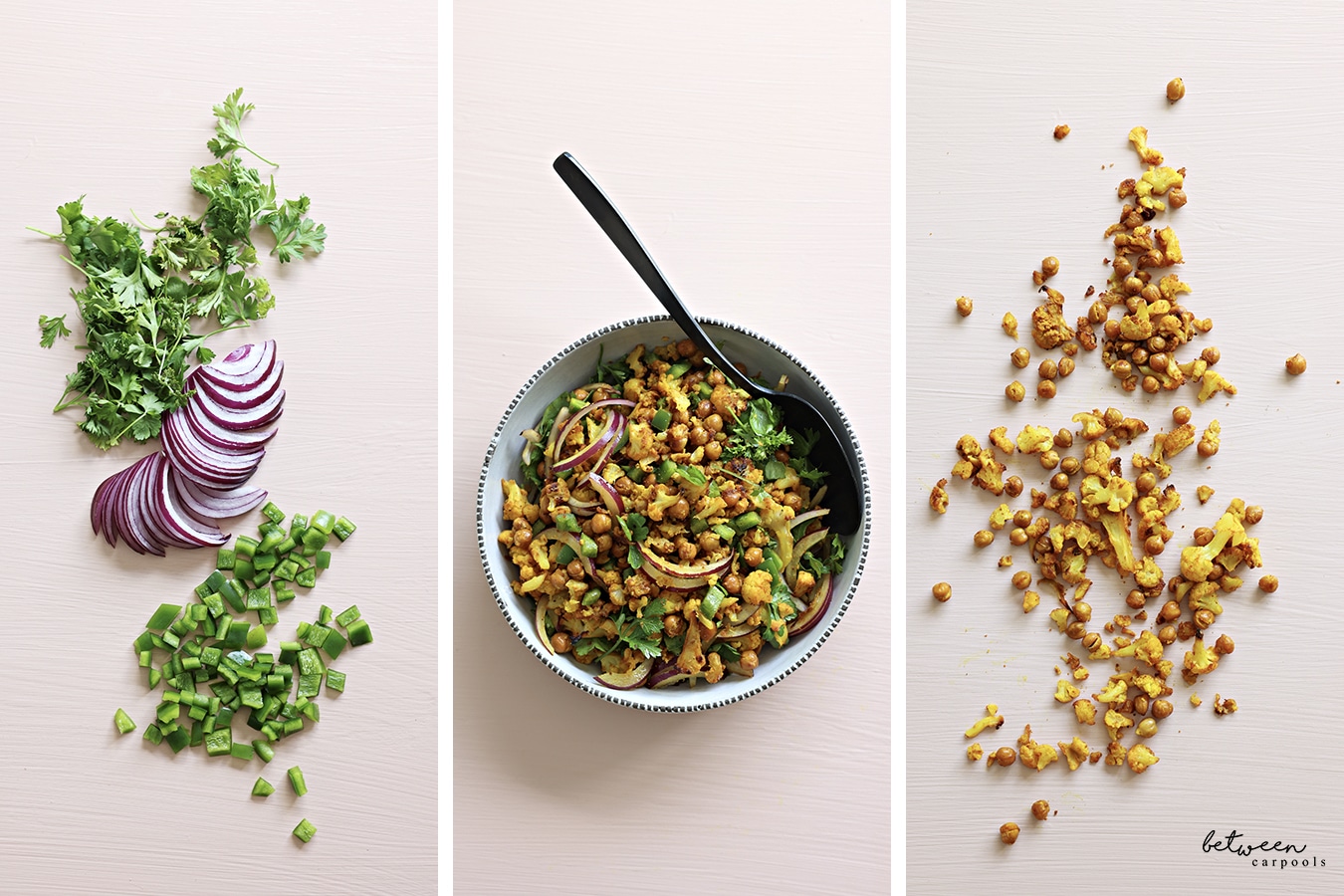 Between Carpools1 month ago
I looked at the whole buffet, trying to decide what I should taste. And this Cauliflower Salad was what stood out to me. After dessert, I went back for more so that I could pay more attention to what was in it.
A friend noticed I was having salad after dessert. “Are you tasting it again so you can figure out the recipe?”
“Yes, of course!”
This Cauliflower Salad feels exotic–yet the components are very accessible and simple to prep. Let’s start.
Even though fresh cauliflower can be used, I tried it using frozen cauliflower as it’s more practical. You get much more cauliflower for the money and we’re roasting it for a while, so I don’t think it will make much of a difference in the end.
Start by thawing your cauliflower just until it’s soft enough for you to be able to slice it thinly. This is easiest if it’s still mostly frozen. If you use mini cauliflower, you don’t have to slice the cauliflower as it’s already small enough.
Add your chickpeas to the baking sheet.
Drizzle the whole tray with the olive oil.
Sprinkle with spices–turmeric is the essential ingredient here.
Then toss it all together.
Bake at 425°F for 30 minutes (check it at 25 minutes as every oven is different).
While the cauliflower and chickpeas are roasting, you can prep the other ingredients. Slice your shallot or red onion very thinly. The green pepper also needs to be very thin.
Now for the parsley. To measure, remove the leaves and add them to a measuring cup. You don’t need to pack them down. Once you have 2 cups, add them to your cutting board and give a few quick chops. You don’t need to chop finely–the parsley can be nice and big in this salad.
If using kosher pre-checked parsley that comes in small (~1 oz) packages, you will likely need two of them.
Our cauliflower and chickpea mixture is ready! It might look burnt to you when you take it out, but it’s not. We want crunchy chickpeas! The flavor on the cauliflower will also be nicely concentrated.
In a bowl, combine the cauliflower/chickpea mixture with the shallot, green pepper, and parsley. There is no mistake that there is no dressing in this salad. The flavor is so concentrated in these ingredients, we find that it doesn’t even need a dressing! If not serving immediately, you can add a little bit of olive oil just to tie it all together.
How to Prep Ahead: Even though this is called a salad, it’s technically roasted veggies, so it’s best when the cauliflower/chickpea mixture is roasted on the same day that you’ll be serving it. The chickpeas lose their crunch once they are refrigerated. But that doesn’t mean you need to do it all at the last minute. You can prep all your veggies the day before. Keep the seasoned cauliflower/chickpea mixture in one container and the pepper/parsley/shallot in another container. Then, simply add the cauliflower/chickpea mixture to a greased baking sheet to roast, then toss with the fresh veggies.
5 from 1 vote
Preheat oven to 425°F. Line and grease a baking sheet with aluminum foil or line with parchment paper.
On the prepared baking sheet, toss cauliflower and chickpeas with olive oil and spices. Bake for 30 minutes (check after 25 minutes as every oven may be different). It might look overcooked and almost burnt, but it’s not. We want the chickpeas to be crunchy!
In a bowl, combine cauliflower/chickpea mixture with shallot, green pepper, and parsley. Toss with olive oil if using.
 Between Carpools1 month ago
You bought the Yom Tov outfits. (You did, didn’t you?! If not, read this.) The shoes, the socks, the yarmulkes. Done, right?
Except then you remembered to check whether the girls’ mocknecks fit from last year. And if your son has extra black pants. And if there are any right gender hand-me-downs in size 6-9 in the garage? And does anyone actually have enough pajamas to get through Yom Tov?
Aha. Well, here we are.
Tottini’s stocked with the everyday basics, the in-betweens, and the extras. Below, everything we (okay fine, I) forgot!
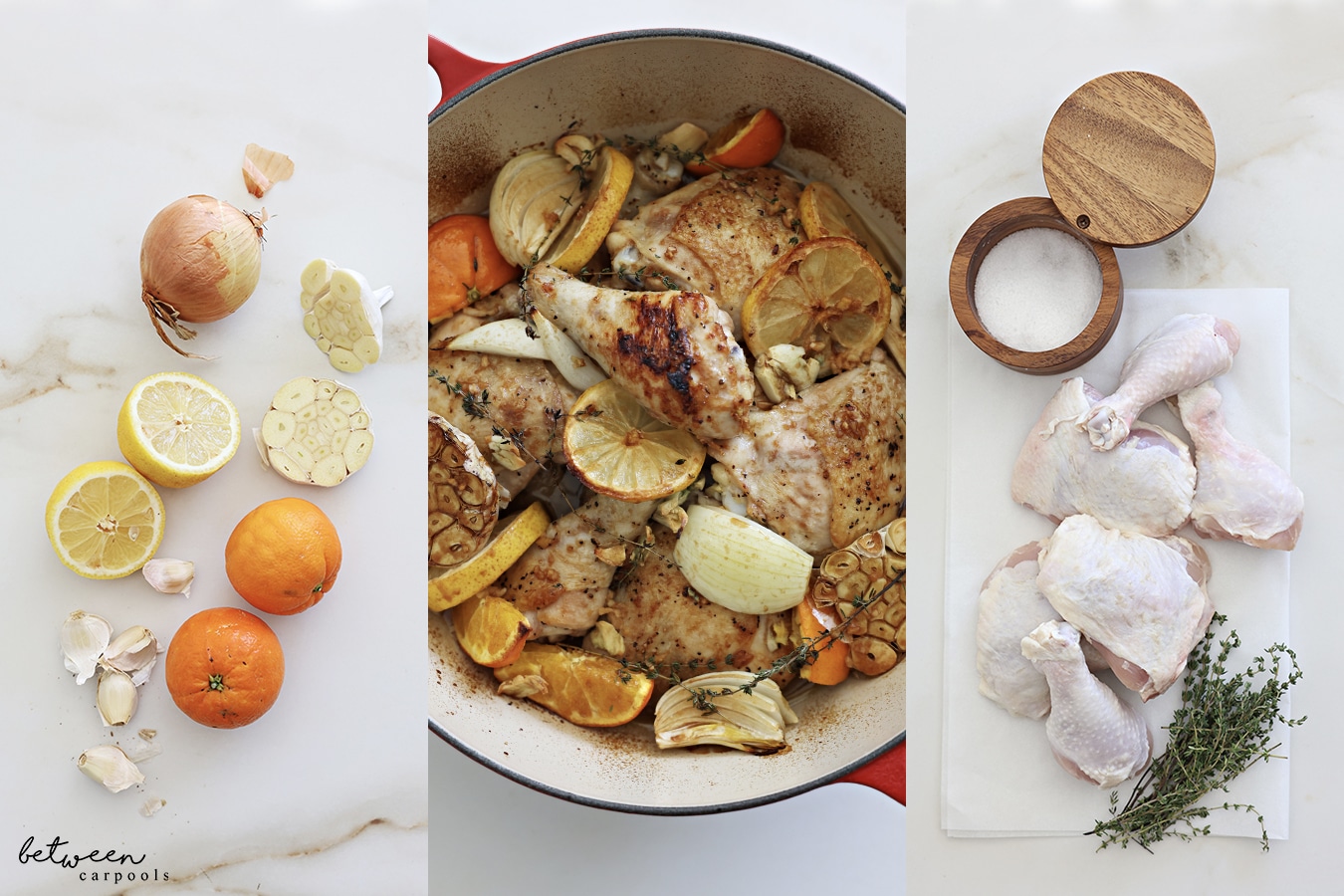 Between Carpools1 month ago
Even though I work “behind the scenes” at Between Carpools and don’t usually get involved in the recipe development (or rather, the recipe hunting), that doesn’t mean I don’t keep my ears and eyes open when I hear about something that sounds good (hint: citrus + chicken, yum).
After all, I try to be a good team player!
One of my neighbor friends, Hadassah K., always has recipe ideas to share. She’s a speech therapist and culinary enthusiast and I always knew that one day, one of her ideas would be a fit for Between Carpools.
And I thought this was it. It’s easy, pretty, and works perfectly as an oven-to-table dish you can bring straight to the table.
I’ve learned some tips from Hadassah in the years that she’s been my neighbor. She prepares her family’s favorites of course–but she doesn’t “skip herself,” and she also prepares the dishes that she likes, even if she’s going to be the only one! Ladies, don’t skip those dishes!
This chicken is simple and has basic, fresh flavors.
Start by patting the chicken dry (even if you don’t usually do this, it’s important this time). Season with salt and pepper.
Heat a large Dutch oven (or any heavy-bottomed pot) over medium-high heat. Add olive oil. Add chicken, skin side down, and sear for 6-8 minutes, until skin is deeply golden and crisp.
Add the orange, lemon, onion, and garlic, in between the pieces of chicken. Optionally add the head of garlic and thyme to the pan as well.
Add chicken stock and orange juice to the pan.
Bake uncovered at 400°F for 30-40 minutes. Meanwhile, whisk together the glaze ingredients. Start basting with the glaze during the last 10-20 minutes (don’t baste earlier), until the chicken is cooked through. Don’t glaze earlier or the honey will burn before the chicken is cooked.
If rewarming for Yom Tov, reserve some of the glaze for basting while rewarming.
This can be made 1-2 days ahead and kept refrigerated before rewarming (cover well). It is not recommended to freeze!
Preheat the oven to 400°F. Pat the chicken dry (even if you don’t usually do this, it’s important this time). Season with salt and pepper.
In a small bowl, whisk together all glaze ingredients. Set aside.
Heat a large Dutch oven (or any heavy-bottomed pot) over medium-high heat. Add olive oil. Add chicken, skin side down, and sear for 6-8 minutes, until skin is deeply golden and crisp. You may need to do this in batches depending on the size of your pan. Flip the chicken, right side up.
Add the orange, lemon, onion, and garlic in between the pieces of chicken. Optionally add the head of garlic and thyme to the pan as well.
Add chicken stock and orange juice to the pan.
Bake uncovered for 30-40 minutes. Start basting with the glaze during the last 10-20 minutes (don’t baste earlier), until the chicken is cooked through. Don’t glaze earlier or the honey will burn before the chicken is cooked.
If rewarming for Yom Tov, reserve some of the glaze for basting while rewarming. This can be made 1-2 days ahead and kept refrigerated before rewarming (cover well). It is not recommended to freeze.
 Between Carpools1 month ago
The men and teens may be out of the house all day, but as a mom of little kids, you have a double task when Yom Kippur comes. Your kids will need you and want you, but you also want to spend quality time with your siddur, making the day as meaningful as possible. Here’s our roundup of tips to help you keep those kids happy so you can have ample quiet time for davening.
Activities
This is the best activity for so many ages. It’s fun and delicious! All you need is pipe cleaners and fruit loops and the kids will be busy. Read the rest of the post here.
Activities
A while back we asked our readers for ideas on how to entertain a toddler. Not all are Shabbos and Yom Tov-friendly but there are a few good ones in there, including:
“Have them set the table with plastic spoons and cups.”
“Sit in a rocking chair with a sippy cup and a favorite book.”
“Buy paper bathroom cups by the hundreds…you’ll be amazed what they can build with them.”
Activities
A roll of painter’s tape may be your solution. Let them set up the course you see here on erev yom kippur (when they’re home anyway) and play on Yom Kippur. Read the post here.
These are our favorite toys for shabbos and yom tov. No lights, no music!
Games
Only have one kid home? Check out these single player games.
Games
Read this post for our favorite board games. Buy it now and have them for Chol Homoed too!
Games
If your child is old enough to come to shul with you, take along these games for just in case situations!
Nothing entertains a child for a longer stretch of time than a good book! Head out to your local store to get stocked up. We’ve got lots of kid’s book recommendations in these posts.
Food
It’s best if you can put up a meal on a Crock-Pot ahead of time so the kids have something to eat during the day. (Just be sure to keep in mind the halachos regarding taking food out of a Crock-Pot while it’s still cooking.)
Growing up, my mother always made a double recipe of kugel on Erev Yom Kippur. Half went into the oven for the pre-fast meal, and the other half went into a Crock-Pot for the kids to eat on Yom Kippur. Fasting while smelling overnight potato kugel is a whole new level of challenge, but if we were lucky, there was even some left for the adults when the fast was over!
Cholent, pareve or regular is always a great option.
Perhaps try something from our Crock-Pot roundup.
It’s also helpful to simply have some wholesome snacks around. If you don’t want to spend time prepping meals, but you still want the kids to have access to nutritious things that will fill them up, I like to boil some eggs and cook a pot of pasta. Here is a great list of ideas.
**Teach Them About the Day
**If you’re home anyway and the kids need your attention, use the time as an opportunity to teach them about the power and meaning of the day.
Even small children can connect to this aspect of Yom Kippur.
And to help keep the day peaceful, brush up on your “getting kids to listen to you” skills ahead of time with these tips.
Gmar Chasimah Tovah!
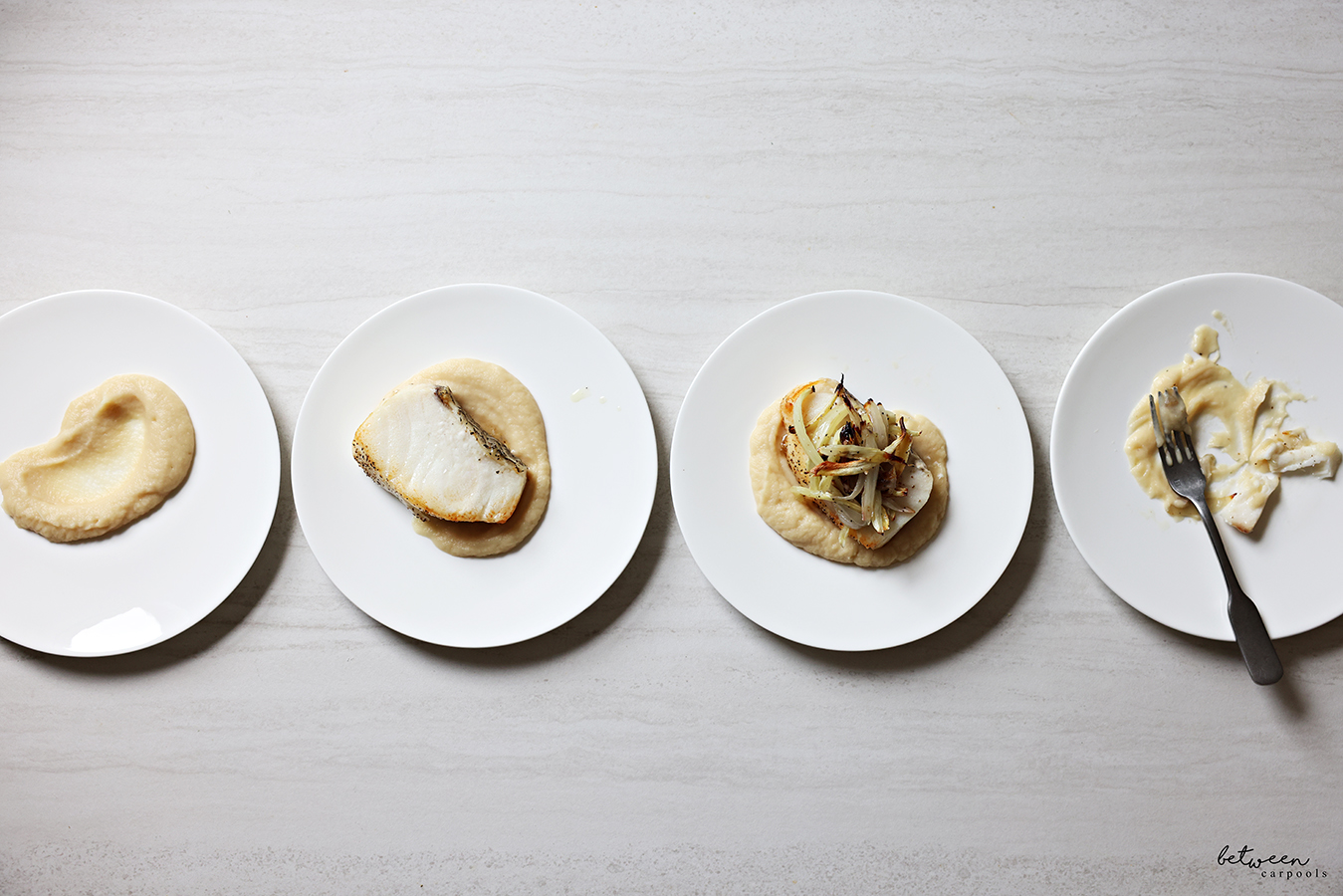 Between Carpools1 month ago
Although I’ve been making this recipe for awhile, of course, when it comes time to give it over to the Between Carpools audience, it gets tested again.
Since we held our first Yom Tov photoshoots of the season in July, it made sense that during the Nine Days, when there would be fish on the menu every single night, I would take the opportunity to test it once more.
It was finished to the last bit.
Now really, you could use any white fish you like. We’re just choosing sea bass because it’s Yom Tov and it’s usually the premium pick. But if you like turbot/baby halibut or branzino, or something else entirely, go ahead.
The star here is the parsnips.
You’d think we’re doing magic. But it couldn’t be simpler. The ingredient list here is as pure and basic as it gets. First, sauté your onion until golden in a deep sauté pan. Then add the parsnip chunks and salt. Add water, bring to a boil, then lower heat and simmer for 20-30 minutes. The parsnips will get nice and soft and most of the water should be evaporated.
When it’s ready, it will be a golden color. Blend using an immersion blender. This can be done in the pot, but it’s easiest in a container. You can also store the purée in the same container until you’re ready to serve it.
We’re also going to prepare a topping for the fish, just to make it “fancy.”
Once upon a time, a pastry chef taught me that when there’s a purée, the garnish should give a hint as to what the purée is. So, this garnish has roasted parsnip strips, in addition to fennel and shallots. Simple drizzle with olive oil and salt and bake.
But no worries. If you don’t like fennel or any of these components, you can skip. And if you’re not in the mood to cut vegetables so nicely, while the topping is nice and pretty and makes this a composed finished dish, it’s not required. The purée certainly stands on its own.
The sea bass is the one component that should be baked fresh. Simply sprinkle with salt, pepper, and olive oil and in the oven it goes.
Our fish looks perfect.
Our topping is also ready.
Time to plate this dish! Start by adding a generous dollop of parsnip purée to the plate and round it out with the back of a spoon.
Add a piece of fish on top.
Add the topping.
Gorgeous…and delicious! You may be surprised, but they will scoop up every last bite of these parsnips.
5 from 1 vote
In a deep sauté, heat olive oil. Add onions and cook over medium-low heat until golden and caramelized, about 15 minutes.
Add parsnips, salt, and water and bring to a boil. Lower heat, cover, and simmer for 20-30 minutes, until the fully tender parsnips have turned a light gold color and most of the water has evaporated. Use an immersion blender to purée until smooth.
Preheat oven to 400°F. Line two baking sheets with parchment paper. Add fish to one baking sheet. Drizzle with olive oil and season with salt and pepper. Bake for 20 minutes.
Add fennel, parsnip, and shallot strips to the second baking sheet. Drizzle with olive oil and season with salt and pepper. Bake for 20 minutes.
To serve, add a generous dollop of parsnip purée to the plate. Spread it out using a spoon. Top with fish and vegetables.
 Between Carpools1 month ago
This Elul, we’ve had a recurring conversation rolling around the Between Carpools table. It goes something like this:
‘Why is _____ the only option?’ or ‘How did ______ become the standard?’ or even ‘I’m not sure if ____ is right for us.’
We’ve been thinking about the way other people’s decisions impact us. How something becomes ‘in,’ then it’s just normal, and then it turns into standard, and eventually the minimum. We’ve been considering how much of what we buy, or what we do is actually a conscious choice, and how much we’re just doing, just because that’s ‘done.’
Have you seen the Values over Valuables ads? The goal isn’t to tell anyone what to buy, what kind of lifestyle to live, or how much to spend. It’s about making choices with intention, instead of making them by default.
Making the default choice is just so easy. It’s easy to add an item to our cart. It’s easy to think less and just follow along, because that’s what everyone’s doing.
So, instead of taking the easy way out, the BCP team is taking the Values over Valuables pledge. Each one of us, each in our own way. We’re asking ourselves questions like ‘Do I actually want this?’ and ‘Is this the right choice for me?’
Because if we all take the pledge, to live our lives more thoughtfully, more intentionally, then we’ll start to create change. When we start looking beyond the latest, the biggest, and the most elaborate, we can start to notice other things, things like creativity, intentionality, and balance.
Might it be hard? Of course! But maybe it’s the good kind of hard, the growing kind of hard. And if we all look inward to find the best choice for ourselves, the thoughtful choice won’t feel like the strange choice. It will just be a decision made with clarity.
Values over Valuables is flipping the script on what we consider impressive. What looks impressive from the outside doesn’t necessarily equal what’s meaningful on the inside. And when we start to praise the thoughtful choice, that’s what will become standard.
So this Elul, we’re joining Values over Valuables and taking the pledge. We’re taking the pledge to make decisions thoughtfully, based on what we value. Learn more at www.valuesovervaluables.org, and together we can flip the script.
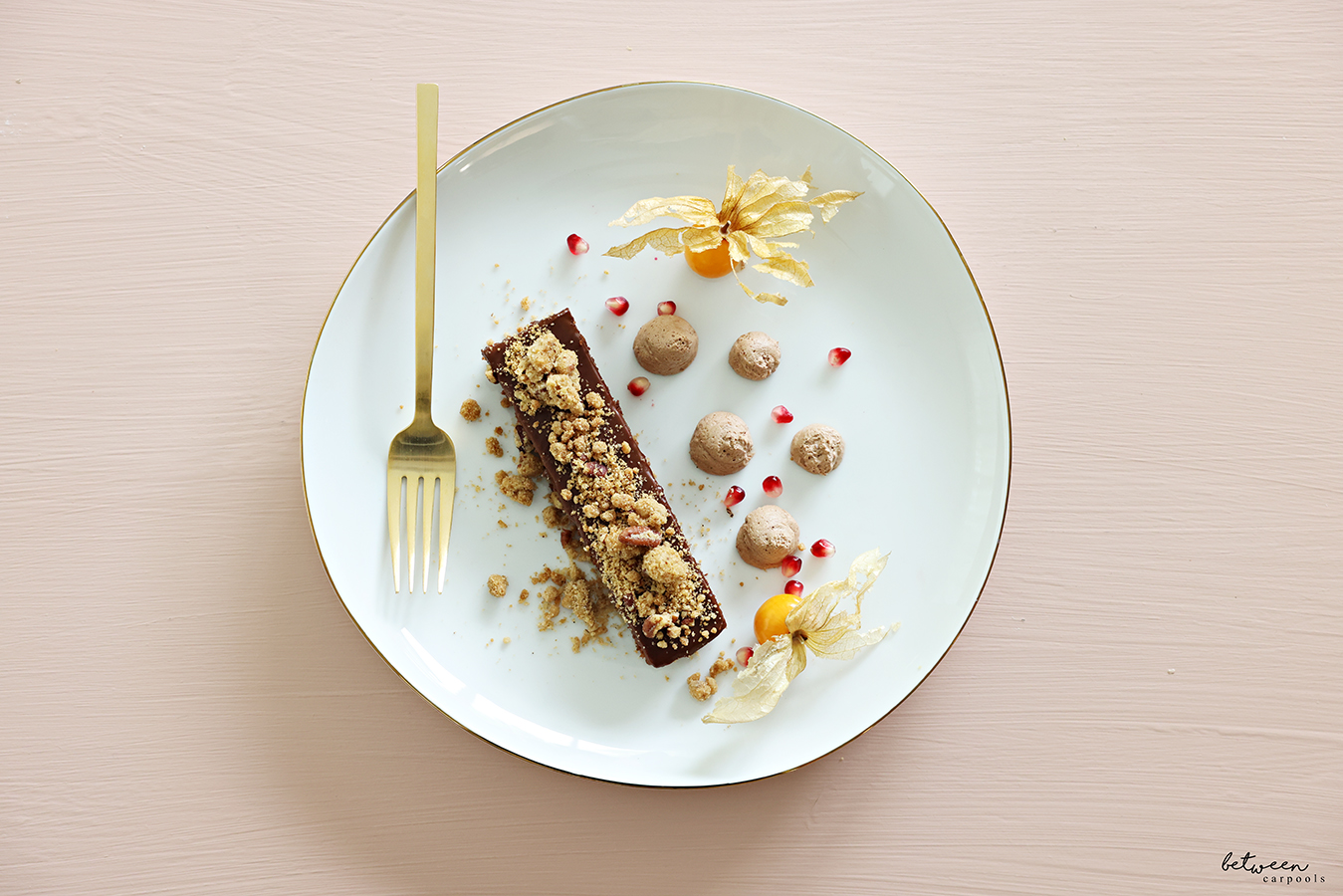 Between Carpools1 month ago
This is exactly the type of dessert you were looking for. Your family loves the basics. They love your brownie, they love your chocolate cake. But for Yom Tov, you were looking for something a bit more special.
Something that makes you feel like a real balabusta when you’re serving it, right? Or perhaps something that will have them polishing that dessert plate off and leaving the meal with positive feelings and rave reviews.
They also want that familiar + a twist type of dessert. Those comforting flavors they love, with the feeling of “this is special.” After all, they want to have their cake and eat it too.
This dessert does it. To start, you can use any brownie or chocolate cake recipe (depending on how fudgy or cakey you prefer it to be). We used the Chocolate Cake from Dinner Done 2 (recipe below) and baked it in a sheet pan instead of in a 9×13 (we included the recipe card for the cake below; make sure to print both recipes below if you are using it!).
If you are using a brownie recipe, you will likely need to double it. W
Do you remember this brownie hack? For perfectly glazed brownies, slice the cake/brownie before adding the glaze. Didn’t slice beforehand? You can also chill the cake and use a warm knife as instructed in the recipe below.
We used a different glaze here; this one is a bit more delicate and suitable for this dessert.
Smooth using an offset spatula. To read more about offset spatulas and why you need them to frost brownies and cakes, see this post.
The Praline Cream is easy to make and only entails three ingredients. Plus, you can keep it in the refrigerator from now until you are ready to serve the dessert. In the past, we’ve shown you this piping bag hack that makes it easier to fill the piping bag. But what about when you want to close it securely and you don’t have a rubber band available?
First, make sure you don’t overfill the bag. Then, use a scissor to cut the empty portion of the bag in half.
Tie the two sides into a secure knot.
Now you can store this until you’re ready to use it!
For the perfect dessert plate, pipe some of the praline cream on each plate. Place your rectangular chocolate cake on top of it or next to it.
Generously shower the entire dessert with the Pecan Crunch Crumble.
Decorate with fruit and pomegranate seeds.
You’ll be so proud and excited to serve this dessert!
5 from 1 vote
You can use your favorite chocolate cake or brownie when preparing this brownie.
Preheat your oven to 350°F. Line a baking sheet with parchment paper.
Place sugar, oil, orange juice, water, eggs, and vanilla into a large mixing bowl. Beat together until the mixture is completely smooth and slightly pale.
Add flour, cocoa powder, baking soda, and coffee powder. Mix everything together just until the batter is combined, and no dry flour streaks remain. Do not overmix.
Pour the cake batter onto your prepared parchment-lined baking sheet, spreading it evenly into the corners. Bake for 25-30 minutes (or until a toothpick inserted into the center comes out clean). Let it cool completely.
In a bowl combine all glaze ingredients mix until smooth
Because you are aiming for that crisp, clean, miniature rectangular loaf look, wait until the sheet cake cools completely. Put the entire baked sheet cake into the fridge or freezer for 20 minutes before cutting.
Once cake is cold, completely pour glaze over cake and top with toppings. Wait until it sets. Slicing a chilled cake with a warm knife will give you razor-sharp, professional edges without a single crumb breaking out of place. Another way to do it is as demonstrated in this post, where you slice the cake first and add the glaze later. Both methods work well.
Once chilled cut into rectangles (roughly 5 inches long by 1.5 inches wide). Divide up and store in the freezer until ready to use.
5 from 1 vote
Add cold non-dairy whipped topping into a chilled bowl of an electric mixer. Whip at high speed until stiff, firm peaks form.
In a separate small bowl, vigorously stir the Baker’s Choice Praline Paste straight into the melted dark chocolate until a completely uniform, smooth paste forms.
Turn your mixer to low speed. Slowly stream the chocolate-praline mixture into the whipped topping. Mix for just 15 to 20 seconds until a uniform, light-brown, fluffy mousse forms. Transfer to a piping bag and store in the refrigerator until ready to use. This can be prepared a few days ahead of time.
Preheat oven to 350°F. Line a baking sheet with parchment paper. In a medium bowl, combine the flour, brown sugar, pecans, cinnamon, and salt.
Pour margarine over the mixture. Using a fork or your hands, toss and press the mixture together until it begins to clump into breadcrumbs and small gravel-sized clusters. Do not overmix it into a flat dough paste.
Scatter the clusters evenly across the prepared baking sheet. Bake for 12 to 15 minutes, tossing gently halfway through, until deeply golden and fragrant. Let it cool completely on the tray to crisp up.
For the perfect dessert plate, pipe some of the praline cream. Place your rectangular chocolate cake on top of it or next to it, and generously shower the entire dessert with the crunchy pecan crumble. Decorate with fruit and pomegranate seeds.
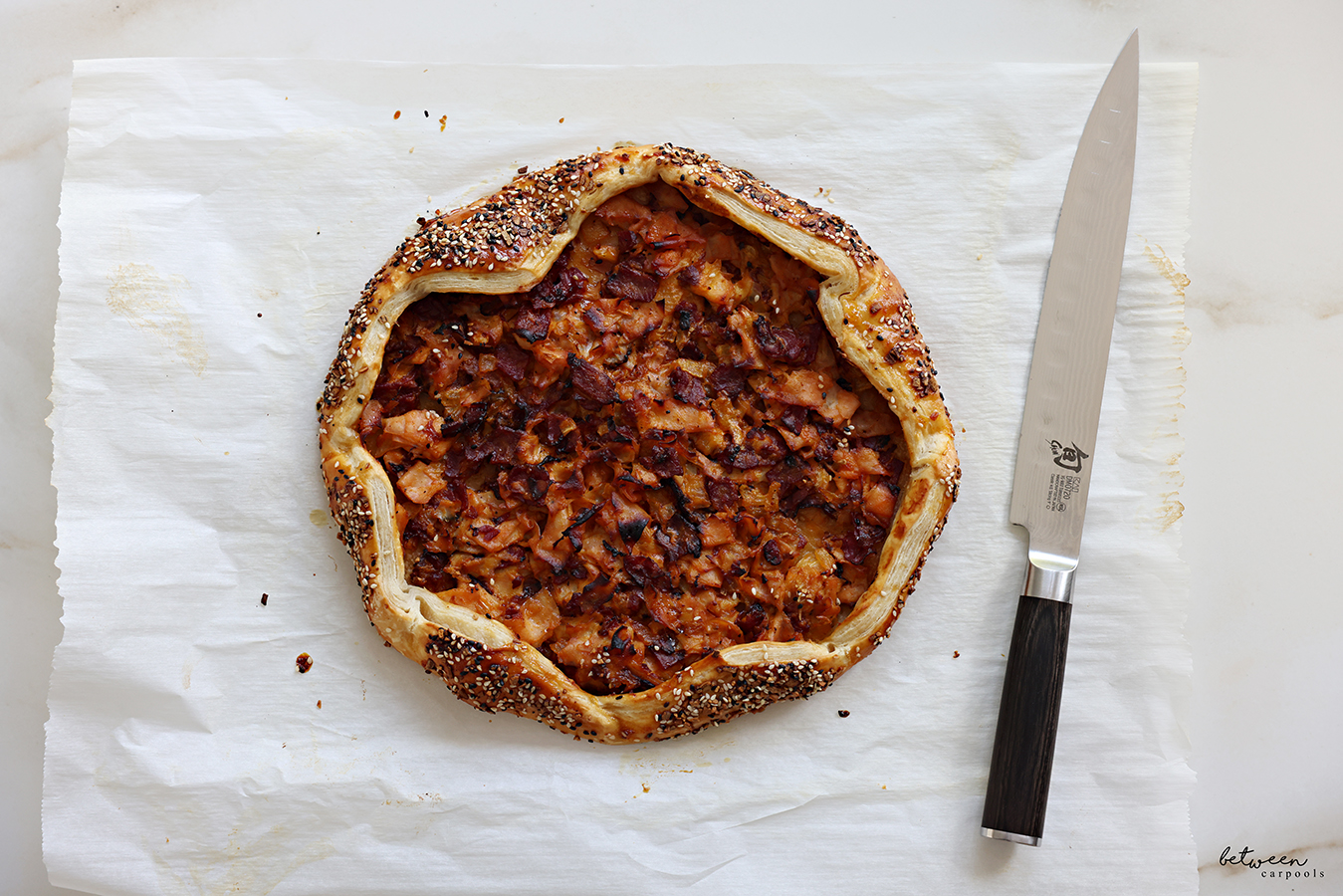 Between Carpools1 month ago
The background of this dish is quite simple.
My mother shared some pictures of what she’s cooking for Yom Tov with me, and this was one of her new creations.
We loved the idea! It was just what we needed. The ingredients aren’t different from your standard deli roll, but still this feels elevated. And as much as we like finding new, interesting recipes to try, at the end of the day, there’s plenty of family members that prefer the basics and we need to please them first of all!
This checks the boxes. The “picky eaters/prefers the basics” people are happy, and you have something to bring to the table that’s pretty to please them.
We enjoy preparing galettes because while they present very well, they’re exceedingly simply to prepare and it’s hard to mess them up. We featured this Cranberry Galette last fall (it’s perfect for now too!), and these Fruit Galettes are a long time favorite. This Apple Crumb Galette is another fall fav, and come Shavuos, you might want to try a dairy version. This is the first time, however, that we’re featuring a savory version.
Let’s start. Heat oil in a large sauté pan over medium heat. Add onion and cook for 8-10 minutes, until golden at the edges. Add cold cuts–we used pastrami and turkey, but use whatever you like! (Or, use whatever you have leftover!). Stir for 2-3 minutes, then add the ketchup, mustard, and mayonnaise and stir a little more.
Even though puff pastry comes in a rectangle, we want to get this into a square so that we can eventually get it into a circle.
To get that square, on a sheet of parchment paper, roll it out, going up and down rather than left and right.
Trim the four corners so that you have a round sheet of puff pastry. (Use the extra dough and filling to make yourself a boureka for lunch!)
Add the filling to the middle, leaving a 2-3 inch border at the edges.
Fold over the edges of the dough while pinching into pleats, forming a circle.
No need to be perfect.
Finally, brush the crust generously with duck sauce.
Sprinkle with Everything but the Bagel Seasoning.
You can freeze at this point if you’re prepping ahead for Yom Tov.
If serving immediately, bake for 45-50 minutes. If you’re baking after freezing (if not thawed), it will take a bit longer.
Preheat oven to 350°F.
Heat oil in a large sauté pan over medium heat. Add onion and cook 8-10 minutes, until golden at the edges.
Add cold cuts and stir for 2-3 minutes. Add ketchup, mustard, and mayonnaise. Cook while stirring for 2 more minutes, until well-combined.
On a sheet of parchment paper, roll out the puff pastry to a sheet that’s as square as possible. Cut off the four corners so that you have a round sheet of puff pastry.
Add the filling to the middle, leaving a 2-3 inch border at the edges.
Fold over the edges of the dough while pinching into pleats, forming a circle.
Brush the crust generously with duck sauce. Sprinkle with Everything but the Bagel Seasoning. Galette can be frozen at this point. If serving immediately, bake for 35-40 minutes.
 Between Carpools1 month ago
Sukkah Creations
Special 10% off for BCP with code BCP26
Sukkah Creations is your #1 source for stunning acrylic and vinyl Sukkah signs in all sizes and price ranges! Enjoy the gorgeous Judaic art Featuring Nechamafineart, Renee Art.
You can even order custom designs and sizes up to 2 days before Sukkos!
WhatsApp: Reach out here!
Visit In Person: POPUP SHOP! at 1201 River Ave (Cross & Rt 9)
Shop Online: Sukkahcreations.com
Celebrate Sukkot with beautifully crafted vinyl Sukkah posters, bringing the inspiration of Gedolim right into your Sukkah. Gedolim Art’s posters are printed on high-quality, durable vinyl, designed to withstand outdoor conditions while showcasing vibrant colors. Available in a variety of portraits of revered Gedolim, these posters offer a meaningful and elegant way to enhance your Sukkah decor.
To complement your Sukkot experience, Gedolim Art also offers year-round canvas and acrylic prints for your home or office, perfect for showcasing timeless Gedolim portraits.Make sure to order your Sukkah posters soon to ensure they arrive in time for Yom Tov!
Shop Online: gedolimart.etsy.com
For lasting beauty throughout Sukkos and beyond, we love Vintage Petals premium faux floral brand with beautiful, on trend arrangements for all your home decor and gifting needs. Their latest collections feature gold and white bowls with faux delicate spray roses, pastel moss, baby’s breath, and coordinating greenery. Your Sukkah will stay pristine, with an everlasting faux floral arrangement from Vintage Petals. Check out the website vintagepetalsgifts.com for the full collection and gift and floral decor options throughout your home. Their friendly and helpful customer service is ready to assist you!
Shop In Person: Call (848)226-7746 for store hours and location.
Shop Online: vintagepetalsgifts.com
Upscale, on sale! Whether you’re hosting or being hosted, Closeout Connections has just what you need for your guest room refresh, hostess gifts, tablecloths, tabletop items, serveware (both real for you to enjoy over and over, and of course, the best selection of disposables – you can shop tablescapes here), and so much more!
Shop In Person: Find the closest Closeout Connections near you.
Shop Online: thecloseoutconnection.com
Aura Home makes it effortless for you to set up a magnificent sukkah, year after year. Their distinctive Sukkah chandeliers are something that bring beauty and joy to your Yom Tov. As you hang those florals or place them on your table, your heart will leap as you look forward to spending time with your family in a sukkah with a beautiful ambiance. From the chandelier to the coordinating tabletop options, bring the beauty together at Aura Home.
Shop In Person: 939 River Avenue, Lakewood, NJ
Shop Online: Shop the Lavender Sukkos table here | Shop the Pink Sukkos table here
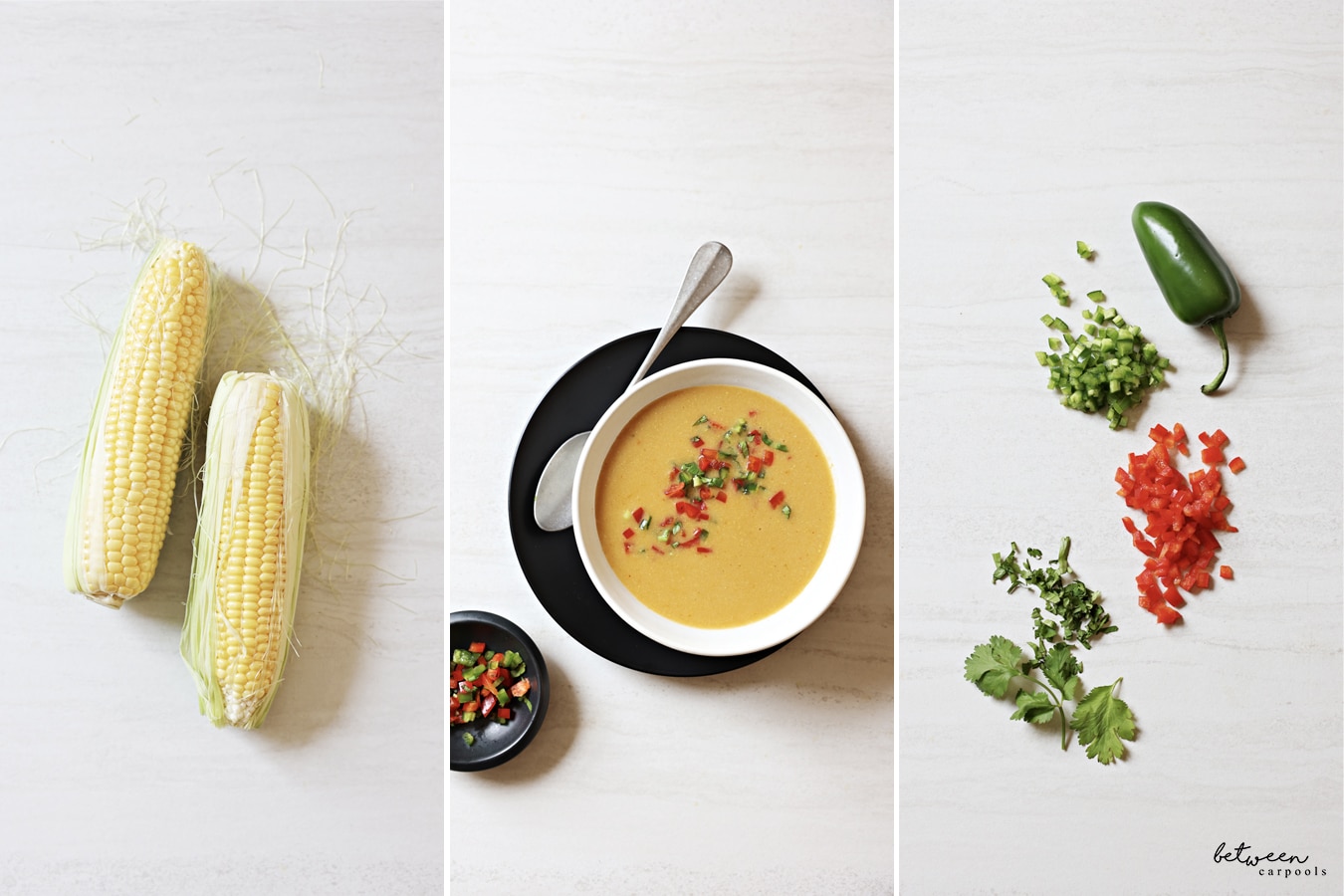 Between Carpools1 month ago
At one point or another, each of us had tried this corn soup at Tomahawk Steakhouse in Lakewood, NJ…and we each enjoyed it.
You may have already tried and enjoyed our dairy Corn Soup in Dinner Done–this pareve version, we thought, would be perfect for enjoying this time of year in the Sukkah (enjoy it while the corn is still sweet!)–it’s dressed up with little restaurant touches that add flavor without overcomplicating things.
So, we asked for the recipe. And while our friends at Tomahawk agreed immediately, it took the chef about a month until we had the recipe written down. Why? He needed to figure out how to pare down a big recipe for the home cook.
Like many corn soup recipes, this recipe, which starts with only 4 ears of fresh, sweet corn, doesn’t yield a lot. Feel free to double as needed.
Get your corn ready by slicing the kernels off the cob.
We’ll start the soup base by giving the shallot a headstart.
After 2-3 minutes, add the jalapẽno….
Then the red pepper and corn.
Cook for 5-7 more minutes, until corn is lightly caramelized. Stir in the cilantro.
Add the vegetable stock, raise heat and bring to a simmer. Let simmer for 15-20 minutes before blending.
And while we are using an immersion blender for the convenience, we know that at the restaurant, they use a Vitamix, which will do a much better job of breaking down the kernels.
When we strained the soup after using an immersion blender, we were left with more bulk and less overall yield.
This is an extra step to get that velvety smooth texture.
Return the soup to the pot.
Full disclaimer. This is a restaurant recipe–so there are going to be some ingredients that perhaps are a little junkier, like non-dairy creamer and corn syrup.
Finely dice more jalapeño, cilantro, and red pepper for a really pretty garnish.
Ladle the soup into bowls and add the garnish. Enjoy!
5 from 1 vote
Heat oil in a sauté pan over medium heat. Add the shallot and cook for 2-3 minutes. Add the jalapẽno, corn, and pepper. Cook, stirring occasionally, until vegetables soften and the corn begins to lightly caramelize, 5–7 minutes.
Stir in cilantro and pour in vegetable stock. Increase heat slightly and bring to a simmer. Cook uncovered for 25–30 minutes.
Using a blender or immersion blender, purée the soup until completely smooth. (For a velvety texture, pass through a fine-mesh sieve or chinois into a clean pot.)
Return the strained soup to the pot over low heat. Stir in the creamer, brown sugar, and corn syrup. Season lightly with salt and pepper. Simmer gently for 15–20 minutes, until slightly reduced and glossy.
Ladle into warm bowls and garnish with jalapeño, cilantro, and red pepper.
 Between Carpools2 months ago
Your apples have been dipped, your Yom Tov food has been devoured, and your Rosh Hashana machzor has a few more tears in its pages. Now Sukkos is really around the corner!
Whether you’re hosting or being hosted, Closeout Connection has you covered. Their motto? Upscale, on sale. Their stores and website are stocked with great-quality pieces at really incredible prices. There are so many things we love from Closeout Connection, but today let’s focus on their hosting/hosted essentials.
Are you hosting? You’ll find everything you need for a guest room refresh at Closeout Connection! Gorgeous, thick comforters, fresh, firm pillows, and an incredible mattress topper. Your guests will thank you!
The Lofty Down Alternative Comforter features baffle-box construction, which keeps the filling evenly distributed so it always sits right. The Re Down-Alternative Cotton Pillow is super-filled and overstuffed, with a 600-thread-count shell. It starts out firmer and softens over time.
Being hosted? Closeout Connection has lots of beautiful gifts to bring along! We love these Mescente reed diffusers (three scents!) with fragrances inspired by Jo Malone, making an easy and elegant hostess gift. So luxe!
Then there’s the little things to gift that make hosting Sukkos easier, and a little more fun. These are perfect for yourself too! Check out these trays for bringing food in and out of the Sukkah, a gorgeous cake tray on your counter, and beautiful fingertip towels for Yom Tov.
At this time of year, there’s always one more thing you need. Good thing Closeout Connection makes that one more thing easy to find!
 Between Carpools2 months ago
Month: Tishrei
Mazel: Scale
Human Faculty: Touch
In Elul, the alarm clock rang out. “Ben Adam, mah lecha nirdam?” Why are you asleep? We attempted to arouse ourselves in the Selichos.
Tishrei is when we jump up from bed, wide awake. We throw off the blanket and choose wakefulness over slumber, aliveness over deadness. We’re not rubbing our eyes while reaching for the snooze button. Rather, we move straight into wakefulness, shedding all vestiges of slumber. It’s not a coincidence that Rosh Hashanah is the only Yom Tov at the start of the month. That’s because Rosh Hashanah sets the tone for the entire chodesh. As the Rambam explains, the purpose of the shofar is “Arise you sleepers from your slumber!” There’s so much to gain! So much to absorb! Take it all in. Next comes Yom Kippur, when we’re once again reminded, through the words Hashem says to the Navi Yona: Stop running away from your mission, from your reality! When Yona fell asleep on the ship, Hashem roused him awake. The message was clear: Be where you are meant to be, in body, mind, and heart.
Saturated with Yamim Tovim that are meant to sustain us for the rest of the year, Tishrei is the time when we want to be constantly present, awake and ready to absorb the essence of every Yom Tov. The month starts with Rosh Hashanah, when we re-accept Hashem’s sovereignty, and segues through Yom Kippur, Sukkos, and Simchas Torah, each of them intended to suffuse us with another spiritual boost. What is our avodah at this time of year? To be present to the spiritual gifts so we can absorb them at their highest capacity.
What does presence mean? The answer is simple: both my mind and my heart are fully engaged in this moment. My mind is clear of distracting thoughts, and my heart is open to feel. We get to practice this experience on the very first day of the year: At tekias shofar. When the shofar blows, all is still. Everyone is uber-focused on one sound—a cry from the heart. A cry that yearns for more. More bracha, more goodness, more closeness to Hashem. The human faculty correlated to Tishrei is touch, which represents closeness and deeper connection—how appropriate for a month that is centered on increasing kirvas Elokim.
This beautiful combination of a quiet mind and a flowing heart is what enables us to experience the nochach pnei Hashem, being present to the Ribono shel Olam. (As well, it is the secret to being present to all other relationships in our lives.)
Interestingly, since presence is the essence of Shabbos, Chazal deemed it unnecessary for the shofar to be blown when Rosh Hashanah falls on Shabbos, like this year. Shabbos is intended to be a time of decreased distractions so the mind can focus exclusively on our relationship with Hashem and coming closer to Him. It is also a time when we are encouraged to feel more pleasure, whether through increased avodas Hashem, or through the seudos, zemiros, and other emotion-inducing activities that Shabbos invites into our life.
Want to tap into the spiritual propensity of this month? Allow yourself to be awake, one moment at a time. It is the only way to amass the riches that this month is here to give us. We don’t want Tishrei to pass over us; we want it to penetrate into our bones and carry us through the year.
Here’s how to maximize the potential of this month:
1.
**Once Per Day This Month.**Make presence your focus for just one minute (the more, the better, but start with this). The good news is that while presence is most easily achieved when our environment is conducive to it—such as a quiet room or a calm place—it is a state we are able to reach anywhere, anytime, as long as our mind and heart are in it. So, either choose to go to a quiet place, or make up your mind to experience presence wherever you find yourself, fading out the sounds and sights around you.
2.
Quiet Your Mind.
Yes, Tishrei tends to be especially busy for most of us—which only makes this exercise even more of a necessity than a luxury. You may find that your mind is overflowing with thoughts about this and that, tasks that need to get done, opinions on those around you… Take a deep breath and allow all racing thoughts to quiet down, to fade into the background.
3.
**Choose One Singular Experience to Focus on.**Be fully present to this particular experience.
For just one minute (at least), channel all your thoughts and all your emotions toward this one singular spiritual experience relating to the Yom Tov you’re preparing for or are currently in. You may choose to have your moment of “wakefulness” when you’re engaged in a mitzvah or minhag relating to the chag, such as while dipping the apple in the honey, doing kapparos, or watching the hakafos. Your focus becomes the internal experience: what thoughts you have around this experience and what it feels like in your heart. This, and only this.
What best enables us to be present in this experience is to use the tool of visual imagery. As Rav Dessler, among other sefarim teaches, our imagination has the power to bring a scene to life both in our mind and our heart. For example, if you’re in the process of cooking or running “just one more” errand before Sukkos, or you’re already sitting in the Sukkah, tune out the sounds and sights around you and simply picture that you’re currently in Hashem’s embrace. As Shlomo Hamelech writes in Shir Hashirim, “His left hand is under my head, and His right arm embraces me.” Close your eyes (even figuratively) and just picture that. Breathe into it. Wow, what a moment! Allow yourself to feel the love, feel the togetherness, to be overwhelmed by the warmth of His embrace. That, my dear sisters, is presence. That, my dear sisters, is being awake.
Doing this exercise is especially beautiful during a month when 1. The mind races non-stop through our oversized to-do list and 2. We may be more emotionally triggered than usual by those around us. It’s the positive, flowing emotions that we want more of. What a gift!
In its root language, the word Tishrei means beginning. May this be the start of a beautiful new year, dear sisters. A year of increased simchah, more fulfilled relationships, and more presence. As we beseech on Rosh Hashanah, “[Hashem], create for me a pure heart and a spirit that is steadfast renew for me…”
When we are blessed to be “awake,” we get to experience life in full color. Every Yom Tov, every ritual, takes on layers of meaning and fills us with such purpose and joy. By giving ourselves the gift of presence as we live through Tishrei, we’ll look back and see how much we’ve enjoyed, grown, and connected to the spirit of the time. That’s true living. A simchas Yom Tov to you all!
 Between Carpools2 months ago
The shofar.
That mystical, magical artifact we all have a love–hate relationship with. On the one hand we wait all year for it. We squish into alleys and tight spaces, pack bags of nosh to keep the kids quiet, all so we can hear those long–awaited sounds.
On the other hand, many of us don’t know what to make of those sounds once we finally hear them. We feel something, but can’t quite put it into words. Or we want to feel something, but don’t know what to aim for.
First Question – What Does Teruah Actually Mean?
There’s a pasuk we say in davening: “Ashrei ha’am yodei teruah” Blessed is the nation that knows the Teruah. Isn’t that a strange statement? What is there to know about the Teruah? Well, here’s something surprising. The word Teruah actually is used to describe a joyful shout, a cheer of celebration.
It’s completely different than the whole nail–biting, guilt–soaked panic we usually bring with us to shofar blowing. Yes, the sound of the shofar is actually the sound of cheer. Why would the sound of the Shofar, the sound we associate with judgement be called cheer?
Second Question – What Is The Shofar Actually Doing?
Hashem created a world that is always alive, always moving. And we are no different. Every action we take, every word we say and every thought we think moves us somewhere.
We’ve committed ourselves to a life of constantly moving toward one destination: a deeper, more connected relationship with Hashem and staying away from anything that gets in the way of that. We are either moving towards ideals like Emes, Yichud, and Ahava, or towards the static of Kinah, Sheker, and Ga’avah.
This is the essence of Teshuva. It’s making the choice not to stay stuck. It means choosing to check our direction and allowing ourselves to be moved back into alignment. To let the music of life move through us until we find ourselves back in step with Hashem, steadily moving towards our destination.
Perhaps that’s why Hashem gave us a mitzvah built around sound.
The Sound That Moves Us
Sound isn’t only something we hear. Sound is also movement. When something makes a sound, it creates tiny vibrations that travel through the air. Those vibrations reach our ears and our brain recognizes them as sound.
Sound moves. And when sound is powerful enough, it moves us. If we let it.
This is the secret that Klal Yisroel knows about Teruah. We don’t just listen to the Shofar, we allow its sound to move through us, bringing us back on track towards our goal.
Rosh Hashanah isn’t asking us to reinvent ourselves. It’s asking us to check our direction. Are we moving toward greater connection or greater separation? Greater truth or greater distraction?
So this year, as you stand in shul, (or in a severely overcrowded alleyway, twisting yourself into positions you didn’t know you were capable of), all to hear those sacred sounds, close your eyes, feel the sound and let it bring you back to what you know in your bones to be true. Allow yourself to talk to Hashem, and ask Him:
Hashem, allow these sounds to move through me and realign me to where I want to be. To remove the obstacles keeping me from you and to open me up to feeling you more closely than ever before. Let these sounds stay with me even when I leave this place, so that every choice I make will be one that keeps me connected to You.
Because, that is my ultimate goal, and the greatest source of my pleasure. This is the cheer of the Teruah.
Wishing us all a year of experiencing Hashem’s presence and connection with us as a deeply felt sense of home.
 Between Carpools2 months ago
We introduced you to 5One Apparel last season, and petite women quickly got shopping! Clothes that are actually made for your proportions? No sleeves to roll up, no dramatic shortening, no waistline sitting around your hips? Say no more! 5One’s new collection just dropped, and it’s full of the stunning fall pieces you’re going to wear all season long.
The new collection brings that same thoughtful fit to a whole new lineup of pieces, with everyday casual styles and beautiful dressy options for Shabbos and Yom Tov. No reconstructing needed, these pieces fit the first time!
5One offers petite sizing across a wide range, from XXS to 3XL. Every piece is designed with petite proportions in mind, not simply standard clothing made shorter. Once you get used to clothes that fit properly, it’s hard to go back!
Shop in person at 38 Chelsea Road, Jackson, NJ (side door), or browse the collection online at 5One Apparel. Call, text, or WhatsApp 732-930-2770 for hours.
Our top picks, below.
 Between Carpools2 months ago
We put together the outfits from head to toe to inspire your fall wardrobe!
Double Breasted Cream Sweater | Plaid Blouse | Plaid Pleated Skirt | Heeled Boots | Leather Cream Skirt | Knit Cream Top
Black Buttoned Jacket | Plaid Top | Plaid Skirt | Checked Midi Skirt | Checked Tie Shirt | Stud Shoes | Ballet Flats
Tweed Sweater | Black Skirt | Printed Blouse | Black Gathered Dress | Plaid Lace Detail Skirt | Grey Buttoned Sweater | Paisley Chiffon Skirt | Black Heels | Black Leather Flats
Knit Button Cardigan | Gray Cardigan | Belted Knit Jacket | Shirt Dress | Checked Grey Asymmetric Skirt | Long Sleeve Dress | Drop Waist Checked Skirt | Belt
Navy Cardigan | Polka Dot Skirt | Pleated Midi Dress | Back Tie Sweater | Checked Midi Skirt | Shoes | Leather Kitten Heels | V Neck Sweater
Red Stripe Sweater | Striped Polo Sweater | Knit Diamond Print Sweater | Blue Striped Polo Sweater | Blue Sweater | Tan Suede Loafers | Brown Suede Loafers | Brown Sneakers
Shirt Dress | Knit Ruffle Sweater | Gray Turtleneck | Brown Floral Slip Skirt | Seam Detail Long Skirt | Croc-Effect Kitten Heels | Blue Shirt Dress
 Between Carpools2 months ago
Rosh Hashanah is a serious time. We stand before Hashem, reflect on the year that has passed, and think about the choices we have made. We speak about teshuva, repentance, taking responsibility, and becoming better people. These are important and powerful messages that belong at the heart of the Yamim Noraim.
But how do our children hear those messages?
If Rosh Hashanah is presented primarily as a time of judgment, fear, guilt, and remorse, our children may begin to associate this beautiful time of year with feelings of sadness and inadequacy. They may focus on everything they did wrong and wonder, “How could Hashem be happy with me when I made so many mistakes?”
And that is not the feeling we want them to carry into a new year.
Teshuva is not meant to make us feel hopeless. Quite the opposite. Teshuva is one of the greatest gifts Hashem has given us. It teaches us that we are never stuck. We can recognize where we have fallen short, make amends, learn from our mistakes, and choose a different path.
Every Rosh Hashanah, we are given the opportunity to begin again.
Imagine if our children could experience that message not with fear, but with hope.
Instead of asking only, “What did I do wrong this year?” we can encourage them to ask, “Who do I want to become this year?”
Instead of focusing only on regret, we can help them focus on growth.
Instead of allowing mistakes to become a source of shame, we can teach them that mistakes can become stepping stones toward becoming the person they are capable of being.
There is certainly a place for yirat Hashem, for awe and reverence of Hashem. Our children need to understand that our choices matter and that we are responsible for the way we live our lives. But perhaps this message needs to be balanced with something equally important: ahavat Hashem, the deep love between Hashem and His children.
Our children need to know that Hashem loves them. He wants them to succeed. He sees their potential. He gives them opportunities to return, repair, grow, and try again.
This may be especially important for today’s teenagers. They already live with tremendous pressure to be successful, to fit in, to look a certain way, and to measure up. They don’t necessarily need to enter the New Year feeling that they are being reminded of everything they have failed to do.
They need to know that they are capable of becoming more.
Perhaps our role as parents and educators is to help them experience the balance of the Yamim Noraim. Yes, there is seriousness. Yes, our actions matter. Yes, there is a call to take an honest look at ourselves.
But there is also love. There is forgiveness. There is possibility. And there is joy in knowing that we have the power to change.
We can ask our children questions that inspire them rather than frighten them. What is one middah you would like to strengthen this year? What is one relationship you would like to improve? What is one small change that could bring more goodness into your life?
Rosh Hashanah is not only about looking backward at the person we were. It is about looking forward at the person we can become.
And perhaps that is the message our children need most: You are loved. You are capable. You are not defined by your mistakes. A new year is beginning, and with it comes a beautiful opportunity to grow, to change, and to become the very best version of yourself.
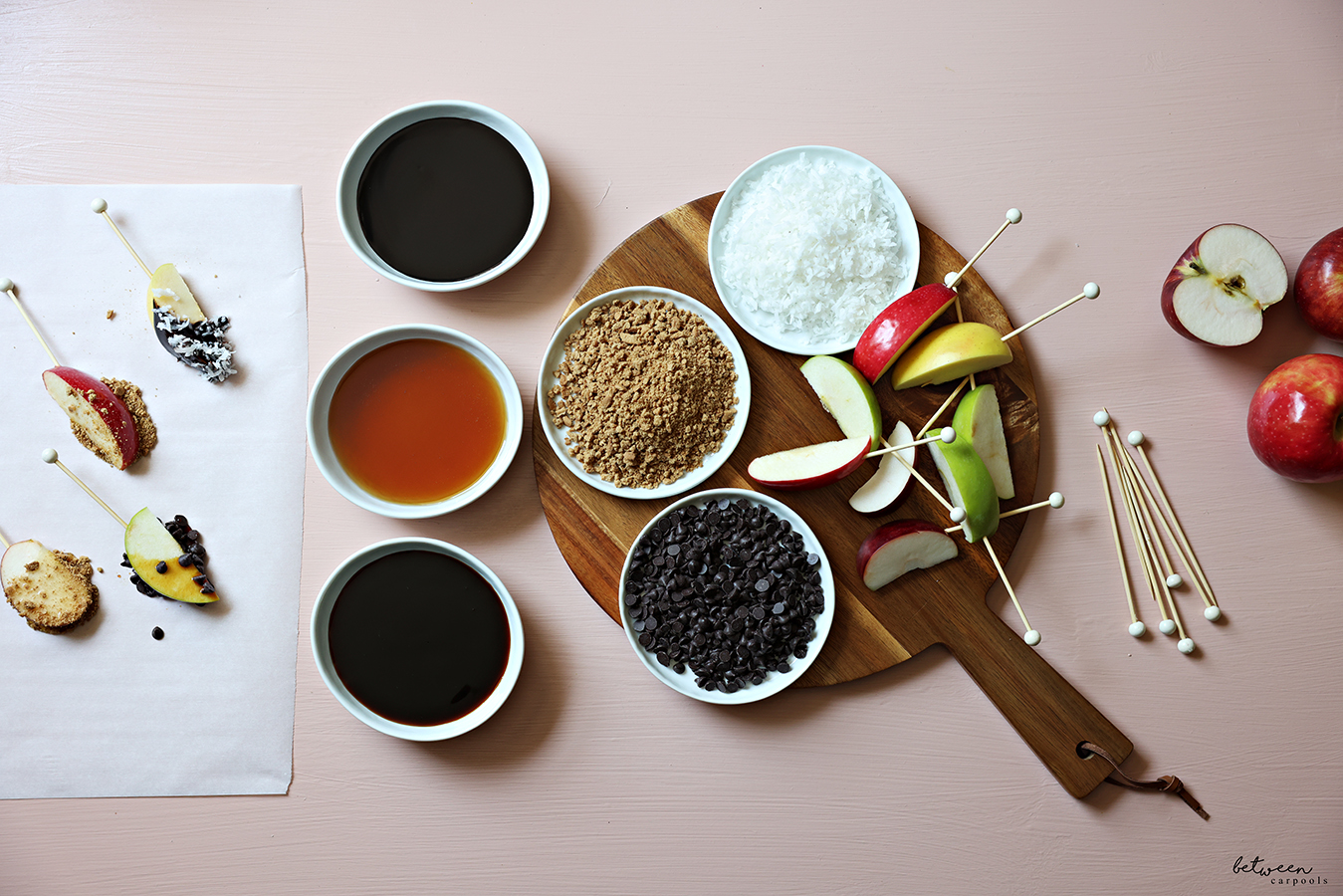 Between Carpools2 months ago
There are certain personal traditions that show up in our homes just once a year, and that’s what makes them so special. We keep them for that particular time of year because we know that, as the children grow, they’ll remember them, cherish them, and look forward to them year after year.
These little customs are so unique to each family. For Rosh Hashanah, it might be braiding a challah in the shape of a pomegranate, placing special individual honey dishes at the table, baking our legendary honey cookies or doing something simple that becomes meaningful simply because you do it together every year.
Those are the moments that become family memories…the ones that you will hear your children hopefully reminisce about, saying “Remember when Mommy used to do xyz for Yom Tov…?”
Here’s one dessert we thought could be especially meaningful, and fun, for the little ones. It’s a quick dessert idea that can be exciting to prep together and fun to eat as well.
And it’s especially perfect for everyone who doesn’t have time to make dessert…but it’s no less special!
You will need:
**Apples.**Whichever variety and color you choose is fine
Skewers.
You can pick pretty ones to make it more festive, if you like.
**Dipping Sauces.
**We used honey (of course), pareve caramel sauce (we used this one by Tuscanini that we loved), Chocolate Sauce (also Tuscanini).
**Toppings.
**We used mini chocolate chips, Lotus Crunchies (which are crushed up Lotus cookies) and shredded coconut flakes. We stayed away from any nuts since it is customary not to eat nuts this time a year.
From here on it is quite simple. Cut the apples into spears.
Insert a skewer into the apple.
Dip each skewer into a sauce of your choice.
Then into the toppings, eat and enjoy!
This dessert is meant to be eaten immediately, served at the table with sauces and toppings as one would do for a fondue type of dessert.
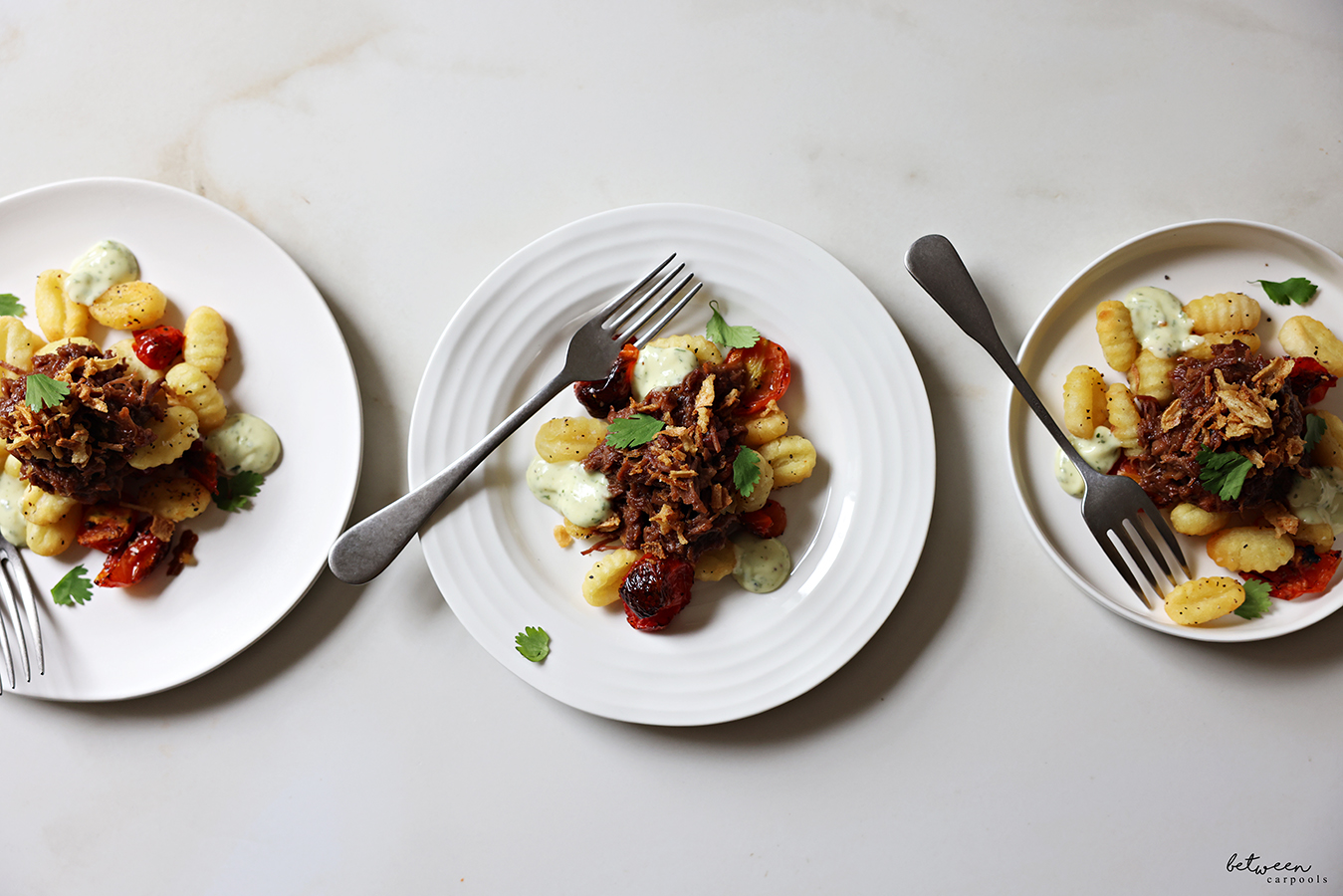 Between Carpools2 months ago
Over the years Devorah, my oldest sister-in-law, has shared so many gems of recipes. Honestly, it’s pretty much as if she has worked for free for me over the years! With a house of picky eaters, she cooks the kind of food that all children (and adults) love.
Some of our family favorites are originally hers. That includes the Tomato Soup with Dumplings, the Tomato Cream Sauce Pasta, these Water Challah Rolls, and this elegant appetizer that’s a favorite, the Skirt Steak Mango Salad. For Pesach, we always prepare and enjoy this version of Cream of Chicken Soup.
At her last wedding that we attended, this appetizer was served–and everyone polished it off. Now while many weddings have great food, it has been a while since I’ve seen everyone really enjoying an appetizer. So, I snapped a photo and thought to myself, “This would make a great appetizer for Yom Tov.”
Fast forward to this summer. I sent Devorah the photo I snapped and wrote, “We all enjoyed this at the wedding. I’m trying to remember, what was the sauce? I want to recreate it for BCP.’’ While this Restaurant-Style Gnocchini with Short Rib Ragout has been a long time favorite on BCP, this new version I tried was completely different. Unlike that version, I knew it would be great with any pulled beef. Plus, it felt light and fresh. I knew you would all enjoy it too!
And Devorah responded, “It was a garlic mayo with lots of parsley in it. I was the one who told the caterer what I wanted to serve.’’
Of course, I should have guessed. It was Devorah’s recipe on the plate all along.
She added, “It was so successful. The caterer told me he received many requests for it.’’
Pause for a minute. For all of you that are true Dinner Done fans (I hope it’s most of you!) you might recall that we have a dairy No-Pot Gnocchi on page 178 of Dinner Done 2 cookbook. Instead of boiling gnocchi the traditional way, we roasted store-bought gnocchi and topped it with parmesan cheese before serving. It’s really good and you should try it if you haven’t.
This recipe uses the exact same method! It’s so practical. Since the Garlic Parsley Sauce and the Shredded Beef you’ll use in this dish can both be easily made ahead, all that’s left to do is roast the gnocchi and you’re ready to serve a fresh, vibrant and filling appetizer.
Add the prepared gnocchi with cherry tomatoes to a baking sheet. Add the oil.
Then season with salt and pepper and toss to coat evenly.
For the shredded beef, you can shred any leftover roast you have, or use our Shredded Beef recipe in Dinner Done 2. Once the shredded beef is warmed up, you’re already ready to plate this!
When ready to serve, top gnocchi with shredded beef. Garnish with some crispy onions, Garlic Parsley Sauce, and some fresh parsley.
Enjoy!
Prep ahead: Shredded beef can be prepared and frozen. Simply thaw and rewarm.
Gnocchi can be roasted and refrigerated until ready to serve. The sauce can be made up to one week ahead (use this piping bag hack when storing it).
5 from 1 vote
Preheat the oven to 425°F. Line a baking sheet with parchment paper.
Add gnocchi and tomatoes to the prepared baking sheet. Drizzle with oil, salt, and pepper. Toss to combine evenly. Bake for 30 minutes, until gnocchi is golden and crisp at the edges.
Prepare the Garlic Parsley Mayo. Add all ingredients to a jar or container. Blend all together using an immersion blender. Refrigerate until ready to serve.
To plate the dish, place gnocchi with tomatoes in the center of an appetizer plate. Top with shredded beef. Sprinkle on the crispy onions. Dollop garlic parsley mayo and some fresh parsley leaves and serve.
 Between Carpools2 months ago
You know when you have the top, you have the shoes, you have an idea of that ever-elusive perfect outfit, and then you realize you have absolutely nothing to wear on the bottom?
Meet Dress Code: your number one skirt destination.
Located on 13th Avenue in Boro Park, Dress Code curated an incredible selection of stunning skirts in a huge range of colors, sizes, lengths, styles, and price points. You need it, they have it! Whether you’re looking for everyday basics, trendier options, dressy skirts for Shabbos and Yom Tov, or even for simchas, they stock them all.
And no, it’s not an overwhelming room of skirts. The collection is thoughtfully curated, with trendy picks and classic styles. Every season, they source and find the latest fabrics, colors and styles to keep your wardrobe fresh.
Need help putting together the outfit? Bring your top to Dress Code and the salesladies will find you the perfect skirt to match! Put together your weekday outfits, Shabbos outfits, and evening looks! You’ll find your perfect skirt at Dress Code.
Can’t make it in person? Dress Code’s website is up-to-date and easy to shop! Shop by category, color or length; they make shopping fun! Tip: use their product descriptions to get more info on each style. Follow along on Instagram @its_dresscode to see new arrivals and styling tips!
Sometimes you don’t need a whole new wardrobe, you just need the right skirt! Shop online at www.itsdresscode.com, or find our top picks below.
 Between Carpools2 months ago
Covered trays and cake plates keep your food fresh, while allowing everyone to enjoy anytime. Some of these options are even practical for everyday use (i.e. those platters of cut fruits and veggies that we bring out after school and put back in the fridge), and some are extra special, just for Shabbos and Yom Tov.
There’s a covered tray or cake plate that’s perfect for the way you host (or giftable for your hostess!) below.
Elegant & Timeless
Silver Cake Stand $99 This one’s elegant for the Rosh Hashanah table. | Martha Stewart Cake Stand with Dome $50 Tea time vibes! | Gold Cake Stand $80 | Lenox Butterfly Cake Stand $125 | Sabrina Marble Footed Cake Stand with Dome (2 Colors) $88 | Black and White Cake Stand with Dome $60
Wood and Rustic Looks
Farberware Wood Tray with Locking Lid $28 We love this for leaving on the counter every single day…from baked goods to fruits and cut veggies. See more about it in this post. | Acacia Wood Rectangle Cake Stand $60 Great Size! | Wood Cake Stand $22 | Mango Wood Cake Stand $92 | Acacia Wood Cake Stand with Dome $42 | Acacia Wood Footed Cake Stand with Dome $62 | Rectangle Wood Tray with Dome $40 | Bamboo Rectangle Covered Tray with Gold Handle $33
Practical Acrylics
Acrylic Footed Plate $50 | Acrylic Rectangle Cake Stand – 2 Pack for $42.99 This one’s perfect for your 9×13 cake baked in loaf pans instead, as shown in this post. | 9×13 Gold & Acrylic Rectangle Covered Tray $60
Jars
For cookies, nosh, candies…they’ll stay fresh and you can leave on the counter or bring them out after a meal, then put them back away.
Glass Jars with Ball Cork $24 For all those nuts that your guests like to enjoy between or after meals. | Labina Glass Jars with Wood Lids 2 Pack for $30 | Cookie Jar with Wood Lid – Gallon Size $25 | Jars with Wood Lids – 4 Pack $34 Also great for those candies and nuts! | Glass Storage Jars Set of 5 $35
Pricier Options for Significant Gifts
If you’re being hosted for a Yom Tov and want to treat your hostess to a bigger gift.
Mackenzie Childs Tray & Dome $225 A magnificent gift for your hostess who will be having you for Yom Tov! | Mackenzie Childs Dome $180 If you or your host already own a Mackenzie enameled dish, turn it into a covered cake plate with this, or place it over any dish or charger plate. | Michael Aram Butterfly Ginkgo Covered Cake Plate $315 Makes the table instantly beautiful | Marble Serving Board with Cloche $139 | Stoneware Cake Stand $199
 Between Carpools2 months ago
The best shopping trips are the ones you actually enjoy. Yes, of course, also the ones where you leave with exactly what you were looking for! But our favorite shopping trips are the ones that leave us refreshed and excited to wear our new purchases.
That’s The Weekend Boutique.
Their collection is stunning! Everything is hand-picked, so there’s a really curated feel to what you’ll find in the store: dressy, eveningwear, casual, and everything in between. The Weekend Boutique sources European designers and high-end pieces, along with plenty of options at different price points. Shop designer brands like Marc Cain, Mackage, Self-Portrait and Marella and more casual options from brands like Mun and Parni.
But the clothes are only part of it. ‘Our customers come back season after season for our curated collections, yes, but also for the shopping experience.’ explains Shaindy from The Weekend Boutique. The store is gorgeous! It’s such a pleasure to shop in an elevated, boutique-like environment, with boutique-style customer service too. Dedicated salespeople are available to help you find the perfect outfit, and they really care to help you look your best.
I was curious how Weekend came to be! ‘Apparel runs in our family,’ says Shaindy. ‘The eye comes from generations of fashion experience. My great-grandfather started S&W 50 years ago, and Weekend Boutique is a sister store. We love helping our customers feel beautiful!’
If you’re looking for gorgeous pieces, you have to stop by The Weekend Boutique! Conveniently located on the border of Lakewood and Jackson (1130 E Veterans Hwy), The Weekend Boutique reminds you how fun shopping can be.
Come for the clothes, stay for the experience!
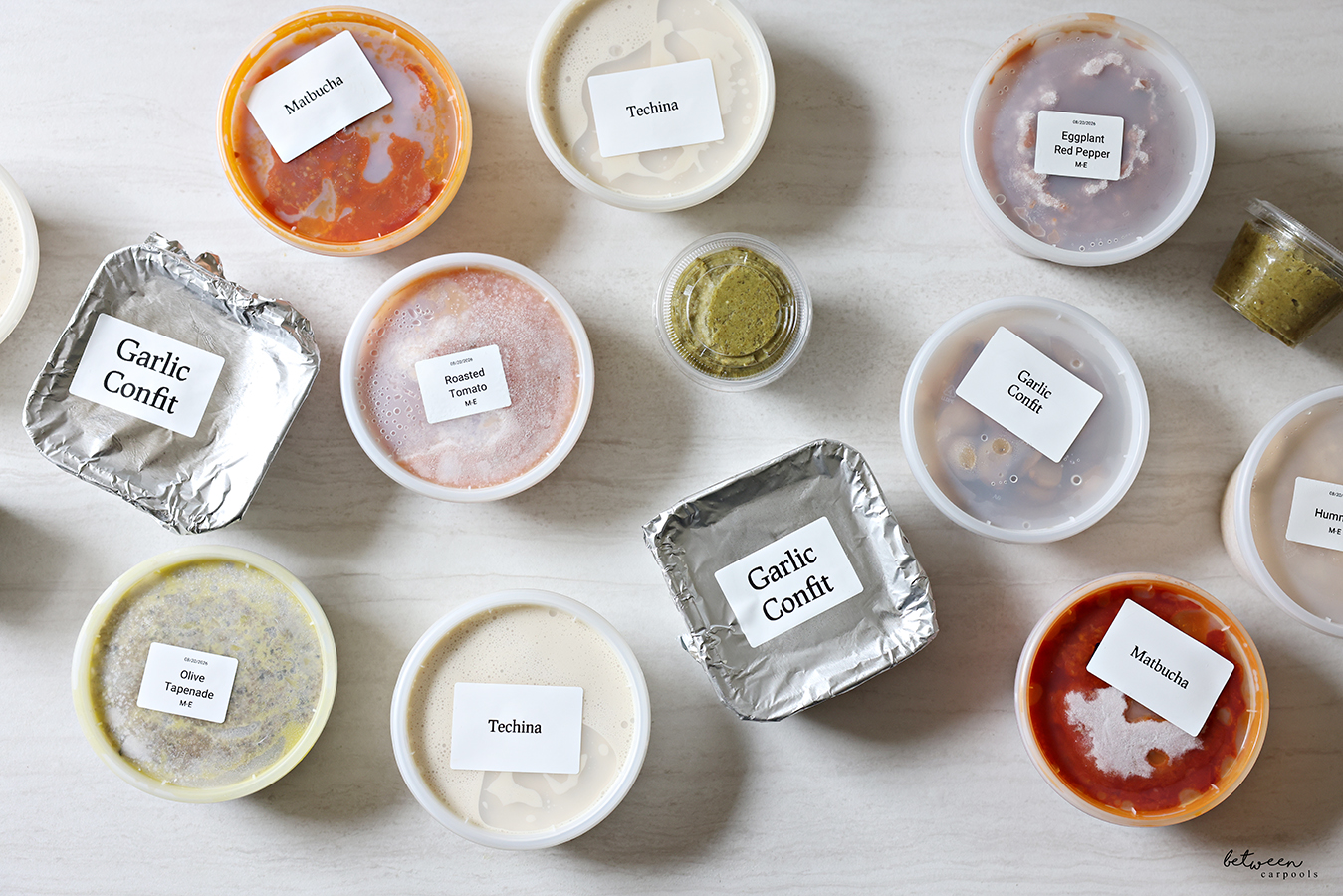 Between Carpools2 months ago
We’ve written so many posts about freezing foods because, honestly, freezing is one of the things that helps us cook smarter. It doesn’t necessarily mean doing more work. It means doing some of the work when you have the time, so there’s less to do when Thursday and Friday roll around.
We’ve shared our guide on How to Freeze Anything, talked about how to keep fried foods fresh and crispy, answered the question of whether you can freeze potato kugel, and shared the things different BCP women always try to have in their freezers, from Esti’s freezer staples to Victoria’s, Leah’s, Shaindy’s, and Renee’s.
And while we’ve mentioned here and there that you can freeze certain dips, we realized we’ve never done a full roundup of the dips we’ve actually tested and freeze ourselves.
So we raided three freezers and collected all the dips we actually freeze to photograph for this post.
Why freeze dips?
It doesn’t take much longer to make a big batch of garlic confit or triple a recipe for techina. Then you have some ready to go in the freezer, and that’s one less thing to do the following Thursday or Friday.
Here are the dips we actually keep in our freezers:
Fully defrost and then stir really well with a spoon.
Process one can of green olives, one can of American-style black olives, 4 to 5 cloves of garlic, and enough olive oil to bring it together.
This is the sauce from the Eggplant Shakshuka in Dinner Done 1. You can freeze it blended or unblended.
Some of us prefer to store it in little aluminum pans so it can easily be warmed. Others serve it at room temperature or place the plastic container on top of the crockpot before shabbos, to warm it slightly.
Not everyone loves the texture of hummus after it has been frozen, so this one is personal preference. If you do freeze it, defrost and stir well.
For this one, freeze the roasted jalapeño mixture. Defrost and mix with mayo before Shabbos.
See the comments on our Roasted Jalapeño Dip recipe for even more ideas and variations from readers who do a similar hack.
We keep all our dips together in one bin in the freezer. That way, we can pull out the bin and see what we have left.
We find that when we have a bunch of small containers floating around the freezer, they topple over, get pushed to the back, and eventually get hidden behind everything else.
The bin keeps everything together and makes it much easier to actually use what we have.
And that’s really the whole point of freezing food. It’s not about filling your freezer just for the sake of having a full freezer. It’s about making the busy days a little easier.
 Between Carpools2 months ago
My niece hurt her ankle recently. Nothing dramatic — just enough that she suddenly couldn’t do what she normally does. Almost overnight, she felt off. Not just bored, but thrown off.
She’s a young mom who’s used to daily movement. Exercise is how she resets and how she feels steady again. Suddenly, that outlet was gone. No movement, no release, no familiar baseline, and she started trying to grab control elsewhere.
Like a proper Jewish mother, she decided now was the best time to toilet train, to take away the pacifier, and to get everything together. It sounded productive. But watching her, I realized something important.
This shouldn’t have been a push-forward moment. It was a pull-in moment. What does that mean?
She wasn’t meant to be in do-mode. She was meant to be in recover-mode. She didn’t need a new project, she needed safety, softness, and time to pause.
I was reminded of a phrase I once heard from Rebbitzen Spetner, describing certain stretches of parenting as “no-chinuch time.” Not because values don’t matter, because this isn’t the time for teaching — it’s the season for holding.
That moment with my niece made something very clear: motherhood doesn’t ask the same thing from us in every season.
The Jewish calendar already understands this. There are times of year when the agenda is decided for us. Now we prepare for Purim, now switch to Pesach mode, then it’s Chanukah again. We don’t fight it, we rearrange our energy and our schedules accordingly. We understand that this season has a job, and we show up for it.
I’m not talking about opting out of real life. I’m suggesting something smaller.
Recognize what season you’re in. Notice when you’re stretched thin, and treat that like it matters. This isn’t lowering the bar, it’s working with what’s true right now.
Some seasons are about holding things together. These are the seasons of newborns, recovery, illness, or emotional overload. In these seasons, the job isn’t self-improvement. It’s survival. It’s keeping everyone fed, safe, and loved. When we try to push growth here by overhauling routines, fixing habits, or finally “getting organized,” it often leaves us feeling like we’re failing.
We’re not failing. We’re just asking ourselves to do the wrong kind of work.
Then there are seasons where life begins to feel more stable. Sleep improves, and there’s a little more mental space to notice what’s hard and what could be easier. These are the seasons where structure starts to make sense. Not perfection. Just small steps that make daily life feel less heavy. This is where routines start to carry you instead of the other way around.
And then, sometimes, there are seasons of building. You start to feel stronger, and more capable. You learn skills you were never taught, and you make decisions once instead of every day. Things start running without so much effort. From the outside, it can look like you’ve suddenly “figured it out.” You didn’t skip steps, you arrived here because the earlier seasons did their job.
There are also seasons that look calm on the surface but feel heavy in quieter ways. Teenagers. Emotional labor. Aging parents. Invisible responsibilities no one else sees. These seasons aren’t about growth. They ask you to show up, and not quit on yourself, even when nothing feels particularly inspiring.
The trouble starts when we compare across seasons, when we expect productivity from ourselves when we really need rest, or when we measure ourselves against someone whose life just looks different right now.
You’re not behind and you’re not doing motherhood wrong. You’re just in a different season. Ask yourself: What is this season asking of me? And respect that.
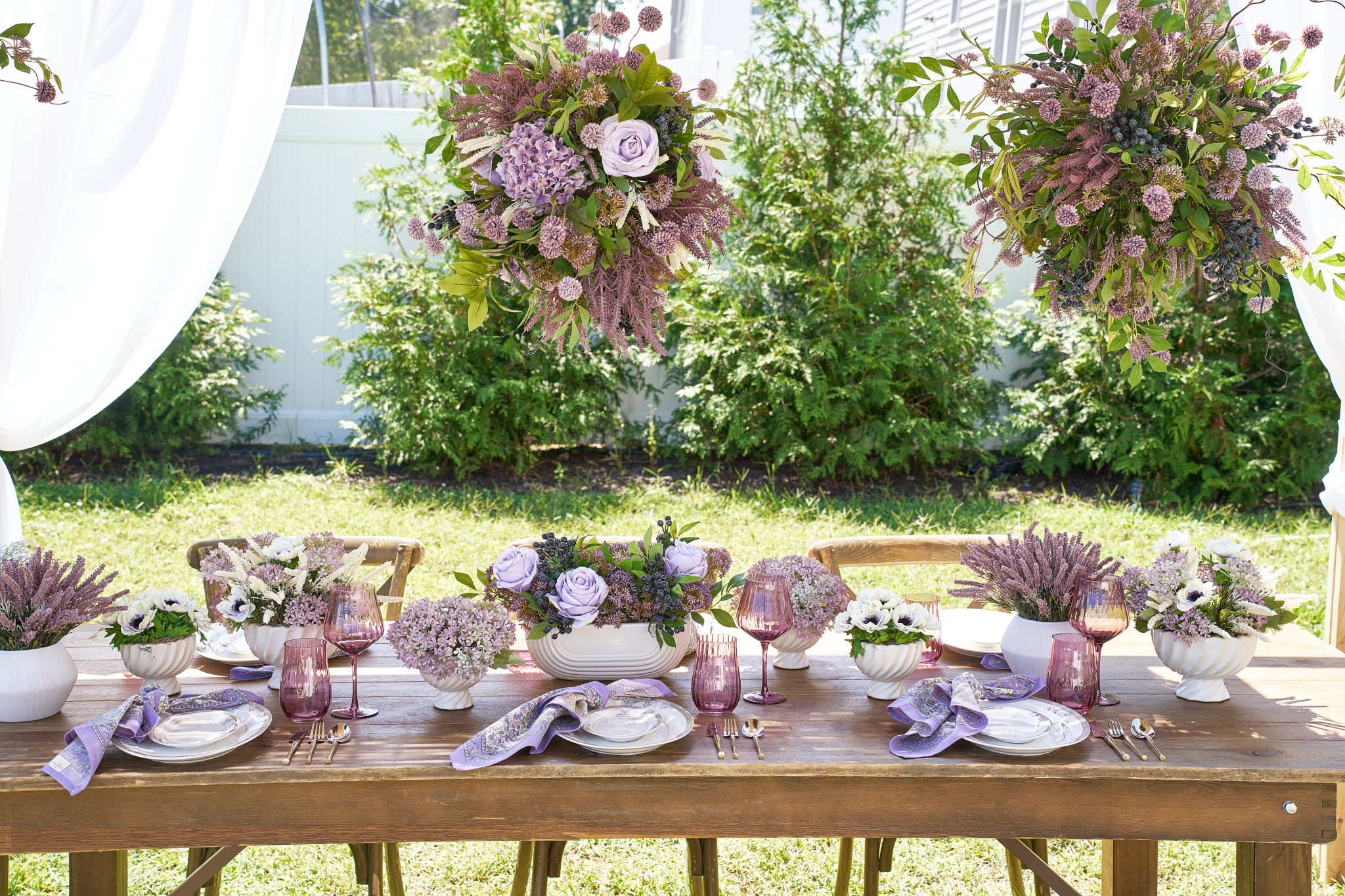 Between Carpools2 months ago
It’s not just a sukkah chandelier. It’s something that brings beauty and joy to your Yom Tov. It’s something you can put away and get excited about bringing out year after year.
As you hang those florals or place them on your table, your heart will leap as you look forward to spending time with your family in a sukkah with a beautiful ambiance.
Everyone will just love being there.
These chandeliers create an Aura…and how appropriately, that the place that helps you attain that aura is Aura Home.
That’s not all that’s new this season. If you love the coordinating pieces on these tabletops, you can find them all here. They’re perfect for gifting for your hostess…or for yourself.
Plus! Aura Home debuts new gorgeous linen sets each season, and we’re going to show you some new and past favorites so you can refresh those rooms in time for Yom Tov.
Love the softness of this season’s color palettes, in pink and the softest of lavenders. The tabletop florals all coordinate with either of the chandeliers.
Let’s take a closer look.
These floral chandeliers and tabletop pieces are designed by Aura Home to beautify your Sukkah. And, yes, they’re faux! Enjoy them year after year and look forward to a sukkah that’s beautiful forever more.
These new tabletop arrangements bring the look full circle. Enjoy them all year round too!
Here’s some picks in shades of pink. See the whole selection here!
Or, you might love this color palette instead.
This lavender color palette might be our favorite yet from Aura. It’s so soft and fresh.
Let the chandelier and florals inspire your color palette!
Newest to debut from Aura Home is the fanciful Paradise Mauve Duvet Set. It brings a fresh vibrancy to a room, all while remaining elegant and supremely pretty. Also available in blue!
More recently released top picks we love include English Garden, Wesley Stripe Duvet Set (available in Taupe and Grey), and the Dune Duvet Set.
One thing we love about Aura home is that they don’t just sell you a linen set. They put the whole ensemble together with their signature throw pillows and accessories, so that the whole look comes together.
Finally, the fall season wouldn’t be complete without something new and precious from Petite Belle, our favorite line of bedding for the littlest ones, featuring whimsical crib sets (including sheet sets for portocribs and bassinets) and twin beds for the siblings.
Now, swaddle your baby in these coordinating and swoon-worthy blankets.
 Between Carpools2 months ago
You have questions. Perhaps it’s about honey, or the simanim, or about the minhag to be extra stringent on Pas Yisrael during the upcoming Aseres Yemei Teshuvah.
You have questions, and we’re proud to partner with the cRc and Mint Media in hosting the latest video series!
This series of videos, produced in collaboration with Mint Media, is entertaining, adorable, fun to watch, and so interesting!
What’s to come in this series?
For Yom Tov: Honey | Pas Yisroel | Simanim
Beyond Yom Tov: Coffee | Uber Eats | Dunkin | Starbucks | Medicines
Episode 1: HONEY!
Learn all about honey and which varieties require a hechsher. You’ll also discover some fascinating honey facts: What is the difference between regular honey, lanternfly honey, and royal jelly? What is orange blossom honey?
Look for a new video right here every few days over the Yom Tov season!
Sign up here to make sure you don’t miss a release and to stay current with cRc News and Alert.
Watch the full series as they are released, here.
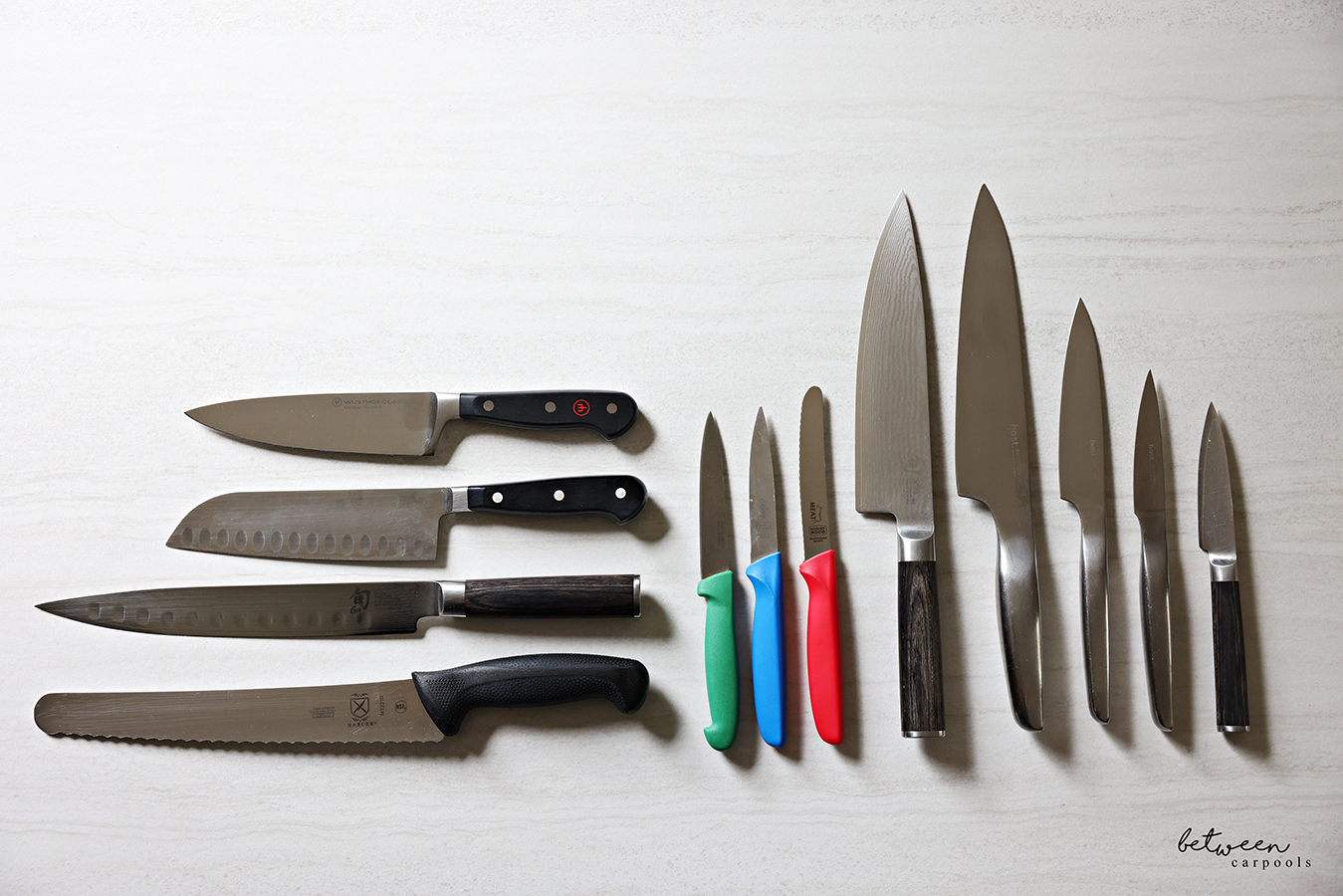 Between Carpools2 months ago
There is a minhag, found mostly in the Chassidic community, of purchasing a new knife for Rosh Hashanah. It is said to be a segulah for parnassah, so it can only be a good thing! Also, we can all use a new knife once in a while, so why not buy it in time for the biggest cooking marathon of the year?
Knives run the gamut of price points, from single to triple digits. But the best knife is the one you are most comfortable using. It needs to fit your hand and your culinary needs. And your budget.
But, let’s start with the basics. What are the essential knives needed in a kitchen?
The above three types of knives are the bare minimum that you need. These are the three knives that you will use the most and that will get all the jobs done.
These five are the basic knives you need. While you can manage with the three listed above, we do recommend adding:
4. A meat slicer
5. A bread/sourdough slicer to the mix. You won’t use them as often, but you will be grateful to own them. Read more here on the topic of bread knives here:Which Knife Is Best for Slicing Sourdough?
Now let’s share our top picks! We’ve included both our recommended top-of-the-line knife picks for those looking for a long term investment and also our favorite value picks and dupes! All the picks here are tried and true.
More About the Chef’s Knife (Knife #3). Choose a length and weight that is comfortable for you. A heavier knife will give you more control, but it needs to be comfortable in your hand. The Santoku (rounded top and ridges along the blade) is an alternative that some prefer.
Best Quality
With knives, you generally do get what you pay for. There’s a reason high-end knives, like these Shun knives, cost significantly more than what you’ll pick up at a store like Target. They’re an investment, for sure. We did find the Quince dupe to be very very good, and a fair competition to the original. (To be transparent, the Quince has only been tested for a short amount of time, vs. the Shun which we’ve had for many years.)
This one has a different assortment (different knives and no kitchen shears
Best Value + Practical
The main advantage to the colored “kosher knives” is that they’re easy to keep track of. Pick a color for meat, dairy, and parve and there’s less of a chance of mixing them up.
These knives come in several colors, sizes, and styles, and they get the job done. We also like them because they’re inexpensive enough, that once they grow dull, you can simply toss and replace vs. sharpen. We find that Kosher Cook knives are similar in quality to Icel and Victorinox knives, plus they don’t need toiveling so that adds another convenience.
More Kosher Cook Knives, in every color and size.
Another Great Option: Hast Knives
We have been using the Hast knives for years now, and we love these 3 particularly
The Paring Knife, the Utility Knife, the 8-inch Chef Knife (see this post for more on that). The Hast Chef Knife is lighter than most, which is perfect for those who find a classic chef’s knife to be too heavy.
The Meat Slicer
A long meat slicer (Knife #4) is very important if you serve roasts often. The longer blade will give you cleaner cuts every time. A pointed edge slicer is better for cutting around bones, while a rounded edge brisket knife is better for cutting a “falling apart” roast.
Knife Sheathes
If you don’t store your knives in a knife block, using these or similar knife sheathes will protect the blades – and your hands! We do like to use a knife block, though, as they are the best way to protect your investment. There are many types–including this in-drawer version.
One last type of knife we didn’t mention is the steak knife. Unless you serve steaks very often, there’s no need to invest in very expensive steak knives, but having a set will come in handy if you’re hosting or just serving several people at once. We love this type of stainless steel set that looks appropriate on a Yom Tov table. The box makes it a very presentable hostess gift!
One more thing
We have been using Sharpen Up 365 for a while now, especially before a heavy cooking Yom Tov season, to sharpen our knives. The process is incredibly easy and convenient. Sharpen Up 365 sends you a box along with specially designed bags and clear instructions for packing your knives safely and securely. Once everything is packed up, you simply drop the box in the mail. Before you know it, your knives are returned to you freshly sharpened and cooking becomes such a pleasure again.
“For me, it’s become a little pre Yom Tov ritual. Before I even think of a menu, I send out my knives and look forward to getting them back. Honestly, opening that box feels a little like getting a set of brand-new knives all over again.” says Renee.
This is a Jewish owned company, with a heschsher, read more on that on their website.
 Between Carpools2 months ago
You find what you think is that ever-elusive gorgeous pair of shoes, only to wear them once and realize you are never subjecting your feet to that again! So you prioritize comfort…and you leave them unworn in your closet because they just don’t look right.
Finding the perfect shoe shouldn’t be this complicated!
And at M. Aviann, it isn’t!
Their A/W collection brings together beautiful, feminine styles that are as comfortable as they are beautiful! The silhouettes are classic and refined, with the perfect amount of detail. These shoes are designed for your real life: elegant loafers and beautiful flats for work, gorgeous Mary Janes for that dressed-up feel, and sophisticated heels for your next Simcha.
M. Aviann’s shoes are designed with comfort in mind: made with high-quality leather and thoughtful styles to take you through your whole day, looking fabulous!
No sacrificing style for comfort. No sacrificing comfort for style. No sacrificing!
Shop our favorites below, and use exclusive coupon code BCP10 for 10% off your new favorite pair.
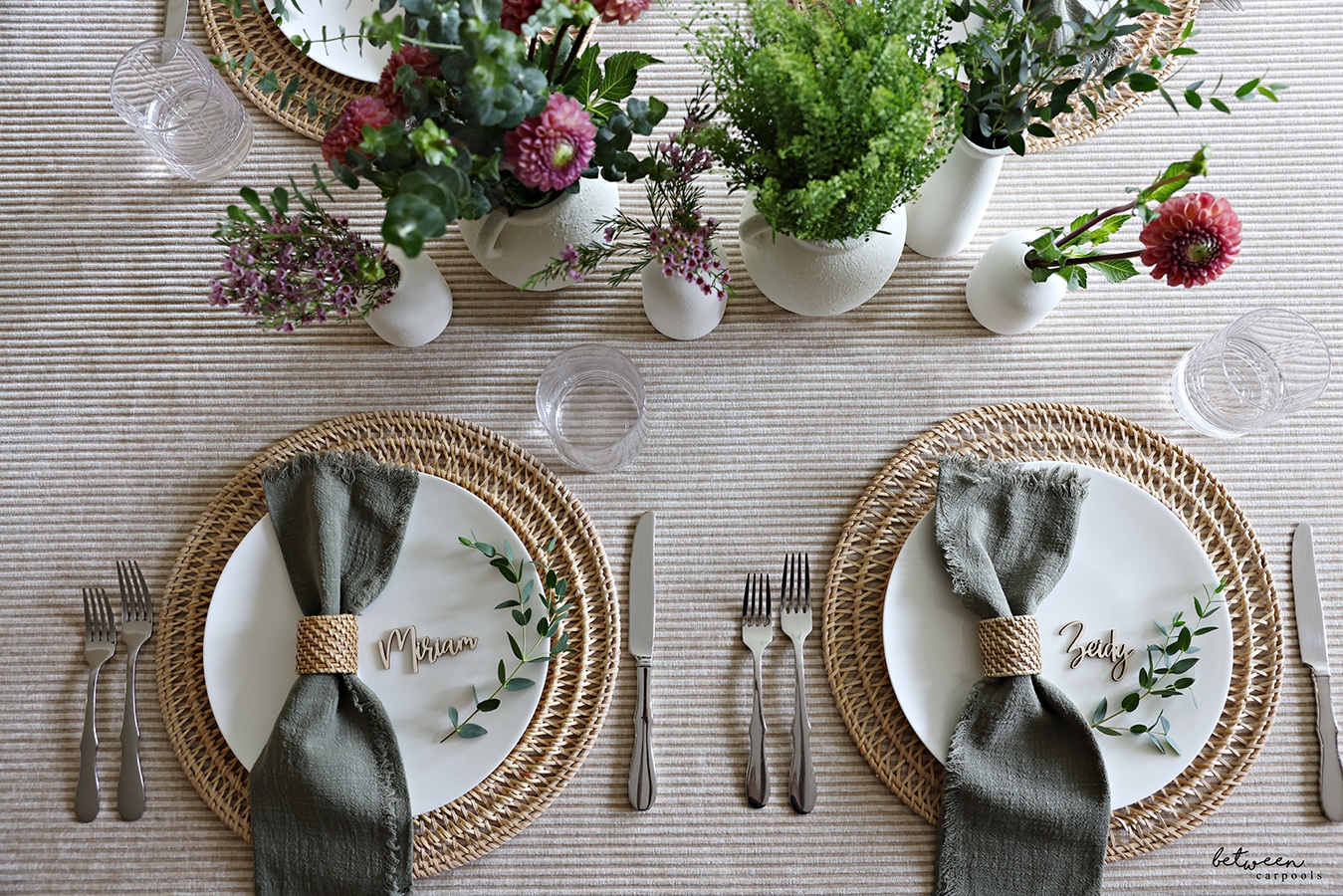 Between Carpools2 months ago
If your mind is already on Succos, you can start planning.
And even if it’s not, before we talk about this tablescape, take notice of these custom name place cards.
Why? Because they’re the only thing that you really need to order in advance. They take at least a week, and more likely 10 days to arrive, but you don’t want to cut it close. If you can guess what your guest list might be, take care of it now.
For under $1 a piece, the price is right, and they add that custom touch without the big investment.
Whether you place them on the plate or the napkin, they’re a beauty. And they’re perfect on this rustic, warm, and inviting table we’re setting for Succos.
This time, we’re getting very practical. And one of the best ways to be practical while setting a beautiful table is to be able to use the “real” (i.e. non-disposable) items that you already own for an entirely new look. That’s what we’re doing here.
Sure, you can still go disposable for your plate (these Bone China dishes from Crate & Barrel are a blank slate and can be swapped for virtually any white dish), but when the items surrounding it are real and beautiful, no one will notice.
You first saw this Velvet Ribbed Tablecloth that you first saw here last Chanukah. We loved the tablecloth Adorn Your Table brought us for the photoshoot so much, we wanted to own it for real. And we’re enjoying it. It’s perfect for this Succos table.
These napkins were originally featured in our Shavuos tablescape and now they get to work for Succos! They’re so pretty and soft and they don’t cost much more than disposable linen-like napkins. They were a great investment!
Do you rather own a more neutral color that you can use for any Yom Tov without being bound by one color scheme? No worries, Natural, Caramel, Beige…they all work just as well. See? The beige is shown here.
Save them and use them Yom Tov after Yom Tov and they can look different and beautiful each time.
Rattan placemats and napkin rings complete the look. (These placemats and napkin rings are from Crate and Barrel, but you can copy this look with Amazon options as well). These napkin rings work will really well too!
It’s warm and inviting, but still fresh and vibrant…it invokes that feeling of bringing the outdoors in, yet cozier. It’s the perfect Succos vibe.
These flowers come from Trader Joe’s. When you’re using an assortment of vases clustered together, the less expensive flowers really work beautifully. No need for fancy arrangements. Read more about getting maximum impact from minimum flowers here.
We used some of the vases from Chanukah and added a couple of these terracotta vases so we have more height.
One more note before you go…if you order the name tags, you’ll see they come very carefully packaged. Tap them out gently!
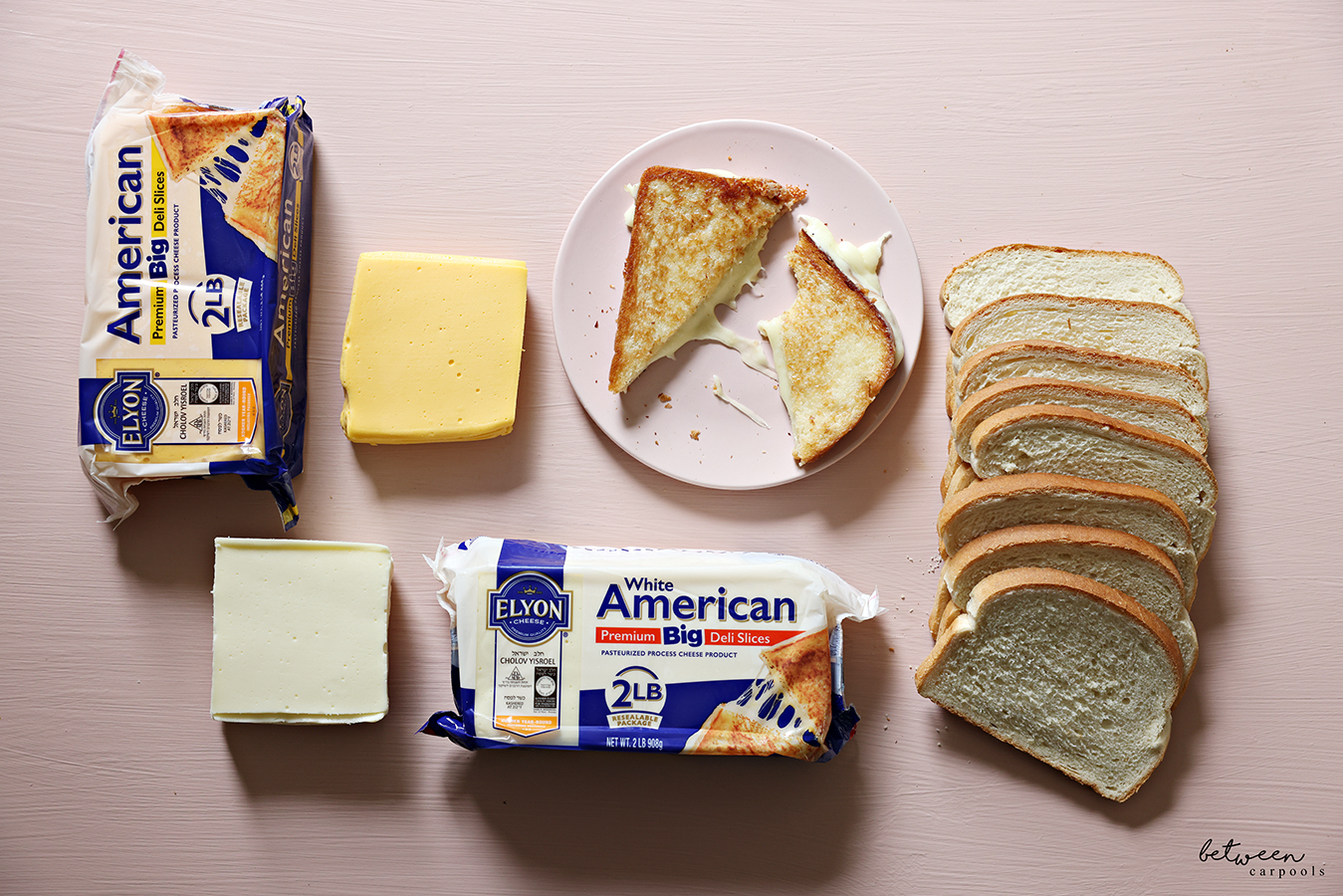 Between Carpools2 months ago
American cheese has always been a kid-favorite. One of our kids calls it “square cheese.” They love the neutral taste and the easy-to-eat squares. While we may turn to mozzarella or even muenster in most cheesy recipes, American still always had its place. It’s comforting in a Creamy Baked Ziti and lots of us grew up with American cheese being added to a stovetop Mac n’ Cheese.
It’s also great simply melted on crackers or rice cakes. It’s the go-to for tuna melts. And finally, it’s perfectly convenient in a sandwich that we’ll toast in the sandwich maker.
But there were always a few problems with American cheese, and we know that you know what they are.
One, the packages are too big, expensive (we don’t need 108!), and the slices always stick together. Kids take cheese and don’t close the package back up, and then all the exposed slices get hard. There’s lots of waste.
Elyon American Cheese changes all that. Elyon isn’t anything new. They’re actually the cheese suppliers of the restaurants. That grilled cheese you love at your favorite cafe? They’re using Elyon.
Why is it so creamy and good? Elyon’s slices are bigger and thicker–so you only need one slice to fill a whole sandwich. There’s no need to add more slices and piece them together to cover your bread. One slice and you’re done. It’s the perfect amount for your grilled cheese sandwich.
And, yes, the resealable pouch is just what we need to make that package last to the last slice.
The size just makes sense. 2 lbs is perfect. Lower price, lower commitment.
Plus–this will be your favorite part. The slices don’t stick together! It’s so much easier to peel off a slice.
With Elyon, whether you like your American cheese in white or orange, you’ll get the best results, the creamiest, meltiest grilled cheese, and a great addition to your cheesy pasta dishes.
Look for it in your local grocery today!
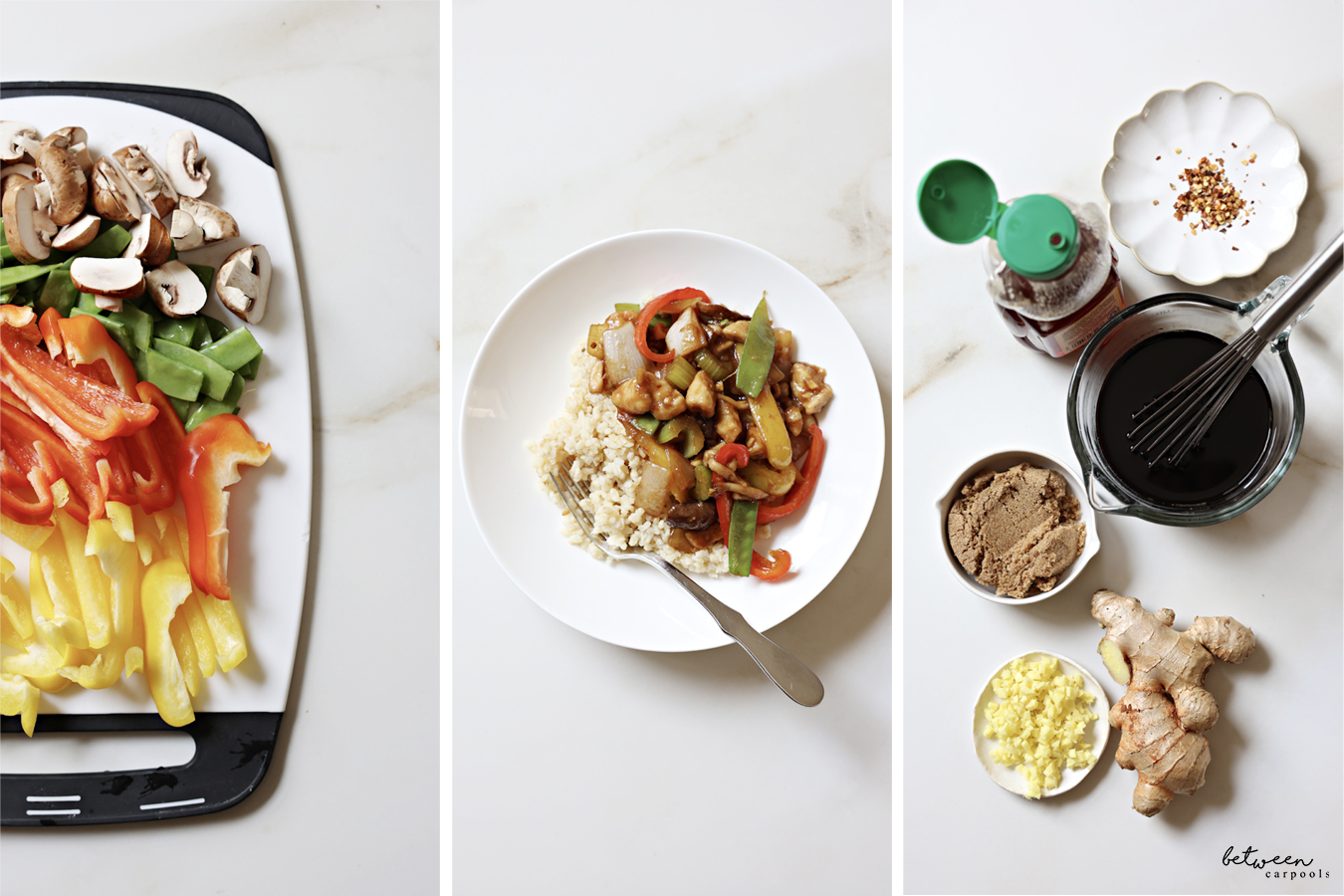 Between Carpools2 months ago
Yes, some of us are back in school. New shoes, new backpacks, new pencils. Exciting, but also, there’s homework. Remember homework? We all magically forgot.
Here is a delicious new dinner, one that is exciting to eat, and can be eaten, in a bowl, outside, while soaking in the last days outdoors of the season.
This recipe comes together quickly, and is best served fresh but my children love to take it to school the next day for lunch too, so I suppose it can’t be too bad rewarmed either.
First, and very importantly, cut your chicken breast into tiny pieces. Kids love it like this.
Next, gather your veggies. Don’t get scared off by these gorgeous Beech mushrooms that I found at my local grocery store. You don’t have to include them, any mushroom will do. But, you know, they are kinda cool.
First, toss the chicken with the flour, salt, and pepper. Heat the oil to your sauté pan (if you own a wok, this is a great opportunity to use it). Add the chicken and sear until it’s white on both sides. Remove the pan from heat and remove the chicken.
If you have a picky eater he or she might prefer the chicken plain like this, so set some aside for them and don’t add it back into the pan.
Next, add the onion and garlic (you can add more oil if needed). Give them a couple minute headstart in the pan before adding the rest.
Don’t dump it all in at once. Start with the celery, then the peppers, then the mushrooms and snow peas. Now it’s a party. Keep stirring as it cooks (hence the name stir-fry). You don’t need these veggies to be fork-tender. A bit of bite is expected. It’ll still take these veggies 10-15 minutes to be cooked enough.
Here are our sauce ingredients. Everything except the fresh ginger should be items you already have on hand. Mix ‘em together.
Once the veggies are ready, add the chicken back to the pan.
Then add the sauce.
Then let the whole dish get heated together thoroughly.
Serve over brown or white rice.
This is going to be the season’s favorite weeknight dinner.
Enjoy!
In a bowl, combine chicken with flour, salt, and pepper. Toss to coat. Remove chicken pieces from the flour, shaking off any excess flour.
Heat oil in a large sauté pan over high heat (if you own a wok, use it!). Sear the chicken in the pan until white and slightly browned. Remove and set aside.
Return the pan to the heat; add additional oil if needed. Add onion and garlic and sauté for 2 minutes. Add the celery, followed by the peppers, and ending with the mushrooms and snow peas.
Cook for 10-15 minutes, stirring often ( hence the name stir-fry). Keep in mind that the vegetables don’t need to be fork tender. A bit of bite is expected.
Prepare the sauce. In a bowl, combine the sauce ingredients. If you love ginger we recommend that you cut it small with a knife into tiny pieces as shown, otherwise, and if your kids don’t have such distinguished palates, we recommend you use a microplane to mince the ginger finely. Or, skip the ginger completely, if your family is not into that.
Return the chicken to the pan (set some aside for the picky eater, if you want), give it a mix and toss with the sauce. Heat thoroughly and serve. Serve over brown or white rice and enjoy.
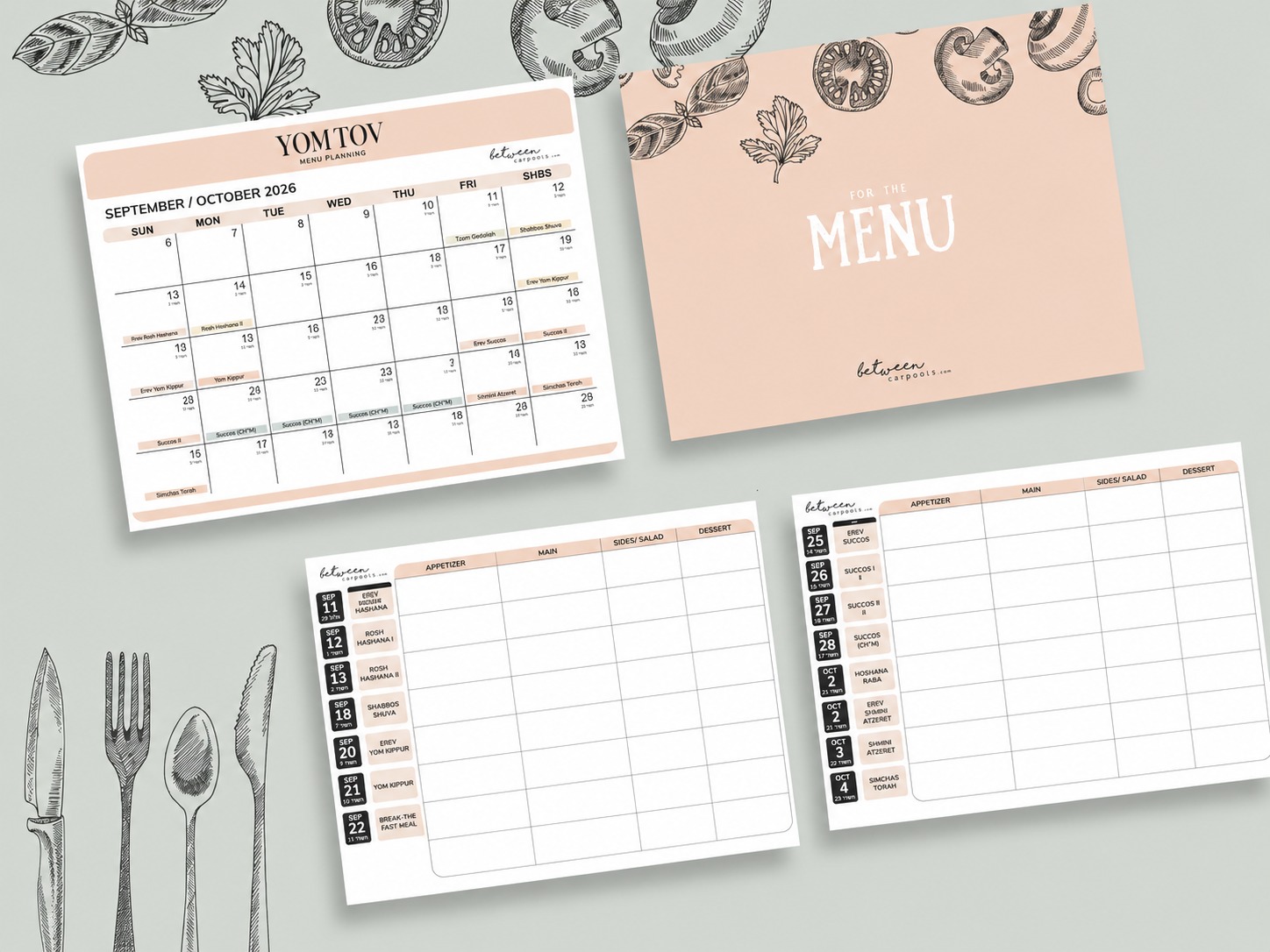 Between Carpools2 months ago
There’s a long season ahead and a little organization goes a long way. It helps to make a plan right from the outset. Once you know how many meals you’re serving, you can also plan to have enough challah and/or sourdough. A dessert or meat you’re making for Rosh Hashanah can be doubled and also used to “fill in” a square on Succos. If you see a bunch of new recipes you’d like to try, you don’t need to load them all into the first Yom Tov. Spread them out so you don’t overwhelm yourself.
Do you want a more generic menu planner that works for anytime? See our Yom Tov menu and shopping list downloads here.
In this download you will find a monthly overview of the upcoming Yomim Tovim. Use this to fill in the dates you want to put away for cooking or just to get a better overiew of the month ahead etc.
There are two pages with each meal broken down by date.
Of course, while not every meal includes these categories (i.e. appetizer, main, side/salads, and dessert), it’s still enough spaces for you to fill in a well-rounded meal, even if you’re serving differently.
DOWNLOAD
We respect your privacy. Unsubscribe at anytime.
 Between Carpools2 months ago
Editor’s Note: In different towns, the dynamics of girls’ high schools may be vastly different than those referenced here, particularly when girls attend a school where the elementary feeds into the high school and girls maintain their same group of friends. Some of these tips may be relevant for your daughter, and some not. They were compiled by our daughters and friends, who attend a range of Bais Yaakov high schools in which their high school experience meant a new building and new group of people.
When we heard one of our daughters comment, “Poor things. They don’t know what to expect,” in reference to this year’s incoming ninth graders, we responded, “So write some tips!” Since every school can be vastly different, we had each of our daughters, who attend a diverse range of high schools, contribute.
One of our daughter’s 8th grade teachers ended off the year with the following message: Chazal say “Kol Hatchalot Kashot.” All beginnings are difficult. They specifically say “All.” Could it be that absolutely all beginnings are difficult? None are easy? Yes. Because if it’s not hard, it’s not the beginning of something significant. In order to build a building, you need to dig a deep foundation or nothing will come of it. There needs to be something hard when starting off on something great.
The horror stories you’ve heard about high school–they may have happened to someone at some point, so everyone says them and everyone warns you. But they’re not the norm. Despite the anxiety your daughter may be feeling right now, the beginning of the year is the best part of the year. All the other girls are starting off in the same boat as you and they’re going to be as nice and friendly as you are.
Some of these tips are more emotional, some are more practical, and some may be relevant for you, and others not. We hope it helps allays some of the fears and uncertainty your own incoming ninth grader may be feeling right now. Here goes!
Social
Don’t try to be all cool/macho and better than everyone. It won’t help in the long run. Just be nice to everyone.
While everyone does like the nice girl, you don’t need to be best friends with all 80+ girls in your grade. Be polite to everyone, but in the end you only need 2–3 deep, genuine friendships. You don’t need to force it.
They’re focused on themselves and making “their group.” Relax. Think about other people and those friends will come more naturally without the anxiety.
Real friendships take longer to cultivate. Be yourself and Hashem will send you the right friends you’re supposed to have at the right time.
Don’t get involved. It’s the easiest way to start up the politics.
If it looks like someone else has it all figured out, you don’t actually know what’s going on.
Stay away.
The ninth grade feels insecure and may fall for this. But know that it’s a red flag if an older girl is interested in being friends with you, or if you’re focusing on friendships with older girls. Note: There are exceptions, especially in smaller schools, where girls from all grades are friends with each other. Take note of where it’s the norm and where it’s not.
Don’t feel pressured to join every after school outing your “friend group” does. You don’t have to go to the ice cream store every time. Every third time is enough.
Be yourself and you’ll find your people.
Even if girls know you from previous places, you can start anew.
Academics
So many girls start off not caring about schoolwork and then they fall behind. If you put in effort from the beginning, it’s way easier to keep up.
High school is harder. It’s normal. Also, you’re adjusting to how each teacher teaches and gives tests, and it will get easier for you as you get used to it.
Start using a planner on Day 1 to track tests, project deadlines, and Chumash/Navi quizzes before they pile up.
Often, a girl who is never late could be by her locker getting her books and the bell rings. Don’t panic, you’ll get the hang of it.
After all, it’s the first time there’s no big long school supply list and one needs to decide what they want to use on their own. Most girls end up simply using looseleafs and dividers. Others prefer slim notebooks (clearly labeled!). Each morning, they take from their locker the ones they’ll need for that day’s subjects, and only bring home the ones they need for studying.
It may be hard to get to know so many teachers, but don’t start off calling teachers “Mrs. Navi” or by their last name. You need to feel respect to establish a connection with them.
Your Health & Happiness
We can’t tell you the amount of girls that have headaches every day at 9 a.m.! Eating something healthy in the morning helps. Have some items ready that are wholesome, filling, and easy to grab like: Our Favorite Whole Wheat Muffins, make Acai for the week and freeze, or Yogurt and Granola.
That’s the most likely reason for the headaches mentioned above. Both moms and daughters agree on this one!
Spare yourself from any situation and keep a mini deodorant, pads, ponytail, listerine strips, and other items you might end up needing in a pouch in your locker.
The beginning will for sure be hard, but sometimes things can happen in school that you cannot control and will upset you! That’s ok–but you cannot let these mishaps get you into a rut. Instead of coming home grumpy and staying that way, do things after school that make you happy! It doesn’t have to be so complicated, just talking to a camp friend or going on a refreshing walk can always make you happy, even though you may think that vegging on the couch will make you feel better. A great tip heard from a camp director: Sometimes you will be in a bad mood and even these things won’t help. On those days, shower and go to bed and the next day is fresh and new. But the bottom line is–don’t let things that happen in school affect your happiness at home.
Overall, in all these aspects, don’t compare your high school journey: Some girls adjust immediately; others take a full semester to find their footing. Give yourself grace during the first couple of months!
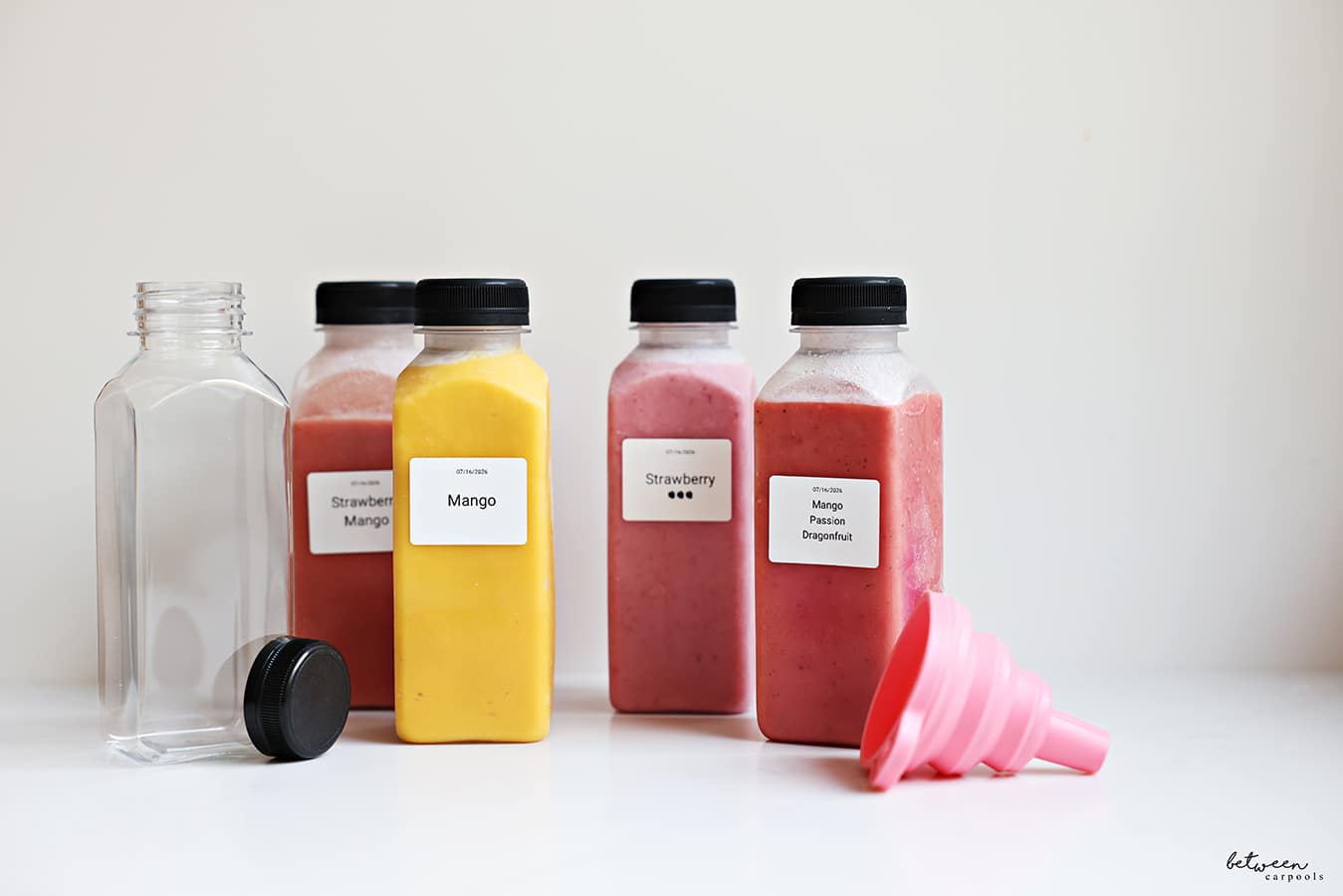 Between Carpools2 months ago
This school lunch solution was something we came up with back when my daughter was in upper elementary school and lunchtime was about socializing and not so much about eating lunch. She couldn’t “waste” her time sitting and eating lunch – she had other classes to visit and people to talk to! We determined that a smoothie was something she could take with her and actually consume while hanging out with her friends.
So now I have a routine that I do to stock the freezer with a variety of flavors that she can choose from. And whenever I’ve spoken about this on social media, the questions come flooding into our inbox. So here we go – let’s go through the routine and answer the questions that keep getting asked.
I like to use a Ninja Smoothie machine – it just seems simpler to me than a full sized blender. I’m not sure why. Maybe because the ratios are already in my head automatically.
I prepare two blender cups with the same ingredients. This will make four 12oz bottles of smoothies. I generally start with a single fruit and then make a two (or more) fruit smoothie batch afterwards so I don’t have to clean the cups in between.
It’s so simple to just pop the cups onto the blender base and hit the smoothie button. No babysitting needed.
To pour the smoothie into the bottles, you’ll need a funnel. The bottles I buy come with a silicone funnel that works well.
And if the smoothie gets a little stuck, squeeze the bottom of the funnel to get it moving. (Make sure the smoothie is not too thick to pour. If it is, add a bit more liquid and pulse it for a few seconds.)
My basic smoothie recipe (as seen in Dinner Done 2) is a combination of greek yogurt, frozen fruit, milk and sweetener. We like maple syrup best in all our smoothies. We played around with adding protein powder for a boost, and we settled on one scoop (a serving is two scoops but we find that makes the texture too grainy) of this Orgain Unsweetened Protein Powder being the right amount. It adds about 5 grams of protein to each bottle of smoothie. And when making a mango smoothie, you should definitely try adding this mango pulp. It really takes the flavor to the next level. It’s already sweetened so you may not need any additional sweetener, or just a little bit if you do prefer it sweeter.
And, of course, make sure to label the bottles with the correct flavors! The Phomemo easily prints multiples of the same label so it’s really efficient.
On school mornings, just grab a smoothie. Wrap it in a paper towel to absorb condensation and put it in a ziploc bag, just in case. Add a smoothie straw. About 4-5 hours later, it should be at the perfect consistency to just shake it up and enjoy! The bottles can be washed and reused – they even come with a little bottle brush. But if they end up at the bottom of a backpack for a couple of days, they’re cheap enough to toss rather than deal with that grossness.
 Between Carpools2 months ago
Whether you need a gift for your hostess or want to treat yourself and your own family, there are so many ways to enhance your Yom Tov right here! Browse and be inspired by the resources below!
Set a magnificent table with ease with Parfetty’s new, elegant velvet pleated chargers, complete with coordinating linen napkins, & velvet pleated napkin rings. They’re all real, all beautiful, and all will enhance your Yom Tov table and, of course, your Shabbos table all winter long! Just throw them into the washing machine, and they are ready to be enjoyed again and again. They’re perfect for every Yom Tov meal and make a great gift!
Once again, Parfetty’s gifting options of candy simanim gift trays and napkins wrapped with honey sticks are perfect for your hostess or all of your Yom Tov gifting needs.
Donna Bee Honey is about as authentic as honey gets. Beekeeper Ari Feferkorn harvests raw honey from his own hives, starting with those right in his Toms River, New Jersey backyard and extending to his multiple apiaries throughout New Jersey. He bottles the different varieties produced by the bees in different locations and seasons.
What started as a backyard hobby quickly became a passion, and people who try Ari’s honey keep coming back for more. Today, Donna Bee Honey offers beautifully packaged jars and gift sets featuring distinctive honey varieties, each reflecting where the bees were foraging and the season when it was harvested. They’re perfect for Rosh Hashana, hostess gifts, family, friends, and corporate gifting.
The honey is raw, unprocessed, kosher-certified, and harvested locally with care.
It’s shipped nationwide, from Ari’s hives to your table.
Honey as authentic as the beekeeper.
This Rosh Hashanah, make a beeline for Ari’s honey.
Get the Sweetness at DonnaBeeHoney.com.
Each year, The Nuttery thoughtfully curates a Rosh Hashanah collection inspired by the warmth, beauty, and traditions of the holiday. This year’s collection celebrates the sweetness of a new beginning with an elegant selection of honey and chocolate gifts, beautifully presented honey bottles, handcrafted chocolates inspired by the symbols of the holiday, and Simanim cards to share around the table. From the signature honey bee motif to every carefully chosen detail, each gift and item is designed to capture the spirit of Rosh Hashanah and share the warmth of the holiday.
You love stocking up for disposables at The Closeout Connection, but it’s also the best source for those special items that enhance your table for Yom Tov. Here are some highlights!
The Audrey White Tablecloth in a textured basketweave features a linen-look woven fabric with a subtle grid texture, simple hemmed edges, and enough body to drape nicely. Plus, it’s durable and machine-washable for frequent use. Do you dream of dressing your table with a lace tablecloth? The Honeycomb Lace Tablecloth lets you set a table that feels special before a single dish is placed. It features an all-over hexagon lattice inspired by natural honeycomb with fine net-stitch lace and framed in raised, dotted embroidery. Shop more here.
Finish the table with these Lucite Honey Jars. Really special!
Find These and More at TheCloseoutConnection.com.
A Whole New Honey Experience!
At Senter Honey Bee Farm, Rabbi Daniel Senter, a local New York and New Jersey beekeeper, takes locally sourced New York and New Jersey honey and transforms it into something truly special: rich, smooth, delicious creamed honey.
Unlike traditional liquid honey, creamed honey has a smooth, spreadable texture that stays on your challah instead of dripping off. Through a controlled crystallization process, the honey develops its signature creamy consistency while maintaining the naturally delicious character of pure honey. The result is an incredibly smooth and flavorful treat — the best honey you will ever taste.
Choose from our delicious selection of flavors: Original, Vanilla, Cinnamon, Sea Salt, Esrog, Cocoa, Espresso, and Pomegranate.
This Rosh Hashana, give the traditional apple-and-honey experience a special twist. Put out a selection of creamed honey flavors for dipping apples, spreading on challah, or giving as a beautiful and unique Yom Tov gift. It’s a familiar Rosh Hashana tradition transformed into a whole new honey experience.
Wholesale pricing is also available for supermarkets, gift shops, organizations, and other retailers.
Senter Honey Bee Farm: A Whole New Honey Experience. Under Kof- k supervision
Experience Creamy Honey at NJBees.com
And, most importantly, get the whole family mentally ready for Yom Tov. And there’s no one like Feldheim that helps you do that. You can browse their titles on the Yamim Noraim for both children and adults, or go straight to these picks. For you, titles by Rav Shimshon Pincus speak straight to the neshamah, in clear language that’s easy to internalize. From Moadei Hashanah on Elul and Rosh Hashanah, Nefesh Chaya–a must read for any woman, and more–choose the subject that speaks to you and be inspired. Inspire your young readers with this brand new Young Readers Edition of Rebbetzin Vichna Kaplan or the timeless lessons in these titles for children. Or, see all new recently released titles here.
Browse more amazing titles from Feldheim for Elul, Tishrei & Shabbos for the New Year.
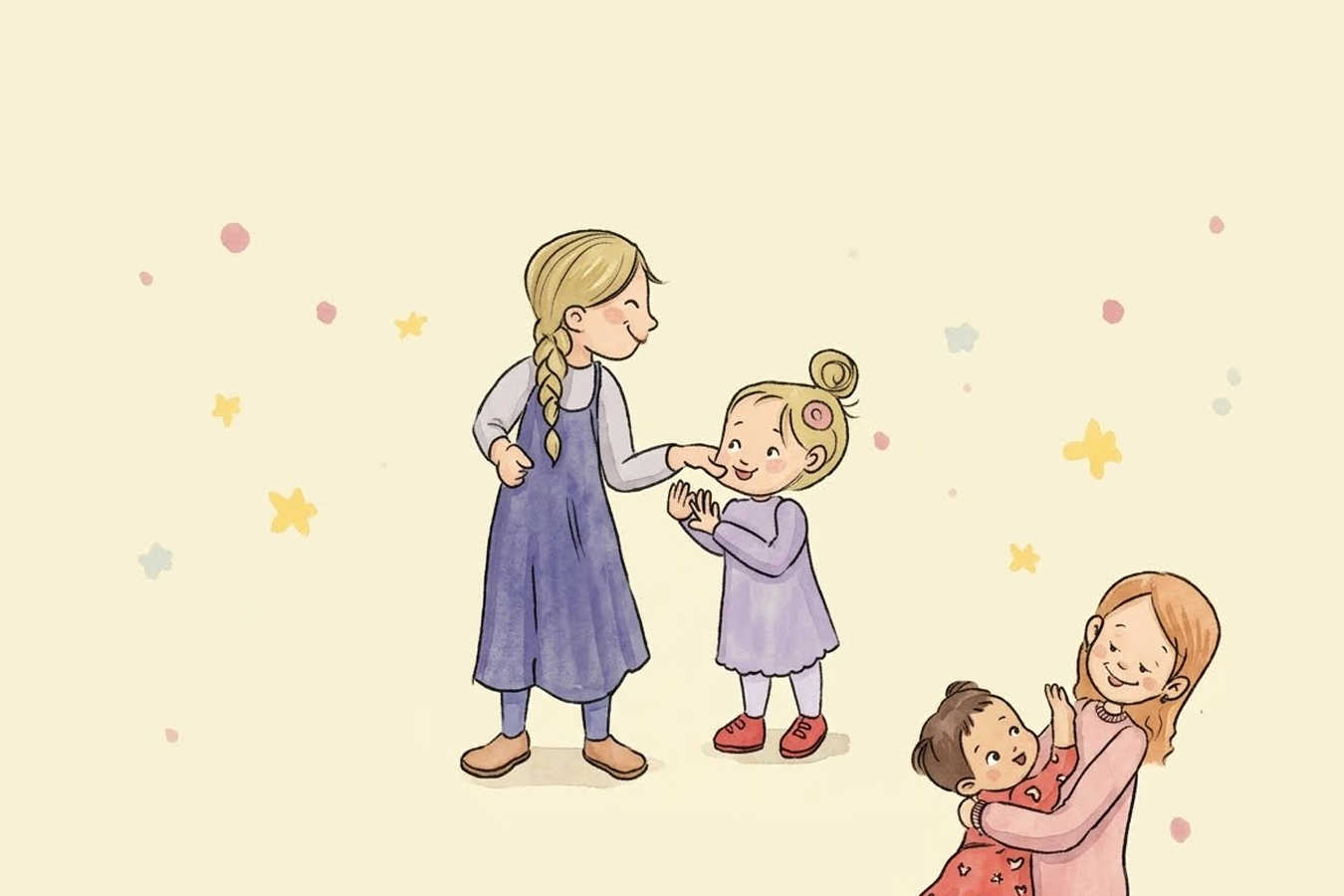 Between Carpools2 months ago
For many years, the idea of teaching young children in our community about personal safety felt uncomfortable. Parents wanted to preserve their children’s innocence, maintain tznius, and shield them from concepts they seemed too young to understand.
Over time, however, with guidance from rabbanim, educators, and mental health professionals, many families came to recognize that teaching personal safety does not conflict with our values. When done with sensitivity, it reinforces them.
These conversations are about helping children understand that their bodies are precious, certain boundaries exist, and they can always speak up if something feels wrong.
Perhaps the biggest shift has been realizing that these conversations don’t need to be formal or heavy. They happen best as part of everyday life – while getting dressed, preparing for a doctor visit, discussing bathing suit rules, or reviewing other everyday safety habits.
Professionals who work with families have found that when these messages are woven naturally into daily life, children absorb them as a healthy and normal part of understanding themselves. Rather than taking away innocence, these conversations quietly strengthen a child’s sense of security.
Another important approach is teaching in small, age-appropriate steps. A young toddler can simply learn that certain parts of the body are private. Parents might say, “The parts of your body covered by your swimsuit are private,” or “Only Mommy or Daddy helps you with bathing or getting dressed.” Preschoolers can begin to understand that if something makes them uncomfortable, they can say “no” and tell a trusted adult. Parents can explain, “If anyone asks to see or touch your private parts, you can say, ‘No,’ leave if you can, and tell Mommy or Daddy right away.” As children mature, parents can gradually build on these simple concepts without overwhelming them.
B’H, parents today have access to resources developed specifically for Torah-observant families – materials that support our values while giving children the tools they need. Since these resources reflect our language and hashkafah, they respectfully open the door for parents and children to begin conversations on these topics together.
By teaching our children that their bodies are a gift from Hashem, worthy of respect and care, we help them develop healthy boundaries, confidence in their own voice, and the knowledge that they can always come to us.
Simple ways to make these conversations feel natural:
When these conversations become a natural part of family life, they preserve the very innocence we hope to protect while giving our children the confidence and safety every child deserves.
 Between Carpools2 months ago
Have you ever noticed that you have a strong reaction to a certain situation or particular person? Or maybe you’ve surprised yourself by how intensely you judged someone—even if only in your own head.
If a friend didn’t text you back for several days, how bothered would you be on a scale of 1–10? If you were stuck in horrible, unexpected traffic, how much would it affect your mood? Or maybe you overate one night at a wedding. Did you then beat yourself up afterward?
The bottom line is this: “If it’s intense, it’s yours.” This is a famous line from Dr. Richard Schwartz, the founder of Internal Family Systems (IFS). IFS teaches us that when we have an intense reaction, an extreme response, or feel highly reactive, it is often an indicator that something inside of us has been touched.
There is a real reason why some people are more affected by being ignored than others. How you interpret a particular situation reflects your own inner wiring and the messages you have internalized over the years. While what happens to us certainly matters, the meaning we attach to those experiences often determines how intensely we react.
If someone doesn’t respond to your text, one person might think, “She must be sick,” while another immediately thinks, “She must be mad at me. What did I do wrong?” The event is the same, but the story we tell ourselves is completely different.
When your response is disproportionate to the situation, it’s an invitation to do what we call in IFS a U-turn—to turn inward. We do this with curiosity. Curiosity replaces our natural instinct to shame and criticize ourselves or others, which is often our second reaction.
First, we get stuck in unexpected traffic. Then immediately we’re so angry that we start blaming our teenager for distracting us before we left the house, causing us to forget to put on Waze. Or maybe we turn the anger on ourselves: “I’m always late. I never get it together.”
Instead, we can pause and wonder: Why is it that when things don’t go my way—or when I’m late—I get so bent out of shape? Why is overeating, being thin, or eating healthy such an emotionally charged issue for me? Why do I feel so easily insulted or hurt when people ignore me?
Notice that the “why” is asked with a tone of gentle, open curiosity—not with contempt or harshness.
You may be surprised to learn that we don’t have to be angry at ourselves in order to create change. There is a common myth that the harsher we are with ourselves, the more we’ll improve. But believe it or not, it’s much like parenting a child. You may be able to whip a child into shape or scare them into listening, but the change is usually short-lived. Lasting change comes through understanding, not punishment.
The next time you have an intense reaction, pause. Do a U-turn. Instead of immediately reacting to the outside world, become curious about your inside world. Ask yourself, What is this situation bringing up in me? What is this reaction trying to protect me from?
Beneath the intensity, you may discover a vulnerable feeling, an old belief, or a younger part of yourself that has been carrying a burden for a very long time. As you begin to understand your inner world with compassion rather than criticism, your reactions begin to make sense. And from that place of understanding—not judgment—real and lasting change becomes possible.
 Between Carpools2 months ago
And H&M makes it possible with current styles at great price points. We’ve made it easy for you to shop and assemble great outfits by coordinating skirts, tops, and accessories for Shabbos/Yom Tov and weekdays too. (We’ve even taken care of those times you want to be cozy post-cooking marathons.) You’ll love what we found below!
Necklace | Knitted Ribbed Vest | Buckle Shoes | Lace Knit Cardigan | Pleated Polka Dot Skirt | Black Shoes | Ruffle Trim Cardigan | Turtleneck | Polka Dot Mesh Top | Fine Knit Cardigan (more colors) | Headband
Brown Puff Sleeve Cardigan | Bow Tie Shoes | Brown Turtleneck | Printed Skirt | Paisley Shirt | Mauve Floral Skirt | Crochet Top + Matching Skirt | Evening Bag
Brown Cardigan | Suede Loafers | Taupe Vest | Checked Ruffle Shirt | Green Button Cardigan | Sweater Vest | Suede Sneakers | Striped Collar Sweater
Blue Sweater | Checked Mesh Top | Leapord Skirt | Brown Tee | Gray Ruffle Sweater | Maternity Dress | Shoes
Argyle Sweater | Tweed Cardigan | Loose Knit Vest | Loafers | Long Sleeve Tee | Wrap Dress
Cozy Jacket | Denim Dress | Sweatshirt (lots more colors) | Burgundy Sneakers | Ruffle Striped Shirt | Denim Skirt | Denim Sneakers | Striped Loose Tee
Floral Lace Skirt | Velvet Heels | Button Knit Vest | Polka Dot Skirt | Cream Turtleneck | Black Skirt | Navy Button Sweater Vest | Cream Skirt
Gray Pajama Set | Pointelle Set | Striped Set | Heart Pointelle Set
 Between Carpools2 months ago
And, yes, these items will still come on time!
UPDATED FOR 2026
See this post for the top school supplies that teens love. Still looking for a backpack? See our backpack roundup over here.
Read this post to prepare your daughter for her personal needs.
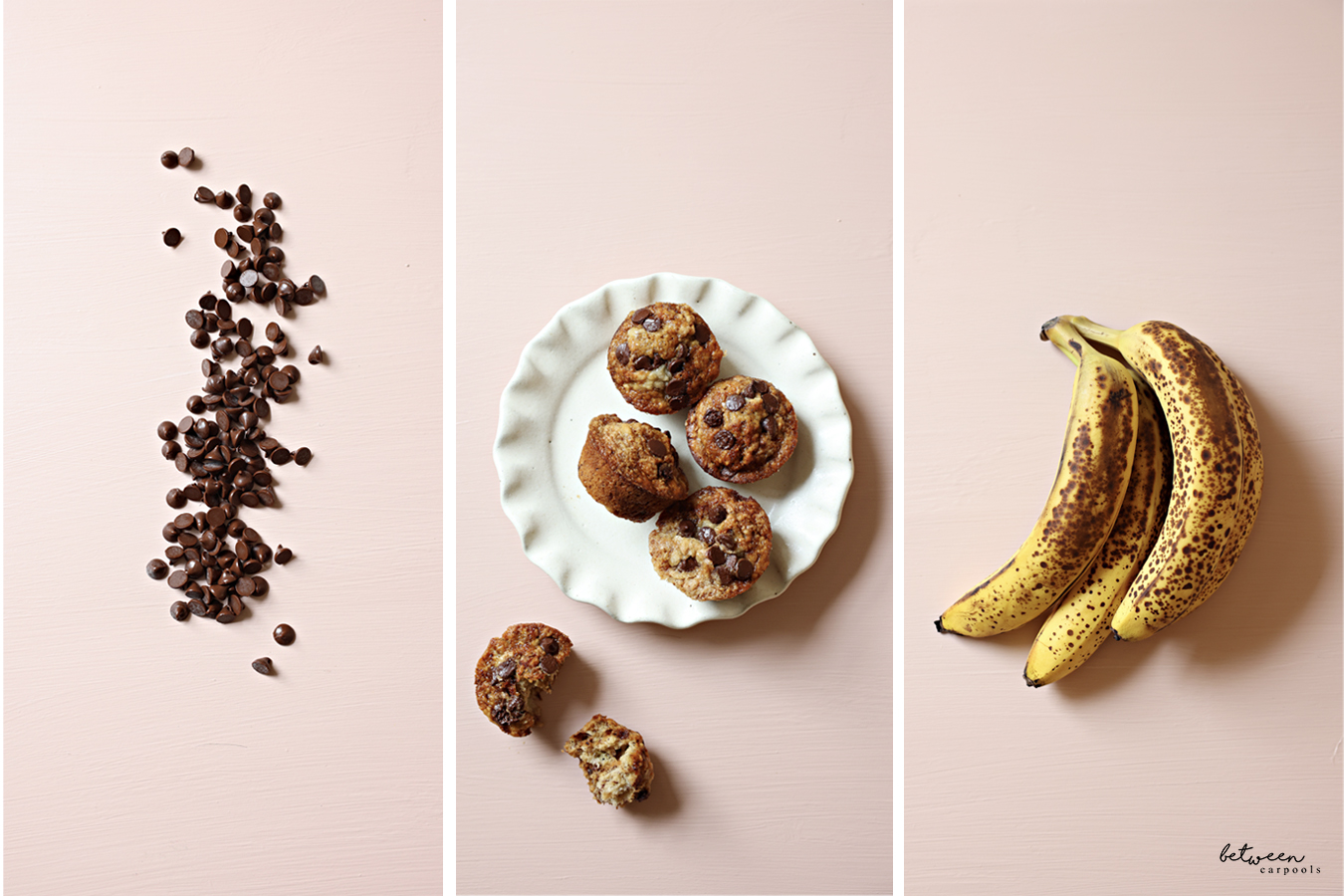 Between Carpools2 months ago
I think that we can agree that most of us like muffins. I haven’t met many people who don’t. While some of us prefer the types of muffins that may as well be cake (or how about Double Chocolate Mocha?, and others prefer muffins which feel healthier, at least we can agree that there’s a variety of muffin that appeals to each of us.
Whether you’re a Chocolate Cheese Muffin fan, or you liked these Farina Muffins, or you like a good Carrot Muffins with Cinnamon Streusel, or simply a Classic Chocolate Chip (we make these often!), we’ve got you.
It was Shalva Hoffman who originally got us in the mood for a good, moist Banana Muffin and shared her own version that she enjoys making. We made a few adjustments to make them even more wholesome and moist, but there was one essential ingredient that remained the same.
You see these spotty bananas? If you’re going to make these muffins you need to plan ahead and let your bananas get overripe. It’s because the bananas are so soft and sweet that we’re able to use very little sugar (⅓ cup honey) and oil (¼ cup oil) and still have muffins that taste as sweet and moist as those with much more sugar and oil.
The first thing you’re going to do is mash your bananas completely. You can use a fork, or to make it easier, you can also use a potato masher or gloved hands (kids love doing it this way).
Do you see how liquified our bananas got? Once that’s done, add your wet ingredients, such as the honey, oil, egg, and vanilla.
Then add the dry. We used white spelt flour to up the nutrition factor. Whole wheat or regular flour works as well, but why not make them healthy if they taste just as good?
Spray a standard muffin pan very well and divide batter between the muffin cups. You’ll get 12 nice sized muffins.
For a crispy crust, sprinkle the tops with turbinado sugar (you can use regular sugar if you don’t have any on hand.
Finally, add the chocolate chips on top (if your family loves chocolate chips, feel free to add more inside as well).
Twenty minutes later, these look amazing.
Crispy domed tops, moist interior. They’re everything you want in a muffin.
You would never guess there’s such a minimal amount of sugar/honey and oil. Shava even skips the oil completely and while the texture is a little more rubbery, they’re still tasty (our families tasted both versions and while the version with oil was better, of course, they still ate the version without as well).
Note: You can add ½ cup yogurt to these muffins for some bonus moisture and protein if you don’t mind them being dairy. We felt it was more practical to keep them pareve.
Servings: 12
Preheat oven to 350°F. Grease a 12 cup muffin pan really well.
In a medium bowl, mash the bananas until almost liquified. You can do this using a fork, a potato masher, or gloved hands.
Add wet ingredients and mix. Add dry ingredients and mix to combine. Divide batter between muffin cups.
Sprinkle the tops of the muffins with turbinado sugar and chocolate chips. Bake for 20 minutes, or until golden and crispy on top.
 Between Carpools2 months ago
You already know that we fill our kids drawers with Tottini every season. Tottini’s always been known for their adorable coordinating weekday wear and basics. This is their second season stocking dresswear, and after enjoying pieces from their dressy lines all summer, I was so excited to see their fall dressy options!
First, their Onyx line. Plaid is trending for fall, so choosing coordinating fall pieces was a no-brainer. Sets are the preferred choice here currently, so this brushed plaid top for big sis with this skirt started us off.
How to pick our favorite plaid?!
Love this Signature Plaid too.
Little brother is happiest when cozy, so this mock neck will be perfect. Then, this charcoal gray sweater for the baby will keep her snuggly and tie the looks together.
For winter Friday nights, I chose this velour splatter maxi dress. Always get our robes from Tottini! These ribbed velour pajamas are a classic for the pajama age kids, love the rich navy and burgundy.
Next, weekday. I wasn’t sure how I was going to pick a favorite weekday collection, shoutout to the Winter Play collection for making my choice a lot harder! Ended up coordinating the boys in the Plaid Patch sweatshirt because it was too cute to remove from the cart.
Finally, pajamas. After lots and lots of summer wear, a restock is much needed! I love everything Starlight, but the Heart & Star collection was pronounced ‘Sooooo cute, Mommy!’ and was the clear winner. One in every size, please!
Find our favorites here, or shop their whole A/W collection at www.tottini.com.
