

For a good many haredim, the past three years have been deeply uncomfortable.
Since the horrors of October 7, much of the Jewish world has struggled to understand the response of our community. At a moment when many Israelis were burying their children, when reservists were leaving their families for months at a time and when Jewish communities everywhere felt under attack, too many of Israel’s elected haredi political representatives appeared incapable of speaking to the pain of the nation.
There is certainly a legitimate debate to be had about military service. There are fundamental disagreements over who should serve, how many haredim should enlist and how the State of Israel can protect those genuinely committed to full-time Torah study. These are complex questions touching the foundations of haredi life, Israel’s security and the Jewish People’s collective future.
They cannot be resolved through slogans or coercion.
Nonetheless, whatever position one takes on enlistment, the language and conduct of the established haredi political leadership has left many Jews with a sour taste in their mouths. To put it mildly, they have often been tone-deaf.
While soldiers and their families were carrying an extraordinary burden, haredi politicians were seen fighting over budgets, legislation, appointments and arrangements benefiting their institutions, associates and families. They acted as though the suffering and anger beyond their immediate political base were somebody else’s problem.
Many of us felt ashamed.
It was not only secular Israelis who were alienated. National-religious and traditional Jews, many of whom are becoming more observant and drawing closer to Torah, increasingly found themselves repelled by the behavior of politicians claiming to represent the Torah world.
Instead of bringing Jews closer to an appreciation of haredi life, these representatives were pushing them away.
They created the impression that haredim cared only about themselves.
This was always a distortion. haredi communities are filled with altruism (chesed), learning, generosity and responsibility. They include extraordinary volunteers, educators, healthcare workers, businesspeople and families who contribute enormously to Am Yisrael.
Yet those stories have been drowned out by political leaders whose confrontational rhetoric and narrow demands have come to define us in the public imagination.
Now, as Israel enters another election campaign, something remarkable is happening.
A new party, HaTzibur HaCharedi, has emerged to represent the hundreds of thousands of haredim who no longer feel seen or heard by Shas and United Torah Judaism. It also speaks to countless haredim abroad who love the Torah world but cannot understand why its political representatives appear so detached from the rest of the Jewish people.
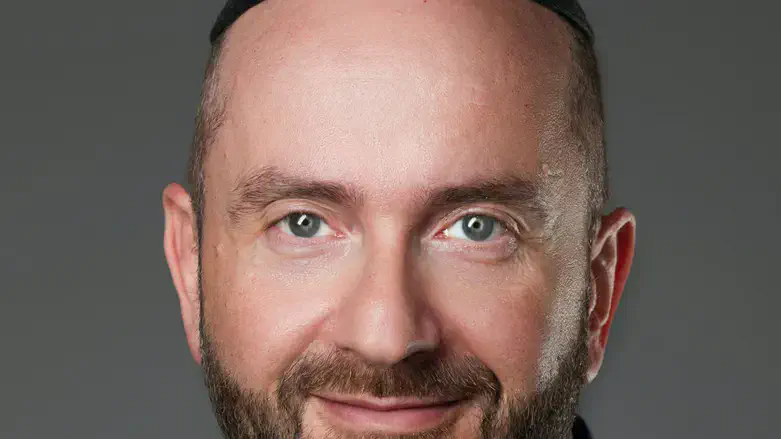
At the center of this new movement is its chairman, Moti Leitner.
Leitner is saying something that should be obvious but has become almost revolutionary: the solutions to the challenges facing the haredi community must come from within the community, but they must be developed through conversation and cooperation with the rest of Am Yisrael.
External coercion will not work, and neither will internal denial.
Leitner does not pretend that everything is fine. He speaks openly about poverty, inadequate education, young people leaving the community and families struggling to earn a dignified living. He recognizes the need to find a responsible balance on enlistment, one that protects those sincerely learning Torah full-time while creating appropriate frameworks for those who can serve.
This is not an abandonment of haredi principles. It is an attempt to preserve the haredi world by confronting the challenges threatening it.
For the first time in generations, haredim are being offered a genuine political choice. They no longer have to choose between the same parties, personalities and failed approaches.
They can support a leadership that is proudly haredi, unwaveringly committed to Torah and nevertheless prepared to listen, cooperate and accept responsibility.
What is perhaps most striking, however, is the response outside the haredi community.
Leitner is attracting attention from journalists, analysts, influencers, decision-makers and opinion-shapers across Israeli society and the Jewish world.
Israelis from very different backgrounds are beginning to understand that the most unpopular figures in Shas and UTJ do not speak for every haredi Jew.
They are discovering that haredim can speak with the rest of Israel rather than past it. They are hearing a haredi leader acknowledge their sacrifices, respect their concerns and seek solutions that strengthen the entire country.
That change matters enormously.
The relationship between haredim and the rest of Israeli society has reached a dangerous point. Suspicion has hardened into resentment, while resentment is increasingly turning into outright hostility. If this continues, the consequences will be devastating not only for the haredi community but for the Jewish people as a whole.
We need leaders who can defend haredi interests without treating every other Jew as an enemy. We need representatives who understand that protecting Torah requires public trust, political wisdom and a sense of responsibility for all of Am Yisrael.
We need a politics that does not ask us to choose between remaining authentically haredi and caring about the wider Jewish nation.
Moti Leitner offers precisely that possibility.
His greatest achievement so far is not merely establishing another political party. It is demonstrating that haredi principles and national responsibility are not contradictions. He is helping Israelis see the haredi community not as a burden or an adversary, but once again as an essential and valued part of the Jewish people.
After years in which Israel’s haredi political representatives made too many Jews resent us, Moti Leitner may be achieving what once seemed impossible.
He is making the Jewish world like haredim again, without compromising one iota of what it means to be haredi.
Rabbi Pini Dunner is the senior rabbi of Beverly Hills Synagogue, an author and a recognised authority on rare Hebrew books and manuscripts. Originally from London, he studied at yeshivot in England, Israel and the United States, and holds a degree in Jewish History from University College London. A prominent advocate for Israel, Rabbi Dunner serves on the boards of the Israel Christian Nexus and the Rabbinical Council of America. He is the author of Mavericks, Mystics and False Messiahs and the forthcoming Paradise Cove: They Escaped the Cuckoo’s Nest.