

Oil is still leaving the Persian Gulf. Just not Iran’s.
CENTCOM says roughly 750 million barrels of crude have moved under U.S. escort since its maritime operation began, an average of about 6.5 million barrels a day. At $90 a barrel, that is nearly $585 million worth of crude moving each day under American protection. Iran, meanwhile, has gone nearly 7 weeks without successfully moving a meaningful crude cargo through the Strait of Hormuz to China.
That has never happened before. Even during the height of maximum pressure in 2019 and 2020, Iranian crude cleared Hormuz every month. Iran was exporting roughly 2 million barrels a day as recently as March. Kpler and Vortexa put August exports at only about 220,000 to 255,000 barrels a day, much of it drawn from oil already positioned beyond the blockade. Iran still has the oil. It increasingly cannot turn it into cash.
The Blockade Is Cutting Off Iran’s Cash
The numbers at sea show how quickly the problem is accumulating. TankerTrackers estimates 29 tankers inside the strait are holding 36.11 million barrels of Iranian crude. Another roughly 20 million barrels remain in floating storage in Asia, where they can still be sold to China. Kpler estimates Iran may have room for another 20 million barrels in onshore storage. Once that fills, producers face a different problem: there is nowhere left to put the crude.
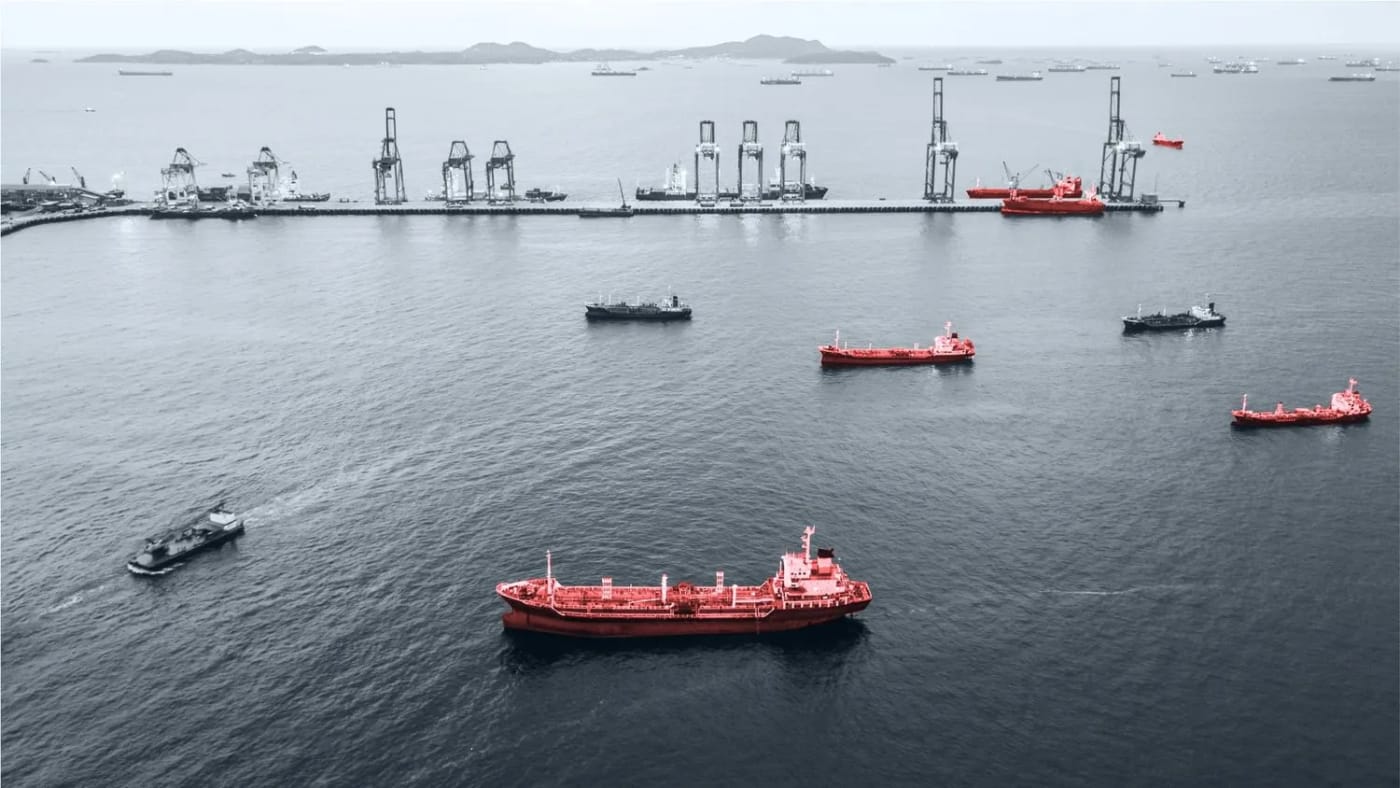
The cost is already enormous. Estimates put lost oil revenue at roughly $150 million a day. Broader calculations that include crude, petrochemicals and other maritime exports put the economic damage above $400 million a day. Oxford Economics estimated that a sustained blockade could eliminate 70 percent of Iran’s export revenues.
Iran is now threatening to use force if the squeeze gets tighter. Parliament Speaker Mohammad Bagher Ghalibaf said Tuesday that Iran would respond militarily if the U.S. intensifies the blockade of Iranian ports. He called the blockade “among the worst forms of military war” and said Iran “will not wait” if the U.S. moves to tighten it.
At home, the currency is showing the strain. The dollar traded Tuesday morning at roughly 211,100 toman on Tehran’s open market, equivalent to 2,111,000 rials. The central bank offered as much as $500 million in banknotes through banks between August 25 and 27. Only about $20 million was purchased, and the rial continued weakening.
Central Bank Governor Abdolnaser Hemmati is now promising as much as $2 billion to stabilize the market. “Iran has currency and it has enough,” he said Tuesday, directing the message at President Donald Trump.
But Iran cannot print the hard currency it is losing at sea. Oil exports bring in the dollars needed for imports and help support the rial. The government can borrow domestically and create more rials to cover spending, but doing so pushes more pressure into prices. The IMF expects inflation to average nearly 70 percent this year, while Iranian figures put point to point inflation considerably higher.
This is an economic collapse in slow motion. There is no single morning when everything stops. The currency buys less, imports cost more, subsidies become harder to finance and wages lose value faster than the government can raise them.
An Oil Power With Gasoline Queues
The contradiction is most visible at the pump. Iran sits on some of the largest crude reserves on earth and is simultaneously running short of gasoline.
Officials put the daily deficit at 14 million to 15 million liters. Domestic production is roughly 112 million to 121 million liters, while nationwide distribution reached 150 million liters on August 26. Tehran distributed more than 26 million liters on August 24 alone, a record for the current Iranian year. Imports that once helped cover the difference have been disrupted by the war.

Queues and temporary closures have appeared across major cities. Some stations have limited motorists to 20 liters. The government has pushed refineries harder and drawn from reserves to keep fuel flowing.
Then comes the arithmetic that makes the system so difficult to sustain. Subsidized gasoline costs 1,500 toman per liter, about $0.007 at the open market rate. A driver buying 20 liters pays 30,000 toman, roughly $0.14. The government says producing gasoline costs approximately 130,000 toman per liter, about $0.62.
Officials know the subsidy cannot continue indefinitely in its current form. President Masoud Pezeshkian has said the third tier of gasoline, currently 5,000 toman per liter, about $0.024, could rise to around 10,000 toman, about $0.047.
They also remember what happened the last time the government abruptly changed fuel prices. A gasoline increase helped ignite nationwide protests in 2019. Gholam Ali Haddad Adel, a senior establishment figure, warned on August 30 that Iranians should not wake up one Friday morning and suddenly discover gasoline has become more expensive.
The Food Is There. The Money Is Not.
Walk through an Iranian supermarket and the severity of the crisis can be easy to miss. The shelves are not empty. The customer’s wallet is.
Official food inflation is running around 128% from a year earlier. Oils and fats have risen more than 250%. Rice has roughly tripled in some markets, while meat, eggs, poultry and dairy products have all recorded steep increases.
The base minimum wage is approximately 16.6 million toman a month, about $79 at Tuesday’s open market rate. A kilogram of red meat costs roughly 2 million to 2.15 million toman, about $9.47 to $10.18. Labor representatives estimate that the basic monthly household livelihood basket has reached around 90 million toman, about $426.
The minimum wage therefore covers less than 20 percent of what labor representatives say a household needs for basic living expenses.
The same squeeze is visible in malls and bazaars. Merchants report fewer customers, installment purchases are spreading and families are replacing expensive foods with cheaper alternatives. People still walk through shopping centers and markets. They look at what is available. Increasingly, they leave without buying it.
Now It Is Reaching the Street
On August 31, young jobseekers gathered outside the Lishtar refinery project in Gachsaran to protest hiring practices and demand work. Video published by HRANA appears to show police firing toward demonstrators as officers moved to disperse them. HRANA reported that at least one person was injured, although it could not independently verify the casualty report.
Another jobs protest erupted the same day in Ahvaz, where young people demonstrated over hiring at the Dabal Khazaei sugarcane operation. Rights groups reported beatings and gunfire as security forces dispersed the gathering. Protesters complained that local residents could not find work while jobs were being given to outsiders.
The government now faces two problems moving toward each other.
Outside Iran, the U.S. is demonstrating that Gulf oil can continue reaching world markets while Iranian barrels remain trapped. Ghalibaf is openly threatening military action if the blockade is tightened. Inside Iran, families are watching their wages collapse against the cost of food, drivers are queuing for gasoline and unemployed workers are confronting security forces outside industrial facilities.
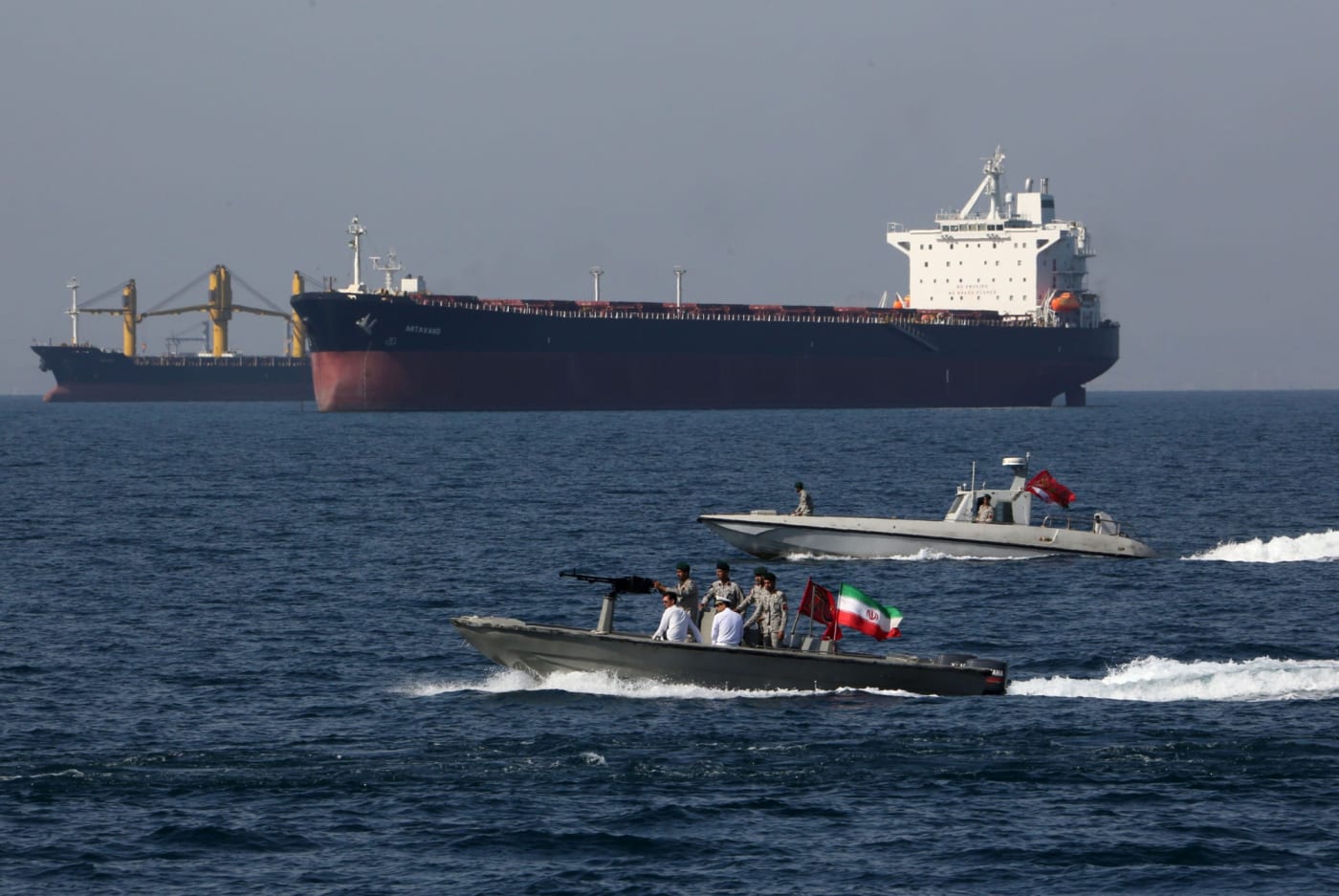
There is no easy move left. Breaking the blockade risks a larger military confrontation. Leaving it in place means surrendering billions of dollars in export revenue. Raising gasoline prices risks another wave of unrest. Keeping prices artificially low forces the government to continue financing one of the world’s most expensive fuel subsidies while its access to hard currency shrinks.
Iran’s economic collapse is not arriving as one dramatic event. It is happening piece by piece: an oil tanker that cannot sail, a dollar that costs more rials, a gas station that limits a fill, a family that stops buying meat, a worker standing outside a refinery asking for a job.
We are headed for a collision. Even worse, Iran internally is headed toward a very dark place as ordinary Iranians struggle to afford the basic costs of life while the Islamic regime runs out of painless ways to contain the crisis.