


Israel’s Defense Minister Warns Erdogan After Strike on Syrian Airbase Israel’s defense minister directly warned Turkish President Recep Tayyip Erdogan on Thursday against testing Israel in Syria, 2 days after Israeli aircraft struck a military airbase near Aleppo that Israel says was about to receive Turkish forces.
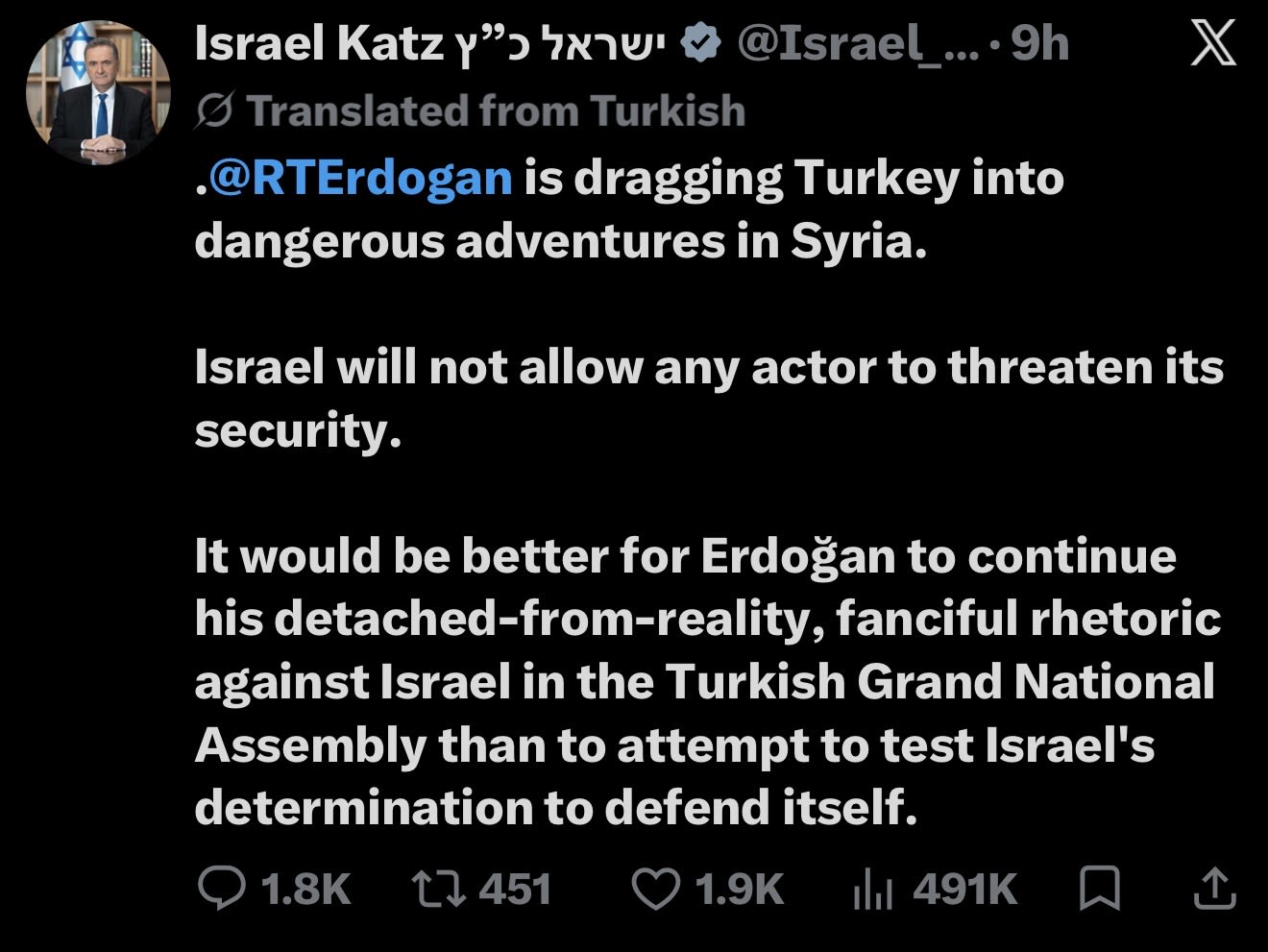
“Erdogan is dragging Turkey into dangerous adventures in Syria,” Defense Minister Israel Katz said in a Turkish language statement directed at the Turkish president. Katz said Israel would not allow any actor to threaten its security and added that Erdogan would be better off continuing his speeches against Israel in the Turkish parliament than “attempting to test Israel’s resolve to defend itself.” The warning followed an Israeli attack early Tuesday on the Abu al-Duhur military airbase in Syria’s eastern Idlib countryside. Syrian state broadcaster Ekhbariya, citing a military source, said Israeli aircraft carried out 8 strikes against the runway and storage facilities. No casualties were reported.

The airfield is roughly 70 kilometers from the Turkish border and about 185 miles from Israel’s border with Syria, putting the target far outside the southern Syrian security zone where Israel has concentrated much of its ground activity since Bashar al-Assad fell in December 2024.
Israel remained silent for roughly 1 day before Prime Minister Benjamin Netanyahu’s office acknowledged the attack in an English language statement. It was Israel’s first acknowledged strike on Syrian government military assets since March. The explanation from Netanyahu’s office turned what initially appeared to be another Israeli attack on Syria’s recovering military infrastructure into a direct confrontation over Turkey’s expanding role in the country.
Israel Says Turkey Was About to Cross Its Red Line
“Israel and Syria agreed to a status quo in security matters,” Netanyahu’s office said, accusing Damascus of being on the verge of breaching that understanding by allowing Turkish troops to deploy at an airbase near Aleppo. Israel said it had repeatedly warned Syria that such a deployment would threaten Israeli security and that Damascus ignored those warnings.
Netanyahu later described the message delivered to Turkey in 1 word: “Don’t.” He said Israel had identified an intention by Turkey to establish itself at the airfield and would not accept a Turkish military buildup moving farther south. “The message was conveyed but apparently they didn’t hear it, so we made sure they understood it more clearly,” Netanyahu said.
There is evidence that Turkish military personnel visited Abu al-Duhur before the attack, but no public independent confirmation that Turkish forces were preparing to deploy there. The Syrian Observatory for Human Rights said the strike followed a recent visit by a Turkish military delegation, and Syrian officials confirmed the visit to the Associated Press.
Mossad director Roman Gofman had also spoken with Syrian Foreign Minister Asaad al-Shaibani on August 14, 4 days before the attack, over Turkish deployments and Ankara’s expanding presence in northern Syria. A senior Israeli official told Fox News that highly sensitive intelligence was shared with the U.S. at the most senior levels before the strike.
Syria Admits Turkish Personnel Visited, But Denies a Deployment
Syria’s account is more complicated than a blanket denial of Turkish military activity at Abu al-Duhur. Al-Shaibani told Axios there was “no intention to establish a Turkish base there,” nor plans for a permanent Turkish military presence or deployment. He said work at Abu al-Duhur was limited to rehabilitating war damaged facilities for use by the Syrian Air Force.
According to al-Shaibani, Turkish personnel had visited the airfield days before the Israeli strike as part of training, military cooperation and an exchange of expertise between Ankara and Syria’s new government. He said the facility remained largely empty and was not yet operational, and insisted there was no security justification for the Israeli attack.
Here is the central dispute: Israel says Turkish troops were about to deploy. Turkey says there were no Turkish troops at Abu al-Duhur before or during the attack. Syria acknowledges Turkish military personnel visited the airfield, but says there was no planned Turkish base, permanent presence or deployment. Israel has not publicly released the intelligence supporting its assessment that a deployment was imminent.
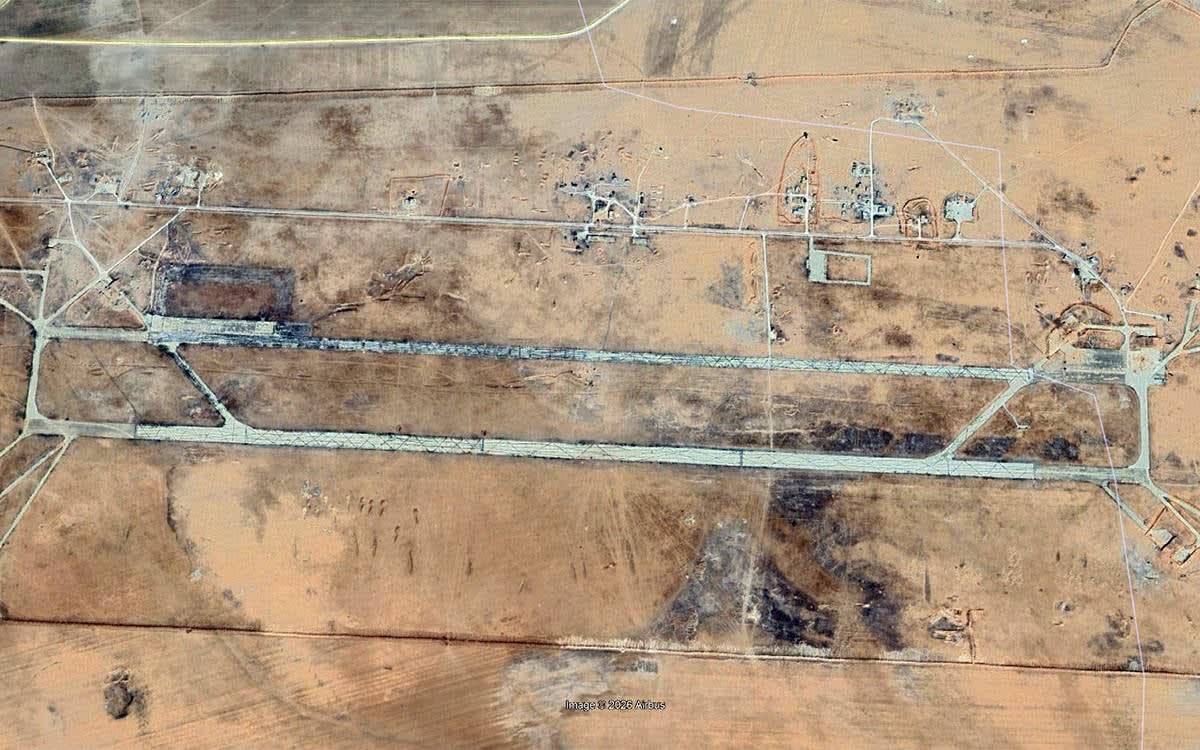
Abu al-Duhur had been largely out of service as a dedicated military airfield since 2013 and changed hands repeatedly during the Syrian civil war. Its rehabilitation came as the new government began reconstructing military capabilities destroyed during more than a decade of war. Israel’s Kan public broadcaster reported on August 11 that Syria was accelerating efforts to rebuild its air force, recruiting pilots, conducting flight training and holding its first fighter exercise since Assad’s fall using MiG-21s.
Turkey Rejects Israel’s Account
Turkey strongly condemned the attack. Its Foreign Ministry accused Israel of recklessly targeting Syrian infrastructure and violating the country’s sovereignty and territorial integrity, calling on the international community to take a “more resolute stance” against Israeli military operations.
The Turkish presidency called Israel’s claim that Syria was preparing to receive Turkish forces baseless and formally rejected what it described as untenable allegations about Turkey’s military position in Syria. Presidential communications director Burhanettin Duran called the attack another example of an Israeli policy of aggression threatening regional peace and said Turkey under Erdogan would continue supporting Syria’s sovereignty and territorial integrity.
Turkey’s Defense Ministry said Thursday that there were no Turkish troops at Abu al-Duhur before or during the attack. It called the Israeli operation unacceptable, warned that Israeli interventions against neighboring states must not become routine and said Turkey would continue helping Syria develop its military capabilities under a “single army” principle.
Erdogan himself has not issued a personal statement on the Abu al-Duhur strike. Ankara’s response has instead come through the Foreign Ministry, presidency, Duran and Defense Ministry. Erdogan’s most recent broader framing came in a June parliament speech in which he called Israel a concrete threat to regional peace and warned against pursuing adventures with it.
Turkey has become the principal foreign patron of President Ahmed al-Sharaa’s government, training Syrian forces and helping rebuild state institutions and infrastructure. Ankara also commands NATO’s 2nd largest military and this month signed a mutual defense framework with Pakistan and Saudi Arabia. Israel has increasingly presented that arrangement as an emerging Sunni axis, adding another layer to the confrontation as Netanyahu campaigns ahead of Israel’s October election.
The U.S. Says the Strike Risked a Direct Confrontation
U.S. envoy for Syria and ambassador to Turkey Tom Barrack confirmed Israel carried out the strike and called it “an unnecessary escalation that does not advance regional stability.” He said the attack reflected a perception, “whether accurate or misplaced,” that Turkey was preparing to increase its presence at Abu al-Duhur.
More significantly, Barrack said Turkey had not been warned. Turkish forces therefore watched Israeli aircraft heading north toward an area close to their territory without knowing the target. According to Barrack, Turkey could reasonably have prepared its own military response. “Thankfully, calm heads were able to prevent the situation from deteriorating further,” he said.
The U.S. is now working to establish a deconfliction mechanism connecting Israel, Turkey and Syria. Barrack said an information sharing channel already exists but that a more robust architecture is needed, arguing that such a mechanism is far cheaper than using kinetic action to communicate. Israel and Turkey had already established a communications line last year specifically to avoid military incidents in Syria, but the Abu al-Duhur strike bypassed it.
President Donald Trump told Axios on Wednesday that he had been briefed on the attack but declined to criticize Israel, saying he could not discuss it. Channel 12 reported that the administration has become more inclined to trust Israeli intelligence regarding the Turkish buildup, although a U.S. official said Israel should have handled the dispute without military action and expressed frustration over Netanyahu’s regional use of force.
Israel Is Enforcing Its Syrian Red Lines Far From Its Border
The location of the strike makes Abu al-Duhur different from much of Israel’s recent activity in Syria. Israel has maintained 9 military posts in southern Syria since December 2024, most inside the UN patrolled buffer zone. ACLED and Telegram derived incident data show 1,722 verified and deduplicated Israeli related records in Syria between January 2025 and August 18, 2026. The Israeli campaign did not end with Assad’s fall.
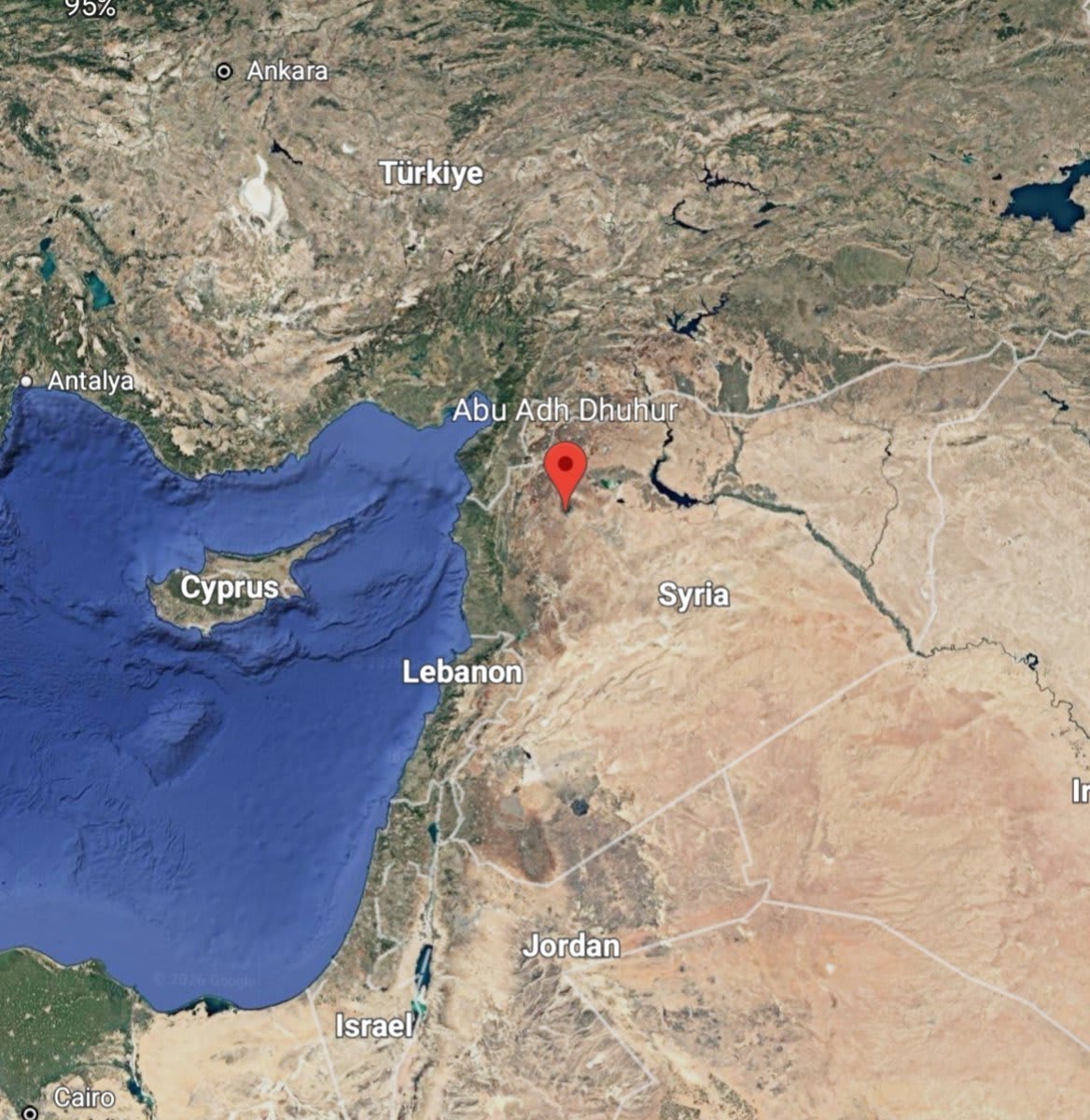
But Abu al-Duhur is in northwestern Syria, close to Turkey and hundreds of miles from Israel’s frontier. The strike demonstrated that Israel is prepared to enforce its definition of Syrian security threats far beyond the territory immediately adjoining the Golan.
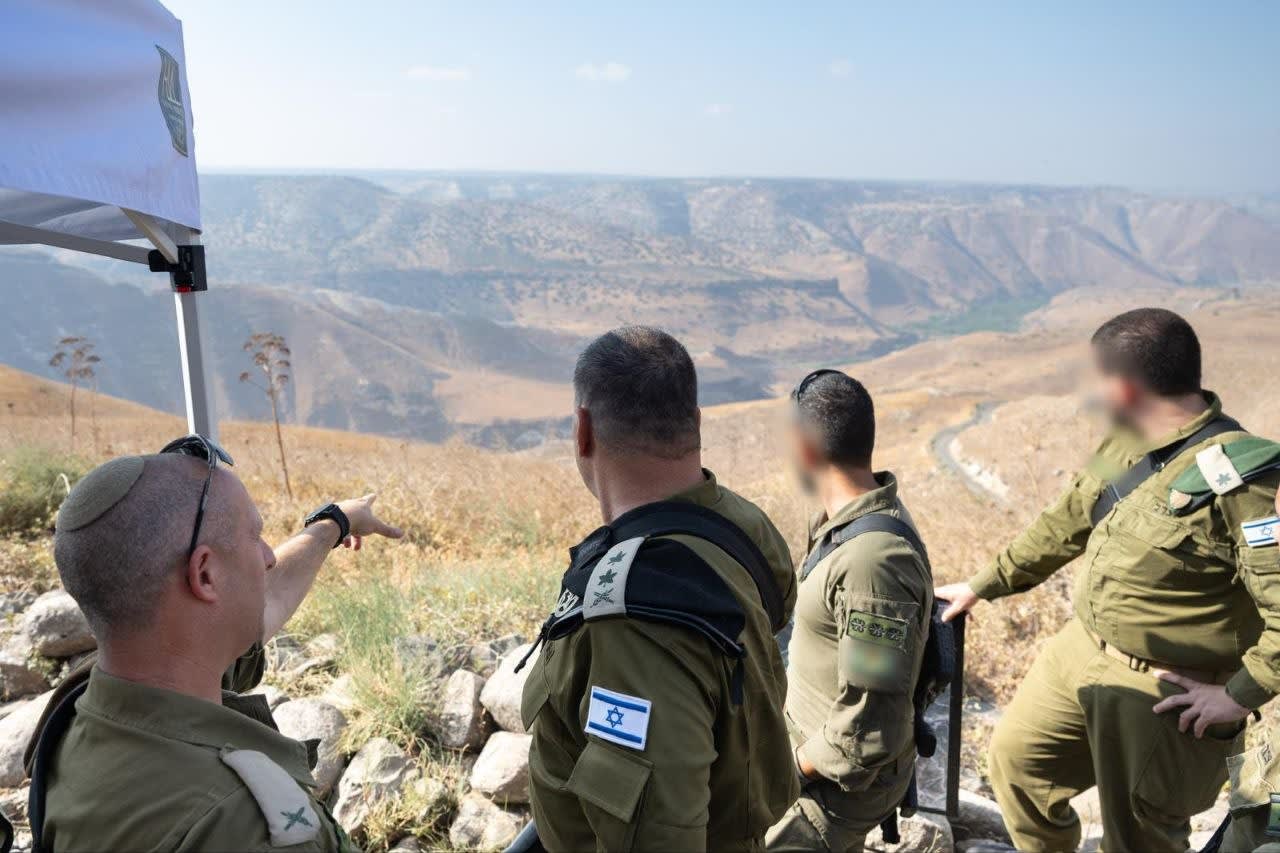
IDF Chief of Staff Lt. Gen. Eyal Zamir reinforced that position during a visit to Israeli troops in southern Syria on August 19. Zamir said the military was monitoring changes on the Syrian front and “will not allow hostile forces to establish themselves along our borders,” adding that Israel would use its operational capabilities where and when required.
The strike has also generated opposition inside Israel. Yair Golan called it a “provocative and dangerous move” and accused Netanyahu of risking confrontation with Turkey for political considerations. Former Prime Minister Ehud Barak described deliberate escalation with Ankara as reckless and stupid. Former Navy chief Eliezer Marom backed the operation, saying Turkey intended to send a delegation to prepare the airfield for Turkish activity, but acknowledged that the strike carried a genuine risk of regional escalation.
Damascus says the pressure could produce precisely the outcome Israel is trying to prevent. A Syrian source close to the government told Israeli media that the more Israel threatens Syria, the closer Damascus will move toward Turkey. Al-Shaibani has meanwhile said Syria remains open to de-escalation and that a year of U.S. mediated negotiations had made significant progress toward a security agreement before Israel backed away from commitments. Any agreement, he said, must respect Syrian sovereignty.
Abu al-Duhur therefore leaves 2 competing red lines in place. Turkey says it will continue training and rebuilding Syria’s armed forces. Israel says it will not accept Turkish military entrenchment moving south, and has now demonstrated that it is willing to strike Syrian government infrastructure to prevent it.
Katz has taken that warning directly to Erdogan. Erdogan has not yet answered him personally.