
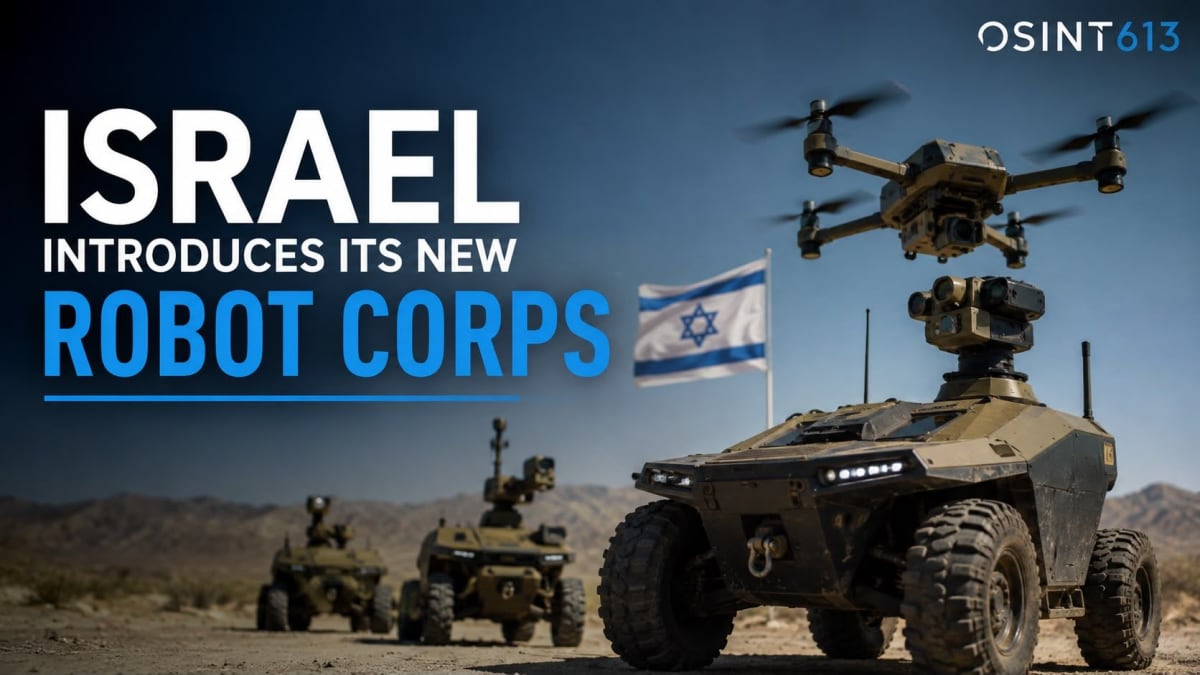

Israel is preparing to build something it has never had before: a permanent military branch dedicated to robotic warfare, including autonomous ground vehicles, drone swarms and unmanned fighter jets. The effort will be backed by one of the largest defense buildups in Israel’s history. Prime Minister Benjamin Netanyahu said in May that Israel plans to add NIS 350 billion, about $117 billion, to defense spending over the next decade, with domestic weapons production and reduced reliance on foreign suppliers at the center of the expansion.
IDF Chief of Staff Lt. Gen. Eyal Zamir is moving to formalize robotics, drones and artificial intelligence inside the military's force structure, turning systems developed and rapidly fielded during nearly three years of war into a lasting component of how Israel intends to fight.
A new branch, not a side project
Israel's Ministry of Defense established the Artificial Intelligence and Autonomy Administration under the Directorate of Defense Research & Development in late 2024, tasked with spearheading research, development and deployment of autonomous capabilities across all IDF branches.
Since April 2026, the IDF has been executing its most ambitious force-restructuring effort in over a decade. The five-year plan, called Hoshen, runs from 2026 through 2030 under Planning Directorate chief Maj. Gen. Hidai Zilberman, who reports to Zamir.
Zamir chose the name deliberately. Hoshen is the breastplate worn by the biblical high priest, set with twelve stones representing Israel's tribes.
Eyal Zamir ordered a new General Staff structure built around robotics, drones and AI, moving unmanned systems out of the procurement column and into something closer to a command function alongside armor and artillery. Brig. Gen. (res.) Amir Avivi described the effort during an August 11 IDSF briefing as the construction of a new robotic corps and, eventually, an “army of robots,” with air, land and sea machines tied together by increasingly capable AI.
The hardware already in the field
The IDF is not starting from zero. In December 2025, Yaron Sarig, head of the Defense Ministry's AI and Autonomy program, described the recent fighting as the “first robotics war,” in which Israel deployed tens of thousands of autonomous systems, from drone swarms to ground robots.
These autonomous systems include;
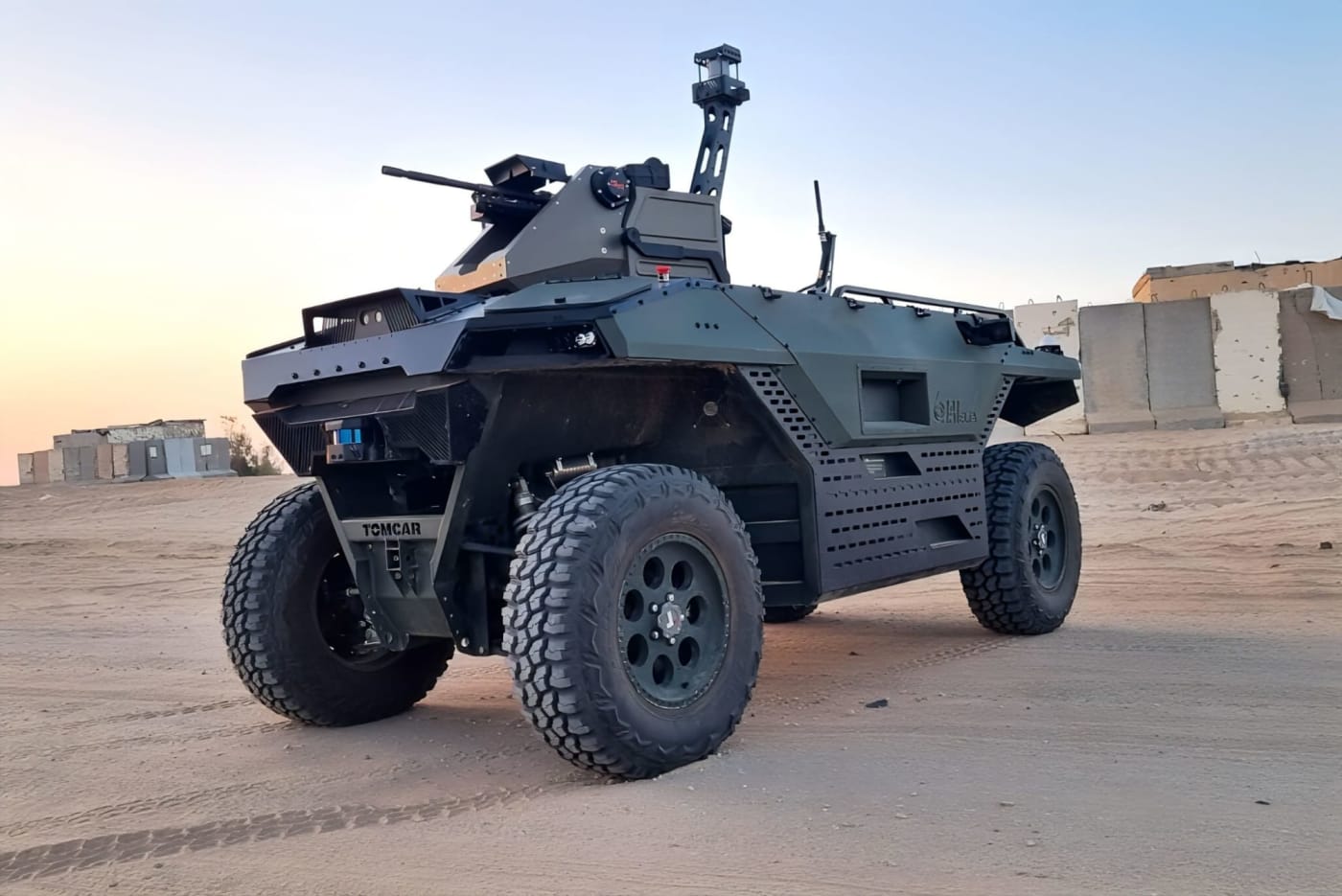
• Israel Aerospace Industries ground vehicles such as the Rex MK II and RobDozer handle tunnel mapping and route clearance, operated remotely from secure sites at ranges of up to 300 kilometers, with sensors and modular payloads for reconnaissance, logistics or armed roles.
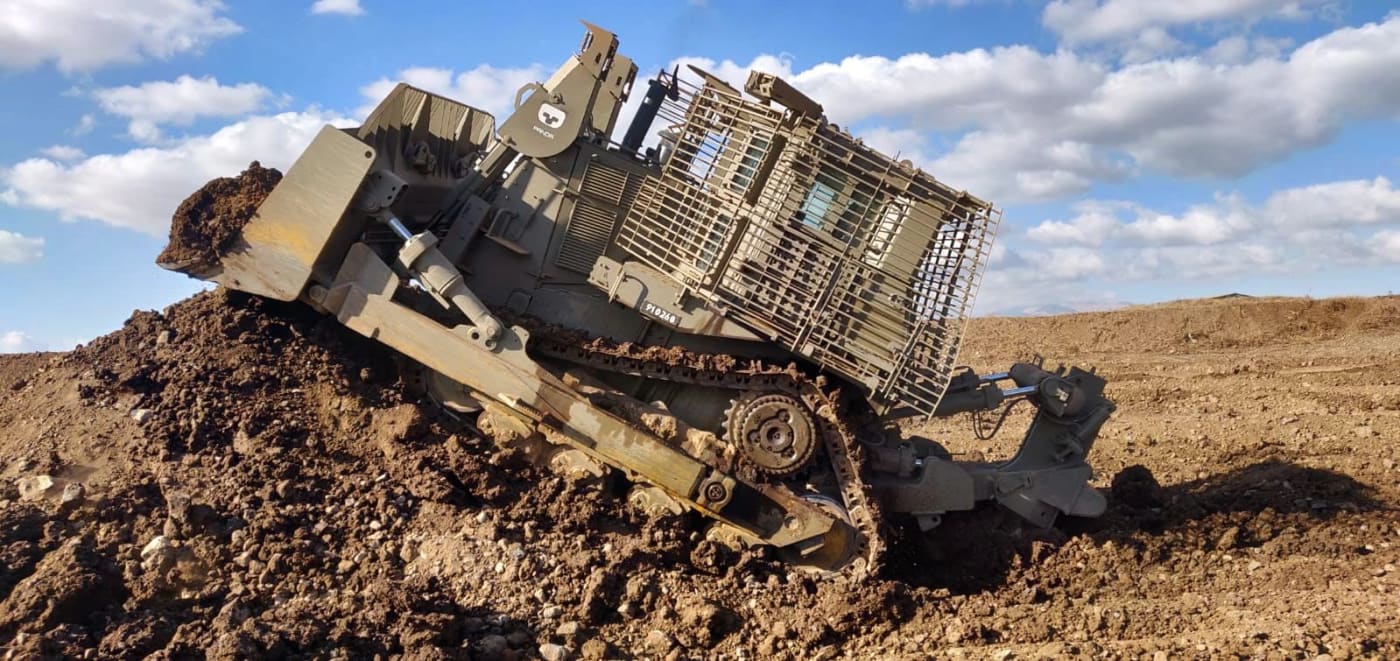
• Remote-piloted D9 “Panda” bulldozers, drivable from tens of kilometers away, that clear explosives with no one in the cab, while in Lebanon robots have inspected and helped dismantle Hezbollah infrastructure without exposing troops.
• Robotican's ROOSTER pairs a ground rover with a launchable drone, a hybrid class the IDF is expanding for tunnel reconnaissance. It can carry a payload of up to 300 grams, allowing it to integrate a precision warhead alongside other mission-specific equipment.

• Retired M113 carriers which are being converted into remotely driven “ghost” vehicles that absorb first contact in an assault, and the IDF is now testing multi-robot teaming, early ground swarms and Seek-and-
Strike-style aerial swarms meant to close the gap between spotting a target and hitting it.

The longer-term objective extends far beyond remotely operating bulldozers and other equipment. It follows a clear progression: from remotely controlled machines, to systems that can navigate and execute portions of missions autonomously, and ultimately to coordinated teams of air, ground, and maritime platforms operating under the supervision of human commanders.
In this vision, AI becomes central. As Sarig noted, robotics serves as the bridge to a battlefield in which artificial intelligence is embedded both in weapon systems and in the operational capabilities available to individual soldiers.
Building the industrial base
None of this works without enormous numbers of machines. Avivi said Israeli production lines are already running around the clock. The war exposed the limits of relying on small inventories of expensive precision systems; a robotic military operating continuously across several fronts needs expendable drones, replacement vehicles, sensors and munitions in quantities far beyond what experimental units required. Alongside the hardware, the IDF is building AI infrastructure to support it. In May it established Alumot, a new unit under the C4I and Cyber Defense Directorate that combines combat personnel, technologists and AI specialists to shorten the distance between a battlefield need and a working solution.
The logic of machines first
The operating principle is simple: send the machine first. A robot can enter a booby-trapped building, inspect a tunnel or move supplies through exposed terrain before soldiers have to. Losing the platform costs money; losing the soldier is irreversible.
Casualty reduction is the loudest justification, but planners are equally candid about manpower math. Reserve call-ups cannot sustain indefinite rotations, and robotics is one of the few levers that lets the force hold its numbers without straining the reserve pool further.
How far autonomy goes
How much autonomy should extend before a person signs off remains unsettled. IDF doctrine requires a “human in the loop” on lethal decisions, but rising autonomy in navigation, targeting and swarm coordination narrows what that oversight means in practice.
IDF concept videos and official statements sketch a horizon past 2032 in which manned vehicles fight alongside robotic “wingmen” that take the first risk in contact and send their own drones ahead of the formation, making human review look more like confirmation than judgment.
Electronic warfare compounds the problem: a jammed link can force a system to act alone, with no one in the loop at all, and Zilberman's teams still have to write rules for that gap before combat does.
The question is no longer whether robots will accompany Israeli soldiers into the next war. It is how far ahead of them the robots will be allowed to go.