

 OSINT613
Lebanon Front: The Battle for Ali Taher Escalates, Breaking Down the Renewed Fighting
Three Israeli soldiers were seriously wounded when a Hezbollah explosive drone struck IDF forces operating around the Ali Taher Ridge in southern Lebanon late Friday, triggering the deadliest Israeli strikes in Lebanon since agreements in June sharply reduced the fighting. Israel responded hours later with strikes in Ansar and Deir ez Zahrani that killed 11 people and wounded 19, according to Lebanon’s Health Ministry. Among the dead were 3 children and 2 women.
The exchange broke a pattern that had held, however unevenly, for nearly 2 months. Israel has continued striking Hezbollah targets while its troops control a security zone inside southern Lebanon, but Hezbollah had largely avoided openly attacking Israeli forces. This time, according to Israel, Hezbollah deliberately launched an explosive drone at troops actively operating in the Ali Taher sector.
The location is central to what is happening. Beneath Ali Taher sits one of Hezbollah’s most important remaining underground military complexes in southern Lebanon. Israeli forces have spent weeks isolating the position while Israel and Lebanon negotiate a framework intended to eventually replace the IDF with the Lebanese army.
Hezbollah attacked where Israel is applying the most pressure
The IDF said an officer and 2 soldiers from the Commando Brigade were seriously wounded in the drone attack. Israel responded Saturday morning with strikes against Hezbollah targets, including a building in Ansar that the military described as a central headquarters of Hezbollah’s elite Radwan Force.
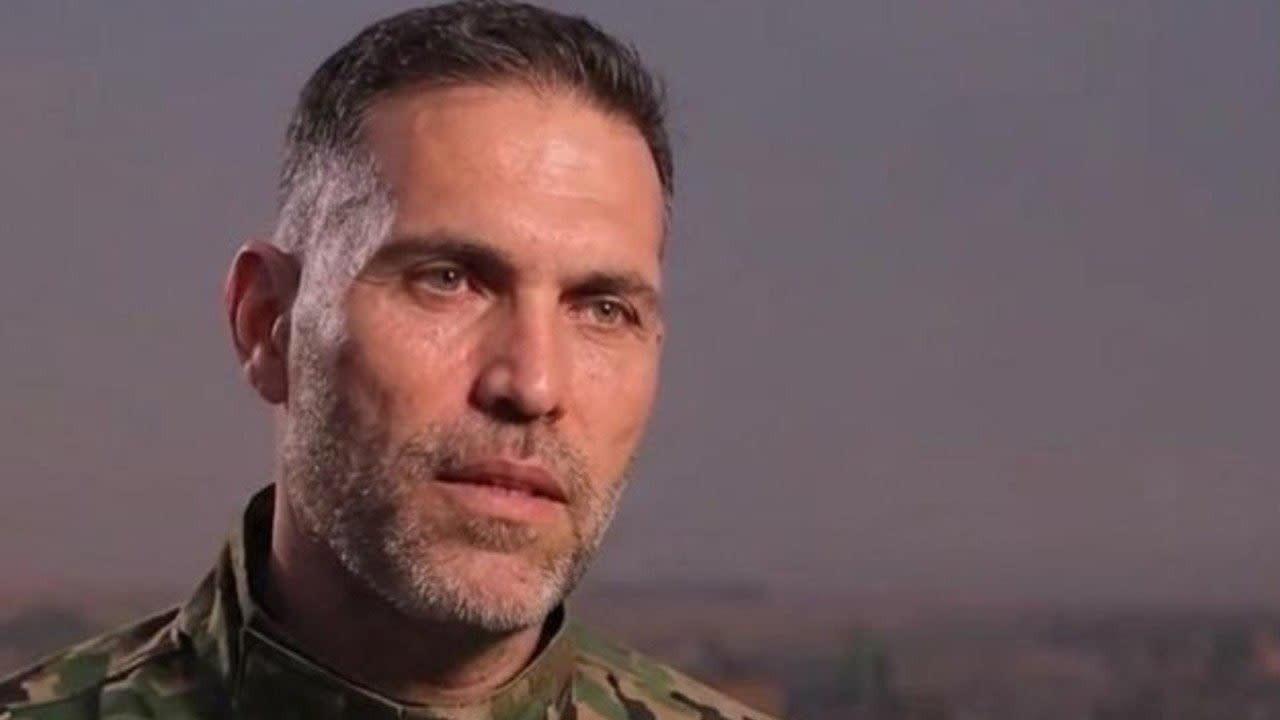
The IDF identified Ali Samir al Haj Hassan, a Radwan Force battalion commander, among those killed. Radwan is Hezbollah’s special operations formation, built in part around the capability to conduct cross border raids into Israel. The military said other Hezbollah operatives were also present at the site.
Lebanese authorities said 7 people were killed in Ansar, including women and children. Israel acknowledged that Hassan’s family was inside the compound, saying they were not targets and accusing Hezbollah of placing civilians inside a military headquarters. Senior IDF officials cited by Israel Hayom later acknowledged that the military did not know Hassan’s family was present when the strike was authorized.
Israel also struck Deir ez Zahrani, where the IDF said it killed Ali Muhammad Fakhr al Din, also known as Abu Hassan Alaa, a senior commander in Hezbollah’s Badr Unit. The military accused him of directing attacks against Israeli troops, including explosive drone operations inside the security zone.
His position ties the retaliation directly back to Ali Taher. The Badr Unit oversees Hezbollah operations north of the Litani River, and its principal underground headquarters is believed to be beneath the ridge.
The fighting around Ali Taher continued through the night
The Israeli response did not end with Saturday morning’s strikes. Lebanese media reported heavy Israeli fire around Ali Taher from Saturday night into Sunday, marking a second consecutive night of intense activity around the ridge.
Al Mayadeen reported Israeli artillery, machine gun fire, airstrikes and phosphorus shells in the Ali Taher area. Lebanese media separately reported heavy explosions around the ridge. Those accounts could not be independently verified, and the IDF did not acknowledge carrying out the overnight attacks in its Sunday morning statements.
The overnight reports followed repeated attacks around Ali Taher during Saturday. Lebanon’s National News Agency reported strikes near Nabatieh al Fawqa, the teachers’ training center and the Husseini club, as well as in the valley between Ansar and Zarariyeh. It described the attacks as the deepest Israeli strikes into southern Lebanon since the ceasefire 2 months ago.
The continued fire leaves open whether Israel is maintaining pressure around the underground complex or preparing for a larger operation. The IDF has not announced an assault on the facility.
The bunker beneath Ali Taher remains unresolved
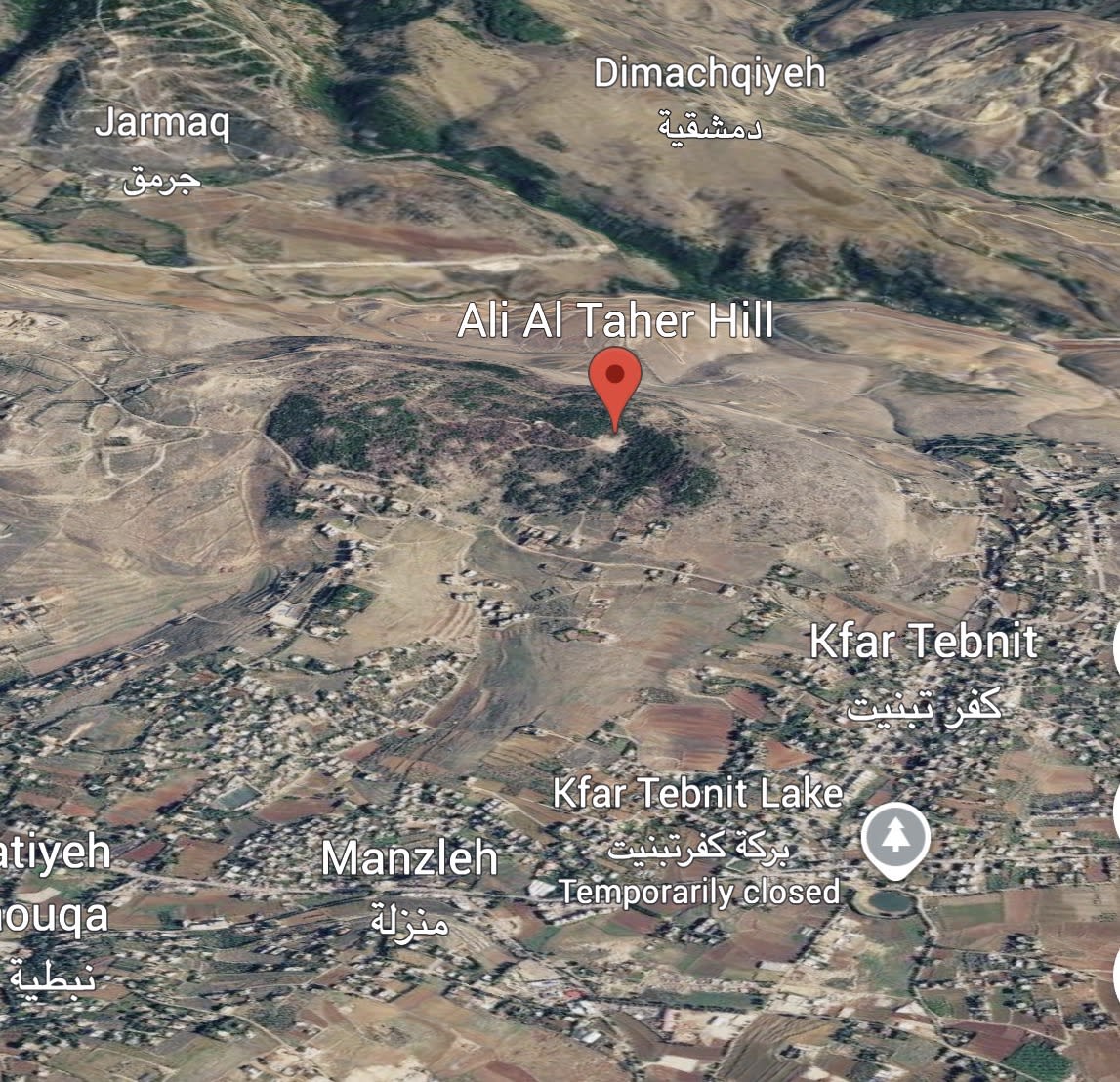
Ali Taher is a commanding ridge in the Nabatieh area, roughly 4.5 kilometers northwest of Beaufort Castle. Beneath it is a large Hezbollah underground complex that Israeli research group Alma assesses serves as the principal headquarters of the Badr Unit. Alma says the facility was developed after the 2006 war with Iranian and likely North Korean assistance as part of Hezbollah’s wider underground network.
The complex is believed to contain command facilities, weapons storage and an extensive tunnel network. Between 30 and 40 Hezbollah members, primarily from the Badr Unit with some Radwan personnel, were reported trapped underground by mid July after Israeli forces established control over the approaches.
Israel has not stormed the facility. Israeli reporting says forces have instead attempted to isolate those inside, cutting water supply routes and disrupting attempts to resupply the position by drone. Its depth and fortification make destroying the complex from the air alone difficult without significantly expanding the operation.
Prime Minister Benjamin Netanyahu has provided few details, saying Israel is acting forcefully in Lebanon, including at Ali Taher, and is in the middle of what he described as an important operation.
For Hezbollah, losing Ali Taher would mean losing a major command position and underground network north of the Litani. Breaking the Israeli encirclement and recovering the complex would preserve the infrastructure and allow Hezbollah to portray the outcome as a military success.
Ali Taher is now tied to Israel’s withdrawal
The standoff is unfolding inside negotiations over who controls southern Lebanon after Israeli forces leave.
Israel and Lebanon signed a U.S. brokered framework on June 26 linking Israeli withdrawal to the verified disarmament of non state armed groups and deployment of the Lebanese Armed Forces. The process was supposed to begin with pilot zones where Hezbollah infrastructure would be dismantled before territory was transferred to Lebanese state control.
Implementation has slowed. Israel has resisted moving into additional pilot zones before verifying that Hezbollah has been removed from areas already transferred. Hezbollah rejects the framework’s central premise. It was not a party to the agreement and has ruled out disarming before Israel withdraws.
On Friday, Hezbollah leader Naim Qassem called direct negotiations with Israel a humiliating mistake and challenged Lebanese officials to identify what had been achieved through the previous 7 rounds of talks. After Saturday’s strikes, Hezbollah promised an “appropriate response.” The civilian deaths have added another complication. President Joseph Aoun condemned the strikes, while Prime Minister Nawaf Salam said they were undermining efforts to establish stability in southern Lebanon.
Israel is left with a difficult military choice. Keeping troops around Ali Taher without eliminating the underground threat exposes them to further drones and explosives. Expanding the operation risks additional civilian casualties and greater U.S. pressure as negotiations continue.
Hezbollah faces the opposite calculation. Another attack could trigger a larger Israeli operation against the ridge and the fighters underground. Waiting leaves those men isolated while Israeli forces continue controlling the approaches.
The next U.S. sponsored round of talks is expected in Rome. Whether the Hezbollah fighters beneath Ali Taher will still be alive when that round begins remains to be seen.