


Saudi Arabia spent years preparing for the possibility that the Strait of Hormuz could become unusable. That contingency plan is now facing its most serious test.
On July 27, Saudi Arabia’s Ministry of Defense confirmed that drones launched by the Islamic Resistance in Iraq targeted the Abqaiq oil processing complex, the world’s largest crude stabilization facility and the starting point of the kingdom’s East West Petroline. The ministry said several drones were intercepted and that Riyadh reserves the right to respond, but fires were reported at the facility and near a pumping station linked to the pipeline. Satellite imagery later showed thermal signatures at locations that do not correspond to normal industrial flaring.
The strike came after a week of escalating attacks by Iran aligned groups across Saudi Arabia’s energy network. Houthi forces attacked oil tankers in the Red Sea, struck the Jizan refinery, attempted to hit the Yanbu export terminal with ballistic missiles, and declared a maritime blockade covering Bab al Mandeb.
No single attack has crippled Saudi oil exports. Together, however, they are exposing vulnerabilities along nearly every stage of the kingdom’s alternative export corridor, from the processing facilities in the Eastern Province to the sea lanes connecting the Red Sea with Asian markets.
Saudi Arabia’s Alternative To Hormuz
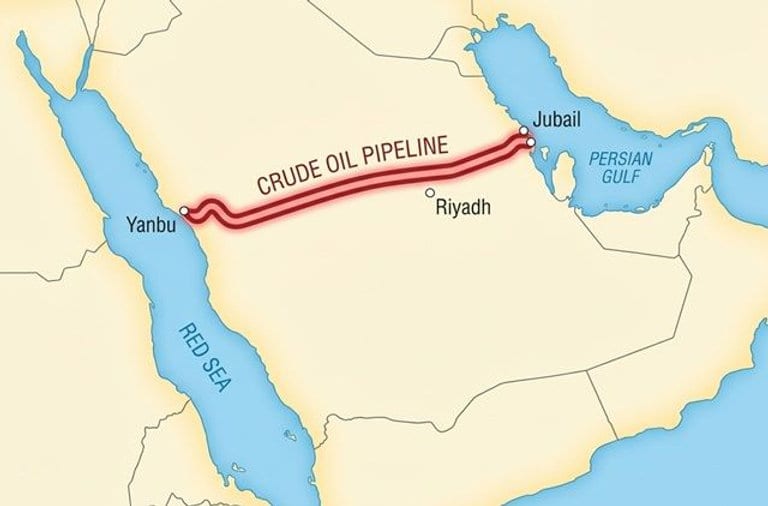
The East West Petroline was built for exactly this scenario.
Stretching 1,201 kilometers across Saudi Arabia, the pipeline carries crude from Abqaiq in the Eastern Province to the Red Sea port of Yanbu, allowing exports to bypass the Strait of Hormuz entirely. As tensions with Iran intensified during the 2026 conflict and commercial shipping through Hormuz became increasingly constrained, Saudi Arabia shifted the overwhelming majority of its seaborne exports onto that route.
By June, approximately 92 percent of Saudi Arabia’s seaborne crude exports were departing from Yanbu.
The adjustment kept oil moving, but it did not eliminate the kingdom’s dependence on vulnerable maritime chokepoints.

Every tanker leaving Yanbu must still transit Bab al Mandeb before entering the Gulf of Aden and continuing toward Asia. Once the Houthis declared a blockade on July 20, that narrow waterway became the next pressure point.
The Houthis quickly demonstrated they intended to enforce it.
On July 22, Houthi military spokesman Yahya Saree claimed responsibility for missile and drone attacks against the Saudi flagged tankers Encelia and Layla. Saudi authorities later confirmed that the Encelia had been struck, although all crew members escaped safely.
Commercial shipping reacted almost immediately.
AIS tracking data from Kpler, LSEG, MarineTraffic, and Windward confirmed that several Saudi crude tankers abandoned their normal southbound route through Bab al Mandeb around July 21 and 22. Among them were the Xin Long Yang, managed by COSCO and carrying Saudi crude toward China, and the Rodos. Other tankers departing Yanbu either reversed course toward the Suez Canal or remained offshore while operators assessed the security situation. Reuters and the BBC independently confirmed the rerouting.
The alternative is costly.
A typical voyage from Yanbu to East Asia through Bab al Mandeb takes roughly 20 to 24 days. Sailing north through the Suez Canal, across the Mediterranean, around Gibraltar, down the Atlantic coast of Africa, around the Cape of Good Hope, and back across the Indian Ocean extends that journey to roughly 50 to 54 days.

According to shipbroker Braemar, the diversion adds approximately 10,000 nautical miles. Freight costs rise by more than $5 million for a single voyage, while Suez Canal transit fees add roughly another $1 million. The longer route also reduces tanker availability because vessels remain committed for weeks beyond their normal operating cycle.
Saudi Getting Hit From Multiple Fronts
The Houthis are only part of the picture.
Long before the attacks on Jizan and Yanbu, Iran aligned militias operating from Iraq had already been targeting Saudi Arabia during the first phase of the 2026 conflict.
Between March and May, groups operating under the Islamic Resistance in Iraq launched repeated drone attacks toward Saudi Arabia and other Gulf states. Saudi assessments and regional reporting attributed many of those operations to Kataib Hezbollah, Harakat Hezbollah al Nujaba, and other factions closely aligned with Iran’s Islamic Revolutionary Guard Corps.
The targets included Yanbu, oil infrastructure across the Eastern Province, and Prince Sultan Air Base.
Saudi Arabia and Kuwait responded with limited strikes against militia positions near the Iraqi border and inside southern Iraq. Although the pace of attacks declined by late May, the capability remained.
Monday’s strike against Abqaiq demonstrated that those groups remain operational.
The Houthis have opened another front from Yemen.
On July 25, ballistic missiles struck Saudi Aramco’s refinery at Jizan on the Red Sea coast. Sentinel 2 imagery collected more than 24 hours later continued to show active fires and a smoke plume stretching roughly 70 kilometers, suggesting prolonged burning at the facility.
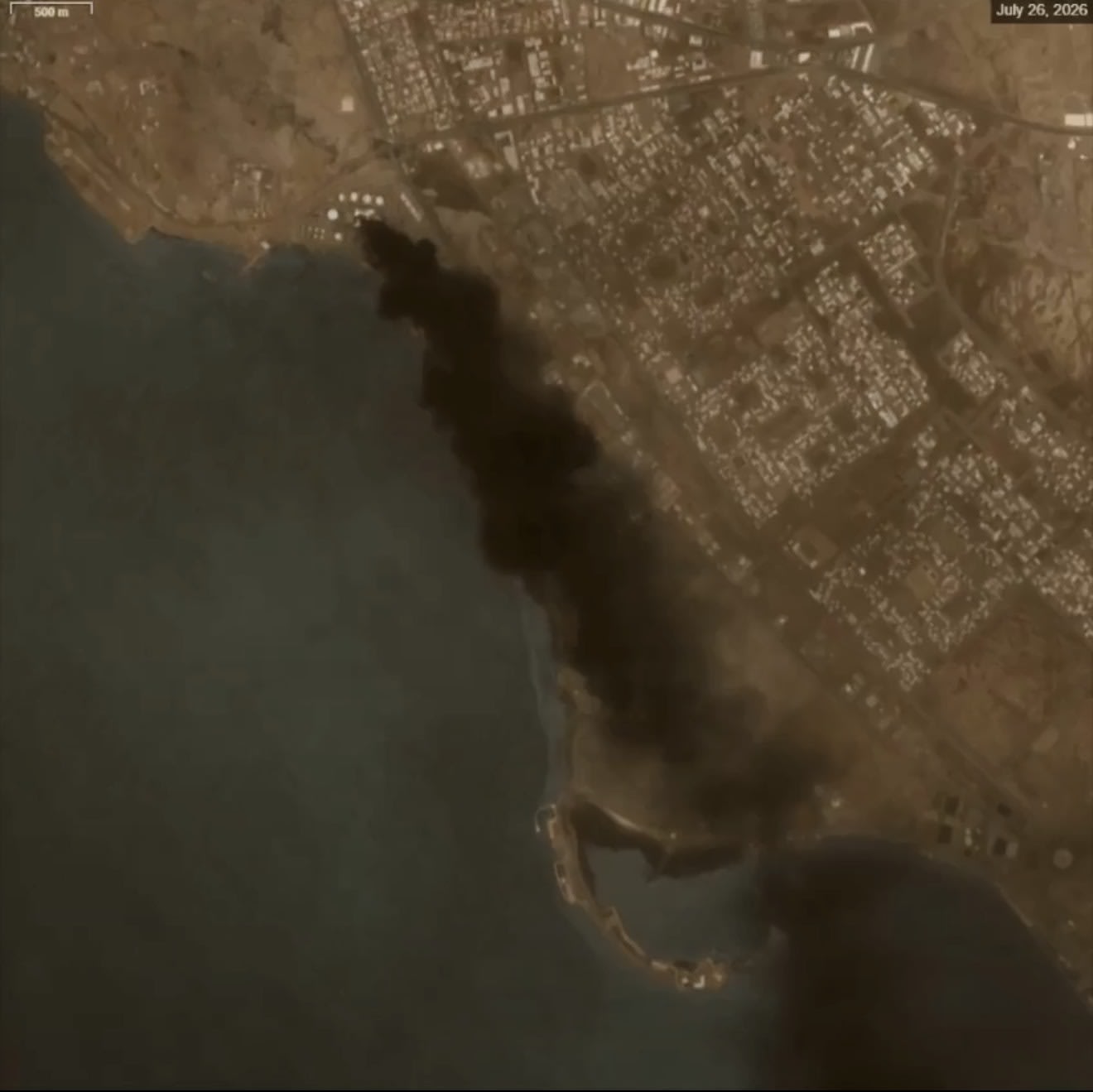
The following day, Yanbu became the next objective.
Saudi air defenses intercepted 2 ballistic missiles before they reached the export terminal. One of the Patriot batteries protecting the facility is operated by Greek personnel deployed under a defense agreement with Riyadh, highlighting the international resources now committed to protecting Saudi energy infrastructure.
The interceptions prevented major damage, but they also confirmed that Yanbu had become one of the Houthis’ highest priority targets.
Viewed individually, these attacks appear disconnected. Viewed chronologically, they form a much clearer picture.
The Houthis targeted tankers after they left port. They attacked Jizan further south along the Red Sea coast. They attempted to strike Yanbu, where most Saudi crude now leaves the kingdom.
At the opposite end of the system, Iraqi militias targeted Abqaiq, where much of that crude begins its journey west.
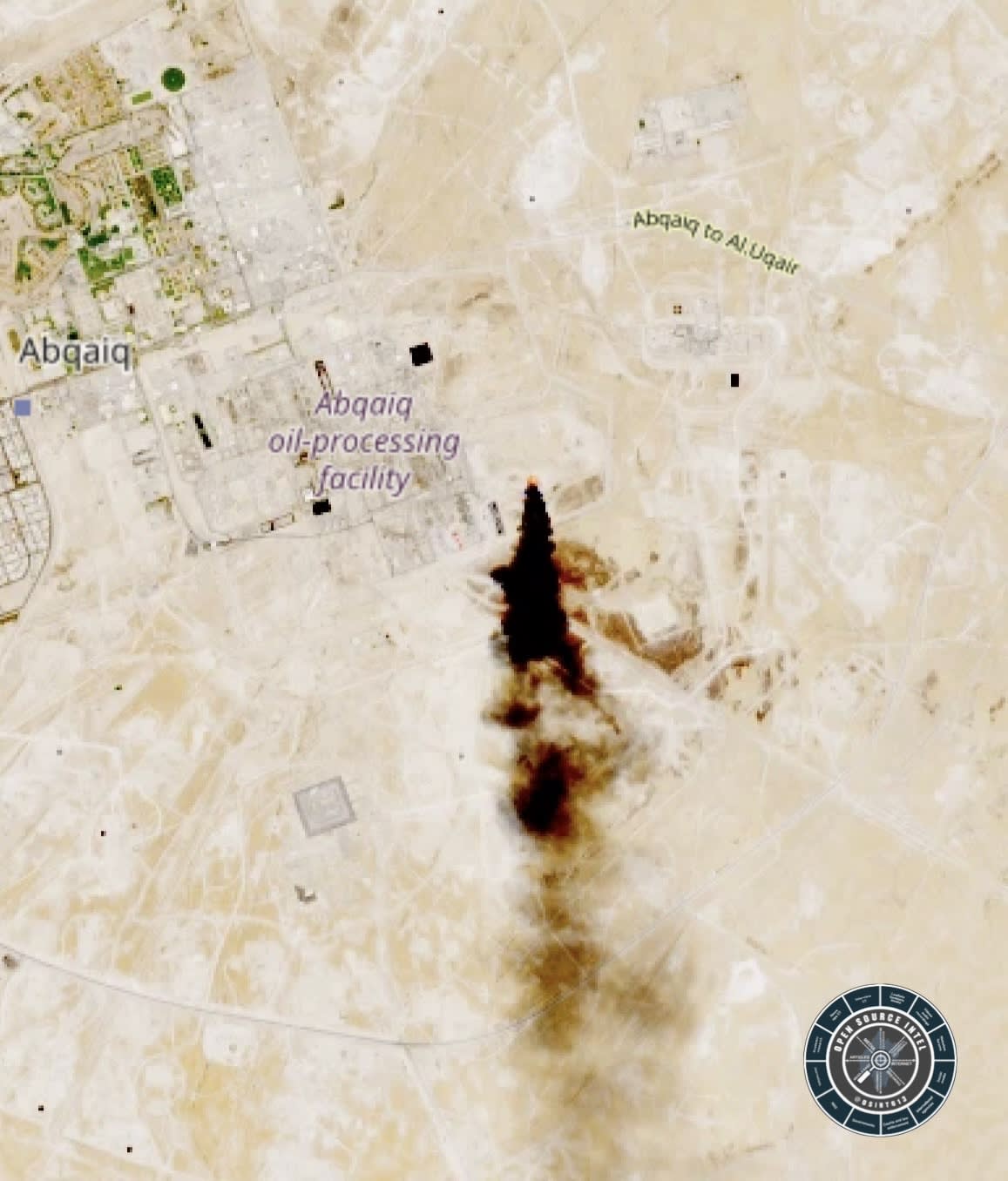
Oil leaves the fields around Abqaiq. It enters the East West Petroline. It reaches Yanbu. Tankers then sail toward Bab al Mandeb before crossing the Indian Ocean.
Every major link in that chain has now been attacked, threatened, or forced to adapt within the span of 1 week.
The timing is notable.
The attacks come as the U.S. and Iran observe a fragile operational pause following 13 days of military exchanges. Washington has slowed direct operations to allow space for diplomacy, but Iran backed proxy groups continue attacks across the region.
President Donald Trump said the U.S. is engaged in “very deep talks” with Iran, warning: “I’m giving negotiations very little time. If they don’t succeed, we’ll return to very powerful military action.” He added: “Not much time. Either this moves quickly, or it won’t happen at all.”
Oil markets have reflected that uncertainty.
Brent crude climbed nearly 40 percent during July and briefly traded above $100 per barrel after concerns spread beyond the Strait of Hormuz into the Red Sea. Prices later retreated below $90 after reports of a pause in U.S. and Iranian operations before recovering toward $91 as news emerged from Abqaiq. The full market impact of Monday’s attack will depend on the eventual damage assessment, which Saudi authorities have not yet released.
Saudi Arabia still possesses the infrastructure needed to move millions of barrels of crude every day. The pipeline remains operational. Yanbu continues loading cargoes. Air defenses continue intercepting incoming missiles.
None of the attacks has shut down Saudi oil exports. That is not the point. Every interception consumes expensive air defense missiles. Every diverted tanker adds weeks to delivery schedules and millions of dollars in costs. Every strike forces Saudi Arabia to defend another piece of infrastructure. The objective is not necessarily to stop the flow of oil overnight. It is to make keeping it flowing steadily more difficult with each passing week.