

For a time, I had the zechus of becoming close to Rav. Dr. A. Y. Twersky. He was a genuine talmid chochom and, of course, founder of the Gateways Rehabilitation Center, where he treated alcoholics and drug addicts. In the early years of my rabbinate, when I had little world experience and none with these matters, he gave me guidance and sage advice. One of these shimush sessions showed me how the Torah is so truly relevant in every generation. Pesach was looming ahead and I had to deal with an area in Rabbi Twersky’s field of expertise. He showed me how Pesach was not only the time when the enslaved Jewish people became free, but in every generation people who were chained to their addictions and evil ways could become liberated from their shackles. I tried the juxtaposition and it worked beautifully.
The following Elul, I was in a similar position, only it didn’t involved Rabbi Twersky’s professional guidance. Nevertheless, he revealed to me that the Yomim Noraim, especially Rosh Hashanah, is a time when people could make a major change in their lives most easily. He shared with me an ancient question about the honey of Rosh Hashanah. Our custom is to use the honey of bees. However, many poskim point out that this doesn’t seem ideal. Bees are not kosher and, generally, that which emerges from something unkosher is treif as well. The meforshim go to great lengths to prove that bee honey is even kosher, let alone that it should be used on the holiest of days. On the other hand, date honey is not only kosher to begin with, but it is even one of the Seven Species by which Eretz Yisroel is praised. If we need something that will symbolize a sweet new year, wouldn’t something that is derived from the kosher world have been best?
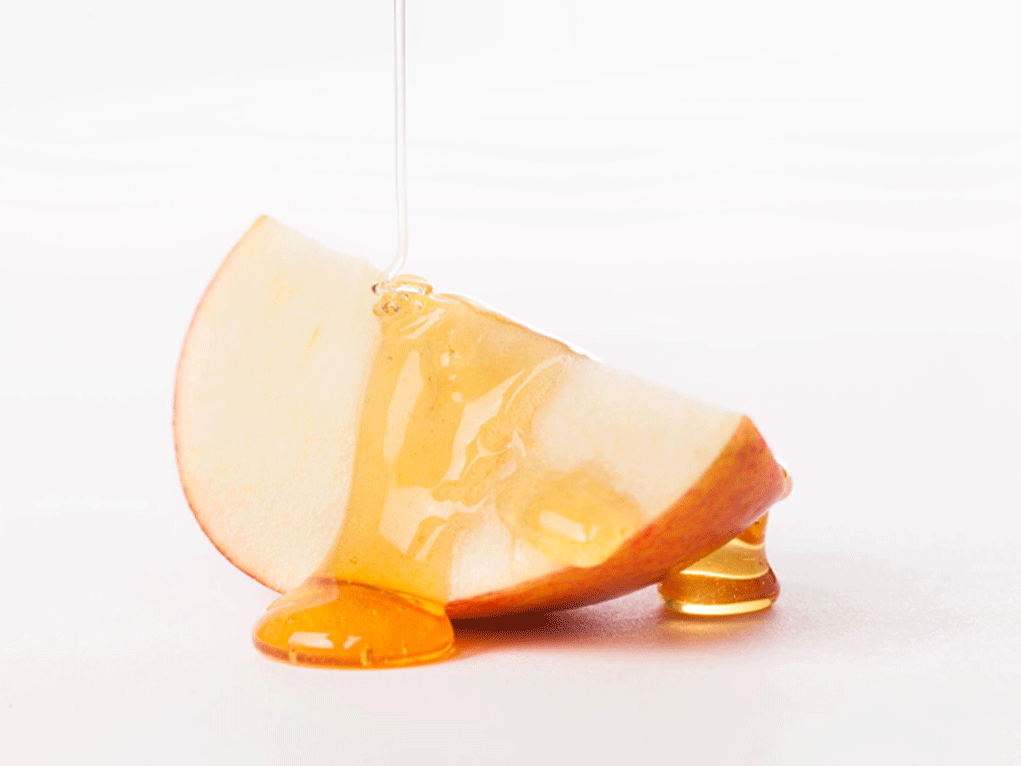
However, Rabbi Twersky explained to me that according to Chazal, the heter — allowance — for bee honey is that it doesn’t actually come from the body of the bee at all. It is extraneous to the bee, which just acts as a venue or conduit for the honey. We, too, say to Hashem, “We may have sinned, but it was not something that came from our essence. We picked it up in the street, our yeitzer hroa seduced us, the outside world pulled us down.” Yes, it sounds like rationalization and excuses. But if we truly mean that after we have sinned and we feel sullied and contaminated, if we instantly regretted what we did, even if we failed again, we know that our innermost self remains the pure and holy person Hashem created. We dip both the apple and the challah in bee honey and say to ourselves, “I can change and be sweet again because what I did was not generic to me. I will change completely this Rosh Hashanah.”
Over the years, I have reviewed this teaching numerous times, always adding layers from Chazal and the seforim hakedoshim. But the gist was always the same. If we maintain our self-esteem — Rabbi Twersky’s famous theme — we can pull ourselves out of anything. The Ramchal (Derech Hashem 4:4), in his brief synopsis about Rosh Hashanah, quotes the statement we often recite that Hashem is constantly renewing the universe. However, he adds, using the key word ach to differentiate Rosh Hashanah from all the other Yomim Tovim. In fact, this distinction makes clear why the Ramchal saved his discussion of Rosh Hashanah for last. All the other Yomim Tovim commemorate a certain event. Of course, as Rav Chaim Friedlander says (commentary Derech Lechaim to page 340), all the Yomim Tovim carry their unique quality annually, as we mentioned. But on Rosh Hashanah, we are judged just as Adam Harishon was judged. We are recreated on Rosh Hashanah and we, hopefully, emerge chastened but absolved and redeemed like Adam as well.
It is this re-creation that allows us to change more easily than any other time of the year. Rav Menachem Stein points out that when Sarah Imeinu was remembered and conceived on Rosh Hashanah, a full body change took place. Chazal tell us that even her wrinkles were smoothed out and she became completely young again. That is the kind of rejuvenation of which we will become capable on this amazing day. The same happened to Chanah, who soon gave birth to Shmuel Hanovi, who became, in a certain way, the equal of both Moshe Rabbeinu and Aharon Hakohein.
We can now understand Rabbi Twersky’s distinction between the emancipating power of Pesach and that of Rosh Hashanah. Of course, the “lights” and sparks of the exodus from Egypt return, allowing us to free ourselves annually from whatever binds us improperly. But since we are undergoing the same process as Adam did over five thousand years ago, we are not just accessing some event, but experiencing it anew and as freshly as the first time in Gan Eden.
Rav Stein relates the moving story of a woman who was a bas bayis of him and his rebbetzin, now married and childless for eight years. She called and asked if she could stay over with them for Rosh Hashanah with her husband. She explained that she had become accustomed to a yeshivishe davening and couldn’t concentrate properly in a regular shul atmosphere. Rav Stein welcomed her to the yeshiva and their home, where she spoke only of Torah and Yom Tov matters at each meal. During the laining about Sarah Imeinu, who had been an akarah and was miraculously given a child, the lady began to weep silently. When the haftorah was read aloud about how Chana, too, was remembered and granted a child, she began to wail loudly. There was not a dry eye in the house of 400 talmidei chachomim and yungeleit.
The baal koreh could not continue for seven long minutes, but all understood that something precious was happening before their eyes and ears. The following Tammuz, this lady celebrated the bris of her newborn son, whom she had helped to be born — kama yiborei’un — and created out of her pain, bitachon and genuine tefillos to Hashem. She became, like Sarah and Chana, a different person, and so, subject to new evaluation and even miracles. She is today the mother of 8, who were brought into the world by the power of Rosh Hashanah and the intense tefillos of a holy bas Yisrael.
That lady knew how to take advantage of Rosh Hashanah, but not through tricks or machinations. She didn’t hold back any feelings or emotions, but cried out to Hashem without shame or embarrassment.
Perhaps we don’t do exactly the same, but we have to be real. Rosh Hashanah is not the time to be polite or whisper. It is a time to call out to our Creator, “Please forgive me and Your world. We need that new world now as much as, if not more than, ever.”
Let us renew ourselves so that Hashem will be mechadeish His entire world as well. It is better than Pesach and the honey is sweeter than that of dates. Let’s taste it and beg Hashem to sweeten every aspect of our lives in 5787.