
Independent Orthodox Jewish weekly newspaper founded in 1987, providing news and Torah-based commentary.
Independent Orthodox Jewish weekly newspaper founded in 1987, providing news and Torah-based commentary.

 Yated Ne'eman3 days ago
There are moments in life when everything we have relied upon suddenly seems uncertain. The plans we carefully constructed no longer appear workable, the future we envisioned recedes beyond our reach, and the ground beneath our feet seems less secure than it did yesterday. We can find ourselves confronting circumstances we never anticipated, struggling with questions for which we have no answers, and wondering why the path ahead has become so difficult.
It is in such moments that we can begin to appreciate the greatness of Avrohom Avinu and the extraordinary significance of the first command Hashem gave him: “Lech lecha mei’artzecha umimoladetecha umibais avicha el ha’aretz asher areka,” to leave behind his land, birthplace, and father’s home, and head to an undisclosed place.
With these words, the Torah introduces us to the father of our nation, the man who would become the embodiment of emunah, whose life would illuminate the path for generations of his descendants.
We first learned the parsha when we were young, too young to appreciate the depth of its meaning. When we get older, we can better imagine what Hashem’s command meant to Avrohom and Sorah. A person builds a life in the place where he was born. He knows the people, understands the surroundings, and develops relationships and routines that provide him with a sense of belonging. Avrohom was asked to leave the world he knew and the foundation upon which he had built his identity. And for what? To go where? He didn’t know.
Hashem did not explain the plan to him. He didn’t provide Avrohom with an itinerary, describe the challenges he would encounter, or assure him that his journey would be entirely pleasant.
Avrohom was promised that if he left home, he would receive tremendous brocha, but he was not given an explanation of the road ahead or the destination.
But Avrohom understood that when Hashem calls upon a person to move forward, He does not always reveal where the road will lead. The obligation is to listen, to trust, and to take the next step.
Rashi, citing Chazal, explains that Hashem did not reveal the destination in order to make the journey more beloved to Avrohom and increase his reward for each step he took.
There are some people who enjoy traveling. I am not one of them. I tend to view a journey as a means to an end. I endure the discomfort of the journey because I want to reach a destination, and the sooner I get there, the better. I recently received an invitation to an out-of-town wedding, and it reminded me how much I dread plane travel, with the inevitable delays, the endless lines, the disappointments, and the hours strapped into a seat, waiting for the ordeal to end. If I want to reach a distant place, however, there is no choice but to endure the journey. The travel itself has little value. What matters is arriving.
The Torah teaches us that life does not work that way. In our journey through life, the road is not merely an obstacle standing between us and our destination. The journey itself is the destination. Every step taken in obedience to Hashem, every moment of trust when the outcome is uncertain, and every struggle through which we remain faithful rather than surrender to fear is itself an achievement. We may be focused on where we hope to arrive, but Hashem values the person we become along the way. We measure success by reaching our destination, but the Torah teaches us, through the story of Avrohom Avinu, that there is profound value in every step that brings us closer to Him.
We want to know where we are going. We want to understand what will happen next and how everything will work out. We seek reassurance that the difficulties we experience will lead to something better, that the sacrifices we make will produce the hoped-for results, and that the uncertainty we endure will ultimately be resolved.
But that’s not how life works.
We may spend years preparing for a particular future, only to discover that events have taken us somewhere else entirely. We may do everything we know to be right and still encounter disappointment. We may daven for a particular outcome, work hard to achieve it, and then find that things don’t work out as we expected.
Life is full of nisyonos. Sometimes, when we face a nisayon, we have no idea what to do or how to proceed. Sometimes, we know what to do, or think we do, but we are afraid to do it. But the toughest nisayon is when we find ourselves in a situation and try to figure out why Hashem put us in that situation.
We live in a world of nisyonos, tests that confront us throughout our lives and are woven into the fabric of existence. A nisayon can come in the form of an illness, a financial setback, a disappointment involving a child, a family difficulty, a failed undertaking, or a door that closes just when we thought it was about to open.
Sometimes a person is tested by a sudden crisis. At other times, the challenge is the slow accumulation of burdens that never seem to be lifted. There are tests of patience, tests of character, tests of faith, and tests of endurance. There are nisyonos that require courage, and there is the simple nisayon of getting out of bed each morning and doing what we know we must do.
Life is rarely simple, and oftentimes things happen that involve pain and hurt. Bitachon and emunah do not demand that we pretend suffering does not hurt. The Torah does not ask us to deny the reality of pain, suppress our tears, or greet every disappointment with a smile.
Emunah is not the absence of pain. It is the knowledge that even when we are in pain, we are not abandoned. It is the conviction that the world has a Master, that our lives are not governed by random forces, and that the circumstances we cannot control remain within the domain of the One who created and sustains us, and that everything He does is for a good purpose.
A nisayon places a demand upon us, and we retain the ability to decide how we respond. We can allow adversity to harden us or use it as an occasion to deepen our compassion. We can become embittered by disappointments, or we can learn from them to become more sensitive to the disappointments of others. We can allow uncertainty to distance us from Hashem, or we can use it as an opportunity to turn to Him with a sincerity we might never otherwise have discovered.
We don’t choose the nisayon. We don’t seek out challenges, but when we know they are presented by Hashem, we are better able to deal with them, confront them, and grow from them.
A person can endure hardship and emerge wounded, exhausted, and struggling. Emunah and bitachon guide us to continue seeking Hashem, to continue doing what is right, and to refuse to let circumstances rob us of the values by which we live.
There is another lesson in Avrohom’s journey that deserves our attention.
After Avrohom obeyed Hashem and arrived in Eretz Canaan, the Torah relates that a famine struck the land. Avrohom was forced to go down to Mitzrayim.
Consider the apparent contradiction. Hashem had told Avrohom to leave his homeland and travel to the land He would show him. Avrohom followed Hashem’s command, but upon reaching the destination, instead of finding the promised abundance, he encountered a famine so severe that he could not remain in the land.
The famine was a nisayon to see if Avrohom would question Hashem’s promise.
What happens when we do what is right and things go wrong? What happens when we make the responsible choice, follow the path we believe Hashem wants us to follow, and discover that the outcome is not what we expected?
We may have worked honestly, treated others fairly, and fulfilled our obligations, yet suffered financial losses. People devote themselves to raising their children with care and love, and then their children disappoint them, forcing them to face difficulties they never imagined. We may have invested our hearts in a worthy endeavor and watched it fail. We may have davened with all our strength for a certain outcome and then found ourselves confronting the reality we desperately sought to avoid.
We imagine that if we are on the right path, the road should be smooth. We expect that doing what is right will protect us from painful surprises and that fulfilling our responsibilities will produce the results we seek. The lives of our avos teach us otherwise.
Avrohom’s greatness lay in responding to each stage of his journey as it came, continuing to live with the knowledge that Hashem was directing his path even when the circumstances were difficult to understand.
This is a lesson we need when life does not conform to our expectations. A disappointment is not a verdict on our choices. A closed door does not mean that our efforts were wasted. And a difficult chapter does not tell us how the story will end.
We are responsible for making the best decisions we can following the Torah, making appropriate efforts, and doing our hishtadlus. We are not responsible for controlling the outcome. That distinction can spare us from a lifetime of unnecessary guilt and frustration.
We do our part. We strive to act properly. We daven for success. And when events unfold differently than we hoped, we continue forward.
As children we thought that every good story has a happy ending. The struggles are temporary, the obstacles are overcome, the right people find one another, and everyone eventually lives the life they dreamed of. We expect our own lives to follow a similar script. People imagine that they are entitled to the perfect job, the perfect family, financial security, a beautiful home, and a life in which everything falls neatly into place. When reality fails to deliver that picture, they feel cheated. They look at what they have and see what is missing, measure their lives against what they imagined they would be, and wonder why the happiness they expected remains so elusive.
Part of growing up is learning that life is not a fairy tale, and part of developing emunah is recognizing that we are not the authors of our own stories. Hashem determines the circumstances into which we are born, the blessings we receive, the challenges we confront, and the roads we travel. To the degree that we learn to live fully and faithfully within the reality Hashem has given us, we attain happiness.
The fairy-tale ending we seek is not necessarily the life in which every problem disappears and every wish is fulfilled. It is the life in which we learn to embrace our circumstances, find meaning in our struggles, appreciate our blessings, and recognize that even the challenges we would never have chosen can become part of our growth. When we stop demanding that life be perfect before we allow ourselves to be happy, we begin to discover a deeper kind of joy, one that does not depend upon everything going the way we imagined it would.
As long as we measure success by the standards peddled by a superficial culture—perfect children, effortless wealth, physical beauty, dazzling white teeth, a sprawling house on a generous lot, and an expensive car in the garage—we will always find someone who has more and something in our own lives that falls short. We will spend our days chasing an image of happiness that keeps receding just as we approach it.
We can spend a lifetime waiting for the perfect life, never realizing that the life Hashem gave us is the one in which we were meant to find our purpose, our growth, and our joy, and that this is the truly perfect life.
The perfect life portrayed in fairy tales does not exist. There is no life in which every dream comes true, every relationship unfolds as hoped, everything follows the path we envisioned, and every day brings only satisfaction and joy. That imaginary perfection distracts us from the perfection we are capable of achieving in the lives Hashem has actually given us.
For the truly perfect life is not one in which a person is spared nisyonos, but one in which he confronts them and triumphs. It is a life in which challenges, as unwelcome and painful as they may be, become opportunities for growth. It is a life in which disappointment deepens our understanding, adversity strengthens our emunah, and struggle brings out reserves of courage, patience, and compassion we might never otherwise have discovered. We may not choose the tests that confront us, and we need not pretend to welcome them. But we can choose to face them with emunah, to learn from them, and to refuse to let them defeat the person we are capable of becoming.
The perfect life is not the life in which nothing goes wrong. It is the life in which, when things go wrong, we grow stronger in emunah, greater in character, and closer to the person Hashem wants us to become.
This is the lesson we learn from Avrohom Avinu, whose life stands in stark contrast to the fairy tales that shape immature expectations of happiness. When Hashem told Avrohom, “Lech lecha,” He accompanied it with extraordinary promises. We could have imagined that Avrohom’s life from that point on would be an upward trajectory of luxurious glory. We would have thought that Avrohom would be spared the disappointments and hardships that ordinary people have to deal with.
Yet, almost immediately after arriving in Eretz Canaan, Avrohom encountered a famine and had to go down to Mitzrayim. He had no children and had to send away his relative who came with him. He had to fight a war with local kings. The journey that began with promises instead brought him deprivation. Though he did indeed live a blessed life, Avrohom’s life was marked by repeated nisyonos, each demanding new measures of emunah and bitachon.
But the first of our avos paved the way for us and showed us how to live, teaching us not to measure the truth of Hashem’s promises by the comfort of our present circumstances.
The fairy tale ends when the obstacles disappear and everyone lives happily ever after. The Torah’s version of a good life emerges through the obstacles themselves, when a person confronts a nisayon without surrendering or abandoning his emunah.
Avrohom did not become Avrohom Avinu because his life unfolded according to a comfortable script. He became the father of our nation because he remained loyal to Hashem’s truth through a series of challenges and difficulties.
We do not choose our nisyonos, but we do choose how we respond to them. Like Avrohom and Sorah, we can choose to live lives of purpose, goodness, and growth, even when circumstances are not what we had hoped or imagined. We learn to appreciate what we have rather than dwell on what we lack, to recognize the many brachos Hashem has bestowed upon us, and to take advantage of opportunities to deepen our emunah, strengthen our character, and become better people.
As bnei and bnos Torah, our mission is to live as Avrohom and Sorah did, bringing kedusha and goodness into the world and striving to become worthy of the continued brachos and protection that Hashem bestows upon us as we continue the chain of the mesorah in our families, preparing the world for Moshiach Tzidkeinu.
 Yated Ne'eman3 days ago
I must make a confession. Despite having grown up with the knowledge of Chazal’s words that teach us “Eisov soneh l’Yaakov,” I looked at it through the eyes of emunah. To my mind, the thought was, “If Chazal said it, it must be true…despite the fact that I didn’t see it that way.”
Living in America with minimal antisemitism, we didn’t see the openly ugly hatred, contempt, and cruelty of Eisov in the way that our parents and grandparents had experienced it in Europe. We needed emunah to believe this Chazal, because our yediah seemed to indicate that this was not the case.
Today, that has changed. To think that America may very soon elect a fifth-column senator who represents the Muslim Brotherhood more than he represents Michigan is a chilling thought. More chilling is the fact that so many Americans hate the Jews so much that their Jew-hatred has conversely made them fans of anyone who also hates the Jews. Thus, if Abdul El-Sayed hates the Jews, the fact that he supports a terrorist organization that killed more than three thousand Americans on 9/11 and the fact that he wants to undermine America doesn’t matter.
The same goes for the mayor of New York. It is just amazing to see how his overt antisemitism doesn’t matter to Americans anymore. Not only doesn’t it matter, but for many, it is an endearing factor about him. It makes him more likeable.
No, today in America, you don’t need emunah to see that “Eisov soneh l’Yaakov.” All you have to do is open your eyes. It is everywhere.
Indeed, it was just a wake-up call for me to start working on emunah. Emunah in the words of Chazal and emunah in Hashem, even when what we see appears to be the opposite of what our emunah is telling us. Yes, just a few years ago, you needed emunah to believe that “Eisov soneh l’Yaakov.” Today, anyone with eyes and ears realizes that.
Learning Emunah from Avrohom Avinu
Let’s look at Avrohom Avinu, the father of maaminim and the father of emunah.
Now, we all know why, in this week’s parsha, Avrohom was traveling. He was traveling because Hashem had commanded him, “Lech lecha—Leave your home,” and Avrohom Avinu, without asking any questions, completely uprooted himself, leaving behind his entire life, his birthplace, and everything familiar, and left…for an unknown destination.
Avrohom Avinu left everything familiar and finally arrived in Eretz Yisroel. You would think, “Wow! He passed the test. He went to an unknown destination. Hashem will probably shower him with brocha, with everything he needs. He passed the test!”
But no. That is not what happened.
What did happen? What did Hashem do? He brought about a terrible famine. Avrohom Avinu had nothing to eat. He was starving, poor, and destitute.
Had it been us, what might we have done? We might have thought, “Hashem, I did so much for You. I left everything behind without asking any questions, and now I can’t even find a crust of bread to eat?! I don’t even have a penny in my pocket?!”
Not Avrohom Avinu.
Avrohom Avinu didn’t ask any questions.
He saw that there was no food, so he picked up again and went down to Mitzrayim, where his wife Sarah was kidnapped by the evil Paroh.
So many tzaros!
Only after Hashem performed a great neis by sending a plague upon Paroh and his household was Sarah Imeinu freed. Not only was she freed, but Paroh gave Avrohom a lot of money for his trouble as well.
What did Avrohom Avinu do after so much suffering? He packed up and headed back to Eretz Yisroel. What does he do?
The posuk tells us, “Vayeilech lemasaav—He went on his journey.” Rashi teaches us that this means that when he returned from Mitzrayim to Canaan, he stayed overnight in the lodgings where he had stayed on his previous trips to pay his debts.
A Yid Never Loses by Listening to Hashem
When the Gerer Rebbe, the Pnei Menachem, learned this Rashi as a child, he asked his father, the Imrei Emes, an amazingly insightful question. Avrohom Avinu had no idea that he would get rich in Mitzrayim and thus have money to repay his debts later. How, then, could he put himself in a position where he could incur debt and leave his place of lodging before paying? A person is not supposed to borrow money without knowing how he is going to pay it back.
The Imrei Emes answered that Avrohom Avinu was the first person to bring the idea and ideal of emunah in Hashem into this world. Avrohom Avinu had reached such an exalted level of emunah that he believed with the utmost truth and simplicity that “He who gives life gives substance too.” Not only did he believe, but he also actually internalized and knew that Hashem would give him the wherewithal to pay it back.
Of course, we, who are not on the level of Avrohom Avinu, cannot borrow money without knowing how we are going to pay it back, but Avrohom Avinu, the father of the concept of emunah, was able to.
This offers us a tremendous lesson in emunah. When we follow Hashem’s commands, we must realize with ironclad emunah that Hashem will help us serve Him. Yes, Avrohom Avinu left his home without questioning and then, after such a sacrifice, instead of being rewarded, he was faced with the tremendous nisayon of famine. Nevertheless, Avrohom Avinu never asked questions. He had such complete and pure emunah that a Yid never loses by following Hashem’s commandments that he was willing to borrow money based on that knowledge.
So too, we must always have emunah that when we do the right thing, Hashem will help us out in the end. There are times when we may not see it right away, but, ultimately, we will see how Hashem never remains in debt to anyone who fulfills His desire.
A Bleak Situation, A Reason for…Emunah
When we look at the world today, the situation is very bleak. Whether it is the contentious relationship that the Torah community in Eretz Yisroel has with their secular neighbors, who don’t understand what Torah is and what limud haTorah does for the entirety of the Jewish people, or the difficult situation that Yidden in the Diaspora find themselves in, where hatred of Jews just lehseim hatred is not just tolerated but is almost seen as a political advantage, wherever we look, the situation is bleak and is cause for concern.
That said, we shouldn’t be surprised. The halacha is that Eisov (and his father-in-law, Yishmoel) hates Yaakov. They always will.
Just as those words of Chazal are true, so too are the words of Chazal that teach us that we are Hashem’s beloved firstborn, “beni bechori Yisroel.”
Even as we become so disillusioned with America and it becomes unrecognizable in many ways, we must at the same time not despair. Not because the situation isn’t bleak. On the surface, it does appear to be very bleak, and yet…
Just as we now believe the words of “Eisov soneh l’Yaakov” and see how so many of those whom we thought to be our “friends” have shown their true colors, and we can see it with our eyes, so must we have emunah sheleimah in the words of the nevi’im that tell us that there will come a day when everyone will realize, “Hashem echad uShemo echad.”
When Rabi Akiva saw the foxes coming out of the place where the Kodesh Hakodoshim once was, he laughed. Let’s cultivate the emunah of Rabi Akiva and laugh too, because just as the words of the posuk that tell us that foxes will walk on the Har Habayis came true, so will the words of the posuk in Zechariah, “Old men and women shall yet sit in the streets of Yerushalayimm,” also come true. Bemeheirah beyomeinu.
 Yated Ne'eman3 days ago
I hope our dear readers will forgive me a personal moment in these pages. My rebbetzin and I have, boruch Hashem, just come from the chasunah of our granddaughter, Faigy, daughter of our children, Rav Shmuel and Esther Feitman, who married Yisroel Aryeh Levi, son of Rav Yehoshua and Chaya Bracha Levi in Lakewood. Faigy is named after my mother a”h, a survivor of Churban Europa, who was not zoche to see grandchildren during her lifetime, as was my father z”l, who suffered in the same way. My gratitude to Hashem is all the greater because of this great brocha to which my rebbetzin and I were zoche.
I mentioned this fact to someone who has already married off numerous grandchildren and was somewhat unimpressed with our milestone. This leads me to share a few thoughts and feelings upon the incredible gift of our noshim tzidkaniyos, our righteous wives, daughters and granddaughters in Klal Yisroel. I hope and am mispallel that this may inspire some people who take these gifts somewhat complacently when they are actually so amazing and miraculous.
I will begin with this week’s sedra, Parshas Lecha Lecha, which seems to be the source for this divine blessing. At the very beginning of the parsha, the Torah relates that Avrohom Avinu asked his wife, Sarah Imeinu, for a favor: “It occurred, as [Avrom] was about to enter Egypt, he said to his wife Sarai, ‘See now that you are a woman of beautiful appearance… When the Egyptians will see you, they will say, ‘This is his wife;’ then they will kill me, but you they will let live. Please say that ‘you are my sister, that it may go well with me for your sake,’ and that I may live because of you” (Bereishis 12:11-13). Rashi explains that Avrohom was seeking gifts from the Egyptians. Rav Yonasan David, rosh yeshiva of Yeshivas Pachad Yitzchok in Yerushalayim, asks a powerful question (Sefer Me’iras Einyaim, page 24). First, Avrohom asked for gifts and only later asked that they not murder him. It would certainly seem that, first of all, he should ask that his life be spared and only then request presents.
Rav Yonasan derives from this sequencing some basic conclusions about Avrohom Avinu and the crucial role of women in our lives. He explains that, in truth, Avrohom, then still known as Avrom, did not worry about losing his life at all. He already had a promise at the beginning of the sedra from Hashem that “I will make of you a great nation” and much more. His emunah and bitachon were complete, and so he did not fear death. However, what he did want was that his salvation and hatzolah should come through Sorai, his wife. He did not simply request that “things go well,” but that it should happen “for your sake.” For this reason, he first mentioned the gifts and then life itself, because he already had a divine assurance of life and was actually requesting the seemingly lesser matanos. He added the part about life itself because he wanted his very existence to come from his wife as well.
Rav Yonasan goes on to explain the far-reaching intentions and hopes of Avrohom Avinu for his future progeny and nation. He wanted all of this to come about through the partnership of avos and imahos, particular himself and Sarah. This is what the posuk means when it says, “Look to Avrohom your forefather and to Sarah who bore you, for I have called them One” (Yeshayahu 51:2) Although the general translation of this posuk is “when he was yet one alone,” the posuk also declares that Avrohom and Sarah are one. The Maharal (Chiddushei Aggados to Bava Basra 58a) has already established this, saying that “in the building of the edifice of Knesses Yisroel, Avrohom and Sarah are one.” He even goes on to say that “Avrohom and Sarah are more unified that any other couple in the history of the world.”
Rav Yonasan finds the matrix of this eternal relationship between the avos and imahos even earlier in the Torah: “On the day that Hashem made man…He created them male and female. He blessed them and called their name Man on the day that they were created” (Bereishis 5:2). This statement is the source of the Gemara (Yevamos 63a) that “one who has no wife is not a man.” The Rama (Orach Chaim 6) teaches that when we recite in Asher Yotzar that Hashem does wonders (umafli laasos), it refers to the unification of two near-opposites, body and soul. This differentiates man from all the other creatures in the world. That bond was meant to last forever, but through Adam’s sin, body and soul are destined to part upon death. Man represents the primarily spiritual element and woman the primarily physical element, but together they form a unit wherein the soul elevates the body in both (see Maharal, Tiferes Yisroel 3, and Nesivos Olam, Nesiv HaTorah 15).
As Rav Yonasan concludes, when Avrohom Avinu was beginning his avodah as the father of Klal Yisroel, he wanted to include Sarah Imeinu from the very nascence. The joining of the zochor and the nekeivah mirrors the unifying of body and soul. The Ramban (beginning of Hilchos Ishus) makes clear that after Mattan Torah, marriage took on a new reality. From that moment, marriage in Klal Yisroel brought about kedusha, holiness, because it allowed and mandated the sanctification of both body and soul, spirituality with corporality. This, in turn, begins to restore to mankind the lost grandeur of Adam Harishon, as represented by Avrohom and Sarah and later the other avos and imahos. For this reason, they are all interred in the Me’oras Hamachpeilah, meaning Cave of the Pairs, where both their bodies and souls are present forever in the state of perfection and unity for which they were destined (see Maharal to Bava Basra 58a).
With this approach of Rav Yonasan David, we can now begin to understand the depth of Chazal’s statement (Bava Metziah 59a) that “a person should always be careful about the honor of his wife, because the blessing of the home comes about only because of her.” The Gemara derives this promise from the posuk quoted at the beginning of this essay. Avrohom wanted his blessings to come from Sarah. We now understand that to mean that through marriage, both husband and wife fulfill their eternal task of restoring the lost glory of both Adam and Chava. It is now only in the purview of Klal Yisroel, not the rest of the world, to effectuate this restoration, since we join in kiddushin, holiness, not just a partnership or physical phenomenon. Kiddushin is the way that we restore the full holiness to Hashem’s world, the way that He had originally planned. For that reason, each husband should cherish his wife for helping him to fulfill this cosmic mitzvah.
It is for this reason, amongst others, that I was so moved to hear at sheva brachos of the hopes and aspirations of my granddaughter and her husband to bring the Shechinah into their new home. When this is carried over to a third generation, with one’s children raising their own children to understand this purpose in marriage, it truly justifies all the efforts that generations have poured into their children, grandchildren and, G-d willing, great-grandchildren. At a time like this, I think of my parents who never saw their second generation and their parents who were murdered before they could even see one new generation. Yes, this is a nekamah against Hitler ym”sh, but it is also an even sweeter moment in time to know that traditions, teachings and mesirus nefesh have not been in vain. It is a brocha that I wish upon all our friends and brethren. But we must each try to remember that after the original creation, nothing comes from nothing. We must all continue to daven daily and almost constantly for all our offspring, so that we can restore the glory and together bring Moshiach Tzidkeinu bemeheirah beyomeinu. Amein.
 Yated Ne'eman3 days ago
During the final days of this election, the words “conservative” and “liberal” are being bandied about, and some people even toss around “orthodox” and “unorthodox” to describe methods and behavior.
In the world of politics, most of the Orthodox are conservatives, and most of the Conservative Jews I know are liberals. In the world of theology, of course, the word Conservative means something entirely different than in the world of politics. Actually, the theological Conservative movement was originally founded to fight Reform and “conserve” Judaism, but as we sadly learned, you can’t stop a sheker with another falsehood or half-truth.
The concept of the word Orthodox was always interesting. Rav Mordechai Gifter used to say, “I am not an Orthodox Jew. I am a Torah Jew!” But I am not sure if that ever caught on in the world of pulpit rabbis and synagogue creation. In any event, back in the day, Orthodoxy was struggling, and sometimes you had to be unorthodox in order to remain orthodox, and the onlooker would call you very conservative for it. I hope I haven’t confused you. I have certainly confused myself.
I knew a ben Torah whose English vocabulary was not his strong suit, though his hashkafah was as steadfast as they come. Steeped in Torah, he needed someone to help him buy a suit for his wedding, and that someone was me. This was long before there were frum-owned clothing stores on every corner of every Jewish neighborhood, when we would shlep into the garment district in Manhattan and buy direct from the manufacturer. I took him to a man who lived near us on Long Island, and I explained that the chosson needed a few suits, but they had to be conservative.
The bochur was flabbergasted. “Chas veshalom!” he blurted. “They must be Orthodox!”
I find myself thinking about those struggles, even those I recall from my youth, from Parshas Noach through the parshiyos of Avrohom Avinu. I find myself retelling the stories of kiruv, of the battles fought with chochmah and steadfastness in neighborhoods across the tri-state area. Many of those neighborhoods once had thriving Conservative synagogues alongside fledgling Orthodox ones. One by one, the Conservative synagogues now stand empty and are sold to yeshivos and botei knesses.
Many towns had their Noachs, men who saved themselves and their families, and some towns had their Avrohoms, men who transformed the lives of multitudes. Noach and Avrohom are not only two figures in the Torah. They are two types, each of whom makes his mark in a different way.
I thought about this after a long call from my younger brother, Rav Zvi, who was recently driving from Toronto to Chicago and realized that he needed a minyan for Mincha. The closest shul was in Hamilton, Ontario, and he thought that there would perhaps be nine men and a Sefer Torah. When he walked into Adas Israel, he was amazed to find some fifty people davening Mincha. A Mincha minyan in a small Canadian city an hour from Toronto was something he did not really anticipate, and as a native of the once-fledgling community of Woodmere, he asked how it came to be. He learned about the rov, Rav Mordechai Green, who arrived in the 1950s, an era when everyone in the small towns of America and Canada was sure that Orthodoxy was going the way of the dinosaur. Rav Green wrote down his story in a book, Living with Miracles, and my brother pushed me to get it and read it. I was amazed at the steadfastness and confidence of the rov, and I’d like to share a bit of it with you.
When Rav Green went to Hamilton to give a probeh on Shabbos, he gave drashos built on the Rambam that were filled with too much pilpul. By the end of Shabbos, he realized that he was way over their heads. He had given two pilpulim, he didn’t think he was getting the job, and so he came to the Sunday morning breakfast interview with the baalei batim feeling relaxed. Nothing to lose is a wonderful state for a candidate.
Then one of the younger men, Mr. Abe Hotz, stood up. “We need more than a rabbi,” he said. “We need somebody who will get the women down from the balcony into the main sanctuary. If we want to attract people, we can’t have a mechitzah.”
Rav Green was not shocked. Traditional Orthodoxy was under siege across North America. Shuls were leaving downtown for impressive suburban buildings with no mechitzah, and rabbanim had trouble finding Orthodox pulpits at all. He had heard this speech before. But he was relaxed, and so he smiled and asked Mr. Hotz what business he was in.
“I sell scrap metal.”
“If you don’t believe in your product,” said Rav Green, “you can’t sell it. Do you believe in your product?”
“Of course!”
“Do you want to be a winner or a loser?”
“A winner.”
“Winners believe in their product. We’re Orthodox. We’ll build a shul with a mechitzah, and we’ll be the biggest shul in this city.”
Mr. Hotz broke into a grin. “I like the way this man talks. That’s my man!” And that was that. Rav Green had the job.
Now, Mr. Hotz did not want to hear the philosophy of Orthodoxy, and Rav Green knew it. He did not give him a third pilpul. He spoke to him as one salesman to another. “I spoke his language,” he wrote. “We were both in sales, and we both understood that if you don’t believe in your product, you can’t sell it.”
The mechitzah stayed. The Rambam stayed. The rov did not sell Mr. Hotz a discounted version of Torah. He sold him the full version in a vocabulary Mr. Hotz could hold in his hands. He changed the language, not the product, and that is precisely why a rov sometimes has to be a salesman. Somehow, the confidence and clarity were exuded, and everyone was on board.
Well, not everyone. The people of Hamilton were not all Mr. Hotz. In those early years, Rav Green writes how he constantly met people who tried to talk him out of an Orthodox shul. One was a real philanthropist, a man who supported a wide array of Jewish causes in the city. He told the rov that he was going to do him a favor and not give him a penny. If he somehow managed the down payment on a building, he’d never be able to carry it and he’d be stuck. “Let me save you the effort,” he said. “I’m not supporting you now, and so you won’t need to come to me to beg me to bail you out.”
Rav Green answered him in kind. “I’ll make you a deal,” he said. “We will raise our own money, and we will build our own building. And this will be the only institution in town that does not bear your name.”
And so it was.
I think about Noach and Avrohom. Noach built the teivah with total steadfastness and saved his family. Avrohom opened a tent on the road, fed travelers, and only when they had eaten did he tell them Whom to thank.
I don’t know if they had different convictions, but they certainly had different deliveries. Maybe when Avrohom pitched his tent, he included with it a different pitch.
Just Saying
 Yated Ne'eman3 days ago
As speculation intensifies over last week’s surprise pre-dawn raid on the home of far-left Minnesota Democrat Rep. Ilhan Omar, news sources point to a long-running federal probe into alleged immigration fraud by the congresswoman.
The investigation is said to be nearing a dramatic turning point.
“The most likely scenario is Omar and many others will soon receive a surprise in the form of federal indictments,” predicted a Fox News op-ed by attorney and political commentator Mike Davis.
Omar, D-Minn., is reportedly under federal investigation over allegations that she lied about her birth year on immigration documents in order to obtain U.S. citizenship.
The controversy intensified after her staff quietly changed the birth year listed in her official biography in 2019—a change that drew federal scrutiny and has become pivotal to the investigation.
Majority Whip Tom Emmer, R-Minn., told Fox News Digital, “there have been rumors for years” about Omar and, if proven true, if it’s determined that she lied to gain citizenship, she should face consequences.”
As The Washington Post recently reported, “The Library told The Washington Post that Omar’s staff had sought that change [altering the birth year from 1982 to 1981], because it was in the process of correcting Omar’s birth year in various public sources.”
If the earlier birth year of 1982 is correct, she would have been 18 or 19 at the time her family arrived in the United States in 1995, as asylum-seeking refugees. At that age, Omar would no longer be eligible to obtain citizenship through her father, Nur Mohamed. She would have needed to apply for citizenship and meet its requirements on her own.
As records indicate she never did so, Omar may turn out to be a non-citizen, ineligible to serve in Congress. If found guilty of deliberately misrepresenting her age, she faces not only removal from office but denaturalization–being stripped of her citizenship.
“In addition to the DOJ and DHS investigations, the U.S. House of Representatives must investigate this immediately. If Omar isn’t a U.S. citizen, the House must expel her,” the op-ed asserted.
“Federal law provides a process for denaturalizing those who engaged in fraud to procure their citizenship,” the writer, an attorney, pointed out. “No statute of limitations stops the government from pursuing denaturalization in a civil process.”
“Just ask the former Nazis, who came to the United States claiming to be ‘refugees,’ he added. “Decades later, the government sought and won their denaturalizations –they were all stripped of citizenship—because they had lied on their paperwork.”
Judge Who Signed Search Warrant Found Probable Cause
Rep. Emmer argued the raid was not political, as Omar’s allies allege. He said a judicially authorized search warrant [signed by Judge Matthew Sharbaugh, a Democrat with leftist leanings,] meant there was a reasonable basis to believe the allegations could be true.
“That judge had to determine that there was probable cause that a federal crime has been committed. And I’ll tell you that, because it concerned Ilhan Omar, the evidence for a raid was going to be scrutinized to the very last detail,” Emmer said.
“Judge Sharbaugh’s signature on that warrant shows beyond any reasonable doubt that this matter is serious and based on evidence. This is no political hit job,” the congressman said. “Maybe after all these years, someone is finally going to hold Ilhan Omar accountable.”
In an interview with Fox News, Homan said investigators told him they have been following “strong evidence” in the wake of multiple court-authorized search warrants for Omar’s D.C. home.
During the raid, federal agents seized Omar’s cellphone, notebooks, personal computers, passport, family records, documents and photos. Authorities had previously issued more than 15 grand jury subpoenas to her relatives, in some of whose homes similar raids were being carried out.
Federal agents were glimpsed searching through the dumpster outside Omar’s residence, news sources said, ostensibly looking for DNA evidence that are thought to be critical to the investigation.
Federal authorities are reportedly also targeting long-running allegations that Omar in 2009 pretended to marry her brother, Ahmed Nur Said, to help him gain entry to the United States, followed by his obtaining citizenship.
The DNA that agents gathered from “dumpster-diving” will be used to determine if a brother-sister DNA match exists between Ilhan Omar and the alleged brother, informed sources say.
Such a marriage-conspiracy would be blatant immigration fraud, Rep. Mullin noted, adding that if the charges are substantiated, Omar could be prosecuted for “family immigration fraud” under federal racketeering laws.
The Minnesota congresswoman, who was present at the time of the raid and hasn’t yet been charged with a crime, has denied all the allegations. She slammed the investigation as “nothing more than President Trump’s attempt to target political enemies and weaponize law enforcement.”
“The difference between the president and I is that I was raised to be a decent human being and to have compassion and he lacks both of those things,” Omar sniffed self-righteously in a self-posted video.
Homeland Security Secretary Markwayne Mullin rejected the weaponization narrative, telling a Fox News host, “We wouldn’t move forward, and President Trump didn’t want to move forward either, unless we knew that it couldn’t be politically driven. This was about enforcing our nation’s laws, and it’s a strong case.”
He presented a hypothetical scenario in which a person filled out their paperwork unlawfully and allowed others to enter the country under those falsified documents. “Then that can be considered a RICO [Rackateer and Corrupt Organizations] case, right?” he said. “Because there was conspiracy to deceive the American government.”
Dems Denounce Investigation
House Minority Leader Hakeem Jeffries, D-NY, and other Democrats have denounced the probe as “political persecution” of one of President Trump’s harshest critics weeks before a critical election.
[Ironically, back in June, 2023, when discussing special counsel Jack Smith’s indictment of President Trump for Mar-a-Lago “offenses,” the Jan. 6 Capitol Hill “insurrection,” and other alleged “crimes,’ Jeffries demonstrated a higher tolerance for “political persecution.”
“No one is above the law – including Donald Trump,” he intoned. “The indictment against Trump must now play out through the legal process, without any outside political or ideological interference.”]
New York Mayor Zohran Mamdani, defended Omar and questioned the subpoenas and raids. He wrote on social media that “the Federal government turned the full force of the DHS against a sitting member of Congress for the offense of disagreeing with the White House. The promise of citizenship should not be contingent on someone agreeing with the federal government.”
Republicans such as Rep. Randy Fine, a Republican and longtime Omar critic, hailed the investigation.
“Ilhan Omar hates America but loves nothing more than to take from it. Somali fraud isn’t anything new at this point, but doing it from the halls of Congress would take it to a whole different level,” Fine said. “We will get to the bottom of this.”
Fine was using the term “Somali fraud” to refer to separate federal investigations into documented schemes that siphoned billions of dollars in Covid-19 relief funds, by business members of the Somali community in Omar’s Minnesota Congressional District.
Using fake meal counts, doctored attendance records, and fabricated invoices, the fraud ring claimed to be serving thousands of meals a day, seven days a week, to underprivileged children.
In 2021, Feeding Our Future alone received about $250 million in funding. In reality, the embezzlers used the money to fund lavish lifestyles, purchase luxury vehicles, and buy real estate in the United States, Turkey, and Kenya, reported the NY Post.
Several individuals involved in the Feeding Our Future scheme made campaign donations to, or appeared publicly with Ilhan Omar. In a mark of reciprocity, Omar’s aide, Ali Isse, advocated for Feeding Our Future, and Omar herself appeared in a video promoting the organization, the Post reported.
Ninety-five defendants charged with complicity in the fraud have already been convicted, with the majority serving prison time.
The Omar investigation may also be examining whether the congresswoman herself had any connection to the alleged financial fraud schemes. Its coordination through the Minneapolis office of Homeland Security Investigations could point to a broader inquiry into the sprawling fraud cases that have rocked the state.
Left-wing Islamic Radical
Omar was born in Mogadishu, Somalia. While her family reported fleeing conflict in Somalia, public records and biographical accounts indicate her father served as a colonel in the Somali National Army under President Siad Barre, whose regime was implicated in documented human rights atrocities, including the Isaaq genocide.
If Mohamed failed to disclose his military service under the Barre regime on his asylum filings, both he and his daughter may have entered the country under fraudulent pretenses.
In a bizarre development, it turns out the Department of Homeland Security has no record of Omar’s father’s naturalization paperwork, prompting the question of whether he was ever naturalized at all.
In response to inquiries from A.J. Kern, a former Minnesota congressional candidate who ran against Omar, the DHS issued a certificate of “nonexistence,” essentially stating that they could not find any record of Omar’s father’s immigration history.
Analysts following this part of the investigative trail have pointed out a possible rationale for the missing paperwork. They note that the United States strongly backed Somalia’s Barre regime during the 1950s and 1960s. That military support —a Cold War strategy— began under President Carter, continued under Reagan, and then gradually collapsed under congressional pressure, after reports of regime’s horrific record of war crimes became public.
As U.S. support wound down, the intelligence community may have whisked its Somali allies and assets —even war criminals— back to the United States under various immigration and refugee programs in return for their “help.” Such expedient arrangements would not be without historical precedent: the U.S. government’s postwar recruitment of former Nazi officials and scientists, many implicated in war crimes, is well documented.
Was Omar’s father brought into the United States under some kind of arrangement that allowed him and his family to seek asylum in exchange for services he had provided?
And if so, is it possible that reports of his impending naturalization triggered an outcry after critics learned that Nur Mohamed had served as a high-ranking officer in Somalia’s brutal Barre regime—prompting authorities to abandon the plan?
The questions far exceed the answers at this point. But as the investigation plays out, it’s clear the outcome could be disastrous for Omar. If investigators establish that her father was never naturalized and she obtained her citizenship fraudulently, her reputation, career, finances and future would likely all go up in smoke.
Meteoric Rise in Congress
Despite the above-mentioned irregularities, Omar claims to have become a citizen in 2000, and was duly elected to Congress representing the 5th District in Minnesota, a Democratic stronghold, in November 2018.
Two short years later, she advanced to the U.S. Congress, joining a far-left extremist clique that includes Reps. Rashida Tlaib, D-Mich., and Alexandria Ocasio-Cortez, D-NY, dubbed ‘the Squad.”
The group’s virulently anti-Trump rhetoric and anti-American ranting have been eagerly amplified by the media. Its far-left agenda includes demanding an end to U.S. military support for Israel, accusing Israel of genocide, abolishing ICE and cash bail, redistributing the nation’s wealth in the name of “equity,” and removing almost all barriers to citizenship for illegal immigrants.
In 2019, national Democrat leaders installed the inexperienced, first-term congresswoman to one of the House’s most powerful committees— Foreign Affairs. She was made vice chair of the Africa subcommittee, and by 2021 chaired the Foreign Affairs subcommittee on International Development.
Republicans, with a full chamber vote, stripped her from Foreign Affairs in 2023.
Omar’s early or forced departure from Congress would not change the immediate balance of power in Congress, as her seat would undoubtedly be filled by another left-wing Democrat. However, her removal would bring other benefits, experts say. It would weaken the Squad’s influence, observers say. It would diminish the progressive bloc’s voice in Congress, and potentially disrupt its ability to advance its far-left agenda.
The Disappearing Millions
The Justice Department has confirmed it is also investigating the striking irregularities in Omar’s personal finances.
In her financial disclosures to Congress, Omar claimed that a $30 million filing discrepancy was just a “paperwork error.”
Omar’s required Congressional financial disclosure initially listed interests in two businesses co-owned with her husband at a combined $6 million–to-$30 million, but then, an April 2026 amendment by Omar’s accountant listed those interests as having no net value at all.
It reduced the couple’s net worth from up to $30 million down to between $18,004 and $95,000.
Omar maintained the discrepancy was simply “a mistake” and blamed her husband, Tim Mynett, for giving their accountant ‘incomplete’ figures.
Last month, the Office of Congressional Conduct voted 5–1 to recommend dismissal of allegations of financial impropriety, finding “no substantial reason” to believe Omar had been guilty of foul play.
But U.S. Attorney Jeanine Pirro dismissed this outcome.
“It doesn’t matter what the House does,” she told a Fox News host, explaining that the Justice Department has opened its own investigation, which is completely separate from the House Watchdog Committee.
Pirro revealed that her office was examining Omar’s financial disclosures, which previously showed, as mentioned above, that the reported value of businesses tied to her husband, Tim Mynett, had surged from as much as $51,000 in 2023 to as much as $30 million in 2024.
Fueling the Justice Department’s investigation, according to James Comer R-Ky., House Oversight Committee chairman, were revelations about the couple’s winery.
“Not only was there a huge discrepancy in the financial disclosure form, there was the winery that was the big base of her $25 million listing on Ms. Omar’s financial disclosure form,” Comer said. “That winery has, according to the press, been shut down because of fraud. They were apparently selling investors barrels of wine to be aged, but there was nothing in the barrels.”
Comer also referred to Omar’s numerous connections to the Somali fraud network in Minnesota, including through earmarking taxpayer money for an alleged substance abuse clinic that was actually a fraud scam run out of a restaurant.
Omar’s sister, Sahra Noor, has also come under intense scrutiny after being linked in press reports to both the $250 million Feeding Our Future fraud scandal and an alleged USAID fraud scheme, Fox News host Jesse Watters noted.
According to Watters, text messages recovered from Noor’s phone provided federal agents with enough evidence that a judge was persuaded to authorize search warrants for Omar’s home.
“It is hard to get a judge to order a home raid,” notes attorney Mike Davis in a Fox News op-ed. “This is particularly true against a sitting Member of Congress, who enjoys Speech and Debate Clause immunity under the U.S. Constitution. And this happened three weeks before the midterm elections, by a DC Democrat judge against a leading Democrat politician,” the writer pointed out.
“The simplest explanation is this: the federal government has strong evidence of federal crimes–so strong that even a hardcore leftist judge could not overlook it. The evidence against Omar–and likely many others–must be overwhelming.”
***
‘I Can Live Wherever I Want’
So far Omar has been keeping up a defiant pose. Her campaign is fundraising off the federal raid of her home, calling on donors to “Stand with Ilhan Omar. Donald Trump and DHS have opened a baseless, partisan investigation into Ilhan Omar, and she needs us by her side as they escalate their attacks.”
In public statements, Omar says that she is “not worried” about being deported and does not “know why this is such a scary threat. I am grown, I can live wherever I want!”
“No, Ms. Omar — no, you cannot,” countered the Washington Times in an editorial. “If you and your family lied about your father’s asylum claims, your father’s naturalization and your own derived naturalization, then you are not a U.S. citizen. You may not live here legally, let alone represent Americans in Congress.
“The feds are closing in,” the editorial concludes. “If the allegations are true, Omar deserves a one-way ticket back to Mogadishu, Somalia.”
 Yated Ne'eman3 days ago
Election Takes Center Stage
Another week has gone by, and, as always, I have much to tell you about. This weekend will mark the yahrtzeit of two of the rabbonim who influenced our community heavily over the past generation: Rav Nosson Tzvi Finkel and Rav Chaim Walkin. On the same day, the 11th of Cheshvan, masses of people will visit Kever Rochel in honor of the yahrtzeit of Rochel Imeinu. I imagine that many people will take advantage of the opportunity this year to daven for the lomdei Torah of this country, who are subject to persecution, and will daven for the religious parties’ success in the election as well. Those are not two separate subjects; in fact, both causes and inextricably intertwined. If the chareidi parties emerge from the election with little political clout, it might jeopardize the future well-being of the country’s bnei Torah. On the flip side, if they increase their political strength, it will add to their influence and will be a statement to the rest of the country as well.
Much has happened over the past couple of weeks. For one thing, more terror plots have come to light. Last weekend, the media reported that IDF soldiers in the Menashe Brigade carried out two arrests, based on intelligence from the Shin Bet, in the villages of Qabatiya and Arraba, taking into custody four terrorists from Islamic Jihad who were plotting to carry out a terror attack in the northern Shomron. In an additional arrest in Beit Rima in the Binyomin region, soldiers from the Duvdevan unit detained a suspect who had been trafficking in weapons. The terrorists were transferred to the security forces for additional questioning. In addition, an attempted terror attack in Yerushalayim was detected and thwarted in time.
We are witnessing Arab violence in Europe, and in France in particular. While this story doesn’t seem directly relevant to us, the truth is that it is very significant. For one thing, the hypocritical Europeans are constantly decrying Israel’s “apartheid” and “genocide” and have recently been harassing Israeli settlers, whom they describe as “terrorists.” The Israelis try to defend themselves by pointing to the Arabs’ barbarity, but those explanations fall on deaf ears. Well, now the Europeans have experienced that barbarity in their lands. It seems that one country after another has been overrun by Muslims, who are leaving mayhem and devastation in their wake. Netanyahu and President Trump have pointed out that they warned Macron this would happen… Many Jews from France have begun making preparations to move to Israel.
With all due respect to these important topics, however, the issue that has attracted the most attention lately is the upcoming election due to take place next Tuesday. In less than a week, ballots will be cast to determine who will hold power in the next Israeli government. All of us, of course, are davening for a favorable outcome. This election may be more critical than ever, since bnei yeshivos have been targeted for harassment over the past year. We cover recent events within the chareidi parties in a separate article, and will not go into excessive detail on the subject here, but I must write about the widespread hatred for Prime Minister Netanyahu.
Libels Against the Prime Minister
The closer we get to election day, the more all of Netanyahu’s haters crawl out of the woodwork. They all have stories to tell and accusations to make against the prime minister, in a bid to cast him in a negative light, and while their actions are blatantly biased and politicized, they do not seem to care that their agenda is transparent. They will balk at nothing, even the lowliest tactics imaginable, for the sole purpose of transferring more votes from the right to the left. It has become in vogue to accuse Netanyahu of dragging out the war in order to score points in the election. In fact, this is not a new phenomenon; many years ago, Menachem Begin was accused of attacking the nuclear reactor in Iraq in order to win an election. In any event, now that tensions are rising in the Middle East, many people in Israel are accusing Netanyahu of pushing for war in the hope that it will boost his chance in the election, or even that it will cause the election to be postponed.
One must wonder what these critics expect of the prime minister. If he is weighing the possibility of launching airstrikes on Iran, do they want him to hold back because of the election? If a military offensive is necessary, how can it be postponed? In my opinion, the attacks on Netanyahu from the media and from other politicians amount to poisoning the well. Lately, an endless stream of fabrications has been concocted about Netanyahu and his aides. Even Ronen Bar, the failed former head of the Shin Bet who was in charge of the agency at the time of the October 7 massacre, filed a lawsuit for libel against Netanyahu last week for the prime minister’s claim that he had not been warned in advance about the massacre. Bar claimed that he has evidence that he warned Netanyahu before the invasion and that the prime minister was slandering him by insisting that he had received no such warning; however, the lawsuit has backfired on Bar. After all, it gives rise to an obvious question: If, as he claims, Ronen Bar had clear knowledge of the impending calamity in advance, then why did he merely warn Netanyahu—according to his claims, which Netanyahu denies—instead of taking action to prevent it? If his own story is true, then it points to a serious failing on his own part.
Meanwhile, another accusation turned out to be a libel. Last month, all the media in Israel reported a hair-raising story: They claimed that the head of Egyptian intelligence had visited Israel on September 26, 2023, for a few hours to warn Netanyahu about the impending Hamas invasion. According to all the reports, the Egyptian intelligence chief’s plane landed in Ben Gurion Airport and stayed there for slightly more than two hours while the Egyptian official met with Netanyahu, and then he returned to Egypt. This story, if it were true, would have indicated an unforgivable failure on Netanyahu’s part; if he was warned about Hamas’s plans and took no action, it would have been a horrific lapse. Parenthetically, all the media outlets in Israel based their reports on a story that first appeared in the Atlantic. This was added to a report in the Wall Street Journal, which claimed that the head of Egyptian intelligence had called Netanyahu at the beginning of October 2023 to warn him about an impending attack from the Gaza Strip. Thus, according to these stories, Netanyahu had actually received two warnings from Egypt before the disaster took place. Of course, Netanyahu went on the defensive upon hearing these allegations, but he didn’t know how to begin explaining himself. In a televised interview, Netanyahu said, “I never met with anyone, and I knew nothing. If the head of Egyptian intelligence visited Israel, then let them reveal whom he actually met.” The media’s claims, in any event, made Netanyahu seem guilty of criminal negligence on a horrific scale.
This week, however, the television channel Kan News issued a brief update on the story: The Egyptian plane that landed in Israel a few days before October 7 wasn’t carrying the head of Egyptian intelligence, after all. Instead, there were two Egyptian businessmen aboard, who landed briefly to refuel their plane and then continued their flight. That is how the libelous accusations against the prime minister came to an end: without any apology or explanation, and without anyone taking responsibility or investigating how the media could report such an egregiously false and devastating story. A major brouhaha raised by masses of journalists and politicians, some of them veterans in their respective fields, was exposed as a lowly blood libel, and no one felt the need to apologize.
And if we are speaking about Netanyahu, then we cannot fail to mention President Trump’s endorsement of the prime minister at the beginning of this week. While a similar endorsement didn’t benefit the candidate in Hungary, in this case Trump almost went so far as to stipulate that his continued support for Israel against Iran will be contingent on Netanyahu remaining in the office of prime minister. And that is quite significant.
Hoping to Silence the Enemies of Religion
To be honest, we are trembling with apprehension here in Israel. There is much at stake in this election, and there are many ways that it can end in disaster. What gives us strength is the knowledge that events in this world are not random, and that the world has a Master Who orchestrates all of its events, great or small. Nothing is left to chance, and no matter how bleak the situation seems, we must always keep in mind that everything that occurs is the work of Hashem.
Nevertheless, from a natural standpoint, the situation seems very bad. For one thing, there is much reason to be fearful that the left-wing bloc might win this election, and that would likely spell disaster. They may fight among themselves over everything, but there is one issue on which they are united: They have all pledged to continue persecuting the chareidim after the election and with even greater intensity. Considering that the lomdei Torah have suffered greatly this year, from arrests and legal harassment and from economic sanctions as well, I shudder to think about what might happen if the next prime minister is a person such as Bennett, Lapid, or Lieberman. Then again, experience has shown that these people will pay any price in the world to gain power; perhaps, then, there is reason to hope that they might soften their respective stances if they are elected. At the same time, even if Netanyahu wins the election, we have already seen that he isn’t prepared to make endless sacrifices for the chareidim. In fact, he has already hinted that he would prefer to form a coalition with Eizenkot rather than with the chareidim and the political right.
The bottom line is that we must daven with great fervor for the religious community’s well-being after the election.
In any event, I believe that this election will benefit us in one way: It will remove some very bad people from the political map. There is a Judge in this world, and those who sin will ultimately pay the price. I often think back to the days of the criminal investigation into Aryeh Deri, when Divine hashgocha was clearly at work. Deri’s opponents in the halls of government were certain that if they managed to jail him, the revolution that he had created would be terminated. But what happened instead? For one thing, Yeshivas Shaagas Aryeh was opened, where hundreds, then thousands, and then tens of thousands of people came to attend shiurim and shmuessen in an area adjacent to the prison in Ramle where Deri was being held, on the initiative of Rav Uri Zohar. The Prison Service, the police, and the government officials were shocked and intimidated. At the same time, many individuals in the police and Prison Service were sympathetic to Deri and the religious community. Those who were prepared to tear their hair out in frustration were the eirev rav and the minions of the yetzer hara, who dominated the halls of the judiciary at the time and still control it today.
But today, many years later, we can see what became of their schemes. Think about it: Where are former Justice Minister Dan Meridor and former State Prosecutor Dorit Beinish today? Where are the wicked investigator Meir Gilboa and onetime Minister of Police Roni Milo? Where is Elyakim Rubinstein, who held the office of attorney general at the time? And where are all the others who joined them in their tyrannical crusade? These people have faded from the public scene, but where is Aryeh Deri, the man they tried to wipe off the political map? The contrast is striking.
The same pattern is repeating itself in the political world today. For instance, Yuli Edelstein, who was considered a friend of the chareidi community in the past, is now notorious for obstructing every effort to pass a law providing draft exemptions for yeshiva students. It is difficult, or perhaps impossible, to explain what caused him to mount such fierce opposition to the draft law, but that is irrelevant. What matters is that he no longer holds a position of influence. And then there is Yesh Atid, the party that built its agenda on hatred for the chareidim and persecution for lomdei Torah. Where is that party today? Simply put, it is in a state of complete collapse. Many of the other Knesset members who persecuted the chareidim, such as Yoaz Hendel, Dan Illouz, Ofir Sofer, and Sharren Haskel, are fighting a desperate battle for their political survival today. And while a few of the religious community’s enemies in the Knesset managed to slither into Eizenkot’s party—such as Elazar Stern and Matan Kahana, two men who wear yarmulkes but are bitter enemies of the chareidim and even the religious right—they, too, will ultimately receive their just deserts. For we know that there is a Judge in this world, and judgment will ultimately take place. One by one, the malefactors in the government and suffering their respective downfalls.
The Need for Religious Representation
On the topic of the election, allow me to make a comment about one area where I have some understanding: the Knesset. As the election draws near, it is appropriate to use every tool at our disposal to advance the cause of the chareidi parties. We see the notices in the chareidi presses and on message boards on the street, all of which urge the average voter to make sure to show up at the polls on Election Day and to see to it that the religious parties succeed. The top minds in the religious world are working on these campaigns, but the message must also reach voters in the traditional community or those who are still undecided, and I am not quite certain that those people live in Givat Shaul or on Rechov Sorotzkin (or on Rechov Rashbam or Rechov Rabi Akiva in Bnei Brak). To reach them, the campaigns must expand even further. Within the two weeks prior to the election, however, there is still opportunity to target those voters: Every party is given air time on the radio and on television stations, and millions of Israeli Jews tune in to these programs. Let us hope that the focused, effective campaigns of the chareidi parties will operate successfully through those channels as well, and that their effects will be felt on Election Day. The programming began last Tuesday and will continue until the day before the election, and it is a golden opportunity for the parties to reach millions of non-chareidi voters. If the opportunity is used properly, it may be possible for the chareidim to win another mandate or two as a result of these efforts, especially for the Shas party.
Tragedies in Beitar and in the North
Two tragedies took place in Israel last week, each of which caused endless sorrow. Yes, every death of a child is a dreadful tragedy, whether it is a case of crib death (which also occurred this past week) or a child’s death in a traffic accident (which happened as well), but these two incidents were so unusual and aberrant that they were even more horrifying.
The first incident took place in Beitar Illit, where a young boy named Eliyohu Azriel was killed by an explosion near a burning recycling bin on Rechov HaRebbe MiNadvorna. The boy was critically injured by an object that flew out of the recycling bin and was evacuated to Hadassah Ein Kerem in Yerushalayim, where the doctors were forced to declare his death. At first, it was believed that the explosion was caused by a deodorant can in the bin, but it is now believed that a battery from an electric bicycle was in the bin and exploded when it was exposed to the extreme heat of the fire. A video of the explosion shows the moment when the boy was struck, but it also indicates the magnitude of the miracle that accompanied the tragedy. At the time of Eliyohu’s death, dozens of curious children had gathered around the recycling bin to watch the fire. Under other circumstances, chas v’shalom, the incident could easily have led to many more injuries. The video also shows another child lighting the fire in the bin prior to the explosion, in an act of mischief that led to a tragic outcome.
The second tragedy occurred in the north, where Elozor Yair Vilensky, a student in the yeshiva high school in Maalot, was killed and 24 students and teachers were wounded in an explosion. This incident took place on a school trip, when the students came across an unexploded warhead from a missile or something of the sort, which subsequently blew up. The IDF declared it a mass casualty event and sent helicopters to the scene, and the police opened an investigation. The images of dozens of wounded victims lying on the ground were too painful to see. The incident occurred at the Ramim Ridge, an area about 50 to 100 meters from the northern border. There is a manned security outpost not far from this area, which was staffed by combat engineers throughout the war and therefore became a target of choice for Hezbollah during the war. It is believed that the deadly explosive that caused the tragedy was a component of a Hezbollah missile or shell that was fired toward the area and did not explode at the time, and was hidden by the lush greenery and went undetected until it was found by the students. According to some accounts, one of the students picked up the explosive and placed it in his bag, and it exploded shortly thereafter.
Prime Minister Netanyahu reacted to the tragedy as soon as it was reported. An official statement from his office announced, “Prime Minister Netanyahu was briefed on the details of the incident in the north and spoke with Eli Bin, director of Magen Dovid Adom, and with Minister of Education Yoav Kisch, as well as his military secretary. The prime minister asked to make certain that the victims would be evacuated as quickly as possible to the hospitals, and he is continuing to engage in regular situation assessments.” Shortly thereafter, Netanyahu visited Rambam Hospital in Haifa and met with the victims of the blast. Five of the hospitalized victims are listed in serious condition! The education minister announced that all school trips in the area will be canceled for the time being.
Ambassador Huckabee: Trump Was Not Pressured to Attack Iran
Ambassador Mike Huckabee was recently interviewed by an Israeli newspaper. When he was asked about what America is prepared to do to defend Israel, his response surprised the interviewer (who is not known as a fan of the right or of Netanyahu). “When the United States acts against Iran, it is not defending Israel; it is defending its own interests,” Huckabee said. “Israel might be the first course for the Iranians, but we are the main course. When someone shouts ‘death to America’ for almost 50 years, it might be worthwhile to pay attention to what he is saying. We are not merely supporting Israel; we are its partners, and that is for our sake as well.”
He went even further when he was questioned about America’s air strikes on Iran. “I disagree with the notion that someone pressured [President Trump], hoodwinked him, or deceived him,” Huckabee said. “I was in the situation room in the White House when the decision was made about Operation Roaring Lion. Most of what happened in that room is classified and I cannot reveal it. Maybe I’ll write a book about it one day. I can tell you that the president did not act under pressure from Israel. Israel never pressured President Trump to intervene; he did it on his own initiative.”
Huckabee studiously avoided making any definitive statements about the future of the war against Iran. “I can’t give you a forecast about additional military operations,” he said. “That decision will be made by the president in Washington. What is clear to him is that Iran is weaker than it has been in nearly 50 years, both militarily and economically, and it is becoming even weaker as time goes on.”
The ambassador described the relationship between Netanyahu and Trump as “still very strong and solid.” He said that Netanyahu and Trump speak regularly and have a personal relationship that was developed over many years. He described relations between Washington and Yerushalayim as particularly close. “We are partners and work together incredibly well, much more than most people will ever know,” he said.
Huckabee was asked for his take on how the American midterm elections would affect relations between the two countries. “I’d like to believe that most Americans understand that Israeli is a valuable strategic partner—not just an ally but a true partner,” he said. To prove his contention, he pointed to the collaboration between America and Israel during Operation Roaring Lion, when he related that Admiral Cooper, the commander of CENTCOM, told him that there had never been such smooth collaboration with the American army before.
Huckabee also weighed in on the topic of Israeli settlers. He recently spoke out against the settlers after witnessing violence with his own eyes, and the interviewer apparently hoped to extract more condemnation from him. However, the result was exactly the opposite. Huckabee admitted that he was surprised to see the settlers entering the property of a Palestinian family in the presence of his bodyguards and the media. “It was disturbing. I was surprised by their brazen behavior,” he said. “People are entitled to defend their own property, but they have no right to trespass on someone else’s property and sometimes even terrorize or intimidate people simply through their presence there.” However, Huckabee said that 99.9 percent of settlers are “incredibly responsible.” He added, “People have built beautiful communities, hospitals, medical clinics, synagogues, and stores. Whether it is in Maale Adumim, Efrat, or any of the many other communities, these are simply wonderful places where people live and want to raise their families.” Huckabee denounced the international media for portraying everything that happens in Yehuda and Shomron as extreme settler violence. “That is not accurate, it is not fair, and it slanders the people who live there,” he said.
Education Ministry Called Out by the Court
I don’t know much about education or about budgets; therefore, one can certainly say that I don’t know much about education budgets. But if I am correctly understanding one particular news item, I can tell you that the Ministry of Education has finally been put in its place.
The news report states that the District Court in Yerushalayim, sitting as a court for administrative affairs, recently overturned a decision of the Ministry of Education to deduct 715,612 NIS from the budget of the Pri Chochmah seminary. The seminary is a special education high school in Yerushalayim for chareidi girls with emotional and behavioral difficulties. Judge Eli Abarbanel ruled that the ministry had made the decision without providing the required justification. The Education Ministry was also ordered to pay 7000 shekels in legal expenses to the nonprofit organization that operates the seminary. The affair began with two inspections conducted by the Licensing, Supervision, and Enforcement Administration of the Ministry of Education in December 2024 and March 2025. The inspectors reported extremely poor attendance at the school; in one class in the twelfth grade, there wasn’t a single student present, and the faculty told the inspectors that the girls came to school only in the afternoon. As a result, the ministry decided to deduct the funding allocated for 14 girls in the two twelfth-grade classes, claiming that the seminary had reported their enrollment improperly.
The organization that runs the seminary, represented by Advocate Yael Tishler, whose office specializes in education law, argued that the Ministry of Education had applied the normal standard to its evaluation of attendance and had failed to take into account that it was dealing with a school for special education. Tishler also argued that the seminary had notified the ministry’s supervisor of inspections in real time about every student who had dropped out, but that government protocol made it impossible to remove students from their enrollment records until alternative placements had been found for them. The lawyer also argued that one of the twelfth-grade classes operated in the afternoons in a personalized program designed to prevent attrition and that the ministry’s supervisor had approved the program’s schedule on a telephone call. She also noted that five other students were enrolled in the seminary without receiving funding from the government, and the retroactive budget cuts would jeopardize its continued existence. The Ministry of Education argued that its decision was professional and based on two inspections.
Until this point, the story is fairly routine. Education Ministry inspectors are notorious for being too quick to pull the trigger. They will hasten to freeze or revoke funding for schools, and any complaints or appeals are ignored. The schools are generally weak, exhausted, and in distress, and they give up. They do not have the strength to fight the ministry. But this time was different. As the news report continues, “The judge ultimately accepted the appeal and determined that the ministry had explained its decision only with a general justification that appears to say everything but actually says nothing.”
After the ruling, Tishler remarked, “In recent times, the Ministry of Education has been conducting inspections in schools categorized as recognized but unofficial, including inspections of student attendance, to ensure that the funding given to these schools is being used for the designated purpose. Very often, even when the organizations behind those schools present substantial arguments and compelling evidence of their claims, the ministry still decides to deduct significant sums from their funding, sometimes even millions of shekels. Its decisions suggest that the arguments of the organizations do not receive meaningful review, and hearings are conducted merely as a formality. The importance of this ruling lies in the statement that it makes: The Ministry of Education has a duty to examine the arguments and evidence presented by the organizations and to review each argument individually and with careful consideration before reaching a final decision. It isn’t sufficient to give the organizations the opportunity to present their cases; it is also necessary for the ministry to review those cases with careful attention. A decision that does not meet this requirement will not withstand judicial review.”
The Ministry of Education responded simply, “The court ruling was received by the ministry today and is currently being studied.”
But there is no real need for the ministry to study it. Instead, what the ministry needs to do is to stop behaving like a king or dictator, to begin listening to the schools, and to stop making arbitrary and unethical budget cuts.
Of course, the chareidi schools suffer the most from this practice.
Rav Ovadiah’s Last Phone Call
I will conclude this column with a story that relates to one of the running themes of these days: the specter of persecution that looms over the Torah world.
Last week, the country marked the 13th yahrtzeit of Rav Ovadiah Yosef. I believe that if a historian decided to conduct an in-depth study of Rav Ovadiah’s decades of speeches and acts of leadership, he would discover one common thread in particular that runs throughout all of them: the determination to protect the yeshivos and botei medrash, which were so precious to Rav Ovadiah, from all harm.
This week, I asked someone to help me reconstruct the events surrounding Rav Ovadiah’s famous telephone call from his sickbed in Hadassah Hospital to Defense Minister Moshe “Bogie” Yaalon, when he begged the minister to do everything in his power to protect the country’s lomdei Torah. This was almost certainly the last phone call he made before he passed away.
Ariel Attias, a former government minister on behalf of the Shas party, recounted that Rav Ovadiah was lying in his hospital bed, exhausted and racked by pain. “As soon as I came into the room,” Ariel recalled, “he turned to me and asked, ‘Nu? What did you do for yeshiva bochurim today?’ His voice was almost inaudible.” Ariel Attias was leading the fight for Torah at that time. “I had been involved in the matter even during the Olmert government, but Rav Ovadiah asked me to become heavily involved in it and to take a firm stand,” he recalled. Many more chapters of this ongoing saga have unfolded since that time.
Ariel Attias is virtually a walking history book; the many chapters of this long struggle are clearly organized within his mind. He remembers the Tal Law, the extension of the law, and when the law was stuck down in 2013 (by the Supreme Court, of course). He remembers the following election and the “Brothers’ Government” led by Bennett and Lapid, and the next draft law that was brought down along with the government in 2014. The next step was the establishment of a government in which the chareidim were members, which was followed by “Amendment 21,” the law that expired in 2023. In retrospect, it is hard to believe how much the chareidi community has endured.
The phone call that I am discussing took place at the time when the chareidi parties were in the opposition during the Bennett-Lapid government. Yaalon was the minister of defense, which made him responsible for advancing the draft law that was taking shape. “They planned to enact a very aggressive law with strict quotas for Torah learners. The law would have required everyone who exceeded the quotas to join the army, and there would have been criminal sanctions,” Attias said. At that time, Ariel Attias entered Rav Ovadiah’s room in the hospital, where the gadol lay feebly on his bed. “He had been sedated and intubated prior to that,” Attias recalled. “A week before he passed away, he woke up and we believed that he would still return home and continue leading Klal Yisroel from his home. He was on dialysis and was very frail and could barely speak, and I rushed to get to his bedside as quickly as possible.”
When he entered the room, Rav Ovadiah managed to ask him, with the last dregs of his strength, what he had done for the yeshiva bochurim that day.
“I told him that it was a complicated issue,” Attias recalled. “The ball was in Yaalon’s court, even though he wasn’t the only one who would ultimately make the decision. When I said this, Rav Ovadiah replied, ‘Let me speak to him.’ I was aghast. The rov was barely able to breathe and certainly unable to talk; how did he expect to make a telephone call? I tried to dissuade him, pointing out that the doctors had instructed him to avoid exertion and they would certainly want him to refrain from becoming emotional. I knew that he had spoken to Yaalon several times in the past, and the defense minister had visited his home on multiple occasions. But despite my remonstrations, the rov insisted on speaking with him.”
Attias grew emotional as he recalled that conversation this week, despite the passage of thirteen years. “Rav Ovadiah was already halfway out of this world,” he repeated. “He was barely breathing, and the entire world was concerned about his health, but his only concern was the well-being of the lomdei Torah. Despite the massive effort that it required, he wanted to speak to the minister of defense. There wasn’t a very high likelihood that Yaalon would agree to do anything, but as far as Rav Ovadiah was concerned, any effort that he could make to promote the cause of yeshiva bochurim was worthwhile, even if the chances of success were slim.” Apparently, just as Rav Ovadiah had asked Attias what he had done for yeshiva bochurim that day, the rov made the same demand of himself: If there was something he could personally do to advance the cause, then he was required to do so.
Attias sent a message to Yaalon, and the defense minister called him back immediately. “I explained that we were in the hospital and the rov was gravely ill, but he wanted to speak to him,” Attias recalled. “The rov took the telephone, and they had a difficult conversation. It was hard to understand him, and the exchange was uncomfortable as well. ‘This is a vital issue to us,’ Rav Ovadiah said. ‘Eretz Yisroel needs the Torah world. I am begging you: Do not let the yeshiva bochurim be harmed. That zechus will support you forever.’ The rov then blessed him and asked him to do everything in his power for their benefit.”
 Yated Ne'eman3 days ago
Discovering the Extraordinary Shiur Komah of the Chazon Ish Through His Chiddushim, Psakim, Hora’os and Hanhagos
As the 73rd yahrtzeit of the Chazon Ish approaches, the Yated is privileged to present an essay by Rav Michoel Sorotzkin, whose Torah writings have earned the appreciation of discerning bnei Torah.
Much has been written about the extraordinary gadlus of the Chazon Ish, but conventional accounts of his life can convey only part of his greatness. His chiddushei Torah, the subtlety of his sevaros and the depth of his halachic reasoning offer another way to understand the towering personality behind them.
Rav Sorotzkin brings his exceptional koach ha’iyun to this undertaking. Drawing on the Chazon Ish’s vast Torah legacy, he examines carefully selected sugyos and yesodos that reveal the qualities underlying his brilliance: ameilus baTorah, yiras Shomayim, an uncompromising pursuit of emes and an extraordinary sense of responsibility.
To identify, among thousands of intricate chiddushim, the principles that illuminate the character of a gadol requires both breadth of knowledge and depth of understanding. These qualities have long distinguished Rav Sorotzkin’s contributions to the Torah public.
We are deeply grateful to Rav Sorotzkin for sharing his scholarship with our readers once again. His essay invites serious bnei aliyah to appreciate the greatness of the gedolei hadoros through their Torah itself.
His Torah Bears Witness to His Greatness
As the fifteenth of Marcheshvan approaches, marking the 73rd yahrtzeit of Rav Avrohom Yeshayahu Karelitz, the Chazon Ish, we consider an aspect of his greatness that receives less attention in accounts of his life. His gadlus baTorah, extraordinary hasmodah, exalted kedusha and influence on the Torah world are well known. But what does his Torah reveal about the man who produced it? What can we learn from the way he developed a sevara, arrived at a hachra’ah and issued a hora’ah about the character of his intellect and the stature of his nefesh?
To approach these questions, we turn to the Chazon Ish’s writings. By examining the yesodos of selected chiddushim and psokim, we can see how his derech halimud and practical hora’ah expressed the qualities that shaped his life. A single sevara may reveal more about his approach than a lengthy biographical account; a halachic ruling may show the depth of his yiras hora’ah, his responsibility toward another Yid and his devotion to emes. Our purpose is to understand the man through his Torah.
This approach is especially fitting for the Chazon Ish, whose Torah and personality were so closely intertwined. The precision with which he established the geder hadin in his writings also governed decisions affecting the lives of others. His ability to distinguish between similar halachic concepts helped him discern the difference between genuine rachmonus and sentiment that was inconsistent with mishpat haTorah. His concern for almanos, yesomim and brokenhearted individuals grew from the same foundation as his gadlus baTorah. In his life, iyun and ma’aseh, din and chesed, were inseparable.
The comprehensive character of his gadlus recalls the extraordinary Torah greatness of the Vilna Gaon. The point is not to compare the stature of these two luminaries of Klal Yisroel, but to recognize a particular form of Torah attainment embracing all the chelkei haTorah while penetrating to the essential yesodos of every sugya. The Chazon Ish, in Kovetz Igros, cheilek alef, iggeres 32, describes the greatness of the Vilna Gaon in terms of yegiah, bekius, tevunah and chassidus. Gadlus baTorah, in this conception, is measured neither by the accumulation of knowledge alone nor by brilliance of reasoning considered independently, but by the completeness with which every faculty of a person becomes devoted to Torah. Whoever examines the writings of the Chazon Ish, extending across vast portions of Shas and Shulchan Aruch, encounters an extraordinary manifestation of such comprehensive greatness.
The Derech Halimud: Establishing the Emes of the Sugya
A fundamental principle of the Chazon Ish’s derech halimud was his insistence that the obligation of iyun is not discharged merely through familiarity with the accepted maskonah. A sugya must be examined from its sources until its essential gedorim and limitations have been established. In his Igros, he explains that even where the hachra’os of the Rishonim stand before the learner with an authority which he has no standing to dispute, he remains obligated to employ his own understanding in examining the sugya. The process of clarification itself constitutes an indispensable part of limud haTorah. This does not grant license to advance arbitrary chiddushim against the Rishonim. It demands that the learner exert his full abilities to understand their words and the manner in which their conclusions emerge from the Gemara.
Submission to the authority of the Rishonim might appear to leave little room for independent iyun. The Chazon Ish understood the relationship differently. Precisely because he revered the Rishonim, he was careful not to attribute to them explanations that could not withstand scrutiny of the sugya. The learner must distinguish between seeking to defend his own opinion and seeking the emes. An ingenious chiluk has value only if it accounts for the entire sugya. The worth of a chiddush lies in the clarity and necessity of its reasoning.
This helps explain the distinctive style of the Chazon Ish. He often begins without spelling out the kushya that prompted his discussion and proceeds directly to a concise chiluk. Its significance becomes apparent only after the learner has struggled with the relevant sugyos and considered other explanations. To understand his maskonah, one must return to the Gemara and Rishonim, examine the alternatives and discover why he found it necessary to define the din as he did.
Rav Yitzchok Hutner observed that the Chazon Ish’s derech halimud could not be imitated except through extraordinary yegiah and prolonged immersion in the depths of halacha. The Chazon Ish did not merely possess a collection of methods that could be reproduced by studying the form of his chiddushim. His derech was rooted in ameilus, which would not permit the learner to abandon a sugya while an essential detail remained unresolved. A learner may imitate a chiluk without acquiring the disciplined thought that produced it. Genuine attainment requires that uncompromising demand for clarity that governed the Chazon Ish throughout his learning.
The Yesod of Muktzah Machmas Chisaron Kis
A striking illustration appears in Chazon Ish, Hilchos Shabbos, siman 43, se’if koton 17, concerning muktzah machmas chisaron kis. The Gemara in Shabbos 123b teaches that certain implements, including a large saw and a particular agricultural instrument, may not be moved on Shabbos because their owners are makpid that they should not be employed for other purposes. The fundamental chakirah is whether the owner’s hakpodah is what confers upon the utensil the status of muktzah or whether it removes the basis upon which moving it might otherwise have been permissible.
The Chazon Ish examines the matter through the distinction between a kli shemelachto l’issur and a kli shemelachto l’heter. A kli shemelachto l’issur may not ordinarily be moved for the performance of its designated melocha on Shabbos. Its permissible movement is restricted to letzorech gufo or letzorech mekomo. Where the owner is makpid that it not be employed for any other purpose, the possibility of permissible use letzorech gufo has effectively been removed. A kli shemelachto l’heter, however, remains designated for a function permissible on Shabbos, and the owner’s unwillingness to employ it for other purposes does not necessarily render it muktzah machmas chisaron kis. The Chazon Ish further examines the separate consideration of kevius makom, whose effect must be determined according to its own particular geder.
The crucial question is the sibbas ha’issur. The owner’s hakpodah is not treated as an independent prohibition that applies equally to every valuable object. Its effect depends on the grounds that would otherwise permit the object to be moved. Once that relationship is understood, the distinctions follow from the definition of the din itself.
Ameilus BaTorah and the Measure of Genuine Attainment
The Chazon Ish’s extraordinary yegiah is illustrated by an account of his prolonged study of a single Mishnah in Maseches Mikvaos. According to one version, he returned to its difficulties over a period of three months. The importance of the account lies in what it reveals about his understanding of learning. One person may complete a masechta in a relatively short time and grasp its principal sugyos. Another may spend weeks on a single Mishnah because it contains yesodos that bear on an entire area of halacha. For the Chazon Ish, progress depended on how thoroughly a matter had been clarified rather than on the number of dapim covered.
The Chazon Ish’s yegiah went beyond hasmodah in its ordinary sense. Hasmodah denotes the ability to devote one’s time consistently to learning. His yegiah included an unwillingness to leave a difficulty merely because a plausible explanation had been found. Where another learner might accept an interpretation and proceed, he continued until the explanation established all relevant details satisfactorily. This illuminates his extraordinary mastery of the entire Torah. His vast bekius served his iyun. At times, a din in one masechta illuminates an apparently unrelated halacha. At other times, the distinction between seemingly similar dinim establishes the proper geder of each. The scope of his knowledge enabled him to examine every sugya in light of its relevant parallels without obscuring its particular halachic character.
Shiurei Torah: The Metzius and the Geder Hadin
His iyun also had far-reaching practical consequences in his examination of shiurei Torah. The subject appears to concern the numerical relationship among the amah, tefach, etzba, beitzah and the measurements of length and volume mentioned by Chazal. In truth, it involves fundamental questions regarding the transmission of halachic measurements and their proper determination where different methods of calculation appear inconsistent. The Noda B’Yehudah had already examined the difficulty concerning measurements derived from the etzba and beitzah. The Chazon Ish, in his Kuntres Hashiurim, investigated the matter through a comprehensive examination of the sugyos and the poskim.
The Chazon Ish’s adoption of larger shiurim should not be understood simply as a preference for chumra. He sought to determine which measurement the din actually required. A larger shiur may be a chumra in one context and a kula in another, so its consequences cannot determine the maskonah. The evidence must establish the shiur, after which the posek must determine how to apply it using available measurements. Even a question that appears to involve practical calculation demands a full examination of its halachic yesodos.
Electricity On Shabbos and the Geder of Boneh
One of the Chazon Ish’s most widely discussed chiddushim appears in Orach Chaim, siman 50, se’if koton tes, concerning the closing of an electrical circuit on Shabbos. The essential chakirah is whether completing such a circuit constitutes ordinary use of an existing apparatus or whether bringing the system into its operative state involves tikkun mana or boneh. Externally, no conventional structure is erected, since the wires and apparatus already exist. Nevertheless, until the circuit is completed, the system does not possess the capacity to perform its intended function. There is therefore room to consider whether establishing its operative condition falls within the halachic concept of tikkun or banyan.
The Chazon Ish developed the position that completing the electrical circuit involves tikkun mana and discussed its severity under the melocha of boneh, particularly where the system forms part of a structure attached to the ground. Rav Shlomo Zalman Auerbach addressed the foundations of this sevara, particularly the distinction between an enduring act of construction and the temporary activation of a system intended to be opened and closed during ordinary use. Their discussion concerns not merely the practical question of electricity on Shabbos, but the definition of the halachic act. Does the operative completion of an existing system constitute boneh or does it remain an act of ordinary use? This cannot be determined merely by describing the physical operation of electricity, but requires examination of the gedarim of the melachos. The Chazon Ish thus approached a phenomenon unknown in the time of Chazal by returning to the accepted principles of hilchos Shabbos and examining whether the new metzius fell within their scope.
Shvi’is and the Search for Permissible Cultivation
The Chazon Ish’s responsibility as a posek was particularly evident in hilchos Shvi’is and the mitzvos hateluyos ba’aretz. Following his arrival in Eretz Yisroel, many questions in Seder Zera’im that had long been studied primarily as matters of Torah learning became practical issues affecting the parnossah of farmers and the yishuv. The Chazon Ish examined the melachos of Shvi’is, kedushas Shvi’is, otzar bais din, and the halachos of agricultural cultivation, establishing guidance for those determined to observe Shvi’is in accordance with halacha. Although he rejected reliance upon the heter mechirah, he also sought legitimate ways for farmers to sustain themselves. His concern was to establish what the Torah prohibited and permitted, and to discover legitimate means by which those working the land could maintain their parnossah while fulfilling the mitzvah.
Particularly instructive was his interest in giddulei mayim during Shmittah. The question whether cultivation in water without ordinary soil constitutes the prohibited melocha of zeriah involves several considerations, including the status of an atzitz she’eino nakuv, the din of zeriah b’bayis and the definition of the medium in which the plants grow. Each depends upon its own halachic foundation. The Chazon Ish examined the circumstances under which a heter might be established, with particular attention to separation from the ground and the conditions governing the place of cultivation. In accordance with his guidance, experiments with giddulei mayim were undertaken at Kibbutz Chofetz Chaim, seeking a means of growing produce during Shvi’is without violating the issurim of working the land.
His work on Shvi’is illustrates the responsibility he felt toward those who depended on the land for their parnossah. He insisted on uncompromising observance while actively searching for permissible methods of cultivation. Neither economic hardship nor a desire for stringency could replace a careful determination of the din. Accurate knowledge of agricultural conditions was essential, since a mistaken understanding of the metzius could lead to an incorrect halachic conclusion.
Hilchos Treifos and the Changing Metzius
Another yesod appears in the Chazon Ish’s discussion of hilchos treifos and developments in medical knowledge. Chazal established particular categories of treifos, and the question arises how these relate to subsequent advances in treating conditions formerly regarded as fatal. Are the halachic definitions dependent at every moment upon the medical possibilities then available, or were certain classifications established as enduring gedarim? In Chazon Ish, Even Ha’ezer, Hilchos Ishus, siman 27, he addresses the distinction between established gedarim of treifos and other halachos whose application depends upon the actual medical condition of the person concerned.
The question is whether a change in medical metzius changes the geder hadin. Some halachic classifications were established for all generations and do not necessarily change with advances in treatment. Other halachos depend on a person’s present medical condition and prospects for recovery, making current medical knowledge directly relevant. The Chazon Ish examined the character of each din before determining which facts governed its application.
The Choleh and the Responsibility of Hora’ah
In this connection, a remarkable incident is related concerning a man who was afflicted with a grave pulmonary illness. Having examined his condition, the physicians advised him to travel abroad for an operation under the care of a renowned specialist, maintaining that his prospects for recovery in Eretz Yisroel were exceedingly remote. The patient presented his predicament before the Chazon Ish, who, according to the account, instructed him to remain in Eretz Yisroel and undergo the procedure there.
The explanation attributed to the Chazon Ish reflects the central place of halachic categories in his thinking. The patient’s lung condition was said to involve a defect about which the Mechaber and the Rama differ in hilchos treifos. According to the Rama, it renders an animal a treifah; according to the Bais Yosef, it does not.
The Chazon Ish is said to have observed that the Bais Yosef is the mara d’asra of Eretz Yisroel, where his rulings possess particular halachic authority. Consequently, in Eretz Yisroel, where the psak of the Mechaber governs, this condition is not deemed a treifah. In chutz la’aretz, however, where the ruling of the Rama is followed by Ashkenazic communities, the very same condition is regarded as a treifah. It would therefore be preferable, he advised, for the patient to remain in Eretz Yisroel, where the halachic determination was in his favor. The patient accepted his counsel, underwent the operation in Eretz Yisroel, and, bechasdei Shomayim, recovered.
As transmitted, the account shows how naturally the Chazon Ish approached even a medical predicament through the categories of Torah. His study of halacha shaped the way he considered the circumstances of daily life, far beyond the walls of the bais medrash.
It is important to emphasize that the halachic definition of a treifah in an animal does not necessarily correspond to the medical prognosis of a human being suffering from a comparable condition. The account also does not establish that halachic reasoning displaces the findings of competent physicians in matters of pikuach nefesh. On the contrary, the considered judgment of medical experts occupies an indispensable place in the halachic determination of circumstances involving danger to life. Nevertheless, the incident conveys something of the singular depth of the Chazon Ish’s emunas chachomim and his unwavering conviction that the ultimate framework of judgment must remain firmly rooted in the wisdom of Torah.
His mastery of halacha did not relieve him of the obligation to establish the facts accurately. Each situation required careful investigation, an assessment of the reliability of the information available and a practical conclusion grounded in the relevant halachic principles.
This combination of clarity and responsibility characterized the Chazon Ish as a posek. Questions affecting human life demanded especially careful judgment and the yiras hora’ah appropriate to decisions of such consequence.
Mussar and Halacha Are Not Separate Domains
A particularly revealing source for understanding the Chazon Ish’s personality is Emunah Ubitachon, particularly the third perek, in which he examines the relationship between mussar and halacha. A person may possess a naturally compassionate disposition and considerable generosity without his conduct necessarily conforming to the emes of Torah. At times, rachmonus may be directed toward someone not entitled to it under the circumstances, while a person may regard himself as the victim of injustice when he is actually infringing upon another’s rights. Middos cannot attain their proper form unless they are governed by mishpat haTorah. It is halacha, rather than natural sentiment alone, that determines the conduct required.
To explain this principle, the Chazon Ish cites the Gemara in Bava Basra 21b concerning melamdei tinokos seeking to establish themselves in a town where other melamdim are already teaching. The established melamdim cannot prevent the newcomers through the claim of pasakta lechiyusi, because of the takanah concerning Torah learning. The Chazon Ish describes the earlier melamdim, whose parnossah may suffer through the arrival of competitors. They may sincerely consider themselves injured parties and regard the newcomers as wrongfully depriving them of their livelihood. Yet, according to halacha, they have no right to prevent the newcomers from teaching.
The choice of this sugya is revealing. Both sides may sincerely believe that they are in the right, yet the established melamdim have no halachic claim to prevent the newcomers from teaching. Their sense of injury cannot determine the proper course of action. The Chazon Ish showed that halacha gives mussar its direction, even when natural sympathy points elsewhere. His precision in din sharpened his understanding of what one person owes another.
“It Is Even More Difficult to Forbid”
An account concerning a difficult question of agunah illustrates this responsibility. A serious case was brought before the Chazon Ish, and after examining the sugyos and relevant poskim, he reached the maskonah that the woman could be permitted to remarry. A relative who had participated in the discussion remained troubled and presented further arguments concerning the severity of the issur of aishes ish. The Chazon Ish is reported to have replied that while it was difficult to permit, it was even more difficult to forbid.
The suffering of an agunah cannot justify a heter that lacks sound halachic foundations. Once a heter has been established, however, a posek cannot turn what is permitted into an issur merely because he fears the responsibility of ruling leniently. Refusing to permit is itself a halachic decision, with consequences for the person affected. A chumra is not automatically an expression of yiras hora’ah, just as a kula is not necessarily a sign of insufficient caution. The question is what the sugya requires. The Chazon Ish accepted the responsibility to determine the din without allowing either fear or sympathy to distort it.
The Chazon Ish’s Extraordinary Consolation to Rav Yaakov Galinsky
The Chazon Ish’s concern for people in distress emerges powerfully from an account related by Rav Yaakov Galinsky. After surviving Siberia and reaching Eretz Yisroel, Rav Yaakov found himself among the remnants of a devastated generation. Many survivors had lost their families, possessions and almost everything connected to their former lives. His own suffering had left him close to despair. When he came to the Chazon Ish and described his anguish, the Chazon Ish responded with a ma’aseh involving a psak of Rav Yitzchok Elchonon Spector.
There was once a Yid who earned his parnossah by traveling to commercial fairs, purchasing merchandise and selling it at a profit. Eventually, he fell ill and was unable to undertake the journey. He entrusted his money to his wife and sent her to purchase merchandise on his behalf. Upon arriving at the fair, she fainted, and when she recovered, she discovered that the money had disappeared. She raised an alarm, and someone reported seeing a particular individual pick up the money from the ground. Confronted, the man admitted taking it but maintained that he was under no obligation to return it. Since the money had been lost in a town whose inhabitants were predominantly non-Jews, he argued, the owner would naturally have despaired of recovering it. Consequently, the finder had acquired the money through yi’ush.
The matter came before Rav Yitzchok Elchonon. The woman provided clear simanim, identifying the two separate bundles and the particular amount contained in each. Rav Yitzchok Elchonon instructed the finder to return the money. When the man protested that according to the din of yi’ush it belonged to him, Rav Yitzchok Elchonon directed him to comply with the psak and explained its foundation. Even accepting that money lost in a town inhabited predominantly by non-Jews is subject to immediate yi’ush, that principle could not establish the finder’s ownership here. The money did not belong to the woman, but to her husband, who entrusted it to her for his business. The husband had no knowledge of the loss, and no yi’ush had occurred on his part. The woman might have despaired of recovering it, but her yi’ush could not divest her husband of ownership, since she possessed no authority to effect yi’ush concerning property belonging to another.
The decisive question was not merely whether the circumstances ordinarily produced yi’ush, but whether the person experiencing yi’ush was the baal hamamon whose ownership could be affected. Having completed the account, the Chazon Ish turned to Rav Yaakov Galinsky and asked: “Who gave you permission to despair?” Your life, strength, gashmiyus and ruchniyus are not possessions over which you enjoy absolute ownership. They are entrusted to you by the Ribbono Shel Olam. Just as a person cannot effect yi’ush concerning money that does not belong to him, neither may he surrender to despair over the life and abilities Hashem has placed in his keeping. As Chazal teach in Brachos 10a, “Afilu cherev chadah munachas al tzavaro shel adam al yimna atzmo min harachamim.”
The Chazon Ish offered Rav Yaakov no promise that his circumstances would improve. Instead, he challenged the very premise that a person may surrender to despair. The halachic rule governing yi’ush of an aveidah and its application to avodas Hashem are distinct: In hilchos aveidah, yi’ush has a defined legal effect on ownership. Here, the Chazon Ish drew on that distinction as a moshol. Just as a person cannot relinquish property belonging to someone else, he cannot treat the life and abilities entrusted to him by Hashem as his to abandon.
This was a distinctive expression of the Chazon Ish’s chesed toward the impoverished, the bereaved and those who felt unable to continue. Alongside his sympathy, he sought to restore their awareness of life’s purpose and their ability to meet its obligations. He brought comfort through the Torah in which he was immersed.
Middas Habitachon and Its Proper Geder
The Chazon Ish applies similar precision in the second perek of Emunah Ubitachon, where he establishes the proper definition of middas habitachon. It is sometimes assumed that bitachon requires a person to be certain that whatever occurs will conclude as he desires, and that apprehension concerning an unfavorable outcome indicates deficient bitachon. The Chazon Ish explains that this is not its proper geder. Unless a person has received specific knowledge concerning the future, he cannot be obligated to regard a particular outcome as certain. Rather, the foundation of bitachon is the recognition that there is no mikreh in the world and that everything occurs under the Hashgocha of Hakadosh Boruch Hu.
This establishes a fundamental chiluk between bitachon and the expectation of a favorable result. The latter concerns the outcome a person desires, whereas bitachon concerns his relationship to the Hashgocha through which that outcome is determined. A person may possess genuine bitachon while remaining uncertain of what awaits him, for his bitachon rests not upon knowledge of the future but upon awareness of the One Who governs it. This is iyun in Chovos Halevavos in the fullest sense. The Chazon Ish distinguishes two closely related concepts according to their essential gedarim and determines what each requires. The same intellectual discipline governing his discussions in hilchos Shabbos and taharos is employed in defining the obligations of emunah and bitachon.
The same understanding of bitachon gives added meaning to his words to Rav Yaakov Galinsky. No one is promised the outcome he desires and the future may remain uncertain. But a person who recognizes Hashem’s Hashgocha must continue the avodah entrusted to him. His life and abilities remain a pikadon to be used in Hashem’s service.
The Brisker Rov and the Chazon Ish: A World That Was and a World That Is No More
The Brisker Rov’s esteem for the Chazon Ish provides another measure of his stature. The Griz, whose own sevaros and hachra’os were subjected to exacting scrutiny, recognized the Chazon Ish as an exceptional authority in hora’ah. His presence, in the Brisker Rov’s view, was a source of strength for Klal Yisroel, and his daas Torah carried unusual weight.
It is related that a particularly grave shailah, involving matters of dinei nefashos, was once brought before the Brisker Rov. Having heard the particulars, he instructed the questioner to travel to Bnei Brak and present the matter to the Chazon Ish. After the Chazon Ish had carefully examined the circumstances and rendered his hachra’ah, the questioner returned to Yerushalayim and conveyed his ruling to the Brisker Rov. The Griz replied that he himself had been of precisely the same opinion, but he had nevertheless refrained from issuing a practical psak until the matter had been brought before the Chazon Ish. The episode shows the esteem in which the Griz held the Chazon Ish. It was not any deficiency in his own birur hahalacha that occasioned his restraint, but rather his recognition of the exceptional authority of the Chazon Ish in matters touching upon the lives of Yidden.
Yet, an even more extraordinary expression of this recognition is attributed to the Brisker Rov upon the histalkus of the Chazon Ish. He is reported to have declared: “We are now living in an entirely different world. Until now, ours was a world in which the Chazon Ish was present. From now onward, it is a world without the Chazon Ish.”
The Brisker Rov’s words conveyed more than grief over the loss of a great gaon. He believed that the Chazon Ish’s presence had given the dor a particular measure of assurance and guidance. With his histalkus, that source of strength was gone.
Rav Chatzkel Levenstein mrelated that after the petirah of the Chazon Ish, the Brisker Rov changed his customary hanhogah and began answering the public’s shailos more extensively. His conduct reflected the responsibility he felt in the absence of the Chazon Ish.
For the Brisker Rov, the loss of the Chazon Ish meant that the Torah world had lost an irreplaceable source of guidance in Torah and hora’ah.
The Status of Bnei Yeshiva and the Meaning of Toraso Umnaso
The Chazon Ish’s approach to bnei yeshiva remains particularly relevant as the question of their status continues to occupy Klal Yisroel in Eretz Yisroel. Central to that discussion is the meaning of Toraso umnaso and its role in preserving Torah for future generations. In Shabbos 11a, Chazal describe the exceptional status of Rav Shimon bar Yochai and his companions, whose Torasan umnoson was such that they did not interrupt their learning even for tefillah. The Shulchan Aruch (Orach Chaim, siman 106, se’if 2) distinguishes between those who attain that madreigah and other lomdei Torah. Enrollment in a yeshiva does not automatically confer the identical halachic status in every respect. Nevertheless, the concept expresses an essential ideal: for one whose Toraso is umnaso, learning is the defining avodah of his life.
The Chazon Ish, who devoted his own existence to ameilus baTorah, appreciated the necessity of enabling bnei Torah to immerse themselves in learning without outside occupations interrupting their formative years. This was not merely a matter of securing favorable circumstances for the individual learner. It concerned the perpetuation of Torah and the possibility of producing talmidei chachomim capable of transmitting its mesorah to succeeding generations. His approach must therefore be understood as an expression of his conception of the Torah world rather than as an isolated communal arrangement. Already during 5708 and 5709, the question of military service for yeshiva students was raised with roshei yeshiva and communal representatives. The arrangements then discussed were particularly concerned with those genuinely devoted to limud haTorah as their principal occupation, while distinguishing them from those who did not fulfill the conditions of Toraso umnaso.
Two halachic considerations require separate examination. The first concerns the standing of limud haTorah and preservation of bnei yeshiva devoted to its acquisition. The second concerns obligations arising from the needs of the tzibbur, including pikuach nefashos, each to be determined according to its own gedarim. Hatzolas nefashos is among the gravest obligations of the Torah, and Toraso umanuso cannot serve as an indiscriminate exemption from an obligation of rescue where the din requires participation. Conversely, the cultivation of bnei Torah cannot be treated as a private undertaking measured solely by its immediate practical consequences. The existence of a Torah world capable of producing gedolei Torah is itself a fundamental concern of Klal Yisroel.
The issue extends beyond the hours a person spends learning. Exceptional gadlus baTorah generally requires years of sustained ameilus and uninterrupted iyun. Although few bnei yeshiva will reach the stature of the Chazon Ish, the yeshiva provides the conditions in which a young learner can grow into a talmid chochom, a moreh hora’ah or a bearer of the mesorah. The value of his dedication must therefore be considered in light of both his present learning and the Torah he may yet acquire and transmit.
A Gadol Hador Without the Authority of Office
Although the Chazon Ish never held a formal rabbinic position and was not a rosh yeshiva in the conventional sense, he became one of the principal authorities in hora’ah and communal leadership for Klal Yisroel. His standing arose from the recognition that his hora’os were founded upon extraordinary iyun and judgment devoted exclusively to emes. One account concerns the dispute between the Novardok yeshivos and the Vaad Hayeshivos in Vilna over their allocations from the Vaad’s funds. The question was whether the numerous Novardok branches should be regarded as independent yeshivos for allocation or as one network receiving a collective share. According to the account, Rav Chaim Ozer Grodzensky entrusted the determination to the Chazon Ish, who heard the arguments and established the share to which the Novardok yeshivos were entitled.
The account also reflects the Chazon Ish’s middas ha’emes. His authority rested on the confidence that he could judge without being swayed by relationships, prestige or position. In his Igros, he observes that chachomim may take greater pleasure in a penetrating kushya than in ready agreement, since the purpose of iyun is to reach the emes of Torah. That commitment gave particular force to his decisions on matters affecting the tzibbur.
Sensitivity Through Dikduk Hadin
An account describes the Chazon Ish’s conduct when an elderly and weakened individual was present for tekias shofar and did not wish to eat before the tekios. The Chazon Ish instructed that the pesukim customarily recited beforehand be shortened so that the elderly man would not have to wait. Despite his extraordinary attention to every detail of halacha, he distinguished between the essential chiyuv and an additional practice. He saw no justification for imposing discomfort upon a weakened person where the practice could be shortened without compromising the mitzvah. Dikduk hadin and consideration for another were not competing demands. Proper dikduk itself required the distinction,
There is likewise the account of an epidemic in Stoibetz, when members of the chevrah kadisha feared attending to the burial of those who had died because of infection. The Chazon Ish became actively involved in ensuring that the niftarim would receive proper kevurah. The circumstances also involved concern for danger to the community if the deceased were not dealt with appropriately. The incident illustrates the seriousness with which he approached obligations affecting the living and the dignity of the departed, while the requirements of pikuach nefashos retained their independent force. The dinim of tumah v’taharah and kavod hameis that he examined in the bais medrash were also practical obligations demanding action when circumstances required.
The Character of Gedolei Torah
In Kovetz Igros, cheilek 2, iggeres 133, the Chazon Ish writes of the importance of knowing the gedolei Torah in their true character and appreciating the hearts and middos of the chachmei hador. Understanding a gadol therefore requires attention to the qualities that shaped his Torah. Along with his chiddushim, he leaves succeeding generations a derech hamachshovah, a relationship to emes and a model of the middos that accompanied his attainment.
The subjects examined here—from muktzah, electricity and shiurei Torah to Shvi’is, mussar, emunah and the obligations owed to another Yid—reflect a consistent approach. The Chazon Ish sought the precise geder hadin and followed the evidence of the sugya wherever it led. That devotion to emes shaped his conduct as surely as it shaped his learning.
His greatness extended beyond the brilliance of individual chiddushim and psakim. Through a lifetime of ameilus baTorah, Torah became the foundation of his thought, judgment and conduct. Seventy-three years after his petirah, his writings continue to engage lomdim, his hora’os remain central to difficult sugyos, and his yesodos are examined in botei medrash throughout the Torah world.
He left succeeding generations more than a treasury of Torah. His life showed what a person can become when his entire being is devoted to its acquisition.
The words of the posuk are especially fitting: “V’es yirei Hashem yechabed.” And likewise, the words of Chazal: “Ein kavod ela Torah.” His standing did not come from public office. It was the Torah he acquired through lifelong ameilus that established his place among the gedolei hadoros, and its light continues to illuminate the botei medrash of Klal Yisroel ad hayom hazeh.
 Yated Ne'eman3 days ago
While Republican candidates clearly face an uphill battle against consumer anger at President Trump over high gas prices at the pump, and the well-established historic trend of the president’s party losing a large number of House seats in midterm elections, some Republican political analysts still hold out hope that their advantage in campaign funding and the selection by Democrats of extreme left-wing candidates gives them a fighting chance to narrowly retain their current control over the U.S. Senate during the final two years of Trump’s presidency.
Less than 2 weeks before the November 3 midterm Election Day, Democrats look increasingly likely to regain control of the House of Representatives, based upon nationwide polls showing that many working-class voters who helped to elect President Trump in 2024 now hold him responsible for $4 a gallon gasoline and $6 a gallon diesel fuel. Fairly or not, many of them blame their current economic distress on President Trump for having started a war with Iran, which he failed to win within a few weeks, as he had promised to do, enabling Iran to restrict the vital flow of crude oil from the Persian Gulf to create a global shortage and drive up energy costs.
According to the RealClearPolitics current average of polls, Democrat candidates in the midterms are expected to flip about 23 Republican seats in the House of Representatives, more than enough to wipe out the GOP’s current slim 219-214 majority in that chamber. While the non-partisan Cook Political Report predicts smaller gains for Democrats in the House, ranging from 9 to 19 seats, that would still be more than enough for the Democrats to gain majority control over the chamber and make New York Democrat Congressman Hakeem Jeffries the new Speaker of the House.
Such an outcome would be consistent with the common belief that midterm elections are referendums in which voters who are unhappy with the performance of a sitting president take their political revenge by defeating the candidates of the president’s party.
Gop Still Clinging To Hope For Retaining Control Of The Senate
That is what happened to President Trump during his first term as president, when Republicans lost their majority in the House in the 2018 midterm election. However, because the GOP was able to retain its control over the Senate in that election, Trump was still able to govern, albeit somewhat less effectively, during the last two years of his first term in office.
That is why even Republican strategists such as Doug Hey, who recently told the Wall Street Journal that he expects the Democrats to flip as many as 30 House seats in the midterm election, say that he still holds out hope that the current GOP 53-47 majority in the Senate might still survive, despite Trump’s historically low job approval ratings. They believe that Democrats made a serious mistake by choosing several Democrat senatorial candidates whose left-wing political beliefs are so extreme as to make them unelectable in competitive “battleground” states. Like New York City’s antisemitic Muslim mayor, Zohran Mandani, they have associated themselves with the anti-American, anti-Israel, and “woke” policies of the Democratic Socialists of America (DSA), which are unacceptable to all conservative and most mainstream American voters. They include Abdul El Sayed, running for an open Democrat Senate seat in Michigan; James Talarico running for an open Republican Senate seat in Texas; Peggy Flanagan running in traditionally Democrat-voting Minnesota; and Troy Jackson, who is challenging the last remaining moderate Republican in the U.S. Senate, Susan Collins of Maine, who is seeking re-election to her sixth term in that Senate seat.
The current lead of all four of these Democrat senatorial candidates is less than 3%, smaller than the margin of error in most of the polls. That makes all of them vulnerable to a late Republican surge during the remaining two weeks before Election Day, or a larger-than-expected turnout of the working-class voters who were responsible for Trump’s victory in 2024.
During the past several weeks, Trump has been traveling around the country to urge those who voted for him two years ago to make believe that his name will appear on this year’s midterm ballot, and show up to vote for the Republican candidates whom he has endorsed.
The current senatorial election map on the widely followed RealClearPolitics website identifies 8 toss-up states, including all four of those mentioned above, where the extremely liberal positions of the Democrat candidates are seen as too extreme for most mainstream voters. If all four of those vulnerable Democrats are defeated, the Republicans are virtually assured of retaining their current control over the Senate for the final two years of Trump’s presidency, with at least a 50-50 split of Senate seats, plus the tie-breaking vote of Republican Vice President JD Vance, if needed.
Republican Candidates Facing Iran War And Inflation Headwinds
The biggest political problem shared by all Republican candidates running in the midterms is their association with President Trump and the war that he started against Iran eight months ago, which he has been unable to finish. As a result, Iran’s attacks on crude oil and petroleum product shipments in the Persian Gulf have driven up gas prices at the pump in the U.S. by roughly 50 percent since the start of that war, and raised the cost of diesel fuel by about 70 percent.
The record high prices for diesel fuel have further stoked inflation by increasing the transportation costs for virtually every product that American consumers purchase. Diesel prices have also increased the cost of food by driving up expenses for American farmers planting, fertilizing, and harvesting their crops using diesel-fueled agricultural machinery.
A recent Pew survey found that only a third of American voters approve of Trump’s handling of the Iran war. The RealClearPolitics average for Trump’s presidential job approval rating currently stands at about 38 percent, a near-record low.
This suggests that the outcome of this midterm election should be comparable to 2006, when President George W. Bush’s approval was also at 38 percent. Democrats that year achieved a net gain of 31 seats in the House, gaining the majority that enabled them to name Nancy Pelosi as the first female Speaker of the House. In the Senate, Democrats in the 2006 midterm election posted a net gain of 6 seats, enabling them to take control of the chamber with a narrow 51 to 49 majority.
That outcome was not an anomaly. With the exceptions of 1998 and 2002, the president’s party has lost seats in the House in every midterm election since 1946.
Current polls of voter preferences in a generic ballot also show Democrats ahead of Republicans by roughly eight points, although the history of recent elections suggests that their actual margin of victory is likely to be somewhat smaller when the midterm votes are counted.
High Gas And Diesel Prices Hurting Trump’s Supporters The Most
The high prices of gasoline and diesel fuel have been especially harmful to Trump’s popularity among the same coalition of non-college-educated voters who enabled his election victory in 2024. They include the working-class voters who are dependent upon their cars for travel to and from work and other routine daily activities, and American farmers who have not only been hard hit by the elevated cost of diesel fuel and petroleum-based fertilizers, but also by the loss of their sales to foreign buyers due to Trump’s controversial tariff policies.
A Washington Post article revealed the current dynamics of the unexpectedly close senatorial race in Kansas, where elections have long been dominated by traditionally Republican-voting farmers. The story focused on the fourth-generation farming family of John and Nancy Bowden, both age 74, who live in the small rural town of Salina, Kansas.
John Bowden said that he has consistently voted for Republican presidential candidates since Richard Nixon more than fifty years ago. The sole exceptions were his one-time votes for Bill Clinton and Barack Obama, which John now says he regrets. He says that everyone in his family has always voted Republican ever since his maternal grandfather lost his job working for the government as a road-grader due to the fact that a Democrat candidate had won election to a local office. John’s wife Nancy said that the only time she voted for a Democrat candidate was when Kathleen Sebelius made 2 successful runs for governor of Kansas in 2002 and 2006.
Both John and Nancy say that they voted for President Trump without hesitation in 2024, but now admit to having some reservations about him.
John objects to Trump’s effort to reduce the cost of raw beef to American consumers by importing what he calls “substandard meat” from South America for fear that it will reduce the market value of the 80 cattle now living on the 900-acre Bowden family farm. John also notes that he is paying a lot more for the diesel fuel needed to run his tractors, and is concerned that Trump’s tariffs will increase the cost of the new farm equipment that he is planning to buy. But he also told the Washington Post reporter that he will probably vote to re-elect the Republican incumbent first-term Senator Roger Marshall anyway.
Nancy says she strongly supports Trump’s policies, but that she objects to “The way he talks, [because] it’s kind of demeaning.” She also described her support for the GOP’s senatorial incumbent candidate Marshall, a former Kansas congressman, based upon his record, as only “lukewarm.”
A Family Feud Over The Choice Of A Senate Candidate
Nevertheless, when their son James, age 39, who lives next door to the family farm, persuaded his mother Nancy to join him at a recent campaign event in Salina for Democrat senatorial candidate Adam Hamilton, she admitted to feeling uncomfortable “like a duck out of water,” because she remains a Republican at heart. Even though she thought that Hamilton, who is a Methodist preacher, was well-spoken and open to new ideas, Nancy said, “I have to vote my conscience,” for Marshall, primarily because of her strong Christian pro-life religious beliefs. She also said that she hadn’t been paying much attention to the campaign ads and accusations from both candidates for the Senate seat because her mind was already made up.
Nancy’s husband John also said that his mind was made up to vote for Marshall, despite his objections to the way that Trump’s policies have hurt his family farm business. “I’d rather vote for a known commodity than an unknown one, [and] I think he [Marshall] is the one,” John said.
But James Bowden, who is currently running as an independent candidate for a seat on the local county commission, did not give up. When he asked his father John, “What about Hamilton talking about wanting to build bridges, and unite people, just like I do in my own campaign?” the old man threw up his hands in disgust and replied cynically, “I’ve been here for 74 years, and that’s what every one of the [candidates] has been saying since [then].”
Switching Parties Is Hard Even For Angry Lifelong Republicans
Such long family histories of voting for Republican candidates are very common in rural Kansas, which hasn’t sent a Democrat to the Senate since the depths of the Depression in 1932, when Franklin D. Roosevelt (FDR) and his fellow Democrat candidates won by a landslide nationwide.
While President Trump carried Kansas in the 2024 presidential election, defeating Democrat Kamala Harris by a 16-point margin (57%-41%), the latest polls show the race between Marshal and Hamilton to be virtually a dead heat, with liberal voters in Kansas City and its affluent suburbs roughly counterbalancing the much more conservative rural farm vote in small cities like Salina, where Trump won in the 2024 election by a 2-to-1 margin.
But Republican activists like Randall Hardy, who formerly represented Salina and the surrounding area in the Kansas state senate, believe that enough lifelong Republican rural voters like John and Nancy Bowden will get over their current anger at Trump due to high diesel prices and his tariff policies to re-elect Republican Marshall anyway, either due to their sense of family loyalty or their principled opposition to liberal Democrat policies.
Even Cheri Koochel, who is currently running for a seat in the state House of Representatives in a district near Salina, admits that she and her fellow Democrats candidates are facing an uphill battle in Kansas, where registered Republicans outnumber Democrat voters by a 45% to 25% margin. While Koochel said that she had met a lot of frustrated lifelong Republican voters during her door-to-door campaigning in the district, she admitted that still “it’s tough convincing people to abandon their political roots.”
Political analysts agree that the key to Marshall defeating Hamilton is to motivate enough of those Kansas voters who elected Trump in 2024 to go to the polls in two weeks and cast their ballots according to their lifelong conservative Republican beliefs instead of staying home to nurse their current grudge against Trump for high gasoline and diesel fuel prices. For that purpose, Trump made a personal appearance on Monday in Wichita, Kansas, in order to rally support for all of the local and statewide Republican candidates whose names will be on the midterm ballot on November 3, including Marshall.
Trump Going All Out In His Last Political Campaign
Trump will continue to make similar campaign stops across the country during the final two weeks of the midterm election campaign, not only in battleground states where Democrat and Republican candidates are generally evenly matched, but also in traditionally Republican-voting states such as Iowa, Alaska, Texas, Ohio and Florida where the latest polls show Democrat candidates to be surprisingly competitive, largely due to voter anger with Trump over high prices for gas, food and housing.
Trump’s presence at these rallies is intended to boost the attendance of those who voted for him in 2024, where he will continue to make the argument that the Democrat candidates on the ballot support the “too extreme” liberal views of the Biden administration, which subjected Americans to open borders, race-based policies, and much higher energy costs through a forced transition to unreliable green-energy sources, as well as electric vehicles that most American consumers didn’t want. Trump and the GOP candidates will also cite the takeover of the Democrat Party by GOP candidates and rally speeches that Democrats favor. They also say Democrats have candidates pushing the radical agenda, as well as the rabidly anti-American and anti-Israel rhetoric of the Democratic Socialists of America (DSA) as espoused by New York City Mayor Zohran Mamdani and avowed socialist Senator Bernie Sanders.
Some Moderate Democrats Still Know How To Win Over Voters
It is also interesting to note that those Democrat candidates who are doing better than expected in normally Republican-dominated states have made a clear effort to dissociate themselves from the most unpopular ultra-liberal Democrat domestic policy and social issues during the four years of Joe Biden’s presidency.
For example, the Democrat gubernatorial nominee in Texas, Gina Hinojosa, who is running against the popular Republican incumbent, Greg Abbott, conceded that since Trump took office, the massive wave of illegal immigration which flooded Texas towns along the Mexican border has virtually disappeared.
Relatively moderate Democrat senatorial candidates Dr. Annie Andrews, running in South Carolina, and Roy Cooper, running in North Carolina, have both rejected the continuing calls by far-left Democrat activists, as well as the national platform of the DSA, not only to defund the police, but also to do away with prisons, allowing criminals to continue to roam free on the streets of America, shoplifting and preying on innocent civilians without fear of arrest or prosecution.
Cooper’s relatively moderate positions and his popularity as a two-term former governor have forced Republican strategists to quietly concede that he is most likely to flip the open Senate seat in North Carolina into the Democrat column. National GOP party leaders have therefore been shifting campaign funds originally earmarked for the North Carolina Senate race to other states where GOP midterm candidates have a much more realistic chance for victory.
Andrews has also run a surprisingly strong race in South Carolina against Darline Graham, who was appointed to take over the Senate seat of her late brother, Republican Senator Lindsay Graham, who passed away suddenly a few months ago. Even though she had no previous political experience, Darline Graham is now running to be elected to a new six-year term of office in her brother’s Senate seat, by promising to continue to fight for the conservative Republican issues that he stood for, including a strong national defense and American support for Israel.
More generally, Republican candidates nationwide have been emphasizing two different issues during the midterm election campaign. They condemn most Democrats for meekly supporting the anti-American, anti-Israel, anti-free market, and racially biased policies of the DSA, which would largely do away with the democrat checks and balances of the federal government as we know it under the U.S. Constitution and Bill of Rights.
Republicans Highlighting The Many Failures Of Democrat Socialism
President Trump and his fellow Republicans point out that the DSA-inspired liberal Democrats are calling for the elimination of key aspects of the American way of life, including private enterprise, private property, and the free-market capitalism which made the United States the richest country in the world. Instead, many Democrats would substitute the kind of authoritarian, centrally planned socialist economy that has failed miserably everywhere it has been tried, including the former Soviet Union, North Korea, Cuba, the Iron Curtain states of Eastern Europe during the Cold War, and communist China during the Mao era. Even in the Western European democracies, where socialist-style central planning and overly generous social welfare programs have been instituted, the results have been stagnation of the economy due to excessive taxation and state regulation, a growing inability to remain competitive in the global marketplace, a lack of sufficient private sector and individual incentives to stimulate investment and innovation, and growing public discontent with the suffocating government bureaucracy.
However, because advocates for extreme socialist ideologies have dictated which ideas may be taught on American college and university campuses for the past 60 years, three successive generations of American youth have been indoctrinated with these failed ideas. As a result, it is doubtful that the current belated efforts to expose the many failures of socialism will be able to blunt the enthusiasm for it among brainwashed young Democrats who grew up after the end of the Cold War.
The Leftist Abandonment Of Traditional American Values
Republicans are also attacking Democrat candidates for adopting the extremist policy goals of the college-educated elitist liberals which are alien to the beliefs, practical needs, and traditional religious values of most working-class and rural Americans. These include open borders, radical “woke” racial and social policies, the demonization and forced redistribution of wealth, the demand for equal outcomes as a substitute for the traditional American standard of equal opportunity, the condemnation of the American dream of achieving material success as a rewards for merit and hard work, disrespect for the institutions of law and order in society, defunding the police, emptying the jails, and decriminalizing criminal and violent behavior, the condemnation of the traditions of American democracy as expressions of white racism and oppression, denying law abiding citizens the right to self-defense, imposing limitations on parents’ rights to raise and educate their children as they see fit, growing government suppression of an individual’s right to free speech and to practice their religious beliefs, and last, but by no means least, the abandonment of Israel, America’s most loyal and only democrat ally in the Middle East, combined with an alarming tolerance for the open expression and commission of violent acts of antisemitism.
Republican candidates can also make a convincing argument that Trump’s supply-side economic policy innovations are working. They can cite the benefits to working-class Americans due to Trump’s tax cuts for tipped workers, overtime pay and Social Security recipients, along with the business-friendly tax measures and the wholesale elimination of unnecessary federal regulations, which have cut business costs, increased corporate profits, attracted new investment, accelerated the rate of economic growth and pushed stock prices to record highs. While the largest gains from these policies have been realized by higher-income households, Trump’s economic policies have also led to large wage increases and many new economic opportunities for workers and members of minorities at the lower end of the income scale.
Can The Polls Predicting A Democrat Landslide Be Believed?
Republicans’ best hope for an acceptable outcome from the upcoming midterm elections is that the predictions of the current polls are wrong. It is a fact that the national polls at the end of the last three presidential campaign cycles overestimated the level of Democrat voter support by three to five points. Minnesota Republican Congressman Tom Emmer recently told a GOP rally in Wisconsin that the polls are more often inaccurate these days because many Republican voters believe that pollsters are biased and therefore won’t talk to them, or will deliberately answer their questions incorrectly to skew the results, which is also a common phenomenon in Israel.
Polls ahead of the midterm elections in 2018 and 2022 predicting Democrat gains were more accurate, primarily because many of the less motivated voters, whose attitudes are much harder for pollsters to predict, stayed home. On the other hand, in the 2016, 2020, and 2024 presidential elections, Donald Trump succeeded in motivating a lot of less likely voters to go to the polls, throwing a monkey wrench into pollster predictions based primarily upon the surveys of what pollsters call the most likely voters.
That fact is the reason why President Trump has been making such a strong effort to bring the same less likely voters who were responsible for his victory in 2024 back to the polls in the upcoming midterm election because that would undermine the accuracy of the assumptions behind the current polls predicting a major Democrat landslide.
Furthermore, this writer is not the only one who realizes that the current polls predicting a major Democrat victory in the Senate are mostly based on races in which the size of the Democrat candidate’s lead is small enough to change by Election Day. A Washington Post campaign analysis published last Friday explaining why some leading Democrats are nervous:
“Even former president Barack Obama appears to be stressing, as he provided a reality check about Democrats’ sprawling Senate map at a private fundraiser in Virginia this month.
‘All these races that are showing we’ve got a two- or three-point lead, or it’s a toss-up, we could end up losing all of them by two points,’ he [Obama] said. ‘It’s within the margin of error.’”
Iowa’s Lesson Showing That Even The Best Pollsters Can Be Wrong
The same Washington Post analysis notes that Democrats suffered a painful disappointment by putting too much faith in a favorable poll prediction. In Iowa a few days before the 2024 election, The Des Moines Register published a Mediacom Iowa Poll by J. Ann Selzer, which, over the course of many previous elections in that state, had earned its reputation as the “gold standard” for accuracy. It predicted an upset in which Kamala Harris would defeat Donald Trump by a 3-point margin, 47%-44%, which would have been the first time in nearly a decade that a Democrat candidate had won a statewide election in Iowa.
But for Democrats, the prediction was just too good to be true. The actual vote count on Election Day revealed a landslide 13-point victory by Trump (56%-43%), a prediction miss which was so embarrassing to Selzer professionally that she announced her immediate retirement from polling.
That experience still serves as a painful reminder and warning to Democrats to be careful about accepting at face value optimistic polling predictions that go very much against recent electoral trends. That is why Democrats in Iowa are very cautious about the polls in the current senatorial race in which Republican Congressman Ashley Hinson is in a virtual tie with Democrat Congressman Josh Turek.
In addition, Iowa is a largely rural state with an agriculture-based economy, where many families have a long history of voting for Republican candidates that is not easily broken. That is why, based upon Iowa’s recent electoral history, including Trump’s 13-point 2024 victory, political oddsmakers are giving Republican Hinson a 59% chance of victory.
Maine’s Susan Collins, The Last Moderate Senate Republican
The same political conclusion applies to the senatorial campaign in Maine, where Democrats made the mistake of originally putting up a little-known extreme left-wing candidate named Graham Platner, who wore a Nazi tattoo on his chest, against five-term incumbent GOP Senator Susan Collins, who’s been winning statewide senatorial elections in Maine for the past 30 years. Platner was eventually forced to drop out of the race because of his reputation for scandalous behavior.
He was quickly replaced as the Democrats’ senatorial candidate by Troy Jackson, who at least had some political credibility as the former president of the Maine State Senate. But Jackson is another elitist liberal who supports Medicare for All (which would immediately destroy the quality of medical care for the 70 million current Medicare participants). He would protect the criminal illegal aliens living in this country by abolishing the Immigration and Customs Enforcement agency (ICE), and he would also end all U.S. funding for the IDF so that Israel would no longer be able to defend its civilians properly from another attack by Iran or one of its terrorist proxies.
Today Maine is another one of those states that former President Obama was referring to, where the Democrat candidate for the Senate is currently leading the Republican incumbent, Susan Collins, by less than 2 points. But Republican supporters are not worried, because six years ago, in 2020, when Collins was running for her fifth term as senator, she also trailed her Democrat opponent in every opinion poll taken in the month of October. But on Election Day that November, Susan Collins won by a comfortable margin of 8 points, because Maine voters realized that she was in a position to deliver valuable federal benefits to the state due to her powerful post as the chairwoman of the Senate Appropriations Committee. There is no reason to believe that she won’t be able to come from behind in the polls again this time, in light of the fact that Jackson is currently holding a scant 1.6-point lead over Collins in the latest statewide polling average.
Which Party Is Winning The Election Campaign Money Wars?
With most Democrat activists now confident of a major midterm victory, others realize that it will not be easy for them to deliver on their high expectations for denying President Trump the ability to implement his non-legislative policy goals and govern the country effectively during the last two years of his presidency.
While there is no state in the country where an incumbent Republican senator or candidate for an open Senate seat is not facing a competent Democrat opponent, the Democrats also realize they have no room for error as they try to gain control of the Senate by picking up four new seats without losing any of the ones that they currently hold.
More than a dozen high-level Democrat campaign managers, strategists, and party officials have told CNN that their main worry heading into the final two weeks of the midterm campaign is financial. Democrat candidates in most Senate races have raised more campaign money than their Republican opponents. However, due to a huge flood of new campaign donations from outside GOP-aligned Political Action Committees (PACs), supported by generous Republican contributors with deep pockets, Republican candidates nationwide now enjoy a significant campaign finance advantage over their Democrat opponents in the final weeks of the campaign. This new money has also enabled President Trump and Republican Party leaders to build an effective political-economic firewall in the “red” states that is designed to protect the current Republican majority in the Senate.
Huge Spending By Both Sides In Texas
As a result, the Senate campaigns by the candidates of both parties leading up to the November 3 midterm election are setting records for spending. In Texas, since the beginning of this year, Democrat contributors have raised a staggering $114 million for their Senate nominee, James Talarico. At the same time, Texas attorney general Ken Paxton mounted a primary challenge from the right to the re-election bid by Texas’ relatively moderate Republican Senator John Cornyn. Before their contest was over, the combined spending by the campaigns of Cornyn and Paxton had spent more than $120 million, making it the most expensive senatorial primary contest in U.S. history. But despite the fact that Cornyn’s campaign outspent Paxton’s campaign by more than a 6-to-1 ratio, because of Trump’s last-minute endorsement of the much more conservative Paxton, he defeated Cornyn in the May 26 Texas primary runoff by a 28-point margin.
Cornyn’s primary loss to Paxton was a bitter defeat for many Texas Republicans who felt that the multiple scandalous charges of illegal conduct against him, even though he ultimately survived them all, made Paxton unfit to serve as a GOP candidate for the U.S. Senate. Cornyn also never forgave him and has refused to campaign for Paxton in his general election contest against Talarico.
Instead, Cornyn has focused his recent campaign fundraising efforts on helping GOP Senate candidates running in other states. This has infuriated some of Paxton’s GOP supporters, who believe that an endorsement by Cornyn would help Paxton with the moderate Texas voters who have been put off by the allegations of illegal conduct that were filed against him. President Trump also said in a Truth Social post last week that if Paxton loses to Talarico in the November 3 election, he would blame the defeat on Cornyn’s refusal to work on Paxton’s behalf.
In Talarico’s primary race for the Democrat Party’s Texas senatorial nomination, he was harshly criticized for referring to one of his opponents, Colin Allred, as a “mediocre Black man, and for having accepted a campaign contribution from the late Sheldon Adelson’s family, long-time political supporters of Israeli prime minister Binyomin Netanyahu.
During his four terms as a Democrat member of the Texas House of Representatives, Talarico’s voting record featured opposition to legislation which would have required the display of the Ten Commandments in Texas public schools.
In his campaign for the U.S. Senate, Talarico has accused Israel of committing “war crimes” and “atrocities in Palestine.” He has also called for reforms to the U.S. Supreme Court, including the elimination of the filibuster rule, imposing term limits on the justices, and increasing the total number of justices in order to overturn the court’s current majority block of 6 conservative justices.
Before entering politics, Talarico graduated from the Austin Presbyterian Theological Seminary. During a 2021 debate in the Texas House of Representatives over gender issues related to women’s sports, Talarico made a deliberately provocative claim about his liberal Christian theological beliefs that has outraged many devout Republican and Democrat Christians.
Elon Musk Puts His Money On The Republican Candidate In Texas
In the Texas senatorial race, the fundraising bonanza of Talarico’s campaign was overshadowed by contributions from the world’s richest man, Elon Musk, who is the owner of Tesla and SpaceX, both of which have their corporate homes in Texas. Musk gave Paxton’s campaign a total of $158 million through two separate donations to the GOP’s Senate Leadership Fund.
Talarico has consistently held a narrow lead in polls over Paxton, raising Democrats’ hopes that they could finally win statewide office in Texas for the first time since 1994. Over the next 30 years, hopes for a Democrat statewide victory in Texas have repeatedly fallen short, most notably when former Congressman Beto O’Rourke narrowly lost in his bid to deny Ted Cruz another term as senator in 2018.
During the current midterm election cycle, Cruz has made a major effort to support Paxton, who was Cruz’s political protégé when he first ran to be Texas Attorney General in 2014. In the years since then, Cruz has continued to praise Paxton and has called him the “best state attorney general in the entire country,” for filing more than 100 lawsuits against the Biden administration’s liberal policies. Cruz also praised Paxton for his consistent support for Trump, which resulted in the president’s endorsement of Paxton just a few days before he defeated Cronyn in the Texas GOP state primary runoff election. Cruz also stood by Paxton as he successfully withstood a federal indictment in 2015 on security fraud charges and was acquitted by the Texas state legislature in 2023 on impeachment charges accusing Paxton of bribery and abuse of public trust. Cruz then helped Paxton mount his ultimately successful challenge from the right to Senator Cronyn’s re-election bid by introducing Paxton to Cruz’s own large network of conservative Republican campaign donors.
Ted Cruz Using The Midterms To Prepare For A 2028 Presidential Bid
Cruz has also been active in the support of other Republican candidates currently running for office in North Carolina, South Carolina, Alaska, Michigan and Kansas, in preparation for what many believe will be a bid by Cruz to win the GOP presidential nomination in 2028 against the current unofficial front-runners, Vice President JD Vance and Secretary of State Marco Rubio.
But very much like both Vance and Rubio, whenever he was asked in an interview about a potential presidential bid in 2028, his response was, “I am devoting every waking moment to fighting to hold the Senate and grow our majority in the Senate, and to hold the House and grow our majority in the House.” He then added that, “The 2028 conversation will come for everybody, but it’ll come after the midterms.”
During his appearances on the campaign trail in support of Paxton’s senatorial candidacy, Cruz has ridiculed Talarico’s controversial comments about his own liberal Christian beliefs and support for an open-border immigration policy, saying that those would be more fitting positions for an elected politician representing liberal Berkeley, California, than conservative Texas. Cruz also declared that, “We are witnessing a hostile takeover of the Democrat Party, a Marxist and Islamist takeover that is really dangerous, and Texas is a battleground [in that takeover].”
Cruz has acknowledged that the senatorial race in Texas is currently “effectively tied,” and that “the consequences of losing [that Texas seat in the U.S. Senate] would be massive.” However, Cruz also said that he is “all in” in his support for Paxton, and expressed his confidence that Republicans will be able to hold that Senate seat so long as they are able to get their political message out and get enough Republican voters to the polls.
All Eyes On The Controversial Muslim In Michigan’s Senate Race
Meanwhile, the closely watched senatorial campaign in Michigan between the still controversial far-left Democrat candidate Abdul El-Sayed, who, if elected, would become the first Muslim ever to serve in the U.S. Senate, and the Trump-backed former Republican congressman, Mike Rogers, has taken an interesting turn. Despite endorsements from far-left leaders, including Vermont’s socialist Senator Bernie Sanders and AOC, the leader of the progressive “squad” in the House, El Sayid managed to win the Democrat nomination for senator by the slimmest of margins against relatively moderate Democrat Congresswoman Haley Stevens, who was supported by the state Democrat Party’s leadership in the August primary.
Now, two of the state party’s leaders, Lon Johnson, a former Michigan Democrat Party chair, and David Kramer, a longtime Democrat strategist, have published an op-ed in the Detroit News calling upon their fellow Democrats who still feel uncomfortable with voting for El Sayed in the November 3 general election to leave that section of the ballot blank and unmarked as a silent protest against El Sayed’s candidacy, but without actually voting to help Donald Trump and Republicans maintain their current control over the U.S. Senate.
Disappointed Michigan Democrats Urging Voters To “Leave It Blank”
This “leave it blank” campaign is actually aimed primarily at liberal Jewish voters in Michigan who routinely vote for Democrat candidates, but who would feel guilty for casting their votes for a candidate like El-Sayed, who has openly expressed his hostility toward Israel and who repeatedly campaigned during the primary season with avowed antisemites and anti-Zionists such as the notorious leftist social media influencers, Linda Sasour and Hasan Piker.
“Our gravest concerns involve El-Sayed’s associations with figures who have excused or minimized terrorism, his reluctance to unequivocally condemn dangerous rhetoric and his support of extreme policies,” Johnson and Kramer wrote in their Detroit News op-ed.
In an effort to ease the conscience of lifelong Democrats who still feel an obligation to vote for even the most dubious of Democrat candidates, Johnson and Kramer argue in their op-ed that even though they agree that, “supporting a candidate after a hard-fought primary is an act of party unity, not a surrender of principle,” they still believe that “Democrats [who were] asked to set aside their differences for Abdul El-Sayed had every right to expect … a commitment [from him] to earn their trust, address their legitimate concerns and unite a party whose nomination he won with less than 50% of the vote.”
But according to Johnson and Kramer, “He [El-Sayed] has failed that test,” and therefore he no longer has any legitimate claim to their votes.
Since publishing their op-ed, the message from Johnson and Kramer seems to be breaking through to Jewish Democrat voters in Michigan. On October 12, a rally at Temple Israel, a Reform synagogue in the Detroit suburb of West Bloomfield, which was the site of the terrorist attack last spring, drew 1,000 Jews who strongly disapproved of El-Sayed infuriating reaction to the incident. Although the gathering was not explicitly labeled as a pro-Rogers political event, the intent to generate anti-El-Sayed political sentiment in the Greater Detroit Jewish community was clear.
Since that gathering, several more prominent Detroit area Jewish Democrats have come out explicitly in favor of Rogers instead of El-Sayed. They include Gary Torgow, a prominent Detroit area banker and business executive who is the president of the Jewish Federation of Metropolitan Detroit and of the Yeshiva Beth Yehudah, and who was selected to serve as the chairman of the board of directors of the Jewish Federations of North America, with nearly 150 members of local Jewish federations across the United States and Canada.
In addition, Larry Deitch, a former University of Michigan regent, has written letters published by the Detroit News denouncing El-Sayed for his opposition to Israel and urging all supporters of Israel in Michigan to vote for Rogers in the November 3 election.
Johnson and Kramer have also said that their “leave it blank campaign was designed to give voters who fear El-Sayed but loathe Donald Trump a way to punish the president while helping defeat El-Sayed, while remaining true to their liberal Democrat political ideals.”
“For many of us, there is dignity in leaving it [the senatorial part of their midterm election ballots] blank,” they wrote in their op-ed.
What Makes A Democrat Voter A True Democrat?
Even though they refuse to vote for El-Sayed and are actively working to defeat him, Johnson and Kramer still insist in their op-ed that, “We remain Democrats, committed to electing outstanding candidates up and down the ballot and protecting the party’s future. We reject the notion that declining to support one [uniquely objectionable Democrat] nominee makes anyone less of a Democrat.”
However, political strategists say that their unique “leave it blank” approach is not the perfect way to prevent El-Sayed from winning the senatorial election, because converting a Democrat voter for El-Sayed into a vote for Rogers yields an effective net gain of two votes for Rogers, while convincing that same Democrat voter not to vote for either candidate effectively yields a net gain of just one vote for Rogers. However, it also lowers El-Sayed’s vote tally and therefore lowers the number of votes that Rogers needs to actually win by one vote.
Two years ago, Rogers also ran as a Republican for a U.S. Senate seat in Michigan and lost to now-Democrat Senator Elissa Slotkin by less than a percentage point in a race in which each candidate was supported by virtually all of the voters in their respective political parties.
If the November 3 senatorial vote in Michigan remains just as evenly divided as the race two years ago, then it would only take a relatively small number of Democrat voters boycotting El-Sayed’s candidacy to give Rogers a narrow victory in the election.
Johnson and Kramer address Democrat concern that a Rogers victory could give Republicans, and Trump, a Senate majority. They say a surprising blue wave building in traditionally GOP stronghold states should mitigate that threat. And even if El-Sayed should win, they write, his extreme views would make him an outlier in the Senate and render him ineffective for Michigan.
El-Sayed’s Troubling Ties To The Muslim Brotherhood
Meanwhile, in a nationally televised NBC News “Meet the Press” interview, host reporter Kristen Welker asked El-Sayed if he would “set the record straight” about his reported family ties to the Muslim Brotherhood, which has been formally declared to be an Islamic terrorist organization by the governments of Egypt, where the Muslim Brotherhood was founded, and in the United Arab Emirates (UAE), Bahrain, and Saudi Arabia. The Egyptian branch of the Muslim Brotherhood was also the parent organization that created Hamas.
In response to the question, El-Sayed quickly replied, insisting that neither he nor his family have any ties to the Muslim Brotherhood’s international Sunni Islamist terrorist network.
But according to anti-radical leftist and anti-Islamo-fascism activist Josh Hammer, writing in the New York Post, “El-Sayed is lying.
“He’s running as the most thinly veiled Trojan horse in American political history — on behalf of the Brotherhood and the Islamism it embodies.”
To support his accusation, Hammer cites a report published by the Washington Free Beacon which reveals that El-Sayed’s half-sister, a University of Chicago professor named Eman Abdelhadi, explicitly lauded their family’s ties to the Muslim Brotherhood.
In 2012, Abdelhadi publicly claimed that Fatten Elkomy. who was the mother of both her and El-Sayed, “Had an amazing talk. . . about her activism in the Muslim Brotherhood during the early 1970s.”
That was the same year that a member of the Muslim Brotherhood, Mohamed Morsi, briefly took over as the elected president of Egypt until he was ousted in a 2014 military coup engineered by the army general who is now Egypt’s president, Abdel Fattah el-Sisi.
In addition, according to Hammer, on September 11, 2001, the day when al Qaeda terrorists hijacked 4 airliners to stage deadly mass terrorist attacks on the World Trade Center and the Pentagon, El-Sayed’s mother, Fatten Elkomy, was working for the Islamic American Relief Agency, which was designated by the Treasury Department as a terrorist organization in 2004 for providing “direct financial support” to Osama bin Laden and al Qaeda.
It has also previously been established that El-Sayed’s father-in-law, Jukaku Tayeb, a founding committee member of the Islamic Society of North America, has donated $200,000 to El-Sayed’s senatorial campaign.
El-Sayed’s campaign has also received a six-figure donation from current or former officials of the Council on American-Islamic Relations (CAIR), which was named by the U.S. government’s Justice Department in 2008 as an American front group for the international Muslim Brotherhood’s terrorist network, during the criminal investigation into the Holy Land Foundation.
Will A Senator El-Sayed Serve As A Double Agent For Terrorists?
According to Hammer, these family associations are “why these terrorist front groups are now trying to elect Abdul El-Sayed to the U.S. Senate.”
Hammer also warns that as a sitting U.S. Senator, El-Sayed would immediately gain access to a lot of highly sensitive U.S. intelligence information, which is why his election to the Senate “would pose a massive threat to American national security.”
Hammer believes that as a senator, “El-Sayed wouldn’t advance America’s interests: He would advance the interests of the Brotherhood, and of Islamism more generally,” including Hamas, al Qaeda, and ISIS.
Hammer also notes that when El-Sayed was asked for a comment on the assassination of Iran’s Supreme Leader Ayatollah Ali Khamenei at the start of the war against Iran in February, El-Sayed would only say, “There are a lot of [Muslim] people in Dearborn [Michigan] who are sad today.” That is why Hammer also questions whether El-Sayed is on the side of the United States in its ongoing war against Iran.
The outcome of the Michigan Senate race is also crucial to determining the balance of political power in Washington over the next two years because an electoral victory by Rogers over El-Sayed would mean that Republicans had flipped the seat currently held by retiring Democrat Senator Gary Peters. This would make it necessary for Democrat candidates to win a net total of 5 Senate seats instead of just 4 currently, in order to win clear 51-49 majority control over the U.S. Senate.
An Unexpected Gop Pickup Opportunity In Minnesota
Republicans also now have an opportunity to flip another open Democrat Senate seat in the state of Minnesota, whose Democrat political establishment has been rocked by a series of welfare fraud scandals involving billions of dollars of stolen government money due to the gross negligence and/or incompetence of Minnesota’s top Democrat elected officials. These include Governor Tim Walz (Kamala Harris’ 2026 vice presidential running mate), his 2-term lieutenant governor, Peggy Flanagan, and Minnesota’s attorney general, Keith Ellison, who became the first Muslim member of Congress in 2007.
They have been accused of turning a blind eye to the welfare fraud schemes, many of which were run by members of Minnesota’s large Somali refugee community. One of the schemes involved a non-profit organization called “Feeding Our Future” which stole $250 million by falsely claiming to have provided millions of free meals to children in Minnesota during the Covid pandemic. In a second set of schemes, fraudsters billed 14 different Minnesota state autism, housing, and personal care programs for hundreds of millions of dollars worth of services that were never provided, and paid kickbacks to the parents of the children who were supposed to have received services from those programs. While the federal investigations into the Minnesota fraud cases are not yet complete, total losses of up to $9 billion in government funding have been reported so far.
Because Flanagan is now the Democrat candidate running for Minnesota’s open Senate seat, those scandals are now a serious campaign liability that is being exploited by her Republican candidate, Michele Tafoya, who is already well-known in the state because of her previous career as a television sportscaster.
In the Minnesota state primary to select the Democrat senatorial candidate, Flanagan ran on endorsements from leaders of the far left, such as Senators Bernie Sanders and Elizabeth Warren, and Democrat Congresswomen Alexandria Ocasio-Cortez (AOC), Pramila Jayapal, and the notorious antisemite, Ilhan Omar. In that primary, Flanagan defeated a much more moderate Minnesota Democrat running for the senatorial nomination, Congresswoman Angie Craig.
Tafoya has turned out to be an effective candidate, with plenty of public speaking experience and formidable communications skills. In their only broadcast debate hosted by Minnesota Public Radio News, Tafoya delivered what the Washington Post described as a “feisty” performance, including several sharp one-liners, while effectively positioning herself as an independent-minded Republican candidate who is ready to stand up against President Trump when they disagree.
Minnesota Democrat Dodges Responsibility For A Notorious Scandal
Flanagan tried to distance herself from her longtime political partner, Governor Walz, because of his close association with the still unfolding welfare fraud scandal. At the same time, Flanagan accused Tafoya of being totally beholden to President Trump and his policies. But Tafoya would not stand for that, and answered quickly by saying, “Peggy, Donald Trump isn’t on the ballot. You and I are on the ballot.”
When Flanagan noted that President Trump had publicly endorsed Tafoya and had urged his followers in Minnesota to vote for her, Tafoya replied that Flanagan had to be held accountable for being part of “an historically bad, failed administration” responsible for one of the most costly government fraud scandals in American history. Flanagan was asked whether she could have done more to prevent the fraud as Minnesota’s lieutenant governor. Her response was to cite Walz’s paraphrase of a famous sign that used to sit on President Harry Truman White House desk when the Minnesota governor said that “the buck stops with me,” with regard to responsibility for the scandal.
While Minnesota has long had a political reputation for being a “blue” voting state, and has not elected a Republican senator for more than 20 years, or voted for a Republican for president since 1972, President Trump narrowly lost the state by less than two points in 2016 and 4 points in 2024. That shows that for a highly effective Republican senatorial candidate like Tafoya, overcoming Flanagan’s current less-than-3-point lead in current polls before Election Day, and flipping Minnesota’s open Senate seat that was formerly held by Democrat Amy Klobuchar, who is now running to replace Walz as governor, should not be an insurmountable political task.
Ohio, Alaska And New Hampshire
Two other states which have traditionally elected Republican candidates in recent years, but where a Democrat challenger currently holds a small polling advantage over the current Republican senatorial incumbent, are Ohio and Alaska. The Democrats do have an advantage there, but neither state is out of reach for the Republicans yet.
Then there is the race for New Hampshire’s open Senate seat, which had been held by a Democrat. The Republican senatorial candidate is the state’s popular former governor John Sununu, a member of a famous political family in the state who is also trailing his Democrat opponent by about six points, which is a significant but not insurmountable lead.
The only currently Republican open seat in the Senate the Democrats now seem to be assured of a pickup is in North Carolina, where Roy Cooper, the popular Democrat former two-term governor, seems to be holding an insurmountable lead over the much less well-known Republican candidate, Michael Whatley. But after conceding that seat to the Democrats, they would still need to flip a net total of at least three more Republican seats to take control of the Senate, which is certainly possible, but far from certain, given the current polling data and state-by-state election outlook.
Sit Back And Enjoy American Democracy’s Best Show
The outcome in several of the senatorial races in November 3 election appears likely to be very close. The final determination of which party will emerge in control of the Senate might not be known for some days, especially if it comes down to the complicated ranked voting results in the states of Alaska and Maine. As in every national election, there will be some surprises, and many predictions that will turn out to be wrong. So be prepared on Election Night to sit back and relax while watching as American democracy’s most entertaining political show slowly unfolds as the midterm vote counts come in.
 Yated Ne'eman9 days ago
As we learn this week about Noach and the Mabul, we encounter a description of the world that is devastating and unsettling. The pesukim (Bereishis 6:11-12) tell us, “Vatishocheis ha’aretz lifnei ha’Elokim vatimolei ha’aretz chomos — The world had become corrupt before Hashem, and the earth was filled with thievery.” The Torah continues, “Vayar Hashem es ha’aretz vehinei nishchosah — Hashem saw the earth, and behold, it had become corrupt.”
Acharonim note a striking feature of these pesukim. The Torah describes a world consumed by corruption, a society steeped in theft, violence, immorality, and the abandonment of basic decency. Yet, when the Torah speaks of seeing the corruption, it singles out that Hashem is the One who observed what was happening: “Vayar Hashem.” Hashem saw what had become of His world. The implication is that the people inhabiting that world did not see what was unfolding around them. Either they were so deeply implicated in the wrongdoing that they could no longer see it clearly or they had become so accustomed to their surroundings that nothing about the prevailing behavior seemed unusual.
How could an entire civilization descend to such a level without recognizing what was happening? How could people live amid rampant theft and violence, surrounded by moral decay, and carry on as though everything were perfectly normal?
Perhaps the answer is that corruption rarely announces itself as corruption. It advances gradually, one compromise at a time, until yesterday’s outrage becomes today’s accepted practice. What once would have shocked the conscience becomes commonplace. What once demanded protest becomes a subject of indifference. Eventually, people no longer ask whether their behavior is right or wrong. They ask only whether it is customary, whether others are doing it, and whether they can get away with it.
Not only were the people of Noach’s generation committing terrible sins, but their society had lost the ability to recognize those sins for what they were. The corruption had become so pervasive that the distinction between right and wrong had blurred, until the abnormal had become normal and the indefensible had become accepted.
When an individual sins, there may still be a conscience that troubles him, a voice that reminds him that he has crossed a line. But when an entire society embraces the wrongdoing, that voice becomes easier to silence. People reassure one another that there is nothing wrong with what they are doing. They point to their neighbors, their friends, and the accepted practices of their time. The oldest excuse in the book is that “everyone is doing it,” and if everyone is doing it, then it can’t possibly be wrong.
Yet, the fact that an entire world accepts something does not make it right. A society can reach a consensus and still be profoundly mistaken. An entire generation can lose its moral bearings while remaining convinced that it is right.
We see this in the way nations condemn Israel and promote the modern-day blood libel that the Jewish state is guilty of genocide. We see it in the world’s most prestigious award being given to a Jew-hater who promotes the genocide charge. We see it in the antisemitic marches in European capitals, in the legislation Western nations enact against Israel, and in the growing hostility toward Israel and the Jewish people within the American Democratic Party.
And this lesson must give us pause closer to home as well. At a time when more Jews are devoting their lives to Torah, and when chesed and tzedokah are being performed on a scale that may be unprecedented in our long history, we must also confront the troubling reality that certain forms of contemptible conduct within our own community are becoming increasingly accepted. The extraordinary growth of Torah and chesed does not absolve us of the responsibility to recognize what is wrong among us.
The Torah’s description of the Mabul teaches us that this is not merely a historical curiosity. It is one of the great dangers facing human society in every age. When the standards of right and wrong are determined by what people do rather than by what they should do, the very idea of a moral standard begins to disappear. Instead of asking whether our behavior meets the demands of truth and justice, we judge truth and justice by whether they accommodate our behavior.
The tragedy of Noach’s generation was that its people apparently no longer saw the tragedy.
There is a remarkable lesson in the Torah’s identification of the particular sin that filled the earth, namely chomos, thievery. Chazal teach that the people of that generation had become so accustomed to stealing that they devised ways of taking from one another in amounts so small that the victims could not obtain legal redress. Each individual act might have appeared insignificant, but when everyone participated, the cumulative result was the destruction of society.
This is what happens when people stop respecting the rights of others. The first theft may be accompanied by discomfort, the second by a little less hesitation, and eventually a person can reach a point where he no longer finds anything wrong with taking what belongs to someone else. He finds excuses, identifies loopholes, and persuades himself that what he is doing is acceptable. Others do the same, and soon the entire society operates by standards that would once have been unthinkable.
The members of the generation of the Mabul did not necessarily need to become spectacular villains, each committing some extraordinary act of wickedness. They needed only to create a world in which everyone felt entitled to take a little, excuse a little, and disregard the other person a little. When those small acts became the accepted way of life, the society became corrupt.
The lesson reaches far beyond theft. Whenever people become accustomed to dishonesty, cruelty, exploitation, or the humiliation of others, they gradually lose their sensitivity to the damage they cause. The question is no longer whether another person has been wronged, but whether the wrongdoing is common enough to be excused. The more widespread a practice becomes, the less likely people are to challenge it, and the less likely they are to recognize the harm it inflicts.
This is how a society can deteriorate without experiencing a moment of collective alarm. There is no single morning when everyone awakens and announces that right and wrong no longer matter. Instead, the standards erode little by little, until people look around and see nothing unusual in what has become of them.
And that is the lesson of Noach.
The Torah tells us, “Noach ish tzaddik tomim hayah bedorosav es ha’Elokim hishalech Noach — Noach was a righteous and wholehearted man in his generations; Noach walked with Hashem.”
Noach lived in the same world as everyone else. He breathed the same air, encountered the same people, and witnessed the same conduct that had become ordinary in his surroundings. He was spared the influence of his society because, while the others accepted the standards of their generation, Noach measured his conduct by the will of Hashem. If Noach knew that Hashem considered that conduct wrong, Noach’s guide was Hashem, not public opinion, not what everyone did, what everyone bought, or where everyone went. He kept himself accountable to a higher standard.
Noach measured the world against the will of Hashem rather than measuring the will of Hashem against the world.
That distinction is fundamental.
It is relatively easy to recognize wrongdoing when everyone around us condemns it. When a society agrees that an act is shameful, a person can maintain his integrity without having to question the assumptions of his friends or challenge the practices of his community. The real test arrives when the prevailing culture has accepted something that the Torah rejects, when a person must choose between the approval of those around him and his responsibility to Hashem.
That is when a person discovers whether his standards are rooted in Torah or merely borrowed from his surroundings.
Hashem instructed Noach to build the teivah over an extended period so that he could carry on discussions with the people of his day and seek to influence them to mend their ways. Though Noach’s efforts proved fruitless, he himself wasn’t swayed by the degradation of the society around him and remained committed to acting according to the will of Hashem. Though he was constantly mocked, he continued building the teivah as Hashem had commanded him.
That is the responsibility of a Jew in every generation. We cannot control the moral climate of the world, and we cannot always persuade others to recognize what is wrong. But we are responsible for ensuring that the standards by which we live our lives do not become casualties of the society around us.
We live in a world in which the language of morality is constantly invoked, but the meaning of morality is increasingly contested. Conduct that was once regarded as shameful can be celebrated, while those who object are dismissed as backward, intolerant, or out of touch.
Just because something is popular, widely promoted, and accepted by influential people does not mean that it is right. Popularity is not proof of truth, and acceptance is not evidence of righteousness.
The world can applaud something that is wrong, just as an entire generation can become accustomed to behavior that destroys the fabric of society. If we allow the prevailing culture to determine our standards, we risk losing the ability to distinguish between what is right and what is merely fashionable.
This danger is not confined to the larger society. It exists within our world as well. A person can become accustomed to speaking improperly, treating another person unfairly, wasting precious time, or making compromises in his hanhogah until what once troubled him no longer registers. He may continue to regard himself as an honest person, a responsible person, and a ben Torah, even as he gradually adjusts his standards to accommodate his behavior.
The danger is not only that we may do something wrong. It is that we may reach a point where we no longer recognize it as wrong.
A person who knows that he has stumbled can seek to correct himself. A person who has convinced himself that there is nothing to correct has closed the door to improvement.
That is why the Torah’s description of Noach’s generation should give us pause. It teaches us to consider not only what we are doing, but how we judge what we are doing. Are our standards determined by the Torah, or do we slowly, and perhaps unknowingly, adjust our understanding of Torah to accommodate the standards around us? Are we troubled when we see something wrong, or have we become so accustomed to it that we no longer notice or care? Do we examine our conduct honestly, or do we find comfort in the knowledge that others behave the same way?
Noach’s generation became so immersed in its conduct that its people lost the ability to recognize where their choices were leading. The world was filled with chomos, and yet the corruption had become ordinary. What should have been a cause for alarm had become the background of everyday life.
Noach teaches us that we must preserve the ability to see clearly, even when those around us have lost it.
There is a reason that the Torah tells us that Noach walked with Hashem. A person who leads his life by what everyone else does gets swept away in the tide of hedonism, self-indulgence, and a way of life incongruous with Torah values.
Noach reminds us that when the entire world goes astray, righteousness may look strange and may feel lonely. When everyone goes somewhere and you don’t, it may appear as if you are the one missing out, but, in fact, you are like Noach in the teivah, living life the way it was meant to be lived.
Over the Yomim Noraim and Sukkos, we invested much effort in reaching higher levels of ruchniyus, striving to improve ourselves, strengthen our connection with Hashem, and carry the inspiration of those exalted days into the year ahead. The task of those days was to work to elevate ourselves above the distractions of the world and draw closer to the person we know we can become.
As we return to regular life, what we gained over Tishrei is vulnerable to the murky floodwaters of a society in which the lines between right and wrong are increasingly blurred and our generational values can gradually be eroded.
As we learn this week’s parsha and return to school and yeshiva, we must take the lesson of Parshas Noach to heart and work to go against the flow rather than get swept away by the challenges to our mesorah and Torah way of life.
We can choose the standards by which we live, the influences to which we expose ourselves, and the values we transmit to our children. By remaining loyal to Torah and its values and doing what we can to bring goodness and ruchniyus into the world around us, we build our personal teivah, a place of refuge in which our families can remain anchored even as the waters rise around us.
We may not be able to keep the world from sinking, but we can ensure that we do not allow ourselves to sink with it. We can act as our grandfather Noach did, attempt to influence those around us, seek to make the world a better place, and help prepare the world for the coming of Moshiach Tzidkeinu bekarov.
 Yated Ne'eman9 days ago
I recently saw an ad that got me thinking. I believe it was an advertisement for someone who was organizing a girls’ choir. I just saw it in passing. It wasn’t much more than a glance, and I even forgot where I saw it, so I haven’t been able to look it up. Either way, I think it is interesting to note how it was marketed.
If I am not mistaken, the advertisement spoke about how being part of a choir brings out confidence in girls and shows them how to shine and work together as a team. Wonderful! We are all for kids being confident, and we are definitely proponents of teamwork, of learning how to work together rather than having individuals swallow up all of the air in the room. Right?
Then I remembered another line in the ad, a promise made by the organizers. It said something like, “The songs and productions will not appear on Instagram or other similar kinds of platforms… The only place where it will be uploaded is to 24Six…”
It was that line that reverberated in my brain and got me thinking. First of all, the very fact that the organizers were reassuring the public that the recordings would not appear on Instagram, etc., made me understand that there is such a thing as a choir performance by frum girls who attend mainstream Bais Yaakov elementary schools being uploaded to Instagram!
Yes, it means that there are people who have no problem publicizing the performances of pure bnos Yisroel, showing them off to the world as if they were mannequins on display in a department store. In this case, however, it is even worse, because the department store is the entire world. (Yes, I know that they write the perfunctory disclaimer, “For women and girls only.”)
Am I Missing Something?
Now, the second part of the ad, the assurance that it will only be uploaded to 24Six, warrants an entirely separate article, but that is not the subject of our discussion now.
I was thinking: What is going on? Parents are supposed to be the greatest protectors of their children. They have been entrusted with these precious pikdonos by Hashem so that they can watch them, guard them, and preserve the “neshomah shenosata bee tehorah hee — the pure neshomah that was entrusted to them.” Why would a parent even have the desire to publicize his daughter’s singing, and why would someone leading a choir have the audacity to take recordings and videos of pure Jewish frum girls singing and put them out there for Charlie, Peter, Chris, Jack and Jill, and anyone in the world to watch?
Am I missing something?
“Venaaseh Lonu Sheim!”
That very day, I happened to be learning Parshas Noach, this week’s parsha, and I noticed the wording of a posuk that, interestingly enough, during all the previous decades that I have learned this posuk, never hit me the way it did now.
The posuk, which appears during the story of the Dor Haflagah, says, “Hava nivneh lonu ihr umigdal verosho bashomayim venaaseh lonu sheim — Come, let us build a city and a tower with its top in the heavens, and let us make a name for ourselves.”
I never fully paid attention to that part of the posuk.
It never hit me that they wanted to “make a name for themselves.” What does that mean? Even more, what did it mean back then?
In those days, they didn’t have mass communication like we have. There were no podcasts, no Instagram channels, no social media. There wasn’t even a simple video or radio. How was a person supposed to “get his name out there”?
The only way was to build a tower that could be seen from everywhere in civilization.
They wanted the entire world to know that they were the ultimate. They were the strongest. They would build the most towering skyscraper. They would conquer the very heavens. The entire world would recognize them and be in awe of them. “Venaaseh lonu sheim — We will make a name for ourselves.”
My dear friends, I know that the Yated readers are the public that perhaps least needs to be told and warned about the dangers of naaseh lonu sheim—getting your name out there—but there are two reasons why I would nevertheless like to utilize the Yated to talk about this.
Firstly, because this is my shofar; this is the place where I write and where I want to write. Secondly, the very fact that Yated readers may be less exposed to these mediums means that perhaps they are not yet lost and can still protect themselves and understand what they and their children will be dealing with.
The “Who” Who Are Getting “Their Names Out There”
We are living in a society that screams, “Venaaseh lonu sheim.” If you don’t have your own podcast, your own YouTube channel, your own Twitter feed or Instagram feed, then you don’t really exist.
Now, who do you think is getting their name out there?
The role model who is sitting and horuving in one of the botei medrash of Bais Medrash Govoah? The rebbetzin or mechaneches who is being moser nefesh to help bnos Yisroel be happy, confident servants of Hashem?
Of course not. Those are the people who are running away from naaseh lonu sheim. They want to do so much for Klal Yisroel while trying their hardest to make sure that they themselves are not part of the story.
Today’s culture, which unfortunately has not just seeped into our collective communities but has saturated them, is to get your name out there and take credit for everything, even things that you have not done.
The main objective is for you to be part of the story. The podcaster thinks that he or she is the story rather than the person telling the story.
The talmid chochom in Bais Medrash Govoah, Yeshivas Rabbeinu Chaim Berlin, or any of the other myriad yeshivos and kollelim who has just been mechadesh a new mehalech in a difficult sugya is not the one who wants to get his name out there.
What Sells Today? Appealing to the Basest Instincts of Kinah, Taavah and Kavod
Now, let us think: What sells today? Who gets the most traffic on their social media feeds?
My understanding is that those who get the most traffic are the people who appeal to the basest instincts of kinah, taavah and kavod. Look at Hasan Piker, one of the most influential people in politics today, who is a rabid antisemite who wants to see Hitler come again and kill everyone. He believes that America deserved 9/11. He literally cannot complete a sentence without a whole bunch of ugly curse words streaming from his mouth…and he has more people watching and listening to him than almost anyone else. He is less than a nothing! But because he is brash, angry, evil, and knows how to harness grievance, he is popular.
Now, I am not comparing any frum person who wants to get their name out there to him. Chas veshalom to even think of doing that!
What I am, however, doing is saying that most of those “Let’s get our names out there” people are appealing to the baser instincts of their followers and viewers. It may just be curiosity, and it may be a lot of kinah, taavah and kavod mixed in, but one thing is for sure: The person who is getting their name out there is not the person you are going to consult when you need a brocha for your child. You know that, and he or she knows that too.
Why Did Hashem Destroy the Dor Haflagah?
So why did Hashem destroy the Dor Haflagah? Why did He hate what they were doing?
Simple. Hashem hates gaavah. He simply despises it. Hashem is, kevayachol, allergic to it. He can’t be together with it, as the Gemara teaches us that when it comes to the baal gaavah, Hashem says, “I cannot live in the same world [as the baal gaavah].”
Perhaps it was the terrible middah of arrogance that the Dor Haflagah possessed that sealed their fate.
We must realize that as good and talented and powerful as we think we are, we are really nothing.
Remember how, less than a month ago, on Yom Kippur, we said, “Mah anu — What are we? What is our life? What is our kindness? What is our righteousness? What is our salvation? What is our strength? What is our might? What can we say before You, Hashem?”
Hashem controls everything, and the second we think that we are in control, the second we think it is us, our prowess, and our “name” that will be famous, Hashem does not want to be near us. We live in a world just like the Dor Haflagah, where everyone is fighting for publicity and everyone wants to “get their name out there.”
It is important for us to understand that world even as we despise it, because that is the world in which our kids live.
Your child will walk into a shul, and if he sees a famous (or even not-so-famous) singer or entertainer davening there, he will notice him before he notices the rov of the shul. Don’t think I am making this up. I have seen it with my own eyes.
When Small Is Big and Less Is More
We learn that at the time of the Dor Haflagah, there were two brothers, the children of Eiver. One was named Peleg and the other was named Yokton. Peleg was named Peleg because it was in his days that the world split into many different groups — “niflega ha’olam.”
Yokton’s name comes from the root of the word “koton,” small. Chazal teach us that Yokton was given that name because he was an anav; he was humble and would always make himself small. Chazal teach us that the s’char for his humility was that he merited to have many, many children.
(By the way, we see from here that a segulah for children—and many children—is conducting oneself with humility.)
Yokton received such a great reward because he went against the tide. While everyone in his generation was behaving with such arrogance, thinking that they could take over the world and even overcome Hashem, Yokton remained humble and small and didn’t let himself get swept up in what “everyone” was doing.
Let’s remember that we Yidden are different. The more we make ourselves small, the more we take the spotlight off ourselves, and the fewer people know about us and what we do, the better it is.
Yes, Yokton teaches us that small is really big and less is really more.
A “small” thought to think about…in a “big” way.
 Yated Ne'eman9 days ago
There was a well-known but somewhat verbose rov who used to avoid the time limits imposed upon his pronouncements. His opening words were always, “Before I begin speaking, I would like to say a few words.” I, too, will begin with two stories to introduce this subject. The great Rav Berel Wein was sadly blind toward the end of his life but used AI to help him find the sources he needed. After a few attempts, he accused his AI aid of anti-Semitism. The explanation? He dictated an article about a Jewish prophet, but the AI took his reference to be profit, “a clear reference,” Rabbi Wein suggested, “to a classic anti-Semitic canard about Jewish love of money.”
The second story before the actual column is from my long-ago youth. My father used to listen to the Yiddish-language radio station WEVD. During those days, the weather reporter was called the vetter novi, loosely translated as the weather prophet. One winter day, he predicted beautiful sunshine, but soon, 18 inches of snow whitened the streets. My father commented, tongue firmly planted in cheek, “a novi sheker.”
I share all this because I haven’t skewered the New York Times for a while, but someone sent me this and I couldn’t resist. On Shabbos, October 11, 2026, page 1, the so-called paper of record ran the headline that “Peace Prize Goes to a Jurist Who Rebuked Israel.” Now, this is, of course, no chiddush and nothing to write about. However, I was struck by her name. Hence this analysis. Although her true cognomen is Navanethem Pillay, she is known perhaps aptly as “Navi.” She has, naturally, led a “U.N. commission that said Israel had committed genocide.” Also, naturally, this earned her a Nobel Peace Prize this past Friday and the adulation of the Times and other anti-Semites around the world. We, however, need only add the prefix sheker to her nickname so that it is now Navi Sheker.
This is not merely a play on words or playing with names. It has become a metaphor and definition for our times. As Rav Eliyohu Eliezer Dessler (Michtov M’Eliyohu 5:412) taught us, “When the Anshei Knesses Hagedolah nullified the evil inclination for avodah zarah (idolatry), they did not do so completely. As the Gemara (Yoma 69b) concludes, they just moved it into a different vessel. In other words, just as people irrationally believed in false gods and worshipped them, our age has created such obsessions as the various isms of our time. Some of these have just recently reared their ugly heads again in the form of socialism and communism. It seems that no amount of proof that these false prophets have failed wherever they came into power have halted the mad march of the lemmings to their altar of self-destruction.
These same academics, politicians and purveyors of falsehood have poisoned an entire generation of young people with the toxic education of decades of sheker. It is interesting to note that even sincere followers of President Obama were puzzled when he was awarded the Nobel Peace Prize seemingly moments after he was elected, when he had done absolutely nothing for world peace. Here, too, the ostensibly “respected international jurist” Navi was also an ad hoc judge on the so-called “International Court of Justice” that convicted Prime Minister Netanyahu of war crimes. This, in turn, led to the other anti-Semite, Mayor Zohran Mamdani, to issue his ill-fated threat to arrest the prime minister if he sets foot in New York. This, too, was sheker, but surely contributed to the horrific atmosphere of anti-Semitism in the city housing the largest number of Jews outside Eretz Yisroel.
To continue with our study of neviei hasheker in our time, we may point to the Binah L’itim (Drush 23), who says that the posuk of “Hashem is not a man that He should be deceitful, not a son of man that He should relent” (Bamidbar 23:19) is a harbinger of the many charlatans in our and world history. He explains that some of them, such as Paroh and Chirom, made believe that they were divine, while others just spewed illusions and treachery. Today, the now rapidly crumbling academic world is the source of the new prophesies and pseudo religions that began with belief in evolution, ushering in societies unanchored in any religion at all. It is ironic and horribly dangerous that the once-seemingly great citadels of academia have been bought up by an odd cabal of atheists and radical Moslems, resulting in something akin to the fall of Rome millennia ago. Interestingly, the true novi Yechezkel long ago railed against these imposters when he thundered, “Woe unto the foolish prophets, who follow their own spirit and things they have not seen” (13:3).
So, what is the antidote to this plague of false prophesy? The Gerrer Rebbe, the Pnei Menachem, quoted his father, the Imrei Emes, with an amazing answer. The great pre-war Gerrer Rebbe contrasted two pesukim. In Parshas Eikev, the Torah states, “Hashem, your G-d, you shall fear, Him you shall serve, to Him shall you cleave and in His name you shall swear” (Devorim 10:20). Here all these mandates are stated in the singular. However, later, in Parshas Re’eh (13:5), this same mitzvah is presented in the plural. Why this apparent discrepancy? The rebbe answers that “in essence, each and every individual can come to the proper conclusions about Hashem himself. However, Parshas Re’eh comes after the warning about the novi sheker. In generations when there has been the infection of the false prophets, only the power of the tzibbur, the public, can overcome the brainwashing and lies of the false prophets” (Sefer Nafshi Taarog 2:258). The Imrei Emes spoke these powerful words after making a siyum on Yerushalmi Kiddushin and endorsing the work of Agudas Yisroel.
In short, we must strengthen our own Yeshivos, Kollelim, Bais Yaakovs and Botei Medrash with shiurim and teachings which are an antidote to the modern fabrications which are thrown at us. Let us imagine that these exhortations were spoken before the Internet, AI and all the other forces of evil our children must now deal with on a daily basis. This is a call from the past that very much resonates with our time for learning more, plumbing ever deeper into the penimiyus of our Torah to counteract the mendacity of our time.
On the Litvishe side, Rav Elchonon Wasserman, too, thundered about the fact that “while we no longer have true nevi’im of our own, there is no lack of neviei hasheker in the world” (Kovetz Maamorim, old edition, page 125). He went on to quote that when the true nevi’im were commanded to “inform Yerushalayim of her abominations” (Yechezkel 16:2), the neviei hasheker responded by calling us names and vilifying us (see Melochim I 18:17 and Ohr Elchonon 2:133).
A fascinating lesson about these dangers was taught to us by Rav Yechezkel Levenstein (Ohr Yechezkel, Letters, page 134). He notes that even in ancient times, it was sometimes difficult to distinguish between the true nevi’im and the false ones because one could discover some truth in the midst of the sheker and even some seeming inconsistencies in the authentic leadership. This applies so incredibly in our time to those who have become enamored of AI. They ask it shailos, consult with it on crucial life decisions and sometimes take solace from it in times of distress. Yet, at the same time, AI has misled, caused tragedies in families, and driven people apart when they could have received positive human help. On at least one level, these, too, are the neviei hasheker of our time. We must not think for a moment that because they were found to be correct once or twice that they carry the truth. They are not only machines and are not human, but are actually subhuman in their inability to feel and perceive the world of the heart, soul and holiness within us.
May Hashem send us the wisdom and the courage to make the proper havdolah in our lives and to seek guidance only from our precious gedolim, who have never failed or lied to us. Just remember from Miss Navi how far a novi sheker can lead us, and we will, hopefully never go astray.
 Yated Ne'eman9 days ago
When one of my children was about ten years old, he became a juggler. Well, sort of. He practiced, and dropped, and practiced, and dropped, until three balls became four and he really was getting good at it. He was good, and he knew it, and I like to think that I had the sense to say so.
Then, out of nowhere, he decided that he was going to be a magician. There was no Chinuch Roundtable at the time, so I don’t know how to explain the hows and whys, nor the reasons he switched and what we were to do about it.
Newly inspired, one Chanukah, he arranged a show for the (immediate, nuclear) family. Chairs were set up. A tablecloth was draped over a table. There was a sort of program, and even a younger sister as a helper. Then the tricks began. Well, sort of. They poshut did not come off. The coins refused to vanish. The cards were regrettably the ones we saw him try to hide, and somehow, the cut rope did not come together. Sadly, the handkerchief that was supposed to become something else stayed a handkerchief with great dignity. Everyone clapped much too hard, the way that families do.
Maybe for lack of parenting skills, I said the wrong thing afterwards. It was the first thing that came to mind: “Maybe you should stick to juggling.”
I was rightfully chided by my wife, but the sentence and its theme have followed me around ever since. It has become a kind of mantra in our house, and I think of it far more often than I would like to admit, usually when I hear someone step out of their “zone” and into a place where they perhaps don’t fit, used when one suddenly switches from the thing they are good at into the thing they aren’t.
I thought of it this week when I read who had won the Nobel Peace Prize.
For those who wisely don’t follow this pageantry of hypocrisy, let me remind you what this prize is and why it was established. It is awarded each year in Oslo, Norway by a committee of five, and it is considered, by the measure of the world at large, the highest honor a human being can receive for the cause of peace. The laureates’ list reads like a roll call of the conscience of the century. The ceremony is held with a medal, a diploma, and a sum of money that would make an executive director dream of a bonus for hundreds of rabbeim or maybe even a new building. Frankly, it’s not klein gelt. But more so, when the committee speaks, the world holds its breath. Whoever walks away with it, for that year at least, becomes the spokesperson for the cause of world peace, the world’s official peacemaker, the gentile’s view and version of Aharon Hakahein, lehavdil alfei elef havdalos.
This year’s recipient is Navanethem Pillay, a South African jurist who, until last year, chaired the UN commission that accused Israel of genocide. Israel’s foreign ministry responded with a line I won’t repeat here, other than to say that it invoked a man who is not usually invoked as an applauding critic and the foremost spokesman for anti-Semitism and anti-Jewish propaganda. His name is always followed by a “yemach shemo.” I’m not saying that I always take much faith in official Israeli spokespeople, but, sadly, they do know the slippery slope that merges the genocide story into the global Jewish plot to take over the world, et al.
I’m not a political columnist, and I would be the first to tell you that I make a poor one. I’m just a man who reads a few columns here and there and decides to comment in another column. But it got me thinking about the prize itself, why it was founded, and where it is heading. So I’ll leave the argument over her record to those who have the credentials for it. I want to talk about the prize itself, because the story behind it is stranger than the story in front of it.
The prize is named for Alfred Nobel, a Swedish chemist and the inventor of dynamite. That is not a small detail. The man who gave the world the most lethal tool of his age is the man whose name now stands for peace. The two are not unrelated, as it turns out.
The story, as it is usually told, goes like this. In 1888, Alfred’s brother, Ludvig, died while vacationing in Cannes, and a French newspaper, confusing the brothers, printed an obituary for the wrong Nobel. The headline, as the story goes, went, “The Merchant of Death is Gone,” and the article added that he had grown rich by finding ways to kill more people faster than ever before. Well, Alfred Nobel sat down at his breakfast table and read his own eulogy.
The obituary, mind you, was a mistake. Alfred was alive. But he was shaken, and he wanted to be remembered otherwise, and so he set aside his fortune to reward those who advanced peace. The prize was made to correct a headline.
So here it is. Mr. Nobel was horrified to be remembered for the wrong thing. He tried to fix his legacy so that it would never be misread. That’s why I laugh, albeit sardonically. He wanted to be remembered for promoting peace, and his award has legitimized a person whose life mission is to create a narrative that will only promulgate hate, lies, and violence toward Yidden. Instead of being shaken by his own obituary, they are handing the prize to one who would have liked to see an obituary on the Chosen People.
Which brings me, not unnaturally, to the Dor HaMabul and, of course, Sedom.
For an entire world to be so corrupt as to have only one man and his family find favor in the eyes of Hashem seems preposterous. But that is how it went. The corollary, of course, was Sedom, but perhaps with an Avrohom in the world, that depravity could not have spread worldwide and was limited to a few cities. But Sedom did not just behave badly. They legislated it. Kindness was a crime, and those who enacted it could be punished for it. They did not see themselves as villains. They saw themselves as a functioning civilization with laws and judges, and Lot, remember, sat at the gate among them as a judge. They probably gave out Nobel prizes as well. The depravity was not an aberration. It was the talk of the town.
That is what frightens me about our own time. Not that the world has lost its mind, but that the mind has lost its world. When a lie is repeated often enough, it is first tolerated, then adopted, and finally honored. It is awarded a medal. And the person who stands up and says, “Wait, this isn’t normal,” is the one who looks abnormal.
Which brings me to a story I’ve told before but never needed as much as I do now.
In the early 1940s, a man was committed to an asylum. After months of treatment, the doctors pronounced him cured and told him that he could go home. He refused. “I will not leave,” he said, “unless you sign a paper stating that I am sane.” Having already declared him well, they saw no reason not to.
Not long after, he went for a job interview and answered every question brilliantly. Then he leaned forward and said, “You’ve asked me about myself. May I ask you a question?”
“Certainly.”
“Sir, are you normal?”
The interviewer was taken aback. “I certainly think so. Why do you ask?”
The applicant reached into his jacket and produced his paper. “You see, sir, you only think you’re normal. I have a certificate.”
I used to laugh at that story. But it speaks to me quite clearly now. We need and have the document. Eidus Hashem ne’emanah machkimas pesi — the testimony of Hashem is faithful; it makes the simple wise. The word eidus means a testimony, a certificate, a document that testifies on your behalf. The Torah is the document that says what is normal, and it does not change when the world’s opinion does. When Noach built the teivah, the world derided, but he had the document. When all the world stood on one side, Avrohom was called ha’Ivri, the one on the other side, and he was not apologizing for it. They thought they were normal. We had documents.
It is no longer enough to feel normal. Everybody feels normal. The people of Sedom felt normal. The Oslo committee, I’m sure, feels very normal this week. Feeling normal was never the test. The test is whether you have something outside yourself, something that doesn’t flinch when the room applauds, to check your feelings against. I would like to be the man who carries that certificate in his jacket and doesn’t need to take it out. But I know myself, and I suspect that most of us need to take it out more often than we think.
So enough with Mr. Nobel and his “Peace Prize.” Maybe he should have stuck to dynamite.
Indeed, the Merchant of Lies lives on.
Just saying.
 Yated Ne'eman9 days ago
Imagine believing that speaking up at a school board meeting could get you branded as a “domestic terrorist” by the federal government. Imagine it could make you a target for arrest, prosecution, and imprisonment.
For parents who dared to challenge the Biden administration’s education agenda, this was more than a hypothetical scenario. It was a living nightmare.
A bombshell report by President Trump’s task force on the “Weaponization of Government Against Parents” in the Biden era exposes how federal authorities demonized parents who protested the teaching of radical “woke” ideology in the classroom.
In addition, the newly released report describes how the Biden White House pressured the DOJ and FBI into going after parents who opposed the forced masking of children. They also took aim at parents who fought against one of the Left’s greatest insanities –“woke” school administrations allowing boys disguised as girls to use girls’ restrooms.
The implications are staggering: a government entrusted with protecting its citizens was turning its power against mothers and fathers, whose only “offense” was demanding a voice in their children’s education and the protection of their children from harm.
Such tactics belong in the playbook of fascist and communist regimes that criminalize all who dare to challenge the ruling ideology as “enemies of the state,” and who weaponize government power to silence dissent.
As the report makes clear, this form of tyranny began to take hold under the Biden administration and was halted only when President Trump took office and rescinded the policies that enabled it.
How the Scandal Began
As with a string of recent revelations about government abuses during the Biden era, the disturbing details of the administration’s efforts to crush dissent are not new, although media outlets are treating them as if they have just been uncovered.
As reported in Yated’s pages almost five years ago, these facts were already emerging when Senate hearings grilled Attorney General Merrick Garland over his 2021 memo calling for the DOJ to mobilize against protesting parents.
Yet the administration’s media allies minimized or ignored these explosive hearings, keeping the story largely untold. As a result, the public never realized how the federal government brought its overwhelming power to bear against parents seeking a voice in their children’s education.
The scandal began with heated confrontations at school board meetings across the country, as parents rose in protest against the hijacking of their children’s school curricula and the imposition of forced masking.
Their outspokenness alarmed the left-leaning National School Boards Association (NSBA), a powerful advocacy group closely aligned with teachers’ unions, which responded aggressively to the mounting criticism of school board policy in liberal states.
As Yated readers may recall, this paper reported on the NSBA’s heavy-handed response back in 2021, amid allegations that the association secretly teamed up with the Biden White House to crack down on dissenting parents.
In late September of that year, the article recounted, the NSBA sent a letter to President Biden urging federal intervention against families and community members who had noisily participated in school board meetings.
Instead of recognizing those events as the legitimate exercise of parental rights, the NSBA framed them as potential security threats warranting federal scrutiny. The letter referenced “a growing number of threats of violence and acts of intimidation occurring across the nation,” without offering details about any of the alleged incidents.
“As these acts of malice against public school officials have increased, the classification of these heinous actions could be the equivalent to a form of domestic terrorism and hate crimes,” the NSBA’s overblown rhetoric continued.
The letter asked the president to enlist the Justice Department, FBI, Homeland Security and Secret Service in investigating these “domestic terrorists” – an idea which the record shows clearly resonated with White House officials.
The NSBA suggested that activist parents could be found guilty of violating federal laws such as the PATRIOT Act and the Hate Crimes Prevention Act, and urged the government to subject violators to “arrest, prosecution and incarceration.”
Within days of the NSBA’s vicious letter going public, Attorney General Merrick Garland—largely remembered for his inept handling of the U.S. border crisis—sprang into action, swiftly translating its recommendations into federal policy, the Task Force report attests.
Acting as though he were carrying out the Biden administration’s orders, Garland issued a directive instructing the FBI to organize a task force and convene meetings with federal, state, and local law enforcement.
Their high-level mission? To devise a coordinated response to “harassment, intimidation, and threats of violence” against school board officials.
NSBA Buckles
The incident sparked a nationwide uproar. Several educational groups, state school boards, and even some NSBA executive board members slammed the organization for involving federal law enforcement “in matters belonging to local state jurisdiction.”
Critics noted the disorder at school board meetings mostly involved people shouting and talking out of turn, perhaps an occasional scuffle—nothing local law enforcement could not handle.
In a blow to NSBA’s arrogant leadership, 19 member states cut ties with the organization over its inflammatory letter equating parents who sought more input in their children’s education with “domestic terrorists.” Large school districts pay more than $8,000 annually; their membership cancellations resulted in a significant financial setback to NSBA.
Some federal prosecutors found the DOJ’s initiative clearly out of bounds. In a letter to Garland, AG Eric Schmitt of Missouri blasted his directive as “outrageous” and “unconstitutional.”
“Joe Biden is weaponizing his DOJ and using the FBI to pursue parents advocating for their kids at school board meetings,” Schmitt told The Heartlander, a Missouri paper. “It’s meant to quell dissent and intimidate. It’s dangerous and they have no jurisdiction. Not in Missouri. Not in any state.”
Schmitt pointed out that the federal government lacks jurisdiction over local school issues and noted the potentially dangerous precedent this could set in restricting citizens’ freedom of speech.
The powerful backlash, combined with the loss of revenue from states that canceled or threatened to cancel their NSBA membership, forced the organization’s leadership to buckle.
Just two weeks later, a contrite-sounding NSBA wrote apologies to both the White House and member states. “On behalf of NSBA, we regret and apologize for the letter,” the leadership said, noting that “there was no justification for some of the language included in it.”
“[W]e deeply value not only the work of local school boards that make important contributions within our communities,” the board of directors said, “but also the voices of parents, who should and must continue to be heard when it comes to decisions about their children’s education, health, and safety.”
Collusion at the Highest Echelons?
But the genie was out of the bottle. Although CEO Chip Slavin, who had spearheaded the notorious letter, was shown the door, the damage had already been done.
Once the now-infamous “Garland memo” was issued, the FBI opened 25 “assessments” of parents, six of them launched by its Counterterrorism Division.
Consider the distorted priorities that lay behind these developments: FBI elite counterterrorism personnel—whose mission should be to track genuine national security threats, including terrorist networks and violent criminal organizations—were being deployed against parents who had done nothing more than vocally challenge the policies of their children’s schools.
Tellingly, of those 25 investigations, where federal authorities scraped the bottom of the barrel to find “a hook” to justify targeting school parents, not even one led to a prosecution. According to a 2023 House Judiciary Committee report, the FBI failed to bring charges against a single individual they had investigated on the basis of the Garland memo.
The DOJ operation was ultimately exposed as an intimidation campaign that public outrage had effectively collapsed.
During a dramatic 2021 Senate Hearing with AG Garland, Sen. Ben Sasse, R-Nebraska, voiced this very charge. He also alleged NSBA-White House collusion in co-opting the DOJ into using the NSBA letter as a basis for its own law enforcement memo.
Sen. Sasse to Garland: I’m pretty sure you believe that local law enforcement is more than able to handle some clowns at school board meetings, okay? But you made it a federal issue, and I don’t have any idea why. And at no point today have you offered us a shred of data.
Garland: I will be happy to get a report back to you, but this is not about American parents being targeted.
Sen. Sasse: No, it’s about the politicization of DOJ, and you decided to play along even though you know better.
Garland: Actually, we received a letter from the National School Boards Association—
Sen. Sasse: No, that is not what happened. You did not receive some anonymous letter. White House political staff co-wrote that letter with this [NSBA] organization. You then wrote a memo, coordinating with political staffers at the White House. You exaggerated a threat so that you could be certain parents would feel intimidated, isn’t that correct?
During the hearing, senators repeatedly asked Garland whether, in view of the NSBA’s retraction of its letter, he regretted his law enforcement initiative against dissenting parents and would finally call a halt to the investigations.
“Will you rescind your letter?” Sen. Mike Lee, R-Utah, pressed Garland during the stormy hearing. Garland sidestepped the question, saying the memo only applied to people who made violent threats.
Sen. Lee responded that he and his staff went through every news source mentioned in the NSBA letter and found no credible evidence of violent threats.
“Not every outburst or expression of concern by neighbors among neighbors, at a local school board meeting, warrants a federal investigation,” Lee said pointedly. “It certainly doesn’t warrant the involvement of 94 U.S. attorneys in a way that threatens and intimidates people for no good cause.
‘Thank G-d You’re Not on the Supreme Court’
Sen. Tom Cotton, R-Ark., went a step further, accusing Garland of abusing his power by “inciting” the FBI against law-abiding parents.
“Your memo, your performance is shameful,” Cotton said. “Thank G-d you’re not on the Supreme Court. [Obama had nominated Garland to the Supreme Court in March 2016.] You should resign in disgrace, judge.”
Garland continued to argue that his memorandum was not aimed at curtailing parents’ right to object at school board meetings. that as long as there are no threats of violence, “parents are completely protected.”
Sen. Josh Hawley, R-Mo., then exposed the truth—that “nonviolent parents,” far from being protected, were in fact being targeted for criminal prosecution. He cited a separate memo to this effect from the U.S. Attorney for the District of Montana, issued after Garland’s directive.
A passage from the Montana memo, which Hawley read aloud on the Senate floor, listed a range of nonviolent offenses for which parents could potentially face federal prosecution.
The “criminal” conduct included sending too many angry emails or making an excessive number of phone calls to school board officials. The memo explicitly encouraged prosecutors to enlist the FBI in their investigations of this conduct.
“You’ve testified today you’re focused only on violence. That’s not what your U.S. attorneys are saying,” Hawley pointed out. “They’re treating angry emails and phone calls as federal crimes.”
Garland insisted he hadn’t seen the memo in question before the Senate hearing “because no one sent it to me.”
“What do you mean no one has sent you the memo? You run the United States Department of Justice, do you not?”
“I’ll leave it at this, General Garland,” Hawley concluded. “Your attorneys are now cataloguing all the ways they might prosecute parents merely because they want to be involved in their children’s education. You have weaponized the FBI and the Department of Justice. This is wrong. It is unprecedented to my knowledge of the history of this country.”
Hawley called for Garland’s resignation, singling out his abuse of his position for political ends.
“Merrick Garland mobilized the FBI to intimidate parents without legal basis and, we now know, premised on misinformation he didn’t bother to verify,” Hawley posted online. “It was a dangerous abuse of authority that has badly compromised the Justice Department’s integrity.”
Dissent and Ridicule in DOJ Ranks
The DOJ report on the weaponization of government against school parents reveals a fact the Garland team carefully kept from the public: Garland’s memo provoked a sharp backlash—even ridicule—from within his own department. Career attorneys condemned it as politically motivated and a glaring example of government overreach.
As the report shows, more than a dozen DOJ and FBI personnel objected in writing–albeit quietly. Kevin Driscoll, a Biden-era deputy assistant AG, wrote to a colleague, “I don’t think it’s possible to state how strongly I object to this … (we) might as well rename the thing the Anti-MAGA Task Force.”
Civil Rights Division lawyer Paige Fitzgerald noted that “almost all of the language being used [by parents at school board meetings] is protected by the First Amendment.”
Another DOJ attorney whose emails were cited in the report concluded that “the vast, vast majority of the behavior cited cannot be reached by federal law. So, it seems we are ramping up an awful lot of federal manpower for what is currently non-federal conduct.”
The chief of the Public Integrity Section, Corey Amundson, slammed the Garland memo as “stupid.” Another called the Garland initiative “out of her lane,” “a local issue,” and “ridiculous.”
While they did voice complaints–mostly to one another, according to the documentary record, these careerists ultimately yielded to Merrick Garland’s directive. The AG then sent the memo to the FBI, U.S. attorneys, Department of Homeland Security (DHS), and police agencies nationwide.
Inside the FBI, officials greeted the AG’S directive with skepticism, the DOJ Task Force noted. On October 5, the day after it became public, FBI Deputy Assistant Director Jay Greenberg wrote: “DHS is writing what I think will be a politically charged paper on threats to school boards.”
He said the FBI should not contribute or be named as a participant, because the Homeland Security paper would quickly become “a political controversy.”
A senior counterterrorism official agreed, adding that his “initial preference” was for the FBI not to coordinate, comment, or be identified in the DHS paper.
The Parents They Interrogated
Despite reservations among senior officials, the FBI opened investigations as Garland had urged. The examples below from the Task Force’s report show how low officials set the bar for finding parents in alleged violation of the law.
In one example, the FBI interrogated a father who opposed masking at his child’s school. An informant had reported the parent as an “insurrectionist” who “rails against the government.” The informant later admitted the individual had committed no crimes.
In another example, the FBI investigated a mother who allegedly warned her school board it would be fired and replaced over the forced masking of young children. “We’re coming for you,” she had allegedly said.
She was reported for that “threat” and for belonging to a “right-wing moms’ group” called Moms for Liberty, and for (legally) owning a gun.
In another state, a Democratic official reported several Republican elected officials for “inciting violence.” Their offense? Opposing vaccine mandates.
In spite of the harassment from law enforcement, none of these parents or any others admitted to crimes and none were charged. The “Garland memo” ultimately became an embarrassment to the Justice Department.
***
‘Parents Were the Enemy’
Last Monday, the Justice and Education Departments sent a joint letter to state attorneys general pledging to protect parental rights, Fox News reported.
“Under the Biden Administration, parents were the enemy,” Education Secretary Linda McMahon said. “They were labeled as terrorists, targeted, and investigated by a government weaponized against them.”
Acting AG Todd Blanche announced the DOJ is now notifying people whom the Biden team targeted. Anyone cited in the records can come and review their files. DOJ will review every file for constitutional violations by law enforcement and will issue “a formal apology” wherever it finds one.
Blanche added that the point of releasing the records is “to put the facts on the public record, so federal law enforcement is never used this way again.”
As the midterm elections approach, Americans would do well to heed the warning behind the DOJ’s disturbing revelations. They must recognize how perilously close the country came to accepting government tyranny as the new normal. And how easily their freedoms could once again be threatened under a socialist-style regime.
 Yated Ne'eman9 days ago
Back To The Real World
It is not easy to make the transition from the Yomim Tovim to year-round life, but that is where we find ourselves right now. And that means a return to the usual news stories, rather than the uplifting experiences of Yom Tov and Chol Hamoed.
This past Shabbos, however, we were all able to enjoy the atmosphere of Parshas Bereishis. Of course, many shuls hosted the kiddush of chosson Bereishis; in fact, yours truly was honored with the aliyah of chosson Bereishis this year after someone purchased it for me, and I was therefore one of the chassanim at our kiddush. Not only that, but this Shabbos segued directly into Rosh Chodesh, making it even more of an exceptional day. At the same time, winter was already in the air. Today (Sunday) and tomorrow, we will watch as bochurim around the country stream back to their yeshivos. An opening shiur will be delivered in every yeshiva, and the zman will begin. At the same time, yungeleit will return to their kollelim. Standing outside the Mir yeshiva on the first morning of zman, one can watch dozens of buses discharge thousands of yungeleit, turning the streets into a sea of black as they make their way to their respective botei medrash. It is a sight that defies description. Even a thousand of the cruelest, most wicked attorneys general could never extinguish the love for Torah that blazes in the hearts of lomdei Torah—and, in fact, of all religious Jews.
The Media Joins the Battle Against Netanyahu
The election is on the way; in less than two weeks, the day will arrive when voters around Israel go to the polls to cast their ballots. Meanwhile, we are witnessing again how the media in Israel tends to be biased and politicized. And while we have always known this, one cannot help but be amazed time and again by the depth of their hypocrisy. There isn’t a single red line that they will refuse to cross. The anti-Bibi media has thrown itself into the battle to cause the prime minister to be reviled by the public. They hope that there are still a few mandates hanging in the balance, and they will succeed in convincing those voters to vote for the left-wing bloc, which has renamed itself the bloc of change or hope. And to change those voters’ minds, the media is willing to do anything, even if it means mounting a massive campaign to tarnish Netanyahu’s name with even the wildest accusations.
Last week, I reported that the media was claiming that Netanyahu had been warned about the October 7 massacre in advance and that he chose to ignore the warnings. This week, they added two more claims: that Netanyahu continued to allow humanitarian aid to enter Gaza even after October 7, and that his former military secretary, General Avi Gil, was interviewed by two media outlets (a television station and a newspaper) and claimed that he had personally warned Netanyahu several hours before the massacre began in the south. Now, it is certainly relevant to note that this military secretary was appointed by Naftoli Bennett when he was prime minister. Netanyahu inherited Gil and did not want him, but the chief of staff at the time, Herzi Halevi, refused to replace him.
This should give you an idea of what Netanyahu is facing.
Avi Gil made a very serious and specific accusation: He claimed that Netanyahu received information about the worsening situation and did nothing about it. The problem is that Gil himself was the conduit for most of that information to reach Netanyahu, which means that, by his own admission, he himself did nothing as well. Avi Gil has therefore quickly gone from being the accuser to being the accused, much like former Shin Bet director Ronen Bar. After all, whenever someone claims that he transmitted information to the prime minister and the latter did nothing about it, the obvious question is whether the accuser himself took action. And if he did not, then it makes him no less culpable than Netanyahu, and perhaps even more so.
In any event, Gil’s claims must be taken with more than a grain of salt. Avi Gil left the army two years ago; one year later, he was a business partner of Yoaz Hendel, who is running in the election. (The party led by Hendel and Zelicha is hovering in the vicinity of the electoral threshold.) Therefore, there is ample reason to suspect that Gil has his own political agenda. Besides, one must question why he kept his silence for three years. Gil’s answer to that question is that he refrained from speaking out publicly for three years because he planned to deliver the information to an investigative commission, but none was established. When he realized that there would be no committee, he reconsidered his decision. He claims that he was influenced most of all by the requests he received from bereaved families, former hostages, and friends and other civilians whom he met on the street and who urged him to speak out. He said another factor that led to his decision was the attempted hijacking on the flight from Dubai, which he said made the importance of properly investigating such incidents even more tangible and immediate.
Forgive me for saying this, but I do not believe him. Personally, I think that he appeared on the scene three weeks before the election for the sole purpose of harming Netanyahu. But for the time being, he seems to have managed to harm only himself. The Likud attacked Gil harshly, proving that he had received intelligence on the night of October 7 about unusual events in the Gaza Strip and that he did not wake the prime minister. Even a focused warning that he received 14 minutes before the attack began did not prompt him to notify Netanyahu. It was only at 6:44, about 15 minutes after the Hamas invasion began, that Gil relayed the information he possessed to the prime minister.
In short, it seems that there is much more to investigate about this topic, but at this time, nothing has emerged that incriminates Netanyahu.
Yeshiva Bochur Arrested in His Home in Beer Sheva
There is much to write about the machinations of the attorney general, Gali Baharav-Miara, who has resumed pressuring both the military police and their civilian counterparts to step up the arrests of yeshiva bochurim. We had a brief reprieve over the Yomim Tovim, but now the pressure has returned. The army and the police, neither of whom are especially eager to carry out the arrests, took advantage of the Yom Tov period to relax those efforts, but even before families across the country had a chance to dismantle their sukkos, this wicked woman—and I have no other word to describe Baharav-Miara—hurried to order the army to increase the pace of arrests. There were indeed a few arrests in recent days, which was infuriating. And what is no less infuriating is that the attorney general seems to be blatantly working to help the opposition win the election.
There are two core issues in the upcoming election: security and the economy. Prime Minister Netanyahu has outperformed his rivals by a wide margin on both counts. What can they offer to appeal to voters instead of him? Absolutely nothing! For that reason, all of Netanyahu’s political rivals—from Bennett to Lieberman, including Eizenkot and even the right-wing Ofer Winter—would rather refocus the election on a totally different topic—drafting chareidim. They hope to exploit the issue to stir up public animosity toward Netanyahu, who doesn’t appear to have taken any steps to see to it that “draft dodgers” enlist in the army. Nevertheless, the public isn’t particularly interested in this issue. According to polls published this week, forcing chareidim into the army is not an issue of concern for the average Israeli citizen. This left the anti-Netanyahu camp with a dilemma: How do they fan the flames of controversy and stir up passions over an issue that doesn’t really interest anyone? For that purpose, they have the attorney general, who can thrust the topic into the spotlight. The equation is simple: Arrests lead to protests, and protests stoke hatred for chareidim. And when the people hate chareidim, they may turn their wrath against Netanyahu and thus add another two or three mandates to the opposition, which might completely shift the balance of power when the new government is formed.
One of the incidents that sparked widespread anger was the arrest of Eliyohu Davda, a talmid in Yeshivas Orchos Meir in Yerushalayim. His rosh yeshiva, Rav Meir Vaknin, described him as a young man who is completely immersed in Torah learning. “This bochur has nothing in his life other than the four amos of halacha,” the rosh yeshiva asserted. “He is constantly immersed in Torah learning, davening, and serving Hashem.” Eliyohu was arrested at his home in Beer Sheva during bein hazemanim, when the military police took him from his bed. The issue became a highly politicized topic; some rumors were spread that the rosh yeshiva had asked for a meeting with Rav Yitzchok Yosef and was turned down, but these reports were false. In a radio interview, Rav Vaknin revealed that his family has received many offers of support: “All the organizations and rabbonim have been calling and trying to help.” Among others, he mentioned that Aryeh Deri and MK Moshe Abutbul have been active on behalf of the bochur. Davda and one other bochur who was arrested were tried in whirlwind proceedings and sentenced to twenty days in prison. How sad!
Former Attorney General on the Witness Stand
Prime Minister Netanyahu appears to be enjoying special siyata d’shmaya. This week, Dr. Avichai Mandelblit, who served as attorney general when Netanyahu was first indicted many years ago, in November 2019, took the witness stand in his trial. Mandelblit had tried to avoid testifying in the trial, and the prosecution did not call him as a witness, but the defense team took the initiative of bringing him to court, and for good reason. They wanted to hear from Mandelblit if it is indeed true, as he has hinted several times, that the investigation was plagued by misconduct on the part of the prosecution and the police.
Mandelblit came under fire even before he took the witness stand. Itamar Ben-Gvir wrote, “Good morning, Avichai Mandelblit. Today you will be appearing as a witness on behalf of the defense in the trial of Prime Minister Netanyahu. You have a golden opportunity to respond to several questions to which the people of Israel would very much like to hear the answers: What was the explanation for the bizarre timing of the indictment of Prime Minister Netanyahu, which was filed while he stood on the White House lawn in the middle of the signing ceremony for the Deal of the Century? Why were you in such a rush to file an indictment against a sitting prime minister 34 days before an election, when the indictment wasn’t ready and additional work was still required? How did your comment about Shai Nitzan holding you by the throat affect your judgment when you filed the case? Were you actually extorted by him? Were the criminal extortion tactics used against the state witnesses carried out with your approval? When did you become aware of them? When did you find out that investigations were opened against the prime minister without the attorney general’s approval as required by law? Mr. Mandelblit, if you have even a drop of decency left, after the terrible injustice that has been committed against the prime minister, his family, the right-wing camp, and the entire State of Israel, you will tell us the entire truth.”
Indeed, these questions were posed to Mandelblit in the courtroom.
During the cross-examination of the former attorney general, there was a bit of a confrontation between Mandelblit and Netanyahu’s attorney, Amit Chadad. Chadad announced to Mandelblit, “I intend to question you only to uncover the truth, not for the audience. In my view, there are large parts of the truth that were hidden, and you have made statements that imply that there were things that were hidden from you as well. We will explore that together.” Later in the questioning, Chadad asked, “You did not approve an investigation into the prime minister in Case 3000, correct?”
“Correct,” Mandelblit said. “I have clarified that publicly and in conversation with the investigators as well…. When the evidence was presented to me, I made it clear that there was no evidence against the prime minister. I did not identify any grounds to suspect him of criminal activity in Case 3000.”
Mandelblit explained, “There was a lot of noise in the media, and I thought it was proper to explain that to the public.” He added that if evidence against Netanyahu had been discovered, it would have been possible to open a probe or investigation at a later time. “I did approve collecting testimony from him, but I never identified any grounds for suspicion of Mr. Netanyahu in the case,” he emphasized.
When Chadad asked him to confirm that he had never ordered an investigation in Case 3000, the leading prosecutor, Yehudit Tirosh, objected to the question.
“Did you ever tell someone that the police were acting behind your back in that case?” Chadad asked.
“That’s possible,” Mandelblit acknowledged.
A Witch Hunt
Mandelblit’s testimony on Sunday evoked pained reactions, as it became clear that the police had broken the law while investigating the prime minister. Some of their actions, he revealed, angered Mandelblit when he later learned about them. Many details of the indictment, especially concerning the favorable news coverage of Netanyahu that was labeled as bribery, were never examined by the attorney general at all. During his cross-examination, Mandelblit discussed his oversight of the investigators’ activities and revealed that they did not seek his approval for all of their actions, although he had asked to personally approve their principal activities. Mandelblit explained that alongside examining the allegations, he also wanted to protect the office of prime minister. “The other leg of investigating the suspicions is protecting the standing and dignity of the prime minister,” he said. “I wasn’t willing to allow the involvement of political or diplomatic considerations; I needed to show sensitivity. Even in this case, I didn’t intend to exercise responsibility for approving every action, but I did want the principal actions to be referred to me.”
When Chadad asked if it was true that some actions were taken without his approval, Mandelblit said, “In retrospect, some things were done that I did not approve of. Yes, there were such things.”
“Including very serious matters?” Chadad asked.
“Correct,” Mandelblit said.
That day, a few senior figures in the Likud party were present in the court to show solidarity with Netanyahu, including Knesset speaker Amir Ochana. “Just as I have attended Netanyahu’s trial here before, on many occasions throughout the proceedings, I came again today to witness the truth emerging,” Ochana said. “It is unfortunate that this trial isn’t being broadcast publicly. Had it been broadcast to the public, the people of Israel would have seen that I am correct in my argument that the indictments are absurd and baseless. The general prosecutor who filed these indictments is standing here and saying that there were illegal acts on the part of the investigators and the police that were conducted without his knowledge, and based on those actions, this indictment, which is perhaps the most dramatic indictment in the history of the State of Israel, was filed against a sitting prime minister. They tried to evade this. They tried to avoid having this testimony heard before the elections. But the people of Israel need to see that this is an absurd, baseless indictment that should never have existed, and that it would be best if it were withdrawn immediately.”
Foreign Minister Gideon Saar was present in the court as well and spoke out strongly against the “tainted” proceedings, asserting that Mandelblit’s testimony was evidence that a witch hunt had been conducted.
Prime Minister Netanyahu, for his part, asserted that he was confident that the truth would come to light.
Incidentally, Mandelblit made every possible effort to avoid appearing as a witness in the trial. He knew that he would face tough questions, such as whether he had approved the investigative measures that turned out to have been illegal, or what he meant when he said that the state prosecutor was “holding him by the throat.” But his efforts were in vain. He and his ilk, apparently, can flex their muscles when they sit in their comfortable offices in the Ministry of Justice, but they become cowards when they are out in the open. Avichai Mandelblit, the civilian, took the witness stand on Sunday; the only question now is whether he will testify there for only three days, as the prosecution insists, or for seven days, which the defense is demanding. Either way, it will certainly be interesting. Netanyahu only stands to benefit from every minute that Mandelblit spends on the stand.
Fears of a Loss of Right–Wing Votes
With less than two weeks remaining until the election, tensions are steadily mounting. United Torah Judaism (the party consisting of the merger of Degel HaTorah and Agudas Yisroel) is working hard to display a united front, despite the fact that there have been a number of splits within Agudas Yisroel. Their message to the public is simple and true: The chareidi community is in grave danger. Almost everyone who speaks on behalf of the opposition has been focusing their rhetoric on drafting bnei Torah, and Yair Golan has gone even further, calling for the draft of religious girls as well. The danger that awaits the chareidi community if the enemies of Judaism win this election cannot be overstated.
The Shas party, too, has focused on the threat to the Jewish identity and practice of the State of Israel, in election propaganda aimed at the traditional community as well as religious voters. We can only hope that these messages will penetrate the periphery of the country as well and that the chareidi parties will amass enough political power that they cannot be ignored. The working assumption is that even if the left-wing bloc wins the election, they will be willing to compromise on the draft issue if it allows them to come to power. It is presumed that the left-wing bloc will not be able to win 61 mandates on their own, and if they need a handful of mandates to form a coalition, they will prefer the chareidim over the Arabs as political allies. Therefore, if the chareidim have a substantial presence in the Knesset, they are more likely to be able to exact concessions from the left-wing bloc.
Meanwhile, UTJ and Shas have signed a surplus-vote agreement, with the goal of preventing the parties from losing votes. Whenever such an agreement is signed by two parties, it increases their chances of gaining an additional mandate, since the surplus votes earned by both parties can be combined to award an extra mandate to one of them. In this case, the surplus votes are those that remain after all the votes have been tallied and the mandates have been distributed. There are many calculations involved, which I may discuss in greater detail next week. The leaders of both parties, Yaakov Asher and Aryeh Deri, emphasized that the agreement indicates the continued collaboration between the two parties, “which takes place on the instructions of the zekeinim and chachamim of the generation.” They also emphasized that the two parties will continue to work together completely, in full collaboration and with a shared vision, on all the issues concerning the protection of the Torah world, the status of yeshiva students, and the needs of the chareidi educational systems.
There is much more to write about the election, but perhaps the most important point to note is the very real concern that right-wing votes might be squandered. For instance, if Avi Maoz decides to remain in the race until the end—and it seems that his rebbi, Rav Tzvi Tau, is guiding him in that direction—there is no question that one or two mandates will be lost. And then there is a bizarre party run by the talmidim of Rav Aberjil of Netivot. They will not even come close to the electoral threshold, but they are liable to cause a loss of 10,000 votes, and possibly even more than that—and no one can be certain that those votes will not cost us the crucial mandate that would have been the key to a right-wing government. There are also a few other parties that are bound to be short-lived but might cause damage to the right wing in the interim. Alas, this has been the case in every election, as politicians have allowed their egos to blind them to the greater good.
Netanyahu: Winter Is the Next Bennett
One of the people who is liable to cause significant harm is Ofer Winter, leader of the party known as Amcha Yisroel. Winter, who is alternately rising and falling in the polls, seems to present a double-edged threat. If he does not cross the electoral threshold, his failure is liable to cause a loss of almost four full mandates’ worth of votes for the political right, which would undoubtedly be a disaster. But Netanyahu fears that even if Winter makes it into the Knesset, he might join forces with Lieberman and the left-wing bloc. Of course, Winter has publicly scoffed at this notion, repeatedly emphasizing that he considers himself part of the right. But one does not need to have a long memory to recall that the same assertion was made by Naftoli Bennett, who went on to award power to Yair Lapid and Mansour Abbas. That is the reason that the Likud has chosen to wage a fierce campaign against Winter, attacking both him and his running mate, Arab activist Yuseph Haddad.
In his most recent interview with the media, Winter insisted that his party will remain in the race until the very end, irrespective of its performance in the polls. He also reiterated that he plans to recommend Netanyahu for the office of prime minister, although he stressed that his support is not unconditional. Winter ruled out sitting in a government with Yair Golan and did not reject the possibility of an alliance with the chareidim; however, he declared that he would demand a government that would not be dependent on Goldknopf as the 61st vote. “I have never abandoned my soldiers, and I will not abandon them now,” he said. “I will run until the end, regardless of the results of the polls.”
Winter’s rhetoric in recent times has been extremely anti-religious. In the same interview, trying to remain ambiguous, he said, “We are here to make demands and to make the decisions. Otherwise, let me tell you; Bibi can jump in a lake. I am saying this in all seriousness. I do not work for anyone else.” Regarding the possibility of a government with Eizenkot, Winter said, “That type of narrow government would be a problem for Israel.” But despite his protestations, the Likud and the chareidim fear that he might ultimately join with the left. When Netanyahu was asked about Winter’s interview, including his comments about the prime minister himself, he said, “Winter is the next Bennett.”
According to political commentators, the election is likely to result in a deadlock. This has sparked competition between the parties to recruit defectors from each other’s ranks. This week, it was reported that the Likud has been working behind the scenes to attract defectors from the opposition, especially Gadi Eizenkot’s Yashar party. In response, the opposition decided to launch their own initiative to attract politicians from the right. What this demonstrates is that both sides understand that in the current political reality, with the two blocs essentially running neck and neck, even one or two defectors would have the ability to determine the fate of the next coalition. As a result, the best strategy for each side is to search for the cracks in the opposing bloc.
Alongside the efforts to attract defectors, the opposition has been working on a plan to take over the position of Knesset speaker. The speaker of the Knesset controls the Knesset’s daily agenda, and when the two blocs vie to be appointed by the president to put together the next government, the speaker may wield critical influence.
Left-Wing Leaders Were Asked to Be Silent
Several of the candidates in the election were clearly told by their media advisors to take a very simple step—to be silent. Yair Golan, for instance, has managed to anger innumerable people with every word he utters; in his case, no matter how much he is begged to remain silent, it seems that he is simply incapable of it. Bennett, too, cannot seem to hold his tongue and has been causing himself damage. Yair Lapid, on the other hand, has managed to remain silent, and the reason is clear: Every one of his statements has backfired on him, since someone typically manages to locate a past statement in which he said the exact opposite. That, of course, is quite embarrassing. Yair Golan, too, has demonstrated his capacity for reversals; most recently he attacked the government for assassinating Nasrallah, even though he praised Netanyahu for the operation when it occurred.
Speaking of Lapid’s reversals, a journalist named Geulah Even-Saar wrote on Friday, “Not long ago, Lapid issued a letter demanding that the foreign minister (full disclosure: my husband, Gideon Saar) refrain from appointing diplomats to head diplomatic missions during the election period. The argument was that this was supposedly an attempt to establish facts on the ground during an election campaign.” The minister’s wife emphasized that she wasn’t referring to the quota of political appointments, which does exist, but rather to the professional appointments made by the Foreign Ministry. Not only is there no reason to delay those appointments until after the election, she pointed out, but any delay is also damaging to Israel’s foreign policy. Furthermore, she wrote, “Lapid himself, as both prime minister and foreign minister, did exactly what he is calling on the current government not to do. During the previous election period, less than a month before Election Day, Lapid personally brought five new appointments of heads of diplomatic missions before the government for approval. The government held a brief discussion and approved all of them.”
The article goes on to take another swipe at Lapid: “Lapid attacked Netanyahu, accusing him of using IDF soldiers and facilities as backdrops for his election videos. A bit of cursory research leads to a video of Lapid himself on an air force base during the previous election campaign, with a fighter jet in the background.”
Let us put aside, for a moment, the issue of Gideon Saar, who is universally recognized as a highly successful foreign minister whose track record puts him light years beyond Lapid. Instead, we’ll focus on the second point, which gives rise to a compelling question: What, exactly, takes place in Lapid’s psyche when he publicly criticizes a public figure for something that he has done as well? One must wonder if there is some sort of deficiency that requires evaluation. Did Lapid actually think that the public would forget the things he did in the past? Or does he believe that what is permissible for him is forbidden to others? I am really posing a simple question: What psychological mechanism within Yair Lapid causes him to trap himself repeatedly in foolish statements and meaningless rhetoric?
Arab–Israeli Pharmacist Caught Planning Mass Slaughter
There is much more to write about this week. For instance, there were the October 7 memorial events that became highly politicized, and the hostage survivors who were pilloried by the media after speaking in favor of Netanyahu. There is the Nobel Prize that was awarded to Navi Pillay, a woman who is an outspoken opponent of Israel, and there is the ominous sense that we are on the eve of another war, perhaps even before the election. But I will focus instead on a subject that I have warned about in the past: the Arab Israelis who reside in this country and have been recruited by terror organizations. Last week, I wrote about an Arab who had performed national service in the firefighting service and went on to plot a terror attack. There has also been much talk recently about Arab doctors who support terror and are in a position to harm helpless Israeli patients. This week, another story broke, about an Arab pharmacist who was plotting a terror attack.
This weekend, the state prosecution filed an indictment against Mohammed Shalbi, a 22-year-old pharmacy student from Beit Chanina in Yerushalayim, for preparing to carry out murder for terrorist purposes and receiving training for terrorism. According to the indictment, Shalbi planned to carry out terror attacks against Israeli civilians and security personnel using explosives and deadly toxins, with the aim of committing mass murder. Shalbi is a third-year student in pharmacy school who also worked as an assistant pharmacist and underwent a process of radicalization partly in the wake of the events of October 7 and the Iron Swords War. The prosecution claims that he systematically studied materials associated with Hamas and ISIS and that he decided to use the knowledge he had obtained through his studies, as well as his access to chemical substances, to carry out deadly terror attacks.
The indictment states that at the beginning of 2025, Shalbi planned to hide an explosive device near a place where law enforcement personnel typically stood outside the mosque in his neighborhood of Beit Chanina. He was allegedly motivated by anger over parking tickets issued to worshipers in the mosque. Shalbi spent about two months observing the Israeli police stationed in the area while studying how to prepare homemade bombs. Nevertheless, his plan did not come to fruition since the police stopped arriving in the area. The indictment goes on to claim that Shalbi later planned a broad-scale terror attack in which he asserted that he hoped to kill many Jews. For that purpose, he joined social media groups identified with terror organizations, including a group linked to ISIS, and received dozens of files containing instructions on the preparation of explosives, incendiary devices, and toxins. The indictment also claims that Shalbi copied instructions into a notebook for the preparation of toxins that could kill through touch, smell, or consumption, and took pictures of substances that could be used to create explosives. He also made two trips to Ramallah, where he acquired chemicals and equipment, splitting his purchases to avoid attracting suspicion. The materials were then stored in his bedroom.
This is a chilling reminder of the sort of terrorists who are being developed right here, in the heart of the State of Israel, and the nefarious plans being hatched by citizens of Israel who move freely through the country and receive all the rights and entitlements of any Israeli citizen.
Rav Avigdor Miller’s Prescience
Let us conclude with some hashkofah. The year 5786 has become known as a year of persecution of the Torah and those who learn it. It is deeply saddening to see how the representatives of the Jewish state repeatedly raised their hands against the Torah while ensconced in their ivory towers. It is chilling to think about the kitrug they are eliciting at a time when Heavenly judgment is in force and our enemies sharpen their swords. The year was also a time of polarization and division between the religious and secular, and between the right and the left.
Rav Avigdor Miller once made the following comments: “Our sages wanted us to know that an apikores isn’t necessarily someone who doesn’t have emunah. It can include a person who rebels against the Torah, someone who says, ‘What do these rabbonim do for me? Their learning benefits only themselves.’ This apikores concedes that it is good for a person to learn Torah, and he even recognizes that it is good for a person in this world and in the next, but he remains an apikores! An ordinary Jew, someone who isn’t an apikores, is expected to understand and believe that a Jew who learns Torah is not only benefiting himself in this world and for eternity but is also evoking tremendous blessings for the entire nation.”
This is a concept that an apikores finds difficult to accept, even if he wears a yarmulke, and even if he sits on the Supreme Court. There is a limit to his capacity for emunah. Rav Miller continued, “An ordinary Jew must understand and believe that when Jews in Bnei Brak, Yerushalayim, Brooklyn, or anywhere else sit all day and toil over the sugyos of Shas, they are performing the greatest favors for the nation. A kollel student in Lakewood is protecting the entire nation from its enemies…. That is why Reish Lokish disagreed with Rabi Yehuda Hanasi and said that talmidei chachomim do not require protection; on the contrary, they protect the city. They must continue learning; they should not be required to engage in fortifying the city. We need to build fortifications, but we must recognize that they are useless without the people who sit in the bais medrash and learn Torah…. We need walls, a police force, and an army, but those things will help us only when there are talmidei chachomim learning Torah. Protection, peace, and parnossah come to us in the merit of those who learn Torah. What use are defenses, weapons, and military might if we lack this basic recognition?”
These words, spoken over 25 years ago, are followed by a few lines that could easily have been written today: “This is what is happening in Eretz Yisroel today. How can the army help if Hashem sees that the nation does not value people who learn Torah? The apikorsim in Israel, including religious apikorsim, think that their little toy army is what protects them. I know that it is hard for them to hear these words, but I hope that they will not have to discover their mistake in a tragic way….”
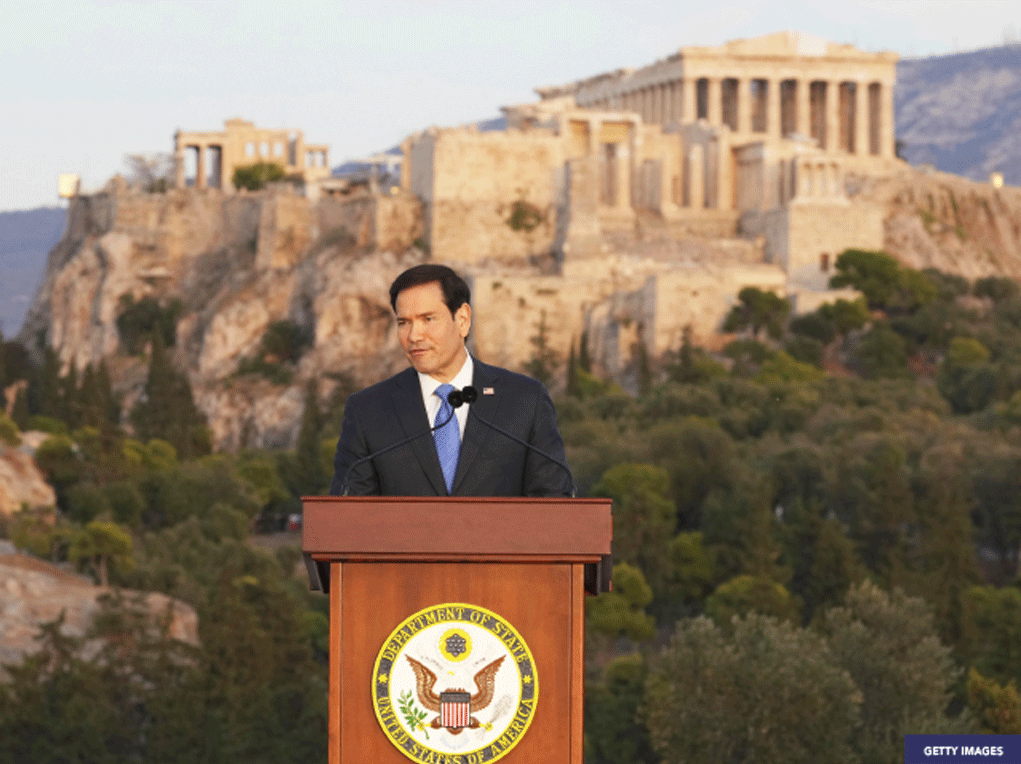 Yated Ne'eman9 days ago
Three weeks before the November 3 midterm elections, President Trump has sought to place most of the blame for record-high diesel fuel prices and at least $4 a gallon at the pump for American consumers on Ukraine’s president, Volodymyr Zelensky, for retaliating against escalating Russian missile attacks on Ukraine by launching precision drone attacks targeting vulnerable oil refineries across Russia. Reducing Russia’s ability to export gasoline and diesel fuel has eliminated a major source of international income that Putin had been using to finance Russia’s war budget. The Ukrainian drone attacks have not only created serious problems for Russian civilians seeking gas for their cars, but also for many countries that have long relied upon exports of Russian diesel fuel to power the trucks, trains, agricultural equipment and cargo ships which are vital to their internal commerce and economies.
Ukraine’s elimination of Russian diesel oil exports in recent months is combined with Iran’s disruption of shipments of Persian Gulf crude oil and refined petroleum products through the Strait of Hormuz, and from the Red Sea due to the Houthi war against Saudi Arabia. Together, they have created an ongoing global energy shortage and stubbornly high energy prices with no end in sight.
This is especially problematic and politically dangerous for President Donald Trump and the Republican candidates who support him running in the upcoming November 3rd midterm elections. Bringing down the cost of energy and promoting America’s energy independence was one of Trump’s key campaign promises to voters in the 2024 presidential campaign. Many of the working-class voters who supported Trump now say they believe that by starting a war against Iran, regardless of his justification for it, he has broken that promise to them.
Gas prices at the pump were even higher during the Biden administration than they are now because of Biden’s undeclared war against the American fossil fuel industry. However, voters are painfully aware that the cost of gas at the pump was more than $1 a gallon cheaper one year ago, before Trump started the war against Iran, than it is today, straining the budgets of most of Trump’s voter base, made up primarily of traditional and working-class American households.
Trump Missed His Best Opportunity To Beat Iran Earlier This Year
Trump had an opportunity to finish off the radical Islamic regime running Iran by allowing the combined forces and the Israeli military to complete Iran’s destruction, forcing its remaining leaders to capitulate to Trump’s demands. But instead, he succumbed to Iranian’s negotiating tactics by agreeing to a ceasefire. Instead of peace, the ceasefire only gave the new, even more radical Islamic leaders of Iran enough time to recover from the shock of the initial attacks sufficiently to make the global economy a hostage to energy blackmail by closing the Strait of Hormuz.
The suspension of most energy shipments from the Persian Gulf combined with Ukraine’s successful retaliatory drone attacks on Russian oil refineries led to record-high prices for diesel fuel. It is now, on average, more than $6 a gallon in the U.S., almost double the cost from a year ago. The high price of diesel fuel has also become a major factor driving up the cost of nearly everything that American consumers buy that has to be delivered to local stores or homes by diesel truck, ranging from groceries to household goods.
American voters in recent polls have consistently named the continued increase in the cost of living as a major concern, with the increased prices of gas at the pump, as well as food at the supermarket and other essentials, as a constant reminder. It is also the main reason why Democrats candidates, based upon the most recent polls, are increasingly confident of winning back majority control over both the House of Representatives and the U.S. Senate during the midterm. If that happens, the Democrats have promised to cripple Trump’s ability to govern the country effectively during the last two years of his presidency.
When Trump launched the U.S. air war against Iran on February 28, in conjunction with Israel, he initially predicted that it would last for four to six weeks at most, before the overwhelming attacks would force the remnants of Iran’s decapitated Islamic regime to surrender to Trump’s demands that Iran give up its nuclear weapons program. When Trump launched the war, he believed the assurances that he had received from Pentagon officials that the U.S. arsenal was well-stocked with the precision weapons and air defense missiles it needed to crush Iran, and that the U.S. warships and warplanes deployed to the region would be easily able to foil Iranian attempts to harass Persian Gulf energy shipments through the Strait of Hormuz.
But to his sorrow and growing frustration, Trump has now learned that these assurances were false. Before he started the conflict with Iran, the Persian Gulf oil states were the world’s top exporters of diesel fuel. That ended when Iran closed the Strait of Hormuz, and the additional disruption of the global supply of diesel fuel due to the successful Ukrainian drone attacks on Russian refineries has made that shortage worse. Even with U.S. and other worldwide refineries now running at near 100% of capacity, there is simply not enough global refining capacity now available to meet current demands for diesel fuel.
Why Ukraine Is Bombing Russian Refineries
Since Russia’s invasion of Ukraine started in 2022, Russian forces have attempted to undermine the morale and quality of life of Ukrainian civilians by repeatedly attacking Ukraine’s vulnerable national electrical grid, especially during the winter months, when electricity is vital to stave off the bitter cold. As another winter approaches, the annual Russian attack on Ukraine’s electrical grid has already reached a new record high level of intensity. But for the first time since the war started four years ago, Ukraine has been able to respond with its own systematic campaign against Russia’s energy infrastructure.
In response to Trump’s public complaints about the attacks on the Russian refineries, President Zelensky has defended them as a necessity. He argues that the drone strikes are a response in kind to the renewed Russian attacks on Ukraine’s energy infrastructure. They also aim to increase the internal political pressure on Russian President Vladimir Putin to bring the war to a negotiated end that would not require unacceptable concessions to Putin’s demands for some Ukrainian territory that is not yet under Russian military control.
Zelensky sharply condemned the deal that Trump announced last Friday to temporarily waive U.S. sanctions on Russian diesel fuel, in the hope of lowering the record high cost of diesel fuel before the midterm elections. Zelensky called the resulting relaxation of the pressure on Russia’s energy-dependent economy a “birthday gift to Putin.”
The European Union’s foreign policy chief, Kaja Kallas, also slammed Trump’s deal to waive sanctions on exports of Russian diesel fuel for providing Putin with “more revenues to wage war” against Ukraine.
Trump Angrily Suggests Regime Change In Ukraine
Trump’s reaction to Ukraine’s protests against his deal with Putin to resume the export of Russian diesel fuel was to angrily tell reporters that, “Zelensky could have settled this war many times, and he chooses not to. [So] it’s time for Ukraine to get a new president.”
Trump repeated his familiar claim that if he had been president instead of Joe Biden in 2022, he would have been able to convince Putin not to invade Ukraine and “that war would have never started.”
He went on to complain that Zelensky “wants to make problems for the world. He wants to make problems for our farmers, our ranchers … because Russia supplies a large portion of the diesel fuel throughout the world.”
Trump said that because Russian refineries provide a “large portion of the diesel fuel used throughout the world. . . we told him [Zelensky], ‘Do whatever you want, but don’t hit the diesel fuel because there’s a big problem, big shortage.’ And what does he do? He goes and hits the diesel fuel.”
Trump also said that because of the stubbornness of both Putin and Zelensky, their two countries have lost “over 2 million people” since the war started four years ago, with no end to the killing yet in sight.
Trump has previously argued that any serious peace negotiations with Putin must reflect the current reality on the battlefields of Ukraine, which is that Russia is in firm military control of about 20% of Ukraine’s territory. That includes all of the strategically important Crimean Peninsula, which Putin invaded and annexed to Russia in 2014, and most of the eastern industrial region known as the Donbas. It consists of the oblasts [provinces] of Donetsk and Luhansk, in which the majority of the population is Russian-speaking. Over the past two years, it is estimated that since the start of the war, more than a million troops have been killed and wounded, most of them suffered in the Russian army’s “human wave” attacks on the remaining Ukrainian strongholds in the Donbas region.
Why Ukraine Is No Longer Winning Its War Against Russia
In fierce, grinding battles, Ukraine’s superior home-grown drone technology had, until recently, enabled the outnumbered Ukrainian ground forces to hold their defensive positions on that front. But the recent introduction of a new generation of jet-powered Russian drones, which fly too fast and too high to be easily shot down by Ukraine’s existing air defenses, now threatens to change the balance of power and end the bloody stalemate on the Donbas front in Russia’s favor.
Zelensky responded to Trump’s unprecedented call for him to step aside as Ukraine’s president by issuing another direct challenge to the American president. In a televised interview with ABC News, Zelensky said that, “If President Trump really wants to have some changes during the election [season]… please tell Putin [to] give us two months, 60 days of a total ceasefire… and we will organize elections [in Ukraine].”
National elections in Ukraine have been suspended since Russia’s invasion in February 2022 because Ukrainian law explicitly prohibits holding a vote while the country is under wartime martial law. Zelensky also argued that organizing a national election while all of Ukraine is under active Russian bombardment by drones, cruise missiles, glide bombs, and ballistic missiles would be unsafe and logistically very difficult due to the millions of displaced citizens across the country who have fled their homes to escape the fighting.
Zelensky insisted that the decision to appoint a new national leader must be made exclusively by the people of Ukraine, not a foreign head of state like Trump. He also said that he would readily accept any new leadership choice made by a majority of Ukraine’s citizens, but only after the security of the electoral process has been guaranteed by a ceasefire so that the results of the election will be both democratic and fair.
He also said that if a new presidential election is held in Ukraine, with the required permission from Ukraine’s parliament, “Of course, we will be ready [to accept] any choice of our people.” However, the Ukrainian president also said in his interview with ABC News that, “It’s more difficult to stop Putin than to pressure other” world leaders because he is determined to restore the Soviet-era Russian empire over Eastern Europe, including current members of the NATO alliance which share a border with Russia, such as Poland and the three Baltic states, Latvia, Lithuania and Estonia.
Ukraine’s Friends In Europe Back Zelensky In His Feud With Trump
Therefore, it was not surprising that leaders of the European Union, the NATO alliance, France, the United Kingdom, Poland, Finland and Norway, all of whom have good reason to fear Putin’s appetite for additional Russian territorial conquests, were quick to call Zelensky and give him expressions of their support for his continued fight against Russian aggression.
Poland Prime Minister Donald Tusk wrote in a post on X following a phone call with Zelensky, “I am absolutely certain that nothing and no one will break Ukraine and its president in their fight against Russian aggression.” Tusk also said that, “I assured him that he can count on the full solidarity of Poland and Europe with the Ukrainian people.”
Ukraine’s foreign minister, Andrii Sybiha, also reiterated his public support for Zelensky, who “leads our nation in a time of war — a war for independence, freedom, and dignity. He has the support of the Ukrainian people, and they have the [sole] right to decide,” who their leader should be, adding that, “Statements from abroad only confirm that he is doing his job well [and] deserves support.”
To protest the relaxation of the U.S. sanctions on the sale of Russian diesel fuel, Ukrainian negotiators cut short their talks in Miami, Florida, with Trump’s envoys, Jared Kushner and Steve Witkoff. According to a report by the British Financial Times newspaper, Kushner and Witkoff reminded their counterparts that Ukraine remains heavily dependent on a continued supply of American-made munitions and armaments [purchased by Ukraine’s European allies], as well as real-time American satellite intelligence which provides the Ukrainians with precise targeting information for their attacks on Russia’s oil refineries.
Behind Trump’s Controversial Diesel Deal With Putin
Trump was clearly scrambling to salvage Republican hopes for retaining their current razor-thin majority in the House, and their vulnerable 53-to-47 margin in the Senate in the midterm election by making a public effort to provide relief for farmers and truckers who usually vote Republican, but who have been angered by the current record-high prices for diesel. Trump’s Russian diesel deal with Putin was also meant to send a positive signal to millions of other working-class voter households which are now struggling with the $4-plus cost of a gallon of gas at the pump for their cars. However, industry and financial experts who follow the energy market warn that the extra Russian diesel oil will not bolster global supplies enough to materially lower its price by Election Day.
The deal with Putin also unleashed a strong geopolitical backlash among Ukraine’s supporters, including a bipartisan group of four Republican and three Democrat senators. They released a statement claiming that the deal was illegal because Congress had banned all imports of Russian energy when Putin ordered the invasion of Ukraine in 2022.
Republicans Attacking Trump’s Suspension Of Sanctions On Russia
Republican Senator Thom Tillis of North Carolina said in a televised NBC News interview that “The president [Trump] needs to realize that tens of thousands of people have died over this [Russia’s] illegal invasion [of Ukraine], and I get it that he may be frustrated, but he needs to understand who the good guys are in this agreement and who the bad guys are, and it’s not even close.”
Brian Fitzpatrick, a Republican congressman from Pennsylvania, said that after he returns from Congress’ current midterm election recess, he would try to force a vote in the House on bipartisan legislation to block the purchase of any Russian oil.
Mike Pence, who served as Trump’s vice president during his first term in office, but has since become one of his most outspoken Republican critics, said that “President Trump’s decision to lift sanctions on Russian fuel amidst Putin’s ongoing and brutal attacks on civilian targets in Ukraine makes no sense and is a betrayal of the legacy and leadership of the late Senator Lindsey Graham,” who was a strong public advocate for the continuation of strong U.S. military support for Ukraine against the Russian invasion.
Democrat Senate Minority Leader Chuck Schumer accused Trump of “doing a deal with the devil [Putin] to help his flailing political fortunes.
“This filthy deal will only aid and abet the same Putin who is helping the Iranians to target and try to kill American troops in the Middle East and who illegally and viciously invaded our ally Ukraine,” Schumer continued.
Some Doubt That Putin Will Keep His Diesel Fuel Promises To Trump
There is also some question about whether Russia currently has enough diesel fuel on hand in storage to fulfill Putin’s promise to release 2.25 million barrels of diesel fuel to the global market immediately, another 3.7 million barrels in November, and yet another 7.4 million barrels before the end of the year, provided that Russian refineries are able to resume full operation. But in response to these promises from Putin, Trump has ordered the U.S. Treasury Department to issue a temporary license allowing Russia to export its diesel fuel and waiving the threat of sanctions on its foreign customers through April 2027.
Over the weekend, Trump also made the surprise announcement that Russia and Ukraine had agreed to a ceasefire under which Ukraine supposedly agreed to suspend its attacks on Russian oil refineries in return for a suspension of Russian attacks on Ukraine’s electrical grid and generators. “Effective immediately, there is an ENERGY CEASEFIRE in the War between Russia and Ukraine. Both parties have agreed. Do not break it!” Trump said in a post on his Truth Social media account.
Trump Announced A Ukraine Ceasefire That Was News To Zelensky
After Trump posted his announcement of the ceasefire on social media, Zelensky’s initial reaction, in a brief interview with the Axios news service, was that word of the agreement “was news for me.” However, he then added that, “If President Trump negotiated it with Putin, [then he should] please tell us when the ceasefire begins. We are ready, and we will accept it.”
In a later statement, Zelensky qualified his position by saying that he is willing to accept the ceasefire, but only if Russia does too. “Ukraine supports the ceasefire, and it is important that Russia support it as well,” Zelensky commented on social media, and added that he is “awaiting details from the U.S. side” on the deal.
He added that, “For our part, Ukraine always FULLY supports steps toward de-escalation, the protection of lives, and the decisions needed to end the war and guarantee lasting peace.”
Is Trump’s Energy Ceasefire Deal With Putin Real?
However, Zelensky also made it clear that he was very doubtful, based upon bitter experience with previous attempts by Trump to broker a peace deal with Putin, that the Russian leader would actually suspend the attacks on Ukraine’s energy infrastructure.
Since Trump made the ceasefire announcement, the Kremlin has not officially confirmed any such agreement. Putin’s spokesman, Dmitry Peskov, stated only that contacts with the U.S. on the issue were ongoing. Meanwhile, Ukrainian officials reported that Russian drone and missile strikes on Ukraine’s energy facilities and power plants in the cities of Kyiv and Kharkiv continued without interruption following Trump’s ceasefire statement.
The History Of Zelensky’s Up And Down Relationship With Trump
Trump has had bitter public disputes with Zelensky before, largely because the Ukrainian president has rejected numerous attempts by Trump to get him to agree to a negotiated settlement of the war with Russia on terms that would require major strategic and territorial concessions by Ukraine to Putin’s demands.
During the 2024 presidential campaign, Trump repeatedly promised that he would put an immediate end to both the Israeli war against Hamas in Gaza and the war between Russia and Ukraine. Trump was successful in getting both sides to agree to a temporary ceasefire in Gaza shortly after he took office, and he eventually helped to secure the return of all 251 Israeli hostages, both alive and dead, that Hamas kidnapped during its October 7, 2023 attack and then held prisoner in Gaza, some of them for more than two years.
However, while Trump had several friendly phone conversations and a face-to-face meeting with Putin in Alaska to discuss conditions for ending the war in Ukraine, Zelensky remained adamant in refusing Trump’s demands during their first, very contentious face-to-face meeting in the White House Oval Office on February 28, 2025, that he agree to negotiate Putin’s demands. The meeting was originally arranged to discuss continued U.S. military and economic support for Ukraine in the war against Russia. In return, Zelensky was expected to agree to finalize a framework agreement under which Ukraine would provide the U.S. with strategically vital rare-earth minerals for which China has been the major global supplier.
A Bitter Confrontation With Zelensky In Trump’s Oval Office
The discussion quickly devolved into an internationally televised shouting match as Trump and his vice president, JD Vance, criticized Zelensky’s handling of the war and his stubborn refusal to even consider Putin’s demands for major territorial concessions from Ukraine.
Trump accused Zelensky of “gambling with World War III” by provoking Russia to increase its attacks, being unwilling to negotiate a peace agreement with Putin due to his personal animosity, and publicly disrespecting both the president and the vice president of the United States in the Oval Office.
Vice President Vance, with Trump’s tacit approval, then challenged Zelensky on whether Ukraine had shown sufficient gratitude for the generous amount of American aid to Ukraine since the war started and accused Zelensky of being unwilling to compromise at all with Putin on his territorial demands.
Zelensky then pushed back strongly at the criticism from both Trump and Vance. He emphasized Ukraine’s need for real security guarantees from the U.S. and its Western allies, and questioned the nature of Trump’s proposed diplomatic initiative with Russia, implying that it would involve a sellout of Ukraine’s vital interests.
The Oval Office meeting was ended abruptly by an angry President Trump. A planned post-meeting joint press conference and the formal signing of the rare earth mineral agreement were both cancelled. Zelensky was then forced to depart from the White House unescorted and earlier than expected at Trump’s request. Later that day, he posted a statement on social media saying that Zelensky was not ready for a peace agreement with Russia while U.S. support gave him a negotiating advantage.
Trump also made it clear that after delivering the last shipment of arms and munitions that the Biden administration had promised to Ukraine, there would be no further U.S. military or economic aid for Ukraine at the expense of U.S. taxpayers.
Europe Takes Responsibility For Supporting Ukraine Against Russia
However, at that point, several of America’s European NATO allies agreed to take over responsibility for supporting Ukraine’s fight against the Russian invasion both militarily and economically. They realized that as long as Russia was militarily fully engaged in Ukraine, Putin would not have enough spare capacity to attack them in order to satisfy his expressed desire to reconstruct the Cold War-era Soviet empire in Eastern Europe.
The abrupt rupture in U.S.-Ukrainian relations proved to be short-lived. Zelensky made several attempts to mend fences with Trump, in recognition of the fact that Ukraine’s armed forces depend heavily on U.S.-supplied military intelligence. Ukraine also uses the satellite-based Starlink telephone communications technology for its battlefield operations, which the American company’s owner, Elon Musk, has denied to the Russians.
Why The Latest Trump Confrontation With Zelensky Is More Serious
However, Trump’s latest public criticism of Zelensky includes, for the first time, an open call for his replacement as Ukraine’s president. This prompted Fiona Hill, who served as a top adviser on Russian policy for the U.S. National Security Council during President Trump’s first term and who is now a senior fellow at the Brookings Institution, to tell the Washington Post that if Trump “starts to actively play a role in Ukrainian politics, in this way essentially engaging in political subversion, he can do a lot more damage.”
While Zelensky has previously shown an ability to push back successfully against public criticism by Trump and to withstand the immediate fallout, Ukraine needs a significant amount of continued American support as it enters the fifth winter of its war with Russia because it does not have enough U.S.-made interceptors for its Patriot air defense systems, which are its only effective defense against Russian ballistic missiles. Furthermore, even though Ukraine’s European allies are now shouldering most of the financial cost of fighting against the Russian invasion, Ukraine’s military remains highly dependent on a constant flow of American weapons and munitions, as well as American satellite intelligence.
Furthermore, the Russian military has shown no signs of easing the intensity of its attacks in Ukraine, despite having suffered more than a million casualties since the war began, and having had to convert much of Russia’s industrial base to the production of weapons and munitions in order to intensify its efforts to defeat Ukraine.
Russia Is Still Stepping Up Its Attacks On Ukraine
President Zelensky posted a report on his X social media account saying that last week alone, Russia attacked Ukraine with 1,450 precision-guided aerial bombs, 75 missiles of various types and more than 1,640 attack drones, about 60% of which were the latest jet-powered models. As a result, Zelensky said, Ukraine has redoubled its efforts to acquire more interceptor missiles for its Patriot air defense systems, as well as increased efforts to keep more of the old, second-hand F-16s available to shoot down the dangerous Russian jet-powered drones.
As part of their commitment to help Ukraine push back against Russia’s aggression, the European countries agreed to buy up to $100 billion worth of U.S.-made weaponry for Ukraine’s use. Four NATO allies, including the Netherlands, Denmark, Norway and Belgium, also got permission from the United States to give Ukraine a total of 87 used American-made F-16 warplanes as they are being replaced by deliveries of new, American-made state-of-the-art F-35 stealth multi-purpose warplanes.
Earlier in the war, the former Eastern European Warsaw Pact member countries of Poland and Slovakia, now members of NATO, agreed to transfer a total of 27 obsolete Soviet-era MiG-29 fighter jets to Ukraine to replace its own MiG-29s lost in combat against the Russians. It was not until May 19, 2023, 15 months after the Russian invasion of Ukraine, that President Joe Biden announced at a G-7 summit meeting that he would allow the four European nations to transfer their old F-16s to Ukraine, as well as a hurried international effort to retrain veteran Ukrainian air force pilots on how to fly them in combat missions against the Russians.
Why Used American F-16 Fighters Are More Important To Ukraine Now
At the start of the war in 2022, Ukraine requested replacements for its fleet of obsolete Soviet-era MiG-29s primarily to provide close ground support for Ukraine’s troops in conventional infantry battles and later as the conflict evolved into classic World War I-style trench warfare. But as the use of cheap but effective drones again changed the nature of the ground war in Ukraine, the obsolete Cold War-era recycled jet fighters have turned out to be Ukraine’s most effective answer to the threat from the new generation of jet-powered, faster and higher-flying Russian drones.
The main problem with many of the recently arrived second-hand F-16s is that they are well past their normal life expectancy as first-line warplanes, and they now need more extensive maintenance support in order to remain safely flyable and effective in a combat environment. Furthermore, the necessary maintenance support has been outsourced to a Belgian company which has previous experience with Belgium’s F-16s, but which has recently encountered problems acquiring the spare parts needed to complete the work in a timely manner.
Zelensky’s government in Kyiv is also facing a new financial crisis because Russian attacks have disrupted its large shipments of grain from Ukraine’s Black Sea ports, threatening an important source of government revenue. Because of these attacks, the International Monetary Fund (IMF) estimates that Ukraine will face a funding gap of more than $30 billion in 2027. As a result, Ukraine’s parliament is urgently considering a broad package of new legislation needed to close major loopholes in the country’s tax code and weed out corruption that is bound to be unpopular with both the general population and members of Ukraine’s wealthy elites.
Trump’s History Of Opposition To U.S. Support For Ukraine
During his 2024 presidential campaign, Trump also harshly criticized the Biden administration for providing more than $175 billion worth of American economic and military aid to Ukraine. That included sending Ukraine over $45 billion worth of weapons and munitions drawn down from existing Pentagon stockpiles, and additional billions of dollars worth of arms produced by U.S. defense industries for Ukraine under U.S. government contracts.
Those U.S. arms shipments to Ukraine were a major contributing factor to the Pentagon’s current critical shortages of certain types of precision weapons, long-range ground rockets, and air defense interceptor missiles, which have forced Trump to cut back on U.S. military strikes against Iran in retaliation for its attacks on civilian shipping in the Persian Gulf.
The Biden administration, through the U.S. Treasury, also provided the Ukrainian government with between $30 billion and $57 billion in direct economic aid to help pay the salaries of its public employees and the cost of providing basic government services.
Why U.S. Support For Ukraine Remains Critical To War Against Russia
Even though the U.S. is no longer supplying Ukraine’s military needs by drawing down weapons and munitions from War Department stockpiles, the dangerous shortage persists for a variety of key American weapons, such as Patriot anti-missile interceptors, long-range ground rockets and Tomahawk cruise missiles, because the once formidable U.S. military-industrial base no longer has enough production capacity to keep pace with demand from several active battlefields. These include the U.S. military buildup around the Persian Gulf, European orders for U.S.-made weapons to be sent to Ukraine to be used against the Russians, as well as orders from the Pentagon to restock its badly depleted stockpiles of munitions and weapons, so that the U.S. military will be able to respond effectively to any new threat to American national interests that may emerge in other parts of the world.
Concerns About China Limit The U.S. Buildup In The Middle East
There is great concern about China, which has become increasingly belligerent in clashes with its Asia-Pacific neighbors regarding claims of sovereignty over islands in the adjacent South China Sea. U.S. military strategists have long worried about repeated threats by China’s communist leaders to attack the pro-Western renegade island province of Taiwan, whose advanced semiconductor factories are essential to the high-tech economies of the U.S. and its allies. Trump’s determination to continue selling U.S. weapons to Taiwan to deter China from carrying out its threat to take control of the island by force has been a major point of contention in the otherwise mostly cooperative but competitive relationship between Trump and China’s president, Xi Jinping.
Concerns about U.S. military readiness have recently been magnified by the need of the Trump administration to reassign many of the U.S. warships and warplanes, which had been stationed to protect important U.S. allies, such as Japan, South Korea, and the Philippines, in the Asia-Pacific region, to the Middle East. They are required to support the U.S. air strikes on Iran, and then to counter Iran’s efforts to control all international shipping traffic passing through the Strait of Hormuz.
Ukraine’s Attack On Russian Energy Has Been Highly Successful
Meanwhile, after years of suffering from devastating Russian aerial barrages using drones, missiles and glide bombs that have not distinguished between civilian and legitimate targets, Ukraine has developed an increasingly effective retaliatory strategy. It has attacked the most sensitive parts of Russia’s energy export-based economy using its own long-range drones and cruise missiles in an effort to undermine Putin’s ability to continue financing the war. The increasingly effective Ukrainian attacks have forced the Russian government to pay steep subsidies to its national oil companies to keep gasoline available to the domestic market and to impose a ban on the export of Russian-produced diesel fuel, which has now been rescinded with Trump’s announcement of the deal with Putin.
Growing Fuel Shortages Inside Russia
Nevertheless, Russian consumers today face growing difficulties in finding gas stations that will sell them enough to fill their car’s gas tank. Hundreds of gas stations have suspended their operations, while others limit purchases to as little as five gallons. In many regions across Russia, drivers are served by gas stations only on certain days, depending on their license plate number, in a throwback to one of the strategies used across America when it was hit with an Arab oil embargo in the 1970s. In addition to these government efforts to ration and reduce Russian domestic energy usage, retail prices across Russia for both gasoline and diesel fuel have typically risen by about 20% since the start of this year, contributing to the Russian economy’s already serious inflation problem. But some independent Russian energy distributors have taken advantage of the widespread spot gas shortages by raising their prices by 50 percent or more.
But in general, instead of letting energy prices soar even higher, as other countries have done, the Russian government has generally chosen to restrict consumer access instead. The result is another throwback, this time to the long lines of Russian consumers during the Soviet era, waiting for hours and hoping to buy essential goods from state-run stores before their shelves are completely emptied.
“If it takes you half an hour to fill your tank in any Russian region, you have been extremely lucky,” Sergey Kanaev of the Federation of Car Owners of Russia told the Washington Post.
But it does not appear that Putin is under much political pressure from long-suffering Russian consumers to bring his war effort in Ukraine to a close. As has always been the case in Russia, the military is first in line for available Russian fuel supplies and has not yet been forced to cut back on its energy usage. Russia has also been importing some gasoline from refineries operating in India, Belarus and Kazakhstan, and the ban on diesel fuel exports before Trump announced his deal with Putin last has kept delivery trucks rolling across Russia. Also, because global prices for crude oil are now so high, despite the European and American export sanctions they are under, Russian revenues from its crude sales in the month of September were the highest since the war with Ukraine started four years ago.
Furthermore, last month’s nationwide Russian elections for its parliament, called the Duma, produced a predictably large pro-Putin majority, suggesting that any discontent among Russian voters with Putin’s Ukraine war policies has not yet resulted in the rise of any serious political opposition.
A Detailed Analysis Of The War Damage To Russian Refineries
The Washington Post has published a detailed analysis of the Ukrainian drone and cruise missile attacks aimed specifically at Russian oil refineries, which finds them to be both precise and highly effective. At least two-thirds of Russia’s 36 major oil refineries, including some that are more than 1,000 miles from the Ukrainian border, were hit between April 1 and August 31, some as many as five times, averaging about one strike every three days. By the end of August, half of Russia’s total nationwide oil refining capacity was offline due to the damage caused by the Ukrainian attacks. As a result, the volume of refined Russian petroleum products exported to its foreign customers so far this year has been cut in half compared to last year.
Three oil refinery experts who analyzed Ukraine’s air campaign for the Washington Post found that the long-range attacks using large numbers of cheap drones that Ukraine now mass-produces in its own factories have been especially effective. More than half of them have been aimed at the specialized desalting and distillation equipment at the heart of the refining process that is hardest for the Russians to replace. That is because both the European Union and the United States specifically banned exports of such equipment to Russia shortly after Putin launched the initial invasion of Ukraine more than four years ago.
According to the Washington Post report, on June 16, Ukraine staged a devastating major drone attack against “one of the most well-defended oil refineries in Russia, on the southeastern edge of Moscow…Videos of the aftermath show a cluster of tightly packed towers engulfed in flames.”
One of the flaming towers was part of a specialized unit that electrically removes water and salt from crude oil, which is a necessary first step before the crude oil enters the distillation units to be separated into gasoline, diesel fuel, jet fuel, and other valuable petroleum-based compounds.
The same Ukrainian drone strike also damaged one of the refinery’s main distillation units, putting the refining plant offline and out of commission well into September, according to the Kpler global commodities data and tracking firm.
Ukraine Attacking Russia’s Most Vulnerable Energy Targets
According to financial analyst Alexander Kolyandr, director of the Eurasia Group at the Washington-based Center for European Policy Analysis (CEPA), “The problem [for Russia] is the frequency of attacks is shorter than the time needed for repair.” The Ukrainian drone commander who goes by the call sign Tango explained the strategy to a Washington Post reporter bluntly. He said: “We know where to hit so that it [the Russian oil refinery] stops [working] and does not recover.”
In order to make its mass drone attacks more effective, Ukraine also launches decoy drones that carry no explosives. Their mission is to confuse and waste the ammunition and resources of the Russian air defenses, which are already deployed too thinly to fully protect Russia’s vast airspace. However, Russia’s troops manning its air defenses have no choice. They must launch against every suspected decoy, because if they fail to do so, they risk losing too many of their expensive military installations.
Ukraine also uses lighter-than-air balloons which can lift small drones to very high altitudes before they are launched, extending their range and enabling them to carry less fuel and more explosives to their targets. Ukraine is also effectively using precise intelligence on potential targets in Russia provided by the U.S. and Ukraine’s other Western allies, and augmented with further analysis by artificial intelligence.
While Putin has remained defiant in the face of the increasingly effective Ukrainian drone campaign, he was forced to publicly acknowledge earlier this month that Ukraine’s attacks have “partially” succeeded by costing Russia about 1 percent of its annual economic output (GDP) for this year.
How Ukraine’s Drone War Crippled Russia’s Energy Infrastructure
The mass Ukrainian drone strikes on Russian refineries began in earnest in August of 2025, but the pace of the attacks dropped over the winter months, only to accelerate this April again and then reach a new high this August, according to data compiled by Tochnyi, an independent Ukrainian open-source research group.
According to Christina Harwood, a Russia researcher at the Washington, D.C.-based Institute for the Study of War, in addition to targeting Russia’s refineries, many other Ukrainian drone strikes this year have inflicted considerable damage on fuel storage tanks, pumping stations and pipeline infrastructure across Russia, making the transportation of refined petroleum fuels and other products more difficult even as the supply of them is reduced due to the growing damage from drone strikes on Russia’s refineries.
One unnamed Ukrainian source told the Washington Post that a crash program launched by Ukraine’s government to build up its military-industrial base has resulted in a growing ability to mass-produce the components of cheap drones. That effort has effectively doubled the number of drones in current strikes against Russian targets in each wave, compared to last year.
The increase in the number of drones in each Ukrainian wave attack is significant because, according to András Rácz, a researcher into drone operations in Ukraine for the German Council on Foreign Relations, even if only 2 to 3 percent of the drones reach their target, a number he called “realistic,” they will inflict significant damage.
In short, he said, “The [current Ukrainian drone] strike packages are just too large [for Russia] to defend.”
Russian Air Defenses Are Too Small To Protect All Of Its Territory
The mass waves of attacking Ukrainian drones have turned Russia’s vast size, which historically has been one of its great strategic advantages, into a liability, because Russian air defenses are spread so thin that it is impossible for them to defend every refinery across the country all of the time. According to a Ukrainian drone commander who is identified by the Washington Post by his code name, Tango, the locations of the Russian air defense systems and radars provided by the U.S. and other Western allies have been crucial. This has allowed Ukrainian military planners to map out routes across Russia for drone and cruise missile attacks that can often evade or delay their detection until they have reached their targets.
Trump Frustrated By Persian Gulf And The Red Sea Shipping Closures
Trying to end the Ukraine war matters so much to Trump in large part because of the simultaneous Iranian efforts to shut down Persian Gulf energy shipments through the Strait of Hormuz. The result is that there is not enough spare capacity to make up for the gasoline and diesel fuel shortages through increased crude oil production and refinery operations in the U.S. and other global energy producers. U.S. Navy efforts to restore the free flow of Persian Gulf oil through the Strait of Hormuz are being hampered by continuing attacks on shipping by Iran’s IRGC. Even the alternative route for shipping Saudi Arabian oil through its East-West pipeline to a Red Sea port and from there through Bab el-Mandeb Strait to the Indian Ocean is now under fire from Iran’s Houthi allies in Yemen.
Trump Realizes He Has No Good Options Left
The combination of stubborn ongoing wars in Ukraine and across the Middle East has left President Trump with no good options for ending the global energy shortages that those conflicts have triggered. Even his last-minute measures to relieve the political pressure from the upcoming midterm elections, involving his dubious and desperate deal with Vladimir Putin to boost diesel fuel supplies at Ukraine’s expense, and his announcement of an energy ceasefire agreement with Putin that might not exist, are coming far too late to help Trump and the Republican candidates running in the midterm election. It increasingly looks like there may be an easy Democrat victory based largely on the high price of a gallon of gas at the pump and at the supermarket, which is actually largely the fault of the Democrats during the Biden administration.
Over the past weekend, Houthi missiles hit two passenger terminals at Saudi Arabia’s main airport, killing at least 12 people and injuring hundreds more. Saudi Arabia has asked the U.S. for military help against the Houthis, and President Trump has responded by saying that he is seriously considering the request. But Trump also knows that joining the Saudi air strikes against the Houthis would probably be counterproductive, because it would give the Houthis the ability to extend their attacks to all of the ships using the Bab el-Mandeb Strait, further worsening global energy shortages and price rises rather than reducing them.
Trump’s High Energy Price Predicament
All of these interlocking circumstances mean that President Trump and his Republican supporters are left with no short-term strategic or domestic political solutions available for their current high energy price predicament as well as the now painfully obvious limitations on the application of America’s military power to its problems in the Middle East.
Ukraine’s effective drone strikes on Russian refineries have only further squeezed a global fuel market already badly strained by the consequences of the U.S. war on Iran that Trump started this past February, and the counterproductive recent Saudi revival of its air war against Iran’s Houthi proxies.
Easing sanctions against Russia in a feeble attempt to relieve the global diesel fuel shortage has only angered some of Trump’s allies in his own political party at home, and his public feud with Ukraine’s President Zelensky has infuriated America’s NATO allies, especially those in Eastern Europe, who are justifiably afraid of attacks against their own countries by Putin.
Meanwhile, Russia’s new generation of jet-powered drones have been getting through Ukraine’s air defenses about 45 percent of the time, meaning that the people of Ukraine are now facing the prospect of a very tough, cold and dark winter.
Trump And The Gop Widely Expected To Suffer A Midterm Defeat
At this point, there is not much that Trump, or anyone else, can do to save Ukraine, or the many Republican candidates who now seem doomed to go down to defeat at the hands of socialism-crazed Democrat candidates.
Those Democrats are now confidently expecting to regain control of Congress as a result of their victory in the November 3rd election, so that they can undo everything that President Trump has accomplished for the American people so far in his second term as president.
 Yated Ne'eman9 days ago
I know there’s no point bemoaning things lost to us from an earlier age in time. Life was different yesterday, and it’ll be different in other ways tomorrow. The world will continue changing because that’s what the world does. And mostly, it’s a good thing. Progress.
That said, there’s something gone that I think we, as individuals and as a society, are missing. I guess you could call that something stillness.
We live in a frenetic age. In so many ways, it’s become rare, if not impossible, to sit still. If there’s an empty slot of time, we rush to fill it. If there’s a vacation marked on our calendars, we hurry to find a new and ever more exciting way to spend it. Despite all our modern conveniences, our to-do lists grow longer instead of shorter.
With travel so easy and convenient compared to previous eras, many people commute long distances to earn their livings. Many also travel for recreation, far more often than used to be the norm. While it’s wonderful to be able to connect with others who live far away, constant motion deprives us of the chance to spend quiet time with those who are nearby. And even when we are together, we don’t always avail ourselves of the gift that togetherness ought to provide. We’re too busy looking over each other’s shoulders at the next thing barreling down the tracks. And there always is a next thing.
Children used to be a breed apart, a group for whom time meant nothing. Summer days, no-school days, any kind of days, flowed seamlessly from one game to the next until our mothers called us home for supper. When I used to go to bungalow colonies as a kid, my parents preferred a place where there was no structured day camp. We got to run and play and devise our own entertainment all day long. And what fun it was!
Today, kids’ lives are much more regimented. We’re ambitious to let our offspring fulfill their potential and make good use of their talents. It doesn’t hurt that their busy timetables afford us time to attend to our own. All of this is indubitably good. But there’s such a thing as overdoing a good thing. And sometimes it feels as if we may be doing just that.
Our busy-ness, though it often comes from a positive place, can also be detrimental. On the domestic front, for instance, we’ve upped our game to the point where simplicity is looked at askance. Houses must be professionally decorated and wardrobes meticulously coordinated. Multi-course gourmet Shabbos and Yom Tov fare has become the norm. And all of that’s fine, except for the time and energy that it steals from everything else… not to mention the toll it takes on our nerves, stamina, and even sometimes on our shalom bayis.
Another example is the world of medicine. Where we once had only a single general practitioner to address our medical issues, we now have a plethora of specialists available for consultation. The growing list of medical niches means a growing list of appointments. For someone charged with caring for a large family or aging parents, that can add up. Yet another good thing with the potential to pull us into a million harried pieces…
A Tangled Tapestry
Once upon a time, you knew your neighbors as well as they knew you, because all of you, and your parents and grandparents, had lived side by side forever. Now, old friends are threads to be picked up occasionally, when time and location permit. The tapestry of our lives has grown more tangled. And sometimes a little threadbare.
I know that shtetl life has been romanticized almost out of recognition, but there’s something to be said about staying in one place, with one group of people, for the entirety of your life. Our present-day reality includes a lot of picking up and moving on. New jobs, new neighborhoods, new people to incorporate into our lives. More breadth of experience, certainly. But perhaps at the expense of sacrificing some depth?
All these new beginnings can be exciting, but they can also be stressful. There’s a need to prove ourselves, and to sell ourselves, repeatedly. No sooner are you settled in one job or one location than you start wondering if it’s time for a change. There are so many options open to us that, instead of providing a sense of space that comes with having choices, they can grip us in a stranglehold of indecision.
It’s hard to relax without being internally bombarded by a host of things that need doing. I love crossing things off my list, and the sense of accomplishment that comes with that. But somewhere along the way, I’ve lost the ability to just peacefully… sit. Does anyone relate?
Jigsaw Pieces
Fed on this frenzied lifestyle diet, society as a whole and the people within it can start to feel fragmented. As if we’re a sum of many parts, each of them committed to one small area of responsibility. This person knows one aspect of me, that one another, and a third something else entirely. We show once face to each, until we begin to wonder which is the most authentic.
Even with our nearest and dearest who know us the best, we can find ourselves compartmentalizing. Doling out portions of ourselves as time and context permit. Ten minutes with this child, ten minutes with that, a date night with a spouse you rarely get to see, let alone have a long, meaningful conversation with. Our parents, siblings and friends get pieces of us when we can spare the time.
When life is so fast-paced and multi-faceted, it’s not easy to hold onto your sense of yourself as an integrated person. Instead, we can feel like a mass of different jigsaw pieces, each of which we pull out of the bag at the appropriate moment. I know it’s been said before, particularly in Erich Fromm’s The Art of Being, but important truths are worth repeating: it’s important to move our focus at least occasionally from doing to being.
When we fill our kids’ lives with non-stop structure, and our own lives with non-stop movement, we rob them, and ourselves, of something precious. Time to really be with each other, and with ourselves. Time to get in touch with our neshomah. To be actively conscious of the simple, awesome fact that we exist within Hashem’s embrace. Time to sit still and just be.
There’s so much beauty and connection waiting to happen, both with other people and among the flying fragments within our own heads. Talks to be had, ideas to be explored, hands to be held and smiles to be shared. So many mysteries of the human heart waiting to be unraveled. Untapped layers waiting to be excavated. Untested frontiers of friendship and possibility waiting for a free moment when we can advance unhampered to meet them.
Maybe it’s time to slow down and seize the moment. We don’t want to wait until life forces us to slow down. Right now is the best time to carve out the slower-motion space we’re so sorely missing in this frenetic age.
Right now might just be the best time to catch our breaths and be.
 Yated Ne'eman16 days ago
The Torah begins by telling us the story of creation, Bereishis. The Torah introduces us to the creation of the universe, the formation of the world in which we live, and the emergence of mankind, the one creation entrusted with the ability to recognize its Creator and choose how to live.
Yet, as Rashi reminds us at the beginning of the parsha, the Torah is not a history book. It is not intended merely to tell us how the world came into existence or to provide us with an account of the earliest generations of mankind. The Torah is our guide to life, teaching us how to conduct ourselves, how to relate to Hashem and to one another, and how to fulfill the purpose for which we were created. Why, asks Rashi, does the Torah begin with the story of creation and devote the entire first parsha to creation and the lives of Adam and Chava, Kayin and Hevel, and the generations that preceded Avrohom Avinu? Why not begin with the mitzvos, with the commandments that define our obligations as Jews?
Rashi explains that the Torah begins with Bereishis to establish that the entire world belongs to Hashem. He created it, and He determines who will inhabit its lands. When the nations of the world accuse Klal Yisroel of stealing Eretz Yisroel, we can respond that the One Who created the world gave the land to us.
This is a fundamental lesson in our understanding of the world and our place in it. Hakadosh Boruch Hu created the world and placed us in it, entrusting us with the responsibility to live in accordance with His will. The land we inhabit, the resources we enjoy, the talents with which we were endowed, and the very lives we lead are gifts from Hashem. Everything we possess comes with an obligation to use it properly.
Before the Torah tells us what to do, it tells us why we are here. Before it presents the mitzvos that shape our lives, it establishes that the world was created deliberately, with purpose and with direction. The universe is not a random collection of events, and human life is not an accident without meaning. Everything begins with Hashem, and everything we do must be understood in the context of His creation and His will.
The Torah tells us that man was created b’tzelem Elokim, in the image of Hashem. This is perhaps the most profound statement about the human condition. Man is not simply another creature inhabiting the earth. The posuk tells us that Hashem created man from adomah and blew into him the spirit of life, nishmas chaim. He endowed us with a neshomah, the ability to speak, the capacity to think and understand, the ability to distinguish between right and wrong, to exercise bechirah, and to make choices that have eternal significance.
The greatness of a person does not lie in his physical strength, his wealth, intelligence, or accomplishments in the eyes of the world. His greatness lies in his ability to transcend the adomah from which he was created, from which flow his physical instincts and desires, and to give sustenance to his neshomah, as our lives are meant to be dedicated to fulfilling the spiritual purposes for which we were placed in this world.
That is the challenge of tzelem Elokim. We are given extraordinary abilities, but those abilities carry extraordinary responsibility. We can build and destroy, encourage and discourage, bring happiness and cause pain. We can use our intelligence to discover new ways to improve the world or to devise ways to harm others. We can use our words to comfort a person who is suffering or to inflict wounds that may never heal.
We are not passive observers in the world. We are active participants. The first human beings were placed in Gan Eden, a world of extraordinary beauty and abundance. They were given everything they needed, with one clear restriction.
Adam and Chava’s failure to heed that command introduced a fundamental reality of human existence. Having free will means that a person can choose incorrectly, even when the right path is clear. The challenge of life is not merely to know what Hashem wants from us, but to overcome the inclinations and temptations that lead us away from it.
And when Adam sinned, Hashem asked him, “Ayeka? Where are you?”
Hashem certainly knew where Adam was. The question was not about his physical location. It was an invitation to confront what had happened, to recognize his responsibility, and to consider where his choices had brought him.
That question echoes throughout the generations. Where are we? What are we doing with the lives Hashem has given us? Are we using our abilities to fulfill our purpose, or are we allowing ourselves to be distracted by pursuits that have little lasting value? Are we moving closer to Hashem, or are we allowing the pressures and attractions of the world to draw us away?
It is a question that each of us must ask ourselves, not only during the introspective days of Elul and the Yomim Noraim, but throughout the year. A person can be busy from morning until night, accomplishing one task after another, and still lose sight of where he is going. He can accumulate wealth and achieve recognition and relevance without addressing the most important question of whether he is living the life Hashem wants him to live.
On Shemini Atzeres, in the diaspora we lained Koheles. Various reasons are given for this minhag, but perhaps one of its messages is that Koheles helps seal in the gains we made during Elul and Tishrei. After spending these weeks examining our lives, our priorities, and our relationship with Hashem, we are reminded that so much of what occupies people in this world is ultimately hevel, fleeting and without lasting significance. The challenge is not to withdraw from the world, but to learn to distinguish between what is hevel and what is important, between what demands our attention and what deserves our attention, between what fills our days and what gives those days meaning.
Along with that comes the responsibility to recognize Hashem and see His hand in all aspects of our lives.
We are required to do hishtadlus. We work and seek to earn a living, but we recognize that whatever we have is because Hashem gave it to us. The work is a means, but the income comes from Hashem.
We build armies, establish security services, create sophisticated intelligence systems, check credentials, erect fences, and take every reasonable precaution to protect ourselves. But we must never confuse the means with the source. The systems are tools. The protection comes from Hashem.
This week, Israel and Jews throughout the world marked the third anniversary of the October 7th massacre, a day on which we were reminded of that truth in a most painful way.
Israel possesses one of the world’s most powerful armies and most sophisticated security establishments. It has intelligence agencies considered among the finest anywhere, advanced surveillance systems, layers of fences and barriers, and countless people whose responsibility is to identify threats and protect the country’s citizens.
And yet, on that morning, those systems failed simultaneously. Warnings were missed. Signals were ignored. Assumptions were wrong. The people whose job it was to prevent such an attack were unable to do so. It was a fulfillment of the posuk, “Einayim lohem velo yiru oznayim lohem velo yishma’u.” The eyes of the nation’s security apparatus were simply closed.
We were reminded that, ultimately, it is not the army that protects us, not the intelligence agencies, not the fences, and not the technology.
Hashem Hu Ha’Elokim.
The One Who created the world is the One Who runs it.
And just last week, we received another extraordinary reminder of that truth, this time in the skies.
The attempted terrorist attack aboard a flight bound for Tel Aviv could easily have ended with the deaths of everyone aboard and potentially many on the ground. The co-pilot, who had previously been identified by his former employer as a security risk, attacked the captain in the cockpit and attempted to take control of the aircraft. The plane plunged thousands of feet in a matter of seconds. Passengers were thrown from their seats. The cockpit became a scene of violence and chaos.
And yet, the plane did not crash. The passengers did not die.
The subsequent investigation revealed serious questions about the security procedures governing foreign airlines and their crews. Israel had systems in place, protocols, departments, and databases, but it emerged that foreign pilots were not being independently vetted in the manner one might have assumed. The responsibility was divided among different agencies, but the crucial information was not being acted upon. Had they been doing their jobs, the Jew-hating co-pilot never would have been allowed to board the plane and be seated in the cockpit.
If the flying public’s safety depended on human beings, people would have every reason to be terrified every time they get on a plane.
Instead, we are reminded that our safety rests with Hashem.
And the miracle of the FlyDubai flight went far beyond the failures of the security system.
The heroism of people aboard the plane is credited with saving the plane from crashing to the ground and killing everyone on board, but it was a series of miraculous occurrences that allowed that heroism to occur. The passengers have rightly been hailed as heroes. They saw what was happening and acted with extraordinary courage.
A woman who happened to be standing near the cockpit heard the commotion and began screaming. Several passengers rushed toward the cockpit, overpowered the attacker, and restrained him. Others cared for the wounded captain. They guarded the cockpit and helped ensure that the plane could be landed safely.
But even their heroism was possible only because of a remarkable chain of events that unfolded at precisely the right moments.
The captain, gravely wounded, losing much blood and under continued attack, miraculously retained the strength and presence of mind to open the cockpit door. Had that door remained closed, the passengers would have had no way to reach him or the attacker.
A plumber who happened to be sitting relatively close to the cockpit heard what was happening and rushed forward. He pulled the attacker away from the captain, and as others dealt with him, the plumber, with no previous flying experience, found himself in a cockpit with a plunging aircraft. He had once seen how a plane’s control stick raises and lowers the plane, and he lifted the controls with all his might to get the plane to fly upward.
He had no training that should have qualified him to fly a Boeing 737. Yet, at that moment, when 170 lives were in jeopardy, Hashem put the idea into his head of how to save them.
There were other seemingly unlikely occurrences as well.
Additional pilots happened to be aboard the flight as passengers. A dentist who happened to be on board was able to provide critical medical assistance to the wounded captain. Passengers found charging cables and other materials that could be improvised to restrain the attacker. Men and women who had been strangers only minutes earlier suddenly worked together as a team, each one doing whatever he or she could to save the lives of everyone aboard.
The world calls such things coincidence. It calls them luck. It speaks of fortunate circumstances and improbable happenstance.
We know better.
We know that there is no happenstance. There is only the Ribono Shel Olam, Who runs the world and Who can arrange a thousand details, many of them invisible to us, so that they converge at precisely the moment they are needed.
It is interesting that both of these events occurred during the days of Sukkos and Shemini Atzeres, when we celebrate how Hashem protected us from the elements in the midbar and as we were about to begin studying Bereishis.
We left our homes, the places that provide us with walls, roofs, locks, alarm systems, and the illusion of permanence, and we entered the sukkah. We sat beneath a roof that does not really protect us from the elements, as we experienced when it rained over Yom Tov. We left behind the physical structures in which we invest so much of our energy and reminded ourselves that our true protection does not come from them.
We sat in the sukkah, in the tzila demehemnusa, the shade of the Shechinah, and proclaimed that the walls around us are not what guarantee our safety. The roof over our heads is not what determines whether we will be protected. We have to take reasonable precautions. But after all the hishtadlus has been made, we recognize that the One above is the One Who protects us.
And then we return to Bereishis.
Why does the Torah begin by telling us that Hashem created the world?
Because we need to know that the world is not governed by chance, that history is not a series of random events, and that our lives are not determined solely by the decisions of men and the systems they construct.
The same Hashem Who created the heavens and the earth can cause the most powerful security establishment to overlook a threat. He can cause a warning to be missed. He can allow a plane to descend thousands of feet and then, through a series of seemingly random events, provide the precise people and abilities needed to save it.
He can place a plumber in a particular seat and turn him into a pilot. He can place a dentist on a particular flight and turn him into an emergency doctor. He can place additional pilots on a plane and give a dying captain the strength to open a door. And He can bring all of those seemingly unrelated details together at exactly the moment when they are needed.
That is not merely the lesson of last week’s FlyDubai flight, nor is it only the lesson of October 7th, when the army couldn’t prevent the rampage and was powerless to stop it.
It is the lesson of our daily lives, when every day is filled with miracles we take for granted.
Bereishis bara Elokim — Hashem created it all. He runs it. He guides it. He determines its course.
We do our hishtadlus. We are not permitted to sit back and rely on miracles. But after we have done what we can, we recognize the truth with which the Torah begins and upon which everything else rests — namely, that Hashem runs the world.
His ways are mysterious and not always understood. We cannot always see why one person is saved and another is not, why one warning is heard and another is missed, or why one seemingly insignificant event becomes the link that saves hundreds of lives.
We don’t know why one person becomes ill and another remains healthy, why one person becomes wealthy while another struggles financially, or why one person’s life seems to contain far more suffering and challenges than another’s. We cannot understand the ways of Hashem or the reasons for the individual tests He sends to each of us. But we know that nothing happens by itself and nothing happens without purpose. Hashem sends us the challenges we need to help us grow, to strengthen our emunah, and to bring us closer to Him.
We must never give up. We must never convince ourselves that our challenges are insurmountable or that we cannot overcome them. Those who recognize the Yad Hashem, place their trust in Him, and believe that He is with them through every challenge can face life with confidence, knowing that Hashem will give them the strength to persevere and overcome.
Bereishis bara Elokim. Chazal teach that the world was created for reishis, for Klal Yisroel and for Torah. Hashem created the world for us. He created it with the expectation that we would be able to accomplish our mission in it. The world was not created to defeat us. It was created to provide us with opportunities, challenges, and circumstances through which we can fulfill the purpose for which we were placed here.
We should therefore never allow anything or anyone to break our spirit, and we should never allow anyone to convince us that we cannot succeed. No matter what happens, no matter what challenges confront us, we must remember that we are living in Hashem’s world and that the One Who created the world is with us every step of the way. With emunah, bitachon, and the determination to continue moving forward, we can overcome the obstacles placed before us and accomplish what Hashem expects of us.
This week, as we return to the rhythm of life after Yom Tov, and as we begin studying Parshas Bereishis, we need to carry these lessons with us. The warmth and inspiration of Elul, the Yomim Noraim, Sukkos, Shemini Atzeres, and Simchas Torah should not remain behind with the Yom Tov.
The days ahead may be colder and darker, and the long winter may sometimes seem bleak. But we enter it with the light of Bereishis bara Elokim. Hashem created the world, He guides its every detail, and He placed us here because He knows that we are capable of fulfilling the purpose for which we were created.
We have every reason to move forward with emunah, with bitachon, and with confidence that, with Hashem’s help, we can succeed.
May we all be zoche to a gezunteh vinter and the geulah sheleimah bekarov.
 Yated Ne'eman16 days ago
On Erev Sukkos, like the rest of us in the Northeast, I was busy halachically ensuring that my s’chach would remain kosher in advance of the storm. Amid klerring about zip ties, and jute, and finding old beams to place on top of the bamboo, I suddenly remembered something. I had spent hours picking out a beautiful esrog, and then more time picking out hadassim, a lulav and aravos. But with all of that, and with all my attention now on securing my sukkah, I realized that I had forgotten to buy a koishekel. I had tied down everything except the lulav. So, mere hours before Yom Tov, I ran out and found a local shuk, here in the Five Towns, that was in its last minutes before closing. They had a variety of koisheklach, from the simple Litvishe ones to the grandiose, rebbe-style ones. Despite the late hour, I could not bargain. (And unlike lulavim and esrogim, a koishekel lasts forever!)
As I was paying, something caught my eye. It was something that we have all been looking at for the past few weeks, but this time it hit me differently. Very differently. I looked down and saw tables with esrogim. I felt really bad for them. The place was closing in 20 minutes and there they were. These esrogim had been planted, nurtured, watched, picked, carefully packaged and shipped. They were then vetted and selected by mochrim, put out on tables, shown by private appointment, and scrutinized by hundreds of Yidden, young and old, rich and poor. But now, hours before Yom Tov, their destiny looked all but sealed. They would not be used for the mitzvah de’Oraysa of “ulekachtem lochem.”
The fortunate ones would be carted off to become esrog jelly, and the rest would be carted off to the garbage. I found it terribly sad, and I am aware of how that sounds. Fruit does not think. But Chazal made certain to tell us about mountains that quarreled over who would host Matan Torah, or about how the moon came before the Ribono Shel Olam with a complaint, so I allowed myself, standing there with my koishekel (the rebbishe one, for those curious; I am an Ostrov-Kalushiner ainikel after all!), to wonder what the esrogim were thinking.
They all started out the same, some of them on the very same tree, and every bit of that care was for one posuk. Ulekachtem lochem. The mitzvah of an esrog is lekicha. They were born to be taken. Their entire purpose in this world is to be taken, and these were the ones that nobody took.
The seforim hakedoshim, building on the Arizal, describe the briah as a ladder of levels. Beginning with the domeim, there is the tzomeiach, chai and medaber, and each level waits to be lifted by the one above it. An animal that is shechted properly and eaten by a Yid who makes a brocha, and who then uses that strength to learn and to daven, is brought up to a place it could never have reached in the pasture, while the neveilah and the treifah are left where they were. If that is true of a steak, I would imagine that it is certainly true for an esrog, held together with the daled minim in the hand of a Yid, with a brocha and a Shehecheyanu and the naanuim of Hallel, for a mitzvah de’Oraysa.
The Gemara in Bava Metzia (85a) tells of a calf that was being led to shechitah. It went and hid its head in the folds of Rebbi’s garment and cried. Rebbi said to it, “Zil, lekach notzarta — Go, because for this you were created.” It was true, of course, and according to the mekubalim, it was more than true, because the calf was crying on the way to the greatest aliyah it would ever have. And still, they said in Shomayim that because he did not have rachmonus, yissurim should come upon him, and they did, for thirteen years.
The Gemara does not say that Rebbi was wrong. But being right was not what the moment asked of him. So, I am not going to stand in front of a table of unsold esrogim and explain to them why their fate had to end up this way. Rather, I want to point out two things that I noticed on the way home.
The first, perhaps, is that there is no hiddur with only one esrog. The posuk tells us “pri eitz hadar — a beautiful fruit.” We have all seen the man who spends forty minutes at the stand turning esrogim over one at a time. I sometimes have been that man, and I certainly have been the person waiting on line behind that man. But he never chooses one esrog without comparing it to the one he will not use. He can only choose because there is something to choose from. Suppose a single esrog was put on the table. Somehow, no matter how beautiful it is, you would feel like you walked out with a kosher esrog and nothing more. The one that goes home in the silver box is mehudar because its beauty was superior to the dozens that remained behind. Those were not taken to be used for the mitzvah, yet their presence, somehow, enhanced the beauty of the mitzvah.
The second point belongs to the Bnei Yissoschor. He writes (Maamorei Chodesh Shevat) that we have a kabbolah from his rabbeim to daven on Tu B’Shevat for a beautiful, kosher esrog, and he is medayeik that the Mishnah calls the day “Rosh Hashanah la’illan,” one tree, the tree from which a Yid will need a fruit when Sukkos comes. And what is on the table in many homes on Tu B’Shevat when that tefillah is said? Esrog jelly. The esrog that nobody wanted sometime during Tishrei is right there during Shevat, with a brocha said over it, while a Yid davens for the esrog that he will take next year. It did not become a mitzvah. It became part of a tefillah for next year’s esrog. The jelly and its brocha became the hope for the future. It certainly was not a piece of refuse.
But even after most of the leftover esrogim are taken to be used for esrog jelly, there are still a handful that remain behind. And for them, we need another nechomah. The same Gemara in Bava Metzia continues and teaches us that the yissurim that Rebbi received for his lack of sympathy for the calf left him the same way they came — through a maaseh. His maidservant was sweeping the house and was about to sweep out some young weasels, and he told her to leave them be, because the Torah teaches us about the Ribono Shel Olam, “verachamov al kol maasov.”
Kol maasov. All of them. Every one of us knows somebody who was grown with the same care and was every bit as ready, and who, for reasons that no one will ever explain to him, was not the one who got picked.
It is the girl whose résumé has been examined like an esrog in the shuk, or the bochur who has been told for years how special he is among everyone, yet both are still waiting for the phone to ring. It is the talmid, or the talmidah, who sits in the same seat every day and has yet to be noticed by a rebbi or a morah. It is the child to whom nothing comes easily, who puts in twice the hours of the boy next to him and has never once heard his name called out for it. It is the man who is out looking for a job, or even the man who has one and can work for 10 hours a day to support his family yet still cannot pay his bills at the end of the month. It is the choshuve yungerman who learned with hasmodah for years, who can say a shiur with such clarity, yet although he has put his name in for every shteller opening, he’s still waiting for one of them to call back.
They did everything that was asked of them and nobody asked for them.
They do not need a p’shat from us. They certainly do not need to hear, “Lekach notzarta.”
I do not know the cheshbon of the esrog that was left on the table, and I am not going to pretend that I do. But Chazal tell us (Shabbos 77b) that of everything Hakadosh Boruch Hu created in His world, He did not create even one thing levatolah, and Ben Azzai teaches (Avos 4:3), “She’ein lecha adam she’ein lo sha’ah, v’ein lecha dovor she’ein lo makom — There is no man who does not have his moment, and nothing that does not have its place.” If there is nothing without its makom, then that esrog had its makom too, even if its place was on a table in the Five Towns twenty minutes before closing. And if that is true of a mere physical entity, it is certainly true of an adam. The only difference is that the esrog’s place was on a table where I could see it, and a person’s makom is often somewhere that none of us are looking. The girl who is still waiting, the yungerman without a shteller and the father who works ten hours a day and still comes up short are not waiting for their tachlis to begin. The fellow who just can’t close the deal. They are in the middle of it. Nobody chose them yet, but Somebody put them there, and His rachamim is on kol maasov, the ones who have been recognized and selected already and the ones who still eagerly wait to be.
I walked out of that shuk feeling bad for the esrogim that had been left on the table. But as Ben Azzai taught us, nothing that is left on the table has been left behind. Somehow. Somewhere. Sometime.
Just Saying.
 Yated Ne'eman16 days ago
This column is not usually parsha-based. But the opportunity to begin a new series of Torah columns requires starting fresh. And that can only be done with the power of Bereishis.
Rav Menachem Kasher once published an entire volume of his Torah Sheleimah on the one word Bereishis. One of the lessons we can derive from this achievement is that there are many beginnings. The point is to get started.
Rav Meilech Biderman tells the story of a man who rented an apartment in Eretz Yisroel to a gentile. Each month, the man neglected to pay the rent, despite repeated reminders and pleadings. Not wanting to make a chillul Hashem, the Yid tried many approaches, using gentle persuasion, begging and appeals to his decency. Nothing worked, so he finally took him took court. It was not a din Torah, so the judge used his own sources and intuition. The defendant claimed that the Yid had not provided heat or water, the walls were constantly broken, etc.
The judge asked one question: “Did you ever pay any rent at all, even the first month?”
The man responded impudently, “No, I did not. It wasn’t worth it.”
The secular judge ruled with a bang of the gavel, “If you had paid at least once, that would have been a sign that you intended to do so but things changed. But since you didn’t even begin, that is an indication that you never had any intention of paying. You will therefore go to prison unless you pay for the entire year.”
Rav Elchonon Halpern, the rov of London, applied this to our time of year. We have made many commitments and kabbalos. If we haven’t kept any of them, we are in trouble. But if we tried hard and kept at least one, Hashem will see that we are doing our best and will give us the siyata diShmaya to succeed.
The Gemara (Brachos 6a) teaches that we should be extremely careful about davening Mincha. Many reasons have been given for this warning. One is that this is our daily difficult test. It is easy to daven Shacharis because we have not yet started our busy day. At the end of the day, too, we can always daven Maariv before we go to sleep. But when we take time off from our work and busy schedule, we are showing Hashem that we truly care.
The Arizal, however, taught a profound lesson about Mincha. The Gemara (Sanhedrin 38b) reveals that Adam was created, sinned and was evicted from Gan Aden on the same day. After he sinned, he davened Mincha and begged forgiveness from Hashem. In other words, the very first tefillah anyone ever davened was Mincha. The Maharal always tells us that the matrix of every event and action is the first time it was done. Hence the importance of Mincha.
Rav Goel Elkarif adds a beautiful thought. The Medrash (Bereishis Rabbah 22:13) tells us that Adam Harishon met his son, Kayin, and asked about his situation after murdering Hevel. He answered, “I did teshuvah and made up with my Creator.” Adam began striking himself on his face. “Look at the power of teshuvah, which I didn’t know.” Immediately, he composed the beautiful prayer we say every Shabbos, Mizmor shir l’yom haShabbos.
It turns out that all the zemiros we sing on Shabbos evoke that very first act of repentance. That is what the Arizal means when he says that singing zemiros has the power to inspire true teshuvah. Let us therefore take the initiative to sing zemiros on Shabbos, to make new beginnings and to seize these moments when we have been uplifted with teshuvah, mitzvos and simcha.
Rav Elkarif proceeds to relate a story with two gedolim of the last generation, Rav Boruch Toledano and Rav Yaakov Galinsky. They heard that there was a moshav near Be’er Sheva that had no mikvah. The town was half Sefardi and half Ashkenazi. They decided to travel there and raise funds to build a mikvah. Rav Toledano would speak to the Sefardim and Rav Galinsky to the Ashkenazim. The two rabbonim, who were elderly at the time, made the difficult journey, but were greatly disappointed to find only one person in the audience. Rav Toledano suggested to Rav Galinsky that since the man was Ashkenazi, he should give the drosha.
The diminutive but powerful speaker, Rav Yankele thundered from the bimah as if there were thousands there, explaining the importance of having a mikvah on the moshav. All of a sudden, a woman descended from the ezras noshim, the wife of the lone man present. She spoke directly to her husband, who appeared somewhat overwhelmed. “Did you hear the rabbi?” she demanded. “We are Holocaust survivors. The rabbi is right. We must build the mikvah. Let’s give half the sum needed.”
The man agreed and the rabbonim went to the mayor of the moshav to ask for help with the funding, but he claimed they had no money. This time, it was Rav Toledano who convinced his fellow Sefardi. “You have the money for gardens and roads, dance centers and entertainment. You must help build the mikvah.” The mayor relented and the rest is in the history books of the moshav, which today boasts yeshivos, shuls…and a mikvah.
Sometimes, you just have to get started.
I must share a story that I love to tell, but this is the right time, so I, too, will start. When I was a rov in Cleveland, there was a senior citizens home named Menorah Park. I was visiting a congregant who had retired there and was leaving when I heard my name called.
“Rabbi Feitman, I want you to see something.”
It was the chaplain of the home, but I was in a rush to leave.
“You won’t regret this. Just give me a minute,” he whispered.
He took me to the door of the shul and invited me to look through the window. Sitting there, bent over, was an elderly Yid learning Gemara with a beautiful niggun. “Okay, Reb Dovid,” I said, “I’m not that impressed. I used to visit the Home for the Sages of Israel on the Lower East Side and I saw this all the time.”
“Reb Yaakov, you don’t understand,” he responded. “Listen to his story. Ten years ago, this man entered the home but didn’t leave his room. We tried to have a daily minyan, but most of the residents were incapable of davening an entire tefillah and were wheelchair-bound or bedridden. This man was in better shape than most, but never came down to daven. I visited him in his room, inquiring why. ‘Rabbi, you don’t want me to attend your services.’ ‘Why wouldn’t I?’ I inquired. He answered that he was a Reform Jew, but his children had become religious and wanted him in a kosher facility. ‘I don’t know how to pray in Hebrew and I don’t even have any interest. I’m too old to learn new things.’”
The chaplain picked up the narrative. “I convinced him to just come once for Mincha and try it. It can’t hurt. We davened and the man held the siddur upside down. Between Mincha and Maariv, I shared a simple, short devar Torah and then we davened Maariv. After both tefillos, I was afraid I had lost the man’s interest totally. He seemed lost in thought. I was afraid he was going to ask for a transfer out of this prison. He emerged from his reverie and asked, ‘What was that thing you did between the prayers?’ ‘What thing? Oh, that was a devar Torah.’ He asked, ‘A what?’ I explained that the Bible says many things and I derived one of the many lessons from this week’s portion.
“‘That was great,’ he responded. ‘I’m in.’
“Well, Reb Yaakov, that was ten years ago. Since then, I’ve had a team of bochurim and yungeleit learning with him day and night. He came in at 80 and just turned 90. He will be making a Siyum Hashas on Sunday and you are invited.”
It is not only never too late to start. Actually, all you have to do is start.
That is the magic of Bereishis and the power of the first week of the first sedra of the year.
We bring with us the awe of the Yomim Noraim, the joy of Sukkos and the glory of Bereishis, the beginning of all beginnings. It is not just for an eighty-year-old baal teshuvah. It is not only for a child starting school. It is for all of us who need to recharge our spiritual batteries and fire up our hearts and brains.
We Daf Yomi-nicks had the pleasure of starting Bechoros just before Yom Kippur. That and bikkurim remind us that all beginnings have kedusha. All are precious and every day can be that new beginning with the Modeh Ani that reminds us of our newly purified soul. The summer may have ended and we are entering autumn, with winter ahead, but for us, it is the spring of our year. It is our youth beckoning us to learn with a new bren, with the fire ignited from Elul to Ne’ilah. It is the joy of Simchas Bais Hashoeivah and taking the kedusha of the Ushpizin into our lives. Let’s start now and, be’ezras Hashem, He will say about us all, “And Hashem saw all that He had made and behold it was all very good” (Bereishis 1: 31).
Hashem made us a beautiful world. All we have to do is to begin doing our part and all will indeed be “very good.”
 Yated Ne'eman16 days ago
You know those people who dream about how their wedding is going to look? They have built a blissful picture in their mind of every last detail: how their intro will sound; how they will bound into the ballroom and dance with their parents, rosh yeshiva, and then their friends; how they will be gracious, geshmak and full of life; how they will be hoisted on chairs and everyone will look at them adoringly…
I don’t have to go into the nitty-gritty details. You know what I mean.
Now, Moshe* was exactly that kind of chosson. He crossed off the days on his wedding clock one day at a time. He was so excited on the morning of his chasunah that after saying Modeh Ani and washing negel vasser, he began to dance a jig on his bed.
So, what happened at the chasunah? Moshe fasted on the day of his chasunah. After breaking his fast, he began to feel so woozy and unwell that he could barely dance at the wedding. They had to constantly sit him down and bring him water. He was so nauseous that poor Moshe couldn’t even appreciate the few hours that he had been so excitedly anticipating for so long.
Now, I want to ask you: Is Moshe married? Was the kiddushin chal even though he didn’t really perform much or even enjoy his own chasunah? Of course! He is married, and we all wish him a life of bliss.
No one would say that because the chasunah wasn’t what he had envisioned and because it wasn’t so geshmak, he isn’t married. Right?
The Seder of the Jewish Year = The Seder of a Person’s Young Life
We have just completed almost two months of elevated zemanim. First came Elul, then Rosh Hashanah, Yom Kippur, Sukkos, Shemini Atzeres and Simchas Torah, the most hallowed and elevated days of the year.
I once heard from Rav Shimshon Pincus that the whole seder of the Yomim Tovim is akin to the seder of a person’s young life. Pesach marks our birth. Just like a newborn baby must be extremely careful about what he or she eats because its system is still so fragile, we, too, must be extremely careful about only eating spiritual food that we can digest. That is why we are so careful about chometz on Pesach. At that young stage in our “lives,” any other “food” can be catastrophic.
Then comes Shavuos, our “bar mitzvah.” Just like a bar mitzvah bochur starts learning Torah earnestly at that age, so too, we, as a nation, received the Torah and became “bar mitzvah.”
Shavuos is followed by Elul and the first part of Tishrei, the preparation for our chasunah. Just like a bar mitzvah bochur shteigs and matures during the years between his bar mitzvah and chasunah, ultimately culminating in doing teshuvah and fasting as a chosson on the day of his chasunah, so too, we shteig during the period of Elul and Tishrei, culminating with doing teshuvah and fasting on Yom Kippur at the conclusion of the yemei teshuvah.
After we have done teshuvah, it is time for the chupah. That is Sukkos. On Sukkos, we sit under the sukkah’s canopy together with Hashem, together with the Shechinah, in “matrimony.”
Yet, that is still not the climax. The climax is Shemini Atzeres, when Hashem says, “Please, let’s just sit together. Let’s just be together, you and Me. Please, stay with Me for one more day.” That is the yichud, the peak, the zenith of what we have been working toward since Pesach.
Yes, we have just concluded this amazing journey that has culminated with our yichud, our unification with Hashem in the most sacred of bonds.
Now What?
The question is: Now what?
What do we do now? Yom Tov is over. We have a long, cold winter ahead of us, a leap year with an entire extra month of Adar. Yes, seven long months until Pesach. Do we just go back to the way life was before our “marriage”?
In our moshol with the chosson and kallah, what do they do after sheva brachos? Suddenly, they are no longer the focus. They go to their small apartment and begin to live a new life. They don’t return to their old life. That doesn’t mean that their daily schedule is that different.
The chosson may return to yeshiva and sit in the same place in the bais medrash where he sat before he was married. He may even learn the same masechta that he had been learning before.
The kallah may return to the same place of employment where she works from nine to five, just like she did before she was married. Still, it is a different life.
When Life Feels the Same But Is Different
Now, each of them has a true partner in life. They are living their lives together even as they go about many of the same things that they did before they were married.
We, too, have just finished the great chasunah that we had with Hashem. We have become bound with Hashem with an inseparable bond. As we return to “regular” life, we may sometimes feel that nothing has changed, that Simchas Torah was many months ago. It is difficult to believe that it was just a few days ago. The fact is, however, that the chasunah happened, and we are not the same people we were when Rosh Chodesh Elul arrived less than two months ago.
Is there any chosson in the world who has to be reminded that he is married? Do you know a chosson a few days or weeks after his wedding who might mistakenly head up to his bedroom in the dorm of Bais Medrash Govoah at night instead of heading to his apartment?
Do we have to remind him and tell him, “You are married!”?
Do you have to remind him, “You have a life partner. You have someone with whom you can talk, with whom you can share secrets and aspirations. You have someone who (hopefully) understands you”?
None of us should say that the Yomim Tovim are over and just flew away. When a chosson and kallah feel a bit stale, one of the things they might do is look at the pictures of their wedding to remind themselves of the wedding and refresh their memories of their feelings at the time.
Similarly, when we forget what things were like at our wedding with Hashem and the process that led to that wedding, we must remember how we danced with the Sefer Torah and the feelings we had at that time. We must think about the hallowed moments of Ne’ilah on Yom Kippur or tekias shofar on Rosh Hashanah. Those things will remind us that we are “still married.”
The Kiddushin Is Still Chal
Now, let’s say a person thinks, “I didn’t really have a special Rosh Hashanah, Yom Kippur, Sukkos or Simchas Torah.” Imagine if the person says, “I wasn’t really focused on Yom Kippur. I was so hungry and feeling so unwell that I just wanted it to be over.” Imagine if he says that he didn’t dance with enthusiasm on Simchas Torah. He just wasn’t in the mood.
Does that mean that the kiddushin with Hashem was not chal? No!
Rather, he is just like the chosson who felt lousy at his wedding. It doesn’t matter that the wedding wasn’t the picture-perfect dream that he had envisioned. It is still chal, and he can certainly start a new life and relationship together with his kallah, no different from the new life and relationship built by his friend who did enjoy his own chasunah.
The fact is that no matter how much we were or were not truly engaged and immersed in the Yomim Tovim, the Yomim Tovim are still chal in our neshamos and we have changed.
We are now “married” to Hashem. The kiddushin was chal.
Now, just as any chosson and kallah have to work on cultivating and improving their relationship and their understanding of each other, we can utilize this winter to build on that relationship, even as we return to many aspects of our previous lives.
Let us just remember: We are not the same.
We are married! You can’t forget that you are married, right?
Yated Ne'eman16 days agoThe Uplifting Yomim Tovim Have Passed
I can’t possibly report fully on everything that has happened in Israel since my last report; there is no point even in trying to draft a comprehensive overview. The miracle of the thwarted plane hijacking alone could provide enough material for an entire newspaper, not just a single column. There is so much to report about what happened on the flight, about the terrorist’s nefarious intentions, and about the series of miracles that prevented a disaster—not to mention the many questions that arose in the wake of the incident. I could also easily write at great length about the political world getting into high gear as the election draws closer. And there were plenty of events on Chol Hamoed that deserve to be covered as well.
Sadly, as soon as Isru Chag arrives, we feel ourselves descending from the sublime world of the Yomim Tovim to the mundanities of our everyday existence. Every year, there is much focus on how to preserve the elevation we experienced during the Yomim Tovim. As I write these lines, it is less than 24 hours after we danced with the Torah on the last day of Yom Tov, feeling almost as if we were raised to the level of malochim. It is hard to return to our daily routines in the wake of those experiences. I find myself envying the Americans in Eretz Yisroel (and in America as well, of course), who are still celebrating Yom Tov Sheini at this time. They, at least, have another day to celebrate with the Torah and bask in its embrace.
Should I report to you about the major events held in the sukkos of American philanthropists here in Eretz Yisroel? I can’t imagine that it’s the most important topic to discuss, even though there were some very interesting events in large sukkos in Rechaviah, Shaarei Chesed, and near the Kosel.
I enjoyed attending the simchas beis hashoevah at Yeshivas Shaarei Shemuos on Moshav Bais Chilkiya. The yeshiva itself is a miraculous story. It was opened 15 years ago in a small shul in Kiryat Sefer, but it quickly blossomed into one of the leading yeshivos in Eretz Yisroel; today, it has a student body of almost 1000 bochurim. I have maintained a connection to the yeshiva since it was first established; after all, it is practically a branch of the Yeshiva of Beer Yaakov. The rosh yeshiva, Rav Aryeh Shapiro, is a renowned grandson of the illustrious rosh yeshiva of Beer Yaakov, Rav Moshe Shmuel Shapiro.
I attended an event at the Yerushalayim home of Sander Gerber, where I met Malcolm Hoenlein, Yitzchok Pindrus, Foreign Minister Gideon Saar, and MK Simcha Rothman at the event, along with many others who enjoyed the experience as well.
Shiurim on Chol Hamoed
I also attended various shiurim that I attended during Chol Hamoed. While I went to only one shiur a day, I prepared a list in advance of two or three shiurim each day that seemed the most appealing to me, out of the many that were announced in a veritable deluge of advertisements. One notable example was a shiur delivered by Rav Yisroel Bunim Schreiber. You may recall that I wrote about a shmuess delivered by Rav Schreiber even before I interviewed him for the Sukkos edition of this newspaper, but I decided that I also needed to attend a shiur so that I would have a firsthand encounter with the brilliance that has made him so renowned. Sure enough, I was amazed. His presentation of his opening question and the development of his thesis were both ingenious. One of the attendees tried to quote a Gemara that seemed to contradict Rav Bunim’s position, and Rav Bunim cut him off by exclaiming, “That Gemara doesn’t exist!” The questioner tried to press his point, but Rav Bunim repeated firmly, “I am telling you that there is no such Gemara in the entire Talmud Bavli. Perhaps it is in the Yerushalmi; I do not have full knowledge of it.” Of course, the shiur ended with another brilliant explanation that shed new light on the entire topic.
Another shiur that I attended was delivered by someone whom I had never heard of. The advertisements referred to him as Rav Chaim Meir of Dzhikov, and I discovered that he was a talmid of Rav Avrohom Genechovsky, who was known as a world-class Torah genius. Rav Chaim Meir founded a community or chassidus of some kind in Givat Zeev about 15 years ago. Five years later, after the passing of his father—Rav Yechezkel of Dzhikokv, a great-grandson of the Ahavas Yisroel of Vizhnitz—Rav Chaim Meir took his place as the Rebbe of Dzhikov. Today, he lives in Givat Zeev and heads a bais din for monetary cases, as well as serving as the rov of a shul known as Ateres Yeshuah and a community known as Ayelet Hashachar. In addition, he is an author of seforim. My son attended a shiur he delivered last Sunday at Shaarei Tevunah, a large shul in the neighborhood of Ramot, and urged me to attend a shiur as well. A little research led me to discover that he was scheduled to speak on the following day in Neve Yaakov, and I made sure to be present. Needless to say, I enjoyed every minute of the shiur.
Some of the other shiurim were delivered by rabbonim whom I had heard in the past, but there was one other speaker whom I heard for the first time: Rav Yishai Toledano. But this wasn’t my first encounter with him. On the contrary, we grew up together; Rav Yishai is several years younger than I am and is the son of Rav Nissim Toledano, who was the rosh yeshiva of Sheeris Yosef in Beer Yaakov and a close friend of my father, who served as rov of the community. I knew that Rav Yishai had become a marbitz Torah and a distinguished rosh yeshiva in Yerushalayim, and I had been told that he was as brilliant as his father. This Chol Hamoed, I decided to attend his shiur in Ramot. Sure enough, I found out that the resemblance between Rav Yishai and his father was astounding, and the style and delivery of his shiur were reminiscent of his late father’s oratory as well.
These were some of the highlights of my experiences on Chol Hamoed, but it is not a comprehensive overview of the events of this holiday by any means. The Kosel Hamaaravi received large crowds of visitors, and the sukkos that appeared in yards and on balconies across the country, as usual, were the barometer of the level of feeling for Yiddishkeit among the people of Israel. There were also many events attended by the gedolei Yisroel. Nevertheless, we must put these topics aside and move on to other issues.
The Miracle of the Plane That Didn’t Crash
On Chol Hamoed, we experienced a miracle—or, better yet, a series of miraculous events, as you heard and read in a different section of this newspaper. The story of the aborted hijacking of the Flydubai flight to Israel has rightfully garnered international attention. Even President Trump posted a video praising the heroes who banded together to save all 174 passengers on the flight, including 27 children, from certain death. Every passenger on that flight attested that they stared death in the eyes in the most literal sense: They were able to look out the windows and watch helplessly as the plane raced toward the ground. And almost all of them acknowledged that their salvation came from Hashem. It was an inescapable conclusion; in this case, there were no Mossad agents or air force pilots to take credit for averting the disaster. One woman on the flight declared, “I don’t believe in anything, but I spoke to the Creator today, and I begged Him to keep me and my children alive.”
Flydubai flight FZ 1073 to Israel on Wednesday morning ended with an emergency landing in Saudi Arabia after one of the pilots attempted to hijack and crash the plane. The copilot, from Oman, was the attempted hijacker, and the captain, from the United Arab Emirates, managed to open the door to the cockpit despite his injuries, which made it possible for several passengers to enter the cockpit and overpower the copilot. The flight took off from Dubai at 6:05, and it began losing altitude sharply at 8:21, dropping over 14,000 feet in less than half a minute. At 8:31, the plane broadcast a general distress call. Seven minutes later, it transmitted code 7500, which indicates a suspected hijacking.
When the signals were received, two air force jets were scrambled to intercept the plane and urgent situation assessments were held by security officials. At 9:20, Prime Minister Netanyahu and Defense Minister Yisroel Katz held an urgent security meeting. At 9:45, the plane landed in Saudi Arabia, and it very quickly came to light that the incident was more than a mere hijacking; it was an attempt to murder all the passengers on the plane. Two days later, the copilot revealed under interrogation that his original intent had been to crash the plane somewhere in Israel, perhaps even deliberately targeting a tower in Tel Aviv.
In the aftermath of the aborted catastrophe, many tough questions are being asked, especially how a pilot with ties to terror organizations and a known interest in their activities managed to be given responsibility for a flight landing in Israel. The time has come to investigate which authorities should have prevented his presence on the plane and why they failed to achieve that.
Was Netanyahu Warned Before the October 7 Massacre?
Another story that cannot be ignored is the plethora of recent claims that Prime Minister Netanyahu was warned very specifically before October 7 about Hamas’s plans to carry out a murderous onslaught. This week marks the secular anniversary of the horrific massacre, and the latest claims have become the talk of the country, especially with an election looming in the near future. According to reports in America, which were publicized in Israel as well, Netanyahu received a series of warnings and alarming messages during the weeks before the October 7 massacre: The head of Egyptian intelligence supposedly made a brief, clandestine visit to Israel, and Cairo continued transmitting messages until two days before the attack. According to the New York Times, Netanyahu also received a personal warning from Mohammed bin Zayed, president of the United Arab Emirates, that Hamas was considering a large-scale attack. Netanyahu, for his part, vehemently denies having received such a warning. And there is one very significant detail of all these claims: Even if it is true that the prime minister was warned, there is no indication in any of the reports that he was notified about the date of the planned massacre or its target, or that he received any detailed information at all about the broad invasion carried out by Hamas.
According to an investigative report that appeared in the Atlantic, based on interviews with dozens of sources, a rented Cessna plane associated with Egyptian intelligence landed in Ben-Gurion Airport on the afternoon of September 26, 2023, exactly 11 days before the massacre. The plane was directed to an isolated area of the airport that sometimes serves as a venue for sensitive diplomatic or security meetings. The plane was carrying Abbas Kamel, then the head of Egyptian intelligence and a close associate of Egyptian president a-Sisi. It remained in Israel for only 67 minutes before taking off for its return flight to Cairo. According to the Atlantic, the flight was logged in the Airport Authority’s official records and was verified by independent flight tracking systems as well. Nothing has been revealed about who met with Kamel during those 67 minutes; however, it is claimed that the purpose of his visit was to convey an urgent message that Hamas appeared to be preparing for a massive attack and the window of opportunity for preventing a calamity was steadily closing. The report adds that Kamel advised Israel to provide economic relief for Gaza in a bid to prevent conflict. This report, too, indicates that the warning did not provide any concrete information about the massacre that would take place on October 7.
Naturally, these reports have generated many headlines in Israel. Netanyahu completely denies having received any warnings from anyone; he has even filed libel suits against Israeli reporters who presented the claims as verified facts. In fact, even according to the New York Times, five former senior officials in Israel have attested that the warnings were not relayed to the heads of the security services. The newspaper also reported that it had received the protocols of a security discussion held by Netanyahu on October 1, six days before the massacre, and that there was no mention of a warning from the president of the UAE.
Netanyahu’s Secret Visit to the UAE
Mohammed bin Zayed has perhaps become one of the people most capable of influencing the Israeli election. If it is true that he warned Netanyahu in advance of the October 7 massacre and that the Israeli premier did nothing with the information, it would constitute an unforgivable offense on Netanyahu’s part. But if he did not convey the warning, then the accusations against Netanyahu are nothing less than a vicious libel. What, then, is the truth? Did the UAE president warn Netanyahu before October 7, or didn’t he? For now, bin Zayed refuses to answer the question.
In the interim, it has been revealed that Prime Minister Netanyahu recently left Israel for several hours for a secret visit to the UAE, where he met with President bin Zayed. The meeting was supposed to remain under the radar, while Israel planned to issue a joint statement with the UAE only after the delegation returned; however, a media outlet learned of the prime minister’s trip and publicized it prematurely. They were within their rights to report on the meeting before the official statement; however, the story was released while the prime minister and his companions were still on their return flight, and that is much less tolerable. In addition to Netanyahu, the meeting was attended by Mossad director Roman Goffman and National Security Council director Shmuel Ben-Ezra, as well as a senior figure in the Shin Bet’s Personal Security Division and other high-ranking officials in the Prime Minister’s Office. Netanyahu traveled to Abu Dhabi in a private plane that was previously used by high-ranking Mossad officials and by the prime minister himself on other trips to the United Arab Emirates. The meeting with bin Zayed was scheduled in recent weeks and was intended to take place under cover of secrecy until the Israeli delegation was ready to return to Israel; the two countries planned to issue a joint statement only after their return.
What did Netanyahu and the other participants discuss during their meeting? No one knows. However, it is known that the meeting included leaders of numerous Arab states. Rumor has it that Netanyahu took advantage of the occasion to pressure bin Zayed to publicly deny the allegations that he had warned the Israeli premier before October 7 about Hamas’s plans.
Nevertheless, the news of the meeting may actually be eclipsed in its importance by the fact that an Israeli television station reported it while Netanyahu was still in transit back to Israel. This created a genuine, serious danger to Netanyahu and his men—a threat that can only be considered even more severe in light of the attempted hijacking of a commercial flight from Dubai.
Former Fire Service Volunteer Plots Terror Attack
There were some other security incidents that must be mentioned here as well. First, the IDF and Shin Bet announced over Sukkos that they had eliminated the terrorist who was filmed during the Simchas Torah massacre abducting Noa Argamani and Avinatan Ohr from the Nova festival. According to the report, “The IDF and Shin Bet, together with the Gideonim unit, launched an aerial attack on the Nuseirat area yesterday and eliminated terrorist Sahar Nadal Lutfi Saqar, who drove the motorcycle used to abduct Noa Argamani and Avinatan Ohr to Gaza from the Nova festival. Aside from his direct involvement in the kidnapping, Saqar was affiliated with global jihadist organizations operating within the Gaza Strip and supplied weapons to Hamas during the war. In recent times, he collaborated with the military wings of both Hamas and Palestinian Islamic Jihad to plan attacks against Israeli troops and civilians, in direct violation of the ceasefire agreement. He was eliminated to remove the threat that he had become.”
This is the latest in a series of targeted eliminations carried out by Israel in Gaza and in Lebanon. The goal of the operations in Gaza is to ensure that no commander in service of Hamas remains alive and to kill everyone who was involved in the October 7 massacre. In Lebanon, the purpose is to eliminate the entire command hierarchy of Hezbollah. Over Yom Tov, attempts were made to eliminate a terrorist who is considered the direct successor of Nasrallah. It is unclear if the attack was successful.
In other news, a resident of the Old City of Yerushalayim was arrested on suspicion of setting fire to a sukkah in the area of Rechov Agrippas in the center of the city. Investigators from the Lev Habirah police station launched a focused investigation after suspicions arose that the fire in the sukkah had been deliberately set. The suspect was transferred to the police station on suspicion of arson with a racist motive.
Finally, a 19-year-old resident of Kfar Kassem, who served as a volunteer firefighter during his period of national service, was recently arrested for allegedly plotting a terror attack targeting an Amdocs server farm in the center of the country. This report is quite alarming: The Arab suspect was a volunteer at a fire station, and while he was only a member of the support staff and not an actual firefighter, he managed to pass all the required security checks to obtain the position and served for about a year in the context of national service. This revelation comes alongside mounting fears over the large number of Arabs serving on the staffs of hospitals and medical clinics throughout Israel. One must wonder if we are looking at a ticking time bomb.
Right and Left Evenly Balanced in Polls
The election campaign is in its final stretch. The floor of the Knesset building where I work is also occupied by the Central Elections Committee, and they have mounted a large countdown clock on the wall. At the time of this writing, it shows another 22 days remaining until the election.
The most important question that will be decided by the election, of course, is the balance between the two blocs. There is the bloc of Netanyahu’s supporters, which some describe as the right-wing bloc, and then there is the center-left bloc, which is known by some as the bloc of repair or change. From our standpoint, however, it is the bloc of hatred for the Torah. Every single member of that group has been talking ceaselessly about their intent to impose severe penalties and other sanctions on anyone who doesn’t join the army; they are promoting punitive measures that no one ever dreamed of introducing in the past. Lieberman is even talking about stripping draft evaders of their drivers’ licenses and the right to vote for the Knesset. It is very sad to hear the rhetoric emerging from that side of the political map.
Not long ago, there was a meeting of the leaders of the bloc: Eizenkot, Bennett, Lapid, Yair Golan, and Avigdor Lieberman. (They do not consider Benny Gantz to be relevant at all; after all, the polls indicate that he will not cross the electoral threshold.) It seems that the glue that holds these politicians together is their shared hatred for chareidim and Netanyahu. There is no other conceivable force that could unify them. During that meeting, they agreed to avoid making problematic statements that might alienate right-wing voters (who do not wish to vote for Netanyahu). Nevertheless, Yair Golan, chairman of the Democrats party and a master of unwise statements, was apparently unable to hold himself back. Several hours after the meeting, he announced that the Arab parties would be worthy political partners and that he would consider forming a government with them. This angered Lieberman, who announced that he would not support a government that includes Arabs. The Likud party seized the conflict within the left-wing bloc as an opportunity to warn the public that the left would certainly establish a government relying on the Arab parties, which would be extremely dangerous. As an example, they pointed to the Bennett-Lapid government, which was blocked from carrying out certain important measures by Mansour Abbas, who was a partner in the government. Gadi Eizenkot, who is eager to portray himself as a friend of the right, also quickly denied the rumors: “Since they do not accept the three basic rules, including recognizing Hamas as a terror organization that must be destroyed, they will not be part of the next government,” he asserted.
Meanwhile, according to most of the polls, the blocs are evenly balanced. Neither of the two blocs seems to be independently capable of garnering the 61 mandates required to form a government. That seems to give the upper hand to the so-called change bloc, since they have the apparent option of partnering with the Arabs. On the other hand, Lieberman, who is a member of that bloc, has gone on the record asserting that he will never cross that line. At the same time, in a deadlock where neither side can reach 61 mandates on their own, Netanyahu might reach some sort of agreement with Eizenkot (or even Bennett and Lapid) to form a national unity government of sorts; the chareidim would undoubtedly be the victims of such an arrangement.
I should also note that some polls indicate that the right-wing bloc will defeat the left-wing bloc, and we have learned from previous election cycles that the polls are often misleading.
There is much room for commentary on events within the right-wing bloc as well. One thing bears mentioning: Ofer Winter is currently the greatest headache for the chareidim. While he seems likely to cross the electoral threshold and even to help boost the right-wing bloc to 61 mandates or more, his public statements about drafting chareidim are extremely concerning—and very different from the tone he adopted when he was in the army. His presence is probably good for Netanyahu, since he attracts right-wing voters who are not interested in voting for Netanyahu. However, there is another side of the coin, which makes him pose a significant threat: If he fails to cross the threshold, he will cost the bloc two or three mandates, which might be just enough to tilt the scales in favor of the opposition. As I’ve mentioned in the past, this would be an echo of a disastrous election earlier in Israeli history, when the Techiya party failed to cross the threshold and caused the left-wing Rabin government to come to power, bringing about the Oslo Accords. This has left the Likud with a serious dilemma whether to support Winter or to fight against him.
Europe and the Netherlands Against the State of Israel
Meanwhile, we are dealing with hostility from Europe. It is somewhat hard to understand this antipathy, since Islam is rapidly spreading across Europe and creating hardships for them, but it seems that their hatred for the Jews or Israel has made them oblivious to their own suffering. The most extreme anti-Israel stance of late has been adopted by the Dutch government, which imposed an extreme ban on all products and economic activities associated with Yehuda, Shomron, East Yerushalayim, and the Golan Heights. The latest edict of the Dutch government is a sweeping ban on the import, purchase, or sale of any goods produced in those areas. The Netherlands has prohibited even carrying such products in one’s personal luggage; just before Yom Tov, Dutch authorities were conducting intensive searches of the luggage of Israeli passengers arriving in their airports, with the goal of locating any such contraband. Even Dutch citizens are banned from carrying these forbidden products in their personal luggage. And the penalty for violations of the law is exceedingly draconian: Instead of a mere administrative offense, it is treated as a serious criminal act punishable by up to six years in prison and heavy fines.
Israel’s reaction to the Dutch decree was extreme. Foreign Minister Gideon Saar canceled the diplomatic passports of several citizens of the Netherlands who were visiting Yehuda and Shomron to monitor Israel’s “cruelty” to the Palestinian populace. At the same time, the king of the Netherlands visited the historic “Beth Jehoeda” shul in the Hague as a gesture to the Jewish citizens of the Netherlands. While the visit was ostensibly meant as a protest against anti-Semitism, it might have conveyed an unintended message against the extreme anti-Israel policies of the Dutch government as well.
Rav Dovid Batzri, Rosh Yeshivas Hashalom
This column would not be complete without mention of the passing of the renowned mekubal Rav Dovid Batzri, a beloved and revered figure and senior mekubal who headed Yeshivas Hashalom in Yerushalayim, a yeshiva for the study of Kabbolah. Rav Batzri passed away on erev Sukkos at the age of 85 in Bnei Brak, where he moved in recent years to live near his son as he grew weak and frail. Rav Batzri was born in Yerushalayim in the month of Av 5701 and was a scion of the magnificent dynasty of chachamim of Iraq. His mother was a great-granddaughter of Rav Yosef Chaim, the author of the Ben Ish Chai, and of Rav Yehuda Petaya, an illustrious mekubal. His three brothers were prominent figures as well: Rav Ezra Batzri was a former member of the Bais Din Hagadol, Rav Sasson Batzri was a dayan on the Ahavas Shalom bais din, and Rav Menachem Batzri was the menahel of Sukkas Dovid Institutes. His brothers-in-law were Rav Benzion Mutzafi and the late Rav Yehuda Mutzafi.
As a bochur, Rav Batzri learned in Yeshivas Porat Yosef in the Old City of Yerushalayim, under the tutelage of Rav Ezra Attiya. Acquiring a reputation for his exceptional hasmodah and tzidkus, he learned under the greatest talmidei chochomim of Yerushalayim, chief among them Rav Ovadiah Yosef. His wife, Rebbetzin Tzipporah Batzri, was the daughter of the mekubal Rav Salman Mutzafi. After his marriage, Rav Batzri founded Yeshivas Hashalom in the neighborhood of Mekor Boruch in Yerushalayim. The yeshiva was named for the mekubal Rav Shalom Sharabi, otherwise known as the Rashash, and quickly became a bastion of the study of Kabbolah. In the yeshiva, Rav Dovid Batzri instituted the study of the kavanos of davening according to the siddur of the Rashash and conducted special tikkunim for all sorts of needs: There were tikkunim for teshuvah or kareis, pidyon nefesh, and special procedures for salvation for married couples, healing, parnossah, and shalom bayis. Thousands of Jews from across the country and throughout the world streamed to his doorstep to receive his brachos and to participate in the tikkunim, which he conducted while shedding copious tears, as well as to receive his advice. Rav Batzri’s efforts often resulted in miraculous resolutions to the problems that were brought to his attention.
In addition to running the yeshiva, Rav Batzri was an outstanding orator who made the rounds of the cities of Israel and encouraged his audiences to strengthen their commitment to Shabbos observance, taharas hamishpocha, tznius, and fear of Heaven. He was especially known for his relentless efforts to uphold the sanctity of Yerushalayim and to stand guard against breaches of the standards of Yiddishkeit. With his passing, the Torah world has lost a spiritual giant who was a throwback to earlier generations and who tapped into the Torah’s mystical secrets and often brought about miracles. He was survived by a large, illustrious family that is carrying on his spiritual legacy. The levayah, which was held on erev Yom Tov, was attended by a huge crowd, including the leading rabbonim of the Sephardic community.
 Yated Ne'eman16 days ago
Where Would We Be Without The Experts?
What would we do without the media pundits, foreign policy scholars, brilliant analysts, and all the oracles of wisdom who repeatedly predict disaster and tell us how frightened we should be, and what we should do about it?
And if their predictions turn out to be spectacularly wrong? By then, the news cycle has moved on, the headlines have faded, and the experts save face by explaining what they really meant, which was different from what they said.
Consider, for example, the doom-and-gloom forecasts surrounding two of the biggest stories dominating the daily news: the war with Iran and the state of the American economy.
The mainstream media has repeatedly warned Americans that Iran is set to prevail over the United States and that the economic consequences to this country will be devastating. Some of the nation’s most respected commentators painted a picture of an America sliding toward military and economic disaster.
But predictions are one thing. Reality is another.
Perhaps the best way to gauge the experts’ competence is to look back at what they confidently told us would happen—and then contemplate what actually happened. The following headlines from the liberal mainstream press quoting the ‘experts’ are very revealing in hindsight.
“In Iran, the U.S. Appears Headed for a Strategic Defeat, Allies Fear” the NY Times wrote on Aug. 1, quoting leading foreign policy strategists.
“Iran Holds all the Cards Against Trump” ABC News warned in July, citing a Middle East expert who said Iran is winning the long game due to “its stranglehold over the Strait of Hormuz.”
More doom and gloom came at this time from the Brooking Institution, a liberal think tank. The article entitled “A Sinking Feeling: The Strait of Hormuz and Strains on US Naval Power” emphasized “critical shortfalls” in the Navy’s overall capabilities that may doom it to “strategic failure in the maritime conflict with Iran.”
A major assessment by the Center for Strategic and International Studies (CSIS) argued that while the U.S. has achieved success “on paper,” Iran is achieving its core goals simply “by surviving,” and that it is “forcing massive political and economic costs that the United States cannot long [sustain].”
“These facts,” the article jeered, “contrast sharply with official White House rhetoric, where President Donald Trump and Defense Secretary Pete Hegseth maintain that the U.S. is “one step ahead” and will win the war “very soon.”
Experts Predictions Collapse
The headlines that followed Trump’s and Hegseth’s remarks painted a strikingly different picture—one in which the experts’ predictions collapsed.
Consider the Wall Street Journal headline: “Oil Prices Fall as Gulf Crude Exports Recover.” The article reported that oil output from Saudi Arabia’s East-West pipeline was coming through “faster than anticipated,” helping to lower oil prices.
“Middle East Crude Oil Exports Back at Pre-war Levels,” a follow-up WSJ article detailed. “The Gulf has rewired its oil export infrastructure to no longer depend on a single route [such as the Strait of Hormuz].”
“The 10-day average of crude exports from the Middle East has rebounded to 17.5 million barrels a day, or 98% of prewar levels,” J.P. Morgan analysts attested.
The same media outlets that eagerly hyped up warnings of economic devastation, crippling oil shortages, and an American economy falling apart have been noticeably quiet as those predictions failed to materialize.
In a few short months, President Trump’s plan has overcome a historic setback the experts called ‘insurmountable.’
Remember what they said? They said reversing the biggest-ever setback to global oil supply was impossible. In March, international-relations ‘expert’ John Mearsheimer told the Financial Express and anyone who would listen that “the Israelis bamboozled Trump into launching the war with Iran,” and that “Iran holds all the cards in the war.”
[This is the same ‘expert’ who twenty years ago wrote an inflammatory book accusing the pro-Israel lobby of “controlling Washington,” of “orchestrating” the Iraq war and a host of other evil deeds. When public officials and civic-minded groups slammed his work for peddling classic anti-Semitic tropes, Mearsheimer defended his bigotry. He argued that the fierce blowback was “proof” that pro-Israel elements controlled the media and the government_._]
Turnaround
In April, former U.S. negotiator Alan Eyre agreed with Mearsheimer, informing PBS that the Strait was Iran’s “single most important piece of strategic leverage” which the United States had failed to neutralize.
And now?
“Iran has Lost Considerable Leverage in the Strait of Hormuz,” a CNN headline proclaimed last week. “It Can’t Go on Like This Forever.”
“Given such a strong volume passing through the strait, it is clear Iran is losing its influence over it,” said Matt Smith, director of commodity research at maritime research firm Kpler.
What explains such a turnaround?
Rather than credit the Trump administration’s military and economic policies for breaking Iran’s chokehold on the Strait, CNN found a more convenient explanation. The oil market simply had “unlimited tricks up its sleeve to get oil to customers.”
And the experts who had predicted disaster? They were apparently blindsided by the oil market’s astonishing “tricks.” How could they possibly have anticipated them? After all, they’re only experts—not fortune-tellers.
Ironically, experts have been wrong so often that some are playing it safe by avoiding any further predictions. CNN reported that JP Morgan’s head of global commodities strategy has given up trying to predict US-Iran war moves. “For the first time since the start of the Iran conflict, we don’t have a baseline view,” the strategy chief admitted in an advisory to investors. “We simply don’t know how to model the endgame.”
Doomsayers’ Latest Dud
If experts can no longer predict where the Iran war is headed, they’ve been equally inept in forecasting the direction the American economy has been taking.
“America Growing More Pessimistic about the Economy as Gas Prices Remain Elevated,” ABC News reported last week. “Americans’ View of the Economy Sinks to Lowest Level in More Than a Decade,” echoed US News and World Report.
Amid the chorus of doomsayers, some independent voices challenged the media narrative. Kevin Hassett, director of the National Economic Council, scoffed at recent polls that purportedly show Americans’ negative feelings about the economy.
“Ahead of an election cycle, the fact that there’s possibly partisan pollsters telling us that the people are really depressed—it’s a classic Democrat move, and I just don’t buy it,” Hassett told CNN on “State of the Union.”
“Because if it were true, if the polls were of any value for thinking about what’s going on with consumers, then we should look at the consumption data and say, ‘Yeah, that’s right. People aren’t spending.’ But, in fact, the retailers are doing well,” Hasset pointed out.
According to a Sept. 20 WSJ article, the economy is actually humming. “The U.S. Economy is Accelerating,” the headline read. “Evidence keeps coming that investment and growth are picking up.”
Things are moving forward strongly enough that even government revenues are benefiting. As the Wall Street Journal noted, faster economic growth has buoyed tax revenue, which increased 3% during the first 11 months of the fiscal year.
“Even higher gasoline prices don’t seem to be restraining consumers,” the paper noted.
“The larger story here,” the editors concluded, “is that the economy as a whole, looks to be on a stronger footing than during the Biden years, when growth was driven by government handouts.”
Bold Educational Initiatives
The administration is not stopping at economic policy. One of President Trump’s newest initiatives puts the same emphasis on letting Americans direct more of their own resources based on their own values and priorities.
Politico reported on the Trump administration’s rollout of the Education Freedom Tax Credit, a program enacted as part of the administration’s 2025 tax law and now being put into operation.
Trump’s initiative is a national “school-choice” framework built around private contributions to scholarship organizations.
Under the Treasury’s proposed rules, taxpayers will be able to receive a federal tax credit of up to $1,700 for contributions to scholarship organizations, or up to $3,400 for married couples filing jointly. The program is scheduled to begin in Jan. 2027.
In other words, alongside an economy that is showing signs of renewed momentum, the administration is advancing a policy that emphasizes tax relief, private initiative and greater choice for families.
Rather than sending millions in tax dollars to Washington, where the government decides how to spend it, the program allows citizens to use their own tax money, dollar for dollar, for scholarships to K-12 institutions of their choice.
Scholarship recipients could use their funding to pay for religious or private school tuition, homeschooling costs, tutoring and special education therapies, books, computers and other expenses connected to enrollment or attendance, according to officials at the Treasury Department.
“The Education Freedom Tax Credit marks a new chapter in educational freedom and opportunity by establishing America’s first nationwide school choice program and empowering states to give students and families more options,” Treasury Secretary Scott Bessent said in a statement.
“This tax credit has potential to be a game-changer for mosdos across the country,” an executive director of a Bais Yaakov school in Rockland County commented to Yated. “Community leaders need to do a good job of educating donors and parents as to how to obtain the program’s full benefit—it has huge potential in making yeshiva tuitions more affordable.”
Thirty states, including New York, have so far opted into the tax credit program, and experts predict many governors of Democrat-majority states will join as well.
Agudath Israel, which lobbied for the measure alongside other school choice advocates, hailed the new rules. “Today’s announcement is great news for American families and allows states and scholarship organizations to implement the tax credit in time for its launch in January 2027,” said Rabbi Motzen of Agudath Israel.
Outraged Democrats have filed a bill to repeal the tax credit, which legal experts say will likely go nowhere.
“For every precious public dollar funneled to private schools under this scheme—money that could be spent on instruction, lowering class sizes, modern buildings or new books in the library—public school parents will be hunting for stray pennies on the floor,” Teachers Union President Randi Weingarten complained.
“State governors should reject it,” she declared.
That may prove easier said than done. Governors will face substantial pressure from parents who may not look kindly on being denied the tax-credit benefits available under the new program. For families eager to exercise greater control over where their education dollars go, the political pressure to embrace the program could be enormous.
So far, thirty states have already signed on, leaving twenty “blue” states on the fence. “Thursday’s announcement will likely increase the pressure on the governors of those states,” Politico noted.
***
Trump: We’re Putting Parents Back in Charge
“From the very beginning of our country, Americans have understood that there’s no job more important than teaching our children to become happy, healthy, proud, productive, and flourishing citizens,” said President Donald Trump at a Rose Garden event in early September.
Education Secretary Linda McMahon, and dozens of parents and educators from around the country were in attendance.
Trump used the event to champion his new educational initiatives.
“Before I got here, the educational system was weaponized like everything else in our government,” he said.
Under the Biden administration, added Trump, “extreme ideologies” such as critical race theory and “deviant insanity” were forced upon children as young as 4 and 5 years old.
“Students were taught that our heroes are villains. The FBI was used to target patriotic parents at school board meetings. [Under the Biden Administration, the DOJ ordered the FBI to investigate activist parents who protested against school curricula that taught woke ideology to their children, even characterizing such parents as ‘domestic terrorists.’]
“And meanwhile,” the president added, “far too many government-run schools failed at the basics.”
Only 30% of American K-12 students, he added, were proficient in reading and math.
“Under the Trump administration, we’re systematically ending every single one of these radical-left betrayals and we’re putting the parents back in charge,” noted Trump. “They’re the ones that love our children. They’re the ones that should be in charge.”
By removing far-left extremism from the classroom, “we’re taking historic action to ensure that every child in America has access to a first-class education,” he said.
Trump also hailed the passage of the Education Freedom Tax Credit that was part of last year’s ‘Big Beautiful Bill Act.’
As mentioned above, the Education Freedom Tax Credit allows taxpayers to receive a credit of up to $1,700 for contributions made to a Scholarship Granting Organization (SGO).
SGOs, according to the Education Department, are nonprofits that accept contributions from individuals and use the funds to provide scholarships for education-related services at private, public, or religious schools — including tuition, fees, academic tutoring, and classroom supplies.
Unlike a traditional deduction, which decreases taxable income, the Education Freedom Tax Credit reduces the federal income taxes a person owes dollar-for-dollar.
Trump added Monday that his administration has presided over “the largest ever expansion” of school choice — “and we want every parent to have the power to send their child to a high-quality school that shares their values.”
The president also heralded the recently launched “Trump Accounts” — a government-managed investment program for American kids designed to help them invest money for college or other “qualified expenses” such as purchasing a first home or starting a business.
***
Victory ‘Around the Corner’
President Trump declared last Monday night that the United States is defeating Iran and predicted that the months-long war will soon come to an end.
He repeated his pledge that Washington will not permit Tehran to obtain a nuclear weapon, promising that energy prices will fall sharply once the conflict is resolved.
Speaking at a campaign rally in Grand Island, Nebraska, Trump portrayed Iran as increasingly weakened politically and economically. He predicted that an end to hostilities would quickly relieve the pressure the fighting has imposed on global energy markets and American consumers.
“The war will end very quickly, and prices are going to come down very sharply. You might say, ‘Please, please, sir, it’s going down too fast!’ You watch what’s going to happen in a very short period of time,” he added.
“We’re saving the world from what could be one of the worst tragedies ever,” he told his audience. “They won’t have – that’s decided – they will not have a nuclear weapon. They understand that,” Trump said.
The president’s comments came at the same time as a renewed diplomatic effort to end the conflict, together with increased military pressure on Tehran as additional U.S. forces surged into the Gulf region.
The USS Theodore Roosevelt Carrier Strike Group and the USS Makin Island Amphibious Ready Group are being deployed to the Middle East, adding 9,000 American soldiers to the U.S. military presence there.
The White House has simultaneously tightened economic pressure on Iran, sharply reducing international flights to Tehran. At the same time, sanctions and American military operations have significantly curtailed Iran’s ability to move oil and other goods through the region.
This past month, Iranian oil exports have been reduced to zero. Trump has repeatedly argued in recent days that Iran is approaching the point at which it will have little choice but to accept Washington’s terms.
Last Thursday, during an appearance at a Peterbilt Motors facility in Denton, Texas, Trump said Iran was “ready to fold up.” He suggested that the war could wrap up around the time of the November 3 midterm elections — or even sooner.
Trump has consistently maintained that Iran was dangerously close to developing a nuclear weapon when the war began at the end of February. He has always claimed that Tehran was only weeks away from reaching that point.
Iran had been “three to four weeks away, maybe less” from crossing the nuclear threshold, the president noted.
“And once they have a nuclear weapon,” he said, “the whole game is over.”
 Yated Ne'eman16 days ago
The United States removed some of its most powerful conventional bombers, which had been positioned to attack Iran from one of the most important NATO airbases in Europe. All twelve B-1B Lancer bombers stationed at RAF Fairford, in the county of Gloucestershire, about 80 miles west of London, were flown back to their home bases in the United States.
The Air Force has described RAF Fairford as its “preferred” European “bomber forward operating location.” It has been used extensively by U.S. military aircraft in previous conflicts going back to D-Day in 1944, including “Operation Iraqi Freedom” in 2003.
The planes were brought back to the U.S. following the arrest of suspected terrorists who were plotting to attack the base. The Pentagon’s European Command said the aircraft are still capable of striking Iran after taking off from their American home base.
President Trump confirmed that the planes were removed because of a specific threat to the British airbase. “Yeah, I think we can say that. They didn’t fly out by accident,” Trump said. “There were some threats, and rather than tempting the enemy… why should we leave them there? We moved them around a little bit.”
Vice President JD Vance said that the Pentagon moved the bombers “out of an abundance of caution trying to protect our guys.” The vice president then added that, “We do feel with some confidence that the Iranians are trying to do what the Iranian state has done for 49 years, which is engage in acts of terrorism against the United States and against a lot of other people as well.” He told reporters that, “We are being extremely cautious.”
British Prime Minister Burnham insisted the British base is safe, but refused to comment specifically on the military operations of “foreign nations” using the base.
British defense officials said that security has been enhanced at other RAF air bases in England being used by American F-35 and F-15E warplanes, with a special effort being made to improve their protection against drone attacks.
The series of events that triggered the withdrawal began when British police received a report of three suspicious white vans heading toward RAF Fairford. Police arrested five men in their 20s, all British citizens living in London. Police also evacuated 85 homes in the nearby village of Whellford as a precaution, and used a bomb disposal robot to search the three vehicles.
British police say they were first alerted to the possible attack by one of the five men arrested at the scene, who called Britain’s emergency phone line at 12:45 a.m., roughly an hour before a second call came in from a local citizen who saw the men heading toward the base and thought they looked suspicious.
The Suspected Terrorists Were Released For Lack Of Evidence
The five men were arrested under the British Explosives Act and on suspicion of preparing for a terrorist attack. However, no explosives were found in the vans, only containers filled with gasoline. Since no direct evidence of their guilt was found, the five were released the next day, but kept under close surveillance as British authorities looked into their backgrounds.
A sixth man, a 25-year-old dual British-Iranian citizen, was arrested in central London by British counterterrorism police a few days later, but he was also released on bail for lack of sufficient evidence to hold him.
British investigators are going through the suspects’ cellphones, dashboard cameras and other devices looking for clues and potential links to Iran, which in recent years has repeatedly mounted plots on British soil using criminal networks and other proxies.
British Prime Minister Andy Burnham said last week that, “There are strong indications that Iran played a part in what happened at RAF Fairford, but of course it remains an ongoing, complex, and serious police investigation.” He also said that British forces were “working closely” with their U.S. counterparts in trying to get to the bottom of the suspected terrorist incident.
President Trump said that the five men had been under “investigation” prior to their arrests on September 27, and that they apparently intended to cause “big damage” at the British air base. Asked whether Iran was involved in the suspected terror plot, Trump would only say that “it might be,” but offered no further details.
Trump also said the five suspects intended to do serious damage to American planes and personnel, and criticized the British government’s decision to free them on bail.
Secretary of State Marco Rubio also told Fox News last week that “what almost happened” in Britain was “a very serious situation … that clearly involves the hands of a foreign actor.”
In its initial reaction to the arrest of the five men, the Iranian embassy in London said it “categorically rejects and strongly condemns” any attempt to “link Iran to” the alleged plot to attack the RAF Fairford base. After Prime Minister Burnham suggested that Iran was responsible for the plot, Iran doubled down on its denial, with Foreign Minister Abbas Araghchi accusing the U.K. of “barking up the wrong tree.”
U.S. Warned Of A Drone Swarm Attack Against The British Air Base
However, security officials in Washington, London, Berlin and Israel said they believe the terrorist plot against the British air base was real and was originated by either the IRGC or Iran’s military headquarters in Tehran.
According to the Washington Post, one of the intelligence warnings included a threat that the American bombers at Fairford could be hit in a swarm drone attack similar to one that Ukraine launched against Russian airbases in June 2025.
In that attack, called “Operation Spiderweb,” Ukraine smuggled 117 small quadcopter armed drones into Russia. They were concealed in hidden compartments in wooden cabins being transported in cargo trucks to the vicinity of four remote military air bases located deep in Siberia and Russia’s Far North. When the drones were guided by their remote Ukrainian pilots to their targets and detonated, they destroyed 41 military aircraft comprising one-third of Russia’s long-range bomber fleet and caused an estimated $7 billion worth of damage.
Robert Tollast, a research fellow at the Royal United Services Institute, a London-based military think tank, said that other NATO bases across Europe face the same potential threat. He cited Germany’s Leipzig/Halle Airport, which serves as both a civilian field and a NATO base. Its security was breached by an explosive drone in August that German technicians managed to defuse before it could blow up. The German government blamed Russia for the attack and reacted by ordering the closure of a Russian consulate, while Russia denied that it was responsible for the drone intrusion.
Israel’s Mossad orchestrated similar attacks during its twelve-day war against Iran in June 2025. The Mossad concealed swarms of explosive-laden drones in ordinary-looking vehicles, which drove them into position to destroy Iranian missile launch sites, air defense batteries and other military targets.
Piecing Together The Picture Of A Terrorist Plot
British government officials say that their investigation of the suspected plot against RAF Fairford is ongoing, but the exact nature of the terrorist scheme and the intelligence picture of it remains murky. Reportedly, American and other Western agencies pieced it together from a variety of different intercepts and informants.
According to a Wall Street Journal report, U.S. officials had discovered an Iran-linked scheme to attack the American bombers at Fairford and kill their personnel. The report said that the British nationals had been recruited by a branch of Iran’s Islamic Revolutionary Guard Corps (IRGC) to carry out a multi-step plot that included the staging of a diversionary attack near the airbase.
Prime Minister Binyomin Netanyahu said that Israel’s intelligence services had warned Britain of a probable Iranian-sponsored terrorist attack, possibly followed by a long-range Iranian drone strike. Israel also warned Germany that the large American military bases in that country, at Ramstein and Spangdahlem, also face an elevated risk of attack from Iran.
On the other hand, some British officials have been more cautious in their comments about the plot against Fairford and have questioned just how sophisticated the planned terrorist attack on the air base was.
While Iran has previously launched attacks on British military bases in Cyprus and on the Indian Ocean island of Diego Garcia, a terrorist attack on a target in Britain’s homeland would be seen as a major Iranian escalation in the war. Such an attack would also be in line with a threat that was issued in July, in which the IRGC declared that “Any base used to launch attacks on Iranian territory is a legitimate target for our forces.”
The Strategic Advantages Of Britain’s Fairford Air Base
Fairford has long served as the primary base for American bombers in Europe. During the active U.S. air war against Iran earlier this year, about two dozen American B-1Bs and B-52 bombers were based there.
One of Fairford’s main advantages is its heavily reinforced, 10,000-foot-long runway, enabling the largest U.S. warplanes to take off from there with a full load of bombs. Fairford is also less than half the distance from targets in Iran compared to the home bases of those bombers in the continental United States. That proximity to Iran enables American bombers to fly many more missions from Fairford during the same amount of time, without the need for mid-air refueling. However, Fairford is also far enough away from Iran that it is beyond the maximum known range of Iran’s ballistic missiles.
After the April ceasefire with Iran took effect, all of the B-52s at Fairford were sent back to their home bases in the U.S., as well as some of the B-1Bs, but twelve of them remained in Fairford so that they would be immediately available to resume the bombing of Iran in case President Trump decided that such a move was necessary.
Britain’s Prime Minister Starmer Was A Reluctant U.S. Ally
In February, as the U.S. military was massing its forces near Iran, President Trump said that the U.S. might need to use the air bases in Diego Garcia and Fairford to head off a feared Iranian attack. But Britain’s Prime Minister Keir Starmer refused to allow either base to be used for a U.S. strike against Iran.
When the U.S. and Israel launched joint pre-emptive strikes on Iran on February 28, killing Supreme Leader Ayatollah Ali Khamenei and many other Iranian leaders, Starmer refused Trump’s invitation to join in. However, in an address to the English people a few hours after the joint U.S.-Israeli attack on Iran began, Starmer said, “Even in the United Kingdom, the Iranian regime poses a direct threat to dissidents and the Jewish community. Over the last year alone, they have backed more than 20 potentially lethal attacks on U.K. soil.”
Starmer relented a few days later, after Iranian drones and missiles hit targets in other Persian Gulf countries hosting U.S. forces, including civilian targets such as hotels and airports. An Iranian drone also hit the RAF base at Akrotiri in Cyprus, even though Britain refused to play any part in the U.S.-Israeli pre-emptive strikes.
In reaction to those attacks, Starmer announced that he would allow the U.S. to use the British bases in Diego Garcia and Fairford for “specific and limited defensive” operations to protect British citizens, forces and allies in the region. The British prime minister also ridiculed the suggestion that the U.S. and Israel could overthrow the Islamic regime using air power alone by declaring, “This government does not believe in regime change from the skies.”
After Iran fired two intermediate-range missiles at the British base in Diego Garcia, Starmer extended the permission for the U.S. warplanes to use British air bases to include missions intended to protect commercial shipping from Iranian attacks in the Strait of Hormuz.
Starmer’s About-Face On Iran Came Too Late For Trump
However, President Trump was not appeased by Starmer’s about-face. He publicly complained that Britain’s prime minister had waited far too long to allow the U.S. to use its bases. Trump said that the so-called “special relationship” between the U.S. and Great Britain, which dates back to the darkest days of World War II, is “not what it was” then. He suggested that Prime Minister Starmer was acting more like Neville Chamberlain, who tried to appease Adolf Hitler by surrendering Czechoslovakia in the notorious 1938 agreement at Munich, rather than Winston Churchill, who inspired the British nation with his determination to stand and fight the Nazis to the bitter end, even after the fall of France in June of 1940.
Trump also criticized Starmer for agreeing to hand British sovereignty over the island of Diego Garcia to the nearby African country of Mauritius, even though Britain received in return from Mauritius a 99-year lease permitting it to continue using the island’s military base.
Secretary of War Pete Hegseth singled out the British Royal Navy for criticism for its failure to assist the U.S. Navy in its efforts to keep the Strait of Hormuz open, even though other NATO allies, including Italy, Spain, Germany and France also refused to participate. However, Hegseth argued that Britain’s actions were particularly inexcusable because of the crucial role that the U.S. played in saving that country from defeat by the Nazis after the fall of France in 1940.
The U.S.-British “Special Relationship” Is Now In Jeopardy
Historians describe the level of cooperation between Churchill and President Franklin Delano Roosevelt, and U.S. military support for Great Britain as completely unprecedented, especially because the United States had declared its neutrality in the war before the Japanese attack on Pearl Harbor on December 7. 1941.
The “special relationship” between the U.S. and Great Britain, the phrase which Churchill coined during a wartime speech in 1944, continued into the postwar era. In Churchill’s famous speech, delivered in March 1946 in Fulton, Missouri, he observed that, “from Stettin in the Baltic to Trieste in the Adriatic, an Iron Curtain has descended across the continent [of Europe].” As a result, Churchill insisted that the “special relationship” between the U.S. and Great Britain, including the sharing of intelligence, strategic cooperation, and the joint use of military bases, had to continue in order to halt the worldwide spread of Soviet-style communism.
However, there were significant challenges during the years that followed to that “special relationship,” because the U.S. was growing stronger, while Great Britain had entered a long period of economic decline as it gradually disbanded its global colonial empire.
Earlier Crises In The U.S.-British Special Relationship
In 1956, the “special relationship” was sorely tested by the Suez Crisis, which was triggered when Egyptian President Gamal Abdul Nasser decided to nationalize the Suez Canal and, at the same time, to close the Straits of Tiran to Israeli shipping, effectively blockading the port of Eilat. Israel also feared that Nasser was preparing for an attack after Egypt received a massive shipment of modern Soviet-designed arms from Czechoslovakia. Britain allied itself with France and secretly with Israel to launch a joint attack on Egypt.
British and French forces succeeded in seizing control of Port Said at the northern end of the Suez Canal, and Israeli troops conquered the Egyptian troops guarding Gaza and the entire Sinai peninsula, including the Red Sea choke point known as Sharm el-Sheikh. President Dwight D. Eisenhower feared that the Soviet Union would use the joint attack as an excuse to intervene on Egypt’s side, and reacted by condemning the British, French, and Israeli military operations. Eisenhower also threatened to withhold crucial U.S. financial support from all three countries, and to undermine the value of the British pound, unless they agreed to a U.N. ceasefire resolution, the withdrawal of their troops occupying Egyptian territory, the reopening of the blocked Suez Canal, and its return to Egyptian control.
Eisenhower’s ultimatum stopped the British-French military effort to recapture the Suez Canal within a few days. Britain’s newly installed Labour Party prime minister, Harold Macmillan, then expressed Great Britain’s dilemma: finding a way to maintain its friendly “special relationship” with the United States, without becoming its puppet state. As Macmillan observed at that time, “Any partners are bound to have their differences now and then. … We don’t intend to part from the Americans, and we don’t intend to be satellites.”
The next crisis in the “special relationship” was triggered by the April 1982 invasion by Argentina of the British-ruled Falkland Islands, located 250 miles off the coast of Argentina in the southern Atlantic Ocean. At first, President Ronald Reagan tried to broker a negotiated settlement and refused to provide Britain with military support against Argentina, a NATO ally. However, after the Reagan administration’s diplomatic efforts failed, the U.S. imposed diplomatic sanctions on Argentina and provided Great Britain with intelligence and military support that eventually enabled the British military to retake the islands.
In 1994, President Bill Clinton decided to grant a visa to Gerry Adams, the leader of Northern Ireland’s pro-independence Sinn Féin political party, over the strong objections of British Prime Minister John Major. Adams was accused of being a member of the Irish Republican Army, which conducted a campaign of terrorist bombings in an effort to force Great Britain to give up its control over Northern Ireland and enable it to be reunited with the rest of Ireland. While Prime Minister Major responded to Adams’ visit to the U.S. by refusing to take phone calls from President Clinton for several weeks, the move ultimately drew the U.S. as a mediator into the peace talks between England and Sinn Féin. Those talks eventually resulted in a 1998 agreement which ended the decades-long conflict over Northern Ireland’s status as part of Great Britain.
Starmer Expresses Regret Over Cooperation With The U.S. In Iraq
In March, 2003, British Prime Minister Tony Blair made the unilateral decision to support President George W. Bush’s invasion of Iraq by contributing tens of thousands of British soldiers as well as intelligence support. However, the British involvement in the war in Iraq was deeply unpopular with most British voters and triggered one of the largest public protests in British history, bringing more than one million demonstrators into the streets of London.
In a speech to the British Parliament earlier this year by then-Prime Minister Starmer explaining why he rejected Trump’s invitation to join the attack on Iran, he cited Britain’s decision to join the U.S. effort to remove Saddam Hussein from power, based upon claims by Bush administration officials at the time that they had irrefutable evidence that Iraq was developing weapons of mass destruction.
“We all remember the mistakes of Iraq, and we have learned those lessons. Any U.K. actions must always have a lawful basis, and a viable, thought-through plan,” Starmer said.
Is The U.S.-British Special Relationship Still Real?
Some foreign policy experts have long disparaged the “special relationship” between the U.S. and Great Britain as a myth. It is no longer the partnership between equals that it was during World War II because Britain’s economic and military power has steadily diminished over the past 80 years.
Britain’s former national security adviser, Lord Peter Ricketts, says that the U.K. should “completely forget” the special-relationship idea. He told the BBC that because the suspected terrorists managed to convince the U.S. to remove its bombers from RAF Fairford without detonating anything, “It’s hard to conclude anything other than that this [incident] will be seen as a success by Iran.”
King Charles’ April Visit To The U.S. Was A Rescue Mission
This visit by Britain’s King Charles III to Washington, D.C., in April was widely described in the media coverage as a rescue mission for the “special relationship.” In his address to a joint session of Congress, King Charles noted that the centuries of interaction between the U.S. and the U.K. have been characterized by “reconciliation and renewal.” He acknowledged that the U.S. and the U.K. have not always seen eye to eye, and that both countries are now living through “times of great uncertainty.”
King Charles stressed that when the interests of the two nations are in alignment, they can do great things “not just for the benefit of our peoples, but of all peoples.” For example, he noted that the concept of checks and balances on government, which is a bedrock principle of the U.S. Constitution, is based on a British legal tradition that can be traced all the way back to the Magna Carta adopted in the year 1215.
He also declared that today in Great Britain, “America’s words carry weight and meaning, as they have since [it won its] independence,” and that “the actions of this great nation matter even more.”
The British monarch noted that despite their differences, “Our two countries have always found ways to come together.” He said that the NATO alliance is not a one-sided agreement, as President Trump has often complained, and recalled that the only time that the NATO alliance invoked Article 5 of its charter, declaring that an attack on any NATO member is an attack on all, was in response to the 9/11 terror attack by al Qaeda on the United States.
King Charles concluded that, “The commitment and expertise of the United States armed forces and its allies lie at the heart of NATO, pledged to each other’s defense, protecting our citizens and interests, [and] keeping North Americans and Europeans safe from our common adversaries.”
The perceived terrorist threat to the American B-1B bombers based at the Fairford Air Base highlights the fact that the U.S. war against Iran, the world’s leading state sponsor of international terrorism, has important national security ramifications for other countries around the world, including Great Britain, which is more than 3,000 miles from Iran.
A Brief History Of The B-1b Bomber
The B-1B Lancer entered service with the U.S. Air Force in 1986 as a strategic bomber capable of penetrating enemy airspace carrying both nuclear and conventional weapons.
The original B-1 was intended to serve as a supersonic replacement for the 1950s-era B-52 bomber. However, the B-1 program was canceled in 1977 by President Jimmy Carter because of the development of much cheaper cruise missiles which could be launched as standoff weapons by the B-52, as well as initial plans for the development of a radical new type of radar-evading stealth bomber.
However, because of long delays in the development of the B-2 stealth bomber, President Ronald Reagan announced in 1981 that he was ordering 100 modified B-1B bombers as an interim solution to keep the U.S. strategic nuclear bomber threat viable until the B-2 could be deployed. The redesigned B-1B was capable of carrying a much larger bomb load than the original B-1. The B-1B also incorporated new “stealth” radar-evading design elements, improving its ability to penetrate hostile airspace undetected.
As part of the START I (Strategic Arms Reduction Treaty) agreement with the Soviet Union, which was signed in 1991, the U.S. modified all of its B-1B bombers so that they would no longer be capable of using nuclear weapons.
However, the B-1B remains capable of carrying a payload of up to 75,000 pounds of conventional weapons, including a mix of JDAM precision-guided bombs, JASSM cruise missiles, as well as a large variety of other non-nuclear weapons.
The B-1B is capable of flying more than 7,400 miles without refueling, with a top speed around Mach 1.2. It can also approach well-defended targets undetected by flying at low altitudes at high subsonic speed. Because of its variable swept wings, a fully loaded B-1B can take off from much shorter runways than the B-52 needs, making it much easier to deploy than the B-52 at the air bases of U.S. allies around the world.
Since entering service forty years ago, the U.S. Air Force has used the B-1B very effectively as a conventional bomber against targets in Iraq, Afghanistan, Libya, Syria, Venezuela and, now, Iran. Of the 100 B-1B warplanes that were ordered by the Reagan administration more than 40 years ago, 45 of the planes remain in active service with the Air Force today.
U.S. And Britain Still Searching For Answers To The Terror Threat
Meanwhile, the U.S. and Britain are still trying to find more evidence to determine whether the suspects arrested at RAF Fairford were recruited and directed by Iran. They are also re-evaluating the seriousness of the terrorist threat to U.S. warplanes stationed at British air bases, and whether it is possible to strengthen the defenses of those bases sufficiently to protect them against Iranian-directed drone attacks.
 Yated Ne'eman16 days ago
New York City Zohran Mamdani released a statement Wednesday marking the third anniversary of the October 7 massacre.
The statement read, “This day is profoundly painful for so many New Yorkers. It marks three years since the horrific war crimes of October 7. On that day, Hamas killed more than 1,100 Israelis and abducted 251 others. We grieve alongside our many friends and neighbors who still carry that unthinkable loss. The suffering did not begin nor end that day. It instead continued through the Israeli government’s devastating, ongoing genocide in Gaza, in which it has killed more than 74,000 Palestinians—including more than 21,000 children. Even since the so-called ceasefire, more than 1,400 Palestinians have been killed. That suffering has intensified with every Israeli bomb dropped on ambulances waiting outside hospitals, every drone strike targeting a residential building or journalist, and every shipment of food aid turned away at a border crossing. Many New Yorkers are reckoning with this unbearable grief, and we mourn alongside them – all while knowing that our tax dollars fund these war crimes. Three years later, we must refuse to accept a world in which occupation and apartheid continue, where war crimes are met with impunity, and our federal government continues its complicity with every arms shipment. To honor the dead, we must fight for a world in which every person can live with freedom, safety, and dignity.”
The statement drew sharp condemnation from Israel’s Ambassador to the United Nations, Danny Danon, who accused the mayor of attempting to exploit the anniversary for political purposes.
Danon denounced Mamdani’s statement as an “attempt to hijack the anniversary of October 7 and turn it into yet another propaganda attack against Israel.”
“It is like turning September 11 into a day of mourning for al-Qaeda terrorists,” Danon accused.
The Anti-Defamation League also criticized Mamdani’s statement, accusing him of using the anniversary of the massacre to promote anti-Israel messaging.
“You are weaponizing a day meant for mourning the worst massacre of Jews since the Holocaust to recycle your usual antizionist talking points. The city with the largest Jewish population outside Israel deserves a mayor who can honor the dead without exploiting them,” the ADL said.
Mike Huckabee, the US Ambassador to Israel said that, “The statement by NY Mayor Mandami is an outrageous & disgusting rant & made on a day that ought to honor the over 1200 civilians butchered by Hamas including 46 Americans. His comments are as insensitive & insulting as saying on the 9-11 Anniversary that “While we mourn the loss of those murdered by terrorists we condemn the response of the United States equally.” There is NO genocide in Gaza… An apology for his obtuse and utterly ignorant remarks are not enough. G-d help the people of New York for electing a jihadist sympathizer.”
Israel’s Consul-General in New York, Ofir Akunis, denounced Mamdani’s statement, calling him “a disgrace, source of shame, and an insult to the memory of the murdered victims.”
“Anyone with a human heart should be ashamed of Mamdani’s response to the October 7 massacre, a day when human monsters invaded the State of Israel on a holiday, murdering, kidnapping, beheading hundreds, and raping hundreds of women,” Akunis said.
“Mamdani, displaying a complete lack of human sensitivity, continues to spread his antisemitic blood libels against the Jewish state. It is a disgrace to New York City that such a man stands at its helm, and chooses, on this day, to show disrespect for the memory of the murdered victims,” he said.
“Mayor Mamdani chose, once again, to use the day to accuse Israel of “genocide.” That claim is demonstrably false. The IDF has taken extraordinary steps to minimize civilian casualties, far beyond what the law of armed conflict requires, while fighting an enemy that systematically hides behind women and children and uses civilians as human shields,” the Israeli-American Council said, adding that “rhetoric like this doesn’t stay online – it is exactly the kind of messaging that has fueled a documented rise in antisemitic incidents across New York City.”
“The mayor’s job is to keep New Yorkers safe and ensure Jewish and Israeli residents can mourn without their grief being hijacked for a political attack. The mayor today has betrayed his duty and continued to fuel anti-Jewish hatred,” Akunis concluded.
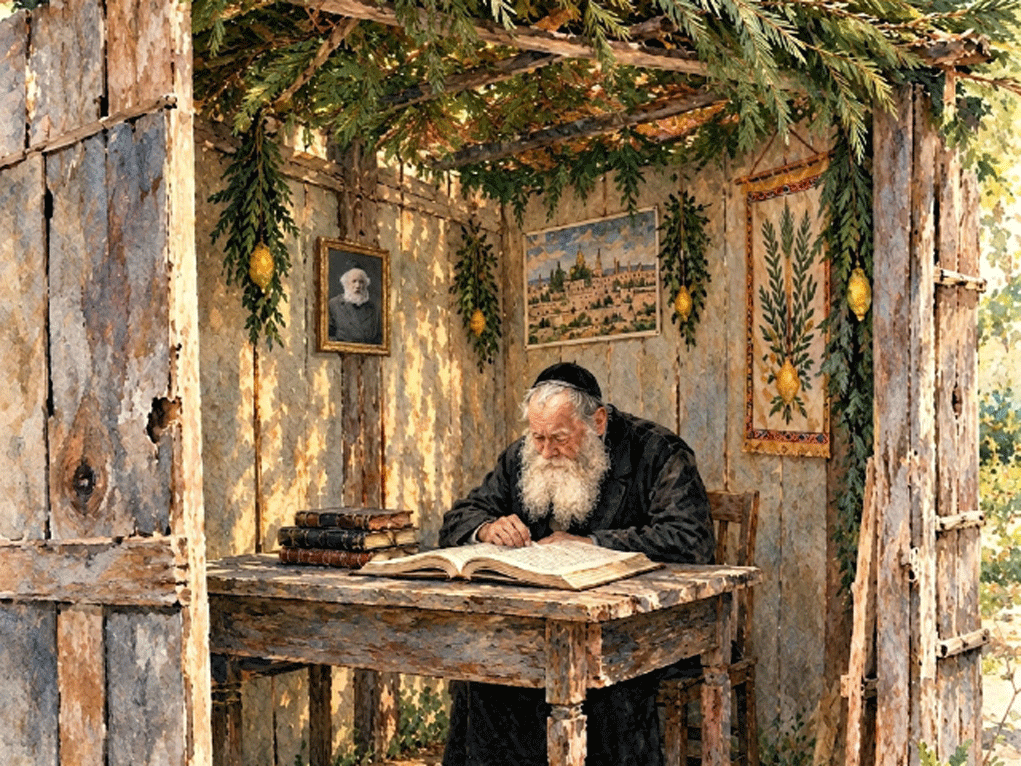 Yated Ne'eman1 month ago
One of the great ironies of life is that we spend so much of it trying to achieve the very thing that we often find most difficult to hold on to.
We want to be happy. We want our homes to be happy, our families to be happy, and our children to be happy. We want to be surrounded by happiness. Yet, too often, happiness is elusive. We can spend years working toward something we are certain will bring us satisfaction, only to discover that once we have attained it, the feeling we anticipated does not quite last. The new home becomes familiar, the accomplishment becomes yesterday’s news, the long-awaited vacation ends, and the thing we once imagined would make everything feel right simply becomes another part of our lives.
It is not that these things do not bring happiness. They do. A beautiful simcha, a nachas-filled moment, a meaningful accomplishment, a family gathering, a good piece of news – these are genuine sources of joy. The question is why the joy they bring so often seems to fade and why a person can possess so much of what he once dreamed of having and still find himself searching for something more.
Perhaps the answer begins with the simple distinction that there is a difference between having reasons to be happy and knowing how to be happy.
A person can have many blessings and fail to experience them as blessings. He can live surrounded by people he loves and remain preoccupied with what is missing. He can be blessed with health, family, Torah, parnossah, and steady kindnesses from Hashem, yet spend his days measuring his life against someone else’s and wondering why he does not have what the other person has. Happiness is not determined by what a person possesses. It is determined by what he sees when he looks at his life.
The Torah understands this profoundly. Simcha is not presented as a luxury, an emotional bonus that comes naturally when circumstances happen to cooperate. It is something we are commanded to pursue and cultivate. And when the Torah speaks of the Yomim Tovim, it commands us, “Vesomachta bechagecha – You shall rejoice on Yom Tov.”
Yet, one Yom Tov is singled out in a remarkable way.
Chazal refer to Pesach as Zeman Cheiruseinu, the time of our freedom, when we went from slavery to freedom; from being under the control of Mitzrayim to becoming a nation.
Shavuos is referred to as Zeman Matan Toraseinu, the time when we received the Torah.
Sukkos is referred to as Zeman Simchoseinu, our time of joy.
The name bears a strong message for us, especially in our day.
As the posuk (Vayikra 23:43) says, the Yom Tov of Sukkos commemorates the sukkos in which Hashem sheltered us in the midbar. Sukkos has distinctive mitzvos: the obligation to dwell in the sukkah and the mitzvah of daled minim.
Yet, when Chazal seek to tell us what Sukkos is, they do not call it the time of the sukkah or the time of the arba minim. They refer to it as a time of simcha.
What did Chazal see in Sukkos that makes simcha not merely one of its themes, but its very identity?
Chazal saw in Sukkos the root of happiness.
Happiness always seems to be just a little bit ahead of us. We can almost see it, and we are certain that we will catch up with it when the next thing happens, when the next problem is resolved, when the next accomplishment is achieved, or when the next long-awaited moment finally arrives. And then it does arrive, and we enjoy it, sometimes immensely, but before long, we find ourselves looking ahead once again, waiting for the next thing that we believe will bring us the happiness that seems to have slipped just beyond our reach.
What is it that makes a person happy? Happy people are not necessarily those who have the most, and unhappy people are not necessarily those who have the least.
Quite often, in Yerushalayim, you will meet people who live with their ten children in tiny apartments, and they seem to be the happiest people alive. And then you can read about the wealthiest people and they are miserable. The richest man in the world recently wrote that “whoever said ‘money can’t buy happiness’ really knew what they were talking about.”
So how do we attain happiness? What is the secret?
We are commanded to serve Hashem with joy, and when the Torah speaks about the Yomim Tovim, it repeatedly emphasizes the obligation of vesomachta bechagecha, to rejoice on this Yom Tov.
What is it about Sukkos that makes simcha its defining characteristic? Why is this the Yom Tov that Chazal identify specifically with happiness? What does Sukkos teach us about something every human being wants so desperately – the secret of being genuinely happy?
We are taught to serve Hashem with simcha, and the Yomim Tovim are specifically associated with the obligation of “vesomachta bechagecha,” to rejoice during the Yomim Tovim. Yet, although this command applies to all the Yomim Tovim, Sukkos possesses a unique distinction. It is not merely a time when we are instructed to be happy. Chazal define the very essence of the Yom Tov as Zeman Simchoseinu, the Time of Our Joy.
Why does its name focus on the joy of the Yom Tov rather than on the sukkos in which Hashem protected us in the midbar, or on the daled minim that occupy such a prominent place in our observance of the Yom Tov? What is it about Sukkos that creates and mandates such an extraordinary degree of happiness that simcha itself becomes the name by which the Yom Tov is identified?
Perhaps the answer begins with something that seems almost paradoxical. On Sukkos, the Yom Tov that is called the Time of Our Joy, we leave our homes.
We step away from the permanent structures that normally provide us with a sense of security and stability and enter a temporary dwelling. We leave behind our solid walls and sturdy roofs, our comfortable bedrooms and dining rooms, and all the physical structures that make us feel that we have established ourselves securely in this world. For seven days, we eat our meals, spend time with our families, and, as much as possible, conduct much of our daily activity in a structure whose very temporary nature is central to its mitzvah.
And perhaps that is precisely where the secret of simcha lies.
One of the greatest impediments to happiness is the mistaken belief that happiness depends upon what we possess and upon the circumstances in which we find ourselves. We imagine that if our house was a little larger, our finances a little more comfortable, our business a little more successful, or our lives a little less complicated, we would finally be able to relax and enjoy what we have. We spend so much of our lives looking toward the next improvement, the next acquisition, or the next hoped-for change that we can easily overlook the blessings already surrounding us.
The sukkah comes to challenge that way of thinking.
For seven days, we deliberately leave the permanent structure that represents the physical security we have worked so hard to establish and place ourselves in a temporary dwelling, beneath a roof that is not even a conventional one. We are reminded that the walls around us were never the ultimate source of our security, that the things we own can provide us with comfort but cannot provide us with the inner sense of peace for which we yearn, and that the difference between a house in which a person is happy and one in which he is miserable has very little to do with the quality of its construction.
A magnificent home without shalom bayis cannot create happiness. A beautifully set table cannot compensate for a lack of warmth among the people gathered around it. A person can surround himself with every physical comfort and still feel empty, while another person can sit at a simple table in a modest home, surrounded by people he loves and with gratitude in his heart, and experience a happiness that no luxury could purchase.
The sukkah strips away the illusion that the structure itself is what makes us secure and comfortable, and it teaches us that we can leave our physical permanence behind and still be happy. We are commanded to be happy precisely there, in that temporary dwelling. Vesomachta bechagecha.
This lesson comes at a particularly significant time of year. We have just emerged from the Yomim Noraim, when we stood before Hashem and confronted the fragility of our existence. On Rosh Hashanah and Yom Kippur, we asked Hashem for life, health, sustenance, and the ability to continue serving Him. We acknowledged how dependent we are upon Him and how little is actually within our control, despite the tremendous effort we invest in creating a sense of security and predictability in our lives.
And then, almost immediately, Hashem gives us the mitzvah of Sukkos and tells us to rejoice.
Hashem gives us a remarkable progression. After the introspection of the Yomim Noraim, after we have stood before Him and asked to be granted another year, after we have examined our lives and contemplated what truly matters and what does not, we are told to leave the security and permanence of our homes, enter the sukkah, gather our families and friends around us, take the daled minim in our hands, and rejoice in the blessings Hashem has given us.
After experiencing Yom Kippur and teshuvah, we are best able to hear the message of the humble sukkah. Now, rather than immediately returning to our routines and comforts, we step outside of them and enter a temporary dwelling, where we look at our lives with fresh eyes, recognize the goodness that is already there, and rejoice in it.
Because one of the greatest sources of unhappiness is not necessarily what we lack, but our preoccupation with what we lack. A person can be surrounded by blessings and yet be unable to enjoy them because his eyes are constantly directed elsewhere. He sees what someone else has, the house someone else lives in, the vacation someone else takes, the success someone else has achieved, and slowly, almost imperceptibly, the blessings in his own life become invisible to him. The more we compare, the more our sense of what we have is diminished by what we imagine we should have.
There will always be someone who has more. There will always be another person with a larger house, a greater accomplishment, a more impressive position, a nicer car, or a more seemingly perfect life. If a person looks outward at what others have, he will never have enough. He can spend his entire life surrounded by gifts and still view himself as deprived.
On Sukkos, we step away from the pursuit of more and recognize what we have. Sukkos changes our field of vision. Instead of focusing on the permanent structures that distinguish one person from another, everyone leaves them behind and enters a simple sukkah, where the important things become much clearer. The family sitting around the table matters more than the table, the people sharing the meal matter more than the chairs they are sitting on, and the mitzvos surrounding us become more precious than the physical comforts we have temporarily left behind.
The daled minim reinforce that lesson in another way. We take four minim that are different from one another and bring them together because the Jewish people are not meant to be a collection of individuals, each concerned only with his own accomplishments and possessions. We need one another, and there is a special joy that comes from recognizing that we are part of something larger than ourselves.
The sukkah teaches us to appreciate what Hashem has given us, while the daled minim teach us to appreciate the people with whom He has surrounded us. Both lessons lead us toward the same destination. A person becomes happier when he stops measuring his life according to what he thinks is missing and begins to recognize the abundance that is already present.
There is yet another dimension to the simcha of Sukkos. On Pesach, we celebrate what Hashem did for us when He took us out of Mitzrayim, and on Shavuos, we celebrate the Torah that He gave us at Har Sinai. On Sukkos, we experience the relationship itself. We place ourselves under the protection of Hashem and live in the sukkah, which Chazal describe as tzila demehemnusa, the shade of faith.
We are reminded that the security we imagine comes from our homes, our resources, and our plans was never absolute. We were always dependent upon Hashem, though we don’t always notice it. The temporary nature of the sukkah reminds us that the world itself is temporary and that our security does not come from the walls we construct around ourselves, but from the One Who sustains us within those walls and beyond them.
Recognizing that dependence does not make us fearful. It makes us joyful, because once a person understands that Hashem is holding him, he no longer has to feel that he is responsible for holding his entire world together.
Perhaps that is why Sukkos follows immediately after Yom Kippur. We have just spent the holiest day of the year asking Hashem to forgive us and grant us another year. We have confronted our shortcomings, acknowledged our mistakes, and promised to do better. We stood before the Melech with nothing to hide behind, and then Hashem tells us that the next step is to rejoice.
Build your sukkah. Take your daled minim. Invite guests. Eat and drink. Learn Torah. Sing. Dance. Celebrate that you have been given another year and another opportunity to draw closer to Hashem.
This is not a command to manufacture happiness. Rather, it is an invitation to discover the source of happiness. We do not need to wait until every problem has been solved or every aspiration has been fulfilled before allowing ourselves to appreciate the goodness in our lives.
The world around us constantly tells us the opposite. We are encouraged to look at what we don’t have, to notice what we could buy, to compare ourselves with people who appear to have more, and to believe that the next acquisition or accomplishment will finally give us the satisfaction we seek. Sukkos teaches us to step away from that pursuit and to sit beneath the s’chach with the people and the blessings that are already ours.
When we do that, we can begin to understand the words Zeman Simchoseinu in a deeper way. The Torah is not simply telling us that Sukkos is a time during which we are supposed to smile more. It is teaching us how to become capable of experiencing simcha, namely by recognizing that our lives are gifts, that our families are gifts, that our Torah and mitzvos are gifts, and that the opportunity to stand before Hashem and serve Him is itself an extraordinary reason for gratitude.
And then we understand why Chazal did not define Sukkos by the temporary dwelling in which we live, even though the sukkah is central to the Yom Tov, nor by the daled minim that we hold with such care. They called it Zeman Simchoseinu because after Pesach we were free, after Shavuos we had the Torah, and after Sukkos we have simcha.
In our modern world, people are driven to buy things. Since society teaches that having more things makes people happier, it follows that the act of purchasing things brings happiness. In the language of science and psychology, people experience a dopamine rush from shopping and acquiring new things. And while in earlier times a person had to get dressed, leave the house, and travel to a store to obtain something new, today the process has become almost effortless. From the comfort of home, people can click away and purchase virtually anything they need or want.
People have become so accustomed to the experience of buying that there are now, believe it or not, sites where the products do not even exist. The sites do not actually sell anything. They do something else. They provide the experience of shopping.
Think about what that means. A grown person who seeks happiness goes through the motions of browsing, selecting, and purchasing items, even though nothing is actually being purchased and nothing will arrive at his door. The experience itself has become the source of the pleasure. It is simulated; it is not real. And yet, the desire behind it is very real: the desire to be happy, the desire to buy, to have, to accumulate, because people think that having more will make them happier.
But much of the pleasure of indulgence comes from anticipation. People look forward to having something and imagine how good it will feel when it arrives, and then, once they have it, the excitement begins to fade, and before they know it, their attention turns toward the next thing they want to acquire.
The happiness they imagine they will obtain from having more things – a nicer house, a nicer car, a fancier tie or scarf – is all an illusion. And that is precisely part of the message of the sukkah.
There is a classic Yiddish tune about the sukkah, which celebrates that a Yiddele sitting in his little sukkaleh, bundled up against the elements, can be happier and warmer than the wealthiest man whose butler is throwing logs into his fireplace to warm him. The Yiddele sitting in his rickety sukkaleh feels safer and more secure than the wealthy landowner ensconced behind his iron gates.
The world tells us that the more we have, the happier and more secure we will be. The sukkah teaches us the opposite. It takes away the permanence, the comfort, and the possessions that we imagine are the foundations of happiness and shows us that a person can have very little and still be genuinely someiach when he knows that what he has is from Hashem and that he sits betzila demehemnusa, under His protection.
Happiness does not come from having more. It is a simple message, one we have heard many times. On Sukkos, it is no longer a soundbite or a cute saying to hang on the refrigerator. On Sukkos, we sit in the sukkah and discover that it is true.
May we all merit true simcha on Sukkos and all year round, and may we merit the coming of Moshiach bekarov.
 Yated Ne'eman1 month ago
Thoughts on the Permanent and the Temporary
Let me tell you something personal. I always used to get two copies of the Yated, one for the family to read and the other to put away, to archive. When I started writing, I decided that I wanted to have one hard copy of everything that I wrote. I would store the papers in large plastic totes in my attic. I thought that it was important for the historical record.
I changed my mind, however, m’pnei maaseh shehoyah, because of a story that happened.
This is the story. Seven years ago, my father passed away. Although my mother, may she live and be well, continued to live in the house, after a period of time, it became evident that she needed to move out of the big house.
The task of cleaning out the house was left to my siblings and me. We are spread across Canada, the United States, and Eretz Yisroel, but we all decided to set aside a full week to come together at the house we had called home, the house in which we all grew up together, and systematically clean it out. We would keep what was important, valuable, or sentimentally valuable, and give away or throw away everything else.
It was an emotionally wrenching week. There was a lot of nostalgia, with good memories and sadness all mixed together. My father, zichrono livrocha, was a very organized person, so everything was stored in an organized fashion. It was just amazing to see how he kept everything stored systematically. If you wanted to find the warranty for the Sunbeam blender that he bought in 1964, you could easily find it. Everything had a system.
To the…Dumpster!
Being an academic, my father had a massive library of both sifrei kodesh and, lehavdil, secular academic books. What would we do with all those books and seforim? Most of the seforim were not wanted by the children and grandchildren. They were all old print. Today’s seforim are so much easier to learn from, and other than children and grandchildren taking sentimental keepsakes, the rest were given to shaimos for a fee. (No, you can’t even give them away for free.)
Aside from sentimental and rare books, most of the books ended up in a dumpster, together with all the warranties, mortgage bills, utility bills, and everything else that had been meticulously preserved. As we were going through the house, a sobering thought hit me: This is what happens after 120. A person doesn’t take anything with him, and so much of what he has painstakingly amassed just ends up in a dumpster. A person only takes with him the kinyanei netzach. Everything else is very temporary.
We Were Mainly Left With…Memories
What we did take with us from the house were the memories. Memories of the Seder nights conducted by my father, memories that have since been translated into action as we continue to do things the way he taught us. Memories of Shabbos seudos, zemiros, and the lessons that he and my mother taught us. Even memories of the geshmake baseball games in the yard or hockey games in the driveway. Those things are indelibly etched into our hearts. That is what one takes. The house has long been sold and gutted, and only the memories and the spiritual legacy that our father bequeathed to us remain.
It was a great house. The upstairs had four bedrooms and my father’s large study. The main floor had a living room, dining room, kitchen, family room, and guest bedroom. There was a basement where we played and where the large freezer was, and a cellar where my father’s homemade wine was kept.
All of it was gutted.
It is gone.
And now?
It only exists in our memories.
That is why I stopped archiving the Yateds. I wondered, “For what reason am I giving all this extra work to my children? One day, after 120 years, they will just have to shlep those totes and toss them into the dumpster.”
The “Sukkah Mindset” = Stop and Think
I was thinking about these ideas as we go into our sukkos. The whole idea of Sukkos is to stop for a second and get out of our diras keva mindset. In this world, we are so busy amassing possessions. (How many times a day do Amazon, UPS, FedEx, Walmart, and Instacart come to your house? Just asking.)
We are so busy with our houses that we sometimes don’t realize what really lasts. The atmosphere of simcha in your sukkah as the family sings together will last long after anything else. Believe me.
On Sukkos, it is time to realize that all the stuff that we “want,” the big toys and little toys—the big toys, such as a house or car, and our little toys, our devices, any fun stuff that we buy—is just a diversion. It doesn’t last, we won’t remember it one day, and, at best, it will all end up in a dumpster somewhere.
The “Large Dirah with High Ceilings and Wide Windows”
Let me share with you a story that I recently saw about Rav Nesanel Reisman, the father of Rav Yisroel Yitzchok Reisman, who was a well-known dayan on the Badatz of the Eidah Hachareidis.
Rav Nesanel was a talmid of the Chiddushei Harim and one of the prominent Chassidim of the Sefas Emes who left Poland to move to Eretz Yisroel in the late 1800s.
In Poland, Rav Nesanel had a close friend named Reb Shaya Previs. Before leaving for Eretz Yisroel, Rav Nesanel made a deal with Reb Shaya that they would keep in touch and that Rav Nesanel would report back to him about what life was like in Eretz Yisroel.
Not long after he arrived, Rav Nesanel wrote a letter to Reb Shaya: “I have a very large dirah with high ceilings, rooms, and wide, beautiful windows.”
Reb Shaya was very surprised. Until then, he had been under the impression that the Yidden in Yerushalayim lived in great poverty, but from Reb Nesanel’s report, it seemed that he was living on a relatively high standard.
A few years later, Reb Shaya went to Yerushalayim. The first thing he did was ask people where his close friend, Rav Nesanel Reisman, lived. They pointed to a hovel. It was so small and so farkvetched that the only way to reach it was by going down a deep flight of stairs underground. It looked like a dank, dreary, damp basement.
Reb Shaya couldn’t believe his eyes when he saw what the “house” looked like. Either way, he didn’t even bother going down the stairs to visit, because he was certain that Rav Nesanel was in the bais medrash, not in his house.
He therefore set out to find the bais medrash where his friend would be learning and he found him. After greeting each other warmly, the two old friends, who were so thrilled to see each other, began to shmooze. One of the first things Reb Shaya brought up was the puzzling letter.
“Rav Nesanel,” he asked in wonder, “why, in your letter, did you paint an untruthful picture for me? You said that you have such a nice dirah with big windows and a high ceiling. But I see that you live in a damp, underground cellar that is barely habitable!”
“Stop,” Rav Nesanel held up his hand and replied. “Reb Shaya, look around. Don’t you see my dirah? It is right here. Look at this bais medrash. It has a high ceiling, beautiful wide windows, and even a chotzer right in front. This is where I live. I barely visit that tiny hovel. My main house is here.”
On Sukkos, we leave our houses and show that our spiritual home, the sukkah, is our real home.
Rav Nesanel lived with this concept all year round. It was “ah gantz yohr Sukkos.”
His real dirah was the bais medrash.
Think: What Is Your Reality?
Perhaps this Sukkos, we should sit down for a second and contemplate. What is our dirah? What is real to us? What will we really take with us? What real kinyonei netzach, eternal lessons, will we bequeath to our children and grandchildren long after we are gone?
This Sukkos, let us think about the words of Chazal that teach us, “Tzei midiras keva v’shev b’diras arai.” Let us remember that Chazal are not telling us to dump our permanent houses in the garbage and go out camping without even the most basic amenities. They are not telling us to become depressed because we have to live without gashmiyus.
If we stop to think about what Chazal are telling us, we might actually feel liberated. Yes, it can be very liberating to take the time to recalibrate and think about what is really important. Just that knowledge is the key to true simcha during this year’s Zeman Simchaseinu.
If we think this way, we can live our lives with the true simcha of ah gantz yohr Sukkos.
Gut Yom Tov. Ah freilichen Zeman Simchaseinu.
 Yated Ne'eman1 month ago
I have a question that I have been asking myself at Hakafos for the better part of fifty years. However, this time, I’ll take the leap and ask it out loud. The question might sound strange at first, which is probably why I have waited so long to ask it.
The question is this: Why is there a Yom Tov for learning Torah?
I do not mean it the way it sounds. I am not building toward an article that ends with some cute switcheroo where it turns out that Simchas Torah is really about something else entirely. I mean it for real. I assume we celebrate the learning of Torah. Not receiving the Torah. That’s Shavuos. But why one for learning Torah or for completing the cycle of krias haTorah? After all, there are so many fundamental mitzvos. We have no Yom Tov for tefillah. We have no Yom Tov for chesed (except perhaps Bike4Chai), no Yom Tov for emunah, and no one has ever proposed a night of dancing in honor of shemiras halashon (though it might well do more good than harm).
And here is what makes it stranger. We already have one. Shavuos is Zeman Matan Toraseinu, and as integral as Matan Torah is, its Yom Tov, save the concept of kulo lochem, is just like any other Yom Tov.
But bottom line, Shavuos, like every other Yom Tov, corresponds to a date and an event. Pesach has Yetzias Mitzrayim, Sukkos has the Ananei Hakavod, and Shavuos has a story of Kabbolas HaTorah powerful enough to shake the world.
Simchas Torah, by contrast, is not celebrating an event. It commemorates the fact that we reached the end of the parshiyos, which, though a major achievement, is not a historical event by any stretch. Vezos Habrocha arrives every year, on schedule, whether we learned anything that year or not. And we celebrate it as well, whether we learned anything that year or not.
Moreover, we celebrate Torah constantly. I say this as someone who has spent a good part of his life at Torah celebrations and would attend more of them if my schedule allowed. We have mega-siyumim that fill stadiums. We have Chumash parties, Mishnayos plays, conventions, Adirei HaTorah, and dinners at which grown men dance like teenagers over a masechta they completed. A community that can put ninety thousand people in a football arena over the completion of Shas, and another twenty thousand in a basketball arena to celebrate Torah lishmah, does not seem to require an annual reminder that it is fond of learning.
So what exactly are we dancing about?
Let me start with the original tefillah question, because I think it holds the key and because it puts the whole issue in a different light. Why don’t we celebrate tefillah?
The celebration of limud haTorah is very different. Nobody has a cheilek in your Shemoneh Esrei. Not your rebbi, not your chavrusa, not your father. Whatever you davened this morning between Yishtabach and Aleinu was yours alone, and it will remain yours alone. Tefillah is the one avodah that cannot be shared, subdivided, or assigned, which is precisely why it can never be made into a Yom Tov. You cannot make a public celebration out of something that no two people can hold at the same time.
Torah is different. It is the only mitzvah that the Torah itself describes as a joint partnership. Torah tzivah lonu Moshe morasha kehillas Yaakov. It is a heritage, an inheritance, and not of an individual, but of a kehillah, and the Gemara in Sukkah teaches that this is the very first posuk that a father says to a child who has learned to speak. Think about that for a moment. Before a Yiddishe kind can tell you what a mitzvah is, before he knows a single Rashi, he has been handed a deed of partnership in Torah.
Nevertheless, a joint shutfus, as some people unfortunately may know, can be where the trouble begins.
Look at what the global view actually looks like. There is a four-year-old somewhere this morning doing “kometz aleph ah.” There is a fourth-grader on his fourth perek of Mishnayos Brachos. There is a bochur in eighth grade learning Gemara without meforshim and quite pleased about it, a mesivta bochur across the street glowing over his first Rashba, and down the hall, a bais medrash bochur who has been on the same Ketzos for eleven days and considers all of them rookies. There is a yungerman in Bais Medrash Govoah moving through a sugya at a pace that would shock an outsider, and he is doing it right. There is a Yid smiling with Reb Eli, a Yid plugging with Reb Sruly. Through all of it, there is an accountant from Flatbush who has been going to the same six-thirty Daf for thirty-one years and has never once heard of either of them. There is Dirshu with its tests and Oraysa with its chazarah, a yungerman with a shteller, and a yungerman without one who, quite frankly, learns better than the man who has one, and both of them know it. We all know all of these Yidden, programs, and paths of learning, and I myself have been part of many of them.
Kinas sofrim tarbeh chochmah, says the Gemara in Bava Basra. It is the engine of the whole enterprise. But let us be honest with each other. Kinas sofrim tarbeh chochmah, and sometimes, when it is not handled properly, it can unfortunately also be marbeh more than chochmah. It can be marbeh kinah. The competition that drives a man to learn is the same competition that lets him glance across the bais medrash and subconsciously look askance at someone learning differently than him.
Which brings me to the strangest fact about this Yom Tov and the one I think explains all of it.
Shemini Atzeres (and Simchas Torah in chutz la’aretz) is designated as a personal time with Hashem. Nothing else, just us and Hashem. An eighth day, added with untold love from Hakadosh Boruch Hu—kasheh alai preidaschem, because the parting is hard for Him—and then left empty. And Klal Yisroel chose to celebrate that one day with His greatest gift, His greatest joy, the glue that holds His nation together—the Torah Hakedosha.
But it doesn’t stop there. Look at what takes place on this auspicious day. Every man gets an aliyah. Every single one, and we repeat the parsha as many times as it takes, which makes it the only day of the year when the laining is geared to the tzibbur instead of the tzibbur being geared to the laining. There is Kol Hane’arim, children called up under a tallis who cannot be counted for anything anywhere else in Yiddishkeit. And then, for the entire length of Hakafos, the Sefer Torah is closed. Nobody reads a syllable. The rosh kollel and the Alef-Bais kid are holding the identical rolled scroll, and there is no way on earth to tell from the outside which one of them knows what is written inside it.
Every shul has its own minhagim, all geared to being mechabeid the Torah and the ones who toil over it. In my shul, there is nothing I enjoy more than seeing the myriad bochurim, in yeshivos of every level, coming together to form the most energetic circles around unfamiliar men in shul, singing and shouting, “Vechayei olam nota besocheinu,” as if they have been sitting in kollel for twenty years. Fifty-one weeks a year, the Torah is open, an open sefer for anyone to come and claim their dominance in their respective cheilek. But on Simchas Torah, during Hakafos, it is closed. The sefer accepts anyone who holds it, each in his own individual mehalech.
This is also, I am convinced, why we find that so many Yidden, including distinguished roshei yeshiva, don’t hold back from taking an extra l’chaim on Simchas Torah. Purim breaks the barrier between arur Haman and boruch Mordechai. Perhaps Simchas Torah also breaks a barrier. It breaks the barrier between one man’s Rav Chaim and another man’s Mishnayos. Because for at least one day a year, we strive to recognize that every man’s learning is, in fact, his cheilek of the Torah.
Between the bochur who spent the year k’nocking over Rav Boruch Ber’s Torah and the baal habayis who does not miss the Daf for anything. Between the yungerman who sat two weeks on one Pnei Yehoshua and the young man who pays a former kollel chavrusa to learn with him after a long day at work. Between the lawyer who learns at sixty-five miles an hour on the Belt Parkway and the Yid learning in Bais Hatalmud who has not learned anywhere but the same shtender since Elul of 5741. Between the melamed who has been teaching the same alef with the same drop of honey for forty-two years, whose entire Torah seems to be contained in a single letter, and the rosh yeshiva whose Torah fills a celebrated sefer, ask yourself: Could one have reached their potential without the other?
The barrier breaks. That is what we are dancing about. Not that we have Torah. We knew that in Sivan. On Simchas Torah, we are celebrating that all of us have it, at once, in the only configuration where nobody can measure anybody.
At Har Sinai, one nation was mekabel one Torah. On Simchas Torah, one Torah is mekabel a thousand kinds of Yidden.
And somewhere in the middle of the fourth Hakafah, a bochur who spent the entire year killing himself on the lomdus, assured that a daf a day is not the real learning, will find himself clutching one end of a closed Sefer Torah with the fellow who learns that very same daf, each holding the other, both of them out of breath, neither of them able to say whose Torah it is.
It is not that they cannot tell. It is that on that night, there is nothing to tell.
 Yated Ne'eman1 month ago
The Tur (Orach Chaim, Hilchos Rosh Hashanah 417) famously quotes from his brother, Rav Yehudah, how each of the avos hakedoshim represent one of the three major Yomim Tovim. His source for Yaakov Avinu being the connection to Sukkos is the posuk (Bereishis 33:17) which states that after he manages to divest himself from Eisav, “Yaakov journeyed to Sukkos and built himself a house and for his livestock he made sukkos; he therefore called the name of the place Sukkos.” Although many aspects of this juxtaposition are shrouded in mystery — e.g., what do animals have to do with our sukkah? — the connection between Yaakov and Sukkos is quite apparent.
However, another statement of Chazal (Bereishis Rabbah 48:10) seems to give Avrohom Avinu credit for this wonderful Yom Tov: “Hashem said to Avrohom, ‘You said [to the visiting angels], ‘Recline beneath the tree.’ By your life I will pay back your children [as it says], ‘He spread out a cloud for shelter’ (Tehillim 105:39).” This source is not as straightforward at all. First of all, what does Avrohom Avinu’s act of chesed have to with Klal Yisroel being protected in the desert by the Clouds of Glory? Secondly, it would seem from the actual story at the beginning of Parshas Vayeira that the least exertion that Avrohom did was offering them some shelter under the tree. He personally served the visitors a sumptuous meal, running through the heat of an intensely hot day while he was still in great pain from his bris milah, while pointing out a shady tree doesn’t seem to be in the same mesirus nefesh league as the rest of his hachnosas orchim. Yet, it is this deed that was the seed for Klal Yisroel’s protection and our own Yom Tov for eternity.
To make matters a bit more complicated, we should take note of the fact that the joy of our Zeman Simchoseinu seems to be rooted in Yitzchok Avinu, who is usually considered to be the fount of yirah, pachad and gevurah (see Zohar Hakadosh, Ki Sisa 44b). In the Siddur HaGra (introduction to Tefillas Shacharis), Rav Naftoli Hertz writes that “Avrohom is the source of our chesed and Yitzchok of our simcha.” So, although we understand that Yaakov Avinu is inexorably entwined in the Yom Tov of Sukkos, its joy flows from Yitzchok. This is puzzling on two accounts. First of all, why is there a dichotomy between the matrix of the Yom Tov itself and its definition in time as being Zeman Simchoseinu? Secondly, how can Yitzchok be the source of simcha when he is so often associated with the harsher emotions and middos of yirah, pachad and gevurah?
To answer this latter question, we can turn to Rav Dovid Cohen, rosh yeshiva of Yeshivas Chevron (Zeman Simchoseinu, page 183). He quotes from the rest of Rav Hertz’s essay (Imrei Shefer, ibid.), which explains that “simcha comes from hamtokas hadinim, roughly translated as “the sweetening of the bitter statutes.” To understand this further, let us turn to the foundational study of the Yomim Tovim, their order and interaction provided by my rebbi, Rav Yitzchok Hutner, in many places (Pachad Yitzchok, Rosh Hashanah 10:8; Yom Kippur 8:8; Maamorei Pachad Yitzchok, Sukkos 7, 98:15, 106). He demonstrates, based upon the commentary of the Vilna Gaon (to Shir Hashirim 1:4; Aderes Eliyohu, Ki Sisa 34:10), that Sukkos does not commemorate the beginning of the Ananei Hakavod, but their return after we sinned by making the Eigel. For this reason, Sukkos arrives after Yom Kippur, not after Pesach, when the Clouds of Glory began. Thus, the joy of Sukkos is that of having our teshuvah accepted by Hashem and being reinstated as His nation and beloved children.
Now we can understand more deeply Rav Naftoli Hertz’s words, according to Rav Dovid Cohen. Yes, Yitzchok Avinu is our guide and role model for yirah, pachad and gevurah. But that is also the essence of Sukkos. We sinned as a nation and are still paying the price for the Eigel (see Rashi, Shemos 32:34). Yet, when we were forgiven and the Ananei Hakavod returned, it is not only that we were once again protected from the elements and our enemies. As the Ramchal (Derech Hashem) defines Sukkos, we were no longer exposed physically, but, even more importantly, we were isolated from the nations and protected spiritually as well. We showed Hashem that we want to be better, so Hashem responded by the ultimate favor: I will keep you close to Me and be isolated with you under the Clouds.
We can now see that all three of the avos contributed a unique element of our own Sukkos experience. Yaakov Avinu set up the sukkah, which was originally a basic barn for his animals, as the prototype of a people who would limit their materialistic needs. The sukkah represents downsizing and reducing our gashmiyus — corporeal expectations — on behalf of increasing our spirituality or ruchniyus. Avrohom Avinu had already set this up when he indicated to posterity that even chesed doesn’t necessarily require expenditures and purchases. Sukkos begins with pointing out a shady spot under a tree. But Yitzchok, who is the embodiment of the human sacrifice, is also the one who teaches us that the ultimate joy is renouncing our sins and embracing Hashem and His Torah.
Rav Yonasan David, rosh yeshiva of Yeshivas Pachad Yitzchok in Yerushalayim (Kuntrus Sukkos 18:5, page 67) adds an important perspective to this study. He asks an interesting question. We know that the rule in kedusha is maalin bakodesh. We are always trying to rise from one level to another in our avodas Hashem. So where do we go after Yom Kippur? How is Sukkos an improvement and spiritual advance? He points out that after Dovid Hamelelech did teshuvah for his own sin, he requested a sign from Hashem that he had been forgiven. Hashem showed him this sign after he passed away, when the doors of the Bais Hamikdosh would only open upon the mention of his name (Tehillim 132:10, with Shabbos 30a).
The Vilna Gaon (ibid., Aderes Eliyohu) added that when Klal Yisroel originally received the Clouds of Gory, only the nevi’im were able to see them. However, when they returned after they were forgiven for the Eigel, all were able to perceive them. This was the sign from Hashem that we were fully forgiven. Rav Yonasan adds that this is also the source of the special joy of Sukkos of which the Rambam (Hilchos Lulav 8:12) speaks. It is the joy Rabbeinu Yonah speaks of when he highlights the great joy of the baal teshuvah when he knows that he has been accepted once again into Hashem’s good graces.
Sukkos does not come to us in a vacuum. It is the natural continuation of our teshuvah and all the efforts of our Elul and the Yomim Noraim. It took the contribution of each of the avos, in some cases going against their usual grain, as Rav Eliyohu Eliezer Dessler always points out, especially Yitzchok becoming the source of our sublime joy on Sukkos. Yaakov teaches us that we don’t need luxuries, only a simple hut, and Avrohom makes clear that even our mitzvos can be as simple and basic as pointing out a shady tree. The totality of this partnership of our forefathers makes for the happiest time of the year, but one where we have absolutely no need for the baubles of this world, only the ethereal pleasures of being in the presence of the Shechinah for a glorious week of elevation.
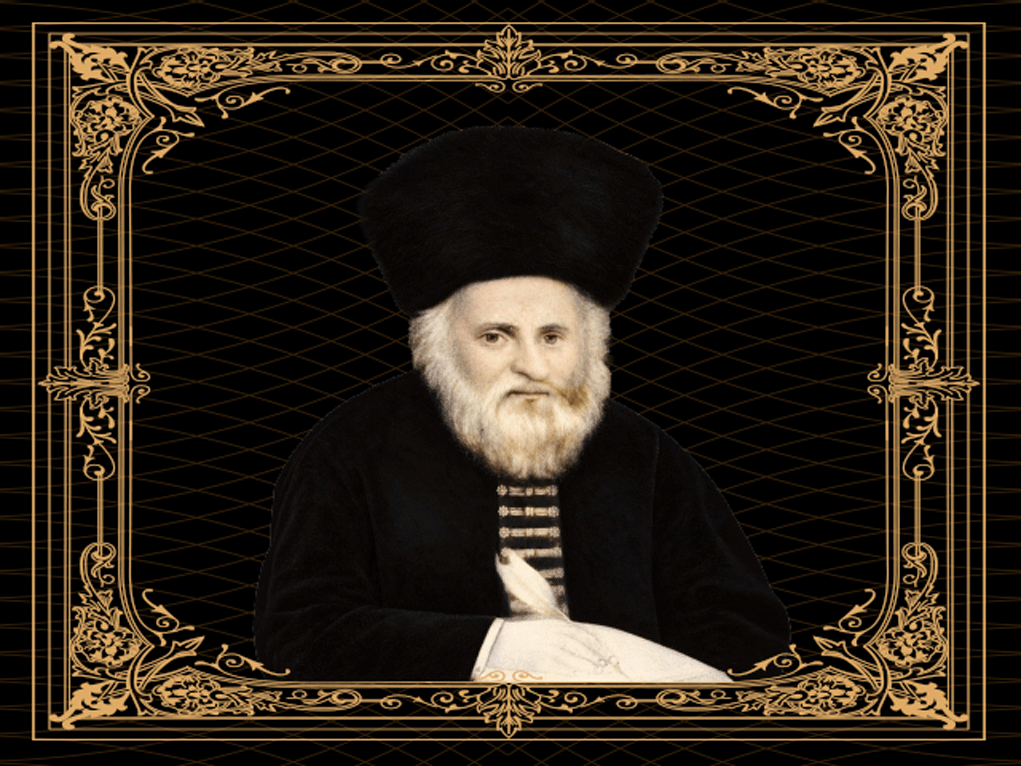 Yated Ne'eman1 month ago
Entering the Boundless Torah and Towering Spiritual World of the Vilna Gaon
Upon the 229th anniversary of the histalkus of rabbon shel Yisroel, Rav Eliyohu of Vilna, whose yahrtzeit falls on the 19th of Tishrei, in the midst of the days of Chag HaSukkos, we have been privileged to present to the tzibbur of bnei Torah with a special, wide-ranging essay devoted to the exalted and extraordinary world of the Gra, one of the singular figures in the history of mesoras haTorah throughout the generations.
The stature of the Gra cannot be confined within the bounds of any particular era, sefer, or individual field of Torah. His light extends across Shas and poskim, mikra and Medrash, nigleh and nistar, halacha and dikduk, and his imprint was left upon the very form of Torah learning and upon the character of the bais medrash for generations to come.
For this special issue, Rav Michoel Sorotzkin graciously undertook to place before us a comprehensive maamar, the fruit of extensive iyun in the sources and in the teachings of the Gra and his talmidim. His purpose is not merely to recount the greatness of the Gra, but to open for the learner a window into the Gra’s unique derech hamachshovah.
In his distinctive style, by now well known to the readers of the Yated, broad-ranging bekius is woven together with penetrating lomdus, sensitivity to the precise language of the pesukim, and a constant search for the inner structure through which seemingly distant details are revealed as parts of a single, unified sugya. Through his study of the Gra’s Torah concerning Chag HaSukkos, an entire world unfolds before the reader, a world in which a single letter, a subtle change of wording, the calculation of the korbanos, or a halachic shiur can become a gateway to understanding an entire mehalech in Torah.
This is not merely a biographical essay, nor is it simply a collection of facts and chiddushim. Rather, it is an attempt to draw closer to the tzuras haTorah of the Gra, to his capacity to perceive the entirety of the Torah as one seamless whole, and to that wondrous greatness regarding which his talmidim and the gedolei hadoros who followed him testified in terms that we are scarcely accustomed to finding in reference to others.
Between the lines emerges the towering figure of the Gra: the sheer intensity of his hasmodah, the purity of his ameilus, the vast breadth of his knowledge, the incisiveness of his conclusions, and the profound depth of his kedusha. And it becomes apparent how, specifically on Chag HaSukkos, when shiur and sod, halacha and penimiyus, number and meaning all converge, one can gain some small taste of the unique world of one for whom the entirety of Torah stood as a single edifice.
There are gedolim whose greatness can be described through the seforim they authored, the talmidim they raised, the kehillos they led, or the mark they left upon a particular generation. The Vilna Gaon belongs to a far rarer order. Even the familiar descriptions of his hasmodah, his almost limitless bekius, his command of Bavli and Yerushalmi, Medrash, Tosefta, Rishonim, dikduk, Kabbolah and every chamber of Torah, true as they are, remain insufficient, because they describe what he possessed rather than what he was. On 19 Tishrei, during Chol Hamoed Sukkos, Klal Yisroel marks the 229th yahrtzeit of Rabbeinu Eliyohu of Vilna, yet the real task is not to reconstruct a biography. It is to approach, however inadequately, a mind and a neshomah in which the entire Torah seemed to exist as one indivisible reality. A variant spelling in Chumash, a halacha in Menochos, a line of Zohar, a posuk in Tehillim and a din in Rambam did not occupy separate compartments. They illuminated one another. What appears to an ordinary learner as a collection of distant mareh mekomos could, to the Gra, be one sugya whose parts had simply been scattered across Shas, poskim, Tanach and nistar.
This is perhaps the most essential key to understanding both the majesty and the difficulty of the Gra. His brevity can deceive. A few words in Biur HaGra may stand upon an enormous, invisible foundation of sources weighed against one another until only the conclusion remains visible. Rav Chaim Volozhiner repeatedly depicts a rebbi whose knowledge was not merely encyclopedic but structured, ordered, and tested against the totality of Torah. He also records the Gra’s refusal to receive Torah through supernatural revelation when such knowledge could come only as a gift without toil. The Gra wanted Torah through ameilus, through the chochmah that Hakadosh Boruch Hu grants a person who labors until the sugya yields. That fact is indispensable. His greatness was not a miracle that spared him effort. His greatness revealed itself precisely in the intensity of the effort, in the demand that every word be accounted for and every conclusion rest upon the deepest possible foundation.
Sukkos offers an unusually fitting window into this world. Few Yomim Tovim contain such an extraordinary union of the exact and the exalted. A sukkah is measured in tefochim and amos, yet it is also the tzeila dimeheimnusa. The four minim are governed by exact physical dinim, yet they become instruments of avodah through which the forces of din are sweetened. The korbanos of the Chag can be counted mathematically, yet Chazal connect their 70 porim to the 70 nations. The water poured upon the mizbei’ach is measured in a kli, yet its purpose is the brocha of the year’s rain. Within Sukkos, number and symbol, halacha and sod, measure and mystery constantly meet. It is therefore striking how naturally the Torah of the Gra on Sukkos reveals the qualities that defined him: breadth without vagueness, precision without narrowness, and a power to uncover unity where everyone else sees fragments.
To Know A Masechta
The introduction known as Aliyos Eliyohu, printed with Peas HaShulchan, records a scene that deserves to be read not merely as a story of memory but as a definition of the Gra’s conception of Torah knowledge. Shortly before Sukkos, the Gra told those standing before him that a talmid chochom should know at least one masechta by heart so that even while traveling, or while sitting in darkness without access to a sefer, he would never be severed from the mitzvah of v’hogisa bo yomam v’laylah. One of the talmidim accepted the charge with extraordinary seriousness and reviewed Maseches Sukkah again and again until he could recite it fluently. During Chol Hamoed he came before the Gra and proudly announced that he now knew the masechta baal peh. The Gra did not ask him to recite a daf. He asked instead how many machlokos appear between Rabi Meir and Rabi Yehudah, how many between Rabi Akiva and Rabi Tarfon, how many between Abaye and Rava, and how many among the other pairs of Tanna’im and Amora’im who shape the masechta. The talmid could not answer. The Gra then began to enumerate them, arranging the masechta by its sugyos, shittos, and recurring patterns, incorporating the Tosefta and Yerushalmi, and showing that what seemed to the talmid like a sequence of dapim was in fact a single constructed whole.
The distinction is profound. The talmid had achieved memory. The Gra possessed architecture. To know a masechta meant not simply to carry its words but to perceive its inner arrangement, to know which din belongs with which shittah, where one machlokes echoes another, and how a later sugya redefines an earlier one. In the course of that same demonstration, the Gra calculated that the number of invalid sukkos discussed through the sources corresponds to the gematria of the deficient spelling of sukkah, while the number of valid sukkos corresponds to the fuller spelling. Even here, the counting is not a parlor display of astonishing memory. It reflects a mind in which the entire masechta could be reorganized at will because every individual sugya had found its precise place within a total structure. This quality will return repeatedly in the chiddushim that follow. Again and again, the Gra sees a word or a letter only after seeing the entire system to which it belongs.
Minchosam V’niskeihem
The most elaborate of these cheshbonos begins with a seemingly insignificant letter. On the first three days of Sukkos, the Torah introduces the accompanying flour offerings and nesochim with the expression u’minchosam v’niskeihem. On the fourth day, in Bamidbar 29:24, the opening vav disappears, and the Torah writes simply minchosam v’niskeihem. The Gra explains this change through a combination of two mishnayos and a gemara in Menochos. The mishnah in Menochos 9:4 teaches that the nesochim of porim may be combined with those of eilim. The mishnah in Menochos 12:4 establishes that a voluntary mincha of 60 esronim may be placed in one kli, while 61 must be divided. The gemara in Menochos 15b teaches that a person may bring his korban on one day and its nesochim later. These dinim allow the first three days of Sukkos to be calculated as a single unit.
On the first day there are 13 porim. At three esronim for each par, they produce 39, and the two eilim add another four, yielding 43. On the second day, 12 porim produce 36, and the eilim again add four, giving 40. On the third day, 11 porim produce 33, plus four from the eilim, giving 37. Forty-three, 40, and 37 total exactly one 120 esronim. The first three days therefore fill two keilim of 60 with mathematical precision. The connecting vav remains appropriate throughout that unit. Once the third day is complete, however, both keilim are filled. The fourth day cannot join backward into them and begins a new cheshbon. The Torah therefore writes minchosam without the vav. The omitted letter marks the boundary between two halachic units. This, in essence, is the Gra’s cheshbon.
Building on the Gra’s explanation, it would appear to reveal something about the nature of the Mishnah’s statement that the nesochim of porim and eilim may be mixed. One might have understood this simply as a permissive rule, a heter to combine two materials when convenient. But the Gra’s cheshbon treats them as belonging naturally to one calculation. The din of me’arvin niskei eilim b’niskei porim is therefore not merely procedural. It reveals a common halachic identity in their mixture. Their compatibility is sufficiently essential that the Torah can build a textual vav around it. The missing vav on day four thus becomes a window not merely into arithmetic but into the very definition of the menochos themselves.
One may perhaps carry the cheshbon further. Across all seven days of Sukkos, 70 porim were brought. At three esronim per par, their menochos amount to 210. Fourteen eilim were brought, two each day, and at two esronim each, they contribute another 28. Because the menochos of porim and eilim belong to the same class of thicker mixture and may be combined, the total is 238 esronim. That number is the gematria of Rochel. On its own, such a gematria might be no more than striking, but it may be placed within a broader structure by drawing upon the Gra’s own words elsewhere.
It may be added in this connection that, in his peirush to Shir Hashirim 1:2, the Gra asks why the Torah changes its language regarding the se’ir of the Sukkos Mussofim. On the first, second, and fourth days it speaks of se’ir izim, while on the third, fifth, sixth, and seventh days it omits izim and speaks simply of a se’ir chatas. The Gemara in Sukkah 55b states that the 70 porim correspond to the 70 nations. The Gra explains, based upon the Zohar, that those nations are fundamentally rooted in Yishmoel and Eisov. The arithmetic of the porim divides exactly into two groups of 35. The first day contributes 13 to Yishmoel, the second adds 12 and brings the total to 25, and the fourth day’s ten completes 35 — precisely on those days the Torah uses se’ir izim. The remaining days contain eleven, nine, eight, and seven porim, again totalling 35, and these correspond to Eisov, the ish so’ir. There the word izim disappears.
Building on this division, Hoshana Rabbah takes on a particular significance. Rabbeinu Bachya, in Kad HaKemach under Aravah, calls Hoshana Rabbah “Yom Hachosam Hagadol” and connects its completion to the conclusion of the 70 porim. According to the Gra’s arrangement, the final day belongs to the portion corresponding to Eisov. At that point, the gemara in Bava Basra 123b becomes especially luminous. Chazal explain that Yaakov waited for the birth of Yosef because the seed of Eisov is ultimately delivered into the hand of the seed of Yosef, as the posuk declares, “V’hayoh Bais Yaakov eish, u’Bais Yosef lehovah, u’Bais Eisov l’kash.” Rashi on Bereishis 30:25 calls Yosef the sitno shel Eisov, the adversary of Eisov. Medrash Tadshe records that Yosef was born on the 21 of Tishrei, Hoshana Rabbah. Thus the very day that completes the 70 porim and concludes the segment associated with Eisov is the day upon which the force destined to oppose Eisov entered the world.
This line of thought leads from Yosef directly to Rochel. Yirmiyohu 31 gives us the eternal image of Rochel weeping for her children, and Hakadosh Boruch Hu responds, “Mini koleich mibechi v’einayich mi’dimoh,” with the promise that the children will return to their border. Rashi on Bereishis 48:7 explains that Yaakov buried Rochel on the road by Divine instruction so that when Nevuzaradan would lead her descendants into exile, she would emerge and cry on their behalf. A Medrash cited in the material places that exile on the 21st of Tishrei, Hoshana Rabbah. The gemara in Eruvin 19a speaks of tears descending like the waters of the shisin, and the Maharsha explains that those tears rise before Hakadosh Boruch Hu in place of nesochim. The 238 esronim of the combined par and ayil menochos now acquire an extraordinary resonance: they equal Rochel precisely at the point where the nesochim of Sukkos, the completion of the 70 porim, the birth of Yosef, and the tears of Rochel meet.
One may suggest one final remez. The word dimoh has the numerical value 119. The posuk speaks of Rochel’s eyes and her tears, einayich mi’dimoh. Two eyes, two tears, two times 119, again produce 238. What began with the missing vav of minchosam has opened into a structure that reaches from Menochos to Shir Hashirim, from the 70 nations to Yosef, from Hoshana Rabbah to Rochel’s tears. The power of the approach lies precisely in the order in which it develops. The edifice begins with exact halachic measurement, not symbolism. Only after the din has been established does the broader pattern emerge. That sequence is crucial to understanding the intellectual world of the Gra.
Achalkah Shechem
The posuk in Tehillim 108:8 states, “Elokim dibber b’kodsho e’elozoh, achalkah Shechem, v’Emek Sukkos amadeid.” A remarkable explanation is cited in the name of the Gra. The word Shechem has the numerical value 360, but the posuk says achalkah Shechem, I shall divide Shechem. If the value of the shin, 300, is divided in two, one receives 150. The chaf, 20, divided in two yields ten. The mem, 40, divided in two yields 20. These numbers correspond to the central shiurim of a sukkah. A minimum sukkah is seven tefochim wide and ten high. A wall seven by ten contains 70 square tefochim; two complete walls therefore contain 140, and a third wall one tefach wide and ten high adds ten, bringing the total to 150. The minimum height is ten tefochim, while the maximum height is 20 amos. Thus the three divided letters of Shechem yield 150, 10 and 20. This, in essence, is the remarkable explanation cited in the name of the Gra. One may add that the posuk’s next words, v’Emek Sukkos amadeid, continue the same language of measurement.
One may add that the minimum floor of the sukkah, seven by seven, contains 49 square tefochim, while amadeid itself has the gematria of 49. Yet there is an even more lomdishe possibility. The Rambam in Hilchos Sukkos 4:2 rules that where two complete adjacent walls stand, the third dofen may consist of slightly more than a tefach placed within three tefochim of the wall, allowing lavud to produce a halachic width of four tefochim. The Rambam in Hilchos Shabbos 16:2 establishes four tefochim as the minimum significant width of a mechitzah. If one calculates not merely the physical board but the halachic wall created through lavud, the two full walls contribute 140, and the third contributes forty, producing 180. The value of Shechem, 360, divided in half, is exactly 180.
The remez therefore raises a genuine conceptual question. Is lavud merely a rule that permits us to ignore a gap, or does it create a halachic reality in which the empty space itself is treated as part of the mechitzah? If the latter, then achalkah Shechem may be alluding not to the physical material of the sukkah but to the legal surface of its dofonos. In this way, a gematria becomes a doorway into the cheftza of a mechitzah. That transition from textual hint to halachic definition is precisely what makes the vort more than cleverness.
One may further suggest that the posuk contains still another dimension. Bereishis 35 describes Yaakov’s arrival at Beis El after leaving Shechem and repeatedly says that Elokim dibber ito, spoke with him there. The Torah records that Yaakov erected a matzeivah and poured a nesach upon it. Targum Yonasan explains that Yaakov poured both wine and water, corresponding to the wine and water that Yisroel would later pour on Sukkos. The opening words of the posuk in Tehillim can now be read anew. “Elokim dibber b’kodsho e’elozoh” evokes the repeated dibbur of Elokim at Beis El and points toward the future avodah of wine and water in the Bais Hamikdosh, an avodah accompanied by the extraordinary simcha described by the Rambam in Hilchos Lulav. Then comes achalkah Shechem: Yaakov separated from Shechem and ascended to Beis El. The conclusion, v’Emek Sukkos amadeid, returns to Sukkos and to the nesochim that Yaakov’s act foreshadowed. The inner letters of Sukkos carry the value 26, and half of Shechem is 180; together they equal 206, the gematria of dibber. The entire posuk can therefore be read as one unified structure linking Divine speech, Yaakov’s departure from Shechem, his pouring of wine and water, and the future simcha of Sukkos in the Mikdosh.
V’shofach Lo Kiton Al Ponov
The Mishnah in Sukkah 28b teaches that when rain falls and forces a person to leave the sukkah, the situation resembles an eved who comes limzog kos l’rabbo, to mix a cup for his master, and the master pours the kiton into his face. The Gra, in Yahel Or on Parashas Pinchas, explains the moshol through the transition from din to rachamim that characterizes Tishrei. Rosh Hashanah and Yom Kippur are days dominated by din, while Sukkos brings the avodah of hamtokas hadinim through the mitzvos that surround the Jew during the chag. The language of mezeg is therefore exact. Wine represents din and gevurah, while water represents chesed. Mixing water into wine softens its sharpness. The eved who comes to mix the cup represents the Jew entering the sukkah to sweeten din through chassodim. If rain drives him from the sukkah, the very water that was meant to affect the mezeg is cast back. The moshol is therefore not merely one of rejection. Every detail describes the inner avodah of the day. This, in essence, is the Gra’s explanation of the moshol.
Building on this, one may note that the word “kos” itself deepens the structure. The numerical value of kos, with the relevant reckoning, corresponds to Elokim, the Sheim associated with din. The Jew who enters the sukkah comes, in the language of the Gra, to mix that kos with chassodim. This enables us to return to the extraordinary calculation in Aliyos Eliyohu concerning the number of valid and invalid sukkos discussed throughout the sources. The Gra counted 85 sukkos pesulos, corresponding to sukkah in its deficient spelling, and 91 sukkos kesheiros, corresponding to the fuller spelling sukkah. These numbers are not merely another demonstration of memory. Placed beside the Gra’s explanation of the kos, they may be seen as part of the same conceptual structure.
The word sukkah choseir has the value 85; with the kollel it reaches 86, the value of Elokim, representing din standing by itself. Sukkah malei has the value 91. In his Likkutim, based upon the Zohar, the Gra explains that 91 is the joining of the Sheim Havoyoh, whose value is 26, with Adnus, whose value is 65. The Gemara in Sukkah 9a teaches that Sheim Shomayim rests upon the sukkah, deriving from Chag HaSukkos shivas yomim laShem, that just as the Chagigah belongs to Hashem, so too the sukkah possesses kedusha. The letters themselves may be read in this light. The outer letters, samech and hei, equal 65, corresponding to Adnus. The inner letters, vav and chaf, equal 26, corresponding to Havoyoh. The Sheim of rachamim rests within the Sheim associated with din. The valid sukkah, 91, is therefore the joining of the two sheimos, while the deficient sukkah remains at the level in which the full union has not taken place.
The Cheshek Shlomo, in his notes at the end of Maseches Sukkah, takes the matter still further. He notes that throughout Tanach the word sukkah is ordinarily written without the vav, and initially questions the mekubolim who build upon the full spelling whose gematria is 91. Where, he asks, does such a malei spelling actually appear? After searching, he records that he found the exceptional form in Tehillim 76:3, “Vayehi v’Sholeim sukko, u’Me’onoso b’Tzion.” Precisely where the posuk speaks of Sholeim, completeness, sukkah itself is written malei. He explains that in Olam Hazeh, while the Divine Name and throne are not yet revealed in their complete form, sukkah appears deficient. Le’osid lovo, when the Sheim is revealed in sheleimus, “vayehi v’Sholeim sukkah,” the sukkah too becomes malei.
Taken together, one may suggest that the entire sequence forms one coherent structure. The Gemara in Kiddushin 71a teaches “lo k’she’Ani nichtov Ani nikra,” that the Divine Name is written one way but pronounced through Adnus. The Maharsha explains the relationship of the Sheimos to din and rachamim and the future revelation in which the concealment will be removed. The kos as explained by the Gra, the water and wine, the 85 Sukkos pesulos, the 91 kesheiros, Havoyoh within Adnus, and the exceptional malei spelling in vayehi v’Sholeim sukkah are not separate vertlach arranged beside one another. They express one yesod from different directions. Sukkos is the movement from unmixed din toward the joining of din and rachamim, and the very spelling of the mitzvah records that movement.
Titzpeneim B’sukkah Me’riv Leshonos
In Tehillim 31:21-23 Dovid Hamelech says: “Tastireim b’seiser Ponecho me’ruchsei ish, titzpeneim b’sukkah me’riv leshonos. Boruch Hashem ki hifli chasdo li b’ir motzor. Va’ani omarti b’chofzi nigrazti mineged Einecha, ochein shomato kol tachanunai b’shavi Eilecha.”
The Gra, as cited in Nachalas Dovid, explains the words “titzpeneim b’sukkah me’riv leshonos” in a remarkable manner. The sukkah possesses a special segulah to protect from the destructive force of speech, for it is essentially a sukkas shalom. This is reflected in the very letters of sukkah. Its four letters emerge from four of the five motzo’os hapeh: samech from the teeth, vav from the lips, chaf from the palate, and hei from the throat. Only the letters whose motzo is the loshon itself are absent. Thus the word sukkah is formed through the organs of speech while conspicuously excluding the tongue, alluding to its power to shelter a person from riv leshonos. This, in essence, is the Gra’s explanation as cited in Nacholas Dovid.
From this point, the depth of this yesod may be further illuminated in light of Chazal concerning the Churban. In Gittin 57b, on the posuk “b’shot loshon teichovei,” Rashi explains that the destruction of the Bais Hamikdosh and the death of multitudes came through loshon hara. The Maharal in Chiddushei Aggados broadens this further and writes that the roots of all the great destructions are bound to cheit haloshon, beginning with the meraglim. Likewise, the Medrash cited in Otzar Hamidrashim traces the division of Malchus Yisroel and ultimately the Churban to the loshon hara of Tziva concerning Mefivoshes. The Gra’s description of the sukkah as protection from riv leshonos therefore acquires an entirely different dimension: the sukkah protects from the very force that destroys the place of the Shechinah. Sukkas shalom stands in direct opposition to the sin that produces pirud and Churban.
A further remez may perhaps illuminate the continuation of the pesukim. The Gemara in Gittin 88a expounds the posuk, “Vayishkod Hashem al hora’oh v’yevi’eha oleinu, ki tzaddik Hashem Elokeinu,” and explains that the apparent haste of the Churban was itself an act of tzedokah. According to Ulla, Hakadosh Boruch Hu brought the golus two years before the completion of the period indicated by “v’noshantem.” Rashi explains that “v’noshantem” has the gematria of 852. Had Klal Yisroel remained until that full measure was reached, the decree of “ki oveid toveidun” would have been realized in its full severity. The Churban therefore came after 850 years, and what appeared to be the hastening of punishment was in truth the preservation of Klal Yisroel.
With this, the language of Tehillim becomes extraordinarily precise. If one takes the concealed inner letters within the words “titzpeneim b’sukkah me’riv leshonos,” the letters tzadi, pei, nun, samech, chaf, reish, shin, nun, their total gematria is exactly 850. It is as though the posuk itself encodes the period during which Klal Yisroel remained titzpeneim b’sukkah me’riv leshonos. So long as the shelter from cheit haloshon remained, the Bais Hamikdosh endured. When that protection was breached, Churban followed.
Yet the posuk immediately continues: “Boruch Hashem ki hifli chasdo li b’ir motzor.” Even within the siege there was hidden chesed. The following words, “Va’ani omarti b’chofzi nigrazti mineged Einecha,” may now be read in light of the Gemara: the very chipazon, the hastening of the severance, was the chesed. Hakadosh Boruch Hu brought the Churban before the full 852 years of v’noshantem, and precisely through that haste prevented “ki oveid toveidun.” Thus what appeared to be hester Ponim was itself an answer to tefillah, and the posuk can conclude: “Ochein shomato kol tachanunai b’shavi Eilecha.”
On this suggested reading, the pesukim form one continuous structure. The Gra reveals that the sukkah protects from riv leshonos. Chazal teach that loshon hara lies at the root of Churban. The hidden letters of those very words equal 850, the precise number of years at which the Churban was mercifully hastened. And the continuation of the mizmor defines that haste itself as “hifli chasdo li.” The sukkah is therefore not merely a refuge from harmful speech. It represents the Divine shelter of shalom, and even when that shelter is breached, the chesed of Hakadosh Boruch Hu remains concealed within the Churban itself.
The Esrog That Was Worth A House
There is a remarkable family mesorah concerning Rav Avrohom, brother of the Gra and author of Maalos HaTorah, which was transmitted among his descendants. More than a moving story of mesirus nefesh, it opens a window into the spiritual world that surrounded the Gra; a world in which Torah and mitzvos were not merely precious ideals, but the very definition of reality, and in which the boundaries between Olam Hazeh and Olam Haba were perceived in a manner almost beyond our comprehension.
Rav Avrohom lived in Rogola, some distance from Vilna. At one point he received a letter from his brother, the Vilna Gaon, inviting him to relocate to Vilna so that the two brothers could learn Seder Zera’im together as chavrusos. It is difficult to measure the magnitude of such an invitation. To sit regularly with the Gra, to learn with one whose entire being was immersed in Kol HaTorah, was an opportunity beyond ordinary reckoning. Rav Avrohom wished to accept, yet his wife was unwilling to leave Rogola. The reason she gave reached back to an earlier Sukkos.
Esrogim did not grow in Lithuania and had to be transported from distant regions. Even in ordinary years they were costly and difficult to obtain. One year, severe weather rendered the roads nearly impassable, and as Sukkos approached there was not a single esrog in town. Finally, shortly before Yom Tov, a merchant arrived carrying one esrog, but the price he demanded was enormous. Even the wealthy baalei batim withdrew, and the gabbaim of the kehillah gathered to decide whether communal funds should be used. They concluded that the price was simply beyond what the tzibbur could reasonably pay, almost as though the matter entered the realm of “ein podin es hashvuyim yoser mikedei demeihen.” The painful conclusion seemed unavoidable: that Sukkos the entire town would be without an esrog.
Rav Avrohom returned home deeply distressed and told his wife what had happened. Her response was immediate. How could there be Sukkos without an esrog? Their home was spacious and comfortable, a valuable property that had come from her family, and she proposed that they sell it, move into a simple dwelling, and use the money to acquire the esrog. They borrowed the necessary funds at once, Rav Avrohom purchased the esrog, and the entire kehillah was able to fulfil the mitzvah. After Yom Tov they carried out the plan: the house was sold, they moved into modest quarters, and the debt was repaid. A comfortable home had been exchanged so that a mitzvah could be performed by an entire tzibbur.
Years later, when the Gra’s invitation arrived, Rav Avrohom’s wife explained why she could not bring herself to leave Rogola. Every day she passed the house that had once been theirs, and each time she saw it she remembered that it had been sold for an esrog. The sight filled her with an indescribable simcha. To others it was merely a house now belonging to someone else; to her it was the visible reminder of a moment when she had been privileged to place a mitzvah above comfort. She said that there was no pleasure in the world equal to passing that house, and she could not bear to leave the town and lose that daily experience.
The story is magnificent, but it also gives rise to a powerful question. An adam gadol was once asked how the two sides could be reconciled. For one esrog, for one mitzvah in one year, she had willingly surrendered her home and accepted a life of poverty. Yet for the opportunity that her husband should move to Vilna and learn constantly with the Gra himself, she would not relinquish the pleasure of seeing that former house. For an esrog she gave up the house; for Torah with the Vilna Gaon she would not give up the memory of having done so. How could this be understood?
The gadol responded with another mesorah, this one concerning the Gra and the Shaagas Aryeh. During a period of self-imposed golus, the Shaagas Aryeh came anonymously to Vilna. The Gra recognized him, and the two began to speak in Torah. The Gra invited him to join his Friday night seudah. The Shaagas Aryeh explained that during his golus he had accepted upon himself not to eat at a table where a woman was present, and that he could therefore attend only if that condition could be met. The Gra replied that Friday night was the one time during the week when he sat at the table with his wife, and that he could not decide the matter without asking her.
That response itself reveals something extraordinary. Before the Gra stood the possibility of spending a long Leil Shabbos with the Shaagas Aryeh, two of the greatest Torah minds of the generation, engaged together in Torah, yet he would not seize that opportunity at the expense of his wife without her consent. He asked her, and she did not agree. Throughout the week, the Gra was secluded in Torah, and the Friday night seudah was her one opportunity to sit with him. She would not relinquish it.
The original question now became even stronger. How could such a righteous woman allow the Gra to lose a night of Torah with the Shaagas Aryeh? The gadol answered that we are not capable of measuring noshim tzidkaniyos of such stature by ordinary standards. Yet one thing, he said, may be understood. To sit at the Shabbos table with the Gra was not an Olam Hazeh pleasure. It was Olam Haba in this world. And for Rav Avrohom’s wife, walking past the house that had been sold for an esrog was not nostalgia or sentiment. That too was Olam Haba in this world.
This is perhaps the key to the entire mesorah. We describe Rav Avrohom’s wife as having sacrificed her house for an esrog. She may have understood the matter in exactly the opposite way. We see the house as the substantial possession and the mitzvah as the spiritual gain; she saw the mitzvah as the enduring possession and the house as temporary. We ask how a person can give up a home for one mitzvah. In her world, the question may have been how one could give up a mitzvah in order to preserve a home. We see what she lost; she saw what she had acquired forever.
For this reason, the story belongs so naturally in any study of the Gra. Its central act was performed by his brother and sister-in-law, yet it reveals the spiritual atmosphere in which the Gra stood. Torah and mitzvos were not additions to life. They determined what life itself was. Material possessions were temporary instruments; spiritual acquisitions were permanent realities. A house could be surrendered because an esrog was, in the deepest sense, more lasting than a house.
And perhaps no Yom Tov could express this truth more perfectly than Sukkos. A Yid leaves his fixed home and enters a diras arai, teaching himself that permanence cannot be measured by walls, ownership, or physical security. Rav Avrohom’s wife sold what appeared permanent for an esrog that would be held for only a few days. To the ordinary eye, she exchanged the lasting for the fleeting. In her eyes, it was precisely the reverse. The house eventually passed into other hands. The mitzvah remained hers forever.
One Of The Rishonim
Two hundred and twenty-nine years after the Gra’s histalkus, it is possible to list the many fields in which his influence remains overwhelming: halacha, girsa, pshat in Tanach, dikduk, Kabbolah, the restoration of Yerushalmi and Tosefta to the center of serious learning, and the entire world of Volozhin that flowed through Rav Chaim. Yet even that catalogue fails to convey the reverence with which later gedolim regarded him. Rav Chaim Volozhiner, who knew the Gra not as a distant legend but as a rebbi, wrote that even were all of his rebbi’s writings to be revealed, they would constitute only a drop against the great sea of his actual chochmah. The published Torah was not the measure of the man. It was the portion of an ocean that happened to reach the shore.
Rav Aharon Kotler later referred to the Gra as Rabban shel kol Yisroel b’doro uvechol hadoros haba’im acharov, the rebbi of all Yisroel in his own generation and in the generations that followed. The formulation is revealing because it does not merely praise his scholarship. It assigns him a permanent place within the transmission of Torah. The Chazon Ish spoke in even more startling terms. In Kovetz Igros he placed the Gra within the sequence of those towering figures through whom Torah was newly illuminated in different epochs and described him as standing in the category of the Rishonim. The statement is obviously not chronological. It is qualitative. The Gra appeared centuries after the period conventionally called the Rishonim, yet his authority in Torah, the purity of his access to the sources, and the scale upon which he could weigh Shas and poskim placed him, in the eyes of the Chazon Ish, in an entirely different order from that of an ordinary Acharon.
This helps explain a quality that might otherwise be misunderstood. The Gra was capable of disagreeing with accepted rulings and correcting long-established girsa’os with extraordinary boldness, yet there was nothing rebellious in his character. His originality was born from submission, not independence. Rav Chaim records his insistence shelo lisa ponim b’horo’ah, that in determining halacha one may not show favor even to an accepted authority when the sources themselves point elsewhere. Such courage was possible precisely because the Gra did not place himself above the text. He placed himself beneath it completely. Personal loyalty, habit and inherited convention could not be allowed to intrude where the Torah itself demanded another conclusion.
That is perhaps why the Gra remains so difficult to classify. He was at once the supreme baal mesorah and one of the most original minds in the history of Torah. He was uncompromisingly attached to the Rishonim, yet willing to reopen a sugya from its foundations. He possessed astonishing bekius, yet used that bekius to sharpen iyun rather than replace it. He entered the highest realms of Kabbolah, yet demanded grammatical precision in every posuk. He was a man of hidden kedusha whose name became synonymous with intellectual exactness. These are not contradictions. They are the very essence of his greatness. For the Gra, truth in Torah was one, and every genuine path into that truth had to converge.
His yahrtzeit on 19 Tishrei therefore falls at a moment uniquely suited to remembering him. During Sukkos, the Jew inhabits a world in which measure and mystery are inseparable. The sukkah must be ten tefochim high, yet Sheim Shomayim rests upon it. The nesochim are counted by lugin and esronim, yet they become the vessel through which the year’s rain is blessed. The 70 porim are precise korbanos, yet Chazal see within them the nations of the world. The letters of minchosam determine the arrangement of two keilim of 60, yet the same cheshbon ultimately opens toward Rochel, Yosef, and Hoshana Rabbah. The word Shechem contains the dimensions of the dofonos, while the difference between sukkah choseir and sukkah malei becomes a language for the joining of din and rachamim. In no other Yom Tov is it easier to sense the kind of Torah world in which the Gra lived.
Perhaps this is the deepest impression left by all these chiddushim. The Gra did not make Torah larger by adding novelty from outside. He made the learner realize how much had always been present inside the words themselves. A vav had been there all along. A missing yud had been there all along. The numbers of the porim, the quantities of the menochos, the unusual spelling in Tehillim, the formulation of the Mishnah about the kos and the kiton, all had been read countless times. The greatness lay in seeing that they were not isolated facts. They were parts of one design waiting for a mind sufficiently vast and sufficiently disciplined to perceive it.
On 19 Tishrei 5558, that mind left this world. Yet 229 years later, its light has not diminished. Every generation that enters the writings of the Gra discovers anew how frighteningly high the standard of Torah can be: to know broadly without becoming superficial, to analyze deeply without losing the whole, to search for originality without severing oneself from mesorah, and to approach every letter with the conviction that nothing in Torah is incidental. The more deeply one enters his world, the more the ordinary language of genius begins to feel inadequate. One is no longer speaking merely of a brilliant man or even of an extraordinary talmid chochom, but of one of those rare giants through whom Klal Yisroel is shown, for a moment, what the human mind and neshomah can become when both are given entirely to Torah.
And that may be the most humbling truth of all. After generations of talmidei chachomim have filled libraries explaining the Gra, after entire botei medrash have been shaped by his derech and after virtually every realm of Torah has felt his hand, we still approach his writings with the sense that we are standing not at the end of his thought, but only at its entrance. The ocean remains larger than the shore. The light remains greater than the vessel that carries it. On his 229th yahrtzeit, the Gra still compels us not merely to admire him, but to raise our conception of what Torah itself can demand from a person.
 Yated Ne'eman1 month ago
Across Europe Awakens Ghosts of the Holocaust, Escape of the “Burning Brigade”
The controversy surrounding Lithuania’s plans to build a cultural center on the site of Vilna’s ancient Jewish cemetery, amid fierce protests from Jewish organizations and international figures, has opened a trapdoor into one of the most harrowing chapters of the Holocaust.
Beneath the headlines about transforming the historic beis hachaim into an entertainment center with restaurants and bars, lies the buried history of a Jewish community that was systematically annihilated under the Nazi occupation.
“Any attempt to continue desecrating this cemetery is a disgrace to the Lithuanian government and will be met with opposition,” U.S. Special Envoy Rabbi Yehuda Kaploun warned Lithuania’s culture minister in a recent letter. “The blood of an entire people demands nothing less.”
“‘Your brother’s blood cries out to Me from the earth,’” the letter continued, invoking a posuk from Bereishis. “Now, the blood of every Lithuanian Jew denied a proper burial during the Holocaust cries out to us as well.”
Lithuanian collaborators played a major role in the murder of approximately 100,000 Jews of Vilna and the surrounding region after the Nazis occupied the country. Some survivors testified that the vicious rifle units that carried out the slaughter in the death pits of Ponary were composed almost exclusively of Lithuanians.
The destruction did not end with the killings. In a macabre effort to erase the evidence, Jewish prisoners were forced to exhume the bodies of those who had been murdered and burn them.
But amid this nightmare of mass murder and the attempt to expunge the evidence, emerged an almost unbelievable story of survival.
A Story No One Believed
Members of the so-called Burning Brigade — Jewish prisoners forced to participate in the grisly task of destroying the evidence — knew they were doomed and desperately plotted an escape.
With their bare hands and improvised tools, they dug a tunnel beneath the cemetery, inching their way toward freedom while knowing that discovery meant certain death.
In contrast to the escape of hundreds of Jews from the Novaradok ghetto detailed in these pages last week, the majority of the Burning Brigade prisoners were tragically cut down in a hail of gunfire as they left the tunnel.
But fifteen men survived the hair-raising flight through the suffocating tunnel and the frantic race to the shelter of the forests, and lived to tell the tale. Their escape was so audacious and improbable that almost no one believed them.
Survivors recounted the miracle to their children, but the story was too fantastic to believe. Locals whispered about the death pits where the Jews were slaughtered, and an extraordinary tunnel that carried some of the victims to safety. But no one knew where it was. Or if indeed it existed.
A handful of Ponary survivors even shared their testimony in a series of interviews for a 1980s Holocaust documentary by filmmaker Claude Lanzmann. Yet, the tale of shackled and handcuffed prisoners stealthily digging a 110 ft. tunnel 9 feet underground, night after night, with their bare hands, and finally dashing for freedom under a hail of Nazi bullets, was so incredible it remained the stuff of legend.
For almost 70 years, the fabled tunnel in the heart of Lithuania lay in that misty region between rumor and reality.
Compounding the skepticism was the fact that no physical evidence of the tunnel entrance or exit could be found after the war. Returning many years after the Holocaust to the extermination site — now covered by bushes and dense foliage — various survivors were unable to locate the passageway through which they had cheated certain death.
“Of course I believed my father,” Chana Amir, the daughter of survivor Mottel Zeidel who escaped through the tunnel, told an interviewer many decades later. “But when I asked him, ‘How did it happen, Papa?’ he spoke in half-sentences, not able to give me more than a bare outline of how they did it. It wasn’t until the series of interviews with Claude Lanzmann that I finally heard the whole story.”
For many years, survivor accounts of tens of thousands of Jewish men, women, and children gunned down at close range and buried or burned in giant death pits in Ponary were also treated with skepticism.
How was it possible that over 100,000 people could have been butchered here without a trace left behind of these horrific crimes? Were the remains of tens of thousands of bodies truly lying beneath the serene surface of the Ponary forest?
Then, 65 years later, the grim truth finally surfaced as a team of Jewish archeologists, using the most advanced radar technology available, pierced the ground beneath the cemetery and revealed the legendary escape tunnel.
What had seemed too extraordinary to be true was there all along — a hidden monument to the courage and endurance of men who, in the face of an unstoppable killing machine that mowed down their families and community, carved a path from a Nazi death pit to freedom.
The Crown Jewel That Was Vilna
The handful of men who crawled through the tunnel survived the destruction of one of the greatest Jewish centers in Europe. Only by looking back at the world that existed in Vilna before it was demolished can one begin to grasp the enormity of what was lost.
At its peak, Vilna, the “Yerushalayim of Lita” as it was known, was a religious epicenter of Jewish scholarship, learning, and spiritual ferment. It was here that the revered Rav Chaim Ozer Grodzinski led his generation in the turbulent pre-war era until his death in 1940.
In the pre-war era, Vilna boasted a Jewish population of 80,000, over a hundred shuls, scores of rabbonim, dayonim, lamdonim, shochtim, and the world’s largest Jewish libraries.
The city’s tragic decline began in 1940, when the Soviet Union absorbed Lithuania, brutally shut down religious and cultural institutions, and enforced the teaching of communism and atheism in the schools.
After German armies attacked Russia in 1941, quickly conquering Lithuania, they turned their savagery on the Jews, eagerly assisted by the Lithuanians.
As documented by eyewitness testimony, photographs, and Nazi records, the Christian population in Lithuania welcomed the Germans as liberators [from Soviet occupation] in 1941. Almost immediately, Lithuanian citizens from all strata of society began persecuting and butchering their Jewish neighbors before German rule had even been firmly established.
Over the next three years, 96 percent of Lithuania’s 250,000 Jews were massacred — a near-complete extermination, greater than in almost any other part of Nazi-occupied Europe. The country has never recognized the magnitude of Lithuanian collaboration in these mass murders.
Lithuanian Rifle Brigades
At this early stage of the war, the Nazis had not yet developed the industrialized system of mass murder that would later be carried out through gas chambers and crematoria.
Instead, the Jews in cities and towns across Lithuania were dragged from their homes and marched on foot or driven in trucks to mass killing sites such as Ponary, the Seventh and Ninth Forts of Kovno, and other locations throughout Lithuania.
There they were methodically gunned down at close range.
Some historians view these massacres, later termed the “Holocaust by bullets,” as a crucial turning point: the staggering scale of the killings demonstrated to Hitler that the systematic annihilation of an entire population was possible. The lessons learned in Lithuania would help pave the way for the machinery of genocide that followed in the Final Solution.
At Ponary, the bodies were buried in huge pits originally excavated by the Soviets for the purpose of storing fuel tanks and ammunition. But the Nazis overran Lithuania before the tanks could be installed. They found the deep pits ideal as a mass execution site, where they could bury the victims’ bodies by the tens of thousands.
The barbaric killings continued methodically until late 1943. According to survivor accounts, a Lithuanian rifle brigade of 150 men murdered the majority of the prisoners — usually in groups of about 10 at a time. The massacres went on for full days at a time. The victims were first blindfolded and then forced to the edge of a pit where they were shot in the back and flung over the pit’s edge.
According to post-Holocaust research, one pit alone held 20,000 to 25,000 corpses.
The few victims who survived their execution wounds and managed to escape staggered back to the Vilna Ghetto, bringing with them horrifying accounts of what they had witnessed. Terror and despair gripped the surviving Jews.
Until then, many had clung to the belief that the roundups that had carried tens of thousands of Vilna Jews away in trucks and trains were intended to transport them to labor camps. For a time, even the Vilna Judenrat helped sustain that desperate illusion.
Even as people began suspecting they were being lied to, the truth was too horrific to absorb.
Eyewitness Account
Shlomo Gol was seventeen at the time of the Nazi occupation in Vilna and his forced labor in the Burning Brigade. His young son, Abe, learned about his father’s horrific ordeal by listening in on his conversation with fellow survivors during their annual reunion, which they always held on the last day of Pesach.
Later, as an adult, Abe translated his father’s Yiddish memoirs into English. An excerpt from that memoir cites the scope of the atrocities committed at Ponary by Nazi barbarians and their Lithuanian collaborators:
“We dug up altogether 68,000 corpses,” Gol wrote. “I know this because the Germans ordered two of the Jews in the pit with us to keep count of the bodies — that was their sole job. Among those that I dug up I found my own brother. I found his identification papers on him. He had been dead for two years when I found him, because I know that he was in a batch of 10,000 Jews from the Vilna ghetto who were shot in September 1941.”
Shlomo Gol’s group remained shackled above the legs and around their wrists as they worked, which greatly slowed them down. They were constantly beaten and threatened with execution. They realized they were living on borrowed time.
“Once the job was finished, they would kill us so no one could tell the world what they had done here. In desperation, we began to plan an escape. We had nothing to lose,” recalled Mottel Zeidel and Isaac Dugin in the Claude Lanzmann interviews.
Pesach Miracle
It was Dugin, an electrician, who first proposed tunneling out of the pit as the only possible means of escape. Shlomo Gol and a few others immediately offered their support; they took the lead in formulating a plan to build a tunnel from their cramped living quarters, which were about nine feet below ground.
About 25 of the 80 prisoners were eventually in on the tunnel scheme, including Yudi Farber, a trained civil engineer. Farber and Dugin mapped out the tunnel’s route. Dugin stealthily strung up a cable to the Nazi’s generator, wiring it to an electric bulb deep inside the tunnel so the prisoners could dig at night.
To bypass the barbed wire and the explosive mines the Nazis had planted around the execution site, the tunnel had to extend about 110 feet. After a full day of backbreaking work, shackled and handcuffed for the night, the “tunnelers” would feverishly claw and dig, using their bare hands, spoons, and whatever tools they could find to extend the tunnel’s path.
In a little less than three months, they had scooped out 32 tons of sand and dirt and had excavated past the barbed wire and mines to the forest outside the pits. By now, the entire Burning Brigade knew of the tunnel escape plan.
In his own interview with documentary maker Claude Lanzmann, Shlomo Gol spoke of a rabbi who had been with them in Ponary who advised them to coordinate the escape with the last day of Pesach. He said it would be totally dark then, with no moonlight to give them away.
The rabbi said he was unable to attempt the escape with them but encouraged the prisoners and blessed them fervently that they should merit Divine protection and success.
“…I hugged my father, I hugged my brothers-in-law,” recalled Dugin about the tension-fraught moment of departure. No one knew if anyone would survive.”
“We were still far from the end of our nightmare. As soon as we emerged from the tunnel, we’d still had to cover some distance to get to the fence and beyond. And we had to evade the SS machine guns and their dogs,” he added.
It was mid-April when they finally broke out of the tunnel. Tragically, the noise of dry leaves crackling underfoot alerted the guards. They shone lights on the prisoners as they raced through the forest and began firing at them with machine guns.
“Fire burst from everywhere,” recalled Zeidel. “From a group of fifteen to twenty people around me, suddenly there were no more than five.”
In the end, only fifteen men managed to flee to safety. They spent several months hiding in the forest, living on berries and whatever small animals they could catch, trying to link up with the partisans.
In early July, the Red Army encircled Vilna in a new offensive against the Germans. Zeidel joined with other partisans to fight alongside the Soviets to liberate the city, and by mid-July the Germans were driven out.
New Life In Israel
With the war over, Zeidel, the sole survivor of his family, smuggled himself into Palestine-Israel and fought in the War of Independence. In 1948, he married a fellow survivor of the Vilna Ghetto. At the time of the Claude Lanzmann interview, Seidel and his wife had two married children, an adult son and a granddaughter.
Once a year, on the last day of Pesach, the anniversary of the escape, Zeidel would meet with Isaac Dogin and David Kantorovich, another member of the Burning Brigade. Over l’chaims, his daughter Chana Amir recounts, they would catch up with each other’s lives and reminisce about their experiences, the horrors, the grief and the miracles.
“The Jews are the strongest people on earth,” Amir recalled her father saying again and again. “Look at what they tried to do to us! And still, with G-d’s help, we survived.”
“My father made several pilgrimages back to Ponary,” Chana Amir reminisced. “He was determined to locate the passageway that carried him to freedom. But he never found it. He’d come back looking defeated.”
In his final trip to Ponary, in 2002, Zeidel traveled with his daughter Chana, son Shraga, and three of his grandchildren. The family clustered together near a burial pit. Cursing in Yiddish, Zeidel shook his fist at invisible demons of the past.
“Can you see me, filthy barbarians?” Zeidel cried out to the ghosts of the Nazi degenerates who had been his captors at Ponary. “I am here with my children, and my children have children of their own, and they are here, too! Can you see us from the pits of Gehinnom? Burn forever, scum of the earth!”
***
Legend Becomes Fact
Over the years, Lithuanian archaeologists had repeatedly investigated reports of an escape tunnel at Ponary, but their searches yielded nothing. Then, in 2014, Jon Seligman, a leading researcher with the Israel Antiquities Authority, began collaborating on the Ponary investigation with Dr. Richard Freund of the University of Hartford.
Their goal was to determine whether an underground passage really existed beneath the Nazi execution pits at Ponary.
Freund brought extensive experience to the search. He had previously directed archaeological investigations at the Sobibor extermination camp in Poland, as well as at ancient sites in Israel. Both researchers traced their ancestry to Jews of Vilna, which gave the project a deeply personal dimension.
Seligman and Freund ruled out using the traditional method of digging into an archaeological site with spades and machines, as that would desecrate the site, “victimizing the dead a second time,” Freund told JTA.
Instead, the teams used noninvasive techniques such as Ground Penetrating Radar (GPR), which uses radar pulses to record images of objects found beneath the earth’s surface. They also used Electrical Resistivity Tomography (ETR), with which scientists investigate subsurface materials through their electrical properties, similar to MRI imaging of the human body.
In addition, the two archeologists met in Israel with the children of the survivors and used their shared recollections of their fathers’ accounts of the tunnel to guide the researchers in their explorations. Their probes spanned two years.
A little more than ten years ago, the team finally located the extraordinary Ponary escape tunnel.
The story, a profound tribute to astonishing human courage, ingenuity, and the clinging to life under monstrous conditions, created an international sensation.
At the time the discovery was made, the escapees were no longer alive. Zeidel, the last living member of the Burning Brigade, had died in 2007. One day, his daughter Chana returned home to find her phone ringing. “Everyone wanted to know if I’d heard about the amazing news,” she recalled.
Quickly booting up her computer, she found a rash of headlines about the tunnel’s discovery. “I started to tremble; tears came to my eyes,” she told a correspondent. “If only Papa were here with me right now!” I wept. “It would have made him so happy!”
 Yated Ne'eman1 month ago
The gift of speech is the crown of a person, a treasure Hashem bestowed to elevate us and help us connect with Him and the world around us. What happens when this gift is flawed, disfluent, and uncomfortable? Reb Yanky Kaufman stuttered heavily for twenty-six years. In this exclusive interview, he shares his miraculous story.
A Childhood Challenge
Yanky wandered up and down the aisles of the grocery store, intent on finding the sliced pickles on his mother’s shopping list. Although a worker stood nearby, Yanky walked past him, preferring a circuitous route to asking for help. “It’s easier said than done” rings true for non-stutterers. For stutterers, however, “It’s easier done than said.”
From his earliest memories, Reb Yanky Kaufman struggled with fluency. It was challenging to pick up the phone, introduce himself, and ask a question. The expressions on people’s faces when he communicated reinforced his realization that his speech was different. Speaking was taxing, and getting words out was a struggle. Naturally, he tried to switch what he wanted to say for easier words, but then he wound up saying things that didn’t express what he meant, causing him to hold back more. Why should he put himself in a difficult situation if it wasn’t necessary? Milestones and opportunities became obstacles, scenes of nightmares. His pshetel at his bar mitzvah became an expected disaster, and even getting a job at Camp Agudah didn’t come easily.
“I couldn’t be a junior counselor- how would I assert myself? Maintenance wasn’t an option because I wasn’t handy. Finally, I landed a job as a lifeguard, but I was only equipped to handle shallow-water situations. To augment that, I hauled the boats in and out at the lake. I was very strong, so that was a good job for me. But finding my niche took time and patience- it didn’t come easily or naturally.”
Stuttering is an unspoken-about challenge, but it deserves to be discussed. The ability to speak is one of the basics of humanity; without it, a person lacks one of those basics. Millions around the world stutter, and no one is exempt. They say money talks, but the wealthiest, most famous, intellectual, and accomplished people can stutter.
Speech therapists do not offer a solid solution for stuttering. In fact, part of the challenge is going from therapy to therapy without seeing results. A prime example: Reb Yanky sought professional help for fifteen years without success! Unfortunately, the current trend is that professionals accept stuttering. In fact, they are trying to take away the term “stuttering” and call it a different form of communication.
“It’s hard to find people who can give appropriate chizuk in this area because someone who has never experienced it cannot really understand. The challenge of stuttering is its chronic and pervasive nature. Thankfully, Hashem gave me many mentors who tried to support me. I was fortunate to live across the street from Rav Yitzchok Berkowitz, and with his gentle manner and keen perception, he was mechazeik me.”
Quite often, there is a dichotomy between what parents and children describe. Parents may say their child has a “slight stutter” that doesn’t really require therapy, while the child explains, “This is really important, and I need help.” Only the child knows how much he substitutes words to make it easier for him to articulate.
For three to four years, Reb Yanky’s parents took him to therapy at a local facility that accepted their insurance and had convenient hours and location. This continued without noticeable improvement.
“Let’s wait until you’re more ready, more aware,” his parents suggested.
After the debacle at his bar mitzvah, Yanky was determined to try again. He went to specialists and tried different therapies, some for six months and some for a year. To his frustration, nothing worked.
“Why didn’t it work?” Reb Yanky asks and proceeds to explain.
“Without exception, the methods the professionals use are unnatural, not clearly defined, and not effective enough. Therefore, even when people are very motivated, these methods don’t work.”
For example, clients are told to take a deep breath before they speak. How much of a deep breath? What are the parameters? Does that mean two times in one sentence or ten times in thirty seconds?
“It’s unnatural,” Reb Yanky deplores. “No one does that.”
Even a method as simple as “Speak slowly” is against the nature of a stutterer. He just wants to get the words out. And how slow is slow?
Usually, therapists say, “Okay, if this method doesn’t work, we’ll try another method.”
The stutterer keeps trying until he eventually gives up.
“That’s exactly what happened to me,” Reb Yanky says.
Except Reb Yanky never gave up hope. Throughout the years, he continued davening and asking Hashem to help him overcome his problem. And he believed that one day, it could happen.
After speaking to researchers in stuttering, Reb Yanky says there are no new methods in technique for fluency. They say they may discover something different about a stutterer’s genes or brain, and then find a medicine that can help. But they haven’t been able to put anything on the table as a solution.
“In fact,” he adds, “There’s not much hope that they’ll get there because they rally behind a belief system that says there’s no cure.”
Reb Yanky recently surveyed 67 licensed speech therapists to gauge their confidence after becoming licensed in helping stutterers gain fluency on a scale of 1-5, with 1 being the lowest and 5 the highest. There were no 5s. There were no 4s. Some replied 3, but most answered 2 or 1.
Perhaps therapists need to find a solution rather than keep going down a path that doesn’t work. And stutterers need to know, “There is nothing wrong with you! This is what you can expect.” Most people who come to Reb Yanky for help have previously seen a therapist.
“Some therapists are turning to AI.” Reb Yanky shakes his head dismissively. “AI is not the answer. To succeed, you need good methods and a strong therapeutic model. AI uses the same methods that aren’t working. When it comes to speech, you need the techniques to be natural, not flashy marketing.”
The Turning Point
After fifteen years of unsuccessful therapy, how did Reb Yanky continue to hope that he would overcome his stutter?
“I knew that when I spoke in private, there was no stutter- even on my hardest words. And I didn’t always stutter when I was with people. So, I always davened.”
At twenty-six, Reb Yanky was happily married, learned in a kollel in Yerushalayim, and even gave a shiur in the Mir.
“Saying shiur was a challenge, but I did it anyway because I thought it was the right thing for me to do. I stuttered less when I learned, maybe because I was more confident in that area. But I still stuttered.”
One day, someone called him and posed the following question.
“Can you help a bochur who stutters?”
“Why are you calling me?” Reb Yanky wondered. “I can teach him how to stutter; I can’t teach him how not to stutter.”
“This bochur has tried many therapists in Israel, and he’s at a low point,” the caller replied. “Maybe you can give him some chizuk– just be his friend?”
“Okay,” Reb Yanky agreed. “I can be any Yid’s friend.”
They scheduled a meeting for the following day. That night, Reb Yanky realized he didn’t have much to tell this bochur. Turning to Hashem, he asked for help in giving over the right message. Then he began to jot down some ideas that came to mind, ideas he hoped had a chance of working. When they met the next day, Reb Yanky said, “I thought of an idea last night that may help the stuttering. Why don’t we experiment?”
After the meeting, Reb Yanky didn’t think much about what had happened but felt gratified that the bochur wanted to meet again on the following day. They met again, Reb Yanky offered more chizuk, and they practiced his ideas some more. After one more meeting, something shifted, and Reb Yanky felt a level of control over his speech that he had never felt in his life. It was a Thursday night that he would never forget. Turning to his wife, with whom he did not stutter, he said, “I know I’m not going to stutter anymore, not just based on how comfortable I feel with the person I’m speaking to.”
That Friday, while waiting in line to speak to his rebbi, Reb Yanky did something he had never done before. Turning to the person beside him, he said, “Shalom aleichem. What’s your name?” Every other time while waiting in line, he always buried his head in his Gemara and never initiated conversation. That was the beginning.
On Shabbos, the clincher came in a moment that could have become his most embarrassing. Reb Yanky and his friend went to a new shul, and the rov was in the middle of speaking. Suddenly, in the middle of his speech, the rov turned to Reb Yanky and gave him a warm, “Shalom Aleichem! What’s your name?”
Reb Yanky was stunned. Why was the rov interrupting his drosha to welcome him? Regardless, he knew he had to answer. He hesitated- his name was the hardest thing for him to say. He toyed with making up a name but quickly rejected the idea. And then, he asked himself: Why don’t you do what has worked for you the last few days? Miraculously, the words Yanky Kaufman emerged with 100 percent fluency. Reb Yanky felt like he had won a marathon.
But the rov wasn’t finished.
“Where are you from?” he continued.
“Sanhedria Murchevet.”
“No,” the rov persisted. “Where are you originally from?”
A herd of imaginary elephants stomped inside Reb Yanky. Monsey, New York had always been a challenge for him to say. But another miracle transpired, and the words came out without a stutter.
When Reb Yanky got home from shul, he was flying, his mind awhirl with ways that he could help fellow stutterers. After Shabbos, he began calling rabbonim and rabbeim from every neighborhood, asking if they knew people who stuttered. He was on a mission to see if he could help them, and he shared his method with the first 20 people who came to him pro bono with tremendous success.
After a few weeks of not stuttering and helping people, Reb Yanky approached Rav Yitzchok Berkowitz. His whole life had changed. He had discovered his wings but wasn’t sure how to use them.
“Rebbi, what is my life without stuttering?”
“Yanky,” Rav Berkowitz replied, “Your life is not over. Your life is about to begin. You can help other people who stutter.”
As if emerging from underwater, Reb Yanky took a deep breath and continued to build and branch out. In time, he helped five hundred people, marveling at the new direction his life had taken. Initially, he thought his system was an upgraded version of what was available until he realized that his understanding of stuttering surpassed that of professionals. Soon, he had a six-month waiting list and realized he needed to train therapists to work under his tutelage. Moving forward, Reb Yanky hand-selected quality therapists to work in his program.
Smooth Speech Solution
Currently, Reb Yanky’s Smooth Speech Solution program has thirteen branches and is the largest stuttering program in the world. For the first time, it offers a method with ingredients for success, empowering people to take control of their speech through an effective, natural combination of speech and behavioral therapy. Another important aspect of the program is not just teaching skills, but customizing them to clients’ social scene and unique challenges, with an awareness of their capabilities. After they learn to integrate the skill, clients are matched with program graduates for maintenance. The graduates are men and women from all walks of life. They may be maggidei shiur, therapists, or lawyers hailing from Litvish, Chassidish, and Sefardi backgrounds. This is a wonderful perk of the program, as clients feel most comfortable speaking with graduates who have achieved success.
The more people Reb Yanky helped, the more people contacted him, even from outside the country. By the time he helped 750 people, a wealthy man in London contacted him, hoping to bring him in to help his son. Reb Yanky explained that he was busy in America but would fly to London to work with a group. Determined to help his son, this man contacted prestigious therapy organizations to put together a group. Reb Yanky recently returned from his fifth trip to London, and his sixth trip to Eretz Yisroel is approaching.
“I don’t necessarily like to travel,” Reb Yanky explains, “but I do it to help people who stutter. When I meet someone from across the world, I often think that although we never met, you were on my mind- because I used to daven for fellow stutterers as well as myself. When a new client comes to my office, especially from across the world, I think “al hana’ar hazeh– al hamegamgem hazeh hispallalti.”
After helping over a thousand people, one mother requested a session for her son during bein hazemanim, one of Reb Yanky’s busiest times. Although his time was at a premium, it was impossible for Reb Yanky to resist a Yiddishe Mama’s pleas. He agreed to see her son with one stipulation.
“People who follow what I say consistently and accurately do amazing work. So, you must give me your word that your son will follow the program consistently and accurately.”
With her agreement procured, Reb Yanky trusted that her son would make quick progress, but he didn’t realize how quickly it would happen. He squeezed a few sessions into one and called the mother to pick up her son. She said she needed another 45 minutes before she could come, so Reb Yanky continued working with him. At that point, Reb Yanky called the mother back and said that in another 45 minutes, her son would master the skill. The mother happily agreed to give them additional time.
During the session, Reb Yanky tried an exercise and asked this boy to call his father. He always stuttered when conversing with his father. When the boy called, his father was shocked by his fluency.
“What’s going on?” he wondered. “This isn’t supposed to happen so fast!”
After that client, Reb Yanky didn’t tell his next one that he had come up with a faster method in case it didn’t work for him. Amazingly, that person achieved success in an hour and a half!
The program kept evolving, becoming faster and more efficient. When Reb Yanky saw how quickly it could be mastered, he began the overriding skills can be learned in one session. Step two is a follow-up session with Reb Yanky, followed by three months of maintenance with a coach.
At this point, when it became apparent that people could be helped so quickly in an unparalleled way, Reb Yanky felt Rav Yitzchok Berkowitz’s words come to life. The words echoed in his mind, resounding in his heart.
“Yanky,” his rebbi said, “Your life is not over. Your life is about to begin. You can help other people who stutter.”
It was a dream come true, and Reb Yanky soldiered on. He conducted a detailed survey with the most compelling questions to show real success in a therapy program. The results showed that over 98% were on track after one session! Outside professionals documented and reviewed these surveys. Within a short time after that, Reb Yanky was offered a teaching position at a graduate school for communication disorders. The ripples continue to spread.
Smooth Speech Solution, Reb Yanky’s main organization, offers more than skill-building; an extracurricular skills group is also included. In this group, a platform helps people who stutter conquer their “Nevers.” What are nevers? They are the declarations of many stutterers who said: “I’ll never speak again in public. I’ll never get an aliyah. I’ll never introduce myself to people in public.” These clients are joined by a small group of people who stuttered and now have newfound skills that let them do tasks they once said they would never do. By participating in this group, stutterers gain skills and fluency and learn to make their speech work. Reb Yanky recently facilitated his 92nd group and was overjoyed to see how many times this system has worked for people and changed their lives.
“This is not a business,” Reb Yanky concludes. “It’s my mission. My tefillos for myself and others have made me a conduit to help people. Throughout my years of struggle, I never gave up and never stopped believing that Hashem could affect a yeshuah. Every Yom Kippur, I would daven for a new gezeirah. On Purim, I asked for v’nahafoch hu. And on Chanukah, the time of nissim, I felt renewed hope. All those tefillos added up and culminated in something that I never would have dreamt possible.”
Speech is the crown of humanity, a gift of self-expression that helps us define our essence. Tapping into his passion and creativity, Reb Yanky is working to restore that gift to so many who are shackled within walls of pain and insecurity-one medaber at a time.
Yated Ne'eman1 month agoElections 5787
As we enter the year 5787, it is time to make a reckoning of the year 5786. Even if we don’t make a full accounting of our actions and derive lessons for the future, we should at least remind ourselves of everything that we experienced over the past year. Many miracles have been performed for us; we need only remember the times we spent in our bomb shelters and safe rooms, listening to the wailing sirens and hearing the sounds of impacts and explosions. The Israeli offensives against Iran resulted in no fatalities, which the experts asserted was completely miraculous. And there is more: President Trump defied many of his advisers and public relations strategists to help Israel in its battle against Iran’s nuclear program. There was certainly nothing natural about that. Looking further back into the past, the success of Israel’s beeper operation against Hezbollah could never have been predicted or explained by rational means. This was an extremely sophisticated ploy that entailed significant risk, but it succeeded. And the Israeli army has also succeeded in taking out many mass murderers.
We all know that the Ramban teaches us that we must recognize the miracles within nature. But let us not forget to recognize the miracles that are openly miraculous as well.
With so many enemies facing this country across its borders, and with many of them actively scheming to cause harm to us, one would have to be blind to fail to recognize that we are constantly being Divinely spared from tragedy. The parsha of bikkurim illustrates the degree to which a person must show gratitude to the Master of the Universe. And I am not referring to the kindnesses that Hashem performs for every person on an individual basis; I am referring instead to the things that occur on a national level.
Here is one example: Just before Rosh Hashanah, the Shin Bet reported on a serious security threat that it was investigating together with the division of the police force in Yehuda and Shomron. According to the reports, about 12 suspects had been arrested on suspicion of working to establish terror infrastructures and to plan massive terror attacks in several places around the country. In addition to the arrests, substantial quantities of weapons and other destructive materials were seized. It is believed that the suspects were planning to carry out broad-scale terror attacks in several locations and that the security forces managed to prevent a major slaughter. The investigation is still in its early stages, and a gag order has been imposed on most of the details, although the media reported that additional arrests are expected.
Let’s just emphasize the most salient part of that report: It appears that a huge massacre was averted. It is no secret that terrorists often plot to carry out their attacks specifically during or before Jewish holidays, but Hashem saves us from their schemes.
The year 5787 will begin with an election, and we hope that the outcome will be good. It is only natural that elections lead to division and strife, and this comes specifically at a time when we are in need of unity and cohesion. The arba minim, as we know, symbolize the unity of Klal Yisroel. Let us hope that our people will absorb the blessings and kedusha of the sukkah and the accompanying Yom Tov. In fact, the Yom Tov of Sukkos often leads to a display of the hidden virtues of Klal Yisroel, as it demonstrates the degree to which the people thirst for Yiddishkeit. Sukkos appear on porches and in yards throughout the country even in areas that aren’t known for their religious character, attesting to the latent yearning for mitzvos that resides even within our estranged brethren. Let us keep in mind our plea during davening for Hashem to spread His “sukkah of peace” over us and envelop us in His blessings.
5786: A Year of Judicial Persecution
The year 5786 will be remembered as the year when the judicial system declared war on Torah learners. What I find both incredible and tragic is the fact that a man who wears a yarmulke such as Noam Sohlberg added his signature to the court’s deplorable decisions, and sometimes even led the initiatives while others joined him, perpetually tightening the noose around the collective neck of the country’s lomdei Torah. The judges took aim specifically at kollel families, those in which the wife works hard for a living while the husband spends his days toiling in the bais medrash.
To be honest, Sohlberg isn’t the first of his kind. That tragic precedent was already set by Elyokim Rubinstein, who likewise wore a yarmulke. Sometimes, it seems that these people are eager to prove that they are on the “right” side of the hegemony; they forget that at the end of the day (a phrase that seems to be especially popular with judges), the “enlightened” public and its “reasonable” individuals will reject them just as they reject anyone else who wears a yarmulke of any kind.
The chareidi community’s suffering this year at the hands of the Supreme Court judges far exceeded anything that anyone might ever have imagined; however, it seems that there is no limit to their cruelty and callousness. I once encountered Sohlberg in an elevator and I remarked to him, “Did you know that our community considers you an enemy?”
“It saddens me to hear that,” he replied.
In recent days, I have had many more opportunities to see Sohlberg and speak with him. As the chairman of the Central Elections Committee, which operates in the Knesset building, Sohlberg is often present in the building and regularly davens Mincha and Maariv with us in the Knesset shul. At a recent toast to the Central Elections Committee workers in honor of Rosh Hashanah, Sohlberg delivered a speech that would have suited any rov or mashgiach. It is hard for me to understand how a person who can be so compassionate, pleasant, and modest can become like a bulldozer and brutally oppress an entire sector of society without the slightest compassion.
Another major factor in this conflict is the attorney general and her staff, whose function is to serve as the government’s legal advisors but who seem to have no qualms about acting as an opposition within the government. It might have been possible to defend their behavior in certain cases on the grounds that they feel bound by their legal interpretation of the truth. However, their actions become utterly indefensible when 100 percent of their decisions are against the government. That cannot possibly be the product of impartial reasoning; it reeks of bias and hostility. And then there is their unfathomable persecution of lomdei Torah. At the very end of the year 5786, the attorney general and her staff came up with yet another edict directed against the Torah world—a requirement for yeshivos and kollelim to report to the state if there are any “draft evaders” in their institutions. This is utterly insane! And at the very end of the year, they added yet another decree: Even if a chareidi man and his wife are both employed (i.e., the husband does not learn in kollel), they must be denied subsidized day care if the father has the status of a draft evader. Who told the legal department that they should be even crueler than the judges and expand the economic sanctions more and more? There is no question that they are driven by the ancient hatred that came into the world when the Torah was given to Bnei Yisroel at Har Sinai.
Netanyahu Fills Reserved Slots; Eisenkot Compiles a Drab List
Then there is the latest election news: As I told you last week, at 10:00 on Tuesday night, all doubts were removed and all lingering questions were resolved. We now know exactly which parties will be vying for the public’s trust in the election for the 26th Knesset, which will be held on 16 Cheshvan/October 27, 2026. This election, incidentally, is being held on its intended date, unlike the previous elections, which took place early due to the early dissolution of the Knesset.
Let’s begin with a simple statistic: As of now, there are 38 parties competing in the upcoming election. Only about one third of those parties (13 or 14) will pass the electoral threshold, and it is highly likely that some of the parties will withdraw from the race before we go to the polls. At this time, we also know the identity of every candidate in every spot on each party’s list. The electoral threshold stands today at 3.25 percent of the total vote, which works out to about four mandates; there was a time when it was much lower, but then Avigdor Lieberman led the initiative to raise the threshold, hoping that the ploy would succeed in knocking the Arab parties out of the running. Contrary to his expectations, though, the higher threshold turned out to benefit the Arabs, since it forced them to unite and thus to earn more seats in the Knesset.
Let’s move on to some more statistics. There isn’t much that has changed in the Likud party; after their primaries, we already knew exactly which party members would be chosen for realistic spots on the slate. The latest changes primarily involved the reserved spots that were given to Netanyahu, who revealed his choices for those spots at the last possible minute. This, in fact, is typical of Netanyahu, who tends to do everything at the last minute. The first reserved slot was given to Talik Gvili, the mother of Ran Gvili, the slain police officer who was the last deceased hostage to be retrained from Gaza. (You may recall that I informed you a while ago that Netanyahu planned to pick her for one of his spots on the Likud list.) The next reserved slot went to Yaakov Berdugo, the journalist who is closest to the prime minister. Another interesting piece of news from the Likud party is that MK Tally Gottliv transferred to Otzma Yehudit, Itamar Ben-Gvir’s party, with Netanyahu’s encouragement. Many believe that everyone will benefit from this switch: The Likud has been relieved of the presence of Gottliv, a staunch right-wing activist, and her absence might enable the party to earn an additional two or three mandates by attracting more moderate right-wing voters. Meanwhile, her presence in Ben-Gvir’s party might boost his performance in the polls and earn him another mandate or two that might otherwise have been won by Lieberman or Bennett. And those mandates might be the critical ones that tip the scale between a left-wing or right-wing government.
Meanwhile, Gadi Eizenkot’s party, Yashar, surprised everyone with the simple fact that it included no surprises. His list is drab and unexciting; the candidates in realistic positions on the list are Orit Farkash Hakohen, Matan Kahna, Chili Tropper, and Elazar Stern, all of them politicians with fairly mediocre records. Eizenkot has also recruited Yoram Cohen, a former head of the Shin Bet, and Shaul Meridor, who was once a senior figure in the Treasury. Everyone agrees that it isn’t exactly an attractive list, but it is also the only party in the race that seems to pose a threat to the Likud.
Naftoli Bennett’s party, B’Yachad, is even less impressive: It is a union of Bennett, Lapid, and their respective running mates, although most of Yesh Atid’s former members have already jumped ship. There is nothing noteworthy to write about it, except perhaps the fact that Noam Tivon, formerly of Yesh Atid, and Eitan Ginzburg, formerly of Blue and White, have joined the list. Bennett also included a 23-year-old young man on the list who “happens” to be the son of his business partner.
Lieberman, on the other hand, managed to surprise by placing two people from the Moroccan community directly below himself on his party’s list, while he has previously been courting the Russian vote. Another interesting candidate running with Yisroel Beiteinu is Sharon Sharabi, a man who wears a yarmulke and is the brother of former hostage Eli Sharabi, whose wife and two daughters were murdered by Hamas, and Yossi Sharabi, who was murdered in captivity. The tenth spot on the party’s list is occupied by Dan Illouz, the Knesset member who fought against the draft law while in the Likud party and then defected to Lieberman’s party. Let us hope that he will not be elected and we will be rid of him.
There is also nothing to report about the Democrats, which is a band of leftists (Labor and Meretz party members and Kaplan protestors), most of whom are hostile to Torah and troublemakers for the Jewish people. At first, Yair Golan, the chairman of the Democrats party, promised to include Einav Zangkauer on his list. Zangkauer is the mother of Matan Zangkauer, a hostage in Gaza who returned from captivity alive and well. Golan ultimately reneged on his promise, which cost him a good deal of public approval. For the chareidi community, however, this might be a good thing, since Zangkauer occasionally spoke with great animosity toward religion.
I will not report much about the Arab parties, since their internal affairs are not of much interest to our community. I will mention only that there has been an unprecedented development: Yoav Segalowitz, a former official in the police force who investigated Avigdor Lieberman and Bibi Netanyahu, defected from Yesh Atid and joined the Arab party Raam, where he now occupies the spot directly below party chairman Mansour Abbas on the party’s list.
There are two other parties that bear mentioning, although it is doubtful if they will cross the electoral threshold. One is the Reservists party, which is headed by Yoaz Handel and economist Yaron Zelicha. Chili Tropper was on their slate until the last minute, when he suddenly switched to Eizenkot’s party. The other party that bears mentioning is Blue and White, which is headed by Benny Gantz. The other top positions on the party’s list are occupied by MK Penina Tamano-Shata, who appeals to the Ethiopian community, and former Beit Shemesh mayor Aliza Bloch.
Eichler Exits; New Blood in Degel HaTorah
Let us now turn our attention to the right. Of course, we will begin with United Torah Judaism (UTJ), the union of two chareidi factions: Degel HaTorah, representing the Litvish community, and Agudas Yisroel, which represents the chassidim. The candidates on the UTJ list, in order, are Yaakov Asher, Yitzchok Goldknopf, Yitzchok Pindrus, Meir Porush, Moshe Rosenthal, Elyokim Stark (representing Belz), Yehuda Weisfish, Yaakov Tessler (of Vizhnitz), Dovid Zaltz, Dovid Ochana, Moishe Roth (of Sanz), and Eliyohu Bruchi. You may have noticed that the spots alternate between Agudah and Degel, with the exception of Zaltz and Ochana, both of whom are from Degel HaTorah. Yaakov Asher occupies the top spot on the list on account of a longstanding rotation agreement: Agudas Yisroel gets the first spot on the list while Degel HaTorah gets first pick of a government position after an election, and then the arrangement is reversed for the following election.
Moshe Gafni and Uri Maklev, the two longstanding party veterans, will not be running this time. The newcomers on the Degel list are Rosenthal, Weisfish, and Zaltz (a former aide to Yaakov Asher). Yisroel Eichler is exiting the Knesset to make way for Elyokim Stark. Within Agudas Yisroel, Shlomei Emunim (led by Meir Porush) and Belz (represented by Stark) announced that they had decided to form a separate faction within Agudas Yisroel. Regardless of its composition, we must hope that the party list will be successful.
In the Shas party, there have been no major changes or shocks. The party is expected to receive 10 or 11 mandates, and the candidates of interest are therefore those in the first 11 places on the party’s list. Then again, if and when a right-wing government is established and the Norwegian Law is implemented, the occupants of the next five spots will likewise be able to enter the Knesset. At this point, two of Shas’s previous Knesset members have already announced their departure (Moshe Arbel and Yaakov Margi), which has made it possible for two new names to be placed on the list. The sixth spot is now held by Dror Amos, chairman of the Haifa religious council and an officer in the IDF reserves. There is clearly a reason for this choice: The Shas party fears that its militant battle to defend the rights of Torah learners will cost it votes in the traditional sector. The party’s election propaganda has also stressed the point that there is no contradiction between fighting on behalf of Torah learners and showing appreciation for soldiers in the army. Meanwhile, Yinon Azulai, who did excellent work on the Knesset Finance Committee, has been catapulted into the second spot on the party’s list, directly below Aryeh Deri. Below him are the party’s well-known Knesset members and ministers: Malchieli, Ben-Tzur, Bitton, Amos (whom I’ve already mentioned), Abutbul, Bosso, Taieb, and Mashriki. The next spot on the list is occupied by another new figure: Yosef Elnatov, a member of the Bucharian community, who is followed by current MK Erez Malul, the party’s representative on the Central Elections Committee.
Smotrich-Feiglin Merger Impacts the Polls
In other news on the right, Betzalel Smotrich’s party, Religious Zionism, merged with Moshe Feiglin’s party, Zehut. According to the polls, this union seems to be proving itself. Although Religious Zionism was hovering in the area of the electoral threshold at first, it now seems to be poised to cross the threshold. The joint party is headed by Smotrich, followed by Feiglin in the second spot. The next two spots are occupied by two current members of the Knesset, Orit Strook and Simcha Rothman, who are followed by Tzvika Mor (father of former hostage Eitan Mor and chairman of the Tikva Forum), then a highly regarded religious IDF officer named Itamar Eitam (who was photographed in Gaza in a pose reminiscent of Herzl on the balcony in Vienna) and then MK Tzvi Sukkot. If the joint party receives eight seats in the Knesset, the next seat will be occupied by Yitzchok Zaga of Zehut.
The right-wing party, Otzma Yehudit, is expecting to perform very well in the election. It boasts a diverse slate headed by Itamar Ben-Gvir, who is followed by Tally Gottliv. (As I mentioned, Gottliv transferred to Otzma Yehudit from the Likud party and is believed to be worth much more than one mandate to the party.) Next on the list are the currently serving ministers Wasserlauf and Eliyahu (the latter being the son of former Rishon Letzion Rav Mordechai Eliyahu) and current MKs Limor Son Har-Melech (who lost her husband in a terror attack years ago) and Yitzchok Kreuzer. They are followed by some new names: Chanamel Dorfman and Tzachi Eliyahu, both members of Ben-Gvir’s inner circle, and then Yossi Goldberger, a Lubavitcher chosid. It is unlikely that Otzma Yehudit will receive nine seats in the Knesset and thus earn places for all these candidates, but it would certainly be a welcome development if they did, especially since it would likely be at the expense of Lieberman’s party.
I should also mention Amcha Yisroel, the party led by Ofer Winter. The polls are currently predicting that the party will cross the electoral threshold. If that happens, it will likely be a significant boost to Netanyahu’s bloc, since Winter would receive votes that would otherwise have gone to Lieberman and Bennett. If Winter fails to cross the threshold, it would be a disaster because many thousands of right wing votes would be wasted and that might cause the entire right-wing bloc to lose power. The names on his list are not especially familiar to anyone.
There are other parties on the right as well, such as Avi Maoz’s party, although their likelihood of passing the threshold is nil. The best possible scenario is that these parties will bow out before the election.
In truth, the most logical move for Avi Maoz is ostensibly to join the Religious Zionism list. As a representative of the talmidim of Rav Tzvi Tau, Maoz can probably win more than enough votes for one mandate. However, some believe that Smotrich consulted with Netanyahu and the prime minister nixed the idea of including Maoz on his list. There is some speculation that Netanyahu has a personal score to settle with Maoz, who behaved like the opposition during the previous Knesset term. While you may recall that I wrote in the past about the special bond between Netanyahu and Maoz, it appears that politics trumps every friendship.
It is unfortunate that Maoz will not be part of the Knesset, since he has always been a powerful voice defending the values of Judaism. On the other hand, since he does not stand a chance of crossing the electoral threshold on his own, we can only hope that he will be wise enough to drop out of the race before he is defeated. In the meantime, Maoz has announced that his campaign will focus on issues of Jewish identity, reinforcing family values, fighting the progressive influences of the state and the educational system, and bolstering the Jewish character of the State of Israel.
Yair Golan’s Hypocrisy
Elections seem to bring out the worst in some people. When political rivalries are let loose, all red lines seem to vanish, and the boundaries of decency are regularly crossed. For instance, take Yair Golan, chairman of the Democrats party, who has been spouting so much vile hatred that the right-wing members of the anti-Netanyahu bloc begged him to keep his mouth shut at least until the election. Before they intervened, Golan announced that if he is in the next government, he will close the Eli premilitary academy. This statement ignited a wave of outrage; the academy in Eli produces numerous soldiers and officers in the IDF, and dozens of its former students have lost their lives in the military over the past two years. Golan’s interviewer asked him the reason for his antipathy toward the school, and he withdrew a list from his pocket containing a litany of “extremist” statements made by rabbonim affiliated with the right.
The entire political right was furious with Golan for their own reasons, but I had a different reason to be indignant: If there is a single politician in Israel who is guilty of making crass and intolerable statements, it is Yair Golan. Golan once commented about the war in Gaza that “a sane state does not kill babies as a hobby.” As deputy chief of staff of the IDF, he once announced on Yom Hashoah, the day of commemoration for the Holocaust, “If there is one thing that frightens me when I remember the Holocaust, it is the fact that I can identify the same appalling processes that took place in Europe and Germany occurring in our midst today.” As a member of the Knesset on behalf of the Meretz party, he referred to Israeli settlers as “subhuman.” How could he, of all people, dare to announce that he would prefer to close the Eli academy on account of statements made by right-wing rabbonim, when nothing rivals the vitriol produced by his own tongue? In any event, the left always trumpets the causes of democracy and freedom of expression, until those values would benefit others rather than themselves.
There was another recent incident prompted by the election: Before Yom Tov, Haaretz published a headline in large print asserting that Netanyahu was warned ten days in advance of the events of October 7, 2023. That is, they claimed that the prime minister was warned about the impending massacre and chose to ignore the warning, which was unimaginably negligent on his part. According to Haaretz, the warning came from Mohammed bin Zayed, president of the United Arab Emirates, who still refuses to confirm that the conversation took place. The claims are vehemently denied by Netanyahu and his staff. (Another rumor has it that certain close confidants of Trump warned other Israeli officials about the imminent calamity; these claims are likewise denied by the individuals who were supposedly warned.) Before long, it was revealed that Haaretz received its information from Mohammed Dahlan, a well-known terrorist whose goal was to harm Netanyahu’s public standing.
On that note, even Abu Mazen does not hide the fact that the Palestinians will rejoice if Netanyahu loses the election.
The Media Singles Out Netanyahu for Scorn
It has become in vogue to bash Netanyahu. Lapid recently said to an interviewer, “How did I know before October 7 that something terrible was going to happen? From Netanyahu!” On another occasion, he said, “I have often been asked how I knew about it in advance, and the answer is that I knew from Netanyahu. About a month before the massacre, I was present for a security briefing as leader of the opposition. They showed me some materials, and I was aghast.” Let’s put aside the fact that I do not believe a single word spoken by this man, who has built his career on demeaning others and inciting conflict. If he is telling the truth, I would have a very compelling question for him: Why did he remain silent? Why didn’t he move heaven and earth in an effort to avert the impending catastrophe? What did he do after the meeting that supposedly left him terrified?
There is something sickening about the obsessive persecution and vilification of Prime Minister Netanyahu, which includes his wife as well. In the very same newspaper on the same day, an entire page was dedicated to the expenditures on cosmetics and haircuts in the households of every prime minister. Of course, the focus was on the Netanyahus, whose spending in these areas was contrasted with the seemingly more modest expenditures of Bennett and Lapid. But let me make a couple of pertinent observations. For one thing, I would humbly submit that it would not be correct to contrast Netanyahu’s spending on haircuts with that of Naftoli Bennett, given the former’s bountiful hair and the latter’s smooth head. Second, I cannot imagine why the state should be required to pay for a prime minister’s haircuts and cosmetic expenses. And finally, if we read the report carefully, it becomes clear that Netanyahu did not spend more in this area than his two colleagues.
According to the report, in 2021, when Netanyahu was prime minister from January through June and Bennett held the office from June through December, the total expenditure in this area amounted to 111,469 shekels. In 2022, when Bennett was prime minister from January through June and Lapid was prime minister from July through December, the cosmetic and haircut budget of the prime minister’s residence reached the sum of 84,337 shekels. The difference between these two figures is very small. Why, then, does the media choose to label Netanyahu a hedonist and spendthrift on account of these expenditures?
The only answer, as Yitzchok Shamir once put it, is: “Why? Because!”
The Netanyahu Trial: When the Police Broke the Law
The trial of Prime Minister Netanyahu is continuing to take place as if it was the most normal thing in the world. The country sometimes seems to forget that it is actually one of the most odious offenses of the leftist elite in the State of Israel. Almost every hearing in the trial leads to yet another revelation of horrific misconduct and corruption on the part of the police and prosecution. It sometimes seems as if we have become inured to it. In any normal country, these revelations would shake the foundations of society. The individuals who crossed every red line and used the most unlawful and immoral acts to achieve their ends would be shunned, shamed, and prosecuted to the full extent of the law. But even if there is nothing that the average citizen can do about it, no one should allow themselves to become accustomed to this.
In the last court session before Rosh Hashanah, the court heard testimony from Shmuel Sharvit, the former deputy commander of the National Fraud Investigations Unit. Sharvit was asked about the secret wiretaps used to eavesdrop on Natan Eshel, who formerly served as Netanyahu’s chief of staff. Netanyahu’s lawyer presented a document to the court that claimed that the purpose of the wiretaps, according to a police memo, was “to gather evidence against the main suspect.” Of course, that “main suspect” was Netanyahu himself. Amit Chadad, Netanyahu’s attorney, then presented to Sharvit the official pretext that the police had given to a judge to secure a warrant for the wiretaps: “The chance of gathering evidence is substantial and significant, and there are more indications of the fact that Eshel is in contact with the main suspect.” Or, to put it plainly, the police eavesdropped on Eshel, who had many conversations with his boss, for the purpose of digging up something that would incriminate Netanyahu. Sharvit confirmed that the wiretaps took place. This may be fine (or perhaps not; after all, there is a limit to how far one may go and how many resources may be invested in the hunt for evidence against anyone), but the problem is that according to the law, in order to conduct wiretaps for the purpose of investigating the prime minister, it is necessary to secure permission from the attorney general. In fact, this is the case whenever the target is a member of the Knesset.
Did the police receive the attorney general’s permission to use wiretaps to gather evidence against Netanyahu? As it turns out, they did not. The police simply broke the law by conducting unauthorized wiretapping. Sharvit admitted on the stand that it was possible that conversations between Eshel and Netanyahu had been recorded, and he confirmed that the wiretapping station was removed after one month, when he realized that the attorney general hadn’t authorized it. Chadad asked how long the secret wiretapping had taken place and why it was suddenly halted, and Sharvit revealed that he had received a direct order from his superior at the time, Koresh Barnur, commander of the National Fraud Investigations Unit. “Koresh told me after a month to take down the wiretapping station since there were some problems with it,” he said. When he was asked about the nature of those problems, Sharvit said, “I understood that the attorney general hadn’t approved it.”
This was exactly what Netanyahu’s defense team was looking for. They had proven that the police and prosecution had acted without authorization and in violation of the law, which shows that the investigation was one-sided and biased. Moreover, it disqualifies some of the “evidence” gathered against the prime minister.
But this leads to another compelling observation. Any ordinary citizen of the state would be punished for breaking the law. No one can get away with claiming that he violated the law only for a month and therefore should evade prosecution. Why, then, is no one prosecuting the officials who arrogantly ignored the provisions of the law to satisfy their desire for incriminating evidence against the prime minister?
It’s Official: The Majority of Israel Is Religious or Traditional
The Central Bureau of Statistics has released the results of its annual study once again: On the eve of Rosh Hashanah 5787, the institute found that the Israeli population is approximately 10.305 million, of which 7.828 million (78.3 percent) are Jewish or “other” (i.e., people with one Jewish parent or people of uncertain Jewish status). There are about 2.173 million Arabs in the country (21.7 percent of the total Israeli population) and about 304,000 foreigners. Since last Rosh Hashanah, the Israeli population has increased by about 124,000, with a growth rate of 1.2 percent. Over the past year, about 182,000 babies have been born in Israel and about 50,000 people have died. The immigration balance has been negative, and the Israeli population has suffered a net loss of about 8000 people due to migration. About 24,000 new immigrants came to the country, as well as about 4000 people who entered the country under family reunification programs. About 21,000 Israelis who had previously emigrated returned to the country, and about 57,000 Israelis left for other countries. These figures, which were cited by the bureau, were quoted by many media outlets.
However, I chose to examine the full report and to learn more about the details, and I discovered that the statistics show something that the media did not choose to highlight: that the country is leaning heavily toward religion and away from secularism. The Jewish respondents aged 20 and above were asked to identify their respective religious affiliations, with the following results: “Irreligious or secular—39.6 percent. Traditional but not very religious—21.8 percent. Traditional-religious—14.0 percent. Religious—12.4 percent. Chareidi—11.5 percent.” Add the two categories of traditional Israelis to the religious and chareidi respondents, and you will find that 59.7 percent of the Jewish population falls somewhere within that range. That is a solid majority, and I can personally tell you that the actual number is really much higher. But even according to the Central Bureau of Statistics, the majority of the State of Israel is on the right side of the Jewish map!
And that wasn’t the only interesting finding. Reviewing the report on “public position and sentiment,” I discovered that 92.2 percent of Israelis are happy with their lives (92.6 percent of Jews and 90.6 percent of Arabs) and that 70.2 percent are satisfied with their economic situation, while 29.4 percent are dissatisfied and 7.8 percent are not satisfied at all. I also learned that 53.8 percent of Israelis predict that their economic situation will improve in the coming years, 29.2 percent estimate that it will not improve, and 9.8 percent believe that it will worsen. This is reasonable, but then the institute questioned the respondents about the sense that financial restrictions had forced them to give up certain things in recent years: 5.7 percent felt that they were poor over the past year (3.9 percent of Jews and 12.8 percent of Arab respondents), and 23.4 percent of the population (or about 1.5 million people) struggled to cover their monthly household expenses, while 4.8 percent were completely unable to cover all their monthly expenses. The poll also found that 6.8 percent of the populace was forced to go without food at times over the past year due to economic hardship (11 percent of the Arabs and 9.5 percent of chareidim) and 4.8 percent of the population had to manage without a hot meal at least once every two days. And it gets worse: 10 percent of the people in need of medical treatments were forced to forgo them, 6.7 precent of the people were forced to go without necessary prescription medications, and 24 percent had to skip necessary dental treatments. Let us daven that the coming year will be a good year even for the poor among us. I wish you all a gut Yom Tov and a gut kvittel.
 Yated Ne'eman1 month ago
We wish that every day could be sunny and that every lifetime could be bathed exclusively in light. But, as someone once put it, “Into each life some rain must fall.” It’s just the way things are.
How do we react to those rainy days? Both the brief, mild drizzles, and those long bouts of pounding rain and damaging winds when sunshine and calm weather are only a distant memory?
In other words, how do we deal with suffering, both our own and others’?
Let’s start by taking a look at how we cope with our own problems. First, it’s not a given that we’ll even cope at all. Depending on the nature of the trouble, we may feel sapped of the will to go on. While some people are energized by trouble, there are some troubles that are seemingly simply too great to bear. Tragedy has a way of robbing a person of the ability to act, even if only temporarily.
If it’s a more practical problem, the functional thing to do is to roll up our sleeves to meet it head on. And that’s what many people do. Others, however, simply close their eyes and hope the problem will go away. Admitting that there’s a need for action means admitting that there’s a problem. One we may not want to see. Even when we finally acknowledge its existence, insecurity, despair and fear of failure can steal away our confidence, leaving us feeling too weak and ineffective to tackle it.
Suffering is very insistent. Like an uninvited guest, it’s there, whether we want it or not. It refuses to slink politely into the background so that we can focus on other, happier things. When we’re mired in a serious problem, whether in the short or long term, we can’t ask the problem to go away for a while so we can enjoy life. It’s easy to sink into a state of near-constant brooding, because suffering demands the spotlight. And usually gets it.
Some of us routinely share our troubles with others because, though it may not help the trouble vanish, it does help to ease the ache in our hearts. And some lock up their pain tighter than Fort Knox, never affording others even a glimpse of the anguish inside.
But whether we’re sharing our pain or suffering in silence, we definitely spend a great deal of time focusing on what we’re going through. Because emotional pain has a habit of taking center stage and, like a spoiled prima donna, refusing to step aside.
The Trajectory of Tzaros
As much as we can’t help brooding about our own troubles, we sometimes shy away from thinking about some-thing a friend of mine recently dubbed
O.P.T. That is, Other People’s Tzaros. Here’s how it works.
When someone we know experiences a tragic or painful event in their lives, our natural compassion wells up. We want to help. We want to ease their pain. And, for a while, we do. We cook those meals and make those calls and offer to run their errands.
The beginning of anything consumes a tremendous amount of energy. A new-born baby demands far more attention than an older kid. A new job grabs an inordinate portion of our focus. Ditto for a new marriage and, to a lesser degree, any new relationship.
A tragedy, too, creates whirlwinds of energy, pity, and action. Everyone wants to demonstrate their caring, because they do care. Sometimes very deeply. So, they’ll rally around and give that painful beginning its full share of attention.
Then, gradually, the beginning stage is over. The socially intense week of shi-vah moves into the past. The difficult diagnosis turns from an excruciating shock into sad old news. And as the news grows older, so does our first eager re-sponse. The clear-cut paths for express-ing our compassion become blurred.
Even worse, all at once the lines of de-marcation spring up. Someone who was just like you is now in a different place. How do you react to that?
When that different place is a better place, we can feel happy for them, or en-vious, or a combination of the two. But when the difference is markedly bleaker and more painful, we may not know how to respond. Our sense of comfort drifts away and a new awkwardness sets in.
I’m talking about people who cross the street to avoid having to greet someone who’s recently suffered a loss. I’m talk-ing about putting off making a call to see how an old friend is managing. I’m talk-ing about tiptoeing around a topic that’s uppermost in another person’s mind,
because it makes us feel uncomfortable to talk about it. Yes, we don’t know ex-actly how to bring true comfort to the sufferer. Yes, we hate feeling helpless to make a real difference in their lives. Yes, we’re afraid of saying the wrong thing and making them feel even worse. But is saying nothing any better?
When I wrote From Djerba to Jerusalem, the biography of Rebbetzin Shulamis Bitton, there was much to marvel at in her unusual life. But I remember being especially struck by one tidbit of infor-mation about that remarkable woman. After a young woman whom she knew lost her husband, Rebbetzin Bitton un-dertook to call her. Not just in the begin-ning. And not just once in a while. The rebbetzin called up that almanah consis-tently_, every single day_ over the course of many years!
She knew that it’s not only at the
harsh onset of tragedy that people need a kind word and some friendly concern. A person doesn’t stop suffering just be-cause others don’t want to think about her problem anymore. To believe other-wise is just wishful thinking.
Rebbetzin Batsheva Kanievsky gave her enormous heart to the myriads of women who lined up to see her each day. She listened to their troubles and poured out the balm of her wisdom, compassion and bitachon. She swam against the cur-rent, which dictates that we immerse ourselves fully in our own problems, but less so in that of other people. Day after day, person after person, asked for and received her blessing and her caring.
A beautiful example of true devotion, not only to those she knew, but to every and any stranger who decided to stop by to drop her bundle of tzaros into the reb-betzin’s lap.
Just a Little More
Most of us are not on the level of a Rebbetzin Bitton or a Rebbetzin Kanievsky. Most of us have fairly full plates of our own. All of us prefer a com-fortable, light-filled life to one tossed by storms. And we hope that the people we know will enjoy sunny lives, too.
But the rain comes. When it comes for us, we need all our strength, our wits and our deep-rooted emunah to maintain the right demeanor in the face of suffering. And when it comes for others, we need to push ourselves just a little more thanwe may feel comfortable doing.
To make that extra phone call even though we have no idea what to say. To carry that person’s suffering in our hearts even though it makes our spirits heavier than we’d like. To reach out to someone who may not be able to show that how needy they feel, or to acknowl-edge that we’re even helping.
Rain falls into every life at times. And when it does, the only thing that can chase away the gloom of a sudden downpour is a beam of heart-to-heart sunlight.
 Yated Ne'eman1 month ago
There are times when we become so focused on doing the right thing that we fail to notice the opportunity to do something even greater.
On the Rosh Hashanah before her passing, Rebbetzin Shayna Chana Elyashiv was not well and was unable to go to shul to hear the shofar. My friend, Rav Gedalya Sheinen, told me that after davening, he would blow shofar for Rav Yosef Shalom Elyashiv according to all the different shitos.
That year, when he finished, he asked Rav Elyashiv if he should go to the rebbetzin and blow shofar for her so that she could fulfill the mitzvah.
To his surprise, Rav Elyashiv told him not to.
It was the second day of Rosh Hashanah, he explained, and the obligation to hear shofar on the second day is only miderabbonon. Additionally, women are not obligated to perform the mitzvah, but have accepted it upon themselves. Since blowing for the rebbetzin would involve extra tircha—a burden for Rav Sheinen—it was not necessary and he should go home.
Rav Sheinen left and began walking home.
Then he heard Rav Elyashiv calling after him.
“Kumt tzurik. Come back.”
Rav Elyashiv told him that after telling him to go home, he had thought about it and reconsidered. He said that it was true that the mitzvah of shofar on the second day is only miderabbonon and returning to blow more kolos would be a tircha.
“However, my wife will be so happy to hear the kol shofar,” Rav Elyashiv said. “By blowing for her, you will be doing a chesed and chesed is a mitzvah mide’Oraisa. I can be matriach you for a de’Oraisa.”
What an extraordinary way to look at life.
Rav Elyashiv had initially viewed the situation through the pure lens of halacha and concluded that there was no reason to impose upon Rav Sheinen. But then he thought about his wife. He thought about the happiness those sounds would bring her. Suddenly, what had appeared to be an unnecessary tircha became an opportunity to fulfill a mitzvah de’Oraisa.
The story reminds us that, sometimes, we can become so preoccupied with the mitzvah we are trying to perform that we fail to see the mitzvah standing right in front of us.
We look for lofty opportunities to serve Hashem while overlooking the person beside us who needs a little of our patience, a kind word, a smile, a favor, or simply the knowledge that someone cares about him. We get involved in performing the “big” mitzvos and let mitzvos that we consider minor fall by the wayside.
There is something especially powerful about this message as Rosh Hashanah is upon us. We spent the past weeks of Elul examining ourselves and thinking about what we need to improve. We thought about our davening, our learning, our mitzvos, and our bein adam laMakom.
But the Rambam (Hilchos Teshuvah 7:3) teaches us that doing teshuvah involves more than repenting for improper actions. It also includes doing teshuvah for bad ideas, as well as anger, hatred, jealousy, chasing after money and honor, gluttony, and the like.
When we do teshuvah, we should also be examining ourselves by considering how the people around us feel because we are in their lives.
“Do I make life easier for them or more difficult? Do I notice when someone needs something from me or do I see only the inconvenience it will cause me? Do I recognize the opportunities for chesed that Hashem provides me with every day?”
Rav Elyashiv’s greatness was not merely that he knew the halacha. It was that he understood that beyond the halacha was a person, and beyond the person was an opportunity to do the will of Hashem.
Sometimes, the greatest avodah is hidden in the smallest act of consideration.
And sometimes, before we go rushing down the stairs, we need to stop, turn around, and listen for the voice calling, “Kumt tzurik. Come back.”
Rav Sheinen was already walking down the stairs. The decision had been made. The matter was settled. But Rav Elyashiv stopped him and said, “Kumt tzurik. Come back.” He had reconsidered. He had looked at the situation differently. What a moment earlier had seemed to be an unnecessary tircha had suddenly revealed itself as an opportunity for a greater mitzvah.
There is something almost prophetic about that scene as we stand at the threshold of a new year.
At the time of the technological revolution, during the beginning of the twentieth century, when the world suddenly began exploding with innovative inventions, the Chofetz Chaim wrote in his sefer Sheim Olam that these new inventions serve to strengthen our emunah. Regarding the camera, he noted that it demonstrates that the Mishnah’s admonition that we should always be cognizant of Hashem’s “ayin ro’eh,” an eye that sees, is not merely an allegory. The development of the telephone similarly reinforces the reality of “ozen shoma’as,” an ear that hears.
The Chofetz Chaim taught us to look at the inventions of man and discover in them reminders of the wisdom and truth of the Torah.
If there is a technological invention that seems to symbolize our situation this week, perhaps it is the reset button.
The remarkable thing about a reset button is that it tells us that what happened until now does not necessarily determine what happens next. You can be working on a computer when it freezes, something goes wrong, everything stops working or a process becomes corrupted, and then, with the press of a button, the computer can be shut down and started again, and the problem is gone.
Rosh Hashanah is our Divine reset button.
We look back at the past year and see mistakes, failures, disappointments, and habits that we wish we could undo. We wonder how we can break patterns that have become deeply ingrained. We may feel that because we have been the same person for so long, we are destined to remain that way.
Rosh Hashanah comes and tells us that this is not true.
“Zeh hayom techilas ma’asecha.”
On this day, everything starts over again.
Rosh Hashanah is not merely the commemoration of the first day of creation thousands of years ago. It is an opportunity to experience creation anew, to recognize that Hashem is recreating the world today, and that He is giving each of us the opportunity to renew our own personal circumstances as well.
Rav Yisroel Salanter famously asked why Rosh Hashanah precedes Yom Kippur. Would it not make more sense, he reasoned, for us first to cleanse ourselves through teshuvah and then afterward be judged and celebrate Hashem’s dominion over the universe? Would it not bring greater glory to the King if His subjects, who gather to proclaim His sovereignty, were already purified of their sins and fully devoted to His will?
Perhaps the answer lies in understanding the essence of Rosh Hashanah.
Rosh Hashanah tells us that there is no status quo.
Nothing is guaranteed to continue into the coming year simply because it existed during the previous one. There are no chazakos. We cannot assume that what was will necessarily be.
And that is both frightening and comforting.
It is frightening because we realize that we have no lease on the blessings we enjoyed during the past year. We cannot assume that good health, parnossah, nachas, simcha, peace, or any of the other gifts Hashem granted us will simply continue because they were ours yesterday.
But it is also enormously comforting.
Because if there are no chazakos for the good, there are also no chazakos for the bad.
The person who struggled this past year is not condemned to continue struggling. The person who failed does not have to remain a failure. The person who was distant can become close. The person who was weak can become strong. The person who made the same mistake again and again can choose, with Hashem’s help, to make a different choice this time.
We pour out our hearts on Rosh Hashanah precisely because we believe that nothing has to be the way it was. We daven for a good new year because the future has not yet been written.
“Hayom haras olam.”
Today is the day of creation.
Not only then, when the world was first created, but today. Now. At this very moment.
“Hayom yaamid bamishpot kol yetzurei olamim.”
Today, the forces of creation are once again present, as Hashem judges every one of His creations and determines the course of the coming year.
Rosh Hashanah marks a new beginning for every person.
And that new beginning is itself a source of comfort. It tells us that we are not locked into our present spiritual state. We are not prisoners of our past. We can press the reset button. We can choose a different path. We can become different people.
We can say that Rosh Hashanah comes before Yom Kippur because, before we can undertake the difficult work of teshuvah, we need to know that teshuvah is possible.
Before we can confront our shortcomings, we need to believe that they do not define us, and before we can begin the journey toward becoming whole again, we need to know that we can have a new start.
Remember when we were kids and we would have a race, and if we didn’t get off to a good start, we’d call for a do-over? Rosh Hashanah is that new start. It’s the do-over.
The person we were yesterday does not have to be the person we are tomorrow. What happened last year doesn’t have to happen next year.
When we hear the sounds of the shofar, we hear echoes of the sounds that were sounded at Har Sinai, when Klal Yisroel stood together and was transformed into the nation of Hakadosh Boruch Hu. The shofar at Har Sinai heralded a new beginning. The world had reached the moment toward which it had been moving since creation. Klal Yisroel was about to receive the Torah and enter into its eternal covenant with Hashem.
At that moment, there was only hope and promise.
The shofar was also sounded at Yovel, the year of freedom and renewal. When we hear the shofar on Rosh Hashanah, we can hear within its sound an echo of Yovel, the great declaration of freedom that accompanied the return of the eved to his family and his home, and the return of each person to his ancestral property.
The sounds of the shofar sounded at Yovel proclaimed that the past does not have to imprison the future.
A person who had spent years as a slave could go home and begin again. A family that had lost its ancestral field could reclaim it. The world could be restored to its original order.
We, too, can begin again.
We can receive a fresh start, a new lease on life. We can return to the place where we belong.
This helps us understand the remarkable fusion of simcha and awe that characterizes Rosh Hashanah. It is the Yom Hadin, the awesome Day of Judgment, when every person stands before Hashem, and at the same time, we are commanded to celebrate the day as a Yom Tov.
Why the simcha? How can we be expected to be joyous when the judgment is upon us?
The answer is that the simcha is not despite the judgment. We are joyous because we think about what the judgment makes possible.
We are not simply being judged on the person we were. We are being given the opportunity to become the person we can be.
As far removed from Hashem as we may feel, as much as we may regret what has happened during the past year, and as dark as our situation may sometimes appear, the shofar comes to remind us that the story is not over. It’s just starting. There is a new beginning.
And there is teshuvah, the bridge between the person we have been and the person we can become. Rachmana litzlan, the plane crashed and we were thrown into a stormy sea. Teshuvah is the life vest provided to us, enabling us to hang on to life and return safely to shore.
The shofar calls us to reach for it.
We slip. We make mistakes. We commit aveiros. We fail to perform mitzvos as we should. When the shofar sounds, we look back and see the places where we fell short, the opportunities we missed, and the things we could have done better.
But one of the greatest chassodim that Hakadosh Boruch Hu does for us is that He gives us a way out of the rut.
He gives us Rosh Hashanah.
He gives us the ability to make a new beginning, to start from scratch, to press the reset button on our lives.
To be happy, even if we were sad.
To be upbeat, even if we were down.
To learn well, even if we didn’t last year.
To daven with kavanah, even if our tefillos have become rote.
To become better people, even if we have been disappointed in ourselves.
To scrub ourselves clean from aveiros, from the dirt and silliness in which we allowed ourselves to become entangled.
Rosh Hashanah gives us the ability to press reset on all the components that make up our lives and begin anew.
When we were children, we would sometimes search for the colon—the famous “two dots”—in a Gemara. We would be struggling through a difficult sugya, confronted by a question we could not understand, an argument that seemed beyond us, or a line of Gemara that had left us hopelessly confused. So, we looked ahead to find those two dots, which meant a new sugya and a chance for a new beginning.
Whatever had gone wrong in the previous sugya, we knew that here we could start fresh. Perhaps this sugya would be easier. Perhaps we would follow it better. Perhaps this time we would finally understand.
Rosh Hashanah is the two dots in the shvere sugya of life.
We pick ourselves up, we turn the page, and we begin again.
We are arriving at the end of another year, and some of us are staggering toward the finish line. The past year had its share of difficulties. When we express the annual hope of “tichleh shanah vekileloseha,” there is no shortage of tzaros and challenges to which we refer.
Yet, the Gemara in Rosh Hashanah (16b) teaches that a year that is “rosh,” impoverished, at its beginning will be rich at its close. Rashi explains that this means that Klal Yisroel approaches Rosh Hashanah like poor people, with our hands outstretched, recognizing that we have nothing of our own and that everything depends upon the generosity of Hashem.
Our tefillos are like the pleas of a poor person before a wealthy benefactor. We say in Selichos every morning, “Kedalim ucheroshim dofaknu delosecha.” We say to Hashem, “We stand here as poor people, as paupers, and we knock on Your door and have faith that You will open it and grant us a good year.”
Rav Yitzchok Blazer would say in the name of his rebbi, Rav Yisroel Salanter, that the yesod of Rosh Hashanah is to recognize that we have no guarantees and no chazakos, but we recognize that we are standing before the Source of all blessing.
We are like a poor man who was given an appointment with the most generous baal tzedakah in the world, and we are filled with hope that he will give us what we ask of him.
Rav Eizik Sher expands on this idea.
On Rosh Hashanah, everything in creation and every creature is judged individually. The Mishnah in Rosh Hashanah (1:2) teaches, “Kol bo’ei ha’olam ovrin lefonov kivnei maron.”
Think about what that means. The entire world is standing in judgment. Billions of human beings. Nations and countries. Kingdoms and governments. Each one is being judged. Who will have hunger and who will have plenty. Who will have drought and who will be flooded. Who will experience war and who will experience peace. Who will prosper and who will suffer.
And in the midst of this enormous gathering, there is only one nation that knows the secret, only a tiny percentage of the billions who stand before the Borei Olam who understand what it means to be zoche badin.
Only Am Yisroel knows the secret of standing before the King like an “oni bapesach,” like an impoverished person who knows that he has nothing to rely upon except the rachamim of the One who holds everything in His hands.
Our sense of frailty is our strength. We know that on our own, we are nothing and have nothing. We have no guarantees and no chazakos. But we know that we have Hashem, and when a person comes before the Source of all blessing with that recognition, anything is possible.
Thus, on Rosh Hashanah, the first two days of the Aseres Yemei Teshuvah, we do not recite vidui or al cheit. The teshuvah of Rosh Hashanah begins somewhere deeper. It begins with how we think.
Because before we develop a new course of action, we need to develop a new perspective. Before we can change what we do, we have to change how we see ourselves, how we see our lives, and how we see our relationship with Hakadosh Boruch Hu.
The kol shofar awakens us to the realization that we are beginning again. On this day, we don’t look back. We look ahead. We look at everything that we can do right. We do teshuvah on our thought process. We hear the shofar call out to us, saying, “Kumt tzurik. You can do it. You can be great. You can do all the mitzvos properly. You can be a baal middos. You can be a kind and gentle tzaddik who performs the mitzvos perfectly. And you can have a great year.”
On Rosh Hashanah, the person who struggled with his davening can begin to approach tefillah differently. The person whose learning was inconsistent can open a Gemara with renewed determination. The person who has been carrying anger or disappointment can choose to let go, and the person who has become discouraged with himself can lift his head and remember that Hakadosh Boruch Hu has not become discouraged with him.
The call of the shofar is simple, without an elaborate melody or complicated words, because teshuvah begins with a call that comes from somewhere deep within a person and says, “I want to come back. I want to be better. I want to begin again.”
And we are not starting the journey alone. Hakadosh Boruch Hu is right there with us, holding our hand and helping us. We make the first move, but Hashem promises to help us complete the journey, to strengthen us when the road is difficult, and to enable us to accomplish what we could not accomplish on our own.
As we stand at the beginning of another year, whatever our situation is, we should not be intimidated. The shofar calls out to us, “Uru yesheinim mishinaschem.” Don’t fear the future. Awaken from your sleep, from your nightmares and fears. New opportunities, new accomplishments, new nachas, and new growth await you.
We know Who holds the year in His hands, and that knowledge allows us to approach the Yom Hadin not only with awe and trepidation, but also with the simcha that comes from knowing that we are being given another chance.
We will hear Hashem calling each one of us and saying, “Kumt tzurik. Come back. Begin again. It’s a do-over. You can do this. You can win. You can have a winning year.”
May we all be zoche to a great year, filled with yeshuos, refuos, hatzlocha, brocha, and geulah.
Kesivah vachasimah tovah.
 Yated Ne'eman1 month ago
For a time, I had the zechus of becoming close to Rav. Dr. A. Y. Twersky. He was a genuine talmid chochom and, of course, founder of the Gateways Rehabilitation Center, where he treated alcoholics and drug addicts. In the early years of my rabbinate, when I had little world experience and none with these matters, he gave me guidance and sage advice. One of these shimush sessions showed me how the Torah is so truly relevant in every generation. Pesach was looming ahead and I had to deal with an area in Rabbi Twersky’s field of expertise. He showed me how Pesach was not only the time when the enslaved Jewish people became free, but in every generation people who were chained to their addictions and evil ways could become liberated from their shackles. I tried the juxtaposition and it worked beautifully.
The following Elul, I was in a similar position, only it didn’t involved Rabbi Twersky’s professional guidance. Nevertheless, he revealed to me that the Yomim Noraim, especially Rosh Hashanah, is a time when people could make a major change in their lives most easily. He shared with me an ancient question about the honey of Rosh Hashanah. Our custom is to use the honey of bees. However, many poskim point out that this doesn’t seem ideal. Bees are not kosher and, generally, that which emerges from something unkosher is treif as well. The meforshim go to great lengths to prove that bee honey is even kosher, let alone that it should be used on the holiest of days. On the other hand, date honey is not only kosher to begin with, but it is even one of the Seven Species by which Eretz Yisroel is praised. If we need something that will symbolize a sweet new year, wouldn’t something that is derived from the kosher world have been best?
However, Rabbi Twersky explained to me that according to Chazal, the heter — allowance — for bee honey is that it doesn’t actually come from the body of the bee at all. It is extraneous to the bee, which just acts as a venue or conduit for the honey. We, too, say to Hashem, “We may have sinned, but it was not something that came from our essence. We picked it up in the street, our yeitzer hroa seduced us, the outside world pulled us down.” Yes, it sounds like rationalization and excuses. But if we truly mean that after we have sinned and we feel sullied and contaminated, if we instantly regretted what we did, even if we failed again, we know that our innermost self remains the pure and holy person Hashem created. We dip both the apple and the challah in bee honey and say to ourselves, “I can change and be sweet again because what I did was not generic to me. I will change completely this Rosh Hashanah.”
Over the years, I have reviewed this teaching numerous times, always adding layers from Chazal and the seforim hakedoshim. But the gist was always the same. If we maintain our self-esteem — Rabbi Twersky’s famous theme — we can pull ourselves out of anything. The Ramchal (Derech Hashem 4:4), in his brief synopsis about Rosh Hashanah, quotes the statement we often recite that Hashem is constantly renewing the universe. However, he adds, using the key word ach to differentiate Rosh Hashanah from all the other Yomim Tovim. In fact, this distinction makes clear why the Ramchal saved his discussion of Rosh Hashanah for last. All the other Yomim Tovim commemorate a certain event. Of course, as Rav Chaim Friedlander says (commentary Derech Lechaim to page 340), all the Yomim Tovim carry their unique quality annually, as we mentioned. But on Rosh Hashanah, we are judged just as Adam Harishon was judged. We are recreated on Rosh Hashanah and we, hopefully, emerge chastened but absolved and redeemed like Adam as well.
It is this re-creation that allows us to change more easily than any other time of the year. Rav Menachem Stein points out that when Sarah Imeinu was remembered and conceived on Rosh Hashanah, a full body change took place. Chazal tell us that even her wrinkles were smoothed out and she became completely young again. That is the kind of rejuvenation of which we will become capable on this amazing day. The same happened to Chanah, who soon gave birth to Shmuel Hanovi, who became, in a certain way, the equal of both Moshe Rabbeinu and Aharon Hakohein.
We can now understand Rabbi Twersky’s distinction between the emancipating power of Pesach and that of Rosh Hashanah. Of course, the “lights” and sparks of the exodus from Egypt return, allowing us to free ourselves annually from whatever binds us improperly. But since we are undergoing the same process as Adam did over five thousand years ago, we are not just accessing some event, but experiencing it anew and as freshly as the first time in Gan Eden.
Rav Stein relates the moving story of a woman who was a bas bayis of him and his rebbetzin, now married and childless for eight years. She called and asked if she could stay over with them for Rosh Hashanah with her husband. She explained that she had become accustomed to a yeshivishe davening and couldn’t concentrate properly in a regular shul atmosphere. Rav Stein welcomed her to the yeshiva and their home, where she spoke only of Torah and Yom Tov matters at each meal. During the laining about Sarah Imeinu, who had been an akarah and was miraculously given a child, the lady began to weep silently. When the haftorah was read aloud about how Chana, too, was remembered and granted a child, she began to wail loudly. There was not a dry eye in the house of 400 talmidei chachomim and yungeleit.
The baal koreh could not continue for seven long minutes, but all understood that something precious was happening before their eyes and ears. The following Tammuz, this lady celebrated the bris of her newborn son, whom she had helped to be born — kama yiborei’un — and created out of her pain, bitachon and genuine tefillos to Hashem. She became, like Sarah and Chana, a different person, and so, subject to new evaluation and even miracles. She is today the mother of 8, who were brought into the world by the power of Rosh Hashanah and the intense tefillos of a holy bas Yisrael.
That lady knew how to take advantage of Rosh Hashanah, but not through tricks or machinations. She didn’t hold back any feelings or emotions, but cried out to Hashem without shame or embarrassment.
Perhaps we don’t do exactly the same, but we have to be real. Rosh Hashanah is not the time to be polite or whisper. It is a time to call out to our Creator, “Please forgive me and Your world. We need that new world now as much as, if not more than, ever.”
Let us renew ourselves so that Hashem will be mechadeish His entire world as well. It is better than Pesach and the honey is sweeter than that of dates. Let’s taste it and beg Hashem to sweeten every aspect of our lives in 5787.
 Yated Ne'eman1 month ago
Every year, on Rosh Hashanah, right after laining, somewhere in the long stretch before the drosha and when the baal tokeia gets up, like most people, I turn to the page before tekias shofar.
On this page, printed in a small non-descript way, are Rav Sadia Gaon’s ten reasons why we blow the shofar. Nearly every machzor in the world has them. From the Yiddish Kol Bo, to ArtScroll, to the specialized ones with the peirush of a variety of Rishonim and Acharonim, they all seem to have those ten reasons, placed like instructions right before tekias shofar.
I have never seen anything remotely like this anywhere else in the siddur. We do many things over the course of a year without being handed an explanation on the facing page. We light a menorah for eight nights, we take a lulav and shake it in six directions, we eat matzah and drink four kosos and sit in a sukkah, and not one of those mitzvos has any shortage of reasons. Some simple, others Kabbalistic. But they are not placed in the machzor. You can look them up yourself. The Gemara offers them, the Gaonim offer them, the Rishonim and Acharonim offer them by the dozen. You can go for months learning up the reasons of any particular mitzvah. Yet, no siddur prints up a list for us to contemplate before performing the mitzvah. Only for tekias shofar, for some reason, are we offered a numbered list to review even before we have heard so much as a single tekiah. It’s always something that floats through my mind as I peruse the machzor before (and sometimes during) during the rov’s pre-tekios drosha.
There is a second question that is perhaps one of the most famous questions in the olam hayeshivos, and it concerns one of the most famous paragraphs the Rambam ever wrote about Elul. At the beginning of Hilchos Teshuvah (3:4), he writes, “Af al pi shetekias shofar b’Rosh Hashanah gezeiras hakosuv, remez yeish bo, k’lomar: Uru yesheinim mishinaschem v’nirdamim hakitzu mitardemaschem v’chapsu b’maaseichem v’chizru b’teshuvah v’zichru bora’achem.” Although the sounding of the shofar on Rosh Hashanah is a decree of the posuk, there is a hint contained in it, as if to say: Wake up, you sleepers, from your sleep, and you who slumber, rouse yourselves from your slumber, and search your deeds and return in teshuvah and remember your Creator.
It is quoted hundreds of times during Elul by every rov, maggid shiur, and mashpia. I’ve heard this Rambam quoted from the halls of elite-level yeshivos to the sanctuaries of the Young Israel in which I davened in my early youth. But there is a word sitting in the middle of it that most of us read straight past. K’lomar. As if to say. It sounds like a posuk, but it isn’t. The Rambam, in his poetic mastery, made it up. The Rambam is supplying the message himself, in his own words, which is quite fascinating. After all, the novi has already supplied one and put it far more beautifully than anybody has managed since. “Im yitoka shofar b’ir, v’am lo yecheradu? Can a shofar sound in a city and the people not tremble?” (Amos 3:6). There is a perfectly good remez sitting in Trei Asar, fully sourced and waiting to be quoted, yet the Rambam chose to write his own.
And then there is a third question, which I raise knowing full well that there are shiurim worth of lomdus built on top of it, and which I would like to ask while leaving all of the lomdus politely to one side. The mitzvah is not to blow the shofar. The mitzvah is to hear it, lishmoa kol shofar, which is what we say in the brocha and what the halacha means. Unlike Megillah, in which the brocha is “al mikra Megillah,” to read the Megillah, the brocha on shofar is not to blow, but lishmoa kol shofar, to hear the sound of the shofar. The baal tokeia himself, blowing 100 kolos, is not doing anything different than everyone else. He may blow, but the mitzvah is to hear.
There is one other thing that bothers me, albeit slightly. The halacha is that kol hakolos kesheirim b’shofar. All sounds are kosher for shofar. One dot on an esrog can ruin it all. One split of a lulav can render it posul. Dough lingers for 19 minutes? Chometz. But shofar? Everything goes.
Years ago**,** I heard a beautiful p’shat from my shver, Rav Yacov Lipschutz zt”l, to answer the question on the Rambam. Perhaps his idea is really the answer to all three questions at once.
The Rambam did not compose his own remez because he had forgotten about the posuk. He composed his own because that is the essence of tekias shofar.
Shofar has many sounds and we have many feelings. It talks to each and every individual in a different manner. To some, it may be the announcement of a king. To others, the coming of Moshiach. To a third, a call to teshuvah. Yes, every sound is kosher, because each sound can speak a different language that each of us hears through our own life experience and teshukos.
Which is precisely why the mitzvah is in the hearing. A single sound leaves a shofar, arrives at three hundred ears, and becomes three hundred different messages, no two of them alike.
Friday is September 11th. It marks twenty-five years since the attacks of 9/11, and along with everything else that has been written and said about that morning, I keep returning lately to the near misses. People in our community were late getting downtown because they had stayed behind to help their wives get the children out the door to school. Yidden from Flatbush were saved because they were still standing in a minyan that ran longer than usual. Some were already high up in the building and somehow found a stairwell and reached the street in the last minutes before the Towers came down. Twenty-five years later, they are still unable to explain to anybody, themselves included, why they turned left instead of right.
The same morning, the same attack, the same Yad Hashem moving over the same city at the same hour, and yet ask any two of those men what happened to them that day and you will not get the same answer twice, because what was said to each of them was not the same thing. One of them learned that his family is not an obstacle standing between him and his office. One of them learned something about a minyan he had almost given up. One of them heard something that he has probably never spoken out loud to a living soul. To America as a whole, the attack was collective, but to each individual, the story and lessons were different.
So go back to that page in the machzor. We asked why the machzor prints ten reasons, but, in essence, I think ten is just the start. If the machzor knew what your specific message from the shofar would be, it would have printed one big reason in bold on top. That’s the yesod of the kol. It is one kol, with a thousand different sounds. For one person, it can awake him to something completely different than the man standing right beside him in shul. The machzor is showing us the power of shofar. It is not limited to just what it sounds like on the surface. Rather, it has power to resonate differently with every single person. And that is the message conveyed by listing many different reasons. Because, specifically here, listing only one reason would defeat the purpose.
Next Sunday, the baal tokeia will rise, and the room will go quiet in the way it goes quiet only then, and he will blow one single sound, and every one of us will hear something that will speak to him or her in a special way. The shofar is talking directly to you. You know what it is saying. Make sure that you listen.
Just saying.
 Yated Ne'eman1 month ago
A personal conversation with Rav Yitzchok Hutner zt”l, forty-six years ago, before Rosh Hashanah
**The Liberated Slave Who Wore a Crown
**The Gemara in Rosh Hashanah (8b) describes the extraordinary ten days between Rosh Hashanah and Yom Kippur of the Yovel year. The Jewish slave had already ceased to be a slave, for the Yovel year had arrived. Yet he had not yet been released to his home, because the shofar of Yovel would not be sounded until Yom Kippur. For those ten days, he occupied a remarkable place between two worlds.
What did these newly liberated men do during those extraordinary days of transition? The Gemara tells us, “They would eat, drink, rejoice, and wear crowns upon their heads.”
The picture is striking. A slave has just been freed, yet he remains physically in the same place, in his master’s home. He no longer works, yet he has not returned to his own home. He stands suspended between his old existence and his new one. And during those days of limbo, Chazal do not merely tell us that he celebrated his freedom. They tell us that he wore a crown.
Why? What is the connection between Yovel, freedom, and a crown?
**A Worldview From Rav Yitzchok Hutner
**Years ago, during the days leading up to Rosh Hashanah, as a young bochur learning in Eretz Yisrael under Rav Yitzchok Hutner, I asked the rosh yeshiva about this enigmatic Gemara. What does it mean that these former slaves were suddenly wearing crowns? And what’s its significance in particular to Aseres Yemei Teshuvah, those ten days between Rosh Hashanah and Yom Kippur?
His response transformed a familiar aspect of Rosh Hashanah into something far more profound. It opened an entirely new world of understanding about Rosh Hashanah, tefillah, malchus, freedom, and ultimately, the very purpose of human life.
The Crowns Of Olam Haba
His answer began with a famous Gemara in Brachos (17a) which describes Olam Haba as a world without eating or drinking, without physical pleasures or material pursuits. Rather, “the righteous sit “atroseihem b’rosheihem — with their crowns upon their heads and delight in the radiance of the Shechinah.” Again, there are crowns. What are these crowns, where do they come from, and perhaps most significantly, how did they become theirs?
The rosh yeshiva continued with the Gemara in Chagigah (13b), which describes the Malach Sandalfon as standing behind the Kisei Hakavod and weaving crowns for the Creator. Tosafos explains that these crowns are fashioned from the tefillos of the tzaddikim. Rabbeinu Chananel connects this to the words we say in Kedusha: “Kesser yitnu lecha — we give You a crown.” We proclaim Your kingship. We acknowledge that You are the Melech.
Rav Hutner explained that the crowns the righteous wear in Olam Haba are the very crowns fashioned from the tefillos with which they crowned Hashem during their lives. They were made for Hashem. And ultimately, they themselves wear that crown. But Rav Hutner asked: How can the same crown belong first to Hashem, the King, and then to His servant?
His answer reveals one of the most profound principles about the meaning of our lives.
The Crown We Give Becomes The Crown We Wear
In Parshas Ki Savo (26:17–19), Moshe Rabbeinu describes a remarkable reciprocal relationship between Hashem and Klal Yisroel. We declare, “Hashem is our G-d,” and Hashem declares, “We are His treasured nation.” He promises to elevate us “lis’hilah ul’sheim ul’siferes — for praise, for a name, and for glory.” The Baal HaTurim points to the reciprocal nature of this relationship. “Mah sh’Yisroel meshabchim u’mehallelim l’Shem, hu lahem l’siferes.” The praise and glory that Klal Yisroel gives to Hashem ultimately become part of Klal Yisroel itself.
This, explains the Baal HaTurim, is the meaning of Chazal’s teaching that in the future Hakadosh Boruch Hu Himself will be an atorah, a crown upon the head of every tzaddik. The crown we crowned Hashem with through our tefillos is ultimately returned to us.
The message is enormous: The crown we give to Hashem becomes the identity we carry forever.
We Are All Creating Ourselves
Every person spends his life creating something. One builds wealth. Another builds a reputation, a career, a home, an institution, or a legacy. We invest enormous energy in creating things that we hope will outlast us. But ultimately, all of those things remain outside of us. And all of them in one way or another are temporary.
There is, however, something far more enduring that every person is creating, whether he realizes it or not.
He is creating himself.
Through his tefillah, his choices, and his relationship with Hashem, a person shapes the individual he will ultimately become.
That is the secret of kesser.
The tzaddikim sit in Olam Haba with their crowns upon their heads because they are wearing what they themselves spent a lifetime creating.
The crown with which they crowned Hashem became the person they became.
Tefillah Is Not Merely Communication; It Is Construction
And that transforms our entire understanding of tefillah.
We generally think of tefillah as communication. We speak to Hashem. We praise Him, thank Him, ask Him for our needs, and place our lives in His hands. All of that is true. But tefillah is much more than communication.
Tefillah is construction. Every day, word by word, brocha by brocha, we are building a crown.
Every expression of praise is another strand. Every moment of gratitude is another jewel. Every recognition of Hashem’s greatness adds beauty to the crown. Every acceptance of His Malchus strengthens it. Every moment of genuine kavanah adds another dimension to something that will endure forever.
The siddur gives us the material. But we determine what the crown becomes.
The words are fixed. The brachos are the same. The pesukim have been said by generations before us. Yet no two people create the same crown, because no two people stand before Hashem with the same heart. Each person brings his own struggles, his own gratitude, his own pain, his own hopes, his own understanding, and his own relationship with the Ribbono shel Olam.
One person’s “Modim” is woven from years of gratitude. Another person’s tefillah contains the tears of a nisayon. One person davens with the joy of having learned Torah. Another is struggling to accept a painful decree. One is fighting to trust Hashem. Another is pleading for the strength to overcome a weakness. The words may be identical, but the crowns are not.
There Is No Generic Crown In Shomayim
That is why the quality of our tefillah matters so profoundly. It is not merely a question of whether we fulfilled the obligation to daven. It is a question of what we created while we were davening. What kind of kesser did those moments produce?
The deeper the recognition, the more magnificent the crown. The greater the awareness of Whom we are addressing, the more glorious the creation.
And the opposite is equally true.
A rushed, distracted, mechanical tefillah leaves the crown incomplete. When a person allows the words to pass his lips while his heart and mind are elsewhere, something is missing from what he could have created. It creates gaps in the very kesser that we were sent into this world to fashion.
“Briyosecha Anachnu”: The Purpose Of Man
The Ramban, at the end of Parshas Bo, explains that the purpose of our existence is “sh’yeida ha’adam v’yodeh l’Elokav sh’bera’o,” that a person recognize and acknowledge that everything and everyone comes from Hashem.
The Ramban continues to explain that the purpose of raising our voices in tefillah, of establishing batei knesses, and of gathering together for tefillah b’tzibbur is that people should have a place to assemble and acknowledge the One Who created them and brought them into existence.
In the words of the Ramban, we stand before Him and publicly proclaim: “Briyosecha anachnu — We are Your creations.
Man was created to recognize his Creator.
If that is the purpose of our existence, then tefillah is not an interruption in our day.
Tefillah Is The Work Of Our Lives; We Were Created To Recognize The King
And every time we daven, we are given another opportunity to do exactly that.
Another opportunity to add a strand. Another opportunity to place another jewel. Another opportunity to deepen our recognition of the One before Whom we stand.
The crown is being fashioned right now. And one day, that very crown will be placed upon our own heads.
Rosh Hashanah: The Coronation
Rosh Hashanah is the day that Adam Harishon was created. And true to the very purpose for which man was brought into existence, Adam Harishon proclaimed: “Hashem Melech!” “Briyosecha anachnu!”
Rosh Hashanah is the day on which we, Klal Yisroel, renew that proclamation, and we too are mamlich Hashem and publicly proclaim, “Briyosecha anachnu!”
It is the day when we declare that Hashem is King. We do not come to Rosh Hashanah merely to ask for another year. We proclaim that the year belongs to Him. Our lives belong to Him. Our families belong to Him. Our successes belong to Him. The entire world belongs to Him.
The central question of Rosh Hashanah is not only, “What do I need?” It is, “Who is in charge?”
And our answer to both is: Hashem Melech!
That is why the imagery of the crown is so central to Rosh Hashanah. “V’yitnu lecha kesser melucha.” We are not merely acknowledging the fact that Hashem is King. We are participating, as it were, in His coronation. We are placing the Kesser, so to speak, upon His head.
The Continuation
Although the act of coronation ends on Rosh Hashanah, the crafting and placement of Hashem’s crown continues all year long. Rosh Hashanah does not establish Malchus for one day; rather, Rosh Hashanah establishes the reality that the rest of the year is meant to express.
Every Shemoneh Esrei is another act of crowning Hashem. Every time we stand before Him and say Ata Chonen, Refa’einu, Bareich Aleinu, Shema Koleinu, or Modim Anachnu Lach, we continue the crowning of the Malchus that we established on Rosh Hashanah.
The entire year is a continuation of that coronation. Rosh Hashanah is the opening declaration. The daily tefillos are the ongoing weaving.
This gives an entirely new perspective to davening on an ordinary weekday morning. It is easy to imagine that the great moments of Malchus belong to the Yomim Nora’im, while weekday tefillos are simply part of the routine of Jewish life.
But the truth is very different. Throughout the year, we are given opportunity after opportunity to live the reality we proclaimed on Rosh Hashanah.
We are building the same crown. Day after day. Tefillah after tefillah. Brocha after brocha.
“Oteir Yisroel B’siforah”
This brings us back to Yovel. The Meiri (Rosh Hashanah), citing the Yerushalmi, explains that a slave would walk bareheaded, while a free person covered his head. When Yovel arrived, the liberated slaves could begin wearing the symbol of freedom and recite the brocha “Oteir Yisroel b’siforah — Who crowns Israel with glory_._”
The crown upon their heads announced that they no longer belonged to another human being.
But the rosh yeshiva, Rav Hutner, revealed that the crown represented something even deeper. It represented true freedom.
The Maharal (Derech Chaim 3:16) explains that the crown of Olam Haba represents independence from every external force. The tzaddik is no longer subject to the powers that dominate the physical world. Not malachim. Not mazalos. Not the forces of nature.
Only Hashem rules. Ein od milvado. That is true freedom.
Freedom is not the absence of authority. Freedom is liberation from every false authority. It is the realization that there is only one Master, only one King, only one Being to Whom we belong.
The Yovel slave, though still physically standing in his master’s house, was already free. For those ten days, corresponding to the Aseres Yemei Teshuvah, he experienced something of the essence of Olam Haba. He didn’t work. He rejoiced while wearing a crown. He no longer was owned by another human being. He had been released from human mastery. He was beholden to no power but Hashem. That is true freedom.
The Crown Of A King
The rosh yeshiva then explained that this is precisely why a king wears a crown. A king wears a crown because nothing in the human realm stands above him. He is not subject to another sovereign. He is not controlled by another king. The crown is the symbol of sovereignty, independence, and freedom from every authority beneath the One above all authorities.
The Hat That Is A Crown
And it was at that moment that the conversation with the rosh yeshiva suddenly became intensely personal.
Rav Hutner looked directly at me with those piercing, fiery eyes and explained that this was the deeper meaning behind the insistence that one wear a proper hat during davening.
“A hat is not an external form of dress,” he said. It is a deeper identity of nobility, of one who belongs to the One true King and is free from every lesser master. “It is a crown!”
“Be melachim yimlochu!” As we stand before Hashem and weave His crown, Kesser yitnu lecha, we ourselves stand crowned. Upon our heads rests the crown of Malchus and the crown of freedom.
The Crown Upon The Head Of The Ben Torah
The rosh yeshiva then gave new meaning to the dignity with which talmidei chachomim and bnei yeshiva carry themselves.
Chazal tell us, “Ein lecha ben chorin ela mi she’osek baTorah — There is no truly free person except one who occupies himself with Torah.” The person who immerses himself in Torah has liberated himself from every lesser master.
He lives in this world, but he is not owned by it. He is not ultimately controlled by fashion, public opinion, wealth, honor, desire, or the constantly changing standards of society.
He is a true ben chorin.
This is also the meaning of Chazal’s expression, “Man malchei? Rabbonan — Who are the kings? The talmidei chachomim.”
Through Torah, a person attaches himself to something higher than the world and therefore becomes free from being dominated by the world.
The Talmid Chochom Dominates And Is Not Dominated
And so the talmid chochom and the ben yeshiva carry upon their heads the symbol of both a ben chorin and a king.
A crown. A hat.
It is the visible expression of Ein lecha ben chorin ela mi she’osek baTorah. It embodies the dignity of Man malchei? Rabbonan. It is the meeting of Kesser Torah and Kesser Malchus, joined together upon the head of the one who has chosen to live as an eved Hashem and is therefore truly free.
And so the ben Torah wears his hat with pride, not only during davening, but throughout his life.
It is not merely what he wears. It is who he is.
A crown upon his head. A declaration of identity. A ben Torah. An eved Hashem. A true ben chorin.
The Most Sobering Thought
But if our tefillos build the crown, then a sobering question follows.
What happens when we fail to daven properly? What happens when, instead of adding another jewel, we leave an empty space? What happens when, instead of weaving something magnificent, we damage the very thing we were sent into this world to create?
The same Baal HaTurim who describes the glory of the crown reveals a frightening opposite. “Aval mi sh’sach sichas chulin b’veis haknesses, one who speaks idle words in the beis haknesses,” instead of participating in the creation of a crown, creates something altogether different.
“Makifin lo kol gufo b’kotzim.” Thorns surround him. His destiny is a body bag of thorns.
Do Not Trade Eternity For A Conversation
The contrast is devastating. The very place where a person could have been creating a crown of glory becomes a place where he creates something that will ultimately wound him for eternity.
This is why talking during davening is not merely a minor breach of decorum.
It is destructive on several levels. Ben adam laMakom, ben adam lachaveiro, and ben adam le’atzmo.
The severity with which halacha treats talking during davening should therefore not surprise us.
The Shulchan Aruch Orach Chaim (124-7) uses extraordinarily strong language regarding one who speaks during Chazoras Hasha”tz: “Lo yasi’ach sichas chullin b’sha’ah sh’shaliach tzibbur chozeir hatefillah, v’im sach, hu chotei, v’gadol avono minso, v’go’arim bo.”
“One should not engage in idle conversation while the shaliach tzibbur repeats the tefillah. If he speaks, he is a sinner, his sin is exceedingly great, and he should be strongly rebuked.”
The Pri Megodim, in his Eshel Avrohom, writes with even greater anguish: “Oy lahem shemesichim b’eis hatefillah, ki ra’inu kamah batei haknesses necharevu bishvil avon zeh.”
“Woe to those who speak during the time of tefillah, for we have seen how many batei knesses were destroyed because of this sin.”
His words are chilling.
The place where a person is meant to create a crown can become, through carelessness, the very place where something destructive is created instead.
Perhaps this is why guarding one’s speech during davening is far more than a matter of silence.
It is a declaration. I am not willing to exchange a moment of Malchus for a moment of conversation. I am building my crown.
A Most Powerful Kabbolah For Acceptance Of Our Tefillos
A person may make kabbolos on Rosh Hashanah. He may resolve to improve in Torah, mitzvos, middos, learning, patience, or any one of countless other areas. Every such commitment can be meaningful. Every sincere resolution can change a life.
But there is something particularly powerful about a kabbolah to guard one’s tefillah and to protect the sanctity of davening from unnecessary speech.
Because this commitment reaches directly into the heart of Rosh Hashanah itself.
It declares: I am serious about Malchus. I am serious about the fact that I stand before a King. I am serious about the crown I am creating.
And so perhaps one of the most meaningful kabbolos a person can make on Rosh Hashanah is deceptively simple:
I will not talk during davening
Not because someone is watching. Not because the gabbai will be upset. Not merely because the shul has a policy.
But because I am building Hashem’s and my crown.
I will not trade a strand of eternity for a moment of conversation.
I will not allow the crown of Malchus to become distorted.
I will not damage the very thing that will one day become my eternal identity.
For every moment of tefillah is another opportunity to weave the crown we will carry forever.
The Crown We Carry Forever
The image of the Yovel slave, rejoicing with a crown upon his head, is a mirror of our own lives.
From Rosh Hashanah until Yom Kippur, the Yovel slave was not yet “home,” yet he was already crowned in freedom. His condition embodied something far deeper than the physical liberation of returning to his family. He represented the ultimate destiny of man. To become free of every force except Malchus Hashem.
So too, during the Aseres Yemei Teshuvah, we stand between two worlds. The old year has ended, but the new year has not yet fully unfolded. The verdict has not yet been sealed. We have not yet reached Yom Kippur. We are standing between what we were and what we can still become. And Hashem gives us a crown. He gives us these days to weave something new.
We are not condemned to wear the identity of the person we were last year. We can weave again. We can begin to create a different relationship with Hashem and, in doing so, become a different person. Our tefillos during these days weave the kesser that will return to us in eternity.
If we live as people who recognize Hashem as King, we become people shaped by His Kingship. We become the tzelem, the reflection of the Malchus. If we spend our lives crowning Him, we become the people who wear that crown forever.
 Yated Ne'eman1 month ago
From Adam Harishon to Ezra HaSofer: 3,400 Years of Rosh Hashanah Moments That Changed Jewish History; Including the Astonishing Brisker Psak that Saved a Jewish Soldier from Execution
There are days in the Jewish calendar upon which great events occurred, and there are days whose very mahus seems to disclose itself through the events that occurred upon them. Rosh Hashanah belongs unmistakably to the latter category. From Adam Harishon through Avrohom and Yitzchok, Sorah and Rochel, Yosef Hatzaddik and shibud Mitzrayim, Chanah and Shmuel, until Ezra Hasofer, one encounters not merely a succession of maasim sharing a date, but a sugya in the geder of the day itself. Each episode is another giluy in the tzurah of Rosh Hashanah: din and teshuvah, pekidah and brocha, mesirus nefesh and hatzolah, all recurring as expressions of a single zeman.
The first Rosh Hashanah was the sixth day of the briah, when Adam Harishon was formed from the adomah, received his neshomah, and stood before a world complete in seder and chochmah. He recognized the Borei, named every creature according to its shoresh and inyan, called himself Adam because “min ha’adomah lukachti,” and acknowledged Hakadosh Boruch Hu as Adon hakol. Yet before that day ended, he transgressed the tzivuy of the eitz hadaas, and mankind’s birthday became the first Yom Hadin. Middas Hadin demanded punishment; Adam recognized his cheit, sought rachomim, and did teshuvah, which Hakodosh Boruch Hu accepted. Thus the first chiddush of Rosh Hashanah was established: man can fail, stand in din, and nevertheless be granted the koach to return.
Forty years later that yesod appeared with startling force in Kayin. The Gra explains why his korban could contain inferior produce only then: the produce of maaseh Bereishis had emerged complete, whereas man’s own planting required forty years to yield. Kayin’s rejected korban led to jealousy and ultimately to the murder of Hevel, yet after hearing the gezeirah of “Na va’nod tihyeh ba’aretz,” he did teshuvah. Adam, hearing that even after shefichus domim a door of return remained open, exclaimed, “Kach gadol kocha shel teshuvah?” and opened with “Mizmor shir leyom haShabbos.” Rosh Hashanah therefore does not merely impose a chovas hateshuvah; its earliest history reveals the extraordinary koach of teshuvah.
The day then emerges as the great zeman of pekidah. Chazal teach, “BaRosh Hashanah nifkedah Sorah, Rochel v’Chanah.” Sorah Imeinu’s apparently sealed matzav was reopened with “VaHashem pokad es Sorah.” The Chasam Sofer and other Acharonim explain that her uniqueness lay in the immediacy of the pekidah: not merely a decree for later, but a yeshuah beginning at once. Rochel’s zechus was forged when, rather than allow Leah to be humiliated, she surrendered the simanim she had arranged with Yaakov. According to the Zohar, that marriage occurred on Rosh Hashanah. On the day when each person’s chelek is weighed, Rochel relinquished the most natural claim of “mine,” and generations later that act became the source of “Mine’i koleich mibechi… v’shavu bonim ligvulom.” Chanah, after nineteen years of barrenness, poured out a tefillah in Shiloh so inward that “rak sefoseha naos ve’kolah lo yishomei’a,” and on Rosh Hashanah was remembered with Shmuel Hanovi. The Kisei before which man trembles in din is also the source of pekidah and yeshuah.
Akeidas Yitzchok reveals another yesod in the mahus hayom. According to the Pesikta (Perek 40), the Akeidah occurred on Rosh Hashanah. Avrohom was commanded to be makriv his son upon whom his entire future rested, the son of “Ki b’Yitzchok yikorei lecho zora.” The Soton argued, obstructed, and even placed a river in their path, yet Avrohom and Yitzchok remained unwavering; Yitzchok himself asked to be bound lest an involuntary movement interfere with the ratzon Hashem. When the call of “Avrohom, Avrohom” finally stopped the knife, the mesirus nefesh was already complete. Avrohom asked that just as he had conquered his natural rachmanus to fulfill the ratzon Hashem, so should Hakodosh Boruch Hu remember the Akeidah when Yitzchok’s children stand in din. The shofar thus became not merely a mitzvas hayom but the kol of that mesirus nefesh entering the Bais Din shel Maalah.
A striking Brisker maaseh gives this yesod a sharp halachic expression. In the first years of the rov’s rabbonus in Brisk, army officers came on Rosh Hashanah before tekios demanding that he accompany them to a Jewish soldier sentenced to death for falling asleep on guard duty, who wished to say viduy before a Jewish rov. The rov refused. Even when the officers threatened retaliation against the city’s Jews, and respected elders urged the 32-year-old rov not to endanger the kehillah by withholding this chesed, he would not yield. Hours later the officers returned: during the delay the soldier’s family had filed an appeal, the execution was postponed, and ultimately his life was spared. The rov later explained that the Rambam in Hilchos Yesodei HaTorah, perek hei, had been his ner leraglav: one may not hand over a particular Jew for execution to save the many when that Jew is not chayav misah. By going to hear the viduy, he would, in effect, have facilitated the immediate execution of a man who, according to din Torah, was not chayav misah. What had appeared to be dangerous inflexibility became the instrument of hatzolah. It is pure Brisk: rachamim do not override the precise geder of din; at times, the deepest rachomim emerge precisely from fidelity to din Torah.
The Zohar, cited by the Gra (in Biur Hagra Orach Chaim 583), further teaches that Yitzchok’s brachos to Yaakov were given on Rosh Hashanah. This gives deeper meaning to the apple, for Yitzchok declared, “Re’eih rei’ach beni k’rei’ach sadeh asher beiracho Hashem,” understood as the fragrance of an apple orchard. Rosh Hashanah is therefore also a zeman of brocha, when birkas Yitzchok passes into the destiny of Klal Yisroel.
Yosef Hatzaddik adds the dimension of sudden reversal. After twelve years in prison, Paroh dreamed, the chartumim failed, and Yosef was rushed from the pit on Rosh Hashanah. His first words before Paroh were not self-promotion but bittul: “Bilodai, Elokim yaaneh es shalom Paroh.” Within hours the prisoner became mishneh lamelech. The same yesod appeared nationally when, although Bnei Yisroel did not leave Mitzrayim until Pesach, the avodas perech ceased on Rosh Hashanah. The Radak connects “Tiku bachodesh shofar” to the shofar of Yovel: both proclaim release from bondage. Geulah can thus begin in its shoresh before its full expression becomes visible.
Finally, Ezra Hasofer found Klal Yisroel broken by golus, weakened in Torah and mitzvos, and gathered men, women, and children on Rosh Hashanah to hear the Sefer Torah explained. The people wept, but Ezra would not allow teshuvah to end in despair. He proclaimed, “Lechu ichlu mashmanim u’shesu mamtakim… ve’al tei’otzeivu, ki chedvas Hashem hi ma’uzchem.” Their tears were to become the beginning of a new avodah, from which came renewed Torah life, an extraordinary Sukkos, and the later struggle against the yetzer hara of avodah zarah.
Viewed as one continuous sugya, the pattern is striking. Adam and Kayin reveal teshuvah; Avrohom and Yitzchok, mesirus nefesh and the zechus of the Akeidah; Sorah, Rochel and Chanah, pekidah; Yitzchok’s brachos, brocha; Yosef and the end of shibud, hatzolah; and Ezra, the power of Klal Yisroel to begin anew. The maasim differ, but the yesod is one. Rosh Hashanah is the day upon which the world is not merely judged but renewed. What was closed can be opened, what was imprisoned can be released, what was barren can bear fruit, and what was spiritually shattered can be rebuilt. That was the chiddush of Adam Harishon’s first Rosh Hashanah, and it remains the chiddush of every Rosh Hashanah thereafter.
Yated Ne'eman1 month agoAcross Europe Awakens Ghosts of the Holocaust
Lithuania’s government is considering a proposal from far-right anti-Semitic groups to convert Vilna’s historic Jewish cemetery where generations of Lithuanian Jews are buried, to a conference venue and concert hall.
The proposal has sparked an intense backlash from Jewish organizations, human rights advocates and international figures including President Trump’s Special Envoy to Monitor and Combat Antisemitism, Rabbi Yehuda Kaploun.
The cemetery in Shnipishok (today the Snipiskes district of modern Vilnius), is considered one of Vilna’s oldest Jewish burial grounds, dating back to the 15th century. Revered Torah scholars including Rav Moshe Rivkes, author of Be’er Hagolah, Rav Avrohom Danzig_,_ author of Chayei Adam and Rav Yehoshua Heschel and many other luminaries are buried there.
The Vilna Gaon was originally interred in this bais hachaim but his remains together with his entire ohel were moved to another cemetery before the Soviets, who took control of Lithuania in 1940, could desecrate the site.
Soviet authorities intentionally destroyed tombstones and razed part of the cemetery lands, erecting a massive sports and entertainment complex in an attempt to erase the Jewish character of the region. The structure, abandoned since 2004, still stands in the heart of the cemetery.
The National Forum, a right-wing group that has consistently minimized the Holocaust and glorified as “resistance heroes” Lithuanian leaders who collaborated with the Nazis, has been organizing demonstrations calling for the cultural hall’s renovation.
Efforts to develop the site have been underway for more than a decade, despite fierce opposition from the local Jewish community. In 2021, bowing to mounting protests, the government announced that it was shelving plans to transform the complex into a $25 million conference center.
But this May, the government reversed course, announcing that it intended to press ahead with the controversial construction plans.
Jewish organizations see Lithuanian schemes to uproot the cemetery as a drive to eliminate all evidence of the country’s rich Jewish past.
This distortion mirrors efforts of anti-Semitic groups to revise Lithuania’s Holocaust history; they deny the country’s role in the annihilation of Lithuanian Jewry, trivialize the terrible slaughter, and ludicrously claim victimhood for their countrymen who they say faced “genocide” from “Jewish Bolsheviks” during the war.
Stark Warning to Lithuania’s Government
In a powerful letter, U.S. Special Envoy Rabbi Kaploun warned the Lithuanian government against reviving plans to perpetuate the desecration of the cemetery.
Rabbi Kaploun stressed that everyone recognizes that the Vilna cemetery is not just another piece of property but a place of religious and historical significance that requires protection and preservation.
“Any decision recommending the development of a conference center on the cemetery grounds will send a clear message to Jews around the world, not only that cemeteries may be desecrated, but that the rich, 600-year history of the country’s Jews before the Nazi regime is meaningless,” Kaploun wrote.
“A cemetery is sacred ground to all human beings,” he added. “No government, institution or even communal organization claiming to represent the needs of Jewish citizens can permit its desecration.”
“I urge you to oppose the pending parliamentary resolution and reject any attempt to develop the sacred site for profane purposes. This includes any efforts to transform the Palace of Culture and Sports into a conference center or other commercial or cultural facility,” the letter continued.
Rabbi Kaploun ended on a blistering note, invoking the extermination of Lithuanian Jewry during the Holocaust when 96 per cent of the Jewish population was murdered.
“‘G-d told Cain: ‘Your brother’s blood cries out to Me from the earth,’” he wrote. “Now, the blood of every Lithuanian Jew denied a proper burial during the Holocaust cries out to us as well.
“Any attempt to continue desecrating this cemetery is a disgrace to the Lithuanian government and will be met with opposition,” the letter warned. “The blood of an entire people demands nothing less.”
Turning a Mass Crime Site into a Tourist Attraction
Amid the global surge in anti-Semitism, the desecration of Jewish cemeteries is by no means confined to Lithuania. Across Europe—from Spain, Belgium, France and Germany in the West to Slovakia, the Czech Republic and Ukraine in Central and Eastern Europe—Jewish burial grounds have been vandalized and destroyed, with swastikas and other anti-Semitic graffiti often defacing headstones.
Yet cemetery desecration is not always so blatant. At times, it proceeds more quietly, cloaked in bureaucratic procedures and legal justifications as in Vilna, and as shown below, in the town of Novaradok (spelled Novagrudok in the local dialect).
Currently, some of the loudest protests over cemetery desecration have come from this region in Belarus. City officials there sold the site of the Holocaust-era labor camp and an astounding escape tunnel to a private developer who plans to build a theme park and hotel on the site.
Descendants of survivors of the Novaradok ghetto and forced labor camp in Belarus, along with Jewish organizations and Holocaust remembrance groups, have expressed deep shock over this transaction, which violated a previous agreement the Jewish community had brokered with the city just a year ago.
In 2025, the mayor of Novaradok and representatives of the Jewish Religious Union in Belarus signed an agreement to establish a museum at the former ghetto site—one dedicated to preserving the memory of the Jews who suffered and died there while safeguarding the site’s sacred character.
However, in May this year it emerged that the property had been sold at a municipal auction to Belarusian American businessman Andrei Zapolski. According to a report published by Jewish News, the sale was completed in less than a minute and without competing bidders, allegedly without the knowledge of the organizations that signed the 2025 agreement or the descendants of the survivors.
Money-making Mannequins
According to published reports, the new plan includes the construction of an “immersive” visitor complex that would feature life-like mannequins, barbed-wire fences, fake barking dogs, workshops simulating the lives of prisoners, and a reconstruction of the escape tunnel as part of a visitor route.
In addition, one of the buildings once used for Jewish forced labor would be converted into a hotel for visitors seeking a “full experience.”
The move has sparked fierce opposition among survivors’ families, who launched a petition signed by most descendant families. The petition argues that turning a mass crime site and an unparalleled humanitarian catastrophe into a money-making tourist attraction would constitute “a flagrant and unbearable desecration of the victims’ memory.”
“The camp and the surrounding buildings are not merely historical sites for us,” family members wrote. “They are the last places that connect us to our parents and grandparents, to those who were murdered and those who fought for their lives. For us, this is a sacred place, soaked in the blood of our family members.”
To turn a site of torture, murder and unimaginable human suffering into a commercialized, hands-on tourist experience is not merely questionable—it is a profound moral failure, the petition said.
There is a line between education and money-making exploitation, critics note. For many descendants of Holocaust survivors, turning atrocity into an attraction crosses that line beyond any doubt.
Critics also fear the museum’s exhibits, far from evoking sympathy from Lithuanian visitors, would only fuel anti-Semitism, planting sinister ideas in evil minds.
The Belarus municipal authorities, choosing to wait until the furor dies down, recently announced it would wait until later in the fall to reach a decision about the cemetery’s future.
Will this ground remain a place of remembrance and prayer for the souls of the slain—or become another casualty of the commercialization of Holocaust memory?
***
Yom Kippur Night
A handful of prisoners were either too ill or weak to crawl through the narrow tunnel or feared Nazi retribution if the plot was caught early. When the mass breakout occurred, those who stayed behind quickly erected a false wall inside the barracks and hid behind it for three days.
“It was the night of Yom Kippur, after midnight,” writes Eliyohu Berkovitz, who had chosen to stay behind to take care of his ill sister. “After three days of hiding with nothing to eat or drink, the four of us decided to leave our hiding place and make our way toward the forest in search of the partisans. We couldn’t survive there much longer.”
“We came down one by one and found a hole in the fence where the police used to barter with the ghetto inmates, supplying them with food in exchange for valuables. We carried my sister who was too ill to walk.”
Somehow the group of four made it to the Sieniezyc Forest, dragging themselves deep into the thick woods for about three miles. They wandered for eight days, searching fruitlessly for signs of the Bielski camp. Famished and exhausted, they were at the end of their endurance when they encountered a Jewish partisan.
Their relief was indescribable.
The partisan brought them to the Bielski camp where they were given food and drink. To their immeasurable joy, they found their friends from the Novaradok ghetto. About 170 had survived.
The former prisoners took shelter with the Bielskis for 10 months, until the Soviets liberated the region. “We were often hungry,” Berkovits writes in his memoir, “as there were over a thousand people to feed in the camp. But what did that matter? We were alive! Among Jews!”
***
After the war, young Jack Kagan emigrated to England, married in 1955 and became a prosperous businessman. He never forgot the harrowing time he spent in the Novaradok ghetto and the astounding escape through a tunnel he had helped to dig while crippled.
In the 1990s, he returned to the town, determined to locate the site of the first massacre site where 5,200 Jews had been gunned down. After much searching, he found it.
He obtained permission from the authorities to fence off the area and erected a memorial to honor the memories of family members and fellow townspeople slain by the Nazis. Amid the searing pain, he felt privileged to fulfill a private pledge he had made when he was a young boy, frantically limping his way to freedom.
Many years later, Kagan and a few other elderly survivors together with 55 children and grandchildren, returned to Novaradok for the filming of a documentary about the tunnel that took them to safety.
Part of the group’s mission was to find and excavate the tunnel using their bare hands and simple tools, as their grandparents had done 70 years ago during the dark days of the Holocaust. The film, Tunnel of Hope, based on the work of Dr. Betty Brodsky Cohen, a daughter of one of the tunnel escapees, recounts this riveting story.
***
Beneath the Novaradok Ghetto, A Desperate Bid for Freedom
Witness to History
Novaradok was a Polish town with a population of about 12,000 before the war, half of whom were Jews. The peaceful ambience of the Jewish part of town changed drastically when the Nazis arrived in 1941.
In one massacre after another, they gunned down Novaradok’s Jews together with thousands of Jews from other towns who had been crammed into the ghetto.
The victims—including some wounded but still alive—were thrown into trenches whose dirt-covered surface continued to heave for days with the death throes of those buried underneath.
By May of 1943, only 500 Jews remained in Novaradok. The Nazis confined these people in the city’s courthouse, surrounded by fences and barbed wire. They had been spared thus far for their skills.
Each morning the ghetto gates would open and tailors, shoemakers, metalworkers, carpenters and mechanics were ushered under gunpoint to their workshops to sew fur linings into boots, manufacture guns, or mend German army uniforms.
On May 7, 1943, the Nazis conducted another massacre, first summoning half of the Jews into a courtyard and setting a trap with a brazen lie. They told those assembled that as superior workers, they would be getting more food rations and would be sent to a better place to work.
After lulling the victims into compliance, the Nazis swiftly encircled them and machine-gunned them to death.
The slaughter took place in view of the horrified ghetto. Following this atrocity, the remaining 250 Jews gave up their last hopes of being spared. In desperation, knowing they were doomed, they began plotting their escape.
About 240 prisoners spent nearly three and a half months digging a tunnel roughly 650 feet long beneath the camp’s fences. In a spectacular breakout, the prisoners escaped through the tunnel frantically trying to dodge a massive hail of bullets from Nazi guards.
Berel Yoselevitch, a carpenter, proposed digging a passage from under a bed located along the northern barracks wall, closest to the outer walls of the ghetto and the woods. The tunnel would drop four and a half feet, then run north under the ghetto to a field next to the forest for about 700 feet. The weak and injured wouldn’t have to run fast or fight, he argued. They would hide themselves when everyone else left.
Once out, the Jews would join the famed Bielski partisans.
“In the ghetto,” recalled survivor Leah Johnson,” we heard about a man named Tuvia Bielski who wanted Jews to join him in the forest. Young, old, sick, healthy…it didn’t matter. As long as you were a Jew, you were welcome.”
As Soviet partisan groups in the region proliferated, inflicting significant damage on the Nazis, the Germans mounted several massive raids, using tanks, planes and immense firepower to wipe out the guerilla fighters. In Operation Hermann, they succeeded in killing or crippling a large number of partisan groups.
But they were never able to capture or destroy the Bielski Brigade and the Jews they protected in the forest.
Hope Kindled in the Shadow of Death
It seemed the stuff of fantasy but the tunnel escape plan kindled hope in people’s hearts and many wanted to begin digging immediately.
The work was difficult and dangerous, performed with bits of metal shaped into digging tools, blankets sewn into dirt-removal bags, and wood stolen from the workshops to prop up the tunnel’s walls.
Much of the tunnel was dug by children and men of slight build, who could maneuver within its narrow walls. The children dug while lying down, stomachs pressed against the earth. In order not to soil their only clothing and arouse suspicion, they dug without clothing or wore robes of burlap sacks or old cloth sewn especially for the task.
A daring electrician, Gershon Rakovski, diverted a current from the ghetto and strung electric bulbs along the tunnel ceiling. He also figured out how to disconnect the searchlights that lit up the ghetto grounds. Occasionally he would dim or momentarily turn off the lights, so the Germans would get used to these “shortages” and not suspect anything when one took place on the night of the escape.
By July 1943, the tunnel was about 240 feet long and near completion. But rainy weather soaked the ground and the tunnel seemed in danger of collapsing. To remedy the problem, Berel Yoselevitch stole wood slats from his workshop to reinforce the walls and ceiling. He also organized the digging of small drains and channels in the floor to divert water.
They tunnel’s organizers decided to leave the digging of the actual exit until the night of the escape.
A Secret Ballot
Novaradok survivor Eliyohu Berkovitz described the drama of the tunnel escape in his memoirs, translated from the Yiddish original.
“In the beginning of September 1943, the tunnel was 340 feet long. News began to circulate that the ghetto was going to be liquidated and the town would be made Judenrein. That drove us to move up the time for the escape.
“We broke the news about the tunnel to everyone in the ghetto. It created a sensation. Enormous surprise, mostly happiness. There were also voices of dissent. Some expressed doubt about the possibility of pulling off an escape under the Germans’ noses. Others feared we would be trapped alive in the tunnel. Yet others thought that “we should wait and see.” Maybe Hashem would save us at the last minute.
“An agreement was reached to conduct a secret ballot and we would all follow the will of the majority. The result of the ballot was 165 votes for an escape attempt and 65 against. So, it was decided to go ahead with the breakout and pray G-d would help us.”
The small supply of arms was divided in two: half to those who would guard the exit the other half to those that would guard the entrance.
A Tunnel, a Storm, and the Race for Life
On September 26, 1943, about 8 p.m., Rakovski, the electrician, cut power to the ghetto searchlights and turned on the tunnel lights. It was raining heavily. Nails in the barracks’ tin roof were loosened, allowing sheets of tin to clank in the wind, amplifying the noise of the storm so sounds of the escaping Jews would be drowned out.
The people quietly assembled, waiting in the darkness for their turn to lower themselves into the lighted earth. They encouraged one another and exchanged prayers.
“We crawled as quickly as could through the dirt, our hearts pounding so hard we could hardly breathe” Sonia Gorodinsky recalled.
‘G-d, please let me go through,’ I prayed. Every movement I made, I was sure the earth would collapse and bury me alive.”
Then disaster struck.
Emerging at the tunnel exit, the Jews couldn’t see through the darkness and pouring rain. Dozens became disoriented and ran back to the ghetto instead of toward the forest. Many were shot by guards who thought partisans were ambushing them. Among the slain was Berel Yoselevitch, the tunnel’s mastermind.
“I was one of the last out,” recalled Jack Kagan, who was 13 at the time. Having lost all 10 toes to frostbite in a failed attempt to escape, he was recovering from their amputation (by a dentist using clippers without anesthetic) when he overheard the adults formulate the escape plan. Despite his disability, he refused to stay behind.
“When I crawled out, there was already machine gun fire from the watchtowers. The searchlight was cut off. It was raining. It was black. You couldn’t see your own hand in front of your face. We ran blindly.”
Of the 240 escapees that night, the majority survived the breakout, Kagan among them. In an interview many years later, he recalled being found in the woods by a Bielski partisan who escorted him to the camp.
“When I saw the Bielski brothers, Tuvia and Zushe, there was a joy in my heart. I felt there was hope…I felt something like heavenly protection was still possible in a world gone mad.”
 Yated Ne'eman1 month ago
By Gabriel Geller, WSET III
And here we go again, Succos, and Simchas Torah! The two “official” Simcha holidays. These yomim tovim are filled with festive meals, and what better way to elevate these moments than with some great wines that enhance the simcha and beautify the mitzvah?
I can never repeat this enough: fine wine does not always need to be expensive. There are great wines for all budgets. For those who appreciate wine, a special bottle can transform the experience, both gastronomically and spiritually. There are also plenty of people who appreciate wine even if only occasionally, and a bottle that hits the right spot can make the meal memorable. A great wine can enhance the food being served or the atmosphere at the table. Sometimes it becomes a conversation piece. Other times, when the company, the food, or the conversation aren’t particularly uplifting, sipping a good wine can help with reflection and consolation. A quick practical note that I feel compelled to repeat every year: red wines can suffer in the heat of the sukkah. A warm bottle dulls the fruit and flattens the structure. Thirty minutes to one hour in the refrigerator before serving can make all the difference (aim for 60–65°F). Whites, rosés, and sparkling wines should of course be served cold; if a glass is a bit too chilly, a few minutes on the table will bring it to the right temperature. Whether you are hosting a large gathering of ushpizin or enjoying a quieter meal with immediate family, these bottles offer a range of styles and price points that can enhance the simcha of the chag. Choose what fits your table, serve it at the right temperature, and enjoy the moment. Chag Sameach! L’chaim!
Drappier Brut Nature: Let’s start with something festive. Sparkling wine is ideal for Kiddush and for setting a celebratory tone at the start of the meal. This is a pure and elegant Champagne made from 100% Pinot Noir with zero dosage (no added sugar, in very short). It offers bright notes of green apple, lemon zest, brioche, and a distinctive mineral edge, carried by a fine, persistent mousse. Crisp, dry, and refined, it is the kind of bottle that makes the meal feel special and truly yomtovdig.
Villebois Sancerre Rosé 2025: Rosé has long since shed its summer-only reputation, and rightly so. Whether the nights in the sukkah turn out warm or chilly, a well-made rosé remains versatile and refreshing. With Succos being “early” this year, there is a good chance the weather will be on the warmer side. A stylish Loire Valley expression made from Pinot Noir (one of this region’s two main red grape varieties, along with Cabernet Franc) grown on the classic, flint-riddled limestone soils of Sancerre. It shows delicate aromas and flavors of cherry, raspberry, and strawberry, lifted by bright acidity, a touch of herbs, and the region’s signature flinty minerality. Serve it well chilled with lighter starters, sushi, salads, or grilled vegetables.
Lahat Syrah 2023: Here is a standout Syrah out of Israel, and inspired by the wines of France’s northern Rhône Valley. Crafted by the highly regarded Israeli winemaker Itay Lahat, this wine reflects his precise, site-driven approach which he calls “personal terroir”. Expect ripe dark berry fruit, black pepper, savory herbs, and a focused, medium-to-full body that remains fresh rather than heavy. It pairs beautifully with herb-roasted chicken, veal, or a well-smoked brisket.
Baron Edmond de Rothschild Rimapere Pinot Noir 2025: This Pinot Noir from New Zealand is part of the Edmond de Rothschild (EDR) portfolio, grown in Bannockburn, Central Otago, one of the world’s most celebrated regions for this noble grape variety. Produced by the Rothschild family (the same family behind some of Bordeaux’s most refined wines, such as Château Clarke and Château de Malengin Cuvée Eve). This is a fruit-forward yet elegant Pinot Noir showing notes of juicy raspberry, sour cherry, earthy minerals, sage, with bright acidity and soft tannins. It is an excellent match for baked salmon, seared ahi tuna, and chicken dishes.
Hagafen 45th Anniversary Red Blend 2023: Hagafen Cellars is the OG of quality kosher wine in America. Proprietors and winemaker Ernie Weir, together with his Israeli—born wife Irit, have been producing fine kosher wine in Napa since 1979, and this special 45th anniversary bottling is a bold, Bordeaux-style blend that shows the depth and concentration the region is known for. Dark fruit, spice, and a structured yet approachable profile make it a natural companion to standing rib roast, lamb, or any of the more substantial yom tov mains.
Herzog Special Edition Eminence 2023: Finally, for those looking to open something truly new and maybe do a side-by-side Sonoma vs. Napa comparison with the aforementioned Hagafen, this is a rich, Bordeaux-style blend from California’s Chalk Hill area. It was aged for a couple of years in French oak and offers layers of blackberry, dark chocolate, leather, and toasted spice. Full-bodied, complex, and generous, it has the presence to stand up to the heartiest dishes on the table. It is enjoyable now and will continue to develop if cellared for the next 10 to 20 years.
Yated Ne'eman1 month agoEarning a Favorable Judgment
The Ashkenazic community began reciting Slichos on motzoei Shabbos this week, receiving another wakeup call about the approach of the Day of Judgment. We have already heard the shofar and have been reciting L’Dovid since Rosh Chodesh, and now the daily Slichos are another reminder of what lies ahead of us. And we are all beginning to tremble as the days of Heavenly judgment rapidly approach. It is striking to contemplate the fact that everything that befell us throughout the year 5786 was decreed on Rosh Hashanah last year. Had we known what lay in store for us at the time, we surely would have begged and pleaded with Hashem to avoid our troubles. We all know these things, but still, as Rosh Hashanah approaches, it is important to remember them.
Many of us already have the simonim in our homes. This week, I read that it is extremely important to recite the designated yehi ratzon prayer aloud before each simon. My family’s minhag is to recite each supplication with Hashem’s Name. Verbalizing these requests can have a significant impact.
In fact, the power of a verbal tefillah can be gleaned from the Mishnah Berurah’s discussion of the halachos of preparing for Shabbos. The Chofetz Chaim (whose yahrtzeit fell this week) writes, “It is proper to say about everything one purchases that it is for the honor of Shabbos, for speech has a great impact on kedushah.” And on the night of Rosh Hashanah, a verbal prayer can have a major impact on the kedushah of the simanim, paving the way for us to have a good, sweet year.
On that note, Rav Chanoch Karelenstein (who was the subject of a tribute I wrote in last week’s newspaper) explains in his sefer, Eitzos Lizkos Badin B’Yomim HaNoraim, that everything that Hashem does is for the best, for He is the ultimate good, and it is the nature of someone who is good to do good for others. However, some of the things He does, despite being truly good for us, sometimes appear, from our limited perspective, to be bad. Nevertheless, we retain our faith that everything Hashem does is good. But that is why we pray to Hashem for a year that is both good and sweet—in other words, that all the good that we receive from Him will be sweet for us as well. Not only should we know in theory that it is good, but we should actually experience the sweetness as well.
At this time of year, I always remember my years as a bochur in the Yeshiva of Beer Yaakov. Elul and the Yomim Noraim in the yeshiva were simply beyond description. The shmuessen delivered by the mashgiach, Rav Shlomo Wolbe, and the uplifting tefillos of the rosh yeshiva, Rav Moshe Shmuel Shapiro, left a powerful imprint on my soul. Last Tuesday, I visited the yeshiva with the goal of recapturing some of the experiences of those days. I attended a shmuess delivered by the current mashgiach, Rav Moshe Dovid Lefkowitz, and I was indeed reminded of my experiences as a talmid, years earlier. Rav Moshe Dovid stood before the aron kodesh with his eyes closed as he spoke. It did not matter to him how many bochurim had already entered the bais medrash after supper; he simply communicated what he had to say. Parenthetically, when Rav Wolbe delivered his weekly shmuessen, he, too, had no way of knowing which of the bochurim were present, since he began speaking on Shabbos afternoon after seudah shlishis, when darkness had already descended. Rav Moshe Dovid quoted Rav Eliyohu Dessler’s chilling words: “To understand what Rosh Hashanah is, we must look at the year that has passed … how many children suffered, how many babies suffered, and how many adults suffered, and we must remember that it was all decreed on Rosh Hashanah.” He added that Rav Dessler also discussed the requirement to practice extra stringencies during the Aseres Yemei Teshuvah. “One might ask: What is the purpose of that? Is it all for show? Are we pretending that we have suddenly become tzaddikim? But anyone who asks this question lacks belief in the Divine conduct of baasher hu sham—the fact that Hashem judges every person in the state in which he exists at that moment.”
Rav Moshe Dovid also quoted a comment of Rav Aharon Kotler on the posuk “For Your judgment they stood today, for all are Your servants” (Tehillim 119:91). “The fact that we present ourselves to be judged is itself enough of a reason for us to earn a favorable judgment, as Chazal state, ‘If there is judgment below, there is no judgment above,” he explained, quoting the Midrash Rabbah. “Rav Aharon teaches us that if a person doesn’t awaken himself and make an effort to be worthy, it is considered an act of refusing Hashem’s judgment,” he continued. “And as we know, if someone refuses a summons to be judged by a bais din, he is placed in excommunication. For that reason, we declare before Hashem, ‘Neither with kindness nor with good deeds do we come before You; like paupers and the destitute we knock on Your doors.’ We approach Hashem like impoverished beggars and we present ourselves and accept His judgment, and that is a reason for us to be judged kindly. And we must approach Him with joy,” the mashgiach added. “The Nefesh Hachaim quotes the Zohar, which states that the way a person approaches Hashem is mirrored by the way Hashem relates to him. Our task on Rosh Hashanah is to accept Hashem’s Kingship with joy.”
Growth Against the Odds
As always, I have so much to write about that it is hard to know where to begin. For instance, there is much to say about the wave of travelers who plan to visit Uman for Rosh Hashanah. Last year, the people who take great care to visit Rebbe Nachman’s kever in Uman every year encountered great difficulties—or, in the words of Breslov, “menios.” There were many hurdles facing them on their journeys, and we all saw the heartrending images of crowds of men and small children waiting for hours for the borders to open. After all, the many travelers came to Uman, which is in a state of war, from all sorts of neighboring countries. Let us all daven that this year’s group of travelers will return to Eretz Yisroel in peace after Rosh Hashanah.
I should also write about the incredible growth of the number of children enrolled in religious schools. I am reminded of the Midrash that states that when Pharaoh and the Mitzrim schemed with the words pen yirbeh to prevent Bnei Yisroel from multiplying, Hashem responded, “Kein yirbeh.” They plotted to limit the Jewish people’s growth, but the Master of the Universe decided that the nation would grow and flourish—and, of course, His Will trumped theirs. There are some cities in which there are more children in the first grade in chareidi schools than in government-run schools, both because chareidim have more children and because of the phenomenon of baalei teshuvah. Chinuch Atzmai has also reported an increase in the number of students in their schools. And there has been a surge in the number of students from secular homes who were enrolled in kiruv schools thanks to the devoted efforts of Lev L’Achim and Keren Hasaot. We can clearly see Who is running the world, as religious schools flourish despite the many roadblocks placed in their path.
There is another story that deserves to be covered in these pages, on a much more somber note—the story of the Military Advocate General. It is unbelievable, yet it is happening. Yifat Tomer-Yerushalmi was a major general in the IDF who leaked information to the press about an investigation into soldiers who were accused of abusing imprisoned terrorists. She also leaked a video that purportedly proved the veracity of the allegations. When the Supreme Court called for an investigation into the leak, the MAG herself—the actual culprit—was appointed to head the investigation, and she informed the court that she had determined that it was impossible to ascertain the leaker’s identity. This response was delivered to the Supreme Court on her behalf by Attorney General Gali Baharav-Miara. But then it was revealed that Tomer-Yerushalmi herself had leaked the video and then had covered up her actions.
The MAG, of course, was dismissed from the army, but two things have recently come to light. First, the investigation is still stalled, and some believe it is because the attorney general and others in her orbit fear that the MAG might incriminate them and are therefore protecting her. They have accomplished this by insisting that they are the only ones suited to oversee the investigation, even though they personally have a serious conflict of interest. This week, it was also revealed that the chief of staff decided that Tomer-Yerushalmi will receive the severance pay and other benefits due to her as an officer in the army, even though she was discharged because of criminal actions.
No one has any doubt that there is something very rotten happening here.
Anyone Who Fights the Torah Will Not Endure
As of this writing, we are in the final stretch before the party lists must be submitted for the upcoming election. At this point, everything is shrouded in ambiguity, and speculation and disinformation are rife. By the time this newspaper is published, however, we will already have passed the zero hour—midnight on Tuesday night, which is the final deadline for the submission of lists. At that point, anyone who has signed up on a list for the Knesset will be running in the election, and anyone who has failed to submit their candidacy will be left out.
By then, we will have the answers to all of our questions, such as whom Netanyahu will decide to place in his reserved spots on the Likud party slate. As I mentioned in the past, Netanyahu has already decided on three candidates for those slots, and there was much speculation that he planned to add other candidates who failed to secure realistic spots in the primaries. The most notable such person is Zeev Elkin, who is ostensibly the only potential Likud candidate who is recognized as an immigrant, or at least a Russian. At this point, however, Netanyahu fears that if he promotes Elkin to a realistic spot, then other party members who didn’t make it very far in the primaries—such as Chanoch Milwidsky, chairman of the Knesset Finance Committee—will erupt in outrage. Some believe that Netanyahu plans to appoint Elkin as a government minister (without his serving as a member of the Knesset) if and when he assembles the next government. There was also a conflict between Netanyahu and MK Tally Gottliv, who transferred to Otzma Yehudit with the agreement of everyone concerned; however, the story is too long and bizarre to discuss here.
We will also know whom Gadi Eizenkot chose to include on his list of candidates, and whether he is merely handing out spots as favors to his friends or he has actually recruited candidates who he believes will attract voters (of which there aren’t many people). The polls indicate that Eizenkot is worth more than 20 mandates, which means that a placement somewhere within the first 20 spots on his list is a surefire path to a seat in the 26th Knesset and possibly a ministerial portfolio as well, in the event that Eizenkot is the one to assemble the next government or that he partners with the Likud party.
The candidates of B’Yachad, the joint party of Bennett and Lapid, were already announced on Sunday. In fact, Lapid announced his own choices for the list last week, but he has only four of the first ten slots, and it is widely believed that the party will not receive more than ten mandates, which means that anyone below the tenth slot will not receive a seat in the Knesset. Parenthetically, the downfall of Yair Lapid and Yesh Atid, which is similar to the fate suffered by his father, is astounding, but let us put that aside for a moment. Lapid and his cronies are proof that anyone who fights the Torah world and the things that are sacred to the Jewish people will not stand. In any event, these are the candidates on the B’Yachad list: Naftoli Bennett, Yair Lapid, Keren Terner, Merav Ben-Ari (of Yesh Atid), Liran Avisar Ben-Chorin, Noam Tivon (Yesh Atid), Michal Hirsch Negri, Eitan Ginzburg (who defected from Benny Gantz’s party, Blue and White), Merav Cohen (Yesh Atid), Yonasan Shalev, and Bruria Naim Arman (also of Yesh Atid). The rest of the list, as I explained, is irrelevant.
Of course, once the party lists are submitted, we will finally know what is happening both on the right and on the left. As of this writing, Gilad Erdan has already announced that he has disbanded his party due to its failure in the polls and the disintegration of his talks with Benny Gantz. Erdan, who previously served as a minister in the Likud and as the Israeli ambassador to America, called his party Achdut and launched it amid great fanfare, but its success quickly fizzled. Erdan was the head of the party and was joined by Yuli Edelstein, Oren Smadja (a well-known sports figure in Israel), and former Beit Shemesh mayor Aliza Bloch. “The reality has shown that the vast majority of the public wants a clear decision as to the identity of the prime minister before anything else, and the need for a broad unity government is not high on their list of priorities,” Erdan said. His platform was based on fighting to draft chareidim, and he failed. With the departure of Erdan and Edelstein from the political scene, it seems that Netanyahu has been relieved of a major headache.
Will Netanyahu’s Opponents Unite?
The submission of the party lists will also shed light on what is happening with Benny Gantz, the leader of the Blue and White party. Gantz was once on the verge of becoming prime minister, but today his party doesn’t even seem to be capable of crossing the electoral threshold. Most of his running mates have given up and gone home. Gantz has been involved in talks with other contenders, such as Gilad Erdan, Chili Tropper, and Yoaz Hendel, in a search for allies. But it is most likely that Gantz will be completely out of the picture in the next election. Gadi Eizenkot sent an unsubtle message to Gantz when he announced, “Any party that is in danger of falling below the threshold should follow Gilad Erdan’s example.” At this time, there is much talk of the possibility that all the elements who are opposed to Netanyahu might unite as a single bloc. This would include politicians ranging from Eizenkot to Bennett, Lapid, and even Gantz and Tropper. Of course, the bloc would be led by Eizenkot. The “bloc of change,” as they call themselves, prefers to present voters with a stark choice between the Likud and a single alternative, rather than running as a collection of splintered parties opposing Netanyahu.
Chili Tropper and Yoaz Hendel launched a new party known as the Reservists, which was initially very successful in the polls but slowly lost its popularity. They, too, based their campaign on drafting chareidim. But despite the media and the populist narrative, it has turned out that there is no one interested in buying what they have to offer. As the days went by, it became increasingly clear that the party was treading water far below the electoral threshold. This week, Tropper announced that he was jumping ship, abandoning Hendel to run with Eizenkot, who placed him in the sixth position on his slate. This gives Tropper an excellent chance of making it into the Knesset, and three of his colleagues joined him in transferring to Eizenkot’s party. At this point, we already know more or less who will be on Eizenkot’s slate, which will include Shaul Meridor, Elazar Stern (who bolted from Yesh Atid), and Yoram Cohen, a former head of the Shin Bet, among others. However, we do not yet know what position each of these politicians will hold on the list, which is also an important factor. As for Yoaz Hendel, we will know on Wednesday morning whether he has accepted defeat and gone home shamefacedly or he has decided to stay in the race. For now, Hendel has announced a merger with Yaron Zelicha’s economic party, which is performing below the electoral threshold in the polls. If they stay in the race until the end, they will certainly cause a loss of votes to the anti-Netanyahu camp.
Avigdor Lieberman, the chairman of Yisroel Beiteinu, presented his list on Sunday, which turned out to be quite surprising. Lieberman himself tops the list, with the following slots occupied by Rafi Ben-Shitrit, a bereaved father; Talia Lankry, a senior officer in the army; MK Oded Forer; MK Yulia Malinovski, and then, in the sixth slot, Sharon Sharabi, whose family was killed in Gaza and whose brother Eli was a hostage. Next on the list is the Druze MK Hamad Amar, followed by MK Evgeny Soba, then Elvira Kulichman (a candidate whom we know little about), and then, in the tenth slot, Dan Illouz, who defected from the Likud. Lieberman is an enigma; he maintains far-right views but is also one of Netanyahu’s most ardent political foes. No one understands how he could possibly sit in a government with Yair Golan, chairman of the Democrats, who is about as far to the left as possible. Will their shared hatred for Netanyahu unite these polar opposites? Only time will tell.
As for the Democrats party, we already know the composition of their list. They were the first party to hold primary elections. At this point, the roster of candidates in all the left-wing parties—or, more accurately, the anti-Netanyahu parties—is therefore fairly clear. It is hard to imagine that Eizenkot, Bennett, and Lapid will announce an alliance by Tuesday night; there are too many egos at play for that to happen. On the other hand, I find it easier to believe that Gantz will join Eizenkot, since, after all, the two have been full partners in recent years.
Smotrich and Feiglin Unite; Winter Is a Wild Card
Let’s move on to the political right—that is, to those who are to the right of Netanyahu. There are a number of individuals whom we should watch, with the hope that they will not cause damage. First of all, there is Avi (Avigdor) Maoz, a talmid of Rav Tzvi Tau of Yeshivas Hamor. Maoz is believed to be capable of securing one and a half or even two mandates in an election. While he can’t cross the electoral threshold on his own with that number of votes, he could potentially join another party and thus boost its performance as well. Netanyahu is interested in seeing him join Betzalel Smotrich’s party, Religious Zionism, but if there is no alternative, he may place Maoz in a reserved spot on the Likud slate. As far as he is concerned, it is most important to prevent Maoz from running alone and causing the right to lose a mandate or two. This concern is supported by precedent: The Oslo Accords were passed by a left-wing government that came to power solely because a right-wing party chose to run in the election and failed to cross the threshold, resulting in a significant loss of votes for the right. The trauma of that failure has remained seared into the country’s collective consciousness, especially on the right. Parenthetically, the same thing happened in the last election, albeit to the detriment of the left: When the Labor party refused to join forces with Meretz, the latter party did not cross the threshold and therefore caused a loss of three or four mandates to the left. The result was that Netanyahu was elected as prime minister almost by a margin of just one mandate.
Next on the right is Smotrich, who seems, according to the polls, to be in danger of falling below the electoral threshold. Then there is Moshe Feiglin, leader of the Zehut party, who is unanimously agreed to be worth anywhere from one to three mandates. Fearing that Smotrich would fall below the threshold and waste critical right-wing votes that might be crucial to forming a government, Netanyahu begged Itamar Ben-Gvir (Otzma Yehudit) to run jointly with Smotrich as they did in the previous election, even if the parties separated after the election. Ben-Gvir turned him down, arguing that his research indicated that running together with Smotrich would harm his party’s performance. In fact, this is a reasonable supposition, since Ben-Gvir is much more popular with right-wing voters than Smotrich. But while Netanyahu failed to convince Smotrich and Ben-Gvir to merge, he succeeded in bringing about a union between Smotrich and Feiglin. This was a source of relief to the incumbent prime minister, since the two parties will probably cross the threshold now that they have merged.
There is another player on the political field who is causing a headache for Netanyahu—a celebrated former IDF officer named Ofer Winter, who even served as Netanyahu’s military secretary at one time. Winter wears a kippah serugah, and his progress through the ranks in the army was halted solely because of his yarmulke, with the accusation that he was “messianic.” Here, too, there was an interesting development: As soon as Winter announced that he planned to run independently, the polls showed him receiving seven or eight mandates, but he quickly began to fall in the polls and is now hovering near the threshold. Fearing that he would be washed out of the race, Winter adopted the same tactic that others have used: attempting to build his popularity by opposing the chareidim. He announced that he considered draft exemptions for bnei Torah a red line (adding that he would only support Netanyahu), but those declarations turned out to work to his detriment. Compounding the challenges he faces, Winter has a long history of proclaiming that the army does not actually need or want chareidim in its ranks.
The big question is therefore what will ultimately happen with Ofer Winter. Will he merge with Smotrich, as Netanyahu wants, or will he run on his own, mainly because of his own ego? Or will he drop out of the race altogether? We will know the answer to this important question only on Wednesday. For the time being, as of Sunday, Winter seemed to be going about his business as usual. He presented the four candidates following him on his list, none of whom are particularly well-known, and then he took advantage of the opportunity to attack the chareidim again. “The Amcha Yisroel party brings a new spirit that will represent the entire spectrum of the Israeli populace and will lead to genuine right-wing policies and military victory on every front, along with integrating chareidim into the IDF and giving full, uncompromising backing to its soldiers. We are not willing to serve as Goldknopf’s political flak jacket at the expense of those who serve,” he asserted.
Gafni and Maklev to Leave the Knesset
Of course, I cannot fail to write about what is happening within the chareidi parties, which are experiencing major drama. The two longest-serving members of Degel HaTorah will not be returning to the Knesset after decades of political activity. Moshe Gafni has been in the Knesset for 38 years and Uri Maklev has served there for 20 years. As Chairman of the Knesset Finance Committee, Gafni wielded tremdeous power and was instrumental in directed tremendous funds to Torah institutions. Maklev was consistently recognized as one of the hardest working Knesset members who worked diligently to help people. Yaakov Asher and Yitzchok Pindrus will move up into the party’s top slots. They are followed by Moshe Rosenthal, Yehuda Weissfish and Dudi Zaltz. It is reasonable to assume that Degel HaTorah will have at least four of the seats in the upcoming Knesset that will be won by United Torah Judaism, the list that it shares with Agudas Yisroel.
In Agudas Yisroel, the Belz representative Yisroel Eichler, who was a Knesset member since 2003, was replaced with Elyokim Stark.
Once again, we will have answers to these questions only at the last possible minute.
The Shas party has likewise begun the process of refreshing its ranks. Those decisions are made by the Moetzes Chachmei HaTorah, which met on Sunday evening. The party includes representatives of various sectors, such as the Yemenite community, the Tunisian community, and the community of baalei teshuvah (a position usually chosen by Rav Reuven Elbaz), but those differences are typically less pronounced. At the end of the meeting of the Moetzes Chachmei HaTorah, a short statement was released informing the public that the rabbonim had heard the suggestions made by the party chairman, Aryeh Deri, and that the composition of the slate would be decided by Tuesday. The list that was submitted included, in the following order, Aryeh Deri, Yinon Azoulay, Michael Malkiyali, Yoav Ben-Zur, Chaim Biton, Dror Amos, Moshe Abutbul, Uriel Buso, Yosef Taieb, Yonatan Mishraki, Yosef Elnatanov, Erez Malul and Semion Moshiashvili.
But that is enough political news for now. Let us move on to a couple of other stories.
Burned Sifrei Torah Brought to Burial
In Adar 5786, a terrible tragedy struck the city of Beit Shemesh, when an Iranian missile landed on the Tiferes Yisroel shul, killing nine people. On that day, Mayor Shmuel Greenberg announced, “The city of Beit Shemesh is in mourning. This is an incident on an unprecedented scale, with major destruction that spread to a radius of over one kilometer.”
The Tiferes Yisroel shul was an iconic element of the city’s landscape. After standing for decades, the building was reduced to rubble in an instant. Eyewitnesses attested that they saw sifrei kodesh strewn about, parchments from sifrei Torah that had been thrown through the air by the blast, and scorched parchments that had landed on the roofs of nearby bomb shelters. Nearby homes were damaged, and many people were suddenly left without a roof over their heads. The fatalities in the blast included three children from a single family: Yaakov, Avigail, and Sarah Bitton. At the time, I published an interview with their bereaved father. Another child was killed in the missile strike as well: Gavriel Baruch Revach, who frequently came to the shul to learn with Yaakov Bitton.
Last week, the sifrei Torah that were damaged in the tragedy were buried in an emotional ceremony. Community leaders, families of the murdered victims, and the gabbaim of the shul participated in the event. Before the burial, speeches were delivered by Mayor Shmuel Greenberg, city council member Nati Gabai, and Tzion Revach, the father of Gavriel Revach and the donor of one of the destroyed sifrei Torah. The Tiferes Yisroel shul is in an advanced stage of reconstruction and is due to reopen to the public in advance of the Tishrei holidays.
Tzion Revach said, “This is a difficult day for me. It brings me back to the tragic blow I received this year, when I buried my son. Today, I am burying the sefer Torah for which I diligently raised money, one shekel at a time. But I am comforted by the rebuilding of the shul, which will symbolize our revival and rising from our grief.”
Mayor Greenberg said, “Today, with great pain and respect, we are burying the sifrei Torah that were burned in the missile strike that hit our city during Operation Roaring Lion. The shul that was struck and destroyed is now being rebuilt, and with Hashem’s help, it will be ready in time for the holidays. May this year and its curses be brought to an end, and a new year and its blessings begin.”
Nati Gabai said, “Another painful chapter in the city’s history has come to an end today. For Tzion, this is a second burial, after he lost his son. We are now rebuilding the shul that was a miniature Bais Hamikdash, and, with Hashem’s help, it will merely be a temporary solution before a permanent building is completed and the community is returned to its shul.”
Who Is the Most Prolific Lawmaker?
There are certain topics with which I have some familiarity, and I sometimes scoff at articles written by others who have no knowledge of the subjects. I recently read a report on the number of proposed laws submitted by all 120 members of the Knesset over the course of their careers, and I found some surprising revelations in the study. “By the measure of completed legislation, the chareidi MKs are the most outstanding parliamentarians by a wide margin,” it reported. “The 18 members of Shas and United Torah Judaism are 15 percent of the Knesset, but they have spearheaded nearly a third of the legislation that was completed: 172 out of 546 bills…. The seven members of UTJ introduced 114 bills that were passed, more than twice as many as the 24 members of Yesh Atid, who spearheaded 51 bills altogether…. Moshe Gafni is the most prolific legislator, with 67 bills, including the National Library Law and other laws concerning rehabilitative day care centers, health care, consumer protection, aid for victims of hostile acts, and tax benefits for communities in southern Israel—not exactly bills for chareidim alone.”
I wasn’t especially surprised by the diligence of the chareidi representatives. What surprised me was actually the researchers’ ignorance. For one thing, why did they measure the lawmakers against each other based on their respective achievements throughout their careers in the Knesset? How can one possibly compare the achievements of a veteran Knesset member with those of a new arrival? The researchers added, “A member of the Knesset who is also a government minister naturally has less time to introduce legislation.” This line, too, indicates their lack of basic knowledge of the Knesset rules. It isn’t that a government minister has less time to pass laws; on the contrary, ministers are legally barred from introducing legislation. Therefore, the list of the dozens of MKs who introduced no bills at all (most of whom are from Yesh Atid) includes all the ministers of the government. That isn’t because they are lazy, as the researcher suggests; it is because they do not have the right to introduce legislation. As members of the executive branch of the government, they are legally prohibited to spearhead new laws, which is the work of the legislative branch.
The study also praises Yariv Levin for passing 40 laws. But if that is the case, then he probably deserves the title of most prolific lawmaker, since he spent only a couple of years as an MK who is permitted to pass legislation, in contrast to Gafni, who passed 67 laws in 35 years in the Knesset. Levin has been in the Knesset for 17 years and has been a minister for most of that time. That puts Gafni’s legislative achievements at an average of 1.91 bills per year, while Levin’s rate of passing laws would stand at 2.3 per year if we took his entire career in the Knesset into account. And if we discount the years when he served as a minister, his legislative achievements would stand at an average of about 8.5 bills annually. It should be noted, though, that Gafni spent some time as a deputy minister as well.
In any event, if we count the number of laws passed by an MK according to the number of years in which he served in the Knesset, we will reach the conclusion that Erez Malul of the Shas party has a fairly outstanding record. In his 2.6 years in the Knesset, he has passed five laws. This type of calculation would yield several additional champion lawmakers as well: Yaakov Margi, who passed 15 laws in 20 years while spending much of that time as a minister; Yinon Azulai, with 13 laws passed in eight years; Yossi Taieb, who passed seven laws in five years, and Yonatan Mashriki, with six laws in three and a half years. And while the members of Agudas Yisroel typically hold ministerial posts and are not permitted to introduce new laws, there are a few highly prolific legislators within Degel HaTorah as well: Yaakov Asher passed 21 laws in his 12 years in the Knesset, and Uri Maklev passed 17 laws in 14 years. And if we take into account only the period when Maklev wasn’t a deputy minister, it is quite possible that he would earn the title of champion lawmaker.
The bottom line is that the study I quoted does not truly reflect the reality and tends to reflect the ignorance of its authors.
Water Supply in Danger
The State of Israel has been suffering from a water crisis over the past couple of weeks, a stark reminder of the mention of “who by water” in Unesaneh Tokef. Who would have believed that the State of Israel (in this case, the Ministry of the Economy) would call on residents of the country to conserve water in the year 2026? But we are in the middle of a serious crisis, which is accompanied by fierce debate over whether this is a failure on the part of the relevant authorities or a calamity that no one could have foreseen.
On Sunday, Minister Eli Cohen, who serves as minister of energy and infrastructure, called on water consumers throughout the country—which means everyone, and farmers in particular—to limit their use of water as much as possible. This was an update on the state of the water sector and the fact that the crisis affecting it had not yet passed. It was also reported that teams from the Water Authority, the Mekorot Water Company, and the Ministry of Energy and Infrastructure are continuing to work around the clock to manage the situation and to guarantee the resilience of the water industry and the continuity of the water supply to all citizens. This is the first time in many years that the public has been asked to conserve water.
The current crisis began because of algae. A wave of algae arrived from the direction of Egypt into the eastern Mediterranean and caused extensive damage to Israel’s desalination facilities, clogging the filters through which water enters the plants. Out of the six desalination facilities on Israel’s coast, only one is currently operating at full capacity. The rest are either completely shut down or only operating partially. Last week, the authorities began using a substance to deal with the algae, but no definitive results have yet been achieved. At the same time, the ministry decided to purchase a dedicated stock of membranes for the desalination facilities. A membrane is a general term for a thin layer that separates two things and that may be natural or artificial. It is a widely used component of many of the technologies developed for water filtration and treatment.
Meanwhile, Israelis still have water in their homes. There were a few isolated places in the country last week where there was a shortage of water, and people were miserable. According to the Ministry of Economy, the stability of the water supply systems has remained unchanged. Water is still reaching all citizens, as well as farmers, thanks to a combination of supplies from several sources: operational facilities, the Kinneret, and the many wells located throughout Israel. At the end of the week, the national reservoirs were replenished by the Mekorot company to maintain a sufficient quantity of water in case the crisis continues. At this time, there is no information about areas suffering from interruptions in the water supply.
But these events have given us a small sense of the true powerlessness of man—and of the State of Israel as well.
A Miracle on the Way to the Airport
The following is a true story about a yungerman from Givat Shaul who is in need of Divine salvation. This man davened Maariv at the Zupnik shul one night and encountered a Litvish yungerman who was collecting money for his father-in-law, who was in the process of marrying off a child. Our protagonist wanted to contribute to this mitzvah, but he did not have even a single coin in his pocket, and the family credit card had been left with his wife, who was busy shopping that day. Lacking any other way to help the young man, he said simply, “You should be applauded for fulfilling the ideal of being nosei b’ol im chaveiro—sharing another person’s burden. I would be fortunate if my own sons-in-law assisted me in this fashion,” he added. The other yungerman revealed that all the sons and sons-in-law in the family had pledged to raise significant sums.
After returning home, the man told his wife about his experience, and she advised him to complete the mitzvah. “Take money from the drawer, go back to the shul, and give it to him,” she advised him. Like Manoach in the Tanach, this man followed his wife’s advice, even though his time was very limited. After all, he was scheduled to fly to Lithuania at 6:00 the following morning as part of the trip organized by the Kupat Ha’Ir, in which the participants, led by Rav Shimon Galai, daven at the grave of the Vilna Gaon. He left for the airport at 4:00 in the morning, but the drive took an unexpected and perilous turn when the car hit a patch of oil on the road and entered an uncontrollable spin. As a wheel exploded loudly, the yungerman was certain that he was staring into the eyes of the malach hamaves—and then the car came to a sudden stop. He emerged from the accident completely unscathed.
Sensing that the merit of tzedokah had spared him from death, he called a tow truck and prepared for the likelihood that he would miss his flight. But within minutes, he received a phone call from a traveling companion informing him that takeoff had been delayed until 8:00. In the end, he made his way to Lithuania, while his car somehow found its way back to Givat Shaul without him, and his tears at the kever of the Vilna Gaon flowed as he davened with passion to the Creator.
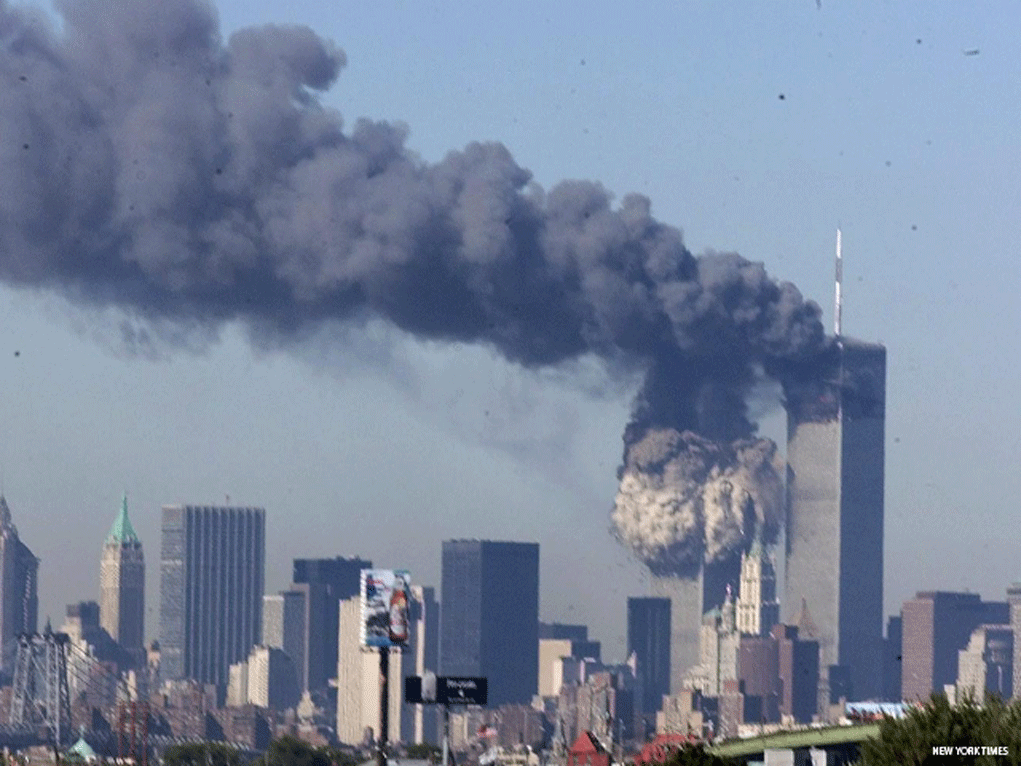 Yated Ne'eman1 month ago
The Forgotten Lessons and the Fight Over What Really Happened
This is a survey of personal recollections by some of those journalists who lived through it and an analysis of the deliberately distorted views of that event being taught on college campuses today to young Americans, as the nation marks the 25th anniversary of the September 11 attacks, which brought down the Twin Towers, damaged the Pentagon, and changed the course of American foreign policy over the past quarter century.
Twenty-five years ago, 2,753 people were murdered at Ground Zero in New York City, 184 more were killed at the Pentagon, and 59 passengers and crew members died aboard Flight 77 during the September 11, 2001 attacks. A wave of anniversary essays and news coverage — published by the City Journal, the New York Post, the California Post, and the Wall Street Journal — paints a complex picture of the hard-won lessons learned starting on that day that changed many of the basic assumptions about the nature of national security challenges that this country still faces.
Those articles claim that while the national security of the American homeland was meaningfully strengthened by the many institutional and government policy changes which emerged from subsequent reviews of that painful experience, the passage of 25 years has now obscured many of the key lessons that were learned at that time.
These same authors also lament the fact that the necessary hardening of the national attitude, which first saw clearly on that day the magnitude of the threat from the more radical versions of Islam to this country’s security and to the traditional American democratic way of life, has largely been allowed to lapse.
Since the onset of the Covid pandemic six years ago, this disturbing trend has gained widespread acceptance in the more liberal portions of American society and is dominating today’s social media culture. This dangerous change in the attitude of most of today’s American youth about the true nature of their country is largely due to exaggerated fears repeatedly expressed by the liberal mainstream media about Islamophobia, as well as the allegedly evil motives and mindset of the still powerful remnants of the old white male leadership establishment, automatically including all Jewish and non-Jewish supporters of Israel.
Antisemitic Social Media Puts Jews And Israel Supporters At Risk
Today there is a fast-rising new generation of left-wing socialist Democrats, including the Islamic-socialist young mayor of New York City, Zohran Mamdani, as well as popular right-wing Israel conspiracy theory disseminators like Tucker Carlson, and the notoriously antisemitic left-wing social media influencer who is closely associated with Abu El-Sayed, Michigan’s Islamic Democrat senatorial candidate, Hasan Piker. In their eyes, all Jews, whether they actively support Israel or not, are seen as guilty of all kinds of imaginary crimes without the need to submit any proof. Also prejudged as inherently guilty of white racism by socialist leftist candidates is anyone who still sees global Islamic terrorism as a threat to Western-style democracy, or who seeks to hold Islamic terrorists responsible for their many crimes against humanity, including their callous and deliberate use of fellow Muslim civilians in war zones like Gaza and southern Lebanon as human shields.
They are being publicly and routinely condemned in the liberal-mainstream media for promoting colonialism in the form of Zionism and for racism due to their rejection of those who preach and practice immoral standards of conduct and opposition to an individual’s right to practice their religion if they conflict with today’s distorted “woke” standards of liberal conduct.
According to today’s woke liberal standards, all members of any of American society’s “oppressed” minority groups must be protected from being held responsible for their criminal activities. These include violent criminals, homeless drug addicts living in tent cities on the streets of Democrat-governed major cities, supporters and active members of Islamic terrorist groups, many of them Iranian-sponsored and dedicated to attacking America and its allies around the world, as well as all opponents of our government’s institutions dedicated to enforcing law and order on our streets and along our borders,
Twisted Liberal Dei Priorities Being Imposed On U.S. Society
In addition, the twisted priorities of the Diversity, Equity, and Inclusion (DEI) culture have been systematically imposed upon most American businesses, schools, and government institutions under the control of liberal Democrats. They have substituted demands for equality of outcomes, including massive financial reparations for wrongs that may have been committed centuries ago, higher priorities for admission to the best schools, as well as offers of the best jobs, as substitutes for the traditional goals of the leaders of the original American Civil Rights movement. They were satisfied with equal opportunities for advancement for their followers rather than guarantees of success, and rewards earned based on individual merit and hard effort rather than membership in an arbitrarily selected preferred group based solely upon race, gender, age, religion (including atheism), liberal political affiliation, or socioeconomic background.
Meanwhile, because of the concerted efforts of liberal apologists for Islamic terrorism, who are also steeped in antisemitism, American history, including the well-documented events of the 9/11 terrorist attack, as well as the larger meaning of that day, is now being actively rewritten. In this country’s K-12 and college classrooms, city halls, and university history and social studies departments, the narrative now softens the responsibility of the Islamic terrorists and their leaders who planned and carried out those attacks, and redirects the blame for their violence and utter disregard for the value of the human lives lost that day toward the United States. Blame is also placed, despite the lack of any credible evidence to support their accusations, on Israel in particular and all Jews around the world, regardless of whether or not they were even aware of the attack when it was taking place.
The 9/11 Lessons That The U.S. Government Has Overlooked Again
The City Journal’s senior editor, Steven Malanga, who is also a senior fellow at the conservative Manhattan Institute for Policy Research, opened his 9/11 retrospective essay by arguing that during Joe Biden’s presidency, this country repeated, but on a much larger scale, the same basic national security failure to guard this country’s borders from infiltration by foreign enemies that paved the way for the 9/11 attack itself.
He points out that Osama bin Laden’s 2001 hijackers succeeded where the 1993 World Trade Center bombers had failed, and that the intervening eight years were marked by a series of half-hearted legislative gestures, including nominally tougher anti-terrorism laws and additional law-enforcement funding, that were never effectively implemented.
Internal turf battles and jurisdictional disputes between the CIA and the FBI kept the two agencies from sharing available pieces of intelligence that, if properly analyzed and interpreted, could have led to the arrest of the 9/11 hijackers while they were living in this country in plain sight, and preparing themselves with the basic skills they needed to hijack a commercial jet airliner and use it as a flying bomb to destroy or badly damage some of this country’s most iconic public buildings.
In his City Journal essay, Malaga recalls how other clear warning signs revealing the seriousness of the Islamic terrorist threat to American national security were either overlooked entirely or grossly misinterpreted. The incidents include the October 12, 2000 suicide bombing attack on the U.S. Navy guided-missile destroyer, the USS Cole, by two of bin Laden’s al-Qaeda terrorists in a small boat during a routine refueling stop at Yemen’s port at Aden. The massive blast from several hundred pounds of C4 military-grade plastic explosive tore a 40-by-60-foot gash in the warship’s hull, killed 17 Navy sailors aboard the ship, wounded at least 37 other crew members, and nearly caused the seriously wounded warship to sink in the harbor.
Another deadly warning sign that went largely unheeded of the threat from al Qaeda occurred two years earlier, on August 7, 1998. Suicide bombers parked a truck loaded with high explosives in a parking lot behind the U.S. embassy complex in Nairobi, Kenya, after guards at the front gate to the embassy refused to allow the truck to enter the compound. The massive blast heavily damaged the embassy as well as several other nearby buildings in downtown Nairobi. It killed about 218 people, including a dozen American citizens on staff at the embassy and dozens of local embassy staff members. A total of 4,000 to 5,000 people in downtown Nairobi were also injured by that blast. Meanwhile, a nearly simultaneous al Qaeda-engineered bomb blast at the U.S. embassy in Dar es Salaam, Tanzania, in East Africa killed 11 more people and wounded another 85.
Bin Laden Was In Bill Clinton’s Crosshairs, But He Let Him Get Away
Nevertheless, the Bill Clinton White House decided not to seek revenge for the dual U.S. embassy bombings or to eliminate the threat of more such terrorist attacks by launching air strikes, based upon reliable U.S. intelligence on at least two different occasions about bin Laden’s location in Afghanistan. President Clinton later cited concerns about potential casualties from such an air strike among nearby Afghan civilians, and the possibility that a failed U.S. military attack on bin Laden would embarrass the United States or lead to diplomatic repercussions from other Muslim states in the United Nations.
In his essay, Malanga also recalls how the lax Clinton-era “customer service” visa policy enabled the 19 9/11 hijackers, all natives of Saudi Arabia, to obtain visas without having to submit to an in-person interview with a U.S. embassy official. That allowed all 19 of them to enter the United States, starting as early as January 2000, and to remain in the country while preparing themselves to carry out the attack 21 months later.
Malanga points out that during the four years that Biden-administration’s open border policy with Mexico was in effect, it repeated that mistake on a much larger scale by admitting roughly 3 million undocumented migrants to enter the country without a security vetting, while going through the motions of seeking asylum or other methods to qualify as legitimate refugees. In addition, the Biden administration simply ignored several million more unauthorized border crossings, which reportedly included attempts by known suspected terrorists to enter the U.S. following Hamas’ October 7, 2023 mass terrorist attack on Israel. Malanga also notes the Biden administration’s suspension of DNA-testing requirements for immigrants under a 2005 congressional law that was intended to help identify dangerous individuals who were in federal custody.
Bruce Hoffman, a professor at Georgetown University’s School of Foreign Service and an expert in counterterrorism and national security, wrote an essay for the City Journal that examines the counter-terrorism initiatives that resulted from the federal government’s 9/11 Commission study of the attack, which led to the significant reforms to America’s intelligence agencies designed to help prevent another mass-casualty attack on U.S. soil.
Post 9/11 Security Reforms Mostly Worked To Prevent New Attacks
With the lone exception of one foreign-terrorist-directed shooting attack, carried out in 2019 at the U.S. Navy’s main air station at Pensacola, Florida, which killed three American sailors and wounded eight others, there have been no other successful foreign terrorist attacks on U.S. soil. But Hoffman also argues that the broader international “war on terror” that was launched by the George W. Bush administration to defeat the radical Islamic ideology that produced the 9/11 attack failed to complete its mission. That initial attempt to kill bin Laden and wipe out his cell of al-Qaeda terrorists while he and his followers were still hiding in Afghanistan failed to prevent them from crossing the border into Pakistan, where they continued to operate freely, apparently with the knowledge and at least tacit approval from senior Pakistani government and military leaders. American intelligence agencies tracked him down and identified him as living at a “safe house” compound in the city of Abbottabad, where he was killed on May 2, 2011, during a secretly launched attack carried out by U.S. Navy SEALS that was personally approved by President Barack Obama.
Meanwhile, Hoffman notes, bin Laden’s original al-Qaeda organization splintered into several separate regional franchises, including an active branch in Yemen that became known as Al Qaeda in the Arabian Peninsula (AQAP). A U.S.-born Islamic cleric, Anwar al-Awlaki, moved to Yemen in 2004, where he became AQAP’s most effective English-speaking recruiter. He was also partially responsible for the failed 2009 attempt by a terrorist member of AQAP to blow up an American jetliner with a bomb hidden in his underwear while it was landing at Detroit’s airport.
Al-Awaki was considered to be so dangerous to American national security that on September 30, 2011, he became the first American citizen to be killed on purpose by a U.S. military drone strike in Yemen, without a trial, in accordance with a personal order issued by President Obama.
Meanwhile, after the bloody Syrian civil war against the regime of President Bashar al-Assad spun out of control in late 2011, ISIS, another offshoot of al-Qaeda, was able to establish a caliphate (a radical Islamic religious government) across 40,000 square miles of Syrian and Iraqi territory before its defeat by a coalition led by the U.S. military that was initiated in 2014 under President Obama, and successfully concluded in 2019 when a major American military offensive conquered the last significant piece of Syrian territory that had been under ISIS control.
However, to this day, Hoffman reminds us that several other offshoots from the original al-Qaeda terrorist group are still functioning, including branches that are active within Muslim population centers as far from the Middle East as the Philippines and Indonesia. As a result, numerous Sunni-based Islamic terrorist groups, separate from the Iranian-supported Shiite terrorist network, still pose a significant threat to the democratic governments of those countries, and are part of a loose international Islamic terrorist network that extends into Western Europe as well as several countries in the Middle East, and also includes the scattered remnants of ISIS.
Additional 9/11 commemorative essays by City Journal editor Brian C. Anderson and former CIA analyst Martin Gurri each offer firsthand recollections of the attack on that day itself, describing the shift from a sense of peacetime security to what Gurri calls a decades-long “struggle to the death” between the liberal democratic ideology of Western Civilization and radical political Islam.
The War Against Iran Is The Culmination Of The U.S. War On Terror
That long and historic conflict, Gurri argues, is only now approaching resolution amid the major recent setbacks to Iran and its main terrorist allies, Hezbollah, and Hamas in retaliation for the heinous Hamas October 7, 2023 terror attack on Israel. That attack fundamentally changed the ground rules that have governed the Israeli-Arab conflict dating back to Israel’s 1948 War of Independence.
In his essay, Gurri also argues that some of the American domestic security measures that were imposed after the 9/11 attack, including highly intrusive airport screenings and expanded surveillance of American citizens by intelligence agencies under the authority of the Patriot Act, have gone too far. He suggests that it is time to recalibrate some of those measures in the name of greater respect for individual freedoms without breaching the minimum level of vigilance necessary to keep the American homeland secure.
A New York Post article reviewing Jeffrey Robinson’s new book, Ash and Honor, documents the little-known threat to Air Force One, which was carrying President George W. Bush during the chaotic hours immediately following the initial attacks on the Twin Towers and the Pentagon. President Bush was addressing the students at an elementary school in Sarasota, Florida, when he received the first word about the terrorist attacks using four hijacked jet airliners. The two Secret Service agents who were leading Bush’s protective detail that day decided immediately that the safest place for him, while more information on the attacks was being gathered, was in the air somewhere above American territory in Air Force One, ideally accompanied by an American jet fighter escort, just in case there was another element to the terrorist attack that was directly intended to take out the president.
The 9/11 Threat Against Air Force One That Was Just Revealed
However, the threat level against Air Force One increased again at 10:22 a.m., less than two hours after the North Tower (1 World Trade Center) at Ground Zero was the first to be hit by hijacked American Airlines Flight 11. The emergency bunker-bomb shelter five stories beneath the White House received a threat invoking the classified code name “Angel,” for Air Force One. That raised new fears that an unidentified sleeper terrorist agent who had somehow gotten aboard the president’s own plane had compromised its location while in the air, making it vulnerable to a possible midair attack.
The Secret Service agents aboard Air Force One responded immediately by locking down the aircraft, confiscating all phones on board that could be used to orchestrate such an attack, and diverting the plane to land at the nearest secure ground location at Barksdale Air Force Base in Louisiana. Only then would they allow the president to return to the White House, from which he wanted to broadcast an address to the American people to reassure them that the terrorist attack was over and that he and the rest of the federal government were safe and in full control of the situation.
The Roots Ideology Of Apologies For Islamic Terrorism
Another City Journal essay, written by Hudson Institute Middle East research fellow Zineb Riboua, contends that the main ideological fault line today does not run between Islam and the West, but within Islamic diaspora communities in the West itself.
She contends that today’s radical Islamic theology has been fused with postcolonial and “Third World” academic theories originally promulgated by Columbia University professor of literature Edward Said. His most famous book, Orientalism, published in 1978, is the origin of the widespread current belief that Western civilization has long cultivated a prejudiced attitude against Arabs and Islamists as inferior people living in the Middle East, justifying their systematic exploitation by American and European colonial and imperial powers. For similar reasons, Said’s current-day Islamic followers also reject the mass return of the Jewish people, who were forcibly displaced by the rise of antisemitic persecution in the countries where they had been living, and were left with no other choice than to find refuge in their biblical homeland in Israel.
Another Mamdani Outrage In Support Of 9/11 Islamic Terrorists
A New York Post story covered a related controversy over a ceremony at New York City Hall, where Mayor Zohran Mamdani signed a 9/11 remembrance order and then handed the ceremonial signing pen to Ramzi Kassem, a lawyer who has previously defended an al-Qaeda-linked defendant who had family ties to one of the nineteen 9/11 hijackers, and whom Mamdani has appointed to serve as New York City’s chief legal counsel. Mamdani’s critics also fault him for maneuvering the city’s highly respected Jewish police commissioner, Jessica Tisch, who is a holdover appointee from former Mayor Bill de Blasio’s administration, into a compromising position in which she was forced to hand the signing pen to Kassem, a defender of the same Islamic terrorists that the 9/11 remembrance order that the mayor had just signed condemns. Several Republican City Council members and a retired NYPD detective were also quoted in the New York Post’s coverage of the signing ceremony. They called Kassem’s presence and participation in the event disrespectful to the memory of the victims of the 9/11 attack and their family members. The family members also rejected a later attempt by the mayor’s office to justify Kassem’s presence at the ceremony because his office had drafted the text of the 9/11 remembrance orders that Mayor Mamdani signed on September 4.
Another New York Post article examined how the events associated with the 9/11 attack 25 years ago are being taught to public school students across the country. The story points out that there are only two states in the country, Arizona and Florida, where the story of the 9/11 attack is required to be included in standard school curricula.
Woke Educators Deliberately Distort The History Of The 9/11 Attack
The same article also exposed the fact that a school lesson package containing a pro-terrorist version of the 9/11 attack was developed at and is currently being widely distributed by the University of Pennsylvania Graduate School of Education. The package, which is titled “Teaching Beyond September 11th,” only devotes a single paragraph to describe the basic facts about the nature of the 9/11 attack to students who were born many years after the attack took place and who therefore have no personal memories of the event. Among its many other failings, the 9/11 lesson package never directly refers to the 19 al-Qaeda hijackers as terrorists. It also largely ignores the heroic efforts by hundreds of New York City police and firefighters who risked their lives in an attempt to rescue as many of the attack victims in the Twin Towers as possible that day. Many of the same first responders continued to risk their lives in the dangerous efforts during the following eight months to recover the bodies of the victims from the highly toxic environment around Ground Zero.
The pro-terrorist school curriculum devotes a chapter to what it characterizes as “Islamophobia and the Oval Office” of President George W. Bush. Another chapter is devoted to accusing the many Americans who blamed the massive loss of life in the attack on the radical Islamic theology of bin Laden and the al-Qaeda movement of spreading “Right-Wing Extremism.”
The curriculum ignores the many New Yorkers and millions of other Americans who were traumatized and badly frightened by the 9/11 attack, which exposed the serious weaknesses in America’s homeland security that made the attack possible. The curriculum also condemns as unjustified the understandable increase in post-9/11 surveillance by the NYPD and other law enforcement agencies of the large Muslim communities in the Greater New York City metropolitan area.
Despite the many fundamental flaws and inaccuracies throughout the pro-terrorist curriculum’s 9/11 narrative, the New York Post article reports that “Teaching Beyond September 11th” has been recommended, as is, for use in public schools by the state education departments of Pennsylvania, Massachusetts, Wisconsin, and Oregon.
The New York Post article also reported that a national teachers’ union and various other state-sponsored educational programs have endorsed similar educational lesson plans that use a pro-terrorist-skewed version of the 9/11 attack to highlight American culpability for an unjustified rise in the level of “Islamophobia” and an unfair anti-Muslim backlash. This narrative is what many liberals today use to try to justify the repeated Islamic terrorist attacks on American targets and other Western-style democracies in Europe and around the world.
Why Parents Must Explain The October 7 Attack To Their Children
An op-ed piece written for the California Post by Shirin Yadegar from a parent’s perspective yearns for the return of the moral clarity and sense of patriotic pride that almost all Americans felt during the days that immediately followed the 9/11 attack. Yadegar then drew a sharp contrast to the much more equivocal public reaction to Hamas’ equally heinous October 7, 2023 attack, which killed 1,200 Israeli citizens, consisting mostly of defenseless civilians, including women and children. She urges today’s parents to make sure their children understand the true nature of that attack as well, rather than from the distorted pro-terrorist and antisemitic narrative that is being disseminated about the events of October 7 by many social media sources, as well as school curricula designed to brainwash young students with woke ideological narratives rather than the simple historical facts.
Ground Zero’s Rebuilt Lower Manhattan Skyline And Neighborhood
Balancing the dark memories of the tragedy and the many lives lost 25 years ago at Ground Zero, a Wall Street Journal report describes the radical transformation and revival of the area of Lower Manhattan surrounding Ground Zero as it exists today.
Today it is a thriving neighborhood which mixes a variety of successful business activities with comfortable and often luxurious new housing developments attracting many successful and upwardly mobile young families. The neighborhood’s mostly upscale residential population has roughly tripled since before 9/11.
More than $20 billion has been invested in the completely rebuilt World Trade Center complex, and the area has diversified from the financial-services hub supporting Wall Street that it was in 2001, into a mixed residential and corporate headquarters area that is home today to industry-leading American companies like Spotify and American Express.
A large number of conversions, from business office buildings to residential apartments, supported by generous federal financial incentives following the 9/11 attack, have turned dozens of vacant commercial buildings into attractive new housing units which are now home to the area’s sharply increased residential population. There are also many new service, food, and entertainment businesses that meet the needs of the expanded local population that simply didn’t exist there before 2001.
But according to the Wall Street Journal article, the rebuilding opportunities around Ground Zero have not yet been exhausted. Roughly 22% of the downtown Manhattan office space that was abandoned immediately after the 9/11 attack still sits vacant and available for redevelopment. That includes the site of the former 39-story-tall Deutsche Bank building, across the street from Ground Zero. It was badly damaged during the 9/11 attack and was completely torn down in 2011. Today the site is part of the Liberty Park complex which overlooks the National September 11 Memorial at Ground Zero, which has become one of New York City’s most popular tourist attractions.
More 9/11 Victims Are Still Coming Forward
Even as sharply polarized ideological arguments continue over the causes of the 9/11 attack and its relevance to the Islamic terrorist threat still facing Western civilization today, the number of people whose health was badly damaged on 9/11 or during the following months of cleanup and recovery keeps growing.
Tens of thousands of additional victims of the 9/11 attack survived that day, only to contract one of many potentially fatal diseases due to their exposure to the toxic dust in the environment around Ground Zero in Lower Manhattan during cleanup following the attack. Some of them are just now, 25 years later, being diagnosed with serious medical conditions that threaten their health or which will shorten their remaining life expectancies.
The New York Post reports that 9,677 first responders and survivors have now died from illnesses linked to the toxic dust and smoke at Ground Zero. That is more than triple the number of people killed during the day the four hijacked airliner attacks actually took place. The toll of cancer victims currently includes 5,892 deaths due to exposure to carcinogenic substances at the 9/11 site, and an additional 57,000 documented 9/11-linked cancer cases currently being treated.
Individuals who were exposed to the Ground Zero site 25 years ago, before the cleanup was completed still face dramatically elevated risk factors for developing thyroid cancer, melanoma, prostate cancer, as well as normally rare cases of breast cancer among post-9/11 exposed men.
Pataki And Giuliani Are Among The Delayed 9/11 Victims
Former New York State Republican governor George Pataki has disclosed that he was recently diagnosed with a respiratory lung condition known as restrictive airway disease that doctors now tell him he contracted during his frequent post-9/11 attack appearances at Ground Zero. However, Pataki is not feeling sorry for himself.
“You know, 25 years later, I feel great. I have this minor residual impact from that time. But compared to so many others, I consider myself very lucky,” Pataki told a New York Post reporter. “The people who were with me at Ground Zero over and over for months after those attacks,” Pataki continued, “Many of them have serious illnesses, far more serious than anything I might be experiencing.”
Former New York City Mayor Rudy Giuliani, whose often inspirational post-attack appearances at Ground Zero are still widely regarded as his finest hours, has also reportedly been diagnosed with the same lung disease after a recent hospitalization.
In a subsequent interview with the conservative Newsmax cable channel, Giuliani complained that “Having lost [close] friends [at Ground Zero that day] and being very close to many of the families, it offends me that [New York City Mayor Mamdani] is coming [to the annual memorial celebration on the upcoming 25th anniversary of the attack].”
Giuliani also recalled in a bitter tirade against the current mayor that the 9/11 terrorists attacked the United States “in the name of the Muslim religion” and “weren’t hiding it like Mamdani is trying to hide it.”
Former Governor Pataki has also expressed his opposition to Mamdani’s planned in-person attendance at the 9/11 commemoration ceremony at Ground Zero, where former U.S. presidents Bill Clinton, George W. Bush and Barack Obama, as well as some other former New York City mayors are also expected to be present.
The White House has announced that it will be represented at the Ground Zero ceremony by Vice President JD Vance, while President Trump is expected to appear at a similar ceremony to be held the same day at the Pentagon, which was also attacked on 9/11 by a suicide terrorist flying a different hijacked airliner that morning.
Mamdani Defying Requests From Families To Stay Away On 9/11
Meanwhile, an online petition which has been circulated by family members who lost loved ones during the 9/11 attack and which asks Mayor Mamdani not to be present at the Ground Zero ceremony out of respect for their loss, reached its goal of attracting more than 100,000 signatures three days before the event took place.
Mayor Mamdani insisted that despite their objections, he will be present at the ceremony, and wants the focus of the event to be “on the families whose loved ones were stolen from them 25 years ago in the horrific act of terror of September 11, and. . . on the first responders who did everything they could.”
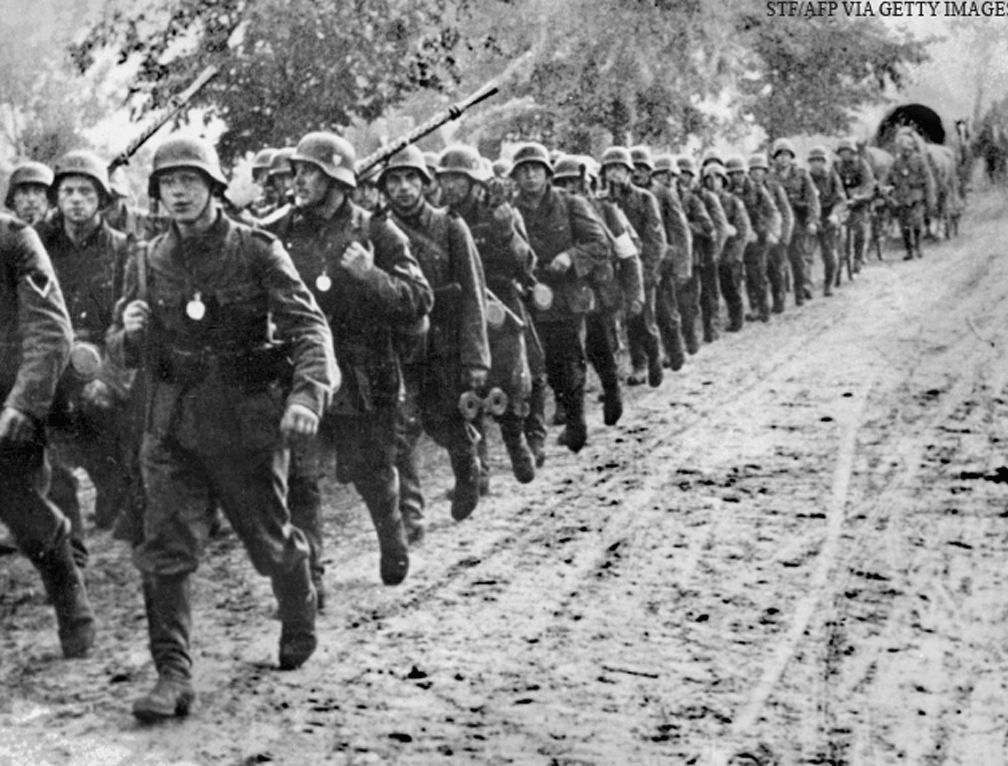 Yated Ne'eman1 month ago
What separates man from beast? Well, there are many things that separate man from beast, but one of them is the ability to make choices. We call that bechirah.
An animal is governed by its nature and instincts. When it is hungry, it seeks food. When it is tired, it seeks rest. When it senses danger, it seeks safety. A person, however, can experience an impulse and choose not to act upon it. He can be angry and decide to remain silent. He can be tired and nevertheless get up to daven. He can be tempted to sin and choose to walk away. He can be hurt by another person and decide that he will not allow the hurt to determine how he treats others. The ability to stop, consider, and choose a different course is one of the defining qualities of a human being.
Rabbeinu Yonah writes in Shaarei Teshuvah (3:17) that the loftiest spiritual values we are to strive to attain were imparted to us through mitzvos. He cites as an example the mitzvah in this week’s parsha of choosing good over bad. Every person is given the opportunity to choose what type of life he wants to lead and what he wants to do with his life. The Torah commands us, “Uvocharta bachaim — And you shall choose life.”
The Torah does not merely tell us that we possess the capacity to choose. It instructs us to use that capacity properly. The Torah tells us that when we stand at the crossroads and are confronted with alternatives, we must recognize that the choice is ours and that our choices have consequences. A good life does not simply happen. It is built through decisions, some large and consequential and many so small that we barely notice them at the time.
We tend to think of the important choices in life as the major decisions that require careful thought and planning: whom we will marry, where we will live, where we will send our children, and which path we will take in life. These decisions are certainly important, but there is another category of choices that quietly shapes us every day: how we speak to our spouse when we are tired, how we respond when someone has offended us, whether we use our time productively or allow it to slip away, whether we complain about what we lack or appreciate what we have, and whether we respond to a difficult situation with emunah or with frustration. These choices become the building blocks of our character.
A person becomes who he is through the choices he makes. Each time he chooses patience over anger, he strengthens his capacity for patience. Each time he chooses Torah over distraction, he becomes more attached to Torah. Each time he restrains himself from saying something hurtful, he develops greater control over his speech. Conversely, when a person repeatedly gives in to an impulse or temptation, he is also making a choice, and each time a person gives in to his yeitzer hora, it becomes that much more difficult to do the right thing the next time he has to make a choice.
There is tremendous power in the concept of bechirah. We are not merely choosing what to do in a particular moment. In a very real sense, we are choosing what kind of person we will become.
I met a delightful Yerushalmi Jew who told me about his Hungarian grandfather, a Jew from Toshnad who met the same fate as the overwhelming majority of Hungarian Jewry. He was taken to the concentration camps with his wife and children, and only he survived.
Years later, the grandson asked him, “Of all the awful experiences of the war, which was the worst?”
The grandfather’s answer was unexpected. He said that, for him, the worst moment came after the war had ended, when he had been freed from the camps.
He emerged alone, barely alive, with the people he had loved most in the world gone. Seeking some measure of solace, he made his way back to his hometown of Toshnad, hoping to see the home in which he had once lived with his family. But the Jews of the town were all gone, and a non-Jewish family had assumed ownership of his house.
He walked up to the door, simply wanting to take one final look at the place he had once called home. He had left that house without saying goodbye, never imagining that he would one day return to it alone.
Then he noticed that the family nameplate was still firmly fastened to the door.
Seeing his family’s name on the door gave him the courage to knock. The occupant was kind enough to allow him inside. He entered and looked around at the walls that had absorbed the laughter and songs of his murdered family. Everything seemed just as he remembered it. The dining room table, around which his family had gathered for festive meals and sung zemiros on countless Shabbosos and Yomim Tovim, was still there. Even the leichter on which his wife had lit the candles for so many years remained in its familiar place.
He stood there, overwhelmed by memories, when suddenly the man who had taken possession of the house told him that his time was up.
“Okay, Jew,” he commanded. “Your time is up. Get out.”
The grandfather walked out of the house and stood on the street. Decades later, he told his grandson that he had never felt so degraded and distraught in his entire life. All the pain and heartache he had endured seemed to converge in that one moment. He had survived the war, but now he was standing outside the home that had once belonged to him, looking at a life that no longer existed.
And then, standing there at the gutter, he realized something.
He had a choice.
He could allow the anguish to pull him down and give it all up or he could summon whatever strength remained within him and rise above what had happened to him.
He chose to rise.
He made his way to Yerushalayim, remarried, built a new home, and was blessed with a new family. In time, that family grew to include children and 150 grandchildren.
Think about the magnitude of that choice. He could not change what had happened. He could not bring back his wife and children. He could not restore the Jewish community of Toshnad or reclaim the years that had been stolen from him. None of those things were within his power. But there was one thing he could determine, and that was whether the tragedy would be the end of his story or whether he would pick himself up and start again.
He followed the posuk of “uvocharta bachaim” and chose life.
That decision gave him the strength to move forward. It enabled him to rebuild his life, to establish another Jewish home, and to create a future that would eventually include generations of descendants. The tragedy remained part of his story, but it did not become the entirety of his story.
That is the power of bechirah.
Thankfully, we are not generally confronted with choices remotely resembling the one that lonely survivor had to make. Our challenges are usually much smaller and our decisions far less dramatic. Yet, the principle is the same. We may not always be able to choose what happens to us, but we can choose what we will do with what happens to us.
A person may be disappointed, but he can choose whether to become embittered or to strengthen his emunah. He may experience failure, but he can choose whether to view it as proof that he cannot succeed or as an opportunity to learn and try again. He may encounter a difficult period in his life, but he can choose whether to spend his days asking, “Why me?” or to ask, “What does Hashem want from me now?”
This does not mean that pain is not real or that difficult experiences should be dismissed with simplistic answers. The Toshnad survivor knew pain in a way that few of us can comprehend, yet he refused to surrender his future to his suffering.
The Rambam makes this point especially clear in Hilchos Teshuvah (5), where, in the midst of his discussion of teshuvah, he stops to establish one of the fundamental principles of bechirah: Every person has the ability to choose whether to follow the good path and become a tzaddik or to follow the bad path and become a rosha. Man is unique in creation in possessing this ability to act according to his own will and to determine whether he will be good or bad. Nothing is predetermined. Each person has the ability to decide what he wants to become and how he wants to live his life. As the Rambam writes, a person can be as righteous as Moshe Rabbeinu or as wicked as Yerovom.
This is the choice that Moshe Rabbeinu placed before Klal Yisroel in Parshas Re’eh (Devorim 11:26-28): “Re’eh, see, I am placing before you today two paths, two ways in which you can live your life, es habrocha, the path of blessing, asher tishmeun, if you listen to and observe the Torah, and es haklolah, the path of curse, if you choose not to follow the Torah.”
And this is the choice Moshe presents to the Jewish people in this week’s parsha as well. He told the Jewish people (Devorim 30:15-19), “Re’eh nosati lifonecha es hachaim v’es hatov, v’es hamoves, v’es hora… Hachaim vehamoves nosati lifonecha habrocha v’haklolah uvocharta bachaim lema’an tichye atah v’zarecha, See, I have set before you life and good, and death and evil. I have set before you life and death, blessing and curse. And you shall choose life so that you and your children shall live.”
The choice is placed before us. Which path we take is up to us.
The nisayon of bechirah is constantly before us. It is not reserved for the rare dramatic moment when a person is forced to make a life-altering decision. It is present in the ordinary moments of every day: Do we follow the yeitzer tov or do we allow the yeitzer hora to convince us and guide us?
The lonely survivor standing outside his former home in Toshnad could not have known what his choice would eventually produce. He could not have envisioned a new home in Yerushalayim, a new family, children, grandchildren, and 150 descendants. He could only choose what to do with the next moment.
He chose life.
And that is the choice Hashem places before each of us as well.
Uvocharta bachaim. Hashem tells us that we should always choose the option that grants us life.
This past Sunday, the 17th of Elul, the Rajchenbach family dedicated the new Kollel Zichron Eliyohu building in Chicago, marking yet another milestone in the remarkable growth of the Torah community in that Midwestern bastion of Yiddishkeit. It was a day of celebration, a day on which the fruits of decades of mesirus nefesh and dedication to Torah were made visible in bricks, mortar, and a beautiful new building.
But there was another facet to that dedication that surely would have been on the mind of the patriarch of the Rajchenbach family, the beloved Reb Yankel, had he merited to be there.
The 17th of Elul is a date that carries a very different memory for the Jewish people. Eighty-seven years ago, in September 1939, Poland was invaded by Nazi Germany, and the inferno that would engulf European Jewry had begun. Within days, the Second World War had spread across Europe, and the destruction of Polish Jewry and, ultimately, the great communities of Eastern Europe was underway. The Jews of Poland, who had built some of the greatest Torah communities the world had ever known, were decimated. Families were torn apart, communities were erased, and an entire world was destroyed. Millions were murdered, many in the concentration camps and ghettos, while those who survived often emerged with little more than their lives. Their homes were gone, their possessions were gone, their families and friends were gone, and the world they had known had disappeared.
Some survivors were so broken that they lost their faith or their connection to Yiddishkeit. Others simply lost the will to live. But there were also those who made a different choice. They chose to live. They chose to cling to Hakadosh Boruch Hu. They chose to rebuild Jewish homes, to raise children, and to recreate, as best they could, the world that had been destroyed.
One of those people was Yitzchok Rajchenbach of Lodz, Poland.
A simple Yid, he lost his wife and children in the war, yet he made the choice to begin again. He married a woman who had lost her husband during the war, and together they settled in Lodz. There they had a son whom they named Yaakov Eliezer.
Eventually, the antisemitism and difficult conditions in postwar Poland became too much and they made another choice: to leave. They eventually settled in Omaha, Nebraska.
Their son Yankel was then eleven years old. He had been sent to public school, but when he became bar mitzvah, his father turned to his only son and told him, in his Poilishe Yiddish, “Du kenst ir nisht bleiben ah Yid. Mir darfen dich shiken in yeshiva. You won’t remain a Yid if you stay here. We have to send you to yeshiva.”
Yitzchok Rajchenbach made his choice. He took his young son to the bus station and put him on a bus for the thirty-four-hour journey to New York City, where the boy would enter yeshiva.
A refugee who had already lost almost everything was making another sacrifice because he understood that what mattered most was that his son have a life of chaim.
That boy grew up to become one of the spiritual fathers of the Chicago Torah community. The city that today boasts a magnificent new Kollel Zichron Eliyohu building owes a portion of its Torah landscape to the choice made by a Polish refugee who understood that if his son was to remain a Yid, he needed to give him a Torah education.
Hitler sought to destroy the Jewish future. Yitzchok Rajchenbach chose to rebuild it.
And so there is something deeply moving about the fact that on the 17th of Elul, a date forever associated with the beginning of the destruction of the Jewish world of Poland, a new Torah building was being dedicated in Chicago by children and grandchildren of Lodzer Yidden who were mekayeim the posuk of uvocharta bachaim lema’an tichye atah v’zarecha.
Interestingly, my grandfather, Rav Eliezer Levin, the late rov of Detroit, made a similar choice. He told me that when he arrived in Detroit in 1939 to serve as a rov, there were already thirty-three other rabbonim in the city, and some of them were not pleased about the arrival of another rov. “Who needs another rov here?” they wondered, particularly another greener, a newcomer who had recently arrived from Lithuania.
Years later, Rav Levin told me, “Uber fun zei alleh iz gornit gebliben. But there is nothing left of all those rabbonim.”
He was not criticizing them. He was making a point about a difficult decision that he made.
“Those rabbonim did not have the strength to send their sons away to yeshiva,” he explained. “They kept their sons at home. But I sent my only son to yeshiva.”
It was an extraordinarily difficult choice. Rav Levin was a refugee, trying to establish a life and a rabbinic career in a new country. He had only one son, and sending him away was hard. We certainly cannot judge those who made a different calculation under circumstances that were extraordinarily difficult.
But Rav Levin made his choice.
He followed the posuk of “uvocharta bachaim lema’an tichye atah v’zarecha,” and chose life for his son.
And that son was Rav Avrohom Chaim Levin.
Rav Avrohom Chaim went on to found the Telzer Yeshiva in Chicago, which became a pillar of Torah in the city. The yeshiva helped establish the Torah infrastructure and leadership that built the Chicago Torah community and made possible the establishment and expansion of Kollel Zichron Eliyohu.
And so the chain continues.
We often think that our choices affect only ourselves. We make a decision and imagine that its consequences end with us. But that is rarely true. A parent’s choices affect his children. A mechanech’s choices affect his talmidim. A community’s choices affect the generations that follow. One person’s decision to sacrifice for Torah can become the foundation upon which thousands of others eventually build.
Choices lead to life, not only for the person making the choice, but for his children, his grandchildren, his community, and, ultimately, for the entire world that benefits from another generation of Torah.
Hopefully, we will never be confronted with a choice as monumental as the one that stood before that lonely survivor on the streets of Toshnad. Most parents will never face the decision that confronted Yitzchok Rajchenbach when he placed his young son on a bus and sent him thousands of miles away to yeshiva. We will, thankfully, not have to rebuild our lives from the ashes of the Holocaust, nor will we have to make decisions under circumstances in which the future of our Yiddishkeit seems to hang in the balance.
But we should not conclude that bechirah is less relevant to us. Our lives are filled with choices, but they are simpler. In every instance, in every choice, the Torah tells us, “Uvocharta bachaim.” Choose life. Choose the right path, the path of goodness.
A person wakes up in the morning and is faced with a choice about how he will begin his day. He can approach it with gratitude or with complaints, with zerizus or with sluggishness. During the day, he will encounter people who test his patience and situations that do not proceed as he would like. He will have opportunities to speak and opportunities to remain silent, opportunities to be helpful and opportunities to walk away, opportunities to use his time well and opportunities to allow it to disappear. He will encounter temptations that nobody else sees and nisyonos that perhaps nobody will ever know about. Each time, he is being asked, in one form or another, to choose.
And because these choices are so ordinary, we sometimes fail to appreciate their significance. But greatness is built when a person chooses what is right over what is convenient, what is meaningful over what is immediately pleasurable, and what will bring him closer to Hashem over what merely feels good for the moment.
The decision to spend another few minutes learning instead of reaching for the phone may not seem like a historic event. Choosing not to answer an insult may not make the newspapers. Not allowing our taavos to control us, choosing to help a poor Yid from Eretz Yisroel or from around the corner — all these things mean choosing life.
Hashem does not want us to drift through life. He wants us to recognize that we have been given the ability to direct ourselves. We are not simply products of our circumstances, our personalities, or our inclinations. We possess the ability to choose what we will do with them.
There is a path called chaim, and we possess the ability to choose that path.
The world around us constantly encourages us to make choices based on what is easiest, fastest, and most enjoyable. The Torah asks us to consider something deeper: What is true? What is right? What does Hashem want from me? What kind of person will this decision make me? Is this the path of brocha or the path of klolah? Will this action bring me closer to being like Moshe or like Yerovom?
The most encouraging aspect of bechirah is that we are never trapped by yesterday’s choices. As long as we are alive, we can choose again. That is the gift of teshuvah.
Hakadosh Boruch Hu, in His compassion, has provided us with teshuvah, giving us the opportunity to reverse course and begin again. We are not condemned to remain where our previous choices have brought us. We can undo our mistakes and return to where we belong.
On Rosh Hashanah, we are judged according to the choices we made throughout the past. Yet, out of His deep and enduring love for us, Hashem gives us the opportunity to change that judgment.
“Lo nifleis hee mimcha velo rechokah hee” (Devorim 30:11). In this week’s parsha, the Torah tells us that teshuvah is within everyone’s reach. When we recognize that we have made bad choices and wish to rectify them, Hashem reaches out to us. He invites us to come closer and helps us repair what has been damaged.
Whether we earn the good life we all seek is ultimately up to us. It requires us to recognize the truth contained in the words of the pesukim, in the teachings of Chazal, in the words of the Rambam, and in the mussar seforim we should be reviewing during these days leading up to the Yomim Noraim.
The more we align our lives with the path He has laid out for us, the more we merit the brachos and goodness for which we yearn.
Let us all use the gift of bechirah wisely and, in the instances when we haven’t, merit to do teshuvah, so that together with all of Klal Yisroel, we will be inscribed and sealed for a kesivah vachasimah tovah, a year of brocha, yeshuah, refuah, parnossah, nachas, and the coming of Moshiach Tzidkeinu bekarov.
 Yated Ne'eman1 month ago
About 49 years ago, before Pesach bein hazemanim in Ponovezh, instead of flying straight back to America, I made a detour to spend a day and a half in London. I have an innate curiosity about the world, and this was a great opportunity. I had a wonderful host, and I was supposed to meet up with some American friends, but at the last minute, they backed out. So my sightseeing was more of a lone intellectual survey than a geshmake bochurim trip.
Of course, there was Big Ben and Buckingham Palace. And because I do enjoy history and antiquity, I decided to visit the famous Tower of London and the Crown Jewels. Although I have no interest in medieval architecture, Norman fortifications, or the intricacies of eleventh-century British construction, after seeing the jewels, I meandered about in the Tower. And once I was already inside a thousand-year-old tower, I looked around and saw a spiral staircase.
People were waiting in line to go up the narrow, spiraling stairway, and thinking that there may even be some more jewels (or maybe even the remains of Henry the Eighth’s numerous victims), my curiosity got the better of me. And I followed. More people followed me. There was only enough room for single file up those more than 100 steps. It was one of those narrow spiral staircases that was most certainly designed before mankind discovered elevators, personal space, or the possibility that somebody might want to change his mind. Up and up we went, winding around in circles, a steady stream of tourists climbing together. I didn’t know any of them, and they didn’t know me. Nobody invited me to join them and nobody told me where we were going. I had no idea, but just went up. And up. Actually, the only way to go was up. A fellow behind me said that past the exhibit on top, there was a similar staircase down. I guess getting there is half the fun.
There is something remarkably comforting about following a crowd. You don’t have to make many decisions. The fellow in front of you takes a step, so you take a step. He turns, so you turn. There is somebody behind you and somebody ahead of you, and the very existence of all those people seems to confirm that wherever this staircase leads, it must be worth seeing. So I kept climbing and climbing. More than 100 steps. And then we reached the top. There was some sort of small lobby and it was like an anteroom before a larger room. I looked inside the entrance of the main room and my heart skipped a beat. Maybe more than a beat.
Inside the room, there was a large tzailem, and benches, outside the door, a small sign declaring “The Chapel of St. John” (or some other fellow to that effect).
The staircase to nowhere had taken me somewhere. Somewhere that I should not be. I had not known where the staircase was taking me, but now I did, and suddenly I had a problem. There was only one direction in which everyone was moving and that was up. And there was only one direction in which I needed to go and that was down. And there was no way to go down unless I went through that room. And that was not happening. Then it hit me. I took out my wallet and dropped it down the open space in the center of the staircase. Ten stories down it fell, to the horror of the hundred or so making the trek upward. “My wallet!” I yelled, while slowly attempting to go down the up staircase.
If you have ever tried walking the wrong way through a crowd on a narrow spiral staircase, you understand the predicament. There is no passing lane. There is no shoulder. There is barely room for two people to negotiate who gets the next six inches of stone. And I had perhaps a hundred tourists coming toward me.
“Excuse me. Excuse me. I need my wallet!” I yelled as if my defibrillator had dropped down those flights.
People were trying to tell me that all I had to do was use the other stairway on the other side of the room, but I played very dumb. I had to go back the same way I came. It took a while and a lot of apologies, but I made it.
I have thought about that staircase many times since. Most wrong turns in life don’t begin with somebody standing at a fork in the road and announcing, “I believe I shall choose the wrong path.” Usually, we meander onto them. Someone else is going somewhere, so we follow. Something becomes normal, so we do it too. One step becomes another and then another, nothing dramatic happens, there are no flashing warning signs, and, in fact, there may be plenty of perfectly decent people climbing the exact same staircase. And then it hits you. I better turn around. Not one more step toward oblivion.
That was certainly true in London. The tourists weren’t doing anything wrong. They knew where they were going, and presumably they wanted to see the chapel. Their destination simply wasn’t mine.
And perhaps that is one of the more difficult lessons in life, because not every crowd heading in the wrong direction for you is a decisively bad crowd. Sometimes they are wonderful people. Sometimes they are friends, or colleagues, or people you respect. They simply have a different destination. And if you don’t stop occasionally to ask where the staircase ends, you can travel an awfully long way simply because the fellow ahead of you keeps moving.
The Novi tells us, “Nachpesah derocheinu v’nachkorah v’noshuvah—Let us examine our ways, investigate them, and return to Hashem.” There are three movements in that posuk. First, nachpesah derocheinu, look at the road. Then v’nachkorah, which means not to merely notice that you are moving, but to investigate where you are going. And then comes the hardest word of all. If you went in the wrong direction, then v’noshuvah. Turn around.
It sounds simple when you are listening to a haftorah. It is considerably more complicated when you are on a spiral staircase, because once you turn around, everybody is facing you, telling you, “Throw in the towel. Go back to the direction in which you were once headed.” Until that moment, you blended in beautifully. You moved when everyone moved, you stopped when everyone stopped, and nobody noticed you. Now, suddenly, you are the problem. You are the counterforce. People have to move aside. Someone may glare. Someone may wonder why you can’t simply continue along with everybody else. And you yourself may wonder whether it is really worth all the trouble, because, after all, look how far you’ve already climbed.
They tell the story of a man who gets a frantic call from his wife. “Harry, be careful! They say that there is someone driving in the wrong direction on the freeway!”
“One person?” exclaimed Harry. “There are hundreds of them!”
Sometimes you are the only one going in the right direction, but because so many are coming against you, they say that it is you going the wrong way.
After climbing the staircase, you may say, “I’ve already come this far. I’ve already put so much into this. I’ve already invested the time, spent the money, and told everyone that this is what I’m doing. I’ve already climbed ninety-nine steps.” But the ninety-nine steps are in the past. The future lies in the hundredth step.
Economists call it sunk cost, allowing what we have already invested and cannot recover to determine what we should do next. We have a word for the alternative. Teshuvah. There comes a moment when a person realizes that the question is no longer how much he has invested in the journey. The question is where the journey ends. And how to turn it around. And turning around can be expensive. Sometimes you have to drop your wallet, sometimes you have to turn around and excuse yourself, sometimes you have to head in the opposite direction and face hundreds of people who think they are on the way up.
So we keep heading in one direction, not because we are focused on a particular destination, but because turning around is uncomfortable.
Had I known what lay at the top of the stairs, I most certainly would not have taken the first step. Maybe a proper nachpesah derocheinu v’nachkorah would have negated the need for a v’noshuvah.
I never asked anyone: Where are you going? Where does this lead?
I eventually made it back down that staircase at the Tower of London. Boruch Hashem, I never saw the chapel, and I don’t regret it. I don’t particularly remember the Crown Jewels either. But I remember throwing my wallet down the stairs. It contained quite a bit of money and some important documents. I was in such a reversal mode that I did not think about them when I knew it was my ticket out.
Sometimes you have to go against traffic and, sometimes, you don’t have to worry about “What’s in your wallet?”
And that’s what I think about every time I hear the words, “What’s in your wallet?”
Sometimes there’s a lot. But sometimes you just have to throw it down the spiral staircase.
Just saying.
 Yated Ne'eman1 month ago
Two stories. One with a great tzaddik and gaon, the other a non-Jew, one of the chassidei umos ha’olam, righteous gentiles. The stories are similar, almost identical, from which we can derive singular lessons for the end of the year. But the differences can change our Selichos as well.
Rav Yeruchom Levovitz, mashgiach of the Mir in Lithuania, was leaving the yeshiva to deliver chizuk and mussar to a neighboring community. It was a cold day, he was wearing gloves, and he waved to his beloved talmidim who had escorted him to the train. The train was pulling out. As the mashgiach waved, the glove dropped to the ground. Instantly, the man of mussar threw the other out the window as well. As Rav Yeruchom later explained, the glove could not be retrieved, but what could someone do with the one glove he would find? His long life of self-improvement and constantly thinking of others kicked in and the glove was ejected as an act of spontaneous chesed.
Sempo Sugihara, the now-famous Japanese Consul in Lithuania, was also leaving Kovna (Kaunos) because he had been fired for providing Jews with visas that would save their lives. The Japanese were bound to the Nazis, so Sugihara was violating the law and the terms of his employment. But he was a man of morals and integrity. Even as the train was pulling out, he threw newly signed documents to the eagerly awaiting arms of those sentenced to death by evil. Two people of different nations, even different religions, but both were doing the right thing, using every second to help another.
But perhaps the similarities end there. Sugihara had been impressed with the culture, teachings and, yes, religion of Judaism, and so felt compelled to risk employment and possibly his life to help when he would receive nothing in return. I had the zechus to say a few words of hesped at the street in Kovna that now bears his name. However, Rav Yeruchom had worked on himself, taught others and incorporated every word into his own being, so that even when there was no time to think or make decisions, he threw the glove out the window because chesed won over logic and self.
Dovid Hamelech said, “I considered my ways and returned my feet to your testimonies” (Tehillim 119:59). Chazal (Vayikra Rabbah 35:1) explain this to mean that even when Dovid Hamelech thought that he was going to an urgent meeting of his advisors and generals, his legs took him to the bais medrash instead. The Sefas Emes (on this posuk) adds that it is our obligation in life to try our very best to stay “on the derech” and follow the Shulchan Aruch and our rabbeim. Then, even if we don’t have time to think, Hashem will help us do the right thing. This will not be instinct, of which even the animal world is capable. It is obtaining the siyata diShmaya — help from Heaven — that comes to those who try their humanly best to avoid trouble and do what is best. That is what Dovid Hamelech did. That is what Rav Yeruchom did. Sempo Sugihara is to be praised and thanked, but that was not feet thinking, but the mind and heart of a wonderful person. Our goal as Yidden is to imbue every limb, organ and fiber of our being with the Divine instructions for how to live.
During the Aseres Yemei Teshuvah, we try our best to be at our best. But very often, we are doing things, such as avoiding pas akum, bread baked by a gentile, even with a good hechsher, because we are trying to elevate ourselves during this season. The question is: To what end? We know that we are doing something only temporarily. Perhaps, as someone pointed out, he may even have bought pas akum to break the Yom Kippur fast. Is this worth anything? The answer is a resounding yes, because even a moment of improvement and self-denial brings us to a higher level in a way of which we are not even aware. This is one of the distinctions between the Rav Yeruchom and the Sugihara trains. Getting up earlier every day of Selichos, opening the aron kodesh countless times, and reciting the Thirteen Middos of Rachamim many times a day changes us internally, spiritually and even physically. Suddenly, we will throw a glove out the window because our DNA has been changed. Our car will drive us to daven or to a shiur even if it isn’t a Tesla.
We learned from Rav Itzele Peterberger last week. Let’s turn to him again for a moment. The Gemara (Rosh Hashanah 16a and 18a) states that on this day, all of Klal Yisroel are counted just like sheep in the corral for maaser. This means that the rancher makes a small hole in the door through which only one animal can proceed at a time. Every tenth one is identified by a red mark to indicate that he is the one designated for maaser. Rav Itzele asks: How did each one get chosen as maaser? He must have dallied at the grass and licked another blade of grass. He just wanted to enjoy a bit more pleasure. Had he been able to forgo that one bite, he would have been spared as becoming number one through nine. But because he lingered, attached to his craving, he will end up dying. Had he marched forward, he would have been spared.
That lamb is every one of us. Sometimes, for a moment of enjoyment, we give it all away. But on the positive side, when we strengthen ourselves and resist temptation, we come through with flying colors.
The Maharsha teaches us a similar lesson, but even more dramatically. The Gemara (Sukkah 52a) describes what will happen in the World to Come. Hashem will slaughter the yeitzer hora in front of both tzaddikim (the righteous) and reshaim (the wicked). To the tzaddikim, he will appear like a gigantic mountain. To the reshaim, he will appear like a thin hair. Yet, both groups will cry. The tzaddikim will cry, “How were we able to conquer such a mighty mountain?” The reshaim will cry, “Why couldn’t we conquer such a tiny hair?”
Everyone asks: How can it be that two people see the same evil inclination so differently?
The Maharsha explains brilliantly: The wicked person always sees sin as a tiny hair. He says to himself, “Give me a few moments to eat what I want. It won’t last. I will soon stop.” When this same person looks at a potential mitzvah to be done, it appears to him like a mountain. “I can do something for a minute, but this climb requires days and weeks. I can’t do it.”
Therefore, when the yeitzer hora is no longer, the sinner strikes himself. “How could I miss doing a mitzvah even for one moment? It would have been so easy.” On the other hand, the tzaddik looks at every mitzvah like a little hair. “It doesn’t bother me to take a moment out of my day.” When a sin comes his way, he realizes that it could lead to a mountain of trouble and he runs away. “I don’t want this,” he decides, and he is freed from evil and guilt. All we need to do is to take on the perspective of the tzaddik and we will become one. All we need to do is run rapidly when faced with straws and hairs that seem too easy to conquer.
Finally, I heard an amazing metaphor that can help us through the Yomim Noraim along the lines we have learned today. The Gemara (Shabbos 129a) says that “a person should sell everything he owns, even the walls of his house, in order to buy shoes for his feet.” What is so important about shoes?
One answer is that shoes lift us a drop off the ground. They elevate us just a bit, and that can be enough to make us see a new world of possibilities and vistas. All we need is to rise up and look around.
That may be what Shlomo Hamelech (Koheles 2:14) means when he says, “The wise man has eyes in his head.” The meforshim ask: Doesn’t everyone have eyes in their head? Where else would they be, in the legs or arms?
The baalei mussar explain that a person who is wise lifts himself up and looks at the larger picture. The example is that the king listens to the lookout soldier who has the best eyesight. The one who can see for miles knows more than the one who only sees a few yards. During the Yomim Noraim, every step we take on the ladder of teshuvah and spirituality transports us to a new perspective, from which we can make the right decisions and obtain for ourselves a good year ahead.
Sempo Sugihara was great, but let’s take Rav Yeruchom’s train to the Yomim Noraim. We may have to throw out a glove or two, but helping people will do wonders for ourselves as well.
May we all take those precious steps, even tiny ones, leading to a kesivah vachasimah tovah.
Yated Ne'eman1 month agoTime to Refill the Tank
It is amazing how time flies. It seems as if we just welcomed the year 5786, and now the year 5787 is knocking on our doors. As we approach the yemei hadin, we must remember that everything that happened over the past year was decreed on Rosh Hashanah. There is a story about someone who caught a cold in the winter and attributed it to the fact that he had gone outside without drying his hair, but his rov corrected him. “You didn’t catch a cold in the winter,” the rov said. “You caught a cold on Rosh Hashanah. That is when it was decreed upon you.”
This past year’s events have shown us very clearly how Hashem decides who will perish by fire and who by water, who will face the sword and who will encounter wild animals. Rav Shimshon Pincus, the master of mesholim, once explained the meaning of Rosh Hashanah with the analogy of a car that runs out of gas. When a fuel tank is empty, the car comes to a stop, and the tank must be refilled to enable it to move again. The same thing, Rav Pincus explained, happens to all of us every year. When we reach Rosh Hashanah, we must remember that we aren’t merely davening for our “cars” to continue running and not to stop. In principle, we have actually stopped; our tanks are empty, and we must daven for Hashem to refill them. We cannot continue existing at all unless Hashem decrees that we will receive a new infusion of life, health, and peace. And that is what we must daven for.
Every person in the world has his own unique set of hardships and challenges. This, too, reminds me of a comment of Rav Shimshon Pincus. Rav Pincus related that he was once davening in Kiviti, his shul in Ofakim, and he began reciting a mi shebeirach for a sick person after Krias HaTorah. Someone approached him to add another name, and then another person came up with a third name, and then someone added a fourth. This continued happening, Rav Pincus related, until he realized that there wasn’t a single person in the shul who didn’t have someone close to them who was in need of healing.
This week, incidentally, marked the one-year anniversary of the dreadful terror attack at the Ramot Junction in which six people were killed and eleven more were injured. This only drives home the point that here in Eretz Yisroel, we survive by miracles. Whenever I read a newspaper report about a terror cell arrested by the Shin Bet, I ponder the fact that we may have been spared from an unimaginable disaster. Today, for instance, newspapers reported that after an investigation by the Shin Bet and police, two Israeli Arabs were indicted for plotting terror attacks against soldiers. Another headline from today states that a few residents of the Galil were found to have sworn allegiance to ISIS and plotted to detonate a bomb on Har Habayis. And in a third news item, the Shin Bet confirmed that Prime Minister Netanyahu’s son was the target of an assassination plot; Yair Netanyahu was rushed to Israel after it was discovered that a group of terrorists working for Iran had been monitoring his movements in Miami and were preparing to assassinate him. As I mentioned last week, the phenomenon of kite terror has reemerged as well, sparking fears that what appears to be an innocent children’s game in Gaza may develop into something much more dangerous. And these are only the things that are known to us. As Rav Ovadiah Yosef once remarked, there is a posuk that states, “Hallelu es Hashem kol goyim—Extol Hashem, all the nations.” Why should we call on the nations of the world to praise Hashem, rather than praising Him ourselves? The answer is that sometimes it is only the other nations who are aware of their own schemes and how Hashem has thwarted them. We, the Jewish people, are sometimes completely oblivious to the miraculous salvations we experience.
Former Hostages Attend Slichos at the Kosel
We cannot help but be awed by the Slichos events taking place throughout the country. Every night brings thousands of mispallelim to the Kosel, perhaps even tens of thousands. This past motzoei Shabbos, there were over 50,000 people at the Kosel. The previous week saw even larger crowds, and the participants included six former hostages who were held in Gaza. The rov of the Kosel, Rav Shmuel Rabinowitz, participated in a special tefillah of thanksgiving together with the former hostages and the large crowd. The erstwhile hostages also recited tefillos for the soldiers of the IDF and the security personnel, for unity in Klal Yisroel and for peace and security in Eretz Yisroel. There was also a remarkable event at the bais medrash of Belz, in which Slichos in nusach Sephard were recited in the presence of the Belzer Rebbe along with the Rishon Letzion, Rav Yitzchok Yosef, and Rav Yitzchok Dovid Grossman.
Speaking of the Kosel, I reported to you in the past that four stones had been removed from the Kosel to be put on display in various places in the country, including the president’s residence, the Israel Museum, and then, not long ago, the airport. The appearance of a Kosel stone at the airport turned out to be the proverbial straw that broke the camel’s back, drawing protests from many quarters, and the government announced that the stones would be returned to their place. This week, the final stone, which had been on display at the Kirya army base in Tel Aviv, was brought back to the Kosel plaza and returned to the Western Wall Heritage Fund. The stone, whose weight was estimated at about five tons, was brought to Tel Aviv many years ago. Over the past year, the chief rabbis of Israel and the rov of the Kosel issued calls for the Kosel stones to be returned to their rightful place. The subject was referred to the Knesset, and the decision was made to defer to the decision of the chief rabbis, who quickly issued an unequivocal psak requiring the stones’ return.
After the stone was removed from the Kirya, the commander of the base, Major General Ariel Barbi, asked the Antiquities Authority to replace it with a different stone that would continue to symbolize the same historic and spiritual connection. One week after the Kosel stone was returned, it was replaced with a rare stone dating back to the period of the Chashmonaim, which was previously part of the fortifications surrounding Har Habayis. The new stone was placed on display with a sign identifying its origin in Yerushalayim.
Fears of Escalation in Yehuda and Shomron
One of the hottest issues today is the ongoing conflicts between Jewish settlers in Yehuda and Shomron and the Palestinians who live in nearby villages. Tensions have been rising there for a long time, and the friction between the Jews and Palestinians has reached dangerous levels. I mentioned previously that even President Trump has been disturbed by the rising tensions and that Ambassador Mike Huckabee, who is fairly sympathetic to settlers, recently issued a very sharp condemnation of their activities. There were several incidents this Shabbos in which each side claims that it was in the right: The Palestinians insist that they are innocent and peace-loving and that the settlers attacked them, whereas the Jewish settlers claimed that they were defending themselves and, on certain occasions, retrieving livestock that was stolen from them.
On Shabbos, masked settlers entered a building where Palestinians were present, and a violent struggle erupted. IDF and Border Guard forces were rushed to the village of Qusra following a report that Israeli settlers had entered the village and entered into a violent struggle that including rock throwing in the direction of Palestinians and other civilians. When the Israeli forces arrived, dozens of “rioters” had taken over a Palestinian home while the residents were present. There were also reports of Palestinians who had sustained injuries, including a Palestinian woman whose injuries were not urgent and who was evacuated by the Red Crescent for medical treatment. The Israeli forces removed the rioters from the home and separated the Israelis and Palestinians in an effort to protect the residents of the home. On Shabbos, Chief of Staff Eyal Zamir held a number of meetings to discuss the incident. According to IDF sources, the chief of staff praised the soldiers for their quick response and instructed them to continue operating in the area to prevent additional conflicts. The army reported, “The IDF and Border Guard forces are on alert for further developments, while concentrating efforts in the area of these villages and on the prevention of further conflicts. Economic sanctions have proven effective in the past, and the security forces therefore confiscated three cars suspected of having served the rioters.” It is noteworthy that the army refers to Israeli settlers as “rioters.”
A massive furor erupted against the settlers, with one media outlet reporting that “based on the footage, the Jewish rioters adopted some of the raiding tactics of Hamas, arriving with masks and riding open Toyota pickup trucks into the villages of Qusra and Jalud.” Those were the pickup trucks that were reportedly confiscated.
After Shabbos, Netanyahu responded to the incidents with a public statement: “I forcefully condemn the criminal acts of violence that were committed in the villages of Qusra and Jalud by a handful of rioters who broke the law and caused tremendous harm to the community of law-abiding settlers, as well as disturbing the IDF in carrying out its duties and harming Israel’s international standing. Our security forces acted quickly, confiscating three cars and putting an end to the incident within a short time. The IDF, the Shin Bet, and the police are conducting a rapid investigation in the area, and I expect law enforcement personnel to arrest the rioters and bring them to justice very soon.”
Outrage Over Smashed Terrorist Memorial
The tensions in Yehuda and Shomron did not begin just now; they have been steadily mounting and gathering steam for a while. There is no question that this is a situation that could lead to life-threatening danger. An escalation in the area could easily lead to Palestinian attacks on Jewish communities, even the same kind of violence that we witnessed on Simchas Torah in the Gaza envelope. Security forces have sounded a warning about this danger time after time. Last week, MK Tzvi Sukkot (a member of Betzalel Smotrich’s party) took a step that caused passions to flare even more: He destroyed a monument in the village of Madama, near Shechem, while under guard from IDF and Border Guard soldiers. Sukkot entered the village along with three other Israelis for the express purpose of destroying the monument, which was erected in memory of a senior terrorist who was eliminated in Shechem in 2004. It sits beside a monument to the terrorist who carried out the suicide bombing at the Eshel Hashomron Hotel in 2002, along with other terrorists.
Sukkot issued a statement claiming that he took the initiative to remove the monument after the army ignored his demands to destroy it. IDF officers reported that Sukkot’s arrival at the village was approved and coordinated in advance, but no one approved the destruction of the monument. The soldiers who guarded the area reported to their commanders as soon as they realized what he was doing, and Sukkot was stopped immediately and removed from the village in a matter of minutes. An IDF spokesman reported, “The participants in this act behaved in a deceptive and manipulative manner, without authority and in complete violation of the arrangement that was approved, and they began to destroy one of the monuments in the village of Madama. When the soldiers realized what was taking place, they contacted their commanders, who instructed them to halt the activity and leave the village.”
This incident ignited a wave of outrage. Almost all the party leaders on the left and in the center released statements condemning Tzvi Sukkot. The right-wing politicians, for their party, weren’t sure how to respond; most of them agreed that Sukkot had done what needed to be done, and the only question was whether he was the right person to do it or the job should have been left to the army. Of course, the chareidi parties remained silent, sensing that such actions have the potential to lead to bloodshed.
The bottom line is that the situation in Yehuda and Shomron at this time is extremely volatile.
The Specter of Lost Votes
Of course, we must deal with the subject of the upcoming election as well. The center-left and the center-right are both facing the same problem: the fragments of political parties that might lead to a loss of votes. From the chareidi standpoint, this would be a very good thing if it happened to the left, such as if Benny Gantz chooses to stay in the race until the end and causes the left-wing bloc to lose mandates. (According to polls it is clear that Gantz will not cross the electoral threshold; therefore, every vote he receives will be lost.) The parties of Yoaz Hendel (the Reservists) and Yaron Zelicha (which has something to do with the economy) may likewise cause the left to squander mandates, as was the case in the previous election when Meretz ran alone, after the Labor party refused to merge with them, and did not cross the electoral threshold, leading the right-wing bloc to win by a margin of a few mandates. This time, Meretz and Labor are running on a joint list as the Democrats party, headed by Yair Golan.
These scenarios, which would spell trouble for the left, would be excellent; the problem is that there are also too many parties on the right. Some of those right-wing parties are dangerous to the chareidim, such as the union of Erdan and Edelstein, who associate themselves with the right but are strongly in favor of drafting yeshiva bochurim and are staunchly opposed to Netanyahu. There are also some right-wing parties that are likely to squander mandates rather than enter the Knesset, such as Avi Maoz’s Noam party, Moshe Feiglin’s party, and even Smotrich’s party, which is wavering around the threshold.
The worst development of all, as far as the right is concerned, is the recent debut of Ofer Winter on the political playing field. Winter was a highly regarded officer in the IDF whose career advancement was blocked by the deep state and who is very popular on the right. Until recently, he spoke strongly in favor of lomdei Torah and criticized the army for doing nothing to promote a draft for chareidim amid circumstances that would enable them to remain chareidi in the army. Winter has recently changed his tune somewhat and has begun talking more about drafting chareidim who are not learning and less about halting the efforts to draft lomdei Torah. For Netanyahu and his allies, Winter poses a problem simply because if he stays in the race until the end, he is likely to push Smotrich below the threshold. After all, both parties are competing for the same pool of voters. As of now, it seems that Winter will succeed in crossing the threshold but will still cause a loss of votes—namely, the votes that would have been collected by Smotrich.
Netanyahu planned to solve this problem by pressuring Smotrich and Ben-Gvir to run together again, thus paving the way for both Winter and Smotrich to cross the threshold. However, Ben-Gvir wasn’t interested in that arrangement. For one thing, Smotrich has behaved toward Ben-Gvir with contempt throughout the current government’s term and has even dealt harshly with him in his capacity as minister of finance. In addition, Ben-Gvir believes that a joint run with Smotrich will harm him, and that he will receive more mandates if he runs independently. In fact, let me share a little secret with you: Ben-Gvir recently advised Netanyahu to place Smotrich in one of his reserved spots on the Likud party’s list, and Netanyahu demurred, claiming that the polls had shown that Smotrich’s presence in the Likud would not only fail to boost the party’s performance but would actually cause them to lose votes.
Without the option of brokering a union between Smotrich and Ben-Gvir, Netanyahu is left with only one recourse: pressuring Smotrich to run together with Feiglin, in the hope that they will cross the threshold together. Rumor has it that the talks between the two are about to conclude. If they unite, it is also very likely that Avi Maoz will join them. Maoz, who represents the students of Rav Tzvi Tau, is indisputably worth three quarters of a mandate in votes.
As of now, the pressure is mounting for these arrangements to be finalized, since the final lists of candidates are due to be submitted to the Central Elections Committee in ten days.
The Attorney General’s Outrageous Ruling
No overview of this week’s news would be complete without a discussion of the storm of outrage that erupted when Attorney General Gali Baharav-Miara announced that it is unlawful to hold the annual government memorial rally on Rav Ovadiah Yosef’s yahrtzeit this year. There is a law requiring the commemoration of Rav Ovadiah’s legacy (akin to similar laws concerning other rabbinic and political figures), and one of the provisions of that law is that the government will sponsor a memorial event every year. This event falls under the aegis of the Ministry of Religious Services. This week, the attorney general decided that the ministry should postpone the event until after the election; she explained that even if none of the political figures from the Shas party appear at the event, it would still have a politicized character. “This event deals with the personality and achievements of the rov, and due to his close connection to the Shas party, the propaganda aspect of the event cannot be neutralized,” she wrote.
Yehuda Avidan, the director-general of the Ministry of Religious Services, wrote a letter in response to the attorney general that demolished her argument. Expressing vehement opposition to her position, Avidan argued that her ruling violates the law that requires a commemoration of Rav Ovadiah’s legacy and that the attorney general does not have the power to override a law passed by the Knesset. And he added a point that strongly supported the impression of hypocrisy and discrimination: “We request an urgent response about how the legal advisors intend to deal with the state memorial ceremony for Yitzchok Rabin.” Avidan thus drew a link between the two cases and argued that former Prime Minister Yitzchok Rabin was a political figure who identified with one of the parties contending in the current election. “His party is currently running as the Democrats party,” Avidan wrote, adding that in his view, any activities commemorating Rabin would essentially advance the party’s political cause.
The attorney general appears to have ignited a powder keg with her decision. The Shas party’s first response was outrage: “The brazen and infuriating demand of the dismissed attorney general to cancel the rally of tefillah and commemoration for Maran Rav Ovadiah Yosef on the grounds that it constitutes election propaganda is a severe affront to Maran’s memory and to the huge community in the State of Israel that follows his legacy. It is also a blatant violation of the law, which was unanimously approved in the Knesset and requires the rally to take place. We will not allow the attorney general who serves the left to harm Maran’s memory; we will act with all the legal tools at our disposal to overturn this decision.” One after another, the representatives of the Shas party fiercely condemned Baharav-Miara. On motzoei Shabbos, the Kol Barama radio station featured a special program protesting against her as well.
An even sharper response came from Rav Yitzchok Yosef in his weekly lecture on motzoei Shabbos. “There were almost a million people at Maran’s funeral, the entirety of Am Yisroel,” he said. “The time has come for the rov’s yahrtzeit, when we must hold a memorial service as he deserves and as is fitting for his honor, but this wicked woman, the attorney general, suddenly released a legal opinion. What is her name again? Miara, the crazy woman, produced a professional opinion that prohibits holding a rally in memory of Maran…. Rabin was a political figure and was assassinated on a date just before the election date, but no one prohibited that rally, because it belongs to the left. Let them hold their rally; why not? But when it comes to Maran, the greatest in his generation, who was a man of Torah and not a political figure, she issues an opinion that it is prohibited to hold a rally before the election. No one should listen to her; who is she, anyway? Hakadosh Boruch Hu will destroy her; He will give her the blow that she deserves. She is starting up with Maran? This will not pass in silence.”
Rav Yitzchok’s comments triggered demands for a criminal investigation. There is no doubt that petitions to the Supreme Court will come next. Meanwhile, the Shas party is undoubtedly pleased with the fact that the attorney general has aided their cause. She has woken up many of the Sephardim who were uncertain about whom to vote for and reminded them where their allegiances truly lie.
Who Believed that Yehuda Katz Would Be Found?
I wrote about this topic briefly last week, but I will discuss it at greater length now. Yehuda (Yekusiel Yehuda Nachman) Katz was finally given a Jewish burial last Friday on Har Hazeisim. Katz was killed during the First Lebanon War, after a group of IDF soldiers were ambushed during the Battle of Sultan Yacoub. Twenty soldiers lost their lives in that incident, and three were declared missing: Yehuda Katz, Zechariah Baumel, and Tzvi Feldman. Twenty-two years ago, Rav Yisroel Weiss, the IDF chief rabbi at the time, received the agreement of the chief rabbis to declare all three men fallen soldiers whose burial places were unknown and to require the families to sit shiva. Yehuda Katz’s parents, the late Sarah and Yosef, refused to accept that determination, and their daughter, Perachia Katz Heyman, led a fierce battle for her brother. Finally, last week, Perachia sat shiva along with her siblings on Rechov Midbar Sinai in Yerushalayim, based on a ruling from Rav Asher Weiss, who visited the family during the shiva. Zechariah Baumel’s remains were located and brought to Israel in 2019, and Tzvi Feldman’s remains were recovered in 2025. One week ago, the body of Yehuda Katz, the last of the three missing soldiers, was recovered as well. Even after so many years, the Jewish people do not give up on finding their lost children.
Perachia works for the Central Elections Committee, which operates in the Knesset building. This has given me many opportunities to meet her. The first time she saw me, she reminded me that she and her parents came to the office of the minister of the interior many years ago for a meeting, and I encountered her then as well. She recently told me that she had bought several graves on Har Hazeisim, and she asked me to help her receive a discount from the chevra kaddisha in Yerushalayim. I discovered that she had bought several plots, including one for her brother. I contacted former Minister of Religious Services Michoel Malchieli and his aide, Akiva Chofi, as well as Tzuriel Krispel, who solicited the involvement of Moshe Shimon and Uri Miller as well. Krispel, who serves as chairman of the Cemeteries Council in Yerushalayim, still remembers the senior Katzes from his time as mayor of Elad. At that time, they bought an apartment for Yehuda in the city.
No one actually commented about this aloud, but I am sure that everyone shared the same thought: Why was Perachia buying a grave for her long-missing brother? Did she really believe that his body would be found after 44 years had passed?
Well, one month later, Yehuda Katz’s remains were indeed retrieved. Yehuda was buried on Friday two weeks ago in the grave purchased for him by his sister. She asked for the funeral to entail none of the standard military honors, such as uniformed casket bearers and wreath-laying, and for her brother to receive a standard levayah instead. The funeral procession began at Yeshivas Kerem B’Yavneh, where Yehuda had been a talmid, and proceeded to Har Hazeisim; he was not buried in a military plot.
For me, this did not mark the end of the story. My next endeavor, which I began in recent days, was to determine whether Perachia would be reimbursed for purchasing a grave for her brother, a soldier who was killed in action. The army might insist that it provides free graves only in military plots, but I hope that I will succeed in ensuring that Perachia recoups the money she spent on the kever.
Memories of a Torah Giant
Wednesday marks the yahrtzeit of the Ponovezher Rov, Rav Yosef Shlomo Kahaneman, who passed away on the 20th of Elul 5729/1969. Anyone who knew the Ponovezher Rov can attest that he was a veritable malach on earth. Unfortunately, I never had the privilege of meeting him; however, my father-in-law, Rav Tzvi Tausky, arrived in the Ponovezh yeshiva at the age of 14, and the rov became a surrogate father of sorts to him. My father-in-law wasn’t an orphan, but he was alone in Eretz Yisroel nonetheless. He survived the Holocaust along with his two sisters and their parents; the family escaped together on the famous train that caried the Satmar Rebbe as well. After the war, they returned to Hungary, and while his parents continued to Vienna, they sent their only son to Eretz Yisroel to learn in Ponovezh. This was not easy for his parents, but it set their son on a path that led him to raise a magnificent family of bnei Torah. In any event, since he was not accompanied by his parents, young Tzvi Tausky was about as lonesome as the orphaned talmidim in the yeshiva, and the Ponovezher Rov decided to care for him. My youngest son is named Yosef Shlomo, after the Ponovezher Rov, for the simple reason that I knew that it would bring joy to my father-in-law.
Last Shabbos, I read many personal accounts concerning the Ponovezher Rov, including stories told by Rav Dov Landau, Rav Meir Tzvi Bergman, and Rav Berel Povarsky. Rav Povarsky said, “The Ponovezher Rov was far removed from even the slightest trace of honor or pride. He had no interest in such things and did not consider himself above others in any way. He used to befriend young talmidim and even children who had survived the Holocaust; he cared for them and related to them with love and compassion, without the slightest trace of condescension. And he related similarly to the simplest members of society whenever the opportunity arose. Yet in contrast to his own unassuming nature, he received tremendous admiration and respect from all of Jewish society.
Rav Dov Landau, in a journal of sorts that detailed his early years, wrote the following: “How did I come to Ponovezh? I spent Shavuos in Bnei Brak with relatives, and I went to the yeshiva to learn during the night. The bais medrash, which was filled with lomdei Torah throughout the night of Shavuos, made a powerful impression on me, kindling a desire to learn in yeshiva. Some time later, I encountered the Ponovezher Rov at the Central Bus Station in Tel Aviv and told him that I wanted to join the yeshiva. He remembered me and accepted me on the spot. Thus, I was accepted to Ponovezh in the Central Bus Station in Tel Aviv.” One can imagine Rav Landau as a young bochur conversing with the gadol hador at the busy bus station. Rav Landau’s account continues, “The Ponovezher Rov had tremendous love for other people and especially for his talmidim, as Chazal teach us to ‘love others and draw them close to the Torah.’ He remembered everyone he met. When I arrived in the yeshiva, there was no shtender for me, and he hired a carpenter to produce a shtender for me and one for another bochur.” This, too, is an incredible sight to imagine: the Ponovezher Rov standing in the bais medrash of Ponovezh, noticing a lone bochur who is holding a Gemara in his hands for lack of a shtender, and personally hiring a carpenter to produce a shtender for him.
“The rov was a very great man,” Rav Landau added. “He was taught a great deal by the Chofetz Chaim, and the Chofetz Chaim admired him highly. I personally saw the Chazon Ish honoring him on Simchas Torah in an exceptional way. He was suffused with love for the Torah, which was evident whenever he discussed divrei Torah. I remember one shiur in which he delved into a question raised by the Gemara—how it is possible for pigul to occur in an olah offering of a bird—with tremendous feeling and excitement. He stressed the beauty of the question as if he was repeating a kashya on the Gemara that he had learned from the Maicheter Iluy. He was capable of becoming deeply excited by a scintillating question raised by the Ohr Someiach. This left a powerful impression on me as well.”
It seems to me that Rav Landau’s description speaks volumes about himself as well—the fact that the Ponovezher Rov’s love for Torah was the phenomenon that was etched into his memory from his days as a bochur, and that the ultimate example of excitement in his mind, to which he compared the Ponovezher Rov’s excitement over a sugya in the Gemara, was the experience of encountering a brilliant question raised by a later gadol.
Rav Yechezkel Abramsky Settles a Dispute
Four days after the yahrtzeit of the Ponovezher Rov, we will mark the 50th yahrtzeit of Rav Yechezkel Abramsky, who passed away on the 24th of Elul 5736/in September 1976. I plan to write a full article about Rav Abramsky for next week, but for now, I will share a single incredible story with you.
Let me preface that story with the following: Two weeks ago, Dr. Alexander Duparc passed away in Yerushalayim. Dr. Duparc learned in Yeshivas Bais Hakerem and was a talmid of Rav Yisroel Kleiner, who was the rosh yeshiva and a sort of rov of the community. He was also one of the most prominent talmidim of Rav Yosef Dov Soloveitchik, the son of the Brisker Rov, and a close talmid of Rav Moshe Shmuel Shapiro as well. When the Steipler spoke about doctors who benefited from siyata d’shmaya, he often commented about Dr. Duparc’s success. The doctor enjoyed great success ever since he first recognized his Creator.
Dr. Duparc served as a physician for everyone who refused to join a state-sponsored health fund (namely, the Mea Shearim community and many talmidim of Brisk). His home in Bayit Vegan at Rechov Mintzberg 9 became a highly recognized location. On a personal note, I was one of the many people who sought his medical services, both because he was an excellent diagnostician and brilliant doctor and because I was a talmid in Yeshivas Bais Hakerem.
A few days ago, I visited the home of Rav Dovid Fein in Bayit Vegan to hear his stories about his good friend, Dr. Duparc. Rav Dovid Fein is a legendary figure in his own right who was extremely close to Rav Kleiner and was recruited to open Talmud Torah Hakerem, one of the most successful Talmudei Torah in Yerushalayim, on his behalf. And here is the story that he told me: “I once accompanied my father, Rav Yitzchok Tzvi Fein, to Dr. Duparc’s clinic on erev Shavuos, and the doctor told us that he needed to rush to the emergency room in Hadassah Hospital, despite the distress we would experience at spending Yom Tov there. He gave me specific instructions about what to tell the doctors, and he sent us on our way. On Yom Tov afternoon, we were surprised to discover that Duparc had walked all the way from Bayit Vegan to Hadassah, which is at least an hour’s walk away, and climbed all the stairs to see us and to ensure that my father was being properly treated. When he arrived, his face was red from the exertion; he was even wearing his hat. My father lived for another seven years, thanks to Hashem’s kindness and Dr. Duparc’s help,” Rav Dovid added. “He was a tzaddik who even bought immunizations for children in the cheder with his own money, since the school wasn’t recognized by the state and wasn’t entitled to government funding. Bayit Vegan without Dr. Duparc is a completely different place!”
Dr. Duparc was a brilliant and compassionate doctor who was forced to manage without much of the equipment that is standard in ordinary medical clinics. He drew blood under primitive conditions and sterilized the needles in his own oven, and his fingers were often better diagnostic tools than any technological device. He was able to make accurate diagnoses without the benefit of medical tests. And in addition to his brilliance and medical knowledge, he was suffused with yiras Shomayim and benefited from incredible siyata d’shmaya throughout his life. He was also an outstanding husband and father, who trained all of his children to lead lives dedicated to Torah and chessed.
Since Rav Dovid Fein is one of Bayit Vegan’s longstanding residents, I asked him if he had ever visited Rav Yechezkel Abramsky. Rav Abramsky arrived in Eretz Yisroel in 1951 after completing his tenure as av bais din of London. He settled in Bayit Vegan, where he served as the mara d’asra for about 25 years. I knew in advance that Rav Fein would confirm that he was closely acquainted with Rav Abramsky; after all, he is a veritable walking encyclopedia about the gedolim of Yerushalayim in general and of Bayit Vegan in particular.
Sure enough, Rav Fein shared the following story: “When I opened Talmud Torah Hakerem, Rav Yitzchok Yaakov Leuchter [a talmid of the Brisker Rov and founder of the Leuchter Talmud Torah in Bayit Vegan] feared that the competition would harm his own school. ‘All the best and frummest families will go to you, and who will come to me?’ he asked. We decided to approach Rav Abramsky and ask his opinion. He listened to us, and then he turned to Rav Leuchter and asked, ‘At what age do the boys enter your school?’
“‘At the age of six,’ he replied.
“‘And what about yours?’ he asked, turning to me.
“‘We begin at the age of three,’ I said.”
“‘In that case,’ Rav Abramsky declared, ‘for the next three years, there will be no competition between you. Let us meet again in three years, and we will consider the matter at that time.’
“Three years later, of course, everything had worked out on its own,” Rav Fein concluded.
 Yated Ne'eman1 month ago
Eyewitnesses to the Altalena
The Altalena affair has long been shrouded in clashing narratives and efforts by some historians to blur the stark reality of what happened on Israel’s shores in June 1948.
Now, 78 years after the tragic incident where Jews used guns against fellow Jews, the discovery of the sunken Irgun arms ship has reignited scrutiny of the events surrounding its destruction.
That review points toward some deeply shocking conclusions.
The conventional account portrays the decision of David Ben Gurion, Israel’s first prime minister, to order the IDF to shell the Altalena–killing 19 people and wounding dozens—as a “tragic but necessary” step to consolidate the government’s authority and prevent the emergence of a rival army.
But beneath that oft-quoted narrative lies a far more disturbing scenario which eyewitness accounts and historical evidence strongly support—that Begin himself, leader of the Irgun, was the intended target.
Not because Begin posed a genuine threat, despite Ben Gurion dressing up the Altalena incident as an attempted overthrow of government power. On the contrary. The record shows that Begin had publicly handed the reins over to Israel’s first prime minister.
On May 15, 1948, he made an emotional speech in which he pledged loyalty to the new government, saying, “The Irgun is leaving the underground inside the boundaries of the Hebrew State. We now have a Jewish government in part of our homeland and there is no need for an underground. In the State of Israel we shall be soldiers and builders. And we shall respect its government, for it is our government.”
True to his declaration of loyalty, Begin eventually disbanded and dispersed all Irgun units into the larger IDF.
In addition, despite being attacked and bombarded by the IDF in the Altalena incident, Begin exhorted his men aboard the ship not to fire back—a fact that no one has ever disputed.
“Achim anachnu—brothers don’t shoot at one another! There will be no civil war!” Begin is reported to have hollered to his men, as IDF shells pierced the ship’s armor-plated sides. The bullets killed and wounded many passengers, the majority of whom were Holocaust survivors.
Historians point to Begin’s extraordinary restraint as compelling evidence that Ben-Gurion’s fear of an Irgun coup projected his own egocentric worldview, rather than reflect reality. Critics argue that Ben-Gurion’s extreme conduct was a massive overreaction rooted in a desire to maintain an absolute monopoly on power.
Support for the allegation that Ben Gurion attempted to kill Begin can be found in documented accounts and biographies of Israel’s first prime minister and his contemporaries, as well as in interviews with survivors of the Altalena.
Taken together, these accounts paint a deeply troubling portrait of a man hailed by some as a visionary leader and nation builder, yet unmasked by his own actions as a power-hungry egotist capable of utter ruthlessness.
Yitzchok Shamir: Begin Wanted to Protect Yerushalayim
Blasting the Altalena, a book by Joanna Saidel, contains interviews the author conducted in 1993 with former Prime Minister Yitzchok Shamir, and with Shmuel Katz, an advisor to former Prime Minister Begin.
Shamir, who served as prime minister from 1986-1992, was close friends with Eliyahu Lankin, Altalena’s military commander, from 1944 when both men were deported and imprisoned by the British in Eritrea, Africa. Both eventually escaped and made their way to Paris, where they worked on Irgun projects before returning to Israel in 1948.
In interviews with author Saidel, Shamir discussed the origins of the Altalena, and how, with the help of the French, it came to Israeli shores in June 1948 bearing tons of ammunition and almost a thousand Jewish refugees who had survived Hitler.
Shamir went on to explain that Begin had informed the Israeli government that the Irgun was bringing the Altalena to Tel Aviv in June, and they negotiated an agreement to give part of the arms to Etzel (Irgun) in Yerushalayim.
Under its UN-designated status then as an “international” city, Yerushalayim lay outside the perimeters of Jewish territory allocated by the Partition Plan, and was therefore vulnerable to marauding Arab armies.
Begin wanted armed Irgun forces stationed in Yerushalayim to protect the city’s inhabitants, Shamir explained. He proposed to the Israeli government to give 80 percent of the arms to the IDF and twenty percent for Irgun forces in Yerushalayim.
Begin also wanted to make sure Irgun fighters in IDF units would be adequately armed; he feared they would be resented and treated unfairly by their superiors who had been conditioned to despise the underground.
As he expressed these concerns in his memoirs: “There was apprehension. There is no denying it. The men who were about to become the officers of our Etzel comrades were raised to hate them. [That hostility] was not a simple matter. Etzel fighters now in IDF ranks might be deliberately left out in the cold.”
Begin thus felt it was his duty to ensure that all of them were fully equipped militarily. [See Sidebar]
Ben Gurion’s Change of Heart
Ben Gurion’s personal journal attests to the meeting between Irgun and Haganah representatives over the Altalena.
“Yisrael [Galili] and Skolnik [Levi Eshkol] met yesterday with Begin,” the entry says. “Tomorrow or the next day their ship is due to arrive: 4,500 tons, bringing 800-900 men, 5,000 rifles, 250 Bren guns, 5 million bullets, 50 Bazoukas, 10 Bren carriers. Zipstein (director of Tel Aviv port) assumes that at night it will be possible to unload it all.”
“Before the ship arrived here,” Shamir recalled in the interview with Saidel, “Ben-Gurion changed his mind and demanded the Irgun turn over the entire ship with all the arms.”
**“**What did you think of what happened next?” asked Saidel.
**“**It was a great tragedy. One that could have been avoided,” Shamir replied. “Ben-Gurion believed that all groups had to be consolidated under his command. He was a very tough, intransigent person.”
‘He Wanted To Kill Us’
Saidel also discussed the Altalena incident with Shmuel Katz, as described in the Times of Israel. Katz was an author, historian, as well as a founding member of the Herut (forerunner of Likud) party and, later, adviser to Begin.
Saidel: Some people question whether Ben Gurion himself knew about the arms deal between Haganah and the Irgun when he blew up the Altalena—80 percent to Haganah, 20 percent to Irgun. Do you think Ben Gurion knew?
Katz: Oh, no question. He knew all about it. I wrote about this in my book, Days of Fire. I wrote that the Altalena was deliberately blown up because Mr. Ben Gurion wanted to kill Begin who was on the ship. I expected to be sued or tried for libel for writing that.
Saidel: Were you?
Katz: Interestingly, nobody came forth saying “This is libel, this is slander!” I explained in the book why I made this claim. Israel’s navy didn’t have anything close to the Altalena. Not that it was such a great ship, but it was the best thing we had. And it was offered to the government at no charge. This was part of the original agreement with Ben Gurion. A lot of people knew that. And yet he blew it up! What possible motive could there be for doing that?
Saidel: What do you say to the theory that Ben Gurion blew up the Altalena to consolidate his authority?
Katz: Nonsense. He was the prime minister and nobody was attacking his authority. His authority was not “consolidated” by blowing up the Altalena.
Firing Continued Despite White Flags
Captain Monroe [Emmanuel] Fein, who commanded the Altalena, wrote about the events of that fateful June 22, 1948, pointing out that the shelling of the ship came from both sea and land, despite the ship’s while flag of surrender.
“As the crew of the Altalena continued unloading the ship at Kfar Vitkin, small arms fire erupted from the beach in late afternoon, taking the crew by surprise. Thinking they were under attack by Arabs, we decided to try to get the ship out to sea,” Fein recalled.
“There were now only about thirty people on board. Suddenly, and without any warning, both corvettes (Israeli gunboats) opened fire on the Altalena with heavy machine guns. We were completely unprepared for such an attack and could not return fire.”
The Israeli gunboats signaled Altalena to proceed to Tel Aviv, and the ship’s commander complied. The crew succeeded in reaching Tel Aviv, hoping the danger of attack was over. But the shooting soon resumed with greater intensity, Captain Fein testified, lasting for about one-and-a-half hours.
“Some of the heavy machine-guns ashore were using armor-piercing ammunition which penetrated the steel bulkheads of the ship, causing dozens of casualties,” he recalled.
“Suddenly the ship took a direct hit that started a large fire in the cargo-hold. I had no choice but to order all men aboard to prepare to abandon ship,” Fein recounted. He raced to the bridge and began waving a white flag… At the same time another man hoisted a large piece of white canvas on the ship’s mast.
To Fein’s incredulity, automatic fire continued to be directed at the unarmed survivors and Irgun men.
“As more and more explosions erupted within the ship, it was clear we had to abandon ship. All men were ordered over the side and some attempted to swim ashore under fire. The ship was left burning and exploding violently.”
Begin, who was on deck, agreed to leave the ship only after the last of the wounded had been evacuated.
Under Fire from Sea and Land
This testimony of Captain Monroe Fein is corroborated by another crew member, Jerry Salaman, who confirmed Fein’s account of how the fighting broke out; how the white flags of surrender were ignored by the Haganah troops; and how the firing continued from the sea and land.
Salamon was wounded by gunfire but managed to make it ashore.
“Menachem Begin pleaded to the Haganah not to fight us,” he recalled. All guns on the ship were ordered not to open fire, and all ammunition was removed from the guns. Men were told not to fire under any circumstance.”
Captain Fein’s account is reinforced by crew member Michael Brecker who, in his memoirs, writes that in hindsight he understood why the white flag was of no avail. It was “because Mechanem Begin was the target,” he wrote.
“Way out at sea, I noticed two small Israeli corvette gunboats, the Wedgwood and the Haganah,” wrote Brecker. “The Wedgwood was commanded by Captain Paul Shulman, a Jewish ex-US Navy officer who later became commander of the Israel Navy. To my horror, heavy machine-gun fire started to break out against us from both sea and land.
“With hindsight,” wrote Brecker, “I suspected that the Wedgwood had opened fire to stop us unloading, but had overshot us and hit the Haganah troops who were now surrounding us and shooting at us as well. We were being fired on from both sides!
“I believe this [double onslaught] was from higher ups that were aware that Begin was on board and they had their orders to take him out.”
For Yitzchok Rabin, History Came Full Circle
Archival documents from Machal (overseas volunteers in the 1948 War of Independence) contains the testimony of Hillel Daleski, a Haganah recruit from South Africa who had been in Eretz Yisrael for only two months.
He was under the command of Yitzchok Rabin, a future Israeli prime minister who was then a young officer of 26, who ordered him to fire the artillery cannon that destroyed the Altalena. Daleski refused.
Rabin threatened him with court-martial.
Daleski yielded and fired, seeing the ship explode in flames in an earsplitting blast.
Years later, in an interview, he expressed remorse for bending to Rabin’s pressure. “If only the Altalena episode could be expunged from my memory for all time!” he lamented.
In a chilling twist, Yitzchok Rabin, the commander who compelled a subordinate to shoot at fellow Jews, would himself be assassinated by a Jew at Rabin Square some 47 years later.
***
‘No More Whitewash’
A few years ago, when Prime Minister Binyomin Netanyahu conceded that the Altalena affair was the result of a “terrible mistake” made by a young government, Minister Yariv Levin, the nephew of Altalena’s commander, challenged him.
“We need to say it clearly,” Levin said. “No more whitewash. The 16 victims of Altalena were murdered by their own brothers.”
This was not the first time this stark allegation had been made in the Knesset.
In 1959, when Begin was a reviled opposition leader boycotted and mocked by Ben-Gurion and his colleagues in power, he lashed out at his opponent:
“Mr. Ben Gurion,” Begin declared on the Knesset podium, “from this stage you accused me of planning and organizing an armed rebellion. This is a very serious allegation. I accuse you, with the force of undeniable truth, of false charges and blood libel.
“I accuse you of conspiracy and of secretly conniving to kill and destroy. I accuse you of an attempt to ignite a civil war in Israel while the enemy was attacking. I accuse you of the murder of pure and innocent souls.”
As Begin continued, the speaker of the Knesset — Beba Idelson, a member of the Labor party—demanded that he stop.
Idelson: I am very sorry. I cannot let you say such things.
Begin: Not a single word will be taken back.
Idelson: You used the word, ‘murder!’ How can you?
Begin: Madam speaker, that is the truth, and one does not take back a word of truth.
Idelson: I will demand to erase this from the protocol.
Begin: I will not agree to it. I will not erase a single word from the protocol.
While it remains unclear whose words ultimately prevailed in the protocol, the clash underscored how the festering wound of the Altalena refused to heal—fueling bitter allegations of murder, betrayal and cruelty across generations.
“Seventy years have passed and the wound has not yet healed, and that’s a good thing,” then Israeli President Chaim Rivlin said in a 2018 memorial ceremony for the fallen of the Altalena. Some wounds must remain open, so that we do not think we can just go on.”
“Who can fathom that in the course of a war of survival, orders would be given to our soldiers to kill defenders of our land, the remnants of the death camps who came to fight for the people and the land? Our own brothers,” Rivliln went on.
“Seventy years later, we must salute the Altalena fighters not only for their devotion, but for the fact that even though they received brothers’ crossfire, they did not meet fire with fire, they did not meet death with death.”
***
Open Hunting Season on Irgun
As shocking as Ben Gurion’s actions in the Altalena affair were, the yi_shuv_ should have been psychologically prepared. Only years earlier, during the nightmarish period known as La Saison (‘The Season’), Ben-Gurion had collaborated with the British to systematically track down, arrest, interrogate and torture members of the Irgun.
This “open hunting season” lasted from November 1944 to March 1945, and was authorized directly by David Ben-Gurion and the Jewish Agency leadership, internal agency documents attest.
The primary objective was to crush the right-wing underground groups—principally Menachem Begin’s Irgun (Etzel)—which used a host of guerrilla tactics to break the British blockade keeping Jewish refugees from reaching Eretz Yisroel.
Following the assassination of British Commissioner Lord Moyne by the Lehi (a separate militant group) in November 1944, Ben Gurion declared that all the underground groups were a threat to the Zionist movement’s relationship with Britain.
[Ben Gurion and the Jewish Agency were at that time still naively pinning all their hopes for the establishment of a state on Britain’s goodwill, and willing to sacrifice fellow Jews on the altar of those fantasies.]
The Jewish Agency passed official directives mandating total cooperation with British authorities. Special operations units of the Palmach and Haganah (the mainstream Labor-led militias) actively gathered intelligence against Irgun using their secret service, Shai.
These forces caught, interrogated and turned over to British police and military forces approximately 1,000 Irgun members. Special units of the Haganah and Palmach abducted and occasionally tortured suspected Irgun members.
Hundreds were subsequently interned in camps like Latrun or deported to exile in Africa. Some captives were held in solitary confinement at remote sites like Kibbutz Kiryat Anavim and Ein Harod.
Elite Haganah and Palmach operatives subjected high-profile Irgun prisoners to intense interrogations and physical abuse. The most notorious instance was Yaakov Tavin, head of the Irgun’s intelligence service, who was abducted, blindfolded, tied up, and held in solitary confinement for six months while undergoing severe torture.
The harsh measures—particularly the use of ‘massering” (informant) networks and torture—triggered outrage and trauma within the yishuv. The Chief Rabbinate issued an explicitly harsh religious condemnation, declaring such actions “alien and abominable to the Jewish people.”
Prominent intellectual figures, alongside rank-and-file Haganah members, grew so repulsed by the torture and informant tactics that widespread defections ultimately forced Ben-Gurion to wind down the operation in March 1945.
In the wake of this appalling terror campaign against members of the underground, it is no wonder Begin worried that Irgun fighters integrating into IDF ranks in 1948 would be met with hatred and left without adequate arms.
 Yated Ne'eman1 month ago
Last week, President Trump announced that he has reached a deal with Venezuela’s interim government, giving the U.S. effective ownership of over 65 billion barrels of that country’s proven oil reserves, effectively more than doubling America’s domestic oil reserves, which had stood at about 46 billion barrels.
Since January 3, when the American military forcibly ousted Venezuela’s corrupt former president, Nicolás Maduro, and his wife, the United States has been dictating Venezuela’s government policies that are being carried out by Maduro’s former vice president, Delcy Rodriguez, acting as Venezuela’s interim president.
She had been given little choice. Trump has said that he had warned her a few hours after Maduro was arrested that, “If she doesn’t do what’s right, she is going to pay a very big price, probably bigger than Maduro.” The deposed Venezuelan president is now being held in the federal Metropolitan Detention Center, located in downtown Brooklyn, New York, along with his wife, Cillia Flores, who is being held in a separate unit of the same facility.
Heeding that warning, since taking office in January, Rodriguez has complied with all of Trump’s requests, out of self-interest in protecting her own personal safety, as well as her disputed position as Venezuela’s unelected interim president.
President Trump announced the Venezuela oil deal in a social media post in which he declared, “At my direction, Secretary of State Marco Rubio, and Secretary of War Pete Hegseth, working closely with highly respected interim president of Venezuela, Delcy Rodriguez, and, through a partnership with private business, have secured majority U.S. control of more than 65 billion barrels of proven oil reserves in Venezuela, at no cost to the American taxpayer.
“This historic transaction more than doubles American oil reserves, greatly increases our oil supply, and will substantially lower gas prices for all Americans, long into the future, while helping to continue to set Venezuela on a course toward tremendous success and great prosperity,” the president wrote on Truth Social.
Secretary of State Marco Rubio, who has played a major role in guiding Venezuela’s new pro-American government, said on social media that the oil deal Trump announced will “bring nearly $100 billion in private investment, support thousands of high-paying jobs, and drive the reconstruction of Venezuela’s economy.” Rubio also called it a “huge win” by securing a new supply of low-cost oil for the entire Western Hemisphere and eventually lower gas prices significantly for American consumers.
Venezuela’s New Interim President Defends Her Deal With Trump
Interim president Rodriguez praised the deal as a “historic agreement” in a statement on X. She predicted that it will “have a significant impact on our nation’s revival,” based upon expectations that it will generate over $209 billion in new tax revenue for the Venezuelan government. She also said that, “These investments will contribute not only to the recovery and modernization of our industry, but also to our country’s economic growth, the energy security of our hemisphere and greater stability in international markets.”
She publicly thanked Trump, Rubio and the U.S. government for their efforts to reach the agreement. But she also insisted, despite all of the indications to the contrary, that “There is something that must be made absolutely clear: Venezuela retains the ownership and sovereignty over its resources, while it uses capital, technology, and operating capacity to leverage the recovery of a strategic industry hard hit by [U.S.] sanctions.”
It was hard to believe that this was the same woman who made a speech in 2024, as Maduro’s vice president, in which she lambasted María Corina Machado, the leader of Venezuela’s democratic opposition by accusing her of seeking to “hand over the [country’s] oil, natural gas and gold” to her “masters” in Washington, D.C., “and trample on our historical dignity.”
Rodriguez has come under severe criticism by Venezuela’s opposition leaders for committing the same sin of agreeing to give the U.S. government an ownership share in the expansion of Venezuela’s oil industry. Her critics claim the deal violates Venezuela’s constitution, adopted by the government of Hugo Chavez in 1999, which gives ownership of the country’s oil deposits exclusively to the state and does not permit them to be sold. The same critics have also been clamoring for the U.S. to pressure Rodriguez, who they claim is leading an “illegitimate interim government,” into holding new and free national elections.
Trump ordered the U.S. military to seize Maduro and his wife in January from a Venezuelan military base in Caracas and bring them to the U.S. to stand trial in an American court for masterminding Venezuela’s massive drug smuggling operations.
Venezuela Refugees Criticize Rodriguez For Selling Out Her Country
Many members of the opposition to Maduro’s regime, including some of the seven million Venezuelan refugees now living abroad, have angrily accused Trump of legitimizing Rodriguez and her unelected government in exchange for gaining control by the U.S. over Venezuela’s oil.
“It’s an operation that’s absolutely unconstitutional because it’s an illegitimate government,” said Diego Arria, a former Venezuelan cabinet minister and ambassador who is now living in exile in the U.S. He noted that before Maduro’s seizure by the U.S. military in January, Rodriguez and the other members of her government, with whom Trump is now working so closely, were wanted by his own federal law enforcement agencies for drug trafficking and other crimes.
Rafael Ramírez, the former head of Venezuela’s state-owned oil company, Petróleos de Venezuela S.A. (PDVSA), who now lives in exile, accused Rodriguez of “driving a dagger straight into the heart of the homeland” by agreeing to a “neocolonial” transaction with President Trump. Ramirez described the deal as a historic act of surrender, negotiated in secret, which cedes control of Venezuela’s oil to a foreign power.
The day after the deal was announced, dozens of left-wing pro-Maduro protesters marched through the streets of Caracas carrying banners that read: “We are neither a colony, nor a backyard,” and “Yankees go home!”
Since the effective American takeover of Venezuela, the Trump administration has been encouraging America’s largest oil companies to return and begin investing again in that country’s oil infrastructure.
Trump promised to rebuild and rejuvenate Venezuela’s oil fields that had long been neglected and mismanaged under Maduro’s rule, and that of his predecessor, the charismatic Hugo Chavez. Trump also said, shortly after Maduro’s ouster, that he would make sure that under Venezuela’s new leadership, which he would choose personally, the American people would share in the profits from the development of Venezuela’s huge oil reserves, which would also finance that country’s recovery.
Details of the new arrangement for exploiting Venezuela’s oil reserves are slowly coming to light. According to a Wall Street Journal report, after months of secretive negotiations by U.S. officials meeting with their counterparts in Caracas, the outlines of the deal emerged from a phone call between Trump and Rodríguez a few days before it was announced last week. It took an additional few days to work through the details of how to implement the unusual agreement.
The U.S. Government’s Shady New Partner In Venezuela
It grants a private company, which is now jointly owned by the U.S. government and Venezuelan businessman Alejandro Betancourt, a 100-year lease for 17 oil fields across Venezuela with at least 65 billion barrels in proven crude oil reserves.
Betancourt has previously served as a broker in Venezuelan government energy deals under the Maduro and Chavez regimes. More recently, he served as an intermediary for the U.S. with Venezuela’s oil industry for much smaller deals. He also reportedly has close ties to interim president Rodríguez.
There is also a darker side to his past. Over the past decade, Betancourt has been the subject of multiple investigations around the world on charges of money laundering, including in the United States, but he has never been indicted or faced trial for that crime.
In November 2025, British police arrested Betancourt in London, where he had been living, due to an extradition request from Switzerland and an international arrest warrant based upon allegations that he engaged in money laundering and embezzled over $1 billion from the Venezuelan government. After his arrest, Betancourt was released on bail while his Swiss extradition request was being adjudicated by British courts. However, in May of this year, Swiss prosecutors withdrew their extradition request at the request of the Trump administration and the Justice Department, so that Betancourt could help the U.S. to negotiate oil deals with the new Venezuelan government.
Betancourt’s North American Blue Energy Partners (NABEP) company is currently the second-largest private oil producer in Venezuela, after Chevron. It has been producing nearly 200,000 barrels of oil over the past two years. With the new U.S. deal announced by Trump, NABEP has now become the world’s second-largest corporate holder of proven oil reserves, after Saudi Arabia’s Aramco.
U.S. Has Won Control Of Venezuelan Oil For Pennies On The Dollar
The U.S. government holds a 55% share of the private company, split between 35% passive equity ownership in NABEP, and the right to purchase 20% of the oil to be produced by the joint venture at NABEP’s cost of production.
Reportedly, the U.S. investment in NABEP would be arranged through the Pentagon’s Office of Strategic Capital, which is authorized to issue so-called penny warrants. These warrants are defined as an equity instrument that gives the holder the right to buy shares of a company at a nominal price, often just one penny ($0.01) or close to zero, in transactions that are deemed by that office to serve U.S. national security interests. In this case, the warrants will enable the Defense Department, on behalf of the U.S. government, to acquire partial equity ownership in Mr. Betancourt’s private business without the need to make a significant capital investment.
Trump Promises To Use The Deal To Restock Depleted U.S. Oil Reserves
According to a U.S. official, as the company generates more oil from Venezuelan oil fields, some of it will be used to refill the depleted U.S. Strategic Petroleum Reserve (SPR), thereby justifying the deal’s required national security component.
The SPR was initiated by the federal government in 1975 in reaction to the Arab oil embargo which followed Israel’s victory in the 1973 Yom Kippur War. It consists of underground storage tanks in Texas and Louisiana with a total capacity of 714 million barrels, and was set aside for use in a national oil shortage emergency. However, in 2022, President Joe Biden announced that he was going to release 180 million barrels of oil from the reserves even though there was no supply shortage. His purpose was to lower the global market price of crude oil and the domestic price of gas at the pump. Those prices had been deliberately raised by the Biden administration’s climate-change-induced war on domestic fossil fuel production and had become a major political problem for Biden and his fellow Democrats when the nationwide average cost of gas at the pump reached $5 a gallon.
On the other hand, President Trump’s order for the withdrawal of 172 million barrels of oil from the SPR in March of this year was part of a coordinated global response to the shortage created by Iran when it began attacking the ships passing through the Strait of Hormuz carrying 20% of the global supply of crude oil from the Persian Gulf. Because of the additional withdrawals ordered by Trump, SPR crude oil inventories have now fallen below 300 million barrels, the lowest levels since 1983. This historically low level of oil reserves is seen as a potential threat to U.S. national security and has made the replenishment of the SPR one of Trump’s top long-term energy priorities.
This unusual business arrangement, pioneered by President Trump, in which the U.S. government becomes an active investor in a strategically significant private company, was apparently the result of the relatively little progress Trump had achieved since Maduro’s removal in getting U.S. companies to invest their own funds in developing Venezuela’s oil potential, rather than relying on taxpayer dollars. Trump believes that the addition of a portion of Venezuela’s vast crude oil reserves and their subsequent development will strengthen America’s energy independence and create a major new source of tax income and jobs for the American economy.
Why Some U.S. Oil Companies Are Reluctant To Return To Venezuela
However, according to the Wall Street Journal, some American oil company executives who are now willing to consider investing in Venezuela’s oil fields find the prospect of competing with a U.S.-backed private company with a huge stake in Venezuela’s oil fields to be a daunting business proposition.
Ed Hirs, for example, an energy economist at the University of Houston, asks, “Why is the U.S. subsidizing and building a major competitor to the U.S. oil patch [industry]?”
There is also the possibility that the legality of the deal just announced between interim president Rodriguez and Trump might later be successfully challenged in court by a newly elected Venezuelan government.
Critics of Trump’s Venezuela oil deal also point out that it will likely take years before any new American oil company investments in Venezuela’s dilapidated oil fields increase Venezuela’s oil output sufficiently to bring down the cost of gas at the pump significantly for American consumers.
Former U.S. Diplomat Asks What Trump’s Quid Pro Quo Is
Francisco Palmieri, a former U.S. State Department diplomat who once served as chief of mission and acting U.S. ambassador to Venezuela’s neighboring country of Colombia, said that Trump’s willingness to work with Betancourt, whom he described as someone “loathed by almost all sectors in Venezuela,” undermines the credibility of the new oil deal.
Palmieri said that he also worries that the new agreement could enable the interim Venezuelan government to delay elections and remain in power indefinitely in order to ensure that the unusual terms of the new arrangement are carried out.
Palmieri also asked, “What is the quid pro quo?” Trump wanted from the interim government in return for providing it with the lifeline that the oil deal represents. “If it’s just the U.S. continuing to exercise total control over the regime, it just means that the United States owns more and more of [whatever] happens in Venezuela over the next few years.”
Palmieri and many other critics of the new oil deal have also acknowledged the urgent need for Venezuela to attract more private foreign investments to repair and upgrade its dilapidated oil industry. However, in order to do that, measures must first be taken to address the legitimate concerns of U.S. oil companies about the long-term safety of any such new investments based upon the history of oil industry takeovers by two different previous Venezuelan governments.
In the Wall Street Journal editorial board’s own harsh critique of Trump’s Venezuela oil deal, it notes that there are other more promising energy-producing areas in South America, such as deep wells in Guyana and oil shale deposits in Argentina, that are likely to yield significant results far sooner than the long-neglected oil fields of Venezuela.
Trump Criticized For Propping Up Another Venezuela Dictator
The editorial also disapproves of Trump’s decision to prop up a corrupt foreign dictator like Delcy Rodriguez, just because she is willing to do whatever he tells her to, in return for agreeing to keep her in power, while putting off indefinitely democratic elections to choose a legitimate leader for Venezuela.
However, David Blackmon, who is a senior contributor to Forbes magazine, argues that Trump’s long-term deal to develop Venezuela’s oil makes sense strategically because that oil will eventually be needed to replace domestic U.S. production from exhausted shale fields in Texas and North Dakota. He also says that Trump’s deal “is not about near-term impacts to lower oil and gasoline prices,” and agrees that it “will likely take 7-10 years to bring [Venezuela’s additional oil] into production.”
Instead, Blackmon believes that Trump saw an opportunity to replace America’s limited current oil reserves with a source from a nearby “country that will reportedly remain under U.S. control for 100 years.” In addition, Blackmon believes that the worst of the Iran-generated global oil crisis due to its attempts to close the Strait of Hormuz is now behind us, while admitting that, it “could have been worse — much worse. The U.S. has been able to avoid some of the terrible impacts the crisis has wrought on other nations thanks to its high degree of energy security,” even though that may be of little comfort to losing Republican candidates on the morning after the midterm elections.
Why The U.S. Will Need Venezuela’s Oil In The Future
Blackmon notes that the most pressing shortage facing America’s energy industry today is the lack of sufficient refining capacity, due to onerous environmental regulations, that matches the light oil that American shale fields have been mostly producing recently. Canada had balanced that shortage by supplying U.S. refineries with the heavy crude on which they work best from oil sands in Alberta province. But now that Canada is turning increasingly hostile to the United States, Blackmon says we can look forward to increasing supplies of Venezuela’s heavy crude reaching U.S. refiners to serve as an ideal replacement.
Finally, Blackmon observes, Trump’s 100-year oil lease deal with Venezuela was also meant to foster the return of dominant American influence over the countries in Central and South America, like Cuba and Venezuela, which have been infiltrated by agents from our enemies in Russia and China, and which previous American presidents have neglected for far too long.
However, once more Venezuelan oil does start to become available in significant quantities, it will be a boon for many oil refineries along America’s Gulf coast and in the Midwest which were designed specifically for the purpose of breaking down Venezuela’s very heavy crude oil into such high-demand products as diesel fuel, which is currently suffering from a worldwide supply shortage and price spike.
Trump Used The Same Argument To Bolster American Chip Makers
Trump made a similar economic and national security argument in defending the necessity for last year’s agreement under which the U.S. government took a 9.9% equity stake in the Intel corporation. He contended that the deal was necessary to bolster America’s domestic infrastructure for the development and mass production of cutting-edge computer chips, which will be crucial to maintaining America’s global economic leadership in the face of a growing technological challenge from China.
Today, 60% of the total global production capacity for semiconductors is located in Taiwan, whose independence is threatened by communist China. In addition, Taiwan currently produces 90% of the world’s most advanced computer chips.
However, thanks in large part to encouragement from President Trump, the Taiwan Semiconductor Manufacturing Company (TSMC), which builds most of the cutting-edge processors for global technology giants like Apple, Nvidia, and AMD, has committed to design and mass-produce the next three generations of its most advanced computer chips at a new research and development center and factories it will build in Phoenix, Arizona.
Two U.S. Oil Companies Can’t Forget Their Previous Losses In Venezuela
Trump has also been actively lobbying the heads of America’s largest oil companies to make major investments to upgrade and modernize Venezuela’s oil fields and share in the profits. While, according to the Wall Street Journal, negotiations by Chevron to make a big investment in Venezuela’s oil fields are nearly complete, most other major oil companies have been reluctant to come forward. That is mainly due to the experiences of ExxonMobil and ConocoPhillips, whose lucrative oil operations in Venezuela were nationalized by then-president Chavez in 2007. Instead of staying on to continue operating under Venezuela’s national oil company, PDVSA, ExxonMobil and ConocoPhillips chose to abandon the country, taking their badly needed capital, advanced oil field technology, and operational management skills with them.
Almost two decades later, the two companies are still seeking billions of dollars in restitution from the government of Venezuela, and are reluctant to risk getting burned again, despite President Trump’s assurances that the U.S. government will be in a position to protect their interests this time.
To encourage oil companies to invest in Venezuela again, the U.S. Treasury Department has lifted its previous sanctions on Venezuela’s oil industry, which were imposed when the U.S. government still considered Venezuela to be a rogue state, working with America’s enemies, Russia and China, to turn its neighbors in the Western Hemisphere against the United States.
In addition, interim president Rodriguez recently signed legislation which made it legal under Venezuelan law for private partnerships like the one just formed between NABEP and the U.S. government to manage the country’s oil resources and production.
At a White House event in January of this year, ExxonMobil CEO Darren Woods explained why his company was so reluctant to consider the new oil-production “opportunity in Venezuela” that had been newly created by America’s removal of Maduro. Woods recalled that in addition to Chavez’s nationalization in 2007, the company’s operations were also taken over in 1976, although at that time, Exxon (before it merged with Mobil) and other foreign operators were compensated by Venezuela’s government for their losses and stayed on under contract to provide technical services.
Nevertheless, Woods said, ExxonMobil still considers Venezuela to be “uninvestable” until changes are made to the country’s legal and economic system to protect foreign investments.
“We’ve had our assets seized there twice. To reenter a third time would require some pretty significant changes from what we’ve historically seen here and what is currently the state,” Woods said. But that was before Venezuela’s interim president Rodriguez signed the new law empowering private oil companies.
Other New Oil Deals With Venezuela Now In The Works
Chevron is the only big U.S. oil company that has been active in Venezuela in recent years. It currently has three joint oil ventures operating in the country with PDVSA, and it is reportedly considering adding two more now that Venezuela’s government is effectively operating under U.S. control. Spain-based Repsol and Italy-based Eni are the only other major global oil companies with operations in Venezuela today.
Hunt Oil, a U.S. “wildcat” oil exploration company with a long history of developing new oil fields far from U.S. shores, was the first new U.S. company to sign an agreement with PDVSA to pump Venezuelan oil in August.
Several other new production deals between Venezuela and other U.S. oil and gas companies are expected to be closed in the coming days under the leadership of Trump’s Energy Secretary Chris Wright.
Not all of Venezuela’s recent oil deals involve American partners. A couple of weeks ago, XRG, the investment arm of the UAE’s Abu Dhabi National Oil Company, said that it has partnered with BP (formerly known as British Petroleum) and a Qatari company to produce natural gas in Venezuela’s offshore Loran natural gas field with roughly 4 trillion cubic feet of proven natural gas reserves. The Shell oil company is already producing natural gas at the nearby Dragon natural gas field off the coast of Venezuela.
Halliburton, which is one of the largest U.S. companies providing oil-field services, is also reportedly in talks to bring some of its drilling and support equipment to Venezuela. Its participation will be crucial to the success of the newly announced U.S.-backed oil venture, because some of the 17 new oil fields to be developed in Venezuela currently have no existing infrastructure or electricity. That means that billions of dollars will have to be invested there before oil drilling can even begin.
The Slow Collapse Of Venezuela’s Oil Industry
Before Chavez’s takeover as president of Venezuela in 1999, Venezuela’s oil fields, operated largely by American oil companies, had been producing about 3.5 million barrels of oil each day. But that number began dropping to roughly 1.1 million barrels of oil today when Chavez fired nearly 20,000 experienced engineers, managers, and technicians who had been operating the oil fields after they went on strike in 2002. Chavez retaliated against the striking oil field workers by replacing them with his political followers who lacked the technical expertise and training needed to run the highly complex industry.
After seizing the American oil operations in 2007, instead of reinvesting the increased profits from Venezuela’s oil exports to maintain the health of the industry through the replacement and upgrading of its pipelines and refineries, Chavez diverted most of the oil money to fund his massive social spending programs and to support communist Cuba and other anti-American revolutionary regimes throughout Latin America. Meanwhile, Venezuela’s oil infrastructure fell into severe disrepair, drastically reducing its ability to extract crude oil from the country’s proven reserves of 300 million barrels, the largest in the world, according to the U.S. Energy Information Administration.
When Chavez died of natural causes in 2013, his vice president, former bus driver and union leader Nicolás Maduro, won a special election to take over as president. He continued to implement Chavez’ socialist and revolutionary policies. When Venezuela’s badly mismanaged economy finally began to fail, leading to severe shortages of food and medicine, and a drastic drop in the people’s standard of living, Maduro turned autocratic to retain his grip on power.
Maduro responded to widespread street protests by ordering the ruthless repression of all dissent and ruling by decree, stripping Venezuela’s popularly elected National Assembly of all power and authority. From then on, Maduro remained in power due to the support of the corrupt leaders of the country’s military and the practice of wholesale election fraud. His regime became notorious for human rights abuses, rampant corruption, censorship, and state-sponsored drug smuggling operations into the United States.
Venezuela’s Painful Transition From Prosperity To Poverty
Venezuela, which had long been South America’s most prosperous country due to its oil wealth, had become the continent’s poorest. During the height of the crisis, from 2015 to 2019, except for a privileged few, the people of Venezuela suffered from severe economic hardship, widespread starvation, and a sharp spike in infant mortality, eventually causing seven million refugees to flee from the country.
Another factor that led to the sharp decline in Venezuela’s oil production capacity is the fact that most of Venezuela’s crude oil is very heavy. Its thickness and consistency are comparable to that of asphalt. In order to get the oil to flow more freely, which is necessary to extract it from wells and transport it through pipelines, Venezuelan crude needs to be heated by injections of steam and diluted with lighter oils and chemicals.
Prior to Trump’s decision to order the U.S. military to arrest Maduro and his wife on January 3 and bring them to the U.S. to stand trial for drug smuggling, he authorized a campaign by the U.S. military to intercept and destroy at sea small boats loaded with illegal drugs that were on their way to the United States. Trump justified the campaign based on the fact that about one hundred thousand American citizens were being killed each year by overdoses of the illegal drugs being smuggled into the country.
Venezuela Deal Is Part Of Trump’s Revival Of The Monroe Doctrine
Trump also argued that, for national security reasons, the United States had to reassert its traditional dominance over the countries of Central and South America, under the so-called Monroe Doctrine. That doctrine was first established by President James Monroe in 1823 in his State of the Union message to Congress. It warned European powers not to interfere in the affairs of the Western Hemisphere. Trump is now applying the doctrine to both Russia and China, which have been working to increase their support for and influence over leftist-leaning Latin American countries, including Cuba and Nicaragua as well as Venezuela.
Trump has also used his influence over Venezuela to boost his drive to establish U.S. energy dominance through his “drill, baby drill” policies encouraging U.S. energy companies to maximize their production from American domestic fossil fuel reserves.
America’s need to secure its energy independence was first demonstrated during the 1973 Arab oil embargo, which resulted in a nationwide American shortage of gasoline. It led to soaring crude oil prices, long lines across America of cars waiting for gas at the pump, and the advent of “stagflation,” a ruinous combination of uncontrolled inflation and stagnant growth that hobbled the American economy.
The 1973 energy shortage also led to largely ineffective and unpopular federal policies. They included the imposition of largely counterproductive price controls, a nationwide 55-mile-per-hour speed limit on interstate highways designed for travel at 65 miles per hour, expensive federal programs to subsidize the adoption of inefficient solar energy, and mandatory conservation measures designed to reduce the use of fossil fuel energy by American consumers.
Understanding Venezuela In The Context Of Trump’s Maga Agenda
Trump’s efforts to reclaim America’s historic influence over Venezuela’s oil assets are also consistent with his larger MAGA (Make America Great Again) domestic economic and foreign trade policies. Altogether, they are designed to reverse the long-term decline in America’s economic strength due to traditional U.S. foreign trade policies, which deliberately put U.S. businesses and products at an unfair disadvantage in the global marketplace in the name of encouraging free trade.
Trump has argued that his tariff policies will remedy decades of unfair trading practices that were responsible for the loss of millions of high-paying U.S. jobs to foreign competitors and gradually hollowed out America’s once strong domestic industrial base.
Trump has also boasted about the large trade deals that he has negotiated since the start of his second term with foreign companies and countries. In the months and years ahead, these deals will result in trillions of dollars’ worth of new commitments of foreign investment in the U.S. economy, as well as huge foreign purchases of U.S.-made goods and agricultural products.
Trump claims that these deals are a measure of the long-term success of his economic policies. He has also argued that this success will become more apparent to the American people as the new factories that are being built because of these new foreign investments come online and begin hiring large numbers of Americans. This, in turn, will naturally result in rising wages and new economic opportunities for working class American, and enable more of them to achieve the traditional American dream, which rewards hard work with economic success and a higher standard of living.
Trump’s Foreign Investment Track Record
These are the five largest new foreign investment commitments to support the growth of the American economy that Trump has either negotiated or encouraged since returning to the White House in January 2025:
The United Arab Emirates (UAE) announced in May, 2025, in conjunction with the White House, a $1.4 trillion long-term investment commitment to a variety of projects located in the United States, which will make the UAE the largest single foreign investor in the growth of the American economy.
Saudi Arabia has announced a new commitment to invest $600 billion in sectors of the American economy, including energy, defense, new technologies, infrastructure, and the mining of strategic critical minerals.
One specific project that will be supported by a $20 billion investment by the Saudi-based DataVolt company will be the construction of new artificial intelligence (AI) data centers across the United States. The Saudi investment will also build the new energy infrastructure to generate the electricity needed to run the new data centers without further burdening the existing U.S. electrical power grid or raising utility costs to American consumers.
SoftBank, the large Tokyo-based multinational holding company, is focused on investments in technology, AI, telecommunications (including part-ownership of T-Mobile), and energy. SoftBank is a major participant in Project Stargate, which has announced plans to invest up to $500 billion in building up America’s AI infrastructure, in partnership with leading American high-technology companies, including OpenAI and Oracle. Project Stargate is expected to become the largest single new investment in the American economy, using both domestic and foreign financing, to be announced during Trump’s second term.
Rebuilding America’s Vital Computer Chip Industry
The latest commitment announced in July by the Taiwan Semiconductor Manufacturing Company (TSMC) to invest $265 billion to build 12 new semiconductor manufacturing and packaging facilities in Phoenix, Arizona, as well as supporting research and development, is already well underway.
The first of the new TSMC factories in Phoenix has begun mass production of the latest generation of 4-Nanometer computer chips. Construction of the second TSMC factory in Phoenix, which will produce the next generation of 3-Nanometer chips, has already been completed, and it is expected to start volume production at some time during 2027. TSMC has also broken ground on a third factory in Phoenix that is expected to begin producing even more advanced 2-Nanometer computer chips before the end of this decade.
The first TSMC factory in Phoenix currently employs more than 3,500 workers. That number is expected to increase exponentially as its two other factories start production, and local suppliers expand their operations to meet TSMC’s increasing demands for support of its Phoenix operations. In addition, TSMC officials say that they expect to build as many as 12 new manufacturing and packaging facilities in the U.S., which will help to achieve Trump’s goal of making the U.S. industrial base much self-sufficient in supplying its needs for these vital components.
The U.S. government’s Commerce Department has announced that during 2025, the first year of Trump’s second term as president, its SelectUSA foreign direct investment program has resulted in the investment of a total of $139 billion in new American business deals that have resulted in the creation of 32,000 more American jobs.
The current White House list of Trump-inspired new foreign investments in the U.S. economy also includes $600 billion from the European Union (EU), $17 billion from the Persian Gulf state of Bahrain, and $6.1 billion from Ireland, as well as an additional $25 billion UAE investment in American data centers and their energy infrastructure.
President Trump has also claimed the credit for several specific large new investments by foreign companies announced since the start of his second term.
Making More American Prescription Drugs, Automobiles And Jetliners
Thanks in part to Trump’s efforts to get the pharmaceutical industry to bring down the cost of prescription drugs to Americans consumers, and his threat to impose higher tariffs on their drugs made in foreign factories, Switzerland-based Roche pharmaceuticals has announced a $50 billion program, over the next five years, to expand its domestic operations in Oregon, North Carolina, Pennsylvania, Massachusetts and several other states, that will result in the creation of more than 12,000 new American jobs.
Novartis Pharmaceuticals, which is also Swiss-based, is best known for its introduction of the popular GLP-1 medication Ozempic for the treatment of diabetes and obesity. It has also recently finalized its own $23 billion plan to build seven new production facilities in the states of California, Texas, Florida, and North Carolina.
The South Korean-based auto company Hyundai has also announced plans for a new $26 billion investment in the United States by 2028, in an effort to escape President Trump’s imposition of sharply increased tariffs on foreign-made vehicles. Hyundai will use the money to scale up production at its existing plant in rural Bryan County, Georgia, to a rate of 800,000 vehicles a year, upgrade its other factories in Alabama and Savannah, Georgia, and build a new steel mill in Louisiana to give its factories a new source of tariff-free American steel with which to build its vehicles for the American market.
Trump also claims that his influence led to major recent purchases of U.S.-made goods and energy by foreign companies and governments that have also bolstered the overall U.S. economy. They include the purchases by Qatar Airways of $96 billion worth of new Boeing airliners, and by the UAE’s Etihad airline of $14.5 billion worth of Boeing airliners, all of which will be powered by jet engines manufactured in the U.S. by General Electric.
While some of these new investment plans and purchases of American goods for which Trump has claimed the credit are more significant to the long-term growth of the U.S. economy than others, the aggregate picture is one of an American economy which is attracting significant foreign investment to create new American jobs.
Thanks to Trump’s tax-cutting and regulation-reducing economic policies, America is now actively rebuilding its long-neglected industrial base. Trump has also reversed America’s decades-long slow economic decline, which was accompanied by the loss of millions of good-paying American jobs to unfair foreign competition and outsourcing by American manufacturers.
Trump’s Big Picture — Will American Voters See It?
Taken together with Trump’s latest move to secure America’s long-term energy independence through the deal to tap Venezuela’s vast oil reserves, these accomplishments should enable Trump and Republican candidates in the upcoming November midterm election to present voters with a persuasive picture of an American economy being primed for future success and to defend its status as the world’s largest and strongest economy for many years to come.
 Yated Ne'eman1 month ago
Some things change, while other things remain remarkably the same. What appears to us to be new and unprecedented has often happened before. History has a way of repeating itself, and the Jewish people have learned, sometimes painfully, that the circumstances may change, the personalities may change, and the challenges may take on new forms, but the underlying story is often familiar.
Today, there is understandably deep concern about the situation in Eretz Yisroel. Many are watching the political developments with trepidation, wondering what the future will bring if the polls predicting the political demise of Binyomin Netanyahu prove accurate. There is a fear that the next government will be even less sympathetic, and perhaps openly hostile, to the Torah community and the values that have sustained Klal Yisroel throughout the generations.
The concern is real. The uncertainty is real. But before allowing ourselves to become overwhelmed by the headlines and the predictions, it is worth taking a step back and looking at the larger picture. We have been here before, not necessarily with the same names, the same parties, or the same political circumstances, but with the same fundamental question of what happens when the forces of government turn against the Torah world.
The answer, as Jewish history has taught us repeatedly, is not found merely in political calculations. Governments rise and fall. Coalitions are formed and dissolved. Leaders who seem invincible suddenly disappear from the political stage and those who appear destined for obscurity rise to prominence. But the Torah remains, and so does the eternal commitment of Klal Yisroel to it.
That does not mean that we should ignore the danger or minimize the challenges confronting the Torah community. On the contrary, we must understand them clearly. But we should remember that the Jewish people have survived far more uncertain times and that what looks like an entirely new chapter may simply be another variation of an old story.
We are obligated to remember that Hakadosh Boruch Hu is in charge. Not the polls. Not the politicians. Not the political parties. Not the pundits who confidently predict what tomorrow will bring. The Ribbono Shel Olam runs the world, and every development, even those that appear frightening or incomprehensible to us, takes place under His Hashgocha Protis.
We have a responsibility to be vigilant, to advocate for the Torah community, and to do everything within our ability to protect the interests of Torah and Yiddishkeit. But alongside that hishtadlus is the recognition that the outcome is ultimately not in human hands.
Our obligation is to maintain our emunah and bitachon even when we cannot see how things will work out. It is easy to have bitachon when everything appears to be going our way. The test comes when the polls are ominous, when political alliances seem threatening, and when the future seems uncertain. At those moments, we are reminded that the world does not run according to polls and political predictions. It runs according to the will of Hakadosh Boruch Hu.
And perhaps that is precisely the perspective we need now. We should be concerned, but not frightened; we should be vigilant, but not despairing; we should engage in hishtadlus, but remember Who is directing the outcome.
There is a remarkable story related in the sefer Amudo Shel Olam, a biography of Rav Yosef Shalom Elyashiv, that brings this perspective into sharp focus.
During a particularly bitter Israeli election campaign, the leftist parties had made no secret of their intentions. Among their campaign promises was the drafting of yeshiva bochurim into the army. When the election results came in and those parties emerged victorious, there was apprehension in the religious community. The people who had openly spoken about imposing difficult and potentially devastating decrees on the Torah community were now in a position to carry out their plans.
One of Rav Elyashiv’s talmidim approached him and asked what would happen. The people who hated religion had won. They were about to assume power and would seemingly have the ability to implement everything they had promised during the campaign.
Rav Elyashiv’s response was astonishing in its simplicity.
He told him that thinking about what would happen was bittul Torah.
At first glance, the response is difficult to understand. How could a person be expected not to think about something that potentially threatened the entire Torah community? Surely, it was important to understand the danger and prepare for what might come.
But Rav Elyashiv was teaching his talmid a fundamental yesod in emunah and bitachon. He was telling his questioner that there is a difference between hishtadlus and worrying. There is a difference between doing what must be done as opposed to spending hours imagining everything that might go wrong. A person is obligated to act when action is called for, but once the necessary hishtadlus has been made, there is no purpose in thinking about frightening possibilities.
We do what we can do and the rest is up to Hashem. To discuss it further, to pontificate and fret, and to play out different scenarios in our minds or in discussions with our friends is simply a waste of time. We would be better off spending that time studying Torah.
The question, “What will happen now?” contains within it an assumption that we know what is going to happen. We see a government forming, we see politicians making promises, we read the polls, and we begin constructing a picture of the future. But a Yid knows that the picture we see is not the whole picture.
Politicians can make plans, parties can form coalitions, and governments can announce their intentions, but nothing can happen that Hakadosh Boruch Hu does not allow. What appears to us to be a frightening political development may ultimately lead to an outcome we could never have imagined. And what appears to us to be a setback may contain within it the seeds of a yeshuah.
This is what Rav Elyashiv was reminding his talmid. Don’t spend your time trying to figure out what tomorrow will look like. Your job is to learn Torah, to daven, to do the hishtadlus that is required of you, and to leave the future to the Ribbono Shel Olam.
That message is as relevant today as it was then. In the matter of what is going on here and in Eretz Yisroel, we must always remember that the Aibishter runs the world. We have our tasks, we have our job, we have the reason He placed us in this world, and we should not get sidetracked from our missions.
We must daven. We must strengthen our own study of Torah. That is what we are here for. We do what we can, but we must never allow our concern over what people might do to consume the time and strength that belong to Torah and avodas Hashem.
Rav Elyashiv’s response was a lesson for generations: Do not waste today worrying about a tomorrow that belongs to Hakadosh Boruch Hu. Have faith that you are in good hands and that everything will work out the way Hashem wants it to.
This message was brought home to me in a powerful way by a story Rav Shimon Galei related during his trip to Mexico on Sunday on behalf of Keren Olam HaTorah to raise funds necessary to help support Israeli yeshivos and yungeleit.
In the aftermath of the Holocaust, when the Torah world had been decimated and much of the Torah that had existed in Europe had been lost, many wondered how, and if, it could ever be rebuilt. Generations of talmidei chachomim had been wiped out, yeshivos had been destroyed, and entire communities had disappeared. The devastation was so overwhelming that people feared that the Torah world would not be able to recover.
The Ponovezher Rov, Rav Yosef Shlomo Kahaneman, viewed it differently. He was not worried about whether the Torah world would continue. Hashem promised that Torah would never be forgotten, and a promise from Hashem does not depend upon circumstances.
There was only one question that concerned him: Who would have the zechus to be part of it?
That is a very different way of looking at the present and the future. We are not asked to figure out whether Torah will survive. We are not required to calculate the obstacles or predict how every challenge will unfold. Hashem has already taken care of that.
The calculation we need to make is a much more personal one: Will we be among those who help make it happen? Will we have the zechus to strengthen Torah, to support lomdei Torah, to sustain yeshivos, to give what we can give, and to do what we can do?
We do what is within our power and leave the rest to Hashem. To continue discussing it, pontificating about it, fretting over possible scenarios, and playing out endless versions of what might happen is a waste of time that could be far better spent learning Torah and doing our part to strengthen the Torah world.
The Ponovezher Rov understood that the future of Torah was never in doubt. The only question was who would merit to have a share in it. That question remains ours.
And this is true not only regarding Eretz Yisroel. It is true regarding us here in America, regarding the challenges facing our communities, and certainly regarding the personal challenges that every individual faces.
Nobody escapes having a pekel. Every person has things that don’t go as planned, disappointments that he didn’t anticipate, challenges he would rather not have to deal with, and situations that seem to have no easy solution. Some pekels are heavier than others, but nobody walks through life without one.
The question is not whether we will have a pekel. The question is how we carry it.
Will we allow it to consume us, to fill our minds with endless calculations and what-ifs, and to make us bitter and anxious? Or will we recognize that this, too, is part of the derech that Hashem has chosen for us, do what we can, and then leave the rest in His hands?
The way we relate to our pekel says something profound about who we are. It reveals how much we trust in Hashem, how we respond when life does not conform to our plans, and whether we are able to continue moving forward even when the road takes an unexpected turn.
We cannot choose the pekel we are given, but we can choose how we carry it. And sometimes, the very pekel that we wish we could put down becomes the vehicle through which we grow, become stronger, and discover a deeper emunah in the One Who placed it upon our shoulders.
This week’s parsha, Ki Savo, is fundamentally about emunah and bitachon, about recognizing the Yad Hashem in every aspect of our lives.
The parsha opens with the mitzvah of bikkurim. After a farmer has worked the land and finally sees the fruits of his labor, he brings the first fruits to Yerushalayim. Standing before the mizbei’ach, he recites the pesukim recounting the tzaros of Yaakov Avinu and the suffering of our forefathers in Mitzrayim. He describes how Hakadosh Boruch Hu heard their cries, took them out of Mitzrayim, and brought them to Eretz Yisroel.
He presents the fruits of his labor to the kohein. Then comes the culmination of the mitzvah. The posuk says, “Vesomachta bechol hatov asher nosan lecha Hashem — And you shall rejoice with all the good that Hashem has given you.”
The Torah is teaching us the secret of simcha. Happiness does not come simply from having what we want. It comes from recognizing how we got it and Who gave it to us.
When a person understands that the ultimate determinant of his success is Hakadosh Boruch Hu, he can be fulfilled even when life does not look exactly as he had imagined. And when he recognizes that the One Who created the world created him, knows what is best for him, and has a plan for everything that happens, he can begin to view even difficult circumstances through a different lens.
A person may find himself in a situation he desperately wishes were different. He may have a problem he cannot solve, a disappointment he cannot undo, a pekel he wishes he never had to carry. He has a choice. He can bemoan his fate, wonder why this happened to him, and become consumed by thoughts of how things should have been, or he can remind himself that he is not where he is by accident. Hashem placed him there.
That does not mean that he should be passive. He should do everything within his ability to improve the situation. He should daven, seek advice, make his hishtadlus, and do whatever a responsible person is supposed to do. But once he has done what he can, he should accept it and leave the outcome to Hashem.
He can say to himself, “I am here because Hashem wants me here. There is a reason for this, even if I don’t understand it. My job is to do what I can and wait patiently for Hashem to decide when it is time for me to leave this place.”
He can recognize that Hashem has placed him in this situation, expecting him to strengthen himself, confront the challenge, and do whatever he can to deal with it, rather than allowing himself to become broken and sink into yiush.
That is bitachon. And that is also the path to simcha.
The person who knows that everything is from Hashem does not need everything to be perfect or to change before he can find peace. He can find peace in knowing that his circumstances are being directed by the One Who knows where he needs to be and what he needs to become.
Three times a day, we recite the posuk, “Posei’ach es yodecha umasbia lechol chai ratzon.” At first glance, the posuk seems to be saying that Hashem fulfills the desire of every living creature. But we know that this is not how life appears to work. People have desires that are not fulfilled. They daven for things that do not happen and long for realities that never materialize.
The Tzlach (Brachos 4b) offers a profound explanation. “Posei’ach es yodecha umasbia lechol chai ratzon” does not mean that Hashem gives every person everything he wants. Rather, Hakadosh Boruch Hu gives each person the ability to be satisfied with what he has and to recognize that what Hashem has given him is what is best for him.
That is a much deeper understanding of ratzon. A person can spend his life wishing for what he does not have, or he can develop the understanding that what he has is what Hashem has determined he needs.
Yaakov Avinu lived with this awareness. He was forced by his brother into exile, where he was tormented by Lovon and endured years of deception and hardship. Later, he was forced to descend to Mitzrayim. He certainly did not want these things to happen. Yet, he understood that they were not random misfortunes. They were part of the plan Hashem had prepared for him and for Klal Yisroel.
Yaakov went down to Mitzrayim with relatively little. Yet, that descent became the beginning of the transformation of his family into a great nation. What appeared at first to be another painful turn in his life was actually the beginning of the fulfillment of the promise Hashem had made.
This is the perspective that allows a person to persevere when he finds himself in a place he never expected to be. He may not understand why he is there. He may desperately wish that his circumstances were different. But he knows that he has not arrived there by accident. Hashem has placed him there for a reason, and until Hashem decides that the time has come for him to move on, his responsibility is to strengthen himself, do what he can, and trust that there is a purpose in what he cannot understand.
The mitzvah of bikkurim trains a person to develop this perspective. A farmer can look at the fruit in his hands and think only about the work it took to produce it — the planting, the waiting, the uncertainty, the labor, and the many things that could have gone wrong. Or he can stop and recognize how much he has to be thankful for.
He remembers planting the tree without knowing whether it would take root. He remembers waiting through the seasons without knowing whether the tree would produce fruit. He remembers all the possibilities for failure. And now he is standing in Yerushalayim with the fruit in his hands.
The bikkurim compel him to look at what he has and to recognize and proclaim: This came from Hashem.
That is the beginning of simcha. Not the belief that everything will always turn out exactly as we would like, but the recognition that whatever happens is being directed by Hakadosh Boruch Hu and that what He gives us is ultimately for our good.
Too often, we see the burden and forget the blessing. We complain about the struggle to make a living and forget to thank Hashem that we have a job. We focus on the difficulties of our work and not on the fact that we have an income. We see the labor required to cultivate the orchard and forget the miracle of having an orchard that produces fruit.
Bikkurim teaches us to stop and recognize the good.
And perhaps that is why the Torah describes the culmination of the mitzvah with the words, “Vesomachta bechol hatov asher nosan lecha Hashem Elokecha.” The goal is not merely to acknowledge that Hashem gave us something. The goal is to rejoice in what Hashem gave us.
A person who understands that his life is being guided by Hashem can face even a difficult pekel without being broken. He can continue to make his hishtadlus, continue to daven, continue to learn, continue to serve Hashem, and continue to believe that the situation in which he finds himself is not the end of the story.
He doesn’t have to understand everything in order to have bitachon. He has to know Who is running the world.
This is the lesson we need to take with us from Ki Savo.
We spend so much time wondering what will happen. What will happen to Eretz Yisroel? What will happen to the Torah world? What will happen to our communities? What will happen to our families? What will happen to our finances? And what will happen to us?
There is nothing wrong with making hishtadlus. We have to be responsible, we have to plan, we have to take precautions, and we have to do what we can to improve the situations in which we find ourselves. But once we have done what we can, we have to remember that the future is not in our hands.
That was the great lesson of the Ponovezher Rov. After the destruction of European Jewry, he wasn’t worried about whether Torah would survive. Hashem had promised that it would. His question was only who would have the zechus to be part of its rebuilding.
The same is true in our own lives.
We don’t know how every nisayon we experience will end. We don’t know how every communal challenge will be resolved. We don’t know what twists and turns await us. But we do know that none of it is happening outside the Yad Hashem.
Our job is not to solve the future. Our job is to live properly in the present.
To learn Torah when we can. To daven with kavanah. To do our hishtadlus. To help another Yid. To support Torah. To strengthen our families. To carry our pekelach with dignity and emunah, and never to despair.
The world currently looks very frightening. Our personal circumstances can sometimes appear overwhelming. There may be times when we cannot see a way forward. But we have been here before. Klal Yisroel has stood in places that seemed to offer no future, and from those very places Hashem brought about salvation and growth.
The farmer bringing his bikkurim to Yerushalayim understood that. He did not bring only the fruit. He brought with it the story of the uncertainty, the waiting, the hard work, and the things that could have gone wrong. And then he stood before Hashem and declared that he was thankful for what he had been given.
That is emunah. That is bitachon. And that is the source of genuine simcha.
May we all be written and sealed for a kesivah vachasimah tovah.
 Yated Ne'eman1 month ago
Last Thursday, I had the pleasure of being at a chasunah at the Sands in Atlantic Beach. I am usually happy to be there, since it is close to home. However, this time, after the chupah, as we were all waiting for the chosson to emerge for the dancing, our phones began to issue loud warnings. “A tornado is coming,” they screamed. Later, we learned that for a change, the alarm was correct and a tornado had landed very close to us. When people asked me for a reaction, I instinctively responded that Shlomo Hamelech taught us long ago how react. “Hashem has acted so that man should stand in awe of Him” (Koheles 3:14). Meforshim cite various so-called natural phenomena that occur precisely to elicit yiras Shomayim from us. I mentioned that if this indeed happened, it was incumbent upon us to take this to heart, especially during Elul. To be honest, no one was interested in an Elul shmuess and fortunately the music began to play, the chosson was joyously carried in, and we all were able to be mesameiach our newly married friend.
I don’t get videos on my phone, but many others (hopefully all with filters) showed me the frightening pictures. Even later, we heard the silly statement made by one of the officials that “by pure luck, no one was seriously injured” (quoted in Newsday, the Long Island newspaper, August 21, 2026, page A6).
I quietly reflected upon the difference between us and them. We know exactly what had happened and why now. Perhaps some call this luck, but the wisest of men reminds us that this was not just an act of G-d, but His way of helping us develop and achieve the middah of the moment, which is yiras Shomayim. Indeed, one of the three primary talmidim of Rav Yisroel Salanter, Rav Itzele Blazer (Peterberger), wrote over a century ago that “fear and trepidation [during Elul] do not come easily. They have to be internalized with intense labor and exertion” (Kochvei Ohr, end of section 4).
Dancing at the wedding, with images of Hashem’s immense power before me — 30 destroyed cabanas, flooded roads and people floating aimlessly in their useless cars — I reflected upon a machlokes between several of the baalei mussar of the last generation. In Kelm, there were generally no mussar shmuessen during the Yomim Noraim by mashgichim such as Rav Chazkel Levenstein and Rav Eliyohu Eliezer Dessler. However, Rav Elya Lopian, himself a product of Kelm, did give his famous shmuessen at this time. One of them is very relevant to our own situation at this time. Because of this difference between his own minhag and that of Rav Chatzkel, he was faced with a dilemma. Rav Chatzkel, who then served as the mashgiach of Ponovezh, invited him to give a shmuess in Ponovezh. Being the quintessential baal mussar, Rav Elya accepted but decided that out of respect for Rav Chatzkel, he would minimize his words from their usual length. The following is the story that he told instead:
There was a man who had been sentenced to death by the Russian government. He was fortunate enough to be allowed to submit an appeal to an appellate court and surprisingly won. Unfortunately for him, the judge noticed that the defendant had taken out a mirror and was combing his hair. The incensed judge turned to the formerly convicted accused and said, “Although we were inclined to exonerate you based upon your appeal, I now see that you have no respect for our proceedings. Your conviction is reinstated and you will be executed as you deserve.” Rav Elya continued: “This is our situation as well. Even if we come to the Day of Judgment with a portfolio of excuses, answers and explanations, if the Heavenly Court sees that we are not serious or penitent, they will not be kind or generous.” Rav Lopian stood up and bellowed, “We must remember that we are in a time of judgment.” And he went off the bimah and sat down.
It has been recorded that the trepidation and dread of judgment that year were the most profound the yeshiva had ever experienced. We, too, are at a time of severe mishpot in Klal Yisroel’s history. Even if we have some zechusim and are reasonably decent, we must maintain our decorum and seriousness at this crucial time.
This leads to an even more sublime tightrope that we all must walk during these days of awe. The Tur (Orach Chaim, end of 581) cites a Yerushalmi (Rosh Hashanah 1:3) that teaches that Rav Chanina and Rav Yehoshua stated that “there is no nation like ours which understands its Maker like us. In general, when a person undergoes judgment, he wears black and does not shave or cut his nails because he doesn’t know how he will be treated by the court. But Klal Yisroel is not like that. They wear white, trim their beards, and eat and drink happily because they know that Hashem will perform a miracle for them. This is why we recite L’Dovid at this time, to demonstrate that we have full bitachon in Hashem.”
When Rav Elazar Menachem Man Shach was maspid the Brisker Rov, he shared that he had visited him in his last days. The Rov asked him, “What will be?” and he responded with the words of the Tur and Yerushalmi above. However, the Brisker Rov was not consoled. Furthermore, he noted that the Yerushalmi seemed to contradict a Gemara (Arachin 10b) which states that we don’t recite Hallel on Rosh Hashanah and Yom Kippur because the King is sitting on His throne of judgment, so how can we sing? He said that the Yerushalmi should actually be understood in light of a well-known piyut by Rav Shlomo Ibn Gevirol titled “Keser Malchus.” In this haunting poem (printed in the Sephardic machzorim), he writes the cryptic words, “If I have sinned, I will flee from You to You.” The Rov asked, “What can these self-contradictory words possibly mean?” He answered that this phrase is echoed in the Rambam (Peirush HaMishnayos, Rosh Hashanah), as well. He explained that both the paytan and the Rambam meant that if someone is in great jeopardy but has complete trust (bitachon) in Hashem, then he is never running away, but always toward Hashem. But if the person has no realization of how dire his circumstances are, he cannot be considered one who is placing himself totally in the hands of Hashem and he is actually fleeing from the Creator instead.
The Rov concluded that this is how we are supposed to be during the Yomim Noraim. First we must be aware of and fully cognizant that we are in grave danger. Then, and only then, can we become happy that we are in the hands of the kind and beneficent Creator Who loves and wishes to save us. In his absolute humility, the Brisker Rov was expressing to Rav Shach his own concern about his status at that vulnerable time, knowing that he was going to the ultimate judgment. What should we therefore think and say?
Perhaps we can take our cue from the words of another of our recent gedolim, the beloved Chofetz Chaim. During Elul, he was visiting Grodna, when multitudes begged him to pray for them. He responded, “You are all mistaken in asking me to intercede for you. Don’t you know that a father doesn’t want his children to send intermediaries? He wants to hear their concerns and requests himself directly. It must be that you are afraid that our Father in heaven is angry at us and doesn’t want to hear from us. Please believe me that Hashem yearns to hear from each one of you. So please, go and daven for yourselves and, im yirtzeh Hashem, you will be answered accordingly” (Netzach Yisroel, chapter 2).
We, too, should follow the path set for us by the Chofetz Chaim, the Brisker Rov and Rav Elya Lopian. Yes, this is an eis ratzon and Hashem loves and wants to hear from us. But we must realize that when Hashem sends us tornados and anti-Semites, He is sending us messages. “Get serious! Show that you want to change. Then you can comb your hair and prepare for shul. But first, be aware that the days of judgment are just around the corner.” Yehi ratzon that we should be judged favorably, iy”H.
 Yated Ne'eman1 month ago
Last week, I received an envelope. On it, the word URGENT was stamped in red block letters, which is generally how I know that there is nothing URGENT inside.
Despite my better judgement, I opened it. Inside was a card. “Time is running out,” it warned me. “Your voice matters. Everything you care about is on the line. Do not assume somebody else will take care of this.”
And across the top, in big bold letters, it read: “THIS IS THE MOST CONSEQUENTIAL ELECTION OF OUR LIFETIME.”
It was interesting to me that I received this mailing in late August, quite early for an election season. Perhaps it was for the primaries, or maybe an over-eager candidate was jump-starting their campaign a tad early. But to me, it didn’t matter. Because I did something with that card that I have never done with any campaign mail. I did not throw it out. It is sitting on my desk as I write, because somewhere in a campaign headquarters, a copywriter who has almost certainly never heard of Elul wrote the finest pre-Rosh Hashanah drosha I have seen all season.
The phrase returns each year like the seasons. I have now voted in more “Most-Consequential-Elections-of-My-lifetime” than I can count. And I have received these notices in both red and blue. And in fairness to everyone involved, this is not one side’s failing. I have received the identical envelope, in the identical letters, warning me of contrary catastrophes, from two different perspectives that agree on nothing in this world except the font.
Don’t get me wrong. Elections matter. They matter a great deal. They affect our mosdos, our tuitions, our taxes, our communities and our security. Most recently, we feel it, and we know that they affect whether our children can walk to shul without looking over their shoulder.
They use the words “Most Consequential.” However, a consequence that can be reversed in two years is a serious thing. It is not a permanent thing. Almost everything decided in November can be undone by some later November, by a different room of people who will send me the same envelope in the same red letters.
But there is another consequential decision looming. And that is not dependent upon merely an electorate. It depends on each of us. Individually and collectively. The verdict written on Rosh Hashanah is not subject to midterm correction. Exactly one Authority is empowered to amend it, and He is the same One who wrote it. Depending entirely on how we spend the next few weeks, that is either the most frightening sentence in the world or the most hopeful one. Indeed, the most consequential. The true “Most Consequential.”
Every campaign produces the same weary slogan about how every single vote counts, and nobody believes it. We know what we are. We are one ballot in a box, one drop in a bucket, one man in a booth with a curtain, pulling a lever that will be swallowed by a number on a screen before we get home. (Or, in today’s vernacular, one man touching a touch-screen, filling a circle that will instantly transition to a Geico ad as we submit our vote.)
The Rambam, however, believed it. In Hilchos Teshuvah (3:4), he writes that a person is obligated to see himself, and to see the entire world along with him, as perfectly balanced, half zechuyos and half chovos. One mitzvah, a single one, tips him and tips the world with him. The Gemara in Kiddushin says it in almost those words. This is not offered as poetry, and it is not offered as encouragement. The Gemara is teaching us exactly how a Yid lives, thinks and breathes during Elul and the Yomim Noraim.
No pollster on earth would tell you what the Rambam tells you. You are not living in a swing state. You are the swing state.
I know how that can be heard, and I want to be careful with it, because I am not writing any of this from a mountaintop. I am writing it as a man who has made roughly the same Elul kabbalos for a great many years now with decidedly mixed results. We do our best and focus on realizing that we truly are the deciding factor. The Rambam is charging us with a global responsibility. He is not merely informing you that each individual is important. Instead, he is informing you that you are decisive, which is a far heavier package to carry home.
Elections are decided by turnout. So is Elul. The difference is that during Elul, nobody is permitted to vote in your place. There is no absentee ballot and no proxy. Your rov cannot daven your Shemoneh Esrei, your father cannot say your Tehillim, your chavrusa cannot do your teshuvah, and no matter which kever you trek out to during the summer, no deceased or living gadol can beg Hashem for mechilah on your personal aveiros. It is a private booth, and the curtain is real.
Now notice how our season ends. Every campaign ends with a remorseful concession speech. Ours ends with a remorseful confession speech. We stand on the holiest day of the year and recite aloud, in alphabetical order, every last reason that we deserve to lose. There is no communications team to spin our blunders and there is no liberal press to cover up our foibles. We simply say it, bang our chests, and bashfully regret it. Openly. And that, in the strangest formula in the world, is precisely how we win.
Politicians come and politicians go. Elul comes and Elul goes. The difference is in what is left behind afterward. A campaign leaves signs on the lawn that somebody has to pull out of the frozen ground in December. Elul, if we let it, transforms a person.
So take the mail seriously. Read the card. Then read it again, slowly, and notice that every single line on it is true, and that not one of them belongs to the fellow who paid for the postage.
Time is running out. Your voice matters. Everything you care about is on the line. Do not assume that somebody else will take care of this.
This is the most consequential election of our lifetime. It is just not the one on the card.
Just Saying.
 Yated Ne'eman1 month ago
Thoughts on What Goes Through the Minds of Parents on the First Day of School
It is official! In case you haven’t noticed, the new school year is here.
It is staring us in the face. Walk into any store and you will be faced with aisles of spankingly fresh school supplies. Open any advertising circular and you will be inundated with ads for new uniforms. New school shoes. New seforim. New briefcases, backpacks, school supplies…
Parents are rushing around, shopping shoulder to shoulder in jam-packed stores, trying to outfit each child with all the “things” they need to start the year on the right foot (even if it means waiting on line for hours and hours to have the perfect shoe fit on their darling child’s foot!).
The nervous energy is there. The rush, the adrenaline, the pump… But there is also something else, something beneath the surface, a feeling of…anxiety?!
I was recently speaking to a prominent mashgiach, and we were discussing the anxiety that accompanies so many parents, children, bochurim, girls and boys as they enter the new school year and the new zeman.
There is so much hope, so much fear and trepidation, and yes, a great deal of anxiety. Will she find friends — good friends with whom she will grow? Will he “click” with his rebbi? Will he find his place in this new yeshiva? Will she feel loved and valued or just like another number who has to comply? Will he finally be turned on to learning and find pleasure and geshmak in a good sevara or a good kushya? Will he feel valued for who he is, not for who they want him to be?
As parents send their children off, as they drive their bochurim to yeshiva with their heavy Gemaros and kovetzim, as their girls go out to the bus in freshly starched uniforms with new backpacks, what are they thinking?
What is an Eis Ratzon?
The mashgiach shared with me a vort that he would say to his talmidim and their parents that I think is equally applicable to both the students and parents, boys and girls, bochurim and Bais Yaakovs. It was a vort that the mashgiach of Lakewood, Rav Matisyohu Salomon, once said in a pesichas hazeman shmuess.
Rav Matisyohu cited the famous Zohar Hakadosh that says that when Yidden open the aron kodesh, it is an eis ratzon, an opportune time. Because it is an eis ratzon, the Zohar instituted that we daven the tefillah of Brich Shmei when the aron kodesh is open. The tefillah of Brich Shmei contains very powerful tefillos and bakashos for everything that we need.
The question Rav Matisyohu asked is: What is an eis ratzon? What creates an eis ratzon? And why does the Zohar say that davka the time of pesichas ha’aron, when we take the Sefer Torah out of the aron, is such an eis ratzon?
Rav Matisyohu answered that when the aron kodesh is opened and we take out the Torah, what does a Yid feel? A Yid, with a Yiddishe heart, feels one thing: “I want Torah!” Every Yid knows, when all is said and done, that it is Torah that he wants. Torah is the only thing that matters. Yes, he needs money, he needs a lot of things, but ultimately, everything that he needs is also only for Torah.
What Does a Yid Do With Gelt?
There is a famous vertel that people say, I think from Rav Levi Yitzchok of Berditchev. Someone commented that during the Yomim Noraim, when a Yid says, “Uvechein tein pachdecha,” he is really saying, “Uvechein = gelt, tein = gelt, pachdecha = gelt.” Upon hearing this, Rav Levi Yitzchok commented, “Okay, but don’t stop there. What is the Yid really doing with the gelt? He is paying s’char limud, he is paying for bussing, he is paying so that he can buy tzorchei Shabbos and Yom Tov. When you kvetch out the gelt, what you really get is ruchniyus — Torah!”
When the Yid Wants Torah, Hashem Wants to Give It to Him
So, when the aron kodesh opens and a Yid sees the Sefer Torah, his first feeling is, “I want Torah.” When Hashem sees that what a Yid really wants is Torah, Hashem says, “This Yid wants Torah and I want to give it to him.”
That is the definition of an eis ratzon.
An eis ratzon is a time when the deep ratzon of a Yid for Torah arouses, in turn, Hashem’s ratzon to give him the Torah that he so wants.
That being said, what does someone do when there is an eis ratzon? The answer, of course, is that he davens. That is the definition of an eis ratzon: when your deepest hope and desire are exactly the same thing as that which Hashem wants from us, and that very deep ratzon therefore arouses Hashem’s ratzon.
This Eis Ratzon Is Not Just for Parents
If I were a mashgiach, a menahel, a rebbi, a teacher or a mechaneches, I would tell my talmidim or talmidos: “I want you to think about what your parents were thinking this morning and last night and in the days running up to the beginning of the school year or zeman. I want you to stop and imagine their ratzon, their whispered tefillos, their deepest aspirations, which were that: ‘My Yankele or my Saraleh should have a year filled with ruchniyus, with simcha, with shteiging, growth in avodas Hashem, growth as a Yid, growth in yiras Shomayim and in bein adam lachaveiro and bein adam laMakom.’”
Can we even begin to understand how deep the retzonos of your parents are for your success as Yidden and ovdei Hashem? It is impossible to properly quantify and encapsulate the many tefillos and the depth, fervency and yearning inherent in the tefillos that parents daven for their children as the school year begins.
All of those deep tefillos are seen and heard by Hashem, and when Hashem sees the deepest, most innermost and powerful desire of a parent — when Hashem sees that, ultimately, what really matters to parents is their children’s spiritual future, that they should be good, well-rounded ovdei Hashem and baalei Torah — He certainly says, “If they have such a ratzon, then I have such a ratzon to give it to them.”
That is why the beginning of a zeman and the beginning of a school year are undoubtedly among the great moments of eis ratzon, when all our tefillos can be answered. During those first few days or even weeks of the school year, our efforts in tefillah need to be increased,
With that understanding, I think it is similarly important for the bochurim and girls themselves, the talmidim and talmidos, no matter how old they are, to also realize: “If my mother and father — even if they don’t say it outright — are thinking so much about my hatzlocha, are davening so much for my hatzlocha, and are so deeply tapped into this eis ratzon at the beginning of the year, perhaps now is also the time for me to daven — yes, for me, the child, bochur or girl, to also tap into this eis ratzon and beg Hashem to fulfill our deepest desires for growth in Torah and as ovdei Hashem, because if you really want it, then Hashem wants to give it even more!”
Let’s take this eis ratzon of pesichas ha’aron, the pesicha of a new year of learning, to truly daven and tap into Hashem’s ratzon, because when our ratzon and His ratzon are the same, that is the key to everything.
Let’s pack our spanking-new briefcases, our crisp and clean notebooks and binders, and fill them with our tefillos, so that we can “walk” into the new school year not only with new shoes and new clothing, but with a new, fresh start.
 Yated Ne'eman1 month ago
By Gabriel Geller, WSET III
Summer is still in full gear, but the yomim tovim are right around the corner already. It’s hard to believe that Rosh Hashana is next week. For the millionth time, I’ll say it again: I’m still not summer’s biggest fan, but for those who need an excuse, this weather calls for wines that refresh and revive. And as we edge closer to Rosh Hashana, it feels like the perfect moment to toast both the season’s simple pleasures and the upcoming new year. Whether you’re sipping poolside or preparing menus for yom tov meals, these bottles deliver that perfect balance of summer chill and anticipation for a fresh new start ahead. L’chaim, Shana Tovah!
Shiloh, Privilege, Blanc, 2025: Israeli wineries continue to impress with whites that punch well above their weight, and this one is a great example. This eclectic blend is vibrant and expressive. On the nose, it bursts with notes of white peach, citrus blossom, and a hint of mango, while the palate delivers medium body with bright acidity, ripe pear, and a touch of mineral-driven freshness that keeps it lively. Perfect chilled, for those hot afternoons or as a versatile companion to grilled fish, herb-crusted chicken, or a light summer salad.
Herzog, Lineage, Rosé, 2025: When it comes to rosé, there are some great options from nearly every wine region around the world. The Herzog Lineage consistently delivers that quintessential summer vibe while being versatile with many types of food, making it a smart choice for yom tov and Shabbos, as well. Pale and striking in the glass, it offers delicate aromas of wild strawberries, cranberries, and rose petals with a hint of citrus zest. The palate is crisp and refreshing, with vibrant acidity, juicy red fruits, and a mineral saline finish that lingers long. For a fancy summer party, or as a special wine to enjoy lichvod yuntif.
Champagne Drappier, Brut Nature, Rosé, NV: For those celebratory moments that summer (and the upcoming holidays) demand, Drappier’s Brut Nature Rosé is a standout. This zero-dosage Champagne is a beauty, made 100% from Pinot Noir, it is bone-dry yet the fruit is incredibly expressive. Notes of fresh raspberries, red currants and a subtle touch of fresh basil leaf on the nose, with great fruit purity on the palate, citrus brightness with touches of pink grapefruit and mandarin, a hint of white pepper, and great minerality. The bubbles are fine and persistent, with bracing acidity keeping everything crisp. And it goes with everything!
Hajdu, Zinfandel, 2025: Rounding out this lineup with some bold California character. No, this is not a dessert wine, but it features that signature Cali Zin’ boldness that comes across as very ripe, slightly jammy, in a way that can reunite both those who stick to dry wines and sweet wines aficionados. Concentrated and full-bodied, it showcases ripe blackberry, plum, and black cherry, with layers of sweet spice, licorice, and sweet oak. Soft tannins and generous fruit make it approachable now, but it should be fine if you want to set aside a couple bottles for a few years. Give it a brief cool-down in the fridge if enjoying outdoors, and pair it with smoky grilled meats, pastrami sandwiches, or a juicy brisket.
Yated Ne'eman1 month agoA Stabbing on the Jordan Valley Road
This week began on a distressing note: with a stabbing attack on the Jordan Valley Road, near the village of al-Auja. The victim, a chareidi man in his twenties, was moderately wounded in the attack, and IDF and police forces were rushed to the scene and launched a manhunt for the terrorist. The stabbing took place near a store where the victim had stopped to make a purchase—a place, as a Magen Dovid Adom spokesman stressed, where many Israeli motorists stop to shop. In other words, there was no reason to presume that the victim had knowingly risked his life by entering a hostile area.
“The report about the stabbing was received at 9:18 a.m. on the Magen Dovid Adom hotline in the area of Gilboa,” the spokesman added. “EMTs and paramedics evacuated the victim to Shaare Zedek Hospital in Yerushalayim.”
A paramedic picked up the story: “We received a report about a man who was wounded in a stabbing. We found him fully conscious and suffering from stab wounds in his upper body; we provided medical treatment and transported him to the hospital in a mobile intensive care unit, while he remained conscious and in moderate condition.”
Let me make a personal comment about this story. The incident took place on Route 90, which runs from Yerushalayim to Teveria and is also known as the Jordan Valley Road. Somewhere around the midpoint of this highway, there is an assortment of stores on the right side of the road where one can buy all sorts of items. Everything sold in those stores is cheaper, for multiple reasons. For one thing, the stores belong to Arabs. In addition, they are legally considered to be located in Jordanian territory and are therefore exempt from Israeli taxes. A few years ago, I bought a can of soda in one of the stores for a very low price; when I received my credit card statement, I was surprised to discover that I had been shopping in a foreign country.
I recently drove to Tzefas (and I will soon write more about that trip) via the Jordan Valley Road. This time, for some reason, I decided not to stop at this collection of stores; I saw no reason to patronize the businesses owned by Arabs. But I can tell you from my own personal experience that no one can accuse the young man of having placed himself in a position of danger, since he was attacked in a place that is frequented by Israelis. Shopping in these stores is a completely normal activity; no one would ever have thought to suspect that a terrorist might be lurking there.
Is Kite Terror Making a Comeback?
The stabbing on Route 90 came after a period of relative quiet, as several weeks passed without a significant act of terror, Boruch Hashem. One month ago, there was a series of incidents, which began when a Jewish man was severely injured in a stabbing attack near Elon Moreh; hours later, another Jew was moderately injured in a stabbing attack near the settlement of Ganim. On the following day, there was a terror attack in the village of Tel that took the lives of two IDF officers, one of whom was a member of the security squad of Chavat Gilad. One day later, a soldier was injured by a rock and his weapon was snatched. Before this brief wave of incidents, however, there was a significant decrease in terror. According to the Shin Bet, four people have been killed in terror attacks in Yehuda and Shomron since the beginning of the year, in contrast to the total of 20 such fatalities in the year 2025 and 35 in the year 2024.
Another comment: On the one hand, one might suggest that the young stabbing victim should be thankful that he survived the attack. On the other hand, it is important to understand what it means to experience a stabbing. You will probably not remember an article that I wrote for Yated Neeman exactly ten years ago, on September 1, 2016, about a yungerman named Moshe Menachem Limui, who was stabbed in the Old City of Yerushalayim. I interviewed him in his home several years after the attack, and I discovered that he was still suffering physically and psychologically from his ordeal. And that is to say nothing of the many long months that he spent in the hospital and in rehabilitation. At the same time, he was thankful to Hashem that he was spared from death. “When I was discharged, the doctor told me that it was a miracle that the knife merely grazed my lung and didn’t perforate it,” he said. “It was also miraculous that the knife didn’t enter my heart. It hit my wallet, which tilted it downward. Without that wallet—in other words, without Hashem’s chessed—the knife would have penetrated my heart.”
This is what happens when someone is “only” wounded in a stabbing attack.
Here is another security-related item: I have written in the past about the Hezbollah drones that are a threat to the lives of IDF soldiers. The drones are Hezbollah’s newest weapon, and the Israeli army hasn’t yet come up with an appropriate solution for this problem. Last weekend, the residents of the south were frightened by a similar sight: kites flying across the border from Gaza. This is not a joke by any means; on the contrary, it is quite frightening. In the past, kites entering Israel from Gaza have led to tragedies. This Shabbos, four kites flew across the border and sparked panic among the residents of the Gaza envelope, who have been living in a state of extreme tension since October 7. One of the kites bore an inscription in Arabic: “We will never let up.” The army announced that they are monitoring the situation closely and are aware of the public’s sensitivities and the detrimental effects of these events on the residents’ sense of security. At the same time, the security establishment is seeking to lower the tension by putting the situation in perspective. Initial probes indicate that the kites were launched by children and youths, who were obviously operating under orders from Hamas. Nevertheless, at this time they have not been found to be carrying explosives or any other potentially harmful substances.
Airport Strike Sparks Chaos
As usual, I have much to report to you. We have agreed in the past that this country creates headline news at a dizzying pace, and there are many recent events that deserve to be covered in this space. For instance, several roshei yeshivos traveled from Eretz Yisroel this week to Mexico and Panama to raise funds for Keren HaTorah. Another major story was the workers’ strike that shut down Ben Gurion Airport last week. Just imagine the scene: Hundreds of thousands of people were scheduled to fly out of the country or to arrive that day, and the workers’ union suddenly decided to suspend their services as part of their battle against the Airports Authority. Suddenly, the workers refused to load baggage onto departing planes or to retrieve baggage from arriving planes, which quickly resulted in a shutdown of the airport, with no flights landing or taking off. A plane operated by Air France, which had only recently resumed its flights to Israel, circled above the airport for a short time and then returned to France without landing in Israel. Aside from the terrible damage to the economy that resulted from the strike, it caused terrible suffering and hardship for tens of thousands of people. This story generated such a fierce backlash that the prime minister decided to expel the chairman of the workers’ union from the Likud party, which is no small matter, given that he has been a member of the Likud for 40 years.
In other news, the Supreme Court decided this week to overturn the government’s decision to shut down the Galei Tzahal radio station. I am not an admirer of Galei Tzahal, to say the least; it sometimes sounds like an anti-Israeli radio station, and perhaps even an anti-Semitic one. But I am equally opposed to the judges of the Supreme Court, who have demonstrated once again that they have no qualms about overturning a decision of the elected government.
If I were to delve into the details of all the judicial machinations that took place this week, I would never reach the end of the story. For instance, the attorney general sent a letter to the prime minister warning him not to use military helicopters for political purposes. Now, she might be technically correct; however, every one of her letters and directives reeks of political bias. She also warned the government ministers to refrain from making any substantive decisions at this time due to the upcoming election. Nevertheless, when she herself is concerned, the attorney general sees nothing wrong with doing as she pleases. This week, she published yet another letter calling on all the state authorities to intensify their persecution of lomdei Torah. This is pure madness. That letter deserves to be quoted at length; it is both fascinating and highly revealing of what is actually taking place here. Perhaps I will do so at the next opportunity.
On that note, another yeshiva bochur, in this case a grandson of a distinguished rov in Bnei Brak, was arrested on Thursday night, which triggered considerable unrest. On Sunday night, yet another bochur was arrested while traveling to Yeshivas Kfar Chassidim in Rechasim. And while there is nothing that can be done about this phenomenon, it is still completely infuriating.
Egged Violates Shabbos; El Al Does Not
This Shabbos, protests were held against the Egged bus company for violating Shabbos. The news reported that dozens of people gathered to demonstrate at the entrance to Yerushalayim, but I heard a firsthand account from my son, who came to our home in Givat Shaul from the Sorotzkin neighborhood for seudah shlishis. He explained that the buses arrived in Yerushalayim from Haifa, and that an Egged supervisor decided to prevent conflict by stopping the buses at the first traffic light in Yerushalayim and instructing the passengers to disembark there so that they would not encounter the protestors waiting at the second traffic light. I explained to my son that public transportation operates in Haifa on Shabbos as part of the status quo that has existed since the state was founded. That is the reason that buses from Haifa traveled to Yerushalayim on Shabbos.
In contrast, let me tell you a story about El Al: Last Thursday night, a flight that was scheduled to leave New York for Tel Aviv was canceled. The flight was originally supposed to take off at 10:30 p.m. in New York and to land in Israel several hours before Shabbos, but the takeoff was delayed, and as concerns grew that the plane might not land in Israel before Shabbos, the airline decided to cancel the flight altogether.
Another subject that I would like to cover at greater length is the potential removal of the IDF checkpoint on Route 433, the highway that runs from Yerushalayim to the Shfela via the Shilat Junction and serves the cities of Modiin and Modiin Illit. The army is weighing the possibility of eliminating the checkpoint in both directions, which would ostensibly save a lot of time for the thousands of people who use the road every day. (Many people from the Modiin area commute on a daily basis to Yerushalayim.) And in case you are wondering how the army will continue providing security without the checkpoint, they claim that there are other means of ensuring that the road is not used by scheming terrorists.
But let us put these stories aside for the time being. For the remainder of this week’s column, I will focus primarily on the election and events in the political realm.
Eizenkot Demands Shin Bet Security
Let’s begin with what may seem like a small matter of curiosity but might actually be a subject of much greater import. Gadi Eizenkot made a demand that is causing Prime Minister Netanyahu (and the chareidim as well) to lose a good deal of sleep: He wants to be assigned Shin Bet bodyguards. His reasoning is simple: There is a chance that he will become the next prime minister after the election, and he feels that it would be appropriate for him to be assigned guards to protect him. In fact, unnamed sources in his orbit have been quoted as claiming that Eizenkot has already received threats to his life. In truth, however, there is a more devious reason for this request: When a person appears on the street surrounded by bodyguards and Shin Bet cars, flanked by muscular men with sunglasses and earpieces, it makes an impression on anyone who sees him. This scene creates the sense that he has already become the prime minister and that voting for him is merely a matter of confirming an established fact. And that is precisely what Eizenkot hopes to accomplish.
But let’s take a look at the real question: Is there a realistic chance that Gadi Eizenkot will become the next prime minister of Israel? That depends on whom you ask, and it depends which polls you consult. Some polls have shown Eizenkot’s party, Yashar, surpassing Likud’s performance in the election by one or two mandates. That, however, doesn’t yet guarantee Eizenkot the position of premier, since the determining factor is the balance between the blocs. Even if Eizenkot garners more votes than the Likud, if the Likud passes the threshold of 61 mandates together with the chareidim and the right, then Eizenkot’s electoral performance will be of no avail to him. Moreover, Lieberman has already announced that if the “bloc of change,” as he put it, receives more than 61 mandates even without the Arabs, then the candidate for prime minister wouldn’t necessarily be the person who heads the largest party (i.e., Eizenkot). Rather, he insisted, it should be the one with the most experience—by which Lieberman meant to refer to himself.
Eizenkot’s request for security was denied by the Shin Bet, which claimed that there have been no threats to his life and there is no reason to provide him with bodyguards at this time. The immediate reaction from some quarters was to scoff at the response. Of course, they said, the Shin Bet is headed by Zini, who was appointed by Netanyahu, and his decision was politicized rather than professional. But even before the echoes of derision had died down, it was revealed that the decision hadn’t been made by the Shin Bet at all. Instead, these matters fall within the purview of the chairman of the Central Elections Committee, Justice Noam Sohlberg. It was Sohlberg, not Zini, who decided to reject Eizenkot’s request for bodyguards. Which meant that the critics who trumpeted it as a sign of right-wing bias were forced to eat their proverbial hats.
Binyomin Netanyahu asked Zini to do what he could legally to protect Eizenkot.
The Winter Party—A Threat to the Right?
The next anecdote may seem like a fairly trivial matter at first glance, but it is actually an issue of great substance.
Ofer Winter is a decorated military officer who happens to wear a yarmulke. He first found himself in the spotlight when it was revealed that the army had decided to block his path to the top of the military echelon, even though he seemed guaranteed to rise through the ranks. The chief of staff at the time claimed that Ofer was too “messianic” and wasn’t an appropriate officer for a secular army. Since that time, Winter has become a vocal critic of the army and a source of fear and intimidation to IDF officers both past and present. In addition, as soon as the election was announced, he found himself in high demand, with the Likud and Netanyahu pursuing him from one side while Betzalel Smotrich and his Religious Zionism party vied with even more intensity to include him on their own list. Winter recently announced that he had decided to launch an independent party. He has already decided on his running mates; unfortunately, that list consists of several national-religious figures who are particularly militant about the draft of chareidim. The polls indicate that he is likely to cross the electoral threshold, albeit only by the slimmest of margins.
What could be bad about this, you ask? Let me explain. For one thing, if Winter does not make it across the electoral threshold, it could be very bad; it will mean that four mandates’ worth of right-wing votes will simply disappear down the drain. A large number of voters who would otherwise have voted for Ben-Gvir, Smotrich, or the Likud will vote for Winter, and if he does not make it into the Knesset, those votes will be lost. And that could easily tip the scales in favor of the left.
In case you are thinking that this sounds like an unlikely scenario, I will reveal to you that the same thing has occurred in the past. In 1992, a national election led to the formation of an extremely narrow government. The Labor party received 44 mandates in that election., Meretz took twelve, and Shas received six. This added up to a total of 61 votes, and those three parties formed the governing coalition. That government, headed by Yitzchok Rabin, was responsible for passing the Oslo Accords. While the Shas party did not support the agreement, the Arabs provided a security net of sorts and lent it their support. The Oslo Accords passed in the Knesset by a vote of 61 to 59; if even one of the MKs who supported it had voted against it, the agreement would not have passed. This was also the election when the electoral threshold was raised from 1 percent to 1.5 percent. One of the parties that ran in that election was the right-wing Techiya party, which received 1.2 percent of the vote and therefore failed to cross the new threshold. The result was that tens of thousands of votes went to waste. This made a world of difference: If Techiya had crossed the threshold, Rabin would never have been able to form a government. In other words, by running in the Knesset election, the Techiya party indirectly led to a left-wing government and the passage of the Oslo Accords. The trauma of that election is seared into Israel’s collective memory, and everyone fears a similar result if Ofer Winter does not pass the threshold and causes the right to lose many thousands of precious votes.
In this case, in fact, the fears are based on another potential scenario as well. Even if Ofer Winter crosses the threshold, his presence on the playing field might siphon enough votes from Religious Zionism to cause it to fall short of the crucial minimum, since the polls are showing that party hovering around the threshold as well. This, too, is a scenario in which Winter might cause the political right to lose several mandates, precisely at a time when the outcome of the election will almost certainly be determined by a few isolated mandates. Rumor has it that Netanyahu is prepared to offer Winter a reserved spot on the Likud slate (see below for more on that subject) to prevent him from obstructing the right’s path to victory. Alternatively, he might press for a union between Smotrich and Winter, just as he pushed for Ben-Gvir and Smotrich to run jointly in the previous election.
Likud Primaries Reveal Bibi’s Influence and Its Limits
Last Monday, the Likud party held its primaries. This was the final primary election among the parties that held them. There are some parties, of course, that do not have primaries, most notably the more dictatorial parties: Lapid and Bennett’s party, B’Yachad, and Avigdor Lieberman’s party, Yisrael Beiteinu. In these parties, the party leaders make up the Knesset lists on their own. On the other side of the spectrum are the chareidi parties, in which the candidates are picked by the Moetzes Gedolei HaTorah (in the case of United Torah Judaism) or the Moetzet Chachmei HaTorah (in the case of Shas). All the other parties hold primary elections. By now, primaries have been conducted in all the other parties, and the final picture is unclear only in Ben-Gvir’s party. The remaining parties’ slates are more or less clear.
More or less, that is, because the head of every party has the right to insert candidates of his own in several reserved slots on the party’s list, and the identities of those candidates haven’t necessarily been decided yet. In one case, a party leader chose to forgo his right to reserved slots: Yair Golan of the Democrats party has long been promising Einav Zangkauer (the mother of former hostage Matan Zangkauer) a spot on his party’s list in the event that she sides with the left. Zangkauer has held up her end of the deal by attacking Netanyahu in the ugliest and most extreme—and, in my view, the most atrocious—fashion. However, when the time came for Golan to make good on his promise, he informed her that he had decided not to make use of his right to assign reserved slots on the party list. This story was fairly damaging to Golan’s public image, which suffered from his failure to honor his own commitment; however, he certainly managed to rid himself of a headache that would otherwise have accompanied him for four years.
In the Likud party, Netanyahu has been insisting all along on receiving eight reserved slots for candidates of his choice in realistic places on the party list. That is a very large number of slots, especially given the large number of ministers and Knesset members vying for a limited number of places on the list. But while his demand encountered resistance from within the party, Netanyahu emerged victorious; his request was granted, and everyone is now waiting to see whom he chooses to fill those slots. I have already mentioned the American-Israeli businessman Oren Dobronsky, who is one of Netanyahu’s candidates of choice. For some reason, Netanyahu is very excited about his inclusion. Dobronsky himself, meanwhile, is probably less enthusiastic; in the event that he is elected to the Knesset, he will be required to give up his American citizenship and will undoubtedly have to pay a huge sum in taxes to the American government for that purpose.
The reason Netanyahu insisted on receiving the reserved slots is that he wants to make sure the Likud’s Knesset list will appeal to as broad a range of voters as possible. He is afraid for the list to seem too hawkish, too capitalist, or too populist. He wants a diverse list, and he is absolutely right about that.
For a while, people in Netanyahu’s inner circle have been aware that he was hoping to entice Gabi Ashkenazi, a former chief of staff, to join his party. Naturally, Ashkenazi would serve as a counterbalance to Gadi Eizenkot, another former chief of staff, and would fill the void in the Likud party’s ranks due to the absence of a security-focused candidate. The aforementioned Ofer Winter is likewise one of the candidates being considered for Netanyahu’s reserved slots. Of course, there is also Ron Dermer, the man who is responsible for the good relations between Israel and America—or, perhaps more accurately, between Trump and Netanyahu. When those relations are not good, it has nothing to do with Dermer. Former minister Yuval Steinitz is also on the list of candidates whom Netanyahu would like to add to the Likud slate. Today, Steinitz heads a defense technology company.
Whom Will Netanyahu Pick?
Netanyahu hasn’t yet revealed his final picks for the reserved slots, other than three Likud ministers—Defense Minister Yisroel Katz, Foreign Minister Gideon Saar, and Housing Minister Chaim Katz. Before announcing his choices to the public, he wanted to wait for the results of the Likud party’s primaries. As the party takes on a certain character, Netanyahu will attempt to balance it with the candidates he adds to his reserved slots, ensuring the party’s diversity and broad appeal.
On Tuesday night last week, one day after the primaries, the results were announced. According to all political commentators, Netanyahu should be satisfied with the results, not only because most of his recommendations were clearly accepted at the ballot box but also because the primaries demonstrated that he wields a large measure of control over the party. On the other hand, his dominion isn’t complete. There are two members of the Likud whom Netanyahu wanted to remove from the playing field but managed to find their way onto the party’s list despite his opposition—MK David Bittan and MK Tally Gottliv.
Bittan has long served as an internal opposition of sorts to Netanyahu within the Likud party, and Netanyahu considers Gottliv to be a liability to the Likud. Nevertheless, it seems that the Likud’s voters did not agree with his assessment. On the other hand, Nir Barkat, who seemed poised to defeat Netanyahu not long ago, fell to a relatively low spot on the party list. At the same time, a number of Netanyahu loyalists also found themselves low on the list. Four current ministers and nine current members of the Knesset were pushed down to slots in which they do not stand a realistic chance of being elected; it is expected that they will be sent home after the election. There are only two women in the realistic slots—Miri Regev, followed by Tally Gottliv. Therefore, Netanyahu is bound to use his reserved slots to add women to the list.
According to the polls, there were three main contenders for the top spots on the list: Knesset speaker Amir Ochana, Justice Minister Yariv Levin, and MK Tally Gottliv. Gottliv ultimately took the twelfth place in the primaries, which placed her in the 20th spot on the Knesset list. The highest slot went to Minister Eli Cohen, who was followed by Ochana and Levin. Cohen’s success was a major surprise, which seemed to indicate that his habit of attending bar mitzvahs and the like did not go to waste. Netanyahu’s reaction was fairly predictable: “The prime minister is extremely pleased with the results of the primaries. The new Likud list reflects renewal and the integration of new forces at the top of the list.”
The reactions from the left were equally predictable and quite antagonistic. Golan mocked the Likud primaries as a contest for spots on the sinking Titanic, insinuating that the party is heading toward its downfall.
The ministers who were pushed out of realistic spots on the list were Zeev Elkin (Gideon Saar’s partner), May Golan, Avi Dichter (a former head of the Shin Bet), and Idit Silman, who famously defected from Bennett’s party and created a massive upheaval at the time. It is possible that Netanyahu will reward some of them by placing them in reserved slots higher up on the list. The members of the Knesset who will ostensibly not be present in the next Knesset are Nissim Vaturi, Chanoch Milwidsky (presently chairman of the Finance Committee), Avichai Boaron, Amit Halevi, Katy Sheetrit, Eti Attiya, Ariel Kallner, Sasson Guetta, and Shalom Danino. Most of these Knesset members have supported the chareidi community at every possible opportunity, including in the fight over the draft law. Once again, however, it is possible that Netanyahu will reward a couple of them by placing them in more realistic spots. Boaz Bismut, another Likud member who is valued by the chareidi community, has ended up on the border, at least in the event that the Likud receives 23 to 25 mandates. Of course, it is quite possible that the results of the election will take us all by surprise.
Hendel and Tropper, Erdan and Edelstein
But we haven’t nearly finished our overview of the political playing field; there are many more parties to discuss. One is the new political party led by Yoaz Hendel and Chili Tropper. The party is meant to appeal to reservists, who are ostensibly represented by Yoaz Hendel, who left the Knesset to serve in the reserves in the Gaza envelope. Chili Tropper wears a yarmulke and is meant to bring votes from the right. This party is performing beneath the electoral threshold but is close enough to the minimum that it does have a chance of entering the Knesset. What will happen if they make it into the Knesset? Hendel claims that he is not opposed to Netanyahu but he is indeed opposed to the chareidim. In his own words, “Our mission is only to establish a Zionist government, not a Netanyahu-led government with chareidim. Therefore, we will not complete 61 mandates, not even with the opposition and the Arab parties. We will only establish a Zionist government.” When he was asked why he ruled out the possibility of sitting in a government with the chareidi parties, Hendel said, “The chareidi parties are harming our ability to win a war. We are not succeeding in meeting our goals, and people are putting in hundreds of days of service at the age of exemption. As long as the chareidim are part of the government, it will be impossible to pass a draft law.”
Another new party is led by Gilad Erdan and Yuli Edelstein. Erdan is a former Likud minister and Israeli ambassador to the UN and to Washington. Today, he is the global president of Magen David Adom, Israel’s national emergency medical service. And they have a single agenda—the IDF draft. They would like to see the Likud party establish a government together with them, Tropper, and Benny Gantz (whom I haven’t written about yet), as well as Gadi Eizenkot and possibly Bennett, Lapid, and Lieberman as well. The main thing, as far as they are concerned, is for the chareidim to be excluded.
And that still doesn’t complete the picture. I haven’t yet written about events within Shas and United Torah Judaism, and I can assure you that there is plenty to discuss. The Shas party was the first to hold a rally opening the election season, and the party has already introduced its slogan for this election: “Derech emunah bacharti—I have chosen the path of faith.” As for the composition of the party list, it will probably remain mostly unchanged, with the exception of Moshe Arbel and Yaakov Margi, who have announced that they will not join the Knesset in its next term. I wouldn’t be surprised if Aryeh Deri decides similarly that he is not interested in being a member of the Knesset and chooses to settle for remaining the party chairman. In Agudas Yisroel, the rebbes will make their own decisions; the rebbes of Ger, Vizhnitz, Belz, and Sanz will choose their respective representatives, while Meir Porush will undoubtedly continue representing the Shlomei Emunim faction. The Degel HaTorah representatives will be chosen by the Moetzes Gedolei HaTorah, primarily by Rav Dov Landau and Rav Moshe Hillel Hirsch. Some voices in the public have begun calling for the existing representatives, or at least some of them, to be replaced, but I doubt that the rabbonim will pay much heed to those calls.
The Benefits of Giving a Brocha
I have given so much space in this column to political news that I’ve had to omit many other stories, some of them quite significant—such as the preparations that are underway for tens of thousands of people to travel to Uman, or the discovery of the remains of Yehuda (Yekusiel Yehuda Nachman) Katz, a soldier in the IDF who has been listed as missing for the past 44 years. Katz was killed in the Battle of Sultan Yacoub in Lebanon along with two other soldiers, Zechariah Baumel and Tzvi Feldman. Amazingly, his sister purchased a kever for him on Har Hazeisim just a few days before his remains were retrieved; he was interred in the newly purchased kever this past Friday. When she decided to purchase the kever, Katz’s sister asked me to help her receive a discount, and I contacted many officials in an effort to assist her. All of them scoffed at the request. “Does she really still believe that his body will be found after 44 years have passed?” I was asked repeatedly. Well, a week later, his remains were recovered. Bli neder, I will write about this story at greater length next week.
In closing, let me move on to a Torah thought. My son, a yungerman and maggid shiur, told me this week that he had encountered a distinguished man in his eighties in a shul in Bayit Vegan who regularly shares divrei Torah with others around him. This man, Rav Michoel Sternfeld, considers himself a talmid of Rav Dov Tzvi Karelenstein, under whose tutelage he learned in the Grodno Yeshiva in Ashdod fifty years ago (“during the lifetime of the Baba Meir,” he often adds). Rav Sternfeld revealed that he has made many laminated copies of a letter from Rav Yechezkel Levenstein, the renowned mashgiach, and has distributed it to others. The letter was written in Mir in the year 1937, following the passing of Rav Yeruchom Levovitz, when Rav Levenstein returned to Mir from Petach Tikvah. Not long after that, the yeshiva and its talmidim fled to Vilna and then to Shanghai; Rav Levenstein went on to accompany some of the talmidim to America, but he decided before long to return to Eretz Yisroel, fearing that he would lose his spiritual sensitivities. He spent a period of time in the Mir yeshiva in Yerushalayim before taking a position as the mashgiach of Ponovezh in Bnei Brak.
In his letter, Rav Levenstein wrote, “I received your letter, and in exchange for your blessings, you can be confident that Hashem will give you good things, as in the posuk, ‘I will bless those who bless you.’ This is a very worthwhile trade: A person gives a few kind words to another, and in exchange, Hashem will bless him with a true outpouring of blessings. How great is the success of a man who has acquired the virtue of loving others. He will always receive Hashem’s blessings, for ‘one with a good eye will be blessed.’ I, too, send my blessings to you; may Hashem grant you a gmar chasimah tovah and a year of success and peace for all of Klal Yisroel, and ourselves among them. My friend, it is good to give encouragement to others as much as possible.”
In other words, Rav Levenstein echoed the fact that wishing others well can evoke many brachos.
 Yated Ne'eman1 month ago
For years, critics who warned of a secretive “deep state” running a shadow agenda at odds with the elected president and operating beyond public accountability were ridiculed as conspiracy theorists.
The David Morens guilty plea last week offers striking validation that such a shadow system—one that covertly carries out its own agenda in defiance of the law—does in fact exist.
Morens, who served for 16 years as top adviser to Anthony Fauci at NIAID, pleaded guilty to his role in destroying federal records about covering up the origin of the Covid-19 virus.
He also admitted to participating in a secret scheme involving other conspirators to reinstate U.S. funding to the infamous Wuhan Institute of Virology. This was after the NIH, under the Trump Administration, had terminated the funding, fearing the pandemic was spawned by gain-of-function research in the low-security laboratory.
However, advocates of this high-risk experimentation, by which a virus has its genes altered and becomes supercharged, were relentless. They finagled a way to have the NIH funding restored. Fauci’s trusted advisor, David Morens, played a pivotal role in this deception.
Morens was indicted in April, and charged with conspiracy, destruction of records in a federal investigation, and concealment of records. He was accused of trying to thwart a long-running government inquiry into the pandemic’s origins. At the time, he denied all culpability.
Last week, he capitulated and pleaded guilty in a plea deal worked out with prosecutors. He faces a maximum sentence of five years plus a fine of up to $250,000.
This is the first time a U.S. court of law has confirmed a conspiracy involving federal officials seeking to distort the scientific record on Covid-19’s origins.
Secret Schemes to Continue Gain-of-Function Research
Court documents reveal that Morens did not act alone. He and at least two co-conspirators used his personal Gmail account to route communications beyond the reach of government records searches.
Morens agreed to author a scientific paper in June 2020 arguing for Covid-19’s “natural” origins (as opposed to a lab leak) in exchange for gifts from Peter Daszak, the president of New York-based EcoHealth Alliance.
Under Daszak’s leadership, EcoHealth had used U.S. taxpayer dollars to facilitate dangerous gain-of-function research in Wuhan, China, the Select Subcommittee on Pandemic Origins found.
EcoHealth Alliance and Daszak were formally debarred by HHS in 2025, following an eight-month investigation that cited the company’s failure to report potentially hazardous gain-of-function experiments conducted at the Wuhan Institute of Virology; multiple violations of NIH grant terms; and a research progress report submitted two years late.
Prosecutors say that Morens and Daszak hatched a scheme to get the NIH grant restored, and then funneled part of that money to Wuhan, to enable the continuation of gain-of-function experiments. This research is outlawed in America due to the danger the experiments pose.
Emails show that the two discussed “their efforts to influence NIH to restore funding to EcoHealth Alliance, and exchanged edits to letters to NIH leadership lobbying for that aim.
In pursuit of that goal, say prosecutors, Morens and Daszak “concealed their communications” so they could publish papers and articles without directly mentioning Daszak, “to generate the appearance of objective scientific consensus supporting coronavirus research.”
Morens agreed to author a scientific paper that would underline the importance of Daszak’s research, while keeping his own name out of the article to mislead readers into believing it was independent.
He made good on his part of the bargain, soon publishing an article, “The Origin of Covid-19 and Why it Matters.” The paper argued that Covid-19 was born out of “natural” spillover from animals. Ludicrously, the paper claimed Daszak’s research was important to preventing another pandemic.
To the immense satisfaction of the two conspirators, their scheme worked. EcoHealth received a renewal of NIH grants totaling $7.5 million in 2020, some of which was ‘sub-awarded” to the Wuhan lab for gain-of-function research on bat coronaviruses.
Bottles of Wine, Free Meals at Expensive Restaurants
Prosecutors say the quid pro quo made the men’s arrangement a “criminal gratuity” setup, not merely a government records violation.
According to court documents which cite a host of his emails, Daszak sent bottles of wine to Morens’ Maryland home, thanking him for his “behind-the-scenes shenanigans.” He then offered additional gifts of value, including meals at “Michelin-starred restaurants in Paris, New York, and Washington, D.C,” prosecutors charged.
“This is the first of what I hope will be a continued series of expressions of gratitude for your advice, support and behind-the-scenes shenanigans in my battle against your boss’s boss, his boss and the ultimate boss on the hill (referring to Donald Trump),” an email from Daszak to Morens said.
The two allegedly used a secret “back-channel” route to forward information about their joint plans to “Senior NIAID Official 1,” which court documents identified as Anthony Fauci.
Morens assured Daszak that he was continuously helping him “behind the scenes.” “My boxing gloves are on and laced up,” Morens said in one message.
In another, he told Daszak: “Let’s win this anti-science battle, get your grant refunded… then settle the scores.” Using foul language, Morens vowed to retaliate against fellow scientists who dared to argue that the pandemic may have resulted from a laboratory accident during controversial research.
This was a position that threatened Daszak, Morens, Fauci and anyone who helped fund gain-of-function research.
Morens’s contemptuous dismissal of scientists whose views clashed with his own bears a disturbing resemblance to the arrogance of his boss, Anthony Fauci, who similarly mocked critics and opponents of Covid vaccine mandates and took satisfaction is their being marginalized. [See Sidebar]
Co-Conspirators at NIH and NIAID
As part of his plea deal finalized last week, Morens admitted taking deceitful actions to suppress the theory that coronavirus tinkering may have caused the pandemic.
He acknowledged that between April 2020 and June 2023, he conspired with two unnamed co-conspirators and others to “defraud the United States by hampering or obstructing, by trickery, deceit, or dishonest means, the legitimate functions” of public health agencies obligated to comply with FOIA and the Federal Records Act.”
As part of the agreement, Morens admitted he had attempted to hide federal records during “an emergency period.” This included destroying and concealing records related to the termination of NIH grant for research on bat coronaviruses at Wuhan, and the subsequent scheme to have that grant reinstated.
The document he signed further states that he had “substantial influence over the decision-making process” at NIAID and used his access to Fauci to impermissibly advance the interests of EcoHealth Alliance.
The Morens emails released by the Congressional committee repeatedly mention Daszak’s name. The emails show the two men discussing ways to hide their communications with officials at NIH and NIAID.
Politico identified one of these liaisons as Gerald Keusch, a former director of NIH’s Fogarty International Center who now works with the NIAD lab at Boston University.
“Anticipating their communications would be sought through Freedom of Information Act requests,” Reuters reported, “Morens and others agreed to correspond using Morens’ personal Gmail account instead of his government one.”
In one email cited in his indictment, Morens told the others, “We are all smart enough to know to never have smoking guns, and if we did, we wouldn’t put them in emails and if we found them, we’d delete them.”
In an April 21, 2021, email to Daszak, Morens emphasized the need for hiding their communications and how to circumvent FOIA. “I forgot to say there is no worry about FOIAs. I can either send stuff to Tony [Fauci] on his private Gmail, or hand it to him at work or at his house. He is too smart to let colleagues send him stuff that could cause trouble.”
In a May 13, 2021 email to Keusch with Daszak copied on it, Morens referred to “our ‘secret’ back channel.”
In another email to Keusch dated Nov. 19, 2021, Morens wrote, “BOTH my Gmail and phone calls are now safe. Text is NOT, as it can be FOIA’d, as can my gov’t email. So you and Peter and others should email me on Gmail only.”
Fauci’s former top advisor allegedly even sought help from the NIH FOIA office for instructions on how to delete federal records.
“I learned from our FOIA lady here how to make emails disappear after I am FOIA’d but before the actual search starts, so I think we are all safe,” he wrote in a Feb. 24, 2021, email. “Plus, I deleted most of those earlier emails after sending them to Gmail.”
Congressional investigators identified the FOIA official as Margaret Moore, a former NIH FOIA public liaison, and raised questions about whether others inside the agency helped officials evade transparency requirements. Moore was subpoenaed by the Select Subcommittee and pleaded the Fifth. She has not as yet been charged with a crime.
What stands out about these shocking disclosures is not merely the fact that Morens broke the law, but his striking complacency—and even braggadocio—in describing how he went about it.
He did not write as someone fearful of being caught or ashamed of violating federal “records laws.” On the contrary, his emails convey the expectation that his colleagues would understand and even approve of his methods.
The very individuals to whom he boasted about his methods are now potentially implicated themselves—and could face charges if Morens agrees to testify against them in exchange for a lenient sentence.
According to Director Kash Patel, the FBI is running an ongoing investigation into Morens and his co-conspirators parallel to the DOJ probe. While speculation abounds, it remains unclear at this writing whether Fauci’s former top advisor has ‘flipped’ and has agreed to name his fellow conspirators at NIH and NIAID.
Culture of Lies and Deceit
Morens’ guilty plea does more than expose one official’s misconduct. It opens a window into a culture inside the nation’s premier public-health agencies in which lies and deceit are routine, where laws are treated as obstacles to be circumvented or simply trampled.
When testifying before a House subcommittee on June 3, 2024, Fauci told lawmakers, “With respect to his recent testimony before this Subcommittee, I knew nothing of Dr. Morens’s actions regarding Dr. Daszak, EcoHealth, or his emails.”
Fauci’s diary entries — released by Sen. Rand Paul, R-Ky, last month — indicate this was an outright lie. Sen. Paul revealed that Fauci in fact had several private discussions with Morens about the terminated bat coronavirus grants.
Morens himself wrote in earlier emails that Fauci “is now fully aware I think and is, I am told, involved in some sort of damage control” regarding the terminated EcoHealth grant. This would not be surprising as Fauci remained one of the strongest official advocates in the country for gain-of-function research, outsourcing it to China when it was outlawed in the United States.
Were Fauci, Morens and his co-conspirators isolated rogue actors? Or were they products of a deeply entrenched system that operated in the shadows, pursuing their own agenda while circumventing or subverting White House policy—all while co-workers were nodding, winking, or turning a blind eye?
Watershed Moment? Plea Deal Suggests Broader Arrangement with Prosecutors
Although indicted on five counts, Morens pled guilty on a single conspiracy charge. This is a formulation that suggests a broader bargain with prosecutors and potentially more to come, legal experts say.
“These kinds of deals are common in ‘cooperation’ scenarios, in line with the DOJ’s classic technique of starting with the weakest defendant and then rolling the conspiracy up from there, observed Florida attorney and conservative thinker Jeff Childers.
In consideration for his deal, Morens may become a cooperating witness. “By pleading guilty today, Dr. Morens has taken responsibility for what he did, and he will continue to do so,” said his defense attorney Timothy Belevetz.
“The next step is for the government to file a sentencing memo. If any part of that memo is sealed, we’ll know the former NIAID bureaucrat has ‘flipped.’ And his co-conspirators will know it, too,” wrote Childers.
That makes this story about far more than Morens and his boss, Dr. Fauci.
Fauci may have been the most visible face of the pandemic-era public-health establishment, but the Morens case suggests something deeper: an institutional culture in which officials could communicate through private channels, conceal records, obstruct congressional inquiries and manipulate the paper trail.
This travesty suggests a deep state culture in which outwardly patriotic officials and policymakers work behind the scenes to further their own private agenda, in defiance of White House policy and in defiance of transparency laws to which they are supposed to be subject.
As the scandal unfolds, it appears the Morens case is potentially the watershed moment in shining a light on a clandestine underworld, and in seeking long overdue accountability for perhaps the biggest travesty ever foisted upon the American people.
***
Bullying Opponents
In a May 2024 Select Subcommittee hearing with David Morens following an extensive investigation, Chairman Brad Wenstrup addressed the intolerance and crudeness of character that jumped out from Morens’ released emails.
“Frankly, some of the documents we received from Dr.
Morens were difficult to read,” Wenstrup observed. “I can’t imagine saying some of the things, let alone putting them in writing. The Select Subcommittee uncovered communications in which Dr. Morens acted inappropriately and entirely unsuitably for a member of the public health service who receives a taxpayer-funded paycheck.”
“It is very disturbing to witness this type of behavior from Dr. Fauci’s senior advisor, but the evidence is clear and overwhelming,” Wenstrup went on. “Dr. Fauci’s NIAID was, unfortunately, less pristine than so many, including the media, would have had us all believe.”
Congressman DR. Paul Ruiz, R-CA, pursued the issue of crude conduct at this hearing, asking Morens why his emails continuously disparaged scientists who took lab-related origin theories seriously, slamming them for “wasting time’’ and “being crazy.’’
“You have every right to evaluate the available evidence and to reach your own conclusion regarding the origins of the novel coronavirus, but the maligning of other viewpoints by someone in your position undermines scientific discourse and reflects poorly on the research institution in which you serve,” Ruiz rebuked Morens.
Culture of Arrogance
Morens’s disdain for scientists who challenged the prevailing narrative is strikingly echoed by the contempt his boss, Anthony Fauci, displayed toward those who questioned Covid vaccination. The mindset of these two bureaucrats spotlights the arrogance at the highest levels of NIAID.
That arrogance was on display in a recorded interview Fauci gave to journalist Michel Specter in 2021, in which he let his public façade momentarily slip as he described the best way to bully Covid vaccines opponents into capitulating.
All that was necessary, he asserted, was to let them feel the sting of rejection at colleges and universities and to experience failure in landing a job.
“You want to come to this college, buddy, you’re gonna get vaccinated!” he sneered. “Big corporations, Amazon, Facebook and others [will say], “Lady, you want to work for us? You get vaccinated!”
“It’s been proven,” Fauci noted derisively, “that when you make it difficult for people in their lives, they lose their ideological garbage and get vaccinated.”
This jarring recording, revealing Fauci’s contempt for the vaccine-hesitant and his satisfaction in “making it difficult in their lives” was played during a congressional investigation, as he was being questioned about the science behind vaccine mandates.
“Dr. Fauci,” a congressman asked him, “Do you believe that anyone refusing to get vaccinated is doing so because of ‘ideological garbage’?”
The former Chief Medical Advisor to the White House squirmed in his seat, fumbling for a response. “No, that is not what I meant,” he muttered lamely, shamed at having his true character exposed before the world.
Taken together, the Morens emails and Fauci’s own words reveal more than individual arrogance: they expose a pattern in which those entrusted with public health could dismiss dissent, manipulate the rules, and use the machinery of government to silence those who challenged them, believing themselves untouchable.
It is precisely this culture of secrecy, arrogantly holding oneself above the law and the relentless pursuit of private agendas that lends credence to concerns about a “Deep State” operating in the shadows, beyond the reach of public accountability.
 Yated Ne'eman1 month ago
A young man came home from shul one Shabbos feeling perturbed.
He greeted his wife, who was expecting their first child. While she’d had some experience with babies and small children, he had very little. And from what he’d just seen at the shul kiddush, he wasn’t all that sure he was looking forward to it.
“You should have seen those kids,” he grumped. “My friend and I were trying to have a conversation during the kiddush, but his kids didn’t let us get a word in edgewise. Either they were coming over to nudge their father about wanting something more to eat, or else they were climbing the walls, and he had to chase after them.” He sat down on the couch, looking pessimistic. “Is that what I have to look forward to?”
“But kids are wonderful!” his wife enthused. “They’re so cute!”
“Except when they’re not,” the husband said. What he’d just witnessed at the kiddush did not, in his humble opinion, come anywhere near the definition of “cute.”
“You’ll see,” his wife said with a wisdom beyond her years. “Just wait till you have one of your own…”
At that point, he had to take her word for it. But the pessimism didn’t go away.
Months passed, and the wife finally gave birth. The first time the young man laid eyes on his newborn child, he was blown away by the strength of his love. He hadn’t expected to feel that way. But now that the feeling had got hold of him, he knew it would never let go. This was his child. It belonged to him, to care for and to nurture and to teach. And he loved that vulnerable little baby with all his heart and soul.
Let’s fast forward a few years. The adored baby is now an active child. There will certainly be times when that beloved child will annoy his father. Even annoy him enormously. Times when the little-boy cuteness will be nothing but a memory, and the present-day irritation he causes a frequent factor in his father’s life.
Now he can understand at last why the other fathers at the shul kiddush smiled at their kids even when said kids were rampaging like wild animals at feeding time. How they had the patience to guide and provide for their youngsters even when those youngsters looked far short of lovable to outside eyes.
The memory of a parent’s overwhelming early love for his child will, even if only subconsciously, continue to inform his every interaction with that child. When times are rough, it will give the parent the strength to climb up to higher ground from which he can peer more clearly into the heart of his offspring. It will inspire him to keep on believing in his child long after others have given up. Because love like that is not easily forgotten.
Poured Concrete
In a different but similar way, a young couple getting married ideally establishes a strong foundation for the future during the early days of their relationship. We stand under the chuppah beside a relative stranger. The job then becomes to create a bond that will last.
The much talked of Shanah Rishonah, the first twelve months of marriage, is more than just something to laugh ruefully about in later years. It basically sets the tone for those later years. The focused attention and shared experiences of those early months together are meant to be the building blocks for the relationship the two of you will go on to build through the coming years.
The attachments that develop and grows during that early period is irreplaceable. Plenty of obstacles and problems will hurtle down the road at that couple as they trudge together through life. There will be times when smiles are in poor supply and understanding is in great demand. Times when the responsibilities that each has shouldered will carry them away from each other, and times when shared suffering will bring them very close. There will undoubtedly also be times when they’ll get on each other’s nerves. Times when they may wonder (hopefully not out loud), “Remind me why I married you again?”
But ideally, the underlying bond is still there. It takes a lot of determined hammering to shatter such a bond. Long neglect or mistreatment is certainly capable of erasing the memories of that early time of mutual discovery and growing caring. Absent such an extreme tragedy, though, most couples spend their whole life walking on a solid foundation. A foundation made of the poured concrete of their shared beginning.
From Wilderness to Wichita
In the Torah, Hashem often refers to the love He has for us because we followed Him into the wilderness in the earliest moments of our nationhood. Fresh from slavery in Mitzrayim, we might have been forgiven for wanting nothing more than peace and security. Instead, we plunged into a hostile desert where we faced heat, thirst, and enemy attacks. All because Hakadosh Boruch Hu asked us to.
Hashem doesn’t take that long-ago acquiescence for granted. We can see this from the many positive references He makes to those early days. Just as He expects us to remember and appreciate His many kindnesses to us, starting in Mitzrayim and continuing on through the millennia, He, too, recalls our early kindness in following Him into uncertainty.
When a child has outgrown his early adorableness, his antics may cause his parents occasional heartache. But while others may view the child in a negative light, a parent carries an inner torch of his own by which to see him. Sometimes, when the objective world has rejected a child, it’s only his parents’ subjective, loving hearts that hold fast to the knowledge that there’s someone worthwhile inside.
As a people, our story is much the same. In so many ways, large and small, we have strayed from and betrayed our covenant with Hakadosh Boruch Hu. From the most trivial nonsense to the most egregious of sins, we’ve disappointed and, yes, disgusted Him over course of our history together.
Yet, for all that, He has promised to never stop loving us. A love forged in fire at the very start of a relationship has the power to hold the ship of the relationship firmly at anchor, even in the most storm-tossed sea. Just as a parent holds tight to his love for his child and a middle-aged couple remembers the bond born in their youth, Hashem keeps the fire of His love for us burning bright. Because a love like that is eternal.
We’ve come a long way from that first epoch in the wilderness. We’ve scattered to the four corners of the globe, tasted every alien culture, experimented with every ideology and stepped off the good road to explore every tempting byway. But whether we live in Bnei Brak or Botswana, Wales or Wichita, we are descended from the Avos, the Shevotim, and the Bnei Yisroel who were fortunate enough to win Hashem’s love at the very outset of the journey.
And, in consequence, we’ve been fortunate enough to reap the reward of that first, early love down all the ages, to this very day.
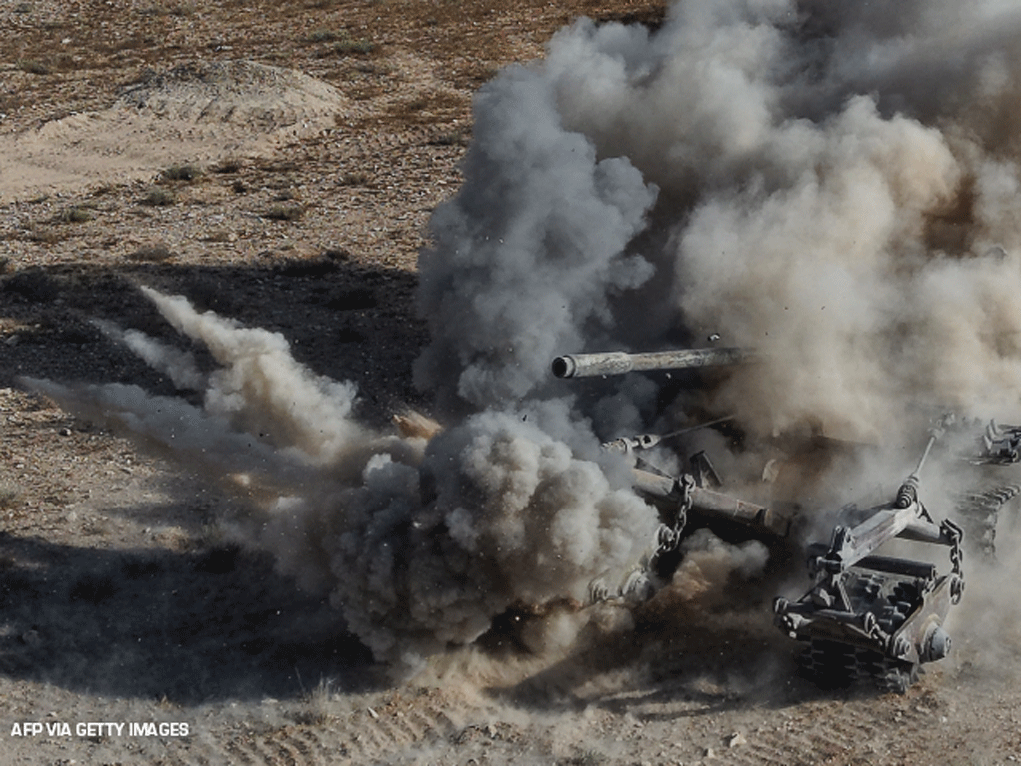 Yated Ne'eman1 month ago
Last week the Israeli air force bombed the semi-demolished Abu al-Duhur military airfield in northern Syria, cratering the runway and destroying adjacent warehouses in order to make the base unusable. The attack was triggered by an Israeli intelligence report warning that Turkey was about to install a radar-guided air defense unit on the base, located near the Syrian-Turkish border, to be manned by Turkish troops. This would pose a threat to the Israeli warplanes which have been openly operating for the past 18 months in Syrian airspace.
The installation of such an anti-aircraft system at the Syrian base would violate a U.S.-brokered agreement reached shortly after the fall of the Assad regime in December 2024, under which both Syria’s current Turkish-backed transitional government, led by President Ahmed al-Shaarq, a former al Qaeda terrorist leader, and Israel’s government agreed to maintain the current military status quo on Syrian territory.
The agreement permits Israeli troops to continue their occupation of a security zone just inside Syria’s southern border, including both sides of Mt. Hermon. Israel has also launched hundreds of air strikes on targets in Syria since December 2024. Many of them were intended to protect the minority Druze communities in southern Syria, which have come under repeated attacks by pro-Syrian government Sunni militia forces armed with Syrian army tanks and other military vehicles.
But Israel’s critics have noted that by acting in defense of the Syrian Druze minority, the IDF has been able to justify the expansion of its military footprint in southern Syria and occupy the strategic high ground, weakening the control of that part of Syria by the transitional government led by al-Shaarq in Damascus.
Maintaining The Benefits Of The Status Quo Agreement In Syria
The status quo agreement also allows Israeli warplanes to continue patrolling Syrian airspace, looking for signs of terrorists seeking to use the area as a base for attacks on Israel’s northern border. The status quo agreement obligated the interim Syrian government not to introduce any new military forces or installations to fill the power vacuum that was created with the collapse of the Assad regime, or that could pose a security threat to Israel’s northern border or to its forces now manning the Israeli security zone inside southern Syria.
Shortly after the Israeli air force raid took place, Prime Minister Netanyahu’s office issued a statement declaring that Syria had been on the verge of violating a “status quo agreed with Israel in security matters,” and that allowing Turkish troops to deploy at the Syrian airbase would threaten Israel’s security.
Netanyahu later said that prior to launching the air strike, Israel had issued a warning to Turkey’s government against engaging in any military activity in Syria. “We made our message [to Turkey] clear: Don’t,” Netanyahu declared in a statement.
Over the weekend, Israel’s Defense Minister, Israel Katz, confirmed the statements from the prime minister’s office. Katz said that, “Following several discussions that Prime Minister [Netanyahu] and I held with IDF leaders and the various other Israeli security officials, it was agreed that before approval was given for the Israeli airstrike on the Syrian airbase, a direct warning would be issued to the Syrian regime at the highest levels first in an attempt to prevent [Turkey’s military] move, and that is what was done.”
Katz also said that “at the same time, the intelligence [about the imminent Turkish military move in Syria] was conveyed to the relevant authorities in the United States,” to give President Trump advance warning about a possible Israeli air strike.
However, Katz continued, “After the notification to the Syrian government went unanswered, the prime minister and I authorized the IDF to carry out the strike, which was carried out successfully,” Katz said. He then added that “[Turkish President Recep Tayyip] Erdogan was caught with his hand in the cookie jar and was forced to back down” from his plan to install a Turkish military-operated air defense system at the Syrian base.
Katz also accused the Netanyahu-led coalition’s domestic political opponents of “zigzagging” in their criticism of the Israeli air strike on the Syrian airbase. The opponents initially accused Netanyahu of ordering the air strike to bolster his image as a strong Israeli leader ahead of the October 27 Knesset election. According to Katz, Netanyahu’s political opponents and the biased critics in the Israeli news media initially said that “the strike in Syria was superfluous and carried out for political considerations.”
Getting No Response, Israel Delivers The Message In A Different Way
But that was before Doron Spielman, the spokesman for the government’s National Public Diplomacy Directorate, released a video late last week which clearly explained the information that justified the air strike and sounded the alarm over indications that Turkey intends to expand its military presence in Syria. Spielman also noted that Netanyahu had stated clearly that Israel would not permit Turkey’s military to push south [inside Syria] toward Israel’s border, and that once Syria brushed off repeated warnings, Israel had to “deliver the message in a different way” via air strikes.
Katz said that “After it was made clear [by Spielman] that the IDF recommended the strike based upon clear intelligence information, and [that] the political echelon had carefully weighed and reached the decision, Netanyahu’s critics moved to an alternative narrative. They then said that the statements by the prime minister and the defense minister about Erdogan, and the warning that Israel will not allow Turkey to entrench itself in Syria and endanger its security, were dangerous.”
Katz mocked Netanyahu’s critics for warning that Israel “must not anger Erdogan, as if [by ordering the air strike] we went out for some evening stroll that has nothing to do with anything; as if Erdogan [who has become one of Israel’s most outspoken opponents] is actually some Zionist enthusiast. Luckily they [Netanyahu’s critics in Israel] have no influence today on anything,” Katz said. He then added, “We very much hope for the sake of Israel’s security that they will not reach positions of influence with such positions in the future [after the upcoming Knesset election] either.”
It was also reported that several days prior to the Israeli air strike on the Syrian base, Roman Gofman the head of Israel’s Mossad security service, had conducted a two-hour, in-depth phone conversation with Syrian Foreign Minister Asaad al-Shaibani to convey Israel’s concerns about reports that a delegation of Turkish military contractors had visited the Syrian airbase, presumably to prepare for the installation of the air defense system there.
According to a Saudi Arabian news report, during that same conversation, the Syrian foreign minister revealed a plan to deploy advanced Turkish-made combat drones at the Abu al-Duhur airbase, ostensibly for use against the remnants of ISIS forces in Syria. The Mossad chief then reportedly responded by warning that any new drone deployment at Abu al-Duhr would be viewed as an attempt to turn it into a forward operating base threatening Israeli security and would not be tolerated.
When Turkey’s President Erdogan First Turned Against Israel
Turkish President Erdogan’s vehement public criticism of Israel dates back to the May 31, 2010 incident when Israeli naval commandos intercepted a flotilla of six ships organized by a pro-Palestinian “humanitarian” organization, and led by the Turkish-flagged passenger vessel MV Mavi Marmara. The ships were trying to break Israel’s blockade of Gaza, which was imposed after Hamas had begun launching missiles from there at nearby Israeli communities.
When Israeli commandos dropped from helicopters to board the Mavi Marmara, they were immediately attacked by dozens of Palestinian terrorists armed with clubs, metal pipes, and knives, who had been posing as international civilian peace advocates. Several of the Israeli commandos were wounded, and they were forced to defend themselves by opening fire using live ammunition, killing ten of the terrorists.
The Mavi Marmara incident created a serious crisis in Israel-Turkey diplomatic relations, which had been very cordial before Erdogan became Turkey’s prime minister in 2003. Until that time, Israel had been serving as one of the Turkish military’s primary sources for high-tech armaments.
Erdogan’s diplomatic attacks on Israel escalated further after he became Turkey’s first directly elected president in 2014. Since then, Erdogan has dismantled several democratic aspects of Turkey’s government, which has become much more authoritarian in nature. He has also shifted Turkey’s diplomatic stance, giving up on Turkey’s failed efforts to qualify for membership in the European Union, and focusing instead on strengthening Turkey’s influence over its Middle East neighbors, based in part upon his embrace of the Palestinian national cause, and his open hostility to Israel.
Erdogan’s Early Connections To The Muslim Brotherhood
Erdogan’s affinity for the Palestinian cause can be traced back to his deep ideological, political, and logistical ties with the Muslim Brotherhood, the parent organization of Hamas, going back to Erdogan’s days as an Islamic student activist in the 1970s. Erdogan was elected mayor of Istanbul in 1994, but in 1998, he was convicted of inciting religious hatred and temporarily banned from participating in Turkish politics.
Following the 2011 uprisings of the so-called Arab Spring, Erdogan aggressively championed the new Egyptian government led by Muslim Brotherhood activist Mohamed Morsi. After Morsi’s government was overthrown in 2013 by the leader of the Egyptian army, General Abdel Fattah el-Sisi, Erdogan turned Turkey into the primary sanctuary for exiled Egyptian Muslim Brotherhood leaders. To this day, under Erdogan’s rule, Turkey continues to host several international Muslim Brotherhood-linked organizations which are seen as a security threat by the governments of Egypt, Saudi Arabia, and the United Arab Emirates (UAE).
After having helped al-Sharaa’s forces to overthrow Bashar Assad’s despotic regime, Erdogan is now trying to use his enhanced influence over Syria to establish Turkey as the new leader of the Sunni Muslim nations in the Middle East. His latest move in that direction was the recent signing of a mutual defense pact by Turkey, Saudi Arabia, and Pakistan. This is in addition to Turkey’s ongoing membership in NATO, in which it maintains the second-largest standing armed forces after the United States.
The mutual defense pact’s signing took place shortly after Saudi Arabia’s de facto ruler, Crown Prince Mohammed bin Salman, resisted President Trump’s efforts to get the Saudis to join the Abraham Accords with Israel, on the grounds that Israel still rejects the formation of a Palestinian state.
In 2016, Israel and Turkey signed a reconciliation agreement mediated by the United States, which was supposed to restore normal diplomatic ties between the two former allies, but Erdogan has continued to attack Israel and accuse it of committing genocide against the Palestinian population in its war against Hamas in Gaza at every opportunity.
Erdogan Has Taken In The Hamas Leaders Who Have Left Qatar
Erdogan has invited Hamas’ international leaders who had been living in Qatar to move into Turkey, and has been sharpening his anti-Israel rhetoric almost daily.
Last week, Turkey’s Defense Ministry denied that a Turkish military delegation had visited the airbase, just a day after Syrian foreign minister al-Shaibani publicly confirmed in an interview with the Axios news site that such a visit had taken place.
But the Syrian foreign minister denied that there were any plans for a Turkish military deployment there. Al-Shaibani said that the visit by the Turkish military officials was nothing more than the continuation of the “ongoing military cooperation” between two allies which share a common border.
Meanwhile, in a weekend news interview with Israel’s Channel 12, Israel’s Foreign Minister Gideon Sa’ar declared that Israel has “no interest in [a military] escalation with Turkey. We are committed to preserving the status quo,” Sa’ar said, but he then added: “We will not accept the establishment of Turkish [military] bases in Syria.”
He explained that Israel has noted how Iran has infiltrated Lebanon and Gaza to attack Israel, and that the Israeli government will not tolerate “that same situation to develop with Turkey in Syria.”
Sa’ar emphasized that Israel “always prefers” diplomatic solutions to military ones, and reiterated that Israel has no intention of escalating tensions with Turkey. Israeli officials have held several rounds of direct talks with officials of Syria’s interim government, which have led to an agreement to establish an intelligence-sharing mechanism designed to avoid the unintentional outbreak of conflicts between them.
Turkey Again Calls For Netanyahu’s Arrest
Sa’ar made the statement after the Turkish government issued another warrant for the arrest of Prime Minister Netanyahu last week, based upon the false accusation that he had ordered the commission of the crime of “genocide” against the civilian population of Gaza, a charge that the Israeli government has vigorously denied. Turkey also said that it would ask Interpol [the international police force] to issue a “red notice,” which is a request to police forces worldwide to locate and provisionally arrest a wanted person pending their extradition to the country where they would be put on trial.
In response to Turkey’s issuance of the warrant, Netanyahu’s office issued a statement declaring that Turkish President Recep Tayyip Erdogan “now seeks to extend his aggression against Israel into Syria. Israel will not tolerate it.” The statement reiterated previous accusations made against Erdogan, calling him “an antisemitic dictator who has massacred Kurds [living in Turkey and Syria], harbors Hamas terrorists, occupies half of Cyprus, and jails record numbers of [Turkish] journalists and politicians who oppose him.”
One of the most irritating factors in the reaction to Israel’s air strike on the Syrian airbase was comments made by the U.S. Ambassador to Turkey, Tom Barrack, who also serves as President Trump’s special envoy to Syria and Iraq.
Tom Barrack’s grandparents were Lebanese Christians who arrived in the U.S. in 1900. He was trained as a lawyer and made his fortune as a private equity investor. He has also developed close ties to the Saudi royal family. Barrack has been a close personal friend of Donald Trump going back for more than 40 years. He has served Trump as a major campaign fundraiser and as an informal advisor, and chaired Trump’s 2017 inaugural committee.
U.S. Ambassador Accused Israel Of Trying To Start A War With Turkey
During a wide-ranging podcast interview with Mario Nawfal, a Lebanese-Australian entrepreneur, Barrack accused Israel of launching the attack on the Syrian base to draw Turkey into an armed conflict, and offered two possible theories to explain why the attack was launched.
“One theory is they were just baiting Turkey, and it’s a very aggressive, but maybe well-received, pre-election concept,” Barrack said, implying that it was a politically motivated attempt by Prime Minister Netanyahu to burnish his credentials as a strong Israeli leader ahead of the Knesset elections scheduled for October 27.
Barrack then said, “The other theory is that between the IDF, the Mossad and the Prime Minister’s Office there was a miscommunication,” suggesting that an Israeli attack on a foreign country was launched by accident.
During the podcast, Ambassador Barrack also cast doubt on the Israeli intelligence report that Turkey was preparing to move some of its military assets to the Syrian military airport at Abu al-Duhur. He said that there was no U.S. intelligence to indicate that Turkey was planning such action.
According to a Times of Israel report, Ambassador Barrack has a long history of speaking “off the cuff” and pontificating on developments in the Middle East, making comments based on his personal opinion that do not necessarily reflect the Trump administration’s foreign policy positions.
U.S. Envoy Rejects Trump’s Recognition Of Israel’s Right To The Golan
In reaction to the podcast, Defense Minister Katz said that Barrack’s remarks were “full of inaccuracies.” Katz also said that Barrack’s statements included “positions that contradict the position of U.S. President Trump.” Specifically, Barrack claimed that, “In the Golan, with Syria, they still occupy the Golan against the U.N. resolutions, against all the international order, which has said the Golan is Syria’s [territory].”
Israel captured the Golan Heights from Syria during the 1967 Six Day War and refused to return it when the war was over because Syria had been using the high ground to launch artillery bombardments at Israeli farmers as they tended their fields in the valleys across northern Israel. Soon after the Israeli government annexed the Golan Heights, on December 17, 1981, the U..N Security Council passed Resolution 497 declaring the Israeli annexation of the Golan Height to be “null and void,” and calling for Israel to withdraw from the occupied Syrian land to the pre-1967 border with Syria. However, Israel refused to comply, and, 38 years later, in March 2019, President Trump signed a proclamation formally stating that the U.S. recognizes Israel’s sovereignty over the Golan Heights.
Barrack’s inaccurate interview statements were harshly criticized by Laura Loomer, a controversial far-right social media conspiracy theorist, who called upon Barrack to resign his ambassadorship because “he does not understand U.S. foreign policy and supports the wrong side.”
Barrack’s podcast statements were also blasted in an editorial published by the New York Sun, which said that he rushed to condemn Israel for the strike, “before anyone at Washington had time to assess the situation.”
The New York Sun editorial also noted that Barrack falsely claimed in several interviews with Israeli television reporters that because Turkey had not been notified of the Israeli air strike in advance, its jets could have come into conflict with Israel’s warplanes over Syrian territory, even though Turkey denied that any of its aircraft were present at the Syrian airfield that was bombed.
Trump’s Ambassador Is Acting Like Erdogan’s Man In Washington
The editorial cited a statement by Sinan Ciddi, the director of Turkey studies at the Foundation for Defense Democracies, who described Barrack as “his own man” whose agenda and opinions often track closely with Turkey, which helps to explain why he was so quick to condemn the Israeli air strike. The same editorial also noted that President Trump did not criticize the air strike in an interview with Israel’s Channel 12 last week, suggesting that American intelligence agrees with Israel in suspecting that Turkey does intend to stage a military buildup in Syria. The editorial concluded that, “One way to bolster Syria’s independence from Turkey is to name an American ambassador to Damascus, rather than rely on an ‘envoy’ [like] Mr. Barrack [who] seems like Mr. Erdogan’s man at Washington, rather than the other way around.”
In the wake of that criticism, Barrack conceded in a statement to the Associated Press that his comment about the Golan during the podcast interview did not reflect current “United States policy on the Golan [recognizing Israel’s sovereignty over it, which] was set by President Trump in 2019 and is unchanged.” Nevertheless, he still insisted that Israel’s occupation of the territory goes “against all of the international order, which has said the Golan is Syria’s [territory].
During his podcast interview, Ambassador Barrack did confirm the reports of a prior extended conversation between Mossad chief Gofman and Syrian Foreign Minister al-Shaibani, and he speculated that it might have led to a mistaken order to attack the Syrian air base.
Harmful Speculation By Trump’s Ambassador To Turkey
“Perhaps the Mossad director was conducting a really serious backchannel [discussion] that he wasn’t finished with, perhaps he wasn’t satisfied with, that he was going to come back the next week and have another discussion,” Barrack said.
“And in the meantime,” Barrack continued, “an [Israeli] commander someplace, based on what they thought their intelligence reading was, thought ‘we need to move quickly, and we need to move now,’” and ordered the air strike.
Barrack did add that, “to Israel’s credit,” it told the U.S. six days before the strike that it had intelligence indicating “there might be Turkish movement into this site.
“We all did our due diligence. We went back to our respective intelligence agencies. [But] the answer we got is, no, that [Turkish move of military assets] is not happening,” Barrack said.
The American ambassador then speculated further that, “Probably the most likely [explanation] is that [Israel] picked up some conversations of some contemplated strategy of the Turks increasing a training program on that site,” Barrack said, and noted that the current status quo arrangements don’t forbid Turkish efforts to “openly train and supply and help the Syrian government” in areas like the air base that lie near the two countries’ shared border.
In a separate interview with the Jerusalem Post, Barrack said that in order to prevent further military incidents, the U.S. will try to establish a deconfliction mechanism between Israel, Turkey, and Syria. Barrack said that the current government in “Syria has demonstrated itself to be a responsible and stable sovereign neighbor, and a carefully structured de-escalation arrangement would contribute significantly to greater calm and predictability across the region.”
In an independent analysis by the Kikar Shabbos, a chareidi digital news portal, of the rising tensions between Israel and Turkey, it noted that “Turkey has become a key ally of the new regime in Damascus in recent months, by assisting in training the Syrian army and rebuilding its infrastructure. Israel fears that a permanent Turkish military presence in Syria would change the regional balance of power, especially if Turkey deploys an advanced radar air defense system in Syria that could significantly limit the Israeli air force’s freedom of action.”
The Kikar Shabbos analysis also noted that according to Turkish Justice Minister Akin Gurlek, Turkey has launched a new investigation against 35 Israeli servicemen in Israel’s navy for their role in the latest incident this May in which the Turkish-supported Global Sumud Flotilla, made up of 50 ships supposedly carrying aid for Palestinians, came under Israeli fire and were boarded by Israeli commandos off the coast of Cyprus. This thereby prevented the ships from penetrating Israel’s blockade of Gaza’s ports. In addition, 430 pro-Palestinian “activists” aboard those ships were first taken into custody by Israel and then were deported.
Gurlek also declared that Turkey will use all available legal mechanisms to ensure Israel is held accountable for its crimes in Gaza.
Netanyahu’s office also issued a statement predicting that, “[Turkish President] Erdogan’s pathetic attempt to intimidate the leaders and soldiers of Israel, the only true democracy in the Middle East, will go nowhere.”
Turkey’s Growing Military Footprint In Syria
Meanwhile, Israel Hayom published a report based upon an interview with a source in western Syria claiming that “Turkey’s footprint in the region has grown significantly more pronounced,” particularly in the area surrounding the strategic port cities of Latakia and Tartus on Syria’s Mediterranean coast.
The same source said that “Officials representing Turkish intelligence and the Turkish military are playing in Syria as if it were their private playground. This manifests [itself] in Turkish vehicles, some of which are armored, that soldiers are using to move around the [Syrian] roads.” The source also said that Syrian agents have been buying up real estate on behalf of Turkish businessmen in the residential portions of the same two Syrian port cities.
However, the source reported that the Syrian economy has yet to recover from its long civil war and that, “All classes [of Syrian citizens] are suffering [because] there is no security and there are economic hardships. We are heading into the unknown [and] no one knows where the fools who seized power [in Damascus] are taking us.”
According to the Israel Hayom report, the first signs of an expanding Turkish military presence in Syria became evident immediately following the collapse of the Assad regime. It cited contemporary newspaper reports from that era of Turkish troops entering western Syria’s Latakia province with engineering equipment to establish a new military outpost, as well as Turkish military reinforcements being deployed in Aleppo province in March of last year, increasing tensions with local Kurdish forces.
Today, a year and a half after the fall of the Assad regime, the footprint of Turkish forces on the ground in Syria, the Israel Hayom report says, continues to expand. This past July, Al-Araby, a Qatar-based broadcast news network, released footage of a convoy of Turkish military trucks and armored vehicles advancing toward the eastern Syrian city of Deir ez-Zor.
Turkey Digging In At Its Syrian Bases
The British-based Syrian Observatory for Human Rights reports that Turkish military forces have not abandoned a single outpost that they have established in Syria over the past 18 months. Instead, the Turks have been actively digging in, fortifying their new bases by erecting concrete blast walls, digging defensive trenches, and building up earthen berms.
The recent Turkish military expansion in Syria included a July visit to the port of Latakia by a flotilla of Turkish warships, accompanied by the commander of Turkish Naval Forces, who carried out an inspection of Latakia’s military port facilities and held high-level meetings with his Syrian navy counterparts.
Soon after the Assad regime collapsed in December 2024, the Israeli Navy systematically destroyed the bulk of the Syrian naval fleet to prevent the ships from falling into the hands of radical Syrian Islamist factions. Now Israeli intelligence indicates that the interim Syrian government wants to reconstitute its naval capabilities, raising fears that Syrian President Ahmed al-Sharaa will ask for Turkey’s help in rebuilding Syria’s maritime strength.
Israel’s ambassador to the United States, Yechiel Leiter, emphasized in an interview with the Jerusalem Post that, “We are not seeking escalation or war with either Turkey or Syria. But a red line was crossed,” when Turkish military officials paid a visit to the Syrian airbase, which required an Israeli military response.
Leiter said that he was one of the participants at the January 2026 meeting in Paris during which the understandings of the status quo agreement between Israel, Syria and Turkey were reconfirmed. Other officials who participated in that meeting included Syrian Foreign Minister Asaad al-Shaibani, U.S. Syria envoy Tom Barrack, then-Israel National Security Council chief Gil Reich, and Netanyahu’s military secretary Roman Gofman, who is now the Mossad director.
The Status Quo In Syria Has Worked Well So Far
According to Leiter, “The freeze [status quo agreement] means that just as the Turks don’t move, neither do we [Israel] — and they don’t force us to withdraw. And it is important to understand that while we are sitting on only 78 square miles in the [southern] Syria security zone, the Turks have carried out a creeping annexation of 3,500 square miles in northern Syria over the past several years — [representing] about 5% of [Syria’s] territory.”
Leiter emphasized that the status quo agreement has largely been successful in preventing conflict in Syria, and that the Trump administration wants it to continue, “which is why even Trump did not condemn the [Israeli air] strike,” Leiter said.
The Israeli ambassador also said that, “It is clear to us that the Syrians do not want a confrontation with us. That is why we are telling the Turks not to create conflicts.”
Leiter also said, “There is more than one indication that the [military] move planned by Turkey was imposed on the Syrians,” against their will, including the fact that the Syrian and Turkish accounts were in conflict over whether or not a Turkish military delegation had visited the Syrian airbase.
“While Syrian Foreign Minister Shaibani acknowledged that there had been a Turkish delegation in Syria several days before the strike, the Turks denied it.” Leiter then recommended that, “They [Syrian and Turkish officials] should sort it out among themselves.”
Israel Willing To Talk Peace With Syria Again But Not Turkey
Leiter also said that a resumption of direct Israeli-Syrian talks was desirable if the conditions are right. “The negotiations can be renewed. We want to continue the face-to-face dialogue that we previously held with the Syrians,” he declared.
But that is not necessarily the case with Turkey’s current government. Leiter said, “We are certainly open to dialogue with them, but according to statements by senior [Turkish] officials, they would prefer to wipe Israel off the map.”
He was referring to repeated accusations by Turkish President Erdogan that Israel has been committing war crimes, as well as the recent statement by Turkish Foreign Minister Hakan Fidan declaring that “Israel is a stain on humanity.”
Leiter’s response to those claims was to note that, “At a time when Turkey is hosting Hamas leaders and transferring funds to Hezbollah and Hamas, Iran’s [allies] against Israel, it is not appropriate for them to begin expanding their influence in Lebanon and Syria.”
Leiter expressed his disappointment that, “Under the current circumstances, Turkey cannot be a force that helps calm the region. I wish we could return to the situation of several decades ago [when there were cordial] relations between Jerusalem and Ankara. Then, we would be open to Turkish influence in the region. But it is not logical for Turkish influence in the region to [be allowed to] grow while Turkey is funding terrorist organizations.”
 Yated Ne'eman2 months ago
My grandchildren were by us for Shabbos, and they were chewing gum, as children are wont to do. As I watched them, I was thinking about something my rebbi, Rav Mendel Kaplan, would tell us. He would say, “Life is like chewing gum. Ah bissel tzuker un kei kei kei — It has a little sugar, but most of the time you are simply chewing.” His pithy comment is quite deep and has much meaning.
There is actually a lot packed into that little expression. Underneath the humor is a very profound observation about what life is all about.
Rav Mendel’s point, as I understand it, is that we tend to imagine that life is supposed to be a succession of sweet moments. We wait for the good news, the simcha, the accomplishment, the nachas, the vacation, the special Shabbos, the wedding, the birth, the siyum. Those are the moments when we taste the “sugar.” But they are not the bulk of life because, face it, most of life is the chewing.
And that doesn’t mean that most of life is bad. Chewing gum isn’t bitter or unpleasant. It’s simply…ordinary. You chew. You continue. You go through the day. You take care of what needs to be taken care of. You deal with the unexpected. You go to work, learn, daven, raise children, worry about things, solve problems, pay bills, make phone calls, wait for appointments, clean up messes, and do it all over again the next day.
There is a little sugar mixed in, and those moments are precious. But the sugar isn’t the entirety of the gum. The chewing is the experience of living.
And perhaps that is one of the great misunderstandings of life. We think that we will really begin living when everything falls into place. When the children grow up, when the parnossah is settled, when the health is perfect, when the problem is resolved, when the simcha arrives, then life will be good.
But Rav Mendel’s “ah bissel tzuker un kei kei kei” teaches something else: Don’t wait for the sugar to begin appreciating the chewing.
A person is not measured only by the dramatic moments of his life. Much of avodas Hashem takes place in the seemingly uneventful actions of ordinary days. The greatness is often not in the extraordinary moment, but in getting up every day and doing what needs to be done again and again.
The kei kei kei is almost the sound of life itself.
We chew, we chew, and we keep going.
And perhaps there is an even deeper message. When you chew gum, you don’t ask, “When is the next taste of sugar coming?” You know that the sweetness will eventually fade, but you continue chewing. Why? Because chewing itself has become part of the experience.
So, too, we have to learn to appreciate not only the moments when Hashem gives us an obvious taste of sweetness, but also the long stretches in between. The sweetness may be less apparent, but that doesn’t mean that those moments are empty. They, too, are part of the life Hashem has given us.
Sometimes, in fact, the chewing is where the sweetness is hidden.
A person looks back after many years and realizes that the days he thought were merely “ordinary” were actually his life. The rushed mornings, the chitchat with people in shul after davening, the walks home from shul, the Shabbos meals, the conversations with his children, the learning sessions, the small acts of kindness, the challenges he overcame, even the difficulties that forced him to grow — those weren’t interruptions to his life. They were his life.
Rav Kaplan managed to say all of this with a smile and a couple of words of Yiddish: Ah bissel tzuker un kei kei kei.
A little sugar.
And then you chew.
Rav Mendel was very smart. He was blessed with a life comprised of chochmas haTorah, and he sought ways to impart that chochmah to us, his young American talmidim. He was teaching us not to resent the chewing while waiting for the sugar, but rather to recognize that the sugar gives us moments of sweetness, while the chewing gives us the opportunity to live.
Life is not a bowl of cherries or a piece of candy that is sweet from beginning to end. It is chewing gum: Ah bissel tzuker un kei kei kei. There is a little sweetness, and then a great deal of chewing.
The sugar moments remind us why we are here.
We work hard at something and then are able to look back and see what we have accomplished, be it raising children and enjoying the milestones of their lives or struggling to work through a Tosafos and then experiencing the joy and sweetness of finally understanding it. Someone goes through a nisayon and later realizes that it made him stronger, deeper, and closer to Hakadosh Boruch Hu.
The chewing itself can eventually become sweet.
There is another important dimension. If we expect life to be sweet all the time, we would become disappointed very quickly. But if we understand that life is mostly chewing, with occasional bursts of sweetness, we develop a different relationship with life.
We stop asking, “Why isn’t life sweeter?” and begin asking, “Where is the sugar?”
And I think that is perhaps the most beautiful way to understand Rav Kaplan’s bissel tzuker.
The sugar is there. It may not be everywhere. It may not last forever. Sometimes we don’t even recognize it while we’re experiencing it. But it is there, and perhaps the real avodah is to learn to notice it.
Two people can live through the same day. Both have responsibilities, frustrations, bills, disappointments, and endless things to take care of. One comes home saying, “What a difficult day.” The other remembers one small moment — a child’s smile, a good sevara, a meaningful vort, a beautiful sunset, a kind word — and says, “Boruch Hashem, there was some sugar today.”
As I get older, I think more often about Rav Mendel and his teachings and the insights he gave us when we were young and growing up. And I think about different dimensions of what he meant. Maybe that is what he meant. While it is true that life is mostly about chewing, it is also true that Hakadosh Boruch Hu makes sure that there is a little sweetness. The wise person looks for those moments and learns to savor them.
Elul is one of those doses of sugar that Hashem puts into life.
Life is filled with routine. We wake up, go to work, learn, daven, raise children, and deal with responsibilities, disappointments, and challenges. Through the “chewing” of life, we are moving forward, sometimes without even noticing how quickly the days are passing.
And then comes Elul.
Suddenly, Hashem gives us a month that is different from all the others. It is as if He puts a little sweetness into the gum and says to us, “Stop for a moment. Think about where you are going. You still have time. You can fix things. You can come closer. Ani leDodi veDodi li.”
That itself is an extraordinary kindness.
The yemei hadin are approaching. A person might look at himself and think, “How can I repair everything I have done wrong?” And then Elul arrives and tells him: Come with me. You can do it.
After Tisha B’Av and the Nine Days ended, we felt as if the rest of the month of Av was one of sweetness. It represented the sugar of life we so desperately crave. It provided us with the opportunity to get off the Ferris wheel of chewing, of working, of doing the things we have to do in life. The second half of Av gave us a break, a time to go away, to travel, to unwind — a time of leisure, swimming pools, barbecues, and enjoyment.
The past three weeks represented the physical sweetness that Hashem gives life, and now we have entered the month of Elul, which presents us with some of the spiritual sweetness of life.
The sweetness of Elul is not the sweetness of comfort or pleasure. It is the sweetness of opportunity.
Elul signals that Rosh Hashanah is coming. We are being given the weeks preceding it to prepare. To think. To regret. To apologize. To improve. To strengthen a relationship. To become more careful with our words. To daven with more concentration. To learn better and more. To examine our lives and say, “I am going to fix what I did wrong over the past year.” To say, “Next year, I am going to do better.”
That is the spiritual tzuker of life.
Teshuvah is not merely a painful accounting of our failures. It is the realization that we are not trapped by what we said or did yesterday. We can change it. We can change ourselves. The person I was yesterday does not have to be the person I am tomorrow. I can be better.
Elul is not meant to frighten us. It is meant to awaken us, as the posuk says, “Uru yesheinim mishinaschem.” Awaken from your slumber, from your actions throughout the year. The door of teshuvah is open. The door to greatness is open. Step right in.
We can literally go back and erase yesterday. What happened, happened. The words were spoken, the opportunities were missed, the mistakes were made. Yet, Hakadosh Boruch Hu created a mechanism through which a person can take those very failures and transform their meaning. We can take those chato’im, those mistakes, and, through the gift of teshuvah, turn the failures into zechuyos, merits.
Someone who recognizes what he did wrong, sincerely regrets it, accepts upon himself not to repeat it, and changes his behavior, is no longer the same person who committed that act. His past is no longer part of his history, and it does not define his destiny.
That is an extraordinary kindness. That is the spiritual sweetness of teshuvah.
Failure can become the beginning of growth. A sin can become the source of humility. A painful experience can teach a person compassion. A relationship that was damaged can become the impetus to learn how to speak differently. A missed opportunity can awaken a person to recognize the next opportunity when it arrives.
Elul is the month when Hashem reaches out to us, when Heaven touches earth and the distance between us and our Creator becomes smaller. Hashem comes closer and offers us the precious gift of teshuvah, the opportunity to find our way back home.
We may have wandered. We may have taken wrong turns, missed exits, traveled down roads we never should have entered, and sometimes gotten so lost that we no longer know how to get back. But teshuvah is Heaven’s GPS. It helps us recalculate and points us home. It reminds us that no matter how far we have traveled, the road back is still open. We are never too far gone to return. And what could be sweeter than that?
Elul isn’t merely a countdown to Rosh Hashanah. It is Hashem giving us advance notice that the yemei hadin are coming and giving us the opportunity to prepare for them.
He is telling us, “Don’t wait until you stand before Me to wish you had become different. Change now.”
Before the King judges us, He comes closer to us and gives us a month to go looking for Him.
We have spent another year chewing. There were sweet moments, bitter moments, ordinary moments, and painful moments. There were things we did well and things we wish we could do over.
Elul provides us with the opportunity to examine the past year, fix what needs fixing, and set ourselves on a good path for the coming year. Elul enables us to build a better future.
There is a little sugar. Life is still mostly chewing. But when Elul arrives, Hashem puts a little extra sweetness into the gum. He gives us a month in which the ordinary person can become extraordinary by confronting his past, learning from it, and returning to the One who has been waiting for him all along.
We can look at it a little deeper.
The Vilna Gaon writes that when Hashem created the world, He combined the middos of din and rachamim. The world could not exist through din alone, because no human being could survive if we were judged solely according to what we deserved. However, a world governed exclusively by rachamim would lack the structure and accountability necessary for creation to fulfill its purpose. Hashem therefore conducts the world through a combination of din and rachamim.
But during Elul, Hashem relates to us strictly with the middah of rachamim. The King is coming, the yemei hadin are approaching, and yet, paradoxically, the days immediately preceding judgment are days of extraordinary mercy. Prior to standing in judgment before Him, Hashem comes toward us with rachamim and invites us to approach.
What an incredible gift that is. Imagine a person who is about to stand trial. His actions are going to be examined, and he will have to answer for the choices he has made. And then, before the trial begins, the judge goes out to meet him and says to him, “Come. Let us fix this before we start hearing the case.”
That is Elul. It is a month of Divine mercy, of Divine sweetness.
Elul reminds us that our mistakes do not have to be the end of the story. Hashem gives us the extraordinary ability of teshuvah. He doesn’t wait for us to come crawling back after judgment has already been rendered. He comes closer. He makes the first move. He opens the door and beckons us inside.
And suddenly, Rav Mendel Kaplan’s words take on an even deeper meaning.
Life can indeed be a lot of chewing. We struggle, we stumble, we make mistakes, and we can wonder how we will find our way back. How will we get tzuker back into our lives? But then comes Elul and Hashem gives us a month of rachamim, a month when the distance between Heaven and earth is diminished, a month when the King is in the field and the road home is easier to find.
That is the sweetness of Elul. It is the sweetness of rachamim. It is the sweetness of knowing that the door is open. The sweetness of knowing that Hashem will help us get on the right path before He judges us.
May we all be zoche to come home and have a sweet year of goodness and kindness. A kesivah vachasimah tovah to all.
 Yated Ne'eman2 months ago
A childhood memory. During my early teen years, I had the zechus of spending time with the Satmar Rebbe, Rav Yoel Teitelbaum, during summers in Sharon Springs, NY. Many tzaddikim and Holocaust survivors flocked there for the healing powers of the sulfur baths. My father seemed to be friendly with his legendary gabbai, Reb Yossel Ashkenazi, and he somehow arranged for us to have seats near the rebbe at seudah shlishis.
At one of those wonderful events, the rebbe delivered what I later heard was one of his well-known teachings. The Torah speaks of Rosh Hashanah in what appears to be contradictory ways. The posuk (Devorim 11:12) says that Eretz Yisroel is “a Land that Hashem, your G-d seeks out; the eyes of Hashem, your G-d, are always upon it, from the beginning of the year to year’s end.” The rebbe pointed out that at first, the Torah calls it “the year,” and then just “year.” He smiled and explained gently but firmly: “Many people say that ‘this year I will be different’ and ‘this will be the year that I…’ Then, Rosh Hashanah comes around, even Yom Kippur, and nothing has changed. All the plans, hopes and even promises have disappeared like the wind.” He concluded that “our goal must be to truly make this the year of absolute change.”
This year, I have already had such a moment based upon the rebbe’s admonition. There is a line from Rav Mendel Vitepsker about Erev Rosh Hashanah. Every day we ask in Shemoneh Esrei, “Bless on our behalf — O Hashem our G-d — this year…” It would seem that at some point, we should begin asking for “next year,” since the year was almost over. But this holds true most certainly on Erev Rosh Hashanah. When the previous year only has moments left, we should certainly switch to praying for the new year. Rav Mendel’s answer was that “in a brief moment of proper davening, we can be mesakein (rectify) the entire previous year.”
I must confess that in previous years, I have always shared this beautiful thought in my shul on Erev Rosh Hashanah just before Mincha. However, this year, I discovered that perhaps I have been waiting too long. Rav Meilech Biderman (Be’er Hachaim, Elul/Tishrei, page 38-39) goes much further. He quotes from several great rabbeim, including the Sar Sholom of Belz and the Ahavas Yisroel of Vizhnitz, that since yeshuas Hashem keheref ayin (Hashem can bring salvation in a split second), our mandate is to “ask Hashem for help every second of our lives.”
With this in mind, I write these words and will, G-d willing, remind my friends much earlier this year about how precious and powerful each and every second is. Perhaps this will be the year that I can make this point early in Elul rather than at the last minute.
However, there is an even deeper message in this minhag of Rav Mendel of Vitepsk. Let us begin with an important teaching from the Chofetz Chaim (Chofetz Chaim At HaTorah, ed. by Rav Shmuel Greineman). The posuk (Bamidbar 5:10) states, “A man’s kodoshov (holies) shall be his and what a man gives to the kohein shall be his.” The word “his” is somewhat ambiguous, but it means that whatever material possessions a person accumulates in this world are only his temporarily. However, what he has accomplished religiously — the Torah he has learned, the mitzvos he has performed, the tzedokah he has given — are his forever.
Rav Yosef Shalom Elyashiv, one of the prime examples of hasmodah and meticulous use of every moment, explained this mandate with a halacha (Sefer Borchi Nafshi by his son-in-law, Rav Yitzchok Zilberstein, Bamidbar, page 115). We know that a goseis, one who is imminently going to pass away, may not be moved and his eyes may not be closed while he is alive. One who does so is considered a murderer. Rav Eyashiv asks: Why is this such a severe sin? After all, the person is going to die anyway very soon!
His answer is crucial, uplifting and frightening at the same time. The goseis, he explains, can still do teshuvah and, in that moment, completely reverse all of the things that he did in his lifetime. He can pass away pure and innocent of any heavenly punishment or spiritual suffering. That is the power of a moment. As Rav Zilberstein concludes, “This should impress upon us the value of a moment in time. We may think, ‘How much can I learn during moments I am waiting in line or for a medical appointment?’ However, it is these moments that can sometimes make all the difference in this word and the next.”
Another aspect of the Elul connection brings us to one of the most positive and productive aspects of this month. A moshol developed by Rav Chizkiyahu Mishkovsky is very helpful. A country bumpkin from the hinterlands is visiting New York for the first time, staring up at the skyscrapers he has never seen before. He enters the front door and begins running up the stairs to see how high this building goes. After several stories, he is panting and out of breath. A kindly resident asks him if he is okay, with the response that he just wants to “get to the top, but it’s impossible.” The New Yorker is shocked at the man’s ignorance, but asks, “Don’t you know what an elevator is?” When the visitor admits that he has no idea, he is shown the tiny room that will instantly transport him to the roof and the view. The nimshol is that Elul is our elevator to the top. The top of our middos, the top of our teshuvah, the top of our growth and the top, hopefully, of a wonderful verdict and judgment.
We must remember that Elul is an eis ratzon, a time propitious for getting where we want to go and to do it in the short span of a month or so. Of course, we will have to use every moment and take advantage of every opportunity. There is the sound of the shofar, the daily recitation of L’Dovid and, eventually, the uplifting words of Selichos. But above all, we can rise high above our mundane all-year selves and become something more.
What more we can become may be illustrated by an extraordinary story published in the biography of Rav Boruch Ber Lebowitz, rosh yeshivas Kamenitz and famed author of the Birkas Shmuel. One of the rosh yeshiva’s well-known traits was his adherence to kibbud av v’eim. When his aged father took seriously ill, Rav Boruch Ber held that he was obligated to attend to him personally day and night. Soon it was too much for the busy gadol and he became quite ill himself. Eventually, his father passed away and Rav Boruch Ber took it as a sign from heaven that he had failed in his mitzvah of kibbud av v’eim. After the shivah, the rosh yeshiva was still inconsolable and the family convinced him to consult with the Chofetz Chaim. Hearing the story, the Chofetz Chaim held Rav Boruch Ber’s hand tightly, repeating over and over, “A nei’er mentch —You are a new person. You are a new person.” Finally, Rav Boruch Ber breathed a sigh of relief and left the elderly sage’s presence consoled and refreshed. He would later often say that the Chofetz Chaim had given him a new lease on life.
Elul can give us all a new lease on life. When the “King is in the field,” He is extending a hand to us. It is not a hand of punishment or admonition. It is the hand of ani leDodi veDodi li. It is the hand of forgiveness and renewal. It is true that the Birkas Shmuel may have needed that hand because he did the right thing and we need it because we have been imperfect. But these are days when Hashem extends His hand in availability, love and conciliation. It is the eis ratzon we want and need, but we must take advantage and not lose the moment. The elevator is waiting. We just have to press the button. Yes, it can be the year, not just any year. This year can still be the zos that will save us and preserve us. It is the heref ayin we have been waiting for. It will be a time of lo yihiyeh, which belongs to us now and forever.
Let’s embrace Elul in all of its glory and grandeur. We will not be sorry that we did.
 Yated Ne'eman2 months ago
I grew up around politicians. I’m not saying it as a point of pride, and I don’t want to say it was a necessary evil. But it was epes, “necessary.” Opening a yeshiva in a dilapidated abandoned mansion smack in the middle of an otherwise pristine neighborhood was not easy. The neighbors on those “Tree Streets” were WASPS and Jews who were running from Judaism, in the Woodmere of the mid-1950s. Back then, they did not want to see the type of people who now fill the many shuls along the streets of the Five Towns. They did not want to see boys learning in a yeshiva.
In 1956, my father, Rabbi Binyomin Kamenetzky zt”l, moved to Woodmere. Not too far away, Lynbrook and Valley Stream had only recently taken down the signs at their park entrances that listed, in order, no dogs, blacks, or Jews. They had removed the signs from their parks, but they had not taken them out of their hearts.
So, my father found Uncle Pete. Peter DiSibio was the Republican leader in Inwood, and he was the first stop for anyone with a problem. When a neighbor warned my father not to bring “those fellows from Brooklyn with the peyos” into Woodmere, my father combed my sisters’ hair so that long black strands hung down the sides of their faces, and said, “I am sorry to tell you, but all of my children have peyos. However, they are girls.”
Somehow the yeshiva in the middle of a residential block, diagonally across from a WASP country club, stayed there for eight years. It took a kind gentile politician to ensure that.
I have seen a good many politicians since. So, when Nassau County Executive Bruce Blakeman, whose friendship goes back to the time his father, Robert, was a NYS Assemblyman, arranged seats for me and my kids to attend the president’s visit to Nassau County’s Police Training Academy, I walked in with the composure of a man who has seen the drill. I did not know that I would be treated specially as I milled around the auditorium, until a man I did not recognize shouted to me. He pointed to four chairs two rows in front of the stage, and said, “Rabbi Kamenetzky, you have your names on those seats back there.”
Truth be told, it was a Friday afternoon event, and although it was only 25 minutes from my house, and the Gemara in Brachos tells us to run to see the kings of the nations, I still had some hesitation. Friday events are always concerning. And being in a big room with a president who has had three attempts on his life can also be a bit edgy.
My fears were unfounded. I saw the president, and I learned a few lessons, and I got a column out of it as well.
Wrong number one. I walked in braced for a sea of Red Necks d’Oraisa, rowdy and rude Trumpnickers, but I found myself sitting among quite a number of welcoming gentiles and many Yidden as well. Everybody was friendly and peaceful, and my beard and yarmulka were not only revered but uplifting to them as well.
Wrong number two. I expected a highly tight, austere event, where getting out of your seat would mean shotguns raised at you. Despite the fact that there were about 500 police officers and state troopers in the crowd, it was a very relaxed atmosphere. The barriers were flimsy; there were a few burly fellows near the front of the stage, but otherwise, no one stopped me from going over to the county executive, who was sitting with the FBI director and attorney general and a couple of personalities in the entertainment world of whom I have never heard.
There were speeches after speeches. Congressmen, the inspector general for the Department of Labor, the FBI director, the newly appointed attorney general of the United States, and a host of political candidates. Of course, they were highlighted by the best speaker of them all (in my opinion), the Republican candidate for governor, Bruce Blakeman. They all spoke from the same podium. It seemed simple. A large wooden podium with a lectern on top, draped in black. No logo. No symbol. Nothing about it changed.
The rhetoric was Republican, and the bashing of socialism, crime, and chaos echoed on and on.
But as much as I like Bruce, I and the few thousand people there did not come for that. We came, and we all waited for the main speaker — the president of the United States.
After the speeches ended. We were waiting a good twenty minutes. Music was playing from speakers. No orchestra. No mezamrim. Maybe someone set up an mp3. It didn’t matter. They did not come for the band, the ambience, the skyboxes. Just for one person alone. When would the president come?
Suddenly, two people who must have done it a thousand times came toward the podium in one choreographed motion. They checked it. Pushed against it. Swept it. And then they altered it in a way that distinguished it from the way it looked for the first two hours of the event. They placed the presidential seal on it. And then there was a hush.
And the room changed.
Nobody announced a thing. Not a word was said. A disc went onto a piece of wood, and every person in that hall understood in the same instant that this was real. The president was coming.
My mind flashed back to Shacharis that morning. That morning davening was a bit longer. We waited through Shacharis. Through Hallel. Through leining. Through Mussaf. And then it came. The shofar. The announcement. The King is coming. The King is in the field.
It was a little move up there on the stage in Garden City. But that small move hushed the crowd. No one was allowed to speak behind that seal until the president did. And only after he spoke did he invite others to stand with him behind that seal. As the author of Parsha Parables and having heard King mesholim all my life, my mind went racing.
Oh, the mesholim.
What came before was only an introduction. Now the president himself was coming.
For two hours, important people had spoken. Government officials. Law-enforcement leaders. Candidates. Dignitaries. Each had his moment at the microphone. But suddenly the seal appeared, and everyone understood: what came before was the introduction. Now the president himself was coming.
He walked on to the stage. Nobody asked us to put away our cell phones. There was no sign asking for silence, no gabbai banging on a table, no reminder that we were in the presence of someone important. Nobody needed one.
The president walked into the room, and we knew. We knew where to look. We knew whom to listen to.
And once again I thought of shul. Da lifnei Mi atah omeid. Halevai.
Of course, instead of the band playing “Yomim,” there were raucous chants of USA! USA!
And then total silence. Awe.
The king began. Of course, his flippant humor, sarcasm, and wit were ever-present. Then he got serious. Indeed, he began to speak about values. About police. About open borders and about crime. And then he spoke about something personal.
There was a woman in that room whose son had been murdered. She was broken.
The president mentioned her plight. He told her story, and he called out to her. But the most protected man in the room was surrounded by agents, barriers, and layers of security. She could not simply come up to him. There were protocols.
So the President left the stage. He came down to her. And he consoled her with an embrace.
The man for whom everyone had waited left the stage and descended. And I thought again: Oh, the mesholim. And I will leave it at that.
Da lifnei Mi atah omeid. Those words are not an instruction to be quiet. They are an instruction to know. Because when you really know before Whom you are standing, nobody has to tell you to be quiet. Oh, the mesholim.
We speak of the Ribbono Shel Olam as Melech Malchei HaMelachim. We spend Elul preparing for the coronation of the King. On Rosh Hashanah we tremble as we say HaMelech. There is distance. There is awe.
And yet the same King of all kings tells us something almost impossible to comprehend: Karov Hashem lechol korav. He comes close.
Indeed, Elul itself is described not as the frightened subject somehow penetrating the palace, but as HaMelech basadeh. The King leaves, as it were, the palace. He comes out into the field, to where ordinary people are standing. To people who are imperfect. To people who might never imagine that they could gain entrance to the throne room.
The King comes to them.
The seal was on the podium, but the president can come down from the stage.
And if a little seal placed on a podium can change an entire room because everyone suddenly realizes that the president is about to appear, what should the sound of the shofar do to us?
The seal has been placed on the podium. The King is coming.
Just Saying.
 Yated Ne'eman2 months ago
With the passing of Rebbetzin Esther Paler a”h this past week at the age of 99, the last living link to the home of Rav Shmuel Ehrenfeld, the prewar Mattersdorfer Rov, has been lost. For nearly a century, Rebbetzin Paler occupied a front-row seat to Torah greatness. Within the homes of her grandfather, father, husband and sons—all distinguished rabbonim and roshei yeshiva—she witnessed the transmission of an unbroken mesorah across successive generations.
Raised in the world of the most distinguished family of Oberland rabbonus, Rebbetzin Paler married into the world of Litvishe yeshivos and the Brisker derech. She navigated these worlds gracefully, ultimately leaving her own distinctive imprint upon both her home and her husband’s yeshiva_._
Born in Mattersdorf, Austria, in 1927 to Rav Shmuel and Rebbetzin Rochel Ehrenfeld, Rebbetzin Paler was raised in a home permeated by the legacies of her illustrious ancestors, Rav Akiva Eiger and the Chasam Sofer. Her father, Rav Shmuel Ehrenfeld, was the last Mattersdorfer Rov to preside over the kehillah before the Holocaust. He was the heir to successive generations of Sofer and Ehrenfeld rabbonim who led Mattersdorf, beginning with the Chasam Sofer himself. His grandfather and namesake, Rav Shmuel Ehrenfeld, was a grandson of the Chasam Sofer and the mechaber of the seforim Chasan Sofer. The Chasan Sofer assumed the Mattersdorf rabbonus after his uncle, Rav Shimon Sofer, departed to become rov of the kehillah of Kraków.
Mattersdorf was one of the distinguished Sheva Kehillos of western Hungary, situated in the region known today as Burgenland, Austria. These kehillos enjoyed a considerable degree of communal autonomy. They maintained their own rabbonim, botei din, yeshivos, tzedakos and even systems of communal taxation. Unlike the communal structure familiar to us today, in which a single city may contain numerous rabbonim, dayanim and roshei yeshiva, each responsible for a particular congregation or institution, the Mattersdorfer Rov served simultaneously as the city’s rov, av bais din and rosh yeshiva, and was the ultimate authority guiding every dimension of its religious and communal life. Rebbetzin Paler was thus born into a home that represented a veritable malchus of Torah.
At the levayah in Eretz Yisroel, Rebbetzin Paler’s nephew, Rav Yitzchok Yechiel Ehrenfeld, the rov of Kiryat Mattersdorf and rosh yeshiva of Yeshivas Mishnas Akiva–Bais Shmuel in Yerushalayim, related a remarkable story surrounding her birth. As the time of her delivery approached, the doctors informed her parents that they did not expect the child to be born alive. Her father, the Mattersdorfer Rov, hurried to the former home of the Chasam Sofer, where a number of the Chasam Sofer’s personal belongings were preserved, and retrieved his shtecken, his walking stick. He rushed back to the hospital and placed it upon his wife, who proceeded to give birth to a healthy child.
The family mesorah is that a child upon whom the Chasam Sofer’s shtecken was placed at birth would merit arichus yomim. That mesorah was strikingly fulfilled in Rebbetzin Paler, who lived to the age of ninety-nine and retained both her physical faculties and her remarkable mental acuity until nearly the end of her life.
In a 2019 interview, Rebbetzin Paler described the Mattersdorf of her early childhood with characteristic simplicity. “It was quiet and peaceful,” she recalled. “It wasn’t easy. But it was a wonderful way of life. My family lived in the building where the Chasan Sofer started out.”
Her recollections of her father were equally vivid. “All I remember was my father learning,” she said. “In the morning, my father was learning. I returned home in the afternoon and he was learning. At suppertime, he was learning. He was always learning.”
That extraordinary devotion to Torah was accompanied by an equally profound devotion to family. When his father, Rav Simcha Bunim Ehrenfeld, the Maaneh Simcha, developed Parkinson’s disease, Rav Shmuel personally attended to him. Rebbetzin Paler remembered that her father’s concern was that the time required to care for his father was detracting from his learning. The Belzer Rov reassured him that, in the zechus of the devoted care he was providing his father, he would merit to retain everything he learned.
Following the German Anschluss in March 1938, the Ehrenfeld family, together with the rest of the Jews of Mattersdorf, was forcibly expelled from the city. Rebbetzin Paler was approximately ten or eleven years old at the time. Like many Jews expelled from the smaller communities of Burgenland, the family made its way to Vienna in the hope of obtaining the documents necessary to escape Europe. Relatives in the United States provided the sponsorship required to facilitate their immigration, and the family arrived on American shores in September of that year.
Within approximately two months of their arrival, Rebbetzin Paler watched as her father re-established the Mattersdorf Yeshiva on New York’s Lower East Side under the name Yeshivas Chasan Sofer. The message was unmistakable: They might have been uprooted from the home their family had occupied for generations; they might now find themselves in a strange land, surrounded by a strange language and possessing little money; but Torah remained their lifeblood and harbotzas haTorah their first priority.
Although she never attended a formal Bais Yaakov, the home in which Rebbetzin Paler was raised provided an education of extraordinary depth. Through daily life, she absorbed her parents’ devotion to Torah and mesorah and learned what it meant to build a home around chashivus haTorah.
In her later years, after relocating to Lakewood, she transmitted those lessons to new generations. Seminaries and high schools frequently brought groups of girls to visit her, and she would guide them in building homes founded upon chashivus haTorah. She spoke with the authority and clarity of an experienced Bais Yaakov mechaneches because she had watched those values lived in their original setting.
When the time came for her to marry, Rebbetzin Paler expressed her desire for a European-trained ben Torah of the highest caliber. Rav Yeruchom Gorelick, himself one of the great builders of Torah in postwar America, suggested Rav Binyomin Paler, one of the outstanding names in the yeshiva world.
A native of Brisk, Rav Binyomin had learned for years under the Brisker Rov and was one of his closest talmidim. With the outbreak of the war, he followed his rebbi to Vilna and eventually joined the Mir Yeshiva on its journey across the Soviet Union aboard the Trans-Siberian Railway, reaching Kobe, Japan, and ultimately Shanghai, China. After arriving in America following the war, he continued learning with extraordinary hasmodah in the newly established Yeshivas Bais Hatalmud, alongside other senior talmidim who had survived the war with the Mir in Shanghai.
The sources differ regarding the precise year of Rav Paler’s birth. According to all accounts, however, there was a significant age gap between him and Rebbetzin Paler. She was not an older single who had spent years in shidduchim and was in some way “settling” by marrying someone so much older than herself. Rav Paler was simply what she was seeking. He was the real thing: kulo Torah, with no interest other than learning and teaching, and a product of the finest reaches of the prewar yeshiva world.
Not long after the Palers’ marriage, the Mattersdorfer Rov invited his new son-in-law to deliver the senior shiur at Yeshivas Chasan Sofer. Rav Paler was an immediate success. The bochurim recognized that they were hearing Torah from an authentic bearer of the Brisker mesorah and drank in his every word.
After a number of years, Rav Paler and the bais medrash bochurim from Yeshivas Chasan Sofer established Yeshivas Mekor Chaim in Boro Park. It was from that point onward that Rebbetzin Paler truly assumed the role of eim hayeshiva.
As Rav Paler’s talmidim describe it, virtually every aspect of the yeshiva—with the exception of the rosh yeshiva’s shiurim—bore Rebbetzin Paler’s imprint. She infused chizuk and positivity into the atmosphere of the yeshiva through the encounters that talmidim had with her in the Paler home. A bochur who wished to speak with Rav Paler outside the hours he spent in the yeshiva’s bais medrash would first call the rebbetzin to arrange a time to visit. When he arrived, it was the rebbetzin who opened the door, welcomed him inside and asked how he was doing.
Rav Paler ultimately taught three generations of talmidim. In numerous families, grandfathers, fathers and grandsons all regarded him as their rebbi. Rebbetzin Paler, blessed with exceptional social skills and an intuitive understanding of people, kept track of them all. She would ask a talmid about his father and grandfather, remember developments within his family and attend nearly every family simcha to which she was invited. Her connection to the yeshiva’s families continued until the very end of her life. Only two weeks before her petirah, at the age of 99, she attended the simcha of a talmid.
That attentiveness extended to her own family and to the wider neighborhood. She remained in regular contact with her siblings, nieces and nephews, children, grandchildren and great-grandchildren, keeping track of where each person was holding and offering precisely the encouragement that he or she needed. If a granddaughter with four children came to visit accompanied by only three of them, Rebbetzin Paler would notice immediately and ask, “Wait, where is number four?” When a great-grandson who had taken a short ten-day trip to Eretz Yisroel called her just a few days before her petirah, she immediately remarked, “Oh, when did you get back from Eretz Yisroel? She kept track of everyone at every stage.
As one close talmid and ben bayis recalled, “Rebbetzin Paler always knew exactly what to say.” When someone in the neighborhood returned home from the hospital, a visit from Rebbetzin Paler—with her warmth and carefully chosen words—would invariably follow. If a family living within a few blocks of her home was celebrating a simcha, she made a point of stopping by to wish them mazel tov, genuinely sharing in the joy of her neighbors and friends.
Although she did not formally solicit funds, Rebbetzin Paler possessed a remarkable ability to cultivate relationships, and a number of those she befriended ultimately became devoted supporters of the yeshiva. The women who came to daven at Mekor Chaim were greeted by the rebbetzin, who ensured that they were comfortable and had everything they needed. She knew each woman by name and had a few warm words for everyone. “While it was Rav Paler who built the yeshiva, it was Rebbetzin Paler who was the glue that turned it into a family,” remarked a longtime mispallel at Mekor Chaim.
Another of Rebbetzin Paler’s defining qualities was her unwavering emunah. As her eldest grandchild, Rav Yitzchok Olshin, related at the levayah, she personified Rashi’s words on the posuk, “Tomim tihiyeh im Hashem Elokecha—Walk before Him with wholehearted faith, place your trust in Him, and accept with simplicity whatever befalls you.”
It was with this wholehearted faith that she weathered a heavy measure of loss over the course of her ninety-nine years. As a child, she was forced to leave behind her ancestral home and become a refugee. Later in life, she lost the husband to whom she had been utterly devoted and lived for nearly three decades without him. Then, approximately a decade ago, she lost her eldest son—who was, in many ways, the apple of her eye—when he passed away suddenly at a relatively young age. Yet, she never allowed those losses to define her. A great-grandchild recalled her frequently declaring with characteristic enthusiasm, “You take what you get, and you’re thankful for what you have.”
These were not mere words, but the motto by which she lived. She did not dwell upon what had been taken from her. She remained consistently b’simcha, filled with hakoras hatov for the many brachos Hashem had bestowed upon her.
A number of the maspidim at the levayah noted that Rebbetzin Paler’s Oberland upbringing and her husband’s Brisker mesorah emerged from two ostensibly distinct worlds. Yet, she never allowed that to be a barrier to her devotion to her husband or to the growth of his yeshiva. She recognized the common foundation beneath their differing traditions: absolute devotion to Torah, reverence for mesorah and the conviction that every aspect of life must be organized around harbotzas haTorah.
Indeed, she did more than accommodate Rav Paler’s Brisker world. Drawing upon the strength, dignity and expansive conception of Torah leadership that she had absorbed in the home of the Mattersdorfer Rov, she helped provide the structure within which her husband’s Torah could flourish.
Rebbetzin Paler was predeceased by her husband, Rav Paler, and by their son, Rav Yitzchok Paler. She is survived by her sons, Rav Simcha Bunim Paler and Rav Zechariah Paler, roshei yeshiva of Yeshiva Mekor Chaim; Rebbetzin Devorah Olshin, wife of Rav Shmuel Abba Olshin, rosh yeshiva of Yeshiva Gedolah of Hillside; and Rebbetzin Miriam Horowitz, wife of Rav Shmuel Simcha Horowitz, rosh yeshiva of Yeshivas Tiferes Moshe; as well as generations of grandchildren, great-grandchildren and great-great-grandchildren who continue the distinguished mesorah of the Ehrenfeld and Paler families.
Yehi zichrah boruch.
 Yated Ne'eman2 months ago
There are certain memories of Rav Nosson Wachtfogel, mashgiach of Lakewood, that I often think about, even though it is already more than a quarter of a century since his passing. One memory, of course, is about the way he was metzapeh l’yeshuah, the way he longed for the geulah. He always spoke about “him,” Moshiach, as if he was mamish at the doorstep. The memory of him dancing with every last ounce of strength at the ne’ilas hachag on Shavuos as the tzibbur sang “Achakeh lo bechol yom sheyavo” is something that I just cannot forget. Here was a Yid who was in his high eighties, dancing like a young boy with every last bit of energy, clearly longing for Moshiach.
Another memory that sticks out in my mind about the mashgiach from Chodesh Elul is one that I would like to share and expound on. In the Lakewood Yeshiva and in many of the yeshiva’s branches all over America, the minhag during Elul is that after davening, one perek of Orchos Chaim L’haRosh is said. The chazzan says a sentence and everyone repeats after him. It is said in a mussar niggun that both arouses a person to improve and, in some ways, bemoans the fickleness of the human condition.
Don’t Act When in a Behalah!
One of the lines in the Orchos Chaim L’haRosh is only three words long. The words are “Al tevahel maasecha — Don’t be rash; don’t do things in a behalah.”
The mashgiach, Rav Nosson, would say this in such a mussardige niggun and with such feeling that the words and their message penetrated deeply: “Don’t lose yourself. Don’t just melt and fall apart when faced with a nisayon. Don’t be in a behalah and lose control. Take it slow. Don’t get overwrought. Be patient. Be deliberate. Just slow down and think before you do something you will regret.”
That was the message. That is what he was telling us, and the way he said those words with that niggun implanted itself in our minds and brains even more than the “Kars for Kids” jingle.
I was thinking about Rav Nosson this week because, in the more than twenty-five years since his passing, the behilus, the rashness, the loss of control that is prevalent in the world has gotten exponentially worse. There is no patience in today’s world. Have you ever been in a car with someone in their twenties when Waze stops working? They just melt down. They simply can’t function. This is just a nice “civil” and “kosher” example. In our generation, the generation of the text message, WhatsApp, and other social media, people expect everything to be instant, and when it is not, they often fall into a behalah.
Now, you might think that this writer is some old guy bemoaning how “today’s kids” are so deficient as compared to previous generations.
No and no. That is not the purpose of these words.
Today’s Generation — A Weaker Generation Whose Every Bit of Effort Counts
On the contrary, I recently saw something from Rav Tzadok Hakohein of Lublin that I think shows how today’s generation is, in many ways, much more amazing than many previous generations. He bases it on a posuk in this week’s haftorah.
The haftorah begins with the words of Yeshaya Hanovi, “Roni akarah lo yaladah…ki rabbim bnei shomeima… Sing out, O barren one who has not given birth; break into glad song and be jubilant, you who have not been in travail. For the children of the desolate (Yerushalayim) will outnumber the children of the inhabited, said Hashem.”
In his sefer Pri Tzaddik, Rav Tzadok Hakohein of Lublin quotes the Arizal, who once told his talmid, Rav Chaim Vital, that in our dor yasom, in our orphaned generation (note: this was said 500 years ago!), even a tiny act of avodas Hashem that is done lesheim Shomayim is far more choshuv, far more important to Hashem, than some of the greatest acts of avodas Hashem done in earlier generations. This is the meaning of the words, “Roni akarah — A barren woman sings.”
Our generation is like a barren woman. We are not producing much. It appears that each passing generation is just getting weaker and weaker. Still, even though our generation is like an akarah and “rabbim bnei shomeimah — many are the children of the desolate,” the little bit that we do accomplish is more choshuv to Hashem than the countless “offspring” and beautiful mitzvos done by previous generations. Why? Because in our dor, even a tiny bit takes so much effort. Hashem appreciates our effort. He treasures and values every bit of our effort, and it gives Him tremendous joy.
“I Will Get Sechar the First Time I Serve Hashem While the Yeitzer Hora Has His Grip on Me”
In the sefer Bikkurei Aviv by Rav Yaakov Aryeh of Radzamin, he quotes one of the early Chassidic masters, Rav Zisha of Anapoli, who said, “I do not anticipate getting Olam Haba for the avodas Hashem that I do now, when I have some level of understanding of Who Hashem is. Of course, I must serve Hashem. How would I even think otherwise? What I will, however, get s’char for is the first time I served Hashem when I was still in the dark and the yeitzer hora had a firm grip over me. At that moment, when the yeitzer hroa had a firm grip on me and I still overcame him, I persevered and served Hashem. For that first time, I will be rewarded. Yes, serving Hashem when it is hard, when everything seems dark, that is what Hashem values most.”
That is why, in this generation that is so prone to impulsivity and is often overwrought and anxious about things that in past generations would have been deemed fairly insignificant, every bit of calmness, keeping one’s cool, and not getting sidetracked by the obstacles that the yeitzer hroa puts in our way is so choshuv to Hashem. Even taking on the smallest of kabbalos, something that might seem almost worthless to us, is precious to Hashem.
Remember: Hashem Knows Us! He Created Us!
The lesson for us is clear. Now, especially now, in the month of Elul, when we are thinking about teshuvah, we should never despair and think, “Why would Hashem value the little bit of effort that I put into serving Him if I am deficient in so many other ways?”
As we think about teshuvah, let us realize that Hashem knows us and knows how difficult things are for us, and He values every bit of effort, every little bit of hisgabrus. He knows how behalah, becoming overwhelmed and unable to cope with temptation and with overcoming one’s middos, is so difficult in today’s generation. “Hu yoda yitzreinu” — He knows our yeitzer hroa because He created it!
He knows the gevurah that it takes, particularly in today’s generation. Therefore, even if our mitzvos look like an “akarah” with barely any peiros, we rejoice, because those little, tiny mitzvos and efforts at overcoming the yeitzer hora are most beloved.
 Yated Ne'eman2 months ago
By Rabbi Chanan Gordon
I had just landed back in Los Angeles after a recent trip to Florida when I looked at my phone and saw a message from an old friend, Rabbi Shlomo/Steve Baars.
There are messages you read and respond to. There are messages you read and forget. And then there are messages that cause the world around you to suddenly become very quiet. This was one of those messages.
Within a few seconds of listening to the WhatsApp voicemail from Rabbi Baars, I realized that something was terribly wrong. Steve and I have both done a fair amount of stand-up comedy in our day, and the first few seconds of almost all our messages to each other over the years inevitably included a witty comment. There was no humor in this message.
The message informed me that he was in Johns Hopkins Hospital. Doctors had discovered yener machlah in his brain. The prognosis, as he described it, was poor.
I stared at my phone.
Those of us who know Rabbi Baars know a man who has spent decades teaching Jews how to think differently about life—how to see beyond the superficial, how to recognize purpose where others see randomness, and how to discover Hashem behind the curtain of everyday existence.
And now he was being asked to live everything he had spent a lifetime teaching. What shook me almost as much as the diagnosis was the thrust of the rest of his message.
To paraphrase the heart-wrenching message from Steve: The doctors have their prognosis. The doctors have their statistics. The doctors have their scans. But the doctors are not in charge. Hashem is.
That was the message.
While reviewing this week’s parsha, I realized that Steve’s message echoes inside Parshas Ki Seitzei.
The Torah tells us: “Ki seitzei lamilchomah al oyvecha—When you go out to war against your enemies.”
The Torah could have said ki tilochem—when you fight. Instead, it says ki seitzei—when you go out.
So much of life is about how we go out to meet what awaits us. We do not get to choose every battlefield. We do not choose every diagnosis. We do not choose every financial challenge, family crisis, disappointment, betrayal, or frightening phone call. But we do choose Who we believe accompanies us onto the battlefield.
And then come some of the most important words in the posuk: “Unesano Hashem Elokecha b’yodecha—Hashem will deliver the enemy into your hands.”
The Torah is reminding us of something that modern life constantly causes us to forget: Human beings are required to act, but human beings do not control outcomes.
We confuse hishtadlus with control. They are not the same thing. A doctor must practice medicine with every ounce of wisdom Hashem has given him. A patient must seek the finest medical care available. We undergo the scans. We take the medication. We consult the specialists. But after all the appointments, expertise, technology, and statistics, there remains one truth that no MRI machine can photograph, and the life philosophy of my dear chaver, Rabbi Shlomo Baars, personifies it: The Ribbono Shel Olam is still running the world.
Doctors diagnose. Doctors treat. Doctors estimate. But doctors do not write the final chapter. Hashem does.
Here is what I found so extraordinary about Rabbi Baars’ message. It would be understandable for someone receiving such news to suddenly discover emunah. There are no atheists in foxholes, as the saying goes. But there was something deeper here.
A man was effectively being presented with what, according to the natural order of things, sounded frighteningly close to a death sentence, and rather than allowing the prognosis to define reality, he was reminding others that the prognosis was not reality.
The doctors knew the medicine. He knew the Doctor. Not as a substitute for medicine, but as the ultimate Source behind it.
Perhaps the greatest tragedy is that most of us need a crisis before we understand this. We wake up tomorrow morning assuming that there will be another morning after it. We walk downstairs assuming that our legs will carry us. We call our children assuming that they will answer. We complain about our spouse, our job, traffic, delayed flights, an annoying WhatsApp message, and the person who took too long in front of us at Starbucks.
Why?
Because somewhere along the way, we started treating miracles as entitlements. The first time a baby takes a step, everyone cheers. By the time that child is forty, nobody applauds when he walks across the room.
What changed?
Nothing about the miracle changed. We simply became accustomed to it. That may be one of the most dangerous spiritual diseases of all: becoming accustomed to our blessings.
We call it “normal.” There is nothing normal about opening your eyes in the morning. There is nothing normal about your heart beating more than 100,000 times every day without you issuing a single instruction. There is nothing normal about hugging a child. There is nothing normal about hearing someone you love laugh. There is nothing normal about another Shabbos table.
These things are not ordinary. They are gifts that became familiar. And familiarity has an astonishing ability to turn gifts into expectations. This is why a person can spend years complaining about his life—until one doctor’s appointment suddenly makes yesterday’s “problems” look like blessings.
Chazal teach us that the Torah’s language of war can also be understood as the ongoing battle within the human being. Perhaps one of the yeitzer hora’s greatest victories is not convincing us that Hashem does not exist. It is convincing us to live as though we have unlimited time.
Tomorrow I’ll call him. Tomorrow I’ll apologize. Tomorrow I’ll start learning. Tomorrow I’ll spend more time with my children. Tomorrow I’ll stop worrying about what everyone thinks. Tomorrow I’ll start appreciating my spouse. Tomorrow I’ll start living.
And then, one day, Hashem reminds us that tomorrow was never part of the contract.
Ki Seitzei teaches us to go out into the battle of life knowing from the outset that the outcome belongs to Hashem. Not only when the oncologist walks into the room. Not only when the bank account is empty. Not only when the airplane hits turbulence. Not only when our illusion of control has been shattered. Every day.
That is the challenge: to have the clarity of the hospital room while sitting comfortably in our living room. To have the gratitude of the survivor before we become the survivor. To say Modeh Ani tomorrow morning and stop for three seconds to contemplate what we are saying: Thank You for giving me back my life.
Rabbi Baars’ message was a wake-up call for me. Not because I needed to contemplate his mortality, but because I needed to contemplate my own life—the kind of questions we all should contemplate in the month of Elul.
Am I using the days Hashem gives me? Am I telling the people I love that I love them? Am I carrying resentments that suddenly would look embarrassingly insignificant if I knew I had six months left? Am I postponing things that matter while obsessing over things that don’t? Am I living according to what Hashem wants from me—or according to what will impress people who are themselves busy trying to impress somebody else?
We spend an astonishing amount of our lives preparing to live. When the business succeeds. When the kids get married. When I retire. When the problem gets resolved. When life settles down… Then I’ll be happy. Then I’ll have time. Then I’ll live.
But life is not waiting on the other side of our problems. This is life. This Thursday. This conversation. This Shabbos. This hug. This breath.
The great lesson Rabbi Baars reminded me of from his hospital room is not that we should live frightened because life is fragile. Quite the opposite. We should live awake because life is precious. There is an enormous difference. Fear says, “I could lose everything.” Emunah says, “Look at everything Hashem has given me today.”
Perhaps that is how a Jew walks onto every battlefield—ki seitzei lamilchomah.
We go out. We make our hishtadlus. We fight like everything depends upon us while knowing in our hearts that nothing ultimately depends upon us.
“Unesano Hashem Elokecha b’yodecha.” The outcome belongs to Him.
Rabbi Shlomo Baars does not know what tomorrow will bring. Neither do I. Neither do you. The difference is that sometimes a hospital room removes the illusion that we ever did.
May R’ Shlomo Asher ben Adina have a speedy refuah sheleimah b’soch she’ar cholei Yisroel and may the rest of us not require a frightening diagnosis to learn the lesson he had the clarity and courage to teach from his hospital bed:
The doctors are not in charge. The statistics are not in charge. We are not in charge. There is One Who is.
Once we truly understand that, we can stop being terrified of life and finally start appreciating every precious day of it.
Rabbi Chanan (Antony) Gordon can be reached at [email protected].
 Yated Ne'eman2 months ago
Faced with a Senate resolution holding him in contempt and a potential DOJ prosecution for refusing to answer questions at a July Senate hearing, Dr. Anthony Fauci took another major hit this past week as explosive revelations of incriminating text messages from his cell phone were released to the public.
The texts lift the curtain on a masquerade that played out in the early months of the vaccine rollout, with Fauci professing public certainty about the safety of Covid vaccines for pregnant women, while privately harboring doubts.
A digital copy of the contents of his Covid-era government phone had been found in HHS archives, and was turned over to Senate Permanent Investigations (SPI) Committee Chairman Ron Johnson, R-Wis. following the July 29 Senate hearing.
Johnson and Sen. Rand Paul of Kentucky, chairman of the Homeland Security Committee, released a cluster of these messages dating back to late January 2021. This was just weeks after the first Covid vaccines became available to the public.
The text-release is part of Sen. Paul’s long-running effort to hold Fauci accountable for funding dangerous gain-of-function research in a Chinese lab, as the NIH admitted in 2023, and to scrutinize his pandemic-era policies of lockdowns, masking, social distancing and vaccine mandates.
“While I’ve been conducting oversight for years, now that we have Fauci’s government-issued phone, my investigation is just beginning,” Sen. Johnson told news correspondents.
Abandoning the ‘Golden Rule’
Among the thousands of phone texts released were messages from Fauci to top health officials– then-Surgeon General Murthy and then-CDC Director Walensky—warning about Covid vaccination possibly causing miscarriages in pregnant women.
To the public he claimed the exact opposite, insisting that clinical studies regarding expecting women who had been vaccinated showed no “safety signal”—medical code for “danger signs.”
In line with long-standing medical practice to never expose an expectant mother to needless medication or experimental products, Pfizer’s and Moderna’s clinical trials had initially excluded pregnant women. Consequently, no reliable safety data on vaccine effects on pregnancy existed at this time.
[Pfizer would later allow female health-workers who were pregnant to join a clinical trial testing the vaccine’s safety. See Sidebar below for the shocking results of this study.]
This element of medical wisdom governing expecting was soon abandoned, with Fauci targeting pregnant women with a marketing campaign that touted the vaccines’ safety, while the medical establishment dutifully marched along in lock-step.
“It is totally unprecedented in the history of medicine to violate “the golden rule” of pregnancy – all doctors know you don’t ever use new vaccines or new drugs, experimental items – even nutraceuticals – in pregnancy,” explained noted OB/GYN Dr. James Thorpe in his testimony to a Senate subcommittee hearing. “You don’t smoke when pregnant, you don’t use alcohol. Everyone knows that.”
Yet Fauci dug in his heels. “There have been no red flags of anything that anyone would be worried about,” Fauci told CBS News on Feb. 25, 2021, on the subject of whether the Covid vaccine was safe to take during pregnancy.
He repeated this assertion in a public discussion with Howard Bauchner, the editor in chief of The Journal of the American Medical Association.
With the scarcity of data on the vaccine’s safety in pregnancy, Fauci was essentially asking people to believe that the absence of negative data qualified as evidence of safety.
The former NIAID director appeared nightly on television and news shows, urging universal vaccination, and assuring the public that in a Covid vaccine study that included 10,000 pregnant women, there were “no indications whatsoever” of any risks to pregnant women.
The CDC parroted these claims on its website, urging all women, including those in any stage of pregnancy, to get the shot.
‘Miscarriage in the First Trimester’
At the same time**,** Fauci was privately expressing concerns to his colleagues about fever and “cytokines storm (an autoimmune disorder in which a person’s immune system attacks the body’s organs), after the 2nd dose” of Covid vaccines.
These symptoms could “theoretically result in miscarriage in the 1st trimester,” he wrote, following a disturbing text from Dr. John Mascola, the then-Director of the Vaccine Research Center at NIAID.
“I am corrected on pregnancy studies. Initial studies [indicate] avoiding vaccination in first trimester due to possible fever and higher rates of miscarriage in first trimester,” Mascola had written.
This information apparently galvanized Fauci. A short while later, he texted his colleagues: “I asked around a bit more and another issue came up that you need to be aware of.” He went on to detail the reactions to vaccination that could result in miscarriage in the first trimester.
He also texted the officials about another issue of concern to him; anxiety coming from female health-care workers about injecting a “genetic” vaccine very early in pregnancy. He labeled the fear that mRNA could “get into your genes” and affect an early developing fetus a “misperception.”
Murthy then chimed in, saying he had also been hearing concerns about mRNA causing mutations in the developing fetus. The next day these two public health gurus discussed a new WHO announcement advising against Moderna’s vaccine for pregnant women due to lack of data.
What became of all these apprehensions and uncertainties about the vaccine then in the process of being rolled out? They disappeared, but not due to ‘The Science”’ resolving them.
According to a text from Fauci; “When data are lacking, potential risks must be weighed against benefits.” He claimed —without offering evidence— that Covid presented a worse risk for pregnancy than vaccines, and went about beefing up his public statements encouraging pregnant women to get vaccinated.
There was no evidence then, and none now, to support this sweeping assertion, argued current National Institutes of Health (NIH) Director Dr. Jay Bhattacharya.
“For pregnant women, where we don’t know all the risks and we don’t have the full picture, it didn’t make any sense to me to recommend and certainly not to mandate the vaccine,” Bhattacharya said in a NewsNation appearance.
In addition, experts have cited studies that make the case that pregnancy itself protects against fatality from Covid illness. This theory is examined in a study by the American College of Physicians, referenced on the NIH’s National Library of Medicine website.
Sen. Paul characterized the newly released texts as “an example of Fauci saying one thing in public and something completely different in private.”
“He was willing to put women and their unborn babies at risk, rather than admit he was wrong about the vaccines he attempted to ‘guilt’ Americans into taking,” Sen. Paul added.
Former FDA Commissioner Janet Woodcock Sounded the Alarm
In addition to the texts from Mascola, Senators Johnson and Paul divulged an important email from Janet Woodcock, former FDA Commissioner, to Fauci and former NIH Director Francis Collins about adverse Covid-19 events.
Woodcock noted in her May 27, 2021 email to Fauci that she had received alarming information from healthcare professionals, including ones she knew personally, about adverse effects from the vaccine. She also warned that patients complaining of vaccine injury said nobody was taking their concerns seriously.
“…These problems are not the sort that a system like VAERS [Vaccine Adverse Event Reporting System] would be able to detect,” she said. She called for a study of [vaccine-injured] individuals, warning that her “experience is that if you let a problem fester, it will come back to bite you later and you are not prepared.”
Fauci forwarded her missive to Collins, writing, “We cannot ignore her. We should probably bring in CDC and see what Rochelle [Walensky] thinks.”
It is unlikely that any of these health officials pursued the wrenching issue of the vaccine-injured whose claims the medical establishment refused to take seriously.
What is known for certain is that when Sen. Johnson held a hearing in Oct 2022 called “The Voice of the Vaccine-Injured,” where parents told heart-wrenching accounts of their children who had suffered terrible side effects, including death, from Covid vaccination, Democratic lawmakers boycotted the hearing and their media allies refused to report on it.
Three State Attorneys General Subpoena Anthony Fauci
A Senate committee led by Sen. Rand Paul voted last Thursday to hold Fauci in contempt of Congress. The committee’s report, including a criminal referral, is now expected to head to Jeanine Pirro, the U.S. attorney for the District of Columbia.
In the meantime, a coalition of three Republican attorneys general subpoenaed Anthony Fauci as part of a joint probe into the former health official’s handling of the Covid-19 pandemic.
Florida Attorney General James Uthmeier joined forces with West Virginia Attorney General John McCuskey and Louisiana Attorney General Liz Murrill in issuing the investigative subpoena into Fauci, reported The Hill.
Uthmeier called the latest text disclosures “unbelievable.” “Pregnant women were told it was safe! How many women lost babies due to Dr. Fauci’s lies?” the attorney general wrote on social media.
“The probe will center on awards, professional opportunities, financial incentives, grants and Covid-19 guidance Fauci either received or provided that impacted citizens and businesses in the Sunshine State,” according to a release from Uthmeier’s office.
Uthmeier said the doctor could have broken Florida law if he “personally profited” off of the guidance he issued. “Fauci’s diary focused more on self-promotion than the legitimate safety concerns from the mRNA vaccines,” the Florida attorney general added in the release.
“While Fauci was pushing for book deals, awards, and amassing fortune and fame, Floridians were being deceived and harmed by his misrepresentations.”
The subpoena orders Fauci to produce documents from Jan. 3, 2020 through the present by the end of the month, the Hill article said. The list includes records related to what Fauci knew about the safety and efficacy of Covid-19 vaccines, along with documents linked to the former NIAID director’s pursuit of book deals, awards and other financial opportunities while serving in government.
“We issued a formal subpoena to Dr. Fauci under Florida state law,” Uthmeier said in a Fox News appearance. “We’re really focused on his self-dealing.”
Uthmeier alleged Fauci engaged in conduct that allowed him to personally benefit from his promotion of Covid-19 policies, conduct he said that might violate Florida laws involving deceptive trade practices and fraud.
He noted that Fauci’s decision to invoke the Fifth Amendment “shows me he’s got something to hide. When you get a presidential blanket pardon, that should provide immunity where you can talk.”
***
“New” Discoveries were Known Five Years Ago
Although it comes as a shock to many people that Fauci harbored concerns about Covid vaccines causing pregnancy complications, the reality of these adverse effects should not be surprising.
The facts were hiding in plain sight in Pfizer’s own trove of declassified documents, released to the public by court order in Nov. 2021. Among the documents is an explosive study called “A Cumulative Analysis of Post-authorization Adverse Event Reports.”
The study tracked serious side effects from Covid vaccines on various population cohorts, including pregnant women and babies.
In the five years since these documents were released, major news outlets have ignored them, refusing to enlighten Americans about the vital information they contain. Yated has stood out as one of the only publications in the Jewish world to cover this story.
As reported in Yated in December 2021, the above-mentioned study reveals shocking information that the public should have been informed about. Within a 3-month period following the rollout of the vaccine, Pfizer had received reports of more than 150,000 “adverse events” –negative side effects, some very serious—mostly concerning women.
Included in the data is “Table 6” in the section on pregnant and nursing mothers who received the shots in the first few months of the rollout. Table 6 issues a caveat: Out of 270 pregnancies that were exposed to the vaccine in the study, the outcome of only 32 were known by the study’s cut-off point.
Of these 32 pregnancies, there were a devastating combined 28 miscarriages and stillbirths. The report is mysteriously silent about the fate of the remaining 238 pregnancies, prompting speculation about their outcomes and why they were not documented—or were perhaps concealed.
Among other reported injuries following vaccination, 26,000 related to nervous system disorders; 20,000 were about muscle-skeletal and connective tissue disorders; 14,000 were about gastrointestinal disorders; 8,000 respiratory disorders; and more than 2000 reported cardiac disorders.
Pfizer’s Own Documents Reveal the Truth
Dr. James Thorp, Board Certified Ob/Gyn, fetal specialist and author of Covid-19 Vaccinations and Pregnancy Outcomes, testified before a Senate Committee on Homeland Security hearing in 2022 on the shocking disclosures in another major Pfizer study, “Phase 2/3 Randomized, Placebo-controlled Trial in Pregnant Women.”
“What we’re seeing from this study is catastrophic,” Thorp told the senators. “A whole array of serious newborn outcomes among those whose mothers received the `Covid-19 vaccine.
The findings, released in July 2023, included “a 100% increase in low Apgar scores (indicating depressed newborns); an 80% increase in neonatal jaundice; a 70% increase in congenital malformations and a 220% increase in atrial septal defects (a heart condition characterized by a “hole” in the heart).”
In addition, the findings included a substantial increase in fetal growth restriction; and a 310% increase in congenital anomalies with developmental delays at 6 months of age.
Dr. Thorp explained the process of “trans-placental transfer” through which vaccine components “effectively vaccinate not only the mother but their unborn and newborn children as well.”
“The lipid nanoparticles carrying the mRNA breach every G-d-made barrier – the blood brain-barrier in the mom, the blood-brain barrier in the fetus, the maternal placenta, the fetal blood barrier,” Thorp said.
“You inject that into the arm. And I know you were told that it stays in the arm; but, within hours, it’s distributed to every single cell in the body, often concentrating in the ovaries.”
“Pregnant women were targeted because they are among the most vulnerable patients,” the fetal specialist said in his Senate testimony. “If they could be convinced that the vaccination was safe and effective, it would be fair to assume it was safe and effective for everyone.”
“How many women would have agreed to receive a Covid-19 vaccine during pregnancy if their OB/GYNs had fully informed them of so many bad outcomes from Pfizer’s own Phase 2/3 clinical trial?” he questioned.
“One cannot forget the infamous statement made by the editor-in-chief of the respected New England Journal of Medicine (NEJM), Dr. Eric Rubin, on October 26, 2021,” he added. “As a member of the FDA’s Vaccines Advisory Committee, Rubin was discussing whether to authorize Pfizer’s Covid-19 vaccine for children aged 5 to 11.
What he said essentially is that we need to use the children [as well as other vulnerable groups] as guinea pigs.
“’We’re never going to learn about how safe the vaccine is unless we start giving it,’” Rubin asserted. ‘That’s just the way it goes.’”
 Yated Ne'eman2 months ago
My daughter and I were recently discussing a book we were both reading. Though the beginning was admittedly a bit lackluster, I found as I read on that the story had begun to grip me. My daughter, still plowing her way through the early chapters, had to take it on faith that the story was worth pursuing. When, she wanted to know, would she actually start enjoying the book? I had no answer. All I knew was that, at some point, I’d come to care about the characters and enjoy the plot.
Which got me thinking about all the different kinds of stories that life holds, and how we sometimes need a little time, or a lot of time, to reach that sweet spot when it all starts coming together. The spot I like to call the tipping point.
Let’s take a trivial example. Say you’ve been raising, i.e. working to civilize, your child. One of your goals is to teach him basic table manners. For what feels like an endless string of breakfasts, lunches and suppers you remind him to eat with his mouth closed, use a fork instead of his fingers and apply a napkin in place of his sleeve. It feels as though your admonitions go in one ear and straight out the other…
…Until, one day, you suddenly realize that it’s been a while since the last time you had to say anything. Your uncivilized child has acquired the rudiments of table manners. Somewhere along the way, in the midst of all the hectic busy-ness of your time together, he’s mastered a new skill that will stay with him forever.
Sweet Spot
We can extrapolate from this relatively minor example to any number of life situations.
For instance, moving to a new place can be extremely discombobulating at the start. Everything and everyone is unfamiliar, which slows down your natural social responses and leaves you feeling hesitant. Every place has its own culture and its own way of doing things. For a time, maybe even a long time, as you learn the ropes, you continue to feel like a stranger in a strange land.
And then, one fine day, you realize that you’ve somehow crossed the hurdle and reached the sweet spot. Your status as a solitary, befuddled newcomer has gradually morphed into a new status as one who belongs. You know your way around now. There are people you recognize and say hello to, and others who you can call your friend. Your days of walking the tightrope of acclimatization are over. You’re safely past the tipping point.
When trying to acquire any new skill, you’re a struggling beginner until, suddenly, you’re not. Whether it’s learning how to drive, how to knit a sweater, or how to cook up a four-course gourmet meal, you start out in one place and end up in another.
At first, every step calls for intense concentration. Mistakes are made and unmade. Lessons are learned and painstakingly relearned. Then, somewhere along the way, the struggle disappears. Discomfort has turned to comfort. Astonishingly, what was once so unfamiliar has become second nature. You’ve arrived.
Getting to Know You
Forming a meaningful relationship with another person is a process that follows the same trajectory.
We set out as complete strangers, poised at the starting line of that mysterious proceeding known as “getting acquainted.” It doesn’t matter if the other person is a new co-worker, a potential friend, or the person you just stood under the chuppah with. The process is the same, with the only differences being the details and the degree of desired closeness involved.
At the beginning, every move is carefully thought out of fear of making a mistake. You’re not only unfamiliar with the other player; you may not even be that familiar with the game. In your eagerness to get where you want to be, there’s a tendency to overthink things. You second-guess yourself. Consciously or unconsciously, you gauge the other’s reactions and try to learn what pleases and displeases them. It’s an intriguing game, though also one which can be slightly nerve-wracking.
And then, sometimes without being able to put your finger on the exact time or place when the transition happened… you find that you’re there. You’ve climbed the hill of your aspirations and crested some invisible peak that has you coasting happily down the other side. The tipping point, instead of being a longed-for goal, is already behind you.
Sometimes this realization takes us by surprise. Other times, you know exactly where and when the change in the relationship took place. A special moment together, something shared, a conversation to bring the two of you to the next level.
That magical sweet spot that makes you forget you were ever strangers to one another.
Learning Curve
A person’s learning curve is the rate at which he or she picks up and assimilates new information. As any teacher knows, every student has his or her own curve. Some grasp new material at lightning speed while others require many repetitions. Some pupils thrive on a direct lecture while others do best when material is presented in different and creative ways.
Whatever the learning curve of the student in question, the teacher knows that a certain amount of patience is required in teaching them. Each at their own pace, they’ll take in the information and the messages she’s trying to impart. Each in accordance with their unique personality, they’ll absorb that information and those messages in a meaningful way.
There’s no better feeling than seeing the light bulb of comprehension illuminate a child’s face. For some, that precious moment comes almost immediately. For others, the process can take a comparatively long time. But whenever it happens, the teacher knows that all her efforts have been worthwhile. An internal tipping point has been reached and, as a result, the child’s understanding of the world is subtly different from what it was before.
We are all our own teachers. When we undertake to master a difficult field or work on eradicating a negative middah, the process may seem arduous at first. Even hopeless. As attempt after attempt to reach your goal fails, it’s tempting to lose heart. To settle for a state of ignorance or imperfection instead of continuing to strive.
If you persist like a devoted classroom teacher, you’ll one day stand in the shoes of that frustrated pupil who thought she’d never get it. Suddenly, what was so difficult to learn has become easier. All at once, that middah you thought you’d never get the best of has retreated. You’re not feeling nearly as angry or jealous or impatient as you once were. As a student, you’re happy. As your own teacher, you’re overjoyed.
While you may not yet have reached your ultimate goal, you’ve reached a goal: the sweet spot where the struggle finally seems winnable.
The tipping point where the worst is behind you, and golden victory just within your reach.
 Yated Ne'eman2 months ago
When American and Israeli warplanes struck across Iran on February 28, 2026, Trump administration officials privately predicted the fighting would be over within six weeks. Nearly six months later, that timeline now looks ridiculously unrealistic. A 60-day ceasefire with Iran that was to begin in mid-June with the re-opening of the Strait of Hormuz to all commercial shipping traffic was broken by Iran before the ink on the signed Memorandum of Understanding (MOU) had enough time to fully dry, while the strait, the maritime chokepoint through which roughly a fifth of the world’s oil and gas had been flowing, remained closed creating a global energy crisis.
As a result, Iran’s disputed control over the strait has now replaced its nuclear weapons program as the most immediate point of contention in a conflict that has quietly evolved from a battle between each side’s military capabilities into a test of each side’s endurance and will to outlast the other.
This is no longer a war being fought primarily with ballistic missiles, drones, and airstrikes. It has now become a war of attrition, fought with economic sanctions, naval blockades, proxy skirmishes, rumors about the negotiations of peace deals through third parties that never seem to materialize, and mind games being played by both governments, each one betting that the other will crack first.
Trump’s Strategic Bet: Squeeze Iran’s Economy Until It Breaks
President Trump has, for now, stepped back from threats to order fresh strikes by the warplanes and ships of the U.S. Central Command on Iranian territory. In their place, his administration has doubled down on its application of the tools of economic warfare against Iran. Treasury Secretary Scott Bessent has to implement additional sanctions on Iran’s Islamic regime harsher than any imposed before, and Defense Secretary Pete Hegseth has confirmed that the U.S. Navy is prepared to sustain its current blockade of Iranian ports in the Persian Gulf for as long as it takes to force Iran to meet Trump’s demands.
Trump is now apparently willing to pay the political price for this economic war of attrition against Iran, even if it means that the Republican Party will lose its majority control of one or both houses of Congress in November’s midterm election. He made that clear last week when he told the American people that he now expects them to continue to absorb the cost of higher gasoline prices — now around $4 a gallon, as a price that they must be willing to pay to deny Iran the possibility of obtaining a nuclear weapon, and framed that economic pain as a necessary patriotic sacrifice rather than a result the failure of his war policy against Iran.
The logic behind Trump’s strategic shift is straightforward. Rather than risk the lives of more American servicemen or kindling a wider regional war through the renewed bombing of the remaining targets on the ground in Iran, Trump has switched to a new strategy. He is now determined to continue choking off Iran’s flow of oil export revenue, forcing it to further deplete its cash reserves and closing its remaining trade routes until the suppressed unrest still bubbling beneath the surface of Iranian society bursts out once again. He hopes that this will be able to do what more U.S. and Israeli airstrikes could not: break the spirit and grim determination of Iran’s new hardline leaders to withstand the current U.S. military and economic siege for as long as it takes.
Trump Waiting for Iran’s Society to Crack Once Again Under Pressure
Iranian society has already cracked once under pressure. Starting at the end of last December, street demonstrations in cities across Iran continued to grow during the first week in January. They were driven by the despair of Iran’s citizens over their country’s economic free-fall, with no end in sight, and their growing anger at the Islamic regime’s repression of all public expressions of criticism or dissent.
This erupted into mostly peaceful street protests, to which the regime reacted with an unprecedented lethal military crackdown. Iran’s Supreme Leader, Ayatollah Ali Khamenei, personally ordered his Supreme National Security Council to “crush using any means necessary” anyone involved in the demonstration with extreme violence and no mercy.
It began on January 8 with a government-imposed, total internet and international telephone communications blackout, accompanied by the deployment of the Islamic Revolutionary Guard Corps (IRGC) troops alongside tens of thousands of mobilized members of the IRGC-controlled Basij civilian militia. These armed thugs opened fire from rooftops and public buildings into crowds of demonstrators using rifles, shotguns, heavy machine guns, and live ammunition. Over the next two days, while the rest of the world was unable to see what was going on inside Iran, it has been estimated, based upon information from Iranian health ministry officials, by various independent sources, human rights organizations and Iranian opposition groups in exile that as many as 36,500 unarmed Iranian civilian protesters were murdered in the streets by agents of their own government following the orders of the regime’s top officials. Iranian security forces also raided hospitals across the country to kill or arrest Iranian civilians who were recovering from the injuries that they suffered at the hands of regime thugs during the street demonstrations.
During the weeks that followed the street protests, as many as 50,000 more protesters were arrested and held in prisons indefinitely. In addition to ordinary citizens and neighborhood demonstrators, they included university students and teachers, children and minors as young as 13, medical professionals and doctors who treated wounded protesters, as well as defense lawyers and journalists. Thousands of them have been prosecuted in Iran’s Revolutionary Courts without being given access to independent legal counsel. Many have received lengthy prison sentences, and according to Amnesty International, at least 39 people have been executed based upon their coerced confessions to capital crimes.
The Iranian Regime Change That Never Came
Because of this unrest, both President Trump and Israeli Prime Minister Binyomin Netanyahu believed that the deadly airstrikes that targeted and killed dozens of Iran’s top leaders on February 28, the opening day of the war, would lead to a popular uprising supported by millions of Iranian civilians that would overthrow and replace the Islamic regime with one that would agree to President Trump’s terms. Chief among these demands would be the dismantling of Iran’s nuclear weapons program, followed by strict limitations placed upon its ballistic missile program and an end to its support of its terrorist proxy groups across the region, including Hezbollah, Hamas and the Houthis.
U.S. and Israeli officials appeared to believe that the decapitation of Iran’s political and military leadership on the first day of the war, followed by five weeks of intensive air strikes that wiped out most of Iran’s military capacity, would leave the regime leaderless and in confusion, while reigniting the street protests that had been suppressed in January. Taken altogether, Trump and Netanyahu were hoping for, and half expecting to see, a popular nationwide uprising across Iran that the remnants of the Islamic regime would not be able to contain.
However, such an uprising did not take place, in part because the Islamic regime had, beginning in 2022, carefully prepared detailed plans to deal with such a contingency under the leadership of Ari Lanjani, the secretary of Iran’s Supreme National Security Council. The plans called for the violent suppression of any popular revolt by Iranian citizens in response to an external attack. The Iranian regime’s plans were reportedly modeled after the brutal tactics used by the government of Communist China to carry out the 1989 Tiananmen Square massacre of pro-democracy Chinese demonstrators.
Trump Learned Hard Lessons From the Failure of the MOU
President Trump has apparently learned the appropriate lessons from the quick collapse of the Memorandum of Understanding that he signed in June with the Iranian regime. Its goal was to reopen the Strait of Hormuz and relieve the pressure on global energy markets and American consumers due to the elevated prices for crude oil and gasoline at the pump because of Iran’s largely successful effort to interrupt the flow of oil from the Persian Gulf.
The rise of gasoline prices across the United States to an average of about $4.00 a gallon has become a serious political liability for Trump and Republican candidates running for seats in the House and Senate in the upcoming midterm elections on November 3.
Iran leaders claim that they have effectively closed the Strait of Hormuz to crude oil tankers trying to transport oil to clients around the world from other Persian Gulf producers, and that they intend to maintain permanent control over the strait, which has long been considered to be international waters through which ships of all nations are legally entitled to free passage, unmolested.
Trump’s Energy Secretary Insists That More Oil Is Getting Through the Strait
However, the Trump administration’s Energy Secretary, Chris Wright, insisted in public statements last week that the strait is far more open to passage by oil tankers carrying crude oil from other Persian Gulf producers than the elevated current prices on global oil markets of around $80 a barrel would indicate.
Wright claimed that U.S. Navy-escorted tankers pushed Gulf oil exports through the strait to above 20 million barrels on August 8 — up to four times larger than the estimates of 5-7 million barrels per day reported by independent global shipping tracking firms like Kpler. In addition, some of the millions of barrels a day of crude oil from Saudi Arabia and the United Arab Emirates that is no longer passing through the Strait of Hormuz is now flowing through overland pipelines to ports on the Red Sea and the Gulf of Oman to reach global markets. In addition, other oil-producing nations around the world, including the United States, are boosting their rate of oil production as fast as they can to ease the global shortage.
On Monday, President Trump told White House reporters that the U.S. has total control over the strait and that “we’re taking out millions of barrels of oil a week. The strait is open, and the oil prices are coming down, and they will continue to come down unless we decide to do something more drastic [militarily against Iran] than what we’ve been doing,” he added. But unfortunately for American consumers, Trump’s latest claim that the flow of oil through the strait has been restored has not been accepted by global oil markets, which is why the current global market price for crude oil remains above $80 a barrel, compared to roughly $60 a barrel before the U.S-Iran war started.
On Monday, Secretary Wright insisted that the average daily volume of oil moving through the strait in recent days is actually around 9 million barrels a day, and that the discrepancy between his estimate and those reported by firms like Kpler, is because many of the U.S. Navy-escorted oil tankers travelling through the strait have turned off their electronic tracking signals and are sailing through little-used shipping lanes to evade detection and attack by elements of Iran’s Islamic Revolutionary Guard Corps (IRGC).
Wright told Fox News that more oil is passing through the Strait of Hormuz than the commercial data trackers realize, and that only the Trump administration has an accurate count of oil tankers leaving the region because “ours aren’t estimates; we have the actual data.” In a post on his X social media account, Wright further explained that “Many private businesses undercount the number of ships leaving the Strait of Hormuz due to ships moving covertly through the waterway.”
Increases in Oil Prices Filter Through the Entire Global Economy
The difference between these estimates is important because the price of crude oil on the global market is set based upon the total volume of oil that is available on any given day. Daily changes in the price of crude oil are a major factor in setting the price for all forms of energy used around the world. That includes the cost of electricity produced by the burning of fossil fuels, oil-fired home heating systems, the transportation of groceries and other consumer goods by fossil fuel-burning trucks, ships, trains, and planes, and many other segments of the economy.
As a result, the more crude that is moving through the Strait of Hormuz on any given day, the more affordable the price of energy is everywhere and for everyone, including tens of millions of Americans who will be voting in November. They are now struggling to pay the cost of gas at the pump for their cars because it is now roughly a dollar per gallon (or about 30%) higher than it was when Trump took office last year, mostly because of the restrictions now being imposed by both sides on tanker traffic passing through the Strait.
Other Factors Driving the Current Global Energy Shortage
Other factors contributed to the current historically high prices for all kinds of fossil fuels. One of them was the Biden administration’s green energy policies and its open war against American fossil fuel producers. It adopted policies that deliberately inhibited the growth of domestic fossil fuel production. It also forced the closure of many fossil fuel-powered power plants and attempted to replace them with less reliable and more expensive solar and wind energy.
Furthermore, the Biden administration’s war against the domestic fossil fuel industry, and the sanctions it imposed on Russia after it invaded Ukraine in 2022, led to a political backlash from American consumers against the sharply increased cost of gas at the pump. In reaction, President Biden then decided to artificially reduce gas prices by holding an emergency sale of 180 million barrels of crude oil to be taken from this country’s Strategic Petroleum Reserve (SPR).
As a result, when the Trump administration was faced with a real shortage in global oil supplies due to Iran’s decision to close the Strait of Hormuz, the amount of oil left in storage at the SPR, less than half of its total capacity, was deemed to be insufficient to replace Persian Gulf oil if the strait were to remain closed for an extended period of time.
Yet another unexpected global development which has contributed to the recent sharp increases in the prices of diesel oil and jet fuel has been the success of Ukraine’s recent campaign to use long-range drones to attack Russia’s main oil refineries. This has further reduced global supplies of those fuels and driven up their price, which is now being passed on in higher airline ticket prices and the increased cost of shipping all kinds of goods by truck.
All of these cost increases impacting American consumers have created a new political issue, the so-called “crisis of affordability.” It is an issue that Democrat candidates, starting with New York City’s progressive mayor, Zohran Mamdani, have been able to use effectively against Trump-supporting Republican candidates in recent elections across the country as well as in the upcoming campaign for the midterm elections in November.
Before the U.S. war with Iran started on February 28, an average of more than 130 ships a day were able to cross the strait unmolested, transporting a wide variety of goods, including fertilizer, aluminum, helium, liquefied natural gas, as well as about 20 million barrels-a-day of crude oil. But last week, according to the tracking data from Kpler, a total of only 95 ships were able to transit the strait. In addition, the gap between Trump’s claim that the U.S. Navy has restored much of the normal flow of crude oil through the Strait of Hormuz and the fact that the price of gas at the pump is still elevated raises the still unanswered question of which side’s estimate is more accurate. It has also begun to damage Trump’s credibility, even in the eyes of some of his MAGA supporters.
More Oil Producers Planning to Bypass the Strait of Hormuz
Regardless of the outcome of the current dispute between Iran and the United States over who is in control of the Strait of Hormuz, the extended disruption in the flow of crude oil from the Persian Gulf has already resulted in the start of far-reaching, long-term changes in the global oil supply. With the closure of their normal oil shipment routes through the Strait of Hormuz, some of the Persian Gulf’s other main oil producers have begun diverting millions of barrels of the crude oil they produce daily into existing overland pipelines that lead to seaports that bypass the Strait of Hormuz, including Saudi Arabia’s East-West pipeline leading to the port of Yanbu on the Red Sea, and another overland oil pipeline in the United Arab Emirates (UAE) leading to the port of Fujairah on the Gulf of Oman. Other Middle East nations, including Israel, are also now making plans to build new pipelines to provide alternatives for transporting oil across the region, which could eventually eliminate altogether the need to get Iran to permit the Strait of Hormuz to reopen to unrestricted oil tanker traffic.
But that permanent solution to the current stalemate between Trump and Iran’s leaders is still years away. In the meantime, both sides in the conflict are now playing a waiting game. The Iranians are apparently counting on the growing domestic political pressure on Trump to reopen the strait to reduce gas prices and force him to give in to their demands before the upcoming midterm elections. Meanwhile, after having first considered and then rejected the option of launching another wave of American military airstrikes on Iran’s most crucial remaining economic and infrastructure targets, Trump has apparently decided to step up the pressure on Iran’s failing economy with increased sanctions while maintaining the existing U.S. naval blockade of Iran’s ports.
Many believe that this course of action is likely to be more effective at breaking the current stalemate and undermining the Islamic regime than Trump carrying out his many threats to resume U.S. military attacks on Iran. That is because Iran’s current leaders appear to be ready to withstand any amount of additional damage those attacks would inflict, because the welfare of Iran’s people is apparently of little or no concern to them.
Trump’s Latest Threats to Take Over the Strait of Hormuz Permanently
Meanwhile, in his latest public statements about the future of the conflict, Trump has mused, apparently half-jokingly, about declaring the Strait of Hormuz to be U.S. territory. More seriously, President Trump has threatened to bomb Oman, a longtime American ally in the region, because Oman’s leaders had been negotiating a deal with Iran’s leaders to share the economic benefits from their control over both sides of the strait.
That threat, which Trump delivered last week during a Fox News phone interview, marks the second time this year Trump has turned on Oman’s leaders, after accusing them in May of quietly discussing toll arrangements for the strait with Iran.
Trump said once again during that phone interview that the U.S. naval blockade of Iran is working, and that although the Iranians may be good “poker players,” they are suffering economically.
Meanwhile, in a separate conversation with Fox News correspondent Trey Yingst, Trump said that, “If Oman gets in the way [of his efforts to deal with Iran], we’ll bomb the [expletive] out of them.”
According to Yingst, Trump also said that Iran should “wave the white flag of surrender,” but the president indicated he did not have a timetable for ending the war.
Both Trump and Iran’s leaders have stated publicly that there are no direct or indirect talks currently in progress between them to resolve the conflict through negotiation, or any prospects for their resumption in the near future. Instead, each of them now appears prepared to wait until the other side blinks first.
Iran’s Leaders Ready to Hunker Down, Bleed the West, Rebuild the Military in the Shadows
Obviously, the Iranians never considered the Memorandum of Understanding (MOU), which both sides in the conflict signed in June, to be a serious attempt to fashion a lasting peace agreement to end the conflict. Instead, they viewed it as a subtle attempt by the U.S. and Israel to relieve the pressure on the global economy generated by the interruption of the flow of oil from the Persian Gulf, while the two allies quietly prepared to launch another and even larger attack on Iran with the ultimate goal of achieving regime change in Tehran. Therefore, rather than making any serious effort to end the conflict through negotiations and diplomacy, the hardline leaders of the Islamic regime, acting in the name of a new Supreme Leader who has yet to make his first live public appearance, decided to use the MOU’s 60-day ceasefire window to rearm and prepare for the next round of fighting against the U.S. and Israel, which they believe to be inevitable.
Those preparations have been extensive. Senior officers of the IRGC have been given greater authority over Iran’s regular military. Hardened veterans of the long and bloody Iran-Iraq war during the 1980s have been given top security posts. Iran’s ballistic missile and drone production operations, which have recovered much faster than expected from the extensive damage they suffered during the five weeks of U.S. and Israeli airstrikes earlier this year, are being further accelerated in preparation for another round of fighting. Finally, Iran is stepping up its counterintelligence operations in response to the deep penetration of Iran’s political, military, and security establishments by Israeli intelligence agents, which was revealed by the amazing precision of the Israeli airstrikes that decapitated the top ranks of the Islamic regime’s political and military leadership during the first days of the war.
Iran Used the MOU Ceasefire to Prepare for the Next Stage of the War
According to the Wall Street Journal, Arab state intelligence agencies have reported that the IRGC has used the period of relative calm created by the Memorandum of Understanding to lay the groundwork with its terrorist allies around the region to step up their attacks, including sending IRGC advisers to Iraq, Yemen and Lebanon to discuss their coordinated attack plans.
For example, intercepted IRGC communications sent to its commanders operating in areas controlled by Yemen’s Houthis reveal that Iran was planning to step up its long-running confrontation with Saudi Arabia by launching attacks on Saudi ports and energy facilities in coordination with the Iranian-backed Iraqi Shiite militias. For that purpose, the IRGC advisors in Yemen supervised the redeployment of the missiles, naval weapons, and drone launchers it has been providing to the Houthis to positions overlooking the Saudi shipping routes in the Red Sea, as well as detailed target lists and advice on how the Houthis could protect themselves from the likely Saudi retaliatory strikes.
The result of that Iranian planning effort was an escalation of the fighting in late July, when the Houthis attacked Yemeni government forces backed by Saudi Arabia and declared the Bab al-Mandeb Strait, which the Saudis had begun using as a substitute for the Strait of Hormuz for exporting their oil, to be closed to shipping from Saudi Arabia, and then carried out those threats by firing upon Saudi ships.
As the Iranians had planned, at around the same time, the Iran-backed Shiite militias in Iraq began launching drone attacks on major oil facilities in Saudi Arabia.
In addition, during the lull which started with the signing of the MOU, IRGC leaders threatened nearby Gulf states that they would launch attacks to destroy their energy facilities if the U.S. were to hit similar sites in Iran, and to back up that threat, the IRGC also sent the leaders of those Gulf states copies of the detailed targeting information that they would use to attack those energy facilities.
During the MOU lull in the conflict, Iran also escalated its direct attacks on American troops across the region. It fired five ballistic missiles at a base the U.S. military was using in Jordan, just two weeks after another Iranian strike at a base in Jordan killed three U.S. service members.
Iran’s Missile Attacks Have Become More Effective
American allies in the Gulf were also dismayed when they realized in July that the number of Iranian attacks was growing. At the same time, the Iranian missiles became more effective at evading U.S. missile defense systems, and began hitting their targets in Jordan, Kuwait and Bahrain more precisely. Some weapons experts attribute this improvement to Iran’s decision to use its most advanced ballistic missiles for these attacks because they can maneuver while in flight to avoid missile interceptors trying to shoot them down, while others claim that it is due to Russia’s decision to provide Iran with more accurate targeting information from its surveillance Earth satellites.
When the fighting spilled over into the first two weeks of August, the IRGC launched strikes at six United Arab Emirates ships as they tried to transit the Strait of Hormuz.
IRGC officials have made no effort to keep their attack plans secret. During a recent interview with Iran’s state-controlled Tasnim news agency, IRGC spokesman General Hossein Mohebbi boasted, “We took full advantage of the [MOU] ceasefire period. We enhanced our capabilities, accelerated our missile production rate and improved missile accuracy.”
Iran’s New Crop of Hardline Leaders
Meanwhile, earlier this month, a sweeping overhaul of Iran’s top leadership was carried out in the name of Iran’s new Supreme Leader, Mojtaba Khamenei. Its apparent goal is to keep Iran on a war footing, while maintaining its current confrontation with Trump, and keeping a tight lid on the threat of renewed domestic unrest as economic conditions in Iran continue to deteriorate due to the U.S. sanctions and blockade.
Mohsen Rezaei, who was an IRGC commander during the Iran-Iraq War and who is known to favor expanding Iran’s military operations against its neighbors, has been put in charge of Iran’s Supreme National Security Council. Hossein Taeb, who ran a lethal crackdown on anti-Islamic regime street protesters in 2009, is now once again in command of the notoriously violent Basij civilian militia. Taeb has also been given a mandate to expand Iran’s domestic surveillance operations to expose and plug the intelligence leaks that Israel has been so successfully exploiting.
The goal of this overhaul of Iran’s top leadership is obvious, analysts say. Mojtaba Khamenei, or whoever is really in charge of Iran’s government these days, is preparing simultaneously for a new round of military attacks that Iran’s leaders expect from the U.S. and Israel, probably sometime after the U.S. midterm election in November, and the threat of renewed domestic unrest and street protests as the economic conditions and quality of life in Iran continue to deteriorate.
War Could Break Out Again at Any Moment
Meanwhile, the recent expiration of the 60-day ceasefire called for by the now-defunct Memorandum of Understanding has, according to a New York Times analysis by Erika Solomon, “left the region in a state of uncertainty that could erupt into full-scale war again at any moment.”
The analysis also suggests that Iran’s new leadership “is still struggling to devise a sustainable strategy for deterring Washington. . . as Tehran seeks a way to end the war without giving up the strategic leverage it has gained. . . through control over the Strait of Hormuz.”
If Mojtaba Khamenei really is in charge of Iran’s new government, then it would appear that by initiating new attacks on shipping in the Strait of Hormuz he has demonstrated a much greater willingness to directly confront the U.S. and Israel militarily than his father ever did.
Iran’s leaders currently appear to believe they now hold a significant negotiating advantage over Trump, thanks to their de facto ability to keep the Strait of Hormuz closed to oil tanker traffic, as well as Trump’s declining domestic popularity as the midterm elections approach. They are also prepared for a lengthy military conflict with the U.S., because they are confident that they will be able to absorb the pain much better than the American people, who, they believe, will eventually demand that Trump bring the unpopular war to a close.
Iran’s Three-Point War Strategy
Iran’s current operational strategy for dealing with the threat from the United States has three interlocking parts.
First, Iran’s leaders are determined to maintain their current chokehold over the Strait of Hormuz, and to advertise their power by attacking any tankers that attempt to transit the strait without Tehran’s permission, which often includes paying a hefty toll for what should be free passage through international waters. At the same time, they are keeping traffic through the strait at a small fraction of its prewar volume, forcing the U.S. Navy into the costly and open-ended jobs of policing the waterway while shepherding civilian ships through the narrow waters within easy attack range of Iran’s missiles, drones and gunboats.
Second, Iran’s leaders are trying to avoid any unintentional confrontation with the U.S. military that would invite renewed American airstrikes before they are prepared for them. Meanwhile. Iran has been quietly authorizing their regional proxies, including the Houthis in Yemen and the Shiite militias in Iraq, to open new fronts in the fighting, including the threat of Houthi attacks upon ships in the Bab al Mandeb Strait at the southern entrance to the Red Sea, and Iraqi militia attacks on military bases in the Gulf states where large numbers of U.S. soldiers and their military equipment are stationed. Using their proxies in this way permits Iran to demonstrate the vulnerability of American troops in the region without leaving its fingerprints on every attack. In addition, the recent success Iran has enjoyed in using its most advanced ballistic missiles to attack the oil facilities of its Persian Gulf neighbors shows that they have learned how to defeat the American missile defense systems stationed in those countries, and that even the American military is unable to completely protect them.
Third, Iran’s leaders will try to use their old tactics of dragging out negotiations with the U.S. and its allies that are designed to ultimately go nowhere while buying more time for Iran to recover from the severe damage it has suffered from the repeated attacks by the U.S. and Israel over the last year.
In the Calm Before a New Larger Storm
Similarly, Iranian officials close to its negotiating team have described the current relative lull in the conflict not as a step toward peace, but rather as the calm before a much larger storm that they believe is coming. They are therefore using this lull to rebuild their depleted missile stockpiles, restore damaged infrastructure, and find new ways to get around the American sanctions on its economy and oil exports. Furthermore, Iran’s leaders believe that they can absorb the costs of the current war of economic attrition with the U.S. for much longer than Trump can sustain domestic political support for an indefinite blockade on Iran as fuel prices climb and Democrats seize on the war as a potentially winning campaign issue in the November midterm elections.
Crucially, Iran’s strategy is a high-stakes bet, based more upon their assumptions about American politics and President Trump’s ability to withstand pressure than their own high threshold for enduring economic pain, while keeping a tight lid on the rising levels of domestic resentment against the Islamic regime’s repressive rule.
Iran’s hardline leaders have argued that they cannot trust the current American president because he has launched two wars against Iran over the past year while the U.S. and Iran were involved in active negotiations. They also point to the fact that during his first term as president, Trump unilaterally withdrew the United States from the 2015 nuclear deal that the Obama administration signed with Iran.
Two Strategies on a Collision Course
What emerges from these considerations is that each side has demands for ending the war that are incompatible with the essential interests of the other side. Trump wants to avoid the need to launch new airstrikes against Iran; he still needs to find a way to force Iran to capitulate by releasing its chokehold over the Strait of Hormuz, hopefully before the midterm election.
But Iran’s leaders are now convinced that showing any sign of weakness by giving in to Trump’s demands, for either the re-opening of the strait or the dismantling of Iran’s nuclear weapons program, could lead to their regime’s internal collapse.
As the current lull in the conflict continues, Iran’s leaders have a strong motivation to provoke another round of U.S. retaliatory airstrikes, either through more attacks on tankers trying to transit the strait under the protection of the U.S. Navy, or by encouraging more missile and drone strikes on U.S. troops stationed in the region by Iran’s proxy forces. That is because Iran’s leaders need to maintain their narrative of “resistance” to American aggression to continue suppressing domestic opposition by appealing to the patriotism of Iran’s population.
The strategies being used by both sides carry serious risks. If Iran keeps attacking ships in the strait and encouraging its proxies to attack U.S. troops in the region, while Trump continues refusing to take the bait by refraining from retaliating militarily, it could reverse Iran’s narrative by showing it to be the aggressor rather than the victim in this conflict. That could help President Trump convince more of America’s traditional allies to join a “coalition of the willing” to complete the military defeat of Iran and re-open the Strait of Hormuz.
On the other hand, if Trump decides to follow through on his many threats to order fresh retaliatory strikes on Iran or expand the U.S. naval blockade of its ports, he risks giving Iran’s hardline leaders the pretext that they have been looking for. Iran’s leaders would like to justify launching a pre-emptive attack, either on U.S. interests in the region or directly against Israel, which they will then characterize as the “great confrontation” against the “Great Satan” [the U.S.] and the “Little Satan” [Israel] that they have been promising to do for decades.
Meanwhile, both sides appear to be preparing to fight a much longer and more damaging war of attrition than either one of them had anticipated when the current conflict started six months ago, and, sadly, there are still no likely prospects in sight for ending the war anytime soon.
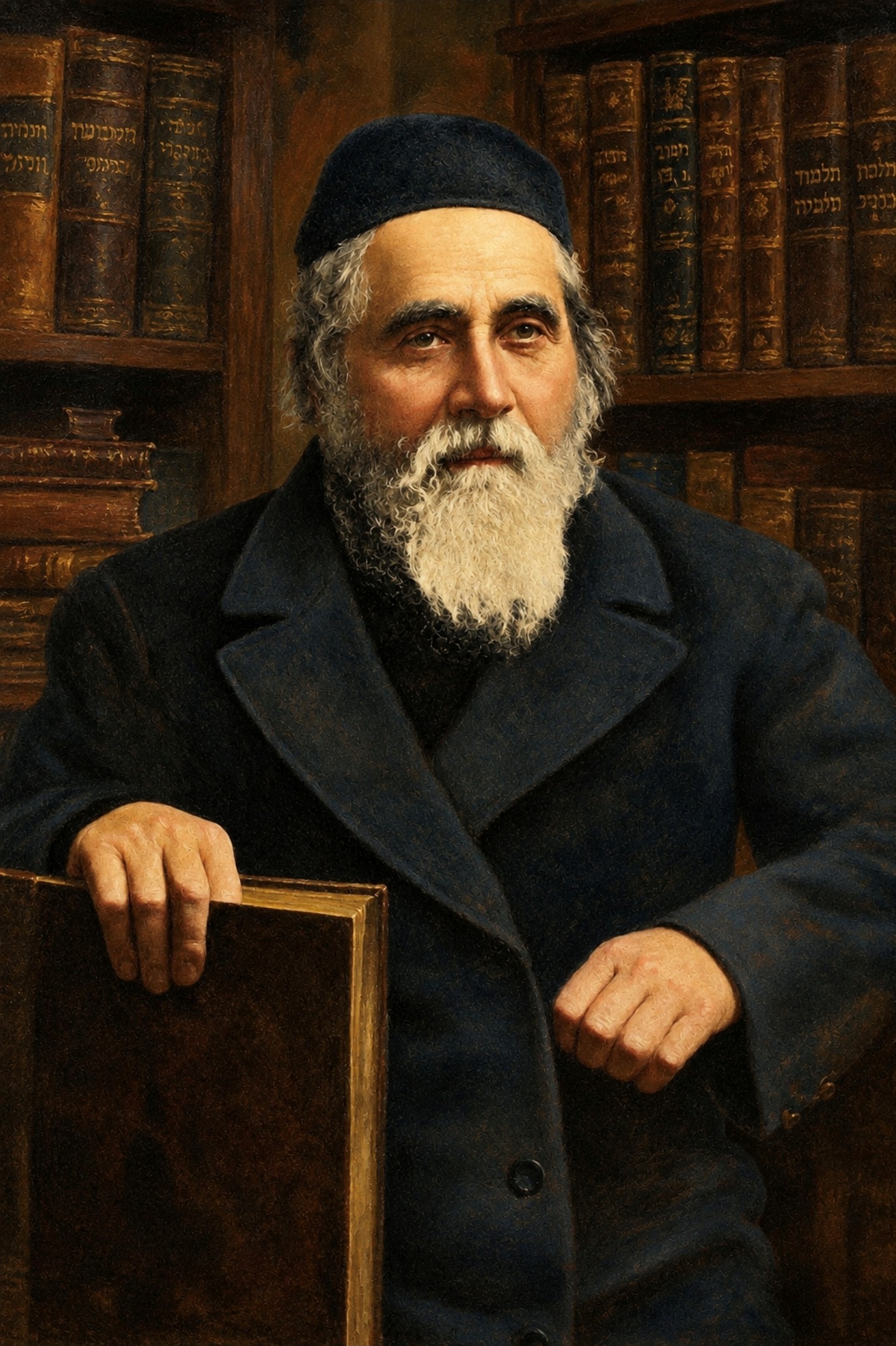 Yated Ne'eman2 months ago
One Hundred Years Since the Petirah of Rabbeinu Meir Simcha Hakohen of Dvinsk zt”l, the Ohr Someiach, Whose Torah Burned and Whose Heart Embraced Klal Yisroel
Daled Elul 5686. Daled Elul 5786. One hundred years have passed since the petirah of one of the great giants whom Hakadosh Boruch Hu planted in Klal Yisroel in the later generations, Rav Meir Simcha Hakohen of Dvinsk, author of the Ohr Someiach on the Rambam and the Meshech Chochmah on the Torah. A century has gone by, generations have changed, entire worlds have risen and disappeared, yet his Torah has lost none of its freshness. In a bais medrash where a difficult Rambam is being learned, where a halacha appears to resist the simple structure of the sugya, where a few words of the Rambam seem to demand an accounting, the Ohr Someiach is opened almost as a matter of course. And when parshas hashovua arrives, and the familiar pesukim are once again placed before the ben Torah, the Meshech Chochmah has the remarkable power to show that a posuk one has known since childhood may contain a halachic foundation, a historical observation, a penetrating understanding of human nature, and an entire world of machshovah, all joined with the precision of Torah.
Yet a hundredth yahrtzeit demands more than another appreciation of the seforim. There comes a point when one must turn from the printed page to the man who stood behind it and ask what sort of person could have produced such Torah? What was the secret of Rav Meir Simcha? How did one person combine such mastery of Shas, Rambam and the entire breadth of Torah, a memory that could reach back across decades, a depth that astonished the greatest talmidei chachomim of his generation, and at the same time a heart of unusual softness toward the ordinary Yid? How could the same man who could become so absorbed in a sugya that an entire night passed without his awareness devote a long hour to a husband and wife whose home was breaking apart? How could the same mind that could build a ma’arocha in the deepest areas of Torah understand that a five-year-old child sitting in a room might accomplish more than every argument that had been presented to his parents? How could the Sar HaTorah rise from his chair and dance around a table with an ordinary couple because shalom had returned to their home? How could a man of such powerful daas know that in the middle of a serious machlokes the correct thing might be to rise and leave the room before anger entered the discussion? And how could one of the treasures of Klal Yisroel refuse to leave a city under bombardment because there were poor Yidden who had no means with which to flee?
The more one studies the episodes of his life, the clearer it becomes that these were not separate qualities gathered within one unusual personality. There was not a Rav Meir Simcha of the sugya and another Rav Meir Simcha of the street. There was one Rav Meir Simcha, and there was one source. Torah had not remained with him as an acquisition of the mind. Torah had become the very form of his life. It determined the manner in which he learned and the manner in which he thought, but it also determined the manner in which he looked at a Yid, the way he spoke to someone who had failed, the way he conducted an argument, the way he entered a troubled home, and the way he understood the responsibility of a rov toward those who could give him nothing in return. Rav Meir Simcha did not merely possess Torah. Torah had taken possession of him.
WHEN THE HOUSE IS BURNING
There are many stories through which one may describe the hasmodah and ameilus baTorah of Rav Meir Simcha, but perhaps none gives the matter its proper definition as clearly as the moshol related by the Rogatchover Gaon at the levayah. The Rogatchover said that his father had been disabled throughout his life and had been confined to a wheelchair. His physical condition was such that two men were required to lift him from his chair, and this was the reality known to the family year after year. When the Rogatchover was a child, a fire suddenly broke out in their home. The flames spread rapidly, smoke filled the house, and those present attempted to carry his father to safety. He refused to leave, insisting that his little daughter was still upstairs and had to be rescued first. They told him that the upper floor was already burning, that there was no time, and that if he did not allow them to remove him immediately, he too would be lost in the fire.
Then, before the astonished eyes of those standing there, the man who could not rise from his wheelchair stood up and ran up the stairs like a healthy young man. A short while later he came back down, carrying his daughter, wrapped in a blanket, in his arms. Those who witnessed it could scarcely understand what they had seen. His father looked at them and explained the matter in a few words, “When a fire is burning, a person discovers kochos he never knew he possessed.” The Rogatchover related the story at Rav Meir Simcha’s levayah and needed to add very little. This, he was saying, was the key to Rav Meir Simcha’s ameilus. His learning always had the appearance of a man whose house was burning. The tiredness that ordinarily limits a person, the distractions that occupy him, the question of comfort and convenience, all these belong to a world in which there is no fire. When there is a fire, hidden kochos are suddenly summoned. For Rav Meir Simcha, there was always a fire in the house, and the fire was Torah.
One may apply to him the words of the novi (Yirmiyohu 23:29), “Halo koh devari ka’eish, ne’um Hashem.” Torah is compared to fire not only because fire illuminates. Fire compels. Fire creates a reality in which indifference is no longer possible. A person does not stand beside a burning house and say that today he is not in the proper mood, that he has not slept enough, or that he would prefer to deal with the matter tomorrow. The very existence of the fire demands all that is within him. Something of this was already evident in Rav Meir Simcha as a child. It is related that at approximately ten years of age, the shamosh entered the bais medrash in the early hours of the morning and found the young Meir Simcha standing upon a ladder near the seforim shelves, a sefer in his hand, entirely absorbed in learning. The shamosh was startled because the child stood in the same place and in the same position in which he had seen him on the previous evening. When he asked when he intended to come down, Meir Simcha looked at him in genuine surprise and said, “What? They already said Borchu after Maariv?” He had not undertaken a special all-night seder, and he had not fought a dramatic battle against sleep. He had simply ceased to notice the passage of time.
After his marriage, while living in Bialystok, Rav Meir Simcha would learn for exceedingly long hours in the Gemilus Chesed shul. His manner was to walk back and forth in the bais medrash with a gemara in his hand, turning the sugya over in his mind. One night, people encountered him walking through the street without his jacket, the gemara still in his hand. When they called his attention to the fact that he was outside, it became clear that he had never noticed leaving the bais medrash. His feet had continued into the street while his mind had remained entirely inside the sugya. There is a temptation, when hearing such stories, to attribute everything to natural gifts, and undoubtedly Rav Meir Simcha possessed extraordinary gifts. His memory was already renowned in his youth, and his mental powers were of an order that few could approach. Yet another story reveals that the gift was not the secret. The gift was the kli. What filled that kli was relentless ameilus and a refusal to allow Torah to pass through him without becoming part of him.
THE SECRET OF A MEMORY THAT SPANNED DECADES
Rav Shlomo Zalman Auerbach related, concerning Rav Shlomo Yehudah Plotchinsky, the father of Rav Eliezer, who had a regular chavrusa seder with the Ohr Someiach. On one occasion, in the middle of learning, Reb Shlomo Yehudah presented a kushya that had no direct connection to the sugya before them. Rav Meir Simcha listened and remarked that he seemed to recall having dealt with that very question more than thirty years earlier, when he had written an entire ma’arocha on the matter. He directed that a certain notebook be taken from the cabinet and indicated where it should be opened. When the passage was found, Rav Meir Simcha asked that it not be read aloud to him. He began to say over the ma’arocha himself while the other talmid chochom followed inside the handwritten text. The words were almost exactly as they had been written more than three decades earlier.
The natural reaction to such an episode is astonishment. A ma’arocha written thirty or thirty-five years earlier had remained in his mind almost word for word. Yet shortly thereafter there was a knock at the door, and Rav Meir Simcha understood that someone required his attention. Before rising from the gemara, he repeated the two lines of Rashi they were then learning. He reviewed them once, then a second time, then a third time, and only afterwards went to the door. When he returned, his chavrusa could no longer contain his question. A short while earlier, he said, the rebbi had repeated an entire ma’arocha from more than thirty years ago, yet now the rebbi found it necessary to chazer two lines of Rashi three times merely because of an interruption of a few minutes.
Rav Meir Simcha answered with the posuk (Mishlei, 23:5), “Hasa’if einecha bo ve’einenu.” Then he said with wonder, “What? Torah, about which it says ‘Hasa’if einecha bo ve’einenu,’ one can leave without chazering it at least three times?” In that answer lies the difference between the way we see the story and the way Rav Meir Simcha saw it. We look at the result and marvel at the memory of thirty-five years. Rav Meir Simcha pointed to the process. The ma’arocha had not been written once and preserved by some miraculous natural faculty. It had remained alive through chazorah, through return, through the unwillingness to be meisiach daas from Torah. The secret of Rav Meir Simcha’s memory was not merely that he remembered more. It was that he permitted himself to forget less.
This gives a penetrating meaning to the words of Chazal concerning Dovid Hamelech. The Gemara in Maseches Sotah, daf 35, says, “Mipnei mah ne’enash Dovid, mipnei shekara l’divrei Torah zemiros, shene’emar zemiros hayu li chukecha beveis megurai.” Dovid called divrei Torah zemiros, and subsequently stumbled in the matter of transporting the Aron, which was placed upon a wagon rather than being carried in the manner commanded for the bnei Kehos. The posuk says (Tehillim 119:44), “Zemiros hayu li chukecha b’veis megurai,” while concerning the carrying of the klei hakodesh the Torah says (Bamidbar 7:9), “Bakoseif yisa’u.”
One may explain the middah k’neged middah as follows. A zemirah is something that eventually flows with ease. The melody is already known, the words come naturally, and the person sings without effort. Torah too can become a shirah within a person, but before it becomes shirah, it must be carried. It demands shoulder, burden, yegiah, and repetition. Only after “Bakoseif yisa’u” can there be the ease of “Zemiros hayu li chukecha.” Torah does not arrive upon a wagon. It is acquired through carrying. Rav Meir Simcha’s astonishing memory was not the replacement for ameilus. It was the fruit of ameilus.
For us, the lesson is both simpler and more demanding than we often wish it to be. We look for methods to retain more, to cover more, to remember a larger amount of material, and there is certainly a place for systems and methods. But the first answer remains chazorah. When a person finishes a daf, he should spend a few minutes saying over what he has learned. When he hears a shiur, he should review its central points. When a chiddush has become clear to him, he should not allow it to be merely an encounter of one afternoon. Chazorah is not only a technique against shikcha. It is an expression of value. When something is precious, one is reluctant to part from it.
TO THINK IN TORAH
One of the distinctive features of the Meshech Chochmah is that its author does not merely gather mekoros and place them beside one another. He appears to enter the world of the posuk itself and to see the people who stand within it. The circumstances are real to him. Responsibility is real. Human emotion is real. The consequences of an action are real. Therefore, a halachic detail, a historical circumstance, a Midrash, and a subtle observation about the human mind may all become part of one explanation, not as separate decorations placed upon the posuk, but because Rav Meir Simcha saw no division between Torah and the reality that Torah describes.
Thus he asks why Hakadosh Boruch Hu accepted the korban of Hevel and did not accept the korban of Kayin. The Torah does not spell out explicitly what was lacking in Kayin’s offering. Rav Meir Simcha notes the distinction between fruit of the earth and sheep. Produce of the field grows to a considerable extent on its own. A flock requires the shepherd to feed, water, guard, and care for it. Hevel therefore did not merely take an object that belonged to him and bring it before Hakadosh Boruch Hu. He brought something into which he had invested himself. The essential point is not merely what was placed upon the mizbeiach, but what of the giver was contained within the gift. In a korban, Hakadosh Boruch Hu does not look only at what a person has given. He looks at how much of the person himself is inside what he has given.
The same derech is seen in his explanation of why Noach was permitted to eat meat although Adam Harishon had not been granted that permission. Noach had spent an entire year in the teivah caring for the animal world. He fed the animals, attended to them, and lived for their needs. Once man had expended himself for the animal world, a new relationship existed between them. So too, Rav Meir Simcha asks why Yosef brought Yaakov Avinu and his family down to Mitzrayim during the famine rather than simply sending food regularly to Eretz Canaan. The answer is rooted in Yosef’s actual position as ruler of Mitzrayim and guardian of its grain reserves. To send great quantities of the national food supply outside the country during a famine could have been interpreted as a betrayal of the responsibility entrusted to him.
These are not merely attractive explanations. They reveal the manner in which Rav Meir Simcha learned. Inside a posuk he saw living people, with duties, pressures, fears, obligations and consequences. It is perhaps not accidental that one who saw people so clearly inside Torah also saw them so clearly when they stood before him.
AFTER THE CHET HA’EIGEL, HE IS YOUR BROTHER
A particularly revealing example appears in the different language employed by the Torah regarding the obligation to assist with a burdened animal. In Parshas Mishpotim the Torah refers to “chamor sona’acha,” the donkey of the person whom you hate, while in Sefer Devorim the Torah speaks of “chamor achicha,” your brother’s donkey. Rav Meir Simcha points to the difference in time. Parshas Mishpotim was given before the chet ha’Eigel. Sefer Devorim was spoken after the chet ha’Eigel. Before a person has himself experienced failure, it is easier for him to look at another Yid who has fallen and to define him by that failure. After the chet ha’Eigel, after Klal Yisroel itself had learned what it means to fall from a great height, the language changes. He is no longer merely sona’acha. He is achicha. After a person knows that he too can fall, it becomes far more difficult to hate another Yid because he has fallen.
This was not a Meshech Chochmah that remained inside a sefer. There was once a man in Dvinsk who had been accustomed to daven before the amud in Rav Meir Simcha’s bais medrash. A rumor began to circulate that the man smoked on Shabbos. Apparently, someone confronted him about it, and he was deeply hurt, and he ceased coming to the bais medrash. Rav Meir Simcha noticed his absence and asked the shamosh what had happened. When he heard the story, he immediately sent for the man. There was no interrogation, no demand for an admission, no public rebuke. Rav Meir Simcha said to him, “Certainly the rumor that you smoke on Shabbos is not true. Therefore return and daven before the amud as you always did.”
The chochmah of the sentence lies in what Rav Meir Simcha chose to give the man. He gave him a way back. He did not define him according to what was being said about him. He told him, in effect, that in the eyes of the rov he still belonged to the bais medrash and still belonged before the amud. There is a form of tochacha that pushes a person into the identity of the aveirah attributed to him, and there is a form of tochacha that places before him the person he can still be. Rav Meir Simcha chose the second.
The same approach appeared when young men who were not shomrei Torah u’mitzvos would enter his bais medrash on Yom Tov. Some of the members of the kehillah wished to prevent them from coming inside. Rav Meir Simcha objected. A Yid who has entered a bais medrash has already taken a step, and one does not destroy the first step because it is not yet the last. His words were simple and contained an entire derech in chinuch, “At first they will answer Amein, and afterwards they will daven.”
A KOHEIN WHO PURSUED SHALOM
One of the most moving areas in the life of Rav Meir Simcha was his involvement in shalom between husband and wife. Chazal say in Maseches Nedarim, daf 66b, “Umah la’asos shalom bein ish le’ishto amrah Torah Shemi shenichtav bikedusha yimacheh al hamayim.” In the Mishnah in Maseches Sotah 1:4, the same principle is expressed: that for the sake of restoring shalom between husband and wife, the name of Hakadosh Boruch Hu, written in kedusha, is erased upon the water. Rav Meir Simcha was a kohein, and the Mishnah in Maseches Avos, 1:12, immediately comes to mind, “Hevei mitalmidov shel Aharon, oheiv shalom v’rodeif shalom, oheiv es habriyos um’ekorvon laTorah.” In his life, the words “verodeif shalom” were not an expression of general goodwill. He pursued shalom in the literal sense.
A husband and wife once came before him when the husband was determined to divorce his wife. Rav Meir Simcha sat with them for a long period of time, speaking, explaining, and attempting to restore proportion to what had become a bitter conflict. Eventually the husband agreed to withdraw from the divorce, and the couple made peace. One might have expected Rav Meir Simcha to give them a brocha and return to his learning, but he did something that reveals how seriously he regarded the moment. The Sar HaTorah rose from his chair and danced around the table with the husband and wife, singing with them in joy because a Jewish home had been saved. He later explained that he wished the reconciliation itself to be fixed in their memory as a moment of simcha, not merely as the conclusion of an unpleasant dispute.
On another occasion, a couple came before him who had already decided to separate. They had a small child, approximately five years old. Rav Meir Simcha spoke with the parents at length and realized that the words were accomplishing nothing. At that point he ceased addressing the parents and turned to the child. He placed the boy upon his lap, played with him, and began speaking to him. According to one version, he told the child that his parents were preparing to make him like an orphan, but that he should not worry because if they separated, he could come to Rav Meir Simcha and Rav Meir Simcha would care for him. Suddenly the parents saw something that the quarrel had concealed from them. They saw their child. They began to cry and announced that they would remain together, and once again Rav Meir Simcha rose to dance.
There was geonus in what happened in that room, but it was not the geonus of finding a stronger taanah. Rav Meir Simcha understood that the room already contained too many taanos. What was missing was not another argument, but another view. Anger had narrowed the world of the husband and wife until only the point of dispute remained visible. Rav Meir Simcha widened the picture. He placed the child, the home, the years, and the consequences back inside it.
On yet another occasion, a husband continued to insist upon divorce despite everything Rav Meir Simcha told him. Finally Rav Meir Simcha said, “Look into the beautiful eyes of your wife. Do not be hasty in your decision. If you separate from her, the day may come when you will miss her and regret what you have done.” The words entered the husband’s heart, and he withdrew from his decision. There is something almost startling in hearing such a sentence from one of the great gedolei Torah of the generation, and precisely there lies part of its meaning. Rav Meir Simcha was not occupied at that moment with what language was expected from the Sar HaTorah. He was occupied with what might save a Jewish home. If Hakadosh Boruch Hu permits His holy Name to be erased for the sake of shalom between husband and wife, the personal kavod of the rov cannot be treated as more precious than that shalom.
TO KNOW WHEN NOT TO SAY THE LAST WORD
True strength of character is not measured only in a person’s ability to state his daas. At times it is revealed by his ability to stop before his daas becomes mixed with anger and personal kavod. One of the remarkable stories in this regard occurred at the rabbinical conference in Petersburg, where the gedolei Yisroel debated the demands of the Russian government that rabbonim acquire knowledge of the Russian language and certain general studies. The issue was regarded as one with serious consequences for the future of the rabbonus in Russia. Rav Meir Simcha and other gedolim stood on one side, while the Chofetz Chaim and Reb Chaim Brisker stood on the other.
On one occasion, the Chofetz Chaim came to discuss the issue with Rav Meir Simcha, and the conversation became sharp. Both men held powerful convictions because each believed that the matter involved kavod haTorah and the future of Klal Yisroel. In the middle of the discussion, Rav Meir Simcha suddenly rose and left the room. He had not exhausted his arguments and had not changed his position. He sensed that the discussion was becoming heated and that anger might enter, and therefore he ended it. The Chofetz Chaim later expressed great admiration for his middos.
Chazal say in Maseches Avos 4:1, “Eizehu gibor, hakoveish es yitzro.” The difficulty is that in an argument there is often a subtle point at which the subject itself changes. At first two people are debating the issue. Later, almost without noticing, each is debating his own need to prevail. It no longer pains him only that the other person is mistaken. It pains him that the other person refuses to acknowledge that he is right. Rav Meir Simcha had the strength to maintain a firm daas and, at the same time, the clarity to identify the moment when emes might begin to become entangled with personal kavod. There are times when gevurah means standing one’s ground, and there are times when greater gevurah means leaving the room before saying the final word.
“AS LONG AS NINE REMAIN, I WILL BE THE TENTH”
During World War I, Dvinsk became an area of severe fighting. Because of its military fortress, the city and its surroundings were subjected to heavy bombardment. Those who possessed the means to leave attempted to do so, and the city gradually emptied. Those who remained were, to a large extent, those who had no choice. Poor families, women whose husbands had been taken into military service, and people without money or connections remained behind while danger drew closer. It was only natural that those around Rav Meir Simcha urged him to leave. He was one of the gedolei hador. His Torah belonged to all of Klal Yisroel, and there appeared to be every reason for him to place himself beyond the danger.
His answer was one of those sentences in which an entire conception of rabbonus is revealed. “I will not abandon my brothers in an eis tzarah. As long as nine Yidden remain in the city, I will be the tenth for the minyan.” A Rav is not merely the tenth man when the bais medrash is full, and hundreds wish to stand near him. The test of leadership is what occurs when most people have gone, and those who remain are precisely those who have no ability to leave. Rav Meir Simcha remained because they remained.
He strengthened the people in emunah and bitachon, attended to their needs, and showed particular concern for the women whose husbands had been drafted. He knew the addresses of soldiers at the front and would assist their wives in writing to them. Rav Meir Simcha and his rebbetzin themselves lived in privation and at times had to chop wood with their own hands in order to heat their home, yet funds that reached him were distributed to others who had suffered through the war.
One may see here the answer to what can appear, at first glance, to be a contradiction. The same man who would not leave two lines of Rashi without chazering them three times was prepared to interrupt his learning when a Yid required him. In truth, there is no contradiction. A person who truly learns Torah does not become less aware of the Yid standing at the door. He comes to understand that the Yid standing at the door may now be part of the sugya Hakadosh Boruch Hu has placed before him.
THE TWO VERTLACH FROM KRYNICA
In the summer of 5685, two of the great Torah personalities of the generation found themselves staying in the same inn in the health resort town of Krynica, Rav Yitzchok Zev Halevi Soloveitchik, the rov of Brisk, and Rav Meir Simcha Hakohein of Dvinsk. Both had come to the resort for rest and recuperation, and during the days they spent there they spoke together in divrei Torah and exchanged chiddushim. It is related that when the Brisker Rav returned home, he brought with him two particular vertlach that he had heard from Rav Meir Simcha and would repeat them with marked hispa’alus.
Something is fitting in the fact that these two chiddushim remained with the Brisker Rav. They are sharp and exact, built from a diyuk in the words of Torah, yet in both cases the lomdus reveals something hidden within the human being. One vort finds the subtle pleasure of the neshomah within the halachos of brachos. The other finds the necessity of hope within the halachos of golus. Both contain a precision that belongs entirely to the bais medrash and, at the same time, an understanding of man that could only have come from someone who saw Torah and life as one reality.
“HAPA’AM ODEH ES HASHEM”
In the names given by Leah to her first four sons, the Torah records a distinct progression. Concerning Reuven, she says (Bereishis 29:32-35), “Ki ra’ah Hashem be’oni.” Regarding Shimon, “Ki shama Hashem ki senuah anochi.” Regarding Levi, “Hapa’am yilaveh ishi eilai.” Only at Yehudah does Leah say, “Hapa’am odeh es Hashem.”
Chazal already teach that the names of the shevatim express more than the circumstances of their birth. In Bereishis Rabbah (71:3), Reb Yosi bar Chanina says, “Shemoseihen na’im uma’aseihen na’im, eilu haShevatim, Reuven, re’u bein bein habonim, Shimon, shome’a bekol Aviv shebaShomayim.” The names themselves contain a remez to the essence and future purpose of the shevatim.
Rav Meir Simcha explains that Reuven corresponds to re’iyah, sight, Shimon to shemiyah, hearing, and Levi, whose name is rooted in levayah and connection, to the sense of touch. A person can receive great pleasure through sight, hearing, and touch, yet there is no specific birkas hanehenin recited upon the pleasure itself. The sense of rei’ach is different. The Gemara in Brachos, daf 43b, derives from the posuk “Kol haneshomah tehallel Kah,” “Eizehu dovor shehaneshomah nehenes mimenu ve’ein haguf neheneh mimenu, hevei omer zeh harei’ach.” Fragrance is described as a pleasure of the neshomah, and upon that pleasure Chazal established a brocha.
Now the seder becomes clear. Yehudah is the shevet from which Melech Hamoshiach will come, and concerning Moshiach the novi says in Yeshayah 11:3, “Vaharicho b’yiras Hashem.” Reuven corresponds to sight, Shimon to hearing, Levi to touch, while Yehudah, the source of Moshiach, corresponds to fragrance. Therefore precisely at Yehudah does Leah say, “Hapa’am odeh es Hashem,” because here appears the sense upon whose enjoyment a person makes a brocha and gives hoda’ah.
The beauty of the chiddush lies not only in the correspondence between four names and four senses. Rav Meir Simcha sees the brocha on fragrance as an expression of the neshomah encountering a pleasure too subtle to be described in ordinary physical terms. And in Moshiach himself the ordinary senses are not sufficient. His judgment will not be merely “lemar’eh einav” and not merely “lemishma aznav.” There is a deeper perception, “Vaharicho beyiras Hashem.” Halacha, Midrash, the names of the shevatim, the halachos of brachos, the nature of the neshomah and the nevuah concerning Moshiach become one structure.
AN IR MIKLOT WITHOUT HOPE
The second vort concerns the din of arei miklot. The Mishnah in Makkos 2:4 says, “Leheichan golin, le’arei miklot, l’shalosh shebe’eiver haYarden veleshalosh sheb’Eretz Canaan.” The Mishnah adds, “Ad shelo nivcheru shalosh sheb’Eretz Yisroel lo hayu shalosh shebe’eiver haYarden koltos, ad sheyehu sheshtan koltos ke’achas.”
The din requires explanation. Moshe Rabbeinu had already designated three cities in eiver haYarden, as the posuk states (Devarim 4:41), “Az yavdil Moshe shalosh arim be’eiver haYarden mizracha shemesh.” There was no deficiency in their designation. The other three cities had not yet been chosen only because Eretz Yisroel had not yet been conquered and divided. Why should the cities already properly designated not begin functioning immediately as arei miklot?
Rav Meir Simcha answers by considering the position of the rotzeiach b’shogeg. A person who enters an ir miklot must remain there until the death of the Kohen Gadol. Even if years of golus lie before him, there remains one possibility in his mind. The Kohen Gadol may die, and he may return home. The golus contains punishment and kapporah, but it does not remove hope.
At that point in history, however, there was a certainty. Hakadosh Boruch Hu had already declared that Elazar Hakohein would be among those responsible for dividing Eretz Yisroel, as the posuk says (Bamidbar 34:17), “Eileh shemos ha’anashim asher yinchalu lachem es ha’aretz, Elazar Hakohen viYehoshua bin Nun.” Until the conquest and division of the land were completed, Elazar could not die. Had the cities of eiver haYarden begun receiving rotzchim immediately, the person entering the ir miklot would know from his first day that there was no possibility of leaving for the entire period of conquest and division.
Rav Meir Simcha writes that ordinarily the rotzeiach “Mekaveh tamid shema yamus hakohein hamoshiach veyeitzei bemisaso,” whereas in these circumstances he would be “meya’eish lachzor ad hisnachel ha’aretz.” He concludes, “Lachein bechai gavna shelo yihiyeh lo tikvah lashuv teikef, lo amrah Torah liglos.”
The chiddush is sharply lomdish, but its inner point is striking. The Torah commands golus. It does not command yi’ush. A person may be required to remain within the walls of the ir miklot for years, yet somewhere within his world there must remain the possibility of return. The ir miklot may close the person inside a place, but it is not meant to close hope out of his future. Perhaps this explains why the Brisker Rov retained these two vertlach with such hispaalus. In the first, Rav Meir Simcha found the pleasure of the neshomah within hilchos brachos. In the second, he found the hope of the person within hilchos golus. The lomdus does not become less exact because it sees the human being. On the contrary, the human being himself emerges from the exactness of the din.
THE TEFILLAH ON THE EMBANKMENT
One of the most powerful accounts concerning Rav Meir Simcha was preserved in the testimony of Isser Harel, who later became head of the Mossad and who had lived in Dvinsk as a child. He recalled a year in which a severe thaw occurred in the regions feeding the Dvina River, while the river around Dvinsk and further downstream remained covered with thick ice. Water and enormous blocks of ice accumulated, the river rose, and the embankment protecting the city came under severe pressure. Residents began moving to upper floors and rooftops because they feared that the embankment would break and the city would be flooded.
In the early hours of Shabbos morning, the danger reached its height. Frightened people ran into the bais medrash and announced that the water was about to break through. Rav Meir Simcha rose from his place while still wrapped in his tallis and walked out of the bais medrash. The people followed him. He climbed onto the embankment and stood there in tefillah. Isser Harel testified that as a child he stood only a few steps away. During the tefillah, the ice began to move, a passage opened for the water, the river level fell, and the danger passed. The child standing there remembered throughout his life the image of Rav Meir Simcha wrapped in his tallis, standing before the rising river and davening for an entire city.
There is an extraordinary element in the story, but perhaps there is another point that deserves equal attention. Why did the people follow him? The answer had been written during decades before that Shabbos morning. Rav Meir Simcha had stood with them in the less dramatic hours of life. He had stood with the poor, the widow, the soldier’s wife, the troubled husband, the frightened child, the young Yid who had drifted away, and the family that had nowhere to flee. When a rov stands with his people through the ordinary difficulties of life, they know whom to follow when the river rises.
“YACHSHOV KI BERLIN HI YERUSHALAYIM”
One cannot speak of Rav Meir Simcha without mentioning the celebrated and chilling passage in the Meshech Chochmah in Parshas Bechukosai. On the posuk (Vayikra 26:44), “Ve’af gam zos bihyosam b’eretz oyveihem lo me’astim v’lo ge’altim l’chalosam l’hofer brisi itam,” Rav Meir Simcha describes a recurring process in the history of Klal Yisroel in golus. A Jewish community reaches a new country after persecution and displacement. It begins again, builds botei medrash and kehillos, raises families, develops institutions, and gradually becomes established. After generations, the sense of impermanence weakens. The foreign country no longer feels foreign. The awareness of golus becomes less immediate, until a generation may arise that begins to see the land in which it lives not merely as a place of residence, but as its essential homeland.
Rav Meir Simcha explains that Yaakov Avinu did not wish to be buried in Mitzrayim because he did not want his descendants to regard Mitzrayim as the place to which they truly belonged. A Yid may build in golus, learn Torah in golus, and prosper in golus, but one awareness must remain. His roots are elsewhere. Within this discussion, Rav Meir Simcha writes the words that later history caused generations to read with a shudder (Meshech Chochmah, Vayikra, 26:44), “Yachshov ki Berlin hi Yerushalayim.”
There is no need to describe the words as a literal nevuah in order to appreciate their depth. Rav Meir Simcha identified a spiritual and historical process. The danger of golus does not arise only when a Jew is persecuted. There is another danger when he becomes so comfortable that the very consciousness of golus disappears. Yet the Meshech Chochmah does not end with despair. The entire passage is part of an explanation of the survival of Klal Yisroel, which is shaken and displaced, yet returns again and again to its Torah and rebuilds.
There is a remarkable connection between this and the story of Rav Meir Simcha’s memory. To the individual, the posuk says (Mishlei 23:5), “Hasa’if einecha bo ve’einenu.” One cannot be meisiach daas from Torah. In the Meshech Chochmah, Rav Meir Simcha places a similar demand upon Klal Yisroel as a nation. Just as the individual cannot allow Torah to disappear from his consciousness, the nation cannot allow its identity to disappear from its consciousness. There is a shikcha of information, and there is a shikcha of who one is.
WHEN TORAH MAKES A PERSON MORE GENTLE
There is a question that emerges from all these stories and perhaps deserves to stand at the center of the entire portrait. What is Torah meant to do to a person? A man may learn much and, because he understands quickly, becomes impatient with someone who understands slowly. He may be exacting in mitzvos and therefore find it difficult to tolerate someone still standing far away. He may be convinced that his position is correct and therefore react with impatience to anyone who disagrees. Knowledge itself does not automatically refine the person who possesses it.
With Rav Meir Simcha, the movement was in the opposite direction. The greater his Torah became, the greater became the space within him for another Yid. He knew how to state a strong daas, yet also how to rise and leave before anger entered the conversation. He could become so absorbed in a sugya that he did not know whether it was night or morning, yet a knock at the door could still summon him to the needs of another person. He was known throughout the Torah world as the Sar HaTorah, yet he saw no contradiction in dancing around a table with a simple couple because their home had been saved.
Chazal say in Moed Koton, daf 17a, “Im domeh harov l’malach Hashem Tzevakos, yevakshu Torah mipihu, ve’im lav, al yevakshu Torah mipihu.” A malach is a shaliach. He possesses no personal cheshbon in the fulfillment of his shlichus. He does not ask what preserves his position or what enhances his image. He asks what the shlichus requires. Perhaps this was among the deepest secrets of Rav Meir Simcha’s gadlus. He did not use Torah in order to build the figure of Rav Meir Simcha. He allowed the figure of Rav Meir Simcha to disappear before whatever Torah demanded of him at that moment. If the sugya demanded his night, he gave it the night. If a Yid required his hour, he gave him the hour. If shalom required his kavod, the kavod was placed aside. If emes required him to stop speaking, he left the room.
ONE HUNDRED YEARS LATER
A hundred years after his petirah, we do not expect to become Rav Meir Simcha. To stand before such a figure merely in order to measure ourselves against him would lead only to distance. But the small actions from which the gadlus was built do belong to us. From the astonishing memory we need not take the ma’arocha remembered after thirty-five years. We can take the two lines of Rashi reviewed three times before answering the door. From the Petersburg conference we need not take upon ourselves the questions confronting the gedolei hador. We can take the moment in an ordinary argument when we realize that another sentence will not establish the truth and will only preserve our kavod. From the stories of shalom bayis we can learn that anger narrows the picture and that sometimes the task is not to answer the argument, but to restore everything the argument has caused us to stop seeing.
And from Dvinsk during the war we are left with one sentence whose demand is not limited to rabbonim or gedolei Yisroel. “As long as nine Yidden remain in the city, I will be the tenth for the minyan.” Every community has its nine. Every family has them. There is the person whom others have already left behind, the bochur with whom conversation has become difficult, the lonely elderly Yid, the person whose life is not going well, the one who cannot offer status or benefit in return for the attention he receives. Leadership begins in the willingness not to ask who else will stay, but whether I will stay.
THE LIGHT THAT REMAINS
The names of Rav Meir Simcha’s seforim acquire another meaning when viewed against his life. Ohr Someiach. Meshech Chochmah. Light and chochmah. The chochmah remains printed on the pages and is learned in every generation, but the ohr was not confined to the seforim. His own life contained hardship, bereavement, poverty, and the heavy burdens of rabbonus, yet those who encountered him remembered warmth, humor, concern, and the ability to bring people close. It was not the light of a person who had never known darkness. It was the light of a person who had known darkness and refused to allow it to determine what he would give to others.
Perhaps no posuk is more fitting with which to conclude than the words of the Navi concerning the true kohein (Malachi 2:6), “Toras emes haysah befihu v’avlah lo nimtza bisfasov, b’shalom uv’mishor halach iti, v’rabim heishiv mei’avon.” In those words one can almost see the figure of Rav Meir Simcha Hakohein of Dvinsk. Torah was in his mouth, shalom was in his path, and the Yid was in his heart.
One hundred years have passed since daled Elul 5686. The Ohr Someiach remains open. The Meshech Chochmah remains open. The chiddushim are repeated, the questions are asked, and his Torah continues to speak in botei medrash throughout the world. But perhaps the true measure of a yahrtzeit is not only that the sefer remains open. It is whether something of the person who wrote it remains open within us. One more chazorah before moving on. One less word spoken in anger. One Yid brought near instead of pushed away. One Jewish home strengthened. One person whom others have abandoned who discovers that someone has remained beside him. And when the place has emptied, when the easier choice is to leave, and when it seems that only nine remain, to remember the words of the great rov of Dvinsk and to be able to say them ourselves.
“I will be the tenth.”
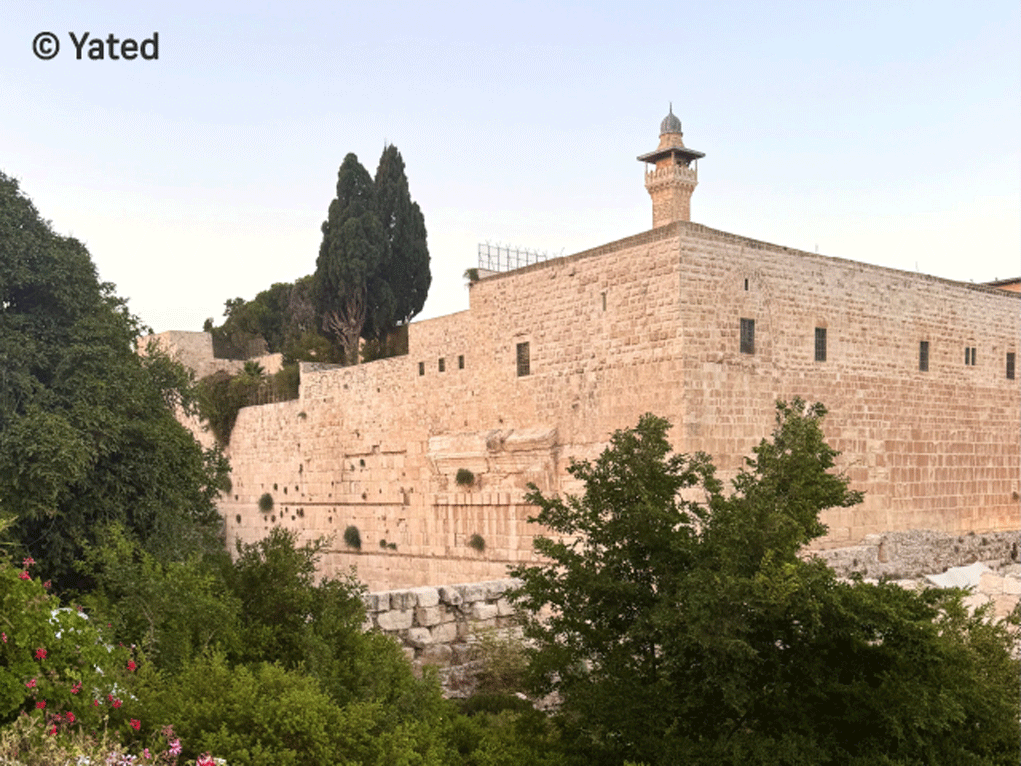 Yated Ne'eman2 months ago
I’m back on an El Al plane, heading for Eretz Yisroel, expecting to spend a couple of weeks in Yerushalayim.
Making the trip was not an easy decision. The specter of another war with Iran was hanging in the air. President Trump had been bombing Iran for fourteen straight nights and had repeatedly threatened to go all out against them. Had that happened, Israel would most likely have been drawn into the conflict, and I wasn’t sure I wanted to be there for that.
Our flight was scheduled for Monday morning, and I decided that if Shabbos passed without incident, we would go.
When Shabbos was over, I turned on my phone and saw that not only had the president not ramped up his attacks on the evil regime in Iran, but he had announced that, inexplicably, he was putting everything on hold.
As I waited to see how things would develop, I was reading seforim describing the aliyah of the talmidei HaGra and the talmidim of the Baal Shem Tov. I read about what motivated these great people to leave behind their homes in Eastern Europe, the lives they were accustomed to, and whatever comforts they had, and to undertake the treacherous journey to Eretz Yisroel, where they knew they would face a life of deprivation and hardship.
Reading about why they went, and what they went through to get there, became a source of encouragement for me.
War or not, I would go.
I hadn’t made any particular plans for what I would do while I was there, but would simply follow the path of the multitudes of Yidden who, throughout the generations, yearned to be in Eretz Yisroel and took advantage of every opportunity to spend time in Hashem’s land.
And if there would be a war, I decided, I would make the best of it. I would not spend my time there angling for a way to get back “home.” I wasn’t looking forward to sitting in a bomb shelter, but if that was how Hashem had planned my vacation, I would accept it.
Every day, we put our lives in the hands of Hakadosh Boruch Hu and trust that He will care for us. In Eretz Yisroel, however, we feel it more.
The Torah (Devorim 11:12) tells us that Eretz Yisroel is different from every other land: “Eretz asher Hashem Elokecha doreish osah tomid einei Hashem Elokecha bah mereishis hashonah ve’ad acharis Shonah.”
It is a land upon which Hashem’s eyes are constantly focused, “from the beginning of the year until the end of the year.”
Perhaps that is part of what makes being there so different. We are always dependent on Hashem wherever we live, but in Eretz Yisroel, that dependence is palpable. You feel it.
As it turned out, there was no immediate need to worry. Despite President Trump’s bluster and threats, there was no war. Iran continues in its evil ways, and the world watches.
But perhaps the real question is not why I was willing to go to Eretz Yisroel with the possibility of war hanging over the country. The real question is why, throughout our history, Jews have been willing to do far more.
They left behind homes, families, livelihoods, and familiar surroundings. They traveled for months under conditions that are difficult for us to imagine. Some endured hunger and disease. Others arrived in a land where they had no means of supporting themselves and little of the physical comfort they had known in Europe.
And they did it willingly.
What were they looking for?
The answer is not simply that they wanted to live in a holy place. They were seeking something that cannot be measured in comfort, convenience, or even safety.
They wanted to be in the place where a Yid feels closest to the Ribono Shel Olam. They wanted to be in Hashem’s Chosen Land.
The stories of the talmidei HaGra and the talmidim of the Baal Shem Tov are especially moving because these were not people who had nothing to lose. They had homes. They had communities. They had positions of honor and lives that were familiar to them. Yet, the pull of Eretz Yisroel was stronger. The desire to live lives of kedusha in artzeinu hakedosha and help usher in the era of Moshiach pulled them out of their homes and away from their extended families to begin new lives in Eretz Yisroel. In the years since, many have followed their example, and as time passed, the challenges of settling there eased.
Those people understood something that we sometimes lose sight of.
For thousands of years, Yidden have davened, pleaded, sung, and begged to return to Yerushalayim, to Eretz Yisroel.
Every day, Jews around the world turn toward Yerushalayim. Three times a day, we ask to be returned to our land. At the end of the Seder, we proclaim, “Leshanah haba’ah b’Yerushalayim.” At its height, as Yom Kippur concludes, we cry out the same words.
And here I was, sitting on an airplane, heading to Yerushalayim, with the privilege of spending two weeks in Eretz Yisroel.
How blessed is our generation.
If only we would appreciate our blessings.
There is another thought that occurred to me as I sat on the plane.
We have become accustomed to something that is anything but ordinary.
We can wake up in New York, Los Angeles, London, or Paris, and by the next morning be in Yerushalayim.
We take it for granted.
We complain about the flight. We complain about the airport. We complain about the food. We complain about the traffic when we land.
And then we get into a car and drive through Yerushalayim.
Stop for a moment and think about that. For centuries, a Yid could spend his entire life dreaming about that moment. Our grandparents and great-grandparents longed to see Yerushalayim. They yearned to be able to walk through the streets of the Holy City.
For many of them, the dream remained a dream.
For others, the dream was so powerful that they abandoned everything they knew and undertook journeys that we would consider unimaginable.
And we?
We can book a ticket on our phone. A few clicks, a few hours in the air, and we are there. Perhaps because it is so easy, we don’t appreciate what we have.
There is a danger in miracles becoming routine.
When something extraordinary happens once, we are overwhelmed by it. When it happens every day, we begin to regard it as normal.
That may be one of the great challenges of our generation.
We were born into a world in which Jews can live in Eretz Yisroel as Jews. We can walk freely through Yerushalayim. We can learn Torah there, daven there, raise children there, and build communities there.
We can visit the Kosel whenever we want.
We can travel throughout the land that our ancestors could only dream of seeing.
And somehow, it has become ordinary.
Perhaps the seforim I was reading before the trip were reminding me not to let that happen.
They were reminding me that Eretz Yisroel is a gift.
A gift purchased with the yearning, sacrifice, and mesirus nefesh of generations.
A gift that carries responsibility, and a gift that should never be taken for granted.
Yet, Eretz Yisroel is going through a very difficult period.
Bnei Torah have been dealing with a campaign against them that would have been difficult to imagine not that long ago. Cynical propagandists have unleashed a vicious political war against the Torah community, turning the issue of military service into a weapon with which to attack an entire way of life.
The result, coming in the midst of an actual war against Israel’s mortal enemies, has been nothing short of a typhoon.
Instead of the Jewish people standing together against those who seek to destroy us, an increasingly bitter internal struggle has developed. The political and social divisions have become so deep that the country sometimes seems to be fighting a civil war while simultaneously fighting an external war.
And with elections approaching, the battle is only becoming more intense.
There is something particularly painful about this, because Eretz Yisroel is not merely a country. It is the home of the Jewish people.
For generations, the secularization of Israeli society was not merely tolerated. It was deliberately cultivated. Torah study and religious observance were pushed to the margins as the founders of the state sought to create a new Israeli Jew—more secular, more nationalistic, and less connected to the Jewish religious tradition.
The tragedy is that many of the early leaders had grown up differently.
They may not have been observant themselves, but they came from homes and communities where Torah, mitzvos, and Jewish tradition were familiar. They had parents and grandparents who were religious. They had relatives who were frum. They knew what Shabbos was. They knew what a bais medrash was. They knew that the Jewish people have a Torah.
And even when they fought against religious influence, many understood that the Torah community is an authentic and indispensable component of the Jewish people.
That understanding led to what became known as the religious status quo.
Israel’s first prime minister, David Ben-Gurion, despite being a secular socialist, reached an accommodation with the religious parties that included the famous arrangement granting exemptions from military service to yeshiva students.
The arrangement was far from perfect, and the Torah community certainly did not view the secular leadership as its natural ally. But there was an understanding that there was room in the Jewish state for Jews who lived according to the Torah.
There were other surprising connections as well.
Shimon Peres, who became one of Israel’s most prominent secular leaders, grew up with a Jewish religious background and had studied Torah with his grandfather. He also met the Chofetz Chaim as a youngster. Later, he played a role in preventing the draft of religious girls, for which the Torah community was eternally grateful.
Menachem Begin came from Brisk and, despite becoming a secular political leader, understood the world of Torah and the place of religious Jews within the Jewish people in a way that is difficult to find among today’s political class. He was familiar enough with Yiddishkeit that when he was hiding from the British, he hid in plain sight by living as a religious Jew in Yerushalayim.
When Begin came to power, it represented a historic change in the relationship between the government and the Torah parties.
There was still disagreement. There was still tension. There were still battles.
But there was a basic recognition that we, too, were entitled to support and rights.
That has changed.
Today, many of the politicians leading the campaign against the Torah community have little meaningful connection to Torah, halacha, or the culture and traditions of Jewish religious life.
And that lack of familiarity matters.
It is difficult to understand someone whose world you have never entered.
If you don’t understand why a person can spend his life learning Torah, you will see a yeshiva student as someone avoiding responsibility.
If you don’t understand what Torah means to a Yid, you will see Torah learning as merely another career choice.
If you don’t understand that the Jewish people survived exile because we remained connected toTorah, you will have difficulty understanding why the Torah community regards the preservation of Torah learning as an existential matter.
And if your ideal is to become “k’chol ha’amim”—like all the nations—then Torah will inevitably come to be viewed as an obstacle to that goal rather than the foundation of Jewish existence.
They don’t understand us at all.
This is not simply a political disagreement.
It is a disagreement over what a Jewish state is supposed to be.
Is Israel merely a country inhabited by people who happen to be Jewish, or is it the Jewish state whose identity is rooted in the history, heritage, and Torah of the Jewish people?
Those are two very different visions.
During my trip, I met Moshe Gafni, Knesset leader of Degel HaTorah. He asked me a question that has stayed with me: “Do people in America realize how bad the situation of the Torah community is in Israel?”
People in positions of leadership within the Torah community are deeply concerned about what the next elections will bring and what kind of government will emerge afterward. They understand that the coming political battles are not merely about personalities or parties. The decisions made now may determine the relationship between the State of Israel and the Torah community for years to come.
Every election is important. But some elections are pivotal.
President Ronald Reagan famously warned that freedom is never more than a generation away from extinction. The same principle can apply to institutions and traditions. What one generation takes for granted, the next generation may no longer understand, and the generation after that may actively oppose.
The coming elections may therefore represent a turning point in Israel’s relationship with its Torah community.
And there is another development that should trouble every Jew.
As the State of Israel has become increasingly estranged from Torah, and as the Torah community has increasingly been portrayed as the problem rather than as an essential part of the Jewish people, something else has been happening in the world.
Hatred of Jews has been rising.
Antisemitism has become more brazen, more mainstream, and more politically acceptable.
On American college campuses, in European cities, and increasingly within the Democrat Party, which once considered itself a friend of the Jewish people and which many Jews supported and still support, anti-Israel rhetoric has often crossed the line into something much darker.
It is a troubling irony. We spent two thousand years praying to return to Eretz Yisroel. We finally returned. A Jewish state was established. Cities, yeshivos, hospitals, and universities were built. Jews poured in from across the globe.
And yet, at the very moment when we have more Jewish power than we have had in two thousand years, there are those working to separate the Jewish state from the very thing that made us a nation in the first place: Torah.
That should frighten us, not because frum Jews need special privileges, but because a Jewish state without a Jewish soul is ultimately a contradiction.
Eretz Yisroel was not promised to us merely so that we could become another nation, with theaters, universities, and a government. It was given to us so that we could become the nation Hashem chose us to be.
But despite all of this, Eretz Yisroel remains Eretz Yisroel.
It is the land Hashem promised to our forefathers. It is the direction toward which we turn three times a day when we daven. Its air is holy. Its soil is holy. And many of the people who live there are visibly holy.
On this visit, I discovered a new gem.
A friend suggested that I daven on Shabbos morning at the Kerem Avrohom shul. It is literally a stone’s throw from the new developments on the Schneller property in Geulah, where I was staying.
The contrast could hardly be greater.
Jerusalem Estates is a modern high-rise development, with contemporary architecture and beautifully appointed apartments equipped with all the latest amenities.
And in its very shadow stands this little shul, a throwback to another Yerushalayim.
The shul is small and has only a few regular mispallelim. To reach it, you climb an outdoor flight of steps to the second floor. There is nothing grand about it. No marble lobby. No impressive entrance. No architectural statement.
Just a little shul.
But what a shul!
As soon as I heard how close it was, I was eager to daven there. I remembered having been there as a bochur, when I was learning in Brisk. Rav Dovid Soloveitchik’s yeshiva had learned one of the sedorim there, and I had gone there several times and regularly passed it.
Rav Elazar Menachem Man Shach had lived in Yerushalayim when he first came to Eretz Yisroel and he had learned in this very shul.
Now I had the opportunity to return.
The people were warm and welcoming. After davening, several of the mispallelim came over to greet me, asking my name and where I am from.
One of the men who approached me was an older Yid who was the baal korei.
I complimented him on his laining and asked him his name.
“Yadler,” he told me.
I asked if he was related to the famed Yerushalayim maggid, Rav Bentzion Yadler.
He looked at me and told me that he was his father’s father.
I took another look at him.
I studied his face and features, trying to discern in him the remnants of the Yerushalayim of old, the world of the legendary maggid whose name is woven into the story of Yerushalayim.
Apparently, he noticed me looking at him.
He looked me straight in the eye and said very seriously: “Ihr hut ah zechus vos ihr hut gedavent du! You have a zechus that you davened here!”
Indeed, I did.
I looked around the shul and noticed a plaque thanking the Jews of Vilna who had contributed toward the construction of the building.
Then I saw the date, 5654. I made a quick calculation and realized that it was the year 1894.
I stood there for a moment, contemplating those numbers.
What did the world look like then?
What did Yerushalayim look like?
What did life look like for the Yidden who built this little shul?
The world has changed almost beyond recognition since then. Empires have risen and disappeared. Nations have been created and destroyed. Technology has transformed every aspect of human life. Yerushalayim has expanded far beyond what it was back then and become a major city.
Yet, this little shul is still there.
Torah is still being learned there.
Tefillos are still being recited there.
Yidden are still walking up those same steps to stand before Hakadosh Boruch Hu.
The rov of the shul is the fourth member of his family to occupy the position, going back to the famed brothers, Rav Yonah and Rav Eliyohu Rom.
I went over to him and said shalom aleichem. He asked my name and whether I was related to Rav Yisroel Lipschutz, the author of the Tiferes Yisroel on Mishnayos. I told him that I wasn’t, and that my family came from Kovno. He smiled and told me that I had come to the right place and should feel at home.
He then told me something else.
The famed gaon, Rav Yehoshua Leib Diskin, who lived in the Old City of Yerushalayim, would venture beyond the walls during the summer and daven in this very shul.
Rav Yehoshua Leib Diskin had previously served as the rov of Kovno.
Suddenly, my own connection to the place felt a little more personal.
I had been doubly blessed.
I had the zechus to be in Yerushalayim, and I had the zechus to daven in a small, unassuming shul where great gedolim had stood before me—where Rav Yehoshua Leib Diskin had davened, where Rav Shach had learned, and where the yeshiva headed by the son of the Brisker Rov, populated by talmidim who would go on to become Klal Yisroel’s roshei yeshiva, rabbeim, and rabbonim, had once learned.
This is Eretz Yisroel.
For all its problems, for all its struggles, for all the political turmoil and uncertainty, there is no place like it.
Every step taken there is a mitzvah.
Every corner has a story.
Every stone seems to hold a secret.
The land preserves and transmits a heritage that stretches back thousands of years, and everywhere you turn, you encounter the people who lived there, dreamed there, struggled there, davened there, and refused to give up on it.
Perhaps that is why, especially now, we need to concentrate on the good.
It is Elul.
The month when we prepare ourselves for the Yom Hadin has arrived.
And the Torah gives us a remarkable formula for approaching that judgment.
The Kedushas Levi, in this week’s parsha, Parshas Shoftim, explains the pesukim of “Shoftim veshotrim titein lecha bechol she’arecha.”
We are commanded to establish judges and officers. But there is another message hidden within these words.
If we learn to judge others properly, with fairness, compassion, and kindness, then “veshoftu es ha’am mishpat tzedek”—we can bring about a more merciful judgment upon Klal Yisroel.
The way we judge others influences the way we ourselves are judged.
That is a powerful thought with which to enter Elul.
We are all preparing for the Yom Hadin. We are examining ourselves, thinking about where we can improve, where we have fallen short, and what we can do differently in the coming year.
And we all have much to daven for.
Klal Yisroel is in a serious situation.
Our brothers and sisters in Eretz Yisroel are living with danger from without and painful divisions within. The Torah community is facing challenges that could have consequences for generations. Antisemitism is rising around the world. The Jewish people need rachamim.
An important thing we can all do now is to help arouse the middah of chesed.
Judge others favorably.
Speak more kindly.
Assume the best.
Look for the good.
Give people the benefit of the doubt.
And perhaps, in that zechus, we will merit that Hakadosh Boruch Hu will look upon us with that same middah.
The summer is coming to an early end this year, and the heady days of Elul have arrived.
We spent the summer trying to maximize the days of bein hazemanim. Now we have entered a different season, one in which we have to maximize something far more precious: the days of Elul.
We were given a gift in Eretz Yisroel.
We were given the gift of a generation that can travel to Yerushalayim with a boarding pass.
We were given the gift of Torah, of tefillah, of Jewish life, and of the ability to walk in the footsteps of generations who dreamed of being where we are.
Let us not take any of it for granted. Let us appreciate the blessings we have each day in our lives.
Let us see the good. Let us judge one another favorably.
And let us use these precious days of Elul to arouse the middas hachesed, so that we and all of Klal Yisroel may be judged favorably and merit a kesivah vachasimah tovah, a year of good health, yeshuah, hatzlocha, brocha, and, if he has not come before the new year begins, bias Moshiach Tzidkeinu.
 Yated Ne'eman2 months ago
A number of years ago, I wrote an article for this newspaper entitled “Learning from the Mafia,” which later appeared in my ArtScroll book Blueprints. That somewhat odd provenance sought to create a modern-day kal vachomer. A researcher discovered that when leaders of the infamous crime syndicate sought to cultivate new young leadership, they looked for certain signs of nascent “talent” or hopefully evil traits. If a young man exhibited early cruelty, flashes of sadistic behavior or similar horrible middos, he would be tested, groomed and taught the evil trade. The kal vachomer was how much more carefully we should be mechanech our children to become the tzaddikim and tzidkaniyos we dream of and Klal Yisroel requires.
Now, a number of years later, we have discovered that not one but several generations of Americans — and other western countries — have been infected by a heinous conspiracy to alter and distort our vulnerable young people. The continent of Europe has been almost completely destroyed by this dark humanly inflicted epidemic and the United States may not be far behind. For decades, the universities have been polluted by the ultimate shochad — billions strategically spent on higher and even elementary education. Teachers, professors, what today are called “influencers,” and others capable of molding naïve and unsuspecting minds have — perhaps irrevocably — ruined the most important gift a human being has, the mind itself. The power of demagogues, indoctrination masquerading as teaching, and brainwashing dressed up as intellectual courses, have all ganged up to give birth to the monster generation we are witnessing.
In point of fact, the initiation system of the mafia pales by comparison in its corruption with the patience and endurance of Qatar and other sources of funding provided by radical Islam, the evil left and classic anti-Semitism. What we, in New York, have been horrified to watch, as it metastasizes its way through the bloodstream of our city, would have been unthinkable just a few short years ago. Unfortunately, our enemies have planned for longer and been smarter than the average decent citizen, to the detriment of us all. We just learned in Pirkei Avos (4:1), “Who is wise? He who learns from every person.” Early meforshim (see Eizer Shmuel, ibid., page 415) teach that this refers to learning from our enemies.
At this point in history, they are way ahead of us. Not only the universities, but the media, and often sports and popular culture figures, have been bought off or simply overcome by the onslaught of pretense, duplicity and hypocrisy to which they have been exposed. The opening posuk of this week’s sedrah teaches, “Judges and officers shall you appoint in all she’arecha — the gates of your cites.” The Shelah Hakadosh (Derech Chaim, Tochachas Mussar) cites the Sefer Yetzirah, which identifies the “gates” as “the eyes, ears, mouth” and other organs that allow the world to enter into our brains and souls. Rav Elya Lopian (see Ohr HaTorah, page 738) used to quote this Shelah to demonstrate how dangerous it is to open ourselves up to anything the eye can see or the ear has access to hear. We, unfortunately, can now add that just as the borders of our cities throughout the world have often been opened without investigation or even torn down entirely, so have the so-called guardians of our educational institutions not only failed us but purposefully poisoned the waters.
Now that we have entered the month of Elul, it is a propitious time for us to take stock of ourselves and decide what course of action to take. Elul is the end of the year, but, more importantly, the time to look ahead. Where are we and where should we be going? How serious is all of this? Nothing could be more crucial and life-altering. When the president of the United States has faced several assassination attempts, to no great reaction; when a young man, Luigi Mangione, can shoot an innocent man in the back because he disagrees with something legal that he does for a living, and many are cheering the murderer; when thirty-four Harvard groups can express approval for the October 7th Simchas Torah massacres of innocents, it is time to take stock of ourselves and the world itself. Although many people have likened the DSA phenomenon to that of Nazi Germany in the 1930s, we must be honest that it may be even worse. At that time, the Nazi threat was limited to Germany, whereas anti-Semitism is now rampant throughout most of the ostensibly civilized world. Yes, this is serious indeed.
I must add a story that I heard personally that accentuates the changes that have occurred in the world. I was extremely close with the great Sefardic leader, Rav Eliezer Ben-David, mashgiach of Porat Yosef. I had the zechus of translating and adapting his work, Out of the Iron Furnace _,_and traveling with him to many Sefardic events. He shared with me that on one of his fundraising trips to the United States, he found himself waiting in a Chicago office filled with many people. Spotting a fellow Sefardic Jew, he struck up a conversation with him in Hebrew. When they were finished, he noticed that a clearly gentile man had been staring intently at them. Although the other Jew went back to his own family, the stranger continued to look intently at Rav Ben-David. Very politely, the rov asked, in his broken English, “Is there anything I can do for you?”
“Yes,” the man responded. “Can you tell me if you are Jewish?”
Rav Eliezer was a bit nervous but answered directly, “Yes, why do you wish to know?”
The response was shocking and uplifting.
“You see,” he responded, “I am from Mexico and I have never seen a Jew before. Now that I have met you, I know that I am meeting the children of G-d. I would like to ask you a question. May I?”
The rov responded, now somewhat relieved, but still wary.
“I think of many things all the time — my job, my family, sports, politics — but you are one of G-d’s children. You must always be thinking of the Creator. Can you please tell me what you are thinking right now?”
I don’t recall what Rav Ben-David’s response was, but to me, he said, “Imagine, to a gentile who has never seen a Yid, he expects us to be constantly thinking about Hashem. I take this as a message from the Borei Olam that I must improve myself in the middah of shivisi Hashem lenegdi somid.”
Wow! There was a time, not so long ago, when gentiles looked up to us and thought that we are never meisiach daas from Hashem. Have we fallen from what Chazal (Chagigah 14a) call m’igra rama l’birah amikta — from a high tower into a lowly pit? We all know that during ikvesa d’Meshicha, there will be hard times. Surely, the Nazis, Soviet Union, and many intifadas were terrifying and horrific. But we are now facing a generation that has been infected and defiled to the point that it is almost unrecognizable as being human, sane or reliable in any way as being rational and capable of independent thought.
But this is not the time to lose hope. The essence of Elul is “Ani leDodi veDodi li.” We know, beyond any doubt, that Hashem loves us and we love Him. So what should we do now? This month. This year.
This past Shabbos, I related an extremely uplifting story told by Rav Shlomo Miller. It is a summer story, but, more importantly, it is laden with light with which we can penetrate all this darkness. Toward the end of the zeman, a yeshiva decided to reward the bochurim with a trip to celebrate a successful year of learning Torah. The yeshiva rented a water park and busses, and spirits were high. As the two busses pulled up to the destination, the rabbeim were horrified to see that another school, this time a Bais Yaakov, was also unloading several busloads of bnos Yisroel. Of course, the rabbeim immediately ordered the bus to exit the premises, leaving over 50 boys depressed, angry and certainly disappointed. However, one young boy asked for the mike and spoke into the bus P.A. system. “Guys, listen. Hashem didn’t want us to see anything with a lack of tznius, so we are leaving. What a zechus we have that we are doing the will of Hashem.” Then he began singing “Ashreinu mah tov chelkeinu umah yafah yerushaseinu.” The entire bus erupted into a holy fire of kedusha and taharah.
When the two busses met up at their now new destination, a park where they could at least play some ball, the rabbeim on bus #1 told the story to the rabbeim from bus #2.
“What?” they responded in shock. “The exact same thing happened on our bus. What was the boy’s name?”
The answer was, “Yossi Cohen.”
Now it was the other rebbi’s turn to marvel. “Our singer was his brother, Chaim.”
When the principal was told this wonderful story, he immediately called the parents to give them the nachas report. The parents who noticed where the call was coming from got very nervous, but were soon relieved and proud. “How did you raise such amazing children?” the menahel inquired. The mother gave full credit to her husband, but he told the “rest of the story.”
Six months before, his wife took the children clothing shopping. They were going to a family simcha and everyone needed something. However, it had been a long day, and the children were all thirsty. “Wait a moment. I will get drinks for everyone,” the mother said. The bus pulled up, but as they were about to finally drink, the mother announced to their chagrin, “I’m so sorry. I bought the wrong bottles. These don’t have a good hechsher. We can’t drink them.”
When they got home, the mother took out packages of ice cream and rewarded them for their patience. A little later, when the father arrived, he heard the whole story and complimented his children’s reaction, understanding and patience. Then he announced, “Let’s now go to the store. Every one of you can pick three candies or desserts that you want.”
At home, the father lit candles as if it was Shabbos and announced. “This is a Yom Tov for us all, a historic day for our family. When you accept the will of Hashem and don’t complain, that makes Hashem and all of us very happy and fortunate. Let’s sing Ashreinu. We are children of Hashem and He wants only what is good for us. You know that and we are so proud of you.”
This Elul, let us all sing Ashreinu that we different. We have our own chinuch. We have the Torah. Hashem loves us and we love Him. We may be going through a difficult time, but it will only lead to the geulah sheleimah bemeheirah beyominu. Amein.
 Yated Ne'eman2 months ago
By the time you read these words, it will probably be Rosh Chodesh Elul or later. Thus, the message should probably reflect the weightiness of this chodesh and the beginning of the preparation for the Yomim Noraim. The problem is that, at the time I am actually writing these words, we are still in the middle of the bein hazemanim vacation, and, truth be told, I am still having a difficult time transporting my mind and heart into the Elul atmosphere.
Therefore, I think it would be appropriate to present a lesson that I learned during bein hazemanim that has applications to Elul.
Those of us who live in very large, established frum communities such as Lakewood, Brooklyn, Monsey, and others enjoy what I call “the luxuries of frum life.” In these enclaves, although there are obviously many nuances, you can go days and even weeks interacting with, davening with, and even shopping with people who live lifestyles fairly similar to your own.
Yes, of course, there are differences, but the nature of these communities is that you daven with like-minded people, you learn with like-minded people, and you might even go to the local gym to exercise so that you can keep your blood pressure down by losing weight—with like-minded people.
Encountering Yidden Who Are Different While On Vacation
One of the times that we actually see, meet, and interact with others who are not exactly in the same orbit as we are is during bein hazemanim, when many of us get away. We suddenly encounter people who may be different from those we are accustomed to seeing in our large frum communities. You don’t even have to go far to meet them. You don’t have to travel to exotic or unusual vacation spots. You can meet them in places just a few hours from home—perhaps in Pennsylvania, maybe in upstate New York, or anywhere else along the Eastern Seaboard.
What happens? You walk into a shul or a makeshift shul and see other Yidden who have also come to daven. They may look a bit different from you. Their attire is often not the same. You would be horrified to come to shul in flip-flops or shorts, as some of them do, but at the same time, they are saying the same Krias Shema and davening the same Shemoneh Esrei. It soon becomes very clear that not only do they value davening b’tzibbur enough to come to Shacharis, Mincha and Maariv, but they also listen intently to a devar halacha between Mincha and Maariv, commenting and asking questions.
I remember going to a local non-Jewish chain supermarket to buy water, soda, fruits, and vegetables, and seeing Yidden I wouldn’t usually see in Lakewood shopping there. They were intently scanning the labels for kosher symbols.
I realized that, yes, they are, in many ways, different from me, but we are all sons of the same Father. They know that our Father wants us to keep kosher, and that is what we do.
No, I am not advocating saying, “Great, we are all one, and how you daven or in what attire you daven makes no difference.”
Of course it does! My point, however, is that we get to see people who don’t look like us serving the same Hashem as us, keeping the same Shabbos, and observing the same basic kashrus. In short, they are amisecha. In accordance with the Torah, they are our brothers.
Now, brothers can disagree over many things and many standards, but they are still brothers.
Together!
I remember that, a while back, my extended family got together for a simcha. My extended family is not all cut from the same cloth. Their standards of Yiddishkeit, styles of dress, and approaches to technology are quite diverse.
I remember spending that gathering thinking to myself, “Had my father, zichrono livrocha, been alive, he would have kvelled from seeing us interacting together. He would have been delighted and thought, ‘They are different, but they are all my children, and I am so happy that they are sticking together.’”
We may not eat all the same hashgachos. Some of what other Yidden do might be very troubling to me and even hurtful. But one thing is clear: They, too, are living their lives in America in 2026 with cognizance of Hashem’s presence.
No King Without a Nation
During Elul, in the famous Talmud Torah of Kelm, the mussar factory that produced so many of the primary mussar figures who transformed Klal Yisroel, the Alter of Kelm would post a sign in the bais medrash that read, “Ein Melech b’lo am — It is not possible to coronate the King, Hashem, without a nation to coronate Him.”
He explained that this teaches us that it is imperative to behave like a nation, as one, to engage in zikui harabbim, to be cognizant of the needs of our fellow Yidden, and to try to provide for them.
Part of the avodah of Elul and the Yomim Noraim is to realize that we cannot coronate Hashem as our King if He has no nation. When we are together and are helping each other—all those who are considered amisecha, even if they are not exactly like us—that is a manifestation of coronating the King. When we are a nation, together, all of us coronate the King. If we are only willing to coronate Him with those who are exactly like us, then we may be missing part of the malchus.
So, if we truly want to make Hashem the Melech and coronate Him during this upcoming Yomim Noraim, all of us—all the diverse segments of Am Yisroel—must try to better understand each other.
Diffusing an Explosive Topic
I don’t like to inadvertently wade into a minefield, and I hope that what I am about to say won’t be misunderstood. One of the hottest hot-button issues of our time is the issue of the draft in Eretz Yisroel, and I think it is important for both sides to attempt to understand the viewpoint of the other.
No, I am not referring to the judges and politicians who are not even part of amisecha and who are simply using this issue as a cudgel to beat us and as a political tool to spread hatred and divisiveness among Klal Yisroel. About them we say, “Ul’resha mah lecha lesaper chukecha…”
There is, however, a massive segment of the population, both in Eretz Yisroel and even in chutz la’aretz, that is making no attempt to understand each other, even while they disagree. We want them to understand two things: the value of Torah lishmah, limud haTorah, and intensive limud haTorah without anything else. We also want them to understand how the army, even under the best of circumstances, presents serious spiritual pitfalls, even the so-called “chareidi” divisions. I have personally spoken with bochurim who are in the army and I have heard this from them firsthand.
Understanding Each Other
On the other hand, if we want them to understand us, we must stop for a moment and think about their reality. These soldiers, both regular soldiers and reservists, have spent significant portions of the time since October 7th on the front lines. Their lives have been turned upside down. Their wives, children, mothers, and fathers have had to contend not only with their absence from home and the loss of income, but, even worse, with the gripping fear that there might be a knock on the door or a phone call that will change their lives forever.
So many have died. So many have been wounded. So many wives are sitting at home alone with their children while their husbands are in horribly dangerous places such as Gaza and Lebanon.
If we want them to understand us, we must also understand their reality, sympathize with them, be nosei b’ol with them, and have a deep sense of hakoras hatov for them, even while tenaciously holding our position that we cannot participate together with them and that we must listen to the gedolei Yisroel who guide us in these extremely weighty matters of spiritual life and death.
If, however, we are so busy with our own battle that we cannot feel for them and empathize with what they are going through, we are truly missing something fundamental.
As we enter Elul, let us at least look positively at all of amisecha, at all our brothers and sisters, because they are our brothers and sisters. No, that doesn’t mean relaxing our standards in any way. But just as I know that my father would have derived tremendous pleasure from watching the different generations in his own family get along with achdus, so too, our Father in Heaven, our Melech, will certainly look benevolently upon His nation this Yomim Noraim when He sees that we are at least trying to understand each other and stick together despite our very real differences.
 Yated Ne'eman2 months ago
Every once in a while, we meet someone from a place that catches our attention. We are all familiar with the stories of travelers visiting remote villages tucked away in the mountains or tiny towns surrounded by endless forests or miles of empty land. But recently, my son related an encounter he had with someone from a place that means a great deal more to us than it did to him.
To my son, meeting a native of that country and that particular city was even more fascinating.
The city was once a bustling center, celebrated far and wide for its greatness, influence, and accomplishment. The young man whom my son met knew nothing of that past. To him, like most others living there, although the capital of a country, the city was just another Eastern European city. The fellow never imagined that an American tourist in a Utah hotel lobby would know its history better than he did.
Here’s the encounter: A few weeks ago, while staying at a hotel out west, my son needed some help in the lobby. A friendly hotel employee came over to assist him. As they spoke, my son noticed that the fellow had an accent. Trying to make conversation, he asked where he was from.
“Lithuania,” the man replied.
Like a good scion of Litvishe ancestry, my son, without missing a beat, answered, “So am I.”
The employee looked at him quizzically before breaking into laughter.
“I don’t think so,” he said. “Most people I tell that to have never even heard of Lithuania.”
My son smiled. “You’re right. I wasn’t born there. But I still consider myself to be from Lithuania.” Indeed, his paternal grandfather was born and raised in Lithuania until the age of fifteen. His maternal grandmother was born there too, and his paternal grandfather, whose father came from Kovno, was so proud of his Litvish roots that he kept a small Lithuanian flag in his house for years, not out of patriotism, but as a reminder of where his family had come from.
My son still remembers asking his mother’s father why he displayed it. My shver, Rav Yacov Lipschutz zt”l, told him something he didn’t understand until he was older: “A man should keep his birthplace close enough to see, and far enough not to go back.” He never did go back. He didn’t have to. He carried Kovno with him the way other men carry keys to houses they’ll never enter again. Not because he expected to use them, but because a man doesn’t throw away the keys to his home, even a home that isn’t there anymore. You’ll never use them, but you don’t want to lose the memories.
So, there it was. Somewhere in Utah. A real Litvak, who knew nothing of the grandeur of his birthplace. Their conversation quickly turned into a geography lesson. They exchanged the names of cities that evoke entirely different emotions depending upon who is listening. Kaunas, better known to us as Kovno. Kelmė, our beloved Kelm, where my son’s maternal great-grandfather spent many years. Tytuvėnai, or Tzitivyan, where his grandfather grew up.
Finally, my son asked where in Lithuania he was from.
“Vilnius,” the fellow answered.
My son smiled. “We call it Vilna.”
The fellow never met anyone who had heard of those places, but he had simply never met the right Americans. He had no idea that the very name of that city is spoken with a sense of reverence in every Torah community across America and across the globe.
Consider, for a moment, what it must be like to work in the White House and think of it as just another office building where you happen to punch a clock each morning. Or to drive Rav Chaim Kanievsky from place to place for years and, when asked what you do, answer simply, “I’m a driver.” Technically true. Not even close to the whole story. That’s roughly where this fellow stood. He wasn’t wrong about anything he said. He just had no way of knowing how much history was riding in the back seat. Or like a man living out his days in an old, unremarkable house, never once imagining that kings had walked its halls generations before him, that the very floorboards he crossed without a second glance had once echoed with the footsteps of royalty.
My son tried to explain his excitement to the fellow. After all, to us, Vilna was never merely another European capital. For centuries it was one of the beating hearts of Torah, its influence reaching every corner of the Jewish world. He had no idea that the Vilna Gaon himself once walked those same streets, that his city was, for generations, the undisputed mecca of European Yiddishkeit, ir v’eim b’Yisroel in the fullest sense. Today that world has disappeared. The buildings remain; the soul has ascended.
As the conversation continued, my son decided not to let the young man leave without hearing at least a little of the history that was so personal to our family. He described what his own grandfather experienced growing up in Lithuania. The grinding poverty. The antisemitism. The beatings. The constant fear of simply being a Jew. Then came the destruction of the Holocaust, carried out not only by the Nazis but with the willing participation of far too many Lithuanian collaborators.
What surprised my son most was not the fellow’s reaction, but his lack of one. He seemed a genuine stranger to history, lost in the lobby of a Marriott in Utah, eighty years removed from a Holocaust in which many of his forebears had willingly taken part. The thriving Jewish civilization that once made Lithuania famous, its destruction, and the role his own countrymen played in it, were completely foreign to him.
That would have been enough to end the conversation right there. But my son, being my son, couldn’t resist one smaller irony sitting just beneath the bigger one, too good to leave on the table even as a footnote.
As they concluded their conversation, my son smiled and mused, “Funny how history works. The prior generation chased the generation before mine out of Lithuania. Today their grandchildren have come to America to shlep my bags in the lobby.”
Not the kindest thing to say to a hotel employee doing his job, perhaps. But true, and true things land whether or not you dress them up in mussar. A Lithuanian government once decided which of our grandfathers got to leave. Now a Lithuanian grandson carries the suitcase of the grandson of one who did.
The fellow smiled politely. Neither of them said another word.
But the encounter lingered in my son’s mind, and when he shared it with me, it lingered in mine as well.
We are still in golus. We continue to experience hatred that reminds us we are not yet home. Sometimes golus wears a uniform and marches. Sometimes it wears a black suit and tie, a trimmed beard and a wide grin. My son’s own grandfather knew the version that wore neither. It simply moved in next door, waited, and eventually reared its ugly head. The forms change from generation to generation. Sometimes it attacks, sometimes it legislates. But what doesn’t change is the arithmetic: we are, each time, the ones who leave, and someone else is, each time, the one who stays, and the ones who eventually forget why we left or that we were even there.
Yet history has a way of humbling those who assume today’s reality is permanent. Vilna was once among the most admired cities in the Jewish world; today, most who live there have little idea why.
Empires rise. Empires fall. Nations rewrite their own histories. Entire civilizations forget what once made them great.
The Jewish people, however, remember.
We remember our homes, our yeshivos, our rabbonim, our martyrs, and our dreams. We remember them not as historians remember dates, but as children remember a parent’s face, with a familiarity that doesn’t fade even when the street it lived on does.
My father-in-law’s flag was displayed in his house for decades. I don’t know what ever became of it. But I think about it every time I hear of a Lithuanian city that no longer knows its own name in Jewish history, a name he never once forgot, even from three thousand miles and half a century away.
But we also remember something else.
Our future does not lie in Lithuania, Poland, Germany, Russia, America, or anywhere else that has temporarily hosted us through the centuries. We have been guests in enough places to know the difference between a host and a home, however gracious the host, however long the stay.
It may have been a part of a fleeting past, but our future has never been Vilna. It never will be. Our future is Yerushalayim.
Just Saying.
 Yated Ne'eman2 months ago
All are urged to learn and daven for the speedy and complete recovery of our dear and esteemed columnist, Rav Yitzchok Schwarz, Yitzchok Tzvi ben Perel, who took ill recently and is in need of rachamei Shomayim. May he have a refuah sheleimah bekarov.
Yated Ne'eman2 months agoTragedies Rock the Country During Bein Hazemanim
It has been two weeks since we last met on the pages of this newspaper, and I have much to tell you. Of course, one of the top news stories these days is the upcoming election, which is drawing steadily closer as the competition heats up between the various parties. However, that is perhaps a secondary issue right now. Bli neder, I will write more about it next week. For now, we are turning our attention to the month of Elul, which lies immediately ahead of us.
But even as we look toward the future, we cannot help but reflect on the immediate past. Sadly, this year’s bein hazemanim has brought a series of tragedies: People drowned at the beaches, fell from heights, or were killed in traffic accidents or even household accidents. There was a baby boy who choked to death, a baby girl who drowned in a private pool, a young boy who drowned in a river, and a small boy who died of heat stroke after being forgotten in a hot car. It seems as if this year’s bein hazemanim has been marred by more tragedies than ever before. Not all of the tragedies are connected to bein hazemanim, but many of them are. And since Klal Yisroel is like a single unit, every death of an individual Jew brings terrible pain and grief to all of us.
It is no secret that the gedolei Yisroel have always warned us to exercise special caution during bein hazemanim, especially because of the general laxity in Torah learning that naturally manifests itself during this season. I have always felt that the reduction in Torah learning is countered by the increase in chesed performed during these days. Countless chesed organizations are especially active during the vacation period, when they organize events for the benefit of the sick or disadvantaged. I have personally witnessed the accomplishments of two of these organizations, which left me dazzled. Mesugalim, an organization that supports families of children with autism, organizes special vacation programs for the children during this period. Every child in the program is assigned an individual counselor, and some of the children even receive two counselors! With hundreds of children registered for these programs, this means that hundreds of yeshiva bochurim and seminary students volunteer to serve in this capacity, freely giving up their own vacations so that the children’s families can have a few days of respite when they can breathe more easily. Mesugalim was founded by my friend Avi (Avrohom) Mimran, who is commonly known as “Itzik’s father.” His own son, Itzik, suffers from a severe case of autism and is profoundly low-functioning. Mimran is a remarkable tzaddik who has been spurred by his own experiences to help many others.
The second event I attended this year was the annual event held by B’Lev Echad, the organization founded by Dudi Weitman to support hundreds of families of sick children. B’Lev Echad provides programs, vacations, and various events throughout the year and even maintains a special facility in Beitar Illit, but I am referring specifically to its annual summer event. Chazal teach us that anyone who has a sick family member in his home should ask a talmid chochom to daven for them; I would add that his next step should be to approach B’Lev Echad and ask to be included on the list of recipients of their prodigious chesed. I have long been astounded by B’Lev Echad’s activities. Every year, the summer event is even more outstanding and on a grander scale than the year before. At the beginning of bein hazemanim, they held the “greatest summer event in the world for special children and their families,” which the families have been eagerly awaiting since last Rosh Hashanah. There were hundreds of children there, and every child with special needs pointed proudly to the family members who were permitted to attend the event because of him (or her). There were also hundreds of counselors and volunteers, and the event featured musical performances by Amram Adar, Benny Laufer, the Neshomah choir, and Shmulik Sukkot. It was a fantastic experience. At some point, dozens of children were invited to the stage to sing with Sukkot, leaving them in a visible state of ecstasy. Not many people are aware of the immensely complex logistical coordination required for such an event, including collaboration with the police, who insisted on keeping the audience off the stage. When the gates were opened and the children were invited onto the stage, it was a nightmare for the security team, but it was also a shining moment for B’Lev Echad and a dream come true for dozens of children. It is chilling to think of how many ill or needy people walk among us while we are often completely unaware of their travails. B’Lev Echad and the many other such organizations deserve tremendous appreciation for all that they have done to ease the burdens of many beleaguered families.
Heartfelt Prayers in Meron
In light of the recent string of tragedies and hardships, a number of leading chassidish rebbes called on the public to travel to Meron on erev Rosh Chodesh Elul and to daven at the kever of Rabi Shimon bar Yochai for Hashem to put an end to His people’s suffering.
I can personally bear witness to this. I spent a day in Tzefas during bein hazemanim; in fact, I made the trip for the purpose of interviewing two people for this newspaper. On the way, I stopped at the kever of Rabi Meir Baal Hanes in Teveria for Mincha and Maariv, and I witnessed thousands of people davening with great passion, some shedding rivers of tears. To my mind, this is a clear sign that Klal Yisroel has been beset by troubles. At the ancient cemetery in Tzefas, I witnessed the same sight again: thousands of people davening, with hundreds of them shedding bitter tears. Even though it was bein hazemanim, when people often visit such sites, the volume of visitors was still far greater than usual, especially at a time when the security situation is far from simple. And the same was true in Meron: On my way back, I stopped at Meron to daven and found the area packed with people. Hundreds of cars were parked there, while thousands of people poured their hearts out at the tziyun of Rabi Shimon bar Yochai, begging Hashem to put an end to their hardships.
One of my interviewees in Tzefas was Mayor Yosef Kakun. We had a long and fascinating conversation, from which I will share just one small item here: The mayor told me that he cannot understand what he described as the disappearance of the American community. He felt that the flow of American visitors to Tzefas has dwindled, and he is perplexed by the absence of foreign tourists. I hope, however, that he is mistaken.
I will also observe that the city of Tzefas has changed significantly since my last visit several years ago, perhaps due to Mayor Kakun’s activities. The city is cleaner, the older part of the city is more colorful, and many new businesses have opened there, while thousands of tourists explore the alleyways of the old city of Tzefas every day. My son, who stayed in the newer portion of Tzefas, would perhaps be better equipped to tell you about that part of the city; I spent my time in the old city, where I stayed in a new establishment known as Beit Atzulat Europe located in the heart of the city, across from the municipal building on Rechov Yerushalayim, which is the main street in the old city of Tzefas. While I am not much of an expert on the tourism industry, I believe that Atzulat Europe may well become a leading destination in Tzefas if it continues in this fashion.
Speaking of the davening in Meron, perhaps I should mention the tefillos that were held last week in the village of Mir at the gravesite of Rav Yeruchom Levovitz. Many years ago, when Rav Yeruchom’s matzeivah was erected, Rav Shlomo Wolbe traveled to Mir for the occasion. Ten years ago, a delegation of rabbonim from Israel and America visited the site, including the mashgiach’s namesake, Rav Yeruchom Levovitz of Chicago, and Rav Nachman Levovitz, one of the roshei yeshiva of Mir in Yerushalayim. This time, an ohel was established at the kever.
Rav Chanoch’s Legacy
By now, you are probably familiar with my tradition of announcing the upcoming arrival of Elul in this column. This is my way of fulfilling the tzavaah of Rav Chanoch Karelenstein, my close friend and rebbi who tragically passed away in Elul of the year 5759/1999. I have written at length about Rav Chanoch in the past. A few weeks before his passing, just before Rosh Chodesh Elul, Rav Chanoch appeared at my doorstep. This alone was quite a feat; I live in a fourth-floor walkup, and Rav Chanoch, who was quite ill at the time, used the last dregs of his strength to climb the steps to my home. And why did he come? He had a simple request: He wanted me to make sure that the word “Elul!” appeared in large, bright red letters on the front page of the widely read newspaper for which I was writing at the time. I tried to protest that this was not an accepted practice; the front page of every newspaper was reserved for headlines, not the name of the month, but Rav Chanoch was insistent. “If even one Jew is inspired to do teshuvah because of this, it will be a zechus for me,” he said. “And do not be concerned. Perhaps people will mock you for this at first, but others will emulate your example in the future.”
Rav Chanoch Karelenstein was a man of many accomplishments. He was a brilliant talmid chochom and a confidant of all the gedolei Yisroel. He was married to Rebbetzin Tzira Levin, a renowned educator and the granddaughter of Rav Aryeh Levin, the famed tzaddik of Yerushalayim. Naturally, this meant that Rav Elyashiv, who was Rav Aryeh’s son-in-law, was Rav Chanoch’s uncle through marriage, and Rav Chaim Kanievsky was like a cousin to him. And these gedolei Yisroel were very fond of him. He was also held in high regard by the roshei yeshiva of Ponovezh and by the Steipler Gaon. As always, I must fulfill his dying wishes this year by announcing that Elul is on our doorstep. Elul!
Two weeks ago, the 55th volume of the Torah journal B’Nesivos Hahalacha was released. The latest volume, yet another masterful product of Rav Nochum Kastner’s work, contains remarkable chiddushim from all the gedolei Yisroel, along with an entire chapter dedicated to Rav Chanoch’s chiddushim and edifying anecdotes about him. I will quote two brief anecdotes: Before his wedding, Rav Chanoch’s grandfather, Rav Shmuel Boruch Werner, visited the Steipler Gaon to invite him to the wedding. The Steipler shook the grandfather’s hand and said, “This isn’t only your grandson’s wedding; it is the wedding of a person who will be one of the greatest marbitzei Torah of the coming generation.” Indeed, even though Rav Chanoch passed away at the young age of 42, he did become one of the Torah world’s greatest teachers and authors, to the point that Rav Chaim Kanievsky commented that he had achieved more in his short lifetime than many people manage to accomplish while living to a ripe old age. After Rav Chanoch’s passing, hespedim were held in the yeshiva of Yeruchom, where he served as rosh yeshiva along with Rav Shimshon Pincus. “We are paying tribute to him from the vantage point of Yeruchom, but we should really be eulogizing him from the perspective of the entire world,” Rav Pincus said. “The Jewish people have lost a leader.”
Soldiers on the Front Continue Paying with Their Lives
Sadly, we have been continuously receiving more and more tragic news. On Wednesday, the IDF announced that two soldiers in the Reserve Paratroopers Brigade, Harel Birenstock of Nokdim and Tamir Vaknin of Eilat, were killed in an explosion in the village of Majdal Zoun in southern Lebanon. Four other soldiers were also severely wounded in the blast. The IDF condemned the explosion as a violation of the ceasefire, but that does not make much difference to the soldiers and their families. In any event, the evidence seems to indicate that the blast came from an old Hezbollah bomb that was planted on the site before the ceasefire took effect. This is a very important detail; if it turns out to be true that there are explosive devices that went undetected during earlier sweeps of the area, it will mean that the IDF soldiers are in constant peril.
Last weekend, it was revealed that the IDF chose to suppress information about another incident, in which Hezbollah launched an explosive drone at IDF forces in southern Lebanon that did not cause injuries or damage. In response to reports that the information had been hidden from the public, the army announced, “The IDF spokesman will not publicize information that is assessed as being likely to harm our forces operating in the combat zones.” Incidentally, the IDF has been carrying out constant offensives against Hezbollah terrorists arriving in the area. According to sources in the IDF, seven terrorists were eliminated in the village in the past month alone. The soldiers are assigned to monitor the area and eliminate threats. Hezbollah terrorists tend to move either on foot or on motorcycles, which they use to transport weapons. In order to stop their advance and to prevent residents from entering the area, the IDF distributes leaflets warning that it is a combat zone and that returning to the village is dangerous.
At the weekly cabinet meeting this Sunday, Prime Minister Netanyahu said in reference to the northern front, “We are hearing all kinds of rumors about Lebanon. I would like to make it clear that in recent days, Israel has operated forcefully in Lebanon and eliminated terrorists, including on the Ali Taher Ridge. I cannot go into detail about it. We are in the middle of a very important operation, and we are working with sound judgment and prudence. With determination and care, the IDF is eliminating threats.”
There are still dozens of terrorists on the Ali Taher Ridge whom the IDF is not operating to eliminate. The ridge is an area in which the IDF has limited control, mainly at its access points. In addition to the terrorists who are trapped there, the area also contains terrorist infrastructure that has yet to be dealt with. It is unclear whether the prime minister meant that the army is carrying out surgical operations on the ridge to eliminate the terrorists there or to deal with the subterranean terror infrastructures. The IDF has chosen not to comment on the matter.
There is also much to say about the steadily mounting phenomenon of Israeli citizens spying for Iran, which is utterly unfathomable. And in other news, there was a near-lynching when a family unwittingly entered Jenin after receiving directions from the Waze navigation program. The occupants of the Israeli car were almost murdered within minutes. This, too, is a mind-boggling incident that only reinforces the conclusion that almost all the Palestinians are murderers.
The Darkness Will Lead to Light
Chazal tell us that everything is dependent on mazel, even a sefer Torah in the heichal. And it seems that even a heichal itself requires mazel—or, at least, gabbaim and a community such as those that belong to Kehillas Torah U’Tefillah in Givat Shaul, with its rov, Rav Yaakov Fogel. I have had the good fortune of davening in that shul on a number of occasions, and on every one of my visits, I have found it to be developing and expanding even more. The bulletin board outside the shul features notices about a wide range of shiurim on various areas of the Torah, including shiurim on Kodshim and Taharos for children. This learning program includes tests and public siyumim for the participants. Without a doubt, if a shul is dependent on mazel, then this shul’s mazel is exceptional.
The shul serves many of the neighborhood’s distinguished yungeleit, and I have also seen some of the most prominent residents of Givat Shaul there, including Rav Chaim Cohen, who is known for his close connection to Rav Elyashiv; Rav Meir Freiman of the Bais Din Hagadol; Rav Shlomo Perlman, and others. I listened attentively to a drosha delivered by the rov, an outstanding talmid chochom and orator who also heads a kollel in the Pressburg shul. Rav Yaakov Fogel, who I believe is originally from America, spoke about the deeper meaning of recent events, pointing out that we are living through a period that seems to herald the end of days, when all ideologies have been shattered and everyone seems to be suffering from a sense of helplessness and uncertainty. Today, the entire world, and Eretz Yisroel in particular, is anxious about what lies ahead. President Trump’s mercurial nature is only serving to make things more distressing, as he appears to change his positions dramatically from one moment to the next. The natural emotional reaction is despair. This week, however, Rav Fogel pointed out that great light often comes as a result of the darkness, an idea that he drew from the writings of Rav Eliyohu Eliezer Dessler.
“Even arrogance has an end in sight, and evil will ultimately put an end to itself,” Rav Dessler writes. “To any discerning eye, there is no doubt that the events of our days are leading in that direction. We saw where a person’s haughtiness led him in the recent past, and in the present as well, we see how the world’s sense of security and material complacency has disappeared. Very soon, it will be clear to everyone that this world has already been shattered into fragments and there is no way to repair it.”
Thus, Rav Yaakov demonstrated how seemingly negative events can give rise to good. Perhaps, then, part of the process of redemption is the destruction of all that preceded it. Rav Fogel continued quoting Rav Dessler: “The destruction of human pride thus places before us a dreadful and terrifying choice. Either we can lose all hope of repairing the world and sink into the depths of despair, or we can recognize the truth of spirituality, and instead of unthinking despondence, we can recognize the utter insignificance of the physical world before Hashem’s majesty. Through this, the nature of man can be revealed…. This truth will be revealed specifically through the despair over this world and will illuminate a person more and more until he arrives at complete repentance.”
One Standard for Shas, Another for Yesh Atid
At the beginning of this week, MK Yoav Segalovich of Yesh Atid resigned from the Knesset. Segalovich is a former police superintendent and was a member of the team investigating Prime Minister Netanyahu. One might have expected him to flee from the public eye and bury his head in shame as the rampant misconduct in that investigation came to light, but he did not run away. In fact, his resignation from the Knesset was for the sole purpose of joining Raam, the Arab party led by Mansour Abbas. And if you think that sounds absurd, you are right.
I will write more about Segalovich switching parties in the future, but at this point, I would like to focus on the hypocrisy that came to light in the wake of his departure. Now that Segalovich has stepped down from the Knesset, his seat will be filled by the next member of his party’s list, who will take over his place in the Knesset and his salary for a period of two months, even though the Knesset is in recess. In response to this … no one uttered a word.
Contrast that with the hue and cry that erupted two months ago, when MK Moshe Arbel of the Shas party resigned from the Knesset and was replaced by Erez Malul. When Malul was installed in the position, cries of mockery and derision echoed from the benches of the opposition, and from Yesh Atid in particular. The left-wing lawmakers decried Malul’s entry into the Knesset, blasting it as a frivolous waste of public funds in light of the fact that the Knesset was about to dissolve.
This argument was disingenuous, for a simple reason: Malul received only the wages that Arbel gave up. There was no loss of taxpayer funds, since the salary was earmarked for whoever occupied that seat, and it was merely transferred from one man to another. But aside from the fact that the opposition’s criticism was based on a lie, it was also completely hypocritical. Eighteen days later, Boaz Toporovsky of Yesh Atid resigned from the Knesset, and Oz Chaim was sworn in to replace him. Of course, his colleagues rushed to the Knesset to congratulate him and celebrate his new position, completely forgetting the ostensible wasting of public funds. And why is that? Obviously, there is one standard for the Shas party and an entirely different standard for Yesh Atid. Or, as Yair Lapid put it when he was challenged about the different reactions of the police and prosecution to different groups of protestors who disturbed the public order, “These aren’t the same people.” Two weeks ago, Mohammed Abu al-Hija was sworn in to the Knesset to replace MK Ron Katz (Yesh Atid), who stepped down from his seat as well, and he, too, was welcomed warmly with none of the complaints or derision showered on Malul. He received handshakes from the few MKs present that day, and he beamed as he celebrated his new role. Again, the double standard is clear: Erez Malul’s salary is a waste of public funds, but when Mohammed al-Hija joins the Knesset, it is a festive occasion for democracy.
The word for this attitude, of course, is hypocrisy.
Let me add a few words about Boaz Toporovsky. I am certainly allowed to reveal that Toporovsky did not share the racist and anti-religious approach of Yair Lapid, son of Tommy Lapid, and Yesh Atid. When he was a student, Boaz Toporovsky was part of Nefesh Yehudi and absorbed a good deal of Jewish knowledge there, in addition to the traditions that he picked up from his family and upbringing. He did not ride the wave of anti-religious incitement to join the Knesset.
As for Ron Katz, I can reveal even more than has already been disclosed. Katz began his political career in Yesh Atid in Petach Tikvah, where he ran for office with the slogan, “We have come to dispel darkness.” Nevertheless, before the election, he reached an agreement with the Shas party in Petach Tikvah and with Uriel Bosso to form a bloc; neither party would enter a coalition without the other. Shas ended up with six mandates while Yesh Atid won four, and they joined the coalition hand in hand. At that time, Bosso bought a pair of tefillin for Ron Katz, which he still wears every day. During his time in office in the Petach Tikvah municipality, Bosso once encountered a situation that required him to make a decision that would harm the religious community, but he refused to do so. To his colleagues from the Shas party, he explained, “This might cause harm to lomdei Torah, and I do not start up with Torah learners.” Katz’s mother hails from a traditional Tunisian family; her father owned a grocery store in Beer Sheva. Before she passed away, Mrs. Katz said to her son, “You will find among my belongings a notebook containing a list of people who bought groceries from the store and never settled their accounts, but you should not collect the money from them. These people do not have the wherewithal to pay.”
Five years ago, Ron Katz moved into the apartment building where Moshe Arbel resides. The two families first shared a Shabbos seuda at first and went on to develop a close friendship, and Katz and Arbel ultimately began learning Gemara as chavrusos. “When we finished Megillah together,” Arbel once told me, “Ron said, ‘I am angry about the fact that this precious thing called Gemara was hidden from me. I am not speaking about becoming a baal teshuvah; I am referring to the treasure known as the Talmud Bavli.’” Before he learned with Arbel, Katz had never been exposed to Gemara. They recently completed Maseches Brachos together, which perhaps might have something to do with the fact that Katz has begun attending shul. Incidentally, Moshe Arbel has been serving for several years as the rov of a shul in Petach Tikvah known as Bais Eliyohu. Since his departure from the Knesset, he has been able to expand his delivery of shiurim and Torah lessons. I would not be surprised to learn that Ron Katz is one of the regular participants.
Families Face Financial Crunch as School Year Begins
I should really update you on recent events in the Knesset. Despite the fact that the Knesset is in recess, the Finance Committee is continuing to deal with budgetary allocations, some of which deal with the needs of the chareidi public, such as the salaries of chareidi preschool teachers. Of course, petitions were filed with the Supreme Court against the allocations of funds for chareidim, and the court saw fit to freeze the funds that the committee had decided to transfer. The petitioners argued that the decisions were made too close to the election and that it was especially inappropriate given that the Knesset is not in session. The chareidi parties countered with the argument that the Finance Committee made the same type of last-minute allocations under the Lapid-Bennett government, but those claims fell on deaf ears, as could only be expected. Once again, perhaps we are witnessing another application of Yair Lapid’s rationale that “these aren’t the same people.”
The fact that the chareidi community is buckling under the weight of financial hardship does not seem to be of much concern to the left-wing politicians or the judges. We must be thankful that the budget for food vouchers was approved quietly and on time, and that it did not trigger petitions to the Supreme Court. And in case anyone had any doubt about the necessity of the food vouchers, the recent notice from Chasdei Yosef should have put those doubts to rest. My own examination of the government database revealed that thousands of requests have been received for information about how to receive food vouchers or refill the balance on an existing card. There is no doubt about it: Many people are relying on these vouchers for some of their most basic needs. People with full stomachs and bank accounts enjoy preaching to others; in fact, Ehud Barak once proclaimed that it is better to hand out fishing rods than fish. But while they are busy pontificating, the poor are going hungry.
At this time of year, the chesed organizations are busy distributing packages of school supplies in advance of the new year. Every one of those packages represents a savings of hundreds of shekels for families that have to watch every shekel that is spent. One economic newspaper recently featured an article by Shoshana Chen-Shenker, a chareidi journalist from Bnei Brak, under the title, “Studying Is Expensive” (using the Hebrew word yakar, which can also indicate that something is precious). Her point was that school books and supplies such as notebooks, writing utensils and the like can add up to a huge bill. In another article, she discussed the price of schoolbags and knapsacks. The bottom line is that it is quite difficult for the average family to keep up with the price of a child’s schoolbag and all that it contains.
I have become closely acquainted with the chesed distributions managed by Ohr Leah, an organization founded by Rav Eliyohu Cohen at the request of his illustrious rabbeim, Chacham Yehuda Tzadkah and Chacham Benzion Abba Shaul. This year, in addition to the usual list of supplies and goods, each aid package contains a pen, a calendar for the year 5787, and a letter addressed to the “families of Ohr Leah.” The organization’s munificence is coupled with a concerted effort to maintain the recipients’ dignity: “We are approaching the end of the year, and you can see that all of our distributions have taken place, with siyata diShmaya, with generosity and abundance for the benefit and to the great joy of our beloved families. Despite the wars, the rising prices, and the decrease in some of our donations, we have succeeded in continuing and even expanding our distributions.”
“The donations that made it possible for this year’s distributions,” Rav Cohen revealed to me, “have come primarily from the standing monthly contributions of acheinu Bnei Yisroel”—that is, not from wealthy donors but from the simple, monthly contributions of ordinary members of our community.
A Visit to Rav Pam
I have much more to write about, but I am about to reach my limit for this week. I will therefore end with a story that I might have told you in the past, but that bears repeating in honor of the 25th yahrtzeit of Rav Avrohom Pam.
Many years ago, Aryeh Deri was the minister of the interior in Israel and was held in high regard by everyone. At that time, he came up with a revolutionary proposal involving some sort of privatization initiative for local governments, and he was invited to present his idea at the offices of Merrill Lynch in Manhattan. When the administration of the Mir yeshiva heard that he would be visiting America, they invited him to be the guest of honor at their dinner in New York. Even in America, there was much interest in the brilliant young Sephardic man who was reshaping the country of Israel and channeling millions of shekels in government funding into Torah institutions and other religious causes. At the time, no one knew that the Israeli government was about to declare war on Deri, fearing that he would change the character of the state.
I accompanied Deri on his trip to America; I was one of his aides at the time, and I was happy to join him. We had been told that he would be visiting the gedolei Torah of America, and I could think of nothing better. Together, we were guests of the roshei yeshiva of Bais Medrash Govoah of Lakewood, which was an exceptional experience for me. We also visited Rav Avrohom Pam, and I was assigned to approach his home and inquire if the rosh yeshiva could receive us.
While Aryeh Deri and his entourage waited on the curb, I knocked on the rosh yeshiva’s door. When the door was opened, I asked if Deri and his companions would be permitted to visit the rosh yeshiva.
“Yes,” said the man who opened the door.
I was somewhat taken aback. “Are you sure you don’t want to ask the rosh yeshiva first?” I said.
“Are you referring to Avrohom Pam?” the man at the door asked me. “That is me!”
I was astounded. Rav Pam was wearing an unpretentious short jacket and ordinary hat, and he had personally opened the door rather than sending someone else to do it for him. Flustered and embarrassed, I began stammering in response, but Rav Pam smiled his famous smile and said, “Everything is fine. I have been waiting for you; I already prepared some refreshments.” Naturally, I was shocked.
There was one other occasion when I visited Rav Pam’s home: at a seuda to give thanks for the miraculous recovery of Rav Chaim Michoel Gutterman, the director of Shuvu in Eretz Yisroel and a phenomenally gifted individual in his own right. Rav Gutterman had experienced a medical miracle, and Rav Pam, who was the visionary behind Shuvu’s establishment and continued supporting the organization until the end of his life, arranged a seudas hodaah in his own home. Rav Pam was also the one who decided to add the name Chaim to Rav Gutterman’s name during his medical crisis. I will never forget that visit to Rav Pam’s home, when I even received the privilege of delivering a speech during the seuda.
Whenever I reflect on it, I am reminded of the old adage that a great man is measured by the smallest things he does. Indeed, Rav Pam had a place in his heart for every Jew and cared for everyone, great or small.
 Yated Ne'eman2 months ago
Telltale Diary, iPhone Spill Forth Secrets
On Capitol Hill, during a high-profile Senate Homeland Security and Government Accountability Committee hearing on July 29, an ear-splitting crash seemed to echo through the halls.
Some joked it was former NIAID director Dr. Anthony Fauci finally being knocked off his pedestal by the congressmen questioning him. Others quipped that the celebrated scientist had fallen on his own proverbial sword, as his recovered diary in the hands of senators spilled forth incriminating secrets.
Whatever the cause, the symbolism was hard to miss: a stunning fall from grace for the man who had reached the pinnacle of power and celebrity as America’s leading health authority during the Covid-19 pandemic.
The Senate Committee, led by Sen. Rand Paul, R-KY, was demanding accountability for years of secrecy, failed leadership, and government overreach during the pandemic that harmed millions of Americans.
The purpose of the hearing was to determine whether Fauci had misled Congress about his agency’s funding of dangerous gain-of-function research at the Chinese Wuhan Lab of Virology. Those experiments are now widely believed by the FBI, CIA, Department of Energy and other federal agencies to have sparked the outbreak of the pandemic that killed millions across the world.
Since the beginning of the Covid pandemic, Sen. Paul has accused the former NIAID director of channeling millions to the Wuhan Lab of Virology in China to fund experiments of this sort and lying about it.
In previous hearings, those allegations sparked Fauci’s furious blowback. Based on those heated confrontations, people expected a fiery showdown at the July 29 hearing.
They were in for a surprise. Instead of a passionate rebuttal protesting his innocence, Fauci refused to answer a single question, citing his attorneys’ advice “to remain silent under my rights under the Fifth Amendment.”
During the hearing, Fauci invoked the Fifth Amendment more than 100 times, even in response to questions that could not possibly be interpreted as incriminatory. He even pled the Fifth when Senator Hawley, R-Mo., asked what day of the week it was, the color of his tie, and the color of carpet in the room.
The move sparked fierce controversy because former President Biden had already granted Fauci a preemptive federal pardon, eliminating his risk of federal prosecution from 2014 until Biden left office.
Critics also asserted that Fauci’s opening statement at the outset of the hearing—when he accused Sen. Rand Paul of being obsessed with having him put “behind bars” —amounted to testifying, and that he cannot both testify and refuse to testify.
“Let’s just get one thing straight,” Sen. Hawley warned Fauci when his turn came to question him. “You don’t have any rights under the Fifth Amendment because you’ve been pardoned, as you very well know, as the Supreme Court has been clear for a century and more.”
Terrified of Having his Cover Blown
For those watching the hearing, Fauci came across as someone terrified of having his cover blown.
In a bombshell development, his private diary from the pandemic era had been recovered by HHS officials from government computers and servers. Four days earlier, it had been turned over to the Senate Committee on Government Accountability, which released it to the public.
If this was not enough to rattle him, an announcement a few days after the hearing dropped the shocking news that Fauci’s Covid-era cell phone—with 34,000 texts and over 500 voice mails—had just been turned over to the Senate Committee.
The earliest reports on the contents of the texts came in an explosive report on Fox News, on Tuesday of this week. They revealed that Fauci was aware in Jan. 2021 of studies showing that pregnant women given Covid vaccines in the first trimester suffered an abnormal number of miscarriages. Fauci kept this information from the public and continued pressuring pregnant women to take the shot.
“We tell pregnant women don’t even have a glass of wine and yet we coerce them, convince them, sometimes mandated them, to get an experimental gene therapy as early as the first trimester,” Johnson said. “This is truly sick.”
I’ve known about this for years,” he continued. “But finally, because we have a text associated with St. Fauci, it’s finally getting the play in the media that it’s been deserving for years. My sense is that this revelation from the phone texts is just the tip of the iceberg,” the senator added.
One might have expected that recent accounts of high-profile defendants doomed by their own texts and emails would surely have deterred Fauci from committing the same indiscretions. But as Fauci’s diary makes clear—with its hundreds of entries glorying over his sweeping influence over the government’s pandemic response—he apparently considered himself permanently untouchable. And was now, very painfully, discovering the truth.
Inflating Death Rates
The diary consists of several sections dating from 2019-2022. They had been hidden on eleven different government computers, according to HHS Secretary Robert Kennedy, and took eighteen months to assemble. Before leaving office, Fauci reportedly had mailed himself a copy, ostensibly to be used as the foundation for his future memoirs.
The diary memorializes his day-to-day role during the Covid-19 crisis through conversations with President Donald Trump, world leaders and media appearances. Strikingly, the entries contradict Fauci’s official narrative on a host of issues and reveal its author’s dishonesty with Congress and the American people.
The journal records Fauci’s private feelings about key pandemic issues such as the true origins of the virus, its true fatality rate and the pride he took in relentlessly pushing for lockdowns—issues he strikingly distorted when he addressed the nation in almost daily media appearances.
His words to the public were invariably laced with fear-mongering, deception and exaggerations, ostensibly to compel compliance with the government’s draconian lockdowns and mandates.
As the government’s leading health authority, Fauci and his media allies consistently stoked the panicky belief in Americans that failure to obey the pandemic rules meant that hundreds of millions would die. As many will recall, one could not even contemplate alternatives to lockdowns, masking, quarantines and vaccination—without risking being called a murderer.
Fear-mongering and doomsday predictions sold papers, drew listeners and scored higher ratings for journalists, while enshrining Fauci as the exclusive voice of Covid authority for an entire nation.
A few examples of Fauci’s key deceptions follow below:
In February 2020, he privately estimated Covid’s case fatality rate at 0.2–0.3 percent (2-3 people out of a thousand), comparing it to a “bad influenza.” Weeks later, under oath before Congress, he massively inflated these numbers to 20 to 30 people out of a thousand, calling the virus “10 times more lethal than the seasonal flu” and calling for rigorous enforcement of masking mandates and social distancing.
Denying Role in Lockdowns
Fauci gloated in his diary about his success in persuading mayors and governors (including New York’s Bill de Blasio and California’s Gavin Newsom’s office) to close schools, bars, and restaurants. He wrote of having tried to talk President Trump into “locking down the whole country.”
Months later, as evidence poured in that school closures and lockdowns were a dismal failure, devastating countless lives and wrecking the economy, he publicly denied responsibility for these measures. “Show me one school I closed, one factory I shut down!” he protested on an ABC News appearance and at other venues.
[Strikingly, the media failed to call him out on this breathtaking lie. Yated was among the handful of publications that did so. A November 2022 article, “The End of the Fauci Era” noted that “a quick online search turns up multiple televised clips of Fauci urging or affirming lockdown and closure decisions, even gloating over these ‘accomplishments.’’
“In an October 2020 clip of a speech he made to students at his alma mater, he is asked about ‘the most crucial decision’ he had made during his tenure as NIAID director,” the Yated article continued. “When it became clear that we had community spread in the country,” Fauci said, “I recommended to the president that we shut the country down.’”]
Lying About Covid Origins
Fauci’s diary reveals that he knew that respected scientists—10 out of the 12 he had handpicked to consult with—considered a lab-leak credible and even likely, as a number of entries in late January and early February 2020 attest.
In a January 26, 2020 entry, Fauci noted that the initial outbreak of Covid did not occur at a wet market, but rather that the virus had been spreading in China since the previous month, in December 2019.
“Now we know the market was not the source, it was the amplifier,” he wrote to himself.
He then turned around and publicly promoted the opposite narrative—that the virus jumped from an animal to a human being in a Chinese wet market. He called for the shutdown of the virus-spreading wet markets, and slammed the lab-origin theory as a “fringe conspiracy.”
Why did he lie? Why this breathtaking level of dishonesty?
“Fauci knew if it was a lab leak, it would spell disaster for him, since he had for decades advocated and funded the exact kind of dangerous research that could have produced this calamity,” Sen. Rand Paul told reporters after the contempt hearing on Aug 6.
The 6-ft. Social Distancing Fantasy
Although dozens of televised clips captured Fauci pushing the 6-foot distancing rule as “the perfect solution” to stop Covid-19’s spread, he did a 180-degree turnaround in 2023, shifting the blame for the regulation to the CDC, while insisting it “had nothing to do with me.”
The former NIAID director eventually admitted that the six-foot social-distancing doctrine was never supported by clinical trials.
“It just sort of appeared,” he offered lamely at a 2024 congressional hearing. He delivered the revelation with a straight face, as if a policy that became the justification for school closures, lockdowns, and sweeping restrictions on daily life had simply materialized out of thin air.
And somehow, Americans were expected to believe that this mysterious six-foot rule also compelled officials to mask toddlers and curtail Americans’ constitutional freedoms.
His testimony then took an even more bizarre turn when he admitted at the hearing “there were no clinical trials that looked at ten feet distancing versus six feet, versus three feet—versus not even worrying about it at all. And since there was no clinical trial going one way or the other… that’s why it was accepted by the group.”
This gibberish would be comical were it not so outrageous. A draconian policy imposed on millions of Americans was adopted not because science supported it, but because science had nothing to say about it? Stymied for an answer to a question that would expose him as a fraud, Fauci simply took refuge in doubletalk.
His testimony revealed a disturbing indifference to the very real human costs of the policies he imposed. One cannot easily forget the anguish the pandemic restrictions caused. Sick and elderly people were locked away from their families — many dying alone without a final goodbye.
Even family members who had recovered from Covid illness and were immune from being re-infected were not permitted at the bedside of a dying parent. Medical authorities with Fauci in the lead were outrageously questioning natural immunity—a foundational principle of medicine for centuries.
Children suffered the most. In addition to educational setbacks and social isolation, many suffered from domestic chaos. Physical child abuse and suicides of minors more than tripled during the pandemic lockdowns, according to US News. Small businesses were crushed, people lost their livelihoods. Cancer screenings were abandoned, surgeries cancelled, often with dire consequences.
None of this evoked any empathy in Fauci’s diary—in stark contrast to the veneer of the sympathetic, caring doctor he projected on television. The diary revealed that the only “headlines” that mattered to him were those that highlighted his increasing fame. “The press is going wild with me,” he exulted. He was a media “superstar,” treated as a “global hero, and it was all “really unimaginable.”
“It is not hyperbole to say that today I am the most famous and talked about person in the country and one of the most recognizable,” a Feb. 2020 entry boasted.
Danger of Granting Unlimited Power to an Unelected Bureaucrat
Democrats and Fauci allies sought to dismiss the Senate hearing as a witch hunt or a vendetta against the former NIAID director. Others lauded it as historic opportunity to finally learn how a virus that took the lives of 15 million people—one million deaths in America alone—was triggered, and to institute reforms to prevent another pandemic.
The Senate hearing was also viewed as opportunity to open people’s eyes to the danger of granting almost unlimited power to an unelected bureaucrat—for nearly forty years.
“We should never again allow a single bureaucrat to exercise the sweeping and largely unchecked institutional power that Fauci wielded for decades, as the head of NIAID from 1984 until the end of 2022,” wrote a NY Post op-ed. The article noted that cumulative funding under his direction ran into the tens of billions of dollars.
Fauci was the senior federal official overseeing the bulk of US government-funded research on infectious diseases, immunology, allergies and related areas, the article noted. His long tenure gave him vast authority and influence in the science and medical communities. Countless university research departments, medical schools, hospitals, as well as independent scientists, labs and researchers depended on NIAID grants and funding.
“People who crossed him were unlikely to get funded,” the article said. “Their careers could easily go down the drain. Those who pleased him had a much better shot.”
In Contempt of Congress
“This committee and the American people have a right to know why Dr. Fauci’s agency funded dangerous research at the Wuhan Institute of Virology and what role he played in approving and overseeing it, Sen. Paul said in opening remarks at the August 6 contempt hearing.
“Why did he tell his colleagues to delete emails, and then tell them to then delete the deleted file? What did his agency do with and for the intelligence community? Seeking truth is not a ‘witch hunt,’ Sen. Paul questioned.
“Accountability is not ‘vengeance,’ he emphasized. “Accountability is what stands between the American people and a repeat of the mistakes and the very real consequences of the past.”
Sen. Paul’s contempt resolution passed along partisan lines, 8-7. Paul then sent the contempt resolution to Vice President Vance, asking him to certify it, after which it would be forwarded to the DOJ and the D.C. Circuit Court, possibly bypassing a Senate vote.
The newly installed U.S. Attorney General Todd Blanche will decide whether to prosecute Fauci for refusing to cooperate with Congress while enjoying a preemptive pardon. If found guilty, he could be heavily fined and even sentenced to jail time.
***
Sen. Johnson: Was Fauci Involved in Suppression of Early Treatment for Covid?
Sen. Ron Johnson, R-Wis., chairman of the Senate Permanent Investigations (PSI) Committee, questioned Fauci at the July 29 hearing as to whether he played a role in suppressing access to Covid-19 treatments such as hydroxychloroquine and ivermectin. These repurposed generic drugs, he said, had solid safety profiles and were proven effective in treating Covid.
Advocates of early treatment with these and other anti-viral drugs that have been shown to wipe out Covid had fought to reach the public with this message during the earliest states of the pandemic.
Yet, faced with intense government censorship supported by the media, doctors were intimidated from prescribing them. Those who did so were threatened by medical licensing boards with having their licenses revoked—and many were in fact punished in this way.
Why the fierce opposition to two drugs known to be among the safest in the world?
The likely rationale was that if effective treatments for Covid were available, the experimental vaccines being developed by Pfizer and other drug companies, in which the federal government and many private individuals had heavily invested, would be unable to qualify for an emergency use authorization (EUA) for their rollout.
“How many people died because they lacked early treatment with safe, effective generic drugs?” Johnson asked. “We’ll never know.”
“When I was chairman of this committee back in 2020, I started conducting oversight,” Sen. Johnson recounted. “We held a hearing with Dr. Pierre Kory and leading pulmonologists and specialists who had collaborated on early treatment protocols using generic drugs such as ivermectin and HCQ.
These experts were treated with scorn by Democrat congressmen because they challenged the establishment, Johnson said.
At that time the FDA, CDC and NIH were still urging people to isolate at home, offering no treatment. Heeding these agencies’ bizarre guidelines, hospitals admitted the patient only when he was so ill, he was turning blue, unable to breathe
Besides Dr. Kory, the doctors who testified at the November 2020 hearing included Drs. Robert Malone, Ryan Cole, Harvey Risch, Peter McCullough and Jean-Jacques Ratjer.
Dr. Ratjer, a shomer Shabbos pulmonologist from Broward County, Florida, granted an exclusive interview to Yated after the 2020 Senate hearing. In that interview, quoted in a Nov. 2021 article, “Senate Committee Calls for Early Covid Intervention,” the pulmonologist noted ivemectin’s dramatic success in preventing viral replication in a person’s organs, avoiding hospitalization and death.
“The drug’s efficacy is undeniable,” Dr. Ratjer told Yated. “I’ve witnessed a 99 per cent success rate in keeping patients alive, avoiding intubation and enabling recovery.”
“Back in April 2020,” he recalled, “we were faced with a rapidly deteriorating patient population with no effective treatment. …I saw more people die in six months than I had seen in my entire medical career. My team was able to develop and implement a protocol that showed tremendous success in treating Covid 19.”
The protocol laid the foundation for the later peer-reviewed “ICON” study, published in a major medical journal in October 2020 under the title Use of Ivermectin Associated with Lower Mortality in Patients with Coronavirus Disease.
Vindicated
At the height of the pandemic’s repressive climate of censorship, it took courage to report on the importance of early Covid intervention, vaccine injuries, and other topics that public health agencies and much of the mainstream media sought to suppress.
Yated went a step further, directing readers to online sources for updates on treatment protocols and information on how to obtain ivermectin and other Covid-related medications that had been falsely maligned as “dangerous,” or made difficult to obtain in parts of the country.
During the pandemic, Yated published more than 25 articles examining a wide range of Covid-related issues, many of them running sharply against the prevailing narrative.
The coverage addressed early treatment with HCQ and ivermectin; Senate hearings supporting these interventions; gain-of-function research and Dr. Fauci’s reign of deception; the devastating consequences of pandemic policies; shocking revelations from Pfizer’s data and other studies concerning vaccine injuries; and numerous related issues.
Many of these articles raised questions and expressed ideas that violated the era’s political and scientific dogmas, and were dismissed as “sensational,” “far-out,” and “conspiracy theories.” Yet, as the evidence has emerged, most of this information has been substantiated.
As The Wall Street Journal observed, “The public-health establishment rejects an argument that threatens its authority, but eventually it’s forced to soften its position in the face of incontrovertible evidence. Yet not once does it acknowledge its opponents were right.”
Yated, along with the handful of news outlets that refused to be intimidated, deserves credit for providing readers with vital and potentially life-saving information, when doing so meant risking scorn, loss of credibility and retaliation.
***
Enriching Himself from the Pandemic he Caused?
Sen. Josh Hawley grilled Fauci at the July 29 Senate Homeland Security Committee hearing over his illegal use of federal employees to win cash prizes and awards, as documented in FOIA-released NIH and NIAID documents.
“You were using federal employees with taxpayer money to apply for and solicit cash prizes for you personally, cash prizes totaling over $1 million,” Hawley said. “You did all of that during the pandemic, didn’t you?”
The senator pointed to internal emails from Fauci’s staff discussing a nomination the team was putting together, at Fauci’s request, to have him awarded the Dan David Prize in Israel.
According to Hawley, the emails asked federal employees to buttress Fauci’s nomination package by lauding his leadership during the pandemic. “We’re working on this nomination for the Dan David Award for Fauci,” Hawley read from the email. “We need to beef up the Covid part.”
The Dan David Award carried a $900,000 cash prize and Fauci succeeded in attaining it for himself, using his own chief of staff, his personal assistant and other federal employees.
Hawley accused Fauci of enriching himself further during the pandemic by using government staff to pursue at least eight additional cash awards. “In fact, you turned your staff into a full-time application machine, and violated the law in doing all this, didn’t you Dr. Fauci?”
“Federal law, as you very well know, prohibits the solicitation of cash awards or other personal benefits for federal employees, and it certainly prohibits using your own employees to do this … It says it right there in black and white,” Hawley said.
Fauci’s only answer was to plead the Fifth.
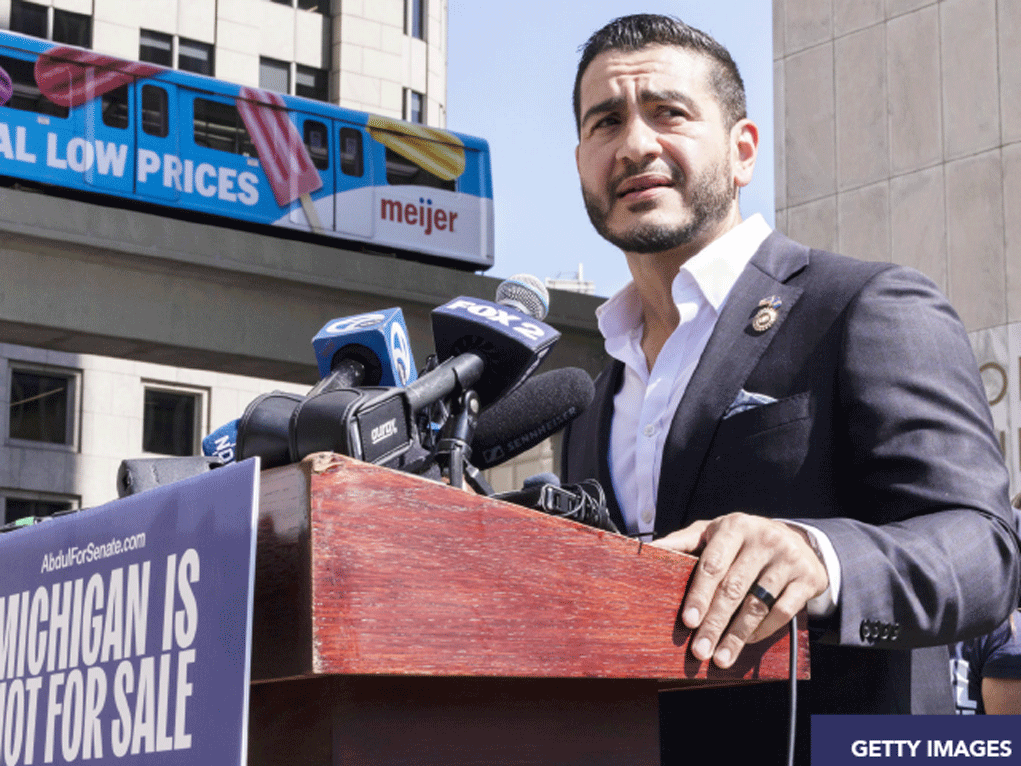 Yated Ne'eman2 months ago
The victory of former Detroit region public health director Abdul El-Sayed in the August 4 Democrat primary to select the party’s candidate for an open U.S. Senate seat from Michigan marked another milestone in the rapid transformation of the Democrat party during the current election cycle from the loyal, center-left half of the traditional American two-party political system into an elitist movement demanding radical changes in the federal system government as we know it under the U.S. Constitution and the Bill of Rights.
If elected in the November midterm general election, El-Sayed would become the first Muslim American to serve in the U.S. Senate. In 2018, El-Sayed ran and lost as a progressive candidate for governor in the Massachusetts Democrat primary. Campaigning as a progressive Democrat, El-Sayed supports Medicare for All, the elimination of ICE (the Immigration and Customs Enforcement agency), radical changes to campaign finance laws, and a promise that as a senator he would vote to end all U.S. military assistance to Israel, Jordan, Saudi Arabia, and Egypt.
In an analysis of the outcome of the Michigan Senate primary published by The Nation, Iman Abid, who is an apologist for Hamas’ October 7 attack on Israel, and serves as the director for advocacy for a group called United States Campaign for Palestinian Rights, called El-Sayed’s victory “a watershed moment for the Palestine movement in the United States.”
With endorsements from progressive icons such as Senator Bernie Sanders and Congresswoman Alexandria Ocasio-Cortez (AOC), this time El-Sayed narrowly defeated four-term Democrat congresswoman Haley Stevens who has been a staunch supporter of Israel. El-Sayed has repeatedly accused Israel of committing genocide against the civilian population of Gaza in its war against Hamas.
In the race against El-Sayed, Stevens enjoyed the support of most Michigan state Democrat party officials, Chuck Schumer, who is the leader of Senate Democrats, and the Democratic Senatorial Campaign Committee (DSCC), as well as the pro-Israel AIPAC lobbying group. However, El-Sayed was the beneficiary of highly favorable coverage from the liberal mainstream news outlets, which characterized the race as the first real test of the appeal of a progressive candidate to mainstream Democrat voters in a battleground state like Michigan.
El-Sayed Facing A Strong Gop Opponent In November
However, the primary vote, which El-Sayed won by less than one percentage point, was much closer than the double-digit victory that the polls had predicted. Exit polls also indicated that El-Sayed may have difficulty getting many of the Democrats who voted for Congresswoman Stevens in the primary to come out for him in the November general election against the formidable GOP senatorial candidate running against him, former seven-term congressman Mike Rogers.
Rogers has a long track record as a strong political candidate who can appeal to Democrat voters by calling upon his genuine working-class roots as a one-time auto assembly-line worker. Leaving the factory floor, Rogers went on to serve as a U.S. Army lieutenant, and then became an FBI special agent who investigated organized crime in Chicago before he entered electoral politics.
During the 14 years that he represented his Michigan district in Congress, Rogers served as the chairman of the House Intelligence Committee. He was also known for speaking out strongly against the economic and national security threats posed by China to the United States, and exposing the prominent role that China has played in hollowing out Michigan’s middle class by undermining its former role as a key part of America’s industrial heartland.
The open Senate seat from Michigan that Rogers and El-Sayed will be fighting for had been held by Democrat Gary Peters, who chose to step down rather than run for a third term in November. Democrats had been counting on holding that seat in their bid to recapture majority control of the Senate. To achieve that goal, they will need to pick up at least four current GOP Senate seats, while losing none of those they now hold. Because Trump carried Michigan in the 2024 election, national Democrat party leaders supported Congresswoman Stevens instead of El-Sayed in the belief that, as a more moderate candidate, she would be more likely than El Sayed to appeal to those swing voters who supported Trump the last time.
But Democrat primary voters in Michigan chose instead to follow the example that was set last year when a former political unknown, Zohran Mamdani, running as a member of the Democrat Socialists of America, twice beat the Democrat establishment’s favorite, former New York Governor Andrew Cuomo, to become the first Muslim mayor of New York City.
El-Sayed Found Success By Following Nyc Mayor Mamdani’s Lead
Mamdani’s campaign, based upon the issue of affordability, established a political pattern that helped three other progressive insurgent candidates to win Democrat primary elections in New York state, as well as in Colorado, Illinois, New Jersey, Pennsylvania, Washington state, Wisconsin, Washington, D.C., and now in Michigan.
These progressive Democrat primary candidates also campaigned against continued U.S. support for Israel, whose support among Democrat voters has fallen, according to Reuters/Ipsos polling, from 59% in 2018 to just 22% in May, 2026. This was a particularly valuable asset for El-Sayed in Michigan, which has the highest percentage of Arab-Americans relative to the population of any state in the country.
Throughout his primary campaign, El-Sayed continued to accuse Israel of committing genocide in Gaza and to demand the end of unconditional U.S. military support for Israel in its fight against the enemies in Gaza, Lebanon, Yemen, Iraq and Iran, who have continued to attack it at every opportunity since October 7, 2023. In sharp contrast to El-Sayed, during the primary campaign Congresswoman Stevens vigorously continued to defend the U.S.-Israel alliance. That is why she benefited from $30 million in campaign contributions from AIPAC, which, given the closeness of the final vote count, was almost enough to tip the scales in her favor.
But despite how narrow El-Sayed’s victory turned out to be, coupled with primary wins for progressive Democrats Will Lawrence and Donavan McKinney in two Michigan congressional races, progressive leaders claimed that the Michigan results had proven that fears by party leaders that leftwing populist candidates could not win elections outside deep blue liberal Democrat strongholds were unfounded.
The emergence of successful progressive Democrat candidates in a Midwest swing state such as Michigan marks the next stage in a grassroots revolt within the party which can be traced back to the 2016 presidential primary race. The supporters of Bernie Sanders showed surprising strength against the establishment candidate, former Secretary of State Hillary Clinton, whose supporters within the party leadership changed the rules of the game to deny Sanders a fair chance to win the nomination.
The past decade of U.S. politics has been dominated by the right-wing populism of Donald Trump. But left-wing populism, driven in large part by a pathological resentment of Trump and his unexpected political success, has been growing among Democrats on a parallel track ever since Sanders’ outsider 2016 campaign for the presidential nomination was derailed by the dirty tricks used by Hillary Clinton’s supporters who controlled the Democrat party’s presidential nominating process.
How Progressives Seized Control Of The Democrat Party
Sanders’ progressive supporters, with some justification, not only felt cheated of the opportunity to compete fairly for the nomination. They also blamed Mrs. Clinton for the incompetent and overconfident general election campaign she subsequently ran, which led to Trump’s upset victory in 2016, a defeat from which the Democrats have not yet fully recovered.
The current rise of the Democrat left got its start with the election to Congress of a political unknown, Alexandria Ocasio-Cortez (AOC). She began in politics as a lowly community organizer for Sanders’ 2016 presidential campaign in New York City, and just two years later pulled off a stunning upset by defeating Joe Crowley, the incumbent Democrat congressman in New York’s 14th district, who was the chair of the House Democratic Caucus at the time.
As a result, at the age of 29, AOC became the youngest woman ever to serve in the House of Representatives. She then started on the path to power in Washington by organizing a small but vocal group of progressives known as “the Squad,” which immediately began to challenge the authority of the Democrat establishment under the iron rule of then-House Speaker Nancy Pelosi.
During the 2020 presidential election cycle, Democrat party leaders, desperate to field a relatively moderate candidate like Joe Biden because they believed he was most likely to defeat Donald Trump, again rigged the party’s primary process to make it impossible for Sanders to win the presidential nomination. However, to gain the support of Sanders’ voters in the general election, the Biden team promised that, as president, he would adopt Sanders’ progressive policy agenda as his own.
Biden’s Disastrous Progressive Policy Legacy
The fulfillment of that promise by the Biden administration led to four years of: open border chaos admitting more than 10 million illegal immigrants; an explosion of unnecessary federal spending, cash giveaways and increases in social welfare programs which triggered runaway inflation; disrespect for law and order which led to riots in the streets and a nationwide spike in violent crimes; the imposition of DEI and reverse racial discriminatory policies on all levels of government and society; a failed forced conversion to green energy which led to sharply higher utility bills; as well as higher taxes coupled with excessive government regulation.
The turning point for the Democrats was the disastrous decision by party leaders to support Joe Biden’s 2024 bid for re-election, when they could all see that he was clearly unfit to serve for a second term as president. Biden’s meltdown in his televised debate with Donald Trump that June finally revealed the massive cover-up. But instead of apologizing to the American people for keeping the president’s incapacity a secret, party leaders followed up with the equally disastrous unilateral decision to appoint an incompetent vice president, Kamala Harris, to head the ticket as Biden’s replacement. It made Donald Trump’s unlikely return to power in the White House inevitable, and further widened the credibility and trust gap between the Democrat party’s aging leadership in Washington and the young Bernie Sanders-inspired progressive activists who had already started to take control of the party’s apparatus, from the grassroots level and up.
Democrat Party Leaders Have Lost Their Ability To Lead
It is because of this recent record of failures and betrayals that Democrat party leaders in Washington, including both Senate Minority Leader Chuck Schumer and House Minority Leader Hakeem Jeffries, now lack the minimum necessary level of credibility with mainstream Democrat voters to push back against the rising challenge from progressives, led by Senator Sanders, Congresswoman AOC, and Mayor Mamdani. The progressives have already won the hearts of the college-educated elitists who have replaced the working class as the party’s main grassroots constituency, and they are now demanding control of the national and state party apparatus, as well as the political patronage and power that goes with it.
The extent of the surrender by Democrat moderates to the extreme policy demands of the progressives was indicated by a Senate vote on April 16, 2026, in which 40 out of 47 Democrat senators voted for a Bernie Sanders-sponsored resolution to block the sale of specific American weapons and military equipment to Israel. Of the seven Democrats who voted against the resolution that would have denied Israel the means to defend itself from ongoing attacks by its Iran-supported enemies on several fronts, three of them, including Richard Blumenthal of Connecticut, Jacky Rosen of Nevada, and Chuck Schumer of New York, are of Jewish descent.
Progressives Trying To Match Trump’s Political Accomplishments
The progressives are now trying to emulate Trump’s now near-total takeover of the national Republican party. They argue that if Trump was able to replace the tired conservative political orthodoxies that dominated Republican party politics for decades and replace them with a much more populist agenda of policy goals, why can’t today’s young Democrat activists on the left do the same thing? In fact, they have largely succeeded by adopting an openly socialist agenda that strongly appeals to two generations of American voters who are too young to remember why and how the socialist economic system of the Soviet Union collapsed, which led to the peaceful end of the Cold War with a clear-cut victory by America’s free market economy.
Even among today’s more moderate Democrats, there is little appetite for a return to the broken and often gridlocked Washington, D.C. political system that enabled Trump’s rise to power in the first place. The moderate Democrats also have no viable domestic policy alternatives to offer to the socialist-inspired progressive agenda. Their demands were recently published by the national office of the Democrat Socialists of America. They include calls for open borders, universal free medical care (Medicare for All), as well as government subsidies for food and housing. All of these ideas have been tried in other Western countries, where they have consistently led to unsatisfactory results.
The elitist progressives who live in the safety of gated communities and under the protection of private security guards are still calling for doing away with the police, the elimination of cash bail for arrested criminals, and an end to jail sentences that protect society from those convicted of violent crimes. Instead, the permissive laws and policies enacted by the progressive elected officials in Democrat-controlled blue states and cities have seen to it that these criminals remain free to prey upon helpless minority residents living in poor urban neighborhoods, while making sure that the local police these same officials have defunded are powerless to protect them.
Progressives Want To Rewrite The U.S. Constitution
Many of today’s younger Democrats have been so brainwashed by liberal ideology during their time on American college campuses that they have lost all respect for the American form of democratic government. Many are openly calling for a major rewrite of the U.S. Constitution that would eliminate the time-tested system of federal government checks and balances, and do away with the Senate, the Electoral College, and the Supreme Court as we know them. They would also end the absolute legal protections for individuals under the Bill of Rights against the potential for abuse by an intolerant and tyrannical socialist/progressive cabal that is no longer trying to hide its attempts to seize control of the federal government.
Progressives like Mayor Mamdani and Massachusetts Senator Elizabeth Warren are calling upon the government to punish individuals who have been successful by confiscating their wealth for redistribution, while rewarding those who have failed with reparation payments and other preferences for non-whites and members of other allegedly “victimized” identity groups.
Trying To Put An End To The American Dream
Under the false banners of socialism and equity, progressives are calling for a government takeover of the entire American free market economy. They would stifle private enterprise, putting an end to the profit incentives which enabled the American Dream of success through personal accomplishment to come true for so many of this country’s citizens who have been able to work their way out of poverty over the past 250 years.
The progressive wish list includes government intrusion into virtually every aspect of our private lives, including the abrogation of the right of every individual to live in accordance with their religious beliefs.
Larry Jacobs, the director of the Center for the Study of Politics and Governance at the University of Minnesota, is one of many political analysts who believe that the party’s progressive young grassroots activists have lost all respect for their congressional leaders, Chuck Schumer in the Senate and Hakeem Jeffries in the House, who are too willing to make compromises with the Trump administration in order to permit the federal government to continue functioning.
“There’s a sense that the Democrats have been patsies in the face of Donald Trump. When Democrats say they want to fight back, they mean it,” Jacobs told a reporter for the British Guardian newspaper. The young activists also believe that the current party leaders are totally out of step with the party’s woke agenda as indicated by their continued support for U.S. military aid to Israel. “Gaza and Israel have become a lightning rod for all the other issues,” Jacobs added.
“[Opposition to] Donald Trump has radicalized the Democratic party,” Jacobs further explained. “This revolt within the party would not have happened without Donald Trump. He is provoking a kind of earthquake, raising lots of unsettling questions within the Democratic party — its direction, its leadership, its policy priorities, [and] its beholdenness to big [corporate] donors.”
The Extreme Left Has Become Well-Organized
Joseph Geevarghese, the executive director of Our Revolution, a progressive organization that emerged from Bernie Sanders’ failed 2016 presidential run, told the Guardian’s reporter: “You’re seeing a maturation of the progressive movement. You’re seeing the infrastructure that’s been built over a decade come into play. There’s a resonance of the message in reaction to the failed populism of the right, but you’re also seeing increased sophistication in the organization of the left.”
He also explained that: “Because some of their [campaign] funding depends on corporate donors, moderate [Democrats] have to pull [their leftist political] punches. They are not able to articulate the causes of people’s problems.”
But now, because of the rise of groups such as the Democratic Socialists of America (DSA), financially independent progressive candidates, such as Mamdani and El-Sayed, “are able to call out the corporate class and the corruption of our politics and how that affects people’s standard of living.”
Centrist Democrats Experiencing A Crisis Of Confidence
According to Geevarghese, this has created a serious crisis of confidence and self-identity within the centrist wing of the Democrat party. At a moment when President Trump is vigorously pursuing his second-term political agenda, Democrat voters increasingly see their more moderate elected officials and candidates as too timid to stand up and block Trump’s ability to govern, and too afraid of being labeled communists to propose socialist policies such as Medicare for All and confiscatory wealth taxes. Today’s moderate Democrats also mostly lack the personal charisma and considerable political skills of the newly emerging progressive superstars, such as Mamdani and El-Sayed.
The rapid rise of the DSA to national prominence today roughly parallels a similar revolution within the Democrat party which took place at the end of a 12-year run of Republicans in the White House that began with Ronald Reagan’s 1980 victory over Jimmy Carter, an unpopular liberal Democrat president who was widely seen as weak and indecisive. During that period, any Democrat candidate who dared to publicly identify himself as a “liberal” would face an uphill battle to win the confidence of voters.
Bill Clinton And The Rise Of The Moderate Democrats
To address that problem, in 1989 a Democrat activist named Al From founded a more ideologically centrist political organization he called the Democratic Leadership Council (DLC). From then handpicked the relatively unknown young Democrat governor of Arkansas, Bill Clinton, to lead a so-called “Third Way” national Democrat political movement. It succeeded by borrowing popular Republican political issues, such as balancing the federal budget and reviving the sluggish American economy, and suggesting relatively moderate liberal solutions to those problems.
In the 1992 national election, that strategy enabled these relatively moderate Democrat candidates, in races across the country, to beat their GOP opponents at their own game. That included Bill Clinton himself, who defeated the re-election bid of President George H.W. Bush using the memorable slogan, “It’s the economy, stupid!” coined by his political advisor, James Carville.
The result was two terms of successful presidential leadership by Clinton, who found a way to govern effectively in cooperation with House GOP Speaker Newt Gingrich. But that era of bipartisan cooperation in Washington came to a sudden conclusion with the bitter dispute over the outcome of the 2000 presidential Democrat election in Florida, and the controversial decision by the U.S. Supreme Court that awarded the Florida vote, and with it, a majority in the Electoral College and the presidency to Texas Republican governor George W. Bush instead of Clinton’s Democrat vice president, Al Gore.
The Democrat “Resistance” Was Born In The Wake Of The 2000 Election
Even though Gore reluctantly accepted the Supreme Court’s decision, many other Democrats refused to accept the legitimacy of Bush’s presidency and began to develop the tactics of political resistance to and defiance of presidential authority, which would become an all-consuming Democrat obsession during both terms of Donald Trump’s presidency.
But in the meantime, Bill Clinton’s relatively moderate Democrat political operatives had seized firm control over the Democrat party’s political apparatus at the local, state, and national levels. That led to repeated efforts by Democrat party officials to award their presidential nomination to the former president’s wife, Hillary Clinton, first in 2008, and then again in 2016. But by that point, the young activists in the Democrat party were abandoning Clinton’s relatively moderate approach to national politics in favor of the increasingly liberal positions adopted first, in 2008, by Barack Obama and then, in 2016, by Bernie Sanders.
Joe Biden’s successful 2020 presidential run was the last major political victory for the Clinton-era moderate Democrats who were still running the party’s national organization. The sudden collapse of Biden’s 2024 re-election candidacy and the party’s disastrous response to that challenge have resulted in the current crisis of confidence in the Democrat party’s national leadership by both progressives and moderates.
How Much Further To The Left With The Democrats Go?
As a result of this moderate Democrat leadership collapse, there are now serious questions being raised about how much further to the left the party’s ideological positions will go both in the upcoming midterm election in November and the presidential election in 2028.
Al From, the founder of the DLC and the originator of the Clintonian moderate Democrat approach, was asked by a Guardian reporter for his reaction to the current progressive takeover of his party as symbolized by El-Sayed’s Michigan primary victory. From responded by admitting that, “We’ve been focusing on beating Republicans [while] the Democratic Socialists have been focused on beating us. We’ve got to fight back. We’ve got to make it harder for them.”
But he also conceded that the liberals have been gaining strength among Democrat party ranks at the expense of moderates, while, in recent years, the once powerful so-called “Blue Dog” faction of relatively conservative Democrats has become a virtually extinct political species.
According to the most recent Gallup poll, conservatives make up about 37% of the general public (compared to 36% in 1992), including 77% of Republicans, 27% of independents, and a very small number of self-described Democrats. Moderates make up about 34% of the general public (compared to 43% in 1992), including 47% of independents, 30% of Democrats, and 20% of Republicans. Liberals today make up about 25% of the general public, compared to 17% in 1992. But the current liberal 25% includes a growing share of around 60% of Democrats, 24% of independents, and only 2% of Republicans, made up mostly of the GOP’s few surviving “never Trumpers.”
Nevertheless, From insisted that moderation is still the “right formula” for today’s Democrats, especially on the national political level.
“Obviously,” he admitted, “we’re in a different [political] world [today], and you have to communicate with it differently, and you’ll need ideas that further the same underlying values, as we did [in 1992], but they’ve got to be modern ideas, maybe different ideas because circumstances have changed. Our platform was for the 1990s, not for the 2030s, but the principles are the same.”
Democrat Socialists Want To Tear Down America’s Political System
However, From observed, “The Democratic Socialists want a different [political] system. They don’t want to further democratic values. You look at their platform: they want to get rid of the Senate, the presidency, the Supreme Court; they want [government] ownership of business; they want to get rid of police; they don’t want to fund the military.”
“That isn’t the historic Democratic Party,” From lamented. “It’s not the party of [Franklin] Roosevelt that saved capitalism [from the Depression] and saved democracy in World War II. It’s a different ideology, it’s a different party.”
While Democrat moderate and progressive candidates continue to struggle with each other over the future political alignment of their party, they do seem to be willing to set aside their differences over the next three months to achieve their more immediate shared goal of winning back majority control over the House and Senate in November’s midterm election, in order to make it much more difficult for Trump to govern the country effectively during his final two years as president.
According to CNN political panelist Donna Brazile, who has served as an interim chairwoman for the Democratic National Committee (DNC), said after the results of the Michigan primary were in: “The question is, can two different wings of the same party function, unify and function as a governing majority if the Democrats win [control of the House and Senate]? I contend that the answer is yes. We’ll agree on very important matters like the economy, improving the lives of the American people, making things more affordable again and not focusing on vanity projects, so [to] the extent that we’re all running on the same message of affordability, the answer is yes.”
Divided Democrats Trying To Reunite In Time For November’s Election
The post-primary effort to re-unite the warring wings of the Michigan Democrat Party has already begun. At a post-election rally of his supporters held last Friday night, El-Sayed was careful to avoid further bruising the feelings of his defeated opponents and their supporters whose votes he will need in November to defeat former GOP congressman Mike Rogers, who is sure to get plenty of support from the national Republican Party in the general election because his win would make it almost certain that they would retain control of the U.S. Senate.
At his victory rally, El-Sayed entertained the crowd made up of 1,300 of his supporters by reiterating several of the most popular talking points from his primary campaign, including Medicare for All, removing the influence of corporate money on political races, and increasing taxes on the rich to make them pay their “fair share” of government expenses.
El-Sayed was generous in his praise of other candidates who will run alongside him in Michigan statewide races in November. After trading barbs with them for months, El-Sayed adopted a gentler tone when he called his former primary opponents, Congresswoman Haley Stevens and state lawmaker Mallory McMorrow, “incredible public servants.” It was an apparent effort by El-Sayed to help heal the wounds he inflicted upon them and those Democrats who voted for Stevens on primary day. He also had kind words for an unofficial representative of the national Democrat party, former Biden transportation secretary Pete Buttigieg, who was greeted as an honored guest at the rally.
Other national Democrat party leaders who have pledged to provide support for El-Sayed’s November midterm election campaign, even though they supported Stevens during the primary, include Senate Democrat Leader Schumer and Michigan Governor Gretchen Whitmer.
Former vice president Kamala Harris has already sent out a fundraising letter on behalf of El-Sayed’s general election campaign.
In addition, El-Sayed’s main primary opponent, Congresswoman Stevens, who had been harshly critical of him during his campaign, said during the days immediately after he defeated her that she would give him her full support in the November midterm, and that she also planned to be active in support of the other Michigan Democrats running in the general election.
Michigan Jewish Democrats Weighing Their November Options
But notably absent from El-Sayed’s post-primary rhetoric at the rally was any mention of his outspoken opposition to continued U.S. military aid to Israel, in an apparent effort not to further antagonize the pro-Israel AIPAC lobby and Michigan’s Jewish voters who are sure to support his Republican opponent for the Senate seat, Mike Rogers.
The Michigan Democratic Jewish Caucus said in a statement released soon after the primary said that El-Sayed needs to “address the harm [he] caused during this campaign” by harshly criticizing Israel and its supporters, and that he also must “commit to engaging directly with Michigan’s Jewish community” and its concerns about his candidacy.
As a result, El-Sayed is likely to have trouble attracting votes in the November election from Michigan’s Jewish community, which has historically strongly backed Democrat candidates, and makes up 1.4 percent of the Michigan electorate. This is relatively small but still large enough to decide the outcome in a very close election, which is likely in a swing state like Michigan.
Dennis Bernard, a past president of the secular Jewish Federation of Detroit and the national chair of government relations for the Jewish Federations of North America, predicted that many of Michigan’s traditionally Democrat Jewish voters will cross party lines to support Rogers, the Republican candidate in the November election, or simply decide to stay home as a silent protest against El-Sayed’s Senate candidacy.
Bernard, who claims that he voted for Stevens in the Democrat primary, has also said that he intends to support Rogers in the November general election, and has described El-Sayed as “a threat to our community” due to his criticisms of Israel.
Many other Jewish voters in Michigan who do not necessarily support the policies of Israel’s current government are still strongly opposed to El-Sayed because he has falsely and repeatedly accused Israel of committing genocide against the civilian population of Gaza. El-Sayed also publicly challenged the right of AIPAC and other supporters of Israel to donate to Congresswoman Stevens’ primary campaign.
El-Sayed’s Insensitive Reaction To An Antisemitic Attack In Detroit
Several Michigan Jewish community members have also criticized El-Sayed for his insensitive comments in reaction to a March 12 attack on a Reform synagogue pre-school in the Detroit suburb of West Bloomfield, Michigan, by a Hezbollah-inspired Islamic terrorist. Lebanese-born Ayman Mohamed Ghazali drove a pickup truck loaded with 35 gallons of gasoline and commercial fireworks into the building and then used an assault rifle to exchange fire with security personnel and first responders before ending the shootout by committing suicide.
El-Sayed’s initial response was to call the attack on the synagogue “heinous,” but then noted that some of the attacker’s family members in Lebanon had been killed in an Israeli air strike. He seemed to be suggesting that “circumstances happening 6,000 miles away” could somehow justify an attempt to commit the mass murder of pre-school age Jewish children here in the United States.
Much like Mamdani did when he ran for mayor in New York City, during his primary campaign El-Sayed tried to soften the implications of his repeated public attacks on Israel by claiming, unconvincingly, that he also condemns antisemitism. In his post-primary victory speech, El-Sayed even said that his “commitment to Jewish safety is the same commitment that I have to the safety of my own daughters.”
But since Hamas’ October 7 attack on Israel, American Jews have learned through hard experience that any public criticism of Israel’s national security policies and antisemitism are two sides of the same debased coin of blind Jew-hatred.
El-Sayed’s Underlying Antisemitic Messaging
President Donald Trump also recognized the underlying antisemitic nature of El-Sayed’s anti-Israel rhetoric last week at a rally in Las Vegas last week by calling him a “man of hate” and then added that as a progressive Democrat El-Sayed “hates” Jewish people “with a passion that burns in his heart.”
El-Sayed’s Close Ties To A Notorious Antisemitic Influencer
El-Sayed was also criticized for campaigning with Hasan Piker, the openly antisemitic far-left internet influencer. When asked, he has refused to condemn Piker for his notorious remark to his large online following in August 2019 that America deserved to be attacked on 9/11. But while Piker has since then tried to walk back that offensive 9/11 remark, he has doubled down on other, clearly antisemitic and intentionally provocative statements, such as his January comment calling Hamas “a thousand times better than the fascist settler colonial apartheid state [Israel].”
Earlier this month, in an interview with CNN, Piker sought to justify the atrocities that Hamas committed against Israeli civilians during its October 7 attack by claiming that “the Palestinian resistance largely does have an internationally recognized right to resist. . . militarily” even when it results in the commitment of “war crimes.” Yet when questioned about such outrageous statements by Piker, El-Sayed’s reacted by saying that Piker “is welcome to his perspective” on Israel and Hamas, which El-Sayed declared is not one that he shares, but neither did El-Sayed see Piker’s antisemitic statements as an adequate reason to stop campaigning alongside him.
El-Sayed’s Weak Support From Michigan’s Black Voters
One of the main reasons why El-Sayed’s victory in the primary was so narrow was his relatively weak support from Michigan’s Black voters, who make up about 13 percent of the state’s total electorate. In media interviews, more than a dozen Black voters across Detroit said that El-Sayed needed to do much more outreach to their communities to win their support. As a result, Congresswoman Stevens had an eight-point edge over El-Sayed in those Michigan counties with the highest Black populations.
In Detroit, a majority-Black city that Stevens won by 28 percentage points, several Black voters told interviewers from the Washington Post that they had not heard or seen enough of El-Sayed in their community during the primary campaign to believe that he cared about their issues, and therefore they did not give him their support.
In addition, some of El-Sayed’s fiercest Democrat critics during the primary campaign, such as Congresswoman Hillary Scholten, whose district includes Grand Rapids, Michigan, were notable by their absence from last Friday’s rally. Those who have endorsed El-Sayed’s candidacy in the November general election have done so only tepidly or indirectly, without even mentioning him by name.
El-Sayed also refrained from criticizing the Michigan State Democrat establishment that worked against him during the primary campaign, because he will need their support as well to win the November election.
El-Sayed’s Gop Opponent Rogers Reaching Out To Michigan Democrats
Meanwhile, El-Sayed’s November GOP opponent, Mike Rogers, has already begun reaching out directly to the Democrats who voted for Stevens in the primary and were disappointed by her loss. In a video message on X, he told them that “the fight is far greater than just left versus right.”
“If you’re among the majority of Democratic voters that woke up on Wednesday feeling, well, hopeless, because the person who won does not represent your values, well, just know there is still hope,” said Rogers, who narrowly lost a 2024 bid for the other U.S. Senate seat for Michigan.
However, regardless of which party emerges from the midterms in majority control of the Senate and the House over the next two years, the internal battle that will decide the future of the Democrat party will not start for real until the day after this November’s election, as the process begins for the selection of the Democrat presidential candidate for 2028. According to a New York Times report, preparations for that battle have already begun, with the centrist Democrat group known as Third Way planning to launch a $15 million advertising effort to discredit the DSA and its candidates in the eyes of voters before the 2028 presidential election.
How Significant Is Al-Sayed’s Michigan Primary Victory?
In the meantime, Democrat political analysts are arguing among themselves about the true significance of the recent flurry of progressive victories in what is still only a handful of high-profile races, mostly in deep-blue liberal Democrat strongholds. Does that mean that El-Sayed’s narrow Democrat primary victory in a competitive swing state like Michigan was a fluke, due primarily to his superior political skills and Michigan’s relatively large Muslim voter population? Or does it mean that, 35 years after the collapse of America’s Cold War archenemy, the Union of Soviet Socialist Republics (USSR), socialism has lost its character as a dirty word in American electoral politics?
Progressive activists like Geevarghese believe that their candidates are now riding a historic leftward shift in national voter sentiment which will lead to a complete takeover of the Democrat Party, much like the transformation of the Republican Party that President Trump has achieved since winning the 2016 GOP nomination.
“All of the electoral energy and enthusiasm is on the left and, at the end of the day, for a candidate to be viable in the 2028 presidential [campaign], they’re going to have to articulate a full-throated economic populism,” Geevarghese told the Guardian’s reporter. “That’s what’s needed to make it through the primary [process] and ultimately that’s what’s going to be needed to be the antidote to Donald Trump.”
Speculation is already swirling over which progressive candidate will take the baton from Bernie Sanders in the race for the Democrats’ 2028 presidential nomination. Will it be AOC, who would become, if elected, the first woman president at the age of 39, a more conventional and respected liberal Democrat, like California Congressman Ro Khanna, or a charismatic newcomer like El-Sayid after only two years in the Senate, assuming that he wins in this November’s election? New York City Mayor Mamdani is constitutionally disqualified from running for president because he was not born in the United States.
As the more moderate wing of the Democrat party labors to recover from the embarrassing way in which it lost the 2024 presidential election, the question is whether it will saddle itself again in 2028 with another weak presidential candidate chosen primarily on the basis of race and gender, like Kamala Harris, or President Biden’s ineffective Transportation Secretary, Pete Buttigieg, or term-limited California Governor Gavin Newsom, who seems like he has been auditioning for a presidential run ever since the Covid pandemic struck in 2020. The Democrat moderates could opt for one of their governors with proven bipartisan voter appeal, most notably Pennsylvania’s Josh Shapiro, but the fact that Shapiro is proudly Jewish and a supporter of Israel could disqualify him, as it apparently did when he was briefly considered to serve as Kamala Harris’ Democrat running mate in the 2024 election cycle.
The Democrat selection of a 2028 presidential candidate could also be influenced by the identity of the Republican opponent. An extremely liberal Democrat progressive candidate like AOC would likely be more competitive running against an equally controversial Republican conservative, such as Vice President JD Vance. However, an openly socialist Democrat candidate like AOC would face a more difficult task running against a widely respected mainstream Republican, such as Secretary of State Marco Rubio, or Florida’s popular governor, Ron DeSantis.
Jewish Democrat Gottheimer Sounds An Alarm Against El-Sayed
But while most mainstream Democrats are willing to give El-Sayed a pass for his virulently antisemitic and anti-Israel statements and tendencies, in the hope that he can deliver control of the Senate to their party, moderate New Jersey Jewish Democrat Congressman Josh Gottheimer has spoken out in protest, In an op-ed published on the website of The Free Press, Gottheimer openly condemned El-Sayed for “making the U.S.-Israel relationship the villain of his campaign, repeatedly questioning Israel’s right to exist as a Jewish state [and for spending] his last days on the campaign trail with Hasan Piker.”
But that is not the worst of it. Even Gottheimer didn’t dare to mention the fact reported by the New York Post’s Miranda Devine that El-Sayed’s father-in-law, who helped to finance his Senate campaign, is a known supporter of the Muslim Brotherhood, which is the parent organization of Hamas. His father-in-law is also a former president of the Michigan chapter of the terrorist-supporting Council on American-Islamic Relations (CAIR).
In addition, investigative reporter Devine has suggested that El-Sayed’s ties through his father-in-law to the Muslim Brotherhood may have been one of the reasons why Democrat senators last week boycotted a Republican-led Judiciary Committee hearing that looked into the subversive activities of the Muslim Brotherhood in America. The Democrat senators also condemned the hearing as an exercise in “Islamophobia.”
Devine also noted that during his successful Senate primary campaign, El-Sayed, “slyly distanced himself from his early roots in the Democratic Socialists of America faction of the [Democrat] party, and declared himself [to be] a “scientist” and not a socialist, but nobody [was] fooled, least of all the DSA.”
In his Free Press op-ed, Gottheimer also observed that Jew hatred “is being normalized in plain sight, and not just online. It has now manifested not only in elections, but also outside synagogues and Jewish-owned businesses. . .
Jew Hatred Is Now A Litmus Test For Democrats In Congress
“What’s most worrisome is not just the ignorance underlying so much of the heated, abusive, and violent anti-Jewish sentiment. It’s also the cowardly amplification and kowtowing by the political class. As a Democratic member of Congress, I can attest that for a growing number of my colleagues, being anti-Israel has now become a nonnegotiable moral litmus test. We’ve come a long way from Democratic president Harry Truman’s 1948 decision to recognize Israel just 11 minutes after the Jewish state declared independence. On the far right, meanwhile, we see virulent antisemitic energy in likes, comments, and posts on Reddit and X, and in podcast episodes that have accumulated tens of millions of views. . .
“From Piker on the socialist left to Tucker Carlson on the native-populist right, influencers with millions of followers now repackage age-old antisemitic conspiracies and tropes as edgy commentary. Add to that a Democratic Senate nominee in Maine with a Nazi tattoo [Graham Platner], who dropped out of his race for other reasons, and it’s clear we have a crisis on our hands,” the New Jersey congressman notes with alarm.
In his op-ed, Gottheimer also cited another outrageous antisemitic statement made this summer by New York City’s Mayor Mamdani, a proud member of the DSA, who called AIPAC and its supporters “monsters” who move “millions in dark money” to “turn us against one another.”
Gottheimer also noted that DSA member Melat Kiros will run as the Democrat candidate for a congressional seat in Colorado this November “on an anti-Israel platform, calling Hamas’ devastating October 7, 2023, invasion of southern Israel ‘inevitable.’” Kiros also refused to call an attack on Jewish protesters in Boulder [Colorado] in which a Holocaust survivor was injured an antisemitic incident.”
Congressman Gottheimer concludes that, “the takeaway from these races across the country is this: The socialist fringe is trying to hijack the Democratic Party, undermining its values, ideals, and leadership.
“We must not let them. The stakes couldn’t be higher.”
Gottheimer’s warning was echoed by U.S. Ambassador to Israel Mike Huckabee, who agreed that “antisemitism is becoming an increasingly dangerous force in American politics.”
U.S Ambassador Huckabee Calls Democrats “The Party Of The Insane”
In an interview with the Newsmax channel, Ambassador Huckabee cited the recent decision by Michigan’s Jewish Attorney General, Dana Nessel, to skip her party’s nominating convention because of concerns about antisemitism and her personal safety.
While acknowledging that he is still “a pretty partisan Republican,” Huckabee also said he believes that a healthy American political system requires two strong and responsible political parties.
“I wish there would be a competitive and a sane Democrat Party. It frankly makes both parties better to have a competitive environment.”
But Huckabee lamented the fact that today’s Democrats are “moving so far to the left with socialism on the economic side, and with Jew-hatred on the social side, that they are rapidly becoming the party of the insane.
“And it’s not healthy. Not just for the Democrats. This isn’t healthy for America,” Huckabee concluded sadly.
 Yated Ne'eman3 months ago
By Rabbi Pinchos Lipschutz
There is a growing unease over the direction of the Republican Party when President Trump leaves the political stage. For decades, support for Israel was one of the few issues that transcended partisan politics. While that bipartisan consensus has steadily eroded, particularly as anti-Israel sentiment has become increasingly mainstream on the left, Republicans have largely remained steadfast allies of Israel. President Donald Trump, more than perhaps any American president before him, has demonstrated an unwavering commitment to Israel’s security and legitimacy.
But many are beginning to ask what comes next.
Vice President JD Vance’s recent remarks have unsettled many in the Jewish community. In discussing his efforts to negotiate with Iran, Vance suggested that unnamed figures within the Israeli government were engaged in a secret, well-funded campaign to manipulate American policy. His comments echoed one of history’s oldest antisemitic accusations, namely that Jews secretly wield hidden influence over governments and push nations into wars for their own benefit. Such conspiracy theories have fueled hatred and persecution for centuries.
Antisemitism rarely begins with open expressions of hatred or explicit calls for violence. More often, it starts with insinuations about secret power, hidden agendas, and divided loyalties. That is why many Jews found the vice president’s comments so disturbing. It is not simply what he said, but what such rhetoric legitimizes when it comes from one of the most powerful elected officials in the world.
Last week, a majority of Democratic members of Congress voted to cut off aid to Israel. Candidates who traffic in anti-Israel rhetoric are moving ever closer to seats in Congress and the Senate. In New York City, the nation’s largest Jewish population is governed by a mayor who routinely vilifies Israel and has renewed his public threat to arrest Israeli Prime Minister Binyomin Netanyahu should he attend the United Nations General Assembly in September. Whether such a threat could ever be carried out is almost beside the point. The fact that it can be uttered, debated, and amplified in the mainstream without widespread outrage reflects how dramatically the public conversation has shifted and how much traction these views are gaining.
The same trend is evident overseas. Britain’s new government has signaled a far more confrontational approach toward Israel. Belgium has joined a growing list of European countries implementing punitive economic measures against Jewish communities in Yehudah, Shomron, and the Golan. Across Europe, support for Israel is becoming increasingly conditional, while hostility toward Israel is becoming increasingly respectable, and attacks on Jews and Jewish targets are becoming increasingly commonplace.
We have sadly grown accustomed to reports of Jews being assaulted in New York, Toronto, London, Paris, and other major cities. This week came word of Jews being attacked in Mongolia, a country with almost no Jewish population. It was a chilling reminder that antisemitism has never depended on familiarity with Jews. It thrives on myths, conspiracy theories, and propaganda, requiring little contact with its targets. The hatred has become global.
Viewed individually, each of these developments might be dismissed as an isolated incident. Taken together, they paint a sobering picture. The atmosphere has changed. Ideas that once lived on the political fringes are entering the mainstream. Hostility toward Israel is no longer confined to radical activists. Suspicion of Jews and Israel is increasingly expressed openly, confidently, and without apology.
Throughout our long history, the Jewish people have learned that political fortunes rise and fall. Friends become enemies. Governments change. Alliances shift. We appreciate and pray for leaders who stand with us and defend truth and justice. But our ultimate security has never rested in Washington, London, Brussels, or any other capital.
As the world around us grows increasingly uncertain, the lesson of these days becomes ever more relevant. Our task is not to panic, but to strengthen our emunah, deepen our commitment to Torah and mitzvos, and remember the promise that has sustained us through every exile. Nations may change, public opinion may shift, and yesterday’s allies may become tomorrow’s enemies, but the Ribbono Shel Olam remains the Shomer Yisroel, and that never changes.
How quickly things change. Last week it was Shabbos Chazon, the saddest Shabbos of the year, surrounded by mourning and the signs of aveilus. On Tisha B’Av, we sit on the floor as we read Eicha, recite Kinnos, mourn the destruction of the Bais Hamikdosh, and reflect upon the suffering our people have endured throughout the various goluyos. We wonder when the sadness will end.
And then Tisha B’Av concludes. The mourning ends. And Shabbos Nachamu arrives. The atmosphere changes. The sadness gives way to hope. We play music again and wear clean clothes. There is a palpable feeling of relief.
But why? Has anything really changed? The Bais Hamikdosh has not been rebuilt. The Har Habayis remains off limits. The shu’olim – foxes – still roam where the Shechinah once rested, and the world has become no friendlier toward us. Why, then, are we suddenly comforted? What comfort do we have?
The answer lies in understanding the meaning of the word nechomah.
On Shabbos Nachamu, we begin reciting a series of seven haftaros from Yeshayahu, the novi of consolation, that accompany us from Tisha B’Av until Rosh Hashanah. This Shabbos derives its name from its haftarah, which opens with the famous words, “Nachamu, nachamu ami – Be comforted, be comforted, My people.”
The novi offers us double comfort, and we wonder about the repetition.
Following the sin of Adam Harishon, the posuk states, “Vayinochem Hashem” (Bereishis 6:6). Rashi explains that the word nechomah means more than consolation. It also means reconsidering, stepping back, and looking at a situation from a different perspective. Following what Adam had done, Hashem was reconsidering the creation of man.
But the word nechomah also means comfort. We can explain that these two definitions really go together because comfort comes in two stages. First there is consolation, the soothing reassurance that the pain will not last forever. Then comes the second, deeper form of nechomah, when the mourner steps back from the immediate darkness surrounding him and begins to see the larger picture. In truth, nothing has changed, but the person receives comfort because everything begins to look different as his perspective changes.
We can now understand why the novi says to us, “Nachamu, nachamu.” Hashem is offering us both forms of consolation, both definitions of nechomah.
We find this dual message of nechomah at the end of Maseches Makkos. Chazal recount that Rabbon Gamliel, Rabi Elazar ben Azaryah, Rabi Yehoshua, and Rabi Akiva were once standing overlooking the Har Habayis when they saw a fox emerging from the site of the Kodesh Hakodoshim. The others cried. Rabi Akiva smiled.
When Rabi Akiva explained that the fulfillment of the prophecy of destruction guaranteed the fulfillment of the prophecy of redemption, they said to him, “Akiva, nichamtonu. Akiva, nichamtonu.”
Just as Yeshayahu Hanovi did, they repeated the words. Rabi Akiva had not changed reality. He changed the way they perceived it. That is the essence of nechomah.
Unfortunately, we arrive at Shabbos Nachamu carrying burdens that feel painfully familiar.
The nations of the world continue to align themselves against us. As Israel fights enemies sworn to its destruction, much of the civilized world condemns the victim while excusing the aggressor. Jews everywhere are targeted and vilified.
The slogans change. The hatred never does.
Today’s antisemitism disguises itself as anti-Zionism or humanitarian concern. Yesterday it accused Jews of poisoning wells, spreading plagues, and consuming gentile blood. Today it speaks the language of international law, human rights, and political campaigns.
The vocabulary has evolved, not the hatred. It is still the same.
It is the ancient animosity of Yishmoel toward Yitzchok, of Eisov toward Yaakov, clothed in the fashionable language of each generation.
Europe, whose soil is saturated with Jewish blood, once again tolerates public displays of antisemitism that many believed had disappeared forever. Jews wonder if they have a future there. University campuses in America have become increasingly hostile to openly Jewish students. Public figures who once concealed their prejudice now express it proudly and are praised for it. Democrats who support Israel put their careers in jeopardy, and the vice president regularly insults Israel and speaks against it. When people gather to discuss current events, they wonder how much longer American Jews will continue to enjoy the freedom with which we have been blessed.
History rarely repeats itself in precisely the same form. It simply finds new disguises.
For us, however, none of this is surprising. Chazal taught us long ago, “Sinah yordah la’olam,” hatred descended to the world when Klal Yisroel stood at Har Sinai and accepted the Torah. Our enemies may invent new explanations for their hostility, but the source remains unchanged. We are hated because we carry Hashem’s Torah and bear His Name.
That realization does not lessen the pain, but it changes the perspective, and that is the beginning of nechomah.
As we conclude the mourning of the Three Weeks and Nine Days, we wonder how much longer the golus will continue and when it will finally end. America is battling Iran, and we fear the war will expand to Eretz Yisroel. We wonder what we can do to bring peace.
When history seems to repeat itself generation after generation, we do not find the answers to our questions in newspaper headlines, political analysis, or in the shallow conversations that often substitute for serious thought.
A young man once boarded a bus to Bayit Vegan and noticed Rav Moshe Shapiro sitting quietly nearby. Gathering his courage, he approached him and asked, “How are we supposed to understand what happened during the Holocaust?”
Rav Moshe looked at him warmly.
“Shalom,” he replied.
He did not say anything else. He did not address the question or even acknowledge it.
A talmid witnessed the interaction, and when Rav Moshe got off the bus, he followed him and asked why the well-known rosh yeshiva and baal machshovah had ignored such an important question. Rav Moshe explained, “The young man knows where I live. He knows how long this bus ride is. If he thinks that the answer to that question can be given in the few minutes before I reach my stop, then he isn’t really looking for an answer. He’s just looking to make conversation. I don’t have time for pointless conversations.”
Some questions are simply too profound to be answered with slogans. Life demands depth and understanding. To understand Jewish history requires Torah. It requires us to look beyond the surface and recognize the Hand guiding events that often appear random.
That is what Parshas Va’eschanon teaches us.
Just as the novi gives us nechomah, Moshe Rabbeinu teaches us how to attain it.
Moshe Rabbeinu takes Klal Yisroel by the hand and shows us what Rabi Akiva would understand centuries later.
The answer to Jewish history is found in the Torah.
Parshas Va’eschanon is much more than a review of events that took place long ago. It is a blueprint for every generation that would one day struggle to understand exile, persecution, and redemption.
Moshe begins with his own heartfelt tefillah. “Hashem Elokim, Atah hachilosah…” He recounts how he pleaded with Hashem to allow him to enter Eretz Yisroel and then accepted Hashem’s decree barring him from the Holy Land with complete faith.
Before teaching Klal Yisroel how to live, Moshe Rabbeinu teaches us how to trust. He reminds us that no matter how much remains hidden from our understanding, there is One Who sees the entire picture.
Rashi explains Moshe’s declaration, “Asher mi Keil bashomayim u’va’aretz asher yaaseh k’maasecha u’gevorosecha…,” by contrasting Hashem with earthly rulers. A king of flesh and blood may wish to show compassion, but he is constrained by ministers, advisors, and political realities. Hashem answers to no one. His mercy is absolute, unrestricted, and perfect.
Through those words and that idea, we begin to find nechomah as we recognize that our lives are not governed by chance or by the whims of world leaders, but rest securely in the Hands of the Ribbono Shel Olam.
Moshe then reminds us where life is found. He says, “V’atem hadeveikim baHashem Elokeichem chaim kulchem hayom.” Those who remain attached and devoted to Hashem are truly alive.
Life is not merely breathing, eating, sleeping, or playing ball. Life is attachment to Hashem. Life is found in a heartfelt Shemoneh Esrei, another posuk, another blatt Gemara, another act of chesed, another mitzvah performed with sincerity.
The world defines life by comfort, wealth, and security. The Torah defines life by clinging to Hashem.
Moshe continues: “Mi goy gadol asher lo Elokim kerovim eilov…”
What other nation possesses such a gift? What other people can call out to the Creator of the universe and know that He hears every sincere cry? And what other nation has experienced what ours has?
Who else was taken from the midst of another people through miracles, signs, wonders, and open displays of Divine providence?
Who else has survived exile after exile, persecution after persecution, only to emerge again and again proclaiming the same eternal truths?
History has no parallel. Neither does Klal Yisroel.
Moshe then brings us to the foundation upon which everything else rests: the Aseres Hadibros, the charter of the Jewish people that defines who we are, how we live, and why we endure.
Immediately afterward, we proclaim the words that have accompanied us through every generation: “Shema Yisroel Hashem Elokeinu Hashem Echad.”
Those words put us to bed each night and accompany us every morning.
They have echoed from the stirring cries of Yom Kippur to the whispered bedtime Krias Shema, and to the final declarations of martyrs ascending al kiddush Hashem.
Empires have risen and fallen. Kings have disappeared. Cultures and civilizations have vanished. But those words have never ceased to be spoken.
That, too, is nechomah.
Moshe’s message reaches its practical conclusion a few pesukim later.
“V’osisa hayoshor vehatov.”
If we seek Hashem’s protection, we must strive to become the people He asks us to be.
Not merely believers, not merely observers, but honest, compassionate, and upright Jews. When we are a nation faithful in both belief and conduct, we can ask Hashem to fight our battles.
When we fight our yeitzer hora, He fights our enemies. When we build homes of integrity, businesses of honesty, communities of kindness, and lives that reflect His Torah, the bris remains intact, along with Hashem’s promises.
Moshe assures us that Hashem will bring His people into the land promised to the avos, filling their homes with brachos and goodness.
Those promises were never abandoned. They were only delayed until we prove worthy of receiving them.
Perhaps that is the deepest meaning of Shabbos Nachamu.
Nothing changed this week. The stones of the Kosel still stand as lonely testaments to what once was and what we have lost. The Har Habayis still waits for us to return. Our enemies have not disappeared. The world’s attitudes have not improved.
So what is the nechomah?
The nechomah is that everything has changed because we have changed. Our outlook has changed.
The tears of Tisha B’Av were never meant to leave us in despair. They were meant to restore our vision. The mourning stripped away our illusions and reminded us who we are. When we perceive the churban and the losses, when we see the foxes strutting about, confident and content, that is when we know that resurrection is coming. When we see dusk, we know that there will be dawn. When the sun goes down, we know it will also rise.
Shabbos Chazon marks where we were. Shabbos Nachamu points to where we are going.
The Bluzhever Rebbe experienced unimaginable tragedy during the Holocaust and then came as a refugee to America, where he witnessed and helped lead the rebirth of Yiddishkeit. He understood this better than most.
A young bochur once stood in line after lighting Chanukah licht to receive the rebbe’s brocha. Hoping to preserve the moment, he quietly asked a friend to photograph him standing beside the rebbe.
The rebbe noticed the boy handing his friend the camera to capture the moment.
When the young man approached for a brocha, the rebbe warmly took his hand and smiled.
“Bochur’l,” he said, “you probably want a picture because I represent a world that has disappeared.”
The boy nodded shyly.
“But never forget,” the rebbe said as he held the young man’s hand, “that the future of that world that is no more is standing inside of you.”
The man who had survived destruction and came to embody the generation and world that had been lost was telling a young member of the next generation that the past itself guaranteed the future – a future of Torah, a future of Yiddishkeit, a future of Yidden.
That is why we remember. That is why we spent three weeks remembering and mourning. Not because we live in the past, and not because we are held hostage by the past, but because we believe in tomorrow, because we want to build a better tomorrow.
We rejoice on Shabbos Nachamu not because the golus has ended, but because we know that it will.
Over the past nine days and three weeks, we returned to our origins. We remembered our losses. We confronted our failures. We mourned the Bais Hamikdosh, the harugei Beitar, Rabi Akiva and the other Tannaim, the victims of Tach V’Tat, of York, England, of the Crusades, and of the Holocaust.
Now we can lift our eyes. Now we hear the words of the novi once again as he calls out to us through the ages and proclaims, “Nachamu, nachamu ami.”
Be comforted. Step back. See beyond the ruins. Look beyond the darkness. Recognize that the same Hashem Who accompanied us through every golus walks beside us today.
Our path to geulah begins long before Moshiach arrives. It begins the moment a Jew learns to see history through the eyes of Torah.
That is the gift of nechomah.
That is the message of Shabbos Nachamu.
And that is why, even before the Bais Hamikdosh is rebuilt, we are able to proclaim again and again: “Nachamu, nachamu ami.”
We know it is on the way. It is almost here.
May we merit the day when those words are no longer a promise of consolation, but the joyous proclamation of redemption itself, bemeheirah beyomeinu. Amein.
 Yated Ne'eman3 months ago
B_ein hazemanim_ is here, but have you ever stopped to think: What exactly is bein hazemanim? Is it time off from learning? Is it time off from Hashem? After all, everyone needs a break, no?
The Chovos Halevavos writes in Shaar Avodas Elokim that there is nothing “pareve” in Yiddishkeit. Whatever a person does, every action performed by a Yid, must be done because it is a mitzvah. It is the way he is serving Hashem. If not, it is an aveirah, because through that act, he is not serving Hashem. There is no such thing as something existing in no-man’s-land, as something that is neither a mitzvah nor an aveirah.
Certainly, there is no yeshiva during bein hazemanim, and the learning schedule is not the same. The real question, however, is whether there is an avodah of bein hazemanim. What is the mitzvah of bein hazemanim?
I have written about this in the past, but it is so important that I will write about it again. If it is at all possible, it is critical that bein hazemanim be family bonding time.
The Family Time Imperative
Boruch Hashem, our community consists of many large, busy families with parents, children, boys and girls of multiple ages.
During the year, life is so busy that although families are raised in the same home, for better or for worse, many of them do not interact all that much with one another. This is especially true as families grow older and bochurim go off to learn in yeshiva and high school. Even upper elementary school girls have very busy schedules and active social lives.
Often, there is very little time for families to truly bond. (This is not the subject of today’s article, but I wonder if some of the shalom bayis difficulties faced by so many young couples stem from the fact that young people did not have enough opportunity to live together as a family, do things together as a family, and understand how boys, girls, mothers, and fathers interact with one another in a healthy way.)
Bein hazemanim is the ideal time for bonding. Now, I know that most boys and bochurim—or at least many of them—go to camp, and so do girls. Therefore, bein hazemanim is often swallowed up by camp, and just as there is little time for family bonding during the year, the same is true over the course of the summer.
That said, those who are able to spend a week or two together as a family—whether by going away or simply enjoying day trips and activities together—will reap tremendous to’eles. It can be a great deal of fun and, at the same time, extraordinarily healthy on an emotional level.
If there is a way to create family time even for those who are in camp, it is so important. Families should find the time, or perhaps create the time, even if it is only a day or two before camp begins or a day or two after it ends, to take a trip together, go on an outing, play games, or simply spend time together.
Bein Hazemanim for All, Even Masmidim
Bein hazemanim is also for masmidim. Two summers ago, Lakewood and Klal Yisroel lost a budding gadol with the sudden, tragic passing of Rav Boruch Ber Ziemba, a prominent rosh chaburah at Bais Medrash Govoah who also served as the rosh kollel of the Ocean Pointe night kollel and rov of the Ocean Pointe Nusach Sefard kehillah. He was not even forty years old when he passed away, yet he left behind the richest of legacies.
Rav Boruch Ber was a tremendous masmid who rarely, if ever, missed a seder. Yes, he learned full sedorim, but that was not all. He lived and breathed Torah. His greatest chiyus was in learning. He loved to toil and horuveh over a sugya until it was crystal clear. When he learned, he was like a child in a candy store. He was truly a future gadol who had such a bright future ahead of him.
One would think that someone like that would have had no need for bein hazemanim and would have preferred simply to stay home learning. But nothing could have been further from the truth.
Why? Because Reb Boruch Ber understood that just as there is a distinct avodah during the zeman, there is also a distinct avodah of bein hazemanim.
Reb Boruch Ber felt that bein hazemanim was an essential opportunity to connect with his family, to do together the things they could not do during the year, and to create lifelong memories of family bonding and the joy of simply enjoying one another’s company.
He made it his business to pack in as much family time as possible. He did not need spectacular or “shock and awe” trips to create memories. He created memories by singing together in the car and challenging the family to compose a song that captured the “theme” of their trip. He managed to make a matzav out of something as simple as breakfast in a hotel, creating warm feelings and unforgettable memories.
The Ziemba bein hazemanim family trip, even if it lasted only a few days, was sacrosanct. It was never something he was willing to forgo.
Reb Boruch Ber liked to travel during bein hazemanim to places where they would not run into the “whole world.” He sought out off-the-beaten-path locations with a nearby Young Israel shul so that he could daven tefillah b’tzibbur. He looked for quiet hotels in out-of-the-way places where the pool would be empty and his family could enjoy it.
The food was an entire production as well. During bein hazemanim, it was Reb Boruch Ber who did most of the cooking. He would prepare breakfast sandwiches, buying all kinds of rolls and filling them with whatever his children wanted. He made eggs and pancakes right in the hotel. It became a whole production that his children still remember.
Of course, supper meant barbecues prepared with love, as he carefully cooked each child’s favorite foods. During those trips, it was obvious that he viewed his role as bonding with his children through spending time with them and giving them wholesome, happy experiences.
The Avodah of Bein Hazemanim
In many ways, the frum family is under assault. We need to strengthen it. We need to strengthen the natural bond between parents and children and among siblings. It is not necessarily a maalah for each person to do his own thing during bein hazemanim.
I remember when my son once came home and excitedly described a bein hazemanim program he had heard about. He was captivated as he explained the details. The bochurim come together in the morning and have their own minyan, davening together in the ezras noshim of a shul. After davening, the program provides a nice breakfast, followed by morning seder. After morning seder, lunch is served, and the boys eat together. Following lunch, there is a break of a few hours. Then, in the mid-to-late afternoon, they return to the shul, daven Mincha, have a two-hour seder, enjoy a fleishige supper together, learn halacha for an hour, and daven Maariv.
My son thought that it was an amazing program for a bochur who was holding by that level, and he almost seemed envious, as though he would like to join.
He noticed, however, that I did not share his enthusiasm. When he asked me, with temimus, why I was not so excited, I explained, “This program isn’t a bein hazemanim program. It’s a middle-of-the-zeman program! The avodah of the zeman is to be fully immersed in yeshiva, to learn as much as one can, to eat in yeshiva, and to have a day centered around the yeshiva, around the sedorim, and around one’s chaveirim.
“The avodah of bein hazemanim,” I continued, “is not to be part of a yeshiva, but to be part of your family. Full stop. Certainly, serious limud haTorah must be part of the schedule. But within that framework, bein hazemanim should be a different type of avodah than the year-round avodah.”
Think about it.
 Yated Ne'eman3 months ago
I’m beginning to worry. Maybe because I am writing this before Tisha B’Av. And even though it may be read Shabbos Nachamu, I am still in a golus mode.
After another set of antisemitic attacks in Queens and increased acts of blatant antisemitism in areas of New York City where Jews lived in relative peace and harmony, I worry. Those types of acts bring flashbacks to Germany and Europe in the years before the Holocaust.
But if that is not enough, there is more to worry about as well.
I have been thinking lately about the Jews who lived under the Czar in Russia during the years leading up to the revolutions that would eventually topple an empire and change the world. I wonder what went through the minds of ordinary Jewish peasants, not the talmidei chachomim living in the shtetlach, struggling under restrictions that told them where they could live, what opportunities were closed to them, and how little protection they could expect when the winds of a pogrom suddenly blew through town.
When they first began hearing about revolutionaries who wanted to overthrow the Czar, did they recoil in fear, or was there perhaps a little ray of hope?
After all, life under the Czar was hardly a golden age for the Jews. There were pogroms, quotas, restrictions, poverty, and blatant discrimination. A Jewish father who watched his children struggle because of a system stacked against them might not have understood Marx or Lenin, and he certainly may not have envisioned a proletarian revolution, but when someone began speaking about equality, breaking down class barriers and creating a society in which the poor would no longer be trampled by the powerful, was he entirely horrified?
Or did part of him wonder whether perhaps something good might finally come out of all the upheaval? Of course, the gedolim were more than wary of the various new “isms” sweeping through Europe. They understood the danger of replacing the Ribbono Shel Olam and the Torah with a new belief system that promised salvation through nationalism, socialism, communism, or any other ideology created by man. But I wonder whether those focused upon the spiritual danger could have imagined the full economic and human tragedy of the evolution of the revolution.
Could a father have imagined that his son, perhaps a boy who had drifted away from Yiddishkeit and become enthralled with promises of equality and justice, might someday become part of the machinery used to close the very cheder in which he had learned? Could a mother lighting Shabbos candles have imagined that the young man who once stood beside his father in shul, but had become inspired by the dream of liberating the downtrodden, might one day grow up to become part of a government that would make the practice of Yiddishkeit nearly impossible?
Could parents who were shomer Shabbos and kashrus, even though they may not have been learned, have imagined their children shutting shuls, preventing milah and sending ehrliche Yidden, cousins and other relatives to the Gulag?
There were Jewish young men and women who became deeply involved in revolutionary movements, and I find myself wondering what exactly drew them there in the first place.
Surely some were angry. Some wanted power. Some had rejected everything their parents represented. But I have to believe that there were others who were moved by something much more innocent. They saw suffering. They saw the hatred of the church toward Yidden, and for some reason joined the antisemites in collectively absconding with spirituality and then punishing anyone who believed in G-d.
They saw peasants living in desperate poverty while aristocrats lived in luxury. They knew what it meant to be discriminated against by a government that treated Jews as an unwanted problem. They had seen families terrorized by pogroms and watched opportunities denied because of birth, religion, and class.
And when someone came along and said that the entire system was rotten and that a new society could be created in which everyone would be equal, perhaps they believed him. It was different than the thug who came to your door screaming that he hates Jews. Obviously, that did not require a great deal of philosophical analysis. Hitler never offered the Jews an attractive vision of their own future. His hatred was eventually unmistakable, even if too many people underestimated how far he would take it. The more complicated movements are the ones that arrive carrying compassion.
The other week, I was with a wise man, a dear friend of my shver zt”l, and I was discussing the wave of decent-minded, and I think good-intentioned, upper-middle-class college-educated youth who are latching on to Mamdani and the Social Democratic Movement as if it were a utopian vision for America. He explained it in three words: “Suicide by Empathy.”
They speak about fairness. They speak about people who cannot afford bread or rent. They speak about workers being exploited, minorities being oppressed, and wealth being concentrated in the hands of a privileged few. They identify real suffering, because there usually is real suffering, and they appeal to something decent inside the human being who is listening.
And somewhere along the way, almost imperceptibly, compassion becomes ideology.
The story of Shimon, or Semen Dimanstein, is almost too extraordinary to invent.
Dimanstein was born into a poor Litvish family. His father, Mordechai, was a tinsmith. From age 12, he studied at the yeshivos of Telz, Slobodka, and Lubavitch. According to my perusing, he received semicha from Rav Eliyohu Chaim Meisels of Lodz, Rav Shlomo Hakohen, and Rav Chaim Ozer Grodzenski of Vilna. He suffered from poverty and homelessness and soon abandoned his religious upbringing in favor of revolutionary activities.
He eventually became one of the leading figures in the Communist effort to reshape Jewish life under the new Soviet order.
Think about that for a moment. A young man who knew the inside of a yeshiva, who knew the language of the bais medrash and understood the world he was helping dismantle, became part of an ideology whose Jewish sections worked aggressively against traditional Jewish institutions.
I wonder what he thought he was doing when he began. I doubt that the first dream was to destroy a shul.
Perhaps it was to destroy oppression. But revolutions have a way of evolving.
First you identify suffering. Then you identify the system causing the suffering. Then you identify the people who benefit from that system. Eventually those people are no longer merely people with whom you disagree. They become the obstacle standing between humanity and justice.
Once that happens, empathy itself can become extraordinarily selective.
It is scary to see this happening in America, particularly among young, educated people who are increasingly attracted to movements that describe themselves openly as Democratic Socialists.
Chazal warn us that someone who becomes merciful toward the cruel will ultimately become cruel toward the merciful. It is a remarkable insight into the danger of misplaced rachmonus. The problem is certainly not rachmonus itself. Klal Yisroel is defined by rachmonus. The problem begins when compassion is separated from judgment, when someone else decides for them who deserves empathy and who has forfeited the right to receive it.
I am not yet equating the Democratic Socialists of America with the Bolsheviks, nor am I suggesting that a young volunteer canvassing for affordable housing is secretly planning the next gulag. But human nature does repeat itself, and sometimes the beginning of an ideological journey is worth examining before we know where the road ends.
What fascinates me is that much of the modern socialist movement is being energized by young people who are hardly the starving proletariat rising from the factories. Many are educated, white, college graduates who have grown up with opportunities that their great-grandparents could barely have imagined. Recent polling shows that younger, white and college-educated Democrats are among those most receptive to politicians who call themselves Democrat Socialists.
Perhaps that is not as strange as it sounds. Their grievance is often not about what happened to them personally. It is about what they have been taught to feel for someone else. Empathy. Falsely perceived and falsely placed.
They see a mother who cannot afford childcare, a family crushed by rent, a worker who cannot afford medical care, an immigrant afraid of deportation, or a Palestinian child suffering in Gaza, and something inside them responds. There is nothing wrong with that response. A person who can look at human suffering without feeling anything is much more frightening than a person whose heart aches for someone he has never met. The problem is, instead of helping, they point a finger and create a class of those responsible. The landlord. The billionaire. The corporation. The police. Capitalism. Colonialism, and of course the Jews and Israel.
Immediately an ideology has assigned the roles of oppressed and oppressor, it becomes increasingly difficult to retain empathy for anyone who has been placed on the wrong side of the ledger.
And once again, the strange phenomenon that happened back in Russia is happening in America. Young Jews who entered movements because they cared passionately about minorities, discrimination, and human rights suddenly find themselves surrounded by people chanting slogans against Israel, and find themselves as targets by those demanding that Jews prove their moral legitimacy by repudiating other Jews.
Maybe it’s not a Shabbos Nachamu essay, but in a way it is. Because the greatest nechomah for a nation that has been suffering assimilation and apathy in a Golden medinah is that the Ribbono Shel Olam wakes us up and reminds us that we are Yidden. And that comes with the golus package. Confusion, disclarity and hate. But we know the solution. And that helps us turn on the jet burners of tefillah and yearning. Maybe the misguided youngsters out there who are being targeted will wake up because of the madness, and come back to their roots. We will be waiting for them with open arms. And so will Moshiach.
Just saying.
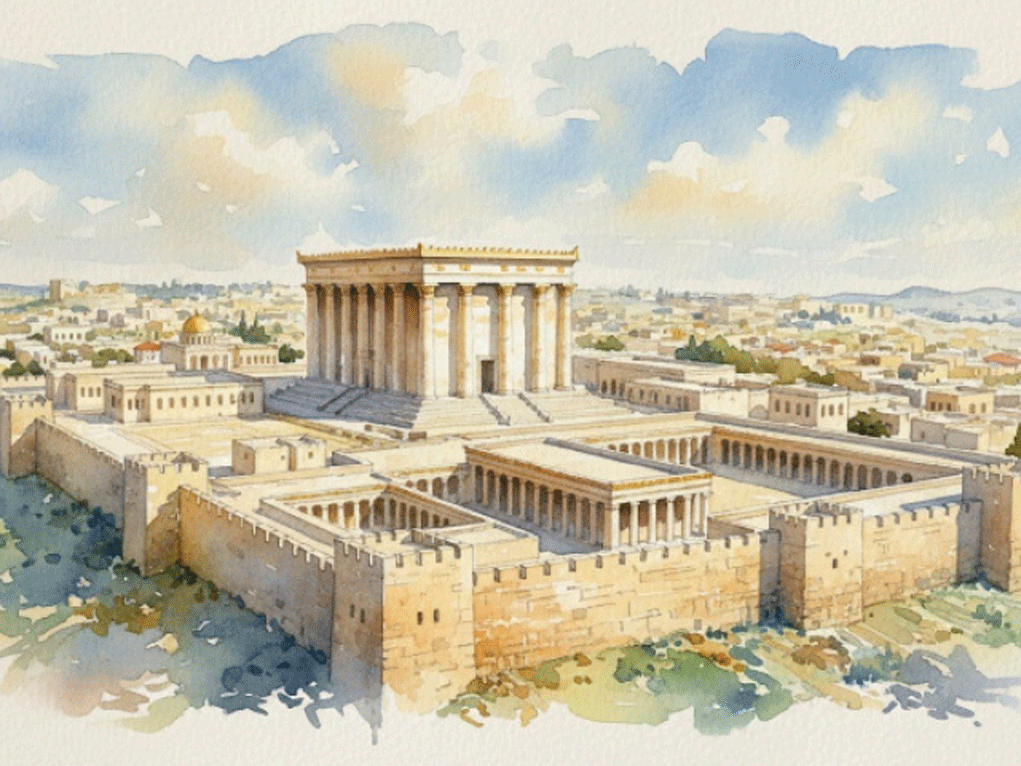 Yated Ne'eman3 months ago
The very name of this Shabbos proclaims a total change in the atmosphere of the past Three Weeks. We go from mourning to consolation, from sadness to joy. And, yet, the overwhelming majority of meforshim are shocked at the opening words of the haftarah. The novi Yeshayohu, the source of all the seven haftaros of nechomah, evokes what seems to be the harshest of punishments: “Comfort My people…for she has received double for all her sins from the hand of Hashem” (Yeshayah 40:1). Indeed, the very beginning of the Medrash of Eicha (Eicha Rabbah 1:57) elaborates that “she has sinned doubly, been punished doubly and will be consoled doubly.” As the Satmar Rebbe thunders, “Can this be the middah of Hashem to punish twice for the same sin?” (Kedushas Yoel, Haftaras Nachamu, page 116). He cites the earlier reaction of the Radak that it is impossible to contemplate that Hashem would exact excessive retribution, since the Torah testifies, “The Rock! – perfect is His work, for all His paths are justice; He is righteous and fair” (Devorim 32:4).
Although many answers are given, I would like to share a few chosen explanations from our gedolim, which I feel speak most eloquently to this year’s need for consolation.
The Matamei Yitzchok (pages 578-580), son of the Maharsham, points out that the first posuk of the haftarah says both dabru (speak) and kiru (call). He alerts us to the fact that dibbur can sometimes refer to speech that is not directly said to the person (such as Bamidbar 12:1), but kriah is always direct. His point is that the novi, relating the word of Hashem, is speaking warmly and encouragingly to the heart and soul of the nation. We should add that Rashi (Vayikra 1:1) teaches the same lesson about Hashem’s call to Moshe Rabbeinu at the beginning of Sefer Vayikra. Indeed, one of the “Lions of the Arizal” (Tal Oros, page 771) points out that our posuk begins with Elokeichem, which represents the middah of din, rigorous justice, and changes to Hashem, which represents rachamim, compassion and pity. Clearly, the very first posuk of the haftarah evokes the transition from sadness to consolation.
Rav Shimon Sofer, son of the Chasam Sofer and rov of Mattersdorf (Michtav Sofer, page 177), explains this transition as coming from our own intense teshuvah. When performed properly, teshuvah not only erases sins, but turns them into zechusim, merits (Yoma 86b). Thus, what could have resulted in punishment in effect becomes reward. This, he explains, is the best of the doubling, when evil is transformed into spiritual gold. The Unsdorfer Rov, Rav Shmuel Rosenberg (Be’er Shmuel 561), channels the concept that Hashem creates the cure before the illness (Megillah 13b) to explain how this mystical transition takes place. He explains that the refuah was already there and only needed to be activated by our teshuvah and wish to change ourselves.
The Bnei Yissoschor (Nissan 9:1) utilizes the order of the Seder to understand how our fate suddenly changes for the better. He asks the classic question: Why do we eat the matzah, which represents freedom, before maror, which represents the pain of slavery? The correct order should have been the reverse.
He answers using the metaphor of the physician who gives a patient bitter herbs to cure him. At the time, they are difficult to swallow, but when he feels better, his fever is gone and he can act normally again, he becomes grateful and understands what the doctor has done for him. In the future redemption, too, he concludes, there will be extremely bitter times, when we will think that we are being punished excessively, but later we will be grateful for every moment of temporary pain.
One of the great poskim, Rav Yitzchok Yaakov Weiss, rov of Yerushalayim (Minchas Yitzchok, Va’eschanon, page 64), adds that the posuk clearly indicates that this pain (laksa kiflayim) comes from the name of Hashem signifying compassion. The novi is speaking not only of the churban Bais Hamikdosh, but also about our days as well. This explains the cryptic words of the Medrash (Yalkut Yeshayohu 445) that Klal Yisroel asked Yeshayah, “Perhaps you have prophesied comfort only for our generation but not for future generations?” Yeshayah reassures us that he meant the End of Days as well. Rav Berel Povarsky (Bad Kodesh, Volume 1, Tisha B’Av, page 386-87) asks: Why would we even think that Yeshayah’s nevuah was limited solely to his generation? Actually, all the nevuos in Tanach are eternal and meant for all generations. He answers, quoting the Brisker Rov on Tehillim (27:14), that we are rewarded for our trust in Hashem by gaining even more trust in Him. Yeshayah’s call to console the people is not just to be full of emunah and bitachon when things are good. It is to see the hand of Hashem in everything, even that which seems on the surface to be intensely punitive actions. That is why the word Elokeichem, the Name signifying din, appears here. It is to enable us to perceive Hashem in the darkest of moments.
I remember hearing the Novominsker Rebbe quoting his mother-in-law, a survivor of Churban Europa. She was asked the pointed but recurring question of: “Where was Hashem during the Holocaust?” Her simple but profound answer was: “In yeder vinkel — In every corner.” In other words, where some saw only crematoria and gas chambers, she saw those who survived miraculously and rebuilt families against all rational odds.
That is the secret of the nechamah that simultaneously also speaks of suffering and pain.
Rav Yosef Shalom Elyashiv (Divrei Aggada, page 519) adds how all of this requires our active participation and activity. “Speaking to the heart of Yeushalayim” means, he explains, “building Torah communities, spreading its message, performing mitzvos and getting ready to rebuild the Bais Hamikdosh.”
The Maharam Brisk (Va’eschanon, page 266) explains that this is what Chazal (Bereishis Rabbah 14:9) mean when they teach that we should thank Hashem with every breath. This refers to when we breathe easily or even when it is, lo aleinu, difficult to breathe. If we learn to thank Hashem for everything, instead of thinking that we are being punished at every turn, we become rewarded for every word and breath.
If we go back just a few days to listening to the powerful words of Eicha, we can discover this idea on the cosmic level of Klal Yisroel. Yirmiyohu Hanovi tells us early on (Eicha 2:1) that “He cast down from heaven to earth the glory of Yisroel.” The question has been asked for centuries: What place is there here for the “glory of Yisroel” when we are describing its punishment and degradation? Our meforshim refer us to Dovid Hamelech’s words (Tehillim 3:1), “Mizmor l’Dovid as he fled from Avshalom, his son.” Why is this called a song of praise when a tragedy is happening? Dovid Hamelech has no peace and he must run away from his own son, who is seeking to murder him. The answer is given that there are two types of misfortunes that can come upon a person. One is when things happen that appear to be natural. There are illnesses, ups and downs in parnossah, and some children who are more successful than others. These things can be explained as the way of the world. But if something is so spectacularly good or
G-d forbid bad, it can only come from Hashem, Who runs the world. There can be no other explanation.
Chazal (Megillah 16a) tell us that Klal Yisroel is either like the dirt of the earth or like the stars above. These polar opposites must come from Hashem. This explains the posuk that Hashem threw us down from a high place to a low pit. This, too, is the glory of Klal Yisroel, since it indicates that we are His children and the treatment we receive is always supernatural. Sometimes this is wonderful, sometimes it is painful, but it is always indicative of His presence.
Many of us learned this from a Gemara (Kesubos 66b) on Tisha B’Av. At the time of the churban, Rav Yochonon ben Zakkai was riding a donkey, followed by his talmidim, and saw a young woman collecting barley from under the dung of an animal belonging to an Arab. When she realized that the great sage was nearby, she arranged herself as best she could and begged him for help or food. He asked who she was and she responded that she was the daughter of Nakdimon ben Guriyon. Knowing that he had been one of the wealthiest men in Yerushalayim, he asked where the family riches had gone, to which she responded that there was nothing left. Rav Yochonon ben Zakai began to weep. “Ashreichem Yisroel – Fortunate are you, O Yisroel. When you do the will of the Al-mighty, no nation can conquer you, but when you do not, you are given over to a lowly nation and not only into their hands, but even to their animals.”
The Maharal, as well as others, ask: Is this the place for an expression such as Ashreichem Yisroel? What’s so glorious about this tragic scene?
The Maharsha, as explained by the Maharal and Brisker Rov, says that it means that whether we are very great or surrounded by adversity, it is clear that we are in the direct hands of the Creator. My rebbi, Rav Yitzchok Hutner, always used to comment that, as a nation, we are sometimes called Am Seridei Chorev and sometimes Am Medushnei Oneg. Either way, we are Hashem’s children and we are under His personal Providence — Hashgocha Protis.
This is the message of Shabbos Nachamu and the comfort we are being promised. Things will not always be perfect. However, we will always know that Hashem is guiding us and in charge of everything.
I must add that when we see nearly worldwide anti-Semitism, when we feel most alone and abandoned, we know that “we have no one but Hashem to Whom to turn.” That is never a bad thing. It reminds us who we are and under Whose umbrella we remain. Yeshuas Hashem keheref ayin — Hashem’s salvation can come in a moment, as long as we know that it is He from Whom we are sustained and live every day. Yes, every breath comes from Him, just as we receive many reminders that we cannot count on any human being, but must always put our trust in our Heavenly Father. When we do that, we will be helped and saved bemeheirah beyomeinu. Amein.
Yated Ne'eman3 months agoAv-A Month of Fatherly Mercy
Last week, the chareidi parties fought for the passage of two bills that no one ever thought would be necessary. One was the Basic Law: Torah Study, which was necessitated by judges repeatedly overturning the laws granting draft deferrals to yeshiva bochurim on the grounds that the arrangement violated the principle of equality. Since the judges based their arguments on the Basic Law that enshrines equality as a fundamental value of the state, the new Basic Law introduces another fundamental value—the importance of Torah study—to restore balance. While no one can be certain that this will cause the judges to leave bnei yeshivos alone, it was a form of hishtadlus that needed to be done.
The second law was a bill freezing the arrests of yeshiva bochurim. The chareidi parties hoped that this would provide a reprieve for the country’s bnei Torah; no one imagined that a judge would issue an order suspending the law within hours after it passed. But that is precisely what happened: Justice Grosskopf immediately issued an order freezing the law before it could take effect and declared that the petition against it will be reviewed by a panel of nine justices headed by Noam Sohlberg. (Sadly, we do not have an ounce of faith in Sohlberg.) Everyone hoped that all the bnei Torah in detention would be released as soon as the law was passed; on this past Shabbos alone, 45 bochurim and yungeleit were being held in military prison. Had the law taken effect, it would have removed the cloud of anxiety that hovers over lomdei Torah throughout the country. Of course, we anticipated that petitions against the law would be filed with the Supreme Court, and it seemed obvious that the judges would oppose the law, but most legal experts believed, based on past precedents, that the Supreme Court would not issue a ruling after the Knesset began its recess. That has always been the court’s practice, and everyone believed that it would continue following that policy. The government has always informed the Supreme Court during an election period that it is impossible to pass new legislation until a new Knesset is formed, and therefore any petitions against existing laws should be delayed. The chareidim therefore forged ahead with the new bill on the assumption that it would not be canceled immediately—an assumption that, it seems, was in error.
The 25th Knesset completed its term last Thursday on a disappointing note. Despite all the commitments and promises that were made, a new draft law was not passed. And while there may have been genuine impediments to the law’s passage, that makes little difference to the legions of yeshiva bochurim living in fear of arrest. Just imagine how this chapter in Israeli history will be recorded and read in the future: In the state of the Jews, lomdei Torah were afraid to go on errands or even visit a barbershop. Some of them were robbed or assaulted in broad daylight and fled for their lives rather than calling the police, out of fear that they would fall into the hands of hostile authorities. Who would ever have thought that bnei Torah would be oppressed by a Jewish police force?
The picture right now, unfortunately, is bleak. The Knesset members who visited Prison 10, where yeshiva bochurim are being held, were heartbroken by their plight. Uri Maklev was present for a session of the military court and emerged in a state of despondence. Moshe Abutbul recently played a recording for me of a message he had received from a young wife of a kollel yungerman. “Please, I beg you to help me,” the woman can be heard saying. “I am a young wife with three small children, and my husband was put into military prison yesterday; they want to draft him. I have no one to help me, and I can’t manage anymore. I need him to be home with me. He called me today for the first time, and he was in tears. He told me that they are being abused; he was forced to stand for four hours with a heavy bag on his back, he isn’t given enough food, he sleeps for three hours on a wooden board, and he isn’t allowed to have bedsheets. I can’t continue this way any longer.” The woman can be heard crying on the recording, and we all wept along with her.
I also have a neighbor who was sentenced to an additional 30 days in military prison last week, after completing an initial sentence of 30 days. The length of his sentence is due to the fact that he has been categorized as a draft evader for ten years; he is 28 years old, and it seems that he never properly took care of obtaining an official deferral, even while the legal arrangement was still in place. But while it’s true that he was negligent and he should have attended to his deferral, does that really make him deserving of spending sixty days in jail? According to his parents, he is on the verge of a mental breakdown.
I hope that the law freezing arrests of yeshiva bochurim, if it is allowed to take effect, will also lead to the release of bochurim already behind bars; however, I reviewed the text of the law and found no explicit mention of such a provision. We can only daven that the malicious policies of this state will be curbed by the passage of the two new laws. Meanwhile, thousands of Sanzer chassidim protested outside the military prison last Thursday night, after a member of the chassidus was taken into custody. He has since been released. On Monday, 25,000 Gerrer chassidim protested the arrest of a Gerrer chosid.
It is said that the name of the month of Av is an acronym for the words Elul ba (“Elul is coming”). Forty-five years ago, in the month of Av 5741/1981, the Shefa Chaim of Sanz-Klausenberg declared, “We are now in the month of Av, and I always explain that the name of this month alludes to the compassion of a father (av) for his children. These are days of mercy and kindness toward Bnei Yisroel, just as we saw the demonstration of Hashem’s kindness to His people at the time of the destruction of the Bais Hamikdosh. Even though the people’s actions were lowly and base, Hashem poured out His wrath on the wood and stones of the Bais Hamikdosh rather than on them. During these days, therefore, we see a revelation of Hashem’s mercy for Bnei Yisroel; however, the yetzer hara believes, due to the Divine concealment, that it is a time of judgment. We therefore ask Hashem to reveal His kindness before everyone and to grant us our eternal redemption soon.”
No Faith in Israel’s Judges
There is no doubt about it: We cannot have the slightest faith in the Supreme Court. The judges have already delivered two brutal blows to the religious community, taking the opportunity to attack in every direction at once. In addition to raining economic blows on “draft dodgers,” they also called to ramp up the arrests of lomdei Torah. The judges’ second verdict was signed on 9 Iyar/April 26, 2026, and dealt with petitions based on the court’s previous verdict. The petitioners accused the government of showing contempt for the judges’ earlier verdict by refusing to implement measures against Torah learners; on November 19, the judges had cruelly issued two rulings calling for economic and criminal sanctions against lomdei Torah, and the government hadn’t yet implemented that decision.
Someone might be tempted to make the argument that the judges did nothing wrong, since their duty is merely to make sure the law is obeyed, and they were only calling on the government to comply with its legal obligation to draft young men, regardless of the cost. However, there are several answers to this argument. The first is that there is no such thing as an agenda that should be pursued at any cost; one can never achieve anything with an all-out, no-holds-barred campaign, certainly not regarding an issue as sensitive as the IDF draft. That is even more true when it is an attempt to reverse a longstanding arrangement that has been in effect for over 70 years. In addition, some of the economic sanctions were opposed by professional staff in various government ministries, on the grounds that the measures are unlawful. In some cases, the sanctions were deemed extremely disproportionate. For instance, why should a child be punished by being deprived of subsidized day care because his father learns in kollel? And how will that punishment help promote the draft? Does anyone really believe that kollel yungeleit will join the army in response to the loss of a day care subsidy? The professionals argued vehemently that the sanction would have no such effect and would simply lead the wives of yungeleit to stop working. The judges are supposed to be aware of all these points and to take them into consideration, but they were callously indifferent, insisting on a full-scale war against lomdei Torah regardless of whether it had any chance of achieving their aims.
Regarding the arrests of yeshiva bochurim, the Supreme Court wrote on April 26, “In this context, we were informed both in writing and in the oral discussion that the police are still refraining from arresting draft evaders and deserters in unplanned encounters, despite their authority to do so, and that the police maintain that they do not have the ability to assist the military police in their efforts to arrest deserters and draft evaders. This is despite the fact that to carry out such activities in a civilian setting, the military police require the collaboration of the civilian police. The police explained that this policy—the non-enforcement of the law against draft evaders in chareidi population centers—is based on the fact that such operations are frequently accompanied by widespread public disturbances, and that carrying them out requires additional police manpower. Here, too, we can only state the obvious. It is true that the resources of the police force are not unlimited, and that the police have broad discretion to set priorities for enforcement, while balancing various interests and considerations. At the same time [here the judges quoted a previous ruling of the Supreme Court], ‘The police’s complete abstention from exercising their authority, in essence leaving the authority idle like an unmoved stone, cannot be justified by claims of enforcement priorities. Budgetary constraints or limited resources are not a hook on which every failure can be hung.’ … The police have a duty to assist the army’s enforcement authorities and to begin enforcing the requirement of the draft for the members of the chareidi community as well. This is even more important given the fact that, as noted above, this refers to a widespread, deliberate, and ongoing violation of the law. It is not superfluous to point out that the social message emerging from the failure to act against those who attempt to thwart enforcement with widespread public disturbances is that the offender benefits, which is a message that cannot be tolerated. We cannot accept a situation in which ‘the man of force owns the land’ (Iyov 22:8) and ‘he who is the strongest is victorious.’”
Judge Noam Sohlberg, who wears a yarmulke and wrote the court decision, felt the need to quote pesukim and Talmudic phrases to legitimize his position. But that does nothing to mitigate the anti-religious character of this ruling, which called for economic sanctions to the point of starvation and arrests to be carried out by the police even if they claim that they are both incapable and unwilling to do so. And it has already been proven that the arrests do not promote enlistment; on the contrary, the aggressive policy has the opposite effect. The judges are constantly preaching about the importance of effective steps to increase enlistment, yet they are ordering the government to implement draconian measures that will have no impact other than reducing the enlistment they claim to be seeking to promote. The only logical conclusion is that they aren’t actually interested in increasing enlistment in the IDF; their goal is only to persecute Torah learners. And even when the Knesset passed a law to temporarily halt the arrests in an effort to heal the rift within the nation and to give the government time to pass a draft law that will actually be effective, a judge decided to suspend the law before the ink had even dried. Is it any wonder, then, that the religious community has no faith in the judges?
The Judges’ True Goal Is Anarchy
The government (in its response to the Supreme Court), the officer in the IDF, and the experts on the chareidi draft have all repeatedly stressed the same point: The arrests of bnei Torah are not only failing to increase chareidi enlistment but are actually having the opposite effect. The more arrests, the more reluctance there is among chareidim to show up at induction offices. If the real goal is to increase chareidi enlistment, there should be no arrests at all. The cabinet secretary made this assertion based on the actual numbers, the representatives of the IDF Manpower Directorate made the same statement to the Knesset Foreign Affairs and Defense Committee, and Yossi Levi, who founded the Netzach Yehuda battalion and is heavily involved in this area, has practically been shouting it from the rooftops. He has begged the army to put an end to the arrests, arguing that all of his hard work has essentially gone down the drain. And while the judges are calling for “effective measures” to increase chareidi conscription, they are causing the exact opposite. There is really only one possible conclusion: The judges aren’t truly interested in drafting chareidim. Their real goal is to destroy the yeshiva world and stifle the “voice of Yaakov”—the sounds of Torah learning throughout the country. In fact, one of the petitioners was caught gloating to a colleague, “We are going to dismantle the Torah world.” This comment shocked and horrified many of the people who heard it, but it seems that his malicious agenda is shared by the judges as well.
Like politicians who are all too eager to exploit tragedies for political gain, the judges made sure to mention the war and its heavy cost in their first ruling. “Difficult times sometimes call for difficult measures,” the judges wrote. “Under these severe and dramatic circumstances, it is necessary to take exceptional steps. The current situation of widespread, deliberate, and ongoing violation of the law, accompanied by such a severe breach of equality, is unacceptable, especially in light of the pressing security need to conscript additional mandatory soldiers, and subsequently reservists as well. This has reached the point of pikuach nefesh.”
This is sheer demagoguery. For one thing, the government has never stopped trying to pass a law granting draft deferrals to yeshiva bochurim. Moreover, experts claim that the yeshiva world is not the solution for the IDF’s manpower shortage. And the statistics show that there are tens of thousands of chilonim who have failed to enlist as well, but that does not bother the judges in the slightest. In their second ruling, the judges expanded the economic sanctions to include additional measures, such as the cancelation of discounts on public transportation, and furiously insisted on the expansion of arrests. One of their demands was for the percentage of arrests of chareidi draft evaders to match the percentage in the secular community. But this should strike everyone as peculiar. Have you heard of a single secular draft evader being arrested? I certainly haven’t. Have the military police conducted proactive arrest operations in secular neighborhoods? Not that I know of….
Netanyahu Against Incitement
Some time ago, at a press conference about the agreement with Lebanon, a reporter asked Prime Minister Netanyahu a question about the draft of yeshiva bochurim. Netanyahu responded vehemently, “You accomplish nothing when the chareidi hesder yeshivos sent me messages that say, ‘Mr. Prime Minister, when you send people into the yeshivos to remove Torah learners and put them in jail, no one will enlist as a result.’ … There is a tremendous response from the chareidi community and a desire to enlist, but when arrests are carried out among people studying Torah, that creates the opposite result…. If I told you that the police were entering yeshivos in some European country and jailing young men who learn Torah, you would be horrified.” Regarding the bill to halt the arrests of yeshiva bochurim, the prime minister said firmly, “The policy of arrests must be stopped. It isn’t achieving the desired result. I would stop the arrests immediately for the purpose of reaching broad agreements. That is what I would seek to do.”
Netanyahu stood his ground even after the bill passed in the Knesset, triggering a massive uproar in the media. Motti Kastel, who has proven to be the most reliable (or perhaps the only reliable one) among the journalists disparaging the chareidi camp, reported the following: “Prime Minister Binyomin Netanyahu has gone on a forceful offensive against the critics of the law freezing arrests of draft evaders, against the backdrop of the public and legal controversy surrounding the legislation, which was approved by the Knesset and then immediately suspended by an interim order of the Supreme Court pending its decision on the petitions filed against it…. In telephone conversations with the ministers, Netanyahu sounded angry and unequivocal. ‘We have to push back against the false propaganda. This law will cause no harm!’ he insisted. Netanyahu explained that the goal of the law is to increase enlistment without causing unnecessary conflicts with the yeshiva world. ‘We want recruits; we don’t want detainees. The more people are detained, the fewer enlist,’ he said. The prime minister also addressed the argument that the law offers sweeping immunity to yeshiva students, a claim that he countered with a historic comparison: ‘You want to take Torah learners to jail? They did that in Russia, and we cried out against it. The Torah is our Jewish heritage for hundreds of generations. It is the only thing that has preserved the Jewish people.’”
According to Kastel, Netanyahu also expressed outrage over the lies that have been spread concerning the Basic Law: Torah Study. “What do they want?” he demanded. “The law states only that Torah study is a fundamental value of Israeli heritage. What could be wrong with that? That is all that it says!”
Subtle Messaging in the Media
It is important to have a media that reports the news, and it is very problematic when that same media chooses sides. For instance, the constant references to a potential draft law as an “evasion law” is a thinly veiled attempt to manipulate public sentiment by subconsciously influencing the audience. Maariv recently reported on its front page that the Supreme Court froze the “Deserters’ Law,” since calling it the “Arrest Law” might have created sympathy for the detainees. The title of the article itself was even worse: “Supreme Court Halts Law Freezing Arrests of Chareidi Deserters.” And the subliminal messaging isn’t limited to that particular law. Another bill, which would split the position of attorney general in two, has been dubbed by several media outlets “the law to weaken the attorney general,” with the title conjugated in the feminine in a deliberate reference to the current attorney general, Gali Baharav-Miara. The law doesn’t actually relate to Baharav-Miara; it would impact any future attorney general. Nevertheless, by linking it to the current holder of the position, the media makes it sound like a petty conspiracy rather than a legitimate legislative measure.
The media has unabashedly aligned itself with one particular side. For instance, after the chief of staff of the IDF wrote a letter (which was bizarre and irrational) against the law freezing arrests of yeshiva bochurim, it was the topic of an article that spanned the entire length of the front page of two different newspapers, both of which framed it as a last-ditch effort to halt a law with disastrous effects. On the day after the Basic Law: Torah Study was passed, two newspapers reported on it with the breathless urgency usually reserved for wars. Yisroel Hayom featured the most malicious headline, and in large print, no less: “Favoring One Person’s Blood Over Another’s.” Yediot Acharonot used its entire front page for the text of the law, a move almost completely unprecedented in the history of Israeli journalism and of this newspaper in particular.
In short, this isn’t journalism; it is one-sided support for a particular camp and agenda.
Bennett’s New Plan: Malign the Chareidim
I will soon write at greater length about political developments and the election campaign; those topics are unavoidable. But for now, without getting into too many details, I would like to say that a person could easily burst with indignation over the falsehood and hypocrisy that permeates Israeli politics. Someone once said that falsehood and arrogance came together and produced politics as their offspring. A look at the current political climate in Israel certainly lends credence to that assumption.
For instance, there is a new political party named B’Yachad, which was formed by an alliance between two politicians: a charlatan (Naftoli Bennett) and a man with no accomplishments at all (Yair Lapid). How could these two possibly receive 15 mandates, which is indicated by some polls? While the joint party originally soared to 20 mandates in the polls and has since been losing ground, I am surprised by the fact that they have any support at all. How is it possible for them to pass the electoral threshold? Lapid has been in politics for 15 years (Yesh Atid was first launched in 2012) and has accomplished nothing throughout that time, and Bennett lied to his voters in the worst possible fashion. He stood before the cameras and pledged that he would not sit with Lapid or Mansour Abbas and would not form a left-wing government, but after receiving six mandates in the election, he broke all those commitments. How can anyone possibly trust him again?
Today, Bennett is trying a new tactic: positioning himself as an enemy of the chareidim. In an interview last week, he declared, “I would like to address the soldiers and to say to them, ‘I see you. Be strong. There are only another 104 days of shame and draft dodging. Reinforcements are on the way, and this awful government is on its way out. Together, we will fix this.’” In another interview, he declared, “These ridiculous laws are transferring tens of billions of shekels to healthy young chareidim. There are 100,000 chareidi youths, and if only 20 percent of them enlisted, we would have no manpower shortage. This is a problem that can be solved. We will abolish the laws of draft evasion and pass a bill that we have prepared: a law for those who serve, which will redirect the money we will save by not funding the draft dodgers to those who do serve, and the reservists above all. A reservist will receive a million shekels for a first apartment and free day care for children from birth through the age of three years. We will shower this handful of people with benefits…. If we bring the chareidim into the work force and the army, we will increase Israel’s GDP by 70 billion shekels every year. The money exists, and that is why I am returning to politics—to repair the country, the economy, and the distorted situation involving our chareidi brothers. That is my mission in life.”
Regarding Betzalel Smotrich, Bennett said, “It is terrible; it’s a disgrace to the expression ‘religious Zionism.’ I grew up with religious Zionism; I grew up in Bnei Akiva, I served in Sayeret Matkal, and my children attended state religious schools. It’s an absolute disgrace. Smotrich is the architect of the draft evasion law. No politician has sacrificed more to transfer billions to chareidi draft evaders than Smotrich has. He should be ashamed. He should go home and clear the playing field. He brings disgrace upon every person who wears a knit yarmulke.” Bennett added, “I am consistently on the political right. I am not the one who surrendered portions of Eretz Yisroel to the enemy or freed thousands of terrorists, and I will not allow us to give up even one centimeter of land.” Amazingly, some people still believe him!
This is merely a sampling of Bennett’s rhetoric. I also have much to say about Gadi Eizenkot, the latest rising star in the polls who has likewise jumped on the bandwagon of anti-chareidi incitement, apparently realizing that it is a path to power. But we will save that for another time.
Tax Authority Chairman’s Brazen Maneuver
As usual, I have much more to write about, but I will have to wrap up this column for now. But before I close the column for this week, I must write briefly about Shai Aharonovich, the director of the Tax Authority.
Last week, tax inspectors visited Bnei Brak, and a riot soon began. The inspectors were pelted with eggs, or possibly yogurts, and bystanders screamed at them. Naturally, they fled from the scene. The same scenario plays out from time to time in Mea Shearim, and while there is nothing acceptable about the crowd’s behavior, the response from the Tax Authority’s director was even worse. He informed the mayor of Bnei Brak that the city would suffer from collective punishment unless the municipality condemned the violence. “Since the city of Bnei Brak hasn’t condemned the violent acts,” Aharonovich wrote, “I have instructed my staff to stop processing claims for compensation due to damages suffered by businesses during Operation Rising Lion and Operation Roaring Lion [the military campaigns against Iran; the Israeli government launched programs offering compensation for businesses whose revenues were impacted by the wars]. The processing will resume only after an unequivocal condemnation is issued and featured in the chareidi press.”
This move on the part of the Tax Authority is completely unethical and presumably illegal as well. But Aharonovich presumably realized that he had gone too far, and he scheduled a meeting with Mayor Chanoch Zeibert of Bnei Brak at the beginning of the week.
Another story that bears mentioning is the fact that Netanyahu’s planned trip to America has been suspended since the funeral of Senator Lindsey Graham was postponed. Meanwhile, it was reported that the mayor of New York City has been examining the possibility of arresting Netanyahu if he visits the city. Some say that the mayor is making idle threats, but I wouldn’t be surprised if this led Netanyahu to cancel his trip. Moreover, it is likely that he won’t make the trip to America unless he knows with certainty that he will be able to meet with President Trump, who is very busy with the war against Iran and might not have time for Netanyahu. Then again, perhaps that alone is a reason for the two leaders to meet.
In other Netanyahu-related news, many people ridiculed Sara Netanyahu for her recent request for security for herself and her children even after her husband finishes serving as prime minister. Regarding Binyomin Netanyahu himself, there was no need for a request; every prime minister and defense minister is entitled to a lifelong security detail. Naftoli Bennett, who recently attended a conference in Sun Valley in America, was seen with bodyguards for the same reason. But Sara Netanyahu asked for the same entitlement to be extended to the rest of the Netanyahu family and was mocked for it. Just two days later, the Shin Bet revealed that after the assassinations of senior Iranian officials, a plot was exposed to assassinate a member of the Netanyahu family. While he didn’t identify the exact target, it is widely believed that it was Yair Netanyahu, the prime minister’s son who spends most of his time in Miami.
With that, I will end this week’s column. I wish you all an enjoyable and beneficial vacation, with plenty of opportunities to recharge in advance of the month of Elul. Let us hope that this bein hazemanim vacation will be peaceful and uneventful, without calamities or arrests, and we will hear nothing but good news.
 Yated Ne'eman3 months ago
Trump: China Stole Voter Data on 220 Million Americans
In an extraordinary 27-minute address to the nation last week about election security, President Trump announced the declassification of records exposing a shocking degree of Chinese interference in U.S. elections, a cover-up by the intelligence community, and a host of election network pitfalls that may have enabled the security breakdown.
Over a period of a few years, Trump said, “starting during the 2020 election cycle, the People’s Republic of China carried out what is believed to be the largest compromise of election data in history, resulting in China’s illicit acquisition of 220 million U.S. voter files.”
The Chinese obtained the data in different ways, he said. “Buying, stealing, and hacking.”
“That information includes names, addresses, phone numbers, political party preferences, and other sensitive data,” the president continued. “This data loss presents an unprecedented election security nightmare.”
“The intelligence even shows that China assigned a “data exploitation unit” specifically to this new project,” Trump noted.
President Kept in Dark on Chinese Election Meddling
The president shared documents that highlight the intelligence community’s deliberate withholding of critical information about China’s election interference from his daily briefings (PDBs), during his first term.
“Members of the deep state — in many cases in our intelligence agencies—worked to actively suppress and downplay information about the extent of China’s sinister election meddling, covering it up from both the president and the American people,” Trump said.
“One email among NSA analysts admitted that they had ‘deliberately massaged (softened) the PDB to withhold information regarding Chinese activities related to the election,’” Trump said, quoting from the email.
Another employee expressed astonishment at the concealment, writing, “The PDB isn’t going to tie [Chinese interference] to the election? Mind-boggling.” Another official inside the FBI wrote that she was “running a shadow government to keep intelligence about China’s election meddling from becoming known.”
The documents cited by the president are among 269 pages of newly released intelligence assessments, internal emails and investigative records which can be accessed on the whitehouse.gov website.
Electronic Networks Were Breached Within Hours
The explosive documents portray electronic tabulators and voter data systems riddled with vulnerabilities. They include reports by CISA (cybersecurity experts) exposing poor password security, outdated software, weak network protections and inadequate monitoring.
“The documents we are releasing prove that for many years, Americans were blatantly lied to about the security of our election infrastructure, including electronic voting machines and ballot counting systems,” the president said in his address. “They’re vulnerable, and they’re easily compromised, and people within our government knew that.”
“Tonight, we’re publishing a series of previously classified US Intelligence Community assessments and other reports proving that our government has long known these machines are extremely exposed to attack,” he emphasized.
One CISA report documents that investigators in numerous tests were able to breach election-related computer networks “within hours,” exposing the claim that the 2020 election was “the most secure election in American history” as ludicrous—a hollow political slogan.
Another CISA report in the declassified files noted that cybersecurity analysts “assess that Russia, China, Iran, and North Korea all have the technical ability to access or interfere with parts of U.S. election systems that are most vulnerable,” such as voter registration databases and electronic poll books.
Data allows foreign intelligence services to create highly customized messaging with the appearance of coming from fellow Americans. This kind of “micro-targeting” is far more effective than broad propaganda, experts say.
For example, foreign agents could target minority communities with different messages designed to suppress turnout or increase polarization. They could target suburban parents with education-slanted narratives tailored to their concerns, and religious communities with religious-themed messaging.
The CISA report noted that systems that tabulate votes, transmit vote totals, or display election results online could well be vulnerable to localized attacks. It would be difficult but not impossible to manipulate them on a large enough scale to theoretically change the outcome of a national election.
Burn Bags
Trump said administration officials discovered some of the confidential material he was releasing in “burn bags” that were supposed to be destroyed.
“The findings are stunning,” Trump charged, announcing that he was directing the Office of the Director of National Intelligence, the Justice Department, the FBI and the CIA to “investigate how and why such crucial information was hidden, to fire those involved in the cover-up, and to file criminal charges if appropriate against these people.”
“In light of the brand new information I have revealed tonight,” he continued, “my administration is in the process of notifying the states whose election data was compromised by the People’s Republic of China and many others.
“We will be working closely to mitigate any harm, and we’re taking swift action to ensure that sensitive voter data is better protected so we can never be bought, we can never be hacked, and we can never watch a stolen election again.”
The president has long alleged that widespread voting fraud cost him the 2020 election. In his remarks Thursday night, however, Trump did not offer any evidence that the election was stolen or rigged. What he did was force into the record reams of evidence that made this claim credible, and more importantly, drove home the need for serious changes in election infrastructure.
“Tomorrow, the Secretary of Homeland Security will hold a briefing to outline his department’s recent work confirming cyber vulnerabilities in our electronic voting systems,” Trump announced. “We’re in the process of informing governors, senators, and members of Congress of potential issues in their states.”
Voter Registration Fraud in Michigan
Another batch of documents Trump quoted from shines a light on an alleged massive voter registration fraud operation in Muskegon, Michigan—a critical “swing state.” The documents reveal a years-long investigation in 2020 that tracked as many as 10,000 forged voter registration forms submitted in the weeks before the election.
According to an FBI email from the case file, on Oct. 5, 2020, the Muskegon clerk’s office received six hefty packages of voter registration applications via the U.S. Postal Service with thousands of forms inside.
Reviewing the contents, “elections officials determined that some applications were fraudulent based on nonexistent addresses, invalid telephone numbers and signatures on applications not matching Michigan voting or DMV records,” the document states.
Reinforcing suspicions of foul play, the 8,000 to 10,000 application forms “appeared to have all been completed in the same handwriting.”
State Police then raided a Democrat get-out-the-vote organization in Muskegon, and were so concerned by what they found, they contacted the FBI in Detroit who launched an investigation. FBI agents interviewed former employees of the voting organization and uncovered shocking reports of illicit electioneering.
The documents state that some employees “admitted to FBI agents that they signed voter registration forms in other people’s names, submitted fraudulent registration for people who did not exist, and received gift cards in amounts tied to the number of voter applications they produced.”
Employees told the law enforcement officials that “get-out-the-vote” canvassers were instructed, “if they couldn’t get enough voter applications, they should just fill them in themselves.”
“This occurred at a meeting with over 100 employees present,” an email states. One of the employees asked what the company official meant. He picked up a blank application and filled it out, making up information and said, “This is what I mean,” the investigation records claim.
One former employee estimated she submitted 100 fake voter registration applications.
Despite all the evidence of planned and premeditated criminal activity, the DOJ inexplicably shut down the Michigan investigation as it was at its peak.
“Biden’s Justice Department slow-walked the investigation and killed it,” alleged Trump in his address. “Tonight,” he said, “I’m asking the FBI Director to ensure that the matter is fully investigated and to work with the Department of Justice to prosecute those responsible for any crimes.”
Chinese Theft of Election Data: How Sinister is it?
Just the News editor John Solomon, who also serves as a member of the White House Transparency Task Force, pointed out that media pundits who claim China obtained only data that is already online “are pushing an outright lie”.
China’s data breach, he asserted, included personal information that is not available online, such as date of birth and, in some cases, Social Security numbers, voting history, and demographic information.
Combined with data from social media and previous hacks, China, even without the capacity to create false ballots or alter votes, could use this data in nefarious ways, Solomon pointed out.
The Chinese are experts in conducting psychological operations targeting specific voting blocs with tailored propaganda that sounds authentic and American.
Experts in “influence operations” know that rather than trying to persuade millions of voters, an adversary armed with intimate information about the targeted audience could focus on tens of thousands of strategically important individuals.
Some of the released documents Trump quoted from describe typical Chinese influence operations: “The CIA report explicitly stated, and I quote: ‘In mid-2018, the Chinese Communist Party’s policy was to leverage all domestic and foreign U.S. elements that were opposed to the president in an effort to reduce his votes and make him resign or prevent his re-election,’ President Trump noted in his Thursday night address.
“Separately in mid-2019, the Chinese government’s strategy against the United States was focused on undermining domestic confidence in the U.S. president,” he said, quoting the CIA report.
The document described the Chinese strategies of using Chinese contacts with big U.S. companies to influence business leaders to shift their allegiance away from the president of the United States, and to identify U.S. journalists who for large sums of money would write negative articles about Trump.
“But it gets even worse,” Trump said, claiming that raw intelligence obtained by the FBI in 2020, “yet buried by rogue bureaucrats,” stated that China’s activities even included an attempt to manufacture illegal ballots for Joe Biden.
Every American deserves to know that when they cast their vote, that vote will be counted accurately in a system [that is secure],” he said. “Unfortunately, the system we have today falls catastrophically short of that standard.”
Forced to Carry Trump’s Message
Democrats and media rushed to “debunk” or minimize many of Trump’s allegations in his Thursday night remarks. Yet, in the process, in what was almost an amusing consequence of their rebuttals, they had to repeat and even legitimize his key factual disclosures.
For example, the NY Times downplayed the extent of China’s expropriation of American voter data, deceptively framing it as “tens of millions of files” as opposed to the 220 million number the released documents show.
The article also asserted that much of the data was commercially available for purchase.
The authors tried to soften and whitewash China’s motives, describing the regime’s intent as “seeking to influence” (something everyone does), as opposed to aiming for hard-core interference.
In making its case, the article was forced to concede that—precise quantity of data aside—Beijing “bought, stole or hacked” voter data; that there was “intense debate” in the intelligence agencies about warning the president; that he in fact was not warned, and that (at minimum) China used the data for “influence campaigns to shape voters’ perceptions.”
One is reminded of a classic debate tactic: make your opponents repeat and even validate your message while thinking they’re killing it.
The bottom line, of course, is obvious: If China can get its hands on ‘secure’ voter information on almost every American voter and the intelligence agencies are helpless to prevent it, how secure can the system be?
If Trump’s critics admit that the data is being used, in the Times’ words, “to craft influence campaigns to shape voters’ perceptions,” how can they maintain the nation’s elections aren’t vulnerable? The vulnerabilities are built into the networks, leaving an open door to potential manipulation and exploitation on a breathtaking scale.
Sen. Bernie Moreno, R-Ohio, posted online before the speech that he was briefed ahead of time on its contents and that “this may be the most important Oval Office address since the Cuban Missile Crisis. The time for complacency with China is over.”
***
From Emergency to Exploitation
10,315 ballots in Georgia were cast by voters who were dead by Election Day.
Many believe the sweeping relaxation of election safeguards during the pandemic opened the door to fraud and tainted election results across the country.
Although court challenges alleging election fraud did not ultimately prevail, a host of irregularities, broken chains of custody, and problems at too many polling locations fueled lasting doubts among millions of Americans about the legitimacy of the election.
Outcries over a “stolen” election galvanized many state legislatures to pass laws tightening voting laws and election administration. Lawmakers in these states felt that keeping in place the pandemic-era measures would make it easy to exploit loopholes and commit voter fraud.
“Democrats want to force all 50 states to allow the absurd practice of ballot harvesting, where paid operatives can show up at polling places carrying a thick stack of filled-out ballots with other people’s names on them,” then Senate Minority Leader Mitch McConnell said at the time.
“They want to forbid states from implementing voter ID or doing simple things like checking their voter rolls against change-of-address submissions, or removing the names of dead voters. They want to remove nearly every protection on absentee voting, making the practice a permanent norm, even post-pandemic.”
Following the 2020 presidential election, 16 Republican states took proactive measures to ensure greater voter integrity, tightening laws and closing loopholes that made it easy to cheat.
These include laws restructuring voter ID requirements, banning electioneering in front of poll booths; eliminating drop boxes; outlawing ballot trafficking; empowering poll watchers to more effectively do their job; shortening absentee ballot deadlines to 10-11 days before an election and more.
Two examples: Georgia now requires voters who lack driver’s licenses or state ID cards to include in their absentee ballot application a photocopy of another government-issued ID such as a passport.
Previously, absentee voters’ identities were verified by matching signatures. But shocking disclosures at Georgia’s post-election public hearing revealed that a staggering 10,315 ballots appeared to be cast by voters who were dead by Election Day. This and other massive irregularities catalyzed the state legislature to pass the new voter legislation tightening voter ID criteria.
Texas’ law permits voters to use a broader set of IDs than that allowed in some states when applying for and casting mail-in ballots, Texas Tribune reported. But due to recently passed laws, the voter’s ID is rejected if it doesn’t match the ID number the voter provided when initially registering to vote.
Building Support for SAVE ACT
The Trump-backed SAVE ACT would make these and other election security adjustments the law of the land. President Trump used his primetime address Thursday night to rally support for the election security bill that would require voters to present photo ID and proof of U.S. citizenship such as a passport or birth certificate.
The legislation passed the House in February but has been languishing in the Senate.
In addition to requiring proof of citizenship and photo ID, the SAVE ACT requires states to remove non-citizens from their voter rolls and to expand information-sharing with federal agencies to accomplish this objective.
It calls for criminal penalties for knowingly registering someone who fails to present proof of U.S. citizenship to vote in a federal election.
The “in-person” requirement to prove citizenship would also eliminate many popular registration methods, such as registration by mail and “automatic registration,” which grants eligible citizens automatic voting rights unless they decline. The bill would heavily restrict the use of the federal mail-in voter registration form.
Not long ago, during the height of censorship, merely expressing concerns about election security in this country could earn someone denunciation as an “election denier,” an enemy of democracy,” or worse, an “insurrectionist.” Although it was clear that voter integrity had been compromised in many counties and states, saying so could land one in hot water.
The nation has come a long way since then.
President Trump’s address shattered the complacency into which much of the public has been lulled by an establishment slogan insisting the 2020 election and the system in general is beyond reproach.
“If you look at voting today, it’s in such bad shape in so many states, and we are committing to fix it,” the president said. “And we’re also committing to be working with those states and local jurisdictions to help them fix and patch known technical vulnerabilities before the midterm elections. We have very important elections coming up. We want those elections to be honest.”
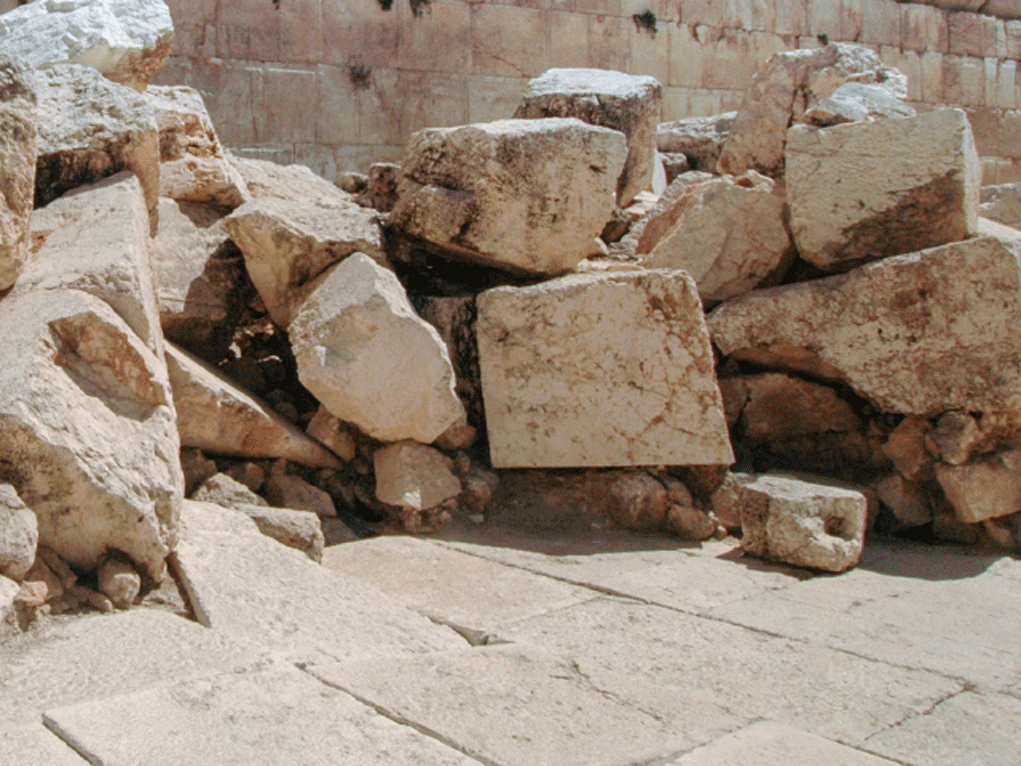 Yated Ne'eman3 months ago
In the Kinnos of Tisha B’Av we recite: ‘Alei zivchei temideha u’fidyonei bechoreha, ve’al chillul klei Heichal u’mizbach ketoreha.’ The expression “u’fidyonei bechoreha” requires explanation. The mitzvah of pidyon haben was not abolished with the Churban, and it remains fully incumbent even in our own time. Why, then, does the payton lament the loss of “the redemptions of her firstborn?” I heard from Rav Yosef Dov Soloveitchik, rosh yeshivas Brisk, in the name of his father, Maran HaGriz, that the kinah is not referring to the mitzvah of pidyon haben. Rather, it mourns the cessation of the avodas halevi’im in the Bais Hamikdosh. In the poetic language of the payton, the levi’im are called “pidyonei bechoreha,” for they constituted the redemption and substitution of the bechorim in the Midbar.
According to this yesod, it may be possible to explain the opening words as well. Perhaps the correct reading is not “zivchei temideha,” the sacrifices of her daily offerings, but “zovchei temideha,” those who slaughtered her daily offerings. The reference would thus be to the kohanim, in accordance with the posuk, “Vezeh yihyeh mishpat hakohanim me’is haam me’is zovchei hazevach.” The payton accordingly mourns “alei zovchei temideha u’fidyonei bechoreha,” the kohanim who performed the avodas hatomid and the levi’im who served in the Mikdosh. With the Churban, both avodos ceased.
Many years ago, I heard from Rav Yitzchok Hutner, in the name of a certain gadol (“Kach mekublani me’kedoshei elyon”) that the text should be emended. Instead of “u’fidyonei bechoreha,” it should read “veyonei bikkureha,” with the beis of “bikkureha” pronounced with a chirik and the kaf with a dogesh. The phrase would then mean “the doves of her bikkurim,” referring to the young birds brought together with the baskets of bikkurim. Since bikkurim applies only while the Bais Hamikdosh is standing, these offerings indeed ceased with the Churban. The Mishnah in Bikkurim (3, 5) states: “Hagozalos she’al gabei hasolim hayu olos.” The birds placed upon the baskets were korev as olos. The payton may thus be contrasting two categories of korbanos that were lost. “Zivchei temideha” refers to the beheimas olah of the korban tomid, while “yonei bikkureha” refers to the bird olos that accompanied the bikkurim.
There is, however, a further possibility by which “u’fidyonei bechoreha” may be understood in its literal sense. The Gemara in Bava Basra 60b records the words of Rabi Yishmoel ben Elisha: “Miyom shechorav Bais Hamikdosh, din hu shenigzor al atzmeinu shelo nochal bosor velo nishteh yayin, ela she’ein gozrin gezeirah al hatzibbur ela im kein rov hatzibbur yecholin laamod bah. Um’yom sheposhtah malchus Edom shegozeres aleinu gezeiros kashos, um’vateles mimenu Torah u’mitzvos, ve’einah manochas osanu likaneis lishvuah haben, ve’amri lah liyeshuah haben, din hu shenigzor al atzmeinu shelo lisa isha veleholid bonim.” Rashi explains (Bava Kamma 80a) that “yeshua haben” means the seudah of pidyon haben, since “yeshuah” denotes redemption, “purkan,” corresponding to “pidyon.”
Accordingly, “u’fidyonei bechoreha” may indeed refer to pidyon haben itself. The wicked Roman kingdom issued gezeiros preventing Jews from assembling for a pidyon haben. The payton therefore laments both “zivchei temideha,” the korban tomid that was abolished, and “pidyonei bechoreha,” the mitzvah whose observance was suppressed by Roman persecution during the era of the Churban. Indeed, this stanza may revolve around Rabi Yishmoel ben Elisha, who served as Kohen Gadol during the closing period of the Second Bais Hamikdosh.
The Mishnah in Taanis (29a) teaches that one of the calamities of Shiva Asar B’Tammuz was “u’vatal hatomid.” The Meleches Shlomo writes that, according to the received tradition, the tomid was abolished by gezeirah of the wicked kingdom three and a half years before the Churban. This corresponds to the posuk in Doniel (12:11), “Umei’eis husar hatomid velaseis shikutz shomeim yomim elef mosayim vetishim.” The Ibn Ezra likewise explains that the Second Bais Hamikdosh remained without the olah for nearly three and a half years before it was destroyed. The cessation of the tomid thus occurred during the period in which Rabi Yishmoel served as Kohen Gadol. This is the lament of “alei zivchei temideha.” The continuation, “u’fidyonei bechoreha,” alludes to the Roman gezeirah against pidyon haben, explicitly described by Rabi Yishmoel himself.
The payton then mourns “ve’al chillul klei Heichal.” The Gemara in Gittin 56b describes how Titus entered the Kodesh Kodoshim, desecrated it, and pierced the paroches with his sword, whereupon blood miraculously emerged. Rabi Yishmoel, as Kohen Gadol, was uniquely associated with the kedusha of the Kodesh Kodoshim. He relates in Brachos 7a: “Paam achas nichnasti lehaktir ketores lifnai velifnim, vero’isi Akasriel Kah Hashem Tzevakos yoshev al kisei ram venisa.” Thus, “chillul klei Heichal” evokes the profanation of the very domain into which Rabi Yishmoel had entered in kedusha.
The concluding words, “umizbach ketoreha,” may refer to the chavitin of the Kohen Gadol, half of which were offered with the morning tomid and half with the afternoon tomid. The Rambam in Hilchos Temidin U’musafin (3, 19) rules: “Kohen Gadol metzuveh bemitzvos aseh lehakriv chavitin bechol yom, mechtzah baboker im tomid shel shachar, umechtzah bein ha’arbayim im tomid shel bein ha’arbayim.” A tradition is cited in the name of Rav Chaim Brisker that the chavitin are considered an integral part of the korban tomid. Hence, when the tomid was abolished, the daily chavitin of the Kohen Gadol ceased as well. “U’mizbach ketoreha” may therefore be the personal lament of Rabi Yishmoel, the Kohen Gadol, over the loss of his own daily avodah.
Thus, each phrase of the stanza reflects a dimension of the Churban bound to the world of Rabi Yishmoel ben Elisha: the abolition of the tomid, the Roman persecution of pidyon haben, the chillul of the Heichal, and the cessation of the Kohen Gadol’s daily mincha. The payton gathered these separate calamities into a single, carefully fashioned kinah, in which every expression contains an entire sugya.
 Yated Ne'eman3 months ago
The Mystery of the Timing of Destruction
To the modern, secular mind, history is a series of random events, a chaotic mix of political blunders, economic shifts, and military collisions.
In the consciousness of Torah, however, events do not merely occur in time. They emerge from it. Every moment possesses a unique spiritual quality that shapes the events destined to unfold within it.
This reality becomes strikingly clear when we examine our greatest national tragedies. Both the Gemara in Taanis (29a) and Arachin (11b) record a historical occurrence that defies mere probability: “The day on which the First Bais Hamikdosh was destroyed was Motzoei Shabbos, at the end of the Shmittah year… And so it was when the Second Bais Hamikdosh was destroyed.”
We are all familiar with the tragic date of Tisha B’Av, whose vulnerability was established by the episode of the meraglim, when baseless weeping transformed that night into an everlasting day of national tragedy. Yet the chachomim do not stop at identifying the date of the month. They specifically note two additional details: the destruction occurred on Motzoei Shabbos and at the conclusion of a seven-year Shmittah cycle.
Why was the timing so exact? Why did both the Babylonians and the Romans, separated by nearly five centuries, destroy the Bais Hamikdosh immediately after Shabbos?
Furthermore, as Rashi notes, the destruction actually took place on Sunday. Why, then, does the Gemara specifically describe it as Motzoei Shabbos rather than simply calling it Sunday?
The Maharal, in Netzach Yisroel (perek ches), explains that this was far from coincidental. In fact, he characteristically writes that the Bais Hamikdosh is more susceptible to be destroyed on a Motzoei Shabbos. Every other day of the week possesses a spiritual structure that makes such destruction implausible.
To understand why the Bais Hamikdosh was spiritually protected on a Tuesday or a Friday, yet uniquely vulnerable upon the departure of Shabbos, we must journey into the heart of the Maharal’s teachings: the perpetual struggle between shleimus, meaning wholeness, and he’eder, meaning privation, absence, or the void.
Shleimus and He’eder: The Maharal’s Philosophy of Reality
The Maharal explains this based on his fundamental principle that light and darkness cannot occupy the same space.
Hashem created a world that oscillates between states of reality and states of lack. Wherever there is shleimus, representing wholeness, completion, and an unmediated connection to Hashem, the forces of negativity, destruction, and spiritual decay have no point of entry. These forces—variously identified as the yeitzer hora, the Soton, or the Malach Hamovess—cannot exist in a space that is already full.
Conversely, destruction belongs to he’eder, which represents absence, deficiency, and emptiness. Evil possesses no independent, substantive reality. Rather, it functions as the shadow cast by the absence of light. Therefore, spiritual or physical collapse can occur only during a time or in a place characterized by a vacuum.
When we examine the Jewish week, a remarkable pattern emerges. The days are not isolated units of time. We do not name them after pagan deities or planets, as is done with names such as Thursday or Sunday. Instead, we define them solely in relation to their ultimate destination, calling them Yom Rishon l’Shabbos, meaning the first day toward Shabbos, then Yom Sheini l’Shabbos, and so on.
Every weekday is oriented toward a destination. Sunday through Thursday are not independent days but stages of preparation for Shabbos. Because they are constantly moving toward their goal, they already absorb something of its holiness. They remain unfinished, yet they are never empty. Thus, although Sunday, Monday, and Tuesday have not yet reached completion, they cannot be described as a vacuum, for they are animated by purposeful ascent. They remain protected through their constant striving.
By Friday, the momentum shifts completely. It is no longer merely Yom Shishi l’Shabbos. It is elevated to the status of Erev Shabbos. It bears the title of arrival, representing a time saturated with anticipation, when the boundaries between the mundane and the holy begin to blur.
Why Motzoei Shabbos Stands Alone
There is, however, one unique point in the week that lacks this forward momentum and that is Motzoei Shabbos.
At that moment, we enter a dangerous transition. The absolute wholeness of Shabbos has just receded, yet the conscious, active journey toward the next Shabbos has not yet begun. It is the moment of yetziah, departure.
For a brief instant, we are looking backward at a light that has already departed. Motzoei Shabbos is defined by what it lacks. It is the “non-Shabbos.” This is the spiritual vacuum, and it is the very definition of he’eder. It is an existential pause in which our focus and direction are temporarily diminished.
It is precisely within this pocket of time, the Maharal reveals, that the world becomes uniquely vulnerable to destruction. The churban could not occur on a Wednesday, because Wednesday is an active building block leading toward the future Shabbos. It could only take place when the very architecture of time experienced a temporary void—on a Motzoei Shabbos and on a Motzaei Shvi’is, the conclusion of the Shmittah year.
Birth, Motion, and the Illusion of Arrival
To clarify why transition points are uniquely dangerous, the Maharal, in Derech Chaim (2:2), cites the famous dialogue in Sanhedrin 91b between the Roman emperor Antoninus and Rabi Yehuda Hanosi.
Antoninus asked: At what point does the yeitzer hora, our negative inclination, enter a person? Is it at shaas harayon, the moment of conception, or at shaas yetziah, the moment of birth, when the infant exits the womb?
Rabi Yehuda Hanosi initially answered that it must be at conception. Antoninus, however, challenged that conclusion with a practical observation. If the destructive inclination were already active in the womb, the fetus would kick and tear its mother’s internal organs, destroying itself before birth.
Rabi Yehuda Hanosi accepted the argument and cited the posuk in Bereishis (4:7): Lapesach chatos roveitz– At the opening, sin crouches. The negative inclination enters the human being only at the moment of birth.
The Maharal asks why the fetus is immune to negativity while still in the womb. The fetus is completely unformed and unfinished. It cannot breathe independently, see independently, or exist apart from its mother. It represents the ultimate state of incompleteness. By all accounts, this raw condition should be the ideal breeding ground for the yeitzer hora, as Rabi Yehuda Hanosi initially believed. Yet the yeitzer hora is entirely absent.
The Maharal explains that the embryo is protected because it is defined entirely by its journey. It possesses hishtokekus, an intense drive to develop. Since its entire existence is characterized by active, dynamic movement toward completion, there is no room for stagnation, decay, or temptation. The yeitzer hora cannot intercept a moving target whose gaze is fixed on growth.
The danger begins at shaas yetziah, birth. Once the baby enters the world, it acquires an independent existence. It breathes on its own and occupies its own space. Birth introduces a subtle but profound danger: the illusion of arrival. The subconscious whispers, “I have arrived. I am complete. I can stop striving.”
That feeling of arrival is the ultimate spiritual trap. The moment we stop moving and become self-satisfied, we create a state of spiritual standstill. Stillness leads to stagnation, stagnation creates a vacuum, and that vacuum is precisely where the yeitzer hora establishes itself.
Only later, at the age of thirteen, when the individual develops mature cognitive awareness as a bar daas and realizes that “adam l’amal yulad—man was born to toil” does the yeitzer tov enter to restore balance, reminding the soul that life is an unending ladder of spiritual ascent.
The Spiritual Vacuum of Motzoei Shabbos
The birth of a child serves as the exact parallel to Motzoei Shabbos. On Shabbos, we experience a taste of shleimus. Chazal tell us that on Shabbos, a person must view all of his creative labor as though it were entirely completed (kol melachtecha asuyah). We step out of the world of production and into a world of completion. This is why Shabbos is described as mei’ein Olam Haba, a miniature reflection of the World to Come, representing a realm of pure being, ecstasy, and direct connection with Hakadosh Boruch Hu.
The danger arises when Shabbos departs and we make the critical mistake of carrying that feeling of completion into the regular week, where it does not belong. We treat Motzoei Shabbos as a license to coast and indulge in spiritual complacency rather than using it as a launchpad for the labor and growth of the coming week.
When we treat the departure of holiness as an independent, self-contained destination rather than as a transition point leading to further growth, we create the structural void that invites the yeitzer hora and ultimately invites the churban.
Time and Space Reflect One Another
How does a vulnerability in time—Motzoei Shabbos—translate into physical destruction in space, such as the burning of the Mikdosh?
The Maharal teaches that the three dimensions of existence—olam (space), shanah (time), and nefesh (the human soul)—reflect one another. What occurs in one dimension inevitably finds expression in the others.
Shabbos represents the manifestation of ultimate wholeness in the dimension of time, while the Bais Hamikdosh represents that same wholeness in the dimension of space. The Bais Hamikdosh is the physical manifestation of Shabbos within space, and both represent the ultimate center of peace, harmony, completion, and connection to Hashem.
We see this relationship throughout the Torah. In Parshiyos Ki Sisa and Vayakhel, the instructions for building the Mishkon are repeatedly interrupted by the prohibition against performing melacha on Shabbos. This teaches that the Mikdosh must always remain aligned with the kedushas Shabbos.
On leil Shabbos, when we welcome Shabbos with Lecha Dodi, we actually sing very little about Shabbos itself. Instead, much of Lecha Dodi expresses our yearning for the rebuilding of Yerushalayim and the Bais Hamikdosh, because entering Shabbos parallels entering the Mikdosh.
Throughout Shabbos, our tefillos and zemiros are permeated with longing for the geulah, something that is far less prominent in our weekday tefillos.
When we are spiritually aligned, our entire week becomes a continuous process of building. Every weekday lays another stone. Sunday lays one stone, Monday another, until the week itself becomes the construction of Shabbos.
But when we let our guard down on Motzoei Shabbos by treating it as an empty space for mindless indulgence, the parallel space in our world also begins to crack. The vulnerability at the “exit” in time manifests as a physical vulnerability in space. The physical walls of the Mikdosh fell because the spiritual walls we had built around our time had already been compromised.
How Motzoei Shabbos Became Sunday Morning
The Gemara in Shabbos 119b gives several reasons why Yerushalayim was destroyed. Among them are that the people desecrated Shabbos and that they neglected the morning and evening recitation of Krias Shema.
The Maharsha explains that these are not two separate reasons. Rather, they are two stages of the same downward spiral, which began on Motzoei Shabbos.
Throughout Shabbos, the people of Yerushalayim lived on a spiritual high. But when Shabbos ended, they failed to make the proper transition. Instead of using melava malka as a bridge that carried the holiness of Shabbos into the coming week, they turned it into an evening of indulgence and intoxication.
Because they overindulged on Motzoei Shabbos, they fell asleep and missed their evening Krias Shema. The following morning, Sunday, they overslept again, missed zeman Krias Shema, and began their week in a state of spiritual lethargy.
Sunday ceased to be Yom Rishon l’Shabbos—the first step toward the next Shabbos. Instead, it remained merely yetzias haShabbos, without carrying forward the kedushas Shabbos. It became a hefker day, disconnected from any higher goal or purpose and devoted solely to physical comfort and mundane indulgence.
By creating a spiritual vacuum at the very beginning of the week, they opened the door to the enemy. They tore a massive hole in the fabric of spiritual time, and through that very breach, the Babylonian and Roman armies were able to penetrate the physical walls of the Bais Hamikdosh. The physical fire that consumed the wood and stone of the Mikdosh was simply the material manifestation of the spiritual apathy that had already consumed their Sunday mornings.
The Two Enemies of Sacred Time
This insight illuminates the hidden dynamics of our ongoing golus. Throughout history, two primary forces have arisen to challenge the destiny of Klal Yisroel: Rome, which is Western civilization, and Yishmoel, the spiritual force of Islam aligned with Persia.
If one examines the religious structures of these two civilizations, it becomes apparent that their battle against the Jewish people is, at its core, a war over the calendar. They have attempted to flank our sacred Shabbos from both sides.
Sunday as an Ideology
The Romans destroyed the Second Bais Hamikdosh on a Sunday. Years later, as Western civilization evolved, the Roman world officially adopted Sunday as its alternative Sabbath. This is not merely a historical coincidence but a manifestation of its spiritual roots.
Rome’s strategy is to take the point of departure—Motzoei Shabbos, the moment of vulnerability and spiritual vacuum—and turn it into a permanent, self-contained ideology. Rome specializes in the vacuum, creating a culture in which people become comfortable, materialistic, and cease striving. It transformed Judaism’s moment of greatest vulnerability into the very foundation of its civilization.
The War Against Erev Shabbos
Conversely, the Muslim world claimed Friday, our Erev Shabbos, as its holy day. Yishmoel’s strategy is fundamentally different from that of Rome. Rather than specializing in the dramatic physical destruction of an existing reality, it specializes in preventing the future from unfolding. It serves as a wall of resistance, seeking to keep us trapped in a stressful, pre-redemption state.
Its objective is to ensure that Klal Yisroel never successfully ascends into Shabbos. It occupies the Har Habayis itself, standing at the threshold of redemption, attempting to keep the Jewish nation suspended in a perpetual “Friday afternoon” and delaying its ascent into the final Shabbos.
There is a well-known dispute regarding the Yom Tov nusach of Mussaf over whether we say “shenishtalcha yad b’mikdashecha,” that a hand was sent to destroy the Mikdosh, or “shehashlucha,” that a hand remains stretched over and occupies the Mikdosh.
The nusach of nishtalcha reflects the Roman strategy of violent, physical destruction on a Sunday.
The nusach of hashlucha reflects the Yishmoelite-Persian strategy of continually standing upon the ruins, maintaining an ongoing blockade. They have positioned themselves precisely at the gates of Erev Shabbos, working to ensure that the light of the final redemption is never permitted to break through.
Reclaiming the Twilight
How do we break this cycle and rebuild what was lost? We do so by reclaiming the twilight zones of our week.
To overcome this final adversary and heal the wounds of the churban, we must consciously transform our relationship with the transition points of our calendar. We must turn our moments of greatest vulnerability into moments of greatest spiritual growth.
Recapturing Erev Shabbos
Chazal teach that the timeline of the universe mirrors the weekly cycle. The world is destined to exist for six thousand years, followed by the seventh millennium, which is Yom Shekulo Shabbos. On this cosmic clock, the world has reached its Friday afternoon. The sun is beginning to set and the shadow of Yishmoel grows ever longer.
We must transform our Friday afternoons from periods of stress and frantic last-minute rushing into moments of conscious spiritual anticipation. The Rambam (Hilchos Shabbos 30:2) writes that a person should sit with a quiet, focused mind on Friday afternoon, eagerly awaiting the arrival of Shabbos, just as one waits to greet a beloved king: “Yosheiv bekoveid rosh umetzapeh.”
This is the antidote to Yishmoel’s strategy. By intentionally infusing our Erev Shabbos with powerful longing, we align ourselves with the true direction of history, transforming our preparation into a holy movement that no adversary can obstruct.
Revitalizing Motzoei Shabbos
We live in an era of unprecedented comfort. In the Western world, we have the freedom to build beautiful communities, yeshivos, organizations, and successful businesses. But this brocha carries a significant danger: the temptation to plateau.
Because our lives are comfortable, subtle complacency can quietly creep into our souls. We look at our thriving communities and subconsciously think, “We have arrived.”
The moment we stop yearning for the ultimate redemption and the rebuilding of the Third Bais Hamikdosh, we fall directly into the Sunday vacuum. We mistake a temporary resting place for our final destination.
We cannot allow Motzoei Shabbos to become a spiritual void. When Havdolah is over, we cannot permit our homes to immediately descend into secularity or spiritual apathy. Instead, we must transform melava malka into a bridge rather than a farewell, carrying the light of Shabbos into the coming week.
Furthermore, we must ensure that our Motzoei Shabbosos and Sundays are marked by a powerful restart of the spiritual engine. Throughout the Olam Hatorah, there is a wonderful and growing movement of Motzoei Shabbos learning programs, including Avos Ubonim, community kollelim, and shiurim. By entering the bais medrash after Shabbos ends, we ensure that Sunday never becomes an empty, disconnected day. We stitch the end of one Shabbos directly into the beginning of the next.
Turning Our Exits into Entrances
The moment Havdolah ends, the next Shabbos should already have begun. When every ending becomes a beginning, the vacuum disappears. When every departure becomes another step forward, the building of the Bais Hamikdosh begins.
There is no place called arrival. Every summit is merely the starting point of a higher ascent. When we refuse to settle, when we live with constant tzipiyah l’yeshuah, and when every Motzoei Shabbos becomes the first step toward the next Shabbos, we dismantle the void of he’eder and restore the movement of shleimus. Then the world itself advances toward Yom Shekulo Shabbos, ensuring that even before we reach that ultimate destination, the walls of the Bais Hamikdosh will rise once again, never to be destroyed.
 Yated Ne'eman3 months ago
The Pitfalls in the DSA’s Socialist Plans for America
After this November’s midterm elections, a large number of newly elected progressive liberals will take office in city councils, state legislatures, and even Congress, carrying a label that a generation ago seemed to belong only to the history books: socialist.
The Democrat Socialists of America (DSA), the largest socialist organization in the United States, has grown from a few thousand members a decade ago to tens of thousands today, most of them living in deep-blue Democrat-voting states and urban areas where they have become the young-activist base of the local Democrat party. Understanding why requires going back much further than the last election cycle — back, in fact, more than two centuries, to the origins of the French Revolution, where the underlying ideas of what became known as socialism were first proposed, tried, and finally failed repeatedly many times since.
Enlightenment Origins
The intellectual seeds of socialism were planted in the aftermath of the French Revolution of 1789. As the old French aristocratic order collapsed, and the leaders of the Revolution were forcibly freed from the notorious Bastille prison, Enlightenment thinkers of that era began asking not just how political power should be applied, but also questioned the legitimacy of the concept of personal property ownership versus the concept of shared communal property.
But the idealistic principles of the French Revolution — liberty, equality, and fraternity — were eventually allowed to go too far, as the mob took over the power of the government and imposed a years-long reign of terror in France. As a result, the original revolutionary quest for justice for the people ultimately led to the indiscriminate use of the guillotine, even against some of the original leaders of the Revolution themselves.
Early utopian socialists like Henri de Saint-Simon and Charles Fourier imagined societies organized around cooperation rather than private ownership and competition. The word “socialism” itself entered common use in the 1830s, describing a group of ideas based upon the core conviction that privately owned and operated industrial capitalism, for all its of its productive power, concentrates wealth unfairly in the hands of a privileged few, and leaves most ordinary workers with little control over their own lives.
Marx And The Theory Of Class Struggle
That critique was developed into a systematic economic and political theory by Karl Marx, a secular German-Jewish philosopher and economist writing in London in the mid-1800s. In his works titled The Communist Manifesto (1848) and Das Kapital, Marx argued that history was driven by class conflict, and that capitalism based upon private ownership would eventually collapse under its own contradictions, giving way to a classless, stateless society in which workers collectively owned the means of production and were therefore in greater control over their own lives. Marx’s writings gave socialism a new vocabulary and a revolutionary outlook that older utopian theories and proposals had lacked, and Marx’s communist/socialist ideas would shape liberal political movements on every continent for the next century and a half.
Revolution In Russia
Marx’s theories remained largely academic until 1917, when Russia’s Bolshevik Party, led by Vladimir Lenin, seized power in November 1917, overthrowing the provisional Russian government which was formed after the abdication of Czar Nicholas II. At that point, popular support for Russia’s Czarist monarchy and aristocratic ruling class had collapsed, and the Russian military had been soundly defeated on the battlefields of Eastern Europe by the German army.
Upon seizing power, Lenin quickly withdrew Russia as a combatant in World War I. He also adapted Marx’s ideas into a doctrine now known as Marxism-Leninism that justified rule by the “dictatorship of the proletariat” on behalf of the working class. The result was the Soviet Union, the world’s first avowedly communist state, which would become the template that later socialist and communist-inspired revolutionary movements would study, imitate, or react against.
The Soviet Economy’s Structural Failures
Under the Soviet Union’s centrally planned economy, free markets and private property were abolished. Industrial production targets for state-owned industries were set from government offices in Moscow rather than permitting prices and production targets to be set naturally by consumer demand in a free marketplace.
Over decades, the centrally planned Soviet system proved chronically unable to match supply with demand: shortages of consumer goods, chronic agricultural underperformance leading to food shortages, and a lack of incentives for innovation became defining features of Soviet life.
Economists generally agree that the absence of price signals and competition in the Soviet economic system made it extraordinarily difficult for the government’s central planners to know what to produce and how much to produce. In addition, most factory-made goods produced in the Soviet Union quickly gained a reputation for poor quality.
The chronic mismatch between the forces of supply and demand and the absence of free market incentives for good performance and maintaining high quality standards were serious problems for the centrally planned economic system from its inception in the 1920s until the Soviet system’s internal collapse in 1991.
Joseph Stalin’s Government-By-Terror
Economic dysfunction in the Soviet Union was compounded by political brutality. Under Joseph Stalin, who consolidated power after Lenin’s death in 1924, the Soviet state carried out the forced collectivization of agriculture that contributed to deliberately orchestrated famines that killed millions of Russian peasants, most notoriously in Ukraine.
The Great Purge of the late 1930s saw show trials, mass executions, and the expansion of the Gulag forced-labor camp system, in which millions of Russians were imprisoned mostly for political reasons. While historians have been unable to agree on a precise death toll for that period, there is a broad consensus that Stalin’s rule was one of the deadliest periods of state violence in modern history.
Western Intellectuals And The Communist Romance
However, none of these internal problems with the Soviet system were fully visible to observers in the West during the 1930s. From the low points during the Great Depression, when the American free market capitalist economic system appeared to be failing catastrophically, communism attracted a widespread admiration from intellectuals, artists, and academics in the United States and Great Britain. Many liberal writers, professors, and government officials joined the American Communist Party or ideologically sympathetic “fellow-traveler” organizations. They were attracted by the claims of the supporters of the Soviet system that it was providing full employment, personal equality, and meeting the growth targets set by the government’s five-year economic plans at a time when Western economies were mired in widespread unemployment and grinding poverty. The reputation of the USSR in liberal circles of the United States also benefited from the accounts of visitors who returned with glowing reports due to carefully managed guided tours designed to show off only the most positive aspects of the Soviet system.
The Disillusionment Of Communism’s True Believers
However, the enthusiasm of many American liberals for communism did not survive the decade. Two events in particular shattered the utopian illusions of many Western communist sympathizers. The Moscow show trials of 1936–1938, in which Soviet officials confessed to hard-to-believe conspiracy theories before being executed, which convinced many liberals that the USSR was not the workers’ paradise that it claimed to be but rather a brutal totalitarian police state.
Then, in August 1939, Stalin signed the Molotov-Ribbentrop non-aggression pact with Nazi Germany that briefly allied the world’s leading communist power with its most notorious fascist one, forcing many well-meaning American and British Communist Party members to realize that the leader of their movement had just betrayed everything they had believed they were fighting for. Membership in Western Communist parties fell sharply, and a generation of disillusioned former true believers in communism, including prominent writers such as Arthur Koestler, author of Darkness at Noon, and George Orwell, author of 1984 and Animal Farm, became some of communism’s most effective critics.
Communism’s 20th Century Of Failure
The Soviet experience was not an isolated case. Communist governments that came to power elsewhere in the 20th century tended to repeat, and sometimes intensify, its patterns of economic dysfunction, political violence, and a deliberate disregard for human rights.
In China, Mao Zedong’s Great Leap Forward (1958–1962) was a crude attempt at the creation of a rapid, centrally directed, and forced industrialization and collectivized farms imposed on a mostly backward rural society. It produced a famine that killed tens of millions of Chinese people. The Cultural Revolution that was then imposed by Mao’s followers unleashed further chaos and repression before China began, in the late 1970s, to reintroduce Western-inspired free market economic policies that fueled its later economic growth.
After communist revolutionary Fidel Castro and his followers seized control of Cuba’s government in 1959, he nationalized the country’s industries and agriculture, and achieved notable gains in literacy and healthcare access. But like other centrally planned economies, Castro’s socialist policies produced chronic shortages, rationing, and a stagnant economy that has been struggling ever since.
North Korea’s system of total central planning and near-total isolation produced a severe famine and starvation during the 1990s, which were estimated to have killed over a million people, alongside one of the most repressive political systems in the modern world.
Cambodia’s Khmer Rouge regime (1975–1979) pursued an extreme version of agrarian communism, forcibly emptying cities and executing or working to death an estimated 1.5 to 2 million people in one of the 20th century’s worst genocides.
Despite their differences, the economies of these communist regimes shared recurring failed socialist economic policies: the replacement of market prices with central directives, the concentration of political power in a single party or leader, and the suppression of public dissent and freedom of speech needed to correct policy mistakes before they became catastrophic.
What Lessons Apply Today?
It is against this long, grim history of the most prominent of the 20th century’s communist and socialist regimes that today’s Democrat Socialists of America position themselves — and its leaders have tried to carefully separate themselves and their political movement from those failures.
Instead, the DSA describes itself as democrat socialist rather than as Marxist-Leninist. Its policy platform focuses on winning elections and enacting liberal changes through the normal legislative process rather than following the 20th-century Communist pattern of attempting to seize control of the state by force through revolution.
The DSA’s newly adopted national policy program titled “Workers Deserve More” pushes a wide-ranging progressive/liberal agenda in four main areas.
Doing Away With The Essential Elements Of The U.S. Constitution
The radical changes it proposes to make to the three branches of the federal government with an elaborate system of checks and balances, as prescribed by the U.S. Constitution, include a call for abolishing the U.S. Senate entirely and replacing the current House of Representatives with a single legislative chamber whose members are selected by proportional representation.
To reform the process for the selection of a president, the DSA platform calls for replacing the institution of the Electoral College with the president being the winner of a national popular vote.
The DSA also wants to curb the Supreme Court’s power of judicial review of legislation and executive actions. It would also give non-citizens, illegal immigrants, and criminals with past felonies full voting rights.
On labor and economic policies, the DSA proposes a 32-hour workweek with no cut in pay, a confiscatory wealth tax on individuals with large fortunes and inheritances, and public ownership of major energy, transportation, and natural-resource industries, alongside new laws strengthening unions.
The Path To Socialized Medicine
The DSA would expand the social safety net by instituting Medicare for All, turning the current American public-private medical care system into a totally government-controlled form of socialized medicine, similar to the current, widely criticized medical systems in Great Britain and Canada.
Among the most prominent freebies featured in the DSA platform are tuition-free public colleges, and the imposition of universal rent controls paired with a major expansion of public housing. The DSA would end the detention and deportation of any immigrant, regardless of their legal status. It wants to abolish the requirement for cash bail, even for violent criminals, and “demilitarize” local police departments, seriously inhibiting their ability to enforce the laws and protect members of the public.
On foreign policy, the DSA calls for sharply reducing the U.S. military budget and ending the stationing of American troops overseas. It would impose an arms embargo on Israel, eliminating its ability to defend its citizens against October 7th-type terrorist attacks, and it would lift the current U.S. economic sanctions on notorious rogue countries including Cuba, Iran, and Venezuela.
Can The Dsa Protect The Guardrails Of Democracy?
The DSA also claims that its members hold a range of political views, ranging from those who would limit their effort to effective incremental government policy reforms through the current two-party legislative process, and others who call for achieving their desired policy changes through explicitly Marxist and revolutionary actions.
Critics of the DSA’s policy goals cite the dismal 20th-century history of the failed socialist/communist governments described above. They predict that the imposition of public ownership and central planning on the “major industries” of the national economy will reproduce the chronic problems that severely hampered the Soviet and Mao-era Chinese economies.
The DSA’s critics also warn against the proposed concentration of all government power in a legislature completely unfettered by appropriate checks and powers, including politically independent judicial review, a serious deliberative body, like the U.S. Senate, or a capable and suitably empowered leader of the executive branch of the government.
A Debate Over Government Safeguards
By eliminating the safeguards that the Founding Fathers of this country thoroughly debated before incorporating them into the U.S. Constitution and the Bill of Rights, the DSA would make it more difficult to catch and correct the most egregious policy failures or mistakes they compounded and eventually led to a crisis and loss of confidence in socialist governments as they did in Beijing, Moscow, and Phnom Penh (the capital city of Cambodia).
Liberal and progressive members and supporters of the DSA argue that comparisons to the failed Soviet, Chinese, Cuban, North Korean, and Cambodian government models are unfair. They say that the DSA plans to maintain free, fair, and competitive elections, an independent press, and the rule of law.
The DSA’s critics respond that the fundamental changes that the DSA hopes to impose on the federal government will make it much harder to assure the survival of the safeguards for democracy mentioned above. But the advocates for the DSA claim those safeguards will survive to protect the reformed federal government system from the pitfalls that led the 20th-century socialist/communist governments to failure and disaster.
Yated Ne'eman3 months agoGood news for consumers who have been missing some of the most delicious liqueurs from Switzerland/Italy, and the Netherlands. Schmerling Liqueurs are once again available, bringing back the quality, flavor, and value that have made this Swiss brand a longtime favorite. Schmerling has earned a reputation for offering world-class cordials, combining their expertise in Swiss chocolate and quality Italian craftmanship. Schmerling liqueurs are equally at home at simchas, a Shabbos or Yom Tov table, or a casual evening with friends.
Schmerling is also introducing two brand-new flavors. Schmerling Amaretto delivers the classic taste that has made this Italian liqueur popular around the world. Rich aromas of sweet almonds are followed by notes of marzipan, vanilla, and caramel, with a smooth, mellow finish. Enjoy it neat, over ice, mixed into coffee, or paired with dessert.
Also new is Schmerling Chocolate Hazelnut Liqueur, an indulgent combination of creamy chocolate and roasted hazelnuts. Smooth and flavorful, it offers notes of milk chocolate, praline, cocoa, and toasted nuts. Whether served on its own or added to a dessert spread, it is a crowd-pleaser from the first sip to the last.
Aficionados will also be pleased to learn of the renewed availability of the popular Herman Jansen Liqueurs from the Netherlands.
The Herman Jansen Apricot Liqueur is bright, fruity, and wonderfully aromatic. Bursting with the flavor of ripe apricots, along with hints of honey and stone fruit, it strikes an appealing balance between sweetness and freshness. It is excellent served chilled or used as a versatile cocktail ingredient.
The Herman Jansen Chocolate Mint Liqueur combines rich dark chocolate character with refreshing mint for a classic flavor pairing that never goes out of style. Notes of dutch cocoa, peppermint, and vanilla create a smooth, satisfying liqueur that works beautifully as an after-dinner drink or alongside cakes and pastries.
With the return of Schmerling and Herman Jansen, kosher consumers once again have access to a range of flavorful, high-quality liqueurs that deliver exceptional value. Whether you’re looking to add a sweet touch with your desserts on Shabbos and the upcoming yomim tovim, preparing for a simcha, or searching for a thoughtful gift, these bottles offer something enjoyable for every occasion.
Schmerling and Herman Jansen liqueurs are strictly kosher and parve, and are now once again available at select kosher wine and spirits retailers.
 Yated Ne'eman3 months ago
There are many sad sounds we hear during the Nine Days, from the mournful melody of Eicha to the scraping of a chair being turned over on Tisha B’Av. There is also the sound of silence we encounter when music would otherwise be playing, when we would have been attending a simcha or gathering at a barbecue or another happy occasion that is put on hold until the Nine Days have ended.
The saddest sound, however, is one we have almost stopped hearing altogether. It is the sound of another Jew slipping away.
Every year, as Tisha B’Av approaches, we mourn the destruction of the Bais Hamikdosh. We remember the flames that consumed Yerushalayim, the blood that flowed through its streets, and the millions of Jews who were killed, exiled, enslaved, and scattered.
We cry over a churban that occurred nearly two thousand years ago, and Chazal taught us that it has never really ended. Every generation in which the Bais Hamikdosh is not rebuilt is considered as if it was destroyed.
The churban is not only past history. It is also present tense.
Today, Jews once again live under physical threat. Our brothers and sisters in Eretz Yisroel endure terrorism, rockets, and war. Around the world, antisemitism has emerged from the shadows with a brazenness few imagined possible just a few years ago. Jewish schools require guards. Shuls require security. Jews are attacked in the streets of Europe and America simply because they are Jews. Politicians openly mock and criticize us.
Physical danger has returned.
But there is another tragedy unfolding, quieter than war and less visible than terrorism, yet in many ways no less devastating. It is the disappearance of Jews.
Last week, much attention was given to a poll that purported to show that New York City Mayor Zohran Mamdani enjoys greater approval among American Jews than Israeli Prime Minister Binyomin Netanyahu. The numbers themselves are startling. Even more startling were the accompanying findings, which showed that substantial numbers of American Jews believe that the United States is too supportive of Israel, and many describe Israel’s actions in Gaza in the harshest possible terms.
The poll indicated that the antisemitic Mamdani has a 44% approval rating among U.S. Jews, while only 32% approve of Netanyahu. The Associated Press survey also found that 38% of Jews say the United States is being too supportive of Israel, and 30% say that Israel’s actions in Gaza are genocide.
People argue over what the poll means politically.
Perhaps we should ask what it means spiritually.
My late uncle, Rav Berel Wein, had a way of reducing complicated sociological questions to a simple truth. He would often remark that it should not surprise anyone that Jews who eat from McDonald’s eventually lose their Jewish feeling.
It is not really about hamburgers. It is about assimilation.
When Jewish life becomes little more than an ethnic memory, when Torah is replaced by culture and mitzvos by nostalgia, Jewish identity eventually becomes so diluted that it loses its very foundation.
This did not happen overnight.
For decades, millions of American Jews convinced themselves that identity could survive without Torah. They thought that Chanukah candles, a Pesach Seder, a bar mitzvah, a few Yiddish expressions, bagels, lox, brisket, and nostalgic memories would somehow be enough. They are not.
Children were taught to be good people, but not necessarily good Jews.
They learned every fashionable ideology of the day but little about Avrohom Avinu, Har Sinai, the churban, or the return to Eretz Yisroel. They could speak fluently about oppression and colonialism, but had never studied why the Jewish people have davened toward Yerushalayim for over three thousand years.
When October 7 arrived, it did not create this crisis. It exposed it.
Many young Jews had never been given the tools to understand why Israel exists, why Jews have returned to their ancient homeland, or why Jewish survival has always depended upon remaining faithful to who we are.
A vacuum never remains empty.
If parents, schools, and communities do not fill Jewish hearts with Torah, emunah, history, and pride, someone else will fill them with other ideas.
And they have.
This, too, is churban.
So, on Tisha B’Av, as we mourn the millions who died al kiddush Hashem throughout the generations, we also weep for the millions who have been lost to intermarriage, assimilation, and indifference – Jews whose names remain Jewish, while their children and grandchildren may never know what it means to say Shema Yisroel.
Their loss is not marked by a yahrtzeit.
No Kaddish is recited. No shivah is observed.
Yet, Klal Yisroel is diminished all the same.
In Eretz Yisroel today, we are witnessing firsthand how devastating the loss of Yiddishkeit can be for the Jewish people. What we see taking place is not merely a political disagreement or a debate over public policy. It is a kulturkampf, a struggle over the soul and character of the Jewish state, the likes of which many of us have never experienced.
Jews whose grandparents lived lives of Torah and mitzvos are at the forefront of efforts to reshape the spiritual identity of the country. The painful irony is impossible to ignore. Descendants of those who once davened in shtieblach, learned in yeshivos and botei medrash, and sacrificed everything for Yiddishkeit are now leading campaigns against many of the very institutions that ensured the survival of Torah after the Holocaust and remain at the heart of what being a Jew is all about.
Make no mistake about it: What is going on now is far more than a dispute over the military draft of yeshiva bochurim.
That issue is merely the symbol of a much broader struggle.
Rabbi Wein, whose final book, A Life of Learning, was recently published ahead of his upcoming first yahrtzeit, recounts there the first time he encountered the Ponovezher Rov.
It was 1947. Rabbi Wein was not yet bar mitzvah. The Ponovezher Rov had already become a legendary figure, and when he arrived in Chicago, the city’s rabbonim, roshei yeshiva, and approximately 250 yeshiva talmidim gathered to hear him.
“We all sensed his aristocratic bearing,” Rabbi Wein writes. “The Torah shone from him.”
The bais medrash was overflowing. The Ponovezher Rov first delivered a brilliant shiur and then turned to the future of Eretz Yisroel.
Rabbi Wein recalls his astonishing prediction: “He predicted that a Jewish state would be established, but that it could very well be that the Jewish government would put a person in jail just for being a shomer Shabbos…. That was my first exposure to the Ponovezher Rov. I had never heard words like that before…. I went home with my father…. When we came home, my mother asked, ‘So what did he say?’ and my father told her [about his prediction].”
Those words must have sounded almost unimaginable to the audience in Chicago at the time. Yet, history unfolded much as the Ponovezher Rov foresaw. The State of Israel was established, and while Jews are, boruch Hashem, not imprisoned simply for being shomrei Shabbos, we are witnessing something that would have been equally difficult to imagine: Thousands of bnei Torah, whose lives are devoted to limud haTorah, are being treated as enemies of the state, facing arrests, threats, and relentless efforts to dismantle the Torah world. Alongside this has emerged a painful and dangerous rift among Jews, one that many believe is unlike anything experienced since the founding of the state.
The Ponovezher Rov foresaw the great challenge that the Jewish people would face from Jews who no longer understood what Torah is, what a ben Torah represents, and why the Torah itself is the heartbeat of Klal Yisroel.
And now, seventy-eight years later, just a couple of weeks ago, senior Israeli roshei yeshiva traveled to Chicago, among other places, to present their case and raise desperately needed funds to sustain the Israeli yeshivos and yungeleit, who are being squeezed financially by anti-Torah state forces engaged in this battle.
The battle extends far beyond yeshivos and yungeleit. It also encompasses Chinuch Atzmai, the independent Torah school system founded with extraordinary mesirus nefesh by Rav Aharon Kotler, the Chazon Ish, Rav Zalman Sorotzkin, and the gedolei hador, who understood that without authentic Torah education, there would be no future for Klal Yisroel. It includes repeated efforts to weaken the autonomy of Torah institutions, reduce funding for yeshivos, alter the religious character of the public sphere, challenge the sanctity of Shabbos, and erode the kedusha of the Kosel, Eretz Yisroel, and Am Yisroel.
Each controversy may appear to stand on its own, but all are expressions of the same underlying conflict: What should a Jewish state look like? Should it be guided by the eternal values of Torah or should it resemble every other modern Western democracy, with Judaism relegated to little more than a cultural artifact?
This is the tragedy of spiritual distance. When Torah is no longer the lens through which a Jew sees the world, even the institutions that preserved the Jewish people for thousands of years can come to be viewed as obstacles rather than treasures. The yeshiva, once the pride of the Jewish people, becomes a target of resentment. The Kosel, once the symbol of every Jewish heart’s longing, becomes just another public site to be redefined. Shabbos, the gift that has sustained us, becomes an inconvenience to be accommodated rather than a covenant to be cherished. The holy city of Yerushalayim becomes a battleground over whether stores should remain closed on Shabbos.
The greatest sadness is that so many of those fighting these battles are our own brothers and sisters.
Had they been raised to appreciate the beauty of Torah, the sacrifice of previous generations, and the miracle of the Torah world rebuilt after the churban of Europe, they might see these institutions not as relics of the past, but as the very heartbeat of the Jewish future.
That, too, is part of the churban we mourn during these days.
Not only the stones that were burned, but the hearts that have grown distant.
During these Nine Days, we refrain from music and limit our joy because our nation’s heart remains broken.
Perhaps we should also allow ourselves to mourn the brothers and sisters who are still alive but are disappearing from our people.
The Gemara teaches that the second Bais Hamikdosh was destroyed because of sinas chinom. It will be rebuilt through ahavas Yisroel. Love means more than merely embracing another Yid. It means seeking to bring him home.
The answer to assimilation is not better politics. It is not better messaging. It is not cute slogans or social media campaigns.
It is Torah.
It is parents who teach their children that being Jewish is not simply an ancestry, but a destiny.
It is schools that fill young hearts with pride in Hashem, His Torah, and His people.
It is communities that understand that every Jewish child who grows up loving Torah is another stone laid in the rebuilding of the Bais Hamikdosh.
The enemies of the Jewish people seek to destroy our bodies. Assimilation destroys our souls. During these Nine Days, we mourn both.
And perhaps, if our mourning is sincere enough – for the Jews we have lost, for those we are still losing, and for those who can yet be found – it will help bring the day when mourning itself will disappear and the words of the novi Zechariah (8:19) will finally be fulfilled: “The fast of the fourth (17th of Tammuz), the fast of the fifth (Tisha B’Av) … shall become days of joy and gladness.”
Chazal tell us that Moshiach was born on Tisha B’Av. The Nine Days are not only about mourning. They are also about rebuilding. Every Jewish child who learns the Alef-Bais, every Jew who puts on tefillin, every family that begins keeping Shabbos, every baal teshuvah, and every person who begins learning Torah is another brick in the rebuilding of the Bais Hamikdosh.
Perhaps this is the cry of the Nine Days for our generation. We mourn a Bais Hamikdosh that was destroyed because Jews became distant from one another and from our Father in Heaven. We must mourn every Jewish soul that has drifted away and believe that every soul can return. The same Jewish spark that burned in Avrohom Avinu, in the kedoshim of Europe, and in the builders of Torah in Eretz Yisroel after the churban still burns somewhere within every Jew. Sometimes it is very deep, very hidden, and very small, but it is there. Our task is not only to mourn what was lost. It is also to dedicate ourselves to bringing home what was lost.
My dear friend, Rav Eliezer Sorotzkin, who for many years led Lev L’Achim and today heads Chinuch Atzmai, was in the United States last week and shared with me a remarkable story that offers a perspective we would do well to remember.
Eighty years ago, the parent committee of the Shearis Yisroel cheder discovered that the father of two boys attending the school traveled to the beach on Shabbos, Rachmana litzlan. The committee members were aghast. They concluded that the boys could no longer remain in the cheder.
The renowned chareidi writer Rav Moshe Schonfeld was involved with the school and suggested that before taking any action, they should discuss the matter with the Chazon Ish.
The situation was presented to the Chazon Ish, and he listened carefully as the parents spoke. Then, instead of responding immediately, as was his usual practice, he sat in silence.
Five long minutes of deep concentration passed.
Finally, he lifted his eyes and quietly said, “I searched through the entire Torah. I carefully examined all the punishments prescribed for a mechallel Shabbos, and I did not find anywhere that it is forbidden to teach Torah to his sons.”
This is not to say that we should begin admitting the children of mechallelei Shabbos into our schools. Rather, the lesson is that perhaps we should look at those Jewish children in the United States and Eretz Yisroel who have wandered so far from the path of their ancestors with sadness and compassion, and ask whether there is some way we can reach them, inspire them, help bring them home, and support worthy organizations such as Lev L’Achim, Shuvu, and Oorah, which engage in this holy work.
The Kuzari, (5:27), the Maharal in Netzach Yisroel (Perek 23) and many other seforim teach us that appreciating the loss of the Bais Hamikdosh and mourning the churban bring us closer to its rebuilding. Grieving over what we have lost arouses Heavenly mercy and hastens the geulah.
May we merit to see the fulfillment of “Kol hamisabel al Yerushalayim zoche vero’eh b’simchasa,” that all those who mourn Yerushalayim will merit to witness her consolation bekarov.
During these Nine Days of mourning, let us daven that we merit to see the day when the Bais Hamikdosh will be rebuilt, when every neshomah that has become distant returns, and when we will merit the ultimate geulah, speedily in our days.
 Yated Ne'eman3 months ago
It happened at a Shabbos sheva brachos that I recently attended. What I saw there left me with such an amazing feeling and such a sense of optimism that I feel the need to share it.
I recently had occasion to attend a simcha in a European community. It so happened that the chosson had a younger brother, a 12th-grade bochur, who invited several friends from his yeshiva to come over for dessert. It was clear that this yeshiva was not a “cookie-cutter” one, because the bochurim who came didn’t all look the same. Some had longer hair, some had shorter hair, some wore black hats, and some didn’t.
One thing that united them, however, was that all the boys sang together beautifully, leading a kumzitz-style singing session before bentching.
I was enjoying watching these bochurim being mesamei’ach and being b’simcha in their own right when, suddenly, I noticed them all turn their heads toward the head table, where the chosson was sitting.
Their eyes lit up.
I then heard them excitedly exclaim to one another, “Look, R’ Yitzy* came!”
They seemed genuinely excited!
I turned toward the head table and saw R’ Yitzy. He looked like a yungerman in his early thirties, at most. There was a perpetual smile on his face, and it was clear that he was a ball of energy. I found out that R’ Yitzy was the rebbi of these boys, and he was obviously a very important part of their lives. When I saw him at the head table, he was hugging the chosson, who had been his talmid just a couple of years earlier.
After greeting the chosson, he came over to sit with his boys. Before sitting down, however, he hugged each one of them and told each one something positive.
I sat there amazed, simply watching this magic unfold.
I saw the clear, unbridled admiration that these bochurim had for their rebbi as he sat with them and sang. While the olam was singing, R’ Yitzy stopped several times to tell one talmid a vort and another talmid a piece of advice.
As I took it all in, I found myself thinking, “Wow! These kids are lucky! What a rebbi!”
After bentching, I walked over and wished R’ Yitzy shalom aleichem. Since I was probably old enough to be his father, I took the liberty of asking him, “R’ Yitzy, tell me, how do you do it? How do you have such an amazing rapport with these bochurim, and how is it that they hang on to your every word?”
Without pausing for even a second, he simply replied, “Because I love them. I love each of them and I also love the Torah that I am transmitting to them. If you really love them and love the Torah that you are giving over to them, it is impossible for it not to penetrate.”
He then continued: “I am afraid that I am going to have to ask you to excuse me, because I have to speak to a bochur. I love this bochur, but I still have to discipline him about something.”
With that, he walked away. I watched as he put his arm around a bochur and gently steered him to a quiet corner of the room for a conversation.
The Imperative to Love One’s Talmidim – From the Rambam
As I replayed the experience on the plane ride home, I couldn’t get R’ Yitzy’s image out of my head. I also kept picturing the faces of his talmidim and the pure admiration I had seen shining from them.
The thought that kept returning to me was, “Wow! This is the way a rebbi is meant to reach a talmid in 2026!”
Then another thought struck me. I realized that this ideal did not originate in 2026. More than a thousand years ago, the Rambam wrote, “Just like a talmid is obligated to give honor to his rebbi, so is a rebbi obligated to honor and love his talmidim.”
Now, I also had rabbeim who loved me, but the difference between today and yesteryear is that the rabbeim of old did not communicate their love in an overt way. Even parents did not openly communicate their love to their children. Once upon a time, physical expressions of love from father to son were often not shown openly. Certainly, that was true of the rabbeim as well.
Times Have Changed
Today’s young people are very different. This generation has a particular vulnerability. They need to see the love and feel the love in order to know that it exists. They are desperate for approval, validation, and even admiration. If they don’t receive a broad smile from their parents, rabbeim, or teachers, they begin to wonder, “Are my parents, rebbi, or teacher angry at me? Does he or she really like me?”
There was a time when a subtle message of love or admiration conveyed by a parent, rebbi, or teacher came through clearly and was understood. In today’s world, however, parents, rabbeim, and teachers must communicate that message of love and admiration openly and unmistakably, because without that validation, a child or talmid feels emotionally empty.
If, on top of that, a parent, rebbi, or teacher communicates criticism, or even a straightforward instruction such as, “We are not going to go on the trip until you do such and such…,” the child may become deeply upset and think, “Why doesn’t _______ like me?”
The Scream That…Wasn’t
Not long ago, I was giving mussar to one of my younger children about something. He immediately responded in a hurt and puzzled tone, “Totty, why are you screaming at me?”
At that moment, I realized that things had changed. In truth, I was not screaming. He simply experienced the criticism as a scream because he was so sensitive to criticism and to not always finding favor in my eyes. To him, it truly sounded like a scream, even though my actual volume was quite low.
The Oxygen for Today’s Youth
This past Thursday night, Torah Umesorah featured a nationwide lecture via Zoom on chinuch presented by Rav Avrohom Anisfeld, a longtime menahel and mechanech of mechanchim from Lakewood.
Throughout his lecture, Rav Anisfeld repeatedly emphasized that today’s generation is desperate for validation and admiration. That need can be met by peers, parents, rabbeim, teachers, and really by anyone.
As important as that validation is when it comes from friends or rabbeim, it is infinitely more important when it comes from parents. It is not merely important. It is critical. It is their lifeline. It is like the oxygen they need in order to breathe.
What many of us fail to realize is that, for many of our children and teenagers, the deeply rooted feeling is: “What Totty or Mommy thinks about me is the purpose of my life. I have to make them proud of me and feel good about me.”
If our children and teens do not receive that validation and those expressions of approval and admiration, they can become angry, anxious, and emotionally shut down. This is a critical emotional need.
Gentle Guidance Packaged with Love
At this point, some readers may think that I have crossed over to the progressive left and I am advocating that we never criticize or guide a child or talmid. Nothing could be further from the truth.
We absolutely must continue to guide our children and, when necessary, tell a child or talmid that his conduct needs improvement. But—and this is a very big but—today, more than ever, we must know how to communicate criticism and expectations.
Our expectations—and even our criticisms—must be packaged with gentleness. They should be delivered in a gentle tone and, whenever possible, even with a smile. Even when making a demand, it should be presented positively, not in an accusatory or harsh manner.
Yes, every generation is different, and every generation has its own nisyonos and challenges. Therefore, for a parent, rebbi, or teacher to say, “That is not the way it was when I was young,” is not productive. More importantly, it simply won’t work.
That is why I was filled with such chizuk when I watched the way R’ Yitzy interacted with his bochurim at that sheva brachos. He showed them unmistakably how much he loved them. You could see it in his eyes and in his body language that he truly, deeply loved them.
At the very same time, while expressing that love so openly, he was also able to take a bochur aside and offer him positive tochacha in a way that would be accepted, without the bochur ever questioning for a moment that he was loved.
Now that is chinuch.
That is the chinuch of 2026: a combination of ahavah and yirah, with a very generous dose of ahavah enveloping it all.
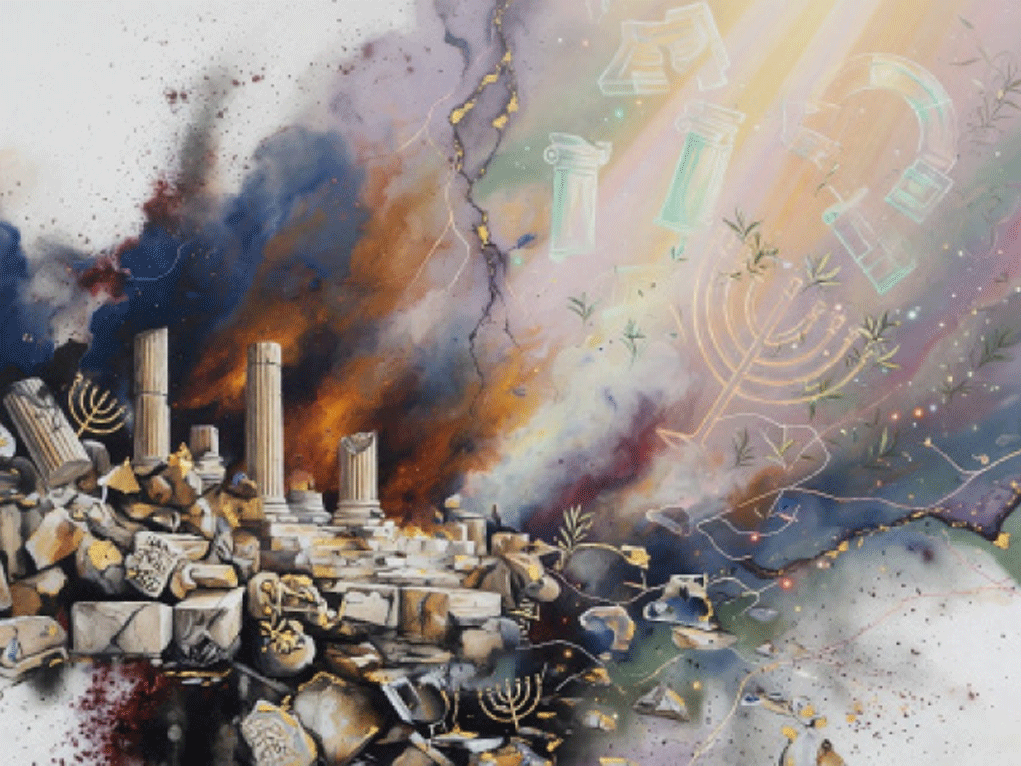 Yated Ne'eman3 months ago
Of all the lines in Shas nogeia to the tragic story of Tisha B’Av that haunt me, the one that shakes me the most has nothing to do with sinas chinom and everything to do with humility.
We all know the story: Kamtza and Bar Kamtza, the mixed-up invitation, and the public humiliation at a public gathering. The slighted guest slinks off to Rome to plant the seeds of rebellion in the mind of the Caesar. It’s the story we tell when we want to personify the sinas chinom, indifference, and intransigence of a nation whose terrible middos and calamitous interactions were the cause of the churban.
But tucked into the margins of that same sugya in Maseches Gittin is a subplot that gets only a line or two in the larger picture, yet those lines hit us like a sledgehammer.
When Bar Kamtza returns with the Caesar’s korban, slightly blemished just enough to be posul according to the Torah but acceptable according to Roman law, the chachomim in the room understand exactly what’s at stake. Rejecting the korban of a foreign king is a diplomatic incident worthy of a Trump-like reaction. However, accepting a blemished korban is a halachic impossibility. Someone has to decide.
And the one in the room whose job it was to decide, Rabi Zecharia ben Avkulas, does neither. He does not offer the korban. He does not have Bar Kamtza quietly disposed of so that the whole episode disappears. He has good reasons for both sides. So he hesitates, weighing the halacha, weighing the politics, and weighing his own certainty, until the moment for deciding passes him by.
Bar Kamtza goes back to Rome. The Caesar is infuriated. He sends his legions, and the rest is history. Unfortunately, our history. From the exile through the Crusades, the Inquisition, Chmielnicki, the pogroms, the Holocaust, Gaza, and beyond, it still reverberates.
But here is the line that has never let me go. Rabi Yochanan says, in Gittin 56a, that the anivus, the excessive humility, of Rabi Zecharia ben Avkulas is what destroyed our home, burned our sanctuary, and drove us from our land.
I have read that line a hundred times, and it startles me every time. I simply don’t get it. Not the sinas chinom. Not the guest list. Not the years of pointless machlokes that came before it. Rabi Yochanan reaches past all of that and points a finger at Rabi Zecharia’s inability to make up his mind.
I understand, in theory, how a private critique of a gadol’s judgment might circulate in a bais medrash. There are disagreements among giants as well.
But this censure and condemnation of Rabi Zecharia is something that was recorded for posterity—not only for talmidei chachomim in Bnei Brak to read with the countless meforshim who try to decipher it, but for the 11-year-olds learning the story of Kamtza and Bar Kamtza in their summer learning groups. It’s a chastisement for posterity!
Why would Chazal take what we could have interpreted as an expression of exaggerated disappointment said in a private setting and have it become enshrined as part of the story of the churban—and as the reason for the churban, no less?
It would have been so much easier, so much more comfortable, to let the blame rest on Klal Yisroel’s sinas chinom in general and leave Rabi Zecharia’s name out of it.
Unless the discomfort is something we all must internalize.
This is not the only place that Rabi Zecharia ben Avkulas receives this treatment. There is a Tosefta, in Maseches Shabbos 17:4, that repeats those scathing words. There, Bais Hillel and Bais Shammai argue about how to remove bones and peels from the table on Shabbos. Rabi Zecharia ben Avkulas acted in a way that avoided both positions Rabi Yosi seems to dredge up the earlier misstep and adds: “The anivus of Rabi Zecharia ben Avkulas burned the Heichal.” Chazal do not let it go. They remember, and they remind us. It’s scary.
I could stop here and leave us all with a kashya, or I can proceed with something that I have gleaned from this, and I pray to Hashem that I am on the right track.
Chazal are not trying to pile onto a good man twice or vent their frustrations. Chas v’shalom. I think that they are giving us a lesson to internalize, one that can even serve as a life preserver in golus. It’s a lesson about indecisiveness. They are teaching us about the price of indecision and fear.
There are moments—and they do not announce themselves in advance—when a leader’s silence is not neutral. It is not a wise withholding of judgment until all the facts are in. It is itself a decision, dressed up as no decision at all, and it can cost everything. Rabi Zecharia’s anivus, his reluctance to be the man who takes a stand and lives with the consequences, was not humility in the way we usually praise it. It was a vacuum, and Klal Yisroel’s enemies are always happy to fill a vacuum.
I have been thinking about this Gemara a great deal these past months, watching elderly roshei yeshiva from Eretz Yisroel cross oceans and even boundaries to navigate a crisis that is costing them more than most of us will ever know. A seismic shift in the government’s attitude toward bnei Torah and limud haTorah prompted a crisis that forced yungeleit to run home in hiding, bochurim to live in fear, and yeshivos to shake their heads in shock and fear for their future existence.
And there was every reason to waver. There was tremendous political pressure, both from within and without, to “wait it out.” Hope for the best. Don’t rock the boat. Perhaps they will come to a resolution. Maybe they will unfreeze the hundreds of millions of shekolim they had once generously given to support yeshivos. Every practical incentive pointed toward compromise. Friendships built over decades frayed. Public opinion, even within parts of our own broader community, turned sharply critical.
And yet the roshei yeshiva said, “We are coming.” Some came in wheelchairs. Some left chemotherapy treatments.
From the onset of this campaign, they rallied, despite how hard and how uncomfortable it was. And people opened their hearts and their wallets, no matter how hard or how uncomfortable it was. The roshei yeshiva did not know how they would be received yet they came and saw how so communities supported their cause and the Keren Olam HaTorah in such an unprecedented and amazing magnanimous way.
The roshei yeshiva who convened in the wake of this crisis chose to plant a flag rather than wave it in surrender. They were prepared to pay the price, for better or for worse.
Of course, we do not have the right to critique the vacillation of Rabi Zecharia. But we can embrace the critique that the Gemara has left for the ages and try to springboard into action from its conclusion. I can’t imagine that bringing the korban, or killing Bar Kamtza, would have negated the reasons for the churban, and thus I will remain with some questions on pshat. But I still can glean something from the powerful words found in Gittin and in the Tosefta.
For some reason, Chazal wanted us to sit uncomfortably with the humble Tanna whose refusal to decide became, retroactively, an act that bore enormous weight. They wanted that discomfort to outlast him by two thousand years, so that the next generation of leaders, facing their own blemished korban, would remember what indecision costs and would choose to decide anyway.
And they may have wanted us little people to realize that life is about hard choices that may determine the future of our lives, our families, and of Klal Yisroel.
Just saying.
 Yated Ne'eman3 months ago
Reclaiming the True Essence of the Churban
It is a painful, undeniable reality of our spiritual landscape: we struggle to mourn the Churban of the Bais Hamikdosh genuinely. How can we weep for what was lost when we possess so little understanding of what once existed?
In our state of yeridas hadoros, the Bais Hamikdosh looms as an abstract grandeur, too sublime for our diminished consciousness to grasp. We have never seen the Kohen Gadol in his bigdei kavod; we have never witnessed heavenly fire descending upon the mizbeiach; we have never breathed the air of a world illuminated by the presence of the Shechinah. Trapped within a spiritual vacuum, we find ourselves trying to manufacture tears for an exalted reality we can scarcely imagine. With every passing generation, the chasm between our ordinary existence and that glorious past grows even wider.
The Substitution Trap
In a desperate attempt to kindle some measure of grief, we often employ a familiar strategy. We recognize that every tzaarah, every tear, and every collective or personal tragedy throughout history is ultimately rooted in the cataclysm of the Churban. To awaken genuine emotion, we attempt to fulfill our obligation of aveilus by redirecting our focus toward the immediate, tangible suffering of our own times: We speak of terminal illnesses, sudden deaths, fractured families, and children who have lost their way. We reflect on the ashes of Europe, the resurgence of global antisemitism, and the existential dangers facing our brethren in Eretz Yisroel.
There are certainly more than enough tzaros to fill our hearts. Yet, this approach conceals a subtle but dangerous trap.
We often spend the final hours of the Taanis listening to painful accounts of contemporary suffering, watching documentaries about historical tragedies, or seeking general inspiration. In doing so, we often fail to follow the thread back to its source.
Intellectually, we know that with the coming of the Geulah, all these sorrows would disappear. In practice, however, our mourning becomes inverted. The Bais Hamikdosh is reduced to a means rather than the end itself. It becomes the vehicle through which we mourn our own pain. The primary focus of our grief remains our personal suffering, while the destruction of Hashem’s home becomes a secondary concern.
The Mishnah Berurah (siman 554) writes with striking simplicity that no matter how physically difficult the fast may be, a person must strengthen himself to endure it, because: “Kedai hu Bais Hamikdosh l’hisavel alov yom echod b’shanah — The Bais Hamikdosh is certainly worthy that we should mourn its loss for at least one day a year.”
Yet despite our best intentions, this focused mourning rarely materializes. We remain unable to cross the threshold into authentic aveilus for the Bayis Hashem. To move beyond this impasse, we must shift our focus and refresh our understanding of what the ikar Churban truly is.
Anan Ataka D’rachmana Samchinan: Seated At The Father’s Table
To understand what we are truly missing, we can look to a fascinating halachic discussion regarding the mechanics of a meal.
Halacha dictates that if individuals are dining together and explicitly declare, “Rabbosai, nevarech,” they create an immediate hesech hadaas, a definitive mental conclusion of the meal. Even if they wish to continue eating, they are forbidden from doing so until they recite Birkas Hamazon and begin a completely new meal. The Gemara similarly rules that when the attendants remove the table from before the diners, the meal is halachically concluded.
The Gemara (Brachos 42a) describes an exchange between Rava and Rav Zeira while dining as guests at the home of the Reish Golusa. After the attendants had removed the tables, the Reish Golusa unexpectedly sent them an additional portion of food. Rava immediately ate from it, while Rav Zeira questioned how Rava could partake when the removal of the table had already concluded the meal. Rava answered him with a profound principle: “Anan ataka d’Reish Golusa samchinan — We are dependent upon the table of the Reish Golusa.”
As guests, their minds are never truly detached from the meal because they possess no control over the menu or the timeline; everything depended upon the will of their host. Since the host could choose to continue serving them at any moment, the removal of the table by the attendants did not constitute a genuine hesech hadaas.
Commenting on this sugya, Tosafos extrapolates this concept to the Pesach Seder. If a person mistakenly forgot to eat the Afikoman, and has already said, “Hav lan u’nevarech” to prepare for Birkas Hamazon, standard halachic ruling should prohibit them from eating. Yet, Tosafos rules that the individual may eat the Afikoman without a new brocha. To explain why, Tosafos distills the reality of that night into four remarkable words: “Anan ataka d’Rachmana samchinan — We are dependent upon the table of the Merciful One.”
On the night of Pesach, the night of our national redemption, we are not merely dining in our own homes. The entire inner structure of the Seder is predicated on the reality that we are royal guests seated directly at the personal table of Hakadosh Boruch Hu. Because we are dependent upon His table, our minds never disengage from Him. No verbal declaration or physical transition can create a true hesech hadaas from our connection with Hashem, or from His eternal desire to feed and sustain His children.
Pesach represents the pinnacle of Geulah. And the definition of Geulah is simply a state of existence where Klal Yisroel is safely gathered, cherished, and secure, around the table of their Father, Hashem**.**
The Overturned Table
Through the system of AtBash, we find that the first day of Pesach invariably falls on the same day of the week as the upcoming Tisha B’Av. This is not a mere calendar coincidence; it reflects a metaphysical symmetry.
Tisha B’Av is the exact inverse of Pesach. If Pesach is the day we experience what it means to sit confidently at the table of Hakadosh Boruch Hu, then Tisha B’Av is the horrific day that table was overturned. It marks the onset of Golus. Stripped to its essence, Golus simply means being driven away from our Father’s table.
Hakadosh Boruch Hu is a grieving Father. He sits in the solitude of Golus before an empty table, waiting for His alienated, but beloved children to return.
The Gemara (Brachos 3a) teaches that whenever we answer Amein, yehei Shemei Rabbah during Kaddish, we awaken a divine memory. Hakadosh Boruch Hu, so to speak, nods His head and recalls the days of the Bais Hamikdosh: “Ashrei Hamelech shemekalsin oso beveiso — Fortunate is the King Who was once praised like this in His home.”
But that memory immediately gives rise to a heartbreaking cry: “Oy lo l’Av shehiglah es bonav, v’oy lahem labonim shegolu me’al shulchan Avihem — Woe to the Father who exiled His children, and woe to the children who were exiled from their Father’s table.”
The Father longs for His children to return to His home, and the children long to return as well. Hashem waits in solitude, longing for consolation. The Tosfos Harosh and the Tur explain that the cryptic phrase we recite in the Kaddish, “l’eila min kol birchosa v’shirasa, tushbechosa v’nechemosa,” is our attempt to offer words of consolation to Hakadosh Boruch Hu Himself, comforting Him in His loneliness.
Accessing Grief Through Empathy
Who can truly grasp and feel Hashem’s pain? Who can sit beside Him in His loneliness and sincerely say, “Imo anochi b’tzorah”?
It is here, within this image of a grieving Father, that we discover the key to authentic aveilus on Tisha B’Av.
As human beings, we possess a remarkable G-d-given capacity for empathy. When we witness another person suffering from a terrible illness or a family shattered by sudden tragedy, our hearts instinctively break for them. Ironically, it is often far easier for us to deeply feel and care for the pain of others than it is to process our own deepest spiritual loss.
If we cannot intellectually or imaginatively comprehend what we lost when the physical Bais Hamikdosh was destroyed, we must pivot our focus toward the emotional reality of the One Who lost it.
We can understand the anguish of a father whose home has been utterly destroyed, whose family has been fractured, and who sits in absolute isolation. We must realize that the Shechinah is in this state of unbearable pain. Hakadosh Boruch Hu does not have His children gathered around His table. His home lies desolate, and His family is scattered across the earth.
The Modern Paradigm
Perhaps the contemporary crisis that most powerfully captures this reality is the heartbreak of alienated children who have become disconnected from their families and their heritage.
When a beautiful Torah home experiences devastating loss, whether through death, mental illness, or children wandering into spiritual darkness, this is not merely another consequence of the Churban. It is the Churban continuing to unfold before our eyes. It is children separated from their loving Father.
Everyone who witnesses such suffering instinctively feels the parents’ pain. In those moments, we gain the faintest glimpse of the anguish of the Shechinah.
Viewed through this lens, every modern tragedy becomes an opportunity not merely to mourn ourselves but to mourn with Hashem. Instead of instinctively thinking about our own vulnerability, our first response becomes: “Ribbono Shel Olam, Your children are suffering away from Your table. Your family is scattered. Your home remains empty.” Through our capacity for empathy, we comfort a Father in solitude.
On Tisha B’Av we sit bodad upon the ground because our Father sits bodad. Within that shared solitude, something extraordinary happens. We reconnect with Him.
We then fulfill the climactic words of Eicha: “Nachpesah derocheinu v’nachkorah v’noshuvah ad Hashem — Let us examine our ways, let us search ourselves, and let us return to Hashem.”
The Bridge To The Yomim Nora’im
This deep alignment of hearts on Tisha B’Av creates a powerful, direct bridge to the Yomim Nora’im.
In Nefesh HaChaim, Rav Chaim Volozhin quotes the Zohar, which teaches that the singular focus of our tefillos on Rosh Hashanah must be the coronation of Hakadosh Boruch Hu and the revelation of His Malchus. Accordingly, one should refrain from praying for personal needs such as bonai, chayei, and mezonei. The Zohar sharply criticizes those who spend these holy days crying only for themselves, likening them to barking dogs who cry, “Hav lan chayai, hav lan mezonei — Give me life. Give me sustenance.”
Rav Chaim explains that Rosh Hashanah is not about us. The center of our tefillah must be the pain of the Shechinah, the concealment of Hashem’s honor, and the ongoing chillul Hashem created by Golus.
For this reason, the halachic structure of Rosh Hashanah deliberately omits the usual expressions of personal repentance. We do not confess our sins. We do not ask for selicha or kapporah in the Amidah. The lone exception is “Zochreinu lechaim,” where we ask for life only because the phrase immediately concludes: “L’maancha Elokim Chaim.” We ask for life not merely to survive, but so that we may continue serving the King and revealing His glory in this world.
Resolving The Human Paradox
Yet we know ourselves. The moment suffering enters our lives, our hearts instinctively turn inward. We worry about our health, our livelihood, and our families.
In a remarkable note in that pesicha, the talmidim of Rav Yisroel Salanter present an essential balance. Because of the spiritual decline of yeridas hadoros, the average person simply cannot detach completely from personal pain to focus exclusively on the suffering of the Shechinah.
We may recite the words, but: “Hapeh v’halev einam shavim — Our mouths and our hearts are not one.” Pretending otherwise introduces insincerity into our relationship with Hashem. It renders our tefillah mezuyaf mesocho, fundamentally fraudulent.
Therefore, Rav Yisroel Salanter teaches that we must honestly bring our personal needs before Hashem. The challenge is to elevate those needs l’shem Shomayim, desiring health, livelihood, and strength only because they enable us to serve Him.
Even this remains extraordinarily difficult.
How, then, do we bridge the gap between our natural self-concern and the selfless vision demanded by Rosh Hashanah?
The Answer Lies In The Transformation Of Our Tisha B’Av.
When we spend Tisha B’Av immersed in the tzaar of the Shechinah, we focus upon the very heart of the Churban. Fifty days later, when we stand before Hashem on Rosh Hashanah, we are no longer strangers attempting to manufacture selfless devotion. We have already spent a day sitting beside our Father, sharing His loneliness.
The day Tisha B’Av becomes the day we stop asking, “How can my pain end?” and begin asking, “How can Hashem’s pain end?” is the day the Churban has already begun to heal. For the moment children become more concerned with their Father’s honor than their own comfort, they have already found their way home.
Having absorbed the pain of the Parent during the month of Av, we are finally able to stand before the King on Rosh Hashanah with a sincere and unforced longing for His Malchus to be fully restored. And soon, once again, we will gather around the table of our Father in Yerushalayim.
Yated Ne'eman3 months agoTwo Vital Bills on the Table for This Week
A very intense week lies ahead of us. This week, the Knesset will most probably begin its recess. (Actually, it will have no choice but to begin its recess, in order to have the legally required 90-day break before the next election.) Before the Knesset begins its break, however, there are several issues that have to be resolved. Some of those issues are vital to the Likud party; others are critical to the chareidim. In the latter category are two bills: the Basic Law: Torah Study and the bill that will put an end to the arrests of yeshiva bochurim, which is officially titled “Proposed Security Service Law—Amendment 26: Integration of Yeshiva Students, 5782/2022.” Both bills were approved in committees, one last Thursday and one at the beginning of this week, in advance of their second and third readings in the Knesset, which marks the final step before they enter the book of law. The Basic Law: Torah Study was approved on Monday.
The second bill, which will halt the arrests of yeshiva bochurim, was approved on Sunday in the Foreign Affairs and Defense Committee chaired by MK Boaz Bismut. The bill passed the committee by a narrow margin, in a vote of eight to seven, and states that out of recognition of the importance of Torah learning, a temporary measure will be enacted to suspend the arrests of talmidei yeshivos for whom learning Torah is their full-time occupation. The measure will remain in effect from the day the law is published until 20 Kislev 5787/November 30, 2026.
The text of the bill reads in part, “A yeshiva student will be defined as someone who learns Torah and studies in a yeshiva in an orderly fashion no less than 45 hours a week, or in a kollel for no less than 40 hours a week, excluding the official vacation periods accepted in yeshivos, which will be determined by the minister of defense. The minister of defense will formulate a list of approved yeshivos for this period of time, in accordance with the standards that will be included in the regulations. A yeshiva will be included on the list if its director or another authorized individual declares that it maintains regular Torah studies for no less than 45 hours a week, or 40 hours a week for a kollel. The minister of defense will also determine the criteria for removing a yeshiva from the list, with the approval of the Foreign Affairs and Defense Committee. To provide oversight, the minister of defense will issue instructions and designate inspectors, in accordance with the terms of section 49c. Inspectors with experience in field inspections for the Ministry of Education, who were appointed in the past to monitor yeshivos receiving government funds, may be used for this purpose, and the minister of defense will be permitted to use the oversight mechanisms of the Ministry of Education.”
The legal advisors of the Foreign Affairs and Defense Committee have been fiercely opposed to the bill throughout the deliberations. They claimed that there are two major flaws in the bill: First, it is considered unequal, since it prevents the arrests only of chareidim who do not enlist and does not protect other segments of the population, and second, it does not include sanctions against draft evaders. The chareidi politicians pushed for the law to be approved despite the legal advisors’ objections, and everyone is now waiting for its final approval in the Knesset. Everyone expects petitions against the law to be filed with the Supreme Court, but it is generally accepted that no existing laws are changed during an election period, so the bill should at least buy us a temporary reprieve.
Bochurim Are Afraid to Appear on the Streets
The bill freezing arrests of yeshiva bochurim is expected to result in a couple of gains. First, it will buy the community a period of several months, perhaps even three quarters of a year, with no arrests at all. In addition, those currently in custody will be released immediately. And it will put an end to the absurd situation in which yeshiva bochurim and kollel yungeleit are afraid to walk in the street or find themselves fleeing at the mere sight of a police officer. This state of affairs has resulted in some grievous incidents such as the recent assault on yeshiva bochurim by a group of ruffians in Rechasim. The assailants mocked their victims, asserting that they would certainly not dare file a complaint with the police against them. Sadly, they were right: The bochurim did not want to risk arrest by reporting to the police that they had been assaulted and thus exposing themselves to police action. And the repercussions extend even further: If a kollel yungerman is injured in a traffic accident, for instance, he is more likely to hurry home despite his injuries than to remain on the scene and risk being arrested by the police. This is the worst situation that the Torah world has faced since the founding of the state, and it is a terrible indictment of the State of Israel specifically at a time when it needs copious Heavenly mercy.
This week, one of the chareidi members of the Knesset had me listen to a recording on his phone of a message that he received. I will quote part of the recording verbatim: “You are the only ones who can help me. I am a woman with three small children, and my husband was taken to the Neve Tzedek military prison yesterday. They want to draft him, and I am alone with three small children and have no one to help me. I am asking for your help. Please, let us show our unity. I can’t continue anymore; I need help. I simply can’t go on this way; I need my husband here at home. He called me today for the first time, in tears, and said that he is being abused. They made him stand for four hours with a heavy bag on his back, they didn’t give him enough food, and he slept for only three hours. He is suffering; he is sleeping on boards and is not allowed bedsheets. I can’t deal with this anymore.” The woman can be heard weeping, and her distress moved me to tears as well.
I have a neighbor who was arrested for draft evasion. He was sentenced to 30 days behind bars, and then his sentence was extended for another 30 days. He is 28 years old and has apparently been classified as a draft dodger since the age of 18, which accounts for the severity of his sentence. That means that he never arranged a deferral for himself, even when it was possible. But even if we agree that he was negligent (and I will admit that he isn’t a particularly organized or conventional person), does he really deserve to spend 60 days in jail? According to his parents, he is on the verge of a mental breakdown. It is a very sad situation.
If the law freezing the arrests passes this week, it will be worthwhile just for the purpose of ending situations such as these.
Important Clause Struck from Torah Study Bill
The second bill promoted by the chareidim is the new Basic Law: Torah Study, which was approved last Thursday. The text of the law was altered several times due to vocal protests from the opposition, the legal advisors, and former soldiers suffering from post-trauma, who were outraged by the fact that the government wasn’t taking similar steps to assist them. Incidentally, they stressed repeatedly that they have nothing against Torah learners and even called on the government to leave them alone; they were angered solely by the attention being focused solely on lomdei Torah while their own suffering went unheeded. During the discussions in the Knesset committee, it was decided that another law will be formulated concurrently addressing the needs of soldiers suffering from trauma.
On Thursday evening, the Knesset House Committee, headed by Ofir Katz (who is also the coalition whip), approved the Basic Law: Torah Study for its second and third readings in the Knesset. Before the vote, Ofir Katz submitted a reservation calling for the second clause in the bill, which stated that its purpose is to create a counterweight against other values anchored in legislation, should be struck from the bill. This clause appeared in the version of the bill that was approved in its first reading, but was ultimately removed under pressure for the second and third readings. Six members of the Knesset voted in favor of the proposal, while four opposed it.
Katz explained, “After extensive discussions with our partners in the chareidi parties, as well as conversations with many other individuals, including some within the coalition, it was decided collaboratively to remove the second paragraph. Thus, we remain with only the first paragraph, which I believe is not disputed, which states that Torah study is a foundational value in the heritage of the Jewish people and the State of Israel. Not only the members of the coalition, but many in the opposition as well, stated that if the second paragraph were removed, they would vote in favor of the bill.” Katz emphasized, “No soldier will be harmed by the passage of this law. We are working on a new bill that will provide as much of a response as possible for the needs of soldiers, in reaction to the outcry that has taken place here for several years.”
At this point, there is a dispute as to whether the bill will have a practical impact. The deputy attorney general who monitored the discussions insists that with the second paragraph removed, the law is merely declarative. The Knesset legal advisor, Sagit Afik, made a similar statement for the record: “At the preliminary stage, the bill contained much stronger language with much clearer practical implications. I maintained regarding the first section that it seeks to anchor Torah study as a fundamental value. As for the second section, which deals with how this value is weighed against other fundamental values, I maintained that it had the potential for practical implications, including effects on funding for soldiers. Now that the section was removed, in my view, the repercussions for soldiers no longer exist. All that remains is the enshrinement of a value.” Which isn’t to say that Afik embraced the new version of the bill; she was opposed even to this measure, but not as strongly as she resisted the earlier version.
MK Yinon Azulai, a Shas representative who was present for all the discussions of the bill, explained, “We are not pleased with the removal of the second paragraph, but we accepted the request. Nevertheless, I will say this here: I still believe that the first paragraph of the law, while it does not speak about sanctions, can be used as a tool by a judge who can weigh it against other issues such as the value of equality.”
The Knesset Gets Ready to Dissolve
At the end of this week, the 25th Knesset will complete its term. The election will be held on its previously scheduled date: October 27th/the 16th of Cheshvan. It has been 40 years since a Knesset lived out its full term; this can be said to the credit of Netanyahu and his coalition, who managed to keep the current Knesset in power until the term ended. Netanyahu was not in favor of this election date, since it seems too reminiscent of October 7th, and he fears that his political rivals will use the similarity to manipulate public sentiment against him. Nevertheless, the date was set, and Israel is about to enter the whirlwind of activity that marks an election season. Registration for party lists is expected to take place on September 7, and one can expect plenty of intense activity until that time (except, of course, in the chareidi parties).
This week, the Knesset will be kept busy clearing its desk before it dissolves. A series of bills are expected to be brought to a vote, some government-sponsored and others proposed by individuals. Among the main bills on the agenda are some modifications to election proceedings for the 26th Knesset, including arrangements for citizens evacuated from their homes to vote in their new locales, the expansion of voting opportunities in nursing homes and assisted living facilities (measures supported by the left and opposed by the right), and an increase in transparency in election propaganda. Meanwhile, the Knesset is also expected to vote on a number of bills dealing with national security and the economy, some of which stalled during the Knesset’s term due to political disputes. The efforts to pass these laws during the last few days of the Knesset’s session are accompanied by intense political pressure; after the Knesset begins its recess, it will be virtually impossible to pass new legislation. And one must keep in mind that both the Likud and the chareidim have a couple of very important laws to pass.
As soon as the legislative work is done, the various political parties will begin dealing with the power struggle between the right-wing and left-wing blocs. Their choices of political alliances, splits, and joint lists are likely to be just as important in determining the makeup of the next government as the number of votes received by any party. The parties that appear to be poorly positioned to pass the electoral threshold, both on the right and on the left, will come under heavy pressure to merge with each other, while the larger parties will work hard to prevent votes for their respective blocs from being wasted.
The beginning of a Knesset recess isn’t merely a technicality; it is an official indication that the election campaign has begun. After that point, any decision, declaration, or political struggle will be measured above all by the overriding question of how it will affect the voting on October 7. The political establishment knows that the period of 107 days until the election is a very short time, but it is also enough time for profound changes, surprising alliances, new crises, and major shifts in public opinion. After months of uncertainty, the date of the election has been finalized, the Knesset is on its way out, and the election for the 26th Knesset is on the horizon. Bli neder, I will write more about events within the political parties and the predictions of the polls (which are not forecasting a major win, or possibly any win at all, for Netanyahu) in the near future.
Police Violence with No Consequences
Let me share something personal with you: When a government body abuses an ordinary citizen, I become outraged. And when it is an organization such as the police or Prison Service on one side, and a chareidi citizen on the other, I am utterly furious.
I generally try to help the victims in these situations without making too much of a fuss over the situation. It can certainly be said that this has been a major part of my work over the years. There were only some instances in which the stories entered the headlines, such as the case of a young man named Chaim Mizrachi who was beaten by three police officers on Rechov Malchei Yisroel in Geulah. I brought Mizrachi and his mother to a Knesset committee, and their story sparked outraged reactions. Similarly, when videos documenting police violence in Meron two years ago were publicized—including the police officer who shoved an elderly man to the ground and the policewoman who kicked an elderly woman—I made sure that the videos would reach a Knesset committee. The members of the Knesset watched those scenes unfolding and were horrified. Tzvika Fogel, the chairman of the committee, asserted that the “bad apples” needed to be removed from the police force. I have also been the driving force behind hundreds of parliamentary queries about police brutality and about the lackadaisical responses of the Department of Internal Police Investigations. But to be honest, I have begun to feel despair. The system constantly covers up its own wrongdoing, and it is difficult to fight people in entrenched positions of power. Even the episodes of violence in Meron had no consequences. The police and the DIPI take advantage of the fact that the Mea Shearim community does not recognize the state and will not appeal if a case is closed.
A recent protest of the Peleg Yerushalmi (or, more specifically, the followers of Rav Tzvi Friedman, known in Hebrew as the Ratzafnikim) yielded a number of shocking videos of police violence that evoked widespread horror. One particular video shows three police officers using clubs to viciously beat a young man who was lying on the ground. Another infuriating video shows a police officer deliberately tearing the trousers off a yungerman who was lying on the street. Yet another police officer was caught on camera punching a young man who had already been dragged to the sidewalk. And a policewoman who was wearing civilian clothes, and thus wasn’t identifiable as a member of the police force, was choking a young bochur when someone else stepped in to stop her. This triggered a reaction from a group of policemen who pounced on the man who intervened and began raining vicious blows on him. Of course, this was their way of defending the policewoman’s honor. To make matters worse, after the bochur was already handcuffed and in custody, the policewoman walked over to him and slapped him across the face. Again, this was done only for the purpose of assuaging her bruised ego, and, of course, it merely compounded her own crimes.
When these incidents came to light, the police commissioner announced that the matter would be investigated and that any “anomalous” behavior would be handled. At the same time, he expressed general support for his officers. When the minister of public security announced that he planned to suspend the commander of the Bnei Brak police station, who was caught on camera behaving like a brutal thug, the commissioner hurried to argue. And despite the passage of time since the horrific violence at the protest, nothing has been done about it yet. That is why I have begun to feel despair.
Now, the issue of police violence came to the fore again when a Gerrer chossid was accosted by police officers in Ashdod who claimed that he was wanted by the national debt-collection agency. The man refused to show ID (some believe that he is classified as a draft evader and feared that he would be arrested), and the police officers immediately began beating him. People who witnessed the incident burst into tears; the policemen beat him, broke his eyeglasses, tore his clothes, and wounded him. They ultimately discovered that it was a case of mistaken identity, but that isn’t really the main point; even if the man was precisely who they thought, police officers are not supposed to behave like wild animals. When they realized their mistake, the policemen released him from the handcuffs and allowed him to leave, but according to eyewitnesses, they did not call for medical assistance, they did not divulge their personal details, and they didn’t even apologize. Instead, they simply fled from the scene. This is the height of shameful misconduct.
Herzog Contacts the Police Commissioner
After the incident in Ashdod, the police realized that they were in trouble and that the episode had been caught on camera, and they released the following statement: “This was a police operation based on a court order and in the context of an ongoing investigation. During the operation, a man was identified who began fleeing from the scene and refused to identify himself. It was later determined that it was a case of mistaken identity, and he was freed immediately. The incident was transferred for investigation by authorized authorities, and the appropriate conclusions will be drawn. The Israel Police Force apologizes for the distress and suffering that were caused and will continue to operate with great respect for citizens’ rights.”
The police also claimed that the officers apologized to the victim: “After it became clear that it was a case of mistaken identity, the police officers apologized. The community police officer and other policemen later spoke with him as well. The entire incident could have been avoided if he had identified himself immediately. Every person who is asked by a police officer to identify himself is required to do so. The refusal to identify oneself is a criminal offense that gives the police authorization to arrest the offender.” Today, however, the average young chareidi man is afraid to identify himself to a police officer, since there is a great likelihood that he is classified as a draft evader and will be arrested on the spot. But will the police officers face consequences for their use of unreasonable force? In my view, based on past experience, the answer to that question is a resounding no.
Last Tuesday evening, I met with President Herzog. I won’t get into the reasons for our meeting, but I will tell you that I had a fairly long conversation with him in his office. I was accompanied by my son, who mentioned that he learns in Yeshivas Bais Mattisyohu and was once the right-hand man of the late rosh yeshiva, Rav Boruch Weisbecker. Herzog revealed in response that he once paid a visit to Rav Weisbecker’s home, and my son remembered the visit, which took place when Herzog was chairman of the Labor party and involved a discussion about the Tal Law.
I could write at great length about the intensive security surrounding the president and the polished atmosphere in his official residence. Our conversation yielded plenty of interesting information as well; however, it is generally accepted that such conversations are meant to be off the record, and I will honor that practice. There is one thing, however, that I can reveal to you, especially since this article will be published in America rather than in Israel: When we spoke about Herzog’s relations with the chareidi community, I remarked that I could not understand how he remained silent in the face of the videos showing brutal police violence at chareidi protests. “How can you see three police officers using clubs to beat a young man lying on the ground and remain silent?” I asked.
At that point, Herzog surprised me. “Who says that I remained silent?” he asked. “I spoke to the police commissioner that evening. Do you think it was a coincidence that he announced that there would be an internal probe? That was because of me.”
Herzog voiced severe disapproval for the violent behavior of the police. And while I don’t know what will come of the police commissioner’s investigation—in fact, I presume that nothing will come of it—Herzog deserves to be applauded for two reasons. First, he took the initiative to contact the police commissioner and presumably to express the revulsion that everyone feels for the actions of the offending officers, and second, he didn’t even publicize it. The president chose to give up the opportunity to score public relations points, which I consider no less of a testament to his character. Yitzchok Herzog is slowly but surely being revealed as one of the saner voices on the political scene, and someone who is not willing to join the chorus of knee-jerk condemnation of the chareidi community.
Mourning the Death of Senator Graham
I do not remember such a sense of grief in official Israel as there is now over the passing of Senator Lindsey Graham. Israel has lost someone who seemed to be a true friend, who believed we were in the right, who said so clearly and without equivocation, and who backed his words with actions. His influence on President Trump was apparently absolute. The country is saddened by his loss, albeit confident that new friends will be found. Netanyahu appears to be weighing the idea of traveling to the United States to attend the funeral (and, incidentally, to meet with President Trump). If he does not go, then Israel will undoubtedly send someone else high-ranking, out of gratitude for the senator’s friendship.
Senator Graham visited Israel several times after the October 7 massacre. There were two places in particular that held his interest: the Kosel Hamaaravi and the areas in the south affected by the October 7 massacre. Shlomo Elkabetz, who lost his daughter in Kfar Azza, paid tribute to Senator Graham and published a picture of the senator visiting the room where his daughter was killed. Rav Shmuel Rabinowitz published a picture of the senator visiting the Kosel and wrote, “His death is a great loss to the Jewish people, the State of Israel, and the American nation. His last visit to the Kosel was during the Iron Swords War, after the murderous terror attack of October 7. Graham came to the Kosel at a time when Israel was suffering through a great calamity, and he conveyed a clear message of support and solidarity. ‘You are not alone; the United States stands with you,’ he said. Those words expressed his profound commitment to Israel and his uncompromising support for the Jewish nation.”
Prime Minister Netanyahu also released a statement: “Together with the people of America, Sara and I mourn the loss of our dear friend, Senator Lindsey Graham. At our last meeting, I said, ‘Linsey is a great friend of Israel and a dear friend to me. We have no better friend.’ Lindsey understood that the security of Israel and the United States are inseparable. He dedicated his life to protecting America, strengthening our alliance, and defending the free world. Israel has lost one of its greatest friends, America has lost a great patriot, and I have lost a beloved friend.”
President Herzog described Graham as “a great friend of Israel and a great American patriot … a beacon of moral clarity.”
Yossi Dagan, head of the Shomron Regional Council, wrote, “Graham loved Israel and was a true idealist…. He was a true friend of Israel and of the settlements in Shomron. About a month ago, he hosted a major solidarity event for the Shomron on Capitol Hill.”
Even Aryeh Deri released a statement: “I was deeply saddened to hear about the passing of Senator Lindsey Graham, one of the greatest friends of the State of Israel and one of the righteous Gentiles of our generation. He stood courageously at Israel’s side, fighting an uncompromising battle against the Iranian axis of evil and terror, and made a significant contribution to strengthening the powerful covenant between Israel and the United States. The State of Israel has lost a true friend. May his memory be blessed.”
The Center of Rav Bergman’s Life
As usual, I am running out space, but I have many more things to report about. There is Rahm Emanuel’s recent visit, during which he attacked Netanyahu in an interview with Israel’s most widely read newspaper. I won’t quote him, since he doesn’t deserve it, but I will note that he mentioned that he loathes Netanyahu for insulting him by referring to him as a self-hating Jew. With his interview, Emanuel only proved Netanyahu correct.
There was also an interesting story concerning the new Shin Bet director, David Zini, who announced publicly that he is loyal to the government. For this statement, Zini was fiercely condemned by the left, as if he said something forbidden. The minister of justice defended him by quoting the Shin Bet Law, which states that the head of the Shin Bet is required to be loyal to the government.
In other news, the Ministry of Education issued new guidelines requiring tefillin stands to be made available for students in any school in which there is interest. I was personally involved in this turn of events, as you may recall if you have been reading my accounts of the developing story, which began when I met Orel Malik of Ramat Gan on his visit to the Knesset.
But since I must wrap up this column, I will end with a few words about Rav Meir Tzvi Bergman, one of the most senior marbitzei Torah in Eretz Yisroel, the son-in-law of Rav Shach, and the head of Kollel Rashbi. Last week, an appeal was held for the yungeleit of the kollel, and the gedolei Yisroel called on the public to contribute.
A few years ago, I was surprised to encounter Rav Bergman at Kennedy Airport, waiting for his suitcase at the baggage carousel. Rav Bergman was alone, unaccompanied by an entourage or attendant of any sort. Like me, he had been seated in the economy section of the plane, and I presume that he was even more exhausted from the flight than I was. When I remarked to one of his grandchildren that Rav Bergman had made the trip alone, he replied, “That is my grandfather’s nature. He never wants to impose on anyone else.” Last week, when the appeal was launched for the Torah institution that Rav Bergman manages with great dedication, it was accompanied by a video in which he cries, “For over fifty years, I have had the privilege of maintaining our yeshiva, known as Kollel Rashbi. Unfortunately, it is no longer within my ability to do that. I am therefore turning to you with a wholehearted request for you to open your own hearts and help support this makom Torah that is the essence of my life.”
A few years later, I had the privilege of visiting Rav Bergman in his home. He shared his memories of his parents and his childhood, mentioning that his brother had been killed by an Arab at Kever Rochel while visiting the site along with Rav Meir Tzvi and his father. He also spoke about his encounters with the Chazon Ish, with whom he had a close relationship. Rav Bergman, who slept in the Chazon Ish’s home, revealed that the Chazon Ish did not allow him to go to bed at nights; he was required to learn until he could no longer hold his head up. The Chazon Ish once said to his father, Rav Moshe Bergman, “Your son Meir Tzvi was here, and I was pleased with his quick and clear understanding. May he continue learning in this fashion and be very successful.”
Rav Bergman recently said to a bar mitzvah boy, “I will give you a brocha for the greatest thing in the world—siyata d’shmaya!”
I asked him if the Chazon Ish was truly as frail as the stories indicate, and he replied, “He was even weaker.”
I tried pressing him for more stories about the Chazon Ish, but he demurred. “It is beyond my ability to speak about him,” he said. I also tried asking him to speak about his father-in-law, Rav Shach, and he said, “He, too, was beyond my comprehension.” I went on to ask him about my encounter with him at the airport in New York and why he had been alone, without an attendant or companion. “Why would I need a companion?” he asked.
“To help you in America,” I suggested.
Rav Bergman dismissed the idea. “Wherever I go, there is always someone who comes to provide transportation and to assist me, and everything works out. I already have a budget of over two million dollars a year,” he added.
“But what about having someone with you as a sign of honor or respect?” I asked.
Rav Bergman replied sharply, “If I use the yeshiva’s money for my own honor, I fear that I would be guilty of appropriating consecrated funds and committing meilah!”
 Yated Ne'eman3 months ago
Remembering Vel’ d’Hiv Deportations in France
Eighty-four years ago this week, on July 16–17, 1942, French police, acting on orders from the Vichy regime of Philippe Petain and Pierre Laval, carried out the notorious Vel’ d’Hiv roundup of Jews in Paris.
In two scorching days, 4500 policemen, led by Police Chief René Bousquet, arrested and interned over 13,000 Jews, including more than 4000 children between the ages of 2 and 16.
The Jews were jammed for five days into a sealed, sweltering stadium without food, water and bathroom facilities, before being shipped to Drancy internment camps, and ultimately to Auschwitz.
A Paris lawyer, Georges Wellers, who witnessed it, described the “appalling conditions” and “inhumanity beyond belief” to a BBC correspondent.
“All those wretched people lived five horrifying days in the enormous interior filled with deafening noise … among the screams and cries of people who had gone mad with fear, with hunger and thirst, and the injured and those who tried to kill themselves in despair—impossible to describe,” testified Wellers.
In the week following the arrests, the Jews were taken from the stadium to concentration camps in a region south of Paris, and to Drancy, near Paris. At the end of July and the beginning of August, they were deported in cattle-cars to killing centers—mostly to Auschwitz—and murdered.
In scenes of inhumanity that beggar the imagination, more than 3,000 babies and children were forcibly torn from their parents and left alone in the French internment camps while their anguished parents were shipped out.
At the end of August and during September, these children were deported alone in sealed railway wagons to Auschwitz, where they were murdered.
The Vel d’Hiv roundups, organized by the French authorities and carried out by French policemen, became engraved in Jewish memory as a symbol of the nation’s unspeakable cruelty and its culpability for the murder of tens of thousands of Jews.
Vichy Didn’t Wait For Nazi Orders
In the wake of France’s surrender to Germany in 1940, the Nazis took 2 million French prisoners of war and divided the defeated country into two zones. They controlled the northern zone from their headquarters in Paris; the Vichy regime ruled the southern “unoccupied’ zone.
As the Nazis’ tentacles encroached farther into southern France, Petain, Laval and their henchmen did not even wait for German orders. They independently introduced their own system of anti-Jewish legislation, implementing decrees aimed at identifying and isolating the Jewish population and ultimately deporting them to the death camps.
The Nazis issued directives to deport Jewish adults; they gave no orders regarding Jewish children. The Vichy government, acting on its own initiative, deported entire families—including more than 11,000 children.
While Nazi extermination camps were still being built, Vichy France established its own network of internment camps in the cities of Gurs and Drancy, rounding up tens of thousands of Jews, and holding them in brutal conditions until the Nazi extermination camps were in operation. More than 3000 Jews died in French internment camps from mistreatment and illness.
French police then began mass deportations of the imprisoned Jews to the killing centers. While Vichy initially focused on refugee Jews, the regime later readily agreed to hand over native-born French Jews as well.
Out of 76,000 Jewish men, women and children shipped to death camps under Laval and Petain, fewer than 2,000 survived.
‘Jewish Register’ Reveals Shocking Scale of Nazi Collaboration
For decades, the official narrative in France maintained that Vichy was an aberration, and the French state as a whole should not be accused of complicity in the Holocaust. Historians have confirmed, however, that the upper echelons of the French administration, judiciary, and police were willing participants in the persecution.
In 1992, French researchers discovered a “Jewish register” from the Holocaust era that was used in arrests and deportations of Jewish men, women and children across France. Research showed this register was compiled by French officials during the war, on their own initiative, without orders from the Nazis.
The long-buried document pointed to France’s prominent role in the extermination of tens of thousands of French Jews. But it wasn’t until 1995 that a French president actually admitted this fact.
“Yes, the criminal folly of the occupiers was seconded by the French, by the French state,” said past president Jacques Chirac, according to the NY Times. “These dark hours forever sully our history and are an insult to our past and our traditions.”
More recently, French President Emmanuel Macron addressed France’s role in the Holocaust, rejecting the long-standing claim that the Vichy regime was merely a helpless Nazi puppet, detached from the French nation.
“It is convenient to see the Vichy regime as born of nothingness, returned to nothingness. Yes, it is convenient, but it is false. We cannot build pride upon a lie,” Macron declared.
[The irony here is difficult to miss. Only weeks later, in September 2025, Macron formally recognized a Palestinian state, leading Israeli Prime Minister Netanyahu and U.S. Secretary of State Rubio to accuse the French leader of fueling antisemitism with that act. One cannot help but wonder why Macron, who rejected the myths about Vichy France, was willing to embrace an even bigger and more destructive lie—that of Palestinian “statehood.”]
Long-buried Documents Capture the Horror
As the tale of France’s betrayal of its Jewish community during the horrific Holocaust years began to surface, calls came from multiple quarters for the declassification of wartime records and archives.
In 2012, the Paris police opened their archives on the monstrous ‘Vel d’Hiv Roundup,’ and a new exhibition marking the largest roundup of Jews in occupied France and in all of Western Europe was put on display.
Historical information accompanying the exhibit informed visitors that although French police had already begun arresting refugees in 1941, the Vel D’Hiv raids in July 1942 brought the horror in France to a new level; they were the first roundups that saw, in addition to the arrest of thousands of Jewish men, the seizure of women, children, and the elderly.
Senior Vichy official Pierre Laval is reported to have categorically rejected pleas for mercy for the children, declaring, “Not a single Jewish child is to remain in France!”
Records from the time speak of “resistance” among some quarters of the French population to the arrest of their Jewish neighbors, the curator of the exhibit explained in a televised interview. “Many policemen had leaked the shocking plan the day before, enabling people to hide,” he said. “The Germans had hoped to arrest 27,427 Jews in and around Paris, but authorities arrested ‘only’ half that number, 13,152.”
Tragically, many tens of thousands more would be arrested, deported, and murdered before the Allies liberated France in 1944. However, the Jewish survival rate in France was comparatively high; roughly three-quarters of its Jewish population escaped the Holocaust, according to Yad Vashem. Historians credit this not to the Vichy authorities, but to the bravery of ordinary citizens and organized rescue efforts.
From National Heroes to Despised Traitors
After France surrendered to Nazi Germany and signed an armistice in June 1940, Philippe Petain, an 84-year-old WWI hero and virulent anti-Semite, was voted into office by a huge majority of the French parliament.
In a radio speech after signing the armistice, Petain addressed the French people: “I enter today down the road of collaboration,” he announced unapologetically. “This is my policy. My ministers are responsible to me. It is I alone who will be judged by history.”
Petain and his younger minister of state, Pierre Laval, would in fact achieve notoriety as two of Hitler’s most ardent collaborators in the Final Solution.
After taking office, Petain immediately dissolved the French parliament and set up a quasi-police state in which he wielded almost unlimited power. Under his regime, the press was censored, phone calls were monitored, and critics of the government were imprisoned and often executed.
The cancellation of the French Constitution left Petain and Laval free to enact hundreds of anti-Semitic laws against the Jews of France, progressively stripping them of their rights, their property, and their professions.
Minister of State Laval was also instrumental in the creation of a pro-Nazi militia, the Vichy Milice, a dreaded wartime police force known for its brutality. One of its key tasks was the arrest and deportation of Jewish families. Laval insisted that children as young as two years old be deported to meet the German demand of at least 50,000 Jews to be handed over from French territory.
The Milice also targeted members of the French Resistance, hunting them down and turning them over to the Nazis to be tortured and executed. Historians say this paramilitary force was more feared than the Gestapo.
Under the Vichy regime, France was bitterly divided. Some French citizens embraced Petain’s collaborationist government and believed in accommodating Hitler and the Final Solution. Others rallied behind the French Resistance, condemning those who had capitulated to the Nazi occupiers as despicable traitors.
Throughout France, Petain and Laval, once celebrated as national heroes, became symbols of betrayal. The name “Laval” became—and remains—virtually synonymous with “traitor” in the French language.
Downfall of a Traitor
From 1941 until France’s liberation, Marshal Petain was gradually eclipsed by the self-serving Laval, who surpassed his boss in slavish loyalty to the Nazis. Laval’s maneuvering paid off to the point where Hitler vested him with supreme authority in the French government, while Petain was demoted to little more than a figurehead.
Laval repaid Hitler’s confidence by deepening France’s collaboration with the Third Reich. He accelerated the deportation of French Jews to the Nazi killing centers, sent tens of thousands of French citizens to Germany as forced laborers, ruthlessly suppressed the French Resistance, and even declared that he hoped for Germany’s victory over the Allies.
Following the liberation of France, Laval fled to Germany, fearing retribution at the hands of the Resistance. After Germany’s surrender in May 1945, he escaped to Spain, hoping the Franco regime’s pro-Nazi sympathies would shield him from extradition.
Spain, however, expelled Laval, forcing him into hiding in Austria. The human monster who had relentlessly hunted Jewish children and persecuted countless of his own countrymen was now himself a desperate fugitive.
In late July 1945, he surrendered to American authorities and was extradited to France, where he stood trial for treason before the nation’s High Court of Justice. Found guilty, he was sentenced to death by firing squad.
Shortly before his scheduled execution, Laval attempted to take his own life by swallowing cyanide. Doctors intervened and succeeded in reviving him, so the court’s sentence could be imposed. On October 15, 1945, a French firing squad executed him by shooting him in the back—a final mark of disgrace reserved for traitors, and a fitting end for a reviled collaborator and mass murderer.
Marshal Petain, too, was sentenced to death for treason but due to his advanced age, was granted a commutation of his sentence to life imprisonment. The vast majority of Petain’s and Laval’s henchmen walked free.
***
Eyewitness to the Vel D’Hiv Raids
(Adapted from a 2022 article in “France 24.”)
Renee was born in Paris in July 1936 to Mordcha and Bluma Sieradsky, Polish Jews who had settled in France in 1931. Their lives unraveled in May 1941 when Mordcha was instructed to report for a “status check” at a gymnasium in eastern Paris—which turned out to be a trap to catch unsuspecting refugees.
Renee’s father was arrested on the spot, along with some 3,700 other non-French Jews. He was taken at first to an internment camp outside Paris and later deported with thousands of others to Auschwitz-Birkenau.
On July 16, 1942—Renee’s sixth birthday and the day before her father was deported to Poland—French police arrived at their home. Warned that refugee Jews were being rounded up, Renee and her mother slipped out the back door and hid in a neighbor’s apartment, trembling as the pounding at their door grew more and more menacing.
The two later found refuge with a cousin in a suburb of Paris and hid there for several days until it became too dangerous to remain. Jews hiding nearby were being caught by the police. Renee and her mother left the hideout, not knowing where to turn. Unexpectedly, they met a non-Jewish woman whom they barely knew, who miraculously offered them shelter.
For the next two and a half years, mother and daughter lived in a storage room at this woman’s home, sharing a single food voucher between the three of them.
After the war, Renee was among the few “hidden children” to experience the joy of seeing a parent return from Auschwitz-Birkenau. Until he died in 1983, her father was a tireless spokesperson for Holocaust victims.
In an interview with France 24, Renee displayed her grandparents’ beautiful silver candlesticks and spoke of their incredible journey.
“It was a custom passed down for generations among Polish Jews that when a young girl got married, she received a leichter from her parents, to use Friday night to usher in the Shabbat,” Renee explained. “My mother took these candlesticks with her on the day of the Vel d’Hiv roundup. How did she do it? Why? We were so limited in what we could take with us. But that is what she chose to save.”
“While we were in hiding,” Renee went on, “she sold everything to get us food, even her wedding ring. But she kept her leichter. It is the only link I have today with my grandparents who died in the war. When I light it, I feel like they are here with us.
***
France’s Long History of Anti-Semitism
A glance at the historical roots of French anti-Semitism reveals how the self-proclaimed “Land of Li_berty, Equality, and Fraternity”_ could so readily betray its own ideals by collaborating with Nazi Germany’s campaign of genocide.
By the turn of the century, anti-Semitism was being promoted by a vigorous political movement called Action Francaise, which had a strong following in the Catholic Church, as well as in the army and the judiciary.
This movement drew on long-simmering anti-Semitism that exploded during the 1894 Dreyfus Affair, incited in no small part by Catholic institutions and publications.
The Dreyfus Affair centered on the wrongful conviction of Alfred Dreyfus, a Jewish captain in the French army, on false charges of treason. Accused of passing military secrets to Germany, he was sentenced to life imprisonment based on fabricated evidence. Even after the case against him began to unravel, Dreyfus remained condemned.
Prominent intellectuals, most notably novelist Emile Zola, argued that the military had made Dreyfus a scapegoat, exploiting anti-Semitic prejudice to hide the identity of the true culprit. After years of solitary confinement on Devil’s Island, Dreyfus was finally exonerated on July 12, 1906, when France’s highest court overturned his conviction and cleared him of all charges.
Yet the anti-Semitism unleashed by the Dreyfus Affair continued to roil French society long after the case itself had ended. Historians point to the role played by the influential Action Française movement, which pushed the belief that Jews could never truly integrate into a Christian nation and were inherently disloyal.
The 1936 election of the Jewish socialist Leon Blum to head France’s Popular Front government intensified anti-Jewish fervor. Blum’s rise to power fueled a venomous anti-Semitic campaign, as opponents portrayed him as the forerunner of a Bolshevik revolution supposedly orchestrated by Jews.
The specter of “Jewish Bolshevism” soon became a dominant theme in French political discourse. Pierre Laval justified his traitorous collaboration with Nazi Germany by claiming that a German victory was necessary to prevent a Jewish-Bolshevik takeover of Europe.
By 1939, France was home to Europe’s second-largest Jewish community, numbering approximately 330,000. Nearly half were recent refugees from Nazi-occupied Europe who had sought sanctuary in a country they believed would uphold its tradition of political and religious asylum.
As noted above, those hopes collapsed as France’s vaunted values of brotherhood and equality evaporated with its surrender to Germany, and the path it chose of collaboration with Nazi oppression and murder of Jews.
Dreyfus Affair Left Lasting Legacy
French President Macron this past week used the occasion of inaugurating a statue honoring Captain Alfred Dreyfus on the 120th anniversary of his exoneration to decry the ″demons of anti-Semitism that have darkened France’s past and present.”
“We know that the old demons of anti-Semitism have never completely disappeared from our country,” Macron remarked at the ceremony—a grim reference to both France’s history and the events unfolding that very day.
Just hours earlier, police had discovered a stolen vehicle containing military-grade weapons and ammunition near a shul, forcing authorities to evacuate about 300 people just hours before the ceremony.
Sarcelles, a Paris suburb where the shul is located, is home to one of France’s largest Jewish communities. An anonymous tip had warned authorities about a possible Islamist attack against a local shul, prompting prosecutors to open a terrorism investigation. No suspects have yet been identified.
The incident was a stark reminder that the struggle against anti-Semitism did not end with Dreyfus’s exoneration. On the contrary, this ancient hatred has persisted across generations, continually adapting to the times and resurfacing in new and ever more virulent forms.
 Yated Ne'eman3 months ago
A week of escalating tit-for-tat attacks between Iran and the U.S., triggered by Iran’s stubborn refusal to permit the Strait of Hormuz to remain open to all maritime traffic, prompted President Donald Trump to announce in disgust last week that the 60-day ceasefire called for by the Memorandum of Understanding (MOU) agreement signed by both sides on June 17 was “over” [finished], as far as he was concerned.
When, over the weekend, Iran continued to attack cargo ships and tankers which used a new U.S.-endorsed route on the Oman side of the strait, and launched a missile and drone attack on five other countries in the region that host U.S. military personnel on their territory, Trump declared that trying to conduct serious and productive negotiations with the Iranians was hopeless.
He ordered the U.S. military to take control of the strait away from Iran and keep it open to all maritime traffic entering or exiting from the Persian Gulf, whether Iran liked it or not, and declared that the U.S. military would become known as “The Guardian of the Hormuz Strait.”
Trump reinstated the U.S. sanctions on Iran’s oil exports, which he had lifted as a gesture of goodwill when he signed the MOU deal. On Monday, he reimposed the U.S. naval blockade on all Iranian ships in the Persian Gulf that he had also canceled when he signed the MOU.
Trump Increasing The Pressure On Iran’s Leaders
Trump has also ordered the U.S. military’s Central Command (CENTCON) to expand and diversify its attacks on Iranian targets. Trump’s purpose is to increase the pressure on Iran’s leaders to start negotiating with the U.S. in good faith, with respect to protecting freedom of navigation in the strait, and meeting President Trump’s demand that Iran dismantle its nuclear weapons program and give up its 972 lb. stockpile of 60% highly enriched uranium.
On Monday, the White House sent a letter to GOP Senator Chuck Grassley, the president pro tempore of the Senate, declaring that under his constitutional authority as Commander-in-Chief, President Trump has ordered the U.S. military to resume hostilities against Iran on July 7, restarting a 60-day clock during which the president has the power to fight a war against Iran without the need for congressional approval, under the 1973 War Powers Act.
Trump also said that the list of targets to be struck by the U.S. Central Command will include Pickaxe Mountain, a mysterious new and heavily fortified underground Iranian nuclear site that had not been previously struck by the U.S. or Israel.
Persian Gulf States Have Adopted A Unified Position Against Iran
Meanwhile, Israel Hayom reports that the Persian Gulf states, which had been trying to stay out of the fighting between the U.S. and Iran last week, came to the conclusion over the weekend that the MOU agreement is “effectively dead.” The report also said that the “Gulf states, which are furious over Iranian attacks on their territory,” have now adopted “a unified Gulf position against Iran. . . including full support for the resumption of strikes” on Iranian targets.
“The shift in policy was partly driven by Iranian missile and drone attacks on Gulf states, including Qatar and its natural gas facilities.” As a result, “Qatar, which had previously blocked a unified Gulf position against Iran, withdrew its opposition following the attacks on its territory. . . [and Qatar] has also stopped working to secure the release of frozen Iranian funds.”
In addition, Israel Hayom reported on Monday “that Gulf states joined attacks on Iran over the past 48 hours. Their involvement has not been extensive, but they are now active participants in offensive operations.” However. the report did not indicate whether the attacks on Iranian targets by the Gulf states were being coordinated with the attacks on Iran by U.S. Central Command.
Israel Hayom also reported that in response to the U.S. ultimatum demanding that Iran issue a public declaration accepting the principle of “fully unrestricted passage through the Strait of Hormuz,” or else that the strait “would be completely closed to ships and oil tankers traveling to and from Iran,” Iran’s Foreign Minister Abbas Araghchi made it clear that “the Islamic Revolutionary Guard Corps would not relinquish control of the strait.” The report also said that Araghchi, who had helped Iran to negotiate some of the previous agreements with the U.S., “has now been sidelined, and IRGC commanders are officially running the show.”
Vague Mou Language Encouraged Iran To Seize The Strait
One of the things that encouraged Iran to believe that it could get away with seizing control of the Strait of Hormuz was the intentionally vaguely worded fifth point of the MOU, which said that Iran would “make arrangements using its best efforts for the safe passage of commercial vessels” through the Strait of Hormuz.
Iranian officials claim that the phrase gives Iran the right to control shipping traffic through the strategic strait, charge exorbitant tolls of up to $2 million per ship, and open fire on any ships which use a U.S.-endorsed alternative southern route through the Strait, which is entirely within Oman’s territorial waters.
Under the terms of the United Nations Convention on the Law of the Sea, no nation has the right to charge a toll on vessels sailing through vital international shipping lanes like the Strait of Hormuz. To get around that legal problem, Iran has claimed that the money it is demanding from ships traveling through the strait is merely a form of “insurance” against attack, or compensation for imaginary safety and environmental services that Iran provides to those ships while in transit through the northern passage of the strait, which is inside Iranian territorial waters.
The U.S. and other nations note that Iran has no legal right to demand that their ships only use the northern route through the strait, passing through Iran’s territorial waters, rather than the southern route passing through the waters just off Oman’s coast, which the U.S. military opened in May.
Trump’s Declaration Of War Against Iran Over The Strait
In comments on Truth Social on Monday, President Trump declared that, “The Hormuz Strait is open, and will remain open, with or without Iran.” He also announced that, “We are reinstating the Iranian blockade, so named because it is only stopping Iran’s ships or customers from entering or leaving. All other countries will have fair and open use of the strait.”
A Wall Street Journal editorial notes approvingly that, “after ducking the matter in wartime, and then trying to solve it via diplomacy only for Iran to renege, the President now declares U.S. guardianship [over the strait.] This was always required to ‘finish the job,’” the editorial declares.
The editorial also approves of Trump’s new course of action. After Iran failed Trump’s “test” of its goodwill by failing to live up to its responsibility to re-open the strait under the MOU ceasefire agreement, Trump has reimposed the briefly lifted sanctions on Iran’s oil sales and the naval blockade of its Persian Gulf ports. These measures will further tighten the economic squeeze on the Islamic regime by drying up its main revenue source, while continued attacks by U.S. Central Command will continue to degrade Iran’s military capabilities.
The editorial predicts that if Trump sticks to his new strategy, it will ultimately force the regime to return to the negotiating table to seek relief. If and when that happens, Trump has made it clear that he will not be tricked again into accepting Iran’s false promises at face value.
In earlier comments to Fox News Monday morning, Trump said that the U.S. has already invested a huge amount of money to protect international shipping in the strait. As a result, he argued that the U.S. government deserves “fair” compensation for its expenses incurred while providing safety and security for ships from other countries using the Strait, and suggested the U.S. will charge 20% of the value of the cargo those ships are carrying. Trump later replaced the reimbursement fee with trade and investment deals from various Gulf States.
Trump said that, “Yesterday [Sunday], they [Iran] had an 11-hour [negotiating] meeting. Everything’s 11 hours with these guys. . . [The Iranians] can’t settle in one sentence and one hour and one minute. It should be one minute. And everything was agreed to yesterday. And they leave the room, and they call back, and they say we had to make a couple of changes.”
But Trump refused. He said, “We’re not going to make changes. Always changes. They [the Iranians] are professional negotiators. That’s all they are. I don’t even call them good at it. They haven’t gotten anything from me. But if you look at [the past] 47 years they’ve been ‘tapping’ people along. Every [American] president got tapped along, didn’t do anything [to stop the Iranians], and they became more and more powerful.”
Trump Now Says Negotiating With Iran Is A Waste Of Time
Trump also said in his Monday Fox News interview that he had, so far, negotiated “10 separate deals with these people [the Iranians],” but that they had promptly violated each one of them. “They always break it [their word],” Trump said, which is why he said, “we’re just going to hit them very hard.”
Trump insisted that the U.S. military is keeping the Strait of Hormuz open and that commercial maritime “traffic is flowing,” while Hossein Mohebi, an Iranian IRGC spokesman, not only insisted that the Strait was closed and will remain under Iranian sovereignty and control, he also said that the U.S. had “seriously endangered the security of the world’s oil and gas supply and must be held accountable.”
Meanwhile, the so-called battle of the Hormuz Strait continued on Monday with a report on Iranian TV saying that, “This morning, two ships that were attempting to cross the Strait of Hormuz illegally were targeted and stopped by warning shots fired by the navy of the Revolutionary Guards (IRGC).”
Another statement by the IRGC said that the Strait will remain closed until “the end of U.S. interference in this region.”
Iran Redefines The Meaning Of Chutzpah
In another example of the sheer chutzpah of Iran’s leadership, its foreign ministry spokesman, Esmaeil Baghaei, accused the U.S. of interfering with Iran’s efforts to negotiate a cooperative arrangement with Oman to take over the management of the Strait of Hormuz. This was just a day after Oman complained about coming under attack from Iranian drones and missiles for cooperating with the U.S. military.
It also appears that America’s three strongest NATO European allies, Germany, France and Britain, are no longer refusing to support U.S. attempts to bring Iran to heel. When the U.S. war against Iran started in February, the three countries refused to allow American warplanes on their way to the Middle East to participate in the bombing of Iran to use their airbases.
But this Monday, the foreign ministers of Germany, France and Britain all condemned Iran’s attacks on commercial shipping in the Strait and on other countries in the region. “We condemn Iran’s heinous attacks on merchant shipping in the Strait of Hormuz and on countries in the region, including Qatar, Kuwait, Oman and Jordan,” they said in a joint statement.
This group of Europe’s most powerful countries, which is known as the E-3, also called for the restoration of the 60-day MOU ceasefire that Trump had declared to be “over” last week, and a resumption of negotiations between the U.S. and Iran despite Trump’s accusation that Iran’s attacks on ships in the Strait reveal that it has not been negotiating in good faith.
As the Iranian attacks on shipping using the southern passage continued last week, the initial three retaliatory attacks on Iran launched by the U.S. Central Command (CENTCOM) under President Trump’s orders increased in number and intensity. According to a CENTCOM statement, out of the total of 310 U.S. air strikes, the third set of air strikes hit 140 Iranian targets including “missile and drone sites, naval capabilities, ammunition storage facilities, communication networks, and coastal surveillance locations.”
Hegseth Promises To Make Iran Pay For Its Poor Choice
After the third set of U.S. air strikes on Iran was announced over the weekend, President Trump’s War Secretary, Pete Hegseth, wrote online that, “Iran made a poor choice. Now they pay.”
Like the previous two, the third American attack was limited in scope to Iranian military and naval assets, which had targeted antiaircraft radars and interceptor missiles, drone storage depots, and the small, speedy gunboats deployed by Iran in or around the Strait. In those three attacks, the U.S. military refrained from attacking any other strategic or economic targets in the rest of Iran, apparently in an effort to avoid giving Iran an excuse to further escalate the fighting.
But that changed Sunday night, after Iran attacked more shipping in the Strait, when two separate sets of American air strikes hit targets across Iran. Their targets ranged from several cities in the province of Khuzestan at the northern end of the Persian Gulf, to the southwestern cities of Mahshahr and Ahvaz, as well as other targets in central Iran such as the city of Khondab more than 200 miles inland from the northern coast of the Persian Gulf, and at least five cities in Iran’s Bashehr province on its southern coast.
U.S. Central Command officials did not provide much detail about the nature of the Iranian targets it struck Sunday night, but it did say that they were carried out by a combination of American fighter jets, naval vessels, aerial drones and, for the first time, “sea drones.”
CENTCOM released aerial video footage of the attack using three of the unmanned, remote-controlled vessels maneuvering in the water to position themselves to blow up submarine pens and ship maintenance facilities at the major Iranian naval base at Bandar Abbas.
CENTCOM identified the unmanned boats as 24-foot-long Corsairs, and said that it used the same type of vessel last month to rescue the two-person crew from a U.S. Apache helicopter gunship that went down in the water near the Strait of Hormuz.
Not surprisingly, the increased intensity of the U.S. and Iranian attacks and counterattacks reduced the number of cargo ships trying to cross through the Strait Sunday night with U.S. military escorts to only six.
New Attacks On Iran Generate A New Spike In Oil And Gas Prices
However, the spike in the global market price from the attacks has been smaller than expected. Before Iran began attacking tankers in the Strait last week, the price for U.S. West Texas Intermediate (WTI grade) was less than $70 a barrel, while the European market standard Brent crude oil was trading at about $75 a barrel. By Tuesday of this week, after several consecutive days of attacks and counterattacks, WTI was selling for around $80 a barrel, and Brent reached $86 a barrel. But that was still far less than the peak of $114 a barrel Brent hit at the height of the Iran-induced global oil shortage on May 1, three days before the American military started Project Freedom, escorting oil tankers, LNG carriers and cargo ships through the Strait of Hormuz.
Last week’s attacks and counterattacks in the Gulf also ended the slow but steady decline in the cost of gas at the pump for American consumers. President Trump is still pressuring the big oil companies and local gasoline stations to continue lowering their prices at the pump to better reflect the more than 30% decline in the global crude oil market over the past two months, because more Persian Gulf oil has been getting through.
Meanwhile, starting last Thursday, in addition to attacking more cargo ships passing without Iran’s permission through the southern route in the Strait, Iran launched dozens of drone and ballistic missiles at several of its regional neighbors, including Jordan, Kuwait, Bahrain, the United Arab Emirates (UAE), Qatar, one of the countries mediating the peace talks between the U.S. and Iran, and Oman. Oman is the country across the Strait from Iran with which, according to the MOU agreement, Iran was supposed to coordinate free access through it for all commercial shipping.
In a related development, soon after the U.S. Central Command said that its attacks were complete last Thursday, Iran reported another attack on a military facility located on the periphery of its Russian-operated civilian nuclear power reactor at Bushehr, leading to speculation that it might have been an unannounced retaliatory strike attack by one of its Persian Gulf neighbors, such as the UAE or Saudi Arabia, both of which reportedly did attack Iran in retaliation before the first ceasefire was declared by President Trump on April 7.
Saudi Arabia Disrupts Iranian Arms Delivery To The Houthis
On Monday, Saudi Arabian warplanes carried out an airstrike on the runway of a Houthi-controlled airport in Yemen’s capital city of Sanaa in an effort to prevent an inbound Iranian plane, believed to be carrying weapons, from landing. The Iranians have been encouraging the Houthis to use the weapons it supplies to them to attack Israel or U.S. targets in the region, or to blockade shipping trying to use the Bab-el-Mandeb Strait connecting the Suez Canal and the Red Sea to the Gulf of Aden and the Indian Ocean, as an alternative route for Persian Gulf oil.
Israel Is Not Involved In Fighting Iran, But It Stands Ready To Do So
It is not believed that Israel had anything to do with the strike on the reactor site in Bushehr. At Trump’s request, Prime Minister Netanyahu agreed not to attack Iran while negotiations were ongoing with the U.S. over the MOU, to which Israel was not a party.
Israeli leaders have not been shy about expressing their disappointment that the MOU dealt primarily with the reopening of the Strait of Hormuz, which does not directly concern Israel. It provided only for the start of negotiations with Iran over ending its nuclear weapons program, which is a vital issue for all of Israel’s main political leaders, in addition to Netanyahu.
Israel Katz, Israel’s defense minister, reiterated that the IDF and the Israeli people stand ready to confront Iran militarily again, if needed. Katz said at a military ceremony that the IDF “is on alert and ready to renew the campaign, to reestablish aerial superiority, and to carry out more (Israeli) air strikes to remove Iran’s threats for a third time [over the past year].” He also said that, “If we will have to return [to attack Iran], we will do so with even greater force.”
Russia’s state-owned nuclear energy corporation, Rosatom, which has been managing the nuclear reactor complex for Iran, announced that it would not be sending any of its 600 employees back to Bushehr, where they had been building two new civilian power reactors before the war with the U.S. began, until they were sure that it would not be attacked again.
Last Friday, the U.S. Navy’s Joint Maritime Information Center advised ships still stuck in the Persian Gulf to use the southern transit route through the Strait of Hormuz despite the ongoing attacks by the IRGC. The maritime center’s advisory said, “Notwithstanding recent unprovoked attacks on merchant vessels, mariners are reminded that the southern route of the (Strait) has been expanded and remains available for all traffic.”
Iran Attacking Its Persian Gulf Neighbors Again
Iran claimed that its attacks on its neighbors were aimed at bases in those countries from which the U.S. military has been operating against Iran. According to reports by those governments and the U.S. Central Command, the actual amount of damage done by the most recent Iranian strikes has been very limited. Most of the missiles and drones have been intercepted and shot down, with U.S. help.
According to U.S. government officials, the only damage to U.S. military assets in the region was from an Iranian drone strike on an empty warehouse at the naval base in Bahrain, which serves as the home port for the U.S. Navy’s Fifth Fleet.
Kuwait also reported that an Iranian drone strike on one of its offshore drilling platforms in the Persian Gulf had caused some damage and injured one of the platform’s workers. Kuwait’s army said that its air defenses were still intercepting hostile incoming targets in its airspace on Monday morning, while Jordan’s military said that it also intercepted four Iranian missiles on Monday.
Qatar said that falling shrapnel from the ballistic missiles, used in what Iran said was an attack on the Al Udeid airbase used by American warplanes, left three people injured, including a child.
In Kuwait, Iran said the targets of its explosive drones were an American Patriot air defense system and a radar site.
In Bahrain, Iran said it had targeted a U.S. communications system and radar site, but Bahrain’s defense forces told Reuters that the Iranian missiles and drones were actually targeting civilian population centers.
Iran said the attack on Oman targeted the logistical support centers and refueling platforms used by the U.S. aircraft carriers patrolling waters in the region. Oman’s state news agency reported Iranian drone attacks on its Musandam region but made no mention of any casualties or damage that the drones caused. However, Oman did issue a formal protest to the Iranian ambassador, and its press agency issued a statement saying that, “The Sultanate of Oman affirms its condemnation and denunciation of this attack.” The Iranian attack, and Oman’s angry response to it, took place just a few hours after Omani Foreign Minister Badr Albusaidi hosted a meeting with Iran’s foreign minister, Abbas Araghchi, in an effort to jointly address the security issues in the Strait of Hormuz.
In addition, Oman’s state-controlled news agency said in a post on social media that, “Oman expresses its profound dismay at these irresponsible acts [by Iran], and underscores the imperative of adhering to the provisions of state sovereignty, good neighborliness, and non-interference [by Iran] in [Oman’s] internal affairs.”
In Jordan, the IRGC said it used several ballistic missiles to target an American command and control center at the Prince Hassan airbase, as well as hangars housing American MQ-9 attack and surveillance drones.
Another regional target that Iran publicly threatened Friday, but which it had failed to attack by Monday, was Israel. The threat came in a statement on Iranian TV by the secretary of Iran’s Supreme National Council, Mohammad Bagher Zolghadr, who said that, “any [American] attack on [Iran’s] infrastructure will be retaliated against, and the criminal Zionist regime [Israel] responsible for these atrocities will not be spared from the response of our fighters.”
Why Iran’s Leaders Are Afraid To Attack Israel
However. as this newspaper went to press, that threat had not yet been carried out, possibly due to recognition by Iran’s leaders that the IDF, under orders from Prime Minister Netanyahu, was well-prepared and would welcome the opportunity to resume its systematic bombardment of Iran during the first six weeks of the war, if given the opportunity by an Iranian first strike, and without needing to wait for President Trump’s approval.
Before the U.S. Central Command began launching retaliatory strikes on Iran last week, the New York Post cited an Israeli source in Yerushalayim saying that Israel was ready and “willing to do it [attack Iran] again” in cooperation with the U.S. military if given the opportunity. The source conceded that while Israel was “not eager to go back to the day when [its] people have to go to [the bomb] shelters [again],” it will not ignore Iran’s still aggressive behavior.
“So if that will be the price we’ll have to pay, we [the people of Israel] will bear with that situation,” the source said.
U.S. Has Helped To Free 800 Ships Trapped In The Persian Gulf
The multiple attacks by Iran’s Islamic Revolutionary Guards Corps (IRGC) on shipping passing through the southern passage of the Strait over the past ten days have drastically reduced the number of ships trying to leave the Persian Gulf after having been stranded there since the start of the U.S.-Iran war on February 28. Captain Tim Hawkins, a spokesman for U.S. Central Command, told reporters that since it opened the new transit route through Oman’s side of the Strait in early May, it has enabled more than 800 commercial ships, including tankers carrying 400 million barrels of Persian Gulf crude oil, to reach the rest of the world. That has substantially reduced the Iran-induced global oil shortage, bringing down the market price for crude oil sharply, and more slowly reducing the cost of gas at the pump for American consumers.
Of that total, the U.S. Navy claimed to have escorted 125 safely through the Oman side of the Strait at night. The ships would turn off their radio identification signals, making it more difficult for Iran to track them, while U.S. destroyers and American warplanes flying overhead would stay in constant radio contact with each ship’s bridge officers and shipowner’s operation centers, to monitor their progress and steer them safely through the passage. Nearly 400 ships that had been stuck for months in the Persian Gulf made it safely through the Strait during the seven-day period which started on June 20, but three days after Iran started attacking ships traveling through Oman’s side of the Strait the number dropped to 22, leaving another 600 ships still stranded in the Gulf.
U.S. Warships Still In Position To Blockade Iran
However, more than a dozen U.S. Navy warships, including two aircraft carriers, and scores of carrier- and land-based American warplanes and surveillance aircraft are still operating daily against Iranian targets in the general area of the Strait. At the same time, the U.S. military is also using automated sea drones to find and disable Iranian mines. As a result, Central Command spokesman Hawkins declared, “U.S. forces have held Iran accountable for its unwarranted aggression toward commercial shipping while still facilitating passage through the strait.”
However, the Central Command spokesman warned, there is “no guarantee” that American military guidance will be able to protect all commercial ships transiting the Strait from the threat of more Iranian attacks.
After signing the MOU with Iran on June 17, marking the start of a 60-day ceasefire, President Trump had expected Iran to open the Strait of Hormuz immediately, followed quickly by the start of talks about ending Iran’s nuclear weapons program. But when those “technical” nuclear talks never got started, and instead, Iran began warning and then attacking ships going through the Strait, Trump quickly lost his patience with Iran’s bait-and-switch and stalling negotiating tactics.
He ordered the initial U.S. retaliatory strike while attending a NATO conference in Ankara, Turkey, last week, and said, while announcing the military action, that with regard to the MOU ceasefire agreement, “To me, I think it’s over.
“I don’t want to deal with them [the Iranians],” Trump said. “They’re liars, they’re cheats, they’re sick people. They are a bunch of scum,” Trump said of the same Iranian leaders whom he had said two weeks ago were far more reasonable than the previous Iranian leaders he had dealt with before they were killed at the start of the current war.
“I don’t like them at all. We wasted a lot of time with them; they are incompetent,” Trump continued.
Trump Knows That His Name Tops Iran’s Hit List
The president also seemed to confirm media reports that Israel had recently uncovered a new plot by Iran to assassinate him. “They want to eliminate me — the president of the United States. I have been No. 1 on their [hit] list for years,” Trump said.
He then concluded with a dark statement about his intentions against Iran going forward, saying, “We need to eliminate the cancer early — that is how I feel.”
Trump also warned in a Truth Social post over the weekend that if the Iranian government did succeed in assassinating him, he had left instructions for thousands of American missiles to be “locked and loaded and aimed at the Islamic Republic of Iran, with thousands of more to immediately follow, should the Iranian government act on its threat.” He then added in the same post that, in such a situation, the U.S. military would, “completely decimate and destroy all areas of Iran.”
During that same time frame, a written statement was issued in the name of Iran’s new Supreme Leader, Ayatollah Mojtaba Khamenei, on Saturday, which threatened vengeance on those responsible for the death of his predecessor and father, who was killed in the war’s initial attacks.
Late Saturday, the online edition of Hamshahri, a conservative newspaper published in Tehran that is known for its provocative stories, published a list of 13 foreign leaders and their photos to be targeted, alongside Mojtaba’s statement vowing revenge. The list included President Donald Trump, Israeli Prime Minister Netanyahu, British Prime Minister Keir Starmer, Secretary of State Marco Rubio, War Secretary Pete Hegseth, French President Emmanuel Macron, Italian Prime Minister Giorgia Meloni and German Chancellor Friedrich Merz.
During his comments at the NATO conference in Ankara, Trump explained why the timing of Iran’s attacks on shipping in the Strait last week had particularly angered him. He said he had decided to give Iran “a week off” from negotiations with the U.S. out of consideration for the state funeral of Iran’s former Supreme Leader, Ayatollah Ali Khamenei. But rather than respecting the ceasefire last week, Trump said, “Instead, they [the IRGC] started shooting rockets at ships,” in the Strait of Hormuz.
Back in the United States, Vice President Vance, who was the administration’s point man in the negotiations with the Iranians that led to the MOU agreement, tried to explain to reporters, “The [original MOU] deal is very simple. If they [Iran] shoot at ships, we’re going to knock …them.”
When Trump Realized That Negotiating With Iran Is Pointless
According to a Wall Street Journal report, Trump had soured on the MOU negotiations that Monday night, just before he left for the NATO conference in Turkey, when Secretary of State Marco Rubio and War Secretary Pete Hegseth told him in the Oval Office that Iran had fired anti-ship missiles and one-way attack drones in separate attacks on three ships using the U.S.- authorized southern route through the Strait along the coast of Oman.
When Trump then pressed Rubio and Hegseth, who, unlike Vance, had opposed signing the MOU agreement, as well as other senior White House aides, about whether they believed that Iran was serious about negotiating a final peace deal with the U.S., they concluded that the answer was no.
On the previous day, Sunday, July 5, cargo ships and tankers using the U.S.-protected southern route through the Strait started to receive radio warnings from the IRGC saying, “This route is not safe, you are [in] danger. Our missiles and drones are ready to fire at you.”
Shortly thereafter, the IRGC launched attacks at three of those ships, including a Qatari tanker whose engine room caught fire, forcing the evacuation of its crew.
Other shipowners quickly got the message. On Tuesday, after receiving radio warnings from the IRGC that they were about to be attacked, four European-owned supertankers trying to sail through the old central route through the Strait turned back.
At that point, Trump decided to re-impose the sanctions on Iran’s oil sales that he had lifted with the signing of the MOU just two weeks earlier. He also ordered Central Command to launch a series of escalating air strikes, if Iran didn’t stop attacking ships in the Strait. After eliminating the Iranian military targets around the Strait, the air strikes would start targeting Iran’s critical infrastructure facilities, including its water desalination plants. These plants generate the drinking water needed to sustain Iran’s civilian population in the face of a severe water shortage due largely to government mismanagement.
Trump Will Still Negotiate With Iran, But His Expectations Are Low
Nevertheless, Trump said in Ankara that, at the request of other countries in the Persian Gulf region, the U.S. was willing to continue its negotiations with Iran, even though he no longer had much faith that they would result in a credible deal to re-open the Strait of Hormuz or put an end to Iran’s nuclear weapons program.
While Trump did not order the U.S. Naval to reimpose the blockade on Iran’s Persian Gulf shipping that he lifted when the MOU agreement was signed on June 17, American officials said that the necessary U.S. warships for a blockade had remained in position, which enabled Trump to announce this past Monday morning that he was ordering the U.S. military blockade on Iranian shipping in the Persian Gulf to be put back in place at 4 p.m. the next day.
In a Truth Social post put up shortly after his Fox News interview Monday, Trump wrote, “The Hormuz Strait is open and will remain open, with or without Iran. We are reinstating the Iranian blockade, so named because it is only stopping Iran’s ships or customers from entering or leaving. All other countries will have fair and open use of the Strait.”
After three days of consecutive tit-for-tat strikes by both sides, senior U.S. officials told reporters last Friday that they also now think that an acceptable nuclear deal with Iran coming out of the proposed MOU negotiations is also unlikely. In addition, the U.S. officials warned of more serious consequences for Iran if it does not stop attacking ships using the southern passage through the Strait. That threat was carried out by CENTCOM through its stepped-up attacks on Iran over the weekend, which were repeated on Monday.
The White House also demanded that Iran issue a formal statement declaring the strait to be open to all commercial shipping. But instead, the IRGC announced that the Strait would from now on be closed to any ships which do not follow its orders.
Trump wrote on his Truth Social media account, “The Islamic Republic of Iran has asked us to continue ‘talks.’ We have agreed to do so, but the United States has stated to them, in no uncertain terms, that the ceasefire is over!”
In coordination with the U.S., Qatari negotiators traveled to Iran on Friday to meet with Iranian officials in an effort to de-escalate the situation and enable negotiations to resume, out of a belief, according to one unnamed diplomat, that “it’s clear both sides want to come back to the MOU.”
To justify continuing the negotiations, some U.S. officials claimed that hardline IRGC commanders had carried out all of the attacks on shipping in the Strait on their own, in defiance of the Iranian government officials who were negotiating with the United States in good faith.
Similarly, Mehran Haghirian, the executive director of research at the London-based Bourse & Bazaar Foundation think tank, which focuses on economic development and diplomacy in Western and Central Asia (including Iran), said, “Decision-making in Iran is now in chaos. There is clearly a faction that doesn’t support negotiations. Many of them want to prolong this [stalemate] as much as possible, because every day that is passing is strengthening the regime and limiting the room for any postwar political reform [in Iran].”
Iran Is Trying To Play A Game Of “Good Cop, Bad Cop” Against Trump
However, other longtime observers of Iran reject that convenient explanation that would absolve Iran’s leaders of violating their agreement in the MOU to re-open the Strait of Hormuz. These analysts accuse Iran’s leaders of playing a cynical game of “good cop, bad cop,” in an effort to give Trump a credible excuse to avoid the necessity of resuming full-scale U.S. military attacks against Iran, which would be politically awkward for him and Republican candidates running in November’s midterm elections. However, when it suits their purpose, Iranian government officials insist that their country is unified behind the new hardline government, under the new Supreme Leader, Ayatollah Mojtaba Khameini. This is despite the fact that, more than four months after assuming his father’s post, he has yet to make his first live or recorded public appearance, while hardline Iranian officials keep speaking in his name.
After a day of relative quiet in the Strait, Iran used drones and missiles to launch yet another attack on a Cyprus-flagged container ship called the M/V GFS Galaxy, damaging its engine room and starting a fire. The crew of the ship was evacuated, with the exception of one crew member who was listed as missing. Significantly, the attack on the ship from Cypress was the first one for which the IRGC publicly claimed responsibility since Iran’s military harassment of shipping in the Strait resumed last week.
The U.S. Central Command also reported Sunday that it had shot down additional Iranian drones and missiles that had been fired at other ships as they tried to pass through the Strait’s U.S.-defended southern passage.
According to an analysis by Neil MacFarquhar, a veteran international reporter for the New York Times, Iran’s hardline leaders decided to attack the ships taking the U.S. recommended southern route through the Strait because they feared that their control over the passageway was being threatened, while the survival of its strongest terrorist ally, Hezbollah, was being threatened militarily by the IDF’s presence in southern Lebanon and the Beaufort Castle region.
Iran is also concerned about the ongoing negotiations in Washington, D.C., in which Israeli and Lebanese government officials have been negotiating a peace deal, under the auspices of Secretary of State Marco Rubio. The talks have been developing a method through which Hezbollah fighters can be gradually disarmed and ultimately replaced by the regular Lebanese army, which, unlike Hezbollah, is not answerable to Iran and poses no threat to Israel.
Finally, Iran began to fear that Trump would not begin to deliver on his promises to lift economic sanctions on its economy and unfreeze its financial assets until after he forces it to give up control over the Strait of Hormuz and permanently end its nuclear weapons program.
Iran’s Leaders Are Now Determined To Keep Control Of The Strait
Furthermore, Iran’s leaders have made it clear that they are now determined to maintain control over the Strait of Hormuz, and with it, the regional and global crude oil market, no matter how high the cost. “The strategic passage is more important to us than dozens of atomic bombs,” said Mohsen Rezaei, an adviser to Iran’s new Supreme Leader, Mojtaba Khamenei, who has not made an appearance on video, let alone in person, since he was severely injured in the initial Israeli air strike of the war that killed his father in February.
MacFarquhar writes that according to some analysts, “The perception by Iran that it had bested the United States and Israel in the war earlier this year likely helped lead to the renewed confrontation.”
His New York Times article also quotes Suzanne Maloney, a senior fellow at the Brookings Institution in Washington, D.C., saying, “Having withstood this pummeling from the U.S. and Israel, they [Iranian leaders] are probably feeling quite secure… I think the timing of the attacks [in the Strait], coinciding with these [Iranian] funeral ceremonies, demonstrates a bit of triumphalism on the part of the regime that they finally, essentially extricated themselves from the war. They’re able to bury their dead, and they’re still firing back. There’s a message in that for sure.”
A Brief History Of The Strait Of Hormuz
While the strategic placement of the Strait of Hormuz has long been recognized, for almost the past 60 years, commercial ships sailed through it along a route established by the United Nations in 1968, with the support of the previous pro-U.S. Iranian government under the Shah of Iran, which did not try to assert control over the main passage, even though parts of it passed through Iranian territorial waters.
When the Shah’s government was overthrown by the 1979 Islamic Revolution, the new regime said that it was not bound by that U.N. agreement, but over the next 47 years, it only occasionally challenged the right of all ships to pass through the Strait without needing to ask for its permission. But that changed immediately after U.S. and Israeli forces launched joint air strikes on Iran on February 28.
Iran’s military quickly began attacking commercial ships with drones and laying mines, forcing most commercial maritime traffic through the Strait to grind to a halt. The exception was those shipowners willing to pay Iran outrageous sums of money for safe passage of their vessels through a new northern channel Iran has established through the Strait along its Persian Gulf coastline.
Iran’s new leaders have said that they don’t care if Trump reimposes the economic sanctions that have devastated Iran’s oil export-based economy.
Majid Shakeri, an Iranian economist and adviser to Mohammad Bagher Ghalibaf, the powerful Iranian Parliament speaker, said on Iranian state television. “Either we hold onto the Strait, or every single one of us becomes martyrs for it.”
Apparently, Iran’s leaders thought that after the fighting stopped in April, Trump would not go back to fighting an unpopular war which could raise the price of gasoline and oil four months before midterm elections.
Iran’s Leaders Underestimate Trump
Iran’s leaders badly underestimated Trump’s determination to punish them for going back once again on their word, by hitting Iran militarily even harder, even if that meant ending the ceasefire and going back to war against Iran.
Trump is unlike the former American presidents whom Iran has dealt with and plays by a different set of rules. He is determined to ensure that Iran will not have a nuclear weapon, and that takes priority for him over any partisan political considerations.
President Trump’s critics blame him for the current problems in the Strait, because he approved the MOU’s language which only prohibits Iran from charging tolls or other fees on ships passing through the Strait during a 60-day initial ceasefire period.
Even worse, Trump’s critics say, was the language he agreed to at the end of the MOU’s fifth point which said, “The Islamic Republic of Iran will conduct dialogue with the Sultanate of Oman to define the future administration and maritime services in the Strait of Hormuz, in discussion with other Persian Gulf littoral states, in line with the applicable international law and the sovereign rights of coastal states of the Strait of Hormuz.”
According to some international law experts, this language would appear to cede to Iran a central role in the future management of the strait, including the ability to dictate that ships must sail, with its permission only, through Iran’s territorial waters, enabling Iran to demand the payment of tolls and other fees.
Unclear Mou Language Leads To Differing Interpretations
However, Hussein Ibish, a senior resident scholar at the Washington, D.C.-based Arab Gulf States Institute, told the New York Times that, with respect to who controls the Strait of Hormuz, “all of international law goes in one direction [by treating the strait as international waters], and the MOU goes in the other direction [putting it at least partially under Iran’s control].”
When reporters asked an unnamed White House official about the language of the MOU during a telephone briefing last Friday, the official said that Iranian officials at the time were already well aware that some ships entering the Strait were using the new route through Oman’s territorial waters. The official stated that the Iranians also clearly understood the MOU’s language to mean that Iran would make “best efforts” to see that ships on Oman’s side of the Strait would enjoy safe passage and not be subject to attack by Iran.
It Is Still Hard To Know Who Is Really Ruling Iran
Particularly after Mojtaba failed to make a public appearance at his own father’s elaborate state funeral in Iran last week, it is doubtful whether he really issued the hardline policy statements that have been attributed to him in Iran’s state-controlled media, including a pledge to avenge his father’s death, a thinly veiled threat against President Trump’s life.
Ebrahim Rezaei, the spokesman for the Iranian parliament’s National Security and Foreign Policy Committee, wrote in a post on X: “We seized the Strait of Hormuz by force, and we will keep it by force.” The committee also declared that the Strait would remain closed to any shipping traffic not approved by Iran “until American intervention in the region ends.” It also rejected one of the clear stipulations in the MOU by declaring that “Iran will manage the Strait of Hormuz, with or without Oman. Based on the Supreme Leader’s instructions, management of the Strait of Hormuz will not return to its previous state. Whether in cooperation with Oman or independently, management of this waterway will be in Iran’s hands.”
Mohammad Bagher Ghalibaf, Iran’s Speaker of Parliament, and one of its leading negotiators, warned the U.S. in a post on Sunday, “The era of one-sided deals is over. We told you: keep your word or pay the price. Reality is knocking,” and with it posted a copy of Article 5 of the 14-point MOU agreement, which refers to Iran’s role in re-opening the Strait of Hormuz.
But the U.S. Central Command flatly rejected that Iranian claim of authority over the strategic passage as a violation of long-established international maritime law by saying that, “Iran does not control the Strait. It remains an international maritime route. U.S. forces are deployed and ready to ensure it stays that way.”
The U.N.’S Maritime Body Rejects Iran’s Claim To Rule The Strait
Similarly, during a meeting last week in London of the 40-member governing council of the U.N.’s International Maritime Organization (IMO), it passed a non-binding resolution saying it “strongly condemns” Iran’s decision to “establish an entity [called the Persian Gulf Strait Authority] purporting to control traffic through the Strait.”
The resolution called upon the IMO’s member states not to recognize “Iran’s claim of sovereignty over the Strait of Hormuz, its assertions of jurisdiction over the maritime zones of third states in and around the Strait [such as Oman], which violated the sovereignty, sovereign rights and exclusive jurisdiction of these states.” It also refused to accept Iranian decisions aimed at “closing, obstructing, hampering or otherwise interfering with international navigation and the right of transit passage.”
Iran is not a member of the IMO’s governing council, but during the debate last week which led to the passage of the resolution, Iranian representatives told IMO council members that they reject “the selective, politically motivated and legally unfounded allegations” made against Iran. They also claimed that Iran’s steps meant to “safeguard Iran’s sovereignty and vital security interests… do not constitute the closure of the Strait,” which is obviously not true.
Speaking to the same point in an interview with NBC on Sunday, President Trump said about the Strait. “Yes, it is open.” To show his resolve to keep it open, he then said regarding Iranian military capabilities in the Strait, “We bombed them hard last night.” He was referring to the fact that Saturday night, the U.S. Central Command attacked 140 Iranian targets, making a total of 400 targets that the U.S. had struck during a series of three air strikes starting last Tuesday night.
Trump also explained why he has become so skeptical about the sincerity of Iran’s negotiators by noting that they had agreed to a peace deal the day before attacking another ship in the Strait of Hormuz: “[It was] a perfect deal for us, no nuclear, no this, no that, no nothing, they gave up everything,” Trump said. “And then after they left the room, within an hour they launched a drone at a ship.”
Trump then concluded in apparent despair, “These people [the Iranian leaders], there is something wrong with them.”
While the MOU’s failure was widely predicted by the members of the American globalist foreign policy establishment, as well as friends of Israel, Trump still felt the necessity to give diplomacy one last chance to succeed before returning to the use of overwhelming American military force to end the Islamic regime’s menace to Israel, its Persian Gulf neighbors, the global oil and energy markets, and last but not least, to the long-suffering Iranian people.
Trump Still Has The Ability To Surprise His Opponents
His critics have also repeatedly underestimated Trump’s rare abilities as a master deal-maker and his ability to recognize opportunities for success that nobody else could see. That is how he was able, as a political novice, to win the presidential election in 2016, overcome his determined opponents, and achieve several significant economic, domestic agenda, and foreign policy goals as president that none of the experts had believed were possible.
There is no doubt that eliminating the threat from Iran is the greatest challenge to Trump’s presidency yet, but it would be premature and foolish, based upon Trump’s impressive track record, to write off his strategy against Iran as a failure now.
 Yated Ne'eman3 months ago
If you take a close look at any group of children in a family, kindergarten, or playground, you’ll probably notice certain behaviors that those kids have in common. If you persevere, you’ll most likely trace the source of those behaviors back to two common roots. In my humble opinion, those root sources are twin desires embedded in every youngster: a yearning for affection, and a craving for attention.
The affection part is understandable. From the moment we’re born, we’re like bottomless vessels waiting to be filled up with love. And most parents do their utmost to pour plenty of it into those sweet little vessels. If they don’t, the child will likely spend the rest of his life seeking what it needed but didn’t get.
And then there’s the other part of the equation: the need for attention.
“Look at me! Look at me, Ma (or Abba, or Morah, or whoever’s notice the attention-seeker is seeking)!” How kids love to be rewarded with a smile and a compliment! Like our need for affection, that’s something we never outgrow.
If a child doesn’t feel loved, he may try to compensate by acting out in order to receive more attention. And, as we’ve said, these twin cravings don’t go away when we grow up. We just tailor our conduct to get what we need in a more adult setting.
But things change as we grow older. The average healthy adult doesn’t go around seeking affection from strangers. Satisfied with the love of his family and close friends, he seeks something else from people outside his inner circle. Something that looks more like respect and admiration.
In a similar vein, there are plenty of adults who don’t seek attention. In fact, they find others’ scrutiny irritating or even threatening. All they really want is to be left alone to do their own thing. What happened to the universal human drive to be seen?
Perhaps they, too, want something a little different from simple attention. Something that carries more weight.
I think we can expand our definitions of the two drives and give them a different label. Instead of the affection and attention we see youngsters vying for, when it comes to the larger world, we might say that their adult counterparts wish for connection and recognition. This terminology, I think, better describes the reality we all experience.
Let me explain what I mean.
Restoring Humanity
When small cottage industries started being replaced by factories, people were packed into those factories to run assembly lines with little concern for their health or well-being. A lot has changed since then. Society has gradually tried to restore some of what was lost in the workplace. And not only in terms of humane treatment for workers.
Corporations have begun to try to foster a more personal enthusiasm for both the workplace and the work product. An enthusiasm that was lost when crafting goods at home gave way to the vast, impersonal sprawl of the Industrial Revolution.
With its myopic focus on the bottom line, Big Business disgruntled many modern-day workers. Eventually, Big Business grew savvy enough to understand that the mood of their employees and the workplace environment affect productivity, which in turn impacts that all-important bottom line.
Thus arose a new concept in corporate life called team building. Basically, this involves trying to get employees to view the job as more than just a paycheck. The firm management tries to inculcate in each worker a sense of identification with the corporation. To make employees feel as though they’re part of a team all working toward a mutual goal. In his way, the reasoning goes, the atmosphere at work becomes more pleasant, productivity soars, and the firm’s bank account swells.
Team building rests on the foundation we’ve been talking about: the basic human desire for connection. By imbuing employees with the sense that they’re not a bunch of disparate individuals trying to earn a living, but rather a cohesive group with common interests, corporations hope to make them feel more personally invested in something that’s not really personal at all. To give them a sense of a shared mission. Of having each other’s backs. Of being, almost, a family.
This is how Big Business aims to meet the basic human need for belonging and connection.
At the same time, many corporations offer more tangible and practical incentives such as bonuses, improved hours and so on, in return for harder work and enhanced production…. all in the name of the other basic human drive for recognition. Talent and ability are rewarded, dedication even more so. Go the extra mile for the firm, and you’ll get the extra dividend. Or just a shout-out in the corporate newsletter.
At the end of the day, however, a corporation is not a family. If you ever listen to clips that poke fun of what’s known as “corporate speak,” you’ll quickly pick up on the divide between what’s said and what’s actually felt.
A firm’s HR representative, for example, may tell a disappointed employee that she’s “so sorry” about the smaller-than-usual bonus this year, without actually feeling sorry at all. When asked for consideration, she might state, firmly and with feigned sympathy, that “unfortunately, there’s nothing that can be done.” All the right words are said to give the impression of caring, while little actual caring is involved at all.
All the team building in the world can’t disguise the fact that bosses and underlings view the purpose of the team from very different perspectives. And all the pretty HR speeches in the world can’t hide the truth that, however hard it may work to put soulful words into the mouths of management, at the end of the day a corporation is soulless.
Brotherhood of Man
Contrast this with just about any Yid who encounters another Yid. In the airport, on a train, in the hospital, we may not even know each other’s names and yet we’re family. A real family. This means that we instinctively recognize one another. We’re prepared to look out for one another. The sense of connection is far more than a question of saying the right words. It’s authentic belonging.
Just the other day, I was in a car with my daughter and son-in-law in a city not our own, when said son-in-law wanted to daven before we continued our trip. We were in a very Jewish neighborhood, albeit one that was unfamiliar to us. All he had to do was roll down the window and call out at a random passer-by, “Do you know where I can find a minyan for Mincha?”
The passer-by was only too glad to help. Instant recognition, one Yid to another, gave rise to instant connection. They may never have laid eyes on each other before, but they belonged to the same team. A few minutes later, my son-in-law, in the way of Jews from time immemorial, slipped seamlessly into a random minyan in a random shul, all of them joined together for a few minutes to connect with each other in connecting to their Creator. How amazing is that?
Every day, in Aleinu, we express our longing for the day when not only all Jews, but all of mankind, will join together in a brotherhood of man under the benevolent rule of the One Who will reign over us all.
Then all humanity will call upon Your Name… All the world’s inhabitants will recognize and know that to You every knee should bend, every tongue should swear… And they will all accept upon themselves the yoke of Your kingship.
Every time we say these timeless words, we are forging a connection. We are building toward a worldwide team with a soul.
And with every mitzvah we do, we ask for and receive the recognition we crave. Recognition which comes from the only One Whose attention is really worth having.
 Yated Ne'eman3 months ago
There are moments when life feels settled, when the world seems to be moving along familiar tracks and even its difficulties feel manageable because they fit into patterns we recognize. And then there are moments when that sense of order begins to loosen, when events seem to arrive faster than they can be processed, and the future feels less predictable than what came before it.
For the Jewish people, that feeling is not new.
It is the story of our history.
As we proceed through the Three Weeks, reflecting on the destruction of the Bais Hamikdosh and the long journey of golus that followed, we learn Parshiyos Mattos-Masei, which, at first glance, appears to be little more than a detailed record of travel stations in the wilderness. The Torah lists, one after another, the places where Klal Yisroel encamped during their forty-year journey from Mitzrayim toward Eretz Yisroel, seemingly offering a geographical itinerary that records where the nation stopped along the way.
Sifrei Kabbolah and drush explain that the forty-two encampments listed in the parsha correspond to the Sheim Mem-Bais, the Divine Name of forty-two letters, indicating that each stop was part of a deeply structured spiritual process, carefully guided and precisely arranged by Hakadosh Boruch Hu to prepare the Jewish people for their ultimate entry into Eretz Yisroel.
What appears to be a travel log is, in truth, a map of destiny. This explains the teaching of Chazal (Brachos 8b) that we are obligated to read and study the parsha each week shnayim mikra v’echod targum. Chazal add that this obligation extends to “afilu Ataros v’Divon,” the names of the places where the Jews camped in the midbar. Though the names of these places have no apparent significance and no targum, we are nevertheless obligated to recite them, because every stop and every name carries profound meaning.
Our ancestors were not wandering aimlessly in the desert for forty years. They were engaging in a Divinely orchestrated sequence of stages through which Klal Yisroel had to pass in order to become the nation capable of entering the Land promised to Avrohom Avinu. Some of those stages were elevated and uplifting, while others were marked by complaint, failure, or punishment. Yet, all of them together formed the continuous process of national formation.
One of the most profound messages of this week’s parshiyos is that life is not defined by isolated moments, but by movement through stages, each of which contributes – even when not immediately understood – to the unfolding of a larger story that becomes visible only when viewed in its entirety.
A person often imagines his life as a series of disconnected events – some meaningful and some confusing, some successful and others disappointing – as though each stands alone without necessarily being part of a unified structure. The Torah, however, teaches otherwise. Every stage is part of a journey, every experience is part of a direction, and every passage through life is part of an overarching design that is guided by the Ribbono Shel Olam with purpose and intention.
We are not static beings. We are travelers, and travelers, by definition, are always in motion, even when that motion is not immediately visible.
This is why Chazal emphasize that adam l’umal yulad, man was created for work, for effort, for striving, for movement toward something beyond his present state. The goal is not to stagnate, not to become too comfortable in one place for too long, but rather to pursue continual growth, continual refinement, and continual advancement through the various stages of life.
There are times when progress is visible and satisfying, and there are moments when it feels as though nothing is moving at all. There are times when a person feels elevated and inspired, and times when he feels weighed down by uncertainty or failure. Parshas Masei reminds us that the journey does not cease during those moments, even if it is no longer perceptible in the same way, because we are always in transit. Always moving.
This idea takes on deeper meaning when we consider one of the most frequently misunderstood descriptions of Klal Yisroel in the Torah: the phrase am k’shei oref, a stiff-necked people, used by Hakadosh Boruch Hu after the chet ha’Eigel. At first glance, it appears to be a rebuke, a criticism of stubbornness that led the nation to sin. Yet, Moshe Rabbeinu, in his plea for forgiveness, transforms this description into a defense, arguing that the same trait that can lead to rebellion can also be the source of extraordinary resilience and unwavering loyalty when directed toward the service of Hashem.
What appears to be a negative – obstinacy – becomes, in the context of Jewish survival, an essential strength.
It is this stubborn continuity that has carried Klal Yisroel through every stage of golus. History is filled with civilizations that rose and fell, empires that dominated the world only to vanish, and cultures that once seemed unshakable but ultimately disappeared into obscurity. Yet, Klal Yisroel, despite having been exiled repeatedly, persecuted relentlessly, and dispersed across continents, has continued forward without interruption.
The Romans thought that they had ended Jewish history with the destruction of the Bais Hamikdosh.
The Crusaders thought that they had broken the spirit of Klal Yisroel.
The Cossacks thought that they had extinguished Jewish life in Eastern Europe.
The Nazis declared with chilling confidence that they were implementing the “Final Solution.”
Each generation of our enemies believed that it had brought about the end of our story, and each time, boruch Hashem, they were mistaken.
What they perceived as endings were really transitions. They were simply another station in a journey that continued regardless of how final things appeared at the time.
This becomes particularly evident when we study the accounts of the Holocaust through the lens of those who lived through it with a world of emunah. While secular historians often emphasize helplessness and victimhood, the testimonies of frum survivors reveal something far more complex and far more profound. They describe Jews who clung to mitzvos under the most impossible circumstances, who risked their lives for tefillin, and who never gave up their emunah and bitachon, even under the most trying conditions.
They were not passive. They were defiant in their faith.
And when the war ended, their response was not to remain defined by destruction, but to begin again. Survivors rebuilt families, reestablished yeshivos, revived communities, and laid the foundations for the Torah world that exists today. They did so not because they had recovered from trauma in any conventional sense, but because they understood that Klal Yisroel does not remain in any one place indefinitely.
We move forward.
This pattern can be traced throughout Jewish history.
Take Telz, for example. To describe Telz merely as a town is to miss its significance. It was one of the great centers of Torah in Lithuania, home to a yeshiva that shaped generations of Torah leadership. Sunday was the 20th of Tammuz. On that date, in 5701 (1941), the Jews of Telz were murdered in the Rainiai Forest, and it appeared, at that moment, that an entire world of Torah had been extinguished.
The Nazis were driven not only to destroy lives, but to eradicate an entire spiritual civilization.
But they did not understand the nature of Klal Yisroel. Telz was not extinguished. It was relocated.
Its Torah was carried forward and rebuilt in new places by its leaders, who understood that destruction is never the final word.
Today, the sound of Torah in Yeshivas Telz is loud and strong. On Sunday, Selichos were recited and special shiurim were delivered l’illui nishmos the kedoshei Telz. Their memory lives on. Their sanctified lives are not forgotten.
Similarly, on Tisha B’Av, we mourn the loss of the residents of the ancient city of Beitar. The Rambam describes a city filled with tens of thousands of Jews, led by Bar Kochva, who was believed to be the potential Moshiach, a moment in history when Klal Yisroel stood at the threshold of geulah. And yet, that moment collapsed into catastrophe.
As the Rambam (Hilchos Taanis 5) writes: “A great city by the name of Beitar was captured. Inside it were many tens of thousands of Jewish people. They had a great king whom all of Yisroel and the rabbis believed was the king Moshiach. He fell into the hands of the gentiles and they were all killed. It was a great tragedy, as great as the destruction of the Bais Hamikdosh.”
Rav Moshe Shapiro explains that the depth of Tisha B’Av lies not only in what was lost, but in what could have been – in the recognition that Klal Yisroel has stood at the edge of redemption more than once, only to find that the moment slipped away.
And that realization becomes part of the mourning, for we mourn not only the destruction, but also the missed opportunities.
And so, the question naturally arises: How many times in history have we been closer than we realized? How many moments could have unfolded differently? And how often do we fail to recognize the significance of the place we are currently in while we are still standing within it?
These days, we are experiencing many moments that feel historically charged. It is easy to become overwhelmed by the pace of change, to gasp in awe as we perceive Hashem arranging the world for the period of the ultimate geulah.
The Satmar Rebbe would say that after the devastation of the Holocaust, Klal Yisroel stood at the precipice of the geulah. Hashem granted us a glimpse of what redemption would look like – a partial restoration of Jewish life in Eretz Yisroel that was not yet complete, not yet governed by Torah, and not yet accompanied by the rebuilding of the Bais Hamikdosh. It was, in that sense, a station along the way, but not the destination itself.
The Bais Hamikdosh was not returned. Halacha did not rule. It was merely a taste of what was to come.
However, the rebbe would say that because the Jewish people were satisfied with that small taste, Hashem determined that we were not yet deserving of the redemption, and therefore we were left with only a semblance of what could be.
And once again, we were left with yet another stop along the road, another station on the way to geulah.
And that is where we still are today. Moving. Waiting. Building. Continuing along the journey with clarity and faith.
This is the message of Ataros v’Divon, the reason we study every one of the stops in the midbar on the way to Eretz Yisroel. That is the message of Parshas Masei. Until the geulah, no place is the final stop. It is merely a station, and we are not meant to mistake the station for the destination.
We are not meant to settle where we are. We are meant to move. To climb. To grow. To improve. Not to become stationary, apathetic, or content.
People can cycle for miles on a stationary bike, sweating, raising their heart rate, feeling the strain in their legs as though they are accomplishing something significant, and yet they remain in exactly the same place where they began. There is motion, there is effort, there is even exhaustion, but there is no forward movement.
It is possible for a person to be very busy, very active, even very tired from all he is doing, and still remain essentially unchanged. He may feel that he is progressing because he is exerting effort, but if all that effort doesn’t translate into forward movement, then he is still standing in the same place where he started.
This is one of the subtle dangers of spiritual life as well. A person can become accustomed to his routines, his habits, and the way he goes about life, and, without realizing it, begin to mistake activity for advancement. If he becomes too comfortable with where he is, then his entire life can resemble a stationary bike: a great deal of motion without actually going anywhere.
The Torah carefully records each masa, each journey, each departure, and each arrival, emphasizing that the defining feature of those forty years was movement. Not permanence. Not settling. Not remaining in one place for too long, but constant transition from one stage to the next, in a precisely structured process of growth under the direct guidance of Hakadosh Boruch Hu, moving forward until Klal Yisroel reached Eretz Yisroel.
That is the fundamental difference between a journey and a routine.
A routine repeats itself. A journey goes somewhere.
And that is why the Torah does not refer to them merely as encampments, but as masa’os – journeys, departures, movement.
The Torah is telling us that life must always be measured not only by intensity, but by direction. Are we moving forward or are we circling in the same place? A person is not meant to define success by being busy or engaged, but by moving toward a higher destination. It is what yeshivos refer to as shteiging. We must always strive to shteig – not just to learn, not just to go through the motions, but to become better and to grow.
When a person understands that every stage of life is meant to move him forward, then even effort, struggle, and challenge become part of a forward-moving journey rather than an illusion of progress.
Even when we slow down in the summer and take a break for bein hazmanim, we don’t stop. We don’t lose sight of our goals and don’t take a vacation from Torah.
The parshiyos of Mattos-Masei teach us that we are not meant to become spiritually stationary, even if we are spiritually active. We are meant to be in motion, progressing from one masa to the next, never confusing where we are with where we are meant to go.
Because the difference between pedaling and a journey, between merely learning and shteiging, is not how much energy is expended, but whether you are actually going somewhere.
Klal Yisroel, from the midbar until today, has never been a people standing still. We have always been a people moving forward toward the fulfillment of the Divine promise that one day all of these journeys will be seen not as wandering, but as a single path leading home.
May we merit coming home with the geulah sheleimah bekarov.
 Yated Ne'eman3 months ago
The Three Weeks, the period during which we reflect on the churban Bais Hamikdosh, is also a time to think about the churban of the Yiddishe shtub, the Jewish home, which is akin to a miniature Bais Hamikdosh.
Before we get to that, I have a couple of thoughts about the Three Weeks to share.
I don’t know if I’m allowed to say this, but I really don’t like the Three Weeks. The Three Weeks are the time of year when we are supposed to face reality and realize that we are still in golus. “Kala kayitz v’anachnu lo noshanu — The summer has ended, but we have not been saved” (Yirmiyahu 8:20).
This time of year is when we contemplate the idea that all the tzaros we experience, both collectively and individually, are ultimately rooted in the churban haBayis. When we see such difficulties unfolding in Eretz Yisroel, it isn’t because of the attorney general or the Supreme Court. It isn’t because of this party or that party. It is really about the churban.
Rav Matisyohu Salomon would often say that the difficulties we experience are all the result of the hester ponim that came about because of the churban.
All the difficult news we hear, all the agmas nefesh that Klal Yisroel experiences, both collectively and individually, is rooted in the churban.
Feeling the Pain of Your “Eigener Churban”
There is a famous vertel, said in the name of the Chiddushei Harim, that cites the Shulchan Aruch, which states that a person must feel pain and worry over the churban Bais Hamikdosh.
Someone once asked the Chiddushei Harim, “What happens if a person doesn’t feel pain over the churban?”
The Chiddushei Harim answered that he should instead feel pain and worry over his “eigener churban,” over his own personal churban, because if he doesn’t feel the pain of the churban, he has much greater problems.
In other words, if he doesn’t feel the pain of the churban, that means that there is something in his Jewish heart and neshomah that has been extinguished—and that is something he had better deal with right away.
The Guilt of Yiddishe Parents
This brings me to a very painful topic. Chazal teach us that if a chasunah is like rebuilding one of the ruins of Yerushalayim—”kol hamesameiach chosson v’kallah,” etc.—then we can derive that the opposite is also true: When a Yiddishe shtub is destroyed, it is as if part of Yerushalayim has been destroyed.
Over the past several months, or perhaps over the past year or two, I have sadly heard about several young couples who have gotten divorced.
This is not a column in which we will discuss why there may be a higher proportion of divorces in our communities today than there once was. Perhaps it is true, perhaps it isn’t. I don’t have empirical data on that. (If someone really wants to explore that topic, they are welcome to read the few columns that have appeared in these pages over the past month or two on middos and mentchlichkeit.)
Today, I want to speak from the perspective of the parents of a young man or woman who has gone through a divorce.
In my conversations with parents, what I have been hearing—aside from the sheer pain, sadness, and shame that come with the territory—is that many of them carry an overwhelming sense of guilt.
“Maybe I should have known better. Why didn’t I see the red flags? Why did I encourage her despite some of the misgivings she had? Why did I tell him to continue, assuming he would stop noticing what was bothering him? Why was I enticed by the glamour of the shidduch instead of looking beneath the surface?”
Yes, it is perfectly normal for parents to feel guilty, and far be it from me to tell people what they should or should not feel.
“Even What We Do to Ourselves Is Also From Hashem”
What I can say is that, all of a sudden, a story I heard about four years ago came back to me, and I feel it is well worth sharing with Yated readers.
I heard this story from a distinguished Yid from Beit Shemesh named Rav Osher Zelig Margulies, a prominent mashpia who is close to Rav Yaakov Meir Schechter. He heard the story directly from Rav Yaakov Meir himself.
By way of introduction, unless someone knew Rav Yaakov Meir’s circumstances, there was no way to realize that he was carrying enormous challenges, because he was always smiling, always calm, and always radiated warmth and bitachon.
In truth, however, Rav Yaakov Meir Schechter endured an extremely difficult life. His wife was ill and could not care for their large family. Several of the children faced significant challenges, and many would be classified today as having special needs. Few people knew that the entire burden of running the household—from changing diapers to preparing meals—rested on his shoulders.
He also had other children who were healthy, stable, and thriving in every way.
When the oldest of those children reached shidduchim, Rav Yaakov Meir faced a painful dilemma. On the one hand, who would want to marry into his family? Given the mother’s illness and the challenges of some of the siblings, people would naturally assume there were hereditary issues that could affect future generations.
Reluctantly, he concluded that he would have to forgo pursuing the finest shidduch for his son and instead seek a girl who came with her own “peckel.”
That is exactly what he did.
Sadly, the girl’s peckel brought with it very real difficulties. It did not take long before both Rav Yaakov Meir and his son realized that her issues were not conducive to shalom bayis. As time passed, his son concluded that the marriage simply could not continue. The only option was divorce.
A day was arranged for them to appear before bais din. Rav Yaakov Meir was walking there with his son, weighed down by tremendous anguish. He felt deeply responsible. After all, he had been the one who urged his son to settle for what he believed was a less-than-ideal shidduch, and now his son was suffering terribly and had to give a get.
As they walked, they passed the home of Rebbetzin Feige Mintche Alter a”h, the rebbetzin of the Imrei Emes and mother of the Pnei Menachem. She happened to be outside and noticed a yungerman who looked utterly broken.
“Yungerman,” she asked, “why do you look so sad, so tzubrochen?”
“I am on the way to bais din,” Rav Yaakov Meir replied, “to write a get for my son, and I feel terribly guilty that this shidduch didn’t work out. After all, it was my fault that he agreed to such a shidduch. I have buried my son with my own hands!” he concluded emotionally.
“Yungerman,” the rebbetzin exclaimed, “I have a kabbolah from my husband, the rebbe: Afilu vos men tut tzu zich alein iz oich fun der Ribbono Shel Olam—Even that which we do ourselves is also from Hashem.”
Decades later, Rav Yaakov Meir said that the rebbetzin’s words gave him tremendous chizuk and nechomah, filling him with renewed emunah. At that moment, he realized that this, too, was the Yad Hashem. Yes, he had been the shliach through whom it all came about, but, in reality, it was Hashem Who was guiding every step.
Eventually, that son remarried and built a beautiful family.
When it comes to the churban of a Yiddishe shtub, it is only natural for people to feel guilty. But the lesson that Rav Yaakov Meir Schechter learned from Rebbetzin Feige Mintche Alter is one that we should all internalize:
“Afilu vos men tut tzu zich alein iz oich fun der Ribbono Shel Olam—Even that which we do ourselves is also from Hashem.”
 Yated Ne'eman3 months ago
Last week, our editor and many of the esteemed columnists wrote about what has been called the Semiquincentennial. My good friend and neighbor, Rav Mordechai Kamenetzky, facilely called it in these pages the “Birth-Dud” of America, meaning that the celebrations have been disappointing at best. I would like to share a particular perspective that I have on this subject.
In 1975, with the Bicentennial looming ahead, Torah Umesorah, upon the urging of the great mechanech Rav Yosef Elias, decided to devote an evening to share the Torah perspective upon this event. I was then a young menahel (of RJJ in Staten Island) and deeply involved in Torah Umesorah. Our group of menahalim decided that, like all Torah-based events, we must have a respected daas Torah hashkafah from a gadol who could speak articulately and authentically in English about Klal Yisroel and the two hundredth birthday of the United States.
After quite a bit of discussion, it was unanimously agreed that we should invite Rav Shimon Schwab, rov of Khal Adas Yeshurun, to give the keynote address. Several other historians were also lined up to present various aspects of our joint history, and one of them prepared a beautiful slideshow about certain presidents and Jewish leaders of the past two centuries.
For some reason, I was chosen to be the chairman and emcee, and I had the privilege of introducing Rav Schwab. I wasn’t sure if this was because I am an immigrant to the United States or because I was born in Germany, but I was both honored and nervous about the opportunity.
Rav Schwab was, as always, eloquent, diplomatic and extremely kind to the young fellow struggling to introduce him properly. The presentation is now recorded in Rav Schwab’s collected writings (Selected Writings, pp. 154-58), but the emotions and teachings he shared are both timeless and a lesson in daas Torah. Some of his words from half a century ago are quite prophetic, yet the nagging feeling remains that he might not have been able to give the same speech today.
Rav Schwab did not disappoint. He gave us all a panoramic overview of how a Torah Jew should view “secular governments which rule over us in the diaspora as divinely appointed and not as mere historical accidents.” He reminded us of Shlomo Hamelech’s teaching that “a king’s heart is in the hand of Hashem” and added something amazing. He stated that “this is irrespective of the attitude of those ruling powers towards our people. If we are oppressed by some rulers, we must actively seek out every legitimate path to redress the wrongs perpetrated against us. But we must realize that discrimination and persecution as well as benevolence and tolerance are willed by the ‘Guardian of Israel,’ Who does not sleep or slumber.”
Nevius? Perhaps, but certainly the long-distance clear-eyed vision of a true manhig Yisroel.
But there is yet more. Rav Schwab took us back to the first journey to these States, when Columbus left Spain on the day after Tishah B’Av in 1492, the day after the Expulsion. In Rav Schwab’s own words, “a new world was destined to be opened for the oppressed of many nations, where millions of Jews, among others, were to find a home under the protection of laws which were unthinkable to most minds almost 500 years ago.”
The rov added a lesser known fact that Columbus’ first sighting of the New World, while flying the Spanish flag, was on October 12, Hoshanah Rabbah. Today, Spain has once again joined the ranks of the most anti-Semitic countries in the world. If I may paraphrase, we must look back and be grateful for what we have received from presidents and this medinah shel chesed, but take nothing for granted and ask Hashem to once again point His surrogates in the right direction.
A few more salient facts from Rav Schwab’s history lesson. A committee of famous Founding Fathers comprising Benjamin Franklyn, John Adams and Thomas Jefferson was appointed to prepare a Great Seal of the new United States of America. Franklyn proposed an image of Krias Yam Suf with Moshe Rabbeinu holding his mateh. Jefferson liked this so much that he used it on his private seal. However, the future president preferred for the official seal an image portraying the Ananei Hakavod leading Klal Yisroel in the midbar. He went on to quote the Gemara (Shabbos 11a), which teaches that “if all the oceans were made of ink and all the reeds were writing pens and all the heavens were parchment and all men sofrim, it would not suffice to describe the wisdom of statecraft,” echoed, as we all know, in the beautiful tefillah of Nishmas. Rashi explains that running a country requires an incredible level of sagacity. We must question whether any of those currently vying to attain this stature of leadership would even come close to this level of competence.
Rav Schwab summarizes a lengthy excursion into the ideal relationship between Klal Yisroel and the secular rulers with whom we are often forced to coexist. “The political power of the government is nothing but the hidden works of the King of kings.” More importantly, he quotes from Mishlei (26:10): “The Master employs fools and transgressors to bring all His plans to fruition.” Again, these are not only eloquent words, but a motto and modus operandi for us to conduct our dealings with governments of all kinds.
For all who live in New York under a new administration, the following words resonate as if they were written today rather than 50 years ago. “In contradistinction to the communistic regimes which oppress Jews and Judaism, this country has the immense zechus to be the host of thousands of Torah Jews who enjoy the freedom to serve Hashem without restrictions. All this imposes upon us an ever mounting debt of gratitude, which we repay by loyalty and concern for this nation and by the strict adherence to the laws of the land.”
It seems that although Rav Schwab said many prophetic things, we are clearly now at a different point than when he spoke those eloquent words fifty years ago. We would do well to heed his exhortations to be patriotic Americans, but also to be vigilant about two things. We must remember that all of this ultimately comes from Hashem. Secondly, we must do what we can, b’derech hateva, to oust and replace those who would do us harm, even based upon their very own words. This can be done in many ways, but most effectively by beseeching the true Master of the World to give us benevolent and moral leaders. Yes, things have changed since 1976, but in the larger historical picture, they have not changed that much at all.
I would like to close on a personal note about Rav Schwab. I checked with reliable members of the Schwab family, one of whom, Reb Gavriel Schwab, I am now privileged to have as a member of my shul, who validate what happened with me personally. The rov had to leave after he finished his brilliant drosha and I walked him out, in accordance with halacha and my profound hakoras hatov. Although it was warm outside, it was drizzling and Rav Schwab reached for his raincoat. Having learned in Yeshivas Rabbeinu Chaim Berlin, where we were injected with kavod haTorah from the earliest years, I tried to help him on with his coat. Although he was somewhat frail, he practically knocked me down, explaining apologetically that he doesn’t allow anyone to help in this way. I did apologize for any offense, but he explained with a story.
“When I was a bochur in the Mir,” he began, “there was an elderly gentleman who used to help us in many ways, including rushing to help us put on our coats, boots or whatever we needed. To us, including me, it felt good to be treated in this way, and he explained that since he could not learn Torah like us, this was his way of honoring the Torah. After he was niftar, I found out that he was a tzaddik and talmid chochom nistar, who had left numerous writings in many areas of Torah. I decided that for my personal teshuvah, I needed to make a decision that, other than my immediate family, I would never again allow anyone to help me with my coat, hat or anything else.”
Wow! I left that night thinking that this was a man who was na’eh doresh vena’eh mekayeim — he acted as beautifully as he spoke. And that is ultimately the message. As Rav Schwab said, even if we are mistreated by governmental officials, we should never forget that the Ribono Shel Olam is calling the shots. Of course, as he alluded, our hishtadlus requires us to vote properly and do our legal best to elect decent, honorable people who are not anti-Semites. But we must always remember that we are, after all, in golus. Even if others have lost their minds and any shred of integrity, we must maintain our composure and be rigorous in our middos. Rav Shimon Schwab was the perfect messenger to convey these eternal sentiments and goals.
May we soon be zoche that our only King will be the Melech Malchei Hamelachim Hakodosh Boruch Hu.
 Yated Ne'eman3 months ago
My father took me for a ride once. I’m not sure why. Maybe he wanted to share his own memories with me, or wanted me to see a world that once was his world. But it was a good 40-minute ride until we arrived. It was a real ride, in an old Buick, not new, not fancy. It was not the sort of car that would stick out in the neighborhood he was about to show me. But he did not leave it parked. It might have gotten stolen. He drove me to the ’hood. His old neighborhood. It was called East New York.
It was, once, the home of a yeshiva he taught in, which later merged with the yeshiva he himself founded. The original building stood on a street called Belmont Avenue. He parked across from it. It was no longer majestic. Broken windows. Litter piled against a door that mispallelim once pushed open before Shacharis. “That,” he said, “was Yeshiva Toras Chaim.” The neighborhood was home to dozens of shuls, large and small, and some shtieblach as well.
Then he drove me around the block, narrating a neighborhood like a seasoned historian who gave the tour dozens of times. It was as if they had never vanished. That was the New Lots Talmud Torah. That was Magen Avos. That was Ahavas Achim, Ahavath Israel, a half dozen shtieblach whose names I don’t remember, tucked into streets called Vermont, Pitkin, Belmont, Levonia. Crosses had replaced Mogen Dovids on some buildings. On others, the Mogen Dovid was still there, half chiseled, as if someone had started the job and lost interest, or lost his nerve. Stained glass with unmistakably Jewish motifs sat above aluminum signs bearing Spanish words for a different kind of house of worship. Synagogues became service stations. Botei medrash became storefronts. It happened, apparently, without any official declaration.
It was not like tonight we change our clock, and we turn a shul into a church. No one wakes up in the morning and says, “Today the community ends.” The grocery closes. The butcher moves. The cheder merges the classes into one. The shul cannot get a weekday minyan. The old men still come, but the young couples do not. The elders go to a nursing home. The younger ones go to suburbia. The few that remained held a meeting. They will hold on as long as they can. Then there is another meeting, then a sale, then a padlock.
Years later, I returned with my own children, on the way to my grandfather’s kever in Mount Judah. The symbols are fainter still, chiseled by weather now instead of by hand. There’s nobody left for the inhabitants to harass; there are no more shul windows at which to throw stones. Not because the streets got safer. Because the Yidden left, for other corners of Brooklyn, for Lakewood, for the Five Towns, for wherever felt, at the time, like it would last.
I’ve stood, too, in the demolished Jewish cities of Lita and Poland. But that was different. There was a clear and definitive timeline of events; it was not an evolution. I understand why the Telz building sits empty. I understand why Slobodka Yeshiva is a warehouse. That story has a clarity and a definitive enemy to it. Armies. Soldiers. Lithuanian Nazis. Polish antisemites. Collaborators. It was a war of aggression with a beginning and, eventually, an end.
But East New York was not emptied by the Wehrmacht. Brownsville was not abandoned because Cossacks rode through Pitkin Avenue. Newark, Detroit, and other once-flourishing Jewish neighborhoods did not lose their shuls because a foreign army bombed them. Something else happened. It was not one day. It was not one decree. It was not one announcement nailed to a pole.
It was a feeling.
A little fear. A little crime. A little more discomfort. A little sense that maybe this street was not what it had been. A little concern that maybe Jewish children should not walk alone. A little worry that the next neighborhood was calmer. A little sense that the old place was slipping. And then, one day, the Jewish world had moved.
I remember the camp plays at Torah Vodaas. Nearly every summer, the same plot rotated with minor variations: thugs storm a yeshiva, boys scatter, someone hides a sefer Torah under a floorboard. Twenty years after the liberation of the camps, and we were still being scared half to death by teenagers in mock World War II Stormtrooper costumes. It worked, because it wasn’t so far-fetched. As we felt more at home, as yeshivos multiplied and Jewish visibility became a settled fact of American life rather than a daily risk, those plays quietly disappeared from the night activity and color war marquee. They would have felt like science fiction. Nobody wanted to be scared by something that couldn’t happen here.
Hemingway has a line, when asked how a man goes bankrupt: “Slowly, slowly, then suddenly.” I keep circling back to it, because I think it describes more than money.
Look at what happened this past election cycle in parts of Manhattan and beyond. Popular, entrenched candidates, not exactly conservative, not exactly out of step with their party’s own platform, lost races they were supposed to win easily. Not because they stopped being progressive enough for their district. Because they were Jewish, or because they hadn’t sufficiently distanced themselves from a Jewish state. Even in neighborhoods with real Jewish populations, candidates who were friendly to us had to work overtime to get elected. That’s the leftist antagonism. I wonder, will the people we’ve comfortably assumed are on our side, on the right, decide we’re no longer worth the friendship either? I don’t ask that to be dramatic. I ask it the way you’d ask about a foundation crack you’ve been telling yourself is just cosmetic.
We’re in the Three Weeks now, which has a way of making these questions feel less abstract. We say we’re waiting for Moshiach the way you wait in an airport lounge in a distant city. You are comfortable. There are complimentary snacks, and a screen is telling you your gate hasn’t changed. And your flight will leave soon. Golus, at its most tolerable, feels like that lounge. But then, something happens. The flight gets delayed. It gets delayed long enough that they close the lounge and send you out to the terminal floor. Maybe they tell you, “I’m sorry, your pass is no longer valid here.” You leave the lounge and spend the night on a hard chair, still waiting for the same plane, except now there are no snacks, and there is no couch, and the riff-raff who are also frustrated choose you upon whom to vent their frustrations. You are stuck with the hard chair, maybe the floor, and hour upon hour, when you realize the plane keeps getting delayed for one reason or another.
I’m not writing this to frighten anyone, and I’d be lying if I said I’ve fully worked out what to do with the unease myself. I’m not a Novi, and I distrust anyone who claims to be. But I think there’s a difference between worrying and paying attention, and I think we’ve gotten very good at telling ourselves that noticing a slow shift is the same as panicking about it. It isn’t. My father just wanted me to see it while it was still visible enough to learn from.
Toras Chaim didn’t die in East New York. It moved on to Long Island. But it packed up and moved, the way so much of what we are has packed up and moved before, generation after generation, always finding another Belmont Avenue to plant itself on. Stone Avenue becoming Coney Island Avenue.
But I keep thinking about those half-chiseled Mogen Dovids. Nobody smashed them in a single night. Someone came with a chisel, made a few strokes, and then, for reasons of his own, put the tool down and walked away, satisfied that the job was started. I wonder, some nights, whether the comfort we’ve built here, this Belmont Avenue we currently call home, has already had its first few strokes taken out of it, quietly, while we were busy being comfortable. I wonder if somewhere, someone is waiting, patiently, the way those aluminum signs waited above the doors, for the day the building is finally, formally, no longer ours to daven in.
The alternative is something we often forget about. And its no where here in these United States. It’s across the ocean. And it comes with Moshiach. And let us not forget it. Even if we do not have politicians subtly reminding us.
Just Saying.
 Yated Ne'eman3 months ago
Decades of Cover-up Torn Aside
A House Oversight Committee held an explosive hearing last Tuesday focused on new revelations concerning the CIA’s notorious MK-Ultra program. This was a Cold War-era project that explored ways to master mind control with drugs and hypnosis and to program behavior—all as a means of combating Communist Russia, North Korea and other hostile regimes.
Partial information about the clandestine project seeped out in 1977, following a NY Times front-page story accusing top scientists working for the government of having conducted medical experiments on unwitting subjects with the mind-altering LSD drug, electroshock and hypnosis.
A Congressional probe at the time uncovered key facts about the CIA’S mind-control program—which by then had been shut down. The hearings were very disturbing. A public uproar erupted over the disclosure of the 1953 suicide of Dr. Frank Olson, an Army scientist who jumped out of a hotel window after consuming a drink spiked with LSD.
The investigators were hampered, however, by the fact that the official records of the MK-Ultra program had been ordered destroyed in 1973 by CIA Director Richard Helms, days before he left office.
When the government investigations produced no indictments or arrests, the furor eventually died down. From the disclosures at last week’s hearing, it now appears that the earlier allegations about MK-Ultra were but the tip of the iceberg.
The hearing, led by Rep. Anna Paulina Luna, R-Fla., focused on newly surfaced records, as well as testimonies from experts that shone a light on the unprecedented scope of MK-Ultra’s criminal and morally debased activities in the United States and overseas.
MK-Ultra, led by biochemical genius Sidney Gottlieb from the 1950s to 1960s, involved 149 subprojects across 80 institutions, including many universities, hospitals, prisons and research facilities, using human guinea pigs in a wide range of criminal medical experiments.
‘Some of the Worst Crimes Against Humanity’
In her opening remarks, Luna stated that the newly unearthed files are now in the process of being declassified.
“The intelligence community has covered up the nature of the MK-Ultra experiments for decades,” Rep. Luna said. She revealed that the secret project was a “deliberate governmental operation that subjected American citizens and others to dangerous drugs and torture without consent, including electric shock, sensory deprivation, as well as inducing psychosis and mental collapse leading in some cases to death.”
“That, in my mind, constitutes some of the worst crimes against humanity in the twentieth century,” the Florida congresswoman said. “The CIA committed these notorious acts, and then the Director of the CIA ordered the destruction of evidence.”
The objective of last week’s panel, Rep. Luna said, was to investigate the full reach of the mind-control program as well as why the CIA’s files remained classified so many years later.
“Americans have been misled repeatedly and deserve transparency and accountability from the CIA,” said Rep. Luna, pledging to secure further declassification in a bid to restore public trust.
She introduced two witnesses whom she said “have spent years unraveling the cover-up our government ordered:”
“Stephen Kinzer documented the life and crimes of top CIA agent Sidney Gottlieb in his book, “Poisoner in Chief. How the CIA Searched for Mind-Control.” And journalist Tom O’Neill, author of The CIA and the Secret History of the Sixties, spent over 20 years investigating the secret project the CIA buried,” the Florida congresswoman said in her introduction.
CIA Rode Wave of Paranoia
From its inception, Project MK Ultra was a program shrouded in mystery. At its peak in the mid-1950s, only a handful of CIA personnel even knew of its existence, O’Neill told the panel.
Fear of brainwashing, dubbed a new kind of “brain warfare,” terrified and fascinated the American public throughout the 1950s, spurred by stories of “brainwashed” G.I.’s returning from China, Korea, and the Soviet Union, the author told the panel.
The New York Times had published a startling story asserting that American POWs returning home may have been “converted” by “Communist brain-washers.” Some GI’s were confessing to war crimes, like carrying out germ warfare against the Communists—a charge the U.S. categorically denied. Other American soldiers were reportedly so brainwashed that they had refused to return to the United States at all.
To many Americans, Communist brainwashing seemed to explain the astonishing rise of communism in that era. They believed the Soviet Union had mastered the art of manipulating minds—not only those of captured enemies but of its own people. Otherwise, they reasoned, how could so many nations willingly embrace an ideology so backward and evil?
CIA Director Allen Dulles rode the wave of paranoia by launching MK-Ultra and handpicking biochemist Sidney Gottlieb to run it. If hostile nations were using brain-warfare, the United States could not afford to be left behind.
“Gottlieb operated almost completely without supervision,” asserted biographer Stephen Kinzer. “He had sort of a blank check from his bosses, first CIA director Allen Dulles and then Richard Helms. But none of them really wanted to know what he was doing.”
Kinzer alleged that Gottlieb in effect “had a license to kill.” “He was allowed to requisition human subjects across the United States and around the world and subject them to any kind of abuse that he wanted, even up to the level of it being fatal.”
“In the early 1950s, Gottlieb arranged for the CIA to pay $240,000 to buy the world’s entire supply of LSD. He brought this to the United States and spread it around to hospitals, clinics, prisons, and other institutions. He would ask them, through bogus foundations concealing the CIA’s role, to carry out research projects testing how the drug might be used for mind-control purposes.’
“He never had to file serious reports to anybody,” Kinzer said. “I think the mentality must have been that this project is so important, it needs free reign. That mind control, if it can be mastered, is the key to global world power.”
Nazi Experiments Supplied Foundation for MK-Ultra
MK-Ultra was in some ways a continuation of work that began in Japanese and Nazi concentration camps, O’Neill and Kinzer revealed to the House Oversight panel. Not only was it roughly based on those experiments, but the CIA actually hired the torturers who had worked in Japan and in Nazi concentration camps to come to this country and explain their findings, so that U.S. officials could build on their research.
For the Agency’s top brass, the program held huge promise: the potential to yield the tools for victory in the Cold War by mastering the keys to manipulating a person’s memory, identity and loyalties. The overall goal was to succeed, with the combined use of drugs and hypnosis, in persuading a subject to switch allegiances and to act against his or her own will and inclinations.
It is now known, O’Neill said, that Gottlieb and the CIA established secret detention centers throughout Europe and East Asia, particularly in Japan, Germany and the Philippines. “These countries were largely under American control in the period of the early ‘50s, and Gottlieb didn’t have to worry about any legal entanglements in these places.”
CIA officers in Europe and Asia were capturing enemy agents and others who were what they called “expendable.” They would imprison these people and use them to test all kinds of drug potions and techniques like electroshock, extremes of temperature, and sensory isolation. All while bombarding them with questions, trying to see if they could break down resistance and find a way to destroy the human ego.
“So these were projects designed not only to understand the human mind but to figure out how to destroy it,” Kinzer said. “And that made Gottlieb, although paradoxically in some ways a compassionate person, certainly the most prolific torturer of his generation.”
‘Congress Was Fed Pure Fabrication’
Tom O’Neill, investigative journalist and author of ‘The CIA and The Secret History of the Sixties,” used his opening statement at the House Oversight hearing about the MK-Ultra program to underscore his belief that “Congress was never told the truth about what this program actually achieved.”
“I believe the agency misled Congress in 1977 when it characterized MK-Ultra as a failure,” O’Neill continued. He explained the grounds for his conviction by filling in some little known history about Dr. Louis West, one of the most influential psychiatrists in America in Gottlieb’s day.
In 1977, West was one of seven academic researchers named in a front-page New York Times story alleging that the CIA had used American universities, hospitals, and prisons as secret laboratories for experiments involving LSD and other drugs on unwitting human subjects.
West vigorously denied the allegations. He acknowledged that the agency had approached him, but insisted he had refused because LSD was “too dangerous and unpredictable” to be used on humans. He added that he limited all of his research with LSD to animals.
West’s denials were believed. He was never investigated, and his name never came up at the congressional hearings held that year.
The truth would emerge only decades later, when O’Neill learned that UCLA had inherited West’s papers following his death in 1999. Combing through more than 200 boxes of papers, O’Neill found the evidence he was searching for: correspondence between West and Dr. Sidney Gottlieb, the mastermind of MK-Ultra.
According to O’Neill, the letters begin in 1953, just two months after CIA Director Allen Dulles authorized MK-Ultra. In his first letter to Gottlieb, West proposed conducting experiments on unwitting human subjects, including military personnel, prisoners, and psychiatric patients at the base hospital.
“He then outlined the experiments themselves in six more pages that could have been written by Joseph Mengele, the ‘Angel of Death of Auschwitz,’” O’Neill said.
Using LSD in combination with hypnosis, West proposed inducing confusion, amnesia, and specific mental disorders in people who would remember nothing of their interaction with him afterward.
He discussed techniques he was developing to extract true information and implant false information and beliefs in unwilling subjects, thereby completely switching their allegiance from one group or leader to another.
“These experiments,” he wrote, “must eventually be put to the test in practical trials in the field.” In other words, we need to use human beings as guinea pigs.
Gottlieb’s response gushed with enthusiasm. “My good friend,” he wrote, “I had been wondering whether your apparent rapid and comprehensive grasp of our problems could possibly be real. You have indeed developed an admirably accurate picture of exactly what we are after.”
West replied that there was “no more vital undertaking conceivable in these times.”
Smoking Gun Evidence
After detailing this correspondence to the panel, O’Neill cited a 14-page report that West wrote in 1956, just three years after he began working with Gottlieb. This letter, 70 years later, has turned out to be a retroactive “smoking gun” exposing West’s brazen lies and the CIA’s cover-up.
In the report, West described administering LSD and other drugs in conjunction with hypnosis on unwitting human subjects, declaring that with these experiments, he had found the key to replacing true memories with false memories in people without their knowledge.
If West’s report was truthful, this was far from the “failure” the CIA described to Congress in 1977. Quite the opposite. It was, in fact, the core aim of the MK-Ultra operation—to seize control of a person’s perceptions, memories, and ultimately his behavior.
But this report was never seen by Congress.
According to O’Neill, who plumbed through the CIA’s MK-Ultra records which were released to Congress after the 1977 hearings, West’s 1956 14-page report had been replaced by a 4-page summary that appears to have been written by someone else.
This paper makes no mention of West’s claims regarding replacing memories by using LSD to “speed the induction of the hypnotic state and deepen the trance” in people, as he had detailed in the first report.
The revised version makes the sweeping statement that the effects of LSD and similar drugs on people had “never been studied.”
“The cover-up could not be more stark,” O’Neill told the congressmen.
“The 1977 congressional committee believed it had been given the truth about MK-Ultra. In place of the truth, it was fed pure fabrication.”
Mind-control Technology in our Own Day?
In the wake of last week’s hearing, lawmakers began calling for transparency, recognition and justice for victims of past experiments, alongside speculation about possible modern applications of mind-control technology in our own day.
Rep. Anna Paulina Luna stated that the committee is actively pressing the intelligence community to declassify the remaining heavily redacted files and to determine whether additional hidden records about MK-Ultra still exist at the CIA.
The debate now hinges on whether public pressure and political will can uncover the full truth about both historical abuses committed by the agency and any current clandestine programs.
“In addition to searching for unknown documents, this Committee could do a tremendous service by simply asking for the end of redactions on the documents that we now have,” Dr. Stephen Kinzer pointed out to the panel.
“There are reams of documents about MK-Ultra that still have huge sections redacted from the 1970s. This was justified by the argument that it had been only 20 years since these terrible events, and that revealing details might affect national security. Now 70 years have passed. That argument can no longer be valid.”
“That being the case,” Kinzer said, “I would urge this committee to try to fill out all the blank spaces in the documents that we have, because we know that important information is there.”
***
The Man Who Sold His Soul
Historians have tried to unravel the deeper motivations that drove Sidney Gottlieb in his grotesque mind-control experiments on unaware victims.
In his 2019 biography Poisoner in Chief: Sidney Gottlieb and the CIA Search for Mind Control, Stephen Kinzer wrote that Gottlieb suffered from two visible challenges from childhood through adulthood. One was a clubfoot; the other was his lifelong stuttering. By one account, his schoolmates “viciously harassed” him for his disabilities. During his high school years, he was virtually ostracized.
Psychologists have theorized that relentless bullying can foster suppressed rage and a desire to exact vengeance on the society that inflicted the wounds. In Gottlieb’s case, that impulse may have found its outlet in his bizarre quest to achieve mind control—the ultimate revenge.
He became obsessed with finding a way to bend human minds to his will—to erase a person’s identity, replace it with one he deemed politically desirable, and ultimately wield power over others.
By his own admission in 1977 hearings before Congress, Gottlieb had taken LSD, the mind-altering drug, hundreds of times himself. As his biographer Stephen Kinzer speculated, it is possible that its mind-expanding hallucinatory effects convinced him he was some kind of world savior.
Gottlieb’s saga carries another chilling message: it shows the profound depths of moral corruption to which a person can sink when he trades his spiritual foundations for the political ideology of the day.
According to biographical accounts, he was raised in an Orthodox Jewish home, the son of Hungarian Jewish immigrants. He abandoned his faith as an adult, choosing to experiment with various cults and religions, even running a leper colony in India for 18 months in a quest to find meaning in life.
Yet, as he advanced in his career as an expert in biological warfare, it became ever easier for him to rationalize evil as a necessary means to a supposedly noble end. For him, that end was securing American supremacy over the Soviet Union by whatever means necessary
To achieve it, he was willing to sacrifice not only the lives and sanity of countless unsuspecting victims but his own humanity. Collaborating with Nazi and Japanese war criminals, conducting horrific human experiments, and trampling every moral boundary—none of it was too high a price to pay.
In surrendering his conscience to the political crusade of his age, he became the very kind of monster he believed he was fighting.
Yated Ne'eman3 months agoTwo Bills for Lomdei Torah in the Works
The chareidi public is focused on two bills on the Knesset table, which they would like to see passed before the Knesset goes on recess next week.
The first is the Basic Law: Torah Study. The anti-religious elements have made a huge fuss over this law, which serves to demonstrate how important it is. After all, if they are so fiercely opposed to it, then there is some actual benefit to the law. Last Wednesday, the law was approved by the Knesset in its first reading by a vote of 63 to 53. The Arabs abstained, unwilling to become involved in the Jews’ internal conflicts. Even the prime minister entered the Knesset chamber to vote in favor of the bill. Several members of the coalition, however, voted against it: Yuli Edelstein, Sharren Haskel, and Dan Illouz. It is perhaps not surprising that they broke ranks; Edelstein will no longer be in the Likud party in the next Knesset (more on that below), and the other two will not be in the next Knesset at all. After it passed its reading, the law was returned to the House Committee to be prepared for its second and third readings (which are conducted at the same time). On Sunday, the committee approved the law by a majority of nine to six, and it will be brought for its second and third readings next week.
Another bill supported by the chareidim is meant to halt the arrests of yeshiva bochurim and kollel yungeleit. The original idea came from the cabinet secretary, Yossi Fuchs, who wrote to MK Boaz Bismut, the chairman of the Foreign Affairs and Defense Committee, and asked him to advance the bill. His letter explained that the criminal enforcement would be halted by the bill for “anyone who is proven to be a yeshiva student (not a chareidi who does not learn in yeshiva) along with effective oversight.” At first, many doubted that the bill would pass, but it is still progressing. Aryeh Deri was the first to embrace the idea, on the grounds that the current situation, in which every yeshiva bochur faces the threat of arrest, is intolerable. When Rav Dov Landau endorsed the idea, everyone else joined him in supporting it.
Bismut has already begun moving the law through the process. First, he published the text of the law, which was somewhat long. I will quote the first line: “Out of recognition of the importance of Torah study, a temporary special arrangement shall be put in place for yeshiva students for whom Torah study is their occupation.” In essence, the law calls for the brutal, inhumane arrests to be halted. The Foreign Affairs and Defense Committee has already begun its deliberations, and if nothing unusual happens, the law should pass all of its readings by next Wednesday. The main opposition, as usual, comes from the legal advisors. The legal advisor to the Knesset argues that the law will never be accepted by the court because it does not include sanctions. To that, the chareidim respond: Let the law pass, and let petitions be filed with the Supreme Court, and there will be a simple response—that nothing is changed during an election period. This will buy us at least half a year of quiet, if not a full year. It is even possible that the frozen government funding for yeshivos and kollelim will be renewed. Let us daven for the bill to succeed!
If the Reform Movement Is Against It, It Must Be a Good Thing
In case anyone had any doubt about the urgency and importance of the Basic Law: Torah Study, one need only take a look at the pile of objections that landed on the House Committee’s desk to understand just how significant it is. Just take a look at who is behind those objections: the Center for Judaism and State Policy at the Hartman Institute (whose members argued that Torah learning is important only when it is used for practical benefit, but the study alone is worthless), the Movement for Quality Government (which denounced the bill as an assault on the principle of equality and an effort to bypass the Supreme Court rulings on that subject), Brothers and Sisters in Arms (which called the bill “a moral and political capitulation”), and the deputy attorney general, who decried the accelerated legislative process. The only one who sounded somewhat fair and not driven by preconceived bias was the Knesset legal advisor, who wrote, “You will have to be especially careful to maintain a high standard of propriety in the legislative process.”
There is a certain disingenuity in the attacks on the bill from some of these sources, who are busy decrying the original text of the bill when it has already been changed. This might point to the fact that their arguments against the bill in its current form are weak. The first clause states that Torah study is a “foundational value in the heritage of the Jewish people”; to this, the words “and the State of Israel” were added. The second clause, which originally equated lomdei Torah with IDF soldiers as citizens performing a significant service for the state, sparked angry reactions from many quarters and has been erased. In its place, the bill now states, “The purpose of this law is to recognize Torah study as a foundational value in the State of Israel to create a counterweight to other Basic Laws.” But in spite of the changes to the text, the bill’s opponents continued railing against its original form.
In case there was any doubt—and there really was no doubt—a position paper from the Reform movement has made it absolutely clear. The Reform movement will always oppose anything that is good for religious Jews, and anything that they endorse should be seen as a massive red flag. They are destroyers of the Jewish nation, invaders in Hashem’s vineyard, and enemies of the Torah and those who study it. They are so absurd and so obsessed with their battle against Judaism that their warped logic can be almost amusing. In a document expressing their opposition to the law, the Reform petitioners add that it should include their own “Torah” as well: “In light of the principles of equality and freedom of religion, the Torah study mentioned in the proposed law should be interpreted as applying not only to the Torah study of the chareidi community but also to that of all streams of Judaism, including the liberal sects.” It is hard to be certain whether this is more comical or tragic.
The Treasury Opposes the Law
As soon as the Knesset committee finished approving the new Basic Law for its second and third readings, an unnamed official in the Treasury released a vehement statement against it: “The Treasury warned today [Sunday] about the potential repercussions of the Basic Law: Torah Study that was approved last week in its first reading in the Knesset and clarified that the approval of this law will lead to a 16-percent increase in taxes. According to a position formulated by professionals in the government, the law being advanced by the coalition will increase the burden on the serving and taxpaying public, perpetuate a situation in which chareidi men do not enlist, and cause additional funds to be diverted for the benefit of the chareidi public.”
Now, I have a few questions. First of all, who is this unnamed official in the Treasury, and who are the government professionals warning about this dire outcome? Was this leaked statement backed by the finance minister? Betzalel Smotrich, the minister of finance, released his own statement claiming that the warnings and concerns are unfounded. In principle, though, the chareidim are leery of the minister of finance, who hasn’t been doing anything to put the brakes on malicious acts by the Treasury, such as the Tax Authority’s move against yeshivos this week.
On Sunday, the secular media reported the following: “Dozens of yeshivos attended by draft dodgers [as the media cynically refers to yeshiva bochurim] received notice from the Tax Authority last week, on the instructions of the attorney general, that they would no longer be able to receive tax credits on donations. This refers to millions of shekels in donations that make it possible for these yeshivos to operate. In the notices to the first yeshivos, which will be followed this week by dozens more Torah institutions that will receive similar letters from the Tax Authority, their administrations were asked to clarify whether any of their students haven’t regulated their legal status with IDF authorities. Some of the institutions that have already received tax benefits will have to commit to refrain from accepting any more students who are evading IDF service.”
I mentioned this malicious idea to you before it was put into practice, and I commented that it is unlikely to have too much of an impact on yeshivos, since they are supported primarily by foreign donors, mainly in America, who receive their tax credits from their own governments. As I noted in the past, the warped logic in this directive is unfathomably evil. Why should a small number of students classified as draft evaders cause an entire yeshiva to lose its status? In any event, these are the facts, and this move by the Finance Ministry is part of the reason that the chareidi community is very uncomfortable with Betzalel Smotrich, despite the yarmulke that sits on his head.
“A Little Faith Won’t Hurt”
The United States of America is celebrating its 250th birthday, and far be it from us to belittle the importance of the festivities, the date, or the country itself. Even Toras Avigdor, the weekly publication of Rav Avigdor Miller’s teachings, mentions America and Columbus this week. I would also not belittle President Trump.
The Knesset joined in the festivities, lighting its building with the colors of the American flag. Those colors appeared on the Chords Bridge at the entrance to Yerushalayim as well.
Prime Minister Netanyahu called President Trump to wish him well on the occasion, and the two decided to schedule a meeting in the near future. In America, it was reported that Trump hung up the phone and said with satisfaction, “Bibi knows who the boss is.”
Personally, I was moved by an event that you might not have heard about. The event was held on the aircraft carrier USS Nimitz and attended by high-ranking officials in the American army and government. Now, the reason for my emotional reaction was that the event featured a piano performance by Alon Ohel, a former captive in Gaza. I spoke with Alon’s mother in March 2025, when she was visiting Washington, and I wrote about our conversation in this newspaper. I was thrilled at the thought that Alon Ohel, who has since been released from captivity in large part due to President Trump’s efforts, made it to one of the farthest places imaginable from the tunnels of Gaza—an American aircraft carrier in Washington. The guests at the event included the commander of the US navy and the American ambassador to the United Nations. During the reception on the ship, Alon put on a joint performance with an American singer before an audience of thousands.
Many Israelis identified strongly with Alon Ohel when he was in captivity, perhaps because he was very young or because he lost his vision in one eye during his abduction, or possibly because he is a gifted pianist. Many people davened fervently for his return. Personally, I remained in contact with his parents. Since his return, Alon has played the piano at several events, including one in the president’s residence. At one event, Alon related that he often hummed a song by Israeli singer Alon Eder in captivity. The song is titled “Ketzat Ahavah Lo Tazik—A Little Love Won’t Hurt,” but Alon modified the words slightly for himself and murmured, “A little emunah won’t hurt.”
Shifting Alliances in the Political System
The world of Israeli politics never lacks excitement. I gave up long ago on getting any useful information from the polls, which are a mess of contradictions and rapidly changing results. There is only one thing on which all the polls agree right now: Bennett and Lapid are plummeting. What seemed to be a winning merger has turned out to be a bizarre arrangement that is dragging both of them down. Some have postulated that the merger is failing because they announced it too early in the game, but I feel that the explanation goes beyond that. It is, in fact, a completely illogical alliance between a man who has always defined himself as part of the far right and another who aligns with the far left. There seems to be nothing to unite them other than their shared bid to deceive the voters.
There are all sorts of new alliances under discussion right now, most notably one between Yuli Edelstein and Ayelet Shaked (and possibly Gilad Erdan as well). The basic idea is to establish a right-wing party that will not automatically rule out sitting with Netanyahu but will provide an alternative to the Likud for voters who aren’t particularly fond of the current prime minister, or even those who despise him. Edelstein, who was one of the senior members of the Likud party and often ended up at the top of its slate in the primaries, is one of the most reviled people in the Likud today. He announced officially on Friday that he would resign from the Likud and embark on a new path. It is no secret that he is referring to a joint venture with Ayelet Shaked, the former partner of Naftoli Bennett who has since become his political opponent and has a certain appeal to the right. As the minister of justice, Shaked succeeded in appointing several conservative judges. She and Edelstein hope to recruit some other well-known politicians from the past, such as former Israeli ambassador to the United Nations Gilad Erdan, another former member of the Likud who recently admitted that he is examining the possibility of returning to politics.
Another union potentially in the works is between Benny Gantz and Dedi Simchi. A few words are in order here about Simchi, who is currently being sought after by multiple parties, including the Likud; in fact, Netanyahu has considered placing him on a reserved spot on the party list. For one thing, he is Yemenite, which is always a draw. Second, he retired from the army after years of outstanding service at the rank of brigadier general and then served as commander of the Firefighting and Rescue Service, where he was also highly successful—although the chareidim remember him most for his stubborn insistence that all firefighters, including chareidim, must shave their beards. Today, with a political playing field crying out for new blood, Simchi has become a phenomenon. One thing that is unique about the alliance between Gantz and Simchi is that they will not hesitate to appeal to right-wing voters. They are also not prepared to boycott Netanyahu or the chareidim. In fact, former communications minister Yoaz Hendel, who has positioned himself as an enemy of the chareidim, is debating whether to join the two, but they are not prepared to accept his insistence on announcing in advance that they would never sit in a government with the chareidim.
Eizenkot Welcomes Edelstein’s Departure from Likud
Another political figure who might be staging a comeback is former finance minister Moshe Kachlon. Kachlon has been examining a number of possibilities but hasn’t yet decided for certain whether he will return to political life in the current election. If he does so, it will most likely not be as a teammate of Shaked and Edelstein. The polls suggest that he is worth five to six mandates in the Knesset, which has led him to be viewed as a coveted political asset. However, no one should hold their breath at this point. Kachlon has a close friend named Yoav Raphael, who formerly served as head of the Beer Yaakov Council and, of course, is a personal acquaintance of mine. Raphael has told me with complete certainty that Kachlon will not run in the upcoming election.
Meanwhile, the chairman of the Yashar party, Gadi Eizenkot, is the one who is in the best position to laugh, as the polls show him running neck and neck with the Likud party. He can take credit for attracting voters away from the party of Bennett and Lapid. And while they previously hoped to entice him to join them, the tables have turned and Eizenkot now has the upper hand, which means that they are now waiting to see whether he will call upon them to enter his party. But that seems unlikely; Eizenkot has no need for them.
For the time being, Eizenkot is playing to the right and the left at once; he is both in favor of chareidim and against them, and in favor of Netanyahu and against him. Upon hearing about Yuli Edelstein’s departure from the Likud, Eizenkot said, “I hope Yuli Edelstein will be a role model for others in the Likud who are not willing to endanger the security of the state to promote draft dodging for the sake of petty politics, and who are sick of the culture of lies and intimidation. I sat next to Edelstein when he was chairman of the Foreign Affairs and Defense Committee in dozens of committee sessions, as we worked to advance a true draft law that will strengthen the IDF. Together we passed one of the most important laws in the current Knesset: the National Security Strategy Law. We didn’t see eye to eye on everything, but his decision to prioritize what is best for Israel deserves all possible admiration and respect. The time has come for our leadership to look at nothing other than what is good for Israel.” Will these two politicians form an alliance? Only time will tell.
Meanwhile, all the polls still show the Likud in the lead with 28 mandates, followed closely by Yashar with 19 or 20. What is infuriating about these polls is that they are somewhat disingenuous; they constantly tell us that the bloc of Netanyahu’s opponents is poised to overtake the bloc of his supporters. This, however, is a manipulation of the numbers, since it takes the Arabs (who are worth 10 to 15 mandates) into account in the anti-Netanyahu bloc. While the Arabs might support that side of the political map, it would be a very complicated proposition for Netanyahu’s opponents to put together a government that rests on Arab support. In light of that basic fact, Netanyahu’s proponents always beat the opposite bloc in any poll.
Supreme Court Calls for Repeat Election for State Comptroller
As I always say, it’s never boring here in Israel. Every week has its own surprises, and this week was no exception. The greatest bombshell last week was probably the Supreme Court’s decision to order a new election held for the position of state comptroller. I’ve written about this story in the past: The election was a contest between Netanyahu’s favored candidate, an attorney named Michael Rabello, and former Supreme Court Justice Yosef Elron, who is considered a conservative judge but was favored by the opposition. In the first round of voting, Elron received the votes of 60 members of the Knesset. Since there was a minimum threshold of 61 votes for the first election, and Elron fell short of that minimum by a single vote, a second vote was held, with surprising results: This time, Rabello received 61 votes and Elron received only 57. This resulted in accusations that the Likud party ordered its Knesset members to document their votes behind the curtain; since the vote was required to be conducted by secret ballot, this evoked calls to overturn the results. At first, no one thought this would actually happen. It seemed unlikely that the judges would intervene in a parliamentary matter that was outside their purview; in fact, even the attorney general asked the Supreme Court not to overrule the results and explained why, after all was said and done, the proceedings were conducted properly.
Nevertheless, on Thursday, the judges dropped a bombshell by ordering the Knesset to repeat the election for the state comptroller. The decision was made unanimously by a panel of five judges, who explained that the fact that several MKs had taken pictures of their ballots impaired the secrecy of the vote, making it necessary for the election to be overturned and repeated. The reason they released their verdict on Thursday was that Rabello was scheduled to enter his position on Sunday, and they wanted to disqualify the election before he took office.
The coalition called for the Supreme Court’s decision to be ignored. Ben-Gvir declared, “Those who elected themselves, in violation of the law, are disqualifying the legal election held by the Knesset of Israel. The Supreme Court tramples on the Knesset in anti-democratic behavior that has already become routine. My most important task in my next term will be to promote sweeping judicial reform.” Knesset speaker Ochana met with Netanyahu’s staff to determine how to respond to the court verdict, while Netanyahu himself remained silent. This is the first time in the history of the country that there has been no state comptroller, with Rabello disqualified by the court while his predecessor has already completed his term. There is much talk of a constitutional crisis, and much speculation as to what will happen if the government chooses to ignore the court and to relate to Rabello as the state comptroller, just as the government does not recognize Attorney General Gali Baharav-Miara, who was fired but reinstated by the Supreme Court.
Another Court Ruling Disregarded
Putting aside the furor over the court’s ruling in the state comptroller case, if you thought that a head-on clash between the government and the judges hasn’t actually taken place yet, think again. This week, the government made an active decision to refrain from implementing a Supreme Court decision. It happens to concern a relatively trivial issue, but the principle of the matter is earth-shattering: The government has decided to reject a decision made by the judges.
Perhaps a little explanation is in order: There is an official entity in Israel known as the Second Authority Council. The government decide to change the composition of this council after several of its members resigned, leaving less than the two-thirds of its 15 members required by law. The court was petitioned against the government’s decision, and a panel of three judges ruled two weeks ago that the council appointed by the previous government will remain in place, and the government’s new appointments were invalidated.
At the cabinet meeting this Sunday, the government decided unanimously to ignore the court’s ruling. “You have no authority to violate the law; a ruling in opposition to the law will not be recognized, and any decisions made on that basis are void,” the official statement from the cabinet informed the Supreme Court. The government also approved a proposal by Communications Minister Shlomo Karai and Justice Minister Yariv Levin to refuse to recognize any decision, approval, appointment, or official act carried out by the Second Authority Council. The statement added, “This decision follows the Supreme Court’s ruling on June 17, which reinstated the Second Authority Council appointed by the previous government even though the number of serving members had fallen below the minimum required by law. The government has determined that the rule of law binds all branches of government, including the judiciary. A judicial ruling that directly contradicts the clear provisions of the law cannot confer authority that does not exist under the law, and therefore the government will not recognize actions taken pursuant to that ruling.”
Communications Minister Karai added, “The justices of the Supreme Court are not the Knesset, and being drunk on power does not grant them the authority to erase an explicit statutory requirement, even if it is inconvenient for them. The rule of law does not mean the rule of judges. Today, the government is making it clear that when the Supreme Court steps on the law, the state will not go along. The requirement of two thirds is a legal requirement, not a recommendation; a council that does not meet the threshold established by the legislature does not exist legally, and its decisions are worth as much as a garlic peel. This will be true in the future as well, for every attempt by the Supreme Court to violate the Knesset’s laws.”
Justice Minister Levin added, “The rule of law means that the law binds everyone, including the court. In a democratic state, the Knesset legislates the law and the court is obligated to implement it. When a court ruling stands in direct contradiction to the language of the law, it isn’t judicial review; it is an assault on the principle of separation of powers. The government has a duty to insist that the law, and only the law, will be the source of governmental authority. We will continue to use all legal means to restore the rule of law.”
Of course, brutal attacks on the government were heard from the other side as well. But my point is simply that the constitutional crisis and the power struggle between the branches of government is far from theoretical. The battle is here, and it is taking place before our eyes. Now we have only to wait and see what happens in the case of the state comptroller.
Judges Repeat Call to Drop Bribery Charge Against Netanyahu
As far as the residents of Israel were concerned, however, an even more explosive development took place last Monday, when Prime Minister Netanyahu entered the courtroom along with the prosecutors, with both sides preparing for a conflict over the question of how many weekly hearings to expect in the trial. To their surprise, however, Judge Rivka Friedman-Feldman announced, “We didn’t plan to say this, but now that we have heard the prime minister’s testimony, our position expressed in June 2023 remains the same.” In June 2023, the judges advised the prosecution to drop the charge of bribery against Netanyahu, and the court repeated that recommendation. This, of course, quickly became a hot topic of conversation. The attorney general hasn’t responded yet, but there is no doubt that she will have to come up with some sort of response. Meanwhile, the prosecution is in a very weak position.
Netanyahu’s attorney, Amit Chadad, said, “We announced in the past that we are not capable of holding five days of hearings in a week. This would force us to work on every Shabbos and holiday, in violation of the Law of Hours of Work and Rest.” Of course, this was an appeal to the sensitivities of the judge, who is observant. Chadad added, “The Eichman trial was held five days a week, but we are discussing private people. What do you want the prime minister to do? I said to him, ‘You have no real defense; you are facing a miscarriage of justice.’”
Netanyahu took advantage of the discussion to attack the prosecution again. “Out of thousands of hostile articles, they chose 315 articles [to make a case that he received favorable news coverage], and even those claims are being shattered now,” the prime minister said. “And now the Pegasus story has come to light as well…. They committed crimes out of their desire to unseat me. This is demonization that is a danger to the State of Israel and a danger to democracy. They have done things that should never be done; there were severe miscarriages of justice here.”
This week, someone published a list of criminal actions committed by the prosecution and police in the Netanyahu case: An investigation was opened without written authorization from the attorney general, the investigators examined things that they were not authorized to investigate, property was unlawfully seized, unlawful wiretapping was performed while the investigators lied to the court about it, the police eavesdropped on confidential consultations between an attorney and his client, written materials were changed retroactively, fake power outages were staged to prevent interrogations from being recorded, women in their eighties were summoned to testify needlessly and at least one of them had her banking activities blocked, Nir Chefetz was interrogated in a brutal fashion, searches were conducted in violation of the law, and the prosecution and police deliberately lied to the Knesset and the public in the spyware case.
And that isn’t even the end of the list.
A Visit to Rav Ovadiah Yosef
There is much more to report, but I am running out of space. For instance, there is an American youth who was arrested on suspicion of spying for Iran. He is widely described as an innocent, naïve young man, and I believe that this story will not end quietly; the Americans surely will not allow the Shin Bet to abuse him.
Israel has marked the passage of 1000 days since the October 7 massacre, and there is much to be said about that topic. Tens of thousands of people still suffer from PTSD from those events.
But this column has grown long enough, and I would like to end on a more upbeat note. Last week, there was a festive event celebrating the 40th anniversary of the founding of Yechaveh Daas, the institute for Torah and halacha established by Rav Dovid Yosef, the Sephardic chief rabbi of Israel. It was an outstanding event that paid tribute to lomdei Torah, and there were thousands of them in attendance, both past and present members of the kollel. Rav Amir Krispel, who was in the kollel’s first group, said to me, “Rav Dovid has achieved the unbelievable. He took the best bochurim, paid them twice as much as any kollel, and placed extraordinary demands on them. Anyone who scored below 90 on a test was required to transfer to a different kollel. The institute was first established in Yeshivas Lev Bonim, run by Rav Aryeh Weinberg. We moved from there to Rechov Shaulson in Har Nof and then opened our current location at Rechov Agassi 1.”
Rav Krispel spoke highly of the director-general of the kollel, a son of Rav Dovid Yosef who shares his grandfather’s name. “Rav Ovadiah Yosef is exceptional,” he said. “Ever since he took over the management of the institution, Yechaveh Daas has been catapulted to new heights. Today, the institution runs 36 kollelim around the country, with almost 600 yungeleit and a rigorous program of study. The Rabbinate recently administered a test on the laws of aveilus, and 500 yungeleit from Yechaveh Daas took the exam. They needed to set aside a separate hall just for those talmidim. The yungeleit write compositions and publish seforim, and all of this is thanks to Reb Ovadiah’s efforts. After ten years, Rav Dovid took a pioneering step and founded the bais horaah. Until that time, there was no Sephardic bais horaah anywhere.”
Rav Amir Krispel used to oversee Rav Ovadiah’s hours for receiving the public on Fridays in his office in Yechaveh Daas. When I asked him if he could share an interesting story from those days, he replied, “Before Rav Ovadiah moved from Rechov Jabotinsky to Har Nof, he would receive questioners in the yeshiva on Rechov Chizkiyohu Hamelech. It moved from there to Yechaveh Daas. One day, Rav Mordechai Eliyahu and Rav Avrohom Shapiro showed up for a surprise visit, accompanied by the Bostoner Rebbe and Menachem Porush. They asked Rav Ovadiah to do something to combat the government’s plan to cede Chevron to the Arabs. Rav Ovadiah listened and said, ‘Call Avraham’ [his driver, Shlomi Avraham]. I said, ‘He is shopping in Machaneh Yehuda.’ Undeterred, Rav Ovadiah said, ‘Bring your own car.’ I had a rundown Subaru fit for a yungerman, but we got into the car and Rav Ovadiah said, ‘Drive us to Aryeh.’ We drove to Aryeh Deri’s house, and he came downstairs and entered the car. The rov asked me to step out, and they sat and talked for a while before we returned to the office. When we got there, Rav Ovadiah wrote a letter to the prime minister warning him that if the plan was carried out, the Shas party would leave the government.”
 Yated Ne'eman3 months ago
Some things change gradually. One phase in life merges seamlessly into the next. Like the sun rising in the morning, there’s a gentle strengthening of the light that banishes the darkness. You can’t put your finger on the exact moment when night turns into day, because there are so many imperceptible stages in between.
In fact, I heard an explanation of the words we say in our daily tefillah regarding sunrise. The words praise the One Who illuminates the earth and those who dwell upon it with compassion. With our eyes accustomed to the night’s darkness, it would pain them to be assailed with the sun’s full brightness all at once. Giving them a chance instead to adjust gradually to the growing light of day is a sign of Hashem’s compassion.
Then there are moments in life when reality changes from one pole to its opposite in an instant. One minute you’re in dire straits, floundering in deep waters of distress… and the next, you’re on solid ground again. Hashem’s salvation can come in the blink of an eye. And it often does!
After years of fruitless dating, a single girl wakes up one morning and remembers with a jolt of joy: “I’m a kallah!” For what felt like an eternity, she plodded through her days doing her hishtadlus, davening her heart out, and struggling with the twin demons of loneliness and longing. Perhaps she was part of a group of young women in the same position, all of them encouraging each other to hold tight to their optimism. Maybe there were times when she came perilously near to losing hope. She felt cemented into her persona: an unmarried girl who had yet to meet her bashert.
And then, in a heartbeat, all that changes. Overnight, she switches to a different status. The sun of a new day shines on her, and it’s as if the night never happened at all.
Fresh Ink
Many salvations come about this way. When they do, they have the immediate effect of erasing what was and writing firmly over it with fresh ink.
When a baby is born to a childless couple, that old identity drops off in an instant and a whole new one takes its place. Likewise, when a longtime prisoner is released at last, he turns instantaneously from unfree to free. The shackles of prison life simply cease to exist. And with them go the memories.
Once the longed-for change occurs, it becomes hard to relate to the difficult era that came before. We know we went through a hard time, but the memories grow fuzzy. For example, Hashem gave women the ability to “forget” the pain of childbirth as soon as the experience is behind them. Other ordeals, once so pressing, when relegated to the past feel as if they happened to someone else. Forgetfulness comes easy.
That’s why one of the first mitzvos we were given after leaving Mitzrayim was the command to be kind to a ger. You’d think that after suffering so much as strangers in a strange land, we’d naturally be extra compassionate toward others who share our former plight. But human nature dictates the opposite.
When our status changes, so does our mindset. We are all too apt to forget what we suffered when we were in their position…. so much so, that we may not only refrain from treating them with kindness but may actually act in a manner that verges on uncaring or even cruelty. That’s why the Torah makes such a point of reminding us that we were once them.
In a similar vein, that group of older singles who met to offer each other chizuk still exists even after one of their number leaves to get married. And the leagues of couples waiting for a child are still waiting after one happy couple passes through the golden gates of parenthood. It’s incumbent upon the fortunate ones to remember, even as their hearts urge them to move on and forget.
As we bask in our joy at an altered status, we need to embrace those who are still waiting to hit the jackpot.
Lagging Behind
There are times, however, when the rule about sudden altered states doesn’t work. When that happens, it’s called denial.
A classic example is when a tragedy occurs, r”l, but the victim can’t quickly or easily come to terms with his loss. This is more likely to happen when the darkness descends with unexpected swiftness. There was no time to prepare for pain.
Unlike the radiant kallah or happy new parents whose former suffering mindset vanishes at once, the mourner may need more time to come to terms with the new reality. Emotionally, we are far more prepared to embrace a positive change than a painful one.
When our emotions lag behind reality, we can find ourselves seriously out of sync with the world around us. We need plenty of space, time, and understanding from our loved ones to help us reach the altered state of mind that should automatically follow an altered status.
Traps and Tripwires
Interestingly, the same pattern applies in spiritual matters as well. I’m referring to the ongoing battle we wage against our baser instincts.
Much as we want to be good, the yetzer hara often makes it hard for us to do the right thing. It offers cogent arguments in favor of laziness when it’s action that’s needed. When we try to walk a straight path, it sets up tripwires to make us stumble. It lays traps that look too sweet to pass up. The evil inclination is indefatigable.
Each battle feels monumental at the time that it’s taking place. But the moment we rise above, the moment we reject the yetzer hara’s blandishments and make the correct choice, it’s as if the battle never was. All the uncertainty we experienced evaporates like a puff of smoke. Once we’ve chosen to do the right thing, the ambivalence disappears.
The instant we take that decisive step we move into a new status, the old one drops away like an old coat when the seasons change. Once we’ve made our decision, the whole argument suddenly seems ridiculous. The rightness of our choice feels so correct, so inevitable, that we can scarcely relate to the person who had to struggle to get there.
It’s helpful to remember this the next time we engage in battle with our personal yetzer hara. In the moment, with the cannons roaring and plumes of smoke obscuring familiar landmarks, we can begin to lose ourselves. There really seems to be a choice involved, and we fight the good fight to make the right one.
And then, with the decision falling on the side of the angels, the smoke is suddenly gone. The cannons fall blessedly silent. Where once there was a battleground there is now only an open field with a clear, clean path winding through it. The path of the just.
Your status instantly changes, from embattled to victorious. And it’s as if the decision you fought so valiantly to reach was never even a question at all.
