

The Beachwood City Council unanimously approved Bais Avrohom congregation’s proposal to rezone two Edgewood Road homes and a vacant lot into a synagogue with a parking lot during a meeting on Sept. 8.
The vote passed 6-0 with council members Jillian DeLong, Alec Isaacson, Alexandra Jacobs, Pete Smith, Ali Stern and Danielle Shoykhet voting yes. Councilwoman June Taylor was not present.
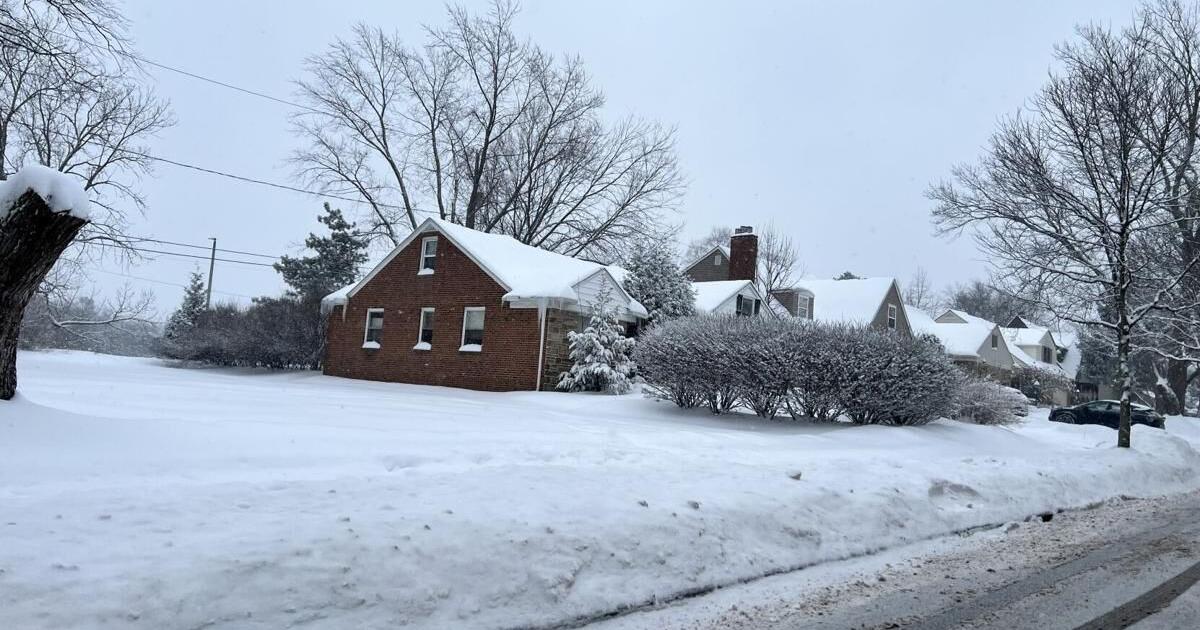
Three lots of property on Edgewood Road, 2547, 2555 and 2561, are rezoned from a U-1 single-family residential district to a U-5 public and institutional district, which permits places of worship. The properties at 2555 and 2561 Edgewood Road contain residential homes, while 2547 is an empty lot.
“Bais Avrohom appreciates all the efforts the city made to find a solution to enable the rezoning and continued operation of Bais Avrohom on Edgewood Road,” Aaron Evenchik, an attorney with Hahn Loeser & Parks LLP in Cleveland who represents some of the city’s home synagogues and has been assisting Bais Avrohom through the process, told the Cleveland Jewish News.
“It was a collaborative effort. We had three different site plans we put in front of the city, and the city worked with us to find one that worked and included enough parking, which addressed the major concern of the neighbors.”
The rezoning clears the way for Bais Avrohom, which has operated its shul out of 2555 Edgewood Road for over six years, to expand the house at 2561 Edgewood Road into a 2,250-square-foot synagogue and demolish 2555 Edgewood Road and use that along with the property at 2547 Edgewood Road for parking spots.
The passage ends a two-year process by Bais Avrohom, which first proposed the rezoning in 2024. Council had twice previously voted down attempts by the shul to turn the lots into a synagogue due to variances that went against the city’s zoning code.
The shul purchased the vacant lot at 2547 Edgewood in the spring and because of the additional land, Bais Avrohom was able to increase the number of parking spaces on the property from 10 to 24, which meets the 14-spot minimum that a U-5 requires in Beachwood, and will increase the size of the lot from 13,200 square feet to 20,400 square feet, exceeding the 18,000-square-foot requirement.
“We were able to cooperatively work with the owner of that (vacant) lot to get it and create a site plan that worked well for the synagogue, the city and the neighbors,” Evenchik told the CJN. “There were lots of meetings, lots of conversations, and we’re very appreciative, especially, of the feedback we got from George Smerigan, the city’s planning director. He really helped give us guidance on what we needed to help get it across the finish line.”
Across the rezoning proposal process, several residents who live on Edgewood Road voiced concerns about the parking situation surrounding the shul, saying during public comment sessions that members park illegally and cause traffic disruptions. Others said they didn’t like the idea of a synagogue in a residential neighborhood because it wouldn’t match the look of the area.
During the Sept. 8 meeting, Evenchik, Rabbi Nissim Abrin, spiritual leader of the shul, five congregants of Bais Avrohom and seven community members, a majority of them Jewish, spoke in support of the rezoning. A resident of Edgewood Road said he supports the shul, but made the suggestion of having the entrance and exit of the synagogue at Fairmount Boulevard instead of in the neighborhood, with a different resident voicing support for that idea.
No resident took to the stand on Sept. 8 to voice opposition to the rezoning.
Bais Avrohom responded to residents’ concerns during meetings, saying that the exterior design will have residential character and that the parking spaces will alleviate the amount of cars parking on the road as members can now park in the lot.
After the passage, Isaacson addressed the room and said he “agonized” over the decision, and that he had received hundreds of emails, numerous telephone calls and been stopped in the street to discuss this rezoning.
Isaacson said he ultimately chose to pass the rezoning because of his oath to follow the country, state and city’s constitution, charter and laws, and his expectation that the shul will continue to follow that during the process. but said that rezoning does not give any applicant the “freedom to be a bad neighbor.”
“Edgwood is a very diverse street full of people with different backgrounds and beliefs, but people who stand together behind the shared Beachwood values of respect and support for their neighbors and neighborhood,” he said. “Time and again, the residents of Edgewood have made their expectations clear, and I expect the shul, as their newest neighbor, to share those values and to earn the neighborhood’s trust and respect.”
Stern said at the meeting that as the construction process starts on the shul, the neighbors need to hold one another accountable.
“There were reports of people parking in the street during snowbans and individuals parking in private driveways,” she said. “The real life experience sometimes conflicts with the opinion of the majority. Please hold one another to account. If you see bad behavior among your constituents, fellow neighbors or visitors who maybe don’t know our parking restrictions and rules, please enforce them amongst yourselves. We know that our law enforcement is always available to protect the safety of visitors and shulgoers. We look forward to welcoming you as good neighbors and good stewards for our community.”
Publisher’s Note:
Aaron Evenchik is a member of the Cleveland Jewish News Foundation Board of Directors.