 Cleveland Jewish News1 hour ago
Cleveland Clinic and Congregation Mishkan Or will host “The Power of Knowing: Breast Health Conversations” from 9:45 to 11:45 a.m. Oct. 25 at Congregation Mishkan Or at 26000 Shaker Blvd. in Beachwood.
Cleveland Clinic experts will discuss the latest information on breast cancer prevention, hereditary cancer risk, treatment and community support resources. The event seeks to raise awareness of the increased risk of hereditary breast cancer among women of Ashkenazi Jewish descent. Attendees will also hear from Rachel Gross, co-owner of Bialy’s Bagels and a breast cancer survivor, who will share her experience following a 2025 diagnosis.
To RSVP, visit clevelandclinic.org/healthconvos. The event is free and open to the public.
 Cleveland Jewish News2 hours ago
At 92 years old, Rina Frankel still saw the best in humanity. Despite the tragedies of her youth, her optimism and belief in the “greater good” led her to live a life of impact and importance.
But when posed with the question, “What do you still want to accomplish,” her answer revealed that her unceasing zest for life still remained.
Having already touched countless lives through her role as a community leader, philanthropist, educator and advocate, Frankel’s answer was simple – “I still have so many young people that I need to influence and educate.”
Frankel, a Holocaust survivor and longtime leader in the Cleveland Jewish community, died on Oct. 17, leaving behind a legacy of resilience, service and dedication to Jewish life and education. She was 92.
“She still felt that she had more to do, especially in light of what’s going on right now in the world,” Sharon Kotlin, Frankel’s daughter, told the Cleveland Jewish News.
Born in Poland on June 26, 1934, Frankel fled Nazi-occupied Poland with her family, only to be sent to a labor camp in Siberia by Soviet authorities. After the war, she met her husband, Samuel, in Israel and the couple made Cleveland their home, where they raised their family of five and devoted their time to Holocaust education and advancing the Jewish community, both locally and nationally.
“She learned a new language and she mastered it,” Koltin said. “She raised five children and she went to school. She got her undergraduate degree because she always felt robbed that she wasn’t able to do that as a younger person.”
Frankel received an undergraduate degree from Ursuline College in Pepper Pike and a master’s degree from the Cleveland College of Jewish Studies. She and Samuel were both awarded honorary doctorate degrees from the College of Jewish Studies and were devoted to The Hebrew University in Jerusalem, establishing scholarship programs to help underprivileged students attend and a research lab to help cure diabetes.
“Education was always important to her,” Koltin said. “Even until recently, I would call her and she would say ‘I’m in the middle of a class’ or ‘I’m listening to a lecture, I’ll call you right back.’ She just had a love for learning.”
Together with Samuel, her husband of over 65 years, who himself was a Holocaust survivor who died in 2019, Rina Frankel was a founding member of the U.S. Holocaust Memorial Museum in Washington, D.C.
“They made a point to take us to the museum and to take us to the National Days of Remembrance,” Kotlin, who recently co-chaired the museum’s Chicago luncheon with her husband, said. “It wasn’t just something they did, they really wanted us to experience and be a part of that.”
For her efforts, Frankel was awarded the National Leadership Award at the museum’s 15th annual Cleveland luncheon earlier this year, on May 7, at Landerhaven in Mayfield Heights.
“I feel very fortunate to have known Rina, and her late husband, Sam, for many years,” Sara Bloomfield, director of the U.S. Holocaust Memorial Museum in Washington, D.C. and a former Shaker Heights resident, told the CJN. “They were among the museum’s earliest supporters. Rina’s dedication to Holocaust education was inspiring and it was a privilege to honor her at our annual Cleveland luncheon this past May. She understood the importance of reaching new generations and was a uniquely powerful voice about why the lessons of the Holocaust were so critical for all Americans.”
Frankel also served as president of NA’AMAT and was on its national board, president of Cleveland Hebrew Schools and vice president of Park Synagogue and Kol Israel Foundation. She also chaired the Women’s Division of Israel Bonds and was on the boards of Cleveland College of Jewish Studies and Aaron Garber Library.
“She wanted to be involved as much as she could be,” Koltin told the CJN. “She really felt that she had something to offer and a unique perspective.”
That perspective earned her honors by Israel Bonds and recently by Hebrew University.
On Oct. 8, a little less than a week before her death, the CJN announced Frankel would be honored as a member of the 2026 class of Cleveland Jewish News 18 Difference Makers.
Described by her children as someone who always “found the good in people,” Frankel is survived by her children, Ann Abrams (Marc), Marilyn Oif (Kenneth), Steve Frankel (Dan Ricketts), Donald Frankel (Lori) and Sharon Koltin (Allan), as well as 11 grandchildren and 10 great-grandchildren.
Services were held Oct. 19 at Park Synagogue in Pepper Pike.
Cleveland Jewish News2 hours agoFour Bronx officials condemned Pal-Awda for targeting Jewish community gatherings in Riverdale and said that Jewish families should be able to meet without fear.
In a joint statement, Rep. Richie Torres (D-N.Y.), state Assemblymember Jeffrey Dinowitz, Bronx Borough President Vanessa Gibson and New York City Councilmember Eric Dinowitz said the group previously boasted about forcing a Jewish community event out of Queens and had now turned its attention to Riverdale.
“Pushing anyone out of public life in our city because of their faith is nothing to celebrate,” the officials said. “The Bronx will not tolerate it.”
The statement described efforts to identify and drive Jewish gatherings out of neighborhoods as an attack on Jewish New Yorkers. It added that Riverdale is one of New York’s vibrant Jewish communities.
Cleveland Jewish News3 hours agoRepublican gubernatorial candidate Bruce Blakeman pledged to confront antisemitism and challenge New York City Mayor Zohran Mamdani’s policies if elected governor. He also accused Gov. Kathy Hochul, a Democrat, of failing to confront anti-Jewish hostility adequately.
“There is no place for antisemitism anywhere in America, but especially here in New York City,” Blakeman said on Wednesday at Temple Emanu-El, a Reform congregation in Manhattan.
About 350 people, many wearing kippahs, attended the discussion, titled “Bruce Blakeman: The race for New York’s next governor.” Blakeman received loud applause at the event, moderated by Eric Levine, a Republican Jewish Coalition board member.
Rabbi Joshua Davidson, senior rabbi of Temple Emanu-El, introduced the event by underscoring the importance of the gubernatorial race to Jewish New Yorkers and the obligation for Jews to vote.
The synagogue invited both Blakeman and Hochul, but Hochul’s campaign couldn’t accommodate the invitation, the synagogue said.
A spokesman for Hochul’s campaign told JNS that “while the schedule for this event didn’t work, the governor has enjoyed numerous meetings with Rabbi Davidson and visits to the congregation over the years and looks forward to more in the future.”
The governor also looks forward to “building on her work passing a historic buffer zone bill to protect synagogues and houses of worship, investing record funding to crack down on hate crimes and launching a nation-leading plan to combat antisemitism statewide,” her campaign said.
Blakeman, the Republican Nassau County executive seeking to unseat Hochul, repeatedly criticized Mamdani’s approach to Jew-hatred and called him “the most divisive mayor in my lifetime.”
“The first thing that he did as mayor, with all the issues in the largest city in the United States, was water down the definition of antisemitism,” Blakeman said.
Blakeman said that the mayor’s approach to antisemitism reflects a broader political divide over how Jews and supporters of Israel are viewed in progressive spaces. He criticized what he said is an oppressor-versus-oppressed framework, which can cast people who are white, male, Jewish, straight and Zionist as “oppressors.”
“I guess I’m in trouble,” he said, drawing laughter from the audience.
He also accused Hochul of failing to demonstrate the leadership that he believes is needed to address anti-Jewish hostility.
“She doesn’t have the courage and the backbone to stand by convictions that every governor has had in the last 100 years,” he said.
Blakeman contrasted his approach with the state’s response to antisemitism. When anti-Israel protesters demonstrated outside an Israeli real estate expo near a synagogue in Nassau County, he deployed police units and the protest ended within 15 minutes, he said.
He would have approached anti-Israel encampments at Columbia University in the same way, he said.
“I would not have tolerated this. It would have been over,” he said. “I would have sent every asset of the state to end it immediately.”
Blakeman also discussed the economy, taxes and education and said that high costs and state policies were making New York less affordable. He criticized progressive economic policies.
“Socialism is nothing more than shared misery,” he said.
He also said that he supports school choice and charter and religious schools, as well as vocational training as an alternative path for students who do not pursue a traditional four-year college education.
He decried state policies that he believes contribute to New York’s high cost of living, including taxes and energy costs. He said that making the state more affordable would require changes to its approach to spending and economic development.
Audience members asked him how a governor could influence policy in New York City under Mamdani’s leadership.
“Actually, the governor has tremendous power over the city of New York,” Blakeman said.
Asked if he would fire Mamdani, Blakeman said that he would not remove an elected mayor. Instead, he would use the governor’s power to counter policies that he believes could harm the city’s economy, public safety and Jewish residents.
If Mamdani committed an egregious act, he would “take the drastic measures necessary to protect this city,” he said.
Cleveland Jewish News3 hours agoIf Democrats take control of the House or Senate, there would likely be fewer probes of Jew-hatred on campus at the House Education and the Workforce Committee or the Senate Committee on Health, Education, Labor and Pensions, according to experts.
“A Democratic takeover would likely result in a substantial reduction in targeted congressional investigations into antisemitism,” Karen Paikin Barall, chief policy officer of the Louis D. Brandeis Center for Human Rights Under Law, told JNS.
The Brandeis Center is “concerned that legislation and initiatives specifically designed to combat antisemitism could face organized opposition, particularly when associated with Trump administration policies,” she said.
“Antisemitism enforcement and oversight could increasingly become points of partisan conflict, with efforts to combat antisemitism characterized as extensions of the administration’s political agenda rather than civil rights priorities,” Paikin Barall told JNS. “This political environment could discourage congressional committee staff and federal agency personnel from pursuing investigations or enforcement actions involving antisemitism.”
Mark Goldfeder, director of the National Jewish Advocacy Center, told JNS that “the House gavel changes everything, and the Senate gavel changes less than people assume.”
House Republicans choose committee leaders via the Steering Committee, a “leadership-weighted body that interviews the candidates and sends a recommendation to the full Republican conference, which ratifies it,” according to Goldfeder.
Republican committee leaders are typically limited to three consecutive terms, which is why Rep. Virginia Foxx (R-N.C.) relinquished the committee chair to Rep. Tim Walberg (R-Mich.) in January 2025, he said.
Gerard Filitti, senior counsel at the Lawfare Project, told JNS that “seniority counts, but does not decide committee leadership” when it comes to determining committee leaders for both parties in the House.
Goldfeder told JNS that Foxx, as committee chair, “ran the investigation that defined this period.” Her December 2023 hearing ended Liz Magill’s and Claudine Gay’s University of Pennsylvania and Harvard University presidencies, respectively, he said.
“In February 2024, she issued the first subpoena to a university in the committee’s 157-year history, to Harvard, after what she described as four unsatisfied document requests and a production that was 40% material already in the public domain,” Goldfeder told JNS.
Foxx increased the investigation to other major universities, and in October 2024, her staff released a report finding that school “administrators treated antisemitism as a public relations problem, bargained with encampments and let faculty derail discipline,” he said.
The report found that the universities likely violated Title VI of the 1964 Civil Rights Act.
Walberg expanded Foxx’s investigation to other universities and to professors and organizations like the National Education Association and American Psychological Association and student groups, according to Goldfeder.
He also marked up bills aimed at “dismantling” the U.S. Department of Education, Goldfeder told JNS.
Paikin Barall of the Brandeis Center told JNS that Foxx championed “greater transparency of foreign funding to universities” through, among other things, the DETERRENT Act, which implements lower reporting thresholds for colleges and universities to disclose sources of foreign funding.
The bill, formally the Defending Education Transparency and Ending Rogue Regimes Engaging in Nefarious Transactions Act, has stalled in the Senate.
Paikin Barall also cited Walberg’s expansion of the investigations into K-12 schools, including the School District of Philadelphia and the Berkeley Unified School District.
The committee released a report on Wednesday stating that the districts, which have 205,000 students in 350 schools combined, have become infested with antisemitism and “radical activism.”
House Democrats also select committee leaders through a steering committee, and their caucus votes to ratify them, according to Filitti.
He thinks Rep. Bobby Scott (D-Va.), the panel’s ranking member, is likely to become chair of the education panel if the Democrats win, since he has served as the Democratic ranking member on the committee since 2015.
Paikin Barall believes that Scott will have to compete with Reps. Suzanne Bonamici (D-Ore.) and Jahana Hayes (D-Conn.) for the position, she told JNS.
Scott has opposed efforts to incorporate the International Holocaust Remembrance Alliance’s working definition of Jew-hatred into federal enforcement and “prefers a broader civil rights approach and may be less receptive to advocacy focused specifically on the Jewish community without also addressing other communities, including Muslims and LGBT individuals,” Paikin Barall told JNS.
Filitti told JNS that Scott has “shown open hostility” to the committee’s Jew-hatred investigations, and the congressman has stated that “the committee may not be the appropriate venue for campus antisemitism” and criticized the committee for not holding “hearings on racism, Islamophobia or sexism.”
Scott has also opposed the Antisemitism Awareness Act and a bill opposing the movement to boycott Israel, Filitti said.
The Antisemitism Awareness Act, which passed the House during Foxx’s tenure as chair but stalled in the Senate, requires the U.S. Department of Education to use the IHRA definition of Jew-hatred.
“With Scott as chairman, expect a major setback in Congress’s efforts to enforce the civil rights of Jewish Americans, the hearings on universities and K-12 stop, the majority staff reports stop and the committee becomes weaponized against the Trump administration,” he told JNS.
Goldfeder agreed. Scott has “repeatedly” said he would not continue the committee’s campus Jew-hatred investigations and claimed that the Trump administration was “punishing universities without investigating them,” he said.
Scott wrote a letter to Walberg asking him if he would open an investigation into Jew-hatred in College Republicans chapters and stated that the U.S. Department of Education, not the committee, is the proper venue for such investigations, Goldfeder said.
Bernie Sanders likely to take over in Dem-majority Senate
In the Senate, parties elect committee members by resolution, “but each conference settles its own slate,” according to Goldfeder.
“Republicans have, since 1995, let the Republican members of each committee choose their chair by secret ballot, subject to conference approval, and they limit a senator to six years as chair and a separate six as ranking member,” he told JNS.
Sen. Bill Cassidy (R-La.), chair of the Senate Committee on Health, Education, Labor and Pensions, lost the primary in May. If Republicans maintain control of the Senate, Sen. Rand Paul (R-Ky.) would be next in seniority on the committee, but it’s “unclear” if he would give up his current position as chair of the Homeland Security and Governmental Affairs Committee, according to Paikin Barall.
Sen. Roger Marshall (R-Kan.) has “expressed interest” in becoming the chair, she said.
Paul has opposed the Antisemitism Awareness Act over free speech concerns and put forth an amendment that would have “gutted it,” Paikin Barall told JNS. Marshall came around to supporting the bill after Cassidy added an amendment addressing free speech concerns, she said.
“Marshall has demonstrated an interest in addressing campus antisemitism and holding institutions accountable,” she told JNS. “Paul’s strong emphasis on limiting federal authority and protecting speech could present challenges for advancing some of our priorities, including Title VI enforcement and stronger university oversight.”
Filitti told JNS that Cassidy, as chair of the panel, “convened the Senate hearing on campus antisemitism that Bernie Sanders had refused to hold when he had the gavel.”
“He also opened an investigation into American Muslims for Palestine and brought the Antisemitism Awareness Act to its first Senate markup,” he said.
Goldfeder credited Cassidy with convening the hearing and holding markups on the Antisemitism Awareness Act and the Protecting Students on Campus Act, the latter aimed at making it easier for students to file Title VI complaints.
But the bills didn’t make it out of committee after “Sanders, with Rand Paul supplying the decisive Republican vote, attached four amendments framed as speech protections for anti-Israel protesters” to the Antisemitism Awareness Act in April 2025, Goldfeder said.
“The committee’s two-hour clock ran out before Republicans could get back to the room,” he told JNS. Cassidy hasn’t brought the bills back to a vote since then, he said.
Senate Democrats “go by committee seniority, ratified by the caucus, with no term limits,” Goldfeder said. “The binding constraint on their side is that a senator leads only one major committee at a time.”
Sen. Patty Murray (D-Wash.) left her position as chair of the committee to chair the Senate Appropriations Committee in 2023, which led to Sen. Bernie Sanders (I-Vt.) chairing the Senate education panel.
Paikin Barall told JNS that if the Democrats take the Senate, Sanders would likely be the panel chair due to his seniority status, and Murray, despite her previous experience as chair, “would not automatically regain the position.”
If Sanders becomes the chair, he would “likely shift the committee’s focus toward free speech, academic freedom and protections for campus protesters,” Paikin Barall said.
Filitti told JNS that Sanders is likely to be the chair if the Democrats win. Sanders “failed to hold a single hearing on campus antisemitism in the 15 months he held the gavel of the HELP committee after Oct. 7, despite bipartisan requests that he do so,” Filitti said.
“He led amendments that stalled the Antisemitism Awareness Act, forced Senate votes to block arms sales to Israel and demanded an end to U.S. support for the Israeli government alongside the passage of Medicare for All,” he told JNS.
“We can expect Sanders to close the investigation into American Muslims for Palestine, continue to ignore Jew-hatred on campuses and use HELP to push medicare-for-all” and to go after Robert F. Kennedy Jr., U.S. secretary of health and human services, and the agency he leads.
When Murray was the panel chair, she was “reluctant to recognize that anti-Zionism can constitute anti-Semitism,” Paikin Barall told JNS.
Murray has also “generally emphasized broader civil rights protections, including LGBTQ rights and Islamophobia, rather than targeted antisemitism investigations and opposed efforts to incorporate IHRA into federal enforcement,” Paikin Barall said.
The Senate committee under the Democrats would “treat the campus antisemitism file as an academic freedom file, run its oversight at the administration’s funding cuts rather than at the universities and leave the Antisemitism Awareness Act, the DETERRENT Act and the Protecting Students on Campus Act where Cassidy left them, minus the pretense of a pending vote,” Goldfeder told JNS.
“Bill Cassidy leaves the Senate in January no matter who wins in November, and the HELP Committee has already shown us what it does with antisemitism bills when Bernie Sanders holds the pen,” he said.
Cleveland Jewish News3 hours agoTulane University canceled an in-person lecture, slated for Thursday night, with Dr. Salman Khan, associate professor of medicine at Columbia University, titled “Israel’s weaponization of infectious diseases in Gaza.”
The event was planned by student groups. Organizers shared a letter from the private New Orleans university, in which it wrote that “due to heightened safety concerns, the university has determined that the hybrid format of your event this evening will need to shift to a fully virtual format, without an in-person, on-campus component.”
The university wrote that it received “thousands of concerns that have escalated significantly, including threats of disruption and counter-activity that could inhibit the safe delivery of your program,” according to the letter that organizers posted. (JNS sought comment from Tulane.)
The school promised to reimburse the groups for costs of food for the event, according to the letter.
Palestine Solidarity Coalition and the Minority Association of Pre-Med Students still plan to live-stream the event, according to organizers.
The lecture faced backlash for promoting Jew-hatred and antisemitic tropes about Jews spreading disease and poisoning wells in Europe, which led to pogroms and mass slaughter of Jews.
Organizers accused the school of “engaging in blatant viewpoint discrimination” and asked supporters to email the university.
On Wednesday, Susan Tuchman, director of the Center for Law and Justice at the Zionist Organization of America, asked Tulane to “publicly condemn the program with Dr. Khan as hateful, antisemitic and against the values of the university and let its sponsors know that they can host him elsewhere, without the imprimatur or support of Tulane University.”
Tuchman asked the university to “cancel tomorrow’s program, since it will encourage antisemitism, create fear and worry among Jewish students and violate Tulane’s values to build a welcoming and respectful community, engage collaboratively and pursue academic excellence.”
She also recommended the school “encourage the sponsorship of campus programs that promote the truth about Israel and the war in Gaza.”
Cleveland Jewish News3 hours agoAn Orthodox Jewish man is in stable condition after being stabbed on Wednesday evening in the Diamond District of midtown Manhattan. Police are investigating the attack as a possible hate crime.
Police told the Jewish Telegraphic Agency that the NYPD’s Hate Crimes Task Force is investigating the incident as a possible antisemitic attack, and Manhattan Shomrim — the Jewish community watch group — has asked people to share footage as police search for the suspect. No arrests have been made.
The victim was identified by police as a 26-year-old man, and Orthodox Jewish outlet COLLive identified him as a resident of Crown Heights, the neighborhood that is home to the Chabad-Lubavitch Hasidic movement’s headquarters.
He was taken to Bellevue Hospital in stable condition. Police said they were called at about 5:50 p.m. on Wednesday after the man was stabbed in the back with “an unknown sharp object” on 47th Street near Fifth Avenue. ABC7 reported that the victim told investigators he believed he was stabbed with a needle or syringe.
The attack comes as Jewish New Yorkers have been targeted in more than half of the hate crimes committed in New York City this year, despite making up about 12% of the city’s population.
In July, an assailant stabbed two men on the Upper West Side, including one who was leaving a synagogue, while yelling “Allahu akbar,” and was charged with committing hate crimes.
--
The post Orthodox Jewish man stabbed in midtown Manhattan appeared first on Jewish Telegraphic Agency.
Cleveland Jewish News3 hours agoThe House Education and Workforce Committee’s recent report about Jew-hatred in the Berkeley Unified School District reflects issues in the district that the community has raised for years, Bay Area Jewish groups told JNS.
The report stated that the district, which serves 9,410 students in 20 schools, has collaborated with the Liberated Ethnic Studies Model Curriculum Consortium, which the report described as “an ethnic studies consulting group that promotes politicized curricula.”
The partnership has “resulted in lessons littered with antisemitic resources along with the activist ideology that fuels contemporary antisemitism,” according to the report.
The report also stated that the district has “circulated resources that incite antisemitism” and approved a lesson set whitewashing terrorism, and district staff and students have partnered with and raised money for the Middle East Children’s Alliance, which has alleged ties to the Popular Front for the Liberation of Palestine terror group. (JNS sought comment from the district.)
Oleg Ivanov, executive director of StandWithUs Northern California, told JNS that the report highlights “issues that we have seen in the BUSD for many years, which have led many Jewish families to pull their children from the district.”
The district’s units and resource guides cite the Council on American-Islamic Relations, an unindicted co-conspirator in the 2007 Holy Land Foundation trial on terror financing.
The units and guides also cite the Arab Resource and Organizing Center, a San Francisco nonprofit, whose executive director has stated that “bringing down Israel really will benefit everyone in the world” and lauded the Oct. 7 attacks, Ivanov said.
CAIR blamed Israel for being attacked shortly after Oct. 7, and the Biden administration removed it as an adviser on the national strategy to combat Jew-hatred after initially listing it.
The district’s citations of CAIR and the center show “that radical antisemitic ideology has penetrated deep into the district's classrooms,” Ivanov told JNS.
The report “found that district employees collaborated with Middle East Children's Alliance, which has alleged ties to the terrorist organization PFLP, and used Teach Palestine, which teaches children to glorify terrorism and ‘martyrdom,’” he said.
“This mountain of damning evidence shows that there is much work that needs to be done before antisemitism is rooted out of the district and Jewish families can feel safe sending their children there again,” Ivanov told NS.
Adriana Lombard, director of K-12 education at the Jewish Community Relations Council Bay Area, told JNS that the committee’s report reflects “a repeated pattern we’re seeing at schools.”
“The erasure of Israel and Jewish historical connections to the land, minimization of the Holocaust and framing Jews as oppressors all perpetuate antisemitism,” Lombard said. “We are grateful to the Jewish families and educators in Berkeley who raised these concerns and have worked tirelessly to advocate for change.”
“It is critically important we work together to ensure Jews are accurately represented, their identities respected and all students receive an education grounded in historical accuracy and critical thinking,” she told JNS.
Tali Klima, spokeswoman for the Bay Area Jewish Coalition, told JNS that “what the committee’s report highlighted, and the community has been warning about for many years, is that on the topic of Israel-Palestine, BUSD has made no attempt to be even-handed.”
“District and school staff are fully committed to, and indoctrinating in a biased, oversimplified and dangerous ideology—that Israel is the evil oppressor and Palestinians the righteous oppressed,” she said.
“They explicitly promote student activism as young as elementary school, and collaborate with controversial groups—like CAIR and MECA—that have extremist agendas and alleged ties to terrorist organizations,” she said. “It’s no wonder BUSD has captured the attention of Congress for its flagrant and skyrocketing antisemitism.”
“It is time for radical change from the very top and all the way down the line in BUSD elected officials and staff,” she said. “If family complaints cannot make a difference, we hope that federal oversight will.”
The coalition urges Congress to “make the district fully accountable for its decisions and provide real consequences that lead to actionable change, because the practices noted in the report from several years ago continue to this day at BUSD schools,” she said.
Sarah Levin, executive director of the nonprofit Jews Indigenous to the Middle East and North Africa, told JNS that the report’s findings are “deeply disturbing.”
The “reported collaboration between Berkeley Unified School District employees and the Middle East Children’s Alliance” is particularly unsettling, according to Levin.
“The involvement of an organization facing serious allegations of connections to the Popular Front for the Liberation of Palestine, a U.S.-designated terrorist organization, in educational activities involving California public school students demands immediate intervention,” she told JNS.
“School districts must be held accountable for the organizations they partner with, the materials they present to students and the hostile environments they risk creating for Jewish children,” she said.
Levin called for “an independent investigation into these reported partnerships, full transparency about the development of these curricula and immediate corrective action wherever violations are substantiated.”
Cleveland Jewish News3 hours agoThe U.S. Justice Department said that it reached an agreement with Atlantic Beach, N.Y., on Wednesday to revise zoning rules that subjected religious institutions to more requirements than it imposed on comparable secular gathering places.
The agreement resolves allegations that the violence violated the Religious Land Use and Institutionalized Persons Act, a federal law that protects religious groups from discriminatory land-use regulations.
The dispute followed a private lawsuit brought by Chabad of the Beaches, an Orthodox Jewish organization, that challenged the village’s denial of its application to use vacant commercial property for a religious facility.
The Justice Department said that the village’s zoning code required religious or educational places of assembly to obtain a special-exception permit from its Board of Appeals, but nonreligious gathering places were not subject to the same requirement.
Under the settlement, Atlantic Beach will revise its zoning ordinance to “remove the special exemption requirement for places of worship,” the department said.
The village also agreed to train officials and employees about the federal law and to establish a procedure for receiving and resolving complaints alleging violations of the Religious Land Use law.
Harmeet Dhillon, assistant U.S. attorney general for civil rights, said that the law requires religious gathering places, including synagogues, churches and mosques, to receive equal treatment under zoning rules.
Joseph Nocella Jr., U.S. attorney for the Eastern District of New York, stated that the department and his office were committed to ensuring religious institutions receive equal treatment under the law.
Cleveland Jewish News3 hours agoA version of this piece first ran as part of the New York Jewish Week’s daily newsletter, rounding up the latest on politics, culture, food and what’s new with Jews in the city. Sign up here to get it in your inbox.
What you need to know today
Orthodox man stabbed in the Diamond District. The stabbing of a member of the Chabad-Lubavitch Hasidic movement is being investigated as a possible hate crime by NYPD’s Hate Crimes Task Force. The man is in stable condition after being stabbed yesterday evening in midtown Manhattan.
Ritchie Torres, Bronx leaders say they ‘will not tolerate’ planned anti-Zionist protest. Anti-Zionist group Pal-Awda announced that it will protest an Israeli real estate event being held in the Bronx’s heavily Jewish Riverdale neighborhood, prompting a handful of local officials last night to warn the groups against it. “Organizing a campaign to hunt down these gatherings and drive them out of our neighborhoods is an attack on Jewish New Yorkers,” reads the letter, which was co-signed by U.S. Rep. Ritchie Torres; City Council member Eric Dinowitz; his father State Rep. Jeffrey Dinowitz and Bronx Borough President Vanessa Gibson. Pal-Awda’s previous protests against Israeli land sale events have been a factor in the push for legislation on protests outside houses of worship.
Jew vs. Jew in South Brooklyn. Amid a tight State Assembly race between two Jewish candidates — the Republican incumbent Michael Novakhov and Democratic challenger Joey Cohen-Saban — Novakhov warned in a recent campaign video that, if he loses, the Republican Party will lose influence in Albany. “Remove one, and you strengthen the very people who work against us, against Israel and against President Trump,” said Novakhov, whose district includes large Sephardic and Orthodox Jewish communities in Brooklyn.
Robert Kraft’s anti-antisemitism gala. Jewish billionaire Robert Kraft, who owns the New England Patriots, pulled in more than $32 million last night with the inaugural gala of his group, the Blue Square Alliance Against Hate, held at the Waldorf Astoria. Guests included Tom Brady, Jon Bon Jovi and CNN’s Van Jones. A number of Jewish leaders attended as well, including NYPD Commissioner Jessica Tisch, City Council Speaker Julie Menin, Anti-Defamation League CEO Jonathan Greenblatt and former UJA-Federation of New York CEO Eric Goldstein, Jewish Insider reports.
--
The post Bronx officials blast anti-Zionist groups’ planned protest in Riverdale appeared first on Jewish Telegraphic Agency.
 Cleveland Jewish News3 hours ago
About one in 40 Ashkenazi Jews carry the BRCA gene – a statistic that is 10 times higher than in the population at large. For those who inherit mutations in BRCA1 or BRCA2, the risk for a variety of cancers, including breast, ovarian, prostate and pancreatic, is heightened, according to a news release.
To further educate the community, B’nai Jeshurun Congregation in Pepper Pike will host a community breakfast and conversation about cancer awareness, heredity risk and resources from 9 to 10:30 a.m. on Nov. 1.
Attendees will hear from a genetic counselor about the BRCA gene and testing, as well as learn about prevention resources such as screening and support through organizations like Sharsharet, which supports families facing breast and ovarian cancer.
B’nai Jeshurun congregants will also share their experiences with cancer and caregiving..
The discussion is sponsored by the B’nai Jeshurun Chesed Committee in memory of Joel Schwarz, who died 11 years ago from pancreatic cancer. Rachel Schwarz, Chesed Committee chairperson and Joel’s former wife, organized the initiative to raise awareness in the Jewish community about the risks associated with the BRCA gene.
The event is free and registration is encouraged by Oct. 29 at bit.ly/3WBjYqH.
Cleveland Jewish News3 hours agoSkyler AJ Rose, 22, of Ogden, Utah, was indicted on Wednesday on five federal counts, including attempting to commit a hate crime, after investigators allegedly linked him to threats against a synagogue and found six functional pipe bombs in his home.
Rose also faces charges of possessing an unregistered destructive device, threatening to kill or injure people and destroy a building with explosives, and receiving and possessing child sexual abuse material, the U.S. Department of Justice said on Thursday.
According to court documents, investigators found searches for “synagogue Ogden” on Rose’s phone from November 2025. He also allegedly used Google Maps to locate a synagogue about three miles from his home. Congregation Brith Sholem, a Reform synagogue that is more than a century old, is the only Jewish house of worship in Ogden. (JNS sought comment from the congregation.)
The following month, Rose allegedly posted multiple threats on social media, including, “Greetings from America. Death to all Jews. I will devote my life to killing you! Heil Hitler!” He also posted “Death to Israel,” according to prosecutors. Another post threatened to blow up a synagogue.
On Dec. 23, officers searched Rose’s home and discovered pipe bombs in his bedroom, prompting the evacuation of his home and neighboring residences. A subsequent search recovered six pipe bombs, an inert device, explosive materials and components that could be used to construct additional bombs, as well as two rifles and ammunition, prosecutors said.
In a detention memo filed on Oct. 21 in the U.S. District Court for the District of Utah, prosecutors argued that Rose should remain jailed pending trial. They argued that he could obtain supplies and build more bombs within days, even under home confinement.
“Defendant poses a completely unmanageable risk of danger to the community,” prosecutors wrote.
Rose was already under state court supervision after pleading no contest to charges stemming from firing a homemade shotgun in public, according to the memo.
At a press conference on Thursday, Harmeet K. Dhillon, assistant U.S. attorney general for civil rights, said that Jews have been targeted by antisemitism and anti-Israel sentiment since Oct. 7.
Rose “openly declared his hatred for Israel and his intent to kill Jews,” she said. “Today’s indictment stops in its tracks an alleged plan to carry out a violent attack on a synagogue.”
Rose’s initial federal court appearance is scheduled for Oct. 23 in Salt Lake City.
Cleveland Jewish News3 hours agoTammy Caputi, a Jewish Democrat who served on the Scottsdale City Council and is now running for the Arizona state House, said on Wednesday that her campaign received antisemitic death threats.
Sergeant Allison Sempsis, public information officer for the Scottsdale Police Department, told JNS on Thursday that the department “was notified of a reported threat directed toward the Caputi campaign over the weekend, as well as an additional message received yesterday.”
“A report was taken regarding the initial threat, and the investigation remains ongoing,” she said. “Detectives are actively following up on investigative leads to help determine the source of the threat.”
Caputi stated that her campaign “received explicit death threats, including antisemitic threats against me and my entire family.”
“This has gone too far,” she said.
One message stated, “I will f***ing kill you and your entire family bloodline you f***ing understand you dumb Jew,” and another stated, “If you keep running for office, I will come to your house and you will regret it. Watch your back,” according to the campaign.
“I knew that running for public office would come with criticism and political disagreements,” Caputi stated. “What I never imagined was having to worry about the safety of my daughters, my family and the volunteers who believe in our campaign.”
“Words have consequences. When political attacks turn personal and hateful rhetoric goes unchecked, it can create an environment where threats and intimidation thrive,” she said.
Rep. Alma Hernandez (D-Ariz.), who endorsed Caputi, stated that she has also “received death threats for being Jewish” and is “angry that Tammy Caputi was targeted for daring to run and for being a Jew.”
Cleveland Jewish News3 hours agoA federal magistrate judge ordered on Thursday that Duncan Fraser MacDonald, a Florida man indicted for allegedly threatening to kill Jews, be held in custody pending trial.
MacDonald waived his right to a detention hearing, after prosecutors sought to keep him jailed, according to an order filed in the U.S. District Court for the Middle District of Florida.
MacDonald, of Clay County, Fla., faces a count of transmitting a threat to injure. He allegedly posted videos on social media displaying guns and threatening to “hunt” Jews.
He also allegedly threatened to “take them out, because the Austrian painter was correct,” referring to Adolf Hitler.
A Jewish community security director alerted the FBI to the videos on Sept. 17, according to the criminal complaint.
Cleveland Jewish News3 hours agoSen. Elissa Slotkin (D-Mich.) on Wednesday marked the third anniversary of the murder of Samantha Woll, a Jewish community leader and former member of her staff who was killed in Detroit in October 2023.
“Today marks the third anniversary of the senseless murder of Samantha Woll, a former member of my staff, a proud Jewish woman and a remarkable community leader whose impact continues to be felt across Metro Detroit and beyond,” Slotkin wrote.
Woll, 40, was president of the Isaac Agree Downtown Synagogue and worked to strengthen relationships between Jewish and other faith communities. She was found fatally stabbed outside her home on Oct. 21, 2023.
Slotkin remembered Woll for her commitment to bringing people of different faiths, backgrounds and perspectives together.
Quoting Woll, the senator wrote, “We do not know where we are going, but we are headed there together.”
“We have a responsibility to live up to those words and continue the work she cared so deeply about,” Slotkin added. She concluded her message with the Jewish expression, “May her memory be a blessing.”
Cleveland Jewish News4 hours agoMark Levine, New York City comptroller, recently told The New York Times that the city would stop investing in Israel Bonds and later clarified that he was bound by his predecessor’s decisions. Still, he has been dropped as a Shabbat dinner speaker at the Altneu Synagogue.
The Shabbat dinner at the Orthodox congregation on Manhattan’s Upper East Side is still slated to feature Tom DiNapoli, the New York state comptroller, who has pledged to maintain the state’s investment in Israel Bonds.
JNS sought comment from Levine and from the synagogue. A source, who is not part of the Altneu leadership but who goes to the synagogue regularly, told JNS that he heard the parting was “mutual.”
Levine “was gonna get grilled” and “would have been raked across the coals,” the source, who spoke anonymously, told JNS. “Neither side wanted an uneasy dinner,” he said that he heard.
The event was originally titled “Shabbat dinner comptrollers: Off the record.” It is now billed as “Shabbat Dinner with Tom DiNapoli.”
Levine, who speaks Hebrew and often talks about his ties to Israel, had campaigned for the office of the city’s top finance executive on a promise to reinstate the Big Apple’s significant investment in Israel Bonds.
That investment had lapsed under his predecessor, Brad Lander, the Democratic nominee for what is considered a safe Democratic congressional seat.
In an interview when he was sworn in as comptroller in January, Levine said that “Israel Bonds have been an extremely solid investment, a part of a diverse global portfolio for New York City’s pension funds.”
“Paying good returns, never missing a payment,” he said. “They’ve been part of our portfolio since the 1970s.”
Yet on Oct. 14, Levine said he would not renew the city’s Israel Bonds investment, based in part on Israel’s economic outlook.
Some $300 million in New York City pension funds reportedly remains invested in Israeli equities, along with a smaller amount in Israeli real estate.
Public pension investment decisions are subject to fiduciary duties, requiring officials and trustees to act in the interests of beneficiaries. Levine’s office serves as investment adviser to the city’s five pension systems, whose boards make asset allocation decisions with input from investment professionals.
Craig McCarthy, City Hall bureau chief at the New York Post, first reported that Levine had been dropped from the synagogue dinner.
Rabbi Benjamin Goldschmidt and his wife, Avital Chizhik-Goldschmidt, a journalist, founded the Altneu in February 2022 after he was fired from nearby Park East Synagogue.
Goldschmidt had been working as assistant rabbi at Park East, and he was expected to inherit the pulpit from longtime synagogue leader Rabbi Arthur Schneier, 96. Schneier, a Holocaust survivor, maintains his position at the Modern Orthodox congregation, which has since created a partnership with Chabad.
 Cleveland Jewish News4 hours ago
At a debate this week with his Republican opponent, state Treasurer Stacy Garrity, Pennsylvania Gov. Josh Shapiro attempted to articulate a position that might appease his party’s anti-Israel left-wing base while at the same time upholding a stand that he has held throughout his life: support for Israel.
His attempt to thread that needle consisted of, on the one hand, reaffirming his strong, even emotional backing for the Jewish state and noting that while Jews were grieving the third anniversary of the Oct. 7, 2023, attacks, they were also under siege from an unprecedented surge of antisemitism. But he balanced that with a denunciation of Israeli Prime Minister Benjamin Netanyahu, who, he claimed, was making it impossible to maintain the U.S.-Israel alliance. He said he hoped that Netanyahu would not be re-elected later this month, thus removing a major obstacle to the presidency for him.
The popular governor is currently cruising toward an easy re-election victory. But most political observers are looking past November and pondering whether his plans to run for president in 2028 will be derailed by what he describes as his “love” for the State of Israel.
We won’t know the answer to that for another 12 to 18 months. But given everything happening in American politics in 2026, it’s hard to make a case for optimism for Shapiro or, more importantly, winning back the Democrats for the pro-Israel cause.
In primary after primary conducted by Democrats, a stance such as Shapiro’s or even far more lukewarm affirmations of support was a kiss of death for candidates. It even applied to those like Rep. Dan Goldman, D-N.Y.: an incumbent, reliably liberal and fervently opposed to President Donald Trump.
Even more important is how the party is rallying around the most notorious and prominent opponent of the Jewish state running in 2026 – Democratic U.S. Senate nominee in Michigan Dr. Abdul El-Sayed. In the last month, he has received endorsements and even financial support from a host of Democrats, including Jews like Minority Leader Chuck Schumer, Sen. Elissa Slotkin and Michigan Attorney General Dana Nessel.
Schumer has also taken the same line about the dispute between Democrats and Israel being about Netanyahu. But for El-Sayed and an entire rising generation of “progressives,” you hear more about the usual litany of blood libels about the Jewish state being guilty of “genocide” than the prime minister.
With El-Sayed still locked in a close race against Republican Mike Rogers, Democrats just rolled out their version of political royalty to help him: former President Barack Obama.
El-Sayed’s obsessive attacks on Israel and its Jewish supporters, as well as demonizing the AIPAC lobby as part of a plot to capture America for a foreign power, haven’t played as well among African-Americans as they do among college-educated liberal whites. And so, Obama campaigned with El-Sayed this week to help shore up that key Democratic constituency for him.
Obama’s intervention on behalf of an openly antisemitic candidate caused little surprise. But it does bring to mind when the breach between Israel and the Democratic Party became a serious problem.
Netanyahu’s domestic political foes, as well as American liberals like Shapiro, have argued for years that it was the prime minister who blew up bipartisan support for Israel. They say it can be primarily traced to the eight years when Obama and Netanyahu were locked in a long-running duel of clashing personalities and policies when the two were leading their respective countries.
That culminated in the unprecedented address Netanyahu gave to a joint meeting of Congress to oppose Obama’s disastrous 2015 nuclear deal with Iran.
Most members of his party were opposed to appeasement of Iran before Obama decided to betray his 2012 re-election promise not to allow Tehran to have a nuclear program. But even though his signature foreign-policy accomplishment would have guaranteed that Iran would eventually get a nuclear weapon rather than preventing it, he was able to make support for the measure a litmus test of loyalty to his party and himself.
Netanyahu was widely bashed for his chutzpah in going to Capitol Hill to make the case against the pact. But he alerted Americans and those in moderate Arab nations to the danger – and to the fact that Israel wouldn’t allow itself to be put in the crosshairs of an Iranian nuclear program that had been preserved by Obama. In doing so, he prepared the way for its reversal by Trump and for the joint military campaigns in 2025 and 2026 by Israel and the United States that destroyed much of Tehran’s nuclear facilities.
The problem with the thesis blaming all of this on Netanyahu’s Republican partisanship, which was laid out in a recent article in The Atlantic by Franklin Foer, is that it is largely false. Throughout the eight years of the Obama-Netanyahu duel, it was Obama and a party that he was increasingly pushing toward the left on a host of issues that was pressuring Israel to make policy moves its voters had elected the prime minister to oppose in terms of the conflict with the Palestinians.
Obama’s obsession with pressuring Israel to accept a two-state solution was always the main source of tension between Israel and the Democrats. He was determined to force acquiescence to the creation of a Palestinian state in Judea, Samaria and part of Jerusalem, while Hamas’ separate terror state already existed in the Gaza Strip. He had repudiated the promises made by his predecessor, former President George W. Bush, to Prime Minister Ariel Sharon in 2004 to help persuade him to withdraw from Gaza. That included America recognizing Israel’s right to retain the areas where Jewish communities existed in Judea and Samaria.
The blowup between Obama and Netanyahu in May 2011, when the latter supposedly insulted the former, is seen as a seminal moment in the breakup between Israel and the Democrats. But few remember that the prime minister’s insistence on defending Jewish rights and Israeli security in Obama’s presence came a day after the president ambushed Netanyahu on the eve of his visit with a speech declaring his intention to pursue negotiations intended to force Israel back to the 1967 armistice lines. That reset American policy to one in which Washington was implicitly endorsing the ethnic cleansing of hundreds of thousands of Jews in the territories to gratify Palestinian ambitions and the division of Jerusalem.
As it turned out, Obama’s efforts to tilt the diplomatic playing field in the direction of the Palestinians produced nothing but a pointless quarrel with Israel, as well as more support at home for Netanyahu from a public that recognized Obama as an unreliable ally. As was true in previous decades and in the years since he left the White House, the Palestinians – both the “moderates” of the Palestinian Authority and the “extremists” of Hamas – had no interest in a two-state solution. Their sole goal was and remains the destruction of Israel, as the support for the Oct. 7 massacre and the genocidal intent of the terrorist organization has demonstrated.
The purpose of dredging up this history is not so much to vindicate Netanyahu as to point out that the criticisms of the prime minister by Democrats like Shapiro – who, as a Pennsylvania state assemblyman in 2008, was an early supporter of Obama and personally reassured me that, if elected, he would be a great ally to Israel – are largely rooted in myths about the events of the last two decades.
At every step, it was Democrats like Obama, former President Joe Biden and others who took positions at odds with the overwhelming majority of Israeli voters, both before and after Oct. 7. Whatever critiques can be made about Netanyahu and his case for remaining in charge, few Israelis are opposing him because he fought back robustly against Hamas, Hezbollah and Iran in a war that many Democrats like El-Sayed, New York City Mayor Zohran Mamdani and others now claim was “genocide.” Nor do they want to topple him because a decade ago and more, he held the line against foreign pressure to withdraw from Judea and Samaria, let alone Jerusalem, to create a Palestinian state from which terrorists could have inflicted the same horrors on communities in central Israel as happened to those near Gaza.
Indeed, in the weeks after Oct. 7, Obama’s qualified statement of support for Israel in the wake of the slaughter of 1,200 men, women and children focused as much on its guilt – and that of its American supporters – as being “complicit to some degree” for the war Hamas started because those parties had refused to empower the Palestinians.
Other Democrats preparing to run in 2028 are listening to the chorus of Israel-bashers on the left, who claim their party lost in 2024 because it was insufficiently hostile to the Jewish state. Speaking in South Korea this week, former Vice President Kamala Harris said that Biden was wrong to tolerate Israel’s “horrific conduct” in Gaza during the war, which is to say that he didn’t save Hamas from defeat. This also ignores the fact that the Biden administration actually worked hard to hamstring the Israeli war effort, slow-walking arms deliveries as well as making false claims that efforts to root the terrorists out of crucial strongholds like Rafah would create massive civilian casualties. This pressure on Israel only strengthened Hamas’s resolve to hang on and keep fighting and undermined their own efforts to end the war and release Israeli hostages.
Harris’s statements weren’t just another instance of her second-guessing her old boss and blaming him and others in the administration for her being defeated by Trump. It was an effort to ingratiate herself with the bulk of Democratic voters who are pro-Palestinian and anti-Israel.
That trend is what made the rise of someone like El-Sayed possible. In the eyes of Israel’s Democratic critics, it isn’t just Netanyahu who is guilty of “genocide.” They view the broad consensus among Israelis, which stretches from right to left in opposing a Palestinian state and insisting on disarming Hamas in Gaza, as responsible for “genocide” and view it as an “apartheid” state.
El-Sayed made it clear this week that he regarded Israel as being as great a threat to the United States as an Iranian state that had been at war with America for 47 years.
The idea that an Israeli prime minister not named Netanyahu could fix relations with a Democratic Party that treats antisemites like El-Sayed as worthy of support is just wishful thinking on the part of people like Shapiro.
That’s because this issue is not just a matter of the positions taken by radicals like El-Sayed and Mamdani or far-left “Squad” members in the U.S. House of Representatives like Rep. Alexandria Ocasio-Cortez, D-N.Y., who is also considering a 2028 presidential run.
Democrats like Sen. Chris Coons (D-Del.), who are perceived as moderates, are also signaling that the alliance with Israel will undergo a “thorough re-examination” in the coming years. Coons, who is in line to become chairman of the powerful Foreign Relations Committee if the Democrats regain control of the Senate in November, is already planning on proposing discriminatory sanctions on Israelis similar to those already put forward by British Foreign Secretary Ed Miliband.
None of this is because, as Foer claims, Netanyahu cultivated ties with Republicans while neglecting to do the same with Democrats. To the contrary, it was the Democrats who have aligned themselves against Israel’s interests and – under the influence of a base that has swallowed the toxic ideas of critical race theory, intersectionality and settler-colonialism – view the Jewish state and Jews in general as “white” oppressors who must be suppressed. The claim that Netanyahu should have rejected the support of conservative Republicans –
who were not under the spell of these ideologies – to placate Democrats is not a serious argument.
Shapiro may hope this will all fade away if Netanyahu is defeated on Oct. 27. But his problem is not just the possibility that Israeli voters will reject his advice. It’s that the same Democratic primary voters who elevated people like El-Sayed, Mamdani and a host of other “progressive” candidates in the last year view those who express “love” for Israel, even if it is qualified with Netanyahu-bashing, as simply beyond the pale.
In the recent past, Shapiro’s combination of political liberalism, largely successful governance and record of electoral success would have put him among the frontrunners in a presidential race. But over the course of the last year, even the most enthusiastic supporter cannot have missed the shift in the opinions of Democrats.
To them, a figure like Gadi Eisenkot, the former Israel Defense Forces chief of staff who is Netanyahu’s principal opponent, is just as much of a “war criminal” deserving of sanctions as the prime minister. No conceivable concessions that Eisenkot could make to the Palestinians will be enough to win back Democratic voters indoctrinated in left-wing ideologies or the officeholders they want to send to Washington to blow up the alliance with the Jewish state.
The remnants of a once-dominant pro-Israel faction of Democrats prefer to blame Netanyahu. But the responsibility is theirs. It was Democrats like Schumer and Shapiro who abetted the rise of Obama and who looked the other way as he set in motion the train of events that created so much “daylight” between their party and Israel. They were the ones who refused to anathematize members of the “Squad,” like Reps. Ilan Omar, D-Minn., Rashida Tlaib, D-Mich., and AOC when they helped legitimize antisemitism and Israel-bashing. And they are now the ones who, in the hope of appeasing their left-wing critics, are bolstering the candidacies of Jew-haters like El-Sayed.
Democrats who are blasting criticism of El-Sayed’s radicalism and Islamist opposition to Israel’s existence as “Islamophobia” while ignoring or downplaying his bigotry aren’t open to rethinking their opposition to Israel. Nor are they likely to embrace a Democratic presidential candidate who is emotionally committed to the U.S.-Israel alliance but just wants a different prime minister in Jerusalem.
Simply put, Shapiro’s pro-Israel/anti-Netanyahu stand is not likely to satisfy a party base that now regards hostility to the Jewish state, along with opposition to enforcement of immigration laws, as the organizing principle of politics in the second quarter of the 21st century. And it’s likely that neither he nor any other Democrat is going to be able to get past that problem with the sort of nuanced position articulated at his debate. The collapse of the pro-Israel wing of the Democratic Party is a liberal failure of nerve and principle that won’t be undone, regardless of who wins the next election in Israel.
Jonathan S. Tobin is editor in chief of JNS – Jewish News Syndicate. Follow him on X (formerly Twitter) at @jonathans_tobin.
 Cleveland Jewish News4 hours ago
Tip O’Neil, the legendary speaker of the House, famously said “All politics is local.” The Gershwins said, “It ain’t necessarily so.”
The elections taking place throughout Israel next on
Oct. 27 and in the United States a week later will reverberate in distant corners of the earth.
The whole world is watching to see what direction voters will send a pair of authoritarian-leaning governments in the coming year.
The future course of the US-Israel alliance is very much on the line. One thing is certain, change is coming. We may not know where it is heading but the days when Israel enjoyed broad bipartisan support in America, when lawmakers competed to see who loved Israel more and billions in virtually unrestricted military assistance passed as if on autopilot are gone never to return.
After weeks of waiting to see which way the polls were going, President Donald Trump gave Prime Minister Benjamin Netanyahu a seemingly reluctant endorsement just nine days before the election. “Anyone” else would be “the wrong leader,” he said. Maybe that’s because, as he has said, he is confident Netanyahu “will do whatever I tell him to do.”
Trump’s rock-bottom approval ratings are largely traced to the Iran war, both for rising inflation and breaking promises to avoid forever wars. Many of his America First and MAGA cult followers blame Netanyahu for pushing him into that costly conflict, which is endangering Trump’s agenda and Republican majorities in Congress.
Change is coming. The devastating and ongoing Israeli attacks on Gaza and the deaths of tens of thousands of Palestinian civilians, have unfortunately overshadowed for many the tragedy of the Hamas massacre of Israelis on Oct. 7, 2023. That translates to calls to restrict or even halt weapons sales as well as technology and intelligence sharing with Israel.
Democrats, who are considered likely to control at least one chamber in the next Congress, have been more outspoken but are not alone in their criticism of Netanyahu and his actions. Increasing numbers have demanded restrictions, including many Jewish lawmakers and legislators with large Jewish constituencies. Expect bipartisan support in the next Congress for restrictions on aid levels and weapons sales.
The Senate is too close to call. If Democrats win, Sen. Chuck Schumer is likely to again be majority leader.
The highest elected Jew ever in American politics, he once called himself Bibi’s best friend on Capitol Hill. That ended more than two years ago when Schumer said his friend had “lost his way” by pressing anti-democratic changes at home and the Gaza war and by being an “obstacle to peace.”
Netanyahu is a strident foe of Palestinian statehood, and all his election opponents in all directions have declared their opposition as well. But the two-state solution retains considerable support on Capitol Hill, in the Jewish community and among Americans generally, who are now, for the first time, telling pollsters they are more sympathetic toward the Palestinian cause than toward Israel.
A further wedge is the spreading violence of Jewish settler terrorism against West Bank Palestinians. Netanyahu dismisses the violence as the work of a few dozen “juvenile delinquents.” He publicly condemns their actions but does nothing.
He dismissed attacks on an American photojournalist and several European diplomats in recent days as “alleged,” suggesting the well-documented reports were part of a “coordinated campaign to smear Israel.” He’s right about Israel being the victim of a smear, but the perpetrators are Bibi and the violent settlers he is protecting.
There were a few arrests of last week’s alleged attackers experience suggests they will soon be released.
A West Bank settler interviewed on CBS’ 60 Minutes said if America is “turning on us…. Israel will find other allies.”
Foreign Minister Gideon Sa’ar has instructed his diplomats to scour the planet for other allies if the United States cuts back. Under Netanyahu’s leadership Israel has plunged from popular to pariah among many nations, notably major Western democracies and those with the advanced economies, technology and intelligence that his country needs.
Israel doesn’t need new allies as much as it needs to shore up old alliances, and for that it needs a new government.
If Israel’s longest-serving prime minister returns for a seventh term, particularly with much the same cast of religious and nationalist extremists, relationships will continue to implode, particularly if Jewish terrorism spreads, the Iran war heats up again, fighting intensifies in Gaza and Lebanon, and the flow of oil remains clogged.
Challenges facing a new centrist government, if there is one, include rolling back Netanyahu’s anti-democratic judicial “reforms,” establishing an independent October 7 commission of inquiry, cracking down on Jewish terrorists and repairing relations with allies and the Diaspora.
Longtime supporters who want to see even modest change are dangerously being targeted in this year’s US elections by groups like AIPAC which demand unquestioning loyalty to Netanyahu’s version of Israel.
Sen. Ted Cruz, R-Texas, told The Wall Street Journal that he is having trouble hiring staff because many young conservatives object to his support for Israel. “I’ve seen more antisemitism on the right in the last two years than at any point in my lifetime,” he said, singling out people like Nick Fuentes and his growing white supremacy movement “Groyperism.”
The foundation of the US-Israel alliance is not, as Netanyahu has preached, white Christian evangelists and the Republican Party. It is principle of a democracy with shared values and a committed Jewish community. If the Jews don’t care about Israel, why should anyone else?
And Israel is losing the Jews. Generations of Americans grew up believing Israel is a democracy that wants to live in peace with its neighbors who just want to destroy it. Now they see many Arabs making peace but they’re not so sure Israel wants it. They see an increasingly authoritarian Israeli government moving to dismantle democracy, waging war on all fronts and losing friends at warp speed. In this election, no one talking about making peace.
The golden age of wall-to-wall bipartisan support for Israel is ancient history, and Netanyahu deserves much of the credit. One former Israeli ambassador and Washington veteran told me he “will do anything to stay in power” and “he knows the damage and simply doesn’t care.” The choice facing Israeli voters is whether they want more of the same deterioration or a leader who can repair damaged bridges and build new ones – with their fellow Israelis, with the Palestinians, with the Diaspora, with America and around the world.
I’ve heard too many Israelis tell me, “You need us as much as we need you. We can get along very well without you.” I wish it were true, but it ain’t necessarily so.
Douglas M. Bloomfield is a former Clevelander, syndicated columnist, Washington lobbyist and consultant. He holds a Bachelor of Arts degree and a Master of Arts degree from The Ohio State University in Columbus.
 Cleveland Jewish News5 hours ago
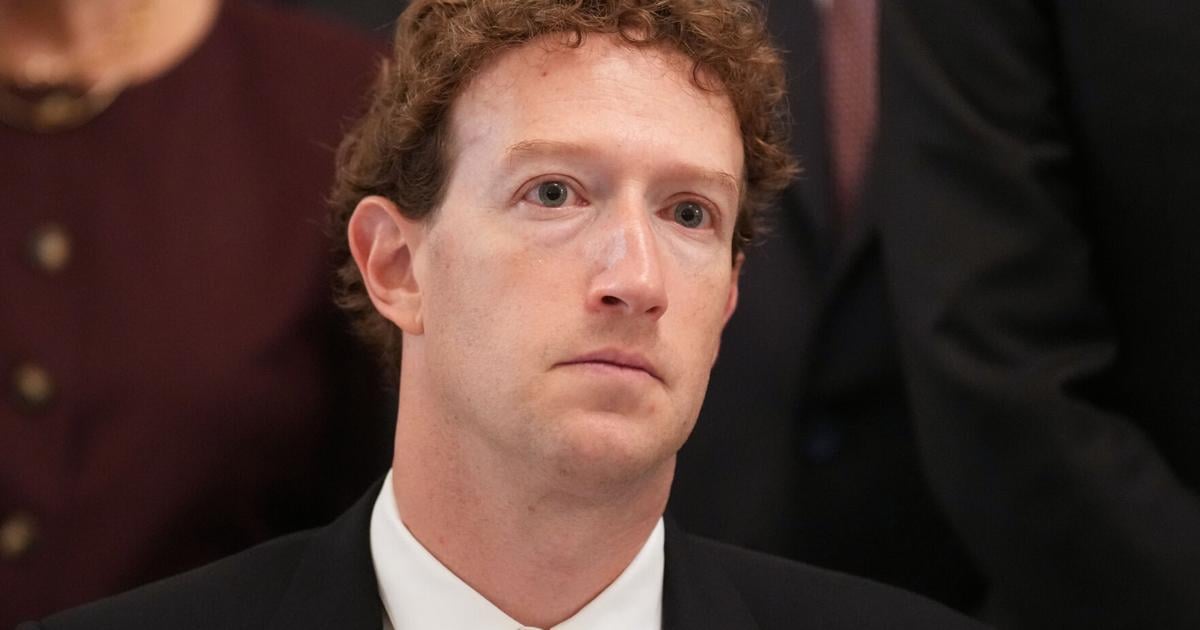
SACRAMENTO, Calif. (AP) — Mark Zuckerberg made a deal with Meta's board to help him pay a proposed California tax on billionaires without losing his ownership stake in the company he founded, according to regulatory filings published this week.
The wealth tax is before California voters in the election that concludes Nov. 3. If passed, the measure would levy a one-time 5% tax on the wealth of Californians whose net worth exceeds $1 billion. Zuckerberg is the sixth-richest person in the world with a net worth estimated at more than $220 billion, according to Forbes. That would put his tax liability at more than $11 billion.
Actions announced by the tech giant on Wednesday will keep Zuckerberg as the majority owner of the company -- and also give him the ability to sell some of a new class of non-voting shares “for any reason,” including to pay potential bills from the wealth tax.
The compromise came after Zuckerberg told the board he was considering selling his Palo Alto home last month in anticipation of the proposed tax. But he later struck the deal and committed to staying in California for eight years, unless “material unforeseen circumstances” arise that make it “prudent or advisable for him to reside elsewhere,” according to the filings.
Meta did not immediately respond to a request for comment on the deal.
A few hundred billionaires live in California, according to the nonpartisan Legislative Analyst's Office. The tax would apply to anyone with a primary residence in the state as of Jan. 1, 2026.
Most of the money would be used to backfill federal funding cuts to healthcare, and 10% of it would go toward education and food-assistance programs. Proponents, including SEIU United Healthcare Workers West and Vermont Sen. Bernie Sanders, say it will help ensure the ultra-rich pay their fair share.
But opponents, including Democratic Gov. Gavin Newsom, have warned it could prompt the state's wealthiest to leave the state. That could cause budget problems down the line because the state relies heavily on the rich for income tax revenue.
SEIU United Healthcare Workers West said the Zuckerberg deal proves them wrong.
“This is the nail in the coffin to months of scare tactics claiming that billionaires are fleeing California," Suzanne Jimenez, the union's chief of staff, said in a statement.
Zuckerberg's deal with Meta offers a glimpse into how the ultrawealthy may be bracing for the tax, which targets the main way they make money — through their investments, instead of by raising taxes on the paycheck they receive from work. Other billionaires have taken a different approach by starting to cut ties with the state, including Google co-founders Sergey Brin and Larry Page.
Brin and other tech moguls and venture capitalists have poured millions into a political committee opposing the wealth tax proposal and backing other ballot measures designed to nullify it. The committee, Building a Better California, has raised more than $333 million, 30% of which has come from Brin. By comparison, the “Yes on 40” campaign has raised $32.7 million.
Beyond securing Zuckerberg’s future in California, Meta's new class of nonvoting shares is intended to boost the company’s ability to raise capital for its investments in artificial intelligence infrastructure, according to the filings.
Zuckerberg has taken a salary of $1 each year as Meta’s CEO since 2013. In its regulatory filings, Meta maintained that he would not receive additional compensation — and argued that Zuckerberg would “effectively be paying to serve as the Company’s chief executive officer while residing in California” if the state’s wealth tax is enacted. The company said the new stock he will be allowed to sell (representing 10% of his overall economic stake in the company) will help mitigate that.
Grantham-Philips reported from Chicago.
 Cleveland Jewish News5 hours ago
The defense team of the man accused in the murder of Aliza Sherman has asked that the case be dismissed, claiming the document used to charge him isn’t a legal indictment and claiming that the state of Ohio has committed “outrageous government misconduct that occurred before the grand jury.”
Gregory Moore’s attorneys, Joseph and Megan Patituce of Patituce and Associates, which has multiple offices in Ohio, submitted the 749-page filing on Oct. 20. The two were retained by Moore following withdrawal from the case of former lead attorney, Jon Paul Rion of Rion & Rion, L.P.A., Inc. in Dayton, citing sensitive material in the proposed filing.
On Oct. 21, Michael C. O’Malley, Prosecuting Attorney for Cuyahoga County, filed a motion requesting that the court strike Moore’s motion to dismiss the case from the record because it said the move is “without merit.”
“Moore has once again filed a pretrial motion to dismiss after the deadline set by the Court,” the motion said. “He neither sought leave to file an untimely motion nor requested relief from waiver. Instead, Moore attempts to circumvent the waiver imposed. ...by recasting his claim as ‘failure to show jurisdiction in the court or to charge an offense.’ But Moore expressly concedes this Court has subject matter jurisdiction over the case and the indictment charges legally cognizable offenses. His actual objections concern alleged defects in the manner the indictment was obtained or prepared, which the Ohio Supreme Court has unequivocally held does not implicate the Court’s jurisdiction. Nor do those alleged defects demonstrate the indictment fails to charge an offense.”
In the Oct. 22 reply brief by Moore’s defense, his attorneys said they are not arguing that the court lacks jurisdiction, but that the cases cited by the prosecution involved defendants who challenged their indictments years after being convicted through appeals or other post-conviction legal proceedings.
O’Malley argued that Moore had “repeated opportunities to examine the indictment and raise objection to its form before the Court’s deadline expired” as he had known about the facts since the inception of the case.
He said that “Moore fails to identify any newly discovered information or previously unavailable evidence that would explain his failure to raise his allegations within the temporal limits set by this Court,” and that law says that objections based on defects in an indictment need to be raised within the court’s deadline unless the indictment fails to show jurisdiction in the court or fails to charge an offense, neither of which are true in the case.
O’Malley said in the motion that the court has previously stricken a defense filing “pleading for failure to comply with its filing deadlines,” and it should do so again.
On Oct. 22, the Patituces filed a reply brief to the strike request, saying it opposes the motion and arguing the motion to dismiss could not have been filed by the deadline, May 1, 2026, because it didn’t receive the grand jury transcripts until June 11, 2026; and that other crucial events, like a state Bureau of Criminal Investigation report, state filings of discovery submissions and new attorneys entering the case, made the deadline impossible to meet.
“The question here is not simply limited to the admissibility of just one piece of evidence but whether there is a grand jury finding behind the charges at all – in other words, does this Court have a valid indictment with valid charges at all, because if it does not, the Court does not have the authority to seat a petit jury and hear the case,” they wrote.
In the Oct. 20 motion, the defense claimed that the state failed to obtain a “constitutionally and statutorily valid indictment” against Moore and, as a result, failed to “charge him with an offense or obtain the constitutionally required authorization to move forward with the criminal process.”
They allege that because the document, filed May 2, 2025, reads “Draft Indictment” on each of the pages instead of saying “A True Bill,” a formal decision by a grand jury that the prosecution has provided enough evidence to show probable cause that a crime was committed, there is no legal grounds for the trial to move forward.
“Our Ohio Constitution requires that a proper indictment be returned with the grand jury’s finding before a matter may proceed and here it does not carry the grand jury’s finding that this is a true bill indictment,” the motion said. “The finding of true bill is a necessary step that cannot simply be ignored or shrugged off as a typo because here not only does the standard county form read ‘Draft Indictment for,’ the words ‘Draft Indictment’ appear at the top of every single page of the indictment.”
The defense said that three earlier indictments against Moore from 2013, 2015 and 2016 were labeled “A True Bill Indictment,” while in this one, “the finding of ‘A true bill’ appears nowhere on the document to evidence what the grand jury found.”
The Patituces said that in the motion that by calling it a “draft indictment,” there is no evidence that the grand jury actually returned a true bill indictment” because the grand jury’s vote is secret and “the State has nothing but the document itself to show what, if anything,” the grand jury found.
The defense argued that prosecutors have “spent the last eighteen months proceeding on a document that it did not have the authority to proceed on” and in that time “repeatedly violated Mr. Moore’s constitutional rights, denigrated counsel, outrageously accused Attorney Ian Friedman of criminal misconduct, constantly violated its own discovery and motion deadlines when it made forty-three separate supplemental discovery filings after the February 1, 2026, deadline, attempted to bypass this Court’s taint team order, attempted to threaten the defense expert with protracted legal difficulties if the expert did not immediately comply with the prosecutor’s demands, all while not even having secured a real valid indictment.”
The defense also argued the grand jury was shown “false and misleading” information about “how Mr. Moore supposedly sent text messages with his phone off, whether his phone was off at all, who the co-conspirator was, whether Sanford Sherman had been ruled out, and what happened to the video that should have shown the murder.” Sherman, Aliza Sherman’s husband, died in July 2024.
Prosecutors have said that Moore disconnected from his Verizon network and used a mobile hotspot to continue to send and receive text messages at the time of Sherman’s murder, but the defense argues in the Oct. 20 motion that “The State has since told this court that it ‘discovered the existence of the line and the activity thereon too late to obtain the precise records’ that would show whether any of the hotspot’s March 2013 usage ‘occurred on March 24th.’
It also said that the BlackBerry device used by Moore would not have been able to use Verizon Message+, which would allow messages to be sent without cell service through a Wi-Fi connection.
The Patituces claimed that Verizon records show that 25 texts were sent from or delivered to Moore’s phone during the time period the phone was allegedly off, which would contraindicate it being not on.
The defense also questioned whether prosecutors properly ruled out Sanford Sherman, whom she was in the process of a divorce with, as a suspect, arguing that the man allegedly “did not disclose to law enforcement about having multiple cell phones and that a list of the devices attributed to him has not been able to be completed.”
The Patituces further cite a supplemental Ohio Bureau of Criminal Investigation report that he claims “excluded” Moore and Kenneth Shepherd as “contributors to the DNA mixtures,” the reports of which were emailed to prosecutors six weeks before the grand jury’s meeting about his indictment.
Prosecutors have previously told the court that surveillance video at the location of Aliza Sherman’s murder was “compromised and not reliable” and that “there is no guarantee that the video, if it recorded the murder (it skipped two to three seconds at a time and 21 continuous minutes were missing from the sample collected by CPD), would be watchable due to the sun wash in the background,” according to the motion. But the defense argues that “the recorder was fast, not slow. On the State’s own measurement, the missing minutes ran from about 3:24 to 3:45 p.m. That was before Ms. Sherman left Beachwood at 3:54 p.m. and nearly two hours before the attack. The portion of the recording covering 5:22 p.m., about 6:17 p.m. on the recorder, was never collected.”
Moore’s defense team is requesting that Cuyahoga County Common Pleas Judge Kira Krivosh order to privately “review” the grand jury records, “conduct an evidentiary hearing if this Court deems it appropriate, dismiss the indictment, and award attorney fees incurred by Mr. Moore being forced to defend himself after being arrested following the issuance of a document that is not a true bill indictment.”
In the Oct. 22 reply brief, Moore’s defense said their motion “presents a legitimate question about whether a grand jury found the charges on which Mr. Moore is to be tried for aggravated murder, and it rests on a transcript this Court reviewed in camera and released. It is possible that the State and prior counsel did not notice that the document was titled ‘draft indictment’ and that the grand jury never entered a finding of true bill, but for the system to work the participants have to have the courage and integrity to own their mistakes.
“Here, the State clearly made a disastrous mistake with the draft indictment not returning a true bill finding but rather than addressing it and making sure that there is a real indictment with a real finding, it attempts a sleight of hand by asking this Court to strike the motion so that there is never any review of what happens in this Court and that is not just, and it is not justice for anyone.”
Krivosh has not yet ruled on the motion as of Oct. 22.
On Oct. 22, Moore’s attorneys motioned to ask for more time to review evidence and for permission to file additional legal motions after the passage of the original deadlines, arguing that Ohio law does not require the state to produce voluminous electronic discovery in a format that the defense can easily search through.
“This means that where the State has produced hundreds of thousands of pages in a format that is not readily searchable, new counsel bears the burden of manual review,” the motion said. “This practical reality reinforces the argument that the interest of justice requires additional time: new counsel cannot file meaningful motions to suppress, challenge the indictment, or seek other legitimate remedies without first completing a thorough review of the discovery record.”
The defense said that setting new deadlines when new counsel appears on the case is “appropriate.”
Krivosh has not yet ruled on the motion as of Oct. 22.
On Oct. 20, Moore’s defense also filed a motion to ask the court to order the state of Ohio to keep and turn over several pieces of evidence surrounding the indictment; email data and attachments for prosecutor’s request to Cleveland police video analyst Tom Ciula; communications between lead prosecutor Kevin Filiatraut and any attorney, employee or agent of the plaintiff in the Sherman estate’s civil lawsuit against Moore; and any form of communications between Filiatraut and Ohio Bureau of Criminal Investigation and Special Agent Lindsay Mussell involving Moore’s criminal trial.
The next day, Filiatraut asked the court to deny the request, arguing nothing the defense is seeking “discoverable” under law and that the defense has never formally or informally requested any of the information listed prior to now, which makes one wonder why they are asking for this Court to grant a motion to compel.
“None of these items have been withheld from the defense because the law does not require their production,” it said. “Finally, Moore’s motion requests said items in an inflammatory manner meant to poison the jury pool in this case.”
Krivosh has not yet ruled on the motion as of Oct. 22.
Prosecutors filed a motion on Oct. 9 asking that a January 2027 start date be set for the trial, and on Oct. 16, Moore’s defense replied to the brief, opposing the January 2027 start date, arguing that since the Patituces did not take on the case until Sept. 28, the state is asking them to “try, in as little as fourteen weeks, an aggravated murder case that the State itself spent more than a decade preparing, despite the more than 235,000 pages of discovery it amassed during its thirteen-year investigation.”
“The State’s request is not serious and rather seems designed more to get an April 2027 trial date that its lead prosecutor suggested in an email to counsel,” the motion said. “The State asks this Court to do what the Sixth Amendment forbids: force Mr. Moore to trial with counsel who has not had the time to investigate the case, review the evidence or prepare a defense, and in doing so render that counsel ineffective before a single juror is even seated. The State knows better than anyone how much time this case requires, because the State was not ready to try it the first time around.”
Krivosh has not yet ruled on the motion as of Oct. 22.
This is a developing story. To follow the CJN’s extensive coverage of this story, visit cjn.org/sherman.
 Cleveland Jewish News6 hours ago
Kol Israel Foundation’s annual fundraising dinner at 5 p.m. Nov. 1 will be a trip down memory lane.
This year’s theme, “Honoring Your Legacy: An Evening Inspired by our Founders,” has motivated event planners to look to the past and host a sit-down dinner followed by dancing to the music of Cleveland’s Yiddishe Cup Klezmer Band.
“With everything going on in the world now with antisemitism and Holocaust denial, we wanted to bring back memories of when our organization started in the late ‘60s,” said Hallie Duchon, in her 11th year as executive director of Kol Israel Foundation. “It was Holocaust survivors who had immigrated to Cleveland who started Kol Israel, so we thought about a get-together for descendants of survivors to stand together for support, and have an evening reminiscent of that.”
The theme of the annual fundraising dinner changes each year, she said.
“Last year, it was about raising awareness of the Holocaust, but this year, we’re doing a different vibe – the Klezmer band, sit-down dinner – instead of something more casual,” she said.
Not only will this year’s dinner attire be different – 1960s cocktail attire is requested – but the dinner menu and vintage decor will be, too. The retro-inspired kosher meal including beer and wine is being catered by Davis Caterers.
“It’s going to be similar to what our parents and grandparents would have eaten at their dinner dances,” Duchon said.
Allan Rosskamm will offer remarks about his family’s experiences. He is the former CEO of Breakthrough Public Schools and Jo-Ann, and a supporter of Kol Israel.
The program will be emceeed by Deborah Hurwitz.
The evening will honor Mark S. Frank and Avi Goldman, lifetime Kol Israel Foundation directors and sons of Holocaust survivors “whose values, dedication and decades of commitment to Kol Israel inspire us all,” Duchon said.
Frank is co-chair of Kol Israel’s annual Holocaust memorial service, Yom Hashoah V’Hagvurah, in partnership with the Jewish Federation of Cleveland each spring, as well as its Annual Fall Memorial service at Kol Israel Holocaust National Memorial at Zion Memorial Park in Bedford Heights.
Goldman came to the United States from Israel in 1969 and was honored in 2003 by Kol Israel Foundation and Second Generation Kol Israel for his lifetime commitment to Shoah remembrance.
“The positive impact they’ve made on others makes the tribute so meaningful,” Duchon said. “ It’s not so much for what they’ve accomplished, but who they are and how they treat others. They are truly worthy of the celebration.”
The annual fall dinner is the nonprofit’s major fundraiser. Proceeds go to support its Face to Face Holocaust education program.
“Everything that we receive comes from donations and grants,” Duchon said.
She said she expects over 200 guests to be part of the celebration at B’nai Jeshurun Congregation at 27501 Fairmount Blvd. in Pepper Pike.
“Kol Israel started off as an extended family because most Holocaust survivors came alone, so they had this group that became extended family to each other,” Duchon said. “From there, we’ve professionalized, and provide Holocaust education by telling stories of our families. The impact we have through our Face-to-Face Holocaust education programs have been remarkable. So we’re looking forward to this evening. It’s going to be very special.”
Holocaust survivor tickets are free. Individual tickets are $180 and Next Gen tickets for those under age 35 are $135. To purchase tickets, visit kifcle.org.
Cleveland Jewish News6 hours agoWhen JNS sought comment from the Nassau County Police Department, on Long Island, about a reported fire at the Young Israel of West Hempstead, a department spokesman declined to confirm the incident and told JNS that Bruce Blakeman, county executive and the Republican nominee for governor of New York, issued a statement.
JNS asked to see the statement, and the police department spokeswoman said that the statement was public. When JNS said that it could not find such a public statement and asked the police department to share, the police spokeswoman again referred JNS to the county executive.
When JNS sought comment from a spokesman in Blakeman’s office, the Blakeman spokeswoman told JNS that “we did not see any statement being released.”
She also asked JNS to name the police spokeswoman, who had referred JNS to the executive’s office. (JNS also sought comment from Blakeman’s gubernatorial campaign.)
The Young Israel of West Hempstead, an Orthodox congregation, wrote in a letter to members that a passing motorist witnessed someone trying to set fire to the synagogue at about 1:00 a.m. on Thursday and called police, who arrested the suspect on the scene.
“An individual struck the glass at the entrance with a bat, but the glass held and the individual was unable to gain entry through the door,” the synagogue wrote in the letter. “The individual then brought a burning lawn sign to the entrance and attempted to start a fire near the building.”
“The fire went out on its own,” it wrote. (JNS sought comment from the synagogue.)
The synagogue stated it is in contact with the police department and the U.S. Department of Homeland Security and asked community members to “please remain alert and report any suspicious activity to 911 and the shul’s security team.”
Blakeman has said repeatedly on the campaign trail that New York Gov. Kathy Hochul, whom he is running to unseat, is not doing enough to fight Jew-hatred.
Cleveland Jewish News6 hours agoThe U.K. has adopted sweeping measures to combat antisemitism in English schools, prompting pushback from the country’s largest teachers’ union.
The move came after a new government-commissioned review found that three in five Jewish students reported experiencing antisemitism in English schools. The most common incidents were jokes, stereotypes and comments about Jewish people. About half of respondents who witnessed or experienced antisemitism said the incidents were not reported, most often because they did not think they would be taken seriously.
The government on Wednesday accepted 27 recommendations from the report, including dedicated antisemitism training for leaders and staff, improved recording of antisemitic incidents and moves to build a better understanding of Jewish life, identity and contemporary antisemitism.
The government commissioned the report following a spate of high-profile attacks on Jews in Britain, including an attack on a synagogue in Manchester last year that left two men dead.
The report’s author, Sir David Bell, the vice chancellor of the University of Sunderland and former chief inspector of schools in England, recommended addressing antisemitism distinctly from other forms of racism. He argued that antisemitism was a “uniquely complex” problem because of intertwined racial and religious dimensions, since Jewish identity can encompass both an ethnicity and a religion, along with expressions of prejudice that hold all Jews responsible for the actions of Israel.
The government will also encourage English schools to adopt the International Holocaust Remembrance Alliance (IHRA) working definition of antisemitism. The definition is supported by many mainstream Jewish organizations and has been adopted by 47 countries, including the U.K., but critics say that it conflates some forms of antisemitism with criticism of Israel.
British Education Secretary Lucy Powell called Bell’s review a “generational moment” and said that “implementation is now my priority.”
However, the National Education Union, the largest union representing teachers, lecturers, teaching assistants and support staff in the United Kingdom and Europe, raised concerns on Wednesday about recommending the IHRA definition for schools. NEU general secretary Daniel Kebede said in a statement that the definition “risks deepening the problem rather than tackling it, and actively undermining efforts to confront antisemitism.”
“The IHRA’s contested framing risks blurring the line between antisemitism and legitimate criticism of the Israeli government and the genocide in Gaza, leaving teachers with uncertainty when they need clarity,” said Kebede. He cited a risk that “children who cannot critically explore issues through classroom discussion will instead seek their answers in online and unsafe groups.”
Kebede also encouraged Britain’s Department for Education to strengthen guidance on all forms of racism, not only antisemitism, saying that 65% of teachers report they have not received any antiracism training in the past year.
The Board of Deputies of British Jews, an umbrella organization for British Jewish communities, celebrated the antisemitism report and the government’s adoption of its proposed measures. The group specifically praised the report’s “clear recommendations that schools and local authorities follow government guidelines by adopting the IHRA Working Definition of Antisemitism as a tool to deepen understanding of contemporary antisemitism.”
“We remain concerned about undue external influence on schools driven by narrow political agendas, and tendentious materials seeping into schools and increasing disharmony, and we will continue to press for vigilance against this,” said the Board of Deputies.
--
The post UK adopts sweeping measures against antisemitism in schools appeared first on Jewish Telegraphic Agency.
 Cleveland Jewish News7 hours ago
The ghost of the past came out in full force for the Cleveland Guardians as the season came to a close on Oct. 19 during game six of the American League Championship Series. Maybe it was the haunting from the other side of the plaza, where the Guards’ neighbors landed in the same position. The Cavs fell one series short of the final series earlier this year when they were swept by the eventual NBA champions in the Eastern Conference Finals.
Perhaps the weather goblins were reminding us of how the franchise was in 2016, when a rain delay stopped the game just short of a then-Cleveland Indians’ uprising that tripped up a potential World Series against the Cubs. Those same weather demons then sparked a panic in Major League Baseball, and launched the ALCS into unnecessary chaos.
In my opinion, there was no reason to move Game 3 up from 6 p.m. to 1 p.m. MLB brass also failed to communicate with fans when they knew the field was underwater on Oct. 16. It’s pretty simple: They should have postponed the game when they moved the game time on
Oct. 15.
Thousands waited around Progressive Field on Oct. 16. MLB leadership held a 6 p.m. meeting that day, with zero information for fans until a little after 9 p.m., when they announced Game 4 fans could return on Oct. 18. Major League Baseball’s communication with ticket holders was brutal. MLB earned an “F” for how they ran the series, but the blame is not on the Guardians.
Still, the real haunting was watching three players who could have been in the Guardians’ dugout end the season on Oct. 19.
Richie Palacios, drafted by the franchise in 2018, delivered a clutch two-run double early in Game 6 to ignite the Rays’ offense. Junior Caminero was originally signed as an international free agent by Cleveland before being famously traded to the Rays as a 17-year-old. In the Game 6 clincher, he crushed a mammoth two-run home run off Guardians’ pitching to help Tampa Bay take full command, sending them to the World Series.
Most of us will never forget Yandy Diaz, who was traded to Tampa Bay in 2018. He had 11 hits in the series, including a nightmare night for the Guardians in Game 6. He played for Cleveland from 2017 to 2018 before a three-team deal sent him to Tampa Bay. He put the final nail in the coffin with a larger-than-life two-run homer in the eighth inning to bolt down a 7-3 pennant-winning celebration.
But, I have to say it: I do appreciate the season the Guardians gave us this year. Everybody thought the team was in the grave when it fell behind by two games in the best-of-five divisional series against the Chicago White Sox. Most thought the season was over when Jose Ramirez, Chase DeLauter and Angel Martinez were all hurt in the same game on June 13. They all battled back. Then, the front office picked up Jo Adell, Nathanal Lowe, Foster Griffin and Patrick Bailey near or on the trade deadline, and the second half of the season became a chase to win a third straight AL Central title.
Despite falling short, they put on a great show until the eighth inning of Game 6. History won’t remember the effort this team put in during the final months of the season, but the players deserve applause. The hard part about losing this series is that questions will abound about moves made and not made. Who made the moves and why?
MLB will also miss out on a great year’s momentum when it intends to lock out players at 11:59 p.m. Dec. 1. Owners are pushing for a hard salary cap. The reported proposal calls for a $245.3 million cap and a $171.2 million floor. MLB is the only major North American sports league without a salary cap. The MLB Players Association strongly opposes a cap.
Many experts think baseball may not be back for a while. If the labor strife knocks out next season, the Guardians could have a new owner on the other side. David Blitzer – and his group, including Matt Kaulig – could run the show if they decide to exercise the option from the Dolan family to become majority owners. They can do that at the end of next season. I can tell you the Blitzer family is very passionate about this baseball team. I’ve seen it firsthand from opening day to the final series of this year alone.
But owning a pro sports team is still a business. Nobody is in to lose money. If you look at Blitzer’s body of work, it’s easy to see that in his basketball team and what they have done in the offseason. Along with Washington Commanders owner Josh Harris, Blitzer is a co-managing partner of the Philadelphia 76ers, the fourth team LeBron James suited up for when the season - now his 24th - started on Oct. 20.
So the Guardians’ unexpected season has come to a close. We shall see what is next. What might be more frightening is that while the Guardians have held the city’s attention for the past few weeks, the Browns are in first place in the AFC North. Yes, it is a three-way tie, and the Cincinnati Bengals had last week off. But wins over the Baltimore Ravens and Pittsburgh Steelers have earned the team that distinction.
Hopefully, they can figure out how to dress up like an offense before the fourth quarter. It’s hard to watch all the tricks for three quarters. But, I’ll take four fourth-quarter treats, anytime.
It all ties in nicely with Halloween. The Guardians have walked away from the front door, the Browns are knocking and the Cavs just got dressed up and are ready to head out as their season tips off.
The real kids, The Ohio State University fans, may have a very spooky primetime matchup against USC without quarterback Julian Sayin.
Sayin injured his throwing arm in the Indiana victory on Oct. 17 and will miss the game against USC on Oct. 31 – and more. Coach Ryan Day announced on Oct. 20 that he is out “indefinitely” with the possibility of missing the rest of the season.
Boo, enjoy your candy on Oct. 31.
Andy Baskin writes about Sports for the Cleveland Jewish News. To read more from him, visit cjn.org/baskin.
Cleveland Jewish News7 hours agoThe Canadian government ordered that a former Iranian policeman, who was living in Toronto under an assumed name, be deported after he pleaded guilty in the United States to aiding the regime in Tehran.
The Canadian Immigration and Refugee Board decided in July that Amin Yousefijam played an “important and critical role” in an organization that helped Iran evade sanctions, Global News reported.
He has lived in Canada since 2016. The board said he served as logistician and shipping operations manager for a crime group led by his brother that exported “dual-use” materials, which can be used for both civilian and military purposes, to Iran.
“Yousefijam is a member of an organization that engaged in criminal activity that directly contravened sanctions imposed by Canada and the United States against the export of certain items to Iran,” a board member wrote in a 36-page report that Global News obtained.
He first arrived in Canada as Amin Riki, the name he used before his arrest and extradition to Michigan in 2021. He pleaded guilty, was sentenced to time served and then changed his name again to Ameen Cohen.
Yousefijam failed to note on his name change application that he was convicted of a criminal offense, though Yousefijam claims he thought only offenses on Canadian soil counted, according to the board.
Iranian-Canadians and Jewish groups have long said that Iranian officials and elites have moved to Canada, threatening their safety. Some are undergoing deportation procedures or investigations. Senior Iranian officials have been banned from entering Canada since 2022.
The Centre for Israel and Jewish Affairs, the advocacy arm of Jewish Federations of Canada-UIA, told JNS that it and “thousands of Canadians have consistently called on the federal government to ensure that Canada is not a safe haven for Islamic Republic officials.”
“The federal government must accelerate removals and ensure Canada Border Services Agency, police and security agencies have the funding, resources and tools they need to identify and remove dangerous individuals who pose national security threats,” CIJA said.
 Cleveland Jewish News8 hours ago
When it was time for Yaffa Muhlbaum to start looking at colleges she was interested in attending, her parents had a request: pick one that had a strong Hillel.
“My parents were very adamant that I was only allowed to apply to schools that had significant, well-regarded Hillels that had the capability of supporting Jewish life,” Muhlbaum told the Cleveland Jewish News. “I’m really close to my sister, Rabbi Elle Muhlbaum, who is nine years older than me. When she went to Ohio State, we would go see her a capella group perform at Hillel once a month, so I grew up going there as a kid.”
So, it was only natural for Muhlbaum to be heavily involved at Columbia Barnard Hillel while she studied at Columbia University to obtain her bachelor’s in archaeology.
“I probably spent 40 hours a week there,” she said. “I basically lived there.”
And now, Muhlbaum has settled into a career at the largest Jewish campus organization in the world, serving as the Director of Oberlin Hillel.
“Hillel has played such a huge role in my life, both in college and in my Jewish identity, that I really wanted to give back,” she said. “Part of my desire to work at Oberlin Hillel was because it was a new place for me and a new challenge. Oberlin is a school with a really small population – it’s about 25% Jewish which means there are around 650 Jewish students, which is a lot of Jews in a very small place. It’s a really unique environment that I really wanted to be part of. I wanted to serve the students the way I was lucky enough to benefit from when I was in college.”
Muhlbaum grew up in Cincinnati and dreamed of becoming a biblical archaeologist, training as one at Columbia. After graduating, she worked at a synagogue in New York City for a few years, but was frequently visiting her sister here in Cleveland who was serving as a rabbi at Anshe Chesed Fairmount Temple, which in 2024 merged with The Temple-Tifereth Israel to become Congregation Mishkan Or in Beachwood.
“I really loved visiting Cleveland, so I started looking for Jewish jobs in the area,” she said. “I saw the posting for Oberlin Hillel and after my first interview knew that this was the one.”
As director of Oberlin Hillel, Muhlbaum does engagement work with students, but her role has expanded to include big picture visioning for the campus.
“My role has shifted to strategic work,” she said. “I look at how we grow Oberlin Hillel, how we should fundraise and efforts like that.”
Muhlbaum said her favorite part of her role was also the best part of being a part of Hillel as a student: empowering the students to bring their ideas to fruition.
“There were multiple program ideas that I had while in college that I brought to the staff, and they were immediately like, ‘Yes, we’re going to do it,’” she said. “Now, I get to do that with our students, so it’s very fun to see them take an idea and grow it into something bigger than them.”
As for the future of Oberlin Hillel, Muhlbaum said there are exciting developments on the horizon.
“We’re at a really exciting moment for Oberlin Hillel,” she said. “We haven’t had a dedicated Hillel space at Oberlin College, and we’re currently in the middle of working towards establishing a permanent home in town for our Jewish college students. I’m really looking forward to what we will be able to provide for them.”
Explore and share current and past profiles at cjn.org/nextgen
Cleveland Jewish News8 hours agoLana Nusseibeh, an Emirati diplomat whose family history runs through Jerusalem, entered the stalled race for United Nations secretary-general on Wednesday.
Rebeca Grynspan, a Jew and former vice president of Costa Rica, has won five of the six secret-ballot straw polls that the U.N. Security Council has held to determine the next head of the global body.
But in a poll taken on Oct. 16, the first in which the five veto-holding members of the council used color-coded ballots, Grynspan drew negative votes from two of those five, suggesting she may be unable to secure the nomination.
None of the other candidates have come close to Grynspan, and multiple permanent council members have raised objections to each of the others. Time is ticking down to the Dec. 31 conclusion of António Guterres’s term as secretary-general.
Enter Nusseibeh, who said that she is taking a leave of absence from her position as United Arab Emirates minister of state to the United Nations and European Union.
“I have spent much of my professional life working in and around the United Nations, and I have seen first-hand what determined diplomacy can achieve,” she stated, announcing her candidacy, which the Emirati government backed.
“Countries with profound differences finding common ground, and agreement where people said agreement was impossible,” she stated. “I have also seen the cost when diplomacy falls short. When the distance between what we promise and what we deliver grows, trust erodes and so does our ability to act.”
Nusseibeh served as the Emirati ambassador to the global body from 2013 to 2024, which included the period when Israel and the United Arab Emirates normalized relations.
Her family, considered Jerusalem’s oldest Muslim dynasty, arrived in the seventh century of the Common Era and remains the keyholders to Jerusalem’s Church of the Holy Sepulchre, one of Christianity’s holiest sites.
JNS asked Danny Danon, Israeli ambassador to the United Nations, about Nusseibeh’s entrance in the race.
“After António Guterres oversaw one of the worst tenures in the history of the United Nations, the State of Israel is closely following the race to select the next U.N. secretary-general,” Danon said.
“Unlike Guterres, the next secretary-general must have a strong moral compass and have to take decisive action to combat institutionalized antisemitism within the United Nations,” he said.
The Israeli envoy has not commented on specific candidates when JNS has asked in the past.
At times heavily critical of Israel in line with wider sentiment in the Arab world, Nusseibeh has engaged regularly with the global Jewish community. She holds a master’s degree in Israeli and Jewish diaspora studies from SOAS University of London.
Grynspan has reportedly been unable to convince the United States to back her, though Washington will not confirm that.
Nusseibeh, whose Emirati government is close to the administration of U.S. President Donald Trump, may be able to overcome that hurdle.
Cleveland Jewish News9 hours agoBrad Lander, Democratic nominee for New York’s 12th Congressional District, said on Wednesday that once he is sworn in as a member of Congress, he will co-sponsor legislation that would ban the United States from importing items produced in Judea and Samaria.
The former New York City comptroller, who has accused Israel of “genocide,” spoke with reporters via Zoom from a hotel in the Palestinian Authority town of Beit Jala.
He had been released earlier from Israeli military detention after joining about 60 North American and British rabbis who, with local Palestinians, were picking olives during harvest season, he said.
They had picked olives without incident on Monday and Tuesday in a different location, but on Wednesday, in a grove within sight of Israeli residents, they were detained by Israeli authorities, according to Lander. He said that he was released with a warning after about an hour.
Lander, who beat Rep. Dan Goldman (D-N.Y.) in the primary, is expected to win the deep-blue seat, which represents Park Slope in Brooklyn, in the midterm election.
New York City Mayor Zohran Mamdani, whom Lander supported after running unsuccessfully against him in the mayoral race, has backed Lander in the congressional race. Mamdani, whose rhetoric endangers Jewish New Yorkers, according to Jewish leaders, also released a statement about Lander’s detention.
During the call with reporters, Lander said that once he is sworn in, he intends to co-sponsor a bill that Rep. Joaquin Castro (D-Texas) introduced that would prevent U.S. companies from doing business in, or importing goods from, Judea or Samaria.
The “Stop the Settlements Act” would halt “construction of new settlements and the expansion of existing Israeli settlements and outposts in the West Bank and Gaza through sanctions and a prohibition on importing goods made in these settlements and outposts,” Castro stated.
More than 50 congressmen have already signed on as co-sponsors, Castro stated.
Jonathan Schulman, executive director of the pro-Israel nonprofit Jewish Majority, told JNS that he didn’t know about the legislation to comment upon it. “What we’re seeing is a case where Brad Lander is concerned that he will be primaried by anti-Zionists in 2028,” Schulman said.
He thinks that Lander’s position is more about political positioning than sincere belief.
“The idea that Brad Lander is trying to paint Israel in the most negative light to protect himself from an anti-Zionist challenger shouldn’t surprise anyone,” Schulman told JNS.
“As I enter Congress, I do expect to be more involved in foreign affairs,” Lander told reporters on the call.
“This is a place I care about a lot as an American Jew,” Lander said, of Israel.
“I am a proud Jewish New Yorker. I long for a Jewish and democratic Israel,” he said. “That’s impossible with occupation. This is the place where we are sending by far the most U.S. dollars for much of the infrastructure that sustains state-sponsored ethnic cleansing.”
Cleveland Jewish News9 hours agoThe New York City Police Department is probing the stabbing of a 26-year-old man in Midtown Manhattan on Wednesday as a potential hate crime, the NYPD told JNS.
Officers responded to a 911 call at about 6 p.m. near West 47th Street and Fifth Avenue, in Manhattan’s Diamond District. An unidentified assailant approached the victim and stabbed him in the back with an “unknown sharp object,” the NYPD said.
The victim was a “Chabad Jew, just walking down the street in the heart of Manhattan,” StopAntisemitism stated.
Surveillance footage that JNS viewed appeared to show the attacker approaching the victim, who was visibly Jewish, from behind, before stabbing him and fleeing the scene.
The suspect is believed to be a white woman in her 30s, about 5-foot-9 and wearing blue jeans and white sneakers, with a dark sweater tied around her waist, COLlive reported.
She reportedly fled west toward Sixth Avenue.
Manhattan Shomrim, a Jewish volunteer safety patrol, appealed to anyone who witnessed the attack or has surveillance, dashboard-camera or cellphone footage to contact authorities.
The victim was transported to Bellevue Hospital, where he was listed in stable condition, the NYPD told JNS.
No arrests have been made and the investigation remains ongoing, it said.
 Cleveland Jewish News9 hours ago
While there are cyclical peaks and valleys in the residential housing market, it is never a bad time for a homeowner to list their house when life changes or a simple desire to relocate motivates a person to make the move.
Sharon Friedman, an associate broker with Berkshire Hathaway HomeServices, Professional Realty, in Moreland Hills, and Adam Kaufman, an agent with Howard Hanna Real Estate Services in Pepper Pike, said it is generally always a good time to sell, but the market at a given moment will determine just how good a time it is to sell.
“The (housing) market is healthy (today) despite the rising interest rates,” Friedman said.
While rising interest rates through 2026 are marginally tamping down the current housing market, sellers are still in a good position because the housing inventory remains limited in some markets, according to Friedman.
“I have seen a lot of competitive bidding,” she said. “From a seller’s standpoint, there are buyers out there.”
Kaufman said that the housing market “isn’t as crazy now (as it has been in the recent past), but it is still a good time to sell.”
While higher interest rates generally create a cause-and-effect that slow down the housing market, it still remains active, according to Kaufman.
“Even when the market is slower, there are still opportunities for buyers (who) have an option to re-finance when the (interest) rates are lower,” he said.
Markets can also be seasonal, according to Kaufman.
“Historically, markets are slower toward Christmas,” a pattern that like almost everything else in the world was disturbed by the COVID-19 pandemic.
“But, we are five years past COVID and the pattern is emerging again,” Kaufman said.
Friedman acknowledged seasonal swings in the housing market, too, but recalls selling homes in the dead of winter, too, with more than a foot of snow on the ground that it one instance prevented a new homeowner from seeing a swimming pool on the property.
“There are so many beautiful, picturesque communities (in Northeast Ohio), especially this time of the year … the color changes (in the trees) makes for attractive houses,” she said.
Anthony Corvo is a frreelance journalist.
Cleveland Jewish News9 hours agoRep. Gregory Meeks (D-N.Y.), ranking member of the House Foreign Affairs Committee who is likely to lead the panel if Democrats take over the House, said on Oct. 18 that Washington Post photographer Heidi Levine, European diplomats and Palestinian olive harvesters were the targets of “brutal attacks.”
“Prime Minister Netanyahu must act now to stop settler violence, protect civilians and ensure those responsible are brought to justice,” he stated. “The impunity must end.”
If entrusted with the House panel gavel in the next Congress, “I will advance the West Bank Violence Prevention Act to impose targeted sanctions on those who commit or support this violence,” he stated. “Those responsible must face consequences.”
On his congressional website, Meeks, who represents New York’s 5th Congressional District, including much of southeastern Queens and the largely Jewish enclave of Far Rockaway, warns of holding actions of individual criminals against entire communities.
“I strongly oppose policies that demonize or target entire immigrant communities based on the actions of a few,” Meeks states. “Most immigrants are law-abiding, hardworking members of society, who contribute to our economy and enrich our neighborhoods.”
“A just system must distinguish between those who pose a real threat and those seeking a better life and focus enforcement accordingly, with fairness, due process and respect for human dignity,” he states. (JNS sought comment from Meeks.)
Democrats who are quick to identify Israeli ‘settlers’ as perpetrators of violence in Judea and Samaria are often less willing to identify the demographic groups responsible for violent crime in their own districts, according to Rafael Mangual, senior fellow and head of research for policing and public safety at the Manhattan Institute.
“When it comes to crime in their own district, then they have to actually account for their records and the decisions that they make,” Mangual told JNS. That’s always going to be a much less comfortable route for people.”
On domestic crime, Democrats tend to emphasize social conditions, including poverty, education and economic inequality, while Republicans favor an “enforcement-centric approach,” Mangual said.
Focusing on gun control, for example, rather than “the core of the problem, which is how their policies interact with the criminal justice system and create the conditions for more gun violence than we ought to have,” also allows Democrats to avoid scrutiny of their own criminal justice policies, according to Mangual.
“It’s a politically effective way to deflect from issues that they’re less comfortable talking about,” he said.
That dynamic is inverted when it comes to Israel, he told JNS.
“They get social credit within their political bases in terms of talking about settler violence and and taking up the side of the Palestinians on issues between them and Israel,” he said. “I think the dynamics are just inverted.”
At least a dozen Democratic members of Congress have publicly condemned what they describe as “settler violence” in Judea and Samaria in October alone.
Rep. Jamie Raskin (D-Md.), who co-sponsored legislation restricting arms sales to Israel, decried what he described as violence by “right-wing vigilantes” on Oct. 16.
“Are we going to tolerate accelerating vigilante violence against Palestinian civilians and foreign observers by right-wing vigilantes who operate with government protection?” the Jewish congressman stated.
Rep. Ro Khanna (D-Calif.), who has accused Israel of “genocide” and claimed that armed Israeli settlers detained him during a July visit to Judea and Samaria, stated on Oct. 16 that Israeli settlers “operate with impunity.”
“We need to cut off aid to Israel that is used to fund settler activity and stop the sales of these weapons,” he stated.
Rep. Joaquin Castro (D-Texas), who opposed a 2024 congressional resolution denouncing the United Nations for placing Israel on its list of countries accused of violating children’s rights, warned on Oct. 16 against what he called “violent land grabs” in Judea and Samaria.
“Attacks like this one pave the way for the violent land grabs taking place throughout the West Bank and push us further away from peace,” he stated.
Maurice Hirsch, a former senior military prosecutor for Judea and Samaria and longtime legal adviser on counterterrorism policy, told JNS that American politicians use the term “settler violence” unfairly, implicating hundreds of thousands of Israelis who have committed no crimes.
Those politicians “are besmirching an entire law-abiding population,” Hirsch told JNS.
“There are 750,000 law-abiding settlers, and they’re talking about settler violence as if the settlers are violent.”
“If you had 10 black people in any one of their jurisdictions, would they be talking about black violence or Islamic violence?” Hirsch told JNS. “Absolutely not.”
Hirsch argued that the same terminology would be considered discriminatory if applied to other populations.
“When you say it’s ‘settler violence,’ what you’re really saying is it’s Jewish violence,” he told JNS. “The Jews are violent.”
Jews who commit violence against Arabs “don’t represent the settler movement. They don’t represent the State of Israel,” Hirsch said. “They’re doing tremendous damage to the State of Israel, and everybody would be happy if they were behind bars.”
Hirsch questioned whether U.S. politicians condemning the violence are interested in distinguishing between individual perpetrators and the broader Israeli population.
“Their goal is not to talk about the actual violence in any way, shape or form,” he told JNS. “Their goal is to undermine and delegitimize Israel.”
Naomi Linder Kahn, director of the international division of Regavim, an Israeli nonprofit that monitors land-use and enforcement policies in Judea and Samaria, told JNS that much of the international criticism of “settlers” rests on what she said is misleading United Nations data.
Regavim examined 8,333 incidents of “settler violence” that the United Nations Office for the Coordination of Humanitarian Affairs recorded over a decade.
“What we found was that 95% of the reports of settler violence that OCHA is reporting on either didn’t involve settlers, didn’t involve violence or didn’t happen in Judea and Samaria,” she said.
Of 59 Palestinian fatalities attributed to Israeli civilians in data from the U.N. agency, Regavim classified 26 as self-defense and 24 as deaths caused by Israeli security forces, not Israeli civilians. Of the remaining nine, four involved unidentified perpetrators, two remained before the courts, one was self-inflicted and another was reportedly missing from the dashboard.
That left “one verified incident of unprovoked violence that resulted in an Arab fatality,” Linder Kahn told JNS. “One.”
The U.N. definition of settler violence is so broad that it includes incidents with no physical confrontation, according to Linder Kahn.
“There’s an incident where a dog bit an Arab laborer. That’s ‘settler violence,’” she said. “There’s an incident where a cow was hit by a tractor. Settler violence.”
Asked if American politicians apply a different standard when discussing violence involving Jews, Kahn said, “Of course.”
“That’s obvious from the data,” she told JNS. “You have a willing audience.”
“Congressmen in Michigan, that’s a great example, whose last name is El-Sayed or Omar or Tlaib or whatever it is,” she said, of Michigan Senate Democratic nominee Dr. Abdul El-Sayed, Rep. Ilhan Omar (D-Minn.) and Rashida Tlaib (D-Mich.).
“They’re a willing audience,” she said. “They’re waiting for this false narrative so that they can have a weapon, and they have the weapon. The weapon has been prepared for them.”
If asked to identify the demographic groups responsible for the most crime in their own districts, those same politicians would likely say that doing so is racist, she said.
“‘We don’t profile,’” they might say, according to Linder Kahn.
“They only profile us,” she said. “They don’t profile anybody else. Very convenient.”
Mangual told JNS that avoiding discussion of demographic patterns in American crime statistics can ultimately hurt the communities most affected by violence.
“I think if we’re being completely honest, which we know we should be, we ought not obfuscate the reality that crime is very hyper-concentrated geographically and demographically, both in terms of victimization and perpetration,” he said.
“There’s more danger in trying to avoid the realities,” he told JNS.
Over the past two decades, politicians on the Left have pushed the idea of “disparate impact with respect to criminal enforcement,” according to Mangual.
But that notion “that we ought to expect equal outcomes across different culturally identifiable groups when it comes to criminal justice enforcement” is misguided, he said.
“Criminal victimization isn’t evenly distributed, nor is criminal perpetration,” he said.
Mangual pointed to New York City, where he said black and Hispanic people have accounted for at least 95% of shooting victims in nearly every year since 2008.
“Those two demographic groups do not constitute anywhere close to 95% of the population,” he said. “If we were to ignore that, that would mean deploying police resources in a way that doesn’t reflect that reality. That would mean systematically denying those very groups and neighborhoods the protection that the crime statistics suggest that they should have.”
“If what we want to do is produce equal outcomes with respect to enforcement, the only way that we can do that is to exacerbate the already unequal outcomes with respect to criminal victimization,” he told JNS. “I think that’s wrongheaded.”
FBI data breaks down its data on offenders of hate crimes in terms of “race” and “ethnicity.” Of the anti-Jewish hate crimes that the FBI has recorded this year, the bureau states that about 40% of offenders were white and 10% black. Hispanic or Latino offenders accounted for about 4%. The offender’s race was unknown in about 42% of cases.
Hirsch called the disparity “hypocrisy of the very first order.”
Democrats are “applying a Jew-specific standard” he said.
“In every single one of the jurisdictions that these people are talking from, there are antisemitic crimes,” Hirsch said.
“Nowhere is there 100% law enforcement, but that’s what they’re demanding of Israel,” he said. “Why aren’t you doing more? Why aren’t you people doing more to stop antisemitism, Mamdani and the likes?”
Zohran Mamdani, mayor of New York City who has also denounced Israel regularly, has seen antisemitic hate crimes surge 182% in his first month in office. Jews, who are about 10% of New Yorkers, have been the targets of more than half of the city’s religion-based hate crimes since then.
“Not only are they not doing anything to fight antisemitism, they’re fueling the flames,” Hirsch told JNS. “It’s a complete double standard, where Israel is held to an invented standard that they themselves don’t apply, and then vilified when they don’t meet the invented standard.”
Democrats speaking out about Israel ought to condemn the “day-to-day terrorism of the Palestinians” as well, according to Hirsch.
“Not only are they not condemning it, in many cases they are justifying the terrorism,” he said. “It’s all part of that double standard.”
 Cleveland Jewish News10 hours ago
George Paxton Wuliger will become a bar mitzvah on the morning of Oct. 24 at B’nai Jeshurun Congregation.
He is the son of Allison and Jason Wuliger, the brother of Naomi and Emmett and the grandson of Sandy and Tim Wuliger, and Rosalie and Morley Schwebel. George enjoys singing, video games, acting, violin and dancing. For his mitzvah project, he is volunteering at Rescue Village reading to shelter animals.
 Cleveland Jewish News11 hours ago
Emma Pollack became a bat mitzvah on the morning of Oct. 17 at Temple Emanu El in Orange. Emma is the daughter of Gina and Matt Pollack of Highland Heights, the sister of Lexi and Ethan and the granddaughter of Susan (OBM) and Ronald Pollack of Cleveland, Les Tobias of Coral Springs, Fla. and Robyn Tobias of Dayton. For her mitzvah project, Emma is volunteering and collecting donations for Friendship Circle. She attends Mayfield Middle School where she participates in tennis, swim team and student council. Emma is also on the board of Temple Emanu El’s youth group and enjoys spending time with friends.
 Cleveland Jewish News11 hours ago
Danielle Brooke Heller will become a bat mitzvah on the evening of Oct. 24 at Park Synagogue in Pepper Pike. Danielle is the daughter of Jaclyn and Scott Heller of Solon, the sister of Aiden and Sloane and the granddaughter of Carol and Henry Meyer, Renee and Brian Heller, Rick Levinstein and Evey Brondfield. Of blessed memory: Bernice and Robert Bain, Rozanne and Arnold Levinstein, Nora and Arnold Plonski, and Florence and Larry Heller. Danielle attends Solon Middle School and enjoys soccer, skiing and spending time with friends and family.
 Cleveland Jewish News11 hours ago
The Debbie Darling Sextet will pay tribute to Jewish songwriters and lyricists from the Great American Songbook, including George and Ira Gershwin, Irving Berlin, Jule Styne, Sammy Cohn, Hal David, Burt Bacharach and Neil Diamond from 8 to 10 p.m. Oct. 24 at the Bop Stop at 2920 Detroit Ave. in Cleveland. Frontwoman and vocalist Darling created the program in response to concerns about growing antisemitism in the United States.
For more information, visit themusicsettlement.org/tickets or call The Bop Stop at 216-771-6551.
 Cleveland Jewish News11 hours ago
Nathan Hauskens will become a bar mitzvah on the evening of Oct. 24 at Solon Chabad. Nathan is the son of Samuel and Pearl Hauskens, the brother of Elizabeth and the grandson of Dr. Irwin and Sandra Fox of Mesa, Ariz., and Allan and Ellen Hauskens of Walnut Creek, Calif. He attends Solon Middle School and enjoys playing soccer and lacrosse, cooking and spending time with family and friends.
 Cleveland Jewish News12 hours ago
The European Jewish Association on Thursday welcomed Pope Leo XIV’s reaffirmation that the Catholic Church rejects antisemitism, urging concrete steps to put that commitment into practice.
“This commitment must translate into education, local partnerships with Jewish communities and a shared defense of religious freedom,” the organization wrote on X.
The statement followed the pope’s meeting with a delegation of the American Jewish Committee at the Vatican on Thursday, according to Vatican News.
We welcome Pope Leo XIV’s reaffirmation today that the Church rejects and combats antisemitism.
This commitment must translate into education, local partnerships with Jewish communities and a shared defence of religious freedom.https://t.co/WI5LbLN8ga
— EJA - EIPA (@EJAssociation) October 22, 2026
Leo recalled his declaration on the 60th anniversary of Nostra aetate, the Second Vatican Council’s declaration on relations with non-Christian religions, that “the Church does not tolerate antisemitism and fights against it, on the basis of the Gospel itself.”
“Differences of opinion, however profound, must never give rise to prejudice and hostility, which undermine the moral foundations of society,” he told the delegation.
The pontiff urged Christians and Jews to work together to defend human dignity, serve the poor, protect religious freedom and promote peace.
 Cleveland Jewish News12 hours ago
Israeli soldiers were dispatched on Wednesday to the Samaria village of Awarta following a report and footage of a grave being set on fire, the Israel Defense Forces told JNS on Thursday.
Troops searched for suspects, who had fled before their arrival, the military said in response to a JNS inquiry. No injuries were reported.
Judea and Samaria District Police officers and forensic investigators were preparing to enter the scene under IDF protection to collect evidence and testimony as part of an investigation, the military said.
“The IDF strongly condemns such incidents. Security forces are working resolutely to locate the suspects and bring them to justice,” it added.
The Judea and Samaria Situation Room, established by the Yesha Council to monitor developments and provide information to international media, decision-makers and organizations, identified the site as the traditional tomb of Eleazar the High Priest.
According to its statement, Arabs from Awarta set fire to the tomb overnight on Oct. 20–21. Footage circulated on Arab social media accompanied by songs glorifying the act and threatening messages, JSR said.
Israel’s Foreign Ministry condemned the attack in a Thursday post on X linking to the JSR article, saying Palestinian attackers had damaged the Jewish holy site.
“Another example of the ongoing wave of Palestinian violence targeting Jews and Jewish heritage in Judea and Samaria,” the ministry wrote.
The reality of Palestinian violence in Judea and Samaria.
Yesterday, Palestinian attackers set fire to the Tomb of Eleazar the Priest (son of Aaron, brother of Moses, and High Priest of Israel during the biblical period) in Awarta, Samaria, damaging a Jewish holy site.
Another… pic.twitter.com/nljEPE7AX7
— Israel Foreign Ministry (@IsraelMFA) October 22, 2026
Awarta, southeast of Nablus (Shechem), is traditionally identified in Judaism as the burial place of Eleazar, Aaron’s son and successor as high priest, according to the statement.
JSR said the incident followed the desecration of the village’s traditional Tomb of the 70 Elders, discovered on May 11. A Popular Front for the Liberation of Palestine flag was raised over that compound, and graffiti glorifying the Oct. 7, 2023, massacre was sprayed on its walls, according to the statement.
Cleveland Jewish News12 hours agoTsav 9 activists on Thursday blocked trucks carrying aid into the Gaza Strip, prompting Israeli police to move to clear the protesters, according to Israeli journalist Almog Boker.
Tsav 9 government relations director Yael Sabrigo said the shipments allow Hamas to continue enriching itself and growing stronger. “We are here to stop this madness and demand one clear thing: the demilitarization of the Gaza Strip and the complete dismantling of Hamas,” she said.
המשטרה מפנה את פעילי צו 9 שחוסמים את משאיות הסיוע שמעשירות את קופת חמאס. יעל סבריגו, ממובילות תנועת צו 9: "כל המשאיות נותנות לחמאס לגיטימציה להמשיך להתעשר ולהתעצם. אנחנו כאן כדי לעצור את הטירוף הזה לדרוש דרישה אחת ברורה: פירוז הרצועה ופירוק מוחלט של חמאס".
צילום: צו 9 pic.twitter.com/uOX1FQeSqj— almog boker (@bokeralmog) October 22, 2026
Cleveland Jewish News12 hours agoU.S. Ambassador to Turkey and special envoy for Syria and Iraq Tom Barrack met with Syrian President Ahmed al-Sharaa and Foreign Minister Asaad al-Shaibani in Damascus on Wednesday to discuss regional stability.
Barrack described the meeting at the People's Palace as productive, saying Syria plays a “pivotal role in securing lasting peace.” He said aligning shared interests would help advance U.S. President Donald Trump's vision for a secure and prosperous Middle East.
The meeting came a day after Barrack called for an end to Israeli military operations in Syria. Asked at a security forum in Qatar whether Washington should press Israel to halt the strikes, he said, “It’s time to stop it,” while expressing uncertainty about whether the United States should intervene.
Productive meeting today with President Ahmed al-Sharaa and Foreign Minister Asaad al-Shaibani on our joint efforts to advance regional stability. Syria plays a pivotal role in securing lasting peace—its destiny touches every face of the Middle East’s Rubik’s Cube. Aligning… https://t.co/KfrJTcpDeQ
— Ambassador Tom Barrack (@USAMBTurkiye) October 21, 2026
Cleveland Jewish News12 hours agoCanada has appointed Ambassador Jeffrey Marder to lead its delegation to the International Holocaust Remembrance Alliance (IHRA), Canadian Foreign Minister Anita Anand announced Wednesday.
Marder, Canada's ambassador to Spain and Andorra, previously served as interim head of the country's IHRA delegation in 2023. He succeeds Angelica Liao-Moroz, who held the position on an interim basis for the past year.
Minister Anand announces Canada’s new Head of Delegation to the International Holocaust Remembrance Alliance.
Find out more: https://t.co/sjQUfe3K0u
— Foreign Policy CAN (@CanadaFP) October 21, 2026
Cleveland Jewish News12 hours agoIsraeli Prime Minister Benjamin Netanyahu on Thursday denied a Financial Times report that the Jewish state recently planned to attack Iran but was stopped by U.S. President Donald Trump.
"This report is not true," Netanyahu said in an interview with Israel National News. The premier declined to elaborate further.
The British newspaper on Wednesday cited three sources familiar with the plans as saying that the Israel Defense Forces had prepared for a days-long campaign of intensive strikes on Iranian targets during the weekend of Oct. 10.
The planned operation reportedly included attacks on nuclear facilities, power plants and other infrastructure.
According to the newspaper, the offensive did not go ahead because Trump opposed resuming hostilities before the U.S. midterm elections on Nov. 3. One source said Israel and the United States could still resume military operations in the coming weeks.
In the INN interview, Netanyahu said he had instructed the IDF and the Mossad to bring down the Iranian regime. He said Iran and its "axis of evil" were "weaker than ever."
He warned that Tehran is still working to obtain nuclear weapons despite the damage done to its nuclear sites.
 Cleveland Jewish News13 hours ago
The Shaker Arts Council’s “Heart of the Arts” series presents the Sam Hooper Group in “An Evening of Blues, Soul and Jazz” at 7 p.m. Oct. 23 at the Unitarian Universalist Congregation of Cleveland at 21600 Shaker Blvd. in Shaker Heights.
The group’s frontman, Sam Hooper, is a native Clevelander, vocalist and guitarist who has performed worldwide Tickets are $25 at the door.
 Cleveland Jewish News13 hours ago
TEL AVIV, Israel (AP) — Seven oil tankers caught fire or were damaged in the Strait of Hormuz overnight after being hit by Iran or striking naval mines, Tehran said Thursday, a markedly high number as tensions rise over concerns about a return to all-out war.
With days before a close election in Israel in which Prime Minister Benjamin Netanyahu could lose power, and before next month’s U.S. midterm election in which war-linked high prices have sparked voter anger, there are concerns that U.S.-Israeli attacks on Iran could resume.
“Netanyahu wants to attack Iran, that’s not even a question,” Danny Citrinowicz, a researcher at Israel’s Institute for National Security Studies and a former Iran specialist in Israel’s military and intelligence services, told The Associated Press.
He accused Israel of rushing into another round with Iran without revamping its strategy. A clear Netanyahu victory in the Oct. 27 election means an attack is almost guaranteed, he said.
Main opposition candidates are likely to focus on domestic issues first, but Citrinowicz said he believed the region is on the way toward "another kinetic escalation.”
Iranian state television reported the claims about the latest attacks on ships, which the AP couldn't independently confirm. The report cited the Revolutionary Guard Corps navy, which again threatened to strike U.S. military bases in the region if the U.S. keeps helping to guide commercial ships through the strait.
The report didn't mention casualties. Iran still asserts control over the waterway, a central point of leverage in any talks with the U.S. over the war.
October has had the most reported attacks on commercial shipping since March in the war's opening weeks, according to a British military monitor, the United Kingdom Maritime Trade Operations. UKMTO didn't report the latest attacks, but it has noted new reluctance by some shippers to report incidents.
Oil producers have found ways to keep crude flowing, experts say, but at a mounting cost.
Oil tankers are still moving oil through the strait under U.S. military protection despite the recent upsurge in attacks, according to shipping data and analysis company Lloyd’s List Intelligence.
Tanker operators willing to risk the voyage have been shuttling oil from Gulf producers through the strait at night with their location systems and mobile phones turned off using a U.S.-protected lane near the coast of Oman. Those tankers transfer oil to other tankers waiting in the Gulf of Oman for shipment to customers in Asia.
Those “active Gulf operators show little sign of retreating” despite 28 attacks on ships in October, the highest since the start of the war, Lloyd’s said in an online webinar Thursday.
The so-called “dark shuttle” overseen by U.S. Central Command has helped keep oil shipments from the Gulf at roughly prewar levels, but at high costs in time, money and sailors' lives. Spot charter rates for tankers have soared into the hundreds of thousands of dollars a day, while the ship-to-ship transfers can take several days.
Iranian Foreign Minister Abbas Araghchi on Wednesday said that a wary Tehran remains open to diplomacy, but is ready to defend itself.
Iran has warned that it has learned important military lessons from the war that began with U.S. and Israeli attacks on Feb. 28. In recent days, Tehran has indicated that it could expand targets to include infrastructure such as undersea cables and data centers.
The United States, for its part, is sending more military assets to the region, including a third aircraft carrier and thousands of troops, to join the largest force of American warships and aircraft in the Middle East in decades.
Mediators, meanwhile, have been trying to bring Washington and Tehran back to formal talks.
Iran still promotes its latest proposal that would end the war and fully open the strait within a week if the U.S. meets several conditions. Those conditions, which include ending the U.S. blockade of Iranian ports, echo ones in the deal that fell apart within days of both sides signing it in June.
In late September, U.S. President Donald Trump rejected that seven-day proposal, but both sides have acknowledged that indirect discussions have continued.
A return to full fighting would again endanger civilians throughout the region and complicate global deliveries of oil, natural gas and related products like fertilizer from the region and likely bring another spike in prices.
The head of Iran's Supreme National Security Council, Mohsen Rezaei, this week acknowledged that the Islamic Republic will suffer under a prolonged U.S. blockade. But economic pain and strategic collapse are not the same thing, he added, according to Iran’s state-run IRNA news agency.
Now the landscape of the conflict has widened with the recent surge in fighting between Yemen's Iran-backed Houthis and Saudi Arabia. The Saudi kingdom backs a coalition of forces with Yemen’s internationally recognized government that is fighting the rebels.
The Houthis' repeated deadly attacks on airports and other facilities inside Saudi Arabia have pressured the close U.S. ally, which has sought military aid.
The escalation also has threatened a crucial shipping corridor, the Bab el-Mandeb at the southern end of the Red Sea.
Cleveland Jewish News14 hours agoSen. Rick Scott (R-Fla.) said on Wednesday that the U.S.-Israel partnership is a model for “America First” alliances, arguing that cooperation with Jerusalem advances American economic and national security interests.
“America can never lose sight of the fact that Israel is the good guy and that Qatar and Iran, including its proxies Hamas and Hezbollah, are the bad guys who chant ‘Death to America!’” Scott wrote on X following a visit to Israel, during which he met with Israeli Foreign Minister Gideon Sa’ar.
America can never lose sight of the fact that Israel is the good guy and that Qatar and Iran, including its proxies Hamas and Hezbollah, are the bad guys who chant “Death to America!”
Our partnership with Israel is the model of how America First alliances should operate to… pic.twitter.com/3LK5Dk3IMt
— Rick Scott (@SenRickScott) October 21, 2026
“From business partnerships to healthcare and medicine production, to defense technology, America’s partnership with Israel is the model of how America First alliances should operate,” Scott said in a separate statement released by his office on Wednesday.
Scott also met with Israeli and American military personnel to discuss bilateral cooperation, including projects to secure the U.S. southern border, his office said.
He visited the Golan Heights and Israel’s Northern Command, receiving briefings from U.S. and Israeli military officials on operations in Southern Lebanon. In Majdal Shams, he met with Mayor Dolan Abu Saleh and Druze families who lost children in a July 2024 Hezbollah attack, according to his office.
The visit was Scott’s seventh to Israel since his election as Florida governor in 2010 and followed stops in Cyprus and Greece.
Cleveland Jewish News14 hours agoAn Australian lawmaker who was repeatedly struck by a car in what police described as a targeted attack has lost both her legs, her husband said on Wednesday.
Helen Haines, 65, an independent federal lawmaker representing the constituency of Indi, remains in critical condition in a Melbourne hospital after being struck by a vehicle outside her electoral office in her hometown of Wangaratta, about 150 miles northeast of Melbourne, on Monday.
Her husband, Phil Haines, said doctors amputated her left leg on Monday and attempted to save her right leg before being forced to amputate it on Wednesday.
“The good news in all this is that Helen is alive and she’s stable. That is the most important thing for our family,” he said.
The alleged attacker, identified as Brendan Nugent, 43, has been charged with intentionally causing serious injury, dangerous driving causing serious injury and causing harm to a federal official. He also faces cannabis-related charges.
Nugent did not apply for bail and is due to return to court on Feb. 4.
His lawyer, Chirag Patel, told the court that Nugent suffers from a rare neurological condition.
Police allege that Nugent deliberately drove his Toyota Land Cruiser into Haines outside her office. Witnesses said she was pinned against another vehicle before being struck again.
Police and counter-terrorism authorities are investigating the motive for the attack, including Nugent’s social-media activity. Authorities have not publicly established a motive.
An account linked to Nugent contained posts on domestic and foreign policy issues, including Israel and Gaza. He reportedly accused Israel of genocide, described his position as “anti-Zionist” rather than antisemitic and criticized Australian and U.S. officials over their support for Israel.
“Horrified by the attempt to assassinate an Australian politician by vehicular ramming, a method of terror seen in Europe and the US,” the Executive Council of Australian Jewry said in a statement. “The carefree Australia we grew up in, of overwhelming safety and civility, is fading.”
Cleveland Jewish News14 hours agoIsraeli forward Deni Avdija recorded 18 points and 10 rebounds as the Portland Trail Blazers opened their NBA season with a 124-83 victory over the Phoenix Suns on Wednesday.
Avdija started despite being a game-time decision with a right ankle injury. He added four assists in the victory at Moda Center in Portland, Oregon.
“Double-double Deni,” the Trail Blazers wrote on X after the game, highlighting his performance with “18 PTS & 10 REB.”
A double-double means recording at least 10 in two statistical categories, such as points and rebounds, in one game.
Double-double Deni 😌
18 PTS & 10 REB pic.twitter.com/6fEa6hK2cH
— Portland Trail Blazers (@trailblazers) October 22, 2026
Cleveland Jewish News14 hours agoIsraeli Ambassador to the United Nations Danny Danon on Wednesday accused "so-called 'U.N. experts'" of distorting facts and advancing political agendas, endorsing U.S. Secretary of State Marco Rubio’s criticism of their credibility.
"Their only real expertise lies in distorting facts, spreading falsehoods, and disguising political agendas as objective analysis,” Danon wrote on X. Rubio had described the term “U.N. experts" as an "oxymoron" during remarks in India.
Danon also challenged Ben Saul, the U.N. special rapporteur on human rights while countering terrorism, over the Jewish state's right to defend itself.
Citing the Hamas-led Oct. 7, 2023, massacre of approximately 1,200 people and the abduction of 251 others, Danon asked whether Saul believed "every country is entitled to defend its citizens—except Israel."
Secretary Rubio is absolutely right.
After years of dealing with these so-called “UN experts,” I can tell you firsthand: their only real expertise lies in distorting facts, spreading falsehoods, and disguising political agendas as objective analysis. https://t.co/FowSVlGsVw
— Danny Danon 🇮🇱 דני דנון (@dannydanon) October 21, 2026
Cleveland Jewish News14 hours agoSen. Rick Scott (R-Fla.) said on Wednesday that the U.S.-Israel partnership is a model for "America First" alliances, arguing that cooperation with Jerusalem advances American economic and national security interests.
"America can never lose sight of the fact that Israel is the good guy and that Qatar and Iran, including its proxies Hamas and Hezbollah, are the bad guys who chant 'Death to America!'" Scott wrote on X following a visit to Israel, during which he met with Israeli Foreign Minister Gideon Sa'ar.
America can never lose sight of the fact that Israel is the good guy and that Qatar and Iran, including its proxies Hamas and Hezbollah, are the bad guys who chant “Death to America!”
Our partnership with Israel is the model of how America First alliances should operate to… pic.twitter.com/3LK5Dk3IMt
— Rick Scott (@SenRickScott) October 21, 2026
Cleveland Jewish News15 hours agoThe Bank of Israel forecasts that Israel’s economy, excluding production abroad, will grow by 3.4% in 2026 and 5.1% in 2027, according to projections released Wednesday. The central bank said the adjusted measure better reflects domestic economic activity.
Including production abroad, total gross domestic product is projected to grow by 5.6% this year and 7.5% next year. The bank said overseas production by multinational companies registered in Israel does not necessarily generate comparable increases in Israeli employment or household income.
“This component contributes in part to government tax revenues, but it does not utilize domestic capital or labor, and most of the income it generates does not accrue to Israeli households,” Bank of Israel Governor Amir Yaron said on Wednesday. “As a result, its rapid growth may create a distorted picture of the pace of real domestic economic activity.”
The forecast assumes fighting will remain at its current low intensity, easing constraints on the economy. Even so, the bank expects output excluding production abroad to remain below its prewar trend through the end of 2027, partly because of a slow recovery in workforce participation.
“At the same time, the Israeli economy remains resilient and robust,” Yaron said. “Nevertheless, uncertainty remains elevated in view of geopolitical developments.”
The bank expects the broad unemployment rate among people ages 25–64 to average 4.6% this year before falling to 3% in 2027.
Inflation is forecast at 1.5% in 2026 and 2.1% in 2027, measured by changes in average fourth-quarter consumer prices from a year earlier.
Cleveland Jewish News16 hours agoJERUSALEM – There’s a short video clip that’s been circulating on Israeli social media channels in recent days showing a massive crowd of jubilant young Israelis at a music festival singing along on repeat to “The Song of Peace.”
The scene, using an anthem forever associated with assassinated prime minister Yitzhak Rabin and the peace momentum that surrounded him in the 1990s, feels ironic today. As Israelis prepare to vote on Oct. 27, peace – the idea at the heart of the song and that was once at the heart of the political debate in Israel – is strikingly absent this time around.
More than three years of war have reshaped the country, but few candidates are offering a vision for relations with the Palestinians, let alone a path toward resolving the conflict.
Meanwhile, rising settler violence in the West Bank and mounting international pressure to resolve the decades-old intractable conflict with a two-state solution are making the costs of that political silence increasingly difficult to ignore.
“Objectively, this is just not the main issue in this election,” Prof. Gideon Rahat, a political scientist at Hebrew University of Jerusalem, told the Jewish Telegraphic Agency in a recent interview.
In contrast to the years leading up to Rabin’s assassination in 1995 – and even those that followed – the divisions in this election have little to do with the question of peace with the Palestinians.
Rather, said Rahat, they are more about the fundamentals, the future character of the state and security. For the past four years, the government under Prime Minister Benjamin Netanyahu has sought to overhaul the country’s judiciary, while a burgeoning ultra-Orthodox population has avoided compulsory military service even though Israel has been fighting a relentless war on seven different fronts.
And while there has been an attempt by Netanyahu’s ruling Likud party to frame the debate as one between right-wing and left-wing, pro-and-anti-Palestinian statehood, Rahat said this was misleading.
Most of the parties making up the opposition – those seeking to oust Netanyahu and the current government – are a mix of center-right and right-wing parties. Only one Jewish party in the bloc, the Democrats, appears open to addressing the Palestinian issue.
Rahat pointed out that Hamas’s attack on Israeli civilian communities in southern Israel and at a music festival had served to harden even those who previously thought a peaceful solution with the Palestinians might be possible.
Surveys published in recent years had already shown that support for a Palestinian state, or even a process to reach some kind of solution, had been steadily decreasing even before Oct. 7.
According to Tel Aviv University’s Peace Index, which has published regular data on Israeli attitudes toward peace with the Palestinians since the first Oslo Accords were signed in September 1993, in July this year only 29% of the Jewish public in Israel now supports any form of negotiations with the Palestinian Authority, the Palestinian leadership governing the Palestinians in the West Bank.
Broken down into right-wing vs. left-wing voters, the divisions on the issue of the peace process still appear to be sharp, with only 7% of those who identify as right-wing saying they support negotiations, compared to 83% of those on the left. Yet this is somewhat misleading as overall, the percentage of people who identify with views traditionally associated with Israel’s peace camp and the left has been steadily shrinking.
Following a historic low turnout for the two traditional left-wing parties, Labor and Meretz, during the last election in 2022, the two factions joined forces to form The Democrats, now headed by former IDF general Yair Golan. And while the Democrats believe in pursuing separation from the Palestinians through a diplomatic and regional process, Golan has refrained from talking about the position throughout the election campaign.
Additionally, former prime minister Yair Lapid, who heads the center-left Yesh Atid Party and has stated in the past that he supports a two-state solution for Israelis and Palestinians, has cooled on the idea.
He has teamed up with former prime minister Naftali Bennett, who is emphatically against the concept of two democratic states side by side, and is saying that the Hamas attack had postponed the possibility of Palestinian statehood at least for now.
“I don’t think the idea is dead. I think it will be delayed significantly because we need to find ways to secure the safety of our people,” Lapid reportedly said in an interview to a London-based Saudi Arabian newspaper in December 2023.
On the issue of settlements in the West Bank, recent surveys show that the majority of Israeli Jews support the concept. A poll published by the Israel Democracy Institute this month shows that around 55% of Israeli Jews support the policies of various governments to allow, and even encourage, the establishment of settlements. Only 32% think that settlement expansion was not correct, the research found.
While the question of peace with the Palestinians — and the possibility of a nation-state for them in Gaza or the West Bank, which many Israelis refer to by its biblical name of Judea and Samaria — is not being discussed on the political level, violent events in that contested area are becoming increasingly hard to ignore.
On Friday, Heidi Levine, a photojournalist with The Washington Post, was brutally attacked by masked settlers, as shown in video footage. And on Saturday, a group of European diplomats said they were similarly attacked. Both incidents took place as Palestinian farmers harvested their olive crop.
An influential rabbi associated with far-right Israeli Minister of National Security Itamar Ben-Gvir had issued an edict that Jews were permitted to attack Palestinians and take their olives to “demonstrate our ownership of the land.”
Palestinians, Rabbi Dov Lior, the former chief rabbi of Kiryat Arba wrote in a decree, had “stolen land in their hands,” and really it belongs to Jews.
The phenomenon of Israeli settlers attacking Palestinians is not new, but, according to human rights organizations and the United Nations, it has increased in frequency since Oct. 7. Ben-Gvir, who oversees the Israel Police has struggled, along with the military, to maintain law and order.
The violence has resulted in multiple deaths. Several governments imposed sanctions on individuals and organizations linked to settler violence. Netanyahu continues to insist that it is only a handful of disorderly youths who are responsible for the disorder.
The increasing violence has drawn condemnation from Netanyahu’s rivals and even some who support him.
Gadi Eisenkot, the former military chief, whose party Yashar leads the opposition bloc, described the attacks, in a post on X, as “Jewish terrorism, under the auspices of the Israeli government.”
He said it was “burning away the little legitimacy the state of Israel still possesses.”
Avigdor Liberman, a former defense minister under Netanyahu who is now running as part of the opposition bloc, also criticized the violence, saying it was “wiping out Israel’s last bastions of support in the United States and around the world.”
“Bibi is putting out statements in English, but the defense minister, and the national security minister are doing nothing to stop this madness,” Liberman wrote on X, referring to Netanyahu by his nickname.
“In the end, the damage is first and foremost to the State of Israel and the settlement enterprise. This just proves that Bibi doesn’t care about the country — he only cares about staying in power,” he wrote.
Israeli journalist Amit Segal, known for being pro-Netanyahu, wrote on X that the violence had caused great damage to Israel’s standing among its greatest friends.
Ilana Shpaizman, a senior lecturer in the department of political studies at Bar-Ilan University, said that the flare-up in violence was putting the Palestinian issue back in the spotlight in Israel and beyond.
“For many years or even decades Israeli policy in the West Bank was carried out quietly … It wasn’t like people didn’t know what was going on, but they tried to promote it as quietly as possible to maintain legitimacy to the settlement project,” she said, adding, “When we look at what has happened over the last couple of days, not only has the international community condemned it, but also Israeli politicians.
“People are starting to realize that this government’s support in the West Bank has become very dangerous,” Shpaizman said.
It’s not just Netanyahu, she said – the so-called “change” government that was in office between 2021 and 2022 also failed to address the Palestinian issue.
Shpaizman said that Netanyahu was known for being indecisive and reluctant to address the Palestinian issue, and Bennett and Lapid’s slogan was about addressing the only issues that could be solved and leaving the tougher question of peace with the Palestinians to a later time when other, domestic rifts were resolved.
But, she said, the Palestinian issue is the most explosive issue and one that “cannot be ignored for a long period of time.”
Rahat said the rising tensions in the West Bank and the increasing international pressure, which will likely rise if Netanyahu’s government retains power, could end up forcing a solution, or at least putting the Palestinian issue back on the agenda.
--
The post The missing ‘peace’ in Israel’s election campaign appeared first on Jewish Telegraphic Agency.
Cleveland Jewish News16 hours agoIn the run-up to Israel's Oct. 27 general election, Israeli National Security Minister Itamar Ben-Gvir has called for Israeli control over the Gaza Strip and tougher measures against terrorists.
Speaking at Hangar 11 at the Tel Aviv Port at an Oct. 12 event hosted by the Tel Aviv International Salon, Ben-Gvir addressed an English-speaking audience alongside Otzma Yehudit Knesset candidate Yishai Fleisher, international spokesperson for the Jewish community of Hebron. Throughout the evening, Fleisher translated the minister’s Hebrew remarks into English.
Asked by JNS about security in Israel, he acknowledged that he could not guarantee the prevention of future terrorist attacks but argued that his policies had improved public safety.
He cited the establishment of more than 1,000 civilian emergency response teams, a National Guard and the recruitment of 4,000 additional police officers, telling JNS that those measures, together with changes to security-prisoner conditions, made Israelis “much, much safer today.”
“But I still haven’t completed all the work, and not everything is perfect,” he added.
According to figures presented by Israel Police Cmdr. Nir Carmeli to the Knesset’s National Security Committee in May, the number of civilian emergency response teams increased from 70 before Oct. 7, 2023, to 1,060 as of May 2026, comprising approximately 13,500 volunteers.
During his address, Ben-Gvir called for Israeli control over the entire Gaza Strip, arguing that the territory belongs to Israel. He also advocated voluntary Palestinian emigration from Gaza and Judea and Samaria. His proposal for encouraging emigration from Gaza, known as “Disengagement 710,” was outlined in his party’s September election platform.
The event provided attendees, including English-speaking immigrants, an opportunity to hear from the minister and ask questions about his security policies ahead of the Oct. 27 vote.
'Ben-Gvir is not facing west. He's facing east'
Asked by JNS about international criticism of Ben-Gvir, Fleisher said the minister’s focus was on confronting jihadism.
“Minister Ben-Gvir is not facing west. He’s facing east,” he said.
He added that people in France, the Netherlands, Belgium and the United Kingdom who seek to push back against jihad look to Ben-Gvir as an example.
Shimon Rozen, an attendee who immigrated to Israel three years ago, told JNS: “I think Ben-Gvir is grossly misunderstood. So I wanted to listen to him and his party firsthand, without an intermediary.”
Rozen said he has “bare minimum” Hebrew and cannot follow Israeli television news.
He described the difficulties of following Israeli politics without Hebrew proficiency and expressed concern that political parties were not doing enough to explain Israel’s parliamentary system to new immigrants.
During his remarks, Ben-Gvir described what he characterized as overly lenient prison conditions for terrorists, including access to basketball, soccer and candy, to justify his changes to prison policy. Ben-Gvir began restricting certain privileges in Israeli prisons after taking office as national security minister, with further restrictions imposed following Oct. 7, 2023.
Ben-Gvir said he subsequently eliminated privileges including certain recreational activities, academic studies and extensive food options.
“Why wouldn’t they think it’s worth it to be terrorists?” he asked, referring to what he characterized as excessively comfortable prison conditions.
Ahead of the election, Ben-Gvir has sought the position of defense minister in the next government, a demand he publicly announced in September.
Throughout the evening, he focused on his security record, while Fleisher emphasized outreach to English-speaking immigrants ahead of the election.
For Rozen, the evening also highlighted a concern extending beyond a single political party: whether Israeli politicians were doing enough to engage immigrants who struggle to follow political developments in Hebrew.
According to Israel’s Central Bureau of Statistics, approximately 21,000 new immigrants arrived in Israel between Independence Day 2025 and Independence Day 2026.
“I think a lot of politicians are sleeping on the olim hadashim (new immigrants),” Rozen said.
Cleveland Jewish News17 hours agoIsraeli Prime Minister Benjamin Netanyahu said on Wednesday that he had directed the Israel Defense Forces, Mossad and other security branches to pursue the overthrow of the Iranian regime, calling it the only way to eliminate the nuclear threat from Tehran.
“There is only one way to remove this threat once and for all: overthrow the regime in Iran. And that is my directive to the IDF, the Mossad and the security branches,” Netanyahu told an IDF officer course graduation ceremony.
“As long as they are here, as long as they strive to acquire horrific weapons, the State of Israel faces an existential threat,” Netanyahu said. “And our duty, the duty of all of us, is to save the nation.”
Prime Minister Benjamin Netanyahu, today, at the IDF officer course graduation ceremony at Bahad 1:
"The regime in Iran has still not learned its lesson. Mojtaba Khamenei, the tyrant du jour, has decided to follow in his father’s footsteps. He has pulled the safety pin, and Iran… pic.twitter.com/KbZoFFO2DT— Prime Minister of Israel (@IsraeliPM) October 21, 2026
Netanyahu said Iran had resumed its nuclear program after Operation Rising Lion, seeking to bury the project deep beneath a mountain. That prompted the joint Israeli-U.S. Operation Roaring Lion, he said, whose opening strike killed Ali Khamenei.
The premier accused Iranian Supreme Leader Mojtaba Khamenei, who succeeded his father after Ali Khamenei was killed in an Israeli strike on Feb. 28, of following in his father’s footsteps. “He has pulled the safety pin, and Iran is attempting once again to develop the bombs of death,” Netanyahu said.
Netanyahu also said U.S. President Donald Trump supported toppling the Iranian regime, quoting him as saying, “We are ready to finish the job,” but would do so only with Israel.
“We will eliminate the head of the octopus, and we will also finally sever its arms, the remainder of its arms, we will eliminate Hamas and eliminate Hezbollah,” Netanyahu said. “And I can tell you that many of our neighbors hope for this, in Lebanon, in Gaza, and certainly in Iran. In Iran, they hope for Israel’s victory.”
Addressing the graduating officers, Netanyahu called overthrowing the Iranian regime “now also your mission” and urged them “to eliminate the Axis of Evil once and for all.”
Also speaking at the graduation ceremony, Israeli Defense Minister Israel Katz warned that “Iran will burn” if the Islamic Republic launches an attack on the Jewish state.
Katz said Tehran and its proxies are seeking to carry out terror attacks to influence the outcome of the Oct. 27 Knesset elections.
אם איראן תתקוף את ישראל - איראן תבער! pic.twitter.com/P8orQarjWX
— ישראל כ”ץ Israel Katz (@Israel_katz) October 21, 2026
“The Iranian regime is at its weakest point ever, and we identify that this weakness could lead it to take the most extreme steps, including against the State of Israel,” the defense minister said.
“Our message to the Iranian regime is clear,” Katz continued. “We identify your attempts, we are prepared to thwart them, and ready to strike you with full force.”
Anyone who attacks Israel “before the elections or after them,” Katz said, “will pay the heaviest price.”
Trump said on Wednesday that a development involving Iran could come “fairly soon” but gave conflicting accounts of talks with Tehran.
President Trump tonight tells me the U.S. is not negotiating with Iran and something will happen “fairly soon.”@NewsNation pic.twitter.com/AYZGTlnpLy
— Libbey Dean (@LibbeyDean_) October 22, 2026
Speaking to reporters before boarding Air Force One at Joint Base Andrews, Trump told NewsNation correspondent Libbey Dean that negotiations were continuing “a little bit.”
Pressed further, he said, “We are not negotiating with [Iran]. We are gonna have something one way or the other. It’ll happen fairly soon.”
“Most people seem to think it’s after the election; we’re gonna see what happens,” he added.
Cleveland Jewish News17 hours agoIsrael Weapon Industries (IWI) has delivered its ARBEL Anti-Drone System (ADS) to Thailand’s Ministry of Defense. The system is deployed and now operational in Thailand's military, the company reported on Thursday.
The ARBEL ADS is a computerized fire control system designed to improve accuracy. When the shooter pulls the trigger, the first round fires as in a standard rifle. While the trigger remains pulled, the system controls the fire cadence at an optimal rate. This eliminates the need for the controller to operate the trigger, allowing the shooter to focus on target tracking and aiming.
In drone interception scenarios, where targets are small, fast-moving, and maneuver unpredictably at a distance, ARBEL ADS automates follow-up shots to enable accurate engagements.
ARBEL ADS doesn't require external equipment or retraining. It's fitted onto a soldier’s existing weapon, letting soldiers use familiar weapons with standard 5.56 mm ammunition. They don't need to learn a new platform and the system is optics-agnostic and compatible with a wide range of sighting systems.
“Small tactical drones have become a direct and growing threat to soldiers on the battlefield. We developed the ARBEL ADS to give soldiers an effective means of defending themselves against this evolving threat, while providing armed forces with a critical tactical advantage in an increasingly complex battlespace,” said SK Group’s Vice Chairman Ronen Hamudot.
IWI offers two options for the ARBEL ADS: 1) a complete IWI-manufactured rifle or 2) installed in a customer’s existing weapon. Thailand’s defense ministry chose the latter. IWI simply replaced the rifle’s lower receiver with the ARBEL ADS.
Thailand military officials are in discussions with IWI about an additional order for its ARBEL Anti-Drone Systems.
Across Southeast Asia, several countries are at various stages of procuring the ARBEL ADS, with additional deployments expected in the coming months, the company reported.
“We see rising demand across the region for solutions that can help soldiers meet [the drone] challenge,” said SK Group Vice President Doron Korol.
IWI is part of the SK Group, the main supplier to the Israeli Army and Israeli Police. Its products are used by military, law enforcement and special forces in over 60 countries.
Cleveland Jewish News17 hours agoIsrael Defense Forces Chief of Staff Lt. Gen. Eyal Zamir vowed on Wednesday to continue pursuing those responsible for the Oct. 7, 2023, Hamas-led massacre.
He cited the killing on Monday of a Hamas Nukhba terrorist whom the military said participated in the abduction of Israeli-German citizen Shani Louk.
“All those who infiltrated, murdered, and massacred our children and families, and violated our women, will meet the same fate,” Zamir said at a military officer graduation ceremony in southern Israel. “This is an operational duty that we will pursue relentlessly.”
Zamir also pledged to prevent the Jewish state’s enemies from rebuilding their capabilities, saying the military remains on high alert across multiple fronts.
“We will continue to act against enemies and threats, thwarting them as they emerge,” he said.
טקס סיום קורס הקצינים הקרביים ביבשה, מחזור 76, התקיים היום במחנה "לסקוב" (בה"ד 1), בראשות הרמטכ"ל, רב-אלוף אייל זמיר, ובמעמד ראש הממשלה, בנימין נתניהו, ושר הביטחון, ישראל כ"ץ
לכל הפרטים👇https://t.co/4ucf9X1u8E pic.twitter.com/Pky73XXTFC
— צבא ההגנה לישראל (@idfonline) October 21, 2026
 Cleveland Jewish News17 hours ago
U.S. President Donald Trump said on Wednesday that a development involving Iran could come "fairly soon" but gave conflicting accounts of talks with Tehran.
Speaking to reporters before boarding Air Force One at Joint Base Andrews, Trump told NewsNation correspondent Libbey Dean that negotiations were continuing "a little bit."
Pressed further, he said, "We are not negotiating with [Iran]. We are gonna have something one way or the other, it'll happen fairly soon."
"Most people seem to think it's after the election, we're gonna see what happens," he added.
President Trump tonight tells me the U.S. is not negotiating with Iran and something will happen “fairly soon.”@NewsNation pic.twitter.com/AYZGTlnpLy
— Libbey Dean (@LibbeyDean_) October 22, 2026
Cleveland Jewish News17 hours agoThe U.S. State Department on Wednesday denied a report that it was preparing to order diplomatic personnel and family members to leave multiple Gulf countries, saying the departure order applied only to Saudi Arabia.
“This is inaccurate,” spokesman Tommy Pigott wrote on X, confirming that the order covered non-emergency U.S. government employees and their families in Saudi Arabia.
"Iranian-supported Houthis have increasingly engaged in hostilities against Saudi Arabia, including attacks on civilian airports and other critical infrastructure resulting in civilian casualties and severe travel disruptions," Pigott tweeted.
"The safety and security of Department personnel and their families remain our highest priority, and we will continue to take all necessary steps to protect and support them," he added.
Reuters reported, citing four unnamed U.S. officials, that family members at American diplomatic missions in other Gulf countries would also be ordered to leave.
Saudi authorities reported that attacks on Wednesday killed one person and wounded eight at Dammam's international airport, while two others were killed in a drone attack targeting an oilfield.
This is inaccurate. The U.S. Department of State issued an ordered departure for non-emergency U.S. government employees and their family members in Saudi Arabia only.
Iranian-supported Houthis have increasingly engaged in hostilities against Saudi Arabia, including attacks on… https://t.co/yNrCwDcfIg
— Tommy Pigott (@statedeptspox) October 21, 2026
Cleveland Jewish News17 hours agoU.K. Chief Rabbi Sir Ephraim Mirvis said on Wednesday that he hoped a new report detailing the rise of antisemitism in English educational institutions would "prove to be a significant step towards protecting Jewish pupils."
The report, overseen by Sir David Bell, a former schools inspector, was released on Wednesday. It offers 27 recommendations to combat the phenomenon.
"Antisemitism is the ultimate othering, often driven by ignorance, which is the enemy of the cohesive and empathetic society we wish to build for all citizens," Mirvis posted to X.
"With this in mind, the Bell Review reveals a deeply troubling level of antisemitism in our schools and colleges and is a painful indication of how far the situation has deteriorated. I commend Sir David Bell for his important work," he said.
"I also welcome the government’s decision to adopt all 27 of its recommendations and look forward to seeing them implemented in full."
Cleveland Jewish News17 hours agoWhen the final two words of a television pilot are “a shiksa,” delivered with unmistakable disdain by a Jewish mother, you know you’re in for something different.
For the past two years, “Nobody Wants This” has given us that: a sitcom about a rabbi.
Starring Adam Brody as Rabbi Noah and Kristen Bell as Joanne, his non-Jewish girlfriend, the hit Netflix series has made Judaism central to its storyline, from Shabbat dinners to synagogue politics to the complicated question of conversion.
The show’s debut in September 2024, nearly a year after Oct. 7, 2023, was particularly significant. At a moment when so much of the public conversation surrounding Jewish identity was difficult and painful, a mainstream television series celebrated the lighter side of Jewish life, even as it raised questions about interfaith relationships and, for some, stereotypes about Jewish women. For many viewers, myself included, it offered a much-needed escape from the discourse around antisemitism, insecurity and the polarization over Israel.
But just weeks before the premiere of its third season on Thursday, the conversation surrounding the show took an unexpected turn. In an interview with GQ, Brody, who is himself Jewish, said of Israel’s war in Gaza, “Put me down as thinking it’s a genocide. Put me down as wanting a free Palestine.”
Brody’s comments drew widespread criticism that extended beyond the pro-Israel community, reigniting broader conversations about actors speaking out on political issues and whether their views should influence how audiences engage with their work. Among those weighing in was Rabbi Steve Leder, who served as a consultant on the show’s first season. Leder’s response was pointed: “If you know nothing about something, you should say nothing about it.”
The backlash raised questions about whether viewers would boycott the new season or quietly tune in, and what that might mean for the show’s chances of a fourth season.
For those of us eagerly anticipating its return, the question was more personal: Was the show still kosher to watch?
There’s a certain cognitive dissonance that comes with becoming invested in a television character portrayed by an actor whose public statements conflict with one’s own beliefs. It’s especially complicated when that character is a rabbi.
I could understand why some viewers might choose to sit this season out. But I still wanted to see where Noah and Joanne’s story would go, particularly given the show’s role in shaping how mainstream audiences understand American Jewish life.
Then there was Joanne’s Jewish journey. After two seasons in which her education barely progressed beyond asking “What is Shabbat?” and marveling at how shiny challah is, would the series finally offer something more substantial?
To my surprise, Season 3 delivered.
Joanne’s conversion classes bring some welcome new faces to the series. Rabbi Eden (Sarah Silverman) has a wonderfully dry sense of humor, but my favorite newcomer is Joanne’s classmate Sebastien, played by Andrew Rannells, whose sharp-tongued commentary makes him the perfect foil for Joanne. When Joanne explains that she’s drawn to Judaism’s “close-knit community” and “cozy vibes,” Sebastien sarcastically asks whether cozy vibes are mentioned in the Torah.
It’s a fair question. His skepticism raises something the series has sometimes glossed over: What does Joanne actually understand about Judaism beyond its warm family gatherings and welcoming traditions? And how much of that understanding is the show willing to explore?
This time, though, the series goes beyond the usual Jewish references, casually incorporating terms like chanukat habayit (home dedication) and Erev Rosh Hashanah (Rosh HaShanah eve) while taking a more thoughtful look at what conversion to Judaism involves. We even hear complete Hebrew blessings recited on screen.
The bar for authentic Jewish representation on television isn’t particularly high, but Season 3 manages to raise it. Now, if only Noah could pronounce rugelach!
Even the show’s settings caught my attention this season. Los Angeles’s Sinai Temple serves as the filming location for the fictional synagogue, Temple Chai. The camera lingers on the building’s triangular windows and towering bronze sculpture depicting hands passing a Torah from one generation to the next.
And it’s not just the camera taking a closer look at Judaism. Joanne, who once described shalom as the “Jewish aloha,” has come a long way herself. At one point, she speaks about Judaism with the same passion she usually brings to her podcast, and with a depth I found genuinely moving.
Tovah Feldshuh also remains a delight as Noah’s mother, Bina, whose effortless Jewishness, fierce maternal love and sharp wit make her one of the show’s most entertaining characters.
As for Rabbi Noah, I found myself captivated by Brody’s portrayal all over again. Noah’s warmth, humor and unwavering support for Joanne drew me back into the character’s world, even if my feelings about Brody’s public statements remained unchanged.
While the show occasionally veers into over-the-top romantic comedy territory, Season 3 reminds me what I loved about “Nobody Wants This” in the first place: It makes room for Jewish life to be funny, meaningful and beautifully imperfect.
Without giving too much away, let’s just say that one Jewish ritual gets the full Hollywood treatment. For once, I mean that as a compliment.
But even that doesn’t settle the question hanging over the show’s third season: Is the show still kosher to watch? That’s for each person to decide. But I’m glad I tuned in.
--
The post Is ‘Nobody Wants This’ Season 3 kosher to watch after Adam Brody’s genocide comments? appeared first on Jewish Telegraphic Agency.
Cleveland Jewish News19 hours agoJerusalem “strongly condemns” the Libyan House of Representatives’ ratification of the Maritime Jurisdiction Memorandum between Turkey and Libya, the Israeli Foreign Ministry said on Wednesday.
“This agreement infringes upon the sovereign rights of our close allies in the region. Regretfully, once again we see Turkey working to destabilize the east Mediterranean region,” the ministry tweeted.
Israel strongly condemns the decision of the Libyan House of Representatives to ratify the Maritime Jurisdiction Memorandum between Turkey and Libya.
This agreement infringes upon the sovereign rights of our close allies in the region.Regretfully, once again we see Turkey…
— Israel Foreign Ministry (@IsraelMFA) October 21, 2026
Speaking at a parliamentary group meeting of his Justice and Development (AK) Party on Wednesday, Turkish President Recep Tayyip Erdoğan said he “hopes this important decision will be beneficial,” according to Turkey’s state-run Anadolu Agency.
Ankara’s Ministry of Foreign Affairs issued a statement the previous day applauding Libya’s legislative body’s decision.
The “Memorandum of Understanding safeguards the mutual rights and interests of both countries based on international law and the principle of equity,” while deepening the relations between the two countries, the Turkish ministry said.
Turkey initially signed the Maritime Jurisdiction Memorandum with Libya in 2019. However, a parliamentary resolution the following year in Benghazi rejected the agreement.
The latest decision, approved unanimously by the Libyan House of Representatives on Tuesday, annulled the 2020 resolution.
The aim of the memorandum, officially named the Memorandum of Understanding on the Delimitation of Maritime Jurisdiction Areas, is to delineate new maritime boundaries that connect the coasts of Turkey and Libya. This maritime zone challenges the maritime jurisdictions of Greece and Cyprus surrounding islands such as Crete, Rhodes and Cyprus.
European Council President António Costa and European Commission President Ursula von der Leyen issued a joint statement on Oct. 20 expressing “regret” over the move and reaffirming the European Union’s “solidarity” with Greece and Cyprus.
The E.U.’s position on this matter “remains unchanged” since 2019, the statement read.
“This agreement infringes upon the sovereign rights of third states, it does not comply with the Law of the Sea, and is null and void,” the presidents added.
‘Greece and Israel represent ancient, free civilizations’
Last week, the Greek parliament launched an Israel Caucus, deepening a historic partnership among eastern Mediterranean allies and pushing back against regional threats.
The move, and a back-to-back one to follow in Cyprus, comes amid growing relations and strategic cooperation between Israel, Greece and Cyprus focused on energy integration, defense cooperation and regional security, and serves as a counterweight to friction with neighboring historic rival Turkey.
“Greece and Israel represent ancient, free civilizations rooted in Athens and Jerusalem, sharing common values and regional security interests,” said Greek Deputy Foreign Minister Harry Theoharis.
“The inauguration of the Israel Allies Caucus in the Greek parliament constitutes a significant milestone in the deep-rooted friendship of our two countries, connecting lawmakers with faith communities and practically turning faith into action to address shared regional and global challenges.”
Cleveland Jewish News19 hours agoSome 100 Jewish community activists, leaders and innovators from 17 countries on Wednesday concluded in Budapest the second gathering of Voice of the People, a framework developed by Israeli President Isaac Herzog to address shared challenges and develop future Jewish leaders.
The three-day conference, held Oct. 19–21, marked the conclusion of the initiative’s inaugural council term and its transition into a network whose members will continue developing projects and partnerships, organizers said.
More than 20 initiatives have reached the proof-of-concept stage with support from Voice of the People and its partners, according to the organization. Meanwhile, approximately 2,500 people completed applications for its second cohort, more than double the number who applied for the inaugural group.
The conference, which Herzog attended, featured workshops, lectures and project presentations, including new technologies for facilitating Jewish community growth.
One presenter, Raphael Bijaoui Harel, is a Singapore-born artificial intelligence engineer who presented an AI solution that he said was designed to de-escalate polarization in online interactions, typically in WhatsApp groups.
The technology allows users who encounter polarization or confrontational rhetoric in such groups to chat with an AI engine on the same platform to understand the confrontation and de-escalate it, said Bijaoui Harel, whose parents are French Jews who work in finance in Singapore.
Other presenters included Gvira Milworm, a Haredi Israeli woman who heads Temech, a nongovernmental group that helps integrate Haredi women into Israel’s job market. She said Temech was helping Haredi women shift from the saturated hi-tech sector to Israel’s booming infrastructure sector, which has manpower shortages.
The initiatives grew out of work by the inaugural 150-member council, comprising 50 members from Israel, 50 from North America and 50 from other regions worldwide. Since first convening in Haifa in March 2025, members have developed projects and partnerships intended to address challenges facing Jewish communities.
An algorithm selects the projects that receive support from Voice of the People and its partners. The first group of initiatives was presented at a virtual event in June. In Budapest, members shared updates and explored further collaboration.
Rachel Goldberg-Polin, whose son, Hersh, was abducted by Hamas terrorists on Oct. 7, 2023 and murdered in Gaza, also addressed the gathering, discussing the need for greater understanding between Jewish communities and engagement across deep disagreements.
“We were given this incredible inheritance. Every single one of us has the toolbox. What you choose to do with the toolbox is your business,” she said. “Some people will put that toolbox in their attic. Some people will display it prominently in the middle of their dining room table. Some people will shove it under a bed, but you have it.”
At the event’s farewell dinner at the InterContinental hotel in Budapest, Herzog told participants: “We have a huge duty to preserve the future of the Jewish People, and it's not easy when you have millions of unaffiliated Jews. The only way to do it is to identify forces who care, who want to be involved, who have a sense of purpose, who bring a great story to the table, who are diversified enough.”
He recalled being impressed with the diversity of participants at the inaugural gathering in Haifa because he didn’t recognize most of the names recruited to the council by the project’s CEO, Shirel Dagan-Levy, a former high-tech executive. It meant they came from outside the Jewish Peoplehood circles he knows so well, Herzog explained.
“We wanted to see people outside the system who go in and take a leadership role,” he explained.
In a statement to journalists, Herzog said: “We have to open our arms, give them all a hug, listen to the multitude of voices, and develop the future Jewish leadership who will be faced with enormous challenges of the new age of AI and other challenges that humanity is facing.”
Applications for the second cohort closed early last week. Candidates will now undergo a selection process intended to produce a diverse and representative council, the organization said.
Members of the first cohort will remain involved through an active alumni network, continuing their initiatives and partnerships alongside the incoming group, Dagan-Levy said.
Herzog established Voice of the People in partnership with the World Zionist Organization, the Jewish Agency for Israel, the Azrieli Foundation, Wilf Family Foundations and the Patrick and Lina Drahi Foundation. Businessman and philanthropist Patrick Drahi attended Wednesday's event.
In 2025, Herzog’s office said the initiative would have a $10 million budget for the initial period through June 30, 2027, plus 100,000 shekels ($32,400) annually from the President’s Office for events, materials and publicity.
During his visit to Budapest, Herzog met his Hungarian counterpart, András Baka, and Hungarian Prime Minister Peter Magyar, conducting the highest-level exchange since the current government took power earlier this year.
A diplomatic source involved in the meeting told JNS: “It was a very warm reception. The Hungarian side diverged from what is merely required by protocol,” the source said, noting that the hosts had arranged a working lunch on Tuesday in which Herzog met top Hungarian cabinet ministers.
Cleveland Jewish News19 hours agoHaredi and Arab citizens will make up a smaller share of voters in next week’s election than of Israel’s population, largely because both communities are so young, according to data released by Israel’s Central Bureau of Statistics on Wednesday.
Haredi Jews account for 13.9% of the population but only 10.5% of the 6.5 million eligible voters living in Israel. Arabs make up 22% of the population but 18% of eligible voters. Among Arabs, the gap also reflects non-citizen residents, mainly in eastern Jerusalem and the Golan Heights.
The age gap is starkest in Jerusalem, where only 39.2% of residents are eligible to vote, followed by Beit Shemesh at 47.1% and Bnei Brak at 50.4%. In most cities with more than 100,000 residents, the share ranges from 70% to 80%.
Overall, some 7.3 million Israelis are eligible to vote in the Oct. 27 election for the Knesset, including roughly 810,000 living abroad. The number of eligible voters living in Israel has grown by 5.4%, or about 333,000 people, since the last election in November 2022.
Jews make up 77% of eligible voters living in Israel and Israeli Arabs 18%. The remaining 5% are mostly immigrants and their relatives who are not registered as Jewish.
Cleveland Jewish News19 hours agoIsrael has notched impressive military victories over the last three years. Yet its enemies have not abandoned their ambitions to destroy Israel. A “cognitive defeat” has eluded the Jewish state.
How to achieve that defeat—to make the enemy realize it cannot win—is the subject of a report released on Tuesday by the Middle East Forum (MEF), “Shattering the Palestinians’ Hope of Defeating Israel,” by Meir Ben-Shabbat, a former Israeli national security adviser (2017-2021).
The Middle East Forum has been advancing the idea for nearly a decade that victory will be achieved against Israel’s enemies only once they are convinced they cannot win by armed force. Only then, it argues, will a lasting settlement become possible.
Gregg Roman, MEF’s executive director, expressed satisfaction that Ben-Shabbat, a well-respected member of Israel’s security establishment who served for 30 years in the Israeli Security Agency (Shin Bet) and was a trusted adviser to Israeli Prime Minister Benjamin Netanyahu, has endorsed his organization’s approach.
“He’s really adopted the idea that MEF has been putting forward since 2017, and that Daniel Pipes [MEF’s founder] has been putting forward since the late ’90s—that the only way of achieving a solution to the Israel-Palestinian conflict is to eliminate the Palestinian hope of defeating Israel,” Roman told JNS.
In the paper, Ben-Shabbat, who currently heads the Misgav Institute for National Security and Zionist Strategy, defines “cognitive defeat” as “the creation of a deep and lasting change in the enemy’s perception, which leads it to understand that it cannot achieve its goals by force, and that the price of an attempt to achieve them in that way will be too high to be worthwhile.”
He provides ample evidence that neither Hamas nor the Palestinian Authority has reached that point. Hamas remains the central power in the Gaza Strip, and the movement’s leaders defiantly refuse to disarm. One of eight policy lines he recommends is not allowing P.A. elections, which have in any case been postponed, as he argues they would lead to a Hamas victory.
Similarly, Ben-Shabbat argues that the P.A. leadership supports violent conflict. He points to its support for the Oct. 7, 2023, massacre, payments to terrorists, the education system and activities in international forums. He argues that attitudes among the population under its control reflect these positions as well.
Ben-Shabbat sharply criticizes the Oslo Accords, the 1993 agreement between Israel and the PLO that was supposed to bring peace. Instead, he said, it bolstered Palestinian aspirations of defeating Israel. It is hope, not despair, that fuels violence, he argued.
Countries recognizing a “State of Palestine” today are adding fuel to the fire by strengthening Palestinian expectations, he said.
“As long as Palestinians believe that they can beat Israel by force, diplomatic pressure, or both, every deal that the international community brings to Israel’s table leads back to Oslo 2.0, meaning concessions. It’s not land for peace. It’s bigger than that. It’s concessions traded for commitments that no Palestinian keeps,” Roman said.
Meanwhile, Israelis have “sobered up” from the “blindness” of the Oslo Accords, Ben-Shabbat said. He cited a September 2025 Israel Democracy Institute survey that found that 72% of Israel’s Jewish public believed Palestinians had no right to a state of their own.
Israelis are concerned about another Oct. 7, this time from the P.A., according to Roman. He said it fields 70,000 troops, which he described as a violation of Oslo, which caps the number at 12,000. Last week, Israeli media aired footage of P.A. forces shooting at targets depicting civilians, among them a mother holding a small child.
“The focus of some of the messaging from political parties is: ‘Beware of the Palestinian police force, which will turn their guns on the Sharon [central] region,’” Roman said.
Palestinians are also looking for alternatives. Fatah, the ruling faction in the P.A., is deeply unpopular, according to Ben-Shabbat. He pointed to a recent case of sheikhs and clan heads from Hebron approaching Israeli Economy Minister Nir Barkat with a plan for a self-governed “Emirate of Hebron” that would join the Abraham Accords.
One of Ben-Shabbat’s proposals is to replace the Oslo framework with local administrations that would run civil affairs in their districts and maintain “law, order, and public safety, but without security powers.”
The central component in the cognitive defeat of the Palestinians is Jewish settlement, “which fixes a new and irreversible reality,” Ben-Shabbat said.
He praised the Netanyahu government for encouraging Jewish settlement in the territories.
“During the term of the current government, starting at the end of 2022, an unprecedented leap has been recorded in the establishment, approval, and regularization of communities, outposts, and agricultural farms in Judea and Samaria,” he said.
Ben-Shabbat stressed that Gaza must be dealt with first. Israel should ensure that the “area in which the cruel monster that carried out the Oct. 7 massacre grew up provides eternal testimony to the price that anyone who contemplates attacking Israel will pay,” he said.
Can Israel achieve a cognitive defeat?
Ben-Shabbat said it is “hard to be optimistic” when looking at the population of Gaza, which maintains a high level of support for Hamas, whose ideology is “woven into their religious identity.” Gazans also live in a region dominated by radical ideologies to which they are constantly exposed, he said.
However, Israel has achieved clear cognitive defeats in the past, he noted. These included the Six-Day War, the Yom Kippur War and the Abraham Accords.
Of the latter, he said, “Although they were not the direct result of Israeli military action, they are a further expression of a long-term cognitive defeat, in which states in the region prefer cooperation with Israel over boycotts and struggles, even political and economic ones.”
Defeating terrorist organizations will be harder than defeating states, he said. First, they have a higher tolerance for damage, caring less about civilian infrastructure and the population’s welfare. Second, simply remaining standing after an attack by a stronger opponent constitutes victory in their eyes. Third, the religious nature of their extremism leads them to perceive the struggle “as eternal and as a divine command.” Therefore, they do not view losses as defeat.
MEF has distributed the paper to 1,700 national security congressional staffers, House and Senate committees and the Pentagon.
Cleveland Jewish News19 hours agoMalaysia has banned its civil servants from using the Waze navigation app, citing concerns over its Israeli origins and the security of users’ personal information and movement data.
The directive, effective immediately, followed an Oct. 20 meeting of the National Cyber Security Committee chaired by Prime Minister Anwar Ibrahim. Chief Secretary to the Government Shamsul Azri Abu Bakar issued a circular instructing ministry secretaries-general and department heads to ensure compliance across government agencies.
Anwar said Waze operates under Israeli laws, raising concerns about the protection of Malaysians’ data and identities. He encouraged the public to switch to TuJu, a locally developed navigation app created by the Malaysian Highway Authority.
Waze was founded in Israel in 2006 and acquired by Google in 2013 for approximately $1 billion. Malaysia does not maintain diplomatic relations with Israel and strongly supports the Palestinian cause.
The ban currently applies to government employees, not the general public.
Cleveland Jewish News20 hours agoTel-Hai University of Kiryat Shmona in the Galilee opened its doors for the first time on Tuesday as Israel’s 11th research university, 21 years after the Israeli government decided to convert Tel-Hai College into a university.
The university, located in the Galilee Panhandle just north of Kiryat Shmona and near Kibbutz Kfar Giladi, celebrated the occasion in a ceremony held at the institution’s Roadburg Campus, attended by Israeli Prime Minister Benjamin Netanyahu; Education Minister Yoav Kisch; Minister in the Finance Ministry Ze’ev Elkin; Council for Higher Education leaders; officials of the Tekuma and Tnufa agencies, dedicated to rehabilitating Israel’s north in light of the war; and faculty staff.
More than 5,000 students have registered for the 2026-27 academic year, up from 4,700 last year and marking a return to pre-war enrollment levels, according to the university.
Of the students enrolled, over 70% come from outside the Eastern Galilee, as the region looks to rebuild its communities and economy.
Netanyahu called the occasion “a day of great tidings for Kiryat Shmona, for the Galilee, and for the vision my grandfather had for this place,” according to a statement issued by the Prime Minister’s Office in Jerusalem, apparently referring to his paternal grandfather, Nathan Mileikowsky, who was a Zionist political activist.
The premier recounted his grandfather’s saying, “In my mind’s eye, I see Jewish communities, the settlement of the Galilee, and steadfast resilience," adding, "and that is what we have achieved here. But today is something special, because this is a turbo engine.”
Appealing to the education minister, who sat beside him, Netanyahu told him to continue expanding the students’ knowledge and understanding, as well as embracing AI technology “with full force.... We are an intelligent people, and this is the future. It is already the present.”
Kisch noted that the opening of the university follows a 700 million shekel ($226.4 million) investment from the state’s budget.
“The number one task is to increase the number of students and grow from year to year. On this day, the dream becomes reality. The university is breathing and flourishing, and it will be the engine of growth for Kiryat Shmona and the entire region,” the minister was cited as saying at the inauguration in a statement.
Professor Eliezer Shalev, president of Tel-Hai University, said, “Building the university at this particular time is the modern embodiment of pioneering spirit and practical Zionism. We are not just establishing an academic institution; we are building a strategic national and social anchor connected to the roots of this place.”
Cleveland Jewish News20 hours agoRepublican U.S. Senate candidate Mike Rogers of Michigan said during the race’s final televised debate Wednesday that some “Jewish Democrats” are “literally afraid” of his opponent, Democrat Abdul El-Sayed,.
“We’re doing exceptionally well with Jewish Democrats who are literally afraid,” the former congressman said during the Detroit debate, which was hosted by local news channel WXYZ. “I’ve talked to ones with tears in their eyes about the future of their kids and grandkids, because [of] the anger and division that he is laying out on the street.”
Rogers repeated the theme in his closing statement, insisting that Jews were among several groups of Democrats who were defecting to him because they found El-Sayed “too extreme.”
“Jewish Democrats who are afraid for their children when their daughters can’t wear their Star of David walking across Michigan’s campus, these are real,” the Republican said. “My opponent’s rhetoric, his vitriol, is having consequences.”
Rogers’ comments echoed an interview with the Jewish Telegraphic Agency published Tuesday.
El-Sayed, a former Wayne County health director, did not directly bring up Jewish voters during his own speaking time. Israel received relatively little attention unlike in earlier debates, in which faced pointed questions about his criticism of the country..
But El-Sayed did briefly return to a familiar Israel-related theme: the deep-pocketed pro-Israel lobbying group AIPAC, which is planning to contribute as much as $9 million to a pro-Rogers super PAC, The New York Times reported earlier Wednesday.
While discussing Rogers’ initial support for the Iran war, El-Sayed cited the Times story, saying, “But that’s what you get when you have an AIPAC-backed politician.”
El-Sayed made AIPAC a frequent talking point during his primary campaign, when the group spent heavily to support his opponent Rep. Haley Stevens.
An AIPAC spokesperson declined to comment to JTA on the reported spending on Rogers. AIPAC also announced Wednesday that it would stop endorsing candidates and making direct campaign contributions through its PAC, while its affiliated super PAC would do independent election spending.
Asked whether Iran “poses a significant threat to the United States,” El-Sayed said “there’s no doubt that Iran has posed a threat.” He then said the threat had been “contained” by the Obama-era nuclear agreement, from which President Trump withdrew the U.S. in 2018. El-Sayed accused Rogers of “having cheered this war all along.”
In his rebuttal, Rogers accused El-Sayed of failing to condemn Iran’s Islamic Revolutionary Guard Corps.
“My opponent can’t even condemn the IRGC, which is the terrorist enforcement arm of Iran, and doesn’t believe Iran is any more dangerous than Israel,” Rogers said, referencing previous comments El-Sayed had made about Iran at an earlier debate and at a campaign town hall event.
He also continued to accuse El-Sayed of having family ties to the Muslim Brotherhood, a growing Republican talking point based on past tweets from the candidate’s half-sister referencing their mother’s alleged time in the group. A similar question posed to El-Sayed by a GOP operative during a campaign town hall recently turned into a viral moment for the candidate.
El-Sayed denied belonging to the Muslim Brotherhood, saying that it is “an organization I’ve never been a part of.” He said Rogers’ attacks originated from the fact that “my mom was a nurse in Missouri,” and said, “It’s really quite beneath you.”
A New York Times investigation into El-Sayed’s family, published Wednesday, found that his mother had worked as a nurse in Missouri for a Muslim aid group that was later designated by the U.S. government as a supporter of terrorist groups. She was a low-level employee who was accused of wrongdoing, interviewees told the Times. El-Sayed has said he had little relationship with his mother growing up.
The Times also found that El-Sayed had signed an open letter, in 2012, calling on the Muslim Brotherhood-aligned Egyptian president, Mohamed Morsi, to “purge the media and police” of supporters of the dictatorship overthrown during the Arab Spring. Rogers said of El-Sayed, “He asked the new Muslim Brotherhood head, Morsi, in Egypt, to defund the police.”
Both campaigns have intensified outreach to Jewish voters in the final weeks of the heated Senate race. Some top Jewish Democrats in the state, including Sen. Elissa Slotkin, have endorsed and campaigned with El-Sayed. But some Jewish voters remain skeptical of him.
Nonnegotiable Michigan, a coalition of local rabbis and some Jewish politicians trying to push El-Sayed to more affirmatively voice support for Jews and Israel, issued another statement directed at the candidate ahead of the debate.
“We know what this Senate seat means for our country, and we want a check on the dangerous excesses of the Trump-Vance administration,” Nonnegotiable’s message to El-Sayed reads. “Yet you are making it painfully difficult for our community to vote for you.”
--
The post In final Michigan Senate debate, Rogers says Jewish Democrats ‘afraid’ of El-Sayed appeared first on Jewish Telegraphic Agency.
Cleveland Jewish News20 hours agoIsraeli Finance Minister Bezalel Smotrich on Tuesday described Israel’s upcoming elections as a “historic crossroads.”
The Religious Zionist Party leader spoke with JNS at a private parlor meeting in Jerusalem, before addressing the gathering alongside fellow party MK Ohad Tal, one week ahead of Israel’s elections for the next Knesset.
Smotrich stressed that Netanyahu and U.S. President Donald Trump share a high degree of mutual trust, citing Trump’s endorsement of Netanyahu earlier this week as evidence.
“The president said he wouldn’t do this with just anyone. And rightly so, because he is taking a very big risk at home, within the United States. He is willing to take such a risk only with someone he has complete trust in [to finish the job in Iran],” said Smotrich.
He criticized Israel's left-wing bloc over its approach to the war and to Judea and Samaria, which he said would undermine Israel’s security.
“We cannot allow those who, for two years, have done everything they could to make us surrender and stop the war, and to make the Israel Defense Forces withdraw from all fronts, to take the reins of the State of Israel,” he said. “The same applies to continuing our policy in Judea and Samaria. Judea and Samaria are essential to the security of us all. This is the mountain range that dominates Israel’s population centers geographically and topographically.” he added.
Smotrich addressed a range of issues raised by those attending the gathering, including the economy and cost of living, haredi conscription and Israel’s policies in Judea and Samaria.
Across these issues, he returned to a central argument: Meaningful change requires sustained, methodical work behind the scenes rather than public declarations promising immediate results.
“If I were in Judea and Samaria talking loudly and making a lot of noise, I wouldn’t be able to accomplish anything. The world would stop me,” Smotrich said, extending the same principle to economic policy and efforts to strengthen Israel’s Jewish character.
During Smotrich’s tenure as a minister in the Defense Ministry, the government has approved the establishment or retroactive legalization of 103 Jewish communities in Judea and Samaria.
He argued that politicians often prioritize quick, headline-grabbing achievements over long-term reforms whose effects take time to appear. Citing economic reforms and efforts to lower the cost of living, he said real change requires patience and consistent work, even when the results are not immediately visible.
Smotrich applied that argument to haredi IDF conscription as well, saying the challenge was not whether haredim should enlist, but how to bring about enlistment in a way that would succeed in practice. He argued that pressuring the community could harden opposition, while lasting change would require addressing the practical and social challenges involved.
'We're actually fighting for the soul of this country'
Religious Zionist Knesset member Ohad Tal also described the upcoming elections as critical, telling JNS that Israel’s Jewish identity and democratic character were at stake.
“We are actually now fighting for the soul of this country,” Tal said. “The main question of these elections is if Israel would stay a Jewish state, but also if it will stay a democracy.”
Tal accused the left of seeking to undermine democracy, saying, “What the other side is trying to do is to basically steal the democracy.” He urged voters to listen carefully to what left-wing politicians are saying in parliamentary meetings.
The MK also expressed concern about the candidacy of former general Ofer Winter and his Amcha Yisrael Party, arguing that the party was unlikely to clear the electoral threshold and could thus waste right-wing votes.
“I don’t know Winter personally. He’s maybe a great guy. He was a great general, as people are saying,” Tal said. “But it’s not a question about who is a good guy or not a good guy. It’s a question about the future of this country.”
Tal argued that Winter’s campaign could jeopardize the right’s chances of winning the election, claiming that the party was not polling close to the threshold required to enter the Knesset. He described Winter’s candidacy as a significant risk to his political camp.
Turning to the audience, Tal asked attendees what they considered the greatest challenge facing the Jewish people in their generation, offering his own answer: “Jewish identity.”
“Realizing who we are, why we are here, what does it even mean to be a Jewish state,” he said, arguing that the question extends beyond Israel to Jews around the world.
Drawing a parallel between the Six-Day War and the current conflict, Tal argued that despite Israel’s significant military achievements and sacrifices, the country was still struggling to achieve a decisive victory. He linked that difficulty to what he described as the central challenge facing the Jewish people: a clear sense of identity, including an understanding of who they are, why they are in their homeland and what it means for Israel to be a Jewish state.
Cleveland Jewish News22 hours agoThe American Israel Public Affairs Committee, one of the biggest, and most controversial, political givers during the 2026 midterm elections, said on Wednesday that it would stop endorsing candidates and making direct political action committee donations to them.
The group said it would continue its super PAC, the United Democracy Project, which can take unlimited contributions and make independent expenditures for or against candidates.
“Our mission and strategy remain the same,” AIPAC spokeswoman Daryn Sousa told JNS. “Our goal is to build support for the U.S.-Israel relationship. AIPAC members gave more than $90 million directly to candidates this cycle, and that organized, direct giving from our members will continue and increase.”
AIPAC said it would no longer raise money that it then forwards to candidate campaign committees. Its website won’t have a list of endorsed candidates that supporters can click on and make contributions.
That means candidates won’t have to denote specific donations as being raised for them by AIPAC.
Instead, AIPAC will organize its members to give directly to favored candidates rather than act as a conduit for contributions.
“The focus is on our members,” Sousa told JNS.
In addition, many lawmakers have sworn off special interest PAC contributions from all sources, so AIPAC will share its PAC funds with other political organizations rather than candidates.
In a letter to AIPAC members obtained by JNS, the group’s leaders said the new strategy would make the committee more effective in a changing political landscape.
“To win the fight for the future of the country and the U.S.-Israel alliance, we must build a more strategic, consequential and nimble political operation,” the committee said in its letter.
“Endorsements, direct PAC contributions and earmarking will no longer be part of our approach, so we can expand individual giving and utilize new tools to help our friends win,” it said.
AIPAC said that it had helped 290 pro-Israel candidates win their elections while defeating 29 critics of Israel.
“We achieved important victories, suffered hard-fought losses and demonstrated the conviction of our community in one of the most challenging environments in recent memory,” said the letter, signed by AIPAC President Bernie Kaminetsky, President-elect Yehuda Neuberger, Board Chair Michael Tuchin and chief executive officer Elliot Brandt.
But AIPAC itself became a divisive issue during the midterms, putting pro-Israel Democratic candidates on the defensive as their primary opponents accused them of being beholden to the powerful lobbying group.
Many candidates stopped taking AIPAC contributions altogether rather than give their challengers a new line of attack, as an increasing number of Democrats expressed opposition to Israel’s war against Hamas in Gaza.
Candidates such as Michigan Senate nominee Dr. Abdul El-Sayed railed against the group on the campaign trail. The United Democracy Project spent $31 million to try to deny El-Sayed the Democratic nomination but failed to do so.
And after the United Democracy Project spent $3.6 million in a successful effort to oust Rep. Thomas Massie (R-Ky.), he began his concession speech by saying, “I would have come out sooner, but I had to call my opponent and concede, and it took a while to find Ed Gallrein in Tel Aviv.”
In addition, UDP spent $2.3 million in New Jersey against former Democratic congressman Tom Malinowski, trying to win a primary for an open House seat.
Malinowski, who previously ran with AIPAC support, lost the nomination to Analilia Mejia, who accused Israel of “genocide” in Gaza and was elected to Congress.
But in New Hampshire, AIPAC raised money for Rep. Chris Pappas, who won the Democratic nomination for Senate, and for Rep. Maggie Goodlander (D-N.H.). Both candidates defeated primary opponents who accused Israel of “genocide.”
AIPAC said it was already looking ahead to 2028 and the next presidential election.
“We assess that the challenges we are confronting will continue to grow in the years ahead, and the 2028 cycle will demand an even stronger commitment by our activists to pro-Israel politics,” the letter read.
“Mobilizing greater resources for AIPAC, pro-Israel candidates and our super PAC is critical to securing the relationship between the United States and Israel,” it said.
Cleveland Jewish News1 day agoA spokesman for the University of Pittsburgh now says the school’s campus antisemitism working group did speak to at least some Jewish students and community members beyond those in the group itself before issuing its recommendations.
The spokesman’s comment followed the publication of a Jewish Telegraphic Agency story about the apparent lack of student voices in the working group’s report.
“Members of the committee very intentionally spoke to/interviewed members of the Pitt community who had experienced antisemitism, with one committee member focusing specifically on people she hadn’t previously met or spoken with,” Pitt spokesperson Jared Stonesifer told JTA following the initial story’s publication.
The document itself does not cite any interviews with, or surveying of, Jews on campus beyond the report’s nine credited authors. One of those authors is a former director of Pittsburgh’s Jewish Community Relations Council and has no formal Pitt relationship. Approximately 1,400 undergraduate students at Pitt are Jewish, or around 7% of the total student body, according to Hillel International estimates.
In interviews for JTA’s initial article, a Pitt spokesperson as well as the working group chair would not divulge whether Jewish students were consulted in the drafting of recommendations for the school to fight antisemitism. But after the article was published, Stonesifer reached out to JTA to say that the working group did conduct some interviews with members of Pitt’s Jewish community, although they were not visibly reflected in the report.
He declined to provide further details about how many Jewish students were interviewed; the methodology used in those interviews; or how they were incorporated into the report. Stonesifer said making such details public would violate the confidentiality agreement signed by the working group’s members.
But Stonesifer emphasized that the working group included two Jewish students. One of those students, however, graduated prior to the report’s release, and their name does not appear on the finished report.
Stonesifer additionally noted, “The committee included several members of Pitt faculty, who mentor and interact with students on a daily basis.”
A person familiar with the working group, requesting anonymity because they feared repercussions, disputed the university’s account about engaging with students beyond the committee’s own members. Group members were never presented with evidence that any interviews with Jewish students or other Jewish community members had been conducted prior to the recommendations being drafted, the person told JTA.
Campus antisemitism committees and reports have become a key tool as universities try to address concerns about the campus climate for Jewish students. At a range of other public and private universities, such reports have typically been accompanied by some form of surveying of the campus Jewish population. Pitt’s eight-page antisemitism report did not include such information.
The university had immediately responded positively to the report’s recommendations, which came after the community weathered off-campus antisemitic attacks on Jewish students in 2024. It has also navigated the aftermath of the deadliest antisemitic attack in U.S. history, which took place at the nearby Tree of Life synagogue building in 2018.
Some right-wing Jewish figures have also criticized Pitt’s report for not defining antisemitism.
--
The post Pitt officials say some Jewish students were interviewed for campus antisemitism report appeared first on Jewish Telegraphic Agency.
 Cleveland Jewish NewsCleveland Jewish News1 day ago
The American Israel Political Affairs Committee has announced that it will no longer make direct campaign contributions or endorse candidates, instead focusing on mobilizing individual donors.
The pro-Israel lobby disclosed the change in a letter to its members on Wednesday, as first reported by Jewish Insider. The letter stated that the lobby would still operate its super PAC, the United Democracy Project, which was launched alongside AIPAC’s PAC in 2021, ahead of the 2022 midterms.
The strategy shift occurred in an increasingly tense environment in which AIPAC has become a boogeyman among many progressive politicians – particularly among members of the Democratic Socialists of America in their Democratic congressional campaigns.
“We will prioritize increasing direct, organized contributions from individual Americans to candidates – expanding upon our current efforts – and maximizing the emerging political fundraising tools,” the AIPAC letter stated.
“Endorsements, direct PAC contributions, and earmarking will no longer be part of our approach so we can expand individual giving and utilize new tools to help our friends win,” the lobby added.
The letter detailed the lobby’s accomplishments in this political cycle, saying it helped 290 pro-Israel candidates secure election wins nationwide and prevented 29 “detractors” from winning.
Looking ahead, the letter noted that “the 2028 cycle will demand an even stronger commitment by our activists to pro-Israel politics.” As a result, the lobby said it would be important to adopt new fundraising strategies and ensure that individual member contributions are being used as effectively as possible.
“Our mission and strategy remain the same,” AIPAC spokesperson Deryn Sousa told the Jewish Telegraphic Agency in a statement.
“Our goal is to build support for the U.S.-Israel relationship,” Sousa added. “AIPAC members gave more than $90 million directly to candidates this cycle, and that organized, direct giving from our members will continue and increase.”
--
The post AIPAC to halt direct campaign contributions and candidate endorsements appeared first on Jewish Telegraphic Agency.
 Cleveland Jewish News1 day ago
Huntington Bank Field in downtown Cleveland will play host to the 2027 Banana Ball World Tour as the Loco Beach Coconuts and Savannah Bananas will play on June 5 and June 6, 2027.
Banana Ball is a fast-paced twist on traditional baseball featuring a two-hour time limit, song and dance performances by both players and umpires, trick plays and 11 unique rules designed to maximize fan entertainment.
Tickets for the Loco Beach Coconuts vs. the Savannah Bananas games are available only through a lottery system. The lottery is already open and closes at midnight Oct. 31.
The time you join does not affect your chance of being picked. Joining the list doesn’t guarantee the opportunity to buy tickets. A random drawing will take place before the event for the chance to purchase available tickets. If drawn, you’ll be contacted directly with next steps to complete your purchase.
Cleveland Jewish News1 day agoDETROIT – Abdul El-Sayed’s campaign for Michigan’s U.S. Senate seat has hired a Jewish outreach director in the final weeks of the election season, part of a new push to swing undecided Jewish voters as the contentious race enters its homestretch**.**
Lenore Goldman is a veteran political consultant with Michigan ties whose work has included One Fair Wage, a national movement to raise the minimum wage that has prompted years of back-and-forth in the Michigan state legislature and courts.
She also consulted on Voters Not Politicians, a 2018 Michigan campaign that successfully passed a ballot measure to create a nonpartisan redistricting commission in the state. She has also consulted for Jewish groups, including the Jewish Community Federation of San Francisco.
Goldman confirmed her hire to the Jewish Telegraphic Agency on Wednesday and said she had been with the campaign since September. The El-Sayed campaign did not immediately authorize her to give further comment, but she has already been a presence at some local events staged by Jewish supporters.
The Democratic candidate’s campaign first told JTA in August they were interviewing for a Jewish liaison position.
Goldman enters the campaign at a precarious moment for El-Sayed, who has struggled to win over skeptical Jewish voters in his tight race with his Republican opponent, former U.S. Rep. Mike Rogers.
Recent polls show a tight race, with El-Sayed holding a narrow advantage. A Marist poll released Wednesday put him ahead of Rogers, 50% to 48% among likely voters, within the survey’s margin of error.
Jews have bristled at the former county health director’s strong criticism of Israel, including when he stated earlier this week that the country is “not an ally.” They have also objected to his campaign’s prior association with left-wing streamer Hasan Piker, whose remarks about Jews have drawn accusations of antisemitism. El-Sayed has since distanced himself from Piker.
Some Jews have criticized El-Sayed’s initial remarks to this spring’s Temple Israel attack, which he has since apologized for. Rogers called his opponent “anti-Jew” in a JTA interview this week.
A new letter from El-Sayed to Jewish Michiganders is also being circulated as part of an effort to warm relations.
“I care deeply about the threat of antisemitism to our communities, and I am committed to protecting all Michigan Jews against hatred and injustice,” El-Sayed writes in the letter, which was shared on social media.
A spokesperson for the Michigan Democratic Party, which is named as a sponsor in the letter, did not respond to JTA requests for comment by press time. The El-Sayed campaign also did not respond to a request for comment about the letter.
The post El-Sayed campaign hires Jewish outreach director appeared first on Jewish Telegraphic Agency.
Cleveland Jewish News1 day agoTwo recognized student organizations at Tulane University plan to host an Oct. 22 event on campus titled “Israel’s weaponization of infectious diseases in Gaza,” featuring Dr. Salman Khan, a Columbia University assistant professor of medicine.
The Palestine Solidarity Coalition and the Minority Association of Pre-Med Students are organizing the event, scheduled for Lake Theater on Tulane’s campus in New Orleans. According to the university’s event listing, Khan will speak virtually about his experience working as an infectious disease physician in Gaza.
Khan traveled to Gaza on a three-week medical mission in February and March 2026, according to Tulane’s event listing.
“Come gain insights on what it’s like to practice medicine during an active genocide and how intentional weaponization of healthcare perpetuates within a region from the perspective of infectious diseases,” the organizers wrote.
In a May 2026 article, Khan accused Israel of “weaponizing infectious diseases in Gaza.” In the article, he wrote that he observed tent camps that were “an ideal breeding ground for rodents,” which spread disease. (JNS sought comment from Tulane and Columbia.)
He also blamed Israel for Gazan doctors prescribing the wrong antibiotics to patients and for Gazan grocery stores stocking “overpriced junk food.”
Khan also criticized the quality of antibiotics prescribed by Gazan doctors and the availability of what he called “overpriced junk food” in Gaza’s grocery stores. He accused Israel of keeping Gaza “at the brink of starvation” even before Oct. 7, arguing that the resulting malnutrition weakened immune systems and left children more susceptible to infection.
Eveline Shekhman, CEO of the American Jewish Medical Association, told JNS that “it is unacceptable for Tulane University to lend its name and academic credibility to an event that presents an outrageous, unproven accusation against Israel as established fact.”
“Future physicians should be trained to follow evidence, not perpetuate inflammatory allegations that echo centuries-old antisemitic tropes about Jews poisoning people and spreading disease,” Shekhman said.
“Tulane has a responsibility to uphold its academic standards and foster an environment where Jewish and Israeli students pursuing careers in medicine feel welcome and respected,” she told JNS.
The U.S. Department of Education opened an investigation of Tulane over alleged Jew-hatred in December 2023. In March 2025, the department warned universities under investigation, including Tulane, that they could face enforcement action if they failed to meet their civil rights obligations.
Columbia agreed on July 23, 2025, to pay $200 million to resolve federal discrimination investigations. It separately agreed to a $21 million settlement with the U.S. Equal Employment Opportunity Commission addressing alleged antisemitic harassment of employees, without admitting liability.
Cleveland Jewish News1 day agoOn Oct. 27, Israelis head to the polls in the first election following the Hamas-led terrorist attacks in southern Israel on Oct. 7, 2023 that left 1,200 people dead, 251 taken hostage into the Gaza Strip and prompted a seven-front war against the Jewish state. Three years later, Israel has achieved stunning military accomplishments against Hamas in Gaza, Hezbollah in Lebanon, the Houthis in Yemen, militias in Syria, and, most notably, against the head of the terror proxy snake: Iran.
These pivotal elections, like the five consecutive elections between April 2019 and November 2022, are again a referendum on the continued governance of Israel’s longest-serving prime minister, Benjamin Netanyahu.
Netanyahu is presenting Israelis with a stark electoral choice: Renew his mandate to capitalize on Trump’s bold endorsement this past week or risk surrendering the strategic gains of a multi-pronged war.
Netanyahu argues that the campaign remains unfinished. Even after the blows that Israel and the United States have delivered together and apart, Tehran, he warns, could restart its nuclear program. He therefore frames Trump’s endorsement as a promise to finish what was started, contingent on his remaining in the top job.
In a wide-ranging pre-election interview with JNS, Netanyahu casts his partnership with Trump as the foundation for an ambitious agenda: to bring down Iran’s regime, further weakening its regional proxies; expand the Abraham Accords normalization agreements with Muslim-majority countries in the region; and prevent the creation of a Palestinian state anywhere within Israel’s current borders.
While the most urgent issues relate to the military battlefield, Israel finds itself in a complex diplomatic position. Netanyahu relates to sanctions, restrictions on arms supplies and hostile international opinion, with strategies for greater domestic weapons production, alternative partnerships and retaliation against diplomatic pressure.
The prime minister also relates to domestic politics, including the possibility of reintroducing legislation to reform the judiciary, and building on decades of economic gains, even during war.
Next week, Israelis will once again decide if Netanyahu’s experience and statesmanship qualify him to remain Israel’s leader during these uncertain times.
JNS: This week, you’ve just received a very powerful endorsement from U.S. President Donald Trump, much of it focused on Iran and tackling the regime. Do you see an imminent return to military conflict, and do you believe that ultimately the regime could be collapsed only through military conflict?
Netanyahu: Look, we’ve battered them. We hammered them. They’re beaten. They’re crippled. They’re fighting for their last breath. So, the answer is yes, I think it can be brought down, and that changes history. Because as long as they’re there, battered as they are, they’ll try to regroup, reconstitute themselves, build again that atomic bomb program that we stopped just less than a year ago. We prevented them from launching atomic bombs on Israel. That’s important to understand.
Now comes my dear friend, Donald Trump. We have a historic friendship. People liken it to [Franklin Delano] Roosevelt and [Winston] Churchill. Now, I’m not comparing me or Trump to either leader, but I’m saying that the partnership is unmatched. We’ve never had an Israeli prime minister and an American president work so closely together because we both believe we have to remove this threat once and for all. It’s like cancer, you know, you take out a lump of cancer, which we did by knocking out their nuclear program. But cancer can come back.
So the only way that we can make sure that Israel is safe—that we guarantee the future for our country, for our children, for our grandchildren—is by removing this regime. And President Trump basically called the Israeli public the other day and said, “Here, listen. I’m committed to doing it, but I’ll only do it with this prime minister.” He said there’s no one else. So if you’re concerned, as I’m sure you are, about the future of our country, then vote for me. Vote for Machal. Vote for Likud, because it is that partnership with America that can change history and give us a brilliant future and, by the way, give us more peace treaties.
Because the stronger we are—and once we remove this regime—it’ll be very easy to knock out the remainder of Hezbollah and Hamas. Without the Iranian scaffolding, they collapse. So, we can have a brilliant future and brilliant peace treaties, but it depends on whether you listen to President Trump or not. If you do, we’ll finish the job. That’s what he said, “Let’s finish the job” and “I can only do it,” he said, “with Bibi.”
So this vote is basically either Bibi or Tibi [Arab Knesset member Ahmad Tibi]. Because our opposition cannot form a government without Ahmad Tibi and Mansour Abbas, the Muslim Brotherhood. If you think about that, then the decision is very simple.
JNS: Your policies seem to have changed throughout the years regarding Palestinian statehood. Back in 2009, you said in the Bar-Ilan speech that under certain conditions, there could potentially be a demilitarized Palestinian state. In 2020, you stood next to Trump and unrolled the “Deal of the Century,” which you said “offers a potential pathway” to a future state. In this election, you’ve said that the choice is either “Yamin or Falestin,” the right wing or a Palestinian state. Has your position changed on Palestinian statehood?
Netanyahu: No, but I have to tell you that I maneuvered, I think, fairly deftly, and the left accuses me—and on this they’re right—that I prevented a Palestinian state. Because three American presidents wanted one: [Bill] Clinton, [Barack] Obama and [Joe] Biden. And I said, “No. It’s not going to happen.” But I had to maneuver, I think, very carefully.
When Trump said what he said, he put conditions from here to Singapore. Those 12 steps that the Palestinians—you know, they’d have to democratize, they’d have to become—I was going to say Sweden, but Sweden has become a bit Islamist lately. I mean, they’d have to become a model democracy, right? And all these other things. It’s not going to happen. He knew that. I know that.
So I’ve been opposed to a Palestinian state. I’ve been able to prevent it because I’ve been around, and all my opponents until very recently accuse me, correctly, of preventing a Palestinian state, which I’ll continue to do because a Palestinian state is a mortal danger to the State of Israel.
It’ll be simply a frontal position for Iran. Gadi Eisenkot, my chief opponent, has said that he can live with a nuclear Iran. I can’t live with a nuclear Iran. As long as I’m prime minister of Israel, there won’t be a nuclear Iran. Iran will never have atomic bombs.
But what I’m saying now and what President Trump has said now about our partnership goes further than that. He said there won’t be an ayatollah regime, period. That’s the choice.
And there’s so much dust, smoke, attempts to obfuscate the real choice here. This is the choice: You go with President Trump, who endorses me, or you go with Ahmad Tibi and Mansour Abbas, who endorse Eisenkot. That’s not a tough choice. But that is the choice.
JNS: Israel is facing diplomatic threats in addition to military threats. Just recently, the United Kingdom decided to impose sanctions on individuals and organizations that promote building in Judea and Samaria. Even the Biden administration tried to impose sanctions on individuals who support building in Judea and Samaria. How do we fight sanctions—this new type of economic warfare that the State of Israel is facing?
Netanyahu: First of all, we had an embargo. Biden came [to Israel] in the beginning [of the war after Oct. 7] and supported us. I appreciated it. But very quickly, [he] succumbed to the Islamist leftist coalition that plagues the West. And he imposed an embargo on us.
He said, “You stop. You don’t go into Rafah. You don’t complete the conquest of the Gaza Strip.” And I said, “No, Joe. We have to do it.” He said, “Bibi, I’m serious. I’m going to slap sanctions on you.” I said, “Joe, we’ve known each other for 40 years. You’re the president of the United States, and I’m the prime minister of the one and only Jewish state. You do what you have to do, and I’ll do what I have to do.” So he asked, “Well, how will you fight?” And I said, “Joe, we’ll fight with our fingernails.”
As much as I appreciate America, we’re not a vassal state, and we’ll do what we have to do.
Sometimes, I’ve even had differences with my good friend, my incredible friend Donald Trump. We’re not going to allow a Palestinian state, and no embargo can change that.
As far as sanctions are concerned, I’ve allotted about 400 billion shekels [nearly $130 billion], in addition to the defense budget, to ensure that we have our own arms industry, so that we can’t be blackmailed. And not only that, I want it underground on an industrial scale.
And guess what? Countries are coming to us. Not only the Arab countries in the Middle East, who are now coming to us because we turned the tables on everyone. Israel became, during my three-year tenure, we came from the worst massacre of Jews since the Holocaust to being the most powerful country in the Middle East by far, and even a global power in certain aspects. That brings the Arabs—a lot of the countries—to us, both in the Middle East and beyond.
And some of them—well, small countries like India or countries in Europe, big countries—they say, “We want to join up with you.” Because it’s called peace through strength. And guess what? Strength brings alliances. It brings peace. Weakness, retreat, you know, bowing your head before this pressure does the opposite.
So the way you overcome sanctions is being very strong, creating alternative supply routes, alternative partners and one other thing: by striking back.
Yes, Britain declared that it would have these sanctions. They haven’t yet affected them, but they declared them. What did we do in response? They were absolutely shocked. We shut down their consulate in Jerusalem, so they know we mean business.
You know, the days when Jews can be intimidated or led to the slaughter, and then receive all the vilifications that come with appeasement, those days are over. I speak up for the Jewish people. I do that in the United Nations. I do that in the U.S. Congress. I do that in every meeting I have with the leaders, and that’s a choice people have to see.
Do you think Gadi Eisenkot will do this? Do you think he can? He submitted to the leftist pressure inside Israel and said, “Let’s leave Gaza.” He was in the government and he said, “We’ll leave Gaza. We’ll let [Hamas senior leader Yahya] Sinwar go to Qatar.” I think I bombed the place where he was supposed to have his luxury villa.
But beyond that, we killed Sinwar, we killed [Hamas leader Mohammed] Deif, we killed [Hamas leader Ismail] Haniyeh. Remember the beepers? We knocked out so many of the Hezbollah leadership. We knocked out [Hezbollah senior leader Hassan] Nasrallah. Eisenkot said, “Oh, we can have a deal with Nasrallah, too.” No. We don’t have a deal with these creatures. We get rid of them.
And then he said, again, an amazing statement: “We can live with a nuclear Iran, and it was a mistake to knock out [Supreme Leader Ayatollah Ali] Khamenei.”
No, it wasn’t. And no, we can’t live with a nuclear Iran.
That’s what I committed my life’s purpose to, my adult life. That’s basically what I warned against, worked against and finally did. In [Operations] “Rising Lion” and “Roaring Lion,” we took out their nuclear program. But we have to complete the job and bring down the Iranian regime.
This is what this election is about. Who will do it? Only us. And when I say us, it’s definitely the Likud party, me. And I ask you to vote for me.
[In his endorsement,] President Trump said, “I will join you if you elect me.” That’s what he said, and he meant it. And I mean it. And we’ll do it. He cuts to the chase.
JNS: You’ve talked about Israel’s tremendous wins on the military battlefield on seven fronts, but you’ve also referenced the eighth front in this war: the global narrative battlefield. Israel understands that it must have a qualitative military edge to defeat its enemies on the physical battlefield. Yet it appears that Israel’s enemies have the qualitative military edge on the information battlefield. What can Israel do to gain that qualitative edge, and how can Israel ultimately win the war of narratives?
Netanyahu: Well, I think that three countries basically—maybe now a fourth and fifth—have discovered the use of bots. OK? What do the bots do? They can flood the social network with bots that poison the minds of young Americans and young Europeans against Israel. And they’ve done it fairly successfully, I have to say.
Now, you can lament it, you can say, “Wow, it’s horrible,” and so on, which it is. Or you can fight. Now, if you fight on this battlefield, if you’re faced with drones, fight with drones. If you’re faced with aircraft or missiles, fight with Iron Dome and fight with attack aircraft.
So I’ve instructed the AI center that I formed, a national center, just as I formed before that a cyber center, and Israel became the second cyber power in the world. Tiny Israel receives more investments in cyber startups and foreign investments than any country in the world except America.
And we are a cyber power. We have to be an AI power. Part of that power is fighting this battle on the social networks. We intend to do that, and we intend to win here, too. It’s possible. We have the brains, and we have the resolve because we’re not going to let them rule the day.
And [we must] create alternative alliances, too. Keep America, always. And we’ll have to resist pressures, because in two years, I doubt there will ever be a friend like Donald Trump in the White House, ever. But, first of all, use the two years that we have to finish the job, to expand the Abraham Accords beyond anybody’s imagination. At the same time, be prepared for a change and be able to resist the pressure. I think I’ve shown the capacity to do that. But I also want to build supporting systems to fight the battle for public opinion, too.
I don’t give up on America. I was going to say I don’t give up on Europe, but given what we see in France and Britain, you know, they’ve succumbed. They’re appeasers. They’re weak. And they not only succumb to the lies, but they also propagate them.
Macron called me on the day of Oct. 7, and he said, “Bibi, my friend, we’ll work towards a diplomatic solution.” And I said, “No, Emmanuel, you won’t. There is no diplomatic solution with these monsters, Hamas. And if we don’t destroy Hamas here, you will soon see Hamas on the streets of Paris.” That’s exactly what we’re seeing today.
And you can see the Red-Green Alliance taking out countries much bigger than Israel: France, Britain. And if this Red-Green Alliance that we have now—the left in Israel, joining with Mahmoud Abbas and Mansour Abbas and Ahmad Tibi—because Gadi Eisenkot and [Avigdor] Lieberman and Yair Golan, they don’t have a government without the support of these Arab parties that are opposed to our existence.
If that Red-Green Alliance wins in Israel, too, our future is in doubt. So when I talk about it, I’m not talking spin; it’s a fact. They cannot fight. They will not fight, and they’ll succumb to all the pressures that may come from America in two years. They’ll just get out of Judea and Samaria. They’ll build a Palestinian state. They won’t take out Iran. So it’ll be a Palestinian state governed by Iran right next to where you live. And it’s coming to a theater near you, unless you do something about it.
They’ll have the interior ministry, and they’ll permit hundreds of thousands of unifications of Palestinian families, and they’ll change the balance in Israel. And if you want to make sure that you have a free country—a Jewish state with room for the minorities, with rights for everyone—then we have to make sure that they don’t govern.
We have to make sure that we have a real democracy, and not one that will censor the social networks, shut down Channel 14, shut down [Radio] Galey Israel, shut you [JNS] down, too. You’re not subservient.
That’s not my position, and it never was. I want a marketplace of ideas because I think once people are exposed to the truth, they choose wisely. And the truth right now, and that’s [the voters’] choice: either the unity or the alliance between President Trump and me, or the alliance between Gadi Eisenkot and the Islamist parties.
JNS: In your last term, you advanced a package of judicial reforms. Ultimately, there were large protests, and you pulled back the judicial reform package. In a next term, would you advance another judicial reform package? Do you still believe in the need for such reform, and what might you do differently?
Netanyahu: Well, look, I think the essence of modern democracy is the balance between the three branches of government. That’s basically the idea that was produced in the American Revolution, and it’s the model for all modern democracies.
That balance was derailed completely in Israel during the last 25 years because a new doctrine came in.
It’s actually very old. It comes from Plato. He said when he saw Socrates take the cup of poison, he said, “What’s this thing democracy? The Athenian Assembly in a special committee said to Socrates, ‘You know, you’re poisoning the youth, so drink this cup of poison.’”
And 28-year-old Plato said, “This is absurd, this idea of democracy. You know, what we need is, you know, an ideal state governed by the philosopher.” And who was the philosopher? Plato. “So we have people who are raised above the people. They know what the people need.”
And this was actually the model of the totalitarian state, the Politburo, and so on. This was the idea. It was a horrible idea.
And George Washington threw it to the dogs. He just threw it away, and he said that no one is raised above the law, and no one is raised above the people. Democracy is the rule of the people. It’s ‘we the people,’ not ‘we the judges.’
In Israel, [judicial reform] was completely derailed, and we have to bring it back. We don’t have to crush the judiciary, but we have to make sure it doesn’t crush the legislative branch, the Knesset or the executive branch of government.
So we had a big fight on this and, you know, in the last year, I think we sort of recovered and did this efficiently. They said, you know, to these people, they say, “You’re going to appoint people? Who the hell are you? You’re just elected. Does it give you the power to appoint the head of the Mossad?” Yes, it does.
And we had to fight, and we won, and I brought in an incredible Mossad head, Roman Gofman. We got it through.
And we said, “OK, we’ll appoint also a new head for the Shabak, the Shin Bet.” And they said, “No, you can’t do that.” David Zini. And we did. We got that. And so it goes on.
So I think we’ve learned a few things on how to do this, and yes, I want to correct this imbalance. I don’t want to destroy any [institutional] arm; I just want to have the balance that paradoxically Israel enjoyed for the first few decades of its life. We have to bring it back; otherwise, we’ll have judicial dictatorship. No, we need real democracy.
JNS: Bill Clinton famously said in 1992 before an election, “It’s the economy, stupid.” You have led an economic revolution in this country. You have opened up the free market. But still there are many people who live in this country and see the rising cost of living. Many people find it hard to buy a home. And many people find it hard to pay their bills at the end of the month. What’s the next stage of the financial revolution in Israel, and how do you make living in Israel more affordable?
Netanyahu: Well, first of all, you touch on real things. People are concerned with this, and rightly so, because housing prices rose 20% during the Bennett-Lapid government.
And they said to me, “No, you can’t bring it down.” I said, “Of course we can.” So we built hundreds of thousands of homes and apartments, hundreds of thousands. And as you increase the supply, you reduce the price. And for the first time in many years, housing prices went down.
Inflation is judged by inflation. We inherited from the Bennett-Lapid government an inflation rate of 5.3%. It’s now down to 1.5%. It’s probably the lowest or close to the lowest in the Western world.
Now, you won’t hear about it in—what do they call them—mainstream [media]? They’re not mainstream; they’re politicized, Channel 11, 12, 13, and so on. They said that there’s no improvement [in the inflation rate].
There is vast improvement. But it’s not enough, and there’s one response to this: It’s called competition, competition, competition.
And for three years now, I’ve been trying to get another appointment, which I still haven’t got through because the deep state really is fighting this one, and that is to change the head of the Competition Authority. Except the person who’s there doesn’t believe in the competition that I believe in. So we’ll have to change that, too.
We put in laws. New things like what is good in Europe is also good here. When you buy cornflakes in Europe, it’s cheaper than the one made here by a local producer. Why? Because in Israel, there are special molecules in the air that say that you have to have only an Israeli-produced monopoly that produces cornflakes.
No, you don’t. Now, you can buy cornflakes from Europe and a thousand other products in Europe. What’s good for Europe is good for Israel. And we just passed what’s good for America is good for Israel. Competition, competition, competition.
I revolutionized the Israeli economy from a socialist economy. And before I did that, by the way, there were no high-rises in Tel Aviv. Now, it all looks like forests. But not only in Tel Aviv. You see it in Dimona. You see it in the Negev. You see it in Rishon Letzion. You see it in Yokneam. You see it in Afula.
The whole country is responding to the reforms that we made. And after three years of war, the International Monetary Fund just said that Israel’s economy is the fastest-growing economy in the OECD.
The Economist—that really doesn’t like me—is the most important economic publication in the world, and they said that Israel is one of the three most dynamic economies in the world. That’s after three years of war. So we must be doing something right.
And I say to all those who are listening to us: If you want to continue this trend, if you want to change, the change you want has to be a good change. And we’ve changed the country from socialism to a free-market robust economy.
We’ve brought NVIDIA here; we’re bringing the biggest companies in the world. They’re coming here because they see what I’m seeing. They see what we’re doing. I know how to do this. I’ve done it, and we’re doing it now.
So, don’t buy the spins. Yes, there are problems. Yes, we can solve them. I think Israel has a brilliant future both by assuring our security, assuring the expansion of peace and definitely by assuring the expansion of free markets, and the growth of our economy and jobs and investments.
JNS: Prime Minister Benjamin Netanyahu, thank you so much for being with us.
Netanyahu: Thank you.
Cleveland Jewish News1 day agoRegan Darby Prater, 28, of Tullahoma, Tenn., was sentenced to 17.5 years in federal prison for trying to provide information about more than 35,000 people purportedly affiliated with the Israeli government to someone he believed was associated with Hezbollah, the U.S. Department of Justice said.
Prater was sentenced on Oct. 20 to 210 months in prison followed by three years of supervised release. The court also ordered him to pay $1.289 million in restitution.
He obtained a document in 2019 that purportedly contained the individuals’ personal information and sent it to the suspected Hezbollah associate, writing, among other things, “start the hunt,” prosecutors said.
Hezbollah is a U.S.-designated terror group.
He also pleaded guilty to setting the Highlander Center on fire, a nonprofit research and education center in Newmarket, Tenn., in March 2019. Prater used a homemade incendiary device containing napalm, destroying a building and causing more than $1.2 million in damages.
Before the fire, Prater painted a symbol associated with the Iron Guard, a Romanian Nazi paramilitary organization, in the center’s parking lot.
He acknowledged that his white-supremacist ideology and opposition to the center’s faith-based educational priorities and ties to the civil-rights movement motivated the attack.
Cleveland Jewish News1 day agoNew York Gov. Kathy Hochul leads Republican challenger Bruce Blakeman by 14 percentage points, 55% to 41%, among likely voters, according to a Quinnipiac University poll released on Wednesday, less than two weeks before Election Day.
Hochul, a Democrat and the state’s first female governor, draws much of her support from women, who back her over Blakeman, the Nassau County executive, 60% to 35%. Men are nearly evenly divided, with 49% supporting Hochul and 48% Blakeman.
The poll found that 23% of likely voters had not heard enough about Blakeman to form an opinion. Overall, 36% viewed him favorably and 40% unfavorably.
“As Republican Bruce Blakeman becomes better known, he’s improved his image among independents,” Quinnipiac University poll assistant director Mary Snow stated. “But with less than two weeks to go until the final votes are cast, he faces an uphill battle as Hochul maintains a double-digit lead.”
The cost of living, the economy and immigration were the top three issues shaping voters’ choices, with 22%, 19% and 13% citing them as their top concern, respectively.
Among voters who prioritized the cost of living, Hochul led Blakeman 71% to 24%. She also held a 72% to 27% advantage among those who named the economy as their top issue. Blakeman led 71% to 28% among voters who prioritized immigration.
“The issues driving likely voters to choose a candidate produce starkly different outcomes,” Snow stated. “If it’s the cost of living or the economy as the top issue, Hochul has resounding support. If it’s immigration, Blakeman leads overwhelmingly.”
Hochul’s job approval rating stood at 49%, with 45% disapproving of her performance. Her overall favorability rating was nearly even, with 45% viewing her favorably and 46% unfavorably.
New York City Mayor Zohran Mamdani also divided voters statewide: 43% viewed him favorably and 42% unfavorably. His favorability was higher in New York City, at 61%, but he received net-negative ratings in the suburbs, where 35% viewed him favorably and 54% unfavorably, and upstate, where the figures were 33% and 47%, respectively.
U.S. President Donald Trump had a 35% favorability rating, compared with 59% who viewed him unfavorably.
Quinnipiac surveyed 1,167 likely New York voters from Oct. 15-19. The poll’s margin of error was plus or minus 3.8 percentage points.
Cleveland Jewish News1 day agoU.S. President Donald Trump’s job approval rating has fallen to its lowest level in The New York Times-Siena polling, with likely voters favoring Democrats over Republicans in congressional and gubernatorial races and giving Democrats higher marks on the economy, according to a new survey released on Wednesday.
Democrats led Republicans by 11 percentage points in House races (52% to 41%) and by 47% to 43% in Senate contests. They also held a 50% to 39% advantage in gubernatorial races, according to the poll of 3,494 likely voters conducted Oct. 12-19.
The results point to potential Democratic gains in the Nov. 3 midterm elections, when all 435 House seats, 35 Senate seats and numerous governorships are up for grabs. Midterm elections traditionally serve as a referendum on the president, and Democrats are seeking to regain control of both chambers of Congress.
Inside Elections, a Washington-based publication that tracks congressional races, projected on Oct. 15 that Democrats would gain 10 to 20 House seats. They need a net gain of three seats to win a majority. In the Senate, where Republicans hold a 53-47 majority, Democrats were projected to gain three to five seats, with four needed to take control.
Trump’s job approval rating stood at 36%, while 59% disapproved of his performance.
The economy emerged as a major liability for the president. Three-quarters of likely voters rated current economic conditions as fair or poor, including 51% who said they were poor. Just 24% rated conditions as good or excellent.
Some 64% of respondents disapproved of Trump’s handling of the economy, compared with 35% who approved. The issue was central to his 2024 presidential campaign, when he pledged to lower costs for American households.
Voters were even more critical of his handling of gasoline prices, with 73% disapproving and 24% approving. According to AAA, the national average for a gallon of regular gasoline was about $4.28 on Oct. 20, more than $1 higher than a year earlier. Prices have risen amid the war with Iran, which the United States entered in February.
Voters also disapproved of Trump’s handling of the war, 65% to 33%.
Immigration, an issue on which Trump has traditionally held an advantage over Democrats, offered little relief. A majority of likely voters (57%) disapproved of his handling of the issue, while 42% approved.
Democrats also held advantages over Republicans on a range of policy issues. Likely voters said Democrats would do a better job handling health care (57% to 37%), the cost of living (55% to 40%), gas prices (53% to 39%), the economy (51% to 43%), foreign wars (51% to 41%), corruption (50% to 39%), immigration (50% to 46%), and artificial intelligence (48% to 37%).
The survey had a margin of error of plus or minus 1.9 percentage points.
Cleveland Jewish News1 day agoA version of this piece first ran as part of the New York Jewish Week’s daily newsletter, rounding up the latest on politics, culture, food and what’s new with Jews in the city. Sign up here to get it in your inbox.
What you need to know today
Mamdani appointed a Jewish scholar to lead the city’s judicial panel. Douglas Keith was named the executive director of the Mayor’s Advisory Committee on the Judiciary, City Hall announced Tuesday. Douglas was a longtime employee at the Brennan Center for Justice at New York University School of Law. The mayor was previously criticized after announcing the judiciary panel, whose 18 members did not include any Jews, the Jerusalem News Syndicate reported.
Lander was detained in the West Bank while helping Palestinian farmers. New York Democratic House candidate Brad Lander was detained by the Israeli military in the West Bank on Wednesday. Lander, who joined an international group of volunteers and rabbis to protect Palestinian farmers harvesting olives from the threat of violence by Israeli settlers, said on X that he was released hours later but dozens of other participants remained in custody. “The occupation is a crime under international law,” he said. “Harvesting olives isn’t a crime under any law I know.” The IDF Spokesperson’s Unit said that “harvesting in that area requires prior coordination with the relevant authorities.”
Bloomberg is sending $80 million to Democrats — but not DSA candidates. Billionaire and Jewish former Mayor Mike Bloomberg is funneling the funds in September and October to help Democrats in the midterm elections, The New York Times reported. None of the cash is going to candidates who align with the Democratic Socialists of America, said his adviser Howard Wolfson, adding that Bloomberg is concerned about what he views as leftward movement in the Democratic Party, especially regarding Israel.
Century-old photos survived the Holocaust — and years later, a library book mix-up. The New York Times chronicles the journey of photos of New Yorker Moses Frier’s family, which were taken in Poland before the Holocaust and almost got lost in a library book.
Celebrate 90 years of Steve Reich. The influential Jewish composer will be the star of an event marking his 90th birthday on Thursday at Carnegie Hall. The evening will feature many of his top collaborators in works that span five decades.
--
The post Mamdani appoints Jewish scholar to lead NYC’s judicial panel appeared first on Jewish Telegraphic Agency.
 Cleveland Jewish News1 day ago
Cuyahoga Community College will present a conversation with Al Roker as part of its 2026 Presidential Scholarship Luncheon from 11:30 a.m. to 1:30 p.m. Nov. 10 in the Atrium Ballroom at the Huntington Convention Center of Cleveland at 300 Lakeside Ave.
Roker, the weatherman and a host of NBC’s “Today Show,” will speak at Tri-C’s annual event, which benefits those who might not otherwise be able to get an education at the college. Proceeds from the luncheon are distributed among numerous Tri-C Foundation student support and scholarship funds – including the First Generation Scholarship Fund, Presidential Scholarship Fund, Workforce Training Scholarship Fund and Student Emergency Fund – along with additional funds designated by donors.
Past speakers have included Kenny Atkinson, Daymond John, Alex Rodriguez, Patricia Heaton, The Right Honourable Theresa May, Bill Walton, Robert M. Gates, Octavia Spencer, Ted Koppel, Earvin “Magic” Johnson, President George Bush, President Bill Clinton, Madeleine Albright, The Right Honourable Tony Blair, Condoleezza Rice, George Stephanopoulos, and many others.
Admission starts at $1,000 per person. To purchase tickets, visit shorturl.at/NxBcT.
Cleveland Jewish News1 day agoA high school ethnic studies course at Pittsburgh Science and Technology Academy, which is part of the Pittsburgh Public Schools district, directs students to read a 20-year-old academic article that suggests that Gazans are trapped in the Strip as Jews were in the Warsaw Ghetto during the Holocaust.
The syllabus, which the North American Values Institute obtained in a records request and which JNS viewed, assigns Patrick Wolfe’s 2006 article “Settler Colonialism and the Elimination of the Native” to students.
In the article, Wolfe, who was a professor in Australia and who died in 2016, referred to “Zionism’s chronic addiction to territorial expansion.”
“It is hardly surprising that a nation that has driven so many of its original inhabitants into the sand should express an abiding fear of itself being driven into the sea,” he wrote in the article.
He added that “the positive force that animated the Jewish nation and its individual new-Jewish subjects issued from the negative process of excluding Palestine’s indigenous owners.”
“Nonetheless, as Palestinians become more and more dispensable, Gaza and the West Bank become less and less like Bantustans,” who were segregated under apartheid in South Africa, “and more and more like reservations,” he wrote. “Or, for that matter, like the Warsaw Ghetto. Porous borders do not offer a way out.”
Steve Rosenberg, regional director for NAVI in Philadelphia, told JNS that the nonprofit has two concerns. “First, the Warsaw Ghetto comparison is extraordinarily provocative and requires serious historical examination,” he said.
“The Warsaw Ghetto was established by Nazi Germany as part of its persecution of European Jews,” Rosenberg said. “Comparing it to Gaza or the West Bank risks obscuring important distinctions between the Holocaust and the Israeli-Palestinian ongoing war.”
“Students should understand those distinctions rather than encounter the comparison as an uncontested historical conclusion,” he told JNS.
Rosenberg also said that Wolfe’s article was written in 2006, predating “nearly two decades of consequential developments.”
“That doesn’t make it worthless as historical scholarship, but it makes it inadequate as a stand-alone explanation of contemporary conditions,” he said. (JNS sought comment from the public school district, which has about 18,000 students in about 55 schools.)
“The distinction matters,” Rosenberg told JNS. “The problem isn’t that Pittsburgh might assign a 20-year-old academic article. The problem is whether students are being given a 20-year-old political interpretation without the historical developments, factual context and alternative perspectives necessary to evaluate it critically.”
The syllabus, for a college-credit course at the public school, also includes a week titled “whiteness, privilege and antisemitism,” about which NAVI has concerns.
The assigned readings include Peggy McIntosh’s “White Privilege: Unpacking the Invisible Knapsack” and a chapter from Eric Goldstein’s “The Price of Whiteness: Jews, Race and American Identity.”
The lesson plan for that week “teaches students that ‘whiteness’ is a hidden system of unearned power and asks students how Jewish identity fits into whiteness as ‘an invisible system of power and privilege,’” NAVI told JNS.
According to Princeton University Press, which published the book in 2008, describes the thesis of the book, in part, as tracing “Jews’ often tumultuous encounter with race from the 1870s through World War II, when they became vested as part of America’s white mainstream and abandoned the practice of describing themselves in racial terms.”
The book “concludes that while Jews’ status as white has opened many doors for them, it has also placed limits on their ability to assert themselves as a group apart,” according to the publisher.
Another assignment in the course, titled “contemporary social movements and antisemitism,” states that “antisemitism, like other forms of racial oppression, has been used to divide marginalized communities and maintain systems of power.”
The district’s graduation policy lists ethnic studies among the courses that are to be required beginning with the class of 2028. It allows for approved equivalents for career and technical education students.
“What we’re seeing in Pittsburgh, like we’ve seen across the country in too many districts, raises serious questions about whether students are being taught history or being encouraged to interpret the world through a predetermined political ideology,” Rosenberg told JNS.
Parents ought to be concerned, he added, that NAVI had to acquire the classroom materials via public records requests.
“Pittsburgh parents deserve complete transparency, intellectually honest instruction and an assurance that their children’s education is being guided by academic excellence rather than ideological objectives,” he said.
“This isn’t about avoiding difficult history or uncomfortable truths,” Rosenberg told JNS. “It’s about ensuring that public education develops independent thinkers rather than political activists.”
Nearly 50,000 Jews live in the greater Pittsburgh area, according to a 2017 Greater Pittsburgh Jewish Community Study.
Cleveland Jewish News1 day agoBrussels Airlines was accused on Wednesday of canceling a flight to Tel Aviv because the pilot refused to fly the route, but the airline told JNS the flight was nixed due to a sick crew member.
The “entire crew” signed in for the flight, but “during the flight preparations, one of the crew members started to feel sick and ultimately decided not to operate the flight,” the airline spokesman told JNS.
“Unfortunately, on such short notice, we weren’t able to find a replacement crew member and ultimately had to cancel the flight,” the spokesman said. “All passengers were reaccommodated on other flights. We apologize for the inconvenience.”
The spokesman said that since the airline resumed flights to Israel in early August, this was the first flight cancellation.
Earlier in the day, Rabbi Menachem Margolin, chair of the European Jewish Association, said he heard the flight was scrapped because the pilot wouldn’t fly to Israel and that “families, elderly people and children were left at the gate.”
He called it “discrimination.”
He later corrected himself. “It had nothing to do with the destination. The information I received was wrong, and I am correcting it here,” he wrote. “I thank the airline for the clarification and wish the crew member a speedy recovery.”
The Brussels Times reported that workers targeted the airline in a strike in early September, claiming that the airline violated an agreement by forcing workers to staff flights to Israel.
The union said that members shouldn’t be entering a war zone and that there was a “mental and ethical impact” of traveling to Israel, the paper reported.
Cleveland Jewish News1 day agoBUDAPEST, Hungary — Israeli President Isaac Herzog is backing senior Israel Defense Forces commanders in taking decisive action against violent settler attacks in the West Bank, he told the Jewish Telegraphic Agency.
His comments came a day before Israeli forces detained New York Democratic congressional candidate Brad Lander along with 90 rabbis and activists accompanying Palestinian farmers during the olive harvest.
At a press briefing in Budapest, JTA asked Herzog what action had been taken to curb settler violence following his previous calls for a stronger government response. Herzog pointed to a meeting he held earlier this month with the IDF’s West Bank division commander and other senior officers.
“I looked them in the eye and I gave them full backing to do whatever it takes to stop this terrible phenomenon,” he said.
The goal was to end the settler violence “at its roots,” Herzog said, adding that “major efforts” were underway.
Israeli police arrested 10 suspects following a series of settler attacks over the weekend, including a violent assault on Washington Post photojournalist Heidi Levine. Nine of those suspects were released from custody, Haaretz reported on Wednesday.
IDF Chief of Staff Lt. Gen. Eyal Zamir ordered the deployment of an additional Border Police company to the West Bank to combat extremist violence. The unit is expected to begin operations in late November.
Herzog had personally called Levine on Saturday to apologize for the attack, which left her with four broken vertebrae and other injuries. “I was morally tormented during Shabbat when I thought about it, and I express deep sorrow and apologize for what you went through,” he told her.
The attacks have drawn condemnation from the U.S. and European governments. On Sunday, the European Union called for Israel to take “full accountability” in preventing further violence against Palestinians, journalists and diplomats.
During his visit Tuesday, Herzog met with Hungarian President András Baka and Prime Minister Péter Magyar, whose government ended its predecessor’s opposition to EU sanctions against extremist Israeli settlers.
Herzog’s visit was the first by a senior Israeli leader since Magyar defeated longtime Prime Minister Viktor Orbán, a close ally of Israel and Prime Minister Benjamin Netanyahu, in April. At a joint appearance, Baka described relations with Israel as “cordial and stable,” while Herzog called Hungary a “friend and an ally.”
Asked later at the press briefing whether he had received a cooler reception than under Orbán, Herzog dismissed the suggestion, describing his meetings with both leaders as “fantastic.”
Pressed on Baka’s reference to the Palestinians, Herzog said the issue had been discussed “very politely” but had not dominated the talks, adding that it was “a perfectly legitimate subject to discuss.”
Herzog called the new prime minister “a brilliant person, a very impressive leader.”
The Hungarian leaders had “opened their hearts” to him, Herzog said, citing the attendance of several senior ministers at a lunch hosted by Magyar among other gestures that he said went beyond diplomatic protocol.
The visit also had personal significance for Herzog, whose father, former Israeli President Chaim Herzog, made the first state visit to Hungary by a sitting Israeli president in 1991, shortly after the restoration of diplomatic relations between the countries.
Herzog also addressed the closing gathering of Voice of the People, his initiative bringing together 150 Jews from Israel and the diaspora. He warned that combating antisemitism would be a “long-range battle” and stressed the need to engage millions of unaffiliated Jews.
“Ask the average Israeli – he has no clue about the diversity of Jewish life,” Herzog said, adding that many Jews in the Diaspora were similarly unfamiliar with Jewish life in Israel.
--
The post Herzog calls for crackdown on violent West Bank settlers as olive harvest tensions mount appeared first on Jewish Telegraphic Agency.
 Cleveland Jewish News1 day ago
It’s inconceivable that the outgoing Israeli government, on whose watch the Jewish people suffered the worst massacre since the Holocaust, didn’t resign in 2023. Instead, it served out its full four-year term. It’s also a bit unbelievable that Prime Minister Benjamin Netanyahu’s Likud party isn’t being roundly trounced in the opinion polls.
Polling results released by Israeli Channel 13 last week, on Oct. 14, projected Gadi Eisenkot’s Yashar party getting 20 seats with Netanyahu’s Likud at 18 seats, out of a total of 120. Asked who is better suited to be prime minister, 45% of respondents said Gadi Eisenkot and 38% said Netanyahu. My best guess is that neither the Netanyahu bloc nor the anti-Netanyahu bloc led by Eisenkot will be able to form a government representing a majority in the Knesset – 61 of 120 seats.
Israelis vote for a party, rather than a candidate. Lawmakers don’t represent specific districts, so there is no Knesset member representing my Tel Aviv suburb, for example. The 120 seats are filled based on the proportion of the vote that a party gets. If it gets 10%of the vote, it gets 10% of the seats – filled in ranked order based on its slate of candidates. The one catch is that to be represented, a party needs at least 3.25% of the vote.
Israeli governments obtain a majority by cobbling together a coalition with other parties to reach the 61-seat magic number. Two parties, Amcha Yisrael, which is supportive of Netanyahu, and another party headed by Yoaz Hendel, whose allegiances are a bit unclear, are polling right around the threshold and could scramble the math depending on whether or not they make it in. Channel 13’s poll projected Eisenkot’s bloc getting 50 seats, a pro-Netanyahu bloc with 51, Hendel’s slate with four and two Arab party slates with the balance of power at 15.
I understand, but disagree with most of the Zionist parties, including parties allied with Eisenkot, that they would not accept non-Zionist Arab parties in a future government. But, I would point out that Netanyahu’s sharing a government with non-Zionist ultra-Orthodox parties has never been an issue in and of itself.
It’s not healthy for a country to shut out Arab parties that represent 20 percent of the country’s population. Ironically, those parties might support a government led by Gadi Eisenkot from the outside, enabling him to form a government that would fall short of a majority, but would win an initial vote of confidence.
Netanyahu’s government has been a disaster for the Arab community, which has been buffeted by a spike in crime and has witnessed three years of war in the Gaza Strip, where many Israeli Arabs have family ties in addition to cultural affinities. At minimum, the Arab parties could support replacing the current speaker of the Knesset, paving the way for a change in the legislative agenda and the repeal of antidemocratic legislation passed by the outgoing government.
I’ll be voting for the Democrats, a party formed through the merger of the center-left Labor Party and left-wing Meretz. It’s headed by Yair Golan, a former Israel Defense Forces deputy chief of staff who is committed to shift Israel onto a more centrist course. I also admire his clear-cut consent to have the United Arab List party join a government of which he is a part. Arab-Jewish cooperation in the government is a positive thing, he rightly said.
Another Netanyahu-led government would be disastrous for Israel, which needs new direction in both domestic and foreign policy. A government, even a short-term one, headed by Eisenkot could stem the country’s downward spiral and put Israel back on track.
The election is Oct. 27.
Cliff Savren is a former Clevelander who covers the Middle East for the Cleveland Jewish News from Ra’anana, Israel in this bi-weekly column. He is an editor at Haaretz. To read more from him, visit cjn.org/savren.
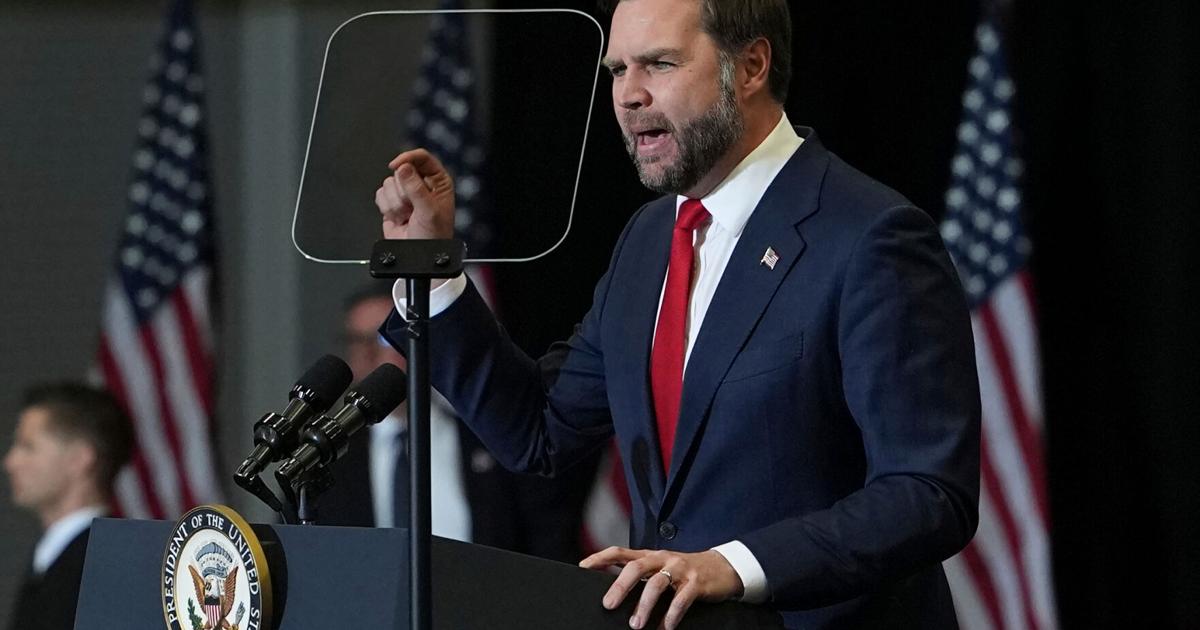 Cleveland Jewish News1 day ago
COLUMBUS, Ohio (AP) — Vice President JD Vance said during a campaign visit to Ohio on Wednesday that he is “disgusted” by the Republican pushback against an ad by Vivek Ramaswamy that features the estranged mother of his Democratic opponent in the governor's race, Dr. Amy Acton, and raises questions about her traumatic childhood.
“Politics is a tough business,” Vance said to reporters.
In Cincinnati, the vice president said it was “not really my concern” whether the controversial 60-second spot was appropriate, and said he was focused on supporting Republican candidates in their midterm races.
“I’m a little bit disgusted when I see Republicans across the country who are whining more about that advertisement than they are about what the congressional Democrats and other Democrats want to do to the United States of America,” Vance said in his first public comments on the ad, which has roiled one of the most contentious and expensive governor's races in the country.
The advertisement features Acton’s birth mother, Donna Arthur, calling her “a liar” and insinuating she has mental health issues. Arthur lost custody of her children after their stepfather was indicted for raping Acton.
The video was criticized by both Democrats and Republicans when it exploded into public view Tuesday, just two weeks before Election Day. On Wednesday, one of the candidates Vance was supporting at the rally offered a different view.
“I would not have run that ad,” Republican Sen. Jon Husted said in a statement to The Associated Press. He did not raise the issue during his joint appearance at the rally with Vance and Ramaswamy. Husted is in a tough fight with former Democratic Sen. Sherrod Brown, who on Tuesday called the spot “disgusting.”
Nikki Haley, who sparred with Ramaswamy during the 2024 Republican presidential primary over the personal nature of his attacks, called him "a bad guy” in a social media post Tuesday. “It’s a shame he continues to get away with it,” she wrote.
Ramaswamy, a billionaire tech entrepreneur, claimed credit for the ad and said he will spend $4 million to promote it despite the backlash from some members of his own party. He didn't address it in remarks before Vance spoke at a rally outside Cincinnati.
Acton, Ohio’s former health director, has made no secret of facing homelessness and abuse as a child.
Police and court records show Cledith Arthur was arrested and charged with the rape of his stepdaughter, then 12, in July 1978, after Acton’s biological father reported him to authorities. The abuse allegedly happened from December 1976 to April 1978. Cledith Arthur, who has since died, failed to show for a court appearance and became a fugitive.
Acton said she has not seen her mother since she appeared in a courtroom in the late 1970s. Her campaign on Tuesday posted a video of her brother who supported her backstory about living in a tent and being abused.
In his remarks to reporters ahead of the rally, Vance said Acton, “lies about every single one of her positions.”
Acton's campaign declined to respond to Vance's comments, saying that her painful backstory was not the centerpiece of her run for governor.
Michael Wedding, 20, came to Vance's rally Wednesday — but not to support Ohio's Republican ticket. He said he would be parting with his large Republican family and vote for Acton for governor, adding that he attended the rally in large part to see Ramaswamy in person.
He said he had seen the ad and found it “very, very gross.”
“She was sexually abused as a child," he said of Acton, "and I thought it was kind of scummy that they would use that in an advertisement. I don’t think it’s right to use her sexual abuse as a kid, or give any sort of platform to that.”
Binkley reported from Washington. Associated Press video journalist Patrick Aftoora-Orsagos contributed to this story from Sharonville, Ohio.
 Cleveland Jewish News1 day ago
Ira Kohler, a former Israel Defense Forces paratrooper and author of “Once a Paratrooper,” shared his experiences fighting during the Oct. 7, 2023, Hamas surprise attacks and his more than 100 days serving in the Gaza Strip during a visit to Cleveland.
The event, hosted in partnership with B’nai Jeshurun Congregation and Park Synagogue, gave community members an opportunity to hear Kohler’s story and learn about his memoir.
Originally from Long Island, N.Y., Kohler moved to Israel in 2021 at age 21 after graduating from the University of Delaware in Newark. He enlisted in the IDF as a lone soldier, serving in the 890th Battalion of the Paratroopers Brigade.
“I grew up in a community where the value of Judaism, the value of Israel, was not, you know, you don’t go to do Jewish. You are Jewish,” Kohler said. “Israel isn’t this faraway place. It’s not a topic in a big political discussion. It’s a home. It’s our home.”
He described the challenges of serving without his family nearby, including language and cultural differences.
“For me, quite honestly, the cultural barrier was a lot harder,” Kohler said.
On Oct. 7, Kohler’s battalion was preparing for a military exercise when Hamas launched its attacks. His unit was sent south by helicopter to respond.
Kohler recalled that the pilot noticed suspicious activity near the Gaza border and decided to land in an open field instead of the original location.
“Moments before our helicopter was about to land in these open fields, Hamas terrorists shot a hand-propelled rocket, an RPG, that ended up striking the bottom part of their helicopter, while me, over 50 soldiers, and my unit were all inside,” Kohler said.
“The moment we were hit, we dropped to the ground, as if an earthquake had struck,” he said. “As we tried to stand up, our helicopter crew members, who were in charge of us, screamed at us to stay really close to the ground, because not only were we hit by a rocket, but we were now being shot at by gunfire.”
After making an emergency landing, the soldiers engaged in a gunfight with Hamas terrorist for about 15 to 20 minutes. Another rocket struck and destroyed the helicopter shortly after the soldiers exited.
“We were 50 soldiers on board, and not a single one was killed, and no one was injured from the helicopter hit,” Kohler said. “However, several were injured, they were shot in the gun battle, and they were evacuated.”
His unit later reached Kibbutz Be’eri, where soldiers fought Hamas terrorist and helped rescue families trapped inside their homes.
“They weren’t willing to open the door for someone until they heard something Jewish,” he said.
During his service in Gaza, Kohler said he encountered difficult decisions while operating in areas where civilians and combatants could be difficult to distinguish.
He also discussed his decision to extend his military service beyond January 2024, when he was originally scheduled to finish.
“How can I leave just when things are getting hard?” Kohler recalled asking himself. “My team is going back in. I need to continue my service.”
He said one motivation was learning that Omer, someone he knew growing up, had been taken hostage.
“The special thing that Omer Shem Tov gave me is this huge motivation during the war to not only be there and want to be there, but to say, like, I’m going to keep going,” Kohler said.
He was freed on Feb. 22, 2025, as part of a ceasefire agreement.
Kohler later wrote “Once a Paratrooper,” a memoir documenting his military experiences, and began traveling across the United States to share his story.
Cleveland Jewish News1 day agoFederations across North America plan to hire 100 educational professionals to address antisemitism, expanding existing community-relations and advocacy teams through a $35 million initiative announced by the Jewish Federations of North America.
“The response to the Oct. 7 attacks created a real moment of reckoning,” Shira Hutt, executive vice president of the Federation, told JNS.
The initiative, called Frontline, will provide targeted grants to 120 local Federations, with support from more than 25 funders, according to the Federation. The funding is intended to help communities add staff to their existing teams while giving those professionals access to training, shared tools and expert guidance.
“At a time when antisemitism is increasingly affecting every facet of Jewish life, Frontline invests in the people, relationships and resources our communities need to meet this moment with a sustained, strategic response,” Hutt told JNS.
The new positions will focus on local and state government advocacy, K-12 and higher education and partnership with other religious and civic groups. Professionals may work with elected officials, school administrators and community organizations on issues affecting Jewish residents.
The initiative will provide grants to 120 local Federations, but the announcement did not detail how the 100 positions would be distributed among communities or provide an overall hiring timeline.
Some local grants have been announced separately. In Minnesota, the Minneapolis and St. Paul Jewish Federations received nearly $290,000 over two years to fund a director of labor and civic partnerships.
Frontline comes amid continued concern about Jew-hatred after the Oct. 7 attacks. According to FBI data cited by the Federation, Jews were targeted in 64% of religiously motivated hate crimes in the United States in 2025.
There were 1,528 reported anti-Jewish hate crimes that year, down from 1,938 in 2024, according to the data cited by JFNA. The 2025 total nevertheless remained the third-highest on record for anti-Jewish hate crimes.
Hutt said the additional staff would help Federations strengthen relations with civic leaders and advocate for Jewish communities.
“This additional capacity will bolster our efforts to proactively address antisemitism by strengthening relationships with civic leaders, improving our ability to advocate for Jewish communities and ensuring that Jews across North America can live openly and proudly as Jews, without fear,” she told JNS.
Frontline will also provide resources intended to help local professionals communicate about issues affecting Jewish communities and engage younger generations.
One component, Project Halo, provides strategic messaging guidance on issues including Jewish community security and support for Israel. Another, Student to Student, brings Jewish high-school students into conversation with non-Jewish peers. The Federation said that the program operates in 50 communities and has engaged more than 60,000 non-Jewish teenagers over the past three years.
The initiative also includes year-round professional training and One Mitzvah a Day, a platform designed to encourage community engagement and mobilization.
Julie Platt, chair of Frontline and the Federation’s immediate past board chair, said that the period after Oct. 7 prompted a reassessment of how Jewish communities approach civic engagement.
“In the aftermath of Oct. 7, our community was very disappointed to see that many people we thought were our allies stayed silent,” Platt said. “We learned the hard lesson that our civic engagement efforts must be more focused, more targeted and more outcomes-based, and that is exactly what Frontline is designed to do.”
Frontline follows LiveSecure, a separate $130 million Federation initiative focused on expanding professional security programs in Jewish communities.
The Federation said that the initiative helped increase the number of communities with professionally run security programs meeting its standards from fewer than 20 to more than 140 in four years.
 Cleveland Jewish News1 day ago
The South Euclid planning commission heard from Akron Children’s about what it plans to do with the former Notre Dame College property on South Green Road and listened to concerns from nearby residents at a meeting on Oct. 8.
The planning commission will vote at a later date on whether or not to recommend that city council approves rezoning the former Notre Dame College property in order for Akron Children’s to redevelop the property.
The proposal would rezone the former campus from its existing R-75 single-family residential zoning to mixed-use transit oriented development district zoning and would give the hospital more flexibility to implement their reworking of the campus.
Council would refer the rezoning proposal to its planning and zoning committee if the planning commission recommended the rezoning, and then it hold its own public hearing before a final vote. The planning commission did not say when it would vote for its recommendation, and the Oct. 8 meeting served as a public hearing for residents to voice opinions.
“Akron Children’s is currently working on a master plan for the property that will incorporate a diverse range of uses,” Daniel Monroe, serving as interim chairperson of the South Euclid planning commission, said at the meeting. “In order to best facilitate the development of the master plan in discussions with Akron Children’s, we feel a necessary first step is rezoning the property. The current single-family residential designation does not fit the site. In order to ensure the property can be an asset to the community, rezoning seems necessary.”
He added that even if rezoning were approved, each individual project or use would still have to go through the city’s approval process, which would include review by boards and commissions and, potentially, approval by council. Residents would also get the opportunity to have their opinions heard in each scenario.
Monroe said that Akron Children’s has committed to finding a user for the historic Notre Dame College administration building, that will properly preserve it along with the green space, known as the quad, in front of it and the old grove trees in that same area.
“Beyond that, they plan to look at the entire campus holistically as they develop their mature plan and ensure it creates a property that will be a major asset to the South Euclid community,” he said. “Additonal partners will likely become involved as the master plan is developed and implemented.”
Brian Lapolla, who serves as the vice president of operations & facilities at Akron Children’s, represented the hospital at the meeting and said its goal is to ensure the property remains a valuable asset to the city of South Euclid and the surrounding community well into the future.
“Akron Children’s is committed to establishing a medical facility, a medical presence, on the campus,” he said. “However, given the size of the property and the existing facilities, we recognize there is a significant opportunity to explore complimentary uses on the campus, which could include office, recreation, education, residential and other developmental opportunities.”
According to plans shown at the meeting, Yeshiva Derech Hatorah will use about 7.7 acres in the northwest section of the property, with a plan to convert the former Regina High School at 1857 Lawnway Road to a pre-K to eighth grade boys school after the Cleveland Heights-based Orthodox Jewish school purchased the building on a land lease from Akron Children’s for $2.2 million in late July.
A little over 21 acres on the west side of the former campus, which include the access drive off South Green Road, the ballfields, an open lot, Keller Center (Notre Dame’s former athletics and recreation center), the former football field and former baseball diamond and soccer field, will be the main area of use for Akron Children’s, while about 19 acres will be set aside for further development on the east side, which includes the former library, administration building, dining halls and dormitories.
Lapolla said it has considered partnering with the city to install a walking trail and use the green space in the quad in order for the land to still be used as a community asset, as it was as a university where people could walk around.
When asked by a member of the planning commission if he knew how many workers would use the facility, Lapolla said that number is not yet known as a business plan is still being developed.
After Lapolla presented Akron Children’s plans, residents, both via Zoom and in person, were allowed to express their thoughts on the rezoning proposal.
Kathryn Jensen, who lives just south of the property, said she and her fellow neighbors are concerned about where the entrances and exits to the property would be as parts of the campus butt up against residential neighborhoods, and she said she hopes the major entrance to the property remains across from the South Euclid-Lyndhurst branch of the Cuyahoga County Public Library at the former Regina High School and the football stadium.
Jensen and other residents also expressed that they would like to see the green space and wildlife be preserved as the campus is often used like a park by residents.
Paul McGuigan, who lives in a neighborhood north of the campus, said he is concerned about traffic increase and said that he hopes the “city does a good traffic survey to make sure they can handle everything that’s proposed.”
Lisa Cellura, who lives in a neighborhood north of the campus, said she has worries that Akron Children’s could see the east end of the property slated for future development “to the next big-box store that will stay there for five years and then close and remain empty.”
Akron Children’s bought the property after winning a private auction held on May 7 with a bid of $8 million. Most of the nearly 49-acre property including 14 buildings and about 481,000 square feet were included in the purchase. Smaller properties that were owned by Notre Dame, like single-family houses, are being sold separately.
Notre Dame College, a private Catholic school, opened in 1922 and closed on May 2, 2024, due to declining enrollment, a shrinking pool of college-age students, rising costs and significant debt, according to previous CJN news reports.
Cleveland Jewish NewsCleveland Jewish News1 day agoThe U.S. Department of the Treasury sanctioned a law firm, shipping companies, agents and vessels on Wednesday for helping Iran transport commodities and evade U.S. sanctions.
Karnakis and Karnakis, a law firm based in Panama and Greece, “has supported illicit Iranian shipping activity for years, indirectly aiding Tehran’s ability to generate revenue to fund its military, weapons, and nuclear programs,” the department stated.
The firm established multiple companies previously sanctioned by the United States for transporting Iranian oil and petroleum products, including for the benefit of Iran’s Islamic Revolutionary Guard Corps-Quds Force and Yemen’s Houthi terrorist group, according to Treasury.
Treasury also sanctioned five individuals affiliated with the law firm who the department said have served as directors and officers of companies it registered, helping obscure their true owners.
The department designated Roxette Maritime Shipping and Trading S.A., also based in Panama and Greece and for which Karnakis and Karnakis serves as the corporate agent, whose vessels have transported Iranian-origin petrochemicals and steel products over the past year. The company operates and manages seven Panama-flagged cargo ships.
Treasury also sanctioned Singapore-based shipping agency Amigoz Singapore PTE. Ltd. for providing services to Iran’s shadow fleet, including acting as an agent for a shipment of Iranian light crude oil and providing refueling services to a vessel linked to the network.
Dubai-based Whales Shipping Line LLC was also sanctioned for supporting Amigoz and serving as a shipping agent for a sanctioned company that arranged purchases of tens of millions of dollars’ worth of Iranian petrochemicals. Two support vessels owned by Whales, the Whales Diamond and Whales Pearl, were also identified as blocked property.
Iran’s so-called shadow fleet uses deceptive shipping practices, including false flags, forged documents and shell companies, to conceal cargo origins and evade sanctions, according to the department.
“Whether you are conducting illegal oil transfers at sea or sitting in the corner office of a law firm, if you are supporting the Iranian regime, we will find you and sanction you,” Scott Bessent, U.S. treasury secretary, stated.
“Iran’s facilitators must make a choice: Either you are with us or against us. We know who you are, we know what you’re doing and we will continue to take action,” he said.
Separately, Treasury’s Financial Crimes Enforcement Network, or FinCEN, is working with European partners, including in Greece, to investigate potential links between banks and sanctioned Iranian financial institutions. The agency has issued its first administrative subpoena under the Bank Secrecy Act “to advance its investigation into a Greek bank’s potential ties to Iran and its proxies,” Treasury said.
The sanctions fall under Operation Economic Outcast, which Bessent launched in late August to cut off Iran’s illicit revenue sources and the financial channels it uses to evade sanctions. The campaign also increases the risk of secondary sanctions for foreign entities that conduct certain transactions with designated Iranian entities.
 Cleveland Jewish News1 day ago
Jew-hatred and "radical activism" have penetrated K-12 classes at the School District of Philadelphia and the Berkeley Unified School District, which collectively have about 205,000 students in 350 schools, and at the National Education Association, the largest teachers union, according to a new report from the House Committee on Education and Workforce.
"Parents send their children to school to learn reading, writing and math, not to be taught to hate Israel or embrace radical political causes," stated Rep. Tim Walberg (R-Mich.), chair of the committee. "Yet that's exactly the kind of material our investigation uncovered."
"Jewish students deserve to feel safe in their classrooms, and parents deserve to know what their children are being taught," the congressman said. "Schools that receive taxpayer dollars must be held accountable when they fail to protect students from antisemitism."
According to the report, which JNS viewed, schools in Philadelphia taught students to label the United States and Israel as "terrorists" and to see Hamas as a resistance movement to be honored, and Israel was erased from the map, and identified as "Palestine," in an ethnic studies course at Berkeley schools which also praised antisemites. Berkeley teachers also didn't share a lesson plan on Israel with parents.
Since Oct. 7, 2023, the NEA, the largest U.S. labor union with three million members, has pledged "thousands of dollars" to the groups Rethinking Schools and the Zinn Education Project, which the House panel says are "sources of antisemitic K-12 materials."
The House committee said that it decided to probe Jew-hatred on campuses after a "drastic uptick" in antisemitic incidents of 135% "exploded" in 2023, the year in which the Oct. 7 attacks occurred.
It said that its investigation of Fairfax County Public Schools, in Virginia, is ongoing.
In Philadelphia public schools, the country's ninth largest school district, "curricula promote ideology justifying violent resistance and legitimize radical groups that incite antisemitism," according to the report. "Curricula train students, as early as second grade, to be far-left activists."
A lesson plan in the district "appears to whitewash the Nation of Islam, describing the radical antisemitic group as merely 'controversial,'" according to the report. "Similarly, the district lionizes Code Pink as an organization that 'engages in creative nonviolent actions.' After Oct. 7, Code Pink blamed Israel and justified Hamas terrorism."
The House panel said that it was told in September 2026 that the School District of Philadelphia was standardizing its social studies curriculum, instead of letting teachers and administrators write it, and that "its social studies curriculum director is undergoing a termination proceeding."
"To the committee’s knowledge, no other employees have been adequately disciplined for spreading antisemitism," the report states.
The House panel released a transcript of its Sept. 18, 2026, interview with Tony Watlington, superintendent of the School District of Philadelphia.
Asked if it is antisemitic to call for or justify killing Jews or to deny Jewish right to self-determination, Watlington said that both were antisemitic.
When the committee asked if it is Jew-hatred to say that Israel is a racist endeavor, he said that "certainly a teacher has no business taking a point of view in a classroom, but I also think that that might depend on circumstances and context relative to First Amendment freedoms of speech."
Of comparing Israeli policy to that of the Nazis, the Philadelphia superintendent said "I think it is inherently problematic. I certainly don't agree with it, would not condone. Not sure if someone said it in a context outside of their workplace if it might be protected."
"So unsure if it's antisemitic or not?" he was asked. "I don't know," he said.
The committee asked the superintendent "is it antisemitic to apply double standards to Israel not expected of any other democratic nation?" A lawyer cut in and said that he didn't understand the question. The superintendent said that he didn't understand it either.
Watlington was asked later on in the interview, whose transcript runs about 160 pages, about whether a teacher in the district, who had posted on social media that "Zionists are no different from the swarms of white supremacist spectators cheering on the public lynchings of over 3,000 black people," should have been allowed to write social science curricula.
"I don't know. I can tell you that, you know, Lyndon Johnson, former President Lyndon Johnson espoused some pretty racist views as a young man and former teacher out in Texas," the superintendent said. "He spent a lot of years in this building doing some awful good work getting a civil rights bill passed. So, I don't know."
At Berkeley schools, "ethnic studies lessons are littered with antisemitic resources along with the activist ideology that fuels contemporary antisemitism," according to the House committee's report. "The district itself has circulated resources that incite antisemitism."
And even before the NEA severed its relationship with the Anti-Defamation League, "NEA internal documents showed that NEA was not working with the ADL because of the ADL’s recent efforts to combat contemporary antisemitism," the House panel said.
"The union has repeatedly framed antisemitism only in the context of white nationalism or from an anti-Zionist perspective, ignoring and alienating the many Jews who view Israel as a core part of their Jewish identity," the report states.
 Cleveland Jewish News1 day ago
Cleveland Senior Network will host its third annual Beachwood Health, Wellness & Safety Expo from 10 a.m. to 2 p.m. Oct. 29 at the Beachwood Community Center, bringing together older adults, local businesses and community organizations for a day of health education, safety resources and Halloween activities.
The event, which is open to everyone, will feature health screenings, educational presentations, more than 40 vendors and speakers, raffle prizes, a costume contest and bingo.
Melinda Smith, vice president of marketing for Cleveland Senior Network, said the event is designed to provide older adults with information about available community resources while giving them an opportunity to enjoy a fun day.
“The Cleveland Senior Network sponsors the event, and it’s a Halloween health and safety event for seniors in the community,” Smith told the Cleveland Jewish News. “So, we try to have a fun day for them. We have different vendors who support or supply services to seniors in the community, and they can come around and collect information.”
University Hospitals will provide health screenings, including blood pressure checks, while local experts will offer educational presentations on health, wellness and safety.
Attendees will also have opportunities to connect with organizations that provide services to help older adults remain healthy, active, independent and safe.
“There are some health tables there from University Hospitals, so they can do blood pressure checks, things like that,” Smith said. “And then we have lunch for them, and there’s a Halloween contest, so they can dress up and win a prize, both for the vendors and for the seniors.”
A free lunch will be available to the first 150 attendees. The event will also include raffle drawings, a 50/50 cash raffle and gift card bingo.
Proceeds from the raffles will benefit the Greater Cleveland Food Bank. Attendees are encouraged to bring canned goods or other nonperishable food items to receive additional raffle tickets.
“The money that we raise from the raffle goes to the Greater Cleveland Food Bank,” Smith said. “They can bring in canned goods, and those canned goods will get them an extra ticket to win in the raffle.”
The event’s keynote speaker will be Sylvia Pla-Raith, deputy director of community services for the Cuyahoga County Department of Senior and Adult Services.
Smith said the organization’s mission goes beyond hosting community events, with an emphasis on education and supporting local nonprofits.
“The focus of our Cleveland Senior Network is to give back to the community,” Smith said. “We try to hit both the people who serve the community, the people in the community and the nonprofits that support all of the above.”
For more information or to reserve a spot, visit cleseniornetwork.com/health-fair.
The community center is at 25325 Fairmount Blvd.
The Cleveland Jewish News is the media partner of the event.
 Cleveland Jewish News1 day ago
Moxie is making its return as the restaurant is slated to open at 25001 Cedar Road at Legacy Village in Lyndhurst on Oct. 26.
Local restaurateurs Brad Friedlander and Michael DuBois’ American-style cuisine eating establishment was formerly located at 3355 Richmond Road in Beachwood, opening in 1998 and closing in April 2019.
The new Moxie will honor the restaurant’s legacy while introducing the concept to a new generation of diners. The menu reflects the fresh, seasonal cooking for which Moxie became known, blending returning signature dishes with new offerings rooted in made-from-scratch preparation, high-quality ingredients and thoughtful execution, according to a news release.
Plans were to reopen Moxie in 2024 at 16 N Main St. in Chagrin Falls, but those plans changed as Friedlander decided to pivot and convert the space in a new concept called Odd Fellows, run by the pair. Former customers have been asking Friedlander to reopen Moxie as it was a “Cleveland fixture for years and years,” according to previous CJN reporting.
With all of the original recipes in hand, the pair of restaurateurs purchased that space in Legacy Village that previously housed Bar Louie.
“I opened Moxie in 1998, and it quickly emerged as a standout in the Cleveland culinary landscape, including recognition by Esquire magazine as one of the best new restaurants in the country,” Friedlander said in the release. “Ever since our closure in 2019, patrons have continually asked about their favorite dishes and recipes. We are thrilled to bring Moxie back and welcome guests through our doors once again.”
The relaunch is rooted in a shared commitment to the core fundamentals that built Moxie’s legacy: exceptional food, genuine hospitality and a consistently elevated dining experience, the release said, and patrons will recognize the culinary philosophy that shaped the original Moxie while the new space is designed for today’s dining landscape with a polished and sophisticated touch coupled with a welcoming and approachable environment.
“Partnering with Brad was an easy decision because we share a passion for true hospitality,” DuBois said in the release. “Quality ingredients and superior service are first and foremost for both of us, and we are committed to delivering the same seasonal classics and high standard of service that Moxie patrons remember and deserve.”
Following Moxie’s opening, Friedlander and DuBois will debut The Seven, a speakeasy located adjacent to the restaurant. Designed around privacy, sophistication, and bespoke service, The Seven will feature craft cocktails, an elevated dining menu, private spirit lockers and curated nightlife experiences, according to the release.
Additional details and the official opening date for The Seven will be announced in the coming weeks.
Cleveland Jewish News1 day agoDemocrat Brad Lander, a U.S. House nominee from New York City, was detained, along with dozens of rabbis and activists, by the Israel Defense Forces during an olive harvesting trip in the West Bank on Wednesday.
Lander, who was participating in an initiative to protect Palestinian olive growers from settler violence, posted about the detention on X, noting that the group was “simply harvesting olives” near the Palestinian village of Nahalin, just outside of Bethlehem in the Gush Etzion region of the West Bank.
A few hours later, he updated that he was “released from IDF custody with a ‘warning.’” Lander, a former New York City comptroller, attributed his release to his public profile – stressing, however, that he is “just a nominee” and not a current member of Congress.
The IDF Spokesperson’s Unit confirmed that Israeli military and police forces arrived at the scene and detained the participants, saying that “harvesting in that area requires prior coordination with the relevant authorities” in order to maintain security in the area.
While Lander was released relatively quickly, he noted that several dozen people who had been harvesting olives with him remained in detention and called for their immediate release.
“These detentions by the IDF are one more attempt to undermine Palestinians’ right to harvest their olive groves, travel on their roads, and live in their homes,” Lander added, describing these actions as “very clearly state-sponsored ethnic cleansing.”
This is a developing story.
--
The post IDF detains NY Democrat Brad Lander and dozens of activists during West Bank harvest trip appeared first on Jewish Telegraphic Agency.
 Cleveland Jewish News1 day ago
Since 1969, Beachwood 100 has supported the city’s first responders by providing financial assistance, equipment and educational scholarships, bringing residents and local businesses together to give back to those who serve their community.
The citizen-led and funded nonprofit organization provides additional resources to Beachwood police officers, firefighters and other first responders.
“It’s a way that citizens and residents and businesses can give back to those that protect them,” president Ivor Kiwi said.
The organization offers financial assistance through loans or grants to first responders facing unexpected financial challenges, including medical emergencies. It also provides funding to departments for safety and fitness equipment.
One of Beachwood 100’s main initiatives is its annual scholarship program, which supports children of first responders pursuing higher education.
“In the beginning of the year, we have an application process, and any child of a first responder in Beachwood that’s employed by Beachwood who’s going to college the next year can apply for the scholarship,” Kiwi said.
The organization reviews applications before hosting its annual scholarship event, typically held in May.
For the past two years, the event has taken place at Hex restaurant, which donated its space and food. The celebration brings together scholarship recipients and their families, corporate sponsors, city officials, police and fire chiefs and community members.
Beachwood 100 also works to improve the well-being of first responders through projects that address their everyday needs.
One recent initiative involved renovating a wellness room at the Beachwood Police Department, transforming an underused space into a comfortable area where officers can take breaks.
“We funded it and did the work to, along with the city, paint it and get new furniture and then stock it with food so that it can be a kind of a quiet space for the police force when they need to kind of have some time,” he said.
Members contributed money and food to help stock the room, which continues to be frequently used by officers.
The organization is operated by a volunteer board that coordinates fundraising efforts, events and community initiatives.
Residents and businesses can support Beachwood 100 through its membership program. Individual memberships cost $50 annually and include two car decals and two wallet cards recognizing their support.
Members also receive updates through newsletters and social media and have opportunities to participate in events and charitable projects.
Looking ahead, Beachwood 100 plans to continue its community outreach, including participating in local events alongside the city’s police and fire departments.
Its next annual membership campaign is expected to take place in November or December, followed by another scholarship celebration in May 2027.
Cleveland Jewish News1 day agoBrad Lander, Democratic nominee for a congressional seat in New York considered to be safe, was detained and then released on Wednesday after he said that he joined an olive harvest in Judea and Samaria.
The Israel Defense Forces told JNS that Lander, a former New York City comptroller, had not coordinated the trip with Israeli authorities.
Lander, who has accused Israel of “genocide” and who is Jewish, stated that the Israeli military detained him and “a group of rabbis and volunteers.”
“We were simply harvesting olives in a grove near Nehalim in the West Bank,” he said, writing a term that some use for Judea and Samaria.
“The occupation is a crime under international law,” Lander stated. “Harvesting olives isn’t a crime under any law I know.”
After losing to New York City Mayor Zohran Mamdani, Lander endorsed Mamdani, and the mayor—who Jewish leaders have said is endangering Jews with his anti-Israel rhetoric—has backed Lander, who is one of his highest-profile Jewish supporters.
An Israeli military official told JNS that Palestinians did not submit a request to coordinate harvesting on the plot, which is near Beitar Illit. “It does not appear on the area’s coordination maps,” the official told JNS.
Lander was “released once the matter was brought to our attention,” the official said.
“The plot in question requires only a small number of harvesters to collect its produce,” the official told JNS. “The security establishment views the arrival of dozens of activists as an act intended solely to provoke, which undermines the harvesting process.”
Mamdani, who again accused Israel of “genocide” in his statement for the third anniversary of Oct. 7, weighed in on the incident.
“Today, Brad Lander, rabbis, and other New Yorkers accompanied Palestinian farmers during the olive harvest. For that, they were detained by the Israeli government,” the mayor said. “Harvesting olives is not illegal. The occupation is.”
“I am thankful that Brad has been released. But other New Yorkers remain detained, and they must be released immediately,” he said. “The same Israeli government detaining them has committed a horrific genocide against Palestinians, killing more than 74,000 people over the last few years alone.”
About 80 Israeli and foreign left-wing activists were detained between Nahalin and Beitar Illit, in Gush Etzion, according to Kan News reporter Haim Goldich.
The activists said that they were told they had violated a closed military zone order, of which they said they had been unaware, Goldich wrote on social media.
At 2 p.m. in Israel, Lander was the only one released “after it became known that he is a congressional candidate,” Goldich wrote.
“The rest at the Gush Etzion station will be investigated on suspicion of offenses of conduct that may disrupt public order, violation of a closed military zone order and additional offenses,” he wrote.
Yehoshua Schoffman, a former Israeli deputy attorney general who was among those detained, wrote that police and soldiers arrived after about two-and-a-half hours of harvesting.
“We were asked to stop, and everyone complied,” he stated in Hebrew. “There was no friction whatsoever with settlers or with the security forces.”
“The Americans were loaded onto one bus and the Israelis onto minibuses,” he said.
The annual olive harvest in Judea and Samaria generally takes place in October and November. Harvesting in the area where the group was detained requires a request to authorities before the season begins, according to the Israeli military.
“This coordination is necessary to ensure the security of the area and maintain public order,” the military stated.
Soldiers and police officers, including from the border police, detained the group due to “the security risk posed by conducting an uncoordinated harvest near an Israeli community,” the IDF said.
The landowner was given contact information to arrange a harvest at a later date, according to the military.
About 100 coordinated harvests have taken place across Judea and Samaria this season, yielding “many dozens of tons of produce” without unusual incidents, the IDF stated. “In areas designated for coordinated harvesting, only harvesters will be permitted to enter, solely for the purpose of harvesting.”
Earlier this week, Lander said that he was visiting with the “Protect the Harvest” coalition to help Palestinian farmers harvest olives “in the face of state-sanctioned settler terrorism.”
“Our goals for the trip are to help protect the olive harvest and to shed a light on the reality of the occupation,” he wrote.
He called for “a sustained commitment to protecting Palestinian communities from settler violence, forced displacement and the ongoing threats to their right to remain on their land” and “human rights, safety, equality and freedom for both Palestinians and Israelis.”
“Thankfully, our corner of today’s harvest was peaceful and successful, but violence unfortunately is never far away,” he wrote at the time.
Naomi Linder Kahn, director of the international division at Regavim, an Israeli organization that focuses on land-use issues, told JNS before the news about Lander broke that some foreign-funded groups use the olive harvest to provoke confrontations.
“They provide them with cameras. They teach them how to provoke a confrontation,” she said. “They have whole NGOs that they create so that they can fund them, just so they can create these provocations.”
The harvest “is the big thing every year” and “gets bigger every year,” according to Linder Kahn.
“I could count probably 15 NGOs that are devoted solely to the Palestinian Arab olive harvest,” she told JNS. “The thing you’ll hear over and over is that ‘this is such a major part of the Palestinian economy.’ That’s B.S.”
“It’s a very nice pastoral kind of myth,” she said.
Linder Kahn told JNS that the groups receive funding from the European Union, foreign governments and European church groups and that their support includes training activists to generate publicity and confrontations.
“I remind you that in Europe, the church groups are actually funded by the government,” she said. “This is another way to funnel government money without leaving too much of a paper trail.”
The NGOs do not give activists buckets for harvesting olives, according to Linder Kahn.
“What they give them is video cameras, and they give them lessons in social media, and they give them lessons in how to provoke a confrontation, how to present yourself when you’re trying to get into Israel, to misrepresent what you’re coming for and where you’re going to be,” she said.
It is “a very, very well-oiled machine,” according to Linder Kahn.
“On the other end of this machine are people who are eager to believe it,” she told JNS. “They want this narrative because this is their best weapon.”
At 4:35 p.m., Lander wrote on social media that he had been “released from IDF custody with a ‘warning,’ apparently because of my public profile.”
“I told them I wasn’t even a congressmember yet, just a nominee,” he wrote. “But several dozen rabbis and participants harvesting olives with me are still in detention. For harvesting olives. They should all be released immediately.”
He said the incident was “yet one more element of escalating and very clearly state-sponsored ethnic cleansing.”
Cleveland Jewish NewsCleveland Jewish News1 day agoThe situation for California Jews that Modi Ephraim found when he began a month ago as Israeli consul general to the Pacific Southwest reminded him of his stint, from 2022 to 2025, as Israeli ambassador to the Netherlands, during which Jews were targeted in riots in Amsterdam in November 2024 when the Maccabi Tel Aviv soccer team was playing in town.
Those days were “some of the toughest days in my career,” Ephraim told JNS in an interview at his office in the Consulate General of Israel Los Angeles.
In July, the attorney general of California released a report revealing that nearly three-quarters of religion-based hate crimes in the state targeted Jews in 2025.
That statistic is “pretty much similar” to the Netherlands, Ephraim told JNS.
“I think it all starts in education,” he said. “This is the most important field. We have to educate a young generation.”
Back in 2024, the Israeli embassy in The Hague opened an operations room and was in “constant contact” with authorities, including the Amsterdam mayor, to locate Israelis and bring them to airports.
“We also had special flights from Israel to evacuate them,” Ephraim told JNS. “I think it was quite a bad day for the Netherlands, for the Dutch society. They were all ashamed about what happened. We got apologies from everywhere.”
“There is still an ongoing investigation on the case,” he said. “It was part of the incitement, the atmosphere against Israel, against the Jewish community in Amsterdam.”
The relatively small Jewish community in the country is still “under the trauma of the Second World War,” according to the Israeli diplomat.
“The situation now in Europe makes the life of the Jewish communities very tough, so I was working together, especially after Oct. 7, with the community to basically try to combat antisemitism and doing many programs between the Jewish community and Israel,” he said.
In Los Angeles, Ephraim has already been impressed with the “power” of what he has seen, including at a memorial marking the third anniversary of Oct. 7 in Beverly Hills, at which he spoke.
There was an “impressive presence and support of solidarity, not just from the Jewish community but so many of my colleagues that were there and some other elected officials,” he told JNS. He came away from the event convinced that Israel has partners in the city.
“I can work here,” he told JNS. “We can do a lot here.”
His portfolio at the consulate covers Arizona, Southern California, Colorado, Hawaii, Nevada, Utah and Wyoming.
In his first “quite an intense month,” the envoy has seen “a lot of passion in the Jewish community to Israel” in Los Angeles and a “very powerful, very supportive community.”
He thinks the state and the Jewish state can partner more in areas like “cyber and medical and agro-tech and of course, an entertainment sector that is growing.”
He noted that California has the second most Jews in the country after New York. “At the end of the day, it’s people-to-people. It’s not just government-to-government,” he said. “The potential is enormous.”
“We should continue together to improve life there, to improve Jewish life here and for a better future for a young generation,” he told JNS.
Having seen University of Amsterdam students “think twice” before going to the campus, he opted to visit the University of California, Los Angeles early in his tenure in his new role.
He thinks that the chancellor of UCLA, which signed two agreements with Hebrew University of Jerusalem last month, “understands the importance that all students feel safe and secure when they come to campus.”
“It’s important, because there is a growing call of collaboration between the universities,” he told JNS.
‘Israel is too small’
The envoy comes from a family impacted by the Holocaust. His grandfather was murdered in Romania, and his mother and grandmother “escaped from place to place in Romania” and reached Israel.
His father, who is from Bulgaria, fought in Israel’s 1948 War for Independence.
Before joining the Israeli Foreign Ministry, Ephraim was a lawyer and a senior political adviser to the late Israeli President Shimon Peres.
In the past 30 years, he has served as Israeli ambassador to Peru and as Israeli consul in Houston, in addition to being envoy in the Netherlands.
“I always felt that I should be committed to the mission of not just promoting Israel but also the relation between Israel and the entire international community,” he told JNS.
“Israel is too small, and unfortunately we’re still facing a hostile environment,” he said. “Contact with the world is extremely important.”
Ephraim told JNS that, like his father’s family but not his mother’s, he isn’t Orthodox in his religious practice. He keeps the “tradition of Shabbat” and observes the High Holidays.
“Faith is something personal that you feel,” he told JNS. “You don’t necessarily need to have the full package.”
He has already met local rabbis. It’s important to “unite the forces and to work together,” he said. “It doesn’t matter if you’re Orthodox, Conservative or Reform.”
He also plans to contact important figures in the film industry to bring them on trips to Israel. A year ago, more than 5,000 members of the international film industry said that they won’t work with Israeli film institutions “implicated in genocide and apartheid against the Palestinian people.”
Ephraim thinks that there is a “silent majority” in the industry that isn’t anti-Israel.
“We would like them to be more active, more understanding, more convincing and explaining to their colleagues what Israel is about,” he told JNS.
He also aims to “show Israel beyond the conflict, especially with the entertainment sector here.”
“More artists, more productions, joint productions with the Israeli industry and not just here in California, but in the seven states that I’m responsible for,” Ephraim told JNS.
Cleveland Jewish News1 day agoThe Senate race in Michigan is a virtual dead heat, with only two percentage points separating Democratic nominee Dr. Abdul El-Sayed, a former Detroit health director, and former Republican congressman Mike Rogers, well within the margin of error of the latest Marist College poll.
El-Sayed led Rogers among likely voters, 50% to 48%, in a poll with a margin of error of plus or minus 4.3 percentage points. In the governor’s race, Michigan secretary of state Jocelyn Benson, the Democratic nominee, leads Rep. John James (R-Mich.) 51% to 45%.
The Republican Jewish Coalition has called El-Sayed “the most antisemitic U.S. Senate candidate in America.”
El-Sayed still received the support of 95% of Democrats, just as Rogers had the backing of 95% of Republicans. Among independents, El-Sayed led by 50% to 44%.
More than four in 10 likely voters in the midterm elections, 44%, said that they were going to the polls primarily to oppose U.S. President Donald Trump, with 18% saying that they were voting for the president and 37% saying that their vote for Congress was not influenced very much by their views of the president.
Trump was in the red among likely voters, with 57% disapproving of his performance in office and 42% approving.
In addition, 43% said their personal finances have gotten worse in the last year—including almost one-fourth of Republicans—with only 16% saying that they have gotten better. Another 40% said that they have stayed the same.
Likely voters said they preferred a Democratic congressional candidate over a Republican one by 52% to 46% in the so-called generic ballot. That includes 54% of independents.
The survey of 1,185 Michigan registered voters was conducted Oct. 15-18. A screen was used to identify likely voters in the sample.
 Cleveland Jewish News1 day ago
Solon Mayor Eddy Kraus called Nestlé’s plan to close its manufacturing factory in Solon by the end of 2027 “disappointing” as the food and beverage company prepares to move operations to South Carolina.
“Obviously, it’s not the news we love to hear,” Kraus told the Cleveland Jewish News on Oct. 19, the same day employees and the city of Solon learned of the decision from Nestlé. “The bright spot is we will continue to have a large Nestlé footprint with their corporate and research and development operations, all of the food testing they do, staying here. Most of the jobs will stay, but certainly it’s disappointing that about 370 positions will be eliminated from the manufacturing side.”
Nestlé, which is globally headquartered in Vevey, Switzerland, and whose USA operations is headquartered in Arlington, Va., confirmed the closure of the facility at 5750 Harper Road to the CJN on Oct. 19, and it said the move of manufacturing operations to Gaffney, S.C. is part of its “effort to best serve consumers and optimize our network.”
“We are supporting impacted Solon factory employees through comprehensive separation and transition support, including collaboration with state and local partners,” a Nestlé USA spokesperson told the CJN in an emailed statement. “Impacted employees will also be eligible to apply for open roles at other Nestlé locations, including in Ohio. Nestlé has a long-standing presence in Ohio, with nearly 3,000 employees across seven facilities statewide, including manufacturing operations, R&D, corporate functions, and the broader Solon campus. We will continue to maintain a strong presence in the state as we focus on serving customers and consumers now and into the future.”
Nestlé plans to end production during the third quarter of 2027 with the transition getting underway in the next few months. The factory, which opened in 2014, is expected to be fully closed by the end of 2027.
The closure will not impact the other parts of Nestlé’s Solon campus, which includes research and development operations, corporate functions, a thrift store and multiple business units.
The closure will eliminate the 370 positions in Solon, Kraus said, with roles including production workers and assembly line operators; ingredient handlers and machine operators; quality control and sanitation staff; and food production specialists.
According to the city of Solon as of 2025, Nestlé is the second largest employer in the city with 2,314, behind Swagelok with 3,179. Kraus and Nestlé did not provide the exact number of workers at the time of the announcement, but Kraus said the closure would put the number below the 2,000-mark, which would still keep Nestlé’ as the second-largest employer in Solon. Nvent Erico/Pentair /ERICO International Corp. is third with 850.
Workers may move to assume their positions at the factory in South Carolina, Kraus said, but for those who don’t, the mayor told the employees that “we can look to place them with our companies here.”
“Some of them will stay with Nestlé locally, while others may look to other places,” he said. “We have a lot of industry here in Solon, so I told them that we’ll help backfill some of the jobs at our other companies.”
Nestlé’s Streetsboro Distribution Center will be unaffected, as will its manufacturing factory in Cleveland on West 25th Street.
At its Solon factory, Nestlé produces professional solutions pouches, where it seals bases, flavor concentrates, sauces, soups, gravies, coffee and juice concentrates, entrees, like mac and cheese, and other ingredients in sealed bags that are used for mass meal production at larger commercial foodservice operators such as restaurants, schools and hospitals.
Nestlé’s presence in Solon is a result of its acquisition of Stouffer’s, which produces frozen prepared foods such as lasagna and meatloaf. It was founded by Abraham Stouffer in downtown Cleveland in 1922, and it moved its headquarters and manufacturing to Solon in 1968. In 1973, Stouffer’s was acquired by Nestlé, which opened a corporate building in the city in 1989. Stouffer’s has kept its original name and operates on the Nestlé campus in Solon, according to previous CJN reporting.
In 2001, Nestlé established its first regional research and development operation in Solon with a focus on frozen foods. In 2008, the Nestlé Professional Customer Innovation Campus, a culinary research and development facility, opened on the 60-acre campus. In 2015, a $53 million project concluded that created the opening of a 144,000-square-foot research and development facility in Solon, where workers develop and test products.
In 2017, the campus grew even further when the company moved its headquarters from California to Virginia and brought over its technical and production organization and all of its supply chain teams to Solon, according to Nestlé.
In January 2024, Nestlé announced it would lay off 216 employees from the now-closing facility, saying at the time that it wanted to “continue to deliver quality products to consumers at competitive prices.”
Kraus said he didn’t know the exact impact that the closure will have on the tax revenue the city receives from the plant, but said while the city will miss that income, the impact economically will not be too big.
“We’ve got a couple companies on the horizon here in Solon,” Kraus said. “FedPro, Inc., a chemical manufacturing company, is moving here and they’ll bring several million dollars in payroll. We’re looking at other ways to grow the economy, and we understand it ebbs and flows. Sometimes you gain, sometimes you lose. Our economy here is pretty diverse, we have about 900 businesses, so we can absorb a loss of 370 jobs. But you want to have a plan to make sure those jobs are replaced, whether it be by Nestlé or other companies.”
And Kraus said he is hopeful that Nestlé will bring more jobs to Solon’s campus through its other divisions and said that the city and the company are still “great partners.”
“Most of their operations are staying,” he said. “We understand from a business standpoint that you have to sometimes eliminate jobs. We get that. But they’re a tremendous partner, and we will continue to work with them and grow with them.”
Cleveland Jewish News1 day agoA federal judge recommended that a case, in which Angela Lauren Fretz represented herself, be dismissed with prejudice.
Fretz sued Steve Witkoff, U.S. special envoy to the Middle East, and several others, including U.S. Commerce Secretary Howard Lutnick and billionaire philanthropist George Soros and two of his sons, on July 27. The case was referred to a judge at the U.S. District Court for the District of Delaware, who wrote that the "complaint is basically unintelligible."
"The handwritten pleading asserts a difficult-to-follow, wide-ranging civil and criminal conspiracy, which includes incomprehensible allegations relating to removal and replacement of non-disposable plastic and polymer products," wrote Sherry Fallon, a magistrate judge on the court. "The complaint lists dozens of other individuals and entities not named as parties to this action."
Members of the court staff were "unable to upload" the docket, two boxes of which the plaintiff submitted to the court, "because of size constraints," the judge wrote on Oct. 20.
The judge noted that Fretz wrote to the court to "please call the U.S. embassy in Jerusalem and ask to or speaking to U.S. Ambassador Mike Huckabee the way I did not get around to Googling Michael Loitter, who probably works for or works at the U.S. embassy of Jerusalem, please Google U.S. embassy, Jerusalem, Israel Michael Loitter which Google will automatically generate the correct of his name right before calling Mike Huckabee at the U.S. embassy in Jerusalem."
It wasn't clear if the plaintiff was referring to Yechiel Michael Leiter, Israeli ambassador to the United States.
"The allegations are unintelligible. The court finds them fantastical, delusional and insufficient to withstand the evaluation for frivolity dismissal," the judge wrote.
"The court's experience and common sense lead it to recognize that the complaint does not state a plausible claim for relief and, therefore, the court recommends the complaint be dismissed with prejudice as amendment is futile."
Someone with a similar name lists herself, on LinkedIn, as an activist at the Heritage Foundation.
 Cleveland Jewish News1 day ago
There are two big questions that everyone who wants to start offering financial support to community organizations has to ask. The first is, “How much am I willing to give?” and the second is, “Who do I want to make a donation to?”
The opportunity to become a philanthropist is not relegated to people with a particular bank balance. Anyone can offer some level of financial support to organizations whose mission and work they care about.
Megan O’Bryan, president of the Tri-C Foundation in Cleveland, noted making a decision about what organizations to support “is about more than just making a contribution, it’s about deciding what matters to me. What are my values?”
“I would start by trying to get curious,” O’Bryan said, adding, “Do some research about various organizations. It is also smart to talk directly to an organization to see what they need.” This type of information will provide you with a more holistic look at what various groups are doing and planning to do.
O’Bryan said, “It is then up to the donor to take that information and decide if they want to spread ten thousand dollars across 10 organizations or make one big investment with one group.”
Brittany Schultz, director of donor impact and philanthropy at the Cleveland Foundation in Cleveland, explained, “It’s important that you get to know an organization.” She suggested that one way to do that is to give smaller, monthly gifts. This helps donors to see how the organization handles donations and helps them to develop a comfort level around the donor engagement process.
Schultz said, ”There is a common (misconception) that organizations have enough funding and donors and don’t need more. Many organizations are providing basic human needs and we have seen those needs increase and the amount of dollars needed to meet those needs is increasing as well.”
When you do give, there are any number of vehicles you can utilize. Those include straight donations, the use of Donor Advised Funds or DAFs, planned gifts, IRA distributions and dedicated “Giving Days,” among others. Within those, Schultz said, “Most organizations will really appreciate unrestricted support.”
That is when a donor marks their donation to be used for essentially whatever the organization needs, she added.
“That type of support helps keep the people who do the work employed,” Schultz said.
Not everyone has the opportunity to make that headline-breaking million dollar donation and that’s OK. Smaller amounts, if given strategically, can quickly grow in scope and impact.
“A lot of organizations have matching challenges,” O’Bryan explained. “Another popular donation vehicle is people using their donation to kick-off a crowd funding campaign.”
Schultz said, “Regular monthly donations can be really helpful. It provides the organization with a reliable source of income each month which can help its sustainability.”
An easy way to get to know an organization and the way that they operate is through their newsletter, Schultz suggested.
“Donors should never make assumptions about what an organization needs,” O’Bryan said. “It’s always important that the gift they want to give aligns with the organization’s mission.”
Noell Wolfgram Evans is a freelance journalist.
 Cleveland Jewish News1 day ago
The former Anshe Chesed Fairmount Temple building is set to be demolished after Beachwood City Council voted unanimously on Oct. 5 to designate the property a blighted area.
Beachwood Law Director Todd Hunt said before the vote that the need for the site at 23737 Fairmount Blvd. to be declared a blighted one is because the city could possibly take advantage of potential financial benefits that are available for urban renewal, when a rundown area is revitalized and put back to use, projects under Chapter 725 of the Ohio Revised Code.
“The current planned demolition, of which you passed a motion this evening to go out for competitive bids, is not dependent on a formal determination of blighted area under the statue,” Hunt said at the Oct. 5 meeting. “That is something which is in the purview of city council and our own ordinances. But, a blighted designation must be on the project prior to its demolition in order to preserve the advantages of the urban renewal statues if, and I emphasize if, they are needed for future development.”
Hunt said that the future of the Fairmount Temple property is unknown at this time, but said Beachwood is committed to pursuing development of it, “which was requested by a majority of the citizens over a year ago.” He said the demolition would remove the current health, safety and blight conditions that the building and parking areas currently have, and it would take care of the inadequate sanitary and storm sewer facilities on the property.
“That blight designation is limited to those things on that particular property,” Hunt said, clarifying that it does not apply to the surrounding residential neighborhoods or properties. “The demolition itself will improve the property value of that property as well as surrounding properties.”
Hunt cited a fire on April 13, 2023, and a lack of restoration of those damaged areas, along with asbestos in the building, as other causes that bring the property to a blight designation.
Hunt also said that the city is not entering into a financial agreement with the passage, after being asked by councilman Alec Isaacson, and confirmed that a funding structure, whether it be through bonds or tax incentives, would need to be approved by city council, which also has the ability to strip the blight designation if it desired.
Councilwoman Ali Stern said at the meeting that the building is not generating revenue for the city and is in need of being demolished and that by declaring the property a blighted area, “it protects our options.”
“And more options are always better than fewer options,” she said. “Until we actually have financing agreements or terms in front of us, what this does is allows us to take all future considerations before us without limiting our path forward. Moving forward with a blight designation, all it does is preserve financing options for future redevelopment. It does not commit myself or any of my colleagues to a particular financing structure. We are not committed to pursuing tax exemptions, and we are not committed to pursuing future development agreements under conditions we do not consider to be fair or advantageous to the city or our residents.”
Shana Wallenstein, a Beachwood resident, speaking during citizen’s remarks before the ordinance was introduced, said that the temple is deteriorating and environmental needs have to be addressed, but questioned why the city didn’t pursue demolition sooner.
She also said that residents deserve to know what specific financing options and redevelopment powers the city wants to preserve.
“Which of these options would be available without declaring this property blighted,” Wallenstein said. “And most importantly, if the city can demolish and remediate the property without this designation, is its primary principle purpose actually to establish the legal framework for financing a future redevelopment?. …If council is being asked to establish the legal foundation that could later support tax exemptions, pilots, urban renewal bonds or other public financing for private redevelopment, residents should understand that before not after the designation is approved.”
Mike Burkons, a Beachwood resident who served on city council from 2020 to 2024, expressed concern about a blight designation opening the door to tax exemptions, tax increment financing or other incentives being given to future developers, which would take money away from the county to support publicly funded institutions.
“In Beachwood, on this property, is there any argument that this development would not occur if not for the TIF,” he said at the meeting. “I don’t think you can (argue that) because when we put out an RFQ (Request for Quotation), nine developers responded hoping to be chosen as a developer that would not only buy the property from the city, but also pay to knock down the temple and build all the private roads, sewers and infrastructure.”
Burkons said the city could seek a TIF or property tax increment financing or abatement because “as it turns out the $8 million (that the city paid for the property) seems to be significantly more than any of the nine developers who wanted to buy it are willing to pay for it.”
“This happens, this sucks, it happens all the time,” he said. “In the real world, when someone overpays for a property, they either hold it, and that costs a lot of money, or they sell it, eat the loss and move on. That’s what we should do. We should not sit there and take advantage of a loophole to put a TIF and property tax abatement on this property.”
Mayor Justin Berns has previously said there is not a plan to grant anyone an abatement for the property.
In a news release sent by Berns in September, he said that the city could not reach an agreement with potential developers to work on the former Anshe Chesed Fairmount Temple project, citing rising construction, material and fuel costs, along with new and expanded tariffs and rising interest rates, as the biggest obstacles.
The city entered into an agreement with the leadership at the former Anshe Chesed Fairmount Temple to buy the temple’s property for $8 million in June 2024.
The 17-acre property was home to Fairmount Temple from 1957 to July 2024, when the Reform temple, which was founded in 1842, merged with The Temple-Tifereth Israel to become Congregation Mishkan Or. The new congregation is at 26000 Shaker Blvd. in the Jack & Lilyan Mandel Building in Beachwood.
In August 2025, the city announced that it had entered the preliminary stages of a development agreement for the project, which was expected to mostly feature single-family units geared for older adults.
The city had been negotiating with three developers: Beachwood-based Orlean Company, Chardon-based Payne & Payne Builders and Moreland Hills-based Heritage Development Company. The team was selected in July 2025 following the city’s request-for-qualifications process, Beachwood communications director Ben Lombardi had told the Cleveland Jewish News.
Berns said in the September 2026 news release that the property is still an important asset for the community, and the city is still seeking to create more housing options for older adults, allowing them to remain in Beachwood as they age.
To read more about this story and for more community news from Beachwood, search cjn.org/beachwood.

