
 Israel National News
IAEA sends Iran nuclear case to UN Security Council after 20 years
Sep 9, 2026·3 min read
The International Atomic Energy Agency's (IAEA) Board of Governors on Wednesday referred Iran to the UN Security Council over Tehran's failure to cooperate with an investigation into uranium traces discovered at undeclared locations.
The move marks the first time in 20 years that the IAEA board has reported Iran to the Security Council over the issue.
Western officials have expressed suspicions that the uranium traces could indicate that Iran operated a secret nuclear weapons program until 2003. Iran has repeatedly denied seeking nuclear weapons and maintains that its nuclear program is intended solely for peaceful purposes.
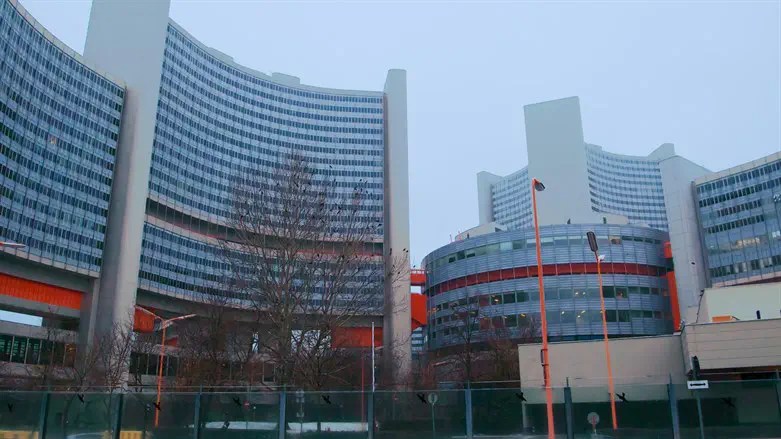
Twenty-three of the 35 countries on the IAEA Board of Governors supported the resolution during a vote at the agency's headquarters in Vienna. Russia, China and Niger voted against the measure, eight countries abstained, and one country did not vote because it was in arrears.
The resolution was submitted by the US, Britain, France and Germany.
The IAEA board had previously declared Iran to be in noncompliance with its nuclear nonproliferation obligations in June 2025, citing Tehran's lack of cooperation with the agency's investigation.
Iran's ambassador to the UN in Vienna, Reza Najafi, rejected Wednesday's resolution and called it a "political tool." He accused the measure of undermining confidence in the IAEA's "independence, impartiality and credibility."
Najafi also argued that ongoing military operations involving Iran, the US and Israel have made it impossible for Tehran to provide inspectors with access to nuclear facilities.
The US this week destroyed five Iranian oil tankers, while Iran subsequently struck American targets in Jordan, amid renewed exchanges of attacks in the more than six-month-old war.
The resolution requests that IAEA Director General Rafael Grossi report the agency's concerns to both the UN Security Council and General Assembly in accordance with the IAEA Statute.
It also calls on Iran to address its noncompliance and take measures required by the IAEA to provide assurances that nuclear material has not been diverted.
Since Israel and the US struck Iranian nuclear facilities during the 12-day war in June 2025, IAEA inspectors have not been granted access to nuclear sites damaged in the strikes. The agency has also been unable to determine the status of Iran's stockpile of uranium enriched to near weapons-grade levels.
Najafi said the Israeli and American strikes had made safe access to the facilities "materially impossible." He insisted that Iran has "neither stopped nor suspended its safeguards obligations," but said implementing those obligations is currently impossible due to continuing military operations and threats.
Iran's Deputy Foreign Minister for Legal and International Affairs, Kazem Gharibabadi, responded to the resolution in a post on X.
"They attack Iran's safeguarded nuclear facilities, disrupt the normal verification process, and then use that very disruption as a pretext for passing a resolution at the IAEA Board of Governors," Gharibabadi wrote.
"With these attempts to create an atmosphere, you can neither compensate for the failure of your policies and actions, nor will you be able to achieve anything at the Security Council."
According to the IAEA, Iran possesses 440.9 kilograms (972 pounds) of uranium enriched to 60% purity, below the approximately 90% enrichment level considered weapons-grade.
Grossi has previously warned that the amount would be sufficient for Iran to produce as many as ten nuclear weapons if Tehran decided to weaponize its nuclear program, while stressing that this does not mean Iran currently possesses such weapons.