

With Rosh Hashanah around the corner, there is much to do, buy, prepare, and, of course, cook.
Remember to make reservations for shul, send your shana tova greetings, and – most importantly – make plans to hear the shofar.
Visit RoshHashanah.org for help with all that and all your holiday needs.
And then there is the cooking, with so many symbolic foods full of traditions and meaning.
• Apples and honey for a sweet new year
• The head of a fish or a ram, to express the wish that “we be a head and not a tail.”
• Pomegranates, giving voice to a wish that “our merits be many like the (seeds of the) pomegranate.”
• Carrot, because of its Yiddish name, merren, which means both “carrot” and “increase,” symbolizing a wish for a year of abundance.
And, of course, whichever foods feel festive for your family. Here’s what’s on my menu:
Note: Since the first night and day of Rosh Hashanah coincide with Shabbat this year, if you’re serving warm food, be sure to leave the oven on in a Shabbat-appropriate way.
Sticky Pomegranate Chicken with Jewelled Couscous
A gorgeous, sticky, tangy-sweet chicken dish that brings together honey and pomegranate – two classic Rosh Hashanah symbols – in one glossy glaze, served over a vibrant, jewel-toned couscous with roasted butternut squash, sumac-spiced chickpeas, and pomegranate seeds.
Serves: 6-8
For the Chicken
• 8 chicken thighs and/or drumsticks, skin on
• Salt and pepper, to taste
• 3 tbsp olive oil
• 4 garlic cloves, minced
• ½ cup pomegranate juice
• ⅓ cup honey
• 2 tbsp soy sauce
• 1 tbsp pomegranate molasses (optional)
• Fresh pomegranate seeds and parsley, for garnish
For the Couscous
• 3 cups Moroccan couscous (fine couscous)
• Half of a medium butternut squash, peeled and cut into cubes
• Sumac-Spiced Chickpeas (recipe below)
• Seeds from 1 pomegranate
• Fresh parsley, roughly chopped
• Fresh mint, roughly chopped
For the Dressing
• 4 tbsp extra virgin olive oil
• Juice of 2 limes
• Salt to taste
For the Chicken
1. Preheat oven to 400°F (200°C). Season chicken generously with salt and pepper.
2. Heat olive oil in a large oven-safe skillet over medium-high heat. Sear chicken, skin-side down, until golden, then flip.
3. Add garlic and cook for 30 seconds until fragrant.
4. Whisk together pomegranate juice, honey, soy sauce, and pomegranate molasses. Pour over the chicken.
5. Transfer skillet to the oven and roast for 25-30 minutes, basting once or twice, until chicken is cooked through and the sauce has thickened and turned sticky.
6. Garnish with pomegranate seeds and parsley before serving.
For the Couscous
1. Roast the butternut squash: Preheat oven to 400°F (200°C). Spread cubed butternut squash in a single layer on a baking sheet. Drizzle with oil and sprinkle generously with salt. Roast uncovered for about 30 minutes until tender and lightly caramelized.
2. Prepare the chickpeas (recipe below).
3. Prepare the couscous: Follow the directions on the packet. Fluff with a fork to separate the grains as soon as the water is absorbed, so it doesn’t clump.
4. While the couscous is still warm, gently fold in the roasted butternut squash and roasted chickpeas.
5. Allow the mixture to cool slightly, then add the pomegranate seeds, chopped parsley, and chopped mint.
6. Drizzle with extra virgin olive oil and lime juice. Season with salt to taste and gently toss to combine. Taste and adjust seasonings.
To Serve
1. Spoon the jewelled couscous onto a large platter and top with the sticky pomegranate chicken. Serve warm. Couscous can be served as a stand-alone side dish at room temperature if preferred.
Sumac-Spiced Chickpeas
• 1 (15-oz.) can chickpeas
• 1½ tsp sumac
• 1½ tsp smoked paprika
• 1 tsp coriander
• ½ tsp salt
• Black pepper
• 1 tbsp olive oil
Directions
1. Open the can of chickpeas. Drain the liquid. Rinse the chickpeas well with cold water, drain and pat dry.
2. In a small bowl, combine the sumac, smoked paprika, coriander, salt, and black pepper.
3. Toss the chickpeas with the spice mixture and the oil. Bake at 400°F (200°C) for 15-20 minutes. Increase the temperature to 450°F (230°C) and bake for an additional 10-15 minutes.
Spiced Roasted Carrots
On Rosh Hashanah, it is customary to eat foods whose names in the vernacular allude to blessing and prosperity. For example, the Yiddish word for carrot, meren, also means “increase,” symbolizing our wish for a year of abundance.
Here’s an alternative to tzimmes that hits the carrot brief without the overwhelming sweetness. And your house will smell amazing while they’re cooking.
Serves: 4-6 as a side dish
• 1.5 lb (680 grams) large carrots
• 2 tbsp oil (or cooking spray)
• ½ tbsp smoked paprika
• 1 tsp cumin
• 1 tsp coriander
• ½ tsp cinnamon
• ½ tsp ginger
• ¼ tsp cayenne pepper
• 1 tbsp kosher salt
• Optional: fresh parsley for garnish
• Optional: squeeze of lemon or lime
Directions
1. Wash and peel carrots. Cut into rounds, keeping the thickness even so they cook evenly. Place in a medium-sized bowl.
2. In a small bowl, mix the spices together. (Optional: for a sweeter taste, add a tablespoon of brown sugar to the spice mix.)
3. Add the spice mixture a little at a time, tossing as you go, until the carrots are evenly coated.
4. Line a large baking sheet with parchment paper. Spread carrots out in a single layer. Drizzle with 1-2 tbsp oil or a light coating of spray-oil.
5. Bake at 425°F (220°C) for 25 minutes.
6. Taste and sprinkle with additional salt if needed. Add a squeeze of lemon or lime (optional).
7. Serve warm or at room temperature, garnished with fresh parsley.
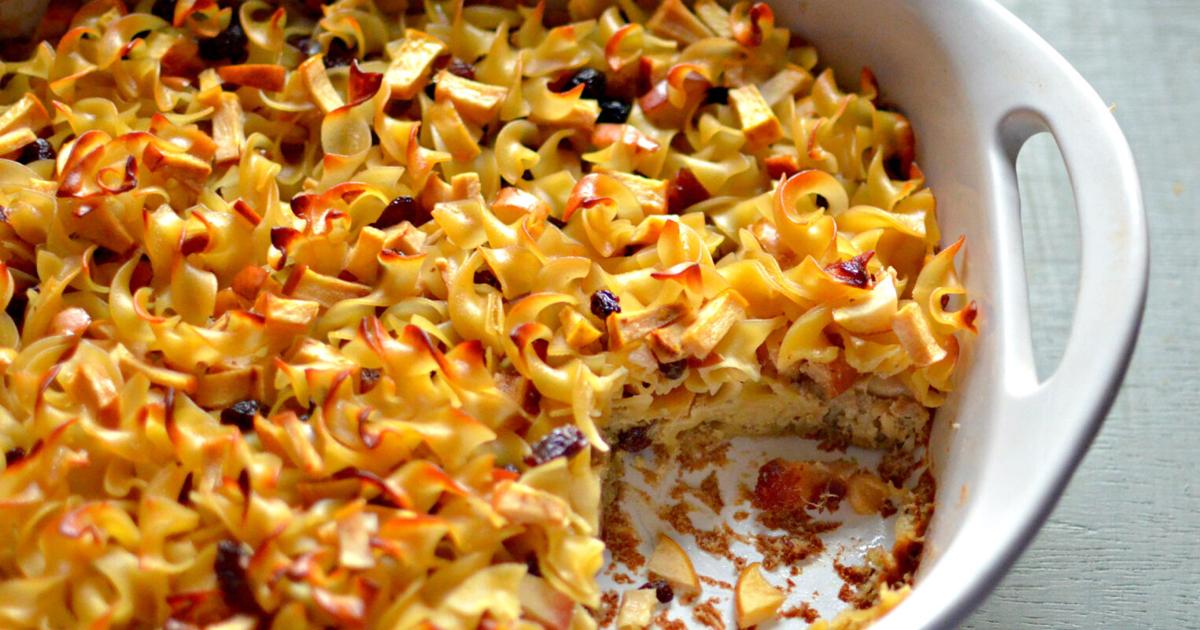
Sweet Fruity Noodle Kugel
A sweet noodle kugel loaded with apples, dates, raisins and a bright hit of lemon zest.
Serves: 8-10
• 12 oz (340 g) wide egg noodles
• 2 apples, finely diced
• ⅓ cup raisins
• ⅓ cup chopped dates
• ⅓ cup oil
• ⅓ cup brown sugar
• ⅓ cup white sugar
• 6 eggs
• ½ tsp ginger powder
• Zest of 1 lemon
• Pinch of salt
Directions
1. Soak the raisins in hot water for 20 minutes.
2. Crack the eggs and check for blood spots. Beat in a large bowl. Add all the ingredients except for the egg noodles.
3. Boil the egg noodles until soft.
4. Drain the noodles and mix a small amount into the egg mixture, then add the rest of the noodles (this prevents the eggs from curdling). Toss well to coat.
5. Grease a 9x13-inch (23x33 cm) baking dish (smaller for a thicker kugel), and pour in the mixture.
6. Bake at 350°F (180°C) for 40 minutes.
Simanim Confit with Dates, Leeks, and More
Tomato-garlic confit with fresh challah is one of the most delicious foods in existence, and here it’s leveled up for Rosh Hashanah by adding in some of the symbolic foods we eat on the holiday: leeks, dates and pomegranate molasses.
Serve with the traditional round challah that symbolizes the cycle of life.
Yields: 1 batch, enough to share
• Handful of whole garlic cloves
• 2 leeks, white and light green part only, sliced into rounds
• 5-6 dates, roughly chopped
• Handful of olives, green or black
• Handful of grape tomatoes
• Olive oil (enough to cover ingredients)
• 2 sprigs fresh rosemary
• Salt to taste
• Pomegranate molasses, for drizzling (optional)
Directions
1. Preheat oven to 350°F (180°C).
2. In a glass baking dish, combine the garlic, leeks, dates, olives, and grape tomatoes.
3. Pour olive oil over the ingredients until mostly covered.
4. Bake uncovered for 1 hour, until everything becomes soft and tender.
5. Remove from oven and immediately add the rosemary sprigs.
6. Season with salt, and, if desired, drizzle with pomegranate molasses for extra sweetness and symbolic meaning.
7. Serve warm or at room temperature, with warm challah for dipping. You can also drizzle it over roasted vegetables or chicken.
8. Note: Save the oil! If you’ve eaten all the pieces but still have oil left over, don’t discard—use it in your cooking or salad dressings.
Reprinted with permission from Chabad.org/Food.