
 Israel National News
Nazi-looted painting found in Argentina returned to Jewish heir
Sep 10, 2026·5 min read
A Dutch journalist hunting for art treasures belonging to an Amsterdam Jewish art dealer spent years trying to get answers from Patricia Kadgien, the daughter of the Nazi financier who had made off with some of them, with no luck. So last year he went to her house in Mar del Plata, a resort city on Argentina’s Atlantic coast.
No one was home, but the journalist, Peter Schouten, noticed a "for sale" sign outside the property from Robles Casas & Campos, a local real estate agency.
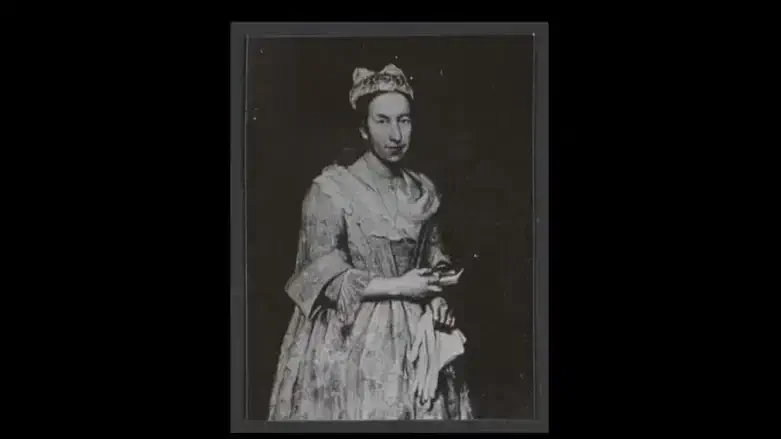
Schoten went to the agency’s website, where the house was listed for $265,000. As he scrolled through the listing, he noticed something in a photograph of the living room. Schouten recognized the painting hanging above a sofa: “Portrait of a Lady," most likely the work of the 18th-century northern Italian painter known as Il Pitocchetto.
On Friday, Argentine federal judge Santiago Inchausti authorized the restitution of "Portrait of a Lady," which belonged to the collection of Dutch Jewish art dealer Jacques Goudstikker, to his daughter-in-law and sole heir, Marei von Saher.
"The property had been listed for sale on a real estate agency’s website, and one of the photographs showed a painting in the living room that matched one of the works from Goudstikker’s collection that had been sought for years," Inchausti wrote in his ruling.
Goudstikker was one of Holland’s most prominent Jewish art dealers before World War II. In 1940, he fled the Nazi-occupied Netherlands with his wife and son, carrying a black notebook listing some 1,400 artworks. After his death during the voyage, his widow preserved it, and the notebook later became key evidence in the family’s restitution efforts.
His gallery and collection fell under Nazi control. Hermann Goering, a powerful deputy to Adolf Hitler, acquired hundreds of paintings from Goudstikker’s collection in a forced sale that Dutch authorities later determined was directly linked to Nazi persecution.
Herberto Robinson, von Saher’s lawyer who specializes in estate planning and asset protection, described what happened after Schoten’s sleuthing in an interview with the Jewish Telegraphic Agency.
"At that point, the journalist contacted attorney Yael Weitz in Freedman Normand Friedland of New York where she specializes in art and cultural property law," he said "She then contacted us and asked us to take on the case. The family’s sole intention was to recover the painting. They were not interested in pursuing those who had possessed it or in seeking financial compensation, they wanted the artwork returned."
Kadgien is the daughter of Friedrich Kadgien, a German financial official who worked for the Nazi regime and later escaped to South America. The elder Kadgien, who had close ties to Goering, fled Germany in 1945 to Switzerland, eventually making his way to Argentina, where he started a business and raised a family. He died in 1978.
Kadgien and her husband at first did not cooperate. The realtor’s listing was removed after the Dutch newspaper Algemeen Dagblad published its report. Argentine authorities then searched the property on Aug. 26, 2025, but the painting had been removed and replaced with another artwork, while an outline matching its dimensions remained visible on the wall.
Kadgien and her husband, Juan Carlos Cortegoso, were placed under house arrest for 72 hours while authorities searched the family’s other properties. They subsequently turned the artwork over to federal prosecutors and were charged with aggravated concealment.
Experts from Argentina’s National Academy of Fine Arts attributed the work to Giacomo Antonio Melchiorre Ceruti, known as Il Pitocchetto, and valued it at approximately €250,000. The local and national Jewish communities took a keen interest in the case.
"We are very pleased and hope this marks the beginning of many more restitutions, as we know there are undoubtedly other works out there that rightfully belong to families who suffered this tragic fate," Clauda Beatriz Malamud, the president of Sociedad Union Israelita Marplatense, the local Jewish community body, told JTA.
Under an agreement Inchausti approved, the criminal proceedings against the couple were suspended for two years, subject to a set of conditions. They irrevocably renounce any right or claim to the artwork, clearing the way for its restitution. The painting will remain in the custody of Argentina’s Supreme Court until the restitution is carried out. They also agreed to pay 4.8 million Argentine pesos - approximately $3,180 - in 24 monthly installments to the support association of Mar del Plata’s Interzonal Specialized Maternal and Child Hospital.
According to well-placed sources at the Buenos Aires Holocaust Museum, von Saher has expressed interest in lending the painting to the museum for a temporary exhibition, possibly for one or two years. The exhibition would help raise awareness of the systematic theft of Jewish-owned art under the Nazi regime and the continuing international effort to return such works to their rightful owners. No final agreement about this has been announced.