
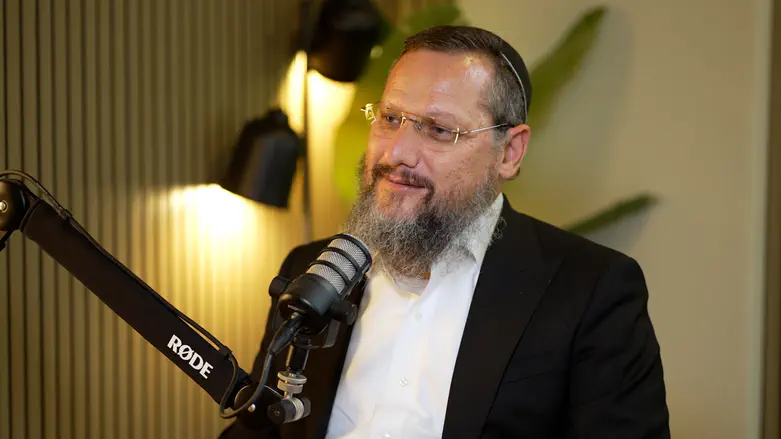
Rabbi Yitzchak Neria, Rosh Yeshiva of Torah Betzion and head of the Echad Lechad Foundation, discusses the foundation's work supporting outstanding Torah learners whom he hopes will become the next generation of rabbis.
The foundation supports outstanding Torah students because we believe that, as a society, it is our responsibility to support them and give them the opportunity to grow.
Support Torah Learners. Donate Here >>>
"Nobody can reach their full potential without support, whether in the army, at university or in any other field. We decided that we need to focus on our next generation of sages. We have been doing this for 10 years, and it is incredible. Fourteen yeshivot have already become part of our system, and we see a very, very bright future ahead."
"It is a collective responsibility. All of us have a role to play. You cannot stand on the sidelines and say someone else will take care of it. It is our responsibility."
"If you believe in the approach of Torah and the State of Israel - serving in the army, being part of society and understanding your role within it - then when we select the outstanding sages, we are choosing people who have many options before them. They could go to university. They completed their matriculation, they know mathematics, English and computers - and they chose to dedicate their lives to Torah. Not just for themselves. For all of us."
"It is also important to mention that they have all served in the army or will serve in the army. We have our own path. We don't change our philosophy or our way of life. At the same time, we are fully engaged with what is happening in the country. We are involved in the army, and they serve. Some of them serve as officers. Over the past three years, they have spent hundreds of days doing reserve duty."
"And yet, when they have a break from their military service and return to yeshiva, you don't see a difference. Someone can be a commander in the army and then return to the yeshiva."
Support Torah Learners. Donate Here >>>
"For those who aren't familiar with these ideals, that's Torah, exactly. This is what I mean when I say, "This is our way. This is Torah. It is life. And what is happening in Eretz Yisrael today, as part of the redemption, part of the geulah, reflects our understanding that we have a responsibility to do what we can and to be part of the nation."
"During Rosh Hashanah, Yom Kippur and Sukkot, the foundation also makes a special effort to help many students. Throughout the year, we support outstanding students. But as the holidays approach, we try to help as many students as possible who are in need. They don't have regular incomes or salaries and live on a very low stipend. When the holidays arrive, they need this support."
"Sometimes you ask yourself, "What can I do before the holidays to be part of something? I think this is one of the best things you can do. First, we work with almost all the yeshivot. Second, the families are extremely honest. They report exactly how much they earn, how much their wives earn and how much they pay in rent. Sometimes they even contact us about very small amounts of additional income, just to make sure everything is properly reported. They might say, "My grandfather in America sent me $100. Do I need to report it?" Or, "I received some money from my army service. Yes, they are very honest."
"When the holidays come, we all want to sit down at our family table and celebrate. We want to know that we have helped others, and that these families won't have to stand in line waiting for whatever assistance someone happens to give them. We do it in a very, very respectful way."
"There is a great deal of emphasis on making sure the assistance is distributed properly. First, we establish exactly what their income is and what resources they have. We sit as judges - three people - and review each case. There are hundreds of cases. We don't simply give assistance to everyone. When we decide to help, the money goes directly into their bank account. We trust them."
"These are not dysfunctional families where you have to worry about how the money will be spent, whether on alcohol or cigarettes, and therefore give them food instead. These are good, good families. We have the merit to support them during the three, four or five years when they need assistance, before they enter the workforce. Some will become rabbis, some will become teachers and some will become lawyers."
"And you know what? Years later, some of them send donations back to us because they remember: "When I was struggling, you helped me." The response from the families is very interesting. Some tell us, "I'm not willing to accept support from anyone else. Only from you."
"I also write them a letter before every holiday. Once, I was invited to a party at the home of one of the students, and I saw my letter on their freezer. The father and mother had put it there for their children. That showed me that, ultimately, the most important thing isn't the money. The money is important, but what matters most is the support and the appreciation. We appreciate Torah. We want to be part of your Torah."
Support Torah Learners. Donate Here >>>
"This is part of a collective responsibility, and everyone in Israel and around the world can be part of it. It is a great merit. Everyone is looking for merits on Rosh Hashanah. When we blow the shofar, why do we do it in a central place in the synagogue? We could blow it anywhere. The answer, as the Mishnah Berurah explains, is that we want to invoke the merit of Torah. Everyone wants to come before Yom Kippur with merits. Here you have the merit of Torah - but it is about more than Torah alone."
"Torah is connected to taking responsibility for Israel. Torah people are truly part of what is happening in Israel today. Why not be part of it? They are taking responsibility for our Torah as well. They are helping us through their Torah. We should help them as well."